Tuesday I was interviewed on the radio regarding my rebutting UN False Alarms. The image is a screen capture, and I didn’t know how to extract the audio file or embed the radio page. With some help from my grandson, you can hear my segment below (a few commercials included).
The interview is also on the station website linked below. My segment begins at 34:40 to the end
As we shall see, each of them, along with other WMO claims, depends on first buying the story of global warming/climate change, and then looking at the world in a myopic, lop-sided way to confirm an alarmist POV. Below are discussions of the main points from this latest attempt to monger fear in support of the IPCC agenda.
Sea Level Rise is Accelerating! Not.
WMO says:Global mean sea level reached a new record high in 2021, after increasing at an average 4.5 mm per year over the period 2013 -2021. This is more than double the rate of between 1993 and 2002 and is mainly due to the accelerated loss of ice mass from the ice sheets. This has major implications for hundreds of millions of coastal dwellers and increases vulnerability to tropical cyclones.
WMO Proof: Rational Response
Altimetry Estimates Are Unreliable
Tidal Gauges show slow, steady coastal rise
Land subsiding or rebounding Makes Local Differences
The claim of accelerating sea level rise depends on estimates from satellites regarding the entire ocean, such as this one:
There was an adjustment made to the dataset, and the “acceleration” comes by starting from the dip in 2013. Moreover, this is a highly processed reconstruction that is contradicted by tidal gauge measurements at the coastlines where people live and where the issue matters. For example, take New York City, where J. Hansen predicted flooding by 2009:
Already in 2021, observations have diverged greatly from the model-projected sea level rise, and there are many other examples confirming this. And do remember the longer range perspective on sea levels:
Earth’s Cryosphere is Melting! Not.
WMO Says: Cryosphere: Although the glaciological year 2020-2021 saw less melting than in recent years, there is a clear trend towards an acceleration of mass loss on multi-decadal timescales. On average, the world’s reference glaciers have thinned by 33.5 meters (ice-equivalent) since 1950, with 76% of this thinning since 1980. 2021 was a particularly punishing year for glaciers in Canada and the US Northwest with record ice mass loss as a result of heatwaves and fires in June and July. Greenland experienced an exceptional mid-August melt event and the first-ever recorded rainfall at Summit Station, the highest point on the ice sheet at an altitude of 3 216 m.
Rational Response
The warning about coastal flooding is based on fears that the sea will rise because frozen water will be added to the current ocean volume. A lot of reporting claims Arctic Sea Ice is retreating, not mentioning this is drift ice, floating on water, and thus not a threat to increase water volume. Even so, the quasi-60 year cycle of Arctic ice extents has been flat since it’s most recent bottom in 2007.
More pertinent is the concerns raised over land-based ice that does have the potential to add water to the ocean. For perspective, consider this:
To consider the impact of the above ice sheet melting, compare the thickness of the Laurentide ice sheet with some of our civilization’s landmarks (H/T RiC Communications):
With much ado about any retreat of land glaciers, no matter how small or short-lived, many people are unaware of the natural range of glacier fluctuations. For example, alpine glaciers:
Amid numerous periods of warming and cooling, hidden is the fact that Alpine glaciers were much smaller in the past, as evidenced by higher tree lines previous to the modern era.
The great majority of land ice is located firstly upon Antarctica, and secondly on Greenland. While there are fluctuations up and down, the trend is far from certain, and very small compared to the mass of these two ice sheets.
A recent study by Bamber et al. provides perspectives on the amplitude of ice sheet changes:
Here the realities are obvious 99% of the world land ice is on top of Antarctica (88%) and Greenland (11%). All the fuss in the media above concerns fluctuations in less than 1% of glacier mass. Secondly, the bottom line is should present melt rates continue ( a big if ) the world would lose 3% of land ice in 1000 years. Note also the wide range of estimates of the smallest category of glaciers, and also the uncertain reported volume change for East Antarctica. Note that the melt rates are for 2012 to 2016, leaving out lower previous rates and periods when ice mass gained.
Global Temperatures are Going Ever Higher! Not.
WMO says: The global annual mean temperature in 2021 was around 1.11 ±0.13 °C above the 1850-1900 pre-industrial average, less warm than some recent years owing to cooling La Niña conditions at the start and end of the year. The most recent seven years, 2015 to 2021, are the seven warmest years on record.
Rational Response:
Seen in the context of annual ranges of temperatures, a rise of 1 degree Celsius over 150 years would escape our notice were it not for alarmists constantly beating drums about it.
The geological and paleontological evidence overwhelmingly says that today’s average global temperature of about 15 degrees C and CO2 concentrations of 420 ppm are nothing to fret about. Even if they rise to about 17–18 degrees C and 500–600 ppm by the end of the century, it may well balance or improve the lot of mankind.
After all, bursts of civilization during the last 10,000 years uniformly occurred during the red portions of the graph below. The aforementioned river civilizations—the Minoan, the Greco-Roman era, the Medieval flowering, and the industrial and technological revolutions of the present era. At the same time, the several lapses into the dark ages happened when the climate turned colder (blue).
And that’s only logical. When it’s warmer and wetter, growing seasons are longer, and crop yields are better—regardless of the agricultural technology and practices of the moment. And it’s better for human and community health, too—most of the deadly plagues of history have occurred in colder climates, such as the Black Death of 1344–1350.
Greenhouse Gases Higher Than Ever! Not.
WMO says: Greenhouse gas concentrations reached a new global high in 2020, when the concentration of carbon dioxide (CO2) reached 413.2 parts per million (ppm) globally, or 149% of the pre-industrial level. Data from specific locations indicate that they continued to increase in 2021 and early 2022, with monthly average CO2 at Mona Loa in Hawaii reaching 416.45 ppm in April 2020, 419.05 ppm in April 2021, and 420.23 ppm in April 2022.
Rational Response:
The Radiative effect from increasing CO2 has been saturated, so that the next doubling from 400 to 800 ppm will barely affect temperatures. From William Happer presentation:
Schwarzschild was the theorist who first figured out how the real Earth, including the greenhouse gases in its atmosphere, radiates to space. That is described by the jagged black line. The important point here is the red line. This is what Earth would radiate to space if you were to double the CO2 concentration from today’s value. Right in the middle of these curves, you can see a gap in spectrum. The gap is caused by CO2 absorbing radiation that would otherwise cool the Earth. If you double the amount of CO2, you don’t double the size of that gap. You just go from the black curve to the red curve, and you can barely see the difference. The gap hardly changes.
Yet, the Climate Crisis Narrative employs two deceptive devices which are contradicted by earth’s climate history:
a. Planetary temperatures have been far higher than today, both long ago (over 600 million years) and recently (last 10,000 years) with no doomsday loop occurring.
b. It is claimed global warming is a one-way street from rising GHGs, when in fact higher CO2 concentrations are a consequence and by-product, not a driver and cause, of the current naturally rising temperatures.
The alleged harm from CO2 is from warming, and the warming observed is much, much less than predictions. In fact, warming as small as we are observing is almost certainly beneficial. It gives slightly longer growing seasons. You can ripen crops a little bit further north than you could before. So, there is completely good news in terms of the temperature directly. But there is even better news. By standards of geological history, plants have been living in a CO2 famine during our current geological period.
The Ocean Is Turning Acid! Not.
WMO says: Ocean acidification. The ocean absorbs around 23% of the annual emissions of anthropogenic CO2 to the atmosphere. This reacts with seawater and leads to ocean acidification, which threatens organisms and ecosystem services, and hence food security, tourism and coastal protection. As the pH of the ocean decreases, its capacity to absorb CO2 from the atmosphere also declines. The IPCC concluded that “there is very high confidence that open ocean surface pH is now the lowest it has been for at least 26,000 years and current rates of pH change are unprecedented since at least that time.”
Rational Response
Firstly ocean pH varies greatly on all time scales. From US Senate testimony:
“In the oceans, major climate warming and cooling and pH (ocean pH about 8.1) changes are a fact of life, whether it is over a few years as in an El Niño, over decades as in the Pacific Decadal Oscillation or the North Atlantic Oscillation, or over a few hours as a burst of upwelling (pH about 7.59-7.8) appears or a storm brings acidic rainwater (pH about 4-6) into an estuary.”
Secondly, sea life is adapted to changing pH, and some prefer more acidic levels. IPCC has ignored extensive research showing positive impacts on marine life from lower pH. These studies are catalogued at CO2 Science with this summary:
There are numerous observations of improvement in calcification of disparate marine life in realistic rates of PH change due to increased CO2.
“In the final graphical representations of the information contained in our Ocean Acidification Database, we have plotted the averages of all responses to seawater acidification (produced by additions of both HCl and CO2) for all five of the life characteristics of the various marine organisms that we have analyzed over the five pH reduction ranges that we discuss in our Description of the Ocean Acidification Database Tables, which pH ranges we illustrate in the figure below.”
“The most striking feature of Figure 11 is the great preponderance of data located in positive territory, which suggests that, on the whole, marine organisms likely will not be harmed to any significant degree by the expected decline in oceanic pH. If anything, in fact, the results suggest that the world’s marine life may actually slightly benefit from the pH decline.”
Finally, massive mineral deposits ensure our ocean will remain non-acidic in coming centuries. At Patrick Moore observed:
“It is a fact that people who have saltwater aquariums sometimes add CO2 to the water in order to increase coral growth and to increase plant growth. The truth is CO2 is the most important food for all life on Earth, including marine life. It is the main food for photosynthetic plankton (algae), which in turn is the food for the entire food chain in the sea.”
Summary:
The claim that the surface-water of the oceans has declined in pH from 8.2 to 8.1, since the industrial revolution, is based on sparse, contradictory evidence, at least some of which is problematic computer modeling. Some areas of the oceans, not subject to algal blooms or upwelling, may be experiencing slightly lower pH values than were common before the industrial revolution. However, forecasts for ‘average’ future pH values are likely exaggerated and of debatable consequences. The effects of alkaline buffering and stabilizing biological feedback loops seem to be underappreciated by those who carelessly throw around the inaccurate term “ocean acidification.”
Footnote on Climate Hype
Alarming claims are usually detected because they involve myopia, an error in perception, combined with lop-sided judgment weighing proportional significance of factors.
CO2 Alarm is Myopic: Claiming CO2 causes dangerous global warming is too simplistic. CO2 is but one factor among many other forces and processes interacting to make weather and climate.
Myopia is a failure of perception by focusing on one near thing to the exclusion of the other realities present, thus missing the big picture. For example: “Not seeing the forest for the trees.” AKA “tunnel vision.”
2. CO2 Alarm is Lopsided: CO2 forcing is too small to have the overblown effect claimed for it. Other factors are orders of magnitude larger than the potential of CO2 to influence the climate system.
Lop-sided refers to a failure in judging values, whereby someone lacking in sense of proportion, places great weight on a factor which actually has a minor influence compared to other forces. For example: “Making a mountain out of a mole hill.”
To avoid myopia, pay attention to the temporal and spatial contexts for effects discussed. To avoid lop-sided judgment, pay attention to the impact of factors proportional to the baseline inertia of climate system components.
James Kennedy explains the dangerous slide in his presentation Critical Materials The New Tool of Global Hegemony. Excerpts in italics with my bolds. H/T Mark Krebs
This presentation outlines the vast disconnect between green technology goals and the anticipated compounding economic consequences of finite resources. ♦ Begin by assessing resources and the challenges associated with the Administration’s limited goal of replacing the internal combustion engine. ♦ Expose who leads in resource production ♦ Reveal who leads in research, IP, control over finished materials and estimated
resource demand ♦ Consider the asymmetric geopolitical consequences ♦ Consider the consequences of compounding renewables (wind & solar), energy distribution and grid-storage demand on these limited resources.
To enlarge, open image in new tab.
♦ Most of the critical technology metals make up less than .003% of the earth’s crust. ♦ They tend to be present in measurements of parts per million. ♦ They tend to be tied up in much more complex mineralization’s. ♦ Extracting them requires mining and refining facilities that cost billions of dollars. ♦ The extraction process requires lots of energy and complex chemical processes. ♦ These processes pose environmental problems of their own.
As you can see from the red arrows, China controls most of these elements and critical materials at the point of refined materials, metals, alloys and magnets. Recent production from California’s Mt. Pass mine goes to China for refining and metal / magnet production.
China’s state sponsored subsidies and internal tax advantages make U.S. production of rare earth metals and magnets non-competitive. This is also true for refined cobalt and many other critical materials and components like anodes and cathodes for batteries.
China’s production capacity for these materials and components dwarfs the rest of the world – exceeding global demand in many cases.
Conclusion:
This rush to zero carbon is driven by short term private interests leveraging fears of global warming that conflate with larger ideological agendas.
Things will go wrong, there will be multiple train wrecks.
Potential Winners: China, natural gas producers, mining companies that supply China, flim-flam renewable / green tech / green energy project promoters, 1% or less of the U.S. & EU population.
Potential Losers: 99% of U.S. & EU population, legacy and residual manufacturing industries, the financial system and the U.S. dollar as its status as world reserve currency evaporates.
Potential Black Swan Outcomes Upside: Material Science Breakthroughs solve the problem Downside: Forfeiture of Western Economic Relevance
My Comment:
As posted previously, this drive to reduce carbon-based energy is absurd, costly and pointless.
Absurd, because there is no reliable data showing anything in our climate or weather outside historical ranges of variation.
Costly, because proposed remedies including “green energy” and electric vehicles serve only to make affordable reliable energy expensive and intermittent. In addition as demonstrated above, the tech depends on the rarest, most precious and environmentally damaging materials.
Pointless, because we do not control the weather anyway.
High time to unplug the EV illusion and back away from the social and economic cliff.
Jim Le Maistre has done the homework showing the futility of substituting electric cars for gas-powered vehicles. Entrepreneurs and the media have failed to inform us the EVs require almost 1/3 more energy per kilometer travelled than conventional cars. His document is Electric Cars Increase Energy Demand 31% over Gas Cars. Some of his exhibits are reproduced below to express the thrust of his analysis.
Yesterday I was interviewed on the radio regarding my rebutting UN False Alarms. The image is a screen capture, and I don’t know how to extract the audio file or embed the radio page. But you can listen to the interview by following the link below. My segment begins at 34:40 to the end (a few commercials included)
As we shall see, each of them, along with other WMO claims, depends on first buying the story of global warming/climate change, and then looking at the world in a myopic, lop-sided way to confirm an alarmist POV. Below are discussions of the main points from this latest attempt to monger fear in support of the IPCC agenda.
Sea Level Rise is Accelerating! Not.
WMO says:Global mean sea level reached a new record high in 2021, after increasing at an average 4.5 mm per year over the period 2013 -2021. This is more than double the rate of between 1993 and 2002 and is mainly due to the accelerated loss of ice mass from the ice sheets. This has major implications for hundreds of millions of coastal dwellers and increases vulnerability to tropical cyclones.
WMO Proof: Rational Response
Altimetry Estimates Are Unreliable
Tidal Gauges show slow, steady coastal rise
Land subsiding or rebounding Makes Local Differences
The claim of accelerating sea level rise depends on estimates from satellites regarding the entire ocean, such as this one:
There was an adjustment made to the dataset, and the “acceleration” comes by starting from the dip in 2013. Moreover, this is a highly processed reconstruction that is contradicted by tidal gauge measurements at the coastlines where people live and where the issue matters. For example, take New York City, where J. Hansen predicted flooding by 2009:
Already in 2021, observations have diverged greatly from the model-projected sea level rise, and there are many other examples confirming this. And do remember the longer range perspective on sea levels:
Earth’s Cryosphere is Melting! Not.
WMO Says: Cryosphere: Although the glaciological year 2020-2021 saw less melting than in recent years, there is a clear trend towards an acceleration of mass loss on multi-decadal timescales. On average, the world’s reference glaciers have thinned by 33.5 meters (ice-equivalent) since 1950, with 76% of this thinning since 1980. 2021 was a particularly punishing year for glaciers in Canada and the US Northwest with record ice mass loss as a result of heatwaves and fires in June and July. Greenland experienced an exceptional mid-August melt event and the first-ever recorded rainfall at Summit Station, the highest point on the ice sheet at an altitude of 3 216 m.
Rational Response
The warning about coastal flooding is based on fears that the sea will rise because frozen water will be added to the current ocean volume. A lot of reporting claims Arctic Sea Ice is retreating, not mentioning this is drift ice, floating on water, and thus not a threat to increase water volume. Even so, the quasi-60 year cycle of Arctic ice extents has been flat since it’s most recent bottom in 2007.
More pertinent is the concerns raised over land-based ice that does have the potential to add water to the ocean. For perspective, consider this:
To consider the impact of the above ice sheet melting, compare the thickness of the Laurentide ice sheet with some of our civilization’s landmarks (H/T RiC Communications):
With much ado about any retreat of land glaciers, no matter how small or short-lived, many people are unaware of the natural range of glacier fluctuations. For example, alpine glaciers:
Amid numerous periods of warming and cooling, hidden is the fact that Alpine glaciers were much smaller in the past, as evidenced by higher tree lines previous to the modern era.
The great majority of land ice is located firstly upon Antarctica, and secondly on Greenland. While there are fluctuations up and down, the trend is far from certain, and very small compared to the mass of these two ice sheets.
A recent study by Bamber et al. provides perspectives on the amplitude of ice sheet changes:
Here the realities are obvious 99% of the world land ice is on top of Antarctica (88%) and Greenland (11%). All the fuss in the media above concerns fluctuations in less than 1% of glacier mass. Secondly, the bottom line is should present melt rates continue ( a big if ) the world would lose 3% of land ice in 1000 years. Note also the wide range of estimates of the smallest category of glaciers, and also the uncertain reported volume change for East Antarctica. Note that the melt rates are for 2012 to 2016, leaving out lower previous rates and periods when ice mass gained.
Global Temperatures are Going Ever Higher! Not.
WMO says: The global annual mean temperature in 2021 was around 1.11 ±0.13 °C above the 1850-1900 pre-industrial average, less warm than some recent years owing to cooling La Niña conditions at the start and end of the year. The most recent seven years, 2015 to 2021, are the seven warmest years on record.
Rational Response:
Seen in the context of annual ranges of temperatures, a rise of 1 degree Celsius over 150 years would escape our notice were it not for alarmists constantly beating drums about it.
The geological and paleontological evidence overwhelmingly says that today’s average global temperature of about 15 degrees C and CO2 concentrations of 420 ppm are nothing to fret about. Even if they rise to about 17–18 degrees C and 500–600 ppm by the end of the century, it may well balance or improve the lot of mankind.
After all, bursts of civilization during the last 10,000 years uniformly occurred during the red portions of the graph below. The aforementioned river civilizations—the Minoan, the Greco-Roman era, the Medieval flowering, and the industrial and technological revolutions of the present era. At the same time, the several lapses into the dark ages happened when the climate turned colder (blue).
And that’s only logical. When it’s warmer and wetter, growing seasons are longer, and crop yields are better—regardless of the agricultural technology and practices of the moment. And it’s better for human and community health, too—most of the deadly plagues of history have occurred in colder climates, such as the Black Death of 1344–1350.
Greenhouse Gases Higher Than Ever! Not.
WMO says: Greenhouse gas concentrations reached a new global high in 2020, when the concentration of carbon dioxide (CO2) reached 413.2 parts per million (ppm) globally, or 149% of the pre-industrial level. Data from specific locations indicate that they continued to increase in 2021 and early 2022, with monthly average CO2 at Mona Loa in Hawaii reaching 416.45 ppm in April 2020, 419.05 ppm in April 2021, and 420.23 ppm in April 2022.
Rational Response:
The Radiative effect from increasing CO2 has been saturated, so that the next doubling from 400 to 800 ppm will barely affect temperatures. From William Happer presentation:
Schwarzschild was the theorist who first figured out how the real Earth, including the greenhouse gases in its atmosphere, radiates to space. That is described by the jagged black line. The important point here is the red line. This is what Earth would radiate to space if you were to double the CO2 concentration from today’s value. Right in the middle of these curves, you can see a gap in spectrum. The gap is caused by CO2 absorbing radiation that would otherwise cool the Earth. If you double the amount of CO2, you don’t double the size of that gap. You just go from the black curve to the red curve, and you can barely see the difference. The gap hardly changes.
Yet, the Climate Crisis Narrative employs two deceptive devices which are contradicted by earth’s climate history:
a. Planetary temperatures have been far higher than today, both long ago (over 600 million years) and recently (last 10,000 years) with no doomsday loop occurring.
b. It is claimed global warming is a one-way street from rising GHGs, when in fact higher CO2 concentrations are a consequence and by-product, not a driver and cause, of the current naturally rising temperatures.
The alleged harm from CO2 is from warming, and the warming observed is much, much less than predictions. In fact, warming as small as we are observing is almost certainly beneficial. It gives slightly longer growing seasons. You can ripen crops a little bit further north than you could before. So, there is completely good news in terms of the temperature directly. But there is even better news. By standards of geological history, plants have been living in a CO2 famine during our current geological period.
The Ocean Is Turning Acid! Not.
WMO says: Ocean acidification. The ocean absorbs around 23% of the annual emissions of anthropogenic CO2 to the atmosphere. This reacts with seawater and leads to ocean acidification, which threatens organisms and ecosystem services, and hence food security, tourism and coastal protection. As the pH of the ocean decreases, its capacity to absorb CO2 from the atmosphere also declines. The IPCC concluded that “there is very high confidence that open ocean surface pH is now the lowest it has been for at least 26,000 years and current rates of pH change are unprecedented since at least that time.”
Rational Response
Firstly ocean pH varies greatly on all time scales. From US Senate testimony:
“In the oceans, major climate warming and cooling and pH (ocean pH about 8.1) changes are a fact of life, whether it is over a few years as in an El Niño, over decades as in the Pacific Decadal Oscillation or the North Atlantic Oscillation, or over a few hours as a burst of upwelling (pH about 7.59-7.8) appears or a storm brings acidic rainwater (pH about 4-6) into an estuary.”
Secondly, sea life is adapted to changing pH, and some prefer more acidic levels. IPCC has ignored extensive research showing positive impacts on marine life from lower pH. These studies are catalogued at CO2 Science with this summary:
There are numerous observations of improvement in calcification of disparate marine life in realistic rates of PH change due to increased CO2.
“In the final graphical representations of the information contained in our Ocean Acidification Database, we have plotted the averages of all responses to seawater acidification (produced by additions of both HCl and CO2) for all five of the life characteristics of the various marine organisms that we have analyzed over the five pH reduction ranges that we discuss in our Description of the Ocean Acidification Database Tables, which pH ranges we illustrate in the figure below.”
“The most striking feature of Figure 11 is the great preponderance of data located in positive territory, which suggests that, on the whole, marine organisms likely will not be harmed to any significant degree by the expected decline in oceanic pH. If anything, in fact, the results suggest that the world’s marine life may actually slightly benefit from the pH decline.”
Finally, massive mineral deposits ensure our ocean will remain non-acidic in coming centuries. At Patrick Moore observed:
“It is a fact that people who have saltwater aquariums sometimes add CO2 to the water in order to increase coral growth and to increase plant growth. The truth is CO2 is the most important food for all life on Earth, including marine life. It is the main food for photosynthetic plankton (algae), which in turn is the food for the entire food chain in the sea.”
Summary:
The claim that the surface-water of the oceans has declined in pH from 8.2 to 8.1, since the industrial revolution, is based on sparse, contradictory evidence, at least some of which is problematic computer modeling. Some areas of the oceans, not subject to algal blooms or upwelling, may be experiencing slightly lower pH values than were common before the industrial revolution. However, forecasts for ‘average’ future pH values are likely exaggerated and of debatable consequences. The effects of alkaline buffering and stabilizing biological feedback loops seem to be underappreciated by those who carelessly throw around the inaccurate term “ocean acidification.”
Footnote on Climate Hype
Alarming claims are usually detected because they involve myopia, an error in perception, combined with lop-sided judgment weighing proportional significance of factors.
CO2 Alarm is Myopic: Claiming CO2 causes dangerous global warming is too simplistic. CO2 is but one factor among many other forces and processes interacting to make weather and climate.
Myopia is a failure of perception by focusing on one near thing to the exclusion of the other realities present, thus missing the big picture. For example: “Not seeing the forest for the trees.” AKA “tunnel vision.”
2. CO2 Alarm is Lopsided: CO2 forcing is too small to have the overblown effect claimed for it. Other factors are orders of magnitude larger than the potential of CO2 to influence the climate system.
Lop-sided refers to a failure in judging values, whereby someone lacking in sense of proportion, places great weight on a factor which actually has a minor influence compared to other forces. For example: “Making a mountain out of a mole hill.”
To avoid myopia, pay attention to the temporal and spatial contexts for effects discussed. To avoid lop-sided judgment, pay attention to the impact of factors proportional to the baseline inertia of climate system components.
As we shall see, each of them, along with other WMO claims, depends on first buying the story of global warming/climate change, and then looking at the world in a myopic, lop-sided way to confirm an alarmist POV. Below are discussions of the main points from this latest attempt to monger fear in support of the IPCC agenda.
Sea Level Rise is Accelerating! Not.
WMO says:Global mean sea level reached a new record high in 2021, after increasing at an average 4.5 mm per year over the period 2013 -2021. This is more than double the rate of between 1993 and 2002 and is mainly due to the accelerated loss of ice mass from the ice sheets. This has major implications for hundreds of millions of coastal dwellers and increases vulnerability to tropical cyclones.
WMO Proof: Rational Response
Altimetry Estimates Are Unreliable
Tidal Gauges show slow, steady coastal rise
Land subsiding or rebounding Makes Local Differences
The claim of accelerating sea level rise depends on estimates from satellites regarding the entire ocean, such as this one:
There was an adjustment made to the dataset, and the “acceleration” comes by starting from the dip in 2013. Moreover, this is a highly processed reconstruction that is contradicted by tidal gauge measurements at the coastlines where people live and where the issue matters. For example, take New York City, where J. Hansen predicted flooding by 2009:
Already in 2021, observations have diverged greatly from the model-projected sea level rise, and there are many other examples confirming this. And do remember the longer range perspective on sea levels:
Earth’s Cryosphere is Melting! Not.
WMO Says: Cryosphere: Although the glaciological year 2020-2021 saw less melting than in recent years, there is a clear trend towards an acceleration of mass loss on multi-decadal timescales. On average, the world’s reference glaciers have thinned by 33.5 meters (ice-equivalent) since 1950, with 76% of this thinning since 1980. 2021 was a particularly punishing year for glaciers in Canada and the US Northwest with record ice mass loss as a result of heatwaves and fires in June and July. Greenland experienced an exceptional mid-August melt event and the first-ever recorded rainfall at Summit Station, the highest point on the ice sheet at an altitude of 3 216 m.
Rational Response
The warning about coastal flooding is based on fears that the sea will rise because frozen water will be added to the current ocean volume. A lot of reporting claims Arctic Sea Ice is retreating, not mentioning this is drift ice, floating on water, and thus not a threat to increase water volume. Even so, the quasi-60 year cycle of Arctic ice extents has been flat since it’s most recent bottom in 2007.
More pertinent is the concerns raised over land-based ice that does have the potential to add water to the ocean. For perspective, consider this:
To consider the impact of the above ice sheet melting, compare the thickness of the Laurentide ice sheet with some of our civilization’s landmarks (H/T RiC Communications):
With much ado about any retreat of land glaciers, no matter how small or short-lived, many people are unaware of the natural range of glacier fluctuations. For example, alpine glaciers:
Amid numerous periods of warming and cooling, hidden is the fact that Alpine glaciers were much smaller in the past, as evidenced by higher tree lines previous to the modern era.
The great majority of land ice is located firstly upon Antarctica, and secondly on Greenland. While there are fluctuations up and down, the trend is far from certain, and very small compared to the mass of these two ice sheets.
A recent study by Bamber et al. provides perspectives on the amplitude of ice sheet changes:
Here the realities are obvious 99% of the world land ice is on top of Antarctica (88%) and Greenland (11%). All the fuss in the media above concerns fluctuations in less than 1% of glacier mass. Secondly, the bottom line is should present melt rates continue ( a big if ) the world would lose 3% of land ice in 1000 years. Note also the wide range of estimates of the smallest category of glaciers, and also the uncertain reported volume change for East Antarctica. Note that the melt rates are for 2012 to 2016, leaving out lower previous rates and periods when ice mass gained.
Global Temperatures are Going Ever Higher! Not.
WMO says: The global annual mean temperature in 2021 was around 1.11 ±0.13 °C above the 1850-1900 pre-industrial average, less warm than some recent years owing to cooling La Niña conditions at the start and end of the year. The most recent seven years, 2015 to 2021, are the seven warmest years on record.
Rational Response:
Seen in the context of annual ranges of temperatures, a rise of 1 degree Celsius over 150 years would escape our notice were it not for alarmists constantly beating drums about it.
The geological and paleontological evidence overwhelmingly says that today’s average global temperature of about 15 degrees C and CO2 concentrations of 420 ppm are nothing to fret about. Even if they rise to about 17–18 degrees C and 500–600 ppm by the end of the century, it may well balance or improve the lot of mankind.
After all, bursts of civilization during the last 10,000 years uniformly occurred during the red portions of the graph below. The aforementioned river civilizations—the Minoan, the Greco-Roman era, the Medieval flowering, and the industrial and technological revolutions of the present era. At the same time, the several lapses into the dark ages happened when the climate turned colder (blue).
And that’s only logical. When it’s warmer and wetter, growing seasons are longer, and crop yields are better—regardless of the agricultural technology and practices of the moment. And it’s better for human and community health, too—most of the deadly plagues of history have occurred in colder climates, such as the Black Death of 1344–1350.
Greenhouse Gases Higher Than Ever! Not.
WMO says: Greenhouse gas concentrations reached a new global high in 2020, when the concentration of carbon dioxide (CO2) reached 413.2 parts per million (ppm) globally, or 149% of the pre-industrial level. Data from specific locations indicate that they continued to increase in 2021 and early 2022, with monthly average CO2 at Mona Loa in Hawaii reaching 416.45 ppm in April 2020, 419.05 ppm in April 2021, and 420.23 ppm in April 2022.
Rational Response:
The Radiative effect from increasing CO2 has been saturated, so that the next doubling from 400 to 800 ppm will barely affect temperatures. From William Happer presentation:
Schwarzschild was the theorist who first figured out how the real Earth, including the greenhouse gases in its atmosphere, radiates to space. That is described by the jagged black line. The important point here is the red line. This is what Earth would radiate to space if you were to double the CO2 concentration from today’s value. Right in the middle of these curves, you can see a gap in spectrum. The gap is caused by CO2 absorbing radiation that would otherwise cool the Earth. If you double the amount of CO2, you don’t double the size of that gap. You just go from the black curve to the red curve, and you can barely see the difference. The gap hardly changes.
Yet, the Climate Crisis Narrative employs two deceptive devices which are contradicted by earth’s climate history:
a. Planetary temperatures have been far higher than today, both long ago (over 600 million years) and recently (last 10,000 years) with no doomsday loop occurring.
b. It is claimed global warming is a one-way street from rising GHGs, when in fact higher CO2 concentrations are a consequence and by-product, not a driver and cause, of the current naturally rising temperatures.
The alleged harm from CO2 is from warming, and the warming observed is much, much less than predictions. In fact, warming as small as we are observing is almost certainly beneficial. It gives slightly longer growing seasons. You can ripen crops a little bit further north than you could before. So, there is completely good news in terms of the temperature directly. But there is even better news. By standards of geological history, plants have been living in a CO2 famine during our current geological period.
The Ocean Is Turning Acid! Not.
WMO says: Ocean acidification. The ocean absorbs around 23% of the annual emissions of anthropogenic CO2 to the atmosphere. This reacts with seawater and leads to ocean acidification, which threatens organisms and ecosystem services, and hence food security, tourism and coastal protection. As the pH of the ocean decreases, its capacity to absorb CO2 from the atmosphere also declines. The IPCC concluded that “there is very high confidence that open ocean surface pH is now the lowest it has been for at least 26,000 years and current rates of pH change are unprecedented since at least that time.”
Rational Response
Firstly ocean pH varies greatly on all time scales. From US Senate testimony:
“In the oceans, major climate warming and cooling and pH (ocean pH about 8.1) changes are a fact of life, whether it is over a few years as in an El Niño, over decades as in the Pacific Decadal Oscillation or the North Atlantic Oscillation, or over a few hours as a burst of upwelling (pH about 7.59-7.8) appears or a storm brings acidic rainwater (pH about 4-6) into an estuary.”
Secondly, sea life is adapted to changing pH, and some prefer more acidic levels. IPCC has ignored extensive research showing positive impacts on marine life from lower pH. These studies are catalogued at CO2 Science with this summary:
There are numerous observations of improvement in calcification of disparate marine life in realistic rates of PH change due to increased CO2.
“In the final graphical representations of the information contained in our Ocean Acidification Database, we have plotted the averages of all responses to seawater acidification (produced by additions of both HCl and CO2) for all five of the life characteristics of the various marine organisms that we have analyzed over the five pH reduction ranges that we discuss in our Description of the Ocean Acidification Database Tables, which pH ranges we illustrate in the figure below.”
“The most striking feature of Figure 11 is the great preponderance of data located in positive territory, which suggests that, on the whole, marine organisms likely will not be harmed to any significant degree by the expected decline in oceanic pH. If anything, in fact, the results suggest that the world’s marine life may actually slightly benefit from the pH decline.”
Finally, massive mineral deposits ensure our ocean will remain non-acidic in coming centuries. At Patrick Moore observed:
“It is a fact that people who have saltwater aquariums sometimes add CO2 to the water in order to increase coral growth and to increase plant growth. The truth is CO2 is the most important food for all life on Earth, including marine life. It is the main food for photosynthetic plankton (algae), which in turn is the food for the entire food chain in the sea.”
Summary:
The claim that the surface-water of the oceans has declined in pH from 8.2 to 8.1, since the industrial revolution, is based on sparse, contradictory evidence, at least some of which is problematic computer modeling. Some areas of the oceans, not subject to algal blooms or upwelling, may be experiencing slightly lower pH values than were common before the industrial revolution. However, forecasts for ‘average’ future pH values are likely exaggerated and of debatable consequences. The effects of alkaline buffering and stabilizing biological feedback loops seem to be underappreciated by those who carelessly throw around the inaccurate term “ocean acidification.”
Footnote on Climate Hype
Alarming claims are usually detected because they involve myopia, an error in perception, combined with lop-sided judgment weighing proportional significance of factors.
CO2 Alarm is Myopic: Claiming CO2 causes dangerous global warming is too simplistic. CO2 is but one factor among many other forces and processes interacting to make weather and climate.
Myopia is a failure of perception by focusing on one near thing to the exclusion of the other realities present, thus missing the big picture. For example: “Not seeing the forest for the trees.” AKA “tunnel vision.”
2. CO2 Alarm is Lopsided: CO2 forcing is too small to have the overblown effect claimed for it. Other factors are orders of magnitude larger than the potential of CO2 to influence the climate system.
Lop-sided refers to a failure in judging values, whereby someone lacking in sense of proportion, places great weight on a factor which actually has a minor influence compared to other forces. For example: “Making a mountain out of a mole hill.”
To avoid myopia, pay attention to the temporal and spatial contexts for effects discussed. To avoid lop-sided judgment, pay attention to the impact of factors proportional to the baseline inertia of climate system components.
The best context for understanding decadal temperature changes comes from the world’s sea surface temperatures (SST), for several reasons:
The ocean covers 71% of the globe and drives average temperatures;
SSTs have a constant water content, (unlike air temperatures), so give a better reading of heat content variations;
A major El Nino was the dominant climate feature in recent years.
HadSST is generally regarded as the best of the global SST data sets, and so the temperature story here comes from that source. Previously I used HadSST3 for these reports, but Hadley Centre has made HadSST4 the priority, and v.3 will no longer be updated. HadSST4 is the same as v.3, except that the older data from ship water intake was re-estimated to be generally lower temperatures than shown in v.3. The effect is that v.4 has lower average anomalies for the baseline period 1961-1990, thereby showing higher current anomalies than v.3. This analysis concerns more recent time periods and depends on very similar differentials as those from v.3 despite higher absolute anomaly values in v.4. More on what distinguishes HadSST3 and 4 from other SST products at the end. The user guide for HadSST4 is here.
The Current Context
The 2021 year end report below showed rapid cooling in all regions. The anomalies then continued in 2022 to remain well below the mean since 2015. This Global Cooling was also evident in the UAH Land and Ocean air temperatures (Still No Global Warming, Milder March Land and Sea).
The chart below shows SST monthly anomalies as reported in HadSST4 starting in 2015 through March 2022. A global cooling pattern is seen clearly in the Tropics since its peak in 2016, joined by NH and SH cycling downward since 2016.
Note that higher temps in 2015 and 2016 were first of all due to a sharp rise in Tropical SST, beginning in March 2015, peaking in January 2016, and steadily declining back below its beginning level. Secondly, the Northern Hemisphere added three bumps on the shoulders of Tropical warming, with peaks in August of each year. A fourth NH bump was lower and peaked in September 2018. As noted above, a fifth peak in August 2019 and a sixth August 2020 exceeded the four previous upward bumps in NH.
After three straight Spring 2020 months of cooling led by the tropics and SH, NH spiked in the summer, along with smaller bumps elsewhere. Then temps everywhere dropped for six months, hitting bottom in February 2021. All regions were well below the Global Mean since 2015, matching the cold of 2018, and lower than January 2015. Then spring and summer 2021 brought more temperate waters and a July return to the mean anomaly since 2015. After an upward bump in August, the 2021 yearend Global temp anomaly dropped below the mean, driven by sharp declines in the Tropics and NH.
Now in 2022 all regions remain cool. In April 2022 NH warmed slightly, offset by cooling in SH and the Tropics, so the Global anomaly remained unchanged and lower than the mean for this period.
A longer view of SSTs
To enlarge image double-click or open in new tab.
The graph above is noisy, but the density is needed to see the seasonal patterns in the oceanic fluctuations. Previous posts focused on the rise and fall of the last El Nino starting in 2015. This post adds a longer view, encompassing the significant 1998 El Nino and since. The color schemes are retained for Global, Tropics, NH and SH anomalies. Despite the longer time frame, I have kept the monthly data (rather than yearly averages) because of interesting shifts between January and
July.1995 is a reasonable (ENSO neutral) starting point prior to the first El Nino. The sharp Tropical rise peaking in 1998 is dominant in the record, starting Jan. ’97 to pull up SSTs uniformly before returning to the same level Jan. ’99. For the next 2 years, the Tropics stayed down, and the world’s oceans held steady around 0.5C above 1961 to 1990 average.
Then comes a steady rise over two years to a lesser peak Jan. 2003, but again uniformly pulling all oceans up around 0.5C. Something changes at this point, with more hemispheric divergence than before. Over the 4 years until Jan 2007, the Tropics go through ups and downs, NH a series of ups and SH mostly downs. As a result the Global average fluctuates around that same 0.5C, which also turns out to be the average for the entire record since 1995.
2007 stands out with a sharp drop in temperatures so that Jan.08 matches the low in Jan. ’99, but starting from a lower high. The oceans all decline as well, until temps build peaking in 2010.
Now again a different pattern appears. The Tropics cool sharply to Jan 11, then rise steadily for 4 years to Jan 15, at which point the most recent major El Nino takes off. But this time in contrast to ’97-’99, the Northern Hemisphere produces peaks every summer pulling up the Global average. In fact, these NH peaks appear every July starting in 2003, growing stronger to produce 3 massive highs in 2014, 15 and 16. NH July 2017 was only slightly lower, and a fifth NH peak still lower in Sept. 2018.
The highest summer NH peaks came in 2019 and 2020, only this time the Tropics and SH are offsetting rather adding to the warming. (Note: these are high anomalies on top of the highest absolute temps in the NH.) Since 2014 SH has played a moderating role, offsetting the NH warming pulses. After September 2020 temps dropped off down until February 2021, then all regions rose to bring the global anomaly above the mean since 1995 June 2021 backed down before warming again slightly in July and August 2021, then cooling slightly in September. The present level compares with 2014.
What to make of all this? The patterns suggest that in addition to El Ninos in the Pacific driving the Tropic SSTs, something else is going on in the NH. The obvious culprit is the North Atlantic, since I have seen this sort of pulsing before. After reading some papers by David Dilley, I confirmed his observation of Atlantic pulses into the Arctic every 8 to 10 years.
But the peaks coming nearly every summer in HadSST require a different picture. Let’s look at August, the hottest month in the North Atlantic from the Kaplan dataset.
The AMO Index is from from Kaplan SST v2, the unaltered and not detrended dataset. By definition, the data are monthly average SSTs interpolated to a 5×5 grid over the North Atlantic basically 0 to 70N. The graph shows August warming began after 1992 up to 1998, with a series of matching years since, including 2020, dropping down in 2021. Because the N. Atlantic has partnered with the Pacific ENSO recently, let’s take a closer look at some AMO years in the last 2 decades.
This graph shows monthly AMO temps for some important years. The Peak years were 1998, 2010 and 2016, with the latter emphasized as the most recent. The other years show lesser warming, with 2007 emphasized as the coolest in the last 20 years. Note the red 2018 line is at the bottom of all these tracks. The heavy blue line shows that 2022 started warm, but in March went below all the tracks and in April remains near the bottom.
Summary
The oceans are driving the warming this century. SSTs took a step up with the 1998 El Nino and have stayed there with help from the North Atlantic, and more recently the Pacific northern “Blob.” The ocean surfaces are releasing a lot of energy, warming the air, but eventually will have a cooling effect. The decline after 1937 was rapid by comparison, so one wonders: How long can the oceans keep this up? If the pattern of recent years continues, NH SST anomalies may rise slightly in coming months, but once again, ENSO which has weakened will probably determine the outcome.
Footnote: Why Rely on HadSST4
HadSST is distinguished from other SST products because HadCRU (Hadley Climatic Research Unit) does not engage in SST interpolation, i.e. infilling estimated anomalies into grid cells lacking sufficient sampling in a given month. From reading the documentation and from queries to Met Office, this is their procedure.
HadSST4 imports data from gridcells containing ocean, excluding land cells. From past records, they have calculated daily and monthly average readings for each grid cell for the period 1961 to 1990. Those temperatures form the baseline from which anomalies are calculated.
In a given month, each gridcell with sufficient sampling is averaged for the month and then the baseline value for that cell and that month is subtracted, resulting in the monthly anomaly for that cell. All cells with monthly anomalies are averaged to produce global, hemispheric and tropical anomalies for the month, based on the cells in those locations. For example, Tropics averages include ocean grid cells lying between latitudes 20N and 20S.
Gridcells lacking sufficient sampling that month are left out of the averaging, and the uncertainty from such missing data is estimated. IMO that is more reasonable than inventing data to infill. And it seems that the Global Drifter Array displayed in the top image is providing more uniform coverage of the oceans than in the past.
USS Pearl Harbor deploys Global Drifter Buoys in Pacific Ocean
The fad of the moment is to claim that information detrimental to one’s point of view is either “Misinformation” or “Disinformation”, depending on whether you are also claiming the other person is lying in addition to being mistaken. That presupposes that you know what’s inside someone else’s head.
More importantly, many caught up in these insult exchanges are unable or unwilling to apply critical thinking to the subjects under discussion. A background essay below defines the concepts of Data, Facts, and Information to help with this deficit in current discourse. It is important to know firstly, how information depends facts and data, and secondly, that information is also based upon a value system, IOW a story about situational realities. In this sense, information is typically part of a story, and shares the values of people committed to that story. Many of the attacks regarding false information are really objections to an alternate story contrary to the attacker’s point of view.
Background from Previous Post Data, Facts and Information
In following many blogs related to climate science, it seems that confusion reigns regarding some fundamentals of scientific thought and practice. So this post attempts to clarify three important scientific concepts: Data, Facts, and Information.
Show Me the Data
Data pertains to observations of happenings in the world, independent of the observer. In a court of law, a witness on the stand gives his or her observations. For example, I heard person x say this, or I saw person y do that. This is evidence all right, but it is not data. And an artist or filmmaker can capture an event as evidence, but again it is not data in that format.
By definition, data is quantitative. And applying numbers to observations means using standard measurements so that these observations can be compared, contrasted, and replicated, as well as compiled with other similar observations. Each subject of study has one or more units of measurement pertinent to that inquiry. For example, observing a moving object requires distance and time, such as kilometers per minute, or rates of acceleration, such as meters per second per second, or m/s^2.
To summarize, data are a set of observations expressed in standard units of measurement.
What are the Facts
Taiichi Ohno was the central thinker behind the Toyota way of manufacturing. In his view facts are observed “in situ” by a knowledgeable and purposeful agent, an human expert. Facts are the result of direct observation of a process, product or part, including any measured data and the correct context for such data. Context means what relevant conditions, incidents, phenomena, and situations were occurring prior, during and after the data were collected.
In science a fact is a pattern detected in a data set. Thus, a fact is a finding, a meaning supported by data. And, importantly, a fact is particular to the place and time where the data was obtained. The pattern and meaning derives from interpreting the data (observations) in the specific place and time where the happenings occurred understanding the historical situation and context.
We hear a lot these days about fake news or facts in relation to political or cultural news. There, the spin and narratives overwhelm objective observations, and the report serves only to motivate audience acceptance or rejection of the subjects, the truth is irrelevant. Unfortunately, fact “checking” has morphed into substituting one spin for another.
In science, facts are supported by data, but each fact represents a pattern in the data seen in the context of a specific place and time. So, for example, it can be a fact that civilian deaths in Syria have increased by x% in the past year. Importantly, facts depend on persons with deep knowledge of the particular place and time.
To summarize, a scientific fact is a pattern in data in the context of a specific place and time.
The Whole Truth and Nothing But the Truth
Information stands on facts, which themselves stand on data. Information consists of conclusions from weighing and judging the importance of various sets of facts regarding a situation. Based on the above, all the facts have a basis in data, but they are not equally significant. And the significance is relative to the concerns of the information analyst.
Information is not absolute, but serves to inform action. Facts are value-free, but information is not. Information draws on facts to form a conclusion as to the direction a situation is moving, out of a concern to intervene or not, according to the interests of the observers. In that sense, information is always actionable, or intends to be so.
As an example of this facet of information, consider media charges that someone is citing “alternate facts.” Now a fact is always true, meaning it is supported by data and corresponds to reality. Or it is not a fact, but a fiction not supported by data and in contradiction to reality.
In legal proceedings, frequently there are “alternate facts.” One party, say the prosecution, presents a set of facts comprising all the information supporting their explanation or theory of a criminal event. The defense presents an alternative explanation or theory of the event supported by other facts either ignored or discounted in the prosecution’s case. Such “alternate facts” are no less true, they simply form an alternate information convincing to those who place more weight on them.
A similar process goes on in scientific disputes where each side accuses the other of “cherry-picking” by referring only to those facts which support one theory. Honest science attempts to explain all relevant facts, and sometimes (e.g. Wave vs. Particle theories of light) holds competing theories in tension while a more comprehensive meta-theory can be formed and proved.
Information results from organizing data and facts into a perspective respecting the context of the facts and supporting humans’ need to anticipate the future. Forming theories of what to expect and how to respond or intervene is fundamental to human survival.
The post below updates the UAH record of air temperatures over land and ocean. But as an overview consider how recent rapid cooling completely overcame the warming from the last 3 El Ninos (1998, 2010 and 2016). The UAH record shows that the effects of the last one were gone as of April 2021, again in November 2021 and February 2022. (UAH baseline is now 1991-2020).
For reference I added an overlay of CO2 annual concentrations as measured at Mauna Loa. While temperatures fluctuated up and down ending flat, CO2 went up steadily by ~55 ppm, a 15% increase.
Furthermore, going back to previous warmings prior to the satellite record shows that the entire rise of 0.8C since 1947 is due to oceanic, not human activity.
The animation is an update of a previous analysis from Dr. Murry Salby. These graphs use Hadcrut4 and include the 2016 El Nino warming event. The exhibit shows since 1947 GMT warmed by 0.8 C, from 13.9 to 14.7, as estimated by Hadcrut4. This resulted from three natural warming events involving ocean cycles. The most recent rise 2013-16 lifted temperatures by 0.2C. Previously the 1997-98 El Nino produced a plateau increase of 0.4C. Before that, a rise from 1977-81 added 0.2C to start the warming since 1947.
Importantly, the theory of human-caused global warming asserts that increasing CO2 in the atmosphere changes the baseline and causes systemic warming in our climate. On the contrary, all of the warming since 1947 was episodic, coming from three brief events associated with oceanic cycles.
Update August 3, 2021
Chris Schoeneveld has produced a similar graph to the animation above, with a temperature series combining HadCRUT4 and UAH6. H/T WUWT
With apologies to Paul Revere, this post is on the lookout for cooler weather with an eye on both the Land and the Sea. While you will hear a lot about 2020-21 temperatures matching 2016 as the highest ever, that spin ignores how fast the cooling set in. The UAH data analyzed below shows that warming from the last El Nino was fully dissipated with chilly temperatures in all regions. Last month NH land and SH ocean showed warmer temps.
UAH has updated their tlt (temperatures in lower troposphere) dataset for April 2022. Previously I have done posts on their reading of ocean air temps as a prelude to updated records from HadSST3 (which is now discontinued). So I have separately posted on SSTs using HadSST4 2021 Ends with Cooler Ocean TempsThis month also has a separate graph of land air temps because the comparisons and contrasts are interesting as we contemplate possible cooling in coming months and years. Sometimes air temps over land diverge from ocean air changes. For example last month showed that air temps over NH and Tropics Land rose, while NH and Tropics Ocean temps were unchanged. Meanwhile SH ocean temps rose sharply, while SH Land cooled somewhat.
Note: UAH has shifted their baseline from 1981-2010 to 1991-2020 beginning with January 2021. In the charts below, the trends and fluctuations remain the same but the anomaly values change with the baseline reference shift.
Presently sea surface temperatures (SST) are the best available indicator of heat content gained or lost from earth’s climate system. Enthalpy is the thermodynamic term for total heat content in a system, and humidity differences in air parcels affect enthalpy. Measuring water temperature directly avoids distorted impressions from air measurements. In addition, ocean covers 71% of the planet surface and thus dominates surface temperature estimates. Eventually we will likely have reliable means of recording water temperatures at depth.
Recently, Dr. Ole Humlum reported from his research that air temperatures lag 2-3 months behind changes in SST. Thus the cooling oceans now portend cooling land air temperatures to follow. He also observed that changes in CO2 atmospheric concentrations lag behind SST by 11-12 months. This latter point is addressed in a previous post Who to Blame for Rising CO2?
After a change in priorities, updates are now exclusive to HadSST4. For comparison we can also look at lower troposphere temperatures (TLT) from UAHv6 which are now posted for April. The temperature record is derived from microwave sounding units (MSU) on board satellites like the one pictured above. Recently there was a change in UAH processing of satellite drift corrections, including dropping one platform which can no longer be corrected. The graphs below are taken from the revised and current dataset.
The UAH dataset includes temperature results for air above the oceans, and thus should be most comparable to the SSTs. There is the additional feature that ocean air temps avoid Urban Heat Islands (UHI). The graph below shows monthly anomalies for ocean temps since January 2015.
Note 2020 was warmed mainly by a spike in February in all regions, and secondarily by an October spike in NH alone. In 2021, SH and the Tropics both pulled the Global anomaly down to a new low in April. Then SH and Tropics upward spikes, along with NH warming brought Global temps to a peak in October. That warmth was gone as November 2021 ocean temps plummeted everywhere. A upward bump 01/2022 was reversed in 02/2022 before temps rose again in 03/2022. Last month ocean temps in NH and Tropics were little changed, but an upward bump in SH pulled up the Global anomaly.
Land Air Temperatures Tracking Downward in Seesaw Pattern
We sometimes overlook that in climate temperature records, while the oceans are measured directly with SSTs, land temps are measured only indirectly. The land temperature records at surface stations sample air temps at 2 meters above ground. UAH gives tlt anomalies for air over land separately from ocean air temps. The graph updated for April is below.
Here we have fresh evidence of the greater volatility of the Land temperatures, along with extraordinary departures by SH land. Land temps are dominated by NH with a 2021 spike in January, then dropping before rising in the summer to peak in October 2021. As with the ocean air temps, all that was erased in November with a sharp cooling everywhere. Land temps dropped sharply for four months, even more than did the Oceans. In March all land regions warmed pulling up the global anomaly. April saw SH land cooling slightly, while NH and the Tropics combined to further increase Global Land air temps.
The Bigger Picture UAH Global Since 1980
The chart shows monthly anomalies starting 01/1980 to present. The average monthly anomaly is -0.07, for this period of more than four decades. The graph shows the 1998 El Nino after which the mean resumed, and again after the smaller 2010 event. The 2016 El Nino matched 1998 peak and in addition NH after effects lasted longer, followed by the NH warming 2019-20. A small upward bump in 2021 has been reversed with temps having returned close to the mean as of 2/2022. March and April brought warmer Global temps, but with little indication for another El Nino.
TLTs include mixing above the oceans and probably some influence from nearby more volatile land temps. Clearly NH and Global land temps have been dropping in a seesaw pattern, nearly 1C lower than the 2016 peak. Since the ocean has 1000 times the heat capacity as the atmosphere, that cooling is a significant driving force. TLT measures started the recent cooling later than SSTs from HadSST3, but are now showing the same pattern. It seems obvious that despite the three El Ninos, their warming has not persisted, and without them it would probably have cooled since 1995. Of course, the future has not yet been written.
An early-spring sunset over the icy Chukchi Sea near Barrow (Utqiaġvik), Alaska, documented during the OASIS field project (Ocean_Atmosphere_Sea Ice_Snowpack) on March 22, 2009. Image credit: UCAR, photo by Carlye Calvin.
Previous posts showed 2022 Arctic Ice broke the 15M km2 ceiling in February, staying above that level the first week of March, then followed by typical melting in March and April. Now in May, Arctic sea ice is not retreating as fast as usual. The chart below shows by day 134 (May 14), the overall ice extent in cyan was 353k km2 above the 16 year average in black.
Note the much higher ice extents in 2022 compared to 2021 (+543k) or 2007 (+619k). The green lines show that the above normal ice this year is despite low extents in Bering and Okhotsk (B&O) seas. The averages in dark green (excluding B&O) are below 2022 in light green (excluding B&O) by 477k km2. IOW everywhere in the Arctic except Okhotsk ice extents are almost 1/2 Wadham above average, nearly matching day 134 Arctic including Bering and Okhotsk. Remember also that B&O are outside the Arctic circle, have no Polar bears, and are among the first to melt out every spring.
The table below shows ice extents in the seas comprising the Arctic, comparing 2022 day 134 with the same day average over the last 16 years and with 2007.
Region
2022134
Day 134 Average
2022-Ave.
2007134
2022-2007
(0) Northern_Hemisphere
13084542
12731703
352839
12465425
619117
(1) Beaufort_Sea
1042530
1048465
-5934
1057649
-15119
(2) Chukchi_Sea
958909
927455
31454
952925
5984
(3) East_Siberian_Sea
1087137
1081479
5659
1080156
6981
(4) Laptev_Sea
897845
881321
16524
850822
47022
(5) Kara_Sea
894992
886185
8807
876053
18939
(6) Barents_Sea
612751
417074
195677
351553
261198
(7) Greenland_Sea
674248
623405
50843
560102
114147
(8) Baffin_Bay_Gulf_of_St._Lawrence
1206195
1080371
125824
1029612
176583
(9) Canadian_Archipelago
854685
840361
14324
830604
24081
(10) Hudson_Bay
1213151
1190185
22966
1161738
51413
(11) Central_Arctic
3248013
3224787
23226
3234305
13708
(12) Bering_Sea
257260
319952
-62692
309846
-52586
(13) Baltic_Sea
9044
8179
865
6368
2675
(14) Sea_of_Okhotsk
125465
200107
-74641
159942
-34476
The table shows that 2022 ice extent is above average by 353k km2, or 2.8%, and exceeding 2007 by 619k km2 at this date. The two deficits to average are Bering and Okhotsk, more than offset by surpluses elsewhere, especially in Barents and Baffin Bay.
Polar Bear on Ice in Baffin Bay Between Baffin Island and Greenland
These days, marxist theory is camouflaged as “Critical Theory”, AKA Critical Race Theory, Critical Gender Theory, etc. But the thrust remains the same: every social identity and relationship is redefined as a power struggle between oppressor and oppressed. Thus everything is politicized and civil society is reduced to a jungle where might makes right. Those who seize cultural control of social and economic institutions imperil each individual’s inalienable right to life, liberty and pursuit of happiness.
Last month Peter Robinson conducted an Uncommon Knowledge interview with Jordan Peterson on the topic The Importance of Being Ethical. The video link is below, followed by my transcription with light editing to produce from the captions a text for reading. Excerpts in italics with my bolds. (PR is Peter Robinson, JP is Jordan Peterson)
PR: If you’re the prime minister of Canada the man is a villain, but if you’re a conservative particularly a young conservative it’s very likely you think of him as a hero. Jordan Peterson on Uncommon Knowledge.
In 2016 the Trudeau government enacted legislation making it illegal to discriminate on the ground of “gender expression”.Jordan Peterson, a clinical psychologist at the University of Toronto objected. In particular he flatly refused to use politically correct gender pronouns, said so in videos and went viral in 2017. He began a series of podcasts called the psychological significance of biblical stories that has been viewed by millions. In 2018 he published a book 12 rules for life an antidote to chaos that became an international bestseller. Last year he published another bestseller beyond order: 12 more rules for life, and then he resigned from the University of Toronto to devote himself to lectures and podcasts. Jordan Peterson welcome. The audience should know by the way that we’re filming today as part of the classical liberalism seminar at Stanford.
PR: All right, question one: The February protest by Canadian truckers. They’re protesting covid restrictions; some of them block border crossings; some of them snarl the capital city of ottawa.
Here’s your quotation made in a message you taped for the protesters. “ I’d like to commend all of you for your diligence and work on accomplishing what you have under trying conditions, and also for keeping your heads in a way that’s been a model for the entire world.”
Now the clip of PM Trudeau speaking in parliament: “It has to stop. The people of Ottawa don’t deserve to be harassed in their own neighborhoods. They don’t deserve to be confronted with the inherent violence of a swastika flying on a street corner, or a confederate flag, or the insults and jeers just because they’re wearing a mask. That’s not who Canada, who Canadians are.”
So here’s the first question: How can discourse in a great democracy have become so polarized that Jordan Peterson and the Prime Minister look at exactly the same set of events and come to opposite conclusions about them.?
JP: Well he’s lying, and I’m not. So that’s a big part of the issue. I don’t believe that he ever says a word that’s true. From what I’ve been able to observe, it’s all stage acting. He’s crafted a persona. He has a particular instrumental goal in mind, and everything is subordinated to serve that.
What’s the motivation? It’s the same motivation that’s generally typical of people who are narcissistic, which is to be accredited with moral virtue in the absence of the work necessary to actually attain it.
Apart from playing a role, from you know the swastika thing is really just untrue about Canadians. Really, we’re going to be worried about Nazis in Canada? First of all that just isn’t a thing in Canada; There isn’t a Nazi tradition, and i don’t know anyone in Canada who’s ever met anyone who’s met someone who was Canadian and who was a Nazi. So that’s just a non-starter
When that sort of thing gets dragged into the conversation right off the bat you know, “Canadians shouldn’t be subjected to the inherent violence of a swastika, ” first of all it’s not even obvious what that swastika was doing there. There’s reasonable evidence to suggest that the person who was waving it was either a plant,or someone who was making the comment about what was characteristic of the government. Now no one knows because the story around that event is messy, and it’s not like there were credible journalists who were going in there to investigate thoroughly. But to use that, and the confederate flag issue is exactly the same thing.
The story in Canada is that our Prime Minister implemented the emergencies act and so the question was why. So I went on twitter when this was trending and read at least 5000 twitter comments to try to get a sense of people who were supporting Trudeau in applying the emergencies act. I wanted to understand what do they believe is happening. As far as I can tell, and maybe I’m wrong, the story was that something like make america great again conservative republicans, the you know pretty far right., were attempting to destabilize Canadian democracy.
And so my question was, well what makes you think they care first of all about Canada and its democracy? And second, why in the world would they possibly do that? You need a motive for a crime like that. At the same time, the Canadian Broadcasting Corporation which is subsidized by the liberals to the tune of 1.2 billion dollars a year, the CBC was insisting that most of the money that the truckers raised was foreign financed. If it wasn’t the bloody Russians, then it was the American Conservatives. And so that all turned out to be a complete lie.
And so the line was, it’s republican right-wingers trying to destabilize Canadian democracy, except no one has an answer for what’s in it for them.
And then three days later, the emergency act was lifted. i thought, okay now what are they going to make of that? What could possibly be the rationale for that? And the rationale was that it just showed how effective he was. We had this coup ready to go that was financed by Americans apparently, and our prime minister acted so forthrightly that we only needed to be under the strictures of the emergency act for three days.
I don’t even know what sort of world exists in which those things are happening, and then why do Canadians buy this to the degree they do.
And I think they’re faced with a hard choice. Because in my country for 150 years you could trust the basic institutions. You could trust the government, it didn’t matter what political party was running it; you could trust the political parties right from the socialists over to the conservatives. The socialists were mostly union types and they were trying to give the working class a voice and honestly so. You could trust the the media, even the CBC was a reliable source of news. You know, none of that’s true now. And so Canadians are asked to make a hard choice in the truckers convoy situation. Either all your institutions are almost irretrievably corrupt, or the truckers were financed by like right-wing republican-americans. Well both of those are preposterous, so you might as well take the one that’s least disruptive to your entire sense of security. And I think that’s what Canadians mostly did.
PR: Coming back to Canadian universities Jordan Peterson was quoted in the National Post this past march: “I had envisioned teaching and researching at the University of Toronto full-time until they had to haul my skeleton out of my office.” Instead you retired. Why?
JP: Well it was impossible to go back. For a long time I couldn’t think clearly about what I should do on the professional front because I was ill. Later when I started to recover and looked at the situation, first of all there was just no going back because I’m too well known and too provocative I suppose. I’ve never really thought of myself as that, but it seems to have turned out that way. I couldn’t just return to the classroom.
And then there were other problems too. There’s no bloody way I’m writing a diversity, inclusivity and equity statement for a grant.
I can’t imagine the circumstances under which i would do that. And that’s become absolutely crucial now in Canada. Also increasingly in the US to get any sort of research grant you you have to write a diversity statement, and it has to be the right kind of statement. I read that the national sciences and engineering research councils frequently asked questions about how to prepare a diversity statement. And you couldn’t write a more reprehensible document from the ideological perspective if you set out with the intent purpose of writing a despicable document.
So there’s no way I could get funding for my research and then what bloody chance would my students have of being hired in an academic environment today? You know perfectly well those who sat on faculty hiring committees your basic decision right off the bat is: Okay who do we eliminate because you have way too many candidates? And so you’re searching for reasons to get rid of people. I’m don’t say this as a criticism, it’s just a reality. If there’s any whiff of scandal of any sort, well we have 10 other people we could look. Why would we bother with the trouble? So I just couldn’t see my students having any future.
Then I also thought: Well I can go lecture wherever I want, to whoever i want with virtually any size audience, with no restrictions whatsoever. Why go back to teaching a small class at university? I did like doing that, but all I could see were disadvantages. Plus it was impossible. Exactly what am I supposed to do when I meet a graduate student or a young professor hired on diversity grounds manifest instant skepticism? What a slap in the face!
The diversity ideology is no friend to peace and tolerance; it is absolutely and completely the enemy of competence and justice.
PR: What happened? How did wokeness take over universities? University faculty poll after poll of party affiliation in this country, I’m sure it’s the same in Canada, shows the university faculty been to the left for a long time. But this wokeness is something new. What’s the transmission mechanism; what happened and how did it happen in a small number of years?
JP: That’s a tough question. I’ve tried to put my finger on the essential elements of what you might describe as political correctness or wokeness and done that in a variety of ways. For example this is one student of mine undertook a quite promising line of research. The first thing we wanted to find out was: Is there really such a thing as political correctness or wokeness? Because it’s vague, can you identify it? And by that I mean psychometrically. Because for 40 years one of the things that psychologists have been wrestling with is construct validation. That’s the technical problem: How do you know when you put a concept forward whether it bears any relationship to some underlying reality? For example, is there such a thing as emotional intelligence? Is there such a thing as self-esteem? Or political correctness?
The proper answer is we don’t know, but there are ways of finding out. You need to find out if the construct assesses something that’s unique and does that in a manner separate from other similar constructs in a in a revealing and important way. There’s a whole theory of of methodology that should inform your efforts to answer such questions. So for example if you’re a clinician you might want to differentiate between depression and anxiety. Keeping the concepts separate is important so they have functional utility, but also accounting for the overlap because they’re both negative emotions. It’s part of epistemological mapping
So we asked a large number of people a very large number of political questions trying to oversample questions that had been put forward in the media and in the public sphere as indicative of politically correct beliefs. Then we did the appropriate statistical analysis to see if the questions hung together. They hang together if question a is politically correct, let’s say you answer it positively. And question b is politically correct and you answer it positively. If there’s a large correlation between those two questions then you think well they’re assessing something underlying that’s holding them together.
In this way we identified a set of beliefs that were observable or easily identifiable as politically correct. So yes, it exists.
The next question is: Where does it come from? We haven’t done empirical analysis of that, but I think if you’re reasonably familiar with the history of ideas you can see two streams, two broad streams of thought.
One is a postmodern stream that basically emerged out of literary criticism.
It’s predicated on what is actually a fundamental and a valid critique; which is that it’s very, very difficult to lay out a description of the world without that description being informed by some value structure. That’s at the core of what’s useful about the postmodern critique. I actually happen to believe that you look at the world through a structure of value. Well then, what is the structure of value and also what do you mean by a structure value?
And that’s where the post-modernists went wrong,
and where I think our whole society went wrong.
Because the radical left types who were simultaneously postmodern turned to marxism to answer that question. They said, well we organize our perceptions as a consequence of the will to power. And I think that is an appalling doctrine. It’s technically incorrect for all sorts of reasons that we could get into. Partly the issue is: if power is my ability to compel you to do things against your own interest or in your own desire, maybe I can organize my social interactions on the basis of that willingness to express power. That’s a very unstable means of social organization.
So the notion is that it’s power that structures our relations,
but where’s your evidence for that?
There’s no evidence for that, it’s wrong; but that’s what we assumed and that’s what universities teach by and large. It makes no sense to me that this thing that has raged through these great magnificent institutions, these universities that our grandparents and great grandparents sacrificed to give money to, these magnificent citadels of learning. It makes no sense to me to suppose that english departments suddenly took over well unless they’re on to something. As I said before, I don’t think you can look at the world except through a structure of value. So why has literary criticism become so relevant and so powerful?
I believe that we see the world through a narrative framework. If that’s true, you need a mechanism to prioritize your attention because attention is a finite resource and it’s costly. So you have to prioritize it and there’s no difference between prioritizing your attention and imposing a value structure those are the same thing. The mechanisms that we use to prioritize our attention are stories, which means that the people who criticize our stories actually have way more power than you think. Because they’re actually criticizing the mechanism through which we look at the world.
So the post-modernist would say, you even look at the scientific world
through a value-laden lens. I think they’re right, yes you do,
but they’re wrong that the lens is one of power.
Now with a word like power, you can expand the borders of the word to encompass virtually any phenomena you want. And so that’s why I define power as my willingness to use compulsion on you or other people. Because power can be authority, power can be competence, but I don’t mean any of that. I mean power in the sense you don’t get to do what you want, you do what I tell you to do. This is power as coercion exactly. And I do think the marxist types view the willingness to use coercion as the driving force of human history. That’s really saying something, because that means it’s the fundamental motivation.
That’s a very caustic criticism, and it’s easy to put people back on their heels about that, as we are seeing with capitalists.
I’ve been stunned to see the CEOs of major corporations just roll over in front of these DEI activists. I wonder, what the hell’s wrong with you people? You’re not even making use of your privilege and you are not very powerful if you’re the CEO of a major corporation and you can’t even withstand some interns who have DEI ideology, which is not doing you a lot of good. So why would you produce a fifth column within your organization that’s completely opposed to the entire manner in which you do business and to the capitalist enterprise as such?
One answer would be, well we don’t think much about ideas. Well maybe you should. Or maybe you are cynical about it and say, well it’s just a gloss to keep the capitalist enterprise going while appearing to to meet the new demands of the new ethical reality. Which I think is also a bad argument.
But more importantly it’s that people are guilty and the the radicals who accuse us all historically and as individuals of being motivated
by nothing but the desire for power
strike a chord especially in people who are conscientious.
Because if you’re a conscientious person and someone comes to you, or a little mob of 30 people says, you can be a little more careful in what you say and do on the racist front and the sexist front etc. You’re likely to think, well I’m not perfect. I probably could be a little more careful. And no doubt people have been oppressed in the past and it’s also true that in some sense I’m the undeserving beneficiary of historical atrocity and so maybe I should look to myself.
That’s weaponization of guilt and it’s very effective and it’s not surprising. But it’s not helpful because there’s a resentment that drives this, a corrosive resentment that’s able to weaponize guilt and it’s very difficult for people to withstand it.
PR: Earlier you talked about values and how we see the world through values so here’s a question. If there’s no objective standard of reason outside and above ourselves, if everything is just matter how we think, how can we do science? What do you think of this from C.S. Lewis: If I swallow the scientific cosmology as a whole, meaning all that exists is only what we can perceive through our senses, then not only can I not fit in religion, I cannot even fit in science. If minds are wholly dependent on brains, and brains on biochemistry, and biochemistry in the long run on the meaningless flux of the atoms, how the thoughts of minds have any more significance than the sound of the wind in the trees?
JP: Well that’s a complicated problem. First of all I don’t think science is possible outside of an encompassing judeo-christian ethic. For example, I don’t think you can be a scientist without believing as an axiom of faith that truth will set you free. In fact we don’t know the conditions under which science is possible and we tend to overestimate its epistemological potency. I mean you can stretch it back to the Greeks if you’re inclined, but in a formal sense it’s only been around for about five centuries, and it’s only thrived for a very short period of time. And it’s perfectly reasonable to assume that there were particular preconditions that made its rise and ascendancy possible. It is an historical phenomenon, yes it happened at a specific moment in time and for particular reasons.
One of the bunch of conditions is for example, there’s an intense insistence in the Christian tradition that the mind of god in some sense is knowable, and yes including the structure of the cosmos. And you have to believe that’s the case before you’re going to embark on a scientific endeavor. You have to believe that there’s some relationship between logos or logic. But logos is a much broader concept than logic, that’s for sure. You have to believe that there’s some relationship between that and the structure of the cosmos.
You have to believe that the pursuit of truth is in itself an ethical good,
because why would you bother otherwise.
You have to believe that there is such a thing as an ethical good and those are not scientific questions. Which is why i think the arguments of people like Hitchens and Dawkins are weak. People like that have a metaphysic which they don’t know and they assume that metaphysic is self-evidence. Well sorry guys, it’s actually not self-evident. And they assume that it can be derived from the observations of empirical reality and the answer to that is no. There’s going to be axioms of your perceptual system that aren’t derivable from the contents of your perceptual system.
And you might think, well that’s not very scientific and i would say you can take it up with Roger Penrose about say the role of consciousness and and the structure of consciousness. And it’s by no means obvious that the materialist reductionists have the correct theory about the nature of consciousness. And not surprisingly we don’t understand the relationship between consciousness and being at all.
You know these are hard hard questions. One hard question for consciousness researchers is: Why is there consciousness? Why aren’t we just unconscious mechanisms acting deterministically? I don’t think that is the hardest question.
The really hard question is: What’s the relationship between consciousness and being itself?
Because I can’t understand what it means for something to be in the absence of some awareness of that being. There’s an awareness component implicit in the in the idea of being itself. Consciousness is integrally tied up with being in some mysterious manner and so I also don’t believe that the the most sophisticated scientists are by necessity reductionist materialists. It’s occam’s razor clear if you can reduce and account deterministically no problem. But don’t be thinking that accounts for everything because I don’t think there’s any evidence that it does.
PR: From science to to politics to quotations. Jordan Peterson this is a tweet of just last month: Does anything other than the axiomatic acceptance of the divine value of the individual make slavery a self-evident rule, right? That’s a good one. I’m going to put you in an august company. Here’s G.K. Chesterton: The declaration of independence bases all rights on the fact that god created all men equal. There is no basis for democracy except in the divine origin of man so these are very similar thoughts.
JP: I’ve been talking to my audience about what is the right to free speech and and how that might be conceptualized. Because you can think about it as a right among other rights, so it’s just one on a list of rights. And you can also think of rights as being granted to you in some sense by the social contract.
That is a different theory than the notion that rights originate in some underlying religious insistence of the divine value of the individual.
There’s a bunch of problems with the rights among other rights argument i don’t think free speech is a right among other rights. Speech has to be free because if it’s not free it’s not thought. So imagine if everything’s not going all right, you have problems, and you have to think about hard things. If you have a problem the thinking is going to be troublesome because you’re going to think things that upset yourself and upset other people. It’s part of the necessity, part of what will necessarily happen if you’re thinking.
PR: You said something that just stopped me so completely cold that I missed some of what followed. To repeat: There is no difference between speech and thought; if you have free thought you must have free speech. That’s the argument.
JP: Yes. Well I’ll unpack that first and then return to the other. First of all, mostly you think in words now. People also think in images but I’m not going to go into that, we’ll just leave that aside. But mostly we think in words and so we use a mechanism that’s sociologically constructed– the world of speech to organize our own psyches. We do that with speech and basically when you think there’s two components to it that are internal. In a sense when you think you have a problem, you ask yourself a question and then answers appear in the theater of your imagination. They are generally verbal so that’d be like the revelatory element of thought. And that’s very much prayer in some fundamental sense.
It’s very mysterious the fact that you can pose yourself a question and then you can generate answers. So why did you have the question if you can generate the answers, if the answers are just there. Where do the answers come from? Well you can give a materialist account to some very limited degree, but phenomenologically it’s still the case that you pose a question to yourself in speech and you receive an answer in speech. Now it can also be an image but forget about that for this discussion.
The next question is what do you do once you receive the answer? The answer is, well, if you can think then you use internal speech to dissect the answer. This is what you do, for example, you encourage your students to do if they’re writing an essay. You know they lay out a proposition and then you hope they can take the proposition apart. Essentially in this way they’re transforming themselves into avatars, speaking avatars of two different viewpoints. So you have the speaker for the proposition and then you have the critic. Maybe you lay out the dialogue between them and that constitutes the body of the essay.
You have to be bloody sophisticated to manage that because it means that you have to divide yourself in some sense into two avatars that are oppositional. And then you have to allow yourself to be the battle space between them that. People have to be trained to do that. It’s what universities are supposed to do.
But it’s really hard; so instead of that, people generally talk to other people.
And that’s how they they organize themselves, by talking to other people.
So the additional reason you have the right to free speech, isn’t that you can just say whatever you want to gain a hedonistic advantage, which is one way of thinking about it. You have a right to say whatever you want like you have a right to do what you want, you know subject to certain limitations. It’s like it’s a hedonstic freedom. No, that’s not why you have a right free speech.
You have a right to free speech because the entirety of society depends
on this ability to adapt to the changing horizon of the future
on the free thought of the individuals who compose it.
It’s like a free market in some sense, a free market argument in relationship to thought. We have to compute this transforming horizon, and we do that well by consciously engaging with possibilities. Doing that is mediated through speech. So societies that are going to function over any reasonable amount of time have to leave their citizens alone to grapple stupidly with complexity. So that out of that stupid, fraught grappling that’s offensive and difficult and upsetting, we can grope towards the truth collectively. This before taking the steps to implement those truths, before they’ve been tested. So that’s the free speech argument.
The divinity argument is while you are that locus of consciousness,
that’s what you are most fundamentally.
The reason that’s associated with divinity is a very very complicated question and part of the reason I outlined this in my biblical series on genesis. This divinity of the individuals rooted in the narrative conception is part and parcel of the judeo-christian tradition. You have god at the beginning of time in whose image men and women are made acting as the agent that transforms the chaos of potential into the habitable reality that is good. And he uses the word the divine word logos to do that, which implies that the word that’s truthful is the word that extracts habitable order out of chaos.
What characterizes human beings is that capability.
To those who don’t believe that, I say try acting another way, try basing your personal relationships on any other conception and see what happens. You know people are so desperate to be treated in that manner that it’s their primary motivation. You want other people to treat you as if you have something to say that you’re worth attending to. You have the opportunity to express yourself, no matter how badly you do it. And if they’re willing to grant you their attention and time to help you straighten that out, there isn’t anything you want more than that. If you try to structure your social relationships on any other basis then that respect for their intrinsic value, it’s going to fail.
PR: We’ve talked about faculty and students. A couple of statistics: According to Gallup the proportion of Americans who claim no religious affiliation, among Americans–over 76 years old is just seven percent. 93 percent of the oldsters claim a religious affiliation. The youngest group that Gallup tested is Americans between 26 and 41–almost a third claim no religious affiliation.
Item two and I’m reasonably certain this is the same in Canada at least in eastern Canada, but certainly in the United States, poll after poll shows that young people are far more open to socialism, or to farther not just left of center but farther left political aims. They’re the ones who most fervently support this. By the way This is an inversion from the Reagan years in the 80s when the kids were more conservative than the older. That’s not the case now, add in my personal observation that during covid, during the lockdowns, personally almost more shocking than any other aspect was the supineness, the passivity of the kids. This despite it was established very very early that if you’re young you’re at no serious risk of this virus. You’ll get sick, perhaps it’ll be a flu, but you’re more likely to die in a car accident up to the age of 20 something than you are to die of covid. That was established right away and yet universities shut down and they made kids go on zoom to take exams or take their classes. I could detect no pushback. No kid was trying to diss the man; in general they were saying, Yes Master.
It’s like they were Igors to Dr Frankenstein. This is all really bad news.
After listening to you talk with such a sophistication for a while now, here’s the crude point, the crude suspicion I take away:
If you don’t have some notion of the transcendent; if you don’t have some notion of the divine, then you’ll believe any damn thing.
JP: I think that’s right and that’s what the kids are doing. Dostoevsky commented on that: if there’s no god everything is permitted you know. And he did a lovely job of analyzing that inCrime and Punishment and the Brothers Karamazov. I do think it’s true that if you believe nothing, you’ll fall for anything.People like to ask me if i believe in god, and i always think well, who are you to be asking that question? First of all you have some notion of what you mean by believe that you think is just accurate because you know what believe means. And so you have a prior theory about belief and now you’re asking me if my belief in god fits into your a prior theory.
How about we start by questioning your a priori theory of belief?
Because I don’t even know what you mean by believe, and neither do you especially when we’re asking a question that profound. You know, do you believe in god involves three mysteries there, and all three of those are subject to question.
I think people act out what they believe. So when people ask me if I believe in god, generally I say that I act or try to act as if god exists. And they’re not very happy about that because they want me to abide by the rules, the implicit rules of their question. Which is, do you believe in the religious view as a pseudo-scientific description of the structure of reality? I don’t know how to answer that question because it’s so badly formulated i can’t get a handle on it.
Do you believe that there’s something divine? Well let’s try to define divine here, we can do that for for a moment. Most of us have some sense that literary stories differ in their depth. I don’t think that’s an unwarranted proposition: some stories are shallow and some stories are deep; some stories are ephemeral and some move you deeply, whatever that means. It’s a metaphor but we understand what it means. Imagine there are layers of literary depth and one way of conceptualizing the layers is that the deeper an idea is the more other ideas depend upon it.So you have ideas that are fundamental because if you shake that idea, you shake all the ideas that depend on them.
And then I would say the realm of the divine is the realm of the most fundamental ideas.
That must be so because the alternative is to say well all ideas are equal in value. Okay well, try acting then and you can’t, because you can’t act unless you prioritize your beliefs. And if you prioritize them you arrange them into a hierarchy, and in that arrangement you accept the notion of depth. And so when we use language of the divine we’re talking about the deepest ideas.
And so I believe the notion that each individual is characterized by a consciousness that transforms the horizon of the future into the present.
That’s a divine idea–it’s so deep and our functional cultures are necessarily predicated on that idea. It’s not just a western idea since you can not have a functional culture that in some sense doesn’t instantiate that idea. Because you interfere with the mechanism of adaptation itself, by not allowing it free expression.
Suppose you are like my prime minister and you say, “Well I really admire the Chinese Communist Party, because when it comes to environmental issues they get things done.” So many things are wrong with that statement, it’s hard to know where to begin. It is the posture of an inexcusably narcissistic idiot. But we can start with the idea that, if you know what you’re doing and you have power, maybe you can be more efficient in your exercise of in your control over movement towards that goal. Fair enough but what about when you don’t know what you’re doing. Where then do you turn because it means your ideology failed you and you have no mechanism for operating when you don’t know what you’re doing.
The regime is based on believing we always know what we’re doing
because we’re totalitarian and we have a complete theory of everything.
And don’t say anything to the contrary or else.
In free societies, when we don’t know what we’re doing, we let people talk. And out of that babble, out of that noise, (American culture is particularly remarkable in this regard) you have this immense diversity of opinions. Most of them are completely useless and some are absolutely redemptive. As a Canadian observing your culture we see you guys veer off in weird directions fairly frequently and things look pretty unstable. And then there’s some glimmer of hope somewhere that bursts forward in in a whole new mode of adaptation and away you go again. And that just happens over and over and over as a consequence of real diversity.
It’s definitely a consequence of freedom of association and freedom of speech
because it enables all that expression of possibilities.
PR: Sure that’s optimistic and I always like to end a show on an up note. But first let me put a pin in the optimism balloon. You mentioned Trudeau and Trudeau’s admiration for the Chinese communist Party. Ray Dalio billionaire on china points out empires rise when they’re productive, financially sound, earning more than they spend and increasing assets faster than their liabilities. Objectively compare China in the US on these measures and the fundamentals clearly favor China” Jordan Peterson writing about communism in your introduction to the 50th anniversary edition of the Gulag Archipelago:
“No political experiment has been tried so widely with so many disparate people in so many different countries and failed so absolutely and catastrophically.”
The question is: How much proof do we need and why do we still avert our eyes from the truth? Why why do we still feel tempted. Dostoyevsky in the legend of the grand inquisitor has the grand inquisitor speaking to Christ and he says to Christ: You’re all wrong. Receiving their bread from us the people will clearly see that we take the bread from them to give it back to them. And they will be only too glad to have it so long as we will deliver them from their greatest anxiety and torture: that of having to decide freely for themselves. Never was there anything more unbearable to the human race than personal freedom.”
What do you think: Canada had a good run, the United States had a good run but sustaining free societies across the decades and across the generations is just too hard for human nature to bear.
JP: No you should not agree with that for two reasons. The first is that man does not live by bread alone so that’s the first rejoinder. And the second is regarding difficulty: the only thing more difficult than contending forthrightly with existence is failing to do so. I’m not suggesting for a moment that this isn’t difficult. What the western religious tradition has done, what religious traditions in general do to some degree, is to try to provide people with support from what’s divine in their incalculably difficult efforts to deal with the unknown. If you orient yourself ethically in the most fundamental sense, then in some sense you have the force of god on your side and then maybe you can prevail despite the difficulty.
I try to ask these questions seriously you know and I would also say that I’ve been driven to my religious beliefs such as it is by necessity not by desire. What do you want to have on your side when you’re contending with the unknowable future and it’s vagaries? How about truth? How about beauty? How about Justice? You want allies, those powerful allies that the university is supposed to be teaching young people
You need some allies for the pursuit of truth when the scientists are having their say. On the economic front, how about the free trade between autonomous individuals, the free trade of goods of value between autonomous individuals. That’s not such a bad thing to have on your side these eternal verities. They share something good in common as all good things. For all intents and purposes that’s god. You might say well i don’t believe in that. How is possible you don’t believe there’s any such thing as good, and don’t believe there’s any such thing as ultimate good. I’m not trying to make some ontological claim about an old man living in the sky, although i think that’s a lot more sophisticated concept than people generally realize.
My point is you do have a belief system whether you know it or not, a system of ethics whether you know it or not. There’s either something at the bottom that unifies it or it’s not unified. In which case means you’re aimless and hopeless and depressed and anxious and confused because those are the only other options. And maybe you don’t know what that unifying belief is, but that doesn’t mean that it’s not there. It just means you don’t know what it is.
I can give you a couple of examples very very briefly. I already mentioned the story in genesis that associates god with the force process that generates habitable order out of chaos and attributes that nature in some sense to human beings. The next part in the story of adam and eve,god is what people walk with unself-consciously in the garden. So adam doesn’t because he’s now ashamed and he doesn’t walk with god anymore. So what is god? Well that’s what you walk with when you’re unself-conscious, so that’s an interesting idea. And then you have the god that manifests himself in the story of noah. That’s the intuition that hard times are coming and that you better get your house in order. If you have any sense, the nature of the intuition is a spirit that animates you. Well obviously because there you are acting and you’re acting out a pattern. it’s a spirit that animates you. And then there’s the story of the tower of babel, what’s god there? Well god is that which you replace at your peril because everything will come tumbling down. That’s the tower of babel. It’s like definitely if we put the wrong thing at the top, like Stalin for example then look out. We’ve done that a bunch of times in the 20th century.
I think you know Milton conceptualized Lucifer as something like the spirit of unbridled intellectual arrogance. Something like Lucifer is the light bringer and he is engaged in a conflict with god attempting to replace the divine and that’s pretty explicit in the story. That’s a poetic intuition of the of the battle between the secular intelligencia and the religious structure that’s milton’s pro-droma. He sees happening the intellect has become so arrogant that it will attempt to replace the divine and rule over hell. Well that’s the soviet union man; that’s Mao’s China— we know we’ve got our theory, it’s total, we’ve solved the problem and nothing’s going to change
Fair enough if you want to rule over hell and you think these societies are successful. Pretty odd definition of success as far as I’m concerned. If you want to be successful like china, you know that’s why it’s true that man does not live by bread alone. You know that a wealthy slave, that’s no life.
PR: I’m going to stumble along toward o setting up my last question. I’m thinking back to the 1970s. Canada is part of this, but i know the American story better, and in the 1970s everything goes wrong. Economic stagnation, loss of morale in this country because we lose in Vietnam. Watergate scandal. We’re on the defensive as the soviets advance in Africa, Latin America. And then in the 1980’s, we go from 1979 with the national humiliation of the Iranian hostage crisis and this Soviet invasion of Afghanistan, and then 1989 one decade, just 10 years later, the Berlin wall comes down.
So the question here is: the loss of freedom of speech, the corruption of the universities, the rise of
china which is in all kinds of ways a more formidable opponent than the soviet union was. In all kinds of ways one could argue that we’re in a worse position now than we were in the 70s. Are you speaking to those few who have eyes to see and ears to hear? Do you believe that we are capable to prompt another kind of restoration? Or is Jordan Peterson the fascinating eloquent compelling champion of a lost cause?
JP: When I spent a lot of time at the various universities, I was associated with studying motivation for atrocity. Because i was very curious about that as a psychologist; not as a sociologist or an economist or a political scientist. If you’re an Auschwitz guard, what’s motivating you as an individual? I wanted to understand it well enough so I could understand how I could do that. Some say, well that sort of behavior is so far beyond the pale that it’s completely incomprehensible. It’s just a manifestation of say, intense psychopathy, and a normal person can’t even imagine it.
I think the evidence doesn’t really suggest that. Because it is not obvious that all the people involved in the Nazi movement for example were criminally pathological, that they were incomprehensible deviations from the norm. It’d be lovely to think that and it would make the world a lot simpler. But the evidence mostly suggests that you can get ordinary people to do that sort of thing, and maybe even to enjoy it. So that’s pretty bloody terrifying and so i tried to understand, and think i did to some degree. Without getting deep into it here, we can say a fair bit of it is a consequence of envy. It’s the spirit of Cain if you had to sum it up in a phrase.
But that isn’t the issue; rather the issue is how do you stop it from happening again? Because that’s what we’re supposed to be concentrating on. In the aftermath of the second world war, we said, “Never Forget.” That should mean something like, How about we don’t do this again? So my question was: how do we best go about ensuring we don’t walk down that road again? My conclusion was that it was fundamentally an issue of individual psychology, most fundamentally more than economics, more than sociology.
For all of that, the cure is individual people have to act
as ethically as they are powerful or else.
And so I’ve been trying to convince people to do that. I suppose not to convince them precisely, but to put forward an argument about why that’s necessary and why it’s on them. You have to understand this problem because if you don’t get it right, it isn’t gonna work. How you start is with what you have under control in your own life. Where else are you going to start but to look to yourself. Put your house in order, not to be worried about some other person walking the satanic path. That’s what activists do all the time. They’re protesting it’s you, it’s the corporations, like it’s someone else. No, it’s you and I think also fundamental to the judeo-christian doctrine is that it’s you. it’s on you.
Redemption’s an individual matter and so my hope is that if enough people take themselves with enough seriousness, then we won’t end up in hell.
Because we certainly could, it’s a high probability. But I also don’t think that you can be motivated enough to put your house in order to the degree that’s necessary merely by being attracted, let’s say to the potential utopia that might emerge as a consequence of that. So that’d be a vision of heaven, let’s say you need also to also be terrified of hell. Just because you haven’t been there doesn’t mean there’s no such thing. You have to be pretty bloody naive to think there’s no such thing, how much evidence do you need? It comes about at least in partial consequence of the sins of men.
PR: What about incoming freshman next year at University of Toronto or Stanford University, 18 year old kids coming into all this, we’ve been through three years of covid. I won’t rehearse it all in one sentence. What would you say to them as they begin university at the age of 18 or 19? What’s the restorative, redemptive sentence? What should they do?
JP: What should they do is: Don’t be thinking your ambition is corrupt. Because that’s part of the message now: we human beings are a cancer on the planet. We’re headed for an environmental apocalypse. The entire historical structure is nothing but atrocity. etc etc. Anyone with any ethical
aim whatsoever is just going to pull back; you don’t want to manifest any ambition, support the patriarchal structure, exploit the environment. You’re supposed to crush yourself down, you shouldn’t even have any children.
There’s no excuse for that there’s zero excuse for that I saw a professor at an event something like this who came out and trumpeted this bloody environmentally friendly house he built. Fair enough, it was a pretty interesting house. But not everybody had the four million dollars that that it took him to build it. I’m not criticizing his money, good for him he built a house, okay. But then to trumpet that as a moral virtue well you’re pushing it there. Then he came out to all the kids and he said my wife and i decided that we’re only going to have one child. I think that’s one of the most ethical things we could have possibly done and I would strongly encourage you to do the same.
I thought, you son of a . . . , you get up in front of these young people, a lot of these kids children of first generation immigrants from china, and he showed all these images of these terrible factories in China, these endless rows of sterile mechanism that were subordinating all the chinese people to this terrible capitalist machine. And I thought you don’t understand half the audience is looking at those factories and thinking that’s a hell of a lot better than struggling through the mud under Mao buddy.
I don’t know where he thought he was but to come out in front of all those kids and basically tell them that the whole human enterprise is so goddamn corrupt that the best thing they could possibly do is limit their multiplication, and to think of himself as a scholar and an educator. I did say something, by the way it was rather uncomfortable and he stomped off the stage. But that’s no message for young people: that’s no there’s no excuse for that.
You think we’re going to destroy the planet, so we have to do this:
we have to demoralize the youth to be ethical
I’m passionate about this because you have no idea how many people that’s killing. I see people everywhere all over the world they’re so demoralized especially young people especially young people with a conscience, because they’ve been told since they were little that there’s nothing to them but corruption and power. How the hell do you expect them to react? You know they will say. OK, I shouldn’t do anything.
So I go around and say to people: Look there’s not only more to you than you know there’s more to you than you can imagine. You have an ethical responsibility to act in that light. You might claim not to believe that, but i would say your whole culture is predicated on that belief. Insofar as you are an active member of that culture and a believer in its structure, then you believe it. You might not be very good at believing it, you might be full of conflict and doubt, and you might not be able to articulate it. But it’s still right at the bedrock of your culture: this notion of what the divine sovereign individual is. Your culture is predicated on that idea the logos is inherent in each person.
I’ve never seen a credible argument made to show that it’s anything other than that. You can say, well rights are attributed to you by the state. Sorry that’s a weak argument, because the state’s dependent on your actions. In effect you are believing that the state is the entity, and that individuals are just subordinate in some fundamental sense to the state. No, the state is dependent on the individual to exactly the same degree. So we’re the active agent of the state in some sense we are the seeing eye of the state, the speaking mouth of the state, because the state’s dead without the individuals that compose it.


 Rational Response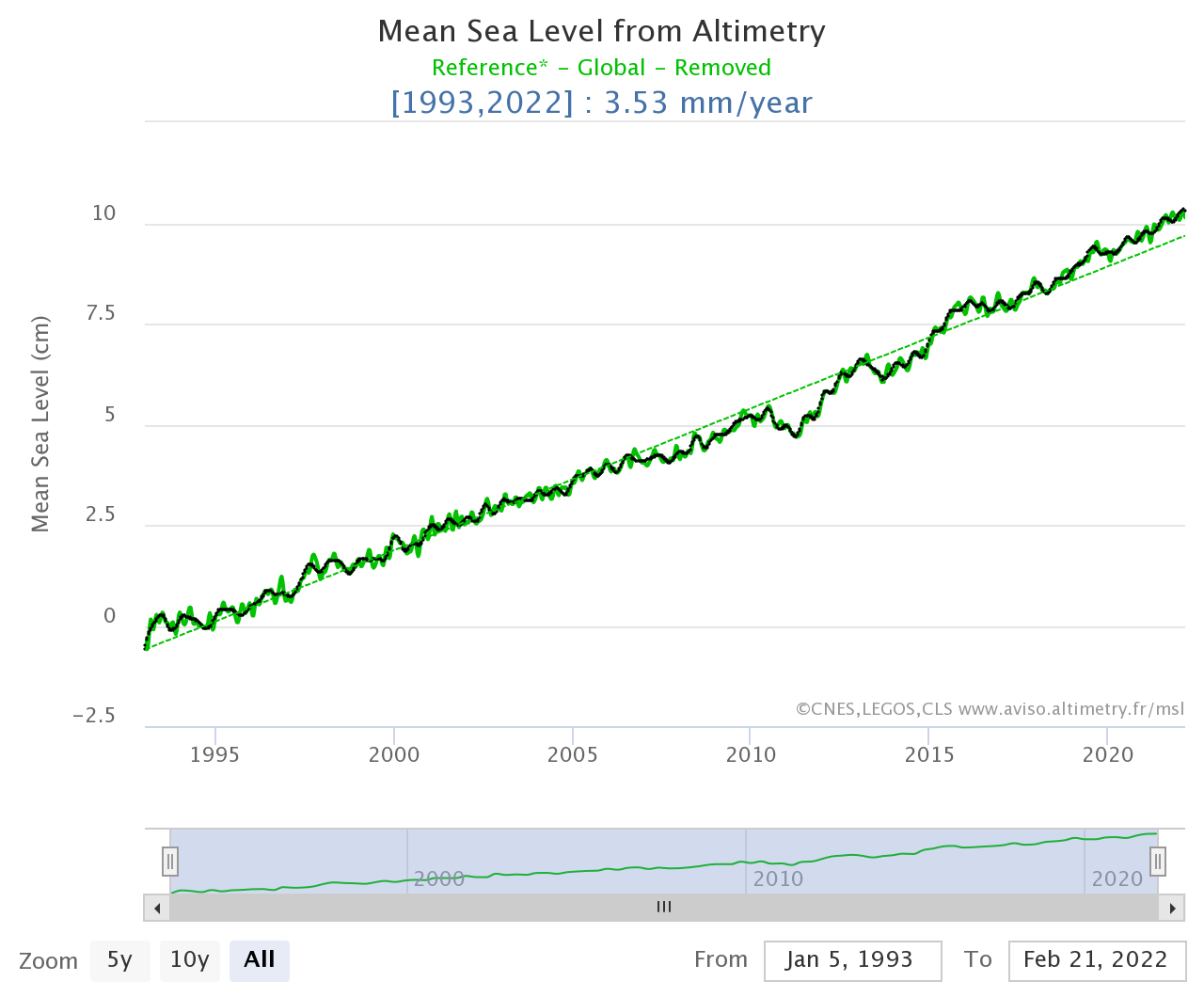
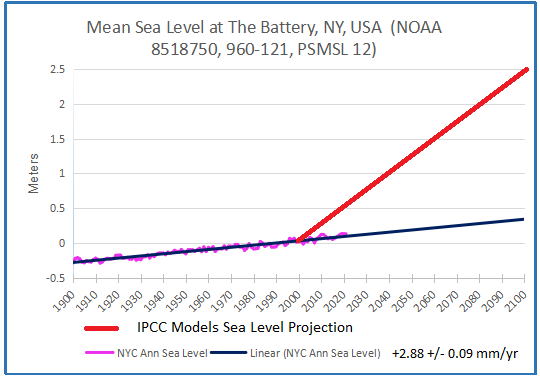
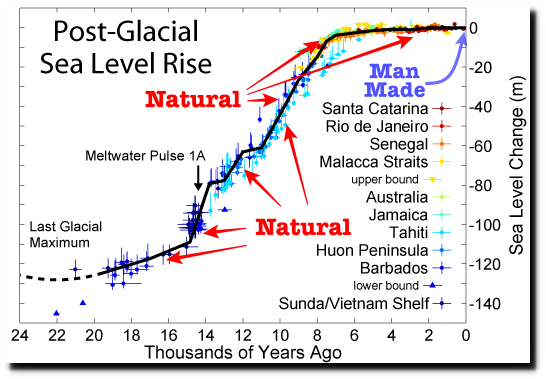

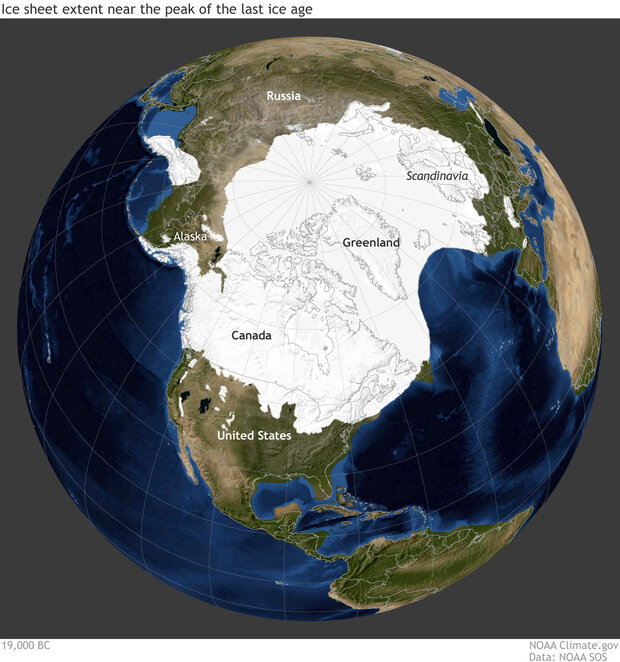
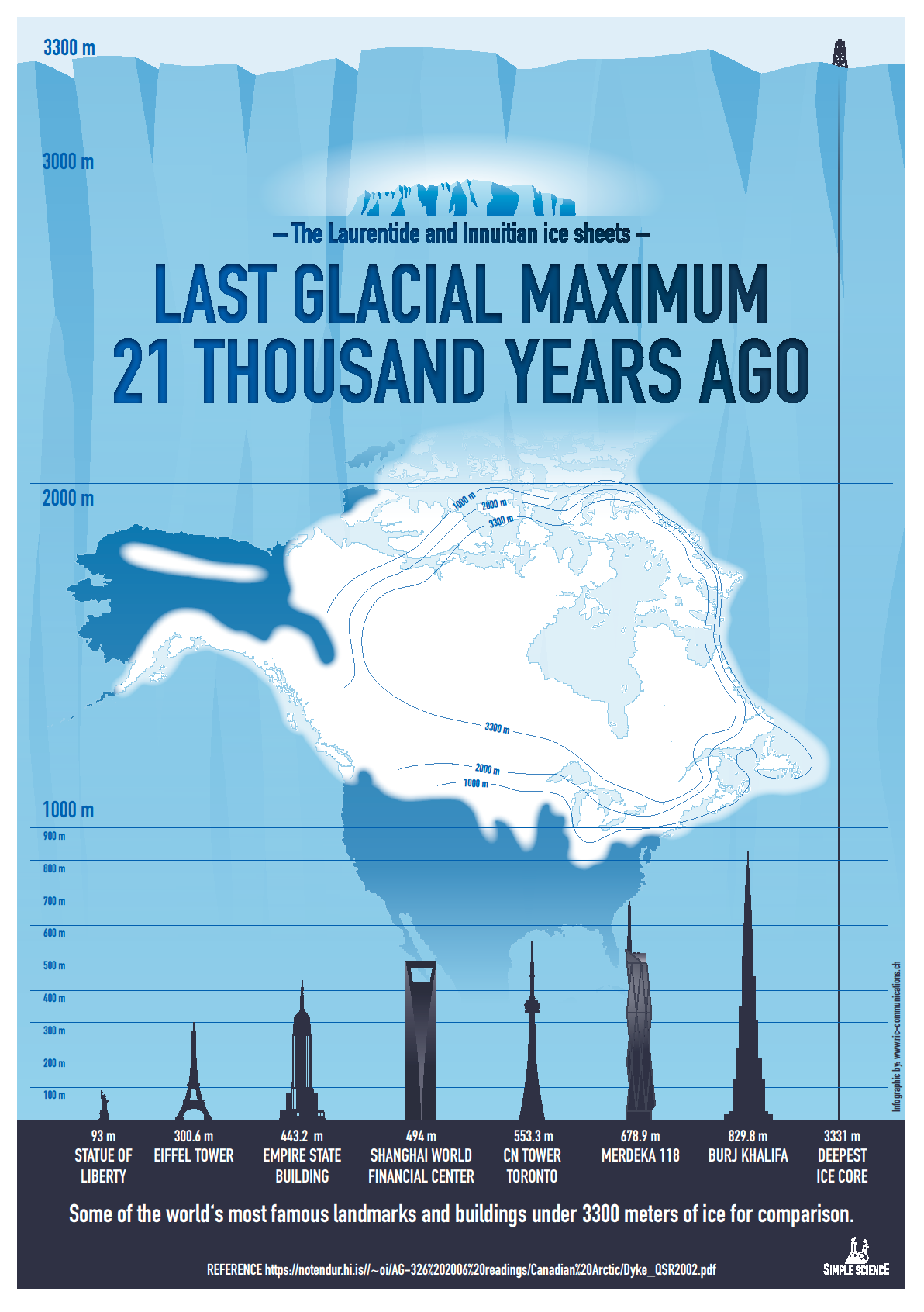
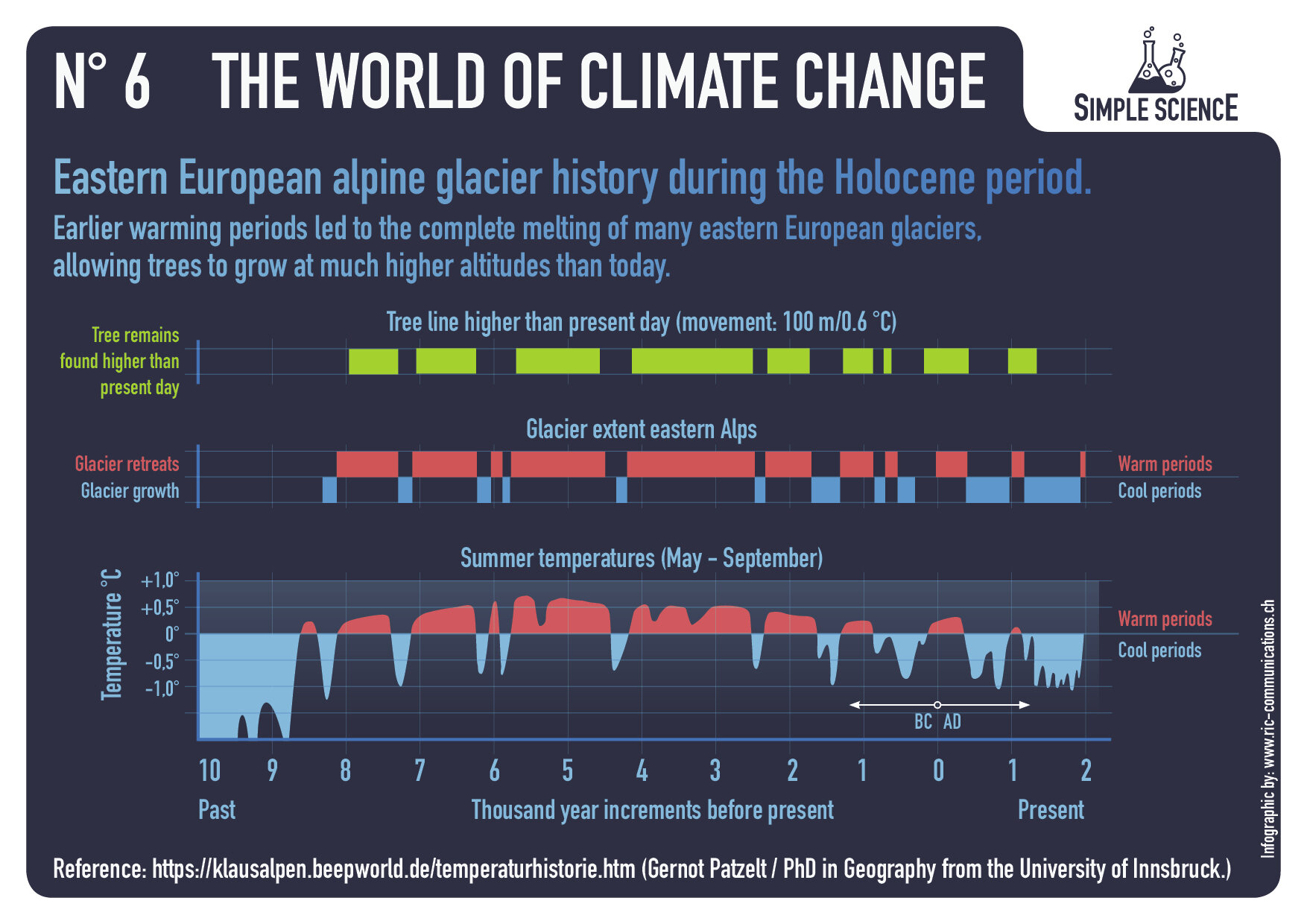
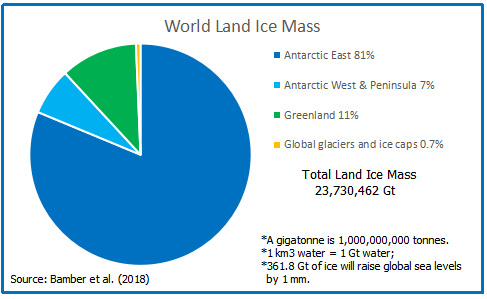
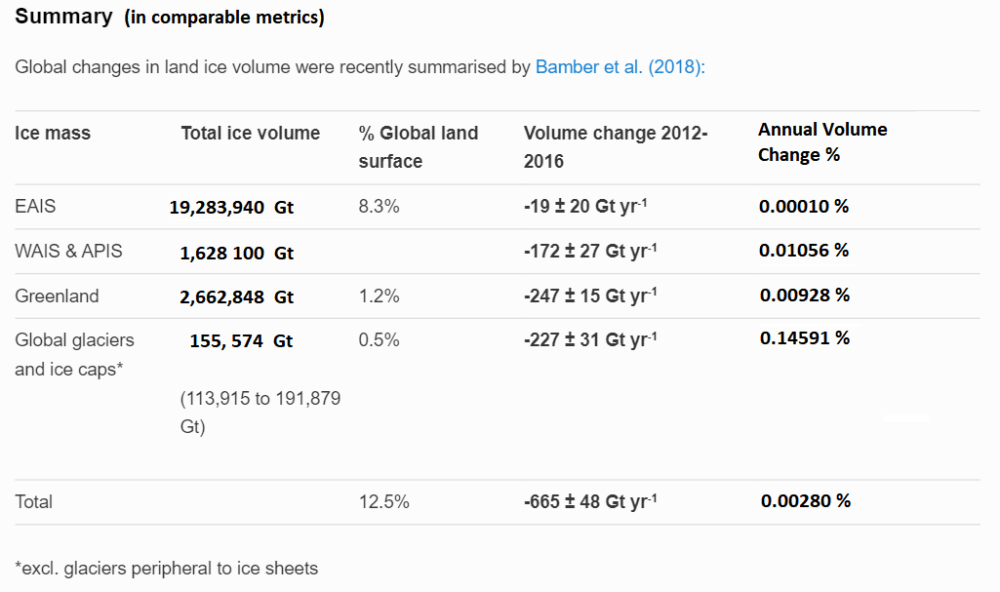
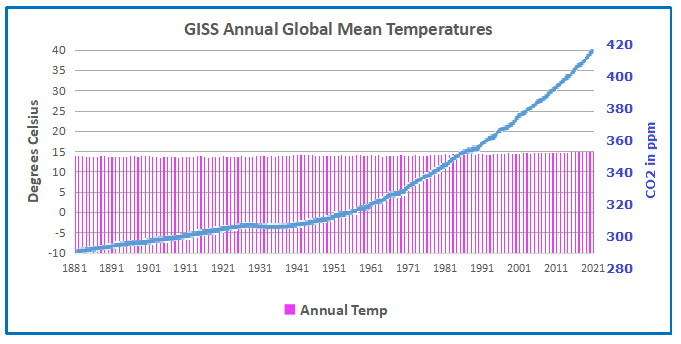
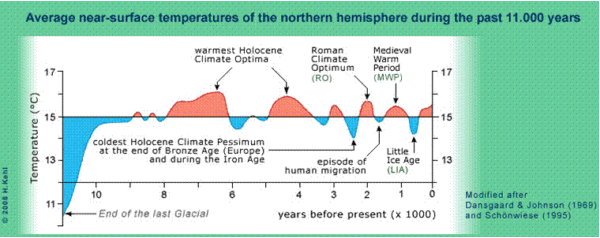
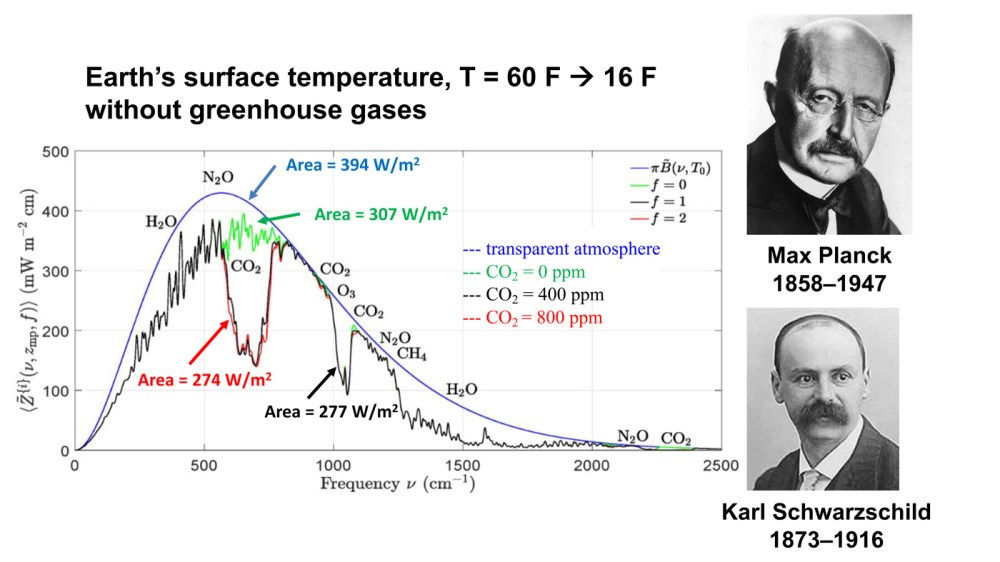 Schwarzschild was the theorist who first figured out how the real Earth, including the greenhouse gases in its atmosphere, radiates to space. That is described by the jagged black line. The important point here is the red line. This is what Earth would radiate to space if you were to double the CO2 concentration from today’s value. Right in the middle of these curves, you can see a gap in spectrum. The gap is caused by CO2 absorbing radiation that would otherwise cool the Earth. If you double the amount of CO2, you don’t double the size of that gap. You just go from the black curve to the red curve, and you can barely see the difference. The gap hardly changes.
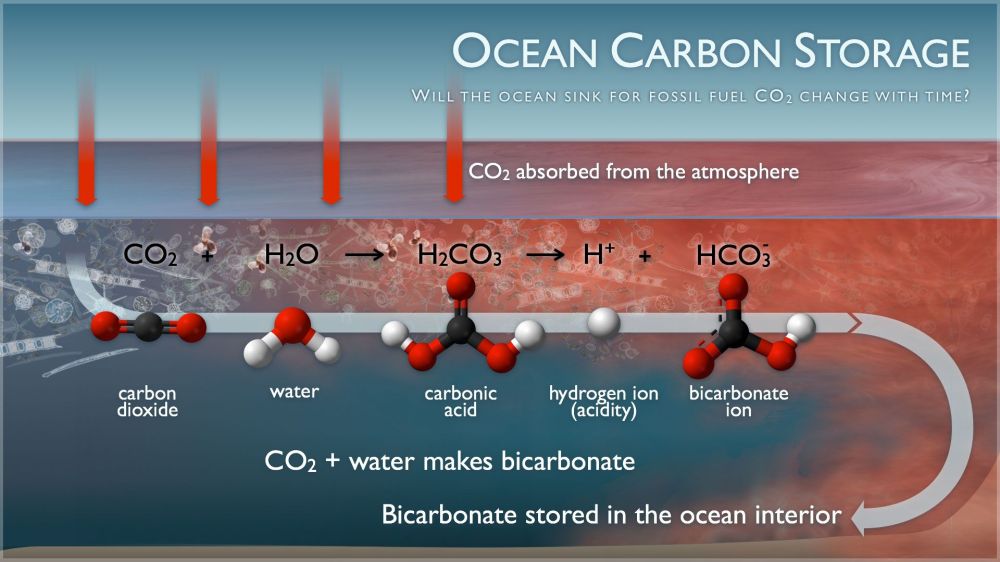


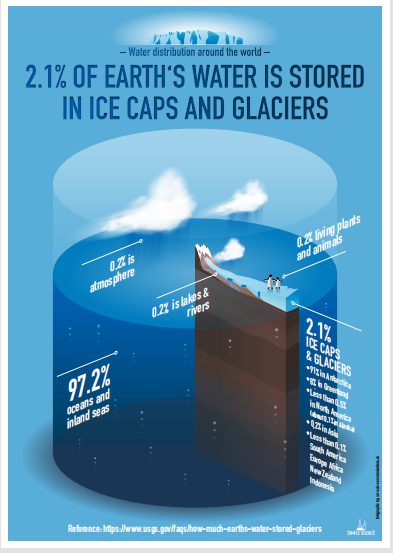
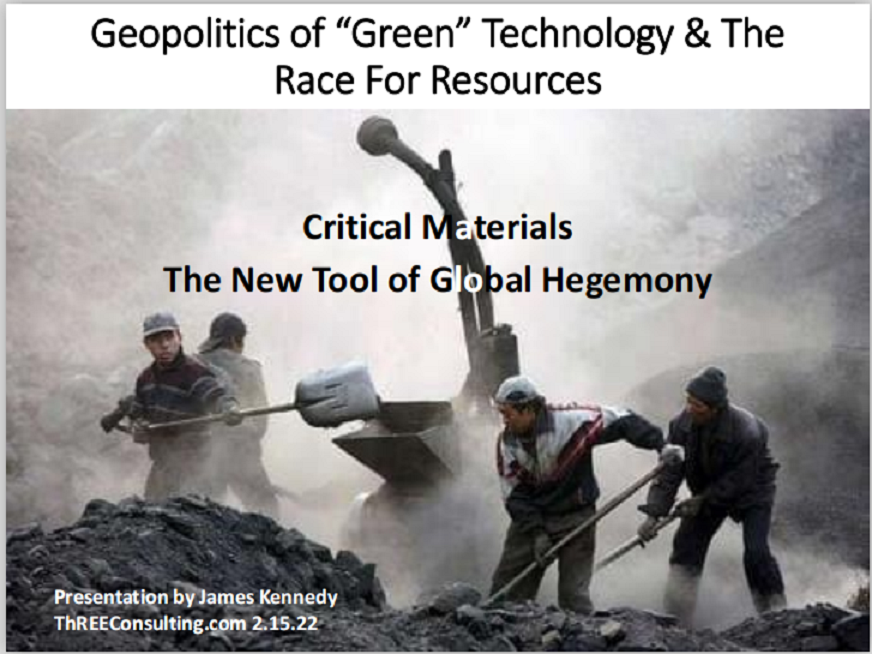
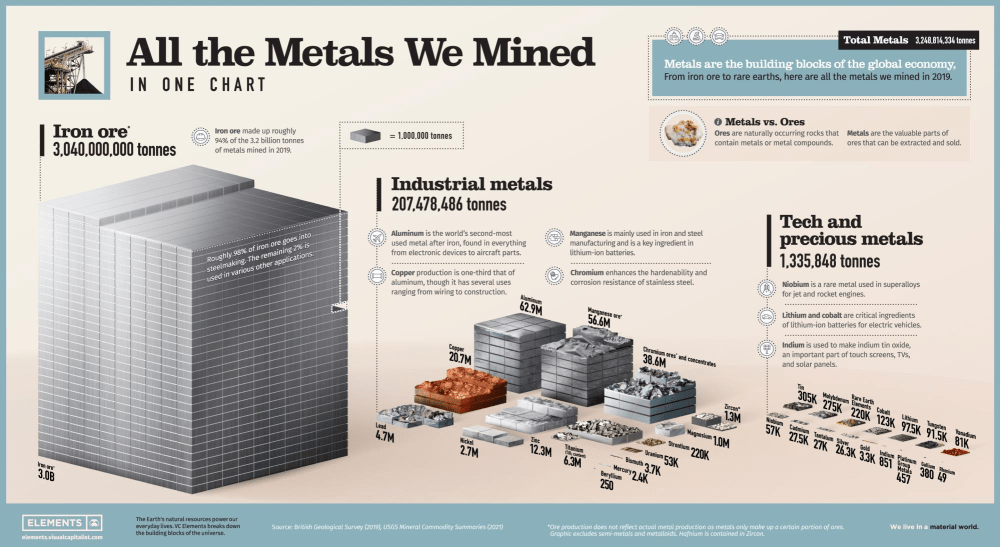
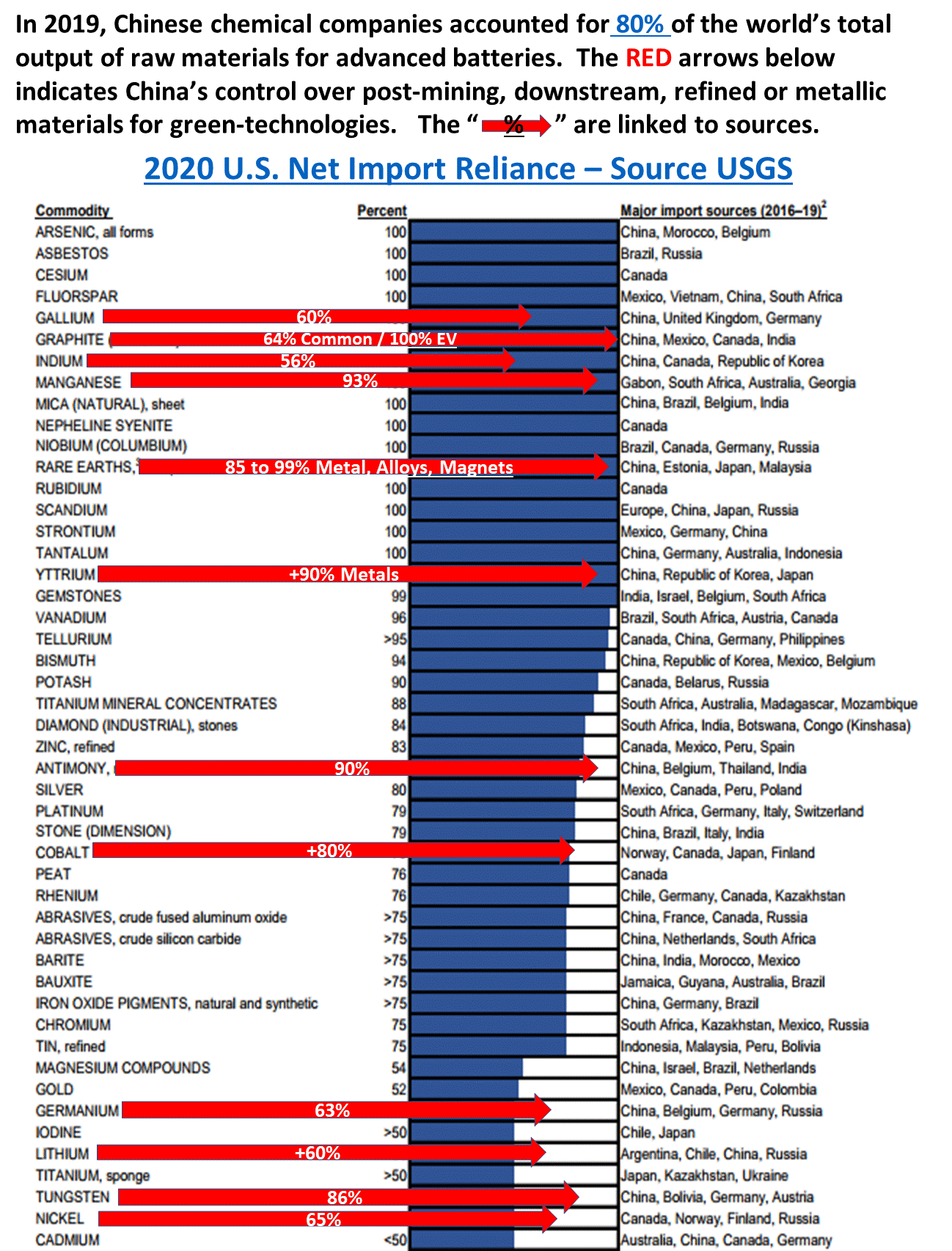
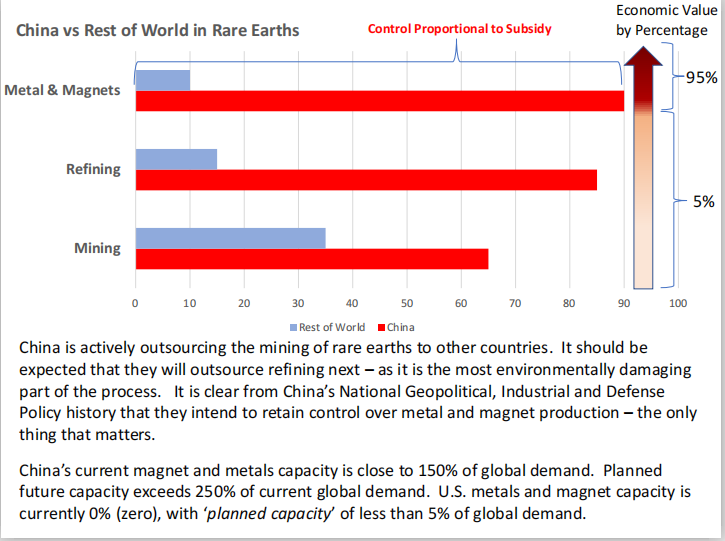
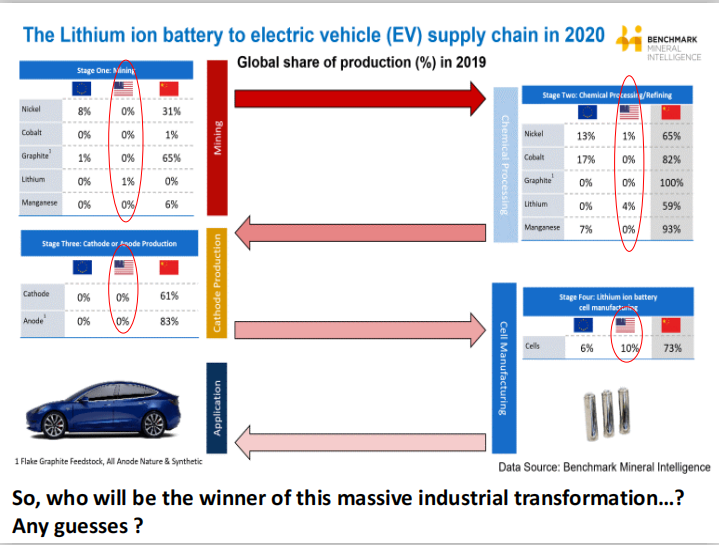
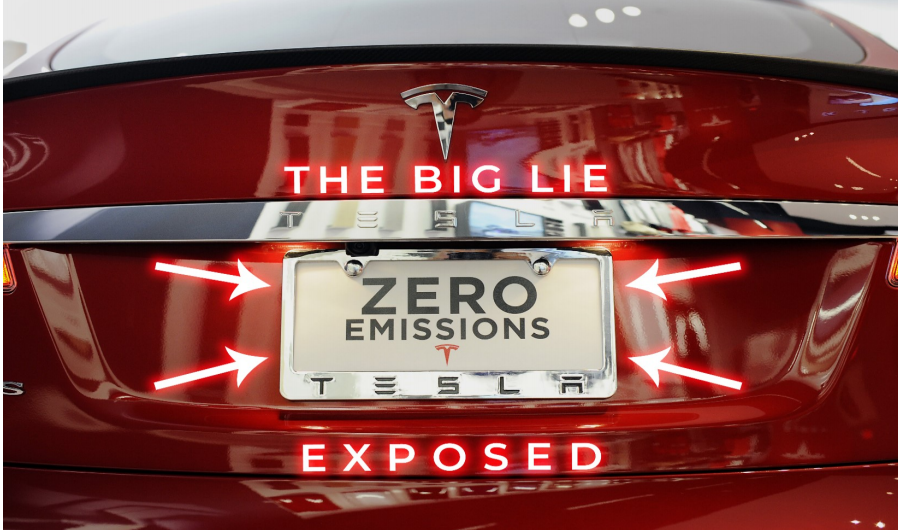
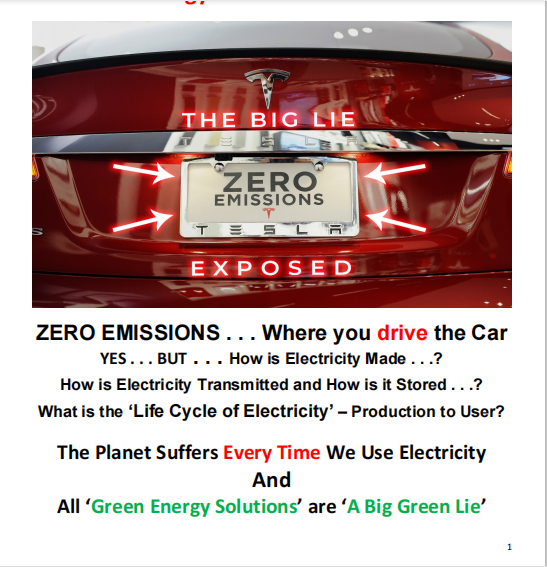
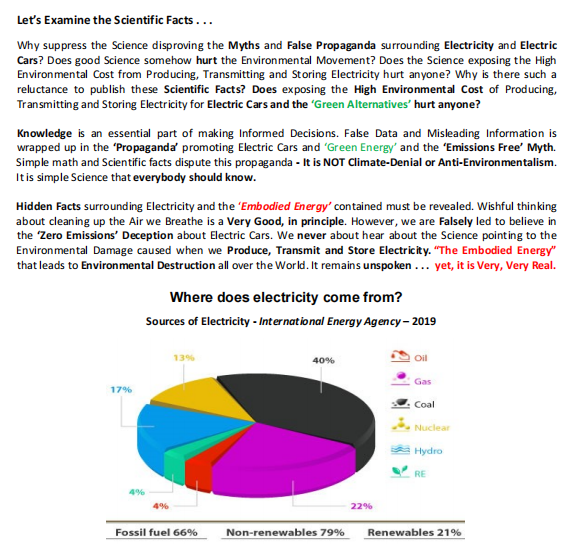
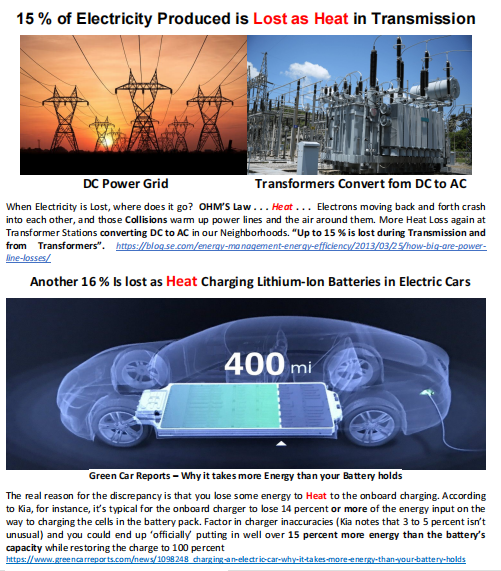
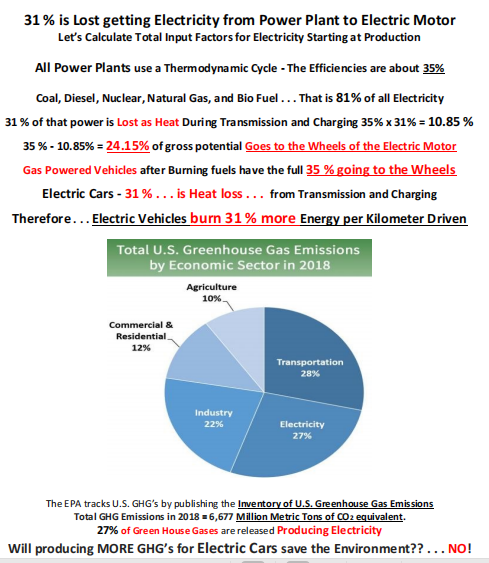
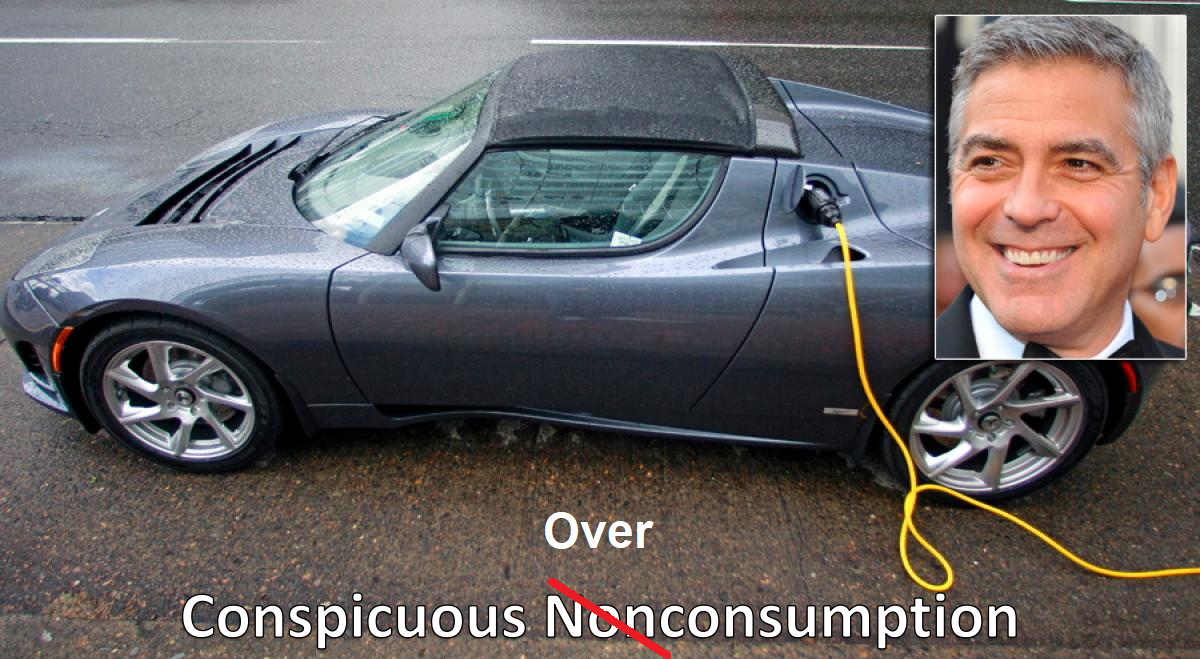
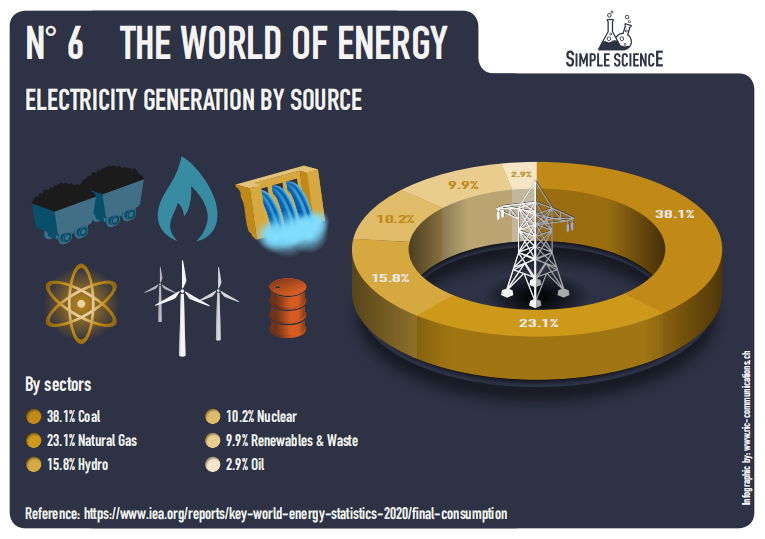
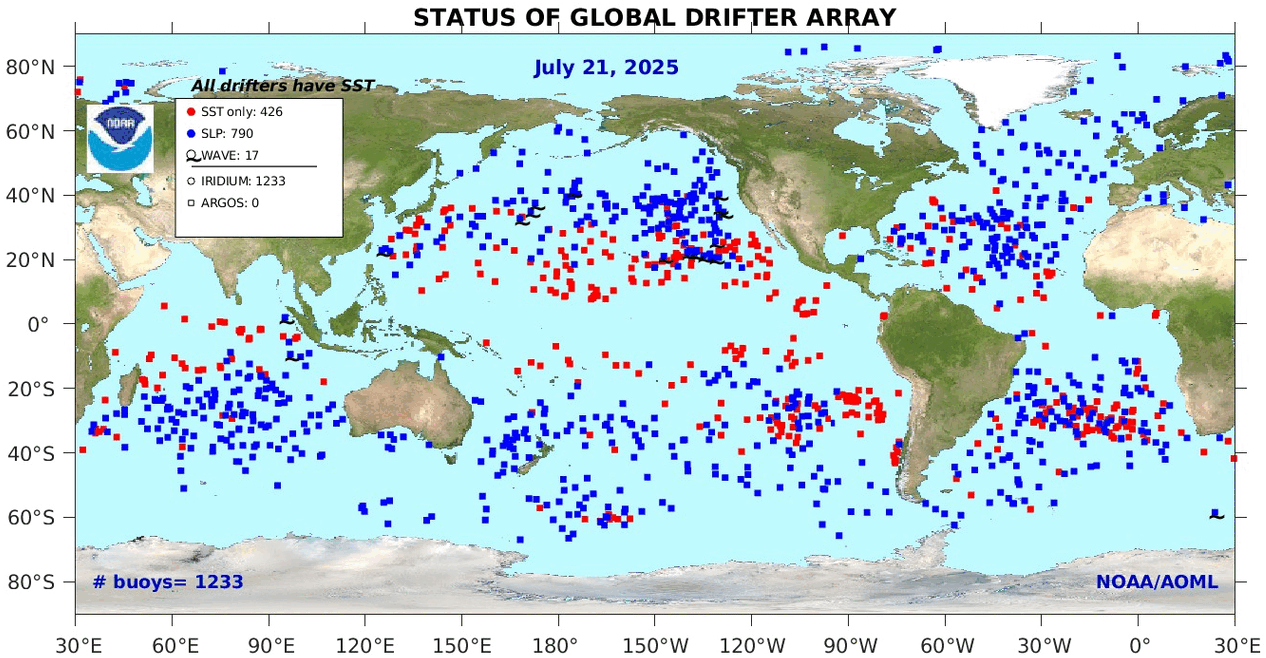
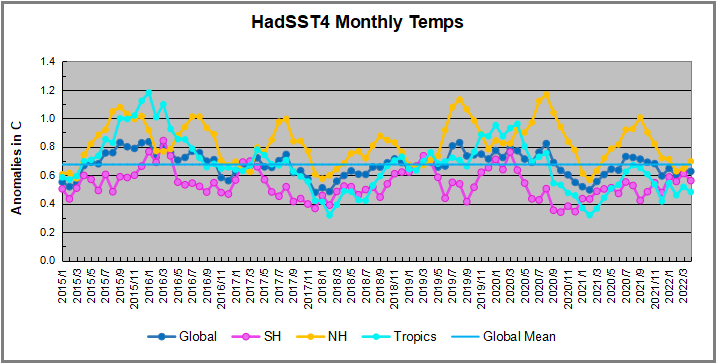
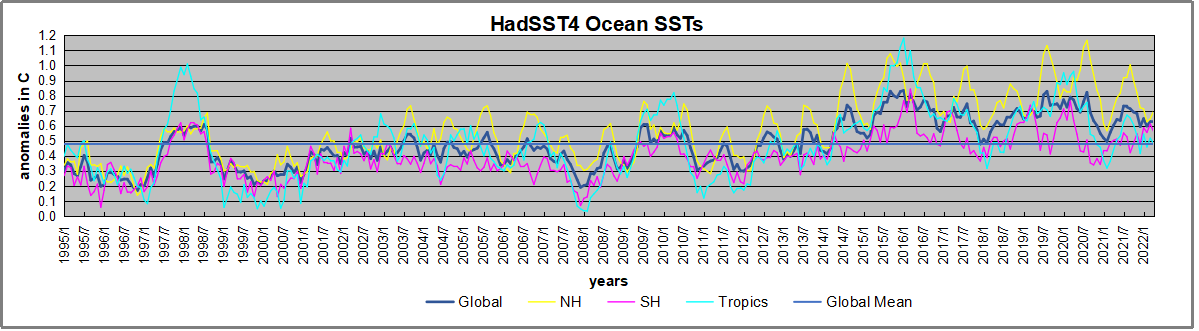
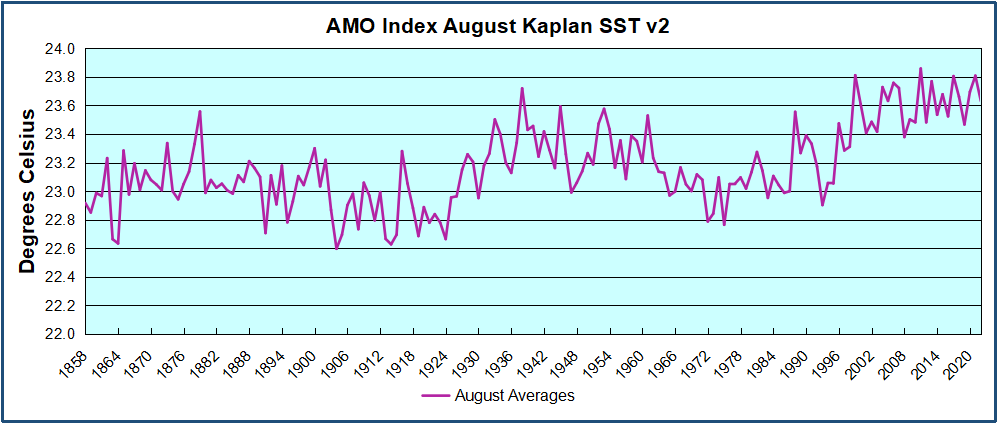
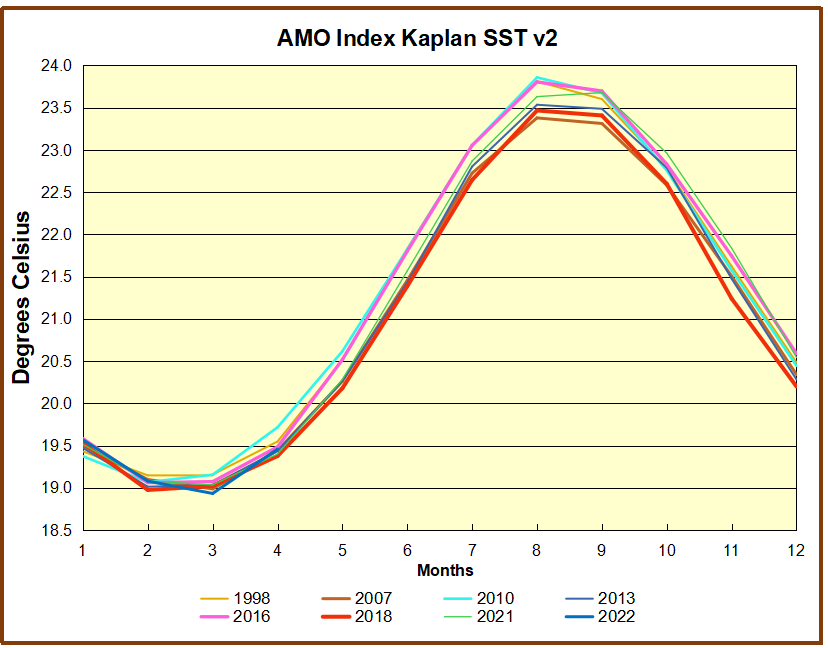
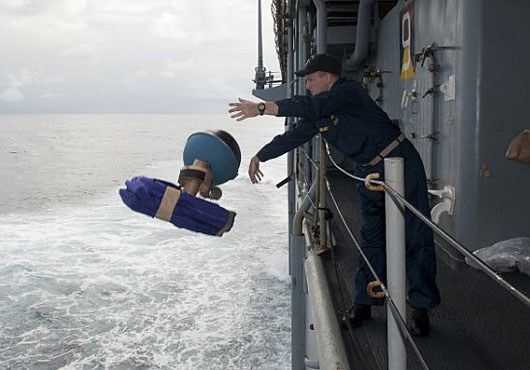



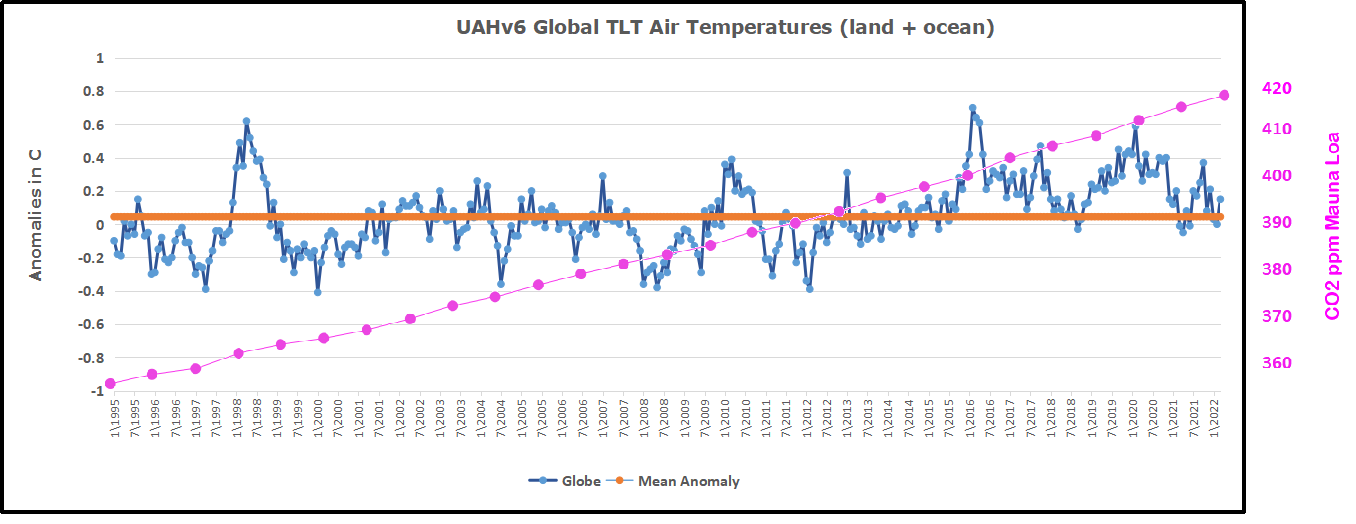
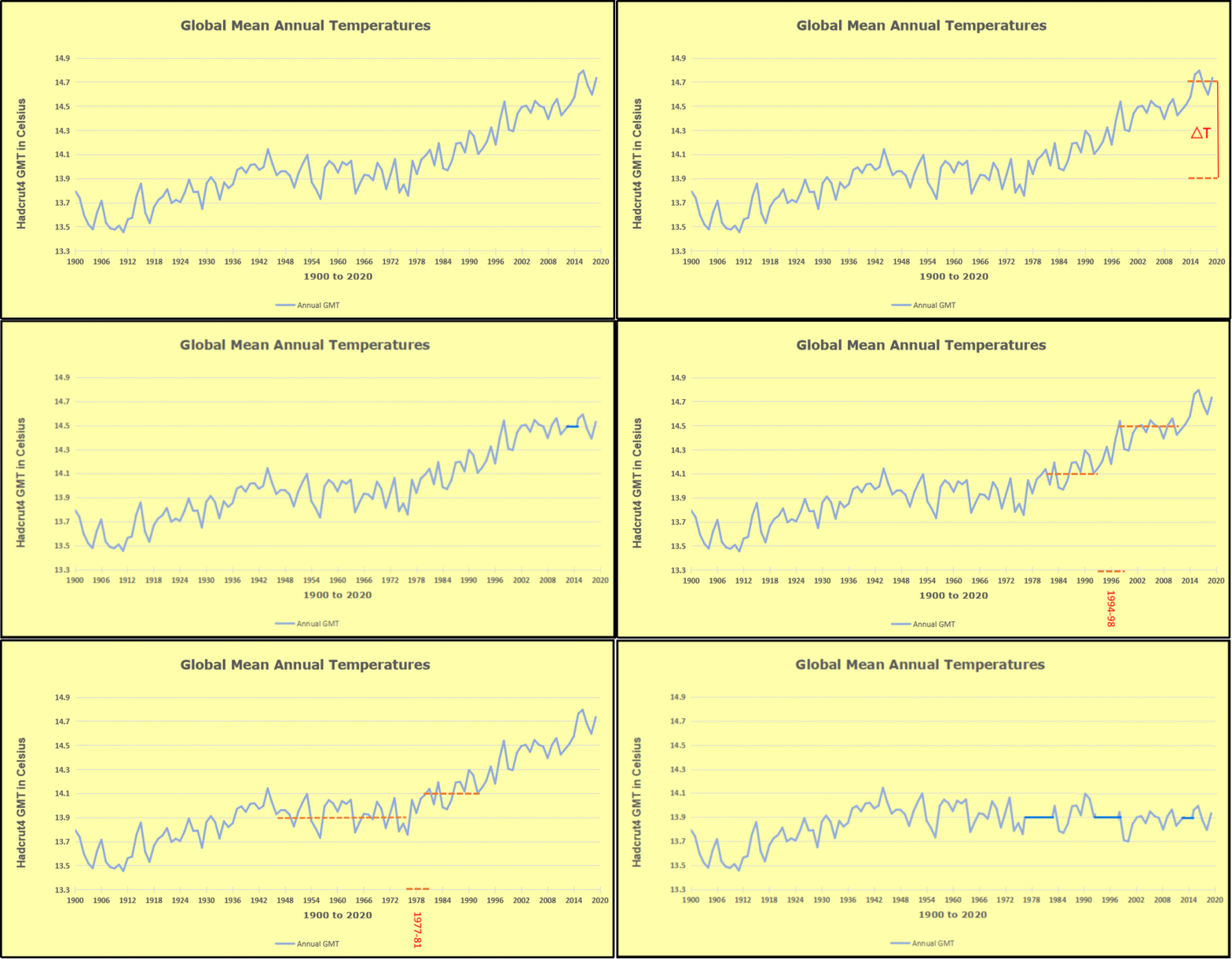
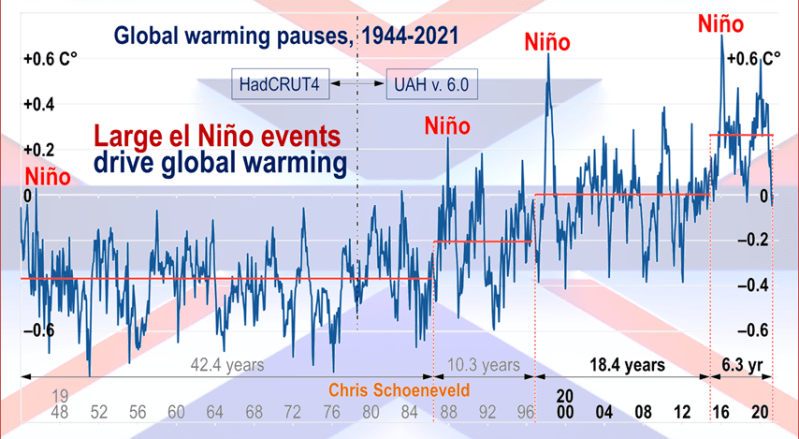
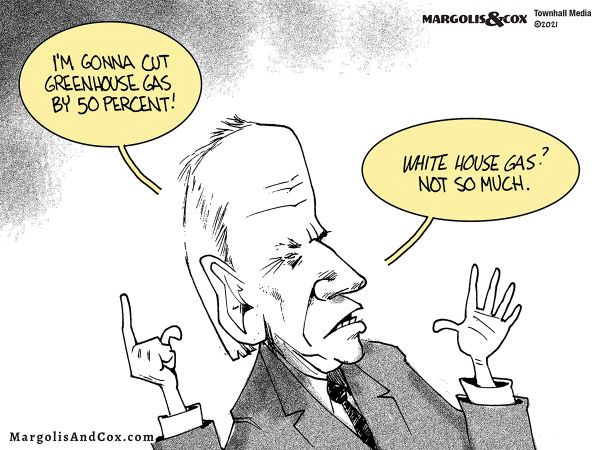

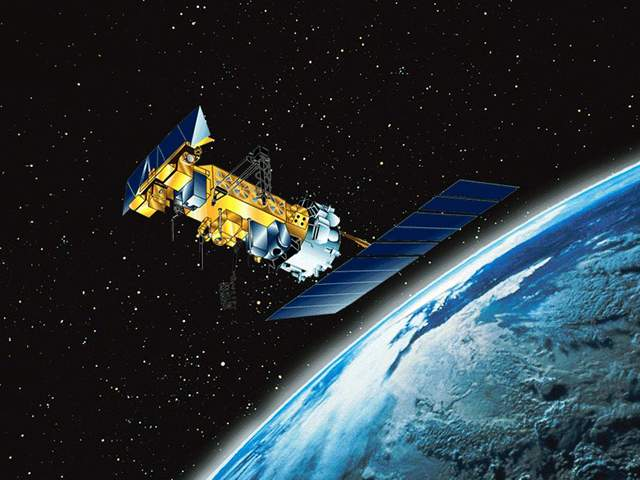
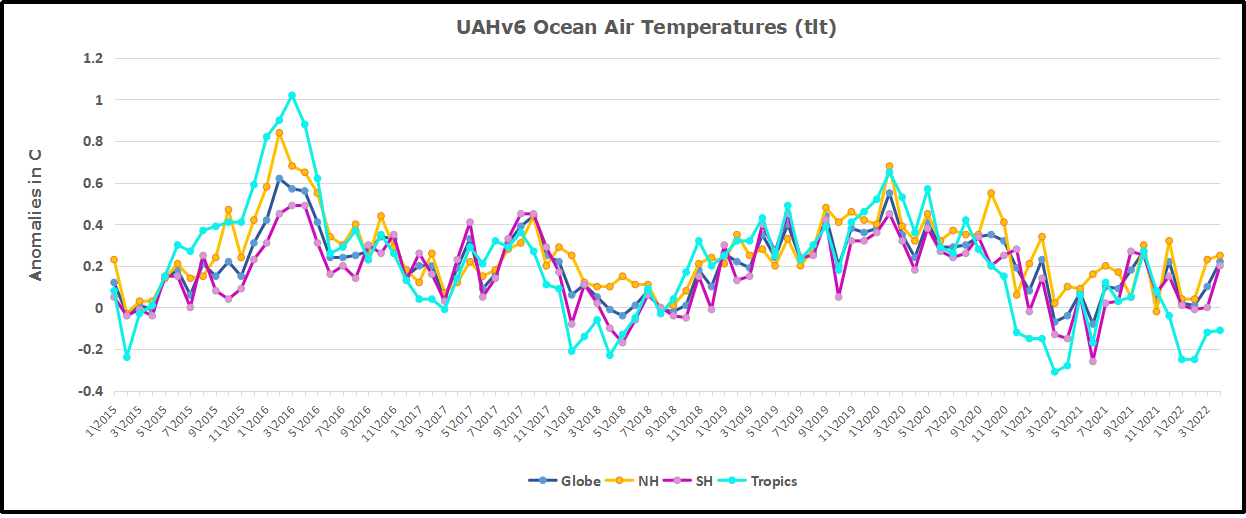
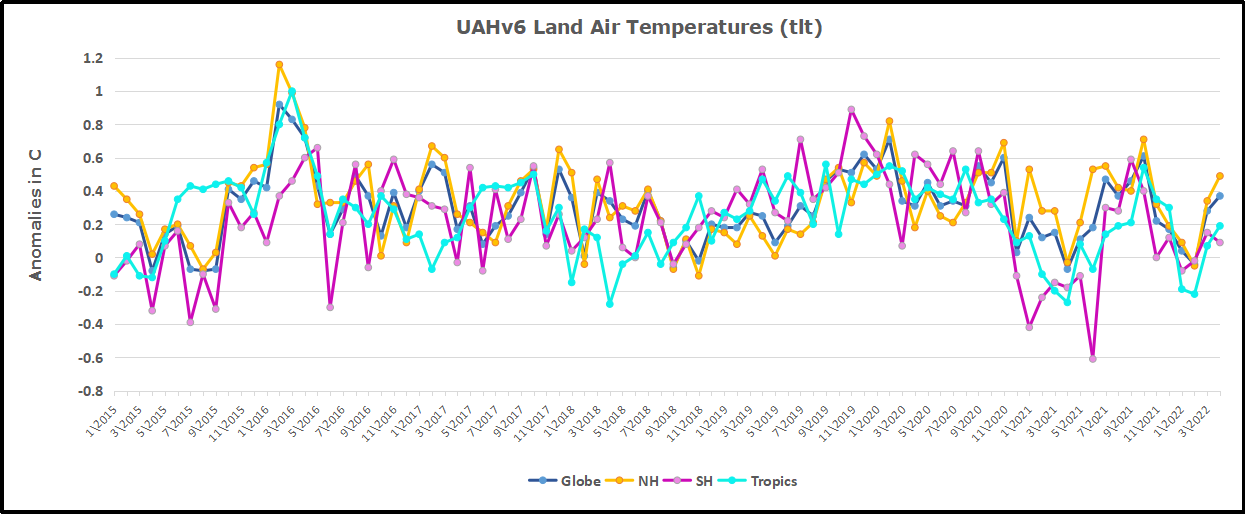
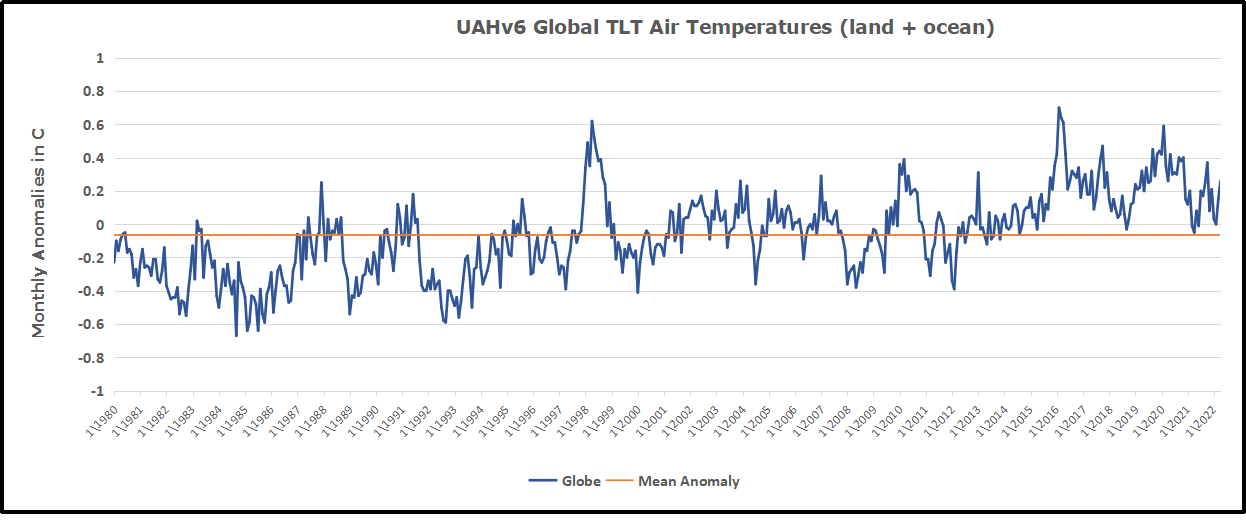

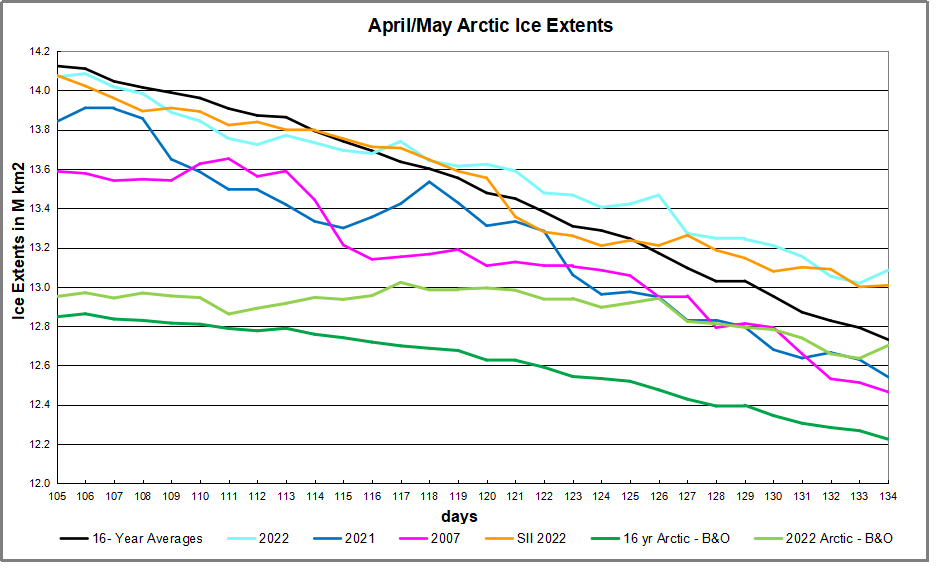

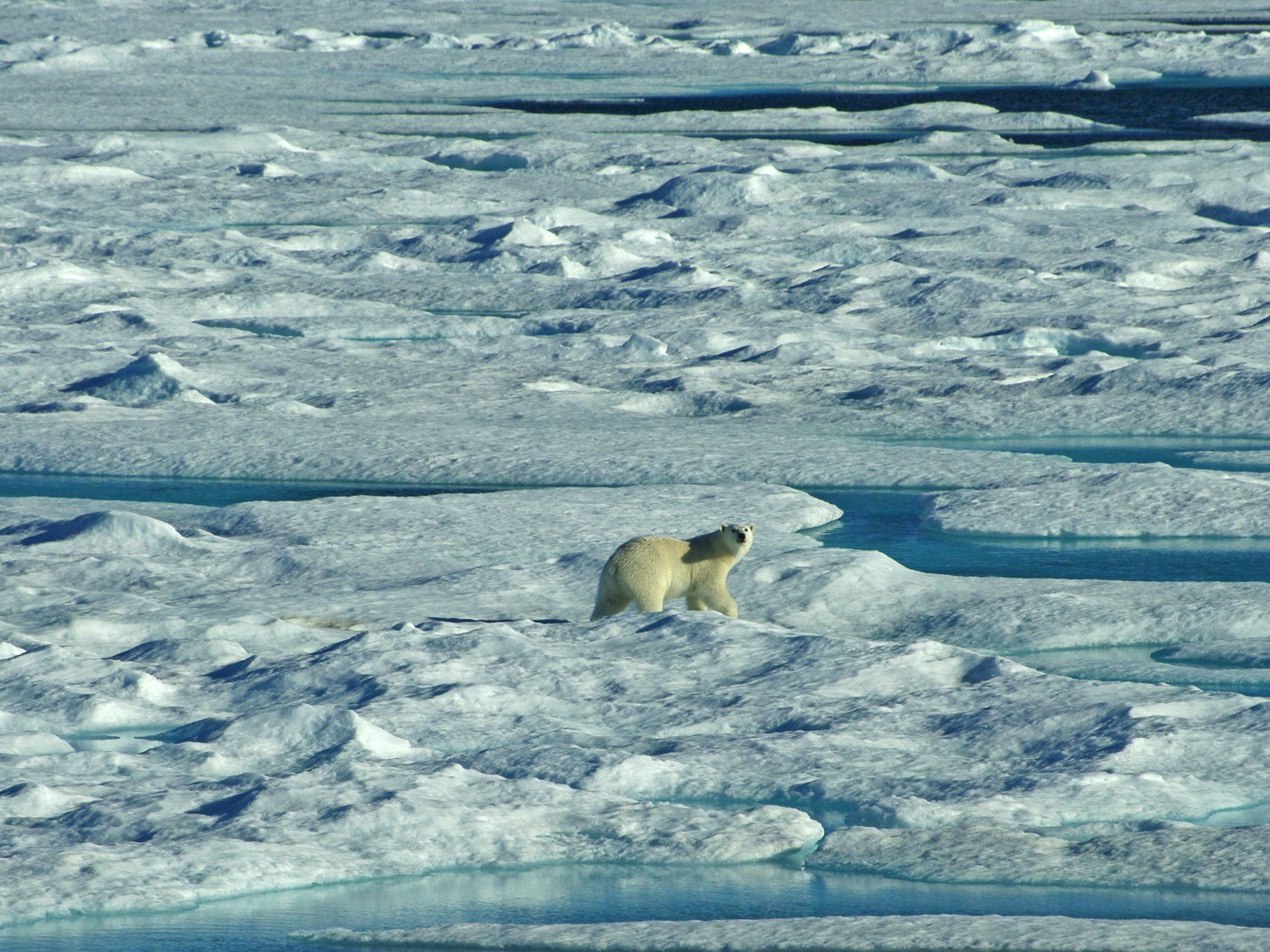
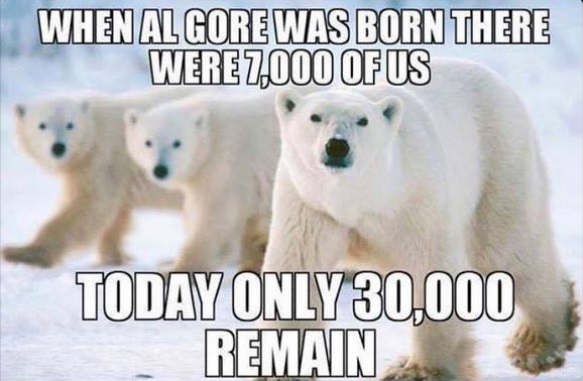
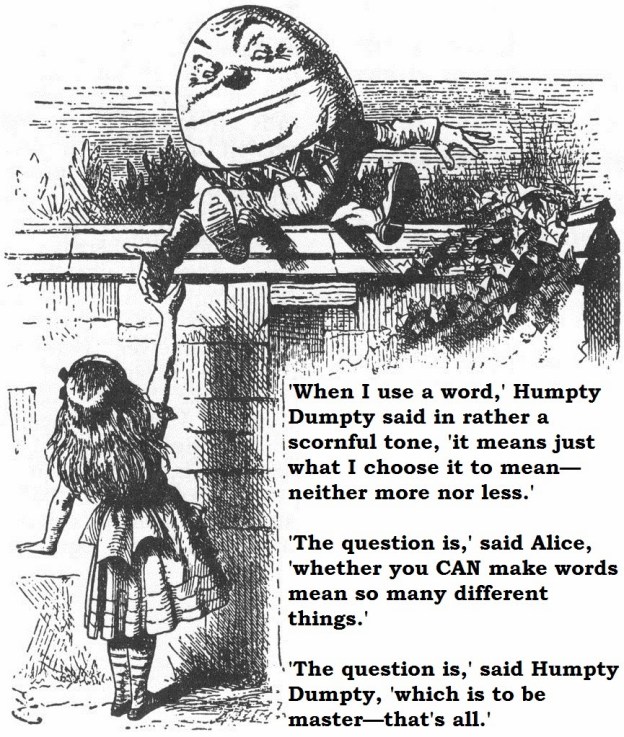

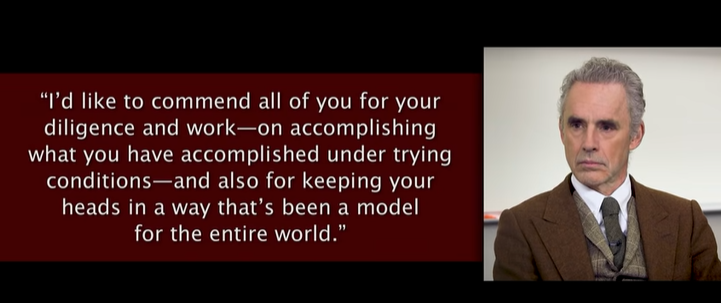
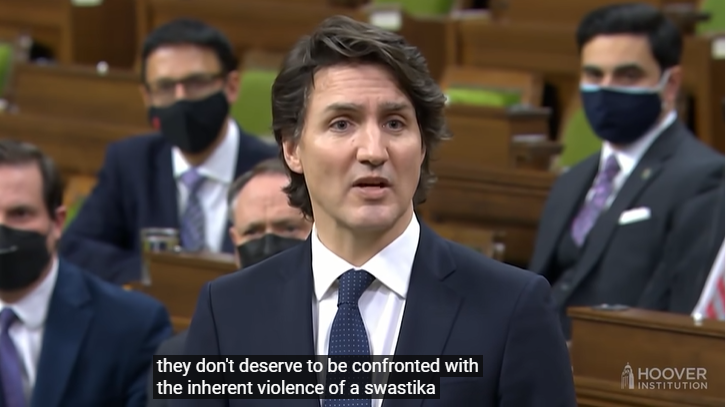
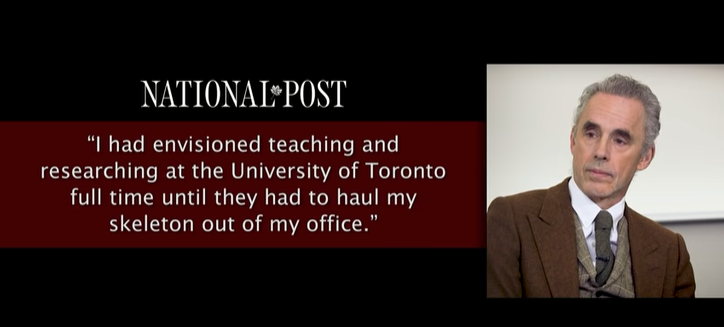
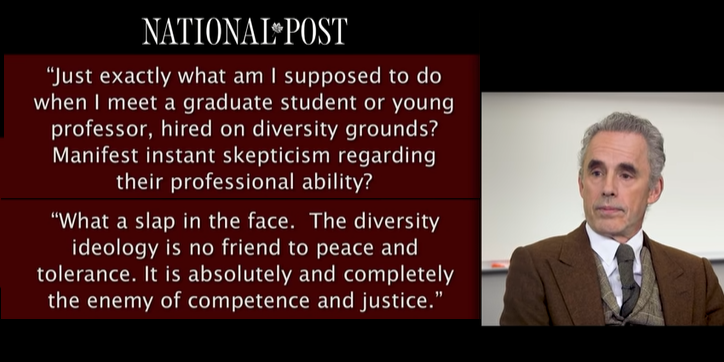
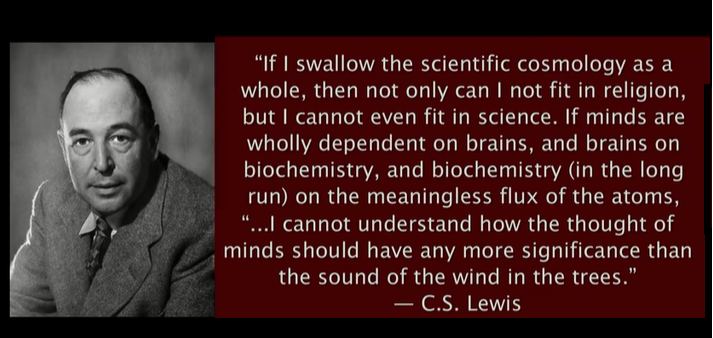
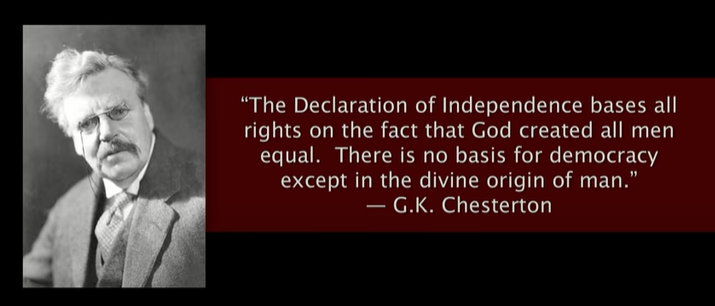
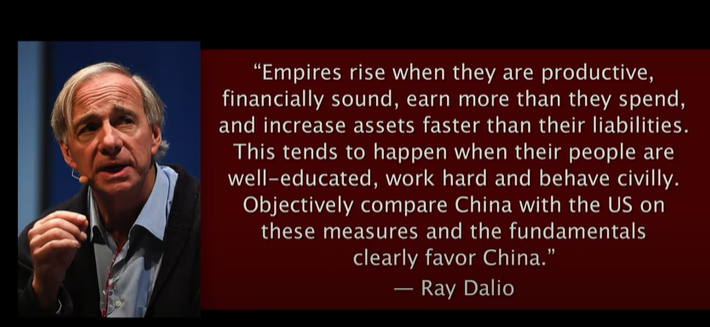
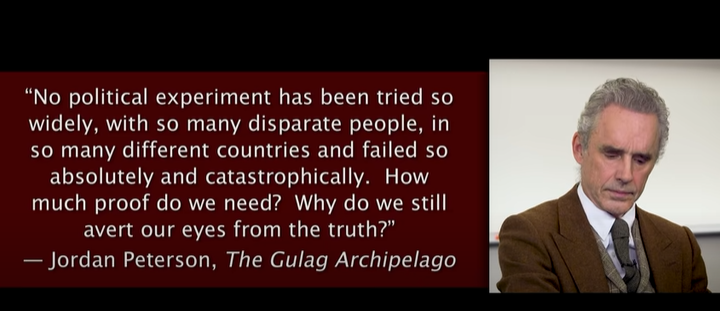
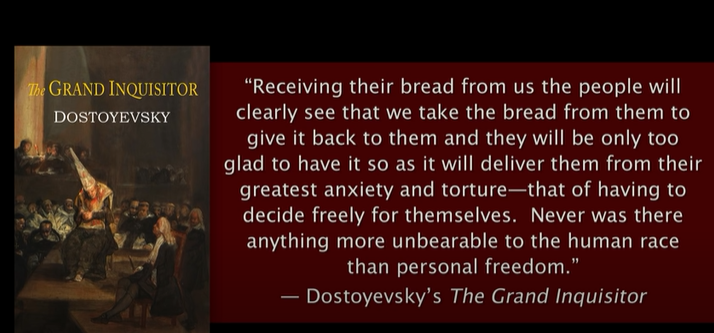
 Science Matters