Climate Change is a Political Cop Out
 

Jonathan Lesser writes at Real Clear Energy Climate Change Ate My Homework: Politicians Blame Climate Change for Bureaucratic Failures.  Excerpts in italics with my bolds and added images.

Never let a crisis go to waste, said Rahm Emanuel. True to form, politicians, including New York City Mayor DeBlasio, are conveniently claiming that last week’s flooding caused by the remnants of Hurricane Ida is clear evidence of climate change. “Unfortunately,” said the Mayor, “extreme weather events are becoming the norm.”

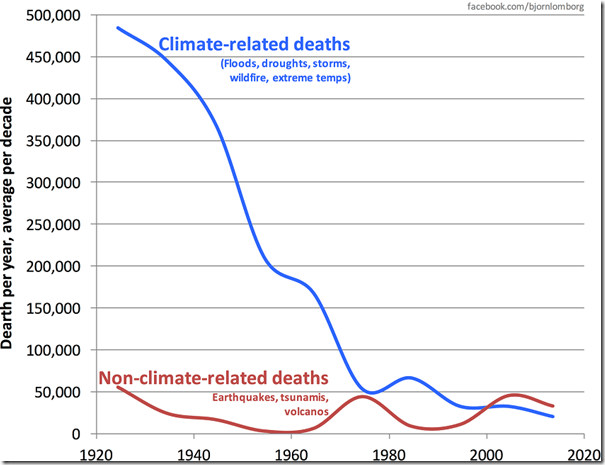
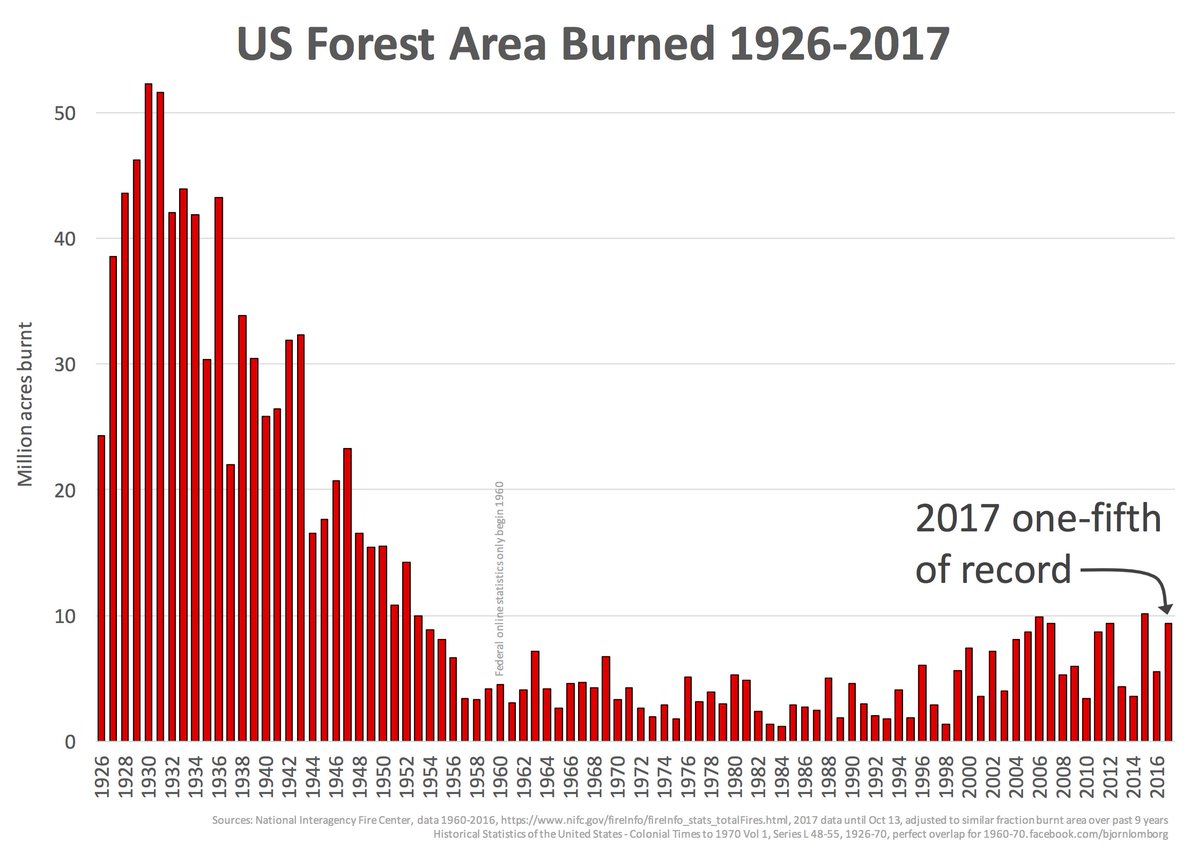
The data suggest it’s more complicated. Hurricanes are actually slightly less frequent today than they were a century ago. The average number of wildfires has not increased over the last thirty years and, over the past century, the total number of acres burned is far lower.
It may be hard to believe, but hurricanes hit the east coast even before Thomas Edison opened his Pearl Street Generating Station in the financial district in 1882. For example, the Coastal Hurricane of 1749 was estimated to have been one of the strongest hurricanes to hit the eastern seaboard.[1] Twin hurricanes hit North Carolina in August 1795. And the New England Hurricane of 1815 devastated Providence, Rhode Island.

Figure 2a shows Integrated Storm Activity Annually over the Continental U.S. (ISAAC) from 1900 through 2017, with a 10 year centered average in red. Source: Truchelut and Staehling (2017) Overlaid is atmospheric CO2 concentrations measured at Mauna Loa.

It’s true that damages caused by hurricanes and wildfires have increased. But the reasons are far from conclusive, and likely have far more to do with bureaucracy than with climate change.

Regardless, the rhetoric from our political class should be exposed for what it is: a thin attempt to shift blame away from their own bureaucratic failures.

Damages from hurricanes have increased because of far more development along the Gulf and east coasts. Furthermore, the federal government has subsidized flood insurance in these same areas and continues to do so. Not only have those subsidies encouraged coastal development, but also they provide an economic incentive for individuals, and state and local governments, to skimp on building more flood-resistant facilities. Vulnerable infrastructure—and more of it—will naturally yield greater infrastructural damage.
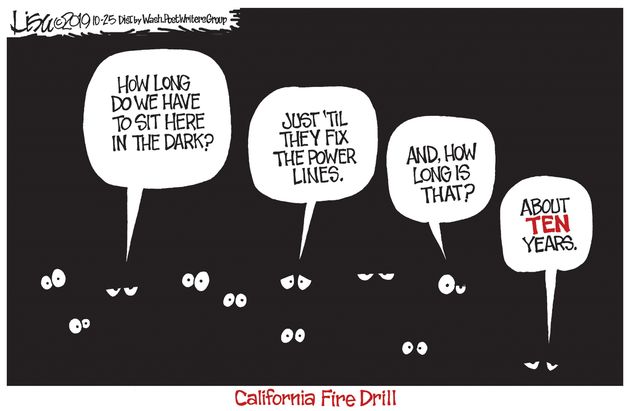
Similarly, damages from wildfires, especially in California, have resulted from a toxic combination of federal and state fire suppression policies, environmentalists’ demands that have prohibited removal of dead and diseased trees, restrictions on grazing that would remove dry grasses and, especially, poorly maintained power lines. Pacific Gas & Electric Company, for example, pleaded guilty to 85 counts of manslaughter because it failed to maintain power line equipment that caused the 2018 Camp Fire. To make matters worse, California’s restrictive development policies have forced homeowners to move farther away from cities and into mountainous areas where fire risk is greatest.

Climate change isn’t responsible for those policies.

Remember Superstorm Sandy? After it flooded New York City in October 2012, Governor Cuomo formed the “NYS 2100 Commission” to find ways to strengthen the state’s infrastructure. He also formed the “NYS Ready Commission,” which was to find ways to ensure that the state’s critical systems and services, including subways, are better prepared for disasters.

The 2100 Commission recommended hardening infrastructure, especially sewage treatment plants, strengthening dams and constructing levees, and even expanding wetlands protections in flood-prone areas.

Seven years later, in 2019, the City Council criticized the lack of preparation for the next storm because those preparations were mired in red tape and bureaucratic squabbling. [2] One notable project, for example, the $1.5 billion East Side Coastal Resiliency project, finally started earlier this year. It won’t be finished until at least 2026. Most of the other recommendations haven’t been implemented, either.

Climate change didn’t cause those delays.

Part of that “preparation” includes more stringent mandates for green energy. But even if New York was powered solely by green energy tomorrow, it wouldn’t eliminate bureaucratic delays.

Instead, it would inflict its own damage on New York’s beleaguered economy, with higher costs and more blackouts. Last month, for example, the New York State Reliability Council, which is tasked with preserving the reliability of the state’s electric power grid, issued a report regarding how to maintain that reliability while meeting the green energy and electrification mandates of former Governor Cuomo’s Climate Leadership and Community Protection Act.[3]

The Council concluded that, because of the inherent intermittency of wind and solar power, meeting those mandates will require “substantial clean energy and dispatchable resources, some with yet to be developed technology …” The Council estimated that, by 2040, New York will need 50,000 megawatts of generating capacity just in reserve – more than the state’s entire generating capacity today – and require generating technologies that don’t even exist.
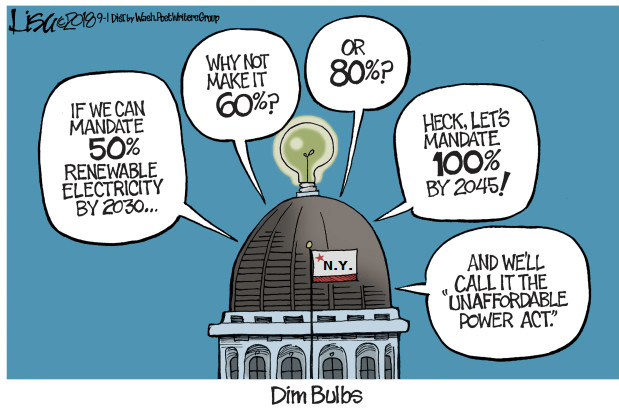
Americans like to think they elect leaders who diligently prepare for the future. But if the preparation requires unknown technologies, and if concrete plans for resilience are going unfulfilled now, one man’s forward-thinking rhetoric can look an awful lot like another’s finger-pointing to eschew blame. It would be nice to think politicians would avoid using buzzwords and broad concepts to mask their own deficiencies. But the facts of bad incentives and poor planning are undeniable. When the lights go out, we can expect more of the same excuses.

 

How Medical Technocrats Subvert Medical Practice

Dr. Ted Noel explains the ways government institutional rot prevents doctors from caring for their patients. His article at American Thinker is Why Do Doctors Go Along with COVID Panic Porn and CDC Prescriptions? Excerpts in italics with my bolds.

I recently had a conversation with a reasonably well informed writer who simply missed the real reasons why most practicing physicians go along with the Fauci Fraud. As a public service, I will attempt to fill in a few gaps. But first, I must define the fraud.

There are two basic legs to the fraud. First is the idea that the Centers for Disease Control is in any way concerned with a mission related to its name.

The failure of the CDC to endorse any treatment that did not emanate from its exalted halls should give us our first glint of clarity. There are literally millions of physicians around the world, and the great bulk of them truly wish to treat their patients well. Among those are thousands of researchers, a number far in excess of those at the CDC, the NIH, and other alphabet soup government agencies. The very idea that outside researchers are incapable of discovering anything useful without the help of the bureaucrats in D.C. is hubris of the highest order. And it prevents the CDC, the FDA, or any other such agency from considering the idea that maybe, just possibly, there might be intelligent life down here. Mount Olympus cannot be threatened.

The second leg of the fraud is less visible to the naked eye but much more powerful. If I wrote this before I retired, I would be called before the Board of my group and told in no uncertain terms to shut up.

I might even be assessed a financial penalty with several zeroes after the one. That’s a serious impairment of my pursuit of happiness. The reason for my group’s dislike is more than the fact that I might be an irritant. They may actually agree with what I have to say. But they simply cannot afford for me to say it. That’s right: as a practicing physician in a group, my freedom of speech can become very expensive…to the group.

My group cared for patients of all descriptions, with roughly half of them on Medicare and another batch on Medicaid. Both programs are ultimately managed by the feds, one of the most humorless groups on the planet. They write a whole bunch of rules on how you have to document everything you do. If you didn’t document it correctly, it didn’t happen, and you won’t get paid. But that’s not the half of it.

Suppose you have one of those patients brought in by the ambulance from under the bridge. His only clothes are the ones he’s wearing, and he doesn’t have two nickels to rub together. It’s more than obvious that this surgery for bowel obstruction will be a charity case. Before Medicare, you’d simply write it off as your good neighbor duty. Now you don’t get a choice. CMMS (the actual administrative agency) requires you to send a bill. Twice. Or maybe three times. Whatever it takes to turn the bill into bad debt. Then you have to send it to a collection agency. Your only alternative is for your group to bring it up in its Board meeting and declare it a write-off that gets noted in the minutes.

All this rigmarole serves no purpose, and you knew that before you got to this sentence. But CMMS has a sinister side. If you do the case for free (which you did before you spent that useless money on billing and collection), CMMS will define that as your “usual and customary” bill for an exploratory laparotomy. Since your U&C is now zero, you can’t ever bill more than that for an ex lap in the future.

But what does that have to do with ivermectin? I’m glad you asked.

U&C bills are just one of hundreds of rules that CMMS enforces. Another is “Pay for Performance.” Basically, P-f-P requires you to check a host of boxes when taking care of patients. If you didn’t get that IV antibiotic in 20 minutes before the incision, you failed P-f-P and may not get paid. The hospital won’t get paid to take care of the patient if there’s a complication.

So let us suppose that you use ivermectin to treat a COVID patient as he arrives in the hospital. Ivermectin isn’t on the Medicare/Medicaid approved list of medications for COVID. Your hospital pharmacy will call you up and give you grief. After wasting a lot of time getting them to finally let you have it, you’ve had to cancel half of your office day. The next day, you’ll get a visit from a coder, who will tell you that you didn’t use the approved treatment protocol and put the hospital in jeopardy because you flunked P-f-P. By the way, that “coder” is the person who “helps” you use the proper ICD (billing) code for whatever the patient has in order for the hospital to make the most money. But that’s not the worst of it.

Because you flunked P-f-P, that waves a red flag in front of the CMMS bulls, and you’re about to get gored. They will wonder what other bad things you’ve done. As soon as they find one, it gets flagged as “Medicare fraud,” and they will bill you for twice what you got paid as a penalty. Can you guess how many other instances of fraud they’ll find if they look hard? Do you have to ask why my partners would get upset if I published while I was still in practice? By the way, CMMS can go two years back as they look for your crimes. They can ultimately take your house, your car, and your wife’s poodle while they’re at it.

Let’s change the scene. Suppose you’re in private practice. You can’t give ivermectin because the feds will key in on it if your patient’s on Medicare or Medicaid. So you decide to take care of him off the books. He pays you cash, and all is well. Not! You now took a private payment for Medicare-covered service. That will get you barred from seeing another Medicare patient for two years.

Let’s forget all the regulatory traps. You’re conscientious and try to do the best for your patients. But you’re busy, and you can’t keep up with the flood of papers on all the various COVID bits. So you wear a mask, have your patients wear masks, and do a lot of telemedicine. You keep up on the latest through Medscape and the Morbidity and Mortality Weekly Reporter. You should be good? Not! MMWR is put out by the CDC, and they won’t say the first good word about HCQ or ivermectin. Medscape is a little better, but not much.

And all the specialty societies are toeing the line. Can we guess why?

Any doctor who actually reads the studies, or follows any of the protocols published by the Association of American Physicians and Surgeons, will see a lot of peer pressure to stop. The financial risks may be extreme. It takes a spine of steel to stand up to the authoritarian orthodoxy.

Ted Noel, M.D. is a retired anesthesiologist/intensivist who posts on social media as DoctorTed and @vidzette.

For a deeper look into these issues, see:

Science Also a Pandemic Victim

Why Technocrats Deliver Catastrophes


CEOs Fear Their Woke Employees

An article at AMAC explains Chief Woke Officers Take Over Corporate America.  Excerpts in italics with my bolds.

Mitch McConnell tried to warn them. He said that “If I were running a major corporation, I would stay out of politics” and stop “behaving like a woke parallel government.”

Yet corporations continue to preach endlessly about “systemic racism” and “equity,” and their actions are more indicative of left-wing activist groups than a legitimate business.

What gives? Why do Chief Executive Officers usually run their lives like sensible business people but run their companies like Chief Woke Officers?

It boils down to one simple truth: they’re afraid of the people they hire.

They look out at their company, and who holds the real power? Overeducated, Rachel Maddow-watching, walking HR departments—often actually working in HR.

Woke radicalism has gone mainstream by seizing the once bland world of Human Resources at the innermost layer inside organizations. Now, they’re subverting institutions from within.

As a result, even middle-of-the-road personnel policies today include statements on “equity,” “inclusion,” and even “anti-racism” as standard-issue boilerplate. Far from the traditional HR responsibilities of hiring, firing, and training personnel, today’s HR departments are the woke police of corporate America, enforcing rigid adherence to leftist ideology. Any dissent, even from corporate leadership, is not tolerated. Ever fearful of being tried in the court of public opinion, CEOs and other executives, ostensibly the most powerful people in the company and some of the most powerful people in the country, submit.

CEOs, always more concerned with investor-relations and long-term projects than HR policies, now face a choice.

Do they stand up for what they probably know is common-sense, and fire the mouth-breathers more suited to running a freshman seminar on protest art than running a company?

Or do they take the easier road—surrender to the enemy within, keep cashing their checks, and hope the woke mob cancels someone else?

We’ve seen their answer. Again and again and again. They cave.

Yet while purging companies of radical activists would likely lead to some short-term backlash on Twitter and in the media, it would undoubtedly lead to a healthier business environment in the long-term – and better the lives of employees who just want to earn a living without being unwillingly co-opted into progressive political activism. Unfortunately, thus far, executives have shown a complete unwillingness to do so, apparently content to cede their companies to leftists as long as they can continue collecting a large paycheck.

Woke liberals and the HR departments they run have taken over companies. Now, with CEOs in their grasp, they’re taking over America.


How Do We Know Humans Cause Climate Change?

Peter J. Wallison and Benjamin Zycher examine the evidence in their Law & Liberty article What We Really Know About Climate Change.  Excerpts in italics with my bolds and added images.

The assumption that humans are the single most significant cause of climate change is unsupported by the available science.

The sixth Assessment Report (AR6) of the Intergovernmental Panel on Climate Change (IPCC) continues a long history of alarmist predictions with the deeply dubious statement that human-caused climate change has now become “irreversible.” President Biden and many others have called climate change an “existential threat” to humanity; and Biden claimed in his inaugural address to have heard from the Earth itself “a cry for survival.”

Hurricane Ida also has brought new claims about the dangers of climate change, but those assertions are inconsistent with the satellite record on tropical cyclones, which shows no trend since the early 1970s.

Yet the headline on the front page of the New York Times of August 12, 2021 was: “Greek Island Burns in a Sign of Crises to Come.” The accompanying article, continuing the multi-year effort of that newspaper to spread fears about climate change unsupported by evidence, argued that this was “another inevitable episode of Europe’s extreme weather [caused] by the man-made climate change that scientists have now concluded is irreversible.”

Almost every word in that sentence is either false or seriously misleading, continuing a multi-decade campaign of apocalyptic warnings about the effects of greenhouse gas emissions. Data on centuries and millennia of climate phenomena, constructed by scientists over many years around the world, show that the severe weather that the Times attributes to “man-made climate change” is consistent with the normal weather patterns and variability displayed in both the formal records and such proxy data as ice cores. In fact, there is little evidence that “extreme weather” events have become more frequent since 1850, the approximate end of the little ice age.

Increasing atmospheric concentrations of greenhouse gases have yielded detectable effects, but “scientists” in general have not, as the Times falsely stated, concluded that “extreme weather” is now “irreversible.” The statement itself comes from the “Summary for Policymakers” published as part of the most recent IPCC study of climate change; it is deeply problematic given the analyses and data provided in the scientific chapter (“The Physical Science Basis”) of the report to which the Times referred. Scientists disagree sharply about the significance of climate change and the analytic tools used to evaluate it, let alone whether it is “irreversible.”

There has been no upward trend in the number of “hot” days between 1895 and 2017; 11 of the 12 years with the highest number of such days occurred before 1960. Since 2005, NOAA has maintained the U.S. Climate Reference Network, comprising 114 meticulously maintained temperature stations spaced more or less uniformly across the lower 48 states, along with 21 stations in Alaska and two stations in Hawaii. They are placed to avoid heat-island effects and other such distortions as much as possible. The reported data show no increase in average temperatures over the available 2005-2020 period. In addition, a recent reconstruction of global temperatures over the past 1 million years—created using data from ice-sheet formations—shows that there is nothing unusual about the current warm period.
These alarmist predictions almost always are based upon climate models that have proven poor at reconstructing the past and ongoing temperature record. For example, the Times article implies that wildfires will increase in the future as the earth grows hotter. But there has been no trend in the number of U.S. wildfires in the 35 years since 1985, and global acreage burned has declined over past decades.

Unable to demonstrate that observed climate trends are due to human-caused (anthropogenic) climate change—or even that these events are particularly unusual or concerning—climate catastrophists will often turn to dire predictions about prospective climate phenomena. The problem with such predictions is that they are almost always generated by climate models driven by highly complex sets of assumptions about which there is significant dispute. It goes without saying that the predictions of models that cannot reconstruct what has happened in the past should not be given heavy weight in terms of predictions about the future, but that is exactly what many analysts are doing.

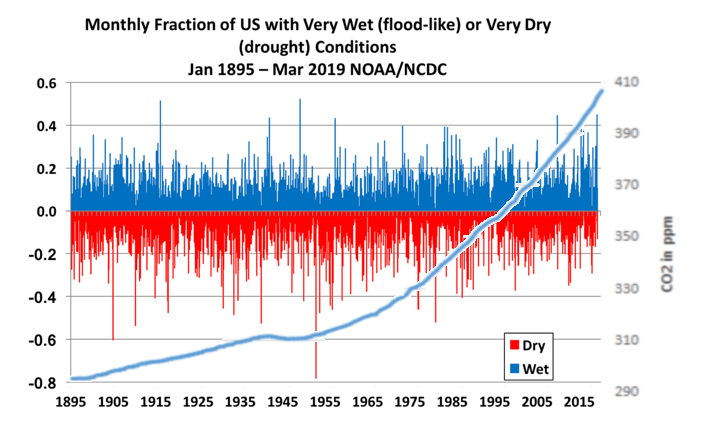
Extreme weather occurrences are likewise used as evidence of an ongoing climate crisis, but again, a study of the available data undercuts that assessment. U.S. tornado activity shows either no increase or a downward trend since 1954. Data on tropical storms, hurricanes, and accumulated cyclone energy (a wind-speed index measuring the overall strength of a given hurricane season) reveal little change since satellite measurements of the phenomena began in the early 1970s. The Palmer Drought Severity Index shows no trend since 1895.

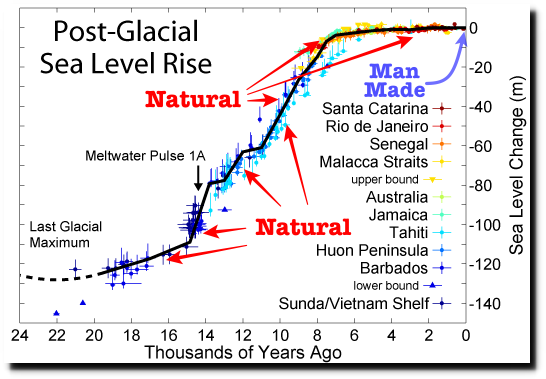
Rising sea levels are another frequently cited example of the impending climate crisis. And yet sea levels have been rising since at least the mid-19th century, a phenomenon unlikely to have been caused only by human activity. The earth has been warming due to both natural and anthropogenic causes, resulting in some melting of sea ice, and a thermal expansion of sea water; the degree to which rising sea level has been caused by man is unknown. And the current rate of sea-level rise as measured by the satellites is 3.3 millimeters per year, or about 13 inches over the course of a century. Will that yield a crisis?

The data reported by the National Oceanic and Atmospheric Administration show that temperatures have risen and fallen since 1850, with an overall upward movement of about 1 degree C for 1850 through 2020. The 1910-1945 warming—which was very roughly the same magnitude as that observed from the mid-1970s through about 2000—is of particular interest in that it cannot be explained by higher greenhouse-gas concentrations, which increased from 300 parts per million to 310 parts per million over that period. This reinforces the commonsense observation that temperatures result from some combination of natural and anthropogenic influences, but alarmist reports seldom if ever suggest that there is any cause of warming other than the latter.
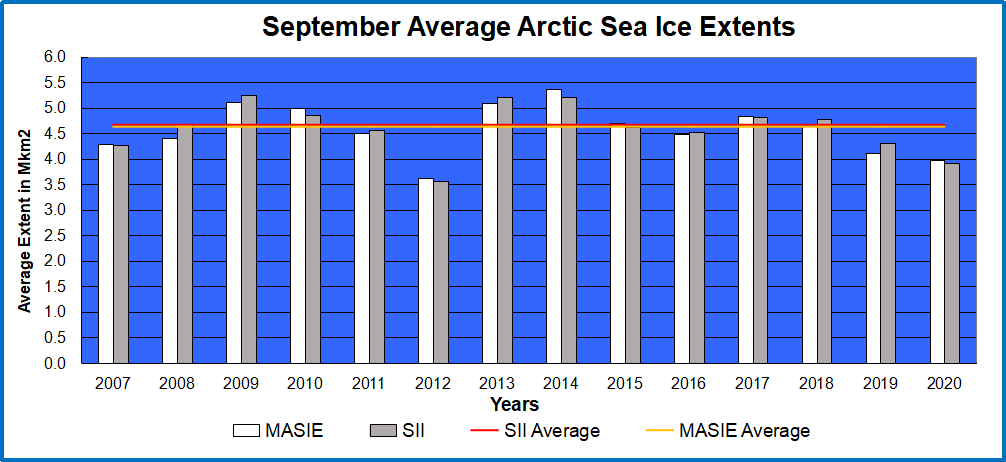
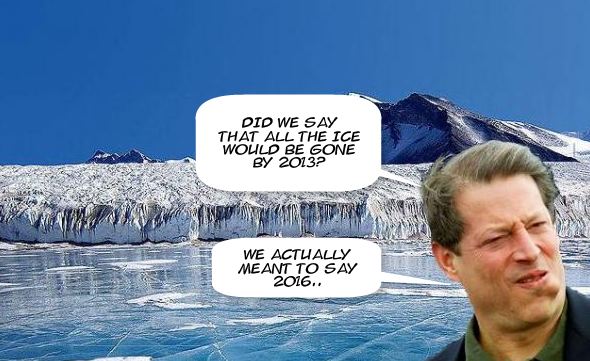
Changes in the extents of Arctic and Antarctic sea ice also raise questions about the importance of moderate warming. Since 1979, Arctic sea ice has declined relative to the 30-year average (again, the degree to which this is the result of anthropogenic factors is not known). Meanwhile, Antarctic sea ice has been growing relative to the 30-year average, and the global sea-ice total has remained roughly constant since 1979.

It is important to recognize that the assumption of many politicians, environmental groups, media sources like the New York Times, and no small number of scientist-activists—that humans are the single most significant cause of climate change—is unsupported by the available science. Such an absence of evidence should produce humility among this group, but it seems to foster more alarmism. At the very least, it should make Americans think twice before embracing radical solutions to a supposed problem that may not be important.

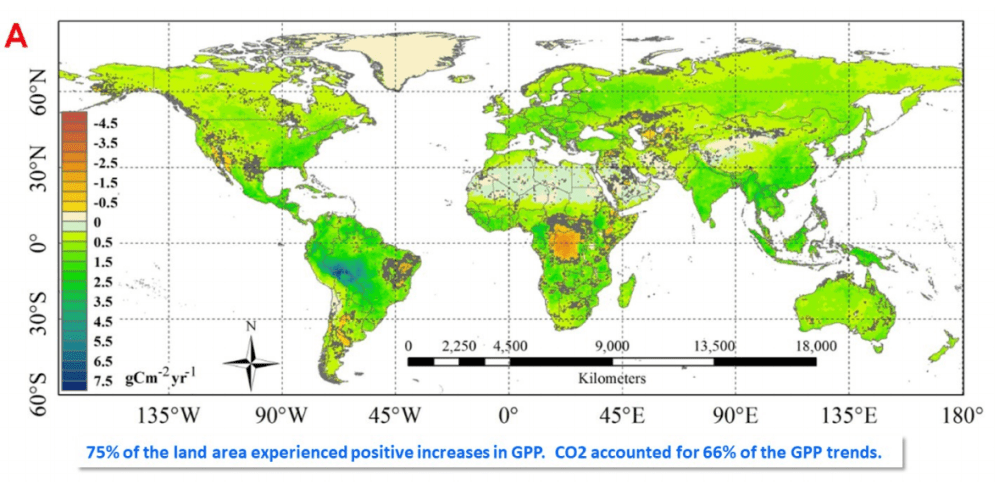
Spatial pattern of trends in Gross Primary Production (1982- 2015). Source: Sun et al. 2018.

Much of the mainstream press has touted, loudly, the alarmist conclusions of the latest IPCC report—amusingly, the IPCC AR6 provides a “Headlines Statements” link to assist alarmist politicians and media—but that reporting has obscured its problems, very real and very large. The report concedes that the mainstream climate models on the whole overstate warming for any given set of parameters and assumptions, but it then relies on those models for predictions about the future.

Figure 8: Warming in the tropical troposphere according to the CMIP6 models. Trends 1979–2014 (except the rightmost model, which is to 2007), for 20°N–20°S, 300–200 hPa. John Christy (2019)

The report concedes as well that the most extreme among its alternative scenarios— “RCP8.5”—has a likelihood that “is considered low,” but then uses RCP8.5 more than any other scenario. The report pretends to measure separately the magnitudes of natural and anthropogenic warming, but in reality does not do so (see Figure SPM.2); instead, it assumes away natural influences, which are asserted to have an average effect of zero. The IPCC models in summary have only two important variables: greenhouse gases, which have a warming effect, and sulfate aerosols, which have a cooling effect. That is why the IPCC models cannot explain the warming observed from 1910-1945. IPCC assumes, but does not attempt to model, a zero effect of sunlight variation, volcanic eruptions, and other such natural phenomena.

The fact is that we don’t understand all the elements in the complex climate system—the effects of clouds alone are understood poorly—and it is beyond irresponsible to adopt policies on the basis of flawed model projections that would slow economic growth in the US and elsewhere. That is a senseless and dangerous policy, which will only hurt people around the world who are striving to create better lives for themselves and their families.


Steyn’s Situational Sensibility

Key points expressed by Mark Steyn in his address at Gatestone Institute A Hinge Moment of History.  Excerpts in italics with my bolds.  Complete text of address is at the link above.

I have lived in countries that have real domestic terrorism movements…. Any country blessed enough not to have a domestic terrorism movement should not be inventing one.

We are living in a blizzard of lies.

[W]e are more dependent on a handful of woke billionaires to tell us what reality is. They are far more open than ever that they get to determine what are the agreed facts. Google made an explicit announcement about this recently. They said that sometimes they would put warnings on things that are factually accurate because, even though they are true, they do not think it is in society’s interest for people to be seeing it.

[N]ow you will be banned or deleted or blocked or silenced simply for disagreeing with the official version of events. For example, the Great Barrington declaration, which was written by three of the most prominent epidemiologists in the world from Harvard, Oxford, and I think it was Stanford. That was basically deleted from YouTube, banned from Facebook, simply because it contradicted the WHO, CDC official version of events.

It is just groupthink enforced by a cabal of woke billionaires, who have more power than anyone else on the planet.

The other thing that emerged during this year very quickly is that we are at a hinge moment of history. We were told a generation or two back that, by doing trade with China, China would become more like us. Instead, on issues such as free speech, we are becoming more like China.

American companies are afraid of offending China. American officials are afraid of offending China. We are adopting Chinese norms on issues such as free speech and basic disagreements with the government of China.

We’re living in the early stages of a future that is the direct consequence of poor public policy over the last couple of generations. We are not even aware of that….

Right now, we are witnessing a non‑stop continuous transfer of power to a country that is serious about using that power. This is China’s moment. Take it as someone who grew up, in large part, in a great power in decline. There’s no real explicit handover day. People, in hindsight, expect to pinpoint the day that the baton was passed…. My great worry is that actually, the transfer to China has already happened. The baton has already been passed. We just haven’t formally acknowledged that yet.

I’ll say it straight out loud. I do not think that Joe Biden “won the election.” I don’t think it is a question of “widespread fraud.” I think the way the system works with the Electoral College, you only need actually to spread fraud in six key cities in six key states.

I would like some of these genius jurists, including [US Supreme Court Chief Justice] Mr. Roberts and his colleagues, to then give us a figure on what is the acceptable level of fraud in American elections. Denmark, in its history, has never actually had a plausible accusation of any kind of electoral fraud. As we know, in the United States, in cities like Philadelphia, this is a tradition that has long roots and goes back 150 years.

If you have no basic election integrity, essentially, all the other issues are irrelevant.

Big Tech has essentially wrecked the internet.

Now Facebook is working with state power. The first place these Big Tech guys learned to do this was with China…. I’m in favor of breaking these companies up as soon as we can.

Right now, in the United States we worry because Facebook is canceling some actress or pop star. In Australia right now, Facebook is trying to cancel an entire country. We have left it far too late to take serious moves against these people.

Standard Oil was broken up because of its control over the oil business. Facebook and Google and Apple have far more control over their business than Standard Oil did 110 years ago. The difference is that their business is knowledge and the access to knowledge, which is more important even than oil.

I take Iran seriously. Not so much because of the Iranians, but because of the promises and the expectations in places like Sudan that Iranian nuclear technology will basically be shared with some of the most lethal basket-case states on Earth. Iran is in some sense like Russia and China. These are all, in a certain sense, great civilizations that have become perversions of themselves in a relatively short time.

What we ought to be trying to do is connect the Iranian people with their great glorious past, which actually is a platform on which you can build a future.

At some point, if we’re not prepared to stand up… My whole thing, in all the years, is that Western civilization is sliding off a cliff and most citizens of most Western nations are not even aware of it.

There is a moral component that we are overlooking. We live in an insane world where moral narcissism attaches to whether or not you rampage around some statue of a Confederate general who died 150 years ago. The fact that you’re rampaging around the Confederate general while wearing shoes made by child labor somehow does not impact on your moral virtue at all.

We are the civilization that built the modern world. If you do not like us, we can go back to what it was 500 years ago. Basically, the world functions because of the world we built.

The war on the past is straight out in 1984, straight out of Orwell: Who controls the present, controls the past. Who controls the past, controls the future. If you blow up the past, you make social engineering so much easier because there is nothing to go back to.

I try to restrain myself from seeing obvious metaphorical geopolitical symbolism in trivial events, but that story the other day about how China was making US diplomats undergo COVID anal swabs had too much symbolic power for what China has basically done to the entire planet to let it go.

The big change over the last year is that these issues are no longer abstractions. Everyone in the Western world has had some familiarity with the core meaning of Western liberties, whether you are talking about freedom of speech, freedom of movement, freedom of association, freedom of religion, they have all become very real, even for people living the most quiet and uncontroversial lives. We have states, a few weeks ago issuing orders on who you were allowed to spend Christmas or July 4th with.

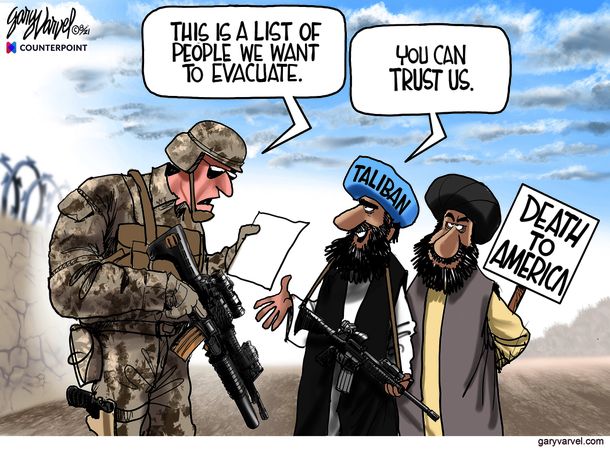
Twin Failed Projects: Afghanistan and Climate Change

Rupert Darwall explains the similarity in his Spectator article Afghanistan and climate change: the West’s twin failures. Excerpts in italics with my bolds and some added images.

Both have the same cause: a failure to accept reality

The West’s humiliation in Afghanistan has an older brother: climate change.

As siblings, the two share characteristics, most obviously an inability to confront unwelcome facts. In Afghanistan, there was a large constituency led by the Pentagon invested in the mantra of proclaiming progress in the fight against the Taliban. Climate has its own industrial complex of NGOs, climate scientists, renewable energy lobbyists profiting from the energy transition, eager helpers in the media, and politicians posing as world saviors.

Energy experts tell us renewable energy is cheaper than building new fossil fuel power stations. If they’re right, why did China build the equivalent of more than one large coal plant a week last year? Its slave labor camps help produce materials for Chinese solar panels, which make them the cheapest in the world. This led the Biden administration to ban their importation. In 10 years, India — a country more susceptible to Western fads — increased the amount of electricity it generated from coal nearly six times faster than from wind and solar. In 2020, fossil fuels accounted for almost 90 percent of India’s primary energy consumption.

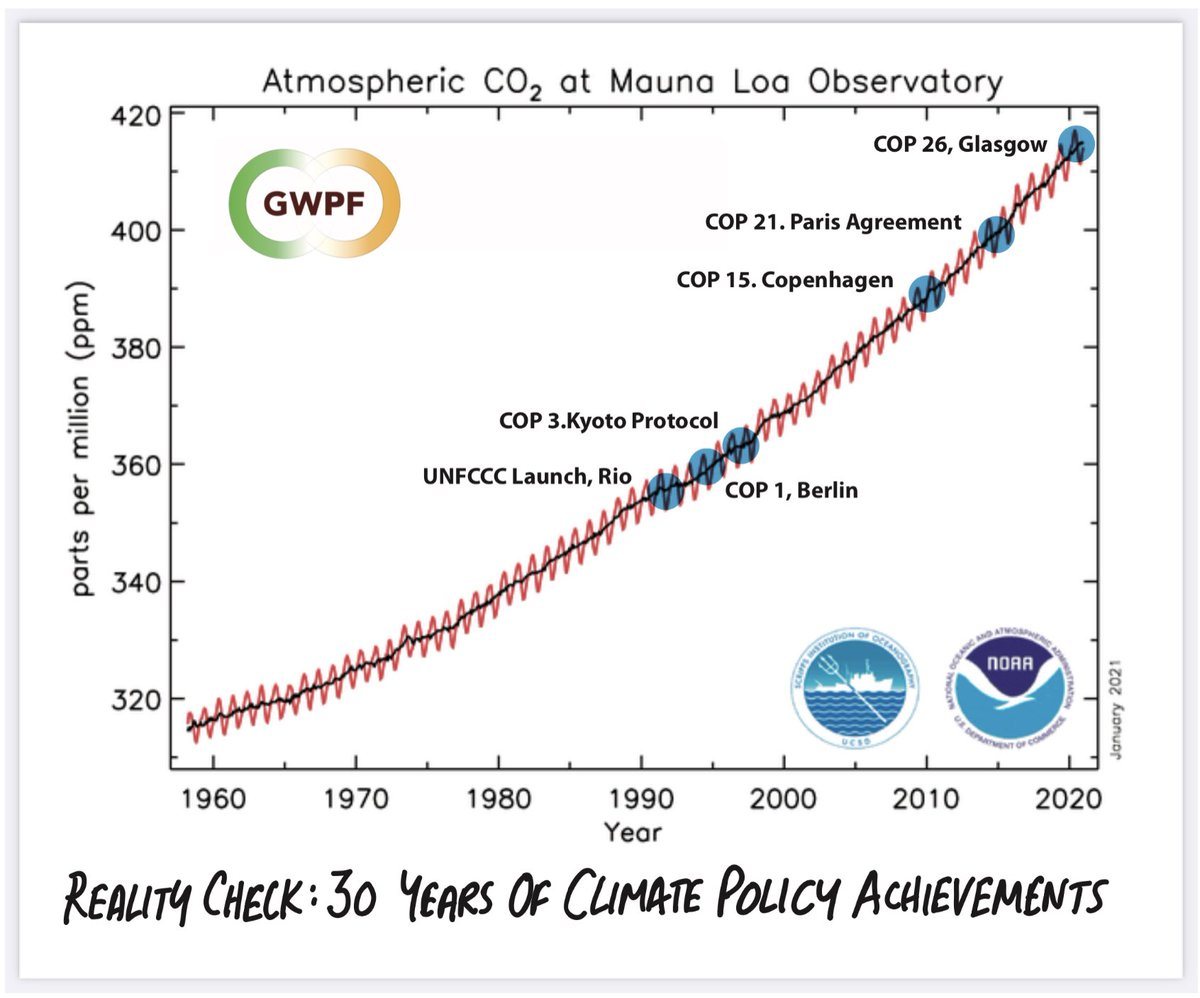
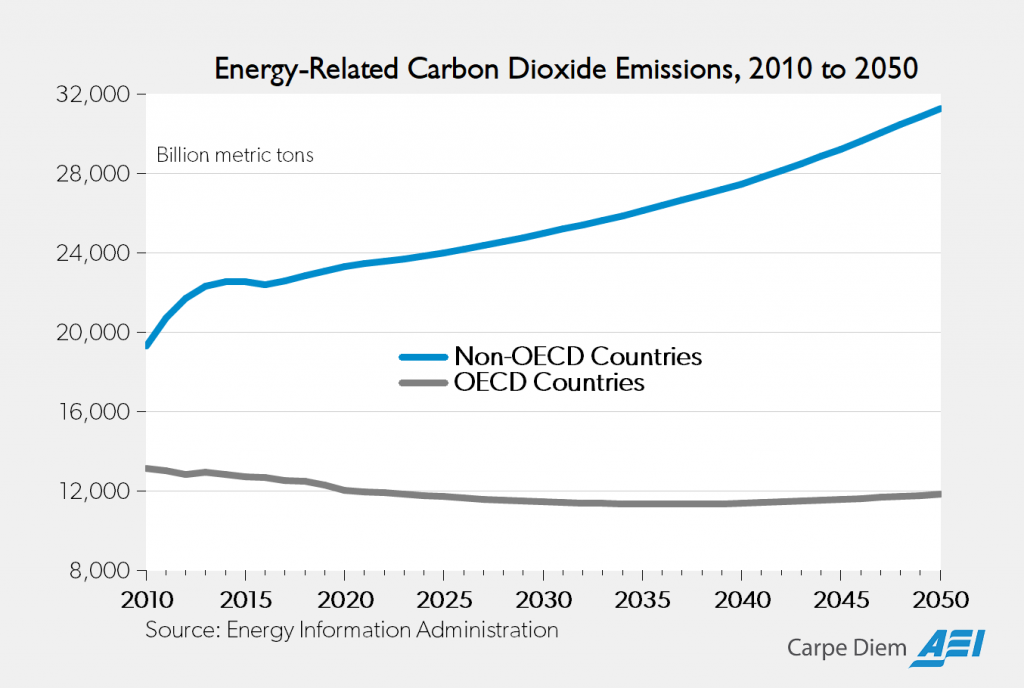
These facts help explain the biggest fact of all. The first 20 years after the 1992 United Nations Framework Convention on Climate Change saw carbon dioxide emissions rise 60 percent. From 2012 to 2019, they rose a further 5.4 percent. However this is dressed up, it’s failure. Meanwhile, the West’s energy emissions have been more or less flat for nearly three decades and on a downward trend since 2007. Emissions from the Rest of the World account for all the growth in global emissions, suddenly accelerating in 2002 from an average of around 1 percent a year to nearly 5 percent a year in the 12 years until 2014.

As a matter of simple arithmetic, the West’s declining share of global emissions means that whatever it does or doesn’t do is of diminishing relevance to the future of climate change. The West’s solipsism of ‘we’ — as in ‘we must act’ — is a profound self-deception.

Foolishly, the West swallowed the claims of small island states that they would sink beneath the waves unless the rise in global temperature was kept below 1.5°C above pre-industrial levels. This was how ‘pursuing efforts’ to meet the 1.5°C limit ended up in the Paris agreement. As the Intergovernmental Panel on Climate Change (IPCC) later confirmed, there was no scientific basis for this. ‘Observations, models and other evidence indicate that unconstrained Pacific atolls have kept pace with S[ea] L[evel] R[ise], with little reduction in size or net gain in land,’ the IPCC said. Instead, the IPCC argued that the 1.5°C target and net zero emissions by 2050 — a target set by the IPCC and not in the Paris agreement — provide the opportunity for ‘intentional societal transformation’.

Stamped all over the West’s two decades of failure in Afghanistan are the words ‘societal transformation’.

‘It has been the hubristic belief that Western values should be universally applied that has led to the folly of nation-building in Afghanistan,’ Sir Christopher Meyer, Britain’s former ambassador in Washington, has written. Climate involves a double dose of hubris. Western politicians expect other countries to turn their backs on the development paths that made the West wealthy. Yet the same politicians seek to transform their own societies in ways that will make many people — especially the middle class and working families — poorer without having won an honest, democratic mandate to do so. They will thereby invite a populist backlash.

Realism disappears on the shoreline of climate change on the presumption that other nations share the Western belief that climate transcends geopolitics.

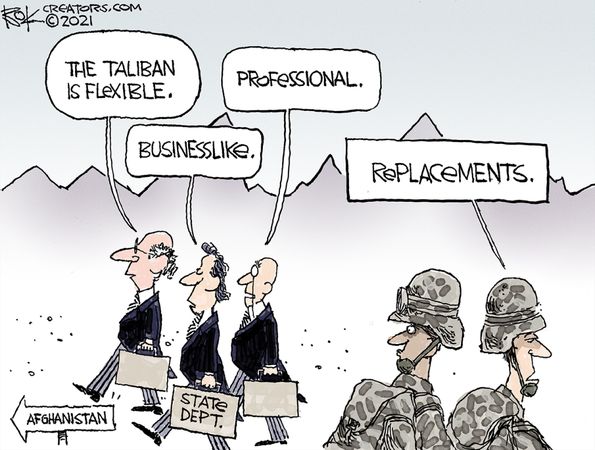
It wasn’t a pretty sight when John Kerry, Biden’s climate envoy, met China’s gimlet-eyed realists earlier this month. In a blunt statement, they told Kerry that Washington should correct its ‘wrong policies’ on China if the US wanted a dialogue on climate. The requirement to appease China could not have been clearer.

In all likelihood, Kerry will probably get off more lightly than Boris Johnson and the British government, the hosts of this year’s UN climate conference in Glasgow. They naively built up expectations that the talks would produce a deal to save the planet. It showed great ignorance of three decades of UN climate diplomacy: there was never going to be a deal to cut emissions at Glasgow. The last time that happened was at the Kyoto climate conference 24 years ago.

The UN climate convention was a product of a different era. Nato’s Afghanistan operation occurred at the apex of the America’s unipolar moment. The short era of George H.W. Bush’s new world order is over. We live in a time of renewed great power rivalry. China and Russia act in ways Otto von Bismarck would recognize. Of the great powers, they are the principal winners from the West’s humiliation in Afghanistan and they are the biggest winners from the Paris agreement. China keeps its coal-based economy while America runs down its oil and gas industries, only recently having become the world’s largest producer of hydrocarbons.

As Europe phases out coal, so too does it becomes more dependent on the Kremlin for natural gas. The lessons of Afghanistan and climate are the same: the West won’t be defeated by its enemies, but by its refusal to see the world as it is.

Arctic Ice Abounds at 2021 Minimum


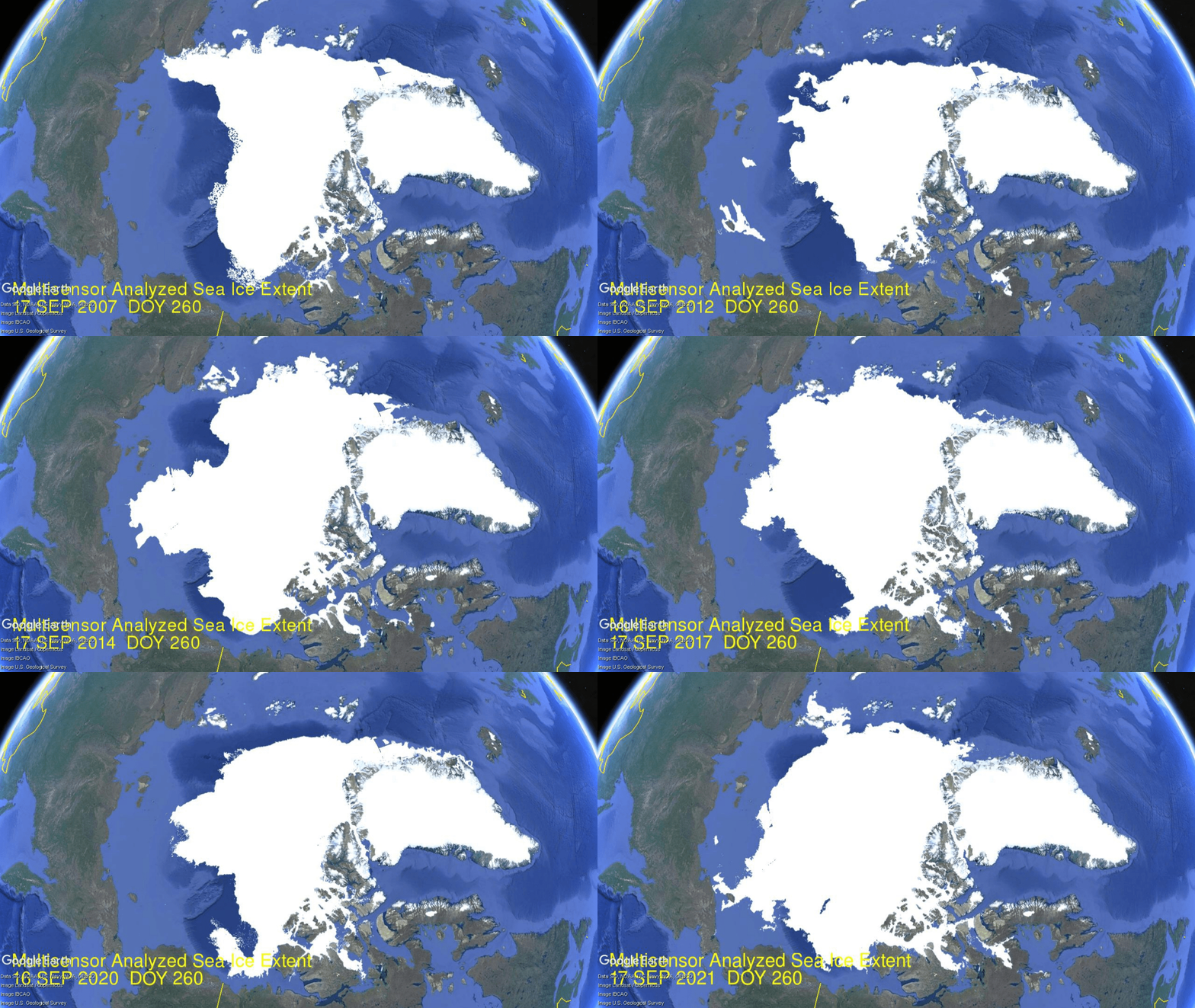
The images above come from MASIE showing ice extents on day 260, the lowest daily extent on average the last 14 years.  Note that 2012 was the lowest in this period and 2021 is now the highest, surpassing 2014. The abundance of ice this year contrasts with both 2007 and 2020. Clearly, the location of remaining ice in September varies greatly from year to year.  The marginal seas are open water, including the Pacific basins, Canadian Bays (Hudson and Baffin), and the Atlantic basins for the most part.  As discussed later on, other regions retain considerable ice at the annual minimum, with differences year to year.

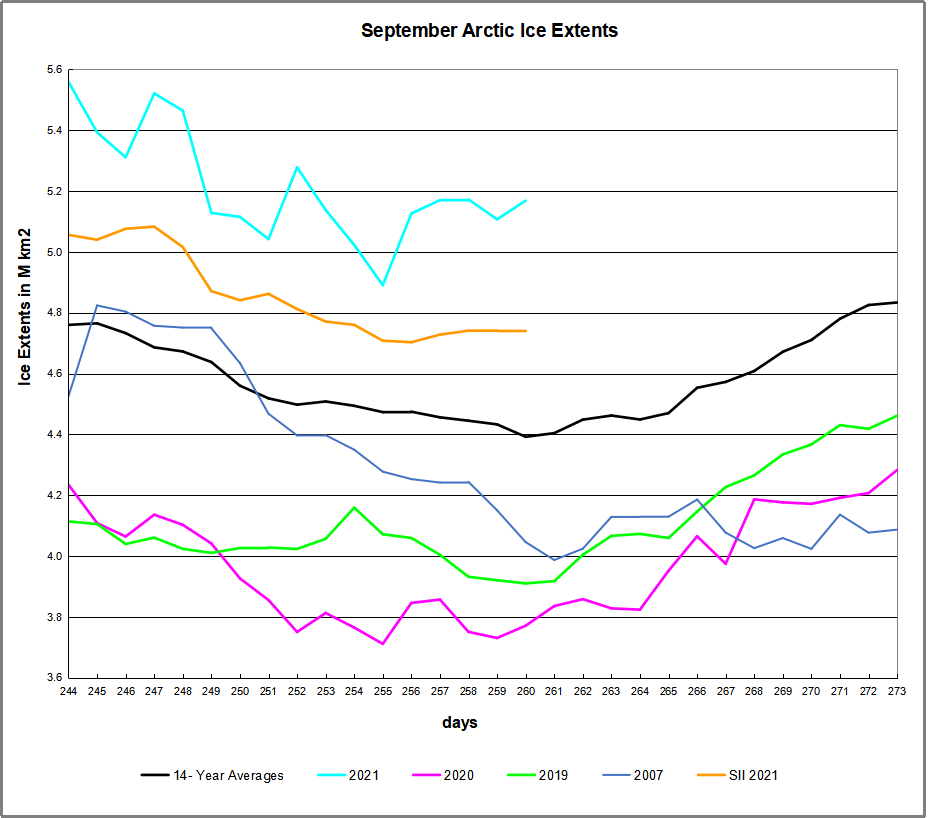
The annual competition between ice and water in the Arctic ocean is now at the maximum for water, which typically occurs mid September.  After that, diminishing energy from the slowly setting sun allows oceanic cooling causing ice to regenerate. Those interested in the dynamics of Arctic sea ice can read numerous posts here.  This post provides a look at September from 2007 to yesterday as a context for understanding this year’s annual minimum.  Note that for climate purposes the annual minimum is measured by the September monthly average ice extent, since the daily extents vary and will go briefly lowest on or about day 260. In a typical year the overall ice extent will end September slightly higher than at the beginning.

The melting season in September up to yesterday shows 2021 melted much less than average and so day 260 extents are much higher than average.

2021 ice extents begin September 800k km2 above the 14-year average and on day 260 remained 776k km2 higher.  SII was lower than MASIE by 427k km2.  The table for day 260 shows how large are the 2021 surpluses and how the ice is distributed across the various seas comprising the Arctic Ocean. The surplus this year over 2007 is more than 1 Wadham (1M km2).

Region 2021260 Day 260 Average 2021-Ave. 2007260 2021-2007
 (0) Northern_Hemisphere 5168253 4392025 776228 4045776 1122477
 (1) Beaufort_Sea 715340 463613 251727 481384 233956
 (2) Chukchi_Sea 493208 132989 360219 22527 470681
 (3) East_Siberian_Sea 338189 248694 89495 311 337878
 (4) Laptev_Sea 32974 114492 -81518 235869 -202895
 (5) Kara_Sea 95956 17336 78619 44067 51888
 (6) Barents_Sea 18 18201 -18183 7420 -7402
 (7) Greenland_Sea 50718 192388 -141670 333181 -282463
 (8) Baffin_Bay_Gulf_of_St._Lawrence 35493 28885 6609 26703 8791
 (9) Canadian_Archipelago 452857 270948 181909 225526 227331
 (10) Hudson_Bay 4504 5318 -814 2270 2233
 (11) Central_Arctic 2948362 2898150 50213 2665244 283118

The main deficits to average are in Laptev and Greenland Seas, overwhelmed by surpluses almost everywhere, especially in BCE (Beaufort, Chukchi, East Siberian seas), Kara and Canadian Archipelago.  And as discussed below, the marginal basins have little ice left to lose.

The Bigger Picture 

We are close to the annual Arctic ice extent minimum, which typically occurs on or about day 260 (mid September). Some take any year’s slightly lower minimum as proof that Arctic ice is dying, but the image above shows the Arctic heart is beating clear and strong.

Over this decade, the Arctic ice minimum has not declined, but since 2007 looks like fluctuations around a plateau. By mid-September, all the peripheral seas have turned to water, and the residual ice shows up in a few places. The table below indicates where ice is found in September. Numbers are area units of Mkm2 (millions of square kilometers).

Day 260 14 year
Arctic Regions 2007 2010 2012 2014 2015 2017 2018 2019 2020 2021 Average
Central Arctic Sea 2.67 3.16 2.64 2.98 2.93 3.07 2.91 2.97 2.50 2.95 2.90
BCE 0.50 1.08 0.31 1.38 0.89 0.84 1.16 0.46 0.65 1.55 0.89
LKB 0.29 0.24 0.02 0.19 0.05 0.26 0.02 0.11 0.01 0.13 0.16
Greenland & CAA 0.56 0.41 0.41 0.55 0.46 0.52 0.41 0.36 0.59 0.50 0.46
B&H Bays 0.03 0.03 0.02 0.02 0.10 0.07 0.05 0.01 0.02 0.04 0.04
NH Total 4.05 4.91 3.40 5.13 4.44 4.76 4.56 3.91 3.77 5.17 4.48

The table includes some early years of note along with the last 5 years compared to the 14 year average for five contiguous arctic regions. BCE (Beaufort, Chukchi and East Siberian) on the Asian side are quite variable as the largest source of ice other than the Central Arctic itself.   Greenland Sea and CAA (Canadian Arctic Archipelago) together hold almost 0.5M km2 of ice at annual minimum, fairly consistently.  LKB are the European seas of Laptev, Kara and Barents, a smaller source of ice, but a difference maker some years, as Laptev was in 2016.  Baffin and Hudson Bays are inconsequential as of day 260.

2021 stands out from lower ice years by the higher extents in Central Arctic, BCE and LKB, especially Kara Sea this year.

Resources:  Climate Compilation II Arctic Sea Ice

Biden Fears the Unvaccinated Serving as a Control Group

Peter Skurkiss writes at American Thinker One reason for the push for COVID vaccination may be to eliminate a potential control group.  Excerpts in italics with my bolds and added images.

There are a number of reasons to explain the intense push from the Biden administration and the government medical bureaucracy to get people to take the COVID vaccine. From a wide search of the information available, I find it hard to believe that the actual health of people is one of the reasons.

For example, why demand that people with natural immunity get vaccinated? And why insist on vaccinating children when their risk of serious effects from the virus is minuscule? It make no scientific sense, especially when the vaccine itself can cause serious health issues for the young.

This brings up one of the less talked about reasons behind the vaccination mania. It’s to eliminate a possible control group of non-vaccinated people to which the vaccinated can be compared. Let me explain.

From the highest levels of the government to the public health authorities like the WHO, FDA, and CDC to professional medical groups (American Medical Association, etc.) to the corporate media, the vaccines have been heralded as safe and effective. Already, the health authorities and the medical establishment have had their reputations sullied with their wrong-headed advice on stopping the virus via lockdowns, mask-wearing, and social distancing.

And the number of deaths from the Wuhan virus did not come close to matching their early projections even when the actual COVID deaths were greatly inflated.

Now it’s down to the vaccines. They already have egg on their faces due to their earlier pronouncements. Now they’re desperate that people never find out about the possible damage these inadequately tested vaccines may be inflicting on humanity.

There are already clues that the vaccines are causing many near-immediate adverse effects. Credible scientists, immunologists, and doctors are also saying even more vaccine damage could surface down the road. This is because the man-made engineered spike protein in the vaccine causes the body to produce more of it, and this toxic protein compromises the immune system as well as weakens other aspects of the body.

The thing about long-term effects, however, is that their cause may not be clear cut. For example, say a vaccinated person dies of a heart attack two years from now. The death is recorded as a heart attack. But the fatal heart attack might have been brought on by the spike protein acting over time. It’s the same with other causes of death and the development of diseases like Parkinson’s and so on. This picture is muddled. So can blame be affixed to the vaccine if justified?

Yes. It can be determined statistically, but a control group is needed.

It’s done by comparing how a sampling of those vaccinated fared compared to a sample of those who weren’t. The general statistical approach would be to take a large random sample from the millions who were vaccinated. Call this the experimental group. A control group would also be needed. It would consists of an equal number of randomly selected people from all those who were not vaccinated. Then a comparison is made of how these two groups performed relative to each other at various intervals of time — say, one year, two years, five years, and so on — in terms of mortality and other health factors.

It should be noted that both the experimental and the control groups will have a mix of people. They will be of various ages, both sexes, races, pre-conditions, etc. But if they’re randomly selected and the sample size is large, these differences balance out, meaning that the groups can be statistically compared.

Such a statistical analysis won’t tell if any specific person’s heart attack was due to the vaccine. But it will show whether or not the vaccinated population had a higher incidence of heart failure compared to the unvaccinated. That is, if the vaccine had no adverse effect on the heart, then both the vaccinated and the unvaccinated group would have the same rate of heart failure. This is vital public health information, is it not?

It’s also exactly what the powers-that-be do not want.

They fear that the vaccinated group will have a statistically significant higher mortality as well as rates of serious health conditions down the road than the unvaccinated. If so, this will expose the lies, deceptions, and incompetence of medical establishment, Big Pharma, and much of the political class. And if the critics of the COVID vaccines are correct, this will be a butcher’s bill none of them want to face.

To conclude, if just about everyone gets vaccinated, there can be no control group to make the comparison. Hence, the push is for maximum vaccinations.

Of course, the establishment has other ways to muddy the waters even if a control group could be assembled. Public health authorities are the central collection point for data. They can have the data collected (or not collected) in such a way so as to make a comparison difficult, if not impossible. But since these people are sincerely interested in the public’s health and guided by impartial science, they would never do such a thing just to save face…or would they?

 Footnote: Not Only Comparing Safety, But Also Effectiveness

It will also be important to compare those with immunity after infection without vaccines, and those vaccinated.  Again it is Sweden blacklisted from media attention, despite their success fighting Covid by trusting the citizenry rather than regarding them as enemies to be controlled.  An update comes from unmasked at substack Why Does No One Ever Talk About Sweden Anymore? Excerpts with my bolds.

“Experts” and the media declared Sweden was the world’s cautionary tale, a dangerous outlier who shunned The New Science™ of masks and lockdowns and stuck to established public health principles and pre-pandemic planning.

Over much of 2020 and into 2021, Sweden was persistently criticized by the media and on Twitter arguments due to comparisons to their neighbors, a standard curiously not applicable to most other countries around the world. Yet as we’ve progressed further into 2021, those same media outlets have suddenly gone quiet as their chosen victors have flailed unsuccessfully against ever increasing outbreaks.

So let’s see what’s transpired recently which resulted in the deafening silence, and examine what that means for The Science™, shall we?

[Note that Sweden began vaccinations when they became available this year, and has achieved 50% with two jabs, but over 75% of the vulnerable age and co-morbidies cohorts.  Consistent with previous policies, this was without coercion, so there will be many Swedes trusting in their immune systems without being induced by vaccines. The discussion below compares Sweden with Israel who vaccinated everyone.]

Concerning pandemic death rates, Sweden now ranks 40th. Eleven months later, they went from 12th to 40th. Peru, Hungary, the Czech Republic, Brazil, Argentina, Colombia, Paraguay, Belgium, Italy, Mexico, Croatia, the United Kingdom, the United States, Poland, Chile, Spain, Romania, Uruguay, Portugal, France, South Africa all rank ahead of Sweden. Nearly every one of them has tried masks and lockdowns and to this point it’s resulted in a “net failure” in terms of “death and suffering” compared to Sweden.

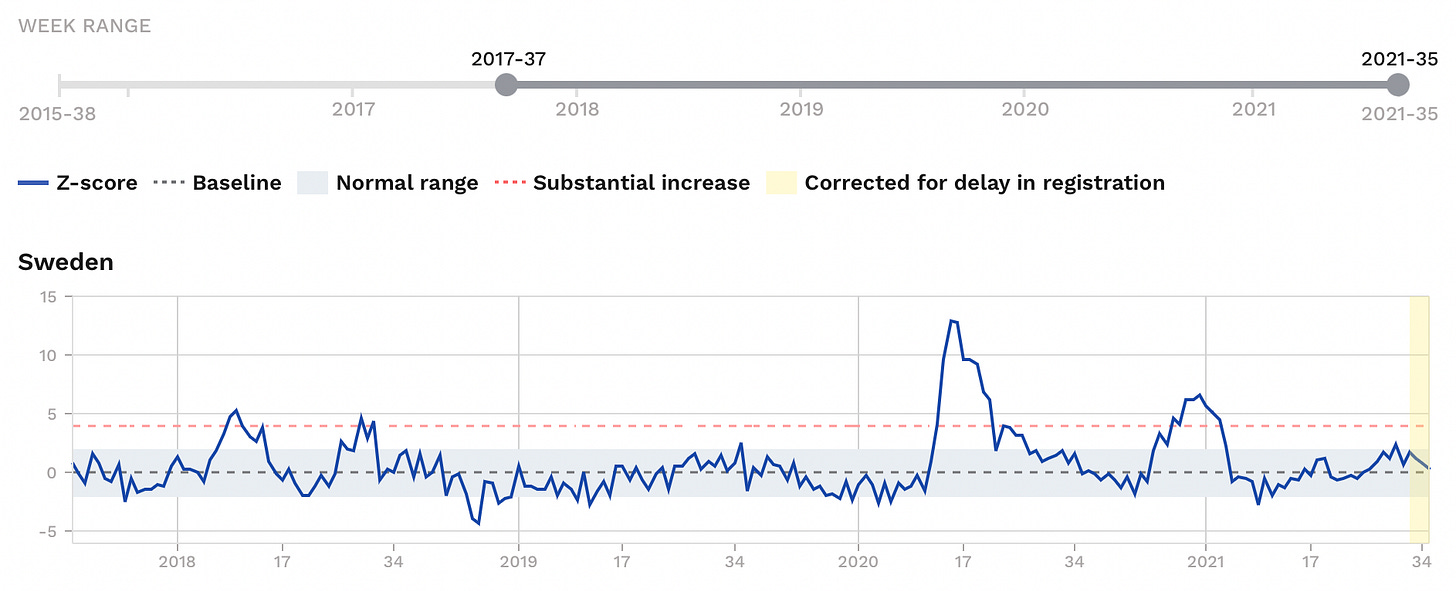
Oh and by the way, here’s excess mortality in Sweden since 2017 according to EUROMOMO:

That’s right, there’s only been a few weeks since the initial wave last spring where Sweden’s seen a “substantial increase” above normal ranges, and they’ve been at or near baseline for almost all of 2021. I wonder how many people around the world are aware of that.

It’s the same story seen in Los Angeles County, where hilariously timed and completely useless vaccine passport policies were just announced. The overwhelming majority of people are so hopelessly gaslit by media propaganda that they still actually believe that masks and closures matter, despite reality directly contradicting their assumptions.

Israel & Sweden

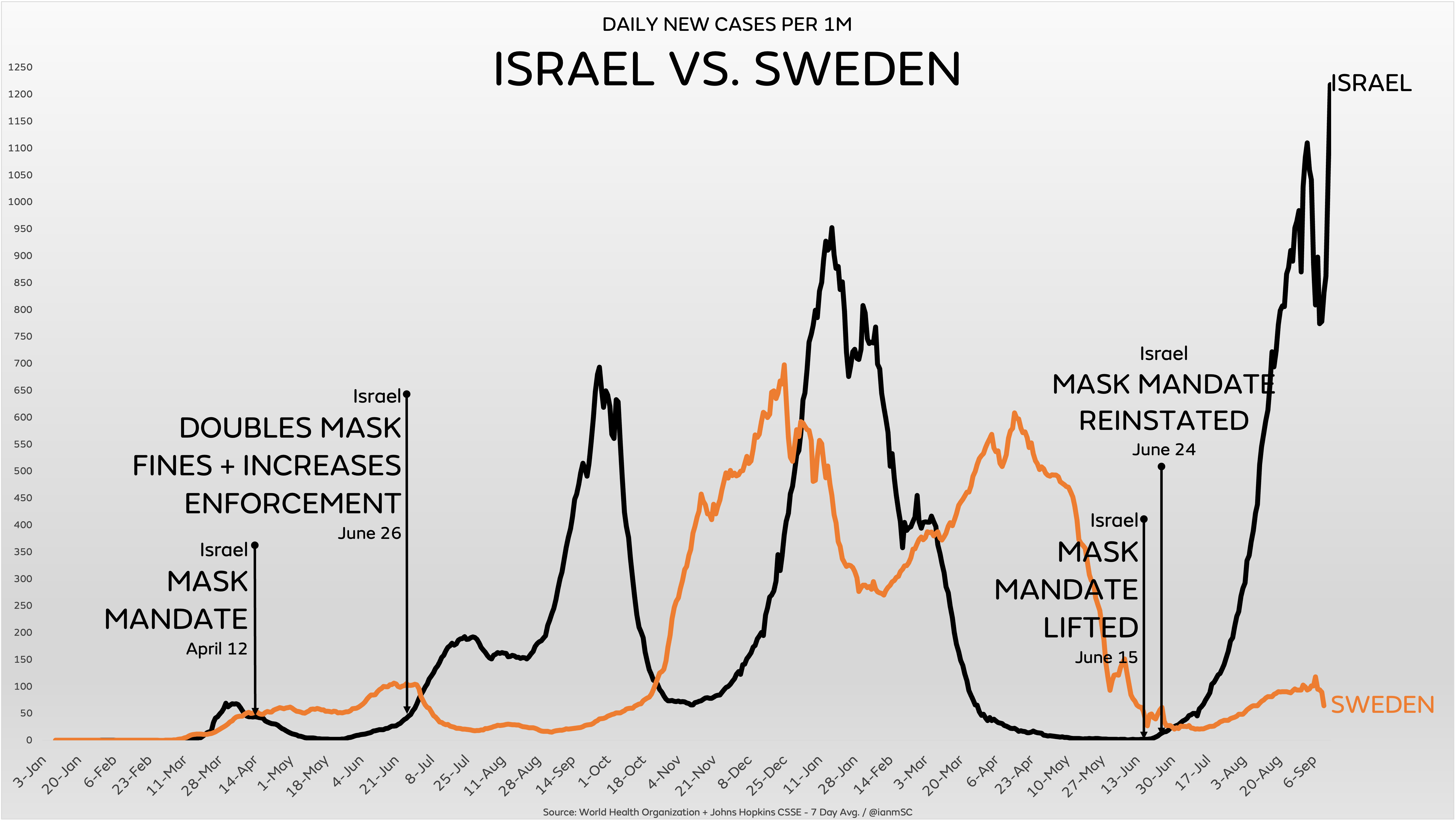
Standing in stark contrast to Sweden, Israel has been a media darling for doing exactly what they’re told by the groupthink mafia. They’ve vaccinated as aggressively and repeatedly as anywhere on earth, and they’ve had a seemingly endless series of mask mandates and fines for non-compliance.

As a result, The Wall Street Journal credited Israel’s commitment to mask wearing last fall with bringing cases down to low levels…only to see cases skyrocket higher immediately afterwards.

Sweden’s currently averaging about 90 cases per million. Israel’s averaging 1,218. That’s a lot worse! In fact, it’s 1,253% worse than Sweden.

Now, it’s very likely Sweden will see another increase over the fall and winter, just as they did last year, but uh…that’s kinda the point isn’t it? The increases happen in waves, regardless of supposed “mitigation” efforts. And again, Israel has been repeatedly and endlessly praised for their success. Sweden is a “disaster” and a “renegade.” Yet Israel’s recorded 13,279 cases per 100,000 since they started counting, the 11th highest rate in the world, while Sweden’s recorded 11,111 cases per 100,000.

But that doesn’t matter, because Israel’s done what they’re told, and Sweden hasn’t. There are no masks, no vaccine passports, no draconian business closures. They have a “consistent and sustainable” approach that’s led to…fewer confirmed infections than countries like Israel.

Why the Leftist Backlash Against Ivermectin

Connor Harris explains in his City Journal article Try a Dose of Skepticism.  Excerpts in italics with my bolds.

Ivermectin may or may not work against Covid-19, but media coverage of the drug has been sneering, inaccurate—and revealing.

“You are not a horse. You are not a cow. Seriously, y’all. Stop it,” read a recent viral tweet warning readers away from using a certain medication to treat Covid-19. The tone of affectedly folksy condescension would be expected from any of thousands of Twitter-addicted progressive journalists, but less so from the official account of the United States Food and Drug Administration. Perhaps even more surprising, the tweet linked to a warning advising readers not to take a drug, ivermectin, that has been used in humans for decades and is a standard Covid-19 treatment in much of the world.

The media’s recent reporting on ivermectin is a fitting sequel to their reporting on hydroxychloroquine near the beginning of the pandemic—but not, as received opinion would have it, because both are tales of red-state yokels duped into taking poisonous phony remedies. As in the earlier case, media coverage of ivermectin exemplifies how the liberal political class’s bias, and its confusion of respect for science with blind trust in a scientific establishment, impairs their skepticism and their capacity to appraise complex scientific questions.

Ivermectin is one of several derivatives of a family of compounds first isolated in the 1970s from soil bacteria in Japan. The compounds are highly toxic to invertebrates but have few effects on mammals, making them excellent treatments for many diseases caused by parasitic worms. Though ivermectin is more commonly used in livestock in First World nations where human parasites are rare, it is widely given to humans for internal use elsewhere. Distribution of ivermectin in tropical Africa has virtually eliminated diseases such as river blindness, a success that won the drug’s discoverers a share of the Nobel Prize in Medicine in 2015.

Ivermectin, then, has long been used in humans—and it is entirely reasonable to think that it could be effective against Covid-19.

It may be surprising that an antiparasitic medication might work against viruses, but such surprises are common in medicine: as another example, the psychotropic drug fluvoxamine, used to treat OCD and depression, has shown positive results against Covid-19 in multiple trials, including one large international collaboration. Ivermectin was shown to have antiviral effects in laboratory settings in 2012, when one study found that it protected cell cultures from infection by flaviviruses, which include the viruses that cause yellow fever and dengue. Interest in ivermectin as a Covid-19 treatment was sparked by a study at Monash University in Australia, which found that the drug could virtually eliminate SARS-CoV-2 from cell cultures within two days, albeit at very high concentrations.

Studies in cell cultures, though, can establish only that a drug might work; to decide that it does work requires human studies. The evidence base in this regard is ultimately inconclusive but suggests that ivermectin could provide a meaningful benefit.

Media attention to ivermectin is largely thanks to a group of doctors who call themselves the Frontline Covid-19 Critical Care Alliance. Pierre Kory, one of FLCCC’s founders, has advocated ivermectin treatment in several high-profile public appearances, including testimony before the Senate Homeland Security Committee last December and a more recent interview in June on the popular podcast DarkHorse, hosted by Bret Weinstein and Heather Heying. FLCCC puts out continually revised protocols that include ivermectin as a main component, as well as other drugs with varying degrees of empirical support.

FLCCC’s exact protocols have never been tested in randomized trials, but there are some weaker forms of evidence in their favor; many other doctors who use FLCCC or similar protocols have claimed vast improvement over typical rates of death and hospitalization. Overseas, influential doctors such as the chairman of the Tokyo Metropolitan Medical Association have called for widespread ivermectin use, and the drug is a standard treatment in much of Latin America, among other areas.

Still, given the drug’s relatively low risk profile, it may be reasonable to try ivermectin against Covid-19 despite the ambiguous evidence of benefits. And in any case, the sneering descriptions of the drug as an assuredly useless livestock de-wormer and the wild exaggerations of its dangers—both close parallels with the news coverage of hydroxychloroquine in spring 2020—cannot be justified.

Liberals have no monopoly on gullibility or lazy journalism, but the biased coverage of ivermectin springs from one of the worst pathologies of liberal discourse in particular: conflation of respect for science with fealty to established scientific institutions. A “pro-science” disposition has long been integral to American liberals’ self-conception (a ubiquitous yard sign reads, in part, “In this house, we believe science is real”); it grew especially strong during the George W. Bush years as a reaction to the administration’s stance on global warming and alliance with the religious Right.

But most Americans are scientists neither by training nor by temperament, and “pro-science” politics usually calcifies into blind trust in a few politically congenial authorities—such as universities and government health agencies, which have enjoyed high levels of liberal confidence throughout the pandemic despite such actions as reversing longstanding advice on face masks based on a dubious judgment call.

Conflating science with the scientific establishment not only corrodes the capacity for skepticism but also helps questionable or corrupt actions by authorities escape scrutiny. The hullabaloo over ivermectin poisoning, for example, far exceeds the attention given to another questionable treatment pushed not by right-wing hucksters but by the FDA itself: remdesivir, an antiviral produced by the pharmaceutical giant Gilead Sciences that is still the only Covid-19 treatment with full FDA approval.

The FDA’s approval of remdesivir in October 2020 was based on only three trials, one neutral and two showing only moderate shortenings of hospital stays. A week before the approval, a far larger trial sponsored by the WHO had found that remdesivir did not reduce mortality, leading the WHO to advise against the drug in November. (The New York Times report on the WHO trial, incidentally, gave ample space to a fair presentation of criticism of the trial from defenders of remdesivir, a marked difference from the tone of most recent ivermectin coverage.) Furthermore, remdesivir seems to cause significant harms to the kidneys in many cases: a “disproportionality analysis” of VigiBase, for instance, found that reports for remdesivir were 20 times as likely to mention kidney failure as reports for other Covid-19 drugs.

The FDA’s full approval of remdesivir contrasted with its summary dismissal of ivermectin suggests, at the least, a double standard.

The oddity of the FDA’s remdesivir approval received some mainstream coverage, but it came nowhere near the level of media saturation reached by the reports of Mississippians taking horse de-wormer. It’s not hard to understand why: the horse de-wormer stories gave some readers a delicious opportunity to feel smugly superior to their political enemies—a temptation that few of us find easy to resist. But the tale of remdesivir presents a more threatening specter, which journalists and politics junkies would do well to confront: the possibility that a scientific authority might be wrong.

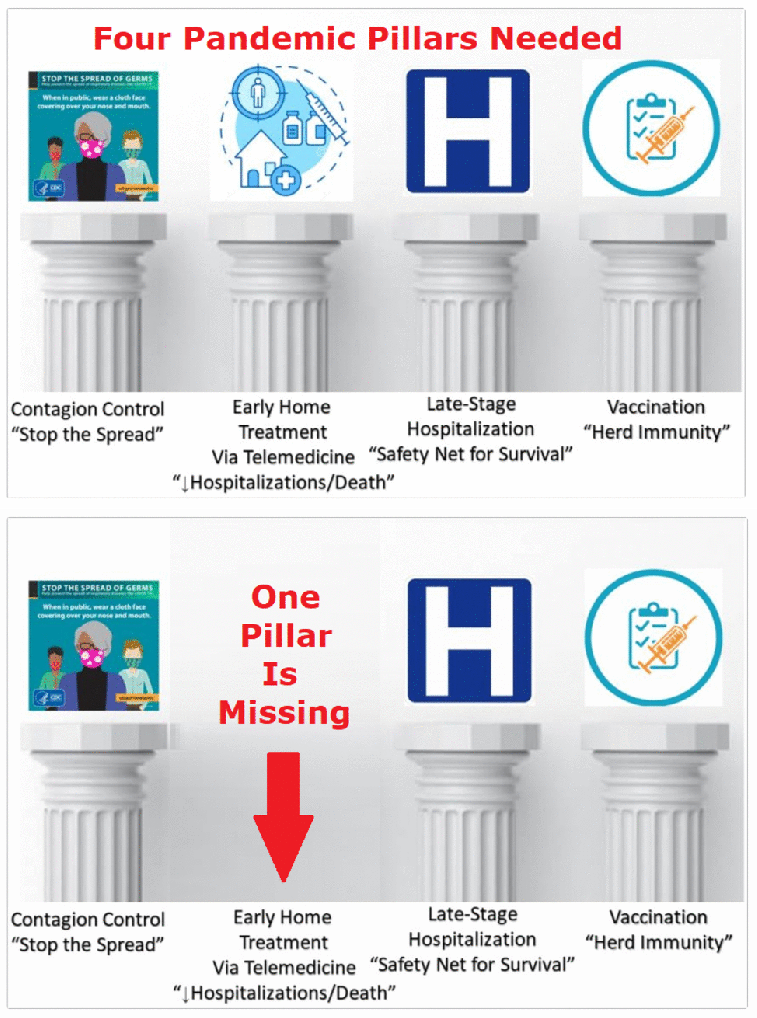
Treatment protocols with HCQ or Ivermectin + nutritional supplements fill the the need for early home treatment.

Why Covid Hospital Numbers are Misleading

David Zweig wrote in the Atlantic Our Most Reliable Pandemic Number Is Losing Meaning.  Excerpts in italics with my bolds.

From the start, COVID hospitalizations have served as a vital metric for tracking the risks posed by the disease. Last winter, this magazine described it as “the most reliable pandemic number,” while Vox quoted the cardiologist Eric Topol as saying that it’s “the best indicator of where we are.” On the one hand, death counts offer finality, but they’re a lagging signal and don’t account for people who suffered from significant illness but survived. Case counts, on the other hand, depend on which and how many people happen to get tested. Presumably, hospitalization numbers provide a more stable and reliable gauge of the pandemic’s true toll, in terms of severe disease. But a new, nationwide study of hospitalization records, released as a preprint today (and not yet formally peer reviewed), suggests that the meaning of this gauge can easily be misinterpreted—and that it has been shifting over time.

If you want to make sense of the number of COVID hospitalizations at any given time, you need to know how sick each patient actually is. Until now, that’s been almost impossible to suss out. The federal government requires hospitals to report every patient who tests positive for COVID, yet the overall tallies of COVID hospitalizations, made available on various state and federal dashboards and widely reported on by the media, do not differentiate based on severity of illness. Some patients need extensive medical intervention, such as getting intubated. Others require supplemental oxygen or administration of the steroid dexamethasone. But there are many COVID patients in the hospital with fairly mild symptoms, too, who have been admitted for further observation on account of their comorbidities, or because they reported feeling short of breath. Another portion of the patients in this tally are in the hospital for something unrelated to COVID, and discovered that they were infected only because they were tested upon admission. How many patients fall into each category has been a topic of much speculation. In August, researchers from Harvard Medical School, Tufts Medical Center, and the Veterans Affairs Healthcare System decided to find out.

The study found that from March 2020 through early January 2021—before vaccination was widespread, and before the Delta variant had arrived—the proportion of patients with mild or asymptomatic disease was 36 percent. From mid-January through the end of June 2021, however, that number rose to 48 percent.

In other words, the study suggests that roughly half of all the hospitalized patients showing up on COVID-data dashboards in 2021 may have been admitted for another reason entirely, or had only a mild presentation of disease.

One of the important implications of the study, these experts say, is that the introduction of vaccines strongly correlates with a greater share of COVID hospital patients having mild or asymptomatic disease. “It’s underreported how well the vaccine makes your life better, how much less sick you are likely to be, and less sick even if hospitalized,” Snyder said. “That’s the gem in this study.”

But the study also demonstrates that hospitalization rates for COVID, as cited by journalists and policy makers, can be misleading, if not considered carefully. Clearly many patients right now are seriously ill. We also know that overcrowding of hospitals by COVID patients with even mild illness can have negative implications for patients in need of other care. At the same time, this study suggests that COVID hospitalization tallies can’t be taken as a simple measure of the prevalence of severe or even moderate disease, because they might inflate the true numbers by a factor of two. “As we look to shift from cases to hospitalizations as a metric to drive policy and assess level of risk to a community or state or country,” Doron told me, referring to decisions about school closures, business restrictions, mask requirements, and so on, “we should refine the definition of hospitalization. Those patients who are there with rather than from COVID don’t belong in the metric.”

Another Problem: Can Hospitals Covid Numbers Be Trusted?

Gateway Pundit published a pertinent article Missouri COVID Whistleblower: Hospitals are Lying to the public about COVID… and I can prove it.  Excerpts in italics with my bolds.

Josh Snider worked in facilities management at Missouri Baptist Medical Center or “MBMC”, “I watched our hospital administrators say in the media that our intensive care units were overflowing with COVID patients, at 98% capacity, knowing that it was a complete and utter lie.”

Snider relates that the MBMC hospital, part of a larger $5.5 billion annual network within the Barnes Jewish hospital system in St. Louis, Missouri, actually shut down three out of four floors of intensive care during COVID because they were UNUSED.

“And even after shutting down three-fourths of our ICU capacity, they were still never more than 50% full with that drastically reduced overall capacity. These medical systems that are saying they are overrun with COVID patients are likely LYING TO THE PUBLIC,” Snider said.

Snider provided documentary proof of the COVID case load of the MBMC system, whose COVID patients do not track national trends, and where the number of COVID patients in ICU were, at many points, a single, solitary person.

“I would have to adjust the airflow in some of the rooms of people in the ICU with COVID, they were fine. I believe in COVID, I know it’s serious, but I also personally saw people who were fine, they had a terminal case of boredom. I spoke with these people and they weren’t sick at all, they felt fine but were told they had to stay there. Many brought their PlayStations with them to waste away the days with video games instead.”


This chart was INTERNAL and distributed to employees of MBMC. In it, you can see that the number of COVID patients in critical care was always under 20. The hospital shut down 3 of 4 ICU wings, and in the remaining one had the capacity for 60 beds/patients. They never came close to being at capacity for COVID ICU patients.

These charts, provided by Snider, show that there was a relatively normal track for COVID infections at the MBMC Center, an acute care facility in St. Louis. Even during periods of infection spikes in the national population, those spikes are not found in the hospital data. As well, the bottom line showing serious cases of COVID requiring intensive care remain significantly small and reduced throughout the months of the pandemic.

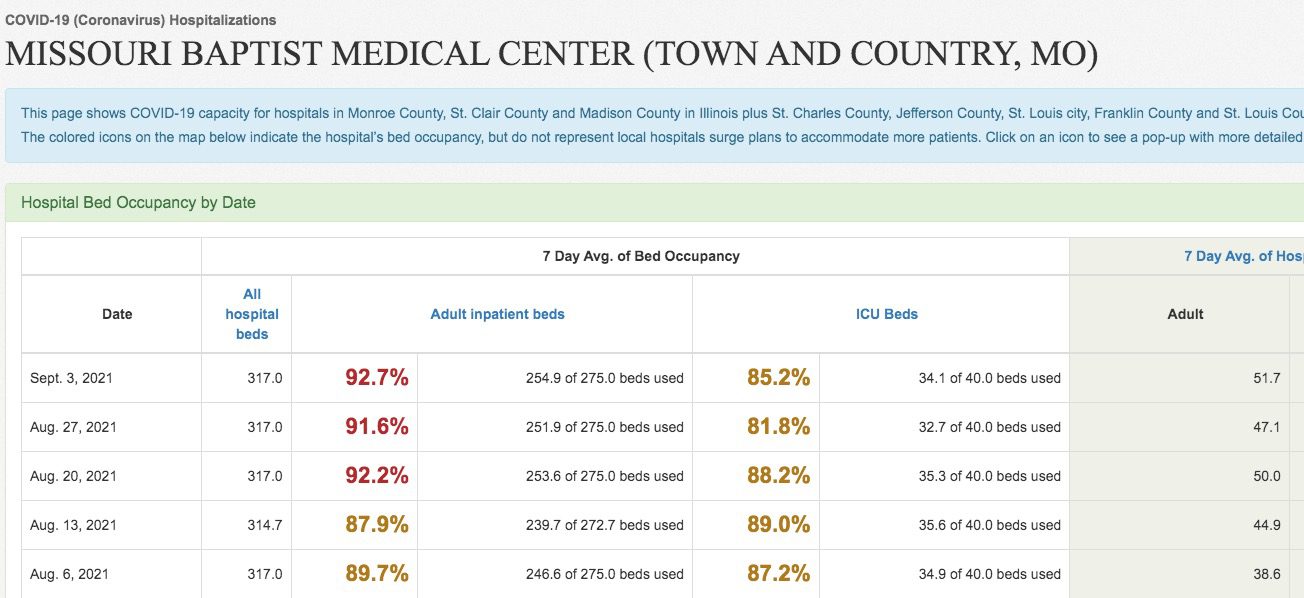
Here is the chart generated from information submitted to the US Department of Health and Human Services, as published by the Gannett News Service:

INTERNAL: on August 18, 2021, MBMC said they had 19 COVID patients in ICU.

EXTERNAL: on August 20, 2021, MBMC told the public they had 35.3 COVID patients in ICU.

THE PUBLIC NUMBERS ARE OFF FROM THE INTERNAL REPORTS OF COVID PATIENTS IN THE ICU BY ALMOST 100%

Snider has provided his personal statement, documentary evidence, and clear data discrepancies that all suggest that hospitals are not telling the public the truth about the COVID pandemic.

“The real flu season in the hospital was always more serious than COVID has been,” Snider said. “Flu season in a hospital is very challenging, and even the tamest flu season in years past was still worse than COVID has been so far. The people who have been suffering and sadly dying are clearly people who are hundreds of pounds overweight, and people with multiple other comorbidities like stage 4 cancer. I’m not a Doctor, but the response and panic to this virus is clearly wildly disproportionate to reality.”