2024 Arctic Ice Abounds at Average Daily Minimum

The annual competition between ice and water in the Arctic ocean has reached the maximum for water, which typically occurs mid September.  After that, diminishing energy from the slowly setting sun allows oceanic cooling causing ice to regenerate. Those interested in the dynamics of Arctic sea ice can read numerous posts here.  This post provides a look at mid September from 2007 to yesterday as a context for understanding this year’s annual minimum.

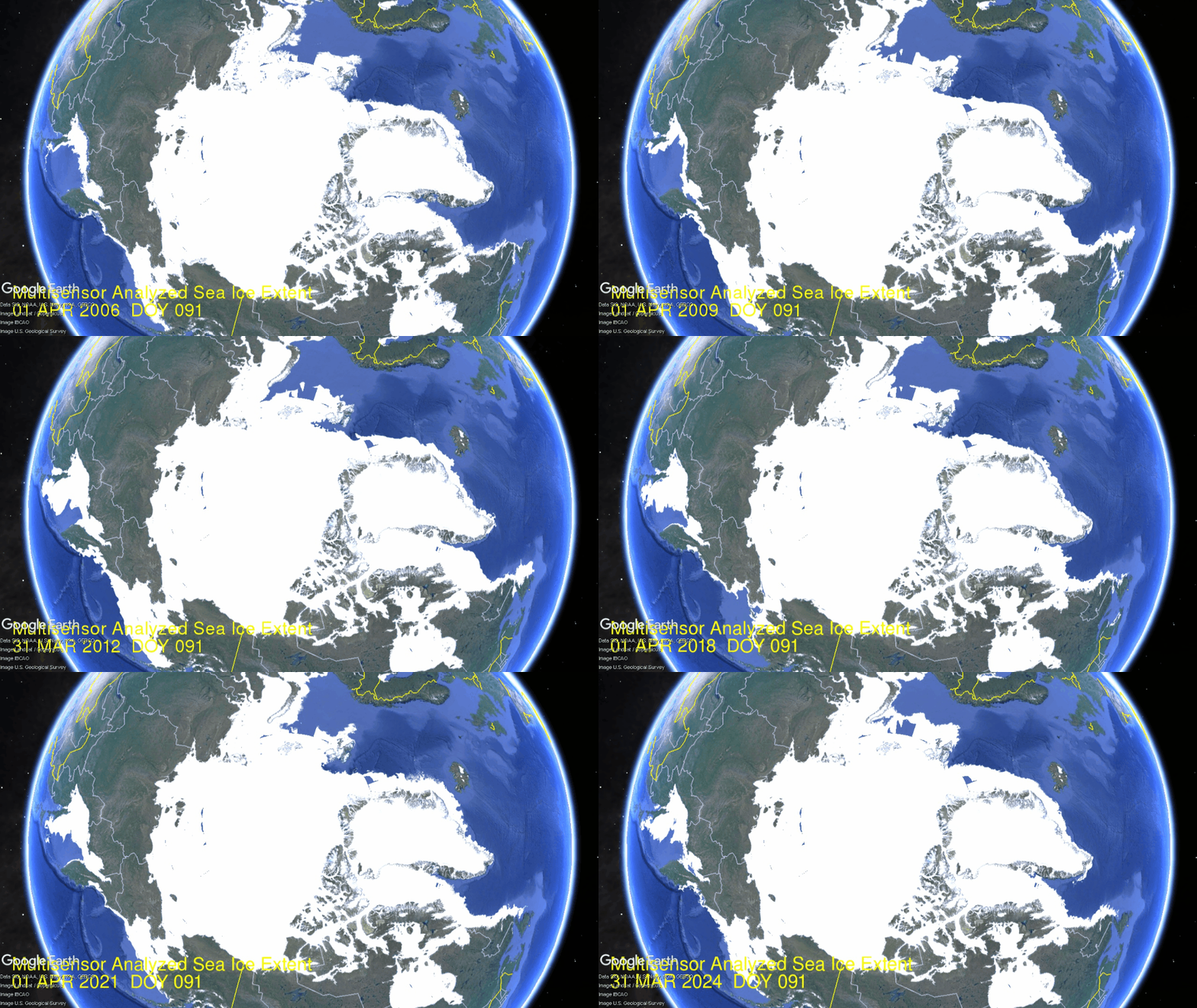
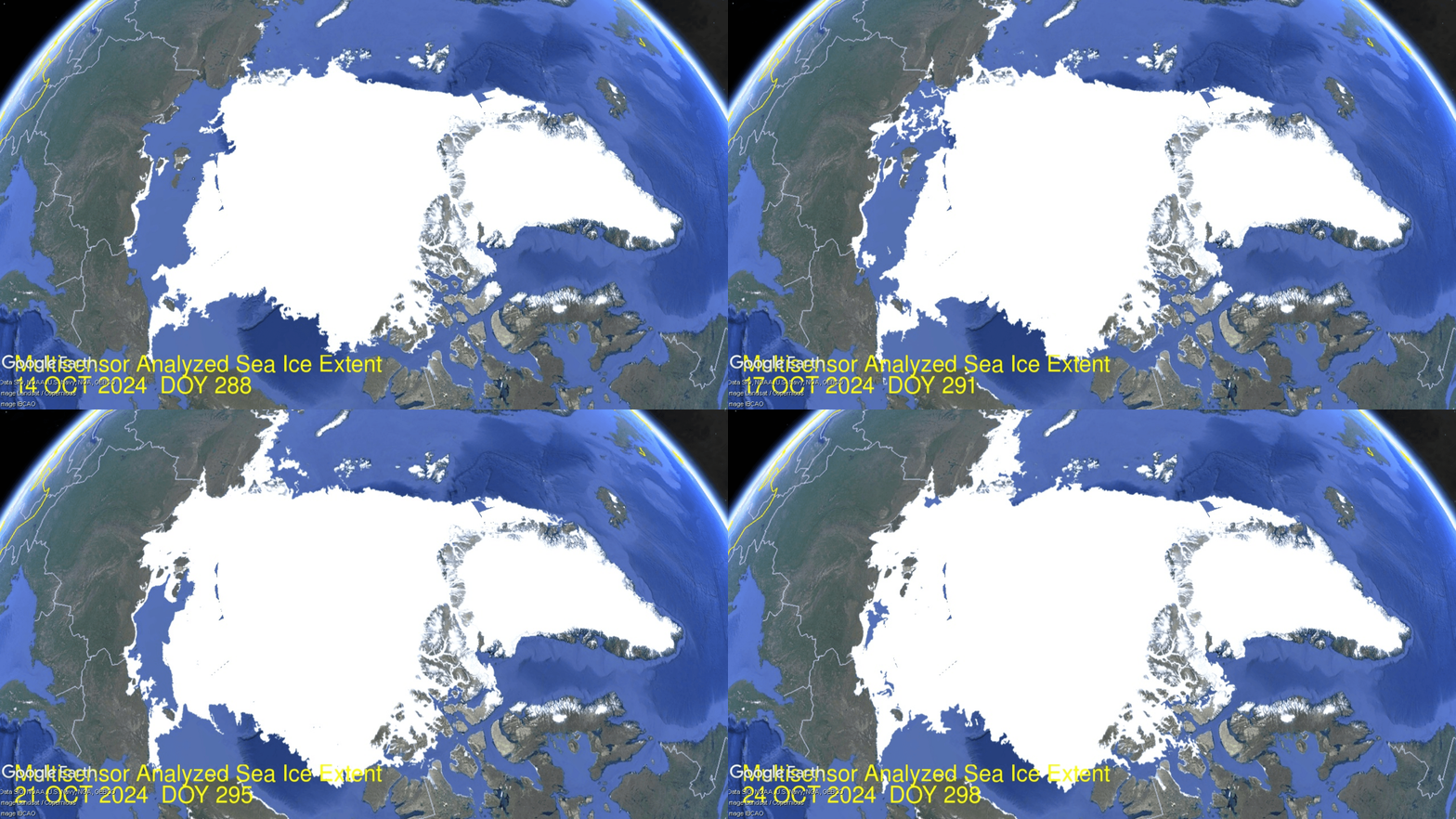
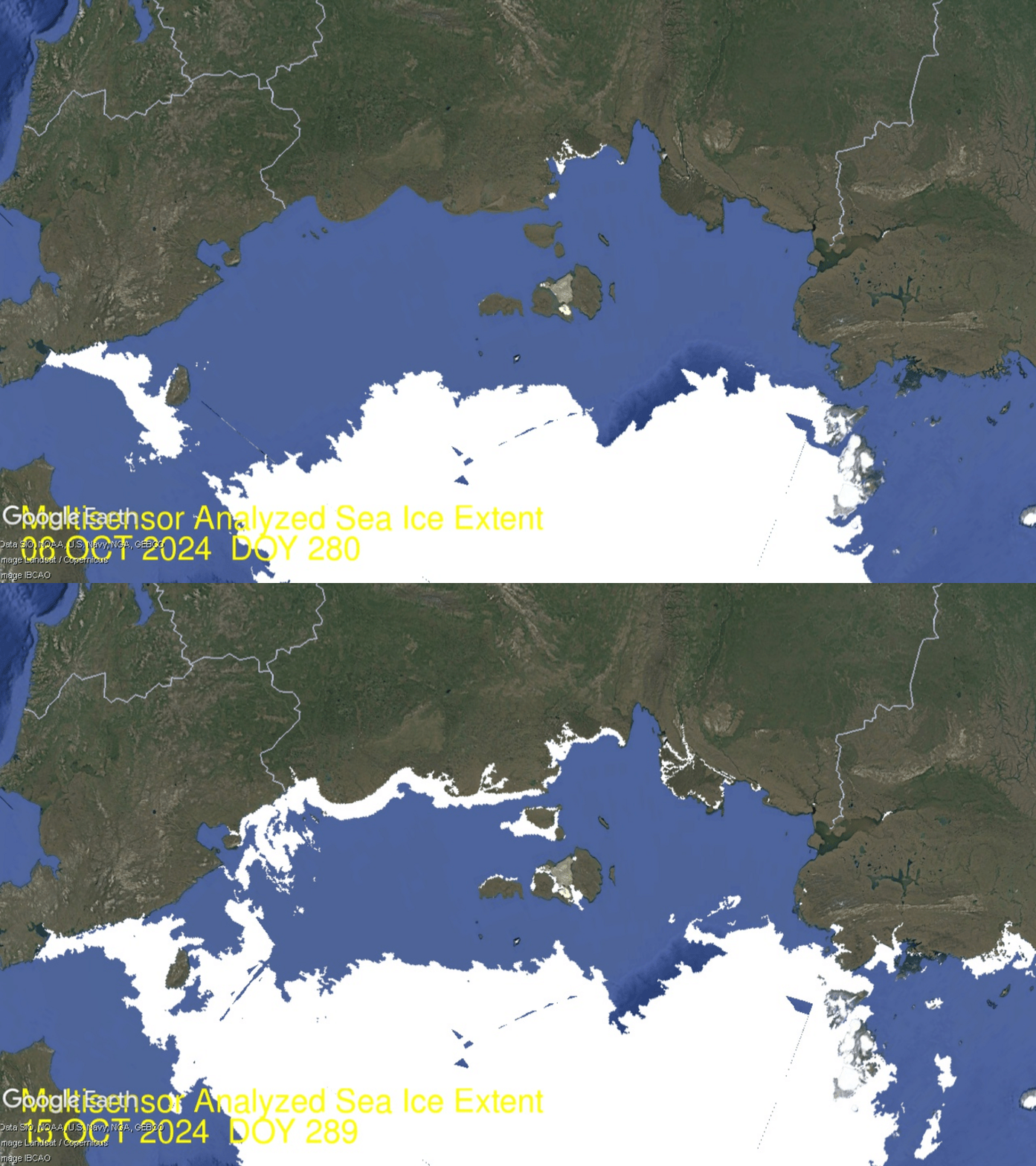
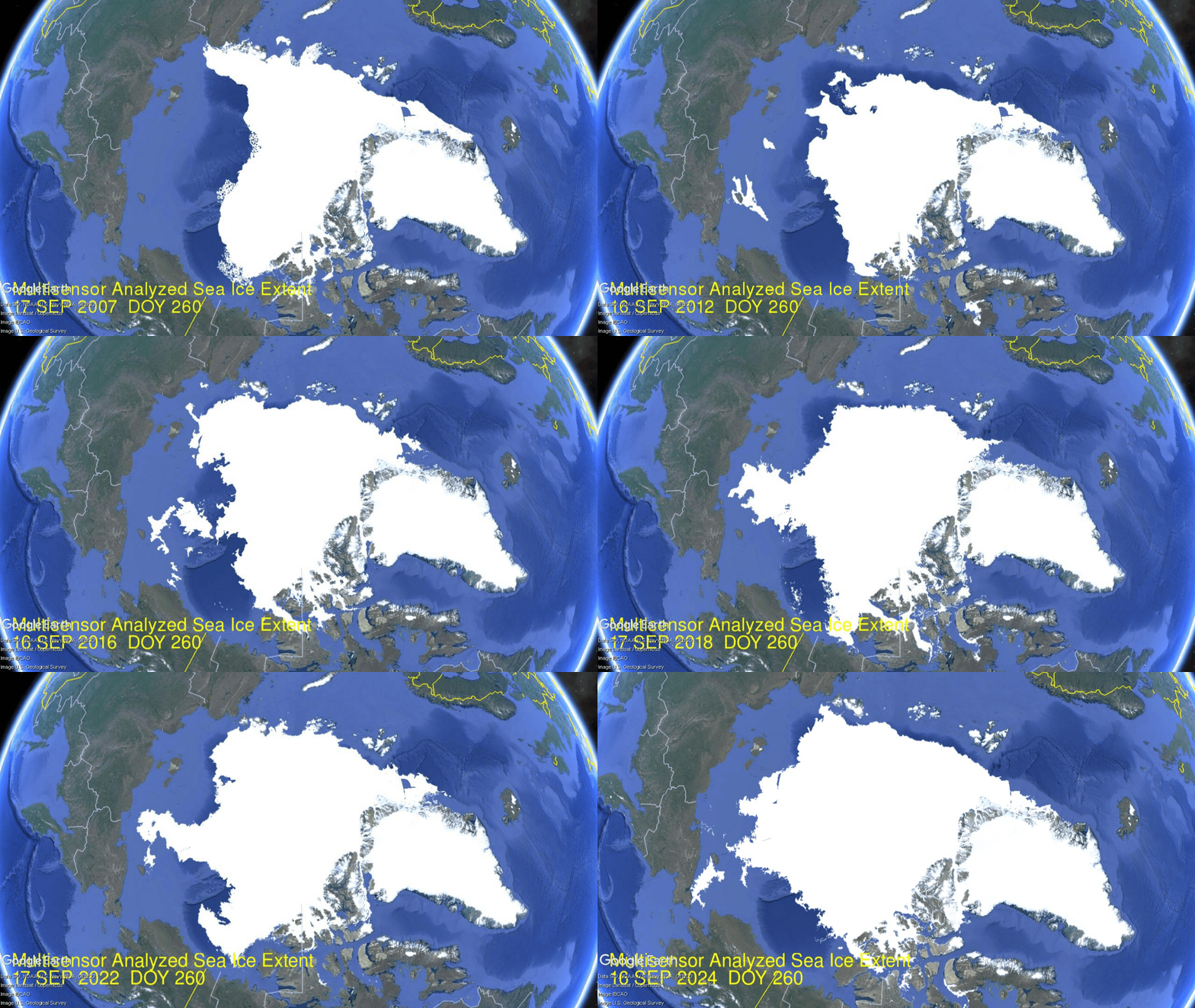
The image above shows Arctic ice extents on day 260 (lowest annual daily extent on average) from 2007 to 2024 yesterday.  Obviously, the regions vary as locations for ice, discussed in more detail later on. The animation shows the ice deficits in years 2007, 2012, 2016, and 2020, as well as surplus years like 2010, 2014, 2022 and 2024.

Note that for climate purposes the annual minimum is measured by the September monthly average ice extent, since the daily extents vary and will go briefly lowest on or about day 260. In a typical year the overall ice extent will end September slightly higher than at the beginning.  2024 September ice extent averaged 4.6M over the first 16 days, and is likely to end the month with at least that amount for the entire month. For comparison, the 17 year average for Sept. 1-16 is 4.7M.

The melting season to mid September shows 2024 tracked lower than average but ended the period slightly above.

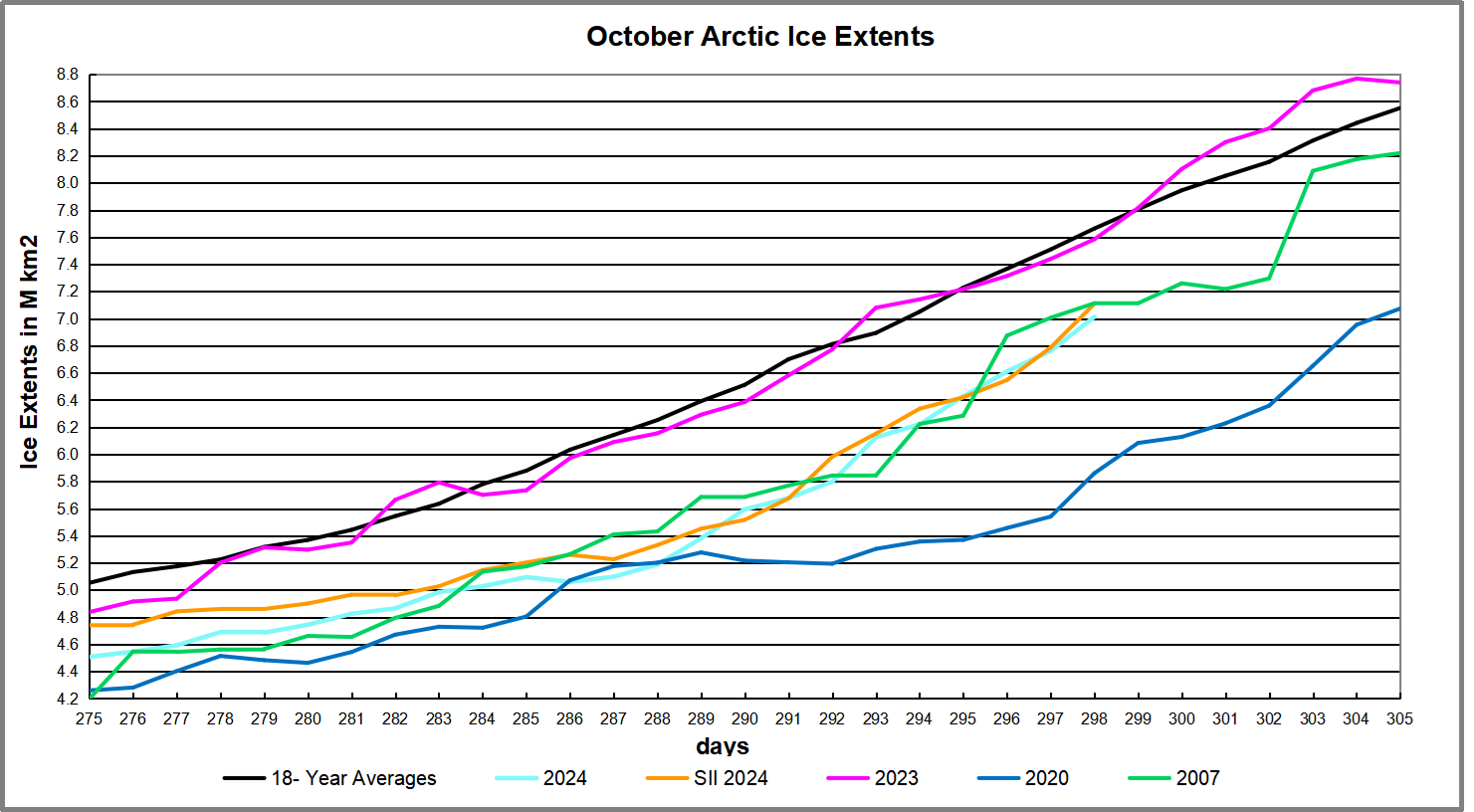
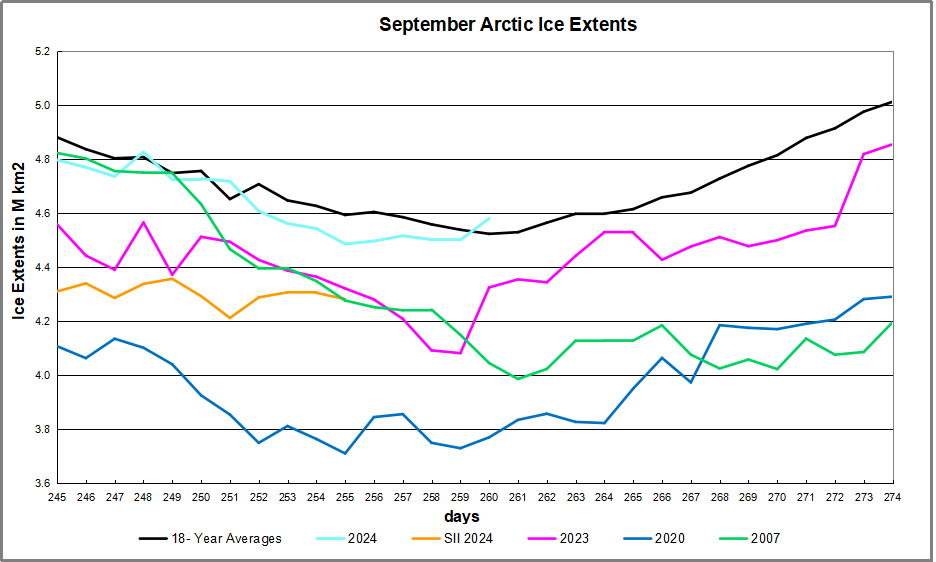
The graph above shows September daily ice extents for 2024 compared to 18 year averages, and some years of note. Day 260 has been the lowest daily ice extent on average for the last 18 years.

The black line shows on average Arctic ice extents during September decline 358k km2 down to 4.5M Km2 by day 260. The average increase from now on is 490k km2 up to 5.0M km2 end of September.  2024  tracked a little lower than the 18-year average in the second week reaching a low of 4.49M km2 on day 255, before going above average on day 260.

SII was reporting deficits as high as 0.5M km2 (half a Wadham) compared to  MASIE early in September.  For some reason, apparently data access issues, that dataset has not been updated for the last five days.  2023 bottomed out at 4.1M while 2007 daily minimum hit 4.0M, ended ~ 0.5M km2 in deficit to average and 535k km2 less than MASIE on day 260.  2020 ice on day 260 was ~740k km2 in deficit to average.

The main deficit to average is in CAA with a smaller loss in Chukchi, overcome by surpluses almost everywhere, especially in Central Arctic along with Laptev and Greenland seas. And as discussed below, the marginal basins have little ice left to lose.

The Bigger Picture 

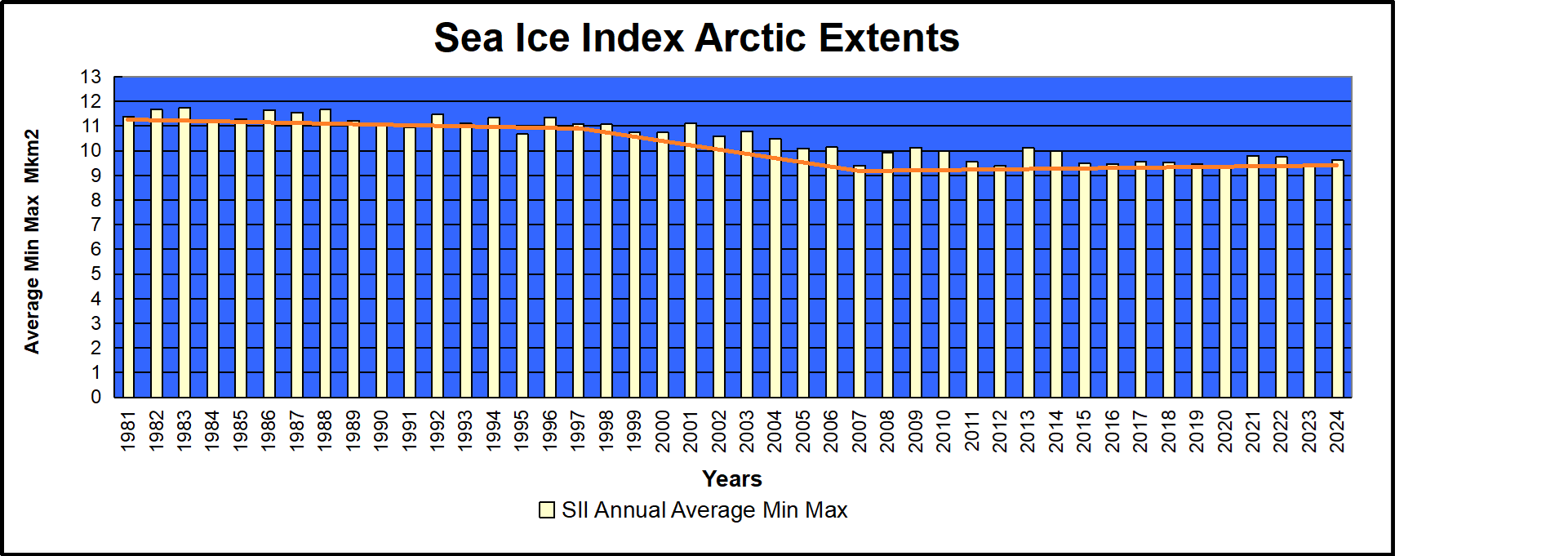
We are close to the annual Arctic ice extent minimum, which typically occurs on or about day 260 (mid September). Some take any year’s slightly lower minimum as proof that Arctic ice is dying, but the image above shows the Arctic heart is beating clear and strong.

Over this decade, the Arctic ice minimum has not declined, but since 2007 looks like fluctuations around a plateau. By mid-September, all the peripheral seas have turned to water, and the residual ice shows up in a few places. The table below indicates where we can expect to find ice this September. Numbers are area units of Mkm2 (millions of square kilometers).

Day 260 17 year
Arctic Regions 2007 2010 2014 2016 2018 2020 2021 2022 2023 Average 2024
Central Arctic Sea 2.67 3.16 2.98 2.92 2.91 2.50 2.95 3.08 2.96 2.92 2.95
BCE 0.50 1.08 1.38 0.52 1.16 0.65 1.55 0.99 0.50 0.88 1.02
LKB 0.29 0.24 0.19 0.28 0.02 0.00 0.13 0.20 0.39 0.18 0.16
Greenland & CAA 0.56 0.41 0.55 0.45 0.41 0.59 0.50 0.43 0.44 0.47 0.39
B&H Bays 0.03 0.03 0.02 0.03 0.05 0.02 0.04 0.02 0.04 0.04 0.05
NH Total 4.05 4.91 5.13 4.20 4.56 3.76 5.17 4.73 4.33 4.49 4.58

The table includes some early years of note along with the last 4 years compared to the 17 year average for five contiguous arctic regions. BCE (Beaufort, Chukchi and East Siberian) on the Asian side are quite variable as the largest source of ice other than the Central Arctic itself.   Greenland Sea and CAA (Canadian Arctic Archipelago) together hold almost 0.5M km2 of ice at annual minimum, fairly consistently.  LKB are the European seas of Laptev, Kara and Barents, a smaller source of ice, but a difference maker some years, as Laptev was in 2016 and 2023.  Baffin and Hudson Bays are inconsequential as of day 260.

2024 extent of 4.58 is 1.3% over average, mainly due to surpluses in Chukchi and East Siberian seas.

For context, note that the average maximum has been 15M, so on average the extent shrinks to 30% of the March high (31% in 2022) before growing back the following winter.  In this context, it is foolhardy to project any summer minimum forward to proclaim the end of Arctic ice.

Resources:  Climate Compilation II Arctic Sea Ice

2024 Arctic Ice Beats 2007 by Half a Wadham

The graph above shows September daily ice extents for 2024 compared to 18 year averages, and some years of note. Day 260 has been the lowest daily ice extent on average for the last 18 years.

The black line shows on average Arctic ice extents during September decline 358k km2 down to 4.5M Km2 by day 260. The average increase from now on is 490k km2 up to 5.0M km2 end of September.  2024  tracked a little lower than the 18-year average in the second week reaching a low of 4.49M km2 on day 255, before going above average on day 260. 

SII was reporting deficits as high as 0.5M km2 (half a Wadham) compared to  MASIE early in September.  For some reason, that dataset has not been updated for the last five days.  2023 bottomed out at 4.1M while 2007 daily minimum hit 4.0M, ended ~ 0.5M km2 in deficit to average and 535k km2 less than MASIE on day 260.  2020 ice on day 260 was ~740k km2 in deficit to average.

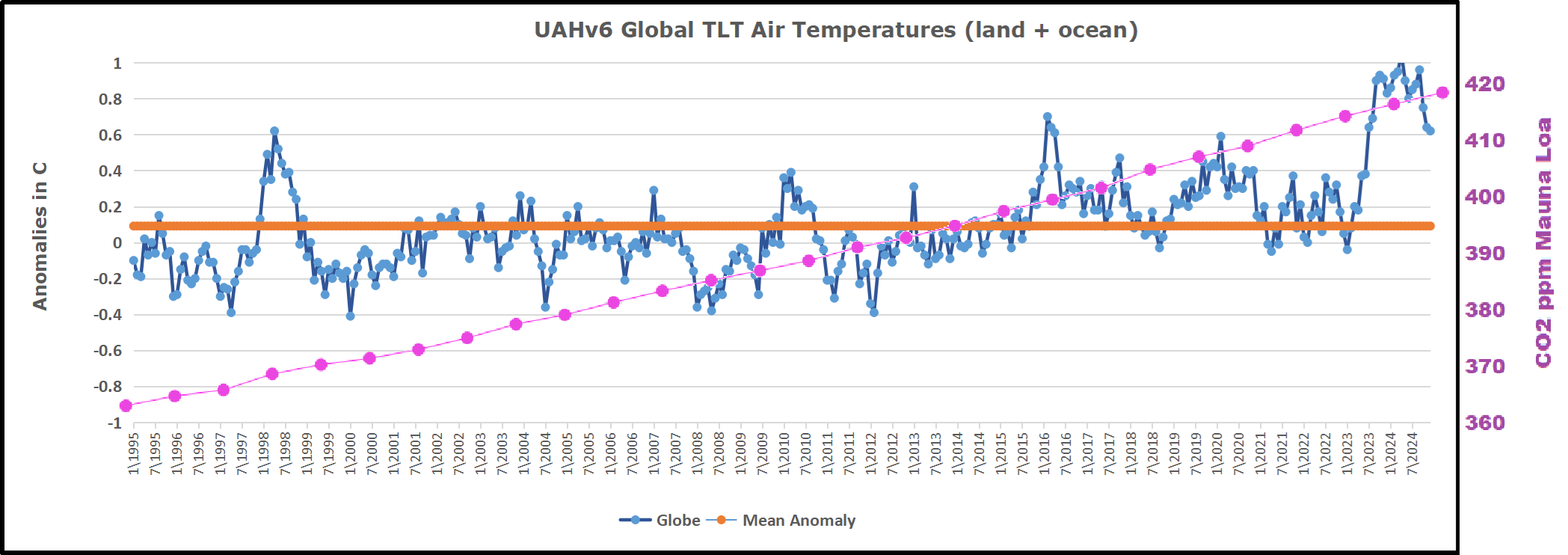
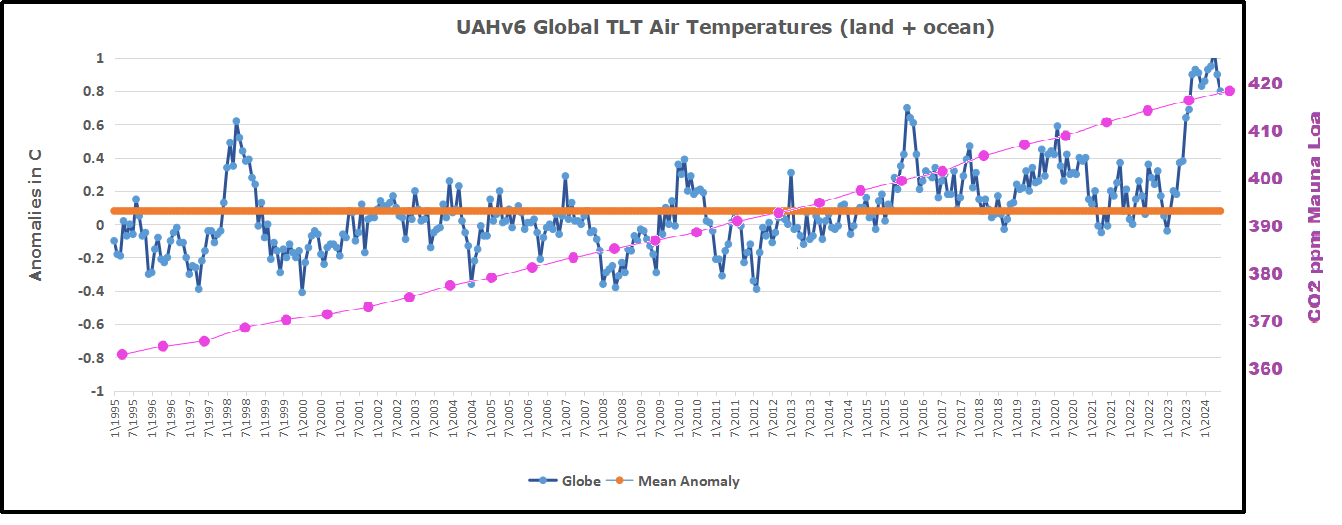
Why is this important?  All the claims of global climate emergency depend on dangerously higher temperatures, lower sea ice, and rising sea levels.  The lack of additional warming prior to 2023 El Nino is documented in a post UAH June 2024: Oceans Lead Cool Down.

The lack of acceleration in sea levels along coastlines has been discussed also.  See Observed vs. Imagined Sea Levels 2023 Update.

Also, a longer term perspective is informative:
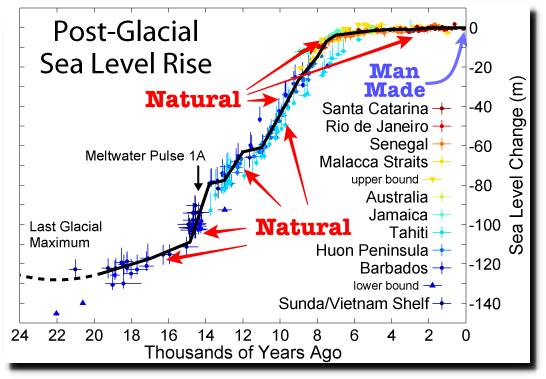
post-glacial_sea_levelThe table below shows the distribution of Sea Ice on day 260 across the Arctic Regions, on average, this year and 2007. At this point in the year, Bering and Okhotsk seas are open water and thus dropped from the table.

Region 2024260 Day 260 ave 2024-Ave. 2007260 2024-2007
 (0) Northern_Hemisphere 4581327 4524401 56926 4045776 535551
 (1) Beaufort_Sea 304967 491931 -186963 481384 -176416
 (2) Chukchi_Sea 360456 167361 193095 22527 337929
 (3) East_Siberian_Sea 353456 252958 100498 311 353145
 (4) Laptev_Sea 160792 135574 25218 235869 -75076
 (5) Kara_Sea 0 31612 -31612 44067 -44067
 (6) Barents_Sea 0 14610 -14610 7420 -7420
 (7) Greenland_Sea 165965 191196 -25230 333181 -167216
 (8) Baffin_Bay_Gulf_of_St._Lawrence 53126 29745 23381 26703 26423
 (9) Canadian_Archipelago 228869 274428 -45559 225526 3344
 (10) Hudson_Bay 1692 4595 -2903 2270 -578
 (11) Central_Arctic 2950861 2929452 21409 2665243.87 285617

The overall surplus to average is 57k km2, (1.3%).  The major deficit is in Beaufort, offset by large surpluses in Chukchi and East Siberian seas. 

bathymetric_map_arctic_ocean

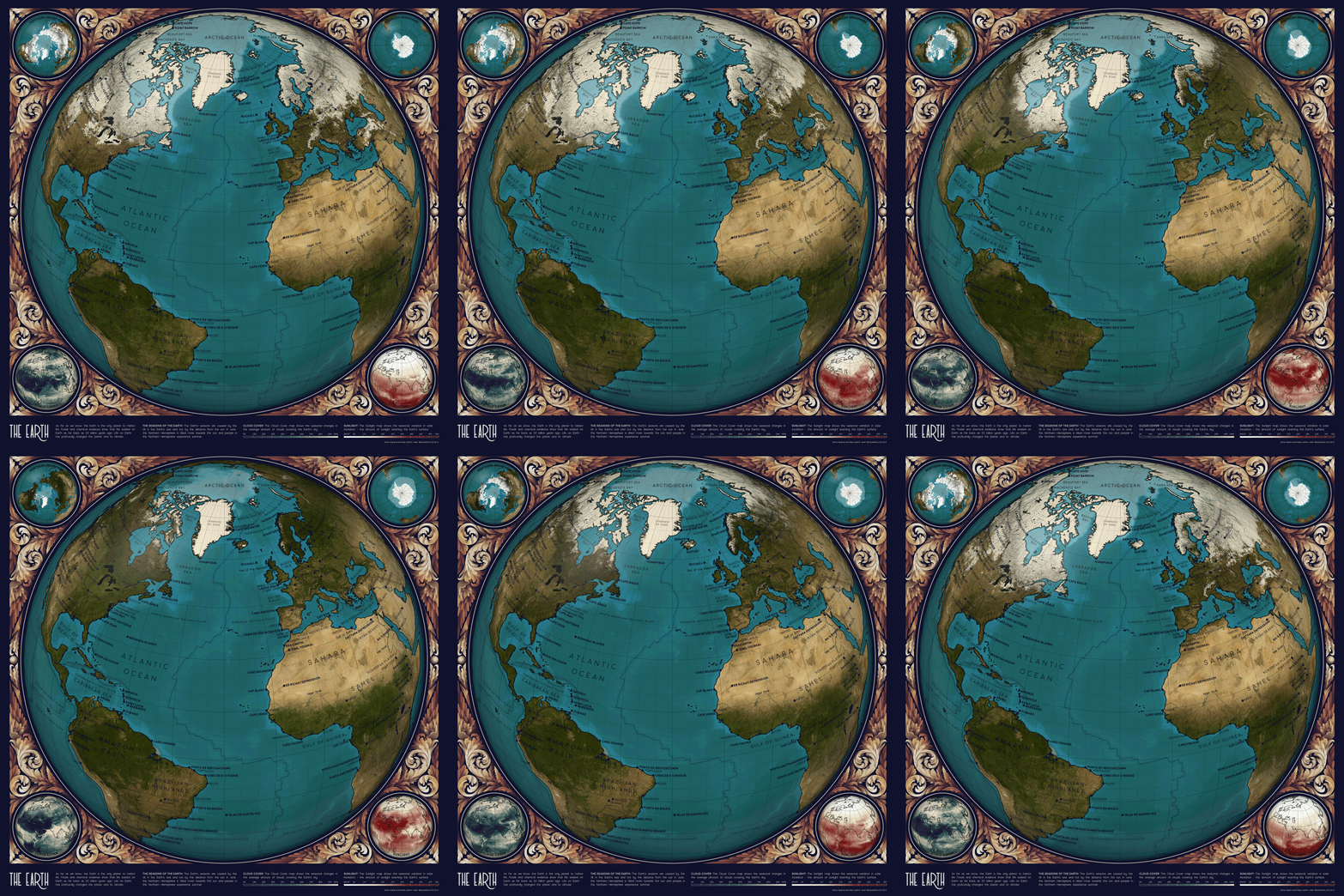
Illustration by Eleanor Lutz shows Earth’s seasonal climate changes. If played in full screen, the four corners present views from top, bottom and sides. It is a visual representation of scientific datasets measuring ice and snow extents.

There is no charge for content on this site, nor for subscribers to receive email notifications of postings.


September Outlook Arctic Ice 2024

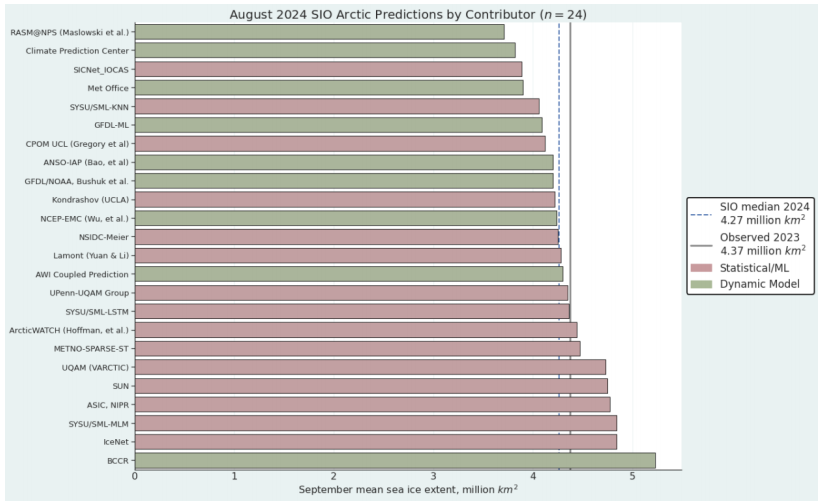
Figure 1. Distribution of SIO contributors for August estimates of September 2024 pan-Arctic sea-ice extent. No Heuristic methods were submitted in August. “Sun” is a public/citizen contribution. Image courtesy of Matthew Fisher, NSIDC.

2024: August Report from Sea Ice Prediction Network

The August 2024 Outlook received 24 pan-Arctic contributions (Figure 1). This year’s median
forecasted value for pan-Arctic September sea-ice extent is 4.27 million square kilometers with
an interquartile range of 4.11 to 4.54 million square kilometers. This is lower than the 2022 (4.83
million square kilometers) and 2023 (4.60 million square kilometers) August median forecasts
for September. . .This reflects relatively rapid ice loss during the month of July, resulting in August
Outlooks revising estimates downward. The lowest sea-ice extent forecast is 3.71 million square
kilometers, from the RASM@NPS submission); the highest sea-ice extent forecast is 5.23
million square kilometers, submitted by BCCR.

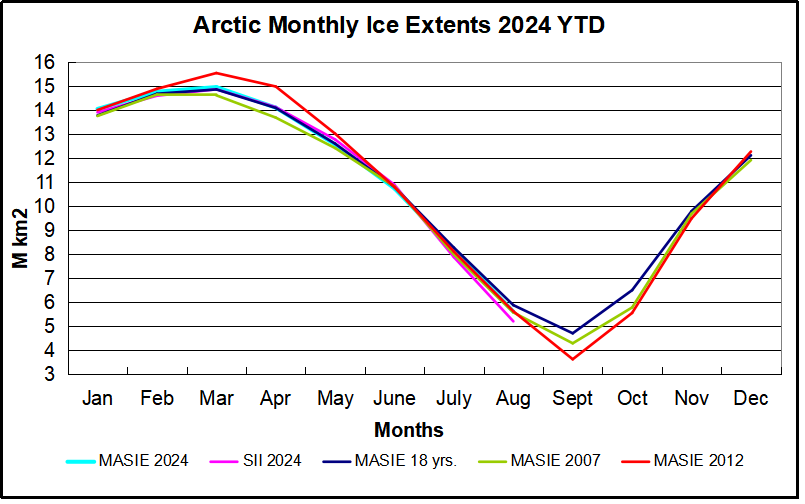
These are predictions for the September 2024 monthly average ice extent as reported by NOAA Sea Ice Index (SII). This post provides a look at the 2024 Year To Date (YTD) based on monthly averages comparing MASIE and SII datasets. (18 year average is 2006 to 2023 inclusive).

The graph puts 2024 into recent historical perspective. Note how 2024 was slightly above the 18-year average for the first 5 months, then tracked slightly lower to average through August. The outlier 2012 provided the highest March maximum as well as the lowest September minimum, coinciding with the Great Arctic Cyclone that year.  2007 began the period with the lowest minimum except for 2012.  SII 2024 started slightly higher than MASIE the first 3 months, then ran the same as MASIE until dropping in August 400k km2 below MASIE 2024 and also lower than 2007 and 2012.

The table below provides the monthly Arctic ice extent averages for comparisons (all are M km2)

Monthly MASIE 2024 SII 2024 MASIE -SII MASIE 2024-18 YR AVE SII 2024-18 YR AVE MASIE 2024-2007
Jan 14.055 13.917 0.139 0.280 0.333 0.293
Feb 14.772 14.605 0.167 0.096 0.152 0.121
Mar 14.966 14.873 0.093 0.111 0.199 0.344
Apr 14.113 14.131 -0.018 0.021 0.118 0.418
May 12.577 12.783 -0.207 -0.038 0.123 0.150
June 10.744 10.895 -0.151 -0.072 0.024 -0.082
July 8.181 7.884 0.297 -0.107 -0.160 0.188
Aug 5.617 5.214 0.404 -0.267 -0.423 0.033

The first two data columns are the 2024 YTD shown by MASIE and SII, with the MASIE surpluses in column three.  Column four shows MASIE 2024 compared to MASIE 18 year averages, while column five shows SII 2024 compared to SII 18 year averages.  YTD August MASIE and SII are below their averages, SII by nearly half a Wadham. The last column shows MASIE 2024 holding surpluses over 2007 most of the months, and nearly the same in August.

Summary

The experts involved in SIPN are expecting SII 2024 September to be much lower than 2023 and 2022, based largely on the large deficits SII is showing in July and August. The way MASIE is going, this September looks to be lower than its average, but much higher than SII.  While the daily minimum for the year occurs mid September, ice extent on September 30 is typically slightly higher than on September 1.

Footnote:

Some people unhappy with the higher amounts of ice extent shown by MASIE continue to claim that Sea Ice Index is the only dataset that can be used. This is false in fact and in logic. Why should anyone accept that the highest quality picture of ice day to day has no shelf life, that one year’s charts can not be compared with another year? Researchers do this, including Walt Meier in charge of Sea Ice Index. That said, I understand his interest in directing people to use his product rather than one he does not control. As I have said before:

MASIE is rigorous, reliable, serves as calibration for satellite products, and continues the long and honorable tradition of naval ice charting using modern technologies. More on this at my post Support MASIE Arctic Ice Dataset

MASIE: “high-resolution, accurate charts of ice conditions”
Walt Meier, NSIDC, October 2015 article in Annals of Glaciology.

August 2024 Arctic Ice, NOAA Missing Nearly Half a Wadham

The images above come from AARI (Arctic and Antarctic Research Institute) St. Petersburg, Russia. Note how the location of remaining ice at late August varies greatly from year to year.  The marginal seas are open water, including the Pacific basins, Canadian Bays (Hudson and Baffin), and the Atlantic basins for the most part.  Note ice extent fluctuations especially in Eurasian seas (lower right) and in Can-Am seas (upper right).  Notice the much greater ice extent in 2021 compared to 2018. As discussed later on, some regions retain considerable ice at the annual minimum, with differences year to year. [Note: Images prior to 2009 are in a different format.  AARI Charts are (here)

The annual competition between ice and water in the Arctic ocean is approaching the maximum for water, which typically occurs mid September.  After that, diminishing energy from the slowly setting sun allows oceanic cooling causing ice to regenerate. Those interested in the dynamics of Arctic sea ice can read numerous posts here.  This post provides a look at end of August from 2007 to yesterday as a context for anticipating this year’s annual minimum.  Note that for climate purposes the annual minimum is measured by the September monthly average ice extent, since the daily extents vary and will go briefly lowest on or about day 260. In a typical year the overall ice extent will end September slightly higher than at the beginning.

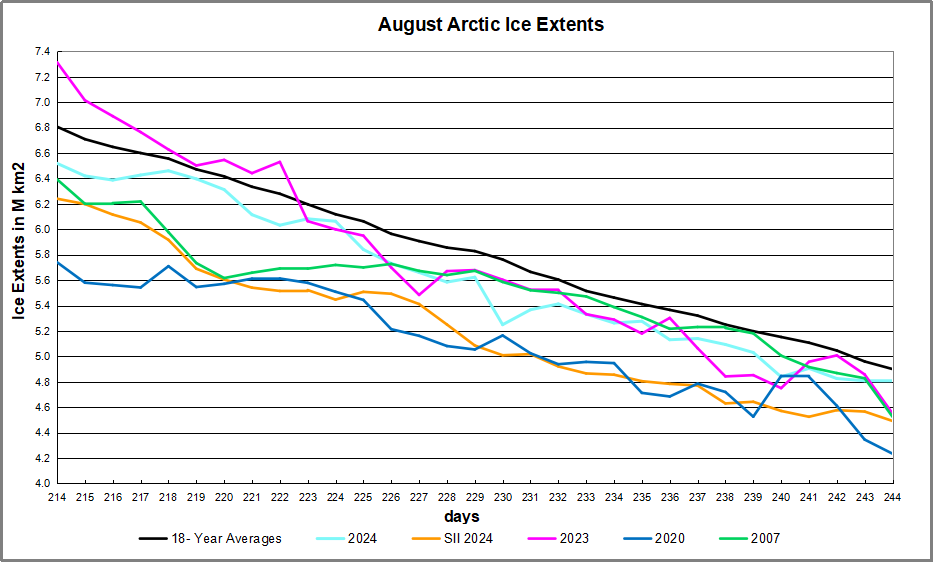
The melting season mid July to mid August shows 2024 melted at nearly the average rate, while retaining more ice extent at the end than some other recent years of note.

Firstly note that on average August shows ice declining 1.8M km2 down to 4.9M km2.  2024 started 288k km2 below average and on day 244 was only 98k km2 or 2% in deficit to average. The extents in Sea Ice Index in orange  were considerably lower during August, meaning that SII August 2024 monthly average will be ~400k km2 lower than MASIE., nearly half a Wadham.

The table for day 244 shows how large how the ice is distributed across the various seas comprising the Arctic Ocean.

Region 2024244 Day 244 ave 2024-Ave. 2007244 2024-2007
 (0) Northern_Hemisphere 4802455 4900416 -97962 4525136 277319
 (1) Beaufort_Sea 331017 568911 -237894 629454 -298437
 (2) Chukchi_Sea 508350 261504 246846 96232 412118
 (3) East_Siberian_Sea 476831 342187 134644 196 476635
 (4) Laptev_Sea 209967 163938 46029 245578 -35612
 (5) Kara_Sea 253 47999 -47746 74307 -74054
 (6) Barents_Sea 0 15867 -15867 11061 -11061
 (7) Greenland_Sea 101048 171695 -70647 288223 -187174
 (8) Baffin_Bay_Gulf_of_St._Lawrence 51428 26156 25272 32804 18624
 (9) Canadian_Archipelago 224943 301460 -76516 234389 -9445
 (10) Hudson_Bay 3868 19658 -15790 28401 -24533
 (11) Central_Arctic 2893622 2980244 -86622 2883200.58 10421

The largest deficit to average is in Beaufort Sea, followed by smaller losses in Greenland Sea, CAA and Central Arctic.   Hudson Bay and Barents Sea are mostly open water. The offsetting surpluses are in Chukchi, East Siberian and Laptev seas.

For context, note that the average maximum has been 15M, so on average the extent shrinks to 30% of the March high before growing back the following winter. Presently 2024 is at 32% of last March maximum.  In this context, it is foolhardy to project any summer minimum forward to proclaim the end of Arctic ice.

Resources:  Climate Compilation II Arctic Sea Ice

Mid August 2024 Normal Arctic Ice Melt in Progress


The graph above shows Mid July to Mid August daily ice extents for 2024 compared to 18 year averages, and some years of note.

The black line shows on average Arctic ice extents during this period decline 2.4M km2 down to 5.8M Km2 by day 229.  2024 tracked somewhat lower than the 18-year average in late July, then in August drew near to average before slipping into deficit the last 5 days. In the end, 2024 is presently close to 2023 and 2007, ~200k km2 below the 18 year MASIE average.

Remarkably, SII is showing much larger deficits to average than MASIE does. This period began with SII having a gap of 400k km2 less ice extent than MASIE, then increased that deficit as high as 700k km2, before reporting a gap of 537k km2 on day 229, a difference of half a Wadham. The effect will be for SII to report much lower monthly averages for ice extents during July and August, prior to the annual minimum occurring in September.

Why is this important?  All the claims of global climate emergency depend on dangerously higher temperatures, lower sea ice, and rising sea levels.  The lack of additional warming prior to 2023 El Nino is documented in a post UAH June 2024: Oceans Lead Cool Down.

The lack of acceleration in sea levels along coastlines has been discussed also.  See Observed vs. Imagined Sea Levels 2023 Update.

Also, a longer term perspective is informative:
post-glacial_sea_levelThe table below shows the distribution of Sea Ice on day 229 across the Arctic Regions, on average, this year and 2007. At this point in the year, Bering and Okhotsk seas are open water and thus dropped from the table.

Region 2024229 Day 229 Ave 2024-Ave. 2007229 2024-2007
 (0) Northern_Hemisphere 5623262 5828731 -205469 5673531 -50270
 (1) Beaufort_Sea 591190 698788 -107598 767181 -175991
 (2) Chukchi_Sea 554701 425156 129544 253092 301609
 (3) East_Siberian_Sea 641562 535416 106146 154536 487026
 (4) Laptev_Sea 268971 240911 28059 284910 -15939
 (5) Kara_Sea 14414 96702 -82288 201203 -186789
 (6) Barents_Sea 0 21833 -21833 17229 -17229
 (7) Greenland_Sea 120478 216573 -96095 310070 -189591
 (8) Baffin_Bay_Gulf_of_St._Lawrence 46366 53298 -6932 75105 -28739
 (9) Canadian_Archipelago 319281 399712 -80431 382407 -63126
 (10) Hudson_Bay 33319 58874 -25555 89354 -56034
 (11) Central_Arctic 3031923 3080445 -48523 3137188.82 -105266

The overall deficit to average is 205k km2, (3.5%).  The major deficits are in  Beaufort, Kara, Greenland Sea and CAA (Canadian Archipelago), partly offset by surpluses in Chukchi and East Siberian.

For more on the differences between MASIE and SII see this post:

Support MASIE Arctic Ice Dataset

bathymetric_map_arctic_ocean

Illustration by Eleanor Lutz shows Earth’s seasonal climate changes. If played in full screen, the four corners present views from top, bottom and sides. It is a visual representation of scientific datasets measuring ice and snow extents.

There is no charge for content on this site, nor for subscribers to receive email notifications of postings.


Arctic Ice Slight Deficit July 31, 2024


The graph above shows July daily ice extents for 2024 compared to 18 year averages, and some years of note.

The black line shows on average Arctic ice extents during July decline 2.7M km2 down to 6.9M Km2 by day 213.  2024  tracked a little higher than the 18-year average early in July, then slipped into deficit in the last 10 days.  SII was close to MASIE early in July, then diverged mid month showing up to 666k km2 lower until ending July ~300k km2 less extent than MASIE.  2023 was higher than average, while 2007 ended ~ 540k km2 in deficit to average.  2020 ice ended nearly 1 Wadham or 1M km2 in deficit.

Why is this important?  All the claims of global climate emergency depend on dangerously higher temperatures, lower sea ice, and rising sea levels.  The lack of additional warming prior to 2023 El Nino is documented in a post UAH June 2024: Oceans Lead Cool Down.

The lack of acceleration in sea levels along coastlines has been discussed also.  See Observed vs. Imagined Sea Levels 2023 Update.

Also, a longer term perspective is informative:

post-glacial_sea_levelThe table below shows the distribution of Sea Ice on day 213 across the Arctic Regions, on average, this year and 2007. At this point in the year, Bering and Okhotsk seas are open water and thus dropped from the table.

Region 2024213 Day 213 Ave. 2024-Ave. 2007213 2024-2007
 (0) Northern_Hemisphere 6634637 6882380 -247743 6344860 289777
 (1) Beaufort_Sea 717847 791600 -73754 760576 -42729
 (2) Chukchi_Sea 702720 534093 168628 382350 320370
 (3) East_Siberian_Sea 760894 740772 20122 445385 315509
 (4) Laptev_Sea 223615 368247 -144631 314382 -90767
 (5) Kara_Sea 136159 163171 -27012 239232 -103073
 (6) Barents_Sea 454 31406 -30952 23703 -23249
 (7) Greenland_Sea 237168 294526 -57358 324737 -87570
 (8) Baffin_Bay_Gulf_of_St._Lawrence 170245 145062 25183 94179 76066
 (9) Canadian_Archipelago 454695 540106 -85411 510063 -55368
 (10) Hudson_Bay 129434 133138 -3704 93655 35780
 (11) Central_Arctic 3098283 3138628 -40345 3154837 -56554

The overall deficit to average is 248k km2, (4%).  The major deficits are in Laptev, Beaufort and CAA (Canadian Archipelago), while Kara is the only region with a large surplus.

bathymetric_map_arctic_ocean

Illustration by Eleanor Lutz shows Earth’s seasonal climate changes. If played in full screen, the four corners present views from top, bottom and sides. It is a visual representation of scientific datasets measuring ice and snow extents.

There is no charge for content on this site, nor for subscribers to receive email notifications of postings.


Arctic Ice Persists Mid July 2024

The animation shows Arctic ice extents on Day 197 for years 2007 to 2024. The regions vary in the amounts of ice cover Mid July, larger overall in recent years and with more Eurasian ice.

The graph below shows June daily ice extents for 2024 compared to 18 year averages, and some years of note.

The black line shows on average Arctic ice extents decline from a maximum of 10.8M km2 on day 167 down to 8.3M Km2 by day 197.  2024  tracked near the 18-year average in June, then was in surplus during July before ending slightly above average.  SII was somewhat higher than MASIE most of June and July until sliding into deficit mid July.  2007 was somewhat below average throughout, while 2020 ice started and ended much in deficit.

Why is this important?  All the claims of global climate emergency depend on dangerously higher temperatures, lower sea ice, and rising sea levels.  The lack of additional warming prior to 2023 El Nino is documented in a post UAH June 2024: Oceans Lead Cool Down.

The lack of acceleration in sea levels along coastlines has been discussed also.  See Observed vs. Imagined Sea Levels 2023 Update.

Also, a longer term perspective is informative:
post-glacial_sea_levelThe table below shows the distribution of Sea Ice on day 197 across the Arctic Regions, on average, this year and 2007. At this point in the year, Bering and Okhotsk seas are open water and thus dropped from the table.

Region 2024197 Day 197 ave 2024-Ave. 2007197 2024-2007
 (0) Northern_Hemisphere 8338669 8258593 80076 7963047 375622
 (1) Beaufort_Sea 832210 863030 -30819 825810 6400
 (2) Chukchi_Sea 742694 633081 109613 550547 192147
 (3) East_Siberian_Sea 965134 908579 56555 729250 235883
 (4) Laptev_Sea 419331 552028 -132697 525724 -106393
 (5) Kara_Sea 484826 330804 154022 401874 82952
 (6) Barents_Sea 9178 54630 -45452 60637 -51458
 (7) Greenland_Sea 440448 396477 43970 434750 5698
 (8) Baffin_Bay_Gulf_of_St._Lawrence 366786 298193 68594 314783 52003
 (9) Canadian_Archipelago 662877 707225 -44348 711889 -49013
 (10) Hudson_Bay 261980 338408 -76428 183962 78018
 (11) Central_Arctic 3149696 3172256 -22560 3222022 -72326

The overall surplus to average is 80k km2, (1%).  The only major deficits are in Laptev, and secondly in Hudson Bay, going to open water soon anyway.  That is more than offset by surpluses elsewhere, especially in Chukchi, Kara and Baffin Bay.  Note that 2007 had 375k m2 less ice extent at July 15. 

bathymetric_map_arctic_ocean

Illustration by Eleanor Lutz shows Earth’s seasonal climate changes. If played in full screen, the four corners present views from top, bottom and sides. It is a visual representation of scientific datasets measuring ice and snow extents.

There is no charge for content on this site, nor for subscribers to receive email notifications of postings.


Still Surplus Arctic Ice End of June 2024

The graph above shows June daily ice extents for 2024 compared to 18 year averages, and some years of note.

The black line shows on average Arctic ice extents decline from a maximum of 11.6M km2 on day 153 down to 9.7M Km2 by day 182.  2024 started slightly higher, then tracked below the 18-year average, before ending above average.  SII was somewhat higher than MASIE most of June until ending nearly the same. 2007 melted faster than average, while 2020 ice started and ended much in deficit.

Why is this important?  All the claims of global climate emergency depend on dangerously higher temperatures, lower sea ice, and rising sea levels.  The lack of additional warming prior to 2023 El Nino is documented in a post UAH May 2024: NH Cooling by Land and Sea.

The lack of acceleration in sea levels along coastlines has been discussed also.  See Observed vs. Imagined Sea Levels 2023 Update.

Also, a longer term perspective is informative:

post-glacial_sea_levelThe table below shows the distribution of Sea Ice on day 182 across the Arctic Regions, on average, this year and 2007. At this point in the year, Bering and Okhotsk seas are open water and thus dropped from the table.

Region 2024182 Day 182 Ave 2024-Ave. 2007182 2024-2007
 (0) Northern_Hemisphere 9829571 9662331  167240  9379951.31 449620 
 (1) Beaufort_Sea 921615 919484  2132  912323.51 9292 
 (2) Chukchi_Sea 832358 723506  108851  650489.98 181868 
 (3) East_Siberian_Sea 1028480 1008708  19772  878945.14 149534 
 (4) Laptev_Sea 674023 696937  -22914  652206.83 21816 
 (5) Kara_Sea 733875 529007  204868  600511.02 133364 
 (6) Barents_Sea 100803 105335  -4531  112929.89 -12127 
 (7) Greenland_Sea 501023 496290  4733  546984.13 -45961 
 (8) Baffin_Bay_Gulf_of_St._Lawrence 591648 512555  79093  427145.99 164502 
 (9) Canadian_Archipelago 717214 776159  -58946  765307.59 -48094 
 (10) Hudson_Bay 505046 671642  -166596  617582.73 -112537 
 (11) Central_Arctic 3216938 3205266  11672  3210046.66 6891 

The overall surplus to average is 167k km2, (2%).  The only major deficit is in Hudson Bay, going to open water next month anyway.  That is more than offset by surpluses everywhere, especially in Chukchi, Kara and Baffin Bay.  Note that 2007 had almost half a Wadham of less ice extent at June 30. 

bathymetric_map_arctic_ocean

Illustration by Eleanor Lutz shows Earth’s seasonal climate changes. If played in full screen, the four corners present views from top, bottom and sides. It is a visual representation of scientific datasets measuring ice and snow extents.

There is no charge for content on this site, nor for subscribers to receive email notifications of postings.


Arctic Ice Persists May 2024

Research ship drifting along with Arctic ice, May 2019 US Naval Institute

In May, most of the Arctic ocean basins are still frozen over, while the melting of ice extent is underway in the marginal regions.   During May, on average according to MASIE, Arctic ice extents lose 1.7 M km2, and 2024 matched that.  The few basins where open water appears this time of year tend to fluctuate and alternate waxing and waning.  Unusual were the much greater extents estimated by SII (Sea Ice Index, the satellite dataset)

The graph below shows for the month of May patterns for ice extents on average, this year and some other years of note.

The graph shows the 18-year average loss for April is 1.7M km2.  2024 tracked nearly average this month throughout. Remarkably, SII showed higher all month, ~200k km2 on average and 315k km2 higher than MASIE yesterday. Other recent years have been nearly average, while 2006 ended with a large defict of ~300k km2 below average.

Region 2024152 Day 152 Ave 2024-Ave. 2006152 2024-2006
 (0) Northern_Hemisphere 11720589 11685746 34843 11391134 329455
 (1) Beaufort_Sea 1015932 1008887 7045 1063879 -47947
 (2) Chukchi_Sea 913510 866924 46586 907609 5900
 (3) East_Siberian_Sea 1072016 1065772 6244 1073889 -1873
 (4) Laptev_Sea 828093 828959 -866 856108 -28016
 (5) Kara_Sea 885435 822185 63250 848172 37263
 (6) Barents_Sea 444502 301553 142948 180906 263596
 (7) Greenland_Sea 641881 584813 57067 522040 119841
 (8) Baffin_Bay_Gulf_of_St._Lawrence 880982 888621 -7639 721606 159376
 (9) Canadian_Archipelago 777801 813422 -35621 800561 -22760
 (10) Hudson_Bay 902359 1082841 -180482 968121 -65762
 (11) Central_Arctic 3232002 3219651 12351 3188696 43306
 (12) Bering_Sea 102241 112773 -10532 166326 -64085
 (13) Baltic_Sea 285 177 108 720 -435
 (14) Sea_of_Okhotsk 22088 87670 -65582 89739 -67651

The table shows regional ice extents in km2.  Note that Hudson and Baffin Bays have started melting, and Hudson is ahead of normal and will likely go to open water in a few weeks. Sea of Okhotsk on the Pacific side is 66k in deficit, with little ice left to lose.  Note the huge surplus in Barents sea on the European side. Everywhere else is mostly in surplus, especially the seas of Barents, Greenland and Kara.  2006 had 329k km2 less ice extent than 2024 (one third of a Wadham).

The polar bears had a Valentine Day’s wish for Arctic Ice.

welovearcticicefinal

And Arctic Ice loves them back, returning every year so the bears can roam and hunt for seals.

Footnote:

Seesaw accurately describes Arctic ice in another sense:  The ice we see now is not the same ice we saw previously.  It is better to think of the Arctic as an ice blender than as an ice cap, explained in the post The Great Arctic Ice Exchange.

Sunrise over frozen Bering Sea

Arctic Ice Plentiful Mid May 2024

Research ship drifting along with Arctic ice, May 2019 US Naval Institute

In May, most of the Arctic ocean basins are still frozen over, while the melting of ice extent is underway in the marginal regions.   During the last 30 days, on average according to MASIE, Arctic ice extents lose 1.4M km2. The few basins where open water appears this time of year tend to fluctuate and alternate waxing and waning.

The graph below shows the mid April to mid May patterns for ice extents on average, this year and some other years of note.


The graph shows the 18-year average loss for April is 1.4M km2.  2024 started this period with a slight deficit and ended 136k km2 above average.  SII showed higher throughout, and much greater extents in May (still awaiting the number for Day 136). Other recent years have been nearly average, while 2006 ended with a large defict of ~400k km2.

Region 2024136 Day 136 Ave 2024-Ave. 2006136 2024-2006
 (0) Northern_Hemisphere 12740271 12604358 135913 12157814 582457
 (1) Beaufort_Sea 1059379 1045092 14287 1066139 -6760
 (2) Chukchi_Sea 962124 924541 37582 956734 5389
 (3) East_Siberian_Sea 1081877 1081548 330 1074876 7001
 (4) Laptev_Sea 892100 879228 12872 889990 2109
 (5) Kara_Sea 875173 876506 -1333 839569 35603
 (6) Barents_Sea 562240 406857 155382 182554 379686
 (7) Greenland_Sea 666605 613812 52793 519337 147268
 (8) Baffin_Bay_Gulf_of_St._Lawrence 984569 1059633 -75065 892335 92234
 (9) Canadian_Archipelago 838357 841188 -2831 828806 9550
 (10) Hudson_Bay 1117021 1177260 -60239 1071342 45679
 (11) Central_Arctic 3216321 3225072 -8750 3169225 47096
 (12) Bering_Sea 370480 285787 84693 478464 -107984
 (13) Baltic_Sea 14356 5552 8804 15239 -883
 (14) Sea_of_Okhotsk 98529 179953 -81424 168615 -70086

The table shows regional ice extents in km2.  Note that Hudson and Baffin Bays have started melting, and Hudson will likely go to open water in a few weeks. Sea of Okhotsk on the Pacific side is down 81k, offset by a similar surplus  in Bering sea. Note the huge surplus in Barents sea on the European side. Everywhere else is mostly in surplus, especially the seas of Barents, Greenland and Bering.  2006 had 582k km2 less ice extent than 2024 (more than half a Wadham).

The polar bears had a Valentine Day’s wish for Arctic Ice.

welovearcticicefinal

And Arctic Ice loves them back, returning every year so the bears can roam and hunt for seals.

Footnote:

Seesaw accurately describes Arctic ice in another sense:  The ice we see now is not the same ice we saw previously.  It is better to think of the Arctic as an ice blender than as an ice cap, explained in the post The Great Arctic Ice Exchange.

Sunrise over frozen Bering Sea