Serenity Nearing Ulukhaktok Aug. 25

Ulukhaktok

Cruise liner Serenity is nearing its first port of call in the Northwest Passage just outside Nunavut.

Ulukhaktok NWT (population ~450) means “Place one finds material to make ulus.”

Ulu cutting tool made of steel with whale bone handle.

The place name comes from a time when these tools were made of sharpened slate, apparently plentiful in the area.

The ULU (OO-loo) is an extremely versatile cutting tool crafted by the Native Alaskan people over five thousand years ago. The knife was primarily used by Inuit women for skinning and cleaning fish and has played an important role in the survival of the Arctic people. Blades were originally made of polished slate and given a bone, ivory or wood handle. The handles were often inscribed with distinctive designs or markings exclusive to the maker of the knife.

Today, Inuit and people from all walks of life continue to use the versatile ULU as their primary cutting tool, despite the wide availability of other knife designs. Because the center of force is concentrated directly over the middle of the blade, it creates twice the direct downward force compared to that of conventional cutlery (where the force is behind the center of the blade). 


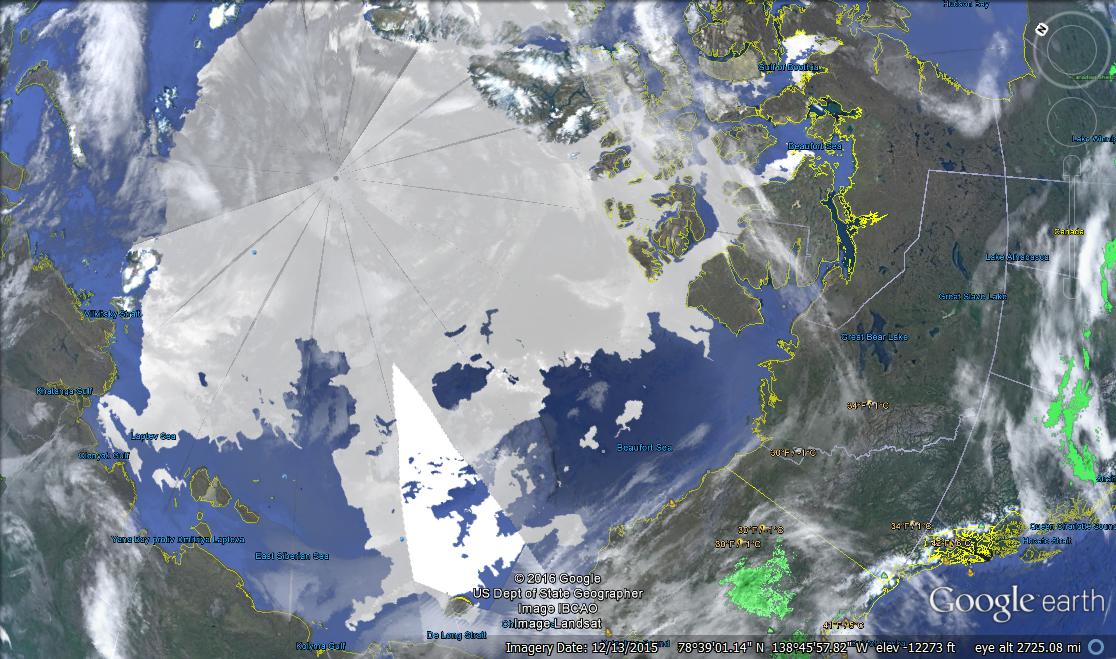
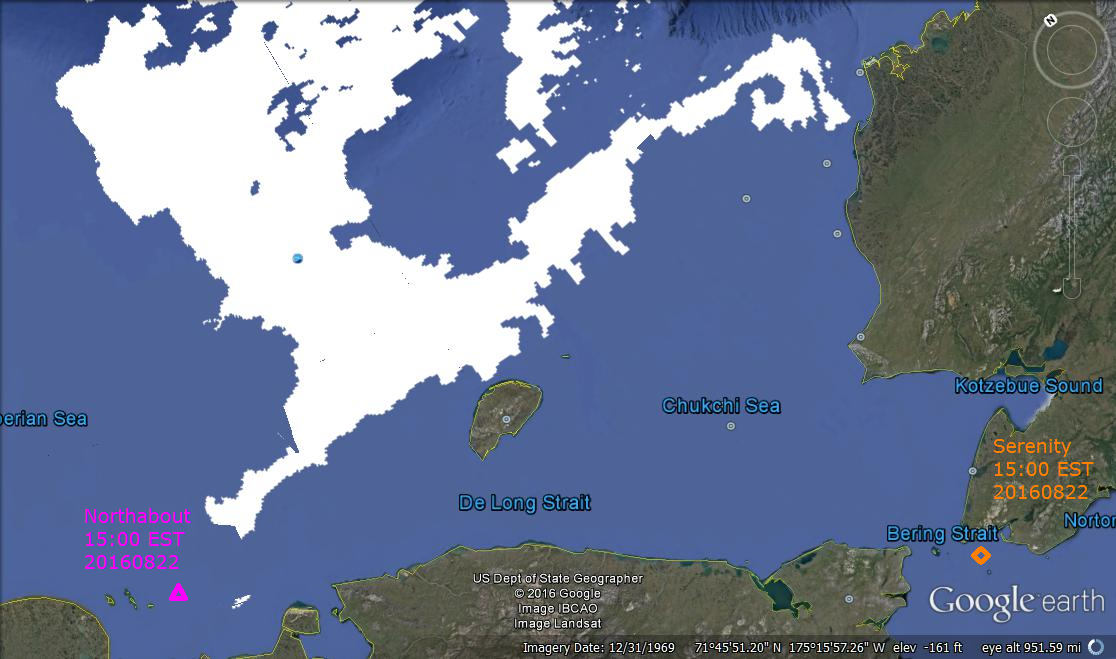
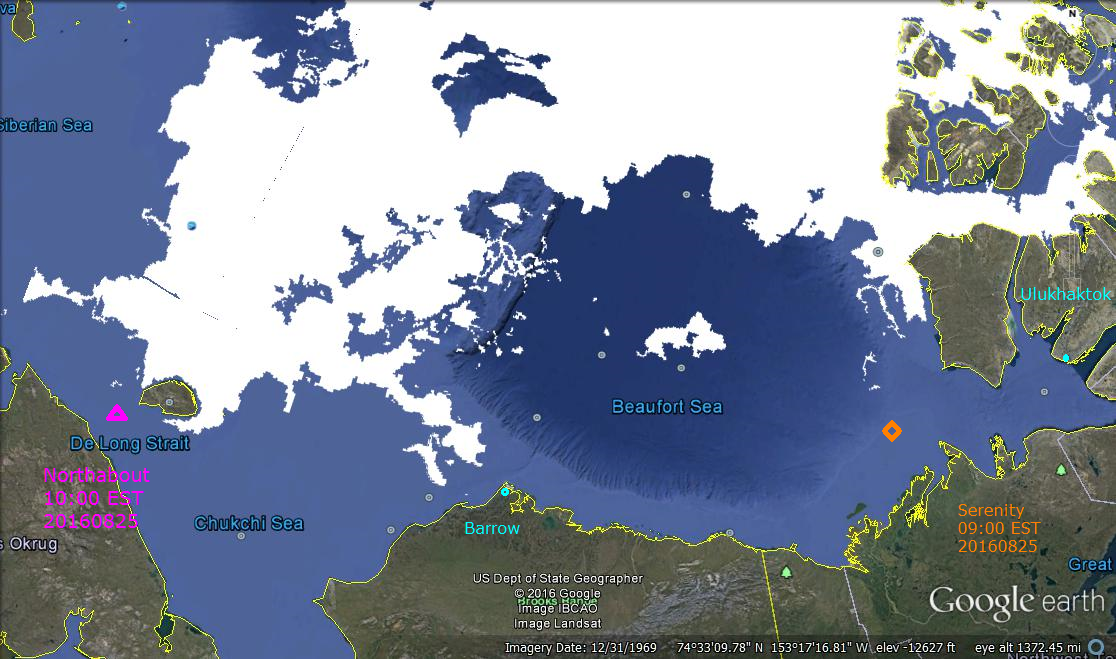
Today’s MASIE ice chart shows ice extent hovering around 5M km2 following the recent cyclone with variability mostly in BCE region (Beaufort, Chukchi, E. Siberian seas).  This happens to be the location of two ships exploring the ice extent: Northabout (Polar Ocean Challenge) and Serenity (Celebrity Cruiseliner).
20160825google1

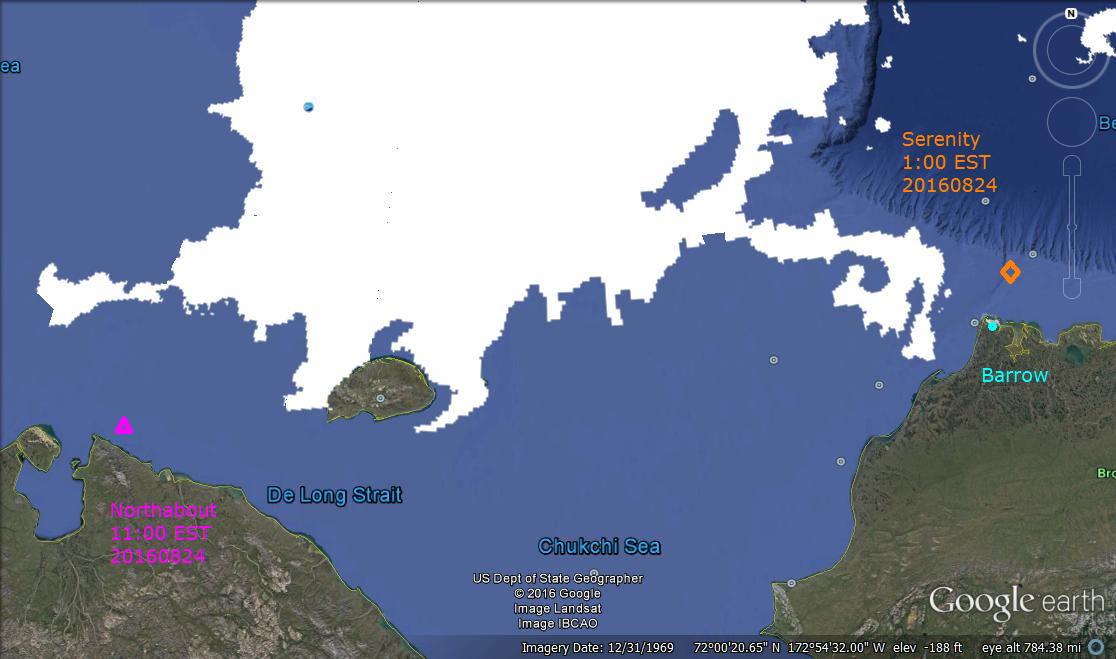
Imagery date refers to Google Earth capture of land forms. Ice edges are August 24, 2016 from MASIE. Click to zoom in.

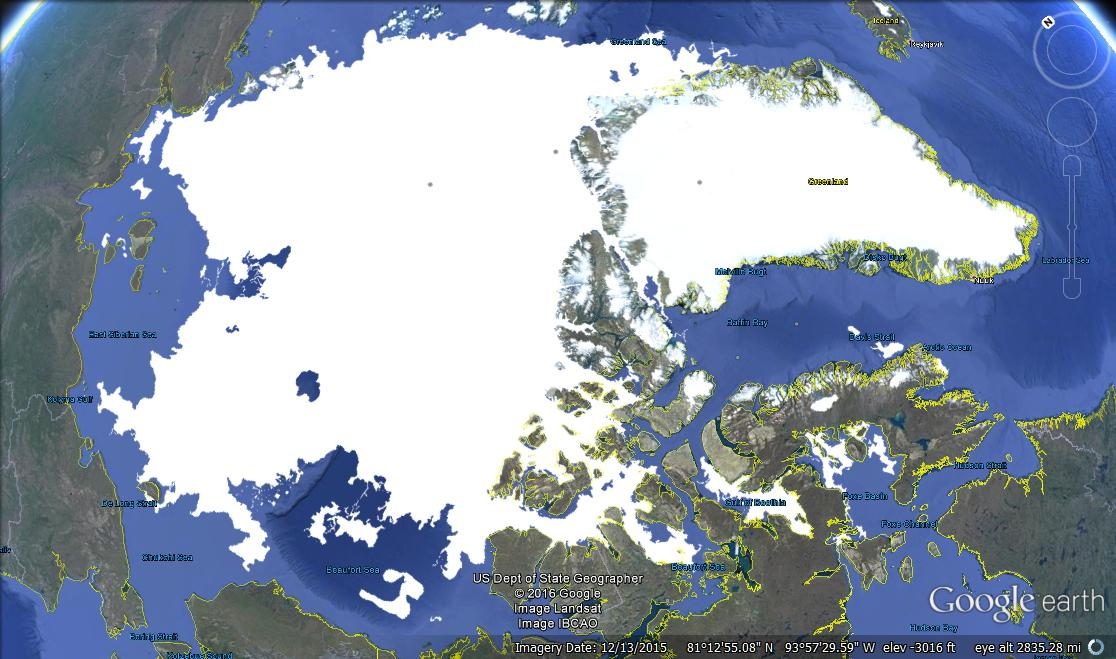
As the image shows, Northabout has passed the ice tongue but has to go further south before proceeding longitudinally. Serenity negotiated an icy area, before passing Barrow and soon approaching Ulukhaktok.  The bigger picture below shows that the southern route through the Archipelago is open at this time, but that can change in the days to come.
20160824google2

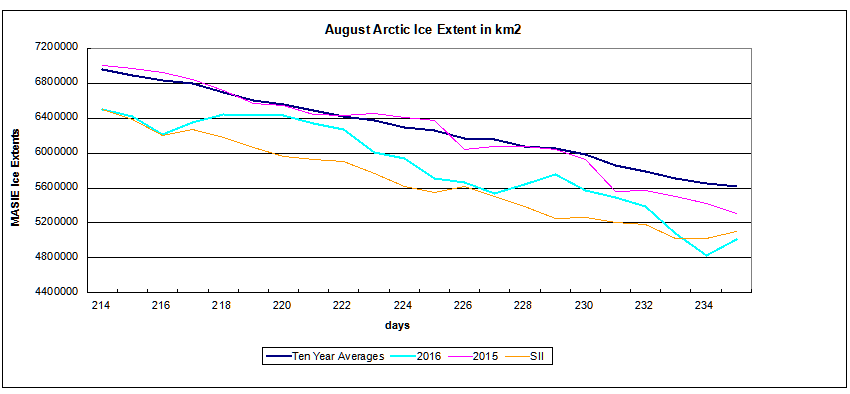
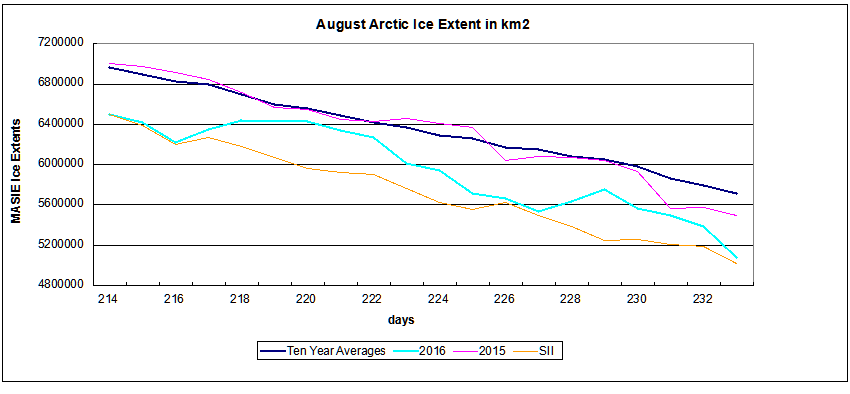
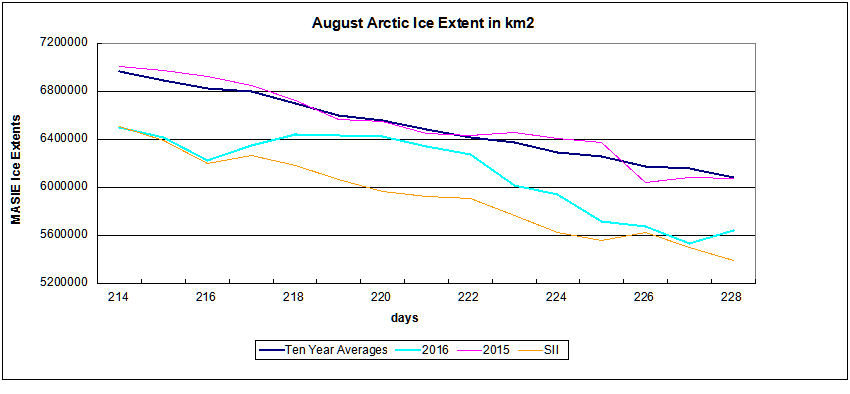
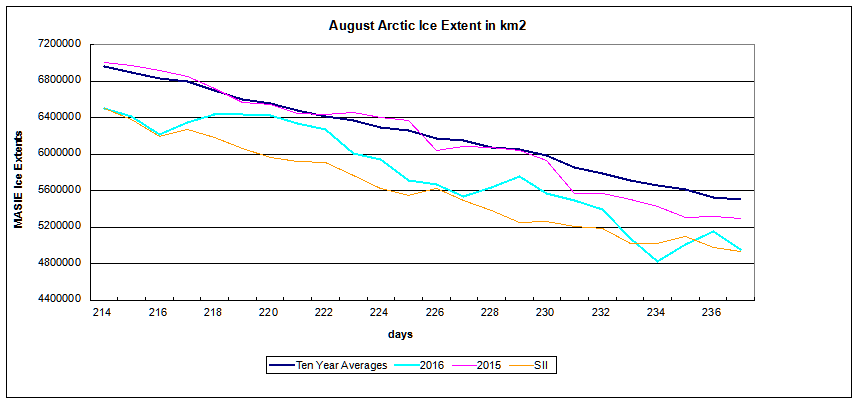
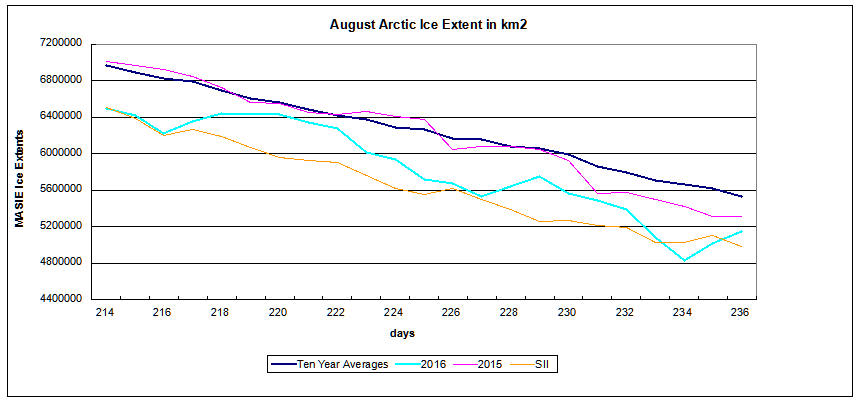
The Arctic Cyclone operating near the north pole has compressed the ice extents, The graph below shows the results: Overall ice extent which had recently stabilized lost 924k km2 in just 5 days. 472k km2 was lost in BCE (Beaufort, Chukchi and East Siberian seas) and another 139k km2 in CAA (Canadian Arctic Archipelago).

In the last 2 days MASIE shows an overall recovery of 323k km2, with 216k m2 in the BCE region.  The graph below shows the indices converging.
MASIE 2016 day237


For more context on Arctic ice extent see Arctic Ice Watch July 31.  For background on Polar Ocean Challenge see Laptev Wall and Nunavut Gauntlet.  For those who wish to browse Arctic ice in Google Earth, the procedure is simple.  Go to MASIE homepage and download the kmz file.  Clicking on the file should open it in Google Earth (presuming it is on your computer.) Then you can browse, zoom in and out, and take images.

Celebrity Serenity

I was once told by a fellow cruise passenger not to call our ship a boat.  He said in the Navy they knew if you were in a boat it meant something awful had happened to your ship.

The Good Ship Northabout



Aug.24 Update Arctic Ice Recovery and Ships

Today’s MASIE ice chart shows more recovery of ice extent following the recent cyclone, mostly in BCE region (Beaufort, Chukchi, E. Siberian seas).  This happens to be the location of two ships exploring the ice extent: Northabout (Polar Ocean Challenge) and Serenity (Celebrity Cruiseliner).

20160824google1

Imagery date refers to Google Earth capture of land forms. Ice edges are August 23, 2016 from MASIE. Click to zoom in.

As the image shows, Northabout has passed the ice tongue and can proceed to cross longitudinally. Serenity has also passed through an icy area, now above Barrow with open water ahead.  The bigger picture below shows that the southern route through the Archipelago is open at this time, but that can change in the days to come.

20160824google2

The Arctic Cyclone operating near the north pole has compressed the ice extents, The graph below shows the results: Overall ice extent which had recently stabilized lost 924k km2 in just 5 days. 472k km2 was lost in BCE (Beaufort, Chukchi and East Siberian seas) and another 139k km2 in CAA (Canadian Arctic Archipelago).

In the last 2 days MASIE shows an overall recovery of 323k km2, with 216k m2 in the BCE region.  The graph below shows the indices converging.

MASIE 2016 day236

For more context on Arctic ice extent see Arctic Ice Watch July 31.  For background on Polar Ocean Challenge see Laptev Wall and Nunavut Gauntlet.  For those who wish to browse Arctic ice in Google Earth, the procedure is simple.  Go to MASIE homepage and download the kmz file.  Clicking on the file should open it in Google Earth (presuming it is on your computer.) Then you can browse, zoom in and out, and take images.

Celebrity Serenity

I was once told by a fellow cruise passenger not to call our ship a boat.  He said in the Navy they knew if you were in a boat it meant something awful had happened to your ship.

The Good Ship Northabout


Update Aug.23 Arctic Ice, Cyclone and Ships

Today’s MASIE ice chart shows some recovery of ice extent, mostly in BCE region (Beaufort, Chukchi, E. Siberian seas).  This happens to be the location of two ships exploring the ice extent: Northabout (Polar Ocean Challenge) and Serenity (Celebrity Cruiseliner).

20160823google1

Imagery date refers to Google Earth capture of land forms. Ice edges are August 22, 2016 from MASIE. Click to zoom in.

As the image shows, Northabout has moved close to shore due to a tongue of ice extending south, while Serenity has passed through the Bering Strait, heading towards Barrow, but with some ice ahead.  The pictured ice edges are from yesterday, but show a line of ice that could threaten the Beaufort passage.  That is especially an issue for Northabout, a small sailing boat foregoing any assistance from icebreakers.

The cyclone is winding down, but who knows what and where the ice will be.

Background

Image from The Great Arctic Cyclone of 2016: After Four Years, a Summer Sequel at Jeff Masters blog.

The Arctic Cyclone operating near the north pole has compressed the ice extents, The graph below shows the results: Overall ice extent which had recently stabilized lost 672k km2 in just 4 days. 300k km2 was lost in BCE (Beaufort, Chukchi and East Siberian seas) and another 100k km2 in CAA (Canadian Arctic Archipelago).  SII had been running ~200k km2 below MASIE and they are now close, with both showing an uptick yesterday.

MASIE 2016 day235


That is good news for the Northabout, and also for Serenity, the cruiseship scheduled to use the Northwest Passage. Of course, it will be not so good if they are caught directly in the winds and ice movements.

20160821google2

Imagery date refers to Google Earth capture of land forms. Ice extent is 20160820 from MASIE. Click on image to zoom in.


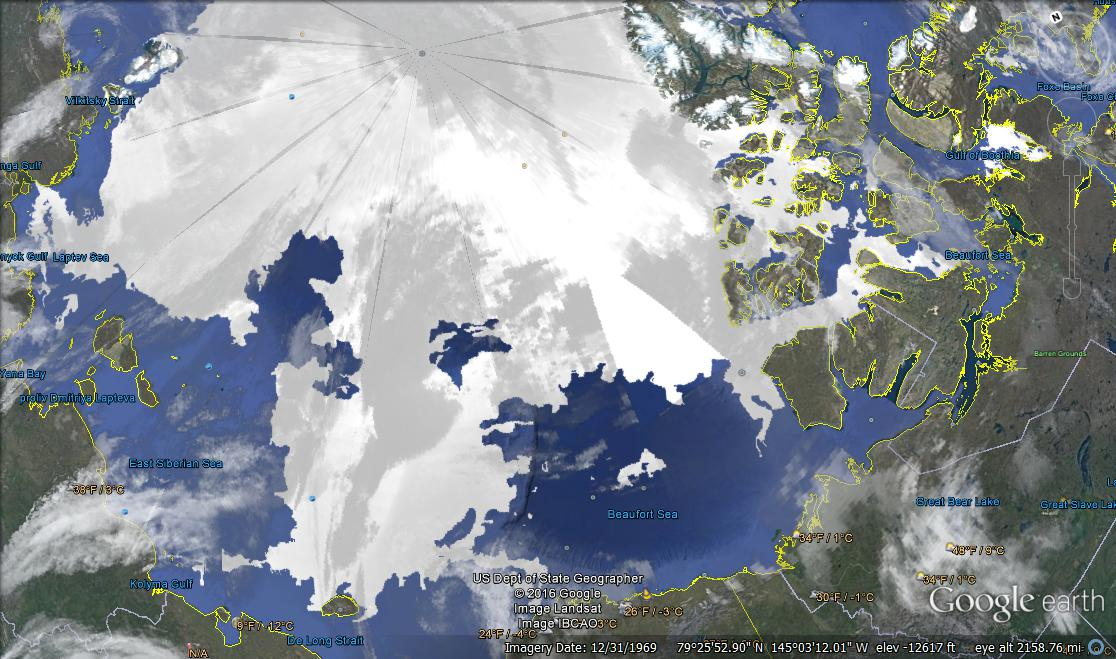
The Big Picture of Arctic land, ocean, ice and clouds.

20160821google3

For more context on Arctic ice extent see Arctic Ice Watch July 31.  For those who wish to browse Arctic ice in Google Earth, the procedure is simple.  Go to MASIE homepage and download the kmz file.  Clicking on the file should open it in Google Earth (presuming it is on your computer.) Then you can browse, zoom in and out, and take images.


Celebrity Serenity

I was once told by a fellow cruise passenger not to call our ship a boat.  He said in the Navy they knew if you were in a boat it meant something awful had happened to your ship.

The Good Ship Northabout


Update Aug.22: Arctic Ice, Cyclone and Ships

Today’s MASIE ice chart shows further compression and also shifting locations of sea ice in the BCE region (Beaufort, Chukchi, E. Siberian seas).  This happens to be the location of two ships exploring the ice extent: Northabout (Polar Ocean Challenge) and Serenity (Celebrity Cruiseliner).

20160822google2

Imagery date refers to Google Earth capture of land forms. Ice edges are for August 21, 2016 from MASIE. Click on image to zoom in.

As the image shows, Northabout is contending with a tongue of ice extending south toward the shoreline, while Serenity in on her way through the Bering Strait.  The pictured ice edges are from yesterday, but show a line of ice that could threaten the Beaufort passage.  That is especially an issue for Northabout, a small sailing boat foregoing any assistance from icebreakers.

The cyclone is expected to weaken later this week, but who knows what and where the ice will be.

Background from August 21

Image from The Great Arctic Cyclone of 2016: After Four Years, a Summer Sequel at Jeff Masters blog.

The Arctic Cyclone operating near the north pole is starting to compress the ice extents, The graph below shows the results: Overall ice extent which had recently stabilized lost 672k km2 in just the last 4 days. 300k km2 was lost in BCE (Beaufort, Chukchi and East Siberian seas) and another 100k km2 in CAA (Canadian Arctic Archipelago).  SII had been running ~200k km2 below MASIE and they are now a match.

MASIE 2016 day233

That is good news for the Northabout, and also for Serenity, the cruiseship scheduled to use the Northwest Passage. Of course, it will be not so good if they are caught directly in the winds and ice movements.

20160821google2

Imagery date refers to Google Earth capture of land forms. Ice extent is 20160820 from MASIE. Click on image to zoom in.


The Big Picture of Arctic land, ocean, ice and clouds.

20160821google3

For more context on Arctic ice extent see Arctic Ice Watch July 31.  For those who wish to browse Arctic ice in Google Earth, the procedure is simple.  Go to MASIE homepage and download the kmz file.  Clicking on the file should open it in Google Earth (presuming it is on your computer.) Then you can browse, zoom in and out, and take images.


Arctic Cyclone Clears the Ice


Image from The Great Arctic Cyclone of 2016: After Four Years, a Summer Sequel at Jeff Masters blog.

The Arctic Cyclone operating near the north pole is starting to compress the ice extents, The graph below shows the results: Overall ice extent which had recently stabilized lost 672k km2 in just the last 4 days. 300k km2 was lost in BCE (Beaufort, Chukchi and East Siberian seas) and another 100k km2 in CAA (Canadian Arctic Archipelago).  SII had been running ~200k km2 below MASIE and they are now a match.

MASIE 2016 day233

That is good news for the Northabout, and also for Serenity, the cruiseship scheduled to use the Northwest Passage. Of course, it will be not so good if they are caught directly in the winds and ice movements.

20160821google2

Imagery date refers to Google Earth capture of land forms. Ice extent is 20160820 from MASIE. Click on image to zoom in.


The Big Picture of Arctic land, ocean, ice and clouds.

20160821google3

For more context on Arctic ice extent see Arctic Ice Watch July 31.  For those who wish to browse Arctic ice in Google Earth, the procedure is simple.  Go to MASIE homepage and download the kmz file.  Clicking on the file should open it in Google Earth (presuming it is on your computer.) Then you can browse, zoom in and out, and take images.


Northabout Nears E. Siberian Sea


20160818google2rev

Update August 19 2016

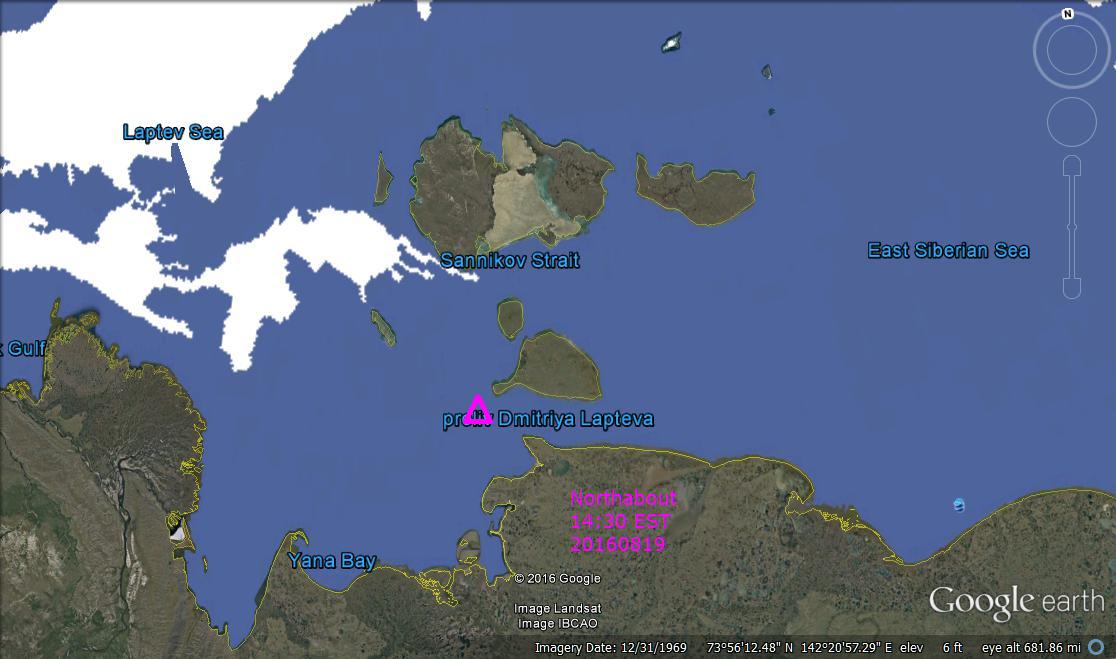
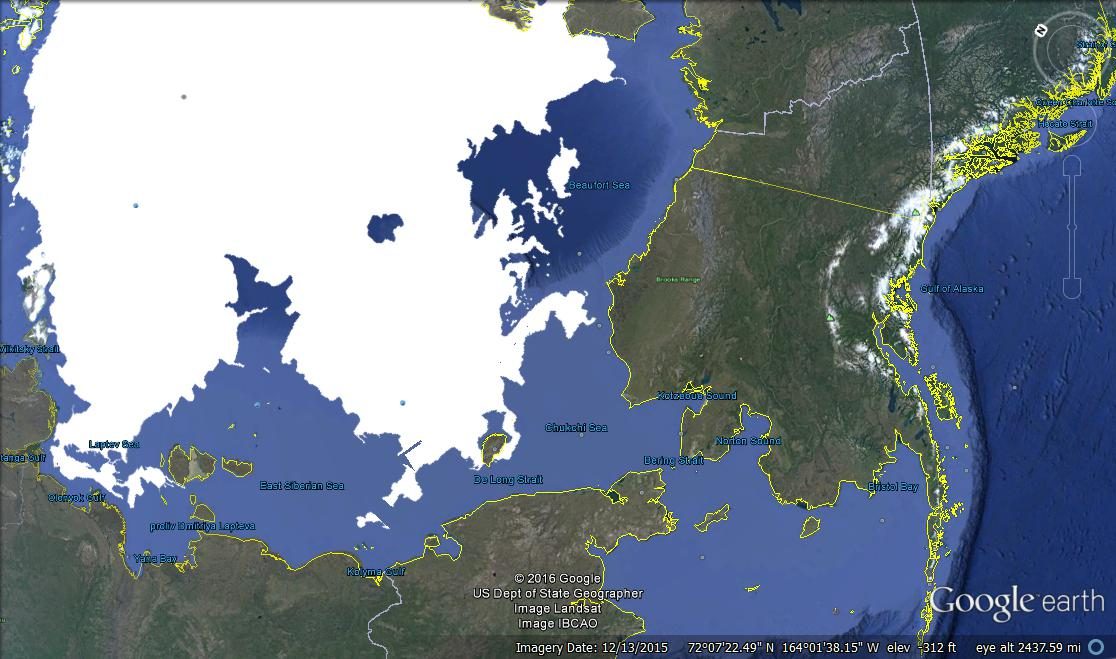
Today’s tracking shows Northabout is approaching the strait leaving Laptev and entering East Siberian Sea.  It appears to be open water all the way to Beaufort Sea.

20160818google5

Imagery date refers to Google Earth capture of land forms. Ice extent is for August 18, 2016 from MASIE. Click on image to zoom in.

Update August 15, 2016

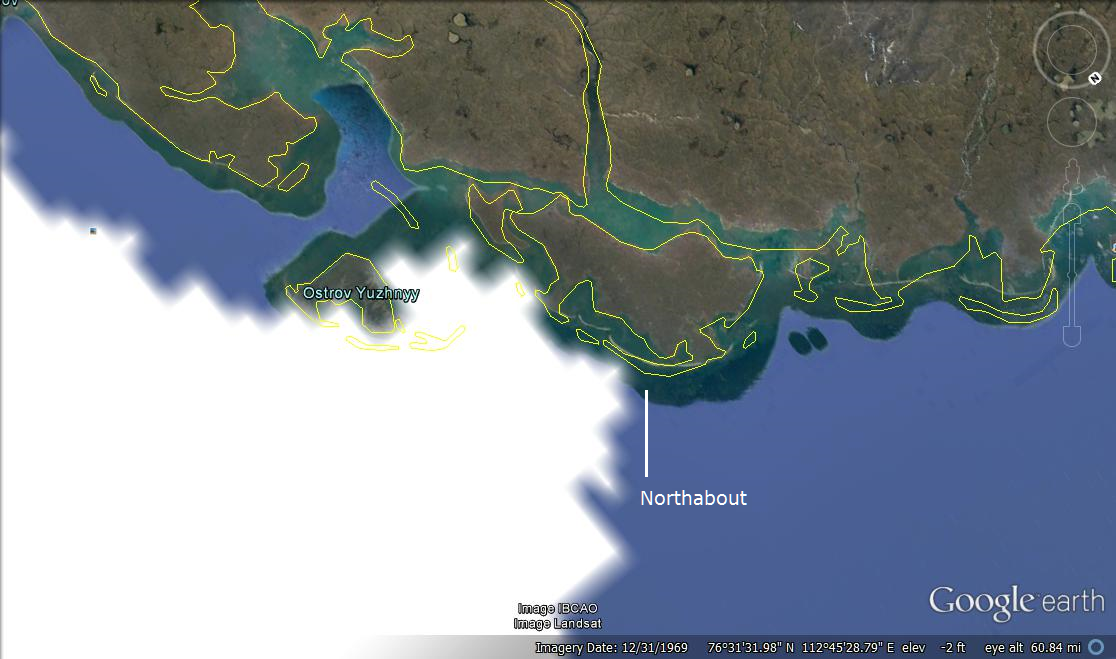
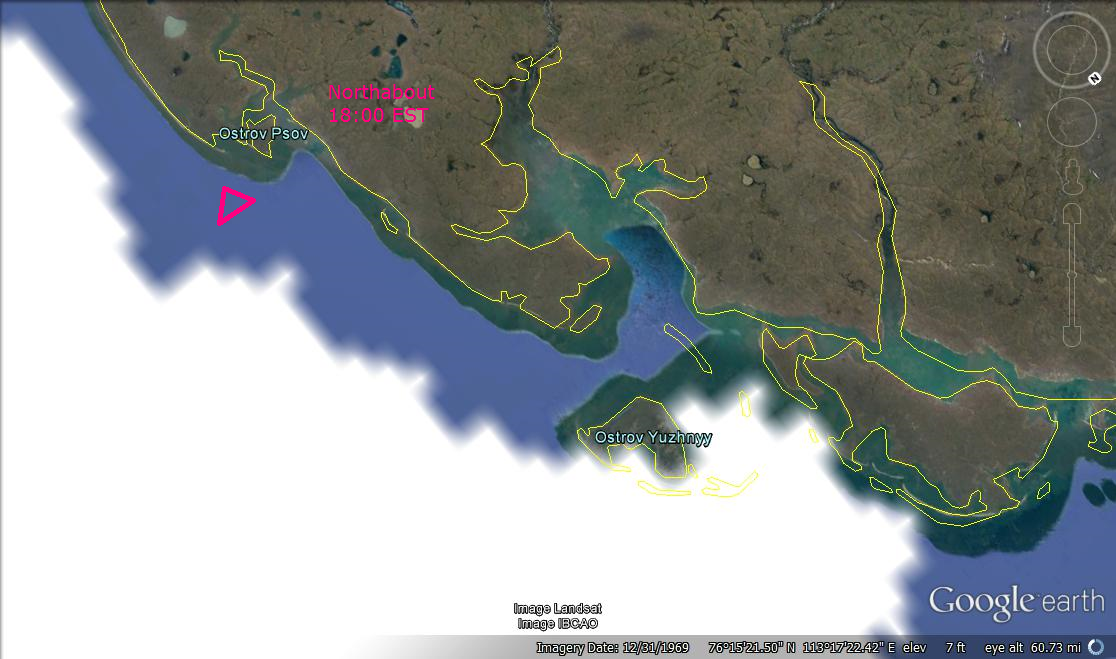
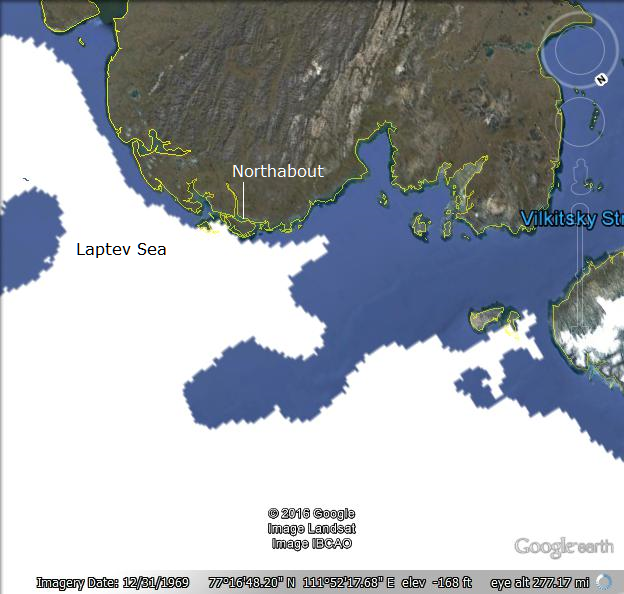
It appears that Northabout, the Polar Ocean Challenge sailboat, is positioning for an end run around the Laptev wall.  The ship location is current, the ice edges are yesterday’s chart from MASIE. (Click on the image to zoom in)

20160814GoogleRev

Update 18:00 EST August 15, 2016

It looks like Northabout is sailing free in Laptev.

20160815googlelater


Update August 14, 2016

It appears that Northabout is sheltering in a cove, before seeking a way around the Laptev wall. Below the Google Earth image of ice edges from NIC shows how the strait has opened up along with navigable shore lines.

Aug13googleRev

Imagery date refers to Google Earth capture of land forms. Ice edges are provided by MASIE for August 13, 2016.

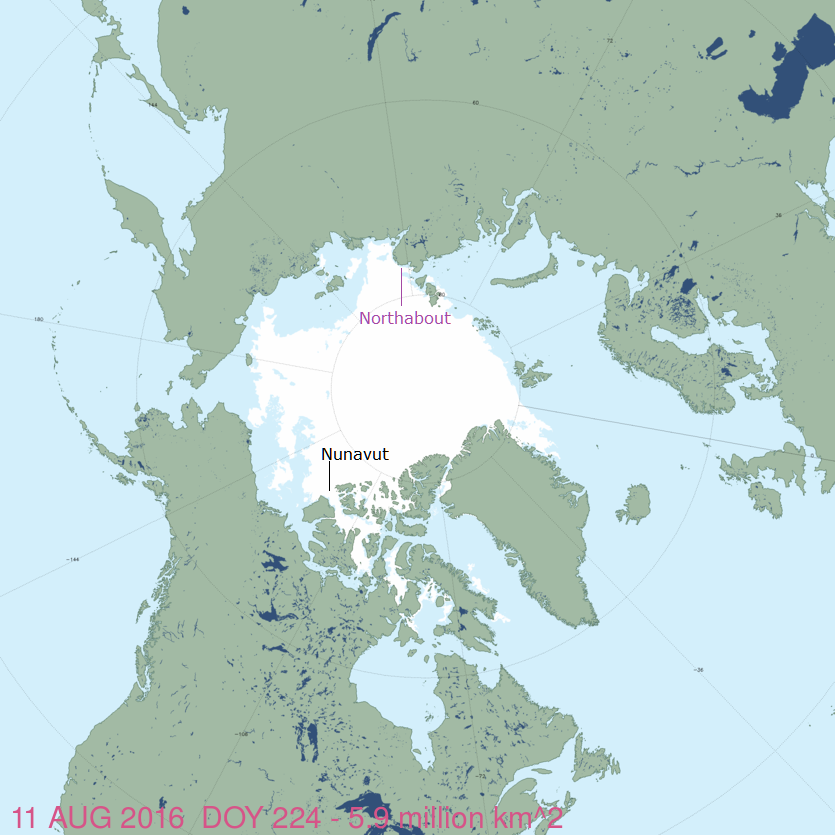
The Big Picture from August 11, 2016.

masie_August 11rev

The Polar Ocean Challenge involves the sailing ship Northabout circumnavigating the North Pole counterclockwise starting from Bristol UK. The chart above from MASIE shows the two choke points in the itinerary: The Laptev Wall of ice at the beginning and the Nunavut Gauntlet of ice at the end. The image shows If Northabout can get past Laptev, it is relatively clear sailing all the way to Beaufort where Nunavut awaits.

20160809en

The above chart from AARI shows how Northabout has passed through the strait from Kara into Laptev and is in a holding pattern up against the wall.  Caleb has some great photos (here) of the views from the deck, along with some comments respecting the explorers despite their being misled by global warming theorists.

20160809enBaffin

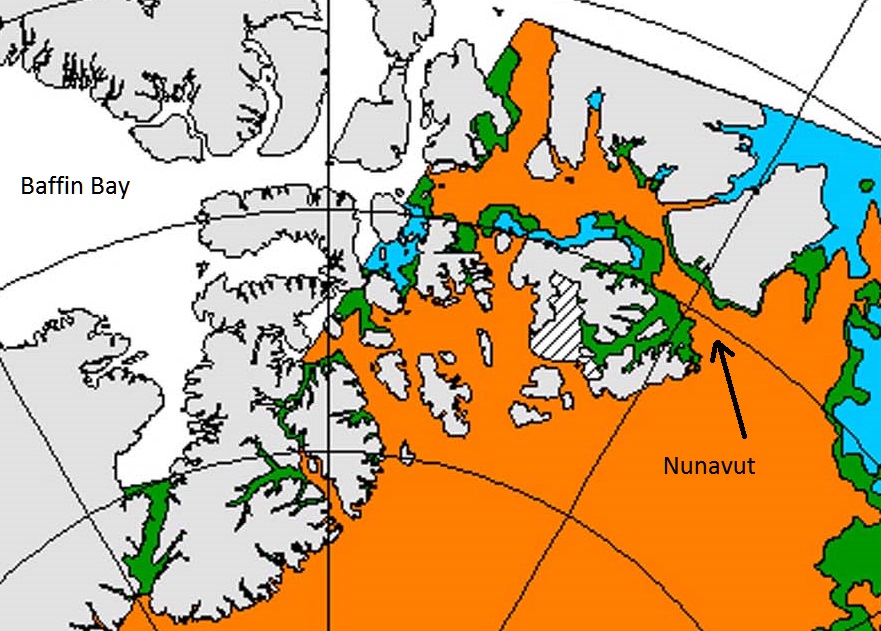
Above is the latest chart from AARI showing the present ice situation at the other end of the trip, the Nunavut Gauntlet.  The white part is without data since the Russians are focused on their side of the ocean, but it does show heavy ice in Beaufort Sea on the right,  Within Nunavut, Parry Channel is well blocked, but with some water around the edges.  If and when Northabout gets here, no one knows what they will face.  They are counting on the passage opening this year, unlike previous years.

An image of the ice and snow extents from NOAA by way of National Ice Center (NIC)

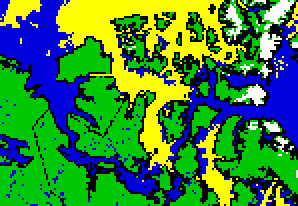
A closeup of Nunavut from that chart shows they have a chance by using the southern route, skipping all but the eastern end of Parry Channel, provided the ice is better not worse than now when they approach.

cursnow_alaskaNOAAnunavut

Footnote:

Another view of the Arctic is available from NIC using Google Earth.  The daily shapefile can be downloaded, and it then opens in Google Earth, which allows you to browse and zoom in on regions of interest.  Here is an image from this source:

20160812google

Note: Imagery date is Google Earth capture of land masses. Ice edges are 20160812 from NIC.


Mediocre Arctic Ice August 15


20160815google3

Imagery date refers to Google Earth capture of land forms. Ice edges are dated August 15, 2016 from MASIE. Click on image to zoom in.

In the chart below MASIE shows 2016 August Arctic ice extent drew near to average and close to 2015, then dropped lower before leveling off a bit yesterday.  Presently mid-August is about 400k less than average and 2015.  With SII back on line, it was reporting similar extents during June (as it has in the past).  This month it is starting to underestimate again, ~200k km2 lower. (SII and MASIE comparison is here.)

MASIE 2016 day228


Looking into the details, some marginal seas are melting earlier than last year, while the central, enduring ice pack is relatively typical for this time of year.

At the present pace of declining ice extents, 2016 is running 3 days ahead of 2015 and 6 days in advance of the ten-year average.

Comparing the Arctic ice extents with their maximums shows the melting is occurring mostly in the marginal seas:   Down the most are Beaufort, E. Siberian and Kara seas, with Laptev higher.  Chukchi and Central Arctic are also slightly higher.

Region 2016228 Day 228 Average 2016-Ave.
 (0) Northern_Hemisphere 5638938 6077428 -438491
 (1) Beaufort_Sea 460422 732896 -272475
 (2) Chukchi_Sea 460556 451013 9543
 (3) East_Siberian_Sea 425918 614576 -188658
 (4) Laptev_Sea 436021 258060 177960
 (5) Kara_Sea 34418 113901 -79483
 (6) Barents_Sea 0 28263 -28263
 (7) Greenland_Sea 210175 250577 -40402
 (8) Baffin_Bay_Gulf_of_St._Lawrence 43329 50525 -7196
 (9) Canadian_Archipelago 394745 402828 -8083
 (10) Hudson_Bay 50896 72085 -21188
 (11) Central_Arctic 3121317 3101598 19719
 (12) Bering_Sea 0 23 -23
 (13) Baltic_Sea 0 2 -2
 (14) Sea_of_Okhotsk 0 29 -29

Presently Arctic Ice extent is down from its March maximum by 62.6%.  The bulk of ice losses are coming from Okhotsk, Barents and Bering Seas (100% melted), along with Kara Sea, Hudson Bay and Baffin Bay-St. Lawrence (96+% melted).  All of them are marginal seas that will go down close to zero by September.

For more context on Arctic ice extent see Arctic Ice Watch July 31.  For those who wish to browse Arctic ice in Google Earth, the procedure is simple.  Go to MASIE homepage and download the kmz file.  Clicking on the file should open it in Google Earth (presuming it is on your computer.) Then you can browse, zoom in and out, and take images.


Northabout On the Verge

Update August 15, 2016

It appears that Northabout, the Polar Ocean Challenge sailboat, is positioning for an end run around the Laptev wall.  The ship location is current, the ice edges are yesterday’s chart from MASIE. (Click on the image to zoom in)

20160814GoogleRev

Update 18:00 EST August 15, 2016

It looks like Northabout is sailing free in Laptev.

20160815googlelater


Update August 14, 2016

It appears that Northabout is sheltering in a cove, before seeking a way around the Laptev wall. Below the Google Earth image of ice edges from NIC shows how the strait has opened up along with navigable shore lines.

Aug13googleRev

Imagery date refers to Google Earth capture of land forms. Ice edges are provided by MASIE for August 13, 2016.

The Big Picture from August 11, 2016.

masie_August 11rev

The Polar Ocean Challenge involves the sailing ship Northabout circumnavigating the North Pole counterclockwise starting from Bristol UK. The chart above from MASIE shows the two choke points in the itinerary: The Laptev Wall of ice at the beginning and the Nunavut Gauntlet of ice at the end. The image shows If Northabout can get past Laptev, it is relatively clear sailing all the way to Beaufort where Nunavut awaits.

20160809en

The above chart from AARI shows how Northabout has passed through the strait from Kara into Laptev and is in a holding pattern up against the wall.  Caleb has some great photos (here) of the views from the deck, along with some comments respecting the explorers despite their being misled by global warming theorists.

20160809enBaffin

Above is the latest chart from AARI showing the present ice situation at the other end of the trip, the Nunavut Gauntlet.  The white part is without data since the Russians are focused on their side of the ocean, but it does show heavy ice in Beaufort Sea on the right,  Within Nunavut, Parry Channel is well blocked, but with some water around the edges.  If and when Northabout gets here, no one knows what they will face.  They are counting on the passage opening this year, unlike previous years.

An image of the ice and snow extents from NOAA by way of National Ice Center (NIC)

A closeup of Nunavut from that chart shows they have a chance by using the southern route, skipping all but the eastern end of Parry Channel, provided the ice is better not worse than now when they approach.

cursnow_alaskaNOAAnunavut

Footnote:

Another view of the Arctic is available from NIC using Google Earth.  The daily shapefile can be downloaded, and it then opens in Google Earth, which allows you to browse and zoom in on regions of interest.  Here is an image from this source:

20160812google

Note: Imagery date is Google Earth capture of land masses. Ice edges are 20160812 from NIC.


Laptev Wall and Nunavut Gauntlet

Update August 14, 2016

It appears that Northabout has found a way around the Laptev wall, and is close to finding open water.  Below the Google Earth image of ice edges from NIC shows how the strait has opened up along with navigable shore lines.

Aug13googleRev

Imagery date refers to Google Earth capture of land forms. Ice edges are provided by MASIE for August 13, 2016.

The Big Picture from August 11, 2016.

masie_August 11rev

The Polar Ocean Challenge involves the sailing ship Northabout circumnavigating the North Pole counterclockwise starting from Bristol UK. The chart above from MASIE shows the two choke points in the itinerary: The Laptev Wall of ice at the beginning and the Nunavut Gauntlet of ice at the end. The image shows If Northabout can get past Laptev, it is relatively clear sailing all the way to Beaufort where Nunavut awaits.

20160809en

The above chart from AARI shows how Northabout has passed through the strait from Kara into Laptev and is in a holding pattern up against the wall.  Caleb has some great photos (here) of the views from the deck, along with some comments respecting the explorers despite their being misled by global warming theorists.

20160809enBaffin

Above is the latest chart from AARI showing the present ice situation at the other end of the trip, the Nunavut Gauntlet.  The white part is without data since the Russians are focused on their side of the ocean, but it does show heavy ice in Beaufort Sea on the right,  Within Nunavut, Parry Channel is well blocked, but with some water around the edges.  If and when Northabout gets here, no one knows what they will face.  They are counting on the passage opening this year, unlike previous years.

An image of the ice and snow extents from NOAA by way of National Ice Center (NIC)

A closeup of Nunavut from that chart shows they have a chance by using the southern route, skipping all but the eastern end of Parry Channel, provided the ice is better not worse than now when they approach.

cursnow_alaskaNOAAnunavut

Footnote:

Another view of the Arctic is available from NIC using Google Earth.  The daily shapefile can be downloaded, and it then opens in Google Earth, which allows you to browse and zoom in on regions of interest.  Here is an image from this source:

20160812google

Note: Imagery date is Google Earth capture of land masses. Ice edges are 20160812 from NIC.


Polar Challenge Meets Laptev Wall


northernsearoute


The plan of the Polar Ocean Challenge is to circumnavigate the North Pole counterclockwise in the ship Northabout, starting from Bristol UK, through the Northern Sea Route (Barents to Chukchi), returning through the Northwest Passage (Beaufort to Baffin Bay).  The challenge part is doing it without icebreakers, which is how commercial ships use the NSR.  That is intended to prove the decline of Arctic ice, which is then attributed to global warming, which is due to burning fossil fuels.  (Connecting dots is hard.)

The image from the group’s website shows they are nearby the Vilkitsky Strait waiting for some open water to proceed.  This delay was unforeseen and unwelcome, since refreeezing occurs mid September and the NSR closes in November.  Whether the Northwest Passage opens or not is another matter.

Laptev Gateway
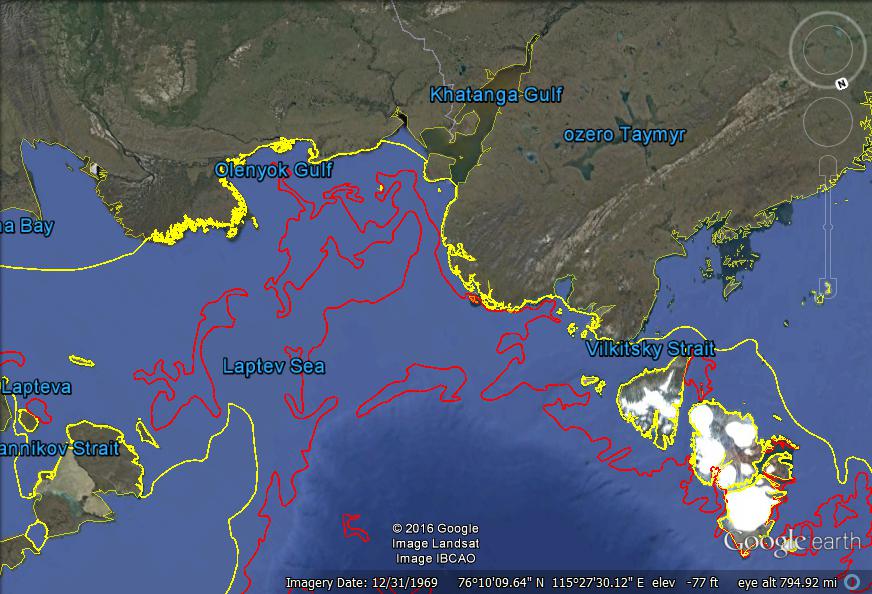
Here is the current Ice chart of the Laptev Sea, looking very much like a wall of ice. By the way, the Vilkitsky strait connecting Kara and Laptev seas is 104 km long. After that, it is all brown stuff..

ru legend