CO2 ≠ Pollutant

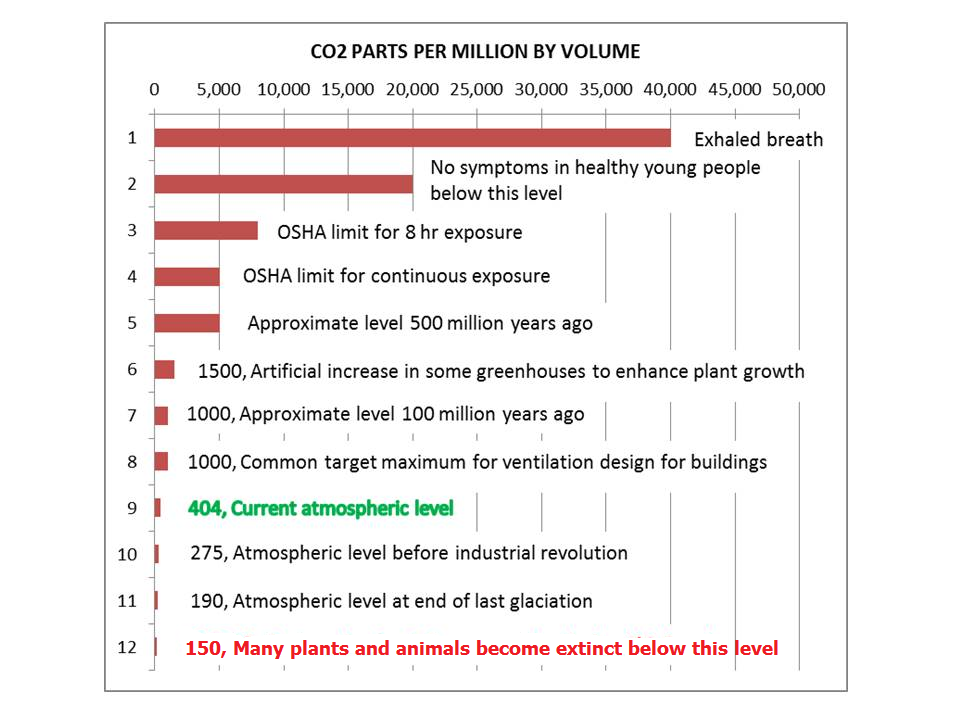
My university degree is a Bachelors in Organic Chemistry from Stanford. For that and other reasons, it always annoyed me that some lawyers decided CO2 can be called a “pollutant”, all the while exhaling the toxic gas themselves.

This nonsense forms the root of all the ridiculous regulations that POTUS ordered reviewed and rescinded yesterday. Thus I agree completely with this Wall Street Journal article by Paul Tice Trump’s Next Step on Climate Change. Full text below.

Reconsider the EPA’s labeling of carbon dioxide as a pollutant, based on now-outdated science.

By PAUL H. TICE
March 28, 2017 6:41 p.m. ET

The executive orders on climate change President Trump signed this week represent a step in the right direction for U.S. energy policy and, importantly, deliver on Mr. Trump’s campaign promise to roll back burdensome regulations affecting American companies. But it will take more than the stroke of a pen to make lasting progress and reverse the momentum of the climate-change movement.

On Tuesday, in a series of orders, Mr. Trump instructed the Environmental Protection Agency to rework its Clean Power Plan, which would restrict carbon emissions from existing power plants, mainly coal-fired ones. Last year the U.S. Supreme Court stayed enforcement of the CPP pending judicial review.

Mr. Trump also directed the Interior Department to lift its current moratorium on federal coal leasing and loosen restrictions on oil and gas development (including methane flaring) on federal lands. And he instructed all government agencies to stop factoring climate change into the environmental-review process for federal projects. The federal government will recalculate the “social cost of carbon.”

These actions are a good start, but all they do is reverse many of the executive orders President Obama signed late in his second term. While easy to implement and theatrical to stage, such measures are largely superficial and may prove as temporary as the decrees they rescind.

Because they don’t attack the climate-change regulatory problem at its root, Mr. Trump’s orders will not provide enough clarity to U.S. energy companies—particularly electric utilities and coal-mining companies—for their long-term business forecasting or short-term capital investment and head-count planning.

To accomplish that, the Trump administration, led by EPA Administrator Scott Pruitt, needs to target the EPA’s 2009 “endangerment finding,” which labeled carbon dioxide as a pollutant. That foundational ruling provided the legal underpinnings for all of the EPA’s follow-on carbon regulations, including the CPP.

It also provided the rationale for the previous administration’s anti-fossil-fuel agenda and its various climate-change initiatives and programs, which spanned more than a dozen federal agencies and cost the American taxpayer roughly $20 billion to $25 billion a year during Mr. Obama’s presidency.

The endangerment finding was the product of a rush to judgment. Much of the scientific data upon which it was predicated—chiefly, the 2007 Fourth Assessment Report of the U.N.’s Intergovernmental Panel on Climate Change—was already dated by the time of its publication and arguably not properly peer-reviewed as federal law requires.

With the benefit of hindsight—including more than a decade of actual-versus-modeled data, plus the insights into the insular climate-science community gleaned from the University of East Anglia Climategate email disclosures—there would seem to be strong grounds now to reconsider the EPA’s 2009 decision and issue a new finding.

In 2013, the IPCC issued a more circumspect Fifth Assessment Report, which noted a hiatus in global warming since 1998 and a breakdown in correlation between the world’s average surface temperatures and atmospheric carbon dioxide levels, causing the U.N. body to revise down its 2007 projections for the rate of planetary warming over the first half of the 21st century.

Although this initially reported “pause” was subsequently eliminated through the downward manipulation of historical temperature data, this latest IPCC assessment calls into question both the predictive power and input data quality of most global climate models, and further highlights the scientific uncertainty surrounding the basic premise of anthropogenic climate change.

An updated EPA endangerment finding based on an objective review of the latest available scientific data is warranted, along with a more sober discussion of the threat posed by carbon dioxide and other greenhouse gases to the “public health and welfare of current and future generations,” in the words of the original endangerment finding.

As long as the 2009 finding remains on the books, it will provide legal ammunition for environmentalists, academics and state government officials seeking to sue the administration for any actions related to climate change, including this week’s executive orders.

Issuing a new endangerment finding would be a bold move requiring thorough work, but the Trump EPA would be well within its legal rights to undertake such an updated review process. In Massachusetts v. EPA (2007), the Supreme Court ruled that the Clean Air Act gives the EPA the authority, but not the obligation, to regulate carbon dioxide and other greenhouse gases. The EPA needs to “ground its reasons for action or inaction” with “reasoned judgment” and scientific analysis.

Addressing the 2009 endangerment finding head-on would show that Mr. Trump is serious about challenging climate-change orthodoxy. Thus far he has sent a mixed message, as demonstrated by this week’s ambivalence on CPP (reworking rather than repealing) and his administration’s silence on U.S. participation in the U.N.’s 2015 Paris Agreement.

Simply standing down on regulatory enforcement, cutting government funding for climate-change research and stopping data collection for the next four years will not suffice. Ignoring the EPA’s 2009 endangerment finding would mean that it is only a matter of time before another liberal-minded occupant of the White House reasserts this regulatory power, bringing the country and the domestic energy sector back where Mr. Obama left them.

Mr. Tice is an executive-in-residence at New York University’s Stern School of Business and a former Wall Street energy research analyst.

CO2 Causes Earthquakes! Really?

earthquakegraph

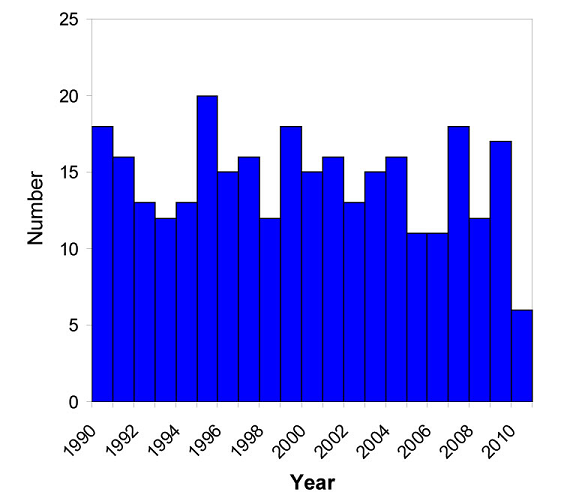
Number of worldwide earthquakes with a magnitude of 7 or greater over the last two decades. British Geological Survey

From the “Headlines Claim, Details Deny” department comes this whopper regarding climate effects on seismic activity in Canada.

Natural disasters are expected to increase as climate change pushes global temperatures higher, and some scientists believe earthquakes will also become more frequent. Global News (here)

The alarm is sounded by one scientist, Bill McGuire, writing in the Guardian last fall:

“An earthquake fault that is primed and ready to go is like a coiled spring … all that is needed to set it off is – quite literally – the pressure of a handshake,” writes scientist Bill McGuire, author of Waking the Giant: How a changing climate triggers earthquakes, tsunamis, and volcanoes.

As usual with these alarmist pieces, if you bother to read the details in the text, you discover the headline is misleading or totally false. (“Fake News,” anyone?).

After quoting that scary claim, the article goes on to make numerous statements of fact contradicting Mr. McGuire.

While many parts of the country are prone to seismic activity, experts say Canadians shouldn’t worry about their city or town suddenly becoming a earthquake hot spot due to a warmer atmosphere.

Earthquakes rattle Canada thousands of times every year — there are an estimated 2,500 annually in Western Canada alone. Thanks to the Internet, social media and apps, we’re now more aware of the activity that has always commonly occurred.

“Climate change is not something that just started,” noted Christie Rowe, assistant professor in earth and planetary sciences at McGill University.

“All the earthquake patterns that we know of are basically [from] the last century. So the patterns that we know of are already happening in the climate changing world.”

“A lot of people think there’s suddenly an increase but it’s just that they’re getting a lot more coverage than they used to,” said Alison Bird, earthquake seismologist with the Geological Survey of Canada.

Climate change, “won’t generally cause more earthquakes to happen,” Bird said.

“No, climate change will not result in increased earthquake activity,” agreed Gail Atkinson, professor of earth sciences at Western University, in an email to Global News.

“The glaciers receded from the last ice age, which was considerable time ago — we’re talking about thousands of years,” said Bird. “Because the weight of those glaciers receding has been lifted, the ground is slowly moving up after having that weight removed from it, and you can have earthquakes because of that sort of thing. They tend to be quite small.”

While there may be more small events, Canada’s sparsely-populated Arctic is unlikely to suddenly see massive seismic activity.

Summary

Note the flip-flopping (equivocation) around the term “climate change”. When geologists and seismologists are speaking within their discipline, they are referring to natural changes over thousands of years. With activists “climate change” serves as code for CO2 causing global warming.

Reading the article again, it actually serves to debunk McGuire’s claims, except for the first paragraph or two. The journalist actually sought the views of level-headed experts and printed them for readers to have as context. The gruel is getting pretty thin for desperate alarmists.

thisguyisfalling2R. I. P.  Chicken Little.

More on counterfactual headlines at Headlines Claim, but Details Deny

Carbon Recycling

Clive Best has done a great (the Best?) post on a complicated topic: Earth’s cycling of carbon, especially CO2 through natural sinks and sources, including humans burning fossil fuels. I have read many posts and papers on this, along with long argumentative threads, hoping against hope I could understand and write something half as clear as he has done.

The article is Carbon Recyling at his blog (here)

Some Excerpts to encourage you to go and read the whole thing:

If you sum up all the sources and sinks then you find that about half man-made emissions are being absorbed each year. That means that only about half of the CO2 emitted by humans remains in the atmosphere. The strange thing is that this ratio hasn’t changed at all in 50 years, despite rapid increases in emissions.

Today we are emitting about twice as much carbon dioxide as we did 30 years ago, yet only half of it survives a full year. That means that currently, an amount of carbon dioxide equal to the total annual emissions of 30 years ago is being absorbed each year. Why is this and what does it mean? Part of the answer lies with the greening of the earth, but far more importantly the answer lies in how the oceans are responding.

There are 3 independent Carbon cycles which in total must balance.
1. Dissolution/Absorption of CO2 at  Ocean surfaces.
2. Biological re-cycling of CO2
3. Geological re-cycling of CO2

Increasing the carbon dioxide concentration of the atmosphere therefore causes the oceans to take up (inhale) more carbon dioxide. Because the oceans surface layer mixes slowly with the deep ocean (hundreds of years) the increased carbon dioxide content of the surface ocean will be mixed very slowly into the large carbon reservoir of the deep ocean. The rate of our adding carbon dioxide to the atmosphere is too fast for the deep ocean to be a significant reservoir. So as the carbon dioxide content of the atmosphere rises, so too does the concentration in the ocean surface.

The total mass of living plants and animals and carbon in soil, at any given time represents a temporary store of carbon. This is comparable to the mass of CO2 in the atmosphere. Life thrives in warmer climates with higher CO2 levels and suffers during colder more arid glacial periods with  low CO2.

SiO2 and CaCO3 are insoluble and will settle to the ocean floor where they are moved by plate tectonics to subduction zones, carried deep into the Earth and heated converting them back into metamorphic rocks and releasing carbon dioxide. When these rocks and their associated carbon encounter Volcanic eruptions or Mid Ocean vents they return the CO2 to the atmosphere, thus ending the cycle.

Just how confident  are climate scientists that they really understand the carbon cycle? Can they, for example, explain why lower levels of CO2 occurred during ice ages? This is what AR5 says on the matter.

AR5: “All of the major drivers of the glacial-to-interglacial atmospheric CO2 changes (Figure 6.5) are likely to have already been identified. However, Earth System Models have been unable to reproduce the full magnitude of the glacial-to-interglacial CO2 changes. Significant uncertainties exist in glacial boundary conditions and on some of the primary controls on carbon storage in the ocean and in the land. These uncertainties prevent an unambiguous attribution of individual mechanisms as controllers of the low glacial CO2 concentrations.”

So the simple answer is no they don’t really understand the carbon cycle. Nor can they determine why CO2 levels in the atmosphere are naturally so low at <0.03%. A proper understanding of the carbon cycle should at least be able to determine why 280ppm is the natural level for today’s climate. I think this is the fundamental challenge for Carbon Cycle modellers.

Conclusion

In my opinion the BERN model has a logical flaw. It assumes that a fixed 22% of the Anthropogenic increase in CO2 will remain in the atmosphere for hundreds of thousands of years, waiting for  geological weathering – but why would it?  What possible justification is there to image that  it is a fixed percentage,  independent of amplitude?

It is only when the partial pressures of carbon dioxide between the atmosphere and the ocean re-balances that a new ‘geological’ balance of CO2 be reached. That happens rather fast and the net increase is small compared to glacial cycle variations, which as we have seen, climate scientists don’t yet understand.
 
See Also  Carbon Sense and Nonsense (Viv Forbes), and
Much Ado about CO2 (Murry Salby)


CO2 and Climate Change For the Ages

An Historical, not Hysterical Perspective

Much of the hysteria over atmospheric CO2 arises from dismissing the past, and thus losing the context for interpreting the present.  Recently, one scientist suggested that climate researchers should be schooled in geology before commenting on climate change.  Instead of that, of course, most of them are based in environmentalism.  So as a public service this post presents some excellent and time-tested evidence produced by Dr Guy LeBlanc Smith.  h/t Jeff Hayes

This graph, compiled by Ex-CSIRO scientist Dr Guy LeBlanc Smith PhD, AIG, AAPG, from data obtained from deep core drilling on the Greenland Ice Sheet, shows that all life on earth now, including polar bears, coral reefs and humans, have survived massive sea level changes and rapid and dramatic changes in earth’s temperature. There were no coal fired power stations and no gas guzzling cars to cause these changes then, and the same natural forces will change the future. Humans will need wits and resources to cope with future changes and every diversion of our resources to nonsense like Cap-n-Tax will reduce the chances that we will survive future changes.

The real danger to all life on earth is NOT warming and abundant aerial plant food (carbon dioxide) – the real threat is ICE and plant starvation.

Climate Activists are like Ambulance Chasers

Taxing carbon dioxide under the misguided perception that it causes temperature change is like placing a tax on ambulances because they cause vehicle accidents. Like CO2, ambulances arrive after the event.

Vehicle accidents occur and some time later ambulances arrive.

Temperature goes up and some time later CO2 goes up.

Clearly there is a parallel… Using the logic of many misguided politicians and their advisers, it would seem feasible through careful assumption-based computer modelling to show this… and build a scenario for taxing ambulances and thereby reducing vehicle accidents.

I am a concerned professional research scientist with over 30 years experience, latter part with CSIRO as a Principal Research Scientist. As my funding no longer depends on politicians, I am free to make my information and conclusions public.

We are now in the closing stages of the Cap-n-Tax debate. We need to rely on evidence and facts, not propaganda, before such crucial decisions are taken.

The real world evidence such as revealed in the ice cores suggests that the Carbon Pollution Reduction Scheme is built on fraud. 

The Really Long View: How Does the Modern Warming Period Compare

Dr. Smith’s high res graph was blocked by both Facebook and Tinypic, so this is the best I can show now.

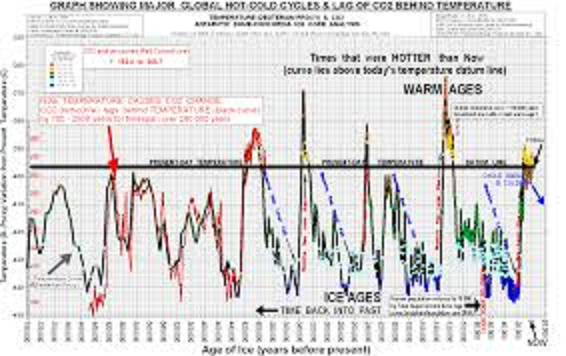
Dr. Smith produced an additional graph to display how temperatures have changed over the ages compared to the present and how measured CO2 varies in response to measured temperature changes. Of course, these estimates come from proxies since the timescale goes back through several ice ages.

But the message from the ice cores is clear: Through the ages, CO2 responds to temperatures and not the other way around.  The other message is also clear: Climates change between warm and cool, and warm has always been good for humans and the biosphere. We should concern ourselves with preparing for the cold times with robust infrastructure and reliable, affordable energy.

Summary

H/t to Jeff Hayes, who recently posted this letter from Dr. Smith (here)

Dr. LeBlanc Smith’s letter:

Jeff,

Thanks for using my chart.

I too have been fighting this fraudulent ‘human-caused & CO2 driven’ climate variation issue for decades.

I have used this graphic (with others) to counter teaching this fraud in our Australian education system, who started teaching the AGW fraud to school kids, mine particularly, and I wanted information that would be seen in context easily by kids and the less illiterate, so they would not get lost in text.

Being a scientist, I further wanted to see the climate information from source, to check its veracity, hence downloading the data from NOAA at Boulder all those years back, and making my own graphic to show context. Al Gore would not have got started if he had overlaid his temperature and CO2 graphics on a common timeline… where the temperature driver is clearly exposed. I am truly surprised these ‘green terrorists’ are still free to prosecute this fraud.

I am a retired Principal Research Scientist with Australian government CSIRO (Commonwealth Scientific and Industrial Research Organisation).

I fought against this from within the organisation for years. There are still those there who like the gravy train funding resulting from supporting the erroneous but politically convenient mantra of humans and CO2 climate alarm, despite it flying in the face of decades of empirical science showing AGW is a myth and fraud.

I would draw your attention to the Clexit campaign, which I am a signatory and founding member…

To view this release with all images intact click:

Click to access clexit.pdf

I would also draw your attention to the information compilations at the Carbon Sense website…

I have other graphics there… http://carbon-sense.com/2013/11/30/nothing-new-about-climate-change/

I still enjoy the video graphics at CO2 science.org website, of the pea growing in CO2 enriched atmosphere…

Also their detailed demonstration of the agricultural production increases from rising CO2 levels, all at no cost.

Gratifying broadly that doubling CO2 will increase crop production by more than half again, whilst using 20% less water whilst doing this, and further increasing resilience of plants to heat stress by an additional 10 degrees celsius – all for free! Why are we trying to tax this?

Anyway, thanks for the response to my graphic.

best regards

Guy

Dr Guy LeBlanc Smith, PhD, MAIG, MAAPG

Director Rock Knowledge Services Pty Ltd

Queensland Australia

The stone-age didn’t end because we ran out of stones…think smart!

Fear Not CO2: The Real Chemistry

David Ellard provides a thorough and timely explanation of the carbon cycle from first principles. His essay meets the standard for all speeches or papers: “A presentation should be like a woman’s dress–long enough to cover the subject but short enough to be interesting.” (OK I’m dated and not PC: the long enough part is passé).

Since the subject is to describe the carbon dioxide fluxes and atmospheric residence timescales, the essay is necessarily long. It is made more lengthy by the need to untangle confusions, deceptions and obfuscations of CO2 science by IPCC partisans pushing CO2 alarms. To completely remove the wool from your eyes takes a full reading and pondering. I will attempt a synopsis here to encourage interested parties to take the lesson for themselves. The experience reminded me of college classes I took majoring in Organic Chemistry, though in those days CO2 was anything but contentious.

Several posts here (links below) have danced around Ellard’s subject, but his exposition is the real deal. Getting to the bottom of this issue, he explains how Henry’s law works regarding CO2 in the real world, makes an important distinction between CO2 molecules and ions, and factors in an accounting of the CO2 output from rising populations of humans and animals.

Some Highlights from Carbon Dioxide, A tale of two timescales from the blog Energy Matters

From the Executive Summary

One of the most controversial topics in understanding the build-up of carbon dioxide in the atmosphere is the question of timescales – the effect of the build-up depends not only on the amounts being released by human(-related) activities but also on how long the gas stays in the atmosphere.

In fact much of the controversy/confusion stems from the fact that there are two relevant timescales, one which determines how the amount of carbon dioxide in the atmosphere equilibrates with other reservoirs (notably physical exchange with the oceans, and biological exchange via photosynthesis and respiration), and another which determines the exchange of carbon atoms.

By analysing the amounts of a marker carbon isotope (carbon-13) it is possible to calculate these two timescales. The timescale for the amount of carbon dioxide is approximately twenty years, a significantly shorter timescale than often claimed (e.g. by the IPCC). From these figures, we can also deduce that the increased carbon dioxide in the atmosphere since the industrial revolution has led to a noticeable increase in the photosynthetic rate of the Earth’s plants and green algae (about 8%). This has clear implications for the on-going discussions on the costs, and indeed benefits, of increasing carbon dioxide levels.

The reasons why the IPCC’s (and others’) estimates of carbon dioxide timescales in the atmosphere are overestimated are analysed – notably because no account is taken of changes in net respiration rates (ever more people, and domesticated animals, and animal pests that depend on them), because hydrocarbon usage by UN member states is underreported (quite possibly for reasons of political prestige), and finally because the models ignore the key empirical evidence (the carbon-13 isotope measurements).

Excerpts from Ellard’s Article

The purpose of this post is to try and explain the nature of the two timescales, and pin down using actual physical measurements (rather than computer games) the size of both.

What Henry’s Law is telling us, then, is that when we add molecules of carbon dioxide to the atmosphere, these molecules will ultimately partition themselves (leaving aside the effects of the biota) in an approximately fixed ratio between atmosphere and ocean (the solvent).

Three questions arise: what is the dilution of carbon dioxide in the oceans? what does ‘ultimately’ mean? and what actually is the value of the fixed ratio?  In order of asking: very dilute (the oceans are approximately 500 times undersaturated in molecular carbon dioxide), it depends on the mixing processes both within and between the atmosphere and ocean (discussed further on), and:

To rephrase then, for every six molecules of CO2 that are introduced into the atmosphere, five of the six (again ignoring biological processes) will end up in the oceans, only one of them will hang around in the air.  Not only that but, as noted above, molecular CO2 is a very dilute solute in the oceans. At current rates, it would take tens of thousands of years for mankind to achieve saturation.The partition ratio 1:5 will continue to apply for the foreseeable future!

The basic take home fact is that the ‘dissolved inorganic carbon’ or DIC in the world’s oceans is, in principle, a mixture of molecular carbon dioxide and dissolved carbonates. What is the ratio of molecular to ionic carbon dioxide? The smart among you will already have guessed: there is approximately 9 times as much ionic CO2 dissolved in the oceans as molecular. Only the latter is in Henry’s Law equilibrium with CO2 in the atmosphere. Hence the different ratios of 1:5 (atmospheric:molecular dissolved CO2) and 1:50 (atmospheric:molecular plus ionic dissolved CO2 i.e. DIC).

[fig.2 Schematic of ocean-atmosphere physical exchange]

So we can now recap. Before the exchange the atmosphere contained ten surplus marked molecules of carbon dioxide. After the exchange, there were still nine surplus molecules in the atmosphere, but none of them contained the marker! The ocean gained a single extra molecule of carbon dioxide but gained an extra nine atoms of marked carbon (and lost nine unmarked ones).

Since the industrial revolution, the human population of this planet has exploded. Not just humans though. We also have caused an explosion in the number of domestic animals, sheep, pigs, cows and chickens and the like. And not just the intended results of human food production. There are a myriad rats, cockroaches, potato blight funguses and the like out there which depend for their existence on our (unintended) generosity. They are also all busy respiring carbon dioxide into the atmosphere, thanks to us.

We have to take this into account, as well as any changes in photosynthetic fluxes (which have the opposite tendency, to reduce atmospheric carbon dioxide). I would need a whole other post to discuss this in detail, but I am simply going to assume that one third of the ‘excess’ carbon dioxide is not of hydrocarbon origin. The crucial point is that this excess CO2 will not have the distinctive carbon-13 marking. Its carbon-13 profile will be almost identical to (well, pretty similar to, we will ignore the difference for simplicity) that already in the atmosphere.

So we are going to calculate the carbon dioxide adjustment timescale as a function of the deep ocean-surface mixing timescale but reduce the result by a third to take into account non-hydrocarbon anthropogenic CO2 emissions. If you object to this piece of fudging, by all means feel free to do the calculation without it.

If you plot a graph of this using values of the deep ocean-surface mixing timescale of between, say, 0 and 100 years (which really should cover all eventualities), the value of the adjustment timescale varies between 16 and 23 years. Let’s take a happy median, thus:

The current concentration of carbon dioxide in the atmosphere is 400 ppmv and is increasing by 2 ppmv/year. If the atmospheric adjustment timescale is 20 years then it means the oceans and biota are together absorbing 5 ppmv/year of the excess. Three quarters of this absorption is due to the increase in productivity of the biota and one quarter to the Henry’s Law re-equilibration in the oceans.

So we can say that for every seven molecules of CO2 put into the air by mankind, of which just under five are from burning hydrocarbons, two accumulate there, one and a bit is dissolved into the oceans and just under four are reabsorbed by the biota via increased photosynthetic productivity.

Conclusion

But to my mind the most striking result, if we bring the carbon-13 isotope evidence fully to bear, is the increase in photosynthesis that must have taken place over the course of the twentieth century. The Henry’s Law equilibration between atmosphere and oceans is simply too slow to get rid of much of mankind’s excess CO2. The fact that there is not a lot more of this CO2 still lingering in the atmosphere (and therefore that the proportion which is hydrocarbon-derived is not even smaller) shows us that the donkey work of mopping up (most of) the excess has been carried out by the biota – all the phytoplankton, trees, grasses and algae that give wide areas of our planet’s surface its distinctive green colour.

Bio – David Ellard

David Ellard studied Natural Sciences at Kings College Cambridge with specialisations in mathematical and atmospheric chemistry.

Since then he has worked over twenty years in the European Commission in Brussels in various science/technology/law-related areas, notably responsible for the Commission’s proposed directive on the patentability of computer-implemented inventions.

My Footnote

Many thanks to David Ellard for this clear and readable treatise on established CO2 science, which still applies despite climate activists attempting to unsettle it.  Before anyone takes a stand on CO2 and global warming, be sure to remove the wool from over your eyes.

Other Reading on CO2 and the Carbon Cycle

Much Ado About CO2

Carbon Sense and Nonsense

Basics of Ocean Acidification


Much Ado About CO2

Following a presentation in London by Dr. Murry Salby, there has been much discussion at several sites: No Tricks Zone, Climate Etc. and WUWT. These threads are always a challenge for a reader because there are exchanges debating various issues between highly convinced people who are seldom explicit about the assumptions underlying their relative positions.

Interesting in this case are the reactions to Salby’s assertion that the observed rise in atmospheric CO2 is caused by effects of rising temperatures upon natural sources/sinks, and not by rising fossil fuel emissions. (Leaving aside for today the whole other issue of climate sensitivity to changes in CO2).

Attacks have been mounted both by supporters of IPCC, and also by skeptics of IPCC alarms who nevertheless accept the notion that all or most of the measured rise in CO2 is from humans, fossil fuels and cement in particular. Still others find flaws in Salby’s argument, but are not convinced by the alternative.

I recently posted a review of Salby’s textbook which touched on this topic. Firstly, I agree with those who say you cannot use static calculations on a dynamic and open system like the atmosphere. That is, both inputs and outputs are interactive and vary in response to each other. The most obvious example is increasing CO2 causing plant growth which in turn consumes more CO2. Thus algebra can mislead us, since it is the differentials over time that accumulate the object of interest at changing rates.

Secondly, it seems to me that the atmosphere itself is too small a subsystem to draw any meaningful conclusions. The ocean and land sources/sinks are orders of magnitude larger than the amount in the atmosphere, and the errors in estimating those flows far exceed the man-made emissions (which are also estimates with larger uncertainties than is usually admitted).

Rather than thinking of the air as a reservoir of CO2, it is more like a tidal pool. Imagine a scientist concerned that this tidal pool is changing volume because of water (unpolluted) leaking from a nearby landfill. So a measuring cup sample is taken periodically and tested. All the while, the pool is repeatedly drenched and drained by waves, currents and tides, along with occasional rains and storms. Whatever the test results, the effect of additional water from the landfill can not be discerned in the absence of markers distinguishing it from ocean and rainwater.

I don’t say Salby has all the answers. I agree with him that at the current state of information, atmospheric CO2 from human sources can not be identified apart from much larger natural fluxes of CO2.

i

Fearless Physics from Dr. Salby


“Fearless Felix” Baumgartner ascended to the stratosphere and stepped into the void from 24.2 miles above the Earth. His speed during the fall reached Mach 1.24, and the Austrian adventurer nailed the landing. October 14, 2012 Wired 

Introduction
Murry Salby is also totally committed to the atmosphere. He is a scientist with such deep and broad knowledge of atmospheric physics that he has written multiple textbooks on the subject. And yet he is not fearful for the future of our climate system, in contrast to many of his colleagues. By stepping away from “consensus” climate alarms, he has shown unusual courage by speaking plainly about the atmosphere and climate, despite attempts to silence him.

Dr. Salby’s latest textbook is entitled Physics of the Atmosphere and Climate (here). I got a copy and have been reading in it to understand where he comes down on various issues related to climate change. In particular I wanted to know what explains his divergence from IPCC climate scientists.
H/T to Kenneth Richard and No Tricks Zone

Synopsis

In reading the textbook, I find two main reasons why Salby is skeptical of AGW (anthropogenic global warming) alarm. This knowledgeable book is an antidote to myopic and lop-sided understandings of our climate system.

  1. CO2 Alarm is Myopic: Claiming CO2 causes dangerous global warming is too simplistic. CO2 is but one factor among many other forces and processes interacting to make weather and climate.

Myopia is a failure of perception by focusing on one near thing to the exclusion of the other realities present, thus missing the big picture. For example: “Not seeing the forest for the trees.”  AKA “tunnel vision.”

2. CO2 Alarm is Lopsided: CO2 forcing is too small to have the overblown effect claimed for it. Other factors are orders of magnitude larger than the potential of CO2 to influence the climate system.

 

Lop-sided refers to a failure in judging values, whereby someone lacking in sense of proportion, places great weight on a factor which actually has a minor influence compared to other forces. For example: “Making a mountain out of a mole hill.”

Overview

Salby’s textbook presents all of the physical complexity of the climate system in contrast to simplistic global warming theory. And he provides his sense of the Scales of the various processes, balancing any lopsided overemphasis on CO2 effects.

From the Preface:
Despite technological advances in observing the Earth-atmosphere system and in computing power, strides in predicting its evolution reliably – on climatic time scales and with regional detail – have been limited. The pace of progress reflects the interdisciplinary demands of the subject. Reliable simulation, adequate to reproduce the observed record of climate variation, requires a grasp of mechanisms from different disciplines and of how those mechanisms are interwoven in the Earth-atmosphere system.

What is today labeled climate science includes everything from archeology of the Earth to superficial statistics and a spate of social issues. Yet, many who embrace the label have little more than a veneer of insight into the physical processes that actually control the Earth-atmosphere system, let alone what is necessary to simulate its evolution reliably. Without such insight and its application to resolve major uncertainties, genuine progress is unlikely.

The atmosphere is the heart of the climate system, driven through interaction with the sun, continents, and ocean. It is the one component that is comprehensively observed. For this reason, the atmosphere is the central feature against which climate simulations must ultimately be validated.

The treatment focuses upon physical concepts, which are developed from first principles. It integrates five major themes:
1. Atmospheric Thermodynamics;
2. Hydrostatic Equilibrium and Stability;
3. Radiation, Cloud, and Aerosol;
4. Atmospheric Dynamics and the General Circulation;
5. Interaction with the Ocean and Stratosphere.

Lessons from Dr. Salby:  Essential Elements of a Balanced Climate Understanding

Below I show some of the written statements from the textbook to illustrate how his knowledge counteracts myopic and lopsided thinking.

Focusing on CO2 from burning fossil fuels is myopic: A multitude of natural sources drive atmospheric concentrations.
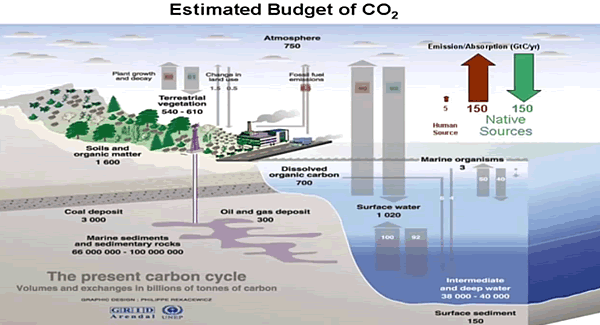
Plate 24 Estimated global carbon cycle, illustrating stores of carbon,
in GtC, and transfers in GtC/yr, where 1 GtC=109 tons of carbon.
Source: Design by Philippe Rekacewicz, UNEP/GRID-Arendal (11.07.10).

Pg.545-6
The storage of CO2 is illustrated in Fig. 17.11. Except for deep sedimentary rock, which is sequestered, most of the carbon is stored in the ocean. It accounts for some 40,000 gigatons (1012 kg) of carbon (GtC), in the form of dissolved CO2 and organic matter. Most resides in the deep ocean, where cold water supports the greatest observed concentrations. There, dissolved CO2 is controlled by the thermohaline circulation. Land and the adjoining biosphere account for only about 2000 GtC. The atmosphere contains less than 1000 GtC, concentrated in CO2. Hence, the store of carbon in the ocean is two orders of magnitude greater than the store in the atmosphere.

Equally significant are transfers of carbon into and out of the ocean. Of order 100 GtC/yr, they exceed those into and out of land. Together, emission from ocean and land sources (∼150 GtC/yr) is two orders of magnitude greater than CO2 emission from combustion of fossil fuel. These natural sources are offset by natural sinks, of comparable strength. However, because they are so much stronger, even a minor imbalance between natural sources and sinks can overshadow the anthropogenic component of CO2 emission (cf Secs 1.6.2, 8.7.1).

The values in Fig. 17.11 can be used to estimate the effective turnover time of atmospheric CO2. At an absorption rate of 100 GtC/yr, the ocean will absorb the atmospheric store of CO2 of 1000 GtC in about a decade. That absorption of CO2, which is concentrated in cold SST at polar latitudes, is nearly offset by emission of CO2 from warm SST at tropical latitudes. Warming of SST (by any mechanism) will increase the outgassing of CO2 while reducing its absorption. Owing to the magnitude of transfers with the ocean, even a minor increase of SST can lead to increased emission of CO2 that rivals other sources (Sec. 8.7.1). Further, if the increase of SST involves heat transfer with the deep ocean, the time for equilibrium to be reestablished would be centuries (Sec. 17.1.2).

Attributing rising temperatures to fossil fuels is lop-sided: Natural sinks respond to warming by releasing CO2 in far greater quantities.

Net emission rate of CO2, r˙ CO2 = d dt rCO2 (ppmv/yr), derived from the Mauna Loa record (Fig. 1.15), lowpass filtered to changes that occur on time scales longer than 2 years (solid). Superimposed is the satellite record of anomalous Global Mean Temperature (Fig. 1.39), lowpass filtered likewise and scaled by 0.225 (dashed). Trend in GMT over 1979–2009 (not included) is ∼0.125 K/decade.

Pg.65ff
Net emission of CO2 closely tracks the evolution of GMT. Achieving a correlation of 0.80, the variation of GMT accounts for most of the variance in CO2 emission.
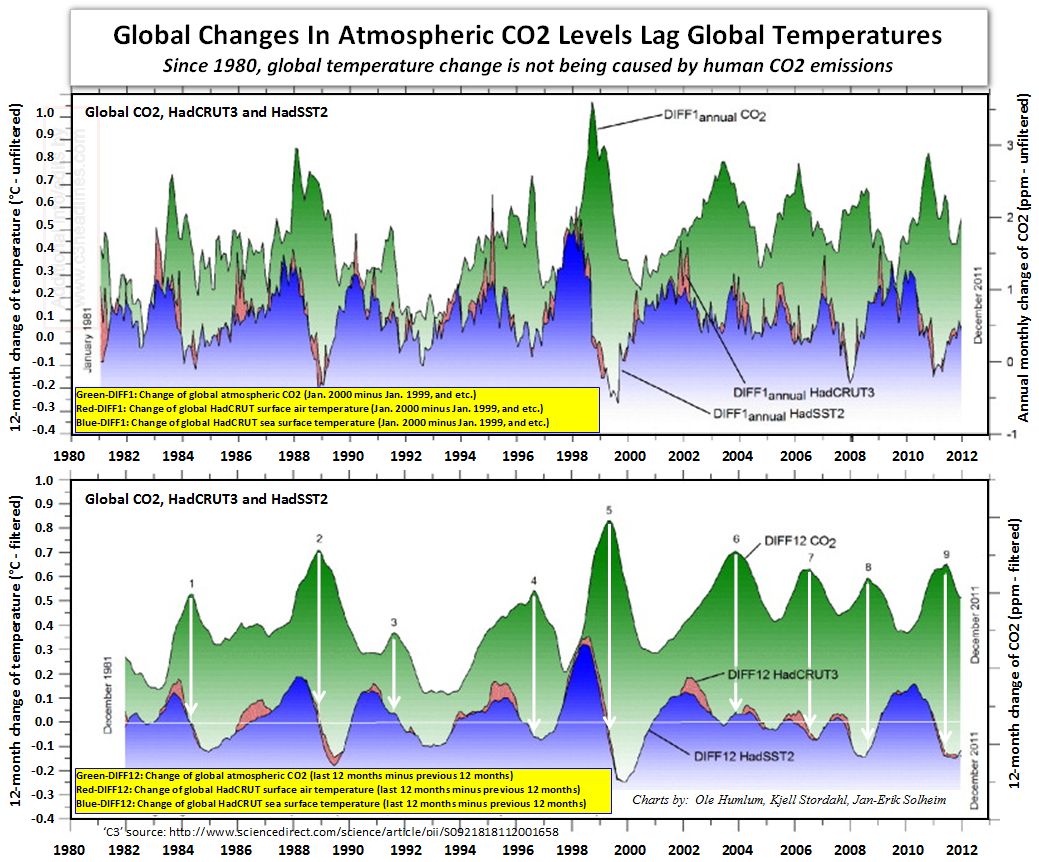
Plotted in Fig. 1.43b is the rate of change in isotopic composition, d dt δ13C = ˙ δ13C (solid).12 Its mean is negative, consistent with the long-term decline of δ13C in ice cores (Fig. 1.14). However, like emission of CO2, differential emission of 13CO2 varies substantially from one year to the next. It too tracks the evolution of GMT – just out of phase. When GMT increases, emission of 13CO2 decreases and vice versa. The records achieve a correlation of −0.86. Hence the variation of GMT, which accounts for most of the variance in emission of CO2, also accounts for most of the variance in differential emission of 13CO2.

The out-of-phase relationship between rCO2 and δ13C in the instrumental record (Fig. 1.43) is the same one evidenced on longer time scales by ice cores (Fig. 1.14). The out-of-phase relationship in ice cores is regarded as a signature of anthropogenic emission, subject to uncertainties (Sec. 1.2.4). The out-of-phase relationship in the instrumental record, however, is clearly not anthropogenic. Swings of GMT following the eruption of Pinatubo and during the 1997–1998 El Nino were introduced through natural mechanisms (cf. Figs 1.27; 17.19, 17.20). Changes in Fig. 1.43 reveal that net emission of CO2, although 13C lean, is accelerated by increased surface temperature. Outgassing from ocean, which increases with temperature (Sec. 17.3), is consistent with the observed relationship – if the source region has anomalously low δ13C. So is the decomposition of organic matter derived from vegetation. Having δ13C comparable to that of fossil fuel, its decomposition is likewise accelerated by increased surface temperature.

Focusing on CO2 as the greenhouse gas of concern is both myopic and lop-sided: H20 makes 98% of the IR radiative activity in the atmosphere.

Pg. 47
The radiative-equilibrium surface temperature Ts is significantly warmer than that in the absence of an atmosphere.

The discrepancy between Ts and Te follows from the different ways the atmosphere processes SW and LW radiation. Although nearly transparent to SW radiation (wavelengths λ ∼ 0.5 μm), the atmosphere is almost opaque to LW radiation (λ ∼ 10 μm) that is re-emitted by the Earth’s surface. For this reason, SW radiation passes relatively freely to the Earth’s surface, where it can be absorbed. However, LW radiation emitted by the Earth’s surface is captured by the overlying air, chiefly by the major LW absorbers: water vapor and cloud. Energy absorbed in an atmospheric layer is reemitted, half upward and half back downward. The upwelling re-emitted radiation is absorbed again in overlying layers, which subsequently re-emit that energy in similar fashion. This process is repeated until LW energy is eventually radiated beyond all absorbing components of the atmosphere and rejected to space. By inhibiting the transfer of energy from the Earth’s surface, repeated absorption and emission by intermediate layers of the atmosphere traps LW energy, elevating surface temperature over what it would be in the absence of an atmosphere.

Pg. 247ff
The residual, +1.5 Wm−2, represents net warming. It is about 0.5% of the 327 Wm−2 of overall downwelling LW radiation that warms the Earth’s surface (Fig. 1.32). The vast majority of that warming is contributed by water vapor. Together with cloud, it accounts for 98% of the greenhouse effect. How water vapor has changed in relation to changes of the comparatively minor anthropogenic species (Fig. 8.30) is not known. The additional surface warming introduced by anthropogenic increases in greenhouse gases amounts to about 75% of that which would be introduced by a doubling of CO2. Arrhenius’ estimate of 5–6◦ K for the accompanying increase of surface temperature (Sec. 1.2.4) then translates into ∼4◦ K. Yet, the observed change of global-mean temperature since the mid nineteenth century is only about 1◦ K (Sec. 1.6.1). The discrepancy points to changes of the Earth-atmosphere system (notably, involving the major absorbers, water vapor and cloud) that develop in response to imposed perturbations, like anthropogenic emission of CO2.

Focusing on CO2 radiative activity is myopic: The tropospheric heat engine comprises many powerful heat transfer processes.

Cloud Forcing

Figure 9.40 Cloud radiative forcing during northern winter derived from ERBE measurements on board the satellites ERBS and NOAA-9 for the (a) LW energy budget, (b) SW energy budget, and (c) net radiative energy budget. Courtesy of D. Hartmann (U. Washington).

Pg. 318ff
A quantitative description of how cloud figures in the global energy budget is complicated by its dependence on microphysical properties and interactions with the surface. These complications are circumvented by comparing radiative fluxes at TOA under cloudy vs clear-sky conditions. Over a given region, the column-integrated radiative heating rate must equal the difference between the energy flux absorbed and that emitted to space.

The components of cloud forcing (9.53) can be evaluated directly from broadband fluxes of outgoing LW and SW radiation that are measured by satellite. Figure 9.40 shows time-averaged distributions of CSW , CLW , and C. Longwave forcing (Fig. 9.40a) is large in centers of deep convection over tropical Africa, South America, and the maritime continent, where CLW approaches 100 W m−2 (cf. Fig. 1.30b). Secondary maxima appear in the maritime ITCZ and in the North Pacific and North Atlantic storm tracks (Sec. 1.2.5). Shortwave forcing (Fig. 9.40b) is strong in the same regions, where CSW < −100 W m−2. Negative SW forcing is also strong over extensive marine stratocumulus in the eastern oceans and over the Southern Ocean, coincident with the storm track of the Southern Hemisphere. Inside the centers of deep tropical convection, SW and LW cloud forcing nearly cancel. They leave small values of C throughout the tropics (Fig. 9.40c). Negative CSW in the storm tracks and over marine stratocumulus then dominates positive CLW , especially over the Southern Ocean. It prevails in the global-mean cloud forcing. Globally averaged values of CLW and CSW are about 30 and −45 W m−2, respectively.

Net cloud forcing is then −15 W m−2. It represents radiative cooling of the Earth-atmosphere system. This is four times as great as the additional warming of the Earth’s surface that would be introduced by a doubling of CO2. Latent heat transfer to the atmosphere (Fig. 1.32) is 90 W m−2. It is an order of magnitude greater. Consequently, the direct radiative effect of increased CO2 would be overshadowed by even a small adjustment of convection (Sec. 8.7).

Trusting climate models driven by CO2 sensitivity is lop-sided: Natural climate factors are poorly quantified but are orders of magnitude larger than estimated CO2 effects.

Pg. 260
Global climate models are sophisticated extensions of the idealized models considered above. Treatments of climate properties in different GCMs are as varied as they are complex. For some properties, like cloud cover, ice, and vegetation, they must resort to empirical relationships or simply ad hoc parameterization. For others, the governing equations cannot even be defined. Together with the ocean simulation, these limitations introduce errors, which can be substantial. Along with discrepancies between GCMs, they leave in question how faithfully climate feedbacks are represented (see, e.g., Tsushima and Manabe, 2001; Lindzen and Choi, 2009).
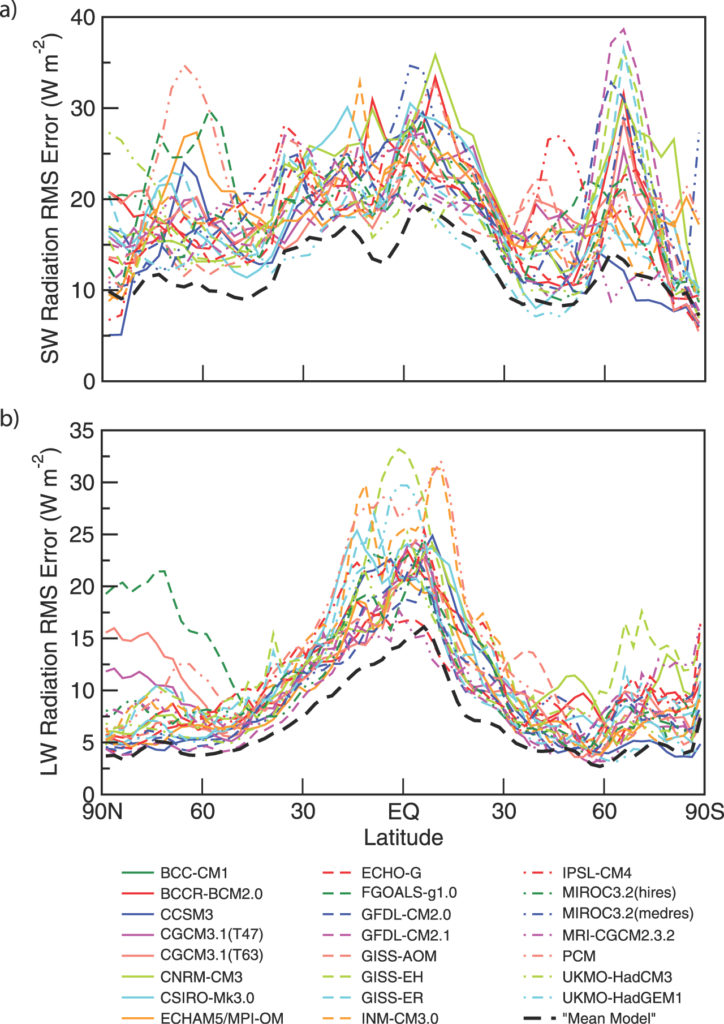
fig-8-04-724x1024

The accuracy of GCMs is reflected in the skill with which they simulate the TOA energy budget: the driver of climate. By construction, GCMs achieve global-mean energy balance. How faithfully the energy budget is represented locally, however, is another matter. The local energy budget forces regional climate, along with the gamut of weather phenomena that derive from it. This driver of regional conditions is determined internally – through the simulation of local heat flux, water vapor, and cloud. Symbolizing the local energy budget is net radiation (Fig. 1.34c), which represents the local imbalance between the SW and LW fluxes F0 and F ↑(0) in the TOA energy budget (8.82). Local values of those fluxes have been measured around the Earth by the three satellites of ERBE. The observed fluxes, averaged over time, have then been compared against coincident fluxes from climate simulations, likewise averaged. Figure 8.34 plots, for several GCMs, the rms error in simulated fluxes, which have been referenced against those observed by ERBE.

Values represent the regional error in the (time-mean) TOA energy budget. The error in reflected SW flux, Fs 4 − F0 in the global mean (8.82), is of order 20 Wm−2 (Fig. 8.34a). Such error prevails at most latitudes. Differences in error between models (an indication of intermodel discrepancies) are almost as large, 10–20 Wm−2. The picture is much the same for outgoing LW flux (Fig. 8.34b). For F ↑(0), the rms error is of order 10–15 Wm−2. It is larger for all models in the tropics, where the error exceeds 20 Wm−2.

The significance of these discrepancies depends on application. Overall fluxes at TOA are controlled by water vapor and cloud (Fig. 1.32) – the major absorbers that account for the preponderance of downwelling LW flux to the Earth’s surface. Relative to those fluxes, the errors in Fig. 8.34 are manageable: Of order 10% for outgoing LW and 20% for reflected SW. Relative to minor absorbers, however, this is not the case. The entire contribution to the energy budget from CO2 is about 4 Wm−2. Errors in Fig. 8.34 are an order of magnitude greater. Consequently, the simulated change introduced by increased CO2 (2–4 Wm−2), even inclusive of feedback, is overshadowed by error in the simulated change of major absorbers.

Conclusion:

Pg. 262
Discrepancies between GCMs arise from inaccuracies in climate properties and from differences in how those properties are represented. Much of the discrepancy surrounds the representation of convection and its influence on water vapor and cloud, the absorbers that account for most of the downwelling LW flux to the Earth’s surface. The involvement of convection is strongly suggested by models of radiative-convective equilibrium. Those simulations are inherently sensitive to how convection and cloud are prescribed. Cloud is especially significant to radiative considerations because it sharply modifies the atmosphere’s scattering characteristics, which determine albedo, and its absorption characteristics, which determine optical depth.

Footnote:

Best wishes to Dr. Salby and much appreciation for telling it like it is.  May you also nail your landing as did Fearless Felix.

h/t malagabay

Carbon Sense and Nonsense


This diagram of the fast carbon cycle shows the movement of carbon between land, atmosphere, and oceans in billions of tons per year. Yellow numbers are natural fluxes, red are human contributions, white indicate stored carbon.

Instead of delusions about CO2 as the planet’s climate “control knob”, Viv Forbes provides us a wise, sane view how the carbon cycle works, and what we know and don’t know about it. And rather than exaggerate the effects of humans recycling fossil fuels, he puts the carbon cycling sources and sinks into a sensible perspective. His recent article is entitled: Carbon Delusions and Limited Models

The IPCC models misread the positive and negative temperature feedbacks from water vapour (the main greenhouse gas) and their accounting for natural processes in the carbon cycle is based on very incomplete knowledge and numerous unproven assumptions.

The dreaded “greenhouse gases” (carbon dioxide and methane) are natural gases. Man did not create them — they occur naturally in comets and planets, and have been far more plentiful in previous atmospheres on Earth. They are abundant in the oceans and the atmosphere, and are buried in deposits of gas, oil, coal, shale, methane clathrates and vast beds of limestone. Land and sea plants absorb CO2 and micro-organisms absorb methane in the deep ocean.

Earth emits natural carbon-bearing gases in huge and largely unknown and unpredictable quantities. Carbon dioxide, carbon monoxide and various hydrocarbons such as ethane, methane and propane bubble out of the ocean floor, seep out of swamps, bubble naturally out of rivers, are released in oil seeps, water wells and bores, and are sometimes delivered via water pipes into drinking water. They are also released whenever carbon-bearing rocks such as coal and shale are eroded naturally, catch fire or are disturbed by earthquakes, construction activities or mining. The vast offshore deposits of frozen methane are released naturally when geothermal heat or volcanic intrusions melt the ice containing the methane.

Earth also entombs carbon in sediments and organic matter transported from the land by rivers and buried in swamps and deltas or swept from the land into the oceans by typhoons and tsunamis. These will eventually become limestone, shale and coal deposits, probably containing fossil evidence of a long-gone human era.

Earth’s total supply of carbon does not change, it just moves continually around the great carbon cycle residing temporarily as gases, liquids or solids in the atmosphere, oceans, biosphere and lithosphere.

Currently the supplies of carbon dioxide in the atmosphere are recovering gently from record lows. No one knows exactly where it is all coming from but limited measurements and extrapolations indicate that about 96% of the CO2 added annually to the atmosphere is from nature. The only part of the carbon cycle that is measured with reasonable accuracy is the remaining 4% of atmospheric CO2 produced through man’s recycling of coal, oil and gas.

Summary:

Note in the diagram above (from Wikipedia), that despite the huge natural fluxes of CO2 (amounts only guesstimated), a net annual increase of 4 Gt is blithely attributed to humans. Once again humans imagine that their activity is decisive and somehow more important than massive natural processes.

I think it is a kind “urban myth” adopted by people living in cities, with little experience of nature beyond green spaces within an artificial environment. Additionally, many spend their time in the virtual reality of cyberspace.

At some level nature has become the “other” to be feared.  Natural forces are presently restrained by bricks and mortar, but are always a risk to break through. Naively some think nature can be placated if we change our ways, another egoistic delusion.

Footnote from Chapter 6 IPCC WGI Fifth Assessment Report:

“The change of gross terrestrial fluxes (red arrows of Gross Photosynthesis and Total Respiration and Fires) has been estimated from CMIP5 model results (Section 6.4). The change in air-sea exchange fluxes (red arrows of ocean atmosphere gas exchange) have been estimated from the difference in atmospheric partial pressure of CO 2 since 1750 (Sarmiento and Gruber, 2006). Individual gross fluxes and their changes since the beginning of the Industrial Era have typical uncertainties of more than 20%.”
From Table 6.1 Chapter 6 IPCC WGI Fifth Assessment Report

Ocean-to-atmosphere flux  –155 ± 30
Land-to-atmosphere flux      30 ± 45
Partitioned as follows:
Net land use change     180 ± 80
Residual terrestrial flux   –150 ± 90