SEC Agency Aims to Legislate US Climate Policy

Jay Clayton and Patrick McHenry explain in their Wall Street Journal article The SEC’s Climate-Change Overreach.  Excerpts in italics with my bolds and added images.

Congress shouldn’t palm off its responsibility for social and economic policy
on financial regulators.

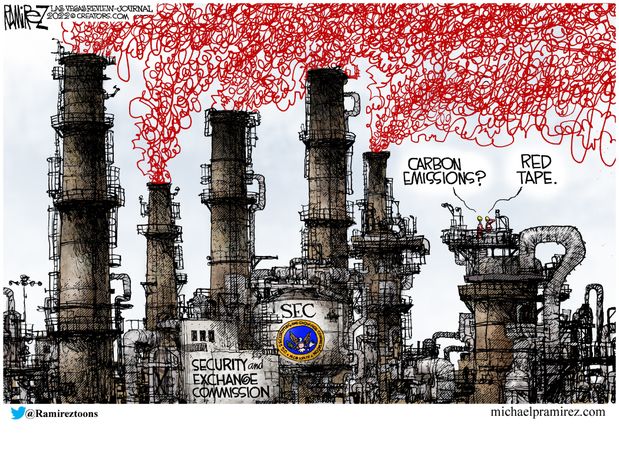
The Securities and Exchange Commission will propose sweeping new rules this week requiring publicly traded, and perhaps even private, companies to disclose extensive climate-related data and additional “climate risks.”

Setting climate policy is the job of lawmakers, not the SEC, whose role is to facilitate the investment decision-making process.

Companies choose how best to comply and thrive under those polices, and investors decide which business strategies to back. That approach addresses many societal issues—think vaccines—and enhances global welfare. Taking a new, activist approach to climate policy—an area far outside the SEC’s authority, jurisdiction and expertise—will deservedly draw legal challenges.

What’s worse, it puts our time-tested approach to capital allocation, as well as the agency’s independence and credibility, at risk.

Understanding and addressing global climate change is one of the most complex and significant issues of our time. Some predict we face inevitable catastrophe, while others say the costs of the transition to a “net-zero world” outweigh the benefits  We know four things for sure.

♦  First, implementing an economywide emissions-reduction policy will have a profound impact on the domestic energy, labor, transportation and housing markets, among others. Many jobs will be destroyed while others are created. Some businesses will close while others will flourish. Even if the long-term benefits outweigh the costs, near-term stresses on working Americans are inevitable and will be distributed unequally.

♦  Second, leaving policy decisions this significant to a single regulator—or even a patchwork of regulators—has failed time and again. Tellingly, there is no indication that the SEC has meaningfully coordinated with any of the other relevant federal agencies and departments on the policy choices embedded in its proposed rules.

♦  Third, Russia’s war against Ukraine demonstrates again the clear and longstanding links between energy policy, global stability and competing national interests. America’s ability to lead on the global stage depends on our economic and military strength, and energy policy is a key to both. These issues are far outside a financial regulator’s depth and mandate.

♦  Fourth, the body that the Constitution prescribes for weighing the relevant trade-offs in this area is Congress. Congress, duly elected by and responsible to the people, is precisely where climate policy, in all its complexities and consequences, should be resolved. Yet over decades, elected leaders have pushed hard policy questions to federal agencies staffed by unelected bureaucrats, whose decisions are reviewed only by unelected judges.

This is at best bad for democracy and at worst unconstitutional.

Demanding that the SEC “act on climate change” allows politicians to say that they are working on their constituents’ behalf without accepting responsibility for the hard choices involved in crafting policy.

Executive branch and independent agencies, including the Environmental Protection Agency; the Transportation, Labor, State and Treasury departments; and other financial regulators, have a role to play. They should work to inform Congress during the policy-making process and then implement legislative mandates in their respective areas of expertise.

Unfortunately, because the SEC has decided to move forward unilaterally, the debate will shift not to Congress, where it belongs, but to the courts. The commission’s chosen path will allow the political buck-passing to continue and delay thoughtful, appropriate and democratically accountable policy.

If and until Congress acts on climate policy, the message to regulators must be clear: Stay in your lane.

Mr. Clayton served as SEC chairman, 2017-20. Mr. McHenry, a North Carolina Republican, is ranking member of the House Financial Services Committee.

See Background Post SEC Warned Off Climate Disclosures

Big Oil Embraces Its Demise for the Honor of Saving the Planet.

Robert Romano asks and answers the pressing energy question in his Daily Torch article Why aren’t oil companies drilling more? Look no further than the ESG goals in their corporate annual reports. Excerpts in italics with my bolds and added images.  H/T John Ray

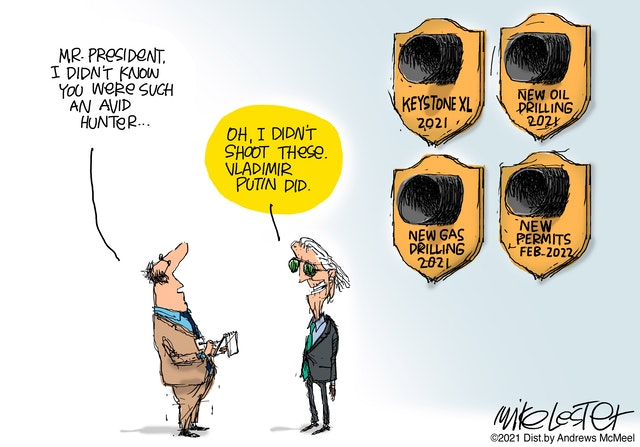
The largest oil producers in the U.S. do not appear to have major plans to increase production through 2025, a review of U.S. Energy Information Agency (EIA) data and corporate reports of U.S.-based oil companies reveals, despite oil prices being over $100 per barrel and inflation raging at 7.9 percent the last twelve months.

According to EIA, U.S. oil production will reach 12 million barrels per day in 2022 and 12.6 million barrels per day in 2023, a return to pre-Covid production levels that peaked at 12.9 million barrels per day in Nov. 2019.

But what about over the long term? A look at top U.S. oil producers reveals that these companies have been pivoting away from carbon-based energy for years. In short, they’re going green.

[ExxonMobil and Chevron are two examples where] explicit Environmental, Social and Governance (ESG) goals are being pursued by the largest oil companies in the U.S., particularly goals to support the Paris Climate Accords and to reduce carbon emissions to zero.

In both companies’ cases, the strategies short-term include deploying carbon capture technologies as well as reducing onsite carbon emissions on existing production facilities, and more investment in green energies.

Long term, however, they are sealing the fate of carbon-based energies, by embracing an investment model that calls for their extinction.

Ultimately, that will mean almost no oil production or consumption, a goal that would be contrary to an oil company’s continued existence and profitability.

ESG investing has increased dramatically the past decade via private retirement funds regulated under the Employment Retirement Income Security Act (ERISA) thanks to a regulation by the Obama Labor Department in 2015.

In addition, the $762 billion federal Thrift Savings Plan (TSP) for federal employee retirees will begin investing in ESG funds in 2022, following state government employee retirement funds in California, New York, Colorado, Connecticut, Maine, Maryland and Oregon.

The combination of these incentives and subsidies has led to an unprecedented rise of ESG investment: $38 trillion out more than $100 trillion global assets under management, will grow to $53 trillion by 2025, according to Bloomberg News. That’s about one-third of all assets under management, not necessarily seeking profitability, but to save the world.

BlackRock, a hedge fund with more than $9 trillion of assets under management, have placed green activists onto the board of Exxon to make it a “not-oil” company, thanks to ESG. Other hedge funds like Vanguard also make significant ESG investments.

But it has led to catastrophe. Besides making Europe and the West increasingly dependent on energy from adversaries like Russia, inflation is on fire. Thanks to the energy crisis, even major ESG beneficiaries like Tesla CEO Elon Musk are calling for an increase in oil and gas production in a bid to offset Russia, writing on Twitter on March 8: “Hate to say it, but we need to increase oil & gas output immediately. Extraordinary times demand extraordinary measures.”

Musk is right. It’s time to expand production dramatically. But ESG won’t let us. That’s a big problem.

The net result of these policies incentivizing and subsidizing ESG investments has been to restrict capitalization and financing to carbon-based oil, coal and natural gas energies in favor of green energies such as solar, wind and electric vehicles — and endangering the West.

As it turns out, energy security is national security, and with ESG, we do not have energy security.

See also Wake Up and Smell the Fossil Fuel Insanity

Wake Up and Smell the Fossil Fuel Insanity

Terry Etam writes a BOE Report Column: The world faces both a hydrocarbon shortage and a divest fossil fuels movement. What next, oil patch? Excerpts in italics with my bolds and added images.

Today’s question is one only the hydrocarbon crowd can answer:  What’s your game plan from here forward?

 There are a thousand occupations and situations, each with its own decision tree.  Despite the potential variance, it’s still a valid question, because we globally we are at a crossroads of some major significance. The well-being of much of the world’s population depends on what the hydrocarbon industry does over the next few years. At the same time, the pressure is building for the hydrocarbon industry to shrink and wither (as in the wildly successful divest fossil fuels campaign, or banks cutting back on oil/gas loans to curry favour with Those That Matter).

The question is not an easy one given the dramatic reframing of the hydrocarbon industry over the past few years. We used to be the good guys, the world’s fuel providers, a dynamic and entrepreneurial and fast-moving assembly of doers.

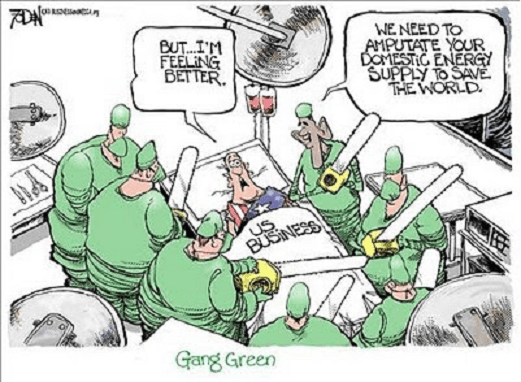
Then the narrative changed, and the industry went from relative obscurity to Public Enemy Number One. By 2019, public animosity towards it reached a peak, with orchestrated mass protests around the globe. 2020 brought a near-death experience as Russia and OPEC decided to decimate prices in a battle for market control, and all the anti-hydrocarbon protesters switched from protesting to cheering, famously claiming that “oil was dead”, that oil prices would never recover because EVs were causing rapid demand destruction, and that the humane thing to do now was to justly transition all hydrocarbon workers to other industries.

Even typing that stuff now sounds like an alien experience, like walking around in a crowd without a mask.

The reason those conversations feel so outdated is because, today, it is clear that oil is about as dead as the internet. Some will of course say that high oil prices will hasten a transition to renewables, and that is true that it will make renewables more cost competitive (though still no match on the reliability front).

But consider that a rapid transition to renewables is impossible from a mining perspective alone.

The IEA has said that a global Net Zero 2050 transition would require four times the number of critical mineral mines by 2040 (a virtual impossibility when governments are making mining harder everywhere).  And the Geological Society of Finland calculated that a full transition via renewables/EVs would require more critical metals and minerals than there are known global reserves.

If you are still on the fence as to whether hydrocarbons’ days are numbered, consider that Germany, the world’s most advanced energy-transition country, just days ago mused that drilling for new oil/gas deposits in the arctic sounds like a pretty good idea.

Consider also that this is the new-ish Green-led government saying this. Keep in mind also that any arctic development takes years at a minimum, so these developments have nothing to do with this immediate crisis. If Germany is plotting decade-length oil/gas developments, that tells you all you need to know about the demise of hydrocarbons. There isn’t one.

But that doesn’t answer the question at hand. What will people in the industry do? Will they bolt and get retrained in something else? There are a variety of situations of course, but one is far more ominous than the others. Here’s a bit of a dissection.

Process people will most likely keep processing; any occupations that are in perpetual flow states will likely not stop because of a lack of employees. If you are a gas marketer or pipeline scheduler or refinery manager, there isn’t a visible break point in the continuity of business.

But producers are different. Much different. Next year’s barrel of production won’t necessarily and automatically appear as part of a continuous flow. A lot of very capable brain power needs to be enacted, crews hired and managed, etc. Finding and developing new oil/gas flows is a choice.

If no one chooses to find and produce more petroleum, the flow slows, then stops. If geological talent dries up/retires/moves on, new production doesn’t just happen. Same with drilling crews or completions experts or – dare I say it – truckers.

Anti-hydrocarbon sentiment rums deep in academic institutions, yet it is those very institutions new employees will have to navigate if they are to land in the oil patch. It is no longer “just another option”. There is stigma attached to petroleum programs.

There is venom coming your way from complete strangers. It should then be no surprise that students are acting accordingly; they are going elsewhere. In one US study, from 2016-19, the US petroleum engineering student count fell by 60 percent, and no doubt has fallen further since. Even here in the heart of the Canadian oil patch, the University of Calgary has suspended the petroleum engineering program after the student count fell to an all time low of 10 – and that’s over a two year period.

What if no one chooses to look for oil anymore? Yes, ten thousand western elites will cheer wildly, but billions of trucker-grade people around the world that need that fuel for survival will say WTF, or some such local equivalent.

Those ten thousand western elites will tell all the global plebeians Hey, don’t worry! Solar panels are on the way. And the billions will say Yeah…but can I get a fridge that has power for more than six hours a day? And western elites will say Nope! But don’t worry batteries are on the way. And billions of those plebeians will say Great! When? And western elites will say Battery storage is cheaper than its ever been! And the plebes will say Great! When? And western elites will say Death to fossil fuels! And the plebes will ponder in awe the presumed mysticism and superiority of elite non-sequiturs, little conversational re-directs that the great unwashed masses simply aren’t worthy of comprehending, and then they will starve to death.

And the hydrocarbon producers will be sitting there wondering what to do next. They’ll answer the phone and second cousin Moonbeam from Toronto or San Francisco will be shrieking about how you’re killing the planet.  But you’ll turn on the news and hear that it is a moral imperative to produce more oil since all you oil guys are rolling in money which will be true.  But then the politicians will be saying ‘We’ll take that windfall money btw and then whatever is left better be going into green projects.  But yes you had better increase production right now and we mean right now but only for this year and then everyone should divest fossil fuels.  And we’ll see you in court for all the emissions you’ve unilaterally created over the past century, and maybe the fines will be deductible from the windfall tax and maybe not.  We’ll let you know when we’re good and ready.’.
If this sounds melodramatic it isn’t. In fact, the situation is far more critical than it sounds, in terms of global impact: there is a multi-trillion dollar behemoth of a fuel system that keeps humanity alive. It is 80 per cent hydrocarbon-based. There is at present no substitute. Most parts of that system function conditionally – they require a non-stop flow of hydrocarbons.

The various components of this huge system have “something to do” because, and only because, a relatively small group of people and entities at the origin of that system, the upstream, choose to keep it full. This small group looks at seismic, looks at well logs, drills wells, does production plans, builds small scale infrastructure to bring this energy life-blood on stream. Without those few people the system withers just as does a plant pulled from the ground.

A lack of expertise and/or interest in bringing new hydrocarbons to market will mean that the world’s supply dries up. Good, the ten thousand activists will say. Good, you might say, let’s see who needs who. But these other seven-plus billion won’t be too thrilled at all. No fuel, no fertilizer, no food. All because of choices we’ve made here in the west.

So? Will you continue to power the world or not? A lot of hungry mouths are desperate to hear a yes. Those in power here in the west, the ones that control your economic destiny, have a crazed and volatile look in their eyes as they try to figure it all out, but are publicly unable to support you because they’ve been kicking you in the ribs for a long time and it’s kind of hard at that point to stop and call all the other kickers bullies.

Don’t look at me, I have no idea what happens next. All I can say is that at the point it becomes optional, I will choose not to put my head in the vise any longer. I suspect I am not alone.

Postscript on Petroleum Companies \Outlook and Viability

Outlook 2022: Oil Industry from Proshare

Chart 22: Global oil demand (mb/d) 2019 -2022

Source: OPEC, Proshare Research * OPEC’s Predictions

In the OECD countries, there were larger-than-expected oil demands in H1 2021. However, oil demand struggled to recover to the pre-pandemic level due to lower demand for industrial and transportation fuels for the rest of the year. Oil demand within the OECD for 2021 mirrored the slow phase of economic growth due to supply chain disruptions and the uptick in COVID-19 cases.

Meanwhile, non-OECD’s oil demand in 2021 fluctuated for the better part of the year on demand swings from China and India. China’s crude imports started the year relatively high but fell to an average of 8.9 mb/d in October, the lowest since February, as refiners lacked import quotas and mobility remained limited on the back of the Zero-Covid-19 policy implemented in the country. India’s crude imports also fell to an average of 4.0 mb/d in October, following 2 months of successive gains. Thus, the Covid-19 and supply chain induced soft patches in H2 2021 across Asia impacted considerably on the global oil demand in 2021.

Illustration 30: Determinants of Crude Demand in 2021

Oil Supply

The global oil supply for the year 2021 was driven mainly by the decision of OPEC+, which strived to achieve balance in the oil market.

The share of OPEC in global oil production stood at about 27.7% in 2021, with an average production of about 26.32 mb/d (see chart 24 below).

Chart 24: Global Oil Supply (mb/d) 2019 – 2022

Source: OPEC, Proshare Research * OPEC’s Predictions

Oil Prices

The tightness in the market kept oil prices elevated in 2021. Despite the lingering Covid-19 pandemic, demand had more robust fundamentals while supply was constrained by underinvestment, low spare capacity, and outages. The global oil market began the new year 2021 with a price rally above the 2020 average, and both benchmark contracts reached their 2021 highest in October, with Brent at US$86.70 and WTI at US$85.41 per barrel. Brent price averaged US$71.2 per barrel in 2021, up by 63.3% Y-o-Y above the US$43.6 per barrel average in 2020. Brent increased from about US$51 per barrel in January 2021 to about US$79 per barrel in December 2021, representing a gain of about +55% YTD (see chart 25 below).

Chart 25: Brent Crude Price in 2021 (US$/barrel)

Source: Oilprice, Proshare Research


Federal Climatists Target US Personal Pension Funds

The green tentacles of global warming/climate change activism are closing in on personal retirement funds. Rupert Darwall writes at Tennessee Star The Biden Administration’s ERISA Work-Around. Excerpts in italics with my bolds and added images.

Rising inflation threatens the value of Americans’ retirement savings. Now the Biden administration is finalizing a rule to loosen safeguards under the Employee Retirement Income Security Act of 1974 (“ERISA”) that protect private retirement savings. The new rule, “Prudence and Loyalty in Selecting Plan Investments and Exercising Shareholder Rights,” stems from President Biden’s May 20, 2021, Executive Order on Climate-Related Financial Risk, which directed senior White House advisers to develop a strategy for financing the administration’s net-zero climate goals, including the use of private savings.

Predictably, Wall Street is cheering the prospect of undoing ERISA safeguards. According to one analysis, 97% of comment letters support the proposal. But as I show in my RealClear Foundation report The Biden Administration’s ERISA Work-Around, it’s the remaining three percent that should give the Department of Labor (DOL) cause to rethink its deeply flawed approach.

Under ERISA, retirement savings must be invested for the exclusive purpose of providing retirement benefits.

The May 2021 executive order illustrates the very danger that ERISA’s exclusive-purpose rule is designed to guard against. To achieve the goals set out in the order, DOL is instructed to “suspend, revise or rescind” two Trump-era rules designed to uphold ERISA’s exclusive-purpose rule.

The stratagem adopted by DOL to carry this out is breathtaking in its audacity. The effect of the rule—if finalized as proposed—is to embed ESG investing in retirement plans and nullify the clear, unambiguous intent of ERISA’s exclusive-purpose rule. It’s audacious—and it’s high risk. In December, GOP senators Pat Toomey, Mike Crapo, Richard Burr, and Tim Scott warned the Secretary of Labor, Martin Walsh, against the proposed rule’s use of “inchoate” ESG terminology and reminded him that in 2020, DOL had been convinced by its review of public comments that the term is “not a clear or helpful lexicon for a regulatory standard.”

ESG—environmental, social, and governance—investing embodies two incompatible propositions.

The first is that investing should be about more than financial returns and have regard to wider societal concerns. In a January 2022 interview with Barron’s, Amy Domini, who cofounded KLD Research & Analytics in 1984, objected to rules that require investing based solely on economic value. “We have got to get rid of this concept of economic value,” Domini told Barron’s. “I don’t care if I’ve got an extra 50 bucks in my pocket if it’s dangerous to walk down the sidewalk, or if my grandson has leukemia because the water system is so polluted.”

The second ESG proposition contradicts the first. Far from sacrificing financial returns, ESG investing boosts them. “Our investment conviction,” BlackRock states in its comment letter to DOL, “is that incorporating sustainability-related factors—which are often characterized and grouped into ESG categories—can provide better risk-adjusted returns to investors over the long-term” (emphasis added).

BlackRock’s corporate strategy is to market ESG-style investment products to millennials, who, BlackRock believes, are less interested in financial returns than boomers. In his 2019 letter to CEOs, BlackRock CEO Larry Fink cited a survey of millennials. When asked what the primary purpose of businesses should be, 63% more said “improving society” than said “generating profit.” Three years later, in his 2022 letter to CEOs, Fink was pivoting away from ESG and undercutting BlackRock’s special pleading to DOL. “Make no mistake,” Fink wrote, “the fair pursuit of profit is still what animates markets; and long-term profitability is the measure by which markets will ultimately determine your company’s success.”

According to Jonathan Berry, DOL’s former Acting Assistant Secretary for Policy under the previous administration, career staff at DOL’s Employee Benefits Security Administration (EBSA) initiated secretive private meetings after the November 2020 election to build support and find cause to overturn the 2020 rules. Who were these parties? In its comment letter on the proposed rule, BlackRock lets the cat out of the bag in praising DOL for its “thoughtful analysis of the challenges presented by the 2020 rules” and for incorporating feedback from a “wide range of stakeholders.”

The outcome was a DOL press release on March 10, 2021, announcing the nonenforcement of the two 2020 rules. “These rules have created a perception that fiduciaries are at risk if they include any environmental, social and governance factors in the financial evaluation of plan investments,” said Ali Khawar, EBSA Principal Deputy Assistant Secretary. In fact, references to ESG had been removed from the text of the 2020 Financial Factors rule. Far from ruling out consideration of any ESG factor, its preamble accepted that “ESG considerations may present issues of material business risk or opportunities.” Why hasn’t DOL issued a FAQ and held a public meeting to dispel misperceptions about the 2020 rule?

Because the White House has instructed DOL to nix the rule.

The proposal also seeks to rewrite the December 2020 DOL rule on proxy voting in order to push fiduciaries to outsource their voting to the proxy-advisory duopoly of Institutional Shareholder Services and Glass, Lewis and their bias in support of ESG-type goals in proxy votes. Furthermore, the proposed replacement rule doesn’t tackle the vexed issue of “empty voting,” when, for example, the likes of three big index-tracker providers vote proxies in respect of shares that they don’t have an economic interest in. Shouldn’t DOL be clarifying that ERISA fiduciaries have a duty to investigate the voting policies of firms to which they delegate voting authority?, asks RealClear Foundation senior fellow Bernard Sharfman and Manhattan Institute’s James Copland.

Failure to do so, they suggest, could constitute grounds for a legal challenge under the Administrative Procedure Act.

In their letter to Secretary Walsh, the four GOP senators also invoke the specter of the rule having its fate decided by the courts. “The use of such [ESG] terminology in the proposal is arbitrary and capricious under the Administrative Procedure Act,” the senators warn. As drafted, the proposed rule would invert the primacy of statute law over executive-agency rulemaking.

It would also fundamentally alter the nature of American capitalism, corralling capital for political ends, enabled by multitrillion-dollar investment advisers eyeing the prospect of higher fees.

Will the rule of law prevail?


Financial Systems Have Little Risk from Climate

At John Cochrane’s blog readers can access studies showing how activists like Mark Carney are distorting and exploiting imaginary risks to the financial system from global warming/climate change.  Firstly Cochrane discusses a current Federal Reserve research document How Bad Are Weather Disasters for Banks?   Excerpts in italics with my bolds and images are from his blog article Fed Courage

How Bad Are Weather Disasters for Banks?

Kristian S. Blickle, Sarah N. Hamerling, and Donald P. Morgan

Federal Reserve Bank of New York Staff Reports, no. 990 November 2021

Abstract

Not very. We find that weather disasters over the last quarter century had insignificant or small effects on U.S. banks’ performance. This stability seems endogenous rather than a mere reflection of federal aid. Disasters increase loan demand, which offsets losses and actually boosts profits at larger banks. Local banks tend to avoid mortgage lending where floods are more common than official flood maps would predict, suggesting that local knowledge may also mitigate disaster impacts.

Key words: hurricanes, wildfires, floods, climate change, weather disasters, FEMA, banks, financial stability, local knowledge

In addition to the paper’s good analysis, there is a useful literature review,

Our main findings are generally consistent with the few papers that study the bank stability effects of disaster. Looking across countries, Klomp (2014) finds that disasters do not effect default risk of banks in developed countries. Brei et al. (2019) find that hurricanes (the most destructive weather disaster) do not significantly weaken Caribbean banks. Koetter et al. (2019) finds increased lending and profits at German banks exposed to flooding along the Elbe River. The study closest to ours by Noth and Schuewer (2018) finds default risk increases at U.S. banks following disasters but the effects are small and short-lived. Barth et al. (2019) find higher profits and interest spreads at U.S. banks after disasters but did not look at bank risk.

Based on four case studies of extreme disasters and small banks, FDIC (2005) concluded that …”historically, natural disasters did not appear to have a significant negative impact on bank performance.”

This is a courageous paper to write, and to write so clearly. The fantasy of “climate risks to the financial system” is passed around and around in order to justify using financial regulation to implement this Administration’s climate policies, centering on defunding fossil fuel development and subsidizing deployment of particular technologies such as electric cars and windmills. Documenting that this particular emperor has no clothes takes great courage.

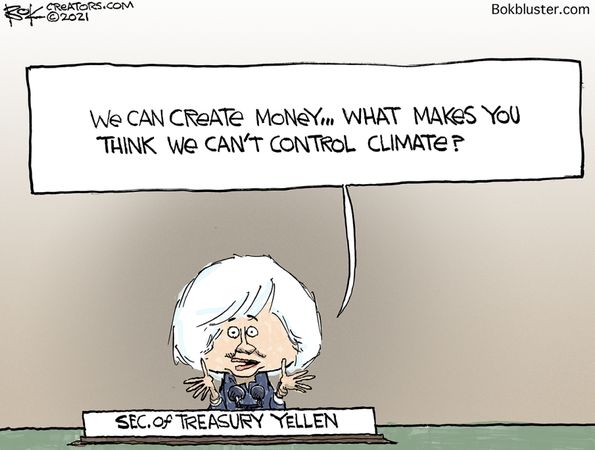
As a small indicator of the forces at work, Treasury Secretary Janet Yellen offered an eloquent summary of a the “whole-of-government’ effort to integrate climate into financial regulation

“FSOC is recognizing that climate change is an emerging and increasing threat to U.S. financial stability. This report puts climate change squarely at the forefront of the agenda of its member agencies..”

News that climate change is not a threat to financial stability will not go down well.

Governor Lael Brainard, currently a leading candidate for Fed Chair, is a strong proponent of “climate risks to the financial system.” = Just read here speeches. Here, for example,

Climate change is projected to have profound effects on the economy and the financial system, and it is already inflicting damage.

We can already see the growing costs associated with the increasing frequency and severity of climate-related events.

Here,

It is increasingly clear that climate change could have important implications for the Federal Reserve … Given the implications of climate change for both individual financial institutions and the financial sector as a whole...,

Climate change and the transition to a sustainable economy also pose risks to the stability of the broader financial system. …

And a hint of the vast institutional commitment to these ideas

To complement the work of the SCC, the Federal Reserve Board is establishing a Financial Stability Climate Committee (FSCC) to identify, assess, and address climate-related risks to financial stability.

“We looked and there is nothing here” is not going to go down well. It’s hard to publish papers and get jobs as climate and finance researchers these days if you come up with the “wrong” answers.

New Zealand Study Confirms Financial System Safety from Climate Change

A commenter at the blog provided a link to another recent NZ study Climate Change and the risk to Financial Stability.  Reality or overreaction? Excerpts in italics with my bolds.

The Reserve Bank is not alone in suggesting that climate change could represent some kind of existential threat to the financial system. Over recent years a number of central banks, supervisors and international financial institutions have made claims that global warming poses a serious risk to financial stability. The Network for Greening the Financial System (NGFS), a club of central banks and supervisors, is pushing a more coordinated international approach. Further, the Ministry for the Environment (MfE) has identified financial stability as one of the two major economic risks in its recent Climate Change Risk Assessment report.

At first sight it is difficult to understand what is driving the Reserve Bank’s concern. The physical risks from climate change to the New Zealand economy are small, and over the period up to 2100 the benefits of a warmer climate may well exceed the costs. While there will be some impacts as the economy adapts to a zero carbon future, economies have always been changing and, with some exceptions, financial systems have been able to accommodate those changes. To cite an obvious example, the US substantially shifted from horse to motorized transport in the space of 20 years, without any one being in charge or worrying about systemic risk to the financial system.

As the physical effects of climate change are slow-moving and relatively predictable over relevant time horizons, we should expect the financial systems to adapt to this changing world, and readily accommodate the impacts of climate events such as a slowly rising sea levels and the occasional stronger storms.

The issue we address in this report is whether climate change is such an exception to this benign adaptation picture, that central banks and supervisors need to respond to the ‘challenge’ with some urgency. Or is this just a case of the Reserve Bank wanting to be seen to be ‘relevant’ and getting into the action in what is one of the biggest issues of our time?

The main purpose of this report is to assess the papers on the Bank’s list and other relevant documents on the impact of climate change on financial systems. We have also focused on climate change risk disclosures, which have become a flavour of the month in regulatory quarters, and are set to become mandatory for larger New Zealand institutions.

The focus of our analysis is on the banking sector, which is the core of the New Zealand financial system. We have paid less attention to risks to the insurance sector because it is generally accepted it can readily manage climate risks by adjusting its exposures and pricing.

Our conclusions are very clear. We have reviewed a large number of documents and despite the best efforts of many supervisors none have been able to come up with convincing evidence that climate change represents a threat, let alone a systemic threat. For example a very recent full scale stress test for France found that the transition costs to a zero carbon economy would at most be four or five basis points and that it did not matter whether the transition was early or late. The physical risks from climate change were so slight that they could not be analysed.

We did find a disturbing pattern of exaggerations and misrepresentations. For example the Bank of England instructed banks, when stress testing, to assume that all river flooding defences would be removed, in an effort to inflate the costs of future flooding events. The United Nations Environment Programme used climate change assumptions for 2100 to assess financial system impacts for 2025 and 2045.

Climate change does not represent some kind of existential threat to the New Zealand financial system.

The Governnor is over-reacting. This climate change ‘hysteria’ is mostly noise, but it might have some efficiency costs for the system, which could be avoided if a more measured approach is taken. The Reserve Bank’s role should be to correct and hose down ill-informed responses, not to create them.

Footnote:

Background from John H. Cochrane writing on central banks mistaken preoccupation with global warming/climate change at post Deception: Climate Financial Risk

Also Cochrane’s remarks at European Central Bank’s Conference on Monetary Policy. Synopsis at post Bankers Should Mind Their Own Business, not the Climate


David Hay Explains “Greenflation”

A two part series at Evergreen financial advisers analyses the market effects of the intensified push for “green” energy.  Excerpts in italics with my bolds.  The two posts are:

Green energy: A bubble in unrealistic expectations?
David Hay / October 8, 2021
As I have written in past EVAs, it amazes me how little of the intense inflation debate in 2021 centered on the inflationary implications of the Green Energy transition. Perhaps it is because there is a built-in assumption that using more renewables should lower energy costs since the sun and the wind provide “free power”.

Green Energy: A Bubble in Unrealistic Expectations, Part II
David Hay / October 15, 2021
This is part two of our discourse regarding green energy and its profound – and somewhat misunderstood – impact on the global economy. In this issue, we specifically home in on China and how that country’s immense power needs are affecting the energy ecosystem at large.

Part I Green Bubble Summary:
  • BlackRock’s CEO recently admitted that, despite what many are opining, the green energy transition is nearly certain to be inflationary.
  • Even though it’s early in the year, energy prices are already experiencing unprecedented spikes in Europe and Asia, but most Americans are unaware of the severity.
  • To that point, many British residents being faced with the fact that they may need to ration heat and could be faced with the chilling reality that lives could be lost if this winter is as cold as forecasters are predicting.
  • Because of the huge increase in energy prices, inflation in the eurozone recently hit a 13-year high, heavily driven by natural gas prices on the Continent that are the equivalent of $200 oil.
  • It used to be that the cure for extreme prices was extreme prices, but these days I’m not so sure. Oil and gas producers are very wary of making long-term investments to develop new resources given the hostility to their industry and shareholder pressure to minimize outlays.
  • I expect global supply to peak sometime next year and a major supply deficit looks inevitable as global demand returns to normal.
  • In Norway, almost 2/3 of all new vehicle sales are of the electric variety (EVs) – a huge increase in just over a decade. Meanwhile, in the US, it’s only about 2%. Still, given Norway’s penchant for the plug-in auto, the demand for oil has not declined.
  • China, despite being the largest market by far for electric vehicles, is still projected to consume an enormous and rising amount of oil in the future.

In fact, despite oil prices pushing toward $80, total US crude output now projected to actually decline this year. This is an unprecedented development. However, as the very pro-renewables Financial Times (the UK’s equivalent of the Wall Street Journal) explained in an August 11th, 2021, article: “Energy companies are in a bind. The old solution would be to invest more in raising gas production. But with most developed countries adopting plans to be ‘net zero’ on carbon emissions by 2050 or earlier, the appetite for throwing billions at long-term gas projects is diminished.”

Thus, if he’s right about rising demand, as I believe he is, there is quite a collision looming between that reality and the high probability of long-term constrained supplies. One of the most relevant and fascinating Wall Street research reports I read as I was researching the topic of what I have been referring to as “Greenflation” is from Morgan Stanley. Its title asked the provocative question: “With 64% of New Cars Now Electric, Why is Norway Still Using so Much Oil?”

Coincidentally, that’s been the experience of the overall developed world over the past 10 years, as well; petroleum consumption has largely flatlined. Where demand hasn’t gone horizontal is in the developing world which includes China. As you can see from the following Cornerstone Analytics chart, China’s oil demand has vaulted by about 6 million barrels per day (bpd) since 2010 while its domestic crude output has, if anything, slightly contracted.

Here’s a similar factoid that I ran in our December 4th EVA, “Totally Toxic”, in which I made a strong bullish case for energy stocks (the main energy ETF is up 35% from then, by the way): “(There was) a study by the UN and the US government based on the Model for the Assessment of Greenhouse Gasses Induced Climate Change (MAGICC). The model predicted that ‘the complete elimination of all fossil fuels in the US immediately would only restrict any increase in world temperature by less than one tenth of one degree Celsius by 2050, and by less than one fifth of one degree Celsius by 2100.’ Say again? If the world’s biggest carbon emitter on a per capita basis causes minimal improvement by going cold turkey on fossil fuels, are we making the right moves by allocating tens of trillions of dollars that we don’t have toward the currently in-vogue green energy solutions?”

Part II Green Bubble Summary:
  • About 70% of China’s electricity is generated by coal, which has major environmental ramifications in regards to electric vehicles.
  • Because of enormous energy demand in China this year, coal prices have experienced a massive boom. Its usage was up 15% in the first half of this year, and the Chinese government has instructed power providers to obtain all baseload energy sources, regardless of cost.
  • The massive migration to electric vehicles – and the fact that they use six times the amount of critical minerals as their gasoline-powered counterparts –means demand for these precious resources is expected to skyrocket.
  • This extreme need for rare minerals, combined with rapid demand growth, is a recipe for a major spike in prices.
  • Massively expanding the US electrical grid has several daunting challenges– chief among them the fact that the American public is extremely reluctant to have new transmission lines installed in their area.
  • The state of California continues to blaze the trail for green energy in terms of both scope and speed. How the rest of the country responds to their aggressive take on renewables remains to be seen.
  • It appears we are entering a very odd reality: governments are expending resources they do not have on weakly concentrated energy. And the result may be very detrimental for today’s modern economy.
  • If the trend in energy continues, what looks nearly certain to be the Third Energy crisis of the last half-century may linger for years.

Lest you think I’m being hyperbolic, please be aware the IEA (International Energy Agency) has estimated it will cost the planet $5 trillion per year to achieve Net Zero emissions. This is compared to global GDP of roughly $85 trillion. According to BloombergNEF, the price tag over 30 years, could be as high as $173 trillion. Frankly, based on the history of gigantic cost overruns on most government-sponsored major infrastructure projects, I’m inclined to take the over—way over—on these estimates.

Moreover, energy consulting firm T2 and Associates, has guesstimated electrifying just the US to the extent necessary to eliminate the direct consumption of fuel (i.e., gasoline, natural gas, coal, etc.) would cost between $18 trillion and $29 trillion. Again, taking into account how these ambitious efforts have played out in the past, I suspect $29 trillion is light. Regardless, even $18 trillion is a stunner, despite the reality we have all gotten numb to numbers with trillions attached to them. For perspective, the total, already terrifying, level of US federal debt is $28 trillion.

Regardless, as noted last week, the probabilities of the Great Green Energy Transition happening are extremely high. Relatedly, I believe the likelihood of the Great Greenflation is right up there with them.

Further, one of my other big fears is that the West is engaging in unilateral energy disarmament. Russia and China are likely the major beneficiaries of this dangerous scenario. Per my earlier comment about a stealth combatant in the war on fossil fuels, it may surprise you that a past NATO Secretary General* has accused Russian intelligence of avidly supporting the anti-fracking movements in Western Europe. Russian TV has railed against fracking for years, even comparing it to pedophilia (certainly, a most bizarre analogy!).

Solutions include fast-tracking small modular nuclear plants; encouraging the further switch from burning coal to natural gas (a trend that is, unfortunately, going the other way now, as noted above); utilizing and enhancing carbon and methane capture at the point of emission (including improving tail pipe effluent-reduction technology); enhancing pipeline integrity to inhibit methane leaks; among many other mitigation techniques that recognize the reality the global economy will be reliant on fossil fuels for many years, if not decades, to come.

If the climate change movement fails to recognize the essential nature of fossil fuels, it will almost certainly trigger a backlash that will undermine the positive change it is trying to bring about. This is similar to what it did via its relentless assault on nuclear power which produced a frenzy of coal plant construction in the 1980s and 1990s. On this point, it’s interesting to see how quickly Europe is re-embracing coal power to alleviate the energy poverty and rationing occurring over there right now—even before winter sets in.

When the choice is between supporting climate change initiatives on one hand and being able to heat your home and provide for your family on the other, is there really any doubt about which option the majority of voters will select?


Beware the Green Bubble Popping

David P. Goldman writes at Asia Times Green bubbles threaten to pop stock markets.  Excerpts in italics with my bolds.

Magical US thinking of a Green agenda financed by endless amounts of printing-press money will only end in tears

Prices for all energy commodities jumped during the past month, some by record margins, as a global energy shortage set off a scramble for gas, coal and oil. Brent crude has doubled in the past year, Newcastle coal has quadrupled, and Netherlands natural has risen seven-fold.  There are many small reasons for the global energy squeeze, and one big one:

Investment in hydrocarbons has collapsed under pressure from the Green agenda adopted by international consensus.

Energy investment in the United States has dwindled as large institutional investors boycott fossil fuel investments. China’s critical electricity shortage is the result of draconian regulation of coal mining, exacerbated by Beijing’s punitive ban on Australian coal imports.

The idea is fanciful that the world can re-direct US$100 trillion in capital investment during the next 30 years to reduce carbon emissions to zero by 2050, as the International Energy Agency has proposed. . . To put in context what this number implies, the entire free cash flow of the world’s private corporations would barely make up a third of the Global Reset investment budget.

The political pressure of the Green agenda has virtually wiped out investment in the US oil and gas industry. Capital expenditures for US exploration and development companies during 2021 (and projected for 2022) are only a fifth of the 2015 peak of $150 billion.

Meanwhile, oil and gas companies are sitting on mountains of cash. The free cash flow of the oil and gas industry will rise to $50 billion next year, the highest on record. In 2015 the oil and gas industry showed negative free cash flow because it borrowed to expand production.

Now oil and gas companies are paying down debt and returning cash to shareholders rather than take hydrocarbons out of the ground.

Virtually the whole of the world’s political elite has signed on to the carbon neutrality agenda, including the government of China, which appears to believe that support for carbon neutrality (which China has pledged by 2060) will mitigate hostility to China in the West.

But the energy market suggests that the hard reality of supply constraints will overwhelm the Green agenda before it gets started.

The cost of shelter, which comprises about two-fifths of the US Consumer Price Index, continues to rise at a record pace in the United States. This hasn’t turned up in the official data, because it takes time for old rental leases to expire and new leases to be written.

But several additional percentage points of inflation are now programmed into US inflation for the next two years.

As the Fed forced down the “real” interest rate, by reducing its overnight rate to zero and by purchasing hundreds of billions of dollars in TIPS, investors were forced into stocks.

At some point, the Fed’s game is going to come to an end. The magical thinking of a green agenda financed by endless amounts of printing-press money will be followed by a nasty hangover. Rates will rise and the asset bubble will pop.

Exactly when that will happen is beyond anyone’s capacity to forecast, but the unpleasant September in US equity markets was a foretaste of what we can expect.

A worker installs polycrystalline silicon solar panels as terrestrial photovoltaic power project starts on November 17, 2015 in Yantai, China. Photo: Getty

Climate Crisis Consultancy Race $$$

Consultants Race

Terence Corcoran writes at Financial Post Let the carbon consultancy games begin! Excerpts in italics with my bolds.

How does one avoid hell on earth? Who ya gonna call? Send in the consultants

After the release of the Intergovernmental Panel on Climate Change’s (IPCC) latest report, British Prime Minister Boris Johnson called it “sobering reading” and a “wake-up call” for the world’s politicians heading into the 26th Congress of the Parties (COP26), which is schedule to take place in Glasgow in November. Johnson, of course, did not intend his comments to be taken literally.

The IPCC report, formally titled “Climate Change 2021: The Physical Science Basis,” runs to 3,949 pages and contains approximately three million unreadable words from the deepest bowels of United Nations climate science that, if attempted, would induce readers to dip into the cabinet and ultimately leave them in the opposite condition, being neither sober nor awake.

UN Secretary General Antonio Guterres called the report a “code red” for humanity. I had to look up the meaning of “Code Red,” which turns out to have been the title of a 2020 blast from the heavy metal group AC/DC, with the opening lyrics:

Loading up the battery
Raising up insanity
Feeling like the old-time blues …
Don’t mess with fate
Hard fight, rough night
Dead in your sight
Fire light, a fire bright
Fire in the night

Maybe Guterres is hipper than we thought.  Not that it matters, since the dense content of the report, or even its 42-page “Summary for Policymakers,”  . . . is in fact irrelevant; the message is in the message carried by the media, which is that urgent action is needed at this “critical time,” to fight a crisis that requires a radical reduction of our greenhouse gas emissions to avoid the grave consequences of global warming.

Time Is Running Short To Avert ‘Hell On Earth,’ screamed a headline in the Financial Times.

How does one avoid hell on earth? Who ya gonna call? Send in the consultants.

The IPCC report was instantly seized upon by one sector of the economy that has been hyping itself up for one of the greatest money-making bonanzas of all time. Global consultancies — from big-names such as PwC, Deloitte, E&Y and KPMG, to the scores of less famous law firms and institutes — see the climate business as a profit-making bonanza.

At PwC’s United Kingdom office, the consultancy’s global sustainability and climate change leader instantly issued a response to the IPCC report that pumped up the firm’s net-zero agenda. Emma Cox urged all large businesses to engage with the IPCC’s monstrosity of a report. “For companies with a global footprint, the report provides the most detailed analysis of where and how your operations, supply chains and markets are vulnerable to the impacts of climate change,” she said.

The report actually does none of the above, but Cox continued: “Climate science should remain the hard basis for all decision making and target setting. In parallel, it must be used to inform and instigate a strong policy response to close the remaining ambition gap to keep the Paris Agreement objectives alive.”

How do corporations go about making climate science the basis for “all” decision making and target setting? No doubt PwC has an answer, as does Deloitte. A recent article on Deloitte’s website warned that the net-zero carbon target requires an urgency that exceeds previous industrial revolutions: “What’s needed is a more holistic system of systems approach that unlocks critical opportunities in the transition to a low-carbon economy by working at the intersection of emerging low-carbon initiatives.”

When consultants sound like UN bureaucrats, you know something is up.

The leadership at another global giant, KPMG, has created a management team called KPMG IMPACT that’s dedicated to pursuing the UN’s sustainability development goals, which is essentially a leftist takeover of world governance.

162477_image-1

In a report issued last November, the KPMG IMPACT team made its sales pitch to corporate executives and managers: “Business is not only a critical player in achieving the net zero goal; it is also at risk from the physical effects of the climate crisis and the economic impacts of transitioning to a net zero economy.”

The world’s corporate executives, managers and directors are ultimately caught between 3,949 pages of incomprehensible and speculative IPCC science pumped up by the media, and the exhortatory offerings of consultants eager to capitalize on IPCC climate alarmism.

And so, the great consultants’ Olympic are underway, a multi-year marathon competition among firms, legal teams and sustainability gurus to cash in on the promoted fears of hell on earth if corporations do not get behind net-zero with detailed planning, strategies and policy — and big dollars.

On your mark! Get set! Call your consultant!

7403a-money-down-the-drain

Deception: Climate Financial Risk

Carney GQ

John H. Cochrane writes at Project Syndicate The Fallacy of Climate Financial Risk.  Excerpts in italics with my bolds.

The idea that climate change poses a threat to the financial system is absurd, not least because everyone already knows that global warming is happening and that fossil fuels are being phased out.
The new push for climate-related financial regulation is not really about risk; it is about a political agenda.

In the United States, the Federal Reserve, the Securities and Exchange Commission, and the Department of the Treasury are gearing up to incorporate climate policy into US financial regulation, following even more audacious steps in Europe. The justification is that “climate risk” poses a danger to the financial system. But that statement is absurd. Financial regulation is being used to smuggle in climate policies that otherwise would be rejected as unpopular or ineffective.

“Climate” means the probability distribution of the weather – the range of potential weather conditions and events, together with their associated probabilities. “Risk” means the unexpected, not changes that everyone knows are underway. And “systemic financial risk” means the possibility that the entire financial system will melt down, as nearly happened in 2008. It does not mean that someone somewhere might lose money because some asset price falls, though central bankers are swiftly enlarging their purview in that direction.

Bomb of money hundred dollar bills with a burning wick. Little time before the explosion. Concept of financial crisis

In plain language, then, a “climate risk to the financial system” means a sudden, unexpected, large, and widespread change in the probability distribution of the weather, sufficient to cause losses that blow through equity and long-term debt cushions, provoking a system-wide run on short-term debt. This means the five- or at most ten-year horizon over which regulators can begin to assess the risks on financial institutions’ balance sheets. Loans for 2100 have not been made yet.

Such an event lies outside any climate science. Hurricanes, heat waves, droughts, and fires have never come close to causing systemic financial crises, and there is no scientifically validated possibility that their frequency and severity will change so drastically to alter this fact in the next ten years. Our modern, diversified, industrialized, service-oriented economy is not that affected by weather – even by headline-making events. Businesses and people are still moving from the cold Rust Belt to hot and hurricane-prone Texas and Florida.

insurance-exclusions

If regulators are worried even-handedly about out-of-the-box risks that endanger the financial system, the list should include wars, pandemics, cyberattacks, sovereign-debt crises, political meltdowns, and even asteroid strikes. All but the latter are more likely than climate risk. And if we are worried about flood and fire costs, perhaps we should stop subsidizing building and rebuilding in flood and fire-prone areas.

Climate regulatory risk is slightly more plausible. Environmental regulators could turn out to be so incompetent that they damage the economy to the point of creating a systemic run. But that scenario seems far-fetched even to me. Again though, if the question is regulatory risk, then even-handed regulators should demand a wider recognition of all political and regulatory risks. Between the Biden administration’s novel interpretations of antitrust law, the previous administration’s trade policies, and the pervasive political desire to “break up big tech,” there is no shortage of regulatory danger.

Climate Piggy Bank

To be sure, it is not impossible that some terrible climate-related event in the next ten years can provoke a systemic run, though nothing in current science or economics describes such an event. But if that is the fear, the only logical way to protect the financial system is by dramatically raising the amount of equity capital, which protects the financial system against any kind of risk.

Risk measurement and technocratic regulation of climate investments, by definition, cannot protect against unknown unknowns or un-modeled “tipping points.”

What about “transition risks” and “stranded assets?” Won’t oil and coal companies lose value in the shift to low-carbon energy? Indeed they will. But everyone already knows that. Oil and gas companies will lose more value only if the transition comes faster than expected. And legacy fossil-fuel assets are not funded by short-term debt, as mortgages were in 2008, so losses by their stockholders and bondholders do not imperil the financial system.

“Financial stability” does not mean that no investor ever loses money.

Moreover, fossil fuels have always been risky. Oil prices turned negative last year, with no broader financial consequences. Coal and its stockholders have already been hammered by climate regulation, with not a hint of financial crisis.

More broadly, in the history of technological transitions, financial problems have never come from declining industries. The stock-market crash of 2000 was not caused by losses in the typewriter, film, telegraph, and slide-rule industries. It was the slightly-ahead-of-their-time tech companies that went bust. Similarly, the stock-market crash of 1929 was not caused by plummeting demand for horse-drawn carriages. It was the new radio, movie, automobile, and electric appliance industries that collapsed.

If one is worried about the financial risks associated with the energy transition, new astronomically-valued darlings such as Tesla are the danger. The biggest financial danger is a green bubble, fueled as previous booms by government subsidies and central-bank encouragement. Today’s high-fliers are vulnerable to changing political whims and new and better technologies. If regulatory credits dry up or if hydrogen fuel cells displace batteries, Tesla is in trouble. Yet our regulators wish only to encourage investors to pile on.

Climate financial regulation is an answer in search of a question. The point is to impose a specific set of policies that cannot pass via regular democratic lawmaking or regular environmental rulemaking, which requires at least a pretense of cost-benefit analysis.

These policies include defunding fossil fuels before replacements are in place, and subsidizing battery-powered electric cars, trains, windmills, and photovoltaics – but not nuclear, carbon capture, hydrogen, natural gas, geoengineering, or other promising technologies. But, because financial regulators are not allowed to decide where investment should go and what should be starved of funds, “climate risk to the financial system” is dreamed up and repeated until people believe it, in order to shoehorn these climate policies into financial regulators’ limited legal mandates.

Climate change and financial stability are pressing problems. They require coherent, intelligent, scientifically valid policy responses, and promptly. But climate financial regulation will not help the climate, will further politicize central banks, and will destroy their precious independence, while forcing financial companies to devise absurdly fictitious climate-risk assessments will ruin financial regulation. The next crisis will come from some other source. And our climate-obsessed regulators will once again fail utterly to anticipate it – just as a decade’s worth of stress testers never considered the possibility of a pandemic.

John H. Cochrane is a senior fellow at the Hoover Institution.

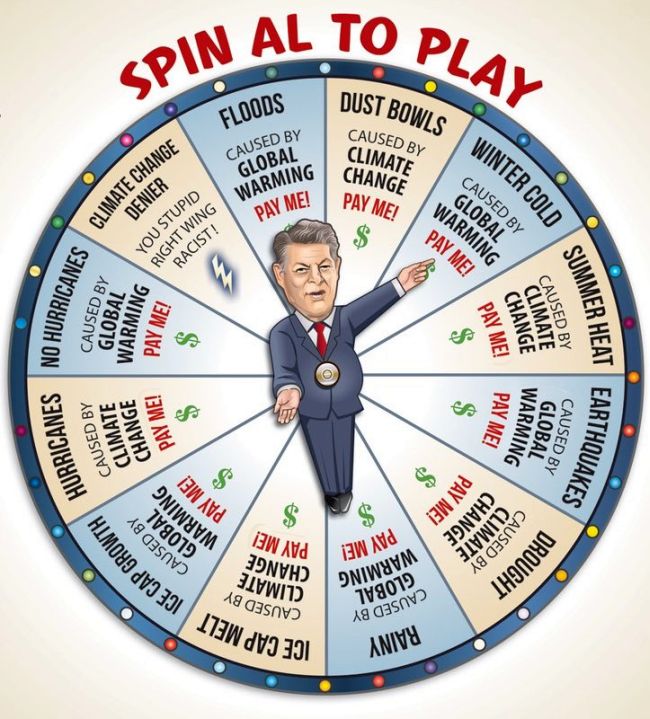
global-warming-al-gore-wheel-650


SEC Warned Off Climate Disclosures

Warning banner

David Burton writes to the Securities Exchange Commission explaining the hazards they will be taking on needlessly should they continue desiring to impose Climate Change Disclosures on publicly traded enterprises.  His document was sent to the SEC Chairman entitled Re: Comments on Climate Disclosure.  Excerpts in italics with my bolds.

Summary of Key Points

1. Climate Change Disclosure Would Impede the Commission’s Important Mission.

The important mission of the U.S. Securities and Exchange Commission is to protect investors, maintain fair, orderly, and efficient markets, and facilitate capital formation. Mandatory climate change disclosure would impede rather than further that mission. It would affirmatively harm investors, impede capital formation and do nothing to improve the efficiency of capital markets.

2. Immaterial Climate Change “Disclosure” Would Obfuscate Rather than Inform.

The concept of materiality has been described as the cornerstone of the disclosure system established by the federal securities laws. Disclosure of material climate-related information is already required under ordinary securities law principles and Regulation SK. Mandatory “disclosure” of immaterial, highly uncertain, highly disputable information would obfuscate rather than inform. It will harm rather than hurt investors.

3. Climate Models and Climate Science are Highly Uncertain.

There is a massive amount of variance among various climate models and uncertainty regarding the future of the climate.

4. Economic Modeling of Climate Change Effects is Even More Uncertain.

There is an even higher degree of variance and uncertainty associated with attempts to model or project the economic impact of highly divergent and uncertain climate models. Any estimate of the economic impact of climate change would have to rely on highly uncertain and divergent climate model results discussed below. In addition to this high degree of uncertainty would be added an entirely new family of economic ambiguity and uncertainty. Any economic estimate of the impact of climate change would also have to choose a discount rate to arrive at the present discounted value of future costs and benefits of climate change and to estimate the future costs and benefits of various regulatory or private responses. The choice of discount rate is controversial and important. Estimates would need to be made of the cost of various aspects of climate change (sea level rises, the impact on agriculture, etc.). Estimates would need to be made of the cost of various remediation techniques. Guesses would need to be made about the rate of technological change. Guesses would need to be made about the regulatory, tax and other responses of a myriad of governments. Estimates would need to be made using conventional economic techniques regarding the economic impact of those changes which, in turn, would reflect a wide variety of techniques and in many cases a thin or non-existent empirical literature. Guesses would need to be made of market responses to all of these changes since market participants will not stand idly by and do nothing as markets and the regulatory environment change. Then, after making decisions regarding all of these extraordinarily complex, ambiguous and uncertain issues, issuers would then need to assess the likely impact of climate change on their specific business years into the future – a business that may by then bear little resemblance to the issuers’ existing business.

Then, the Commission would need to assess the veracity of the issuers’ “disclosure” based on this speculative house of cards. The idea that all of this can be done in a way that will meaningfully improve investors’ decision making is not credible.

5. The Commission Does Not Possess the Expertise to Competently Assess Climate Models or the Economic Impact of Climate Change.

The Commission has neither the expertise to assess climate models nor the expertise to assess economic models purporting to project the economic impact of divergent and uncertain climate projections.

6. The Commission Has Neither the Expertise nor the Administrative Ability to Assess the Veracity of Issuer Climate Change Disclosures.

The Commission does not have the expertise or administrative ability to assess the veracity, or lack thereof, of issuer “disclosures”  based on firm-specific speculation regarding the impact of climate change which would be based on firm-specific choices regarding highly divergent and uncertain economic models projecting the economic impact of climate changes based on firm-specific choices regarding highly divergent and uncertain climate models.

7. Commission Resources Are Better Spent Furthering Its Mission.

Imposing these requirements and developing the expertise to police such climate disclosure by thousands of issuers will involve the expenditure of very substantial resources. These resources would be much better spent furthering the Commission’s important mission.

8. The Costs Imposed on Issuers Would be Large.

Requiring all public companies to develop climate modeling expertise, the ability to make macroeconomic projections based on these models and then make firm-specific economic assessments based on these climate and economic models will be expensive, imposing costs that will amount to billions of dollars on issuers. These expenses would harm investors by reducing shareholder returns.

9.Climate Change Disclosure Requirements Would Further Reduce the Attractiveness of Becoming a Public Company,
Harming Ordinary Investors and Entrepreneurial Capital Formation.

Such requirements would further reduce the attractiveness of being a registered, public company. They would exacerbate the decline in the number of public companies and the trend of companies going public later in their life cycle. This, in turn, would deny to ordinary (unaccredited) investors the opportunity to invest in dynamic, high-growth, profitable companies until most of the money has already been made by affluent accredited investors. It would further impede entrepreneurial access to public capital markets.

10. Climate Change Disclosure Requirements Would Create a New Compliance Eco-System and a New Lobby to Retain the Requirements.

The imposition of such requirements would result in the creation of a new compliance eco-system and pro-complexity lobby composed of the economists, accountants, attorneys and compliance officers that live off of the revised Regulation S-K.

11. Climate Change Disclosure Requirements Would Result in Much Litigation.

The imposition of such requirements would result in much higher litigation risk and expense as private lawsuits are filed challenging the veracity of climate disclosures. These lawsuits are virtually assured since virtually no climate models have accurately predicated future climate and the economic and financial projections based on these climate models are even more uncertain. Litigation outcomes would be as uncertain as the underlying climate science, economics and the associated financial projections. This would harm investors and entrepreneurial capital formation.

12. Material Actions by Management in Furtherance of Social and Political Objectives that Reduce Returns must be Disclosed.

Many environmentally constructive corporate actions will occur in the absence of any government mandate or required disclosure. For example, energy conservation measures may reduce costs as well as emissions. No new laws or regulations are necessary to induce firms to take these actions. Assuming they are not utterly pointless, climate change disclosure laws presumably would be designed to induce management to take action that they would not otherwise take. To the extent management takes material actions in furtherance of social and political objectives (including ESG objectives) that reduce shareholder returns, whether induced by climate change disclosure requirements or taken for other reasons, they need to disclose that information. The Commission should ensure that they do so. Absent some drastic change in the underlying law by Congress, this principle would apply to any reduction in returns whether induced by ESG disclosures (climate change related or otherwise) or taken by management on its own initiative to achieve social and political objectives.

13. Fund Managers Attempts to Profit from SRI at the Expense of Investors Should be Policed.

Fund management firms are generally compensated from either sales commissions (often called loads) or investment management fees that are typically based on assets under management. Their compensation is not closely tied to performance. Thus, these firms will often see a financial advantage in selling “socially responsible” products that perform no better and often worse than conventional investments. It is doubtful that this is consistent with Regulation BI. Their newfound interest in socially responsible investing should be taken with the proverbial grain of salt. The Commission should monitor their efforts to profit from SRI at the expense of investors.

14. Duties of Fund Managers Should be Clarified.

The extreme concentration in the proxy advisory and fund management business is cause for concern. As few as 20 firms may exercise effective control over most public companies. The Commission should make it clear that investment advisers managing investment funds, including retirement funds or accounts, have a duty to manage those funds and to vote the shares held by the funds in the financial, economic or pecuniary interest of the millions of small investors that invest in, or are beneficiaries of, those funds and that the funds may not be managed to further the managers’ preferred political or social objectives.

15. Securities Laws are a Poor Mechanism to Address Externalities.

Externalities, such as pollution, should be addressed by either enhancing property rights or, in the case of unowned resources such as the air and waterways, by a regulatory response that carefully assesses the costs and benefits of the regulatory response. Securities disclosure is the wrong place to try to address externalities. Policing externalities is far outside of the scope of Commission’s mission and the purpose of the securities laws.

16. Climate Change Disclosure Requirements Would Have No Meaningful Impact on the Climate.

When all is said and done, climate change disclosure requirements will have somewhere between a trivial impact and no impact on climate change.

17. Efforts to Redefine Materiality or the Broader Purpose of Business should be Opposed.

Simply because some politically motivated investors seek to impose a disclosure requirement on issuers does not make such a requirement material. The effort to redefine materiality in the securities laws is part of an increasingly strident effort to redefine the purpose of businesses more generally to achieve various social or political objectives unrelated to earning a return, satisfying customers, or treating workers or suppliers fairly. This is being done under the banner of social justice; corporate social responsibility (CSR); stakeholder theory; environmental, social and governance (ESG) criteria; socially responsible investing (SRI); sustainability; diversity; business ethics; common-good capitalism; or corporate actual responsibility. The social costs of ESG and broader efforts to repurpose business firms will be considerable. Wages will decline or grow more slowly, firms will be less productive and less internationally competitive, investor returns will decline, innovation will slow, goods and services quality will decline and their prices will increase.

18.  ESG Requirements will Make Management Even Less Accountable.

In large, modern corporations there is a separation of ownership and control. There is a major agent/principal problem because management and the board of directors often, to varying degrees, pursue their own interest rather than the interests of shareholders. Profitability is, however, a fairly clear measure of the success or failure of management and the board. If a firm become unprofitable or lags considerably in profitability, the board may well replace management, shareholders may replace the board or another firm may attempt a takeover. Systematic implementation of regulatory ESG or CSR requirements will make management dramatically less accountable since such requirements will come at the expense of profitability and the metrics relating to success or failure of achieving ESG or CSR requirements will be largely unquantifiable. For that matter, ESG or CSR requirements themselves tend to be amorphous and ever changing.

esg-smoke-and-mirrors