Early this morning, two Tacoma Power substation facilities were attacked in east Pierce county. Currently, 7,300 customers are without power as a result. Law enforcement has been notified. We are working as quickly and safely as possible to restore power. https://t.co/DsH127j1sYpic.twitter.com/yJGXnSDkpo
Burglaries to 3 power substations cause Power Outages in Puyallup and Graham this morning. All 3 substations were vandalized by the burglars. No suspects in custody at this time.
Deputies arrived on scene and saw there was forced entry into the fenced area. Nothing had been taken from the substation, but the suspect vandalized the equipment causing a power outage in the area.
Deputies were notified of a second burglary to the TPU substation at 8820 224th St E which also had forced entry with damage to the equipment. Nothing was taken from this site either.
At 11:25 we were notified by Puget Sound Energy that they too had a power outage this morning at 02:39 am. Deputies are currently on scene at this facility where the fenced area was broken into and the equipment vandalized.
At this time deputies are conducting the initial investigation. We do not have any suspects in custody. It is unknown if there are any motives or if this was a coordinated attack on the power systems.
In total, three sites were vandalized, two TPU and one PSE, with more than 14K customers effected
One tweet said: “Not yet clear who did this, but there have been a lot of attacks on the power grid lately and it is something domestic terrorists, especially white supremacists eco-terrorists, are obsessed with (and several have been convicted in connection with recent attacks/plots).”
I applied the correction based on the consensus of commenters who suspect eco-terrorists of a new tactic replacing their previous valve-turning exploits.
The battle by alarmists for hearts and minds is extending to many fronts, including recruiting family doctors, and in the case of this post, media weather reporters. Surveys have shown the meteorologists are not more convinced of global warming/climate change than is the American public (a slight majority). But efforts have been underway to convert them and use their telecasts and columns to promote climatism.
You’ve probably seen his handiwork on local TV and didn’t even know it.
About 13 years ago, Ed Maibach identified a TV meteorologist in Columbia, South Carolina, who was willing to use his airtime not just to provide tomorrow’s forecast but to show viewers how climate change was impacting their local community. Over the next decade, Maibach would expand this experiment into what you might call a weather underground—a coast-to-coast network of TV weathercasters who believe that educating their audiences about global warming is as crucial as telling them when to bring an umbrella. The initiative, known asClimate Matters, has forced Maibach to confront a series of entrenched problems inside the broadcast-meteorology community, including alarming levels of climate denial and skepticism, fears about alienating audiences, and the occasional harassment of participating weathercasters.
Yet by the end of 2021, the Climate Matters network of meteorologists had penetrated into nearly every media market in the country, and Maibach had pioneered a promising new approach to a complex crisis.
Truth is, if you’ve recently watched the weather report on the local news in the Washington area, there’s a decent chance you’ve seen Maibach’s handiwork—the Climate Matters network now includes weathercasters at NBC4, WUSA9, WJLA7, and Fox 5. But like local-news consumers across the country, you wouldn’t have known that behind that telegenic meteorologist are a social scientist in his sixties and a team of academic researchers, data crunchers, and ex-weathercasters. “To a lot of our viewers, it’s lost on them how much work Climate [Matters] really is doing,” says Kaitlyn McGrath, a meteorologist at WUSA9. “But it is so far from lost on us.”
Amber Sullins gets a minute or two to tell up to two million people about some extremely complicated science, using the tools of her trade: a pleasant voice, a green screen, and small icons denoting sun, clouds, rain, and wind. She is the chief meteorologist at ABC15 News in Phoenix, so her forecasts mostly call for sunshine. Within this brief window, however, Sullins sometimes manages to go beyond the next five days. Far beyond.
Amber Sullins, weather reporter at ABC15 News in Phoenix.
“We know climate change could affect everything about the way we live in the future, from agriculture and tourism to productivity and local business,” she once noted. “But at what cost?”
It was a 35-second segment in a nightly newscast, a mundane moment preceding reports about three fallen firefighters in Washington state and a dangerous development for air travelers. But that climate-focused scene, and hundreds of others like it playing out at local news stations across the country, marks a major shift in the way Americans hear about climate change. The safe and familiar on-air meteorologist, with little notice by viewers, has become a public diplomat for global warming.
There are about 500 broadcasters like Sullins and Morales, who each receive regular data dumps and ready-to-use graphics from Climate Matters, an organization whose mission is to turn TV meteorologists into local climate educators. The program was founded in 2010 by Climate Central, a research-and-journalism nonprofit, with help from George Mason University, the American Meteorological Society, and others. Newscasters who participate are sent possible topics for climate-related segments every week, with TV-ready data and graphics pegged to large-scale meteorological events, such as unusually high heat or precipitation, local trends, or seasonal themes.
Two-thirds of 18- to 64-year-olds in the U.S. watch a news broadcast, either on TV or a digital device, at least once a week, according to 2015 research by the market research company SmithGeiger LLC. Nearly 40 percent of people within this wide age group watch broadcast news on daily basis, and the reliable presence of an on-air meteorologist is a huge part of the draw.
“Local TV news wouldn’t exist any more if it weren’t for the weathercasts,” says Ed Maibach, director of George Mason University’s Center for Climate Change Communication.
Part of meteorologists’ reluctance to talk about the climate stems from the treacherous tools of their trade. Meteorologists learn very quickly that weather models are messy. Some no doubt sour on finicky climate models because of this experience. If short-term weather models make mistakes, it may seem reasonable to assume that a model projecting into the next century is ridiculous.
“Meteorologists are used to looking at models and being burned,” says Paul Douglas, a former TV weatherman-turned-serial entrepreneur, who recently published a book on climate change and faith.
Sullins, 34, knows there’s tension in telling her viewers about conditions in the 22nd century when she is reluctant to commit to a two-week forecast. “I can’t tell you what the high temperature is going to be on July 4 of this year, today,” Sullins says. “I can’t possibly tell you that. But I can tell you, based on climate, that in July, here in Phoenix, it’s going to be over 100 degrees. That’s easy.”
Her point is that weather and climate are “two entirely different beasts.” It’s like the difference between someone’s mood and disposition, Sullins says. She wants viewers of the nightly news to spend more time thinking about the planet’s disposition.
Summary
The PR campaign continues and intensifies with simplistic soundbites to persuade people to fear the future, in order to advance the anti-fossil fuel agenda. It is a Chinese water torture program well-funded and essential to the climate crisis industry.
But note the logical fallacy in Sullins’ statement above. She says: “I can tell you, based on climate, that in July, here in Phoenix, it’s going to be over 100 degrees.” That’s not climate change, that’s climate stability, something we depend on despite the fear-mongering.
How will viewers respond to this? Will ratings improve by watching weather people jumping the shark? (It didn’t work for “Happy Days” TV show). Or will people resent the attempted brainwashing and switch channels?
Footnote:
The hottest temperatures ever reported in Phoenix came in January 2015, when Fox 10 weatherman Cory McCloskey faced a malfunctioning temperature map on live television. “Wow, 750 degrees in Gila Bend right now,” he said, without breaking a sweat. “And 1,270 in Ahwatukee. Now, I’m not authorized to evacuate, but this temperature seems pretty high.” More than 6 million people have watched the blooper on YouTube.
As the eco-zealot group Just Stop Oil continue to break the law and cause mayhem, it is perhaps time to investigate who is pulling the strings of this and other fake grassroots movements. Even a cursory glance will make it clear that the people behind them are not everyday members of the public but a group of highly influential American billionaires.
The Climate Emergency Fund
According to the Just Stop Oil website, their main source of backing is the Climate Emergency Fund. The three founding members of this group, who also fund Extinction Rebellion, are Aileen Getty from the Getty oil family, Rory Kennedy, daughter of Senator Robert Kennedy, and philanthropist Trevor Neilson. All three own houses on Malibu beach, which is odd as disciples of the climate cult claim that sea levels are rising dramatically, and you would therefore assume that seafront real estate would be a bad investment.
Most of the focus has been on Getty but it is Neilson who has the most interesting background. After university he worked as an intern in the White House when Bill Clinton was president. Later he worked for the then newly formed Bill and Melinda Gates Foundation as Director of Communications, and also acted as the Gates’ personal spokesman.
In 2002 Neilson was a co-founder of DATA (Debt, AIDs, Trade, Africa) with Bill Gates, Bono and George Soros. DATA was allegedly created to help ease poverty in Africa, seek debt relief for African countries and help fight AIDs. They also claimed to want to end hunger in Africa, an idea that is interesting since climate activists want to reduce carbon dioxide which is essential to all plant life; any reduction would clearly reduce the amount of food crops, causing more hunger rather than alleviating it. Neilson was also a member of the Clinton Global Initiative, the Council of Foreign Relations, and was one of the Young Global Leaders for the World Economic Forum. In other words, he is a friend to all the usual globalist suspects who are pushing the green agenda for their own ends.
If we move on to current advisory board members of the Climate Emergency Fund, we see more of the usual themes and ideologies that have nothing to do with the climate but are warmly embraced by the climate crisis zealots. Stephen Kretzmann founded Oil Change, an organisation pressing for the end of oil production. He is a supporter of the Marxist Black Lives Matter movement. On the Oil Change website he writes an article that promotes BLM and trots out extremist left-wing tropes.
Another on the advisory board of the Climate Emergency Fund is Bich Ngoc Cao. She is also on the board of left-wing news site Mother Jones. The site denigrated Moms for Liberty, a group who have fought against their children being indoctrinated by gender and LGBTQ ideology in schools, calling them ‘Moms against libraries’ and ‘book-banning bathroom-police’, because they want to remove inappropriate sexual material from school libraries and keep single-sex bathroom spaces. Bich Ngoc Cao is also on the Board of Library Commissioners for the city of Los Angeles.
Bill McKibben is another CEF advisory board member who compares climate issues to racism, and uses the death of George Floyd to make his point.
The executive director of the Climate Emergency Fund (CEF) is Margaret Klein Salamon, an American in her mid-thirties. She is a clinical psychologist and therefore has been involved with vulnerable people suffering high levels of stress and anxiety. In her role in climate activism, she appears to be using her experience to frighten vulnerable people. She is the founder of Climate Awakening, which, according to her page on the CEF site, is ‘a project to unleash the power of climate emotions through scalable small group conversations’.
However, if you go on to the Climate Awakening website, on the first page it says, ‘Share your climate terror, grief, and rage with people who understand. Join a Climate Emotions Conversation – a small group sharing & listening session about the climate emergency.’ Below that there is a screen with images of three young people and the words: ‘What are you FEELING about climate emergency? Make sure to name the emotions (fear, grief, anger, despair, isolation)’.
Salamon also had an article in Psychology Today where, as ‘The Climate Psychologist’, she gave ‘relationship advice for the Climate Emergency’. A reader asked: “How can I tell my partner I am afraid to have children? …Why would I want to bring a child into this world, right now? Imagining the future they would grow up in fills me with terror.” Part of Salamon’s reply reads as follows:
“Let me be clear; despite widespread denial of the Climate Emergency and how it will affect our society, your worries are in fact based in the reality of what the global scientific community is telling us, and you have every right to feel that way.”
So again, a woman is saying she is terrified, and Salamon, rather than relieving her terror, says she is right to feel that way. Salamon then tries to get her involved in climate action groups instead of talking to her partner.
This is typical of the behaviour of a cult. Feed on the person’s fear, tell them the fear is real and not to listen to what their family say and ultimately try to recruit them into the cult as well. One of the sites she advises people who are terrified of climate change to go to is the Good Grief Network. They introduce themselves as a group who only want to care for you amid the chaos all around. They will then get you in a group of like-minded people to expose you to groupthink. When you have all bonded, they will strip you of all your preconceived ideas and mould you into their reality. They will then fill the void left by destroying any prior belief system you had, with their own worldview.
In their ten-step programme to ‘Personal Resilience & Empowerment in a Chaotic Climate’, the first step is, yet again, to tell you to be very afraid and ‘accept the severity of the predicament’. Step 8 is the most disturbing: ‘Grieve the harm I have caused.’ Telling you that you are to blame for some of the ‘harm’ increases your fear by making you feel guilty. If you feel guilt then you will desperately want to make up for your actions and will do whatever you are told to do to achieve that, namely to go on and traumatise other people by telling them the world is about to end.
The Psychologists
If you think Margaret Klein Salamon is an oddity amongst psychologists, think again. Many are now boarding the climate crisis gravy train. Dr Gareth Morgan, a clinical psychologist from Leicester University, is an Extinction Rebellion supporter because “as many professionals have observed, climate activism should be seen as central to our professional identities if we truly take on board the science that indicates climate breakdown presents the biggest threat to human health worldwide.’ Once again extreme left-wing bias appears to cloud his judgement. He opines, ‘while the same colonial and neoliberal ideologies that support racism and inequity also prop up the unfettered capitalism that is threatening all life on Earth.’
The Climate Psychology Alliance wishes to use their expertise in the field of psychology to nudge people into believing in their worldview of impending climate-induced doom. The group is overtly stating that ‘facts’ aren’t really persuading people that the climate crisis is real and that they need use psychology to pressure us all to become true believers. Most telling though, is when they say it can’t be ‘positivist’ psychology, based on empirical evidence, but that a deeper type of psychology is to be used. In other words, ignore the facts of the situation and use mind manipulation techniques and fear to convert the non-believers. They even say that climate anxiety is a good thing.
It is not just individuals these groups want to target, but corporations as well. An organisation called Climate Psychologists offers consultancy courses to companies. They aren’t just offering support to employees traumatised by the ‘climate crisis’, but are using behavioural change programmes and ‘ethical nudging.‘ They are telling employers how to subtly manipulate the minds of their employees to believe in the climate emergency. This is reminiscent of the government’s SPI-B Behavioural Insights team, which used psychology to terrify people into accepting Covid lockdowns.
Indeed, there is direct evidence that the government is using the tactics they developed during Covid to coerce us all into believing the climate crisis narrative. On October 12 this year, the House of LordsEnvironment and Climate Change Committee published a report entitled In our Hands: Behaviour change for climate and environmental goals. It is a sinister document, in which the government openly states that all aspects of our life need to be managed to lessen the impact of climate change, and that mind control techniques, very similar to the ones used to force the public into acquiescing to Covid lockdowns, need to be used against the population. Sir Patrick Vallance, one of the architects of the disastrous Covid policy, was a witness. He told the committee: ‘The reality is that behaviour change is a part of reaching Net Zero. It is unarguable.’
So every government department will be required to use psychology as a weapon against the public, to ensure we behave in line with what the climate alarmists demand. It is clear from this that not only are all government departments to be targeted, but the private business sector as well, even if it is not in their financial interest to do so.
This sounds suspiciously like Klaus Schwab’s infamous statement that Covid offered a window of opportunity to bring about the Great Reset. To emphasise just how much they want to control the minutiae of daily life, one of the key points the committee make is:
Priority behaviour change policies are needed in the areas of travel, heating, diet and consumption to enable the public to adopt and use green technologies and products and reduce carbon-intensive consumption.
Therefore, you will be told what to eat, where you are allowed to go and how you are allowed to get there. Another key point clearly states that they will tax and legislate you into compliance:
Information is not enough to change behaviour; the Government needs to play a stronger role in shaping the environment in which the public acts, through appropriately sequenced measures including regulation, taxation and development of infrastructure.
But it is not just businesses they are trying to use to make you change your behaviour. They also want to use charities and religious institutions to control the minds of the masses. When referring to the various levers of change the government could use, they identify ‘regulatory and financial (dis)incentives which alter the availability and affordability of options.’ This suggests that the government would be prepared deliberately to create scarcity and make certain things unaffordable. Does that sound familiar with relation to the current energy crisis?
They appear to have no sense of irony when speaking of clear messaging and open information during the pandemic, and seem to think that propaganda, lies, data manipulation and censorship is actually truth and transparency. It is evident that the climate alarmists, with the backing of billionaires, psychologists and the government, are waging a war on the minds of the people to bring about the Great Reset dystopia.
They have the power and the money on their side, but clearly, having to resort to mind control techniques, they don’t have the truth. As George Orwell is reputed to have said: ‘In the time of universal deceit, telling the truth is a revolutionary act.’ It’s time we all became revolutionaries, because the truth is that it is not the climate crisis that is the biggest threat to our wellbeing, but the climate crisis alarmists who want to remove the last vestiges of our freedom and plunge us into a never-ending Dark Age.
The demands for climate reparations from wealthy countries are so absurd, so unscientific, and so offensive to natural justice that it is difficult to know where the criticism should begin.
The argument is that, since countries that industrialized earlier produced a lot of carbon a hundred years ago, they now owe a debt to poorer states. Naturally, this argument appeals to assorted Marxists, anti-colonialists, and shakedown artists, and COP27 has been dominated by insolent demands for well-run states to pony up.
Some, including Austria, Belgium, and Denmark, have capitulated. No doubt others will follow. These days, once something is framed as poor-versus-rich or darker-skinned-versus-lighter-skinned or ex-colony-versus-ex-colonizer, the pressure becomes irresistible. Nevertheless, it is worth running through the absurdities in play.
First, the claims are rooted in indignation rather than science. For example, Pakistan, which leads the G-77 group of poorer states and is leading the campaign, claims that its floods are a product of climate change. But might Pakistan look a little closer to home? Although Europe and North America have seen significant reforestation over the past half-century, Pakistan has gone in the other direction. A third of its landmass was forest when it became independent in 1947. Now, it is one-twentieth, and the rains run straight off the mountains into silted-up reservoirs that then overflow, whence the floods.
But never mind all that — blame the colonialists, eh?
Second, there is the utter refusal to acknowledge what wealthier countries are already doing. I don’t just mean in terms of making direct monetary transfers — though, sticking with Pakistan for a moment, Britain has been borrowing around $400 million a year to give to that country, which pleads poverty while funding a nuclear weapons program. No, I mean in terms of impoverishing themselves through drastic action on carbon emissions. Britain has cut its carbon dioxide production by nearly half since 1990, largely by closing down its coal mines. Pakistan has more than 100 coal mines in operation.
But, again, blame the colonialists, eh?
Third, there is the ingratitude. One of the things I used to resent about the European Parliament was the entitled and hectoring way in which representatives of poorer countries (they were usually very rich people) would call for bigger transfers. “This is unacceptable,” they would say of whatever offer the Brits, the Dutch, or the Germans put on the table. Fine, I’d think, don’t accept it, then. Yet the numbers only ever got bigger. Look, I’m sorry to be blunt about this, but a 2-degree rise in temperature is far less menacing for Britain or Canada than it is for most countries.
The least-threatened countries are doing the heaviest lifting by far.
But don’t expect any gratitude.
Fourth, there is the implication that industrialization, the miracle that released our species from 10,000 years of backbreaking labor, is regrettable. In truth, as well as giving us longer, healthier, and freer lives, the wealth released over the past 200 years of specialization and exchange is cleaning up the environment. The air and water are purer in London than in Lahore because GDP is higher. For the same reason, natural disasters have become far less lethal. The 1950 floods in Pakistan killed many more people than this year’s, because they hit a poorer country.
Fifth, there is the related assumption that rich countries owe their wealth to exploitation, that one nation’s gain must mean another’s loss. This is palpable nonsense. The enrichment of a country, other things being equal, is good news for all of its trading partners. And countries get wealthy not by conquering others (a process that is always expensive) but by pursuing the right policies, such as secure property rights, low taxes, independent courts, light regulations, and free trade.
If you tax successful countries to pay unsuccessful ones, you will end up with
fewer of the former and more of the latter.
Sixth, and most preposterously, there is the ugly collectivism that lurks behind every shakedown attempt, from the return of artworks to slavery reparations. Our criminal justice system, like every Abrahamic religion, is based on the idea that we are individually responsible for our actions. But when it comes to these scams, we are all suddenly defined by ancestry or skin color.
It is precisely because Western nations broke out of that dispensation that they became rich in the first place. And it was by copying their individualist outlook that other countries were able to catch them up. Far from complaining about industrialization, the rest of the world should thank us for having developed capitalism, and they should seek to emulate it.
Postscript: Absurdity Seven
Climate reparations are a legal quagmire. From Hulme et al. (2011):
At the heart of the loss and damage (L&D) agenda is the idea of attribution—that specific losses and damages in developing countries can be “associated with the impacts of climate change,” where “climate change” means human-caused alterations to climate. It is therefore not just any L&D that qualify for financial assistance under the Convention; it is L&D attributable to or “associated with” a very specific causal pathway.
Developing countries face some serious difficulties—at best, ambiguities—
with this approach to directing climate adaptation finance.
Investment in climate adaptation, they claim, is most needed “… where vulnerability to meteorological hazard is high, not where meteorological hazards are most attributable to human influence”. Extreme weather attribution says nothing about how damages are attributable to meteorological hazard as opposed to exposure to risk; it says nothing about the complex political, social and economic structures which mediate physical hazards.
And separating weather into two categories — ‘human-caused’ weather and ‘tough-luck’ weather – raises practical and ethical concerns about any subsequent investment allocation guidelines which excluded the victims of ‘tough-luck weather’ from benefiting from adaptation funds.
Contrary to the claims of some weather attribution scientists, the loss and damage agenda of the UNFCCC, as it is currently emerging, makes no distinction between ‘human-caused’ and ‘tough-luck’ weather. “Loss and damage impacts fall along a continuum, ranging from ‘events’ associated with variability around current climatic norms (e.g., weather-related natural hazards) to [slow-onset] ‘processes’ associated with future anticipated changes in climatic norms” (Warner et al., 2012:21). Although definitions and protocols have not yet been formally ratified, it seems unlikely that there will be a role for the sort of forensic science being offered by extreme weather attribution science.
Excerpts below with my bolds: The short-term consequences of Arctic (and Antarctic) warming may already be felt in other latitudes. The long-term threat to coastlines is becoming even more dire.
“When you’re taking out 30, 40, almost 50 percent of the ice cover, that’s a big change in the environment,” Meier said. “Whether we’re seeing it yet, there’s still some debate, but whether there will be an effect as we continue to lose ice, I think that’s pretty obvious.”
“There’s no evidence that anything is recovering here,” said Mark Serreze, the director of the NSIDC. “What we’ve seen historically is a downward trend in ice extent in all months. Superimposed on that are the ups and downs of natural variability. We’re going to continue to head downward.“
“We are looking at an ice-free Arctic Ocean sometime in the 2040s,” said Serreze. “There’s no evidence that we’ve seen anything like this before.”
Ted Scambos, lead scientist with the National Snow and Ice Data Center, said that while the current pace of melting is not alarming, a series of papers “has led to a realization that the West Antarctic Ice Sheet may already be in an irreversible retreat.“
Greenland is melting, too—for now, it’s the biggest threat. “Greenland has become Loserville,” said Jason Box, who tracks ice for the Geological Survey of Denmark and Greenland.
“New observations from many different sources confirm that ice-sheet loss is accelerating,” the United States Global Change Research Program said in its comprehensive special report on climate science. “Up to 8.5 feet of global sea level rise is possible by 2100” in a worst-case emissions scenario. That’s almost 2 feet more than scientists expected just a few years ago.
“So we’re guaranteed significant sea level rise no matter what we do, even under the optimistic Paris scenario,” Box said. “We had better prepare.”
These warnings of wolves are starting to sound the same: “It never happened before, is not happening now, but it will surely destroy us in the future if we don’t do something.”
Meanwhile the facts on the ground are not alarming: For example September minimums:
These outrageous appeals by alarmists in the face of contrary facts remind me of the story defining the term “chutzpuh.” A young man is convicted of killing his parents, and later appears before the judge for sentencing. Asked to give any last words, he replies: “Go easy on me, your Honor, I’m an orphan.”
Fortunately, there is help for climate alarmists. They can join or start a chapter of Alarmists Anonymous. By following the Twelve Step Program, it is possible to recover and unite in service to the real world and humanity.
Step One: Fully concede (admit) to our innermost selves that we were addicted to climate fear mongering.
Step Two: Come to believe that a Power greater than ourselves causes weather and climate, restoring us to sanity.
Step Three: Make a decision to study and understand how the natural world works.
Step Four: Make a searching and fearless moral inventory of ourselves, our need to frighten others and how we have personally benefited by expressing alarms about the climate.
Step Five: Admit to God, to ourselves, and to another human being the exact nature of our exaggerations and false claims.
Step Six: Become ready to set aside these notions and actions we now recognize as objectionable and groundless.
Step Seven: Seek help to remove every single defect of character that produced fear in us and led us to make others afraid.
Step Eight: Make a list of all persons we have harmed and called “deniers”, and become willing to make amends to them all.
Step Nine: Apologize to people we have frightened or denigrated and explain the errors of our ways.
Step Ten: Continue to take personal inventory and when new illusions creep into our thinking, promptly renounce them.
Step Eleven: Dedicate ourselves to gain knowledge of natural climate factors and to deepen our understanding of nature’s powers and ways of working.
Step Twelve: Having awakened to our delusion of climate alarm, we try to carry this message to other addicts, and to practice these principles in all our affairs.
Summary:
With a New Year a month away, let us hope that many climate alarmists take the opportunity to turn the page by resolving a return to sanity. It is not too late to get right with reality before the cooling comes in earnest.
Forgive the phrase, but it is appropriate — Vladimir Putin has the European Union — Germany in particular — over a barrel. . . Over several barrels come to think of it.
The virtue states went green, but contented themselves with getting the slack, the dirty oil and gas stuff they so deplored, from reliable Russia.
And when a certain American President — the sagacious readers of the Post will divine whom I mean, and it is merely to forestall trauma in readers of other journals that I withhold his name (hint: there was a hotel in Toronto that featured his name as a brand and rhymed with “plump”). When that President warned German authorities that it was a risk and a very bad move to set up a dependency on Vladimir Putin for an essential resource, in public — the scene is available on YouTube — half of them smirked and the other half laughed.
There is a small moral here. Advice worth following does not need to come from lips you approve of. The quality and worth of advice may, on occasion, be independent of the character (or what you presume to be the character) of the person offering it.
They are not smirking now. Germany, in the warm haze and fuzzy thinking of “progressive” thought, broke the bank on their master green plan, the great Energiewende, to “get off” planet-destroying fuels (and nuclear)which proved to be a massive multi-billion dollar mess and a failure.
This even before Mr. Putin unleashed his legions on Ukraine. Putin’s current leverage was founded on their previous policies.
Contrary to the sooth-sayers of the IPCC and the Eco-Nostradami, great economies can’t be flipped on a Davos dream, and the German winter of 2023 will be unmoved by replays of An Inconvenient Truth. Or shoreline rants from a most intemperate David Suzuki. Anger does not become an elder about to board a sea plane.
As a footnote to the Energiewende opera, be it noted at the end of September the German government announced is spending US$195 billion, to cap natural gas prices for households and businesses. That’s a bigger price tag than the US$172 billion the UK government was expected to spend to finance its own price cap. Germany went green with a vengeance and now has to mail out checks to its citizens to compensate for the folly.
And before turning to the distressed UK, one line from Forbes, quoting Foreign Policy, has quite a punch: “Electricity prices, in fact, have tended to be highest in places with the greatest share of renewable energy.” Dear Lord, who could have guessed? It’s a good thing they didn’t impose … an escalating carbon tax.
Great Britain has dropped its second prime minister in mere weeks. As in Germany, it’s all about energy, all about the mindless embrace over the last years of green ideologies, until fear of a cold winter causes an impressively swift rearrangement of concerns about energy.
It has just reversed its stand on fracking. During its green-virtue phase, fracking — the most efficient technological advance in the search for the most basic energy resource — was termed a pure evil.
It was banned by law. It was a blasphemy against Mother Earth and Bill Nye. Now that winter closes in, and energy prices that were once mere Honda Civic (used) are now going all Rolls Royce (customized), fracking is a good thing, a necessary thing. It has received an official vote of approval from the House of Commons, UK.
On our side of the world under the increasingly — let’s choose a kind word — drifting leadership of Joe Biden, the Strategic Petroleum Reserve — intended as a backup for the most drastic emergencies, has been raided once again. OPEC turned him down on his request to increase oil flow. Let us recall that the Biden presidency began with shutting down a great Canadian source of oil, the Keystone XL.
It is a wonderful consideration that when Reality (capital R) speaks, all poses and postures, all voice-hushed bleating of virtue-speak platitudes take a stay. I wonder if our deputy-prime minister is still pulsating the message that all this reminds us of “how important climate action is.” And how carbon taxes are so very necessary in the present moment.
How did we get here?
It is the speeches and the campaigns against oil and gas, the sermons from the jet-set di Caprio’s, the dim-witted tirades of such as Neil Young against Fort McMurray, much and more than Putin, have brought this crisis on. People who have never seen a COP meeting, never could have dreamt of going to Davos, never mind been able to afford such a folly, that will bear, and perhaps not be able to bear, the cost of the winter to come.
Thank heaven, reality and its sister common sense is having a minute
at the microphone of the world’s attention.
As an ending point, would it not have been a great thing, if a moderate country, of magnificent and vast geography, had taken advantage of its so-plentiful natural resources, encouraged and supported its energy industry, built pipelines, guaranteed supply, could now — at this crisis moment — offer so many of its allies, real support and immediate remedy?
We would be in a place to issue this pronouncement: “Canada says, to hell with Putin, we have what you need, and we can send it now.”
But no. Under the current net-zero fascinated government, energy was deemed an enemy, due for shut down as soon as possible, and what we now offer a tormented world is a windmill-driven, not yet started, dubious in the extreme, futuristic hydrogen plant in Stephenville, Newfoundland. If you have tears, weep them now.
The countries whom the gods would destroy they first make green.
Tom Nelson posted this interview with Ross McKitrick on Big problems with paleoclimate data and land temperature records. H/T Climate-Science.press.
Ross McKitrick is a Professor of Economics at the University of Guelph where he specializes in environment, energy and climate policy. He has published widely on the economics of pollution, climate change and public policy. His book Economic Analysis of Environmental Policy was published by the University of Toronto Press in 2010.
His background in applied statistics has also led him to collaborative work across a wide range of topics in the physical sciences including paleoclimate reconstruction, malaria transmission, surface temperature measurement and climate model evaluation.
Professor McKitrick has made many invited academic presentations around the world and has testified before the US Congress and committees of the Canadian House of Commons and Senate.
The discussion is wide-ranging, and I provide below a lightly edited transcript on the main theme, starting around minute 41. Text is in italics with my bolds and added images. TN refers to Tom Nelson’s comments and RM to Ross McKitrick.
Transcript
RM: People need to understand that for the 20th century as a whole there’s temperature data for less than 50 percent of the Earth’s surface. And a lot of stuff is just being filled in with with assumptions or or modeling work, so it’s really the output of models. And so as you go back in time back to the 1920s for instance, here in Southern Ontario we have great temperature records back to the 1920s. Here in Guelph we have temperature data that goes back to the late 1800s.
One of the first assignments I have my students do in my environmental economics courses is just to take a few locations in Ontario that have more than 100 Years of temperature data and plot the records for average daily highs back 100 years or more. That always surprises them because they just don’t see what they’re expecting to see in terms of an upward trend. There’s a visible trend up to the 1930s or so. And then after that it’s kind of up and down flat.
Summertime temperatures especially, have gone down, they’ve gone up,
but haven’t really changed much since the 1930s.
We happen to be in a part of the world where we’ve got those kinds of long temperature records. For the vast majority of the world there’s just no data at all, or there are short temperature records or fragments of temperature records over various intervals. Yet what we see are these temperature graphs going back to the 1860s that they call the observational record. There’s so many problems with those records, and unfortunately a lot of the problems are of the form that introduces an upward bias in the trend. And it’s very difficult to measure it and remove it, though I did some work on that I hope eventually to go and do some more.
TN I wish more people took an interest in that kind of topic. Have you followed the work of Tony Heller when he’s looking back at adjustments to cool the past. It seems pretty interesting.
RM: Yes. I’ve seen many of his videos and now he’s focusing on the U.S record in a lot of his videos. There I think the point that he conveys is how frustrating it is for an observer. Just this notion that you’ve got the raw temperature observations and then the adjustments and they all seem to pivot around 1960.
So that anything prior to 1960, the Adjustment goes down,
and anything after 1960 the Adjustment goes up.
They create this picture that somehow in 1960 everyone in the US knew how to measure temperature perfectly. So that’s the year we’re going to leave as it is, and prior to that everybody made the same mistake. Everybody was always overestimating temperature so we’ve got to adjust those records downward. Then ever since 1960 people haven’t known how to measure temperature so we have to raise those those measurements. The pattern of adjustment is so consistent in so many places in the U.S records that at a certain point it’s just on its face implausible that these adjustments are based on some objective algorithm.
I know the people who make the adjustments will say: Well we’ve got to deal with time of observation bias you know. But if these were the sort of standard measurement errors, you would expect a mix of positive and negative mistakes. Instead, there’s such a pattern to it. The adjustments account for all the warming.
When you look at the post-1960 U.S record the adjustments are as large as the warming itself.
Remember that the warming trend is such an important input into thinking about the policy. We really need to have absolute confidence in these adjustment processes, but the people who make the adjustments do not respond in a constructive and forthright fashion to these kinds of criticisms. In my experience, they instead take such offense that anyone would question what they’re doing. And they respond with abuse and indignation when perfectly reasonable questions are put to them.
That’s another thing that makes it frustrating to an outside observer looking at these these adjusted data sets. So Tony does a very effective job in letting people see: Okay, this is a graph you’re shown. This is what the data looked like when they first collected it, and this is what the observers wrote down. And then this is what it looks like after the adjustment process. Obviously, this whole warming Trend in the U.S record is coming through the adjustments. So we have a right to a very detailed and skeptical review of these adjustments. The the lack of constructive engagement on a question like that ignores that at a certain point, the burden of proof here is on you guys, the record keepers. It’s not on the people who look at the data to go into every station record and prove it’s wrong.
The burden of proof here is on the people making the adjustments. For a long time they would refer back to a paper that was done in the 1980s for the Department of energy by Tom Wigley as the scientific basis of the adjustments. Eventually I got a hold of that document (because it’s hard to find). It turned out it was really just a lot of: Okay we think this record here moved around 1925, they moved the station from here to there, so we’re gonna make a little few changes here and we’ll bump this stretch of the data set up by this amount. And so it wasn’t like a a detailed scientific methodology that you could subject to some testing and validation.
It was really and for the time, it was all anyone really would have expected: Which is go through the data set and discuss the potential flaws and what the ad hock adjustments were. But for a long time that was that was it as far as documenting the adjustments. Now I think they’ve got more information out online to help people understand it. But that’s a long answer to your question. I go back to point out the adjustment really matters for the overall conclusion. And so if we’re going to accept the conclusion, we need to have absolute confidence in these adjustments.
And the people who could have over the years helped us gain that kind of confidence
haven’t done so.
They’ve done the opposite by being so resistant to any questioning of of their work, and made it so difficult for people to critique it. In my experiences, when you do get stuff into print and journals, then the IPCC misrepresents it and even makes up stuff that isn’t true. So I’m quite sympathetic if people just want to dismiss the the adjusted temperature record as being the product of a process where people put their thumb on the scale to get a certain result.
TN: What do you think, do you have any predictions on where climate science is going in the next 10 or 20 years? Just more of the same, or is it eventually going to crumble? It just seems like this can’t keep going on, that the lies are so big that it can’t keep going on but what do you think?
RM: My observations began 20 years ago. When I started, if you think of where people are in the spectrum, you’ve got someone like me (whatever the opposite of the word alarmist would be). I’m not particularly worried about climate change. I think the evidence is: It’s not a big deal. And there’ll be changes and things to adapt to, but they’re on a small scale compared to the normal course of events and things that we we adapt to in life.
And then you’ve got the alarmists who are you know, throwing cans of soup at paintings and gluing themselves to the sidewalk and and having a complete emotional meltdown. In the early days the the IPCC was sort of on the alarmist camp over against the Skeptics, in the sense that they were the ones trying to pull everybody away from a viewpoint like the one I hold. It was: No, you guys have to be worried about this. Look at these charts and see what we got to be worried about.
Now the alarm side has moved so far up the scale now that I think the IPCC is having to face the fact they have to begin to pull everybody back in you know my direction, our direction. So far, they’re not very good at that. Take for instance, discussions around hurricanes. You’ll get everybody from President Biden on down to some local weather caster on the the Channel 6 Nightly News confidently declaring that your tailpipe emissions caused hurricane Ian. And it’s your fault that all those homes are blown down. And you got the experts in places like NOAA and IPCC thinking: Oh we just put out a report that doesn’t say that that; in fact says the opposite. We don’t want to draw that connection and we can’t see a trend that would be consistent with that story.
But they say it in a very quiet heavily, coached language. For a long time they were happy to intervene early on when trying to fact check or, you know, counter messages from skeptics who were saying look this isn’t a big deal. They were happy to jump up and tell world leaders: No don’t listen to those guys, we tell you this is a big problem, blah blah blah.
Now they’ve got an even bigger problem with these crazy extremists saying all kinds of stuff that isn’t true and isn’t in their reports. What they should be doing is jumping up and saying to world leaders: Don’t listen to those guys, they’re nuts we we disavow that message. They’re not doing that and at this point they’re not yet capable of doing that.
Culturally within the IPCC, meaning the mainstream various branches such as the climate modeling groups, the atmospheric science groups and and oceanography groups. These are people that are all sort of comfortable with each other in terms of an overall set of assumptions. They may disagree on all kinds of other things, but culturally they’re comfortable with each other. And I think they’re all kind of looking at each other nowand saying; Well, somebody’s got to stand up here and and say that’s not actually what we are arguing.
But nobody wants to do that; nobody wants to be the one to actually speak out. Look what happened when someone like Roger Pielke Jr said, Okay I’ll do it. I’ll stand up and and debunk some of the nonsense around hurricanes and extreme weather. Then what happens: They discover they’ve got so many extremists and activists in their own ranks who then attack a guy like Roger Pielke Jr. And that sends a message to the whole rest of the climate Community:
Don’t be like Roger Pielke Jr. Or you won’t get to eat lunch with the cool kids either.
So they’ve got this police network now in the climate field who make it impossible for them to stand up and and distance the field from the kooky extremists. It’s gonna take a long time for that to get sorted out, but I think there’s a few Milestones that are coming up quickly.
One is that 2030 will be an interesting year because first of all there will not have been any major reductions in CO2 emissions between now and 2030.
Well there were some during the Covid recession but things quickly return to trend. This year’s winter in Europe their CO2 emissions will go way down. Because they’re all going to freeze to death due to their stupid policy decisions that have left them without a reliable energy supply.
But any emission reductions taking place in the West are small and sporadic, and are more than offset by emission increases in China and India and places like that. As industry just leaves the crazy places like Europe and well, Canada unfortunately, places where energy is being made prohibitively expensive. Heavy industry is just packing up and moving somewhere else so by 2030 we won’t have done the emission reductions that the extreme alarmists have been calling for but at the same time we won’t have experienced the climate changes that they’ve been warning about.
In all this language that came out a couple of years ago, we have until 2030 to prevent extreme climate damages in the apocalyptic vision that they created. We’re going to get to 2030 and people will have seen the price that they paid for climate policy, they will have experienced the harm, experienced these winters that we’re in for. Europeans especially are in for the next couple of winters where they don’t have enough fossil energy sources to get through.
And just the cost of living effects of climate policy and 2030 will come
and we won’t have experienced climate Armageddon.
And they won’t be able to turn around and say: Well yeah, but we avoided it because we cut emissions because we didn’t cut emissions either. And so that’s where I would hope there’ll be a certain Reckoning and maybe some of it will have happened up to that point.
But heading to that point we still have the problem that there are lots of people that see this narrative as unsustainable. This whole ESG movement, the climate alarmist movement, isn’t sustainable since it doesn’t make sense. But then someone like Stuart Kirk at HSBC stood up, even though he thought he had approval from his higher ups to make a speech at a finance conference that said none of us really believe in climate alarmism. And he had this great line about the previous speaker said something to the effect of that by 2030 you’re all going to die from climate extremes and none of you even looked up from your phones.
“And so you don’t believe it, I don’t believe it, our clients don’t believe it.”
And soon after he got sacked.
So we’re still at the point where the sensible people, and they’re fortunately still many of them, sensible people in positions of influence don’t yet know how to talk about this. They don’t yet know how to pull the discussion back onto sensible grounds. I’ll return to the point I was making in the beginning: The IPCC were supposed to be the objective scientific thinkers who just call it straight. I think they found it easy in the early days when they felt like their job was to up the level of alarm above what the general public felt. Well now the public has leapfrogged them and and they’re all falling for these crazy alarmist extremes. Well it’s IPCC’s job to fix that.
But culturally within the IPCC and the climate science movement, I don’t think they’re able to do it. And the few people who try seem to get their heads bitten off.
It will eventually come back on the IPCC when when it becomes clear that the alarmist message was way over the top. People will be entitled at that point to say: Well this is your job to put a the brakes on this and straighten people out. And you didn’t do it so how can we trust you now?
TN: Are there any other points you’d like to make?
RM: Sometimes people wonder why would an economist presume to talk about these things? It turns out climate science is a lot like economics in terms of the tools that people use. To a large extent it’s applied statistical analysis. And yes you have to know where your data comes from and you have to be able to interpret it. But the techniques are applied statistics and a lot of those techniques came out of econometrics or at least they came out of the same sources but a lot of the development of the technique has been in econometrics
It’s very hard for people in the climate field to follow those discussions because it’s a it’s econometrics it’s econometric Theory. I teach econometrics at the third year level and so I was just going through stuff I would expect my undergrads maybe the fourth year students to understand. But for a lot of people in the climate field you know this is the first time anyone’s really critiqued the theory behind that method.
It’s the kind of question Steve and I were asked with the Paleo climate stuff: Why are we doing this, why is why wasn’t it people in the field who noticed these flaws in the methods, who dug out the data figured out the method and pointed out the obvious flaws in it. So here I am 20 years after this technique was established I’m publishing a paper that says your fundamental results are invalid; you invoke the theorem incorrectly and your method does not generate unbiased and efficient results like you claimed. In fact it automatically fails the condition so you don’t know anything about what your results are.
TN: I was reading an article and a phrase in there mentioned 2100 expert climate economists. And I just thought that was mind-blowing; there’s such a thing as a climate Economist and there’s 2100 of them. Does that sound right to you? Like what would they do all day?
RM: When I started work in 1996 when I graduated from my PhD, there were only a couple of people who did anything to do with climate change. But like any field there’s a lot of money pumped into climate institutes and into universities to study climate change. So it’s not a standard field in the same sense as trade economics or labor economics or environmental economics would be. So a lot of people will call themselves climate economists now.
So a popular genre now would be impacts analysis. People will take climate model outputs at face value usually the RCP 8.5 scenario, which is garbage but they’ll use it anyway. And then they’ll look at some aspect of the economy, say that pineapple growers are going to experience a five percent reduction in output by 2100 because of climate change.
So there’s that group and among that group, kind of like the hockey stick crowd, where there was sort of an unstated prize for who can get the flattest handle the farthest back. In the climate economics group there’s an unstated prize for who can come up with a highest social cost of carbon. So you can tweak the models and get a social cost of carbon above two hundred dollars, and then above five hundred dollars. Can you get it above 800, and the higher you get, the the more likely your paper is to be into one of the nature journals.
The models that generate social cost of carbon: It’s pretty well known how they operate, and there’s a few knobs on them it’s pretty easy to adjust to get really high social cost of carbon numbers. And it’s also easy to get low social cost of carbon numbers. Then the question becomes, which of these assumptions are more defensible? That’s the part where the question typically doesn’t get asked.
I would guess that a lot of those 2100 climate economists don’t have a big picture approach to the field like they don’t necessarily see climate policy is embedded in the whole array of economic socioeconomic policies, where the ultimate question is what will make people better off on balance all things considered. Because you can get a lot of these young climate economists who will happily endorse Net Zero, even sign letters to the European Parliament encouraging them to pursue Net Zero.
And all they’ve ever studied is what would get us to Net Zero faster and more effectively. But they don’t step back and ask: Is NetZero a very good Target for us to pursue and is the cure worse than the disease? And what would be a climate policy that we could confidently say would be consistent with making people better off around the world over the next 80 years, all things considered?
There aren’t many economists that think about it in that framework. One one of them who does is William D. Nordhaus who won a Nobel Prize in 2018 for his work in climate economics. A lot of the activist crowd were jubilant, thinking finally the economists have noticed climate change. And look at William Nordhaus: He’s an advocate for carbon taxes he won the Nobel Prize. They don’t want to mention the fact that his modeling work showed that: We should do a bit of mitigation to eliminate some of the lowest value activities that generate greenhouse gas emissions, but otherwise the optimal policy is just to live with it and adapt to it. And that’s the upshot of his modeling work and it’s been a very robust result over the 20 or so years that he’s been doing this modeling work. And it convinced the profession enough that his papers are in the best journals and he won a Nobel Prize for it.
Yet as I say the implications are lost on people including a lot of people in this climate economics field that you refer to. Who somehow think the fact that William Nordhaus got the Nobel prize in economics means we should all rush to net zero, even though his own analysis would say absolutely not. That result is not defensible and would make us incomparably worse off and be worse than doing nothing; be worse than just ignoring the climate issue altogether and pursuing economic growth.
TN: I do wonder what percent of the climate economists think that it would be a great thing if we could get back to 280 PPM CO2 and whatever the temperature was in 1850 like end of the little Ice Age with shorter growing seasons etc. Because that seems completely insane to me as an outsider that we would want to spend trillions of dollars to do that, totally crazy yeah.
RM: I doubt even the most enthusiastic climate Economists, meaning the most worried about climate change and most wanting to push a net zero agenda; I think if you really pin them down, very few of them would say, yeah we should try to reverse engineer the 20th century and get back to 280 parts per million, if we could even do it.
Imagine if we could go back in time to 1800 or whatever and and present people with the choice: okay here’s here’s a future path, one where we don’t develop the use of fossil fuels, the economy stays roughly where it is now in terms of living standards, and the atmospheric concentration of CO2 stays at about 280 parts per million and it remains as cold as it is now. We could do that or here’s the other path: We develop fossil fuels, we grow our economies so by 2100 basically everyone around the world is living in a developed economy with a good standard of living and the atmospheric concentration of CO2 goes up to 500 parts per million, and we get a degree and a half or two degrees of warming.
If you presented that choice to people the answer would have been obvious. People would have chosen the path that we chose and halfway along it no one in their right mind would say, oh let’s go back to where we started and and not have all these changes. It’s literally the biggest no-brainer out there.
It was the development of industrial civilization, a net benefit to the world, and the proof is that the places where they didn’t experience that development are doing everything they can to experience it.
And all the supposed harms that people talk about, getting back to extreme weather which we talked about at the beginning: Where are people in the United States moving to? They’re all moving to the extreme weather areas, to the Florida coast and California coast and leaving behind the areas like the Midwest which have the four seasons but not exactly subject to tornadoes and hurricanes. As soon as they can retire they leave those places and go to where they they’ll either have heat waves in the desert or droughts in California or hurricanes on the Florida coast. And that’s where they want to retire to. And then when they get there they can become climate activists and protest greenhouse gases.
Iron Triangle of Public Crises
Postcript:
For more on McKitrick and McIntyre versus the Mann-made Climate hockey stick, see post:
The first graph appeared in the IPCC 1990 First Assessment Report (FAR) credited to H.H.Lamb, first director of CRU-UEA. The second graph was featured in 2001 IPCC Third Assessment Report (TAR) the famous hockey stick credited to M. Mann.
Tom Slater reports on this social cancer and the need to excise it in his Spectator article Just stop Just Stop Oil. Excerpts in italics with my bolds and added images.
The chasm between the protestors and the public grows wider with each demonstration
Why block roads? Why make people’s lives miserable? Who do you think this is going to convince? So go the interminable TV-news debates after each disruptive piece of direct action by eco-troupe Extinction Rebellion and the various single-issue offshoots, such as Just Stop Oil, that it has inspired.
These past two weeks, Just Stop Oil has been back in the spotlight. It is now into its 12th consecutive day of action in London, demanding the government stop all oil and gas production. Yesterday, its activists blocked roads in Knightsbridge, delaying an ambulance, a fire engine and cars carrying babies to hospital. Today, they’re sitting in the road outside parliament.
Once again, all these hi-vis-clad protestors have managed to achieve, beyond disrupting the days of ordinary people and the work of the emergency services, is to infuriate members of the public up and down the country.
But the tactics of Just Stop Oil, Insulate Britain and other groups make a lot more sense when you realise that the point of these protests is to disrupt the lives of working-class people. Indeed, the future these bourgeois irritants envisage would sacrifice ordinary people’s living standards on the altar of eco-austerity.
It’s perhaps too easy to portray Extinction Rebellion as dominated by the posh and over-educated. But only because this is a factually accurate characterisation. Academic research has shown that XR activists are overwhelmingly middle class and a whopping 85 per cent of them have degrees.
There’s a reason for this class skew. The eco agenda is essentially about making life harder for anyone who doesn’t work primarily on a laptop, who can’t cycle to work, who drives for a living, or who just isn’t convinced that soaring energy costs are the price we must pay for progress.
No wonder so few working-class people are fully paid-up members of these groups. No wonder working-class people clash with these protestors on the streets whenever these supple-handed sons of privilege decide to glue themselves to the road and bring traffic to a standstill.
In groups like Just Stop Oil we see a perfect fusion of political goals and political tactics.
Their ultimate aim is to make working-class people’s lives more difficult, insisting essentially that everyone must pay more to consume less. Their campaign to bring this about takes the form of making working-class people’s lives more difficult. It’s genius, really.
The class tensions of it all have become crystal clear in the repeated scenes of builders, delivery men and otherwise irked members of the public having to drag these activists off the road so they can go about their business – as we saw in Knightsbridge again yesterday.
‘I will start moving these people myself, I ain’t f****** about’, said one man, who told the protestors he didn’t give a ‘flying s***’ about what they had to say.
The chasm between the protestors and the public grows wider with each protest. In another clip from this week, a man says to the road-blocking activists: ‘Somebody’s sick, get off the road!’ To which a protester replies, remarkably: ‘If somebody’s sick, they shouldn’t be driving.’ The man is then forced to spell out that ‘they’ve got a passenger who is sick’. ‘Are you silly?’, he adds.
Direct action is supposed to be disruptive, of course. But the protestors’ callous indifference to the disruption they are causing speaks to something deeper about their movement. It has become so cultish and myopically obsessed with saving ‘the planet’ that it has become entirely alienated from the needs of human beings.
We glimpsed this in Just Stop Oil’s media appearances yesterday. During an interview on GB News, a young man, apparently convinced that we are on the brink of ‘societal collapse’, suggested his cause was ‘more serious actually’ than the plight of a sick person in an ambulance, stuck behind his friends’ human roadblock.
This indifference makes ordinary people all the more infuriated when the police seem incapable of dealing with these protests in a timely fashion. In some cases, officers have even appeared to indulge protestors. At an Insulate Britain roadblock last year, one officer was filmed telling the activists to let them know if they ‘need anything’.
Everyone supports the right to protest, of course. There is just no right to glue yourself to a road for hours on end. Now more and more members of the public are willing to do what the police are apparently so incapable of doing. And who could blame them?
These aren’t protests for the climate, they’re protests against ordinary people.
Having failed at the ballot box, millennial climate activists will pursue any means to impose their will on society
A handout picture from the Just Stop Oil climate campaign group shows activists with their hands glued to the wall under Vincent van Gogh’s “Sunflowers” after throwing tomato soup on the painting at the National Gallery in central London on October 14, 2022.
Climate hysteria is like a seasonal sickness. Each year a contagion of anxiety and fear is created by disinformation going viral in both legacy and social media in the run up to the autumnal COP, most recently Glasgow last November. Now that climatists have put themselves at the controls of the formidable US federal government, the public has been hugely hosed with alarms. Springtime brings Earth Day, when the distress signals typically go full tilt. So individuals need to inoculate themselves against the false claims, in order to build some herd immunity against the nonsense the media continues to promulgate. This post is offered as a means to that end.
Media Climate Hype is a Cover Up
Back in 2015 in the run up to Paris COP, French mathematicians published a thorough critique of the raison d’etre of the whole crusade. They said:
Fighting Global Warming is Absurd, Costly and Pointless.
Absurd because of no reliable evidence that anything unusual is happening in our climate.
Costly because trillions of dollars are wasted on immature, inefficient technologies that serve only to make cheap, reliable energy expensive and intermittent.
Pointless because we do not control the weather anyway.
The prestigious Société de Calcul Mathématique (Society for Mathematical Calculation) issued a detailed 195-page White Paper presenting a blistering point-by-point critique of the key dogmas of global warming. The synopsis with links to the entire document is at COP Briefing for Realists
Even without attending to their documentation, you can tell they are right because all the media climate hype is concentrated against those three points.
Finding: Nothing unusual is happening with our weather and climate. Hype: Every metric or weather event is “unprecedented,” or “worse than we thought.”
Finding: Proposed solutions will cost many trillions of dollars for little effect or benefit. Hype: Zero carbon will lead the world to do the right thing. Anyway, the planet must be saved at any cost.
Finding: Nature operates without caring what humans do or think. Hype: Any destructive natural event is blamed on humans burning fossil fuels.
How the Media Throws Up Flak to Defend False Suppositions
The Absurd Media: Climate is Dangerous Today, Yesterday It was Ideal.
Billions of dollars have been spent researching any and all negative effects from a warming world: Everything from Acne to Zika virus. A recent Climate Report repeats the usual litany of calamities to be feared and avoided by submitting to IPCC demands. The evidence does not support these claims. An example:
It is scientifically established that human activities produce GHG emissions, which accumulate in the atmosphere and the oceans, resulting in warming of Earth’s surface and the oceans, acidification of the oceans, increased variability of climate, with a higher incidence of extreme weather events, and other changes in the climate.
Moreover, leading experts believe that there is already more than enough excess heat in the climate system to do severe damage and that 2C of warming would have very significant adverse effects, including resulting in multi-meter sea level rise.
Experts have observed an increased incidence of climate-related extreme weather events, including increased frequency and intensity of extreme heat and heavy precipitation events and more severe droughts and associated heatwaves. Experts have also observed an increased incidence of large forest fires; and reduced snowpack affecting water resources in the western U.S. The most recent National Climate Assessment projects these climate impacts will continue to worsen in the future as global temperatures increase.
Alarming Weather and Wildfires
But: Weather is not more extreme.
And Wildfires were worse in the past. But: Sea Level Rise is not accelerating.
Litany of Changes
Seven of the ten hottest years on record have occurred within the last decade; wildfires are at an all-time high, while Arctic Sea ice is rapidly diminishing.
We are seeing one-in-a-thousand-year floods with astonishing frequency.
When it rains really hard, it’s harder than ever.
We’re seeing glaciers melting, sea level rising.
The length and the intensity of heatwaves has gone up dramatically.
Plants and trees are flowering earlier in the year. Birds are moving polewards.
We’re seeing more intense storms.
But: Arctic Ice has not declined since 2007.
But: All of these are within the range of past variability.In fact our climate is remarkably stable, compared to the range of daily temperatures during a year where I live.
And many aspects follow quasi-60 year cycles.
The Impractical Media: Money is No Object in Saving the Planet.
Here it is blithely assumed that the court can rule the seas to stop rising, heat waves to cease, and Arctic ice to grow (though why we would want that is debatable). All this will be achieved by leaving fossil fuels in the ground and powering civilization with windmills and solar panels. While admitting that our way of life depends on fossil fuels, they ignore the inadequacy of renewable energy sources at their present immaturity.
An Example: The choice between incurring manageable costs now and the incalculable, perhaps even irreparable, burden Youth Plaintiffs and Affected Children will face if Defendants fail to rapidly transition to a non-fossil fuel economy is clear. While the full costs of the climate damages that would result from maintaining a fossil fuel-based economy may be incalculable, there is already ample evidence concerning the lower bound of such costs, and with these minimum estimates, it is already clear that the cost of transitioning to a low/no carbon economy are far less than the benefits of such a transition. No rational calculus could come to an alternative conclusion. Defendants must act with all deliberate speed and immediately cease the subsidization of fossil fuels and any new fossil fuel projects, and implement policies to rapidly transition the U.S. economy away from fossil fuels.
But CO2 relation to Temperature is Inconsistent.
But: The planet is greener because of rising CO2.
But: Modern nations (G20) depend on fossil fuels for nearly 90% of their energy.
But: Renewables are not ready for prime time.
People need to know that adding renewables to an electrical grid presents both technical and economic challenges. Experience shows that adding intermittent power more than 10% of the baseload makes precarious the reliability of the supply. South Australia is demonstrating this with a series of blackouts when the grid cannot be balanced. Germany got to a higher % by dumping its excess renewable generation onto neighboring countries until the EU finally woke up and stopped them. Texas got up to 29% by dumping onto neighboring states, and some like Georgia are having problems.
But more dangerous is the way renewables destroy the economics of electrical power. Seasoned energy analyst Gail Tverberg writes:
In fact, I have come to the rather astounding conclusion that even if wind turbines and solar PV could be built at zero cost, it would not make sense to continue to add them to the electric grid in the absence of very much better and cheaper electricity storage than we have today. There are too many costs outside building the devices themselves. It is these secondary costs that are problematic. Also, the presence of intermittent electricity disrupts competitive prices, leading to electricity prices that are far too low for other electricity providers, including those providing electricity using nuclear or natural gas. The tiny contribution of wind and solar to grid electricity cannot make up for the loss of more traditional electricity sources due to low prices.
The Irrational Media: Whatever Happens in Nature is Our Fault.
An Example:
Other potential examples include agricultural losses. Whether or not insurance reimburses farmers for their crops, there can be food shortages that lead to higher food prices (that will be borne by consumers, that is, Youth Plaintiffs and Affected Children). There is a further risk that as our climate and land use pattern changes, disease vectors may also move (e.g., diseases formerly only in tropical climates move northward).36 This could lead to material increases in public health costs
But: Actual climate zones are local and regional in scope, and they show little boundary change.
But: Ice cores show that it was warmer in the past, not due to humans.
The hype is produced by computer programs designed to frighten and distract children and the uninformed. For example, there was mention above of “multi-meter” sea level rise. It is all done with computer models. For example, below is San Francisco. More at USCS Warnings of Coastal Floodings
In addition, there is no mention that GCMs projections are running about twice as hot as observations.
Omitted is the fact GCMs correctly replicate tropospheric temperature observations only when CO2 warming is turned off.
Figure 5. Simplification of IPCC AR5 shown above in Fig. 4. The colored lines represent the range of results for the models and observations. The trends here represent trends at different levels of the tropical atmosphere from the surface up to 50,000 ft. The gray lines are the bounds for the range of observations, the blue for the range of IPCC model results without extra GHGs and the red for IPCC model results with extra GHGs.The key point displayed is the lack of overlap between the GHG model results (red) and the observations (gray). The nonGHG model runs (blue) overlap the observations almost completely.
In the effort to proclaim scientific certainty, neither the media nor IPCC discuss the lack of warming since the 1998 El Nino, despite two additional El Ninos in 2010 and 2016.
Further they exclude comparisons between fossil fuel consumption and temperature changes. The legal methodology for discerning causation regarding work environments or medicine side effects insists that the correlation be strong and consistent over time, and there be no confounding additional factors. As long as there is another equally or more likely explanation for a set of facts, the claimed causation is unproven. Such is the null hypothesis in legal terms: Things happen for many reasons unless you can prove one reason is dominant.
Finally, advocates and IPCC are picking on the wrong molecule. The climate is controlled not by CO2 but by H2O. Oceans make climate through the massive movement of energy involved in water’s phase changes from solid to liquid to gas and back again. From those heat transfers come all that we call weather and climate: Clouds, Snow, Rain, Winds, and Storms.
Esteemed climate scientist Richard Lindzen ended a very fine recent presentation with this description of the climate system:
I haven’t spent much time on the details of the science, but there is one thing that should spark skepticism in any intelligent reader. The system we are looking at consists in two turbulent fluids interacting with each other. They are on a rotating planet that is differentially heated by the sun. A vital constituent of the atmospheric component is water in the liquid, solid and vapor phases, and the changes in phase have vast energetic ramifications. The energy budget of this system involves the absorption and reemission of about 200 watts per square meter. Doubling CO2 involves a 2% perturbation to this budget. So do minor changes in clouds and other features, and such changes are common. In this complex multifactor system, what is the likelihood of the climate (which, itself, consists in many variables and not just globally averaged temperature anomaly) is controlled by this 2% perturbation in a single variable? Believing this is pretty close to believing in magic. Instead, you are told that it is believing in ‘science.’ Such a claim should be a tip-off that something is amiss. After all, science is a mode of inquiry rather than a belief structure.
Summary: From this we learn three things:
Climate warms and cools without any help from humans.
Warming is good and cooling is bad. The hypothetical warming from CO2 would be a good thing.
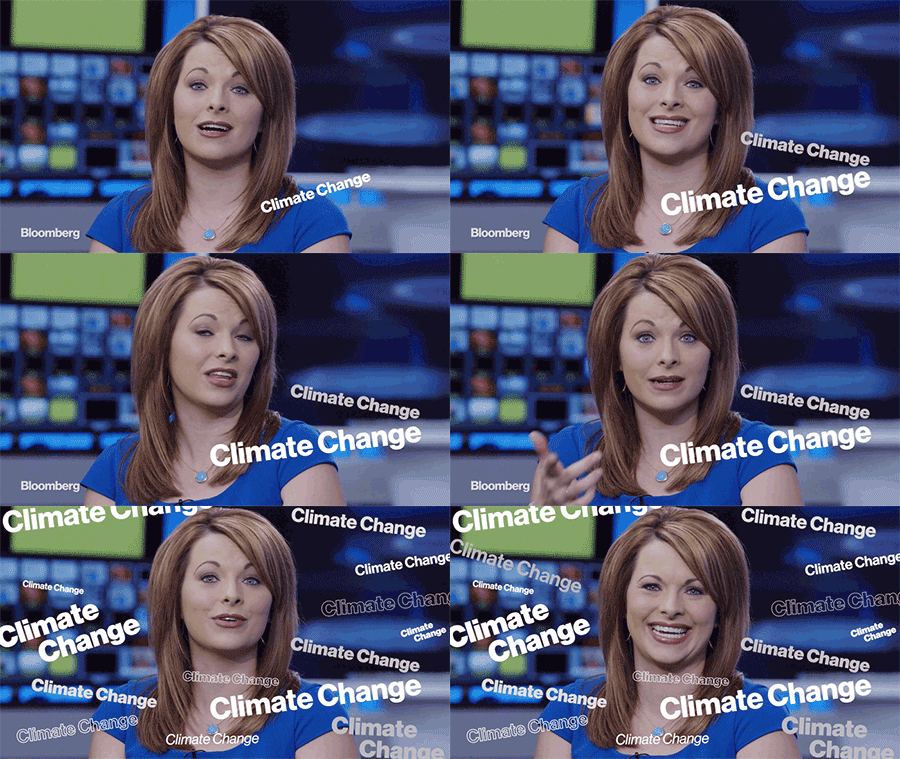

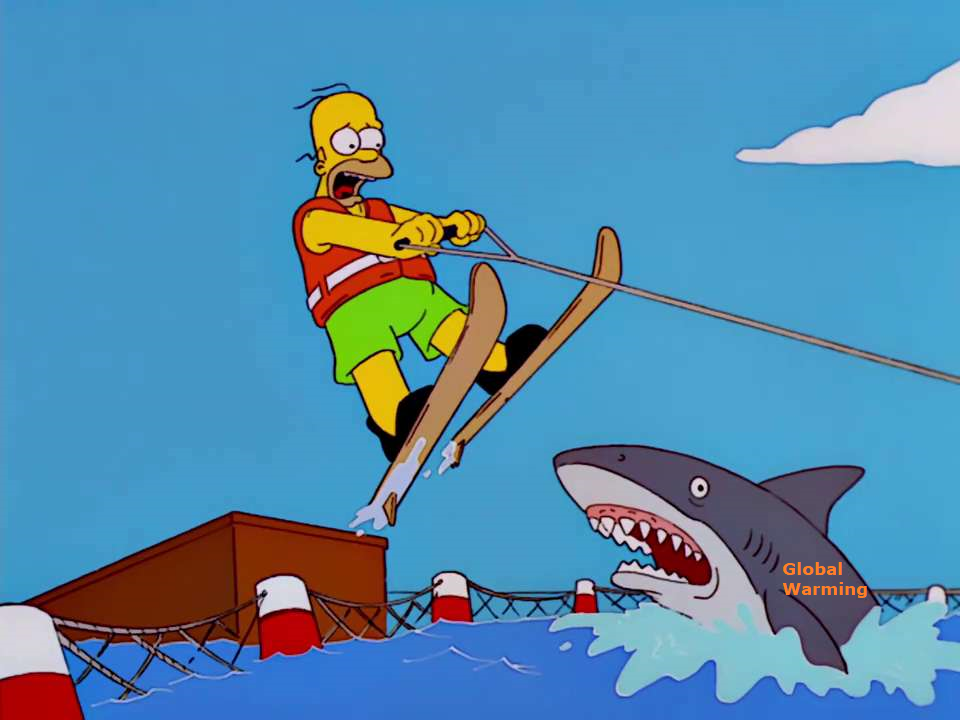
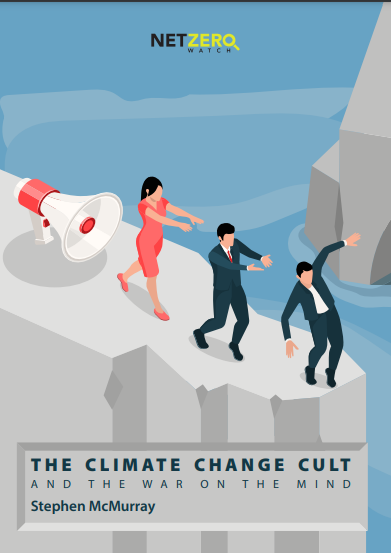
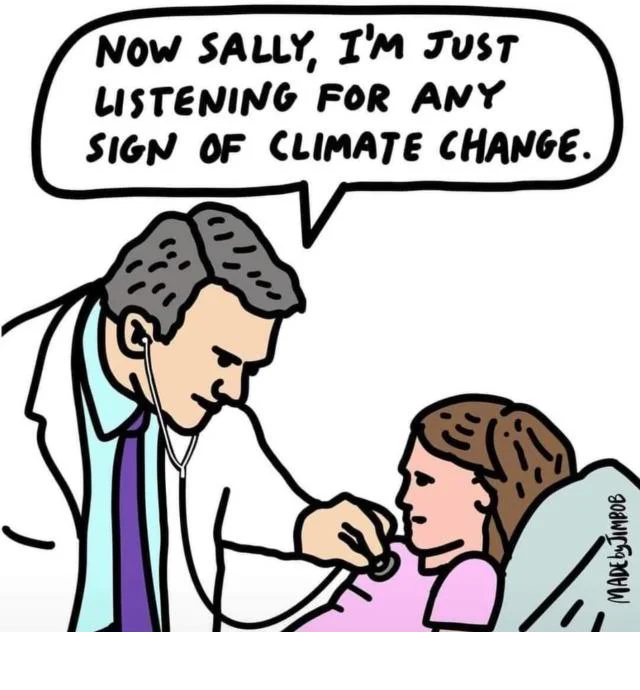
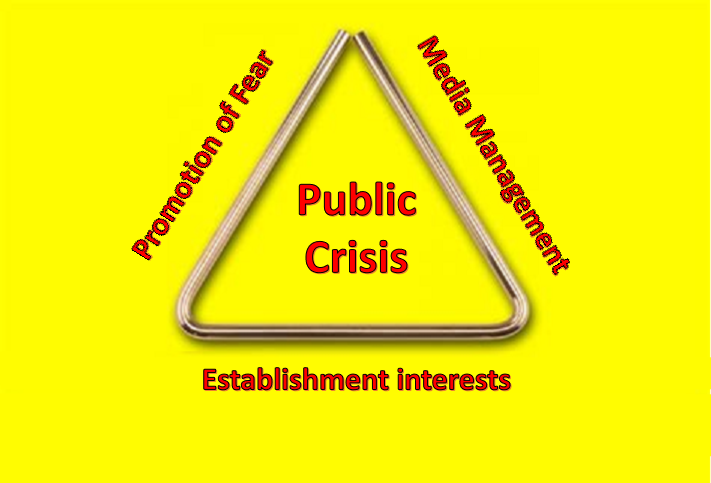
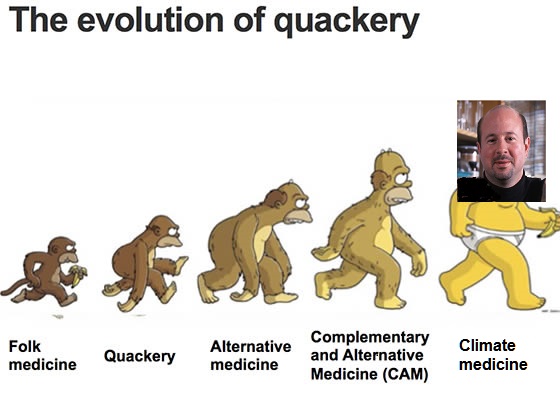

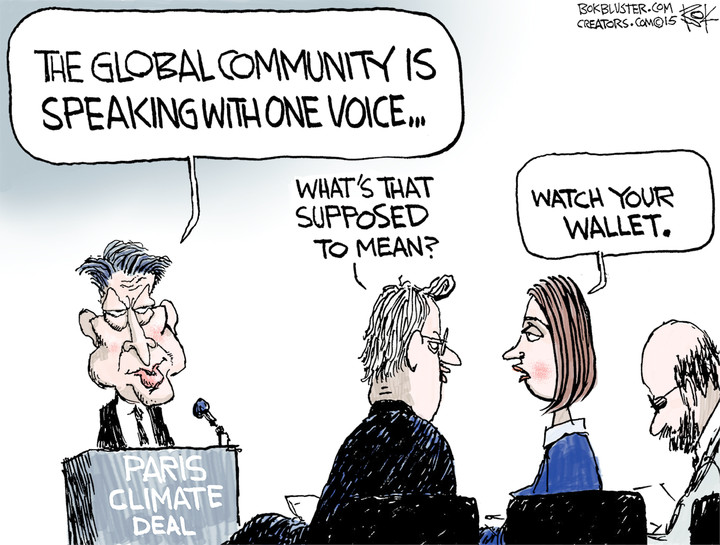
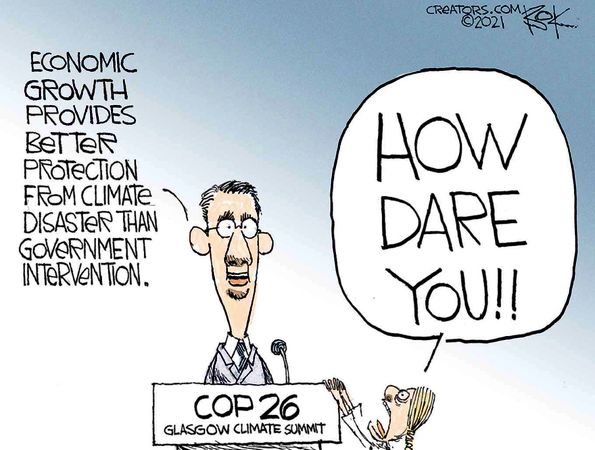
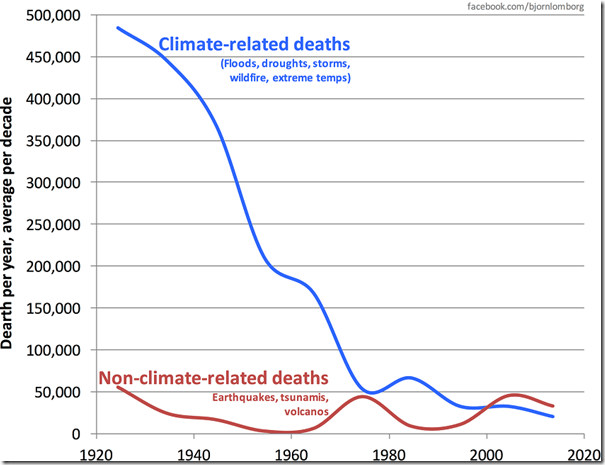

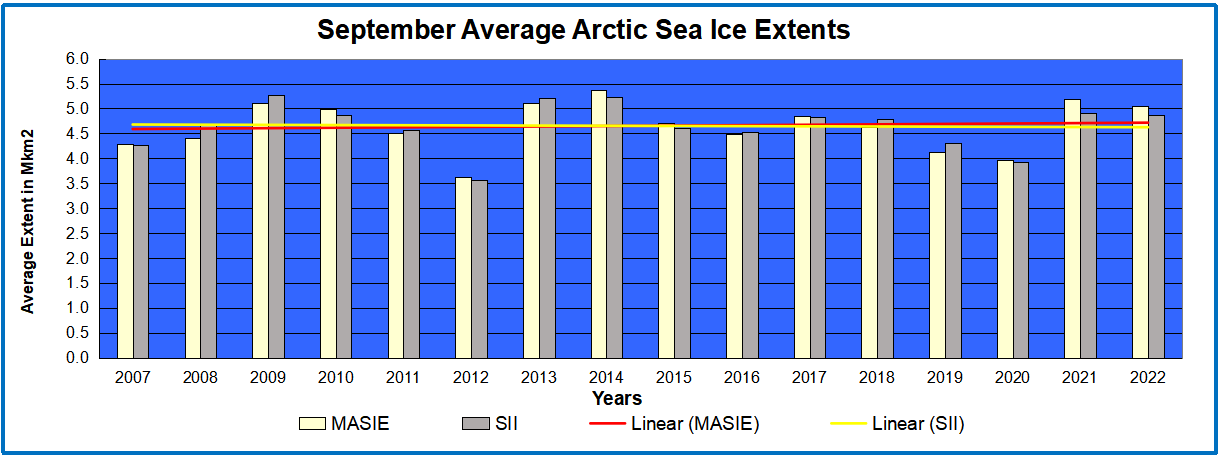
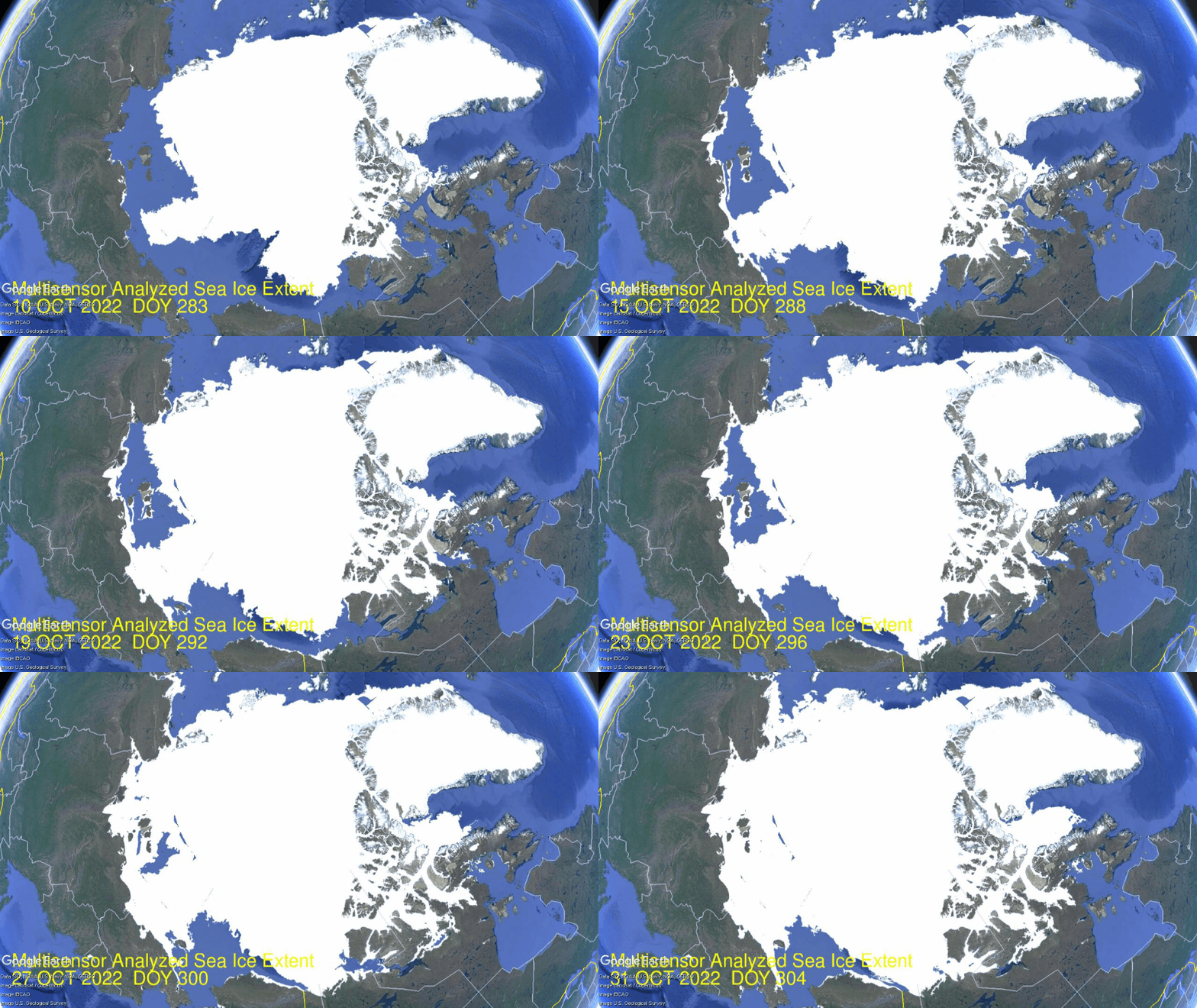




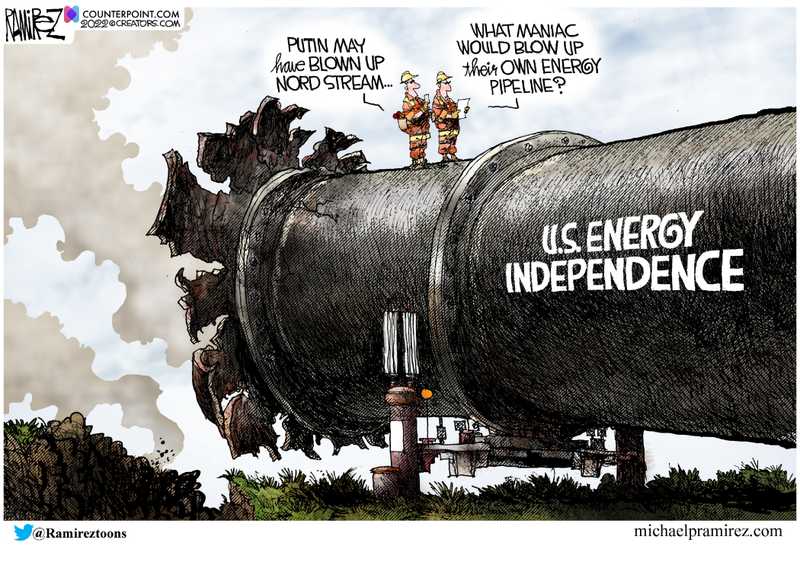
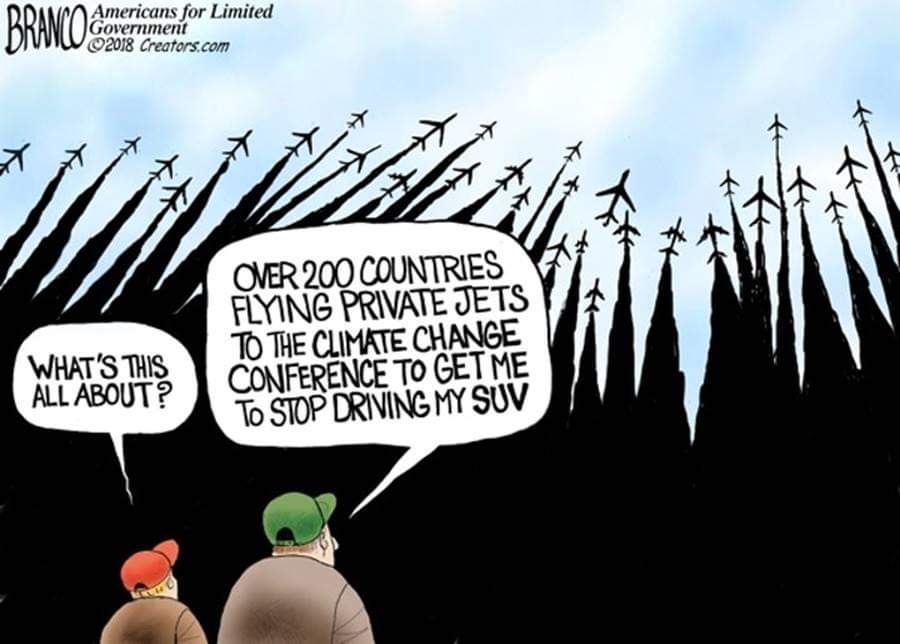



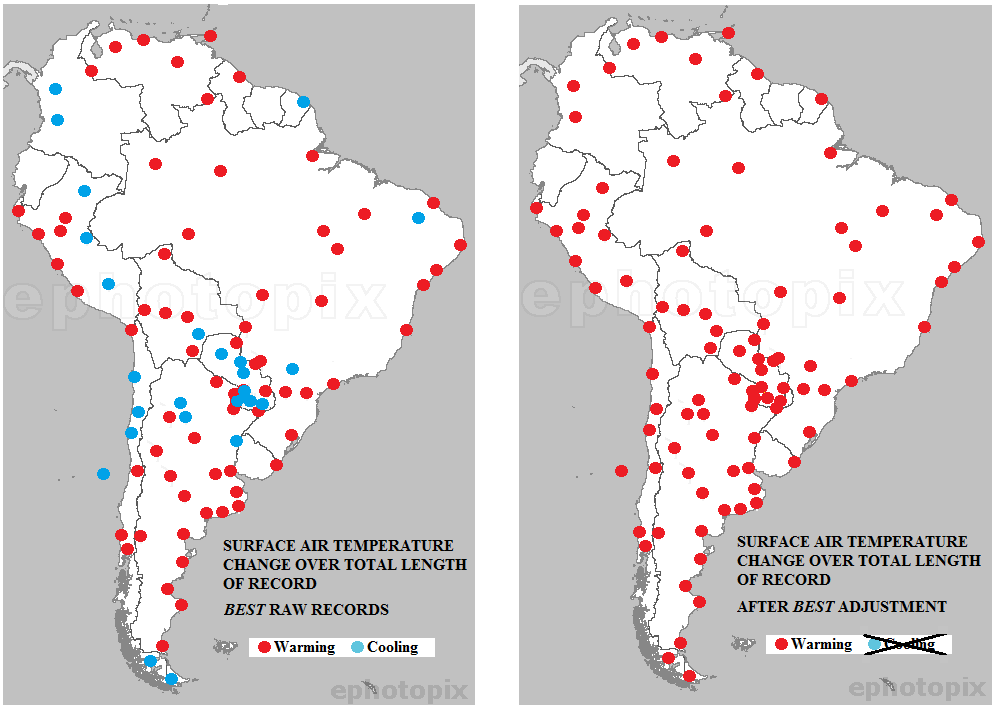
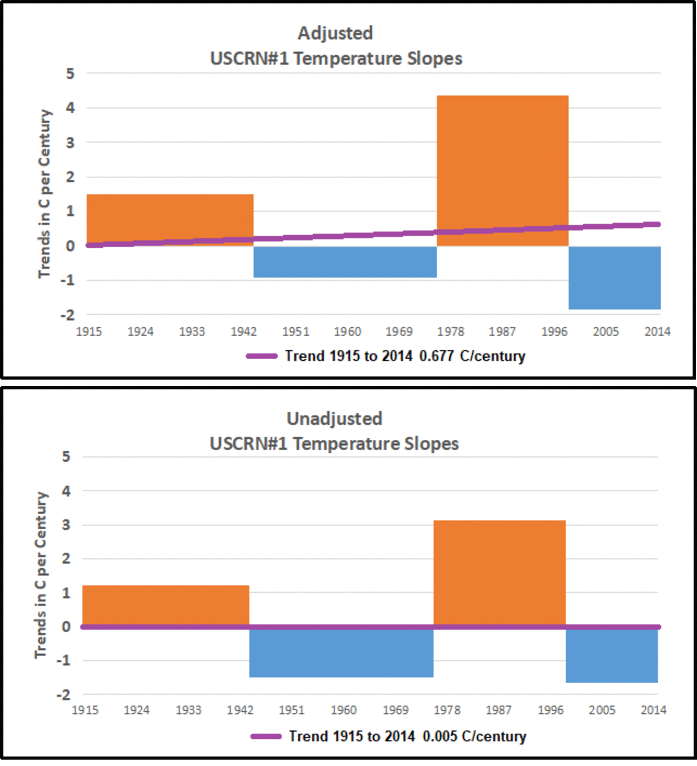
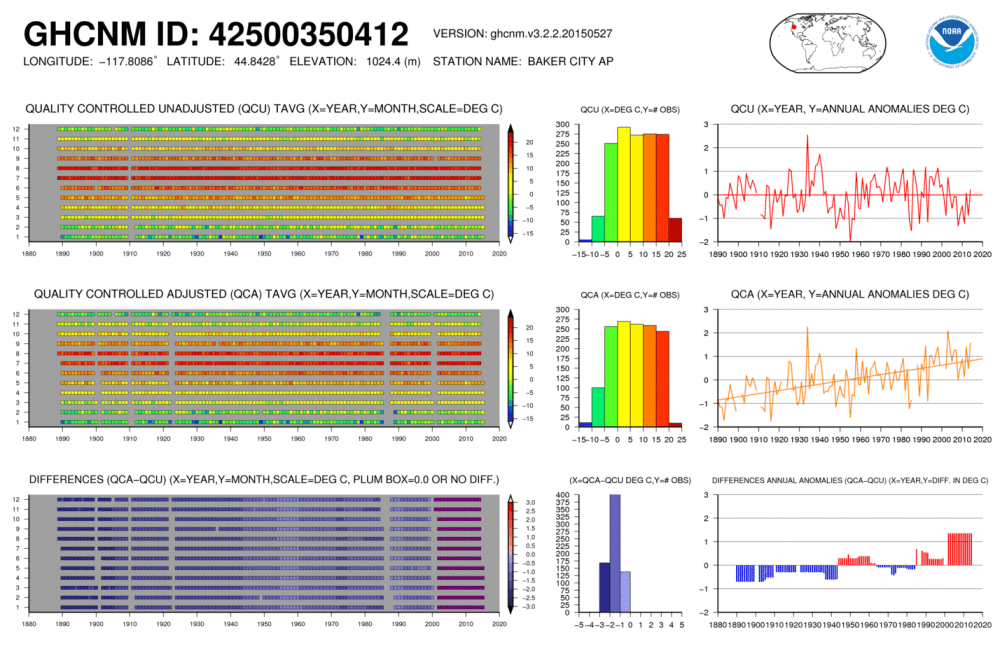
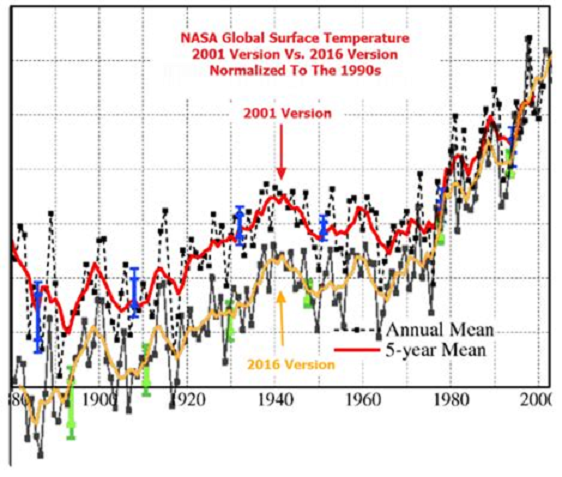


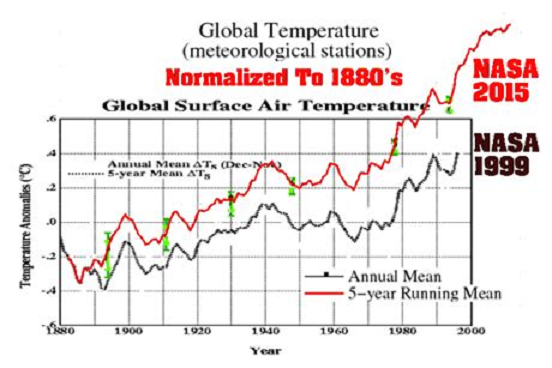


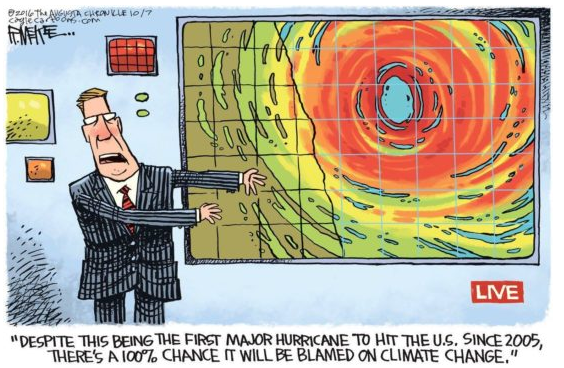
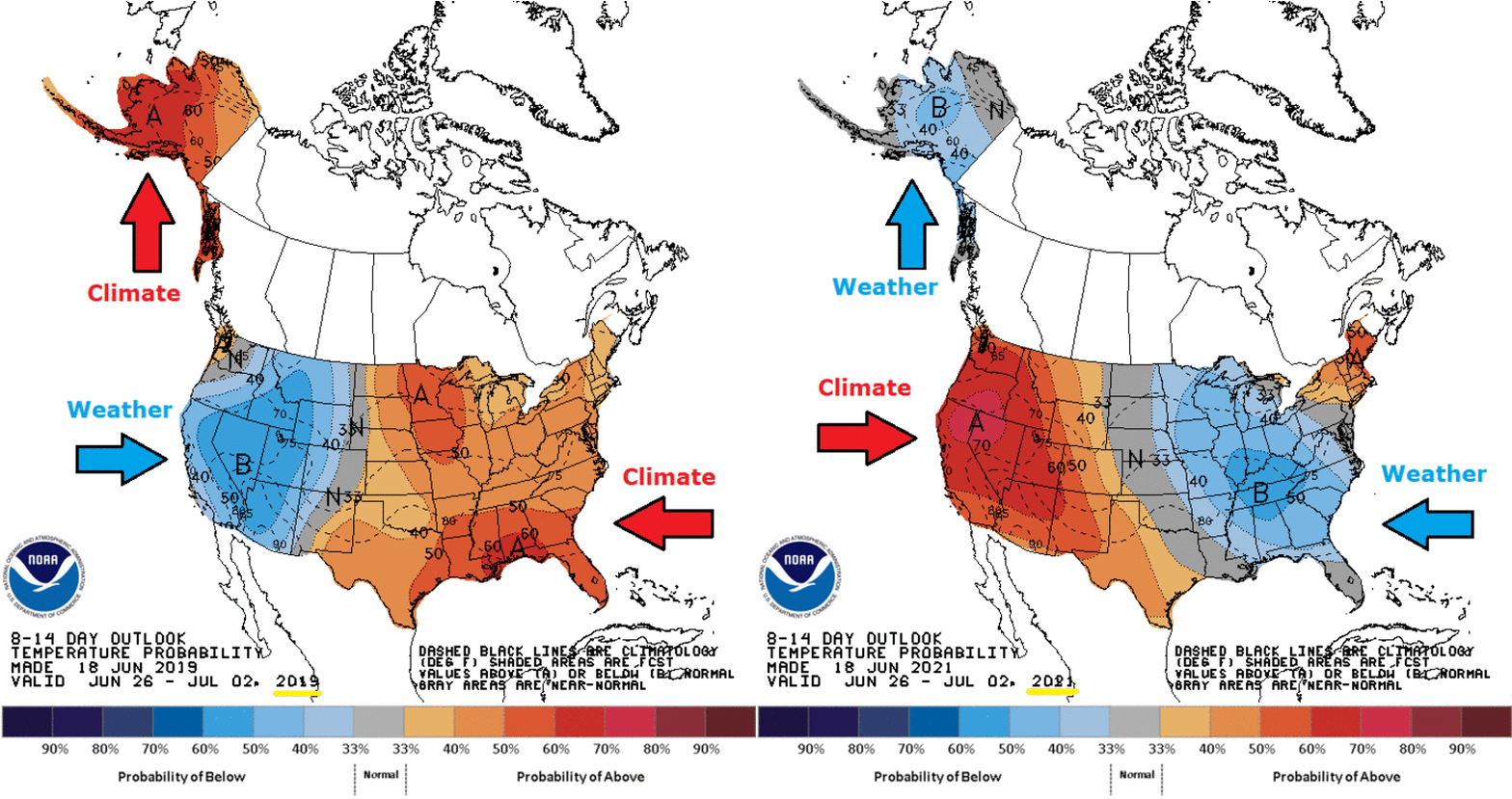
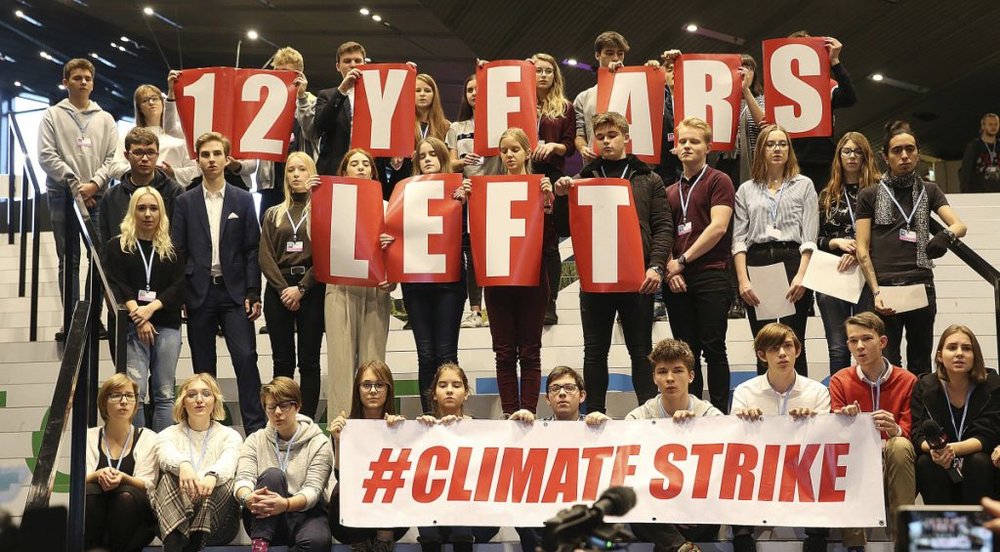








 But: Sea Level Rise is not accelerating.


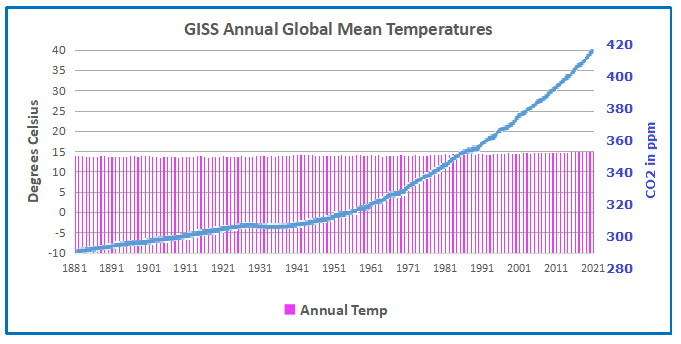


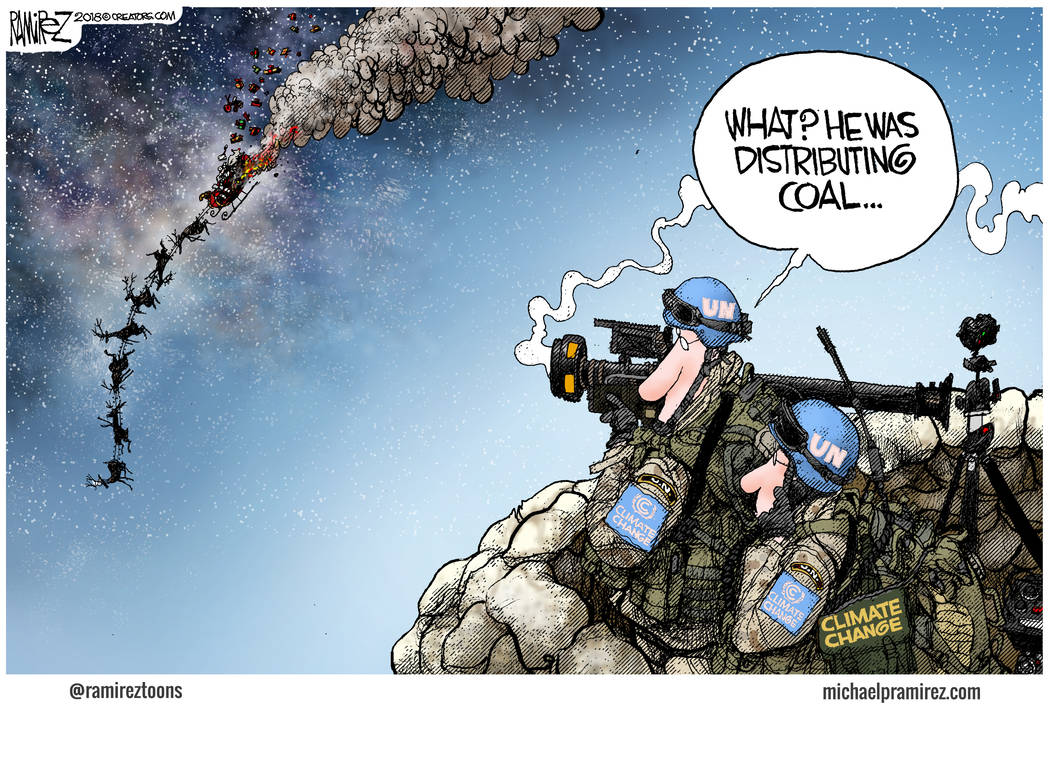
 Science Matters