Bypass Contrived Catastrophes

“Nothing so focuses the mind as the sight of the gallows.” wrote Samuel Johnson.  He went on to say,

“Executions are intended to draw spectators. If they don’t draw spectators, they don’t answer their purpose”,  Samuel Johnson (1709-1784)

Terrence Keeley discusses how to resist our current crop of elites who govern by declaring emergencies instead of solving problems. His insights are timely since this week PM Trudeau was given a free pass by a Canada Appeals court judge to repeat his emergency sanctions against protesting truckers should anyone else object to his policies. The article at Real Clear Wire is Navigating Contrived Catastrophes Excerpts in italics with my bolds and added images.

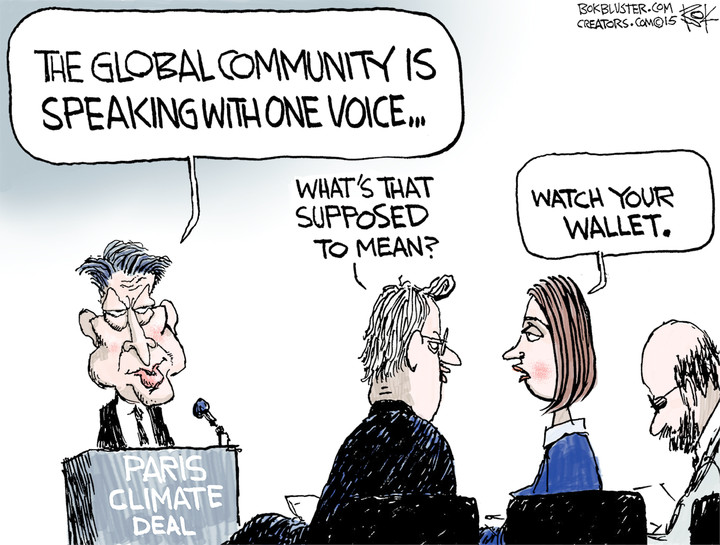
Perhaps this explains why political leaders repeatedly fabricate existential crises in lieu of governing responsibly. Without the sword of Damocles overhead, policymakers just can’t seem to get the adulation they so desperately crave.

Take the fake debt ceiling crisis. The U.S. federal debt cap was first enacted in 1917 when our national debt stood at $5.7 billion. Congress has since raised it more than 90 times with broad bipartisan support. There is ZERO chance they won’t do so again, yet we are told we must quiver and quake until they do. For some reason, a $31.4 trillion limit just isn’t enough to run the greatest country on earth properly.

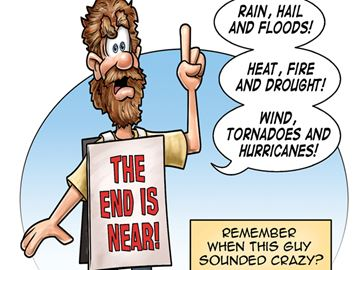
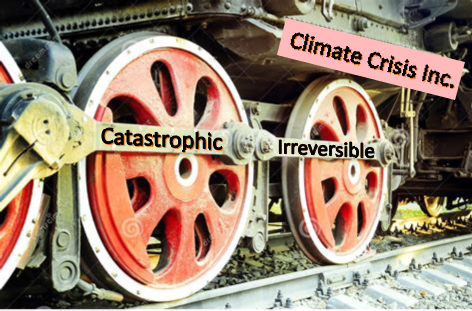
Or better yet, consider the much-ballyhooed “Net Zero by 2050” time bomb. There was no science behind its selection of the 1.5 degree above pre-industrial temperature target. It was intentionally contrived so politicians and pundits could insist we spend hundreds of trillions of dollars reconfiguring every personal and industrial process to mute it, possibly by a degree or two. Anthropogenic activities are clearly taxing our air, water, and lands. Depending upon tradeoffs like affordability and reliability (and what China, India, and Russia decide to do), less carbon-intensive energy sources may well be preferable, too. Convincing our younger generation they will all die unless the globe urgently reduces its net carbon footprint to zero is another matter altogether. Being more mindful about our consumption patterns while preparing our communities for the probability of more violent weather would be too simple. Better to scare everyone out of their wits so we can get on with doing witless things.

Great societies thrive on consistent policy competence. Failing ones lurch
from crisis to crisis. Contriving catastrophic scenarios all but ensures
hysteria will supplant sober, reasoned analysis.

Some will argue extreme threats are needed to force modest, salutary changes. After all, a handful of U.S. debt ceiling votes brought about useful policy changes, like the Gramm-Rudman-Hollings breakthrough and the Balanced Budget Act of 1997. Similarly, threats of impending climate doom have led many individuals and corporations to examine their energy use, seek cleaner alternatives, and eliminate unnecessary waste.

But have these modest advances been worth the price of the abject delirium
that has accompanied them? And are recurrent, contrived catastrophes
somehow producing better policy outcomes?

Evidently not. Three essential U.S. social programs – Social Security, Medicare, and Medicaid – are barreling along towards insolvency. Just as the retirement age in France must rise to reflect longer life expectancies and taxation tipping points, so too must U.S. retirement programs respect demographic realities. Maintaining peace through strength in an increasingly dangerous world requires that the U.S. spend more on defense, not less. Unless the current debt ceiling crisis leads to an honest rUeckoning about our most urgent tax and spending priorities, heightened hysteria serves no useful end. Worse, all the faux debt ceiling dynamics convince politicians they’ve somehow done their jobs when instead, they’ve abrogated them entirely.

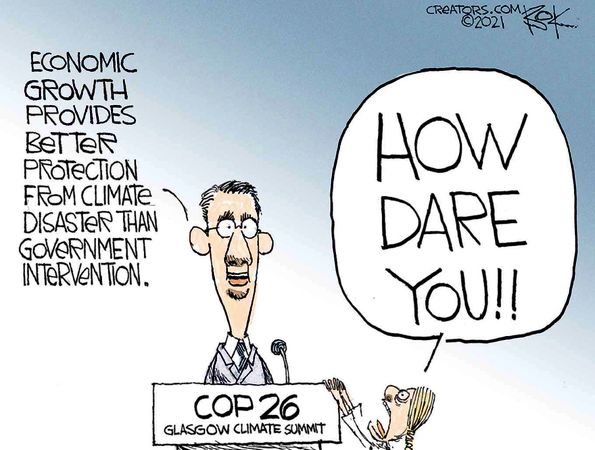
Similarly, we speak about an “energy transition,” but no realistic projection of future fossil fuel consumption shows any meaningful decline in the century to come. Rising populations, improved living standards, reliability needs for the three billion humans who are still energy insecure, and the first order demands of national security reveal oil and gas will remain crucial sources of our energy mix for as far as the eye can see. The most logical response would be to prioritize energy reliability while recalibrating our emissions mitigation spending towards more climate adaptation priorities. Why spend $100 trillion or more on something that has been entirely contrived and is all but certain to fail when you can spend $50 trillion or less on something that would demonstrably save human lives while improving their livelihoods?

History is festooned with countless ruses about the end of time, some more disruptive than others. They include those of French Bishop Martin of Tours in 375 A.D., and Jim Jones in 1967. Many thousands believed the so-called Y2K cliff would crash every computer, triggering global economic ruin and the rise of the Antichrist. Yet, remarkably, here we all still are, higher in number than ever.

In time, trillions of dollars of investment products now priced against
Net Zero 2050 deadlines will need to be abandoned.

Similarly, the U.S. debt ceiling will be lifted multiple times before responsible members of both parties finally put our tax and spending trajectories into sustainable balance. Panic, like blackmail, compromises sensible thinking. Calm acceptance of measurable risks and their reasonable mitigation are the essence of wise decision-making.

The next time a politician tells you Armageddon is nigh, remind them it’s their only job to make sure it isn’t. If you’ve got the patience for it, you can also show them how easy it would be to avoid.


Curing Radiation Myopia Regarding Climate

E.M. Smith provides an helpful critique of a recent incomplete theory of earth’s climate functioning in his Chiefio blog post So Close–Missing Convection and Homeostasis. Excerpts in italics with my bolds and added images.

It is Soooo easy to get things just a little bit off and miss reality. Especially in complex systems and even more so when folks raking in $Millions are interested in misleading for profit. Sigh.

Sabine Hosenfelder does a wonderful series of videos ‘explaining’ all sorts of interesting things in and about actual science and how the universe works. She is quite smart and generally “knows her stuff”. But… It looks like she has gotten trapped into the Radiative Model of Globull Warming.

The whole mythology of Global Warming depends on having you NOT think about anything but radiative processes and physics. To trap you into the Radiative Model. But the Earth is more complex than that. Much more complex. Then there’s the fact that you DO have some essential Radiative Physics to deal with, so the bait is there.   However…

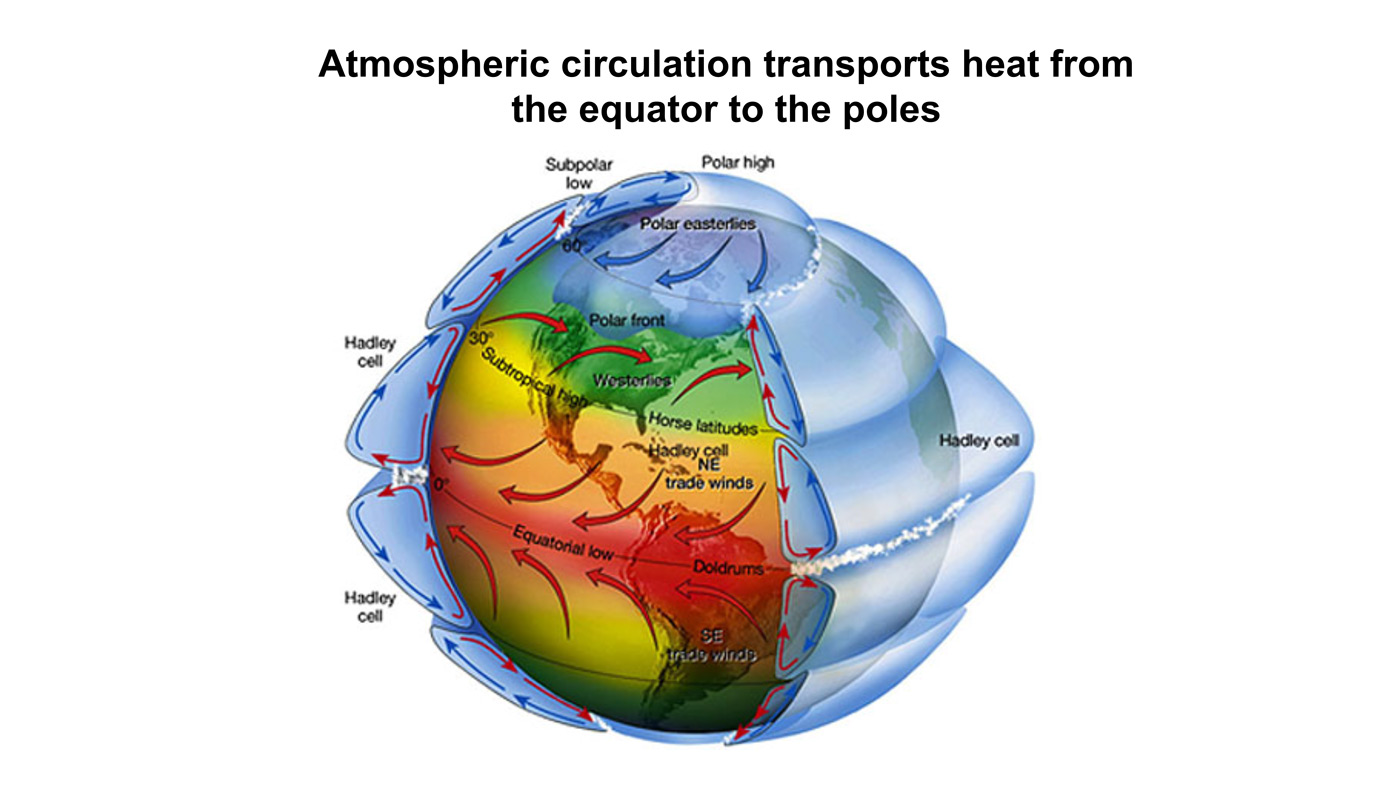
It is absolutely essential to pay attention to convection in the lower atmosphere
and to the “feedback loops” or homeostasis in the system.

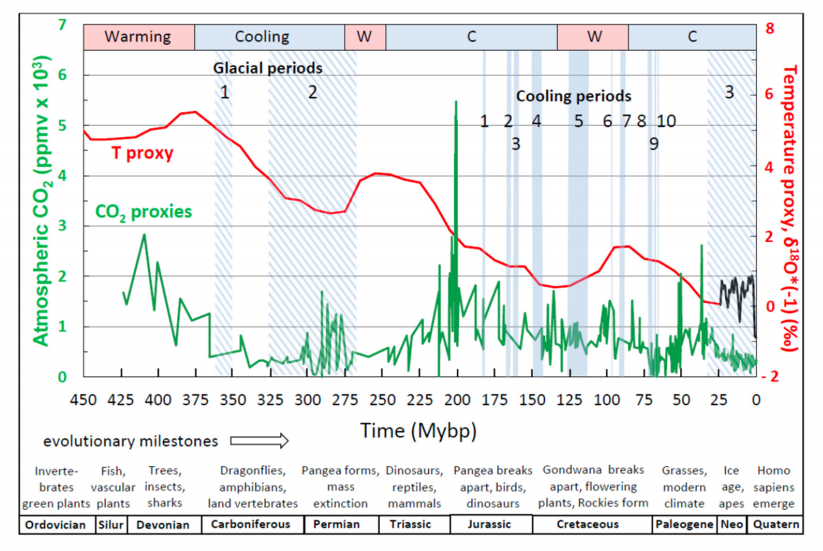
The system acts to restore its original state. There is NO “runaway greenhouse” or we would have never evolved into being since the early earth had astoundingly high levels of CO2 and we would have baked to death before getting out of our slime beds as microbes.

Figure 16. The geological history of CO2 level and temperature proxy for the past 400 million years. CO2 levels now are ~ 400ppm. Source: Davis, W. J. (2017).

OK, I’ll show you her video. It is quite good even with the “swing and a miss” at the end. She does 3 levels of The Greenhouse Gas Mythology so you can see the process evolving from grammar school to high school to college level of mythology. But then she doesn’t quite make it to Post-Doc Reality.

Where’s she wrong? (Well, not really wrong, but lacking…)

I see 2 major issues. First off, she talks about the “lower atmosphere warming”. Well, yes and no. It doesn’t “warm” in the sense of getting hotter, but it does speed up convection to move the added heat flow.

In English “heating” has 2 different meanings. Increasing temperature.
Increasing heat flow at a temperature.

We see this in “warm up the TV dinner in the microwave” meaning to heat it up from frozen to edible; and in the part where the frozen dinner is defrosting at a constant temperature as it absorbs heat but turns it into the heat of fusion of water. So you can “warm it up” by melting at a constant temperature of frozen water (but adding a LOT of thermal energy – “heat”) then later as increasing temperature once the ice is melted. It is very important to keep in mind that there are 2 kinds of “heating”. NOT just “increasing temperature”.

In the lower atmosphere, the CO2 window / Infrared Window is already firmly slammed shut. Sabine “gets that”. Yay! One BIG point for her! No amount of “greenhouse gas” is going to shut that IR window any more. As she points out, you get about 20 meters of transmission and then it is back to molecular vibrations (aka “heat”).

So what’s an atmosphere to do? It has heat to move! Well, it convects. It evaporates water.

Those 2 things dominate by orders of magnitude any sort of Radiative Model Physics. Yes, you have radiation of light bringing energy in, but then it goes into the ocean and into the dirt and the plants and even warms your skin on a sunny day. And it sits there. It does NOT re-radiate to any significant degree. Once “warmed” by absorption, heat trying to leave as IR hits a slammed shut window.

The hydrological cycle. Estimates of the observed main water reservoirs (black numbers in 10^3 km3 ) and the flow of moisture through the system (red numbers, in 10^3 km3 yr À1 ). Adjusted from Trenberth et al. [2007a] for the period 2002-2008 as in Trenberth et al. [2011].

So what does happen? Look around, what do you see? Clouds. Rain. Snow. (sleet hail fog etc. etc.)

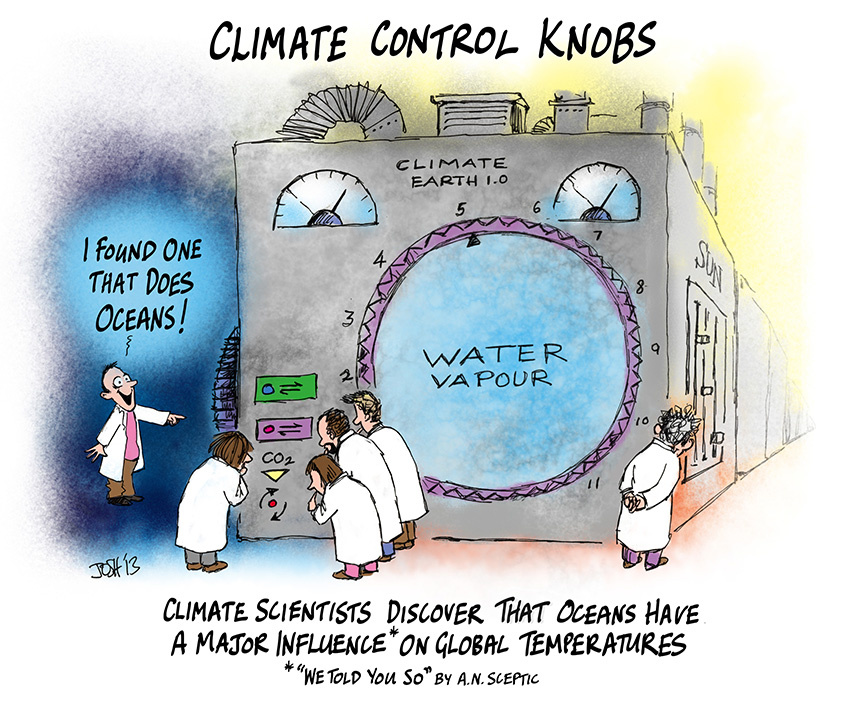
Our planet is a Water Planet. It moves that energy (vibrations of atoms, NOT radiation) by having water evaporate into the atmosphere. (Yes, there are a few very dry deserts where you get some radiative effects and can get quite cold at night via radiation through very dry air, but our planet is 70% or so oceans, so those areas are minor side bars on the dominant processes). This water vapor makes the IR window even more closed (less distance to absorption). It isn’t CO2 that matters, it is the global water vapor.

What happens next?

Well, water holds a LOT of heat (vibration of atoms and NOT “temperature”) as the heat of vaporization. About 540 calories per gram (compared to 80 for melting “heat of fusion” and 1 for specific heat of a gram of water). Compare those numbers again. 1 for a gram of water. 80 for melting a gram of ice. 540 for evaporating a gram of water. It’s dramatically the case that evaporation of water matters a lot more than melting ice, and both of them make “warming water” look like an irrelevant thing.

Warming water is 1/80 as important as melting ice, and it is 1/540 th as important as evaporation of the surface of the water. Warming air is another order of magnitude less important to heat content.

So to have clue, one MUST look at the evaporation of water from the oceans as everything else is in the small change.

Look at any photo of the Earth from space. The Blue Marble covered in clouds. Water and clouds. The product of evaporation, convection, and condensation. Physical flows carrying all that heat (“vibration of atoms” and NOT temperature, remember). IF you add more heat energy, you can speed up the flows, but it will not cause a huge increase in temperature (and mostly none at all). It is mass flow that changes. The number of vibrating molecules at a temperature, not the temperature of each.

In the end, a lot of mass flow happens, lofting all that water vapor with all that heat of vaporization way up toward the Stratosphere. This is why we have a troposphere, a tropopause (where it runs out of steam… literally…) and a stratosphere.

What happens when it gets to the stratosphere boundary? Well, along the way that water vapor turns into water liquid very tiny drops (clouds) and eventually condenses to big drops of water (rain) and some of it even freezes (hail, snow, etc.). Now think about that for a minute. That’s 540 calories per gram of heat (molecular vibration NOT temperature, remember) being “dumped” way up high in the top of the troposphere as it condenses, and another 80 / gram if if freezes. 620 total. That’s just huge.

This is WHY we have a globe covered with rain, snow, hail, etc. etc. THAT is all that heat moving. NOT any IR Radiation from the surface. Let that sink in a minute. Fix it in your mind. WATER and ICE and Water Vapor are what moves the heat, not radiation. We ski on it, swim in it, have it water our crops and flood the land. That’s huge and it is ALL evidence of heat flows via heat of vaporization and fusion of water.

It is all those giga-tons of water cycling to snow, ice and rain, then falling back to be lofted again as evaporation in the next cycle. That’s what moves the heat to the stratosphere where CO2 then radiates it to space (after all, radiation toward the surface hits that closed IR window and stops.) At most, more CO2 can let the Stratosphere radiate (and “cool”) better. It can not make the Troposphere any less convective and non-radiative.

Then any more energy “trapped” at the surface would just run the mass transport water cycle faster. It would not increase the temperature.

More molecules would move, but at a limit on temperature. Homeostasis wins. We can see this already in the Sub-Tropics. As the seasons move to fall and winter, water flows slow dramatically. I have to water my Florida lawn and garden. As the seasons move to spring and summer, the mass flow picks up dramatically. Eventually reaching hurricane size. Dumping up to FEET of condensed water (that all started as warm water vapor evaporating from the ocean). It is presently headed for about 72 F today (and no rain). At the peak of hurricane season, we get to about 84 or 85 F ocean surface temperature as the water vapor cycle is running full blast and we get “frog strangler” levels of rain. That’s the difference. Slow water cycle or fast.

IF (and it is only an “if”, not a when) you could manage to increase the heat at the surface of the planet in, say, Alaska: At most you would get a bit more rain in summer, a bit more snow in winter, and MAYBE only a slight possible, of one or two days that are rain which could have been snow or sleet.

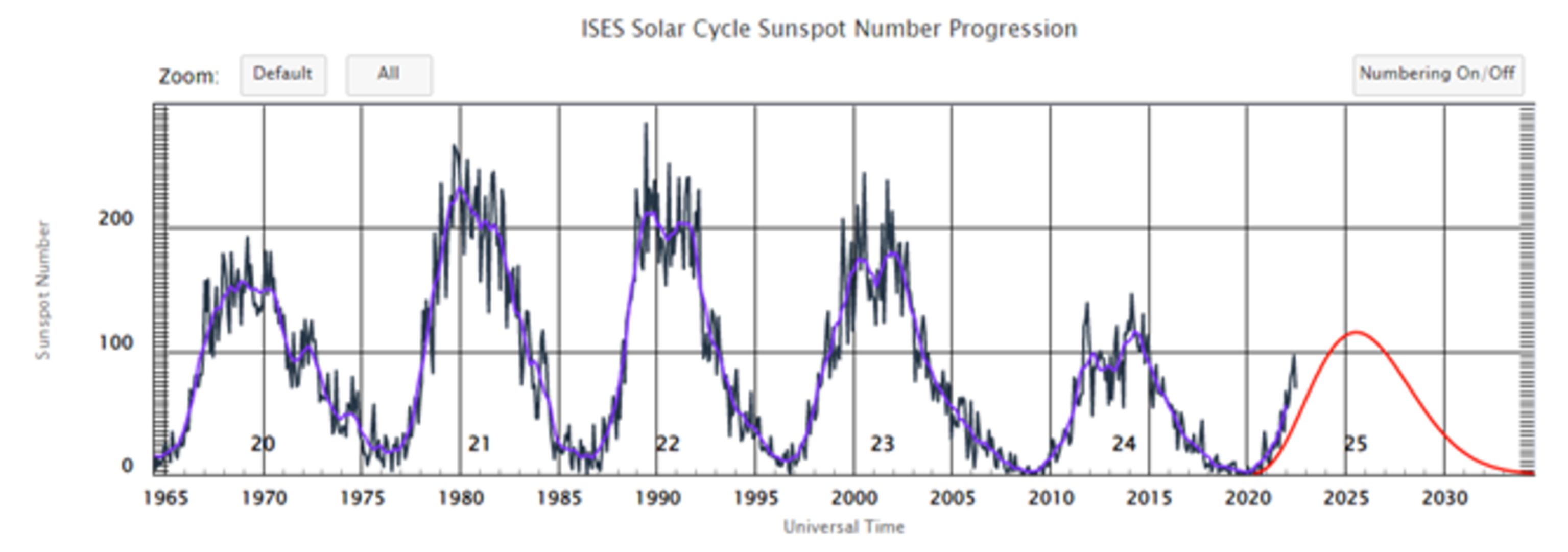
Then there’s the fact that natural cycles swamp all of that CO2 fantasy anyway. The Sun, as just one example, had a large change of IR / UV levels with both the Great Pacific Climate Shift (about 1975) and then back again in about 2000. Planetary tilt, wobble, eccentricity of the orbit and more put us in ice ages (as we ARE right now, but in an “interglacial” in this ice age… a nice period of warmth that WILL end) and pulls us out of them. Glacials and interglacials come and go on various cycles (100,000 years, 40,000 years, and 12,000 year interglacials – ours ending now, but slowly). The simple fact is that Nature Dominates, and we are just not relevant. To think we are is hubris of the highest order.

See Also  Bill Gray: H20 is Climate Control Knob, not CO2

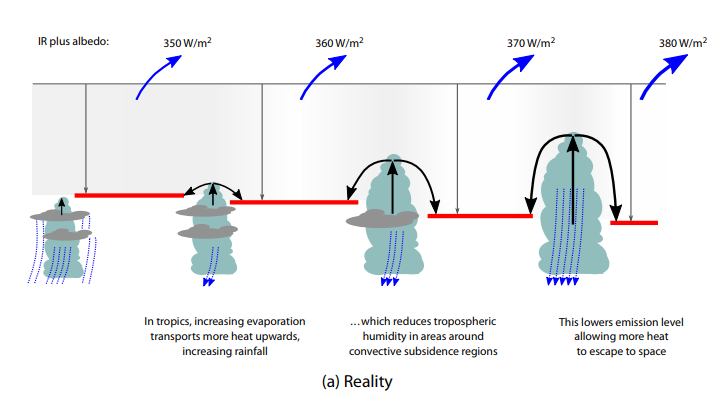
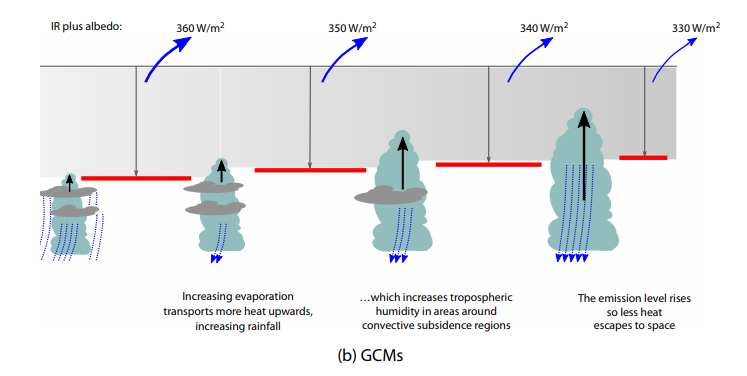
Figure 9: Two contrasting views of the effects of how the continuous intensification of deep cumulus convection would act to alter radiation flux to space. The top (bottom) diagram represents a net increase (decrease) in radiation to space

Footnote

There are two main reasons why investigators are skeptical of AGW (anthropogenic global warming) alarm. This post intends to be an antidote to myopic and lop-sided understandings of our climate system.

  1. CO2 Alarm is Myopic: Claiming CO2 causes dangerous global warming is too simplistic. CO2 is but one factor among many other forces and processes interacting to make weather and climate.

Myopia is a failure of perception by focusing on one near thing to the exclusion of the other realities present, thus missing the big picture. For example: “Not seeing the forest for the trees.”  AKA “tunnel vision.”

2. CO2 Alarm is Lopsided: CO2 forcing is too small to have the overblown effect claimed for it. Other factors are orders of magnitude larger than the potential of CO2 to influence the climate system.

Lopsided

Lop-sided refers to a failure in judging values, whereby someone lacking in sense of proportion, places great weight on a factor which actually has a minor influence compared to other forces. For example: “Making a mountain out of a mole hill.”


Intellect Applied to Climate Change

Rex Murphy writes at  National Post  If CBC cared about diversity, it would host Jordan Peterson global warming talk Excerpts in italics with my bolds and added images.

There is no other issue over the past 20 and probably 30 years that has more obtained the attention of the world’s press than global warming.

I know there have been others. But none has had such a continuous and insistent presence.

No other issue has had the sweet, soft, giddy support of the big networks, the great corporations, the trendy school boards, every mad virtue-signalling politician (the chieftain of which is Prime Minister Justin Trudeau), and the whole wide and multitudinous, amoeba-replicative (and dreadful) NGOS — think of the various foundations, of which I nominate the Suzuki Foundation as the Canadian prince of these dull harrying grouplets — as global warming.

I am aware I am using the old and opportunistically discarded
brand-name here: global warming.

Global warming was the term du jour when the thesis was we were heading into thermal crisis, the snow caps were to disappear, glaciers would go all water in the next 30 years or so, skiers would stare down snow-clean slopes, the seas would swamp New York and Tokyo, and children would weep at bared un-snowed hill-slides.

Alas. Snow kept falling. Seas refused to swell to city-destroying levels. Some winters remained … cold. Ski slopes had snow. And children still in all their sweet joy sledded down the still snow-blanketed hills.

Imagine — the planet’s weather refused to follow Greenpeace’s furious warnings.

Elizabeth May’s hothouse weepings, the latest bulletins from various second-tier folk singers, and people who slept on multimillion-dollar yachts on the French Riviera who deplored those who drove pickup trucks in Northern Alberta.

It was for naught. The Earth has its own ideas. And may probably continue to have them. Presuming the cosmos itself doesn’t go woke.

So it was obvious that “global warming,” the doomster’s environmental tagline required what the communication shops call a “re-branding.” And there being no set more adjusted to the miracles of communications management than the herd of apocalyptic global warming warriors, they — perhaps with much polling, and certainly with much cuteness — changed the brand to “climate change.”

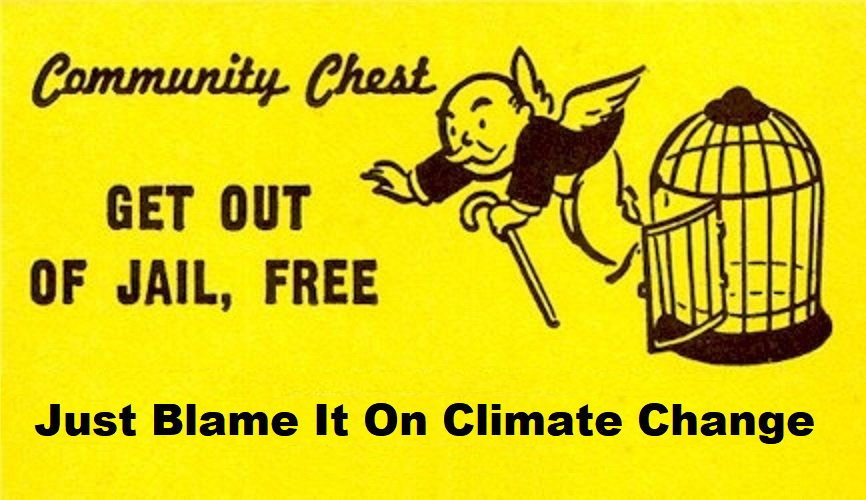
Climate change. There’s a conceptual “get out of jail” brand.

A useful digression: I come from dear, sweet Newfoundland. And I know this will not mean much for you who are not from my province — but I grew up in Placentia Bay.

In Placentia Bay the climate changes every six minutes. And on rough days, every four. Climate change is a beautiful redundancy. It always changes. And if it didn’t … well, it wouldn’t be climate.

So the new brand of “climate change” had this going for it — it gave a blanket rationale for every twitch and tingle or every “weather event” of any kind, wet or cold, hot or dry, a justification under its pure and infinitely elastic designation.

And every TV station, every “weather specialist” was on board with pointing
to “climate change” as the universal cause.

CBC and TV Ontario kept up the silly surmise, having aired Al Gore’s ridiculous, abysmally ignorant An Inconvenient Truth as if it was a script from Sinai, not on stone tablets of course, but “verified” by the “scientists” at the Academy Awards.

Climate change as a brand and a switch-name has gone unchallenged by the main media. Most of them have endorsed a silence on respectable, authoritative, independent and resolute minds who offer more than a different view, but a neutral, rational, and science-based contesting opinion on what has become more of a doxology than matter for exchange, debate, and informed challenge.

Consider Dr. Richard Lindzen. His qualifications on atmospheric science are superb. He is not a “culture warrior.” He is not “political.” He is a great thinking mind — that last term is a very high compliment.

He recently gave a long — nearly two hours — interview with Jordan Peterson, on “climate change,” all conducted with great calm and a backand-forth that followed no script. It was, to my view, one of the cleanest discussions of this issue I have seen.

Dr. Lindzen has the authority of real knowledge on this topic, and therefore his reasonings are worth full and wide attention.

The interview is a model of intellectual exchange, something long lost on our big networks with their fixed views and hollow coverage.

Dr. Lindzen is a font of clear thought, non-agenda-driven deliberation, and direct statement.

It would be a wild wish to see Peterson’s interview with Dr. Lindzen on CBC or TVO. It would break the hearts of their morning agenda meeting attendees. And would threaten their “diversity” and climate change mandates, which are, apparently, whatever the Suzuki foundation and Steven Guilbeault think are correct must be correct.

Watch this interview, even if you are committed to “global warming” theorizations.

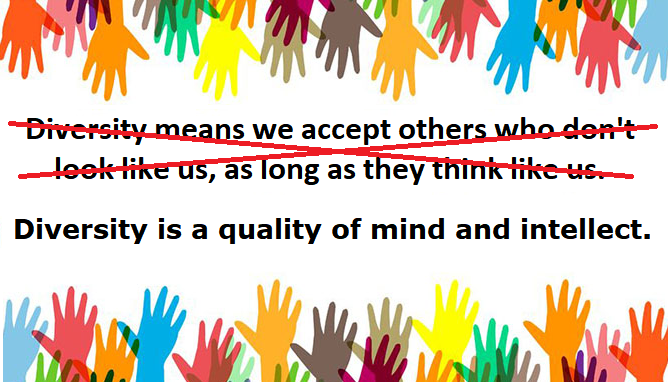
And, to Ms. Catherine Tait, CBC president currently wandering the great Canadian landscape arguing CBC’S relevance and point. Here’s a thought: diversity is a quality of mind and intellect. It is not a submission to current faddishness.

Try airing the interview with Dr. Lindzen as an experiment with diversity of thought.

It may be a strange thing to say, but a broadcaster, subsidized and leaning on past glories, should earn its present-day respect by looking around and giving a glimpse at opinions and perspectives outside the glass case of its own treasured ever-so-correct eidolons of virtue-speak.

The Gas Stove Gambit

Remembering that natural gas is a fossil fuel, there must be more than meets the eye in the media firestorm over banning gas stoves for safety reasons.  Could it be that the regime along with the media are gaslighting us regarding this maneuver?  Kit Knightly thinks so and explains the gambit in his off-guardian article What is the US “Gas Stove Ban” REALLY about?  Excerpts in italics with my bolds and added images.  H/Y Tyler Durden

What sounds like overreach in itself, is actually a cover
for something potentially far, far worse.

The Biden administration is apparently looking to ban gas stoves, calling them a “hidden danger”. But while that sounds bad enough, a deeper dive shows – as usual – it’s not really about what they say it’s about.

Talk of banning gas stoves and “unregulated indoor air quality” could be a Trojan horse designed to get even more “smart” monitoring technology into your home.

Let’s jump in.

Are Gas Stoves Dangerous?

Well, according to Alexandria Ocasio Cortez, the New Scientist and million other outlets and pundits who started talking about it in the last two days, yes.

Earlier this week near-identical articles from the National Review, Bloomberg and CNN detail how the US Consumer Product Safety Commission will be opening “public comment on the dangers of gas stoves sometime this winter”.

The articles claim:

The emissions have been linked to illness, cardiovascular problems, cancer, and other health conditions. More than 12 percent of current childhood asthma cases are linked to gas stove use, according to peer-reviewed research published in the International Journal of Environmental Research and Public Health last month.

Now would be a good time to talk about the phrase “linked to”. It’s always a good one to look out for in any mainstream publication. Journalists love it because it implies causation without stating it.

Consider, one hundred per cent of serial killers have been linked to the ingestion of water and the wearing of shoes.

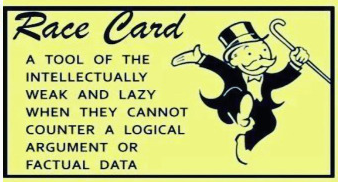
If this manipulative use of language were not evidence enough of an agenda, the rather premature deployment of the race card proves it:

Senator Cory Booker (D., N.J.) and Representative Don Beyer (D., Va.) wrote a letter to the agency last month urging the commission to address the issue and calling the harmful emissions a “cumulative burden” on black, Latino and low-income households.

So, Will They Ban Them?

Actually, probably not.

Considering that, according to Bloomberg, some 40% of US homes use gas stoves to cook, an outright ban would be impractical to the point of madness. You can’t criminalise 40% of the country. It would be almost unenforceable.

Perhaps they might try a “phasing out”, as they plan for petrol cars in California.

But most likely of all is that this was never really about banning stoves in the first place.

OK, So What’s IT Really About?

What we’re seeing here looks to be your classic bait-and-switch. Having established a “problem”, the powers that be suggest a solution they have no intention of ever carrying out (the more unreasonable the better).

When this measure is inevitably rejected by the public, the government will then proceed to suggest – or pay an NGO to suggest to them – a “compromise” measure.

The compromise is no compromise at all, of course, but actually what they wanted to do from the beginning. Nevertheless, the whole process is sold in the media as a victory for whichever party happens to be in opposition, and cited as evidence that “the system works”.

Tellingly, as I am writing this, Biden has already “ruled out a ban due to backlash”, and Vox were already using the “compromise” a lot in an article they published yesterday.

However, what that “compromise” would be in this case isn’t clear at first, you have to do a little digging.

One clue is present in the National Review article [emphasis added]:

The Association of Home Appliance Manufacturers argues that cooking produces harmful emissions regardless of the kind of stove used. “Ventilation is really where this discussion should be, rather than banning one particular type of technology,” Jill Notini, a vice president at the association, told Bloomberg. “Banning one type of a cooking appliance is not going to address the concerns about overall indoor air quality. We may need some behavior change, we may need [people] to turn on their hoods when cooking.”

And you’ll find another in the abstract of the original report on “Cooking With Gas, Household Air Pollution, and Asthma: Little Recognized Risk for Children”, published in the Journal of Environmental Science in April 2021:

The impact [of gas stove cooking] on children can be substantial because […] indoor air is unregulated.

“Ventilation is where this discussion should be”, after all “cooking produces harmful emissions regardless of the kind of stove” and a ban wouldn’t address “concerns about overall indoor air quality” which is currently “unregulated”.

Do you see where this is going?

It’s not about gas stoves, and it’s not about asthma – it’s about “indoor air pollution”, and more importantly how they plan on “regulating” it.

In one of those startling coincidences we’ve all got so used to witnessing in modern geopolitics, just as the US is talking about indoor air quality because of gas stoves, other countries around the world are doing the same thing for totally different reasons.

Singapore is considering new regulations on indoor air quality too, but because of formaldahyde.

Last month The Conversation was running articles claiming “indoor air pollution kills”, while Sir Chris Whitty, the UK’s chief medical officer, was “demanding action on indoor air pollution”.

On Monday, in a Guardian lifestyle piece purportedly about scented candles, Svetlana Stevanovic calls indoor air quality a “going concern”.

Two days ago The Tyee, an “independent” Canadian magazine which receives some funding from the Canadian government, ran an op-ed headlined:

We Need a Revolution in Clean Indoor Air

Which attempts to link improving indoor air quality to “ending Covid” (whilst making sure to sufficiently fluff the vaccines, of course).

Just yesterday the Irish Times published an article about the dangers of poor indoor air quality.

In a rather interesting piece of timing, the air hygiene technology company AeroClean and Molekule, a market leader for air purifiers, finalised a public stock merger…also just yesterday.

Two days ago it was announced IKEA would be selling their own smart air monitors, the same day Samsung announced their new “smart air purifier”.

Earlier today Chinese tech giant Xiaomi issued a media release about their new smart air monitoring technology.

recent report expects the global air monitor technology market to swell to nearly 6 billion dollars in the next three years.

But I’m sure this is all just a coincidence.

Where Does This Lead?

Well, if I had to guess I would suggest some new “smart” technology is coming that will monitor air quality and indoor C02 emissions. Like smart electricity and water meters, but for your air.

Interestingly, the World Economic Forum agrees with me, publishing an article on their website last July headlined “Indoor air pollution: What causes it and how to tackle it”, which claims:

indoor air pollutants can now be detected with more precise, efficient, and compact sensors thanks to advances in environmental sensing technology. As a result, intelligent home systems may soon use sensors like these to keep track of indoor air quality and notify the ventilation system before dangerous levels are reached.

As part of “backing down” from the stove ban, they will introduce a new bill which sees “smart air monitors” become mandatory in all new-build houses, hotels and rented accommodation.

Just like smart electricity meters, smart air monitors would almost certainly be used to harvest huge amounts of data and give states or corporations the ability to control your home.

If your “indoor air” isn’t “clean” enough; if you use your stove too much, burn too many scented candles or emit too much co2, expect to get penalized  in some fashion until you learn how to be more responsible.

More smart technology, more monitoring, and ultimately more control.

So, while it’s possible the gas stove ban talk will resolve itself into the cliche new tax or fines or some other petty scheme for bilking the many out of their wages, the signs are certainly there it might be something more sinister.

Meanwhile, expect to keep seeing reports on gas stoves damaging the climate, or stories about poor indoor air quality making covid worse.

The usual bought-and-paid-for columns that support every new normal narrative.

Manheimer Steamrolls Net Zero Claims

Accomplished and distinguished physicist Wallace Manheimer published a crushing argument against the rationale for Net Zero claims and policies.  His paper is While the Climate Always Has and Always Will Change, There Is no Climate Crisis. published in the Journal of Sustainable Development.  In italics with my bolds.

Abstract

The emphasis on a false climate crisis is becoming a tragedy for modern civilization, which depends on relible, economic, and environmentally viable energy. The windmills, solar panels and backup batteries have none if these qualities.

This falsehood is pushed by a powerful lobby which Bjorn Lomborg has called a climate industrial complex, comprising some scientists, most media, industrialists, and legislators. It has somehow managed to convince many that CO2 in the atmosphere, a gas necessary for life on earth, one which we exhale with every breath, is an environmental poison.

Multiple scientific theories and measurements show that there is no climate crisis. Radiation forcing calculations by both skeptics and believers show that the carbon dioxide radiation forcicng is about 0.3% of the incident radiation, far less than other effects on climate. Over the period of human civilization, the temperature has oscillated between quite a few warm and cold periods, with many of the warm periods being warmer than today. During geological times, it and the carbon dioxide level have been all over the place with no correlation between them.

A useful synopsis is written by Chris Morrison at the Daily Sceptic  Net Zero Will Lead to the End of Modern Civilisation, Says Top Scientist.  Excerpts in italics with my bolds and added images.

A damning indictment of the Net Zero political project has been made by one of the world’s leading nuclear physicists. In a recently published science paper, Dr. Wallace Manheimer said it would be the end of modern civilisation. Writing about wind and solar power he argued it would be especially tragic “when not only will this new infrastructure fail, but will cost trillions, trash large portions of the environment, and be entirely unnecessary”. The stakes, he added, “are enormous”.

Dr. Manheimer holds a physics PhD from MIT and has had a 50-year career in nuclear research, including work at the Plasma Physics Division at the U.S. Naval Research Laboratory. He has published over 150 science papers. In his view, there is “certainly no scientific basis” for expecting a climate crisis from too much carbon dioxide in the atmosphere in the next century or so. He argues that there is no reason why civilisation cannot advance using both fossil fuel power and nuclear power, gradually shifting to more nuclear power.

There is of course a growing body of opinion that points out that the Emperor has no clothes when it comes to all the fashionable green technologies. Electric cars, wind and solar power, hydrogen, battery storage, heat pumps – all have massive disadvantages, and are incapable of replacing existing systems without devastating consequences.

Manheimer points out that before fossil fuel became widely used, energy was provided by people and animals. Because so little energy was produced, “civilisation was a thin veneer atop a vast mountain of human squalor and misery, a veneer maintained by such institutions as slavery, colonialism and tyranny”.

This argument hints at why so many rich, virtue-signalling celebrities argue not just for Net Zero but ‘Real’ Zero, with the banning of all fossil fuel use.

King Charles said in 2009 that the age of consumerism and convenience was over, although the multi-mansion owning monarch presumably doesn’t think such desperate restrictions apply to himself. Manheimer notes that fossil fuel has extended the benefits of civilisation to billions, but its job is not yet complete. “To spread the benefits of modern civilisation to the entire human family would require much more energy, as well as newer sources,” he adds.

In Manheimer’s view, the partnership among self-interested businesses, grandstanding politicians and alarmist campaigners, “truly is an unholy alliance”. The climate industrial complex does not promote discussion on how to overcome this challenge in a way that will be best for everyone. “We should not be surprised or impressed that those who stand to make a profit are among the loudest calling for politicians to act,” he added.

Perhaps one of the best voices to cast doubt on an approaching climate crisis, suggests the author, is Professor Emeritus Richard Lindzen of MIT, one of the world’s leading authorities on geological fluid motions:

“What historians will definitely wonder about in future centuries is how deeply flawed logic, obscured by shrewd and unrelenting propaganda, actually enabled a coalition of powerful special interests to convince nearly everyone in the world that CO2 from human industry was a dangerous planet-destroying toxin. It will be remembered as the greatest mass delusion in the history of the world – that CO2, the life of plants, was considered for a time to be a deadly poison.”

Figure 16. The geological history of CO2 level and temperature proxy for the past 400 million years. CO2 levels now are ~ 400ppm

Much of Dr. Manheimer’s interesting paper debunks many of the fashionable nostrums surrounding politicised ‘settled’ climate science. It is an excellent read. Discussing some of the contrary opinions that debunk obviously false claims, he says it is “particularly disheartening” to see learned societies make definitive claims when so much contrary information is readily available. He points out that over the last 10,000 years, the Earth has almost certainly been warmer. There have been warmer and colder periods, just like today.

To find the off-narrative information, even Google can be used, Manheimer says – though he does note that the company warns it will not provide information on “claims denying that long-term trends show that the global climate is warming”.

Figure 18. Per capita food production in kcal/(per-capita per day) from 1961 to 2009. Notice that there is a steadily increasing production, with no sign of any ‘slowly escalating but long-enduring global threat to food supplies.’


From Nature Conservation to Climate Calamity

Ruy Teixeira writes at his substack blog From Environmentalism to Climate Catastrophism: A Democratic Story (Part 1 of 3).  Excerpts in italics with my bolds and added images.

Conservation, the Environmental Apocalypse, and the Birth of Modern Environmentalism

The beginnings of the environment as an issue can be traced to the conservation movement of the late 19th and early 20th century associated with figures like Gifford Pinchot, head of the Forest Service under Teddy Roosevelt and John Muir, founder of the Sierra Club. They were Republicans but many Democrats also embraced the movement; Woodrow Wilson created the National Park Service in 1916. And the New Deal in the 1930’s had a prominent place for conservation activities, most famously in the creation of the Civilian Conservation Corps (CCC) where young men were employed to improve forests and national parks. Trail systems and lodges from that era are still widely used today.

With varying degrees of strictness the conservation movement’s guiding principle was to insulate unspoiled parts of nature from development by market forces, thereby preserving them for healthy leisure and recreation. The movement, like all future iterations of the environmental movement, assumed an unending conflict between man and nature that required good people to take the side of nature.

As development proceeded over the course of the 20th century, the stresses on nature became ever larger and more obvious, leading to the emergence after World War II of an apocalyptic strain in the conservation movement. The argument gained traction that economic and population growth would, if unchecked, destroy the environment and lead to civilizational collapse. Accompanying that strain was a milder version of the idea that directly challenged the old conservation ethos: simply conserving what was left of nature was not enough. The reality of the interdependent natural world meant that man’s activities were having dire effects everywhere on the planet—where people lived and where they didn’t. These activities were upsetting a finely balanced system, resulting in the degradation of both nature, as conventionally understood, and people’s lives.

Restoring and preserving that balance was what it meant to be an environmentalist.

The movement proved enormously effective as a reform movement. Carson’s book veered toward the apocalyptic, but the movement she inspired was laser-focused on practical reforms that would immediately reduce pollution and safeguard the environment. A raft of legislation in the Johnson administration followed like the Clean Air and Water Quality Acts and, in the Nixon administration, the creation of the Environmental Protection Act and the promulgation of the NEPA (National Environmental Protection Act) standards. This legislation and subsequent action was directly responsible for a radical reduction in pollution of all kinds in the next decades.

But the apocalyptic strain of environmentalism, which saw industrial society as an imminent threat to human life and to the planet, was not eliminated by these reforming successes. Instead a closer relationship evolved between mainstream environmentalism and a radical view of the fundamental dangers of industrial society. The first manifestation of this was the anti-nuclear power movement which arose in the 1970’s and was turbo-charged by the 1979 Three Mile Island incident, Building on public fears of nuclear meltdowns and radiation poisoning, the movement was successful in stopping the build-out of nuclear power in the United States.

In the 1990’s, as a scientific consensus emerged that greenhouse gases were steadily warming the earth, this movement was superseded by the climate movement. Here was clear proof that industrial society and human civilization were counterposed. Initially meliorist in orientation, the movement has become more radical as it has gathered strength.

The quest to eliminate the possibility of dire scenarios has met the reality
that industrial societies built on fossil fuels are likely to change only slowly,
for both political and technical reasons.

This has promoted a sense that radical action to transform industrial society must be taken as fast as possible. That view has gained hegemony within the Democratic party infrastructure, supporting activist groups and associated cultural elites. Practical objections about the speed with which a “clean energy transition” can be pursued and concerns about effects on jobs and prices are now outweighed for most Democrats by the perceived urgency of the mission. That has set the Democrats apart from the working class voters they aspire to represent for whom these practical objections and concerns loom large.

It has become a significant factor in the Great Divide that has opened between postindustrial metros and the rural areas, towns and small cities of middle America.

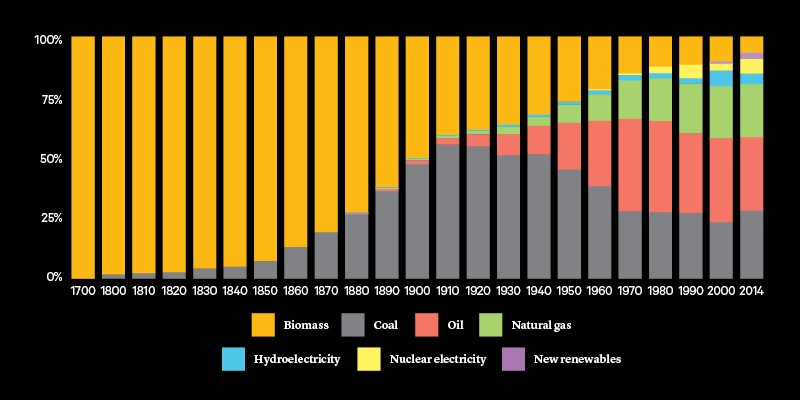
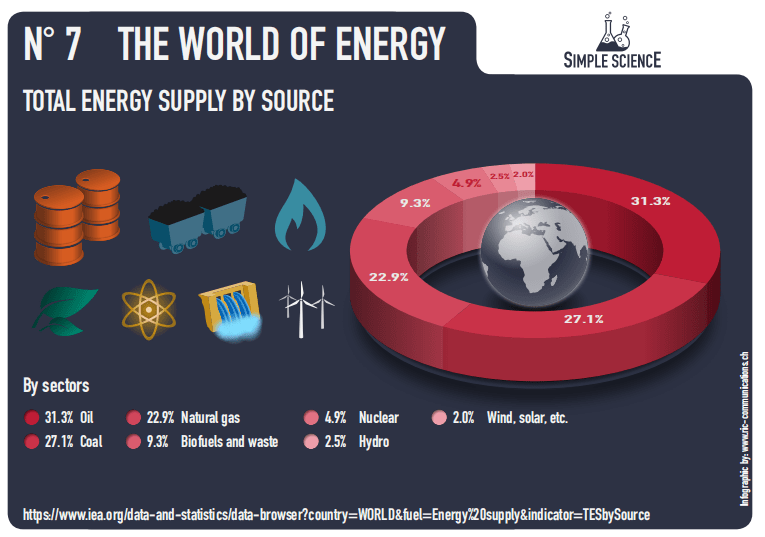
See World of Energy Infographics

After World War II the movement took a different turn. The devastation of the war, combined with the breakneck pace of economic development, fed a sense that industrial civilization was out of control and threatened the entire planet. The key figures promulgating this view were Henry Fairfield Osborn Jr. (Our Plundered Planet, 1948) and especially William Vogt, whose Road to Survival was also published in 1948. Vogt was an ornithologist and ecologist whose experiences in the developing world had convinced him that economic growth and overpopulation would inevitably lead to civilizational collapse unless both growth and population were radically curtailed.

Vogt argued that beliefs in progress were weighing humanity down and were actually “idiotic in an overpeopled, atomic age, with much of the world a shambles.” He concluded that the road to survival could only lie in maximizing use of renewable resources and accepting lower living standards or reduced population.

In his language and outlook, one can see all the strands of apocalyptic environmentalism (now focused on climate change) that we see today. This especially applies to his description of the United States and its economic system.

More benignly, Vogt’s (and Osborn’s) books marked the evolution of conservationism into environmentalism. Stripped of the apocalyptic verbiage, they were arguing that conservation of nature was not enough. The interdependence of man and nature meant that human activities could not be isolated and instead were having negative effects on the entire planet—wilderness, settled areas, oceans, everywhere. The balance of nature was being destroyed, dragging down the natural world and humanity with it. Restoring that balance, not merely conserving parts of the ecosystem, was the new meaning of being an environmentalist.

Also key to Vogt’s analysis was the concept of “carrying capacity”—how much the environment/planet could sustainably bear of a species’ imprint before disaster ensued. This was not precisely defined but it is easy to see the relationship of this idea to how climate change is conventionally thought of today.

The burgeoning strength of the environmental movement started what became a blizzard of legislative action to protect the environment and roll back pollution. That began under LBJ with the Clean Air Act, Solid Waste Disposal Act, Water Quality Act and Air Quality Act. Then under Nixon there was the National Environmental Policy Act, proximate to the Santa Barbara oil spill and widely-publicized Cayahoga River fire, establishing the (NEPA) environmental standards and reviews that are still with us today. Also under Nixon, the Environmental Protection Agency was established, the Clean Water and Endangered Species Acts passed and the Clean Air act strengthened. The first Earth Day was on April 22, 1970, clearly marking the environmental issue as a mass cause for those on the left of the political spectrum.

An interesting aspect of all this activity is that it was meliorist and profoundly reformist. That is, despite its origins in the Vogtian Silent Spring, with its apocalyptic overtones, the drive to clean up the environment was pursued through a steady accumulation of legislation and consciousness-raising about the issue. There was a sense that the problem was solvable through such activities and did not require the massive changes in economic activity and human behavior that an advocate like Vogt would have called for. Of course, there was always a radical fringe of the environmental movement, typified by Edward Abbey’s 1975 novel, The Monkey Wrench Gang, and the Earth First! group, formed in 1980, but they were a small and not particularly influential part of the overall movement.

Not only was environmentalism of this era reformist but it was very successful reformism. Consider: Because we are now so used to having a fairly clean environment in terms of air and water quality, it is easy to forget just how far we have come since the early 1960’s. Rivers and lakes back then were far more likely to be polluted and essentially unsafe for human activity than not; the Cuyahoga River in Cleveland famously caught fire in 1969. But since that era, water quality has improved dramatically; the number of water bodies meeting standard quality criteria has roughly doubled. Such icons of pollution as Boston Harbor have been cleaned up. And everywhere towns and cities are investing in waterfront leisure developments that would have been a tasteless joke a generation ago.

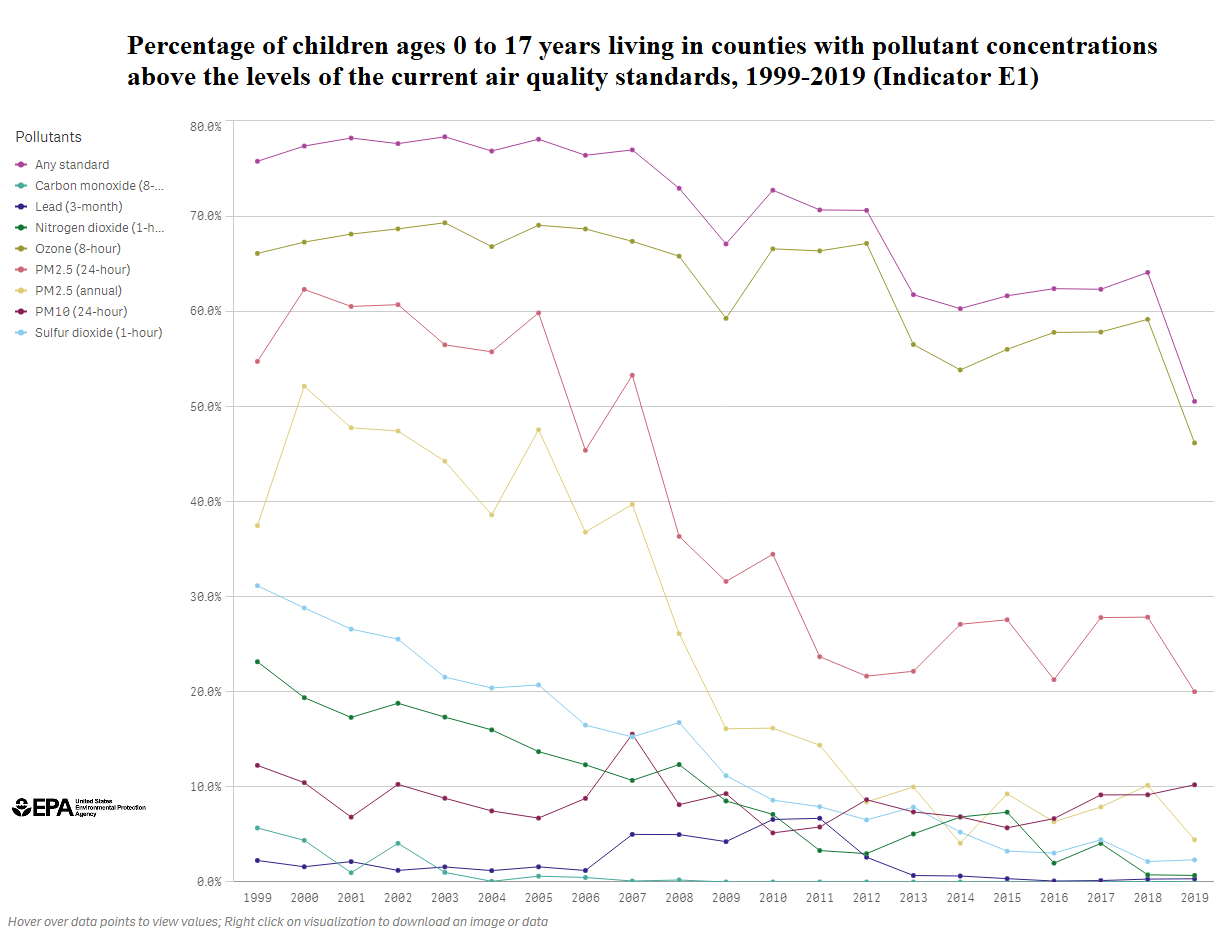
Air quality has increased dramatically as well. Between 1970 and 2021, emissions of the six key air pollutants that impact public health—ozone, particulate matter, carbon monoxide, nitrogen dioxide, sulfur dioxide and lead—were cut by 78 percent, even as GNP has increased increased by nearly 400 percent. Acid rain has declined by two-thirds and smog is down by about a third. These trends are truly amazing and would have been considered scarcely believable back in 1970. They underscore the tremendous success of modern reformist environmentalism.

See also Progressively Scaring the World (Lewin book synopsis)


Eco-Terrorists Suspected Vandals of Tacoma Power Stations


Gateway Pundit’s report was Thousands Lose Power After Three Substations Sabotaged in Tacoma, Included were quotes from Seattle Times.

Deputies arrived on scene and saw there was forced entry into the fenced area. Nothing had been taken from the substation, but the suspect vandalized the equipment causing a power outage in the area. 

Deputies were notified of a second burglary to the TPU substation at 8820 224th St E which also had forced entry with damage to the equipment. Nothing was taken from this site either.

At 11:25 we were notified by Puget Sound Energy that they too had a power outage this morning at 02:39 am. Deputies are currently on scene at this facility where the fenced area was broken into and the equipment vandalized.

At this time deputies are conducting the initial investigation. We do not have any suspects in custody. It is unknown if there are any motives or if this was a coordinated attack on the power systems.

In total, three sites were vandalized, two TPU and one PSE, with more than 14K customers effected

One tweet said: “Not yet clear who did this, but there have been a lot of attacks on the power grid lately and it is something domestic terrorists, especially white supremacists eco-terrorists,  are obsessed with (and several have been convicted in connection with recent attacks/plots).”

I applied the correction based on the consensus of commenters who suspect eco-terrorists of a new tactic replacing their previous valve-turning exploits.

How Climate Evangelists Took Over Your Local Weather Forecast


The battle by alarmists for hearts and minds is extending to many fronts, including recruiting family doctors, and in the case of this post, media weather reporters. Surveys have shown the meteorologists are not more convinced of global warming/climate change than is the American public (a slight majority). But efforts have been underway to convert them and use their telecasts and columns to promote climatism.

Luke Mullins writes at Washingtonian This George Mason Professor Trains Weathercasters to Be Climate Advocates.  Excerpts in italics with my bolds.

You’ve probably seen his handiwork on local TV and didn’t even know it.

About 13 years ago, Ed Maibach identified a TV meteorologist in Columbia, South Carolina, who was willing to use his airtime not just to provide tomorrow’s forecast but to show viewers how climate change was impacting their local community. Over the next decade, Maibach would expand this experiment into what you might call a weather underground—a coast-to-coast network of TV weathercasters who believe that educating their audiences about global warming is as crucial as telling them when to bring an umbrella. The initiative, known as Climate Matters, has forced Maibach to confront a series of entrenched problems inside the broadcast-­meteorology community, including alarming levels of climate denial and skepticism, fears about alienating audiences, and the occasional harassment of participating weathercasters.

Yet by the end of 2021, the Climate Matters network of meteorologists had penetrated into nearly every media market in the country, and Maibach had pioneered a promising new approach to a complex crisis.

Truth is, if you’ve recently watched the weather report on the local news in the Washington area, there’s a decent chance you’ve seen Maibach’s handiwork—the Climate Matters network now includes weathercasters at NBC4, WUSA9, WJLA7, and Fox 5. But like local-news consumers across the country, you wouldn’t have known that behind that telegenic meteorologist are a social scientist in his sixties and a team of academic researchers, data crunchers, and ex-weathercasters. “To a lot of our viewers, it’s lost on them how much work Climate [Matters] really is doing,” says Kaitlyn McGrath, a meteorologist at WUSA9. “But it is so far from lost on us.”

Background from previous post:

A balanced and analytical report appears in Bloomberg (an interesting place for such independent thinking).  Climate Evangelists Are Taking Over Your Local Weather Forecast Excerpts below.

Amber Sullins gets a minute or two to tell up to two million people about some extremely complicated science, using the tools of her trade: a pleasant voice, a green screen, and small icons denoting sun, clouds, rain, and wind. She is the chief meteorologist at ABC15 News in Phoenix, so her forecasts mostly call for sunshine. Within this brief window, however, Sullins sometimes manages to go beyond the next five days. Far beyond.

Amber Sullins, weather reporter at ABC15 News in Phoenix.

“We know climate change could affect everything about the way we live in the future, from agriculture and tourism to productivity and local business,” she once noted. “But at what cost?”

It was a 35-second segment in a nightly newscast, a mundane moment preceding reports about three fallen firefighters in Washington state and a dangerous development for air travelers. But that climate-focused scene, and hundreds of others like it playing out at local news stations across the country, marks a major shift in the way Americans hear about climate change. The safe and familiar on-air meteorologist, with little notice by viewers, has become a public diplomat for global warming.

There are about 500 broadcasters like Sullins and Morales, who each receive regular data dumps and ready-to-use graphics from Climate Matters, an organization whose mission is to turn TV meteorologists into local climate educators. The program was founded in 2010 by Climate Central, a research-and-journalism nonprofit, with help from George Mason University, the American Meteorological Society, and others. Newscasters who participate are sent possible topics for climate-related segments every week, with TV-ready data and graphics pegged to large-scale meteorological events, such as unusually high heat or precipitation, local trends, or seasonal themes.

Two-thirds of 18- to 64-year-olds in the U.S. watch a news broadcast, either on TV or a digital device, at least once a week, according to 2015 research by the market research company SmithGeiger LLC. Nearly 40 percent of people within this wide age group watch broadcast news on daily basis, and the reliable presence of an on-air meteorologist is a huge part of the draw.

“Local TV news wouldn’t exist any more if it weren’t for the weathercasts,” says Ed Maibach, director of George Mason University’s Center for Climate Change Communication.

Part of meteorologists’ reluctance to talk about the climate stems from the treacherous tools of their trade. Meteorologists learn very quickly that weather models are messy. Some no doubt sour on finicky climate models because of this experience. If short-term weather models make mistakes, it may seem reasonable to assume that a model projecting into the next century is ridiculous.

“Meteorologists are used to looking at models and being burned,” says Paul Douglas, a former TV weatherman-turned-serial entrepreneur, who recently published a book on climate change and faith.

Sullins, 34, knows there’s tension in telling her viewers about conditions in the 22nd century when she is reluctant to commit to a two-week forecast. “I can’t tell you what the high temperature is going to be on July 4 of this year, today,” Sullins says. “I can’t possibly tell you that. But I can tell you, based on climate, that in July, here in Phoenix, it’s going to be over 100 degrees. That’s easy.”

Her point is that weather and climate are “two entirely different beasts.” It’s like the difference between someone’s mood and disposition, Sullins says. She wants viewers of the nightly news to spend more time thinking about the planet’s disposition.

Summary

The PR campaign continues and intensifies with simplistic soundbites to persuade people to fear the future, in order to advance the anti-fossil fuel agenda. It is a Chinese water torture program well-funded and essential to the climate crisis industry.

But note the logical fallacy in Sullins’ statement above. She says: “I can tell you, based on climate, that in July, here in Phoenix, it’s going to be over 100 degrees.” That’s not climate change, that’s climate stability, something we depend on despite the fear-mongering.

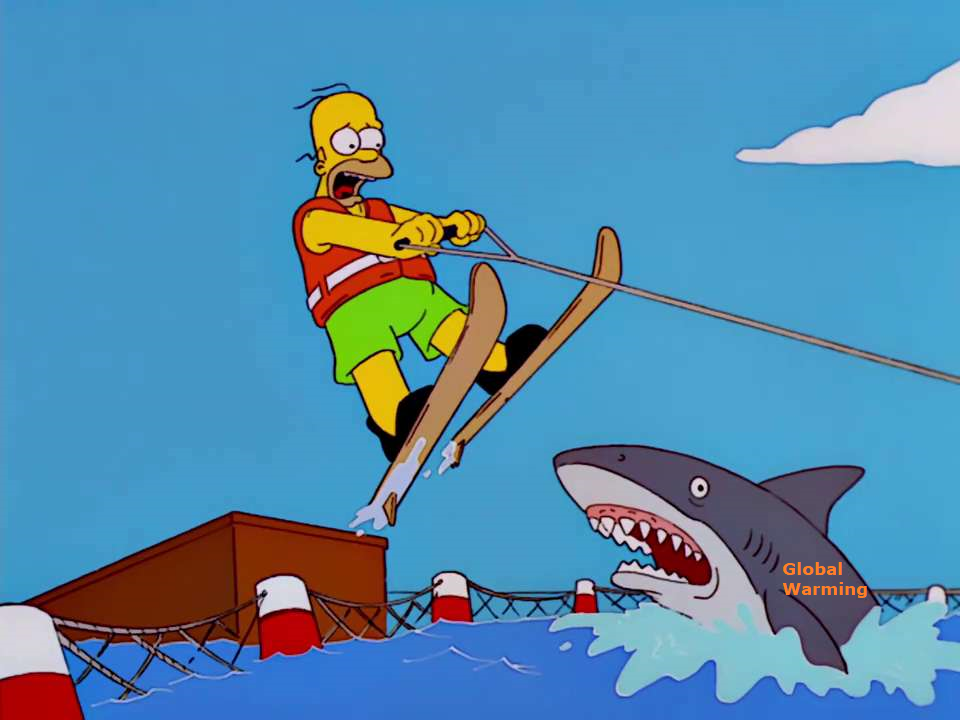
How will viewers respond to this?  Will ratings improve by watching weather people jumping the shark? (It didn’t work for “Happy Days” TV show).  Or will people resent the attempted brainwashing and switch channels?

Footnote:

The hottest temperatures ever reported in Phoenix came in January 2015, when Fox 10 weatherman Cory McCloskey faced a malfunctioning temperature map on live television. “Wow, 750 degrees in Gila Bend right now,” he said, without breaking a sweat. “And 1,270 in Ahwatukee. Now, I’m not authorized to evacuate, but this temperature seems pretty high.” More than 6 million people have watched the blooper on YouTube.

See Also Urban Flooding: The Philadelphia Story


Climatist Psy-Ops Spreading

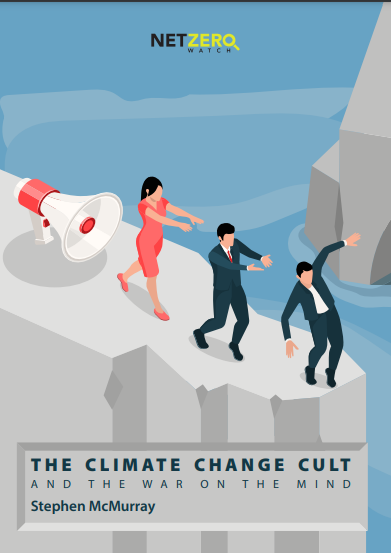
Stephen McMurray published a pamphlet at Zero Watch The Climate Change Cult and the War on the Mind. Excerpts in italics with my bolds and added images.

Introduction

As the eco-zealot group Just Stop Oil continue to break the law and cause mayhem, it is perhaps time to investigate who is pulling the strings of this and other fake grassroots movements. Even a cursory glance will make it clear that the people behind them are not everyday members of the public but a group of highly influential American billionaires.

The Climate Emergency Fund

According to the Just Stop Oil website, their main source of backing is the Climate Emergency Fund. The three founding members of this group, who also fund Extinction Rebellion, are Aileen Getty from the Getty oil family, Rory Kennedy, daughter of Senator Robert Kennedy, and philanthropist Trevor Neilson. All three own houses on Malibu beach, which is odd as disciples of the climate cult claim that sea levels are rising dramatically, and you would therefore assume that seafront real estate would be a bad investment.

Most of the focus has been on Getty but it is Neilson who has the most interesting background. After university he worked as an intern in the White House when Bill Clinton was president. Later he worked for the then newly formed Bill and Melinda Gates Foundation as Director of Communications, and also acted as the Gates’ personal spokesman.

In 2002 Neilson was a co-founder of DATA (Debt, AIDs, Trade, Africa) with Bill Gates, Bono and George Soros.  DATA was allegedly created to help ease poverty in Africa, seek debt relief for African countries and help fight AIDs. They also claimed to want to end hunger in Africa, an idea that is interesting since climate
activists want to reduce carbon dioxide which is essential to all plant life; any reduction would clearly reduce the amount of food crops, causing more hunger rather than alleviating it. Neilson was also a member of the Clinton Global Initiative, the Council of Foreign Relations, and was one of the Young Global Leaders for the World Economic ForumIn other words, he is a friend to all the usual globalist suspects who are pushing the green agenda for their own ends.

If we move on to current advisory board members of the Climate Emergency Fund, we see more of the usual themes and ideologies that have nothing to do with the climate but are warmly embraced by the climate crisis zealots. Stephen Kretzmann founded Oil Change, an organisation pressing for the end of oil production. He is a supporter of the Marxist Black Lives Matter movement. On the Oil Change website he writes an article that promotes BLM and trots out extremist left-wing tropes.

Another on the advisory board of the Climate Emergency Fund is Bich Ngoc Cao. She is also on the board of left-wing news site Mother Jones. The site denigrated Moms for Liberty, a group who have fought against their children being indoctrinated by gender and LGBTQ ideology in schools, calling them ‘Moms against libraries’ and ‘book-banning bathroom-police’, because they want to remove inappropriate sexual material from school libraries and keep single-sex bathroom spaces. Bich Ngoc Cao is also on the Board of Library Commissioners for the city of Los Angeles.

Bill McKibben is another CEF advisory board member who compares climate issues to racism, and uses the death of George Floyd to make his point.

The executive director of the Climate Emergency Fund (CEF) is Margaret Klein Salamon, an American in her mid-thirties. She is a clinical psychologist and therefore has been involved with vulnerable people suffering high levels of stress and anxiety.  In her role in climate activism, she appears to be using her experience to frighten vulnerable people. She is the founder of Climate Awakening, which, according to her page on the CEF site, is ‘a project to unleash the power of climate emotions through scalable small group conversations’.

However, if you go on to the Climate Awakening website, on the first page it says, ‘Share your climate terror, grief, and rage with people who understand. Join a Climate Emotions Conversation – a small group sharing & listening session about the climate emergency.’ Below that there is a screen with images of three young people and the words: ‘What are you FEELING about climate emergency? Make sure to name the emotions (fear, grief, anger, despair, isolation)’.

Salamon also had an article in Psychology Today where, as ‘The Climate Psychologist’, she gave ‘relationship advice for the Climate Emergency’. A reader asked: “How can I tell my partner I am afraid to have children? …Why would I want to bring a child into this world, right now? Imagining the future they would grow up in fills me with terror.”   Part of Salamon’s reply reads as follows:

“Let me be clear; despite widespread denial of the Climate Emergency and how it will affect our society, your worries are in fact based in the reality of what the global scientific community is telling us, and you have every right to feel that way.”

So again, a woman is saying she is terrified, and Salamon, rather than relieving her terror, says she is right to feel that way. Salamon then tries to get her involved in climate action groups instead of talking to her partner.

This is typical of the behaviour of a cult. Feed on the person’s fear, tell them the fear is real and not to listen to what their family say and ultimately try to recruit them into the cult as well. One of the sites she advises people who are terrified of climate change to go to is the Good Grief Network.  They introduce themselves as a group who only want to care for you amid the chaos all around. They will then get you in a group of like-minded people to expose you to groupthink. When you have all bonded, they will strip you of all your preconceived ideas and mould you into their reality. They will then fill the void left by destroying any prior belief system you had, with their own worldview.

In their ten-step programme to ‘Personal Resilience & Empowerment in a Chaotic Climate’, the first step is, yet again, to tell you to be very afraid and ‘accept the severity of the predicament’.  Step 8 is the most disturbing: ‘Grieve the harm I have caused.’  Telling you that you are to blame for some of the ‘harm’ increases your fear by making you feel guilty. If you feel guilt then you will desperately want to make up for your actions and will do whatever you are told to do to achieve that, namely to go on and traumatise other people by telling them the world is about to end.
The Psychologists

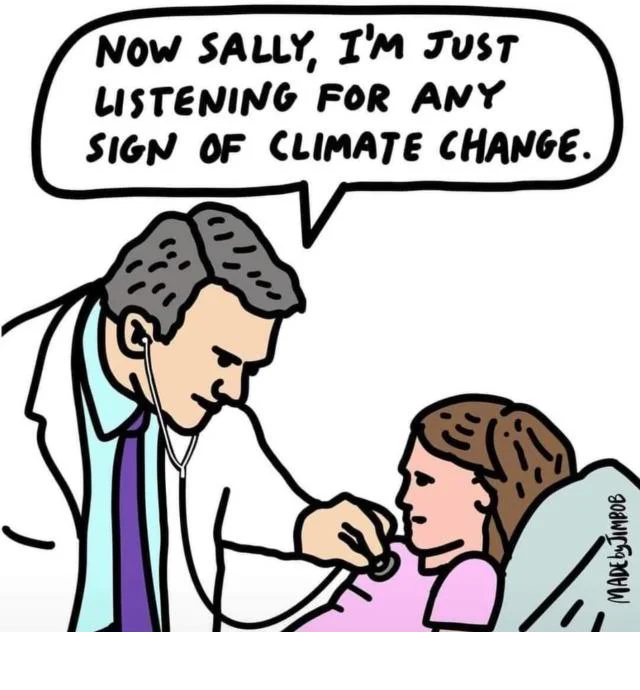
If you think Margaret Klein Salamon is an oddity amongst psychologists, think again. Many are now boarding the climate crisis gravy train. Dr Gareth Morgan, a clinical psychologist from Leicester University, is an Extinction Rebellion supporter because “as many professionals have observed, climate activism should be seen as central to our professional identities if we truly take on board the science that indicates climate breakdown presents the biggest threat to human health worldwide.’  Once again extreme left-wing bias appears to cloud his judgement. He opines, ‘while the same colonial and neoliberal ideologies that support racism and inequity also prop up the unfettered capitalism that is threatening all life on Earth.’

The Climate Psychology Alliance wishes to use their expertise in the field of psychology to nudge people into believing in their worldview of impending climate-induced doom. The group is overtly stating that ‘facts’ aren’t really persuading people that the climate crisis is real and that they need use psychology to pressure us all to become true believers. Most telling though, is when they say it can’t be ‘positivist’ psychology, based on empirical evidence, but that a deeper type of psychology is to be used. In other words, ignore the facts of the situation and use mind manipulation techniques and fear to convert the non-believers. They even say that climate anxiety is a good thing.

It is not just individuals these groups want to target, but corporations as well. An organisation called Climate Psychologists offers consultancy courses to companies.  They aren’t just offering support to employees traumatised by the ‘climate crisis’, but are using behavioural change programmes and ‘ethical nudging.‘ They are telling employers how to subtly manipulate the minds of their employees to believe in the climate emergency. This is reminiscent of the government’s SPI-B Behavioural Insights team, which used psychology to terrify people into accepting Covid lockdowns.

Indeed, there is direct evidence that the government is using the tactics they developed during Covid to coerce us all into believing the climate crisis narrative.  On October 12 this year, the House of Lords Environment and Climate Change Committee published a report entitled In our Hands: Behaviour change for climate and environmental goals.  It is a sinister document, in which the government openly states that all aspects of our life need to be managed to lessen the impact of climate change, and that mind control techniques, very similar to the ones used to force the public into acquiescing to Covid lockdowns, need to be used against the population. Sir Patrick Vallance, one of the architects of the disastrous Covid policy, was a witness. He told the committee: ‘The reality is that behaviour change is a part of reaching Net  Zero. It is unarguable.’

So every government department will be required to use psychology as a weapon against the public, to ensure we behave in line with what the climate alarmists demand.  It is clear from this that not only are all government departments to be targeted, but the private business sector as well, even if it is not in their financial interest to do so.

This sounds suspiciously like Klaus Schwab’s infamous statement that Covid offered a window of opportunity to bring about the Great Reset.  To emphasise just how much they want to control the minutiae of daily life, one of the key points the committee make is:

Priority behaviour change policies are needed in the areas of travel, heating, diet and consumption to enable the public to adopt and use green technologies and products and reduce carbon-intensive consumption.

Therefore, you will be told what to eat, where you are allowed to go and how you are allowed to get there. Another key point clearly states that they will tax and legislate you into compliance:

Information is not enough to change behaviour; the Government needs to play a stronger role in shaping the environment in which the public acts, through appropriately sequenced measures including regulation, taxation and development of infrastructure.

But it is not just businesses they are trying to use to make you change your behaviour. They also want to use charities and religious institutions to control the minds of the masses.  When referring to the various levers of change the government could use, they identify ‘regulatory and financial (dis)incentives which alter the availability and affordability of options.’  This suggests that the government would be prepared deliberately to create scarcity and make certain things unaffordable. Does that sound familiar with relation to the current energy crisis?

They appear to have no sense of irony when speaking of clear messaging and open information during the pandemic, and seem to think that propaganda, lies, data manipulation and censorship is actually truth and transparency.  It is evident that the climate alarmists, with the backing of billionaires, psychologists and the government, are waging a war on the minds of the people to bring about the Great Reset dystopia.

They have the power and the money on their side, but clearly, having to resort to mind control techniques, they don’t have the truth. As George Orwell is reputed to have said: ‘In the time of universal deceit, telling the truth is a revolutionary act.’  It’s time we all became revolutionaries, because the truth is that it is not the climate crisis that is the biggest threat to our wellbeing, but the climate crisis alarmists who want to remove the last vestiges of our freedom and plunge us into a never-ending Dark Age.

See Also Climate Hysteria is a Global Psy-Op
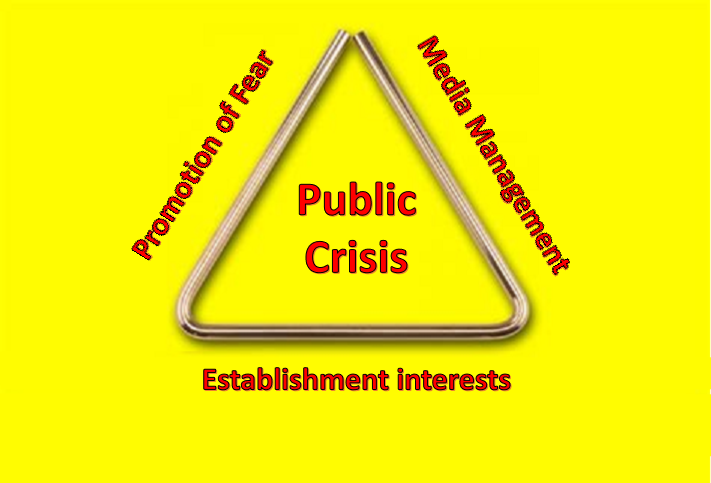
Here Comes the Climate-Medical Complex
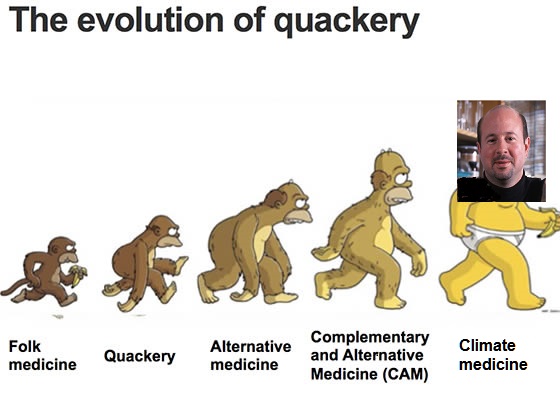
The Antidote: Climatists, Spare Us Your Guilt Trip!




Seven Ways Climate Reparations Are Absurd

Dan Hannan explains at Washington Examiner Demands for ‘climate reparations’ are laughable Excerpts in italics with my bolds.

The demands for climate reparations from wealthy countries are so absurd, so unscientific, and so offensive to natural justice that it is difficult to know where the criticism should begin.

The argument is that, since countries that industrialized earlier produced a lot of carbon a hundred years ago, they now owe a debt to poorer states. Naturally, this argument appeals to assorted Marxists, anti-colonialists, and shakedown artists, and COP27 has been dominated by insolent demands for well-run states to pony up.

Some, including Austria, Belgium, and Denmark, have capitulated. No doubt others will follow. These days, once something is framed as poor-versus-rich or darker-skinned-versus-lighter-skinned or ex-colony-versus-ex-colonizer, the pressure becomes irresistible. Nevertheless, it is worth running through the absurdities in play.

First, the claims are rooted in indignation rather than science. For example, Pakistan, which leads the G-77 group of poorer states and is leading the campaign, claims that its floods are a product of climate change. But might Pakistan look a little closer to home? Although Europe and North America have seen significant reforestation over the past half-century, Pakistan has gone in the other direction. A third of its landmass was forest when it became independent in 1947. Now, it is one-twentieth, and the rains run straight off the mountains into silted-up reservoirs that then overflow, whence the floods.

But never mind all that — blame the colonialists, eh?

Second, there is the utter refusal to acknowledge what wealthier countries are already doing. I don’t just mean in terms of making direct monetary transfers — though, sticking with Pakistan for a moment, Britain has been borrowing around $400 million a year to give to that country, which pleads poverty while funding a nuclear weapons program. No, I mean in terms of impoverishing themselves through drastic action on carbon emissions. Britain has cut its carbon dioxide production by nearly half since 1990, largely by closing down its coal mines. Pakistan has more than 100 coal mines in operation.

But, again, blame the colonialists, eh?

Third, there is the ingratitude. One of the things I used to resent about the European Parliament was the entitled and hectoring way in which representatives of poorer countries (they were usually very rich people) would call for bigger transfers. “This is unacceptable,” they would say of whatever offer the Brits, the Dutch, or the Germans put on the table. Fine, I’d think, don’t accept it, then. Yet the numbers only ever got bigger. Look, I’m sorry to be blunt about this, but a 2-degree rise in temperature is far less menacing for Britain or Canada than it is for most countries.

The least-threatened countries are doing the heaviest lifting by far.
But don’t expect any gratitude.

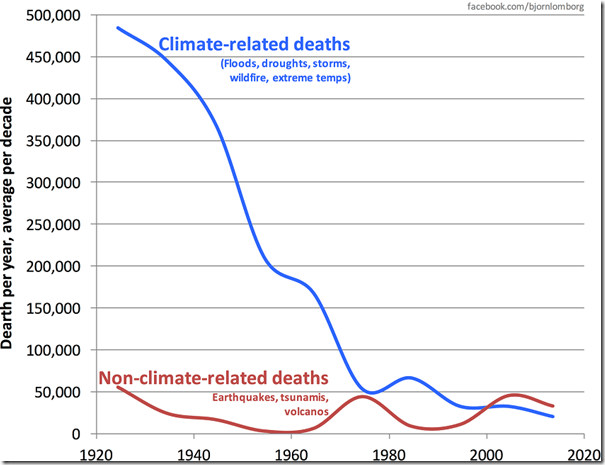
Fourth, there is the implication that industrialization, the miracle that released our species from 10,000 years of backbreaking labor, is regrettable. In truth, as well as giving us longer, healthier, and freer lives, the wealth released over the past 200 years of specialization and exchange is cleaning up the environment. The air and water are purer in London than in Lahore because GDP is higher. For the same reason, natural disasters have become far less lethal. The 1950 floods in Pakistan killed many more people than this year’s, because they hit a poorer country.

Fifth, there is the related assumption that rich countries owe their wealth to exploitation, that one nation’s gain must mean another’s loss. This is palpable nonsense. The enrichment of a country, other things being equal, is good news for all of its trading partners. And countries get wealthy not by conquering others (a process that is always expensive) but by pursuing the right policies, such as secure property rights, low taxes, independent courts, light regulations, and free trade.

If you tax successful countries to pay unsuccessful ones, you will end up with
fewer of the former and more of the latter.

Sixth, and most preposterously, there is the ugly collectivism that lurks behind every shakedown attempt, from the return of artworks to slavery reparations. Our criminal justice system, like every Abrahamic religion, is based on the idea that we are individually responsible for our actions. But when it comes to these scams, we are all suddenly defined by ancestry or skin color.

It is precisely because Western nations broke out of that dispensation that they became rich in the first place. And it was by copying their individualist outlook that other countries were able to catch them up. Far from complaining about industrialization, the rest of the world should thank us for having developed capitalism, and they should seek to emulate it.

Postscript: Absurdity Seven

Climate reparations are a legal quagmire.  From Hulme et al. (2011):

At the heart of the loss and damage (L&D) agenda is the idea of attribution—that specific losses and damages in developing countries can be “associated with the impacts of climate change,” where “climate change” means human-caused alterations to climate. It is therefore not just any L&D that qualify for financial assistance under the Convention; it is L&D attributable to or “associated with” a very specific causal pathway.

Developing countries face some serious difficulties—at best, ambiguities—
with this approach to directing climate adaptation finance.

Investment in climate adaptation, they claim, is most needed “… where vulnerability to meteorological hazard is high, not where meteorological hazards are most attributable to human influence”. Extreme weather attribution says nothing about how damages are attributable to meteorological hazard as opposed to exposure to risk; it says nothing about the complex political, social and economic structures which mediate physical hazards.

And separating weather into two categories — ‘human-caused’ weather and ‘tough-luck’ weather – raises practical and ethical concerns about any subsequent investment allocation guidelines which excluded the victims of ‘tough-luck weather’ from benefiting from adaptation funds.

Contrary to the claims of some weather attribution scientists, the loss and damage agenda of the UNFCCC, as it is currently emerging, makes no distinction between ‘human-caused’ and ‘tough-luck’ weather. “Loss and damage impacts fall along a continuum, ranging from ‘events’ associated with variability around current climatic norms (e.g., weather-related natural hazards) to [slow-onset] ‘processes’ associated with future anticipated changes in climatic norms” (Warner et al., 2012:21). Although definitions and protocols have not yet been formally ratified, it seems unlikely that there will be a role for the sort of forensic science being offered by extreme weather attribution science.

See also: Climate Loss and Damage, Legal House of Cards