“Access to cleaner and affordable energy options is essential for improving the livelihoods of the poor in developing countries. The link between energy and poverty is demonstrated by the fact that the poor in developing countries constitute the bulk of an estimated 2.7 billion people relying on traditional biomass for cooking and the overwhelming majority of the 1.4 billion without access to grid electricity. Most of the people still reliant on traditional biomass live in Africa and South Asia.
The relationship is, in many respects, a vicious cycle in which people who lack access to cleaner and affordable energy are often trapped in a re-enforcing cycle of deprivation, lower incomes and the means to improve their living conditions while at the same time using significant amounts of their very limited income on expensive and unhealthy forms of energy that provide poor and/or unsafe services.” Source: Energy, Poverty, and Development, Chapter 2 UN Global Energy Assessment
The moral of this is very clear. Where energy is scarce and expensive, people’s labor is cheap and they live in poverty. Where energy is reliable and cheap, people are paid well to work and they have a better life.
It’s that time of year. As New Year’s Eve approaches, we look back on 2019 seeking nuggets of wisdom from twelve more months of the human experience. Unfortunately, the Word of the Year selections from two top dictionaries reveal just how misplaced this year’s priorities were.
The Oxford English Dictionary selected “climate crisis” as the term that “reflects the ethos, mood, or preoccupations of the passing year.” Striking a similarly dismal note, Dictionary.com’s selection was “existential.”
A better word of the year for 2019? Energy poverty.
While wealthy world leaders take luxurious trips to Madrid for the U.N. Climate Conference, flying across oceans in crisp business suits, one billion human beings are living in abject poverty without access to electricity. Still more lack reliable electricity.
Environmental protection can and should be a priority—but those clamoring about the supposedly disastrous future effects of a mildly warming climate could better spend their time and attention on the very real, immediate impact of energy poverty.
A life without energy is a life of drudgery. Without the benefits of electricity such as clean water, modern health care, and home heating, communities are mired in sickness, hard physical labor, and limited opportunity.
Average life expectancies are as much as two decades shorter in countries without widespread electricity. While wealthy nations wring their hands and a generation of children is plagued with climate hysteria-induced anxiety, real men, women, and children are dying every day from such simple illnesses as diarrhea and the flu.
Even household chores pose a threat without energy. Nearly 4 million perish annually from preventable lung and heart disease caused by inhaling soot when cooking over an indoor fire. The natural gas or electric stoves we take for granted would literally save lives in developing countries.
And economic freedom is nearly unheard of in these nations, where most live in poor rural villages and women spend much of their day walking arduous journeys to collect water and firewood (or, worse, cow dung).
The easiest way to alleviate poverty around the world is creating access to affordable, reliable energy. With cheap, abundant electricity to cook, heat and light homes, and provide new economic opportunities, the third world could experience the same prosperity and opportunity as the Western world.
Some will argue that, as upsetting as energy poverty may be, we have to do something about climate change. This is wrong for two reasons.
First, despite ubiquitous headlines proclaiming our impending doom, there’s simply no scientific evidence to suggest that climate change will be anything other than mild and manageable. Thanks to scientific advances (ironically fueled by the very same fossil fuels so often vilified in the media), humans are more resilient than ever to our surroundings.
Second, no government program can ultimately have any meaningful effect on climate change. According to data models used by the United Nations, even the global Paris Climate Accord would reduce the planet’s average temperature by at most 0.17°C—if the United States was still participating and every signatory fulfilled its emission reduction pledges for the rest of the century. With the European Union recently admitting it won’t reach its 2030 carbon dioxide targets, the odds are increasingly slim.
Rather than expend massive sums of tax dollars on inefficient, unreliable renewable energy, the best path forward is to promote human health, prosperity, and continued private-sector innovation to address the many challenges we face.
Here’s hoping 2020 will see Western society cast off the heavy burden of climate alarmism and focus instead on eliminating energy poverty—providing light, warmth, and hope to suffering people.
An article by James Pero at Daily Mail confirms suspicions about muddled thinking regarding global warming/climate change. Is carbon dioxide making it harder to THINK straight? Excerpts in italics with my comments and images.
Rising CO2 levels may hinder cognitive function and could decrease decision-making efficiency by 50 PERCENT in 2100, study says.
Carbon emissions may have a drastic impact on cognitive function
Researchers say that CO2 may decrease classroom decision making
It could reduce decision making by as much as 50 percent in 2100, they say
Rational thought may eventually become a victim of climate change according to a new study.
[Well, media announcements and studies like this one show rationality is already greatly compromised.]
Research presented by scientists at the annual American Geophysical Union and submitted to the journal GeoHealth suggests that increased CO2 may soon diminish humans’ capacity to think clearly.
The findings follow previous studies that show how indoor air pollution and poor ventilation can hinder people’s ability to perform mentally, including a study published last year from the University College London.
[Note the chart at the top showing that CO2 in the atmosphere is 410ppm (parts/per/million) , or 0.04%. Note also that health and safety regulations for buildings expect no harmful effects below 5000 ppm, which would be 10 times the present amount.]
‘Human cognitive performance declines with an increase in CO2’, the researchers wrote in the paper.
‘Direct impacts of CO2 emissions on human cognitive performance may be unavoidable.’
Those studies concluded that circulating air and regulating the amount of CO2 trapped in a room can help mitigate the effects of too much CO2, but new research suggests ventilation in a climate change-addled future might just make matters worse.
[This diagram shows the ratio of human to natural carbon dioxide in the atmosphere equals the ratio of their inflows, independent of residence time. The amount of CO2 flowing from humans into the atmosphere is miniscule (about 4%) compared to CO2 flowing from the oceans and biosphere (96%). Thus the human component presently is 17ppm (or 0.002%). Eliminating our emissions entirely would have no discernable impact on the total amount. See Who to Blame for Rising CO2?]
It also used two different climate models – one that factors in reductions in CO2 and another that projects conditions if emissions continue unfettered.
In the model that factors in some emissions intervention, scientists say decision making in the classroom could decrease by 25 percent while a model without emissions mitigation could see a whopping 50 percent reduction.
Though previous studies have shown a correlation between brain function and CO2, not much is currently understood about why the gas affects our brains the way it does.
As noted by Gizmodo, a previous study on CO2’s correlation to brain function showed that an increase as little as 5 percent had reduces brain activity.
[Let’s see: A 5% increase in CO2 would be a leap from 0.041% to 0.043%, requiring some fine sensors to even detect it. Doubtful that brains are that sensitive to the gas itself, but obviously there is huge sensitivity to the idea of rising CO2.
OTOH plants have sensed and appreciated the increased CO2 as shown in the greening of the planet since 1982] No current research has studied the kind of long-term exposure that will would result from rampant climate change.
As noted by researchers, however, all of the adverse effects of CO2 on mental performance can still be averted by making a concerted effort to lower emissions and stave off climate change.
In first-of-its-kind research, NOAA scientists and academic partners used 100 years of microscopic shells to show that the coastal waters off California are acidifying twice as fast as the global ocean average — with the seafood supply in the crosshairs.
California coastal waters contain some of our nation’s more economically valuable fisheries, including salmon, crabs and shellfish. Yet, these fisheries are also some of the most vulnerable to the potential harmful effects of ocean acidification on marine life. That increase in acidity is caused by the ocean absorbing excess carbon dioxide from the atmosphere.
This product provides a unique data set for a range of users including providing a more accessible format for non-carbon chemists interested in surface ocean pCO2 and pH time series data. These 40 time series locations represent a range of ocean, coastal, and coral reef regimes that exhibit a broad spectrum of daily to interannual variability. These time series can be used as a tool for estimating climatologies, assessing natural variability, and constraining models to improve predictions of trends in these regions.
However, at this time, only two time series data sets (WHOTS and Stratus) are long enough to estimate long-term anthropogenic trends. ToE estimates show that at all but these two sites, an anthropogenic signal cannot be discerned at a statistically significant level from the natural variability of surface seawater pCO2 and pH. If and when that date of trend detection is attained, it is essential to seasonally detrend data prior to any trend analyses.
Even though the ToE provided are conservative estimates, data users should still use caution in interpreting that an anthropogenic trend is distinct from decadal-scale ocean forcing that is not well characterized. Future work should be directed at improving upon these ToE estimates in regions where other data, proxies, or knowledge about decadal forcing are more complete.
Background from previous post: Basics of Ocean Acidification
Updates added below June 20 and 24, 2015
Update below July 2, 2015: Ocean pH is actually trending alkaline
Update below September 15, 2015: Extensive discussion of ocean chemistry
If surface temperatures don’t skyrocket soon, expect to hear a lot in the coming months about “ocean acidification.” This sounds scary, and that is the point of emphasizing it to build support for Paris COP.
So here’s the basic chemistry of CO2 and H20:
That seems straight forward, So what is the problem?
That looks fairly serious. So what does the IPCC have to say about this issue?
What does it say in the SPM (Summary for Policy Makers)?
For this issue, I looked at the topic of ocean acidification and fish productivity. The SPM asserts on Page 17 that fish habitats and production will fall and that ocean acidification threatens marine ecosystems.
“Open-ocean net primary production is projected to redistribute and, by 2100, fall globally under all RCP scenarios. Climate change adds to the threats of over-fishing and other non-climatic stressors, thus complicating marine management regimes (high confidence).” Pg 17 SPM
“For medium- to high-emission scenarios (RCP4.5, 6.0, and 8.5), ocean acidification poses substantial risks to marine ecosystems, especially polar ecosystems and coral reefs, associated with impacts on the physiology, behavior, and population dynamics of individual species from phytoplankton to animals (medium to high confidence).” Pg 17 SPM
So, the IPCC agrees that ocean acidification is a serious problem due to rising CO2 emissions from burning fossil fuels.
What does it say in the Working Group Reports?
But wait a minute. Let’s see what is in the working group reports that are written by scientists, not politicians.
WGII Report, Chapter 6 covers Ocean Systems. There we find a different story with more nuance and objectivity:
“Few field observations conducted in the last decade demonstrate biotic responses attributable to anthropogenic ocean acidification” pg 4
“Due to contradictory observations there is currently uncertainty about the future trends of major upwelling systems and how their drivers (enhanced productivity, acidification, and hypoxia) will shape ecosystem characteristics (low confidence).” Pg 5
“Both acclimatization and adaptation will shift sensitivity thresholds but the capacity and limits of species to acclimatize or adapt remain largely unknown” Pg 23
“Production, growth, and recruitment of most but not all non-calcifying
seaweeds also increased at CO2 levels from 700 to 900 µatm Pg 25
“Contributions of anthropogenic ocean acidification to climate-induced alterations in the field have rarely been established and are limited to observations in individual species” Pg. 27
“To date, very few ecosystem-level changes in the field have been attributed to anthropogenic or local ocean acidification.” Pg 39
Ocean Chemistry on the Record
Contrast the IPCC headlines with the the Senate Testimony of John T. Everett, in which he said:
“There is no reliable observational evidence of negative trends that can be traced definitively to lowered pH of the water. . . Papers that herald findings that show negative impacts need to be dismissed if they used acids rather than CO2 to reduce alkalinity, if they simulated CO2 values beyond triple those of today, while not reporting results at concentrations of half, present, double and triple, or as pointed out in several studies, they did not investigate adaptations over many generations.”
“In the oceans, major climate warming and cooling and pH (ocean pH about 8.1) changes are a fact of life, whether it is over a few years as in an El Niño, over decades as in the Pacific Decadal Oscillation or the North Atlantic Oscillation, or over a few hours as a burst of upwelling (pH about 7.59-7.8) appears or a storm brings acidic rainwater (pH about 4-6) into an estuary.” http://www.epw.senate.gov/public/index.cfm?FuseAction=Files.View&FileStore_id=db302137-13f6-40cc-8968-3c9aac133b16
Many organisms benefit from less alkaline water.
(Added in thanks to David A.’s comment below)
In addition, IPCC has ignored extensive research showing positive impacts on marine life from lower pH. These studies are catalogued at CO2 Science with this summary:
There are numerous observations of improvement in calcification of disparate marine life in realistic rates of PH change due to increased CO2.
“In the final graphical representations of the information contained in our Ocean Acidification Database, we have plotted the averages of all responses to seawater acidification (produced by additions of both HCl and CO2) for all five of the life characteristics of the various marine organisms that we have analyzed over the five pH reduction ranges that we discuss in our Description of the Ocean Acidification Database Tables, which pH ranges we illustrate in the figure below.”
“The most striking feature of Figure 11 is the great preponderance of data located in positive territory, which suggests that, on the whole, marine organisms likely will not be harmed to any significant degree by the expected decline in oceanic pH. If anything, in fact, the results suggest that the world’s marine life may actually slightly benefit from the pH decline, which latter possibility is further borne out by the scatter plot of all the experimental data pertaining to all life characteristic categories over the same pH decline range, as shown below in Figure 12.”
At PH decline from control of .125, calcification, metabolism, fertility, growth and survival all moved into positive territory.
The oceans are buffered by extensive mineral deposits and will never become acidic. Marine life is well-adapted to the fluctuations in pH that occur all the time.
This is another example of climate fear-mongering: It never happened before, it’s not happening now, but it surely will happen if we don’t DO SOMETHING!.
Conclusion
Many know of the Latin phrase “caveat emptor,” meaning “Let the buyer beware”.
When it comes to climate science, remember also “caveat lector”–”Let the reader beware”.
Patrick Moore also provides a thorough debunking here:
“It is a fact that people who have saltwater aquariums sometimes add CO2 to the water in order to increase coral growth and to increase plant growth. The truth is CO2 is the most important food for all life on Earth, including marine life. It is the main food for photosynthetic plankton (algae), which in turn is the food for the entire food chain in the sea.”
Scientists have had pH meters and measurements of the oceans for one hundred years. But experts decided that computer simulations in 2014 were better at measuring the pH in 1910 than the pH meters were. The red line (below) is the models recreation of ocean pH. The blue stars are the data points — the empirical evidence.
What we have here is one of the basic foundations of the climate change scare, that is falling ocean pH levels with increased atmospheric CO2 content, being completely dismissed by the empirical ocean pH data the alarmist climate scientists didn’t want to show anyone because it contradicted their ‘increasing ocean acidity’ narrative.
In summary, recent research publications are using a term (OA) that is technically incorrect, misleading, and pejorative; it could not be found in the oceanography literature before about 15 years ago. . .
The claim that the surface-water of the oceans has declined in pH from 8.2 to 8.1, since the industrial revolution, is based on sparse, contradictory evidence, at least some of which is problematic computer modeling. Some areas of the oceans, not subject to algal blooms or upwelling, may be experiencing slightly lower pH values than were common before the industrial revolution. However, forecasts for ‘average’ future pH values are likely exaggerated and of debatable consequences. The effects of alkaline buffering and stabilizing biological feedback loops seem to be underappreciated by those who carelessly throw around the inaccurate term “ocean acidification.”
Saving the planet takes money, and lots of it. Money is both the theme and the subtext of the latest round of UN climate talks being held here—a vast river of cash flows through the UN climate process. Formally, the meeting is about nailing down one of the more obscure provisions of the Paris Agreement: Article 6, which provides for market-based instruments so that countries can trade their way out of their decarbonization commitments. Billions of cross-border dollars and transaction fees hang on the outcome.
With the negotiations concerning mind-paralyzing definitions of interest only to the most intrepid climate geeks, business and finance leaders could wind up taking center stage. When they first started coming to climate conferences, it was to observe and advise. Now it’s to show-and-tell their green virtue. “Momentum is there,” declared Paul Polman, the former Uniliver CEO. “Climate change is the biggest business opportunity of all time.” We’re close to several policy tipping points, he suggested.
The EU is about to approve a massive Green New Deal. Michael Bloomberg’s Task Force on Climate-related Financial Disclosures (TFCD) encourages companies to make voluntary climate-related risk disclosures. Draft EU regulations, meantime, could pave the way for mandatory climate disclosures that would force investment managers to justify their investments against climate and environmental benchmarks. Businesses are transitioning to “net zero,” Polman claims—meaning zero carbon emissions. They’re so far advanced that at this point, it’s only governments holding them back.
Peeling away the hype reveals a very different picture. Companies promising to cut their carbon emissions rely on offsetting—that is, paying for their consumption of hydrocarbon energy by supporting projects that reduce greenhouse-gas emissions, such as renewable energy. If companies were genuine in their commitment to tackle climate change, though, they would develop zero-carbon baselines for their own activities.
A growing number of companies boast about the proportion of wind and solar in their energy consumption. These claims rely on an entirely legal accounting fraud that says that renewable electricity can be stored; the physical reality is that electricity is consumed the instant that it’s generated. In peddling the falsehood that business and households can depend on anything close to 100% intermittent renewable energy, companies are misleading the public.
Rather than demonstrating a genuine – and painful – commitment to radical decarbonization, business leaders’ public professions of climate awareness reflect a confluence of interest between, on the one hand, corporate public-affairs departments steeped in doctrines of corporate social responsibility (CSR), and, on the other, nongovernmental organizations (NGOs). It’s a collusive process. The more environmental reporting requirements, the greater the importance of CSR in corporate hierarchies, the more work there is for external environmental consultants—and the greater the leverage NGOs wield over corporations.
Then there’s the psychology of herding, whereby CEOs are fearful of being hung out to dry if they don’t sign the latest statement pledging their company to save the world from climate breakdown. All this might remind readers of two groups in Ayn Rand’s Atlas Shrugged: the Moochers, comprising, in this example, the craven CEOs and their in-house CSR crowd; and the Looters, the environmental NGOs.
Their ultimate victim is capitalism, the only economic system ever to have produced durable, transformative economic growth.
Madrid also marks the debut of finance ministers at UN climate talks, with the formation of a coalition of finance ministers for climate action. Under their Santiago Action Plan, over 50 finance ministers, including most from the EU, pledged to incorporate climate-change considerations into economic policy and seek “analytical expertise” to put their economies on the path of “inclusive economics, social, and wider restructuring.”
The first rule of economic policymaking is that any government intervention in the economy involves trade-offs.
In the case of decarbonization policies that drive up energy costs, “net zero” means zero growth. The en masse capitulation of finance ministries before the altar of climate change sends a negative signal about future economic growth. Patricia Espinosa, executive secretary of the UN climate-change convention, has already sent out invitations to finance ministers to attend next year’s talks. Once on the climate bandwagon, it’s almost impossible to get off.
Then there are those desperate to get on the climate bandwagon and never get off. Anyone who has attended a UN climate conference will have noticed that some of the best-dressed participants are from Africa’s poorest nations, some with chunky Rolexes on their wrists. The UN makes sure that they suffer no hardship from their climate-change-fighting efforts. The Daily Subsistence Allowance, once handed out in envelopes with $100 bills, is now disbursed in its plastic equivalent of Swiss value cards. NGOs, whose role at climate conferences is to act as the spontaneous expression of civil society, are also eligible. Unsurprisingly, youth NGOs want to get in on the DSA act, too.
The incentive this creates is to make the UN what its critics always accuse it of being: a talking shop. According to one estimate, participants in the Article 6 discussions have already spent 70,000 hours failing to define what a “market instrument” is. Why decide, when another comfortable meeting in another expensive city beckons?
When it comes to Article 6, rich nations want tight rules to ensure that their money won’t be used to fund phony emissions cuts. Environment ministries in poorer nations naturally see Article 6 as a stream of funding that will flow through them. In principle, though, it’s hard to see how an emissions market can work as intended, when developed nations with hard caps on their emissions can pay to outsource their cuts to nations with no caps and no rigorous inventory of greenhouse gases.
Back in the U.S., some 80 business leaders have signed a statement urging the U.S. to remain in the Paris Agreement, with its commitment to limit warming to 1.5 degrees Centigrade above pre-industrial levels. Anyone who has looked at the numbers and what they entail in terms of global emissions cuts knows that this is next to impossible. It’s conceivable that global greenhouse-gas emissions will plateau, but steep cuts to “zero” aren’t going to happen. But America must have a seat at the table, comes the response. Perhaps, then, to show that they have some skin in the game, these business leaders should endure thousands of hours of meetings trying to decide what a market instrument is.
Bill Gates on Financiers Climate Fantasies:
Background from Previous Post: Why Al Gore Keeps Yelling “Fire!”
Some years ago I attended seminars regarding efforts to achieve operational changes in organizations. The notion was presented that people only change their habits, ie. leave their comfort zone, when they fear something else more than changing their behavior. The analogy was drawn comparing to workers leaping from a burning oil platform, or tenants from a burning building.
Al Gore is fronting an agenda to unplug modern societies, and thereby the end of life as we know it. Thus they claim the world is on fire, and only if we abandon our ways of living can we be saved.
The big lie is saying that the world is burning up when in fact nothing out of the ordinary is happening. The scare is produced by extrapolating dangerous, fearful outcomes from events that come and go in the normal flow of natural and seasonal climate change. They can not admit that the things they fear have not yet occurred. We will jump only if we believe our platform, our way of life, is already crumbling.
And so we come to Al Gore recently claiming that his past predictions of catastrophe have all come true.
When asked Sunday about his 2006 prediction that we would reach the point of no return in 10 years if we didn’t cut human greenhouse gas emissions, climate alarmist in chief Al Gore implied that his forecast was exactly right.
“Some changes unfortunately have already been locked in place,” he told ABC’s Jonathan Karl.
“Sea level increases are going to continue no matter what we do now. But, we can prevent much larger sea level increases. Much more rapid increases in temperature. The heat wave was in Europe. Now it’s in Arctic. We’re seeing huge melting of the ice there. So, the warnings of the scientists 10 years ago, 20 years ago, 30 years ago, unfortunately were accurate.”
Despite all this gloom, he’s found “good news” in the Democratic presidential field, in which “virtually all of the candidates are agreed that this is either the top issue or one of the top two issues.”
So what has Gore been predicting for the planet? In his horror movie “An Inconvenient Truth,”he claimed:
Sea levels could rise as much as 20 feet. He didn’t provide a timeline, which was shrewd on his part. But even if he had said 20 inches, over 20 years, he’d still have been wrong. Sea level has been growing for about 10,000 years, and, according to the National Oceanic and Atmospheric Administration, continues to rise about one-eighth of an inch per year.
“Storms are going to grow stronger.” There’s no evidence they are stronger nor more frequent.
Mt. Kilimanjaro was losing its snow cap due to global warming. By April 2018, the mountain glaciers were taking their greatest snowfall in years. Two months later, Kilimanjaro was “covered by snow” for “an unusually long stint. But it’s possible that all the snow and ice will be gone soon. Kilimanjaro is a stratovolcano, with a dormant cone that could erupt.
Point of no return. If we have truly gotten this far, why even care that “virtually all” of the Democratic candidates have agreed that global warming is a top issue? If we had passed the point of no return, there’d be no reason to maintain hope. The fact Gore’s looking for a “savior” from among the candidates means that even he doesn’t believe things have gone too far.
A year after the movie, Gore was found claiming that polar bears’ “habitat is melting” and “they are literally being forced off the planet.” It’s possible, however, that there are four times as many polar bears as there were in the 1960s. Even if not, they’ve not been forced off the planet.
Also in 2007, Gore started making “statements about the possibility of a complete lack of summer sea ice in the Arctic by as early as 2013,” fact-checker Snopes, which leans so hard left that it often falls over and has to pick itself up, said, before concluding that “Gore definitely erred in his use of preliminary projections and misrepresentations of research.”
Unwilling to fully call out one its own, Snopes added that “Arctic sea ice is, without question, on a declining trend.” A fact check shows that to be true. A deeper fact check, though, shows that while Arctic sea ice has been falling, Antarctic sea ice has been increasing.
Finally — just for today because sorting out Gore’s fabrications is an ongoing exercise — we remind readers of the British judge who found that “An Inconvenient Truth” contained “nine key scientific errors” and “ruled that it can only be shown with guidance notes to prevent political indoctrination,” the Telegraph reported in 2007.
Gore has been making declarative statements about global warming for about as long as he’s been in the public eye. He has yet to prove a single claim, though. But how can he? The few examples above show that despite his insistence to the contrary, his predictions have failed.
Even if all turned out to be more accurate than a local three-day forecast, there’s no way to say with 100% certainty that the extreme conditions were caused by human activity. Our climate is a complex system, there are too many other variables, and the science itself has limits, unlike Gore’s capacity to inflate the narrative.
Footnote:
Lest anyone think this is all about altruism, Al Gore is positioned to become even more wealthy from the war on meat.
Generation Investment Management is connected to Kleiner Perkins, where former Vice President Al Gore is one of its partners and advisors.
Who’s Kleiner Perkins? It turns out they are Beyond Meat’s biggest investor, according to bizjournals.com here. Beyond Meat is a Los Angeles-based producer of plant-based meat substitutes founded in 2009 by Ethan Brown. The company went public in May and just weeks later more than quadrupled in value.
Yes, Al Gore, partner and advisor to Kleiner Perkins, Beyond Meat’s big investor, stands to haul in millions, should governments move to restrict real meat consumption and force citizens to swallow the dubious substitutes and fakes.
If taken seriously, the World Research Institute Report, backed by Gore hacks, will help move the transition over to substitute meats far more quickly.
President Trump’s courageous commitment to America first on the issue of energy emissions.
The 2019 United Nations Climate Change Conference, “COP25,” began with a cryptic address by U.N. Secretary-General António Guterres: “By the end of the coming decade we will be on one of two paths, one of which is sleepwalking past the point of no return … Do we want to be remembered as the generation that buried its head in the sand and fiddled as the planet burned?”
According to Guterres, “What is still lacking is political will.” And yet, despite all this “lack of political will,” some 70 countries have pledged carbon neutrality by 2050. Conspicuously absent from the proceedings, however, is the Trump Administration. No senior member of President Trump’s administration is in attendance at COP25.
But despite what Greta Thunberg or António Guterres would have you believe, it isn’t a lack of political will that explains our absence—quite the opposite.
President Trump’s refusal to cosign radical climate extremism is a courageous gesture of principled inaction.
America First on Carbon Emissions
The main reason behind the administration’s absence from the Madrid summit is that the key objective of the program is to negotiate the finer details of the Paris Climate Accord—the agreement that President Trump has withdrawn us from in the name of American interests.
“[T]o fulfill my solemn duty to protect America and its citizens, the United States will withdraw from the Paris Climate Accord,” the President announced in June 2017, voicing an interest in negotiating an “entirely new transaction on terms that are fair to the United States, its businesses, its workers, its people, its taxpayers.”
“I was elected to represent the citizens of Pittsburgh, not Paris,” he retorted, critically appraising that the Paris Accords:
“[C]alls for developed countries to send $100 billion to developing countries all on top of America’s existing and massive foreign aid payments. So we’re going to be paying billions and billions and billions of dollars, and we’re already way ahead of anybody else. Many of the other countries haven’t spent anything, and many of them will never pay one dime.”
Earlier last month, Secretary of State Mike Pompeo said the administration sent an official notification of its plans to exit the Paris Agreement. This was the first step in the year-long process to leave the agreement that allegedly aims to reduce emissions of greenhouse gases. The full withdrawal is scheduled for November 4, 2020, a day after the next presidential election.
The media, often enthusiastic contributors to climate catastrophizing, has presented the administration’s decision to withdraw from the Paris Agreement as an indication that the world’s environmental health has somehow been derailed. “[F]or us to be the exception on this issue is holding the world back,” NPR reports Andrew Light saying, a former climate official in the State Department who helped develop the Paris Agreement.
But that’s not remotely accurate.
In positioning America first, the President is refusing to sacrifice the immediate economic needs of everyday Americans in the face of an inflated threat. The Paris Agreement would have Americans dole out millions of dollars to the so-called developing world—countries like China and India—who refuse to take accountability for their own catastrophic environmental policies.
President Trump will not capitulate to this kind of climate bullying, especially if it compromises our global leadership as energy providers—both traditional and renewable.
Climate Extremism in the Face of Thriving Ecological Growth
It’s not just the technical negotiations over how climate policy will affect American industry; it’s the facticity of climate catastrophe itself that the Trump administration has bravely called into question.
For leaders supporting the Paris agreement, the specter of catastrophic warming provides the moral justification for ever-higher taxation, ever-tighter regulation, ever-greater state interference, ever-larger slush funds for big-spending politicians, and ever-diminished individual freedom to use, acquire, and consume at will.
Several other historical eras—Minoan (2900 to 1100 BC), the Roman Empire (27 BC to 476 AD), and the Medieval warm periods (950 to 1250 AD)—experienced warmer temperatures than we face today. These periods coincided with significant expansions of civilizations, bountiful harvests, and vast improvements in the human condition.
Historical periods of warm global temperature, often higher than our current climate, were commonly referred to as “climate optima” because of the higher temperature and their associated benefits to Earth’s ecosystems. The terminology has fallen into disfavor, however, in recent years, due to a media and scientific blacklisting of any mention of benefits owing to higher temperature. But before climate science became politicized, these past warm periods were associated with a thriving, prospering planet, and human civilization benefited in tandem.
The inconvenient facts, at least to the climate catastrophe crowd, is that the bulk of their predictions are errant speculations about what may or may not occur, 50 or 80 years in the future, based on climate models that substantially overestimate temperature rise.
In reality, by nearly every metric, we see that humans are thriving in the changing ecosystem. The current changing climate has led to increasing food production, soil moisture, crop growth, and a “greening” of the Earth. All the while droughts, forest fires, heatwaves and, temperature-related deaths have declined substantially.
Yes, there is such a thing as the greenhouse effect. Yes, there has been some warming. Yes, some of the warming is likely man-made. Yes, some further man-made warming is to be expected. On all these matters, few would disagree; they are all self-evident.
But no, past and future anthropogenic warming do not mean that catastrophe will follow, or that measures to prevent global warming are scientifically and economically justified. Only the radical worldview of environmental catastrophizing could ignore benefits being accrued from atmospheric changes—while embracing harmful economic policies based on fallacious climate models.
What the “crisis narrative” is achieving, however, is extreme regulation and expropriation of profits from the energy sector. For leaders supporting the Paris agreement, the specter of catastrophic warming provides the moral justification for ever-higher taxation, ever-tighter regulation, ever-greater state interference, ever-larger slush funds for big-spending politicians, and ever-diminished individual freedom to use, acquire, and consume at will.
President Trump is bravely taking a stance against environmental extremism.
“What we won’t do is punish the American people while enriching foreign polluters,” President Trump said during a keynote to natural gas executives and employees at the Shale Insight conference in October of 2017. Pointing to the rising U.S. oil and gas production, and his efforts to deregulate the industry in the name of ending the “war on energy,” President Trump applauded his audience: “With unmatched skill, grit and devotion, you’re making America the greatest energy superpower in the history of the world.”
The Non-Problem of Man-made “Thermageddon”
It takes a lot of courage to do nothing.
Imagine the enormous pressure on President Trump to keep the United States in the Paris climate accord. Worldwide indignation and scorn were heaped on him after his decision to withdraw from the agreement. But it was the correct and principled one to make.
Thanks to near-total control of the news media by proponents of a pending Thermageddon, critical truths are poorly understood and even derided. The truth that there is no “consensus” among climate scientists and that “consensus” would not matter even if it existed. The truth is that global warming will be small, and largely beneficial ecological event, and preventing it would be orders of magnitude costlier than adapting to it. The truth that the correct policy is to have the courage to do nothing.
Like it or not, the truth is the truth. Policy should, in the end, be based on objective reality, and not on the back of a lavishly-funded and elaborate international campaigns of crafty and lucrative falsehoods promoted by the political, financial, corporate, bureaucratic and media establishments.
A previous post reprinted below discussed how US Supreme Justices appear ready to challenge regulatory lawmaking beyond Legislative boundaries. This is of course at the heart of climate change overreach, as well as intrusion of Political Correctness into many other areas such as environment, health, education, immigration and so on. Most recently Justice Kavanaugh highlighted the constitutional concern in his opinion included in US Supreme Court Orders November 25, 2019. Excerpts in italics with my bolds.
SUPREME COURT OF THE UNITED STATES RONALD W. PAUL v. UNITED STATES ON PETITION FOR WRIT OF CERTIORARI TO THE UNITED STATES COURT OF APPEALS FOR THE SIXTH CIRCUIT No. 17–8830. Decided November 25, 2019 The petition for a writ of certiorari is denied.
Statement of JUSTICE KAVANAUGH respecting the denial of certiorari. I agree with the denial of certiorari because this case ultimately raises the same statutory interpretation issue that the Court resolved last Term in Gundy v. United States, 588 U. S. ___ (2019). I write separately because JUSTICE GORSUCH’s scholarly analysis of the Constitution’s nondelegation doctrine in his Gundy dissent may warrant further consideration in future cases. JUSTICE GORSUCH’s opinion built on views expressed by then-Justice Rehnquist some 40 years ago in Industrial Union Dept., AFL–CIO v. American Petroleum Institute, 448 U. S. 607, 685–686 (1980) (Rehnquist, J., concurring in judgment). In that case, Justice Rehnquist opined that major national policy decisions must be made by Congress and the President in the legislative process, not delegated by Congress to the Executive Branch.
In the wake of Justice Rehnquist’s opinion, the Court has not adopted a nondelegation principle for major questions. But the Court has applied a closely related statutory interpretation doctrine: In order for an executive or independent agency to exercise regulatory authority over a major policy question of great economic and political importance, Congress must either: (i) expressly and specifically decide the major policy question itself and delegate to the agency the authority to regulate and enforce;or (ii) expressly and specifically delegate to the agency the authority both to decide the major policy question and to regulate and enforce. See, e.g., Utility Air Regulatory Group v. EPA, 573 U. S. 302 (2014); FDA v. Brown & Williamson Tobacco Corp., 529 U. S. 120 (2000); MCI Telecommunications Corp. v. American Telephone & Telegraph Co., 512 U. S. 218 (1994); Breyer, Judicial Review of Questions of Law and Policy, 38 Admin. L. Rev. 363, 370 (1986).
The opinions of Justice Rehnquist and JUSTICE GORSUCH would not allow that second category—congressional delegations to agencies of authority to decide major policy questions—even if Congress expressly and specifically delegates that authority. Under their approach, Congress could delegate to agencies the authority to decide less-major or fillup-the-details decisions. Like Justice Rehnquist’s opinion 40 years ago, JUSTICE GORSUCH’s thoughtful Gundy opinion raised important points that may warrant further consideration in future cases.
Previous Post: Supremes May Rein In Agency Lawmaking
This post consists of a legal discussion regarding undesirable outcomes from some Supreme Court rulings that gave excessive deference to Executive Branch Agency regulators. Relying on the so called “Chevron Deference” can result in regulations going beyond what congress intended by their laws.
The need for a new interpretive arrangement to replace Chevron is demonstrated by a climate change example cited at the end.
Importantly, this new arrangement would significantly limit agencies from using their legal discretion to modify agency statutes to combat new problems never envisioned by the enacting Congress. For example, when the Clean Air Act was passed, no one had in mind it would be addressed to anything like climate change. Yet, the EPA has used Chevron deference to change the meaning of the statute so that it can regulate greenhouse gases without Congress having to decide whether and in what way that makes sense.
Such discretion gives the EPA enormous power to pursue its own agenda without having to secure the approval of the legislative or judicial branches.
Background and Proposals
One of the most important questions within administrative law is whether the Supreme Court will eliminate Chevron deference. But if Chevron deference is eliminated, as I believe it should be, a key question is what should replace it. In my view, there is a ready alternative which makes sense as a matter of law and policy. Courts should not give agencies Chevron deference, but should provide additional weight to agency interpretations that are adopted close to the enactment of a statute or that have been followed for a significant period of time.
Chevron deference is the doctrine that provides deference to an administrative agency when it interprets a statute that it administers. In short, the agency’s interpretation will only be reversed if a court deems the interpretation unreasonable rather than simply wrong. Such deference means that the agency can select among the (often numerous) “reasonable” interpretations of a statute to pursue its agenda. Moreover, the agency is permitted to change from one reasonable interpretation to another over time based on its policy views. In conjunction with the other authorities given to agencies, such as the delegation of legislative power, Chevron deference constitutes a key part of agency power.
There is, however, a significant chance that the Supreme Court may eliminate Chevron deference. Two of the leaders of this movement are Justices Thomas and Gorsuch. But Chief Justice Roberts as well as Justices Alito and Kavanaugh have also indicated that they might be amenable to overturning Chevron. For example, in the Kisor case from this past term, which cut back on but declined to overturn the related doctrine of Auer deference, these three justices all joined opinions that explicitly stated that they thought Chevron deference was different from Auer deference, suggesting that Chevron might still be subject to overruling.
But if Chevron deference is eliminated, what should replace it? The best substitute for Chevron deference would be the system of interpretation employed in the several generations prior to the enactment of the Administrative Procedure Act. Under that system, as explained by Aditya Bamzai in his path-breaking article, judges would interpret the statute based on traditional canons of interpretation, including two—contemporaneous exposition and customary practice—that provide weight to certain agency interpretations.
Under the canon of contemporaneous exposition, an official governmental act would be entitled to weight as an interpretation of a statute (or of the Constitution) if it were taken close to the period of the enactment of the provision. This would apply to government acts by the judiciary and the legislature as well as those by administrative agencies. Thus, agency interpretations of statutes would be entitled to some additional weight if taken at the time of the statute’s enactment.
This canon has several attractive aspects. First, it has a clear connection to originalism. Contemporaneous interpretations are given added weight because they were adopted at the time of the law’s enactment and therefore are thought to be more likely to offer the correct interpretation—that is, one attuned to the original meaning. Second, this canon also promotes the rule of law by both providing notice to the public of the meaning of the statute and limiting the ability of the agency to change its interpretation of the law.
The second canon is that of customary practice or usage. Under this framework, an interpretation of a government actor in its official capacity would be entitled to weight if it were consistently followed over a period of time. Thus, the agency interpretation would receive additional weight if it became a regular practice, even if were not adopted at the time of statutory enactment.
The canon of customary practice has a number of desirable features. While it does not have a connection to originalism, it does, like contemporaneous exposition, promote the rule of law. Once a customary interpretation has taken hold, the public is better able to rely on the existing interpretation and the government is more likely to follow that interpretation.
Second, the customary interpretation may also be an attractive interpretation. That the interpretation has existed over a period of time suggests that it has not created serious problems of implementation that have led courts or the agency to depart from it. While the customary interpretation may not be the most desirable one as a matter of policy, it is unlikely to be very undesirable.
This traditional interpretive approach also responds to one of the principal criticisms of eliminating Chevron deference: that it will give significant power to a judiciary that lacks expertise and can abuse its authority. I don’t agree with this criticism, since I believe that judges are expert at interpreting statutes and are subject to less bias than agencies that exercise not merely executive power, but also judicial and legislative authority.
But even if one believed that the courts were problematic, this arrangement would leave the judiciary with much less power than a regime that provides no weight to agency interpretations. The courts would often be limited by agency interpretations that accorded with the canons—interpretations adopted when the statute was enacted or that were customarily followed. Since those interpretations would be given weight, the courts would often follow them. But while these interpretations would limit the courts, they would not risk the worst dangers of Chevron deference. This interpretive approach would not allow an agency essentially free reign to change its interpretation over time in order to pursue new programs or objectives. Once the interpretation is in place, the agency would not be able to secure judicial deference if it changed the interpretation.
Importantly, this new arrangement would significantly limit agencies from using their legal discretion to modify agency statutes to combat new problems never envisioned by the enacting Congress. For example, when the Clean Air Act was passed, no one had in mind it would be addressed to anything like climate change. Yet, the EPA has used Chevron deference to change the meaning of the statute so that it can regulate greenhouse gases without Congress having to decide whether and in what way that makes sense. Such discretion gives the EPA enormous power to pursue its own agenda without having to secure the approval of the legislative or judicial branches.
In short, if Chevron deference is eliminated, there is a traditional and attractive interpretive approach that can replace it. Hopefully, the Supreme Court will take the step it refused to take in Kisor and eliminate an unwarranted form of deference.
Your pointless emails are aren’t just boring people — they are ruining the environment.
Sending email has such a high carbon footprint that just cutting out a single email a day — such as ones that simply say “LOL” — could have the same effect as removing thousands of cars from the street, according to a new study of habits in the UK.
The study, commissioned by OVO Energy, England’s leading energy supply company, used the UK as a case study and found that one less “thank you” email a day would cut 16,433 tons of carbon caused by the high-energy servers used to send the online messages.
That’s the equivalent of 81,152 flights to Madrid or taking 3,334 diesel cars off the road, the research said.
According to the research, more than 64 million “unnecessary emails” are sent every day in the UK, contributing to 23,475 tons of carbon a year to its footprint.
The top 10 most “unnecessary” emails include: “Thank you,” “Thanks,” “Have a good weekend,” “Received,” “Appreciated,” “Have a good evening,” “Did you get/see this,” “Cheers,” “You too,” and “LOL,” according to the study.
OVO Energy is now calling for tech-savvy folks to “think before you thank” in order to save more than 16,433 tons of carbon per year.
The research revealed that 71 percent of Brits wouldn’t mind not receiving a “thank you” email “if they knew it was for the benefit of the environment and helping to combat the climate crisis.”
A total of 87 percent of the UK “would be happy to reduce their email traffic to help support the same cause,” according to the study.
One of the researchers, Mike Berners-Lee, a professor at Lancaster University in Lancashire, England, said in a statement: “Whilst the carbon footprint of an email isn’t huge, it’s a great illustration of the broader principle that cutting the waste out of our lives is good for our wellbeing and good for the environment.”
“Every time we take a small step towards changing our behavior, be that sending fewer emails or carrying a reusable coffee cup, we need to treat it as a reminder to ourselves and others that we care even more about the really big carbon decisions,” Berners-Lee said..
Comment: I kept pinching myself reading this article, sure that it must be satire from the Onion or Babylon Bee. But no, it is published without tongue in cheek at NY Post, not unsually prone to political correctness. Your emails are ruining the environment: study
If this is what passes for news, especially in a journal that is willing to question conventional thinking, how can we create anything more preposterous to make fun of it? I am dumbfounded.
Footnote: I hope tweets are alright.
When someone says (and they will), “O.K. Boomer,” your response can be, “O.K. Junior, or should I say O.K. Young Whippersnapper (Google it).”
Enjoy a turkey leg over the holiday, but watch out for warmists pulling your leg.
At Boston University website The Brink, two BU communications experts share advice on handling dinnertime squabbles over the validity of climate science: How to Deal With Climate Skeptics At Thanksgiving Dinner Excerpts in italics with my bolds. I also add some comments from the other side of the table.
Feel like you’re at a loss for words when a loved one says global warming is a hoax? Arm yourself with advice from BU researchers on how to respond. (Greta Thunberg would be proud.) Photo by Bryan R. Smith/AFP via Getty Images. [Why should we care about likes from an uneducated 16 year old Swedish child?]
Ah, the holidays. The time of year for cozy gatherings with family and friends, homemade pie, and festive traditions. Many people will embark on long car rides and trips across state lines to visit loved ones in the hometowns they feel they’ve outgrown. And in between mouthfuls of stuffing and gravy, political gripes and disagreements are almost a guarantee.
You might, for example, hear a grumbling or two about the so-called “climate hoax,” backed up by a statement that our current rate of global warming is nothing but a “natural process.” Uh-oh.
[No one has separated out man-made warming from natural warming, either from the Little Ice Age recovery or from solar and oceanic cycles. Why can’t you admit that?]
At this point, more than half of Americans are now “alarmed” or “concerned” about global warming, but the issue is becoming more polarized. Many people distrust the scientific evidence that humans are responsible for pushing our world’s climate toward its breaking point, despite scientific consensus. So, what do you do if you are in the alarmed majority and want to talk about climate science with people who are disengaged, doubtful, or dismissive of it? What if some of those people are your aunts and uncles, or your mother or father? Is it possible to change their minds if the topic comes up over Thanksgiving?
[How trustworthy are the polls? What was asked, in what context and what responses were allowed?
Do you realize that by appealing to a consensus, you are admitting that the question is a matter of opinion not one of scientific fact? See The Art of Rigging Climate Polls]
Here’s some good news: you are exactly the right person to talk about climate change with your relatives. You are what communication experts call a “trusted messenger,” which is the idea that people are more likely to believe people they trust and more likely to trust people they are personally connected to. And one of the biggest superpowers you, as an individual, have is the ability to communicate the facts.
[Appeal to social proof: Since it is only a matter of opinion, the majority should rule. “Go along to Get Along.” Never trust someone who says, “Trust me.” Asking for the proof is only offensive to those who have none.]
To best figure out how to communicate climate science to skeptics, we spoke with Sarah Finnie Robinson, senior fellow at BU’s Institute for Sustainable Energy and founder of the 51 Percent Project, which studies the most effective communications messaging for optimal public engagement about climate science. And we spoke with Arunima Krishna, BU College of Communication assistant professor of public relations, who has spent years studying how people talk about controversial social issues like vaccines and climate change. Here’s their advice for how to prepare yourself for any potential dinnertime squabbling on the topic of climate science.
1. Listen first
As the consensus about the climate crisis becomes louder, “there could be a feeling of marginalization,” says Krishna. “In the sense that there is a war against people who don’t want to vaccinate their children, for example.” So, defaulting to lecture mode on sea-level rise is not the best way to break through, since it could feel more like an attack.
[ This sounds tactical: You can lecture later, but soften them up by listening first. And do you realize that sea level is not rising any faster since humans began burning fossil fuels?]
“Sometimes we forget that the other person also has a point of view. I think we need to listen, not to respond, but to understand,” says Krishna. Have a conversation and get to know where your family member or friend is coming from. Why do they believe what they believe? Where are they getting their information?
[Good advice: Impartial surveys show that skeptics are more knowledgeable than knee-jerk warmists. If you find out they have been reading the NIPCC reports, or even the IPCC working group reports (not just the SPM, or the media releases), better to change the subject, prepare to change your own mind, or walk away.]
“Consider who your loved one, for example, trusts for information,” says Robinson. That will help gauge how and why they feel the way they do.
[How about some self-awareness here: Whose words are you taking as gospel truth regarding the future of this complex, uncertain and unpredictable climate system?]
After you’ve listened to your loved one’s perspective, consider sharing your own worries, fears, and hopes for the future. “Share what resonates the most with you,” says Robinson. You can always share some of the actionable lifestyle and behavior changes you have adopted to lower individual carbon impacts, and share how you’ve gotten involved with collective actions.
[How about this when someone at the table says, “We really need to do something to fight climate change.” You ask, “What do you propose to do?” When they say, “Leave the fossil fuels in the ground,” you ask, “And replace that energy how?” “Do you know that replacing one gas turbine power plant requires 360 windmills and 60,000 acres of land instead of 20 acres?” See Kelly’s Climate Clarity.]
Approximate area required for all of London’s electricity to come from renewables. Gray area required for wind farms, yellow area for solar farms, to power London UK.
“I would urge you to really listen to what others are saying if they have a differing opinion, to understand where they’re coming from. And then you can formulate your strategies on how best to convey your message,” says Krishna.
2. Bring on the science (but know when to walk away)
“We know97 percent of all scientists say global warming is definitely happening because of burning fossil fuels. And we know what we have to do to stop it,” says Robinson. She draws on the analogy, “If 97% of doctors told you your appendix should come out, you’d have the surgery. Right? Climate change is happening here and now. And the clock is ticking. The consensus we have is a very powerful fact to convince people around the dining table.”
[ Do you know the 97% figure comes from 75 out of 77 funded climate scientists who agreed to two statements: “The world has warmed since 1850, and human activity contributed to it.” See Talking Climate.]
Generally, it can never hurt to brush up on your climate facts and answers to common myths. But, as experts like Robinson and Krishna have also pointed out, not everyone responds to facts the same way. The truth is, some people who do not accept scientific facts won’t change their mind because of another bias or interest related to their view of the climate. (Like, what if someone in your family owns a gas station? Or works for a natural gas company?) Most of us are not blank slates when it comes to the topic of climate change, and the more informed we are, the easier it is to cherry-pick information that confirms already-held beliefs and attitudes.
[An example of cherry-picking is claiming that food production is threatened by climate change. In fact world production of food crops is setting records every year due to the growth rates from higher CO2 and warmer, milder temperatures. Rice, wheat and corn are all showing higher yields. Why would we want to stop that? See Climate Delusional Disorder (Food Fears)]
“You’re going to get blue in the face, and steam is going to come out of your ears, and you’re going to waste all kinds of time that you could have spent with your other, more fun, relatives at Thanksgiving. dinner,” says Robinson. “If you try to argue, it’s just not going to work. You just have to say, well, you’re wrong and move away.”
That doesn’t mean there aren’t skeptics who will listen and be open to a conversation, Robinson cautions. She says the only way to find out if someone has an open mind is to have a dialogue and stick to sharing facts and stories that have resonated most strongly with you.
[Open mindedness cuts both ways.The issue of global warming/climate change has been used to polarize populations for political leverage. Environmentalists like Tisha Schuller have been subjected to years of threats, extremism, and misinformation from a community to which they once belonged. The reason: Expressing doubts about the anti-fossil fuel crusade. See More Civil Climate Discourse
3. Take the issue close to home
Researchers have continuously found that the farther away a climate-related event is perceived to be—like, the notorious lonely polar bear stranded in a melting sea of ice—the less a viewer or listener feels connected to the issue.
“For decades people immediately went ‘Oh, well, that’s too bad that’s happening to the polar bear, but that’s certainly not happening to me, that’s happening far away,’” says Robinson. “Now, public concern is actually increasing because people are beginning to see this more and more with their own eyes.”
[The claims of global warming impacts by “consensus” advocates are dubious at best: See 11 Empty Climate Claims.]
It has also been found that when local news stories cover climate change, people are more likely to understand the direct impacts. So, why not take the same approach when talking with skeptical loved ones? If you’re a Boston local, you can talk about how climate change is already threatening the coast of Cape Cod, causing residents to prepare for stronger storms and rising seas. Or perhaps someone you know has been impacted by the California wildfires that are becoming increasingly more devastating, or the record-breaking flooding in the Midwest, or by storms like Superstorm Sandy and Hurricane Harvey that destroyed US communities.
[As for local flooding projections, check the tidal gauges against climate models. See USCS Warnings of Coastal Floodings]
“Climate change is not something that’s 20 years away, or 40 years away, or 100 years away. It’s something that we’re seeing the impact of right now,” Krishna says. “Bringing the issue home or at least talking about the human effects that we’re seeing could be helpful for getting that point across.”
[Weather is not climate; we all used to agree on that before the warming plateau the last two decades. Statistics show no correlation between rising CO2 and weather events. For example:]
4. And if all else fails…
Krishna says it can never hurt to remind people, “What’s the harm in trying to have a better, less polluted world? We’ll have cleaner air, cleaner water, a more sustainable planet. How can that be a bad thing?”
[Let’s all agree that fossil fuels have made our air cleaner and our water more pure. And more atmospheric CO2 is plant food, restoring the forests and increasing our crops.]
But if things start to escalate and the conversation doesn’t feel productive, your best bet is to step back for the sake of your own mental and emotional health, and spend time enjoying your holiday, like Robinson pointed out earlier.
Fossil Fuel leases totaling hundreds of thousands of acres have been suspended as courts rule against the BLM for ignoring climate impact.
The federal Bureau of Land Management’s (BLM) Utah office in September voluntarily suspended 130 oil and gas leases after advocacy groups sued, arguing that BLM hadn’t adequately assessed the greenhouse gas emissions associated with drilling and extraction on those leases as required by law.
Nearly a quarter of the nation’s carbon dioxide emissions come from fossil fuels developed on federal lands, according to a government report. Credit: Bureau of Land Management.
The move was unusual because BLM suspended the leases on its own, without waiting for a court to rule.
Some environmental advocates say it could indicate a larger problem for the bureau.
“It is potentially a BLM-wide issue,” said Jayni Hein, natural resources director at the Institute for Policy Integrity at NYU School of Law, which has been involved in similar litigation in other states. “It could have the effect of suspending even more leases across the West, and not just for oil and gas, for coal as well.”
Officials in Utah had already pulled back several other lease sales earlier this year. In effect, BLM appears to be trying to get ahead of potential court rulings, advocates say.
A series of court rulings have established that BLM must conduct a thorough analysis of the climate impacts of drilling before it allows development in order to comply with the National Environmental Policy Act (NEPA).
In the latest ruling, a federal district court in Washington, D.C., in March ordered the bureau to redo its environmental analysis for a slate of leases in Wyoming to better assess climate impacts. In response, BLM suspended the Wyoming leases, as well as leases in Utah and Colorado that were included in the lawsuit but not directly addressed by the ruling.
The new Utah suspensions cover a different set of leases, including many sold last year. In letters sent in September to energy companies that had bought the leases, BLM said it was suspending them “based on the parallels” between the lawsuit over them and the case that resulted in the March ruling in Washington, D.C.
All told, nearly 1 million acres may now be suspended across the West, said Rebecca Fischer, an attorney with WildEarth Guardians, which filed the lawsuit in the Washington, D.C., circuit, including more than 460,000 acres covered by that lawsuit and some 300,000 acres that Utah’s BLM office has suspended since the March ruling.
Environmental advocates say the Trump administration is unlikely to cancel the leases. In Wyoming, BLM issued a new analysis soon after the Washington, D.C., court’s decision in March, arguing that there were no significant climate impacts. Fischer’s group has challenged that new assessment, saying that it too fails to meet the legal requirements. The court has yet to rule on the latest challenge.
Fischer said the lawsuits are part of a larger strategy by advocacy groups to try to block fossil fuel development that they say is incompatible with the need to rapidly cut greenhouse gas emissions to slow climate change. They say the bureau has the authority to deny leases based on their climate impacts, and those climate impacts would become apparent if it conducted a thorough analysis.
“That is our ultimate goal,” she said. “That we can start to keep these oil and gas leases in the ground and start to transition away from dirty fossil fuels.”
Footnote: Attorney General William Barr addressed the intrusion of judges upon Presidential authority as part of his recent speech on the Constitution’s approach to executive power. (here). Some pertinent excerpts in italics with my bolds.
In recent years, both the Legislative and Judicial branches have been responsible for encroaching on the Presidency’s constitutional authority. . .Let me turn now to what I believe has been the prime source of the erosion of separation-of-power principles generally, and Executive Branch authority specifically. I am speaking of the Judicial Branch.
Apart from their overzealous role in interbranch disputes, the courts have increasingly engaged directly in usurping Presidential decision-making authority for themselves. One way courts have effectively done this is by expanding both the scope and the intensity of judicial review.
In recent years, we have lost sight of the fact that many critical decisions in lifeare not amenable to the model of judicial decision-making. They cannot be reduced to tidy evidentiary standards and specific quantums of proof in an adversarial process. They require what we used to call prudential judgment. They are decisions that frequently have to be made promptly, on incomplete and uncertain information and necessarily involve weighing a wide range of competing risks and making predictions about the future. Such decisions frequently call into play the “precautionary principle.” This is the principle that when a decision maker is accountable for discharging a certain obligation – such as protecting the public’s safety – it is better, when assessing imperfect information, to be wrong and safe, than wrong and sorry.
It was once well recognized that such matters were largely unreviewable and that the courts should not be substituting their judgments for the prudential judgments reached by the accountable Executive officials. This outlook now seems to have gone by the boards. Courts are now willing, under the banner of judicial review, to substitute their judgment for the President’s on matters that only a few decades ago would have been unimaginable – such as matters involving national security or foreign affairs.
What is true of police officers and gerrymanderers is equally true of the President and senior Executive officials. With very few exceptions, neither the Constitution, nor the Administrative Procedure Act or any other relevant statute, calls for judicial review of executive motive. They apply only to executive action. Attempts by courts to act like amateur psychiatrists attempting to discern an Executive official’s “real motive” — often after ordering invasive discovery into the Executive Branch’s privileged decision-making process — have no more foundation in the law than a subpoena to a court to try to determine a judge’s real motive for issuing its decision. And courts’ indulgence of such claims, even if they are ultimately rejected, represents a serious intrusion on the President’s constitutional prerogatives.
The impact of these judicial intrusions on Executive responsibility have been hugely magnified by another judicial innovation – the nationwide injunction. First used in 1963, and sparely since then until recently, these court orders enjoin enforcement of a policy not just against the parties to a case, but against everyone. Since President Trump took office, district courts have issued over 40 nationwide injunctions against the government. By comparison, during President Obama’s first two years, district courts issued a total of two nationwide injunctions against the government. Both were vacated by the Ninth Circuit.
IT is no exaggeration to say that virtually every major policy of the Trump Administration has been subjected to immediate freezing by the lower courts. No other President has been subjected to such sustained efforts to debilitate his policy agenda.
It’s 1983, and the height of the Cold War. The more thoughtful Gen-Xers were contemplating the chances of surviving a nuclear war in a leaky cellar, wondering if the actor-turned-president really knew what he was doing.
They weren’t thinking about whether they had to choose between a world with oil and gas or no world at all due to climate change. There was little polarization.
Climate change seemed far away, indeed. Nuclear war was the clear and present bogeyman.
It was difficult to roller skate with any enthusiasm after watching ABC’s TV movie The Day After.
As far as movies go, the nuclear-war-based film definitely wasn’t an Oscar-winner, but it did manage to horrify an entire generation.
The conclusion of nearly everyone after watching this film: That’s it. We’re screwed. And the most horrifying aspect of apocalypse-by-nuclear war is that we can’t blame it on anyone but ourselves. Alien apocalypse movies are so much easier to take.
Since then, given our addiction to anything apocalyptic, a long line-up of environmental disaster films to feed our self-fulfilling prophecies of destruction have made their way through the box office.
While The Day After back in 1983 was, by all accounts, a realistic portrayal of our pending doom, many others that have followed have been about as realistic as an alien invasion.
It’s difficult, after all, to stuff catastrophic climate change into a couple of hours.
Let us debunk some of the best ones for you in the increasingly popular ‘Cli-Fi’ genre:
#1 The Day After Tomorrow (2004)
Attempting to leech off the wildly dark popularity of the 1983 doom-and-gloom, The Day After Tomorrow (2004) managed to take home the second-place trophy in an IMDB poll for favorite ‘Cli-Fi’ movie of all time (which we don’t understand).
And that is despite being simultaneously recognized as a work of highly implausible global warming fiction. It doesn’t matter: movie-goers crave catastrophes galore, and this film has a new one every minute.
But it has also been ripped apart by the scientific community–including many climate scientists–for violating nearly every law of thermodynamics.
It’s always one man against the world in movies like this. In this case, it’s a paleoclimatologist who uncovers a climate shift in ice core samples. Predictably, he is ignored and a superstorm plunges the world into catastrophic disaster upon disaster. In other words, the whole premise of the movie is that an ice age is upon us–suddenly.
To add to the hero aspect, the paleoclimatologist must travel across the US–by foot–to save his son, braving the superstorms.
Prior to the movie’s release, scientists worried the plot was so extreme it would lead people to dismiss global warming as a complete fantasy. In all likelihood, the film succeeded in sucking some legitimacy out of the climate crusade.
Wacky science will do that, and in this case, our favorite implausibility is the entire premise of the movie which suggests that a network of massive hurricane-shaped snowstorms covering entire continents deposits enough snow to reflect sunlight and create an ice age within a matter of days. This is a development that the National Center for Atmospheric Research (NCAR) debunks categorically. While temperatures in parts of the world could drop, it wouldn’t create an ice age in a matter of days. Of course, the movie only has an hour and a half to lay out the earth’s demise.
– Temperatures that dropped suddenly at a rate of 10 degrees per second; or 600 degrees per minute (satellite readings themselves take even longer than this)
– Helicopters crashing to the ground because their fuel froze at -150 degrees F (the tropopause, the coldest part of the troposphere, never reaches this temperature)
– People freezing in place so quickly they don’t have time to exit their vehicles.
#2 Interstellar (2014)
Interstellar is definitely one of the better cli-fi movies ever made, and the science is particularly … sciencey.
Some of the science portrayed in the movie was spot on, according to scientists themselves, but some was … theoretical, at best.
The movie starts with a grim picture of an earth no longer able to sustain the growing of crops due to “The Blight”. With the world about to run out of food and humanity on the brink, a few brave souls travel to the outermost reaches of space to find a more suitable home for mankind.
The movie covers the science of a microorganism called the blight–a scenario that is particularly unlikely given that it would span across multiple types of crops, which are all genetically dissimilar.
The film also covers space-time warps (true), slingshotting around a neutron star (unlikely), and beings that can live in five dimensions in the bulk (false).
Despite some artistic liberties, it’s entertainment value is top-notch. Just don’t go rushing home to stock up on grains to prepare for a blight-induced famine. It’s just not going to happen.
#3 San Andreas (2015)
San Andreas wasn’t a work of Hollywood genius, but it has the requisite story of earth’s destruction, and a Hollywood hero played by The Rock. The film may be a fun two hours, but it seems the science behind the movie is a bit suspect.
In San Andreas, the world is rocked by the largest earthquake ever, triggered by the San Andreas fault.
There are so many scientific impossibilities that we’re not even sure where to begin. First, science does not exist to predict earthquakes in the manner shown. There is just no way to predict when and where an earthquake will happen. Second, the San Andreas fault is a land-based fault, and those don’t create tsunamis, let alone the major one shown in the movie. Despite the large earthquake in the film, new buildings are designed–particularly in California–to withstand large quakes.
The San Andreas fault is 800 miles long and 10 or so miles long. Because the magnitude of the earthquake is dependent on the area of the fault, anything more than an 8.3 is unlikely.
And that gaping hole in the ground left by the quake? Utter nonsense. While small crevasses may occur from landslides and such, the ground does not split apart, exposing the major chasm like the one shown in the movie.
#4 Mad Max: Fury Road (2015)
Can the world really run out of water? Will water someday be the new oil?
NASA’s chief water expert, Jay Famigletti, says it absolutely can, adding that California may actually see such a scenario if its drought continues.
In Mad Max: Fury Road, which is set decades after the original Mad Max, water is definitely the new oil, and drilling for it is a horrifyingly violent business.
In the Max Max world, only people with the means to pump water from deep within the earth have any access at all. Those with lesser means are left scrambling for the most precious commodity.
Toxic dust storms and other perils depicted in the movie are possibly exaggerated, but some scientists were quick to jump on the movie’s message, saying that this is the world we may be living in if we fail to work at curbing climate change.
“Our climate models certainly predict increasing ‘desertification’,” Farnigletti said of the film, adding that there were “metaphorical elements of ‘Mad Max’ that are already happening, and that will only worsen with time.”
Farnigletti was careful to add that some conditions in the movie were exaggerated.
#5 Sunshine (2007)
The year is 2057, and Earth’s sun is dying, threatening to end humanity along with it. The planet’s only hope is an internationally diverse group of eight men and women who are brave enough to venture into space with a nuclear fission bomb that is supposed to revive the sun.
The premise is that the sun is being eaten alive from the inside out by a supersymmetric particle called a Q-Ball. It’s based on a theory by Harvard physicist Sidney Coleman, who posited that the Q-Ball may have formed during the Big Bang and potentially had the ability to break down ordinary matter made of protons and neutrons.
We’re not physicists, nor will we attempt to be, but the movie’s theory that the Q-Ball is eating away at the sun like a cancer is debunked by pretty much every scientist out there, not least because the Q-Ball theory itself has never been proven. Scientists from New York University studying the Q-Ball theory say that the biggest problem with the movie is that, if it existed, a Q-Ball would actually have the opposite effect on the sun: It would not die; rather, it’s radiation would vastly increase and we wouldn’t freeze–we’d all fry.
Footnote: I’m sorry the list excluded my favorite:
That one inspired reflections on the fact our planet is misnamed “Earth” when it is so obviously “Ocean.” See Climate Report from the Water World



 The amount of CO2 flowing from humans into the atmosphere is miniscule (about 4%) compared to CO2 flowing from the oceans and biosphere (96%). Thus the human component presently is 17ppm (or 0.002%). Eliminating our emissions entirely would have no discernable impact on the total amount. See
 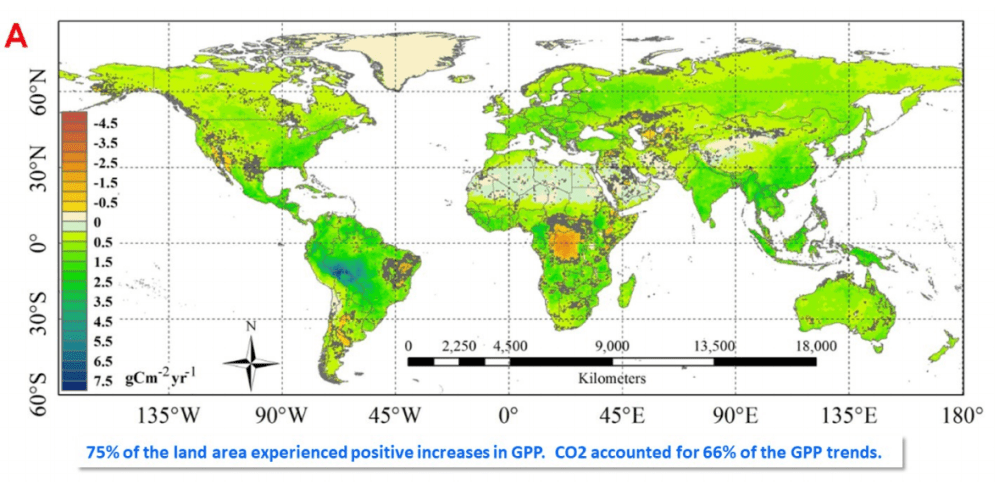 No current research has studied the kind of long-term exposure that will would result from rampant climate change.



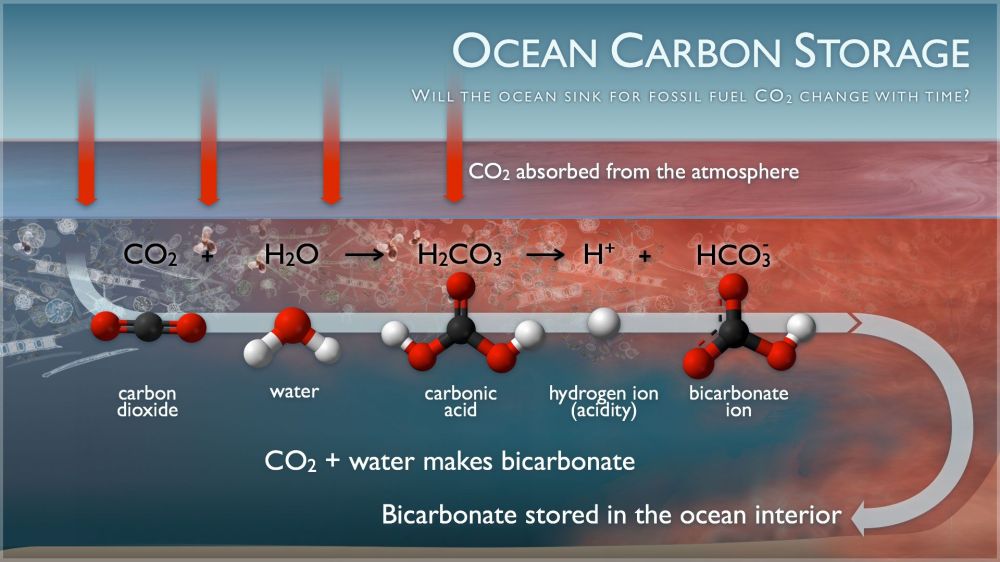


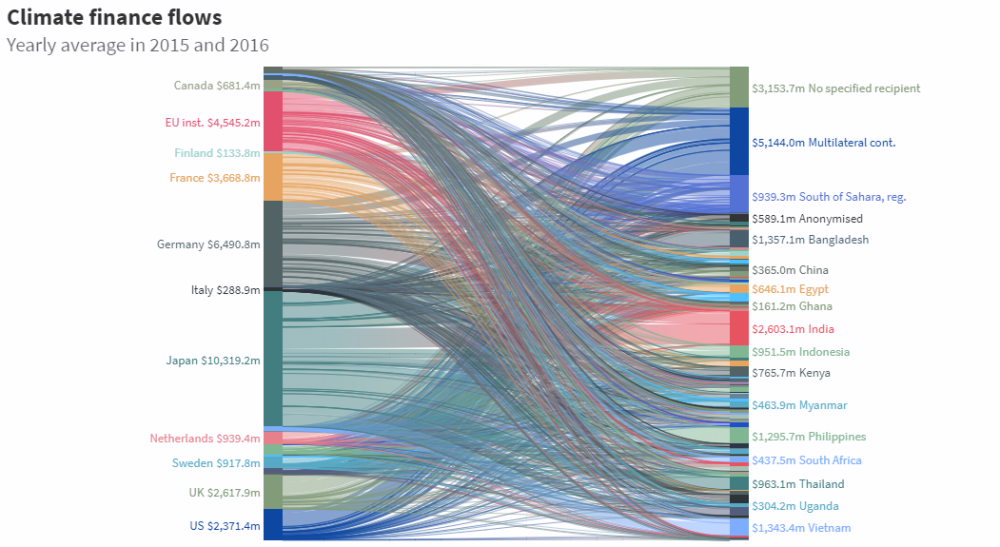


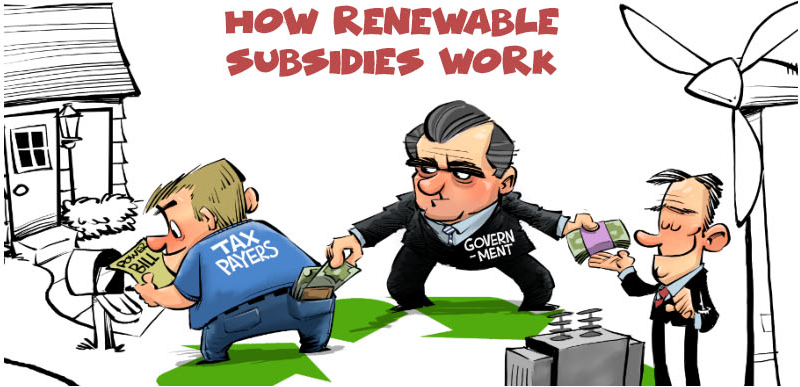

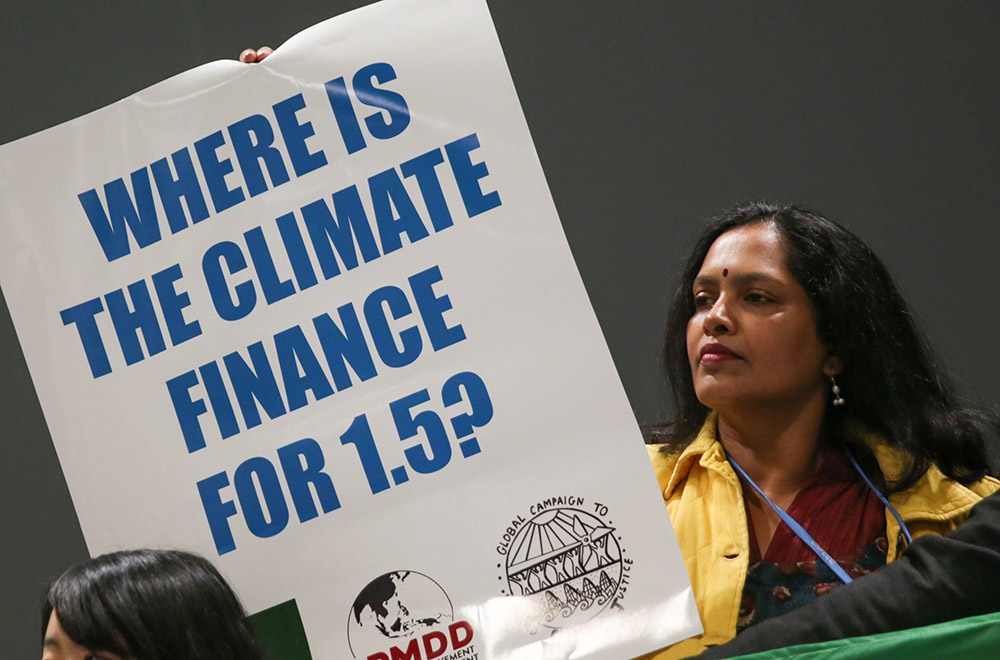

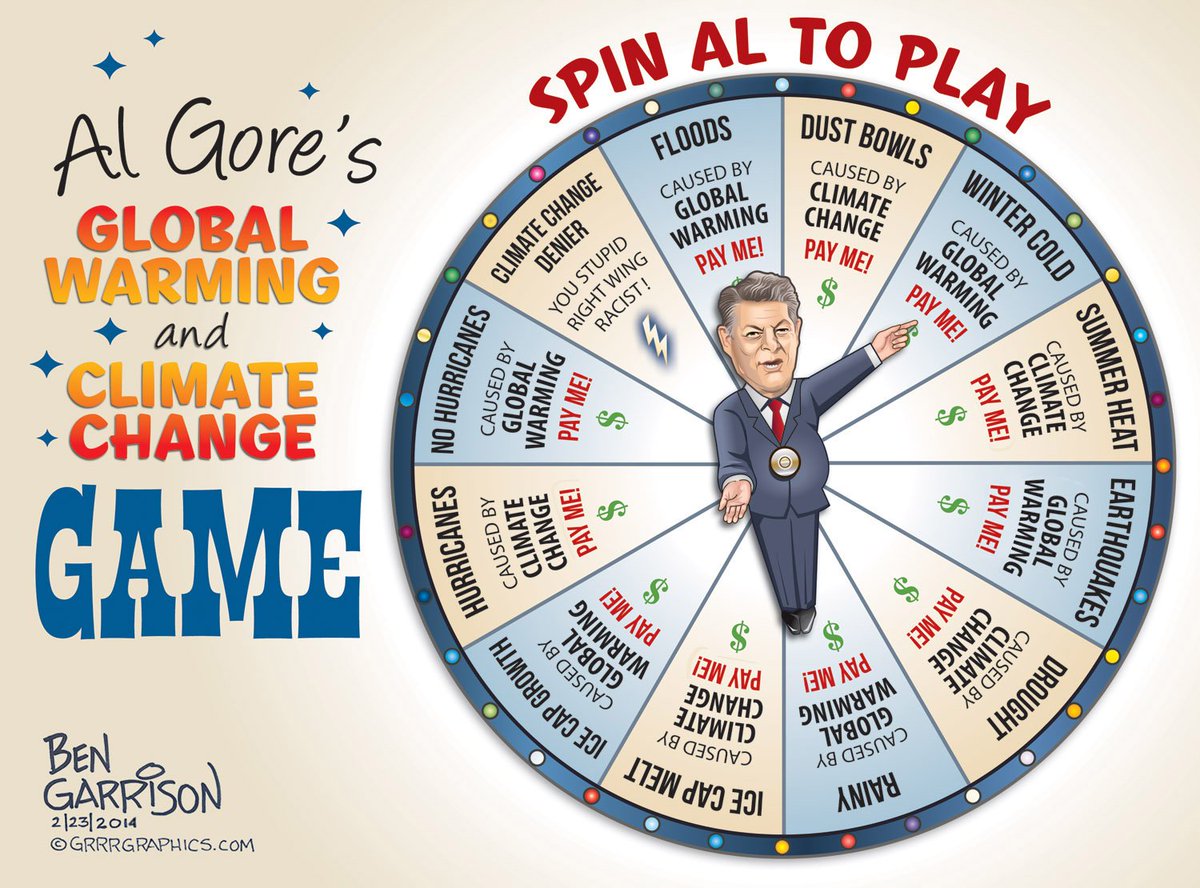
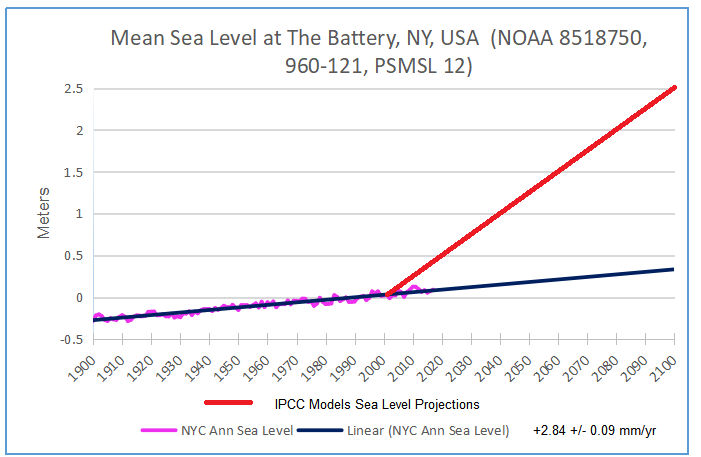

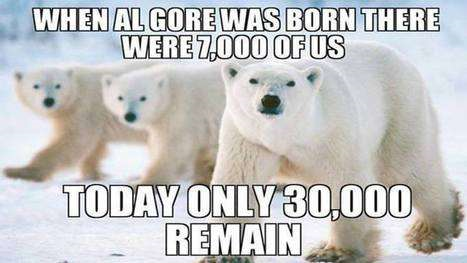
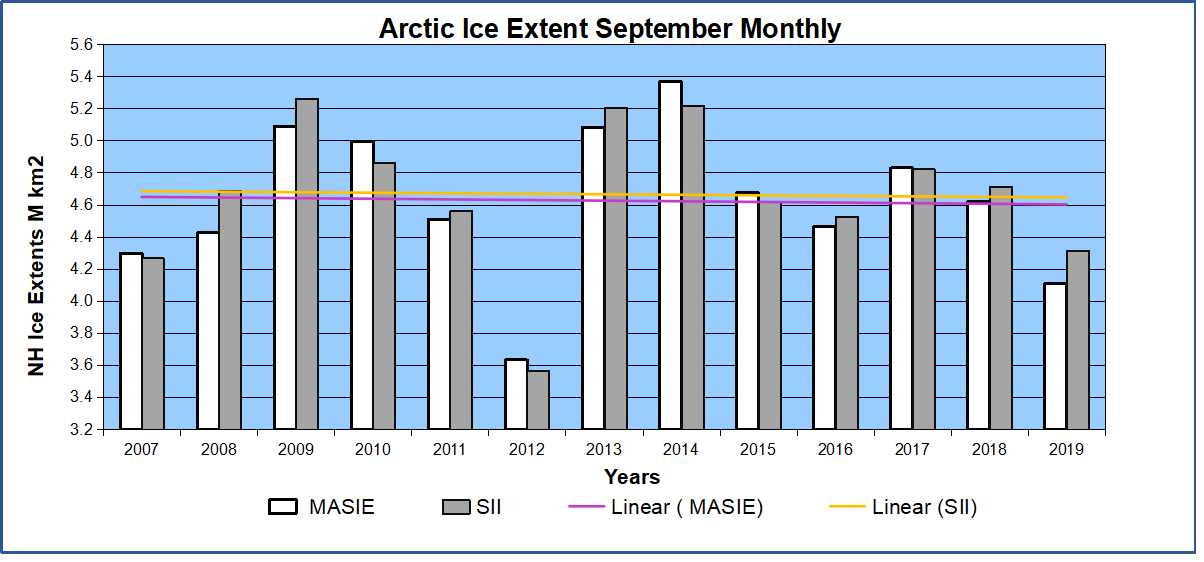







 Just Say No!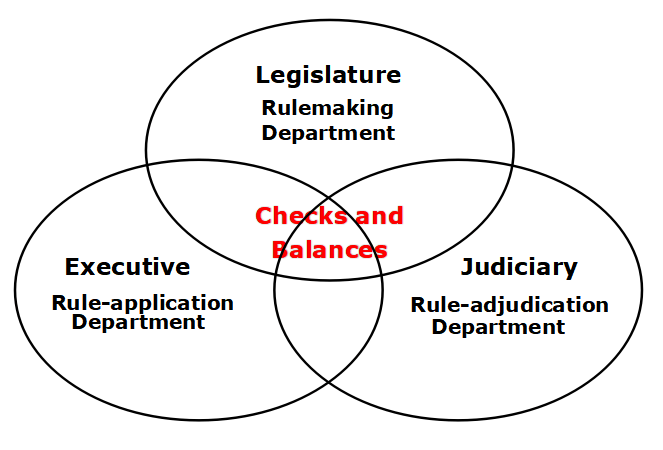




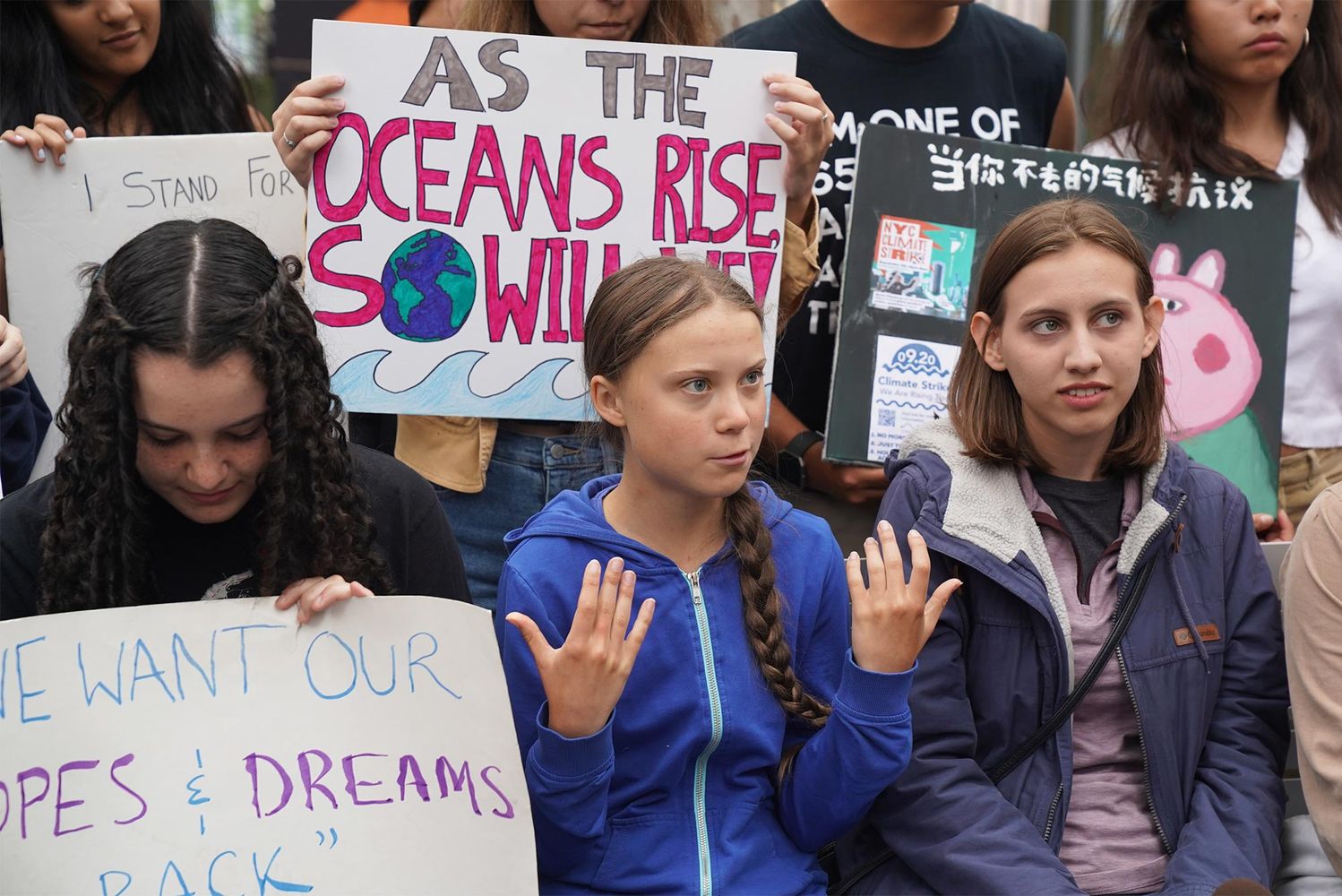




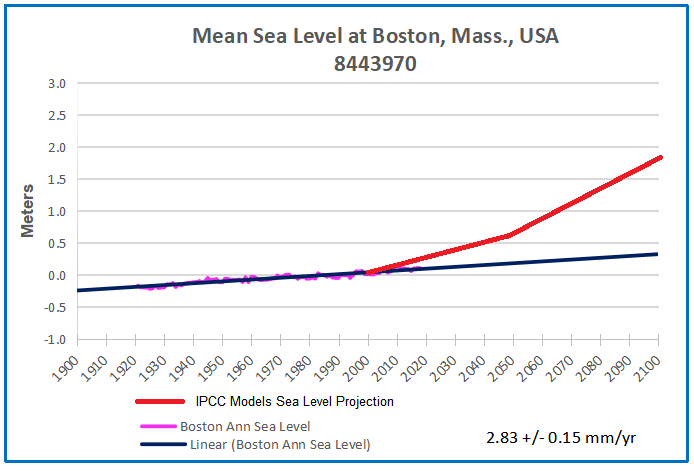
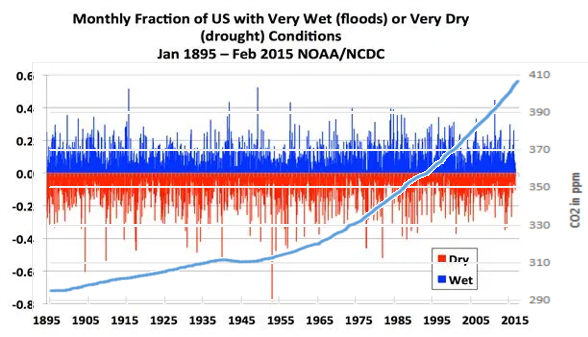
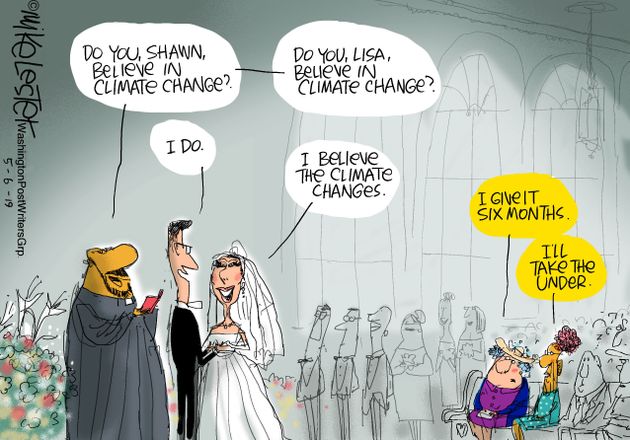






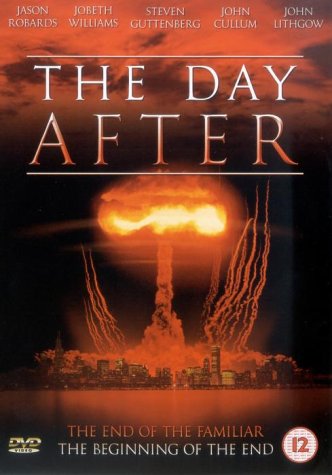








 Science Matters