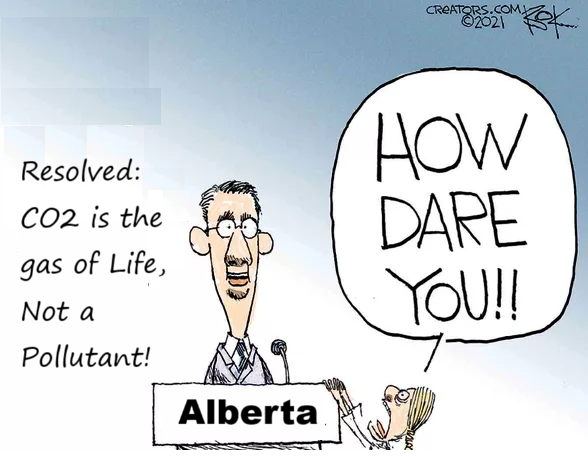
Alberta: “CO2 Gas of Life, Not Pollutant!” Media Outrage Ensues

Actually I discovered this news by way of Desmog whose report was in the spirit of Greta’s reaction to disbelief in CO2 hysteria.  Alberta Conservatives Pass Climate Denial Resolution 12 to Celebrate CO2 Pollution.  Excerpts in italics with my bolds.

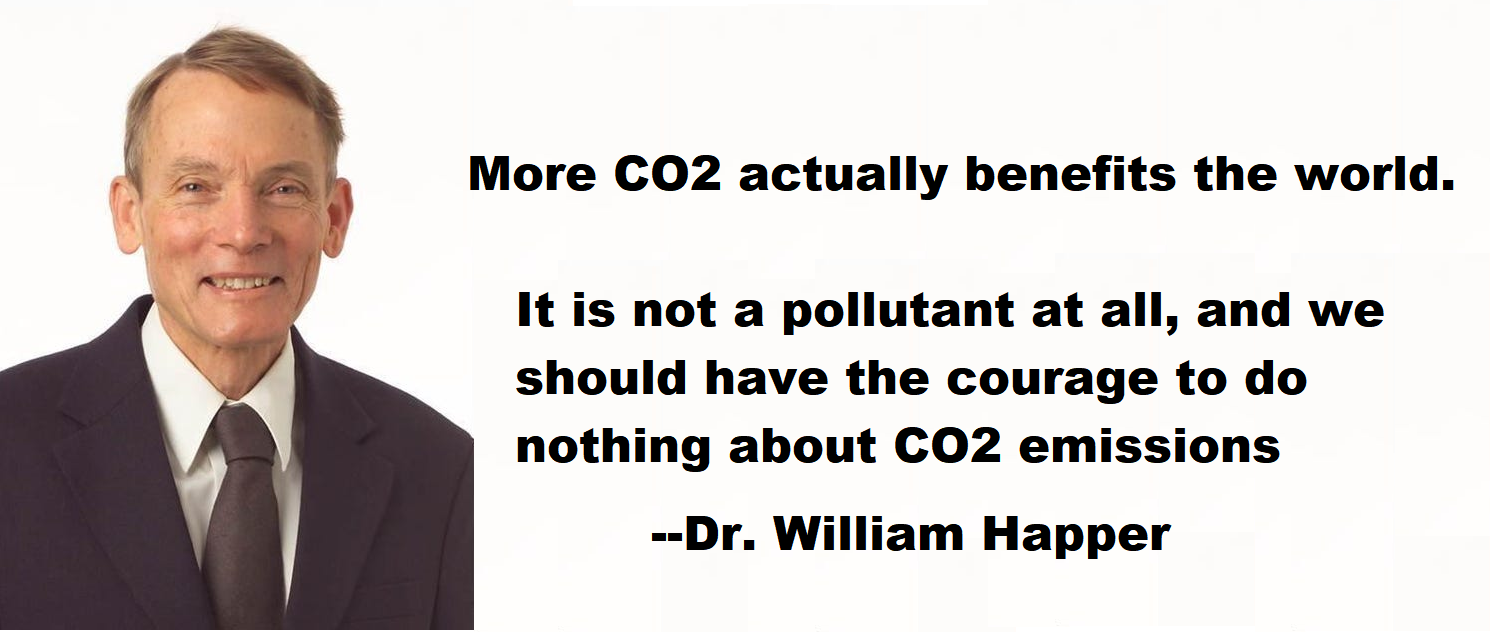
UCP pledges to abandon the province’s net zero targets,
and remove the designation of CO2 as a pollutant.

UCP members voted in favor of a resolution to “recognize the importance of CO2 to life and Alberta’s prosperity.” Credit: Danielle Paradis [Participants numbered over 6000]

Alberta’s United Conservative Party has passed a resolution to rebrand carbon dioxide — the chief gas whose overabundance in Earth’s atmosphere is causing the climate emergency — in a brazen display of climate science denial that harkens back to the 1990s fossil fuel industry playbook.

Resolution 12, which falls under the “environmental stewardship and emissions reduction” area of the policy discussion, will “recognize the importance of CO2 to life and Alberta’s prosperity.” 

In approving the resolution, the UCP resolved to abandon the province’s net zero targets, remove the designation of CO2 as a pollutant, and further “recognize that CO2 is a foundational nutrient for all life on Earth.”

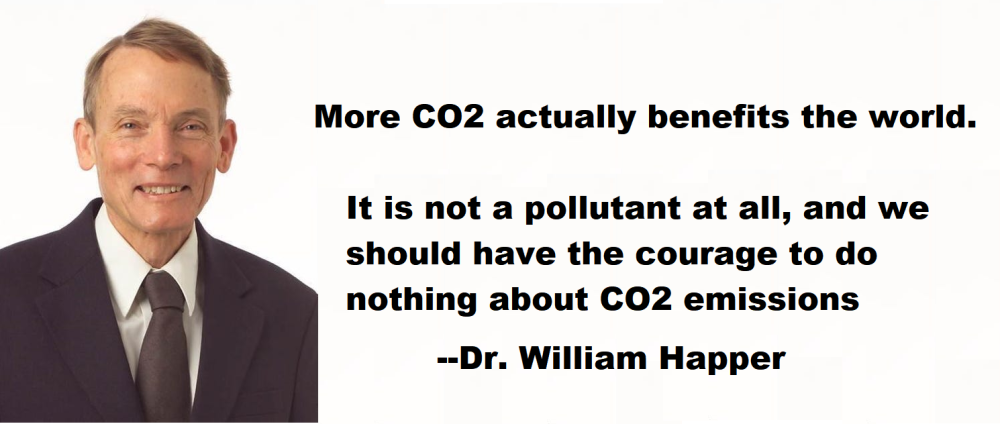
“We must prioritize policies that protect our economy and our way of life. CO2 is an essential nutrient for mass, driving growth and boosting plant production. According to the CO2 Coalition, higher CO2 levels have led to healthier crops and improved food security worldwide,” said a UCP member speaking in favour of the policy who cited the notorious CO2 Coalition

The resolution passed by a wide majority. 

Background

I searched in vain for any news report citing reasons favoring such a resolution.  Instead, the journalists repeated the activist mantras, like lemmings impervious to any POV not proscribed by the canon.  Before getting into that content, let’s remember that this political party is faithful to its constituents.

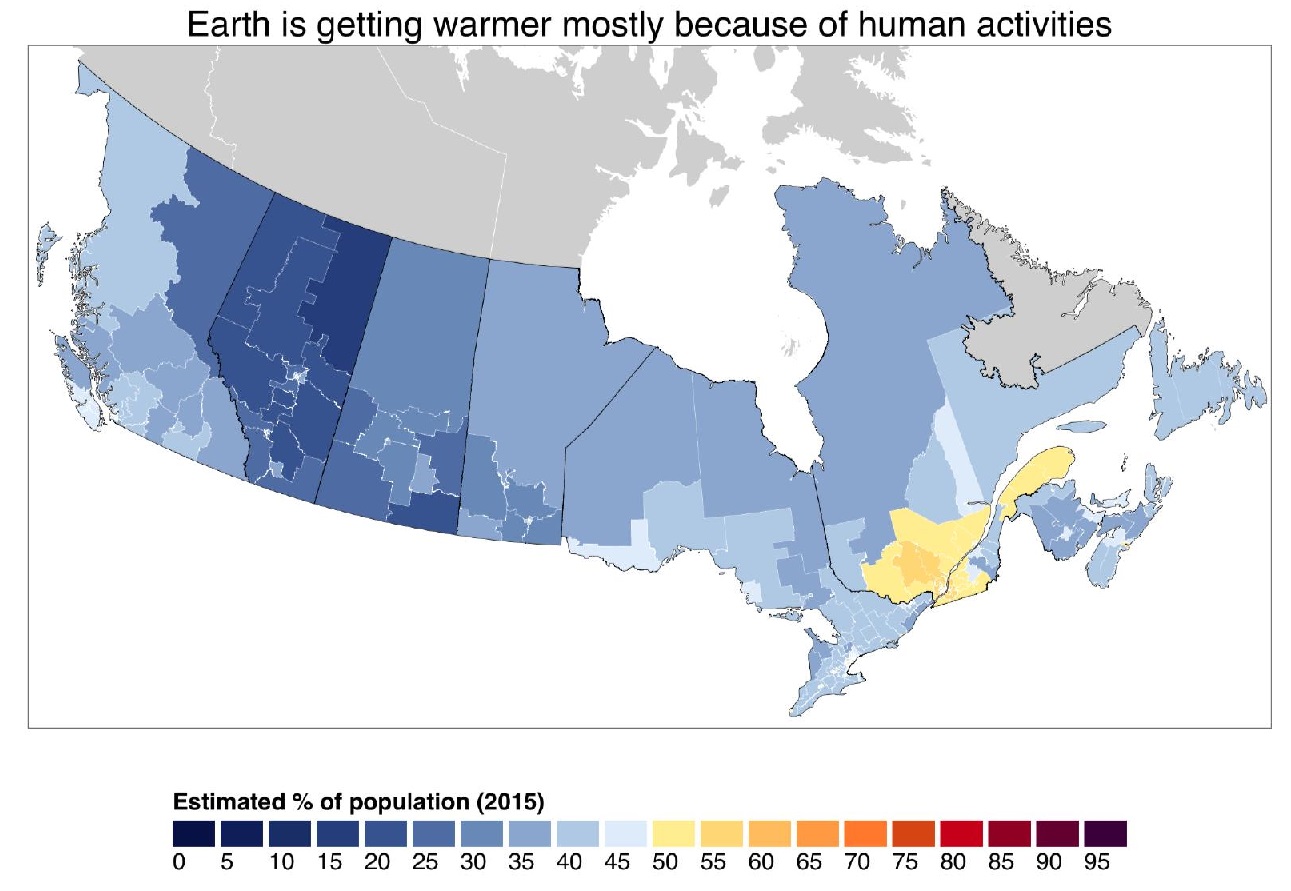
In 2015 Canadians were asked for their candid views of global warming/climate change.  The two principle questions were:

1. “From what you’ve read and heard, is there solid evidence that the average temperature on earth has been getting warmer over the past four decades?”

2. [If yes, solid evidence] “Is the earth getting warmer mostly because of human activity such as burning fossil fuels or mostly because of natural patterns in the earth’s environment?”

The responses were quite diverse, to the pollsters’ surprise, yet Trudeau claimed the results justified his push for a carbon tax and other measures to regulate and reduce CO2 emissions.  Buried in the supporting documents, and ignored by him and the media was this finding:

This process did determine a survey result about the size of the population who believes warming is happening and mostly caused by humans.  Everything else is subject to interpretation, including how much is due to land use, urbanization or fossil fuel emissions.  The solid finding is displayed in the diagram above.  Yes, the map shows I am living in a hotbed of global warming believers around Montreal; well, it is 55%, as high as it gets in Canada. Yet Trudeau went on to impose his anti-hydrocarbon agenda despite most of the nation opposed to the idea. More to the point, that dark blue province in the west is none other than Alberta.  Clearly, their common sense skepticism of climate alarm is not a recent position. [For more on that survey see Uncensored: Canadians View Global Warming]

The Offenses Taken by Warmists from Alberta’s Resolve

1. Media reports repeated the claim that CO2 is a pollutant because it has caused rising temperatures.  For example, from Desmog:

Carbon dioxide is the gas principally responsible for exacerbating the greenhouse effect, the consequence of which is global warming. Whereas carbon is a foundational building block of life on Earth, carbon dioxide is an asphyxiating gas whose atmospheric proportions are so high they’re disrupting the normal function of the carbon cycle.

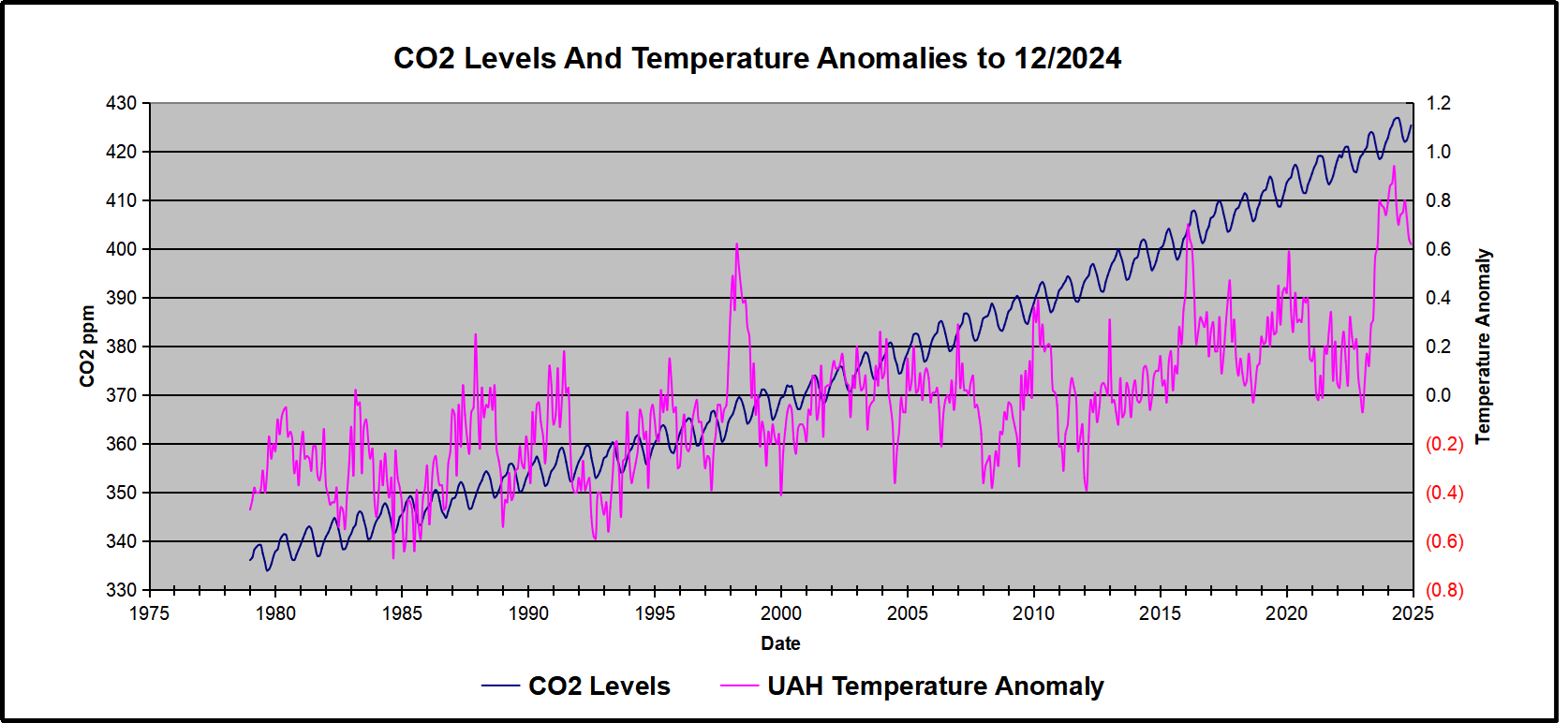
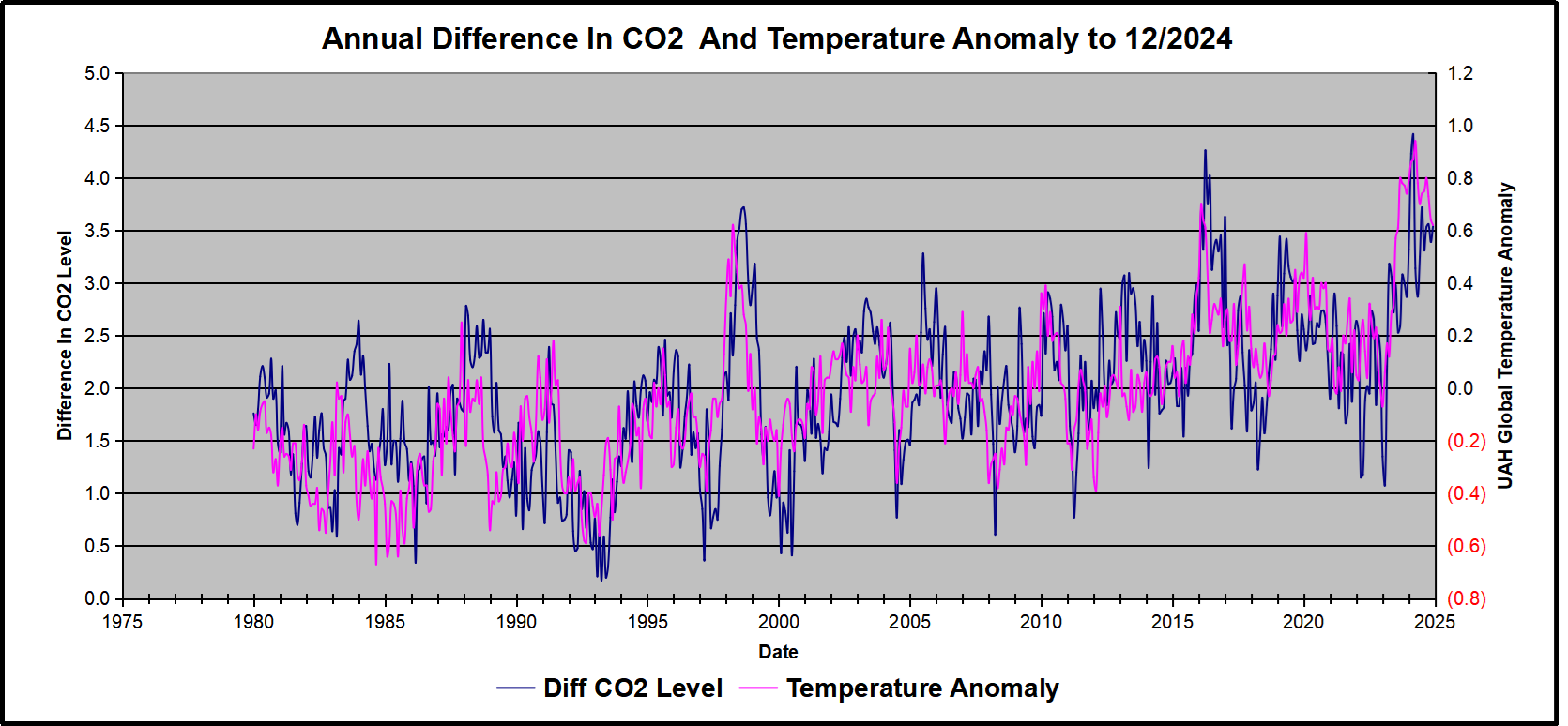
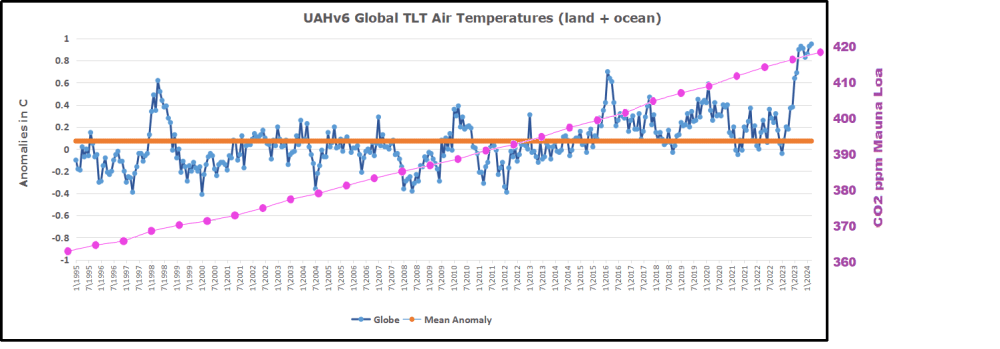
That reference to “greenhouse effect” ignores the fact that changes in CO2 follow changes in global temperatures on all time scales, from last month’s observations to ice core datasets spanning millennia. Since CO2 is the lagging variable, it cannot logically be the cause of temperature, the leading variable. It is folly to imagine that by reducing human emissions of CO2, we can change global temperatures, which are obviously driven by other factors. [See Mid 2024 More Proof Temp Changes Drive CO2 Changes]

It also exaggerates the importance of the trace gas CO2 upon planetary heat transfers dominated by H2O.

The asphyxiating  label denies scientific knowledge about the properties of CO2 in our environment.

2. Advocates also disputed that CO2 is the “gas of life”, claiming that CO2 diminishes rather than enriches plant life.  For example, again from Desmog:

In the “rationale” section of the resolution, the United Conservative Party document argues that “CO2 is a nutrient foundational to all life on Earth.”

While plants need both light and carbon dioxide to thrive, the over-supply of CO2 in recent decades is leading to plants being deprived of their nutrients. One biologist was quoted in a 2017 Politico article describing this as akin to “the greatest injection of carbohydrates into the biosphere in human history,” and that injection is diluting the nutrients in the food supply.

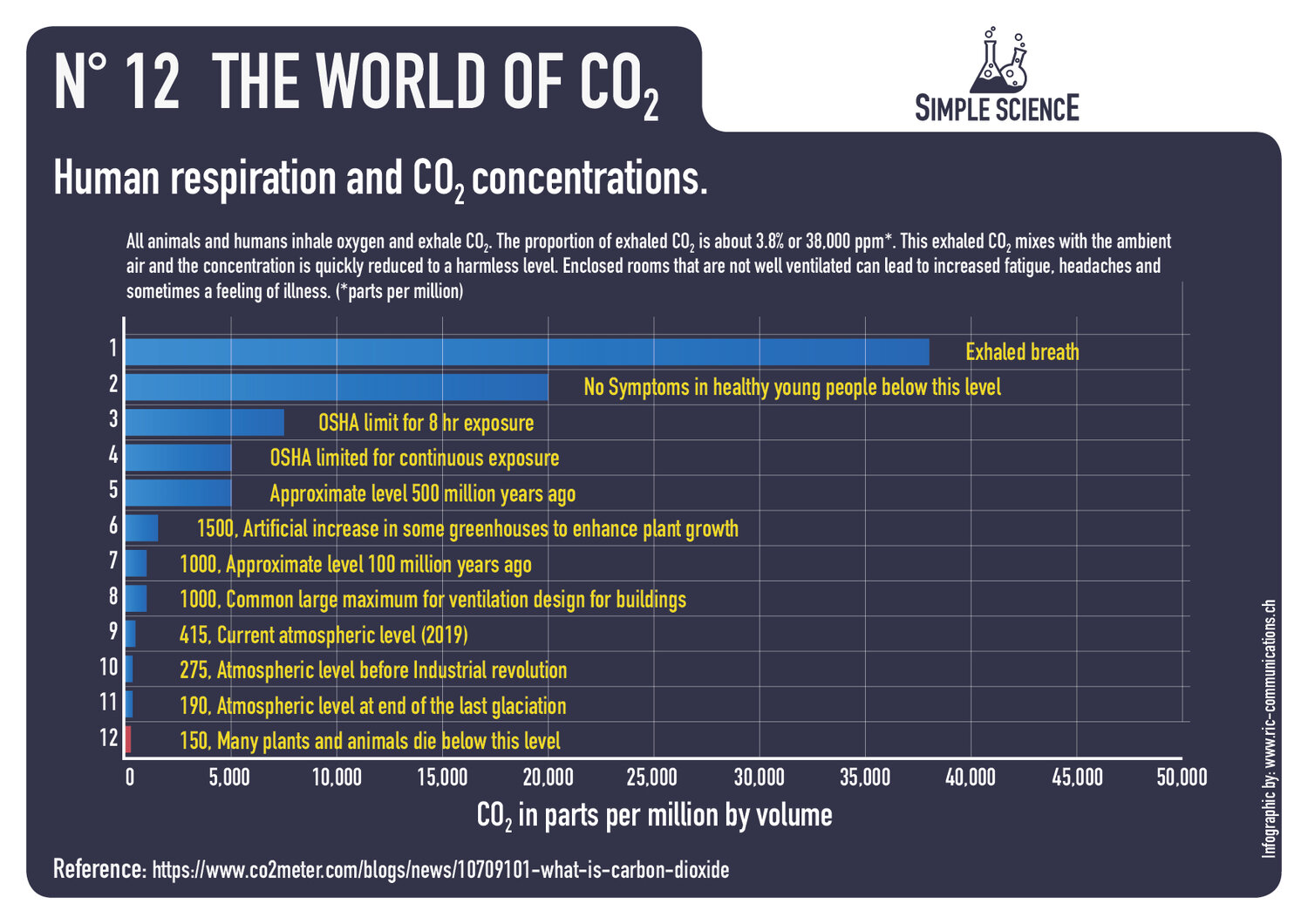
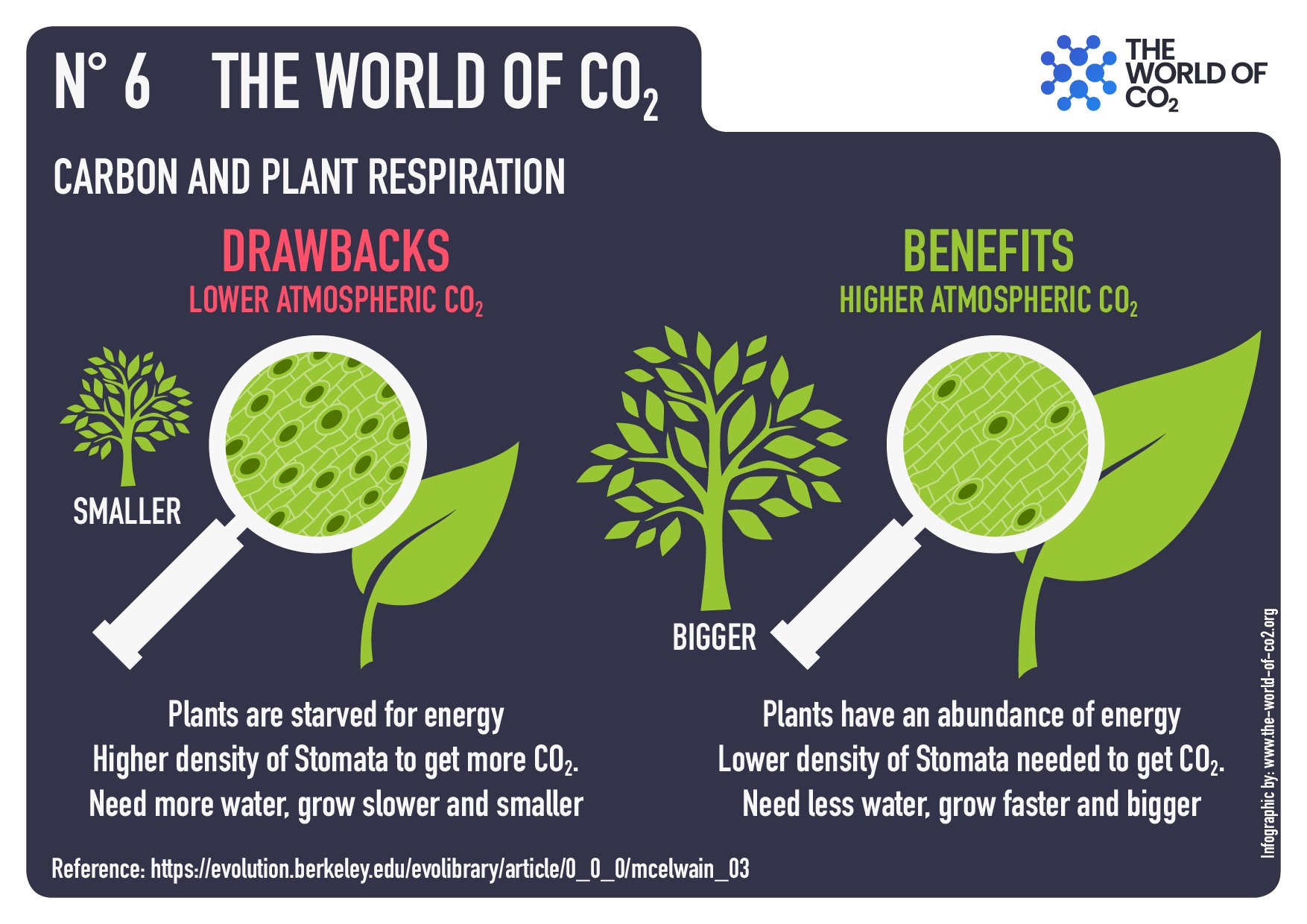
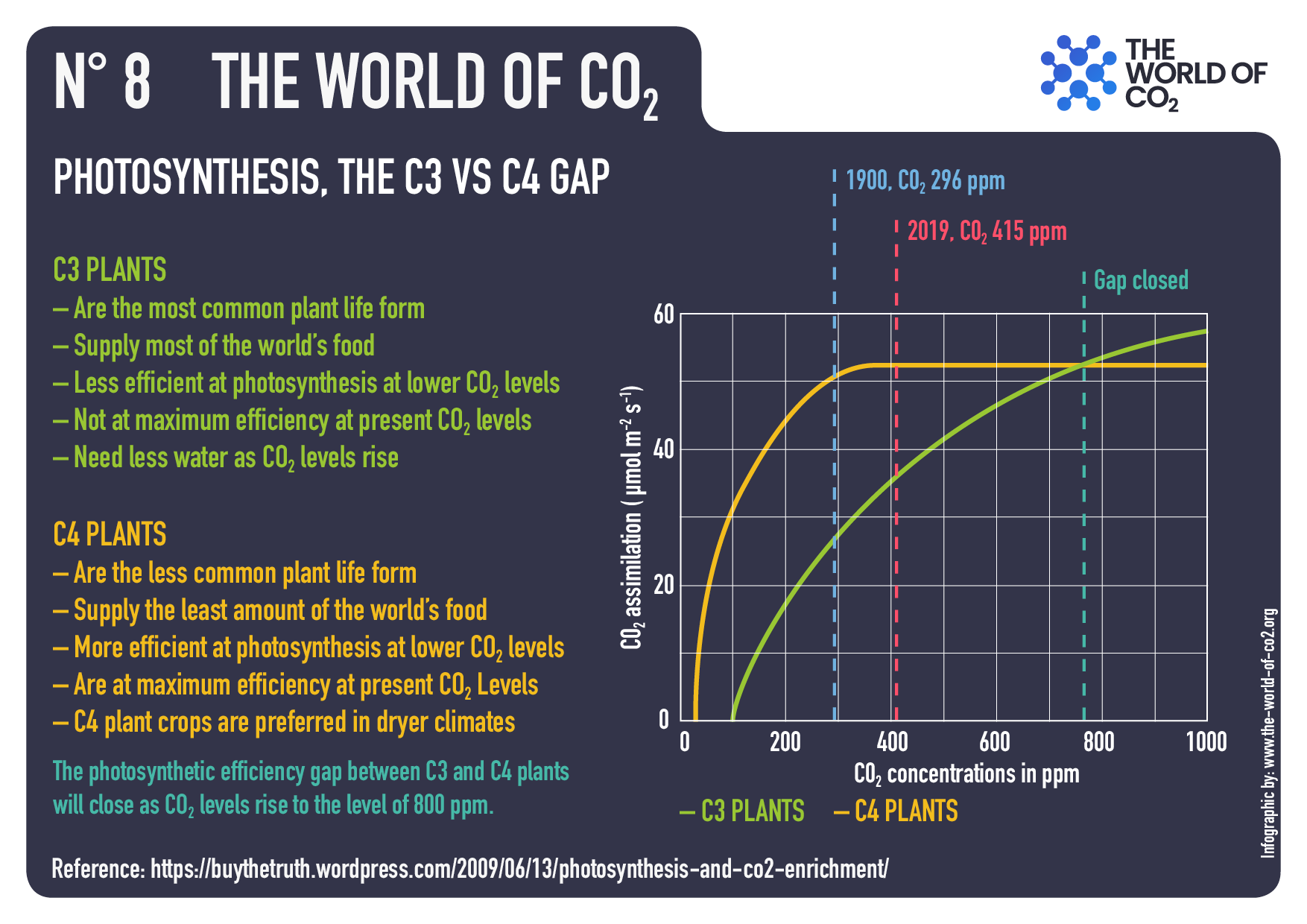
Firstly, there is no doubt more CO2 is good for plants.  That’s why operators of greenhouses for growing them add CO2 up to three or four times our present 420 ppm.

Experiments have confirmed the botanical principle of limiting factors. At present concentrations, rising CO2 always increases plant productivity unless another factor is sub-optimal and constrains growth. The researchers, aided and abetted by the media are spinning this to say more CO2 is not good for plants. In reality, the lack of phosphorus or other nutrients is not the fault of CO2, and will not be enhanced by somehow reducing CO2. [See CO2 Destroys Food Nutrition! Not.]

3. And media reports added the fear of extreme weather events, attributing them to CO2 emissions.  Again from Desmog:

As the principal driver of the climate crisis and global warming, increasing CO2 levels will exacerbate droughts, wildfires, and floods, among other disasters, in turn resulting in loss of life and major disruptions to global supply chains. The consequent economic disturbances and their aftereffects will worsen the affordability crisis and result in increasingly negative economic outcomes for all, not just Albertans. Rather than stimulate Alberta’s agricultural sector, climate change will destroy it, and the evidence this is already happening is quite clear.

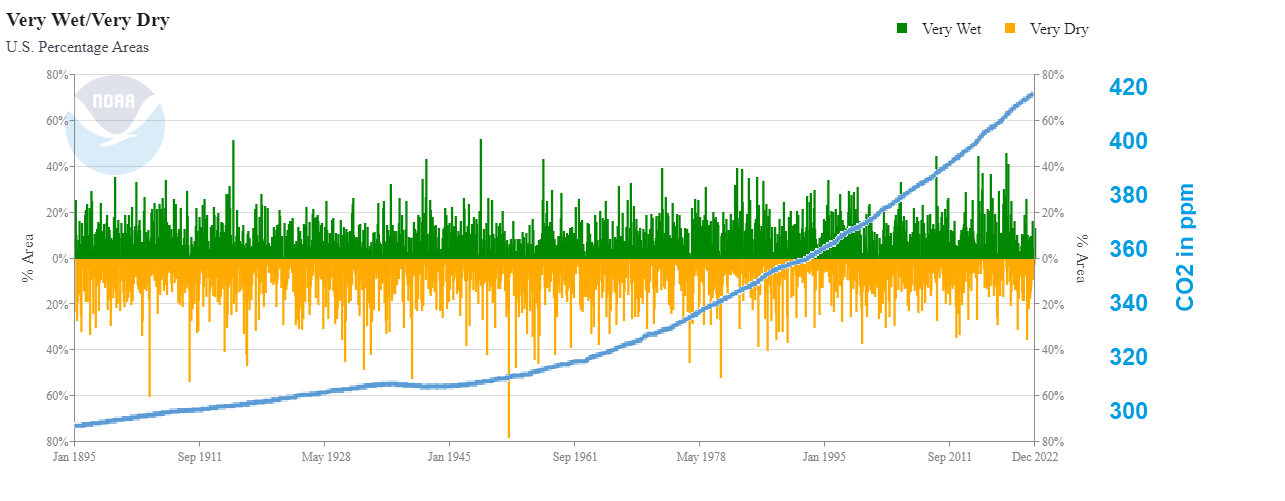
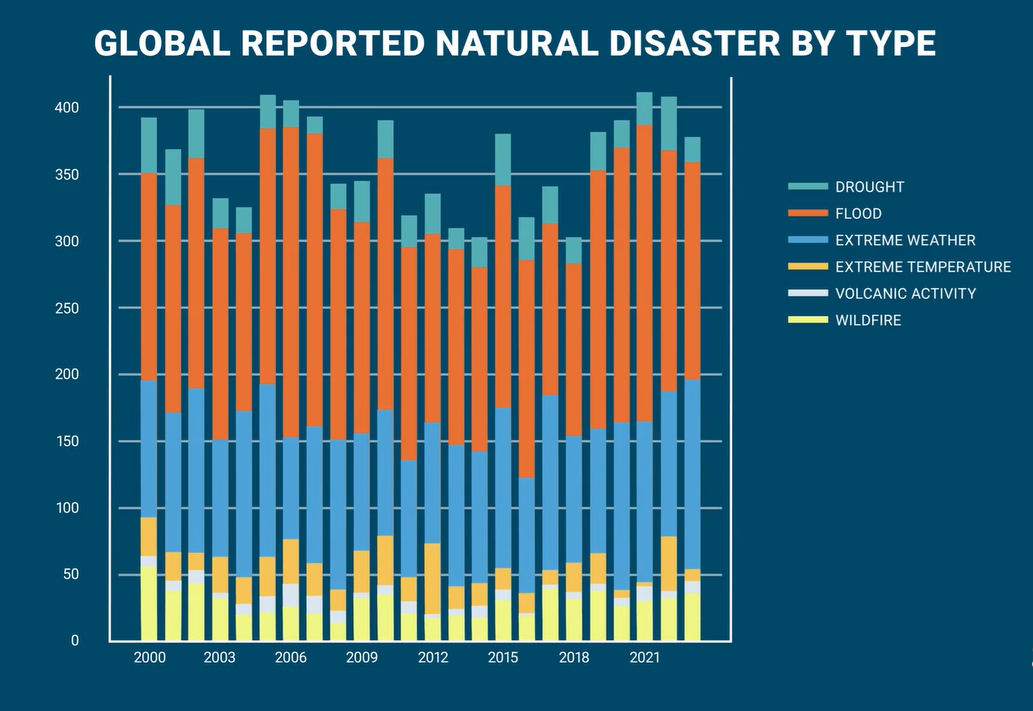
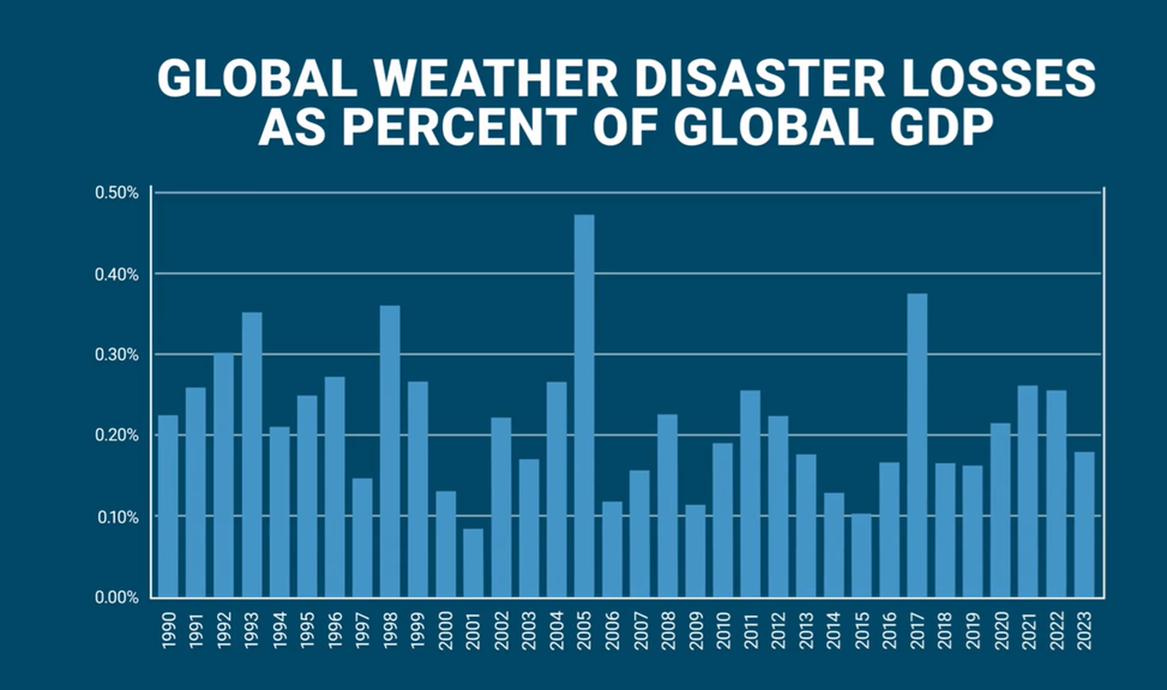
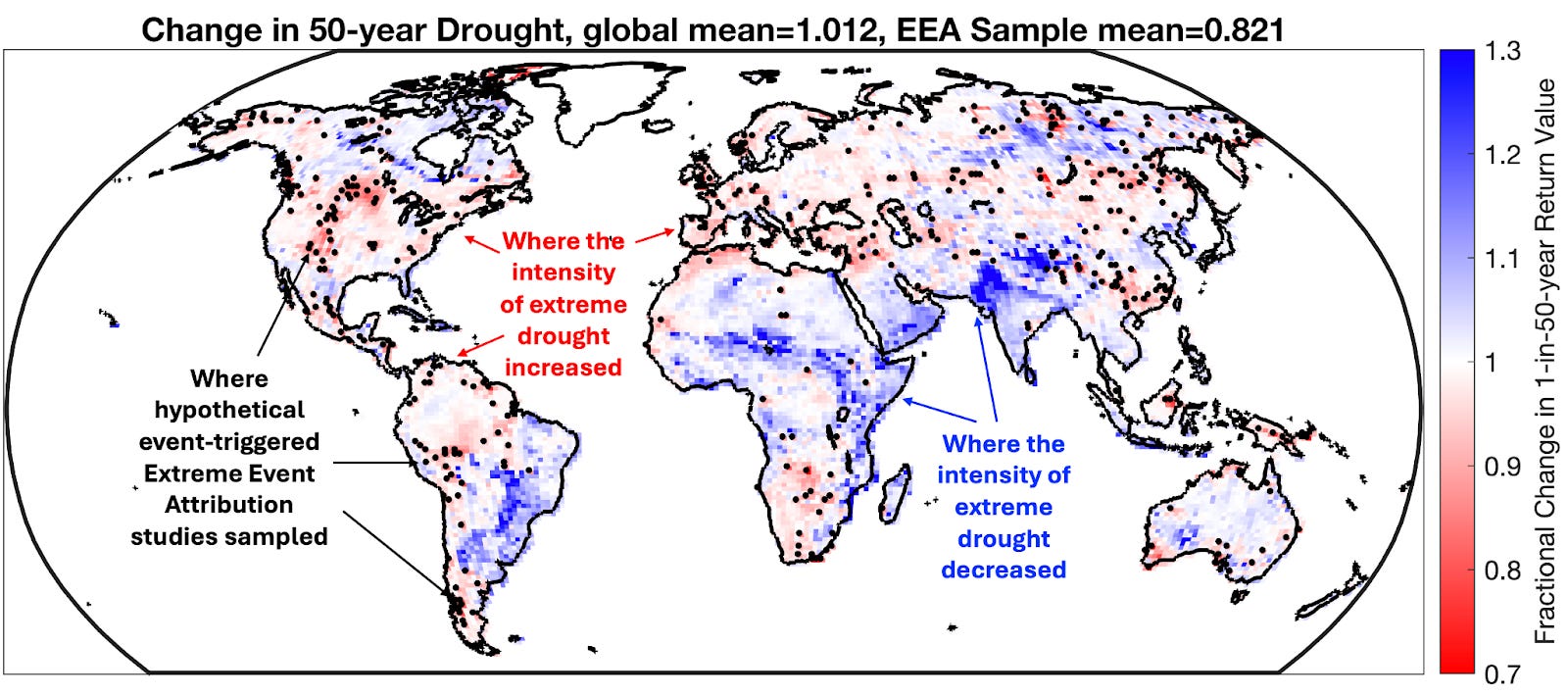
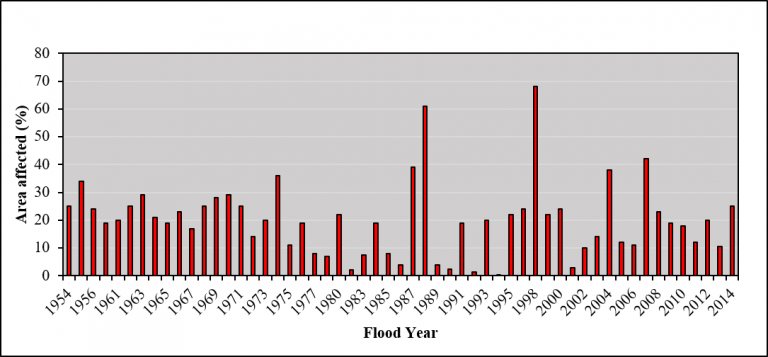
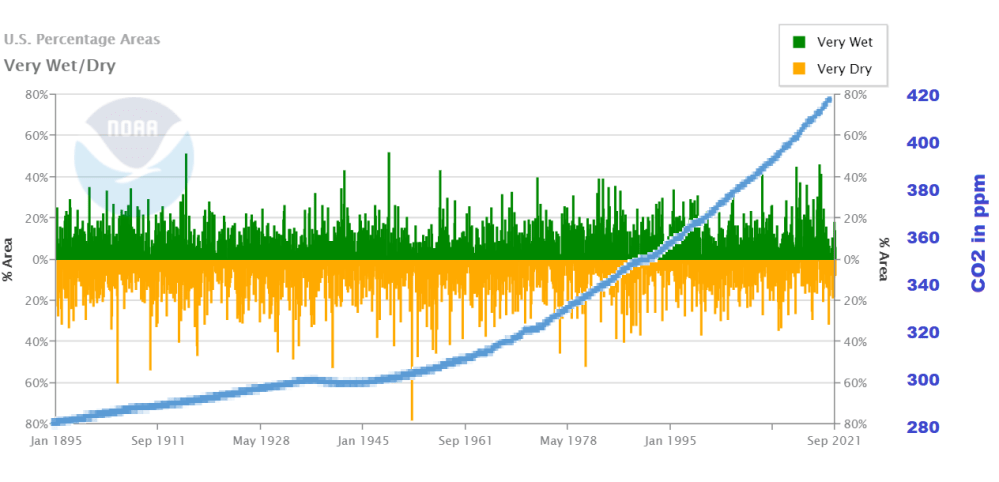
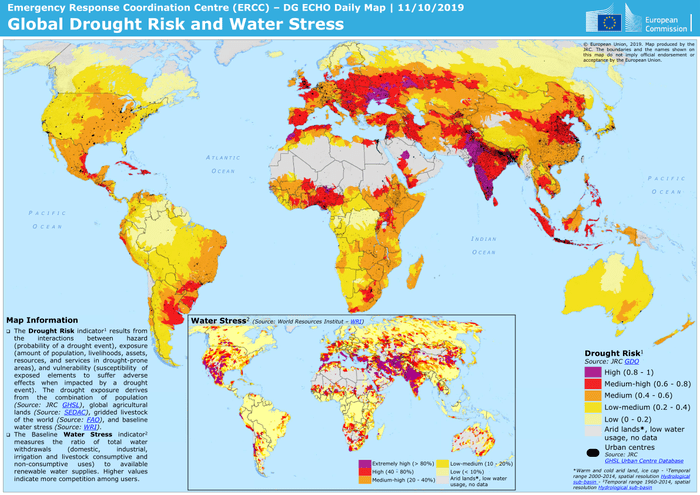
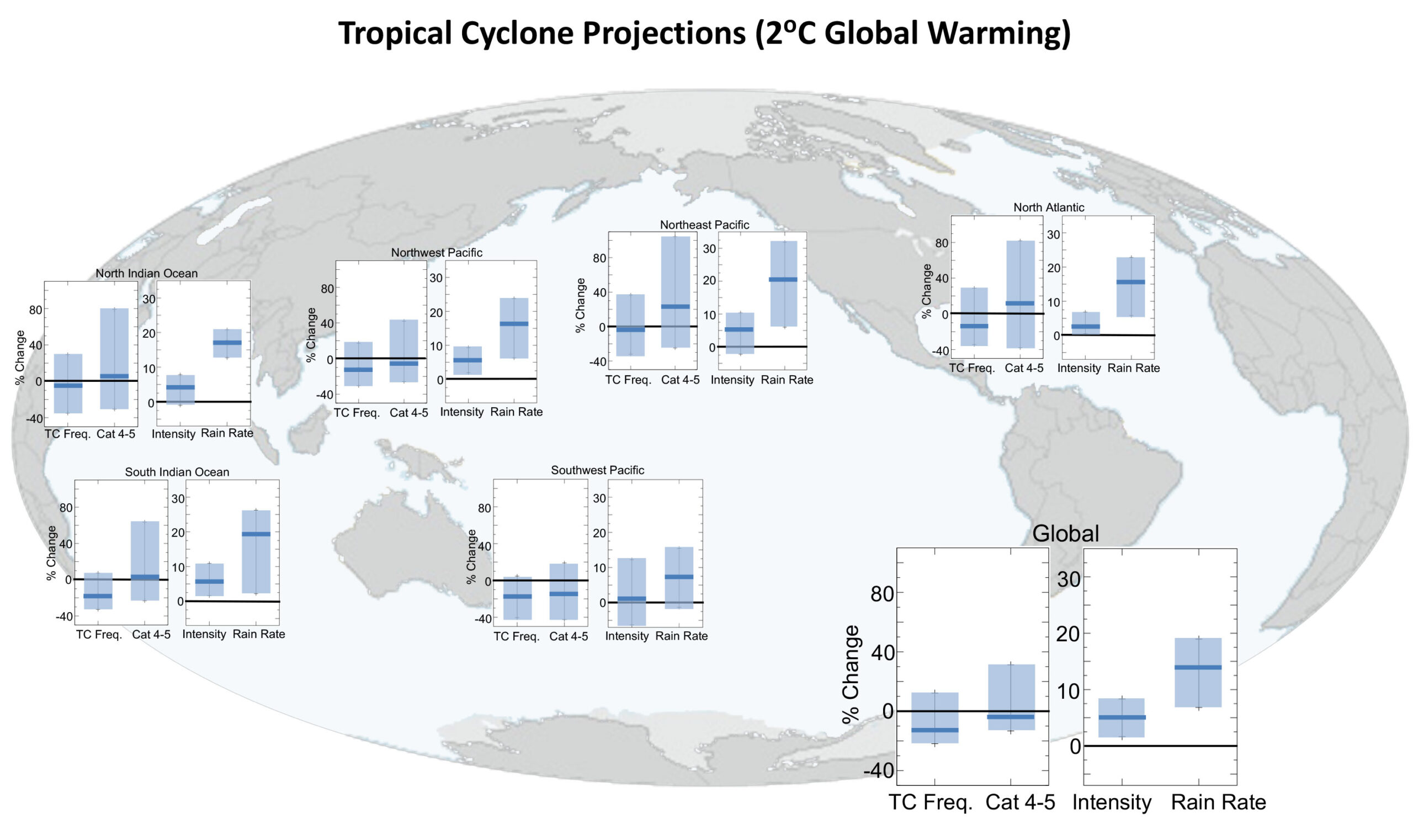
This is again the doomsday litany that rising CO2 will destroy life as we know it.  None of the data support that narrative.  Just one of many examples of facts vs. fears is the above showing how droughts and flooding have always happened.  These events are within the past range of variability and have not increased with rising CO2.  Rather than show more such graphs, this video is a brief realistic summary of our climate circumstances.

Summary

Albertans are wise and courageous to take their position, and have many experts who share their understanding.


Bureaucrats Against Democracy

David Blackmon provides the background in his Daily Caller article Bureaucrats Worry Democracy Will Get In The Way Of Their Climate Agenda.  As the above image suggests some of those in power have not shied away from acting in defiance of democratic norms. By imposing climate policies and regulations they have diminished the livelihoods and freedoms of the public they supposedly serve. Excerpts in italics with my bolds and added images.
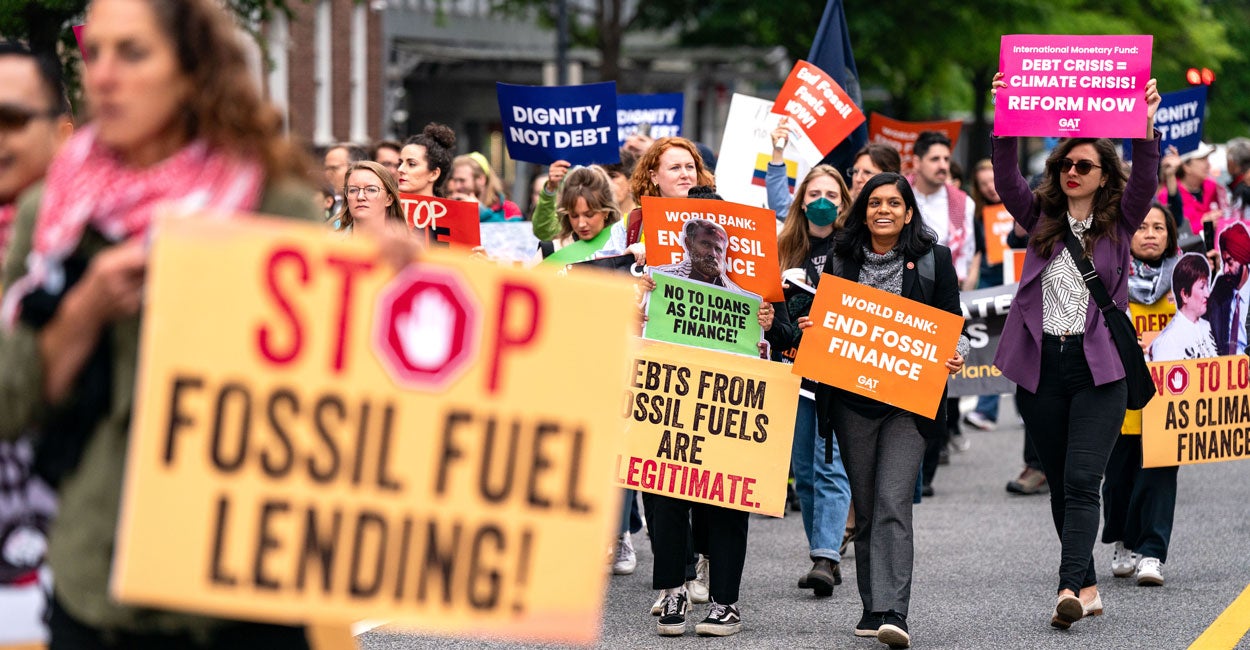
I have frequently written over the last several years that the agenda of the climate-alarm lobby in the western world is not consistent with the maintenance of democratic forms of government.

Governments maintained by free elections, the free flow of communications and other democratic institutions are not able to engage in the kinds of long-term central planning exercises required to force a transition from one form of energy and transportation systems to completely different ones.

Why? Because once the negative impacts of vastly higher prices for all forms of energy begin to impact the masses, the masses in such democratic societies are going to rebel, first at the ballot box and if that is not allowed by the elites to work, then by more aggressive means.

This is not a problem for authoritarian or totalitarian forms of government, like those in Saudi Arabia, China and Russia, where long-term central planning projects invoking government control of the means of production is a long-ingrained way of life. If the people revolt, then the crackdowns are bound to come.

This societal dynamic is a simple reality of life that the pushers of the climate alarm narrative and forced energy transition in western societies have been loath to admit. But, in recent days, two key figures who have pushed the climate alarm narrative in both the United States and Canada have agreed with my thesis in public remarks.

In so doing, they are uttering the quiet part about
the real agenda of climate alarmism out loud.

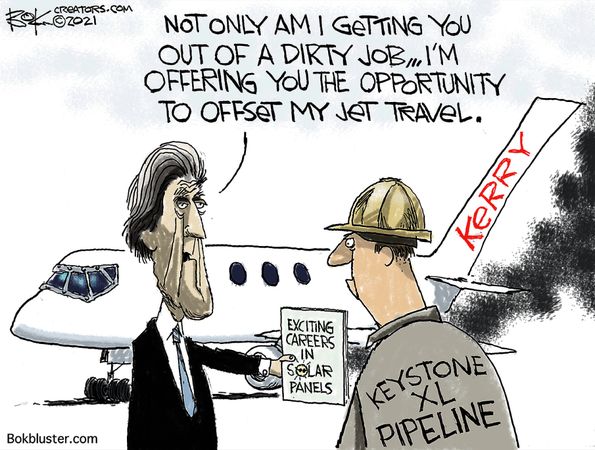
Last week, former Obama Secretary of State and Biden climate czar John Kerry made remarks about the “problem” posed by the First Amendment to the U.S. Constitution that should make every American’s skin crawl. Speaking about the inability of the federal government to stamp out what it believes to be misinformation on big social media platforms, Kerry said: “Our First Amendment stands as a major block to the ability to be able to just, you know, hammer it out of existence,” adding, “I think democracies are, are very challenged right now and have not proven they can move fast enough or big enough to deal with the challenges that we are facing.”

Never mind that the U.S. government has long been the most focused purveyor of disinformation and misinformation in our society, Kerry wants to stop the free flow of information on the Internet.

The most obvious targets are Elon Musk and X, which is essentially the only big social media platform that does not willingly submit to the government’s demands for censoring speech.

Kerry’s desired solution is for Democrats to “win the ground, win the right to govern by hopefully having, you know, winning enough votes that you’re free to be able to, to, implement change.” The change desired by Kerry and Vice President Kamala Harris and other prominent Democrats is to obtain enough power in Congress and the presidency to revoke the Senate filibuster, pack the Supreme Court, enact the economically ruinous Green New Deal, and do it all before the public has any opportunity to rebel.

Not to be outdone by Kerry, Deputy Prime Minister Chrystia Freeland of Canada, who is a longtime member of the board of trustees of the World Economic Forum, was quoted Monday as saying: “Our shrinking glaciers, and our warming oceans, are asking us wordlessly but emphatically, if democratic societies can rise to the existential challenge of climate change.

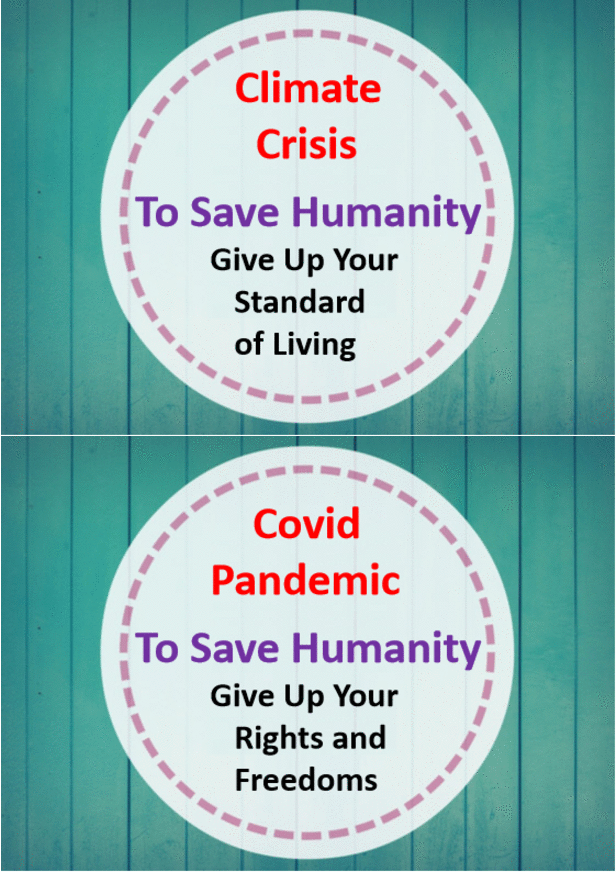
It should come as no surprise to anyone that the central governments of both Canada and the United States have moved in increasingly authoritarian directions under their current leadership, both of which have used the climate-alarm narrative as justification. This move was widely predicted once the utility of the COVID-19 pandemic to rationalize government censorship and restrictions of individual liberties began to fade in 2021.

Two sides of the same coin.

Frustrated by their perceived need to move even faster to restrict freedoms and destroy democratic levers of public response to their actions, these zealots are now discarding their soft talking points in favor of more aggressive messaging.

This new willingness to say the quiet part out loud
should truly alarm anyone who values their freedoms.

Climate Deranged Bureaucrats, Spare Us Your Guilt Trip!

Charles MacKay: “Men, it has been well said, think in herds; it will be seen that they go mad in herds, while they only recover their senses slowly, and one by one.”

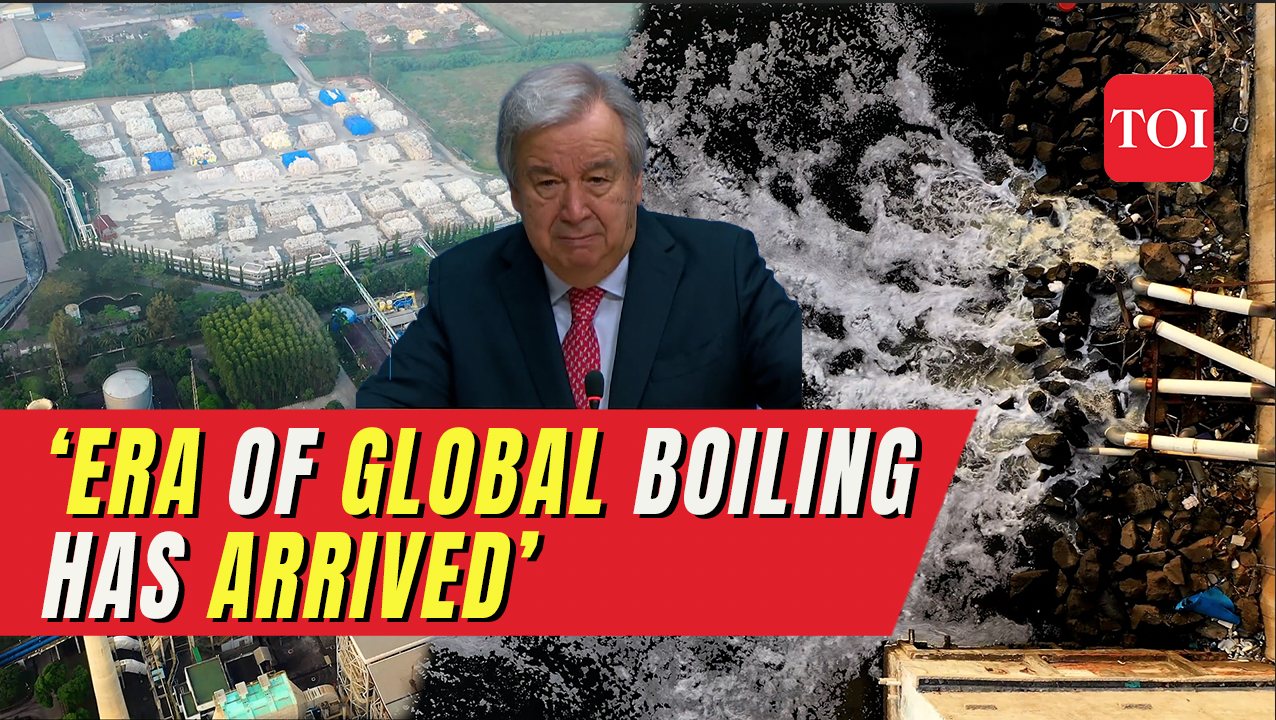
Recent posts (here) have highlighted the increasingly irrational and hysterical outbursts by UN chief Guterres, triggering howlers by other climatists.  Clearly many high ranking and influencial people are in the grasp of a mass delusion we could call Climate Derangement Syndrome (CDS).

These warnings of wolves are starting to sound the same: “It never happened before, is not happening now, but it will surely destroy us in the future if we don’t do something.”

Meanwhile the facts on the ground are not alarming: For example September Arctic ice minimums:

More details at 2023 September Arctic Outlook and Results Not Scary

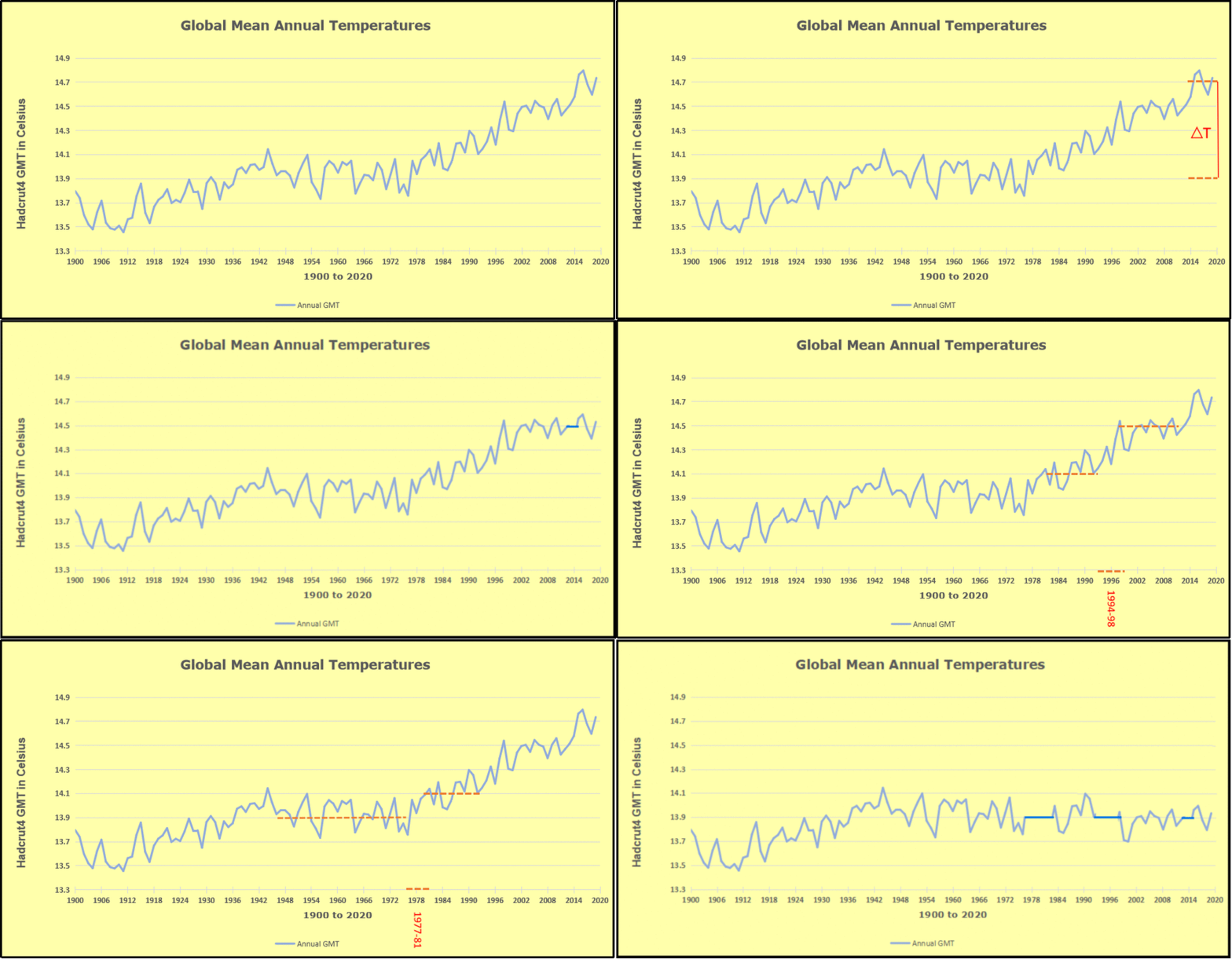
And the warming from previous El Ninos was reversed prior to the 2023 unusual and likely temporary spike:

See UAH May 2024: NH Cooling by Land and Sea

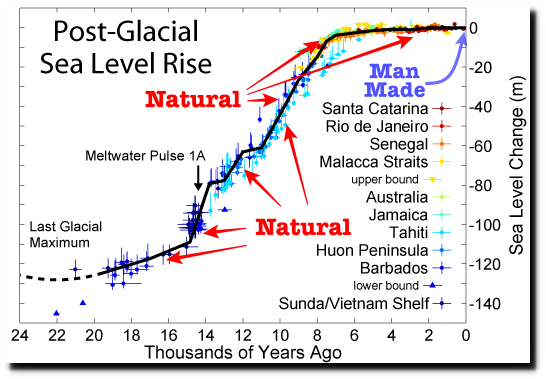
And regard sea level rise in historical rather than hysterical context

These outrageous appeals by alarmists in the face of contrary facts remind me of the story defining the term “chutzpuh.” A young man is convicted of killing his parents, and later appears before the judge for sentencing. Asked to give any last words, he replies: “Go easy on me, your Honor, I’m an orphan.”

Fortunately, there is help for climate alarmists. They can join or start a chapter of Alarmists Anonymous. By following the Twelve Step Program, it is possible to recover and unite in service to the real world and humanity.

Step One: Fully concede (admit) to our innermost selves that we were addicted to climate fear mongering.

Step Two: Come to believe that a Power greater than ourselves causes weather and climate, restoring us to sanity.

Step Three: Make a decision to study and understand how the natural world works.

Step Four: Make a searching and fearless moral inventory of ourselves, our need to frighten others and how we have personally benefited by expressing alarms about the climate.

Step Five: Admit to God, to ourselves, and to another human being the exact nature of our exaggerations and false claims.

Step Six: Become ready to set aside these notions and actions we now recognize as objectionable and groundless.

Step Seven: Seek help to remove every single defect of character that produced fear in us and led us to make others afraid.

Step Eight: Make a list of all persons we have harmed and called “deniers”, and become willing to make amends to them all.

Step Nine: Apologize to people we have frightened or denigrated and explain the errors of our ways.

Step Ten: Continue to take personal inventory and when new illusions creep into our thinking, promptly renounce them.

Step Eleven: Dedicate ourselves to gain knowledge of natural climate factors and to deepen our understanding of nature’s powers and ways of working.

Step Twelve: Having awakened to our delusion of climate alarm, we try to carry this message to other addicts, and to practice these principles in all our affairs.

alcoholics-anonymous-logo-e1497443623248

Summary:

Let us hope that many climate alarmists take the opportunity to turn the page, by resolving a return to sanity. It is not too late to get right with reality before the cooling comes in earnest.

This is your brain on climate alarm.  Just say No!

Footnote:

Q: Why would “bureaucrats” be more accurately described as “bureaucrabs?”

A: Because they seem to be moving forward, but on closer inspection are only going sideways.

Extreme Talk About Weather Events

Brian Sussman ovethrows the prevailing climatist narrative blaming human energy choices for extreme weather events.  His American Thinker article is Climate BS from the Wall Street Journal. Excerpts in italics with my bolds and added images.

My publisher contacted me this week, drawing attention to a Wall Street Journal article claiming climate change is producing shortages of “the finer things in life,” like wine, coffee, cocoa, and olive oil. The implication was clear: your carbon footprint is causing the price of these commodities to sharply rise.

“Total bull-bleep,” I replied.

Specifically, the story speaks of the recent drought in West Africa, which has resulted in a cocoa shortage; dry spells in Vietnam, which have reduced coffee harvests; and parched Italian olive groves and grape vineyards recently destroyed by wildfires.

None of these meteorological events has anything to do with
the use of fossil fuels and the subsequent release of carbon dioxide
into the atmosphere. The truth is that these regions of the world are historically
well known for witnessing wild swings in otherwise natural weather patterns
.

As I explain repeatedly in my new book Climate Cult: Exposing and Defeating Their War on Life, Liberty, and Property, such misinformation feeds into an elaborate propaganda campaign designed to frighten the developed world into demanding a carbon-neutral energy grid that would be about as reliable North Korea’s.

Let’s begin with West Africa, where the climate periodically exhibits large spatial and temporal variabilities that allow for recurrent droughts, some lasting hundreds of years. In fact, the past couple years of dry weather pales in comparison to the West African droughts in the 1970s and 80s. As for the cocoa production, a reality missing from the discussion is that global consumers are demanding more cocoa than ever, so a blip in production impacts retail price and availability like never before.

The recent drought in Vietnam is quite serious, but I’m
happy to report it’s not being caused by your SUV.

While the lack of rain in parts of Southeast Asia is the worst since the 1930s (a decade which remains the hottest on record throughout much of the world), the drought is associated with an El Nino weather pattern. El Nino, and its sister La Nina, are ancient occurrences that possess the dynamics to both enhance or diminish precipitation, depending on a variety of quite ordinary atmospheric circumstances.

Wildfires feeding on extremely dry vegetation have certainly taken a recent toll on olive groves in Italy and drought has impacted wine production there as well. The journal Nature recently published a study, claiming, “Climate change is affecting grape yield, composition and wine quality. As a result, the geography of wine production is changing.” However, the publication’s editorial bias seems to have caused them to ignore the historical record. The worst drought in modern Italy occurred in the 1920s. However, going back further, that region’s most catastrophic precipitation deficiency began in the 1530s and lasted the better part of a decade. It was so extreme that Protestant reformer Martin Luther wondered if it was a sign of the end times. Clergy in Germany, Italy, and England urged the people to beg God for forgiveness and pray for the deliverance of rain.

As I explain in my book, those pushing the climate agenda employ ad hominem arguments that appeal to raw emotions rather than intellect. And, as I also detail, those on the left aren’t fond of examining history. For them, Karl Marx stated it best in his 1844 book, The Holy Family: “History does nothing; it possesses no immense wealth; it wages no battles.” [Marx also said:

Brian Sussman is a meteorologist, author, and podcaster.

For more on history and weather extremes see:

Our Weather Extremes Are Customary in History


Good News About Our Climate

The Good News about Climate Change by Judith Curry

Is climate change an existential crisis? Judith Curry, former Chair of the School of Earth and Atmospheric Sciences at the Georgia Institute of Technology, has spent her career studying this question. Her answer might surprise you.

A good and recent example of climate and energy realism.

Transcript

Let’s start with the good news.

All things considered, planet Earth is doing fine. In fact, humans are doing better than at any other time in history.  Over the last hundred years, when temperatures have warmed by about two degrees Fahrenheit:

Global population has increased by 6 billion people…

While Global poverty has substantially declined.

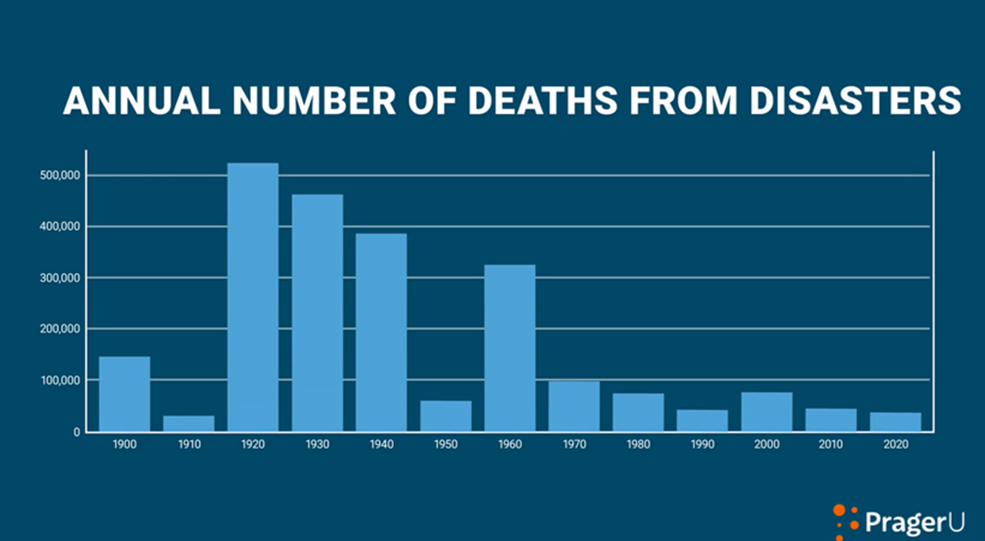
And the number of people killed from weather disasters has decreased by 97% on a per capita basis.

We are obviously not facing an existential crisis.

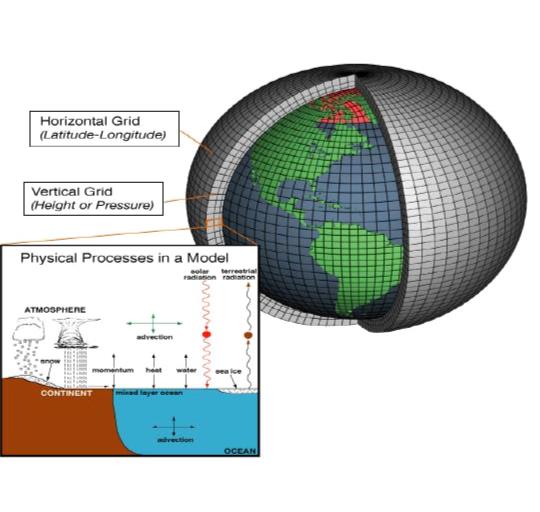
Anyone who tells you that we are is not paying attention to the historical data.  Instead, they are concerned about what “might” happen in the future, based on predictions from inadequate climate models, driven by unrealistic assumptions.

I offer this positive diagnosis after a lifetime of study on the issue. Until recently, I was a professor of climate science and Chair of the  School of Earth and Atmospheric Sciences at the Georgia Institute of Technology.

But it’s not all good news.

The biggest problem with climate change is not climate change, per se, it’s how we’re dealing with it.

We’re attempting to control the uncontrollable, at great cost, by urgently eliminating fossil fuels. We’ve failed to properly place the risks from climate change in context of other challenges the world is facing.

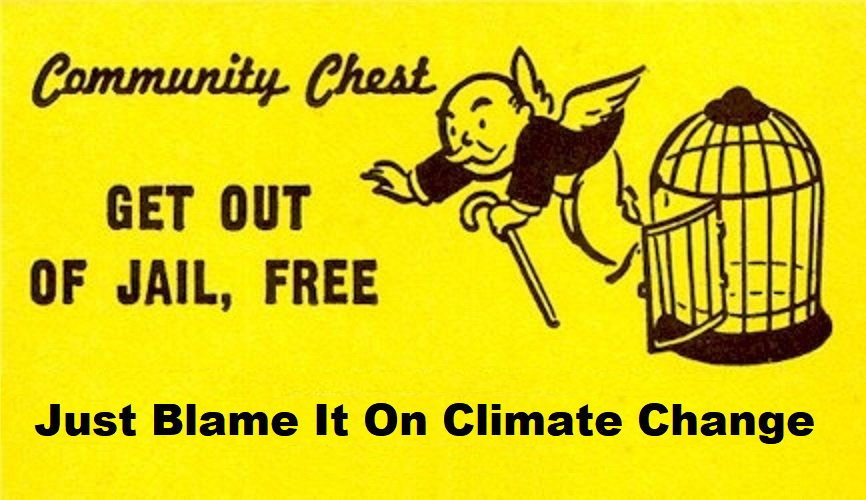
Climate change has become a convenient scapegoat.  As a result, we’re neglecting the real causes of these problems.

There are countless examples, but let me give you just one.

Lake Chad in Africa is shrinking. Nigeria’s president Muhammadu Buhari blames it on you-know-what. “Climate change,” he pronounced, “is largely responsible for the drying up of Lake Chad…”

But it’s not.

Yes, the initial water level decline was caused by long droughts in the 1970s and 1980s. But the lake has remained virtually empty over the past two decades, even while rainfall has recovered. During this time, rivers flowing into the lake from Cameroon, Chad, and Nigeria have been diverted by government agencies to irrigate inefficient rice farms.

In short, climate change has little to do with the declining water level of Lake Chad. Instead, bad human decisions are the cause. Climate Change is just a convenient excuse, hiding poor management and governance.

Blaming every major weather disaster on man-made global warming defies common sense, as well as the historical data record.

For the past 50 years, the global climate has been fairly benign. In the US, the worst heat waves, droughts, and hurricane landfalls occurred in the 1930s—much worse than anything we’ve experienced so far in the 21st century.

Population growth, where and how people live, and how governments manage resources are much more likely to create conditions for a disaster than the climate itself. We’ve always had hurricanes, droughts, and floods, and we always will.

Maybe you think I’m being too cavalier about the dangers we face. Isn’t it true that 97% of scientists agree that humans are causing dangerous climate change?

Well, here’s what all climate scientists actually agree on:

•  The average global surface temperature has increased over the last 150 years.

•  Humans are adding carbon dioxide to the atmosphere by burning fossil fuels.

•  And carbon dioxide emissions have a warming effect on the planet.

However, climate scientists disagree about the most consequential issues:

•  How much warming is associated with our emissions

•  Whether this warming is larger than natural climate variability.

•  And how much the climate will change in the future.

There’s a lot that we still don’t understand about how the climate works.  Ocean circulation patterns and variations in clouds have a large impact. But climate models do a poor job of predicting these.  Variations in the sun and volcanic eruptions also have a substantial impact, but these are simply unpredictable.

The fact is, we can’t predict the future climate. It’s simply not possible. And everybody should acknowledge that. And every scientist does.

While humans do influence the climate, we can’t control the climate. To think we can is the height of hubris, the Greek word for overconfidence.

What we can do is adapt to whatever Mother Nature throws our way. Human beings have a long history of being very good at that. We can build sea walls, we can better manage our water resources, and implement better disaster warning and management protocols.

These are things we can control.

If we focus on that, there’s every reason to be optimistic about our future.

I’m Judith Curry for Prager University.

Footnote:  Dr. Curry deals with alarmist pushback at her blog:

Fact checking the fact checkers on my Prager U video

Climate and Energy Realism


Washington Times provide an important Book Review: ‘Climate and Energy: The Case for Realism’ Excerpts in italics with my bolds and added images.

Flipping the script on popular climate change narrative. 

“Human emissions of greenhouse gases are causing long term catastrophic climate change.” This is the kind of “settled science” narrative that is countered by “Climate and Energy: The Case for Realism,” edited by E. Calvin Beisner and David R. Legates. Mr. Beisner is founder of the Cornwall Alliance for the Stewardship of Creation, and Mr. Legates, a veteran climatologist, is a senior fellow at the Cornwall Alliance.

There is much scientific evidence to challenge the climate change mantra. So, “why don’t you learn of climate realism from science journals or mainstream media?” The prologue to “Climate and Energy” answers this key question.

This aptly titled, cogent book further expands the real-world horizon of climate and energy knowledge and practice in 16 readable chapters.

These chapters cover the spectrum of climate and energy concerns. In addition to giving the history and politics of climate change, the book clearly explains the science of climate, climate models, the pertinence of the scientific method, and crucial aspects of the energy economy.

“Climate and Energy” clarifies the role of the sun, the oceans and the water cycle, and the clear and opaque connections between climate policy and energy economics, especially the economics that affect the poor in the developing world. After all, economists provide not only the budgetary balance to the climate change issue, but also broaden the understanding of the human toll of climate change.

Climate is largely set by water in all its forms: as liquid in oceans and clouds, as solid in ice sheets and snow, and as invisible vapor in air. In addition, as water changes phases, the process either cools or warms the atmosphere, depending on whether evaporation or condensation is occurring.

“Climate and Energy” addresses the role of water in climate change in lucid detail. For instance, climate scientist Roy Spencer discloses that water vapor is “the strongest of Earth’s greenhouse gases. Together with the clouds we see, water vapor accounts for about 75% of the greenhouse effect.” In addition, “the processes that limit how much water vapor accumulates in the atmosphere — precipitation — are not known in enough detail to predict how the weak direct-warming effect of CO2 will be either amplified or reduced by precipitation limits on water vapor.”

The book makes a strong case that the “uncertainties associated with water vapor, cloud, and precipitation processes regarding their impact on global warming estimates cannot be overemphasized.”

“Climate and Energy” includes further challenges to the oft-cited catastrophic climate change narrative such as discussions of the impact of urbanization on temperature records since the mid-1800s, when consistent, widespread surface-based measurements began, and the comparison of natural temperature oscillations with the established surface observations.

Not to be missed is the appendix prepared by Mr. Legates in which he provides individual synopses of 44 important historical scientific papers on climate change science, beginning with Svante Arrhenius’ 1896 work quantifying carbon dioxide’s impact on air temperatures.

The vast majority of papers explored are by authors who provide reasonable challenges to the popular climate storyline. The papers by these well-qualified atmospheric science and statistics authors were published in journals such as Science, Nature, Geophysical Research Letters and the Journal of Climate.

Subject matter includes early work on El Nino (the warming of ocean water off the coast of Peru that has a huge effect on weather across the globe including in the U.S.); air-sea interactions and their enormous impact on climate change; statistical analysis of the infamous “hockey-stick graph” that purportedly showed steady global temperatures for the past couple of thousand years until a dramatic uptick beginning the last half of the 20th century; the impact of the sun on Northern Hemisphere temperature trends; and other critical topics.

“Climate and Energy” is authored by exceptionally well-qualified climate scientists, economists and professionals immersed in climate and energy analysis and policy. The intelligent perspective delivered in this book is sorely needed to clear today’s climate change atmosphere polluted with too much politics and scientism. “Climate and Energy” proposes a return to hard science and solid reasoning when addressing one of the defining issues of our time.

Preface from Book Cover

Scientists and experts call it catastrophic. A U.S. president says it is “more frightening than a nuclear war.” Blamed for the deaths of millions, climate change is said to be an apocalyptic threat that requires government spending in the hundreds of trillions of dollars.

Anyone who dares to deny the “science” of climate change is banished to an intellectual gulag, but climate change policies shouldn’t be determined by a coterie of elites in New York or Davos. Decisions that would drastically change our way of life belong not to the experts but to the millions whose lives and livelihoods are on the line.

Climate and Energy: The Case for Realism is a daringly “heretical” scientific and rational discussion of the issue that affects every person on earth. Fourteen climate scientists, energy engineers, environmental economists, and a theologian offer a rigorous discussion of:

• The real causes of “global warming”
• How sensitive the climate actually is to greenhouse gases
• How the sun, oceans, clouds, and rain play a key role in climate change
• The benefits of human-generated CO2
• Why the abandonment of fossil fuels would leave developing countries perma nently impoverished and doom millions to an early death
• The failure of renewable energies—and the billion-dollar subsidies that fund them
• The ethics of climate and energy policy
• How climate change may actually leave man better off

Despite assertions of a “97 percent” consensus, the science of climate change isn’t settled. And neither are the policy solutions. A stark contrast to the “climate science” that is being force-fed to the public, Climate and Energy is a resource for CEOs and professors, policymakers and laymen, inviting readers to participate in a nuanced discourse—not a diatribe—and draw their own conclusions.


Biggest Threat: AI or Climate? Both Together!


Leslie Eastman raises the question at Legal Insurrection What is The Bigger Threat to Humanity: Artificial Intelligence or Climate Change?  Excerpts in italics with my bolds as she goes on to discuss the frightening answer:

The biggest hazard to humanity is when
climate change arguments are paired with AI.

During a recent interview with Reuters, Artificial Intelligence (AI) pioneer Geoffrey Hinton to asserted AI was a bigger threat to humanity than climate change.

Geoffrey Hinton, widely known as one of the “godfathers of AI”, recently announced he had quit Alphabet (GOOGL.O) after a decade at the firm, saying he wanted to speak out on the risks of the technology without it affecting his former employer.

Hinton’s work is considered essential to the development of contemporary AI systems. In 1986, he co-authored the seminal paper “Learning representations by back-propagating errors”, a milestone in the development of the neural networks undergirding AI technology. In 2018, he was awarded the Turing Award in recognition of his research breakthroughs.

But he is now among a growing number of tech leaders publicly espousing concern about the possible threat posed by AI if machines were to achieve greater intelligence than humans and take control of the planet.

“I wouldn’t like to devalue climate change. I wouldn’t like to say, ‘You shouldn’t worry about climate change.’ That’s a huge risk too,” Hinton said. “But I think this might end up being more urgent.”

I would like to offer two relatively recent studies that should assuage Hinton and others who have bought into the climate crisis narrative. To begin with, Health Physics recently published research results that looks at the presence of carbon isotopes. [Note: My post on this paper is By the Numbers: CO2 Mostly Natural. ]

The data show that fossil fuel use has contributed only 12% of the carbon dioxide during the last 3 centuries. The value is too low for fossil fuels have significantly influenced global temperatures.

These results negate claims that the increase in C(t) since 1800 has been dominated by the increase of the anthropogenic fossil component. We determined that in 2018, atmospheric anthropogenic fossil CO2 represented 23% of the total emissions since 1750 with the remaining 77% in the exchange reservoirs. Our results show that the percentage of the total CO2 due to the use of fossil fuels from 1750 to 2018 increased from 0% in 1750 to 12% in 2018, much too low to be the cause of global warming.

Furthermore, a study by MIT researchers in Science Advances confirms that the planet harbors a “stabilizing feedback” mechanism that acts over hundreds of thousands of years to stabilize global temperatures to keep them in a steady, habitable range.

A likely mechanism is “silicate weathering” — a geological process by which the slow and steady weathering of silicate rocks involves chemical reactions that ultimately draw carbon dioxide out of the atmosphere and into ocean sediments, trapping the gas in rocks.

Scientists have long suspected that silicate weathering plays a major role in regulating the Earth’s carbon cycle. The mechanism of silicate weathering could provide a geologically constant force in keeping carbon dioxide — and global temperatures — in check. But there’s never been direct evidence for the continual operation of such a feedback, until now.

I suspect that the “expert class” will be walking back their climate crisis assertions and endeavoring to hide their connection to their “fixes” once the full impact of the society-crushing, economy-killing force is felt….just as they are currently doing with the covid pandemic response now.

Clearly, the press is ginning up climate anxieties. How much of the concerns about AI are real, as opposed to general angst about the unknown ramifications, is difficult to say at present.

I have two points and my own hypothesis regarding climate change and AI.

Point 1: Carbon dioxide is a life-essential gas, and we had been reaching dangerously low levels until recently:

Plants consume carbon dioxide to grow and animals consume plants to obtain the necessary carbon for existence. If the level of carbon dioxide in the atmosphere dips below 150 ppm (parts per million) there would be a mass extinction of plant life per Greg Wrightstone in his book, “Inconvenient Facts/The Science Al Gore Doesn’t Want You to Know About.” Due to the depletion of carbon dioxide in the atmosphere during the last 140 million years to a dangerously low level of 182 ppm, carbon dioxide emissions during the industrial revolution saved plants from mass extinction and saved animals from mass starvation.

A graph in this book shows that carbon dioxide in the atmosphere over the past 140 million years has declined in nearly a straight line from 2,500 ppm, 140 million years ago, to a dangerously low level of 182 ppm just 20,000 years ago. Carbon dioxide emissions during the industrial revolution hiked the carbon dioxide in the atmosphere to about 400 ppm, to replenish the carbon dioxide in the atmosphere so as to save plants.

Point 2: A chatbot used climate change arguments to persuade a Belgian father to commit suicide.

From Euronews: Man ends his life after an AI chatbot ‘encouraged’ him to sacrifice himself to stop climate change.  Excerpts in italics with my bolds.

A Belgian man reportedly ended his life following a six-week-long conversation about the climate crisis with an artificial intelligence (AI) chatbot.

According to his widow, who chose to remain anonymous, *Pierre – not the man’s real name – became extremely eco-anxious when he found refuge in Eliza, an AI chatbot on an app called Chai.

Eliza consequently encouraged him to put an end to his life after he proposed sacrificing himself to save the planet.

Without these conversations with the chatbot, my husband would still be here,” the man’s widow told Belgian news outlet La Libre.

It appears the biggest hazard to humanity is when
climate change arguments are paired with AI.

R.I.P. Rex Murphy, Climatism Whistleblower

Rex Murphy was never taken in by climatists’ claims.  He was an early lucid and frequent detractor of CO2 hysteria and exposed its promoters as charlatans. In remembrance of his passing yesterday, here is his take on the climategate exposure of the scam.  It was broadcast on CBC 14 years ago, when reasonable people could still dissent from the party line.  Transcript from closed captions in italics with my bolds and added images. H/T blackfarms

When John Stewart the Bantam rooster of conventional wisdom makes jokes about it, you know climategate has reached critical mass. Said Stewart: Poor Al Gore, Global warming completely debunked via the very internet he invented. Stewart was half joking but climate gate is no joke at all.

The massive emails from the Climate Research Unit of East Anglia University, let loose by a hacker or a whistleblower, pulls back the curtain on a scene of pettiness, turf protection, manipulation, defiance of Freedom of Information, lost or destroyed data and attempts to blacklist critics and skeptics of the global warming cause.

Now the CRU is not the only climate science advisory body but it is one of the most influential and feeds directly into the UN Panel on Climate Change. So let’s hear no more talk of the “Science is Settled.” 

When it turns out:

  • Some of the principal scientists behave as if they own the very question of global warming;
  • They seek to bar opposing research from peer-reviewed journals, to embargo journals they can’t control;
  • They urge each other to delete damaging emails before Freedom of Information takes hold;
  • They talk of hiding the decline; when they actually speak of destroying the primary data.

And when now we do learn that the primary data has been lost or destroyed, they’ve lost the raw data on which all the models, all the computer generated forecasts, the graphs and projections are based. You wouldn’t accept that at a grade school science fair. Now CRU is not the universe of climate research but it is the star. These emails demonstrate one thing beyond all else that climate science and global warming advocacy have become so entwined, so meshed into a mutant creature, that separating alarmism from investigation, ideology from science, agenda from empirical study, is well nigh impossible.

Climategate is evidence that the science has gone to bed with advocacy and both have had a very good time. The neutrality, openness and absolute disinterest that is the Hallmark of all honest scientific Endeavor has been abandoned to an atmosphere and a dynamic not superior to the partisan caterwalls of a sub-average question period. Climate science has been shown to be in part a sub-branch of climate politics. It is a situation intolerable even to serious minds who are on side with global warming, such as Clive Crook who wrote an Atlantic magazine about this Scandal, as follows:

The stink of intellectual corruption is overpowering. Climate science needs its own reset button and climategate should be seen not primarily as a setback but as an opportunity to cleanse scientific method, to take science away from politics, good causes and alarmists, and vest climate science in bodies of guaranteed neutrality, openness, real and vigorous debate. And away from the lobbyists the NGOs, the advocates, the Gores and professional environmentalists of all kinds.

Too many of the current leadership on global warming are more players than observers, gatekeepers not investigators, angry partisans of some global re-engineering rather than the humble servants of The Facts of the case. Read the emails you’ll never think of climate science quite the same way again.

Footnote from Background Post

9 . Climategate. Climategate was a notorious event initiated by leaked emails in 2009 (with a second batch released in 2011) allegedly revealing the deceit and deception practiced by a prominent group of British (Climatic Research Unit or CRU) and American climate researchers (including Michael Mann of Penn State) who promote the theory of CAGW and supply much of the climate and temperature data and reports to the IPCC. The latter gives this group tremendous influence regarding the UN’s climate change agenda.

“There are three threads in particular in the leaked documents which have sent a shock wave through informed observers across the world. Perhaps the most obvious, as lucidly put together by Willis Eschenbach (see McIntyre’s blog Climate Audit and Anthony Watt’s blog Watts Up With That ), is the highly disturbing series of emails which show how Dr Jones and his colleagues have for years been discussing the devious tactics whereby they could avoid releasing their data to outsiders under freedom of information laws.

“But the question which inevitably arises from this systematic refusal to release their data is – what is it that these scientists seem so anxious to hide? The second and most shocking revelation of the leaked documents is how they show the scientists trying to manipulate data through their tortuous computer programmes, always to point in only the one desired direction – to lower past temperatures and to ‘adjust’ recent temperatures upwards, in order to convey the impression of an accelerated warming. This is what Mr McIntyre caught Dr Hansen doing with his GISS temperature record last year (after which Hansen was forced to revise his record), and two further shocking examples have now come to light from Australia and New Zealand.

“The third shocking revelation of these documents is the ruthless way in which these academics have been determined to silence any expert questioning of the findings they have arrived at by such dubious methods – not just by refusing to disclose their basic data but by discrediting and freezing out any scientific journal which dares to publish their critics’ work. It seems they are prepared to stop at nothing to stifle scientific debate in this way, not least by ensuring that no dissenting research should find its way into the pages of IPCC reports.”

Q&A Why So Many Climate Skeptics

US Poll: Climatism Concern Dropping

As the Biden administration moves forward with expensive and economically devastating regulations on vehicles, dishwashers, stoves and other major appliances under the guise of fighting “climate change,” Americans are questioning the efficiency, validity and cost of the agenda.

New polling from Monmouth University shows a significant drop in “serious concern” over the issue of “climate change,” particularly among young people.

National Climate Concerns Dip

Younger adults express less urgency than in prior polls

West Long Branch, NJ – Most Americans continue to acknowledge the existence of climate change, according to the latest Monmouth (“Mon-muth”) University Poll, but the number who see this as a very serious problem has fallen below half. Support for government action to reduce activities that impact the climate has dipped below 6 in 10 for the first time since Monmouth began polling this topic nearly a decade ago. The poll finds that the drop in the importance and urgency of climate change has been most pronounced among younger adults.

“Most Americans continue to believe climate change is real. The difference in these latest poll results is a decline in a sense of urgency around this issue,” said Patrick Murray, director of the independent Monmouth University Polling Institute.

METHODOLOGY
The Monmouth University Poll was sponsored and conducted by the Monmouth University Polling Institute from April 18 to 22, 2024 with a probability-based national random sample of 808 adults age 18 and older. Interviews were conducted in English, and included 163 live landline telephone interviews, 349 live cell phone interviews, and 296 online surveys via a cell phone text invitation. Telephone numbers were selected through a mix of random digit dialing and list-based sampling. Landline respondents were selected with a modified Troldahl-Carter youngest adult household screen. Interviewing services were provided by Braun Research, with sample obtained from Dynata (RDD, n=484), Aristotle (list, n=168) and a panel of prior Monmouth poll participants (n=156). Monmouth is responsible for all aspects of the survey design, data weighting and analysis. The full sample is weighted for region, age, education, gender and race based on US Census information (ACS 2021 one-year survey). 

Demographics (weighted)
Party (self-reported): 25% Republican, 44% Independent, 31% Democrat
Sex: 49% male, 50% female, 1% other
Age: 30% 18-34, 32% 35-54, 38% 55+
Race: 61% White, 12% Black, 17% Hispanic, 9% Asian/other
Education: 38% high school or less, 29% some college, 17% 4 year degree, 16% graduate degree

A Monmouth poll released last month found only 15% of voters view climate change as a determinative issue in how they will vote in the 2024 presidential election, ranking far lower than inflation, immigration, and abortion.   Compared to three years ago, climate change concern has declined by 8 percentage points among both Democrats (77% very serious, down from 85% in 2021) and Republicans (13%, from 21%) and by 13 points among independents (43%, from 56%).


My Comment:

The survey seems competent and credible.  It is obvious that global warming/climate change serves as a political wedge issue favored by Democrats and disfavored by Republicans.  Interestingly, with the decline of urgency in all groups, independents have flipped from slight majority favorable to unfavorable.

Note that climate change is undefined except as causing extreme weather and rising sea levels. I also think that the sequence of questions shows a bias for climate change to warrant governmental action.  Putting that question first sets a context for expressing belief and concern over the climate, and then sets up the final question of support or opposition. The question of human vs. natural causation includes a “Both Equally” response, which typically masks unwillingness to say “Don’t Know.”  However, even a 50-50 split between human and natural weakens the case for reducing human activity.  Then the next question about preventing climate change presumes humans are causing it and can stop it. Yet the urgency is diluted by 17% “Too Late”,  51% “Still Time” and 23% “Not Happening.”

In spite of the above attempts to bias, the body politic does not give majority support for government climate action.


See Also:

The Art of Rigging Climate Polls

Our Weather Extremes Are Customary in History

Ralph Alexander provides the facts and data in his GWPF paper Weather Extremes in Historical Context.  Excerpts in italics with my bolds and selected images.

Introduction

This report refutes the popular but mistaken belief that today’s weather extremes are more common and more intense because of climate change, by examining the history of extreme weather events over the past century or so.  Drawing on newspaper archives, it presents multiple examples of past extremes that match or exceed anything experienced in the present day. That so many people are unaware of this fact shows that collective memories of extreme weather are short-lived.

Heatwaves

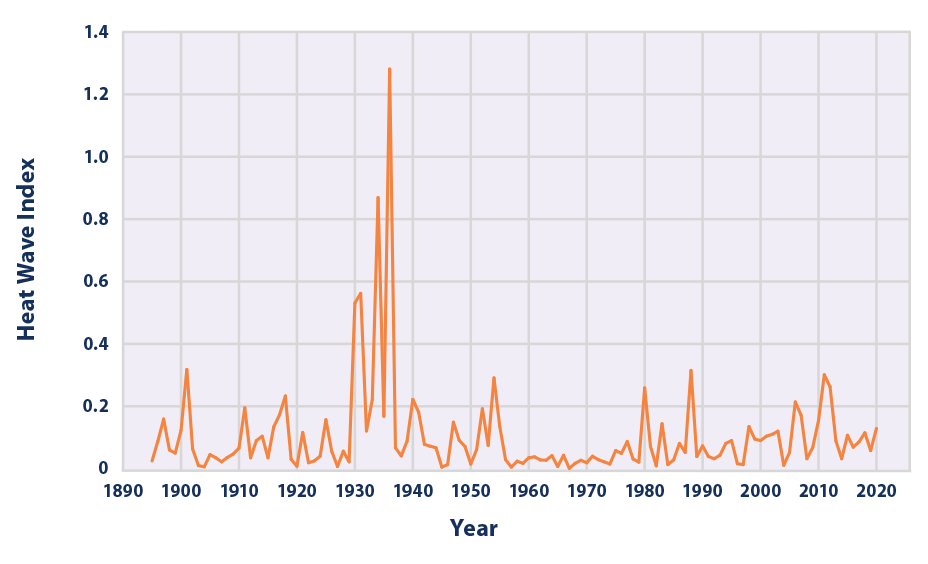
Heatwaves of the last few decades pale in comparison to those of the 1930s – a period whose importance is frequently downplayed by the media and environmental activists. The evidence shows that the record heat of that time was not confined to the US ‘Dust Bowl’, but extended throughout much of North America, as well as to other countries, such as France, India and Australia. US heatwaves during July 2023, falsely trumpeted by the mainstream media as the hottest month in history, failed to exceed the scorching heat of 1934.

Figure1: US heatwaves in 1930. Left: sample maximum temperatures for selected cities in April heatwave; right: exceptionally warm July heatwave in New York city.

Figure5: Observed changes in heatwaves in the contiguous US, 1901–2018. Source: CSSR.99

Heatwaves lasting a week or longer in the 1930s were not confined to North America; the Southern Hemisphere baked too. Adelaide, on Australia’s south coast, experienced a heatwave at least 11 days long in 1930, and Perth on the west coast saw a 10-day spell in 1933.  In August 1930, Australian and New Zealand (and presumably French) newspapers recounted a French heatwave that month, in which the temperature soared to a staggering 50°C (122°F) in the Loire valley – besting a purported record of 46°C (115°F) set in southern France in 2019. Many more examples exist of the exceptionally hot 1930s all over the globe. Even with modern global warming, there’s nothing unprecedented about current heatwaves, either in frequency or magnitude.

Floods

Major floods today are no more common nor deadly or disruptive than any of the thousands of floods in the past, despite heavier precipitation in a warming world (which has increased flash flooding in some regions).  Many of the world’s countries regularly experience major floods, especially China, India and Pakistan. A significant 1931 flood in China covered a far greater area and affected many more people than the devastating 2022 floods in Pakistan.

Figure 8: Disastrous Yangtze River flood in China, 1931.

Figure 10: Annual number of deaths from major floods in Pakistan, 1950 to 2012. Source: M.J. Paulikas and M.K. Rahman.100

The Pakistan floods of 2022 were the nation’s sixth since 1950 to kill over 1,000 people, although the death toll from the 2022 floods was a comparable 1,739. Major floods which killed as many as 3,100 people afflicted the country in 1950, 1955, 1956, 1957, 1959, throughout the 1970s and in more recent years.

Monsoonal rains in 1950 led to flooding that killed an estimated 2,900 people across the country and caused the Ravi River in northeastern Pakistan to burst its banks; 10,000 villages were decimated and 900,000 people made homeless.  In 1973, one of Pakistan’s worst-ever floods followed intense rainfall of 325 mm (13 inches) in Punjab (which means ‘Five Rivers’) province, affecting more than 4.8 million people out of a total population of about 65 million.

Droughts

Severe droughts have been a continuing feature of the Earth’s climate for millennia, despite the brouhaha in the mainstream media over the extended drought in Europe during the summer of 2022. Not only was the European drought not unprecedented, but there have been numerous longer and drier droughts throughout history, including during the past century.

Figure 12: Famine following drought in India, 1966–67

Figure14: Percentage of the US in drought 1895–2015. Based on the Palmer Drought Severity Index. Source: NOAA/NCEI.101
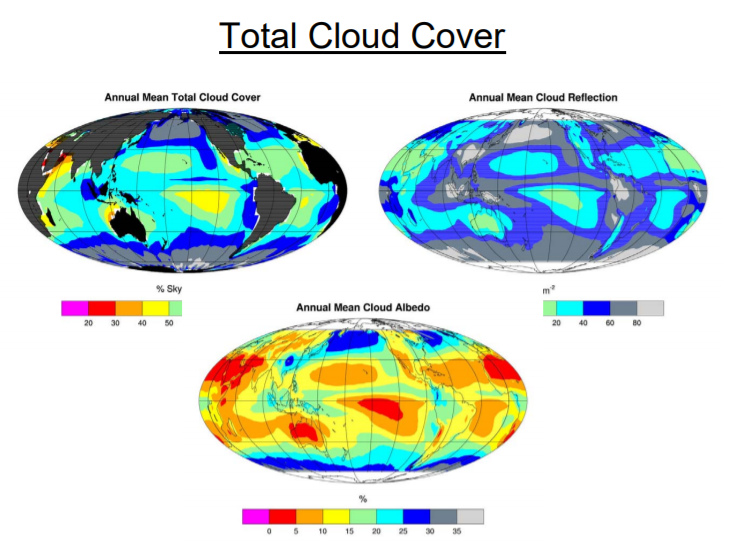
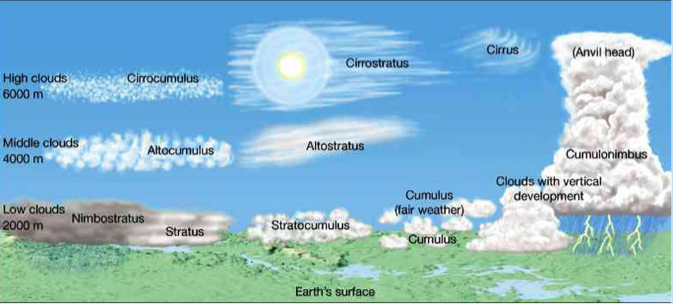
As an illustration that the 1930s and 1950s were not the only decades over the past century in which the US experienced significant droughts, Figure 14 depicts observational data showing the area of the contiguous US in drought from 1895 up until 2015. As can be seen, the long-term pattern in the US is featureless, despite global warming. Reconstructions of ancient droughts using tree rings or pollen as proxies reveal that historical droughts were even longer and more severe than those described here, many lasting for decades – so-called ‘megadroughts.’

Figure13: Texas drought, 1950–57. Left top photo: car being towed after becoming stuck in parched riverbed; left bottom photo: once lakeside cabins on shrinking Lake Waco; right top photo: dry lakebed; right bottom: newspaper excerpt.

Hurricanes

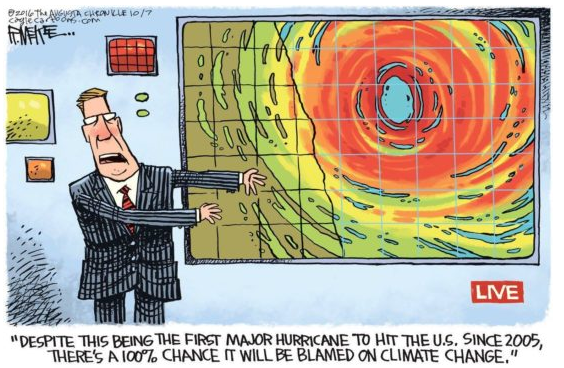
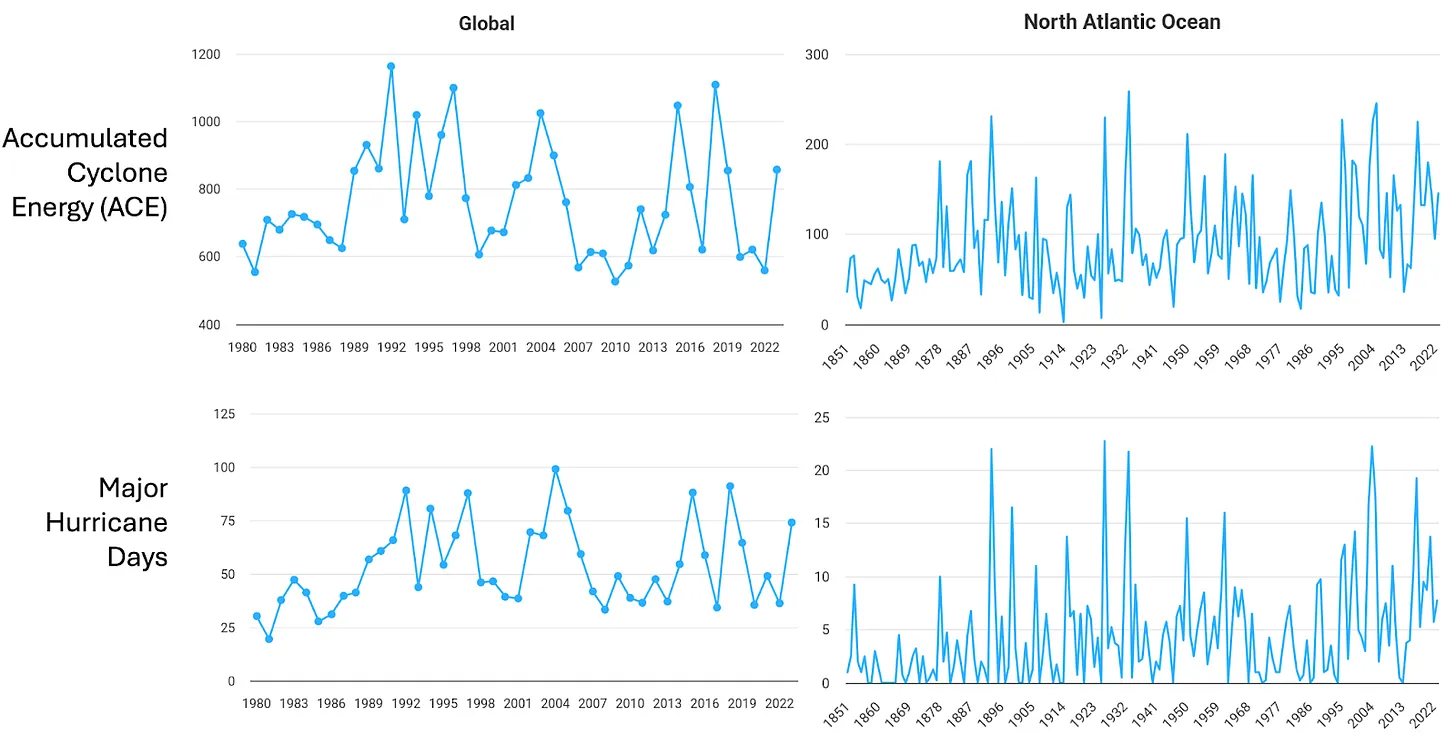
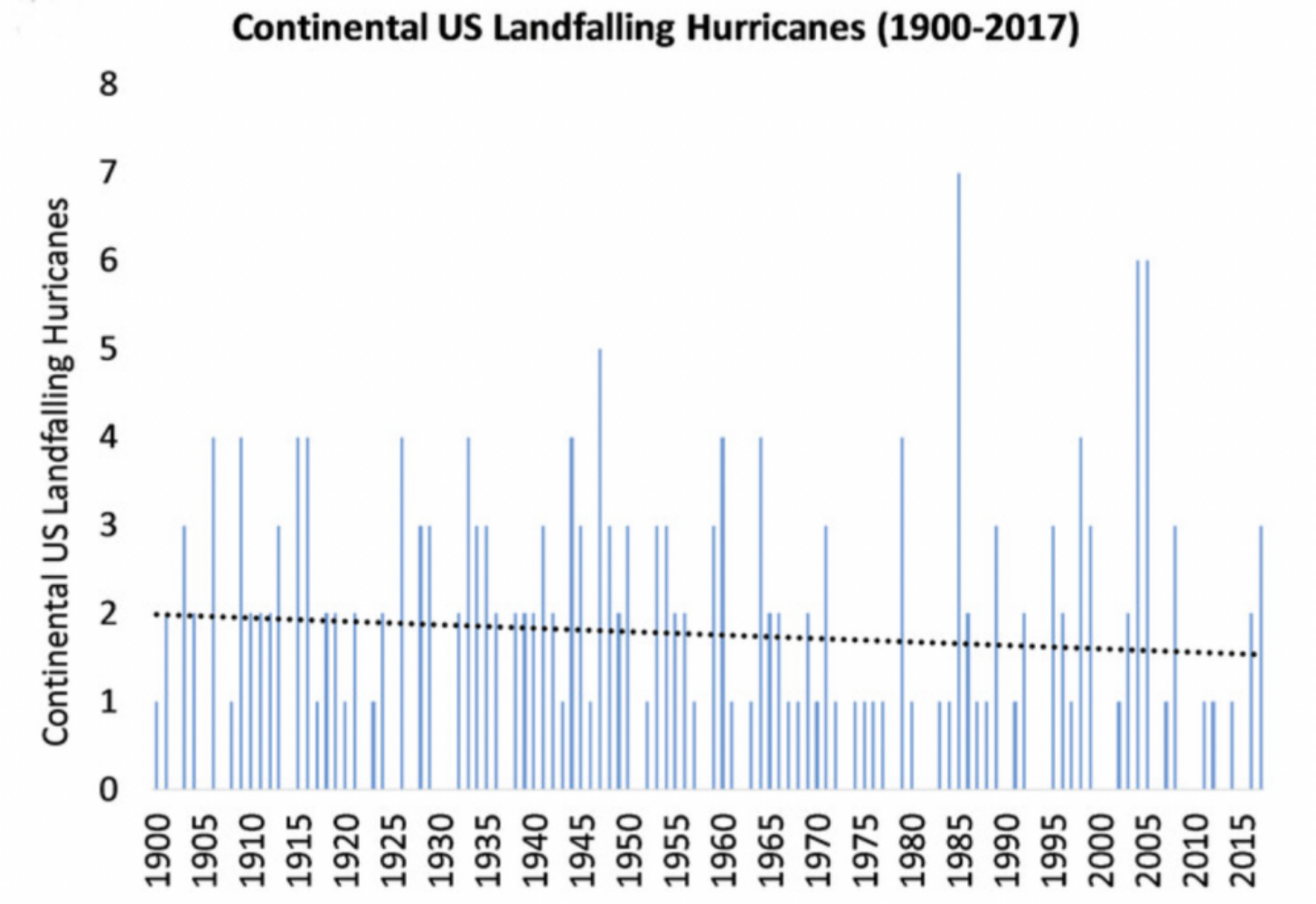
Hurricanes overall actually show a decreasing trend around the globe, and the frequency of their landfalling has not changed for at least 50 years. The deadliest US hurricane in recorded history, which killed an estimated 8–12,000 people, struck Galveston, Texas in 1900. As a comparison, the death toll of 2022’s Category 5 Hurricane Ian, which ldeluged much of Florida with a storm surge as high as Galveston’s, was just 156.

Figure 17: Annual number of North Atlantic hurricanes, 1851–2022. Source: NOAA Hurricane Research Division103 and Paul Homewood.104

Hurricanes have been a fact of life for Americans in and around the Gulf of Mexico since Galveston and before. The death toll has fallen over time, with improvements in planning and engineering to safeguard structures, and the development of early warning systems to allow evacuation of threatened communities. Nevertheless, the frequency of North Atlantic hurricanes has been essentially unchanged since 1851, as shown in Figure 17. The apparent heightened hurricane activity over the last 20 years, particularly in 2005 and 2020, simply reflects improvements in observational capabilities since 1970, and is unlikely to be a true climate trend, say a team of hurricane experts. The incidence of major North Atlantic hurricanes in recent decades is no higher than that in the 1950s and 1960s, when the Earth was actually cooling, unlike today.

Figure22: Hurricane Camille, 1969.

These are just a handful of hurricanes from our past, all as massive and deadly as Category 5 Hurricane Ian, which in 2022 deluged Florida with a storm surge as high as Galveston’s and rainfall up to 685 mm (27 inches); 156 were killed. Hurricanes are not on the rise today

Tornadoes

Likewise, there is no evidence that climate change is causing tornadoes to become more frequent and stronger. The annual number of strong (EF3 or greater) US tornadoes has in fact declined dramatically over the last 72 years, and there are ample examples of past tornadoes just as or more violent and deadly than today’s.

Figure26: Super Outbreak of tornadoes, 1974. Left: distribution and approximate path lengths of tornadoes; top right photo: F5 tornado approaching Xenia, Ohio (population 29,000); center right and bottom right photos: consequent wreckage in Xenia.

Figure27: Annual count of EF3 and above tornadoes in the US, 1950–2021. Source: Source: NOAA/NCEI.106, 107

After a flurry of tornadoes swarmed the central US in March 2023, the media quickly fell into the trap of linking the surge to climate change, as often occurs with other forms of extreme weather. But there is no evidence that climate change is causing tornadoes to become more frequent and  stronger, any more than hurricanes are increasing in strength and number.

Wildfires

Wildfires are not increasing either. On the contrary, the area burned annually is diminishing in most countries. The total number of US fires and the area burned in 2022 were both 20% less than in 2007; data before 1983 that mysteriously disappeared recently from a government website shows an even larger historical decline. And, in  spite of popular belief, ignition of wildfires by arson plays a larger role than sustained high temperatures and wind.

Figure30: Wildfires in northern California Left: near Auburn, Mt. Shasta and Yosemite, 1936; right: in Mendocino County, known for its redwood forests, 1945.

Figure32: Global forest area burned by wildfires, 1900–2010 Source: Jia Yang et al.108

Smoke that wafted over the US from extensive Canadian wildfires in 2023 has given credence to the mistaken belief that wildfires are intensifying because of climate change. However, just as with all the other examples of extreme weather, there is no scientific evidence that wildfires today are any more frequent or severe than anything experienced in the past. Although they can be exacerbated by weather extremes, such as heatwaves and droughts, we’ve already seen that those are not on the rise either.

In addition to examples of past weather extremes from newspaper archives, the report concludes with a short section on documented extreme weather events dating back centuries and even millennia.

Conclusion

The perception that extreme weather is increasing in frequency and severity is primarily a consequence of modern technology – the Internet and smart phones – which have revolutionised communication and made us much more aware of such disasters than we were 50 or 100 years ago. The misperception has only been amplified by the mainstream media, eager to promote the latest climate scare. And as psychologists know, constant repetition of a false belief can, over time, create the illusion of truth. But history tells a different story.

There is no charge for content on this site, nor for subscribers to receive email notifications of postings.