Green Electrical Shocks

On Sunday Feb.4, a weekly news program aired in the Netherlands on the titled subject. H/T Climate Scepticism. The video clip is below with English subtitles. For those who prefer reading, I provide the substantial excerpts from the program with my bolds.

How many of you have Green Electricity? I will estimate 69%
And how much nationally? Oh, 69%!
So we are very average, and in a good way, because the climate is very important.

Let me ask: Green electricity comes from . . .?
Yes, electricity produced from windmills and solar panels.
Nearly 2/3 of the Dutch are using it. That’s the image.

Well I have green news and bad news.
The green news: Well done!
The bad news: It is all one big lie.
Time for the Green Electrical Shocks.

Shock #1: The green electricity from your socket is not green.
When I switched to green electricity I was very proud.
I thought, Yes, well done! The climate is getting warmer, but not any more thanks to me.

Well, that turned out to be untrue.
All producers deliver to one communal grid. Green and grey electricity all mix.
The electricity you use is always a mix of various sources.
OK. It actually makes sense not to have separate green and grey cables for every house.
So it means that of all electricity, 69% is produced in a sustainable way. But then:


Shock #2: Green Electricity is mostly fake.
Most of the green electricity we think we use comes from abroad.
You may think: So what. Green is green.

But that electricity doesn’t come from abroad, it stays abroad.
If you have green electricity at home, it may mean nothing more than that your supplier has bought “green electricity certificates”.

In Europe green electricity gets an official certificate,
Instead of selling on the electricity, they sell on those certificates.
Norway, with its hydro power, has a surplus of certificates.
Dutch suppliers buy them on a massive scale, while the electricity stays in Norway.


The idea was: if countries can sell those certificates, they can make money by producing more green electricity.
But the Norwegians don’t produce more green electricity.
But they do sell certificates.

The Dutch suppliers wave with those certificates, and say Look! Our grey electricity is green.
Only one country has produced green electricity: Norway.
But two countries take the credit.
Norway, because they produce green electricity, and the Netherlands because, on paper, we have green electricity. Get it? That’s a nice deal.

More and more countries sell those certificates. Italy is now the top supplier.
We buy fake green electricity from Italy, like some kind of Karma ham.

Now, let’s look again at the green electricity we all think we use.
So the real picture isn’t 69%. If you cancel the certificates, only 21% of electricity is really green.
Nowadays you can even order it separately if you don’t want to be part of that Norway certificates scam.
You may think: 21% green is still quite a lot. But it is time for:
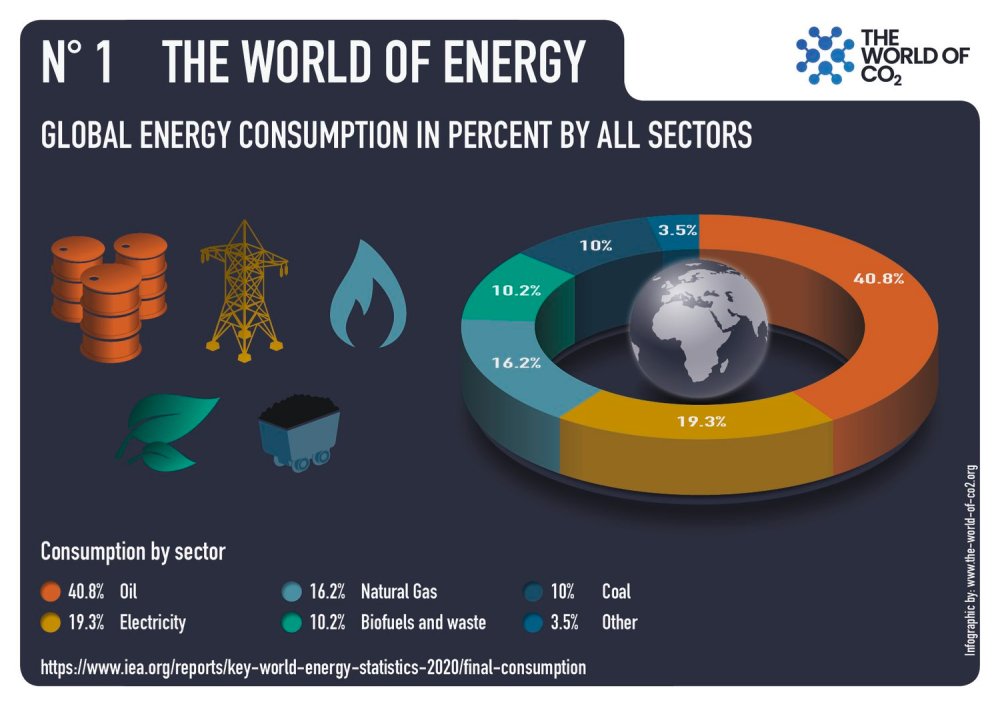
 

Shock #3: Not all energy is electricity.
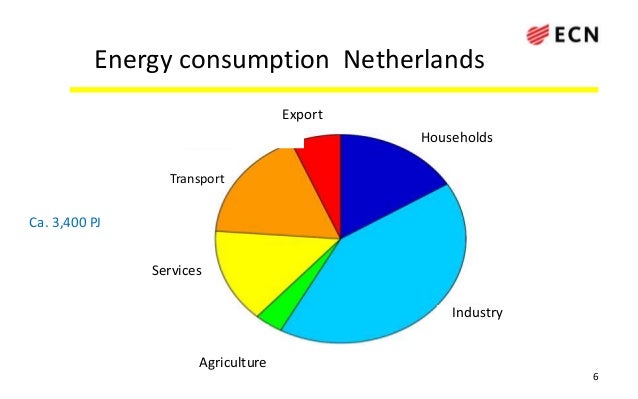
If you talk about the climate, you shouldn’t just consider electricity but all energy.
When you look at all energy, like factories, cars, trains, gas fires, then the share of consumer electricity is virtually nothing.
If you include everything in your calculation, it turns out that only 6% of all the energy we use in the Netherlands is green. It is a comedy, but wait:

Trees converted into pellets by means of petroleum powered machinery.

Shock #4: Most green energy doesn’t come from sun or wind, like you might think.
Even the 6%, our last green hope, is fake. According to the CBS we are using more sun and wind energy, but most of the green energy is produced by the burning of biomass.
Ah, more than half of the 6% green energy is biomass.

Ridiculous. What is biomass really? It is organic materials that we encounter every day.
Like the content of a compost heap. How about maize leaves or hay?
The idea behind burning organic materials is that it will grow up again.
So CO2 is released when you burn it, but it will be absorbed again by new trees.

However, there is one problem. The forest grows very slowly and our power plants burn very fast.
This is the fatal flaw in the thinking about biomass. Power plants burn trees too fast, so my solution: slow fire. Disadvantage: it doesn’t exist. So this is our next shock.

Shock#5: Biomass isn’t all that sustainable.
It’s getting worse. There aren’t enough trees in the Netherlands for biomass.
We can’t do it on our own. We don’t have enough wood, so we get it from America.

In the USA forests are cut at a high rate, Trees are shredded and compressed into pellets.
These are shipped to the Netherlands and end up in the ovens of the coal plants.
It’s a disaster for the American forests, according to environmental groups.

So we transport American forests on diesel ships to Europe.
Then throw them in the oven because it officially counts as green energy.
Only because the CO2 released this way doesn’t count for our total emissions.

In reality biomass emits more CO2 than natural gas and coal.
These are laws of nature, no matter what European laws say.
At the bottom line, how much sustainable energy do we really have in the Netherlands?
Well, the only real green energy from windmills, solar panels etc. Is only 2.2%. of all the energy we use.
In Conclusion
So the fact that 2/3 of the audience and of all Dutch people use green electricity means absolutely nothing. It’s only 2.2%, and crazier still, the government says it should be at 14% by 2020.
They promised: to us, to Europe, to planet Earth: 14 instead of 2.2.

Instead of making a serious attempt to save the climate, they are only working on accounting tricks, like buying pieces of paper in Norway and burning American forests.
They are only saving the climate on paper.

Summary Comment

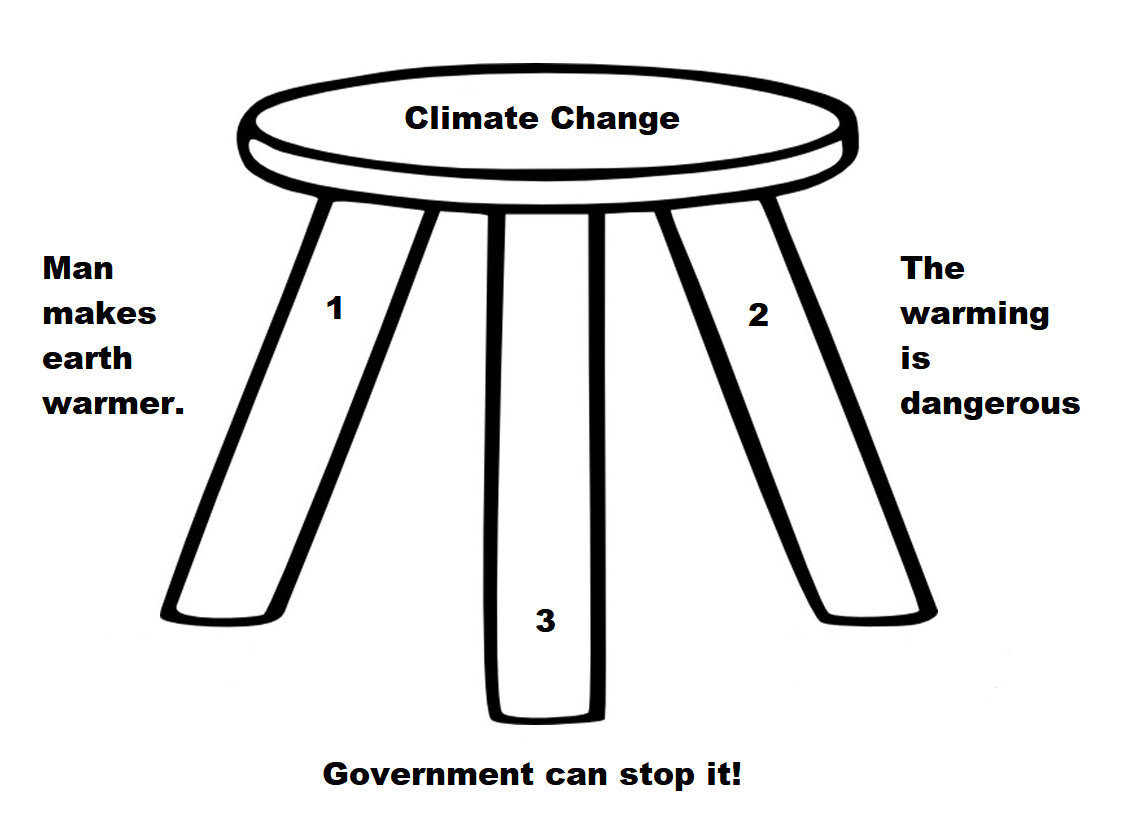
As the stool above shows, the climate change package sits on three premises. The first is the science bit, consisting of an unproven claim that observed warming is caused by humans burning fossil fuels. The second part rests on impact studies from billions of research dollars spent uncovering any and all possible negatives from warming. And the third leg is climate policies showing how governments can “fight climate change.”

It is refreshing to see more and more articles by people reasoning about climate change/global warming and expressing rational positions. Increasingly, analysts are unbundling the package and questioning not only the science, but also pointing out positives from CO2 and warming.  And as the Dutch telecast shows, ineffective government policies are also fair game.

More on flawed climate policies at Reasoning About Climate

Climate Change No Longer a US Security Threat


The news was reported by the Federalist Trump Admin To Remove Climate Change From List Of National Security Threats. Excerpts below with my bolds.

The Trump administration will reverse course from previous Obama administration policy, eliminating climate change from a list of national security threats. The National Security Strategy to be released on Monday will emphasize the importance of balancing energy security with economic development and environmental protection, according to a source who has seen the document and shared excerpts of a late draft.

“Climate policies will continue to shape the global energy system,” a draft of the National Security Strategy slated to be released on Monday said. “U.S. leadership is indispensable to countering an anti-growth, energy agenda that is detrimental to U.S. economic and energy security interests. Given future global energy demand, much of the developing world will require fossil fuels, as well as other forms of energy, to power their economies and lift their people out of poverty.”

President Obama made climate change, and the burdensome regulations that accompany its focus, a primary focus of his administration, including in his National Security Strategy released in 2015. “[W]e are working toward an ambitious new global climate change agreement to shape standards for prevention, preparedness, and response over the next decade,” that report said.

“In some ways, [climate change] is akin to the problem of terrorism and ISIL,” Obama said at climate talks in Paris in 2015. During a weekly address, Obama said “Today, there is no greater threat to our planet than climate change.”

In September 2016, President Obama released a memorandum requiring federal agencies to consider the effects of climate change in the development of national security-related doctrine, policies, and plans. All of this alarmed critics concerned with more pressing security risks.

By contrast, President Trump’s National Security Strategy will focus on conventional and immediate national security risks. The draft says, in part:

North Korea seeks the capability to kill millions of Americans with nuclear weapons. Iran supports terrorist groups and openly calls for our destruction. Jihadist terrorist organizations such as ISIS and al Qaeda are determined to attack the United States and radicalize Americans with their hateful ideology. States and non-state actors undermine social order with drug and human trafficking networks, which drive violent crimes and cause thousands of American deaths each year…. Strengthening control over our borders and immigration system is central to national security, economic prosperity, and the rule of law. Terrorists, drug traffickers, and criminal cartels exploit porous borders and threaten U.S. security and public safety. These actors adapt quickly to outpace our defenses.

As for climate change, the draft report says “The United States will remain a global leader in reducing traditional pollution, as well as greenhouse gases, while growing its economy. This achievement, which can serve as model to other countries, flows from innovation, technology breakthroughs, and energy efficiency gains –not from onerous regulation.”

See also: Climates Don’t Start Wars, People Do

Climate Policies: Real Economic Damage Fighting Imaginary Problem


Sir Ian Byatt describes the self-induced plight of the UK, the nation perhaps most dangerously undermined by ill-advised energy policies supposedly to control future weather. Climate change is not the problem, but policies to fight it are. This blog has noted reports from Australia, Canada, France, Germany, the Netherlands, and the US (links below), with UK now added. H\T to Climate Scepticism for providing the text of his presentation UK Economy mired in Green Aspirations. Excerpts below with my bolds and images.

Successive British governments embrace the official policy consensus. Pressure groups, the environmental NGOs, and the science lobby, including the Royal Society (nullius in verba?) have persuaded the establishment, including the current Prince of Wales, that the UK should be an international example of virtuous behaviour.

The UK is unique in setting targets for reduction in CO2 emissions in legislation, with government claims to be on target to meet them.

Parliament, with cross-party support, passed a Climate Change Act in 2008 stipulating a 60% reduction in CO2 emissions from 1990 levels by 2050. This was increased to 80% during the passage of the Bill. An independent Parliamentary Committee was established to recommend five-yearly carbon budgets designed to achieve these objectives; this committee has recommended a reduction of 57% in CO2 emissions by 2030.

January 2017 actual low carbon generation and demand (top) . Note that the Y-axis scale is daily markers. There are two key observations. The first is that low carbon generation does not yet get close to satisfying 100% of UK demand. Any wind curtailment must therefore be down to local grid congestion, especially in Scotland. The second is that the residual is dominated by the diurnal demand cycle which means that high carbon dispatchable power is not yet adversely challenged by the current level of renewable penetration.

From Energy Matters: Centrally Planned UK Generation Scenarios for 2030

The cost of meeting these targets, in the form of levies, taxes and subsidies, has been estimated by Peter Lilley, one of the handful of MPs who voted against the Bill. He calculates a cumulative cost of over £10,000 per household between 2014 and 2030.[ Peter Lilley £300 Billion: the cost of the Climate Change Act Global Warming Policy Foundation 2016. Already £327 per household, rising to £1390 in 2050.]

These costs, estimated before the shale revolution, and excluding the costs of the EU renewable energy directive, would bear particularly heavily on vulnerable companies and poorer households, while benefitting landowners who rent out their land to suppliers of renewable energy.

Policies are also highly interventionist. Ministers have killed the competitive wholesale market in electricity supply, which, following privatisation, had reduced electricity prices. The choice of electric power generation is now made by ministers not the market; the additional costs being loaded on to customers via higher prices.

Environmental pressure groups provide both the inspiration for the virtuous and the votes for the aspiring politician. They emphasise “the tragedy of the commons”, not the power of innovation. They stress the consensus in science, not its challenges and its search for new information.  With virtue comes certainty; rules crowd out compromises, negating the value of cost-benefit analysis, which has become a tool to convince rather than to question.

We need to change the whole storyline, making environmental and climate policy consistent with the pursuit of higher productivity and higher income for the people. Unhappily, economists are failing to do this.

Such a shift should be supported by a focus on incentives and constraints, particularly institutional incentives and constraints, closely linked to the resolution of political and social conflicts.

This should include more honest calculations of the incremental costs of expanding electrical power networks, fully allowing for all system costs, including back-up power, not just costs of types of generator, and incorporating the incremental costs of transmission and unpredictable intermittency.
Getting economic analysis back into political, social and decision making will involve incorporating the particularities of human behaviour at both the individual and collective levels. This is not an easy task; but a convincing intellectual victory must respect the conflicts and confusions of our fractured world.

Resources:

Killing the Energy Goose

Climate Policies Failure, the Movie

Climate Policies Gouge the Masses

Bonn COP23 Briefing for Realists

Climate Costs in Context

Speaking Truth About Power

Germany’s Green Energy Meltdown


CPP has Three Fatal Flaws


Captains of industry contending with a sea of Obama era regulations.

Thanks to Rich Lowry’s article at National Review and some other sources, we can see clearly the three fatal flaws bringing down the Clean Power Plan in its entirety. Lowry wrote The Great Regulatory Rollback. Excerpts below with my bolds and images.

1. No federal law governs CO2 emissions.

Lowry: The Clean Power Plan, which sought to reduce U.S. carbon emissions by 32 percent below 2005 levels by 2030, was government by the administrative state on a scale that has never been attempted before. The EPA took a dubious reading of a portion of the Clean Air Act (Section 111, which arguably prevented the EPA from taking this action rather than empowered it to do so) and used it to mandate that the states adopt far-reaching plans to reduce carbon emissions, under threat of the loss of federal highway funds.

In an August ruling of the DC Court of Appeals, the justices put it in writing:

However, EPA’s authority to regulate ozone-depleting substances under Section 612 and other statutes does not give EPA authority to order the replacement of substances that are not ozone depleting but that contribute to climate change. Congress has not yet enacted general climate change legislation. Although we understand and respect EPA’s overarching effort to fill that legislative void and regulate HFCs, EPA may act only as authorized by Congress. Here, EPA has tried to jam a square peg (regulating non-ozone depleting substances that may contribute to climate change) into a round hole (the existing statutory landscape).

The Supreme Court cases that have dealt with EPA’s efforts to address climate change have taught us two lessons that are worth repeating here. See, e.g., Utility Air Regulatory Group v. EPA, 134 S. Ct. 2427 (2014). First, EPA’s well intentioned policy objectives with respect to climate change do not on their own authorize the agency to regulate. The agency must have statutory authority for the regulations it wants to issue. Second, Congress’s failure to enact general climate change legislation does not authorize EPA to act. Under the Constitution, congressional inaction does not license an agency to take matters into its own hands, even to solve a pressing policy issue such as climate change.
From the Court Document On Petitions for Review of Final Action by the United States Environmental Protection Agency. Additional discussion at DC Appeals Court Denies EPA Climate Rules

2. EPA regulates sites, not the Energy Sector.

Lowry: The presumption of the plan was jaw-dropping. The EPA usually targets pollutants; carbon dioxide isn’t one (although the Supreme Court erroneously said that it meets the definition in the case of Massachusetts v. EPA). The EPA has always regulated specific power plants; in this scheme, it went “outside the fence” to mandate broader actions by the states, e.g., the adoption of quotas for renewable energy. The EPA once considered its mandate to be protecting clear air and water for Americans; with the Clean Power Plan, it sought to adjust the global thermostat for the good of all of humanity.

From the EPA document Repeal of Carbon Pollution Emission Guidelines

That the CPP depends on the employment of measures that cannot be applied at and to an individual source is evident from its treatment of coal-fired power plants. The rule established performance standards for coal-fired plants assuming a uniform emissions rate well below that which could be met by existing units through any retrofit technology of reasonable cost available at the time. This means that, in order to comply, many owners or operators of existing coal-fired units were expected to shift generation from such units to gas-fired units or to renewable generation. Similarly, the rule contemplated that gas-fired units would shift generation to renewable generation. The rule therefore is formulated in reliance on and anticipation of actions taken across the electric grid, rather than actions taken at and applied to individual units. Pp 8-9

The EPA is proposing to repeal the CPP in its entirety. The EPA proposes to take this action because it proposes to determine that the rule exceeds its authority under the statute, that those portions of the rule which arguably do not exceed its authority are not severable and separately implementable, and that it is not appropriate for a rule that exceeds statutory authority—especially a rule of this magnitude and with this level of impact on areas of traditional state regulatory authority—to remain in existence pending a potential, successive rulemaking process.Pg 12

After reconsidering the statutory text, context, and legislative history, and in consideration of the EPA’s historical practice under CAA section 111 as reflected in its other existing CAA section 111 regulations, the Agency proposes to return to a reading of CAA section 111(a)(1) (and its constituent term, “best system of emission reduction”) as being limited to emission-reduction measures that can be applied to or at an individual stationary source. That is, such measures must be based on a physical or operational change to a building, structure, facility, or installation at that source, rather than measures that the source’s owner or operator can implement on behalf of the source at another location. The EPA believes that this is the best construction of CAA section 111(a)(1), as explained in detail below, for several reasons.pg 14

Therefore, the EPA proposes that the BSER be limited to measures that physically or operationally can be applied to or at the source itself to reduce its emissions. Generation shifting—which accounts for a significant percentage of the emissions reductions projected in the CPP and without which individual sources could not meet the CPP’s requirements—fails to comply with this limitation. Accordingly, the EPA proposes to repeal the CPP.pg25-26

In addition, while the EPA is authorized to regulate emissions from sources in the power sector and to consider the impact of its standards on the generation mix in setting standards to avoid negative energy impacts, regulation of the nation’s generation mix itself is not within the Agency’s authority. Regulation of the energy sector qua energy sector is generally undertaken by the Federal Energy Regulatory Commission (FERC) and States, depending on which markets are being regulated. Pg.27

3. CPP costs are huge, while benefits are marginal.

Lowry: The last gets to the absurdity of the Clean Power Plan on its own terms — it did virtually nothing to affect global warming. As Benjamin Zycher of the American Enterprise Institute points out, the Obama administration’s Climate Action Plan (which includes the Clean Power Plan) would reduce the global temperature by 15 one-thousandths of a degree by 2100. The point wasn’t to fight climate change per se, but to signal our climate virtue in the hopes of catalyzing action by other nations and, not incidentally, hobble the U.S. coal industry in favor of more politically palatable sources of energy, namely wind and solar.

An irony emerges on this third point. In order to propose a regulatory change, the EPA must present calculations pertaining to the “Social Cost of Carbon (SCC)”, now renamed “Social Cost of CO2 (SC-CO2)”. In the document released by EPA, this Regulatory Impact Analysis (RIA), begins on page 30 with several tables.

Methodology Considerations:

In addition to presenting results from the 2015 CPP RIA, this RIA uses two additional quantitative approaches to analyze the effects of the CPP in order to present information on the potential effects of the proposed repeal of the CPP. The first approach involves a modest reworking of the 2015 CPP RIA to increase transparency and illuminate the uncertainties associated with assessing benefits and costs of the CPP, as reflected in the 2015 analysis, as well as analyzing the potential effects of the CPP repeal. More specifically, this analysis increases transparency of the 2015 CPP analysis by presenting the energy efficiency cost savings as a benefit rather than a cost reduction and provides a bridge to future analyses that the agency is committed to performing. The current analysis also provides alternative approaches for examining the foregone benefits, including more clearly distinguishing the direct benefits from the co-benefits and exploring alternative ways to illustrate the impacts on the total net benefits of the uncertainty in health co-benefits at various PM2.5 cutpoints. This approach shifts the focus to the domestic (rather than global) social cost of carbon, and employs both 3 percent and 7 percent discount rates. Finally, we consider that how changing market conditions and technologies may have affected future actions that may have been undertaken by states to comply with the CPP and how these changes may affect the potential benefits and costs of the CPP repeal. Pg. 30

As the RIA analyzes costs and benefits applying a variety of different methods and discount rates, there is a relatively large number of results. We present the full suite of avoided compliance cost, forgone benefit, and net benefit results discussed in the RIA in Tables 1 through 3. Pg 33

Therefore, in Tables 4 and 5 we offer another perspective on the costs and benefits of this rule by presenting a comparison of the forgone benefits from the targeted pollutant – CO2 – (the costs of this proposed rule) with the avoided compliance cost (the benefits of this proposed rule). Excluded from this comparison are the forgone benefits from the SO2 and NOX emission reductions that were also projected to accompany the CO2 reductions. However, had those SO2 and NOX reductions been achieved through other means, then they would have been represented in the baseline for this proposed repeal (as well as for the 2015 Final CPP), which would have affected the estimated costs and benefits of controlling CO2 emissions alone. Pg.37

Table 5 Gives the Bottom Line (in billions of US$)

Year Discount 
Rate
Compliance Costs 
Avoided
Forgone Domestic 
Climate Benefits
2020 3% ($0.30) $0.10
7% ($0.30) $0.00
2025 3% $14.50 $1.30
7% $14.50 $0.20
2030 3% $14.40 $2.50
7% $14.40 $0.40


Summary

There will be lots of pushback on these numbers since they show billions of compliance cost against miniscule benefits.

Lowry: If Congress had authorized the EPA to remake the nation’s energy economy, we would presumably be aware of it and recall an impassioned congressional debate over this radical and costly change. In fact, the opposite is true. Congress has declined to enact laws limiting carbon emissions, including when Democrats held both houses of Congress under President Obama. If the future of the planet is at stake and it requires a generational effort to save it, surely it is not too much to ask that a statute or two be enacted by Congress explicitly committing the country to the task. Yes, this requires winning elections and gaining democratic assent, but such are the challenges of living in a republic and a nation of laws.


For background on SCC, now termed SC-CO2:

Social Cost of Carbon: Origins and Prospects

Six Reasons to Rescind Social Cost of Carbon

SBC: Social Benefits of Carbon


Reasoning About Climate

As the stool above shows, the climate change package sits on three premises. The first is the science bit, consisting of an unproven claim that observed warming is caused by humans burning fossil fuels. The second part rests on impact studies from billions of research dollars spent uncovering any and all possible negatives from warming. And the third leg is climate policies showing how governments can “fight climate change.”

It is refreshing to see more and more articles by people reasoning about climate change/global warming and expressing rational positions. Increasingly, analysts are unbundling the package and questioning not only the science, but also pointing out positives from CO2 and warming. And as this post shows, essays are challenging the policy proposals advanced by climate activists. David R. Henderson and John H. Cochrane published at WSJ on July 30, 2017 Climate Change Isn’t the End of the World  Even if world temperatures rise, the appropriate policy response is still an open question.  Complete text below (my Bolds)

Climate change is often misunderstood as a package deal: If global warming is “real,” both sides of the debate seem to assume, the climate lobby’s policy agenda follows inexorably.

It does not. Climate policy advocates need to do a much better job of quantitatively analyzing economic costs and the actual, rather than symbolic, benefits of their policies. Skeptics would also do well to focus more attention on economic and policy analysis.

To arrive at a wise policy response, we first need to consider how much economic damage climate change will do. Current models struggle to come up with economic costs consummate with apocalyptic political rhetoric. Typical costs are well below 10% of gross domestic product in the year 2100 and beyond.

That’s a lot of money—but it’s a lot of years, too. Even 10% less GDP in 100 years corresponds to 0.1 percentage point less annual GDP growth. Climate change therefore does not justify policies that cost more than 0.1 percentage point of growth. If the goal is 10% more GDP in 100 years, pro-growth tax, regulatory and entitlement reforms would be far more effective.

Yes, the costs are not evenly spread. Some places will do better and some will do worse. The American South might be a worse place to grow wheat; Southern Canada might be a better one. In a century, Miami might find itself in approximately the same situation as the Dutch city of Rotterdam today.

Rotterdam–Ninety years thriving behind dikes and dams.

But spread over a century, the costs of moving and adapting are not as imposing as they seem. Rotterdam’s dikes are expensive, but not prohibitively so. Most buildings are rebuilt about every 50 years. If we simply stopped building in flood-prone areas and started building on higher ground, even the costs of moving cities would be bearable. Migration is costly. But much of the world’s population moved from farms to cities in the 20th century. Allowing people to move to better climates in the 21st will be equally possible. Such investments in climate adaptation are small compared with the investments we will regularly make in houses, businesses, infrastructure and education.

And economics is the central question—unlike with other environmental problems such as chemical pollution. Carbon dioxide hurts nobody’s health. It’s good for plants. Climate change need not endanger anyone. If it did—and you do hear such claims—then living in hot Arizona rather than cool Maine, or living with Louisiana’s frequent floods, would be considered a health catastrophe today.

Global warming is not the only risk our society faces. Even if science tells us that climate change is real and man-made, it does not tell us, as President Obama asserted, that climate change is the greatest threat to humanity. Really? Greater than nuclear explosions, a world war, global pandemics, crop failures and civil chaos?

No. Healthy societies do not fall apart over slow, widely predicted, relatively small economic adjustments of the sort painted by climate analysis. Societies do fall apart from war, disease or chaos. Climate policy must compete with other long-term threats for always-scarce resources.

Facing this reality, some advocate that we buy some “insurance.” Sure, they argue, the projected economic cost seems small, but it could turn out to be a lot worse. But the same argument applies to any possible risk. If you buy overpriced insurance against every potential danger, you soon run out of money. You can sensibly insure only when the premium is in line with the risk—which brings us back where we started, to the need for quantifying probabilities, costs, benefits and alternatives. And uncertainty goes both ways. Nobody forecast fracking, or that it would make the U.S. the world’s carbon-reduction leader. Strategic waiting is a rational response to a slow-moving uncertain peril with fast-changing technology.

Global warming is not even the obvious top environmental threat. Dirty water, dirty air and insect-borne diseases are a far greater problem today for most people world-wide. Habitat loss and human predation are a far greater problem for most animals. Elephants won’t make it to see a warmer climate. Ask them how they would prefer to spend $1 trillion—subsidizing high-speed trains or a human-free park the size of Montana.

Then, we need to know what effect proposed policies have and at what cost. Scientific, quantifiable or even vaguely plausible cause-and-effect thinking are missing from much advocacy for policies to reduce carbon emissions. The Intergovernmental Panel on Climate Change’s “scientific” recommendations, for example, include “reduced gender inequality & marginalization in other forms,” “provisioning of adequate housing,” “cash transfers” and “awareness raising & integrating into education.” Even if some of these are worthy goals, they are not scientifically valid, cost-benefit-tested policies to cool the planet.

Climate policy advocates’ apocalyptic vision demands serious analysis, and mushy thinking undermines their case. If carbon emissions pose the greatest threat to humanity, it follows that the costs of nuclear power—waste disposal and the occasional meltdown—might be bearable. It follows that the costs of genetically modified foods and modern pesticides, which can feed us with less land and lower carbon emissions, might be bearable. It follows that if the future of civilization is really at stake, adaptation or geo-engineering should not be unmentionable. And it follows that symbolic, ineffective, political grab-bag policies should be intolerable.

Climate science, impacts and policies also appear as a house of cards.

Mr. Henderson is a research fellow with the Hoover Institution and an economics professor at the Naval Postgraduate School. Mr. Cochrane is a senior fellow of the Hoover Institution and an adjunct scholar of the Cato Institute.

More about Climate Policy Failures

Speaking Climate Truth to Policymakers

Climate Policies Failure, the Movie

Climatists Wrong-Footed

Another wheel flies off Ontario’s green energy bus

Updating Ontario’s energy debacle shows that Toronto and Ottawa have now achieved the highest electricity rates in Canada.  And a new wheel falling off the bus has crushed 340 jobs.  Kelly McFarland reports the news in Another wheel flies off Ontario’s green energy bus, and lands on 340 workers.

When former premier Dalton McGuinty visited the new Siemens Canada plant in Tillsonburg in 2011, he brushed aside protesters and boasted that the plant was part of the Liberal alternative energy plan that would “put us at the forefront in North America.”

The plant made windmill blades. Windmills were the future. Clean energy was what McGuinty’s two-year-old Green Energy Act was all about. It would free the province of old, dirty manufacturing and introduce new, cutting-edge jobs that would make Ontario the envy of the world.

Just six years later the plant is closing. Management says big changes in the wind industry make it no longer viable. The cutting edge plant that was to help lead Ontario into the Valhalla of a clean energy future can’t survive in a market that wants bigger blades.

Siemens Wind Power chief executive David Hickey was careful not to blame the Liberal change in plans for the Tillsonburg closing, but plenty of others were happy to. Companies like Siemens come for the subsidies, and when the subsidies disappear, so do they, said independent industry analyst Tom Adams. Ontario has poured so much into its green energy dream the market is saturated, he said. Hickey said the market is shifting west: Alberta and Saskatchewan are “the key opportunities of the future.”

The impact of all this virtue signaling falls on ratepayers. The detailed accounting is presented in It’s official: Toronto and Ottawa are now the most expensive cities for electricity

Ontario’s electricity price increases were more than double the national average.
Postmedia News

To get a sense of how much more Ontarians pay compared to the rest of the country, consider a comparison of monthly electricity bills between Toronto and Montreal, Canada’s two largest cities. In 2016, the estimated average monthly electricity bill (including taxes) for Torontonians was $201, or roughly $2,400 for the year. Residents of Montreal only paid an estimated $83 per month, or just under $1,000 per year. That’s an extra $1,400 a year that Montrealers can spend on other priorities because of lower electricity prices.

A large part of the blame rests on poor policy choices at Queen’s Park. One such policy has been the government’s poorly structured long-term contracts for renewable energy generation, like wind and solar. These contracts place ever-increasing costs on consumers, despite the fact that renewables accounted for only 6.8 per cent of electricity generation in 2016.

The province’s phase-out of coal-fired electricity has also proved costly and unnecessary. Indeed, noted environmental economist Ross McKitrick found that Ontario could have achieved the same environmental benefits of the phase-out (at one-tenth the cost) by simply completing the retrofitting of Ontario’s coal-fired plants.

Another issue is the imbalance between the supply and demand of electricity in the province. When the province’s energy generation exceeds demand, it must be exported — quite often at a loss — leaving Ontario ratepayers to cover the difference.

Summary

Does anyone remember the last time anything positive emerged from Ontario’s electricity industry, battered and bruised from 13 years of Liberal government manhandling? Hydro rates so punitive the Liberals have applied layer on layer of subsidies, borrowing the money or pushing debt onto future generations to do so. An estimated $45 billion extra in future costs so the government can reduce consumer bills now, as it campaigns for re-election. Billions lost selling power at a loss to the U.S., which will now be made easier by approval of a power line under Lake Erie.

Liberal energy strategy was always predicated on the belief that politicians could dictate to the market and control the outcome. Despite overwhelming evidence that governments do badly when they try to remove the freedom from free enterprise, Wynne and McGuinty ploughed ahead in their determination to impose their vision on Canada’s biggest province and most important economy. The result has been a catalogue of disasters. The $2 billion smart meter program that proved a bust at reducing demand; the gas plant construction projects halted in mid-campaign to protect a few Liberal seats; the doubling of consumer electricity bills; the army of windmills marching across vast expanses of rural Ontario, defacing the landscape while producing pricey, unneeded power.

Climate Policies Failure, the Movie


H/T GWPF for pointing (here) to this documentary film on how climate change policies are threatening modern civilization.  Trailer can be viewed above.  My recent post on this subject is below.

The Failure of Climate Policies

Primum non nocere” means “First, Do No Harm.”

Medical practitioners know this principle, the closest approximation in the Hippocratic corpus coming from Epidemics: “The physician must be able to tell the antecedents, know the present, and foretell the future – must mediate these things, and have two special objects in view with regard to disease, namely, to do good or to do no harm.”

Every intervention has consequences by which its success is measured. Effectiveness regards the quality of outcomes: Good things happened, Nothing happened, or Bad things happened. Of course, it may be a mixed bag in which the net must be weighed.

In addition, efficiency is considered (“evidence-based” in today’s jargon): It was worth it, It was not worth it, or It was worse than doing nothing. Both attainment of intended consequences, and collateral, unintended damages bear on the judgment.

More and more in the nations “leading on climate change” people are starting to question the actions of policymakers. Recently Robert Lyman, Ottawa Energy policy analyst presented on the theme: Can Canada Survive Climate Change Policy? From Friends of Science

It must indeed seem strange that someone would wonder about the effects of the policies now proposed to reduce greenhouse gas emissions as though the policies themselves are the threat. And yet they are.

I am not here to address the issue of how much human-related greenhouse gas emissions are contributing to increased concentrations of carbon dioxide in the atmosphere nor on the sensitivity of global temperatures and climate to the increases in those concentrations over time. There are others here far more qualified than I to discuss that.

Instead, I want to discuss the policy and program measures that the people of Canada and other countries, especially in the industrialized world, are being urged to adopt and what will be the implications of those policies and programs.

Edmonton one winter night.

Canada is the second largest country in the world, sparsely populated,
with vast transportation needs. We withstand long, cold winters featuring
short days, extremely low temperatures and lots of snow. Our energy and
resource industries would be penalized for providing the 
valuable materials
the rest of the world demands and uses.

The article goes into the history of how we all, including Canada got to this point. Then comes this.

Ladies and gentlemen, these commitments are just the beginning, the mere “foot in the door” for the more radical demands that lie ahead. We are still bound in principle to reduce Canadian GHG emissions by 50% from 2005 levels by 2050. The U.N still wants us to “show leadership” by reducing emissions by 80% from 2010 levels by 2050. A number of environmental groups in Canada and other countries have recently endorsed the Wind, Water and Sunlight, or WWS, vision. This vision seeks completely to eliminate the use of all fossils fuels – coal, oil, and natural gas – in the world by 2050. The New Democratic Party’s LEAP Manifesto endorses this vision, as does the Green Party and most of Canada’s influential environmental organizations. The government of Ontario also has formally committed the province to this vision. So have a number of large Canadian municipal governments.

In practice, consumers pay twice, once for the (expensive) renewable
generation and then for the capital costs of the backup thermal plants.

How can we even begin to understand the magnitude of the changes being proposed? One way is to look at the sources of energy consumption and related emissions today. In 2005, Canadian emissions were 738 megatonnes of carbon dioxide equivalent. In 2014, after six years of the worst recession since the Great Depression, Canadians emitted less, 722 megatonnes. Twenty-six per cent of those emissions were from oil and gas production, 23 per cent were from transportation, and roughly equal portions of around 10 per cent were from electricity generation, buildings, industry and agriculture, with waste and other sources making up a residual 7 per cent. Assuming that emissions do not grow one bit over the next 32 years as a result of increased economic activity or increased population, achieving a 50 per cent emissions reduction from 2005 levels would mean reducing emissions to 369 megatonnes CO2 equivalent. That is comparable to completely eliminating the current emissions from oil and gas production, electricity generation, and all emissions-intensive industries like mining, petrochemicals, auto and parts manufacturing, iron, steel and cement. Gone. Achieving the aspirational goal of 80 per cent reduction recommended by the IPCC would mean reducing emissions to 147 megatonnes CO2 equivalent. That would be comparable to reducing Canada’s per capita emissions and our energy economy to the current levels of Bolivia, Sudan or Iraq. (original bold)

Which benefits would be achieved by incurring such costs?

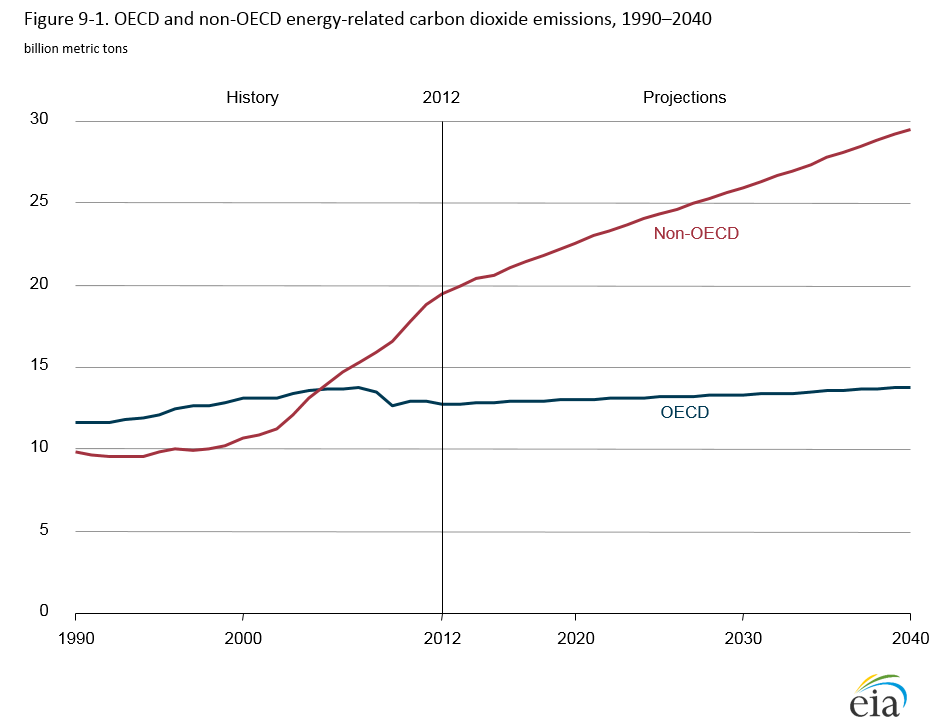
Despite all the rhetoric about reducing world carbon dioxide emissions from fuel combustion and gas flaring, according to the U.S. Carbon dioxide information analysis center, they rose steadily from 16.6 Gigatonnes carbon dioxide equivalent in 1973 to 34.1 Gigatonnes in 2014. So, they more than doubled over that timeframe. Importantly, though, the origins of the emissions changed significantly. In 1973, the countries of the organization for economic cooperation and development, or OECD, accounted for two-thirds of global CO2 emissions from fuel combustion; by 2014, the OECD share had declined to just over a third. So all, or almost all, of the emissions growth occurred outside of the OECD.

So, we have two sharply different perspectives of the future, the EIA’s projections of what probably will happen and the aspirations of the U.N. and many environmental groups as to what in their view should happen. Reducing emissions by 50% by 2050 to meet the U.N.’s vision would mean a global total of about 16 Gigatonnes, in contrast to the EIA’s projection of 43 Gigatonnes (Gt). The OECD countries – the United States, Canada, most of Europe, Japan, Australia and others – could eliminate 100% of their projected emissions of 14 Gt, and the world would still be over its target by 13 Gt.

A Tangled Pile of Wasteful Climate Programs

There is not in Canada a comprehensive list of the measures that have been implemented by all orders of government to reduce greenhouse gas emissions. They have been increasing in number, reach and cost since 1988. I counted 37 different generic types of measures now in use. Large bureaucracies exist to design, implement, and (less frequently) evaluate these measures. They stretch like the tentacles of some vast octopus across every aspect of the Canadian economy and touch everyone’s life. As no one has ever established an inventory of the measures now in place or of those under consideration, no one knows how much these measures already cost Canadians. Two things are certain – they cost billions of dollars annually, and they are not going away soon, regardless of the taxes imposed on carbon. I might add a third certainty, which is that the government will continue to develop and implement more and more programs and regulations as time goes on.

Let me remind you of the conclusions reached by the federal government’s own monitor of program effectiveness, the Commissioner of the Environment and Sustainable Development.  Starting in 1998, the commissioner began to critique the government’s approach to managing emission reduction measures. In the seven reports that followed, there were five consistent themes.

  • First, the government has not created effective governance structures for managing climate change activities. In fact, there have been weaknesses in horizontal governance across departments, accountability and coordination.
  • Second, there has been, and remains, no overall implementation plan. The government has produced no estimate of the emission reductions expected from each sector. Without an implementation plan, industry, consumers and other levels of government lack a solid basis for knowing how to apply technology or make investment decisions.
  • Third, as a result, Canada cannot determine whether the targets for emissions reduction already announced will be met or how much it will cost to do so.
  • Fourth, there are few mechanisms in place to measure the performance of the emission-reduction measures that have been implemented so far.
  • Fifth, the federal and provincial governments do poorly in coordinating their approaches to emissions reduction.

I agree that we need an honest dialogue about climate change mitigation. It should start with the recognition that governments to date have publicly embraced emission reduction targets that are unachievable with present technology and at acceptable economic costs. We should acknowledge that we as a society have multiple goals of which environmental quality, however important one might think it is, represents only one. If we value our prosperity and unity as a federal, geographically diverse country, we must approach the climate change issue with a respect for all our collective goals.

Much of Canada’s current political elite favours the pursuit of international goals over the steadfast promotion of the Canadian interest, whether on issues of trade, security or the environment. Never before, however, have we faced a situation in which commitment to an international objective may well impose enormous and divisive costs on Canada for no discernable global environmental benefit. Climate change thus offers a clear dichotomy between the Canadian national interest and the global environmental agenda.

See also Trump Did the Right Thing in the Right Way

Climate Policies Failure

Primum non nocere” means “First, Do No Harm.”

Medical practitioners know this principle, the closest approximation in the Hippocratic corpus coming from Epidemics: “The physician must be able to tell the antecedents, know the present, and foretell the future – must mediate these things, and have two special objects in view with regard to disease, namely, to do good or to do no harm.”

Every intervention has consequences by which its success is measured. Effectiveness regards the quality of outcomes: Good things happened, Nothing happened, or Bad things happened. Of course, it may be a mixed bag in which the net must be weighed.

In addition, efficiency is considered (“evidence-based” in today’s jargon): It was worth it, It was not worth it, or It was worse than doing nothing. Both attainment of intended consequences, and collateral, unintended damages bear on the judgment.

More and more in the nations “leading on climate change” people are starting to question the actions of policymakers. Recently Robert Lyman, Ottawa Energy policy analyst presented on the theme: Can Canada Survive Climate Change Policy? From Friends of Science

It must indeed seem strange that someone would wonder about the effects of the policies now proposed to reduce greenhouse gas emissions as though the policies themselves are the threat. And yet they are.

I am not here to address the issue of how much human-related greenhouse gas emissions are contributing to increased concentrations of carbon dioxide in the atmosphere nor on the sensitivity of global temperatures and climate to the increases in those concentrations over time. There are others here far more qualified than I to discuss that.

Instead, I want to discuss the policy and program measures that the people of Canada and other countries, especially in the industrialized world, are being urged to adopt and what will be the implications of those policies and programs.

Edmonton one winter night.

Canada is the second largest country in the world, sparsely populated,
with vast transportation needs. We withstand long, cold winters featuring
short days, extremely low temperatures and lots of snow. Our energy and
resource industries would be penalized for providing the 
valuable materials
the rest of the world demands and uses.

The article goes into the history of how we all, including Canada got to this point. Then comes this.

Ladies and gentlemen, these commitments are just the beginning, the mere “foot in the door” for the more radical demands that lie ahead. We are still bound in principle to reduce Canadian GHG emissions by 50% from 2005 levels by 2050. The U.N still wants us to “show leadership” by reducing emissions by 80% from 2010 levels by 2050. A number of environmental groups in Canada and other countries have recently endorsed the Wind, Water and Sunlight, or WWS, vision. This vision seeks completely to eliminate the use of all fossils fuels – coal, oil, and natural gas – in the world by 2050. The New Democratic Party’s LEAP Manifesto endorses this vision, as does the Green Party and most of Canada’s influential environmental organizations. The government of Ontario also has formally committed the province to this vision. So have a number of large Canadian municipal governments.

In practice, consumers pay twice, once for the (expensive) renewable
generation and then for the capital costs of the backup thermal plants.

How can we even begin to understand the magnitude of the changes being proposed? One way is to look at the sources of energy consumption and related emissions today. In 2005, Canadian emissions were 738 megatonnes of carbon dioxide equivalent. In 2014, after six years of the worst recession since the Great Depression, Canadians emitted less, 722 megatonnes. Twenty-six per cent of those emissions were from oil and gas production, 23 per cent were from transportation, and roughly equal portions of around 10 per cent were from electricity generation, buildings, industry and agriculture, with waste and other sources making up a residual 7 per cent. Assuming that emissions do not grow one bit over the next 32 years as a result of increased economic activity or increased population, achieving a 50 per cent emissions reduction from 2005 levels would mean reducing emissions to 369 megatonnes CO2 equivalent. That is comparable to completely eliminating the current emissions from oil and gas production, electricity generation, and all emissions-intensive industries like mining, petrochemicals, auto and parts manufacturing, iron, steel and cement. Gone. Achieving the aspirational goal of 80 per cent reduction recommended by the IPCC would mean reducing emissions to 147 megatonnes CO2 equivalent. That would be comparable to reducing Canada’s per capita emissions and our energy economy to the current levels of Bolivia, Sudan or Iraq. (original bold)

Which benefits would be achieved by incurring such costs?

Despite all the rhetoric about reducing world carbon dioxide emissions from fuel combustion and gas flaring, according to the U.S. Carbon dioxide information analysis center, they rose steadily from 16.6 Gigatonnes carbon dioxide equivalent in 1973 to 34.1 Gigatonnes in 2014. So, they more than doubled over that timeframe. Importantly, though, the origins of the emissions changed significantly. In 1973, the countries of the organization for economic cooperation and development, or OECD, accounted for two-thirds of global CO2 emissions from fuel combustion; by 2014, the OECD share had declined to just over a third. So all, or almost all, of the emissions growth occurred outside of the OECD.

So, we have two sharply different perspectives of the future, the EIA’s projections of what probably will happen and the aspirations of the U.N. and many environmental groups as to what in their view should happen. Reducing emissions by 50% by 2050 to meet the U.N.’s vision would mean a global total of about 16 Gigatonnes, in contrast to the EIA’s projection of 43 Gigatonnes (Gt). The OECD countries – the United States, Canada, most of Europe, Japan, Australia and others – could eliminate 100% of their projected emissions of 14 Gt, and the world would still be over its target by 13 Gt.

A Tangled Pile of Wasteful Climate Programs

There is not in Canada a comprehensive list of the measures that have been implemented by all orders of government to reduce greenhouse gas emissions. They have been increasing in number, reach and cost since 1988. I counted 37 different generic types of measures now in use. Large bureaucracies exist to design, implement, and (less frequently) evaluate these measures. They stretch like the tentacles of some vast octopus across every aspect of the Canadian economy and touch everyone’s life. As no one has ever established an inventory of the measures now in place or of those under consideration, no one knows how much these measures already cost Canadians. Two things are certain – they cost billions of dollars annually, and they are not going away soon, regardless of the taxes imposed on carbon. I might add a third certainty, which is that the government will continue to develop and implement more and more programs and regulations as time goes on.

Let me remind you of the conclusions reached by the federal government’s own monitor of program effectiveness, the Commissioner of the Environment and Sustainable Development.  Starting in 1998, the commissioner began to critique the government’s approach to managing emission reduction measures. In the seven reports that followed, there were five consistent themes.

  • First, the government has not created effective governance structures for managing climate change activities. In fact, there have been weaknesses in horizontal governance across departments, accountability and coordination.
  • Second, there has been, and remains, no overall implementation plan. The government has produced no estimate of the emission reductions expected from each sector. Without an implementation plan, industry, consumers and other levels of government lack a solid basis for knowing how to apply technology or make investment decisions.
  • Third, as a result, Canada cannot determine whether the targets for emissions reduction already announced will be met or how much it will cost to do so.
  • Fourth, there are few mechanisms in place to measure the performance of the emission-reduction measures that have been implemented so far.
  • Fifth, the federal and provincial governments do poorly in coordinating their approaches to emissions reduction.

I agree that we need an honest dialogue about climate change mitigation. It should start with the recognition that governments to date have publicly embraced emission reduction targets that are unachievable with present technology and at acceptable economic costs. We should acknowledge that we as a society have multiple goals of which environmental quality, however important one might think it is, represents only one. If we value our prosperity and unity as a federal, geographically diverse country, we must approach the climate change issue with a respect for all our collective goals.

Much of Canada’s current political elite favours the pursuit of international goals over the steadfast promotion of the Canadian interest, whether on issues of trade, security or the environment. Never before, however, have we faced a situation in which commitment to an international objective may well impose enormous and divisive costs on Canada for no discernable global environmental benefit. Climate change thus offers a clear dichotomy between the Canadian national interest and the global environmental agenda.

Carbon Taxes Pound Canada Economy


Canadian Inflation Jumps As Carbon Taxes Come Into Force

Globe and Mail:
Canadian inflation spiked to its highest rate in more than two years in January, as new carbon taxes in Alberta and Ontario fuelled a surge in gasoline prices.

Statistics Canada reported that the consumer price index was up 2.1 per cent year over year in January, the fastest pace since October, 2014, and up sharply from 1.5 per cent in December. It said gasoline prices were up 20.6 per cent from a year earlier, the biggest increase since September, 2011. The increase reflected the introduction of a carbon tax in Alberta and a cap-and-trade carbon pricing system in Ontario, both of which came into effect on Jan. 1, as well as higher crude-oil prices, which lifted fuel costs nationwide.

From StatsCan April Report:

Transportation costs rose 4.2% over the 12-month period ending in April, after increasing 4.6% in March. This deceleration was led by the purchase of passenger vehicles index, which rose less on a year-over-year basis in April than in March. Gasoline prices posted a 15.9% year-over-year increase in April, slightly larger than the 15.2% rise registered in March.

Losses persist in oil and gas

The oil and gas extraction industry reported an operating loss of $2.2 billion in the fourth quarter, down from the $3.3 billion loss in the third quarter. This was the eighth consecutive quarterly loss for the oil and gas extraction industry.

And that is just for starters.

Get ready for Trudeau’s carbon tax on everything

Toronto Sun, May 19, 2017:
The Trudeau Liberals are moving forward with their national carbon tax scheme, or, what Saskatchewan Premier Brad Wall calls “one of the largest tax increases in Canadian history.”

In typical governing fashion, the Liberals are trying to downplay the devastating economic consequences of the tax. They’re trying to disguise the very fact that this is a tax hike.

It’s not a carbon tax, it’s a “behaviour-changing measure,” said one government official.

His plan will force the provinces to tax each tonne of carbon emitted, as well as to hike taxes on gasoline by at least 11 cents per litre. Keep in mind that taxes on gasoline already make up 36% of the existing price at the pump.

That isn’t enough for our tax-hungry government, so they want to impose a 25% tax hike on fuel.

The whole scheme is designed to subsidize so-called clean energy.

But compared to the world’s largest sources of carbon emissions, places that coincidentally have the lowest environmental standards – China, Russia, India – Canada’s entire economy would be considered “clean energy.”

Next to the world’s biggest emitters, we’re an environmental marvel.

Despite being an advanced and developed country, and having some of the world’s largest proven oil reserves, Canada only makes up 1.6% of global emissions.

Any reductions in Canadian emissions caused by the Trudeau tax grab will immediately be erased by China’s booming coal industry and its refusal to impose the kind of job-killing carbon tax schemes being sold by the Trudeau Liberals.

There will be no positive impact on the environment, but the effect on our pocketbook will be concrete and measurable.

Figures vary by household and province, but by 2022, it’s estimated the average Canadian family will face a carbon tax bill of about $2,500 per year.

There’s a reason a carbon tax is called ‘a tax on everything.’

Climatists Wrong-Footed

Trolling: The art of deliberately, cleverly, and secretly pissing people off, usually via the internet, using dialogue.

Update May 4 at the end

People may not have noticed that subtly, without fanfare, the climate battleground has shifted from the science to the policy. Like everyone else climatists were caught unawares by the election of US policymakers skeptical of the need to “fight climate change.”

But the surprising development is how activist tactics are still geared mainly to push on the claim of “settled science”, when that is not any more the focal point for the opposition. I don’t know who created the strategy for nominees, but in confirmation hearings, to a man and woman they all refrained from denying the science. Sanders and the other true-believing senators pressed hard to get heretical statements, but failed.

Now the activists have turned up the heat with science marches every weekend. Activists keep pushing on the science because their policy agenda is even less believable.

The marchers’ signs show they depend on three suppositions, like a three-legged stool:

  • Humans are making the planet warmer.
  • The warming is dangerous.
  • Government can stop it.

The first point is what alarmists claim is settled science, and where others have doubts about the data, the models and the theories. Expressing those doubts gets you labeled a denier. After years of alarmists refusing to debate that first point, they now want to talk about nothing else.  Apparently they think that only the first point matters; once that is admitted, everything else follows.

To their surprise, policymakers, and now even some journalists are shifting the ground to the other two wobbly legs, where the assertions have even less support.

A perceptive journalist writing for the LA Times sees how the game is changing.  Jonah Goldberg wrote yet another piece of independent thought coming from a previous uncritically warmist newsroom. Bret Stephens just trolled the left with his supposed climate change denialism. Excerpts below.

The most amusing show over the weekend was the collective case of the vapors across the liberal left establishment over Bret Stephens’ first column at the New York Times on the perils of certainty, particularly on the topic of climate change.

When someone says that he is not denying climate change and concedes that it is real, that is “classic climate change denialism”? Huh. What words do we have left for people who call the whole thing a “hoax”? In civil debates, when someone concedes much of your premise, the proper reaction is not to scream “liar!” or “heretic!”

And that brings me to the second, and more amusing, thing about all of this. You’ve been trolled, people.

As a fellow columnist, I doff my cap to you, sir.

It wasn’t hard to trick liberals into going off-sides. In the past, Stephens was a more acid-tongued critic of climate change research. But the column in question was a model of restraint that, when read by non-ideologues and non-combatants, must seem utterly reasonable, even a tad banal. Stefan Rahmstorf, a prominent German climate scientist, wrote a lengthy, sanctimonious letter explaining why he was cancelling his subscription to the New York Times. Nothing in the letter addressed anything Stephens wrote in his column.

The Washington Post’s Eric Wemple found it hard to constrain his dismay. “May it suffice to say, however, that the many, many people who care passionately for the planet found it an exercise in climate-change denialism.”

Wemple’s a clever fellow. I’m sure he understands Stephens’ point about the dangers of certainty, particularly based on sophisticated mathematical models that have been proven wrong in the past.

What I think sailed past Wemple and so “many, many people” was Stephens’ subtler point about the sanctimonious condescension of people who claim to be motivated solely by their passionate care for the planet.

Stephens’ heresy here isn’t in denying climate change; it’s in refusing to concede that one group of people has a total monopoly on defining not just the problem but the acceptable responses to it. Such dissent is not a crime against science; it’s a threat to a guild. And the guild took the bait.

Update May 4

Bret Stephens published a new post today that digs into the policy failures, specifically biofuels with references to other shortcomings, such as emissions trading. Climate of Unintended Consequences

In other words, the three central claims made in the Department of Energy paper quoted at the top of this column were misleading or wrong. Factually wrong. Wrong for the environment. Wrong for taxpayers. Wrong for the allocation of government funding and scientific research. Wrong for our energy mix. Wrong politically: Whatever else we conclude about ethanol, the one thing that won’t soon go away is the biofuel lobby in Washington.

And wrong for the reputation of climate science.

In recent years, some climate activists — Al Gore notably among them — have owned up to their biofuels mistake. More recently, we’ve seen some acknowledgment of other errors, having more to do with policy than science.

Thus, today there’s a keener appreciation that cap-and-trade regimes such as Europe’s ambitious Emissions Trading System have been costly failures, with one study suggesting the E.T.S. had “limited benefits and embarrassing consequences” in terms of emissions — at an estimated cost to consumers of some $280 billion.

There’s also been some acknowledgment that Germany’s Energiewende — the uber-ambitious “energy turn” embarked upon by Angela Merkel in 2010 — has been less than a model for others. The country is producing record levels of energy from wind and solar power, but emissions are almost exactly what they were in 2009. Meanwhile, German households pay nearly the highest electricity bills in Europe, all for what amounts to an illusion of ecological virtue.

Still, what acknowledgment there’s been has generally been belated, grudging and rarely self-reflective. What’s missing is an understanding of the harm that can be done when do-something impulses and eco-cure boosterism become turbocharged by government power and subsidized business.

The lessons are legion but, more often than not, unlearned. We need to make policy choices based less on moral self-regard and more on attention to real-world results.