Climate Crusade Is a Dead End

This post presents the main points and exhibits from Professor de Lange’s presentation February 26, 2025.  Most images are self explanatory, with some excerpts in italics lightly edited from captions, and some added images as well. H/T Bud Bromley.

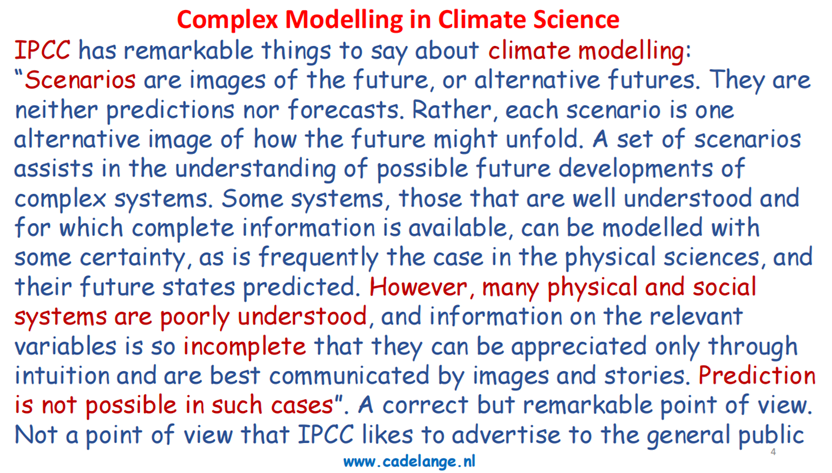
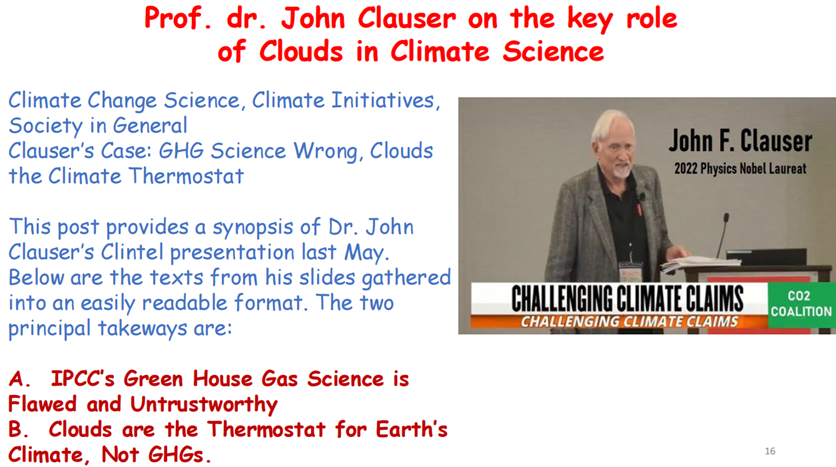
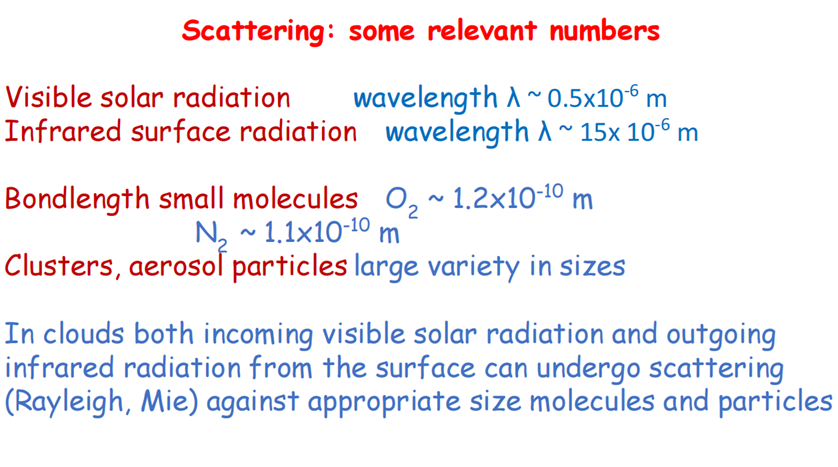
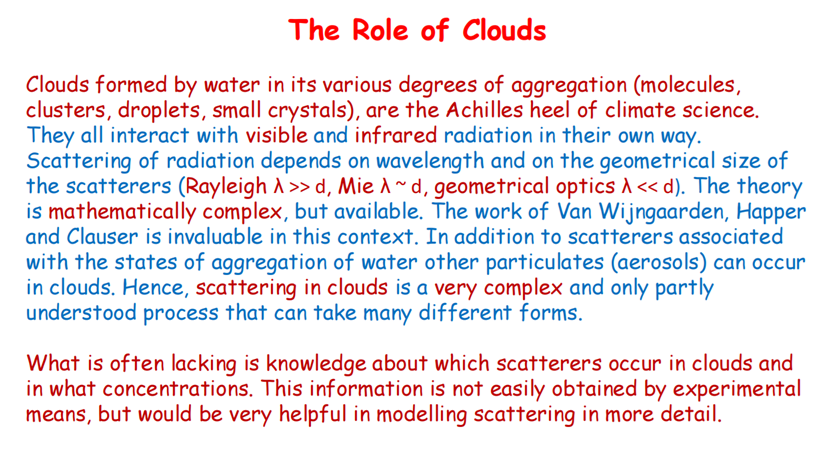
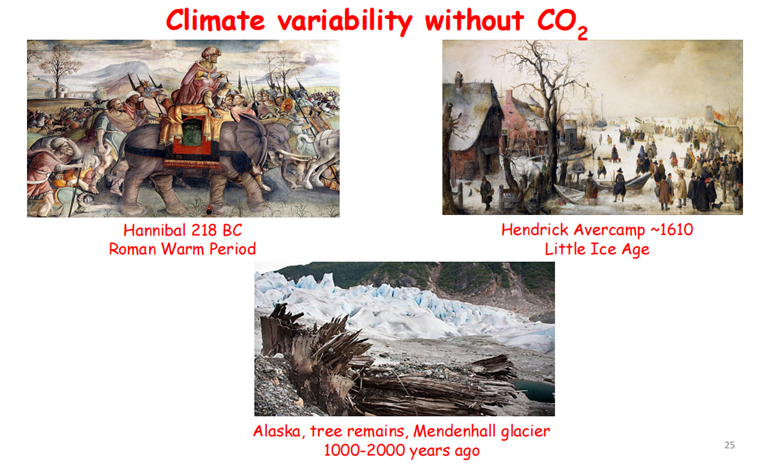
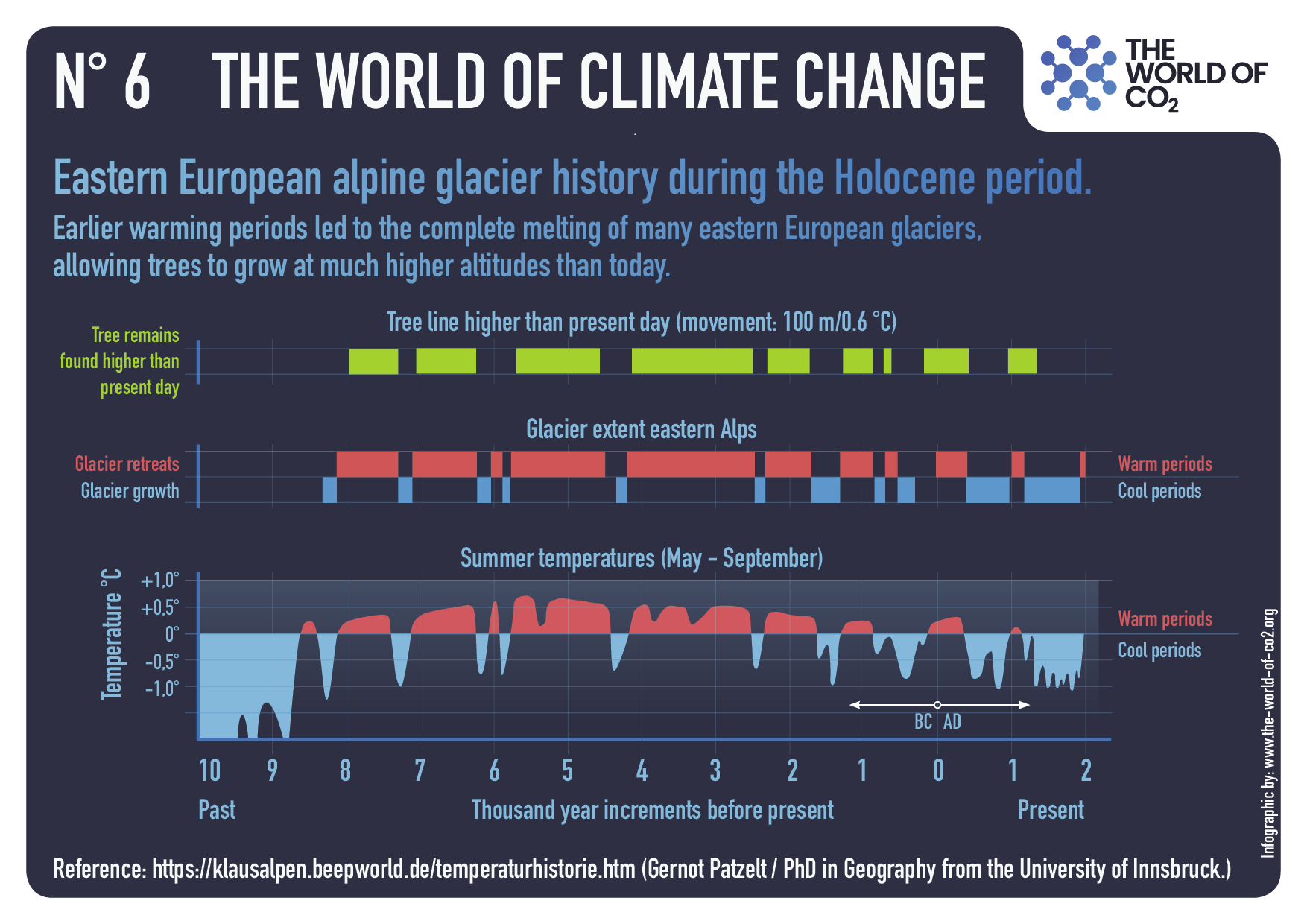
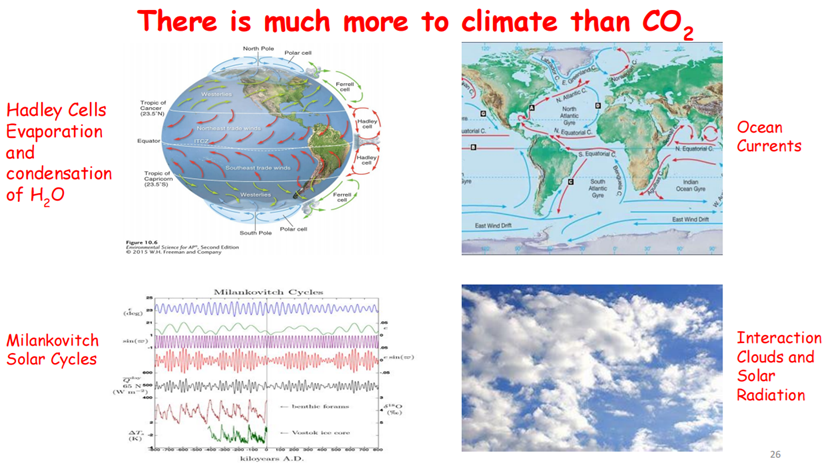
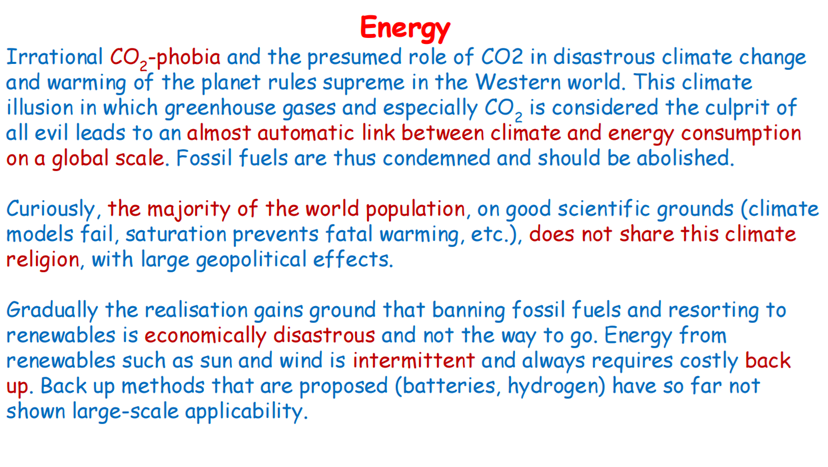
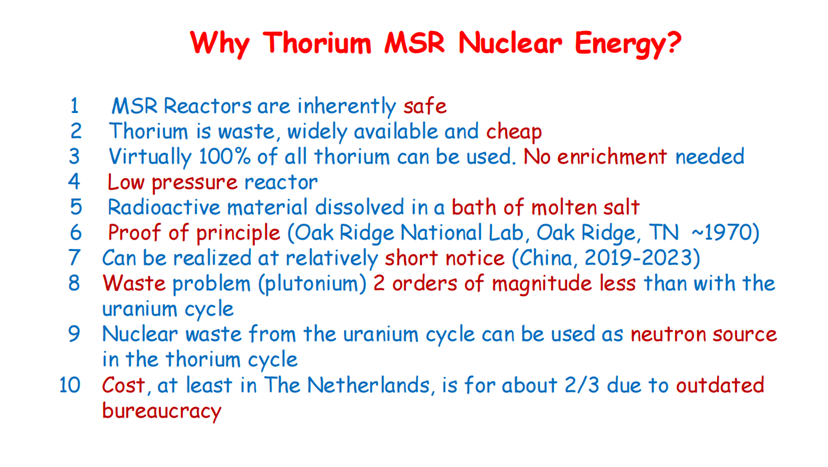
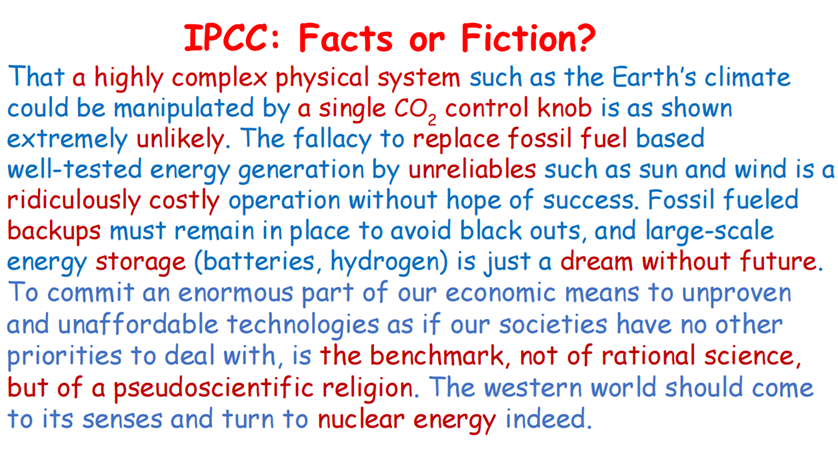
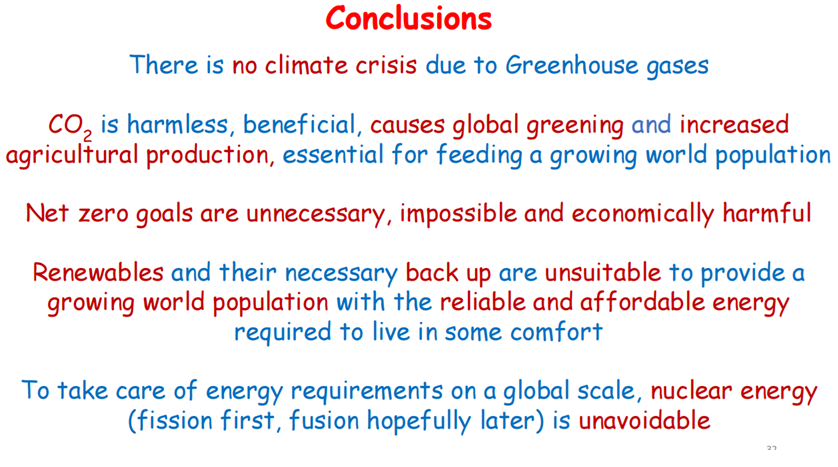
Prof. de Lange demonstrates that there is no credible climate crisis, and that there is much more to climate than CO2 alone. First, he addresses the discrepancy between satellite temperature measurements and results from climate models. Second, he shows the effect of even doubling the CO2 concentration has only minor effects, while it is in fact crucial to photosynthesis. Third, he shows that how the significant lack of experimental data on cloud composition now hampers progress in climate science. Fourth, he demonstrates that there is no convincing correlation between CO2 and temperature on a geological time scale. Fifth, he addresses global future energy supply, demonstrating that renewables are “unaffordables”, just as are untested technologies (batteries, hydrogen), and he concludes that the future has to be based on nuclear power.

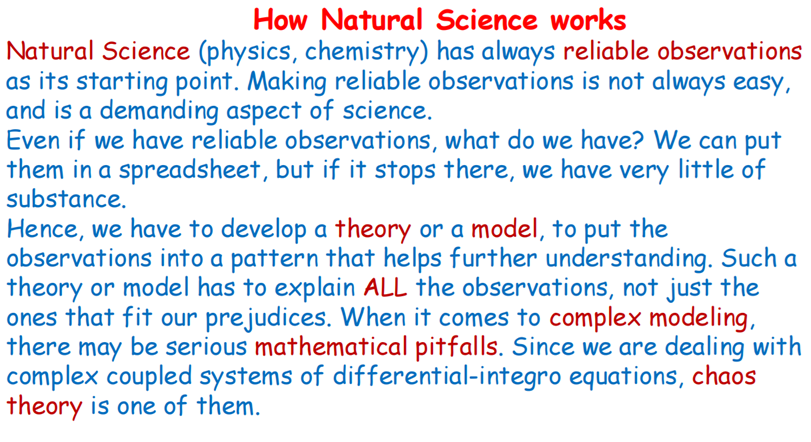
1.  Natural Science and Observations versus Models

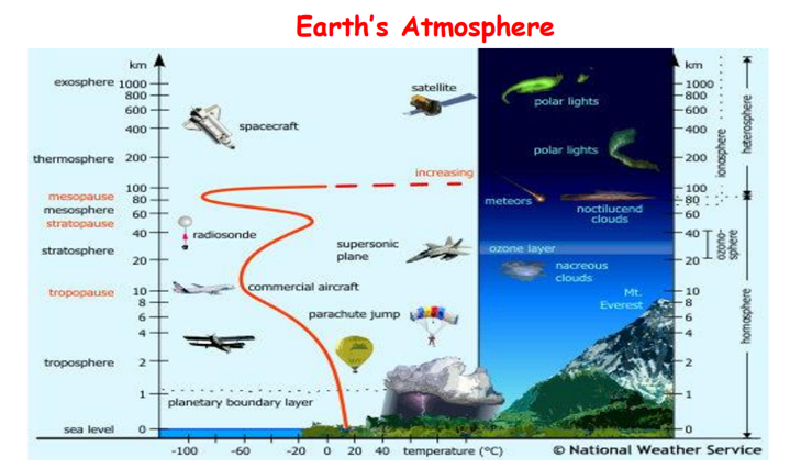
2.  Atmospheric Physics and Greenhouse Gases

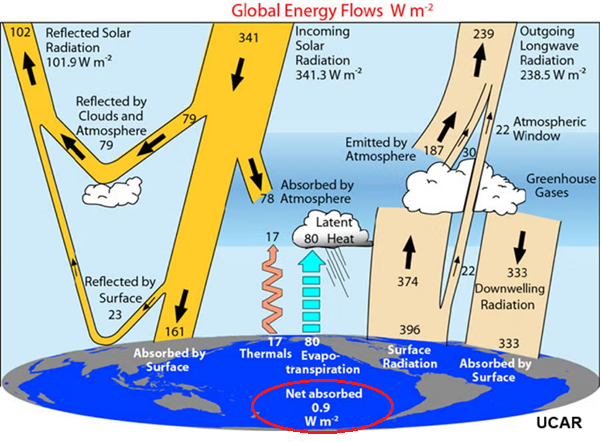
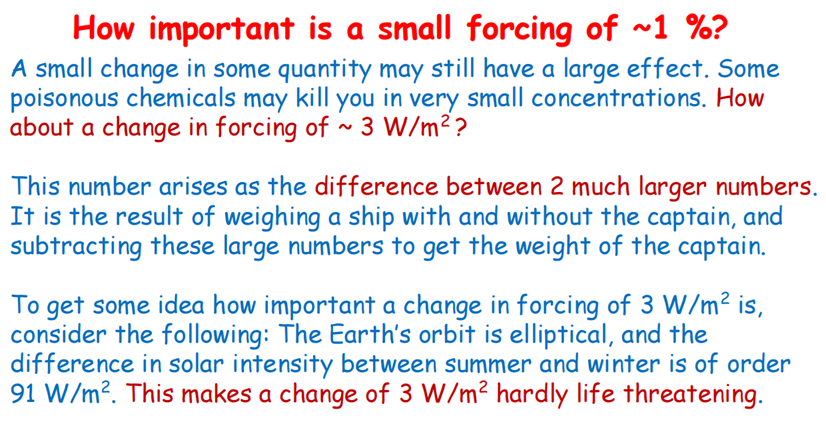
Warm Surface of the earth can be viewed as a radiator in the infrared that radiates Intensity out Into the atmosphere, and again the flow of infrared energy is not interrupted. It is absorbed by the atmosphere and that’s where the clouds turn out to be extremely important. They delay the outgoing energy into the universe. In climate science we balance the yellow incoming solar energy in watts per square meter with the outgoing radiation from the surface and atmosphere. Some is reflected and some is absorbed and emitted as long wave radiation.  The imbalance is shown at the bottom as ~1 W/m2, which is a small difference between two much larger energy flows showing hundreds of W/m2. If for any reason, there is a slight change in either the incoming or outgoing flows, the imbalance would change dramatically.

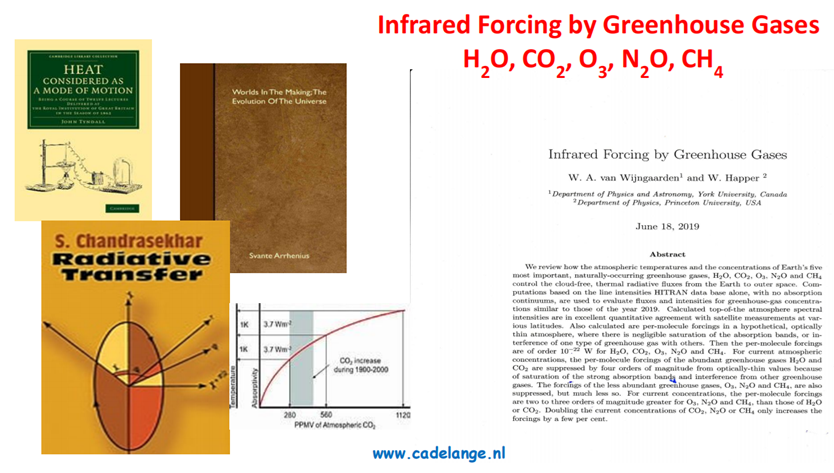
The fact that Greenhouse gases play very important role in absorbing infrared radiation in the atmosphere is already 150 years old. We shall see that dependence of the temperature of the earth due to greenhouse gases is not linear, the effect on temperature is logarithmic. This is seen in the graph on the left side.

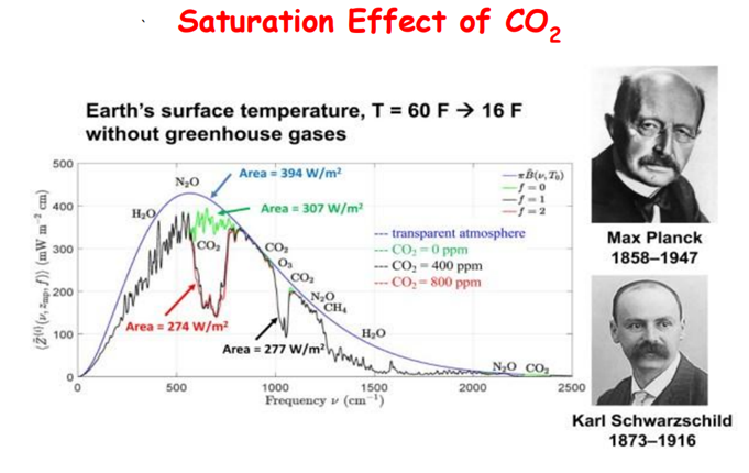
On the horizontal scale we see the frequency scale expressed in common unit in physics in wave numbers. And here we see the continuous Blue Trace results from infrared radiation that would leave the warm surface of the planet if there were no atmosphere at all. The total surface under the blue trace depends on temperature to the fourth power, very temperature dependent.

We see the effect of atmosphere greenhouse gases represented by the black line, which is a bit lower than the blue Trace. The green line shows the where the black line would be, were there to be no CO2 in the atmosphere. The red line shows that there would be little difference from doubling CO2 from 400 ppm to 800 ppm.

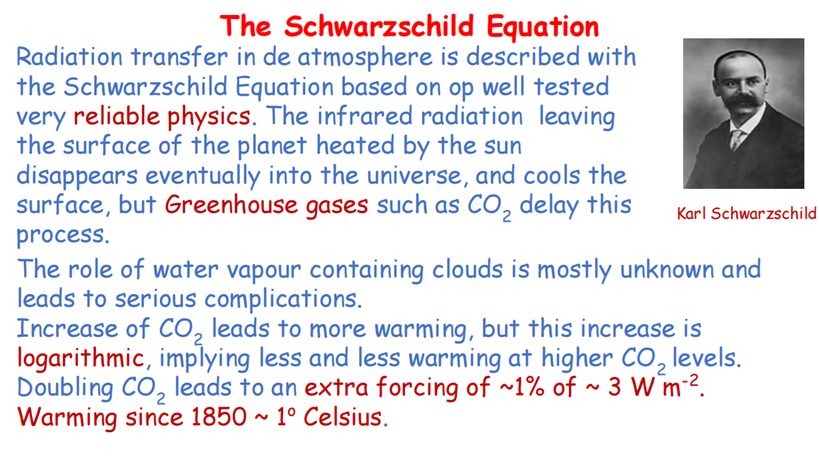
The role of water vapor is terribly important.  Water is the most important Greenhouse gas, but when we Go to clouds, he situation becomes much more complicated than in the absence of clouds. So clouds again are the Achilles heel of of climate Science.  As I said an increase in CO2  leads to a little more warming but the increase is logarithmic. meaning less and Less warming at higher CO2 levels.  Doubling CO2 leads to extra forcing of about 1 percent or about 3 watts per square meter.  Since 1850 when temperature measurements really started since, the planet’s surface has warmed up by about 1°C.   That is not very much, and the effect of CO2 can only be very much smaller.

3.  Scattering in Clouds

The post referenced in the exhibit is Clauser’s Case: GHG Science Wrong, Clouds the Climate Thermostat

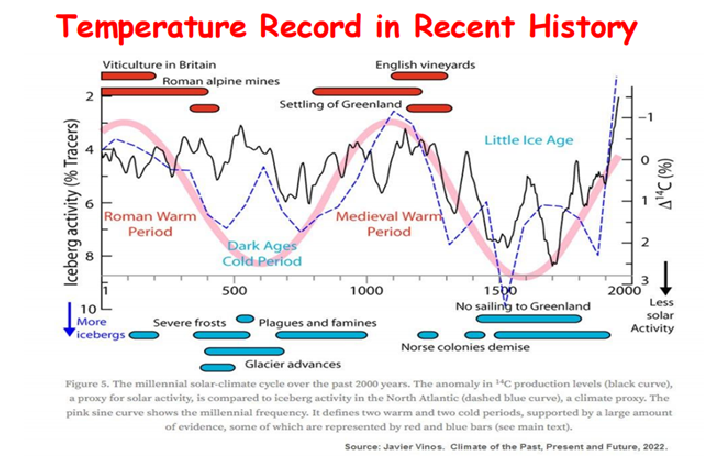
4. Is CO2 the only and most important culprit of ‘’disastrous’’ climate change, warming in particular?

5. Supplying Energy to a Growing World Population

US House Targets Biden Climate Rules to Cancel

Maydeen Merino reports at Washington Times House leadership lays out target list of Biden climate rules to cancel.  Excerpts in italics with my bolds and added images.

House Republican leadership outlined a number of Former President Joe Biden ’s climate regulations that it will seek to overturn through a special legislative process in the coming weeks.

House Majority Leader Steve Scalise on Thursday released a list of the previous administration ‘s climate and energy regulations that Republicans will aim to reverse through the Congressional Review Act (CRA).

The CRA allows Congress to bypass the filibuster and take a simple majority vote in the House and Senate to overturn recently implemented rules. The process allows the vote to come to the floor in an expedited fashion, forcing all members to go on the record with their votes.

If Congress votes to undo a rule,
the agency cannot propose a similar regulation.

Scalise listed 10 regulations Republicans will look to undo, with the majority being climate-related.

California Clean Air Act Waiver

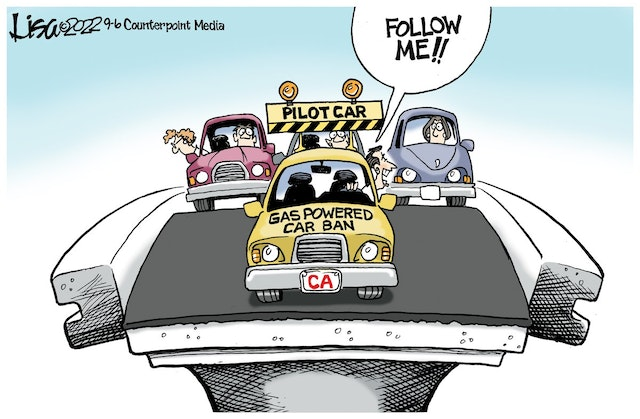
At the top of the list is the California Clean Air Act Waiver granted by the Environmental Protection Agency, which allows the state to implement stricter vehicle emission standards than federal requirements. California has required all new car sales to be zero-emissions by 2035.  A number of states follow California’s auto emission standards. Republicans have vocally opposed California’s standards as a ban on gas vehicles, and Trump has promised to reverse the waiver.  The waiver has “resulted in higher vehicle prices for consumers, increased costs and manufacturing complexities for automakers, and a more complicated regulatory environment,” Scalise said in a press release .

Waste Emissions Charge

Another prominent target is the Waste Emissions Charge for Petroleum and Natural Gas Systems, which was implemented as part of the 2022 Inflation Reduction Act passed by Democrats and signed by Biden that included hundreds of billions of dollars in funding for clean energy projects. With the charge, the EPA imposed a fee on oil and gas facilities that exceed specific methane emissions thresholds. “The fee is a pass-through cost to consumers that will raise prices, reduce domestic energy production, and increase reliance on foreign energy sources,” Scalise said.

Standards for Gas-fired Water Heaters
Republicans will also look to overturn the Energy Conservation Standards for Consumer Gas-fired Instantaneous Water Heaters, which is a set of rules by the Energy Department requiring a minimum efficiency level for gas-powered tankless water heaters. The GOP said the rule places financial burden on consumers and limits consumer choice.


Energy Conservation-Appliance Standards

The GOP plans to cut the Energy Conservation-Appliance Standards for certification and labeling, by which appliances must meet specific standards to receive a label informing consumers that they are energy-efficient. Scalise noted that the rule slows the introduction of products to market, limits consumer options, and affects the supply chain.

Off Shore Drilling Regulations

Other climate-related rules include the Oil and Gas and Sulfur Operations in the Outer Continental Shelf, which is a list of strict regulations on offshore oil drilling in high-pressure and temperature environments. Scalise said the regulations increase the burdens on energy operations and raise costs for consumers.

Rubber Tire Manufacturing Emissions Standards

The national emission standards for hazardous air pollutants for Rubber Tire Manufacturing, which addresses hazardous emissions from the rubber tire manufacturing process, is also targeted to be slashed by the GOP . The rule increases compliance costs for the industry and results in higher prices for consumers, the House majority leader said.

Protection of Marine Archaeological Resources,

Lastly, the GOP will look to overturn the Protection of Marine Archaeological Resources, which requires oil and gas lessees and operators to submit archaeological reports for exploration or development on the Outer Continental Shelf. Scalise said the rule blocks domestic energy production and weakens energy independence.

Listing of Voluntary Carbon Credit Derivative Contracts

The Commodity Futures Trading Commission’s Guidance Regarding the Listing of Voluntary Carbon Credit Derivative Contracts will also be on the GOP chopping block. The rule establishes standards to buy and sell carbon credits to offset emissions. The rule prioritizes “political activism goals like environmental, social, and governance (ESG) and Net Zero…” Scalise said.

Digital Payment and Sales Rules

The House majority leader also included the Consumer Financial Protection Bureau’s General-Use Digital Consumer Payment Applications rule and The Internal Revenue Service’s Digital Asset Sales rule on the list.

“In addition to these rules, the Leader will be looking at more potential CRAs as we continue to fight to undo the damage done by the Biden Administration,” Scalise added.


Canada Facing Fork in the Road

Jordan Peterson writes at National Post Canada must offer Alberta more than Trump could. Excerpts in italics with my bolds and added images.

We have been terrible friends to the Americans

There is little doubt that one Donald J. Trump has truly and effectively rattled his northern neighbour’s chains. Aren’t the Americans our friends — and vice versa? Is the president serious in his desire to make Canada the 51st state? He certainly seemed serious enough when discussing his proposed takeover of Greenland with the Danish prime minister last week. Such intensity and unpredictability of purpose has sent the leaders of that country, reminiscent of the Canadian Liberals in their political orientation, into a tizzy — one that has extended to their socialist and globalist European compatriots. Who is this horrible orange-haired man, they wonder, and what does he want?

We’re all about to find out — and, not least, in Canada. Why is all this happening, we ask, wringing our hands; and to us, the self-proclaimed greatest best friend and staunch ally of the elephant who parades so theatrically on the far side of our southern border?

We might begin to answer that suddenly so relevant question by scrupulously questioning the nature of that friendship — and on our side. Perhaps we’re not the partners and collaborators we think we are, for starters. It could well be argued, for example, that our much-vaunted Canuck niceness (that second-rate virtue) in relation to the superpower who overshadows us in every manner is and has been a matter of blunt necessity, rather than a consequence of our genuine reliability as well-wisher and supporter. It is true that Canada has made sacrifices alongside the Americans, when freedom and democracy was truly threatened. That was real — but it was a long time ago. Since then, we have played and continue to play a crooked game with regard to our hypothetical U.S. allies in many other important and consequential regards.

My fellow countrymen continually said things that would have been regarded as clearly racist, sexist or ethnocentric had they been uttered to anyone other than an American citizen — assuming, rightly (given the civilized nature of the people in question) that they would take them politely, and without evident offence. Such comments were much more likely to emanate, as well, from precisely the sort of leftists prone to proclaim first that such behaviour is utterly unacceptable and second that such conduct would of course never show its face among people as good in their thoughts as them.

Such behaviour is, sadly, a Canadian norm, particularly wherever the country is left-leaning; particularly wherever everyone believes axiomatically that we have all the virtues of our democratic compatriots to the south, and then some; particularly wherever everyone is inclined to point self-righteously to the wonders of our now-dreadful and even oft-murderous “free” health-care system and its associated highly dysfunctional, expensive and increasingly unsustainable social safety net and compare it to the free-for-all in the U.S. they inevitably resort to if death threatens and they have the money.

We Canadians also pride ourselves on our peaceful — and peacekeeping — nature (take that, Yanks), contrasting that with the war-mongering attitude of the gunslingers we secretly admire but publicly disdain, forgetting ever-so-conveniently that it is nothing but our positioning under the fearsome nuclear umbrella of the U.S.A. and our knowledge of the certainty of their military protection if push comes to shove that allows us to be the sheep of peace who bleat their undeserved self-regard with so little shame.

This is hardly the way to signal to the U.S. either that we are capable of defending ourselves, thank you very much, or that we are grateful for their existence as big brother captain of the high school wrestling team — much-disdained protector of our junior hippy student radical selves. Such things matter, more than we think — and a lot more, now that middle America is in charge, given the well-deserved contempt that lot have for the niceties of hypocritical socialist smartest-kid-in-the-class peaceniks. Remember, Canucks: the U.S. is now run by exactly the kind of Americans that we tempt themselves so unforgivably to treat as our moral inferiors. This is not how friends behave. It is also no way to keep friends, once they have hypothetically been made. And we’ve been put on serious notice in that regard.

And we are only scratching the surface in our analysis of the problems with Canada-U.S. relations, and with Canada itself, with that nothing-but-preliminary analysis. For the last nine years, Canada has been run by exactly the type of contemptible elitists who are, if anything, even more anti-capitalist, anti-nationalist, and anti-industrial state than the typical Canadian. This has set us against our putative American allies, in a manner much deeper than we want to think — and don’t be thinking that any of this is lost on Trump. He clearly despises the recently departed Justin, and has as much respect for those who elected him as he does for the Democrats, so much like them, who tortured, tormented and despised him and the flyover country MAGA middlebrows who were so much wiser in their political instincts than their Ivy League wannabe masters.

Canadians are Democrats, in Trump’s view, except more so..
We think that’s a virtue. It’s not. It’s a liability.

More specifically, it is a liability in relation to the U.S., particularly now. It has also and more seriously (as if irritating our mighty neighbours is not enough) threatened both Canada’s economic viability and the likelihood it will survive as a nation. We might also note, in that regard, that the newly ordained and inevitable grand poobah of the currently wretched but still dangerously powerful Liberals, one Mark Carney, is one of the world’s prime advocates of the insane inanities of net zero.

He is a man who has planned in writing, not least in his bestselling book Values, the complete destruction of the fossil fuel industry (bye, bye, Alberta). If that’s not bad enough, and it is, he is also simultaneously an advocate of the same “post-national” view of Canada defined by Trudeau junior and his moralistic minions. What are we, according to such good thinkers? Nothing: but if anything, the oppressive patriarchal white supremacist identity-less colonial settler state defined by the progressive ideologues in the think-tanks, the elite dining rooms in eastern Canada, and the protest encampments on the campuses of Canadian universities.

None of this fills the MAGA crowd with admiration, in case it has to be said. None of it bodes well, either, for the economy of Canadadoomed to replacement, according to Carney, by hydrogen, solar and wind power that either does not exist (that would be the hydrogen) or that would doom Canadians to starve and freeze in the dark if it ever came to replace the reliable grid and transportation we all so desperately depend on when it’s 40 bloody below. We may when arguing so expensively and incompetently with the Americans continue to congratulate ourselves on our comparative righteousness. That diet will become even thinner gruel, however, in a future characterized by their explosive economic growth and our rapid descent toward comparative poverty and irrelevance (green though that pathway may be argued, however falsely, to be).
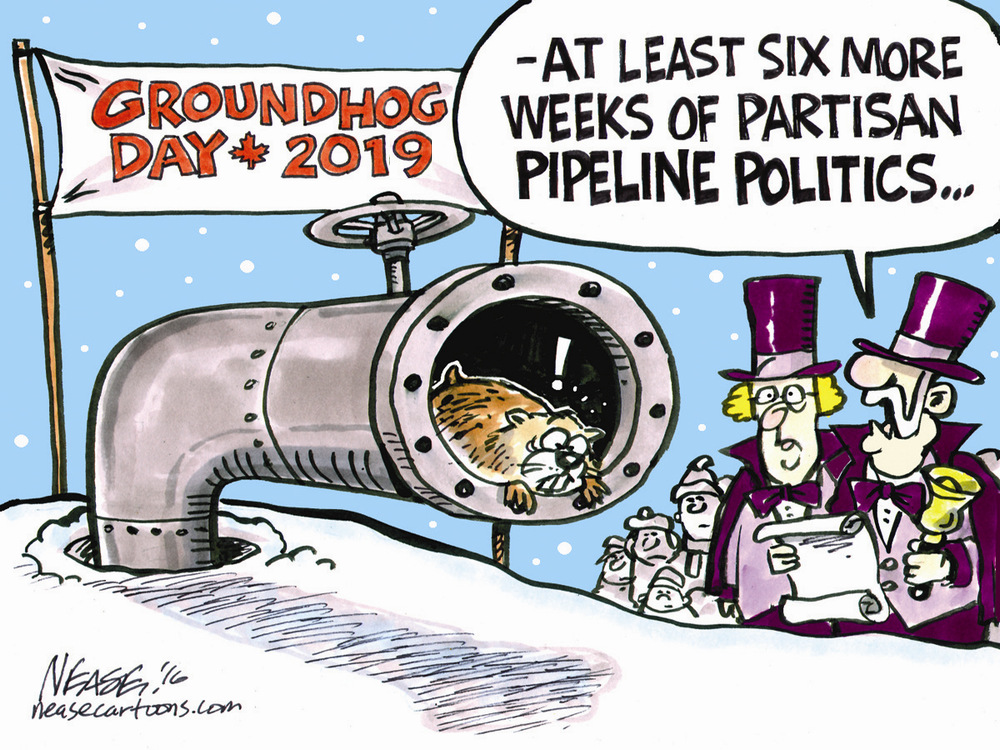
The consequence? No “business case” for the trade deals or infrastructure projects necessary to supply a self-admittedly desperate Europe and Japan with cheap and reliable Alberta energy. No new, plentiful and gratefully received pipelines running west to east in Canada. Abject economic dependence, in consequence, for Albertans (and Canada itself, as we are now finding out) on the purchasing decisions of the mad MAGA Yanks to the south. And now that same Alberta is being called upon to sacrifice its artificially and “morally” limited economy to fight off the looming tariffs of Donald J. Trump, the imposition of which should come as no surprise to anyone the least bit awake. We walked right into this, folks — and boy, we deserved it — but we felt good about ourselves all the way. And what is likely to result?

Trump has offered Canada status as the 51st state. If we had
a well-constituted country, this would have never happened,
or the suggestions would have been laughable
.

I see damn few people laughing, however, and more’s the pity. A strong case can be made that such subordinate status would not at all be a good deal for the Great White North as a whole. For Alberta, however — and perhaps for the West as such — the situation is not so clear. Here’s what I might do, given that, if I were in Premier Danielle Smith’s shoes — or at least what I might threaten to do, taking a page from Trump’s art-of-the-deal book, because it’s high time for the Albertans to play hardball. I might travel, say, to Mar-a-Lago (where I did in fact recently encounter that premier). I might have, while there, a forthright, even blunt, chat with Donald J., where I might say to him something like the following:

“Mr. President: My fellow Canadians have for decades compelled us to climb into bed with an eight-hundred pound gorilla. That would be you, Mr. Trump. Now you’ve decided to consummate the deal, so to speak — and we’ve given you the upper hand, on a silver platter (to mix metaphors terribly), while you’re doing so. Canada is unlikely to become the 51st state, however — not even Alberta — as you well know, sir. After all, you’d have to offer us something better than what has been put forward by our fellow Canadians.

“That would be:

  • the continued privilege and expense of subsidizing Quebec, half of whose citizens constantly clamour to secede from the country, while we impoverish ourselves for their benefit;
  • the constant imposition of serious practical impediments from the federal and other provincial governments (hint, hint, British Columbia) to the international business deals and pipelines that would help Alberta bring its resources to market;
  • continual insult on top of such injury in the form of unbearable and naïve moralizing about their superiority in conviction with regard to the “sustainability” of the planet — and, to top it all off,
  • the accusation that I am not patriotic enough to start a trade war with my strange bedfellow in the name of a country whose very leaders proclaim both identitylessness and a multiculturalism that none of my citizens want.”

And Trump might well say (or perhaps is even right now saying): “I think I could top that offer, Ms. Premier, fine as it is.

  • I could offer Albertans the American dollar;
  • full access to our markets for their resources, at full international price;
  • lower costs on almost all manufactured goods and on food;
  • lower taxes, both corporate and personal;
  • membership in a country that prides itself on being a country, and that does not plan to dissolve itself into an unstable multicultural mishmash;
  • genuine admiration for your economic and industrial endeavours, along with a can-do, visionary and deeply entrepreneurial culture;
  • immediate, reliable and guaranteed access to ports and pipelines, and full military defence.

And, if that’s not enough, dear lady — no transfer payments! And the additional psychological advantage for Albertans in foregoing the perpetual and bullying eastern Canadian attitude of grievance and moral superiority, emanating in particular from the Quebec (‘give us what we want forever or we’ll leave!’) who also shamelessly disdains your dirty fossil fuel — such that they made the fracking Alberta’s economy depends upon literally illegal in their jurisdiction, just to make a point, while simultaneously accepting, and not with good grace, the filthy money so generated.”
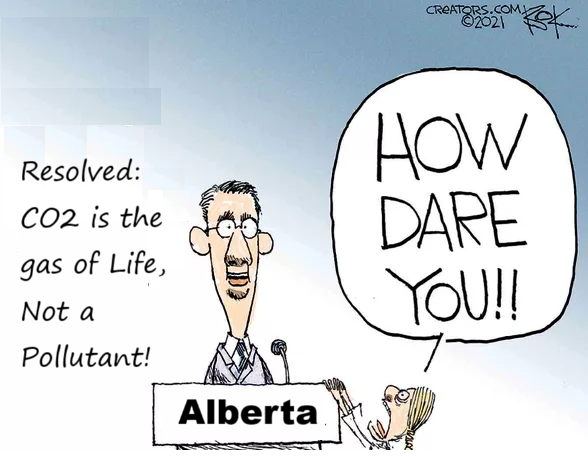
What do you think would happen, Oh Canada, if those were the two choices put forth on a ballot before the citizens of Alberta? And why should Smith not take full advantage of this opportunity, to tell her fellow Canadians, in no uncertain terms, a few things that would both make Canada an attractive place for Alberta (and the rest of the West, perhaps) to stay, and much saner and richer, to boot?

And what would that be:

  • Enough pathetic celebrity-wannabe pandering to the international elites of Davos — and, for good measure, the utterly degenerate UN.
  • Enough overt and covert attempt to destroy the basis of the economy of my fair and hard-working province.
  • Enough delaying critical infrastructure development and rejection of international trade offers for natural gas, oil and coal.
  • Enough treatment of the resource economy upon which Quebec in particular so unacceptably depends as a moral pariah.
  • Enough idiot green moralizing.
  • Enough carbon tax.
  • Enough bloody net zero. And how about this–
  • Enough multiculturalism and destruction of the Canadian identity.

“Why belong, so expensively, to a country that despises its own history, economy
and people? Make us a better offer, and quickly, my Canadian friends—
or Trump’s tariffs will be the least of your problems.”

And all of this would be not only be good for Alberta — and, by extension, for the working people of Canada — it is also absolutely necessary for Canada, even, perhaps to survive, both economically and politically. There’s a reason we, like the Europeans, now make a measly sixty cents for every dollar made by our American “friends.” That reason has much to do with the attitudes we have adopted ever since the benighted 1960s that have made us not such good friends at all.
Trump is threatening the integrity of Canada, and very effectively. The fact of that threat, and of its effectiveness, might make us think twice. In such thinking, there could be the opportunity to shed the idiocy that is making us poor, weak, irrelevant on the international stage, and contemptible to our neighbours. We could make his sabre-rattling into an opportunity, increase our cross-border trade, get out of our own way on the energy front, rekindle our national pride at least to the point where we regard our country as both viable and valuable, seek the international markets that would make us more truly independent as a nation, strengthen our commitment to the military that would be increasingly and truly necessary if such independence was pursued, and make of the next hundred years Canada’s triumph instead of the story of its contemptible, self-aggrandizing, moralistic, falsely green and socialist demise.

Trump: Homeland Security Not in Climate Change Business

Steve Milloy reported on X:  President Trump deports “climate change” from the Department of Homeland Security: “Top officials at the US Department of Homeland Security received a memo on Friday ordering an immediate stop to work connected to climate change and the elimination of climate-related terms across the agency. The memo instructs senior office heads to “eliminate all climate change activities and the use of climate change terminology in DHS policies and programs, to the maximum extent permitted by the law,” according to the document seen by Bloomberg News. The changes are meant to bring “alignment” with Trump’s executive orders that reverse multiple climate-related orders by former President Joe Biden, it said.”

Comment:

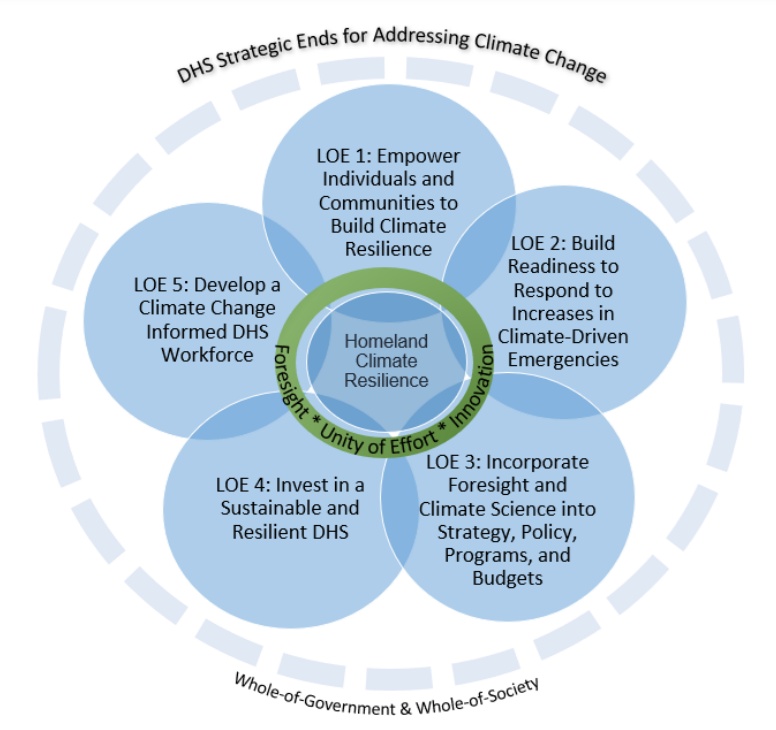
A good place to start is the DHS webpage Climate Literacy at DHS which was updated January 27, 2025, probably only adding a disclaimer “In an effort to keep DHS.gov current, the archive contains outdated information that may not reflect current policy or programs.”

Table of Contents

Climate Science Overview

The DHS Mission and Climate Change

Climate Change Adaptation, Mitigation, and Resilience

Climate Security

Climate Change and Fragility

Further Resources

Further Resources Include:

DHS Resources

Component Resources

External Resources

Climate Tools

Conclusion

DHS still thinks it’s very much in the “Climate Change Business” and rooting it out will be an extensive process met with unwelcome resistance.

Due This Week: EPA Plan for GHG Endangerment Finding

As promised, Trump on day 1 (January 20, 2025) issued an Executive Order challenging the presumption  “greenhouse gases” (GHGs) endanger public health and safety.  The pertinent text is in Section 6 reprinted below with my bolds and added images.

Executive Order 14154 of January 20, 2025 Unleashing American Energy

Sec. 6 . Prioritizing Accuracy in Environmental Analyses. (a) In all Federal permitting adjudications or regulatory processes, all agencies shall adhere to only the relevant legislated requirements for environmental considerations and any considerations beyond these requirements are eliminated. In fulfilling all such requirements, agencies shall strictly use the most robust methodologies of assessment at their disposal and shall not use methodologies that are arbitrary or ideologically motivated.

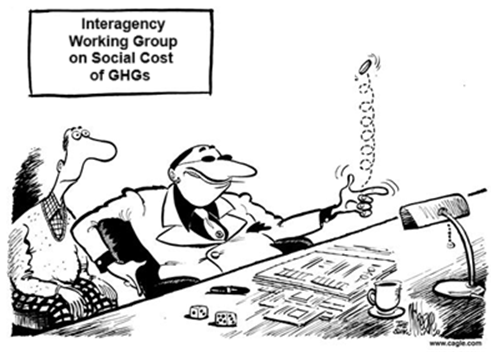
(b) The Interagency Working Group on the Social Cost of Greenhouse Gases (IWG), which was established pursuant to Executive Order 13990, is hereby disbanded, and any guidance, instruction, recommendation, or document issued by the IWG is withdrawn as no longer representative of governmental policy including:

(i) the Presidential Memorandum of January 27, 2021 (Restoring Trust in Government Through Scientific Integrity and Evidence-Based Policymaking);

(ii) the Report of the Greenhouse Gas Monitoring and Measurement Interagency Working Group of November 2023 (National Strategy to Advance an Integrated U.S. Greenhouse Gas Measurement, Monitoring, and Information System);

(iii) the Technical Support Document of February 2021 (Social Cost of Carbon, Methane, and Nitrous Oxide Interim Estimates under Executive Order 13990); and

(iv) estimates of the social cost of greenhouse gases, including the estimates for the social cost of carbon, the social cost of methane, or the social cost of nitrous oxide based, in whole or in part, on the IWG’s work or guidance.

(c) The calculation of the “social cost of carbon” is marked by logical deficiencies, a poor basis in empirical science, politicization, and the absence of a foundation in legislation. Its abuse arbitrarily slows regulatory decisions and, by rendering the United States economy internationally uncompetitive, encourages a greater human impact on the environment by affording less efficient foreign energy producers a greater share of the global energy and natural resource market. Consequently, within 60 days of the date of this order, the Administrator of the EPA shall issue guidance to address these harmful and detrimental inadequacies, including consideration of eliminating the “social cost of carbon” calculation from any Federal permitting or regulatory decision.

(d) Prior to the guidance issued pursuant to subsection (c) of this section, agencies shall ensure estimates to assess the value of changes in greenhouse gas emissions resulting from agency actions, including with respect to the consideration of domestic versus international effects and evaluating appropriate discount rates, are, to the extent permitted by law, consistent with the guidance contained in OMB Circular A-4 of September 17, 2003 (Regulatory Analysis).

(e) Furthermore, the head of each agency shall, as appropriate and consistent with applicable law, initiate a process to make such changes to any rule, regulation, policy or action as may be necessary to ensure consistency with the Regulatory Analysis.

(f) Within 30 days of the date of this order, the Administrator of the EPA, in collaboration with the heads of any other relevant agencies, shall submit joint recommendations to the Director of OMB on the legality and continuing applicability of the Administrator’s findings, “Endangerment and Cause or Contribute Findings for Greenhouse Gases Under Section 202(a) of the Clean Air Act,” Final Rule, 74 FR 66496 (December 15, 2009).

What Might Happen Next

Source E&E News : Trump set a deadline on the endangerment finding. Here’s what might happen.

The finding, issued during President Barack Obama’s first term, holds that greenhouse gas emissions “may reasonably be anticipated to endanger public health or welfare.” It’s the prerequisite for Clean Air Act rules targeting heat-trapping pollutants such as carbon dioxide and methane. The finding originally pertained to climate pollution from vehicles, but it opened the door for regulations on power plants and oil and gas infrastructure. And it could support future regulation on additional sources of climate pollution, such as landfills, refineries and industrial plants.

Getting rid of the finding would make scrapping EPA climate rules a matter of routine paperwork, an expert said. Regulations could be undone through simple, swift rulemakings. No replacement rules would be needed.

“Taking away the 2009 endangerment finding would really make it almost a virtual formality to take down all the greenhouse rules for CO2 and methane,” said Joe Goffman, EPA’s air chief under Biden.

EPA would still need to strip out sector-specific findings from rules written under a key section of the Clean Air Act — known as Section 111 — he said. But when the dust settled, EPA could regulate oil and gas facilities for ozone-forming pollutants alone, and not for methane — greatly reducing requirements for industry. And power plants that burn fossil fuels wouldn’t be regulated for carbon.

Daren Bakst, director of the energy and environment program at the conservative Competitive Enterprise Institute, a think tank that has long advocated getting rid of the endangerment finding, agreed that it would “present legal challenges.”  But he said the risk was worth taking.

“If the EPA finds there is no endangerment, and this survives in court, it would have the important effect of stopping the EPA from regulating greenhouse gases,” he said.

Regarding next week’s deadline, he said Zeldin might submit only preliminary recommendations to the Office of Management and Budget, rather than a full-blown decision to challenge the finding, or pass on it.

“Green” Agenda is Anything But

Steve Milloy explains the deceptive “Green Agenda” label in his Real Clear Wire article There Is Nothing Green About the ‘Green’ Agenda.  Excerpts in italics with my bolds and added images.
Now that the Democrats have lost their lock grip on power, what’s a green activist to do? It’s almost comical how the climate left is trying to cloak their agenda in terms they think will melt in Republicans’ ears. For example, Jennifer Granholm, energy secretary in the Biden administration recently penned an opinion piece arguing that President Trump is playing right into Communist China’s evil hands by killing off America’s green economy. 

Translation: The left is furious that Trump has halted the flow of billions of taxpayers’ dollars to subsidize electric vehicles that nobody wants and only the well-off can afford. The new president is killing the “green economy,” as Granholm puts it.

There is nothing green about the climate left’s solutions. 

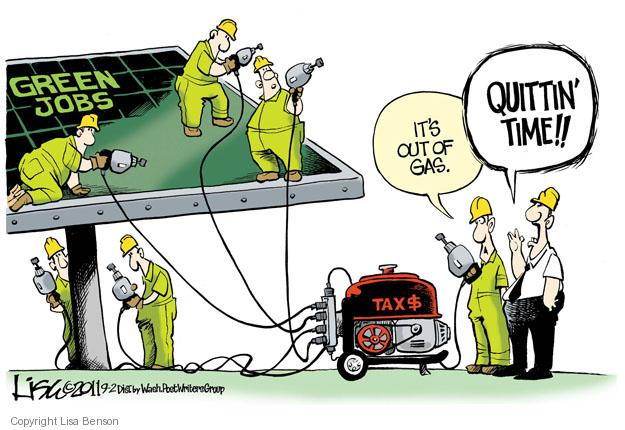
If the climate movement was truly sincere and intellectually honest in its desire to stop actions contributing to global environmental degradation, it would stand fast against solar panels and electric vehicles. There is nothing green about the climate left’s solutions.

There is nothing environmentally friendly about using enslaved children in the Congo to mine cobalt for lithium-ion rechargeable batteries used in EVs. They labor with crude tools and bare hands, breathing in cobalt’s toxic dust in cramped pits. Runoff infused with cobalt and other chemicals contaminate the water supply. Meanwhile, on the other side of the world, green activists sit blithely unaware or unconcerned in the comfort of their own homes. They are saving the world, they smugly assure themselves, while children suffer in an environmental hellhole.

Far removed from U.S. environmental standards, Indonesia is the center of mining and refining nickel, an essential component in EV batteries. Pea soup-thick brown emissions shroud nickel smelting operations in the Indonesian island of Sulawesi as well as the coal-fired plants that fuel them. Processing waste and chemicals potentially leach into the ground. Dust residue from both ubiquitously blanket nearby communities, while waterways tainted by mining operations have red cast.

Whatever else climate activists may try to tell us,
there is nothing green going on here.

In Brazil, near the mouth of the Amazon River, a factory refines bauxite into what eventually becomes aluminum. It had been the source of aluminum in the Ford F-150 Lightening, the company’s now cancelled all-electric pickup truck. A lawsuit alleges that toxic elements, including aluminum and other heavy metals emanating from the refinery, have been responsible for cancer, birth defects, neurological dysfunction, digestive disorders, skin conditions, and increased mortality. How can an EV be called green or good for the environment when it’s making thousands of Brazilians sick?

Elsewhere in Brazil this past Christmas season, Brazilian authorities shuttered construction of an EV factory when it was discovered that its builders were working under “slavery”-like conditions. How is that a green virtue? Perhaps green dogma holds that human worth and dignity are small sacrifices that must be made for the common good.

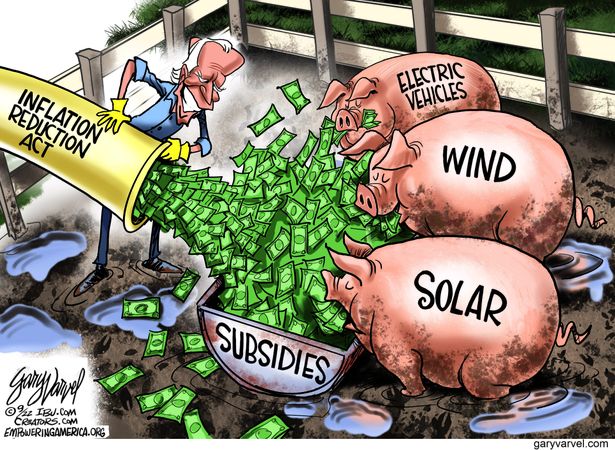
Solar energy, long the prize pig of the climate crowd, isn’t green either.

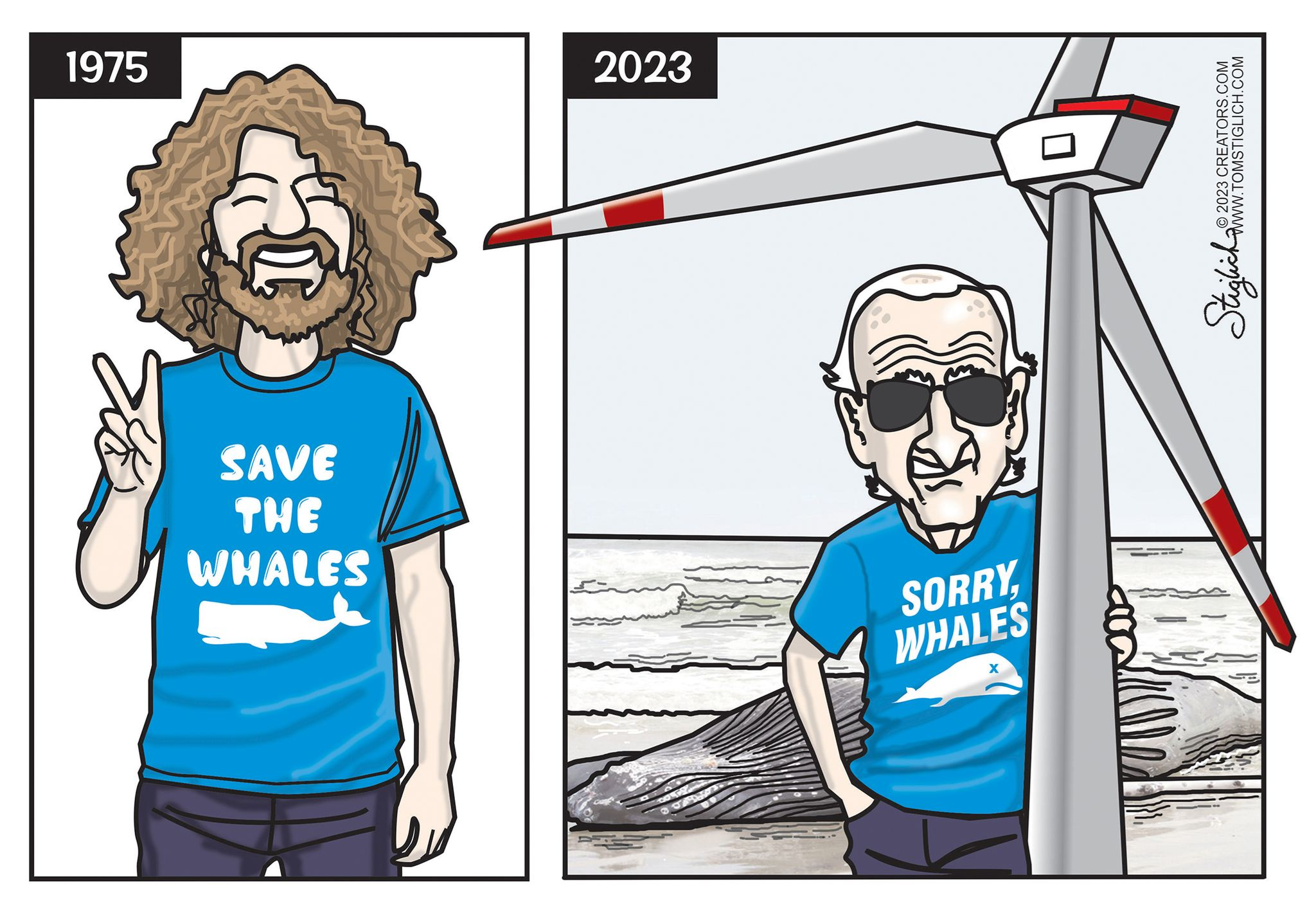
The fact that destroying forest land for solar arrays is bad for the environment should be obvious. Studies have found “the loss of carbon-dioxide gobbling forests for solar installations results in a net increase in greenhouse gas emissions.” Nor should wind farms be considered remotely green when wildlife is being killed and habitats are being disrupted. The same is true offshore, with a number of whale deaths associated with mammoth wind operations.

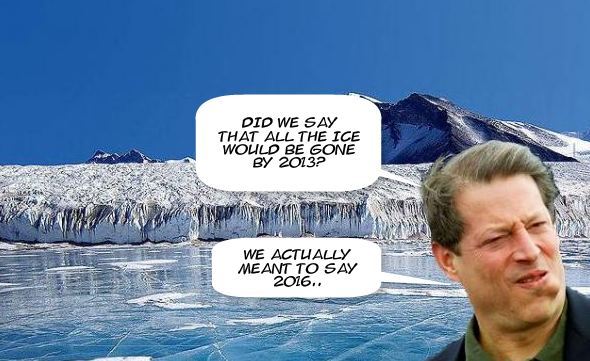
The same folks pushing “green” have been disingenuous from the start. In 1970, they assured us that human activity would cause an ice age by the 21st century and that we’d be under food rationing by 1980. Acid rain was a crisis until it wasn’t. Then global warming became the crisis, with much of New York City to be underwater by 2019. In 2008, Al Gore prophesized that the North polar cap would be gone in five years. It wasn’t. In 2009, UK Prime Minister Gordon Brown proclaimed,” We have fewer than 50 days to save our planet from catastrophe. Spoiler alert: We’re still here and thriving.

Their seemingly endless lies have been accompanied by Orwellian word games, moving from “global warming” to “change.” Now the Newspeak has shifted to “extreme weather and “overheating.

The truth is there is no green energy. No energy is clean. No energy is dirty. There are only challenges, solutions and tradeoffs. At the time of already high energy costs, choosing reliable, fossil fuel-backed energy is of paramount importance. Word sophistry from our friends on the left won’t change that.


It’s Better to be Outside Paris Accord

Chris Johnson writes at Real Clear Energy to explain Trump’s Withdrawal From the Paris Agreement Won’t Hurt the Climate.  Excerpts in italics with my bolds and added images.

President Donald Trump withdrew from the Paris Agreement. Cue the leftwing meltdown. Though everyone knew the withdrawal was coming, the left and the “international community” are still decrying America’s alleged abdication of leadership on climate.
But toothless agreements window dressed with international
summits and photo ops are not the same as leadership.
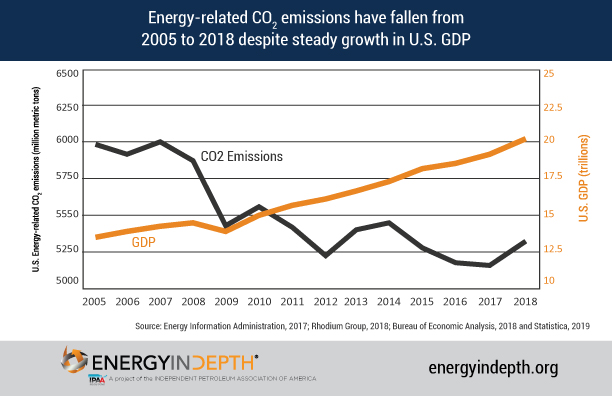
The truth is America has led the world in reducing emissions for years not because of the Paris Agreement, but because innovation and the free market facilitate the deployment of cheaper and cleaner energy.  Let’s review the record.
In recent decades, America has achieved unprecedented — and unexpected — energy production thanks to fracking and horizontal drilling. Since the early 2000s when these twin technologies began to be deployed much more expansively, U.S. natural gas production has more than doubled. By 2016, hydraulically fractured gas wells accessed through horizontal drilling accounted for nearly 70% of all oil and natural gas wells.
While the left may clutch its pearls at the increased production of a fossil fuel like natural gas, this clean energy source has been a main driver of U.S. emissions reductions. Over the past 15 years when America has massively increased natural gas output, the U.S. reduced carbon emissions more than any other country. We can see this year by year.
For example, from 2022 to 2023, America offset dirtier coal energy generation with natural gas. As coal declined by 121.9 terawatt hours of electric generation over that time, natural gas increased by 118.9 terawatt hours. At the same time, U.S. greenhouse gas emissions declined 1.9%. Notably, 80% of the U.S. carbon emissions reductions were driven by the electric power sector — precisely where natural gas has an outsized impact.
Notice what didn’t cause those emissions reductions? The Paris Agreement.
The American energy sector — powered by innovation and good-old-fashioned free market economics — has been driving down carbon emissions cheaply and effectively before the Paris Agreement was a twinkle in climate activists’ eyes. And it will continue to reduce carbon emissions long after President Trump’s decision to withdraw.
The Paris Agreement is far from the panacea some activists claim it is.
It isn’t even a particularly effective tool to
rally nations toward greater climate success.
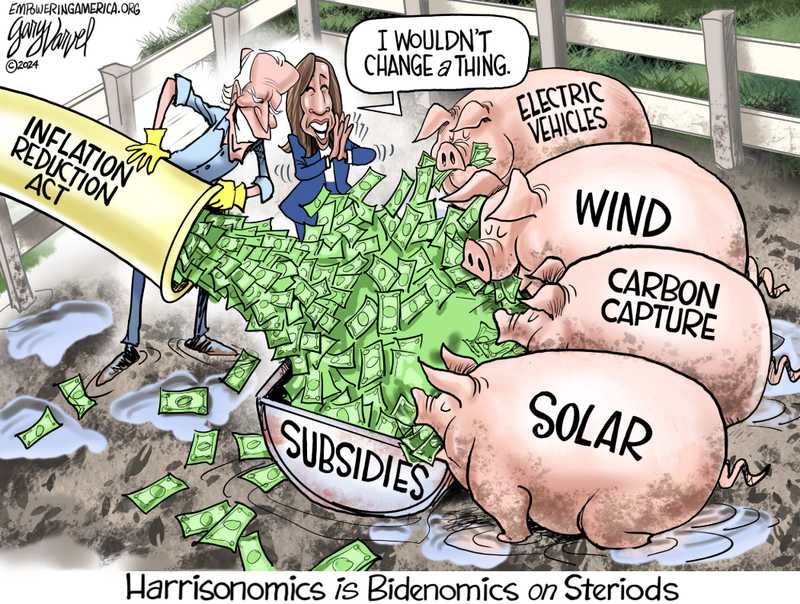
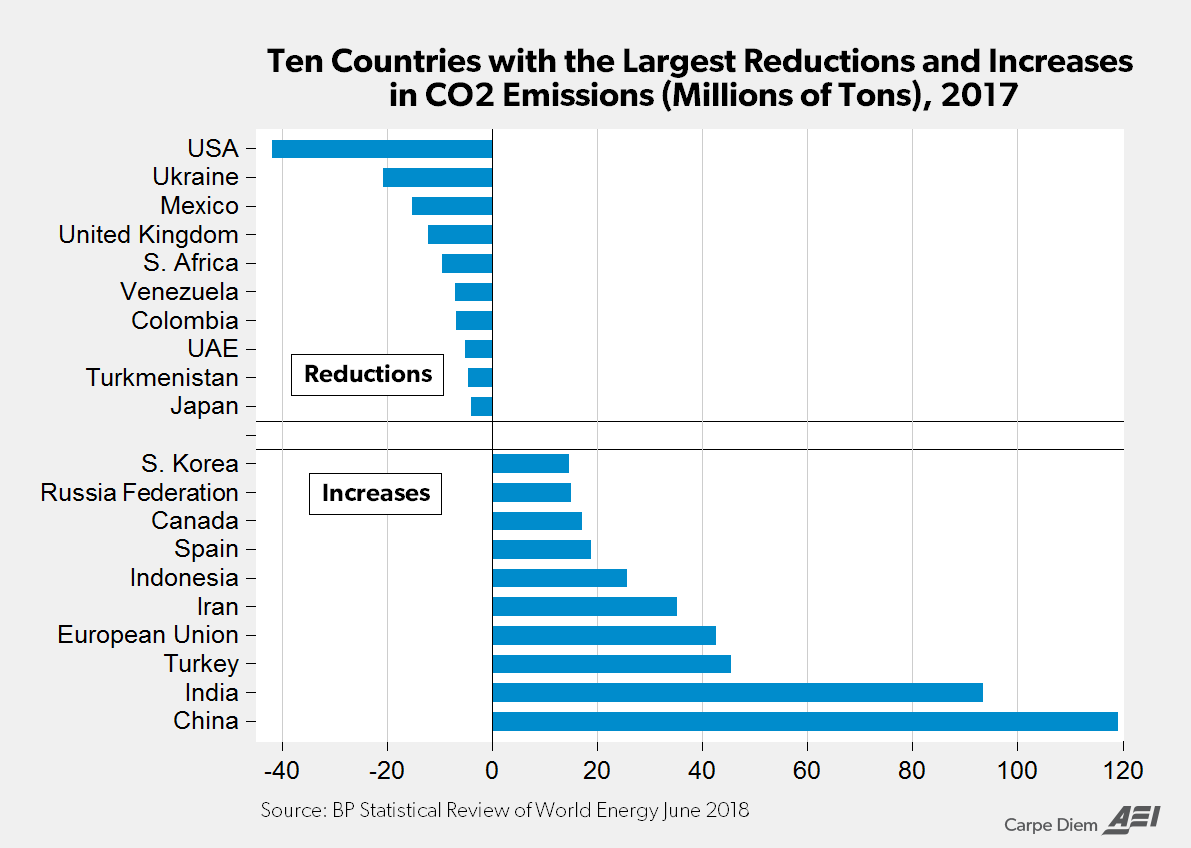
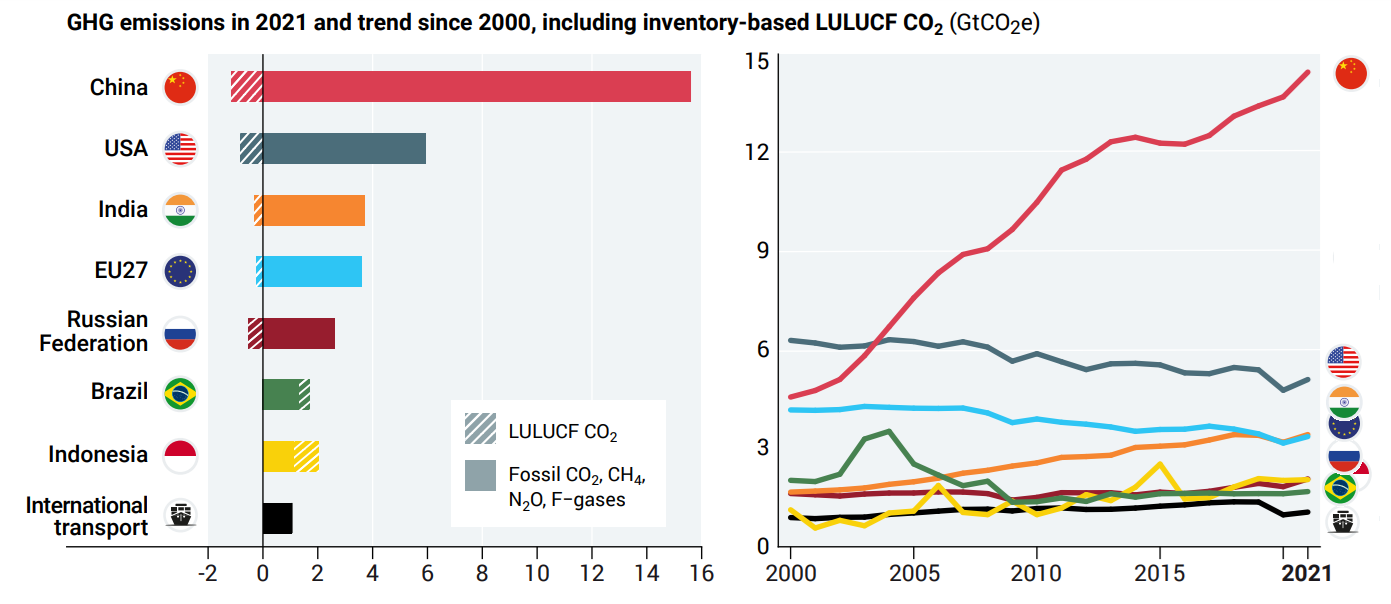
In the middle of the allegedly climate-conscious Biden administration, none of the world’s biggest emitters — America included — had reduced their emissions in accordance with the Paris goals. Apparently, the $1 trillion regulatory and subsidy regime erected by President Biden’s Inflation Reduction Act had little bang for the buck.
What Agreement supporters forget is that no number of high-profile international accords can make command-control tactics work — or instill other nations with the ambition to fulfill their empty promises.

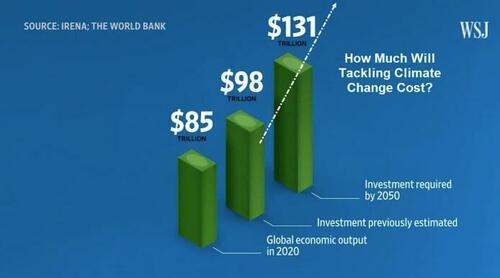
Yes, those are trillions of dollars they are projecting to spend.

The Paris Agreement is the definition of bureaucratic failure, conflating meetings, busyness, and lofty goals as success. Its only achievement is to make climate ideologues and green jetsetters feel good about themselves as they fly to international conferences.
It’s no wonder President Trump withdrew. Talk is cheap. What matters is success. On that metric, the Trump administration is set to actually achieve what Paris Agreement signatories only write on paper.
Trump entered office promising to deregulate the fossil fuel industry, increase permitting for natural gas extraction, approve the construction of energy facilities like natural gas export terminals, and re-establish American energy dominance.
By leaning into America’s carbon advantage and exporting clean American energy abroad, he will boost the U.S. economy, supplant dirty energy from nations like Russia and Venezuela with a clean American alternative, and lower emissions both at home and abroad, all without the jaw-dropping price tag of the failed Biden-era green agenda. We should combine these steps with efforts to actually hold the biggest polluters accountable (which are being discussed by President Trump’s cabinet). This approach would be the antithesis of the Paris Accords’ America-last strategy.
Of course, some are urging President Trump to go further and not just withdraw from the Paris Agreement, but also back out of the UN Framework Convention on Climate Change (UNFCCC). This may seem like an easy choice, seeing as the UNFCCC, like so many UN bodies, acts contrary to American interests. But that’s exactly why America must remain in the UNFCCC.
Climate treaties will be formed whether or not the U.S. is involved, and the UNFCCC will continue to operate as a forum for those negotiations. Staying in the UNFCCC costs America nothing while allowing Trump and his appointees to keep a seat at the table, hold the UN accountable, and counter any deal that would put America at a disadvantage. While the UNFCCC can be harmful, it’s only the Paris Agreement that’s impotent.
The breathless alarm over the withdrawal from the Paris Agreement is overwrought. When President Trump withdrew from the Paris Climate Accord during his first administration, America went on to cut carbon emissions to the lowest level in 25 years. Re-embracing the power of natural gas in his second term, he’ll do it again.
So instead of the UN and international climate activists judging the U.S., we should remind everyone that if you want to put climate first, you should actually put America first.
Chris Johnson is a GOP strategist who organizes the next generation of conservative leaders. He also serves as a senior advisor to the National Federation of College Republicans, focusing on energy issues.


Left Coast Climate Delusion Ends in Flames

Satellite images of wildfires burning in Southern California By NBC Staff • Published January 11, 2025

Holman W. Jenkins, Jr. writes in Wall Street Journal End of a Climate Delusion.  Excerpts in italics with my bolds and added images.

Amid California’s fires, voters wake up from the dream that green pork is a solution.

CO2 emitted into the atmosphere is rapidly and, for all practical purposes, uniformly distributed around the planet.

I may be stating the obvious but it needs to be pointed out. Voters and even political leaders are surprisingly poorly informed on this point. Emissions cuts in California don’t have any significant effect on California’s climate. They also have no global effect. California’s cuts are too small relative to the global whole; they also are largely illusory.

Emitting industries leave the state. They don’t stop emitting. If California imports Canadian hydro to charge its electric vehicles, consumers elsewhere have to burn more coal and gas. If Californians drive EVs, more gasoline is free to be burned by others, releasing more CO2 that influences climate change in California and everywhere else.

Green-energy subsidies do not reduce emissions. This will be news to millions of California voters. It contradicts a central tenet of state policy. It isn’t news to the actual enactors of these subsidies. A National Research Council study sponsored by congressional Democrats in 2008 concluded that such handouts were a “poor tool for reducing greenhouse gases” and called for carbon taxes instead.

Unfortunately, the incoming Obama administration quickly discovered it favored climate taxes only when Republicans were in charge. Backers would later engage in flagrant lying to promote Joe Biden’s Inflation Reduction Act, knowingly citing bogus predictions that its trillion-dollar spending profusion would reduce emissions.

A 2019 University of Oregon study had already revealed the empirical truth: Green energy doesn’t replace fossil fuels, it enables more energy consumption overall. That same year the EPA calculated that the potential emissions savings from subsidizing electric vehicles had been offset five times over by the pickup truck and SUV boom Team Obama facilitated to assure the success of its auto bailout.

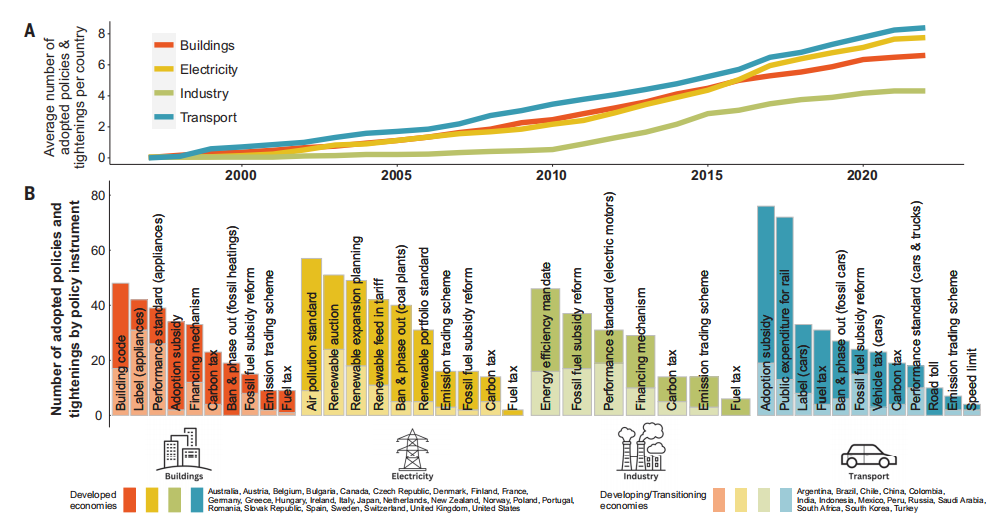
American Association for the Advancement of Science study finds that of 1,500 “climate” policies announced around the world, a mere 63, or 4%, produce any reduction in emissions.

Last year, the premier journal Science put a nail in the question: 96% of policies supported worldwide as “reducing” emissions failed to do so, consisting mostly of handouts to green-energy interests.

And yet certain Journal readers still assail me with the epithet “denier.” They confuse my criticism of Democratic hypocrisy with my imagined views on climate science. As I’ve written back to many, “Don’t think politicians haven’t figured this out about you. That’s why they can give us unsustainable corporate welfare boondoggles and call it climate policy.”

A CNN moderator Saturday urged viewers to vote in an online poll on whether the California disaster should be blamed on climate change or poor leadership. Notice the non sequitur: as if climate change is an excuse for not acting against fire risk.

By all means, let politicians proclaim a “climate crisis” or any other rhetorical flourish if it helps mobilize support for public actions that actually serve a useful purpose. But a prerevolutionary situation has been building in California for two decades, starting with the Third World blackouts in late 2000 not because of any shortage of power but because of large helpings of political cowardice.

A decision in 2019 authorized yet more Third World blackouts instead of reasonably shielding utilities from lawsuit risk over fires their power lines might be accused of contributing to. One result, predictably, has been a proliferation of backyard generators, which increase fire risk.

Californians are stuck adapting in the ways left open to them. Since 2017, half a million have fled Los Angeles County.

Two social technologies might help but the state has been intent on denying itself their advantages. One is a functioning insurance market. If you can’t afford the insurance, you can’t afford the house. Get ready, instead, for a torrent of federal and state money to help residents, some of them wealthy, rebuild in high-risk fire zones.

The other is a functioning market in water. Five gallons to produce a walnut probably isn’t tenable under any realistic system of water pricing. If water were properly valued, municipalities would also rapidly discover the logic of building aquifers to capture seasonal runoff. A thousand things would change if water were priced to flow to its most highly valued uses.

Here’s another concept: Climate change can exist and yet be an insignificant variable.

In Southern California’s Mediterranean climate, anytime 100-mile-an-hour winds start blowing embers toward densely packed housing developments, a conflagration is certain. The only answer then is to have the manpower and resources ready to put fires out as quickly as they start.

I’ve written repeatedly about climate and energy policies in the Western world being a colossal example of “sophisticated state failure,” in which attempts to address complex problems yield only a succession of boondoggles and economic crises. If California voters don’t wise up now, they never will.


Wyoming: Make Carbon Dioxide Great Again–No Net Zero

A bill is progressing through the Wyoming State Legislature, as described by the author in her op-ed Rethinking Carbon Dioxide – Wyoming’s Bold Move.  Excerpts in italics with my bolds and added images.
Torrington, WY (State Senator Cheri Steinmetz) January 7th, 2025 — The people of Wyoming have always believed in the value of questioning conventional wisdom, looking at the bigger picture and finding solutions that are possible and actually work. That’s the purpose of the bill titled “Make Carbon Dioxide Great Again”. This legislation is not about denying science, it is about applying science, thoroughly reevaluating the ‘climate change’ scientific assumptions and advocating for policies grounded in practicality, reality, and achievability – common sense.

Carbon dioxide (CO2) is vital to life on Earth.

Without it, plants could not grow, and without plants, no life would survive. Scientists and farmers alike recognize that higher CO2 levels improve agricultural productivity. Plants thrive with more CO2 – they grow faster, use water more efficiently, and are more resilient to drought. NASA’s own research shows that rising CO2 has contributed to a global “greening” effect, expanding vegetation and helping ecosystems flourish. CO2 is plant food!

Yet, despite its essential role in sustaining life,
CO2 has been demonized as a pollutant.

But what impact are human driven CO2 emissions actually capable of? We are contributing a very small part of the natural carbon cycle. Current CO2 levels are among the lowest Earth has seen over its long history. There were times in the past when ecosystems flourished under much higher CO2 concentrations. Instead of vilifying this essential gas, we should be acknowledging its role in our ecosystems and industries and protect the benefits it has in our lives.

Wyoming is uniquely positioned to lead this conversation.

Our state is vital to energy production, agriculture and food industries, transportation and energy reliability and stability. We understand the real-world importance of CO2. And we understand the benefits of CO2 used directly. Our industries already use it to enhance oil recovery, making energy production more efficient. This technology exemplifies what we are capable of when we treat CO2 as a resource rather than a liability.

The bill Make Carbon Dioxide Great Again shifts how we think about CO2.

It proposes that we stop treating the essential gas as a pollutant or contaminant. It requires a clear-eyed look at how policies aimed at eliminating CO2 emissions, such as decarbonizing the West, making Wyoming carbon negative or popular “net-zero” mandates. They may sound good on paper but often come with high economic costs and questionable environmental benefits, and clearly negative effects on our people and our industries.

Wyoming must refuse to jeopardize our economy and energy security
for initiatives that will yield – at best – questionable results.

Critics of “net-zero” strategies have highlighted the risks of pursuing policy goals without fully considering their consequences. These frequently require massive investments, disruption of reliable energy systems, and the forced undue burdens on families and businesses. Instead, Wyoming advocates for a balanced approach – one that evaluates the risks and possible rewards of any CO2 management plans that will safeguard our economic stability and way of life.

This approach challenges the status quo, and that is precisely the point. Now is the time to rethink how we talk about CO2 and climate change. This bill is not about ignoring environmental concerns; it is about addressing them with clear-eyed pragmatism and truth.

Wyoming is taking a bold step forward to lead a balanced, science-based dialogue. We all stand to benefit from this. Our energy sector, agriculture, transportation and all other industries, and even the broader environment, will gain when we use CO2 wisely.

This conversation is just beginning and must spark
a national debate about the fundamental role of CO2.

It is a debate we need to have – not just in Wyoming, with our own Governor and citizens – but across the nation and with all the organizations leading the charge to “net zero.” Let us challenge the assumptions, ask the hard questions, and make sure our policies truly serve the people, industry and the environment. After all, that is the Wyoming way.

Text of Wyoming Bill     SF0092  Make carbon dioxide great again-no net zero.

AN   ACT   relating to   environmental quality;   providing legislative findings;
specifying that carbon dioxide is not a pollutant and is a beneficial substance;
providing policy statements of the state associated with carbon dioxide;
repealing low-carbon energy standard requirements; repealing conflicting provisions;
making conforming amendments;  specifying applicability;
requiring reimbursement to utility customers as specified;
requiring rulemaking; and providing for an effective date.

Be It Enacted by the Legislature of the State of Wyoming:

Section 1.    W.S. 35-11-215 is created to read:

1             SF0092

35-11-215.     Carbon dioxide;   beneficial treatment; state policy.

(a)   The legislature finds that:

  (i)    Carbon dioxide is  a foundational nutrient necessary for all life on earth. Plants need carbon dioxide along with sunlight, water and nutrients to prosper. The more carbon dioxide available for this, the better life can  flourish;

  (ii)    The carbon cycle, where carbon dioxide is reused and transferred between the atmosphere and organisms on earth, is a biological necessity for life on earth;

  (iii)    Agricultural production worldwide is outpacing population growth and breaking production records primarily due to increasing atmospheric carbon dioxide;

  (iv)    More carbon dioxide allows plants to better resist drought by using water more efficiently;

  (v)     The national aeronautics and space administration has confirmed that global vegetation is increasing from the near-polar regions to the equator. The largest contributor to this greening of  the earth is increasing carbon dioxide;

  (vi)     Carbon dioxide levels are currently at approximately four hundred twenty (420) parts per million, which is  at near-historically low concentrations.   The current carbon dioxide levels are one-sixth (1/6) of the average of  two thousand six hundred  (2,600)  parts per million over geologic time;

  (vii)     It is estimated that carbon dioxide levels  need to exceed one hundred fifty (150) parts per million to ensure the survival of plant life on earth;

  (viii)     The earth needs carbon dioxide to support  life and to  increase plant yields,  both of     which will contribute to  the health and prosperity of  all Wyoming citizens.

   (b)     It is the policy of the state of Wyoming that:

(i)       Carbon dioxide is a foundational nutrient necessary for life on earth;

(ii)       Carbon dioxide shall not be designated or treated as a pollutant or contaminant;

(iii)       The state of Wyoming shall not pursue any targets or measures that support the reduction or elimination of  carbon dioxide,  including any  “net-zero”  targets.

          Section 2.        W.S. 37-1-101(a)(intro) and 37-2-134(a)(i)  and (iv) are amended to read:

37-1-101.       Definitions.

(a)   As used in chapters 1, 2, 3, 12, and 17 and 18 of  this title:

37-2-134.       Electric generation facility closures; presumption; commission review

(a)    As used in this section:

(i)     “Dispatchable” means as defined in W.S. 37-18-101(a)(ii) a source of electricity that is available for use on demand and that can be dispatched upon request of a power grid operator or that can have its power output adjusted, according to  market needs and includes dispatchability;

(iv)    “Reliable” means as  defined in W.S. 37-18-101(a)(iv) generated electricity that is not subject to intermittent availability.

        Section    3.    W.S.    37-1-101(a)(vi)(N), 37-18-101 and  37-18-102 are repealed.

Section    4.   Not later than sixty (60) days after the effective date of this act each public utility that recovered rates from customers under W.S. 37-18-102(c)(i) or (iii),  as repealed by section 3 of this act, shall refund those rates to customers who paid them, provided that the utility shall not be  required to refund rates recovered under W.S. 37-18-102(c)(i) and (iii) that the utility had expended for carbon capture, utilization and storage technology before the effective date of this act. Refunds required under this section shall be in a form and manner specified by the public service commission

Section    5.  The public service commission shall promulgate all rules necessary to implement this act.

Section    6.  This act is effective immediately upon completion of all acts necessary for a bill to become law as provided by Article 4, Section 8 of the Wyoming Constitution.

 (END)

German Death Wish On Display

Tilak Doshi describes the self-inflicted German downfall in his Daily Sceptic article Germany’s Economic and Political Suicide. Excerpts in italics with my bolds and added images.

It’s that festive time of the year when interesting tales get told around a fireplace. So here goes (minus the fireplace).

Once upon a time there lived a country that was the envy of the world. It was among the world’s pre-eminent producers of manufactured goods. From chemicals and pharmaceuticals to precision engineering and the brewing of beer, it was second to none. Its people’s work skills, industriousness and discipline became the national hallmark of civilisational success. The country gained fame and fortune in bringing the luxuries of fine automobiles to the world’s rich and aspiring middle classes.

Alas, a blight visited that once great country not more than a score of years ago, though its destructive seed had been planted earlier. It was not some external force or act of God. Rather it was a sickness of the mind, a debilitating disease of the soul, that vexed that country’s ruling class. In restless search for virtue, the country’s rulers paid obeisance to the Goddess Gaia and promised the nation’s blood and treasure to satiate her inviolable sovereignty over her earthly domains.

This, then, is a tale of woe and misery. This Christmas shall not have been one of unalloyed merry times and good cheer. And while beer will have been drunk and dinners eaten in many a hearth and eating place, the lifeblood of that nation shall be constricted and its breathing blocked by a cursed phlegm as normal life resumes in the New Year.

Within the fateful score of years of becoming afflicted by the primordial cult of Gaia, the world’s envy has now become a sad basket case. Its economy has been tarnished as “the sick man of Europe”.

The beginning of the end of the German miracle

While the travails of Germany along with the economic stagnation of Europe as a whole have been apparent for some years now, the spate of dire headlines have gathered pace in recent weeks as the coalition government collapsed.

“Behind Germany’s Political Turmoil, a Stagnating Economy” — New York Times (December 17th)

“Germany Is Unraveling Just When Europe Needs It Most” – Bloomberg (December 15th)

“Europe’s Economic Apocalypse Is Now” – Politico (December 19th):

If Europe – and its economic powerhouse Germany – remains on its current trajectory, its future, Politico says, “will also be Italian: that of a decaying, if beautiful, debt-ridden, open-air museum for American and Chinese tourists”.

The economic rot induced by the adoption of Energiewende policies for the “energy transition” in 2010 resulted ultimately in the recession of the German economy in the last two years. Among the manifestations of this rot are the growth of corporate bankruptcies in double digits, soaring layoffs as the Federal Employment Agency said that the unemployment figure could exceed the three million mark for the first time in 10 years at the beginning of 2025, and the crown jewel of German industry, its automative sector, announcing massive job cuts.

According to a recent poll, 40% of industrial companies are currently considering reducing their production in Germany or relocating it abroad due to the energy situation; among industrial companies with more than 500 employees, more than half are now considering this. High labour costs, caused by the myriad regulations of a hyperactive administrative state, and among the world’s highest energy prices brought about by its Energiewende folly, have led to the nation’s de-industrialisation.

Germany’s governing coalition collapsed after Chancellor Olaf Scholz fired Finance Minister Christian Lindner, plunging Europe’s largest economy into political chaos. This occurred barely hours after Donald Trump’s U.S. election victory triggered existential questions about the future of the Continent’s economy and its energy security. Mr. Trump – a climate sceptic who has promised to bring the U.S. out of the UN’s Paris Agreement and its financial commitments for large scale transfers of funds to developing countries – will pull the rug out from under the EU’s famed if quixotic climate leadership.

Europe’s economic implosion is self-induced. Its ruling elites over-tax and over-regulate the private sector and obsess with promoting unreliable renewable energy to replace fossil and nuclear fuels in its crusade to ‘save the planet’ from an alleged impending climate apocalypse. Its attempt to blame Russia’s President Putin for high energy prices is hollow and self-serving.

Perhaps most revealing of Europe’s regulatory hubris is the Qatari Energy Minister’s recent statement that “I am not bluffing”. He warned that Qatar, one of the world’s largest natural gas suppliers, would cease gas exports to the EU if the bloc’s countries imposed penalties under recently adopted legislation on “sustainability due diligence”. For Europe to tell the world that it would punish foreign countries that did not buy into their “sustainability” beliefs might seem to most non-European observers as the height of arrogance. But such is the delusionary might of the Gaia cult.

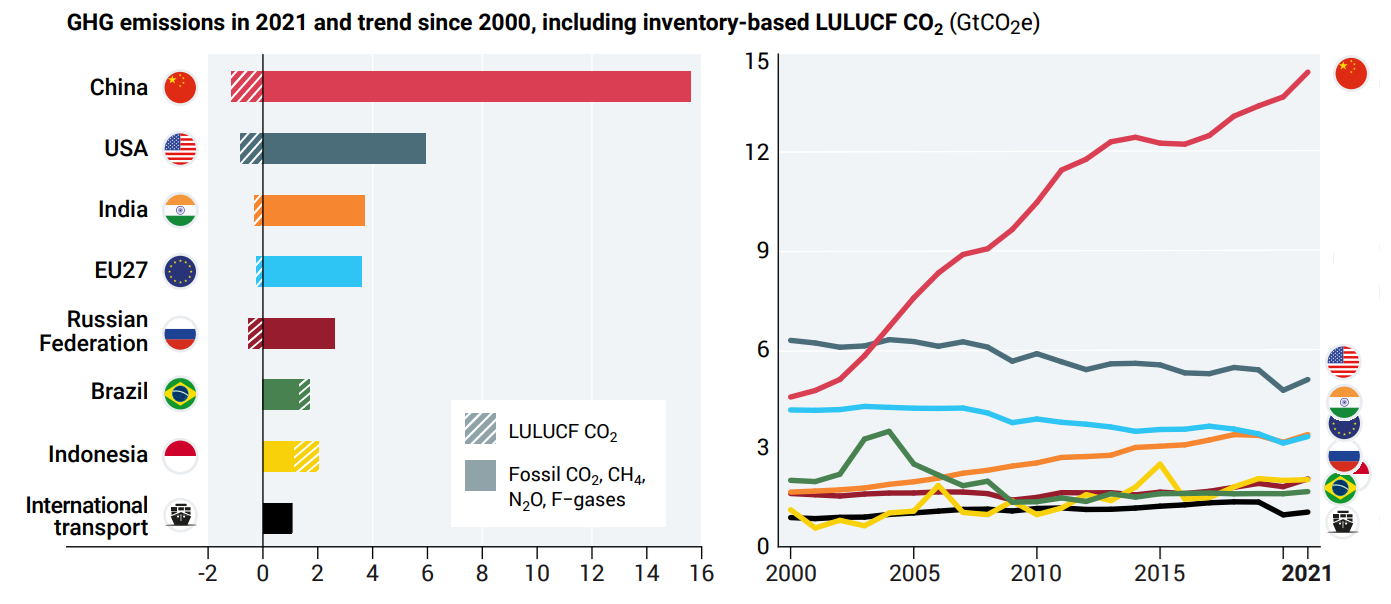
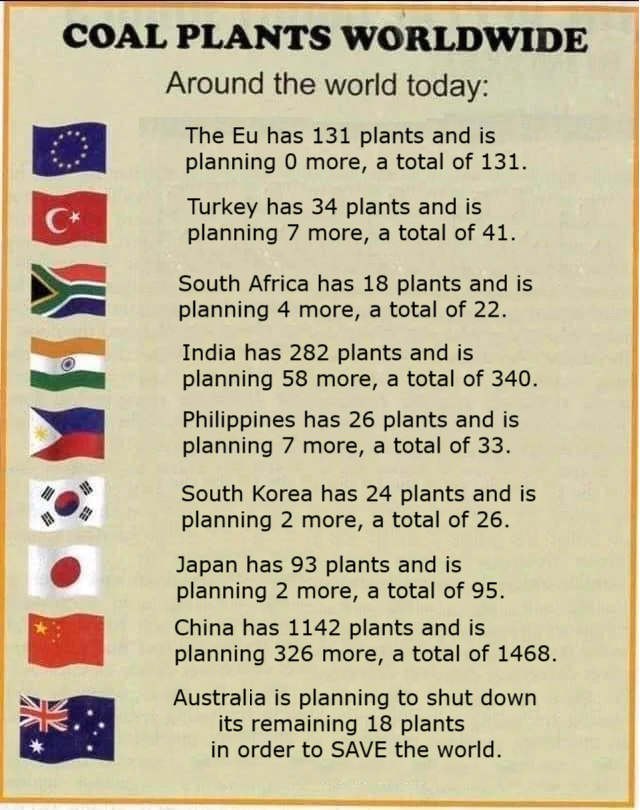
The EU’s “Corporate Sustainability Due Diligence Directive”, which entered into force in July, allows for fines of up to 5% of a company’s annual global revenue “if the management fails to address adverse human rights or environmental impacts”. Bumptious Brussels bureaucrats seem to believe that their ideas of “sustainability” command universal acceptance. This, in a world where China, India, Indonesia, Vietnam and other populous developing countries, accounting for most of the world’s population, are busy expanding their capacity to mine coal and other fossil fuels so as to afford their citizens access to affordable and reliable energy.


Back to barbarism

“Little else is requisite to carry a state to the highest degree of opulence from the lowest barbarism but peace, easy taxes, and a tolerable administration of justice: all the rest being brought about by the natural course of things.”

So said Adam Smith, the great sage of political economy, over 250 years ago. Germany has shown that the converse may also be true. To go from opulence to poverty and potential barbarism is but a short road, assured by the burden of high taxes in service of an alleged climate crisis, and an intolerable administration of “climate justice” that demands suffocating regulations on the private sector.