Time to Axe the Climate-Industrial Complex

Kevin Mooney makes the urgency case in his Real Clear Energy article Celebrating American Independence With an All-Out Assault on Anti-Constitutional Climate Measures.  Excerpts in italics with my bolds and added images.

Now is the time to double down against the “Climate-Industrial Complex” with accelerated regulatory reforms that will hopefully endure beyond Donald Trump’s second term. Since day one of his new administration, the president has moved quickly to keep his promise to unleash American energy.

This means unraveling climate policies based on specious, unscientific findings that reached an apex with whatever leftist committee was in charge of the Biden White House. The American Energy Alliance, a Washington-based free market advocacy group, has put together a list of 50 Actions the Trump administration and congressional Republicans have taken to maximize America’s energy potential.

Some of the more significant items include EPA Administrator Lee Zeldin’s decision to revisit the phony 2009 Endangerment Finding that identified CO2 as a pollutant. The finding came about in the aftermath of the U.S. Supreme Court 2007 ruling in Massachusetts v EPA where the high court determined that the agency had the authority to regulate greenhouse gases under the Clean Air Act (CAA). The ruling opened the way for the Obama and Biden administrations to lock in a long list of regulations restricting American energy.

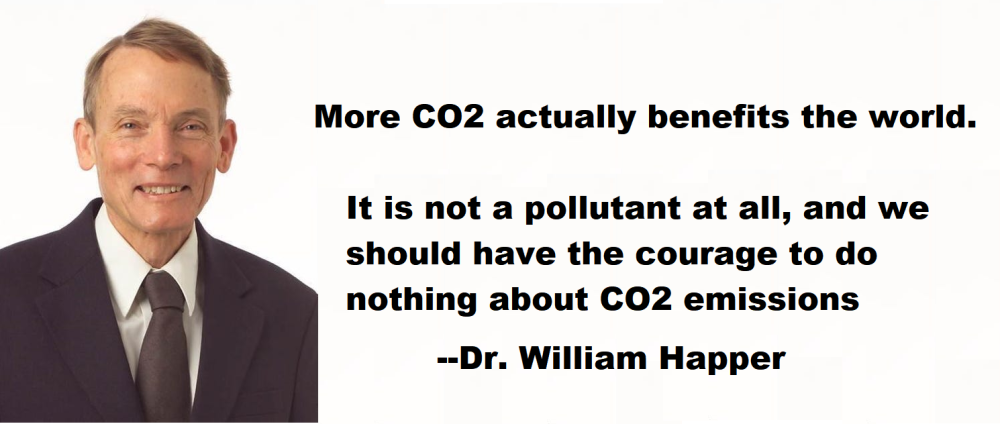
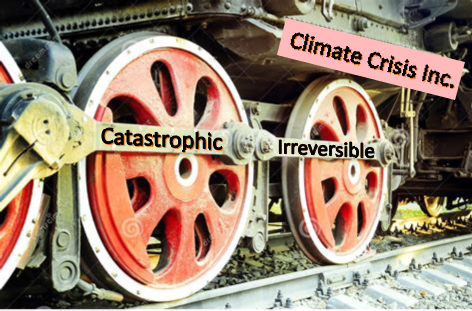
The term “Climate-Industrial Complex” is an apt description some commentators have affixed to the vast network of activist groups and unelected administrative agents who have erected an extra-constitutional fourth branch of government all in the name of climate. Only by attacking the very premise of the climate lobby’s regulatory schemes can Team Trump achieve lasting change. Overturning the Endangerment Finding is a big part of that process since it would mean yanking out the edifice of regulations that raise energy prices for consumers and limit their choices. The CO2 Coalition, which includes scientists and researchers from across the globe, has a long list of “Climate Facts” highlighting the benefits of CO2, and it’s role in sustaining life on Earth, while debunking exaggerated claims about global warming. The attack on CO2 is an attack on humanity itself.

Another component of the Trump agenda included in the AEA list is the president’s abrupt move to once again withdraw from the U.N. Paris Climate Agreement and to revoke any financial commitments to the U.S. under the United Nations Framework Convention on Climate Change (UNFCC).

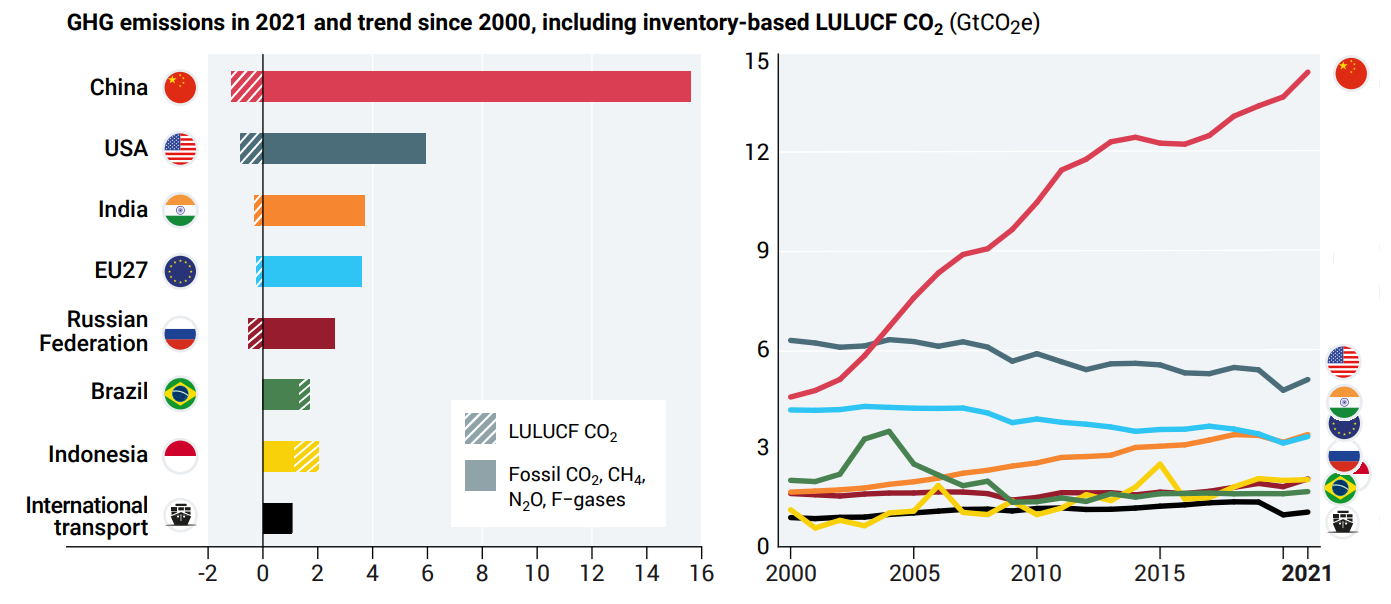
Under the agreement, participating countries pledge to reduce their CO2 emissions through “nationally determined contributions” or NDCs for the ostensible purpose of reducing “global warming.” Trump has long maintained that the international climate agreement “handicaps the U.S. economy” without producing any benefits for the climate or the environment. Right from the beginning, the agreement was crafted with an eye toward constraining America’s economic and military power while giving adversaries like China a free pass. Trump instinctively knew this was case. In his first term, Trump made the critical point that he was “elected to represent the citizens of Pittsburgh, not Paris.” There’s an undeniable link between Trump’s restoration of an “America First” energy policy and the concept of “No Taxation Without Representation.” Why should U.N. bureaucrats be permitted to raise energy costs on the American people without a straight up and down vote in Congress?

Other notable actions on the AEA list include efforts to eliminate taxpayer funded subsidies for unworkable green energy, and the resumption of export permit applications for new liquefied natural gas (LNG) projects.

Tom Pyle, the AEA president, sums the early days of the Trump’s second term of very nicely in a press statement:

“President Trump has wasted no time fulfilling his promise to unleash our country’s vast resources and undo the reckless policies of his predecessor, beginning with a flurry of executive orders and spending reductions. More recently, his agencies – especially the EPA – have formalized the process of rewriting or eliminating a host of harmful regulations. Congress has also acted with haste by nullifying a host of rules using the Congressional Review Act and has begun the process of eliminating the wasteful Inflation Reduction Act subsidies through the budget and reconciliation process.”

That part about the Congressional Review Act (CRA) deserves some extra attention since the climate lobby is just as potent here domestically in California as it is within the United Nations. In fact, the CRA may be the most viable tool available to prevent Gavin Newsom, the state’s Democratic governor, and likely presidential candidate, from superimposing his climate policy goals on the rest of the country. The CRA is a law passed in the 1990s that enables Congress to overturn final rules issued by federal agencies. Members have 60 days to introduce a joint resolution disapproving of the rule after an agency’s rule is reported to Congress. On the House side, Rep. Kevin Kiley, R-CA, has taken the critical step of introducing a CRA resolution of disapproval to repeal the Biden EPA’s 11th hour move to grant California a waiver for its Advanced Clean Cars II program, which would prohibit the sale of new gas-powered cars by 2035.

Under a provision of the Clean Air Act, the EPA is authorized to establish emission standards for new motor vehicles. The agency also has latitude to grant Californiaspecial waiver to impose even more onerous regulations. That’s where the assault on consumer choice comes into play.

Other states are permitted to adopt the California standards and put gas powered cars on the path to extinction. This process is already well underway with 11 states and Washington D.C. adopting the California standards. The CRA could and should be used as a tool to reverse what is essentially a nationwide electrical vehicle mandate compliments of California. But there’s a problem.

Elizabeth MacDonough, the Senate parliamentarian, has joined with the Government Accountability Office (GAO), to make the case that the CRA should not be used to overturn the waiver because it is their view that it is an adjudicatory order, not a rule.

Pyle cuts through the legal gibberish.

“Despite misleading reports, the Congressional Review Act is crystal clear: once an agency action is submitted to Congress, it is Congress—and Congress alone—that holds the unassailable power to approve or disapprove that action,” Pyle said in a release:

“The GAO’s role is purely advisory, with no legal authority to block Congress from exercising its constitutional duty. The California waiver, which seeks to impose a nationwide electric vehicle mandate, is a prime example of why the CRA exists: to ensure that Congress retains control over regulatory actions that significantly affect the American public. It is time for Congress to step in and put a stop to California’s electric vehicle mandate. Doing so will protect consumer choice and prevent unelected agencies from dictating the future of American transportation.”

With the 250th anniversary of American independence fast approaching, there is no better way to mark that occasion than by caging the climate lobby’s administrative beast, uprooting California mandates, and restoring Congress to its proper station as a lawmaking body.

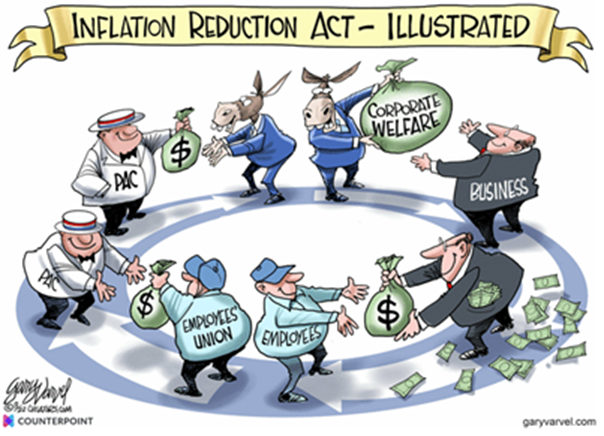
Why Must Repeal Biden’s IRA

Frank Lasee explains why Republicans Must End Democrats’ IRA Caused Inflation.  Excerpts in italics with my bolds and added images.

The Democrats passed the Orwellian named inflation Reduction Act (IRA) without a single Republican vote. They told us that it would be a $369 billion spending package. In fact, it could cost nearly $5 trillion adding to our debt.

The United States now has a $36.5 trillion national debt,
with a trillion dollars in annual interest payments.

The money for the IRA is all borrowed money. It causes more unnecessary energy spending, driving up electric rates and increasing inflation. This overspending is unsustainable and harmful to the United States; inflation is putting pressure on families’ budgets.

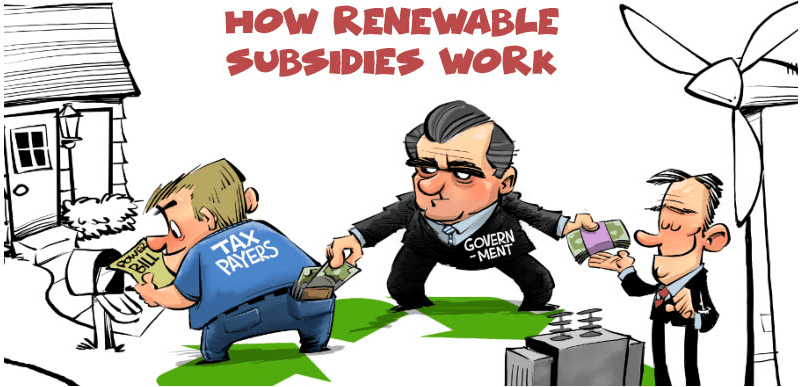
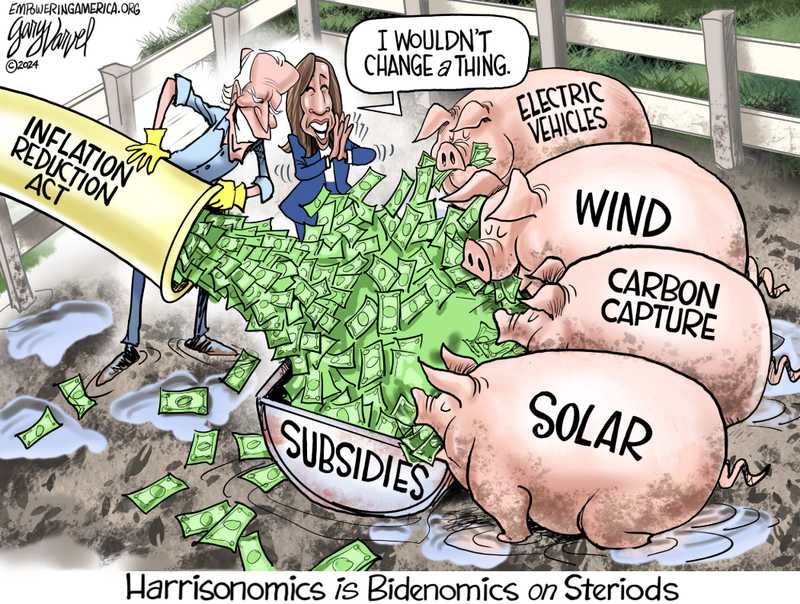
The subsidies in the IRA are incredible. Wind and solar get a 50 percent tax credit to build and a 30 percent subsidy for the electricity they produce. Trump and Congress need to end these subsidies. Not only for wind and solar, but for all the other supposedly green initiatives, like battery factories, electric vehicle manufacturing components, and hydrogen. We simply can’t afford it. 

This “green” borrowing is driving up our electric rates. Because wind and solar power are part-time and intermittent, they cannot provide full-time, keep the lights on all the time electricity generation. They do not replace any natural gas, coal, or nuclear power they just add costs.

It is like a household that has two on demand gas cars that serve their needs. They think they can save money with another car. Because of the 50 percent tax subsidies and propaganda they buy a solar car. 

They find that the solar car doesn’t work the first and last hour of the day, or when it is raining, or cloudy and not at night. The sun isn’t powerful enough. They learn they cannot replace any of their gas cars with the solar car.

So, they buy a wind car that only works the 30 percent of the time the wind blows. They find they can’t get home from their kids’ soccer game or from work because the wind stopped blowing.

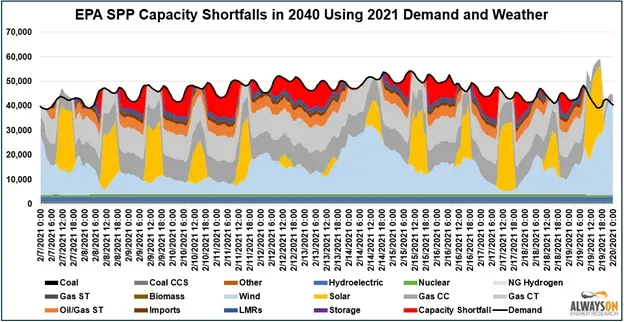
Capacity shortfall events – or blackouts – in Southwest Power Pool (SPP) when we modeled EPA’s proposal for carbon mandates, stemming from the agency’s use of 80% or higher capacity values for solar energy.

They are now paying for four cars instead of two. This is exactly what is happening to our electric grid. We are paying for a full-time and part-time electricity production. 

To make matters worse, the way that regional transmission organizations (RTOs) pay for our electricity doesn’t allow us to realize any savings from the heavily subsidized wind and solar generation. 

The industry calls it take and pay. The most expensive form of electricity the RTO purchases is what they pay all electricity providers. This means that there is no savings from wind and solar for electric consumers, only increased costs.

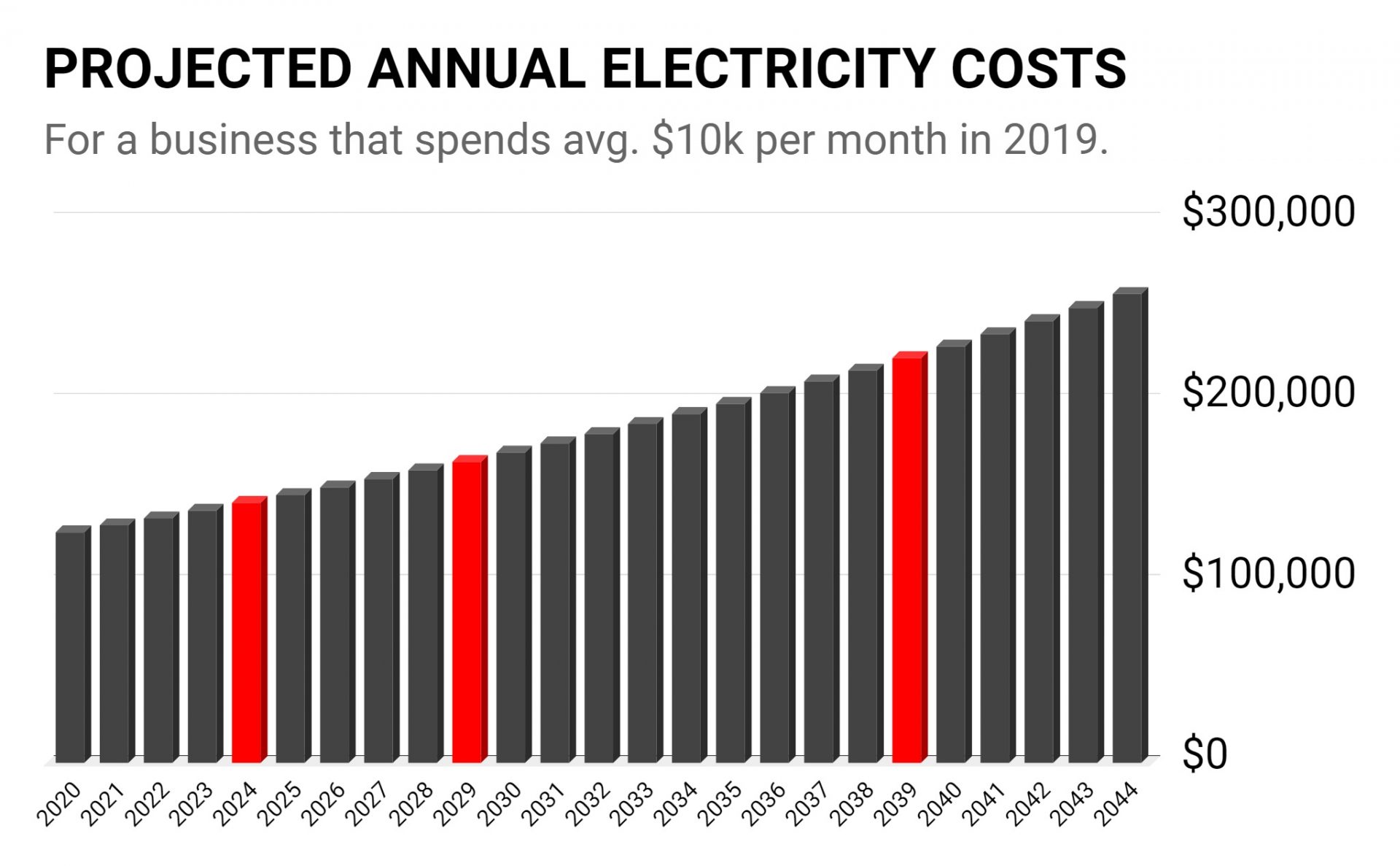
Projected Business Electricity Expenses in California based on increasing commercial rates.

No other industry pays the highest bid price to all suppliers, regardless of what they bid. But that’s what they do in the electric world. We are paying higher electricity rates because of this practice.

This begs for state legislative action to correct this expensive payment scheme. 

Wind and solar further drive up the price of electricity because they require many miles of expensive transmission wires and displace full-time electric generation. Forcing it to run less than it would if they were not on the electric grid.

As natural gas and coal power plants run more part-time, every electron they sell must have a higher price to cover their costs. Their maintenance costs will only increase, too, because they were never designed to run intermittently.

Trump understands that wind and solar drive up the cost of our electricity, particularly offshore wind, which costs five times more than natural gas electricity, and are built in hurricane alley. What could go wrong? The simple answer is to stop subsidizing all electric generation with our borrowed inflation causing tax dollars. And states should end favorable regulations that require the purchase of wind and solar first. 

There are 21 House Republicans that have signed a letter saying they don’t want to repeal the IRA, even though they didn’t vote for it. Because it is fostering wasteful pretend “green” spending in their districts. Clever Democrats have the bulk of the spending going into these Republican districts in order to preserve this green slush fund.

President Trump needs to use his considerable persuasion and political muscle to end this Democrat boondoggle, which adds to our $36.5 trillion national debt.

Frank Lasee is a former Wisconsin state senator and former member of Governor Scott Walker’s administration. The district he represented had two nuclear power plants, a biomass plant and numerous wind towers. He has experience with energy, the environment, and the climate. You can read more energy and climate information at www.truthinenergyandclimate.com which Frank leads.

The Right Climate Stuff

Not everyone is aware that the scientists and engineers who made the NASA space program successful disputed the global warming/climate change narrative promoted at the agency by people like James Hansen.

After all the slogan in the NASA workplace was that of Edward Deming, and they were only convinced by the facts rather than feelings or opinions about the future.  Many of them formed the Right Climate Stuff Foundation.

In particular Walter Cunningham explained his reasoning in an article In Science, Ignorance is not Bliss. Excerpts in italics with my bolds and added images.

NASA has played a key role in one of the greatest periods of scientific progress in history. It is uniquely positioned to collect the most comprehensive data on our biosphere.   For example, recently generated NASA data enabled scientists to finally understand the Gulf Stream warming mechanism and its effect on European weather. Such data will allow us to improve our models, resulting in better seasonal forecasts.

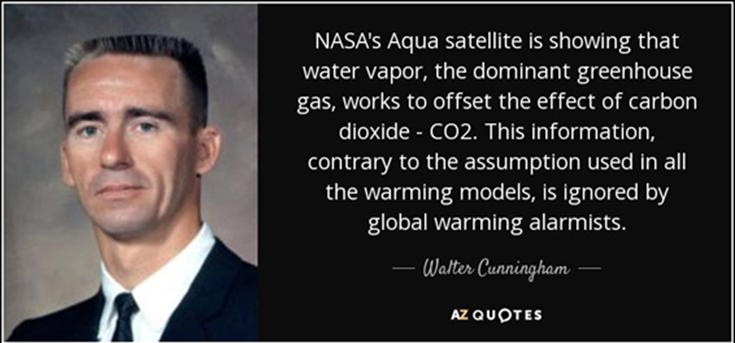
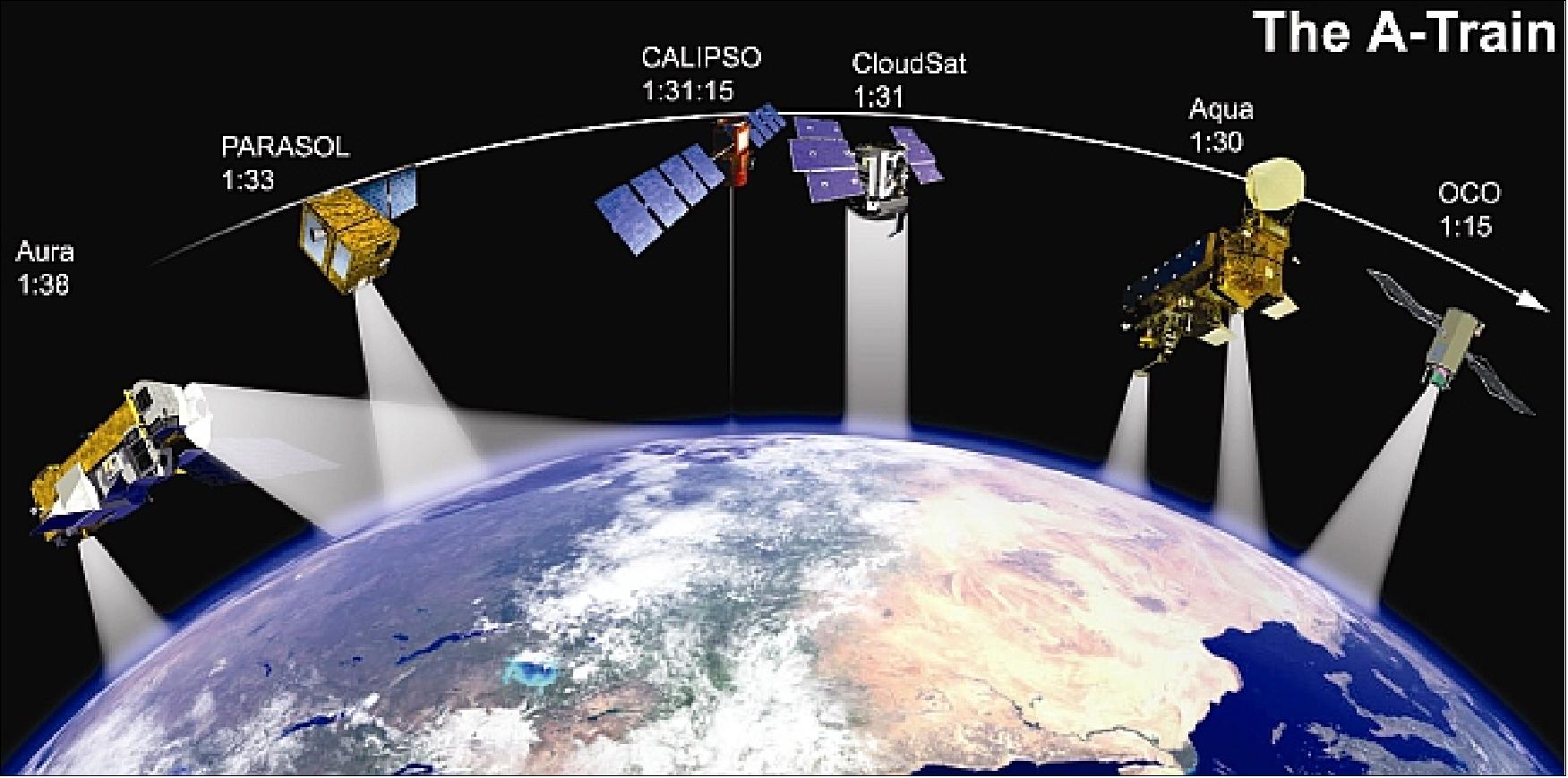
NASA’s Aqua satellite is showing that water vapor, the dominant greenhouse gas, works to offset the effect of carbon dioxide (CO2). This information, contrary to the assumption used in all the warming models, is ignored by global warming alarmists.

Climate understanding and critical decision making require
comprehensive data about our planet’s land, sea, and atmosphere.

Without an adequate satellite system to provide such data, policy efforts and monitoring international environmental agreements are doomed to failure. Our satellite monitoring capability is being crippled by interagency wrangling and federal budget issues. As much as a third of our satellites need replacing in the next couple of years.

NASA should be at the forefront in the collection of scientific evidence and debunking the current hysteria over human-caused, or Anthropogenic Global Warming (AGW). Unfortunately, it is becoming just another agency caught up in the politics of global warming, or worse, politicized science.

Advocacy is replacing objective evaluation of data, while
scientific data is being ignored in favor of emotions and politics.

There are excellent correlations between the regular fluctuations of the Sun and the Earth’s temperature, while scientists can not find a relationship between industrial activity, energy consumption, and global temperatures. But global warming is an issue no longer being decided in the scientific arena.

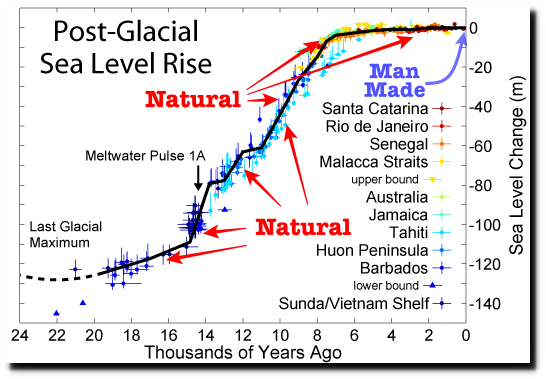
Saying the Earth is warming is to state the obvious. Since the end of the ice age, the Earth’s temperature has increased approximately 16 degrees Fahrenheit and sea levels have risen a total of 300 feet. That is certain and measurable evidence of warming, but it is not evidence of AGW—human-caused warming.

We can track the temperature of the Earth back for millennia. Knowing the temperature of the Earth, past or present, is a matter of collecting data, analyzing it, and coming up with the best answer to account for the data. Collecting such data on a global basis is a NASA forte. I believe in global climate change, but there is no way that humans can influence the temperature of our planet to any measurable degree with the tools currently at their disposal. Any human contribution to global temperature change is lost in the noise of terrestrial and cosmic factors.

Our beautiful home planet has been warming and cooling for the last 4.8 billion years. Most recently, it has been warming—be it ever so slightly—but there is nothing unusual about it! The changes and rates of change in the Earth’s temperature, just since the Industrial Revolution, have occurred many times in our climatic history. While climate scientists generally agree that the Earth’s temperature is always changing, not many of them would say that humans are responsible for those changes.

None of this is to say there are not legitimate reasons to restrict emissions of any number of chemicals into the atmosphere. We should just not fool ourselves into thinking we will change the temperature of the Earth by doing so.

In a December 2007 Senate report, 400 prominent scientists signed a letter pointing out that climate change was a well-known natural phenomenon, and that adapting to it is far more sensible than attempting to prevent it. Their ranks included experts in climatology, geology, oceanography, biology, glaciology, biogeography, meteorology, economics, chemistry, mathematics, environmental sciences, engineering, physics, and paleo-climatology.

Their message: When changes are gradual, man has
an almost infinite ability to adapt and evolve.

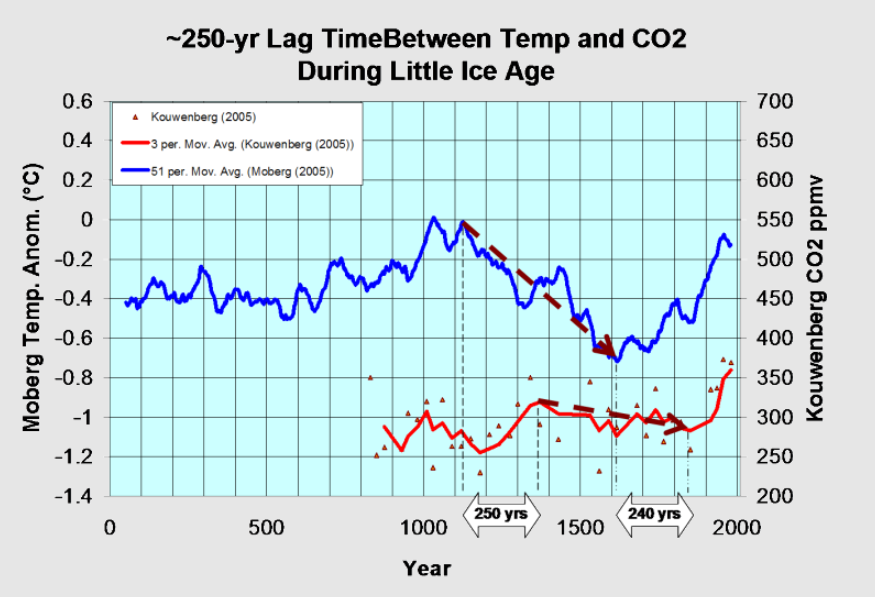
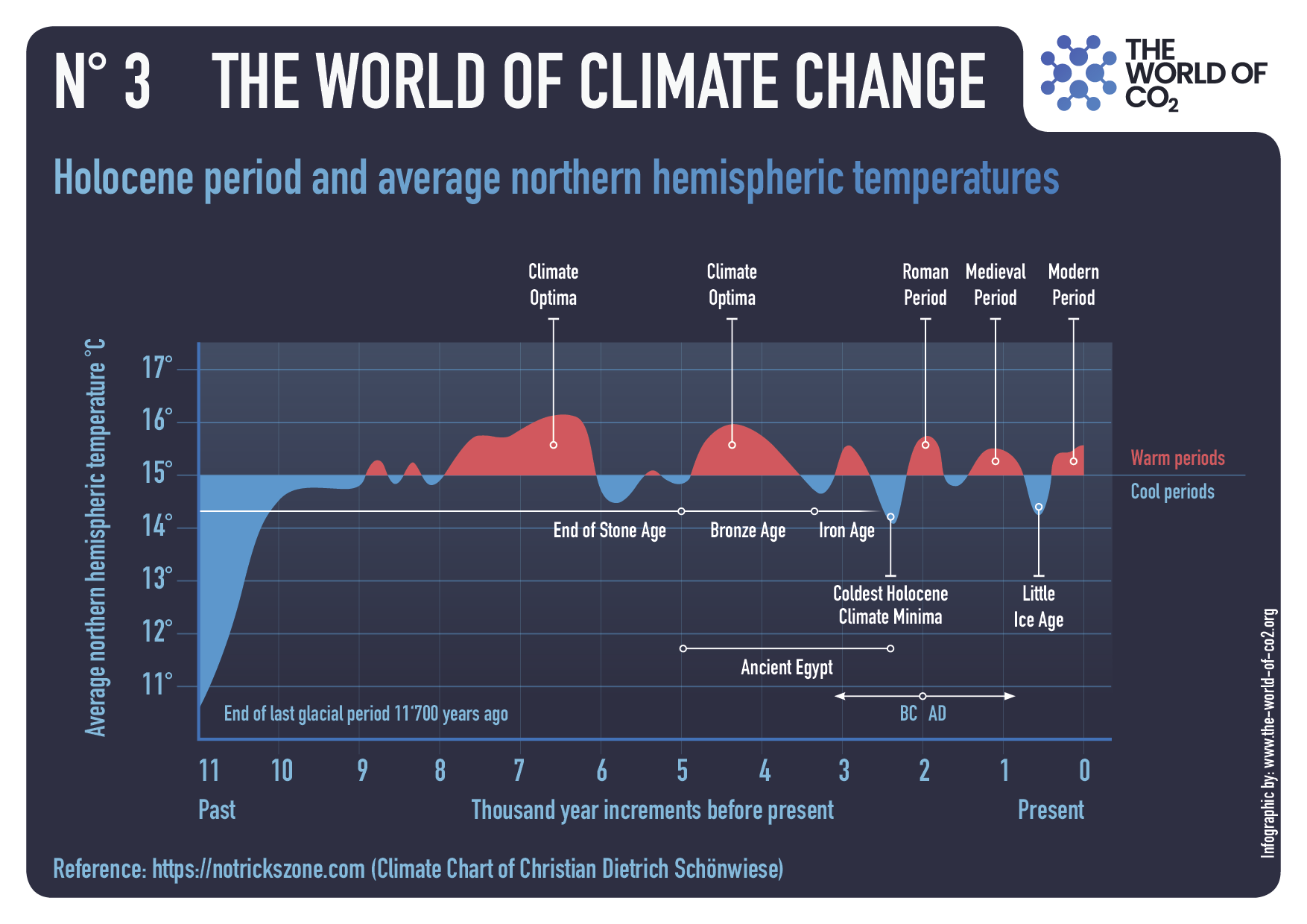
The fearmongers of global warming base their case on the correlation between CO2 and global temperature, even though we cannot be sure which is cause and which is effect. Historically, temperature increases have preceded high CO2 levels, and there have been periods when atmospheric CO2 levels were as much as 16 times what they are now, periods characterized not by warming but by glaciation. You might have to go back half a million years to match our current level of atmospheric CO2, but you only have to go back to the Medieval Warming Period, from the 10th to the 14th Century, to find an intense global warming episode, followed immediately by the drastic cooling of the Little Ice Age. Neither of these events were caused by variations in CO2 levels.

Even though CO2 is a relatively minor constituent of “greenhouse gases,” alarmists have made it the whipping boy for global warming (probably because they know how fruitless it would be to propose controlling other principal constituents, H2O, CH4, and N2O). Since human activity does contribute a tiny portion of atmospheric CO2, they blame us for global warming.

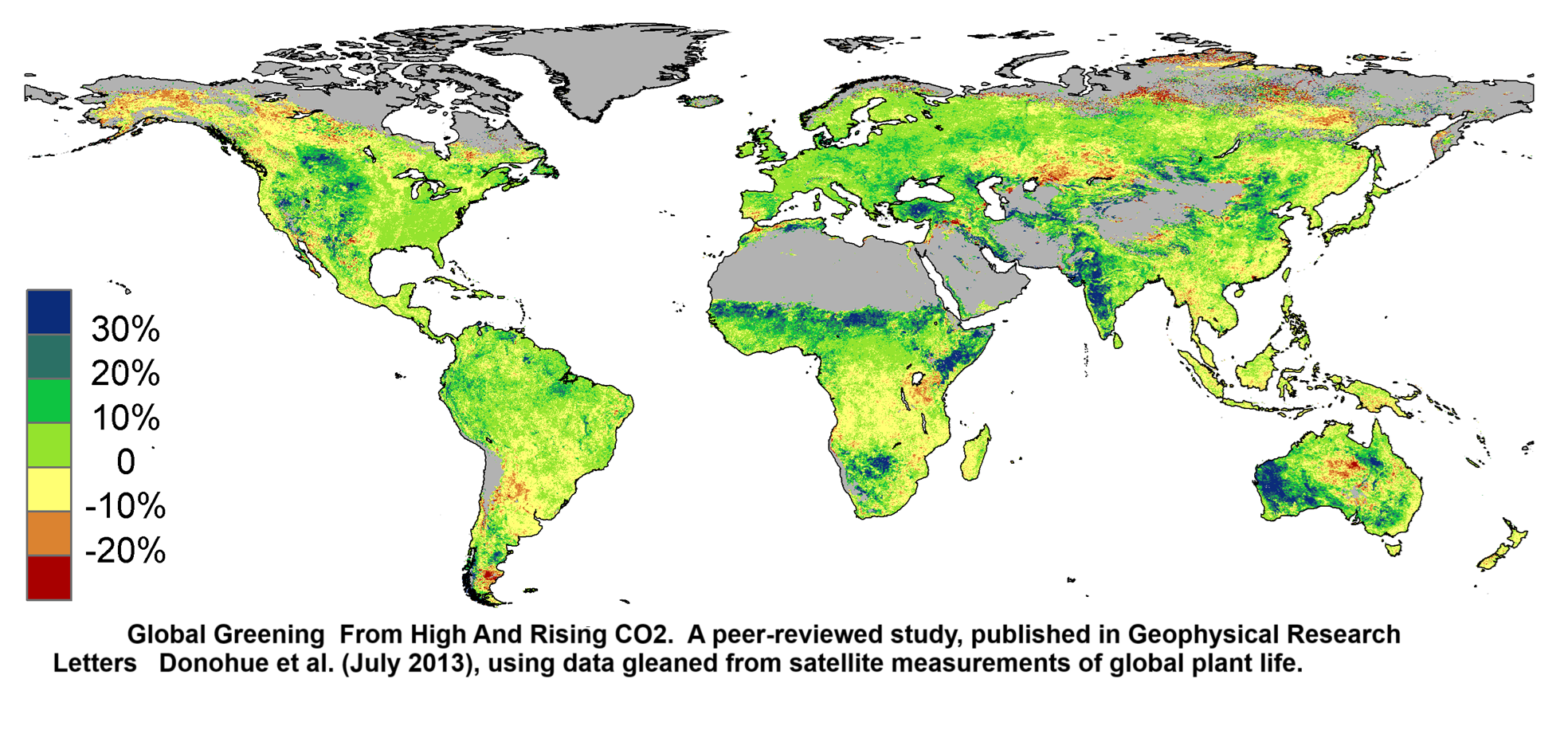
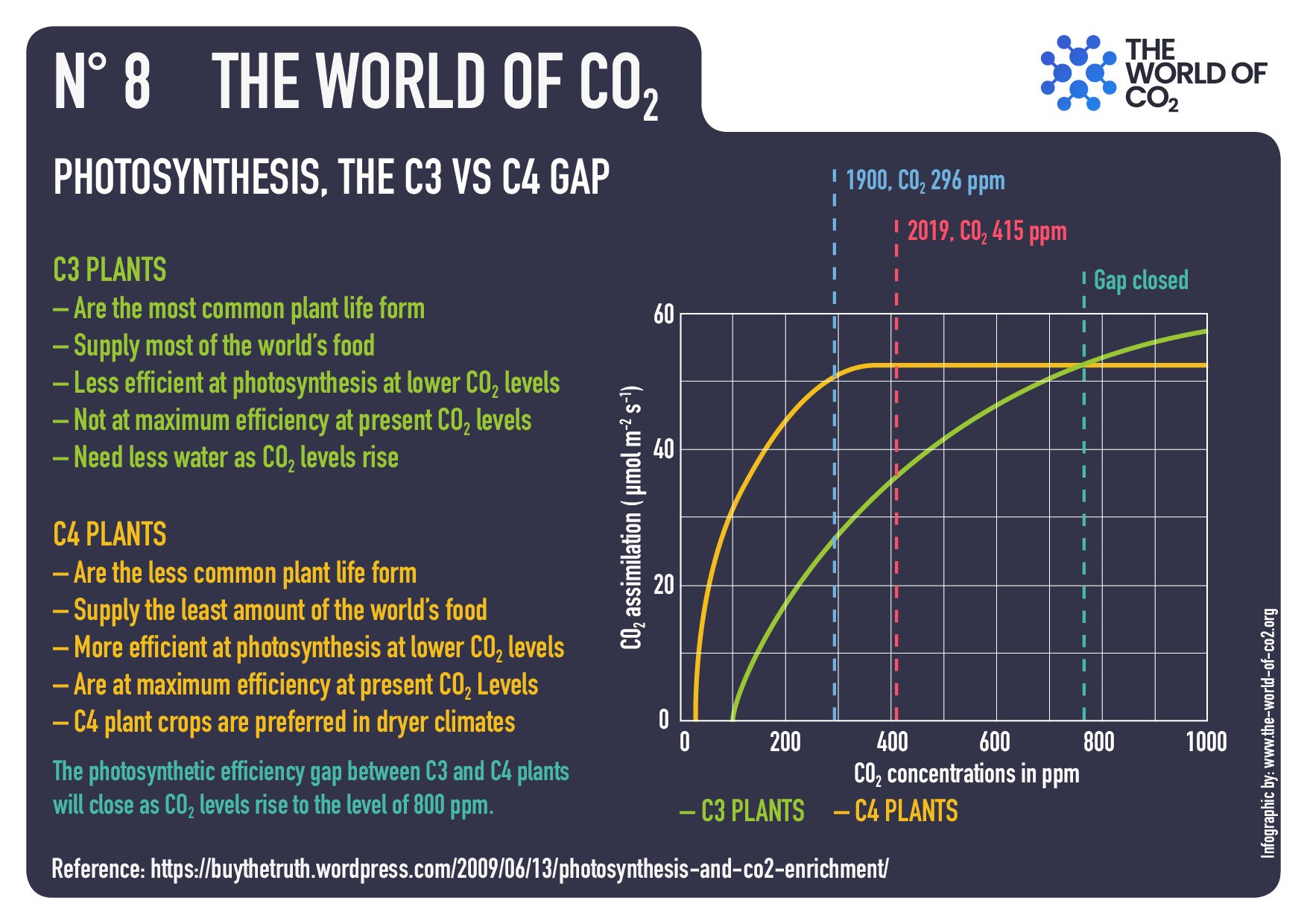
Other inconvenient facts ignored by the activists: Carbon dioxide is a nonpolluting gas, essential for plant photosynthesis. Higher concentrations of CO2 in the atmosphere produce bigger harvests.

In spite of warnings of severe consequences from rising seas, droughts, severe weather, species extinction, and other disasters, the U.S. has not been stampeded into going along with the recommendations of the UN Panel on Climate Change (IPCC)—so far. Even though evidence supports the American position, we have begun to show signs of caving in to the alarmists.

With scientific evidence going out of style,
emotional arguments and anecdotal data are ruling the day.

The media subjects us to one frightening image of environmental nightmare after another, linking each to global warming. Journalists and activist scientists use hurricanes, wildfires, and starving polar bears to appeal to our emotions, not to our reason. They are far more concerned with anecdotal observations, such as the frozen sea ice inside the Arctic Circle, than they are with understanding why it is happening and how frequently it has occurred in the past.

After warnings that 2007 would be the hottest year on record and a record year for hurricanes, what we experienced was the coolest year since 2001 and, by some measures, the most benign hurricane season in the Northern Hemisphere in three decades.

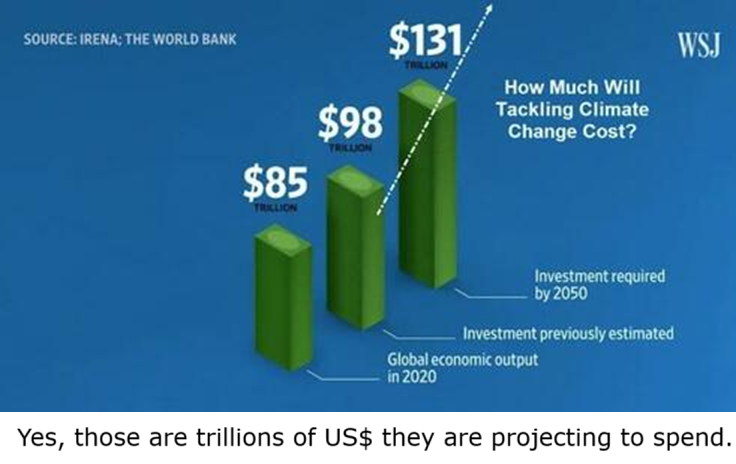
Even though recent changes in our atmosphere are all within the bounds of the Earth’s natural variability, a growing number of people are willing to throw away trillions of dollars on fruitless solutions. Why do we allow emotional appeals and anecdotal data to shape our conclusions and influence our expenditures with the science and technology we have available at our fingertips?

The situation is complex, but the sad state of scientific literacy in America today is partially to blame for belief in AGW. When a 2006 National Science Foundation survey found 25 percent of Americans not knowing the Earth revolves around the Sun, you know that science education is at a new low and society is vulnerable to the emotional appeal of AGW.

And don’t underestimate the role of politics and political correctness.

The public debate should focus on the real cause of global temperature change and whether we can do anything about it. Is global warming a natural inevitability, or is it AGW—human caused?

The conflict over AGW has deteriorated into a religious war; a war between true believers in human-caused global warming and nonbelievers; between those who accept AGW on faith and those who consider themselves more sensible and better informed. “True believers” are beyond being interested in evidence; it is impossible to reason a person out of positions they have not been reasoned into.

It doesn’t help that NASA scientist James Hansen was one of the early alarmists claiming humans caused global warming. Hansen is a political activist who spreads fear even when NASA’s own data contradict him.

Warming in the upper atmosphere should occur before any surface warming effect, but NASA’s own data show that has not been happening. Global temperature readings—accurate to 0.1 degree Celsius—are gathered by orbiting satellites. Interestingly, in the 18 years those satellites have been recording global temperatures, they have actually shown a slight decrease in average temperatures.

Hansen is currently calling for a reduction of atmospheric CO2 by 10 percent and a moratorium on coal-fired power plants, while claiming the Bush administration is censoring him. Other so-called scientists are saying the world must bring carbon emissions to near zero to keep temperatures from rising.

In today’s politically correct environment, many are reluctant to dispute the popular wisdom; when they do, they are frequently ignored. When NASA Administrator Michael Griffin, Hansen’s boss and a distinguished scientist in his own right, attempted to draw a distinction between Hansen’s personal and political views and the science conducted by his agency, he was soon forced to back off.

It is the true believers who, when they have no facts on their side, try to silence their critics. When former NASA mathematician Ferenc Miskolczi pointed out that “greenhouse warming” may be mathematically impossible, NASA would not allow him to publish his work. Miskolczi dared to question the simplifying assumption in the warming model that the atmosphere is infinitely thick. He pointed out that when you use the correct thickness—about 65 miles—the greenhouse effect disappears! Ergo: no AGW. Miskolczi resigned in disgust and published his proof in the peer reviewed Hungarian journal Weather. [See: The Curious Case of Dr. Miskolczi]

For nearly a decade now, there has been no global warming. Even though atmospheric CO2 has continued to accumulate—up about 4 percent in the last 10 years—the global mean temperature has remained flat. That should raise obvious questions about CO2 being the cause of climate change.

Instead, AGW enthusiasts are embracing more regulation, greater government spending, and higher taxes in a futile attempt to control what is beyond our control—the Earth’s temperature. One of their political objectives, unstated of course, is the transfer of wealth from rich nations to poor nations or, as the social engineers put it, from the North to the South, which may be their real agenda.

Climate Lemmings

In the face of overwhelming evidence for natural temperature variation, proponents of AGW are resorting to a precautionary argument: “We must do something just in case we are responsible, because the consequences are too terrible if we are to blame and do nothing.” They hope to stampede government entities into committing huge amounts of money before their fraud is completely exposed—before science and truth save the day.

Politicians think they can reverse global warming by stabilizing CO2 emissions with a cockamamie scheme of “cap and trade.” A government entity would sell CO2 allocations to those industries producing it. The trillions of dollars in new taxes and devastation to the economy would be justified by claiming it will lower the temperature of the Earth. This rationalization is dependent on two assumptions: (1) that CO2 is responsible for the cause of changes in the Earth’s temperature, and (2) a warmer Earth would be bad for humanity.

The reality is that atmospheric CO2 has a minimal impact on greenhouse gases and world temperature. Water vapor is responsible for 95 percent of the greenhouse effect. CO2 contributes just 3.6 percent, with human activity responsible for only 3.2 percent of that. That is why some studies claim CO2 levels are largely irrelevant to global warming.

Without the greenhouse effect to keep our world warm, the planet would have an average temperature of minus 18 degrees Celsius. Because we do have it, the temperature is a comfortable plus 15 degrees Celsius. Based on the seasonal and geographic distribution of any projected warming, a good case can be made that a warmer average temperature would be even more beneficial for humans.

For a tiny fraction of the trillions of dollars a cap-and-trade system would eventually cost the United States, we could pay for development of clean coal, oil-shale recovery systems, and nuclear power, and have enough left over to pay for exploration of our solar system.

By law, NASA cannot involve itself in politics, but it can surely champion the role of science to inform politicians. With so many uninformed and misguided politicians ignoring the available science, NASA should fill the void. NASA is synonymous with science. Allowing our priorities to drift away from hard science is tantamount to embracing decadence. NASA will surely suffer; and politicizing science is killing it.

I do see hopeful signs that some true believers are beginning to harbor doubts about AGW. Let’s hope that NASA can focus the global warming discussion back on scientific evidence before we perpetrate an economic disaster on ourselves.

Walter Cunningham, (1932–2023) geophysicist, fighter pilot and Apollo 7 astronaut, who flew the first test flight of the Apollo Program, Apollo 7.  In 2010, Cunningham published a short book titled “Global Warming: Facts versus Faith” His editorial was published in the Houston Chronicle on August 15, 2010,  Climate change alarmists ignore scientific methods.  (When You Don’t Have the Facts, Appeal to Public Opinion).  In 2012, he and other former astronauts and NASA employees sent a letter to the agency criticizing its role advocating a high degree of certainty that man-made CO2 is a major cause of climate change while neglecting empirical evidence that calls the theory into question.

Fast Track to Poverty: Green Energy

At his blog, Matt Ridley explains How the Green Energy Transition Makes You Poorer.
Excerpts in italics with my bolds and added images.

Crony capitalism at work

A leaked government analysis has found that Net Zero could crash the economy, reducing GDP by a massive 10% by 2030. Yet the spectacular thing about this analysis is that it expects this to happen not if Net Zero fails—but if it succeeds. In effect, it is saying that if the government really does force us to give up petrol cars, gas boilers, foreign holidays, and beef, then there would be perfectly workable things left idle, such as cars, boilers, planes, and cows. Idling—or stranding—your assets in this way is an expensive economic disaster.

Even more intriguing was the government’s economically illiterate response to the leak. A spokesman said: “Net zero is the economic opportunity of the twenty-first century, and will deliver good jobs, economic growth and energy security as part of our Plan for Change.”

Do they really think that economic growth is the same thing
as spending money? Because it isn’t.

Imagine the government saying that it is going to require the entire population to throw out all their socks and buy new ones by next Thursday. Under the logic it espouses for Net Zero, this would result in a tremendous burst of economic growth. Think of all the jobs created in the sock industry and the shops! They would be better off. Ah, but you, the consumer, would be poorer. You would have as many socks as before but less money. This is the broken window fallacy, explained by Frédéric Bastiat nearly 200 years ago: going around breaking windows makes work for glaziers but does not create growth.

Net Zero is a project to replace an existing set of technologies with another set of technologies: power stations with wind farms, petrol cars with electric cars, gas boilers with heat pumps, plane trips in the sun with caravan trips in the rain, cows with lentils. The output from these technologies is intended to be the same: electricity, transport, holidays, food.

Suppose, for the sake of argument, that these new technologies and activities require exactly as much money to build and run as the old ones. What have you gained? Less than nothing because you have retired existing devices early, losing the latter half of their lives. It would be like replacing all the socks in your drawers long before they needed replacing but with identical socks. Does that make you richer? No, poorer.

If the new technologies are more efficient than the old ones, fine. LED light bulbs use about 90% less electricity than incandescent bulbs did. So yes, it does make sense to throw out your old bulbs before they expire, stranding those assets, to save electricity and money. Is the same true of a wind farm or a heat pump? No, they are demonstrably more expensive and less reliable at producing the same electricity than the devices they are replacing. They are worse, not better.

That’s why they need subsidies. We have spent £100 billion so far subsidising “green” energy in the past few decades, money we could have spent on something else: tax cuts, for example. So, the green energy transition has made us poorer, not richer. It has given us the most expensive electricity in the entire developed world.

It has made some people richer, for sure. Dale Vince, an eco-tycoon, has made a fortune out of building unreliable energy. So have lots of fat cats in the City of London, lots of big landowners in the Highlands of Scotland, and lots of manufacturers in China. I have lost count of the number of times wealthy people have told me I am wrong to criticise the unreliable energy industry because “my son Torquil’s fund has done rather well.”

Net Zero crony capitalism is efficient at one thing:
transferring money from poor people to rich people.

This government has forgotten that its job is not to champion the interests of producers, but consumers. So did the last government, though Kemi Badenoch’s speech on Tuesday showed a welcome return to thinking about consumers. Electricity is not an end in itself; it is a means to an end, an essential input allowing us to do the one and only thing that does, really does, represent growthachieving more output with less input.

Right now, the Net Zero transition is doing the very opposite.

\


Climate-Obsessed Pols Blew Canada’s Opportunity

Jamie Sarkonak summarizes the bogus start to Canada Federal elections in his National Post article Liberals pledge to make Canada a superpower after years of preventing it.  Excerpts in italics with my bolds and added images.

A tattered Canadian flag is shown on top of a building in downtown Calgary on Friday, Jan. 17, 2025 where the U.S. Consulate is located. Photo by Jim Wells/Postmedia


Sunday’s edition of the Financial Times included the oft-made observation that Canada is brimming with potential, and the oft-made conclusion that this country would be much better off if it simply developed its God-given gifts.

The article, Unlocking Canada’s Superpower Potential by Tej Parikh, made the bullish case for this country’s future prospects: Canada is geographically huge and loaded with natural resources — on paper, at least, it has the makings of an actual global superpower.

“‘Canada absolutely has potential to be a global superpower,’  but the nation has lacked the visionary leadership and policy framework to capitalise on its advantages.”

It was, with gentle vagueness, a condemnation of the federal Liberal government and what is now being called Canada’s “lost decade”: a period of 10 years in which the current government ratcheted up onerous environmental and Indigenous-consultation requirements and, where ministerial approvals are concerned, delayed decisions, all geared at keeping undeveloped parts of Canada in their natural state.

Terms like “circular economy” and “just transition” are the Liberal synonyms for this no-growth agenda, which has delivered us a fraction of a percentage of GDP growth per capita from 2014 to the end of 2024 — a time period in which peer countries have managed double-digits.

For anyone who missed out on all the bad governance robbing Canadians of superpower prosperity, this brief video exposes the crimes against the citizenry.  For those who prefer reading, I provide below a transcript from the closed captions.

Transcript

This is Alberta the fourth largest Province and home to about 4.6 million people. It ranks third in GDP just behind Quebec and first in GDP per capita primarily off the back of oil and gas extraction. While its discovery in the first half of the 20th century has brought Canada riches, for reasons from political to economic it never reached its full potential as an energy superpower, and Canadians as a whole lose out. We’ll be diving into how its energy policies have evolved and the path it is on whether for natural gas, nuclear, hydrogen and more.

Canada has the third largest proven oil reserves and by most estimates in the top 20 in terms of natural gas reserves. It is a top 10 producer of oil and gas, meaning it is engaged in extracting processing and supplying of these resources for domestic production.

Natural Gas

For natural gas exports it is in the top six, all of which goes to the US via pipelines. To export across water requires Investments to build liquid natural gas or LNG facilities to cool the gas into a liquid state in a process called liquefaction. In 2024 the the first export terminal will finally be completed in Kitimat BC called LNG Canada with gas coming through the coastal gas tank pipeline set to complete after 5 years of construction and a price tag that jumped from 6.6 billion to 14.5 billion.

But don’t expect other facilities to be constructed anytime soon. On February 9th 2022, 2 weeks before the Russian invasion of Ukraine, the federal and Quebec governments rejected approval of an LNG plant in Saguenay that would have allowed for the export of Western Natural Gas to European markets.

They cited increased greenhouse gas emissions
and lack of social responsibility.

While most of the natural gas is located in Northern Alberta and BC in the Montney formation, there is also gas in the Atlantic provinces. However New Brunswick, Newfoundland and Labrador, and Nova Scotia have all banned the process of fracking used for shale gas development over safety fears, thereby losing out on tens of billions of economic potential. Ironically the same provinces import a lot of natural gas extracted from the US through the process of fracking, Quebec also has natural gas resources but in April 2022 banned all oil and gas extraction in the province.

This means not only are pipelines from western Canada rejected from going through Quebec, natural gas extraction and export facilities in these provinces have been rejected as well. The demand if not met by Canada will be filled by other countries that might not share the same values nor care about the environment, with the jobs, millions in royalties and taxes going elsewhere. Since 2011, of the 18 proposed LG export projects including five on the East Coast. only the Kitimat project has proceeded with the others being cancelled, blocked or abandoned.

While the US in the same time frame has built seven LG facilities, five more under construction and approved 15, enabling them to go from a net importer to a top three exporter in the world. Australia has 10 LG facilities with the majority built in the 2010s helping to satisfy energy demand from Asian countries and to help them move away from coal. Qatar too has benefited greatly from extracting its resources as European countries look for alternatives to Russian gas.

These three countries have all signed decades-long deals to supply natural gas. Yet when Japan, South Korea, and Germany showed interest in Canadian LG, the Prime Minister said, “There has never been a strong business case.” While critics point out that natural gas is a fossil fuel contributing to greenhouse gas emissions, it emits 40% less than coal and 30% less than oil.

Nuclear Energy

We can’t talk about energy policy without mentioning nuclear, because it does not emit greenhouse gases while being a reliable source of energy, not dependent on the wind blowing or the sun shining. Currently nuclear supplies 58% of Ontario’s electricity needs and 15% Nationwide with all but one of the 19 nuclear reactors. The one located outside of Ontario is in New Brunswick. No new reactors have been completed since 1993. Meanwhile coal is still used to generate 6% of Canada’s electricity needs despite the country having the third largest uranium reserves, the fuel needed for reactors.

But on September 19th 2023, Canada did reach a $3 billion deal to finance nuclear power . . .in Romania. In fairness this deal does support the export of made in Canada Candu style reactors. An industry in which historically Canada has been a leader. Any discussion should include nuclear, as one of the trends in the nuclear industry is small modular reactors or SMRs which should be easier to manufacture and transport enabling its use in remote regions.

Hydrogen

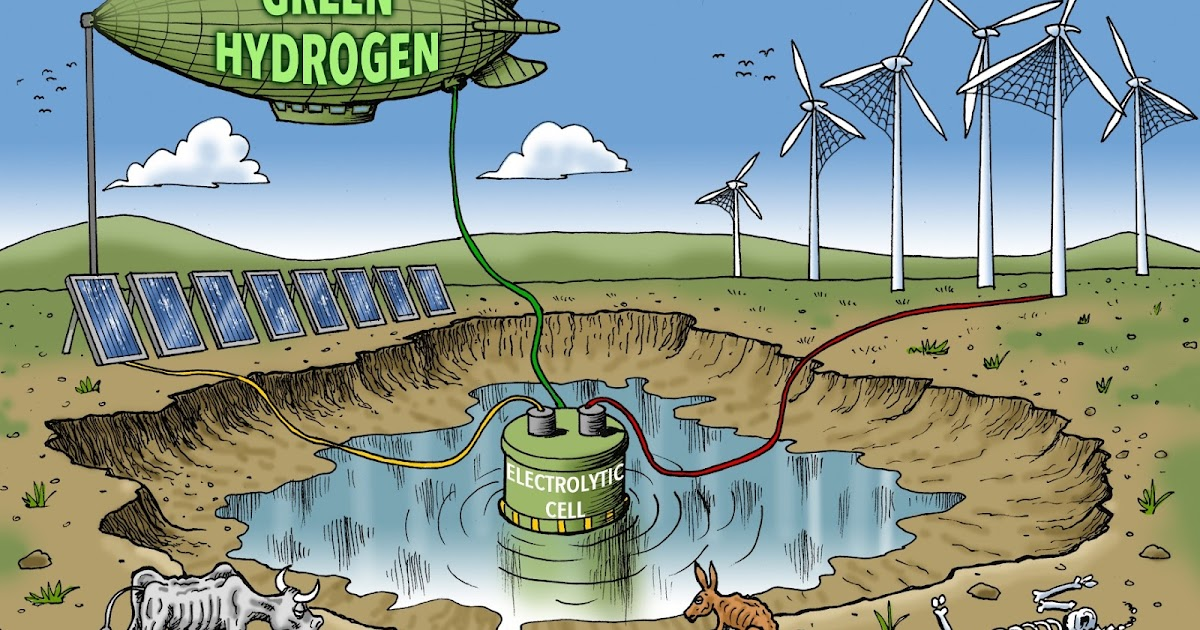
Another Trend that the federal government has prioritized in the 2023 budget relates to hydrogen. 16.4 billion has been allocated over 5 years for “clean” Technologies and “clean” hydrogen tax credits, which are subsidies for costs in setting up equipment to produce green hydrogen. When the German Chancellor Olaf Schultz arrived in Canada in August 2022 asking for LNG, Canada instead offered green hydrogen created by wind turbines generating electricity to perform electrolysis by splitting water to produce hydrogen. It is both inefficient and expensive to produce green hydrogen meaning there is little business case for it without subsidies, since more than 99% of hydrogen is currently produced using fossil fuel. While green hydrogen will likely play a role in industrial processes, such as replacing coal used in steel production or creating ammonia in fertilizer production, its role in transportation is likely negligible. Furthermore using hydroelectricity, nuclear or natural gas to create hydrogen plays into Canada’s strengths in a way that solar or wind does not, as we’ll see shortly.

Solar and Wind

A big part of Canada’s net zero emissions by 2050 plan involves solar and wind energy, yet one of the biggest beneficiaries of that shift would be China given its dominance in the Clean Energy Solution space, whether solar panels, wind turbines or EVS. From the mineral extraction to the processing, refining and Manufacturing, there is much demand for critical minerals like copper cobalt nickel lithium and Rare Earth elements chromium zinc and aluminum. China owns stakes in many mines around the world including Canadian ones extracting these minerals to control the supply chain. According to 2022 data from the International Energy Agency, their share of refining is 35% for nickel, 60% for lithium, 70% for Cobalt and a whopping 90% for Rare Earth.

This dependence on one country means the power to squeeze Supply or raise prices at any moment, which is a big reason why on August 16th 2022 the Biden Administration signed the ironically named Inflation Reduction Act which provides 369 billion of funding for clean energy projects. The intention is to not only reshore to the US but also Near shore or Friend shore to allies like Canada, Whether in mining of critical minerals to manufacturing.

Canada acted decisively a few months later in the same year to force
three Chinese companies to sell their stakes in Canadian mining companies
. . . Oh wait just kidding.

In all seriousness the country and especially Quebec can play a role in the supply chain so long as projects can be approved in a timely manner which really is the underlying theme of this video. Having these minerals also incentivizes battery and auto manufacturing companies to invest in factories, helped massively by subsidies of course. 13 billion over 10 years is what took Volkswagen to commit to a battery plant in Southern Ontario. Likewise 15 billion in subsidies was committed for a Stellantis LG battery plant in Windsor and other projects like this. That’s a lot of money with these two subsidy awards not expected to break even for 20 years according to the Parliamentary budget office. And that’s if these Legacy auto companies like Stellantis and Volkswagen will be relevant by that time.

That’s the kind of energy policy decisions made in Canada in recent times,
and why we haven’t leveraged our natural resources into Superpower.

Mark Carney’s Climate Obsession Worse than Trudeau’s

The future of Canada’s badly governed energy sector is further threatened by replacing Trudeau with Carney. Terry Newman explains in his National Post article Mark Carney’s climate obsessions will put Trudeau to shame.  Excerpts in italics with my bolds and added images.

Don’t trust his pledge to turn Canada into an energy superpower

For all of Carney’s supposed superior knowledge of the world and markets, the art of provincial negotiations and incentives for private investment in natural resources appears to have already escaped his grasp. There’s evidence to suggest this is because, at heart, Carney is likely to be a fully fledged ESG prime minister (ESG being short for environmental, social, and governance principles being imposed on business).Unfortunately, everything Carney’s said and done up until this point suggests not only that he’d fail to unite Canadian provinces to create this energy super-economy, but that’s he’s not actually interested in doing so in the first place.The Liberal party may have a new face, but Carney’s insistence on keeping an emissions cap and industrial carbon tax in place — both products of Justin Trudeau’s Liberal government — doesn’t invoke much confidence in his energy superpower plan.

Since the Liberals came to power in 2015, they implemented the Impact Assessment Act, which slowed approvals, the federal industrial carbon pricing system (2018) and the oil and gas emissions cap (slated for 2026) — all with the goal of reducing greenhouse gas emissions from the oil and gas sector to net zero by 2050.

Since 2015, many projects have been stalled or cancelled, including the Northern Gateway Pipeline (cancelled by government in 2016, citing a federal ban on tanker traffic and Indigenous opposition); the Energy East Pipeline (cancelled by the company in 2017, citing regulatory hurdles and low oil prices); Pacific NorthWest LNG (cancelled in 2017 due to market conditions and regulatory delays); the MacKenzie Valley Pipeline (cancelled in 2017 due to low gas prices and regulatory uncertainty); Énergie Saguenay LNG (cancelled in 2021, rejected by Quebec government over emissions concerns, not challenged by the federal government); Bay du Nord Offshore Oil (shelved in 2022, citing high costs and regulatory uncertainty); Teck Frontier Mine (cancelled in 2020, amid climate policy debates); and the Keystone XL Pipeline (cancelled 2021, due to failure to secure a U.S. permit and Canadian regulatory costs).

The only thing that’s changed about the Liberal party is the addition of Carney, and his record suggests that he will be driven by climate policy, at least as much as the Liberals have been, and potentially much more so. He was, not so long ago, the United Nations’ special envoy on climate action and finance and he founded and co-chaired the Glasgow Financial Alliance for Net Zero (GFANZ), resigning on Jan. 15, the day before he threw his hat into the Liberal leadership race.

These roadblocks long predate Carney’s ascension, and he has yet to explain how the Liberal government suddenly has either the ability or desire to address them.

Where’s the evidence Carney will be less stringent on energy projects and, therefore, better for the Canadian economy than his predecessor? If anything, especially given his longstanding ESG obsessions, all evidence appears to point to the contrary — that Mark Carney could be even more dedicated to strangling Canada’s resource economy than Trudeau.

Beware: Flawed Energy Assumptions Incite Delusional Scenarios

Mark P. Mills and Neil Atkinson blow the whistle on projections written in International Energy Agency’s (IEA) latest report, the World Energy Outlook.  Below is the announcement of the report findings, key exhibits and Executive summary, excerpts in italics with my bolds and added images. Link to full study at the end.

Overview

Industry players consider the International Energy Agency’s signature annual report, the World Energy Outlook, to contain highly credible analyses. However, a new critique from the National Center of Energy Analytics experts finds the IEA’s latest scenarios on future oil demand to be problematic and potentially, dangerously wrong. 

“When it comes to policy or investment planning, there is a distinction with a critical difference when it comes to what constitutes a “forecast” (what is likely to happen) versus a “scenario” (a possibility based on assumptions). The challenge is not in determining whether the scenarios are completely factual per se, but instead whether they are factually complete,” wrote the authors in their report.

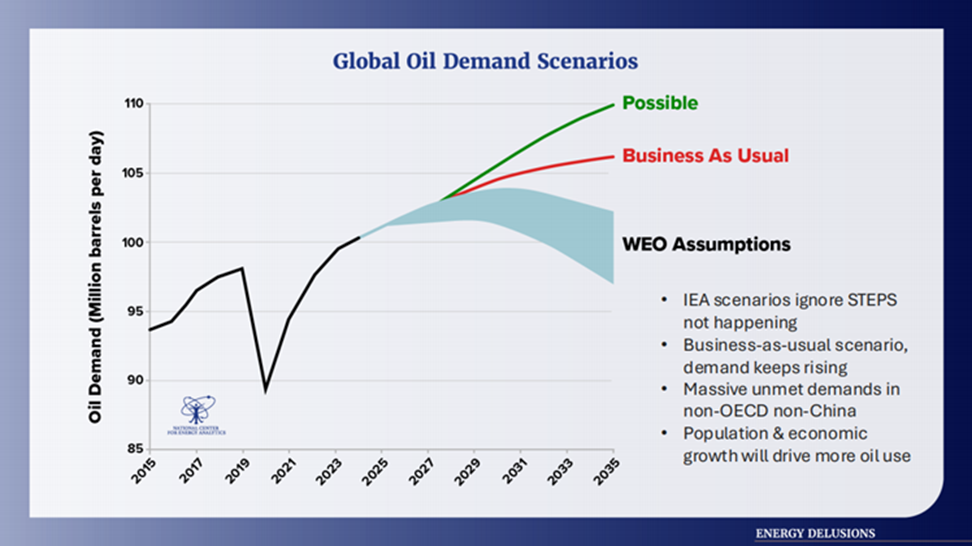
The most widely reported WEO scenario is that the world will see peak oil demand by the early 2030s. NCEA co-authors Mark P. Mills and Neil Atkinson believe that this conclusion is a prima facie case; minimally, the IEA should include business as usual (BAU) scenarios, not those based on all “high cases” or unrealistic possibilities.

Mills and Atkinson pinpoint 23 flawed assumptions used in the WEO scenarios to predict future oil demand, including:

  • IEA assumes: Corporate transition policies are real and durable. NCEA counterclaim: Myriad corporations, having earlier proclaimed fealty to “energy-transition” goals, are either failing to meet such pledges or overtly rescinding them.

  • IEA assumes: Transition financing will continue to expand. NCEA counterclaim: Alternative energy projects have become more expensive and difficult to finance, and wealthy nations are increasingly reluctant to gift huge amounts of money to the faster-growing but poorer nations, many of which have governance issues.

  • IEA assumes: China’s actions will follow its pledges. NCEA counterclaim: The scale of China’s role in present and future energy and oil markets requires scenarios that model what China is doing—and will likely do—rather than what China claims or promises.
National Energy Transition Plans

  • IEA’s assumes: The oil growth in emerging markets will be low. NCEA counterclaim: The fact of low demand in some poorer regions—e.g., Africa uses roughly one-tenth the per-capita level in OECD countries—points to the potential for very high, not low, growth in those markets.

  • IEA’s assumption: Governments will stay the course on EV mandatesNCEA’s counterclaim: Recent trends in many countries and U.S. states show policymakers weakening or reducing mandates and subsidies.

Flawed Assumptions Lead to Flawed Conclusions

Listed below is a summary of the flaws in 23 (but far from all) of the assumptions used in the WEO scenarios that are relevant to guessing future oil demand. Meaningful scenarios for planning for future uncertainties should include a range of realistic inputs, not just those that are aspirational.

Assumptions about baseline factors that affect oil forecasts

  1. Assumption: STEPS is a useful baseline.
    Flaw: The baseline scenario, rather than “business as usual,” assumes a future based on countries’ Stated Policies Scenario (STEPS), which not one country is implementing in full.
  2. Corporate transition policies are real and durable.
    Flaw:  Myriad corporations, having earlier proclaimed fealty to “energy-transition” goals, are either failing to meet such pledges or overtly rescinding them.
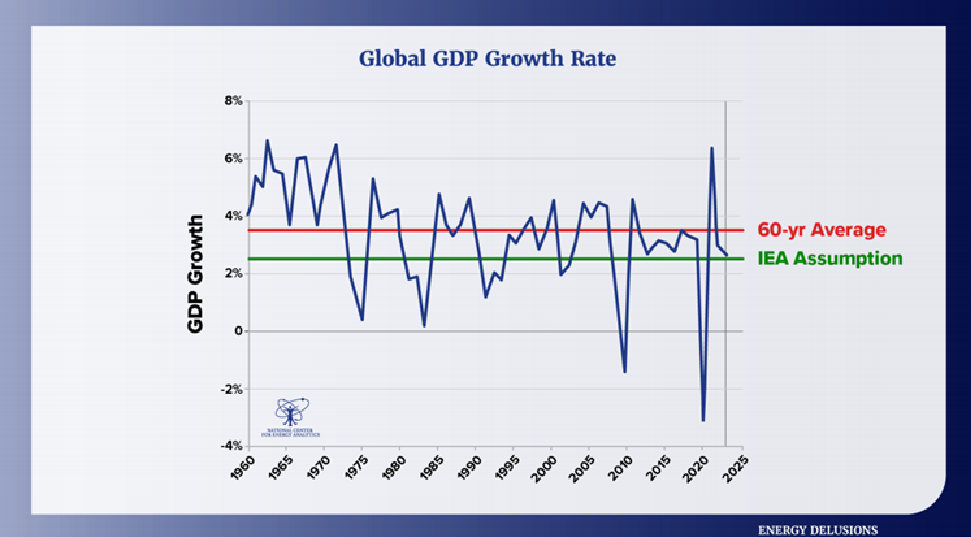
  3. Higher economic growth is unlikely.
    Flaw: Ignoring the possibility of higher economic growth, based on historical trends and the goals of all nations, leads to scenarios that underestimate future oil demand.
  4. Transition financing will continue to expand.
    Flaw: Alternative energy projects have become more expensive and difficult to finance, and wealthy nations are increasingly reluctant to gift huge amounts of money to the faster-growing but poorer nations, many of which have governance issues.
  5. Efficiency gains and structural changes will lower global demand for energy.
    Flaw: Long-run trends show that energy-efficiency gains make energy-centric products and services more affordable and thus do not reduce, but instead generally stimulate, rising demand.
  6. Solar and wind power are 100% efficient.
    Flaw: The WEO 2024 assertion that “most renewables are considered 100% efficient” contradicts fundamental physics and is, arguably, a silly PR-centric rhetorical flourish.
  7. China’s actions will follow its pledges.
    Flaw: The scale of China’s role in present and future energy and oil markets requires scenarios that model what China is doing—and will likely do, in fact—rather than what China claims or promises.

Assumptions regarding oil’s future

  1. The oil growth in emerging markets will be low.
    Flaw:  The fact of low demand in some poorer regions—e.g., Africa uses roughly one-tenth the per-capita level in OECD countries—points to the potential for very high, not low, growth in those markets.
  2. The EV market share will accelerate.
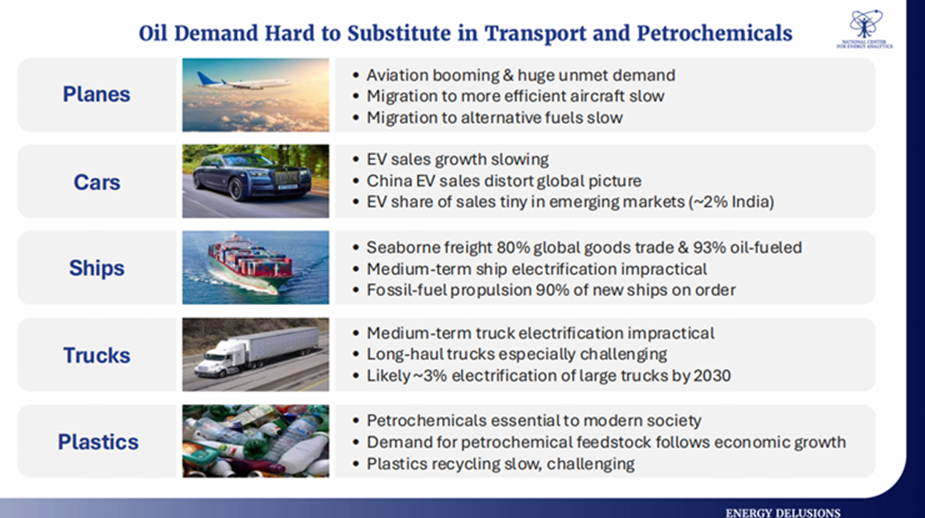
    Flaw:  Slowing market adoption and retrenchments in automakers’ EV plans or promises are evident, calling for scenarios that model realities that could persist.
  3. Governments will stay the course on EV mandates.
    Flaw:  Recent trends in many countries and U.S. states show policymakers weakening or reducing mandates and subsidies.
  4. China’s EV “success story” leads quickly to lower oil demand.
    Flaw:  Data point to the fact that in the real world, EV sales and gasoline consumption are both rising.

Assumptions about other transportation markets

  1. There will be significant electrification of heavy-duty trucks.
    Flaw:  There is no evidence of market adoption for any fuel option that leads to far higher capital costs and enormous degradation in performance.
  2. There will be significant electrification and fuel alternatives in aviation.
    Flaw:  There are no trends showing non-oil options for even a tiny share of the aviation market, in an industry that forecasts booming demand.
  3. There will be significant electrification and fuel alternatives for ships.
    Flaw:  The only modestly significant change in oil used for global shipping comes from the use of liquefied natural gas, another (and generally more expensive) hydrocarbon.
  4. There will be a rapid decline in oil used for Middle East power generation.
    Flaw:  Despite pledges and pronouncements, the year 2024 saw continued, and even higher, use of oil for electricity generation.
  5. The growth in petrochemicals and plastics will be slow.
    Flaw:  Slower growth is anchored in recycling enthusiasms that markets are not adopting and expectations of new recycling technologies that remain expensive or unproved.
  6. All scenarios lead to peak oil demand by ~2030.
    Flaw:  A WEO core conclusion that “combing all the high cases” leads to “global peaks for oil” by ~2030 is, prima facie, not based on all “high cases” but on unrealistic scenarios.

Assumptions regarding associated industries

  1. The supply of critical minerals will meet transition goals.
    Flaw:  Myriad studies have now documented the fact of a looming shortfall in current and expected production and of the challenges in changing that status quo.
  2. Prices of critical minerals will be low.
    Flaw:  It is fanciful in the annals of economic history to imagine that record-high demands won’t lead to far higher prices for the critical minerals needed to build EVs (as well as for wind and solar hardware).
  3. China won’t exercise minerals dominance as an economic or a geopolitical tool.
    Flaw:  China has already signaled over the past year that it is willing and able to implement export controls, or pricing power on critical minerals, where it holds significant global share.
  4. Oil and gas annual investments are adequate to avoid economic disruptions.
    Flaw:  Current levels of investment are not adequate to meet demands under business-as-usual scenarios, especially when combined with likely decline rates of extant oil fields.
  5. The future decline rate from existing oil fields will continue historical trends.
    Flaw:  The much faster decline rate in output from now-significant U.S. shale fields has altered the global average decline rate, pointing to the need for increasing investments to avoid a shortfall.
  6. OPEC will be a reliable cushion to manage oil-supply disruptions.
    Flaw:  History suggests that scenarios should include alternative possibilities to relying on OPEC to provide a cushion for meeting unexpected shortfalls in production or increases in demand.

Executive Summary: Flawed Assumptions Lead to Dangerous “Forecasts”

For decades, the International Energy Agency (IEA) was the world’s gold standard for energy information and credible analyses. Following the commitment of its member governments to the 2015 Paris Agreement climate accords, the agency radically changed its mission to become a promoter of an energy transition. In 2022, the IEA’s governing board reinforced its mission to “guide countries as they build net-zero emission energy systems to comply with internationally agreed climate goals.”

The IEA’s current preoccupation with promoting an energy transition has resulted in its signature annual report, the World Energy Outlook (WEO), offering policymakers a view of future possibilities that are, at best, distorted and, at worst, dangerously wrong.

The 2024 WEO’s central conclusion, its core “outlook,” has been widely reported as a credible forecast, i.e., something likely to happen: “[T]he continued progress of transitions means that, by the end of the decade, the global economy can continue to grow without using additional amounts of oil, natural gas or coal.”

The WEO itself states that it doesn’t forecast but has scenarios—explorations or models of possibilities, and cautions: “Our scenario analysis is designed to inform decision makers as they consider options…. [N]one of the scenarios should be viewed as a forecast.” Scenarios that usefully “inform” need to be based on realistic possibilities and assumptions. But there is one foundational assumption—one that the IEA has for decades included in its scenarios and that has been banished from the WEO: the possibility of business as usual (BAU).

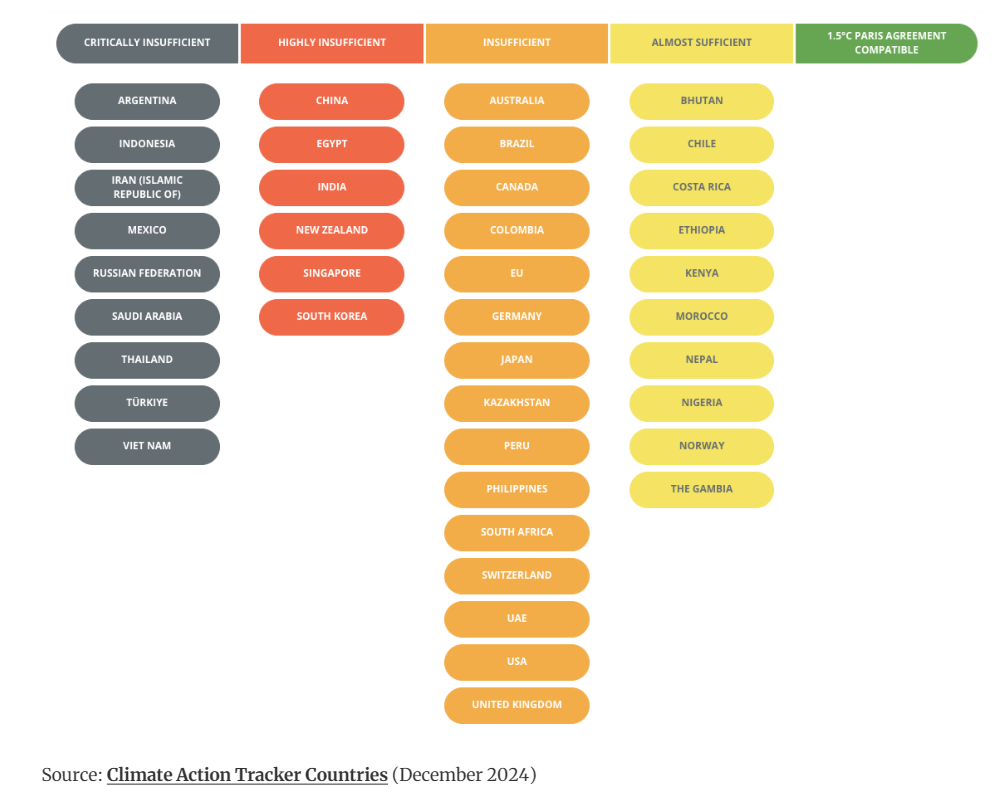
Instead, the WEO’s baseline scenario now assumes that nations are undertaking their specific energy-transition plans that they promised in order to comply with the 2015 Paris Agreement, i.e., “stated policies scenario” (STEPS). Yet none of the signatories to that Agreement is fully meeting its promises, and most are a long way behind schedule. Believing something that is not true is not just problematic; it meets the definition of a delusion.

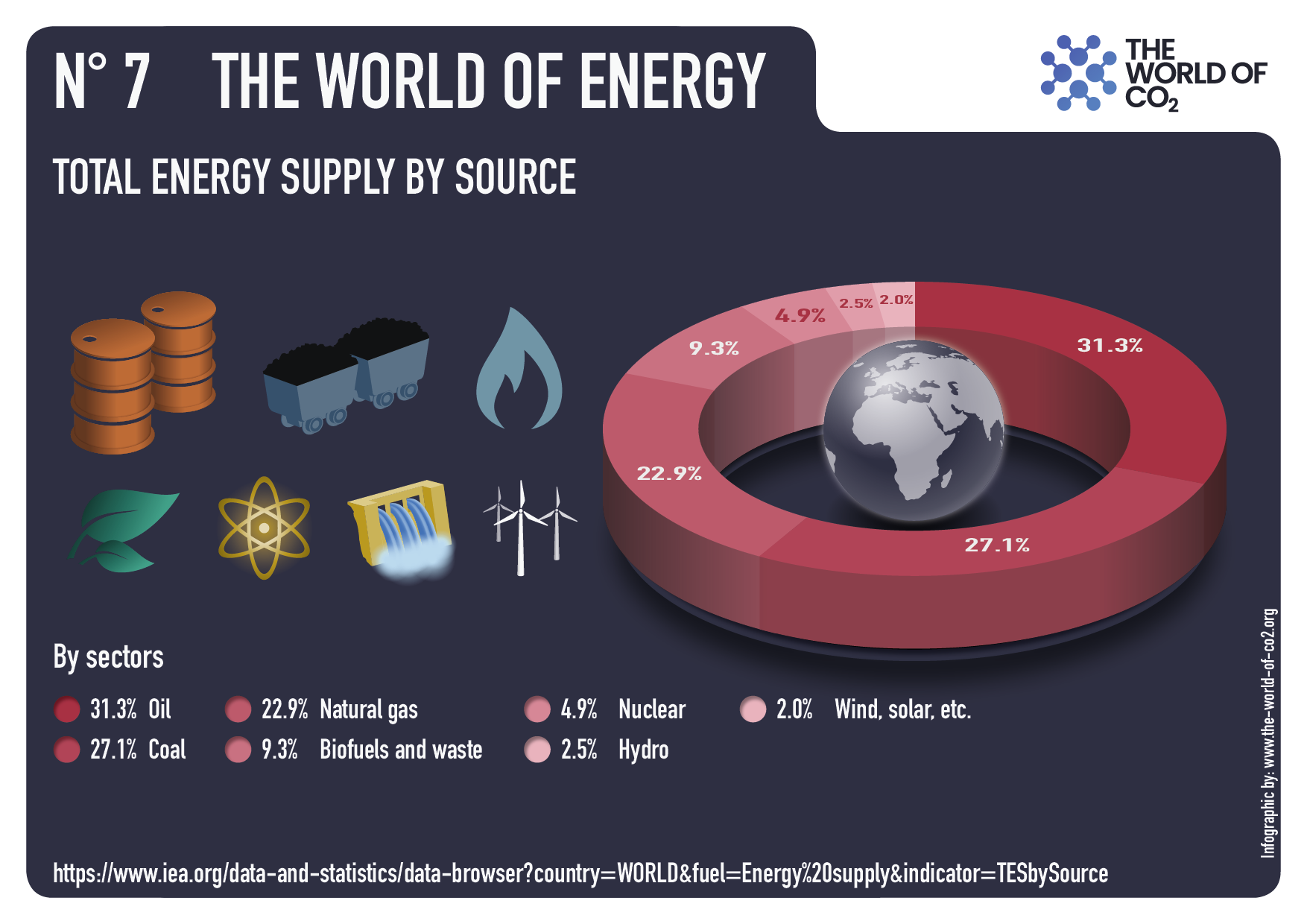
It is fanciful to forecast that, over the next half-dozen years, the growth in the world’s population and economy won’t continue a two-century-long trend and lead to increased use of the fossil fuels that today supply over 80% of all energy, only slightly below the share seen 50 years ago. The data show that the global energy system is operating essentially along BAU lines and not only far off the STEPS, but even further away from the more aggressive transition aspirations that the WEO also models.

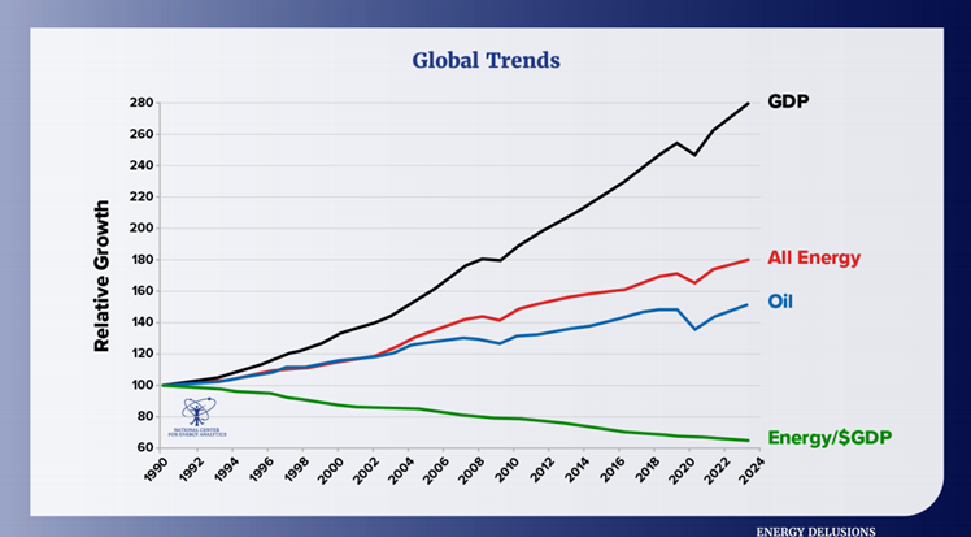
In this analysis, we focus on highlighting 23 problematic, flawed assumptions that are relevant specifically to the WEO’s oil scenarios and the widely reported “forecast” that the world will see peak oil demand by the early 2030s (see box on pp. 4-5, Flawed Assumptions Lead to Flawed Conclusions). While other scenarios about other energy sources are critical as well, oil remains a geopolitical touchstone and the single biggest source of global energy—10-fold greater than wind and solar combined. At the very least, this analysis points to the need for real-world scenarios in general and, in the case of oil, the much higher probability that demand continues to grow in the foreseeable future and, possibly, quite significantly (below, see Global Oil Demand: Future Scenarios).

Debating the intricacies in flawed assumptions about energy scenarios is no mere theoretical exercise. The IEA’s legacy reputation continues to influence not only trillions of dollars in investment decisions but also government policies with far-reaching geopolitical consequences.

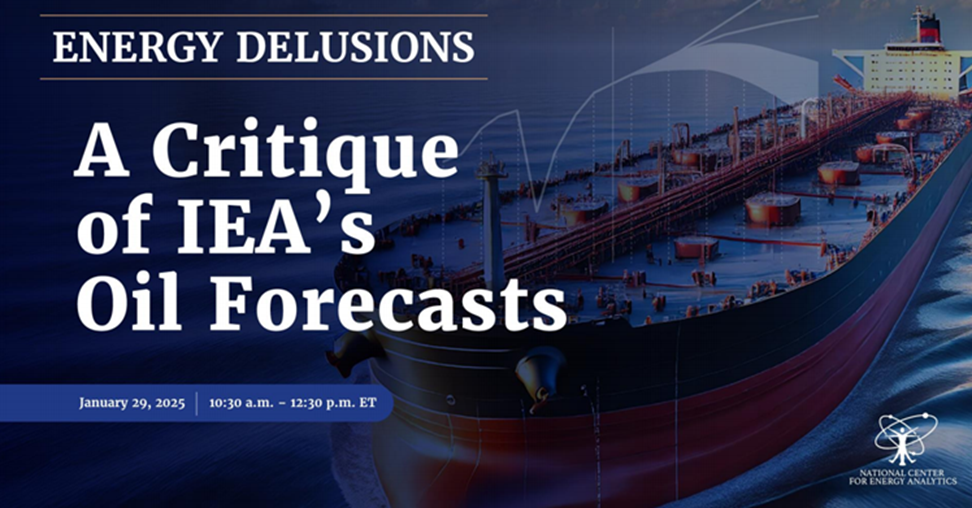
Energy Delusions: Peak Oil Forecasts


McKitrick: New PM Carney Tried for Years to Defund Canada

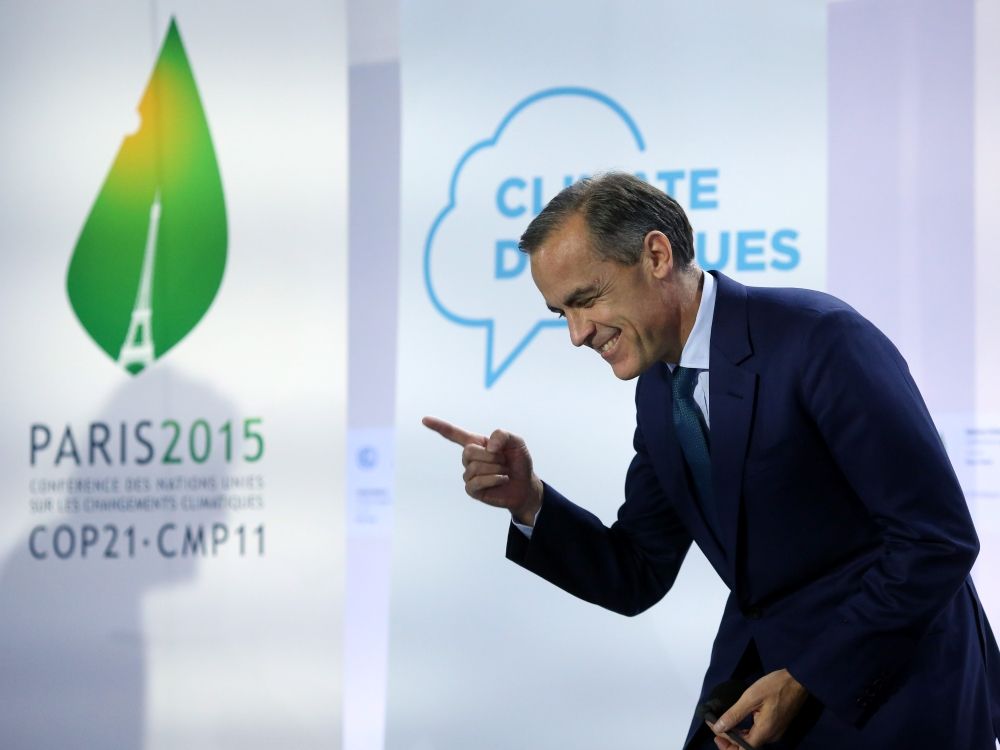
Mark Carney, governor of the Bank of England (BOE), reacts during a news conference at the United Nations COP21 climate summit at Le Bourget in Paris, France, on Friday, Dec. 4, 2015. Photo by Chris Ratcliffe/Bloomberg

Ross McKitrick writes at National Post Carney to lead Canada after trying for years to defund it.  Excerpts in italics with my bolds and added images.

The soon-to-be prime minister’s plan for net-zero banking
would have devastated the country

Conservative leader Pierre Poilievre is very concerned about financial conflicts of interest that new Liberal leader (and our next prime minister) Mark Carney may be hiding. But I’m far more concerned about the one out in the open: Carney is now supposed to act for the good of the country after lobbying to defund and drive out of existence Canada’s oil and gas companies, steel companies, car companies and any other sector dependent on fossil fuels. He’s done this through the Glasgow Financial Alliance for Net Zero (GFANZ), which he founded in 2021.

Carney is a climate zealot. He may try to fool Canadians into thinking he wants new pipelines, liquified natural gas (LNG) terminals and other hydrocarbon infrastructure, but he doesn’t. Far from it. He wants half the existing ones gone by 2030 and the rest soon after.

He has said so, repeatedly and emphatically. He believes that the world “must achieve about a 50 per cent reduction in emissions by 2030” and “rapidly scale climate solutions to provide cleaner, more affordable, and more reliable replacements for unabated fossil fuels.” (By “unabated” he means usage without full carbon capture, which in practice is virtually all cases.) And since societies don’t seem keen on doing this, Carney created GFANZ to pressure banks, insurance companies and investment firms to cut off financing for recalcitrant firms.

“This transition to net zero requires companies across the whole economy to change behaviors through application of innovative technologies and new ways of doing business” he wrote in 2022 with his GFANZ co-chairs, using bureaucratic euphemisms to make his radical agenda somehow seem normal.

The GFANZ plan they articulated that year put companies into four categories. Those selling green technologies or engaged in work that displaces fossil fuels would be rewarded with financing from member institutions. Those still using fossil fuels, or have investments in others that do, but are committed to being “climate leaders” and have set a path to net-zero, would also still be eligible for financing, as would those that do business with “high-emitting firms” but plan to reach net-zero targets on approved timelines. Companies that own or invest in high-emitting assets, however, would operate under a “managed phaseout” regime and could even be cut off from investment capital.

What are “high-emitting assets”? Carney’s group hasn’t released a complete list, but a June 2022 report listed some examples: coal mines, fossil-fuel power stations, oil fields, gas pipelines, steel mills, ships, cement plants and consumer gasoline-powered vehicles. GFANZ envisions a future in which the finance sector either severs all connections to such assets or puts them under a “managed phaseout” regime, which means exactly what it sounds like.

So when Carney jokingly suggested it won’t matter if his climate plan drives up costs for steel mills because people don’t buy steel, he could have added that there likely won’t be any steel mills before long anyway. If his work as prime minister echoes his work as GFANZ chair, we can expect steel mills to be phased out, along with cars, gas-fired power plants, pipelines, oil wells and so forth.

Mark Carney, former Co-Chair of GFANZ, accompanied by (from left) Ravi Menon, Loh Boon Chye, and Yuki Yasui, at the Singapore Exchange, for the GFANZ announcement on the formation of its Asia-Pacific (APAC) Network.

GFANZ boasts at length about its members strong-arming clients into embracing net-zero. For instance, it extols British insurance multinational Aviva for its climate engagement escalation program: “Aviva is prepared to send a message to all companies through voting actions when those companies do not have adequate climate plans or do not act quickly enough.”

To support these coercive goals, Carney’s lobbying helped secure a requirement in Canada for banks, life insurance companies, trust and loan companies and others to develop and file reports disclosing their “climate transition risk,” set out by the federal Office of the Superintendent of Financial Institutions (OSFI).

The rule, Guideline B-15 on Climate Risk Management, was initially published in 2023 and requires federally regulated financial institutions (other than foreign bank branches) to conduct extensive and costly research into their holdings to determine whether value may be at risk from future climate policies. The vagueness and potential liabilities created by this menacing set of expectations could push Canada’s largest investment firms to eventually decide it’s easier to divest altogether from fossil fuel and heavy industry sectors, furthering Carney’s ultimate goal.

Yet Carney will become prime minister just when Canadians face a trade crisis that requires the construction of new coastal energy infrastructure to ensure our fossil fuel commodities can be exported without going through the United States. He has said he would take emergency measures to support “energy projects,” but I assume he means windmills and solar panels. He has not (to my knowledge) said he supports pipelines, LNG terminals, fracking wells or new refineries. Unless he disowns everything he has said for years, we must assume he doesn’t.

Canadian journalists should insist he clear this up. Ask Carney if he supports the repeal of OSFI’s Climate Risk Management guideline. Show Carney his GFANZ report. Ask him, “Do you still endorse the contents of this document?” If he says yes, ask him how we can build new pipelines and LNG terminals, expand our oil and gas sector, run our electricity grid using Canadian natural gas, heat our homes and put gasoline in our cars if banks are to phase out these activities.

If he tries to claim he no longer endorses it,
ask him when he changed his mind,
and why we should believe him now.

The media must not allow Carney to be evasive or ambiguous on these matters. We don’t have time for a bait-and-switch prime minister. If Carney still believes the rhetoric he published through GFANZ, he should say so openly, so Canadians can assess whether he really is the right man to address our current crisis.

Minefield to Defuse EPA GHG Endangerment Finding

When first using this image, I was noting how naive were politicians (the Brits, for example) to legislate future CO2 emissions reductions, opening themselves up to lawsuits and legal constraints on policy decisions.  Now the same advice applies to the Trump administration targeting the root of the poisonous tree of climate alarmism.  First the lay of the land from EPA Director Zeldin, in italics with my bolds:

Trump EPA Kicks Off Formal Reconsideration of Endangerment Finding with Agency Partners

EPA Press Office (press@epa.gov)

WASHINGTON – U.S. Environmental Protection Agency (EPA) Administrator Lee Zeldin announced the agency will be kicking off a formal reconsideration of the 2009 Endangerment Finding in collaboration with the Office of Management and Budget (OMB) and other relevant agencies. EPA also intends to reconsider all of its prior regulations and actions that rely on the Endangerment Finding.

Administrator Zeldin: “After 16 years, EPA will formally reconsider the Endangerment Finding.”  “The Trump Administration will not sacrifice national prosperity, energy security, and the freedom of our people for an agenda that throttles our industries, our mobility, and our consumer choice while benefiting adversaries overseas. We will follow the science, the law, and common sense wherever it leads, and we will do so while advancing our commitment towards helping to deliver cleaner, healthier, and safer air, land, and water.”

White House OMB Director Russ Vought: “EPA’s regulation of the climate affects the entire national economy—jobs, wages, and family budgets. It’s long overdue to look at the impacts on our people of the underlying Obama endangerment finding.” 

Secretary of the Interior Doug Burgum: “The United States produces energy smarter, cleaner, and safer than anywhere else in the world. To achieve President Trump’s vision for energy dominance, we are prioritizing innovation over regulation to attain an affordable, reliable, clean, and secure energy future for all Americans.”

Energy Secretary Chris Wright:  “The 2009 Endangerment finding has had an enormously negative impact on the lives of the American people. For more than 15 years, the U.S. government used the finding to pursue an onslaught of costly regulations – raising prices and reducing reliability and choice on everything from vehicles to electricity and more. It’s past time the United States ensures the basis for issuing environmental regulations follows the science and betters human lives.”

Transportation Secretary Duffy:  “Thanks to President Trump’s leadership and the hard work of Administrator Zeldin, we are taking another important step toward ushering in a golden age of transportation. The American people voted for a government that prioritizes affordable, safe travel and lets them choose the vehicles they drive. Today we are delivering on that promise, and this will allow the DOT to accelerate its work on new vehicle fuel economy standards that will lower car prices and no longer force Americans to purchase electric vehicles they don’t want.” 

Office of Information and Regulatory Affairs Administrator Jeff Clark:  “Since 2009, I’ve consistently argued that the endangerment finding required a consideration of downstream costs imposed on both mobile sources like cars and stationary sources like factories. Under the enlightened leadership of President Trump and Administrator Zeldin, the time for fresh thought has finally arrived.”

In President Trump’s Day One Executive Order, “Unleashing American Energy,” he gave the EPA Administrator a 30-day deadline to submit recommendations on the legality and continuing applicability of the 2009 Endangerment Finding. After submitting these recommendations, EPA can now announce its intent to reconsider the 2009 Endangerment Finding.

When EPA made the Endangerment Finding in 2009, the agency did not consider any aspect of the regulations that would flow from it. EPA’s view then was that the Finding itself did not impose any costs, and that EPA could not consider future costs when making the Finding. EPA has subsequently relied on the Endangerment Finding as part of its justification for seven vehicle regulations with an aggregate cost of more than one trillion dollars, according to figures in EPA’s own regulatory impact analyses. The Endangerment Finding has also played a significant role in EPA’s justification of regulations of other sources beyond cars and trucks.  

Congress tasked EPA under Section 202 of the Clean Air Act with regulating new motor vehicles when the Administrator determines that emissions of an air pollutant endanger public health and welfare. But the Endangerment Finding went about this task in what appears to be a flawed and unorthodox way. Contrary to popular belief, the Endangerment Finding did not directly find that carbon dioxide emissions from U.S. cars endanger public welfare. Instead, the Finding looks at a combination of emissions of six different gases—and cars don’t even emit all six. It then creatively added multiple leaps, arguing that the combined six gases contribute some mysterious amount above zero to climate change and that climate change creates some mysterious amount of endangerment above zero to public health. These mental leaps were the only way the Obama-Biden Administration could come to its preferred conclusion, even if it did not stick to the letter of the Clean Air Act.  

The Endangerment Finding acknowledges and identifies significant uncertainties in the science and assumptions used to justify the decision. In the 16 years since EPA issued the Endangerment Finding, the world has seen major developments in innovative technologies, science, economics, and mitigation. EPA has never before asked for public comment on the implications these developments have had on the Endangerment Finding, but now it will as part of the reconsideration process it intends to undertake. Additionally, major Supreme Court decisions in the intervening years, including Loper Bright Enterprises v. Raimondo, West Virginia v. EPA, Michigan v. EPA, and Utility Air Regulatory Group v. EPA, have provided new guidance on how the agency should interpret statutes to discern Congressional intent and ensure that its regulations follow the law.  

As part of this reconsideration process, EPA will leverage the expertise of the White House Budget Office, including the Office of Information and Regulatory Affairs, White House Office of Science and Technology Policy, National Oceanic and Atmospheric Administration, and other relevant agencies.  

It is in the best interest of the American people for EPA to ensure that any finding and regulations are based on the strongest scientific and legal foundation. The reconsideration of the Endangerment Finding and EPA’s regulations that have relied on it furthers this interest. The agency cannot prejudge the outcome of this reconsideration or of any future rulemaking. EPA will follow the Administrative Procedure Act and Clean Air Act, as applicable, in a transparent way for the betterment of the American people and the fulfillment of the rule of law.

This was announced in conjunction with a number of historic actions to advance President Trump’s Day One executive orders and Power the Great American Comeback. Combined, these announcements represent the greatest and most consequential day of deregulation in the history of the United States. The overhaul of the Endangerment Finding along with other massive rules represents the death of the Green New Scam and drives a dagger straight into the heart of the climate change religion. While accomplishing EPA’s core mission of protecting the environment, the agency is committed to fulfilling President Trump’s promise to unleash American energy, lower costs for Americans, revitalize the American auto industry, restore the rule of law, and give power back to states to make their own decisions.

Objections from the usual suspects

“This decision ignores science and the law,” David Doniger, senior strategist and attorney for climate and energy at the Natural Resources Defense Council, said in a statement. “Abdicating EPA’s clear legal duty to curb climate-changing pollution only makes sense if you consider who would benefit: the oil, coal, and gas magnates who handed the president millions of dollars in campaign contributions.”

Vickie Patton, the Environmental Defense Fund’s general counsel, said any move to undo the finding “would be reckless, unlawful, and ignore EPA’s fundamental responsibility to protect Americans from destructive climate pollution. We will vigorously oppose it.”

“They don’t have a winning hand. Having the power to do this doesn’t tell you anything about whether or not what they’re doing makes sense on the merits,” said Joseph Goffman, who ran EPA’s air office during the Biden administration. “They’ve got nothing on the merits.”

Michael Mann, a climate scientist at the University of Pennsylvania dismissed the EPA’s action as “just the latest form of Republican climate denial. They can no longer deny climate change is happening, so instead they’re pretending it’s not a threat, despite the overwhelming scientific evidence that it is, perhaps, the greatest threat that we face today.”

The Pathways and the Risks

Shuting Pomerleau gives insight into activists worries and the possibilities:  Is EPA’s Endangerment Finding at Risk?

If EPA’s endangerment finding is rescinded, it may not have any material impact on the agency’s legal basis for issuing future climate regulations on GHG emissions, since the IRA amended the CAA to grant explicit authority to the agency. Nevertheless, repealing the endangerment finding would likely create chaos and uncertainty for U.S. climate policy.

First, rescinding the endangerment finding would make it much easier for the Trump Administration to repeal the existing EPA GHG emissions regulations because the original legal basis for this authority would no longer exist. Under the Obama and Biden Administrations, EPA has issued several sector-based GHG emissions regulations using the endangerment finding as a legal basis.

Second, repealing the endangerment finding would immediately subject EPA to legal challenges that could last years. Before the dispute could be adjudicated by the courts, there would be considerable confusion and uncertainty over compliance with the existing regulations. This would negatively impact the regulatory environment for businesses, as they need durable and consistent policies to make long-term investment decisions.

From the perspective of policymaking, rescinding EPA’s endangerment finding puts a big question mark on the outlook of U.S. climate policies. Currently, at the federal level, the United States uses a patchwork of policies to mitigate GHG emissions, such as handing out massive clean energy tax subsidies under the IRA and relying on command-and-control EPA regulations. The IRA energy tax provisions will likely be subject to at least partial repeal in an upcoming 2025 reconciliation bill. Even if a future administration seeks to regulate GHG emissions via EPA rulemaking, it would take a long time, and generally such regulations are costly, inflexible, and vulnerable to legal challenges.

What to Expect Next

EPA to Accept Nominations for Science Boards

EPA Press Office (press@epa.gov)

WASHINGTON – Today, U.S. Environmental Protection Agency (EPA) Administrator Lee Zeldin announced that a notice will be published in the Federal Register seeking nominations for the Science Advisory Board (SAB) and Clean Air Scientific Advisory Committee (CASAC). Nominations will be accepted for 30 days following publication of the Federal Register notice.

“Reconstituting the Science Advisory Board and Clean Air Scientific Advisory Committee are critical to ensuring that the agency receives scientific advice consistent with its legal obligations to advance our core mission of protecting human health and the environment,” said EPA Administrator Zeldin. “I look forward to receiving nominations to build an independent group of advisors to aid the agency’s rulemaking.” 

In January, EPA announced its decision to reset these federal advisory committees
to reverse the politicization of SAB and CASAC under the Biden-Harris Administration.


IR-Active Gases: H2O Potent, CO2 Feeble

Demetris Koutsoyiannis published this paper in November 2024 Relative importance of carbon dioxide and water in the greenhouse effect: Does the tail wag the dog?  Excerpts in italics with my bolds and added images.

Abstract

Using a detailed atmospheric radiative transfer model, we derive macroscopic relationships of downwelling and outgoing longwave radiation which enable determining the partial derivatives thereof with respect to the explanatory variables that represent the greenhouse gases. We validate these macroscopic relationships using empirical formulae based on downwelling radiation data, commonly used in hydrology, and satellite data for the outgoing radiation. We use the relationships and their partial derivatives to infer the relative importance of carbon dioxide and water vapour in the greenhouse effect.

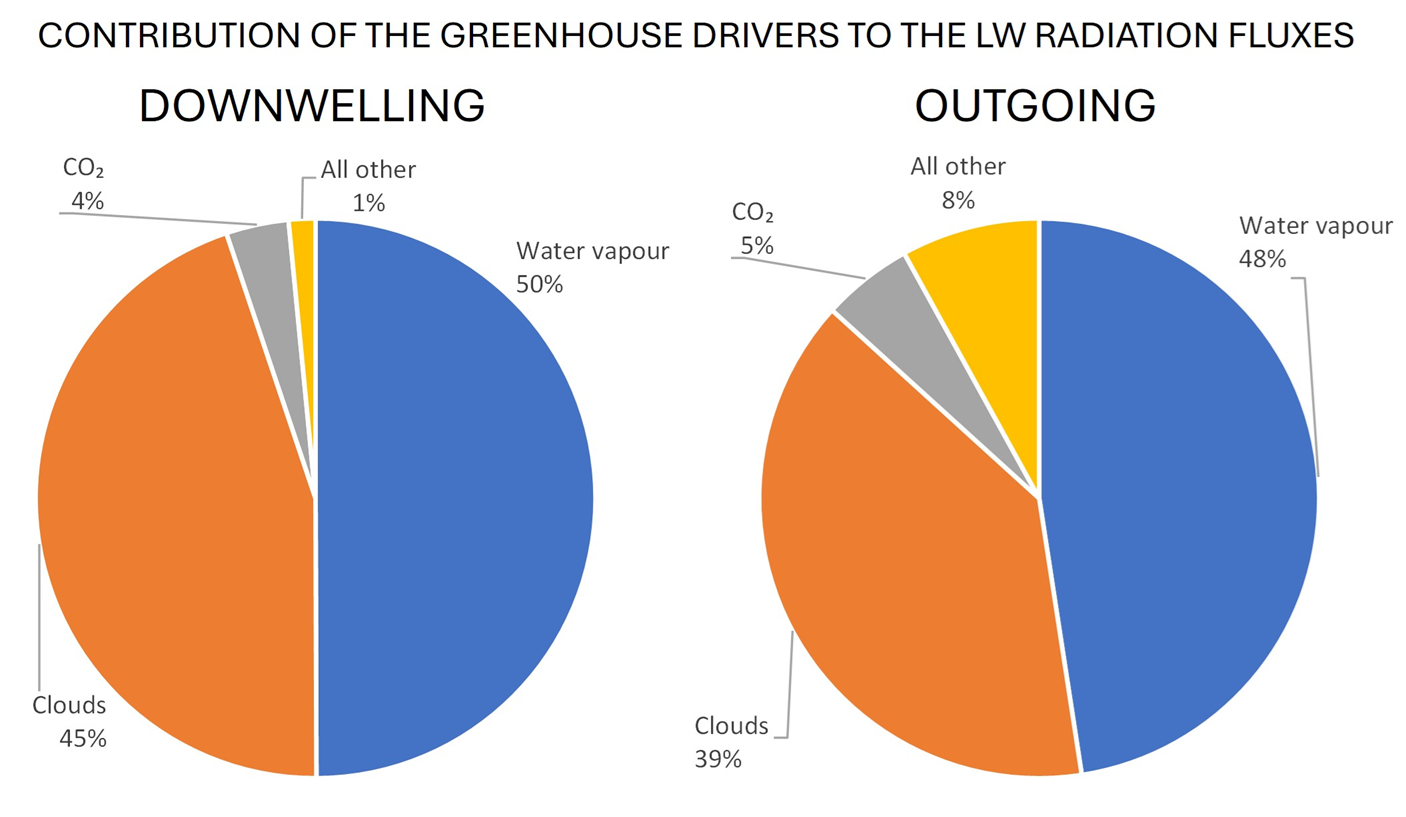
The results show that the contribution of CO₂ is 4% – 5%, while water and clouds dominate with a contribution of 87% – 95%. The minor effect of carbon dioxide is confirmed by the small, non-discernible effect of the recent escalation of atmospheric CO₂ concentration from 300 to 420 ppm. This effect is quantified at 0.5% for both downwelling and outgoing radiation. Water and clouds also perform other important functions in climate, such as regulating heat storage and albedo, as well as cooling the Earth’s surface through latent heat transfer, contributing 50%. By confirming the major role of water on climate, these results suggest that hydrology should have a more prominent and more active role in climate research.

Robin Horsley draws the implications from this and other recent papers.  Transcript in italics with my bolds and added images.

For decades, we’ve been told that human generated CO2 emissions are the single most dangerous threat to our planet. Politicians, celebrities, and the mainstream media have united to amplify this alarm, warning of an impending climate catastrophe unless we act now.

But what if the story’s wrong? What if the very foundation of the theory, the idea that CO2 is the principal driver of global warming, Is flawed? What if the science we’ve been told is settled is actually far from settled?

This week I’ve been digging into this very provocative question looking at an extremely interesting recent report on the subject. And what I found might make you rethink a lot of what you thought you knew about climate change.

What If Everything You Thought About CO2 Was Wrong

For years we’ve been fed a simple story: Humans burn fossil fuels, releasing carbon dioxide – CO2 – Into the atmosphere. CO2 traps heat causing the planet to warm. The Greenhouse Effect as it’s known. The solution? Reduce CO2 to save the planet. But what if this narrative is overly simplistic or even fundamentally wrong?

At the recent international Clintel science conference in Prague leading climate experts gathered to scrutinise the dominant narratives around climate change. One of the most striking contributions came from Professor Demetris Koutsoyiannis, a highly regarded climate scientist from the University of Athens. His research challenges the very core of our understanding of CO2’s role in the climate system. Professor Koutsoyiannis presented groundbreaking findings that question the long held belief that rising CO2 levels cause global temperatures to increase.

► Changes in global atmospheric CO2 are lagging 11–12 months behind changes in global sea surface temperature. ► Changes in global atmospheric CO2 are lagging 9.5–10 months behind changes in global air surface temperature. ► Changes in global atmospheric CO2 are lagging about 9 months behind changes in global lower troposphere temperature. ► Changes in ocean temperatures explain a substantial part of the observed changes in atmospheric CO2 since January 1980. ► Changes in atmospheric CO2 are not tracking changes in human emissions.

Instead, his research suggests it’s the other way around. Global temperature increases drive higher atmospheric CO2 levels. This isn’t an entirely new idea. For decades, scientists like Dr. Patrick Moore, a co-founder of Greenpeace have pointed to evidence showing that historically rises in CO2 levels have followed, not preceeded, global temperature increases. Ice core data, spanning millions of years, apparently supports this claim.

If true, this challenges the foundation of the mainstream climate narrative.

Why would rising temperatures cause an increase in CO2

But why would rising temperatures cause an increase in CO2 levels? Professor Koutsoyiannis explains that when temperatures rise, the natural world responds. Plants and oceans release more CO2 than they otherwise would. Warmer temperatures lead to a thriving environment.

Now, I think this needs some explanation, because plants absorb CO2 and produce oxygen. Not release CO2, don’t they? Well, yes, plants sustain themselves and grow through the process of photosynthesis, which turns sunlight, water and CO2, which plants absorb, into glucose which enables plants to grow and which produces oxygen as a by-product which we and animals need to breathe.

Figure 22. Annual carbon balance in the Earth’s atmosphere, in Gt C/year, based on the IPCC estimates (Figure 5.12 of [30]). The balance of 5.1 Gt C/year is the annual accumulation of carbon (in the form of CO2) in the atmosphere (reproduced from [5].).

However Plants also release CO2 as part of a process known as cellular respiration during the day, and particularly at night, when due to a lack of sunlight, photosynthesis cannot occur. On balance photosynthesis typically outweighs respiration. So living plants typically absorb more CO2 than they release. But when that increasing number of plants die and decompose, micro-organisms break down the organic matter releasing retained CO2.

Oceans also release CO2 into the atmosphere when the water is warmer than the surrounding air. Warmer water holds less dissolved CO2. These natural processes account for the majority of CO2 emissions.
In fact, Koutsoyiannis argues that Nature contributes 96% of CO2 emissions leaving just 4% attributable to human activity.

Nature contributes 96% of CO2 emissions

Yes, burning fossil fuels adds CO2 to the atmosphere. However, the professor’s research suggests that human contributions are a mere drop in the ocean compared to natural emissions. Crucially, his data shows that the dominant greenhouse gases aren’t CO2. But water vapour and clouds. CO2, it seems, plays a much smaller role than we’ve been led to believe.

Additionally, the study challenges the claim that CO2 lingers in the atmosphere for thousands of years. Instead, it finds that CO2 is rapidly cycled through the atmosphere oceans and land with an average cycle of just 4 years.

Figure 26: Contribution of (left) the three mechanisms responsible for the cooling of Earth’s surface and (right) the four mechanisms responsible for the warming of Earth’s atmosphere, based on the global energy balance by Trenberth et al. (2009). Koutsoyiannis (2024)

The paper also concludes based on the data gathered over the last hundred years, when the amounts of CO2 in the atmosphere increased from around 300 parts per million to just over 400 parts per million, that this increase has had no discernible effect on the greenhouse effect. It’s that small a factor.

If this research is accurate It doesn’t mean climate change isn’t real. But it does suggest we need a better understanding of what drives it.

The professor asks a number of pertinent unanswered questions at the end of his paper. The earth is currently, when viewed over hundreds of millions of years, going through a relatively cool period. What caused the huge increases in earth’s temperature in the past? The professor asks.

It wasn’t industrialisation, was it? These are crucial questions especially as Governments implement sweeping policies in the name of achieving net zero emissions by 2050.  Policies that impact everything from energy prices to housing and transportation. Even the food that we eat.

The global cost of the Net Zero 2050 agenda is projected to be between $100 and $150 trillion dollars by 2050. Meanwhile, the world bank estimates that eradicating extreme poverty globally would cost just three to four trillion.  Universal health care and education, defeating diseases such as malaria on a global basis would cost less.

What if we’re funding trillions into solving something that isn’t actually the main source of the problem? What if we should be spending more on other things that can limit global warming? What if we should instead be spending more money on mitigating the effects rather than trying to prevent it?

Shouldn’t we demand more scrutiny of the science driving these decisions? Could it be that the climate crisis narrative isn’t just about science but also about power, control and profit? Entire industries are heavily invested in the CO2 narrative. And millions of people, and much of the mainstream media are emotionally invested in the quest to reduce CO2 to save the planet.

But is that what we’re actually doing? Science thrives on debate and scrutiny. Science is never settled as such. It’s constantly evolving, particularly in complex areas such as global climate. Yet the CO2 science on which we’re proceeding is decades old, and many of the models on which it is based have failed to make accurate predictions.

Yet those who challenge the mainstream climate narrative are often dismissed as ‘deniers’ or attacked personally. But shouldn’t the truth welcome scrutiny? Shouldn’t we demand transparency and evidence that can stand up to rigorous examination?

This isn’t about denying climate change. It’s about questioning whether we’re focusing on the right solutions. As more scientists speak out, surely it’s time to demand open debate. And consider whether the trillions we’re spending on Net Zero might be better used elsewhere.

Now, I’m not a climate scientist. Perhaps this report is flawed. Perhaps it is complete nonsense even. But the professor who wrote it is not the only one who’s pointing out the first fundamental point that the mainstream narrative is fundamentally wrong, that by burning fossil fuels we’re producing CO2 that is warming the planet.

An increasing number of others are breaking ranks and saying exactly the same thing. That increasing CO2 is largely a consequence of increasing global temperatures not the cause. Yet we’re told that we’re facing a climate emergency. We must cast aside all caution. We must listen to Greta Thunberg, the climate change messiah.

To ask questions is heresy! Really? What do you think? Should we blindly follow the mainstream narrative, or should we dig deeper and ask tougher questions?   Please let me know your thoughts in the comments below. Thank you for watching.

See Also:

Humans Add Little to Rising CO2 March 2024

Climate Scare Based on Lies

link to video: Prof. William Happer – Climate Scare Is Based on Lies

Transcript in italics with my bolds and added images (HS is interviewer Hannes Sarv, WH is William Happer)

HS: If you read about climate in the newspapers or some talk about climate on television, it will be very, very far from the truth.  We’re told that climate change is a direct consequence of human activity, particularly the burning of fossil fuels.  Year after year, you are seeing the dramatic reality of a boiling planet.
And for scientists, it is unequivocal. Humans are to blame, we’re led to believe the climate is boiling. And the accumulated amount is now trapping as much extra heat as would be released by 600,000 Hiroshima-class atomic bombs exploding. That’s what’s boiling the oceans.  Which will have disastrous effects.
But is there really a scientific consensus on man-made climate change? Over a thousand scientists dispute the so-called climate crisis. Many of them are high-ranking experts in their fields. Among them, Dr. William Happer, a respected physicist with decades of groundbreaking research, an emeritus professor at Princeton University, and a leading expert in atomic and molecular physics.  He has deep expertise in the greenhouse effect and the role of CO2 in climate change.  Dr.  Happer argues that the role of human activity and CO2 in global warming is based on flawed science and misinterpretations.

“You know, it’s dangerous to make policy on the basis of lies.”

In this interview, we’ll explore the evidence he believes has been overlooked and why it could transform our understanding of climate change.

HS: As we can see, Professor, you are still working daily in your university office. So what is it? Are you consulting younger colleagues or still involved in some research projects?

WH: Well, yes, I try to stay busy and I’m working now with a former student from Canada who’s a professor there now, William van Wijngaarden.  And we’re working now on how water vapor and clouds affect the Earth’s climate, the radiation transfer details of those.

HS:So still very much involved in climate science.

WH: Well, you know, climate is very important. It’s always been important to humanity. It’s not going to change. I think it’s been having hard times the last 50 years because of this manic focus on demonization of greenhouse gases, which have some effect on climate but not very much.

HS: We’re going to absolutely get to that. But I wanted to start from actually, I was listening to one of your speeches and presentations you held back in 2023 at the Institute of Public Affairs. And what really I think resonated with me was that you started from the notion that freedom is important.  And every generation has their own struggle for freedom and freedom is not free. So I actually wanted to start by asking you what is the state, the current state of freedom in your opinion in the world today?

WH: I think it’s really true that every generation has to struggle to maintain freedom, you know, because every generation has lots of people who don’t like freedom, you know. They would like to be little dictators, you know, and that’s always been true if you read history. And it’s not going to change.

And so I think it’s important that we educate our children to recognize that humans are imperfect and there will always be attempts to get dictatorial control over society. And, you know, our founding fathers in America represented recognize that. They just assumed that their fellow Americans would be not very perfect people, you know, with lots of flawed people, and they tried to design a system of government that would work even with flawed people. Some German philosopher put it right, you know, out of the crooked timber of mankind, no straight thing was ever made. So that’s the problem that we will always face.

HS: What about academic freedom in today’s world? I’m not only speaking about climate science, but in general.

WH: Well, you know, I think academia has always had a problem with groupthink, you know, because you’re typically all together in one small community, and your children and wives interact with each other. And so the temptations, the pressures to all think the same are very great. You know, if you don’t think the same, your kids suffer, your wife suffers, and that’s nothing new. It’s always been like that. You know, there’s a famous… American play, Who’s Afraid of Virginia Woolf? But it’s about this topic and it goes back many, many decades, you know, long before the current woke problems that we’re having in America.

HS:  So as we all know currently, there is a new administration in the United States. So what will happen now? Will the situation, in your opinion, improve or is it just, you know, the challenges are going to remain?

WH: Well, you know, we’ve just elected a new president, and he’s very vigorous and has lots of ideas, and I think that’s a good thing. We’ll see how successful he is. But, you know, our society and our government is designed to be cumbersome and unwieldy. That’s to prevent crazy things from happening too quickly.  And so the president will have to deal with that. And if the Americans support him, if the Congress supports him, he’ll be successful.

HS: Let’s move to climate science. Is there any honest discussion left? It has become so political, in my opinion, that it is really hard to have an open, a normal discussion about it.

WH: Well, I think if you go to a seminar, for example, at Princeton on climate, It’s often pretty good science. It’s not alarmist. But this is professors and students talking to each other. The further you get away from the actual research, the more alarmist and crazy it becomes.

So if you read about climate in the newspapers or listen to some talk about climate on television, it will be very, very far from the truth. And it won’t be the same thing that the professors at universities normally are talking about. But that said, you know, I think there’s been a lot of corruption because of all of the money available. You know, there are huge funds if you do research that supports the idea that there is a climate emergency which requires lots of government intervention. And if you don’t do that, you’re less likely to be funded, you know, you can’t pay your graduate students. So it’s a bad situation. It’s been very corrupting to this branch of science.
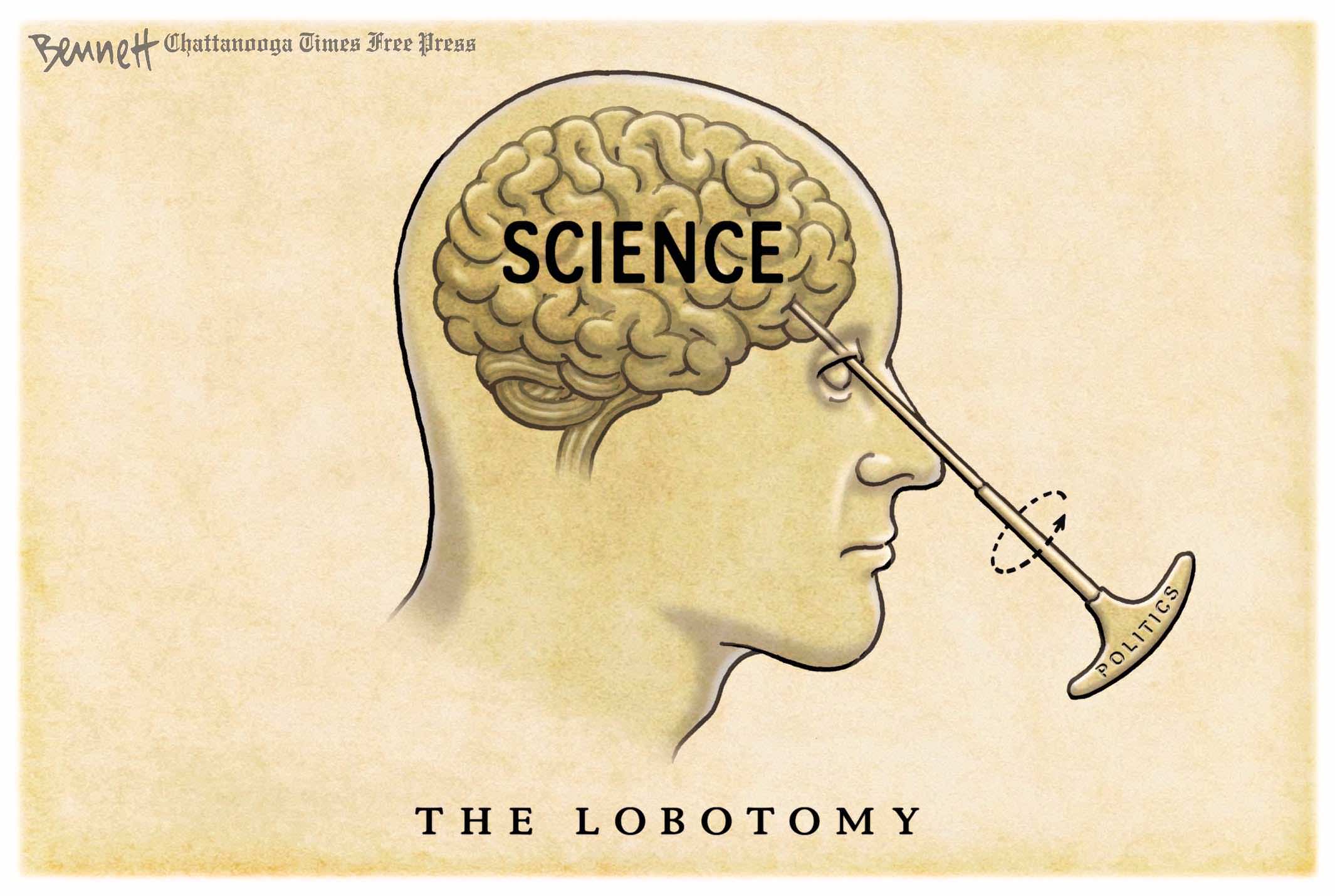
HS: Exactly how long has it been going on, this kind of situation?

WH: Well, I think it really got started in the early 90s. I was in Washington at the time as a government bureaucrat, and I could see it getting started. It was being pushed by Senator Al Gore and his allies. There were, at that time, still lots of honest scientists in academia who didn’t go along with all of the alarmism, but they’ve gradually died off and they’ve been replaced by younger people who’ve never known anything except, you know, pleasing your government sponsor with the politically correct research results that they expect.

HS: So basically they are not in a position, if they want to achieve anything in academia or make a career for themselves, they are kind of unable to stay honest even?

WH: They try to be honest, but it’s very difficult because you have to plan to educate your children. You have to maintain your family, and so that means you need money. And the only way to get money is to agree to this alarmist meme that has dominated climate scientists now for several decades.
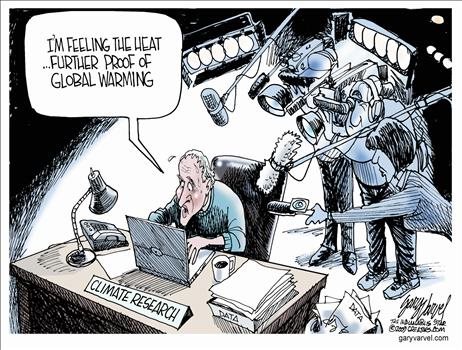
HS: Of course it affects climate research. So what is the current state, let’s say, the current state of climate research? What’s the quality of it in your opinion?

WH: Well, I think many of the observational programs in climate science are very good. For example, satellite measurements of Earth’s properties, radiation, cloudiness, temperatures, and ground-based observations. They’re often very high-quality work, very useful, and we’re lucky to have them. There are good programs in both Europe and the United States and Japan, and China is becoming quite important nowadays, too.
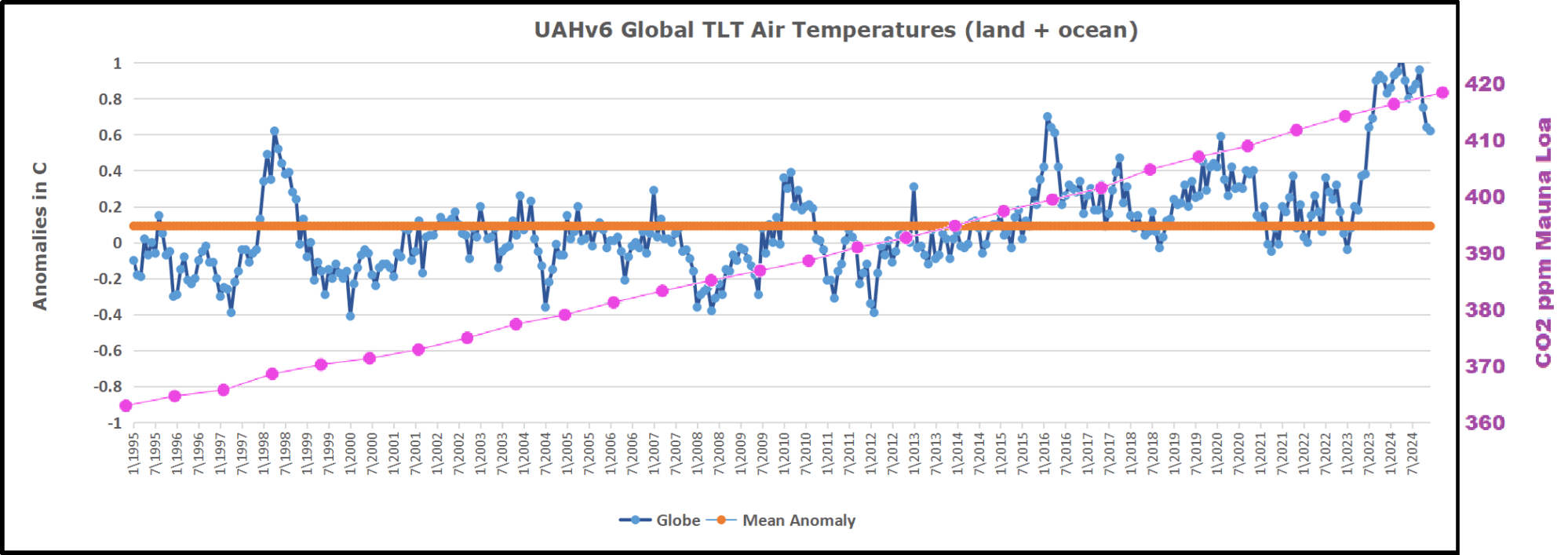
I think where there’s still huge problems is in computer modeling. I don’t think most computer models mean anything. It’s a complete waste of money, but that’s what’s driving the public perception. So the public is unable to look at model results, which are not alarming at all.  But instead what they see is graphic displays from computer computations which are not tied into observations. So I think the money that’s been spent on computers, and lots of it has been spent, has been mostly wasted.

HS: Let me just understand it correctly because I’ve come to understand that these computer models are something that our current debate or the climate alarm is all based on:  That there’s going to be a warming of how many degrees and then the earth is going to be uninhabitable.  And you’re saying that those models are not things that something like that should be based on.

WH: The Earth is always either warming or cooling. It’s a rare time when it’s got stable temperature. We’re in a warming phase now. But most of the warming is probably a natural recovery from the Little Ice Age when it was much, much colder all over the world. And it began to warm up in the early 1800s.

And it continued to warm, not very fast. No one knows how long this will last. If you look over the last 10,000 years, since the end of the last glacial period, there have been many warmings and coolings similar to the one that we’re in now.
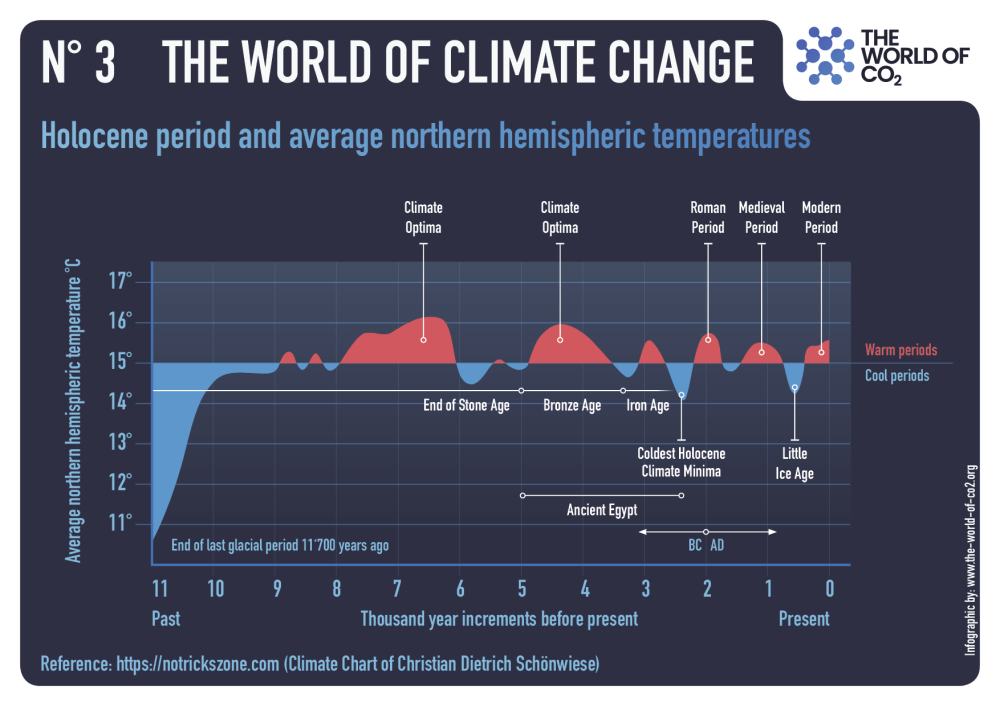
And I think understanding that is quite important, but that understanding has been put back by many, many years because of the sort of crazed focus on greenhouse gases. It’s pretty clear that greenhouse gases don’t have very much to do with these warmings. Nobody was burning fossil fuels in the year 1200-1300 when the poor Greenlanders were frozen out.

They did some pretty good farming in the southern parts of Greenland in the year 1000, the year 1100. Before long, it became just too cold to continue to do that. The same thing happened in parts of my ancestral country of Scotland. You know, you used to be able to farm the uplands of Scotland, which you can’t farm now, it’s too cold. But they’re warming up at some point, maybe you can farm them again. So anyway, the climate is just famous for being unstable.

HS: Let’s talk about those greenhouse gases. Mainly climate change today in mainstream media or by those alarmist politicians, for example, is attributed to carbon dioxide. If someone has not looked into it, this gas might seem to have something even poisonous. What is carbon dioxide? Do we need it?
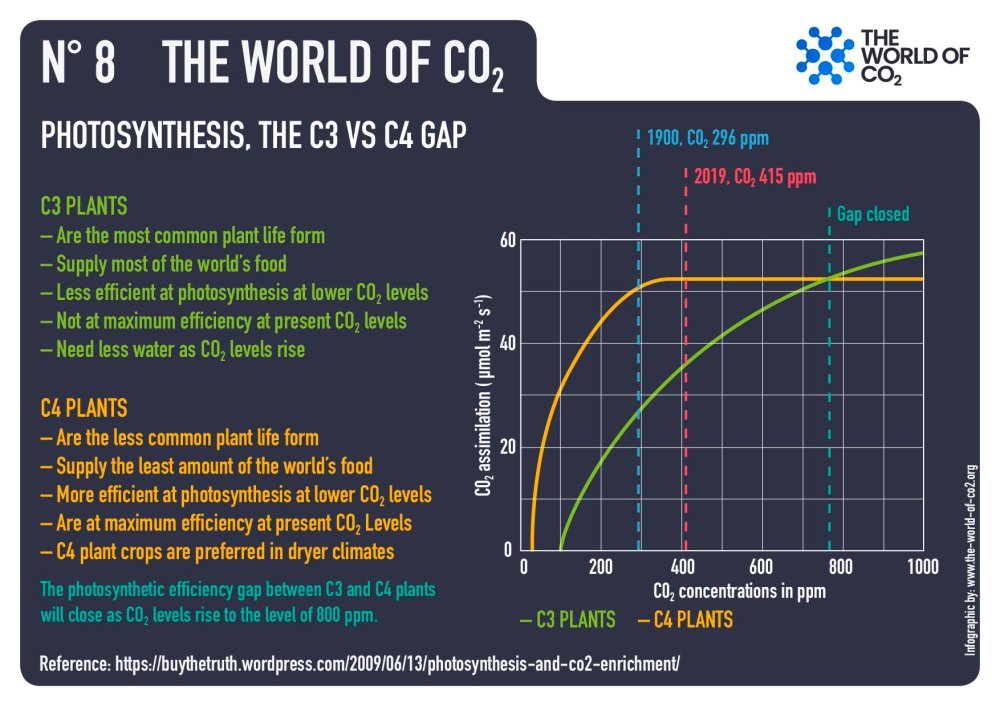
WH: Well, first of all, carbon dioxide is at the basis of life on Earth. We live because plants are able to chemically transform carbon dioxide and water into sugar. And a byproduct is the oxygen that we breathe. And so we should all be very grateful that we have carbon dioxide in the atmosphere.  You know, life would die without carbon dioxide. If you look over the history of… Life on Earth, carbon dioxide has never been very stable in the atmosphere. There have been times in the past when it’s been much, much higher than today. Life flourished with five times more carbon dioxide than we have today.
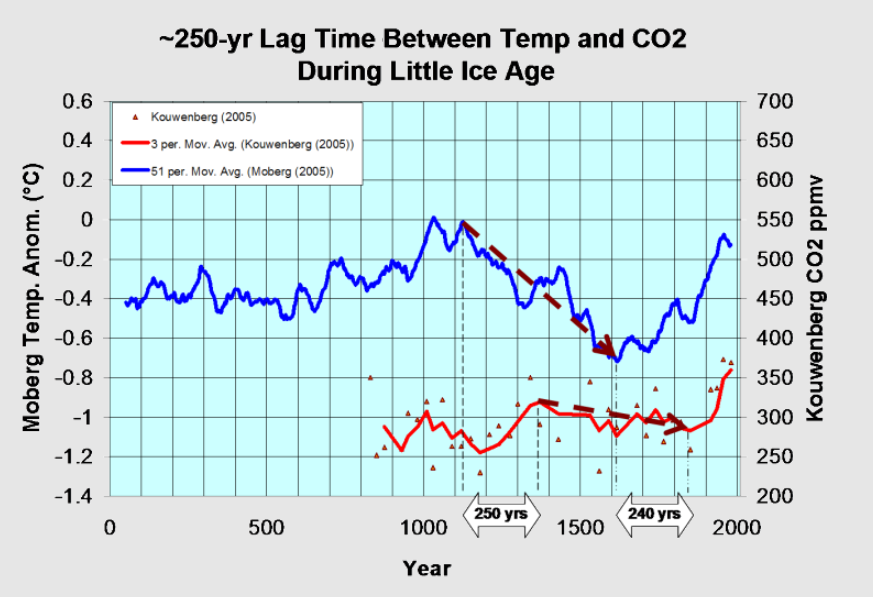
And there have been times when it’s been much lower, one-half, one-third, and those were actually quite unpleasant times for life. They were the depths of the last ice ages when carbon dioxide levels dropped to below 200 parts per million, quite low compared to today. We’re at around 400.  So at the depth of the last ice age, it was about half what it is today. In some of the more verdant periods of geological history, it’s been four times, five times what it is today. So the climate is not terribly sensitive to carbon dioxide. It has some sensitivity to it.
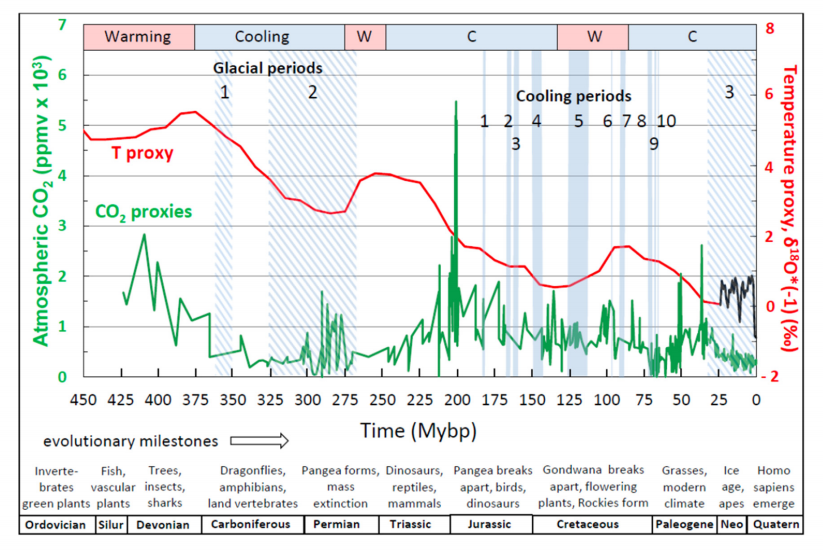
More carbon dioxide will make it a little bit warmer. But carbon dioxide is heavily saturated, to use a technical term. You know, there’s so much in the atmosphere today that if you, for example, could double carbon dioxide, that’s 100% increase, you would only decrease the cooling radiation to space by 1%.  So 100% change in carbon dioxide only makes a 1% change in flux. And that’s because of the saturation that I mentioned. And there’s not much you can debate about that. It’s very, very basic physics. It’s the same physics that produces the dark lines of the sun and the stars. So it’s quite well understood.

And so the question is, what temperature change will a 1% change of radiation to space cause? You know, that’s radiation flux, not temperature. And the answer is it will cause an even smaller percentage change of temperature. There’s really no threat from increasing carbon dioxide or any of the other more minor greenhouse gases like methane or nitrous oxide or artificial gases like anesthetic gases. It’s all a made-up scare story.
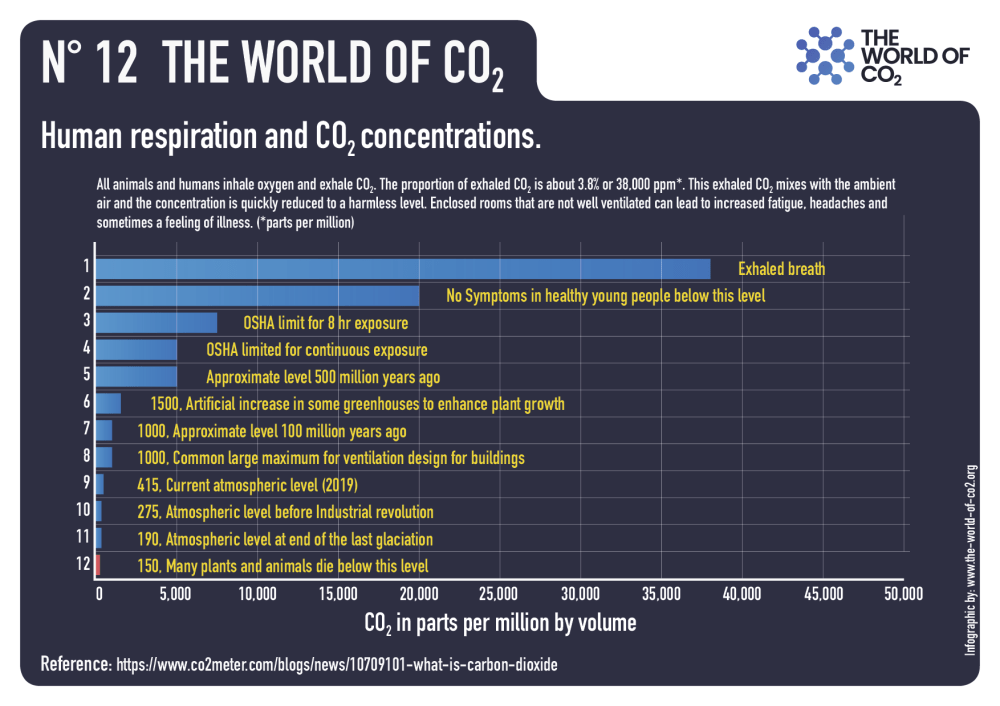
HS: Where did this scare story come from? Why this fixation on greenhouse gases? If you explain it this way, it seems a bit even absurd to be fixated on these gases all the time.

WH: Well, you know, I’m really good with instruments and differential equations, but I’m not so good at people’s motives. And so I don’t really understand myself exactly how this has happened. I think… There are various motives, some of them fundamentally good. For example, one of the motives has been it’s hard to keep people from fighting with each other, so if we could have a common enemy like a danger to the climate, we could all join forces and defeat climate change, and then we wouldn’t be killing each other off.

So there’s nothing wrong with a motive like that, except that you have to lie.
And so, you know, it’s dangerous to make policy on the basis of lies.

So I don’t know what drives it. It’s a perfect storm of different motives. Lust for power, good motives, lust for peace. All for that. Lust for money. But I’m much more comfortable talking about, as I say, the physics of greenhouse gases and the physics of climate than what drives people.

HS: Yeah, yeah. Well, you have said that this climate change or climate alarmism today is, what was it, you prefer scam, but you are willing to settle with a hoax, is it correct?

WH: Well, this is not too serious, but you know, when someone says hoax, I think of hoax as, to some extent, a practical joke. There’s a certain amount of humor in it. For example, the Piltdown Man was a famous hoax where some brilliant Englishman doctored up a I think it was a chimpanzee skull to make it look like a human skull. And this was not too serious, but lots of learned professors wrote papers about it, you know, and it was all nonsense. But this had no aim to make a lot of money, you know, or to gain power.

It was simply, you know, a great practical joke. That’s a hoax. A scam is different. A scam is where you are deceiving people to enrich yourself, to gain power, you know, and so I think that’s a better description of what’s happening with climate than a hoax. But it’s a small detail, I don’t mind calling it a hoax.

HS: Basically, Professor, there is a lot of money involved in climate change or climate alarmism. Would it be that money is driving this as well or what is your take on that?
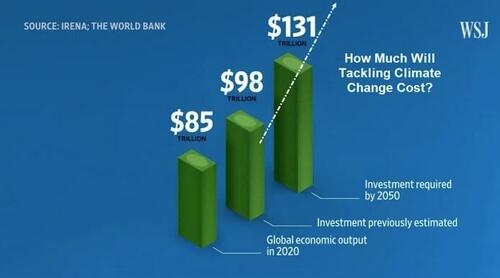
Yes, those are trillions of dollars they are projecting.

WH: Well, I think it’s really true that the love of money has been the root of evil as long as humanity has existed. And here we’re talking about trillions of dollars. If you really went to net zero, the economic implications would just be enormous. People would have to lower their standard of living greatly. It would cause enormous damage to the environment. You cover the world with windmills and solar panels. So… And it’s driven by money. Lots of people are making lots of money. So it’s driven by money. It’s driven by power.

And then it’s driven by poor people who fundamentally believe, you know, and that they really have been misled into thinking that there is an emergency. And you have to be sympathetic to them, you know, who wouldn’t want to save the world if the world was in danger? It is not really in danger, but many people are convinced that it’s in danger. But, you know, there’s this old saying, the road to hell is paved with good intentions, and we’re on the road to hell with net zero.

HS: Yes. Well, like you already mentioned, this crisis is often said to be linked with, for example, extreme weather events. But I don’t know, is it even clear today that we have more extreme weather events because of the warming that is happening? Or is it so?
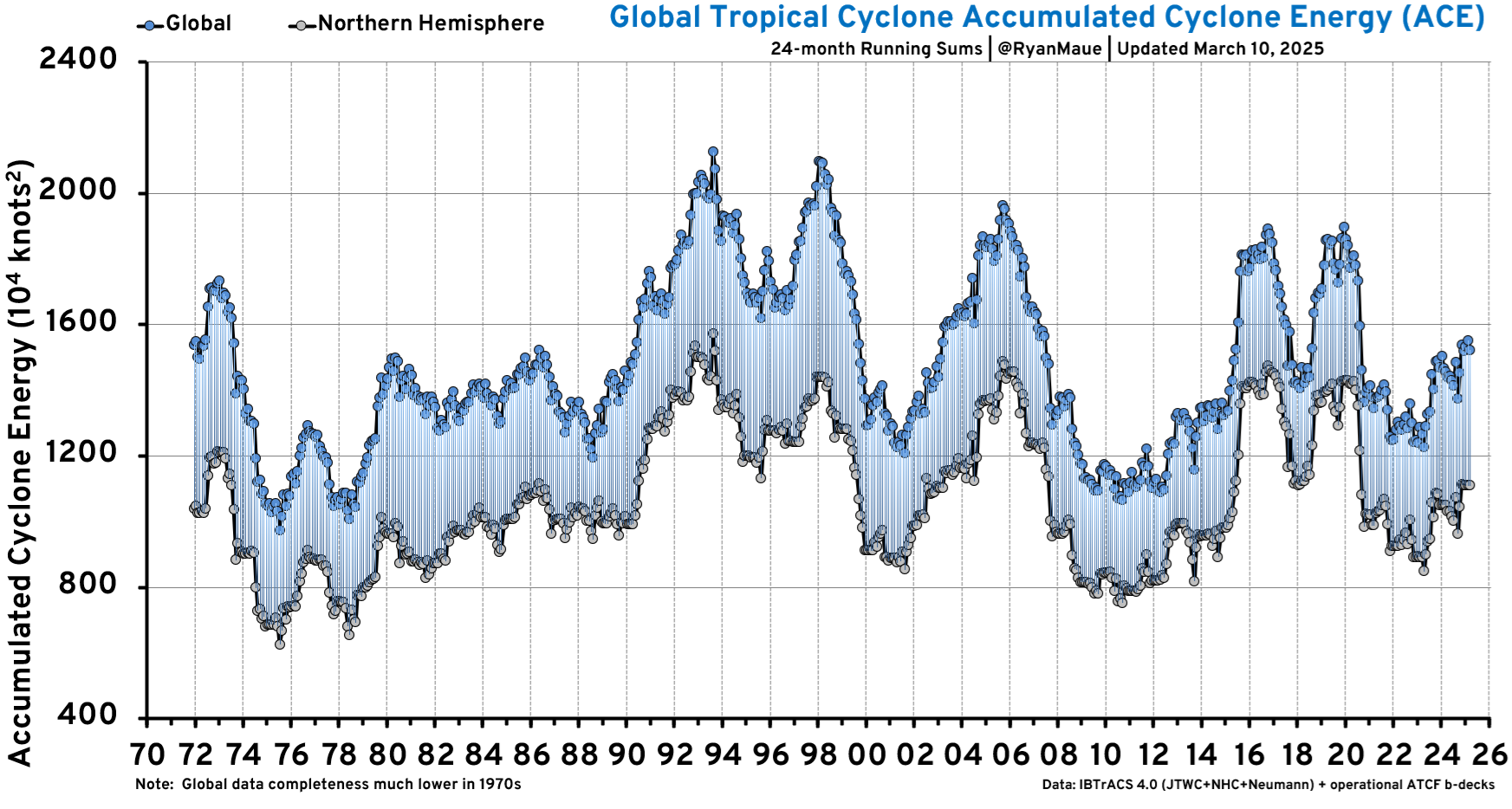
WH: Well, if you look at the data, there’s not the slightest evidence that there’s more extreme weather today than there was 50 years ago. Even the IPCC, you know, the UN body does not claim that there is an increase in extreme weather. They say there’s really no hard evidence for that. And in fact, the evidence is that it’s about the same as the weather has always been. In my country, for example, the worst weather we had was back in the 1930s when we had the Dust Bowl and, you know… people migrating from Oklahoma to California, you know, it was a terrible time.  We’ve not had anything like that since.
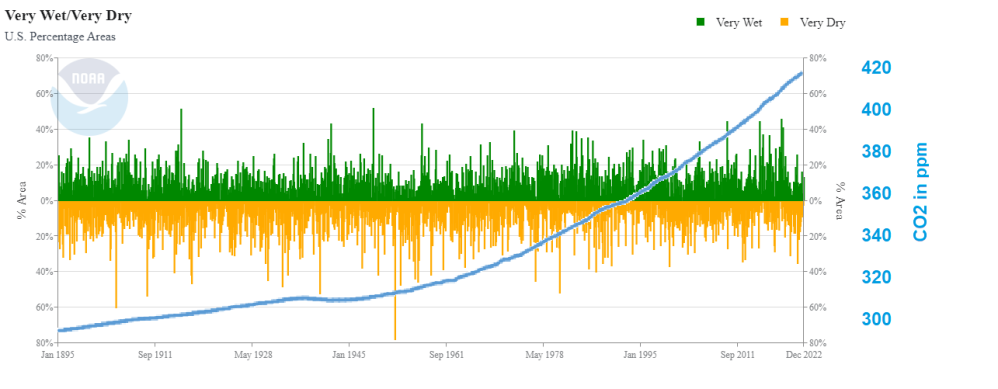
HS: Of course, always to talk about floods, always to talk about hurricanes. And as I understand as well, the IPCC is not actually in their scientific reports. They are not actually saying that there are more. But they are saying something, right? So the question here is, what do you think?  You have probably looked into them a bit more than I am. So is it solid science what’s in there? Or is it also motivated the IPCC scientific reports, politically motivated, for example?
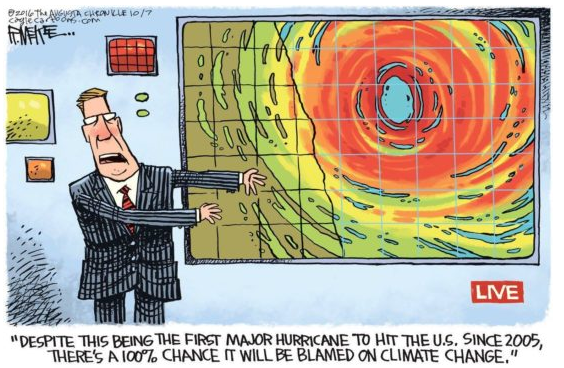
WH: You know, there’s this saying in the communications business, if it bleeds, it leads. So if you’ve got a newspaper or a television business, you have to look for disasters because that’s what people pay attention to. And so part of the problem has been the mass media, which has to have emergencies, has to have extreme events.  And the fact is usually hidden that there’s nothing unusual about an event. They try to deceive you into thinking that this has never happened.

For example, just yesterday they had four or five inches of snow in Corpus Christi, Texas. That’s a lot of snow for Corpus Christi. But, you know, if you look at the records of Corpus Christi, it’s not unusual every 20, 30 years as it happens. It’s been happening for thousands of years. But most people, you know, they’re not even 20 or 30 years of age, and so they’ve never seen this before. So it seems like the world is changing rapidly in front of their eyes, but it’s not changing really at all.

HS: Yes, they can look at it on the television, then it must be true when they are saying that it’s because of climate change, right? So this is the thing. One particular graph that is always talked about when climate is the issue is the famous Michael Mann hockey stick.

The first graph appeared in the IPCC 1990 First Assessment Report (FAR) credited to H.H.Lamb, first director of CRU-UEA. The second graph was featured in 2001 IPCC Third Assessment Report (TAR) the famous hockey stick credited to M. Mann.

WH: The graph is phony, and that’s been demonstrated by many, many people. It’s even different from the first IPCC graphs. It’s a graph of temperature versus time since about the year 2000. you know, about the year zero, you know, from the time of Christ to today.  And what it shows is absolutely no change of temperature until the 20th century when it shoots up like the blade of a hockey stick. So that’s why it’s called the hockey stick curve. So the long, flat… Part of the hockey stick is the unchanging temperature. But that was not in the first IPCC report.

Climate reconstructions of the ‘Medieval Warm Period’ 1000-1200 AD. Legend: MWP was warm (red), cold (blue), dry (yellow), wet

The first IPCC report showed that it was much warmer in Northern Europe and United States, North America, in the year 1000 than it is today. There really was a medieval warm period, which was what allowed the Norse to settle in Greenland. and have a century or two of successful agriculture there. It’s never gotten that warm again since.  It may happen, but the hockey stick curve basically erased that, so it was… It’s like these Orwellian novels. 1984, there was this… They continued to rewrite history, you know, so what was history yesterday was not history today, you know. So it was rewriting the past. There clearly was a warm period.There is evidence from all around the globe that it was much warmer in the year 1000 than today. We still have not gotten as warm as it was then.

HS: Yes, yes, and the warm period, as I understand, was followed by the Little Ice Age. So 19th century, the warming that started then is actually, it started at the end of this Little Ice Age.

Earth is still recovering from the Little Ice Age, which was the coldest period of the past 10,000 years, that ended about 150 years ago.

WH: That’s right, that’s right. For example, that’s very clear if you come to Alaska, And look at the Alaska glaciers. In particular, there’s a famous glacier bay in Alaska which was filled with glaciers in the year 1790 when it was first mapped by the British captain Vancouver. the ice came right out to the Pacific.

And already by 1800, it had receded up into the bay. Some of it was melting by 1800. And by 1850, most of the ice was gone. I’m talking about the 1800s, not the 1900s, not the present time. So it’s pretty clear from Glacier Bay that the warming began around the year 1800.  And it’s just been steadily warming since then.

HS: I have been shown another graph many times which shows a correlation between the increase of carbon dioxide in the atmosphere and the temperature rise during the last, let’s say, 150-200 years.  Yeah, it’s a correlation, of course, but is there any causation as well? Because you pointed it out as well that there is a warming effect.  Carbon dioxide has a warming effect in the atmosphere, but it’s not leading as I understand.
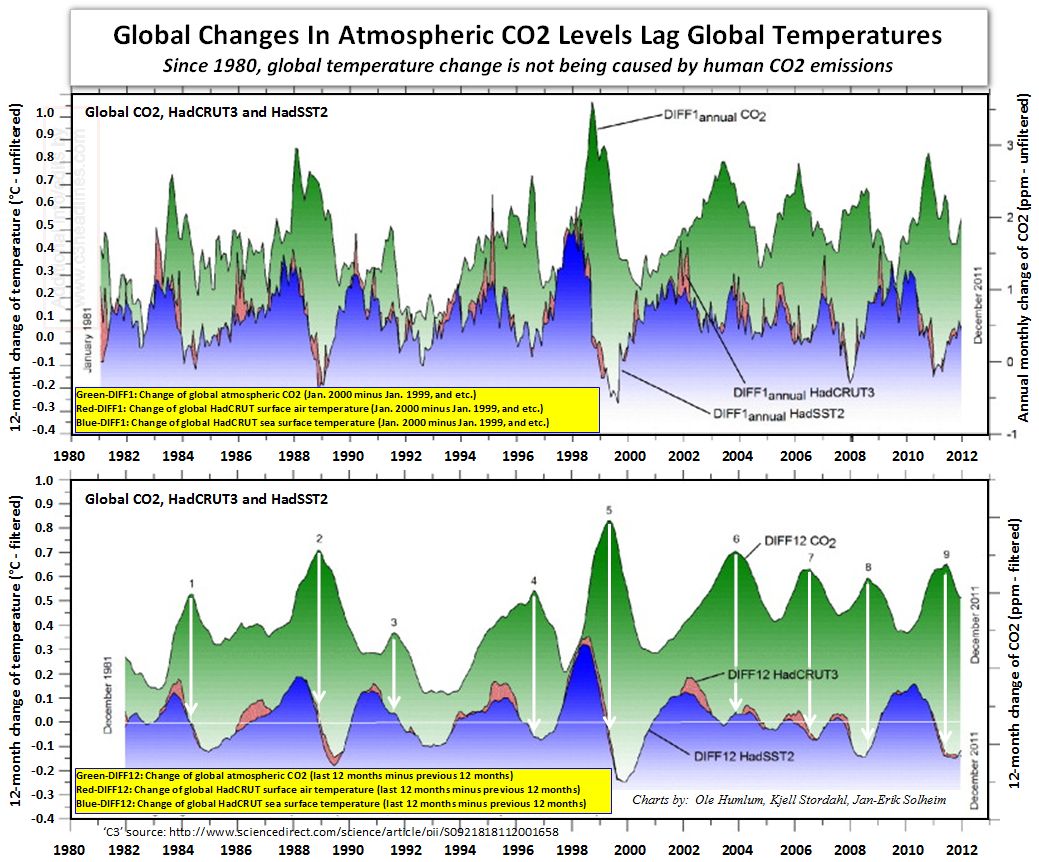
► Changes in global atmospheric CO2 are lagging 11–12 months behind changes in global sea surface temperature. ► Changes in global atmospheric CO2 are lagging 9.5–10 months behind changes in global air surface temperature. ► Changes in global atmospheric CO2 are lagging about 9 months behind changes in global lower troposphere temperature. ► Changes in ocean temperatures explain a substantial part of the observed changes in atmospheric CO2 since January 1980. ► Changes in atmospheric CO2 are not tracking changes in human emissions.

WH: Yeah, that’s correct. You know, you can estimate past CO2 levels by looking at bubbles in ice cores from Antarctica or from Greenland. And you can also estimate past temperatures by looking at the ratios of oxygen isotopes in the ice and the other proxies. So there are these proxy estimates of past CO2 levels and past temperature.

And they are indeed tightly correlated. When their temperature is high, CO2 levels are high, and temperature is low, CO2 levels are low. But if you look at the time dependence, in every case, first the temperature changes and then the CO2 changes. Temperature goes up, a little bit later CO2 goes up.

Temperature goes down, a little bit later CO2 goes down. So they are indeed correlated, but the cause is not CO2, the cause is temperature. So something makes the temperature change and the CO2 is forced to follow. That’s easy to understand. It’s mostly due to CO2 dissolving in the ocean. The solubility of CO2 is very temperature dependent.

So if the world ocean’s cool, they suck more CO2 out of the atmosphere. And if they warm, more CO2 can come back into the atmosphere. So there’s nothing surprising about that. The only surprise is nobody really knows why the temperature changes, but it’s certainly not CO2 causing it to change because the CO2 follows the change.

HS: It doesn’t precede it. Causes have to precede their effects.  from the same 2023 presentation that I already mentioned, that I listened. And as a member of Jason in 1982, you were one of the authors of a scientific paper that aimed to measure the effects of CO2 to global warming. The first number you got was too small. Then you just arbitrarily increased it.
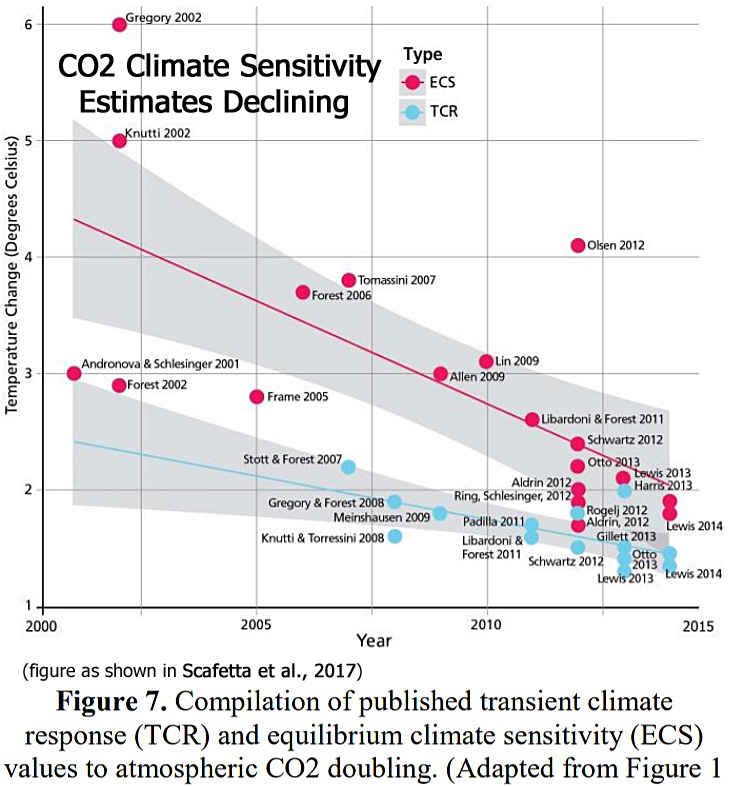
WH: You’re asking, the key question is how much warming would be caused if you double carbon dioxide. That’s sometimes called the climate sensitivity or the doubling sensitivity. And the first person to seriously try to calculate that theoretically was your neighbor across the Baltic, Svante Arrhenius. He was a Swede and a very good chemist, and he was interested in this problem. He was the first one to really work on it, and his first paper was written in 1896. So the first climate warming paper was 1896 by Arrhenius, and he estimated that doubling CO2 at that time would warm the earth by around six degrees.

It was a big number. He didn’t know very much, so it was not a bad number given what he knew at the time. As he learned more, he kept bringing that number down, so the last number he published was about four degrees, and it was still going down.  So the number that we published was three degrees, this little Jason study. So it was only a little bit smaller than Arrhenius’ number. But that was because neither he nor we really knew enough about how the climate works to get a reliable answer.

And I think the only way to really get a reliable answer is from good observations over long periods of time. And we simply don’t have good enough empirical data right now to know what that is. But I’m pretty sure that doubling CO2 by itself is unlikely to cause warming of more than about one degree Celsius. You know, if you do the simplest calculation, you find that answer, it’s a bit less than one degree for doubling CO2.

And so three degrees, four degrees, the only way to get that is with enormous positive feedbacks. And so that’s what these computer models do that we’ve been talking about.  They inject feedbacks in a very obscure way so you can’t figure out what they’ve done. But it’s a supercomputer, so how could it be wrong? It must be right, it’s a computer after all. But nevertheless, it’s giving these absurd positive feedbacks. And most feedbacks in nature are not positive, they’re negative.

There’s even a law called Le Chatelier’s Principle, which is that if you perturb some chemical system or physical system, it has feedbacks. And they try to reduce the perturbation. They don’t try to make it bigger. They try to make it smaller. So climate has turned that completely on its head. It says all feedbacks in climate are positive, and if it’s negative, forget about it. You won’t get your research grant renewed next year if you put that in your proposal. So it’s a mess, and it’s going to take a long time to clean this up.

Of course, if someone is not on the right side of this net zero debate, people are starting calling him names. He’s a climate denier or climate skeptic and so on. But those ad hominem arguments are what are used in the media to shut down the arguments of even scientists.  One of them is that if you’re not a climate scientist, you’re not allowed to talk about climate.  Well, of course, that’s nonsense. Climate is really all physics and chemistry. And so anyone with a good grounding in physics and chemistry can know as much about climate as a climate scientist.

In general, climate scientists are not well educated. When I look at American universities, maybe it’s better in Estonia, but you go to a class and your education consists on how do you organize a petition to your local legislator. So that’s your knowledge as a climate scientist. You don’t have to learn physics, you don’t have to learn chemistry, you don’t have to learn electromagnetics and radiation transfer. You have to learn how to work the political process.  So it’s true that most physicists aren’t very good at that. You know, they’re quite good at physics, but they’re not very good at talking to the Congress or to the president.

HS: Yeah, yeah. So basically, climate science has become something more like a social science in that sense.

WH: Yeah, that’s right. It’s been very heavily politicized. There was something very similar to this in the Soviet Union in the field of biology. There was this Ukrainian agronomist, Lysenko, who… got the ear of the Communist Party and was supported for many decades with just crazy theories about biology, you know, you could grow peaches on the Arctic Circle if you just listen to him.  All sorts of nutty things and that there was no such thing as genes, but he had a lot of political support and so he essentially destroyed biology for a generation in the Soviet Union.  You know if you taught your class about genes, you know, Mendel’s wrinkled peas and smooth peas, you were lucky if you were only fired, you know, you could have been sent to a concentration camp and several people were condemned to death for teaching about genes. And so I think climate science is a lot more like Lysenkoism than it is normal science.

HS: Yes, well, yes, this is something that we should be able to learn from because this was the Stalin era, this was the craziest time period, absolutely. In Eastern Europe we also know a lot about that and it does seem to me as well that Löschenkism is something that is like gaslighting the public and ostracizing renowned scientists, for example, like yourself. This is something that has been done related to climate science. Or how do you feel that? Do you feel that you have been targeted by those activists, activist politicians or not?

WH: I don’t feel any pain. I don’t pay much attention to them because I have very little respect for them. The people that I respect, most of them agree with me. I’ve personally not suffered from it, perhaps just because I don’t pay attention to it. I’m older, I’m retired, so I’m not dependent on government grants.  Younger people could not do this. So people in the middle of their career have a very serious problem because they’ll lose their research funding and they won’t be able to continue their career if they don’t sign up to the alarmist Dogma.

HS: And one of the things how they shut down criticism is simply by stating that 97% of climate scientists are saying that our climate change or global warming, it is anthropogenic and you cannot argue with 97%, can you? What do you think? Is science democracy?

WH: There are some small anthropogenic effects on climate. Any big city, for example, is quite a bit warmer than the countryside. If you go 30 kilometers outside of New York City, it’s cooler. Or any other big city. So those are called urban heat island effects. So it’s clearly caused by people.

But if you look at undisturbed areas far from urban centers, there the climate is doing what it has always done. It’s warmed, it’s cooled, it’s done that many, many times over history. And there’s not the slightest sign of anything different resulting from our generation burning fossil fuels.

My own guess is that fossil fuels may have caused about close to a degree, maybe three-quarters of a degree of warming, but that’s not very much. When I got up this morning, it was minus 10 Celsius. Here in my office, it’s quite a bit warmer. One degree, you can hardly feel it.  My air conditioner doesn’t trip on and off at one degree, so it’s not a dangerous increase in temperature. Saving the planet from one and a half degree of warming is just crazy. Who cares about one and a half degree of warming? It won’t be that much anyway. But if it were, it wouldn’t matter.

HS: If the planet warms a bit, is it actually bad to us?
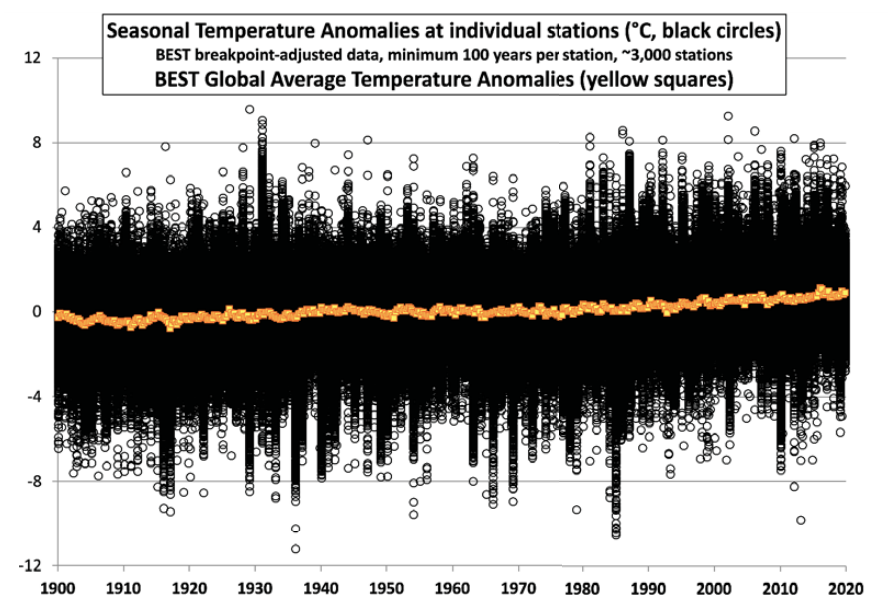
WH: No, of course it’s not bad. For example, I have a backyard garden, and I would welcome another week or two of frost-free growing season in the fall and in the spring. I could have a better garden, and that’s true over much of the world.  And if you look at the warming, most of the warming is in high latitudes where it’s cold. It’s where you live in Estonia, where I live in New Jersey. It doesn’t warm in India. It doesn’t warm in the Congo or in the Amazon. Even, you know, the climate models don’t predict that. They predict the warming, when it comes, will be mostly at high latitudes near the poles. And that’s where actually the warming will be good, not bad.

HS: One more question about climate science. It is being told to us that there is a consensus on anthropogenic climate change. And my question actually here is that in science, can there be a consensus? What is a consensus in science even?

WH: Well, I think you know very well that science has nothing to do with consensus. Michael Crichton was very eloquent about this. And if you don’t know about his work, you should read it. But he says when someone uses the word consensus, they’re really talking about politics, not science.

Science is determined by how well your understanding agrees with observations. If you have a theory and it agrees with observations, then the theory is probably right. But it’s right not because everybody, all your friends agree with it, it’s because it agrees with observation. You make a prediction and you do an experiment to see whether the prediction is right. If the experiment confirms it, then the theory is probably okay. It’s not okay because everybody agrees with you that your theory is right. And so that’s what the climate scientists are trying to claim, that science is made by consensus. It’s not made by consensus.  There really is a science that is independent of people. There is a reality that could care less what the consensus is. It’s just the way the world works. And that’s real science.

HS: What are your views on energy transition? Should we, you know, stop burning fossil fuels? And why, if so?

WH: Well, of course, we shouldn’t stop burning fossil fuels. We can’t stop, you know. It’s suicide. It’s economic suicide. And more than economic, it’s real suicide. People will die. You know, they tried something like that in Sri Lanka, you know, 15, 20 years ago when the extremist government came in and stopped the use of chemical fertilizer, you know, because it was unnatural. So everyone was supposed to go back to organic farming and the result was that, you know, the rice crop failed, the tea crop failed, you know, the price of food went up, people were starving in the streets. The same thing will happen if we go to net zero.

You can’t run the world without fossil fuels. We’re completely dependent on them, especially for agriculture, but transportation and many other things. There’s nothing bad about them. If you burn them in a responsible way, they cause no harm. They release beneficial carbon dioxide. Carbon dioxide really benefits the world. It’s not a pollutant at all.

HS: There is the question of how much longer will fossil fuels last. There is a finite number and for years people have wondered when will they run out and what will we do when we run out of fossil fuels. And so that’s an interesting question that’s worth talking about.

WH: It’s not an immediate problem, but sooner or later it will be a problem. My own guess, we’re talking about a century or two, not decades. But I think our descendants will have to replace fossil fuels, and my guess is that they will make synthetic hydrocarbon fuels.  No one has ever discovered a better fuel than a hydrocarbon, you know. We ourselves, you know, store energy as hydrocarbons. You know, the fat on our belly, you know, that’s a hydrocarbon. You know, so it’s really good, you know. So we can make hydrocarbons ourselves from limestone and water if you have enough energy.

There are ways to do that chemically. And so my guess is that in 200 years, that’s the way energy will be… handled. We’ll make it from inorganic carbon, limestone probably, and we’ll burn it the same way we do today. You know, we’ll make synthetic diesel, we’ll make synthetic gasoline, and continue to use internal combustion engines.  No one’s invented a better engine than an internal combustion engine.

HS: But what about nuclear energy? What are your thoughts on that?

WH: Well, nuclear energy clearly works. It makes electricity, so you can’t run your automobile on nuclear energy unless you’re stupid enough to buy an electric car. So nuclear has had some of the same problems as fossil fuels. There are these ideological foes of nuclear energy And they have two main arguments. The first argument, and one that does worry me, is that it’s not that difficult to change a nuclear commercial enterprise into a weapon. And nuclear weapons really are very, very dangerous.

So that’s one of the oppositions. But the other is completely phony, is that we can’t handle the waste. That’s not a difficult problem, actually.  It’s technically quite easy to handle the waste. For example, at a typical nuclear plant in the United States, there’s a dry cask storage yard, which is not as big as the parking lot. And it’s got a century worth of fuel. It’s perfectly safe. And you could leave it there for several centuries and nothing would happen to it.  So there’s no need to process it. You can let it sit there and, you know, in a hundred years, maybe people will regard it as a useful mine for various materials. So nuclear is fine, and I think it will play an important role for a long time in human affairs.
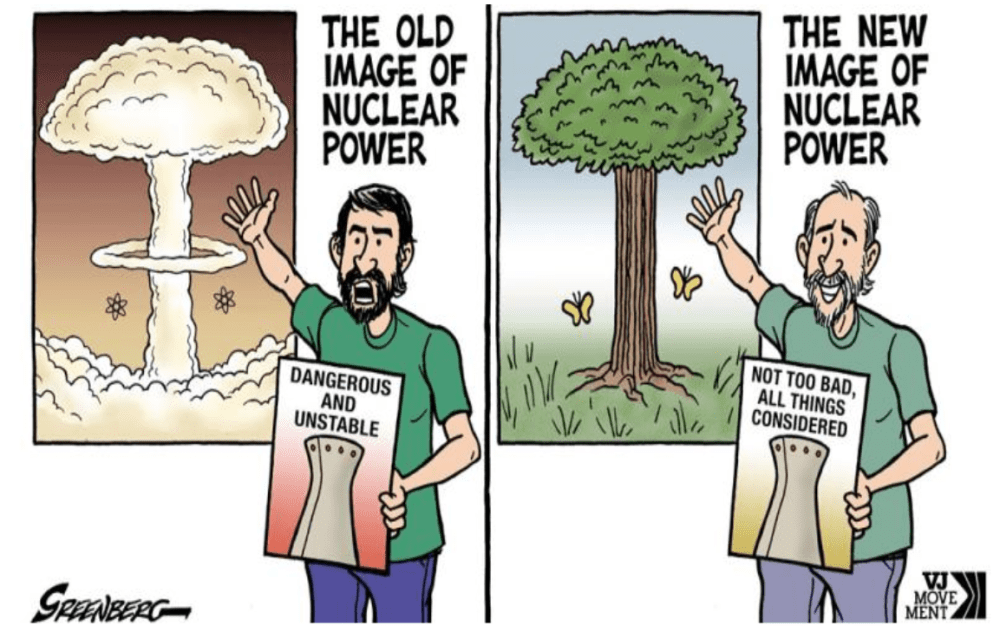
You know, the big dream has always been fusion, nuclear fusion energy, where you combine deuterium and tritium, you know, and make power. That’s turned out to be much, much harder than we ever thought it would be. But my guess is it’s a problem that  will eventually be solved.
Someone will have a really good new idea about how to do it. If we keep smart people working on it, someone will figure out how to do it. So I’m optimistic about the future for energy. I think humanity is going to do fine if they don’t self-destruct.
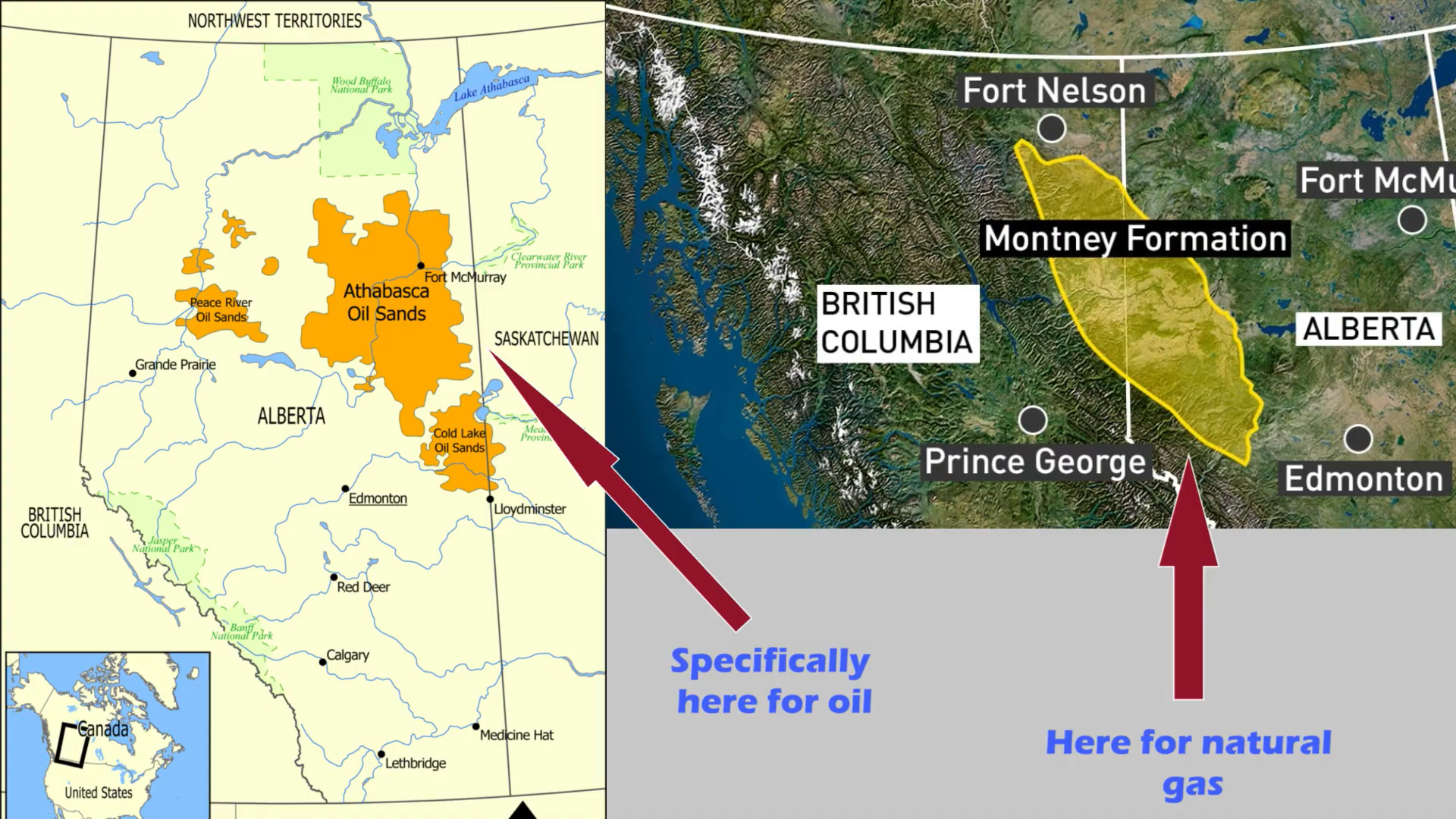
HS: Well, Professor, to kind of sum up, I would like to ask you about what is, in your opinion, what are the real problems? As I understand, and I tend to agree with you, climate change currently at least is not a real problem for humanity. But probably there are some. And what is your feeling? What are they?

Well, the problem has always been living together. How do you keep humanity from self-destructing? And that’s why I have some sympathy for the climate alarmists. They thought that having climate as a common enemy would be one way to prevent this. So you have to admit that that’s not such a bad motive.

I don’t think it’s true.  I don’t think it will work. I think it’s worse than nothing. But I guess the question is how do we keep people in a civilized society indefinitely? And As I said, I’m a lot better with differential equations and instruments than I am with this sort of a question. But just speaking personally, I think everybody should have a feeling that they’re doing something significant with their lives. So I think anything we can do in society is to let young people feel like they’re significant and they’re doing something worthwhile and useful it would be good for the whole world.