Dearth of Green Jobs in UK

Chris Morrison provides the analysis in his Daily Sceptic article ONS Reveals the Pitiful Number of New Green Jobs Being Created in the U.K. Economy.  Excerpts in italics with my bolds and added images.

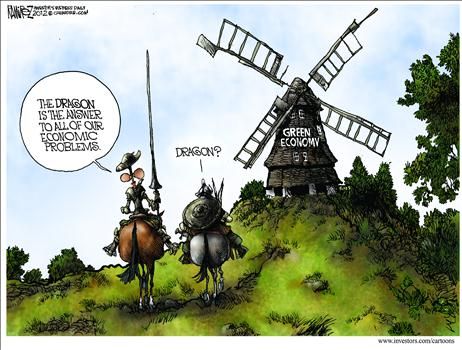
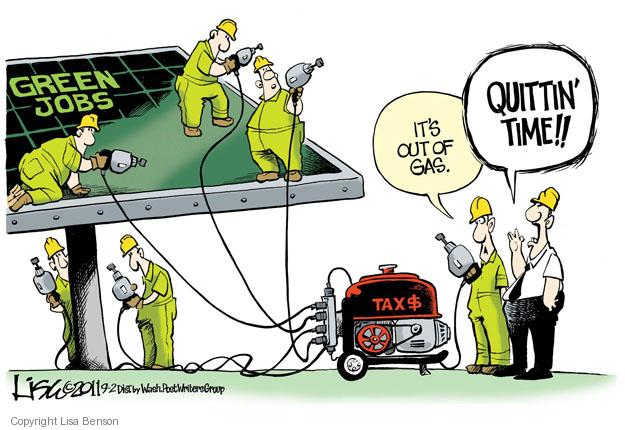
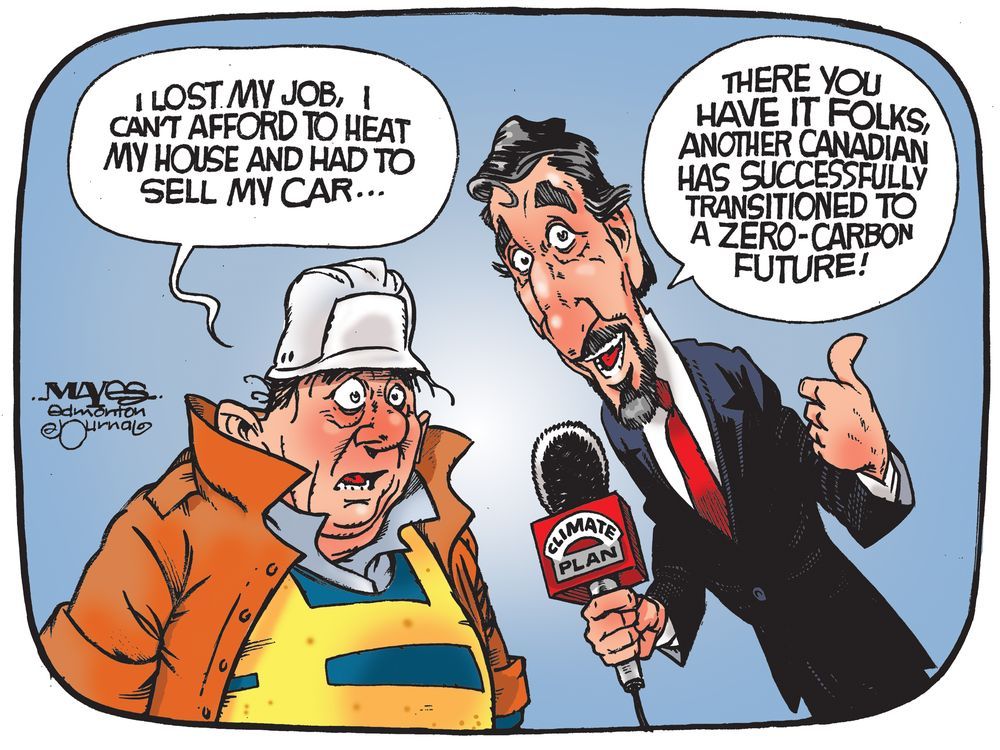
The problem with the green U.K. economy, and its associated destruction of the hydrocarbon environment, is that there are very few jobs being created. The few remaining ‘workers’ in the ruling Labour party are starting to rumble all the luxury boondoggles that are set to further decimate well-paid jobs in their communities. The figures compiled by the Office for National Statistics (ONS), trying to estimate the actual number of green jobs, are always a highly creative hoot, and the latest batch are no exception. Many jobs identified are simply displacement activity, with one repair or maintenance occupation taking over from another. Around 6% of the total are to be found in ‘environmental charities’, an interesting way to describe elite billionaire political funding to push the Net Zero fantasy. Such is the seeming desperation to rustle up a green job, the ONS even includes repairing home appliances, controlling forest fires and separating hydrogen by carbon dioxide-producing electrolysis.

The latest ‘estimates’ from the ONS cover 2021 and 2022, and they are said to show an increase in both years. But as the graph below reveals, the rises are pitiful over a decade, and the 2022 estimate of 639,000 is less than 2% of jobs in the economy as a whole.

As can be seen, environmental charities employ 40,000 people, almost as many as the 47,000 that work in renewable energy. But the charities figure does not include all those make-work jobs in environmental consultancy and education or what is described as in-house environmental activities. If all the displacement, invented or re-badged jobs in repair, electric vehicles, waste disposal, water treatment, energy efficiency, Net Zero promotion, teaching and the ubiquitous bureaucracy are rightly ignored, it is unlikely that more than 150,000 new jobs have been created.

Fairly small pickings, it might be thought, from all the cash sprayed at subsidy-hunting chancers over at least two decades. Even worse, any new jobs are easily offset by the occupations being destroyed in steel making, refining hydrocarbons, coal mining and oil and gas exploration. Fracking for gas would transform a number of deprived areas in the U.K. at little environmental cost, as it has done in the U.S. Energy security would likely be achieved, and the tax take would be considerable. But fracking is anathema to the major political parties in the U.K., except the emerging Reform party.Last week saw some real push back on the madness of Net Zero and the so-called green economy. The boss of GMB, the third largest trade union in the country, told the annual Labour party conference that its plans to decarbonise the energy network by 2030 will cost up to one million jobs, decimate working communities and push up bills for the poorest. According to Smith, Government’s plans for Net Zero were “bonkers” and “fundamentally dishonest”. In a week when it was revealed that British consumers, both industrial and private, had some of the highest electricity prices in the developed world, he charged that current energy policy amounted to virtue signalling by politicians. He accused them of exporting jobs and importing virtue because the jobs were being created abroad rather than in the U.K.

Meanwhile, a recent paper published in Science came to a damning conclusion that will not surprise sceptics, namely that 96% of climate policies over the last 25 years, ultimately designed to reduce carbon dioxide emissions, have been a waste of money. “That’s where green spin has got us,” writes George Monbiot, although these days the Guardian’s extremist-in-chief seems to have given up on all life enhancing processes that run the risk of disturbing anything on the planet. “Finally, 15 years and a trillion dollars too late, George Monbiot says what sceptics have been saying all along,” observes the sceptical journalist Jo Nova. “Nearly every single carbon reduction scheme is a useless make-work machination that creates the illusion that the government is doing something,” she says.

As we can see, the ONS survey is full of these make-work schemes providing jobs that can only exist by rigging free markets and providing eye-watering subsidies from consumers and taxpayers. As the more concerned trade unionists can see, much of the cost of these fantasy ventures falls on the poorest members of society forced to pay higher prices for many of the basic essentials of life. In addition, as we have observed, most green schemes make mugs of the wider investing public, with the RENIXX, a stock capitalisation global index of the 30 largest renewable industrial companies, showing near zero growth since it was started in 2006. None of this matters, of course, to the Mad Miliband and his weird wonks at the U.K. Department of Energy, who are ramping up ideological plans to hose cash at daft ideas like carbon capture, battery energy storage and hydrogen production.

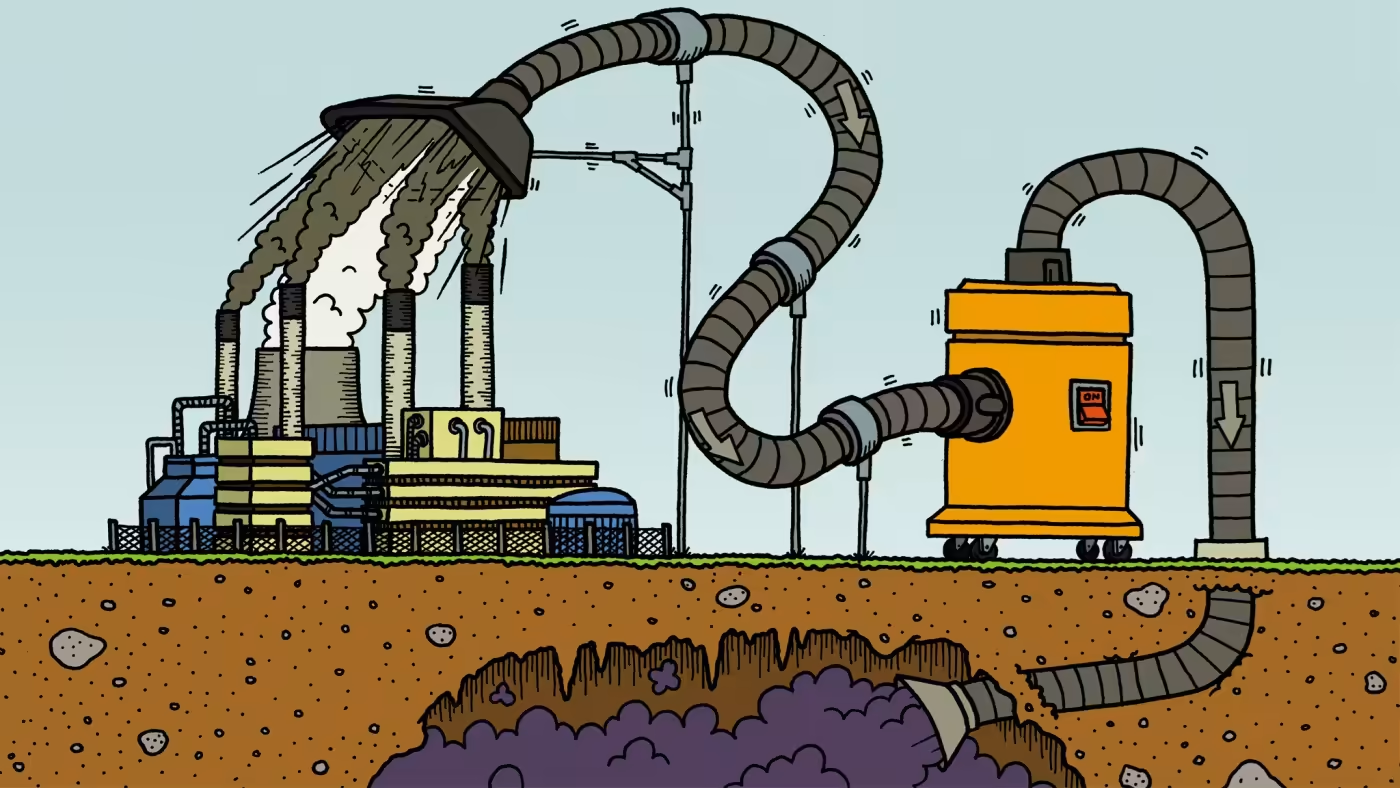
Not only is CO2 Capture and Storage wildly impractical, its aim is to deprive the biosphere of plant food.

But all is not lost on the jobs front – opportunities must be taken when they occur. Earlier this year, Gary Smith was able to point to some new employment clearing away the animal casualties of wind farm blades. “It’s usually a man in a rowing boat, sweeping up the dead birds,” he observed.

Footnote Q & A:

Q:  What is the difference between Golf and Government?

A:  In Government you can always improve your lie.

–Anonymous Source

Resources

Climate Policies Fail in Fact and in Theory

Investors Beware Green Equipment Companies

Green Deal Cuts EU Emissions, Doubles Them Elsewhere

Climate Policies Built on CO2 Deceptions

From response by James Matkin  Former Deputy Minister at Government of British Columbia to Quora question What are the criticisms of the Canadian federal carbon pricing system implemented under the Trudeau government’s “Pan-Canadian Framework” on climate change?  Excerpts in italics with my bolds.

The big lie is that Canada needs more carbon dioxide, not less, which is the intent of the carbon tax. Also, there is no carbon pricing system; rather, there is a carbon dioxide pricing system. Carbon is not the equivalent of CO2.

We need less carbon pollution from coal and more
carbon dioxide for our health and well-being.

This mistaken terminology deceives the public as it portends pollution. Amazingly, US President Obama, Trudeau, and Kamala Harris falsely call CO2 carbon pollution.

CO2 is used to save premature babies in incubators.

CO2 is the primary gas for fire extinguishers.

The solid form of CO2 is dry ice not carbon.
Likewise the solid form of H2O is ice not hydrogen.

More CO2 has enormous benefits for crops and our health. It also greens deserts and saves fresh water by spurring tree growth.

If CO2 was a problem why does the commercial greenhouse industry infuse up to 1500 ppm 7/24 to increase plant growth?

Canadians pay an imposing Carbon Tax to save the planet, while the rest of North America has no such Carbon Tax. If you look at economics, the Carbon Tax lowered our standard of living and did nothing for Climate Change.

Canada is a foolish outlier that punishes citizens with a carbon tax to harm plant growth, hospital surgeries, and water retention and cause inflation making the poor poorer.

Canadian emissions of CO2 by fossil fuels are only < 5% of natural
CO2 sources which are too tiny to matter if CO2 mattered to the climate, which it doesn’t.

The driving forces of climate change are natural
not human emissions of CO2

The UN claim that human industry Co2 emissions are causing runaway global warming that will end in catastrophe if not arrested with renewables and carbon taxes was only a thought experiment without any physical observation. Think about this – the UN said there was no historical precedent for the rapid rise in temperatures after industrialization therefore increased CO2 must be the culprit. This is both false logic and untrue. A raft of studies about temperature variability from ocean currents or changes in solar cycles evident in rising or falling sunspots easily explains the temperature rise.

Today with the benefit of hindsight there never was any fast rising temperatures needing explanation. In fact temperature’s rise of less than 1 °C over the past 140 years and now falling 0.4 °C in the past three years means no global warming now or in the past.

Because the climate changes over a long period of time no one living or dead has actually looked out the window and observed climate change. You see weather and it may be a heat wave, snow storm or record rainfall, but one weather event is never a new pattern of changing weather because that must be a statistical analysis.

Green Deal Cuts EU Emissions, Doubles Them Elsewhere

The news and analysis from University of Groningen is reported at Science Daily European Green Deal: A double-edged sword for global emissions.  Excerpts in italics with my bolds and added images.

Greenhouse gas emissions will fall in the EU, but rise even more elsewhere

Summary:  The European Green Deal will bring down the emission of greenhouse gases in the European Union, but at the same time causes a more than a twofold increase in emissions outside its borders.

The European Union aims to be carbon-neutral by 2050 as part of the comprehensive Green Deal that was agreed upon four years ago. However, an analysis of the policy documents outlining the practical measures of the Green Deal shows that it will decrease carbon emissions in Europe, but also increase carbon emissions outside of the EU. This increase is more than double the amount of carbon emissions saved by the Green Deal. This analysis was published in Nature Sustainability on by an international team of scientists led by Klaus Hubacek, Professor of Science, Technology and Society at the University of Groningen.

The European Green Deal is a set of policies intended to fully decarbonize Europe by 2050, but it also includes measures for clean energy production and ecological restoration. Hubacek and colleagues from the United States and China carried out full supply chain analyses of the policy documents underlying the Green Deal. Their conclusion is that the Green Deal in its current form will lead to an increase in emissions in countries outside the EU by 244.8 percent compared to the Green Deal’s carbon reduction goal in the land, land use change, and forestry sector within EU borders.

Reasons to be Skeptical of Policies

One example is the measure to increase biodiversity in Europe by planting three billion trees. ‘However, trees require a lot of land that cannot be used to produce food. That means that food must be produced elsewhere, and to do this, land must be converted into cropland. This increases the carbon dioxide emission and reduces biodiversity,‘ says Hubacek. In this way, the EU would reduce carbon emissions within its borders, but ‘export‘ them to the countries that would produce our food, for example Africa or South America.

Of course, the Green Deal does contain a paragraph forbidding the import of products (such as meat or animal feed) for which woodland is converted to farmland. Hubacek is sceptical: ‘Nothing stops these other countries from growing products for Europe on existing farmland and felling forests to produce for the local market. There are simply too many uncertainties in these types of regulations.’ The Green Deal also calls for an increase in organic farming, but this requires more farmland in Europe. Hubacek: ‘Again, there is very little information available on the impact on land use.’

No free lunch

However, the scientists did not just reveal the negative impacts of the Green Deal on the rest of the world. They also looked at different scenarios to see if overall carbon reductions could be enhanced. ‘We found one very effective way to do this.’ says Hubacek, ‘By adopting the more plant-based “planetary health diet,” it is possible to save an enormous amount of carbon emissions.’ Another measure is to phase out food-based biofuels within the EU, which would reduce the amount of farmland needed and thus save carbon emissions and prevent biodiversity loss. Also, the EU could assist developing regions to increase their agricultural efficiency, which would also reduce land use.

Although the Nature Sustainability article shows that the European Green Deal in its present form could result in a net loss for the global environment, the scientists conclude that it can be remedied. ‘By adopting the planetary health diet, which is relatively simple’, says Hubacek. However, there is one more thing that needs to change, he stresses: ‘The programme is driven by techno-optimism, but our analysis underlines that there is no free lunch. I very much doubt that “Green Growth” is possible, as everything you produce requires an input of resources. So we really need to consume less.’ There is a strong sense of urgency now that global warming seems set to surpass the 1.5 degrees from the 1995 Paris Agreement, and many other planetary boundaries are also being overstepped. Hubacek: ‘It is time to implement measures that work.’

Comment:

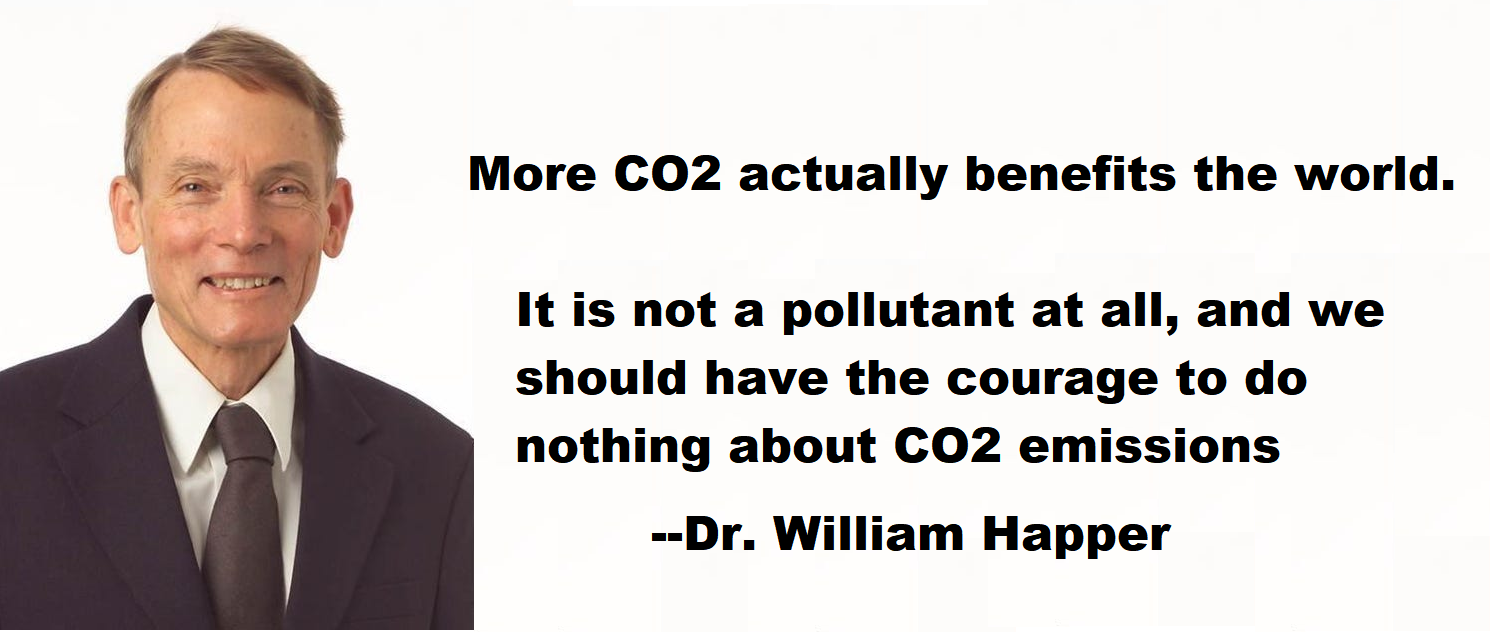
The authors share the IPCC notion of climate emergency caused by GHGs, but are practical enough to realize the proposed policies are counter productive.  I am among those who agree with Dr. Happer that the only climate crisis is coming from the torrent of ill-advised governmental policies that are not likely to reduce GHG emissions or temperatures, but will achieve great economic and social destruction.

See the series of four posts World of Hurt from Climate Policies

World of Hurt from Climate Policies-Part 1

See Also

Climate Policies Fail in Fact and in Theory


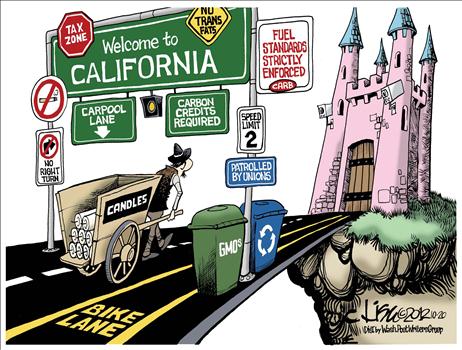
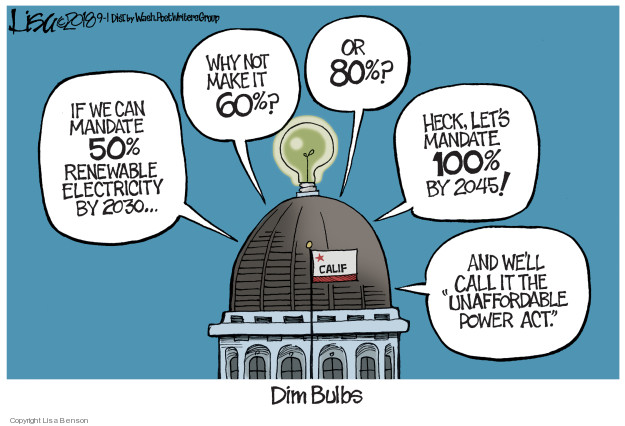
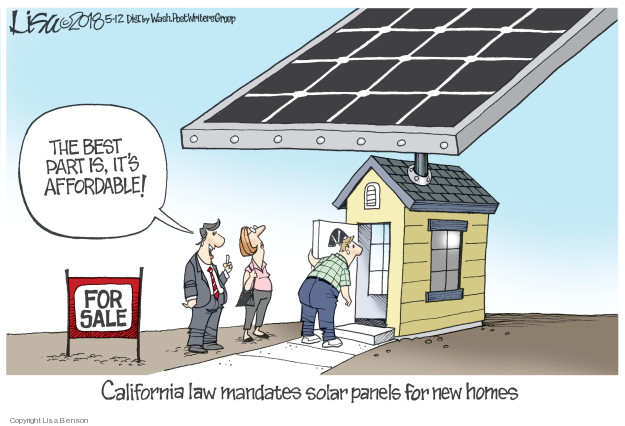
California Browning from Electricity Policies

Ronald Stein explains the devastation in his Heartland article The Golden State of California Is Turning Brown Without Continuous Electricity.  Excerpts in italics with my bolds and added images.

As a resident of California for more than six decades, I am aware that the availability of continuously generated electricity in California is deteriorating and will get worse!

The “Green New Deal” and “Net Zero” policies in California that are supported by Governor Newsom and the Democratic Presidential candidate Kamala Harris have led to the state’s most expensive electricity and fuel prices in America and increasingly high cost of living, housing, and transportation, coupled with an increase in crime, smash-and-grab robberies, homelessness, pollution, and congestion that has caused many tax-paying residents and companies to exodus California to more affordable cities and states.

California’s net move-out number of residents in 2022 alone was more than 343,000 people that left California — the highest exodus of any state in the U.S.

The California Policy Institute counted more than 237 businesses that have left the state since 2005. Among these businesses were eleven Fortune 1000 companies, including AT&T, Hewlett Packard Enterprise, Exxon Mobil, and Chevron.

The U.S. Department of Energy recently made a startling admission: U.S. electricity demand will double by 2050, and meeting that soaring demand will require the equivalent of building 300 Hoover Dams.

The last California Nuclear Power Plant at Diablo Canyon, a 2.2 GW plant generating continuous uninterruptable electricity, is projected to close soon. In nameplate only, it would take 1,000 2.2MW wind turbines to generate 2.2 GW, but then, it’s only intermittent electricity vs. the continuous uninterruptable electricity from Diablo demanded by the California economy!

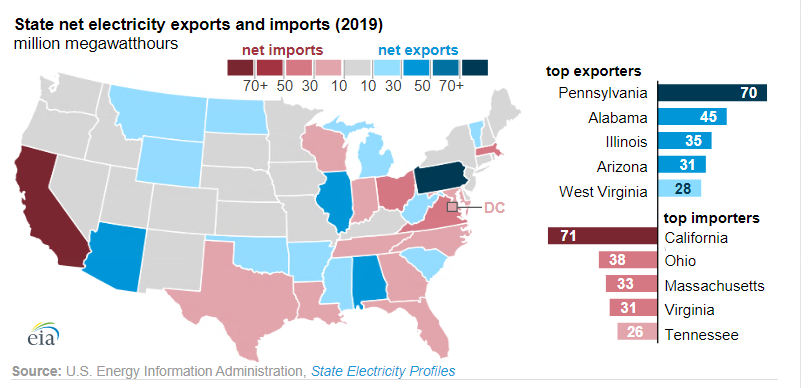
As a result of the “Green New Deal” and “Net Zero” policies and renewables of wind and solar stations built at the expense of taxpayer dollars, California now imports more electric power than any other US state, more than twice the amount in Virginia, the USA’s second-largest importer of electric power. California typically receives between one-fifth and one-third of its electricity supply from outside of the state.

Power prices are rocketing into the stratosphere and, even before winter drives up demand, are being deprived of continuous electricity in a way that was unthinkable barely a decade ago. But such is life when you attempt to run the economy on sunshine and breezes.

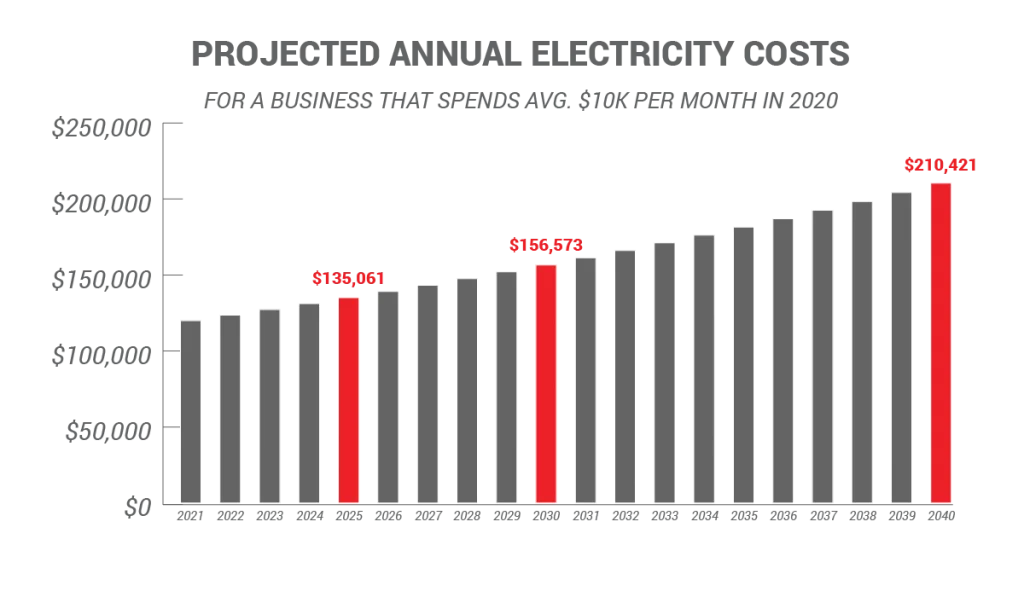
Projected electricity costs for California Businesses

Further, these so-called “green” electricity sources of wind and solar are not clean, green, renewable or sustainable. They also endanger wildlife.

California’s economy depends on affordable, reliable, and ever-cleaner electricity and fuels. Unfortunately, policymakers are driving up California’s electric and gas prices, and California now has the highest electricity and fuel prices in the nation. Those high energy prices are contributing to the pessimistic business sentiment. California’s emission mandates have done an excellent job of increasing the cost of electricity, products, and fuels to its citizens.

It’s becoming increasingly obvious that these supposed “green” alternative methods of generating electricity won’t work — especially as electricity demand is projected to double by 2050 due to AI, charging of EVs and data centers, government-mandated electric heating and cooking, and charging grid-backup batteries. Intermittent electricity from wind and solar cannot power modern nations.

These “green” wind and solar projects primarily exist because they are financed with taxpayer money, i.e., disguised by taxpayers as “Government Subsidies.”

“GREEN” policymakers are oblivious to humanity’s addiction to the products and fuels from fossil fuels, as they are to these two basic facts:

(1)  No one uses crude oil in its raw form. “Big Oil” only exists because of humanity’s addiction to the products and fuels made from oil!

(2)  “Renewables” like wind and solar only exist to generate intermittent electricity; they CANNOT make products or fuels!

To rid the world of crude oil usage, there is no need to over-regulate or over-tax the oil industry; just STOP using the products and fuels made from crude oil!

Simplistically:

STOP making cars, trucks, aircraft, boats, ships, farming equipment, medical equipment and supplies, communications equipment, military equipment, etc., that demand crude oil for their supply chain of products.

STOPPING the demands of society for the products and fuels made from oil will eliminate the need for crude oil.

The primary growth in electric power usage is coming from new data centers housing AI technologies. It is expected that over the next few decades, 50% of additional electric power will be needed just for AI, but data centers CANNOT run on occasional electricity from wind and solar.

Cal matters raises concerns about state policy to phase out ICE vehicles in favor of EVs.

How will the occasionally generated electricity from wind and solar support the following:

  • America’s military fleet of vehicles, ships, and aircraft?
  • America’s commercial and private aircraft?
  • America’s hospitals?
  • America’s space exploration?

Despite Governor Newsom’s and Democratic presidential candidate Kamala Harris’s support for the “Green New Deal” and “Net Zero” policies in California, it’s time to stimulate conversations about the generation of continuously generated electricity to meet the demands of America’s end users.


Climate Policies Fail in Fact and in Theory

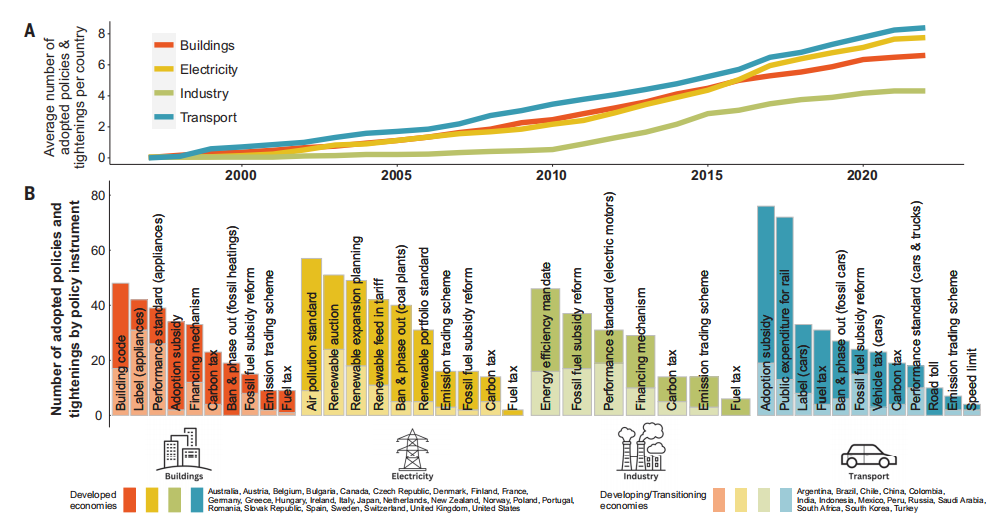
A recent international analysis of 1500 climate policies around the world concluded that 63 or 4% of them were successful in reducing emissions.  The paper is Climate policies that achieved major emission reductions: Global evidence from two decades published at Science.org.  Excerpts in italics with my bolds.

Abstract

Meeting the Paris Agreement’s climate targets necessitates better knowledge about which climate policies work in reducing emissions at the necessary scale. We provide a global, systematic ex post evaluation to identify policy combinations that have led to large emission reductions out of 1500 climate policies implemented between 1998 and 2022 across 41 countries from six continents. Our approachintegrates a comprehensive climate policy database with a machine learning–based extension ofthe common difference-in-differences approach. We identified 63 successful policy interventions with total emission reductions between 0.6 billion and 1.8 billion metric tonnes CO2 . Our insights on effective but rarely studied policy combinations highlight the important role of price-based instruments in well-designed policy mixes and the policy efforts necessary for closing the emissions gap.

Context

(1). Although the [Paris] agreement seeks to limit global average temperature increase to “well below 2°C above pre-industrial levels and pursuing efforts to limit the temperature increase to 1.5°C,” its success critically hinges on the implementation of effective climate policies at the national level.  However, scenarios from global integrated assessment models suggest that the aggregated mitigation efforts communicated through nationally determined contributions (NDCs) fall short of the required emission reductions.

(2)The United Nations (UN) estimates quantify a median emission gap of 23 billion metric tonnes(Gt) carbon dioxide equivalent (CO2-eq) by 2030

(3). The persistence of this emissions gap is not only caused by an ambition gap but also a gap in the outcomes that adopted policies achieve in terms of emission reductions.

(4). This raises the fundamental question as to which types of policy measures are successfully causing meaningful emission reductions. Despite more than two decades of experience with thousands of diverse climate policy measures gained around the world, there is consensus in neither science nor policy on this question.

The exhibit above shows the scope and complexity of the analysis.  But the bottom line is that 96% of the effort and trillions of $$$ were spent to no avail. It is estimated that on the order of 1.2 Billion tonnes of CO2 were prevented over the last 20 years, with an additional 23 Billion tonnes to be erased by 2030. 

Any enterprise with that performance would be liquidated. 
That is an epic failure in fact. 

And recommending mixing of policies including subsidies and regulations along with pricing goes against economic theory and fails in practice. Ross McKitrick explains the dangers of making climate policies willy-nilly in his Financial Post article Economists’ letter misses the point about the carbon tax revolt.  Excerpts in italics with my bolds and added images.

Yes, the carbon tax works great in a ‘first-best’ world where it’s the
only carbon policy. In the real world, carbon policies are piled high.

An open letter is circulating online among my economist colleagues aiming to promote sound thinking on carbon taxes. It makes some valid points and will probably get waved around in the House of Commons before long. But it’s conspicuously selective in its focus, to the point of ignoring the main problems with Canadian climate policy as a whole.

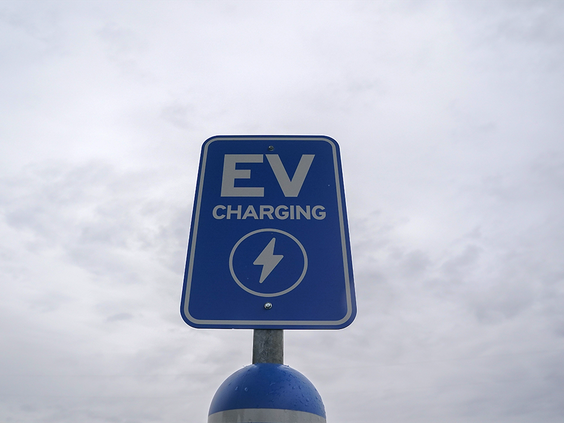
EV charging sign Electric-vehicle mandates and subsidies are among the mountain of climate policies that have been piled on top of Canada’s carbon tax. PHOTO BY JOSHUA A. BICKEL/THE ASSOCIATED PRESS

There’s a massive pile of boulders blocking the road to efficient policy, including:

    • clean fuel regulations,
    • the oil-and-gas-sector emissions cap,
    • the electricity sector coal phase-out,
    • strict energy efficiency rules for new and existing buildings,
    • new performance mandates for natural gas-fired generation plants,
    • the regulatory blockade against liquified natural gas export facilities,
    • new motor vehicle fuel economy standards,
    • caps on fertilizer use on farms,
    • provincial ethanol production subsidies,
    • electric vehicle mandates and subsidies,
    • provincial renewable electricity mandates,
    • grid-scale battery storage experiments,
    • the Green Infrastructure Fund,
    • carbon capture and underground storage mandates, 
    • subsidies for electric buses and emergency vehicles in Canadian cities,
    • new aviation and rail sector emission limits,
      and many more.

Not one of these occasioned a letter of protest from Canadian economists.

Beside that mountain of boulders there’s a twig labelled “overstated objections to carbon pricing.” At the sight of it, hundreds of economists have rushed forward to sweep it off the road. What a help!

To my well-meaning colleagues I say: the pile of regulatory boulders
long ago made the economic case for carbon pricing irrelevant.

Layering a carbon tax on top of current and planned command-and-control regulations does not yield an efficient outcome, it just raises the overall cost to consumers. Which is why I can’t get excited about and certainly won’t sign the carbon-pricing letter. That’s not where the heavy lifting is needed.

My colleagues object to exaggerated claims about the cost of carbon taxes. Fair enough. But far worse are exaggerated claims about both the benefits of reducing carbon dioxide emissions and the economic opportunities associated with the so-called “energy transition.” Exaggeration about the benefits of emission reduction is traceable to poor-quality academic research, such as continued use of climate models known to have large, persistent warming biases and of the RCP8.5 emissions scenario, long since shown in the academic literature to be grossly exaggerated.

But a lot of it is simply groundless rhetoric. Climate activists, politicians and journalists have spent years blaming Canadians’ fossil fuel use for every bad weather event that comes along and shutting down rational debate with polemical cudgels such as “climate emergency” declarations. Again, none of this occasioned a cautionary letter from economists.

There’s another big issue on which the letter was silent. Suppose we did clear all the regulatory boulders along with the carbon-pricing-costs-too-much twig. How high should the carbon tax be? A few of the letter’s signatories are former students of mine so I expect they remember the formula for an optimal emissions tax in the presence of an existing tax system. If not, they can take their copy of Economic Analysis of Environmental Policy by Prof. McKitrick off the shelf, blow off the thick layer of dust and look it up. Or they can consult any of the half-dozen or so journal articles published since the 1970s that derive it. But I suspect most of the other signatories have never seen the formula and don’t even know it exists.

To be technical for a moment, the optimal carbon tax rate varies inversely with the marginal cost of the overall tax system. The higher the tax burden — and with our heavy reliance on income taxes our burden is high — the costlier it is at the margin to provide any public good, including emissions reductions. Economists call this a “second-best problem”: inefficiencies in one place, like the tax system, cause inefficiencies in other policy areas, yielding in this case a higher optimal level of emissions and a lower optimal carbon tax rate.

Based on reasonable estimates of the social cost of carbon and the marginal costs of our tax system, our carbon price is already high enough. In fact, it may well be too high. I say this as one of the only Canadian economists who has published on all aspects of the question. Believing in mainstream climate science and economics, as I do, does not oblige you to dismiss public complaints that the carbon tax is too costly.

Which raises my final point: the age of mass academic letter-writing has long since passed. Academia has become too politically one-sided. Universities don’t get to spend years filling their ranks with staff drawn from one side of the political spectrum and then expect to be viewed as neutral arbiters of public policy issues. The more signatories there are on a letter like this, the less impact it will have. People nowadays will make up their own minds, thank you very much, and a well-argued essay by an individual willing to stand alone may even carry more weight.

Online conversations today are about rising living costs, stagnant real wages and deindustrialization. Even if carbon pricing isn’t the main cause of all this, climate policy is playing a growing role and people can be excused for lumping it all together. The public would welcome insight from economists about how to deal with these challenges. A mass letter enthusing about carbon taxes doesn’t provide it.

Postscript:  All the Pain for No Gain is Unnecessary


There is no charge for content on this site, nor for subscribers to receive email notifications of postings.

Put Climate Insanity Behind Us

Conrad Black writes at National Post Time for the climate insanity to stop.  Excerpts in italics with my bolds and added images.

We have been racing to destroy our standard of living
to avert a crisis that never materialized

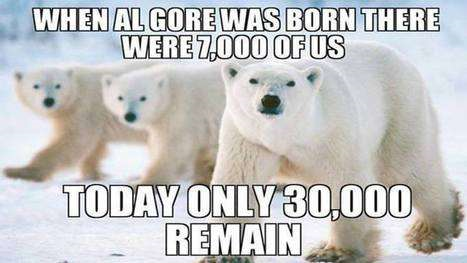
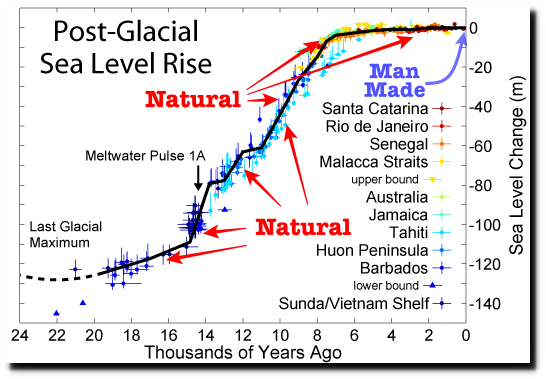
We must by now be getting reasonably close the point where there is a consensus for re-examining the issue of climate change and related subjects. For decades, those of us who had our doubts were effectively shut down by the endless deafening repetition, as if from the massed choir of an operatic catechism school, of the alleged truism: “98 per cent of scientists agree …” (that the world is coming to an end in a few years if we don’t abolish the combustion engine). Decades have gone by in which the polar bears were supposed to become extinct because of the vanishing polar ice cap, the glaciers were supposed to have melted in the rising heat and the impact of melting ice would raise ocean levels to the point that Pacific islands, such as former U.S. vice-president Al Gore’s oratorical dreamworld, the Pacific island state of Tuvalu, would only be accessible to snorkelers. There has been no progress toward any of this. Ocean levels have not risen appreciably, nothing has been submerged and the polar bear population has risen substantially.

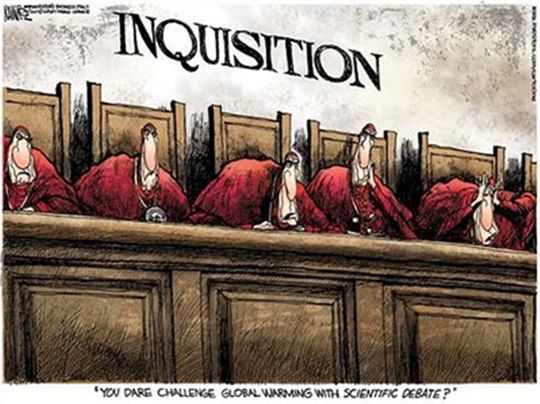
A large part of the problem has been the fanaticism of the alarmist forces. This has not been one of those issues where people may equably disagree. There was a spontaneous campaign to denigrate those of us who were opposed to taking drastic and extremely expensive economic steps to reduce carbon emissions on the basis of existing evidence: we could not be tolerated as potentially sensible doubters; we were labelled “deniers,” a reference to Holocaust-deniers who would sweep evidence of horrible atrocities under the rug. For our own corrupt or perverse motives, we were promoting the destruction of the world and unimaginable human misery. There has been climate hysteria like other panics in history, such as those recounted in Charles MacKay’s “Extraordinary Popular Delusions and the Madness of Crowds,” particularly the 1630’s tulip mania, in which a single tulip bulb briefly sold for the current equivalent of $25,000.

In western Europe, and particularly in the United States, where the full panic of climate change prevailed, the agrarian and working echelons of society have rebelled against the onerous financial penalties of the war on carbon emissions. There have been movements in some countries to suppress the population of cows because of the impact of their flatulence on the composition of the atmosphere. This has created an alliance of convenience between the environmental extremists and the dietary authoritarians as they take dead aim at the joint targets of carbon emissions and obesity. Germany, which should be the most powerful and exemplary of Europe’s nations, has blundered headlong into the climate crisis by conceding political power to militant Greens. It has shut down its advanced and completely safe nuclear power program, the ultimate efficient fuel, and has flirted with abolishing leisure automobile drives on the weekends.

Claims that tropical storms have become more frequent are rebutted by meticulously recorded statistics. Claims that forest fires are more frequent and extensive have also been shown not to be true. My own analysis, which is based on observations and makes no pretense to scientific research, as I have had occasion to express here before, is that the honourable, if often tiresome, conservation movement, the zealots of Greenpeace and the Sierra Club, were suddenly displaced as organizers and leaders of the environmental movement by the international left, which was routed in the Cold War. Their western sympathizers demonstrated a genius for improvisation that none of us who knew them in the Cold War would have imagined that they possessed, and they took over the environmental bandwagon and converted it into a battering ram against capitalism in the name of saving the planet.

Everyone dislikes pollution and wants the cleanest air and water possible. All conscientious people want the cleanest environment that’s economically feasible. We should also aspire to the highest attainable level of accurate information before we embark on, or go any further with, drastic and hideously expensive methods of replacing fossil fuels. Large-scale disruptions to our ways of life at immense cost to consumers and taxpayers, mainly borne by those who can least easily afford it, are a mistake. We can all excuse zeal in a sincerely embraced cause, but it is time to de-escalate this discussion from its long intemperate nature of hurling thunderbolts back and forth, and instead focus on serious research that will furnish a genuine consensus. I think this was essentially what former prime minister Stephen Harper and former environment minister John Baird were advocating in what they called a ”Canadian solution” to the climate question. Since then, our policy has been fabricated by fanatics, including the prime minister, who do not wish to be confused by the facts. The inconvenient truth is now the truth that inconveniences them.

Western Europe has effectively abandoned its net-zero carbon emission goals; the world is not deteriorating remotely as quickly as Al Gore, King Charles, Tony Blair and the Liberal Party of Canada predicted. Some of the largest polluters — China, India and Russia — do not seem to care about any of this. Canada should lead the world toward a rational consensus with intensified research aiming at finding an appropriate response to the challenge. What we have had is faddishness and public frenzy. Historians will wonder why the West made war on its own standard of living in pursuit of a wild fantasy, and no immediate chance of accomplishing anything useful. We have been cheered on by the under-developed world because they seek reparations from the advanced countries, although some of them are among the worst climate offenders. It is insane. Canada should help lead the patient back to sanity.

Postscript:

So to be more constructive, let’s consider what should be proposed by political leaders regarding climate, energy and the environment.  IMO these should be the pillars:

♦  Climate change is real, but not an emergency.

♦  We must use our time to adapt to future climate extremes.

♦  We must transition to a diversified energy platform.

♦  We must safeguard our air and water from industrial pollutants.

A Rational Climate Policy

This is your brain on climate alarm. Just say N0!

Ruinous Folly of CO2 Pricing

Dr. Lars Schernikau is an energy economist explaining why CO2 pricing (also falsely called “carbon pricing”) is a terrible idea fit only for discarding.  His blog article is The Dilemma of Pricing CO2.  Excerpts below in italics with my bolds and added images.

1.Understanding CO₂ pricing
2.Economic and environmental impact
3.Global economic impact
4.Alternative solutions
5.Conclusion
6.Additional comments and notes
7.References

Introduction

As an energy economist I am confronted daily with questions about the “energy transition” away from conventional fuels. As we know, the discussion about the “energy transition” stems from concerns about climatic changes.

The source of climatic changes is a widely discussed issue, with numerous policies and measures proposed to mitigate its impact. One such measure is the current and future pricing of carbon dioxide (CO₂) emissions. The logic followed is that if human CO₂ emissions are reduced, future global temperatures will be measurably lower, extreme weather events will be reduced, and sea-levels will rise less or stop rising all together.

Although intended to reduce greenhouse gases, this approach has sparked considerable debate. In this blog post I discuss the controversial topic of CO₂ pricing, examining its economic and environmental ramifications.

However, this article is not about the causes of climatic changes, nor is it about the negative or positive effects of a warming planet and higher atmospheric CO₂ concentrations. It is also not about the scientifically undisputed fact that we don’t know how much warming CO₂ causes (a list of recent academic research on CO₂’s climate sensitivity can be found at the end of this blog).

Nor do I unpack the undisputed and IPCC confirmed fact that each additional ton of CO₂ in the atmosphere has less warming effect than the previous ton as the climate sensitivity of CO₂ is a logarithmic function irrespective of us not knowing what that climate sensitivity is. I also don’t discuss the NASA satellite confirmed greening of the world over the past decades partially driven by higher atmopheric CO₂ concentrations (see sources inc Chen et al. 2024).

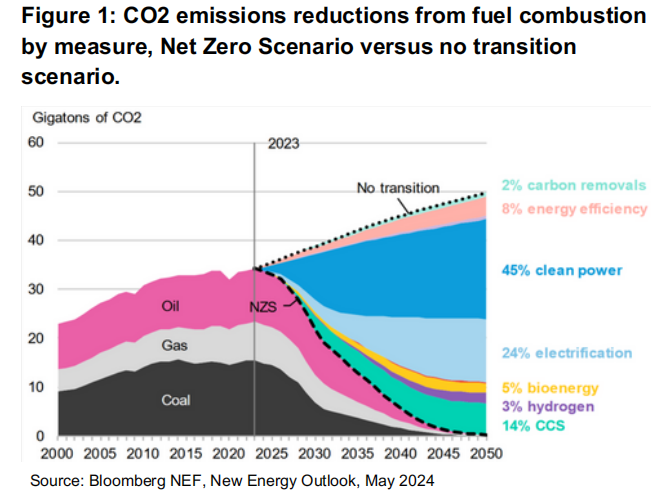
Instead, this blog post is about the environmental and economic “sense”, or lack thereof, of pricing CO₂ emissions as currently practiced in most OECD countries and increasingly seen in developing nations. It is about the “none-sense” of measuring practically all human activity with a “CO₂ footprint”, often mistakenly called “carbon footprint”, and having nearly every organization set claims for current or future “Net-Zero” (Figure 1).
1.Understanding CO₂ Pricing

CO₂ pricing aims to internalize the external costs of CO₂ emissions, thereby encouraging businesses and individuals to reduce their “carbon footprint”. The concept is straightforward: by assigning a cost to CO₂ emissions, it becomes financially advantageous to emit less CO₂.

However, this simplistic view overlooks
significant complexities and unintended consequences.

Our entire existence is based on drawing from nature (“renewable” or not), so the “Net-Zero” discussion ignores a fundamental requirement for our survival. I agree that it should be our aim to reduce the environmental footprint as much as possible but only if our lives, health, and wealth don’t deteriorate as a result.

Now, I am sure, some readers and many “activists” may disagree, which I respect but, at a global level, find unrealistic. However, I would assume that most agree that no-one’s life ought to be harmed or shortened for the sake of reducing the environmental impact made. Otherwise, there is little room for a conversation.

BloombergNEFs “New Energy Outlook” from May 2024 should possibly be called “CO₂ Outlook”, as there is little to be found about energy and its economics but rather all about CO₂ emissions and the so called “Net-Zero” (Figure 1), which is in line with media, government, and educational focus on primarily carbon dioxide emissions.

2.Economic and Environmental Impacts

One of the primary criticisms of CO₂ pricing is that it addresses only one environmental externality while ignoring others. This narrow focus can lead to economic distortions, as it fails to account for the full spectrum of environmental and social impacts. For instance, while CO₂ pricing might reduce emissions, it can also drive-up energy costs, disproportionately affecting lower-income populations and hindering economic development in lesser developed countries.

It is by now undisputed amongst energy economists that, large-scale “Net-Zero” intermittent and unpredictable wind and solar power generation increases the total or “full” cost of electricity, primarily because of their low energy density, intermittency, inherent net energy and raw material inefficiency, mounting integration costs for power grids, and the need for a drastic overbuild installation system plus an overbuild backup/storage system because of their intermittency.

CO₂ pricing can also result in environmental trade-offs. For example, the shift towards “renewable” energy sources like wind and solar, incentivized by CO₂ pricing, has its own set of environmental impacts, including land use, resource extraction, energy footprint, and energy storage challenges.

When BloombergNEF (Figure 1) displays
how clean power and electrification
will directly reduce CO₂ emissions to zero,
then they are clearly mistaken.

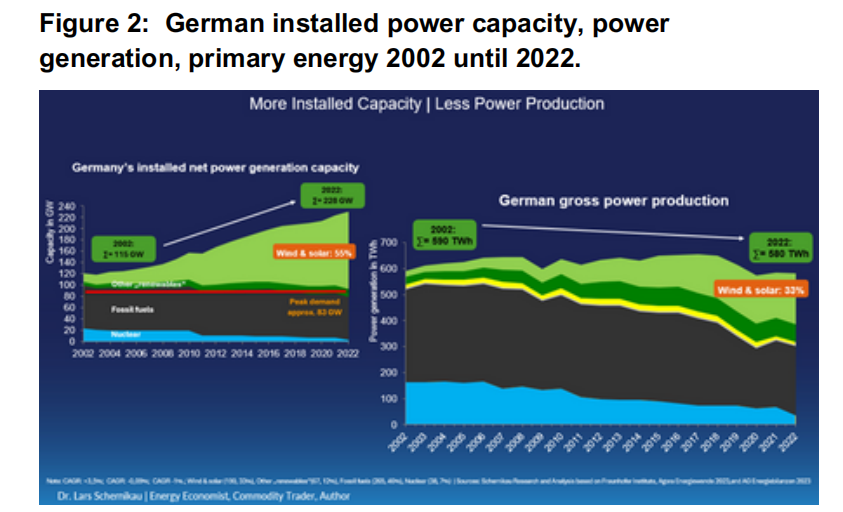
My native country Germany provides a notable example of the complexities involved in transitioning to “renewable” energy. The country has invested heavily in wind and solar power, leading to the highest electricity costs among larger nations. Germany’s installed wind and solar capacity is now twice the total peak power demand. This variable “renewable” wind and solar power capacity now produces about a third of the country’s electricity and contributes about 6% to Germany’s primary energy supply (Figure 2).

Sources: Schernikau based on Fraunhofer, Agora, AG Energiebilanzen. See also www.unpopular-truth.com/graphs.

3.Global Economic Implications

Higher energy costs, obviously and undisputedly, hurt less affluent people and stifles the development of poorer nations (Figure 3). Thus, a move to more expensive wind and solar energy has “human externalities”. The less fortunate will be “starved of” energy as they wouldn’t be able to afford it, leading to literal reduction in life expectancy.
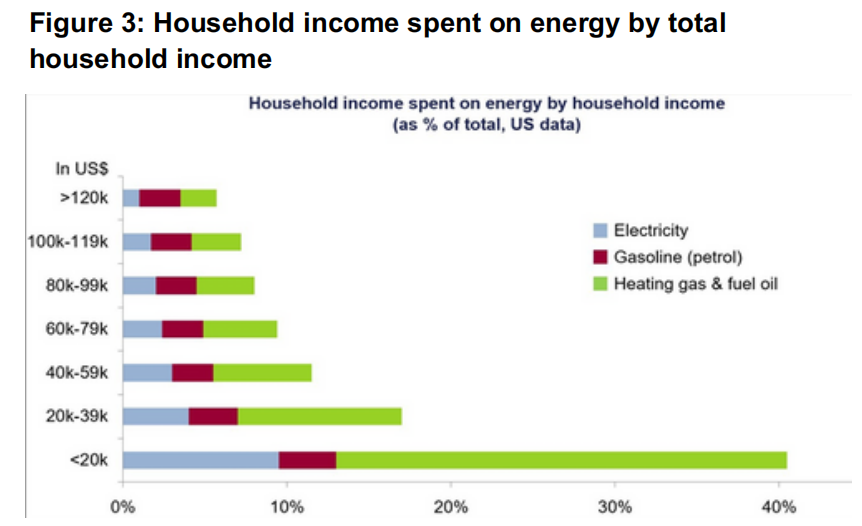
Source: Eschenbach 2017; Figure 38 in Book “The Unpopular Truth… about Electricity and the Future of Energy”

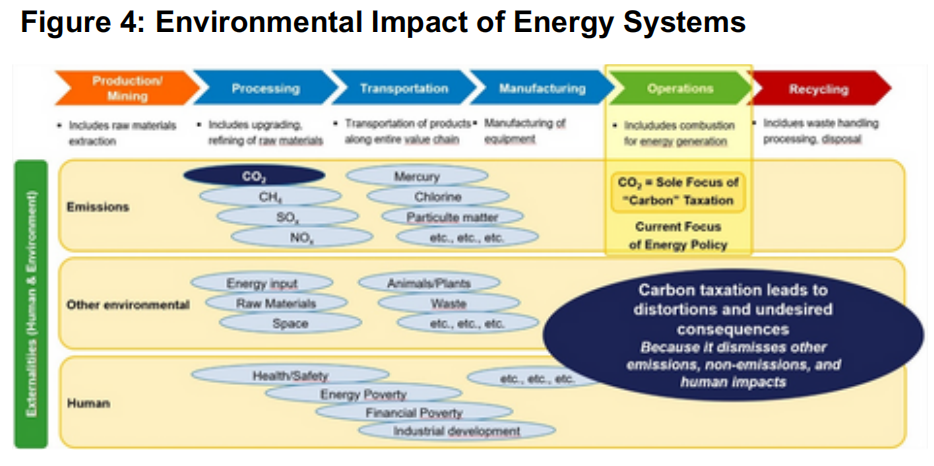
CO₂ pricing typically focuses only on emissions during operation,
neglecting significant environmental and economic costs
incurred during other stages or by the entire system.

For instance, the production of solar panels involves substantial energy and raw material inputs. Today there is not one single solar panel that is produced without coal. Similarly, the manufacturing and transportation processes of wind turbines and electric vehicles are energy-intensive and environmentally impactful. These stages are rarely accounted for in CO₂ pricing schemes, leading to a distorted view of their true environmental footprint. Also not accounted for are:

a) the required overbuild,
b) short and long duration energy storage,
c) backup facilities, or
d) larger network integration and transmission infrastructure.
Source: Schernikau, adapted from Figure 39 in Book “The Unpopular Truth… about Electricity and the Future of Energy“

Figure 4 illustrates how virtually all CO₂ pricing or taxation happens only at the stage of “operation” or combustion. How else could a “Net-Zero” label be assigned to a solar panel produced from coal and minerals extracted in Africa with diesel-run equipment, transported to China on a vessel powered by fuel-oil, and processed with heat and electricity from coal- or gas-fired power partially using forced labour? All this energy-intensive activity and not a single kilogram of CO₂ is taxed (see my recent article on this subject here) The same applies to wind turbines, hydro power, biofuel, or electric vehicles.

It turns out, CO₂ tax is basically just a means to redistribute wealth, with the collecting agency (government) deciding where the funds go. Yes, a CO₂ tax does incentivize industry to reduce CO₂ emissions at their taxed operations only, but this comes at a cost to economies, the environment, and often people. . . Any economist will confirm that pricing one externality but not others leads to economic distortions and, many would say, worse environmental impacts.

4.Alternative Approaches

Distortion, in this case, is just another word for unintended consequences to the environment, our economies, and the people. Pricing CO₂ only during combustion but failing to price methane, raw material and recycling, inefficiency, or embodied energy, or energy shortages, or land requirement, or greening from CO₂… will cause undesirable outcomes. The world will be worse off economically and environmentally.

Protest if you must, but let me offer a simple example. The leaders of the Western world seem to have united around abandoning coal immediately, because it is the highest CO₂ emitter during combustion (UN 2019). Instead, demanding reliable and affordable energy, Bangladesh, Pakistan, Germany, and so many more nations have embraced liquified natural gas (LNG) as a “bridge” fuel to replace coal. This “switch” is taking place despite questions about LNG’s impact on the environment, including the “climate”. This policy, supported by almost all large consultancies, indirectly caused blackouts affecting over 150 million people in Bangladesh in October 2022 (Reuters and Bloomberg).

So, the world is embarking on an expensive venture
to replace as much coal as possible with
more expensive liquified natural gas LNG.

On top of that, wind and solar are given preference. For example, the IEA recently confirmed that 2024 sparks the first year where investments in solar outstrip the combined investments in all other power generation technologies. As a result, energy costs go up, dependencies increase, lights go off, and, as per the UN’s IPCC, the “climate gets worse.”

Now imagine what would happen if we would truly take into account all environmental and human impacts, both negative and positive, along the entire value chain of energy production, transportation, processing, generation, consumption, and disposal… we would all be surprised! You would look at fossil fuels and certainly nuclear through different eyes. Instead we should simply incentivize resource and energy efficiency which will truly make a positive difference!
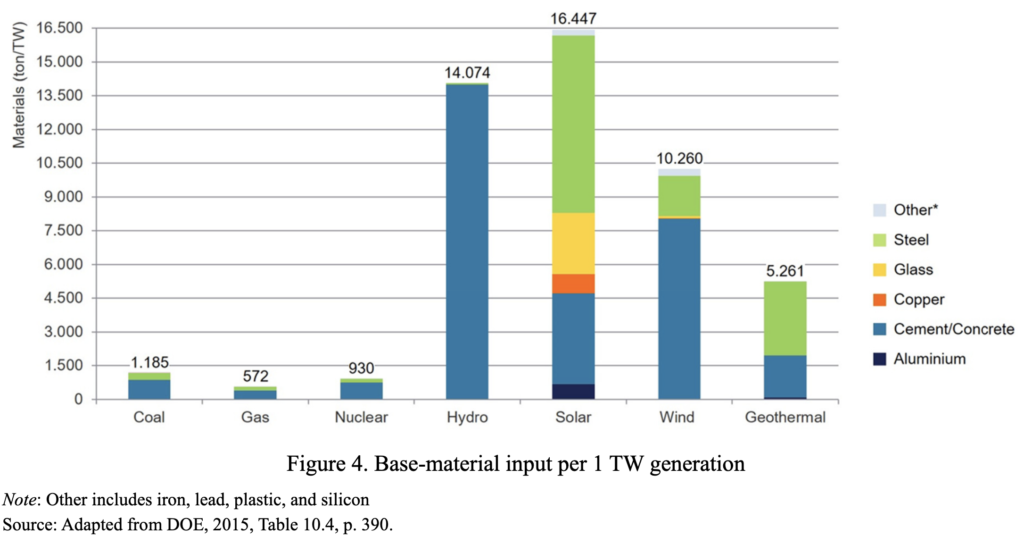
From Schernikau et al. 2022.

5.Conclusion

No matter what your view on climate change is, pricing CO₂ is harmful… why?
Answer: … because pricing one externality but not others leads to economic and environmental distortions…causing human suffering.

That is why, even considering the entire value chain, I do not support any CO₂ pricing.. That is why I fight for environmental and economic justice so we can, by avoiding energy starvation and resulting poverty, make a truly positive difference not only for ourselves but also for future generations to come.. . We need INvestment in, not DIvestment from 80% of our energy supply to rationalize our energy systems and to allow people and the planet to flourish.

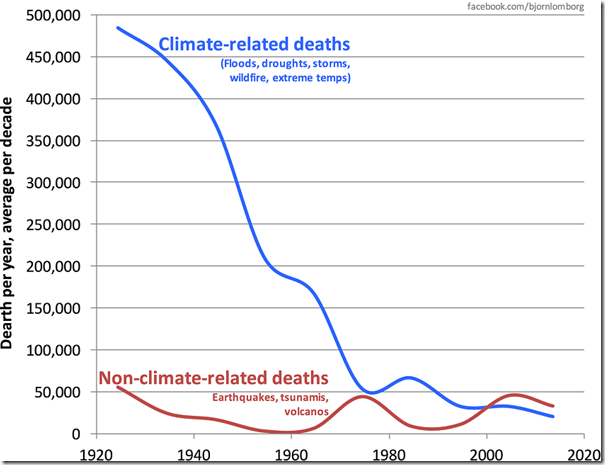
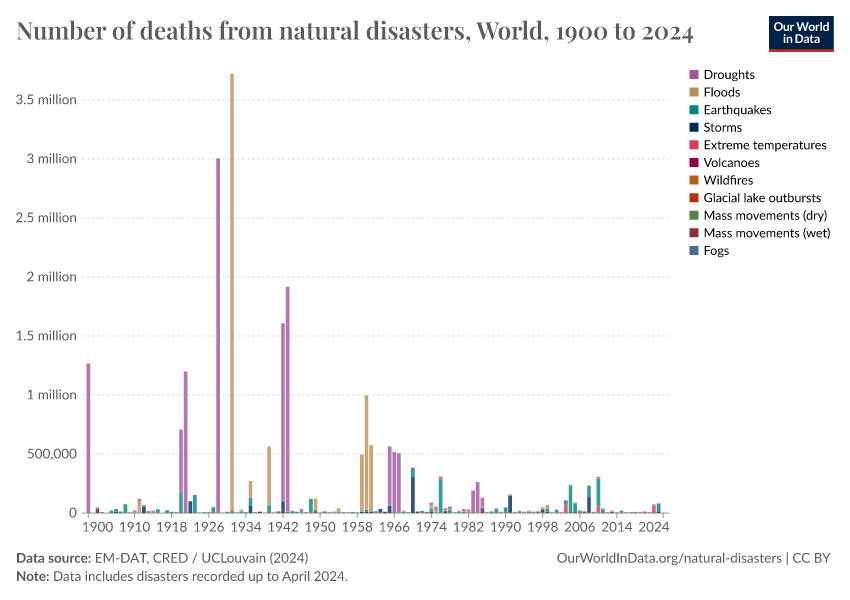
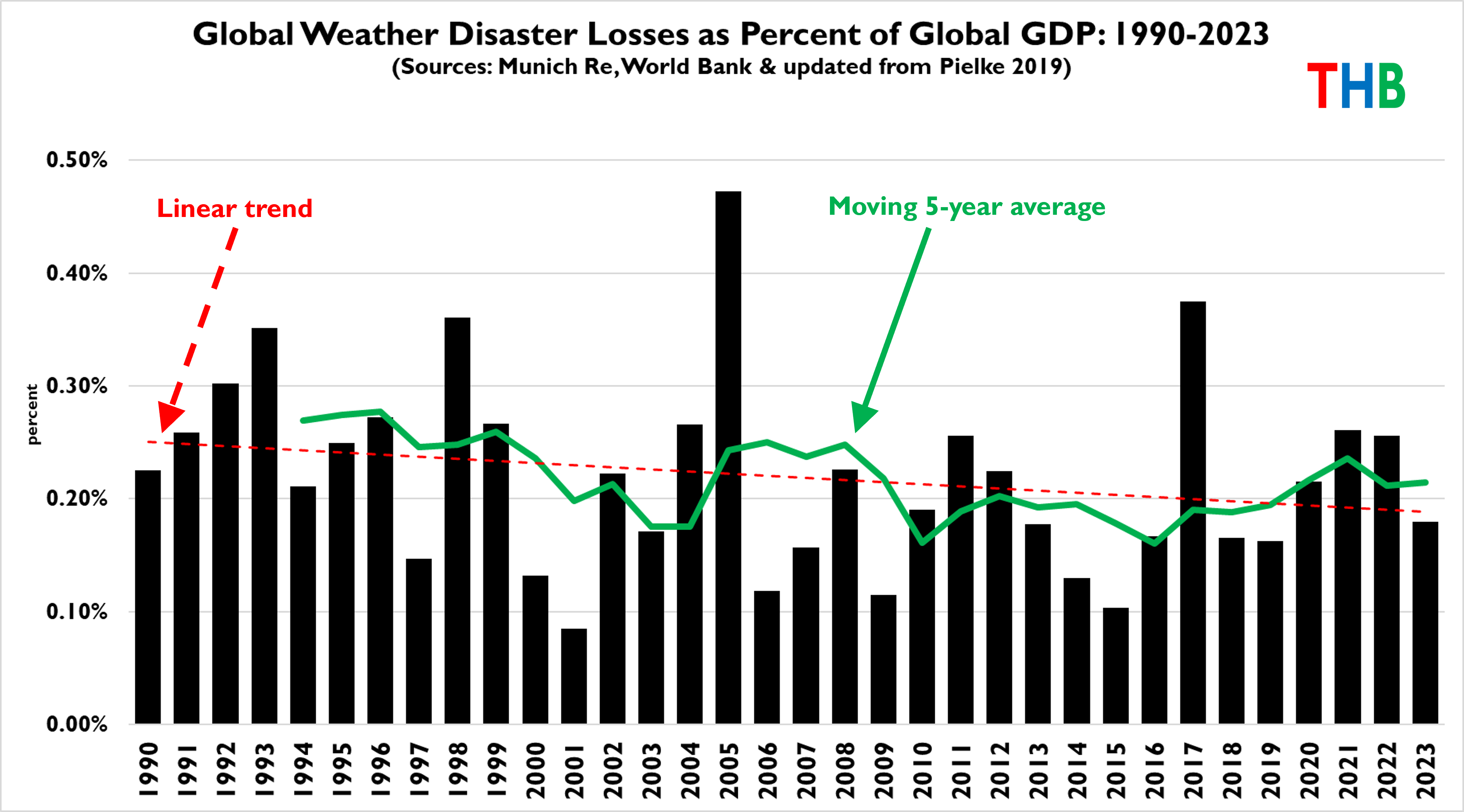
I strongly support increasing adaptation efforts, which have already been successful in drastically reducing the death rate and GDP adjusted financial damage from natural disasters during the past
100 years (OurWorldInData, Pielke 2022, Economist).


Polar Bears, Dead Coral and Other Climate Fictions

Bjorn Lomborg calls out climate alarmist nonsense in his WSJ article Polar Bears, Dead Coral and Other Climate Fictions.  Excerpts in italics with my bolds and added images.

Activists’ tales of doom never pan out,
but they leave us poorly informed and feed bad policy.

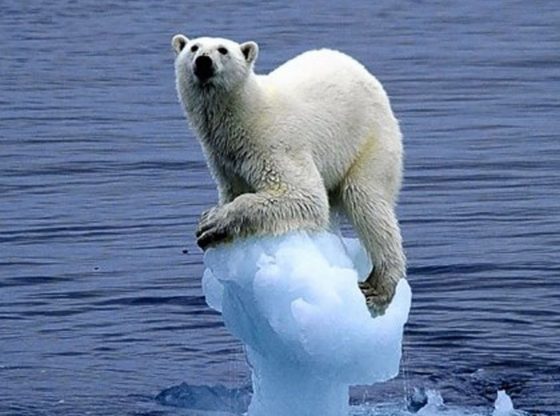
Whatever happened to polar bears? They used to be all climate campaigners could talk about, but now they’re essentially absent from headlines. Over the past 20 years, climate activists have elevated various stories of climate catastrophe, then quietly dropped them without apology when the opposing evidence becomes overwhelming. The only constant is the scare tactics.

Protesters used to dress up as polar bears. Al Gore’s 2006 film, “An Inconvenient Truth,” depicted a sad cartoon polar bear floating away to its death. The Washington Post warned in 2004 that the species could face extinction, and the World Wildlife Fund’s chief scientist claimed some polar bear populations would be unable to reproduce by 2012.

Then in the 2010s, campaigners stopped talking about them.

After years of misrepresentation, it finally became impossible to ignore the mountain of evidence showing that the global polar-bear population has increased substantially. Whatever negative effect climate change had was swamped by the reduction in hunting of polar bears. The population has risen from around 12,000 in the 1960s to about 26,000.

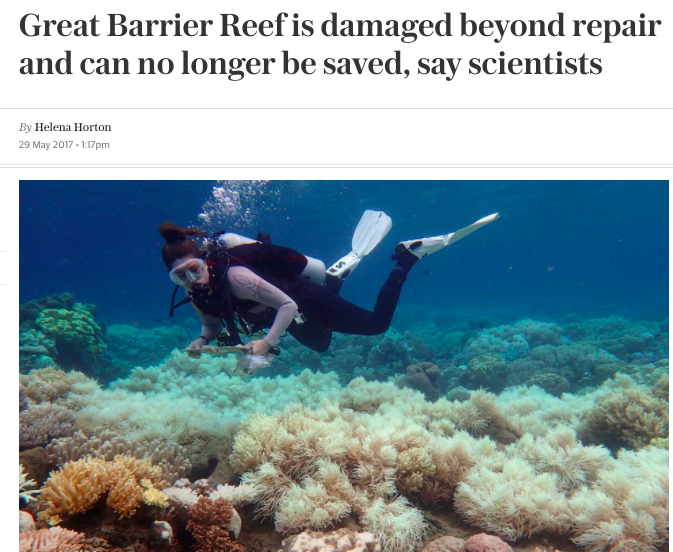
The same thing has happened with activists’ outcry about Australia’s Great Barrier Reef. For years, they shouted that the reef was being killed off by rising sea temperatures. After a hurricane extensively damaged the reef in 2009, official Australian estimates of the percent of reef covered in coral reached a record low in 2012. The media overflowed with stories about the great reef catastrophe, and scientists predicted the coral cover would be reduced by another half by 2022. The Guardian even published an obituary in 2014.

The percentage of coral cover in the northern and central Great Barrier Reef has increased.(Supplied: Australian Institute of Marine Science)

The latest official statistics show a completely different picture. For the past three years the Great Barrier Reef has had more coral cover than at any point since records began in 1986, with 2024 setting a new record. This good news gets a fraction of the coverage that the panicked predictions did.

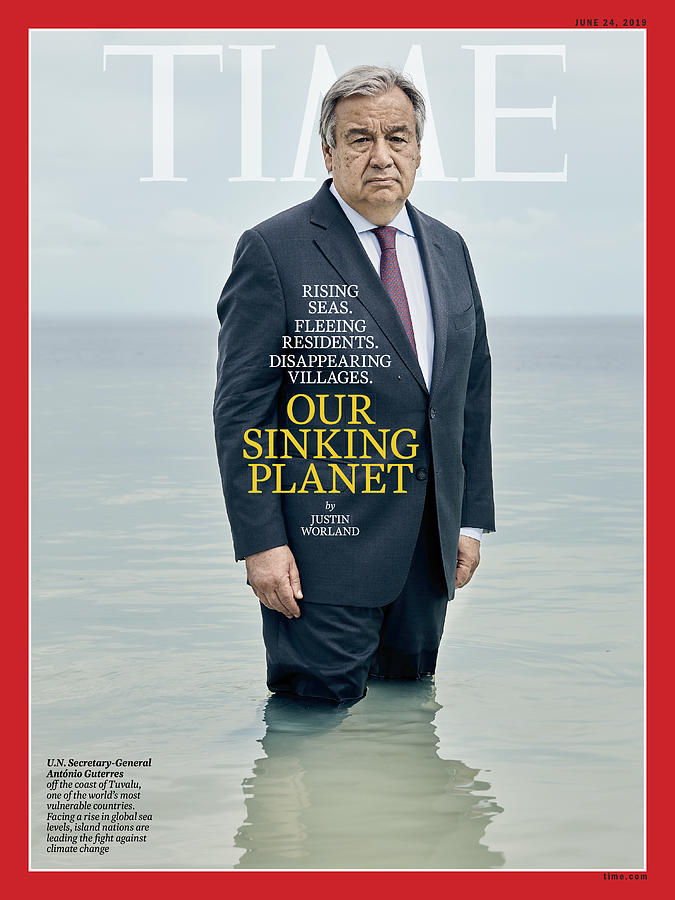
More recently, green campaigners were warning that small Pacific islands would drown as sea levels rose. In 2019 United Nations Secretary-General António Guterres flew all the way to Tuvalu, in the South Pacific, for a Time magazine cover shot. Wearing a suit, he stood up to his thighs in the water behind the headline “Our Sinking Planet.” The accompanying article warned the island—and others like it—would be struck “off the map entirely” by rising sea levels.

Hundreds of Pacific Islands are growing, not shrinking. No habitable island got smaller.

About a month ago, the New York Times finally shared what it called“surprising” climate news: Almost all atoll islands are stable or increasing in size. In fact, scientific literature has documented this for more than a decade. While rising sea levels do erode land, additional sand from old coral is washed up on low-lying shores. Extensive studies have long shown this accretion is stronger than climate-caused erosion, meaning the land area of Tuvalu and many other small islands is increasing.

Today, killer heat waves are the new climate horror story. In July President Biden claimed “extreme heat is the No. 1 weather-related killer in the United States.”

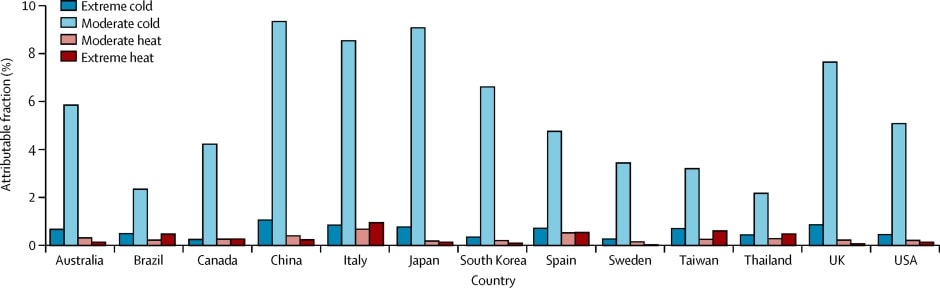
He is wrong by a factor of 25. While extreme heat kills nearly 6,000 Americans each year, cold kills 152,000, of which 12,000 die from extreme cold. Even including deaths from moderate heat, the toll comes to less than 10,000. Despite rising temperatures, age-standardized extreme-heat deaths have actually declined in the U.S. by almost 10% a decade and globally by even more, largely because the world is growing more prosperous. That allows more people to afford air-conditioners and other technology that protects them from the heat.

My Mind is Made Up, Don’t Confuse Me with the Facts. H/T Bjorn Lomborg, WUWT

The petrified tone of heat-wave coverage twists policy illogically. Whether from heat or cold, the most sensible way to save people from temperature-related deaths would be to ensure access to cheap, reliable electricity. That way, it wouldn’t be only the rich who could afford to keep safe from blistering or frigid weather. Unfortunately, 

Activists do the world a massive disservice by refusing to acknowledge
facts that challenge their intensely doom-ridden worldview.

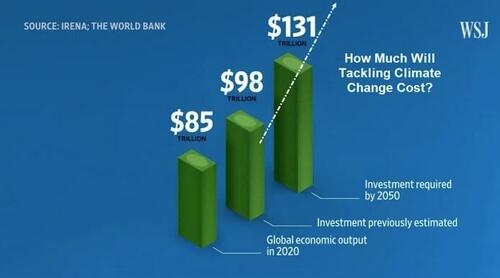
There is ample evidence that man-made emissions cause changes in climate, and climate economics generally finds that the costs of these effects outweigh the benefits. But the net result is nowhere near catastrophic. The costs of all the extreme policies campaigners push for are much worse. All told, politicians across the world are now spending more than $2 trillion annually—far more than the estimated cost from climate change that these policies prevent each year.

Yes, those are Trillions of US$ they are projecting to spend.

Scare tactics leave everyone—especially young people—distressed and despondent. Fear leads to poor policy choices that further frustrate the public. And the ever-changing narrative of disasters erodes public trust.

Telling half-truths while piously pretending to “follow the science” benefits activists with their fundraising, generates clicks for media outlets, and helps climate-concerned politicians rally their bases. But it leaves all of us poorly informed and worse off.

Mr. Lomborg is president of the Copenhagen Consensus, a visiting fellow at Stanford University’s Hoover Institution and author of “Best Things First: The 12 Most Efficient Solutions for the World’s Poorest and our Global SDG Promises.”

See Also:

You Won’t Survive “Sustainability” Agenda 2024

Fantasies of Clever Climate Policies

Chris Kenny writes at The Australian Facts at a premium in blustery climate debate. Excerpts in italics from text provided by John Ray at his blog, Greenie Watch.  My bolds and added images.

Collective Idiocy From Intellectual Vanity

We think we are so clever. The conceit of contemporary humankind is often unbearable.  Yet this modern self-regard has generated a collective idiocy, an inane confusion between feelings and facts, and an inability to distinguish between noble aims and hard reality.

This preference for virtue signalling over practical action can be explained only by intellectual vanity, a smugness that over-estimates humankind’s ability to shape the world it inhabits.

As a result we have a tendency to believe we are masters of the universe, that we can control the climate and regulate natural disasters. Too lazy or spoiled to weigh facts and think things through, we are more susceptible than ever to mass delusion.

We have seen this tendency play out in deeply worrying ways, such as the irrational belief in the communal benefits of Covid vaccination despite the distinct lack of scientific evidence. Too many people just wanted to believe the vaccine had this thing beaten.

Still, there is no area of public debate where rational thought is more readily cast aside than in the climate and energy debate. This is where alarmists demand that people “follow the science” while they deploy rhetoric, scare campaigns and policies that turn reality and science on their heads.

This nonsense is so widespread and amplified by so many authoritative figures that we have become inured to it. Teachers and children break from school to draw attention to what the UN calls a “climate emergency” as the world lives through its most populous and prosperous period in history, when people are shielded from the ill-effects of weather events better than they ever have been previously.

Politicians tell us in the same breath that producing clean energy is the most urgent and important task for the planet and reject nuclear energy, the only reliable form of emissions-free energy. The activists argue that reducing emissions is so imperative it is worth lowering living standards, alienating farmland, scarring forests and destroying industries, but it is not worth the challenge of boiling water to create energy-generating steam by using the tried and tested technology of nuclear fission.

Our acceptance of idiocy, unchecked and unchallenged, struck me in one interview this week given by teal MP Zali Steggall. In many ways it was an unexceptional interview; there are politicians and activists saying this sort of thing every day somewhere, usually unchallenged.

Steggall was preoccupied with Australia’s emissions reduction targets. “If we are going to be aligned to a science-based target and keep temperatures as close to 1.5 degrees as we can, we must have a minimum reduction of 75 per cent by 2035 as an interim target,” she said.

Steggall then patronised her audience by comparing meeting emissions targets to paying down a mortgage. The claim about controlling global temperatures is hard to take seriously, but to be fair it is merely aping the lines of the UN, which argues the increase in global average temperatures can be held to 1.5 degrees with emissions reductions of that size – globally.

We could talk all day about the imprecise nature of these calculations, the contested scientific debate about the role of other natural variabilities in climate, and the presumption that humankind, through policy imposed by a supranational authority, can control global climate as if with a thermostat. The simplistic relaying of this agenda as central to Australian policy decisions was not the worst aspect of Steggall’s presentation.

“The Coalition has no policy, so let’s be really clear, they are taking Australia out of the Paris Agreement if they fail to nominate an improvement with a 2035 target,” Steggall lectured, disingenuously.

This was Steggall promulgating the central lie of the national climate debatethat Australia’s emissions reduction policies can alter the climate. It is a fallacy embraced and advocated by Labor, the Greens and the teals, and which the Coalition is loath to challenge for fear of being tagged into a “climate denialism” argument.

It is arrant nonsense to suggest our policies can have any discernible effect on the climate or “climate risk”. Any politician suggesting so, directly or by implication, is part of a contemporary, fake-news-driven dumbing down of the public square, and injecting an urgency into our policy considerations that is hurting citizens already with high electricity prices, diminished reliability and a damaged economy.

Steggall went on to claim we were feeling the consequences of global warming already. “And for people wondering ‘How does that affect me?’, just look at your insurance premiums, our insurance premiums around Australia are going through the roof,” she extrapolated, claiming insurance costs were keeping people out of home ownership. “This is not a problem for the future,” Steggall stressed, “it is problem for now.”

It is a problem all right – it is unmitigated garbage masquerading as a policy debate. Taking it to its logical conclusion, Steggall claims if Australia reduced its emissions further we would lower the risk of natural disasters, leading to lower insurance premiums and improved housing affordability – it is surprising that world peace did not get a mention.

Mind you, these activists do like to talk about global warming as a security issue. They will say anything that heightens fears, escalates the problem and supports their push for more radical deindustrialisation.

Our national contribution to global emissions
is now just over 1 per cent and shrinking.

Australia’s annual emissions total less than 400 megatonnes while China’s are rising by more than that total each year and are now at 10,700Mt or about 30 times Australia’s. While our emissions reduce, global emissions are increasing. We could shut down our country, eliminating our emissions completely, and China’s increase would replace ours in less than a year.

So, whatever we are doing, it is not changing and cannot change the global climate. Our national chief scientist, Alan Finkel, clearly admitted this point in 2018, even though he was embarrassed by its implications in the political debate. Yet the pretence continues.

And before critics suggest I am arguing for inaction, I am not. But clearly, the logical and sensible baseline for our policy consideration should be a recognition that our national actions cannot change the weather. Therefore we should carefully consider adaptation to measured and verified climate change, while we involve ourselves as a responsible nation in global negotiations and action.

Obviously, we should not be leading that action but acting cautiously to protect our own interests and prosperity.

It is madness for us to undermine our cheap energy advantage to embark on a renewables-plus-storage experiment that no other country has dared to even try, when we know it cannot shift the global climate one iota. It is all pain for no gain.

Yet that is what this nation has done. So my question today is what has happened to our media, academia, political class and wider population so that it allows this debate and policy response to occur in a manner that is so divorced from reality?

Are we so complacent and overindulged that we accept post-rational debate to address our post-material concerns? Even when it is delivering material hardship to so many Australians and jeopardising our long-term economic security?

Should public debate accept absurd baseline propositions such as the idea that our energy transition sacrifice will improve the weather and reduce natural disasters, simply because they are being argued by major political groupings or the UN? Or should we not try to impose a dose of reality and stick to the facts?

This feebleness of our public debate has telling ramifications – there is no way this country could have embarked on the risky, expensive and doomed renewables-plus-storage experiment if policies and prognostications had been subject to proper scrutiny and debate.

Our media is now so polarised that the climate activists of Labor, the Greens and the teals are able to ensure their nonsensical advocacy is never challenged, and the green-left media, led by the publicly funded ABC, leads the charge in spreading misinformation.

Clearly, we are not as clever as we think. Our children need us to wise up.

You Won’t Survive “Sustainability” Agenda 2024

Joel Kotkin explains in his Spiked article The inhumanity of the green agenda.  Excerpts in italics with my bolds and added images.

The ‘sustainability’ regime is impoverishing the world.
In recent years, the overused word ‘sustainability’ has fostered a narrative in which human needs and aspirations have taken a back seat to the green austerity of Net Zero and ‘degrowth’. The ruling classes of a fading West are determined to save the planet by immiserating their fellow citizens. Their agenda is expected to cost the world $6 trillion per year for the next 30 years.

Yes, those are Trillions of US$ they are projecting to spend.

Meanwhile, they will get to harvest massive green subsidies
and live like Renaissance potentates.

In Enemies of Progress, author Austin Williams suggests that ‘the mantra of sustainability’ starts with the assumption that humanity is ‘the biggest problem of the planet’, rather than the ‘creators of a better future’. Indeed, many climate scientists and green activists see having fewer people on the planet as a key priority. Their programme calls not only for fewer people and fewer families, but also for lower consumption among the masses. They expect us to live in ever smaller dwelling units, to have less mobility, and to endure more costly home heating and air-conditioning. These priorities are reflected in a regulatory bureaucracy that, if it does not claim justification from God, acts as the right hand of Gaia and of sanctified science.

The question we need to ask is: sustainability for whom?

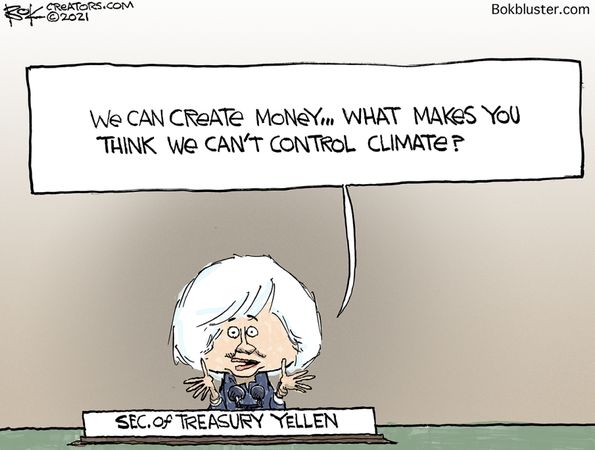
US Treasury secretary Janet Yellen recently suggested that her department sees climate change as ‘the greatest economic opportunity of our time’. To be sure, there is lots of gold in green for the same Wall Street investors, tech oligarchs and inheritors who fund the campaigns of climate activists. They increasingly control the media, too. The Rockefellers, heirs to the Standard Oil fortune, and other ultra-wealthy greens are currently funding climate reporters at organs like the Associated Press and National Public Radio.

Under the new sustainability regime, the ultra-rich profit, but the rest of us not so much. The most egregious example may be the forced take-up of electric vehicles (EVs), which has already helped to make Elon Musk, CEO of Tesla, the world’s second-richest man. Although improvements are being made to low-emissions vehicles, consumers are essentially being frogmarched into adopting a technology that has clear technical problems, remains far more expensive than the internal-combustion engine and depends primarily on an electric grid already on the brink of blackouts. Green activists, it turns out, do not expect EVs to replace the cars of hoi polloi. No, ordinary people will be dragooned to use public transport, or to walk or bike to get around.  [BMW will come to mean “Bike, Metro, and Walking.”]

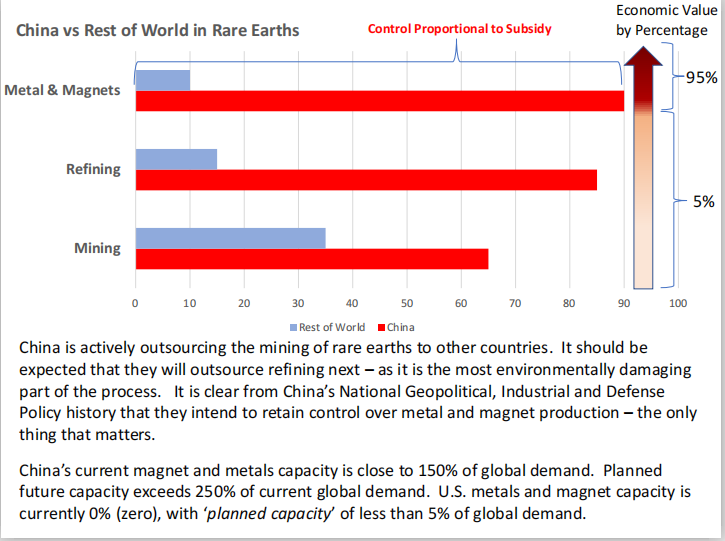
The shift to electric cars is certainly no win for the West’s working and middle classes. But it is an enormous boon to China, which enjoys a huge lead in the production of batteries and rare-earth elements needed to make EVs, and which also figure prominently in wind turbines and solar panels. China’s BYD, which is backed by Warren Buffett, has emerged as the world’s top EV manufacturer, with big export ambitions. Meanwhile, American EV firms struggle with production and supply-chain issues, in part due to green resistance to domestic mining for rare-earth minerals. Even Tesla expects much of its future growth to come from its Chinese factories.

Building cars from primarily Chinese components will have consequences for autoworkers across the West. Germany was once a car-manufacturing giant, but it is expected to lose an estimated 400,000 car-factory jobs by 2030. According to McKinsey, the US’s manufacturing workforce could be cut by up to 30 per cent. After all, when the key components are made elsewhere, far less labour is needed from US and European workers. It’s no surprise that some European politicians, worried about a popular backlash, have moved to slow down the EV juggernaut.

This dynamic is found across the entire sustainability agenda. The soaring energy costs in the West have helped China expand its market share in manufactured exports to roughly equal that of the US, Germany and Japan combined. American manufacturing has dropped recently to its lowest point since the pandemic. The West’s crusade against carbon emissions makes it likely that jobs, ‘green’ or otherwise, will move to China, which already emits more greenhouse gases than the rest of the high-income world.

Meanwhile, the Chinese leadership is looking to adapt to changes in the climate,
instead of undermining economic growth chasing implausible Net Zero targets.

There are clear class implications here. California’s regulators recently admitted that the state’s strict climate laws aid the affluent, but hurt the poor. These laws also have a disproportionate impact on ethnic-minority citizens, creating what attorney Jennifer Hernandez has labelled the ‘green Jim Crow’. As China’s increasingly sophisticated tech and industrial growth is being joyously funded by US venture capitalists and Wall Street, living standards among the Western middle class are in decline. Europe has endured a decade of stagnation, while Americans’ life expectancy has recently fallen for the first time in peacetime. Deutsche Bank’s Eric Heymann suggests that the only way to achieve Net Zero emissions by 2050 is by squelching all future growth, which could have catastrophic effects on working-class and middle-class living standards.

Rather than the upward mobility most have come to expect, much of the West’s workforce now faces the prospect of either living on the dole or working at low wages. Today, nearly half of all American workers receive low wages and the future looks worse. Almost two-thirds of all new jobs in recent months were in low-paying service industries. This is also true in Britain. Over recent decades, many jobs that might have once supported whole families have disappeared. According to one UK account, self-employment and gig work do not provide sustenance for anything like a comfortable lifestyle. Rates of poverty and food shortages are already on the rise.

As a result, most parents in the US and elsewhere doubt their children
will do better than their generation,
while trust in our institutions is at historic lows.

The fabulists at places like the New York Times have convinced themselves that climate change is the biggest threat to prosperity. But many ordinary folk are far more worried about the immediate effects of climate policy than the prospect of an overheated planet in the medium or long term. This opposition to the Net Zero agenda was first expressed by the gilet jaunes movement in France in 2018, whose weekly protests were initially sparked by green taxes. This has been followed by protests by Dutch and other European farmers in recent years, who are angry at restrictions on fertilisers that will cut their yields. The pushback has sparked the rise of populism in a host of countries, notably Italy, Sweden and France. Even in ultra-with-it Berlin, a referendum on tighter-emissions targets recently failed to win over enough voters.

This is class warfare obscured by green rhetoric.
It pits elites in finance, tech and the nonprofit world against
a more numerous, but less connected, group of ordinary citizens.

Many of these folk make their living from producing food and basic necessities, or from hauling these things around. Factory workers, truck drivers and farmers, all slated for massive green regulatory onslaughts, see sustainability very differently than the urban corporate elites and their woke employees. As the French gilets jaunes protesters put it bluntly: ‘The elites worry about the end of the world. We worry about the end of the month.’

This disconnect also exists in the United States, according to long-time Democratic analyst Ruy Teixeira. Attempts to wipe out fossil fuels may thrill people in San Francisco, but are regarded very differently in Bakersfield, the centre of the California oil industry, and in Texas, where as many as a million generally good-paying jobs could be lost. Overall, according to a Chamber of Commerce report, a full national ban on fracking, widely supported by greens, would cost 14 million jobs – far more than the eight million jobs lost in the Great Recession of 2007-09.

No surprise then that blue-collar workers are not so enthusiastic
about the green agenda.

Just one per cent, according to a new Monmouth poll, consider climate as their main concern. A new Gallup poll shows that just two per cent of working-class respondents say they currently own an electric vehicle and a mere nine per cent say they are ‘seriously considering’ purchasing one.

These Western concerns are nothing compared to how the sustainability agenda could impact the developing world. Developing countries are home to roughly 3.5 billion people with no reliable access to electricity. They are far more vulnerable to high energy and food prices than we are. For places like Sub-Saharan Africa, green admonitions against new agricultural technologies, fossil fuels and nuclear power undermine any hope of creating desperately needed new wealth and jobs. It’s no wonder that these countries increasingly ignore the West and are looking to China instead, which is helping the developing world to build new fossil-fuel plants, as well as hydroelectric and nuclear facilities. All of this is anathema to many Western greens.

To make matters worse, the EU is already considering carbon taxes on imports,
which could cut the developing world off from what remains of global markets.

More critical still could be the impact of the sustainability mantra on food production, particularly for Sub-Saharan Africa, which will be home to most of the world’s population growth over the next three decades, according to United Nations projections. These countries need more food production, either domestically or from rich countries like the US, the Netherlands, Canada, Australia and France. And they are acutely aware of what happened when Sri Lanka adopted the sustainability agenda. This led to the breakdown of Sri Lanka’s agricultural sector and, eventually, to the violent overthrow of its government.

We need to rethink the sustainability agenda. Protecting the environment cannot come at the cost of jobs and growth. We should also assist developing countries in achieving a more prosperous future. This means financing workable technologies – gas, nuclear, hydro – that can provide the reliable energy so critical for economic development. It does no good to suggest a programme that will keep the poor impoverished.

Unless people’s concerns about the green agenda are addressed, they will almost certainly seek to disrupt the best-laid plans of our supposedly enlightened elites. In the end, as Protagoras said, human beings are still the ultimate ‘measure’ of what happens in the world – whether the cognoscenti like it or not.