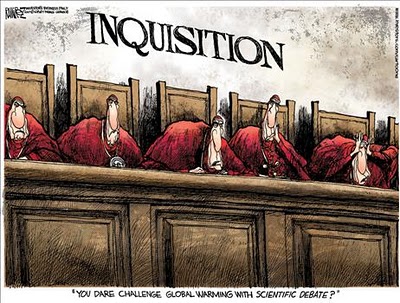
Anyone who dissents from stringent climate policies will be branded an enemy of The Science.
COP26 is an extravaganza of ideological conformity. From the 30,000 delegates and heads of state sequestered in the ‘blue zone’ to the NGOs, academics and green businesses exhibiting in the public ‘green zone’, the message is the same. There is nothing to debate anymore. The climate catastrophe is coming. Now is the time for action.
Similar sentiments abound outside COP26, where the protesters are gathered. There the likes of young eco-millenarian Greta Thunberg also claim that the end is nigh, that the time for debate is over. Or as the Swedish teenager herself put it during a protest on Sunday, there’s no need for any more of this ‘blah, blah, blah’.
This is essentially what all those in and around COP26 are saying. That, in effect, there is nothing to debate anymore. And so, over the next few days, Western-led policymakers, angrily cheered on by protesters, will try to decide our futures for the next few decades. They will regulate, restrict and limit. And they will be able to do so without dissent or debate.
How have we got here? How have we ended up at a point where debating climate change has become nigh-on impossible? The answer lies principally in the use and abuse of the authority of science. The standard justification for shutting down those challenging the alarmist climate-change narrative amounts, effectively, to saying ‘the science has spoken’.
This was clear in the run-up to COP26, when Mark Lynas, a long-time environmentalist campaigner and now a visiting fellow at Cornell University, published a widely reported-on study asserting that the scientific consensus that humans are altering the climate is now agreed upon by 99.9 per cent of scientists. That’s how certain The Science now is. Not just 97 to 98 per cent certain, as it used to be, but 99.9 per cent certain. ‘It is really case closed’, said Lynas. ‘There is nobody of significance in the scientific community who doubts human-caused climate change.’
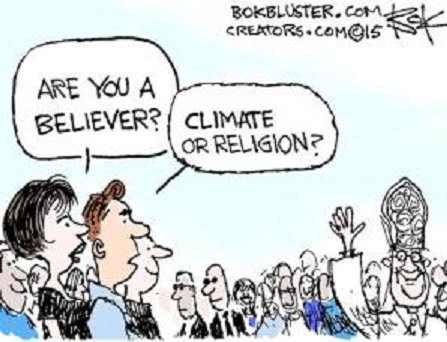
‘Case closed.’ No ‘doubts’ and no appeal. These are revealing words. Climate change has long since ceased to be an issue to be addressed, or a set of challenges to be overcome. It is now the revealed truth, the God-like judgement around which we must organise the entirety of societal life. To question this truth is tantamount to apostasy. Hence Lynas calls for any remaining heretics to be censored, urging Facebook and Twitter ‘to look at their algorithms and policies’ to root out ‘climate misinformation’.
Indeed, those daring to question any aspect of the alarmist narrative are now routinely dismissed not as heretics, but as ‘deniers’ – a term which morally equates those who question, say, certain decarbonisation policies with anti-Semites who deny that the Holocaust happened.
Take the experience of statistician and sceptical environmentalist, Bjorn Lomborg. Earlier this year he was invited to give a public lecture at Duke University, only to be met by high-profile calls for it to be cancelled from Duke professors and assorted climate activists. Duke held its nerve, and the lecture went ahead, but not without Lomborg being denounced as a ‘professional climate denier’ – and all because he questions the economic wisdom of certain aspects of climate-change policymaking.
Or take the decision of the BBC in 2018 to ban, effectively, any debate over climate change. This decision followed activists’ outcry over its 2014 decision to allow Lord Lawson, a former chancellor of the exchequer and a critic of climate alarmism, to appear on Radio 4’s Today programme. The BBC said it had got its coverage of climate change ‘wrong too often’ and told staff: ‘You do not need a “denier” to balance the debate.’
Now even those who are concerned about climate change, but who ‘downplay’, as the Independent put it, ‘the need for immediate and radical cuts to greenhouse gas emissions’, are being accused of denialism. Apparently, ‘delay is the new denial’.
Indeed, influential climate scientist Michael Mann argues that anyone who inhibits the need for drastic action right this very moment, perhaps by talking hopefully of ‘adaptation’, ‘geoengineering’ or ‘carbon capture’, is just a climate denier in optimist’s clothing. ‘The greatest threat’, concludes one politician, ‘is now posed by those who purport to accept the scientific consensus, but refuse to respond at the pace science demands’.
This demented insistence that The Science has spoken, that it has even issued demands, and that all those not bowing down before it are ‘denying’ its truth, rests on a wilful misunderstanding of science and the role it ought to play in political debate.
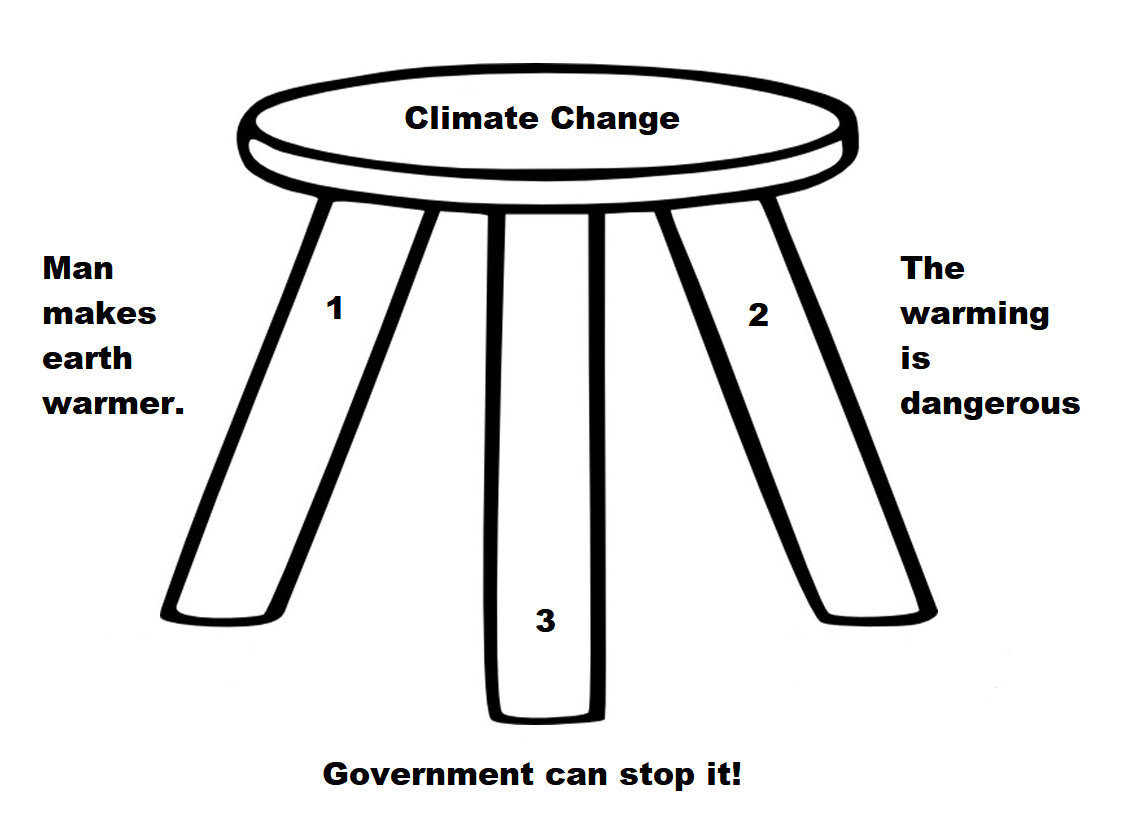
All scientific claims should be subject to contestation, even those that many people happen to agree on. After all, there is sometimes a fine line between consensus and groupthink. The views of scientists and policymakers would surely be strengthened, not undermined, by rigorous public debate. But even if everyone takes as read that climate change is real and a problem, that is still not the end of the debate.The numerous branches of scientific inquiry that constitute climate science can tell us many things about our changing environment. They can tell us about the complex interaction of sea and air temperatures. They can tell us about the state of biodiversity in our oceans and on our land. They can tell us about mankind’s impact on the climate.
But they can’t tell us what energy policies to pursue. They can’t tell us what transport policies to implement. They can’t, in short, tell us what we ought to do. That is something only we can decide. And to do so we need to be able to challenge and question the alarmist narrative. We need to be allowed to scrutinise those peddling certain approaches to climate change. And we need to be able to do so without being likened to Holocaust deniers, banned from social media or No Platformed by the BBC.
We need, in short, to be free to debate climate change. We need more ‘blah, blah, blah’.
An important test of “institutional neutrality” — a pillar of campus free speech — is now playing out in North Carolina, where the University of North Carolina Asheville (UNCA) recently chose to divest a portion of its endowment from companies selling “fossil fuels” (coal, oil, and natural gas).
Institutional neutrality means that universities should avoid taking official political stands at the institutional level, such as divestment from fossil fuels, since such actions tend to pressure faculty and students holding contrary views into silence. This is particularly true for public universities such as UNCA, for they belong to every citizen of the state.
What makes the UNCA test case especially important is that two years ago North Carolina passed HB 527, one of the first comprehensive campus free-speech laws in the country. HB 527 not only affirms institutional neutrality as a foundational principle of campus free speech at UNC schools, it mandates that an annual report by a committee of the UNC Board of Governors (which oversees the entire state university system) weigh in on any “difficulties, controversies, or successes in maintaining a posture of administrative and institutional neutrality with regard to political or social issues.”
The question now is how the annual report, due in September, will handle this decision by a public university to throw in its lot with the fossil-fuel-divestment movement. More broadly, the question is whether the UNC Board of Governors will act to halt and reverse this clear violation of institutional neutrality by UNC Asheville. Students and administrators at UNCA intend their move to pressure the entire UNC system to divest. That means the UNC Board of Governors’ response to UNCA’s divestment bandwagon will have an enormous impact on the survival of institutional neutrality at every public campus in the state.
Students and faculty at public universities have every right to take whatever stand they like on issues like fossil-fuel divestment, climate change, and the Green New Deal. It is precisely the neutrality of public universities at the official institutional level that supports and guarantees the ability of individual faculty and students to freely speak their minds on these issues. Public universities shouldn’t have an official political line. We wouldn’t tolerate a public university endorsing Bernie Sanders, Kamala Harris, or Donald Trump for president. Nor should a public university throw its official institutional weight behind a thoroughly political movement whose aims are the subject of active, widespread, and unresolved public debate, particularly when state law cites the principle of institutional neutrality as an essential component of campus free speech.
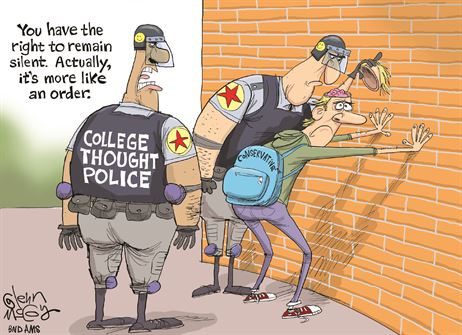
True, UNC Asheville is known to lean heavily to the left, but that does not matter. After all, there are conservative students there as well; there is no political litmus test required and UNCA must remain open to all points of view. An institutional decision to divest from fossil fuels is like a neon sign flashing: “Conservatives need not apply.” Divestment purports to settle a political argument that students ought to be having with each other.
Determining whether a particular policy stand violates institutional neutrality always entails a degree of judgement. HB527 doesn’t ban institutional policy stands outright, because complete neutrality is impossible. Universities have to be able to advocate for a tuition increase, for example. That’s why North Carolina’s campus free speech law leaves it up to the system’s Board of Governors to weigh in on potential violations of neutrality. Nonetheless, it’s tough to see how a state that has enshrined the principle of institutional neutrality in law can fail to condemn fossil fuel divestment by a public university.
HB 527 begins by citing the University of Chicago’s famous 1967 Kalven Report as the classic articulation of the neutrality principle. While the Kalven Report acknowledges that there may be rare exceptions, it establishes a “heavy presumption against the university taking collective action or expressing opinions on the political and social issues of the day.” Such a stand, the report says, comes “at the price of censuring any minority who do not agree with the view adopted.” The Kalven Report emphasizes that the university “is not a lobby,” but instead must “maintain an independence from political fashions, passions, and pressures.” And universities do this precisely because they are obligated “to provide a forum for the most searching and candid discussion of political issues.” In other words, neutrality at the official institutional level encourages and makes possible free debate by members of the campus community. Or, as the Kalven Report puts it, “the instrument of dissent and criticism” is not the university but “the individual faculty member or the individual student.”
In 2015, President Robert Zimmer of the University of Chicago, renowned for his support of campus free speech, invoked the Kalven Report to explain why his school would not divest from fossil fuels. When student advocates of divestment pointed out that even the Kalven Report allows for exceptions in certain circumstances, Zimmer said fossil fuel divestment was not such a case.
“We should … be very wary of steps intended to instrumentalize our endowment in ways that would appear to position the University as a political actor rather than an academic institution. Conceiving of the endowment not as an economic resource, but as a tool to inject the University into the political process or as a lever to exert economic pressure for social purposes, can entail serious risks to the independence of the academic enterprise. The endowment is a resource, not an instrument to impel social or political change.”
UNC Asheville, in contrast, touts its decision to divest from fossil fuels as a “groundbreaking” move designed to lend “momentum” to a “movement” that it hopes will sweep the entire UNC system. UNCA Chancellor Nancy J. Cable called the decision “a defining moment” for the university. That’s the problem. Fossil-fuel divestment sends out a message that identifies the university on the official institutional level with a political movement that excludes — and is even directly at odds with — roughly half the taxpayers and potential students in North Carolina.
UNC Asheville is open about the fact that its decision was a direct response to student pressure for divestment.
And the political nature of the UNCA student fossil fuel divestment movement is evident. An opinion piece by leaders of UNCA Divest three months before the school’s final divestment decision, for example, positioned divestment as a repudiation of President Trump. Meanwhile, the UNCA school paper reports that many conservatives “feel like outcasts on campus.” How can UNC Asheville’s divestment decision fail to intensify and confirm that feeling, further chilling conservative speech? If anything, the school ought to be making of point of welcoming a wide range of student views on political issues.
Has UNC Asheville even thought about how its divestment decision might endanger free speech by creating an official university ideological line? Has it contemplated its decision in light of the new state law? Is the very concept of institutional neutrality and its importance for free speech even on the UNCA administration’s radar? Apparently not. In an excellent account of the UNCA neutrality controversy, Jay Schalin of North Carolina’s James G. Martin Center for Academic Renewal reports that when asked whether divestment was at odds with the principle of institutional neutrality, UNCA issued a bland statement that failed even to address the question.
It’s evident that UNC Asheville’s decision to divest from fossil fuels was taken without any regard for the neutrality issue in general, or for the new state law in particular.
At this point, it’s tough to see how the forthcoming annual report mandated by HB 527 can fail to condemn UNC Asheville’s decision to divest from fossil fuels. The committee of the UNC Board of Governors charged with issuing the report is legally obligated to address controversies over institutional neutrality, and this is certainly such a controversy. On the face of it, fossil fuel divestment violates the principles of neutrality set forth in the University of Chicago’s Kalven Report, which is cited as authoritative by the new law. After all, the University of Chicago itself currently cites the Kalven Report to explain why it won’t divest from fossil fuels, and Harvard has made effectively the same argument. How much more is it vital for a public university to uphold institutional neutrality, given that the UNC system serves citizens in a state where the full range of American political views is robustly represented? Why should the taxpayers of North Carolina support institutions that turn themselves into political actors? It’s also perfectly clear that UNCA’s divestment decision was taken without any serious regard to the neutrality issue, much less the new law. In short, to allow UNC Asheville’s divestment decision to pass without condemnation in the annual oversight report would be to violate the fundamental intent of HB 527.
North Carolina must prevent the thoroughgoing politicization of an important state university system by upholding institutional neutrality — one of the central pillars of campus free speech and a principle now enshrined in North Carolina state law. If UNC Asheville’s fossil fuel divestment decision holds — or worse, spreads as planned through the entire UNC system — the clear intent of HB 527 will have been violated, and the system’s Board of Governors will have failed to protect the state’s students from unwanted, unneeded, and thoroughly inappropriate ideological pressure.If, on the other hand, the UNC system reverses Asheville’s divestment decision and literally lays down the law on institutional neutrality, it will confirm North Carolina’s reputation as a leader of the movement to restore free speech at America’s public colleges and universities. We should know more by September, when the Board of Governors’ committee report is due.
Footnote Update July 31, 2019
Reuters provides additional evidence that climate opinions are divided along political lines. H/T GWPF
Reuters reports that a poll it did with Ipsos shows “Democrats are far more likely to believe droughts, floods, wildfires, hurricanes and tropical storms have become more frequent or intense where they live in the last decade”. And of course polls are likely to show wide disagreement on all manner of subjects, especially among political partisans. But even in these broad-minded times, there’s one thing we should all agree on: If two people argue about whether, say, hurricanes have become more frequent or intense where they live, they can’t both be right and it is possible to check.
Reuters agrees, rejecting fashionable relativism on this topic at least. Nevertheless you can guess which side it thinks is right: it sides with the Democrats. “U.S. government researchers have concluded that tropical cyclone activity, rainfall, and the frequency of intense single-day storms have been on the rise, according to data compiled by the Environmental Protection Agency.”
Really? Where? When? We have pretty good data on tropical cyclones in particular and they aren’t increasing.
Neither are US floods. Well, what about the other stuff including droughts?
People who bother to check will thereafter doubt claims that these things are all increasing, so if Republicans are doubters, maybe it just means they looked up the numbers. And you don’t win the argument by appealing to the speculative future. “’We do expect to see more intense storms,’ said David Easterling, a spokesman for the National Oceanographic and Atmospheric Administration’s National Centers for Environmental Information.” Expect to see? Wasn’t the topic what we’d already seen?
Silly Republicans. “An overwhelming majority of scientists believe human consumption of fossil fuels is driving sweeping changes in the global climate by ramping up the concentration of heat-trapping gases in the atmosphere. But it is impossible to draw a direct link between the changes in U.S. weather in the recent past to the larger trend of warming.” Whereas an innuendo about the indirect links, followed by a snide reference to Donald Trump, should do the trick. “President Donald Trump has cast doubt on the science of climate change… Still, a majority of Republicans believe the United States should take “aggressive action” to combat global warming, Reuters polling shows.”
Good old Reuters polling. The story goes on to note that “Liberals are more likely to expose themselves to news outlets and people who believe climate change is an urgent threat that affects current weather patterns.” Like Reuters, for instance.
This post is background to exploring the ethical and religious dimensions of the climate change movement. It is also important to recognize the human journey regarding morality.
Moral Models
The ethic of Good vs. Evilis a teleological paradigm, going all the way back to Plato, but still a reference for some today. This model asserts that values can be determined as eternal truths, applicable in all times and places.
Most people have moved to an ethic of Right vs. Wrong, a legal paradigm. Here morality is relative to a society that determines what is morally acceptable or not. And of course, there are variations both among different places, and within a single society over time.
Modern ethics has taken an additional step to an ethic of Responsibility vs. Irresponsibility, a contextual paradigm. Now moral behavior seeks the largest possible context: “the greatest good for the greatest number.” This can lead to some strange choices, such as suicide bombers or pro-life advocates who justify murdering abortion clinic doctors. The perversion arises when an actor excludes some living things, or whole classes of creatures from the context of responsibility.
Summary: Climate Morality
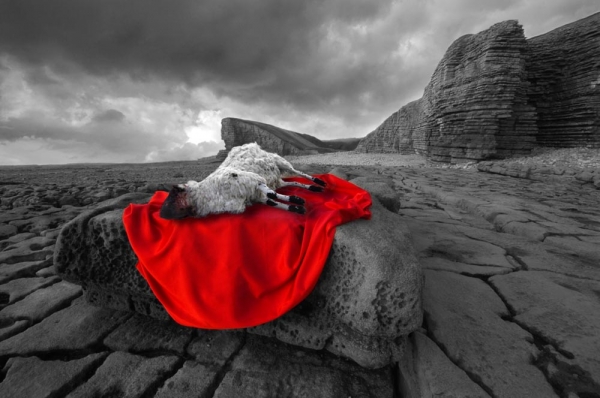
It should be clear that when climate alarmists appeal to saving the planet for future generations, they are applying contextual ethics. Less obvious is the ancient religious notion that by making sacrifices, we humans can assure more favorable weather. These days, fossil fuels have become the sacrificial lamb required by Mother Nature to play nice with human beings.




 The numerous branches of scientific inquiry that constitute climate science can tell us many things about our changing environment. They can tell us about the complex interaction of sea and air temperatures. They can tell us about the state of biodiversity in our oceans and on our land. They can tell us about mankind’s impact on the climate.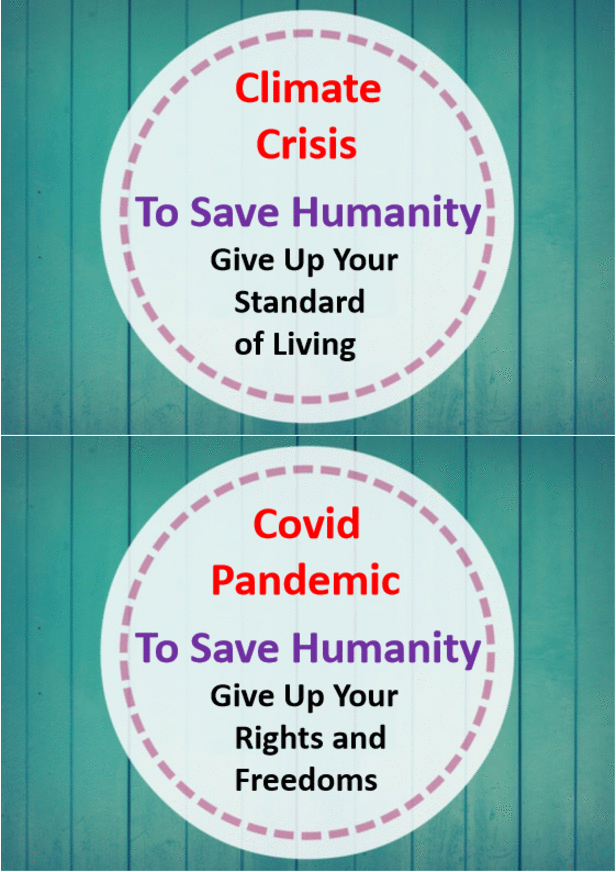





 Science Matters