Montana Lawmakers Rein In Judicial Climatism

Mine work at Westmoreland’s Rosebud Mine near Colstrip. Credit: Alexis Bonogofsky

Montana Free Press reports on how the state legislature liberated project permitting from CO2 hysteria, and the nonsense labeling the essential trace gas as a “pollutant.” The article is Gianforte signs bill banning state agencies from analyzing climate impacts.  Excerpts in italics with my bolds and added images.

House Bill 971 comes as Montana courts are poised to consider how “clean and healthful environment” protections intersect with energy regulations.

Montana Gov. Greg Gianforte has signed into law a bill that bars the state from considering climate impacts in its analysis of large projects such as coal mines and power plants.

House Bill 971 was among the most controversial energy- and environment-related proposals before the Legislature this session, drawing more than 1,000 comments, 95% of which expressed opposition to the measure. HB 971 bars state regulators like the Montana Department of Environmental Quality from including analyses of greenhouse gas emissions and climate impacts, both within and outside Montana’s borders, when conducting comprehensive reviews of large projects.

It builds off of a decade-old law barring the state from including
“actual or potential impacts that are regional, national,
or global in nature” in environmental reviews.

Comment:  The pertinent wording appears in Part 2 of the Act:

(2) (a) Except as provided in subsection (2)(b), an environmental review conducted pursuant to subsection (1) may not include an evaluation of greenhouse gas emissions AND corresponding impacts to the climate in the state or beyond the state’s borders.

(2) (b) An environmental review conducted pursuant to subsection (1) may include an evaluation if: conducted JOINTLY by a state agency and a federal agency to the extent the review is required by the federal agency;
or the United States congress amends the federal Clean Air Act to include carbon dioxide emissions as a regulated pollutant.

Gianforte signed HB 971 into law May 10 over opposition from climate and environmental groups that had argued that the measure hinders the state’s ability to respond to the crisis of our time: the atmosphere-warming emissions of greenhouse gases that are shrinking the state’s snowpack, reducing summer and fall streamflows, and contributing to catastrophic flooding and longer, more intense wildfire seasons. Opponents had also argued that the majority of Montanans believe in human-caused climate change and want meaningful climate action.

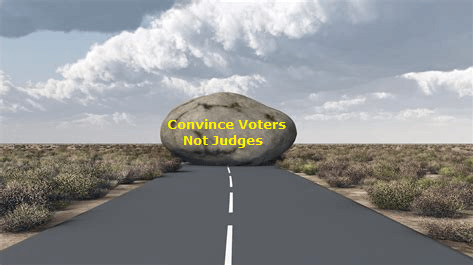
Proponents of the measure, including its sponsor, Rep. Josh Kassmier, R-Fort Benton, argued that by pushing back on a recent ruling revoking a NorthWestern Energy gas plant permit, HB 971 underscores that it’s lawmakers, not judges, who set policy. Other proponents, including the Treasure State Resources Association and the Montana Petroleum Association, asserted that HB 971 protects state agencies from an “unworkable” mandate to measure greenhouse gas emissions and that any such regulation properly belongs under federal regulatory frameworks such as the Clean Air Act.

NorthWestern Energy Plan Building a New $250M Natural Gas Power Plant at Laurel, Montana

Gianforte spokesperson Kaitlin Price echoed this assessment in a statement to Montana Free Press.

“House Bill 971 re-established the longstanding, bipartisan policy that analysis conducted pursuant to the Montana Environmental Policy Act does not include analysis of greenhouse gas emissions,” Price said. “The bill would allow evaluation of GHGs if it is required under federal law or if Congress amends the Clean Air Act to include carbon dioxide as a regulated pollutant.”

The bill comes as a Helena judge is weighing a case brought by 16 youth plaintiffs asking the judicial branch to require the state to measure and regulate greenhouse gas emissions. That lawsuit, Held vs. Montana, is set for a 10-day hearing that will start June 12.

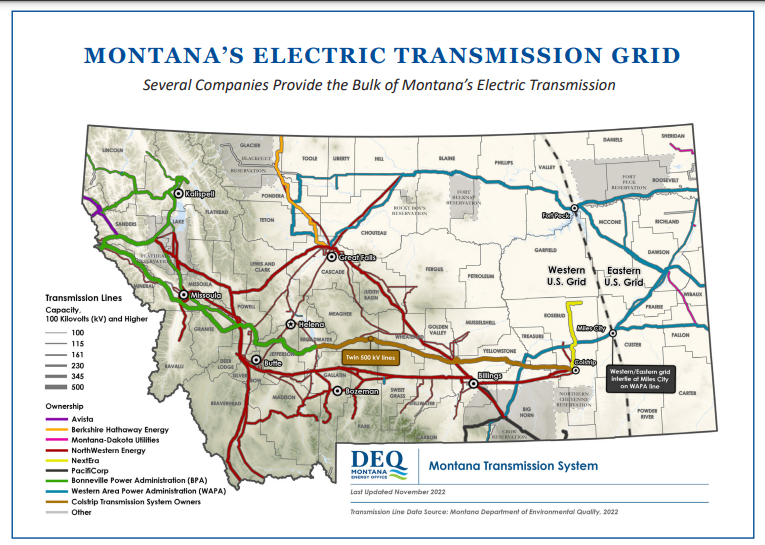
It also comes as the U.S. Environmental Protection Agency considers a rule that would expand regulations dealing with power plants’ emissions of greenhouse gasses. If passed, the rule would require power plants like the coal-fired plant in Colstrip to capture 90% of its carbon emissions by 2038.


ESG Battle Over Italian Energy Giant

Enel, Italy’s largest energy utility is in the news with conflict over appointing a new CEO because  aspirations differ between ESG investors and the Italian government.   There are headlines like these:

Norway’s oil fund rejects Rome’s candidate for Enel chair, Financial Times

Wanted! Investors demand Italy hire renewable expert, global networker to run Enel, Zawya

Government board nominations for Enel run into opposition, msn

Enel confirms 2023 guidance, enters press blackout on nominations, Reuters

MILAN (Reuters) – Italy’s biggest utility, Enel, confirmed its full-year guidance and entered a press blackout period ahead of a May 10 shareholder vote on a challenged board shake-up.

The group, whose main shareholder is Italy’s Treasury with nearly a 24%-stake, is at the centre of a governance row that will be decided at the AGM scheduled for next Wednesday.

The Treasury has proposed a new management, putting forward a slate of six new candidates and ousting current Enel CEO Francesco Starace, who has been at the helm since 2014.

Hedge fund Covalis, which holds around 1% in Enel, presented an alternative list of nominees, criticising the process under which the government picked its candidates.  Covalis said the system that led to the government’s nominations “undermines investor confidence, erodes value and is out of line with international standards of best practice in shareholder democracy”.[Would those best practices be ESG?]

Proxy adviser Frontis Governance has urged shareholders to back the candidates promoted by Covalis and reject names put forward by the Treasury, in a report tailored for Switzerland’s Ethos, a group of pension funds and other investors.

On the financial side, Enel’s ordinary earnings before interest, taxes, depreciation and amortization (EBITDA) in the first quarter rose 22% to 5.5 billion euros above an analyst consensus of 5.4 billion euros.  Net debt at the end of March was 58.9 billion euros, down from 60.1 billion euros at the end of last year.

Starace described the results in the first three months of 2023 as outstanding and said the group had already exceeded half of its 21 billion euro ($23 billion) asset sale target unveiled last November.

The state-controlled group intends to focus its business on the core markets of Italy, Spain, the United States, Brazil, Chile and Colombia.

Wanted! Investors demand Italy hire renewable expert, global networker to run Enel,  Zawya

Expertise in renewables and an international focus are what investors want to see from a new head of state-controlled Enel, as Italy’s government screens candidates to replace the energy group’s long-serving chief executive.

Prime Minister Giorgia Meloni’s administration is determined to oust current CEO Francesco Starace, several sources told Reuters. In charge since 2014, Starace is in the crosshairs of Meloni’s inner circle as he is deemed too independent.

Meloni’s office is also concerned about the group’s debt pile. But sources familiar with the matter said that head hunters hired by the Treasury are finding it tricky to put forward potential successors with the broad range of skills required to run one of Europe’s largest utilities.

With almost 60 Gigawatt of installed capacity, Enel is one
of the world’s biggest players in renewable energy

Starace won plaudits for his commitment to green energy. However, investors and the government grew restless over a debt pile that had grown to around 60 billion euros ($65.40 billion) in 2022 from 45.5 billion in 2020, when Starace was reappointed for a third term.

The company, which has been hit by soaring gas prices and government measures capping bills to shield consumers, saw net profit slip to 5.4 billion euros last year, from 5.6 billion euros in 2021.

The new CEO should not sacrifice the group’s exposure to North America and confirm its dividend policy, a number of investors said.

“People in Italy may prefer that Enel focuses on making things as much as possible in its home country and not investing so much abroad, but the company has no choice… if it wants to attract foreign investors,” said Vincent McEntegart, multi-asset investment manager at Aegon Asset Management, an Enel shareholder with assets under management worth $311 billion.

For Enel, U.S. President Joe Biden’s green energy subsidy package could mean double digit returns in North America compared with single digit in Europe, McEntegart said, adding such returns would underpin the group’s attractive dividend policy.

Since Starace was appointed CEO in May 2014, Enel has increased its
installed renewable energy capacity to 59 GW from 36 GW at the end of 2013.

Starace’s mantra has been electrification of consumption and digitalisation of grids and he said last year he wanted to leverage a renewed focus on energy security around the world to accelerate the group’s exit from natural gas. The group currently plans to become carbon free in 2040.

“My priorities for the new CEO would be to continue to roll out renewables and accelerate the exit from gas,” Simone Siliani, the director for Italy’s Fondazione Finanza Etica, told Reuters.  Finanza Etica, which is an active investor on ESG issues, has been holding a tiny stake in Enel since 2008.

“Enel can make the difference if Italy wants to meet its decarbonisation goals,” added Siliani.

Summary: 

Once again we have climatist financiers using ESG to push zero carbon against the mission of providing secure and affordable energy that citizens need.


How Much Warming Reduction by Spending $50,000,000,000,000?

From Daily Caller:  Biden Official Speechless After John Kennedy Grills Him On Simple Question

Department of Energy Deputy Secretary David Turk testified Wednesday before the Senate committee on appropriations to discuss the 2024 budget request for the Department of Energy.

Kennedy noted the budget requests a 38% increase in green energy funding while cutting nuclear energy funding with barely an increase fossil fuel energy. Kennedy then asked Turk for an estimate of how much it would cost to be carbon neutral by 2050, with Turk refusing to provide a number. Kennedy first said Turk’s colleagues have presented a figure in the range of $50 trillion before asking how much would temperatures be affected by that massive spending.

“If you could answer my question: if we spend $50 trillion to become carbon neutral in the United States of America by 2050, you’re the deputy secretary of energy, give me your estimate of how much that is going to reduce world temperature.”

“So first of all it’s a net cost, it’s what benefits we’re having by getting our act together and reducing all of those climate benefits, we’re seeing –” Turk said before Kennedy interjected.

“I’m gonna ask again, maybe I’m not being clear: if we spent $50 trillion to become carbon neutral by 2050 in the United States of America, how much is that going to reduce world temperatures?”

“This is a global problem so we need to reduce our emissions and we need to do everything we can –”

“How much if we do our part is it going to reduce world temperatures?”

“We’re 13% of global emissions–”

“You don’t know do you?” Kennedy asked, stunning Turk who had his mouth agape. “You don’t know, do ya?”

“You can do the math–”

“You don’t know do ya Mr. Secretary?” Kennedy again asked.

“So we’re 13% of global emissions–” Turk said.

“If you know why won’t you tell me?”

“If we went to 0 that would be a 13% less pollution,” Turk said.

“You don’t know do ya? You just want us to spend $50 trillion and you don’t have the slightest idea whether it’s going to reduce world temperatures,” Kennedy said. “Now I’m all for carbon neutrality, but you’re the Deputy Secretary of the Department of Energy and you’re advocating we spend trillions of dollars to seek carbon neutrality – and this isn’t your money or my money, it’s taxpayer money – and you can’t tell me how much it’s going to lower world temperatures? Or you won’t tell me, you know but you won’t?”

“In my heart of hearts there is no way the world gets its act together on climate change unless the U.S. leads,” Turk responded, before Kennedy once again asked him for a number.

The Department of Energy is requesting $51,99 billion to, among other things, advance “critical climate goals,” according to Turk.

Bjorn Lomborg Answers the Question

From WUWT: WSJ and Lomborg show just how useless is the “Inflation Reduction Act” at tackling climate

As seen in the figure above provided by Lomborg, we get somewhere between 0.028 and 0.0009°F reduction in temperature by 2100 for about 400 billion dollars in climate spending contained in the bill.

At that rate, simple math suggests the amount of money required to achieve the much desired 1.5°C (2.7°F) reduction in temperature using the best case reduction of 0.028°F would be $38,571,428,571,428 or approximately 39 Trillion dollars. The worst-case temperature reduction of 0.0009°F would cost a staggering 1,200,000,000,000,000 dollars or ONE QUADRILLION TWO HUNDRED TRILLION DOLLARS.

To put that number in perspective, according to the World Bank, the 2020 world economy in U.S. dollars was approximately $84.7 trillion. Assuming it would actually work, to have a meaningful effect on climate, the world would have to spend about half the global annual economy for the best-case scenario. If you think inflation is bad now, just wait for those sorts of numbers.

Summary:

Even if you buy UN IPCC assumptions about reducing carbon emissions reducing global warming, the cost is outrageous for neglible benefit.  What a rip-off.


What’s Wrong With “All Cars Shall Be Electric”

First “Common Good Capitalism” is an Oxymoron

Donald J. Boudreaux explains this newly minted term and that it really means imposing choices in the marketplace.  His AIER article is What’s Called “Common Good Capitalism” Would Work Against the Common Good.  Excerpts in italics with my bolds.

The foundation upon which the case for so-called “common good capitalism” rests is rickety at best. As I explained in my previous column, the empirical claims used to justify this ill-defined version of capitalism range from questionable to downright false, while much of the economic reasoning deployed by “common good capitalists” is a nest of confusion. These flaws alone are enough to fully discredit the case for “common good capitalism.”

Yet “common good capitalism” is marred by an even deeper problem: it rejects the liberalism from which true capitalism springs, the absence of which makes impossible the operation of a dynamic market order that maximizes the prospects of individuals to achieve as many as possible of their goals.

“Common good capitalists” have in mind an economic system profoundly different from that which is championed today by liberal scholars.  What each “common good capitalist” wants is an economic system engineered to serve his or her preferred set of concrete ends. Gone would be the liberal freedom of individuals to choose and pursue their own ends. Under “common good capitalism,” everyone would be conscripted to produce and consume in ways meant to promote only the ends favored by “common good capitalists.”

Note the irony. The economic system that, say, Oren Cass claims to advocate as a means of promoting the common good is, in reality, a means of promoting only the good as conceived by Oren Cass (which, for him, consists largely of an economy with more manufacturing jobs and a smaller financial sector). The hubris here is undeniable. “Common good capitalists” not only presume to have divined which concrete ends are best to guide the actions of hundreds of millions of individuals, nearly all of whom are strangers to them, but also are so confident in their divinations that they advocate pursuing these with the use of force.


The liberal doesn’t object to attempts to persuade others to adopt different and, hopefully, better ends. By all peaceful means, do your best to persuade me to embrace, as the lodestar for my choice of concrete ends, Catholic Social Teaching, economic nationalism, Marxism, veganism, or whatever other teaching or -ism you believe best defines the common good. But do not presume that your sincere embrace of a specific system of concrete values provides sufficient warrant for you to compel me and others to behave as if we share your particular values.

To the extent that the state intrudes into market processes in order to redirect
these toward the achievement of particular ends, it replaces market
competition and cooperation with command-economy dirigisme.

Income earners are not allowed to use the fruits of their creativity and efforts as they choose. Instead, consumption ‘decisions’ will be directed by government officials. The result will be a reallocation of resources achieved through the use, mostly, of tariffs and subsidies. And by so redirecting consumption expenditures, the pattern of production will obviously also be changed from what would prevail in a free market. (In fact, the specific goal of most “common good capitalists” seems to be the achievement of a particular manner of production — for example, more factory jobs — than would arise with markets left free.)

The capitalist economy, by its very nature, is not and cannot be
a tool for achieving particular concrete outcomes.

The capitalist economy, instead, is the name that we give to that ongoing, ever-evolving, organic order of production and exchange that arises spontaneously whenever individuals are free to pursue diverse peaceful ends of their own choosing and to do so in whatever peaceful ways they think best. That the results serve the common good is clear, if by “common good” we mean the highest possible chance of as many individuals as possible to achieve as many as possible of their own individually chosen goals. But let the state attempt to constrain and contort economic activity in the pursuit of a particular set of “common” concrete ends that everyone is compelled to serve, and capitalism disappears. It is replaced by what is more accurately called “[fill in the blank]’s-particular-notion-of-the-good statism,” with the blank filled by the name of whichever “common good capitalist” happens currently to be in power.

A Case In Point:  Murphy’s Law Applies to Electric Cars and Trucks 

Forcing Consumers to Purchase Electric Vehicles: A New Low for the Biden Administration by Jonathan Lesser at Real Clear Energy. Excerpts in italics with my bolds.

If electric vehicles are so wonderful,
why are consumers and businesses being forced to buy them?

The US Environmental Protection Agency’s (EPA) new emissions standards for vehicles, released earlier this month, require manufacturers to increase overall fuel efficiency by over 25% by 2026, effectively mandating that EV’s make up two thirds of car sales. The EPA claims this will provide a total of over $1 trillion in benefits by 2055, reduce crude oil imports by 20 billion barrels, and reduce CO2 emissions by 10 billion tons.

What’s not to like? Just about everything.

Ruinous Economic Impacts

Let’s start with the economic impacts, which will be ruinous. First, the price of EVs will increase; that’s basic economics. The new rules will require that about two-thirds of the vehicles manufacturers sell are EVs. Given that most consumers do not purchase EVs, the best way to do that is to raise prices on internal combustion (ICE) vehicles until they are more costly than EVs. (Today, the reverse is true, with the average EV costing around $65,000, while the average ICE vehicle costs around $48,000.) Increasing provides an umbrella under which EV prices can be raised, too. So, if a consumer or business wants to purchase a new vehicle, they effectively will be forced to buy a more costly EV.

Battery Demand Over the Top

Second, increasing the demand for EVs will increase the demand for the materials to manufacture batteries, which are the single largest cost of an EV. Prices for rare earths, for example, have increased between 60% and 400% since 2020. Prices for lithium, the basic ingredient in most EV batteries, have increased by about 400%. Moreover, the US continues to prevent development of new mines to supply those materials. Instead, China has a stranglehold on them, and lax environmental rules to boot.

Electric Power Mostly Carbon

Then there is the electricity needed to charge those EVs, along with the charging stations in homes, apartment buildings, and on highways. Claims that this electricity will actually reduce emissions are based on huge predicted increases in wind and solar energy development. Yet, the US Energy Information Administration projects that, by 2050, wind and solar will provide only about 40% of electricity supplies. Consequently, much of the electricity needed to charge those millions of EVs will be provided by natural gas and even coal.

So, while the EPA may limit tailpipe emissions,
it will transfer many of those emissions to power plants.

Inflated Electricity Bills

Electricity costs will also increase, negating the anticipated savings from “refuelling” those EVs. That’s why the federal government has provided subsidies for wind and solar energy development for 45 years and why so many states implemented green energy mandates: developers of wind and solar could not, and still cannot, compete on price alone, despite proponents’ claims.

No Measurable Impact on Climate

But let’s suppose those hurdles magically are overcome. The environmental justification for the EPA rule is nonetheless absurd. The claimed reductions in CO2 emissions will have no measurable impact on world climate. Reducing CO2 emissions by 10 billion tons between 2027 and 2055 sounds like a lot. But world CO2 emissions were 34 billion metric tons in 2021 alone. So, over 28 years, the EPA’s proposed rule will reduce CO2 emissions by the equivalent of about four months of world CO2 emissions. And world emissions continue to increase because developing nations, especially China and India, have no intentions to restrict their economies.

Why Impose EVs?

The basic economic impacts, along with the negligible climate benefits, raise a simple question: why is the Biden Administration pursuing this EV windmill-tilting exercise? By effectively forcing consumers and businesses to purchase vehicles they do not want, the Administration will impose yet more damage on American’s standard of living, reducing mobility and raise costs.

That can’t possibly be their goal, right?

If only arm-twisting were prohibited beyond the ring.


Experts Were the Covid Crisis in 2020

John Tamny makes the case that authoritarian government is a poor substitute for free people managing themselves facing a public health threat.  He writes at Real Clear Markets Dear Washington Post Editorial Board, the Experts Were the Crisis In 2020.  Excerpts in italics with my bolds and added images.

The quote from Tolstoy’s War and Peace is a useful way to begin addressing the Washington Post editorial board’s confident assertion that “’A collective national incompetence in government’” was at the root of the U.S.’s alleged failure vis-à-vis the coronavirus in 2020. According to the Post quoting from a recently released report (“Lessons from the Covid War”), “The United States started out ‘with more capabilities than any other country in the world,’ but “it ended up with 1 million dead.” Were he still around, one guesses Tolstoy would mock the conceit of the Post’s editorialists.

That’s the case because “the thing that matters most to any man” is “the saving of his own skin.” That this needs to even be said speaks to how wrongheaded the Post’s editorial board’s approach to the virus was, and still is. It implies we have dead because government didn’t act properly, as though free people eager to live were unequal to a virus that the right kind of collective governmental action was more than equal to. Ok, but what was government going to do? Better yet, what if the virus had struck in 2015 when Barack Obama was still in the White House. What would he have done? Would he have instructed a virus that was spreading faster than the flu to take a “time out”?

The simple truth missed by the Post is that as humans
we’re wired to preserve ourselves.

On the matter of life and the presumption of death, government is excess. Whatever solution Obama might have come up with, or whatever Donald Trump did come up with, or (try not to laugh) whatever Joe Biden, Nancy Pelosi and Chuck Schumer would have done if the virus had revealed itself in 2021 would have been vastly unequal to the solutions crafted by free people.

Deep down the Post’s editorialists must know the above is true. Indeed, it’s not that the Soviet Union lacked experts, or that Cuba lacks experts now. The problem was and is that the remarkable knowledge of very few very smart people will never measure up to the collective knowledge of the citizenry. That’s why communism failed so impressively in the Soviet Union, and it’s why it fails in Cuba. Translated for those who need it, the people are the market and markets work. As I make plain in my 2021 book When Politicians Panicked, the problem was experts and politicians substituting their limited knowledge for that of the people. That was the crisis. Not so, according to the Post and the report they cite.

Supposedly the “leaders of the United States could not apply their country’s vast assets effectively enough” such that “1 million died.” Wrong. Over and over again. To see why, imagine if 10 million Americans had died in March of 2020. Can the Post editorial board think of what government might have done that would have somehow improved on a feverish individual desire to survive against long odds? The simple truth glossed over by the Post is that the more threatening a virus is (and the Post seems to view what most didn’t know they were infected with as wildly threatening), the more superfluous government action is.

Really, who reading this ever needs to be forced to avoid behavior that might result in sickness, or even death? And if the reply to this question is that some people DO need to be forced, you’re making the best case of all for unfettered freedom. Think about it. Those who reject expert opinion are the most crucial “control group” as a virus spreads. By going against the grain, we learn from their freely arrived at actions if the virus is as lethal as presumed, or not, how it spreads, how to perhaps avoid its spread, and all manner of other important bits of information suppressed by one-size-fits-all national solutions.

It cannot be stressed enough that free people crucially produce information. Instead of allowing them to produce it in abundance in 2020, the response arrived at by Democrats and Republicans was to lock people in their homes, thus blinding a nation “with more capabilities than any other country” to the best approaches to a spreading virus. Please keep all of this in mind with the report’s assertion that the “most important and fundamental misjudgment” about the virus was how it spread. You think? Of course, the muscular assertion ignores yet again that if knowing how a virus spreads is of utmost importance, the only credible answer is freedom.

Consider the latter in light of the statement of the obvious that all advances in medicine have always been born of matching doctors and scientists with the abundant fruits of wealth creation. In 2020, rather than encourage the very wealth creation that has long been the biggest foe of death and disease (by far), panicky politicians quite literally chose economic contraction as a virus mitigation strategy. Historians will marvel at the abject stupidity of the U.S. political class, but not the Post’s editorialists or the authors of a report that the editorialists remarkably find insightful.

Rather than acknowledge the obvious about government and experts as the crisis, the Post editorialists and the experts they kneel before bemoaned a national abdication of “wartime responsibilities.” One gets the feeling Tolstoy would chuckle yet again. In his words, “The course of a battle is affected by an infinite number of freely operating forces (there being no greater freedom of operation than on a battlefield, where life and death are at stake), and this course can never be known in advance; nor does it ever correspond with the direction of any one particular force.”
In short, on matters of life and death government control
is wretched, crisis-inducing excess.


Obviously Climate Policies Are Inflationary


Rupert Darwall explains how central bankers avert their eyes from the obvious in his Real Clear Energy article Inflation, Net Zero, and the Bank of England. Excerpts in italics with my bolds and added images.

A central banker tiptoes toward the inflationary consequences of Net Zero.

“What a banker,” read the unsubtle headline in the Sun. “BoE official on £190k salary says Brits must accept they’re worse off.” The Mail agreed. “BoE chief risks fury as he says Brits must accept they are poorer.” What sparked the tabloids’ outrage was a Columbia Law School podcast with Huw Pill, the Bank of England’s chief economist and a member of the Bank’s interest-rate-setting Monetary Policy Committee. Pill made the uncontroversial point that higher energy prices were making Britons worse off, but that attempts by workers and firms to recoup the real spending power they’d lost risked embedding inflation.

Pill’s analysis should have been directed at his fellow central bankers,
who let inflation slip the leash.

In his Geneva speech, Pill says that central bankers need to assess structural factors likely to prevent inflation falling back to target. “If a rise in energy prices is seen as permanent, it is more likely to trigger greater intrinsic inflation,” he argues. If it does, it would “justify a stronger tightening of monetary policy.” Not mentioned by Pill, however, are the effects of climate policy and net zero on energy costs and prices – and therefore the persistence of inflation on an economy being subjected to a multi-decadal program of decarbonization.

Climate policies drive up energy costs through two channels.

The first are policies forcing energy companies to replace hydrocarbons with inefficient, inferior lower-carbon alternatives, notably wind and solar. Were such technologies superior and capable of delivering greater efficiencies, there would be no need for government intervention promoting their adoption. The second channel is by progressively constricting the sources of energy supply, for example by Environmental, Social and Governance (ESG) investors preventing investment in new oil and gas fields, thereby increasing the market share of OPEC plus Russia.

In Britain’s case, powering past coal meant increased dependence on natural gas to keep the lights on. As Pill notes, all market transactions involve distribution of some “economic surplus” between the parties; “the more effective the seller is in extracting that economic surplus, the higher the resulting economic price will be.” Unfortunately for Britain and the rest of Europe, Vladmir Putin and Gazprom have a much better understanding of how energy markets work than Western politicians who made their continent vulnerable to surplus extraction through the myopic pursuit of net zero.

With the Bank of England, it’s not so much myopia as wilful blindness to any possibility of a link between climate policies and inflation. In a speech this month unironically asking “Climate action: a tipping point?,” Sarah Breeden, the bank’s executive director for financial stability and risk, describes its role as creating a regulatory framework that encourages markets “to allocate capital to support real economy decarbonization,” i.e., to worsen the supply constraints on hydrocarbon energy. At the November 2022 G20 meeting in Bali, Deputy Governor Sir Dave Ramsden spoke of the need to avert climate catastrophe. “Among all the shocks – many unprecedented – facing the global economy today, the challenge of climate change is the most profound and far reaching,” Sir Dave declared, in the very month it was announced that consumer price inflation in Britain had reached 11.1 percent.

From the governor on down, the Bank of England became obsessed with conjuring up specters of climate risk as threats to financial stability, all the while blanking out any possibility that climate change policy might threaten attainment of the bank’s inflation mandate. Less than two years ago, Andrew Bailey, the bank’s governor, was talking of net zero as a way of regenerating capital and raising productivity. “These positive effects should be larger in countries like the UK that are net importers of energy,” Bailey asserted – the opposite of what the bank’s chief economist is now saying.

Alarm bells should be ringing in Threadneedle Street. Giving evidence to a House of Lords inquiry on the Bank of England independence, former chancellor George Osborne cast doubt on making climate goals one of the bank’s objectives. His former Labour opponent, Ed Balls, who helped design the arrangements making the bank independent in 1997, went further, arguing that it didn’t make sense to give the bank a role for which it had no tools, and suggesting that climate had become a distraction from its core mission on price and financial stability.

Climate is worse than a distraction:
misjudgement and misanalysis of climate-change policy is a key factor
in the Bank of England losing control of inflation.

Net Zero Not Rational

Jonathan Lesser explains in his Real Clear Energy article Why “Net Zero” Is Not a Rational U.S. Energy Policy.  Excerpts in italics with my bolds and added images.

Cost of achieving net-zero carbon emissions would be staggering for neglible climate impact.

Despite Germany’s last-ditch attempt at realism, the European Union recently approved a 2035 ban on gas-powered cars, moving ahead with its “net zero” emissions agenda. In the U.S., the cost of achieving net-zero carbon emissions would be staggering – $50 trillion if the goal is reached by 2050 – as would the demand for raw materials, which in most cases would exceed current annual worldwide production. 

Global critical metal demand for wind and PV

The impact on world climate, however, would be negligible. Emissions in developing countries will continue to increase as those countries’ focus is economic growth for their citizens, not permanent economic misery to “save” the climate. Although a recent Washington Post article suggests that wealth be viewed in terms of “joy, beauty, friendship, community, [and] closeness to flourishing nature,” impoverished individuals who cook with animal dung – such as 80% of the population in the African nation of Burkina-Fasso – aren’t likely to find much joy and beauty in economic misery. Granted, having to cook with animal dung ensures “closeness to nature,” although probably not the one the article’s author envisions.

Rather than approaching energy policy clearly, the U.S. (and most of the western world) is pursuing so-called “net zero” energy policies aiming to fully electrify western economies, while relying almost entirely on wind and solar power. The additional required electricity – after all, the wind doesn’t always blow, and the sun sets nightly – would supposedly be supplied by energy storage batteries or hydrogen-powered generators.

Two factors drive these policies. 

First, there is climate hysteria, which promotes claims that have either proven to be false (the “end of snow” in Great Britain, the disappearance of glaciers in Glacier National Park) or posit extreme scenarios (complete agricultural collapse, massive sea level increases, more frequent hurricanes). The actual evidence is to the contrary, including increased agricultural yields, minimal sea level rise, and no increases in observed hurricane frequency. 

Second, these policies are driven by old-fashioned greed. Green energy subsidies, which were already large, have been hugely expanded under the Biden Administration’s Inflation Reduction Act (IRA). The IRA is a virtual smorgasbord of green energy subsidies for offshore wind, solar power, electric vehicles, and charging infrastructure. The green energy pork, which relies on climate alarmism for its justification, is increasing electricity costs and reducing standards of living, such as in Europe, where deindustrialization is taking place because of unaffordable energy costs. Even progressive California admits its zero-emissions goals primarily will benefit the wealthy at the expense of the poor.

Although the author of the Washington Post article may think differently, modern society requires ample supplies of reliable and affordable energy. A modern society that runs solely on electricity must have a foundation built upon three key pillars.  First, it must provide lots of electricity, far more than is generated today, because U.S. electricity consumption accounts for only about one-fifth of total energy consumption. Second, all of that electricity must be available 24-7. Third, it must be affordable. Those pillars cannot be supported by reliance on intermittent wind and solar power and huge banks of batteries to store electricity when the wind doesn’t blow and the sun doesn’t shine. Nor will those pillars be based on technologies that don’t even exist, such as generators that run on pure hydrogen. 

Even if one believes that addressing climate change is crucial and
that low- or zero-emissions technology will yield worldwide benefits,
the current approach is the most expensive way to achieve it. 

Despite the hyperventilation of some politicians, such as Senator Sheldon Whitehouse’s predictions of doom, climate change need not entail economic suicide. A far better approach is adaptation to and mitigation of potential future damages that may be caused by a changing climate, such as gradual sea level rise and slightly warmer temperatures.

It is doubtful the U.S. will adopt this approach in the near future, because political expediency nearly always beats rational economics. But as economist Herb Stein said long ago, something that cannot go on forever, won’t. The unrealistic energy policies in place today eventually will collapse under their own weight. The resulting costs to U.S. consumers and businesses will be staggering. 

See also Series of Four Posts– World of Hurt from Climate Policies

Part 1, Zero Carbon Means Killing Real Jobs with Promises of Green Jobs

Part 2, Reducing Carbon Emissions Means High Cost Energy Imports and Social Degradation

Part 3, 100% Renewable Energy Means Sourcing Rare Metals Off-Planet

Part 4, Leave it in the Ground Means Perpetual Poverty


European Energy Suffering, Now Hydro and Nuclear

Irina Slav explains at Oil Price Europe’s Energy Troubles Continue: Hydro And Nuclear Output Declining.  Excerpts in italics with my bolds.

♦  Europe’s hydro and nuclear output is declining, leading to more energy troubles.
♦  Renewables are struggling to fill the gap as wind and solar output increase.
♦  The EU may require increased LNG imports from the US to meet energy demands.

Last year, Europe was on the brink of an energy breakdown as Russian gas flows dried up and most of Europe doubled down on renewable energy.

The renewable energy bet paid off, in a way. Solar and wind electricity generation in Europe hit a record in 2022. In fact, for the first time in history, wind and solar together produced more electricity than natural gas-fired power plants.

There was just one problem with that. Lower hydro and nuclear output
more than wiped out the significance of that record output.

Droughts were severe in Europe last year. They threatened major trade routes such as the Rhein in Germany and the Po in Italy. And they also caused severe declines in hydropower electricity output. For example, in Spain, hydropower output dropped by almost half because of the droughts. All this might repeat this year as well.

Meanwhile, nuclear wasn’t doing so swell, either. France suddenly found that years of underinvestment in maintenance would have consequences: emergency reactor shutdowns for repairs and maintenance.

The problems cost EDF a massive annual loss of $19 billion as half of its reactors had to be shut down for maintenance. Most blamed the pandemic, but nuclear experts such as Mark Nelson saw the roots of the problem much further into the past when France decided to bet on renewables over nuclear.

That might have been the case in 2022, but this year things are different. Wind and solar are still producing electricity at a record rate, it appears, but declines in hydropower and nuclear output are so severe they are more than offsetting those record output rates, Reuters’ Gavin Maguire reported in a recent column.

Maguire noted that Europe managed to boost its wind and solar power capacity by 9 percent last year to 57.29 GW, which was a record high. At the same time, however, the troubles of hydro and nuclear dragged total electricity generation down and are still doing it.

Over the first quarter, European power generation stood at 1,213 terrawatt-hours, which was 6.4 percent lower than output for the first quarter of 2023. That’s according to climate change advocacy Ember. According to Maguire, this is not necessarily alarming in itself. This time last year, Europe was coming out of pandemic lockdowns, and demand was soaring.

Where things could become problematic is later in the year as business activity across the continent begins to rebound after the energy crunch of last year, the Reuters columnist noted. And most of the Russian gas that was available last year is no longer an option.

French nuclear is a major source of hope, but it will be a while yet before output recovers. At the moment, French nuclear power plants are producing 17.5 percent less than the average output rate for 2020 and 2021. That’s down from 23 percent for last year, so there is some progress, and that’s a good sign.

Hydro is trickier because, although to a lesser extent than wind and solar, hydro is weather-dependent. With Europe’s mild winter that saw a lot less snow than usual, a repeat of last year’s drought is not out of the question. In fact, it is a distinct possibility.

What this means is that Europe may need to import a lot more LNG from its new top supplier, the United States. Some have worried that the EU is building too much LNG import infrastructure that would become stranded assets before too long, but right now, those assets appear to be vital for the bloc’s energy survival.

Energy Doublethink Update April 14, 2023

First from the Zero Carbon zealots at Resilience Record clean-power growth in 2023 to spark ‘new era’ of fossil fuel decline.  Excerpts in italics with my bolds and added images.

The power sector is about to enter a “new era of falling fossil generation” as coal, oil and gas are pushed out of the grid by a record expansion of wind and solar power, according to new analysis by climate thinktank Ember.

Wind and solar power reached a record 12% of global electricity generation last year, according to Ember’s global electricity review 2023. This drove up the overall share of low-carbon electricity to almost 40% of total generation.

With even faster growth set to continue this year, Ember says 2022 is likely to mark a “turning point” when global fossil fuel electricity generation peaked and began to fall.

The thinktank forecasts that, by the end of 2023, more than 100% of the growth in electricity demand will be covered by low-carbon sources.

Experts broadly agree that global electricity generation needs to be completely decarbonised by 2040 if the world is to stay on track for its climate targets.

OTOH we have:

This month a 2023 US Energy Outlook from EIA (Energy Information Agency).  Excerpts in italics with my bolds.

Our projected growth in associated natural gas production is mainly driven by three trends:

♦  Rising oil prices support increased production from unconventional oil formations with significant natural gas volumes.
♦  Many unconventional oil wells are aging, and as these wells age, they tend to produce a higher ratio of natural gas relative to oil.
♦  Associated natural gas resources are becoming more economical, driven in part by provisions in the IRA, which creates penalties for venting and flaring methane and encourages producers to capture more natural gas from oil formations.

We project that associated natural gas production will increase from 7.2 Tcf in 2025 to 8.8 Tcf in the United States by 2050 in the AEO2023 Reference case. In the AEO2023 High Oil Price case, associated natural gas production peaks at 13.6 Tcf in 2035, accounting for 30% of the total domestic natural gas supply. By contrast, in the AEO2023 Low Oil Price case, associated natural gas production falls to 4.2 Tcf by 2050.

Strong continuing international demand for petroleum and other liquids will sustain U.S. production above 2022 levels through 2050, according to most of the cases we examined in our Annual Energy Outlook 2023 (AEO2023). We project that the United States will continue to be an integral part of global oil markets and a significant source of supply in these cases, as increased exports of finished products support U.S. production.

In our AEO2023, we explore long-term energy trends in the United States and present an outlook for energy markets through 2050. We use different scenarios, or cases, to understand how varying assumptions about the future could affect energy trends. These cases include:

  • The Reference case, which serves as a baseline, or benchmark, case. It reflects laws and regulations adopted through mid-November 2022 but assumes no new laws or regulations in the future. It also assumes the Brent crude oil price reaches $101 per barrel (b) (in 2022 dollars) by 2050.
  • The High Oil and Gas Supply case, which assumes 50% more ultimate recovery per well for tight oil, tight gas, or shale gas in the United States compared with the Reference case. It also assumes 50% more undiscovered U.S. oil and natural gas resources and 50% more effective technological improvements than in the Reference case.
  • The Low Oil and Gas Supply case, which assumes 50% less ultimate recovery per well and undiscovered sources, and 50% more effective technological advancement than the Reference case.
  • The High Oil Price case, which assumes the price of Brent crude oil reaches $190/b (in 2022 dollars) by 2050.
  • The Low Oil Price case, which assumes the price of Brent crude oil reaches $51/b (in 2022 dollars) by 2050.

Although domestic consumption of petroleum and other liquids does not increase through 2040 across most cases, production of U.S. petroleum and other liquids remains high because of more exports of finished products. In the High Oil Price case, increased production leads to the most U.S. exports among all cases over the projection period at 9.13 million barrels per day (b/d) by 2050, more than double the 3.9 million b/d exported in 2022. The Low Oil Price case shows the opposite trend with the least 2050 export volumes of 407,000 b/d, nearly 90% less than 2022 exports.

Electric Power Outlook

The figure above illustrates the relationship between installed capacity (left panel) and electricity generation (right panel). Because wind, solar, and nuclear have the lowest operating costs, their electricity generation over time mirrors their trend in installed capacity: slightly declining for nuclear, and increasing for wind and solar. By contrast, natural gas and coal have higher operating costs, and so their generation can vary over time depending on demand levels and the relative operating cost of other technologies.

In our March Short-Term Energy Outlook, we forecast the wind share of the U.S. generation mix will increase from 11% last year to 12% this year. We forecast that the solar share will grow to 5% in 2023, up from 4% last year. The natural gas share of generation is forecast to remain unchanged from last year (39%); the coal share of generation is forecast to decline from 20% last year to 17% in 2023.

The electric power sector includes electric utilities and independent power producers. It does not include generators in the industrial, commercial, or residential sectors, such as rooftop solar panels installed on homes or businesses or some combined-heat-and-power systems.

Comment:

The statement above concerning capacity and operating costs is simplistic, and could be misleading.  EIA actually has a more realistic method of comparing power sources.  Example below:

EIA has developed a dual assessment of power plants using both Levelized Cost and Levelized Avoided Costs of Electricity power provision. The first metric estimates output costs from building and operating power plants, and the second estimates the value of the electricity to the grid.

More detailed discussion here:

Cutting Through the Fog of Renewable Power Costs


Don’t Buy Green Hydrogen Hype

Frank Lasee gives the game away in his Real Clear Energy article The Expensive Impossibility of Green Hydrogen From Part-Time Wind and Solar.  Excerpts in italics with my bolds and added images.

There has been some new thinking from the anti-CO2 religionists. The fact that the world is desperately short of lithium and cobalt for electric vehicle batteries, at the scale they want to force, is dawning on them. There isn’t enough and likely will not be enough in the coming decades to meet the electric batteries demand. Certainly not enough for grid scale electric batteries too.

The climate alarmists haven’t let the facts get in the way of their unrealistic green fantasy of averting climate doom with part-time wind and solar. That it could somehow replace all the coal, oil, and natural gas we use, which provide us with 80% of our energy.

Except one huge, huge problem. Wind and solar produce little or no energy 70% of the time.  Reliable, full-time, on demand electricity keeps the heat going and the lights on when it is dark, and the wind is not blowing.

The new expensive, impractical, and impossible federal $9.5 billion
hydrogen subsidies talking point is wasted spending.

Green hydrogen made from wind and solar is not practical and is a very expensive form of energy storage and transport.  Hydrogen is not a fuel. Hydrogen must be created; it must be made from another energy source, just as electricity must be made from other energy.

No one is making green hydrogen at scale because it is difficult, expensive and requires major factories. Spoiler alert, there isn’t excess “green” energy – wind and solar – to make hydrogen with.

Green hydrogen requires 13 times more water than hydrogen produced.

Sea water must be desalinated first for an added cost. More water is needed for cooling. So, it is a good idea to locate hydrogen facilities near abundant water, not in the chronically short of water western U.S.

Then the water must be heated to 2,000 degrees and electrocuted. Then the hydrogen must be super chilled to near absolute zero. Then it’s compressed to 10,000 psi, three times the psi of an average scuba tank.

Then you have usable hydrogen- liquid, super- cold, compressed hydrogen.
This is an expensive energy-intensive process.

The insurmountable problem with this process is that it cannot be turned on an hour after sunrise and an hour before sunset when solar panels provide the electricity. Or turned on when the wind blows and turned off when the wind stops.

Without some other energy storage device to store the “over-produced” wind and solar electricity, making green hydrogen is impossible. The costs of over-building wind and solar, then adding batteries to provide a steady stream of 24/7 electricity to make “green” hydrogen is astronomical. And in 25 years when the wind towers and solar panels wear out, or when the batteries need to be replaced every 10 years, you need to essentially start over.

Green hydrogen sounds good. And there is a well-funded industry
of selling it and obscuring the truth.

They have to cover up the facts and mislead people in order for the government and investor gravy train to keep them in business.

Canada and Germany Sign Agreement to Enhance German Energy Security with Clean Canadian Hydrogen August 2022

Don’t fall for the green or the pink hydrogen hype. It just doesn’t make sense. Apply a little common sense and critical thinking and you will join me in opposing this waste of money.

The hydrogen lobby duped congress to provide $9.5 billion for hydrogen hubs. Even red states who know this is a boondoggle are attempting to land this federal largesse.

Because it will create jobs with borrowed taxpayer money. I remind you that the US is $31 trillion in debt, with estimates it will balloon to over $50 trillion over the next decade.

These hydrogen jobs will last only as long as the subsidies do. Then like the Obama U.S. solar revolution, they will go bankrupt.

Frank Lasee is a former Wisconsin state senator and former member of Governor Scott Walker’s administration. The district he represented had two nuclear power plants, a biomass plant and numerous wind towers. He has experience with energy, the environment, and the climate. You can read more energy and climate information at http://www.truthinenergyandclimate.com which Frank leads.