Big Wind Decimates Balsa Farmers

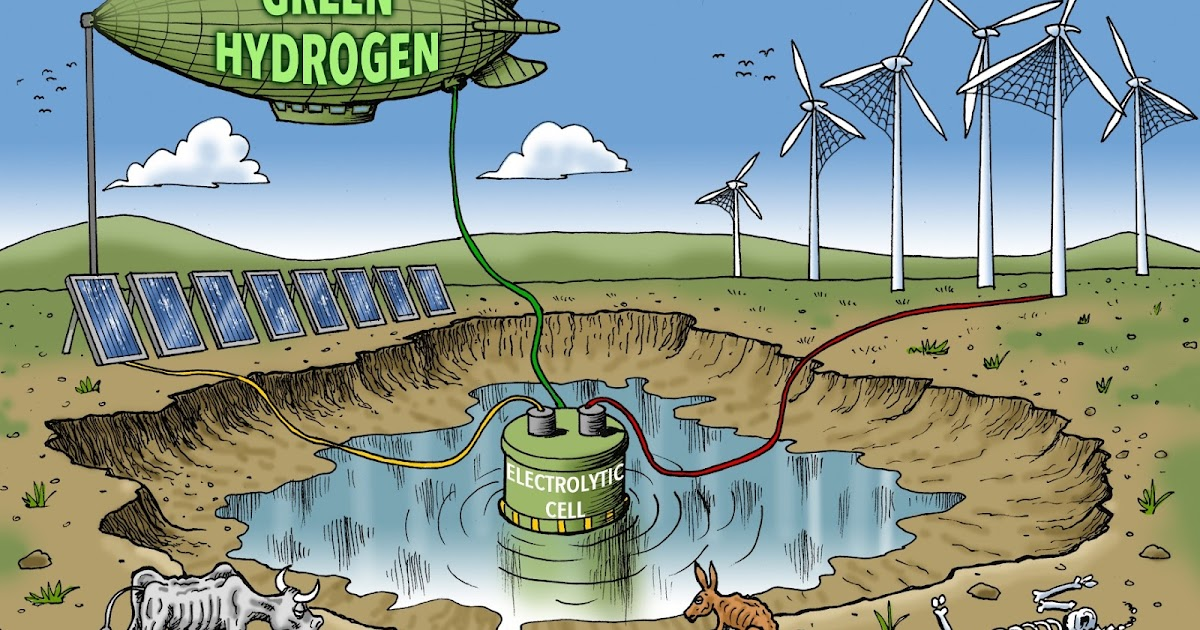
Amazon rain forest devastated to mount monstrous virtue signalling prayer wheels elsewhere. Stop the subsidies and the devastation from wind “farms.”

From The Defender Wind Energy’s Dirty Secret: Deforestation of the Amazon and Devastation of Indigenous Communities.  Excerpts in italics with my bolds.  H/T mohandeer

Booming demand for balsa wood, used to make turbine blades for wind energy,
is ravaging Amazon forests and indigenous communities —
in the name of “green power.”

Story at a glance:
  • The rapid expansion of wind energy has led to increasing demand for windmills and balsa wood to build them.
  • The tropical tree is facing exploitation and being cleared from Amazon forests, causing potentially more environmental problems than the windmills it creates can solve.
  • Wind turbine blades can be up to 328 feet (100 meters) long; each blade requires 150 cubic meters of balsa wood, which is several tons.
  • China is a major consumer of balsa wood, purchasing 85% of Ecuador’s exports in 2020.
  • The Open Democracy video, “A Green Paradox,” documents how the rush for balsa wood to create “green” wind energy has destroyed local indigenous communities and decimated ecosystems.

Balsa, a tree that’s native to South America, is a coveted resource. Growing up to 98 feet (30 meters) and ready for harvesting in just three to four years from planting, balsa holds the promise for high profits for those who grow them.

Adding to its value, balsa wood is flexible and light yet very strong, making it an ideal material for manufacturing bridges, skis, boats and wind turbine propellers.

In an ironic tragedy, however, the rapid expansion of wind energy has led to
increasing demand for windmills and balsa wood to build them
.

Now, the tropical tree is facing exploitation and being cleared from Amazon forests, causing potentially more environmental problems than the windmills it creates can solve.  

Logging Amazon rainforests to create massive wind turbine propellers is the opposite of sustainable. Meanwhile, birds and bats — many species of which are already endangered — are suffering. It’s estimated that 600,000 to 949,000 bats, and up to 679,000 birds, are killed annually by wind turbines in the U.S.

But the number of wind turbines has increased significantly since these estimates were calculated, which means many more are probably affected. Areas, where wind farms are built, are also in peril, as the giant structures have a significant socio-economic impact.

As it stands, wind energy is falling into the trap of many “green” initiatives before it,
claiming to offer a solution to save the planet
while instead helping to destroy it.

Govt. Green Rules Make Appliances Cost More and Do Less

NYC going after pizza oven emissions. You’d have to burn a pizza stove 849 years to equal one year of John Kerry’s private jet

In his Master Resource article Energy Appliance Victory! (DC Circuit vs. DOE), Mark Krebs explains the DOE agency machinations targeting boilers as a case in point of government bureaucrats attacking everyone’s economic well-being in the name of saving the planet.  First, a contextual piece describes the game plan behind all this.  Later on, a synopsis of Kreb’s analysis of the tactics on the ground.

Background:  Why This Judgment Matters 
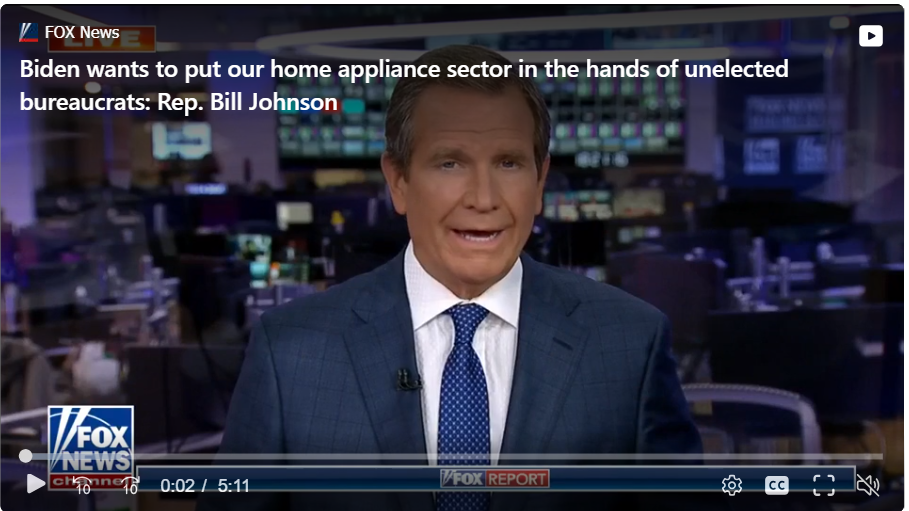
Biden’s Green Rules Make Appliances Cost More and Do Less

Authored by Kevin Stocklin at The Epoch Times, published at Planet Today.  Excerpts in italics with my bolds and added images.

The Biden administration announced in December 2022 its pledge to take “more than 100 actions” to impose significantly tighter environmental standards on consumer goods is now becoming reality.  And consumer groups are predicting a future in which Americans pay more for products that do less, while manufacturers warn of shortages and supply chain breakdowns.

“You’re seeing, just in the last few months, new rules from the Biden administration about clothes washers, dishwashers, and other kinds of kitchen appliances, and in every case, you’re talking about a tightening of already very, very tight standards,” O.H. Skinner, executive director of the Alliance for Consumers, told The Epoch Times. “That will make it so that nearly the majority of the current products on the market don’t meet the standards and have to be redesigned or removed from the market,” Skinner said.

“Everyday things that people actually want are going to get more expensive
or disappear, and the products that will be available will be more expensive
but not better. People are going to wonder why life is worse.”

The announcement touted 110 new regulations enacted by federal agencies on “everything from air conditioners and furnaces, to clothes washers and dryers, to kitchen appliances and water heaters—as well as commercial and industrial equipment.” According to the Biden administration: “Once finalized, these standards will reduce greenhouse gas emissions by an estimated 2.4 billion metric tons, equivalent to the carbon emissions from 10 million homes, 17 million gas cars, or 21 coal-fired power plants over 30 years. The projected consumer savings from these standards would be $570 billion cumulatively, and for an average household this will mean at least $100 in annual savings.”

The stoves are just the thin end of the wedge.

These actions follow a familiar pattern: rumors of new directives, followed by official denials, followed by draconian diktats.   For example, reports that the Consumer Product Safety Commission would ban gas stoves over alleged safety concerns sparked a public outcry in January, which was met with denials by the Commission, together with media ridicule, that any such thing was being contemplated. This was then followed by new environmental standards from the DOE that would ban the manufacturing of 50 percent of the gas stoves available on the market today.

Case in Point: DOE Rule on Boilers Vacated by DC Circuit Court

Mark Krebs explains the agency machinations in his Master Resource article Energy Appliance Victory! (DC Circuit vs. DOE).  Excerpts in italics with my bolds.

“The ‘wheels of justice turn slowly,’ but they indeed turned, even within the District of Columbia’s ‘uni-party.’ As for holding on to this victory, it is far from a slam-dunk for preserving consumer choice and free markets. I expect the struggle to escalate in Biden’s all-of-government war against natural gas and other fossil fuels.”

Beleaguered energy consumers were just handed a far-reaching victory by the United States Court of Appeals for the District of Columbia (DC Circuit). The ruling vacated a Final Rule from the U.S, Department of Energy (DOE) that would have banned the manufacture and sale of non-condensing boilers for use in commercial applications. DOE’s rule was challenged several years ago by natural gas interests–and later joined with a separate but similar case brought by the Air-Conditioning, Heating, and Refrigeration Institute (AHRI).

DOE’s failures were major and numerous. Previously, the Court had afforded DOE ample opportunities to rectify them, but they didn’t. Ultimately (reading in between the lines), it appears that the Court lost its patience with “the Agency” (DOE). One of the far-reaching results of this victory is that it undermines a veritable super-weapon of the administrative state: the Chevron Deference. This aspect will be discussed in more detail further down.

DC Circuit has set a precedent that illustrates how DOE routinely bends the rules to achieve its “administrative state” objectives. Consequently, DOE should exercise more care and transparency going forward with both present and future developments of appliance minimum efficiency standards.  However, it is probably more likely that DOE will find ways to get around it; perhaps drastically.

The end-result of this (amid many other analytical biases discussed in the Court ruling) is fatally skewed economic “determinations” that almost always favor stricter standards, regardless of the true economics.. As a result of this Court Order, such routine biases are now on public display to demonstrate the full intent of regulatory failures that occur within the intentionally opaque bureaucratic processes to ostensibly overcome so-called market failures.

Most important of all, fossil fuel industries should exploit this victory to illustrate just how fallible government agencies can be.  This decision goes far beyond the particulars of packaged commercial boilers. It goes to the heart of the question of government agency standing relative to actual stakeholders.

Ever since the “Chevron Deference” was put in place in 1984, federal courts have deferred to an agency’s ostensibly unique “subject matter expertise” for interpretating ambiguous statutes. Such is clearly the case when reviewing regulatory actions like promulgating rulemaking for mandating minimum energy efficiency standards for appliances. On May 1, 2023, the U.S. Supreme Court granted review in Loper Bright Enterprises v. Raimondo, No. 22-451, on whether to overturn or limit Chevron Deference.

Subsequently, perhaps the most important victory in this case is that it becomes a “poster child” for why the administrative state’s abuse of the Chevron Deference should end. At least in this instance, the Courts found DOE to be not worthy of deference. Perhaps SCOTUS will follow their lead.


EV Revolution Winding Down

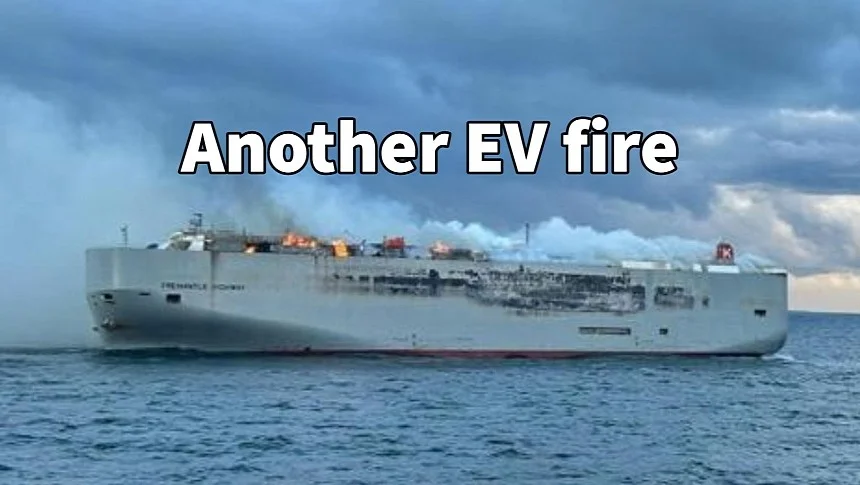
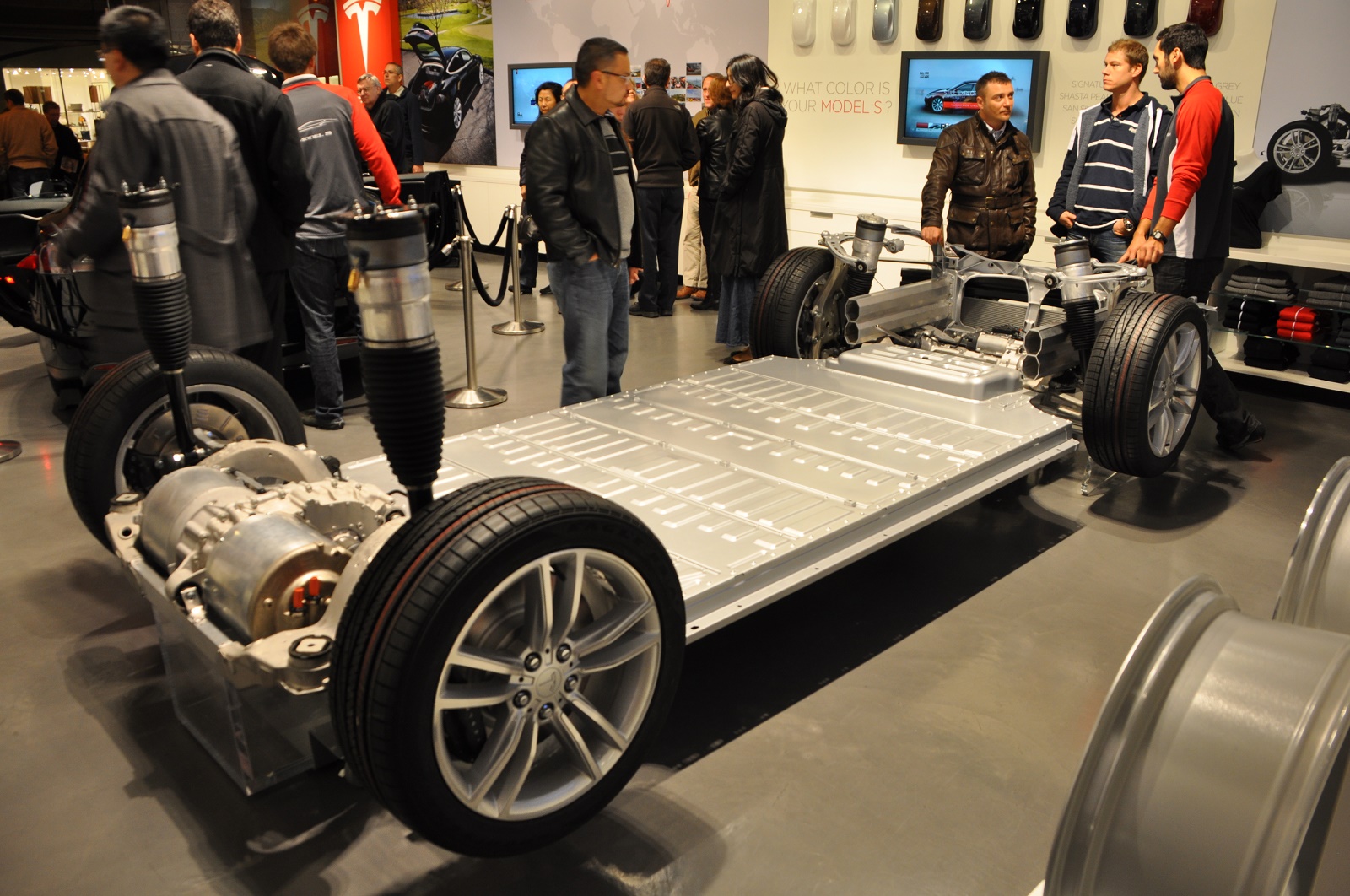
An article from John Ray explains how the Electric Vehicle movement is losing steam The electric car ‘revolution’ is a disaster before it’s begun.  Excerpts in italics with my bolds and added images. (The UK references are due to the original article appearing in The Telegraph.)

The electric car revolution is stalling, of that there can no longer be any doubt. It has left the big global carmakers floundering, uncertain of how to proceed in a race they reluctantly entered in the first place.

Electrification was initially met with fierce resistance. But once politicians held a gun to the heads of company bosses with a series of cliff-edge deadlines for phasing out the combustion engine, carmakers had little choice but to go all-in.

Century-old business models were declared dead and ambitious plans hurriedly drawn up to electrify entire portfolios from small city run-arounds to family saloons and SUVs, at astronomical cost. Even Ferrari has embraced the movement – much to the consternation of petrolheads everywhere.

But with electrification barely off the starting grid, one by one the big carmakers
are already pulling back as demand badly falters.

Volkswagen is so concerned about flagging sales that it has taken the extraordinary decision of halting electric vehicle production at one of its biggest plants. Assembly lines for electric models will be paused for six weeks at the Emden factory in northwest Germany and 300 of its 1,500 staff laid off after sales fell 30pc short of forecasts.

This means production of the new VW ID.7 electric model, which had been due to commence in July will be pushed back until the end of the year. The ID.4 electric SUV and the upcoming ID.7 electric sedan will also be delayed.

“We are experiencing strong customer reluctance in the electric vehicle sector,”
plant boss Manfred Wulff said.

That is remarkably plain language from the largest car manufacturer on the planet, and a company that recently announced plans to invest €120bn (£103bn) over the next five years in “electrification and digitalisation”.

It comes months after Ford poured cold water on the shift to electric
with thousands of job losses in Europe.

Electric vehicle production is unable to support anything like the same number of jobs that petrol and diesel models are able to sustain, it said. Boss Jim Farley estimates that 40pc fewer staff will be needed to develop battery versions.

A generation of pure electric vehicle makers has hardly fared any better. On Tuesday, Lordstown Motors, the US electric truck specialist that Donald Trump once heralded as the saviour of a depressed Ohio town, filed for bankruptcy protection.

Even Elon Musk has been forced to repeatedly cut the price of Teslas in a desperate effort to prop up demand and protect market share.

But it’s the setback at VW that stands out, raising serious questions about whether politicians are making the catastrophic mistake of forcing electric cars on a public that doesn’t want them. Indeed, the decision to impose strict deadlines for the phase out of petrol cars could turn out to be one of the most ruinous policy decisions of our lifetimes.

Think about it for a second: an entire industry not only forced to abandon a product that the vast majority of people still want and use, but also bullied into channelling all its resources into making something on a colossal level that there simply isn’t the market for – at least not within the horrendously short timeframe that is being imposed on car manufacturers.

It’s industrial self-sabotage and a commercial, economic and social catastrophe in the making. But what’s worse is that the damage risks being far greater in the UK than anywhere else in the Western world thanks to the Government’s myopic obsession with arbitrary net zero targets.

While the rest of the industrial world seems to have largely settled on a 2035 deadline for petrol and diesel phase out, ministers, for reasons destined to remain a mystery, have decided Britain needs to hit this milestone five years earlier than everyone else.

It makes no sense at all, and yet the ramifications threaten to be huge. By diverting capital into something that lots of people essentially don’t want, it risks inflicting massive losses on an already fragile UK car industry.

It is pure fantasy to imagine that Britain – with a dearth of battery factories (consultants Alix Partners estimates as much as a third of Britain’s battery requirements will need to be imported), a paucity of chargers and dramatically higher energy costs – will be in any position to go fully electric in the next seven years. And the Government simply isn’t capable of solving any of these challenges in time, if at all.

The UK risks becoming the unfortunate guinea pig in a costly and dangerous experiment that persuades the rest of the world to push their own deadlines out even further, turning this country into an example of how not to become a nation of electric car owners.


2023 Update: Fossil Fuels ≠ Global Warming

gas in hands

Previous posts addressed the claim that fossil fuels are driving global warming. This post updates that analysis with the latest (2022) numbers from Energy Institute and compares World Fossil Fuel Consumption (WFFC) with three estimates of Global Mean Temperature (GMT). More on both these variables below. Note: Previously these same statistics were hosted by BP.

WFFC

2022 statistics are now available from Energy Institute for international consumption of Primary Energy sources. Statistical Review of World Energy. 

The reporting categories are:
Oil
Natural Gas
Coal
Nuclear
Hydro
Renewables (other than hydro)

Note:  Energy Institute began last year to use Exajoules to replace MToe (Million Tonnes of oil equivalents.) It is logical to use an energy metric which is independent of the fuel source. OTOH renewable advocates have no doubt pressured EI to stop using oil as the baseline since their dream is a world without fossil fuel energy.

From BP conversion table 1 exajoule (EJ) = 1 quintillion joules (1 x 10^18). Oil products vary from 41.6 to 49.4 tonnes per gigajoule (10^9 joules).  Comparing this annual report with previous years shows that global Primary Energy (PE) in MToe is roughly 24 times the same amount in Exajoules.  The conversion factor at the macro level varies from year to year depending on the fuel mix. The graphs below use the new metric.

This analysis combines the first three, Oil, Gas, and Coal for total fossil fuel consumption world wide (WFFC).  The chart below shows the patterns for WFFC compared to world consumption of Primary Energy from 1965 through 2022.

The graph shows that global Primary Energy (PE) consumption from all sources has grown continuously over nearly 6 decades. Since 1965  oil, gas and coal (FF, sometimes termed “Thermal”) averaged 88% of PE consumed, ranging from 93% in 1965 to 82% in 2022.  Note that in 2020, PE dropped 21 EJ (4%) below 2019 consumption, then increased 31 EJ in 2021.  WFFC for 2020 dropped 24 EJ (5%), then in 2021 gained back 26 EJ to slightly exceed 2019 WFFC consumption. For the 58 year period, the net changes were:

Oil 194%
Gas 525%
Coal 178%
WFFC 239%
PE 287%
Global Mean Temperatures

Everyone acknowledges that GMT is a fiction since temperature is an intrinsic property of objects, and varies dramatically over time and over the surface of the earth. No place on earth determines “average” temperature for the globe. Yet for the purpose of detecting change in temperature, major climate data sets estimate GMT and report anomalies from it.

UAH record consists of satellite era global temperature estimates for the lower troposphere, a layer of air from 0 to 4km above the surface. HadSST estimates sea surface temperatures from oceans covering 71% of the planet. HadCRUT combines HadSST estimates with records from land stations whose elevations range up to 6km above sea level.

Both GISS LOTI (land and ocean) and HadCRUT4 (land and ocean) use 14.0 Celsius as the climate normal, so I will add that number back into the anomalies. This is done not claiming any validity other than to achieve a reasonable measure of magnitude regarding the observed fluctuations.[Note: HadCRUT4 was discontinued after 2021 in favor of HadCRUT5.]

No doubt global sea surface temperatures are typically higher than 14C, more like 17 or 18C, and of course warmer in the tropics and colder at higher latitudes. Likewise, the lapse rate in the atmosphere means that air temperatures both from satellites and elevated land stations will range colder than 14C. Still, that climate normal is a generally accepted indicator of GMT.

Correlations of GMT and WFFC

The next graph compares WFFC to GMT estimates over the decades from 1965 to 2022 from HadCRUT4, which includes HadSST4.

Since 1965 the increase in fossil fuel consumption is dramatic and monotonic, steadily increasing by 239% from 146 to 494 exajoules.  Meanwhile the GMT record from Hadcrut shows multiple ups and downs with an accumulated rise of 0.8C over 56 years, 6% of the starting value.

The graph below compares WFFC to GMT estimates from UAH6, and HadSST4 for the satellite era from 1980 to 2022, a period of 43 years.

In the satellite era WFFC has increased at a compounded rate of nearly 2% per year, for a total increase of 92% since 1979. At the same time, SST warming amounted to 0.53C, or 3.7% of the starting value.  UAH warming was 0.52C, or 3.8% up from 1979.  The temperature compounded rate of change is 0.1% per year, an order of magnitude less than WFFC.  Even more obvious is the 1998 El Nino peak and flat GMT since.

Summary

The climate alarmist/activist claim is straight forward: Burning fossil fuels makes measured temperatures warmer. The Paris Accord further asserts that by reducing human use of fossil fuels, further warming can be prevented.  Those claims do not bear up under scrutiny.

It is enough for simple minds to see that two time series are both rising and to think that one must be causing the other. But both scientific and legal methods assert causation only when the two variables are both strongly and consistently aligned. The above shows a weak and inconsistent linkage between WFFC and GMT.

Going further back in history shows even weaker correlation between fossil fuels consumption and global temperature estimates:

wfc-vs-sat

Figure 5.1. Comparative dynamics of the World Fuel Consumption (WFC) and Global Surface Air Temperature Anomaly (ΔT), 1861-2000. The thin dashed line represents annual ΔT, the bold line—its 13-year smoothing, and the line constructed from rectangles—WFC (in millions of tons of nominal fuel) (Klyashtorin and Lyubushin, 2003). Source: Frolov et al. 2009

In legal terms, as long as there is another equally or more likely explanation for the set of facts, the claimed causation is unproven. The more likely explanation is that global temperatures vary due to oceanic and solar cycles. The proof is clearly and thoroughly set forward in the post Quantifying Natural Climate Change.

Footnote: CO2 Concentrations Compared to WFFC

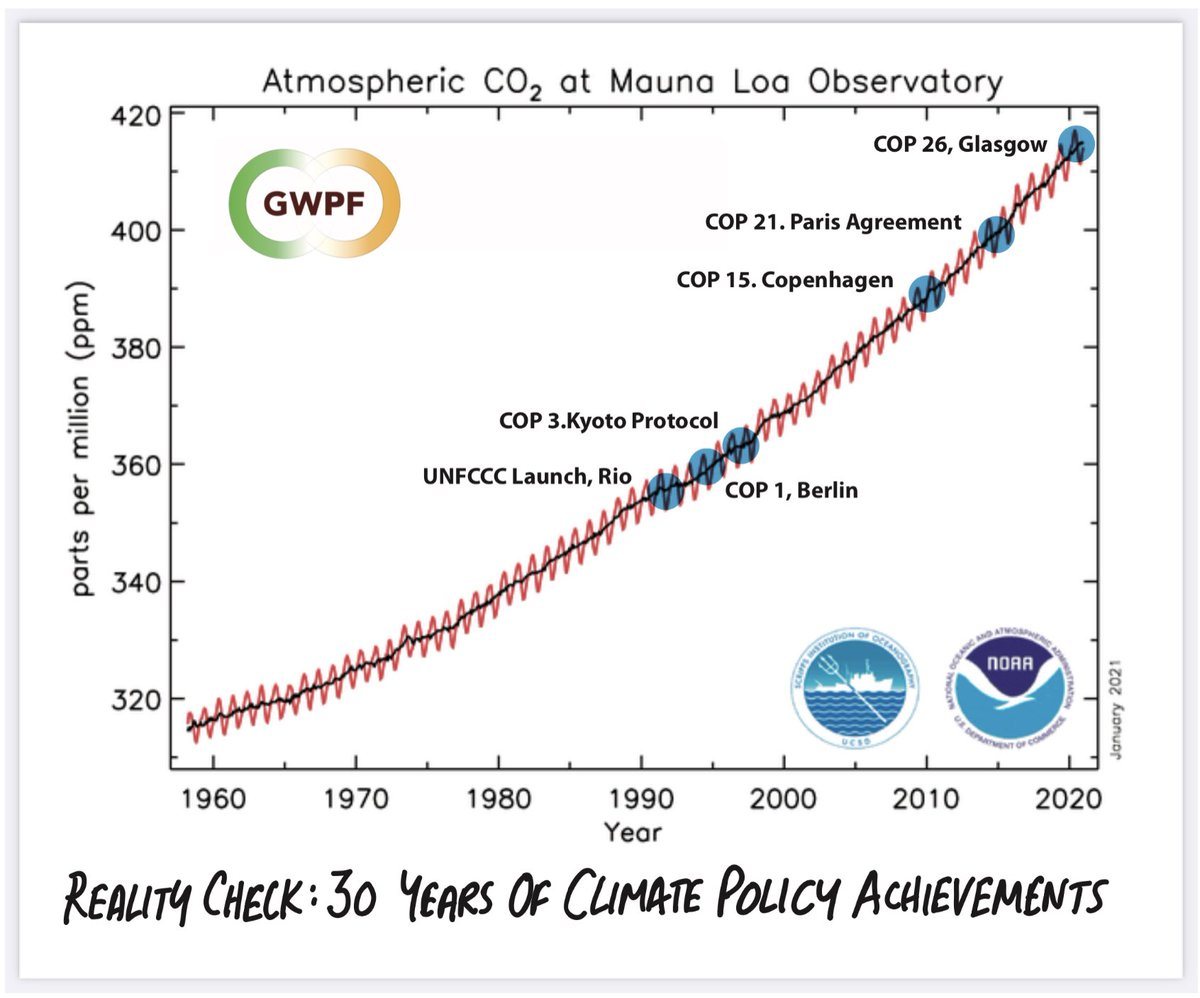
Contrary to claims that rising atmospheric CO2 consists of fossil fuel emissions, consider the Mauna Loa CO2 observations in recent years.

Despite the drop in 2020 WFFC, atmospheric CO2 continued to rise steadily, demonstrating that natural sources and sinks drive the amount of CO2 in the air.

See also: Nature Erases Pulses of Human CO2 Emissions

Temps Cause CO2 Changes, Not the Reverse

Carbon Capture Boondoggle

John M. Contino explains in his American Thinker article The Contradictions of Carbon Capture.  Excerpts in italics with my bolds and added images.

In May, 2022, the Biden Administration announced a $3.5 billion program to capture carbon pollution from the air, and the money has been flowing copiously. A quick search on LinkedIn for companies engaged in Carbon Capture, Utilization and Storage (CCUS) projects will reveal dozens of companies, most of which are U.S.-based. They are well-staffed and generously funded with millions of up-front taxpayer dollars. [Note the bogus reference to plant food CO2 as carbon pollution.]

Summit Carbon Solutions does have its share of proponents — among them ethanol producers, heads of Chambers of Commerce, and politicians of all stripes from state and local governments. It’s one thing to dangle large sums of other people’s money to induce cooperation, but landowners are apparently being bludgeoned into submission with eminent domain.

The CCUS projects in the Midwestern faming states are all predicated on the continued, if not expanded, production of ethanol, because ethanol facilities present localized concentrations of CO2 that can be harnessed and disposed of more efficiently than merely sucking carbon dioxide out of the ambient atmosphere.

A Reuters article from March, 2022 reports that

The government estimates that ethanol is between 20% and 40% less carbon intensive than gasoline. But a recent study published in the Proceedings of the National Academy of Sciences found that ethanol is likely at least 24% more carbon intensive than gasoline, largely due to the emissions generated from growing huge quantities of corn [emphasis added].

The production of ethanol results in a net loss of energy: “Adding up the energy costs of corn production and its conversion to ethanol, 131,000 BTUs are needed to make 1 gallon of ethanol…[which] has an energy value of only 77,000 BTU.”

And let us not give short shrift to Power Density. In his 2010 book Power Hungry. The Myths of “Green” Energy and the Real Fuels of the Future, energy expert Robert Bryce compares the amount of the energy produced by various sources in terms of horsepower per acre, or wattage per square meter. An average U.S. Natural Gas Well, for example, produces 287.5 hp/acre. An Oil Stripper Well (producing 10 bbls/day) produces 148.5 hp/acre. Corn Ethanol comes in at a pathetic 0.25 hp/acre (pg. 86).

An Occam’s Razor approach to solving this problem would be
to shut down all the country’s ethanol production and
to not generate all that carbon dioxide in the first place.

Granted, the ethanol industry enjoys wide bipartisan support. But that doesn’t make it rational, or good for the country. Farmers receive substantial revenues by diverting an average of 40% of total corn yields to the production of ethanol. Why not just give that money to the farmers in exchange for them allowing 40% of their corn acreage to lie fallow? We might ask, facetiously, if we really needed all that extra corn to eat or export, why would our government prefer we burn it in our gas tanks?

Think of the savings:

♦  CO2 that would not be generated by growing and harvesting all that corn;
♦  water that would not be drained from our aquifers for irrigation; 
♦  salination of our topsoil that would be abated by not applying unnecessary nitrogen fertilizers; and
♦  most obviously, the absence of the need to capture and bury carbon from ethanol plants.

An advantage of ethanol is that it reduces greenhouse gas emissions (GHG). The Office of Energy Efficiency and Renewable Energy reports that a 2021 Argonne Labs study “found that U.S. corn ethanol has 44%–52% lower GHG emissions than gasoline.” Let’s say ethanol reduces GHG by 50%. So, a tankful of gasoline with 10% ethanol yields a net GHG reduction of only 5% (50% of 10%).

Another advantage of ethanol is jobs in rural areas. The National Corn Growers Association reported that “[I]n 2019, the U.S. ethanol industry helped support nearly 349,000 direct and indirect jobs.”

Even if those advantages were sufficient to maintain or expand the ethanol industry, it sounds almost farcical to ask:

♦  “what is the cost-benefit analysis of spending billions of dollars to capture and sequester the CO2 from those corn fermentation processes, and

♦  to what extent would all that CCUS actually benefit the planet?”

When a John Kerry or a Greta Thunberg utters Climate Change Disaster words to the effect of “the sky is falling, we’re all going to die!” they would have us believe that it’s trivial to worry about boring quantitative cost-benefit ratios and returns on investment when the entire planet is facing an imminent, existential threat.

The hyperbolic language of the climate change crowd has been wearing thin ever since Al Gore’s dire predictions from 2006 have inconveniently not materialized. It’s up to us to make the left realize they’ve overplayed their hand: they cannot ride roughshod over property rights whenever it suits them, just as they cannot force us to drink Bud Light if we don’t wish to do so.


Nations Planning for Future Hydrocarbon Energy

From energypost.eu comes the news Nearly half of national climate pledges (NDCs) intend to keep extracting fossil fuels.  Excerpts in italics with my bolds.

Nationally Determined Contributions” (NDCs) are a nation’s published plans to reduce emissions and adapt to the impacts of climate change.  Nations are obliged to update their NDCs every five years, to give more detail. That added detail is a cause for concern in the latest round of NDCs: there is an increase in countries communicating plans to maintain or increase production rather than phase it out.

This goes against the fact that oil and gas production needs to decline
by at least 65% by 2050 in scenarios that limit warming to 1.5C.

We found that more and more countries are discussing the production of fossil fuels in their “nationally determined contributions” (NDCs).

The topic is mentioned in two-thirds of fossil fuel-producing countries’ second-round NDCs, an increase on the first iteration, highlighting the increased discussion around the topic.

But we observe that while a few countries are reporting on measures to phase out fossil fuel production, nearly half of second-round NDCs included plans to maintain or even increase fossil fuel production.

Here, we take a closer look at the growing discussion of fossil fuel production in NDCs and “long-term low emissions development strategies” (LT-LEDS), the significance of their inclusion and how governments could build in targets and pathways for winding down production as we look to the next NDC cycle.

Within the analysis, we looked at 103 first-round NDCs (those published between 2015-19), 95 second-round NDCs (2019-March 2023) and 31 LT-LEDS belonging to fossil fuel producing countries.

Additionally, we looked at 65 first-round NDCs, 48 second-round NDCs and 19 LT-LEDS submitted by countries that do not produce fossil fuels.

Overall, only two countries discuss targets or policies designed to restrict or wind down fossil fuel production in their first-round NDCs, illustrated by the mid-green sliver in the second column from the top of the chart above. This rises to five in second-round NDCs (dark green) and 13 in LT-LEDS (light green).

Others – as shown in the first set of bars – do not include active policies, but, rather, quietly acknowledge the reality that their fossil fuel production will decrease. Australia is in this camp, for instance. Its LT-LEDS, while pledging to continue producing fossil fuels for as long as the world needs them, predicts that production will be 35% lower in 2050 than in 2020 due to changes in global demand.

However, a much larger number of countries plan to increase fossil fuel production, or indicate that they will maintain current levels: 35 first-round NDCs, 45 second-round NDCs, and 13 LT-LEDS . This is illustrated in the second set of bars in the figure above (“continuing or increasing production”).

In particular, this increase within the second-round of NDCs is notable, with 15 new countries including the continuation or expansion of fossil fuel production in their second-round NDCs, while only three have dropped the reference in the second iteration.

Indeed, two countries that do not currently produce oil and gas – Lebanon and Senegal –
expressed intent to begin in their second-round NDC
.

Many countries, such as Canada, Norway, the United Arab Emirates and Saudi Arabia, include commitments to reduce flaring, electrify processes or increase the energy efficiency of fossil fuel production.

These countries mostly do not simultaneously indicate any intention to scale down production volumes, however, despite the fact that oil and gas production declines by at least 65% by 2050 in scenarios that limit warming to 1.5C.


Natural Gas to the Rescue (Vaclav Smil)

Vaclav Smil has published a major study Natural Gas in the New Energy World  For Naturgy Foundation. Excerpts in italics with my bolds and added images.

Bottom Line: There is an ongoing effort to decarbonize the global energy supply and demand system. This has been a general but slower than currently advertised trend over the past many centuries. While more renewables and greater efficiency to lower fossil fuel usage continues, coal, oil, and natural gas will continue to supply the bulk of the world’s energy for much longer than most probably realize. Make no mistake: the drop in demand and CO2 emissions in 2020 came from a global pandemic, not from a structural decline in the use of fossil fuels. As the cleanest fossil fuel with the lowest CO2 emissions, natural gas in particular has an essential role to play, especially in Asia where it can displace the overdependence on higher emission coal.   

While the quest for accelerated decarbonization of the global energy supply has obviously been linked to rising concerns about global climate change, there is nothing new about the process itself.

Histories of modern primary energy and electricity production present
clear trends toward lower carbon intensity. 

Energy Sources and the Rise of Civilization. Source: Bill Gates

For example, fuelwood was followed by coal, coal by crude oil and crude oil by natural gas, and as fossil-fueled electricity generation was augmented by hydro and nuclear generation and, most recently, by solar and wind-powered conversions.

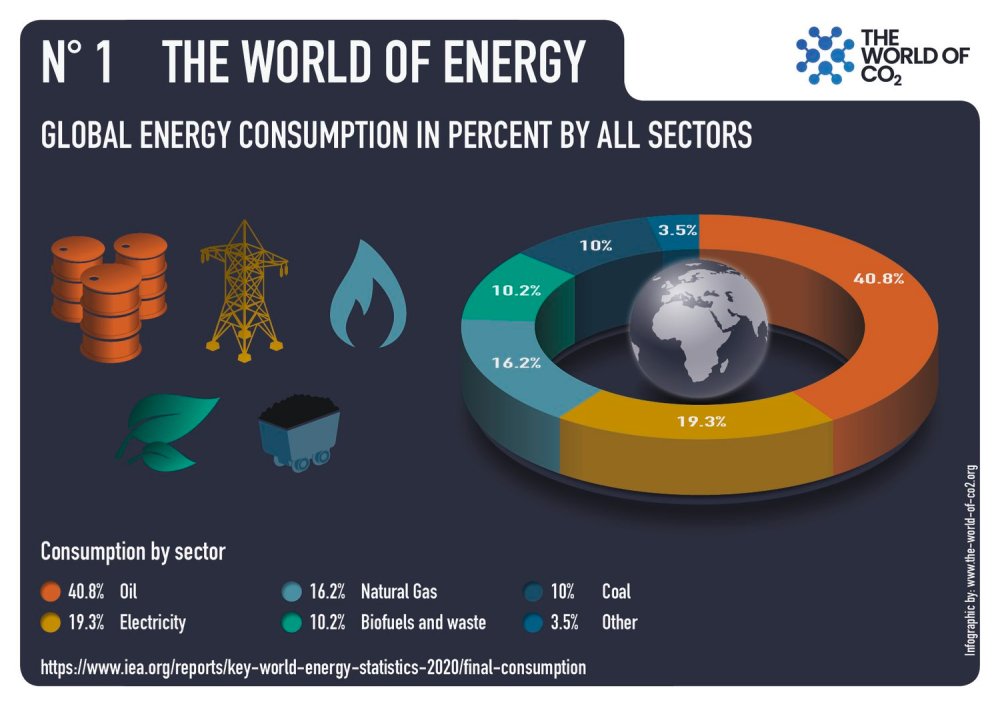
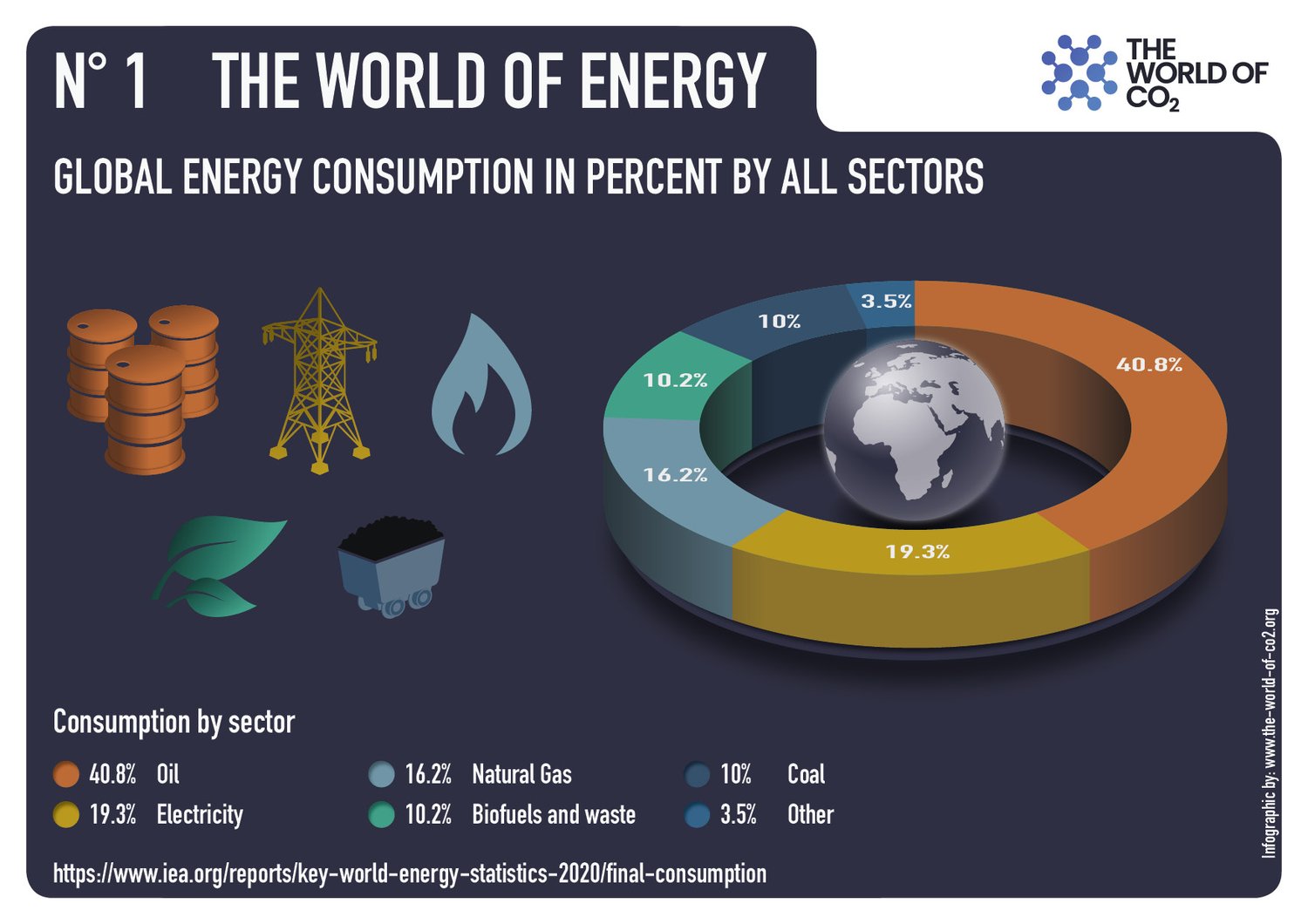
This is an ongoing but not a very fast process: half a century ago the world derived about 94% of its primary energy from fossil fuels, by 2020 the share was still about 85%, while 60% of the world’s electricity was still generated in coal- and natural gas-fired stations (crude oil and refined fuels accounted for another 4% of the total).

During the time of the Covid-19 pandemic in 2020, a temporary drop in CO2 emissions resulting from economic lockdowns in the spring months of 2020 was seen by an increasing number of commentators and governments as the beginning of complete decarbonization that would be accomplished in just three decades. 

Indeed, wishful thinking should not be mistaken for realistic appraisals. 

To begin with, the global decline in energy use has been far lower than initially assumed. The reduction will only slow down the build-up of atmospheric CO2, it will not even interrupt it. 

When looking ahead, it is imperative to separate what is possible in the high-income economies from what is required in low-income nations. 

Relatively rapid expansion of renewable electricity generation and the pursuit of higher energy efficiencies can (combined with stationary or declining populations) translate into a steady and significant rate of decarbonization in high-income economies.

Even so, it will be impossible to displace all fossil fuels that are now required for heating, transportation and industrial uses by non-carbon alternatives for decades to come.

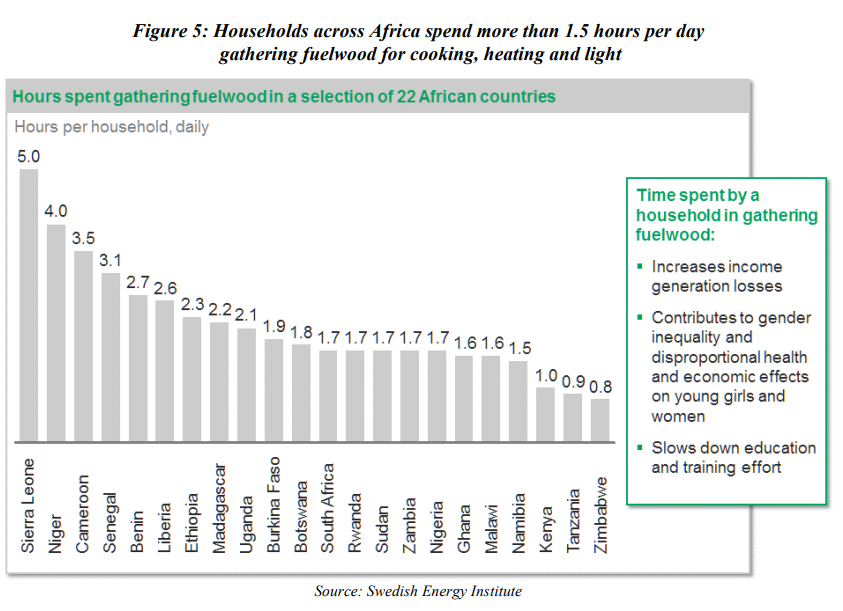
We simply must remain realistic: Asian and African consumption of fossil fuels is still rising and the developmental aspirations of low-income nations ensure that it will continue to increase in the foreseeable future even with accelerated expansion of renewable electricity generation.

Looking ahead requires at least the basic qualitative and quantitative understanding
of what we are dealing with and where we are coming from. 

In the future, expanded consumption of natural gas can make as much of substantial difference in today’s low-income countries as it has made in high-income nations: the fuel is perfectly suited to replace coal in electricity generation (one of the fuel’s largest uses), to power new generation capacities that can operate with unequaled dispatchability and conversion efficiency, to be used more efficiently than any other fuel in a multitude of industrial process, and to provide (for a long time to come) an indispensable feedstock for syntheses of many essential chemicals.

Natural Gas Top Uses

The good news is that the global reserves and resource of natural gas is more than
sufficient to encourage a dramatic rise in gas usage around the world.

Findings:

  1. There is an ongoing effort to decarbonize the global energy supply and demand system. 
  2. This is NOT a new evolution and has repeated itself many times…but the process takes a lot longer than some are claiming today. 
  3. We must be realistic: renewables are growing in importance but will not displace fossil fuels any time soon, measured in decades not years.  
  4. Natural gas has a unique and widening role to play, in the still developing world especially, because it is low-cost, lower emission, abundant, highly versatile and efficient, and very reliable.  

Read the full study here.

Get Real on Energy Policy ( Bryce to US Senators)

The imperative is put concisely in US Senate testimony by Robert Bryce in summary video above.  For those who prefer reading, I provide below a transcript and exhibits from the closed caption and screen captures.

Legislators and policymakers in Washington need a big dose of energy realism, an even bigger dose of energy humanism. Europe provides a case study for what not to do. Millions of Europeans are facing the prospect of a cold winter without enough affordable energy to heat their homes. Fertilizer plants and steel mills are closing because of high energy prices.

Europe’s price hikes are being caused by under investment in hydrocarbons due to aggressive decarbonization and ESG policies. Second, they’re being caused by over-investment in weather-dependent renewables, which has left the continent vulnerable to wind droughts. Just yesterday in Britain spot prices for electricity exceeded four thousand dollars a megawatt hour due to low wind speeds. Third, Europe is prematurely shuttering its coal and nuclear plants, and finally it is relying too heavily on imported energy and in particular Russian natural gas.

The implications of Europe’s price spikes include soaring inflation,
deindustrialization and increased burdens on consumers,
especially the working poor.

The knock-on effects could last for months or even years. Fertilizer made from hydrocarbons is the food of food. Numerous fertilizer plants in Europe and around the world are shutting down because of high natural gas prices. This will mean less food production and therefore higher food prices, leading to additional inflation.

The United States must not emulate Europe’s disastrous energy blueprint. We need energy realism. Energy is the economy; energy nourishes human potential. Hydrocarbons now provide 82 percent of our total energy and about 60 percent of our electricity supplies. The US today gets 18 times more energy from hydrocarbons as it does from wind and solar combined.

The myriad claims being made by climate activists, politicians and elite academics that we can run our economy solely on wind and solar and a few drops of hydropower have no basis in physics, math or history. Furthermore wherever renewables have been ramped up, as in Europe, energy prices have soared.

Senators, look at California where electricity prices are absolutely exploding. Wood Mckenzie estimates that converting our grid to renewables could cost 4.5 trillion dollars, or roughly $35, 000 for every family in America. How could such a staggering cost result in the just energy transition that we hear so much about?

Some Energy Realism: Since 2015 more than 300 communities across the country, from Maine to Hawaii have rejected wind projects. Over the past six months alone massive solar projects in Nevada, Pennsylvania and Montana have been rejected by local communities.

More Realism: Trying to convert our energy and power systems to renewables will make the US reliant on China for critical minerals like Neodymium, Dysprosium and Cobalt. Why is this okay?

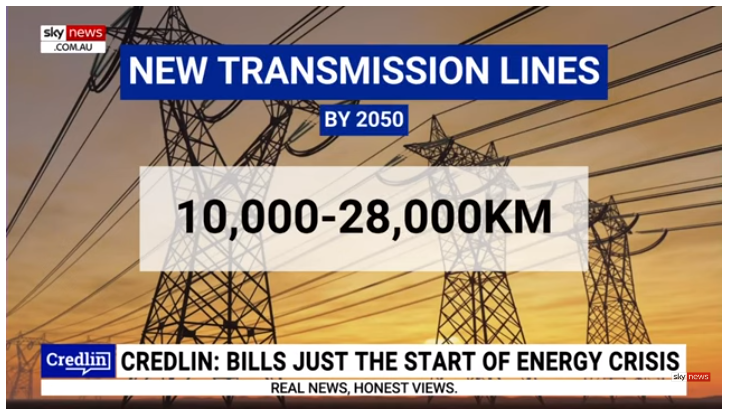
Relying on renewables would also require building hundreds of thousands of miles of new high-voltage transmission lines. But the November second referendum in Maine showed very clearly again that rural americans do not want high voltage transmission lines slashing through their neighborhoods.

Strangling America’s hydrocarbon sector by killing pipelines, banning natural gas, halting drilling on federal lands, electrifying everything, and never ending tax breaks for big wind and big solar will not solve global climate change. Instead those moves will turbocharge inflation, imperil our energy security, and impose regressive taxes on the poor and the working class.

Our economy runs on hydrocarbons and that will be true for decades to come. Staking our economy as Europe has done on weather dependent renewables amounts to unilateral energy disarmament
That will hurt us and benefit Russia, China and OPEC. Who will stand up for rural America and against the landscape destroying sprawl of wind and solar? Who will speak against the federally subsidized slaughter of our birds and bats by the wind industry? Expensive energy is the enemy of the poor; Who in the senate will stand up for them? Who in congress will stand up for the affordability reliability and resilience of our electric grid, which is being undermined by this senseless rush to renewables and the premature retirement of our nuclear reactors?

Where are the pro-nuclear, pro-energy realists?
Where, I ask you, are the energy humanists?

Postscript:  Complete text of Bryce presentation with images is at Innovationized:
What’s Causing the Energy Crisis?

ESG, the Demonization of Carbon Fuels, and an Unfounded Confidence in Renewables


Net Zero Zealots are Treating the Public Like Fools

A summary at The Telegraph of David Frost’s recent lecture, in italics with my bolds.

Some of the worst policies ever pursued in this country have been those which nearly all politicians supported at the time. Keeping Britain on the gold standard. Running down our Armed Forces in the 1930s. Demolishing our historic cities and replacing them with concrete. Joining the EU’s Exchange Rate Mechanism. Only a handful of free thinkers questioned these at the time. But when the disastrous results became clear, suddenly few people wanted to defend them.

Now, of course, consensuses can be correct, too. Most people agree that free trade is a good thing. But no one could say that that policy has been unchallenged. Indeed, although it is repeatedly attacked, both intellectual argument and real life keep proving it right.

That is why challenge and argument are so important. When everyone agrees on a policy, it is never seriously questioned. The arguments for it become ritualised. Zombie numbers get repeated from one document to another, however feeble their real underpinning – remember the three million jobs we were told for 20 years depended on EU membership? And its advocates don’t feel the need to invest any effort in defending it, because it’s easier just to smear its opponents.

So the cross-party agreement on the totemic policy of our time –
net zero 2050 – is troubling.

By all means accept the scientific consensus: it doesn’t seem to me to depict “climate catastrophe”. But net zero 2050 isn’t science. It’s a political goal enshrining a particular view of the trade-offs facing us as a result of climate change. It makes assumptions about how our economies and societies work which must be open to question. If no one ever does question it, we will inevitably end up with bad policy and bad results. That’s why I refuse to remain silent.

All these economic assumptions seem to me to be highly suspect. That’s partly because predicting the future is very difficult, and in this case we can prove that, because so many of the predictions in Labour’s Energy White Paper 20 years ago turned out to be wrong.

You might think, therefore, that the right thing for governments to do would be to invest in basic scientific research, to establish a simple regime for taxing the externality of carbon emissions at whatever level we think justified – and then stand back and let the market sort out how best to meet the policy goal.

You might think that, but you would be wrong. Governments have all decided
that they know best and can pick the technologies, the subsidies,
and the targets to get us to net zero.

That’s why you will be forced to buy ineffective boilers and expensive electric cars. That’s why you’re made to pay for windmills, a technology that was cutting-edge just after the Norman Conquest. That’s why our electricity grid is getting less reliable while at the same time energy bills go ever higher.

Some voters are clearly doubtful. So Western governments now go further, and argue that all these inferior technologies will actually improve economic growth – by a grand total of 2 per cent in 2050, according to reports quoted in Chris Skidmore’s Net Zero Review.

Sorry, but I don’t believe it. This whole area is riddled with economic fallacies:
counting benefits but not the costs; optimism bias;
illusory certainty and misplaced confidence in prediction.

There’s the belief that raising taxes to pay subsidies will not damage the wider economy. There’s the “broken windows fallacy”: just as repairing a broken window does not make you any better off, and you also lose the chance to spend the money on something more productive, so scrapping one system of energy production and replacing it with another does not make us richer – especially when the new system is worse than its predecessor.

There’s the faith that massive projects like insulating every house in the country can be undertaken simply and speedily with just an effort of will. And finally there’s the view that “green jobs”, many of them required to install all those less efficient technologies, are somehow a benefit rather than a cost. If you believe that, you must think we could make ourselves wealthier by sending everyone back into the fields to work the land.

Stop treating us like idiots. If we are told things will get better, and then they get worse, voters will in the end rebel against the policy. Look at the migration figures if you doubt that. I personally believe we will have to rethink the net zero methods and the timetable. Of course I might be wrong. But let’s have a proper debate and real honesty, not smears and cancellations.

One of Bob Dylan’s greatest songs, Not Dark Yet, is a reflection on his own waning powers and mortality. We need to make the same reflection about our society. Not only whether we literally go dark, because we can’t keep the lights on any more, but whether we in the West can actually summon the strength to resist degrowth, miserabilism and economic decline. “It’s not dark yet, but it’s getting there.” Time to stop, and rethink.

The text of David Frost’s lecture ‘Not Dark Yet’ is available at GWPF

Green Schemes Broken by Reality

James E. Hanley provides a roundup of failed Green expensive ventures in his Real Clear Policy article Green Projects Hit Iron Wall.  Excerpts in italics with my bolds and added images.

Developers looking to build thousands of wind turbines off the Mid-Atlantic and New England coast are coming up against a force even more relentless than the Atlantic winds: the Iron Law of Megaprojects, offering a warning of the trouble ahead for green-energy projects.

The Iron Law, coined by Oxford Professor Bent Flyvbjerg, says that “megaprojects” — which cost billions of dollars, take years to complete, and are socially transformative — reliably come in over budget, over time, over and over.

From Boston’s Big Dig to California’s high-speed rail to
New York’s 12 years-overdue and 300% over-budget East Side Access rail project,
big boondoggles routinely demonstrate the validity of the rule.

Offshore wind projects are not immune to the Iron Law, regularly experiencing vast cost overruns before a single watt is generated.

The New York state government, looking to replace oil- and gas-fired powerplants with hundreds of wind towers off Long Island, set out in 2019 to create an offshore wind supply chain from scratch, beginning with a massive state-funded turbine fabrication facility about 100 miles north of New York City on the Hudson River.

Port of Albany factory’s fate at stake as leaders race for a solution The $700 million-plus project is expected to create work for generations, but hopes are dwindling that more funding will become available

Ground still hasn’t even been broken, but the budget certainly has: The price of that Port of Albany facility has already doubled from $350 million to $700 million. An additional $100 million may be needed for equipment costs, raising the final price tag to $800 million.

It’s been billed the future hub for wind power infrastructure. So far, though, the only thing that continues to get billed over and over in recent years is the Connecticut taxpayer.

A similar situation is playing out in New London, Connecticut, where a state-funded pier facility being built to support that state’s offshore wind buildout has more than doubled in price from an original estimate of $95 million to $250 million.

Commonwealth Wind Declares that the largest offshore wind farm in the state’s pipeline “cannot be financed and built” under existing contracts,

And in Massachusetts, developer Commonwealth Wind has asked the state to scrap its power purchase guarantees and rebid the project, arguing that inflation and supply chain problems mean the project is not financially viable under its current contracts.

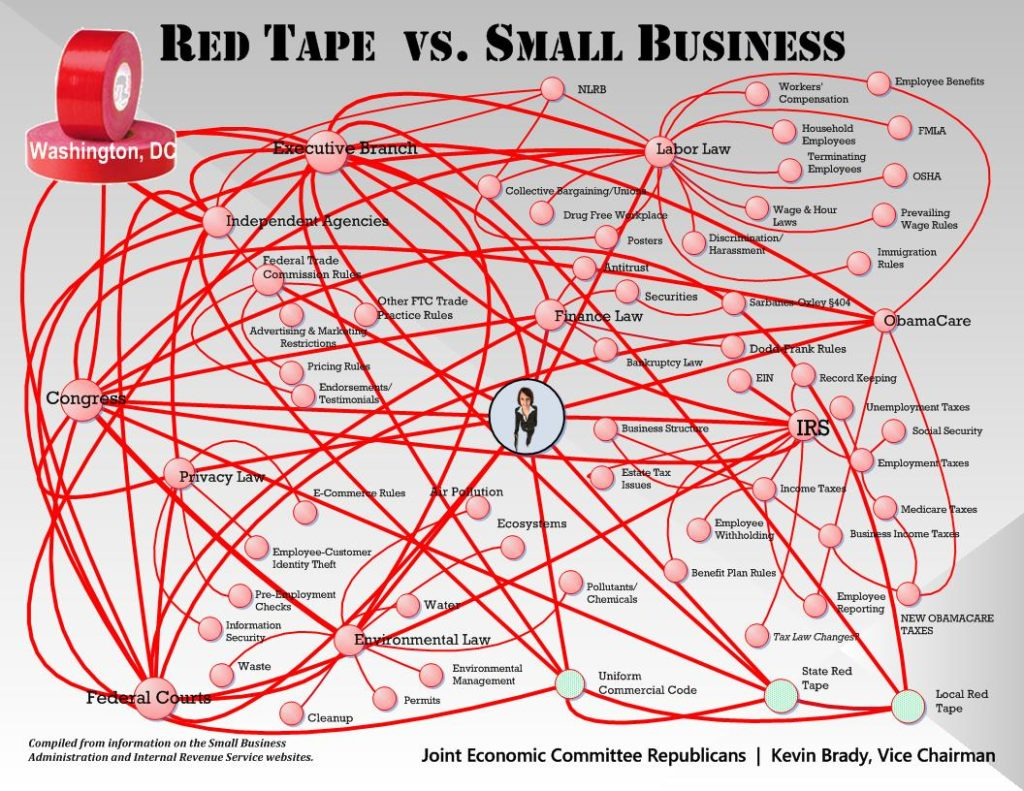
Big projects tend to exceed their cost projections for many reasons. One is the unanticipated, and sometimes unprecedented, complexity of these projects. Further uncertainties and costs arise from the challenge of navigating the red tape of the modern regulatory state. In addition, there is the risk of inflation for projects that take years, sometimes decades, to develop.

Underlying all these is often a failure to spend enough time on careful planning
that treats reality as a fundamental constraint.

But sometimes project sponsors may simply worry that accurate cost projections could scare away public support at the outset, and choose to employ what Prof. Flyvbjerg politely calls “strategic misrepresentation.”

As former San Francisco Mayor Willie Brown said, “If people knew the real cost from the start, nothing would ever be approved. . . . Start digging a hole and make it so big, there’s no alternative to coming up with the money to fill it in.”

If that sounds too cynical, note that the current Chair of the Connecticut Port Authority has admitted that when officials first proposed the pier facility, they already knew it would cost more than they were claiming.

Ironically, the New York and Connecticut projects aren’t even big enough to be considered megaprojects, and yet even they have run into the Iron Law of being over budget and behind schedule. The challenges won’t diminish with bigger and more ambitious green energy projects.

In New York, the state’s huge Climate Leadership and Community Protection Act — of which the Port of Albany project is the first substantial investment — is projected to cost between $270 and $290 billion. At that price it is a gigaproject composed of numerous individual megaprojects.

The benefits, mostly in the form of greenhouse gas reductions, are supposed to be up to $415 billion. But if the overall cost of the policy climbs by merely 55 percent, which is in the normal range for megaprojects (and much less than the Port of Albany cost overrun), the costs will exceed the benefits, creating a net loss for New Yorkers.

If costs balloon to twice the initial estimates, which is not uncommon, the state stands to spend more than more than a hundred billion dollars more than gained in benefits That would be a loss of over $30,000 per New York household by 2050.

And that’s assuming the benefits are as good as promised. It gets even worse if,
as is common, the benefits have been overstated.

The tale of megaprojects is a cautionary one for the whole country as we attempt to transition away from fossil fuels. Cost estimates for a nationwide transition span from $4.7 trillion to over $60 trillion – almost three times U.S. GDP. Such uncertainty should give us pause for thought before jumping wildly into the financial unknown.

If we’re not careful, we may be digging Willie Brown-style holes, and politically and financially we may find ourselves in too deep to ever get ourselves out.