The Greenest thing about the New Green Deal is the Money.
The spending on “Green Energy Projects” is enormous and uncontrolled. Larry Behrens explains at Real Clear Energy Too Favored to Fail:” Taxpayers Bailout Biden’s Green Friends. Excerpts in italics wtih my bolds.
While America struggles to buy groceries, President Joe Biden has a
green slush fund worth billions of dollars, and he’s not afraid to use it.
Billions Disappear with Rivian Bankruptcy
Recent revelations uncovered that the CEO and lobbyists of Rivian, an electric vehicle manufacturer, held a quiet meeting at the White House with Biden’s Climate Czar, John Podesta. That’s right, the same John Podesta who served as chairman of Hillary Clinton’s ill-fated 2016 presidential campaign before being pulled from the ranks of profitable green consulting to oversee distribution of $369 billion from the Inflation Reduction Act (IRA). Biden selected a political operative with green company ties to dole out the goodies from one of the largest slush funds in history. Now green CEOs who are hemorrhaging cash are beating a path to his White House office, presumedly with hat in hand.
According to media reports, Rivian is deep in the red. Last year, they lost $6.8 billion. In 2021, it was $4.7 billion, which is in addition to the $1 billion lost in 2020. These massive losses happened as EV manufacturers enjoyed large subsidies both to build and sell their vehicles. In fact, President Biden went out of his way to praise Rivian in early 2022, even though their stock had already lost half its value on its way to losing 87% of its value since 2021. Losing over $12 billion in less than three years would normally be a problem in the business world, but in the upside-down reality of Biden’s green agenda, that gets you a meeting at the White House.
Tax dollars are flowing from the IRA so quickly that the Department
of Energy’s Inspector General (IG) may be running out of adjectives.
Earlier this month in testimony before the Senate, the IG said, “the current situation brings tremendous risk to the taxpayers.” Red flags about American dollars flowing to foreign companies or just being wasted here at home are going up, yet according to budget watchdogs, their concerns are met with deaf ears by senior Biden Administration officials. The IG notes there were “billions and billions of dollars lost or stolen” from federal Covid funds, and Biden’s slush fund is even bigger. To put it bluntly, the green vault is wide open and the grifters are lining up.
“Green Banks” Dole Out Taxpayer Cash
Here’s a particular galling example. One little known aspect of the IRA are so-called “green banks.” For greenies, the scheme is simple: regular banks will not fund their boondoggles, so they need a taxpayer backed entity to dole out cash. Unlike regular banks, these green banks do not need to make a profit to stay afloat because the government is their funder.
New Mexico Governor Michelle Lujan Grisham was caught trying to set up a green bank without the trouble of going through the elected legislature. The board of the bank will be green non-profits who will be in charge because as the New Mexico climate czar put it, “We’re talking about hundreds of millions of dollars…This greenhouse gas reduction fund is a remarkable little beast.” Recently, Grisham announced the green bank anyway. The slush fund is open for business, and everyone has their hand out.
Congress is watching the “green bank” scheme because they know it is ripe for abuse. The problem is clear: The White House put a political operative in charge of what is nothing more than a political fund. For Barack Obama, they were too big to fail, but Joe Biden is taking it further. When it comes to his failed agenda, his green boondoggles are “too favored to fail.”
Energy Secretary Jennifer Granholm made $1.6 million from
an electric car company the Biden administration boosted
that just went bankrupt.
Proterra, an electric bus and battery company that President Joe Biden touted as a success of his green energy initiative, filed for bankruptcy in August. Last week, it finally sold its embattled battery business at a rock-bottom price as part of the bankruptcy proceeding. The rise and fall of Proterra demonstrates once again that politicians should refrain from betting taxpayers’ money on business ventures to advance their political agenda.
According to the Wall Street Journal, Proterra has sold only 550 electric transit buses since its founding in 2004. Most of the sales were underwritten by government agencies with federal grants. Proterra’s electric buses were plagued with mechanical defects and other performance issues, such as limited range and long charging times. Besides government subsidies, the company only survived as long as it had due to powerful political connections. Former Michigan governor Jennifer Granholm, Biden’s energy secretary, served on its board.
Despite all the quality issues of its EV buses, Proterra went public in January 2021 and raised $650 million, more than three times its annual revenue. A month after the company’s IPO, Biden tapped Granholm as his energy secretary. Proterra’s political connection to the Biden administration paid off in many ways.
Surviving on Grants and Tax Credits
In April 2021, Biden took a virtual tour of a Proterra facility to promote his infrastructure plan. The proposal included$6.5 billion in grants to help replace diesel-powered school and transit buses with electric ones. During the tour, Biden lauded Proterra for “getting us in the game.” He predicted that Proterra and other electric vehicle companies would “end up owning the future.”
Biden’s 2022 Inflation Reduction Act further enriched Proterra’s coffer. The law had little to do with reducing inflation, but it gave massive government handouts to the green energy sector. For instance, IRA includes a $40,000 per vehicle tax credit for purchasing electric commercial vehicles and an additional tax credit for EV batteries.
Proterra admitted in its quarterly report that “the availability of this new unprecedented level of government funding for our customers, suppliers, and competitors to help fund purchases of commercial electric vehicles and battery systems will remain an important factor in our company’s growth prospects.” Proterra’s political profile rose even more after Biden appointed Gareth Joyce, CEO of Proterra, to serve on the President’s Export Council in February this year.
Backed by Biden, Buried by Biden
Excessive government spending under Biden has sparked high inflation rates that were last seen in the 1970s. To bring inflation rates down, the Federal Reserve has aggressively raised interest rates. Higher rates increased production and operations costs for many companies. As legendary investor Warren Buffett famously said, “Only when the tide goes out do you learn who has been swimming naked.” Proterra was one of those companies that had been caught “swimming naked” in this new environment.
The company struggled because it had difficulty passing rising costs on to its existing customers, since most were government agencies with little budget flexibility. Nor could Proterra outsource its production overseas or import components at lower costs. Receiving government grants comes with strings attached. One requirement is that companies like Proterra must produce at least 70 percent of their EV components in America. Proterra couldn’t afford to cut the prices of its EVs to drum up sales.
Finally, Proterra filed for bankruptcy in August. Government subsidies could not offset the financial pressure of rising inflation, higher interest rates, and falling sales. Last week, a Swedish automobile manufacturer, Volvo, bought Proterra’s battery business for $210 million, a great deal considering Proterra was valued at $1.6 billion a year ago.
Another party who got an excellent deal was Granholm. She sold her Proterra shares for $1.6 million last year. They would have been worth nothing if she had held on to her Proterra shares until this
August. The biggest loser of the whole Proterra saga is American taxpayers.
No Good News for Electric Vehicles
Proterra was not the only EV company that went under. Michigan-based Electric Last Mile declared bankruptcy in June 2022. Ohio-based Lordstown Motorswent bankrupt a year later. Ironically, these companies benefited from the Biden administration’s climate handouts, but the economic consequences of the same policies eventually doomed them. Even large automobile companies’ EV units are struggling. Ford estimates it will lose $3 billion this year on its EV business. The company relies on sales of gas-powered vehicles and government subsidies to keep the EV business afloat.
Presidential son Hunter Biden’s most recent controversy—assisting a Chinese company’s purchase of a large cobalt mine—is linked directly to a top Biden administration policy of promoting electric vehicles.
Cobalt, a relatively rare and expensive mineral, is an essential part of batteries used to power electric automobiles. The COVID-19 pandemic also made U.S. officials and the public much more aware of Communist China’s control of the supply chain for drugs and other products.
The younger Biden, 51, is a one-time partner in China-based Bohai Harvest RST, known as BHR, and reportedly remains a stakeholder.
The New York Times first reported over the weekend that BHR facilitated mining company China Molybdenum’s $2.65 billion purchase of a cobalt and copper mine from an American company, Freeport-McMoRan.
Rep. Ken Buck, R-Colo. told The Daily Signal,
The latest news [that] he assisted a Chinese company purchase one of the largest cobalt mines is another example of Hunter Biden using his influence to line his pockets and help a foreign adversary. Conducting oversight of Hunter Biden’s questionable ethics and dealings that undermine our national security will continue to be a top priority for Oversight [Committee] Republicans.
The committee’s ranking Republican, Rep. James Comer, R-Ky., tweeted: “By helping Chinese companies mine rare minerals in Congo, Hunter Biden is helping Communist China corner the Electric Vehicle market that @POTUS is subsidizing here at home.”
Summary:
The campaign is to force electric vehicles upon Americans who otherwise do not want them. And why? It’s not about climate change, not about the environment. It’s about greed not green.
President Joe Biden allotted $169 million for electric heat pump projects with his emergency authority on the basis of climate change.
This is the first time a president classified climate change as an emergency by utilizing the Defense Production Act, which was established during the Cold War. Now, the money stemming from the Inflation Reduction Act will be divided among 15 sites dedicated to manufacturing the necessary parts and entire units of a variety of heat pumps.
“The President is using his wartime emergency powers under the Defense Production Act to turbocharge U.S. manufacturing of clean technologies and strengthen our energy security,” Biden’s National Climate Advisor Ali Zaidi said in a statement.
John Podesta, senior adviser to the president for clean energy innovation and implementation, similarly celebrated the move, applauding the president for “treating climate change as the crisis it is.”
However, American Gas Association President and CEO Karen Harbert disagreed with the recent move from the White House, writing in a statement, “We are deeply disappointed to see the Defense Production Act, which is intended as a vital tool for advancing national security against serious outside threats, being used as an instrument to advance a policy agenda contradictory to our nation’s strong energy position.”
“Increased use of natural gas has been responsible for 60% of the electrical grid’s CO2 emissions reductions. This vital tool for emissions reductions and energy system resilience should not be unfairly undermined through misuse of the Defense Production Act.”
Among the facilities, two new factories will be constructed: a Treau, Inc. DBA Gradient plant in Michigan and a Mitsubishi Electric plant in Kentucky. Neither company has announced exact locations yet. Treau will receive over $17 million, and Mitsubishi will receive $50 million toward construction.
The Energy Department predicts roughly 1,700 jobs will be created in the various projects to promote more heat pump products. All the sites are centered in “disadvantaged communities” for their benefit.
Last year, the Energy Information Administration reported that natural gas was the water and space heating source of about 42% of U.S. residential spaces. The residential sector makes up 15% of overall natural gas consumption. However, heating and cooling across residential and commercial buildings drive more than 35% of the country’s energy consumption.
Footnote on Declaring Climate Emergency for Spending Purposes
Germany’s economy, Europe’s largest, is contracting as surging energy prices and trade tensions cast doubt on its export-oriented business model. Chancellor Olaf Scholz’s government had been counting on that old virtue signaling switcheroo – a flood of spending on “green-energy projects and technology”, from chips to batteries, to revive the old model. That way, if anyone asks why Germany is deficit-spending its way to mercantilist utopia, Berlin could always lie and say it was doing the right thing for the world and wasn’t interested in a debt-funded stimulus. Alas, now the “Cardinals of Karlsruhe” have made this impossible.
Berlin’s decision to freeze all federal spending for the rest of the year came after the court defunded the government’s €60 billion —the equivalent of more than $65 billion—green-transition project. The court said Berlin couldn’t repurpose unspent credits originally earmarked to tackle the Covid-19 pandemic to fund environmental and energy projects. It said Berlin was bound by the country’s constitutionally enshrined fiscal rules that limit budget deficits to 0.35% of gross domestic product in normal times.
Senior government officials said one option under consideration would be to retroactively declare a state of budgetary emergency for 2023, invoking a clause in the fiscal rules that allows for a suspension of the spending limits in exceptional circumstances. Previous governments invoked the exception during the pandemic.
Unfortunately, for Germany’s stimmy-starved politicians, the plan is fraught with legal difficulties, in part because the constitutional court prepared for just this eventuality when it raised the bar for declaring such emergencies, according to Lars Feld, an economist who advises the government.
Strengthening resilience and transforming the economy amid geopolitical crises and climate change was seen as a necessity that required taking on debt, but the court ruling has challenged those assumptions, Feld wrote in the Frankfurter Allgemeine newspaper.
Hilariously, the court said that unlike war and natural disasters, climate change was a foreseeable crisis that had been long in the making and could no longer justify emergency spending. Which, however, means that all Germany will have to do is politely request that the CIA start a new war… or that Fauci mail orders a new virus from Wuhan.
I’ll summarize a recent paper that was published by our Coalition stating that coal, oil and natural gas are the greenest of the energy sources. The paper was published by one of our distinguished members Dr. Indur Goklany. This is no lightweight scientist we’re talking about here. Dr.Goklany opens his paper with his clear statement: Contrary to the claims of proponents of the green New Deal and Net Zero, fossil fuels are the greenest of fuels. In summary Dr Goklany’s findings and our paper are consistent with our view that fossil fuels are Treasures to be valued and used for the benefit of humanity. Their demonization is irrational and destructive to our society.
Coal and oil fueled the Industrial Revolution which gave us unprecedented prosperity and health. Together with natural gas they promise to raise billions of people in developing countries from poverty and deprivation.
in short we love CO2 and so should you. And in order to forestall a question I know will be coming, let me answer it ahead of time. What is my solution. You may have driven the Pennsylvania Turnpike and seen our billboard up near New Stanton. It’s a picture of a woman resting comfortably in bed and the title is: Sleep well, there is no climate crisis, there is no climate emergency.
There is no climate crisis. We see modest warming and increasing CO2 leading to gigantic benefits to our ecosystems and Humanity. We should celebrate that.
Jock Finlayson describes how climate change policies are depleting Canadians’ financial means in his article Millions of Canadians May Face ‘Energy Poverty’. Excerpts in italics with my bolds and added images.
The term “energy poverty” is not yet part of day-to-day political debate in Canada, but that’s likely to change in the next few years. In Europe, the high and rising cost of energy has become a political lightning rod in several countries including Britain and France. Something similar may be in store for Canada.
The Trudeau government and some of the provinces are
aggressively pursuing the holy grail of decarbonization.
To achieve this, they’re engineering dramatic increases in carbon and other taxes on fossil fuels and promising to pour vast sums of moneyinto building new electricity generation and transmission infrastructure to help reduce reliance on oil, refined petroleum products, natural gas and coal. Both strategies point to higher energy costs.
Tax advocates say it is a small % of GDP. But it is still $10 Billion extracted from Canadian households
The Trudeau government has legislated a national minimum carbon tax set to reach $170 per tonne of emissions by 2030, up from $50 in 2022 and $65 currently. Ottawa has also imposed a “clean fuel standard” that will further raise the cost of fuel. These policies are driven by concerns over climate change, which is a risk, to be sure, but so is the prospect of rapidly escalating energy prices for Canadian households and businesses.
Energy poverty arises when households and families must devote a significant fraction of their after-tax income to cover the cost of energy used for transportation, home heating and cooking, and the provision of electricity. In 2022, the United Kingdom government estimated that 13.4 percent of households were in energy poverty, which it defined as needing to spend more than 10 percent of income to cover the cost of directly consumed energy.
There’s no single agreed methodology for assessing the prevalence of energy poverty. A recent Canadian study reports that in 2017, between 6 percent and 19 percent of Canadian households experienced some form of energy poverty, with an above-average incidence in rural areas, Atlantic Canada and among people living in older single-family homes. If accurate, this finding suggests that many more Canadians will soon become acquainted with the term as taxes on fossil fuels climband governments impose new regulations affecting the energy efficiency of buildings, vehicles, industrial equipment, appliances and agricultural operations.
Canada is blessed with plentiful and diverse supplies of energy. Over time, we have become an important global producer and exporter of energy, with oil, natural gas and electricity together expected to account for one-quarter of Canada’s merchandise exports in 2023. Canada is also an intensive consumer of energy, in part because of our cold climate, dispersed population and relatively high living standards.
80% of the Other Renewables is solid biomass (wood), which leaves at most 1% of Canadian total energy supply coming from wind and solar.
End-use energy demand in Canada is around 13,000 petajoules. Of this, industry is responsible for about half, followed by transportation, residential buildings, commercial buildings and agriculture. Refined petroleum products—all based on oil—are the largest fuel type consumed in Canada (around 40 percent of the total), followed by natural gas (36 percent) and electricity (16 percent). Biofuels and other smaller sources comprise the rest. These data underscore Canadians’ overwhelming dependence on fossil fuels to meet their energy needs.
Politicians in a hurry to slash greenhouse gas emissions via higher taxes
and more regulations must be alert to the risk that millions of Canadians
could find themselves in energy poverty by the end of the decade.
Jock Finlayson is a Senior Fellow at the Fraser Institute.
Those promoting hydrogen as a substitute for carbon fuels are blind to the physical and economic facts, as well as miscontruing CO2 as some kind of demon gas boiling the planet. Thus their crusade is absurd, exorbitant and pointless.
Hydrogen Replacing Carbon Fuels Is Absurd
The absurdity is explained by Sabine Hossenfelder in the video below: Hydrogen Won’t Save Us. Here’s Why. For those who prefer reading, I provide a transcript in italics with my bolds and added images.
Today I want to talk about something light. Hydrogen. Hydrogen is one of the currently most popular alternatives to fossil fuel in transport. Many companies and nations have put money into it.
In 2021, the number of hydrogen-fueled passenger cars bought in the UK was 12. Does that sound like a booming business? Not exactly. Indeed, a report from the British Science and Technology Committee that just appeared last month warned that “we do not believe that [hydrogen] will be the panacea to our problems that might sometimes be inferred from the hopes placed on it”.
Ouch. So what’s the deal with hydrogen? Hope or hype? That’s what we’ll talk about today.
Hydrogen Basics
Hydrogen is the first element of the periodic table. If you mix it with oxygen and put fire to the mixture you get water. This reaction releases energy, so if you do it under controlled conditions, you can drive a motor or turbine with it. The only exhaust you get is pure water, no carbon dioxide, no nitrogen oxides, no particulates, no radioactive waste, no chopped-up birds. It’s really difficult to complain about pure water.
But let’s not give up that easily, certainly we can find something to complain about. For example, hydrogen is a gas that, at normal atmospheric pressure and temperature, takes up a lot of volume, and it’s somewhat impractical to drag a zeppelin behind your car. That’s why to store and transport hydrogen, one compresses it by putting it under a lot of pressure. Typically, that’s something like 700 bar, or about 700 times atmospheric pressure.
At that pressure, the energy that one gets out of one litre of hydrogen
is one sixth of the energy one gets out of one litre of gasoline.
This means if you power a car with hydrogen, one needs more litres of hydrogen than one needs litres of gasoline to cover the same distance. But litres are a measure of volume. The amount of energy you get out of hydrogen per mass is about twice as high as what you get from gasoline. Then again, since the hydrogen must be kept under high pressure hydrogen tanks tend to be heavy compared to gasoline tanks. When everything is said and done, hydrogen-powered cars end up being somewhat heavier than gasoline-powered ones, but it’s not such a big difference.
Okay, but how do you get the energy out of the hydrogen? The technology for this isn’t new, it’s been around for more than 200 years. The first hydrogen fuel cell was developed by William Grove in 1839 but it was only in the 1960s that two engineers at General Electric proposed a smart way to go about it. They developed what’s now called a Proton Exchange Membrane. Those keep the hydrogen and oxygen largely separate and allow chemical reactions only at the membrane. That way it’s much easier to control the reaction which also makes the system safer.
Those hydrogen fuel cells were then further developed by NASA. One of the first uses was on the Gemini spacecraft, which was launched in the mid-1960s. They were later also used on the Apollo spacecraft that carried astronauts to the moon and for the space shuttle. The International Space Station uses hydrogen fuel cells to generate electricity and also to produce drinking water for the astronauts on board.
The Hydrogen Market
So, hydrogen fuel cells have been around for a long time, but they’ve never been particularly popular. One of the reasons has certainly been that there was simply no need for them, because fossil fuels are considerably more convenient. Unfortunately, they have side-effects, which is why companies like Hyundai and Toyota have been selling hydrogen-fuelled cars for about a decade. BMW, Ford, and other automobile giants have plans for hydrogen cars, and some governments are looking at hydrogen to power their transit systems, for example Scotland and Germany.
The UK with its measly 12 sales in 2021, I admit, is a particularly sad example. For one thing, that’s only passenger cars. They also put about 50 hydrogen-powered busses on the road. And globally the market doesn’t look quite as dire. In total, about 16 thousand hydrogen powered cars were sold in 2021, about three thousand 500 of those in the US. The total number of new cars sold in 2021 was about 67 million, so at the moment it’s about one in four thousand new cars that’s hydrogen powered. It’s a small market, but it’s an existing market.
Some plans are extremely ambitious. For example, in May last year, the European Union rolled out a strategy called REPowerEU, with the goal of replacing up to 50 billion cubic meters per year of imported Russian gas with hydrogen. This’d mean replacing almost 10 percent of the EU’s total gas consumption with hydrogen power. That’s substantial.
It’s not only Europe. Many other countries are also investing in hydrogen production facilities, that includes Japan, Canada, Egypt, China, and the United States. For example, in March last year, the company Green Hydrogen International unveiled plans to create a plant in Texas that’ll use 60 Gigawatt of electricity from solar and wind to produce 2 point 5 billion kilograms hydrogen per year. It’ll be called Hydrogen City. And Individual companies are investing in it, too. Microsoft, for example, wants to use hydrogen fuel cells as climate-friendly backup generators for their data centres. As you see, hydrogen is booming. But.
The Colors Of Hydrogen
The first “but” that might spring to your mind is: But where does the hydrogen come from? Now, hydrogen is the most abundant element in the universe. Indeed, three quarters of all normal matter in the universe is hydrogen, but you normally can’t buy it in the supermarket. So where do you get it? Naturally occurring geological deposits of pure hydrogen are rare on Earth. Most of the hydrogen we have is bound, either in water or in methane. And this is where the problem begins. Because you have to break those chemical bonds to get the hydrogen and that requires energy.
Hydrogen is therefore not really a source of energy, but a storage system.
You use energy to create it in its pure form, transport it,
and then you release this energy elsewhere.
How environmentally friendly this is depends strongly on where the hydrogen comes from. To keep track of this, scientists are using a color scale. You all know this, but this is YouTube, so I have to say this anyway: The hydrogen itself has always the same color, which is transparent. This color scale is just a way of keeping track of the production method.
On this color scale, the rare, naturally occurring hydrogen is white. Hydrogen obtained from water using coal or lignite has the colors black or brown, respectively. Its production emits carbon dioxide and methane; both are greenhouse gases. Grey hydrogen is derived from methane and water; this also produces carbon dioxide and usually some of the methane escapes.
At the moment, almost all hydrogen is produced in one of those ways by using fossil fuels. According to the World Energy Council, in 2019 more than 95 percent of the hydrogen worldwide was assigned one of those colors, black, brown, or grey. This releases about 830 million tons of carbon dioxide per year. That’s 2 percent of the total global emissions and about the same as air traffic.
But there are more colors on the hydrogen rainbow. Next there is blue. Like grey hydrogen, blue hydrogen is made from methane, but the carbon dioxide is stored underground and does not escape into the atmosphere. This method is currently only used for1 percent of hydrogen production, but it could be expanded. The industry association Hydrogen Council has touted blue hydrogen as a climate-friendly initiative. It’s not entirely irrelevant, so let me mention that this council was created by the oil and gas industry. Many of its members have a financial interest in switching from natural gas to hydrogen produced from natural gas.
So maybe one shouldn’t take their argument that blue hydrogen is climate-friendly for granted. Hasn’t someone looked into this? Well, since you asked, in 2021, two American researchers calculated the amount of greenhouse gases released by grey and blue hydrogen technology. They not only took carbon dioxide into account, but also methane, which is a much more potent greenhouse gas. To make comparisons easier, the greenhouse effect from methane is usually converted to a carbon dioxide equivalent, which is the amount of carbon dioxide that would have the same effect.
They came to the conclusion that grey hydrogen has a carbon dioxide equivalent of about 550 grams of carbon dioxide per kilowatt hour and blue only slightly less, 486 grams. That’s about the same as the emissions you get from using natural gas directly to generate electricity. Part of the reason blue hydrogen performs so poorly is that not all the carbon dioxide from hydrogen production is captured and stored. Another reason is that the process of storing the carbon dioxide also requires energy and leads to carbon dioxide emissions. The authors estimate that under the most favourable conditions, it might be possible to reduce those emissions to around 200 grams of carbon dioxide per kilowatt hour by using renewable energy sources. So blue hydrogen doesn’t help much with climate protection.
Then there is green hydrogen, which is produced from water using renewable energy. Again that sounds good, and again, it’s not that simple. According to a calculation by researchers from Australia, greenhouse gas emissions from green hydrogen produced with solar energy are ideally about a quarter of those from grey hydrogen. Under realistic conditions, however, they find that emissions are comparable, particularly due to fluctuations in solar radiation that make hydrogen production inefficient. There is neither data nor any study for hydrogen production from wind but you expect this method to suffer even more from fluctuations because wind is far less reliable than sunlight.
And since these methods are inefficient, they are also expensive. Indeed, producing hydrogen with solar and wind is pretty much the most expensive way you can do it, according to a review in 2019. Now maybe those costs will go down a bit as the technology improves. But seeing that the biggest problem is that energy input fluctuates I doubt it’ll become economically competitive with the “dirty” hydrogen. This problem can be fixed by using nuclear power to generate hydrogen which has been assigned the colors pink and purple. A few projects for this are underway but it’s early days and nuclear power isn’t exactly popular.
OK, so we have seen that it isn’t all that clear whether hydrogen is climate friendly, and also, it’sexpensive. And this is only the production cost. It doesn’t include the entire infrastructure that’d be necessary to fuel a fleet of hydrogen cars. Remember you have to keep the stuff at several hundred bars and you can’t just use a normal gas station for that.
Water Supply
Let’s move on to the next problem that might come to your mind: where do we get the water from? From a distance, the world has no shortage of water, but freshwater can be scarce in certain regions of the planet. According to estimates from researchers at the University of Delaware, however, water supply issues probably won’t stand in the way of a hydrogen economy. They looked at a scenario in which we replace 18 percent of fossil fuels with hydrogen, and found that this would require about 2 percent of the amount of freshwater that’s currently used for irrigation.
Watch out, this figure has a logarithmic scale. You also see on this figure that using fossil fuels requires freshwater too, for cooling, mining, hydraulic fracturing, and refining, and it’s currently actually more than the projection for hydrogen. That’s 2 percent on the global average, but in some regions the fraction can be higher. For example, estimates for Australia are that you’d need about 4% of the water amount used for irrigation. So that seems a manageable amount, but it’s something to take into account if you want to make this work.
The Cold Start Problem
Another problem with water is that it can freeze. This is why you shouldn’t leave the beer in the car in the winter. And it’s also why hydrogen fuel cells like it warm. If the temperature drops more than a few degrees below zero, the water that the fuel cells create at start will freeze immediately, which swiftly degrades the membranes and tubes. It’s known as the “Cold Start” problem of hydrogen fuel cell. And, no, you can’t just pour antifreeze into it, remember the water is created in the fuel cell. So, you’ll either have to stay in California or keep your car warm. The solution that manufacturers pursue at the moment is pre-heating systems.
Rare Metal Shortages
But the biggest problem for a hydrogen economy may be making those proton exchange membranes to begin with. It’s not because it’s so difficult, but because they’re made of platinum and iridium. Platinum you may have heard of, it’s an expensive noble metal that’s also used for jewellery. The reason it’s expensive is that it’s rare. Iridium is also a noble metal. It’s so rare that most people have never heard of it. Both of those metals are difficult to replace with anything else in the hydrogen fuel cells.
That’s a problem because it means that the entire hydrogen economy hinges on the availability of those two metals. There’s only so much of those in the world and they are only in very specific geological formations. Almost all the platinum and iridium supply comes from only three countries: South Africa, Russia, and Zimbabwe, and colonies have gone out of fashion recently. China, which has invested heavily in hydrogen technology is already feeling the consequences.
And we’ve only just barely begun with building the hydrogen economy. This issue has been highlighted recently in reports from various international organizations including the International Energy Agency and the World Bank. According to the business consulting group Wood Mackenzie, the increased demand for platinum might be manageable in the near future, but it looks like by 2030 demand for iridium will be several times higher than the supply. I don’t know much about trade, but I think this isn’t good.
It’s possible to make fuel cells somewhat more efficient and decrease the demand for those rare metals. But this situation isn’t going to change and iridium isn’t going to move to the US even if you ask it really nicely.
Have we learned nothing from the Hindenburg Disaster?
Hydrogen Embrittlement
One final problem that’s worth mentioning is that hydrogen is just nasty to deal with. Hydrogen is the smallest molecule. If you squeeze it into a tank, it’ll creep into the walls of the tank. That destroys the chemical structure of the material and makes it brittle. It’s called “hydrogen embrittlement”. For this reason, hydrogen tanks must be thick and specially coated, which makes them both heavy and expensive. Like the cold start problem, this one’s basic chemistry and isn’t going to go away. And the need to keep the hydrogen under pressure makes the stuff inconvenient to handle. The city of Wiesbaden in Germany, for example, recently retired its six new hydrogen powered buses because the filling station broke down, sinking a few million Euro.
Summary
In summary, hydrogen production at the moment has a high carbon footprint because it’s almost exclusively done using fossil fuels. Reducing the carbon footprint of hydrogen production seems difficult according to estimates, but at the moment there’s basically no real-world data. Hydrogen produced by wind and solar will almost certainly not be economically competitive with that derived from fossil fuels but using nuclear power might be an option. Building infrastructure for a transport-system based on hydrogen would eat up a lot of money. It seems that rare metal supply for hydrogen fuel cells is going to become a problem in the near future which won’t help making the technology affordable. Keeping hydrogen stored and under pressure adds to the cost and makes those systems heavy which isn’t great for transport. And finally, hydrogen-powered cars don’t like cold temperatures.
So. Well, it seems to me that the British Science and Technology committee is right. A hydrogen economy isn’t a panacea for climate change. Indeed, the French have a similar committee that likewise concluded “l’hydrogène n’est pas une solution miracle”. I must admit that I was considerably more upbeat about hydrogen before I started working on this video. How about you? Did you learn something new? Did you change your mind? Let us know in the comments.
Summation: The Hydrogen Crusade is absurd because hydrogen
is not an energy source, but a storage system, and
natural properties and scarcities will not be suspended
for the sake of human ambitions.
The White House has awarded $7 billion dollars of tax money for the first seven U.S. hydrogen hubs. They say it will leverage $43 billion in private money. Yet, the rules only require a 50/50 match. We are far more likely to see a $7 billion private money match. Why put more of your own money at risk than you have to?
It is risky because green hydrogen costs at least five times more to produce than the methane reforming method, which makes 95% today. That is $5 versus $1. All of the regional hydrogen infrastructure will need to be built, and the future hydrogen demand will need to be created and incentivized. Because green hydrogen still costs more. Even with upfront and downstream aggressive subsidies.
Because it is tax money we don’t have, it is added to our unprecedented $33 trillion dollar national debt. We are at an inflection point where interest payments are more than our national defense budget. Debt interest is projected to be more than a trillion dollars by the end of the decade. And the Rich Men North of Richmond just keep spending.
It costs $5 or more to produce green hydrogen through hydrolysis. Which takes super heating, electrocuting, super chilling, and compression. Then additional costs for storage and transportation before it is used somewhere.
And it needs 53 times more water than hydrogen made. Not a good idea in dry California, which is awarded $1 billion in giveaway hub money.
All of this takes lots of full-time energy. Not the part-time unpredictable electricity wind and solar make. Let’s not talk about our stressed national grid with regular blackout and shortage notices. Or the fact that 60% of the electricity made for the grid comes from coal and natural gas.
Paying for full-time and part-time generation, and thousands of miles
of transmission wires will at least triple our electric rates in no time.
This hurts the poor the most, because they use the biggest amount of their budgets on energy costs. Stressing their lives, hurting their ability to live independently. All of this, while Biden and the democrats blather about climate justice and social justice.
We are doing all this subsidizing to stop
the addition of the super plant food CO2.
That is greening our earth, regrowing forests the size of France, and increasing crop yields and harvests around the world. To supposedly stop the warming of the planet that started naturally in 1850. As if we can.
The Rich Men North of Richmond are going to waste 100s of billions on green taxpayer giveaways on top of the $9.5 billion upfront hydrogen give away.
Throwing money at a climate emergency that doesn’t really exist is part of Bidenomics. Fueling inflation by spending money we don’t have, fueling high interest rates by fueling inflation.Making it difficult and expensive to harvest the fossil fuels that supply 80% of our energy. And sending 100s of billions, if not trillions, to our main rival and biggest threat, totalitarian, communist China is the Biden way.
Wind, solar, batteries, and soon EVs made in China with
forced labor, low-cost coal electricity and little environmental protections.
China burns more than half of the world’s 8.5 billion tons of coal used annually and is building hundreds of coal plants that last 50 to 75 years. I am sure they intend to use them for a few decades or 75 years.
For those that think CO2 emissions are important, China emits more than the U.S. and all the other industrialized nations combined. Including India, which is no slouch when it comes to using coal for power, getting even a larger percentage of their energy from coal than China.
We need to end this crazy fantasy of a centrally forced transition to hydrogen, wind, solar, batteries and electric vehicles. It isn’t working and is making everything more costly. Because energy is in everything we eat, buy, use, consume, even Netflix and AI.
Summation: The Hydrogen Crusade is exorbitant because
the costs are unbearable and unsustainable,
a ruinous drain on our energy resources.
Hydrogen Replacing Carbon Fuels Is Pointless
The greatest insanity is that all of this crusade is unecessary. The delusional premise of the Hossenfelder video is that we and the planet need saving from CO2. When in fact throughout history, atmospheric CO2 changes lag Temperature changes on all time scales; from last month’s observations to ice cores showing climate changes over thousands and millions of years. Nothing in nature can be the cause of an effect if it occurs afterward. A thorough debate on this issue occured recently at Dr. Judith Curry’s website Climate Etc. on the topic Causality and climate. My synopsis is below.
I recommend the discussion thread at climate etc. (on going) as a tutorial for the competing paradigms regarding the CO2 cycle. I gained clarity from the lead author (a frequent and constructive participant) as well others on the core misunderstanding that has plagued such discussions for decades. Some comments are below in italics with my bolds.
First, note that the paper had a narrowly defined scope: to demonstrate from available data that changes in atmospheric CO2 lag rather than lead temperature changes. Because the authors recognized that this finding is contrary to IPCC consensus climate science, appendices were supplied to counter the expected objections crediting human CO2 emissions from hydrocarbons as the main, or sole source of rising CO2 since the Little Ice Age (LIA). As Koutsoyiannis explained in a summary comment near the end:
Demetris Koutsoyiannis September 29, 2023 at 4:54 pm
I think I have rebutted all the different critiques ON MY PAPERS. I am not going to reply to critiques on any other issues related to the issue of climate. Please make your critiques SPECIFIC, by quoting phrases in my papers that you think are incorrect. And before it, please read the papers.
For example you say:
> And that would be the cause of the CO2 increase in the atmosphere?
If you read the paper you will see that we write (p. 17): *What is the cause of the modern increase in temperature? Apparently, this question is much more difficult to reply to, as we can no longer attribute everything to any single agent. We do not claim to have the answer to this question, whose study is far beyond the article’s scope. Neither do we believe that mainstream climatic theory, which is focused upon human CO2 emissions as the main cause and regards everything else as feedback of the single main cause, can explain what happened on Earth for 4.5 billion years of changing climate.*
We have proposed a necessary condition for causality, which is time precedence of the cause over the effect. I hope you accept that necessary condition, am I wrong? We make our inference based on this necessary condition. Your numbers make no reference of time succession. When you find a way to test whether the direction in time is reversed, that will be great. But for now, all this looks to me an unproven conjecture. I hope you can excuse me that, being a Greek, I have to stick to Aristotelian logic.
You also say:
> While there is an elephant in the room, human emissions that released twice as much CO2 as measured in the atmosphere…
If this is the elephant, what is (copying from our paper, p. 25), *a total global increase in the respiration rate of ΔR = 31.6 Gt C/year. This rate, which is a result of natural processes, is 3.4 times greater than the CO2 emission by fossil fuel combustion (9.4 Gt C /year including cement production)*.
My Comment: The confounding issue in all this was identified as the mistaken analogy treating CO2 fluxes as though they are cash transactions between bank accounts. Within that notion, a natural source/sink must net out intakes and releases. Yet as others commented, geobiologists know that both absorption and release can be increasing or can be decreasing. The source/sinks function dynamically, not statically as assumed by the analogy.
What It Means: CO2 flows through Dynamic Reservoirs
The other puzzle piece is described by Ed Berry following his peer-reviewed paper Nature Controls the CO2 Increase II. A summary comment ties his analysis into the above discussion. Early in the thread the point was made that all CO2 sources are involved in supporting the level of atmospheric concentration at any point in time. Ed Berry made this point in this way.
He explained that when you look at the flow of carbon dioxide—”flow” meaning the carbon moving from one carbon reservoir to another, i.e., through photosynthesis, the eating of plants, and back out through respiration—a 140 ppm constant level requires a continual inflow of 40 ppm per year of carbon dioxide, because, according to the IPCC, carbon dioxide has a turnover time of 3.5 years (meaning carbon dioxide molecules stay in the atmosphere for about 3 1/2 years). 140 ppm divided by 3.5 is 40 ppm CO2.
“A level of 280 ppm is twice that—80 ppm of inflow. Now, we’re saying that the inflow of human carbon dioxide is one-third of the total. Even IPCC data says, ‘No, human carbon dioxide inflow is about 5 percent to 7 percent of the total carbon dioxide inflow into the atmosphere,’” he said.
[Today’s level of nearly 420 ppm means that 120 ppm of inflow is required annually, or 120 +2 ppm if it is to increase as it has been. Where does 122 ppm of CO2 come from? Well, let’s say we can count on 6 ppm of FF CO2 (5%) and the other 116 being non-human emissions.]
Summation: The Hydrogen Crusade is pointless because
our carbon emissions do not determine either
atmospheric CO2 or the Earth’s temperatures.
Posted at Master Resource is a most encouraging development by the Kansas legislature. The article is Kansas Energy Freedom Now!The whole story is uplifting and I will only repeat here comments on what Kansas resolved and how nearly unanimous support was achieved. Excerpts in italics with my bolds and added images.
Carrie Barth (R-Kansas, District 5) and Dennis Hedke, unapologetic supporter of the U.S. Constitution, acclaimed author of The Audacity of Freedom (2011), geophysicist, and former member Kansas House of Representatives (former Chair of the House Energy Committee), have drafted a clean and accurate Resolution for the Republican Party. This passed with overwhelming support. It appears to acknowledge that wind is not a good corporate citizen.
Representative Barth in an email:
Our Constitution of the United States gives the power to the people and states, not a dictator movement to control people. The “Green Agenda” is a joke. What they call green energy of wind and solar is anything but green other than it takes a lot of money to mine, build and construct, maintenance for the units, along with remediation when blades break off and the turbines catch on fire. It takes more green money from there to then build transmission lines that take people’s green land when eminent domain is used. Then people see transmission line tariffs on their energy bills. Oh, and wait, your rates never go down even though the energy industry tells you how cost effective it is.
I would refer to wind and solar as “brown or black energy”. They are unreliable and cause brownouts and blackouts. This hurts people, it hurts businesses, and even the ground under them turns brown.
CO2 is not a dangerous gas, nor a pollutant, to be avoided and scare mongered.
The Kansas Republican Party Platform opposes efforts to force communities to engage in sustainable development guidance from the federal government or the United Nations, which are actively attacking our local communities in an effort to implement the Paris Climate Agreement
Kansas is not to be victimized by lobbyists guiding KS into blackouts and profiteering from subsidies, and alliances with the UN Global Agenda
Kansas (Republican Party) supports alternative energy, while continuing to support oil and gas reserves within the State
Kansas will prefer reliable and affordable energy above all
Kansas (Republican Party) will reject energy projects that are obvious land grabs, funding foreign companies with taxpayer-funded grants and tying up valuable Kansas farmland for decades with projects that no company is ultimately held responsible for decommissioning at the end of their useful lives, even violating property rights of farmers affected by the projects
Kansas (Republican Party) opposes so called Cap and Trade schemes
The resolution concludes:
Whereas irrefutable evidence demonstrates that ill-health effects to mankind and the environment are occurring due to the side effects of industrial scale wind installations. These occurrences are widespread, wherever these installations have been constructed;
Therefore, be it resolved, the Republican Party of Kansas, in view of the preponderance of evidence, will support candidates and legislative intent regarding energy policy that will serve to provide protection to our citizens security, physical health, financial health, access to reliable energy and property rights across all Kansas counties.
Master Resource Comment
This is the first time we have seen a legislative body, organize, and nearly 100% agree, that climate change, which it always does and has done, should not be a driver for energy policy. It is the first time we have seen in such a document, a clear rejection of industrial wind and solar profiteers, and references to the irrefutable evidence of harm to the environment, people, and a clear intention to go forward with reliable, responsible, and cost-effective energy policy, while respecting property rights.
Question:
A lot of readers will be wondering how you and Rep Barth achieved a 180-1 vote for this very clear resolution. Given that KS has a pro wind record of placing wind factories in the State, even with a Republican House and Senate, is there a catalyst for this resolution at this time and at this place? Was a lot of lobbying needed, or was this more evolutionary, organic in nature due to the fast paced media pieces on changing perspectives of “renewables and climate”?
Answer: Former Chair, Dennis Hedke:
I perceive much of the reason for the success was due to the fact that the Committee reviewing the Resolution is heavily conservative. They had to present it to the Republican Party Delegates, which are probably also more conservative leaning.
The Legislators, Carrie excluded, are a lot more squishy, caring more about holding on to their seats, than acting with resolve and principle. There may be some renewed pressure on Legislators to resist the absolutely ridiculous reasons for being ‘green’. That remains to be seen. Many of them simply forget that “The Truth Will Set You Free”.
I forgot to answer your question about cost of electricity. My bills range from about .13/kwh to .14/kwh. Prices have increased by about 55% since wind power has been replacing coal and natural gas, commencing around 2011.
A new report from the Economist Intelligence Unit shows global energy consumption rising by 1.8% in 2024, hitting a new record high.
Despite high prices and supply disruptions, the report shows crude oil and natural gas demand climbing in 2024.
Demand for renewable energy is also expected to rise in 2024, climbing by 11%
Global energy and fossil fuel consumption is set to defy wars and high prices and hit a record high level in 2024, led by strong Asian demand, the Economist Intelligence Unit said in a new reporton Wednesday. Next year, global energy consumption is expected to increase by 1.8%, according to the EIU report.
“Despite still-high prices and unsolved supply chain disruptions, demand for fossil fuels will reach record levels, but demand for renewable energy will rise by 11%,” the authors of the report wrote.
Oil demand alone is expected to increase by 1.7% next year, per the report. Natural gas demand is set for 2.2% growth, led by Asia and the Middle East, while Europe will continue to see depressed demand as it looks to save gas and energy.
Renewable capacity additions are set for a record high this year at around 400 gigawatts (GW) and will continue to rise in 2024, according to the report. [Note that electricity generated is much lower than capacity ratings.]
Global oil demand is set to rise by 2.4 million barrels per day (bpd) to a new record-high this year and by another 2.2 million bpd next year amid an improving Chinese economy,OPEC said in its latest monthly report earlier in October, leaving its demand forecast for both 2023 and 2024 unchanged, despite fears of slowing economies and demand destruction. World oil demand is set to reach a record average of 102.1 million bpd in 2023, driven by a 2.3-million-bpd demand increase in the non-OECD region, OPEC noted.
Coal demand globally is also expected to remain at record-high levels this year, said none other than the International Energy Agency (IEA) earlier this year.
IEA Tries Self Fulfilling Prophecy Against Carbon Fuels
In its latest World Energy Outlook, the International Energy Agency has reiterated its claim that crude oil, natural gas, and coal will peak before 2030.
The agency sees the emergence of a new clean energy economy as providing hope for the way forward, emphasizing the economic case for clean energy technologies.
The report focuses on the importance of resilience and energy security, particularly due to the geopolitical developments currently disrupting energy markets.
Demand for oil, natural gas, and coal is set to peak before 2030, which undermines the case for increasing investment in fossil fuels. This is one of the outtakes from the International Energy Agency’s World Energy Outlook, released earlier today. While the agency does admit that investment in fossil fuels will remain necessary, it claims the growth era is over.
Last month, the agency’s head, Fatih Birol, wrote in an op-ed that
oil, gas, and coal demand were all going to peak before 2030
thanks to the increase in EV adoption and slower Chinese GDP growth.
According to the IEA, “The economic case for mature clean energy technologies is strong” and energy security is an increasingly important consideration, too.
“In 2020, one in 25 cars sold was electric; in 2023, this is now one in 5,” the report also said as part of its case for EVs.However, an EV sales database reveals that for the first half of this year, sales of battery electric vehicles, the true EVs, only represented a tenth of total sales. Combined with plug-in hybrids, EV sales accounted for 14.1% of total sales.
OPEC Takes a Different View
When Birol first mentioned peak oil, gas, and coal, he prompted an immediate reaction from OPEC, which slammed the head of the IEA for making unwise predictions that could threaten the world’s energy supply security.
“Such narratives only set the global energy system up to fail spectacularly. It would lead to energy chaos on a potentially unprecedented scale, with dire consequences for economies and billions of people across the world,” OPEC secretary-general Haitham al-Ghais said in September.
The release of the World Energy Outlook may now prompt a similar response from OPEC, which forecast recently that demand for oil is going to continue rising at least until 2045.
‘Any time you have energy, you have to dig something out of the ground’
The under reported truth, however, is that coal is key to the continuation of civilization as we know it. Apart from “providing more than 36 percent of global electricity” and accounting for “nearly one-quarter of the electricity in the United States” (per the Society for Mining, Metallurgy & Exploration), coal is necessary in the production of steel and other metals and is used in the manufacturing process of other materials city folk love, including cement. Coal is also critical in bringing about the “green, renewable” future we are told is inevitable (not to mention our first-world luxuries: smartphone batteries, fluorescent lights, computer monitors, etc.).
There are fifty critical minerals and metals in our beautiful black coal, and in the clay beneath needed to produce electric vehicles, solar panels, wind turbines, rechargeable batteries, and so forth. Sarma V. Pisupati, professor of energy and mineral engineering and director of the Center for Critical Minerals at Pennsylvania State University, explains that the United States imports more than 50 percent of forty-three of those elements from other countries, and twelve of those fifty minerals are 100 percent imported.
Such a strong reliance on foreign countries, especially China, which the German Marshall Fund of the United States reports “dominates global critical mineral supply chains, accounting for approximately 60 percent of worldwide production and 85 percent of processing capacity,” is “an urgent matter of national security,” says Pisupati.
Which is where Pennsylvania — and Penn State — come in.
Data from the Pennsylvania Department of Environmental Protection (DEP) shows that “abandoned mine problem areas have been identified in forty-three of Pennsylvania’s sixty-seven counties.” Pennsylvania has some 5,000 miles worth of streams that have been polluted by acid mine drainage (AMD). In my own backyard (in Centre and Clearfield Counties), abandoned strip mines, described by our township solicitor as “lunar in nature,” are a playground for us backwoods folk. “The strippin’s” are where teenagers meet up to party under cover of steep high walls, coal refuse (or “boney”) piles and scraggly trees, side-by-side riders rip over rutted roads in packs each weekend and hillbillies sight-in their hunting rifles.
Yet in recent years, these “legacy coal mines,” as Pisupati calls them, have been garnering attention. Not because environmental agencies have seen the light about how important coal is, the strides the industry has made to purify the process, or because they’ve realized that re-mining is sometimes the only way to get to underground water discharges and address them, but because coal and its byproducts are a source of the critical elements necessary for a “greener” future.
“Because the old [pre-1977] coal mines were not under the new regulations, they were left abandoned, and there is a lot of water flowing through those old mines which gets oxidized, and there is a lot of acid coming out of that,” Pisupati says. “That acid actually brings out the rare earth elements and critical elements from the mines, so nature is doing some of this extraction for us. It could be viewed as a blessing in disguise, because right now we are importing these critical minerals from elsewhere.
“Acid mine drainage is flowing through those old mines and polluting our streams, so if we treat them to get these elements out, we’re actually doing a favor, and taxpayers don’t have to pay to clean these waters up if we generate money off of [the pollution]. There is work to be done, but it can be achieved so we can reduce our imports, we can make these materials right here, and we can clean up our environment.”
“Waste” produced from extracting and burning coal is increasingly becoming a misnomer. That “boney,” comprised of low-quality, “junk” coal mounded together with shale, clay, and other materials discarded during the mining process, for instance, is strewn in mountains, or “spoil piles,” throughout the region, “and the fly ash associated with coal-fired power plants are a potential source of critical minerals,” reports Penn State.
At one time, this low-quality coal and boney had no use and was piled up along old mines. Mountains of it literally surround my hometown. But now boney can be used in cogeneration (“cogen”) plants to generate electricity. According to Arnold, cogen plants “use fluidized bed combustors that operate at a lower temperature to capture all the sulfur.”
So if mining coal has the effect of unearthing the rare earth elements we so desperately need to combat “climate change,” and we need coal to make the cement and steel necessary to erect solar panels and wind turbines, and re-mining old abandoned mines offers the opportunity to extract even more rare earth elements while also cleaning up badly polluted lands and waters — the government should be handing out mining permits liberally, right?
“Getting remining permits is not easy,” Pisupati says.
Not only is obtaining a permit an expensive, onerous challenge, but one of the area’s few remaining coal operators likens getting a mining permit to “a criminal sentence.” It used to be that DEP inspectors would work with operators, or as a former operator puts it, “They’d tell me what we needed to do, and we’d do it.” Yet as fossil fuels, and coal in particular, are increasingly demonized, the regulatory rope tightens, unfriendly administrations impose harsh mandates.
And mining coal becomes more of a complicated, extremely costly burden
than the prosperity-generating industry that
helped the US win back-to-back world wars.
“You can’t get anything done with DEP breathing down your neck,” one coal operator tells me. “When you do get it done, it costs four times what it should and takes four times as long. And while green energy doesn’t work, and gets subsidized, we can’t survive without coal — and coal gets taxed like crazy!”
To mine coal, you see, you must first get that permit, which can take months, if not years. The engineering required to apply for the permit could run you in the hundreds of thousands of dollars, before you’ve dug so much as a shovel full of dirt.
Next, you invest millions in heavy equipment (a new Caterpillar 992 loader runs about $1.8 million — you’ll need a couple at each job site), fuel, wages, etc. You have payments on those machines and payroll to meet, so you hope your permit gets issued quickly!
Then the coal operator must post a performance bond, carefully calculated on each cubic yard of dirt he moves, combined with the prevailing price of diesel fuel. After the operator has removed the coal, but before he backfills, he must purchase and add hundreds of tons of limestone per acre to offset the possibility that he has exposed acidic rock that could affect nearby water quality. Meanwhile, his every move is scrutinized, and he is frequently fined by an overzealous career bureaucrat.
Then, if you happen to “touch” water associated with an old mine that predates the 1977 regulations, says Rachel Gleason, executive director of the Pennsylvania Coal Alliance, “You’re responsible for treating it for the rest of its life.”
“Meanwhile,” as an operator remarks, “it’s been making a mess for 100 years.”
Gleason points out that all active coal operations in Pennsylvania are fully bonded to the cost for DEP to reclaim them, to the tune of more than $1 billion. Despite the operators putting up — and risking — so much of their own fortunes, ESG initiatives inhibiting would-be operators’ abilities to get bank loans, and the fact that operators must have a proven track record to be permitted at all, there is “definitely a lot of regulatory uncertainty” that makes it “more difficult to mine, more expensive, and the [regulations] are constantly changing.
“When efforts to shut down industry outright aren’t accomplished,
they try to kill the industry with the strike of a thousand swords.”
“If you take a step forward,” an operator tells me, “the inspectors just want to push you a step back.”
Pisupati acknowledges there are “some gaps still in knowing how much we have, what we have, and where we have [it],” and that more exploration is needed to find the highest concentrations of critical elements. He says we “definitely need a project like the Manhattan Project to get out of this import-reliance situation.”
We also need to raise awareness to “every walk of life that they are using these rare earth elements in their daily life and to educate them about their importance and dependency [and how extracting them] can revitalize the entire region that is affected by abandoned coal mines,” Pisupati adds.
As for awareness, one coal operator offers this as a starting point: “Any time you have energy, you have to dig something out of the ground,” he says. “But you never see a billboard with a windmill up top and a coal mine underneath saying, ‘We’re getting our rare earths out of here for this windmill!’”
Irina Slav lists the rules strictly followed by leaders of the Great Energy Transition at her substack Irina Slav on Energy. Excerpts in italics with my bolds and added images.
We call them climate crusaders, climateers, a cult, and other, less polite words. Essentially, however, the transition leadership is a club and I only say this because I’m in a good mood this week, seeing as the local case of global boiling has ended for the year.
Like every club, Transition Club has rules and we all must give its members top marks for following these, not least because following these rules is often quite challenging. Here’s why.
Rule #1: We do not talk about the problems. (Unless we absolutely have to.)
The IEA this week made its fans happy by releasing a new report that said the world needed to replace and build 50 million miles of transmission lines to make the transition work.
This would only take $600 billion annually by 2030, which is double the current investment rate for transmission lines. For context, the global transmission line network is half the length the IEA says we need right now.
The expansion needs to take place by 2040 because Climate Targets. In other words, the world needs to double its transmission line network in a matter of less than 20 years… after it took a century to build all the lines we currently have. Realistic, right?
In fairness, the IEA does hint that there might be a slight problem with securing all of the raw materials necessary for this enormous undertaking. It absolutely had to admit it, what with miners crying shortage all the time, annoying people. But that cannot stop the transition. Else we get global broiling.
Rule #2: Facts are obsolete. Only the transition matters. (Until facts punch you in the face.)
The UK government had a plan to replace gas heating systems in homes with hydrogen. It even scheduled local trials to see if it would work. I know, that’s almost unheard of in transition circles but they did. Following massive opposition from the target community, the government ditched the trial plan and started mumbling that maybe hydrogen for heating is not such a marvelous idea.
The facts: hydrogen — green hydrogen, that is — is expensive.
All hydrogen is also dangerous, which makes
the green variety even more expensive.
At the time the plans were made, these facts were shunned. The opposition of the locals in the village of Whitby, however, prompted their return to the scene, ultimately leading to this piece of news: Hydrogen for UK home heating should be ruled out, says infrastructure adviser
Summed up, the match between facts and fantasy in hydrogen sounds like this, per the FT: ““We do not see any role for hydrogen in the future of home heating,” said Nick Winser, NIC commissioner, arguing it was “simply not ready at scale” and risked being an inefficient use of green electricity.”
Rule #3: Tell a lie big enough and keep repeating it
Okay, this one is from a quote and here’s the whole quote:
“If you tell a lie big enough and keep repeating it, people will eventually come to believe it. The lie can be maintained only for such time as the State can shield the people from the political, economic and/or military consequences of the lie. It thus becomes vitally important for the State to use all of its powers to repress dissent, for the truth is the mortal enemy of the lie, and thus by extension, the truth is the greatest enemy of the State.”
It kind of feels I can add nothing constructive to this description of the climate change narrative, especially if you consider the source, which appears to be (though not verbatim, I understand) a little book called Mein Kampf. I mean, if a tactic was tried in one context and it worked splendidly, you can totally make it work in another, and I’m not being ironic. The tactic does work.
It’s only too bad “the State” cannot shield the people from
the consequences of the lie for very long.
In Europe, we are witnessing in real time how the consequences, from which governments have been unable to shield their populations, are causing a turning political tide, with voters electing parties that do not prioritise the transition.
Land area required for wind farms to power London UK.
Rule #4: If it’s failing, double down
The countries with the greatest wind and solar power generation capacity in the EU also have some of the highest electricity prices. This is a mystery to absolutely no one with rudimentary mental acuity. And yet the billions continue flowing into wind and solar. And then, once a gas crunch hits, they start flowing into households.
Wind and solar clearly cannot work at the scale their fans want them to work. It is physically and financially impossible for them to make sense at that scale at this point in time. The evidence is there on a daily basis, courtesy of Electricity Maps and, I’m sure, other real-time tracking websites.
Transition Club has no truck with evidence, however, unless it’s the right kind of evidence, such as record-setting wind/solar output for some day or another. The rest is dismissed as irrelevant, disinformation, or simply ignored. And the billions keep flowing because there are targets to be hit in wind and solar installations. Whatever it takes.
Rule #5: Words and numbers are weapons
Old but gold and put to good use by the Club. All the talk about global boiling, the highway to hell, the accelerating extreme weather, the climate catastrophe and all the rest of it are water to the Transition Club agitprop mill. It keeps the lie going.
Numbers are even better: from the 99% of climate scientists who are in agreement about the climate and related catastrophies to all the CO2 emission updates and the horrific temperature readings from this summer we get actual numbers that stoke up fears that the planet is dying and we’re on our way out with it unless we kill the oil and gas industry and go full-wind/solar.
Or unless we check how the authors of the 99% consensus study came to their conclusion and what their sample size was, what the significance of those emission updates is for the total content of CO2 in the atmosphere, and how those temperatures were measured during the summer.
Rule #6: Questions are denial
This rule evolved organically from following all the others and sprouted actual disinformation laws, at least in the EU, for now, and not-so-official reporting rules for the media that require the climate narrative to be reported as fact despite evidence to the contrary, said evidence being dismissed as science denial and denialist propaganda, even when — and perhaps especially when — it comes from actual scientists.
Apparently, these days there are two kinds of scientists,the right and the wrong kind. The wrong kind are those asking questions, even though
science is by definition a process that involves a lot of question-asking.
Per the Oxford Dictionary science means “the systematic study of the structure and behaviour of the physical and natural world through observation, experimentation, and the testing of theories against the evidence obtained.”
Not in the transition era, it doesn’t. In the transition era, there is a right kind of observation and computer modelling to replace experimentation and testing of theories against evidence. Then there is the wrong kind, which is any systematic study of the physical and natural world that questions the right kind, using evidence.
Mario Loyola explains at Real Clear Wire EPA’s Illegal Power Play. Excerpts in italics with my bolds and added images.
EPA’s Ambitious Gambit to Reorganize America’s Electricity
The U.S. Supreme Court’s ruling in West Virginia v. EPA last year was a historic defeat for the Environmental Protection Agency. Not only did the Court rule that the 2015 Clean Power Plan, President Obama’s signature climate regulation, was unconstitutional; it also dramatically limited EPA’s power to regulate carbon emissions under the Clean Air Act (CAA) moving forward.
That left the agency with two courses of action. It could take its lumps and focus on proposing regulations with a high chance of surviving federal court review. Or it could stake everything on a final desperate attempt to decarbonize America’s power sector, and go for the win in keeping with President Biden’s commitment to net zero carbon emissions.
On May 23, 2023, EPA chose the latter, proposing carbon emissions standards
for power plants far more ambitious than those
struck down by the Supreme Court last year.
Like other EPA climate regulations, the proposed emissions standards under Section 111 of CAA are not designed to reduce emissions from standard power plants, but rather to force a rapid transition away from reliable and affordable sources of dispatchable power—natural gas and coal—to intermittent renewables and new kinds of power plants that don’t even exist yet. Together with EPA’s electric vehicle mandates, the proposed rule would be a train wreck for the American electricity grid and society as a whole, endangering economic competitiveness and energy security while yielding no measurable climate benefit.
Those hoping for a dramatic finish to Biden’s climate action will not be disappointed: the proposal has so many legal vulnerabilities that it would be a miracle nightmare if the rule survives federal court review.
Under the proposed rule, which President Biden hopes to finalize by next summer, large new or modified natural gas plants and existing coal plants would be required to virtually eliminate carbon emissions by 2038, at the latest. Under Section 111(a) “New Source Performance Standards” (NSPS), large new or modified combined-cycle natural gas plants, which currently supply roughly 30% of the nation’s electricity, would be required to achieve close to zero carbon emissions, either by implementing carbon capture and storage (CCS) to capture 90% of carbon emissions by 2035, or by switching from natural gas to 98% “green” hydrogen co-firing by 2038. In addition, under Section 111(d) emissions guidelines, existing coal plants, which currently supply more than 20% of America’s electricity, would be required to virtually eliminate carbon emissions by implementing CCS by 2035.
Interestingly, EPA declined to promulgate NSPS for coal plants because, as it explains, there are no plans to build any new coal plants in the U.S. It declined to promulgate emissions guidelines for existing natural gas plants out of concern for feasibility. Even more interesting, when EPA sent the proposed rule to the White House for regulatory review under E.O. 12866, it contained no emissions guidelines for existing plants at all, and therefore would not have applied to coal plants at all. The White House reportedly sent it back to EPA with orders to put a Section 111(d) rule for existing coal plants in the proposal. This suggests that EPA itself is not very confident in the ability of the Section 111(d) rule to survive court review.
Section 111 of CAA, the same provision at issue in West Virginia v. EPA, authorizes EPA to mandate “the degree of emission limitation achievable through the application of the best system of emission reduction which (taking into account the cost of achieving such reduction and any nonair quality health and environmental impact and energy requirements) the Administrator determines has been adequately demonstrated.”
Section 111 sets a high bar, especially after West Virginia v. EPA. The proposed rule falls woefully short. It has at least three major legal vulnerabilities, any one of which would be sufficient for a court to strike the rule down.
First, neither CCS nor green hydrogen is anywhere near “adequately demonstrated” within the meaning of Section 111.
Second, EPA has systematically ignored crucial costs and impacts that it is required to take into account in setting emissions standards under Section 111.
Third, like the “best system of emission reduction” struck down in West Virginia v. EPA, the new rule would require sweeping regulatory action and infrastructure investments entirely outside the fence line of the regulated facilities, thereby raising the “major question” doctrine’s presumption against the agency’s interpretation of the law.
The Mandated Technologies Have Not Been “Adequately Demonstrated”
Contrary to the unambiguous pronouncements of the D.C. Circuit, EPA treats Section 111 as if it were a technology-forcing provision throughout the proposed rule. For example, EPA claims that CCS has been “adequately demonstrated” for natural gas plants based on small-scale demonstrations at coal plants. But the coal demonstrations cited involve only small slipstreams (carbon captured from a small percentage of the plant’s total emissions) for use in the food industry. Moreover, the coal plant demonstrations do not involve the sophisticated combined-cycle configurations of large natural gas plants—in which the exhaust from the primary combustion cycle is used to heat the steam generator of the second cycle—that the new standards focus on.
In the several hundred pages laying out the proposed rule, EPA provides just two examples of demonstrations at natural gas plants. One, at Bellingham, Massachusetts, captured only a 10% slipstream and closed in 2005 because it was not economical. That was a decade before the Obama-era Clean Power Plan, in which EPA correctly rejected CCS as inadequately demonstrated and too costly. The other, a project at Peterhead, Scotland, is still in planning and may not even be built. Neither can be used as the basis for an adequately demonstrated BSER.
Furthermore, EPA’s CCS mandate would require a massive buildout of carbon transport and storage infrastructure, which has not been adequately demonstrated and would require sweeping investments and regulatory changes by developers and government authorities unrelated to the entities subject to regulation under Section 111 of CAA. Like the measures “beyond the fence line” of regulated entities that were struck down in West Virginia v. EPA, this massive infrastructure buildout would be beyond the ability of EPA-regulated entities to implement.
Co-firing with low-carbon hydrogen is even further from being adequately demonstrated. Nearly all hydrogen today is produced using carbon-intensive methods. Indeed, electrolysis from renewable and nuclear power produces only trivial quantities, and EPA doesn’t even bother to estimate the cost, feasibility, or time it would take to build out the vast amount of new renewable and nuclear power capacity that would be needed to make the low-GHG hydrogen a practicable option for power plants.
In short, neither CCS nor “green” hydrogen co-firing meets the Section 111 legal standards of “adequately demonstrated” BSER.
EPA Has Ignored the Proposed Rule’s Costs, as well as Its Health, Environment, and Energy Impacts
In determining that a technology is “adequately demonstrated” under Section 111, EPA must take into account the costs of the rule, as well as the health, environment, and energy impacts of the rule. Courts have interpreted this as requiring that costs be reasonable. That poses a threshold problem for EPA’s proposed rule because EPA can point to no measurable environmental benefit that would result from compliance. EPA has based all its greenhouse gas regulations on the same original 2010 Endangerment Finding, which has serious problems of its own, as William Happer and Richard Lindzen note in their July 2023 comment letter to the proposed rule. It has not been demonstrated that the sources subject to the rule make a significant contribution to a condition of air pollution that endangers human health, and the finding mentions the 2021 Technical Support Document on Social Cost of Carbon only in connection with a regulatory impact analysis that is unrelated to the requirements of CAA. Under such circumstances, there is a threshold question of whether any significant costs could be reasonable.
There are other problems with EPA’s estimate of costs and impacts.
First, its estimate of costs is highly speculative. The rule would affect a host of entities and government authorities across the whole society, the vast majority of them not subject to regulation under CAA, and EPA has little clue as to how they will adjust to the rule. If its cost estimates are off by any significant amount, regulated entities could well react by shuttering, rather than attempting to comply, which would create a situation of dangerous energy scarcity with skyrocketing prices. In parts of the country where fossil energy is restricted as a matter of policy, such as California, the electricity grid is on the verge of dangerous blackouts almost every evening in the summer.
And those restrictions are modest, compared with those now contemplated by EPA.
EPA’s most egregious failure to properly account for costs is that it subtracts the amount of federal subsidies from the cost estimate, a nominal reduction of $369 billion based on CBO’s score. That figure will likely turn out to be much greater, given the subsidies’ lack of date-certain sunset.
As for the impact on electricity prices, EPA estimates that the rule would lead to a price increase of 13%. That is almost certainly a woeful underestimate. In California, where a much milder form of renewable energy mandate has been in place for years, end-user electricity costs are twice the national average. The costs of compliance with the new rules could be far more exorbitant. As further explained below, CCS would reduce the power output of the relevant plants by at least 30%, while green hydrogen would likely be three to four times more expensive to produce and deliver as current demonstrations using natural gas.
Given the number of factors outside EPA’s expertise and jurisdiction that would
determine how much time and money all that infrastructure would cost,
EPA’s estimates are little more than conjecture.
The Power Plant Rule Raises the Same “Major Question” as in West Virginia v. EPA
The Court held that EPA’s interpretation raised a “major question” and that, in the absence of clear congressional authorization, the claimed power exceeded EPA’s statutory authority. The Court noted that EPA’s approach to BSER allowed it to set emissions standards at whatever level the agency wanted, regardless of whether any regulated entity could feasibly comply with the new standards. The Court noted that the Clean Power Plan would result “in numerical emissions ceilings so strict that no existing coal plant would have been able to achieve them without engaging in [generation-shifting].”
EPA’s new power plant rule relies on a similarly expansive definition
of BSER to establish standards that can be met only
by shifting generation away from fossil sources.
The only way that regulated sources could comply with the rule would be if states or utilities (or other developers) would build a major interstate infrastructure for CCS and “green” hydrogen, including tens of thousands of miles of specialized pipelines, massive underground storage facilities for CO2, and large-scale facilities for the production and transport of hydrogen gas from renewable sources. Whether to develop such infrastructure is a decision totally beyond the control of regulated entities.
The claimed power would regulate a significant portion of the American economy,
entails political impact of great significance, and intrudes on matters
that are the traditional domain of the states.
EPA’s Persistent Usurpation of Congressional Authority
EPA’s efforts to restrict greenhouse gas emissions from power plants and other sources represent a dangerous overreach of executive power. Congress never authorized EPA to regulate greenhouse gases in this expansive manner. By trying to reorganize the country’s electricity-sector limits through executive fiat, rather than the legislative process, EPA is abusing its authority and circumventing democracy.
Net zero climate policy raises novel issues that affect every American citizen
in almost every aspect of modern life. Policy requiring such
transformative change should be left to Congress.

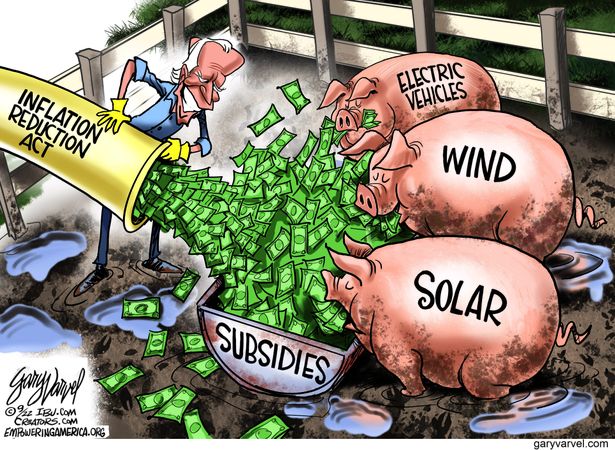







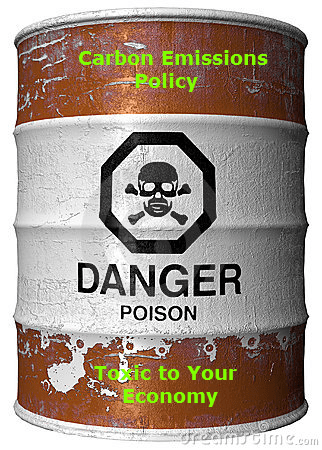 Jock Finlayson describes how climate change policies are depleting Canadians’ financial means in his article


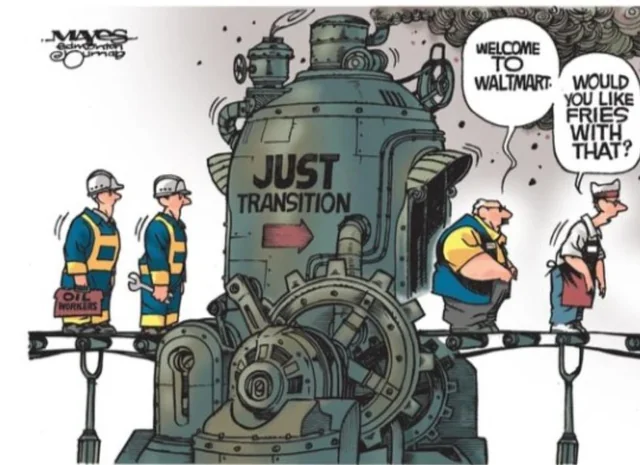

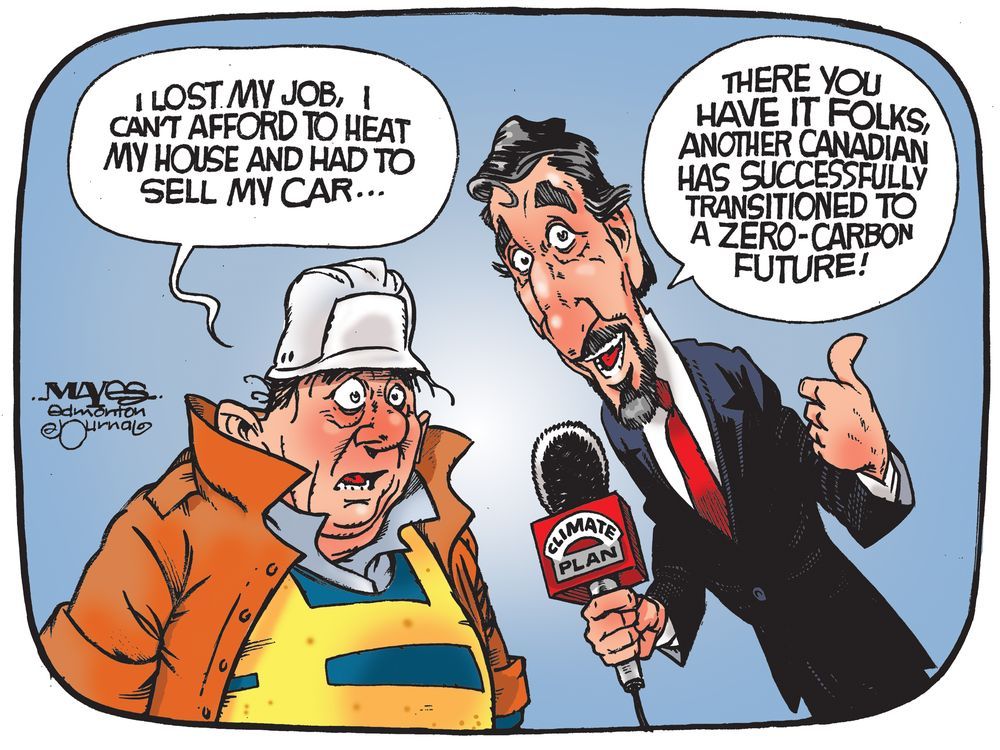

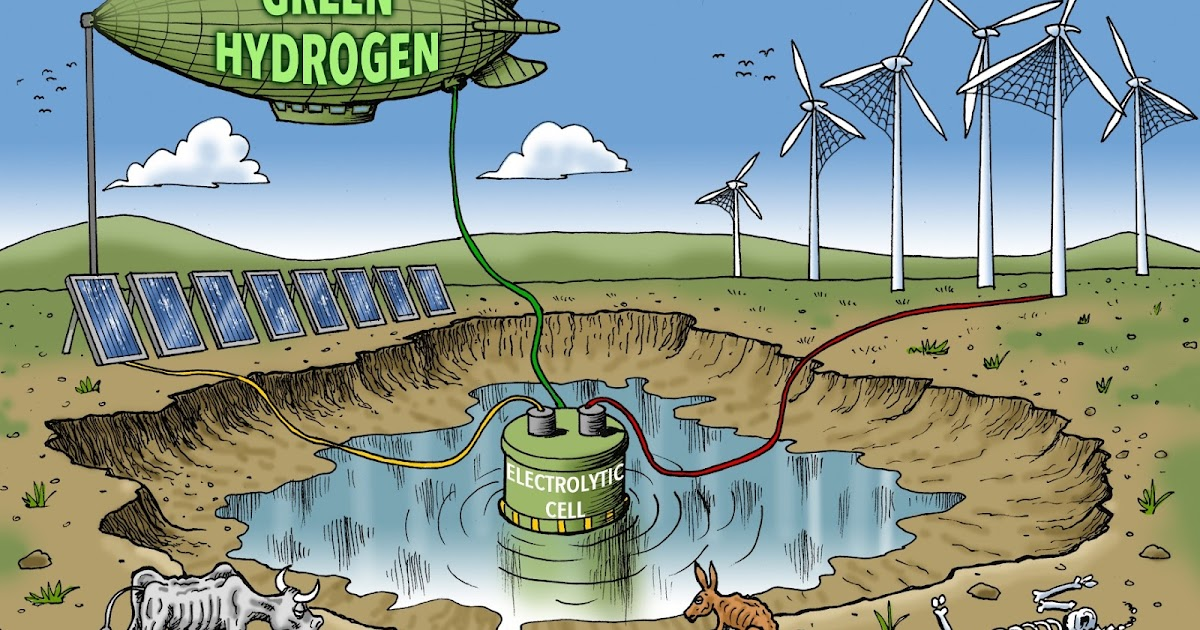
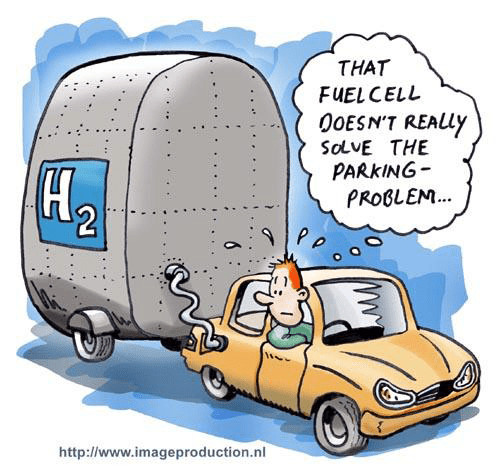


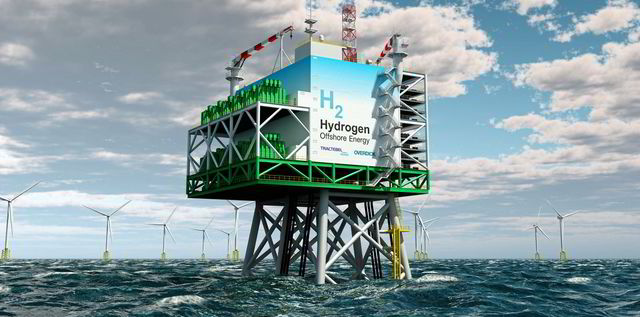

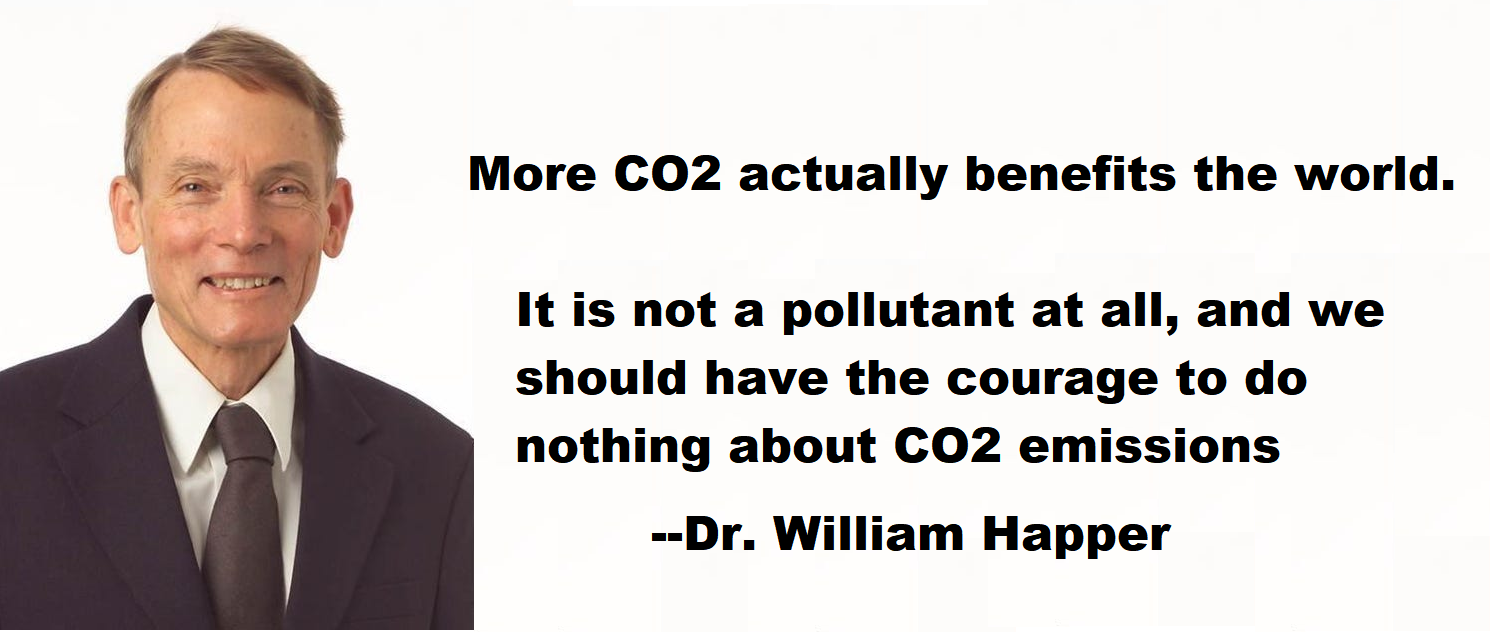



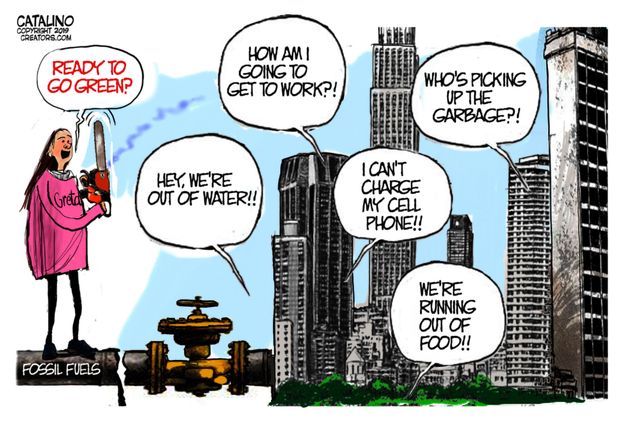




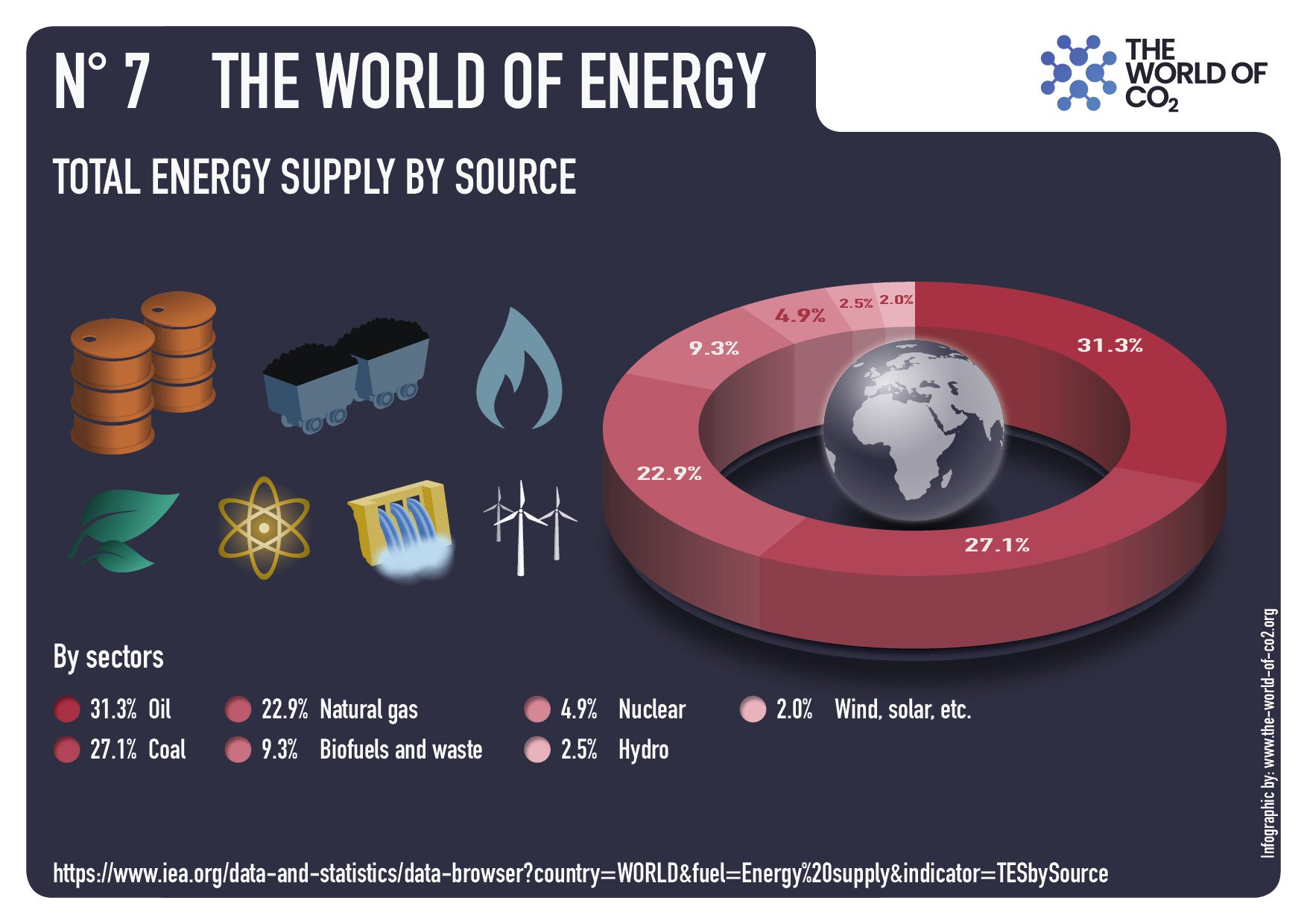


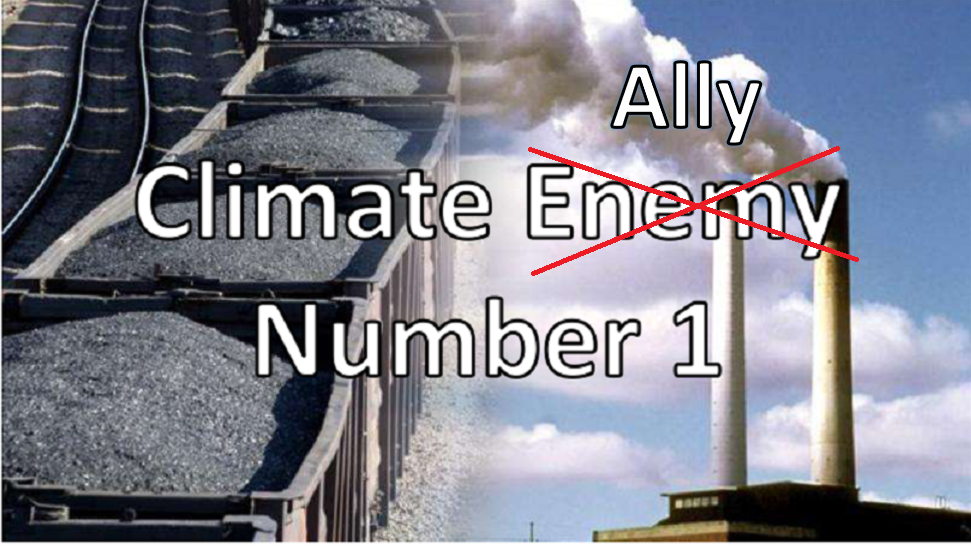







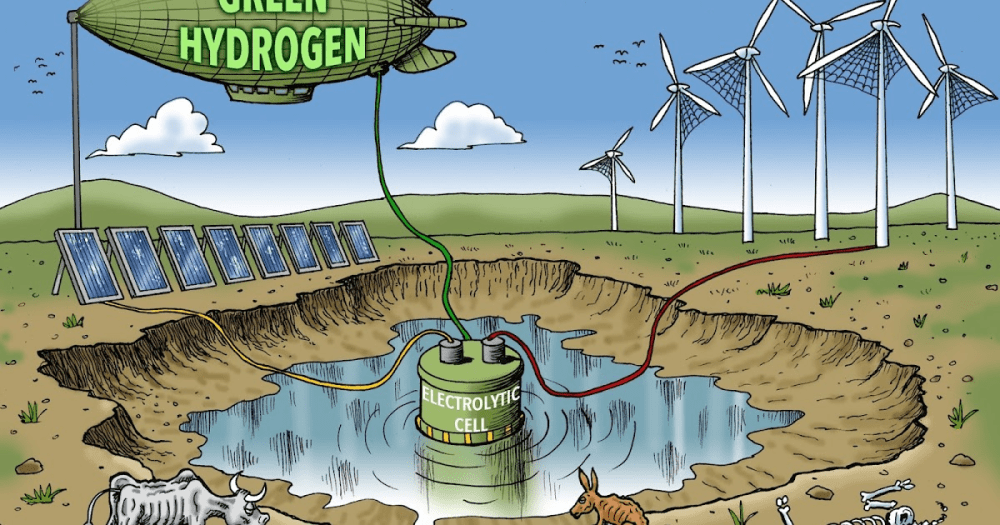


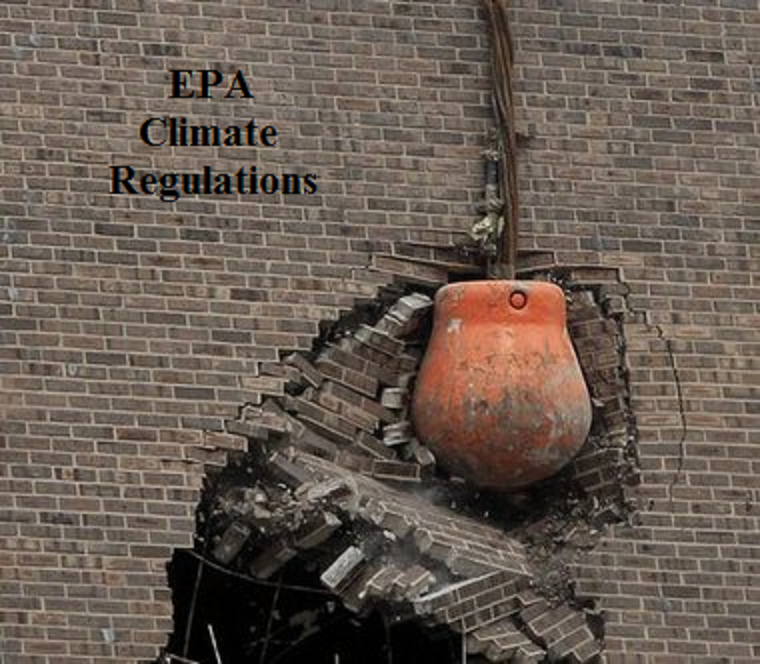

 Science Matters