War on Gas Stoves Heating Up

As explained  below, the move against gas stoves is just an opening into a larger war against methane because of its CO2 emissions.  Coal was bashed as a fuel already long ago, and now activists want to disqualify gas lest it serve as a bridge energy source with much lower CO2 emissions, delaying the desired upheaval.  The current assault on domestic appliances should be seen as the thin edge of a wedge to destroy natural gas supply, in parallel with actions against coal and oil.

February 27, 2023 Update

From E & E Wire: DOE rule may block 50% of current gas stove models

Half of gas stove models sold in the United States today won’t comply with a first-ever efficiency regulation on cooking appliances, according to a new analysis from the Department of Energy.

The projection, which DOE posted online two weeks after the rule’s release Jan. 31, aims to provide more clarification on the expected impact of a proposal earlier this month that is now receiving comments from the public (Energywire, Feb. 1).

DOE says the cooking regulation will preserve some market share for gas stoves that have at least one high-input rate burner and continuous cast iron grates, two features that DOE determined are priorities for the public. Both features use a lot of energy.

If enacted, the proposed rule would be the second major DOE regulation affecting stovetops — existing standards prohibit constant burning pilots for gas cooking products. DOE is moving forward with the rule along with other efficiency standards, including for distribution transformers, washing machines and refrigerators (Energywire, Feb. 16).

Background from Previous Post:  Gas Stoves Just a Starter

Mark Krebs and Tom Tanton explain the ins and outs of this new phase encroaching upon the citizenry where they live.  Their Master Resource article is Gas Stoves: The Beloved Blue Flame is Just Better.  Some excerpts in italics with my bolds and added images and headers.

The Larger Federal Goal:  Transition Away from Natural Gas

The concern should not be about gas stove usage but the public policy of The Biden Administrative State to wean consumers off the direct use of natural gas and propane and on to electric appliances, ASAP. This “transition” includes how to heat your home, heat your water, cook, and drive.

Gas cooking is highly valued by consumers, virtually all of whom have normal taste buds. It is the one gas appliance that consumers see and use daily. The blue flame is part of home life, as is the fireplace run by gas or propane.

In contrast, the furnace and water heater usually tucked away in the basement or equipment closet and operate unseen. Also unseen are the legions of new electric power plants transmission lines and battery storage system to provide ostensibly “clean” juice for these new electric appliances and the serious environmental, strategic, and human rights impacts from mining and processing heavy metals and rare earths.

In fact, no one has done a comparative full fuel cycle analysis to document whether electrification is a good idea or a bad one; at least not a transparent analysis that has been subject to independent technical debate. Neither have the all-electrification busybodies presented a comprehensive plan to produce the millions of batteries necessary for the electrical grid to be able to handle all these new uses, while burdened by intermittent wind and solar.

Govt. Misdirection:  Claims Gas Stoves Hazardous to Indoor Air Quality

The first ploy was to claim gas stoves are unsafe concerning air pollutants.  Several problems with this attempt to regulate away these cooking appliances.

Fear mongering about the “existential threat” from Anthropogenic Global Warming (AGW) hasn’t been working as well as planned. So maybe, they hope, additional fearmongering about how parents are putting their own children at risk due to respiratory ailments, such as asthma from your stove will do the trick.

There are at least three agencies leading the Biden Administration’s whole-of-government fossil-fuel eradication efforts. These are:

  • DOE’s Office of Energy Efficiency & Renewable Energy” (EERE)
  • The Consumer Product Safety Commission (CPSC)
  • The Environmental Protection Agency (EPA)

None of these agencies have Congressional authority to regulate “indoor air pollution.” EERE has been pushing electrification at least since the Obama Administration, and it continued even throughout the Trump Administration. The Biden Administration simply removed the nominal (if any) restraints there may have been under Biden’s “whole of government” executive orders (EOs) to reduce GHG’s: e.g., Executive Order (EO) 13990.

In EERE’s case certain EO obstacles include that they still must act “as appropriate and consistent with applicable law.” The Energy Policy and Conservation Act of 1975 (EPCA) is one such law. EPCA is also supposed to promote regulatory objectivity. Under EPCA, DOE/EERE must also “consider” safety.

The science that the Biden Administration claims to guide such regulatory decisions
is far from conclusive that gas stoves are harmful.

Instead, the Biden Administration and its supporters “cherry pick” data that supports regulatory expansion. In this case, the science comes from the highly partisan Rocky Mountain Institute (RMI). A major activity (and bias) of RMI is its “Electricity Innovation Lab. It reiterates RMI’s mission to achieve a carbon-free electricity monopoly.

According to independent scientific researchers with a deep knowledge of this subject, most of the “indoor air pollution” is emitted from the food itself being cooked. Such pollution is in the form of particulates from cooking food regardless of what form of energy is doing the cooking. Those particulates may be especially harmful to adolescent asthmatics.

More Govt. Hype: Replacements More Efficient than Gas Stoves

Government Orange Gas?

What is it exactly that DOE wants to force on consumers under the guise of “energy efficiency in the case of gas stoves? It appears to be a relatively new type of gas stove burner that glows orange (infrared, a.k.a., “radiant”) instead of the blue flames present in traditional burners that consumers are accustomed to. Infrared burners have been around for a long time, especially for gas BBQ grills but they don’t last long. Infrared burner adoption for consumer kitchen cooking appliances have been limited to a few high-end “prosumer” gas ranges. Costs for such models tend to be in the vicinity of $7,000 to $9,000. One example is Wolf/Sub Zero’s Model # GR364G with a MSRP of $8,760. And only the griddle portion of that model is infrared. According to DOE, there may be one model that is all infrared but good luck finding it.

In comparison, a basic electric range can be purchased for under $500. Granted, if DOE mandates infrared gas burners, mass production could decrease cost premiums. But for cost-conscious consumers, such premiums will likely far exceed those of electric stoves, even induction electric stoves.

Forcibly moving the market via equipment costs is a typical DOE strategy.
And then they say, “let the market decide.

Part of DOE’s bag of tricks for justifying higher gas appliance efficiencies is to minimize maintenance costs and safety concerns.  At a minimum, “worst-case scenario” analyses are needed to determine how infrared burners perform in the “real world” of “messy” stoves. In messy situations, infrared burners may turn into product liabilities. And they may have to be replaced; that can quickly get expensive. It is at least possible that “dirty” infrared burners emit more pollutants than traditional blue flame burners. DOE needs to “consider” safety consequences of its energy efficiency proposals going forward.  It is not evident that they have.

Likewise, DOE tends to minimize its estimations for what the increased prices will be that consumers must bear from increased efficiency.  Taken together with other forms of analytical “trickery,” consumer cost-effectiveness can quickly become negative.

Since pictures are “worth a thousand words, see Shutterstock’s 223 images of infrared gas stoves. Several of these are pictures of infrared burners that have experienced obvious degradation from cooking spills.

There’s also movement on the electrical stove side of all this. That is, electric stoves continue to change and the technology du jour is the induction stove. Induction stoves electro-magnetically couple the stove with the pan, directly heating the pan and not the stove. They are more efficient than tradition hot coil electric resistance stoves but are also more expensive and require magnetic cookware. They too, have associated health risks (Induction stoves may not be safe to use with pacemakers; “People with pacemakers are better off avoiding induction stoves.”)
Perverse Incentives in Inflation reduction Act

The so-called Inflation Reduction Act provides perverse incentives for switching to electricity.  These incentives are summarized as follows:

DOE also needs to consider the safety feature of having a gas stove during extended electric grid blackouts that may make the difference between consumers and their water pipes freezing or not.  This benefit was widely observed in Texas during Winter Storm Uri.

To make a logical scientific argument about consumer safety concerns with gas burners, DOE must clearly and transparently demonstrate a safety issue with conventional “blue flame” burners.  Instead, DOE is proposing a one-way move to infrared burners based upon theoretical economic operating cost advantages of a few percentage points.

Meanwhile, DOE is not mandating a move from electric resistance stoves to higher efficiency  electric induction  stoves that, according to the EPA,  can be “5-10% more efficient than conventional electric resistance units.”  EPA’s verbiage following that quote states: “and about 3 times more efficient than gas.”  That latter verbiage is tantamount to professing a belief that electricity is magically created inside of the house’s electric meter. This is pretty much “par for the course” for the Biden Administration’s “Green New Deal” energy and environmental policies.

Under EPCA’s anti-backsliding provisions, once infrared burners are mandated, there is no going back to traditional (blue flame) gas burners. Thus, if consumers want to regain better cooking maintenance and reliability, they can only switch to electric stoves. We think that’s their plan! Consumers will probably choose electric resistance varieties due to their relatively low initial purchase cost. What this portends, at least for the next few decades, is that energy efficiency when measured over the complete fuel-cycle is massively reduced throughout most of the United States where fossil fuels still dominate electric grid generation. The same goes for emissions when measured along the complete fuel-cycle.

The direct use of natural gas makes the most sense economically and environmentally for consumers. Consumers are losing that choice.

Conclusion–Why The Crusade?

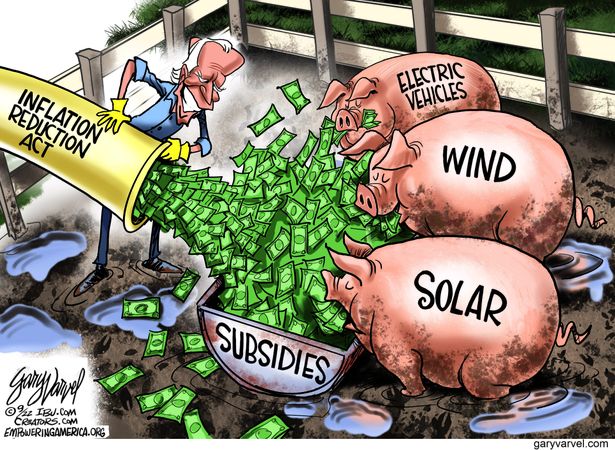
Why is the Biden Administration messing with a piece of Americana. Is it to try the hardest part first? Or because “clean” electrification is where the money is? With passage of the Inflation Reduction Act, it is definitely where the subsidies are. The enormity of these subsidies are like an all-you-can-eat buffet for Green New Deal enrichment.

Phasing out natural gas and propane is not merely for the U.S. to meet its commitments for “deep decarbonization” per the UN’s Paris accords. It’s also about “great reset” social control. With the advent of “smart” electric meters and appliances, it’s relatively easy to centrally control electricity usage.

Coupled with digital currency, it then becomes relatively easy to control behavior, such as remotely changing YOUR living room thermostat or disabling your car. Early dinner? No: you’ll cook when the power is temporarily turned on to your stove.  But if you project the correct attitude of cheerful compliance, you may be awarded with an extra ration of electricity.

DOE needs to stop politicizing energy appliances on unfounded predictions that “clean” renewable electricity will soon dominate the grid. This scenario is not at all probable given the cost and enormity of the quest. Big Brother is already running wild and must be leashed/removed. Given that DOE’s proposed rule calls for yearly energy consumption limits for cooking appliances, rationing might not be totally far-fetched. The time to expose and eradicate is now.

Appendices to Master Resource Article

Appendix A: Call To Action (Next Steps, What You Can Do)

Appendix B: Further Reading

Footnote

Obviously, bans against ICE vehicles will also prohibit those running on LNG (Liquified Natural Gas). See Consumers Report: Tesla Road Trip

As for fertilizer banning,  half of the people on Earth are alive today thanks to nitrogenous fertilizers made of and with natural gas.  So why are governments at home and abroad scrambling to cut off humanity’s natural gas supply?

See Natural Gas – Generated Nitrogenous Fertilizers Prevent Worse World Hunger

Gas Stove Just a Starter

As explained  below, the move against gas stoves is just an opening into a larger war against methane because of its CO2 emissions.  Coal was bashed as a fuel already long ago, and now activists want to disqualify gas lest it serve as a bridge energy source with much lower CO2 emissions, delaying the desired upheaval.  The current assault on domestic appliances should be seen as the thin edge of a wedge to destroy natural gas supply, in parallel with actions against coal and oil.

Mark Krebs and Tom Tanton explain the ins and outs of this new phase encroaching upon the citizenry where they live.  Their Master Resource article is Gas Stoves: The Beloved Blue Flame is Just Better.  Some excerpts in italics with my bolds and added images and headers.

The Larger Federal Goal:  Transition Away from Natural Gas

The concern should not be about gas stove usage but the public policy of The Biden Administrative State to wean consumers off the direct use of natural gas and propane and on to electric appliances, ASAP. This “transition” includes how to heat your home, heat your water, cook, and drive.

Gas cooking is highly valued by consumers, virtually all of whom have normal taste buds. It is the one gas appliance that consumers see and use daily. The blue flame is part of home life, as is the fireplace run by gas or propane.

In contrast, the furnace and water heater usually tucked away in the basement or equipment closet and operate unseen. Also unseen are the legions of new electric power plants transmission lines and battery storage system to provide ostensibly “clean” juice for these new electric appliances and the serious environmental, strategic, and human rights impacts from mining and processing heavy metals and rare earths.

In fact, no one has done a comparative full fuel cycle analysis to document whether electrification is a good idea or a bad one; at least not a transparent analysis that has been subject to independent technical debate. Neither have the all-electrification busybodies presented a comprehensive plan to produce the millions of batteries necessary for the electrical grid to be able to handle all these new uses, while burdened by intermittent wind and solar.

Govt. Misdirection:  Claims Gas Stoves Hazardous to Indoor Air Quality

The first ploy was to claim gas stoves are unsafe concerning air pollutants.  Several problems with this attempt to regulate away these cooking appliances.

Fear mongering about the “existential threat” from Anthropogenic Global Warming (AGW) hasn’t been working as well as planned. So maybe, they hope, additional fearmongering about how parents are putting their own children at risk due to respiratory ailments, such as asthma from your stove will do the trick.

There are at least three agencies leading the Biden Administration’s whole-of-government fossil-fuel eradication efforts. These are:

  • DOE’s Office of Energy Efficiency & Renewable Energy” (EERE)
  • The Consumer Product Safety Commission (CPSC)
  • The Environmental Protection Agency (EPA)

None of these agencies have Congressional authority to regulate “indoor air pollution.” EERE has been pushing electrification at least since the Obama Administration, and it continued even throughout the Trump Administration. The Biden Administration simply removed the nominal (if any) restraints there may have been under Biden’s “whole of government” executive orders (EOs) to reduce GHG’s: e.g., Executive Order (EO) 13990.

In EERE’s case certain EO obstacles include that they still must act “as appropriate and consistent with applicable law.” The Energy Policy and Conservation Act of 1975 (EPCA) is one such law. EPCA is also supposed to promote regulatory objectivity. Under EPCA, DOE/EERE must also “consider” safety.

The science that the Biden Administration claims to guide such regulatory decisions
is far from conclusive that gas stoves are harmful.

Instead, the Biden Administration and its supporters “cherry pick” data that supports regulatory expansion. In this case, the science comes from the highly partisan Rocky Mountain Institute (RMI). A major activity (and bias) of RMI is its “Electricity Innovation Lab. It reiterates RMI’s mission to achieve a carbon-free electricity monopoly.

According to independent scientific researchers with a deep knowledge of this subject, most of the “indoor air pollution” is emitted from the food itself being cooked. Such pollution is in the form of particulates from cooking food regardless of what form of energy is doing the cooking. Those particulates may be especially harmful to adolescent asthmatics.

More Govt. Hype: Replacements More Efficient than Gas Stoves

Government Orange Gas?

What is it exactly that DOE wants to force on consumers under the guise of “energy efficiency in the case of gas stoves? It appears to be a relatively new type of gas stove burner that glows orange (infrared, a.k.a., “radiant”) instead of the blue flames present in traditional burners that consumers are accustomed to. Infrared burners have been around for a long time, especially for gas BBQ grills but they don’t last long. Infrared burner adoption for consumer kitchen cooking appliances have been limited to a few high-end “prosumer” gas ranges. Costs for such models tend to be in the vicinity of $7,000 to $9,000. One example is Wolf/Sub Zero’s Model # GR364G with a MSRP of $8,760. And only the griddle portion of that model is infrared. According to DOE, there may be one model that is all infrared but good luck finding it.

In comparison, a basic electric range can be purchased for under $500. Granted, if DOE mandates infrared gas burners, mass production could decrease cost premiums. But for cost-conscious consumers, such premiums will likely far exceed those of electric stoves, even induction electric stoves.

Forcibly moving the market via equipment costs is a typical DOE strategy.
And then they say, “let the market decide.

Part of DOE’s bag of tricks for justifying higher gas appliance efficiencies is to minimize maintenance costs and safety concerns.  At a minimum, “worst-case scenario” analyses are needed to determine how infrared burners perform in the “real world” of “messy” stoves. In messy situations, infrared burners may turn into product liabilities. And they may have to be replaced; that can quickly get expensive. It is at least possible that “dirty” infrared burners emit more pollutants than traditional blue flame burners. DOE needs to “consider” safety consequences of its energy efficiency proposals going forward.  It is not evident that they have.

Likewise, DOE tends to minimize its estimations for what the increased prices will be that consumers must bear from increased efficiency.  Taken together with other forms of analytical “trickery,” consumer cost-effectiveness can quickly become negative.

Since pictures are “worth a thousand words, see Shutterstock’s 223 images of infrared gas stoves. Several of these are pictures of infrared burners that have experienced obvious degradation from cooking spills.

There’s also movement on the electrical stove side of all this. That is, electric stoves continue to change and the technology du jour is the induction stove. Induction stoves electro-magnetically couple the stove with the pan, directly heating the pan and not the stove. They are more efficient than tradition hot coil electric resistance stoves but are also more expensive and require magnetic cookware. They too, have associated health risks (Induction stoves may not be safe to use with pacemakers; “People with pacemakers are better off avoiding induction stoves.”)

Perverse Incentives in Inflation reduction Act

The so-called Inflation Reduction Act provides perverse incentives for switching to electricity.  These incentives are summarized as follows:

DOE also needs to consider the safety feature of having a gas stove during extended electric grid blackouts that may make the difference between consumers and their water pipes freezing or not.  This benefit was widely observed in Texas during Winter Storm Uri.

To make a logical scientific argument about consumer safety concerns with gas burners, DOE must clearly and transparently demonstrate a safety issue with conventional “blue flame” burners.  Instead, DOE is proposing a one-way move to infrared burners based upon theoretical economic operating cost advantages of a few percentage points.

Meanwhile, DOE is not mandating a move from electric resistance stoves to higher efficiency  electric induction  stoves that, according to the EPA,  can be “5-10% more efficient than conventional electric resistance units.”  EPA’s verbiage following that quote states: “and about 3 times more efficient than gas.”  That latter verbiage is tantamount to professing a belief that electricity is magically created inside of the house’s electric meter. This is pretty much “par for the course” for the Biden Administration’s “Green New Deal” energy and environmental policies.

Under EPCA’s anti-backsliding provisions, once infrared burners are mandated, there is no going back to traditional (blue flame) gas burners. Thus, if consumers want to regain better cooking maintenance and reliability, they can only switch to electric stoves. We think that’s their plan! Consumers will probably choose electric resistance varieties due to their relatively low initial purchase cost. What this portends, at least for the next few decades, is that energy efficiency when measured over the complete fuel-cycle is massively reduced throughout most of the United States where fossil fuels still dominate electric grid generation. The same goes for emissions when measured along the complete fuel-cycle.

The direct use of natural gas makes the most sense economically and environmentally for consumers. Consumers are losing that choice.

Conclusion–Why The Crusade?

Why is the Biden Administration messing with a piece of Americana. Is it to try the hardest part first? Or because “clean” electrification is where the money is? With passage of the Inflation Reduction Act, it is definitely where the subsidies are. The enormity of these subsidies are like an all-you-can-eat buffet for Green New Deal enrichment.

Phasing out natural gas and propane is not merely for the U.S. to meet its commitments for “deep decarbonization” per the UN’s Paris accords. It’s also about “great reset” social control. With the advent of “smart” electric meters and appliances, it’s relatively easy to centrally control electricity usage.

Coupled with digital currency, it then becomes relatively easy to control behavior, such as remotely changing YOUR living room thermostat or disabling your car. Early dinner? No: you’ll cook when the power is temporarily turned on to your stove.  But if you project the correct attitude of cheerful compliance, you may be awarded with an extra ration of electricity.

DOE needs to stop politicizing energy appliances on unfounded predictions that “clean” renewable electricity will soon dominate the grid. This scenario is not at all probable given the cost and enormity of the quest. Big Brother is already running wild and must be leashed/removed. Given that DOE’s proposed rule calls for yearly energy consumption limits for cooking appliances, rationing might not be totally far-fetched. The time to expose and eradicate is now.

Appendices to Master Resource Article

Appendix A: Call To Action (Next Steps, What You Can Do)

Appendix B: Further Reading

Footnote

Obviously, bans against ICE vehicles will also prohibit those running on LNG (Liquified Natural Gas). See Consumers Report: Tesla Road Trip

As for fertilizer banning,  half of the people on Earth are alive today thanks to nitrogenous fertilizers made of and with natural gas.  So why are governments at home and abroad scrambling to cut off humanity’s natural gas supply?

See Natural Gas – Generated Nitrogenous Fertilizers Prevent Worse World Hunger


Politics Deep in the Thrall of Climate Change

Mark Imisides writes at Australia Spectator Politics deep in the thrall of climate change.  Excerpts in italics with my bolds and some added images.

The issue of Climate Change stormed across our TV screens at the recent federal election (Australia). Funded by a renewables investor, the Climate 200 candidates mopped up – taking eight seats from the major parties.

How did something that was considered a slightly oddball theory in the late 80s morph into a multiheaded monster that seems to have every world government, including ours, in its thrall?

By any measure, the Climate Change industry is huge. It’s quite common to hear people use the term ‘big oil’, but given that the Climate Change industry is now, at $1.5 trillion, rapidly catching up to the oil industry ($2.1 trillion), it’s entirely valid to use the term ‘big climate’. Andrew Urban recently pointed this out, with several cases of people that have cashed in big-time from Climate Change alarmism.

How did it get so big? How did it become the colossus that it now is? As it happens, there is a back story that few people outside of the scientific sector are aware of.

From Jo Nova in 2010 US$. In 2015 Climate Change Business Journal reported: “The $1.5 trillion global “climate change industry” grew at between 17 and 24 percent annually from 2005-2008” The $1.5-trillion price tag appears to exclude most of the Big Green environmentalism industry, a $13.4-billion-per-year business in the USA alone.

In simple terms, it was a perfect storm of four factors that all came together in the late 80s. As I was doing my PhD at the time, I got to see this firsthand. Very few people understand this process, largely because those outside the sector don’t know that science is just as prone as any other industry to the shifting sands of zeitgeist – trends that emerge that shape and mould how science is done, funded, and perceived.

These four factors were to revolutionise science, and although not all the changes were bad, their lasting legacy will be the entry of science into political discourse, the grubby touching of research funds by hands soiled by self-interest, greed, and corruption.

Revolutionary Factor 1:  Chernobyl Ended Science’s Golden Age

The first of these factors was the accident at Chernobyl in 1986. What? What on earth does Chernobyl have to do with climate change?

The answer is that there is no direct connection. It was, however, the final nail in the coffin of science’s golden age. Coming out of the second world war, science was seen as having the answers to all the world’s ills. It was seen as having won the war (largely due to the atomic bomb) and was the way of the future. This optimism is expressed beautifully in the film A Beautiful Mind where the incoming students at Princeton in 1948 are given a stirring lecture by the mathematician Hellinger of the future of science in the post-war world.

And so science flourished. Antibiotics became readily available, DNA was characterised, and the contraceptive pill introduced a new era of sexual freedom. The synthetic chemical industry also boomed, as did the nuclear power industry. We had wonder chemicals like DDT that eradicated malaria-carrying mosquitoes, aerosol fly sprays, and cheap reliable power thanks to the power of the atom.

But then, over time, mistakes happened, largely because environmental science, as a discipline, didn’t exist. Or, to put it another way, the world was seen as an infinitely-sized bucket into which chemicals could be poured, and the concept of man-made chemicals exerting any influence on the world in which we live just didn’t exist. It just never occurred to anyone.

But then reality began to impinge on this mindset. Amongst other things, the persistence of nonbiodegradable pesticides like DDT became a problem, CFC propellants threatened the ozone layer, and we had Sellafield and Three Mile Island. Neither of these two incidents actually killed anyone but they gave everyone an awful fright.

But Chernobyl was the last straw. Scientists, it seemed, couldn’t be trusted after all.
It was the China Syndrome for real.

Revolutionary Factor 2:  Global Recession Crashed Research Funding

This mistrust brought with it added scrutiny, and this coincided with the second factor in this list – the worldwide recession in the late 80s (as Paul Keating famously said, the recession we had to have).

The combination of the loss of trust in scientists with the fact that there wasn’t as much money to splash around as before, resulted in a massive change in the emphasis of scientific research. Before this time it was pretty easy to get funding for any pet project that you had, and you didn’t have to you justify it much in terms of its importance or relevance. But after this time, suddenly funds became much more difficult to get. To get funding, you had to prove the relevance of your research. You had to justify why it was important in terms practical outcomes.

In scientific terms, we could say that the emphasis switched
from pure research to applied research.

This change in emphasis had a dramatic effect on university faculties. Prior to this time if you went onto any campus you would find a science faculty that contained four departments – physics, chemistry, geology, and biology. When this change from pure to applied research happened, it hit the physics departments hardest. Of the four classic sciences, physics is the most fundamental, and the least applied. That is, it forms the basis on which knowledge in the other three disciplines are developed, but it is not as directly applicable to the real world.

And so, suddenly, people that were either physics academics or postgraduate students had very bleak career prospects. Consequently, from about this time physics departments began to disappear from university campuses, being subsumed into faculties with titles such as ‘Physical Sciences’ and so on. Suddenly, there were a lot of highly qualified physicists looking for work.

Revolutionary Factor 3:  Warming Replaced the Cooling Trend

The third factor that came into play at about this time was that the world had started warming again. It cooled from about 1940 until 1975, but by the late 80s a warming trend was emerging. And, as it happens, this fed right into Margaret Thatcher’s political agenda – the fourth and final factor in our list.

Revolutionary Factor 4:  Power Struggle Thatcher vs. Coal Unions

Thatcher had an awful problem with coal unions and wanted to break their power. She did this by approaching the Royal Society and essentially saying that she wanted to demonise coal and get people to use nuclear power, and there was money on the table if they could do that.

Thus, the IPCC was born, and every government department around the world
devoted to ‘climate science’ dates from about this time.

But who could they employ – the term ‘climate scientist’ didn’t exist. Well, as it happens, questions of heat transfer fall squarely into the lap of physicists, and, oh look, there are plenty of them looking for work. They had a precious job offer if they would just say the right things.

Thus, the discipline of ‘climate science’ was born, degrees were established, and people began selecting it as a career option from the undergraduate level.

Well, so far so good. When new scientific knowledge is revealed, new career paths, and even new language is established. For example, with the advent of electricity in the early 19th Century largely as a result of the efforts of Volta, the term ‘electrician’ was coined.

Climate Science Discredited Early On

But here is where the similarity between ‘climate science’ and other new technologies like electricity (or quantum mechanics or biogenetics) ends. In each of these latter cases, the science has developed from its infancy into a mature discipline, as research and enquiry revealed further information and deeper understandings.

With ‘climate science’, however, the very opposite happened. It was barely a decade old when it was comprehensively disproved, by two discrete mechanisms. That is, it was proven that the notion of CO2 warming the world had no scientific basis, and the computer models that predicted its influence were wrong.

The first of these was the absence of the ‘tropospheric hotspot’ that was predicted by the computer models. Anthony Watts has a very good, even-handed discussion of it on his website.

The second, and more significant study, resulted from a set of ice-core studies from Vladivostok in 1999, that showed that atmospheric CO2 concentration followed temperature changes, not the other way around.

As an Analytical Chemist, it was this second study that struck a chord with me. From the time I first saw Al Gore’s graph with overlaid temperature and CO2 charts, the first question I asked was, ‘How do they know which one is cause and which one is effect? Haven’t they ever heard of Henry’s Law?’

Henry’s Law, for the layman, relates the concentration of a compound in the aqueous phase to its concentration in the vapour phase above it. In simplest terms, the solubility of a gas in a liquid decreases with temperature. That is, the hotter a liquid gets, the less of the gas that can dissolve in it. So if the ocean was heating, it would release CO2 into the atmosphere, resulting in higher gaseous concentrations.

The question of which one is cause and which one is effect is determined simply by which one leads, and which one lags, and the Vladivostok ice cores showed that CO2 changes lagged behind temperature changes by about 10,000 years. Quod Erat Demonstrandum.

In other words, the Vladivostok ice core data comprehensively disproves the notion that man-made CO2 is heating the planet. A theory was advanced, accepted by many, but then disproven.

This has happened many times in science, and it is the very mechanism by which scientific knowledge is advanced.

Perhaps the most spectacular example of this is luminiferous ether theory. It was a theory that was spawned by a simple observation. It was observed that if an alarm clock was placed in a glass bell, and a vacuum was drawn, then when the alarm went off, no sound was evident, despite the fact that you could see the hammer striking the bells.

They concluded, correctly, that sound requires air to move through, but light didn’t. Why was the clock still visible in the vacuum? Why, the only explanation possible, it seemed, was that there was some other, as yet unknown, medium through which it moved. Thus, the luminiferous ether was proposed.

This was widely accepted, until Michelson and Morley sought to measure it, in 1887. They discovered, in simple terms, that it just wasn’t there. Thus, the theory was overturned, almost overnight. As it happens it took Michelson and Morley some time to realise the implication of their experiment, but when they did, the conclusion was inescapable – there was no luminiferous ether.

This led to further studies into the nature of light, and before long the photoelectric effect was discovered, and the passage of light through a vacuum was elegantly explained. Thus, the luminiferous ether theory has been consigned to the dustbin of history, along with phlogiston theory and a whole lot of other theories that seemed like a good idea at the time.

Anthropogenic Global Warming Escaped Scientific Death

Why hasn’t that happened to the notion of Anthropogenic Global Warming? Why, when it was discovered that CO2 concentration followed temperature, and not the other way around, didn’t people say ‘temperature is the dog, and CO2 is the tail’? Why, in 2023, is the tail wagging the dog?

The simple answer is that science is no longer driving the bus.

What is happening is the type of positive feedback loop that climate scientists talk about, despite the fact that these things are almost unheard of in the physical world. It is alive and well in politics.

It is always in a government’s interest to create a crisis. It is a well-known political phenomenon that people cling the incumbents in a crisis, and the governments go to great lengths to make people think that they are saving people from the crisis. Many people, for example, attribute John Howard’s success in the 2001 election to the Tampa Crisis, and George W Bush’s popularity shot up after 9/11.

The other side of this feedback loop is that if you are employed to investigate ‘climate change’, well, you’d jolly well better find it, or the government money will dry up.

So if the scientists say the right things, they get employment and ‘research’ funding. The greater the crisis they report on, the happier the government is, and the more money they get paid.

This is the reason that these ‘climate scientists’ avoid scrutiny. They don’t have to justify their research to an ARC or CRC committee. They don’t have to produce results for scrutiny, in order to justify their research. It’s already guaranteed, in perpetuity, with a blank cheque.

No scientist is going to say ‘there is no climate crisis’ or he will be out of a job, and no government is going to say ‘there is no climate crisis’ or they’ll be out on their ear.

Energy to be The Sacrificial Lamb Instead

The consequence of this is an energy crisis. People dying from the cold because they cannot pay their bills. Game shows in the UK now offer the payment of energy bills as a lucrative prize, and here in Australia we face the prospect of skyrocketing energy bills because of the comically inept Chris Bowen, and his massive uncosted plan to completely replace our electricity with renewables.

So what do we do about it? I think there is hope for sanity to return, but we have to prosecute the case in the right way.


Energy Transition and Impossible Dreams

Daniel Yergin writes at Project Syndicate The Energy Transition Confronts Reality.  Excerpts in italics with my bolds and added images.

Given the scale and complexity of the transition away from hydrocarbons, some worry that economic analysis has been given short shrift in the policy planning process. A clear-eyed assessment of the transition’s prospects requires a deeper understanding of at least four major challenges.

Overview

The “energy transition” from hydrocarbons to renewables and electrification is at the forefront of policy debates nowadays. But the last 18 months have shown this undertaking to be more challenging and complex than one would think just from studying the graphs that appear in many scenarios. Even in the United States and Europe, which have adopted massive initiatives (such as the Inflation Reduction Act and RePowerEU) to move things along, the development, deployment, and scaling up of the new technologies on which the transition ultimately depends will be determined only over time.

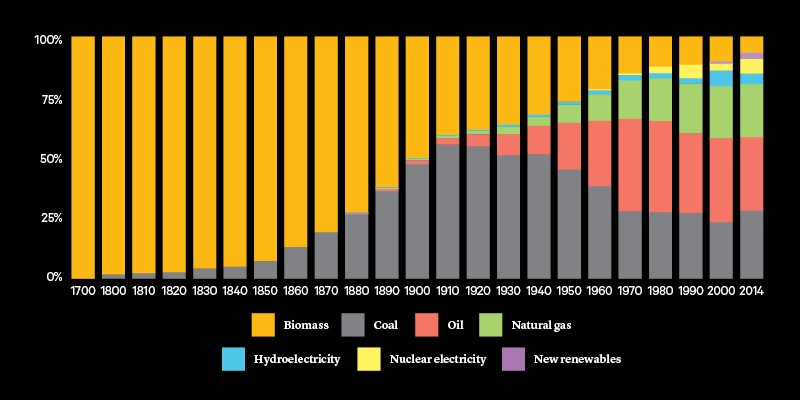
Progress of civilization through changing mixes of energy sources.

Beware:  The Imagined Transition is to be Sudden and not Additive.

The term “energy transition” suggests that we are simply taking one more step in the journey that began centuries ago with the Industrial Revolution. But in examining previous energy transitions for my book The New Map, I was struck by how different this one is. Whereas technology and economic advantage drove earlier transitions, public policy is now the most important factor.

Moreover, previous energy transitions unfolded over the course of a century or more, and they did not wholly displace the incumbent technologies. Oil overtook coal as the world’s top energy source in the 1960s, yet we now use three times more coal than we did back then, with global consumption hitting a record high in 2022.

By contrast, today’s transition is intended to unfold in little more
than a quarter-century and not be additive.

Given the scale of what is envisioned, some worry that macroeconomic analysis has been given insufficient attention in the policy-planning process. In a 2021 paper for the Peterson Institute for International Economics, the French economist Jean Pisani-Ferry notes that moving too rapidly to net-zero emissions could precipitate “an adverse supply shock – very much like the shocks of the 1970s.” He warns that a precipitous transition “is unlikely to be benign and policymakers should get ready for tough choices.”

Hard Reality #1  Energy Security is Top Priority

Developments since energy markets began to tighten in the late summer of 2021 point to four big challenges to watch out for. First, owing largely to the disruptions caused by Russia’s war in Ukraine, energy security has become a top priority again. For the most part, keeping the lights on and factories operating still requires hydrocarbons, so energy security means ensuring adequate and reasonably priced supplies and insulation from geopolitical risk and economic hardship.

Even with climate change remaining a central focus, US President Joe Biden administration’s has urged domestic companies to increase their oil production and released supplies from the Strategic Petroleum Reserve at a far greater scale than any previous administration. In Germany, the Greens in the governing coalition have spearheaded the development of the country’s capacity to import liquefied natural gas, with the first deliveries of LNG from the US arriving this month through infrastructure built in less than 200 days. Energy security is not something that is going to be assumed away in the years ahead.

Hard Reality #2  The Scale Reaches Beyond Our Means

The second challenge concerns scale. Today’s $100 trillion world economy depends on hydrocarbons for over 80% of its energy, and nothing as massive and complex as the global energy system can be transformed easily. In an important new book, How The World Really Works, noted energy scholar Vaclav Smil argues that the four essential “pillars of modern civilization” are cement, steel, plastics, and ammonia (for fertilizer), each of which is heavily dependent on the existing energy system.

Given these starting conditions, will solutions like veganism help? Smil points out that five tablespoons of petroleum are embodied in the system that gets a single tomato from cultivation in Spain (including the required fertilizer) to a dinner table in London. Yes, energy efficiency could be improved. But the main effects will show up in developed countries, rather than in the developing world, where 80% of all people live, and where rising incomes will drive up energy demand.

Land required for wind farms to power London UK.

Hard Reality #3 North and South Interests Conflict

That points to the third challenge: the new North-South divide. In the Global North – primarily Western Europe and North America – climate change is at the top of the policy agenda. But in the Global South, that priority coexists with other critical priorities, such as boosting economic growth, reducing poverty, and improving health by targeting indoor air pollution from burning wood and waste.

Hence, for many in the developing world, “energy transition” means
moving from wood and waste to liquefied petroleum gas.

This divide was vividly illustrated last year when the European Parliament passed a resolution denouncing a proposed oil pipeline running from Uganda through Tanzania to the Indian Ocean. MEPs objected that the project would adversely affect the climate, the environment, and “human rights.” Yet they cast their votes from a body located in France and Belgium, where per capita income (in current dollars) is, respectively, 50 times and 60 times greater than in Uganda, where the pipeline is seen as a foundation for economic development. The resolution provoked a furious reaction. The deputy speaker of Uganda’s parliament denounced the Europeans for exhibiting “the highest level of neocolonialism and imperialism against the sovereignty of Uganda and Tanzania.”

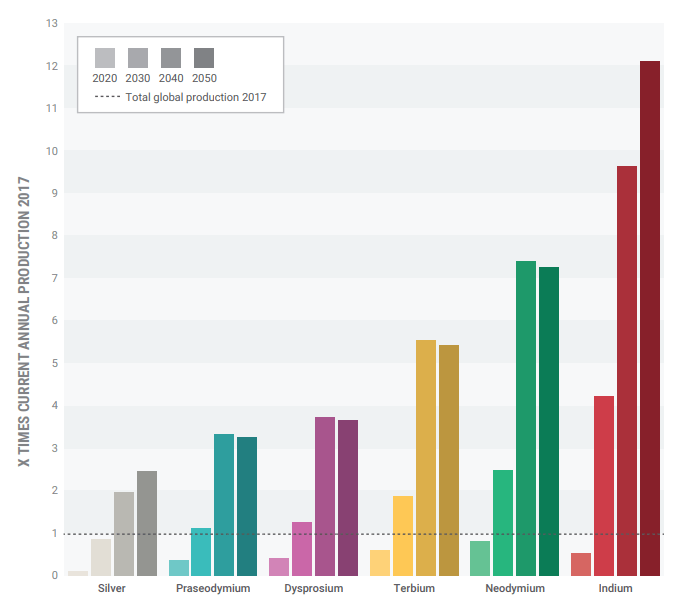
Hard Reality #4 Materials Demands Blow Away Supplies

The fourth challenge concerns the material requirements of the energy transition. I see this as the shift from “Big Oil” to “Big Shovels” – that is, from drilling for oil and gas to mining the minerals for which demand will increase enormously in a world that becomes more electrified.

In a new S&P study, The Future of Copper, we calculate that the supply of “the metal of electrification” will have to double to support the world’s 2050 climate objectives. Recently, a host of authorities – including the US and Japanese governments, the European Union, the World Bank, the International Monetary Fund, and the International Energy Agency – have all published alarming reports about the expected exponential growth in demand for minerals such as lithium and cobalt.

But alarm itself will not open major new mines, a process estimated to take 16-25 years and which faces ever-more complex permitting requirements around the world. In some key resource countries, governments are openly hostile to mining.

So, while the direction of the energy transition is clear, policymakers and the public must recognize the challenges that it entails. A deeper and more realistic understanding of the complex issues that need to be addressed is essential as the effort to achieve the transition’s goals proceeds.

My Comment

The direction of the called for energy transition is clear alright, but is it necessary?  Recently, no less than John Kerry. told the World Economic Forum the world will eventually move to a low-carbon economy, but it may be too late to avoid the worst effects of climate change.  Meanwhile, there are a number of serious scientists who expect global cooling in coming decades.

The unmentioned Hard Reality #5:  Smart People will Adapt to Climate and Weather, as they always have. That is, if they haven’t already trashed their energy system and planetary resources chasing an impossible dream.

Zero Carbon Lemmings in a Rush.


Just Transition Really Means Great Disruption

Disney’s portrayal of the Sorcerer’s Apprentice in over his head.

After breaking basic public services, woke elites now aim to collapse economies, calling it the “Just Transition” to net zero energy.  Like the ignorant novice in the fable, these fools are following a magical recipe with no understanding of the uncontrollable consequences.  This post discusses the emerging movement of naïve leaders threatening the livelihoods of their citizens whose trust has been betrayed.

Firstly, Rex Murphy writes at National Post The Trudeau Liberals are coming for your jobs.  Excerpts in italics with my bolds and added images.

From the Instapundit site I find this ever so telling comment. Will anyone deny the obvious truth it contains?

“All the people who want to ‘regulate the planetary climate’ and demand the power and unlimited resources to do so are people who have proven themselves incapable of competently managing and running recently built, closed, man-made systems. They cannot competently run power grids, or municipal water systems or trash pickup; they cannot competently maintain, let alone repair, the ‘roads and bridges’ they are always pratting about; they cannot competently run or maintain the public housing they increasingly want people to live in, or the public transportation systems that they want people to rely on …”

To which we really must add that they (or one particular government I have in mind) cannot manage international airports, passport issuance, legitimate protests, civil service payroll systems, support for their veterans, maintain a sufficient military, a national health-care system (which used to be the pride of the country) inter-provincial relations, and conflict of interest legislation.

To be fair, they are good at handing out contracts to their friends and running up consultancy bills.

And most pertinent to the present moment, this particular government — which the keenest of you will have guessed is the present one in Ottawa — also wants to impose a great restructuring — i.e. the total cancellation — of the country’s No. 1 and vital industry, which only has the third highest reserves in the entire world — energy.

And replace that great and successful resource with what amounts to
a million helicopter blades on very high metal sticks.
In Liberalese this is called the “just transition.”

On a related matter, one might ask from where could such a crazy idea emerge? Why from the great Alpine closet of Davos and its hive of globalist billionaires, celebrities and unmoored politicians, the great World Economic Forum — Davos the Swiss Bethlehem of the Great Reset.  [Note: Many of the Davos crowd inherited or married into wealth (John Kerry, for example), so lack worldly knowledge of building an actual enterprise trusted to provide quality goods or services to paying customers.]

Slacker that I am, I was unaware till very recently that our very own No. 1 Trudeau cabinet star, Chrystia Freeland occupies a key seat on the board of the world’s most presumptuous, paternalistic and cosmically pretentious institution. No less a reporter than the doughty Rupa Subramanya, who graces these very pages, two years ago gave a full report on Freeland’s pupation from reporter on the Davos crowd to one of its highest eminences.

It is a delicious account. Rupa quotes Freeland: “After my book, Plutocrats, was published in 2012, I was even — and I know this will shock you — disinvited to a Davos dinner party!” And continues: “Indeed, the one-time critic has enjoyed an apotheosis of sorts and since 2019 has sat on the board of trustees of the WEF itself. Other members include Canada’s own Mark Carney, former governor of the Bank of Canada.”

Now, I have no idea of the answer to this question, but should the finance minister of a country also be a top board member of a billionaire-stuffed cabal — even given that it offers the thrill of rubbing shoulders with Al Gore once a year? Or, we could ask, is it fair to Klaus Schwab (insert James Bond villain theme here) and the WEF that Ms. Freeland has to spend so much time on Canadian stuff, that she cannot possibly give her full attention to the Great Reset and WEF’s priority policy of “decarbonization?”

Or, we could ask, when there is a clash between the Canadian agenda
and the WEF agenda, which wins?

On that last one — looking at the maniacal idea of “just transition” as it’s playing out in Canada, I’d say the WEF is getting good value. But I’m a neutralist on these questions? What does Justin Trudeau think? Is this a case of upper-class moonlighting?

Finally, I wish to cite Toronto Sun editor emeritus, Lorrie Goldstein, the North Star of global warming reportage. He has what I think is called a “twitter thread” (in future, I will consult my nephew on the strange nomenclature of this internet) on the “just transition” aka, the “great disruption.” Space allow only one quote, but the rest I’m told is easily found:

“The value of the controversy over Trudeau’s ‘Just Transition Plan’ broken by Blacklock’s is that it ends the myth only oil, gas & coal workers will be impacted by his green energy plan: In fact, 7 major sectors of the economy could face ‘significant’ disruptions in employment.”

My Comment

New Zealand Leads in the Suffering

Could this be why PM Ardern has “emptied her tank” and resigning?  :  Jacinda Ardern was the international poster girl for ‘kindly’ authoritarianism. 

Among our supposedly liberal elites it has become common sense
that populations must be controlled for their own good

“This global chorus of praise is a fitting send-off. Ardern is in many ways an archetypal leader of our age, in which politicians draw just as much legitimacy, if not more, from the warm feeling they give international elites than what it is they actually do and achieve for their domestic population. Indeed, her cheerleaders don’t even bother to look into those things. If they did, they’d see why Ardern is beating a hasty retreat. She leaves office amid a painful cost-of-living crisis and spiralling crime rates.”

Scotland Raises the Bar for Absurdity

From the Daily Sceptic The Dangerous Fantasy of Scotland’s Net Zero Energy Transition

Suppose that Scotland’s CO2 emissions fell tomorrow to zero, i.e., that, at midnight, the country ceased to exist. Then according to the “Model for the Assessment of Greenhouse Gas Induced Climate Change” (MAGICC), based on the latest IPCC climate models, the reduction in the Earth’s temperature in 2100 would be…undetectable.

Motivated by the moral necessity and urgency of this goal, the Scottish Government is proposing a novel energy policy – its “Energy Strategy and Just Transition Plan”.

This article reviews its major themes and their implications, and considers briefly the probability of success of the Scottish Government implementing it.

Irreversible impairment of either our energy or financial systems would have a catastrophic impact on the welfare of Scotland’s citizens. Yet few have expressed any desire, much less informed consent, for risk on the scale proposed for such little benefit.

Yet the project, representing a scope of unprecedented scale, cost, pace and technical uncertainty, will be overseen by a Government that is currently struggling to procure two relatively modest ferries for less than the cost that other governments can procure 34 ferries – again, ironically due in large part to cost overruns associated with the attempt to employ novel technologies to reduce CO2 emissions. As evidence of the extent to which the Scottish Government and its advisers have become unmoored from physical reality by the climate catastrophe hypothesis, it’s a document that is fascinating to read, and alarming to contemplate.”

World Energy Wake Up Call

Are we heading toward an all-renewable energy future, spearheaded by wind and solar? Or are those energy sources wholly inadequate for the task? Mark Mills, Senior Fellow at the Manhattan Institute and author of The Cloud Revolution, compares the energy dream to the energy reality. How Much Energy Will the World Need?

Video Transcript

We’re headed toward an exciting all-renewable energy future. Wind and solar will power the world of tomorrow.

And tomorrow isn’t far off!……..

…It’s time to wake up.

You’re having a dream.

Here’s the reality.

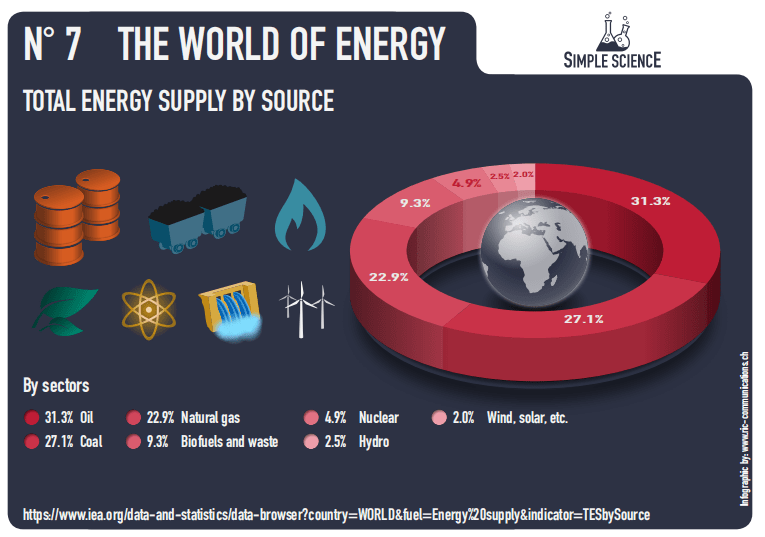
Oil, natural gas, and coal provide 84% of all the world’s energy. That’s down just two percentage points from twenty years ago.

And oil still powers nearly 97% of all global transportation.

Contrary to headlines claiming that we’re rapidly transitioning away from fossil fuels, it’s just not happening. Two decades and five trillion dollars of governments “investing” in green energy and we’ve barely moved the needle.

This was supposed to be easy. Why is it so hard?

In a word: rocks.

To get the same amount of energy from solar and wind that we now get from fossil fuels, we’re going to have to massively increase mining.

By more than 1000%.

This isn’t speculation. This is physics.

Copper, iron ore, silicon, nickel, chromium, zinc, cobalt, lithium, graphite, and rare earth metals like neodymium. We need them all.

And then those metals and materials have to be turned into motors, turbine blades, solar panels, batteries, and hundreds of other industrial components. That also takes lots of energy, which requires even more mining.

As a World Bank study put it, these green “technologies … are in fact significantly more material intensive” than our current energy mix. That may be the understatement of the century: raw materials account for 50-70% of the costs to manufacture both solar panels and batteries.

Until now it hasn’t really mattered that much because wind and solar still account for only a few percentage points of the global energy supply. They’re an applause line for environmentalists—not a major energy player. And it’s unlikely they will be in the foreseeable future.

But for the sake of argument, let’s say we sharply ramp up mining. Where would these new mines be located?

Well, for one, China.

That country is today the single largest source for most of our critical energy materials. The United States is not only a minor player but is dependent on imports for 100% of 17 critical minerals. Do we want to give China more political and economic leverage? Europe has made itself dependent on Russia for 40% of its natural gas. How well has that worked out?

Ironically, we have all the minerals we need right here in North America.

But good luck trying to get them out of the ground.

Proposals to build mines in the United States and, increasingly almost everywhere else, meet fierce opposition if not outright bans. To give just one example, in 2022 the Biden Administration canceled a proposed copper and nickel mine in northern Minnesota. This was after years of delays, navigating a maze of environmental regulations.

Yes, the same environmentalists and green-leaning politicians who tout all the benefits of electric cars are the same people who make mining the materials essential to build those cars—like copper and nickel—all but impossible.

Try to square that circle.

So far, we’ve only talked about today’s energy needs. What about tomorrow’s?

Future energy demand will be far greater than today’s. That’s been true for the entire history of civilization. The future will not only have more people but also more innovations. And entrepreneurs have always been better at inventing new ways to use energy than to produce it.

It’s obvious but worth stating: Before the invention of automobiles, airplanes, pharmaceuticals, or computers, there was no energy needed to power them.

And as more people become more prosperous, they’ll want the things others already have—from better medical care to vacations to cars.

In America, there are about 80 cars for every 100 citizens. In most of the world, it’s about five per hundred citizens.

Over 80% of air travel is for personal purposes. That’s two billion barrels of oil a year.

Hospitals use 250% more energy per square foot than an average commercial building.

And the global information infrastructure—the Cloud— already uses twice as much electricity as the entire country of Japan, the world’s third-largest economy. The massive data centers at the heart of the Cloud alone consume almost 10 times more electricity than the world’s 10 million electric cars.

E-commerce has taken off and is propelling record growth in warehouses, increasingly filled with energy-hungry robots. America’s truck freight index more than doubled in the past decade to deliver the goods to and from those warehouses.

These are today’s known trends. While we can’t predict the future, we can predict there’ll be more innovation—in robotics, drones, quantum computing, biotechnology. And new industries not yet imagined.

All of it will require more energy—a lot more.

Fossil fuels, nuclear energy, and yes, renewables will be required.

But if you think we can get it all from wind and solar, dream on.

I’m Mark Mills, senior fellow at the Manhattan Institute, for Prager University.

See Also

West’s Obsession with EV Tech Puts China in World Driver Seat

Nat Gas to be Totally Green

This is an update about Non-Emissions Technology (NET) regarding natural gas as an energy source.  Gas is already the cleanest burning fossil fuel, and now power plants are being built which will in addition entirely eliminate CO2 emissions into the atmosphere.  Mark Whittington has the story at Washington Examiner Natural gas is about to become the world’s biggest green energy source.  Excerpts in italics with my bolds

When politicians who are alarmed about climate change think about green energy, they tend to be fixated on solar and wind power. However, thanks to a recent merger announced between NET Power and Rice Acquisition Corp II, natural gas is about to become the leading source of green energy, supplanting solar and wind.

NET Power has developed a new natural gas power plant technology called the Allam cycle.

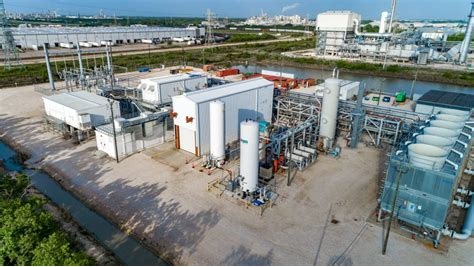
The NET Power Allam-Fetvedt Cycle is essentially a specialized Brayton cycle in which the combustor is supplied with three flows: fuel gas, which is compressed in the fuel compressor; oxygen, which is produced in an air separation unit and then compressed; and a carbon dioxide working fluid that is heated in the multi-flow regenerator. Combustion of this oxy-fuel mixture in the carbon dioxide environment creates high-temperature products that then enter the carbon dioxide turbine. These products drive the power generator and then enter the multi-flow regenerator, where some of their heat is transferred to the heated flows. The flow is then directed to the cooler-separator, where its water and carbon dioxide contents are split. Part of that carbon dioxide is compressed to supercritical pressure, and the rest is sent to storage. Courtesy: 8 Rivers

Conventional natural gas plants burn natural gas to heat water, which then turns the turbines that generate electricity, emitting carbon dioxide into the atmosphere. An Allam cycle plant uses the carbon dioxide to turn the turbines and then sequesters it for sale to customers that use the CO2 for everything from fuel to building materials to food. NET has successfully run a test plant in La Porte, Texas, since 2018.

The NET Power process was demonstrated at our 50MWth test facility in La Porte, Texas which broke ground in 2016 and began testing in 2018. Since 2018, NET Power has conducted three extended testing campaigns and successfully synchronized to the Texas grid in the fall of 2021. NET Power has achieved technology validation, hit critical operational milestones, and accumulated over 1,500 hours of total facility runtime as of October 2022. La Porte will remain a crucial resource for ongoing technology enhancements.

Rice Acquisition is a decarbonization solutions special-purpose acquisition company. Its merger with NET will create a new, publicly traded company called NET Power Inc.

NET already has six Allam cycle power plants, each capable of generating 300 MWs of electricity in various stages of development — four in the United States, one in the United Kingdom, and another in Germany. The company believes that the sky is the limit as far as how many power plants it can build — perhaps thousands. It anticipates being able to replace older, more polluting power plants with its newer, nonemitting models.

Ironically, the company notes that a provision of the much-maligned Inflation Reduction Act contains tax incentives for the kind of carbon capture technology it is preparing to unleash on the world. The provision may be one of the few good things about the Inflation Reduction Act.

The advent of natural gas as a true green energy source will upend
the politics of climate change and energy production.

Hitherto, the Biden administration and some countries in the European Union have sought to limit the production of fossil fuels because they emit greenhouse gasses. However, governments around the world that are chasing a renewable green energy dream will no longer have an excuse to do so once the NET emission-free plants come online.

Green New Dealers such as Bernie Sanders may label carbon capture, along with nuclear power, as a “false solution,” but NET Power is about to prove them all wrong. Natural gas power plants have advantages that wind and solar lack. They run 24/7, night or day, rain or shine, windy or calm, without any need for battery storage. Natural gas power uses less land than wind and solar farms do. Solar and wind have hidden environmental costs, from the difficulty of recycling fiberglass turbine blades to the effects on wildlife of utility-scale wind and solar arrays.

Emerging energy technologies such as carbon capture are more likely to address the problem of climate change than resorting to “renewable energy” by government fiat. The free market, with perhaps some indirect government incentives, will more likely lead to a world in which the energy we need to operate a technological civilization can be generated without emitting greenhouse gasses.

Carbon capture will not be the only energy technology of the future. New, safer nuclear power plants will be in the mix. The development of a new magnet at MIT and the recent breakthrough at Lawrence Livermore point the way to clean, limitless fusion energy in the coming decades.

The Green New Dealers want to impose a future of limits on all but the very wealthiest.

Their excuse is that such a future is necessary to save Earth from a climate catastrophe. But one suspects the real reason is that rationing energy is a way for them to control people and maintain power.

Fortunately, private companies and the engineers and scientists who work for them are working to thwart the plans of people such as Sanders and Rep. Alexandria Ocasio-Cortez (D-NY). The Green New Dealers despise free markets, but the same economic system that has brought such prosperity to the world is going to solve climate change and the energy crisis forever.

My Comment

Natural gas burns clean, meaning it produces no mercury vapors, sulfur dioxide, or particulate matter, and a reduced amount of nitrogen oxide. It also emits half the CO2 from burning coal, and 1/4 the CO2 from oil combustion.  Of course, far from being a pollutant, CO2 is plant food and any added to the atmosphere from any source is a boon to the biosphere essential to human and animal life.  The warming case against emitting CO2 is unfounded, as I have explained previously: Global Warming Theory and the Tests It Fails.

The impact of this innovation is primarily political and economic, dismantling the rationale for banning natural gas power plants.  The planet will warm or cool regardless of the negligible effect from CO2 emissions.


The Gas Stove Gambit

Remembering that natural gas is a fossil fuel, there must be more than meets the eye in the media firestorm over banning gas stoves for safety reasons.  Could it be that the regime along with the media are gaslighting us regarding this maneuver?  Kit Knightly thinks so and explains the gambit in his off-guardian article What is the US “Gas Stove Ban” REALLY about?  Excerpts in italics with my bolds and added images.  H/Y Tyler Durden

What sounds like overreach in itself, is actually a cover
for something potentially far, far worse.

The Biden administration is apparently looking to ban gas stoves, calling them a “hidden danger”. But while that sounds bad enough, a deeper dive shows – as usual – it’s not really about what they say it’s about.

Talk of banning gas stoves and “unregulated indoor air quality” could be a Trojan horse designed to get even more “smart” monitoring technology into your home.

Let’s jump in.

Are Gas Stoves Dangerous?

Well, according to Alexandria Ocasio Cortez, the New Scientist and million other outlets and pundits who started talking about it in the last two days, yes.

Earlier this week near-identical articles from the National Review, Bloomberg and CNN detail how the US Consumer Product Safety Commission will be opening “public comment on the dangers of gas stoves sometime this winter”.

The articles claim:

The emissions have been linked to illness, cardiovascular problems, cancer, and other health conditions. More than 12 percent of current childhood asthma cases are linked to gas stove use, according to peer-reviewed research published in the International Journal of Environmental Research and Public Health last month.

Now would be a good time to talk about the phrase “linked to”. It’s always a good one to look out for in any mainstream publication. Journalists love it because it implies causation without stating it.

Consider, one hundred per cent of serial killers have been linked to the ingestion of water and the wearing of shoes.

If this manipulative use of language were not evidence enough of an agenda, the rather premature deployment of the race card proves it:

Senator Cory Booker (D., N.J.) and Representative Don Beyer (D., Va.) wrote a letter to the agency last month urging the commission to address the issue and calling the harmful emissions a “cumulative burden” on black, Latino and low-income households.

So, Will They Ban Them?

Actually, probably not.

Considering that, according to Bloomberg, some 40% of US homes use gas stoves to cook, an outright ban would be impractical to the point of madness. You can’t criminalise 40% of the country. It would be almost unenforceable.

Perhaps they might try a “phasing out”, as they plan for petrol cars in California.

But most likely of all is that this was never really about banning stoves in the first place.

OK, So What’s IT Really About?

What we’re seeing here looks to be your classic bait-and-switch. Having established a “problem”, the powers that be suggest a solution they have no intention of ever carrying out (the more unreasonable the better).

When this measure is inevitably rejected by the public, the government will then proceed to suggest – or pay an NGO to suggest to them – a “compromise” measure.

The compromise is no compromise at all, of course, but actually what they wanted to do from the beginning. Nevertheless, the whole process is sold in the media as a victory for whichever party happens to be in opposition, and cited as evidence that “the system works”.

Tellingly, as I am writing this, Biden has already “ruled out a ban due to backlash”, and Vox were already using the “compromise” a lot in an article they published yesterday.

However, what that “compromise” would be in this case isn’t clear at first, you have to do a little digging.

One clue is present in the National Review article [emphasis added]:

The Association of Home Appliance Manufacturers argues that cooking produces harmful emissions regardless of the kind of stove used. “Ventilation is really where this discussion should be, rather than banning one particular type of technology,” Jill Notini, a vice president at the association, told Bloomberg. “Banning one type of a cooking appliance is not going to address the concerns about overall indoor air quality. We may need some behavior change, we may need [people] to turn on their hoods when cooking.”

And you’ll find another in the abstract of the original report on “Cooking With Gas, Household Air Pollution, and Asthma: Little Recognized Risk for Children”, published in the Journal of Environmental Science in April 2021:

The impact [of gas stove cooking] on children can be substantial because […] indoor air is unregulated.

“Ventilation is where this discussion should be”, after all “cooking produces harmful emissions regardless of the kind of stove” and a ban wouldn’t address “concerns about overall indoor air quality” which is currently “unregulated”.

Do you see where this is going?

It’s not about gas stoves, and it’s not about asthma – it’s about “indoor air pollution”, and more importantly how they plan on “regulating” it.

In one of those startling coincidences we’ve all got so used to witnessing in modern geopolitics, just as the US is talking about indoor air quality because of gas stoves, other countries around the world are doing the same thing for totally different reasons.

Singapore is considering new regulations on indoor air quality too, but because of formaldahyde.

Last month The Conversation was running articles claiming “indoor air pollution kills”, while Sir Chris Whitty, the UK’s chief medical officer, was “demanding action on indoor air pollution”.

On Monday, in a Guardian lifestyle piece purportedly about scented candles, Svetlana Stevanovic calls indoor air quality a “going concern”.

Two days ago The Tyee, an “independent” Canadian magazine which receives some funding from the Canadian government, ran an op-ed headlined:

We Need a Revolution in Clean Indoor Air

Which attempts to link improving indoor air quality to “ending Covid” (whilst making sure to sufficiently fluff the vaccines, of course).

Just yesterday the Irish Times published an article about the dangers of poor indoor air quality.

In a rather interesting piece of timing, the air hygiene technology company AeroClean and Molekule, a market leader for air purifiers, finalised a public stock merger…also just yesterday.

Two days ago it was announced IKEA would be selling their own smart air monitors, the same day Samsung announced their new “smart air purifier”.

Earlier today Chinese tech giant Xiaomi issued a media release about their new smart air monitoring technology.

recent report expects the global air monitor technology market to swell to nearly 6 billion dollars in the next three years.

But I’m sure this is all just a coincidence.

Where Does This Lead?

Well, if I had to guess I would suggest some new “smart” technology is coming that will monitor air quality and indoor C02 emissions. Like smart electricity and water meters, but for your air.

Interestingly, the World Economic Forum agrees with me, publishing an article on their website last July headlined “Indoor air pollution: What causes it and how to tackle it”, which claims:

indoor air pollutants can now be detected with more precise, efficient, and compact sensors thanks to advances in environmental sensing technology. As a result, intelligent home systems may soon use sensors like these to keep track of indoor air quality and notify the ventilation system before dangerous levels are reached.

As part of “backing down” from the stove ban, they will introduce a new bill which sees “smart air monitors” become mandatory in all new-build houses, hotels and rented accommodation.

Just like smart electricity meters, smart air monitors would almost certainly be used to harvest huge amounts of data and give states or corporations the ability to control your home.

If your “indoor air” isn’t “clean” enough; if you use your stove too much, burn too many scented candles or emit too much co2, expect to get penalized  in some fashion until you learn how to be more responsible.

More smart technology, more monitoring, and ultimately more control.

So, while it’s possible the gas stove ban talk will resolve itself into the cliche new tax or fines or some other petty scheme for bilking the many out of their wages, the signs are certainly there it might be something more sinister.

Meanwhile, expect to keep seeing reports on gas stoves damaging the climate, or stories about poor indoor air quality making covid worse.

The usual bought-and-paid-for columns that support every new normal narrative.

Manheimer Steamrolls Net Zero Claims

Accomplished and distinguished physicist Wallace Manheimer published a crushing argument against the rationale for Net Zero claims and policies.  His paper is While the Climate Always Has and Always Will Change, There Is no Climate Crisis. published in the Journal of Sustainable Development.  In italics with my bolds.

Abstract

The emphasis on a false climate crisis is becoming a tragedy for modern civilization, which depends on relible, economic, and environmentally viable energy. The windmills, solar panels and backup batteries have none if these qualities.

This falsehood is pushed by a powerful lobby which Bjorn Lomborg has called a climate industrial complex, comprising some scientists, most media, industrialists, and legislators. It has somehow managed to convince many that CO2 in the atmosphere, a gas necessary for life on earth, one which we exhale with every breath, is an environmental poison.

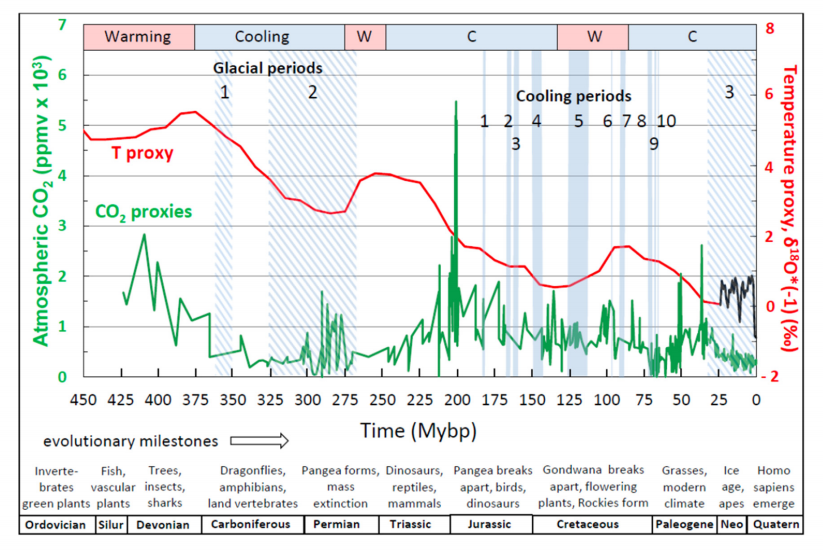
Multiple scientific theories and measurements show that there is no climate crisis. Radiation forcing calculations by both skeptics and believers show that the carbon dioxide radiation forcicng is about 0.3% of the incident radiation, far less than other effects on climate. Over the period of human civilization, the temperature has oscillated between quite a few warm and cold periods, with many of the warm periods being warmer than today. During geological times, it and the carbon dioxide level have been all over the place with no correlation between them.

A useful synopsis is written by Chris Morrison at the Daily Sceptic  Net Zero Will Lead to the End of Modern Civilisation, Says Top Scientist.  Excerpts in italics with my bolds and added images.

A damning indictment of the Net Zero political project has been made by one of the world’s leading nuclear physicists. In a recently published science paper, Dr. Wallace Manheimer said it would be the end of modern civilisation. Writing about wind and solar power he argued it would be especially tragic “when not only will this new infrastructure fail, but will cost trillions, trash large portions of the environment, and be entirely unnecessary”. The stakes, he added, “are enormous”.

Dr. Manheimer holds a physics PhD from MIT and has had a 50-year career in nuclear research, including work at the Plasma Physics Division at the U.S. Naval Research Laboratory. He has published over 150 science papers. In his view, there is “certainly no scientific basis” for expecting a climate crisis from too much carbon dioxide in the atmosphere in the next century or so. He argues that there is no reason why civilisation cannot advance using both fossil fuel power and nuclear power, gradually shifting to more nuclear power.

There is of course a growing body of opinion that points out that the Emperor has no clothes when it comes to all the fashionable green technologies. Electric cars, wind and solar power, hydrogen, battery storage, heat pumps – all have massive disadvantages, and are incapable of replacing existing systems without devastating consequences.

Manheimer points out that before fossil fuel became widely used, energy was provided by people and animals. Because so little energy was produced, “civilisation was a thin veneer atop a vast mountain of human squalor and misery, a veneer maintained by such institutions as slavery, colonialism and tyranny”.

This argument hints at why so many rich, virtue-signalling celebrities argue not just for Net Zero but ‘Real’ Zero, with the banning of all fossil fuel use.

King Charles said in 2009 that the age of consumerism and convenience was over, although the multi-mansion owning monarch presumably doesn’t think such desperate restrictions apply to himself. Manheimer notes that fossil fuel has extended the benefits of civilisation to billions, but its job is not yet complete. “To spread the benefits of modern civilisation to the entire human family would require much more energy, as well as newer sources,” he adds.

In Manheimer’s view, the partnership among self-interested businesses, grandstanding politicians and alarmist campaigners, “truly is an unholy alliance”. The climate industrial complex does not promote discussion on how to overcome this challenge in a way that will be best for everyone. “We should not be surprised or impressed that those who stand to make a profit are among the loudest calling for politicians to act,” he added.

Perhaps one of the best voices to cast doubt on an approaching climate crisis, suggests the author, is Professor Emeritus Richard Lindzen of MIT, one of the world’s leading authorities on geological fluid motions:

“What historians will definitely wonder about in future centuries is how deeply flawed logic, obscured by shrewd and unrelenting propaganda, actually enabled a coalition of powerful special interests to convince nearly everyone in the world that CO2 from human industry was a dangerous planet-destroying toxin. It will be remembered as the greatest mass delusion in the history of the world – that CO2, the life of plants, was considered for a time to be a deadly poison.”

Figure 16. The geological history of CO2 level and temperature proxy for the past 400 million years. CO2 levels now are ~ 400ppm

Much of Dr. Manheimer’s interesting paper debunks many of the fashionable nostrums surrounding politicised ‘settled’ climate science. It is an excellent read. Discussing some of the contrary opinions that debunk obviously false claims, he says it is “particularly disheartening” to see learned societies make definitive claims when so much contrary information is readily available. He points out that over the last 10,000 years, the Earth has almost certainly been warmer. There have been warmer and colder periods, just like today.

To find the off-narrative information, even Google can be used, Manheimer says – though he does note that the company warns it will not provide information on “claims denying that long-term trends show that the global climate is warming”.

Figure 18. Per capita food production in kcal/(per-capita per day) from 1961 to 2009. Notice that there is a steadily increasing production, with no sign of any ‘slowly escalating but long-enduring global threat to food supplies.’


Southwestern Solar: Bright Shining Disappointment

Solar farms in Southwest USA from Solar Energy Maps

D. Dowd. Muska reports in his National Review article A Bright Shining Disappointment.  Excerpts in italics with my bolds and added images.

Solar has failed in the Southwest.  In the ’70s, it all seemed so simple.

President Carter issued a proclamation declaring the sun “an inexhaustible source of clean energy.” A joint resolution of Congress predicted that “the development of solar technologies will provide an abundant, economical, safe, and environmentally compatible energy supply.” Robert Redford assured Americans that “the sun will always work” and “never increase its price on a heating bill.”

But nearly 50 years later, solar’s failure is blindingly clear. The Southwest Public Policy Institute, where I serve as a senior fellow, recently explored the contribution sunshine makes to utility-scale electricity generation in eight states: Oklahoma, Texas, New Mexico, Colorado, Utah, Arizona, Nevada, and California. What we discovered was jarring.

In the Southwest, solar generates a mere 6.4 percent of utility-scale power (power from facilities where total generation capacity is one megawatt or greater), despite the region enjoying the sunniest skies in America. While California (16.7 percent) and Nevada (14.4 percent) had the heaviest solar shares, the drop-off in the other states we studied was profound: Utah (8.1 percent), Arizona (5.5 percent), New Mexico (5.0 percent), Texas (3.1 percent), and Colorado (3.0 percent). Coming in last — and by a country mile — was the Sooner State, at a miniscule 0.1 percent.

These disappointing figures are all the more perplexing when one considers the massive level of government succor that has flowed the solar industry’s way since the late 1970s, the era of Annie Hall, the Bee Gees, and the Star Wars Holiday Special. In 2012, an audit by the Government Accountability Office found that federal agencies have overseen hundreds of “initiatives that support solar energy across the four key federal roles”: R&D; “fleets and facilities,” “commercialization and deployment,” and “regulation, permitting, and compliance.” For decades, wildly generous tax credits have been offered at the federal and state levels. And in the late 1990s, lawmakers began to adopt renewable portfolio standards, which required power suppliers to generate or purchase “green” electricity. In Arizona, 15 percent of power must satisfy these standards by 2025. In Nevada, the rule is 50 percent by 2030. And in New Mexico, all electricity is mandated to be “zero carbon” by 2045.

Enjoying both free fuel and government-conferred advantages, solar power should play a leading role in the Southwest. Yet it doesn’t.

This indicates that solar’s problems are fundamental. As the Institute for Energy Research recently noted, sunlight is “relatively weak because it must first pass through the atmosphere, which protects the Earth from the sun’s intensity.” In 2015, a study by the Massachusetts Institute of Technology described the solar radiation that reaches us as suffering from “low energy density.” In addition, even the most-efficient photovoltaic panels in common use today convert far more solar irradiance to heat than electricity.

Intermittency, in energy journalist Robert Bryce’s opinion, is another “killer drawback” for solar: “Lower power output on cloudy days and during the winter — and zero output at night — means that solar power facilities must be paired with expensive batteries or conventional power plants in order to prevent blackouts or brownouts.”

“Free” fuel, it turns out, isn’t so free. As the Manhattan Institute’s Mark P. Mills explained:

Claims that wind, solar, and EVs have reached cost parity with traditional energy sources or modes of transportation are not based on evidence. Even before the latest period of rising energy prices, Germany and Britain — both further down the grid transition path than the U.S. — have seen average electricity rates rise 60%-110% over the past two decades. The same pattern is visible in Australia and Canada. It’s also apparent in U.S. states and regions where mandates have resulted in grids with a higher share of wind/solar energy. In general, overall U.S. residential electricity costs rose over the past 20 years.

But those rates should have declined because of the collapse in the cost of natural gas and coal — the two energy sources that, together, supplied nearly 70% of electricity in that period. Instead, rates have been pushed higher thanks to elevated spending on the otherwise unneeded infrastructure required to transmit wind/solar-generated electricity, as well as the increased costs to keep lights on during “droughts” of wind and sun that come from also keeping conventional power plants available (like having an extra, fully fueled car parked and ready to go) in effect by spending on two grids.

Then there’s the NIMBYs. Utility-scale solar, in community after community,
faces resistance from locals.

In November, the Roswell Daily Record reported that a New Mexico regulatory agency “voted against three proposed [solar] projects after hearing objections from county residents.” Issues raised included fencing that “will deter from scenic views and hurt property values” and “concerns that the panels contain hazardous substances.” According to The Durango Herald, residents near Hesperus, Colo., have banded together to fight a photovoltaic project, citing concerns about “water runoff” and “direct loss of 1,900 acres of elk habitat.”

In short, solar has not been shining very bright since it came on the scene in the ’70s. Indeed, even in the sun-drenched Southwest, solar has proven inefficient, unreliable, and — when all costs are considered — expensive. That should be a warning:

If it struggles here, in ideal conditions, how well
can it be expected to perform in the rest of the country?

D. Dowd. Muska is a senior fellow at the Southwest Public Policy Institute, a research institute dedicated to improving the quality of life in the American Southwest by formulating, promoting and defending sound public policy solutions.

When it opened in 2014, the Ivanpah Solar Power Facility was the world’s largest solar thermal power station, covering 4000 acres in the Mohave desert. While Ivanpah was supposed to be the future of clean energy, it seems that the rate at which it burns fossil fuel might actually outweigh any environmental benefits of solar power production.