Gas Stove Just a Starter

As explained  below, the move against gas stoves is just an opening into a larger war against methane because of its CO2 emissions.  Coal was bashed as a fuel already long ago, and now activists want to disqualify gas lest it serve as a bridge energy source with much lower CO2 emissions, delaying the desired upheaval.  The current assault on domestic appliances should be seen as the thin edge of a wedge to destroy natural gas supply, in parallel with actions against coal and oil.

Mark Krebs and Tom Tanton explain the ins and outs of this new phase encroaching upon the citizenry where they live.  Their Master Resource article is Gas Stoves: The Beloved Blue Flame is Just Better.  Some excerpts in italics with my bolds and added images and headers.

The Larger Federal Goal:  Transition Away from Natural Gas

The concern should not be about gas stove usage but the public policy of The Biden Administrative State to wean consumers off the direct use of natural gas and propane and on to electric appliances, ASAP. This “transition” includes how to heat your home, heat your water, cook, and drive.

Gas cooking is highly valued by consumers, virtually all of whom have normal taste buds. It is the one gas appliance that consumers see and use daily. The blue flame is part of home life, as is the fireplace run by gas or propane.

In contrast, the furnace and water heater usually tucked away in the basement or equipment closet and operate unseen. Also unseen are the legions of new electric power plants transmission lines and battery storage system to provide ostensibly “clean” juice for these new electric appliances and the serious environmental, strategic, and human rights impacts from mining and processing heavy metals and rare earths.

In fact, no one has done a comparative full fuel cycle analysis to document whether electrification is a good idea or a bad one; at least not a transparent analysis that has been subject to independent technical debate. Neither have the all-electrification busybodies presented a comprehensive plan to produce the millions of batteries necessary for the electrical grid to be able to handle all these new uses, while burdened by intermittent wind and solar.

Govt. Misdirection:  Claims Gas Stoves Hazardous to Indoor Air Quality

The first ploy was to claim gas stoves are unsafe concerning air pollutants.  Several problems with this attempt to regulate away these cooking appliances.

Fear mongering about the “existential threat” from Anthropogenic Global Warming (AGW) hasn’t been working as well as planned. So maybe, they hope, additional fearmongering about how parents are putting their own children at risk due to respiratory ailments, such as asthma from your stove will do the trick.

There are at least three agencies leading the Biden Administration’s whole-of-government fossil-fuel eradication efforts. These are:

  • DOE’s Office of Energy Efficiency & Renewable Energy” (EERE)
  • The Consumer Product Safety Commission (CPSC)
  • The Environmental Protection Agency (EPA)

None of these agencies have Congressional authority to regulate “indoor air pollution.” EERE has been pushing electrification at least since the Obama Administration, and it continued even throughout the Trump Administration. The Biden Administration simply removed the nominal (if any) restraints there may have been under Biden’s “whole of government” executive orders (EOs) to reduce GHG’s: e.g., Executive Order (EO) 13990.

In EERE’s case certain EO obstacles include that they still must act “as appropriate and consistent with applicable law.” The Energy Policy and Conservation Act of 1975 (EPCA) is one such law. EPCA is also supposed to promote regulatory objectivity. Under EPCA, DOE/EERE must also “consider” safety.

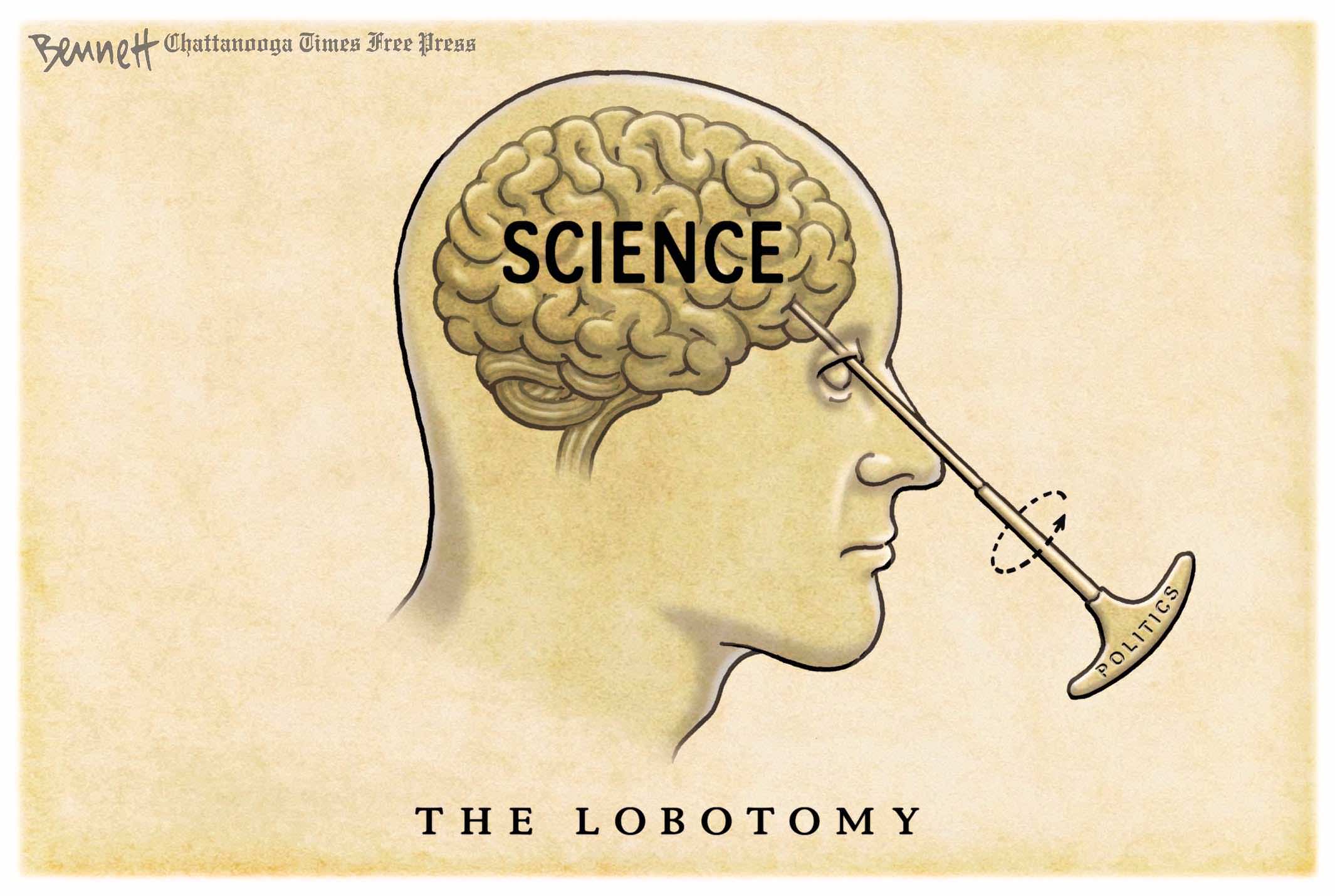
The science that the Biden Administration claims to guide such regulatory decisions
is far from conclusive that gas stoves are harmful.

Instead, the Biden Administration and its supporters “cherry pick” data that supports regulatory expansion. In this case, the science comes from the highly partisan Rocky Mountain Institute (RMI). A major activity (and bias) of RMI is its “Electricity Innovation Lab. It reiterates RMI’s mission to achieve a carbon-free electricity monopoly.

According to independent scientific researchers with a deep knowledge of this subject, most of the “indoor air pollution” is emitted from the food itself being cooked. Such pollution is in the form of particulates from cooking food regardless of what form of energy is doing the cooking. Those particulates may be especially harmful to adolescent asthmatics.

More Govt. Hype: Replacements More Efficient than Gas Stoves

Government Orange Gas?

What is it exactly that DOE wants to force on consumers under the guise of “energy efficiency in the case of gas stoves? It appears to be a relatively new type of gas stove burner that glows orange (infrared, a.k.a., “radiant”) instead of the blue flames present in traditional burners that consumers are accustomed to. Infrared burners have been around for a long time, especially for gas BBQ grills but they don’t last long. Infrared burner adoption for consumer kitchen cooking appliances have been limited to a few high-end “prosumer” gas ranges. Costs for such models tend to be in the vicinity of $7,000 to $9,000. One example is Wolf/Sub Zero’s Model # GR364G with a MSRP of $8,760. And only the griddle portion of that model is infrared. According to DOE, there may be one model that is all infrared but good luck finding it.

In comparison, a basic electric range can be purchased for under $500. Granted, if DOE mandates infrared gas burners, mass production could decrease cost premiums. But for cost-conscious consumers, such premiums will likely far exceed those of electric stoves, even induction electric stoves.

Forcibly moving the market via equipment costs is a typical DOE strategy.
And then they say, “let the market decide.

Part of DOE’s bag of tricks for justifying higher gas appliance efficiencies is to minimize maintenance costs and safety concerns.  At a minimum, “worst-case scenario” analyses are needed to determine how infrared burners perform in the “real world” of “messy” stoves. In messy situations, infrared burners may turn into product liabilities. And they may have to be replaced; that can quickly get expensive. It is at least possible that “dirty” infrared burners emit more pollutants than traditional blue flame burners. DOE needs to “consider” safety consequences of its energy efficiency proposals going forward.  It is not evident that they have.

Likewise, DOE tends to minimize its estimations for what the increased prices will be that consumers must bear from increased efficiency.  Taken together with other forms of analytical “trickery,” consumer cost-effectiveness can quickly become negative.

Since pictures are “worth a thousand words, see Shutterstock’s 223 images of infrared gas stoves. Several of these are pictures of infrared burners that have experienced obvious degradation from cooking spills.

There’s also movement on the electrical stove side of all this. That is, electric stoves continue to change and the technology du jour is the induction stove. Induction stoves electro-magnetically couple the stove with the pan, directly heating the pan and not the stove. They are more efficient than tradition hot coil electric resistance stoves but are also more expensive and require magnetic cookware. They too, have associated health risks (Induction stoves may not be safe to use with pacemakers; “People with pacemakers are better off avoiding induction stoves.”)
Perverse Incentives in Inflation reduction Act

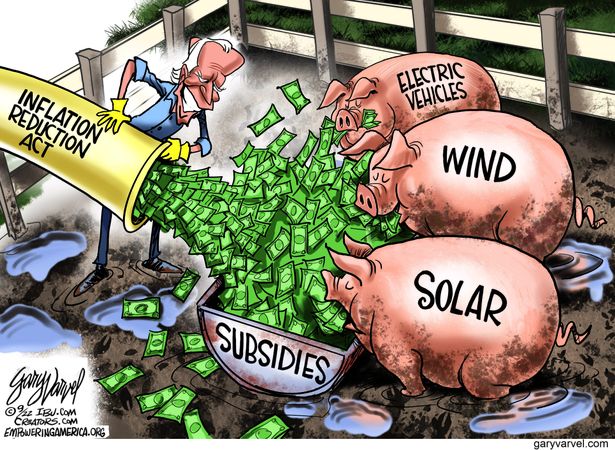
The so-called Inflation Reduction Act provides perverse incentives for switching to electricity.  These incentives are summarized as follows:

DOE also needs to consider the safety feature of having a gas stove during extended electric grid blackouts that may make the difference between consumers and their water pipes freezing or not.  This benefit was widely observed in Texas during Winter Storm Uri.

To make a logical scientific argument about consumer safety concerns with gas burners, DOE must clearly and transparently demonstrate a safety issue with conventional “blue flame” burners.  Instead, DOE is proposing a one-way move to infrared burners based upon theoretical economic operating cost advantages of a few percentage points.

Meanwhile, DOE is not mandating a move from electric resistance stoves to higher efficiency  electric induction  stoves that, according to the EPA,  can be “5-10% more efficient than conventional electric resistance units.”  EPA’s verbiage following that quote states: “and about 3 times more efficient than gas.”  That latter verbiage is tantamount to professing a belief that electricity is magically created inside of the house’s electric meter. This is pretty much “par for the course” for the Biden Administration’s “Green New Deal” energy and environmental policies.

Under EPCA’s anti-backsliding provisions, once infrared burners are mandated, there is no going back to traditional (blue flame) gas burners. Thus, if consumers want to regain better cooking maintenance and reliability, they can only switch to electric stoves. We think that’s their plan! Consumers will probably choose electric resistance varieties due to their relatively low initial purchase cost. What this portends, at least for the next few decades, is that energy efficiency when measured over the complete fuel-cycle is massively reduced throughout most of the United States where fossil fuels still dominate electric grid generation. The same goes for emissions when measured along the complete fuel-cycle.

The direct use of natural gas makes the most sense economically and environmentally for consumers. Consumers are losing that choice.

Conclusion–Why The Crusade?

Why is the Biden Administration messing with a piece of Americana. Is it to try the hardest part first? Or because “clean” electrification is where the money is? With passage of the Inflation Reduction Act, it is definitely where the subsidies are. The enormity of these subsidies are like an all-you-can-eat buffet for Green New Deal enrichment.

Phasing out natural gas and propane is not merely for the U.S. to meet its commitments for “deep decarbonization” per the UN’s Paris accords. It’s also about “great reset” social control. With the advent of “smart” electric meters and appliances, it’s relatively easy to centrally control electricity usage.

Coupled with digital currency, it then becomes relatively easy to control behavior, such as remotely changing YOUR living room thermostat or disabling your car. Early dinner? No: you’ll cook when the power is temporarily turned on to your stove.  But if you project the correct attitude of cheerful compliance, you may be awarded with an extra ration of electricity.

DOE needs to stop politicizing energy appliances on unfounded predictions that “clean” renewable electricity will soon dominate the grid. This scenario is not at all probable given the cost and enormity of the quest. Big Brother is already running wild and must be leashed/removed. Given that DOE’s proposed rule calls for yearly energy consumption limits for cooking appliances, rationing might not be totally far-fetched. The time to expose and eradicate is now.

Appendices to Master Resource Article

Appendix A: Call To Action (Next Steps, What You Can Do)

Appendix B: Further Reading

Footnote

Obviously, bans against ICE vehicles will also prohibit those running on LNG (Liquified Natural Gas). See Consumers Report: Tesla Road Trip

As for fertilizer banning,  half of the people on Earth are alive today thanks to nitrogenous fertilizers made of and with natural gas.  So why are governments at home and abroad scrambling to cut off humanity’s natural gas supply?

See Natural Gas – Generated Nitrogenous Fertilizers Prevent Worse World Hunger



Florida to Ban Woke ESG Banking

Amber Jo Cooper reports at Florida’s Voice DeSantis proposes banning social credit scores in banking, targets ESG. Excerpts in italics with my bolds. H/T Tyler Durden

On Monday Gov. Ron DeSantis announced a proposal to target
ESG banking and investment policies 

DeSantis said he aims to enact protections for Floridians against discrimination by big banks and large financial institutions for their religious, political, or social beliefs.

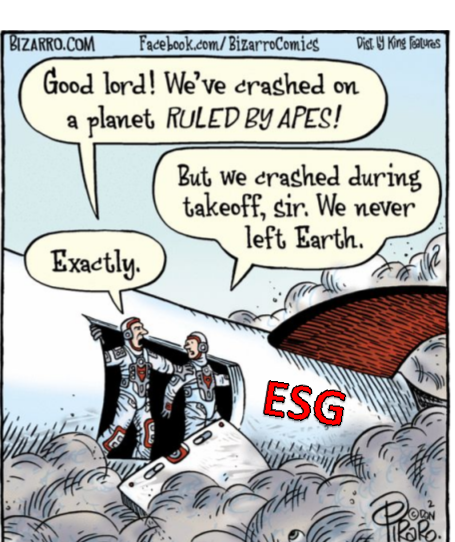
ESG – environmental, social, and governance – is a business framework that determines investment based on political factors such as renewable energy and social justice initiatives.

DeSantis said ESG has developed into a “mechanism to inject political ideology into investment decisions, corporate governance, and really just the the everyday economy.”

“That is not ultimately something that is going to work out well for us here in Florida,” he said.

DeSantis said it violates the fiduciary duty that executives have to the shareholders of publicly traded companies.

Your pension money, your retirement money, is likely invested in some of these funds, and those funds should be done to try to produce the best result for you using the available investment options,” DeSantis said.

“What ESG says is no, we’re not going to do, even if it would do a better return – we’re not going to allow you to invest in certain areas, you’re not allowed to invest in oil and gas, you’re not allowed to invest in disfavored areas,” he explained.

The proposal includes prohibiting the financial sector from considering “social credit
scores” in banking and lending practices that aim to prevent Floridians
from obtaining loans, lines of credit, and bank accounts.

“That is a way to try to change people’s behavior. It’s a way to try to impose politics on what should just be economic decisions,” he said.

“We are also not going to house in either the state or local government level deposits. And we have a lot of deposit, we got a massive budget surplus in Florida, you have deposits all over the place that go in where state and local government use financial institutions, none of those deposits will be permitted to be done in institutions that are pursuing this woke ESG agenda,” he said.

The proposal would also aim to make sure ESG will not “infect decisions” at both the state and local governments, such as investment decisions, procurement and contracting, or bonds.

The Governor’s press release said the legislation would also:

  • Prohibit banks that engage in corporate activism from holding government funds as a Qualified Public Depository (QPD).
  • Prohibit the use of ESG in all investment decisions at the state and local level, ensuring that fund managers only consider financial factors that maximize the highest rate of return.
  • Prohibit all state and local entities, including direct support organizations, from considering, giving preference to, or requesting information about ESG as part of the procurement and contracting process.
  • Prohibit the use of ESG factors by state and local governments when issuing bonds, including a contract prohibition on rating agencies whose ESG ratings negatively impact the issuer’s bond ratings.
  • Direct the Attorney General and Commissioner of Financial Regulation to enforce these provisions to the fullest extent of the law.

Florida Chief Financial Officer Jimmy Patronis praised DeSantis’ proposal to crack down on ESG.

“When it comes to ESG, many of us have been boiled like a frog,” Patronis said. “The Governor is right that over time ESG has wound its way into too many aspects of American society, and pulling it back is going to take work.”

“This proposed legislation puts returns first, it puts the Constitution first, and it puts corporate America on notice that if they play politics with Florida residents, we’ll have the tools to hold them accountable. I look forward to working with the DeSantis Administration, as well as Senate President Passidomo and House Speaker Renner in getting this legislation over the finish line,” Patronis said.

Patronis previously barred ESG funds’ participation in the deferred compensation program and divested around $2 billion from BlackRock due to their utilization of ESG.

House Speaker Paul Renner said Bob Rommel, R-Naples, will introduce the bill in the House.  “The biggest thing that I think ESG represents is a total hijacking of democracy,” said Renner.

“We’re lucky here in the state of Florida, that we’ve got a governor who will stand up to things like ESG, when others will not,” he said.

“This is amazing what he’s doing for our state, our state is just rocketing,” said Senate President Kathleen Passidomo “I look forward to having the governor come back here again and again and again to sign all these bills,” she said.


There’ll Be Hell to Pay

Adam Mill writes at American Greatness There’s Going to Be Hell to Pay.  Excerpts in italics with my bolds and added images.

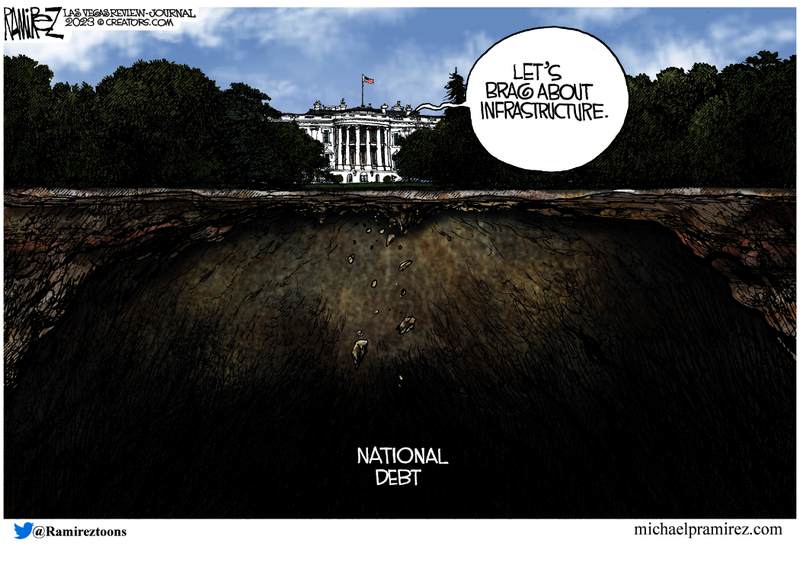
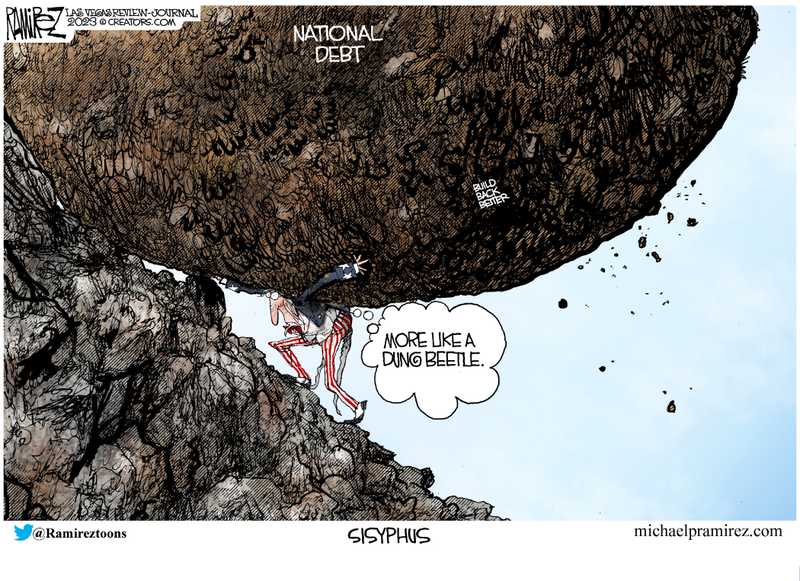
America is piling up civilization-ending debts, and the people incurring them for the sake of feel-good social priorities will be justifiably cursed when the consequences finally come.

It’s just a matter of how long the U.S. Government can stall before the bill finally comes due. Let’s start with the math.  The U.S. national debt now exceeds $31.5 trillion. On the day Joe Biden took office, the average interest rate on this debt was around 1.61 percent and interest payments were a mere $549 billion a year. Since then, higher spending and higher interest rates have accelerated the problem at breakneck speed. As older bonds with the historic low interest rates mature and disappear, they are replaced with the higher interest rate bonds now being issued. According to the St. Louis Federal Reserve, the annualized interest rate cost in December reached an eye-popping $853 billion.

The older, lower interest rate bonds have kept the average at around 2 percent, still much higher than normal. Econofact.org estimates that “most of the current government debt will mature within the next three years,” which means that the federal government will soon be financing most of its $31.5 trillion debt at market rates-which are approaching 4 to 5 percent.   We’re looking at a total annual interest bill of over $1 trillion in the very near future. By comparison, the total tax revenue collected by the U.S. government in 2023 is projected to be $4.6 trillion.

As soon as next year, interest will consume approximately one-fifth
or even a quarter of all government revenue.

That’s not the bad news.

The bad news is that we’re fast approaching the point at which we have to accelerate borrowing just to keep up with the interest payments. The treasury has to find buyers for its whopping $1.4 trillion in deficit spending. And for now, the Federal Reserve is saying it will not buy more treasuries, even to replace the maturing treasuries that roll off its portfolio.

Until recently, the dollar’s resilience made it possible for the government to effectively fund operations with money from the printing press. But inflation, the offspring of deficit spending, has begun to collect its due from the public. As interest payments claim increasingly more and more of the budget, the government must borrow more to make up the difference, thus accelerating the growth of the debt and inflation. This leads to still higher interest rates which lead to higher interest payments requiring even more borrowing

When you have to borrow money to pay interest on existing debt, you’re in big trouble.

Entitlements such as Social Security, Medicaid, and Medicare, make up the vast majority of the budget. Every year, the bills get bigger as drugs get more expensive and the Social Security Administration indexes existing payments to keep up with inflation.

It’s hard to say exactly when or how the federal budget will hit some sort of wall. But the scenario I consider most likely is that inflation will reignite as the Federal Reserve backs off its interest rate increases. Get ready to go long for single-digit inflation.

Unfortunately, the same geniuses who enabled politicians to run up these irresponsible debts will also be in charge of helping politicians set inflation-fighting policies. For the Left, the go-to tools never work but will always be tried because of political ideology. These include wage and price controls, tax increases, and criminalizing market pricing as “price gouging” or “hoarding.” As taxes go up and the government attempts to regulate its way out of inflation, economic output falls. If the fall is drastic enough, it can have a counterinflationary effect. But only after inflicting extreme misery on working Americans.

In the 1980s, Reagan’s formula of low taxes, less regulation, and higher interest rates created the conditions to dramatically reverse the Carter economic malaise, an era often compared to the present. While really smart economists will argue that the economy is totally dependent on government spending, this is sophistry. Government spending degrades efficient and wealth-enhancing transactions. The government gets its money by taking value out of a legitimate economic transaction and redistributing it to a political objective. Low-interest rates encourage scams and enable marginal businesses to chug along.

Profit, not borrowed money, is the key to economic revival. Produce things that legitimately add to the stock of goods and services, and you will increase national income. Shift money around with loans and government grants, and you will idle otherwise productive resources as people chase free money.

Economic freedom isn’t about helping the rich. If anything, the opposite is true. During the economic expansion that followed Reagan’s reforms, income inequality fell. The percentage of low-income houses fell from 27 percent in 1980 to 25.3 percent in 1989. In contrast, economic inequality increased under Obama’s economic policies.

The dirty little secret of leftist economic theories is that they benefit powerful people who are in a position to influence economic meddling. Who do you think got most of the COVID relief money?

Historians will scratch their heads and wonder why Americans spent so much time obsessing over Ukraine and gender identity while the debt piled up to catastrophic levels. Unfortunately, the people who govern us simply refuse to adhere to basic rules of fiscal discipline. Through ignorance or craven corruption, they continue aggressively driving up debt to unprecedented levels. These are civilization-ending debts and the people incurring them for the sake of feel-good social priorities will be justifiably cursed when the consequences finally come.


Update on Sovereign Election Fraud in US

Jay Valentine explains the threat in his American Thinker article Your Government Wants to Keep You from Seeing Voter Rolls.  Excerpts in italics with my bolds and added images.

The narrative about “free, safe, secure elections” changed 180 degrees since November 2022.  Almost nobody is crazy enough to say America has free, fair elections.

After Kari Lake and Adam Laxalt, the most wimpish George Bush RINO hesitates to say “elections are fair.”

Since our team processed billions of election roll “snapshots” taken since 2020, we run the largest election database in the world.  We concluded that U.S. elections are rigged by both parties, and they are rigged with the active help of election officials or their acquiescence.

Sovereign fraud — institutional election fraud by your government, first discussed on American Thinker — is real.  We have the data to prove it!

Fractal technology and vigilant election integrity teams in 2022 pulled back the curtain on much of this rigging — reported at www.Omega4America.com.

Why was the election fraud, which existed years before Trump became a candidate, so invisible?

Election officials of both parties do not want pesky citizens looking at voter rolls.  We know this because we have been in the room with them, virtually, demonstrating the most egregious voter roll anomalies, and they just refuse to see them.

Let’s get into just how virulent, common, widespread is the hiding of election registration info from you — the citizen.  How much does a voter roll cost?  Yeah, dollars.  In some states, it is free.  Download it, or pay a modest fee and get a CD of the entire election roll every 30 days.

In Alabama, $30,000.  You pay Alabama $30,000 for a copy of your election roll. In Wisconsin, $12,500. Why so much?  Is it a profit center? 

Well, in Alabama, they have scores of voters older than Julius Caesar — some registered in the last couple of years using a birthdate around the time St. Paul was proselytizing.  Think maybe there is a data roll cleaning problem there?

Wisconsin has voter IDs with hidden characters. 

You can find over 180,000 Wisconsin voters with the same voter ID.  Oops!  They aren’t the same IDs.  They are actually different — but you cannot tell with your software because the Wisconsin Election Commission uses a hidden character inserted that is invisible to you.  We made them admit it!

Go to our website, www.Omega4America.com, and read the expert witness reports.

In some states, you cannot get the voter roll unless you are a candidate or political party.  If you let anyone else see it, you can be prosecuted — Virginia and California.

There is North Carolina.  They insert control characters into election rolls so citizens have a hard time combining necessary rolls for analysis.

Creating databases with incorrectly inserted control characters shows one of two motivations:  massive incompetence or sinister intent.  You decide.

Our analysis of the various states, about 20 or so we have seen, is that the level of database competency is less than 8th-grade in most.  Let me state that clearly: in almost every state where we processed the election rolls, the level of database competence, from a secretary of state, spending millions of dollars a year — is less than high school level.

If the amount of undeniably false information in every state election database we have seen existed in a public company, the CEO, under Sarbanes Oxley rules, would probably go to jail.

How do you check a database?  Download it.  To what do you compare it?

Here’s an idea!  Let’s compare the county voter registration files with the state voter files.  They ought to reconcile, with a little float for registrations in transit.  Nope!  In state after state, there is a 5- to 10-percent difference between those two sets of ostensibly identical data.

Let’s check the state voter rolls with the county tax rolls.  After all, an address is an address.  The reconciliation between the voter roll and the tax roll shows hundreds into thousands of addresses that cannot, by law, house a voter.  Yet those addresses house thousands — regularly over 200,000 anomalies in a single state.

In 2022, we learned that election rolls have internal motionwaves of registrants who swell the roll up to election time — then gently slide back into the sea.

In Nevada and Arizona, we ran the rolls for several months.  Our graphical analysis shows the graph of people living in R.V. parks, hotels, other transient locations slowly rise to peak at election time, then disappear 30–60 days later.

Since we snapshot data — comparing every voter roll with every previous roll — the snapshots show mass migration to the election date, then mass de-migration afterward. This was never visible before Fractal technology, but now it is, from a phone.  Pretty soon we are going to visualize this and put up on the website for all to see.

Let’s not pick on Nevada — we see it in most states.  Harris County, Texas rivals Nevada.

If voter rolls aren’t opaque enough with hidden characters (Wisconsin), inserted control characters (North Carolina), prohibitive costs (Alabama, Wisconsin) or stupid laws that you can be prosecuted for looking at voter rolls if you are not an approved species (Virginia, California), we have a new trend.

Make it a crime to look at voter rolls!  Make it a crime to go door-to-door for election canvassing. 

Criminalize the audit of the criminalization of election rolls!  That’s a double-criminalization!  What does that mean?  Think we are kidding?  Welcome to New Mexico.

Among the army of unsung heroes, giving up jobs, risking safety to fight election fraud — which, dear reader, means they are fighting for your most cherished freedom — is David Clements in New Mexico. 

David is an attorney, professor of law, all-around patriot.  You will catch him on some obscure podcast, from his parked car on a roadside on the way to an election integrity event in the middle of nowhere.

Professor Clements, in a recent interview, reported how New Mexico is legislating to criminalize election integrity efforts.  They want to make it a felony to clean voter rolls.  Go door-to-door to see why the empty construction site has 27 registered voters?  In New Mexico, they want to put you in jail for it!

Guess which party is doing this.  Not much of a guess, is it?

While we are just data guys, we cannot hold back our admiration for guys like Clements, Seth Keshel, and an anonymous army of voter integrity teams fighting against bipartisan, government-funded, supported, and enforced phantom voter fraud.

We are stunned by the lack of support by the Republican wealthy class for these guys.  If they were leftists, trying to scam voter rolls, there would be an entire infrastructure in place to support them.  They might get book deals!

Alas, since they are patriots, the wealthy class stands aside. Well, we aren’t.  The Fractal team is giving patriots — of any party — the disruptive tools to clean voter rolls.

When you have better technology than the government, it does even things up a bit!


“Sustainability, Inclusiveness” Is Nanny State Dictating to Business

Matthew Lau explains at Financial Post Forget ‘sustainable and inclusive’: Get back to profit.  Excerpts in italics with my bolds and added images

Business community must re-focus its efforts on fulfilling
its real social responsibility: increasing profits

“Sustainable and inclusive growth,” like “corporate social responsibility,” is a loaded phrase. Both are based on subversive policies and ideas, but because nobody wants to be accused of supporting un-sustainability or corporate social ir-responsibility they often go unopposed.

That’s a mistake: both badly need opposing.

Just as preachers of corporate social responsibility advocate a form of socialism, those calling for “sustainable and inclusive” economic growth are proposing government economic planning. When activists say “sustainable and inclusive growth” what they really mean is that they, through the government intervention they invariably recommend, should dictate where economic growth takes place, in which sectors and for whose benefit.

It should surprise no one that the federal government splashes buzzwords like “sustainability” and “inclusiveness” all over its communications in trying to sell its inordinately expensive, not to mention dumb, economic programs to the voting public. It is more difficult to understand why the business community follows the government’s lead in advocating central economic planning and masking it behind “sustainability,” “inclusiveness” and other slick marketing words.

One reason for this unfortunate tendency of the business community may be that government expansion into business has completely blurred the lines between the two. Nor does it help that many business leaders come from government and bring with them far too rosy views of government economic planning instead of — as would be far more appropriate — a clear understanding of the tendency of government officials to act in their own rather than the public interest, the undisciplined wastefulness and inefficiency of government programs and the fatal conceit of top-down economic organization.

Two such business leaders are former federal cabinet ministers Anne McLellan (Liberal) and Lisa Raitt (Conservative), who now co-chair the Coalition for a Better Future. The coalition, which today includes 142 of Canada’s most influential business groups, industry associations, think tanks, and non-profits, was formed in 2021 with the goal of “a more inclusive, sustainable, and prosperous Canada.” Their ordering of the adjectives is telling: “prosperous” comes last. Also telling is Raitt’s declaration that business, government, and community and Indigenous voices must build “a shared economic vision” to achieve this Canada.

Widespread and sustainable economic growth does not come from consolidating
business and government visions, plans, interests and objectives.

The Coalition for a Better Future, McLellan and Raitt recently wrote in the FP, “believes any growth agenda needs to be inclusive and environmentally sustainable in order to be viable.” After correctly identifying the dearth of private-sector investment as one reason for lagging productivity and growth, they go on to propose alarmingly bad solutions. They call Joe Biden’s misleadingly-named Inflation Reduction Act (US $499 billion in government spending, of which $391 billion is on climate change) a “welcome impetus to global climate transition efforts” that is “already siphoning Canadian capital south of the border,” suggesting their preferred way to increase growth and capital investment is for government to sink many tens or even hundreds of billions of dollars more into the global warming project.

Government economic plans should also, according to McLellan and Raitt, include “enabling and incentivizing business to deliver on big projects in key sectors such as critical minerals, clean energy and green manufacturing.” But government dictating which sectors should receive “incentives” invariably directs capital from economically productive uses to relatively unproductive but politically favoured uses — these days, anything involved in “sustainability.” The push for government-guided “inclusiveness” is similarly bad. When people with political power get to decide whom to include as beneficiaries of government-granted economic privilege and benefits, the greatest privilege and benefits invariably flow to … people with political power. This is not a sensible way to help those at the bottom of society.

If there is to be any real productivity growth or economic improvement in Canada, the business community must re-focus its efforts on fulfilling its real social responsibility — increasing profits — and reject government preaching about supposedly “sustainable and inclusive” matters that are in fact mostly unsustainable and economically destructive.

How Well is Government Doing Directing the Canadian Economy?

What’s driving this? A previous blog explained how growth in real per capita GDP is the sum of: (a) growth in output per hour worked (“labour productivity”) and (b) growth in hours worked per head of population (“labour utilisation”). Of the two components, productivity growth is the more important determinant of future living standards because it is limited only by the pace of technological change and the ability of businesses and workers to adapt to it. In contrast, labour utilisation growth has a natural ceiling based on demographics, labour force participation, and there being only so many hours people can or will work per year.

The OECD finds that Canada’s prospects for real per capita GDP growth over 2020-2030 are poor because of feeble expected growth in output per hour worked (labour productivity, see Figure 1b) and a slight drag from hours worked per head of population (labour utilization, see Figure 1c).

Source:  Business Council of British Columbia  OECD predicts Canada will be the worst performing advanced economy over the next decade…and the three decades after that


Update on Fight Against Ballot Abuse

Jay Valentine further educates the public on purifying elections in his recent American Thinker article Tracking a Fraudulent Ballot in Real Time.  Excerpts in italics with my bolds.

During our year with Mike Lindell, the Fractal team went from never having seen an election roll to running the largest election database ever created, with over 1.7 billion records — for 12 states alone.

With only 165 million or so voters in the United States, why such a large database?  Data travel, data move, data tell a story as they traverse different databases — over time.

Voter Identity

Let’s take an example.

Phineas Phrogg, our made up character, is on a voter roll. Phineas owns a home, has three credit cards, two cars, does limited social media, is a deacon at his church and active in the Lions Club.

Phineas’s data in any single database yield 1 x 1 = 1 level of insight.  A state voter roll, taken on March 15, is a flat surface with little actionable information.

If we take multiple databases where Phineas appears — his credit file, auto history, auto registration, donation info, and perhaps ten other common places Phineas innocently appears, we get a relief map — not a flat surface.

Artificial intelligence predicts a lot of what Phineas is likely to do and likely to buy.  Here Phineas’s information is 1 (Phineas) x number of data sources = 1,000 or 10,000 data points. The A.I. program knows more about Phineas than he may know himself.

This is not high tech. Every major consumer goods company does this work today
— every reader of this article exists in scores of these databases.

Now for the hard stuff.

Voter Behavior

What if we take a snapshot of every one of Phineas’s databases on different dates? Perhaps every month, or every week?  We see Phineas’s actions over time.

We see Phineas’s likes and dislikes in one database — perhaps the car he chooses — change over the time series. We can probably tie some of those new preferences to changes in another data source — perhaps a contribution database.

Phineas started giving money to animal rescue. This change might ripple through some other preferences as well. Maybe he is moving toward being a vegetarian.

The A.I. systems for the consumer goods company will pick this up, too — three years from now. We identify the behavior change almost instantly.

Finding Dirty Data in the Haystack

That, people, is a game-changer.

That is why, for a single state, like Pennsylvania or Georgia, we collected over 350,000,000 (350 million) records from the voter rolls in less than one year. I just wanted you to see all the zeroes.

When our team built the TSA No-Fly List technology and the auto fraud systems for State Farm, GEICO, USAA, and others, their data teams bemoaned the “dirty data” in those databases. They had clear agità from the misspellings, wrong addresses, different ways to show an address, fraudulent entries.

Our team loved dirty data.  This is not a porno thing. Dirty data — inaccuracies, misspellings, multiple ways of entering a street name — are Hansel’s and Gretel’s little stones leading to insight you cannot find anywhere else.

For eBay, when we built their cyber-fraud prevention system — they had already called the Secret Service, the FBI, every neural net company — they were all stymied by — you guessed it — dirty data!

The data magnification lesson is over. Let’s get to voter rolls.

Uncovering Phantoms in the Voter Rolls

If you do not think the government’s election commissions are in on the massive voter fraud inherent in every state’s voter rolls, you can stop reading here — because they are, and we can prove it in state after state. Read some of our reports on www.Omega4America.com.

Anyone can compare voter rolls with NCOA (the National Change of Address database) and find people who moved. Any high school math kid can run statistics against voter rolls and find anomalies growing on trees. Any tech quant, living in his parents’ basement, can run an obscure algorithm showing vote numbering inconsistent with historical patterns.

Come to think of it, in 2021 and 2022, these guys were everywhere — and they didn’t remove fake voters. Time to move on — they failed, and the Republicans failed with them.

We know phantom voters are the seed bed for fake ballots.

The ballots aren’t fake — they are quite real, but called “fake” because they aren’t voted by the name on their envelope.   We know that fake ballots are mailed, at industrial scale, to legitimate voters, fake voters, dead voters, voters who moved.

The Fractal election system is used by voter integrity teams to show, by cross-searching personal property rolls, for instance, that Phineas Phrogg votes and lives at an address that is an Ace Hardware Store. That should be enough to get Phineas off the voter roll.  What if it isn’t? 

The UnDeliverable Ballot Database is not a “bad address” list.

It is real time — almost, depending on the data — using snapshotting technology developed with the Wisconsin voter integrity team. It picks up changes in multiple data sources — constantly!

Here are examples from 2020 and 2022:

Phineas lives at an apartment building with 125 units. The property roll tells us it is a multi-family unit, but Phineas does not have his unit or apartment number in the election roll — so a ballot is going to Phineas, but he won’t get it.

We know this today — two years before 2024.

We can know this for every apartment building in every state, in every county in America, in 90 days. Maybe right now might be a good time to take action to either get Phineas’s apartment number in the voter roll or get him off it.

But if not, we know with certainty that his ballot cannot legally be voted.

A local integrity team may want to hang out when ballots arrive — with the leftist who will certainly be there — to track what happens with that ballot. No voter intimidation here — just want to make sure the leftist kid there to collect Phineas’s ballot…doesn’t!

Fractal cross-searches every voter against every physical address he claims to inhabit
— and kicks out “anomalies.”

In a Midwestern state this month, canvassers who used the RNC data for electioneering months ago — used the Fractal-cleaned lists — said, “In 22 years canvassing, we have never seen such accurate lists. The RNC lists were garbage.”   Because Fractal told them the square footage of every single-family residence, they could determine which were phantom nests with 15 registered adults in an 800-square-foot home.

The Wisconsin team innovated in 2022 with the “root query.”

The Fractal system found 1,250 people living at a single address — a college dorm. The Wisconsin team found that only 300 people can live there at any one time. Good find.  That was not enough for these guys. They had the Fractal team create the “root search” — thus digging into the address one layer deeper. Guess what! Not only were 1,250 people getting ballots at an address where only 300 can live, but 450 of those ballots went to a single dorm room!

What if that room number changes?  The Fractal system picks it up by snapshotting the voter rolls every month. RNC data — well, tough luck!   Thus, the UnDeliverable Ballot database knows where 900 fake ballots are going to be sent — even when they change the address!

Multiply that by every college dorm in America, every apartment building, homeless shelter, church — you get to election-impacting pretty fast!  Think maybe that might be cool info to know?

We are fortunate that our teams used the RNC lists and the Fractal lists in the same state, months apart, with massively different results. Thus, perhaps a tech solution is at hand.

As we work with voter integrity teams to create the UnDeliverable Ballot Database in other states, we look to ingest literally trillions of records — with tons of dirty data — because we can know with certainty where a 2024 ballot is going. But Phineas isn’t going to get it.


Geologists’ Turn in Anti-Science Barrel

David Lewis Schaefer reports on the attempted political takeover of the profession in his American Mind article A Sad New Epoch.  Excerpts in italics with my bolds and added images.

Even the field of geology is rejecting science in the name of making political statements.

The Anthropocene Working Group of geologists, featured on the front page of the New York Times, is poised to announce the discovery/invention of a new epoch in the Earth’s history, beginning in the middle of the 20th century. Whereas seven previous epochs ranged from 4.6 billion to the most recent one, the “Holocene” (11,700 years since the end of the last ice age), during which homo sapiens evolved, scientists in the working group claim that no broad numbers are needed to date the Anthropocene since developments caused by humans, such as the increased use of nitrogen fertilizers, global warming, “the proliferation of plastics, garbage, and concrete across the planet,” and potential nuclear war, are directly visible to us. The group claims that the effects of the new age “will be discernible in the rocks for millenniums.”

The iconic Metronome clock in New York City was repurposed as an 80-foot-wide climate clock that shows our remaining time to take urgent action on climate change. (photo credit: BEN WOLF)

Certification of the new epoch will require a 60% vote by four committees. If it fails to receive such a vote from any of the committees, the Times warns it “might not have another chance to be ratified for years.”

But of course this isn’t how science develops, properly understood. As Stanley C. Finney, the secretary-general of the International Union of Geological Sciences, has observed, the notion of the Anthropocene has become a way for geologists to make a “political statement.” One advocate of the statement (a historian of science, not a geologist) explains that whereas she had once been taught “that geology ended when people showed up,” the Anthropocene designation signifies that “actually, the human impact is part of geology as a science.” Another expresses the fear that failing to recognize the Anthropocene would have “political reverberations,” as if the “geological community is denying” that human beings “have changed the planet drastically.” As another proponent of what we might term geological mission creep puts it, “I always saw [the designation] not as an internal geological undertaking, but rather one that would be greatly beneficial to the world at large,” as “a call to attention.” In other words, let’s mend our sinful ways!

The term “Anthropocene” is reported to have been coined and popularized by biologist Eugene Stormer and Nobel Prize-winning chemist Paul Crutzen in 2000. It has since been put to wider use by political activists as a way of indicating that humanity’s presence is just one more passing stage.

In fact, some even look forward to the end of that stage so as to restore
Mother Earth to her pristine, pre-human condition.

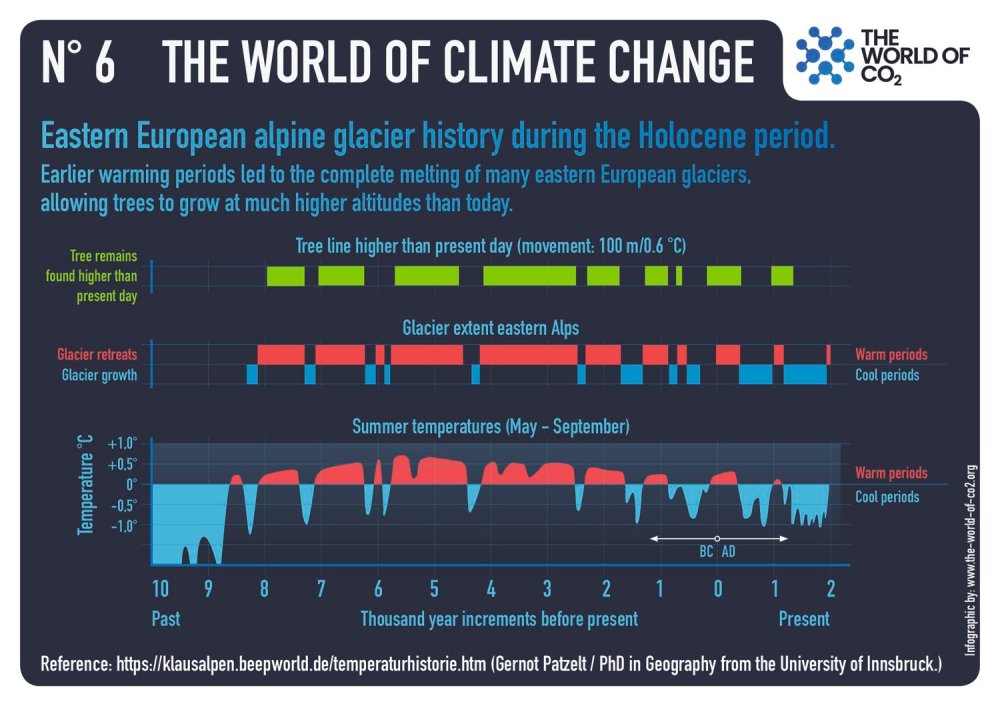
Instead of simply accepting widespread climate change dogma, shouldn’t geologists be aware of the transition from the sometimes devastating Little Ice Age, variously defined by scientists as running from the 14th or 16th centuries through the mid-19th century, to more moderate worldwide climates, which began long before the invention of the internal combustion engine? (The Little Ice Age, confined largely to areas of northern Europe, followed a preceding Medieval Warming period.) Scientists have attributed those changes to such causes as cyclical lows in solar radiation, heightened volcanic activity, changes in the ocean circulation, and variations in Earth’s orbit and axial tilt.

Have those forecasting devastation from a warming climate considered the significance of millennia-old corpses, like Ötzi, sometimes discovered under many feet of snow in areas like the Alps, suggesting a longer-term cooling trend? And why dismiss the likelihood that scientific research will uncover means of combating detrimental effects from excessive heat: should that occur, would the geologists have to reverse their announcement of the new epoch?

This politicization of science encourages an unjustified suspicion or rejection of real science.

Look no further than Anthony Fauci’s sometimes contradictory, and admittedly sometimes purposely misleading, pronouncements regarding the causes of and appropriate responses to COVID, which have eroded public trust in the institution of public health. Also, as politically appealing “discoveries” win the attention and respect of science educators, they will inevitably be integrated into science curricula, starting at the elementary or middle school level. Students will not only be indoctrinated into the latest, politically correct dogmas, but they will be misled as to the nature of the scientific enterprise.

Given their subject of expertise, geologists are probably less equipped than physicists, chemists, and biologists to conduct controlled experiments in the Baconian sense. That fact does not make their undertaking any less a science but only confirms the observation made by Aristotle that different objects of study require different sorts of scientific approaches. But it does not excuse them from the need to offer rebuttable hypotheses, always subject to revision or even refutation in light of further data or a more comprehensive explanation.

Yet how can they possibly document the prediction reported in the Times that the effects
of the human activities they cite will be discernible for millennia?

Announcing the “discovery” that the world has suddenly reached a new epoch, within living memory, resembles nothing so much as the pronouncements once issued by Christian millenarians that “the end is near.” In fact, one advocate quoted in the Times views the authorization of the new epoch as its “canonization.”

Note the ominous claim that the new era will
“bring the previous chapter of the Earth’s history to a close.”

But how can any human being, lacking divine guidance, be qualified to pronounce such a change? If we have just embarked on the Anthropocene era, what could follow it? If there is a post-Anthropocene epoch, there won’t be any human beings left to record it. Geologists, please curb your eagerness to grab the world’s “attention” or make it comply with your political-theological wishes, and stick to your cores and samples. The world will be the better for it.

Just Transition Really Means Great Disruption

Disney’s portrayal of the Sorcerer’s Apprentice in over his head.

After breaking basic public services, woke elites now aim to collapse economies, calling it the “Just Transition” to net zero energy.  Like the ignorant novice in the fable, these fools are following a magical recipe with no understanding of the uncontrollable consequences.  This post discusses the emerging movement of naïve leaders threatening the livelihoods of their citizens whose trust has been betrayed.

Firstly, Rex Murphy writes at National Post The Trudeau Liberals are coming for your jobs.  Excerpts in italics with my bolds and added images.

From the Instapundit site I find this ever so telling comment. Will anyone deny the obvious truth it contains?

“All the people who want to ‘regulate the planetary climate’ and demand the power and unlimited resources to do so are people who have proven themselves incapable of competently managing and running recently built, closed, man-made systems. They cannot competently run power grids, or municipal water systems or trash pickup; they cannot competently maintain, let alone repair, the ‘roads and bridges’ they are always pratting about; they cannot competently run or maintain the public housing they increasingly want people to live in, or the public transportation systems that they want people to rely on …”

To which we really must add that they (or one particular government I have in mind) cannot manage international airports, passport issuance, legitimate protests, civil service payroll systems, support for their veterans, maintain a sufficient military, a national health-care system (which used to be the pride of the country) inter-provincial relations, and conflict of interest legislation.

To be fair, they are good at handing out contracts to their friends and running up consultancy bills.

And most pertinent to the present moment, this particular government — which the keenest of you will have guessed is the present one in Ottawa — also wants to impose a great restructuring — i.e. the total cancellation — of the country’s No. 1 and vital industry, which only has the third highest reserves in the entire world — energy.

And replace that great and successful resource with what amounts to
a million helicopter blades on very high metal sticks.
In Liberalese this is called the “just transition.”

On a related matter, one might ask from where could such a crazy idea emerge? Why from the great Alpine closet of Davos and its hive of globalist billionaires, celebrities and unmoored politicians, the great World Economic Forum — Davos the Swiss Bethlehem of the Great Reset.  [Note: Many of the Davos crowd inherited or married into wealth (John Kerry, for example), so lack worldly knowledge of building an actual enterprise trusted to provide quality goods or services to paying customers.]

Slacker that I am, I was unaware till very recently that our very own No. 1 Trudeau cabinet star, Chrystia Freeland occupies a key seat on the board of the world’s most presumptuous, paternalistic and cosmically pretentious institution. No less a reporter than the doughty Rupa Subramanya, who graces these very pages, two years ago gave a full report on Freeland’s pupation from reporter on the Davos crowd to one of its highest eminences.

It is a delicious account. Rupa quotes Freeland: “After my book, Plutocrats, was published in 2012, I was even — and I know this will shock you — disinvited to a Davos dinner party!” And continues: “Indeed, the one-time critic has enjoyed an apotheosis of sorts and since 2019 has sat on the board of trustees of the WEF itself. Other members include Canada’s own Mark Carney, former governor of the Bank of Canada.”

Now, I have no idea of the answer to this question, but should the finance minister of a country also be a top board member of a billionaire-stuffed cabal — even given that it offers the thrill of rubbing shoulders with Al Gore once a year? Or, we could ask, is it fair to Klaus Schwab (insert James Bond villain theme here) and the WEF that Ms. Freeland has to spend so much time on Canadian stuff, that she cannot possibly give her full attention to the Great Reset and WEF’s priority policy of “decarbonization?”

Or, we could ask, when there is a clash between the Canadian agenda
and the WEF agenda, which wins?

On that last one — looking at the maniacal idea of “just transition” as it’s playing out in Canada, I’d say the WEF is getting good value. But I’m a neutralist on these questions? What does Justin Trudeau think? Is this a case of upper-class moonlighting?

Finally, I wish to cite Toronto Sun editor emeritus, Lorrie Goldstein, the North Star of global warming reportage. He has what I think is called a “twitter thread” (in future, I will consult my nephew on the strange nomenclature of this internet) on the “just transition” aka, the “great disruption.” Space allow only one quote, but the rest I’m told is easily found:

“The value of the controversy over Trudeau’s ‘Just Transition Plan’ broken by Blacklock’s is that it ends the myth only oil, gas & coal workers will be impacted by his green energy plan: In fact, 7 major sectors of the economy could face ‘significant’ disruptions in employment.”

My Comment

New Zealand Leads in the Suffering

Could this be why PM Ardern has “emptied her tank” and resigning?  :  Jacinda Ardern was the international poster girl for ‘kindly’ authoritarianism. 

Among our supposedly liberal elites it has become common sense
that populations must be controlled for their own good

“This global chorus of praise is a fitting send-off. Ardern is in many ways an archetypal leader of our age, in which politicians draw just as much legitimacy, if not more, from the warm feeling they give international elites than what it is they actually do and achieve for their domestic population. Indeed, her cheerleaders don’t even bother to look into those things. If they did, they’d see why Ardern is beating a hasty retreat. She leaves office amid a painful cost-of-living crisis and spiralling crime rates.”

Scotland Raises the Bar for Absurdity

From the Daily Sceptic The Dangerous Fantasy of Scotland’s Net Zero Energy Transition

Suppose that Scotland’s CO2 emissions fell tomorrow to zero, i.e., that, at midnight, the country ceased to exist. Then according to the “Model for the Assessment of Greenhouse Gas Induced Climate Change” (MAGICC), based on the latest IPCC climate models, the reduction in the Earth’s temperature in 2100 would be…undetectable.

Motivated by the moral necessity and urgency of this goal, the Scottish Government is proposing a novel energy policy – its “Energy Strategy and Just Transition Plan”.

This article reviews its major themes and their implications, and considers briefly the probability of success of the Scottish Government implementing it.

Irreversible impairment of either our energy or financial systems would have a catastrophic impact on the welfare of Scotland’s citizens. Yet few have expressed any desire, much less informed consent, for risk on the scale proposed for such little benefit.

Yet the project, representing a scope of unprecedented scale, cost, pace and technical uncertainty, will be overseen by a Government that is currently struggling to procure two relatively modest ferries for less than the cost that other governments can procure 34 ferries – again, ironically due in large part to cost overruns associated with the attempt to employ novel technologies to reduce CO2 emissions. As evidence of the extent to which the Scottish Government and its advisers have become unmoored from physical reality by the climate catastrophe hypothesis, it’s a document that is fascinating to read, and alarming to contemplate.”

Why Learning and Wokeness Can’t Coexist

Mark Bauerlein explains the dichotomy in his Federalist article With Anti-Woke College Trustee Picks, DeSantis Chips Away At The Political Poison In Education.  Excerpts in italics with my bolds.

Something remarkable happened in fifth-century Athens when Socrates set up shop, conversed freely on the things of this world, and followed the truth wherever it would lead. It also happened in 1609 when University of Padua professor Galileo Galilei pointed his telescope at the moon and found that the heavenly orb wasn’t as pure and smooth as everyone said. It happened in America as well when in 1940, the American Association of University Professors issued its “Statement of Principles on Academic Freedom and Tenure,” which hailed “the free search for truth and its free exposition.”

However, no group has been less tolerant of dissent than the academic left, neither Christian fundamentalists nor corporate donors who like to see their names on business school buildings. But it is one notable triumph of the left to have pushed certain obvious threats to open inquiry while at the same time persuading centrists of all kinds that those threats are no such thing.

In recent days, I’ve spoken with many journalists covering DeSantis’ appointment of some conservatives to the board of New College of Florida. These journalists, who clearly see themselves as liberals, allegedly support the ideals of free speech and unfettered research. In our conversations, they gave me ample time to lay out the “Ivory Tower” conception.

We had good conversations; they seemed genuinely curious about the facts. I outlined the mechanisms of peer review and the obligation to withhold political opinions when it came to, say, evaluating candidates for hiring/promotion and manuscripts for publication, which I’ve done for two dozen scholarly presses and journals over the years. I said how great it would be to have a Marxist colleague who understood that students needed a good general education before politics entered in, could detail what Marx said about “commodity fetishism,” and liked to argue over lunch with a conservative like me.

The journalists nodded in agreement, and it felt good to describe some behind-the-scenes protocols that are essential to academia but veiled from the public. When I turned, however, to the greatest current danger to that approach, the most common instrument of political coercion that squarely violates academic norms, my interviewees were a bit quiet, perplexed, and perhaps nervous. I meant, of course, the so-called diversity, equity, and inclusion (DEI) initiatives that nearly every institution in America implements with religious fervor.

In the controversy over New College, the critical question has been whether right-wing trustees will suppress the work of professors and students, imposing a political agenda on a functioning academic enterprise that deserves hands-off respect. It was brought up in all my interviews, usually by reference to Rufo’s ambition to bring classical education to the curriculum. After explaining to them that one duty of a trustee is to ensure that teaching and research practices at an institution accord with the academic mission (in the same way that a trustee of an estate prevents malfeasance),

I put the question of politicization back at them:
How is equity not a political trespass on academic grounds?

They didn’t answer but invited me to elaborate. The problem is simple: Equity requires proportionate representation of diverse identity groups. It is a preordained goal that tips the scales of judgment, weighs the evidence before it comes in, and compromises the inquirer/evaluator. If I review a manuscript for a journal and I’m told that the journal needs to publish more scholars of color, I answer, “Whatever, but that can’t play a role in my assessment.” If I accept an identity factor, I’ve lost some of my academic freedom.  The same could be said for inclusion, which jeopardizes acts of discrimination on which academia depends.

This is obvious. DEI is a form of social engineering that cannot coexist
with “the free search for truth and its free exposition.”

If a DEI officer tells an academic department that in its next job search, the interview list of 12 must be at least 50 percent female regardless of qualification, a trustee who hears about it is duty-bound to call for an investigation. If a school drops standardized testing from admissions because of racial score gaps and in the name of diversity, the same thing should happen.

Again, this is not a political objection but an academic one. DEI acolytes have politicized academic procedures. Stopping them is a return to the tradition of Socrates, Galileo, and the American Association of University Professors’ statement.

I’m speaking generally here, not about New College. I don’t know what these new trustees will do. If I find that professors make students work hard and read widely while producing excellent work, that sounds good to me whether I agree with their sincerely held political beliefs or not. My concerns are over academic quality, not political ideology.

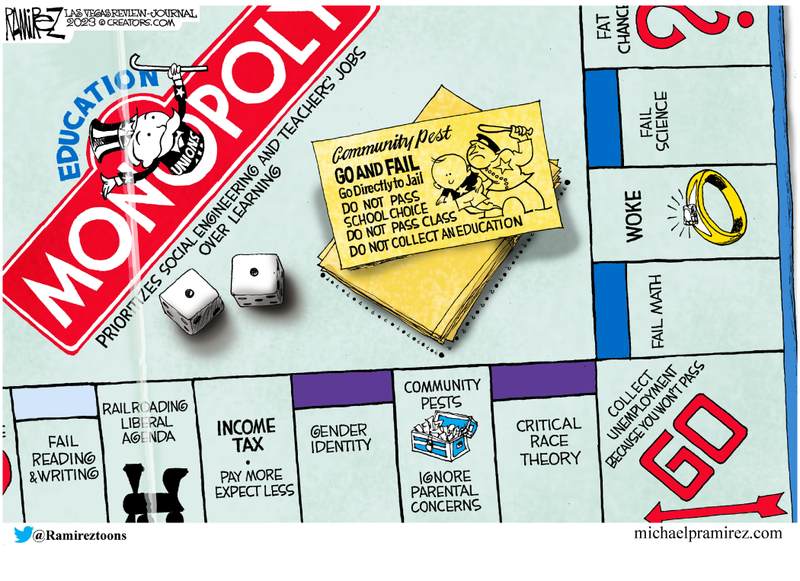
It is likely, though, that indoctrination isn’t unrelated to poor learning outcomes. DEI is an anti-academic project, as it is anti-intellectual and illiberal in its goals and methods. The more colleges add resources to it, the less it focuses on the real job of higher learning, and the more our youths are inclined to believe that correct political attitudes save them the effort of expanding their knowledge, improving skills, and refining tastes.

Nobody is more confident in how wrong he is than a half-educated social justice activist.

Voters Feared JFK a Vatican Puppet–Davos Is For Real

Thomas Fazi writes at Unherd How the Davos elite took back control.  Excerpts in italics with my bolds and added images.

The WEF is insulating policy-making from democracy

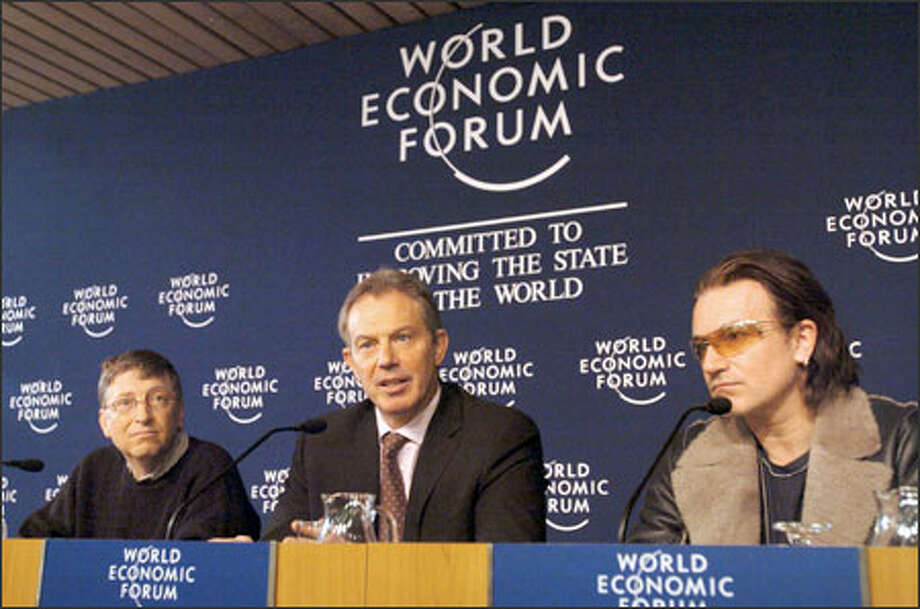
Thousands of the world’s global elite are convening in Davos this morning for their most important annual get-together: the meeting of the World Economic Forum (WEF). Alongside heads of state from all over the world, the CEOs of Amazon, BlackRock, JPMorgan Chase, Pfizer and Moderna will gather, as will the President of the European Commission, the IMF’s Managing Director, the secretary general of Nato, the chiefs of the FBI and MI6, the publisher of The New York Times, and, of course, the event’s infamous host — founder and chairman of the WEF, Klaus Schwab. As many as 5,000 soldiers may be deployed for their protection.

Given the almost cartoonishly elitist nature of this jamboree, it seems only natural that the organisation has become the subject of all sorts of conspiracy theories regarding its supposed malicious intent and secret agendas connected to the notion of the “Great Reset”. In truth, there is nothing conspiratorial about the WEF, to the extent that conspiracies imply secrecy. On the contrary, the WEF — unlike, say, the Bilderberg — is very open about its agenda: you can even follow the live-streamed sessions online.

Founded in 1971 by Schwab himself, the WEF is “committed to improving the state of the world through public-private cooperation”, also known as multistakeholder governance. The idea is that global decision-making should not be left to governments and nation-states — as in the post-war multilateralist framework enshrined in the United Nations — but should involve a whole range of non-government stakeholders: civil society bodies, academic experts, media personalities and, most important, multinational corporations. In its own words, the WEF’s project is “to redefine the international system as constituting a wider, multifaceted system of global cooperation in which intergovernmental legal frameworks and institutions are embedded as a core, but not the sole and sometimes not the most crucial, component”.

While this may sound fairly benign, it neatly encapsulates the basic philosophy of globalism: insulating policy from democracy by transferring the decision-making process from the national and international level, where citizens theoretically are able to exercise some degree of influence over policy, to the supranational level, by placing a self-selected group of unelected, unaccountable “stakeholders” — mainly corporations — in charge of global decisions concerning everything from energy and food production to the media and public health. The underlying undemocratic philosophy is the same one underpinning the philanthrocapitalist approach of people such Bill Gates, himself a long-time partner of the WEF: that non-governmental social and business organisations are best suited to solve the world’s problems than governments and multilateral institutions.

Even though the WEF has increasingly focused its agenda on fashionable topics such as environmental protection and social entrepreneurship, there is little doubt as to which interests Schwab’s brainchild is actually promoting and empowering: the WEF is itself mostly funded by around 1,000 member companies — typically global enterprises with multi-billion dollar turnovers, which include some of the world’s biggest corporations.  .  . There’s no need to resort to conspiracy theories to posit that the WEF’s agenda is much more likely to be tailored to suit the interests of its funders and board members — the world’s ultra-wealthy and corporate elites — rather than to “improving the state of the world”, as the organisation claims.

These public-private and corporate-centred coalitions — all with ties to the WEF, and beyond the reach of democratic accountability — played a crucial role in promoting a vaccine-centric and profit-driven response to the pandemic, and then in overseeing the vaccine rollout. In other words, the pandemic brought into stark relief the consequences of the WEF’s decades-long globalist push. Again, it would be wrong to view this as a conspiracy, since the WEF has always been very candid about its objectives: this is simply the inevitable result of a “multistakeholderist” approach in which private and “philanthropic” interests are given greater voice in global affairs than most governments.

What is troubling, however, is that the WEF is now promoting the same top-down corporate-driven approach in a wide range of other domains, from energy to food to global surveillance policies — with equally dramatic consequences. There is a reason governments often seem so willing to go along with these policies, even in the face of widespread societal opposition: which is that the WEF’s strategy, over the years, hasn’t just been to shift power away from governments — but also to infiltrate the latter.

In 2017, Schwab admitted to having used the Young Global Leaders to “penetrate the cabinets” of several governments, adding that as of 2017, “more than half” of Canadian Prime Minister Justin Trudeau’s cabinet had been members of the programme. More recently, following Dutch Prime Minister Mark Rutte’s proposal to drastically cut nitrogen emissions in line with WEF-inspired “green” policies, sparking large protests in the country, critics drew attention to the fact that, in addition to Rutte himself having close ties to the WEF, his Minister of Social Affairs and Employment was elected WEF Young Global Leader in 2008, while his Deputy Prime Minister and Finance Minister Sigrid Kaag is a contributor to the WEF’s agenda. In December 2021, the Dutch government published its past correspondence with representatives of the World Economic Forum, showing extensive interaction between the WEF and the Dutch government.

Ultimately, there is no denying that the WEF wields immense power, which has cemented the rule of the transnational capitalist class to a degree never before seen in history. But it is important to recognise that its power is simply a manifestation of the power of the “superclass” it represents — a tiny group amounting, according to researchers, to no more than 6,000 or 7,000 people, or 0.0001% of the world’s population, and yet more powerful than any social class the world has ever known. Samuel Huntington, who is credited with inventing the term “Davos man”, argued that members of this global elite “have little need for national loyalty, view national boundaries as obstacles that thankfully are vanishing, and see national governments as residues from the past whose only useful function is to facilitate the elite’s global operations”. It was only a matter of time before these aspiring cosmocrats developed a tool through which to fully exercise their dominion over the lower classes — and the WEF proved to be the perfect vehicle to do so.

Rex Murphy takes it from there in his National Post article The green druids gather in Davos for the World Economic Forum.  Excerpts in italics with my bolds.

The WEF really is just a very upper-class version of the equally squalid
monster conference of the IPCC

And now, Mary Ngand Chrystia Freeland are off to the frigid Alps to the great sentinel resort of Davos where the world’s richest and most powerful macrocephalics have flown in on a fleet of private jets only slightly less numerous, and surely more luxurious, than the Chinese Air Force.

Ms. Ng is to give a talk with the captivating title of “Bricks or Flicks.”

Its subject — and I do not invent this — is the “intangible economy.” Which is a piece of inspired bureaucratese, a perfect designation of the woesome triune of Freeland’s debt economics, the net-zero fantasy, and the Trudeau vision of an Alberta done in by green dreams and stripped of all its oil and gas.

The latter goes by the admittedly less poetically-charged terminology of the “just transition” — the great scheme to de-employ over a hundred thousand oil and gas workers, thousands upon thousands more in related industries, and put the whole multitude of them to work in a giant Tim Hortons somewhere north, far north, of Edmonton. I’ll get back to this.

Only the wonder of the densely militarised WEF-Davos shindig detains me by its bloat, self-importance and planetary pretensions.

Up to 5,000 troops have been seconded to guard the illustrious hive of busybody billionaires (roughly two soldiers for every one pretentious plutocrat). Barbed wire around the town, snipers on rooftops, huge armoured vehicles, wickedly-armed and black-helmeted SWAT-type police outside the best hotels and upscale restaurants (the latter offering GG Mary Simon level of cuisine — amuse your bouche) fighter jets overhead, 24 -hour air police — this year’s WEF is more heavily guarded than Joe Biden’s Corvette, or Jeffery Epstein’s still-unproduced client list.

Re-ordering the world and reaching down to the peasants, even in famously neutral Switzerland, must be a very dangerous occupation, or, I suppose, all the high-brows and vastly deep pockets gathered there have such a deep appreciation of their own importance that they — more or less — feel they must travel with their own armed forces.

Davos and the WEF really is just a very upper-class version of the equally squalid monster conference of the IPCC, the annual COP convention of green druids, who, like their Davos counterparts gather, to plot a new-world-order, and from great vast altitudes of righteousness and moral egotism come down from the mountain tops with their iPad tablets inscribed with a prescription for all the rest (the sane part) of the world.

It’s out of these festivals of elitists and ideologues that come the policies and regimentations of national economies, and a subtle but deep abrasion of real national interests in the service of the globalist stew of ideals. Like, shall we say, intangible economies.

In Canada, that vision found great hospitality in the Trudeau-Butts-Freeland-Singh policy cohabitation, and is even now running amok.

Just the latest instance. We have had the Prime Minister of Japan all but turned away from our doors when he came recently looking for some help on energy, particularly natural gas. Sorry, we don’t do natural gas (that’s from Alberta) is a very rough translation of the response he received from green-renewables-Trudeau.

Off went billions to Qatar. Off too, I’d gather, Germany’s and Japan’s respect for Canada as an ally and a buttress in times of need. The poor chancellor got instead a promise — 10 years down the road if ever — from a hydrogen producing plant, not even yet in the planning stages (it’s intangible, see how this works), in Stephenville on Newfoundland’s West Coast.

Mary Ng’s talk-title Bricks and Flicks fits this scene perfectly. Cuteness trying to do the work of thought, flippancy over seriousness, swishing about hot and cold world venues, while ignoring — sorry grossly interfering and on full plan for shutdown — an economy that works we already have.

Summed up, for me anyway, by Mr. Trudeau, when in one of his New Year seances with the network anchors he threw this piece of insolence at the government of Alberta — the one quoted at the top — which bears repetition: “One of the challenges is there is a political class in Alberta that has decided that anything to do with climate change is going to be bad for them or for Alberta.” Co-operative federalism in an age of Green.

It’s a long way from Davos to Red Deer, but only on the map.