Power Density Physics Trump Energy Politics

A plethora of insane energy policy proposals are touted by clueless politicians, including the apparent Democrat candidate for US President.  So all talking heads need reminding of some basics of immutable energy physics.  This post is in service of restoring understanding of fundamentals that cannot be waved away.

The Key to Energy IQ

This brief video provides a key concept in order to think rationally about calls to change society’s energy platform.  Below is a transcript from the closed captions along with some of the video images and others added.

We know what the future of American energy will look like. Solar panels, drawing limitless energy from the sun. Wind turbines harnessing the bounty of nature to power our homes and businesses.  A nation effortlessly meeting all of its energy needs with minimal impact on the environment. We have the motivation, we have the technology. There’s only one problem: the physics.

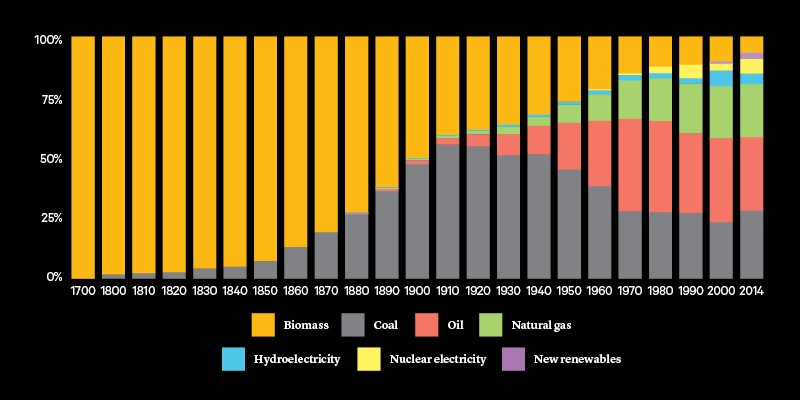
The history of America is, in many ways, the history of energy. The steam power that revolutionized travel and the shipping of goods. The coal that fueled the railroads and the industrial revolution. The petroleum that helped birth the age of the automobile. And now, if we only have the will, a new era of renewable energy.

Except … it’s a little more complicated than that. It’s not really a matter of will, at least not primarily. There are powerful scientific and economic constraints on where we get our power from. An energy source has to be reliable; you have to know that the lights will go on when you flip the switch. An energy source needs to be affordable–because when energy is expensive…everything else gets more expensive too. And, if you want something to be society’s dominant energy source, it needs to be scalable, able to provide enough power for a whole nation.

Those are all incredibly important considerations, which is one of the reasons it’s so weird that one of the most important concepts we have for judging them … is a thing that most people have never heard of. Ladies and gentlemen, welcome to the exciting world of…power density.

Look, no one said scientists were gonna be great at branding. Put simply, power density is just how much stuff it takes to get your energy; how much land or other physical resources. And we measure it by how many watts you can get per square meter, or liter, or kilogram – which, if you’re like us…probably means nothing to you.

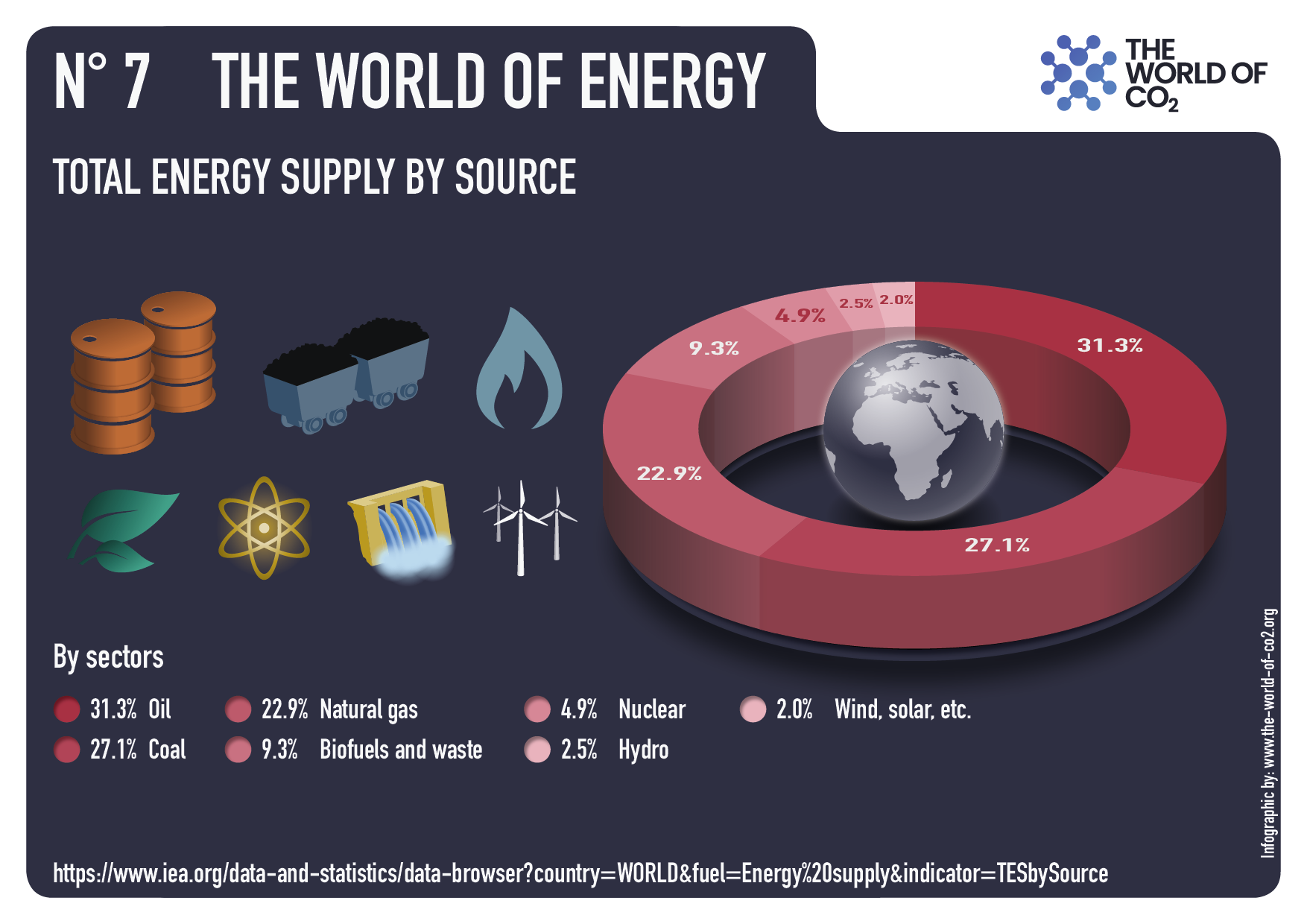
So let’s put this in tangible terms. Just about the worst energy source America has by the standards of power density are biofuels, things like corn-based ethanol. Biofuels only provide less than 3% of America’s energy needs–and yet, because of the amount of corn that has to be grown to produce it … they require more land than every other energy source in the country combined. Lots of resources going in, not much energy coming out–which means they’re never going to be able to be a serious fuel source.

Now, that’s an extreme example, but once you start to see the world in these terms, you start to realize why our choice of energy sources isn’t arbitrary. Coal, for example, is still America’s second largest source of electricity, despite the fact that it’s the dirtiest and most carbon-intensive way to produce it. Why do we still use so much of it? Well, because it’s significantly more affordable…in part because it’s way less resource-intensive.

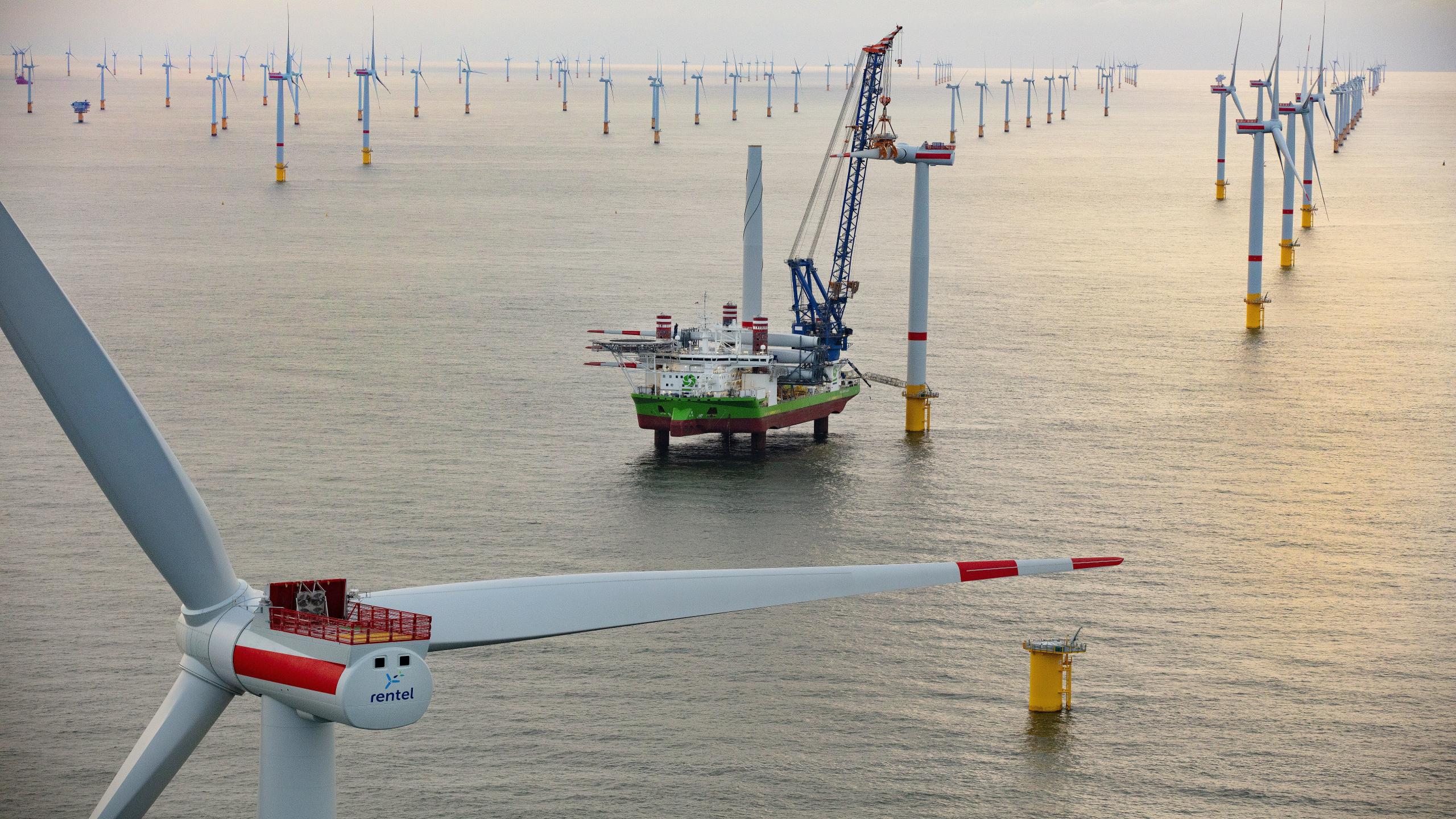
An energy source like offshore wind, for example, is so dependent on materials like copper and zinc that it would require six times as many mineral resources to produce the same amount of power as coal. And by the way, getting all those minerals out of the ground…itself requires lots and lots of energy.

Now, the good news is that America has actually been cutting way down on its use of coal in recent years, thanks largely to technological breakthroughs that brought us cheap natural gas as a replacement. And because natural gas emits way less carbon than coal, that reduced our carbon emissions from electricity generation by more than 30%.

In fact, the government reports that switching over to natural gas did more than twice as much to cut carbon emissions as renewables did in recent years. Why did natural gas progress so much faster than renewables? It wasn’t an accident.

Energy is a little like money: You’ve gotta spend it to make it. To get usable natural gas, for example, you’ve first gotta drill a well, process and transport the gas, build a power plant, and generate the electricity. But the question is how much energy are you getting back for your investment? With natural gas, you get about 30 times as much power out of the system as you put into creating it.  By contrast, with something like solar power, you only get about 3 1/2 times as much power back.

Replacing the now closed Indian Point nuclear power plant would require covering all of Albany County NY with wind mills.

Hard to fuel an entire country that way. And everywhere you look, you see similarly eye-popping numbers. To replace the energy produced by just one oil well in the Permian Basin of Texas–and there are thousands of those–you’d need to build 10 windmills, each about 330 feet high. To meet just 10% of the country’s electricity needs, you’d have to build a wind farm the size of the state of New Hampshire. To get the same amount of power produced by one typical nuclear reactor, you’d need over three million solar panels, none of which means, by the way, that we shouldn’t be using renewables as a part of our energy future.

But it does mean that the dream of using only renewables is going to remain a dream,
at least given the constraints of current technology. We simply don’t know how
to do it while still providing the amount of energy that everyday life requires.

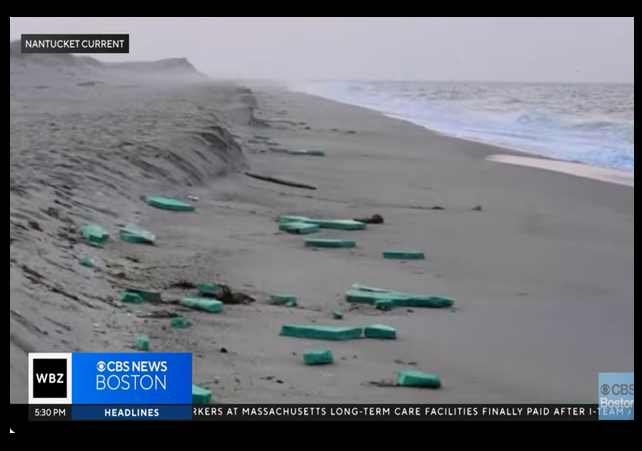
No energy source is ever going to painlessly solve all our problems. It’s always a compromise – which is why it’s so important for us to focus on the best outcomes that are achievable, because otherwise, New Hampshire’s gonna look like this.

Addendum from Michael J. Kelly

Energy return on investment (EROI)

The debate over decarbonization has focussed on technical feasibility and economics. There is one emerging measure that comes closely back to the engineering and the thermodynamics of energy production. The energy return on (energy) investment is a measure of the useful energy produced by a particular power plant divided by the energy needed to build, operate, maintain, and decommission the plant. This is a concept that owes its origin to animal ecology: a cheetah must get more energy from consuming his prey than expended on catching it, otherwise it will die. If the animal is to breed and nurture the next generation then the ratio of energy obtained from energy expended has to be higher, depending on the details of energy expenditure on these other activities. Weißbach et al. have analysed the EROI for a number of forms of energy production and their principal conclusion is that nuclear, hydro-, and gas- and coal-fired power stations have an EROI that is much greater than wind, solar photovoltaic (PV), concentrated solar power in a desert or cultivated biomass: see Fig. 2.

In human terms, with an EROI of 1, we can mine fuel and look at it—we have no energy left over. To get a society that can feed itself and provide a basic educational system we need an EROI of our base-load fuel to be in excess of 5, and for a society with international travel and high culture we need EROI greater than 10. The new renewable energies do not reach this last level when the extra energy costs of overcoming intermittency are added in. In energy terms the current generation of renewable energy technologies alone will not enable a civilized modern society to continue!

On Energy Transitions

Postscript

Nine July Days Break Wind Power Bubble

Parker Gallant reports at his blog  Nine July Days Clearly Demonstrate Industrial Wind Turbines Intermittent Uselessness.  Excerpts in italics with my bolds and added image. H/T John Ray

The chart below uses IESO data for nine (9) July days and clearly demonstrates the vagaries of those IWT (Industrial Wind Turbines) which on their highest generation day operated at 39.7% of their capacity and on their lowest at 2.3%!  As the chart also notes, our natural gas plants were available to ramp up or down to ensure we had a stable supply of energy but rest assured IESO would have been busy either selling or buying power from our neighbours to ensure the system didn’t crash. [Independent Electricity System Operator for Ontario, Canada]

The only good news coming out of the review was that IESO did not curtail any wind generation as demand was atypical of Ontario’s summer days with much higher demand then those winter ones.

Days Gone By:         

Back and shortly after the McGuinty led Ontario Liberal Party had directed IESO to contract IWT as a generation source; theirAnnual Planning Outlook would suggest/guess those IWT would generate an average of 15% of their capacity during our warmer months (summer) and 45% of their capacity during our colder months (winter). For the full year they would be projecting an average generation of 30% of their capacity and presumably that assumption was based on average annual Ontario winds!

The contracts for those IWT offered the owners $135/MWh so over the nine days contained in the chart below those 125,275 MWh generated revenue for the owners of $16,912,125 even though they only generated an average of 11.8% of their capacity.  They are paid despite missing the suggested target IESO used because they rank ahead of most of Ontario’s other generation capacity with the exception of nuclear power due to the “first-to-the-grid” rights contained in their contracts at the expense of us ratepayers/taxpayers!

Should one bother to do the math as to the annual costs based on the 15% summer and 45% winter IESO previously used it would mean annual generation from those IWT in the summer would be about 3.9 TWh and 11.7 TWh in the winter with an annual cost of just over $2.1 billion for serving up frequently unneeded generation which is either sold off at a loss or curtailed!

Replacing Natural Gas Plants with BESS:

Anyone who has followed the perceived solution of ridding the electricity grid of fossil fuels such as natural gas will recognize ENGO [Environmental Non-Governmental Organizations] have convinced politicians that battery energy storage systems are the solution!  Well is it, and how much would Ontario have needed over those nine charted July days? One good example is July 9th and 10th and combining the energy generated by natural gas from the chart over those two days is the place to start. To replace that generation of 221,989 MW with BESS units the math is simple as those BESS units are reputed to store four (4) times their rated capacity. Dividing the MWh generated by Ontario’s natural gas generators by four over those two days therefore would mean we would need approximately 55,500 MW of BESS to replace what those natural gas plants generated.  That 55,500 MW of BESS storage is over 27 times what IESO have already contracted for and add huge costs to electricity generation in the province driving up the costs for all ratepaying classes. The BESS 2034 MW IESO already contracted are estimated to cost ratepayers $341 million annually meaning 55,500 MW of BESS to the grid would add over $9 billion annually to our costs to hopefully avoid blackouts!

The other interesting question is how would those 55,500 MW be able to recharge to be ready for future high demand days perhaps driven by EV recharging or those heating and cooling pumps operating?  The wind would have to be blowing strong and the sun would need to be shining but, as we know, both are frequently missing so bring us blackouts seems to be the theme proposed by those ENGO and our out of touch politicians and bureaucrats!

Just one simple example as to where we seem to be headed
based on the insane push to reach that “net-zero” emissions target!

IESO Ontario Electrical Energy Output by Source in 2023

Extreme Examples of Missing IWT generation:

What the chart doesn’t contain, or highlight is how those 4,900 MW of IWT capacity are undoubtedly consuming more power than they are generating on many occasions and the IESO data for those nine days contained some clear examples but less than a dozen are highlighted here!

To wit:

  • July 5th at Hour 11 they managed to deliver only 47 MWh!
  • July 7th at Hours 8, 9, and 10 they respectively generated 17 MWh, 3 MWh and 18 MWh! 
  • July 9th at Hour 9 they delivered 52 MWh!
  • July 12th at Hours 8, 9, 10 and 11 they respectively generated 33 MWh, 13 MWh, 13 MWh and 35 MWh. 
  • July 13th at Hours 9 and 10 they managed to generate 19 MWh and 39 MWh respectively! 

Conclusion:

Why politicians and bureaucrats around the world have been gobsmacked by those peddling the reputed concept of IWT generating cheap, reliable electricity is mind-blowing as the Chart coupled with the facts, clearly shows for just nine days and only looking at Ontario!

Much like the first electric car invented in 1839, by a Scottish inventor named Robert Davidson, the first electricity generated by a wind turbine came from another Scottish inventor, Sir James Blyth who in 1887 did exactly that. Neither of those old “inventions” garnered much global acceptance until those ENGO like Michael Mann and Greta arrived on the scene pontificating about “global warming” being caused by mankind’s use of fossil fuels!

As recent events have demonstrated both EV and IWT are not the panacea to save the world from either “global warming” or “climate change” even though both have “risen from the dead” due to the “net-zero” push by ENGO.

The time has come for our politicians to wake up and recognize they are supporting more then century old technology focused to try and rid the world of CO 2 emissions.  They fail to see without CO 2 mankind will be setback to a time when we had trouble surviving!

Stop the push and stop using ratepayer and taxpayer dollars for the fiction created by those pushing the “net-zero” initiative. That initiative is actually generating more CO 2 such as the 250 tons of concrete used for just one 2 MW IWT installation!   Reality Bites!

Wind Energy Risky Business

The short video above summarizes the multiple engineering challenges involved in relying on wind and/or solar power.  Real Engineering produced The Problem with Wind Energy with excellent graphics.  For those who prefer reading, I made a transcript from the closed captions along with some key exhibits.

The Problem with Wind Energy

This is a map of the world’s wind Resources. With it we can see why the middle Plains of America has by far the highest concentrations of wind turbines in the country. More wind means more power.

However one small island off the mainland of Europe maxes out the average wind speed chart. Ireland is a wind energy Paradise. During one powerful storm wind energy powered the entire country for 3 hours, and it is not uncommon for wind to provide the majority of the country’s power on any single day. This natural resource has the potential to transform Ireland’s future.

But increasing wind energy on an energy grid comes with a lot of logistical problems which are all the more difficult for a small isolated island power grid. Mismanaged wind turbines can easily destabilize a power grid. From Power storage to grid frequency stabilization, wind energy is a difficult resource to build a stable grid upon.

To understand why, we need to take these engineering
Marvels apart and see how they work.

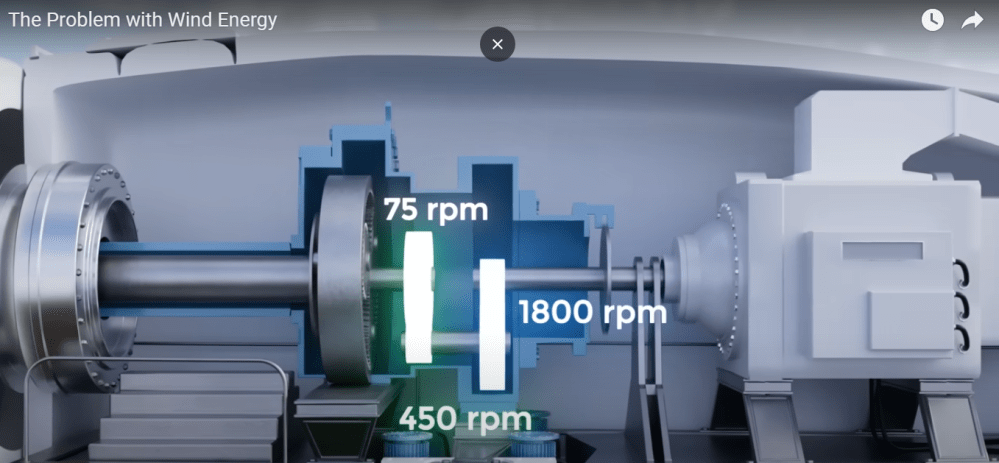
Hidden within the turbine cell is a Wonder of engineering. We cannot generate useful electricity with the low- speed high torque rotation of these massive turbine rotors. They rotate about 10 to 20 times a minute. The generator needs a shaft spinning around 1,800 times per minute to work effectively. So a gearbox is needed between the rotor shaft and the generator shaft.

The gearboxes are designed in stages. Planetary gears are directly attached to the blades to convert the extremely high torque into faster rotations. This stage increases rotational speed by four times. Planetary gears are used for high torque conversion because they have more contact points allowing the load to be shared between more gear teeth.

Moving deeper into the gearbox, a second stage set of helical gears multiplies the rotational speed by six. And the third stage multiplies It again by four to achieve the 1,500 to 1,800 revolutions per minute needed for the generator.

These heavy 15 tonne gearboxes have been a major source of frustration for power companies. Although they’ve been designed to have a 20-year lifespan, most don’t last more than 7 years without extensive maintenance. This is not a problem exclusive to gearboxes in wind turbines, but changing a gearbox in your car is different from having a team climb up over 50 meters to replace a multi-million dollar gearbox. Extreme gusts of wind, salty conditions and difficult to access offshore turbines increases maintenance costs even more. The maintenance cost of wind turbines can reach almost 20% of the levelized cost of energy.

In the grand scheme of things wind is still incredibly cheap. However we don’t know the precise mechanisms causing these gearbox failures. We do know that the wear shows up as these small cracks that form on the bearings,which are called White Edge cracks from the pale material that surrounds the damaged areas. This problem only gets worse when turbines get bigger and more powerful, requiring even more gear stages to convert the incredibly high torque being developed by the large diameter rotors.

One way of avoiding all of these maintenance costs is to skip the gearbox and connect the blades directly to the generator. But a different kind of generator is needed. The output frequency of the generator needs to match the grid frequency. Slower Revolutions in the generator need to be compensated for with a very large diameter generator that has many more magnetic poles meaning a single revolution of the generator passes through more alternating magnetic fields which increases the output frequency.

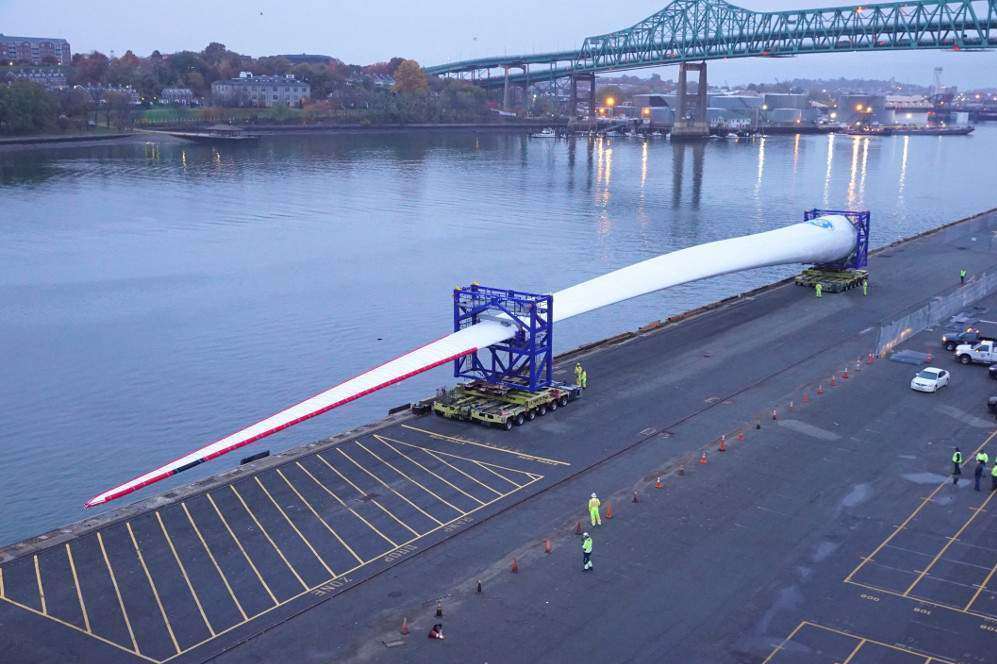
The largest wind turbine ever made, the Haliade X, uses a direct drive system. You can see the large diameter generator positioned directly behind the blades here. This rotor disc is 10 m wide with 200 poles and weighs 250 tons. But this comes with its own set of issues. Permanent magnets require neodium and dysprosium and China controls 90% of the supply of these rare earth metals. Unfortunately trade negotiations and embargos lead to fluctuating material costs that add extra risk and complexity to direct drive wind turbines. Ireland is testing these new wind turbines here in the Galway Wind Park. The blades were so large that this road passing underneath the Lough Atalia rail Bridge, which I use to walk home from school every day, had to be lowered to facilitate the transport of the blades from the nearby docks. It takes years to assess the benefit of new Energy Technologies like this, but as wind turbines get bigger and more expensive, direct drive systems become more attractive.

The next challenge is getting the electricity created inside these generators to match the grid frequency. When the speed of the wind constantly changes, the frequency of current created by permanent magnet generators matches the speed of the shaft. If we wanted the generator to Output the US Standard 60 HZ we could design a rotor to rotate 1,800 times per minute with four poles two North and two South. This will result in 60 cycles per second. This has to be exact; mismatched frequencies will lead to chaos on the grid, bringing the whole system down.

Managing grid frequency is a 24/7 job. In the UK, grid operators had to watch a popular TV show themselves so they could bring pumped Hydro stations online. Because a huge portion of the population went to turn on kettles to make tea during the ad breaks. This increased the load on the grid and without a matching increase in Supply, the frequency would have dropped. The grid is very sensitive to these shifts; a small 1 Herz change can bring a lot lot of Destruction.

During the 2021 freeze in Texas the grid fell Incredibly close to 59 Hertz. It was teetering on the edge of a full-scale blackout that would have lasted for months. Many people solely blamed wind turbines not running for causing this issue, but they were only partly to blame, as the natural gas stations also failed. Meanwhile the Texas grid also refuses to connect to the wider North American grid to avoid Federal Regulations. Rather oddly Texas is also an isolated power grid that has a large percentage of wind energy.

The problem with wind energy is that it is incapable of raising the grid frequency if it drops. Wind turbines are nonsynchronous and increasing the percentage of wind energy on the grid requires additional infrastructure to maintain a stable grid. To understand what nonsynchronous means, we need to dive into the engineering of wind turbines once again. The first electric wind turbines connected to the grid were designed to spin the generator shaft at exactly 1,800 RPM. The prevailing winds dictated the size and shape of the blades. The aim was to have the tips of the blades move at around seven times the speed of the prevailing wind. The tips of the blades were designed to stall if the wind speed picked up. This let them have a passive control and keep the blades rotating at a constant speed.

While this allowed the wind turbines to be connected straight to the grid, the constant rotational speed did induce large forces onto the blades. Gusts of wind would increase torque rapidly which was a recipe for fatigue failure in the drivetrain. So to extract more power, variable speed wind turbines were introduced. Instead of fixed blades that depended on a stall mechanism for control, the blades were attached to the hub with massive bearings that would allow the blades to change their angle of attack. This provided an active method of speed control, but now another problem emerged.

The rotor operated at different speeds and the frequency coming from the generator was variable. A wind turbine like this cannot be connected directly to the grid. Connecting a varying frequency generator to the grid means the power has to be passed through two inverters. The first converts the varying AC to DC using a rectifier; then the second converter takes the DC current and converts it back to AC at the correct frequency. This is done with electronic switches that rapidly turn on and off to create the oscillating wave.

We lose some power in this process but the larger issue for the grid as a whole is that this removes the benefit of the wind Turbine’s inerti. Slowing something heavy like a train is difficult because it has a lot of inertia. Power grids have inertia too. Huge rotating steam turbines connected directly to the grid are like these trains; they can’t be slowed down easily. So a grid with lots of large turbines like nuclear power and coal power turbines can handle a large load suddenly appearing and won’t experience a sudden drop in Grid frequency. This helps smooth out sudden increases in demand on the grid and gives grid operators more time to bring on new power sources.

Wind turbines of course have inertia, they are large rotating masses. But those inverters mean their masses aren’t connected directly to the grid, and so their inertia can’t help stabilize the grid. Solar panels suffer from the same problem, but they couldn’t add inertia anyway as they don’t move.

This is an issue for Renewables that can become a critical vulnerability when politicians push to increase the percentage of Renewables onto a grid without considering the impacts it can have on grid stability. Additional infrastructure is needed to manage this problem, especially as older energy sources, like coal power plants, that do provide inertia begin to shut down.

Ireland had a creative solution to this problem. In 2023 the world’s largest flywheel, a 120 ton steel shaft that rotates 3,000 times per minute, was installed in the location of a former coal power plant that already had all the infrastructure needed to connect to the grid. This flywheel takes about 20 minutes to get up to speed using grid power but it is kept rotating constantly inside a vacuum to minimize power lost to friction. When needed it can instantly provide power at the exact 50 HZ required by the grid. This flywheel provides the inertia needed to keep the grid stable, but it’s estimated that Ireland will need five more of these flywheels to reach its climate goals with increasing amounts of wind energy.

But they aren’t designed for long-term energy storage, they are purely designed for grid frequency regulation. Ireland’s next problem is more difficult to overcome. It’s an isolated island with few interconnections to other energy grids. Trading energy is one of the best ways to stabilize a grid. Larger grids are just inherently more stable. Ideally Ireland could sell wind energy to France when winds are high and buy nuclear energy when they are low. Instead right now Ireland needs to have redundancy in its grid with enough natural gas power available to ramp up when wind energy is forecasted to drop.

Currently Ireland has two interconnect connections with Great Britain but none to Mainland Europe. That is hopefully about to change with this 700 megawatt interconnection currently planned with France. With Ireland’s average demand at 4,000 megawatts, this interconnection can provide 17.5% of the country’s power needs when wind is low, or sell that wind to France when it is high. This would allow Ireland to remove some of that redundancy from its grid, while making it worthwhile to invest in more wind power as the excess then has somewhere to go.

The final piece of the puzzle is to develop long-term energy storage infrastructure. Ireland now has 1 gigawatt hour of energy storage, but this isn’t anywhere close to the amount needed. Ireland’s government has plans to develop a hydrogen fuel economy for longer term storage and energy export. In the National hydrogen plan they set up a pathway to become Europe’s main producer of green hydrogen, both for home use and for exports. With Ireland’s abundance of fresh water, thanks to our absolutely miserable weather, and our prime location along World shipping routes and being a hub for the third largest airline in the world, Ireland is very well positioned to develop a hydrogen economy.

These transport methods aren’t easily decarbonized and will need some form of renewably sourced synthetic fuel for which hydrogen will be needed, whether that’s hydrogen itself, ammonia or synthetic hydrocarbons. Synthetic hydrocarbons can be created using hydrogen and carbon dioxide captured from the air. Ireland’s winning combination of cheap renewable energy abundant fresh water and its strategically advantageous location positions it well for this future renewable energy economy. Ireland plans to begin the project by generating hydrogen with electrolysis with wind energy that has been shut off due to oversupply which is basically free energy.

As the market matures phase two of the plan is to finally begin tapping into Ireland’s vast offshore wind potential exclusively for hydrogen production with the lofty goal of 39 terrawatt hours of production by 2050 for use in energy storage fuel for transportation and for industrial heating. Ireland is legally Bound by EU law to achieve net zero emissions by 2050 but even without these lofty expectations it’s in Ireland’s best interest to develop these Technologies. Ireland has some of the most expensive electricity prices in Europe due to its Reliance on fossil fuel Imports which increased in price drastically due to the war in Ukraine. Making this transition won’t be easy and there are many challenges to overcome, but Ireland has the potential to not only become more energy secure but has the potential to develop its economy massively. Wind is a valuable resource by itself but in combination with its abundance of fresh water it could become one of the most energy rich countries in the world.

Comment

That’s a surprisingly upbeat finish boosting Irish prospects to be an energy powerhouse, considering all of the technical, logistical and economic issues highlighted along the way.  Engineers know more than anyone how complexity often results in fragility and unreliability in practice. Me thinks they are going to use up every last bit of Irish luck to pull this off. Of course the saddest part is that the whole transition is unnecessary, since more CO2 and warmth has been a boon for the planet and humankind.

See Also:

Replace Carbon Fuels with Hydrogen? Absurd, Exorbitant and Pointless

Big Batteries? Big Problems!

Battery Mad-Hattery

Viv Forbes’ article on this subject is at Canadian Free Press under the title First Aid for Flicker Power.  Excerpts in italics with my bolds and added images.

Wind and solar energy have a fatal flaw – intermittency

Big batteries bring big problems

Solar generators won’t run on moon-beams – they fade out as the sun goes down and stop whenever clouds block the sun. This happens at least once every day. But then at mid-day on most days, millions of solar panels pour so much electricity into the grid that the price plummets and no one makes any money.

Can your solar project weather a hailstorm?

Our green energy bureaucrats have the solution
to green power failures – “Big Batteries”

Turbine generators are also intermittent – they stop whenever there is too little, or too much wind. In a wide flat land like Australia, wind droughts may affect huge areas for days at a time. This often happens when a mass of cold air moves over Australia, winds drop and power demand rises in the cold weather. All of this makes our power grid more variable, more fragile and more volatile. What do we do if we have a cloudy windless week?

More big batteries storing renewable energy to be built around Australia The batteries will come online by 2025 with sites in Queensland, Victoria, New South Wales and South Australia.

Our green energy bureaucrats have the solution to green power failures – “Big Batteries”.

But big batteries bring more big problems – they have to be re-charged by the same intermittent green generators needed to keep the lights on, the trains running and the batteries charged in all those electric cars, trucks and dozers. And if anyone has been silly enough to build some power-hungry green hydrogen generators, they too will need more generation capacity and more battery backups. How long do we allow them to keep throwing our dollars into this green whirlpool?

Collecting dilute intermittent wind and solar energy from all over a big continent like Australia and moving it to coastal cities and factories brings another “green” energy nightmare – an expensive and intrusive spider-web of power-lines that are detested by landowners, degrade the environment, cause bushfires and are susceptible to damage from lightning, cyclones and sabotage.

They call them solar “farms” and wind “parks” – they are neither farms nor parks – they are monstrous and messy wind and solar power plants   And these very expensive “green” assets are idle, generating nothing, for most of most days.

In late July 2021, a fire broke out at the Victorian Big Battery in Moorabool, which was undergoing testing when the incident began. Image: CFA

Big batteries sitting in cities have proved a big fire risk and no one wants them next door. So our green “engineers” have another solution to these problems caused by their earlier “solutions” – “Mobile Batteries” (this is a worry – no one knows where they are – maybe they will be disguised as Mr Whippy ice cream vans)?

Near elimination of air pollution from diesel-electric freight trains by 2025 is now possible by retrofitting them with battery tender cars. BeyondImages/iStock

Train entrepreneurs want to build “batteries on tracks” – a train loaded with batteries, which parks beside a wind/solar energy factory until the batteries are full. Then the battery train trundles off to the nearest city to unload its electricity, preferably at a profit. They can also play the arbitrage market – buy top-up power around midday and sell into peak prices at breakfast and dinner times when the unreliable twins usually produce nothing useful. This will have the added advantage of sending coal and gas generators broke sooner by depressing peak prices. Once coal and gas are decimated, then the battery trains can make a real killing.

But battery trains may be the perfect answer to supplying those energy-hungry AI data centres. Let’s start a pilot project and park a battery train beside the National AI Centre near CSIRO in Canberra.

“Big Batteries on Boats”

Lithium-ion batteries ‘keeping the fire alive’ on burning cargo ship carrying luxury cars 2022

A more ambitious idea is the BBB Plan – “Big Batteries on Boats”.It would work like this:

The Australian government places an order with China to build a fleet of electric boats (sail-assisted of course) that are filled with batteries (and lots of fire extinguishers). The batteries are charged with cheap coal-fired electricity at ports in China. They then sail to ports in Australia where the electricity is un-loaded into the grid whenever prices are high or blackouts loom.

Australian mines can profit from the iron ore used to make the boats, the rare minerals used to build the batteries and any Australian coal used by the Chinese power plants to charge the batteries.

This solution allows Australian politicians to go to world conferences boasting that Australia’s electricity is “Net Zero”, and more tourists can be enticed to visit our endangered industrial relics – coal mining and steam generator museums.

Of course there is another danger in the BBB solution – some entrepreneurs may load their boats with nuclear generators plus enough fuel on board for several decades of operation. Or they may even site a small nuclear reactor beside a closed coal power station and make use of all the ready-to-go power lines already in place.

Concerns over how transmission lines are ‘impacting’ prime land. Sky News Australia

This sort of dangerous thinking could well demolish another Queensland green dream – “CopperString” – a $5 billion speculation to build 840 km of new transmission line from Townsville to Mt Isa. We are not sure which way the power is expected to flow. They will probably not get there before the great copper mine at Mt Isa closes.

Why not just send a small nuke-on-a-train to Mt Isa?

Viv Forbes, Chairman, The Carbon Sense Coalition, has spent his life working in exploration, mining, farming, infrastructure, financial analysis and political commentary. He has worked for government departments, private companies and now works as a private contractor and farmer.

Viv has also been a guest writer for the Asian Wall Street Journal, Business Queensland and mining newspapers. He was awarded the “Australian Adam Smith Award for Services to the Free Society” in 1988, and has written widely on political, technical and economic subjects.

Green Baloney, Hype and Fairy Tales in Australia

Viv Forbes writes at Spectator Australia Battery baloney, hydrogen hype, and green fairy tales in Australia.  Excerpts in italics with my bolds and added images.  H/T John Ray at his blog Greenie Watch.

How low Australia has fallen… Our once-great BHP now has a ‘Vice President for Sustainability and Climate Change’, the number of Australian students choosing physics at high school is collapsing, and our government opposes nuclear energy while pretending we can build and operate nuclear submarines.

Our Green politicians want: ‘No Coal, No Gas, No Nuclear!’ while Our ABC, Our CSIRO, and Our Australian Energy Market Operator (AEMO) are telling us that wind and solar energy (plus a bit of standby gas, heaps of batteries, and new power lines) can power our homes, industries and the mass electrification of our vehicle fleet. This sounds like Australia’s very own great leap backwards.

There are two troublesome Green Energy Unions: the Solar Workers down tools every night and cloudy day, and the Turbine Crews stop work if winds are too weak or too strong. And wind droughts can last for days. The reliable Coal and Gas Crews spend sunny days playing cards, but are expected to keep their turbines revving up and down to keep stable power in the lines.

From Duck to Canyon Curve

Magical things are also expected from more rooftop solar. But panel-power has four huge problems:

♦  Zero solar energy is generated to meet peak demand at breakfast and dinner times.

♦  Piddling solar power is produced from many poorly oriented roof panels or from the weak sunshine anywhere south of Sydney.

♦  If too much solar energy pours into the network (say at noon on a quiet sunny Sunday), the grid becomes unstable. Our green engineers have the solution – be ready to charge people for unwanted power they export to the grid, or just use ‘smart meters’ to turn them off.

♦  More rooftop solar means less income and more instability for power utilities so they have to raise electricity charges. This cost falls heaviest on those with no solar panels, or no homes.

Magical things are also expected from batteries.

When I was a kid on a dairy farm in Queensland, I saw our kerosene lamps and beeswax candles replaced by electric lights. We had 16 X 2 volt batteries on the verandah and a big thumping diesel generator in the dairy.

It was a huge relief, years later, when power poles bringing reliable electricity marched up the lane to our house. All those batteries disappeared with the introduction of 24/7 coal power.

Batteries are never a net generator of power – they store energy generated elsewhere, incurring losses on charging and discharging.

There has to be sufficient generating capacity to meet current demand while also recharging those batteries. What provides electricity to power homes, lifts, hospitals, and trains and to recharge all those vehicle batteries after sundown on a still winter night? (Hint: Call the reliable coal/gas/nuclear crews.)

The same remorseless equations apply to all the pumped hydro schemes being dreamed up – everyone is a net consumer of power once losses are covered and the water is pumped back up the hill.

Yet AEMO hopes we will install 16 times our current capacity of batteries and pumped hydro by 2050 – sounds like the backyard steel plans of Chairman Mao or the Soviet Gosplan that constipated initiative in USSR for 70 years. Who needs several Snowy 2 fiascos running simultaneously?

Mother Nature has created the perfect solar battery which holds the energy of sunlight for millions of years. When it releases that energy for enterprising humans, it returns CO2 for plants to the atmosphere from whence it came. It is called ‘Coal’.

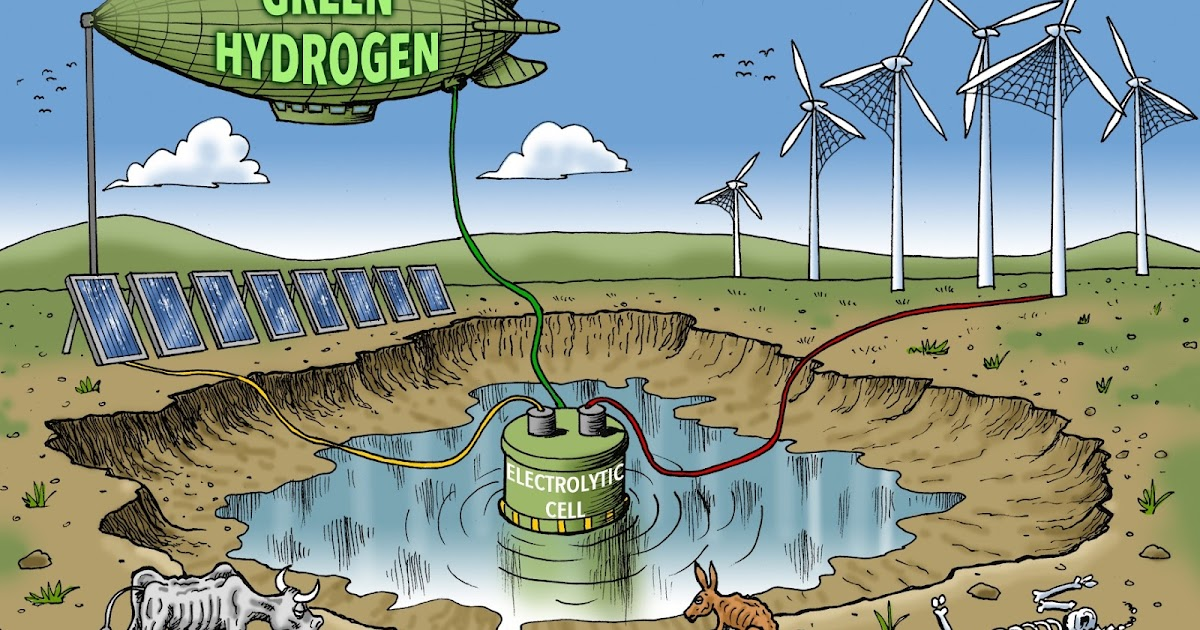
‘Hydrogen’ gets a lot of hype, but it is an elusive and dangerous gas that is rarely found naturally. To use solar energy to generate hydrogen and to then use that hydrogen as a power source is just another silly scheme to waste water and solar energy. It always takes more energy to produce hydrogen than it gives back. Let green billionaires, not taxpayers, spend their money on this merry-go-round.

Who is counting the energy and capital consumed, and the emissions generated, to manufacture, transport, and install a continent being covered by ugly solar panels, bird slicers, high voltage power lines, access roads, and hydro schemes? Now they want to invade our shallow seas. Who is going to clean up this mess in a few years’ time?

As Jo Nova says:

‘No one wants industrial plants in their backyard, but when we have to build 10,000 km of high voltage towers, 40 million solar panels, and 2,500 bird-killing turbines – it’s in everyone’s backyard.’

With all of this planned and managed by the same people who gave us Pink Batts, Snowy 2 hydro, and the NBN/NDIS fiascoes, what could possibly go wrong?

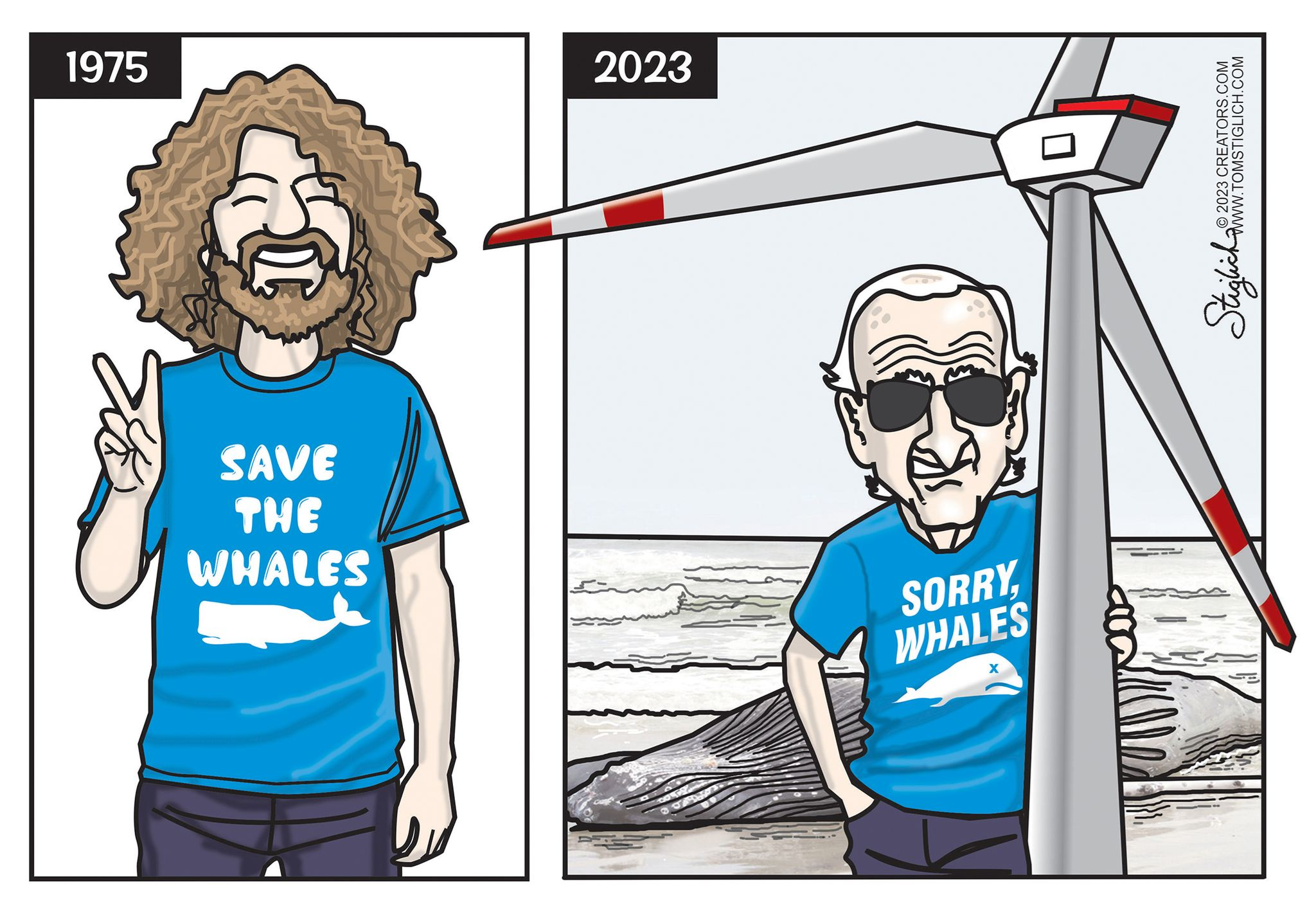
Another big problem is emerging – country people don’t want power lines across their paddocks, whining wind turbines on their hills, and glittering solar panels smothering their flats. And seaside dwellers don’t want to hear or see wind turbines off their beaches. Even whales are confused.

The solution is obvious – build all wind and solar facilities in electorates that vote Green, Teal, and Labor. Those good citizens can then listen to the turbines turning in the night breezes and look out their windows to see shiny solar panels on every roof. This will make them feel good that they are preventing man-made global warming. Those electorates who oppose this silly green agenda should get their electricity from local coal, gas or nuclear plants.

What about the Net Zero targets?

At the same time as Australia struggles to generate enough reliable power for today, governments keep welcoming more migrants, more tourists, more foreign students and planning yet more stadiums, games, and circuses. None of this is compatible with their demand for Net Zero emissions.

Unlike Europe, the Americas, and Asia, Australia has no extension cords to neighbours with reliable power from nuclear, hydro, coal, or gas – we are on our own.

Australia has abundant resources of coal and uranium – we mine and export these energy minerals but Mr Bowen, our Minister for Blackouts, says we may not use our own coal and uranium to generate future electricity here. Someone needs to tell him that no country in the world relies solely on wind, solar, and pumped hydro. Germany tried but soon found they needed French nuclear, Scandinavian hydro, imported gas, and at least 20 coal-fired German power plants are being resurrected or extended past their closing dates to ensure Germans have enough energy to get through the winter.

Australia is the only G20 country in which nuclear power is illegal (maybe no one has told green regulators that we have had a nuclear reactor at Lucas Heights in Sydney since 1958). Australia is prepared to lock navy personnel beside nuclear power plants in our new nuclear-powered submarines but our politicians forbid nuclear power stations in our wide open countryside.

More CO2 in the atmosphere brings great benefits to life on Earth. If man adds to it, the oceans dissolve a swag of it, and what stays in the atmosphere is gratefully welcomed by all plant life.

In 2023, Australia added just 0.025 ppm to the 420 ppm in today’s atmosphere. Most of this probably dissolved in the oceans. If we in Australia turned everything off tomorrow, the climate wouldn’t notice, but our plant life would, especially those growing near power stations burning coal or gas and spreading plant food.

Climate has always changed and a warm climate has never been a problem
on Earth. 
It is cold that kills. Especially during blackouts.

Stress Testing California’s Grid Batteries

Lots of PR coming out of the golden state regarding great strides in building battery capacity required by the green dream of 100% carbon free electrical power.

From Business Insider: 

Batteries briefly became the biggest source of power in California twice in the past week.

The first time — Tuesday last week around 8:10 p.m. PT, according to GridStatus.iobatteries reached a record peak output of 6,177 megawatts. For about two hours, that made electricity generated earlier and stored in batteries the single largest source of power in the Golden state, eclipsing real-time production from natural gas, nuclear, renewable sources like wind and solar, and all other sources of energy.

It happened again on Sunday evening, this time for a few hours around 7:10 p.m. PT, per data from GridStatus.io. In that instance, which broke Tuesday’s record, batteries reached a peak output of 6,458 megawatts.

Battery storage has become a key part of the push to produce more electricity using renewable sources. By connecting huge, rechargeable batteries to power grids, power utilities can store energy generated during the day by solar panels and wind turbines.

Augmentation at the Vistra Moss Landing Energy Storage Facility in California has been completed, with the world’s biggest battery energy storage system (BESS) now at 400MW / 1,600MWh. The batteries are housed in repurposed gas turbine halls. Image: Vistra Energy.

Note the BESS ratings for power (MW) and energy output (MWh).  In this case, Moss Landing has a maximum power of 400MW and a duration of 4 hours, or 1600MWh.  Such a factor of 4 seems typical for large scale BESS in California.  It also means that for a single peak hour demand, Moss Landing can only supply 400MW for that hour.  If more energy is needed, it will have to come from somewhere else.

Then in April we have the news from Gov. Newsome’s office California Achieves Major Clean Energy Victory: 10,000 Megawatts of Battery Storage.  

Let’s Apply Some Context to These Cheerful Reports

The California Energy Commission produced its electricity forecast end of 2022:

Note the graph is projecting hourly electricity demand, which peaks during hour 19.  Output levels approach and then exceed 50,000 MW demand that hour, or 50k MWh.

Cal matters raises concerns about state policy to phase out ICE vehicles in favor of EVs.

Again demand requires from the grid 50k MW per hour in 2022 with less than 1% for charging EVs.  That is projected to go 10 times higher in 13 years.

Summary

The excitement is about batteries supplying  6500 MW for a couple of hours when the peak demand is 50,000 MW.  The glorious achievement is building battery capacity up to 10,000 MW.  It doesn’t add up.


Simple Truth vs. Cheap Green Energy Lie

Francis Menton asserts that the biggest disinformation (Lie) in public discourse is claiming that the cheapest source of energy comes from renewables, wind and solar power.  He provides a number of brazen media examples in his blog post What Is The Most Pernicious Example Of “Misinformation” Currently Circulating?

Why do I say that the assertion of wind and solar being the cheapest ways to generate electricity is the very most pernicious of misinformation currently out there? Here are my three reasons: (1) the assertion is repeated endlessly and ubiquitously, (2) it is the basis for the misallocation of trillions of dollars of resources and for great impoverishment of billions of people around the world, and (3) it is false to the point of being preposterous, an insult to everyone’s intelligence, yet rarely challenged.

In addition, Paul Homewood explains at his blog how recently this lie was repeatedly entered into testimony in the UK Parliament House of Lords:

In oral questions on Thursday, Lord Frost noted Whitehall claims that renewables are half the cost of gas-fired electricity, and asked for an explanation of why subsidies were still required, and why the strike prices on offer to windfarms this year are twice what Lord Callanan says they need to make a profit. As Hansard shows, Lord Callanan failed to answer the question, simply reiterating his false claims about levelized costs.

The responses from Lord Callanan demonstrate the typical ploy for disarming dissenters’ objections, i.e. getting the discussion entangled in details and cost minutae so that the big lie is lost in the weeds.  It occurs to me that previously David Wojick had put the key issue in a simple, useful way, reposted below.

Background Post: Just One Number Keeps the Lights On

David Wojick explains how maintaining electricity supply is simple in his CFACT article It takes big energy to back up wind and solar.  Excerpts in italics with my bolds. (H/T John Ray)

Power system design can be extremely complex but there is one simple number that is painfully obvious. At least it is painful to the advocates of wind and solar power, which may be why we never hear about it. It is a big, bad number.

To my knowledge this big number has no name, but it should. Let’s call it the “minimum backup requirement” for wind and solar, or MBR. The minimum backup requirement is how much generating capacity a system must have to reliably produce power when wind and solar don’t.

Duck Curve Now Looks Like a Canyon

For most places the magnitude of MBR is very simple. It is all of the juice needed on the hottest or coldest low wind night. It is night so there is no solar. Sustained wind is less than eight miles per hour, so there is no wind power. It is very hot or cold so the need for power is very high.

In many places MBR will be close to the maximum power the system ever needs, because heat waves and cold spells are often low wind events. In heat waves it may be a bit hotter during the day but not that much. In cold spells it is often coldest at night.

Thus what is called “peak demand” is a good approximation for the maximum backup requirement. In other words, there has to be enough reliable generating capacity to provide all of the maximum power the system will ever need. For any public power system that is a very big number, as big as it gets in fact.

Actually it gets a bit bigger, because there also has to be margin of safety or what is called “reserve capacity”. This is to allow for something not working as it should. Fifteen percent is a typical reserve in American systems. This makes MBR something like 115% of peak demand.

We often read about wind and solar being cheaper than coal, gas and nuclear power, but that does not include the MBR for wind and solar.

What is relatively cheap for wind and solar is the cost to produce a unit of electricity. This is often called LCOE or the “levelized cost of energy”. But adding the reliable backup required to give people the power they need makes wind and solar very expensive.

In short the true cost of wind and solar is LCOE + MBR. This is the big cost you never hear about. But if every state goes to wind and solar then each one will have to have MBR for roughly its entire peak demand. That is an enormous amount of generating capacity.

Of course the cost of MBR depends on the generating technology. Storage is out because the cost is astronomical. Gas fired generation might be best but it is fossil fueled, as is coal. If one insists on zero fossil fuel then nuclear is probably the only option. Operating nuclear plants as intermittent backup is stupid and expensive, but so is no fossil fuel generation.

What is clearly ruled out is 100% renewables, because there would frequently be no electricity at all. That is unless geothermal could be made to work on an enormous scale, which would take many decades to develop.

unicorn

It is clear that the Biden Administration’s goal of zero fossil fueled electricity by 2035 (without nuclear) is economically impossible because of the minimum backup requirements for wind and solar. You can’t get there from here.

One wonders why we have never heard of this obvious huge cost with wind and solar. The utilities I have looked at avoid it with a trick.

Dominion Energy, which supplies most of Virginia’s juice, is a good example. The Virginia Legislature passed a law saying that Dominion’s power generation had to be zero fossil fueled by 2045. Dominion developed a Plan saying how they would do this. Tucked away in passing on page 119 they say they will expand their capacity for importing power purchased from other utilities. This increase happens to be to an amount equal to their peak demand.

The plan is to buy all the MBR juice from the neighbors! But if everyone is going wind and solar then no one will have juice to sell. In fact they will all be buying, which does not work. Note that the high pressure systems which cause low wind can be huge, covering a dozen or more states. For that matter, no one has that kind of excess generating capacity today.

To summarize, for every utility there will be times when there is zero wind and solar power combined with near peak demand. Meeting this huge need is the minimum backup requirement. The huge cost of meeting this requirement is part of the cost of wind and solar power. MBR makes wind and solar extremely expensive.

The simple question to ask the Biden Administration, the States and their power utilities is this: How will you provide power on hot or cold low wind nights?

Background information on grid stability is at Beware Deep Electrification Policies

More Technical discussion is On Stable Electric Power: What You Need to Know

cg4bbc1c620f5bf0

Footnote: Another Way to Assess Energy Cost and Value is LCOE + LACE

Cutting Through the Fog of Renewable Power Costs

Wind Power for Beginners

H/T maxyhoge

Robert Bryce explains the basics at his substack blog Build It, And The Wind Won’t Come.  Excerpts in italics with my bolds and added images.

Weather-dependent generation sources are…weather dependent:
Last year, despite adding 6.2 GW of new capacity,
U.S. wind production dropped by 2.1%.

Three years ago, in the wake of Winter Storm Uri, the alt-energy lobby and their many allies in the media made sure not to blame wind energy for the Texas blackouts. The American Clean Power Association (2021 revenue: $32.1 million) declared frozen wind turbines “did not cause the Texas power outages” because they were “not the primary cause of the blackouts. Most of the power that went offline was powered by gas or coal.”

Damaged wind turbines at the Punta Lima wind project, Naguabo, Puerto Rico, 2018. Photo: Wikipedia.

NPR parroted that line, claiming, “Blaming wind and solar is a political move.” The Texas Tribune said it was wrong to blame alt-energy after Winter Storm Uri because “wind power was expected to make up only a fraction of what the state had planned for during the winter.” The outlet also quoted one academic who said that natural gas was “failing in the most spectacular fashion right now.” Texas Tribune went on to explain, “Only 7% of ERCOT’s forecasted winter capacity, or 6 gigawatts, was expected to come from various wind power sources across the state.”

In other words, there was no reason to expect the 33 GW of wind capacity that Texas had to deliver because, you know, no one expected wind energy to produce much power. Expectations? Mr. October? Playoff Jamal? Who needs them?

But what happens when you build massive amounts of
wind energy capacity and it doesn’t deliver —
not for a day or a week, but for six months, or even an entire year?

That question is germane because, on Wednesday, the Energy Information Administration published a report showing that U.S. wind energy production declined by 2.1% last year. Even more shocking: that decline occurred even though the wind sector added 6.2 GW of new capacity!

A hat tip to fellow Substack writer Roger Pielke Jr., who pithily noted on Twitter yesterday, “Imagine if the U.S. built 6.2 GW new capacity in nuclear power plants and after starting them up, overall U.S. electricity generation went down. That’d be a problem, right?”

Um, yes. It would. And the EIA made that point in its usual dry language. “Generation from wind turbines decreased for the first time since the mid-1990s in 2023 despite the addition of 6.2 GW of new wind capacity last year,” the agency reported. The EIA also explained that the capacity factor for America’s wind energy fleet, also known as the average utilization rate, “fell to an eight-year low of 33.5%.” That compares to 35.9% capacity factor in 2022 which was the all-time high. The report continued, “Lower wind speeds than normal affected wind generation in 2023, especially during the first half of the year when wind generation dropped by 14% compared with the same period in 2022.”

Read that again. For half of last year, wind generation was down by a whopping 14% due to lower wind speeds. Imagine if that wind drought continued for an entire year. That’s certainly possible. Recall that last summer, the North American Electric Reliability Corporation warned that U.S. generation capacity “is increasingly characterized as one that is sensitive to extreme, widespread, and long duration temperatures as well as wind and solar droughts.”

According to Bloomberg New Energy Finance, corporate investment in wind energy between 2004 and 2022 totaled some $278 billion. In addition, according to data from the Treasury Department, the U.S. government spent more than $30 billion on the production tax credit over that same period. Thus, over the last two decades, the U.S. has spent more than $300 billion building 150 GW of wind capacity that has gobbled up massive amounts of land, garnered enormous (and bitter) opposition from rural Americans, and hasn’t gotten more efficient over time.

Wednesday’s EIA report is a stark reminder that all of that generation capacity is subject to the vagaries of the wind. Imagine if the U.S. had spent that same $300 billion on a weather-resilient form of generation, like, say, nuclear power. That’s relevant because Unit 4 at Plant Vogtle in Georgia came online on Monday. With that same $300 billion, the U.S. could have built 20, 30, or maybe even 40 GW of new nuclear reactors with a 92% capacity factor that wouldn’t rely on the whims of the wind. In addition, those dozens of reactors would have required a tiny fraction of the land now covered by thousands of viewshed-destroying, bat-and-bird-killing wind turbines.

If climate change means we will face more extreme weather in the years ahead — hotter, colder, and/or more severe temperatures for extended periods — it’s Total Bonkers CrazytownTM to make our electric grid dependent on the weather. But by lavishing staggering amounts of money on wind and solar energy, and in many cases, mandating wind and solar, that’s precisely what we are doing.


Wake Up: Energy Transition Not Happening

Wind and Solar The Grand Illusion

Mark Mills explains the many ways the deck is stacked against those gambling on Wind and Solar energy to replace hydrocarbon fuels.  The transcript is below in italics with my bolds and added images.

Have you ever heard of “unobtanium”?

It’s the magical energy mineral found on the planet Pandora in the movie, Avatar. It’s a fantasy in a science fiction script. But environmentalists think they’ve found it here on earth in the form of wind and solar power.

They think all the energy we need can be supplied by building enough wind and solar farms; and enough batteries.

The simple truth is that we can’t. Nor should we want to—not if our goal is to be good stewards of the planet.

To understand why, consider some simple physics
realities that aren’t being talked about.

All sources of energy have limits that can’t be exceeded. The maximum rate at which the sun’s photons can be converted to electrons is about 33%. Our best solar technology is at 26% efficiency. For wind, the maximum capture is 60%. Our best machines are at 45%.

So, we’re pretty close to wind and solar limits. Despite PR claims about big gains coming, there just aren’t any possible. And wind and solar only work when the wind blows and the sun shines. But we need energy all the time. The solution we’re told is to use batteries.

Again, physics and chemistry make this very hard to do.

Consider the world’s biggest battery factory, the one Tesla built in Nevada. It would take 500 years for that factory to make enough batteries to store just one day’s worth of America’s electricity needs. This helps explain why wind and solar currently still supply less than 3% of the world’s energy, after 20 years and billions of dollars in subsidies.

Putting aside the economics, if your motive is to protect the environment, you might want to rethink wind, solar, and batteries because, like all machines, they’re built from nonrenewable materials.

Consider some sobering numbers:

A single electric-car battery weighs about half a ton. Fabricating one requires digging up, moving, and processing more than 250 tons of earth somewhere on the planet.

Building a single 100 Megawatt wind farm, which can power 75,000 homes requires some 30,000 tons of iron ore and 50,000 tons of concrete, as well as 900 tons of non-recyclable plastics for the huge blades. To get the same power from solar, the amount of cement, steel, and glass needed is 150% greater.

Then there are the other minerals needed, including elements known as rare earth metals. With current plans, the world will need an incredible 200 to 2,000 percent increase in mining for elements such as cobalt, lithium, and dysprosium, to name just a few.

Where’s all this stuff going to come from? Massive new mining operations. Almost none of it in America, some imported from places hostile to America, and some in places we all want to protect.

Australia’s Institute for a Sustainable Future cautions that a global “gold” rush for energy materials will take miners into “…remote wilderness areas [that] have maintained high biodiversity because they haven’t yet been disturbed.”

And who is doing the mining? Let’s just say that they’re not all going to be union workers with union protections.

Amnesty International paints a disturbing picture: “The… marketing of state-of-the-art technologies are a stark contrast to the children carrying bags of rocks.”

And then the mining itself requires massive amounts of conventional energy, as do the energy-intensive industrial processes needed to refine the materials and then build the wind, solar, and battery hardware.

Then there’s the waste. Wind turbines, solar panels, and batteries have a relatively short life; about twenty years. Conventional energy machines, like gas turbines, last twice as long.

With current plans, the International Renewable Energy Agency calculates that by 2050, the disposal of worn-out solar panels will constitute over double the tonnage of all of today’s global plastic waste. Worn-out wind turbines and batteries will add millions of tons more waste. It will be a whole new environmental challenge.

Before we launch history’s biggest increase in mining, dig up millions of acres in pristine areas, encourage childhood labor, and create epic waste problems, we might want to reconsider our almost inexhaustible supply of hydrocarbons—the fuels that make our marvelous modern world possible.

And technology is making it easier to acquire and cleaner to use them every day.

It would take a wind farm the size of Albany county NY to replace the now closed Indian Point nuclear power plant.

The following comparisons are typical—and instructive:

It costs about the same to drill one oil well as it does to build one giant wind turbine. And while that turbine generates the energy equivalent of about one barrel of oil per hour, the oil rig produces 10 barrels per hour. It costs less than 50 cents to store a barrel of oil or its equivalent in natural gas. But you need $200 worth of batteries to hold the energy contained in one oil barrel.

Next time someone tells you that wind, solar and batteries are
the magical solution for all our energy needs ask them
if they have an idea of the cost… to the environment.

“Unobtanium” works fine in the movies. But we don’t live in movies. We live in the real world.

I’m Mark Mills, Senior Fellow at the Manhattan Institute, for Prager University.

There is no charge for content on this site, nor for subscribers to receive email notifications of postings.

Wind and Solar The Grand Illusion

Mark Mills explains the many ways the deck is stacked against those gambling on Wind and Solar energy to replace hydrocarbon fuels.  The transcript is below in italics with my bolds and added images.

Have you ever heard of “unobtanium”?

It’s the magical energy mineral found on the planet Pandora in the movie, Avatar. It’s a fantasy in a science fiction script. But environmentalists think they’ve found it here on earth in the form of wind and solar power.

They think all the energy we need can be supplied by building enough wind and solar farms; and enough batteries.

The simple truth is that we can’t. Nor should we want to—not if our goal is to be good stewards of the planet.

To understand why, consider some simple physics
realities that aren’t being talked about.

All sources of energy have limits that can’t be exceeded. The maximum rate at which the sun’s photons can be converted to electrons is about 33%. Our best solar technology is at 26% efficiency. For wind, the maximum capture is 60%. Our best machines are at 45%.

So, we’re pretty close to wind and solar limits. Despite PR claims about big gains coming, there just aren’t any possible. And wind and solar only work when the wind blows and the sun shines. But we need energy all the time. The solution we’re told is to use batteries.

Again, physics and chemistry make this very hard to do.

Consider the world’s biggest battery factory, the one Tesla built in Nevada. It would take 500 years for that factory to make enough batteries to store just one day’s worth of America’s electricity needs. This helps explain why wind and solar currently still supply less than 3% of the world’s energy, after 20 years and billions of dollars in subsidies.

Putting aside the economics, if your motive is to protect the environment, you might want to rethink wind, solar, and batteries because, like all machines, they’re built from nonrenewable materials.

Consider some sobering numbers:

A single electric-car battery weighs about half a ton. Fabricating one requires digging up, moving, and processing more than 250 tons of earth somewhere on the planet.

Building a single 100 Megawatt wind farm, which can power 75,000 homes requires some 30,000 tons of iron ore and 50,000 tons of concrete, as well as 900 tons of non-recyclable plastics for the huge blades. To get the same power from solar, the amount of cement, steel, and glass needed is 150% greater.

Then there are the other minerals needed, including elements known as rare earth metals. With current plans, the world will need an incredible 200 to 2,000 percent increase in mining for elements such as cobalt, lithium, and dysprosium, to name just a few.

Where’s all this stuff going to come from? Massive new mining operations. Almost none of it in America, some imported from places hostile to America, and some in places we all want to protect.

Australia’s Institute for a Sustainable Future cautions that a global “gold” rush for energy materials will take miners into “…remote wilderness areas [that] have maintained high biodiversity because they haven’t yet been disturbed.”

And who is doing the mining? Let’s just say that they’re not all going to be union workers with union protections.

Amnesty International paints a disturbing picture: “The… marketing of state-of-the-art technologies are a stark contrast to the children carrying bags of rocks.”

And then the mining itself requires massive amounts of conventional energy, as do the energy-intensive industrial processes needed to refine the materials and then build the wind, solar, and battery hardware.

Then there’s the waste. Wind turbines, solar panels, and batteries have a relatively short life; about twenty years. Conventional energy machines, like gas turbines, last twice as long.

With current plans, the International Renewable Energy Agency calculates that by 2050, the disposal of worn-out solar panels will constitute over double the tonnage of all of today’s global plastic waste. Worn-out wind turbines and batteries will add millions of tons more waste. It will be a whole new environmental challenge.

Before we launch history’s biggest increase in mining, dig up millions of acres in pristine areas, encourage childhood labor, and create epic waste problems, we might want to reconsider our almost inexhaustible supply of hydrocarbons—the fuels that make our marvelous modern world possible.

And technology is making it easier to acquire and cleaner to use them every day.

It would take a wind farm the size of Albany county NY to replace the now closed Indian Point nuclear power plant.

The following comparisons are typical—and instructive:

It costs about the same to drill one oil well as it does to build one giant wind turbine. And while that turbine generates the energy equivalent of about one barrel of oil per hour, the oil rig produces 10 barrels per hour. It costs less than 50 cents to store a barrel of oil or its equivalent in natural gas. But you need $200 worth of batteries to hold the energy contained in one oil barrel.

Next time someone tells you that wind, solar and batteries are
the magical solution for all our energy needs ask them
if they have an idea of the cost… to the environment.

“Unobtanium” works fine in the movies. But we don’t live in movies. We live in the real world.

I’m Mark Mills, Senior Fellow at the Manhattan Institute, for Prager University.

There is no charge for content on this site, nor for subscribers to receive email notifications of postings.