Climatism vs. Eugenics: Which is Worse?

Ralph B. Alexander writes at his blog Science Under Attack Belief in Catastrophic Climate Change as Misguided as Eugenics was 100 Years Ago. H/T Yen Makabenta Manila Times. Excerpts in italics with my bolds.

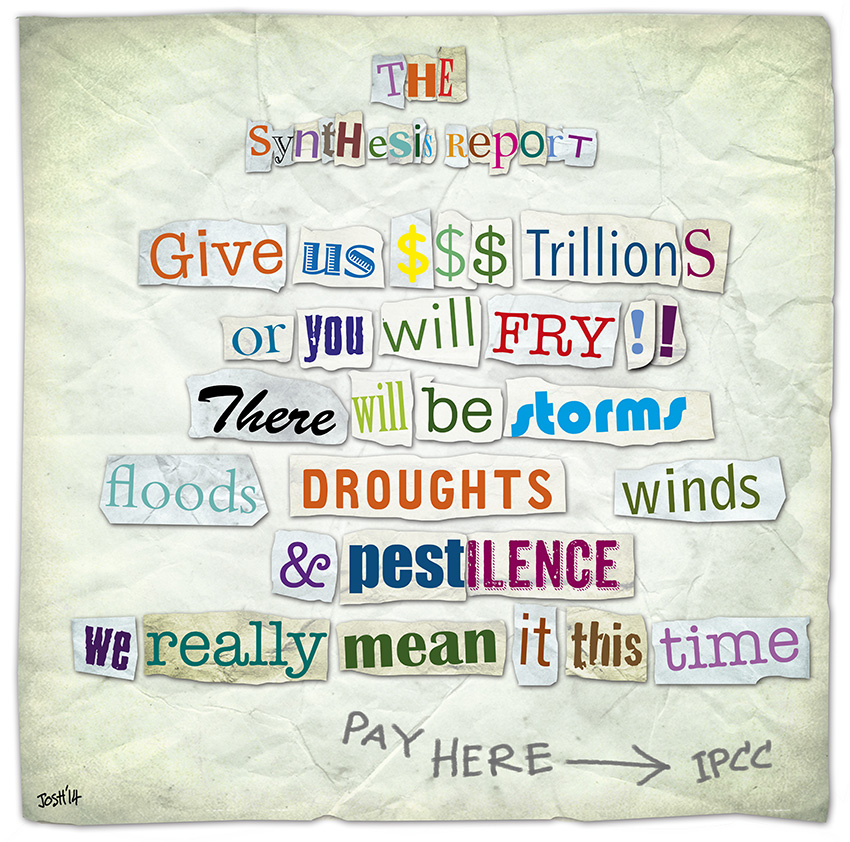
Last October’s landmark report by the UN’s IPCC (Intergovernmental Panel on Climate Change), which claims that global temperatures will reach catastrophic levels unless we take drastic measures to curtail climate change by 2030, is as misguided as eugenics was 100 years ago. Eugenics was the shameful but little-known episode in the early 20th century characterized by the sterilization of hundreds of thousands of people considered genetically inferior, especially the mentally ill, the physically handicapped, minorities and the poor.

Although ill-conceived and even falsified as a scientific theory in 1917, eugenics became a mainstream belief with an enormous worldwide following that included not only scientists and academics, but also politicians of all parties, clergymen and luminaries such as U.S. President Teddy Roosevelt and famed playwright George Bernard Shaw. In the U.S., where the eugenics movement was generously funded by organizations such as the Rockefeller Foundation, a total of 27 states had passed compulsory sterilization laws by 1935 – as had many European countries.

Eugenics only fell into disrepute with the discovery after World War II of the horrors perpetrated by the Nazi regime in Germany, including the holocaust as well as more than 400,000 people sterilized against their will. The subsequent global recognition of human rights declared eugenics to be a crime against humanity.

The so-called science of catastrophic climate change is equally misguided. Whereas modern eugenics stemmed from misinterpretation of Mendel’s genetics and Darwin’s theory of evolution, the notion of impending climate disaster results from misrepresentation of the actual empirical evidence for a substantial human contribution to global warming, which is shaky at best.

Instead of the horrors of eugenics, the narrative of catastrophic anthropogenic (human-caused) global warming conjures up the imaginary horrors of a world too hot to live in. The new IPCC report paints a grim picture of searing yearly heatwaves, food shortages and coastal flooding that will displace 50 million people, unless draconian action is initiated soon to curb emissions of greenhouse gases from the burning of fossil fuels. Above all, insists the IPCC, an unprecedented transformation of the world’s economy is urgently needed to avoid the most serious damage from climate change.

But such talk is utter nonsense. First, the belief that we know enough about climate to control the earth’s thermostat is preposterously unscientific. Climate science is still in its infancy and, despite all our spectacular advances in science and technology, we still have only a rudimentary scientific understanding of climate. The very idea that we can regulate the global temperature to within 0.9 degrees Fahrenheit (0.5 degrees Celsius) through our own actions is absurd.

Second, the whole political narrative about greenhouse gases and dangerous anthropogenic warming depends on faulty computer climate models that were unable to predict the recent slowdown in global warming, among other failings. The models are based on theoretical assumptions; science, however, takes its cue from observational evidence. To pretend that current computer models represent the real world is sheer arrogance on our part.

And third, the empirical climate data that is available has been exaggerated and manipulated by activist climate scientists. The land warming rates from 1975 to 2015 calculated by NOAA (the U.S. National Oceanic and Atmospheric Administration) are distinctly higher than those calculated by the other two principal guardians of the world’s temperature data. Critics have accused the agency of exaggerating global warming by excessively cooling the past and warming the present, suggesting politically motivated efforts to generate data in support of catastrophic human-caused warming.

Source: Tony Heller, Real Climate Science

Exaggeration also shows up in the setting of new records for the “hottest year ever” –declarations deliberately designed to raise alarm. But when the global temperature is currently creeping upwards at the rate of only a few hundredths of a degree every 10 years, the establishment of new records is unsurprising. If the previous record has been set in the last 10 or 20 years, a high temperature that is only several hundredths of a degree above the old record will set a new one.

Eugenics too was rooted in unjustified human hubris, false science, and exaggeration in its methodology. Just like eugenics, belief in apocalyptic climate change and in the dire prognostications of the IPCC will one day be abandoned also.

Ralph B. Alexander is a retired physicist and a science writer who puts science above political correctness. He is the author of Science Under Attack: The Age of Unreason and Global Warming False Alarm. Ralph grew up in Perth, Western Australia and received his PhD in physics from the University of Oxford.  Dr. Alexander has held a variety of positions in research, academia and industry over the course of his scientific career, and now lives in California. 

See also:  On the Hubris of Climatism

Control Population, Control the Climate. Not.

“Hottest Year” Misdirection

Man Made Warming from Adjusting Data

Our Bent Elite Delivers Admissions Cheating and Climate Virtue


Matthew Continetti March 15, 2019 writes at Washington Free Beacon on Our Bankrupt Elite: Operation Varsity Blues and the hypocrisy of Hollywood liberals.  Excerpts in italics with my bolds and images.

Every element of the college admissions scandal, aka “Operation Varsity Blues,” is fascinating.

There are the players: the Yale dad who, implicated in a securities fraud case, tipped the feds off to the caper; a shady high school counselor turned admissions consultant; the 36-year-old Harvard grad who sold his talents for standardized testing to the highest bidder; the comely actresses from Full House and Desperate Housewives; the fashion designer; the casino magnate. Who would have thought that one of the major headlines of 2019 would be “Lori Loughlin released on bond”?

There are the children: the social media influencer (yes this is a thing) who was told of her parents’ arrest while vacationing on the yacht of a USC trustee; the mom who submitted doctored photographs to USC to portray her son as a championship pole-vaulter; the place kicker for a high school with no football team; and the rap artist from the Upper East Side who defended his mom and dad to the press while smoking a blunt.

There are the means: paying tens of thousands of dollars to Rick Singer, Trinity ’86, who bribed athletic directors and coaches, doctored student résumés, and arranged for clients to take college admittance exams alongside a “proctor” who answered the questions for them. The icing on the cake: Some payments were made to a charitable foundation so the parents could get the tax write-off. What a country.

There is the objective: placement at a high-profile school. Why? Social signaling, status games, but also because the wage premium for a college degree has become so large that parents are apparently willing to break federal law to earn it. Not for what the students learn at college—they hardly learn anything. Loughlin’s daughter, the influencer, spoke for most undergraduates when she said, “I do want the experience of game days, partying—I don’t really care about school, as you guys all know.” Oh, we know. Otherwise your mom wouldn’t be looking for a defense attorney.

It’s not what happens in class that matters. The university has long been corrupted by athletics, politicization of the curriculum, identity politics, grade inflation, affirmative action, the death of the humanities, and ideological bias among faculty. What matters is the chit you receive at graduation.

Finally, there are the lessons to be drawn from this story. It’s the media’s vocation, drawing lessons. I’ve heard it said that the parents ought to have been concerned about the lesson they were teaching their children—though right now I’d wager they are more concerned with avoiding jail time. Others say this is the latest example of the falsity of meritocracy. For progressives, the affair reveals the classism and racism of our society, its rampant white privilege.

Which is a funny thing to say about the academic world. Colleges exert tremendous energy to be as diverse and inclusive and woke as possible, to the point where Asian-American students are discriminated against lest they ruin the schemes of college admissions officers. A scandal over which the media seems far less upset.

Lessons? Here are two. First the good news: We are shocked by the actions of these parents precisely because there is so little corruption in America. If the problems were as systemic as some on the Internet believe, they would hardly raise such an outcry. Denizens of countries where bribery is a way of life look at us and say, “Amateurs.”

The second lesson is not as comforting. Operation Varsity Blues is further evidence of the bankruptcy of American elites. For over a decade now, the legitimacy of elites in politics, foreign policy, central banking, journalism, religion, and economics has crumbled as reality failed to match their rhetoric. Education is the latest sphere where elites have betrayed our country’s institutions and our country’s people by using wealth and connections to rig the rules of the game.

The scandal also points to the flagrant hypocrisy of Hollywood liberalism. No class is more moralistic, more hectoring, more obnoxiously activist than the Hollywood left. They barrage Americans with displays of their virtue, their calls to humanitarianism, their paeans to multiculturalism and feminism, their slanders of President Trump, Vice President Pence, Republicans in general, and conservatives in particular. And they have great sway in national politics. A Democrat’s future depends on the beneficence of Hollywood donors—donors who were well represented among the individuals charged in Operation Varsity Blues.

The entertainment industry liberals talk a good game. But look at their actions. Harvey Weinstein and Kevin Spacey are synonymous with predation. Jussie Smollett was a B-list celebrity until he faked a hate crime against himself and blamed it on supporters of Trump. Now we have actors breaking the law so their kids can go to USC.

Why on Earth should we take political cues from these people? By what right do they portray themselves as enlightened, as advanced, as more sophisticated than half the country, even while they lie, cheat, steal, and assault? Plenty of baddies doing nasty things understand that donations to the Democratic Party and its interest groups insulate them from scrutiny and criticism—right until the moment they go to jail. These people aren’t interested in the common good. They are interested in themselves.

“Devoid of all collective attachment except membership in its own club,” writes Christophe Guilluy in Twilight of the Elites (2019), “the new bourgeoisie merrily surfs the surging waves of the market, reinforcing its class position, capturing the economic benefits of globalization, and building up a portfolio of real estate holdings that soon will rival that of the old bourgeoisie.” Guilluy is describing contemporary France. He might as well be talking about Aunt Becky.

Conclusion:

Roger L. Simon writes at Real Clear Politics. Excerpts in italics with my bolds.

What made these people, among the most privileged in our society, act this way? Did they not think that they were either teaching their children to lie or, almost as bad, plunging them into situations where they were doomed to fail? Or were they relying on the current spate of grade inflation to save the day for their underqualified offspring?

Whatever the case, what accounts for this particularly repellent version of do what I say, not as I do? Is it just an insatiable desire for status by an insecure community, this time on the backs of their children?

Hollywood is rampant with this excessive public moral posturing, which disguises often equally excessive private amorality or even immorality. The biggest liberal or progressive stars are frequently the most avaricious and nasty people in their personal lives. It’s a form of split personality cum self-hypnosis that has been employed successfully by the entertainment industry for some time, but the college admissions scandal is bringing it unpleasantly to the surface, as did the recent #MeToo controversy.

Hollywood, however, is far from alone in deserving blame for the admissions scandal. Although the FBI has not taken legal action against the colleges involved, they should be considered at minimum unindicted co-conspirators. Our universities have come under increasing criticism of late for political bias — in one study, only 39 percent of colleges had even one Republican professor — suppression of freedom of speech, and their own covert form of racial discrimination. Asian-Americans, with justification, are currently suing Harvard for admissions bias against them.

These days our colleges seem as much, if not more, bent on social engineering as they are on education. This encourages many students to compete in what is, in essence, a victimhood derby under the trendy rubric of intersectionality. Besides being a waste of educational time and money, this does not augur well for the future of our country.

What we have in the college admissions scandal is corrupt people applying for an already corrupted system. If the attention that glamorous Hollywood usually attracts brings more attention to this problem, it is all to the good. And if it helps to begin to solve it, better yet.

Footnote:

Never forget these people are paid for pretending.  As one of them said:  If you can fake sincerity, you’ll go a long way in this town.

Overheating About Global Warming

Mar 13, 2019 Bjørn Lomborg writes about the overheated discourse that has children taking to the streets on the advice of adults who should know better.  Overheating About Global Warming was published today at Project Syndicate.  Excerpts in italics with my bolds and images.

Decades of climate-change exaggeration in the West have produced frightened children, febrile headlines, and unrealistic political promises. The world needs a cooler approach that addresses climate change smartly without scaring us needlessly and that pays heed to the many other challenges facing the planet.

Across the rich world, school students have walked out of classrooms and taken to the streets to call for action against climate change. They are inspired by 16-year-old Swedish activist Greta Thunberg, who blasts the media and political leaders for ignoring global warming and wants us to “panic.” A global day of action is planned for March 15.

Although the students’ passion is admirable, their focus is misguided. This is largely the fault of adults, who must take responsibility for frightening children unnecessarily about climate change. It is little wonder that kids are scared when grown-ups paint such a horrific picture of global warming.

For starters, leading politicians and much of the media have prioritized climate change over other issues facing the planet. Last September, United Nations Secretary-General António Guterres described climate change as a “direct existential threat” that may become a “runaway” problem. Just last month, The New York Times ran a front-page commentary on the issue with the headline “Time to Panic.” And some prominent politicians, as well as many activists, have taken the latest report from the United Nations Intergovernmental Panel on Climate Change (IPCC) to suggest the world will come to an end in just 12 years.

This normalization of extreme language reflects decades of climate-change alarmism. The most famous clip from Al Gore’s 2006 film An Inconvenient Truth showed how a 20-foot rise in sea level would flood Florida, New York, the Netherlands, Bangladesh, and Shanghai – omitting the fact that this was seven times worse than the worst-case scenario.

A separate report that year described how such alarmism “might even become secretly thrilling – effectively a form of ‘climate porn.’” And in 2007, The Washington Post reported that “for many children and young adults, global warming is the atomic bomb of today.”

When the language stops being scary, it gets ramped up again. British environmental campaigner George Monbiot, for example, has suggested that the term “climate change” is no longer adequate and should be replaced by “catastrophic climate breakdown.”

Educational materials often don’t help, either. One officially endorsed geography textbook in the United Kingdom suggests that global warming will be worse than famine, plague, or nuclear war, while Education Scotland has recommended The Day After Tomorrow as suitable for climate-change education. This is the film, remember, in which climate change leads to a global freeze and a 50-foot wall of water flooding New York, man-eating wolves escape from the zoo, and – spoiler alert – Queen Elizabeth II’s frozen helicopter falls from the sky.

Reality would sell far fewer newspapers. Yes, global warming is a problem, but it is nowhere near a catastrophe. The IPCC estimates that the total impact of global warming by the 2070s will be equivalent to an average loss of income of 0.2-2% – similar to one recession over the next half-century. The panel also says that climate change will have a “small” economic impact compared to changes in population, age, income, technology, relative prices, lifestyle, regulation, and governance.

And while media showcase the terrifying impacts of every hurricane, the IPCC finds that “globally, there is low confidence in attribution of changes in [hurricanes] to human influence.” What’s more, the number of hurricanes that make landfall in the United States has decreased, as has the number of strong hurricanes. Adjusted for population and wealth, hurricane costs show “no trend,” according to a new study published in Nature.

Another Nature study shows that although climate change will increase hurricane damage, greater wealth will make us even more resilient. Today, hurricanes cost the world 0.04% of GDP, but in 2100, even with global warming, they will cost half as much, or 0.02% of GDP. And, contrary to breathless media reports, the relative global cost of all extreme weather since 1990 has been declining, not increasing.

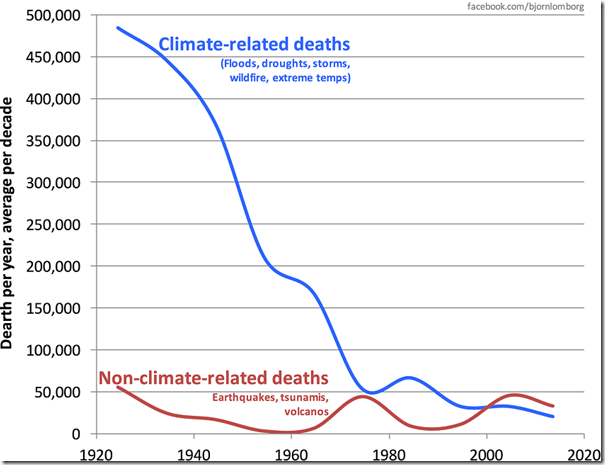
Perhaps even more astoundingly, the number of people dying each year from weather-related catastrophes has plummeted 95% over the past century, from almost a half-million to under 20,000 today – while the world’s population has quadrupled.

My Mind is Made Up, Don’t Confuse Me with the Facts. H/T Bjorn Lomborg, WUWT

Meanwhile, decades of fearmongering have gotten us almost nowhere. What they have done is prompt grand political gestures, such as the unrealistic cuts in carbon dioxide emissions that almost every country has promised under the 2015 Paris climate agreement. In total, these cuts will cost $1-2 trillion per year. But the sum total of all these promises is less than 1% of what is needed, and recent analysis shows that very few countries are actually meeting their commitments.

In this regard, the young protesters have a point: the world is failing to solve climate change. But the policy being pushed – even bigger promises of faster carbon cuts – will also fail, because green energy still isn’t ready. Solar and wind currently provide less than 1% of the world’s energy, and already require subsidies of $129 billion per year. The world must invest more in green-energy research and development eventually to bring the prices of renewables below those of fossil fuels, so that everyone will switch.

And although media reports describe the youth climate protests as “global,” they have taken place almost exclusively in wealthy countries that have overcome more pressing issues of survival. A truly global poll shows that climate change is people’s lowest priority, far behind health, education, and jobs.

In the Western world, decades of climate-change exaggeration have produced frightened children, febrile headlines, and grand political promises that aren’t being delivered. We need a calmer approach that addresses climate change without scaring us needlessly and that pays heed to the many other challenges facing the planet.

Bjørn Lomborg, a visiting professor at the Copenhagen Business School, is Director of the Copenhagen Consensus Center. His books include The Skeptical Environmentalist, Cool It, How to Spend $75 Billion to Make the World a Better Place, The Nobel Laureates’ Guide to the Smartest Targets for the World, and, most recently, Prioritizing Development. In 2004, he was named one of Time magazine’s 100 most influential people for his research on the smartest ways to help the world.

Sciencing Vs. Scientism


What is Scientific Truth? Previous posts here have discussed the difference between science as a process of discovery (“sciencing” if you will), and science as a catalog of answers to how the world works (“scientism” in this sense). On this issue, I am following Richard Feynman, and also Arthur Eddington, who is quoted at the end.

This post dives into the struggle over truth and science in contemporary society. It also discusses some underlying philosophical confusions leading to distortions of scientific processes and discoveries. Michela Massimi is Professor of Philosophy of Science at the University of Edinburgh in Scotland. She works in history and philosophy of science and was the recipient of the 2017 Wilkins-Bernal-Medawar Medal by the Royal Society, London, UK. Her article recently published at Aeron is entitled Getting it right. Excerpts in italics with my bolds and images. My takeaway: Science matters only because Truth matters. But do read her entire essay for your own edification. Title is link to essay.

Truth is neither absolute nor timeless. But the pursuit of truth remains at the heart of the scientific endeavour

Think of the number of scenarios in which truth matters in science. We care to know whether increased CO2 emission levels cause climate change, and how fast. We care to know whether smoking tobacco increases the risk of lung cancer. We care to know whether poor diet exposes children to the risk of developing obesity, or whether forecasts of economic growth are correct. Truth in science is not esoteric dilly-dallying. It shapes climate science, medicine, public health, the economy and many other worldly endeavours.

That truth matters to science is hardly news. For a long time, people have looked to science for truths about the world. The Scientific Revolution was nothing if not the triumph of Galileo’s scientific truth – hard-won through his telescopic observations – over centuries of dogma about the geocentric system. With its system of epicycles and deferents, Ptolemaic astronomy was at once sophisticated and false. It served to, at best, ‘save the appearances’ about how planets seemed to move in the sky. It did not tell the truth about planetary motion until the discovery of the Copernican explanation. Or consider the Chemical Revolution at the end of the 18th century. We no longer, after all, believe in phlogiston – the fictional imponderable fluid that Georg Ernst Stahl, Joseph Priestley and other natural philosophers at the time believed to be at work in combustion and calcination phenomena. Antoine Lavoisier’s scientific truth about oxygen prevailed over false beliefs about phlogiston.

The main actors of these scientific revolutions often fostered this way of thinking about science as an enquiry leading to the inevitable triumph of truth over past errors. Two centuries after Galileo’s successful defence of the heliocentric system, this idea of the course of scientific truth continued to inspire philosophers. In his Cours de philosophie positive (1830-42), Auguste Comte saw the evolution of human knowledge in three main stages: ‘the Theological, or fictitious; the Metaphysical, or abstract; and the Scientific, or positive’. In the ‘positive’, the third and last stage, ‘an explanation of facts is simply the establishment of a connection between single phenomena and some general facts, the number of which continually diminishes with the progress of science’.

In some scientific quarters, this Comtean notion of how science evolves and progresses remains common currency. But philosophers of science, over the past half-century, have turned against the representation of science as a ceaseless forward march toward truth. It is just not how science works, how it moves through history. It flies in the face of the wonderful and subtle historical nuances of how scientific revolutions have in fact occurred. It does not accommodate how some of the greatest scientific minds held dearly to some false beliefs. It wilfully ignores the many voices, disagreements and controversies through which scientific knowledge has often advanced and progressed over time.

However, many (and legitimate in their own right) criticisms against this naive view of science have committed a similar mistake. They have offered a portrait of science purged of any commitment to truth. They see truth as an inconvenient and disposable feature of science. Fraught as the ideal and pursuit of truth is with tendencies to petty doctrinairism, it is nonetheless a mistake to try to purge it. The fallacy of positivist philosophy was to think of science as coming in stages of some sort, or following a particular path, or historical cycles. The anti-truth trend in the philosophy of science has often ended up repeating this same misstep. It is important to move beyond the sterile dichotomy between the old (quasi-positivist) view of truth in science and the rival anti-truth trend of recent decades.

Let us start with some genuine philosophical questions about truth in science. Here are three: 1) Does science aim at truth? 2) Does science tell us the truth? 3) Should we expect science to tell us the truth?

In each of these questions, ‘science’ is a generic placeholder for whichever scientific discipline we are interested in questioning. Question one might strike us as otiose but, in fact, it triggered one of the liveliest debates of the past 40 years. Bas van Fraassen launched this debate as to whether science aims at truth with his pioneering book The Scientific Image (1980). Does science aim to tell us a true story about nature? Or does it aim only at saving the observable phenomena (namely, providing an account that makes sense of what we can observe, without expecting it to be the true account about nature)?

There are philosophers today who embrace the view that science does not need to be true in order to be good. They argue that asking for truth is risky because it commits one to believing in things (be it epicycles, phlogiston, ether or something else) that might prove false in the future. In their view, ‘empirically adequate’ theories, theories that ‘save the observable phenomena’, are good enough for science. For example, one might take the Standard Model in high-energy physics not as aiming at the truth about whether the world is really carved up into quarks, leptons and force carriers; whether these entities really have the properties that the Standard Model says they have; and so on.

When it comes to the second question – does science tell us the truth? – scientific realists and anti-realists of various stripes have debated it. Leaving aside the aim of science, let us concentrate on its track record instead. Has science told us the truth? Looking at the history of science, does it amount to a persuasive story of truth accumulated over the centuries? Philosophers, historians, sociologists and science-studies scholars have all challenged a simple affirmative answer to this question.

This decades-long, multi-pronged, disenchantment-with-truth trend in philosophy of science starts by rejecting the idea that there are facts about nature that make our scientific claims true or false. Fact-constructivism is only one aspect of this multi-pronged disenchantment-with-truth trend. Outlandish as this might sound, its defenders claim that there is not a single, objective way that the world is; there are rather many different and ‘equally true descriptions of the world, and their truth is the only standard of their faithfulness’, in the words of the philosopher Nelson Goodman. For example, he claimed that we do make facts, but not like, say, a baker makes bread, or a sculptor makes a statue. In Goodman’s view, we make facts any time we construct what he called a ‘version’ of the world (via works of art, of music, of poetry, or of science).

We do this all the time, for example, with stars and constellations. As the philosopher Hilary Putnam expresses it: ‘Nowadays, there is a Big Dipper up there in the sky, and we, so to speak, “put” a Big Dipper up there in the sky by constructing that version.’ Goodman’s world-making view has severe implications for truth in science. ‘Truth,’ he wrote, ‘far from being a solemn and severe master, is a docile and obedient servant. The scientist who supposes that he is single-mindedly dedicated to the search for truth deceives himself … He as much decrees as discovers the laws he sets forth, as much designs as discerns the patterns he delineates.’

Fact-constructivism sounds too radical to many philosophers, and alienating to most scientists. So here is another approach against factual truth, well-known among philosophers of science. Over the past 40 years, they have produced an extraordinary amount of work on models in science. The role of abstractions and idealisations in scientific models, they maintain, is to select and to distort aspects of the relevant target system. The billiard-ball model of Brownian motion, for example, represents the motion of molecules by idealising them as perfectly spherical billiard balls. Moreover, the model abstracts, or removes, molecules from their actual environment, which is of course where collisions among molecules take place.

Studying modelling practices in science has led some to argue that science does not tell the truth but it does provide important non-factive understanding. Consider, for instance, Boyle’s gas law, which captures the relation between pressure p and volume v in an ideal gas at constant temperature. At best, Boyle’s law is true ceteris paribus (ie, all else being equal) in highly idealised and contrived circumstances. There simply is no ideal gas with perfectly spherical molecules displaying ‘atomic facts’ (in a quasi-Wittgensteinian sense) that make Boyle’s law true. Despite being true of nothing real, the billiard-ball model of Brownian motion and Boyle’s ideal gas law do nonetheless provide important non-factual understanding of the behaviour of real gases. For they allow scientists to understand the relation between decreasing volume and increasing pressure in any gas, even if there are no atomic facts in nature about perfectly spherical molecules corresponding to such idealisations.

Anti-dogmatic and anti-monist approaches to science have also questioned the value, as well as the facticity, of truth. From the 1960s, science-studies scholars began to see the word ‘truth’ as evoking unpalatable petty doctrinairism and intracultural battles in the wake of the Vietnamese war, postmodernism and, later on, what became known as the ‘science wars’. Many saw the physicist Thomas Kuhn as the forefather of a new historicist trend that dismantled what they perceived as the naive view that science aims at or tracks truth. Kuhn saw himself as ‘a fact lover and a truth seeker’. Yet in the final remarks to his classic The Structure of Scientific Revolutions (1962), he made a prescient, almost ominous, warning:

Does it really help to imagine that there is some one full, objective, true account of nature and that the proper measure of scientific achievement is the extent to which it brings us closer to the ultimate goal? … Successive stages in that developmental process are marked by an increase in articulation and specialisation. And the entire process might have occurred, as we now suppose biological evolution did, without benefit of a set goal, a permanent fixed scientific truth, of which each stage in the development of scientific knowledge is a better exemplar.

For Kuhn, truth is not an overarching aim of science across scientific revolutions. Nor do scientific revolutions (eg, from Ptolemaic to Copernican astronomy) track truth either. What they do, at best, is to increase our ability to solve anomalies that beset the previous paradigm (as when we eventually discovered that retrograde motion was only an illusion, and not something that needed epicycles and deferents to be explained).
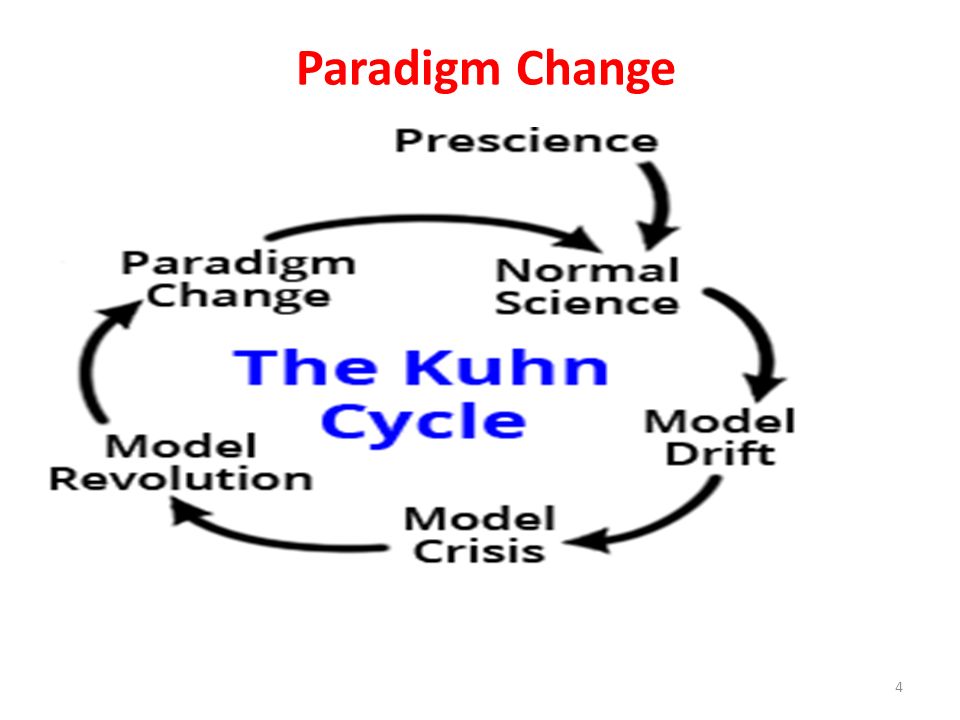
We see the spirit of Kuhn’s warning in discussions today. Truth itself is not enough to settle or even guide debates about expertise, trust, consensus and dissent in science. The philosophers of science Inmaculada de Melo-Martín and Kristen Intemann have described the matter well in their book The Fight Against Doubt (2018). When it comes to the role of science in policymaking, the key is ‘engaging in discussions with all relevant parties about the values at stake, rather than the truth of particular scientific claims’. Policymaking involves politics and values, and ‘disagreement about values cannot, and should not, be decided by scientists alone’ or by just scientific evidence.

The third question is whether we should expect science to tell us the truth, or is truth (or at least the notion of factual truth) not best left to logicians and metaphysicians?

While critical analyses of factual truth are indeed best left to logicians and metaphysicians, philosophers of science should not abdicate their responsibility to talk about truth in science. The quasi-Wittgensteinian myth of atomic facts as the truth-makers of scientific claims has proved inadequate to even scratch the surface of very complex practices in science. But that is not a good reason (or pretext) for forgoing truth altogether. Nor is it a reason for concluding that science should not be expected to tell us the truth.

But whose truth? By whose lights? Some might be tempted at this point by a Jamesian pragmatist theory of truth. American pragmatism has traditionally provided an alternative way of thinking about truth, which some philosophers of science see as more congenial to capturing the complex nuances and the power structure of scientific practice.
In James’s words: ‘“The true” … is only the expedient in the way of our thinking, just as “the right” is only the expedient in the way of our behaving.’ Stripped of its rhetorical flourishes, for James to be true is (to a good approximation) to work successfully. A scientific model is true – on a loosely Jamesian view – if it successfully facilitates and enables activities (be they epistemic or not). If the billiard-ball model of Brownian motion helps scientists to predict the behaviour of gas molecules, for example, the model is (pragmatically) true. The falseness of the presumption of perfectly spherical molecules does not matter.

The risk with a James-inspired conception of truth, as I see it, is that it is too malleable to resist the tides of time and the stresses of social forces endlessly at work in science. A James-inspired view of truth abdicates the expectation that science tells us the truth in the name of a non-better-qualified kind of success of a scientific practice. But how to tell apart cases where success does indeed track truth from cases where it does not? More to the point, when it comes to matters such as climate change, the benefit of vaccinating children, or economic forecasts, we seem to need more than a malleable Jamesian conception of truth for the sake of scientifically informed decisions that do not bow to pressure from powerful lobbies and political agendas (in the name of what ‘might work’). But, someone might reply, how can truth and pluralism go hand in hand if not by opting for a Jamesian conception of truth (if we really care about truth at all)?

There is another way of thinking about how truth and pluralism might go hand in hand, without reducing matters of truth to calculations of what is pragmatically good to individuals or communities sharing a scientific perspective at some point in time. First, it is necessary to understand the key term ‘scientific perspective’ and how it impinges on scientific pluralism. In its original use by the philosopher Ronald Giere in 2006, ‘scientific perspective’ is akin to Kuhn’s disciplinary matrix: a set of scientific models (including the relevant experimental instruments to gather data). In broader terms, scientific perspective is the disciplinary practice of a real scientific community at any given historical time. It includes the knowledge they produce, and the theoretical, technological and experimental resources they use, or that guide their work.

The time for a defence of truth in science has come. It begins with a commitment to get things right, which is at the heart of the realist programme, despite mounting Kuhnian challenges from the history of science, considerations about modelling, and values in contemporary scientific practice. In the simple-minded sense, getting things right means that things are as the relevant scientific theory says that they are. Climate science is true if what it says about CO2 emissions (and their effects on climate change) corresponds to the way that things are in nature. For the sake of powerful economic interests, sociopolitical consequences or simply different economic principles, one can try to discount, mitigate, compensate for, disregard or ignore altogether the way that things are. But doing so is to forgo the normative nature of the realist commitment in science. The scientific world, we have seen, is too complex and messy to be represented by any quasi-Wittgensteinian picture of atomic facts. Nor can the naive image of Comte’s positive science render justice to it. But acknowledging complexity and historical nuances gives no reason (or justification) for forgoing truth altogether; much less for concluding that science trades in falsehoods of some kind. It is part of our social responsibility as philosophers of science to set the record straight on such matters.

We should expect science to tell us the truth because, by realist lights, this is what science ought to do. Truth – understood as getting things right – is not the aim of science, because it is not what science (or, better, scientists) should aspire to (assuming one has realist leanings). Instead, it is what science ought to do by realist lights. Thus, to judge a scientific theory or model as true is to judge it as one that ‘commands our assent’. Truth, ultimately, is not an aspiration; a desirable (but maybe unachievable) goal; a figment in the mind of the working scientist; or, worse, an insupportable and dispensable burden in scientific research. Truth is a normative commitment inherent in scientific knowledge.

Constructive empiricists, instrumentalists, Jamesian pragmatists, relativists and constructivists do not share the same commitment. They do not share with the realist a suitable notion of ‘rightness’. As an example, compare the normative commitment to get things right with the view of the philosopher Richard Rorty, in whose hands Putnam’s truth as ‘idealised warranted assertibility’ reduces to what is acceptable to ‘us as we should like to be … us educated, sophisticated, tolerant, wet liberals, the people who are always willing to hear the other side, to think out all the implications’.
Getting things right is not a norm about us at our best, ‘educated, sophisticated, tolerant, wet liberals’. It is a norm inherent in scientific knowledge. To claim to know something in science (or about a scientific topic or domain) is to claim for the truth of the relevant beliefs about that topic or domain.

Thinking of truth as a normative commitment inherent in the very notion of scientific knowledge brings some benefits. It overcomes a false dichotomy between atomic facts and non-factive, non-truth-conducive inferences. And it makes realism compatible with perspectivism. Scientific communities that endorse historically and culturally situated scientific perspectives (either across the history of science or in contemporary science, across different fields or different scientific programmes) share (and indeed ought to) a normative commitment to get things right. That is a minimum requirement to pass the bar of what we count as ‘scientific knowledge’.

Getting the evidence right, in the first instance – via accurate measurements, sound non-ad-hoc procedures, and robust inferential strategies – defines any research programme that is worth being called ‘scientific’. The realist commitment to get things right must begin with getting the evidence right. No perspective worthy of being called ‘scientific’ survives fudging the evidence, massaging or altering the data or discarding evidence.
Scientists ought to share rules for cross-perspectival assessment. That our knowledge is situated and perspectival does not make scientific truths relativised to perspectives. Often enough, scientific perspectives themselves provide the rules for cross-perspectival assessment. Those rules can be as simple as translating the 10 degree Celsius temperature in Edinburgh today into the 50 degree equivalent on the Fahrenheit scale. Or they can be as complex as retrieving the viscosity of a fluid in statistical mechanics, where fluids are treated as statistical ensembles of a large number of discrete molecules.

Let there be no doubt: scientific knowledge is the product of our getting it right across our perspectival multicultural scientific history. Scientific knowledge is not a prerogative of our Western cultural perspective (and its discipline-specific scientific perspectives) but the outcome of a plurality of historically and culturally situated scientific perspectives that, over millennia, have reliably produced knowledge with the tools, resources and concepts respectively available to each and every one of them.

Scientific truths are the resilient and robust outcome of a plurality of scientific perspectives that, over time, have meshed with one another in their (tacit, implicit and often survival-adaptive) normative commitment to reliably produce scientific knowledge for us as humankind. That is why, far from being an insufferable hindrance to scientific pluralism, truth is in fact its best safeguard in tolerant, open and democratic societies that are genuinely committed to the advancement of scientific knowledge in the very many faces it comes with.

Footnote: 

Religious creeds are a great obstacle to any full sympathy between the outlook of the scientist and the outlook which religion is so often supposed to require … The spirit of seeking which animates us refuses to regard any kind of creed as its goal. It would be a shock to come across a university where it was the practice of the students to recite adherence to Newton’s laws of motion, to Maxwell’s equations and to the electromagnetic theory of light. We should not deplore it the less if our own pet theory happened to be included, or if the list were brought up to date every few years. We should say that the students cannot possibly realise the intention of scientific training if they are taught to look on these results as things to be recited and subscribed to. Science may fall short of its ideal, and although the peril scarcely takes this extreme form, it is not always easy, particularly in popular science, to maintain our stand against creed and dogma.
― Arthur Stanley Eddington
See Also: 

Data, Facts and Information

Three Wise Men Talking Climate

Head, Heart and Science

Post-Truth Climatism

How Science Is Losing Its Humanity


MMT: Magical Money Theory

Pardon me for mixing up acronyms.  Somehow the increasing mention of MMT (Modern Monetary Theory) made me think of the classic Beatles trip album.  Perhaps that association was triggered by today’s suddenly fashionable socialists relying on MMT to pay for their “everything free for everybody” political visions.  (Maybe one of the Ms could stand for ‘mushrooms”.)

A primer on what MMT is and is not, is an article by Karl Smith (descendant of Adam?) in National Review The Uses and Abuses of Modern Monetary Theory.  Excerpts in italics with my bolds.

MMT advocates overlook its flaws.

Newly elected representative Alexandria Ocasio-Cortez (D., N.Y.) argued on Monday that Modern Monetary Theory (MMT) ought to be a part of the conversation when it comes to funding major social-policy initiatives, such as her proposed Green New Deal. Stephanie Kelton, former economic advisor to Bernie Sanders, has likewise insisted that MMT should replace our current thinking about government finance. Yet what is MMT? And is it really as revolutionary as its proponents claim?

At its heart, MMT is a way of describing the federal budget and the Federal Reserve as if they were unified under a single executive authority. In describing the system so, the dangers of federal deficit spending are no longer that it crowds out private investment and slows economic growth, but that it leads potentially to excess inflation.

Yet Modern Monetary Theorists then invariably argue that inflation is not, and indeed could not be, a major problem for the United States. Many hard-core adherents go so far as to propose a job-guarantee program paid for by the federal government, which, they argue, will virtually eliminate both unemployment and the possibility of runaway inflation.

The tenets of MMT should be familiar to an older generation of fiscal conservatives. Before the 1980s, central banks such as the Federal Reserve were controlled far more directly by their governments. As a result, they could — and often did — bail out profligate governments by simply printing more money to cover the government’s debt.

This led to massive currency devaluation, runaway inflation, or both. In the early 1980s, however, central banks in the developed world were granted independence in the hopes that doing so would stop the spiraling inflation of the late 1960s and 1970s.

In the U.S., Fed chairman Paul Volcker was spectacularly successful at this. So were, to varying degrees, most central banks in the developed world. Some holdouts existed, notably in Southern Europe — a situation that would come back to haunt them decades later.

But MMT waves away the significance of these developments, instead focusing attention on several technical facts. First, when the federal government wants to spend money, it does so by having the Treasury issue checks. These checks are processed by the Federal Reserve Bank of New York (FRBNY). Second, the FRBNY does this literally by marking up the value of digital reserves in an account belonging to the check recipients’ bank and marking down the account of the Treasury by an equal amount.

These two operations are, in theory, separate. There is no technical reason why the FRBNY has to mark down the Treasury account. It only does so because laws require the federal government to meet all of its obligations. Such laws, argue Modern Monetary Theorists, cannot bind Congress, which after all has the power to alter them.

MMT advocates argue that Congress should ask the Treasury to sell Treasury bonds to cover any of its outstanding obligations. This is not, however, because they think it is necessary to fulfill the government’s obligations, but because doing so would help stabilize the macroeconomy.

All well and good. But at some point, won’t the debt become so large that merely paying interest on it will require issuing additional debt? Won’t this process feed on itself until all the borrowing capacity in the economy is soaked up?

No, MMT advocates reply, because the government can simply stop issuing debt — meeting its obligations instead by having the Federal Reserve simply create money on its behalf.

Indeed, this is what distressed governments have traditionally done when their liabilities add up — and the result has typically been hyperinflation. Modern Monetary Theorists argue that this need not be the case. Their exact reasoning differs.

At times, they argue that hyperinflation only occurs in countries that borrow from abroad in debt denominated in a foreign government’s currency. I don’t know enough about every single instance of hyperinflation to verify this claim, but it is true that the worst incidences of hyperinflation are typically associated with borrowing from abroad.

When a country prints money in an attempt to fund the government, the international exchange value of its currency collapses. If the country owes debt denominated in a foreign currency, that debt becomes more difficult to pay down as its own currency falls. Then the country has to print even more money to meet its debt payments, which of course causes the exchange value of its currency to fall further, creating a vicious circle that ends in hyperinflation.

Modern Monetary Theorists argue that this can’t happen to the United States because all of our debt is in the form of Treasury bonds that are denominated in dollars. If the international exchange value of the dollar falls, that does not change the value of our debt.

It does, however, mean that foreigners will be repaid in a currency that will be worth much less to them. Foreign bondholders are not stupid; they would regard this as a type of unofficial default. After experiencing this type of default through currency devaluation, they would be much less willing to buy Treasury bonds or indeed any type of American security again. This is precisely the situation that Italy, Spain, and Greece found themselves in during the 1980s.

Both countries had regularly devalued their currency as a way to get out from underneath foreign debts and were increasingly locked out of international markets. The euro was created, at least in part, in an effort to solve this. It could ultimately be printed only with the authority of the European Central Bank, meaning that neither Italy, Spain, Greece, nor any other member country could avert a debt crisis by devaluing its currency. Instead, they would have to raise taxes to meet their obligations.

That brings us to the second argument MMT advocates invoke when arguing that we should not worry about excessive debt leading to inflation: If inflation becomes a problem, the federal government can simply raise taxes, slowing down the economy which, in turn, will cool inflation.

But there are two problems with this approach. First, it is political suicide. At a time when consumers are facing ever-rising prices, it would seem cruel beyond measure to slap them with a tax increase. Very few governments would have the nerve to do this. If anything, history shows us that governments will instead resort to spending money on subsidies to ease the burden of rapidly rising prices.

Second, committing to this approach would risk an economic calamity. In 1973, OPEC placed an embargo on the United States that resulted in the price of oil quadrupling overnight. The sharply rising price of oil led both to a slowing economy and an increase in inflation — a dangerous mix.

A slowing economy lowers tax revenues, making it more difficult for the government to meet its debt payments. Suppose, at a time when the economy was slowing but inflation was rising, the U.S. government had firmly committed itself to MMT principles and refused to waver. In that case, it would not be able to resort to money printing because inflation was rising. Instead, it would be obligated to raise taxes both to meet its debt payments and to slow the rate of inflation.

Sharp increases in taxes during a recession, however, can be self-defeating. This is exactly the situation that Greece, and to a lesser extent Italy and Spain, found themselves in during the Great Recession. The crises lowered revenue, which worsened their budget deficits.

As a result, the government was forced to raise taxes and lower spending during the recession. This caused the economy to contract further, which caused tax revenue to fall so much that the budget deficit actually rose. In the case of Greece, this self-defeating cycle of higher taxes and lower revenues caused the government to ultimately default on its debts anyway. That, of course, worsened the economic crisis the country was already facing.

In the face of such a calamity, no sovereign government would or perhaps even should refrain from devaluing its currency and inflating away at least some of its debts. For that reason, governments have designed institutions to avoid falling into this trap.

In the United States, that means both making the Federal Reserve independent and not subject to the direct authority of the Treasury, and requiring the Treasury to meet all of its obligations with cash raised from tax revenues or Treasury-bond sales. In effect, we’ve outlawed the methods of Modern Monetary Theory — and with good reason.

KARL SMITH — Karl Smith is a senior fellow at the Niskanen Center. He was previously Assistant Professor of Economics and Government at the University of North Carolina (UNC) School of Government.

Footnote: (h/t Mark Krebs)

For more on Cortez see Why Cortez Can’t Be Wrong

For more on how MMT plays out when applied in a nation, see a short review of the Brazil experiment:

Gender Ideology and Science

A fresh report from the front lines comes from (who else) Jordan Peterson: The gender scandal – in Scandinavia and Canada   Excerpts in italics with my bolds.

Men and women are similar. But importantly different. No matter what Sweden’s feminist foreign minister says.

Part One (Scandinavia)

Over the past few weeks, I have been in Oslo, twice; Helsinki, twice; Stockholm, twice; and Copenhagen, once. One of the trips to Stockholm was only for press interviews and television. The other six trips were part of my 12 Rules for Life tour, which has now covered 100 cities. The reason for the dual visits? We arranged relatively smaller venues for the lectures in those Scandinavian towns and they sold out immediately. Scandinavians are interested in what I am saying. They are radically over-represented among those who view my YouTube lectures.

In the last lecture, in Helsinki, it was Finland’s Father’s Day, so I talked about masculine virtue. In Stockholm, I concentrated more on what has come to be known as the “gender paradox.” Here is the paradox in a nutshell: as societies become more gender equal in their social and political policies, men and women become more different in certain aspects, rather than more similar.

Had you asked any group of social scientists — left-wing, centrist, conservative (if you could find them) — 30 years ago “Will egalitarian social policies in wealthy countries produce men and women who are more similar or more different?” the majority would have certainly said, “more similar.” And, to some degree, that has happened. Women have entered the workforce en masse, and are participating at levels approaching or exceeding equality in many of the domains that were male majority prior to the 1960s. But …

And this is a major but. We seem to have reached the point of diminishing, or even reversing returns. Over the last five decades or so, psychologists have aggregated great numbers of descriptions of personality traits, using adjectives, phrases and sentences, throwing virtually every descriptor contained in human language into the mix, in a remarkably atheoretical manner. The method? Describe people every which way imaginable, and then use large samples and powerful statistics to sort out the resulting mess. The results? Something approaching a consensus among psychologists expert in measurement, known as psychometricians (or, less technically, personality psychologists). The latter happens to be my field, in addition to clinical psychology. When you ask thousands of people hundreds of questions (or ask them to rate themselves using descriptive adjectives such as “kind,” “competitive,” “happy,” “anxious,” “creative,” “diligent,” etc.) powerful statistics can identify patterns. People who describe themselves as “kind” tend not to consider themselves “competitive,” for example, but are likely to accept “cooperative” and “caring.” Likewise, creative types might regard themselves as “curious” and “inventive,” while the diligent types are also “dutiful” and “orderly.”

Once a relatively standard model had been agreed upon, and been deemed reliable and valid, then differences, such as those between the sexes, could be investigated. What emerged? First, men and women are more similar than they are different. Even when men and women are most different — in those cultures where they differ most, and along those trait dimensions where they differ most — they are more similar than different. However, the differences that do exist are large enough so that they play an important role in determining or at least affecting important life outcomes, such as occupational choice.

Where are the largest differences? Men are less agreeable (more competitive, harsher, tough-minded, skeptical, unsympathetic, critically-minded, independent, stubborn). This is in keeping with their proclivity, also documented cross-culturally, to manifest higher rates of violence and antisocial or criminal behavior, such that incarceration rates for men vs women approximate 10:1. Women are higher in negative emotion, or neuroticism. They experience more anxiety, emotional pain, frustration, grief, self-conscious doubt and disappointment. This seems to emerge at puberty.

There are other sex differences as well, but they aren’t as large, excepting that of interest: men are comparatively more interested in things and women in people. This is the largest psychological difference between men and women yet identified. And these differences drive occupational choice, particularly at the extremes. Engineers, for example, tend to be those who are not only interested in things, but who are more interested in things than most people, men or women.

It’s very important to remember that many choices are made at the extreme, and not the average. It’s not the average more aggressive/less agreeable male that’s in prison. In fact, if you draw a random man and a random woman from the population, and you bet that the woman is more aggressive/less agreeable, you’d be correct about 40% of the time. But if you walked into a roomful of people everyone of whom had been selected to be the most aggressive person out of a 100, almost every one of them would be male.

So even though men and women are more the same than they are different, the differences can matter.

What happens if you look at sex differences in personality and interest by country? Are the differences bigger in some countries and smaller in others? Would the differences between men and women be larger or smaller in wealthier countries? In more egalitarian countries? The answer: the more egalitarian and wealthier the country, the larger the differences between men and women in temperament and in interest. And the relationship is not small. The most recent study, published in Science (by researchers at Berkeley, hardly a hotbed of conservatism and patriarchy) showed a relationship between a wealth/egalitarian composite measure and sex differences that was larger than that reported in 99% of published social science studies. These are not small-scale studies. Tens of thousands of people have participated in them. And many different groups of scientists have come to the same conclusions, and published those results in very good journals.

Given that differences in temperament and interest help determine occupational choice, and that differences in occupational choice drives variability in such things as income, this indicates that political doctrines that promote equality of opportunity also drive inequality of outcome.

This is a big problem — particularly if the goal of such egalitarian policies was to minimize the differences between men and women. It’s actually a fatal problem for a particular political view. The facts can be denied, but only at the cost of throwing out social science in its entirety and a good bit of biology as well. That is simply not a reasonable solution.

The best explanation, so far, for the fact of the growing differences is that there are two reasons for the differences between men and women: biology and culture. If you minimize the cultural differences (as you do with egalitarian social policies) then you allow the biological differences to manifest themselves fully. I have seen social scientists struggle to offer a cultural explanation, but I haven’t heard any such hypothesis that is the least bit credible, and have been unable to formulate one myself.

There are also those who insist that we just haven’t gone far enough in our egalitarian attempts — that even Scandinavia and The Netherlands, arguably the world’s most egalitarian societies, are still rampantly patriarchal — but that doesn’t explain why the sex differences have grown, rather than shrunk, as those cultures have become demonstrably more equal in social policy.

Those who adopt this viewpoint, despite its apparent logical impossibility, maintain that we must redouble our efforts to socialize little boys and girls in exactly the same manner — rendering all toys gender-neutral, questioning even the idea of gender identity itself — and believe that such maneuvering will finally bring us to the ideal utopia, where every occupation and every strata of authority within every occupation is manned (so to speak) by 50% men and 50% women. Why should we launch large-scale experiments aimed at transforming the socialization of children when we have no idea what the outcome might be? And why should we presume that we know how to eliminate gender identity among young children? Finally, why exactly is it a problem if men and women, freed to make the choices they would make when confronted with egalitarian opportunities, happen to make different choices?

So, this is the Scandinavian conundrum — one that also affects the broader Western world (and the rest of the world, soon enough). Policies that maximize equality of opportunity make equality of outcome increasingly impossible. The doctrine, ever more radically and loudly insisted upon by the politically correct, that sex differences are only socially constructed is wrong. Get it? Wrong.

It’s no wonder that when I came bearing this news the Swedish Foreign Minister (a proud member of the world’s only self-proclaimed feminist government) suggested publicly that I crawl back under my rock, and that one of Sweden’s leading female politicians objected on prime time TV that her daughter could be raised to be anything she wants to be. But facts is facts, I’m afraid, and no amount of neo-Marxist leftist postmodern suggestion that social science is a patriarchal construction is going to make the ugly truth disappear: Men and women are similar. But they are importantly different.

The differences matter, particularly at the extremes, particularly with regard to occupational choice and its concomitants. There are going to be more male criminals, and more male engineers, and more females with diagnoses of depression and anxiety, and more female nurses. And there are going to be differences in economic outcome associated with this variance.

Game over, utopians.

And that’s why the information I shared during my visit to Scandinavia caused a scandal that continues to reverberate.

Part Two (Canada)

Justin Trudeau’s new cabinet awaits the new Prime Minister at Rideau Hall on Wednesday, Nov. 4, 2015. Tony Caldwell/ Postmedia Network

We all remember that our current Prime Minister, the Right Honorable Justin Trudeau, decided early on when he formed his government to make his cabinet 50% women, because “it was 2015.” He got a hall pass for this, no doubt because of his boyish charm and modern mien. But it was a mistake of unforgivable magnitude and here are some of the reasons why:

The job of the federal government is important, necessary and difficult.

• To make important, difficult decisions properly, competence is necessary.

• There is no relationship between sex and competence. Men and women are essentially equal in their intelligence, and they differ very little in conscientiousness (which is the second-best predictor of success, after intelligence). Thus, selection for competence should optimally be sex-blind, if competence is the most important factor.

• The possibility of identifying a competent person increases as the pool of available candidates increases.

• Only 26% of the elected MPs in Trudeau’s government were women.

• By selecting 50% of his cabinet from 26% of the pool of available candidates, Prime Minister Trudeau abdicated his responsibility to rank-order all of his elected officials by competence (which could have been done by blind, multi-person rating of their resumes, including education and accomplishments) and staffing his cabinet from the most qualified person downward.

Given that only 26% of the elected MPs were women, the selection of half the cabinet from this pool means that it is a statistical certainty that the cabinet members chosen were not the most competent available.

It might also be pointed out that such a move is particularly appalling given its source. Let’s assume (which I don’t) that there is patriarchy, and with it, generally undeserved privilege. Let’s even assume (which I don’t) that much of this is accrued unfairly by straight white men, as the identity politics players, such as our Prime Minister, self-righteously and vociferously insist.

Is it truly unreasonable to point out that the absolute poster boy for such privilege is none other than our Prime Minister, Justin Trudeau — a man who dared run for the highest office in the land despite his utter lack of credentials (other than good looks, charm and a certain ability to behave properly in public) merely because his father, Pierre, turned the Trudeau name into the very epitome of status unearned by his sons?

Is it also unreasonable to point out that the women who accepted those positions, granted to them unfairly, in a prejudiced and discriminatory manner, took that as their due, despite the unlikelihood, statistically, of their suitability for the positions in question, and thus betrayed themselves, men and women everywhere striving fairly for advancement, and their country? All in the name of redress for some hypothetical prejudice, a consequence of the patriarchal tyranny, experienced in large measure by vaguely apprehended women of the past and definitely other than themselves.

Appalling. All of it. Appalling.

Jordan B. Peterson is a professor of psychology at the University of Toronto, a clinical psychologist and the author of the multi-million copy bestseller 12 Rules for Life: An Antidote to Chaos. His blog and podcasts can be found at jordanbpeterson.com

Is “Emotional Intelligence” an Oxymoron?

Warning: This post will express sincere thoughts that are politically incorrect, for example accepting that males and females have differing predominant behaviors and traits.

The title refers to a notion that came up in the fields of management science and industrial psychology, coincidental with increasing numbers of women practicing in those disciplines. I am prompted to write about this upon realizing that our present social divide is more fundamental than many think. This century, we see increasing numbers of people choosing to operate from emotions rather than intelligence. This pattern is in contradiction to the trajectory of Western civilization placing reason as primary and individual rights and freedoms as essential.

In a recent article thread (to be excerpted below) a comment caught my attention. “It has been said men rank, women exclude, and that is very true imo. All-female groups are very exclusionary to anyone who does not fit in.” That expression of Ranking vs. Excluding was new to me, and it may be changing this century, what with women competing with other women in sports, and with men as well in the workplace. Still, it points to our present social struggle whereby “diversity” is employed to divide a nation into identity groups to protest prejudice and claim reparations against grievances. The US as usual is the leading example of this culture war. Ironically, tribalism is rearing its ugly head in precisely the nation-state that so successfully created an American tribe that included any and all ethnic and religious groups.

Ranking vs. Excluding also explains such recent events as the Senate hearings on Judge Kavanaugh. Clearly his opponents sought to exclude him not only from the Judiciary, but to banish him from the human race. Their fierce and unrelenting animus to this day is frightening for the republic. Ironically, Kavanaugh prevailed in the process only by an emotional outburst, his outrage finally waking others up to the enormously evil beheading underway. This was out of character for a man by all accounts extremely reasonable and unprejudiced, and even in this testimony his intelligence was evident and in control.

It also shows up in the warfare between Trump and the leftist media. From the moment of Trump declaring candidacy, the left has been focused on excluding Trump from legitimacy, not only as President, but as an human being. Meanwhile, he is focused on the ranking: Winning is what matters, coming in first place. And despite the media’s attempts to paint him racist and sexist, I see no evidence that he excludes losers in a contest. On the contrary, he and Senator Rubio are on the same side pushing back against election fraud in Florida. The media can not recognize Trump is driven by intelligence despite his determined actions pursuing rational policy goals, and unbowed by social pressure and disapproval.

This modern tribalism emerges from the academic world and is now spreading into the wider society as graduates gain employment in private and public sector institutions. However, many of them carry a virus along with whatever knowledge and skills they have been able to acquire in their studies. A recent interview with Camille Paglia offers insight into the conversion of normal Americans into social dissenters. The article in Quillette is Camille Paglia: It’s Time for a New Map of the Gender World written by Claire Lehmann. Excerpts below in italics with my bolds.

Post-structuralism, along with identity politics, made huge gains in the 1970s, as the old guard professors proved helpless against a rising tide of rapid add-on programs and departments like women’s studies and African-American studies. The tenured professoriate seemed not to realize that change of some kind was necessary, and thus they failed to provide an alternative vision of a remodeled university of the future.

Most established professors in the 1970s probably believed that the new theory trend was a fad that would blow away like autumn leaves. The greatness of the complex and continuous Western tradition seemed self-evident: the canon would surely stand, even if supplemented by new names. Well, guess what? Helped along by a swelling horde of officious, overpaid administrators, North American universities became, decade by decade, political correctness camps. Out went half the classics, as well as pedagogically useful survey courses demonstrating sequential patterns in history (now dismissed as a “false narrative” by callow theorists). Bookish, introverted old-school professors were not prepared for guerrilla warfare to defend basic scholarly principles or to withstand waves of defamation and harassment.

The poisons of post-structuralism have now spread throughout academe and have done enormous damage to basic scholarly standards and disastrously undermined belief even in the possibility of knowledge. I suspect history will not be kind to the leading professors who appear to have put loyalty to friends and colleagues above defending scholarly values during a chaotic era of overt vandalism that has deprived several generations of students of a profound education in the humanities. The steady decline in humanities majors is an unmistakable signal that this once noble field has become a wasteland.

As an atheist, I have argued that if religion is erased, something must be put in its place. Belief systems are intrinsic to human intelligence and survival. They “frame” the flux of primary experience, which would otherwise flood the mind. Another persistent proposal of mine has been for comparative religion to become the undergraduate core curriculum, an authentically global multiculturalism.

My substitute for religion is art, which I have expanded to include all of popular culture. But when art is reduced to politics, as has been programmatically done in academe for 40 years, its spiritual dimension is gone. It is coarsely reductive to claim that value in the history of art is always determined by the power plays of a self-referential social elite. I take Marxist social analysis seriously: Arnold Hauser’s Marxist, multi-volume A Social History of Art (1951) was a major influence on me in graduate school. However, Hauser honored art and never condescended to it. A society that respects neither religion nor art cannot be called a civilization.

But politics cannot fill the gap. Society, with which Marxism is obsessed, is only a fragment of the totality of life. As I have written, Marxism has no metaphysics: it cannot even detect, much less comprehend, the enormity of the universe and the operations of nature. Those who invest all of their spiritual energies in politics will reap the whirlwind. The evidence is all around us—the paroxysms of inchoate, infantile rage suffered by those who have turned fallible politicians into saviors and devils, godlike avatars of Good versus Evil.

The headlong rush to judgment by so many well-educated, middle-class women in the #MeToo movement has been startling and dismaying. Their elevation of emotion and group solidarity over fact and logic has resurrected damaging stereotypes of women’s irrationality that were once used to deny us the vote. I found the blanket credulity given to women accusers during the recent U.S. Senate confirmation hearings for Brett Kavanaugh positively unnerving: it was the first time since college that I truly understood the sexist design of Aeschylus’s Oresteia, whose mob of vengeful Furies is superseded by formal courts of law, where evidence is weighed.

What I see in both the Women’s March and #MeToo is an atavistic rediscovery by Western women of the joy of their own mutually nurturing solidarity—a primary feature of daily life during 10,000 years of the agrarian era that has been lost over the past two centuries of industrialization. As I have often noted, the sexes throughout human history actually had very little to do with each other. There was the world of men and the world of women, each with its own spheres of influence and activity. Women didn’t take men that seriously, and vice versa. I know this because I am the product of an immigrant family (my mother and all four grandparents were born in Italy), and it wasn’t that long ago that we were tilling the stony soil of the earthquake-prone motherland.

Second, the nuclear family as a standard unit of social life is a relatively new and isolating phenomenon. Wives returning from work to an apartment or house are expecting their husbands to fulfill all the emotional and conversational needs that were once fulfilled by other women of multiple generations throughout the agrarian workday in the fields or at home (where the burdens of childcare and eldercare were group shared).

What I see spreading among professional middle-class women is a bitter resentment toward men that is in many cases unjust and misplaced. With divorce so easy since the sexual revolution, women find themselves competing with younger women in new and cruel ways. Agrarian women gained power as they aged: young women were brainless pawns whose marriages, pregnancies, childcare, cooking, and other chores were acerbically supervised and controlled by the dictatorial crones (forces of nature whom I fondly remember from childhood).

In short, #MeToo from a historical perspective is a cri de coeur from women who are realizing that the sexual revolution that many of us had once ecstatically embraced has in key ways devalued women, confused their private relationships, and complicated their smooth functioning in the workplace. It’s time for a new map of the gender world.

Camille Paglia is the University Professor of Humanities and Media Studies at the University of the Arts in Philadelphia. Her eighth book, Provocations: Collected Essays, was released by Pantheon in Oct. 2018.

Footnote:

A previous post quoted an historian saying that the US civil war erupted because of two mutually exclusive definitions of justice.  One side said all people had equal rights and freedoms, while the other side said all people except slaves had equal rights and freedoms.  That war was fought and won to defeat the exclusionary principle.  Yes, the practice has not always lived up to the principle of inclusion.  But there is progress, and social justice warriors’ demands for racist examples exceeds the supply of such behavior.

Present day Americans are torn over the primacy of patriotism or multiculturalism
Details at Patriotism vs. Multiculturalism

Postcript:

Tom Wolfe wrote a book in which he skillfully dissected the descent of rationality and objectivity at the hands of modern academia. And I began to see the connection to climate change hysteria. The ruling force is “political correctness”, which translates into going along to get along in your tribe. And in the extreme, it means subordinating science and rationality to instincts of the herd, their fears, disappointments and desires ruling the day. My synopsis with links is Warmists and Rococo Marxists.

See Also:  Head, Heart and Science

Campus Thought Control

How to Test an Accusation

The Senate Judiciary committee is meeting today and the written testimonies of Dr. Ford and Judge Kavanaugh are available. The challenge for senators and everyone else is how to judge the validity of the sexual assault claim. Normally an accusation is supported by evidence such as other witnesses before it is given legal consideration. But this is a he said, she said situation.

We know from scientific studies that our memories are untrustworthy the further in the past are the events being recalled. Cognitive experts say that a core remembrance, usually laden with emotion, is elaborated with details invented by our brains to fill in the gaps for a complete story.  An accuser can bear truthful witness to a false memory, and thereby belie the facts. So how to sort out how much is what happened and how much is imagination?

Adam Mill is an employment lawyer who has experience with many such cases and writes in the Federalist 10 Red Flags About Sexual Assault Claims, From An Employment Lawyer

It’s not nice or politically correct to say, but people do sometimes lie to get money, revenge, power, attention, or political advantage. False allegations of assault have been documented.

I know it’s a very unfashionable to advocate on behalf of the presumption of innocence, and I am often reminded of how insensitive and outdated the principle is in today’s climate.

Of course, courtesy to the alleged victim is absolutely essential to be effective. To do otherwise is completely counterproductive and quickly turns the focus from the facts to the conduct within the inquiry. So I go to great pains to make my questions respectful.

When the complaint is “he said/she said,” we should not helplessly acquiesce to coin-flip justice that picks winners and losers based upon the identity politics profile of the accused and accuser. Experience with a career’s worth of complaints in hearings, depositions, and negotiations has taught me some tells, red flags that warn that an innocent person stands accused.

Without naming any particular accusation, I offer these factors for consideration to the fair-minded who remain open to the possibility that guilt or innocence is not simply a question of politics. I also remind the reader that politicizing these accusations have allowed men like Harvey Weinstein, Al Franken, Matt Lauer, Les Moonves, Bill Clinton, and Keith Ellison to escape accountability. Nobody seems to care if they walk the walk so long as they talk the talk.

1. The accuser uses the press instead of the process.
Every company has a slightly different process for harassment and assault complaints. Often it begins with a neutral investigator being assigned to interview the accuser first, then potential corroborating witnesses. When an accuser is eager to share with the media but reluctant to meet with an investigator, it’s a flag.

2. The accuser times releasing the accusation for an advantage.
For example, when the accuser holds the allegation until an adverse performance rating of the accuser is imminent, or serious misconduct by the accuser is suddenly discovered, or the accused is a rival for a promotion or a raise, or the accused’s success will block an accuser’s political objective. It’s a flag when the accusation is held like a trump card until an opportunity arises to leverage the accusation.

3. The accuser attacks the process instead of participating.
The few times I’ve been attacked for “harassing” the victim, it has always followed an otherwise innocuous question about the accusation, such as: Where, when, how, why, what happened? I don’t argue with accusers, I just ask them to explain the allegation. If I’m attacked for otherwise neutral questions, it’s a red flag.

4. When the accused’s opportunity to mount a defense is delegitimized.
The Duke Lacrosse coach was fired just for saying his players were innocent. When the players dared to protest their innocence, the prosecutor painted their stories in the press as “uncooperative.” If either the accused or the accused’s supporters are attacked for just for failing to agree with the accusation, it’s a red flag.

5. The accuser seeks to force the accused to defend himself or herself before committing to a final version.
Unfortunately, this has become the preferred approach of the kangaroo courts on college campuses. It’s completely unfair because it deprives the accused of the opportunity to mount an effective defense. When the accuser demands the accused speak first, it is a strong indication that the accuser wants the opportunity to fill in the details of the accusation to counter any defense or alibi the accused might offer. It’s a red flag.

6. The accused makes a strong and unequivocal denial.
In most cases, there’s some kernel of truth to even the most exaggerated claims. When the accused reacts with a dissembling explanation full of alternatives and rationalizations, I tend to find the accuser more credible. Rarely, however, the accused reacts with a full-throated and adamant denial. When it happens, it’s a red flag that the accusation might have problems.

7. The accuser makes unusual demands to modify or control the process.
It’s a flag when the accuser demands a new investigator or judge without having a substantial basis for challenging the impartiality of the process that’s already in place.

8. When the accuser’s ability to identify the accused has not been properly explained.
In the Duke lacrosse case, the accuser was shown a lineup of photos of potential attackers. Every photo was of a member of the team. None were of people known to be innocent. It’s a red flag when an identification is made only after the accused appears in media and the accuser has not seen the accused for a number of years or was otherwise in regular contact with the accused.

9. When witnesses don’t corroborate.
10. When corroborating witnesses simply repeat the accusation of the accuser but don’t have fresh information.
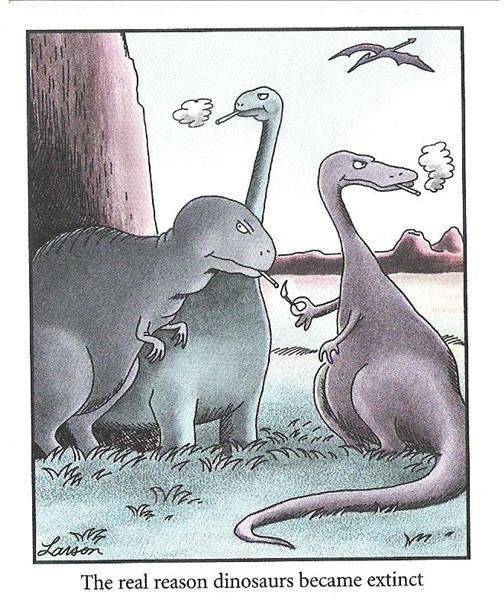
It is now clear that accusations of sexual misconduct will forever be a tool to change results in elections and Supreme Court nominations. It’s disappointing to see so many abandon the accused to join the stampede of a mob that punishes any who ask legitimate questions about accusations.

These accusations destroy the lives of the accused, often men, and bring devastation to the women who love and support them. Some of the falsely accused commit suicide. When the mob attacks legitimate inquiry into the accusation, it’s a sure sign that the mob isn’t confident about the truth of the allegation. Rather than shrink in fear when attacked, we should take it as a sign that there is a risk that the accused is innocent, and the questions need to keep coming.
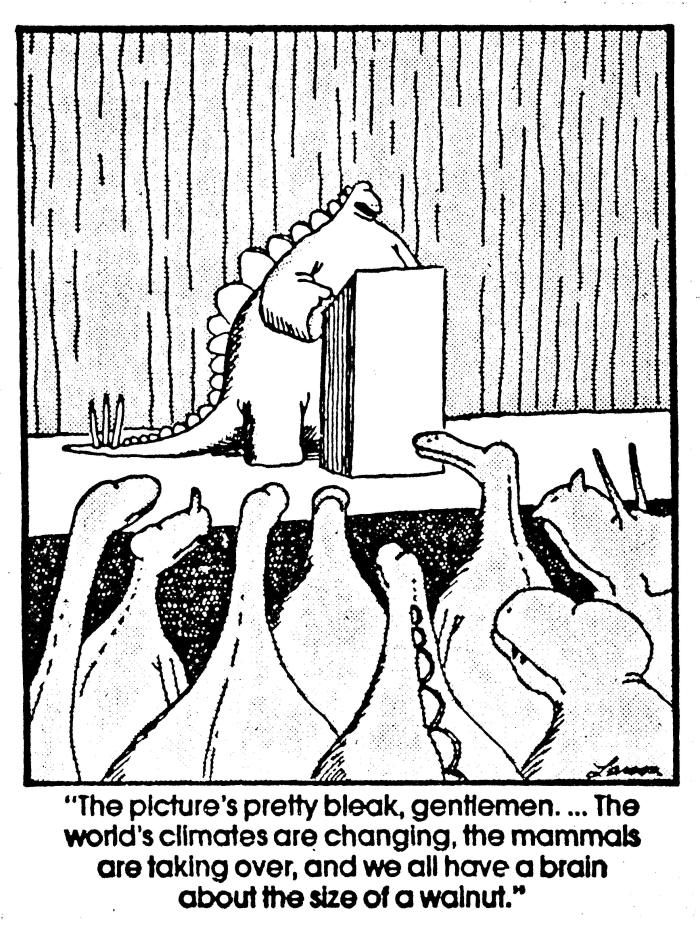

Adam Mill works in Kansas City, Missouri as an attorney specializing in labor and employment and public administration law. He frequently posts to millstreetgazette.blogspot.com. Adam graduated from the University of Kansas and has been admitted to practice in Kansas and Missouri.

Dr. Elizabeth Loftus concluded in one TED talk:

If I’ve learned anything from my decades working on these problems, it’s this: Just because somebody tells you something and they say it with lots of confidence, detail, and emotion does not mean that it really happened. We can’t reliably distinguish true memories from false memories; we need independent corroboration. Such a discovery has made me more tolerant of friends and family who misremember. Such a discovery might have saved Steve Titus. We should all keep in mind that memory, like liberty, is a fragile thing.


Chicxulub asteroid Apocalypse? Not so fast. August update

The Daily Mail would have you believe Apocalyptic asteroid that wiped out the dinosaurs 66 million years ago triggered 100,000 years of global warming
Chicxulub asteroid triggered a global temperature rise of 5°C (9°F).

This notion has been around for years, but dredged up now to promote fears of CO2 and global warming. And maybe it’s because of a new Jurassic Park movie coming this summer.  But it doesn’t take much looking around to discover experts who have a sober, reasonable view of the situation.

Princeton expert Gerta Keller, Professor of Geosciences at Princeton, has studied this issue since the 1990s and tells all at her website CHICXULUB: THE IMPACT CONTROVERSY Excerpts below with my bolds.

Update August 17, 2018

This is a repost as background for a fresh article in the Atlantic The Nastiest Feud in Science H/T Warren Meyer.  As noted, the parallels with global warming/climate change are notable.

b5399d9c1

Introduction to The Impact Controversy

In the 1980s as the impact-kill hypothesis of Alvarez and others gained popular and scientific acclaim and the mass extinction controversy took an increasingly rancorous turn in scientific and personal attacks fewer and fewer dared to voice critique. Two scientists stand out: Dewey McLean (VPI) and Chuck Officer (Dartmouth University). Dewey proposed as early as 1978 that Deccan volcanism was the likely cause for the KTB mass extinction, Officer also proposed a likely volcanic cause. Both were vilified and ostracized by the increasingly vocal group of impact hypothesis supporters. By the middle of the 1980s Vincent Courtillot (Physique de Globe du Paris) also advocated Deccan volcanism, though not as primary cause but rather as supplementary to the meteorite impact. Since 2008 Courtillot has strongly advocated Deccan volcanism as the primary cause for the KTB mass extinction.

(Overview from Tim Clarely, Ph.D. questioning the asteroid) In secular literature and movies, the most popular explanation for the dinosaurs’ extinction is an asteroid impact. The Chicxulub crater in Mexico is often referred to as the “smoking gun” for this idea. But do the data support an asteroid impact at Chicxulub?

The Chicxulub crater isn’t visible on the surface because it is covered by younger, relatively undeformed sediments. It was identified from a nearly circular gravity anomaly along the northwestern edge of the Yucatán Peninsula (Figure 1). There’s disagreement on the crater’s exact size, but its diameter is approximately 110 miles—large enough for a six-mile-wide asteroid or meteorite to have caused it.

Although some of the expected criteria for identifying a meteorite impact are present at the Chicxulub site—such as high-pressure and deformed minerals—not enough of these materials have been found to justify a large impact. And even these minerals can be caused by other circumstances, including rapid crystallization4 and volcanic activity.

The biggest problem is what is missing. Iridium, a chemical element more abundant in meteorites than on Earth, is a primary marker of an impact event. A few traces were identified in the cores of two drilled wells, but no significant amounts have been found in any of the ejecta material across the Chicxulub site. The presence of an iridium-rich layer is often used to identify the K-Pg (Cretaceous-Paleogene) boundary, yet ironically there is virtually no iridium in the ejecta material at the very site claimed to be the “smoking gun”!

In addition, secular models suggest melt-rich layers resulting from the impact should have exceeded a mile or two in thickness beneath the central portion of the Chicxulub crater. However, the oil wells and cores drilled at the site don’t support this. The thickest melt-rich layers encountered in the wells were between 330 and 990 feet—nowhere near the expected thicknesses of 5,000 to 10,000 feet—and several of the melt-rich layers were much thinner than 300 feet or were nonexistent.

Finally, the latest research even indicates that the tsunami waves claimed to have been generated by the impact across the Gulf of Mexico seem unlikely.

Summary from Geller

The Cretaceous-Tertiary boundary (KTB) mass extinction is primarily known for the demise of the dinosaurs, the Chicxulub impact, and the frequently rancorous thirty years-old controversy over the cause of this mass extinction. Since 1980 the impact hypothesis has steadily gained support, which culminated in 1990 with the discovery of the Chicxulub crater on Yucatan as the KTB impact site and “smoking gun” that proved this hypothesis. In a perverse twist of fate, this discovery also began the decline of this hypothesis, because for the first time it could be tested directly based on the impact crater and impact ejecta in sediments throughout the Caribbean, Central America and North America.

Two decades of multidisciplinary studies amassed a database with a sum total that overwhelmingly reveals the Chicxulub impact predates the KTB mass extinction. It’s been a wild and frequently acrimonious ride through the landscape of science and personalities. The highlights of this controversy, the discovery of facts inconsistent with the impact hypothesis, the denial of evidence, misconceptions, and misinterpretations are recounted here. (Full paper in Keller, 2011, SEPM 100, 2011).

Chicxulub Likely Happened ~100,000 years Before the KTB Extinction

Figure 42. Planktic foraminiferal biostratigraphy, biozone ages calculated based on time scales where the KTB is placed at 65Ma, 65.5Ma and 66Ma, and the relative age positions of the Chicxulub impact, Deccan volcanism phases 2 and 3 and climate change, including the maximum cooling and maximum warming (greenhouse warming) and the Dan-2 warm event relative to Deccan volcanism.

Most studies surrounding the Chicxulub impact crater have concentrated on the narrow interval of the sandstone complex or so-called impact-tsunami. Keller et al. (2002, 2003) placed that interval in zone CF1 based on planktic foraminiferal biostratigraphy and specifically the range of the index species Plummerita hantkeninoides that spans the topmost Maastrichtian. Zone CF1. The age of CF1 was estimated to span the last 300ky of the Maastrichtian based on the old time scale of Cande and Kent (1995) that places the KTB at 65Ma. The newer time scale (Gradstein et al., 2004) places the KTB at 65.5Ma, which reduces zone CF1 to 160ky.

By early 2000 our team embarked on an intensive search for impact spherules below the sandstone complex throughout NE Mexico. Numerous outcrops were discovered with impact spherule layers in planktic foraminiferal zone CF1 below the sandstone complex and we suggested that the Chicxulub impact predates the KTB by about 300ky (Fig. 42; Keller et al., 2002, 2003, 2004, 2005, 2007, 2009; Schulte et al., 2003, 2006).

Time scales change with improved dating techniques. Gradstein et al (2004) proposed to place the KTB at 65.5 Ma, (Abramovich et al., 2010). This time scale is now undergoing further revision (Renne et al., 2013) placing the KTB at 66 Ma, which reduces zone CF to less than 100ky. By this time scale, the age of the Chicxulub impact predates the KTB by less than 100ky based on impact spherule layers in the lower part zone CF1. See Fig. 42 for illustration.

Unfortunately, this wide interest rarely resulted in integrated interdisciplinary studies or joint discussions to search for common solutions to conflicting results. Increasingly, in a perverse twist of science new results became to be judged by how well they supported the impact hypothesis, rather than how well they tested it. An unhealthy US versus THEM culture developed where those who dared to question the impact hypothesis, regardless of the solidity of the empirical data, were derided, dismissed as poor scientists, blocked from publication and getting grant funding, or simply ignored. Under this assault, more and more scientists dropped out leaving a nearly unopposed ruling majority claiming victory for the impact hypothesis. In this adverse high-stress environment just a small group of scientists doggedly pursued evidence to test the impact hypothesis.

No debate has been more contentious during the past thirty years, or has more captured the imagination of scientists and public alike, than the hypothesis that an extraterrestrial bolide impact was the sole cause for the KTB mass extinction (Alvarez et al., l980). How did this hypothesis evolve so quickly into a virtually unassailable “truth” where questioning could be dismissed by phrases such as “everybody knows that an impact caused the mass extinction”, “only old fashioned Darwinian paleontologists can’t accept that the mass extinction was instantaneous”, “paleontologists are just bad scientists, more like stamp collectors”, and “it must be true because how could so many scientists be so wrong for so long.” Such phrases are reminiscent of the beliefs that the Earth is flat, that the world was created 6000 years ago, that Noah’s flood explains all geological features, and the vilification of Alfred Wegner for proposing that continents moved over time.

Update Published at National Geographic February 2018 By Shannon Hall Volcanoes, Then an Asteroid, Wiped Out the Dinosaur

What killed the dinosaurs? Few questions in science have been more mysterious—and more contentious. Today, most textbooks and teachers tell us that nonavian dinosaurs, along with three-fourths of all species on Earth, disappeared when a massive asteroid hit the planet near the Yucatán Peninsula some 66 million years ago.

But a new study published in the journal Geology shows that an episode of intense volcanism in present-day India wiped out several species before that impact occurred.

The result adds to arguments that eruptions plus the asteroid caused a one-two punch. The volcanism provided the first strike, weakening the climate so much that a meteor—the more deafening blow—was able to spell disaster for Tyrannosaurs rex and its late Cretaceous kin.

A hotter climate certainly helped send the nonavian dinosaurs to their early grave, says Paul Renne, a geochronologist at the University of California, Berkeley, who was not involved in the study. That’s because the uptick in temperature was immediately followed by a cold snap—a drastic change that likely set the stage for planet-wide disaster.

Imagine that some life managed to adapt to those warmer conditions by moving closer toward the poles, Renne says. “If you follow that with a major cooling event, it’s more difficult to adapt, especially if it’s really rapid,” he says.

In this scenario, volcanism likely sent the world into chaos, driving many extinctions alone and increasing temperatures so drastically that most of Earth’s remaining species couldn’t protect themselves from that second punch when the asteroid hit.

“The dinosaurs were extremely unlucky,” Wignall says.

But it will be hard to convince Sean Gulick, a geophysicist at the University of Texas at Austin, who co-led recent efforts to drill into the heart of the impact crater in Mexico. He points toward several studies that have suggested that ecosystems remained largely intact until the time of the impact.

Additionally, a forthcoming paper might make an even stronger case that the impact drove the extinction alone, notes Jay Melosh, a geophysicist at Purdue University who has worked on early results from the drilling project. It looks as though the divisive debate will continue with nearly as much ferocity as the events that rocked our world 66 million years ago.

Summary:

So if the Chicxulub asteroid didn’t kill the dinosaurs, what did? Paleontologists have advanced all manner of other theories over the years, including the appearance of land bridges that allowed different species to migrate to different continents, bringing with them diseases to which native species hadn’t developed immunity. Keller and Addate do not see any reason to stray so far from the prevailing model. Some kind of atmospheric haze might indeed have blocked the sun, making the planet too cold for the dinosaurs — it just didn’t have to have come from an asteroid. Rather, they say, the source might have been massive volcanoes, like the ones that blew in the Deccan Traps in what is now India at just the right point in history.

For the dinosaurs that perished 65 million years ago, extinction was extinction and the precise cause was immaterial. But for the bipedal mammals who were allowed to rise once the big lizards were finally gone, it is a matter of enduring fascination.

This science seems as settled as climate change/global warming, and with many of the same shenanigans.

Footnote:

cg4b87e76a6ff940

the-extinction-dinosaurs

Strange Days and Witch Hunts

Re-enactment of Renfrewshire Witch Hunt of 1697

Contrary to conventional wisdom, witch hunting did not happen much during the Middle Ages, since in most places it was illegal  to believe witches existed. Most of the witch hunts occurred during what’s called “the Renaissance.” Witch hunting continued though the “Age of Rationalism” and for the most part ended about in the middle of the “Age of Enlightenment” (in Europe at least).

As a general rule, witches were not hunted as witches, instead it fell under the larger banner of “heresy.” Pretty much what is going on now in targeting climatism unbelievers. Since suspected witches were tried as heretics instead of as witches, it makes getting exact numbers impossible. And so much for modern reasonable people being adverse to condemning and destroying others with differing beliefs.

Strange days have found us
Strange days have tracked us down
They’re going to destroy our casual joys
Lyrics from song “Strange Days”, The Doors 1967

The lyrics from the Doors classic song “Strange Days” seem (strangely) appropriate today with all of the lashing out of the climate alarmist movement. There are subpoenas flying around and multiple accusations against corporations, contrarian scientists, think tanks and even the federal government for not thinking and acting correctly to “fight climate change.”

Most recently we have the fires of hell awaiting all of us in the “Hothouse” earth depicted by climatists unless repentance occurs in the form of draconian reforms imposed by international self-appointed experts.  As well we are now seeing warning labels on contrarian videos, a new step in pointing out modern witches (deniers).

Steven Hayward writes this week in a Powerline article Make Socialism Scientific Again with insights into what is going on (H/T John Ray)  Of particular relevance is the excerpt below in italics with my bolds.

I’ve never met Prof. Clark, and don’t know him at all, but he is the author of one of my very favorite articles about the institutional problems of science and politics way back in 1980: “Witches, Floods, and Wonder Drugs: Historical Perspectives on Risk Management.” It’s a terrific article. It was the late columnist Warren Brookes who first brought it to my attention. Clark’s comparison of the institutional incentives for witch-hunting with contemporary risk assessment (built partially on the terrific work of the late Aaron Wildavsky) has a perfect application to today’s Malthusian environmentalism and especially climate change thermaggeddonism—especially apt for the Inquisition-like treatment of dissent from climate change orthodoxy.

Some samples from Clark’s article:

Collective action by the central authority was henceforth required, and any action taken against a particular individual was justified in the name of the common good. In the case of the witch hunts, this “common good” justified the carbonization of five hundred thousand individuals, the infliction of untold suffering, and the generation of a climate of fear and distrust—all in the name of the most elite and educated institution of the day. . .

The institutionalized efforts of the Church to control witches can be seen, in retrospect, to have led to witch proliferation. Early preaching against witchcraft and its evils almost certainly put the idea of witches into many a head which never would have imagined such things if left to its own devices. The harder the Inquisition looked, the bigger its staff, the stronger its motivation, the more witches it discovered. .

Since the resulting higher discovery rate of witch risks obviously justifies more search effort, the whole process becomes self-contained and self-amplifying, with no prospect of natural limitation based on some externally determined “objective” frequency of witch risks in the environment. . .

In witch hunting, accusation was tantamount to conviction. Acquittal was arbitrary, dependent on the flagging zeal of the prosecutor. It was always reversible if new evidence appeared. You couldn’t win, and you could only leave the game by losing. The Inquisition’s principal tool for identifying witches was torture. The accused was asked if she was a witch. If she said no, what else would you expect of a witch? So she was tortured until she confessed the truth. The Inquisitors justified ever more stringent tortures on the grounds that it would be prohibitively dangerous for a real witch to escape detection. Of course an innocent person would never confess to being a witch (a heretic with no prospects of salvation) under mere physical suffering. The few who lived through such tests were likely to spend the rest of their lives as physical or mental cripples. Most found it easier to give up and burn.

You can see here an early version of the “precautionary principle” (“The Inquisitors justified ever more stringent tortures on the grounds that it would be prohibitively dangerous for a real witch to escape detection”) and many other prominent traits of the climate campaign.

Here is Clark’s killer sentence:

Many of the risk assessment procedures used today are logically indistinguishable from those used by the Inquisition.

And this coda, for which you should swap out “risk assessors” with “climate change advocates”:

Today, anyone querying the zeal of the risk assessors is accused at least of callousness, in words almost identical to those used by the Malleusfive hundred years ago. The accused’s league with the devil against society is taken for granted. Persecution in the press, courts, and hearing rooms is unremitting, and even the weak rules of evidence advanced by the “science” of risk assessment are swept away in the heat of the chase. This is not to say that risks don’t exist, or that assessors are venal. It is to insist that skeptical, open inquiry remains theory rather than practice in the majority of today’s risk debates. That those debates are so often little more than self-deluding recitations of personal faith should not be surprising.

Cue the refrain that “97 percent of scientists believe in climate change.” Believe? It would seem the Inquisition never really went away: it just changed institutions and identified a different class of witches to hunt down.

Scientists are the equal of any other citizens, and are perfectly entitled to their political opinions. But to represent their opinions with the veneer of scientific authority, as is done here, degrades science, and contributes to the decline in public regard for the scientific community. Prof. Kerry Emanuel of MIT, a “mainstream” climate scientist, put the matter well a few years back:

Scientists are most effective when they provide sound, impartial advice, but their reputation for impartiality is severely compromised by the shocking lack of political diversity among American academics, who suffer from the kind of group-think that develops in cloistered cultures. Until this profound and well-documented intellectual homogeneity changes, scientists will be suspected of constituting a leftist think tank.

Instead of offering vague political nostrums like this article, scientists who are sincerely convinced of the high probability of doom from climate change ought to be offering the specs for the technical changes that need to be made to energy supply (i.e., what carbon intensities, what kind of pollution mitigation, what kind of “geoengineering” strategies, etc). To their credit, many scientists do just this. This group of authors clearly want to be in a different line of work—or at least ought to be.

Summary:

As climate alarmists continue to amp up the fear factor to achieve their political aims, they risk unleashing the heart of darkness hidden under the surface of civil society.

Background:

Summer “Hothouse” Silliness 

Perverse Postmodern Climate: Retreat from Reason

Head, Heart and Science Updated