Head, Heart and Science Updated

A man who has not been a socialist before 25 has no heart. If he remains one after 25 he has no head.—King Oscar II of Sweden

H/T to American Elephants for linking to this Jordan Peterson video:  The Fatal Flaw in Leftist Thought.  He has an outstanding balance between head and heart, and also applies scientific analysis to issues, in this case the problem of identity politics and leftist ideology.

As usual Peterson makes many persuasive points in this talk.  I was struck by his point that we have established the boundary of extremism on the right, but no such boundary exists on the left.  Our society rejects right wingers who cross the line and assert racial superiority.  Conservative voices condemn that position along with the rest.

We know from the Soviet excesses that the left can go too far, but what is the marker?  Left wingers have the responsibility to set the boundary and sanction the extremists.  Peterson suggests that the fatal flaw is the attempt to ensure equality of outcomes for identity groups, and explains why that campaign is impossible.

From Previous Post on Head, Heart and Science

Recently I had an interchange with a friend from high school days, and he got quite upset with this video by Richard Lindzen. So much so, that he looked up attack pieces in order to dismiss Lindzen as a source. This experience impressed some things upon me.

Climate Change is Now Mostly a Political Football (at least in USA)

My friend attributed his ill humor to the current political environment. He readily bought into slanderous claims, and references to being bought and paid for by the Koch brothers. At this point, Bernie and Hilliary only disagree about who is the truest believer in Global Warming. Once we get into the general election process, “Fighting Climate Change” will intensify as a wedge issue, wielded by smug righteous believers on the left against the anti-science neanderthals on the right.

So it is a hot label for social-media driven types to identify who is in the tribe (who can be trusted) and the others who can not.  For many, it is not any deeper than that.

The Warming Consensus is a Timesaver

My friend acknowledged that his mind was made up on the issue because 95+% of scientists agreed. It was extremely important for him to discredit Lindzen as untrustworthy to maintain the unanimity. When a Warmist uses: “The Scientists say: ______” , it is much the same as a Christian reference: “The Bible says: _______.” In both cases, you can fill in the blank with whatever you like, and attribute your idea to the Authority. And most importantly, you can keep the issue safely parked in a No Thinking Zone. There are plenty of confusing things going on around us, and no one wants one more ambiguity requiring time and energy.

Science Could Lose the Delicate Balance Between Head and Heart

Decades ago Arthur Eddington wrote about the tension between attitudes of artists and scientists in their regarding nature. On the one hand are people filled with the human impulse to respect, adore and celebrate the beauty of life and the world. On the other are people driven by the equally human need to analyze, understand and know what to expect from the world. These are Yin and Yang, not mutually exclusive, and all of us have some of each.

Most of us can recall the visceral response in the high school biology lab when assigned to dissect a frog. Later on, crayfish were preferred (less disturbing to artistic sensibilities). For all I know, recent generations have been spared this right of passage, to their detriment. For in the conflict between appreciating things as they are, and the need to know why and how they are, we are exposed to deeper reaches of the human experience. If you have ever witnessed, as I have, a human body laid open on an autopsy table, then you know what I mean.

Anyone, scientist or artist, can find awe in contemplating the mysteries of life. There was a time when it was feared that the march of science was so advancing the boundaries of knowledge that the shrinking domain of the unexplained left ever less room for God and religion. Practicing scientists knew better. Knowing more leads to discovering more unknowns; answers produce cascades of new questions. The mystery abounds, and the discovery continues. Eddington:

It is pertinent to remember that the concept of substance has disappeared from fundamental physics; what we ultimately come down to is form. Waves! Waves!! Waves!!! Or for a change — if we turn to relativity theory — curvature! Energy which, since it is conserved, might be looked upon as the modern successor of substance, is in relativity theory a curvature of space-time, and in quantum theory a periodicity of waves. I do not suggest that either the curvature or the waves are to be taken in a literal objective sense; but the two great theories, in their efforts to reduce what is known about energy to a comprehensible picture, both find what they require in a conception of “form”.

What do we really observe? Relativity theory has returned one answer — we only observe relations. Quantum theory returns another answer — we only observe probabilities.

It is impossible to trap modern physics into predicting anything with perfect determinism because it deals with probabilities from the outset.
― Arthur Stanley Eddington

Works by Eddington on Science and the Natural World are here.

Summary

The science problem today is not the scientists themselves, but with those attempting to halt its progress for the sake of political power and wealth.

Eddington:
Religious creeds are a great obstacle to any full sympathy between the outlook of the scientist and the outlook which religion is so often supposed to require … The spirit of seeking which animates us refuses to regard any kind of creed as its goal. It would be a shock to come across a university where it was the practice of the students to recite adherence to Newton’s laws of motion, to Maxwell’s equations and to the electromagnetic theory of light. We should not deplore it the less if our own pet theory happened to be included, or if the list were brought up to date every few years. We should say that the students cannot possibly realise the intention of scientific training if they are taught to look on these results as things to be recited and subscribed to. Science may fall short of its ideal, and although the peril scarcely takes this extreme form, it is not always easy, particularly in popular science, to maintain our stand against creed and dogma.
― Arthur Stanley Eddington

But enough about science. It’s politicians we need to worry about:

Footnote:

“Asked in 1919 whether it was true that only three people in the world understood the theory of general relativity, [Eddington] allegedly replied: ‘Who’s the third?”

Postscript:  For more on how we got here see Warmists and Rococo Marxists.
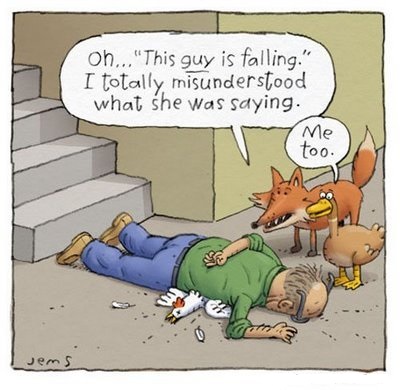
The Sky is Not Falling

Bjorn Lomborg brings perspective to doomsday hyperbole in his article The Sky Is Not Falling.  Excerpts in italics below with my bolds.

Main Point: Long, slow, positive trends don’t make it to the front page or to water-cooler conversations. So we develop peculiar misperceptions, especially the idea that a preponderance of things are going wrong.

When I published The Skeptical Environmentalist in 2001, I pointed out that the world was getting better in many respects. Back then, this was viewed as heresy, as it punctured several common and cherished misperceptions, such as the idea that natural resources were running out, that an ever-growing population was leaving less to eat, and that air and water were becoming ever-more polluted.

In each case, careful examination of the data established that the gloomy scenarios prevailing at the time were exaggerated. While fish stocks, for example, are depleted because of a lack of regulation, we can actually eat more fish than ever, thanks to the advent of aquaculture. Worries that we are losing forests overlook the reality that as countries become richer, they increase their forest cover.

Since I wrote the book, the world has only become better, according to many important indicators. We have continued to see meaningful reductions in infant mortality and malnutrition, and there have been massive strides toward eradication of polio, measles, malaria, and illiteracy.

By focusing on the most lethal environmental problem – air pollution – we can see some of the reasons for improvement. As the world developed, deaths from air pollution have declined dramatically, and that trend is likely to continue. Looking at a polluted city in a country like China might suggest otherwise, but the air inside the homes of most poor people is about ten times more polluted than the worst outdoor air in Beijing. The most serious environmental problem for humans is indoor air pollution from cooking and heating with dirty fuels like wood and dung – which is the result of poverty.

In 1900, more than 90% of all air pollution deaths resulted from indoor air pollution. Economic development has meant more outdoor pollution, but also much less indoor pollution. Reductions in poverty have gone hand in hand with a four-fold reduction in global air pollution mortality. Yet more people today still die from indoor air pollution than from outdoor pollution. Even in China, while outside air has become a lot more polluted, poverty reduction has caused a lower risk of total air pollution death. And as countries become richer, they can afford to regulate and cut even outdoor air pollution.

Two hundred years ago, almost every person on the planet lived in poverty, and a tiny elite in luxury. Today just 9.1% of the population, or almost 700 million people, lives on less than $1.90 per day (or what used to be one dollar in 1985). And just in the last 20 years, the proportion of people living in extreme poverty has almost halved. Yet few of us know this. The Gapminder foundation surveyed the UK and found that just 10% of people believe poverty has decreased. In South Africa and in Sweden, more people believe extreme poverty has doubled than believe – correctly – that it has plummeted.

How do we continue our swift progress? There has been no shortage of well-intentioned policy interventions, so we have decades of data showing what works well and what doesn’t.

In the latter category, even well-considered ideas from the world’s most eminent thinkers can fall short. The ambitious Millennium Villages concept was supposed to create simultaneous progress on multiple fronts, producing “major results in three or fewer years,” according to founder Jeffrey D. Sachs. But a study by the United Kingdom’s Department for International Development shows the villages had “moderately positive impacts,” and “little overall impact on poverty.”

It’s more constructive to focus on what works. Global analysis of development targets for Copenhagen Consensus by a panel of Nobel laureate economists showed where more money can achieve the most. They concluded that improved access to contraception and family-planning services would reduce maternal and child mortality, and also – through a demographic dividend – increase economic growth.

Likewise, research assessing the best development policies for Haiti found that focusing on improvements in nutrition through the use of fortified flour would transform the health of young children, creating lifelong benefits.

And the most powerful weapon in the fight against poverty is the one that got us where we are today: broad-based economic growth. Over the past 30 years, China’s growth spurt alone lifted an unprecedented 680 million people above the poverty line.

Humanity’s success in reducing poverty is an extraordinary achievement, and one that we are far too reticent about acknowledging. We need to make sure that we don’t lose sight of what got us this far – and what justifies the hope of an even better future.

Background:  Why climate activism has become a doomsday cult Clexit Gloom and Doom

Great Cult

Astronomy is Science. Climatology Not.

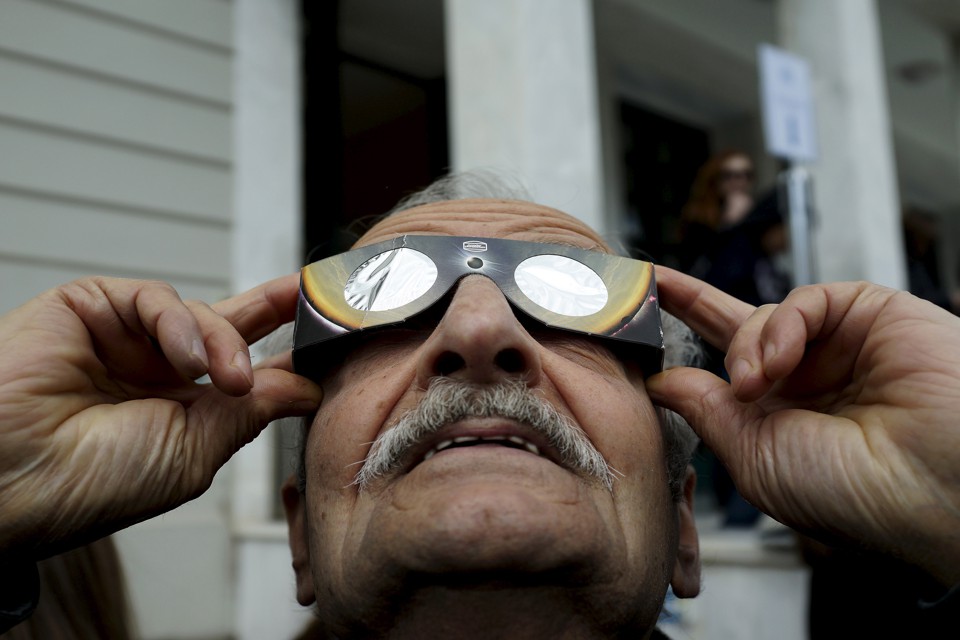
A nice tongue in cheek essay appeared in the Atlantic The Eclipse Conspiracy: Something doesn’t add up.

It is a whimsical spoof on anyone skeptical that the solar eclipse will happen tomorrow. (Excerpts)

Meanwhile the scientists tell us we can’t look at it without special glasses because “looking directly at the sun is unsafe.”

That is, of course, unless we wear glasses that are on a list issued by these very same scientists. Meanwhile, corporations like Amazon are profiting from the sale of these eclipse glasses. Is anyone asking how many of these astronomers also, conveniently, belong to Amazon Prime?

Let’s follow the money a little further. Hotels along the “path of totality”—a region drawn up by Obama-era NASA scientists—have been sold out for months. Some of those hotels are owned and operated by large multinational corporations. Where else do these hotels have locations? You guessed it: Washington, D.C.

In fact the entire politico-scientifico-corporate power structure is aligned behind the eclipse. This includes the mainstream media. How many news stories have you read about how the eclipse won’t happen?

That’s a great example of “conspiracy ideation” and a subtle dig at people who don’t trust NASA on climate matters. In fact, many of the real NASA scientists are extremely critical of NASA’s participation in climate activism.  Journalists or Senators who raise NASA as evidence of climate change should be directed to The Right Climate Stuff, where esteemed NASA scientists give plenty of good reasons to doubt NASA on this topic.

Bottom Line: A Real Science Makes Predictions that Come True.

The article, perhaps unwittingly, shows why Astronomy is a real science we can trust while Climatology is faith-based, like Astrology. When the eclipse happens, it confirms Astronomers have knowledge about the behavior of planetary bodies. When numerous predictions of climate catastrophes are unfulfilled, it demonstrates scientists’ lack of knowledge about our climate system. Anyone claiming certainty about the climate is exercising their religious freedom, but not doing science.


How Science Is Losing Its Humanity


The Closing of the Scientific Mind is a plea for scientists to celebrate and enhance humanity rather than belittle human life.  Author David Gelernter is a professor of computer science at Yale. His book Subjectivism: The Mind from Inside will be published by Norton later this year.  Excerpts below.

The huge cultural authority science has acquired over the past century imposes large duties on every scientist. Scientists have acquired the power to impress and intimidate every time they open their mouths, and it is their responsibility to keep this power in mind no matter what they say or do. Too many have forgotten their obligation to approach with due respect the scholarly, artistic, religious, humanistic work that has always been mankind’s main spiritual support. Scientists are (on average) no more likely to understand this work than the man in the street is to understand quantum physics. But science used to know enough to approach cautiously and admire from outside, and to build its own work on a deep belief in human dignity. No longer.

Belittling Humanity.

Today science and the “philosophy of mind”—its thoughtful assistant, which is sometimes smarter than the boss—are threatening Western culture with the exact opposite of humanism. Call it roboticism. Man is the measure of all things, Protagoras said. Today we add, and computers are the measure of all men.

Many scientists are proud of having booted man off his throne at the center of the universe and reduced him to just one more creature—an especially annoying one—in the great intergalactic zoo. That is their right. But when scientists use this locker-room braggadocio to belittle the human viewpoint, to belittle human life and values and virtues and civilization and moral, spiritual, and religious discoveries, which is all we human beings possess or ever will, they have outrun their own empiricism. They are abusing their cultural standing. Science has become an international bully.

The Closing of the Scientific Mind.

That science should face crises in the early 21st century is inevitable. Power corrupts, and science today is the Catholic Church around the start of the 16th century: used to having its own way and dealing with heretics by excommunication, not argument.

Science is caught up, also, in the same educational breakdown that has brought so many other proud fields low. Science needs reasoned argument and constant skepticism and open-mindedness. But our leading universities have dedicated themselves to stamping them out—at least in all political areas. We routinely provide superb technical educations in science, mathematics, and technology to brilliant undergraduates and doctoral students. But if those same students have been taught since kindergarten that you are not permitted to question the doctrine of man-made global warming, or the line that men and women are interchangeable, or the multiculturalist idea that all cultures and nations are equally good (except for Western nations and cultures, which are worse), how will they ever become reasonable, skeptical scientists? They’ve been reared on the idea that questioning official doctrine is wrong, gauche, just unacceptable in polite society. (And if you are president of Harvard, it can get you fired.)

Beset by all this mold and fungus and corruption, science has continued to produce deep and brilliant work. Most scientists are skeptical about their own fields and hold their colleagues to rigorous standards. Recent years have seen remarkable advances in experimental and applied physics, planetary exploration and astronomy, genetics, physiology, synthetic materials, computing, and all sorts of other areas.

But we do have problems, and the struggle of subjective humanism against roboticism is one of the most important.

The moral claims urged on man by Judeo-Christian principles and his other religious and philosophical traditions have nothing to do with Earth’s being the center of the solar system or having been created in six days, or with the real or imagined absence of rational life elsewhere in the universe. The best and deepest moral laws we know tell us to revere human life and, above all, to be human: to treat all creatures, our fellow humans and the world at large, humanely. To behave like a human being (Yiddish: mensch) is to realize our best selves.

No other creature has a best self.

This is the real danger of anti-subjectivism, in an age where the collapse of religious education among Western elites has already made a whole generation morally wobbly. When scientists casually toss our human-centered worldview in the trash with the used coffee cups, they are re-smashing the sacred tablets, not in blind rage as Moses did, but in casual, ignorant indifference to the fate of mankind.

A world that is intimidated by science and bored sick with cynical, empty “postmodernism” desperately needs a new subjectivist, humanist, individualist worldview. We need science and scholarship and art and spiritual life to be fully human. The last three are withering, and almost no one understands the first.

At first, roboticism was just an intellectual school. Today it is a social disease. Some young people want to be robots (I’m serious); they eagerly await electronic chips to be implanted in their brains so they will be smarter and better informed than anyone else (except for all their friends who have had the same chips implanted). Or they want to see the world through computer glasses that superimpose messages on poor naked nature. They are terrorist hostages in love with the terrorists.
All our striving for what is good and just and beautiful and sacred, for what gives meaning to human life and makes us (as Scripture says) “just a little lower than the angels,” and a little better than rats and cats, is invisible to the roboticist worldview. In the roboticist future, we will become what we believe ourselves to be: dogs with iPhones. The world needs a new subjectivist humanism now—not just scattered protests but a growing movement, a cry from the heart.

Footnote:  A related post provides additional background:  Head, Heart and Science

Mind-Blowing Science

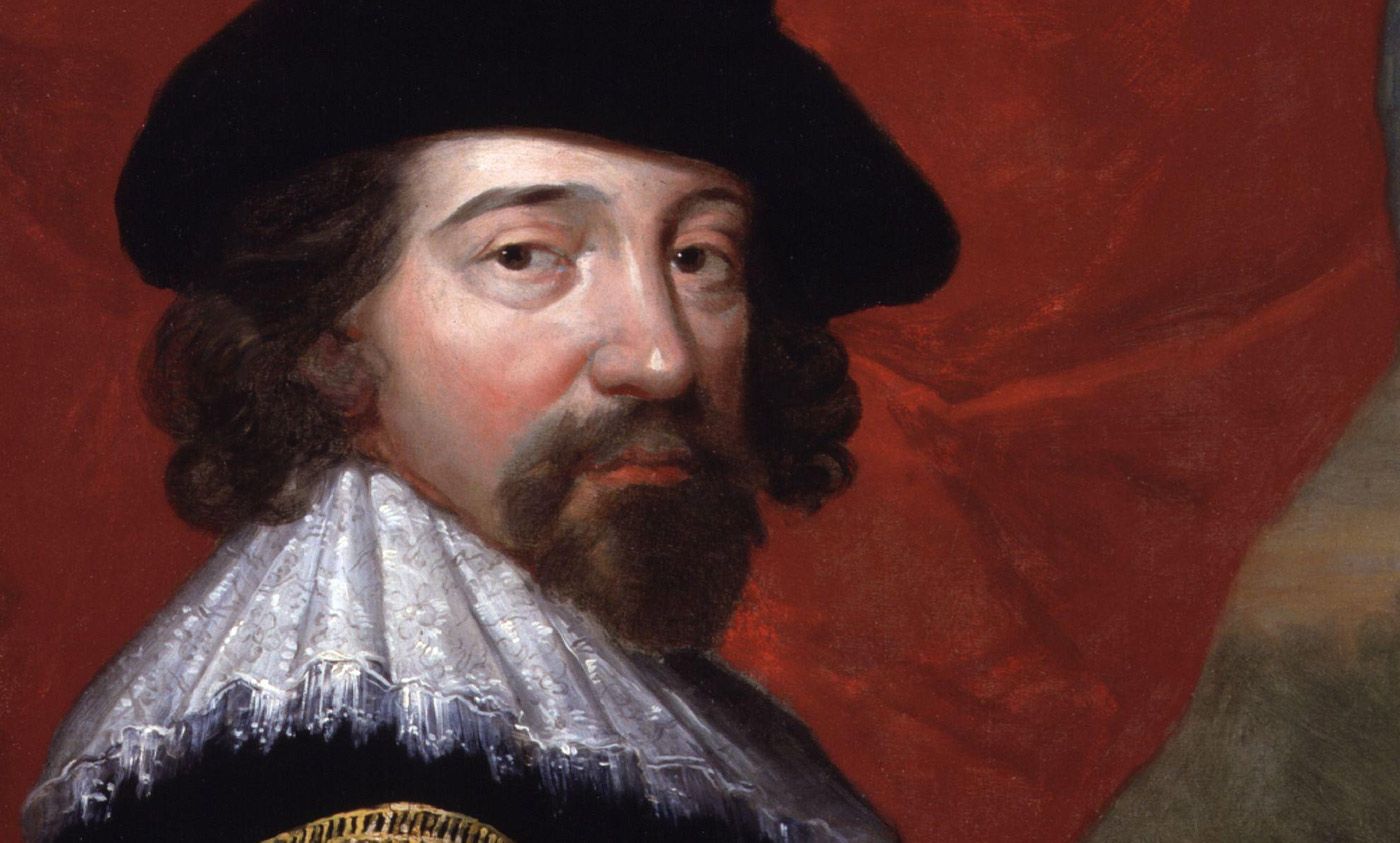
Cometh the man; Francis Bacon’s insight was that the process of discovery was inherently algorithmic. Photo courtesy NPG/Wikipedia

In a refreshing relief from Science Marches promoting slogans and tenets of climate dogma, we have an insightful look into a fruitful future for the scientific endeavor.

The article is Science has outgrown the human mind and its limited capacities by Ahmed Alkhateeb, a molecular cancer biologist at Harvard Medical School. (bolded text is my emphasis)

It starts with a great quote:

The duty of man who investigates the writings of scientists, if learning the truth is his goal, is to make himself an enemy of all that he reads and … attack it from every side. He should also suspect himself as he performs his critical examination of it, so that he may avoid falling into either prejudice or leniency.
– Ibn al-Haytham (965-1040 CE)

First the author reminds readers of the current sorry state of scientific research:  overwhelming quantity of papers with diminishing quality (bogus findings, unreplicable studies, sloppy methodology, etc.). He then raises an intriguing question:

One promising strategy to overcome the current crisis is to integrate machines and artificial intelligence in the scientific process. Machines have greater memory and higher computational capacity than the human brain. Automation of the scientific process could greatly increase the rate of discovery. It could even begin another scientific revolution. That huge possibility hinges on an equally huge question: Can scientific discovery really be automated?

Alkhateeb gets to the point of Bacon’s forming the scientific process:

The Baconian method attempted to remove logical bias from the process of observation and conceptualisation, by delineating the steps of scientific synthesis and optimizing each one separately. Bacon’s vision was to leverage a community of observers to collect vast amounts of information about nature and tabulate it into a central record accessible to inductive analysis. In Novum Organum, he wrote: ‘Empiricists are like ants; they accumulate and use. Rationalists spin webs like spiders. The best method is that of the bee; it is somewhere in between, taking existing material and using it.’

The Baconian method is rarely used today. It proved too laborious and extravagantly expensive; its technological applications were unclear. However, at the time the formalization of a scientific method marked a revolutionary advance. Before it, science was metaphysical, accessible only to a few learned men, mostly of noble birth. By rejecting the authority of the ancient Greeks and delineating the steps of discovery, Bacon created a blueprint that would allow anyone, regardless of background, to become a scientist.

Bacon’s insights also revealed an important hidden truth: the discovery process is inherently algorithmic. It is the outcome of a finite number of steps that are repeated until a meaningful result is uncovered. Bacon explicitly used the word ‘machine’ in describing his method. His scientific algorithm has three essential components:

  • First, observations have to be collected and integrated into the total corpus of knowledge.
  • Second, the new observations are used to generate new hypotheses.
  • Third, the hypotheses are tested through carefully designed experiments.
If science is algorithmic, then it must have the potential for automation. This futuristic dream has eluded information and computer scientists for decades, in large part because the three main steps of scientific discovery occupy different planes. Observation is sensual; hypothesis-generation is mental; and experimentation is mechanical. Automating the scientific process will require the effective incorporation of machines in each step, and in all three feeding into each other without friction. Nobody has yet figured out how to do that.

Experimentation has seen the most substantial recent progress. For example, the pharmaceutical industry commonly uses automated high-throughput platforms for drug design.

Automated hypothesis-generation is less advanced, but the work of Don Swanson in the 1980s provided an important step forward. He demonstrated the existence of hidden links between unrelated ideas in the scientific literature; using a simple deductive logical framework, he could connect papers from various fields with no citation overlap. In this way, Swanson was able to hypothesise a novel link between dietary fish oil and Reynaud’s Syndrome without conducting any experiments or being an expert in either field.

The most challenging step in the automation process is how to collect reliable scientific observations on a large scale. There is currently no central data bank that holds humanity’s total scientific knowledge on an observational level. Natural language-processing has advanced to the point at which it can automatically extract not only relationships but also context from scientific papers. However, major scientific publishers have placed severe restrictions on text-mining. More important, the text of papers is biased towards the scientist’s interpretations (or misconceptions), and it contains synthesised complex concepts and methodologies that are difficult to extract and quantify.

Summary

Nevertheless, recent advances in computing and networked databases make the Baconian method practical for the first time in history. And even before scientific discovery can be automated, embracing Bacon’s approach could prove valuable at a time when pure reductionism is reaching the edge of its usefulness.

Such an approach would enable us to generate novel hypotheses that have higher chances of turning out to be true, to test those hypotheses, and to fill gaps in our knowledge. It would also provide a much-needed reminder of what science is supposed to be: truth-seeking, anti-authoritarian, and limitlessly free.


Data, Facts and Information


In following many blogs related to climate science, it seems that confusion reigns regarding some fundamentals of scientific thought and practice. So this post attempts to clarify three important scientific concepts: Data, Facts, and Information.

Show Me the Data

Data pertains to observations of happenings in the world, independent of the observer. In a court of law, a witness on the stand gives his or her observations. For example, I heard person x say this, or I saw person y do that. This is evidence all right, but it is not data.  And an artist or filmmaker can capture an event as evidence, but again it is not data in that format.

By definition, data is quantitative. And applying numbers to observations means using standard measurements so that these observations can be compared, contrasted, and replicated, as well as compiled with other similar observations. Each subject of study has one or more units of measurement pertinent to that inquiry. For example, observing a moving object requires distance and time, such as kilometers per minute, or rates of acceleration, such as meters per second per second, or m/s^2.

To summarize, data are a set of observations expressed in standard units of measurement.

What are the Facts

Taiichi Ohno was the central thinker behind the Toyota way of manufacturing. In his view facts are observed “in situ” by a knowledgeable and purposeful agent, an human expert. Facts are the result of direct observation of a process, product or part, including any measured data and the correct context for such data. Context means what relevant conditions, incidents, phenomena, and situations were occurring prior, during and after the data were collected.

In science a fact is a pattern detected in a data set. Thus, a fact is a finding, a meaning supported by data. And, importantly, a fact is particular to the place and time where the data was obtained. The pattern and meaning derives from interpreting the data (observations) in the specific place and time where the happenings occurred understanding the historical situation and context.

We hear a lot these days about fake news or facts in relation to political or cultural news. There, the spin and narratives overwhelm objective observations, and the report serves only to motivate audience acceptance or rejection of the subjects, the truth is irrelevant.  Unfortunately, fact “checking” has morphed into substituting one spin for another.

In science, facts are supported by data, but each fact represents a pattern in the data seen in the context of a specific place and time. So, for example, it can be a fact that civilian deaths in Syria have increased by x% in the past year. Importantly, facts depend on persons with deep knowledge of the particular place and time.

To summarize, a scientific fact is a pattern in data in the context of a specific place and time.

The Whole Truth and Nothing But the Truth

Information stands on facts, which themselves stand on data. Information consists of conclusions from weighing and judging the importance of various sets of facts regarding a situation. Based on the above, all the facts have a basis in data, but they are not equally significant. And the significance is relative to the concerns of the information analyst.

Information is not absolute, but serves to inform action. Facts are value-free, but information is not. Information draws on facts to form a conclusion as to the direction a situation is moving, out of a concern to intervene or not, according to the interests of the observers. In that sense, information is always actionable, or intends to be so.

As an example of this facet of information, consider media charges that someone is citing “alternate facts.” Now a fact is always true, meaning it is supported by data and corresponds to reality. Or it is not a fact, but a fiction not supported by data and in contradiction to reality.

In legal proceedings, frequently there are “alternate facts.” One party, say the prosecution, presents a set of facts comprising all the information supporting their explanation or theory of a criminal event. The defense presents an alternative explanation or theory of the event supported by other facts either ignored or discounted in the prosecution’s case. Such “alternate facts” are no less true, they simply form an alternate information convincing to those who place more weight on them.

A similar process goes on in scientific disputes where each side accuses the other of “cherry-picking” by referring only to those facts which support one theory. Honest science attempts to explain all relevant facts, and sometimes (e.g. Wave vs. Particle theories of light) holds competing theories in tension while a more comprehensive meta-theory can be formed and proved.

Information results from organizing data and facts into a perspective respecting the context of the facts and supporting humans’ need to anticipate the future. Forming theories of what to expect and how to respond or intervene is fundamental to human survival.

That’s the way I see it.

For a great example of how deep knowledge applied to data leads to a productive theory and discovery see Quebec Teen Studies Stars, Discovers Ancient Maya City

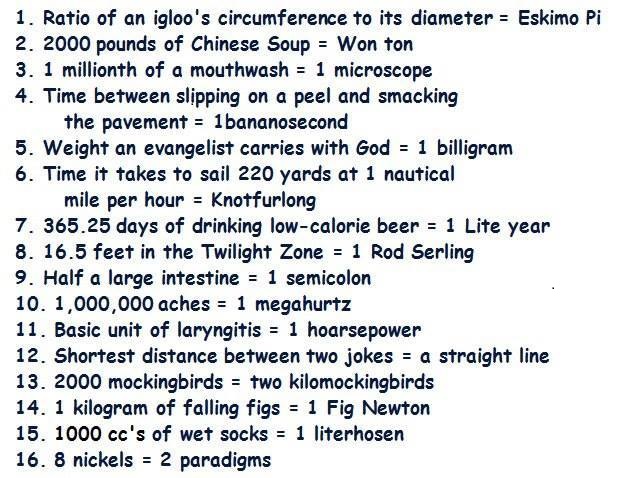
Fun Footnote:

Science depends on measuring things, so you need to know the correct units for what you are studying.

Below are some obscure measures for collecting data in special situations.

17. Quantity of beauty required to launch a single ship = 1 millihelen h/t vuurklip

Purely Energy


Higgs boson event as seen in the Compact Muon Solenoid detector at the Large Hadron Collider. This one high-energy collision illustrates the power of energy conversion, which always exists in the form of particles.

Ethan Siegel provides an informative primer on energy physics:  Is There Any Such Thing As Pure Energy?  It is useful background for anyone interested in energy and climate science. Some excerpts below.

What is the nature of Energy?

Energy plays a tremendous role, not only in our technology-rich daily lives, but in fundamental physics as well. The chemical energy stored in gasoline gets converted into kinetic energy that propels our vehicles, while the electrical energy from our power plants gets converted into light, heat and other forms of energy at our homes. But this energy always seems to exist as merely one property of an otherwise independently-existing system. Must it always be so? Alex from Moscow writes in with a question about energy itself:

“Does pure energy [exist], maybe very shortly before turning into a particle or a photon? Or is it just a useful mathematical abstraction, an equivalent that we use in physics?”

At a fundamental level, energy can take on many forms.

Mass = Energy

The simplest, most familiar form of energy of all is in terms of mass. You don’t normally think in terms of Einstein’s E = mc2, but every physical object that’s ever existed in this Universe is made of massive particles, and simply by having mass, these particles have energy.

E. Siegel The known particles in the Standard Model. These are all the fundamental particles that have been directly discovered; with the exception of a few of the bosons, all particles have mass.

Mass in Motion = Kinetic Energy

If these particles are moving, they have an additional form of energy as well: kinetic energy, or the energy of motion.

Particles Linked Together = Binding Energy

Finally, these particles can link together in a variety of ways, forming more complex structures like nuclei, atoms, molecules, cells, organisms, planets and more. This form of energy is known as binding energy, and is actually negative in its effect. It reduces the rest mass of the overall system, which is why nuclear fusion, taking place in the cores of stars, can emit so much light and heat: by converting mass into energy via that same E = mc2. Over the 4.5 billion year history of the Sun, it’s lost approximately the mass of Saturn from simply fusing hydrogen into helium.

The theory of asymptotic freedom, describing the strength of the quark interactions inside a nucleus, was worth a Nobel Prize for Wilczek, Politzer and Gross. Wikimedia Commons user Qashqaiilove

Massless Particles in Motion = Restless Kinetic Energy

The Sun itself gives another example of energy: light and heat, which comes in the form of photons, which are different from the forms of energy we’ve considered so far. There exist massless particles as well — particles with no rest energy — and these particles, like photons, gluons and (hypothetically) gravitons, all move at the speed of light. However, they do carry energy in the form of kinetic energy, and, in the case of gluons, are responsible for the binding energy inside atomic nuclei and protons themselves.

NASA / Solar Dynamics Observatory (SDO) The Sun, shown here, generates its energy by fusing hydrogen into helium in its core, losing small amounts of mass in the process. Over its lifetime, it’s lost approximately the mass of Saturn by this process.

Energy is Always Conserved

Energy comes in a variety of forms, and some of those forms are fundamental. A particle’s rest mass energy doesn’t change over time, and in fact doesn’t change from particle to particle. It’s a type of energy that is inherent to everything in the Universe itself. But all the other forms of energy that exist are relative. An atom in an excited state has more energy than an atom in a ground state, and that’s due to the difference in binding energy. And if you want to make that transition to the lower-energy state? You have to emit a photon to get there; you cannot make that transition without conserving energy, and that energy needs to be carried by a particle — even a massless one — in order to make that happen.

In this illustration, one photon (purple) carries a million times the energy of another (yellow). Fermi data on two photons from a gamma-ray burst fail to show any travel delay, showing the speed of light’s constancy across energy.

Energy is Relative to the Observer

Perhaps an oddity of this is that photon energy, or any form of kinetic energy (i.e., the energy of motion), is that its value is not fundamental, but rather is dependent on the motion of the observer. If you move towards a photon, you’ll find its energy appears greater (as its wavelength is blueshifted), and if you move away from it, its energy will be lesser, and it will appear redshifted. Energy is relative, but what’s interesting that for any observer, it’s always conserved. No matter what the interactions are, energy is never seen to exist on its own, but only as part of a system of particles, whether massive or massless.

Dark Energy

There is one form of energy, however, that may not need a particle at all: dark energy. The form of energy that causes the expansion of the Universe to accelerate may very well be energy inherent to the fabric of the Universe itself! This interpretation of dark energy is self-consistent and matches the observations of distant, receding galaxies and quasars that we see exactly. The only problem? This form of energy, as far as we can tell, can neither be used to create or destroy particles, nor can it be inter-converted to and from other forms of energy. It seems to be its own entity, disconnected from interacting with the other forms of energy present within the Universe.

Without dark energy, the Universe wouldn’t be accelerating. But there’s no way to access that energy via any other particles in the Universe.

Conclusion

So the full answer to the question of whether pure energy exists is:

  • For all of the particles that exist, massive and massless, energy is only one property of them, and cannot exist independently.
  • For all of the situations where energy appears to be lost in a system, such as through gravitational decay, there exists some form of radiation carrying off that energy, leaving it conserved.
  • And that dark energy itself may be the purest form of energy, existing independent of particles, but as far as any effect other than the expansion of the Universe, that energy is inaccessible to everything else in the Universe.

As far as we can tell, energy is not something we can isolate in a laboratory, but only one of many properties that matter, antimatter and radiation all possess. Creating energy independent of particles? It might be something the Universe itself does, but until we learn how to create (or destroy) spacetime itself, we find ourselves unable to make it so.

Time Mag Misreads Science


This blog is dedicated to science as a process of discovery, rather than a catechism of truths to be embraced.  This article in the Washington Times discussed that issue in relation to a recent Time Magazine essay that comes down on the catechism side.

Time’s Misreading of Science, The magazine would rather settle than search

As demonstrated by the confirmation hearings of Scott Pruitt for new Environmental Protection Agency chief, all-out war is being waged against the Trump administration by leftists who believe science is under attack from the evil empire.

Belief that this new administration puts science in jeopardy is not surprising given the fact that so many are confused about what science is, how it is practiced, and what it can tell us about the future.

The popular press adds to the confusion about science. Take the Feb. 13 issue of Time magazine, for example. In an article titled “How a war on science could hurt the U.S. — and its citizens,” the authors open with this assessment of science: “The discipline of science is one where the facts, once they are peer-reviewed and published in scientific journals, are fixed. They’re not open to interpretation, or at least not much.”

There are numerous problems with this confused understanding of science. Regardless, the authors continue by contrasting “science” with politics “in which nearly everything can be negotiated. But as the first days of the Trump administration have shown, many of those seemingly settled scientific facts — the ones that have informed countless policies from previous U.S. administrations — are once more up for debate.”

tall-stack-booksrev

Science can be defined at its most basic level as “knowledge,” or what we think we know about a given topic. Since absolute truth on a subject is elusive, science is tentative, adjusted as additional information is accumulated through more research and wider perspective and, yes, even debate.

In practice, science can certainly be influenced by politics or, essentially, ideology. Those on the left apparently do not see a leftist ideology permeating certain areas of contemporary scientific practice and so equate scientific conclusions that endorse their beliefs as being absolutely irrefutable.

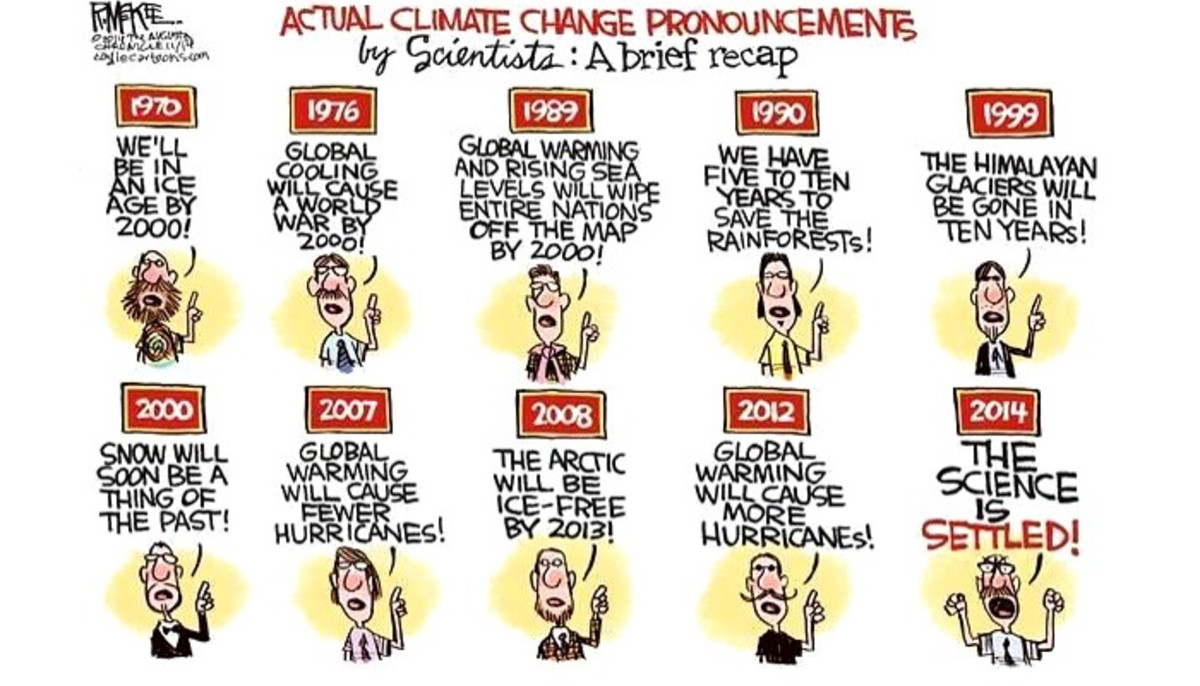
This blinkered perception manifests itself as “settled science” and is apparent in climate change science, and especially the power of this science to ascertain Earth’s future climate.

Accurate prediction is one of the biggest challenges in scientific practice, and indeed an accurate prediction for the right reasons is one of the conditions for a scientific assertion to be correct.

Here’s where climate science has fallen woefully short in recent decades.

The prediction that man-made carbon-dioxide emissions drive catastrophic climate change beginning with mounting global temperatures has been proven paltry at best. Yet, the dire global warming prediction, years ago, evolved into a belief and brandished as a proselytizing mantra by climate change crusaders.

Now the current climate change hypothesis is struggling and can use some insight from qualified, skeptical scientists to broaden the ambient landscape.

That broadening is difficult with a Time-skewed understanding of science and scientific practice. To say that the discipline of science is where facts are fixed once they are peer-reviewed and published is confused at best. Scientists use facts (like those associated with the fundamental principles of physics) as they observe natural events, propose hypotheses, and test their explanations of what they observe. Hypotheses are submitted to peer-reviewed scientific journals for critique.

The peer-review process is assumed to be rigorous, fair and balanced; however, that is not always the case. Documented instances have occurred where data in published reports were discovered to be falsified, or when work described was never actually performed, or when only friendly reviewers were chosen to assure acceptance of the conclusions, and the like. So, facts cannot be determined by peer review any more than real truth can be decide by an ad hoc committee. And published results are always open to further review, challenges and certainly interpretation.

True believers trust that their concept of science is rock-solid, especially when the science they choose to believe conforms to their preconceived notions.

But, the current world of climate science has been astutely branded by some challengers as a “climate-industrial complex.” The moniker may be well suited to describe the seemingly enormous political and monetary influence of this particular field by left-leaning vested interests.

Perhaps, with the arrival of the pragmatic Trump team, including Scott Pruitt, the climate world of “seemingly settled scientific facts” is about to be rocked by a bit more conservative assessment.

• Anthony J. Sadar is a Certified Consulting Meteorologist and author of “In Global Warming We Trust: Too Big to Fail” (Stairway Press, 2016).

Bertrand Russell makes a related point with his solar teapot.

To enlarge image, open it in new tab.

More on the Climate Crisis industry

Climate Crisis Inc.

For more on belief related to science and religion:

Head, Heart and Science

Origins of Science

In a recently published video, John Christy explains clearly the limits of scientists’ understanding of earth’s climate system. It is well worth anyone’s time to view.

Dr. Christy makes the important point that all science is based upon objective measurements of the world. Feelings, intuitions, anecdotes and shared opinions do not provide proof for a scientific understanding of something. Science requires data, numerical records of observed measurements.

This post is about how much we owe to ancestors who invented standardized units of weights and measures without which we would have no science at all.

Background

It happened last week that my home north of Montreal was without electrical power for 3 nights and 2 days. The whole experience drove home how much our lives depend on reliable, affordable electricity. Yes, our home heating system is electrical.

My e-readers’ batteries ran out, leaving me to read real paper books by the light of our hurricane lamp. Thus, I revisited a book from many years ago that provides much interesting information on this subject: Charles Panati’s Browser’s Book of Beginnings: Origins of Everything Under, and Including the Sun.

CHARLES PANATI, a former physicist and for six years a science editor for Newsweek, is the author of many non-fiction and fiction books, including six works on “origins.” The text below comes from Panati, the images from various internet sources.

Length Measures

To measure lengths, the Egyptians turned to parts of the human body. We know many of these measurements by terms later derived from Latin. A cubit, the oldest enduring standard measure, devised about 3000 B.C. was the length of a grown man’s arm from the elbow to the tip of the outstretched middle finger–about 20.5 inches in modern units. The cubit’s basic sub-unit was a digit, which was the breadth, not the length of a finger. Twenty-eight digits equaled 1 cubit.

The palm, not surprisingly, was another unit. One palm equaled 4 digits. (Measure it yourself, by holding the four fingers of one hand against the other hand’s palm.) A palm plus a digit, totaled 5 digits, or a hand. Palms were combined to make several larger units, and a digit was elaborately subdivided, resulting in a complex, but amazingly accurate system of measurement.

The Great Pyramid of Giza, built by thousands of workers with minimal architectural knowledge, boasts sides that vary no more than 0.05 percent from the mean length–that is, a deviation of only 4.5 inches over a span of 755 feet.

The ancient Greeks borrowed from Egyptian and Babylonian systems and made their own refinements; they also preferred terms related to the human body. 16 fingers combined to make 1 foot, and 24 fingers made an “Olympic cubit.” The Romans copied from the Greeks, but subdivided the foot into 12 inches. They also used the mile, the yard and, for weight, the pound.

Weight Measures

A system of standard weights based on the human body was unfeasible, since there were too many natural variations to rely on an average man. Instead, the Babylonians devised a system based on metal objects, or trinkets, of various sizes and shapes.

bible-coins-history-money-weight-system-sumerian-duck-weight-black-stone-king20shulgi-2094-2048bc-of-ur-for-god20nanna-5-minas-oriental-museum-number-im3580-2070bc

The earliest unit of weight was the mina. Minas often took the shape of a duck, and each of several unearthed at a archaeological dig weigh roughly 640 grams. Also discovered was a swan weighing 30 minas. The Babylonians also used standard size “coins” from which the Hebrews adopted their unit of weight, the “shekel”, about half an ounce, and also a silver coin weighing that amount, frequently mentioned in the Bible.

The Metric Revolution

Colbert Presenting the Members of the Royal Academy of Sciences to Louis XIV by Henry Testelin

Colbert Presenting the Members of the Royal Academy of Sciences to Louis XIV by Henry Testelin

Almost all of the ancient and medieval weights and measures fell into disuse, to be replaced by the metric system. The French Revolution was not only political, but overturned many previously sacrosanct institutions. With the fall of the Bastille July 4, 1789, King Louis XVI had to give way to a constituent National Assembly, who proceeded to make many changes. Prominent among them was the adoption in June 1799 of the metric system.

Members of the French Academy of Sciences had taken on the task of devising a metric system. They decided that the length of the meridian passing through Paris from the North Pole to the Equator should serve as a fixed distance, and that one ten-millionth of that distance should be called a meter. The unit of weight, the gram, was to be related to the weight of a cubic meter of water. Sub-units such as centimeter and millimeter were also proposed, as well as such super-units as the kilometer.

The metric system was adopted under the motto “For all people, all the time”, a sentiment in accord with the revolutionary tenor of the time.

Time Measures

Our 7-Day Week Can Be Traced To Babylonians Who Started Using It 4,000 Years Ago

Our 7-Day Week Can Be Traced To Babylonians Who Started Using It 4,000 Years Ago

Many are aware that the earliest reckoning of time referred to moons (or months), but as civilizations became more complex, shorter periods proved more convenient as measurements of time. For a long while, the idea of a week was different from place to place: West Africans had a four day week, central Asians opted for five days, Assyrians adopted a six-day weeks, being the period between market days.

It was the Babylonians who preferred to measure a month by its natural phase of 28 days (more accurately the moon’s waxing and waning takes approximately 29.5 days. For convenience in business transactions–and also because of their belief in the sacredness of the number seven–they grouped the days into four seven-day weeks, the origin of our present system.

Temperature Measures

The ancient Greeks could have invented the thermometer, since they were well aquainted with the behavior of certain liquids and gases under conditions of changing temperature. Several scientists attempted to measure quantitative differences between hot and cold, but success came only late in the 16th century to the Italian astronomer Galileo.

Galileo’s device was actually a thermoscope, which had no degree scale, and measured only gross changes in temperature. A large glass bulb with a long, narrow, open-mouthed neck rested inverted over a vessel of colored water or alcohol. When air was forced from the bulb, the liquid rose up a short distance into the neck. When the bulb’s temperature changed, the air in it either expanded or contracted, and the level of liquid in the tube changed accordingly.

In 1611, the first scale was introduced by Sanctorius, a contemporary of Galileo. He gauged the low point by noting the level of the liquid when the thermoscope was surrounded by melting snow. Then he held a candle beneath it to mark the high point. From his observations, he arrived at a scale of 110 equal parts, or degrees. Thus, the thermo-scope, for “seeing” temperature changes, became a thermo-meter, for measuring those changes.

Early thermometers were inaccurate due to changes in barometric pressures causing liquid levels to change when temperatures did not. This problem was solved in 1644 when Grand Duke Ferdinand II of Tuscany introduced the hermetically sealed thermometer. He also founded in 1657 an academy for experimentation to improve temperature devices. They did not use mercury as modern models do (though academy members experimented with that liquid metal), but red wine instead, since it expanded faster when heated.

Summary

These are but a few, mostly ancient, examples of human inventions contributing to the rich scientific framework we have inherited. Many more have been added in modern times, and who knows what the future will bring. Below is a whimsical look at some possibilities.

Since science depends on measuring things, you need to know the correct units for what you are studying. Below are some obscure measures for special situations.

Footnote on the Importance of Measurements

Chameleon Climate Models

Chameleon2

Paul Pfleiderer has done a public service in calling attention to
The Misuse of Theoretical Models in Finance and Economics (here)
h/t to William Briggs for noticing and linking

He coins the term “Chameleon” for the abuse of models, and explains in the abstract of his article:

In this essay I discuss how theoretical models in finance and economics are used in ways that make them “chameleons” and how chameleons devalue the intellectual currency and muddy policy debates. A model becomes a chameleon when it is built on assumptions with dubious connections to the real world but nevertheless has conclusions that are uncritically (or not critically enough) applied to understanding our economy. I discuss how chameleons are created and nurtured by the mistaken notion that one should not judge a model by its assumptions, by the unfounded argument that models should have equal standing until definitive empirical tests are conducted, and by misplaced appeals to “as-if” arguments, mathematical elegance, subtlety, references to assumptions that are “standard in the literature,” and the need for tractability.

Chameleon Climate Models

Pfleiderer is writing about his specialty, financial models, and even more particularly banking systems, and gives several examples of how dysfunctional is the problem. As we shall see below, climate models are an order of magnitude more complicated, and abused in the same way, only more flagrantly.

As the analogy suggests, a chameleon model changes color when it is moved to a different context. When politicians and activists refer to climate models, they assert the model outputs as “Predictions”. The media is rife with examples, but here is one from Climate Concern UK

Some predicted Future Effects of Climate Change

  • Increased average temperatures: the IPCC (International Panel for Climate Change) predict a global rise of between 1.1ºC and 6.4ºC by 2100 depending on some scientific uncertainties and the extent to which the world decreases or increases greenhouse gas emissions.
  • 50% less rainfall in the tropics. Severe water shortages within 25 years – potentially affecting 5 billion people. Widespread crop failures.
  • 50% more river volume by 2100 in northern countries.
  • Desertification and burning down of vast areas of agricultural land and forests.
  • Continuing spread of malaria and other diseases, including from a much increased insect population in UK. Respiratory illnesses due to poor air quality with higher temperatures.
  • Extinction of large numbers of animal and plant species.
  • Sea level rise: due to both warmer water (greater volume) and melting ice. The IPCC predicts between 28cm and 43cm by 2100, with consequent high storm wave heights, threatening to displace up to 200 million people. At worst, if emissions this century were to set in place future melting of both the Greenland and West Antarctic ice caps, sea level would eventually rise approx 12m.

Now that alarming list of predictions is a claim to forecast what will be the future of the actual world as we know it.

Now for the switcheroo. When climate models are referenced by scientists or agencies likely to be held legally accountable for making claims, the model output is transformed into “Projections.” The difference is more than semantics:
Prediction: What will actually happen in the future.
Projection: What will possibly happen in the future.

In other words, the climate model has gone from the bookshelf world (possibilities) to the world of actualities and of policy decision-making.  The step of applying reality filters to the climate models (verification) is skipped in order to score political and public relations points.

The ultimate proof of this is the existence of legal disclaimers exempting the modellers from accountability. One example is from ClimateData.US

Disclaimer NASA NEX-DCP30 Terms of Use

The maps are based on NASA’s NEX-DCP30 dataset that are provided to assist the science community in conducting studies of climate change impacts at local to regional scales, and to enhance public understanding of possible future climate patterns and climate impacts at the scale of individual neighborhoods and communities. The maps presented here are visual representations only and are not to be used for decision-making. The NEX-DCP30 dataset upon which these maps are derived is intended for use in scientific research only, and use of this dataset or visualizations for other purposes, such as commercial applications, and engineering or design studies is not recommended without consultation with a qualified expert. (my bold)

Conclusion:

Whereas some theoretical models can be immensely useful in developing intuitions, in essence a theoretical model is nothing more than an argument that a set of conclusions follows from a given set of assumptions. Being logically correct may earn a place for a theoretical model on the bookshelf, but when a theoretical model is taken off the shelf and applied to the real world, it is important to question whether the model’s assumptions are in accord with what we know about the world. Is the story behind the model one that captures what is important or is it a fiction that has little connection to what we see in practice? Have important factors been omitted? Are economic agents assumed to be doing things that we have serious doubts they are able to do? These questions and others like them allow us to filter out models that are ill suited to give us genuine insights. To be taken seriously models should pass through the real world filter.

Chameleons are models that are offered up as saying something significant about the real world even though they do not pass through the filter. When the assumptions of a chameleon are challenged, various defenses are made (e.g., one shouldn’t judge a model by its assumptions, any model has equal standing with all other models until the proper empirical tests have been run, etc.). In many cases the chameleon will change colors as necessary, taking on the colors of a bookshelf model when challenged, but reverting back to the colors of a model that claims to apply the real world when not challenged.

A model becomes a chameleon when it is built on assumptions with dubious connections to the real world but nevertheless has conclusions that are uncritically (or not critically enough) applied to understanding our economy. Chameleons are not just mischievous they can be harmful − especially when used to inform policy and other decision making − and they devalue the intellectual currency.

Thank you Dr. Pfleiderer for showing us how the sleight-of-hand occurs in economic considerations. The same abuse prevails in the world of climate science.

Paul Pfleiderer, Stanford University Faculty
C.O.G. Miller Distinguished Professor of Finance
Senior Associate Dean for Academic Affairs
Professor of Law (by courtesy), School of Law

Footnote:

There are a series of posts here which apply reality filters to attest climate models.  The first was Temperatures According to Climate Models where both hindcasting and forecasting were seen to be flawed.

Others in the Series are:

Sea Level Rise: Just the Facts

Data vs. Models #1: Arctic Warming

Data vs. Models #2: Droughts and Floods

Data vs. Models #3: Disasters

Data vs. Models #4: Climates Changing