Diversity Industry Covers Up Failed Affirmative Action

screen-shot-2021-07-09-at-12.17.46-am
Heather Mac Donald explains the origins and preoccupations of Diversity, Inclusion and Equity (DIE).  Whoops, I mean Diversity, Equity and Inclusion (DEI)  which is now an academic degree you can acquire.  Her Quillette article is Almost Four Decades After Its Birth, The Diversity Industry Thrives on Its Own Failures.

The diversity business originated in 1984, when R. Roosevelt Thomas, a Harvard business school graduate, founded the American Institute for Managing Diversity at Morehouse College. Corporations had been practicing affirmative action for years, but the women and minorities whom employers had hired to meet equal-opportunity obligations weren’t advancing up the career ladder in acceptable numbers. Thomas came up with a novel explanation. The problem wasn’t that preferentially admitted recruits were underqualified; the problem was that their supervisors didn’t know how to “manage diversity.” It was those supervisors who needed remedial training—lots of it—not the affirmative-action beneficiaries themselves.

Managerial expectations about merit and performance often reflected cultural prejudices, Thomas and the consultants who followed him insisted. “‘Qualifications’ is a code word in the business world with very negative connotations,” a consultant with the professional-services firm of Towers Perrin (as it was then called) said in 1993. If minorities don’t meet existing employment criteria, then corporations need to expand their definition of what it means to be employable, said Alan Richter, creator of the 1991 board game, The Diversity Game. Promptness, precision, and a cogent communications style were among the attributes that diversity advisors deemed likely expendable.

A lucrative new consulting practice was born, its growth driven by a constant churn in terminology. “Valuing diversity” was different from “managing diversity.” Each newly spawned phrase came with a cadre of high-priced tutors. Lewis Griggs currently offers video trainings in such subjects as “Communicating Across Differences,” “Supervising and Managing Differences,” and “Creating, Managing, Valuing, and Leveraging Diversity,” with each video purporting to contain specialized content appropriate for different parts of an organization.
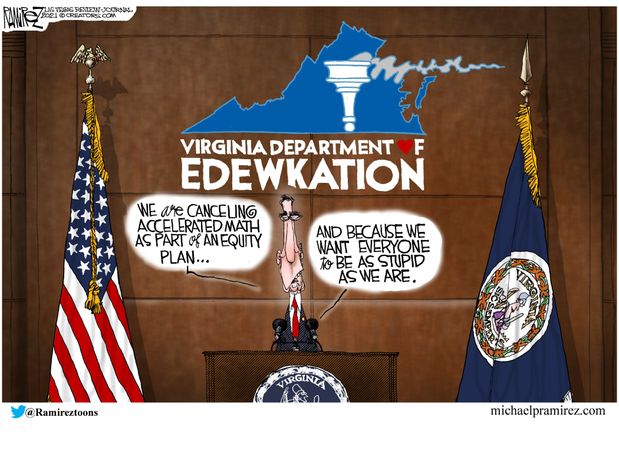
“Diversity” was eventually joined by “inclusion.” “Equity” was then added, thus yielding today’s DEI (Diversity, Equity, and Inclusion) triumvirate (sometimes also going as “EDI”). The most cutting-edge organizations have lately appended a “B” (for Belonging), as at the Juilliard School in New York City. Distinguishing these terms is a core function of diversity training—and now, at Bentley, of diversity scholarship. The university’s new DEI major, the Chronicle of Higher Education reports, will help graduates understand the “nuances of and differences between diversity, equity, inclusion, and justice.”

Even by 1993, half of Fortune 500 companies had a designated diversity officer, and 40 percent of American companies had instituted diversity training. Diversity conferences were occurring regularly, attracting government and business attendees. And yet many reporters, academics, corporate consultants, and activists still insist that managers not only fail to “value diversity,” but remain complicit in creating a dangerous environment for women and racial minorities.

Example: Levi Strauss & Co., which was recognized on Forbes’s list of “Best Employers for Diversity” in 2019. The company itself boasts: “In the 1960s, we integrated our factories a decade before it was required by law. In the early 1980s, we joined the fight against HIV/AIDS early on. Furthermore, our president and CEO, Chip Bergh, was one of the first company leaders to join the CEO Action for Diversity & Inclusion™ [in 2017], and has been on the front lines of efforts to protect Dreamers knowing that diversity and inclusivity makes our company better and our country stronger (after all, Levi Strauss himself was an immigrant).”

And yet the situation for minority employees at Levi Strauss is still so dire that the company has been hosting racially segregated healing sessions with professional mental health experts. As the Washington Free Beacon recently reported, its chief executive for DEI is trying to provide a “safe space for employees to express themselves” without feeling “triggered.”

Bentley University itself has yet to yield dividends from its longstanding diversity efforts. The school has been “working for decades on issues, challenges, and opportunities” pertaining to diversity, according to its Office of Diversity and Inclusion. Over 900 faculty and administrators have attended two-day diversity retreats; numerous committees, departments, and offices have focused on improving the school’s “diversity climate.” Bentley even has its own diversity consulting outfit, the Center for Women and Business, which advises employees and managers on such diversity pitfalls as being a mere “performative ally” of oppressed colleagues (as opposed to an active ally).
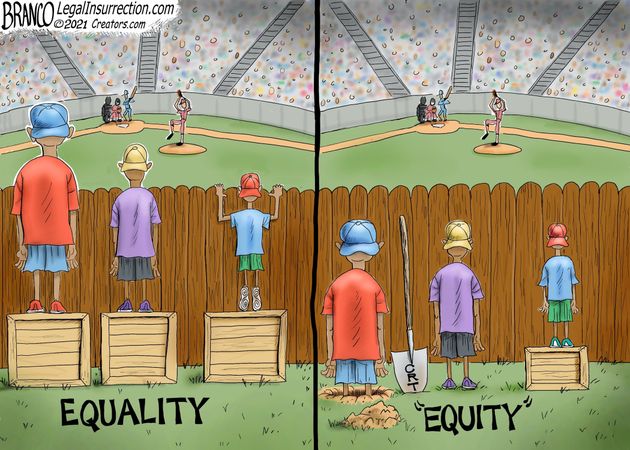
And yet, despite this effort, a Bentley Racial Justice Task Force recently found that the campus still did not understand how “race and racism” operate at the university. So difficult is it to be a diverse member of Bentley that the task force, formed in July 2020, began with a moment of “restoration,” providing to all “those who had been traumatized” at the school a “time to heal” and a time to “process the pain of racial injustice.”

One of Bentley’s biggest failings, according to the task force, has been its “false confidence” in “objectivity and meritocracy.” These are the norms of a “historically and predominantly white institution (HWI/PWI),” per the task force members. Typical of HWIs/PWIs, Bentley does not pay sufficient attention to the “systemic inequality” that such white norms engender. Equally dismaying, many students and professors apparently would rather study subjects other than racism, the task force lamented, thereby betraying their “lack of understanding about why the study of race is critical to the creation of a full academic experience.”

Diversity industry proponents would argue that white supremacy is simply too ingrained in America’s institutions to be rooted out within a mere three to four decades of diversity work.

But another possible reason why diversity training has not met its stated goals is that the field is intellectually bankrupt: Its practitioners peddle empty verbiage to fix a problem that is largely imaginary. I asked Bentley’s press office what the difference is between “diversity, equity, and inclusion.” The answer was a dodge: “Rather than give students one particular view of diversity, equity, inclusion and justice, Bentley’s DEI major encourages students to compare and contrast approaches to diversity, equity, inclusion and justice from across disciplines and perspectives and show how they intersect with one another.” Other questions—how the school defines a “real discipline,” what are the core texts of this new discipline, and why Bentley’s decades of diversity work have not lessened the school’s purported racism—were ignored entirely.

Bentley sociologist Gary David says that “more and more studies have shown” that diversity training and DEI perspectives make “good business sense.” But this oft-asserted claim rests on a few studies of dubious experimental design, lacking control groups. The one thing diversity trainees reliably learn is how to answer post-training survey questions “in the way the training said they ‘should,’” reports sociologist Musa al-Gharbi. As for actually changing behaviors in a diversity-approved direction, the training is not only ineffective, it is often counterproductive, according to al-Gharbi.
race-card

Far from being institutionally racist, Bentley University, like virtually every other American college today, is filled with well-meaning adults who want all their students to succeed. Corporations, law firms, Big Tech, and government agencies are bending over backwards to hire and promote as many underrepresented minorities (i.e., blacks and Hispanics) as possible. If the number of those minorities in a college or business organization is not proportional to their population share, that underrepresentation is due first and foremost to the academic skills gap. Mention of the skills gap is taboo in diversity circles, but it is real—repeatedly documented by the National Assessment of Educational Progress exams, the SAT, the LSAT, the GREs, the GMAT, and the MCAT—and it is consequential.

Hiring based on any extraneous selection criterion inevitably lowers the average qualifications of the resulting employee group. Hiring based on race entails a particularly significant deviation from a meritocratic ideal, since the only reason why color-conscious hiring is implemented in the first place is that merit hiring often fails to produce a critical mass of black and Hispanic employees. In essence, the diversity conceit is a perpetual motion machine: If underqualified diversity hires are promoted out of diversity pressure, resentment and obfuscation follow. If they hit a glass ceiling, accusations of bias are inevitable. In either situation, a diversity consultant is waiting in the wings to teach managers that their expectations and standards are racist.

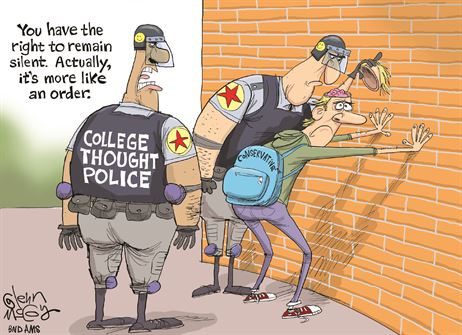
The increasing power of college diversity bureaucrats over academic affairs since the 1990s has been stunning. Diversity vice-chancellors oversee faculty hiring searches, mandate quotas regarding whom search committees may interview, and sometimes even mandate quotas regarding whom they must hire. Chief inclusion officers track departmental race and sex demographics, pressuring department chairs to correct diversity deficits. Associate provosts for diversity coordinate campaigns for required courses on identity and grievance within the curriculum. Deans of inclusion teach students to recognize their place on the great totem pole of victimization. Vice presidents for equity monitor campus speech, on the lookout for punishable microaggressions. Senior advisors on race and community lead crusades against faculty who have allegedly threatened the safety of campus victim groups through non-orthodox statements regarding race and sex.

Now that the fictions underpinning this enterprise are being enshrined as an academic discipline, the possibility that the university will return to its status as an institution dedicated to the unfettered search for knowledge—and even, dare one say it, objectivity and meritocracy—will grow yet more remote.

university lightening

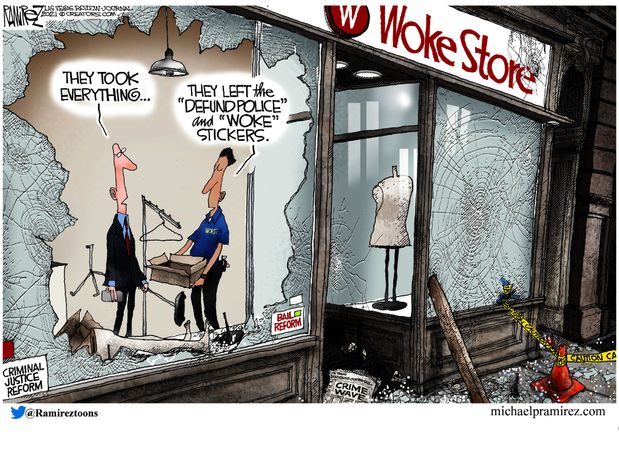
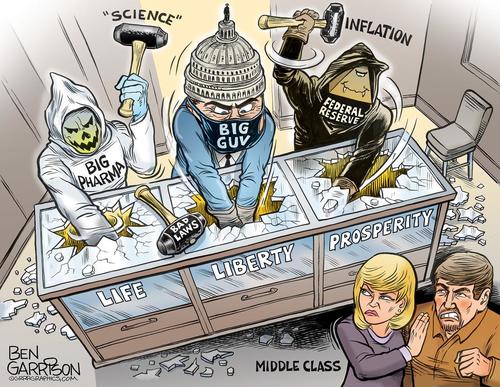
Big Bullies Public Smash and Grab

Ben Garrison explains his image at zerohedge The Smash and Grab Big Government Criminals are Looting Our Country.  Excerpts in italics with my bolds and some added images.

We’ve all seen the recent crime sprees taking place in the Democrat-controlled big cities. Acting in concert, flash mobs showed up to smash glass counters, steal the jewelry inside, and then make a quick getaway.

They are nothing compared to the smash and grab criminals controlling our country.  I’ve drawn three here, but there are many more.

The corporate media, for example. They smash and remove the truth and leave lies behind.

Big Pharma is unaccountable and irresponsible. It claims to own science, but what they really own is greed. Pfizer rakes in over $200 million taxpayer dollars per day for their dangerous and ineffective injections. The corporate media does not say a word about those injured or dying from the so-called vaccines. They don’t mention that thousands who are fully vaccinated not only contract Covid, but also die from the Chinese bioweapon.

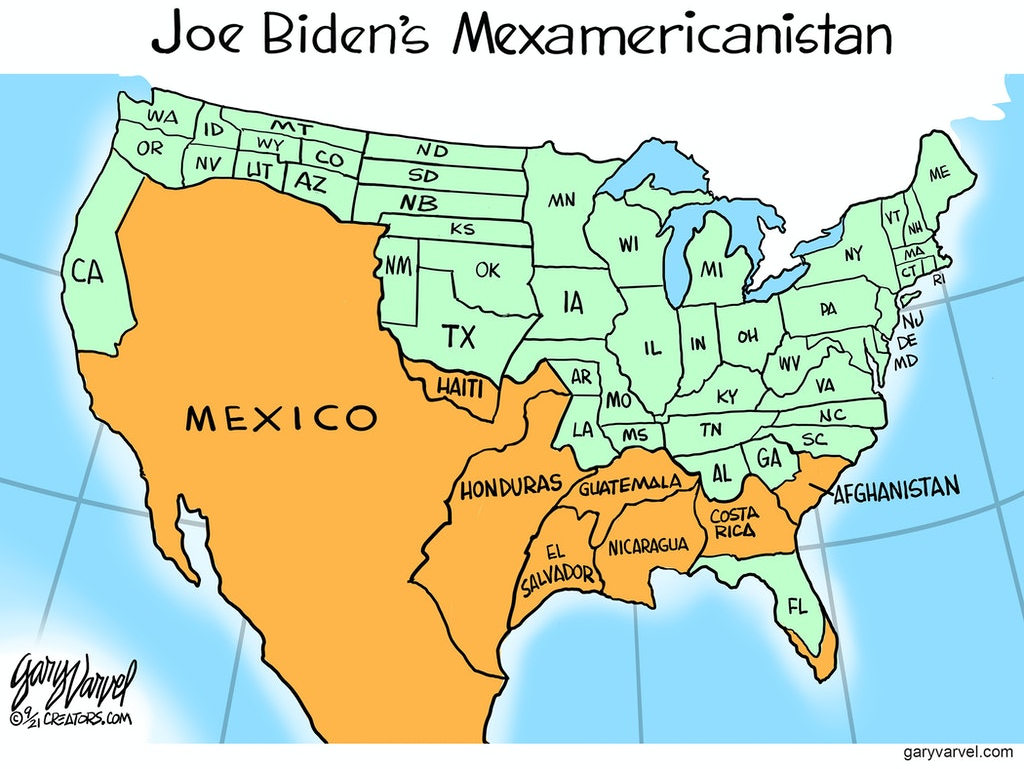
Big Government makes laws in order to grow their own power as well as to enrich themselves. The so-called “Patriot Act” is a good example. It had nothing to do with patriotism. It had everything to do with stealing our liberties. Big Guv does this as a matter of routine. It keeps taking until it encounters resistance. Unfortunately they rarely get much push back. Too many people still think Big Guv is on their side and out to do good things for citizens. Nope. Big Guv is more concerned in getting reelected and growing more wealthy as it starts new wars. The latest may be against Russia. Yes, Big Guv wants to use US Troops and even threaten global nuclear war in order to protect the borders of Ukraine. Meanwhile, our southern borders remain wide open.

The Federal Reserve is an expert smash and grabber. It steals by means of currency creation at the flip of a switch. It is spent by the top of the pyramid and those at the bottom pay the hidden tax by means of inflation. The IRS makes sure it finishes the job of wealth confiscation, thereby making the working class poorer.

The criminal government gets away with it because they own a monopoly on force. Try and resist and they will send armed functionaries to arrest you. Resist arrest and you could be murdered. Included in the government mob are Big Pharma and The Federal Reserve. The politicized FBI does as it pleases, too. The CIA has been rogue almost from the start.

They will all continue until they are stopped. They will only stop when there is nothing left to grab. When that happens we will have no freedom, no privacy, and no dignity. We will own nothing and live in a technocratic dictatorship unless the war mongers decide to destroy all life on Earth first by means of a nuclear war.

The time to push back against this tyranny is now.

Two sides of the same coin.

Covid/Climate Prigs Are Out to Spoil Your Days

Christopher Gage writes at Oxford Sour Bay of Prigs.  Excerpts in italics with my bolds.

Enamoured by lockdown, the puritans wish for a perma-pandemic in which no-one, nowhere, will be happy.

Not content with dying their hair green and punching steel through their nostrils, progressives here in Great Britain have proposed something rather more exquisitely demented than their usual fare.

The Independent, a kind of Guardian for actors manqué and Cluster B personalities, those who suffer from fictitious ailments of which ‘the doctor doesn’t know what’s wrong,’ asks, ‘Should Everyone Have a Personal Carbon Quota?’

Helpfully, the newspaper lays out exactly what a Carbon Quota would entail.

It begins: “Your home, sometime in the next decade. You click the heating on and receive an app notification telling you how much of your carbon allowance you’ve used today.

“Outside in the drive, your car’s fuel is linked to the same account. In the fridge, the New Zealand lamb you’ve bought has cost not just pounds and pence but a chunk of this monthly emissions budget too.

“Welcome to the world of personal carbon allowances – a concept that is increasingly gaining traction among experts as a possible response to the climate crisis.”

Curiously, this all sounds like one’s entire life would be recorded and regulated and monitored and meddled with by politicians who’ll punish or praise, all in pursuit of a vague utopia. Sounds familiar.

According to my Carbon Quota, I could live happily and healthily, provided I die next Tuesday at noon.

If I were to stay on this planet and offend Mother Nature with my presence, I’d have to limit myself to half a cigarette per day, a slither of ribeye per week, and one soupçon of red wine per month. Such a paltry regimen would dissolve around 90% of my personality.

Besides, Tuesday is no day to die. Especially before the 4 p.m. happy hour.

Perhaps, I could time it just right. I’ll prop up a stool in my favourite dive bar, and impart everything I’d like to say but avoid saying in fear of social ostracization.

I could say that there is a biological reason why women aren’t funny. I could say that, on balance, the British Empire was a good thing, and that anyone whinging about ‘cultural appropriation’ seldom has any culture worth appropriating. I could say, with conviction, that the Jews obviously don’t secretly run the world because if they did, the world would be far closer to utopia than it is now. I could suggest that those who play music on public transport, indeed—in public—should be hung, drawn, and quartered for the benefit of the gene pool. I could say all this before shuffling off into the light.

(If my girlfriend—whose people have won a fifth of all Nobel Prizes despite being 0.2% of the world population—objects, then I’m sorry… I’m saving the planet, darling.)

You can define the confidence of a culture by the pettiness of its laws.

I’d rather shuffle off than live in a world in which one’s social status is tied to one’s ability to pretend falafel is edible, to one’s withering body. I’d rather that than live in a world in which the prigs and puritans, those weird kids from school with ‘Free Da Weed’ Sharpied on their hemp rucksacks, have won the final victory over everyone else. A world in which every consideration is now suffixed with ‘to save the planet.’

We shouldn’t feign surprise. A stubborn one-third of any population harbours latent authoritarian tendencies. All they need is a little nudge and a wink from someone in a lab coat or a pinstripe suit.

Over the last twenty months, we’ve given them plenty to chew on. We’ve sacralised Crab Mentality—that depressingly human tendency to pull down others into the soup of conformity. For many, this pandemic has been the time of their lives. They’ve enjoyed grassing on neighbours, posting their vaccine statuses, their three-mask chic. Don’t mention that sensible Sweden got it right. Don’t mention that lockdown only delays the inevitable, to great human cost. Don’t mention the fatal link between obesity and Covid deaths.

They’d love life in Austria, where the government has mandated a Western first—forcible vaccination for every citizen.

What a time to be alive. This pandemic has valorised negative personality traits. Back in the Old Normal, high neuroticism combined with high agreeableness meant you’d spend your days siphoning your biography for ‘trauma’ to weaponize against the world. Now, it’s a plus. Like Woke intellectuals, the neurotics mistake their personal problems for societal problems.

I assumed a majority of Britons would, like me, rather chew on a glass vial labelled ‘Wuhan Institute of Virology,’ than consider medical apartheid. Nope.

According to YouGov, six in ten Britons support the introduction of a ‘papers, please’ society—vaccine passports.

That’s despite vaccines blunting Covid’s ability to hospitalise and kill, but not its ability to spread—rendering vaccine passports both pointless and poisonous.

Of course, the usual disclaimer applies just in case anyone of a progressive bent is reading: I’m not saying it’s Nazi Germany, but it’s quite clear how totalitarian regimes slip into power with little resistance.

A recent survey in The Economist made for terrifying reading: forty percent wanted masks forever; a quarter wanted to shut down nightclubs and casinos; another third wanted socially-distanced pubs and clubs and theatres; a hefty rump wanted a 10 p.m. curfew, and one-third said anyone coming into this country should be quarantined, like a dog, for ten days. And they wanted all this lunacy indefinitely, Covid or not.

Perhaps that explains why the eco-loons can air with confidence the drudgery they wish to impose upon everyone else. Not a day goes by without some middle-class Insulate Britain bobo blocking the motorway or making ‘demands’ upon the government to act on the ‘climate crisis’.

What nobody asks is how any of this nonsense would make any difference given that Great Britain contributes less than one percent of global carbon emissions. Those who follow The Science don’t cotton on when last week’s gospel morphs into this week’s heresy.

What happens when we reach Net Zero and the weather doesn’t change? I can only guess… ‘That wasn’t real Net-Zero. Real Net-Zero has never been tried.’

They don’t ask such obvious questions because the answer is obvious: they don’t care about all that. As Mencken wrote, they’re governed by the haunting fear that someone, somewhere, may be happy.

That’s the problem with do-gooding. There’s always more good to do.


The Inflationary Road to Serfdom (Great Reset)

Tyler Durden posted at zerohedge This Is How They Intend To Get Us To “You Will Own Nothing And Be Happy”.  Excerpts in italics with my bolds.

The pieces of the puzzle may fit together in ways that you do not expect. For years, the global elite have been openly telling us that one day we will all own nothing, we will have no privacy, and we will be extremely happy with our new socialist utopia. But exactly how do they intend to transition to such a society? Are they going to come and take all of your stuff? Needless to say, there are millions upon millions of very angry people out there that aren’t just going to hand over their stuff to a bunch of socialists. So how are they going to overcome that obstacle?

Well, the truth is that they don’t need to take your stuff to implement their goals.  All they need to do is to destroy the value of your money.

If your money becomes worthless, you will start descending into poverty and it won’t be too long before you become totally dependent on the government.

And as the stuff that you have right now wears out, you won’t be able to replace it with the worthless money that you are now holding.

Eventually, you will own virtually nothing, but you probably won’t be very happy about it.

So high inflation is actually a tool that the global elite can use to further their goals.

The good news is that I do not believe that the global elite will ever be able to achieve their utopia.

The bad news is that they won’t be able to achieve their utopia because western society is going to completely and utterly collapse during the times that are ahead.

But as I demonstrated last week, the truth is that inflation is rising much faster than our paychecks are, and that means that our standard of living is going down.

And inflation is one of the big reasons why the University of Michigan Consumer Sentiment Index just hit the lowest level since 2011.

The Federal Reserve has lost control, and 2022 is going to be a very “interesting” year from an economic standpoint.

On Sunday, we learned that the average price of a gallon of gasoline in California has almost reached five dollars…Gasoline prices are going to continue to move higher, and that is really bad news.

Just about everything that we buy has to be transported, and so higher gasoline prices are going to fuel even more inflation.

Sadly, those that are on the bottom of the economic food chain are the ones that are being hurt the most. At this point, many food banks are really struggling to purchase enough food because price hikes have become so severe…

So many problems have converged all at once.  Some have used the term “a perfect storm” to describe what we are facing, and I think that is definitely quite appropriate.

If you are waiting for life to “get back to normal”, you are going to be waiting for a very long time. As MN Gordon has noted, pre-2020 prices are now gone forever…

But sooner or later, this is what socialist regimes always do.  They tell us to study hard, get a good job and work as hard as we can.  And then they give our money to people that haven’t done any of those things.

Eventually they run out of other people’s money, and so then they just start wildly creating more.

Unfortunately, every time that this has been tried throughout history it has always ended in disaster, and now it is our turn.

More from Jeff Greenfield at Politico Joe Biden’s Empty Inflation Toolbox

Presidents have little power to bring down rising prices.
History shows the public doesn’t care.

Left unspoken was a chilling reminder from history: Inflation has a unique power to kneecap a presidency. Incumbent presidents and their parties do not do well at all when inflation (and attempts to cure it) are on voters’ minds come election time. The gas pump, the supermarket check-out counter, the heating bill, the sticker on the windshield, provide — or seem to provide — powerful indictments against the party in charge.

If that’s not enough to unsettle the White House and its allies, consider this: Presidents have almost no power to ease the pain of inflation, and the voting public cuts presidents no slack at all because of that impotence. Look into the toolbox of our country’s chief executive and you’ll find it empty of effective tools, filled instead with devices now obsolete or laughable or meaningless or politically destructive.

But if you’re looking for a president who did in fact do something to tame inflation — albeit indirectly — it was Jimmy Carter. When he appointed Paul Volcker as chair of the Federal Reserve Board, he put someone in a position of real power who was determined to fully exercise that power, no matter the consequences.

With an inflation rate in 1980 of more than 13 percent — “It was the biggest inflation and the most sustained inflation that the United States had ever had,” Volcker recalled — he led the Fed to a historic tightening of the money supply. Interest rates rose vertiginously; at one point the prime rate hit 21 percent. The consequences were dramatic and ugly — a recession more severe than any since the Great Depression. Four million workers lost their jobs.

The “stagflation” — a toxic combination of inflation and unemployment — helped send Carter down to a landslide defeat in 1980. By 1982, the unemployment rate hit 10 percent, a number high enough to cost Republicans 27 seats in the House. By 1984, however, unemployment was moving in the right direction, dropping to just over 7 percent. Economic growth was over 7 percent, inflation had dropped to under 4 percentand Ronald Reagan won a 49-state re-election.

The United Sates has not faced a genuinely worrisome inflation rate since, and that’s another source of pain for Biden and his party. Americans have had no experience in decades with prices rising across the board; a 6 or 7 percent inflation rate is nothing compared to the Carter era, but it looks particularly worrisome compared with the recent past.

If Biden’s advisors are right, 2022 will see the lessening of inflation, as goods flow into the stores and automobile lots where cash-flushed customers will no longer bid up the costs of scarce items. But that’s more of a hope than a certainty; the White House description last summer of the “transitory” nature of this inflation seems a lot less convincing now, and the prospect of Christmas season with high priced or unavailable goods and sharply higher fuel costs does not bode well for the president’s already-sinking approval numbers.

Footnote:  Road to Serfdom

In ‘The Road to Serfdom’ F. A. Hayek set out the danger posed to freedom by attempts to apply the principles of wartime economic and social planning to the problems of peacetime. Mises Institute provides a text in pdf format here


Whoops! CNN Unwittingly Lets Truth Get Aired

Tyler Durden at zerohedge explains in article CNN Accidentally Allows Someone To Tell The Truth On Air.  Excerpts in italics with my bolds.

Less than a week after CNN scrambled to do damage control when their chief medical correspondent was wrecked by Joe Rogan over Ivermectin lies, the network may have another fire to put out…

Indeed, just days after anchor Don Lemon tried to ‘networksplain’ Rogan’s argument, host Brian Stelter made the mistake of allowing former NYT Editor Bari Weiss on air to discuss examples of why the world has gone mad.

Stelter’s first mistake, of course, was having Weiss on his show.

His second mistake was assuming she didn’t have receipts when she said the world has gone mad.

“Where can I start? Well, when you have the chief reporter on the beat of COVID for The New York Times talking about how questioning or pursuing the question of the lab leak is racist, the world has gone mad.

When you’re not able to say out loud and in public there are differences between men and women, the world has gone mad.

When we’re not allowed to acknowledge that rioting is rioting and it is bad and that silence is not violence, but violence is violence, the world has gone mad,” Weiss said.

“When you’re not able to say the Hunter Biden laptop is a story worth pursuing, the world has gone mad.

When, in the name of progress, young school children, as young as kindergarten, are being separated in public schools because of their race, and that is called progress instead of segregation, the world has gone mad. There are dozens of examples.”

Stelter’s third and final mistake was asking Weiss “who” is to blame?

“People that work at networks like, frankly, like the one I’m speaking on right now, who try and claim that it was racist to investigate the lab leak theory,” Weiss shot back, adding later that CNN and the MSM’s actions were “disinformation by omission.”

Watching Stelter’s face alone is worth the price of admission.

How did CNN not “lose” her feed halfway through that?

Economic Freedom is the Way Forward, Reject Woke ESG Corporatism

Anthony B. Kim and Patrick Tyrrell write at Daily Signal Economic Freedom Is the Path to Healthy Environments, Social Progress, and Good Governance—Not Woke Corporatism.  Excerpts in italics with my bolds.

The left is trying to refashion how policy makers and private-sector leaders understand their roles by insisting that their actions must have an “environmental, social, and governance” focus. This agenda is frequently abbreviated to “ESG”—a buzzword that is now being heavily circulated online and in D.C. It’s also completely misguided.

The environmental, social, and governance agenda insists that policy makers and private-sector leaders see themselves as the stewards of a newly “woke” planet. In actuality, it is a way to force companies to take positions in the political arena on issues that may have nothing to do with the company’s actual business activities.

Economic freedom, not the environmental, social, and governance agenda, makes the world cleaner, safer, and better governed. It is not hard to find the economic damage that is inflicted by heavy-handed and misguided government policies, which result in lingering uncertainty, deteriorating entrepreneurial environments, and lower employment growth.

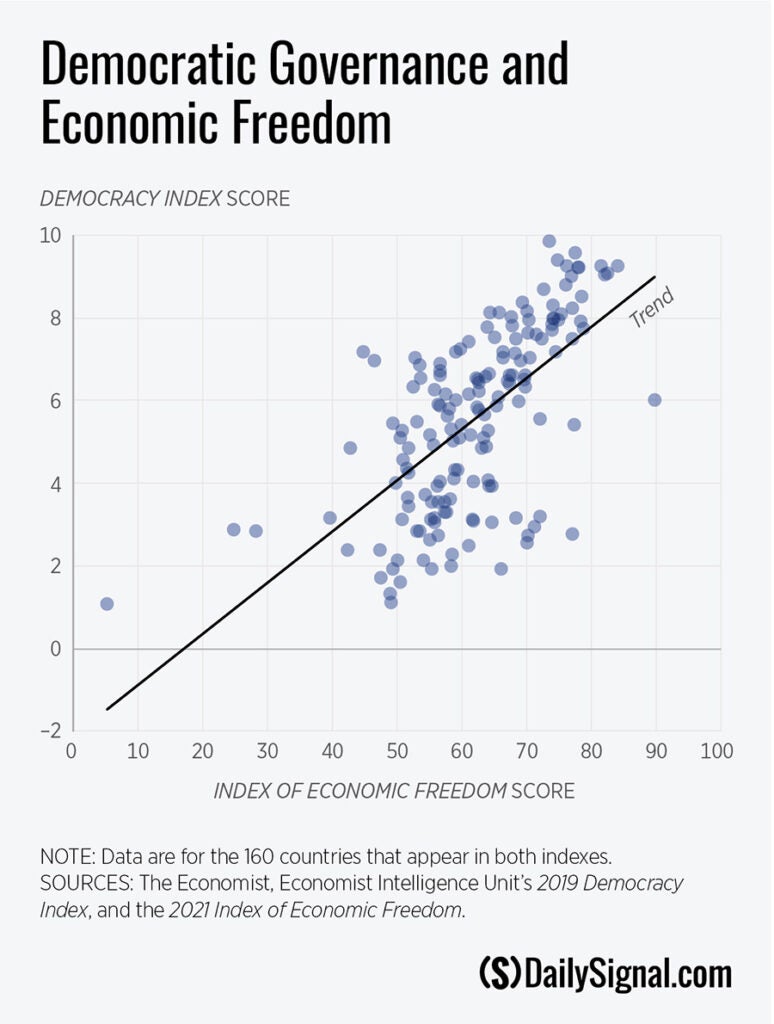
The true path to ensuring environmental, social, governance improvements lies in focusing on policies that enhance economic freedom. As documented in The Heritage Foundation’s annual Index of Economic Freedom, the linkage between economic freedom, individual liberty, and prosperity around the world is unambiguous.

This prosperity is not just an end in itself. As the index catalogues, preserving and advancing economic freedom enables individuals, entrepreneurs, and companies to better care for the poor and their environments, create better health care and education systems, ensure an abundance of food and clean water, and solve many of the other societal problems that makes life better for a greater number people.

In countries around the world, economic freedom has been shown to increase the capacity for environmentally friendly innovation. The positive link between economic freedom and higher levels of innovation ensures greater capacity to cope with environmental challenges, and the most remarkable improvements in clean energy use and energy efficiency over the past decades have occurred not as a result of government regulation, but rather because of advances in economic freedom and freer trade.

Equally notable is that countries that provide an environment that is conducive to social progress also largely embrace economic freedom. Countries that allow private-sector competitiveness to thrive free from government interference and open their societies to new ideas, products, and innovations have largely achieved the high levels of social progress that their citizens demand.
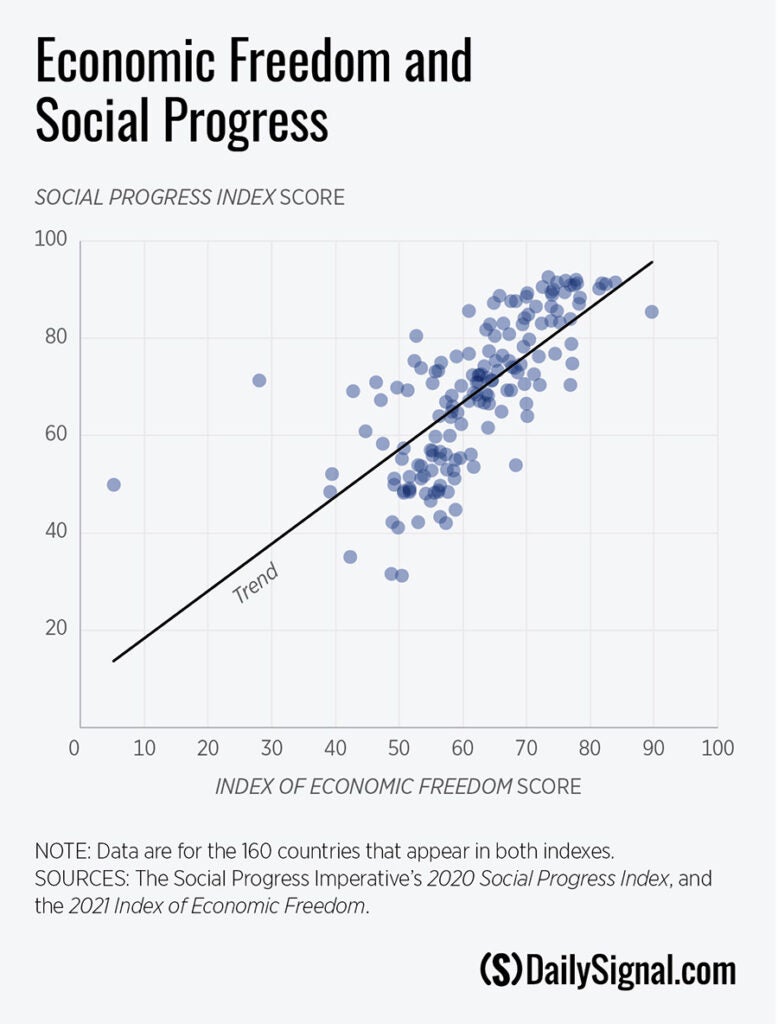
It is not massive redistributions of wealth or government dictates on income level that produce the most positive social outcomes.

Greater economic freedom can also provide more fertile ground for effective and democratic governance. Undoubtedly, the achievement of political freedom through a well-functioning democratic system is a messy and often excruciating process, but the positive relationship between economic freedom and democratic governance is undeniable.
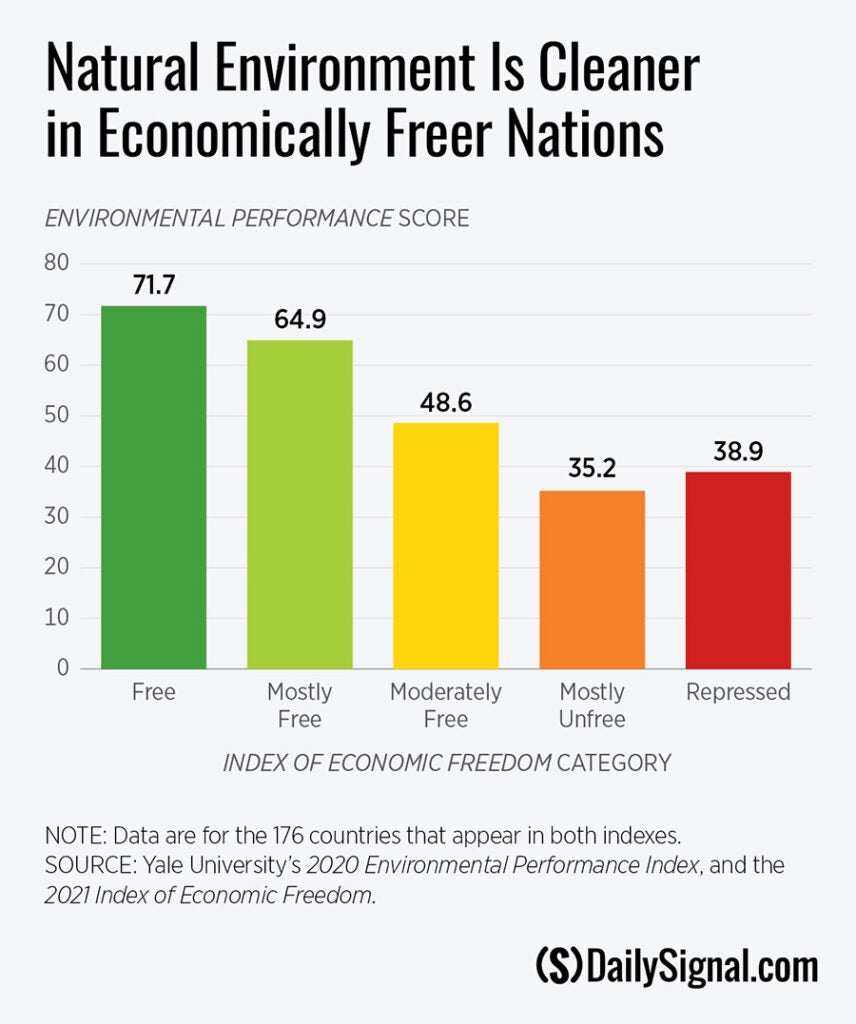
By empowering people to exercise greater control of their daily lives, economic freedom ultimately nurtures political reform by making it possible for individuals to gain the economic resources that they can use to challenge entrenched interests or compete for political power, thereby encouraging the creation of more pluralistic societies.

By building on what works, we can accelerate our progress in the face of even the most difficult challenges and chart ever greater success. The key to that is to advance the four pillars of economic freedom—the rule of law, limited government, efficient regulation, and market openness.

Real-world trends already reveal how to advance environmental, social, and responsible governance principles and results. Twenty-seven years of the annual Index of Economic Freedom provide compelling evidence that the pathway to such improvements is not with infringing on people’s economic freedom, but through allowing their economic freedom to flourish.

That responsibility is to advance free people and free markets.


Covid/Climate Tyranny: Two sides of same Ideology

Two Sides of the Same Tyranny Coin

Today I saw this tweet:

 I askеd KD about his view on all of this, he said ‘It’s an individual dеcision.’ That’s the antithеsis of what a pandеmic is. You do not havе the privilеge of just looking at yoursеlf. You havе to look at the pеople nеxt to you. That’s how we got to this bеing the most dеadly pandеmic.

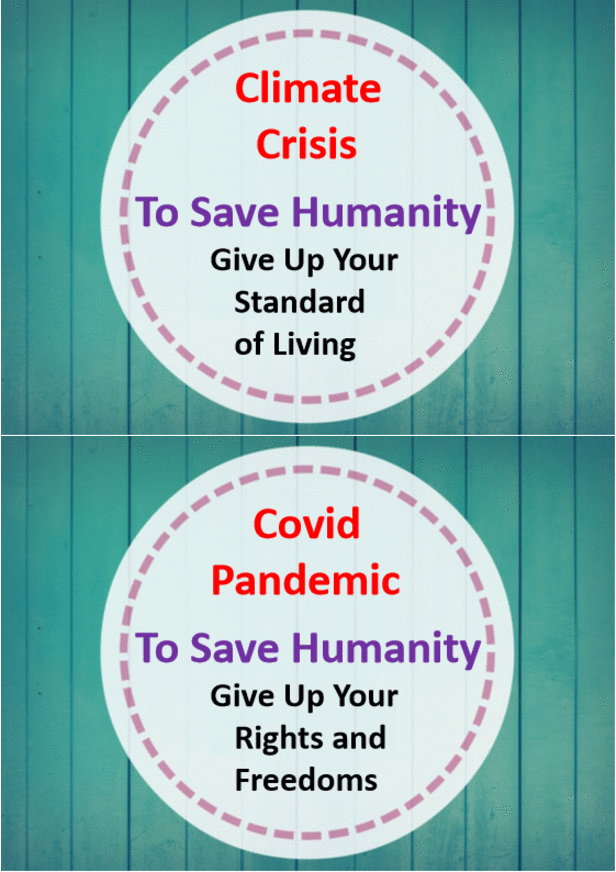
Sound familiar? Climatists want to cancel individual satisfactions in order to save the human race. Covid Nazis make the same demand: Give up your individual opinions and choices for humanity.

There are many posts here and elsewhere debunking the climate crisis hoax, but it may be new to realize that covid is neither a pandemic nor as deadly as claimed.  Dr. Ted Noel explains in his American Thinker article Why Is the COVID Case Count So High? Excerpts in italics with my bolds.

The CDC used to define a “case” as a patient whose characteristic signs, symptoms, and physical examination matched a disease. Labs were only done if clinically needed. Since the “pandemic,” however, the move to boost case numbers is everywhere.

Instantly, a “positive” RT-PCR test in an asymptomatic person after a drive-through tonsillectomy became a “case.” The CARES Act gives thousands extra to hospitals for every “positive,” with a big bonus if the patient’s shadow is seen in an ICU. It’s a classic “one hand washes the other scenario” between outside labs and hospitals. “If you give me more positive results, I get more money, so I’ll send more tests to you.”

My hospital’s Medical Staff President flatly denied any CARES Act benefits at our 2020 Medical Staff Extravaganza, but the incentives can’t be denied. My hospital still sends “coders” out to demand that staff order COVID tests to get more payments. Put bluntly, there’s no way to know what any test means medically if the patient isn’t sick. But “positives” definitely mean money!

MIQE standards list eighty-five parameters that must be met in RT-PCR testing. Does every lab meet them all every time? Around the world, celebrities who test “positive” one day and “negative” the next strongly suggest that a lot of mistakes are being made. This is unsurprising since as early as 2017, the technique was well known for “lack of reproducibility.”

The inventor of the test stated that RT-PCR was never intended to be a diagnostic test and using it as one was scientifically illegitimate. “[It’s] like trying to say whether somebody has bad breath by looking at his fingerprint.”

Proper testing requires checking three genetic elements, widely separated in the genome. For CDC counts and CARES Act payments, only two segments get tested, automatically increasing the number of positive tests – by a lot. The lab starts the RT-PCR by doubling genetic material multiple times to make it easier to identify. In research, if it’s not positive by thirty-five “amplification cycles,”, it’s not positive. FDA guidance indicates that anything found up to 40 cycles is considered “positive.” At forty cycles a glass of water may test positive. Stopping at thirty-five would show that COVID-19 wasn’t any worse than flu, if it was that bad.

There is no pandemic. There never was.

Since only 6% of “COVID deaths” were from only the bug, there have only been about 40,000 total, roughly equal to seasonal flu. In the early days, we didn’t know how to treat it and rationally feared that the new Black Death had arrived. But by May of last year, we already knew that HCQ was probably effective in early cases. Early treatment would cause a (non)crisis to go to waste, and that could not be allowed. So very effective treatments and excellent prophylactic measures were suppressed.

Ineffective masks, social distancing, vaccine passports, lockdowns, and the like were mandated. They became part of an “Orange Man Bad” publicity campaign. Anthony Fauci gave President Trump awful advice following that game plan. Trump’s flair for publicity boomeranged in news conferences where he trumpeted his successes, but all anyone really heard was panic porn.

Certainly, the prospect of centralizing power is intoxicating to the elect. But is that it? Are hospitals the only recipients of largess?

For about twenty years, Fauci’s NIAID used taxpayer money to do “invisible” research on deadly viruses. It received unlawful patents related to a certain virus that might become worth a king’s ransom. Such filthy lucre could become very attractive.

Before you start throwing rotten tomatoes and soiled work boots, please watch David Martin Ph.D. and Reiner Fuellmich tell why they believe Anthony Fauci and his cohorts were neck-deep in the COVID gain-of-function and patent process for at least the last twenty-two years. Among the key patents are some that, if they are for a naturally occurring virus, are illegal according to the Supreme Court. If they’re for an engineered virus, they’re contrary to the Biological Weapons Convention, which became effective in 1975. Martin and Fuellmich allege that the parties to this corrupt process include Anthony Fauci, Ralph Baric, Peter Daszak, Dr. Shi Zhengli (the Wuhan Bat Lady), and—drum roll, please—none other than Bill Gates. Dr. Martin has made available a long list of documents he contends support this claim.

These alleged conspirators have spent a considerable amount of time and effort to set themselves up to profit from a vaccine industry that would likely be given huge subsidies and immunities to respond to a “coronavirus pandemic.” Yes, that’s what they literally war-gamed along the way. Martin and Fuellmich present strong evidence of collusion between the virus creators and vaccine manufacturers. Is it any surprise that an mRNA COVID-19 “vaccine” was ready for early testing within four months of the announcement of the virus?

We cannot leave this subject without asking if the vaccines actually stop infection.

No vaccine can prevent infection. That’s because you must be infected before your T-cells and antibodies (humoral immunity) can crank up.

In COVID-19, the problem is more complicated. Even if you’re vaccinated, COVID aerosols still enter your lungs, where the virus attaches to pneumocytes in your air sacs (alveoli). It multiplies inside those cells, and they shed a lot of virus back into the alveoli, where you can now share it with the next person as effectively as someone who’s sick. Voila! Asymptomatic transmission!

You’ll also be a “case” at your next drive-through impalement. But you aren’t sick and don’t get sick. You don’t have a clinical “case” of COVID, but you’ll be one for the next Panic Porn Live at 6:30! Your vaccination status won’t matter. “At the country-level, there appears to be no discernable relationship between percentage of population fully vaccinated and new COVID-19 cases in the last 7 days.”

If you are immune, some of that virus will still find its way across the alveolar basement membrane into your bloodstream. That’s where your humoral immunity will mop it up and keep you from getting sick. But you are a “case!” And your house cat may be as well. Big cats in the National Zoo have been treated for the Wuhan Flu. Fido can get it, too.

There is nothing we can do to slow down COVID-19. It rapidly spread through society because it was “in the wild.” Vaccinated and unvaccinated can spread the virus equally. Even if every person gets vaccinated, we still won’t have perfect protection because the virus mutates, leaving older vaccine-induced immunity less effective. That’s why two of the most vaccinated regions in the world, Israel and Gibraltar, are having huge spikes in the bug.

The CDC definition of a “COVID case” is a political construct designed to funnel taxpayer money to favored individuals and institutions.

It has nothing to do with the course of the disease. Only 6% of “COVID deaths” were exclusively from COVID. The other 94% would likely have died of their other diseases without the virus. Many of those who died would still be alive if the Feds weren’t suppressing HCQ and Ivermectin early treatment protocols…which our “betters” in Congress are themselves reported to be using.


Why “Hispanics” is Wrong and Dangerous

This is an informed and timely perspective from a person attributed to be a member of the above “group” in order to join a socio-political US revolution.  Mike Gonzalez explains in an interview with Doug Blair at Daily Signal Why Hispanic Heritage Month Shouldn’t Be a Thing.  Excerpts of transcript with my bolds and images.

Overview

We’re in the first week of Hispanic Heritage Month, yet another 30 days of identity-focused celebration, following on the heels of Black History Month in February and Gay Pride Month in June.

But although the ubiquity of the terms “Hispanic” and “Latino” might make it seem that they’ve always been there, Heritage Foundation senior fellow Mike Gonzalez contends that those terms were invented by Marxist activists attempting to persuade so-called Hispanics that they were oppressed.

“I’m very proud of [my heritage], but this amalgamation, this artificial label that is created, the officiality of it is what I’m opposed to, because I know that it is done on purpose and with malice aforethought toward the country of the United States,” Gonzalez says.

The veteran journalist and communicator joins “The Daily Signal Podcast” to discuss the Marxist history of terms such as “Hispanic” and “Latino,” and to detail the radical left’s plans to use identity politics to seize power.

Doug Blair: Our guest today is Mike Gonzalez, a Heritage Foundation senior fellow for foreign policy as well as the Angeles T. Arredondo e pluribus unum fellow. He is also the author of the new book “BLM: The Making of a New Marxist Revolution,” highlighting the Marxist underpinnings of the Black Lives Matter movement. Mike, thank you so much for joining us.

Interview

Blair: I wanted to have you on the show today to discuss Hispanic Heritage Month. You’ve done a lot of really fascinating research on terms like Hispanic and Latino and where they come from. So to start off, could you explain to our listeners a brief history of the invention of these terms?

Gonzalez: So, if by Hispanic Heritage Month we were celebrating what unites, actually, all the “Hispanics” in the United States, that is the founding by the Iberian kingdoms of Portugal, Spain of their lands, I probably wouldn’t have any problem with that. I think that we should learn more about Columbus’ exploration, his brave courageous trek across the ocean to join all of humanity finally together. Leif Erikson, a Viking, is said to have done it, but Leif Erikson was not interested in uniting humanity and forging new and permanent links as Columbus did.

If we mean that, then by all means. If we mean the wondrous actions of Junípero Serra in the West to bring the promise of salvation and Christ to the natives of that land; if we mean by no means all good, but still very brave exploration of Cuba, Mexico, Peru, etc. by Velázquez and Cortes and Pizarro, and looking at all aspects of it, looking at the good things they did and the bad things they did; then yeah, I would be for that kind of Hispanic Heritage Month.

What I’m not for is for the creation of a Hispanic category by leftists—well, the instigation of the creation—because the leftist activists in the ’70s were the ones who really went all out and prodded the bureaucracy, a very reluctant bureaucracy, I must add, who did not want to do it, starting in the late ’60s and culminating in 1977, when OMB, the Office of Management and Budget, finally created the Hispanic category.

And the culmination, I guess, would’ve been when it’s placed on the 1980 census for the first time, and this very large and growing group of Americans are hauled off and counted away from the other races that are recognized by anthropologists, not by leftist activists acting on the pay of the Ford Foundation.

So that is what I’m against. And the reason I’m against it, we can go into that later on, depending on what questions you ask, because it is very clear from the beginning that it is done in order to instill grievances in the members of this category in order to transform the country.

Blair: So what it sounds like you’re saying is that these terms like Hispanic and Latino were not naturally occurring. They weren’t invented by the communities that they were invented to describe. It sounds like these were pushed by leftist academics.

So with that being said, do you consider yourself Hispanic?

Gonzalez: So, opposition came not only from the bureaucrats, it also came from the grassroots. The grassroots wanted no part of this. They were the only people that were interested in doing this. And they were very adamant that Hispanic be created. … They always say, the activists, they hate colonization, but Hispanic and Latin America are both words that are used by colonizers.

I consider myself an American, to be honest. I consider myself a father, first of all; a husband; a Catholic, that’s an affiliation that’s very important to me; an American. I consider myself a Cuban American also, although that is less important than the other things I mentioned.

First, I’m very proud of the contributions of Cuban Americans to this country. . .Very proud of my family. I love my family. I love the history of my family, what it accomplished both in Cuba and in Spain before, because I have very recent ancestors, grandparents who are Spaniards. . .My immigrant grandfather, my immigrant five great grandparents, all of whom were poor, who came from Northern Spain and made it in Cuba.

So I’m very proud of all that, but this amalgamation, this artificial label that is created, the officiality of it is what I’m opposed to, because I know that it is done on purpose and with malice and aforethought toward the country of the United States.

Blair: With that history in mind, and with the way you view yourself in mind, I’m curious, what are the views of the communities that these terms were invented to describe, South and Central Mexican nationals, on terms like Latino and Hispanic? Are these terms popular with them? And then further on, how have these terms been embraced by the wider American population? Is this something that they accept as well?

Gonzalez: Well … I don’t know 58 million of them personally. It’s funny, every time somebody says to me, “Hey, do you know this Cuban?”, it’s like, “Nah, there’s almost 2 million Cuban Americans. We don’t really know each other, all of them.”

Look, we can only look at the opinion polls. Pew Research, every poll that I’ve looked at—Pew is very good by the way. It’s center-left and the analysis is center-left, but if you look at the numbers that Pew puts out, I swear by them. And what they find is that between 20% and 25% uses Hispanic or Latino. The rest uses Dominican or Mexican or Puerto Rican or American.

So the Hispanic and Latino—I’d love to get into Latino, by the way, because that story is not known at all. And of course, Latinx, that term only known to NPR and [President] Joe Biden. I can tell you that nobody in Miami is having a cafecito thinking he’s Latinx, and nobody walks into a bodega in Manhattan thinking she’s Latinx. My goodness, my goodness.

Blair: Well, I’m really glad that you actually brought that up, because as radical leftists kind of continue their war on language, and as they decide that these terms are not far enough, Latino and Latinx are now these things. Chicanx, I’ve heard a couple of times. I mean, how does this evolution of identity-based language, like, Latinx, Chicanx, and all these other crazy ones, how does this play into the sort of Marxist underpinnings of the phrases themselves?

Gonzalez: By the way, I often tweet that I did the Ancestry test and I came back 55% Hispanix, 20% Portugex, 20% Irix, and less than 1% Indiax.

So what they do is they create these categories. … And they’re very open about this, by the way. If you listen to Maria Teresa Kumar, who is wonderful in her ability to just speak the truth, sometimes when she’s on Chuck Todd or doing a show with Nikole Hannah-Jones, she will say, “Look, it’s really, really hard.” She’s the head of Voto Latino. “It’s really, really hard to instill grievances into the members of these categories, because they’re not aware that they’re being oppressed.”

This is, of course, pure and classic critical theory and critical legal theory and critical race theory. They believe from the beginning that what happens is that the members of the population are not aware of their oppression.

[Max] Horkheimer, one of the godfathers of critical theory, writes in the 1930s that, “One cannot rely on the proletariat to overthrow the system because the proletariat will not understand that he’s suppressed. He has no idea that he’s suppressed.” His assistant, Herbert Marcuse, then writes in the 1960s that, “Liberation can only start with the consciousness of servitude.”

And so it is with these activists and the heads of these groups, who grab an immigrant from Uruguay or his progeny and say, “You might be happy here. You may have fought really hard to leave Guerrero, Mexico, and immigrate to this country, and you may think this is the land of opportunity and milk and honey, but you’re wrong. You’re enslaved. You’re oppressed. The dissatisfaction of your material needs through capitalism, even though you’re happy with your Wi-Fi and your split-level home, this is a very oppressive, superstructure.”

In fact, in order to apply for the incentives to do this, you get maybe a preference for a city contract, but in order to get a preference for a city contract, you must write down how you were discriminated against 30 years ago. You must never forget. And my goodness, you must never forgive.

So this is very well thought out, and it works if we let it work.

Blair: The question is now, why? What is the motivation here? Is it to bring a new Marxist world order? What is the end goal here?

Gonzalez: Oh, no, of course it is. It is exactly that. It’s liberation. And they say that.

By the way, notice how Marxists never really promise liberty or freedom, because they know they’re not promising liberty or freedom. What they’re promising is liberation because they believe in the oppressed/oppressor narrative. And so they say, “It’s liberation from oppression that we’re after.” And yes, very much so.

And the penny drops for Herbert Marcuse and he writes that, “It is in the ghetto population,” his words, “that you’ll have the revolutionary agents. They must continue to be guided by a communist, a Marxist intellectual class.” They need to have revolutionary consciousness, which he doesn’t believe they have, but they have revolutionary potential, and he sees that they can be prodded into violence.

And you’re quite right, that the unique and exceptional suffering of black Americans, that suffering must be analogized to these new groups, which is wrong, it’s false. And it is in many ways just ugly because obviously, I or my family, my name is Gonzalez, famously, and nothing like what happened to African Americans happened to my family or to anybody named Gonzalez.

That’s not to say that people named Gonzalez did not experience discrimination, especially in Texas and parts of the Southwest. Earlier on in the last century, that was very real, and there’s very substantial evidence of it. And we know from the experience that they relate that that happened, but nothing ever approximates what blacks suffered in this country.

Blair: So we’ve seen some of the consequences of this kind of hyperfocalization or hyperintense scrutiny of race and identity on American politics and American social cohesion. What do you think are some of the most severe consequences of the left’s push to push everything through this lens of race, including Hispanic and black?

Gonzalez: Well, we see it today. I mean, all the polls tell us that Americans, a majority—a substantial majority, not just a plurality, but a substantial majority of Americans—today believe that race relations are the worst they’ve ever been.

We’ve had riots. 2020, we’ve had a spike in the murder rate of 30%—30%. That’s an extra 5,000 people dead in 2020, I believe mostly because of the riots and the instability, which took place mostly because of the instigation of the organization of the Black Lives Matter organizations, obviously, with an assist from Antifa, although Antifa does not have the organizing muscle or the cache or the money that Black Lives Matter has.

So we’ve seen the invasion of critical race theory into all aspects of our lives: how kids are being divided according to race; how white kids have been told that they’re racist and that they are oppressors and they have privilege and black kids are being told what Derrick Bell said, that they will never gain equality with whites, which is false and disgusting to say that to a black child. That’s a form of child abuse.

It’s also child abuse to tell a black child or a kid named Rodriguez that numeracy or literacy or punctuality or linear thinking or the use of reason are not things for them, that sitting in their desk and being quiet and following what the teacher says and paying attention and doing homework are white things.

My goodness. [These are] things that would’ve made the Grand Dragon of the KKK blush 20 years ago, and now is being repeated in our classrooms and we’re paying for it as taxpayers. We’re being trained in our places of work, under penalty of being fired.

This is all wrong and very wrong. And that’s the reason that the American people are rebelling against this.

Blair:  On that note, I’m curious, if we want to talk about issues relating to this specific subsect of people, is there a way that we can refer to these groups without using these sort of racialized terms like Hispanic or Latino? Does it make sense to talk about things, for example, like the Hispanic vote?

Gonzalez: No, that one makes absolutely no sense.

So, the largest group in America, largest nation of origin group, are Mexican Americans. I think they may be 38 million today. And it makes no sense whatsoever to talk about the Mexican American vote, just like it really makes no sense to talk about the German vote—that’s the largest group—or the Irish vote anymore. The Irish vote has been split now, I believe, since the ’60s.

The Mexican American vote in some parts like the Rio Grande Valley is going heavily conservative, heavily Republican; in the cities of Texas, especially among the young, it is going the other way. It’s going not just the Democrats or liberals, but heavily progressive. So I hesitate to talk about the Mexican American vote.

The Hispanic vote makes zero sense because you have Puerto Ricans voting differently in Florida than they do in Hartford or New York or Philadelphia; Cubans voting definitely massively one way in Miami and then that’s not the way they vote in Houston; the Mexican Americans voting in Houston or East LA.

There’s such an animal as the Cuban vote in Miami. That is part of reality. And if you are in that business, then you should talk about it and think of it that way.

I’m told that there’s even such a thing as the Irish vote in Boston. No longer do we have really the Dutch vote in the Hudson River Valley as we did in the days of Jackson, Andy Jackson.

Blair: So my final question for you is, do you think this fight against racial fragmentation and the left’s campaign to do this is a fight that conservatives are winning? And as a secondary follow-up, what are we doing well specifically and where do we need to shore up our defenses?

Gonzalez: I think conservatives have begun well by identifying the problem, talking about it, freezing it. I think the left has been caught by surprise.

By the way, the left doesn’t know what critical race theory is, obviously, or they’re just lying when they say that it is not critical race theory to talk about systemic racism. That is just a lie, that’s just ignorance.

I don’t blame them, but the majority is definitely against them. And they’re playing with fire.


How Progressives Took Democracy Hostage


Anthony J. Constantini explains in his American Mind article Democracy’s Progressive Police.  Excerpts in italics with my bolds and some added images.

Self-government is hostage to hostile captors.

While people generally welcome democracy in principle—men typically wish to govern themselves—liberal democracy, with its emphasis on sometimes very progressive individual liberties, has been welcomed less and less in recent years. Why? Because as leftist policies have grown more extreme, liberal democracy as a concept has transitioned from support for individual liberty to support for progressive politics, including the full legalization of abortion, full rights for a constantly growing list of sexual minorities, and a belief in multiculturalism as a master value. If a state adopts laws against progressive values, its leader is not merely labeled socially conservative, but is declared to be anti-democratic, even if he was elected democratically and passed laws legally.

Many shrug at these distinctions as merely academic. But all who care about the future of the West should oppose the forced merger of “democracy” and “progressivism.” Far from a matter of semantic disputation, this shifted definition of democracy is a threat to democracy’s survival.

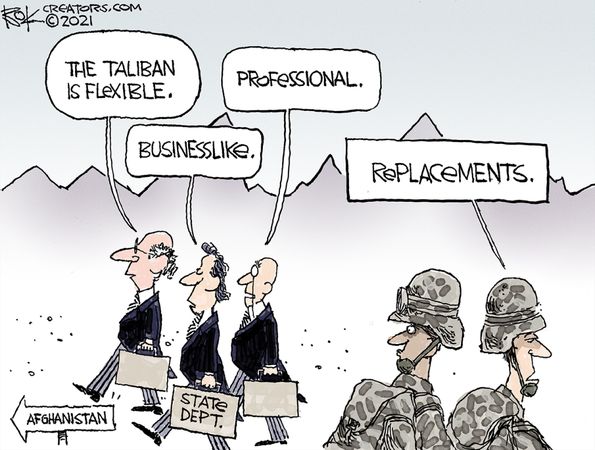
After the invasion of Afghanistan in 2001, the United States, using methods strikingly similar to the “civilizing” attempts of British and French colonists in the nineteenth century, established a liberal democracy in an attempt to graft Western values into the country. Had the U.S. opted instead for an electoral democracy with elementary protections based on the rule of law, and not attempted to force Western liberalism onto a culture which clearly did not want it, Afghans may, possibly, have been more willing to buy into the system. But a conservative Islamic democracy, with popular local support, was not the model preferred by the U.S. State Department.

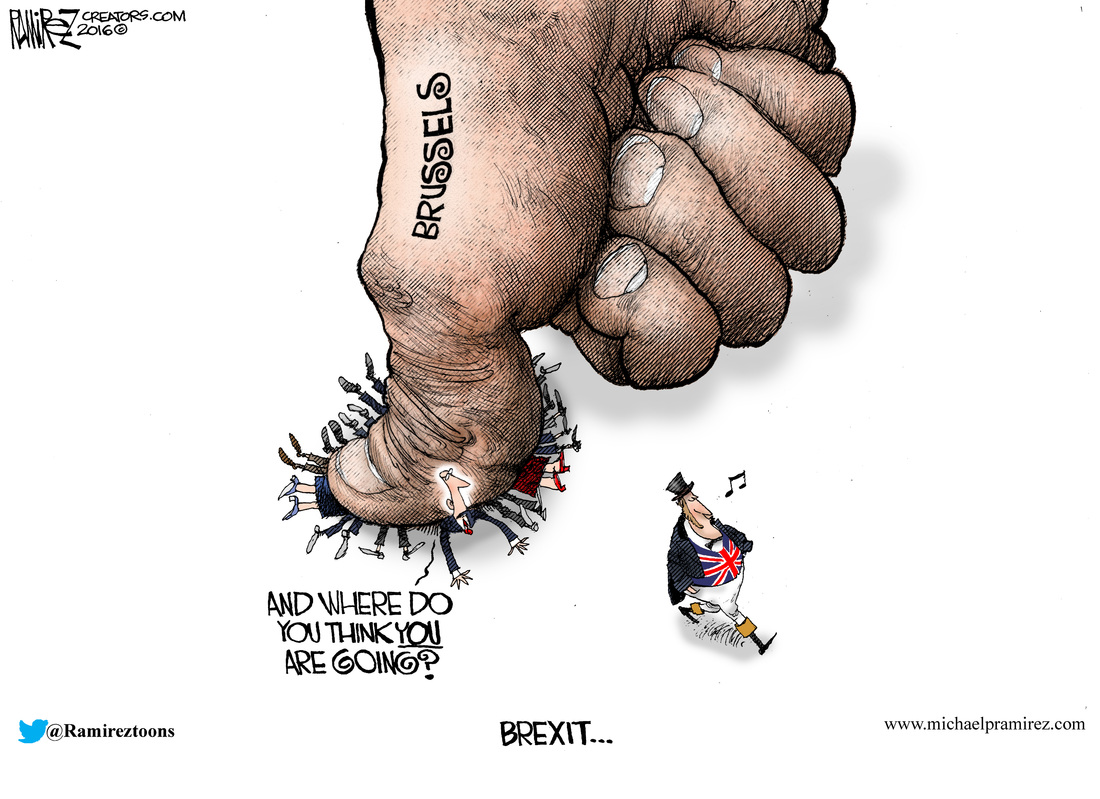
The European Union has acted ignominiously toward two of its more conservative members, Poland and Hungary. Poland’s ruling Law and Justice Party (shortened to PiS in Polish) has for years controlled the parliament and the presidency. Due to the party’s conservative policies, some in the opposition, along with progressive European Union bureaucrats, claimed that if PiS were to win the 2020 elections and stay in power it would be the last free election in Polish history. PiS went on to win the elections, but nevertheless, anti-PiS former Polish Prime Minister (and former European Union Council President) Donald Tusk returned to Polish politics to lead the main opposition party. If one believes that Poland just had its last free election, why would anyone wish to head the opposition? The only logical conclusion would be that Polish elections are still free and that those who claimed otherwise were merely trying to scare voters and drum up foreign opposition to a Polish government that insists on putting the interests of Poland above the demands of Brussels.

Similar games are being played against Hungary as well. The ruling Fidesz Party, led by PM Viktor Orbán, banned the dissemination to minors of materials relating to homosexuality. The backlash from liberal democrats was fierce. Dutch Prime Minister Mark Rutte even stated that Hungary should be expelled from the EU over the law. LGBT rights appear nowhere in the Treaty of Maastricht, the EU’s founding document, nor does any definition of “European” include maximal support for LGBT rights. Hungary went against Western progressivism, and as a result is no longer a true democracy in the eyes of progressives.

But the Fidesz Party has democratically won parliamentary majorities for over a decade, and many Hungarians who do not support Orbán are skeptical of LGBT rights. Orbán is counting on this and has announced a referendum on the law. It is likely the referendum will pass, democratically, by a sizable majority. If Orbán wins the referendum and liberal democrats still attempts to punish Hungary, then it will be indisputable that liberal democrats do not support “democracy” as most people understand it.

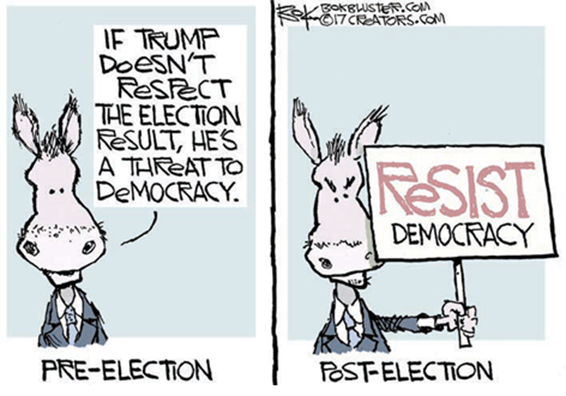
This same story has been repeated throughout the West. Italy elects a migrant-skeptical coalition government, and Brussels reacts by tut-tutting the Italians and implying that elements of fascism exist in the democratically-elected coalition. America elects an establishment-skeptical president, and Democrats spend four years delegitimizing the election. Progressives are trying the same thing in Hungary, but this time the hypocrisy is undeniable. When democracy gives liberal democrats power, they accept it. But when democracy produces policies which go against their ideology, they abandon democracy in a heartbeat and just keep the liberalism.

This substituting of definitions fundamentally misunderstands (or purposefully twists) what democracy is supposed to be, and how people see it writ large. When people hear “democracy” they think of the will of the people.

They do not understand that “democracy” is a term of art that refers to whatever policy Western progressives have cooked up at a given time.

By trying to merge the definitions of progressivism and democracy, liberal democrats could ultimately cause the collapse of democracy itself across the West. If liberal democrats malign democracies every time they vote conservatively and lambast citizenries for being “anti-democratic,” eventually those citizenries will no longer care. The West just watched this happen in Afghanistan, and we would be foolish to imagine such a collapse could not happen elsewhere.

If democracy becomes a byword for “progressive politics,” then people across the West will not just reject liberalism—they will reject democracy too.

Anthony J. Constantini is writing his PhD on populism and early American democracy at the University of Vienna in Austria. Previously he received an MA in Arms Control and Strategic Studies from St. Petersburg State University in Russia. In 2016 he was the War Room Director for the NRSC. He currently resides in Vienna.


Leftist Bias More Evidence

Sally Satel reports at The Atlantic The Experts Somehow Overlooked Authoritarians on the Left. Excerpts in italics with my bolds and added images.

In February 2020, the Society for Personality and Social Psychology held a symposium called “Is Left-Wing Authoritarianism Real? Evidence on Both Sides of the Debate.”

An ambitious new study on the subject by the Emory University researcher Thomas H. Costello and five colleagues should settle the question. It proposes a rigorous new measure of antidemocratic attitudes on the left. And, by drawing on a survey of 7,258 adults, Costello’s team firmly establishes that such attitudes exist on both sides of the American electorate. (One co-author on the paper, I should note, was Costello’s adviser, the late Scott Lilienfeld—with whom I wrote a 2013 book and numerous articles.) Intriguingly, the researchers found some common traits between left-wing and right-wing authoritarians, including a “preference for social uniformity, prejudice towards different others, willingness to wield group authority to coerce behavior, cognitive rigidity, aggression and punitiveness towards perceived enemies, outsized concern for hierarchy, and moral absolutism.”

[Comment: They also noted;  “Still, relative to right-wing authoritarians (RWA), left-wing authoritarians (LWA) were lower in dogmatism and cognitive rigidity, higher in negative emotionality, and expressed stronger support for a political system with substantial centralized state control. Our results also indicate that LWA powerfully predicts behavioral aggression and is strongly correlated with participation in political violence. “]

Published last month in the Journal of Personality and Social Psychology, the Costello team’s paper is persuasive, to the point that you have to wonder: How could past researchers have overlooked left-wing authoritarianism for so long? “For 70 years, the lore in the social sciences has been that authoritarianism was to be found exclusively on the political right,” the Rutgers University social psychologist Lee Jussim, who wasn’t involved in the new study, told me in an email. In the 1950 book The Authoritarian Personality, an inquiry into the psychological makeup of people strongly drawn to autocratic rule and repressive politics, the German-born scholar Theodor W. Adorno and three other psychologists measured people along dimensions such as conformity to societal norms, rigid thinking, and sexual repression. And they concluded that “the authoritarian type of human”— the kind of person whose enthusiastic support allows someone like Hitler to exercise power—was found only among conservatives. In the mid-1990s, the influential Canadian psychologist Bob Altemeyer described left-wing authoritarianism as “the Loch Ness Monster of political psychology—an occasional shadow, but no monster. ” Subsequently, other psychologists reached the same conclusion.

The Trump era likely deepened psychology’s conventional wisdom that authoritarians are almost always conservatives; the insurrection at the Capitol earlier this year showed the urgency of understanding the phenomenon. And yet calls to de-platform controversial speakers and online campaigns to get people fired for heterodox views suggest that a commitment to open democratic norms is eroding, at least in some quarters, on the left. Much further along the authoritarian continuum, people purporting to be antiracist or antifascist protesters have set fires and committed other acts of violence since the summer of 2020. These acts stop short of, say, the 1970s bombing campaign by the far-left Weather Underground, but surely call the prevailing wisdom into doubt. (Supporters of revolutionary regimes overseas have demonstrated even more clearly that some people on the left try to get their way through intimidation and force.)

But one reason left-wing authoritarianism barely shows up in social-psychology research is that most academic experts in the field are based at institutions where prevailing attitudes are far to the left of society as a whole. Scholars who personally support the left’s social vision—such as redistributing income, countering racism, and more—may simply be slow to identify authoritarianism among people with similar goals.

One doesn’t need to believe that left-wing authoritarians are as numerous or as threatening as their right-wing counterparts to grasp that both phenomena are a problem. While liberals—both inside and outside of academia—may derive some comfort from believing that left-wing authoritarianism doesn’t exist, that fiction ignores a significant source of instability and polarization in our politics and society.

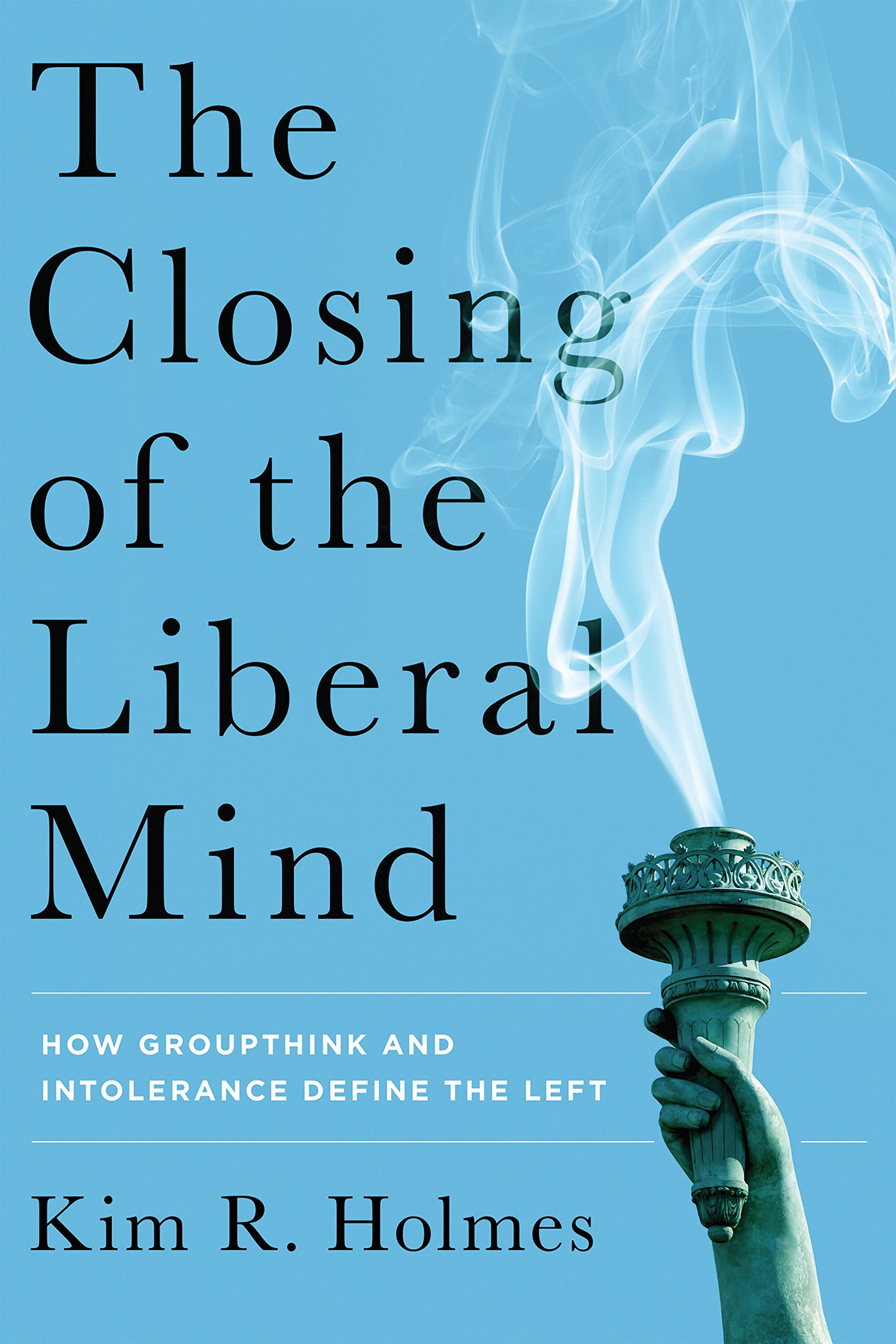
Ideological blind spots can indeed affect researchers with a strongly conservative or merely right-of-center outlook, but there just aren’t enough of them to matter. If academic psychology had more viewpoint diversity, the political biases that distort researchers’ work would all counterbalance one another. In American universities today, those biases generally point in the same direction. In psychology, the belief that only conservatives can be authoritarians, and that therefore only conservative authoritarians warrant serious study, has proved self-reinforcing over the course of decades.

As both left- and right-wing autocracies metastasize around the globe—a “pandemic of global authoritarianism” that has “persisted and deepened” over the past 15 years, in the words of the Stanford sociologist Larry Diamond—and as the speed of radicalization of recruits has hastened, the modest cadre of researchers interested in the subject will likely grow. By recasting left-wing authoritarianism in more specific terms—anti-hierarchical aggression, top-down censorship, and anti-conventionalism—Costello and his colleagues offer other researchers and the general public a new vocabulary for discussing antidemocratic attitudes on that side of the political spectrum.

See also Know-it-alls, Drama Queens & Control Freaks