Bruce Pardy explains how the public health power grab is operating in his Brownstone article WHO’s on First, referring to the World Health Organization. Excerpts in italics with my bolds and added images.
A new game is coming to every town and city on Earth. It’s called Global Public Health baseball. The team to beat is the Biomedical State. Here’s their starting lineup exhibited above.
Pitcher: Public Health Bureaucracy
Prone to mistakes and wild pitches. Arrogant, can do no wrong. Was a role player in the bullpen for most of career but broke into the limelight in the last campaign. To everyone’s surprise, has become an attention whore.
Catcher: Military and Scientific Research Institutes
Controls the game for the Biomedical State but doesn’t want to be in the spotlight. Lets Public Health have the attention. Self-interested. Team player as long as the team is doing as it’s told. Good buddies with Pharma.
First Base: World Health Organization
The new team captain, at least on paper. Very ambitious. Disappointing skills. Full of bluster but weak performance, especially during the previous campaign. Dropped balls and wandered off base. Being promoted into a role for which it’s not equipped.
Second Base: Pharmaceutical Industry
Highest paid player on the team. Terrible on-field performance but Manager’s favourite. Good buddies with Military and Scientific Research Institutes. Dirty player but hardly ever gets caught. Somehow manages to have the rules changed to its advantage. Excellent self-promoter. Fan favorite; people can’t get enough.
Shortstop: Legacy Media and Big Tech
Team spokesman. Speaks in vacuous cliches. Won’t let others talk. Double standards. Won’t admit to errors. Not a fan favorite.
Third Base: Medical Profession
Rigid skills, stuck in routine. Not creative, doesn’t take criticism well, hard to coach unless paid huge bonuses. One of the higher-paid players, beneficiary of a legacy contract. Claims to care but often observed living the high life. Doesn’t like to practice.
Out in Left Field: Legislatures
Easily distracted, often doesn’t know the score. Tendency to drop the ball. Has accepted minor role on the team even though has more power than realizes. Supports other players even when they don’t reciprocate.
Center Field: Academics and Activists
Most vocal but least skilled on the team. Won’t stop yelling. Usually incoherent but good at rallying the crowd.
Right Field: Common Good Conservatives
Most enthusiastic team booster. Steadfast belief in the value of teamwork and fair play. Most naïve member of the team. Least popular player on the team but doesn’t realize it.
Manager and Owner: Governments
Rules the team with an iron fist. Often wants to appear to be in the background. Pretends to defer to the players. Gives big payouts to favored players like Research Institutes and Pharma. Leans on Media and Big Tech when other players make mistakes.
Umpires: Courts
Think that they’re on the team. Every call is in favor of the Biomedical State. Wild pitches called strikes.
The League
There are no other teams, just an endless series of citizens at bat. The goal is get them out, out, out of the game.
The Real Game
Of course, the game of Global Public Health is not played on a baseball diamond. But the game is real, and so are the players. Yes, the biomedical state exists. Yes, its players are part of a global public health regime. Yes, it is controlled by national governments, research institutes, and domestic public health authorities, but it will be publicly led by the WHO. A new international pandemic agreement is still in the works.
The WHO will appear to transition from an advisory body to the directing mind and will of global health, even though certain national governments will be pulling the strings. The WHO will have authority to declare public health emergencies on loose criteria. National and local governments will undertake to do as the WHO directs. They will make private citizens and domestic businesses comply too. Lockdowns, quarantine, vaccines, travel restrictions, surveillance, data collection, and more will be on the table.
Yes, governments are still ultimately in control in their own countries or states/provinces. But many want the WHO to be the face of pandemic response. They want to hide their responsibility and avoid scrutiny from their own people. Officials will be able to justify restrictions by citing international obligations. WHO recommendations leave them no choice, they will say. “The WHO has mandated vaccines, so we cannot let you enter public spaces without one. It’s out of our hands.”
For the pharmaceutical industry, the global public health regime is a business model. The Covid “emergency” allowed the use of new pharmaceutical technology without a normal approval process or rigorous testing. Pharma was already adept at inventing ailments to be treated with new drugs, and at making people dependent upon their supply. Pandemic emergencies take this strategy to the next level. Government mandates make participation in society dependent upon the use of pharmaceutical products.
During Covid, legacy media reflected the official, hysterical narrative. Governmental authorities and social media platforms attempted to restrict competing facts and skeptical opinions. Regulators of the health professions prohibited doctors and other healthcare workers from expressing views contrary to Covid policies. Most doctors went along. Despite these efforts, dissenters managed to voice alternative stories and to pierce the Covid bubble. The biomedical state plans to do better next time.
Our society runs on illusions. Things are not what they appear to be. The global public health plan is not just international cooperation to be better prepared for pandemics. It is not an innocent effort to produce more accurate science and better policy. The biomedical state and its partners aim to protect and extend a governance model that serves the interests of its various constituencies. They seek to manage the whole of society using health as the rationale. They’re running away with the game.
Bruce Pardy is executive director of Rights Probe and professor of law at Queen’s University.
Brendan O’Neill makes the connection in his Telegraph article Queen Greta has exposed the truth about the green movement. Shape-shifting is so easy because the underlying motive is disdain for modern society. Excerpts in italics with my bolds and added images.
So,Greta Thunberg has a new cause. She’s found a new crusade to throw her weight behind. Forget saving the planet – now she wants to save Palestine.
Yes, the pint-sized prophetess of doom has swapped raging against industrialism for raging against Israel. Mother Nature will just have to wait – her erstwhile valiant defender is busy fixing the Middle East now.
Yesterday, Greta was snapped at the protest in Malmo, Sweden against Israel’s inclusion in the Eurovision Song Contest.
She looked the part. She had a keffiyeh draped over her shoulders and a smug look on her face: the two must-haves of every puffed-up bourgeois activist who gets off on fuming against Israel.
The keffiyeh really has become the uniform of the self-righteous. Go into a hip coffee shop or overpriced Soho burger joint and I guarantee you’ll see a Gen Z’er decked out in the Palestinian scarf.
Whatever happened to the sin of “cultural appropriation”? Not long ago, the right-on raged against white dudes who wear their hair in dreadlocks and white women who don kominos. “Stop stealing other people’s culture!”, they’d yell. Yet now they themselves spend their days in Arab attire.
That image of Greta in Malmo, looking very satisfied with herself, summed up the role the keffiyeh plays in the life of the 21st-century activist. Keffiyeh-wearing is less about drawing attention to the plight of the Palestinians than drawing attention to you. Look at me in my Arab garb, aren’t I good and hyper socially aware – that’s the needy cry of these hipster appropriators.
Yet beneath their radical chic, darker sentiments lurk. Their boilerplate hatred for Israel can have horrible consequences. So while young Greta was signalling her virtue on the streets of Malmo, another young woman was holed up in her hotel room for fear of mob assault. It was Eden Golan, the Israeli-Russian 20-year-old who sang for Israel in the Eurovision finals in Malmo.
Golan’s inclusion in Eurovision sickened the anti-Israel protesters. Israel, they said, must be given the boot over its “genocide in Gaza” – their juvenile and historically illiterate term for Israel’s war against Hamas.
A mob even swarmed around the hotel Ms Golan was staying in. She received death threats. Things were so bad that she was warned not to leave her room. She was given a 24-hour security detail.
Is this really “progressive activism”? It looks more like bullying to me. The bullying of a young woman by a baying mob of Israel-bashers.
How galling that Greta should have been in the thick of such a regressive protest. This is someone who has spoken out about her own experiences of bullying. Who has said that women in the public eye get too much flak. Yet now she preens at a protest that has had the consequence, intentional or otherwise, of filling a young woman with such dread that she has essentially become a prisoner in her own hotel.
We might call this woke privilege. Because Greta subscribes to chattering-class correct-think on every issue – climate change, transgenderism, Israel – she is granted the freedom to go about her business as she sees fit.
Ms Golan, on the other hand, is denied such basic liberty. Her national heritage, her devotion to her homeland, marks her out as morally suspect. And thus she must hide. “Shame!”, protesters shouted, as if she were a modern-day witch deserving of a dunking.
It is tempting to see Greta’s conversion from the climate-change cult to the anti-Israel religion as just bandwagon-jumping. Perhaps her saviour complex, her burning sense of virtue, just needs a new outlet. So, like others of her generation, she ditches climate and trans and all the rest and moves on to “Palestine solidarity”. That’s the issue on which you can really make moral waves these days.
But I think there’s something else going on, too. The truth is that climate activism and anti-Israel agitation are very comfy bedfellows. There are even some creepy commonalities between green agitation and Israel’s greatest ideological foe: radical Islam.
Both, at root, represent a disgust with modernity. Both the privileged
Western weepers over industrial society and the Islamist haters
of Israel share an aversion to the modern world,
to progress, to Enlightenment itself.
Hence we can even have a situation where Muslim activists who yell “Allahu Akbar” can be elected as councillors for the Green Party.
The upper-middle class recycling obsessive in Hampstead might seem a million miles from the bearded radical who publicly sings the praises of Allah – but they share an instinctive revulsion for capitalist society.
One sees it as a crime against Mother Nature,
the other as an affront to Muhammad.
To both sides, Israel is the pinnacle of the modernity they hate.A young, confident, entrepreneurial nation that rendered the desert a land of plenty? Boo. Hiss. Cast its people from our social circles.
So it makes sense that Greta has temporarily ditched Gaia for Gaza. For this crisis, too, furnishes her with an opportunity to advertise her pious rejection of the modern world.
Mark Steyn knows something about this movement and provides his usual cutting analysis of what is going on. The article at his blog isThe Three Rs, well worth reading. Excerpts in italics with my bolds and added images.
Does anyone still talk about the Three Rs in education? That would be reading, writing and racism …whoops, my mistake, ‘rithmetic.
It isn’t difficult. Every weekend, my inbox fills up with readers demanding to know what I think about this or that news story, but in the end all the news stories are the same. Just from the last couple of days:
~At McGill University in Montreal, cute young predominantly female students in masks and keffiyehs take over the campus to demand “intifada until victory”;
~At the University of Texas in Austin, a comedian attempts to point out to members of Trans 4 Palestine the internal contradictions of the rainbow coalition, and for his pains gets beaten up;
~At Châteauroux in central France, fifteen-year-old Mathis Marchais is stabbed to death by an Afghan “migrant” known to the gendarmes for two previous stabbings earlier this year but loosed on the public by an indulgent judge just last Monday;
~In Hamburg, over a thousand protesters march through the streets calling for an Islamic caliphate in Germany.
The Three Rs: Read the Writing on the wall – and do the ‘Rithmetic. Like I said, it’s not difficult – although it seems to be for some of the willing dupes who brought us the western world’s new reality.
They belong to the “Official Jews” for whom mass Muslim immigration is less of a threat than those awkward types who point out the obvious consequences of mass Muslim immigration. The “Official Jews” are not confined to Canada: America is awash with them, as is the United Kingdom. And unless, as Kathy Shaidle used to say, they’re “too stupid to be Jewish” what’s happening cannot have come as a surprise. Me a zillion years ago:
Young Muslims do not like Jews: that is a simple fact, and it’s a waste of everybody’s time denying it. Where Muslims predominate, Jews vanish – as in Molenbeek, across the canal from downtown Brussels. I remember from my childhood the main drag, the Chaussée de Gand (or Steenweg op Gent, if you’re Flemish, as my mum was), as a bustling strip with many Jewish businesses. But in the first decade of the 21st century they all disappeared, and their former owners chose to remain silent – because it was easier that way.
And thus the seeming paradox of the post-war era – that, as a certain “niche Canadian” has been saying for years, the principal beneficiary of western Holocaust guilt was Islam. The Canadian Islamic Congress and America’s ADL and their European equivalents did not choose merely “to remain silent”: they enthusiastically welcomed it, and did their best to crush those who disagreed.
This isn’t about Jews, except insofar as they are presently
at the sharp end of a convulsive cultural shift.
About six months after 9/11, I took a little trip to Western Europe and the Middle East and, waiting for a friend in Vienna, I noticed that everybody going in and out of the maternity shop across the street appeared to be Muslim. That’s just anecdote, as the bien pensants who dismissed my book as “alarmist” like to say. But two decades on it’s borne out by statistics. Back then, Muslims made up of four per cent of Austria’s population; now it’s over eight per cent. Me, again years ago, from the expanded e-book edition of Mark Steyn’s Passing Parade:
According to the Vienna Institute of Demography, by mid-century a majority of Austrians under fifteen will be Muslim. This is a country that not so long ago was ninety percent Catholic. But “not so long ago” is another country:
Salzburg, 1938, singing nuns, Julie Andrews — “How do you solve a problem like Maria?”
Salzburg, 2038:How do you solve a problem like sharia?
“Eight per cent” doesn’t sound like a lot. But, in western societies of elderly native populations, they skew young, and make up an ever larger percentage of your youth – close to a majority in certain European cities. Jews, on the other hand, are old. So, for those cutesy coeds, young Muslims are all around and young Jews are very thin on the ground.
The salient feature of the demonstrations roiling McGill, Columbia and
other western campuses is not that the pasty blonde trustiefundies are
“pro-Palestinian” but that they’re cool with being culturally Islamic.
Oh, to be sure, it’s mostly just keffiyehs and a few other fashion accessories; not yet full body bags and clitoridectomies. But why wouldn’t it have a purchase on them that Mr Housefather’s bleatings about how everyone should feel safe do not? The young want to belong, and what they most want to belong to is the future – and they grasp instinctively where the future’s headed.
They also get that these guys mean it. It is not coincidental that white upscale females are now among the most enthusiastic proponents of Hamas. For two generations, their menfolk have made the mistake of believing all that What Women Want bollocks, and the result is legions of “new males”, metrosexuals, soyboys – or, alternatively, depressive methheads chugging back Bud Light down in the man-cave. Me again: “We have made a world of men that women don’t want and women that men don’t want, and that doesn’t seem likely to end well.”
And suddenly there’s Ahmed and Shahid doing their Sheik of Araby Xtreme Sports routine:
At night when you’re asleep
Into your tent I’ll creep.
Whatever the respective charms of abortion or same-sex marriage, both are a biological dead-end. So, more obliquely, is the interminable prolongation of education and the impact of mass immigration on affordable housing. All four lead to later – and smaller – family formation. So men and women who would have been twenty-seven-year-old suburban dads and mums are now on the frontlines at McGill picking out their keffiyehs. Throw in open borders – and, as the icing on the cake, encourage your middle-school girls to prioritise “gender identity” and thereby render themselves infertile.
So the fertility-rate comeback that David Frum predicted almost two decades ago failed to materialise. Indeed, all that has happened since then is that America has joined Europe in the demographic death-spiral.
Two decades back, there was still time to change course. Instead, the governments of the west doubled down on the madness, and today averting the inevitable requires measures they have no stomach for. Yet, even as their parents drone on with their multiculti bromides, our youth get the reality: Queers 4 Palestine may be a delusion, but not as insane a delusion as “diversity is our strength”.
It’s not difficult: Do the math.
Footnote: Maybe We Get a Break from Climate Crisis Parades
Climate protests are so last year, it appears, as the same crowd now preoccupies itself with Gaza demonstrations. Is the truth that Left-wing protests are just fads chasing the latest issue du jour? The Telegraph‘s Ross Clark thinks so.
It’s hard not to notice a distinct switch in the targets of Lefty protesters over the past few months. They seem to have lost interest in protesting about climate change and have switched to Palestine and asylum-seekers instead.
The shift can be dated to last November during a protest held in Amsterdam, when Greta Thunberg suddenly seemed to decide that the planet was no longer worthy of her complete attention. She told the crowd that there “can be no climate justice on occupied land”, before blathering on about Palestine. It didn’t please one of her fans, who stormed the stage and seized her microphone, but as ever with Greta she seemed to manage to set a trend.
In the months since we have seen fewer and fewer climate protests as progressive mobs find other things to work themselves up about instead. Never mind that we are supposedly heading for climate Armageddon if we don’t abandon all oil and gas more or less instantly, a more urgent injustice seems to be that asylum seekers are being taken out of three star hotels and housed on a barge instead – a barge which, by the way, seemed to be perfectly adequate in its previous incarnation as accommodation for oil workers (although I guess in the minds of climate activists they needed to be punished).
“Like most Left-wing causes,” Ross suggests, climate change was “just a passing fad”. “The same crowd seems to have evolved seamlessly from anti-globalisation to the Occupy movement, to climate change and now to Palestine.”
Don’t forget BLM!
“If you want to be on trend with your protesting, better opportunities now lie elsewhere,” Ross concludes
Smartphones and social media have taken a toll on young people’s development. But one man has an idea about how to fix Gen Z. In his new book, “The Anxious Generation,” social psychologist Jonathan Haidt (JH) investigates the sudden collapse of mental health among adolescents. The author joins Hari Sreenivasan (HS) to discuss ways for parents to head off the damage. Below is a transcript from the closed captions in italics with my bolds and added images.
HS: Jonathan thanks so much for joining us. Your latest book is called the anxious generation, How the great rewiring of childhood is causing an epidemic of mental illness. You and I have talked before and you have been very careful about not seeming alarmist. This book is fascinating to me in that you supplement so much of your ideas with empirical data and research that is proving this point. What is the epidemic of mental illness and where do we find the data for that?
JH: When you and I first spoke about this it might have been back in 2019 I was not as alarmist because we weren’t sure it was clear that something was going wrong with Teen Mental Health. We had graphs showing that around 2013 rates of anxiety depression and self harm began rising rapidly. But there was an academic debate and there still is academic debate about whether it’s caused by social media. It’s correlated with girls who use it heavily, who are three times as likely to be depressed. But you know scientists are going to debate is it causal or is it just a correlation.
Since then I have learned a lot; I’ve gathered all the studies I can find including experiments. There are now a lot of experiments showing that when you randomly assign people to different conditions, it causes them to get more depressed or less depressed. So we have experimental research. But the really shocking thing that made me an alarm ringer, not an alarmist, is the discovery that the exact same thing that what happened to us in America also happened in Canada, Britain, Australia, New Zealand and Scandinavia.
At the same time, in the the same way, it was
hitting girls hardest and young girls even harder.
So it became clear this is an international epidemic of Teen Mental Illness and it began in the early 2010s. It’s hitting girls hardest, although the boys’ story is really interesting and different but is also very bad. That’s why as you say I’m leaving my old self behind and saying we need to act now, not waiting for 2025. We need to really make changes this year because otherwise another year of kids is going to be consigned to this phone-based childhood which interferes with development.
HS: So your argument is that it’s not the technology that’s bad or the internet that’s bad. You actually try to draw kind of a timeline from getting one of these supercomputers in your pocket to the front-facing selfie camera to broadband and then social media. What have each of these kind of technological evolutions done to how our brains evolve?
JH: So the technology is great, the internet is great, but things really change in the early 2010s. I really go into this in detail in the book, but let me briefly walk you through it. In 2010 only about 20% of American teens had a smartphone, kids were still using flip phones. They did not have high-speed internet. Most of did not have unlimited data plans. You used your flip phone to text or call your friends to get together and that was it. Kids were still seeing other kids in 2010.
The beginning of what I call the great rewiring happened over the next few years. The smartphone gets a front-facing camera in 2010, Instagram comes out in 2010 but becomes super popular in 2012 when Facebook buys it. So that’s when the girls really rush on, they move their social lives on to Instagram in particular also Tumbler and a few others. So you get these super viral social media platforms, it wasn’t like that in 2005. So with front facing camera and high-speed data, you get notifications. The original iPhone didn’t interrupt you; you pulled it out when you wanted it.
So in 2010 there is no sign of a mental health crisis everything’s fine so we were all super optimistic in 2011 even up to 2012. But that’s when the mental illness crisis begins and all the numbers go way up for girls and also up substantially for boys. By 2015 we have the Millennials who just barely made it through puberty before they got this. So the Millennials were in college or late high school when they adopted this phone based life. Because we’re all doing it, we’re all dominated by our our technology.
HS: Walk us through the actual harms that’s now scientifically connected to kids use and increased use of screens and social media specifically on smartphones.
JH: First we have to establish the numbers here which are stunning. The latest data from Gallup is around 9 hours a day that they spend on their phones and screens. Of that, five hours a day is social media, another 3 to five is all the other stuff that they do. So imagine if you take nine or 10 hours out of your child’s day every single day, where’s it going to come from? They spend less time sleeping, less time with other kids, less time outside, less time exercising, a lot more time just being sedentary and solitary.
For all those reasons, and oh, very little reading of books, no Hobbies, there’s no time for anything. So that’s the first thing: it pushes out all the good things of childhood that we want our kids to have. When you give a kid a smartphone it’s likely to move to the center of her life, and that’s what she’s going to do for the rest of her life. That’s one of the main ways of harm it just deprives you of everything else.
Another thing it does is to fragment your attention. Probably you and I know we can pay attention to things, we can do our work, but it’s harder now than it was 10 years ago. There’s constant interruptions, we’re still able to do it, but it’s a struggle. A teenager just starting puberty age 10, 11, 12, the prefrontal cortex is has not yet rewired for the adult configuration. They’re not very good at paying attention and early puberty is when that skill really develops. Imagine having them trying to develop that skill while being interrupted every few minutes. One study found the average teen now gets 257 notifications a day, 257 interruptions every day. It’s very hard to focus on anything, so you get fragmented attention, and we don’t know how permanent this is.
Another harm is addiction. The brain adapts to that constant level of stimulations so that when you’re not getting it, you’re in a deficit mode: you’re irritable, you’re unhappy and feel terrible. So these devices are designed to grab hold of our kids attention and never let go, and they’re very effective at that. I could go on there are so many other avenues of harm, but those are some of the big ones that I cover in the book.
HS: Can we talk a little bit about also the data and how it forks on the impacts to girls versus boys?
JH: When I started writing the book I thought it was going to be a story primarily about what social media is doing to girls, because I’ve got a lot of data on that, and because the graphs as you said are like hockey sticks. It’s like they’re going along, nothing is happening and then all of a sudden one day in 2013 they all start shooting upwards.
The hospitalizations for self harm are the most stunning,
and they’re the same in Britain, Canada, Australia.
It’s absolutely stunning what’s happened to girls since 2013.
For boys I couldn’t find a Smoking Gun. I couldn’t say oh well it’s video games or it’s social media for boys. The rise in mental illness is slower, and the key thing about boys: It’s not so much that this Modern Age is giving them diagnosable mental illness. Working with my research partner Zach Rausch we finally figured out that for boys the issue is they’ve been withdrawing from the Real World really since the 80s and 90s. They’ve been spending much more time online, they don’t go outside, they don’t wrestle. So boys are basically blocked in their development; they’re not turning into men, they’re dropping out of school, dropping out of the workforce. We’re losing a generation of boys.
It’s not as clear when you look at wealthy educated groups, there the gender gap is not so big. Once you get to middle class and below, the girls are doing okay in terms of school and work and the boys are just not. So the problems are more diffuse but they’re extremely serious for boys now.
HS: So many parents that will tell you that if you take a smartphone away from a child that it’s almost like that you’ve broken this tractor beam that they’ve had this lock on. And they’re generally speaking really aggressive. It’s a very strange equation. If it was any other kind of an addictive substance or drug, a parent would probably say: Well, let’s get that out of the house and not use it.
JH The most powerful argument a kid can make: “Mom, I have to have a smartphone because everyone else has one, and I’ll be left out. I have to have Instagram because everyone else has it and I’ll be left out.” That’s what’s called a collective action problem; it’s hard for us as parents because everyone else is doing this. So I’m proposing that we coordinate to set some Norms. Norms that would be hard to do on our own but much easier to do if we do them together.
Go back to the the parent struggling to put limits on use or to maybe give a warning. You were describing actually quintessential withdrawal symptoms from any drug. When brain circuits are used to getting this stimulation, whether from cocaine, heroin, slot machines or or social media. If that happens every day, when you take the kid off they feel horrible for a couple of weeks. It takes three or four weeks actually to detox for the brain to reset. So it’s vital that we delay the entry into this craziness and that we give our kids time away.
HS: Let’s deal with some of the reservations that I’m sure you’ve heard. Besides my kid is going to miss out, parents are concerned about giving their kids devices to be able to get in touch with them in an emergency. What are ways to do that without necessarily giving them a full smartphone loaded with social media?
JH: As a parent of two high school kids I totally understand the desire to be able to reach your children and the desire for them to reach you if something goes wrong. So first thing, we’re not saying cut them off and don’t communicate. We’re saying don’t give them the most powerful distraction device ever invented to have in their pocket all the time, including when they’re going to sleep, when they’re in class etc. So give them a flip phone; the Millennials had flip phones and they turned out fine.
My second point though is school security experts say there are procedures in place to deal with a school shooting, and and they involve listening and cooperating and working together with the teacher and the administration. So I would ask any parents who have this concern, and we all have the concern, would you rather send your kid to a school in which when there’s when there’s a potential problem everyone stays silent, they follow directions, they do what they’re supposed to do and follow the procedure. Or would you rather have one where at the first sign of a serious problem everyone pulls out their phone. They’re crying to their parents, they’re making a lot of noise, they’re not listening. I understand the human urge to talk to your kid if there’s a crisis. But the teacher has a phone as do all the administrators. We have to let th professionals do their job and not interfere as parents.
HS: What about the idea that there are so many different types of communities who have found each other over social media? In a section of your book you talk about how ironically some of these communities that might find the most benefit are also the ones susceptible to the largest negative effects by being on social media. Please explain that.
JH: Yes. You know we often confuse the internet and social media. You’ve described a problem that the internet largely solved. Kids who were isolated in the 90s they could find you know if you’re gay if you’re bi if you’re trans, they could find other kids beginning in the 90s the internet is amazing for that. Once you start getting communities on social media, what often happens is a move to the extreme. Look at mental health Tumblr or mental health Instagram or mental health Tik Tok. You might think if a person has a particular disorder it’s great that they can interact with other people to share their disorder. I don’t think that’s true.
There’s increasing amounts of research that social media is spreading mental illness. It’s just not a good idea to have teenagers hanging out with influencers who are motivated to be more extreme to get followers. So I don’t buy the argument that this is somehow good for members of historically marginalized communities. As I report in the book, studies show that while most kids recognize that these platforms are bad for them, LGTBQ kids are even more vociferous in saying these platforms are bad for us. These platforms lead to bullying and harassment. So the internet is amazing but social media does far more harm to kids than whatever shreds of benefit you can find from it.
HS: You have taken this message to social media companies directly. Are they getting it?
JH: Well there’s been no response certainly. I think they’re kind of hemmed in. Meta did try a small thing, they tried hiding the like counter. That didn’t work to have an effect. I’ve spoken with their research staff and with leadership there. I do believe that if they could make it healthier and not lose any users they would do it. But Meta in particular has shown it’s always prioritized growth over everything else.
Many internal whistleblowers have pointed out problems, and they generally don’t respond. They don’t do the things that would be effective. For example kicking off underage users is possible, they know how old everybody is. But you when most 11 and 12 year olds have an Instagram account they should be kicked off but meta won’t do that. Snapchat won’t do that because they’d lose most of their users. So they know what are the problems. There have been many internal reports and they don’t act. And they don’t have to because Congress gave them immunity from lawsuits. This is one of the most insane things about our country. We have this environment that is incredibly toxic for our kids development, and we can’t sue them.
HS: At a senate hearing CEO of meta Mark Zuckerberg said: “the existing body of scientific work has not shown a causal link between using social media and young people having worse mental health.” Is he misinformed by his lawyers?
JH: No he’s properly informed by his lawyers. He can point to studies that support that conclusion, such a few Meta analyses and a study by the National Academy of Science that came to that conclusion. But there is so much evidence on the other side, so they’re cherry-picking. Even that National Academy’s report that claimed that there’s not enough evidence to prove causation, in that very report people should read chapter 4. It’s an amazing catalog of of the research that shows causality. So it’s a bizarre report which itself documents dozens and dozens of avenues of harm and dozens and dozens of experiments, but yet for some reason they said well we can’t prove that it’s causal.
If you go to my substack after babel.com I’ve gone through all of the studies, we itemize them, we show how the correlational studies come out, how the longitudinal studies come out, how the experimental studies come out.
There is a ton of evidence and the preponderance of the evidence
shows it’s not just a Correlation, it’s a Cause.
Zuckerberg was pointing to the few studies he could, but in the long run I believe they’re going to lose that case because the evidence keeps mounting and by now everybody sees it, including the teachers and the parents. We saw all those parents at that Senate hearing testifying that their that their kid is dead because of something that happened on social media. Were they all wrong about that? At this point in time it just defies belief that social media isn’t contributing to this Mental Health crisis.
HS: Do you think that legislation like what Ron DeSantis is proposing in Florida or other states are thinking about doing to try to delay or ban the use of social media by a certain age will work?
JH: I think the DeSantis bill, the Florida bill is great. We have to delay the age at which they get into social media. I think 16 is the right age; I mean for health reasons it should be 18, but realistically we’re not going to get 18. I think 16 is a reasonable compromise at which we can begin treating kids like adults on the internet. Right now current law says 13. At 13 companies can do whatever the hell they want to your kids. They can take their data, they can do anything, they don’t need your permission, they can treat them like adults. That’s current law and there’s zero enforcement as long as they don’t know your kid is 10. they can do whatever they want to your kid.
So the current law is horrible: it’s not enforced, the age of 13 is too low. We need to raise that to 16 and enforce it, and that’s what the Florida bill is going to do. They have a little carve out so that if parents really want their kid to be on at 14 and 15 they can specifically sign a permission. That’ll be interesting to see how the tech companies Implement that but I’m a big fan of the Florida bill. I hope all 50 states do it because there is no way to make social media safe for middle school children.
Author and Professor Jonathan Haidt, thanks so much for joining us.
Jonathan Newman provides a brief overview of economic fundamentals for a free society in his article What are Mises’s Six Lessons? Excerpts in italics with my bolds and added images. H/T Tyler Durden
Ludwig von Mises’s Economic Policy: Thoughts for Today and Tomorrow has become quite popular recently. The Mises Book Store has sold out of its physical copies, and the PDF, which is available online for free, has seen over 50,000 downloads in the past few days.
This surge in interest in Mises’s ideas was started by UFC fighter Renato Moicano, who declared in a short post-fight victory speech, “I love America, I love the Constitution…I want to carry…guns. I love private property. Let me tell you something. If you care about your…country, read Ludwig von Mises and the six lessons of the Austrian economic school.”
The “six lessons” he is referring to is Mises’s book, Economic Policy: Thoughts for Today and Tomorrow, which was republished by our friends in Brazil under the title “As Seis Lições” (“The Six Lessons”). If you are interested in what Mises has to say in this book, which is a transcription of lectures he gave in Argentina in 1959, here’s a brief preview, which I hope inspires you to read the short book in full.
Lecture One: Capitalism
Mises begins his first lecture with an overview of the development of capitalism out of feudalism. Businesses began “mass production to satisfy the needs of the masses” instead of focusing on producing luxury goods for the elite. These big businesses succeeded because they served the needs of a larger group of people, and their success wholly depended on their ability to give this mass of consumers what they wanted.
Despite the amazing and undeniable increases in standards of living, even for a growing population, capitalism had its detractors, including Karl Marx, who gave capitalism its name. Mises says that while Marx hated capitalism and that Marx dubbed it thusly as an attack on the system, the name is a good one:
because it describes clearly the source of the great social improvements brought about by capitalism. Those improvements are the result of capital accumulation; they are based on the fact that people as a rule, do not consume everything they have produced, that they save—and invest—a part of it.
Prosperity is the result of providing for the future—more precisely it is the result of setting aside consumption today by saving and investing resources in production. Mises says that this principle explains why some countries are more prosperous than others. When it comes to economic growth, “there are no miracles.” There is only “the application of the principles of the free market economy, of the methods of capitalism.”
Your Country’s Future: Market or Jungle?
Lecture Two: Socialism
In the second lecture, Mises takes a closer look at Marx’s proposed system: socialism. Economic freedom means that people can choose their own careers and use their resources to accomplish their own ends. Economic freedom is the basis for all other freedoms. For example, when the government seizes whole industries, like that of the printing press, it determines what will be published and what won’t and the “freedom of the press disappears.”
Mises acknowledges that there is no such thing as “perfect freedom” in a metaphysical sense. We must obey the laws of nature, especially if we intend to use and transform nature according to our ends. And even economic freedom means that there is a fundamental interdependence among individuals: “Freedom in society means that a man depends as much on other people as other people depend upon him.” This is also true for big businesses and the entrepreneurs who lead them. The true “bosses” in the market economy are not those who shout orders to the workers, but the consumers.
Socialists despise the idea of consumer sovereignty because
it means allowing mistakes. In their mind, the state should
play the paternalistic role of deciding what is good for everyone.
Thus Mises sees no difference between socialism and a system of slavery: “The slave must do what his superior orders him to do, but the free citizen—and this is what freedom means—is in a position to choose his own way of life.” In capitalism, this freedom makes it possible for people to be born into poverty but then achieve great success as they provide for their fellow man. This kind of social mobility is impossible under systems like feudalism and socialism.
Mises ends this lecture with a short explanation of the economic calculation critique of socialism. When the private ownership of the means of production is prohibited, then economic calculation is made impossible. Without market prices for factors, we cannot economize production and provide for the needs of the masses, no matter who oversees the socialist planning board. The result is mass deprivation and chaos.
If only arm-twisting were illegal outside the ring.
Lecture Three: Interventionism
Interventionism describes a situation in which the government “wants to interfere with market phenomena.” Each intervention involves an abrogation of the consumer sovereignty Mises had explained in the two previous lectures.
The government wants to interfere in order to force businessmen to conduct their affairs in a different way than they would have chosen if they had obeyed only the consumers. Thus, all the measures of interventionism by the government are directed toward restricting the supremacy of consumers.
Mises gives an example of a price ceiling on milk. While those who enact such an intervention may intend to make milk more affordable for poorer families, there are many unintended consequences:increased demand, decreased supply, non-price rationing in the form of long queues at shops that sell milk, and, importantly, grounds for the government to intervene in new ways now that their initial intervention has not achieved its intended purpose. So, in Mises’s example, he traces through the new interventions, like government rationing, price controls for cattle food, price controls for luxury goods, and so on until the government has intervened in virtually every part of the economy, i.e., socialism.
After providing some historical examples of this process, Mises gives the big picture. Interventionism, as a “middle-of-the-road policy,” is actually a road toward totalitarianism.
Lecture Four: Inflation
There can be no secret way to the solution of the financial problems of a government; if it needs money, it has to obtain the money by taxing its citizens (or, under special conditions, by borrowing it from people who have the money). But many governments, we can even say most governments, think there is another method for getting the needed money; simply to print it.
If the government taxes citizens to build a new hospital, then the citizens are forced to reduce their spending and the government “replaces” their spending with its own. If, however, the government uses newly printed money to finance the construction of the hospital, then there is no replacement of spending, but an addition, and “prices will tend to go up.”
Mises, per usual, explodes the idea of a “price level” that rises and falls, as if all prices change simultaneously and proportionally. Instead, prices rise “step by step.” The first receivers of new money increase their demands for goods, which provides new income to those who sell those goods. Those sellers may now increase their demands for goods. This explains the process by which some prices and some people’s incomes increase before others. The result is a “price revolution,” in which prices and incomes rise in a stepwise fashion, starting with the origin of the new money. In this way, new money alters the distribution of incomes and the arrangement of real resources throughout the economy, creating “winners” and “losers.”
The gold standard offers a strict check against the inflationist tendencies of governments. In such a system, the government cannot create new units of money to finance its spending, so it must resort to taxation, which is notably unpopular. Fiat inflation, however, is subtle and its effects are complex and delayed, which makes it especially attractive to governments that can wield it.
In this lecture Mises also executes a thorough smackdown of Keynes and Keynesianism, but I’ll leave that for readers to enjoy.
Lecture Five: Foreign Investment
Mises returns to a principle he introduced in the first lecture, that economic growth stems from capital accumulation. The differences in standards of living between countries is not attributable to technology, the qualities of the workers, or the skills of the entrepreneurs, but to the availability of capital.
One way that capital may be accumulated within a country is through foreign investment. The British, for example, provided much of the capital that was required to develop the rail system in the United States and in Europe. This provided mutual benefit for both the British and the countries on the receiving end of this investment. The British earned profits through their ownership of the rail systems and the receiving countries, even with a temporary “unfavorable” balance of trade, obtained the benefits of the rail system including expanded productivity which, over time, allowed them to purchase stock in the rail companies from the British.
Foreign investment allows the capital accumulation in one country to speed up the development of other countries, all without a one-sided sacrifice on the part of the country providing the investment. Wars (especially world wars), protectionism, and domestic taxation destroy this mutually beneficial process. When countries impose tariffs or expropriate the capital that belongs to foreign investors, they “prevent or to slow down the accumulation of domestic capital and to put obstacles in the way of foreign capital.”
Lecture Six: Politics and Ideas
The classical liberal ideas of the philosophers of the eighteenth and early-nineteenth centuries helped create the constrained governments and economic freedom that led to the explosion of economic growth Mises discussed in the first lecture. But the emergence of minority “pressure groups,” what we would call “special interest groups” today, directed politicians away from classical liberal ideals and toward interventionism. The groups that would benefit from various interventions lobby the government to grant them favors like monopoly privileges, taxes on competition (including tariffs), and subsidies. And, as we have seen, this interventionist spiral tends toward socialism and totalitarianism. The “resurgence of the warlike spirit” in the twentieth century brought about world wars and exacerbated the totalitarian trends even in the once exemplary nations.
The concomitant rise in government expenditures made fiat money and inflation too tempting. The wars and special projects advocated by the pressure groups were expensive, and so budget constraints were discarded in favor of debasement.
This, Mises says, explains the downfall of civilization. He points to the Roman Empire as an example:
What had taken place? What was the problem? What was it that caused the disintegration of an empire which, in every regard, had attained the highest civilization ever achieved before the eighteenth century? The truth is that what destroyed this ancient civilization was something similar, almost identical to the dangers that threaten our civilization today: on the one hand it was interventionism, and on the other hand, inflation.
Mises finds hope in the fact that the detractors of economic freedom, like Marx and Keynes, do not represent the masses or even a majority. Marx, for example, “was not a man from the proletariat. He was the son of a lawyer. … He was supported by his friend Friedrich Engels, who—being a manufacturer—was the worst type of ‘bourgeois,’ according to socialist ideas. In the language of Marxism, he was an exploiter.”
This implies that the fate of civilization depends on a battle of ideas, and Mises thought that good ideas would win:
I consider it as a very good sign that, while fifty years ago, practically nobody in the world had the courage to say anything in favor of a free economy, we have now, at least in some of the advanced countries of the world, institutions that are centers for the propagation of a free economy.
May we continue Mises’s project and fulfill his hope. What the world needs is “Menos Marx, Mais Mises, ” I.e. Less Marx, More Mises.
David Strom explains the growing rift between liberals and the extreme left in his article Gulp: Jonathan Chait Is Right. Excerpts in italics with my bolds and added images.
I often make the distinction between liberals and Leftists. I understand why many people think I am too generous in doing so because liberals often fly cover for or implicitly coddle the antics of Leftists, but there is a genuine difference. Liberals tend to think the antics of Leftists are a stupid distraction but fear that criticizing them would give aid and comfort to the enemy.
Conservatives do that, too. Look at Laura Loomer as exhibit one. We have our share of loons, the big difference being that they have less power over our Party and our movement than the Left does over Democrats. And, of course, conservatives don’t control any of the levers of administrative power in America, at least at the federal level.
There are plenty of principled people on both sides of the aisle, although far too few. Jonathan Chait, with whom I have few views in common, is one of them.
In a great piece in New York Magazine, he calls out not just the Left, but Democrats on the Leftist authoritarians who are shutting down speech in America. He notes the obvious: if what is being done by the Left in America was being done by the Right, Democrats would be freaking out. Of course, Democrats are freaking out anyway, given that not all conservatives are in jail yet, but you get the idea.
“The goal of these maneuvers is not to make the case for pro-Palestinian policy, but to abuse and deny basic rights to those who fail to endorse the protesters’ beliefs. And yes, being prevented from holding a planned speech to supporters, stalked on the street, or subjected to sleep denial are all forms of abuse. Almost nobody believes these are all just natural parts of the give and take of public disagreement.
The most elemental premise of liberalism is that politics
should be governed by a uniform set of rules or norms that apply to everybody,
regardless of the content of their beliefs.
Over the last decade, an increasingly visible fault line has opened up on the left betweenpolitical liberals and more radical activists. The illiberal left defines politics as a conflict between oppressor and victim and does not believe the former deserves the same rights as the latter. (Crucially, the special prerogatives of victimhood apply not only to victims but also to those struggling on their behalf.)
Abusive protesters usually meet critiques of their illiberal methods with a facile comparison to the civil-rights movement. But that movement was designed for a political environment in which basic liberal rights did not exist: Black Americans lacked the right to vote, to petition for grievances, or otherwise exert basic freedoms that white Americans enjoyed. The movement’s theorists did not intend their carefully designed arguments to be a permanent license for any progressive cause to declare itself beyond the law for all time.”
The simple truth is that the Right doesn’t do any of these things, despite the fact that the media freaks out any time more than two conservatives get together to say anything. Suddenly we are all Nazis trying to instigate a Beer Hall Putsch. The Left, though, relies on harassment as their primary tactic. Not speeches. Not protests. But harassment.
I’m not referring to tactics like holding protest marches, speeches, social-media posts, organizing uncommitted votes in the Democratic primary, or other exercises of First Amendment rights. I’m specifically referring to a campaign to shut down speakers who oppose (or even, in many cases, simply decline to endorse) the movement’s agenda.
Usually, it means interrupting speeches with screaming insults until the protesters are dragged out of the room, which has become the norm at Biden campaign events. At events with sub-presidential levels of security, protesters often succeed in overwhelming the event and its security and shutting down the speech or event entirely, sometimes employing violence.
I’d place in the same category aggressive personal harassment campaigns, like gathering outside somebody’s home at three o’clock in the morning with bullhorns shouting “We will not let you sleep!,” or surrounding individuals on the street to scream insults.
It is refreshing to see liberals beginning to stand up to the bullies on the Left and scream, “Enough!” It is frustrating that it has taken an outbreak of attacks on Democrats to inspire them to speak up, because I am quite certain that they have known for a while–since at least 2020–that the Left unleashed is a very bad thing for the country.
But until recently, the Left’s tactics have worked well enough. Liberals cheered on as Trump appointees were driven out of the public space, unable to even go to a restaurant without harassment. I don’t know what Chait thought of that, so I will charitably assume he objected. As many liberals quietly did, I suppose.
As a nearly 60-year-old man (who in his head is still in his 30s, despite an aging body) I still hanker for the more sedate and norm-constrained days of the Reagan era. Politics was still quite rough-and-tumble, and the 60s and early 70s were pretty awful. However, in the 80s and early 90s, both parties were still somewhat constrained and occasionally worked together. (The Robert Bork and Clarence Thomas hearings were very low points, though).
As you know, I cringe at the worst rhetorical excesses of the Right. But they aren’t in even the same universe as what the Left has been doing over the past few years, escalating to what amounts to political violence and harassment.
There is no charge for content on this site, nor for subscribers to receive email notifications of postings.
Below is an article describing how the woke industry started and expanded by advancing a fundamental lie about human happiness and social fairness. The image above calls attention to the notion that sorts individuals into classes and attributes inequalities in status or prosperity to oppression by others. The lie is that any disappointment or disadvantage is the fault of others, ie. privileged oppressors. Thus is swept away standards of performance, accountability and considerations of individual merit. As explained below the DEI bureaucracy emerged to reward so-called “protected classes” at the expense of “privileged classes.”
The diversity business originated in 1984, when R. Roosevelt Thomas, a Harvard business school graduate, founded the American Institute for Managing Diversity at Morehouse College. Corporations had been practicing affirmative action for years, but the women and minorities whom employers had hired to meet equal-opportunity obligations weren’t advancing up the career ladder in acceptable numbers. Thomas came up with a novel explanation. The problem wasn’t that preferentially admitted recruits were underqualified; the problem was that their supervisors didn’t know how to “manage diversity.” It was those supervisors who needed remedial training—lots of it—not the affirmative-action beneficiaries themselves.
Managerial expectations about merit and performance often reflected cultural prejudices, Thomas and the consultants who followed him insisted. “‘Qualifications’ is a code word in the business world with very negative connotations,” a consultant with the professional-services firm of Towers Perrin (as it was then called) said in 1993. If minorities don’t meet existing employment criteria, then corporations need to expand their definition of what it means to be employable, said Alan Richter, creator of the 1991 board game, The Diversity Game. Promptness, precision, and a cogent communications style were among the attributes that diversity advisors deemed likely expendable.
A lucrative new consulting practice was born, its growth driven by a constant churn in terminology. “Valuing diversity” was different from “managing diversity.” Each newly spawned phrase came with a cadre of high-priced tutors. Lewis Griggs currently offers video trainings in such subjects as “Communicating Across Differences,” “Supervising and Managing Differences,” and “Creating, Managing, Valuing, and Leveraging Diversity,” with each video purporting to contain specialized content appropriate for different parts of an organization.
“Diversity” was eventually joined by “inclusion.” “Equity” was then added, thus yielding today’s DEI (Diversity, Equity, and Inclusion) triumvirate (sometimes also going as “EDI”). The most cutting-edge organizations have lately appended a “B” (for Belonging), as at the Juilliard School in New York City. Distinguishing these terms is a core function of diversity training—and now, at Bentley, of diversity scholarship. The university’s new DEI major, the Chronicle of Higher Education reports, will help graduates understand the “nuances of and differences between diversity, equity, inclusion, and justice.”
Even by 1993, half of Fortune 500 companies had a designated diversity officer, and 40 percent of American companies had instituted diversity training. Diversity conferences were occurring regularly, attracting government and business attendees. And yet many reporters, academics, corporate consultants, and activists still insist that managers not only fail to “value diversity,” but remain complicit in creating a dangerous environment for women and racial minorities.
Example: Levi Strauss & Co., which was recognized on Forbes’s list of “Best Employers for Diversity” in 2019. The company itself boasts: “In the 1960s, we integrated our factories a decade before it was required by law. In the early 1980s, we joined the fight against HIV/AIDS early on. Furthermore, our president and CEO, Chip Bergh, was one of the first company leaders to join the CEO Action for Diversity & Inclusion™ [in 2017], and has been on the front lines of efforts to protect Dreamers knowing that diversity and inclusivity makes our company better and our country stronger (after all, Levi Strauss himself was an immigrant).”
And yet the situation for minority employees at Levi Strauss is still so dire that the company has been hosting racially segregated healing sessions with professional mental health experts. As the Washington Free Beacon recently reported, its chief executive for DEI is trying to provide a “safe space for employees to express themselves” without feeling “triggered.”
Bentley University itself has yet to yield dividends from its longstanding diversity efforts. The school has been “working for decades on issues, challenges, and opportunities” pertaining to diversity, according to its Office of Diversity and Inclusion. Over 900 faculty and administrators have attended two-day diversity retreats; numerous committees, departments, and offices have focused on improving the school’s “diversity climate.” Bentley even has its own diversity consulting outfit, the Center for Women and Business, which advises employees and managers on such diversity pitfalls as being a mere “performative ally” of oppressed colleagues (as opposed to an active ally).
And yet, despite this effort, a Bentley Racial Justice Task Force recently found that the campus still did not understand how “race and racism” operate at the university. So difficult is it to be a diverse member of Bentley that the task force, formed in July 2020, began with a moment of “restoration,” providing to all “those who had been traumatized” at the school a “time to heal” and a time to “process the pain of racial injustice.”
One of Bentley’s biggest failings, according to the task force, has been its “false confidence” in “objectivity and meritocracy.” These are the norms of a “historically and predominantly white institution (HWI/PWI),” per the task force members. Typical of HWIs/PWIs, Bentley does not pay sufficient attention to the “systemic inequality” that such white norms engender. Equally dismaying, many students and professors apparently would rather study subjects other than racism, the task force lamented, thereby betraying their “lack of understanding about why the study of race is critical to the creation of a full academic experience.”
Diversity industry proponents would argue that white supremacy is simply too ingrained in America’s institutions to be rooted out within a mere three to four decades of diversity work.
But another possible reason why diversity training has not met its stated goals is that the field is intellectually bankrupt: Its practitioners peddle empty verbiage to fix a problem that is largely imaginary. I asked Bentley’s press office what the difference is between “diversity, equity, and inclusion.” The answer was a dodge: “Rather than give students one particular view of diversity, equity, inclusion and justice, Bentley’s DEI major encourages students to compare and contrast approaches to diversity, equity, inclusion and justice from across disciplines and perspectives and show how they intersect with one another.” Other questions—how the school defines a “real discipline,” what are the core texts of this new discipline, and why Bentley’s decades of diversity work have not lessened the school’s purported racism—were ignored entirely.
Bentley sociologist Gary David says that “more and more studies have shown” that diversity training and DEI perspectives make “good business sense.” But this oft-asserted claim rests on a few studies of dubious experimental design, lacking control groups. The one thing diversity trainees reliably learn is how to answer post-training survey questions “in the way the training said they ‘should,’” reports sociologist Musa al-Gharbi. As for actually changing behaviors in a diversity-approved direction, the training is not only ineffective, it is often counterproductive, according to al-Gharbi.
Far from being institutionally racist, Bentley University, like virtually every other American college today, is filled with well-meaning adults who want all their students to succeed. Corporations, law firms, Big Tech, and government agencies are bending over backwards to hire and promote as many underrepresented minorities (i.e., blacks and Hispanics) as possible. If the number of those minorities in a college or business organization is not proportional to their population share, that underrepresentation is due first and foremost to the academic skills gap. Mention of the skills gap is taboo in diversity circles, but it is real—repeatedly documented by the National Assessment of Educational Progress exams, the SAT, the LSAT, the GREs, the GMAT, and the MCAT—and it is consequential.
Hiring based on any extraneous selection criterion inevitably lowers the average qualifications of the resulting employee group. Hiring based on race entails a particularly significant deviation from a meritocratic ideal, since the only reason why color-conscious hiring is implemented in the first place is that merit hiring often fails to produce a critical mass of black and Hispanic employees. In essence, the diversity conceit is a perpetual motion machine: If underqualified diversity hires are promoted out of diversity pressure, resentment and obfuscation follow. If they hit a glass ceiling, accusations of bias are inevitable. In either situation, a diversity consultant is waiting in the wings to teach managers that their expectations and standards are racist.
The increasing power of college diversity bureaucrats over academic affairs since the 1990s has been stunning. Diversity vice-chancellors oversee faculty hiring searches, mandate quotas regarding whom search committees may interview, and sometimes even mandate quotas regarding whom they must hire. Chief inclusion officers track departmental race and sex demographics, pressuring department chairs to correct diversity deficits. Associate provosts for diversity coordinate campaigns for required courses on identity and grievance within the curriculum. Deans of inclusion teach students to recognize their place on the great totem pole of victimization. Vice presidents for equity monitor campus speech, on the lookout for punishable microaggressions. Senior advisors on race and community lead crusades against faculty who have allegedly threatened the safety of campus victim groups through non-orthodox statements regarding race and sex.
Now that the fictions underpinning this enterprise are being enshrined as an academic discipline, the possibility that the university will return to its status as an institution dedicated to the unfettered search for knowledge—and even, dare one say it, objectivity and meritocracy—will grow yet more remote.
Postscript: When Graduates from DEI Institutions Go to Workplaces
Companies are struggling to operate as Gen Z enters the workforce at higher rates, and a growing majority of employers say the younger generation is toxic for their business.
That’s the latest from a new Freedom Economy Index report conducted by PublicSquare and RedBalloon this month. In the survey, 68 percent of small business owners said Gen Zers were the “least reliable” of all their employees. And 71 percent said these younger workers were the most likely to have a workplace mental health issue.
One of the surveyed employers spoke of Gen Z’s “absolute delusion, complete lack of common sense, and zero critical reasoning or basic analytical skills.”
The criticism for Gen Z workers was in full force, as less than 4 percent said Gen Z was the generation that most aligns with their workplace culture, and 62 percent said Gen Z was the most likely to create division and toxicity in the workplace.
Another employer noted the generation’s tendency for “expecting promotions for simply showing up every day.”
Footnote: Boeing Learning the Hard Way About DEI Hiring
There is no charge for content on this site, nor for subscribers to receive email notifications of postings.
The second-largest accounting firm in the U.S. decided to revamp its hiring policies rather than face class-action lawsuits or an investigation by the Equal Employment Opportunity Commission. This is just the latest example of a private-sector company adjusting in response to the Supreme Court ruling against Harvard University last year.
PricewaterhouseCoopers (PwC), one of the vaunted Big 4 accounting firms, is eliminating diversity, equity and inclusion (DEI) targets for its internship and scholarship programs. The company will also drop a commitment to earmark at least 40% of its procurement budget toward minority-owned suppliers.
America First Legal (AFL) sent a cease-and-desist letter to PwC in recent weeks warning of future litigation against it unless it ended its racial quotas. AFL described PwC as “one of the worst offenders when it comes to implementing racially discriminatory practices.”
Changes at PwC will include “ending race-based eligibility criteria for a student internship program and for scholarships to help candidates prepare for professional accounting exams, two initiatives that were designed to increase the diversity of the firm’s employee base,” according to the Financial Times. PwC reported it hired 3,500 people in fiscal year (FY) 2023, of whom “56% were racially/ethnically diverse.”
The percentage of white new hires at PwC dropped from 58% in FY 2021 to 51% in 2023. Many students say the costs of going to college and sitting for the certified public accountant exam are too high, leading to an exodus from the profession.
When the murder of George Floyd by Minneapolis police set off a wave of racial unrest across the country in 2020, corporate America responded swiftly with renewed and public commitments to diversity, equity and inclusion (DEI).
Major companies created new DEI positions or expanded teams dedicated to DEI and the phrase became a buzzword across the business landscape. Many corporate leaders pledged to hire more people of color, removed branding perceived to be racist and invested in historically Black colleges. At the time, the efforts were largely met with public support, amid a so-called “racial reckoning” that laid bare a slew of systemic inequities in American society, including the workplace.
But nearly four years later, the very public ousting of Harvard’s first Black woman president earlier this week has led to a new firestorm of debate about DEI efforts in corporate America and beyond.
While Claudine Gay’s resignation from Harvard was linked to a plagiarism scandal and ongoing controversy over a congressional hearing on antisemitism last month, her departure inspired some critics to take aim at what they perceive as a broader failing of DEI efforts.
Among the most vocal of these critics pushing back against DEI is billionaire investor Bill Ackman, who in the wake of Gay’s departure posted a 4,000-word opus on X, the platform formerly known as Twitter, that blasted DEI as “inherently a racist and illegal movement in its implementation even if it purports to work on behalf of the so-called oppressed.”
Ackman’s lengthy thesis was later retweeted by billionaire Tesla and SpaceX CEO Elon Musk, who now owns the social media platform.
“DEI is just another word for racism. Shame on anyone who uses it,” Musk wrote in his post sharing Ackman’s screed on Wednesday. In a follow-up post, the world’s wealthiest person doubled down, adding,
“DEI, because it discriminates on the basis of race, gender and
many other factors, is not merely immoral, it is also illegal.”
A pendulum swing
After a DEI hiring spree that began in late 2020, data suggests some businesses are now in fact reversing course on their efforts.
The most recent data on hiring from the job site Indeed shared with CNN Friday illustrates a pendulum swing in postings for DEI-related roles on the site.
After a more than 29% uptick in job postings with DEI in the title or description between November 2020 and November 2021, the data shows a more than 23% decline in the amount of job postings with “DEI” in the title or description between November 2022 and November 2023.
The Tide is Turning Away from Woke Activism in Business
The Corporate Equality Index (CEI) is America’s premiere benchmarking tool used to measure companies’ adherence to LBGT orthodoxy. An initiative of the misleadingly named Human Rights Campaign (HRC), the CEI has recently published its 2023 report—and the news is less-than-glittery for hundreds of corporations that have lost their perfect score since 2022.
In 2022, the number of companies to achieve a perfect score was 842.
In 2023, only 545 made the cut: a drop of 297 businesses in just 12 months.
Incredibly, among the companies to lose the prized badge were also those to suffer the most self-inflicted damage through 2023 woke overreach. These companies included Target and Bud Light’s parent company Anheuser-Busch, which slid 5 and 30 points respectively on CEI’s 100-point scale.
If you ever wanted proof that no amount of pandering will ever please our culture’s self-appointed moral overlords, here it is. CVS, United Airlines, BP, and Hewlett Packard all likewise lost their perfect scores in 2023 for failing to provide enough LGBT training, incentives, or “outreach.”
In fact, over half of the brands that had been ranked on the index previously
achieved a lower score in 2023—and among them were 85 Fortune 500 companies.
President of the 1792 Exchange (an organization opposing left-wing bias in corporate America) Paul Fitzpatrick was optimistic about the 2023 CEI results, as reported by The Washington Stand:
It’s good to see 300 fewer companies bending the knee to this controversial, activist organization. But public companies cannot fulfill their duty to their shareholders while allowing HRC to dictate their operations, messaging, policy engagement, and charitable giving. HRC’s annually escalating manipulation and extortion must be rejected. It’s time for businesses to get back to business.
The Federal Court has ruled the Trudeau government’s decision to invoke the Emergencies Act during the so-called “Freedom Convoy” that descended on Ottawa in 2022 violated the Charter of Rights and Freedoms.
In his ruling, Justice Richard G. Mosley said the move was “unreasonable” and outside the scope of the law. Mosley is a 21-year veteran of the Federal Court and is a respected voice on national security legal matters. He has weighed in on some of the most high-profile recent cases in Canadian intelligence, including a 2016 decision that found CSIS had been illegally storing Canadians’ communication data for more than a decade.
The case was brought forward by the Canadian Civil Liberties Association (CCLA), the Canadian Constitution Foundation, Canadian Frontline Nurses and a handful of individuals.
Mosley wrote, “I have concluded that the decision to issue the Proclamation does not bear the hallmarks of reasonableness — justification, transparency and intelligibility — and was not justified in relation to the relevant factual and legal constraints that were required to be taken into consideration.”
“I think it’s in the interest of this government and future governments and all Canadians that the threshold to invoke the Emergencies Act remains high and that it is truly, as Justice Mosley says, a legislation of last resort,” CCLA lawyer Ewa Krajewska told Global News.
Deputy Prime Minister Chrystia Freeland says that Ottawa will appeal the ruling. “We respect very much Canada’s independent judiciary, however we do not agree with this decision, and respectfully we will be appealing it,” Freeland said at the cabinet retreat in Montreal.
Yes, that’s Canada’s Deputy Prime Minister, Chrystia Freeland calling for imposing unfathomable costs on Canadians to solve an imaginary problem (Climate Change). She also serves on WEF Board of Trustees.
‘The decision follows an application for judicial review launched by the Canadian Constitution Foundation, the Canadian Civil Liberties Association, and several other applicants in 2022 after the emergency measures were used to end the Freedom Convoy protests in Ottawa. The measures controversially allowed the government to freeze the bank accounts of protesters, conscript tow truck drivers, and arrest people for participating in assemblies the government deemed illegal.”
“Yes, what was happening in Coutts may have been concerning, but [Mosley] finds that the existing laws of Canada were sufficient to deal with what was happening in Coutts and elsewhere in the country, and that is what the government was not able to demonstrate,” Krajewska said.
The ruling includes a secret February 2022 memo from the Privy Council Office (PCO), the central government department that supports the prime minister, recommending Trudeau invoke emergency powers. The document, which was partially censored and marked “cabinet confidence” – some of the most sensitive information in the federal government – noted that PCO believed the “examples of evidence to date” support the conclusion that the Emergencies Act was required. Although from the outset, PCO noted their conclusion could be challenged.
Krajewska tells Global News that the document was first produced during POEC, and the CCLA had it submitted to the court during this case. “I think it’s very important from a democracy and transparency perspective that the government produced this document during POEC and that it’s now been appended to this decision,” Krajewska said. “It’s important for Canadians to understand how the decision was made and what information the government had before it when it was making this decision.”
The document is a remarkable window into the advice Trudeau was getting from the public service during the crisis. Cabinet documents are very rarely released, and even the censored version contained some revelations.
For instance, it shows PCO was in active talks with the Canadian Armed Forces (CAF)
about how the military might assist in ending the protests should they be required.
The PCO memo revealed on Tuesday also notes that while Premier Doug Ford was an enthusiastic supporter of Trudeau invoking emergency powers, other premiers were more skeptical.
“A large number of other premiers expressed concern about the need to act carefully to avoid enflaming the underlying sentiment they considered to lie behind the protest, which they linked to public health measures including vaccine mandates,” the document read. “These premiers were not seeing the local manifestations of this movement yet in their jurisdiction.”
Quebec Premier François Legault “had a strong negative reaction to the proposal, saying that he would oppose the application of federal emergency legislation in Quebec,” where the memory of Trudeau’s father invoking the War Measures Act during the FLQ crisis is still alive.
Will Trudeau Finally Pay a Political Price for His Bad Governance? We certainly hope so.
BREAKING: Judge rules Trudeau broke the highest law in the land with the Emergencies Act.
He caused the crisis by dividing people. Then he violated Charter rights to illegally suppress citizens. As PM, I will unite our country for freedom.
When the World Economic Forum’s conference in Davos wrapped up
it was clear the Davos men were outflanked by the Davos disrupters
By the time the World Economic Forum’s annual conference wrapped up on Friday, it was clear this was the year the Davos men were sidelined by the Davos disrupters.
At the vanguard of these disrupters was Javier Milei, the president of Argentina, whose special address to the conferencemixed dark warnings about the future of the West with optimistic celebrations of free market capitalism.
While Davos attendees gathered to hear panels about creating jobs, harnessing AI and revamping the economy to battle climate change, Milei made headlines with his warnings against “greater regulation which creates a downward spiral until we are all poor.” In his speech, Milei warned the world against creeping towards socialism, arguing that collectivism in any form was the root cause of the West’s problems. The Argentinian president finished his speech with an enthusiastic flourish. “Long live freedom, dammit!”
Core Theme for Davos 2024
The next day Mark Carney, the slick Canadian central banker, joined a panel on monetary policy and argued that his former colleagues deserved “very high marks” for their recent performance battling post-pandemic inflation. To the populist right, which has been resurgent in the West and has trained its ire on Davos in recent years, Carney’s must have seemed like the more eccentric argument.
Federal Conservative Leader Pierre Poilievre has boasted that he sniffed out the inflation problem in early 2022 well before the bankers and economists that Carney praised. Poilievre has also been withering in his criticism of current Bank of Canada governor Tiff Macklem, whom Poilievre has promised to fire if he gets the chance. And Poilievre is no fan of the World Economic Forum (WEF), or what his party refers to as “highfalutin trips” to its annual meeting, or its policies, which “do not align with those of hard-working Canadian families.”
For years, Carney has been trailed by rumours that he wants to succeed Prime Minister Justin Trudeau as Liberal leader, which would set up a showdown with Poilievre. That would see Poilievre, among the new breed of Davos disrupters, facing off against the consummate Davos man.
And if a previous clash between the two men, at a virtual meeting of the finance committee in 2021, is any indication, it would be an ill-tempered contest. That committee meeting was a raucous affair that provoked no less than 10 points of order from other MPs. Poilievre accused Carney’s opposition to Canadian pipelines (while supporting investments in foreign pipelines in his role as as chairman of Brookfield Asset Management) as smacking of “the Davos elite at its worst.”
Although Poilievre has been accused of chasing conspiracy theories about the WEF, his criticism of Carney sounds more like the critique offered in 2004 by Samuel Huntington, the Harvard political scientist who popularized the term “Davos man.”
Poilievre describes Carney as a global elitist who sees the world as an economic playground and national loyalties as an encumbrance or, at best, an irrelevance. While most people have strong patriotic feelings, Huntington described a Davos manthat saw himself as “global citizen” and identified with the world as a whole, in contrast to most people, who describe warm patriotic feelings for their home country.
“Comprising fewer than four percent of the American people, these transnationalists have little need for national loyalty, view national boundaries as obstacles that thankfully are vanishing, and see national governments as residues from the past whose only useful function is to facilitate the elite’s global operations,” wrote Huntington.
Things have changed in the two decades since Huntington wrote his paper about the Davos men. When the London School of Economics Business Review in 2022 analyzed piles of press releases by the World Economic Forum, it found that growth and economic development were falling out of style. Words like “global,” “international” and “world” were also becoming passé. Instead, the World Economic Forum was concerned with the “Earth’s finitude and fragility” and words like “pollution” and “nature” had quadrupled.
It’s this new version of Davos that leaders like Milei want to disrupt.
The Argentinian’s libertarianism may have some overlap with Davos ideas from 20 years ago, but he’s a hostile figure at a conference where the terms “diversity,” “ethnicity,” and “equality” have increased five-fold in six years, according to the LSE Business Review analysis.
In fact, the neoliberal ideas about global trade that Huntington heard at Davos in the early 2000s would probably find some sympathy with both Milei and Poilievre, who are fans of the free market American economist Milton Friedman. Both men have been, somewhat erroneously, compared to former U.S. president Donald Trump but, as long-time libertarians, they more closely resemble each other. Milei’s philosophy even drifts into anarcho-capitalism, a kind of concentrated libertarianism that even Friedman shied away from.
One thing Trump, Poilievre and Milei share, though, is a deep mistrust of the kind of ideas bandied about at Davos and the kind of people who traffic in them. Poilievre has vowed that if he becomes prime minister, his cabinet won’t be allowed to travel to the annual Davos conference, as ministers in the previous Conservative government did.
But given the media reaction to Milei’s performance, which evoked praise from conservative media and curiosity from the mainstream media, Poilievre might be kicking himself that he didn’t think to travel to Davos, to join in person with the new wave of Davos disrupters.
 Bruce Pardy explains how the public health power grab is operating in his Brownstone article WHO’s on First, referring to the World Health Organization. Excerpts in italics with my bolds and added images.

 Second Base: Pharmaceutical Industry


 Our society runs on illusions. Things are not what they appear to be. The global public health plan is not just international cooperation to be better prepared for pandemics. It is not an innocent effort to produce more accurate science and better policy. The biomedical state and its partners aim to protect and extend a governance model that serves the interests of its various constituencies. They seek to manage the whole of society using health as the rationale. They’re running away with the game.


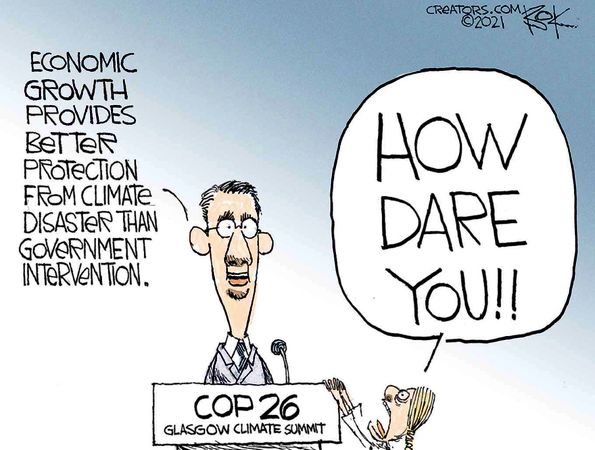

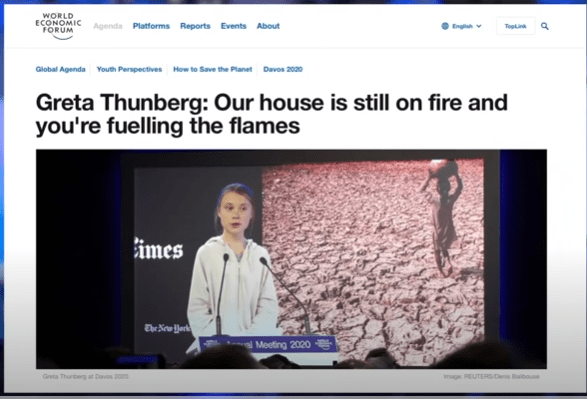








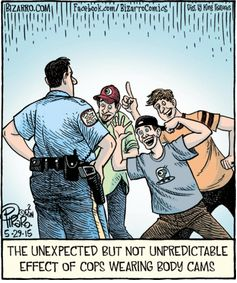
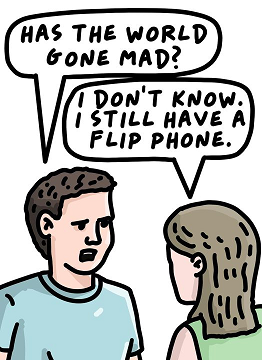

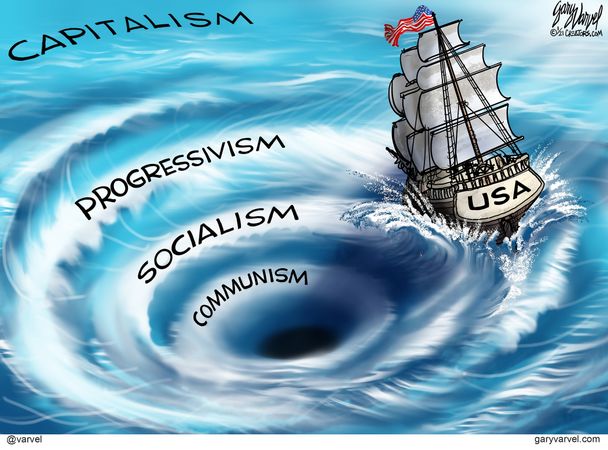 Jonathan Newman provides a brief overview of economic fundamentals for a free society in his article
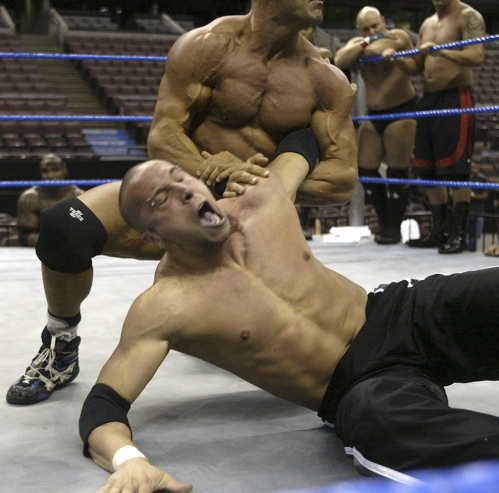


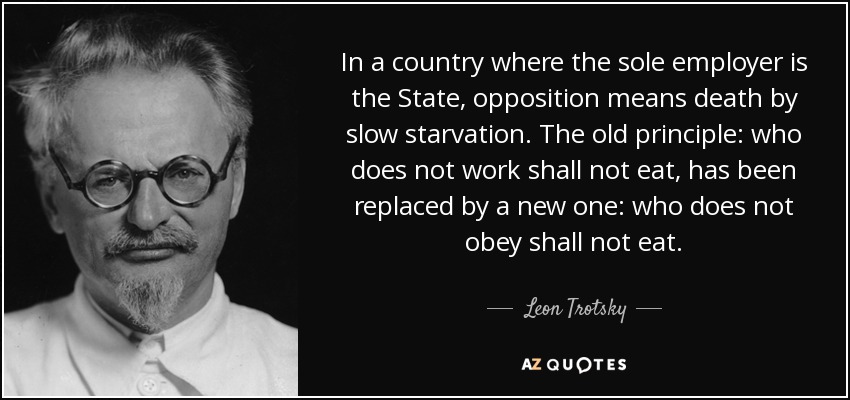





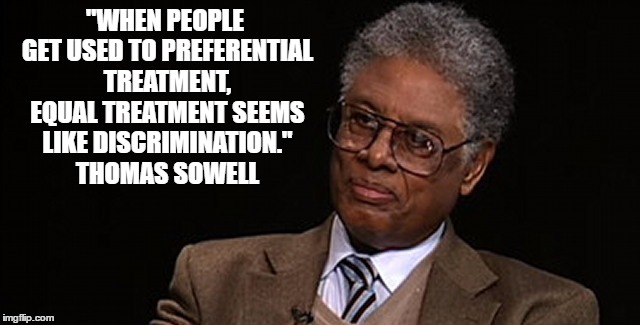

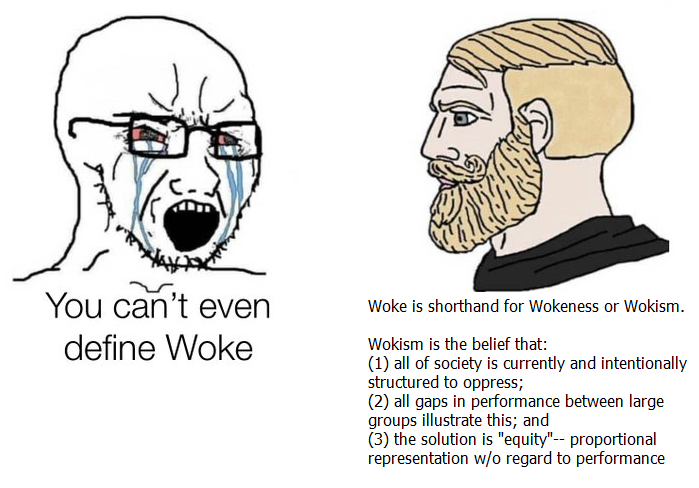
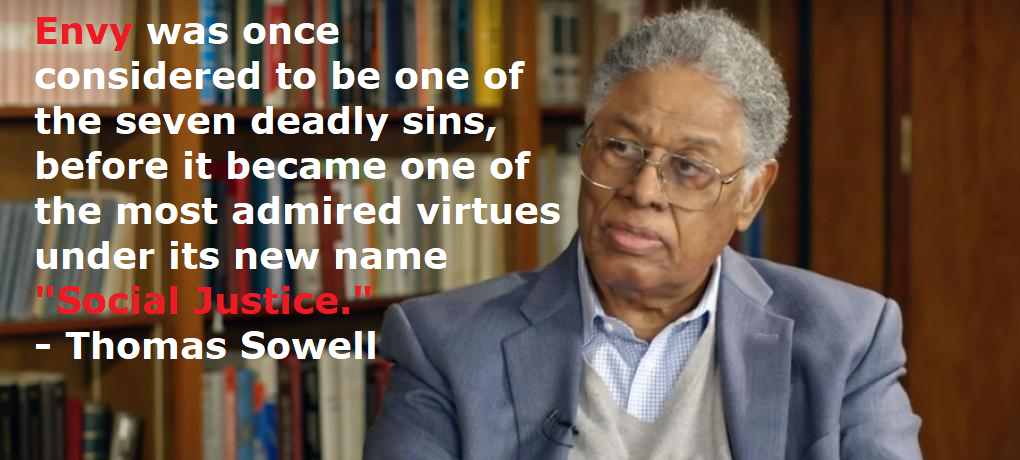



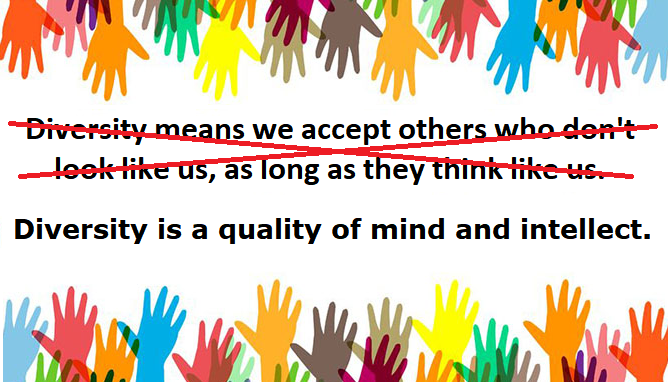
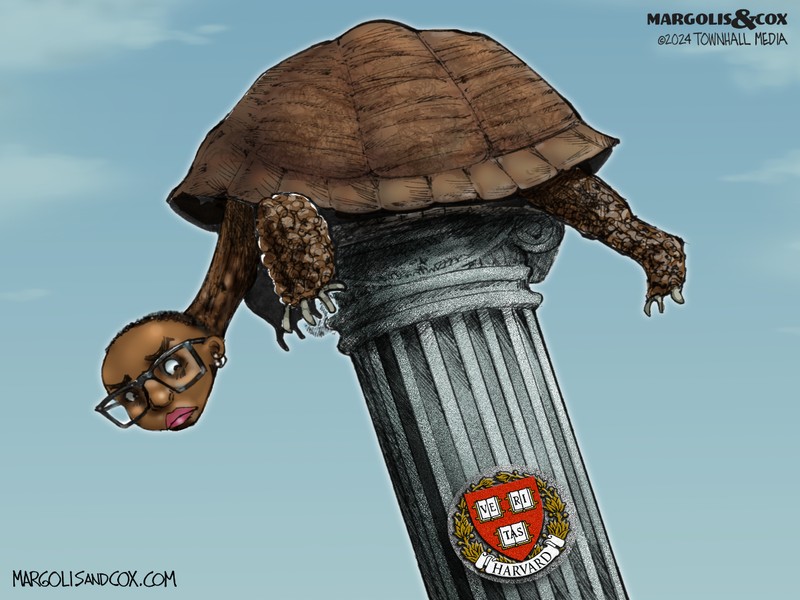


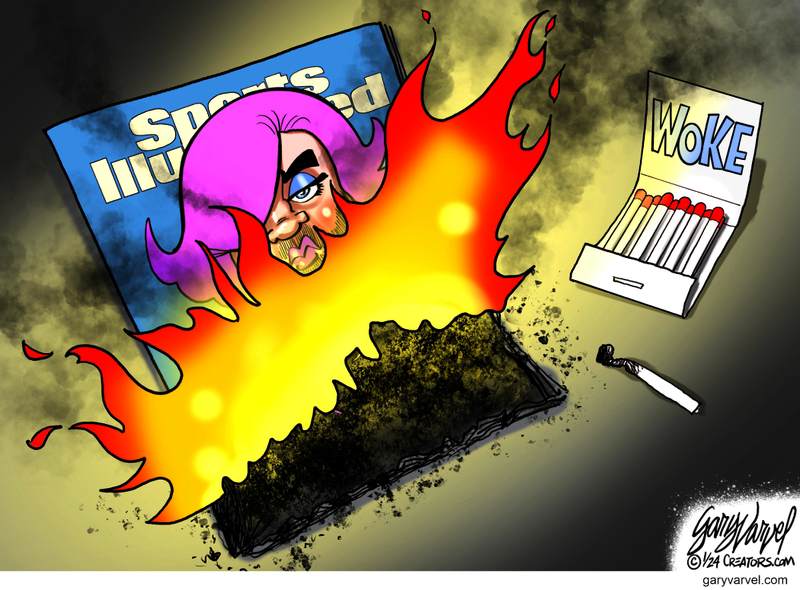
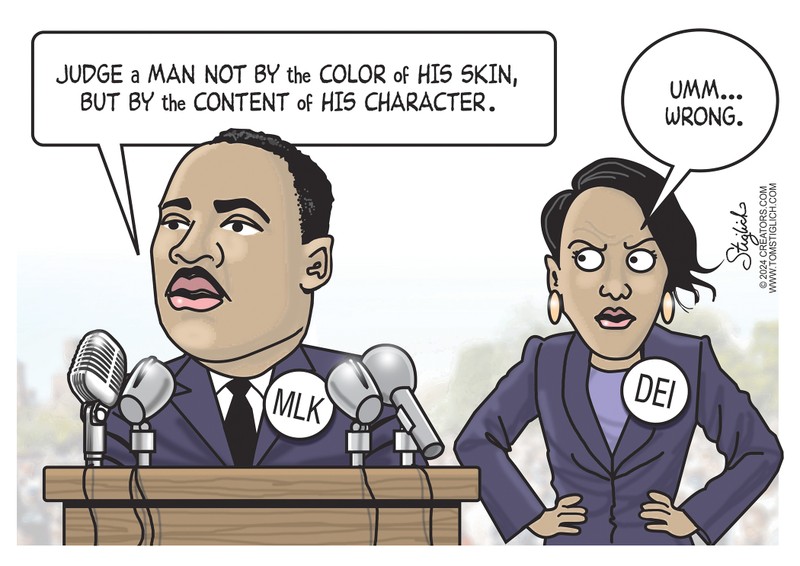
 Global News reports
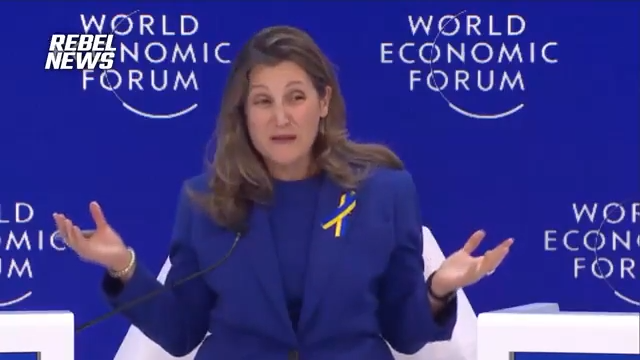








 Science Matters