Resisting the PC “Karens”

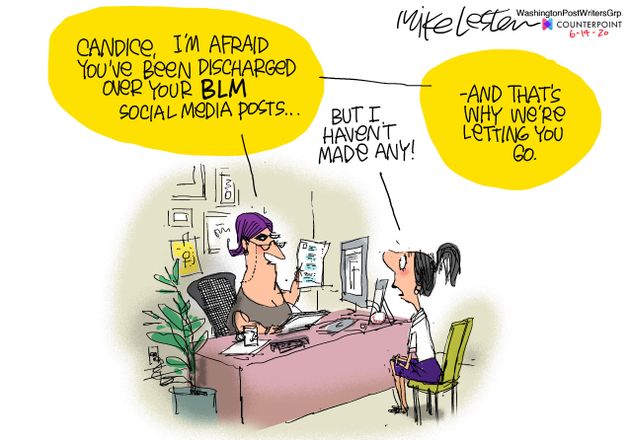
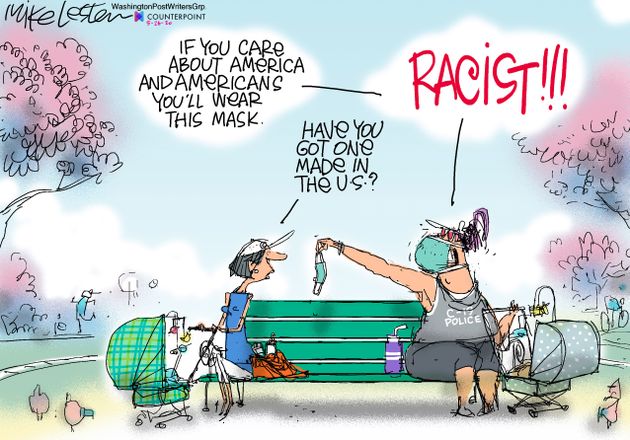
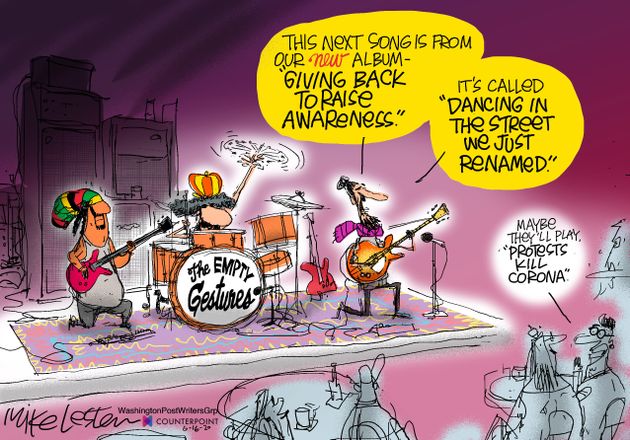
In the social media it has become common to refer to someone who scolds or punishes you for your behavior as “Karen being Karen.” It started with a stereotype of arrogant entitled white women who put down others lacking their privileged refinement. Since the return of the BLM movement many are using the label for a racist tone dismissive of white people generally.

Leaving aside the racist connotation, I am focusing on the Karen role of enforcing politically correct behavior. For example, consider the recent Central Park incident in which a woman called Amy Cooper called the cops on a black man called Christian Cooper (no relation) and claimed that he was harassing her when in truth he was reprimanding her for letting her dog off its leash in a part of the park where you’re not meant to do that. Amy behaved badly in this incident. But as Robert A George argued in the New York Daily News: ‘[Christian] is the “Karen” in this encounter, deciding to enforce park rules unilaterally and to punish “intransigence” ruthlessly.’ Amy Cooper’s life has been shattered by this Karen-shaming incident: she lost her job and her dog.

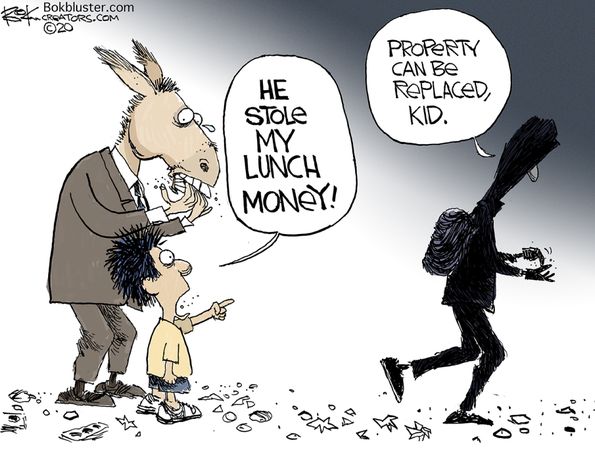
Regardless of racial or gender identity, the “Karenness Quality” is this self-righteous public shaming of others for not behaving according to Karen’s Rules. For example, note the flip-flop of the mayor of Olympia, Washington. She was fine with the Black Lives Matter protests that followed George Floyd’s death in police custody. But that was until vandals damaged her home, according to reports. Changing her mind about the BLM protests when she was damaged personally, Mayor Cheryl Selby of Olympia now refers to the protests as “domestic terrorism,” according to The Olympian. “I’m really trying to process this,” Selby told the newspaper Saturday, after the rioters’ Friday night spree left her front door and porch covered with spray-painted messages. “It’s like domestic terrorism. It’s unfair.”

Karenism has this moral purity abstracted from personal experience with the hardships involved. Karen exemplar Marie Antoinette famously responded to the plight of breadless peasants with her “Let them eat cake.”

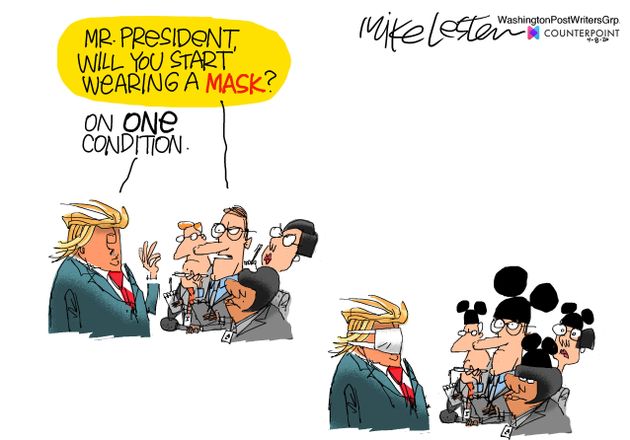
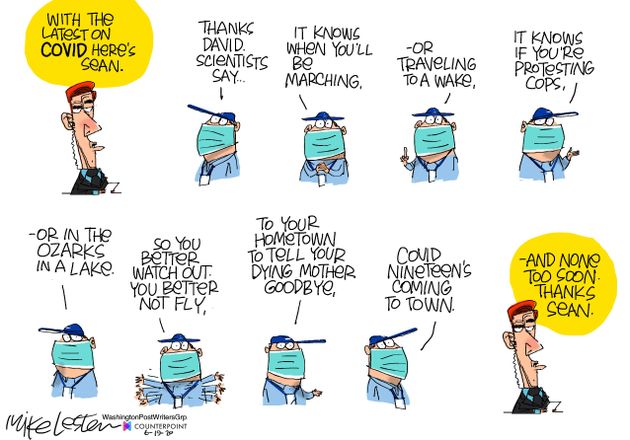
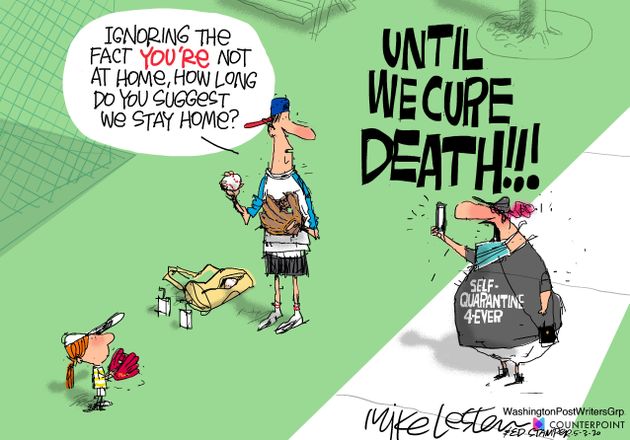
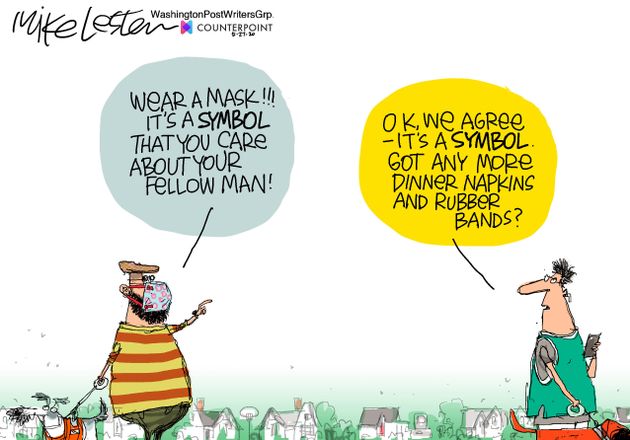
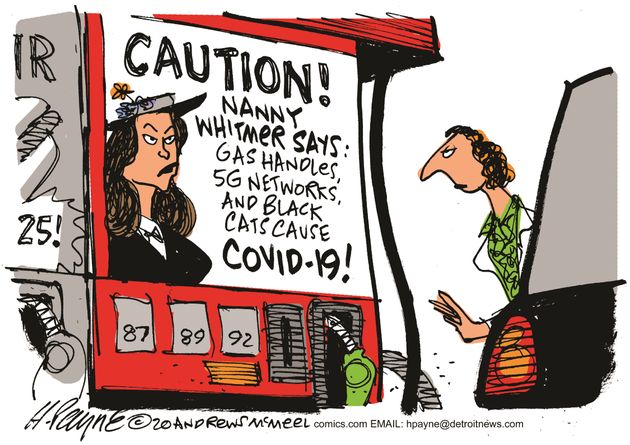
Karens are having a field day with The Wu Flu pandemania, such that I am in violation just for referring to the Chinese origin of this contagion. The media weaponizing the virus fear factor triggers the inner Karens to confront, denounce and denigrate others as threats to personal health and well being. You can see it when in a store, another customer scolds you for not wearing your mask properly, or going the wrong direction in the aisle. Or when Governor Karen Cuomo of NY denounces Florida or Georgia for their policies, while his state sets records for Wu Flu deaths per million.

There are various ways of responding to the Karens of this world. Comedian Steve Martin was famous for his reply to PC critics.

When the scolding is related to trivial procedural details, it’s appropriate to respond with: “Whatever.”

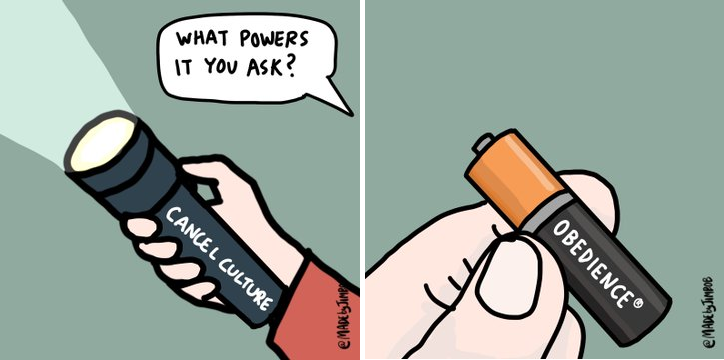
Then there’s Jimbob’s approach which involves switching the context to expose the absurdity of Karen’s challenge.

Four Steps to Take Down a Free Society


Update at end:  July 23, 2020 China Takes the Lead

The process is under way most obviously in the USA, but also in Europe, Australia and elsewhere. Scott McKay helpfully writes at American Spectator Four Stages of Marxist Takeover: The Accuracy of Yuri Bezmenov. Excerpts in italics with my bolds.

The journalist and Soviet defector long ago pegged the current left-wing moment.

But it’s also important to understand that the revolution taking place in America is not yet a “kinetic” one. That may come soon, or it may not. The battle taking place presently is a war of information — or disinformation, as the case may be.

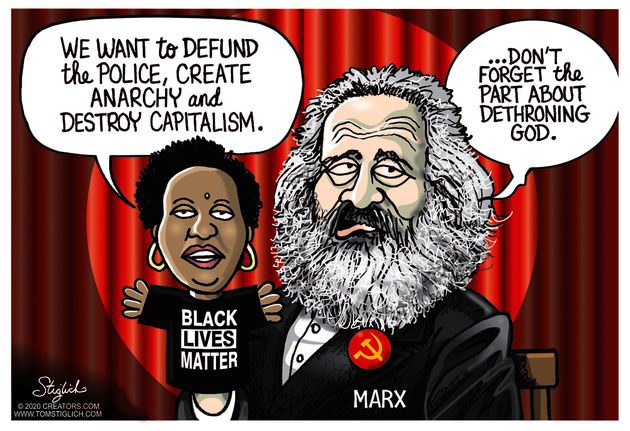
And the revolution is a Marxist revolution. You should make no mistake about that. The groups fomenting it, the intellectuals promoting it, and the money financing it are all quite open about who they are.

This playbook was written long ago. If you think that Bernie Sanders or Kshama Sawant or Alicia Garza are smart enough to dream up a plan for taking down the greatest society the world has ever known, you are out of touch with reality. The only way they could have been as effective as they have so far is to follow somebody else’s plan. Which they are doing.

There is a video interview from a long time ago that you should see if you haven’t already seen it. It’s one of those things that many of our readers may have seen years ago and then forgot about — but all of a sudden it’s incredibly relevant again. The interview dates back to 1984, and it was conducted by the author, filmmaker, and John Birch Society gadfly G. Edward Griffin with a Soviet defector and former KGB operative named Yuri Bezmenov. (Below is a synopsis video)

Forget about Griffin’s background. He was something of an Alex Jones of his time, and he’s still around in his dotage, obsessing about things that cost him his relevance. It’s Bezmenov who matters. The Russian was involved at relatively high levels as a propagandist par excellence before leaving the USSR for Canada, and he laid out in excruciating detail the process by which a free society might be brought to collapse.

Khrushchev and the Soviets weren’t just bragging. What he was talking about was an entire system of Marxist indoctrination and takeover they had perfected and executed in country after country during the 20th century. Eastern Europe. North Korea. North Vietnam, then all of Vietnam. Cuba. Nicaragua. Later, Venezuela. Various African countries, including South Africa, the communist bloom of which has only recently come to pass. Some of those countries went communist because the Soviets rolled the tanks in; most went communist because the pre-communist society collapsed for various reasons. All went communist after they had been infiltrated with Marxist revolutionaries.

The point being that there was a template in place for how to penetrate a society with Marxist ideals and implode it so that the revolutionaries would control the ruins.

Bezmenov, whose father was a high-ranking Soviet military official and who was trained to be an elite KGB overseas operative, was taught the template and put to work in India attempting to infiltrate that country and bring it into the Warsaw Pact. He also worked at the Soviet RIA Novosti news organization, editing and planting propaganda materials into foreign media. The man knew exactly what he was talking about when he outlined how a Marxist revolution might bring America down without firing a shot, just as Khrushchev had predicted.

Bezmenov warned us in 1984 that a free society collapses in four stages, and the first is demoralization.

What he meant by demoralization is a process by which students in schools controlled by disciples of leftist thought would be indoctrinated into a set of values and beliefs foreign to those of the American tradition. Bezmenov said, in 1984, mind you, that this would happen when the 1960s and 1970s student radicals began to control the educational institutions, and their project would be to throw out traditional Judeo-Christian morality, classical education, and American patriotism. Is there any doubt this has happened?

Our young people are the least patriotic in our nation’s history, and the most ignorant of the cultural, intellectual, and ideological patrimony of which they are heirs.

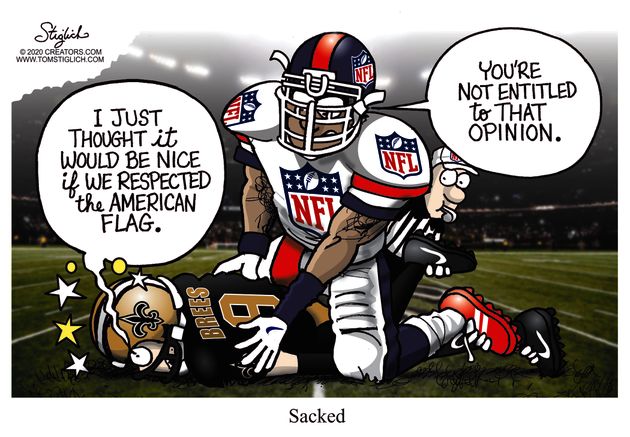
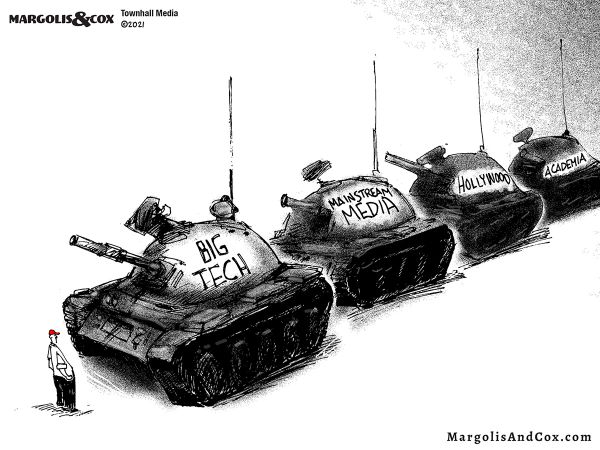
It’s even worse than that, because the cultural Marxist project not just in our schools but in our media and entertainment institutions has poisoned those against the country. Remember when the NFL was an escape from politics? Remember when the movies Hollywood made extolled American values and made viewers feel good about their country?  When was the last time you saw anything from American education or corporate media that made you feel good about your country?

stg072220dapr20200721034602

What’s the second step? Destabilization.

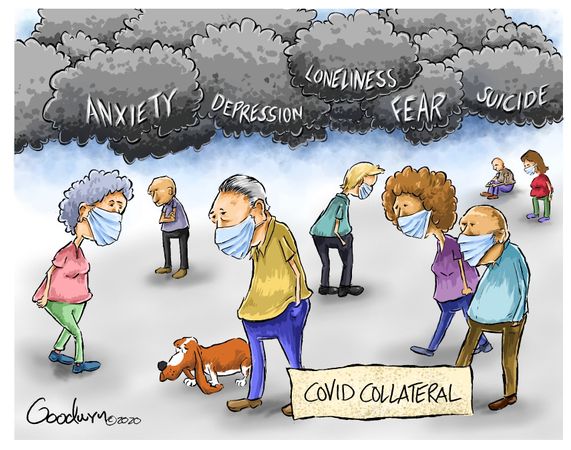
Bezmenov describes that as a rapid decline in the structure of a society — its economy, its military, its international relations. We’ve discussed in this space the unquestionable impetus on the part of Democrats to keep the economy as hamstrung as possible with COVID-19 shutdowns, and those continue despite a precipitous decline in death rates as testing ramps up across the country. It’s clear the virus is no longer a significant threat to the health of Americans who don’t already have serious medical issues, and yet COVID hysteria is increasing, rather than decreasing. Just Wednesday the Ivy League shut down all its sporting events planned for the fall semester, an absurd decision that is nonetheless likely to be copied by other universities dominated by leftist political activists (the Big Ten, ACC, and SEC are all in various stages of planning conference-only schedules this fall, which makes no sense whatsoever).

The virus is the perfect platform by which to impose the economic destabilization the Left has wanted all along.

No, that isn’t a conspiracy theory. They’re telling you it’s what they’re after. Do you believe Ilhan Omar was off-script when she suggested dismantling America’s economy as a system of oppression earlier this week? Ilhan Omar, who paid a political consultant $900,000 in fees last year, money that came from somewhere, isn’t smart enough to say these things without having the script written for her. She’s being trotted out to introduce them because she’s already radioactive and a lightning rod for criticism, and also because she’s (1) black, (2) Muslim, and (3) an immigrant, and even an illegal one. To criticize her statements as cracked bears the signature not of incisive reasoning but rather racism. So when other Democrats join her call you are no longer allowed to object.

That’s destabilization. They’re fully engaged in it, whether you believe they’ve been successful or not. But ask Mark McCloskey, for example, whether or not he thinks it’s outlandish to suggest the American order has been destabilized. McCloskey told Tucker Carlson that after the police told him they couldn’t protect him after the incident where he and his wife used guns to protect their property from a mob of Black Lives Matter trespassers, he called around to private security firms for help and was given advice to get out of his house and let the mob do what they would. Does that sound like a stable society to you?


The third stage is crisis, the catalyzing event that builds on the first two stages to bring on the change the revolutionaries are looking for.

Looking for a crisis? Take your pick. We barely even remember the fact that we just had only the third presidential impeachment in American history half a year ago, a constitutional crisis that was wholly and completely manufactured directly out of thin air. We progressed immediately from that to COVID-19, which was unquestionably a manufactured crisis — not that the virus itself isn’t deadly to a certain portion of the population, but if you think the panic and destruction it’s caused doesn’t smack of manufacture then it’s clear you’ve been demoralized.

And then the George Floyd riots and the paroxysms of violence and virtue-signaling those have brought on, complete with the current campaign to bowdlerize American history and culture in an increasingly indiscriminate fashion. That’s a crisis, everybody, and it’s a completely manufactured one. The speed of the cultural collapse that followed Floyd’s death — when the legal system moved very swiftly against the police officers responsible for it — makes it undeniable this was planned and only needed a catalyst.

What’s the fourth stage? Normalization. As in, a “new normal.”

The statues and monuments are gone, the ball games are out, or at least you aren’t allowed in the stadium to watch them (and you’ve got to watch them on TV interspersed with commercial spots and in-game messaging pushing whatever memes and narratives the ESPNs and NBCs of the world and their Madison Avenue partners wish to implant in your mind), the schools have purged American history and culture, the Universal Basic Income checks have replaced your job, which you can’t do because the small business where you used to work has gone under thanks to the virus.

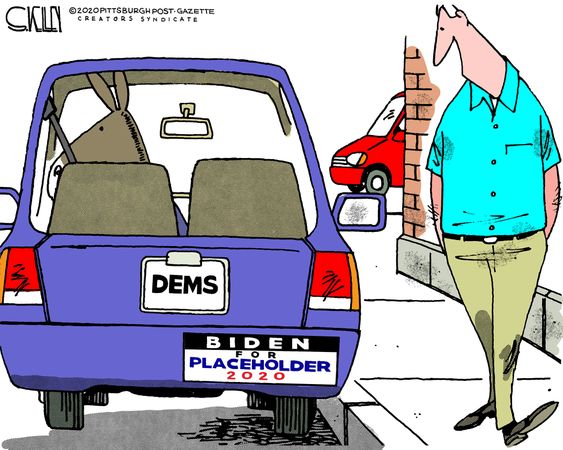
And Biden is president. For a little while, until it’s clear he’s incapacitated per the 25th Amendment, and then somebody else that you didn’t vote for is in charge of the country.

Out goes Kerensky. In comes … who knows what?

goodwyn_woke_cafe_lr_07272020200727102305

Let’s hope your confidence none of this can happen is well-placed. Let’s hope Bezmenov was a crank like people think G. Edward Griffin is.

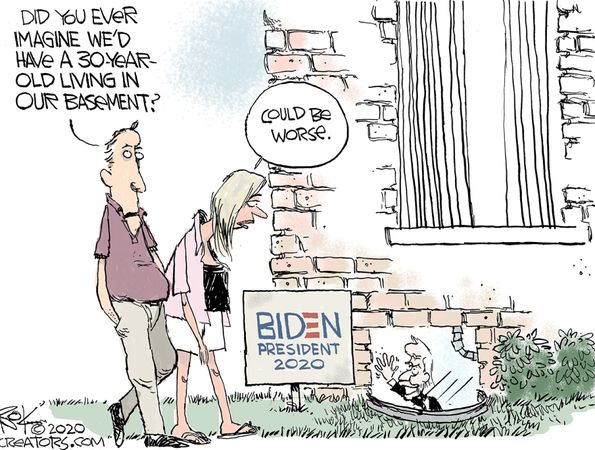
But just to be sure, let’s make damned sure Biden and the Democrats take an historic beating in November. We don’t want to find out what’s behind the curtain in Biden’s basement. Too many nasty things are already peeking out at us from there.

Update July 23, 2020: China Takes the Lead

Of course the leading proponent of this geopolitical strategy is China, and they are effectively applying it to the USA. Brian Kennedy writes in his book:

China’s goal is demoralizing the United States to the point where America believes that further resistance is futile.” They can’t succeed without the help of America’s elite.

From Robert Curry’s review: The Chinese are confident that America has grown corrupt, and that its political, financial, and cultural elites are in near-complete sympathy with the globalist project of an interdependent world, with the P.R.C. [the People’s Republic of China] at its head.

I have a story from my own life that illustrates Kennedy’s point. Recalling what it was like before the pandemic panic took total control of American life will help to set the stage. Back then, the media, the celebrities, and the politicians had not yet mastered the talking points of the COVID-19 narrative. During one of those early days, a local radio news personality announced with great excitement that she had secured an interview with a prominent epidemiologist from the most prestigious university in our region. After thanking the professor profusely for granting the interview, the reporter asked the obvious question, the one that was on my mind at that time: “What is the difference between this flu and the Spanish flu of 1918?”

The professor was greatly offended by the question. She admonished the reporter never to use the term “Spanish” with regard to the flu of 1918 and never to use the word “Chinese” with regard to the flu of 2020. The professor simply would not answer the question and, for that matter, she would not address any other question having to do with epidemiology. She confined herself to scolding and reeducating the reporter, making it clear to the reporter and her listeners what was and what was not politically correct to say about the virus.

It was an astonishing performance. The professor did not speak as an epidemiologist; instead, she spoke as a globalist. When she said, in effect, “Don’t you ever call this flu that came from China ‘Chinese,’” she was acting as a spokesperson for the ideology of globalism.

See also: Patriotism Vs. Multiculturalism

Teachers Beware Your Cultural Revolution Turning on You

The protests in city streets of developed countries are coordinated and led by Social Justice Warriors indoctrinated in Western academies of higher education, after elementary school slanted teaching. If neo-Marxist progressive post-moderns take pride in this as accomplishing their agenda, consider what happened in China’s cultural revolution in the 1960s and is repeating itself in 2020.

Background:

It all started in China with educational reform implemented by teachers and administrators. That history is summarized in an article China’s Cultural Revolution: Reforms in the Education System at UK Essays. Excerpts in italics with my bolds.

The implementation of educational reforms was carried out via a decentralized process, as most schools were placed under local management. In fact each school had its own “Revolution in Education’ Committee responsible not only for implementing reforms but also for part of the planning process within its own institution.”[7] So it would seem that local experimentation within the general framework of the new educational policies was encouraged. Experimentation was seen as necessary primarily because of the emphasis on adopting flexible methods to meet the diverse needs of different schools and regions. We will identify below the major guidelines regarding the implementation of the educational reforms, as well as describe some of the different ways the reforms were implemented.

In order to elevate the “political consciousness” of the students, the curriculum was heavily stocked with political education courses. The major texts used were drawn from the works of Mao. Aside from increasing the number of political course, other courses also drew upon Mao’s thoughts to explain various approaches to the analysis of whatever phenomenon was involved.[8] This reliance on Mao’s thoughts was essentially the concept of “putting politics in command of knowledge.” At the same time, “revolutionary mass criticism” and “class struggles” were actively promoted to bring into sharp relief the various contradictions in society from a more personal perspective. The principal means of linking theory and practice in the educational process were to make production labor a major part of the students’ curriculum and to direct research to meet local needs. These methods were based on the concept of “practical training,” although their implementation in China seems to have gone far beyond that practiced by other countries.

What Happened to the Educators

The fate of the teachers is revealed in research conducted by Youqin Wang In her paper Student Attacks Against Teachers: The Revolution of 1966. Excerpts in italics with my bolds.

The author investigated the so-called “Red August” of 1966, the start of large-scale violent persecution during China’s Cultural Revolution. She interviewed hundreds of teachers and students from ninety-six schools and reviewed all available written materials. This article provides a detailed description of how educators were insulted, tortured, and even killed by their students. Mobilized as members of a new youth organization named “Red Guards,” the students attacked the educators for being “capitalist intellectuals.” In those schools, twenty-seven educators were murdered; more committed suicide subsequent to torture. Cruel oppression silenced resistance. Stories about bloody campus persecutions were too politically sensitive following the Cultural Revolution, so have heretofore received scant attention in the historical narrative. As the author shows, given the high regard China has traditionally held for education, the brutalizing of educators in China was an unprecedented act. The objective of this article is to reveal the texture and significance of this underreported and underappreciated part of China’s history.

Not only were the stories of violence not reported by the media at the time of their occurrence, but thirteen years later, in 1979, with the repudiation of the Cultural Revolution reaching the highest circles of the Chinese Communist Party (CCP), the Chinese media only cautiously began to mention the victims as a way of “restoring” their reputation. This sort of publicity was limited to a small number of purged high-ranking cadres, victimized celebrities, and a few ordinary people who were considered “heroes” or “heroines” for resisting the “Gang of Four” (四人幫). The teachers who were victimized in 1966 were not so much as mentioned. None of the three published general histories of the Cultural Revolution (printed in 1986, 1988, and 1995 respectively) covers the brutality against teachers in the summer of 1966.

In general, the brutality of students in colleges and in elementary schools was not as severe as in middle schools, but it was nevertheless serious. At Beijing University, hundreds of people on the “labor reform team of ox-ghosts and snake-demons” were forced to clean the campus with irregularly shaved heads, while wearing boards with their name and title (such as “member of the black gang” or “reactionary academic authority”) around their necks and receiving gratuitous insults from many students who came to “learn revolutionary experiences from Beijing University.”

On August 24, 1966, the Red Guards of the Middle School attached to Qinghua University transported truckloads of Red Guards from twelve middle schools to Qinghua campus, where they beat the administrators and professors. After several persons at the Department of Electronic Engineering were beaten, their blood stained the ground. Someone marked a circle around the blood and wrote “dog blood.” That day Red Guards ordered those on the “ox-ghost and snake-demon team,” under the lashes of whip, kicks, and punches, to pull down a white marble monument which was built in 1905 to commemorate the founding of the school. That night, all school-level cadres at both the university and the attached middle school were detained in the Science Building, and there in a small room, a beating was inflicted upon each of them. No one escaped without serious injury.

Even kindergarten teachers could not escape the violence. Some teachers of Beijing Zhongshan Gongyuan Kindergarten and several kindergartens in Beijing’s Dongcheng District (東城區) were denounced and beaten in the Zhongshan Concert Pavilion; there, students from middle schools beat them and shaved their heads

The “working groups” organized sessions to expose and to criticize teachers and divided all teachers into four categories: good, fair, those with serious errors, and anti-party/anti-socialist “rightists” (右派份子). For example, the working group at the Girls Middle School attached to Beijing Teachers University led an “exposing and denouncing meeting” against vice-principal Bian Zhongyun on June 21 at which all students attended. According to the working group’s record of July 3, 1966, the group put two out of six leading cadres of this school into category IV (the worst one), two in category III, and two in category II. Some teachers, unable to bear the pressure and insults, committed suicide.

When their parents were denounced by the new student organizations, the Red Guards fell victim to the movement that they had started. However, the decline of the original Red Guards did not mean the end of the philosophy of violent attacks. On the contrary, the massive violent persecution that the Red Guards promoted in the so-called “Red August” (紅八月) period of 1966 continued in the following years. In late 1966 and 1967, students in the mass organizations that had dominant status during that period physically attacked the “capitalistroaders with powerful positions in the party.” For example, students beat Peng Dehuai (彭德 懷), the former defense minister, at the “struggle meeting” in Beijing in July of 1967. Two of Peng’s ribs were broken during the beating.47

On June 18, 1968, at Beijing University, about two hundred teachers and cadres, who had been imprisoned on campus for months, were beaten and tortured in very brutal ways during a school-wide action. This date was chosen to celebrate the violent event that had occurred two years previous, on June 18 of 1966, mentioned twice above. In the attack of June 18, 1968, more educators were beaten more viciously than in the previous attack of June 18, 1966. From 1966 to 1968, it was in part this increasing violent persecution that fueled enthusiasm for the Cultural Revolution.

Cultural Tyranny Continues in 2020 China

The present direction in China is not encouraging as reported at Reuters(Beijing) by Huizhong Wu In echo of Mao era, China’s schools in book-cleansing drive. Excerpts in italics with my bolds.

As schools reopened in China after the COVID-19 outbreak, they have thrown themselves into a nationwide exercise to remove books deemed politically incorrect, deepening Chinese President Xi Jinping’s push to instill patriotism and ideological purity in the education system.

A directive from the Ministry of Education last October called on elementary and middle schools to clear out books from their libraries including “illegal” and “inappropriate” works. Now teachers have removed books from schools in at least 30 of mainland China’s 33 provinces and municipalities, according to a Reuters review of social media posts, publicly available school and local government documents, and interviews with teachers.

From western Gansu province to Shanghai, the review of publicly announced measures pointed to books being cleared by the hundreds of thousands.

Censorship in China has been intensifying under Xi, but analysts say this is the first national campaign aimed at libraries in decades. It comes as government employees in Hong Kong last week removed books by pro-democracy activists from public libraries to see whether they violate a new national security law.

“This is the first movement targeted at libraries since the Cultural Revolution,” said Wu Qiang, a political analyst based in Beijing and former political science lecturer at Tsinghua University. In the late 1960s, zealous teenagers driven by Mao Zedong carried out a nationwide campaign targeting libraries and destroying or burning what they could get their hands on, as part of a wider destruction of traditional culture.

My Comment

An old Soviet joke has an university professor of history addressing his students at the end of the term. “Regarding the final exam, I have good news and bad news. The good news is that all the the questions are the same as last year. The bad news: Some of the correct answers have changed.”

The story was shared among the proles as an example of the slogan of the times: The future is certain; only the past keeps changing. I never thought we’d see such thought control appearing in Western democracies in the 21st century. But here it is, demonstrated by the 1619 project promoted by the New York Times, former newspaper of record in the USA. Further the Red Guard, now wearing Black, are roaming and destroying monuments honoring heroes of the past, who though flawed paved the way for our freedoms and prosperity. People guilty of wrongthink are insulted, their reputations denigrated and driven from their livelihoods, just a shade from beatings and murders.

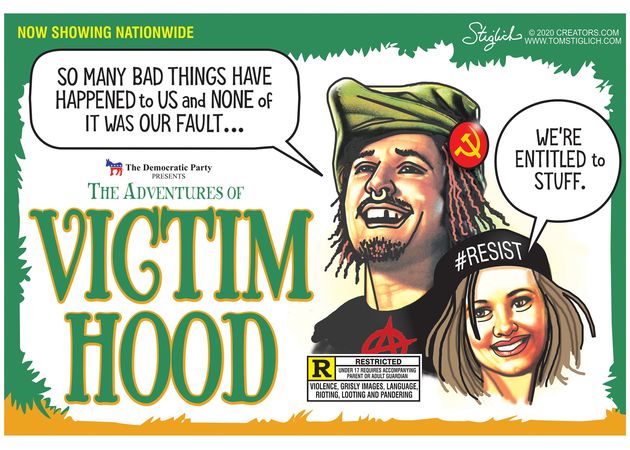
Of course there are differences in 2020 USA from 1966 China. The charismatic Mao called the shots for the purge of dissenters in China, while the woke leadership is more diffuse and hides behind names like “Sunrise Movement.”. “Black Lives Matter,” and “Anti-Fascists.” Clearly the media are broadcasting the “Resistance” playbook, but the directors and financiers are in the shadows. The slow-moving coup is reaching a crescendo, but the citizenry still have a choice to be heard.

Footnote: Summary from the UK Essay at the top

While the drastic educational reform measures have given peasants opportunities to attain basic education in rural areas, as well as agricultural production and political gains, it naturally came with lasting negative impacts that promoted many post-modernist’s critiques. In the beginning of the Cultural Revolution, values like collaboration, diligence, modesty, and respect for elders and teachers were discarded as a result of the purge of the old Chinese cultures and traditions. Many have failed to retain the virtues during the revolution. Second, due to political struggle and line drawn between working classes and intellectuals, as well as political and violent nature of the social revolution, substantial innocent teachers and professionals were subjected to personal attacks and humiliation, some even executed. Third, specific strategies of the reformed curriculum and examination system proved to be misguided and wasted the schooling of many young people. The disconnection between academic achievement and students’ future career, the emphasis on political correctness over academic achievement, and the neglecting of theory learning and over-emphasis on hands-on experiences were all examples of poor decisions. Fourth, the Cultural Revolution both liberated students and dominated them. It liberated students and people because it opened their eyes to the inequality existing in education and society; However, it imposed political control and dominated them because it did not allow real democratic, independent and critical thinking ability.[12] As Freire (1970) put it, “If teachers help students from oppressed communities to read the word but do not also teach them to read the world, students might become literate in a technical sense but will remain passive objects of history rather than active subjects.”

See Also Modern Educayshun

Bari Weiss Resigns from NYT

For a thorough understanding of what is wrong with US media, read this resignation letter by Bari Weiss. Excerpts in italics with my bolds.

Dear A.G.,

It is with sadness that I write to tell you that I am resigning from The New York Times.

I joined the paper with gratitude and optimism three years ago. I was hired with the goal of bringing in voices that would not otherwise appear in your pages: first-time writers, centrists, conservatives and others who would not naturally think of The Times as their home. The reason for this effort was clear: The paper’s failure to anticipate the outcome of the 2016 election meant that it didn’t have a firm grasp of the country it covers. Dean Baquet and others have admitted as much on various occasions. The priority in Opinion was to help redress that critical shortcoming.

I was honored to be part of that effort, led by James Bennet. I am proud of my work as a writer and as an editor. Among those I helped bring to our pages: the Venezuelan dissident Wuilly Arteaga; the Iranian chess champion Dorsa Derakhshani; and the Hong Kong Christian democrat Derek Lam. Also: Ayaan Hirsi Ali, Masih Alinejad, Zaina Arafat, Elna Baker, Rachael Denhollander, Matti Friedman, Nick Gillespie, Heather Heying, Randall Kennedy, Julius Krein, Monica Lewinsky, Glenn Loury, Jesse Singal, Ali Soufan, Chloe Valdary, Thomas Chatterton Williams, Wesley Yang, and many others.

But the lessons that ought to have followed the election—lessons about the importance of understanding other Americans, the necessity of resisting tribalism, and the centrality of the free exchange of ideas to a democratic society—have not been learned.

Instead, a new consensus has emerged in the press, but perhaps especially at this paper: that truth isn’t a process of collective discovery, but an orthodoxy already known to an enlightened few whose job is to inform everyone else.

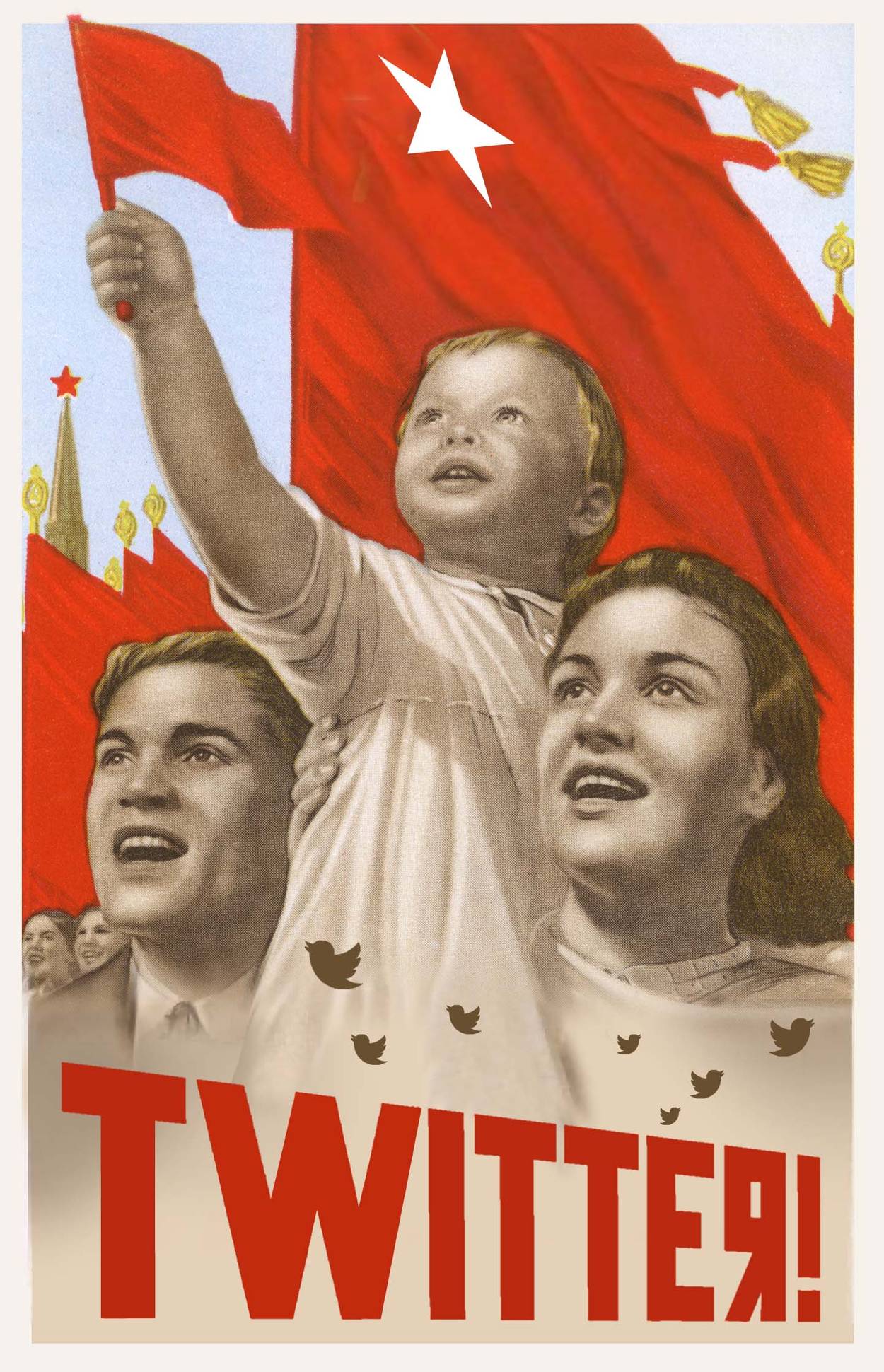
Twitter is not on the masthead of The New York Times. But Twitter has become its ultimate editor. As the ethics and mores of that platform have become those of the paper, the paper itself has increasingly become a kind of performance space. Stories are chosen and told in a way to satisfy the narrowest of audiences, rather than to allow a curious public to read about the world and then draw their own conclusions. I was always taught that journalists were charged with writing the first rough draft of history. Now, history itself is one more ephemeral thing molded to fit the needs of a predetermined narrative.

My own forays into Wrongthink have made me the subject of constant bullying by colleagues who disagree with my views. They have called me a Nazi and a racist; I have learned to brush off comments about how I’m “writing about the Jews again.” Several colleagues perceived to be friendly with me were badgered by coworkers. My work and my character are openly demeaned on company-wide Slack channels where masthead editors regularly weigh in. There, some coworkers insist I need to be rooted out if this company is to be a truly “inclusive” one, while others post ax emojis next to my name. Still other New York Times employees publicly smear me as a liar and a bigot on Twitter with no fear that harassing me will be met with appropriate action. They never are.

There are terms for all of this: unlawful discrimination, hostile work environment, and constructive discharge. I’m no legal expert. But I know that this is wrong.

I do not understand how you have allowed this kind of behavior to go on inside your company in full view of the paper’s entire staff and the public. And I certainly can’t square how you and other Times leaders have stood by while simultaneously praising me in private for my courage.

Showing up for work as a centrist at an American newspaper should not require bravery.

Part of me wishes I could say that my experience was unique. But the truth is that intellectual curiosity—let alone risk-taking—is now a liability at The Times. Why edit something challenging to our readers, or write something bold only to go through the numbing process of making it ideologically kosher, when we can assure ourselves of job security (and clicks) by publishing our 4000th op-ed arguing that Donald Trump is a unique danger to the country and the world? And so self-censorship has become the norm.

What rules that remain at The Times are applied with extreme selectivity. If a person’s ideology is in keeping with the new orthodoxy, they and their work remain unscrutinized. Everyone else lives in fear of the digital thunderdome. Online venom is excused so long as it is directed at the proper targets.

Op-eds that would have easily been published just two years ago would now get an editor or a writer in serious trouble, if not fired. If a piece is perceived as likely to inspire backlash internally or on social media, the editor or writer avoids pitching it. If she feels strongly enough to suggest it, she is quickly steered to safer ground. And if, every now and then, she succeeds in getting a piece published that does not explicitly promote progressive causes, it happens only after every line is carefully massaged, negotiated and caveated.

It took the paper two days and two jobs to say that the Tom Cotton op-ed “fell short of our standards.” We attached an editor’s note on a travel story about Jaffa shortly after it was published because it “failed to touch on important aspects of Jaffa’s makeup and its history.” But there is still none appended to Cheryl Strayed’s fawning interview with the writer Alice Walker, a proud anti-Semite who believes in lizard Illuminati.

The paper of record is, more and more, the record of those living in a distant galaxy, one whose concerns are profoundly removed from the lives of most people. This is a galaxy in which, to choose just a few recent examples, the Soviet space program is lauded for its “diversity”; the doxxing of teenagers in the name of justice is condoned; and the worst caste systems in human history includes the United States alongside Nazi Germany.

Even now, I am confident that most people at The Times do not hold these views. Yet they are cowed by those who do. Why? Perhaps because they believe the ultimate goal is righteous. Perhaps because they believe that they will be granted protection if they nod along as the coin of our realm—language—is degraded in service to an ever-shifting laundry list of right causes. Perhaps because there are millions of unemployed people in this country and they feel lucky to have a job in a contracting industry.

Or perhaps it is because they know that, nowadays, standing up for principle at the paper does not win plaudits. It puts a target on your back. Too wise to post on Slack, they write to me privately about the “new McCarthyism” that has taken root at the paper of record.

All this bodes ill, especially for independent-minded young writers and editors paying close attention to what they’ll have to do to advance in their careers. Rule One: Speak your mind at your own peril. Rule Two: Never risk commissioning a story that goes against the narrative. Rule Three: Never believe an editor or publisher who urges you to go against the grain. Eventually, the publisher will cave to the mob, the editor will get fired or reassigned, and you’ll be hung out to dry.

For these young writers and editors, there is one consolation. As places like The Times and other once-great journalistic institutions betray their standards and lose sight of their principles, Americans still hunger for news that is accurate, opinions that are vital, and debate that is sincere. I hear from these people every day. “An independent press is not a liberal ideal or a progressive ideal or a democratic ideal. It’s an American ideal,” you said a few years ago. I couldn’t agree more. America is a great country that deserves a great newspaper.

None of this means that some of the most talented journalists in the world don’t still labor for this newspaper. They do, which is what makes the illiberal environment especially heartbreaking. I will be, as ever, a dedicated reader of their work. But I can no longer do the work that you brought me here to do—the work that Adolph Ochs described in that famous 1896 statement: “to make of the columns of The New York Times a forum for the consideration of all questions of public importance, and to that end to invite intelligent discussion from all shades of opinion.”

Ochs’s idea is one of the best I’ve encountered. And I’ve always comforted myself with the notion that the best ideas win out. But ideas cannot win on their own. They need a voice. They need a hearing. Above all, they must be backed by people willing to live by them.

Sincerely,

Bari

Addendum:  Some more words of wisdom from Jason Whitlock (he’s on the left)

The theory driving the importance of a “a free press” is that journalists will deliver truthful information to the public and the public will make good decisions based on that information.

Feed the public social media-friendly, clickbait narrative lies disguised as racial-justice truth and you provoke the kind of unrest currently sweeping this nation. Media black lies matter. They agitate old wounds, sow discord and distrust, undermine patriotism and prevent us from addressing real problems.

The annual murder of thousands of black men is a legitimate problem. Social media has us fixated on the annual murder of a half dozen. Black lies matter, especially when they’re used to conceal a political agenda detached from the advancement of freedom.

Journalists should not be political partisans. We’re supposed to be arbiters and discoverers of truth. Nothing in Sen. Hawley’s email should’ve triggered Wojnarowski. Nothing in Woj’s two-word rebuke should’ve triggered other journalists to support him.

Under the pretense of resisting the Trump presidency, journalists joined the mob and dropped their ethics. We became everything we accuse the president of being. Rude, emotional, arrogant, irrational, dishonest, vain, racist, elitist and obsessed with our social media feeds.

There is no lie we won’t tell in pursuit of smearing President Trump. The Resistance acts as religion, washing away the sins of its congregants and labeling non-believers as heathens unworthy of America’s kingdom.

But President Trump is merely a smokescreen, a beard justifying the mob’s dismantling of truth and destruction of freedom. The enemies of the American way use the Orange Man as bait for the abandonment of our founding values, principles and pillars —Jesus and Journalism, the belief in the liberating power of truth.

In rejecting those values, we also must reject and demonize the founders of this country. Their flaws nullify their truths, good works and all the documents they created that led to a level of freedom envied by the world. The revision of history and establishment of a new worldview requires an evisceration of the historymakers who valued religion and a search for truth above all else.


Braving Today’s Cultural Minefield

Lionel Shriver provides guidance on what’s going on in our social spaces lately, writing at the Spectator The vanity of ‘white guilt’.  Excerpts in italics with my bolds.

We’re making a spectacle of shame

Though the concept of collective ‘white guilt’ has been with us since at least the 1960s, it’s seen quite the fashionable resurgence in the wake of the George Floyd protests last month. As universities, businesses and celebrities fall all over themselves to banner their racial blameworthiness, pale-faced mea culpas gather into a deafening chorus.

The issues are two. First, one of this column’s running themes: emotional fraudulence.

Clarion declarations of moral dereliction do not have the texture of guilt. They are prideful. They have the texture of preening. Elaborate racial apologies are a form of showing off. When last month the actress Jenny Slate resigned from the animated Netflix show Big Mouth because voicing a half-black character was ‘an example of white privilege’ and ‘an act of erasure of black people’ within ‘a system of societal white supremacy’, she wasn’t making a career sacrifice, but bidding for elevated status.

Bet it works, too. Bet the lady isn’t short of work for long. FYI, a backhanded boast of my own: my latest novel anticipates white audiobook readers and voice-over artists being forbidden the ‘mimicry’ of speaking as non-white characters. The prescience is depressing.

We’re witnessing the spectacle of white people frantically competing with other white people over who can appear more self-excoriating, more self-loathing. But these people don’t hate themselves. They hate other people — mythical other people, for the most part, all those terrible racist white folks to whom they can feel vastly superior. Now that ‘white silence = violence’, they can also feel superior to regular going-about-their-business white people who haven’t managed to get prostrate pronouncements of self-disgust on Buzzfeed.

These confessions are also defensive. They’re diversionary, and an attempt to opt out. They translate as: ‘You don’t want to come for us! We’re on your side! We’re allies! We’re the nice white people, and because there’s no such thing as nice white people, that means we’re not really white after all! So you don’t want to burn down our premises, right? You want to go for those horrible white people, over there! Here, take some petrol and matches, on us! And we won’t call the cops, honest!’

Yet ask Adam Rapoport, forced to resign as editor of Bon Appétit over an ancient ‘brown face’. The opt-out doesn’t work. You get cancelled anyway, when your unseemly Black Lives Matter grovelling is deemed insufficiently pious.

Proper guilt feels bad. Its emotional cousin, shame, feels even worse. Whenever I leaked a bit because I didn’t want to come in from playing outside, my mother forced me to wash out my panties by hand in the sink, in front of my brothers. Behold: shame. Adult examples of shame in my life I’d be reluctant to share here. Shame is soul-destroying, the stuff of suicide. You don’t parade shame in public; you’re unlikely to leave the house. So none of last month’s white protestors was ashamed.

Issue two: We’re in danger of installing heritable guilt as morally valid.

Now that we’re to embrace the concept of an ineradicable ‘systemic racism’ while employees take mandatory courses on ‘unconscious bias’, bigotry is no longer a sin we choose or refuse to perpetuate, but a stain handed down through the generations that’s just as indelible as the peach juice on my pink dress. Is this what we want? Really? Will we stick modern Mongolians with the rampages of Genghis Khan? Hold some 19-year-old Muscovite today responsible for Stalin’s gulags? Force Germans to keep expiating their little hearts out over the second world war in the year 3000?

Maybe we should enlarge the lens. Frankly, I’m weary of the whole category ‘white people’, which throws folks of wildly different backgrounds, from Russians to Jews to Scots, into one big indiscriminate pot. So let’s talk about people, full stop. As a species, we’ve been treating each other like shit from the year dot. The horrors to which we’ve subjected one another, including slavery but a great deal else, are so incomprehensibly dreadful that no one, as an individual, could conceivably bear the crushing weight of all that torture, mass murder and sadism. If guilt is inherited, then every last one of us should be condemned to Dante’s nine circles of hell.

None of us chose the world in which we emerged. We didn’t pick our race, sex or natal nationality; any inbuilt leg-up or disadvantage these traits conferred at birth was not of our making. We didn’t select which awful history soaks the ground at our feet. It’s insensible to feel ‘guilty’ or ‘ashamed’ about something you didn’t do. It’s entirely sensible to feel regret, sorrow and abhorrence about the likes of slavery. It’s commendable to be informed about the past and to try to understand the nature of its wretchedness, as it’s also commendable to strain to leave the world a little better than you found it.

But claiming that what happened before you were born is all your fault is not only ridiculous. It’s vain.

See also American Soviet Mentality

When PC Backfires

The classical criticism of liberalism is mistaking right thinking for right action, IOW confusing theology with ethical behavior.  For a true liberal, stating the right answer resolves an issue.  Those who aren’t ideologues realize that actions speak louder than words, or as Texans say:  “Money Talks, BS Walks,” i.e. put up or shut up.

Political Correctness is the powerful current manifestation of liberal mistaken morality.  Today come reports demonstrating the disconnect between words and accountability.

Example #1: A mayor in Washington state changed her mind about the BLM protests when she was damaged personally.  Washington state mayor now calls BLM protests ‘domestic terrorism’ after her home vandalized  Excerpts in italics with my bolds.

A Washington state mayor was fine with the Black Lives Matter protests that followed George Floyd’s death in police custody.

But that was until vandals damaged her home, according to reports.

Now, Mayor Cheryl Selby of Olympia refers to the protests as “domestic terrorism,” according to The Olympian.

“I’m really trying to process this,” Selby told the newspaper Saturday, after the rioters’ Friday night spree left her front door and porch covered with spray-painted messages. “It’s like domestic terrorism. It’s unfair.

Earlier this month, Selby issued a statement saying Olympia would not impose a curfew on protesters demonstrating against Floyd’s death.

“Let me be clear: The City of Olympia supports the peaceful protests that highlight the racial injustices black people continue to endure at the hands of police in the United States.”

Olympia, she said, was “not without sin in this matter.”

Example #2: Another BLM supporter, ESPN writer Chris Martin Palmer, who commented “Burn it all down,” when retweeting a photo of a Minneapolis building in flames in late May, had a different reaction when rioters came close to his house, The Sporting News reported.

“Get these animals TF out of my neighborhood,” Palmer wrote. “Go back to where you live.”

Example #3:  The Facts in Rayshard Brooks Case Don’t Point to Murder

Michael Stern writes at USA Today:

From the horrifying flashpoint of Floyd’s killing came weeks of cops punching, gassing and shooting peaceful protesters and journalists. Then, on Friday night, a white Atlanta police officer shot and killed a Black man in a Wendy’s parking lot after an altercation. It took less than 48 hours for the wildfire of racism allegations to spread, for Atlanta’s mayor to fire the officer,for the police chief to resign, and for an angry mob to seek vindication by burning the hamburger restaurant to the ground.

But not every white officer who shoots an African American man is motivated by racism, and not every police shooting is a crime. Facts matter. Here are the facts leading up to the shooting. 

Rayshard Brooks was killed after resisting arrest, attacking two police officers, taking an officer’s Taser and shooting it at a police officer. The decision by the Times’ editorial board to intentionally omit this last fact is damning proof of its effort to create a narrative that serves a social agenda, despite evidence that supports a contrary conclusion.

That a man died is tragic. But the protests, celebrity outcry and general media capitulation that equates Brooks’ death with that of George Floyd, and countless other African Americans who were murdered at the hands of flagrant police misconduct, is wrong.

In a headline reminiscent of the National Enquirer, the Los Angeles Times ran an editorial Tuesday titled: “Atlanta police killed a Black man for being drunk at Wendy’s.” No. Mr. Brooks was not killed for being drunk.

Example #4: A Backlash Against Democratic Control of Cities?

Yet in the midst of the national upheaval over police brutality and claims of systemic racism, it also highlights the fact that Democrats have been in control of nearly every major urban center in America for decades. It’s worth looking at a list:

  • Atlanta has been controlled by Democrats for the past 140 years.
  • Democrats, including Nancy Pelosi’s father and eldest brother, have held the mayor’s office in Baltimore for all but eight of the last 89 years.
  • In Chicago, Democrats have been in charge of the nation’s third-largest city exclusively since 1931.
  • Detroit has been run continuously by Democrats since 1962, including 39 years of stewardship by African-American mayors between 1974 and 2013.
  • In Los Angeles, 13 of the past 15 mayoral terms have been held by Democrats. Their control of the city began in 1961 and was interrupted by Republican Dick Riordan’s two terms from 1993-2001.
  • Democrats have held control in Philadelphia since 1952.
  • City Hall in Seattle was, by design, nonpartisan until 1990 when three-term incumbent Charles Royer left the mayor’s office. The year before, Seattle was named one of the “best managed cities in the nation.” Since then, Democrats have run the city exclusively, including through the recent turmoil and the uproar resulting from the city’s first gay mayor, Ed Murray, resigning after multiple allegations of child sex abuse.
  • Finally, there is New York, where Rudy Giuliani’s two terms as mayor from 1993-2001 followed by Michael Bloomberg’s 12-year tenure as a Democrat-turned-Republican-turned-Independent gives the city some claim to bipartisan management over the last three decades. Even so, Democrats have long had a lock on the City Council and the place was run exclusively by Democrats for the 25 years between 1969 and 1994. For the last six years it has been helmed by Bill de Blasio, one of the most outspoken progressive Democrats in America.

Whatever problems exist today in America’s major cities, and in their respective police forces, they are not bipartisan in nature. Republicans have been shut out of the governing apparatus of these cities and excluded from any serious discussion of policy solutions for decades.

There is a disconnect between the Democratic Party’s rhetoric and how it governs “minority-majority” cities. This is a far bigger issue than one election and ultimately has little to do with Donald Trump. It’s about accountability — about which of the two major political parties can build a better future for those living in America’s storied, but long-troubled, urban centers.

See Also:  When a Hate Cult Took the Streets


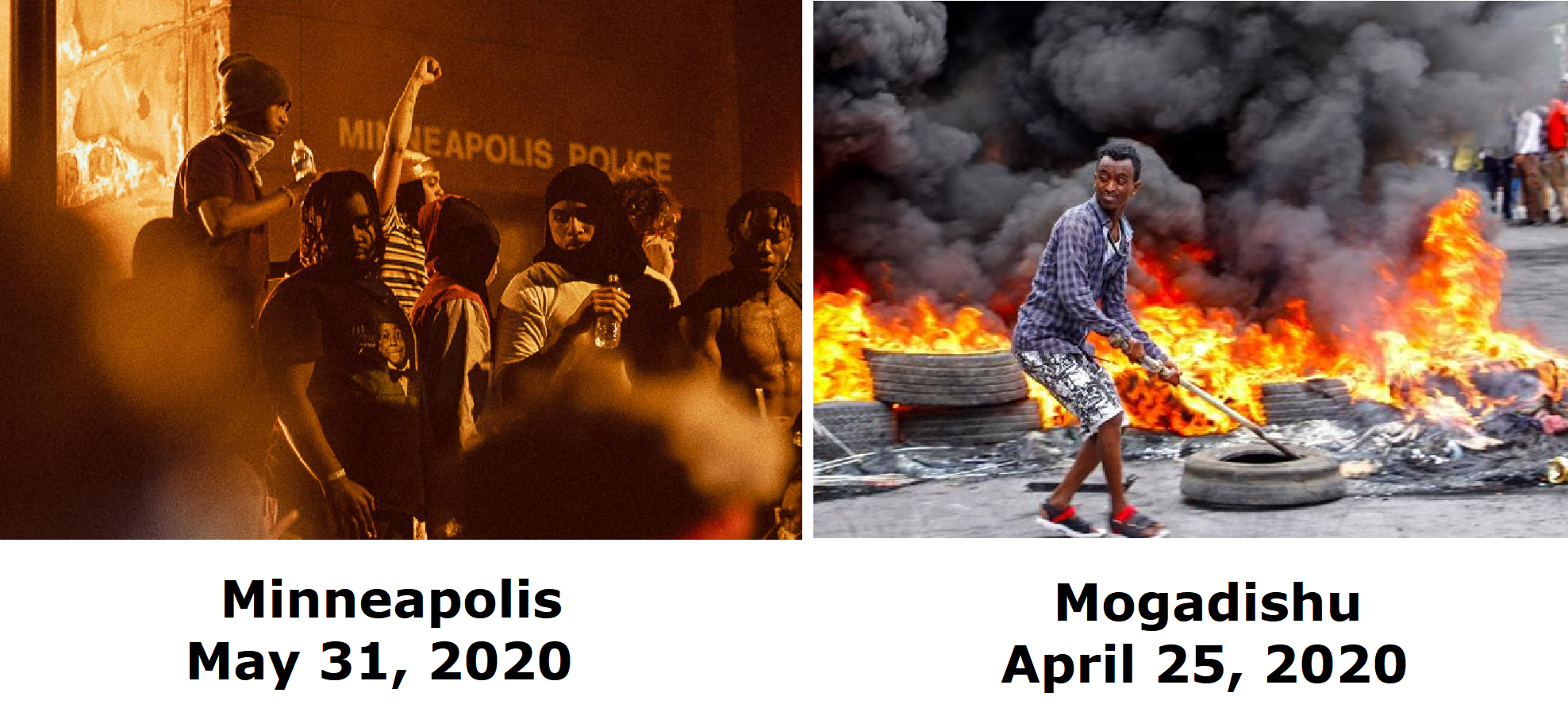
Sister Cities: Minneapolis and Mogadishu

I was born in St. Paul, Minnisota, so it saddens me to see the Twin Cities falling down like the Twin Towers.  How did  “failed states” come about in the USA resembling collapsed social order in places like Somalia? There are differences, of course:  Mogadishu was blown up by Islamist Jihadists, whereas Minneapolis suffers at the hands of “Woke” Jihadists, in the streets and in positions of governance. Otherwise, the disdain for unbelievers looks similar, along with the intent to separate the sheep from the goats, with the latter as the underclass, tolerated as long as they submit and take their punishment.

Anger in Mogadishu after police kill civilian in COVID-19 curfew

Protests in Somalia after fatal shooting of at least one person by police enforcing coronavirus-related restrictions.

There has been growing anger among some residents over alleged abuses by security forces, including beatings while enforcing virus-related restrictions.

Shouts of “No police, no curfew” could be heard as protesters took to the streets and damaged a police landmark at a city roundabout.

The country’s police chief on Saturday fired the commissioner in charge of security in Bondhere district where the shooting took place.

In other Somali news:

10 killed as minibus hits roadside bomb near Mogadishu ( 2 weeks earlier)

Governor killed in suicide bombing claimed by al-Shabab (3 weeks earlier)

Black pain is ours: Minneapolis Somali community rallies over Floyd killing

Somali community, being both Muslim and Black, plays unique role within protest movement

Minneapolis hosts a large Somali-American community, the biggest Somali diaspora group in the United States, according to the American Community survey in 2017.

They began coming to the US as early as the 1980s, but more emigrated in the 1990s to escape a civil war in Somalia.

Somalis began resettling in Minneapolis after securing jobs at meat-packaging plants, and have since opened businesses and established deep roots in the city.

Ali said that the community has since struggled with its identity, as many of the older generation are averse to being considered Black Americans.

Still, most of the younger Somalis who grew up in the US have aligned themselves with the Black Lives Matter movement, especially after witnessing discrimination and racism at the hands of law enforcement, she said.

Being seen as both Black and Muslim, Minneapolis resident Haji Yussuf said, sometimes means facing multiple forms of discrimination.

“Somalis are Black. So, a white cop or a bad cop doesn’t really see a difference. He sees Black, and then when he hears the name, the racism is even more pronounced,” said Yussuf, who ran for Congress before dropping out and endorsing eventual winner Congresswoman Ilhan Omar.

Ilhan Omar, the Somali-American congresswoman who represents the district where Floyd was killed, on Friday introduced a resolution alongside Black Congresswoman Ayanna Pressley condemning police brutality, racial profiling and the excessive use of force by law enforcement.

Omar calls for dismantling Minnapolis Police.

At least in the US, people vote and get the government they choose.  How remarkable in 2020 to witness elected officials preside over destruction and social division, claiming to be responsibly executing their office to serve and protect the citizenry.  Wake up and smell the smoke. You too, Seattle.


Coronavirus Censors


Matt Taibbi writes The Inevitable Coronavirus Censorship Crisis is Here. Conclusion excerpted in italics with my bolds and images.

As the Covid-19 crisis progresses, censorship programs advance, amid calls for China-style control of the Internet

In the Trump years the sector of society we used to describe as liberal America became a giant finger-wagging machine. The news media, academia, the Democratic Party, show-business celebrities and masses of blue-checked Twitter virtuosos became a kind of umbrella agreement society, united by loathing of Trump and fury toward anyone who dissented with their preoccupations.

Because Conventional Wisdom viewed itself as being solely concerned with the Only Important Thing, i.e. removing Trump, there was no longer any legitimate excuse for disagreeing with Conventional Wisdom’s takes on Russia, Julian Assange, Jill Stein, Joe Rogan, the 25th amendment, Ukraine, the use of the word “treason,” the removal of Alex Jones, the movie Joker, or whatever else happened to be the #Resistance fixation of the day.

When the Covid-19 crisis struck, the scolding utopia was no longer abstraction. The dream was reality! Pure communism had arrived! Failure to take elite advice was no longer just a deplorable faux pas. Not heeding experts was now murder. It could not be tolerated. Media coverage quickly became a single, floridly-written tirade against “expertise-deniers.” For instance, the Atlantic headline on Kemp’s decision to end some shutdowns was, “Georgia’s Experiment in Human Sacrifice.”

At the outset of the crisis, America’s biggest internet platforms – Facebook, Twitter, Google, LinkedIn, and Reddit – took an unprecedented step to combat “fraud and misinformation” by promising extensive cooperation in elevating “authoritative” news over less reputable sources.

H.L. Mencken once said that in America, “the general average of intelligence, of knowledge, of competence, of integrity, of self-respect, of honor is so low that any man who knows his trade, does not fear ghosts, has read fifty good books, and practices the common decencies stands out as brilliantly as a wart on a bald head.”

We have a lot of dumb people in this country. But the difference between the stupidities cherished by the Idiocracy set ingesting fish cleaner, and the ones pushed in places like the Atlantic, is that the jackasses among the “expert” class compound their wrongness by being so sure of themselves that they force others to go along. In other words, to combat “ignorance,” the scolders create a new and more virulent species of it: exclusive ignorance, forced ignorance, ignorance with staying power.

The people who want to add a censorship regime to a health crisis are more dangerous and more stupid by leaps and bounds than a president who tells people to inject disinfectant. It’s astonishing that they don’t see this.

Footnote:  How to Respond to a Scold–Imitate the Nip/Tuck plastic surgeons.

Bad Idea: Politicians Decide Essential Business

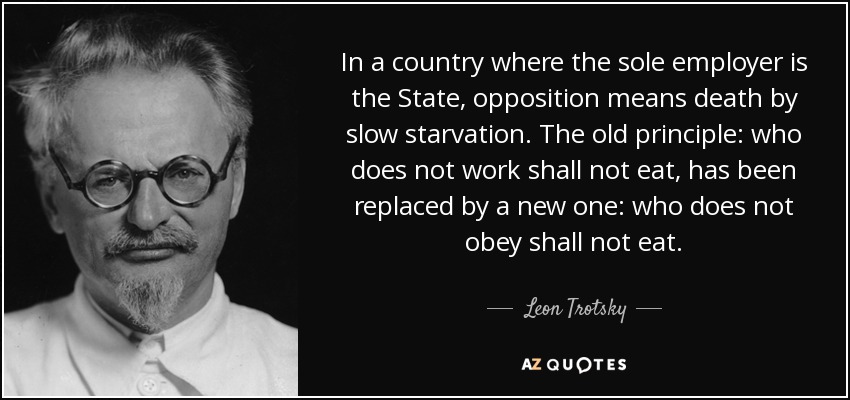
Right now in the midst of governmental lockdowns and closedowns, political officials are deciding who shall earn and therefore eat, and who is not “essential” and must stay home.  As Leon Trotsky saw in the soviet system, when the state takes over enterprises it gains the power to starve those who won’t obey.

How the US is presently veering in that direction is described by Manhattan Contrarian Frances Menton New York Progressives Officially Determine That All Wealth Comes From The Tooth Fairy Excerpts in italics with my bolds.

Despite having one of the most draconian lockdown orders in the country, New York has ended up as the epicenter of the disease. With about 6% of the nation’s population, New York has more than 40% of the deaths (22,275 of 55,341 as of this evening). 

Let’s look at a couple of New York’s policies in detail. When it came time to forcibly shut things down, what exactly got deemed to be “nonessential” (and therefore shuttered) versus “essential” (and therefore able to continue)?

Consider, as an example, the construction industry. Which category does that industry fall under — essential, or non-essential? Or Is some of it essential and the rest not? At first, it looked like all construction was going to be deemed “non-essential.” But then on March 27, a week after the initial lockdown order, a publication called The Real Deal reported that, after getting “pressure” from “city officials and workers,” the State had decided to make exceptions for projects in the areas of “infrastructure, healthcare facilities, and affordable housing”.

I don’t know of any basis to say that there is any less risk of spread of the infection among workers on, say, a public housing project versus those on a new market-rate condo building. So the obvious line between “non-essential” and “essential” is that those things that are non-subsidized and fully-taxpaying are “non-essential,” while those things that are tax-exempt and/or publicly subsidized are “essential.” And we have made this decision as a result of “pressure” from “city officials and workers,” who clearly have political clout, whereas workers and developers in the private unsubsidized construction industry clearly do not have clout. Fortunately, here in New York, the things that pay the bills can be deemed “non-essential,” because the bills will just then be paid by the tooth fairy.
Then there is this report from NY Post NYC tailor defies state order: ‘I’m opening my doors come hell or high water’.  Excerpts in italics with my bolds.

Eliot Rabin, whose Upper East Side boutique, Peter Elliot, is known for high-end men’s and boys apparel, refuses to follow a state order closing retail business not considered essential. He insists that his $85 pocket squares and $15,000 suits are part of the fabric of New York City: “Why is a liquor store essential and I’m not?” Rabin told The Post.

Though he’s not worried about catching the coronavirus, Rabin, who first opened his doors in 1977, said he’s taking precautions. “We’ll never put anyone in danger, ever.”  He added that he’s not worried about the consequences of being open, only the consequences for staying shut.

“I’m fighting for the soul of my company and my people. I’m doing what I think is right to protect my business and employees from this disaster,” Rabin said, noting that the long-time shoe repair shop across the street from his store packed up for good last month. “I hope everyone comes back, but I know they won’t. I’m doing the common sense thing to protect my business.”

The Deeper Issue:  Only Two Ways to Organize a Society–Jungle or Market

Bruce Pardy belongs to the Faculty of Law, Queen’s College, Kingston, Ontario. This post will provide excerpts from several of Pardy’s writings to give readers access to his worldview and its usefulness making sense of current socio-political actions.

In 2009 Pardy wrote Climate Change Charades: False Environmental Pretences of Statist Energy Governance  The Abstract:

Climate change is a poor justification for energy statism, which consists of centralized government administration of energy supplies, sources, prices, generating facilities, production and conservation. Statist energy governance produces climate change charades: government actions taken in the name of climate change that bear little relationship to the nature of the problem. Such actions include incremental, unilateral steps to reduce domestic carbon emissions to arbitrary levels, and attempts to choose winners and losers in future technology, using public money to subsidize ineffective investments. These proffered solutions are counter-productive. Governments abdicate their responsibility to govern energy in a manner that is consistent with domestic legal norms and competitive markets, and make the development of environmental solutions less likely rather than more so.

Pardy also spoke out in support of Peterson and against the Canadian government legislation proscribing private speech between individuals. His article in National Post was Meet the new ‘human rights’ — where you are forced by law to use ‘reasonable’ pronouns

Human rights were conceived to liberate. They protected people from an oppressive state. Their purpose was to prevent arbitrary arrest and detention, torture, and censorship, by placing restraints on government. The state’s capacity to accommodate these “negative rights” was unlimited, since they required only that people be left alone.

If only arm twisting were prohbited beyond the ring.

But freedom from interference is so 20th century. Modern human rights entitle. We are in the middle of a culture war, and human rights have become a weapon to normalize social justice values and to delegitimize competing beliefs. These rights are applied against other people to limit their liberties.

Freedom of expression is a traditional, negative human right. When the state manages expression, it threatens to control what we think. Forced speech is the most extreme infringement of free speech. It puts words in the mouths of citizens and threatens to punish them if they do not comply. When speech is merely restricted, you can at least keep your thoughts to yourself. Compelled speech makes people say things with which they disagree.

Some senators expressed the view that forcing the use of non-gendered pronouns was reasonable because calling someone by their preferred pronoun is a reasonable thing to do. That position reflects a profound misunderstanding of the role of expression in a free society. The question is not whether required speech is “reasonable” speech. If a statute required people to say “hello,” “please” and “thank you,” that statute would be tyrannical, not because “hello,” “please” and “thank you” aren’t reasonable things to say, but because the state has dictated the content of private conversation.

Traditional negative human rights give people the freedom to portray themselves as they wish without fearing violence or retribution from others. Everyone can exercise such rights without limiting the rights of others. Not so the new human rights. Did you expect to decide your own words and attitudes? If so, human rights are not your friend.

These positions derive from bedrock reasoning by Pardy on the foundations of law and legitimacy. An insight into his thinking is his rebuttal of a critic The Only Legitimate Rule: A Reply to MacLean’s Critique of Ecolawgic Dalhousie Law Journal, Spring 2017

Ecosystem as One model of Society

An ecosystem is not a thing. It does not exist as a concrete entity. “Ecosystem” is a label for the dynamics that result when organisms interact with each other and their environment. Those dynamics occur in infinite variation, but always reflect the same logic:  Competition for scarce resources leads to natural selection, where those organisms better adapted to ecosystem conditions survive and reproduce, leading to evolutionary change. All participants are equally subject to their forces; systems do not play favourites.

In ecosystems, the use of the word “autonomy” does not mean legally enforced liberty but the reverse: no externally imposed rules govern behaviour. In ecosystems unmanaged by people, organisms can succeed or fail, live or die, as their genetically determined physiology and behaviour allow. Every life feeds on the death of others, whether animal or plant, and those better adapted to their circumstances survive to reproduce. Organisms can do anything that their genes dictate, and their success or failure is the consequence that fuels evolution.

When an antelope is chased by a lion and plunges into a river to escape, that action allows the antelope to survive and thus to reproduce. The offspring may carry a genetic disposition to run into water when chased by predators. There are no committees of either antelopes or humans deciding how antelopes will behave. Autonomy in ecosystems is not a human creation. It is not based upon human history or culture and is not a human preference.

Market as a Different Model of Society

A market is not a thing either. Nor is it a place. Markets, like ecosystems, do not exist as concrete entities. “Market” is a label for the dynamics that result when people exchange with each other. Bargains may be commercial in nature, where things are bought and sold, but they also occur in other facets of life. For example, in Ecolawgic I suggested that marriage is a kind of exchange that is made when people perceive themselves better off to enter into the bargain than not to.

As I said in Ecolawgic, “Laws and governments can make markets more stable and efficient, such as by enforcing contracts and creating a supply of money, but they create neither the activity of trading nor the market dynamics that the transactions create.”  A market is not a place or a legal structure but the dynamics of a collection of transactions. It does not exist before or independently of the transactions within it. The transactions make the market. Transactions are not created by governments but by the parties who enter into them.

People transact whether they are facilitated by governments or not. The evidence is everywhere. If it were not so, human beings would not have bartered long before there were governments to create money and enforce contracts. During Prohibition, no alcohol would have been produced and sold. Citizens of the Soviet Union would not have exchanged goods. Today there would be no drug trade, no black market and no smuggling. Cigarettes would not be used as currency inside jails. People would not date, hold garage sales or trade hockey cards. There would be no Bitcoin or barter. Try prohibiting people from transacting and see that they will transact anyway. They will do so because they perceive themselves as better off. Sometimes the benefit is concrete and sometimes it is ethereal. The perception of benefit is personal and subjective.

Ecosystems are Coercive, Markets are Voluntary

Ecosystems and markets share many features but they differ in one important respect. Violence plays an important role in ecosystems but is not a part of voluntary market exchange. Ecosystems are arenas for mortal combat. Lions eat antelopes if they can catch them. Nothing prevents taking a dead antelope from a lion except the lion’s response. There are no restrictions on survival strategies, and organisms do not respect the interests, habitats or lives of other organisms.

Markets, in contrast, proceed upon the judgment of the transacting parties that they are better off to trade than to fight. The hunter did not shoot the woodworker to get chairs, and the woodworker traded for meat instead of stealing it. They chose to trade because it made them better off than fighting. The reasons are their own. Perhaps they were friends, colleagues or allies. Perhaps they believed that harming other people is wrong. Perhaps they hoped to have an ongoing trading relationship. Perhaps fighting carried risks that were too high and they feared injury or retribution. Perhaps trading was less work than fighting.

For whatever reason, they chose to trade. This choice is not universal. People have traded throughout human history, but they have also fought. I do not maintain that trading is any more “natural” or inbred than fighting, but neither is it is less so. When people choose to fight, they are no longer part of a market. Markets are like ecosystems with the violence removed.  They are the kinder, gentler version of ecosystems.

There are only two models for legal governance and only one legitimate rule.

The logic is as follows:
1. In the wild, organisms compete for scarce resources. Those organisms better adapted to conditions survive and reproduce. Their interactions constitute ecosystems. No legal rules govern behaviour and might is right.
2. Human beings trade spontaneously. Parties enter into transactions when they perceive themselves as better off to trade than to fight. Their transactions constitute markets.
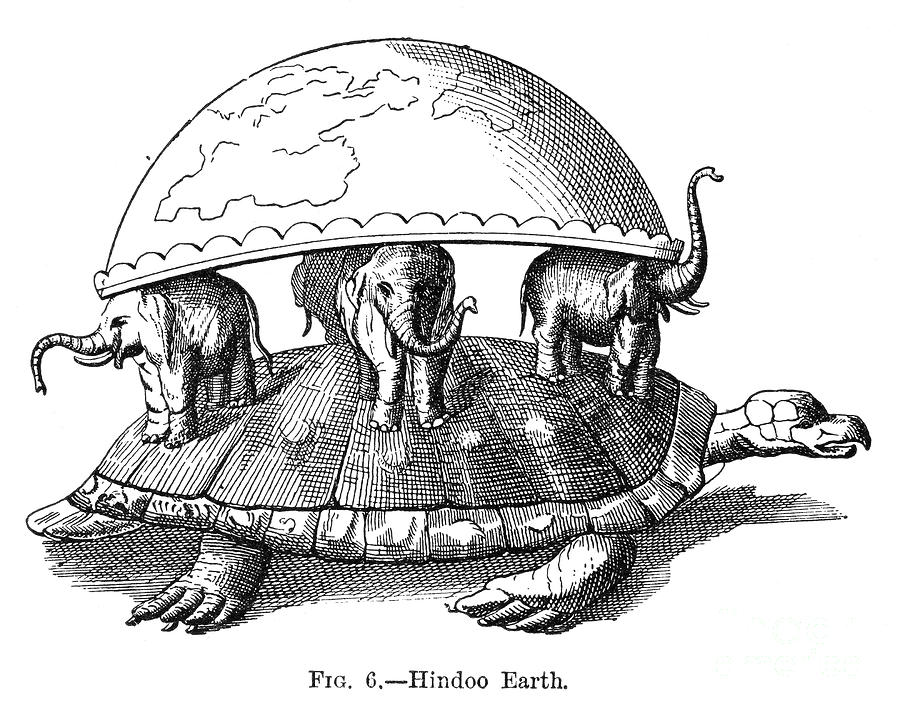
3. Moral values and policy goals are preferences whose inherent validity cannot be established. They are turtles all the way down. Therefore laws based upon those preferences lack legitimacy.
4. When governments use might to impose laws and policies that are illegitimate, they unintentionally imitate ecosystems, where might is right. Political constituencies use whatever means necessary to impose their preferences, and their opponents use whatever means necessary to resist. They are “autonomous” in the ecosystem sense: there are no inherently valid restrictions on behaviour. The result is a social order of division and conflict.
5. The alternative is to model human governance on the other system that exists independently of state preference: markets. If the model for human governance is markets, interactions between people are voluntary. People are “autonomous” in the market sense: they may pursue their own interests without coercion. Instead of imposing illegitimate rules and policies, the state uses force only to prohibit people from imposing force on each other. A plethora of sub-rules follow as corollaries of the rule against coercion: property, consent, criminal offences that punish violence and so on.
6. There is no third choice. Coercion is not right or wrong depending upon the goals being pursued since those goals are merely preferences. Their advocates cannot establish that their goals have inherent validity to those who do not agree. Therefore, giving priority to those objectives is to assert that might is right. If might is right, we are back to ecosystems, where any and all actions are legitimate.
7. If might is right, anything goes, and the model is ecosystems. If might is not right, force is prohibited, and the model is markets. Choose one and all else follows.

When I claim that a prohibition on force is the only legitimate rule, I mean the only substantive rule to govern relations between competent adults. No doubt the administration of a legal system, even a minimalist one, would require other kinds of laws to function. Constitutional rules, court administration, the conduct of elections and procedures to bring legal proceedings are a few of the other categories that would be necessary in order to give effect to the general rule.

No Property, No Market

But the existence of property rights must follow from a general rule prohibiting coercion. If it does not, the general rule is not what it purports to be. When people trade, they recognize the property interest held by the other party. It is that interest that they wish to obtain. When the woodworker trades chairs for the hunter’s meat, she trades “her” chairs for “his” meat. The trade would not occur without a mutual understanding of the possession that both hold over their respective stuff.

Sometimes those interests are recognized and protected by the law, which according to Bentham created the property. However, since markets arise even where no property is legally recognized, the notion of property must be prior to the law. Above I gave examples of markets that have arisen where no legal regime has protected property rights: prehistorical trade, alcohol sales during Prohibition, black markets in the Soviet Union, the modern day drug trade, smuggling of illicit goods, and the internal markets of prisons. Since trading occurs even in the absence of an approving legal regime, the notion of property must exist independently as well.

No Consent, No Market

Autonomy in the market sense means to be able to pursue your own interests and control your own choices without coercion. Consent is part and parcel of autonomy. Without the ability to consent, no trades can be made. Without trades, no markets exist. If one cannot consent to be touched, to give up property, to make bargains, to mate, to arm wrestle, to trade chairs for meat, to sell labour for money, and so on, then one is not autonomous.

If force is prohibited, then corollaries are laws that protect people from having force imposed upon them. Laws apply the force of the state to prevent or punish the application of force. A criminal law that prohibits assault is an extension of the general rule. A tax to finance the police department is legitimate if its purpose is to investigate and prosecute violent crimes. Traffic laws prevent people from running each other over.  Civil liability compensates for physical injuries caused by the force of others.

Illegitimate Laws, No Market

Illegitimate laws use state coercion to seek other ends such as enforcing moral standards, pursuing social goals or saving people from themselves. A criminal law that prohibits the use of drugs uses state force to prevent an activity in which there is no coercion. A tax to fund the armed forces to protect the peace may be legitimate, but one to take wealth from Peter to give to Paul is not. The legal regimes of modern administrative states consist largely of instrumentalist laws and policies that are inconsistent with the general rule, including tax laws, economic development programs, bankruptcy, patent regimes, mandatory government-run pension plans and MacLean’s version of environmental regulation, in which each decision turns on a political determination of the values to be applied.

It is either ecosystems or markets. Either might is right or it is not. If it is, then human society is subject to the law of the jungle where people are at liberty to fight like animals if they choose to do so. If it is not, then human society is a marketplace where people may enter into transactions voluntarily and the state may justifiably use force only to prevent or punish the application of force.

There is no third choice. Some might insist that coercion is not categorically wrong but that it can be right or wrong depending upon the other goals to be pursued. Those goals are merely preferences. They are
turtles all the way down. I do not maintain that other rules will not be passed and enforced using the established machinery of government but only that they have no claim to legitimacy, any more than other rules that might have been chosen instead. If force is used to pursue those preferences, why would others not use force to resist? Such a choice results in a free-for-all. If state force is right only because it cannot be resisted, that means that might is right. The administrative welfare state prevails not because it is justified morally or socially but because it has managed to secure a monopoly on violence. The imposition of government preferences is an invitation to those opposed to an arbitrary policy agenda to take up force against it.

Summary

In  a way, Pardy is warning us not to take for granted the free market social democracies to which we were accustomed.  Post modern progressive social justice warriors have decided that society is essentially an endless power struggle, that one group’s rights are gained only at the expense of another group.  In other words, it’s a dog-eat-dog, might makes right ecosystem.  Pardy says there is another way, which has been the basis for the rise of civilization, but can be reversed by governance that destroys the free market of ideas and efforts by imposing values favored by the rich and powerful.

Footnote about Turtles.  Pardy explains the metaphor:

In Rapanos v. United States, Justice Antonin Scalia offered a version of the traditional tale of how the Earth is carried on the backs of animals. In this version of the story, an Eastern guru affirms that the earth is supported on the back of a tiger.  When asked what supports the tiger, he says it stands upon an elephant; and when asked what supports the elephant he says it is a giant turtle.  When asked, finally, what supports the giant turtle, he is briefly taken aback, but quickly replies “Ah, after that it is turtles all the way down.”