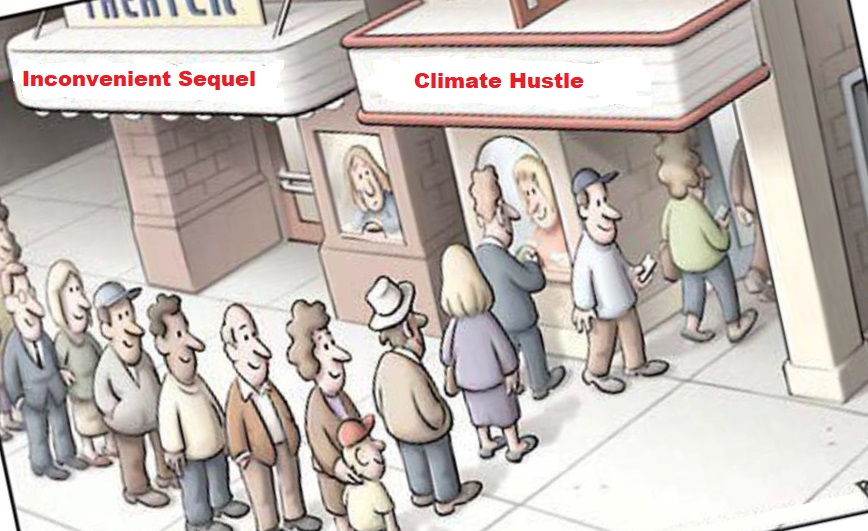
Kids Fortune Tellers Vs. US Update

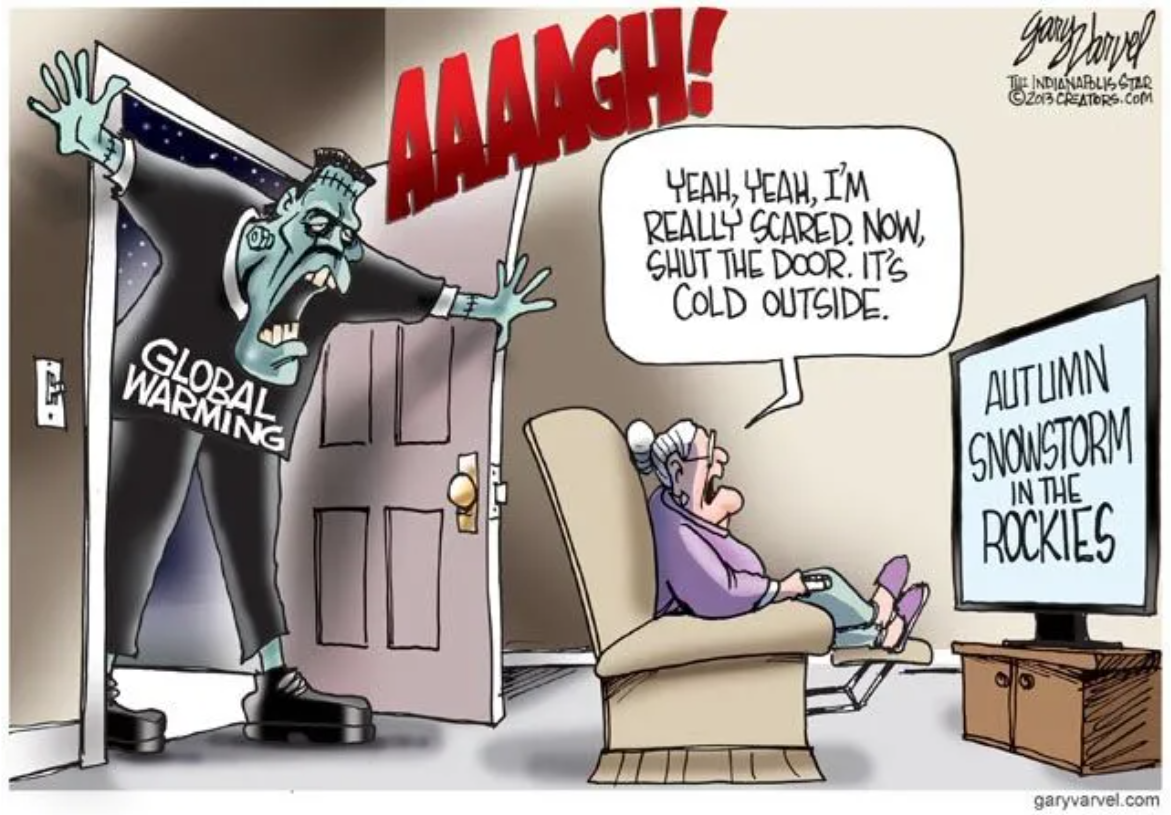
The 21 young people suing the U.S. government for exacerbating climate change hope the Ninth Circuit Court of Appeals sends their case to trial.

By Karen Savage writes at Climate Liability News Ninth Circuit Judges Appear Skeptical of Role in Kids Climate Suit vs. U.S. Government. Excerpts in italics with my bolds

A three-judge panel of the Ninth Circuit Court of Appeals on Tuesday appeared skeptical of the courts’ role in dealing with climate change in the landmark constitutional climate case brought by 21 young people against the U.S. government. But the kids’ attorneys argued in a pivotal hearing that they are only asking the court to apply rights already laid out in the Fifth Amendment.

The hearing, held in Portland, Ore., will decide whether the case, Juliana v. United States, continues on toward trial. The suit has been vehemently opposed by the Justice Department since it was filed in 2015, and this hearing could grant the government an extraordinary measure by granting an appeal before the trial even began.

Judges Mary H. Murguia and Andrew D. Hurwitz of the Ninth Circuit Court of Appeals, and Josephine L. Staton of District Court for the Central District of California presided over the hearing and are expected to issue their ruling in the next few months.

Hurwitz summed up the issues the court is wrestling with, primarily whether the courts should intervene in a subject ordinarily left to the executive and legislative branches.

“I’m sympathetic to the problems you point out,” he said. “But you shouldn’t say this is just an ordinary suit. … You’re asking us to do a lot of new stuff, aren’t you?”

Julia Olson, lead attorney for the young plaintiffs, disagreed.

“It would be the first time that it would have been done, your Honor, as to this factual context where the government admits the monumental threat to people and to lives and that their acts in promoting fossil fuels and allowing for the extraction and all the affirmative things they do cause the emissions that are a substantial cause of climate change,” Olson said.

Hurwitz pushed back on Olson’s assertion, saying it appeared as if the plaintiffs were asking the court to break new ground by allowing the case to continue.

“The issue here is whether this branch of government, embodied by the three of us today, has the ability to issue the relief that your clients seek,” said Hurwitz to Olson during her arguments, adding that he doesn’t doubt that Congress and the president could give the plaintiffs the relief they seek.

“I don’t think Congress and the president ever will,” said Olson in response.

“Well then we may have the wrong Congress and the wrong president. That’s occurred from time to time over history,” said Hurwitz.

“You present compelling evidence that we have a real problem. You present compelling evidence that we have inaction by the other two branches of government. It may even rise to the level of criminal neglect. But the tough question for me is do we get to act because of that.”

The plaintiffs allege in the suit that the federal government is violating their Constitutional rights to life, liberty and property by promoting an energy system that exacerbates climate change. They also say the government is failing to protect essential public trust resources and are asking for a science-based program to reduce carbon emissions and protect the climate for future generations.

The federal government has tried numerous times to shake the case since it was first filed in 2015. The Ninth Circuit has rejected four petitions for an extraordinary writ of mandamus by the government and the Supreme Court has rejected additional requests. The Ninth Circuit eventually granted a final, last-ditch effort to hear a pre-trial appeal late last year, and this hearing was their chance to hear oral arguments from both sides.

“The outcome of this hearing will determine the future of our case and whether or not there will be justice for young people in this country, who are disproportionately impacted by the climate crisis,” said Vic Barrett, a 20-year-old plaintiff from White Plains, NY.

“Our fundamental constitutional rights, including our right to a climate system capable of sustaining human life, are being violated by our government,” said Barrett.

In November 2016, U.S. District Court Judge Ann Aiken became the first to rule that “the right to a climate system capable of sustaining human life is fundamental to a free and ordered society” and ordered the case to trial.

Aiken’s ruling prompted the National Association of Manufacturers (NAM), the American Fuel & Petrochemical Manufacturers (AFPM), and the American Petroleum Institute (API) to intervene on behalf of the federal government, but the industry groups quickly withdrew after Judge Coffin ruled that the groups must intervenors take a joint position on climate science.

Attorneys for the Trump administration contend there is “no fundamental constitutional right to a ‘stable climate system’ and maintain that because “global climate change affects everyone in the world,” the plaintiffs are not suffering from a legally actionable injury, but from “generalized grievances.”

“This action is one that appears to enforce the Constitution, but in reality it’s nothing more than a direct assault on the constitutional design,“ said Jeffrey Bossert Clark, lead attorney for the Department of Justice.

One district court judge in the country is acting to impose a plan on the entire executive branch in the country, to tell them to stop having inaction on climate change, to do additional things to combat it,” Clark said. “That’s sort of something that’s radical, its anathema.”

The government also maintains that even if that right existed, and the plaintiffs have been harmed, the government is not responsible.

Plaintiffs say the actions by the Trump administration are continuing to harm them by further damaging the climate.

“The U.S. government has known for nearly four years that my co-plaintiffs and I are being personally harmed by their actions,” Barrett said. “Yet it continues to use public resources for fossil fuel extraction and production, and give legal sanction to the national fossil fuel energy system, completely abdicating its responsibility to protect us from the dangers it helped perpetuate.”

The government has argued that the suit falls under the Administrative Procedures Act (APA), which outlines procedures for judicial review when plaintiffs make claims against a federal agency, and said that the “plaintiffs have refused to comply with the requirements of the APA.”

That premise was rejected by Aiken, who said that the APA does not address the plaintiffs’ claims because they seek review of “aggregate action by multiple agencies, something the APA’s judicial review provisions do not address.”

In a trial, the young plaintiffs plan to call expert climate science witnesses, as well as experts in attribution science, who have researched how much of global warming can be attributed to particular countries and industries.

Much of the evidence already submitted by the young plaintiffs comes from the government itself, with extensive research into climate impacts coming NASA and NOAA, as well as the release last year of the Fourth National Climate Assessment.

In her closing arguments, Olson asked the court to lift the stay and remand the case to trial.

When our great grandchildren look back on the 21st century, they will see that government sanctioned climate destruction was the constitutional issue of this century,” Olson said.

“We must be a nation that applies the rule of law to harmful government conduct that threatens the lives of our children so that they can grow up safe and free and pursue their happiness. That is what the founders intended.”

Footnote:

How amazing that the kid’s lawyer is able to see into the future so clearly!  Did she learn that in law school, is it a gift, or does she have a crystal ball?
An Accidental Blogger: Collection of Science Matters Essays

Introducing a New Page: Guide to Science Matters

Thanks to hunter’s continuing appreciation of my posts, I am prompted to do a long overdue reorganization of the material to be found here. As explained before, my blogging activity started by accident. In 2015 Judith Curry asked commenters at her blog Climate Etc. to register with WordPress, and in that process I ended up with a free blog of my own. I started playing around with it, posted some comments I had made on others’ blogs (WUWT, Not A Lot Of People Know That, No Tricks Zone, etc.). All of a sudden it became a place where I could consolidate things I learn by writing them into essays, as well as provide a portal for others’ essays worthy of more readers.

My original set of categories no longer reflects the range of subjects addressed in the 1000+ posts on offer at Science Matters. Hunter suggested publishing, but I am not interested in the money or in the hassle to obtain permissions for content reblogged from others’ websites. So instead I am changing the structure of Science Matters to hopefully make the topics more accessible to interested visitors.

Overarching Concept:

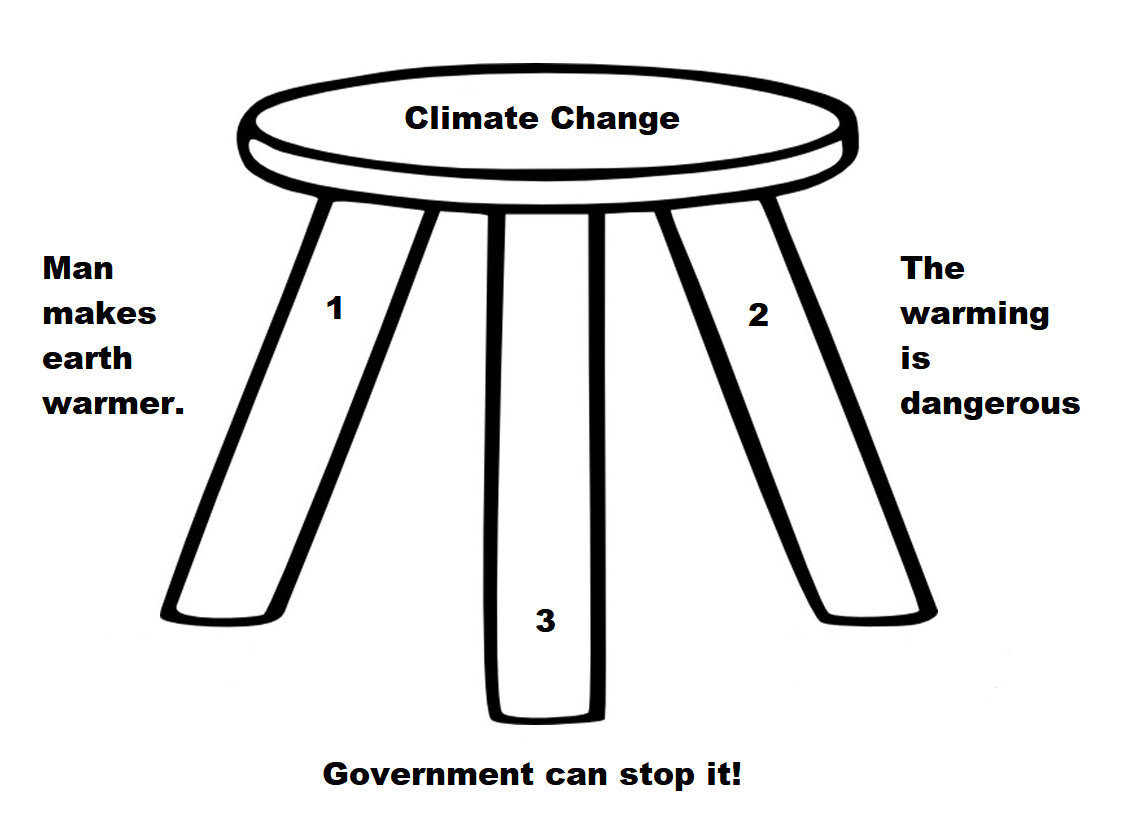
As the stool above shows, the climate change package sits on three premises. The first is the science bit, consisting of an unproven claim that observed warming is caused by humans burning fossil fuels. The second part rests on impact studies from billions of research dollars spent uncovering any and all possible negatives from warming. And the third leg is climate initiatives (policies) showing how governments can “fight climate change.”

So far I have re-categorized and re-tagged essays from the last year or so according to a reference structure, incorporating the above three dimensions along with General Science and General Society categories.  The captions associated with the each category are assigned to posts as Tags. Of course, occasionally a post touches on more than one category or tag topic.

Climate Science

Global Warming Scare
Theory of Climate Change
Climate Models
Climate Factors
Oceans Make Climate
Solar Effects
Carbon Dioxide

Climate Impacts

Temperature Trend Analysis
Arctic Sea Ice
Glaciers and Land Ice
Sea Levels and Flooding
Food Supply
Biosphere and Climate
Extreme Weather

Climate Initiatives

Climate Ideology
Climate Media
Climate Politics
Climate Policies
IPCC Conferences
Climate Adaptation
Climate Litigation
Climate Energy Policies
Renewable Energy
Fossil Fuels
Climate Finance
Climate Medicine

Science in General

Environmental Scares
Science and Ideology
Science Principles
Science Humor

Society in General

Social Ideologies
Political Foibles
General Humor

How to Access Content of Interest

Clicking on the box in the upper right corner of any webpage presents a menu showing first a tag cloud.  Clicking on any tag produces all posts so tagged. Then after a list of Top Posts and Pages is a list of the Categories, including the five above in bold, as well as some categories applied to older posts.  Clicking on any category produces a list of all associated posts. Further on is a search box in which you can access posts including a key word or phrase, say “EPA”, or “Plastics,” “Climate Surveys”, etc.

Independently of the box, on any posted page, the associated category appears in red just above the post title.  Clicking it will produce the list of essays on that topic.  Hopefully it is clear that categories are more broad and tags more specific.

Have fun.  Let me know if you have suggestions to improve this utility.

Ron Clutz


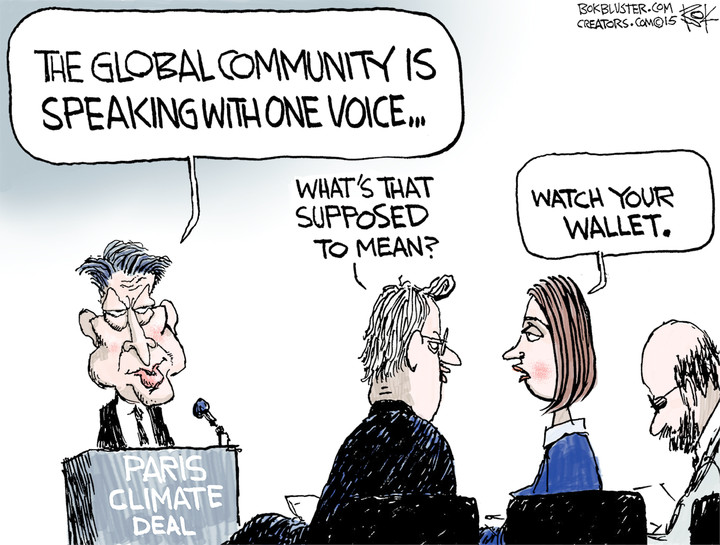
Climate Cartel: Watch Your Wallets

Climate bonds and pledges are creating virtual finance and group think cartels based on the faulty scientific premise that carbon dioxide controls climate change, when it is the sun’s direct and indirect effect.  Billions of dollars are being applied to the wrong societal response; children are being misled and frightened and society is left unprepared for impending cooling of a solar minimum. H/T Friends of Science

Background

On May 28, 2019, the National Observer reported on The Clean Energy Ministerial conference at Vancouver, the 10th of its kind, bringing together energy ministers from 25 countries as well as other officials from government, industry and non-governmental organizations that represent the bulk of clean energy investment. Excerpts in italics with my bolds.

One of the top officials at the European Union’s lending arm  ,Ambroise Fayolle, vice president of the European Investment Bank, said investments connected with the climate crisis and the low-carbon transition will continue and expand.

“It’s clearly going to stay. The needs are huge. We know that in Europe only, we would need to invest 400 billion euros ($602 billion) every year to catch up on the needs of energy efficiency.”

The EIB has a requirement that at least a quarter of its investments must be related to climate change mitigation and adaptation. In 2018, it directed 16.2 billion euros ($24.4 billion) to this effort in 2018, or close to 30 per cent, which is above its target.

The bank is trying to generate new low-carbon markets, said Fayolle, though initiatives such as its Climate Awareness Bond, the first green bonds which began about a decade ago.

Billions of Public and Private Funds Misallocated

This public sector policy flies in the face of observable facts. Friends of Science Society says the sun drives climate change, not carbon dioxide. The sun is moving into a cooling period as reported by Space Weather on April 10, 2019, meaning fossil fuel stocks will be more valuable than ever.

In fact, the world has cooled half a degree Celsius (0.5°C) in the past three years as the solar minimum kicks in, according to the December 2018, NASA GISS temperature record.

In an analysis of future energy markets by BP, summarized by Robert Lyman in a May 29, 2019 blog post all fossil fuel use is predicted to grow to at least 2040.

Lyman deconstructs “green energy” advocates’ myths that conventional energy is diminishing in volume or demand versus the actual data which shows the opposite to be true.

Friends of Science Society says the financial community has embarked on a path far removed from climate science, focusing solely on the carbon dioxide molecule, rather than the larger climate picture. The National Observer article on climate investments of May 28, 2019, quotes Alberta Premier Jason Kenney calling concerns over “climate risk” the “flavor of the week.”

Groups like the UNPRI and Climate Bond Initiatives and the CDP Worldwide have effectively created a ‘climate cartel’ of activist investors, focussed on making signatories agree to investing only in projects that support goals to lower carbon dioxide. This has skewed investment in projects like the Alberta oil sands, as reported in a previous press release by Friends of Science of March 22, 2018. This leaves valuable oil sands assets open to vulture investors, reducing the long-term net worth of these reserves to Canada.

Friends of Science Society says many financial and philanthropic community members associated with climate bonds have funded environmental groups. Those groups have ramped up fears of a warming world and alleged ‘climate emergency’ to create a societal ‘climate psychosis.’ Unnecessary fear grips children, evidenced in the sad story of Greta Thunberg, as told in Quillette of April 23, 2019.

In Canada, part of that psychosis is born out of the “Tar Sands Campaign” – a Green Trade War against Canada’s primary resource industry, as discussed in an op-ed on Friends of Science blog of May 26, 2019. LINK: blog.friendsofscience.org/2019/05/26/down-the-rabbit-hole-with-andrew-nikiforuk/

As Emeritus Professor Francois Gervais presented at the 2018 Porto Climate Conference, the scientific consensus now is that carbon dioxide’s effect on warming in nominal to nil, meaning a low-carbon dioxide transition will have no effect on global warming but will be burdensome in terms of debt to future generations. 

“Such a policy goal would make humanity $14 trillion poorer compared to doing nothing at all about climate change,” estimates Robert Murphy in his analysis of Nobel winning economist William Nordhaus’ work regarding the UN’s Paris targets of limiting carbon dioxide, published Nov. 5, 2018 article in The Library of Economics and Liberty.

Is it moral to leave our children freezing in the dark, terrified of life itself and saddled with debt, to make ‘low-carbon’ investors rich?

About  Friends of Science Society is an independent group of earth, atmospheric and solar scientists, engineers, and citizens who are celebrating its 16th year of offering climate science insights. After a thorough review of a broad spectrum of literature on climate change, Friends of Science Society has concluded that the sun is the main driver of climate change, not carbon dioxide (CO2).

Footnote:

Willie Soon is both humorous and informative in addressing Friends of Science recently:


Climate Emergency Medicine Update

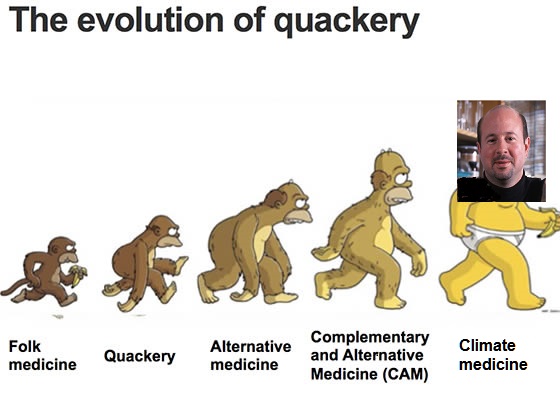
Climate Quakery

Update June 4, 2019 Climate Doctors Warn of Health Hazards to Kids Suing US 

Published today in the formerly respectable New England Journal of Medicine The Case of Juliana v. U.S. — Children and the Health Burdens of Climate Change.  Excerpts in italics with my bolds, followed by a discussion of the rise of Climate Medicine, whereby doctors have joined lawyers in the dash for climate cash.

As the Juliana plaintiffs argue — and we agree — climate change is the greatest public health emergency of our time and is particularly harmful to fetuses, infants, children, and adolescents.2,3 The adverse effects of continued emissions of carbon dioxide and fossil-fuel–related pollutants threaten children’s right to a healthy existence in a safe, stable environment. It is for this reason that we, together with nearly 80 scientists and physicians and 15 health organizations including the American Academy of Pediatrics, submitted an amicus brief to help educate the Ninth Circuit about this extraordinary threat.

Note:  Doctors For Disaster Preparedness are not Distracted by Global Warming

Doctors for Disaster Preparedness (DDP) are concerned to be ready for real disasters and not be distracted by irrational fears like global warming/climate change. They have provided a useful resource for people to test and deepen their knowledge of an issue distorted for many people by loads of misinformation and exaggerations.  Their website has a lesson set called the Climate Change IQ (CCIQ) providing a good skeptical critique of ten top alarmist claims. The format is succinct and non-technical. Each alarmist claim is posed as a question, followed by a short skeptical answer, which is highlighted with a single telling graphic. Links to supporting documents are also shown.  The text above in red is linked to DDP website, while my synopsis is How’s Your CCIQ?

Background:  The Rise of Climate Medicine

Prior to Bonn COP23 the media was awash with claims that climate change is an international public health crisis.  For example, in just one day from Google news:

Climate change isn’t just hurting the planet – it’s a public health emergency–The Guardian

Climate change’s impact on human health is already here — and is ‘potentially irreversible,’ report says –USA TODAY

Climate Change Is Bad for Your Health–New York Times

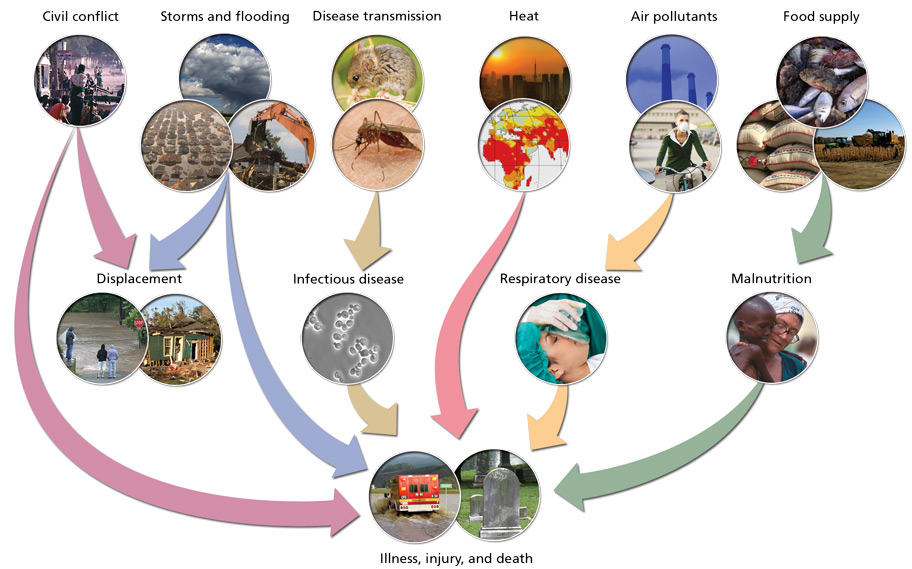
From heat stress to malnutr­ition, climate change is already making us sick–The Verge

As Richard Lindzen predicted, everyone wants on the climate bandwagon, because that is where the money is.  Medical scientists are pushing for their share of the pie, as evidenced by the Met office gathering on Assessing the Global Impacts of Climate and Extreme Weather on Health and Well-Being (following Paris COP).  Not coincidentally, the 2nd Global Conference on Health and Climate was held July 7-8, 2016 in Paris.  Following that the American Public Health Association declared:

2017 is the Year of Climate Change and Health

“We’re committed to making sure the nation knows about the effects of climate change on health. If anyone doesn’t think this is a severe problem, they are fooling themselves.” — APHA Executive Director Georges Benjamin, in The Washington Post

The new field of Climate Medicine is evidenced by a slew of new organizations and studies.  In addition to numerous agencies set up within WHO and the UN, and governmental entities (such as the Met Office), there are many NGOs, such as:

Health Care Without Harm
Health and Environment Alliance
Health and Climate Foundation
Climate and Health Council
United States National Association of County and City Health Officials
Care International
Global Gender and Climate Alliance / Women’s Environment and   Development Organization
International Federation of Medical Students’ Associations
Climate Change and Human Health Programme, Columbia U.
Center for Health and the Global Environment, Harvard
National Center for Epidemiology and Population Health, ANC Canberra
Centre for Sustainability and the Global Environment, U of Wisconsin
Environmental Change Institute, Oxford
London School of Tropical Medicine and Hygiene, London, UK
International Human Dimensions Programme on Global Environmental Change, US National Academies of Science
US Climate and Health Alliance
Etc, etc., etc.

Of course, they are encouraged and abetted by the IPCC.


From the Fifth Assessment Report:

Until mid-century, projected climate change will impact human health mainly by exacerbating health problems that already exist (very high confidence). Throughout the 21st century, climate change is expected to lead to increases in ill-health in many regions and especially in developing countries with low income, as compared to a baseline without climate change (high confidence). By 2100 for RCP8.5, the combination of high temperature and humidity in some areas for parts of the year is expected to compromise common human activities, including growing food and working outdoors (high confidence). {2.3.2}

In urban areas climate change is projected to increase risks for people, assets, economies and ecosystems, including risks from heat stress, storms and extreme precipitation, inland and coastal flooding, landslides, air pollution, drought, water scarcity, sea level rise and storm surges (very high confidence). These risks are amplified for those lacking essential infrastructure and services or living in exposed areas. {2.3.2}

Feared Climate Health Impacts Are Unsupported by Scientific Research

NIPCC has a compendium of peer-reviewed studies on this issue and provides these findings (here)

Key Findings: Human Health
• Warmer temperatures lead to a decrease in temperature-related mortality, including deaths associated with cardiovascular disease, respiratory disease, and strokes. The evidence of this benefit comes from research conducted in every major country of the world.

• In the United States the average person who died because of cold temperature exposure lost in excess of 10 years of potential life, whereas the average person who died because of hot temperature exposure likely lost no more than a few days or weeks of life.

• In the U.S., some 4,600 deaths are delayed each year as people move from cold northeastern states to warm southwestern states. Between 3 and 7% of the gains in longevity experienced over the past three decades was due simply to people moving to warmer states.

• Cold-related deaths are far more numerous than heat-related deaths in the United States, Europe, and almost all countries outside the tropics. Coronary and cerebral thrombosis account for about half of all cold-related mortality.

• Global warming is reducing the incidence of cardiovascular diseases related to low temperatures and wintry weather by a much greater degree than it increases the incidence of cardiovascular diseases associated with high temperatures and summer heat waves.

• A large body of scientific examination and research contradict the claim that malaria will expand across the globe and intensify as a result of CO2 -induced warming.

• Concerns over large increases in vector-borne diseases such as dengue as a result of rising temperatures are unfounded and unsupported by the scientific literature, as climatic indices are poor predictors for dengue disease.

• While temperature and climate largely determine the geographical distribution of ticks, they are not among the significant factors determining the incidence of tick-borne diseases.

• The ongoing rise in the air’s CO2 content is not only raising the productivity of Earth’s common food plants but also significantly increasing the quantity and potency of the many healthpromoting substances found in their tissues, which are the ultimate sources of sustenance for essentially all animals and humans.

• Atmospheric CO2 enrichment positively impacts the production of numerous health-promoting substances found in medicinal or “health food” plants, and this phenomenon may have contributed to the increase in human life span that has occurred over the past century or so.

• There is little reason to expect any significant CO2 -induced increases in human-health-harming substances produced by plants as atmospheric CO2 levels continue to rise.

Source: Chapter 7. “Human Health,” Climate Change Reconsidered II: Biological Impacts (Chicago, IL: The Heartland Institute, 2014).
Full text of Chapter 7 and references on Human health begins pg. 955 of the full report here

Summary

Advances in medical science and public health have  benefited billions of people with longer and higher quality lives.  Yet this crucial social asset has joined the list of those fields corrupted by the dash for climate cash. Increasingly, medical talent and resources are diverted into inventing bogeymen and studying imaginary public health crises.

Economists Francesco Boselloa, Roberto Roson and Richard Tol conducted an exhaustive study called Economy-wide estimates of the implications of climate change: Human health

After reviewing all the research and crunching the numbers, they concluded that achieving one degree of global warming by 2050 will, on balance, save more than 800,000 lives annually.

Not only is the warming not happening, we would be more healthy if it did.

Oh, Dr. Frankenmann, what have you wrought?


Footnote:  More proof against Climate Medicine

From: Gasparrini et al: Mortality risk attributable to high and low ambient temperature: a multicountry observational study. The Lancet, May 2015

Cold weather kills 20 times as many people as hot weather, according to an international study analyzing over 74 million deaths in 384 locations across 13 countries. The findings, published in The Lancet, also reveal that deaths due to moderately hot or cold weather substantially exceed those resulting from extreme heat waves or cold spells.

“It’s often assumed that extreme weather causes the majority of deaths, with most previous research focusing on the effects of extreme heat waves,” says lead author Dr Antonio Gasparrini from the London School of Hygiene & Tropical Medicine in the UK. “Our findings, from an analysis of the largest dataset of temperature-related deaths ever collected, show that the majority of these deaths actually happen on moderately hot and cold days, with most deaths caused by moderately cold temperatures.”

Later on in 2017, Lancet set the facts aside in order to prostrate itself before the global warming altar:

Christiana Figueres, chair of the Lancet Countdown’s high-level advisory board and former executive secretary of the UN Framework Convention on Climate Change, said, “The report lays bare the impact that climate change is having on our health today. It also shows that tackling climate change directly, unequivocally and immediately improves global health. It’s as simple as that.’’


Al Gore Serial Science Denier

Everett Piper writes in the Washington Post Times The party of science deniers. Excerpts In italics with my bolds.

This past Wednesday, May 29, former Vice President Al Gore spoke to the graduating seniors at Harvard University. A summary of his talk? There is an “assault on science” that threatens “the capacity of the human species to endure” on planet Earth.

Mr. Gore proceeded to warn both students and faculty at Wednesday’s annual Class Day convocation, stressing that “reason” and “rational debate” were under threat from what he called “ideology of authoritarianism” by those who disagree with him and his political agenda.

Science “is now being slandered as a conspiracy based on a hoax,” Mr. Gore said. “The subordination of the best scientific evidence is yet another strategy for controlling policy by distorting and suppressing the best available information.”

This is the man who told us in 2006 that we had “ten years to save the planet” and that the Arctic would be ice-free by summer of 2014. In case you haven’t checked lately, that has not happened, nor are we even close.

This is the man who, at the same time, said the gulf stream would slow down and cause untold climate devastation as the result. News flash: Current scientific data actually shows the gulf stream has had zero decrease and may actually be speeding up.

This is the man who warned polar bears would become extinct in just a handful of years because of their loss of habitat. Update: The facts show polar bear numbers are now at an all-time high.

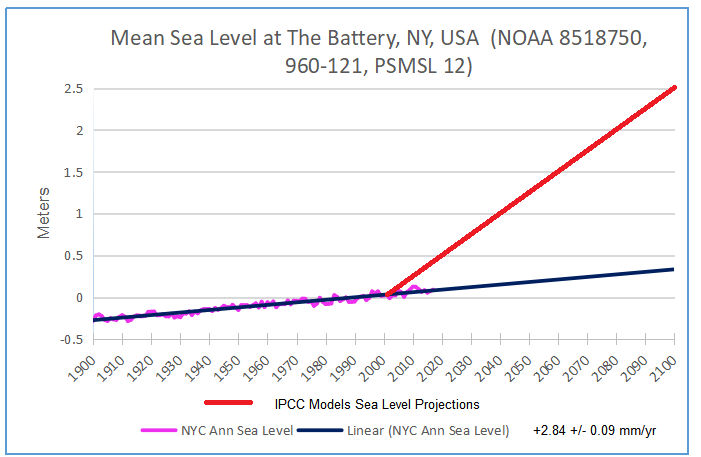
This is the same man who told all of us “sea levels could rise by as much as 20 feet in the near future” when, in fact, current data shows that for decades the pace has been about 3mm per year and has not changed. That’s about the height of two dimes.

This is the same guy who prophesied the rise of CO2 levels would devastate the planet and cause untold human suffering, when in reality, the modest rise in CO2 we actually have experienced has resulted in a global greening that has relieved human poverty around the world.

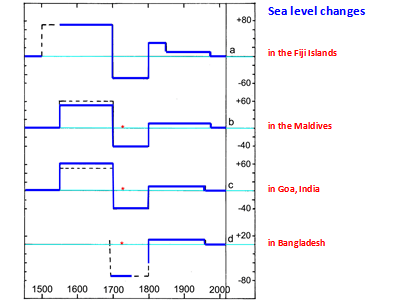
This is a man who predicted the devastation of low-lying Pacific Island nations such as Tuvalu because of rising sea-levels when in fact Tuvalu and some other island nations have actually grown in landmass since Mr. Gore’s doom and gloom pronouncements.

Al Gore is the man who has not only ignored the scientific facts of all the above, but who also is aligned with the party that now has the temerity to deny the biological fact of a female, and thereby pretend that any male can become a female just because he “feels” like it.

This is the same guy who, for decades, has turned a blind eye to the CDC data on sexually transmitted diseases and who promotes a political agenda that has resulted in over 25 percent of our nation’s millennial-aged women now carrying an STD.

This is the same guy who pretends to be pro-woman while denying the fact that women are real and not merely the imagination of dysphoric men who want to pretend and play make-believe.

This is a man who apparently doesn’t understand that it is logically and scientifically impossible to be a feminist if you persist in denying the empirical fact of the feminine.

Mr. Gore’s pseudo-science doesn’t stop with his ignorance of climatology, physiology, sexuality and biology. He demonstrates his ignorance in matters of economics as well. By ignoring the empirical proof that socialism has never, ever, resulted in anything other than the loss of human freedom and human flourishing, he seems oblivious to the fact that if there ever was a political and economic model that smacks of the “ideological authoritarianism” of which he now warns, it is his own.

In testimony before Congress this past year, Judith Curry, former chairman of the School of Earth and Atmospheric Sciences at the Georgia Institute of Technology, said this of Mr. Gore’s political agenda and that of his blind followers: “This behavior risks destroying science’s reputation for honesty. It is this objectivity and honesty which gives science a privileged seat at the table. Without this objectivity and honesty, scientists become regarded as another lobbyist group.”

Ms. Curry’s comment is spot on. Science dies at the hands of its supposed champions when they prove themselves more interested in political power than simply telling the truth.

If Aesop taught us anything, it is this: Crying “wolf” over and over again always proves one simple fact in the end — Truth “is being slandered as a conspiracy based on a hoax.”

• Everett Piper, the former president of Oklahoma Wesleyan University, is a columnist for The Washington Times and author of “Not A Day Care: The Devastating Consequences of Abandoning Truth” (Regnery 2017).


April Ocean SSTs Hold Steady

The best context for understanding decadal temperature changes comes from the world’s sea surface temperatures (SST), for several reasons:
  • The ocean covers 71% of the globe and drives average temperatures;
  • SSTs have a constant water content, (unlike air temperatures), so give a better reading of heat content variations;
  • A major El Nino was the dominant climate feature in recent years.

HadSST is generally regarded as the best of the global SST data sets, and so the temperature story here comes from that source, the latest version being HadSST3.  More on what distinguishes HadSST3 from other SST products at the end.

The Current Context

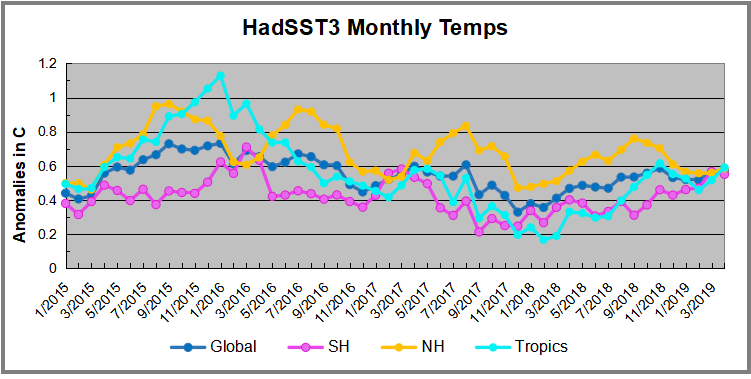
The chart below shows SST monthly anomalies as reported in HadSST3 starting in 2015 through April 2019. Hadley Centre did some technical upgrades and only now published results for March and April


A global cooling pattern is seen clearly in the Tropics since its peak in 2016, joined by NH and SH cycling downward since 2016.  2018 started with slow warming after the low point of December 2017, led by steadily rising NH, which peaked in September and cooled since.  The Tropics rose steadily until November, and are now cooling as well.

In 2019 we can see that NH is flat, the Tropics are up and down, and SH gently rising.  As a result, all regions are converging on the Global average anomaly of 0.57C  All regions are about the same as 2017 and 2015, but much cooler than 2016.

Note that higher temps in 2015 and 2016 were first of all due to a sharp rise in Tropical SST, beginning in March 2015, peaking in January 2016, and steadily declining back below its beginning level. Secondly, the Northern Hemisphere added three bumps on the shoulders of Tropical warming, with peaks in August of each year.  A fourth NH bump was lower and peaked in September 2018.  Also, note that the global release of heat was not dramatic, due to the Southern Hemisphere offsetting the Northern one.

The annual SSTs for the last five years are as follows:

Annual SSTs Global NH SH  Tropics
2014 0.477 0.617 0.335 0.451
2015 0.592 0.737 0.425 0.717
2016 0.613 0.746 0.486 0.708
2017 0.505 0.650 0.385 0.424
2018 0.480 0.620 0.362 0.369

2018 annual average SSTs across the regions are close to 2014, slightly higher in SH and much lower in the Tropics.  The SST rise from the global ocean was remarkable, peaking in 2016, higher than 2011 by 0.32C.

A longer view of SSTs

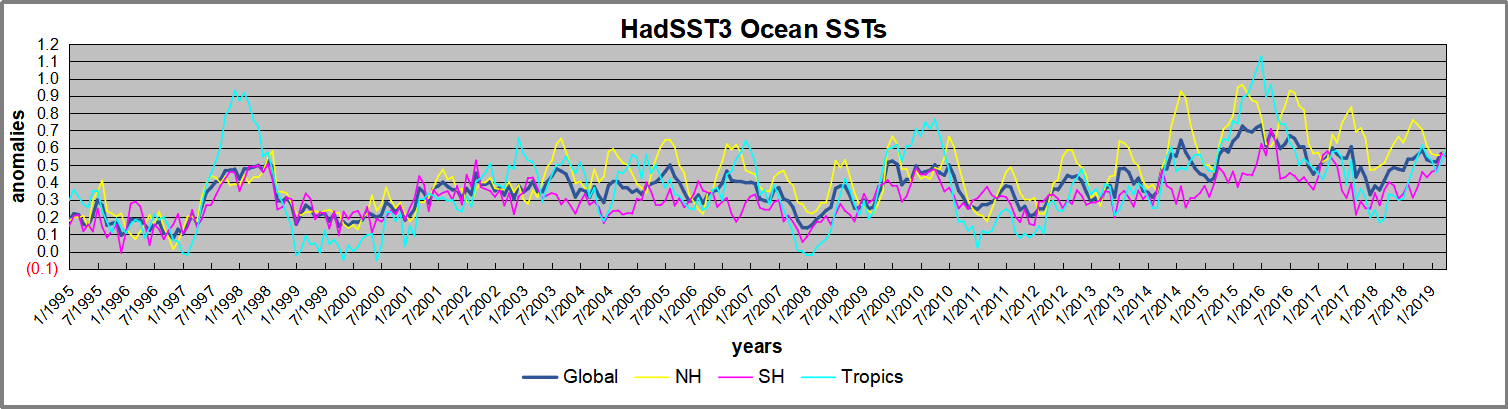
The graph below  is noisy, but the density is needed to see the seasonal patterns in the oceanic fluctuations.  Previous posts focused on the rise and fall of the last El Nino starting in 2015.  This post adds a longer view, encompassing the significant 1998 El Nino and since.  The color schemes are retained for Global, Tropics, NH and SH anomalies.  Despite the longer time frame, I have kept the monthly data (rather than yearly averages) because of interesting shifts between January and July.

Open image in new tab to enlarge.

1995 is a reasonable starting point prior to the first El Nino.  The sharp Tropical rise peaking in 1998 is dominant in the record, starting Jan. ’97 to pull up SSTs uniformly before returning to the same level Jan. ’99.  For the next 2 years, the Tropics stayed down, and the world’s oceans held steady around 0.2C above 1961 to 1990 average.

Then comes a steady rise over two years to a lesser peak Jan. 2003, but again uniformly pulling all oceans up around 0.4C.  Something changes at this point, with more hemispheric divergence than before. Over the 4 years until Jan 2007, the Tropics go through ups and downs, NH a series of ups and SH mostly downs.  As a result the Global average fluctuates around that same 0.4C, which also turns out to be the average for the entire record since 1995.

2007 stands out with a sharp drop in temperatures so that Jan.08 matches the low in Jan. ’99, but starting from a lower high. The oceans all decline as well, until temps build peaking in 2010.

Now again a different pattern appears.  The Tropics cool sharply to Jan 11, then rise steadily for 4 years to Jan 15, at which point the most recent major El Nino takes off.  But this time in contrast to ’97-’99, the Northern Hemisphere produces peaks every summer pulling up the Global average.  In fact, these NH peaks appear every July starting in 2003, growing stronger to produce 3 massive highs in 2014, 15 and 16.  NH July 2017 was only slightly lower, and a fifth NH peak still lower in Sept. 2018.  Note also that starting in 2014 SH plays a moderating role, offsetting the NH warming pulses. (Note: these are high anomalies on top of the highest absolute temps in the NH.)

What to make of all this? The patterns suggest that in addition to El Ninos in the Pacific driving the Tropic SSTs, something else is going on in the NH.  The obvious culprit is the North Atlantic, since I have seen this sort of pulsing before.  After reading some papers by David Dilley, I confirmed his observation of Atlantic pulses into the Arctic every 8 to 10 years.

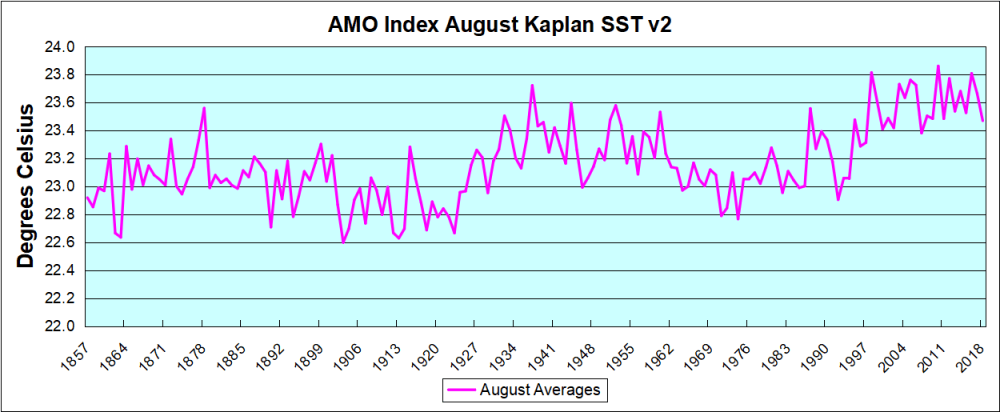
But the peaks coming nearly every summer in HadSST require a different picture.  Let’s look at August, the hottest month in the North Atlantic from the Kaplan dataset.
AMO August 2018

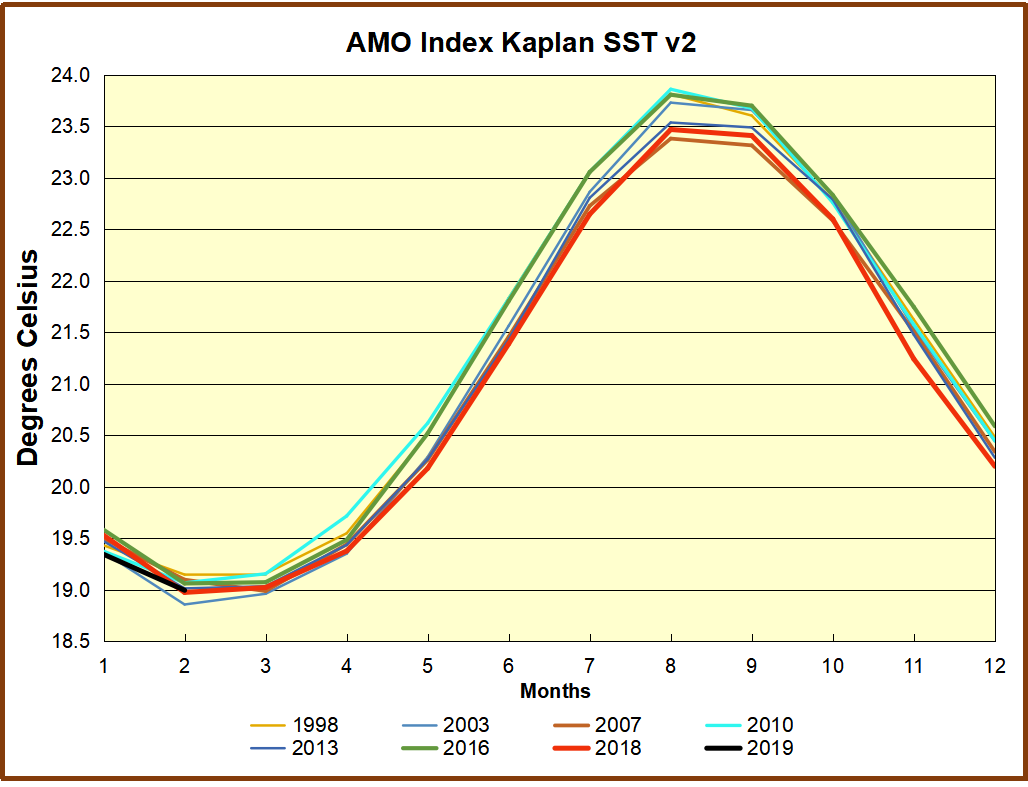
The AMO Index is from from Kaplan SST v2, the unaltered and not detrended dataset. By definition, the data are monthly average SSTs interpolated to a 5×5 grid over the North Atlantic basically 0 to 70N. The graph shows warming began after 1992 up to 1998, with a series of matching years since. Because the N. Atlantic has partnered with the Pacific ENSO recently, let’s take a closer look at some AMO years in the last 2 decades.

This graph shows monthly AMO temps for some important years. The Peak years were 1998, 2010 and 2016, with the latter emphasized as the most recent. The other years show lesser warming, with 2007 emphasized as the coolest in the last 20 years. Note the red 2018 line is at the bottom of all these tracks. The short black line shows that 2019 began slightly cooler than January 2018,  and in February matched the low SST of the previous year.

Summary

The oceans are driving the warming this century.  SSTs took a step up with the 1998 El Nino and have stayed there with help from the North Atlantic, and more recently the Pacific northern “Blob.”  The ocean surfaces are releasing a lot of energy, warming the air, but eventually will have a cooling effect.  The decline after 1937 was rapid by comparison, so one wonders: How long can the oceans keep this up? If the pattern of recent years continues, NH SST anomalies will likely cool in coming months.  Once again, ENSO will probably determine the outcome.

Postscript:

In the most recent GWPF 2017 State of the Climate report, Dr. Humlum made this observation:

“It is instructive to consider the variation of the annual change rate of atmospheric CO2 together with the annual change rates for the global air temperature and global sea surface temperature (Figure 16). All three change rates clearly vary in concert, but with sea surface temperature rates leading the global temperature rates by a few months and atmospheric CO2 rates lagging 11–12 months behind the sea surface temperature rates.”

Footnote: Why Rely on HadSST3

HadSST3 is distinguished from other SST products because HadCRU (Hadley Climatic Research Unit) does not engage in SST interpolation, i.e. infilling estimated anomalies into grid cells lacking sufficient sampling in a given month. From reading the documentation and from queries to Met Office, this is their procedure.

HadSST3 imports data from gridcells containing ocean, excluding land cells. From past records, they have calculated daily and monthly average readings for each grid cell for the period 1961 to 1990. Those temperatures form the baseline from which anomalies are calculated.

In a given month, each gridcell with sufficient sampling is averaged for the month and then the baseline value for that cell and that month is subtracted, resulting in the monthly anomaly for that cell. All cells with monthly anomalies are averaged to produce global, hemispheric and tropical anomalies for the month, based on the cells in those locations. For example, Tropics averages include ocean grid cells lying between latitudes 20N and 20S.

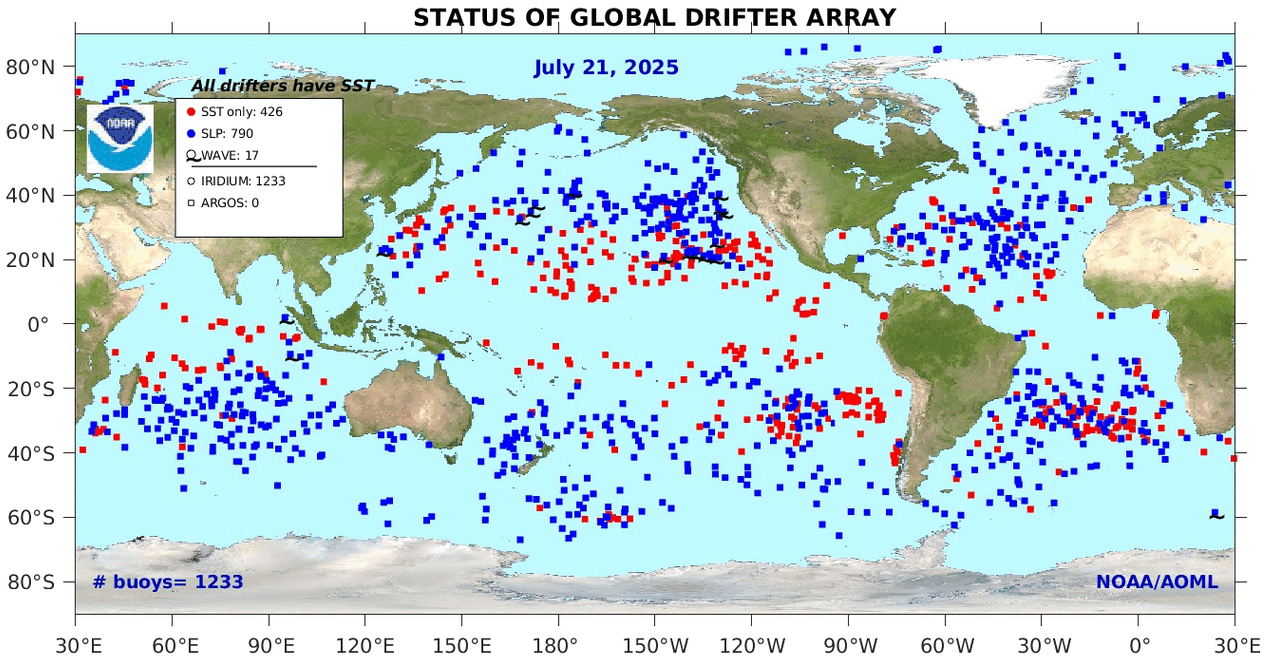
Gridcells lacking sufficient sampling that month are left out of the averaging, and the uncertainty from such missing data is estimated. IMO that is more reasonable than inventing data to infill. And it seems that the Global Drifter Array displayed in the top image is providing more uniform coverage of the oceans than in the past.

uss-pearl-harbor-deploys-global-drifter-buoys-in-pacific-ocean

USS Pearl Harbor deploys Global Drifter Buoys in Pacific Ocean


Economists as “Useful Idiots” for Green Socialists

Robert P. Murphy writes at Mises Wire Economists Have Been “Useful Idiots” for the Green Socialists. Excerpts in italics with my bolds.

In the old Soviet Union, the Communists allegedly used the term “useful idiot” to describe Westerners whose naïve political views furthered the Soviet agenda, even though these Westerners didn’t realize that they were being exploited in such fashion. It is in this context that I confidently declare that American economists have been useful idiots for the green socialists pushing extreme climate change policies. The radical environmentalists were quite happy to embrace the economic concepts of “Pigovian negative externalities” and a carbon tax in the past, but now that it is impossible for economic science to endorse their desired agenda, the activists have discarded the entire field as hopelessly out of touch. Economists who still support a carbon tax and other climate “mitigation policies” should be aware of the bigger picture.

Using the UN’s Own Document to Defeat the Climate Change Agenda

I have been making this case for years. For example, back in 2014 I used the latest (and still most recent) UN Intergovernmental Panel on Climate Change (IPCC) report to show that the then-popular climate change target of 2 degrees Celsius of warming could not be justified by the research summarized in the report. In other words, I used the UN’s own report to show that the popular climate change “cures” would be worse than the disease.

Yet even though they had spent years berating the critics of government action as “climate deniers” who rejected the “consensus science,” in this case — once they realized that the economic models of climate change wouldn’t support aggressive intervention—the environmental activists all of a sudden began pointing out all the things that the UN-endorsed studies left out. Rather than summarizing the cutting edge knowledge on climate science and mitigation policies, the IPCC document turned into a bunch of misleading nonsense that would give ammunition to deniers.

Nobel Laureate Inconveniently Blows Up the Paris Agreement

Last fall, we had another demonstration of the chasm between the actual research and the media/political treatment: William Nordhaus won the Nobel Prize for his pioneering work on climate change, on the same weekend that the UN released a “special report” advising governments on how to try to limit global warming to as little as 1.5 degrees Celsius.

There was just one little problem: Nordhaus’ Nobel-winning work clearly showed that the UN’s goal was insane. According to his model, it would literally be better for governments around the world to do nothing about climate change, rather than enact policies limiting warming to 1.5°C. Rather than aiming for a 1.5°C target, Nordhaus’ most recent model runs indicated that the “optimal” amount of warming to allow was closer to 3.5°C. (To an outsider this might not seem like a huge discrepancy, but it is absolutely gigantic in the context of the climate change policy debate. Many activists would confidently predict that even 2.5°C of warming would spell disaster for our grandchildren.)

The Guardian’s Slam Dunk

Ah, but I got the best confirmation of my quixotic position just this month, when the Guardian ran an editorial with this subtitle (my highlighting):

Does everybody see that? The people at the Guardian already know what the policy answers are, without needing any help from the economists.

Conclusion

My economist colleagues who continue to urge for a “carbon tax swap deal” in order to get rid of “onerous top-down regulations” and enact a simple “price on carbon” are fooling themselves. Whether it’s in a ballot initiative in Washington State—literally designed by an environmental economist, or in the wonky columns of Vox’s climate expert, in the political calculus of Nobel laureate Paul Krugman, or in the FAQ on the Green New Deal itself, the environmental activists in US politics are making it quite clear that they will not settle for such half-measures.

Market-friendly economists chiming in on the American political scene should stop being useful idiots for the green socialists. Whatever the possible merits of a theoretical carbon tax package—in which a regressive hike in energy prices is matched dollar-for-dollar with corporate income tax cuts, and decades of special-interest favoring regulations are thrown out the window in the zeal for efficiency—this is all a moot point. If market-friendly economists succeed in getting their readers to hold their noses and support a carbon tax, they will all learn quite quickly that the deal has been altered.

May Arctic Ice Mixed Signals

The image above shows that ice began to disappear in earnest during May.  On day 120 (April 30), Bering and Okhotsk Seas (left bottom and far left) were already mostly water.  Elsewhere the first 10 days added some water, and then more rapidly in the last 20 days. The Central Arctic core is intact, including East Siberian and Laptev Sea on the Russian side (left) and Canadian Archipelago (center right) and Hudson Bay (far right).

Meanwhile Beaufort and Chukchi (bottom center) are opening up, along with Baffin (center below Greenland).

The graph below shows a surprising discrepancy between MASIE and SII appearing in May.

Note that the  NH ice extent 12 year average declined from 13.6M km2 to 11.8M km2 during May.  MASIE 2019 shows about the same decline from 12.7M km2 to 10.9M km2.  That track matches 2016, but well below other years.  Interestingly SII showed a much slower rate of ice extent loss, starting nearly the same as MASIE, but ended the month 600k km2 higher. and matching 2018. Some thoughts later on why the discrepancy and the below average extent this year.

Region 2019151 Day 151 
Average
2019-Ave. 2007151 2019-2007
 (0) Northern_Hemisphere 10939662 11844796 -905134 11846659 -906997
 (1) Beaufort_Sea 848114 1000716 -152602 1059461 -211347
 (2) Chukchi_Sea 738661 872393 -133732 894617 -155956
 (3) East_Siberian_Sea 1059805 1069104 -9299 1069198 -9393
 (4) Laptev_Sea 820403 831752 -11349 754651 65752
 (5) Kara_Sea 760439 849220 -88780 895678 -135239
 (6) Barents_Sea 268245 330718 -62473 323801 -55556
 (7) Greenland_Sea 500951 575983 -75031 591919 -90968
 (8) Baffin_Bay_Gulf_of_St._Lawrence 756455 931604 -175149 934257 -177802
 (9) Canadian_Archipelago 789111 748381 40730 818055 -28944
 (10) Hudson_Bay 1103650 1104185 -535 1077744 25906
 (11) Central_Arctic 3224969 3218320 6649 3230109 -5141
 (12) Bering_Sea 27192 135798 -108606 112353 -85161
 (13) Baltic_Sea 0 188 -188 0 0
 (14) Sea_of_Okhotsk 40429 105988 -65559 83076 -42647

The table shows where the ice is distributed to make the 7.6% defict to average.  The Pacific Basins of Bering and Okhotsk are ~170k km2 of the difference.  Baffin is 175k km2 below average. Chukchi and Beaufort are the other two large contributors to the 905k km2 deficit.

What’s Going on with Arctic Ice in May?

From Susan Crockford at Polar Bear Science

This is the time year when declining sea ice gets some people all worked up. However, declining ice is normal at this time of year and there is always variation in where the most open water appears first. At this time of year, there isn’t much ice ‘melt’ going on. Rather, what we are seeing is the opening up of shore leads and polynyas by winds.


A polynya (po·lyn·ya) is an area of year-round open water surrounded by heavier, thicker sea ice cover. Polynyas are marine oases in the Arctic, their nutrient-rich waters providing a place to feed, mate and overwinter for a wide range of species.

The North Water Polynya is fed by freshwater from melting ice caps in Greenland and Canada that mix with Pacific water columns snaking through underwater channels in the Northwest Passage and Lancaster Sound. These icy waters merge with a warmer Atlantic current and are carried up the west coast of Greenland.

Dr. Judah Cohen AER Arctic Oscillation and Polar Vortex Analysis and Forecasts
May 24, 2019 says:

Last year at this time, the Arctic was dominated by below normal geopotential height anomalies and this year the Arctic is dominated by above normal geopotential height anomalies. High heights/blocking in the Arctic favors troughing and cooler temperatures in the mid-latitudes and in that regard the high heights in the Arctic, especially on the North Atlantic side, favor troughing and relatively cool temperatures in Europe. If high heights/blocking in the Arctic especially near Greenland, can persist for much of the summer then parts of Europe could experience below normal temperatures this summer.

All forecasts predict a relatively warm summer for East Asia. Again, I think the trend is your friend in East Asia as well and the warm forecast is likely to verify. However as in Europe, persistent high heights/blocking to the north could flip the summer from hot to cool at least regionally.

Finally, if polar cap geopotential height anomalies remain on the warm/positive side for much of the summer, this could result in accelerated sea ice loss relative to recent summers.

Powerful Computer Model

COMPUTER DIAGNOSIS

One day Bill complained to his friend that his elbow really hurt. His friend suggested that he go to a computer at the drug store that can diagnose anything quicker and cheaper than a doctor.

”Simply put in a sample of your urine and the computer will diagnose your problem and tell you what you can do about it. It only costs $10.” Bill figured he had nothing to lose, so he filled a jar with a urine sample and went to the drug store. Finding the computer, he poured in the sample and deposited the $10. The computer started making some noise and various lights started flashing. After a brief pause out popped a small slip of paper on which was printed: “You have tennis elbow. Soak your arm in warm water. Avoid heavy lifting. It will be better in two weeks.”

Later that evening while thinking how amazing this new technology was and how it would change medical science forever, he began to wonder if this machine could be fooled. He mixed together some tap water, a stool sample from his dog and urine samples from his wife and daughter. To top it off, he masturbated into the concoction. He went back to the drug store, located the machine, poured in the sample and deposited the $10. The computer again made the usual noise and printed out the following message:

“Your tap water is too hard. Get a water softener. Your dog has worms. Get him vitamins. Your daughter is using cocaine. Put her in a rehabilitation clinic. Your wife is pregnant with twin girls. They aren’t yours. Get a lawyer. And if you don’t stop jerking off, your tennis elbow will never get better.”

From Climate Change, Holy Government Deliver us!

The nearly religious appeal to government to fix the “climate problem” is childlike, even in the mouths of progressive politicians.  James L. Payne writes at the The Foundation for Economic Education How to Talk to Children about Climate Change.  Excerpts in italics with my bolds.

If in coming years we hope to curb the naive governmental interventions that bring so much ruin to the world, we need to address this belief in the efficacy of government.

We smile at seeing those young faces waving placards out in the rain, urging action on the problem of climate change. But our smile is tinged with frustration, with the feeling that the youngsters live in another dimension and that we don’t know how to reach them intellectually.

How They See It

The natural impulse is to want to explain how crushingly complicated is this issue. First, we point out, there is the uncertainty about the connection between human-released CO2 and storms, floods and fires, and all the other bad things that might happen. Then we want to explain that cutting down on CO2 is not easy, that everyone will have to make great sacrifices.

One has to weigh the different possible benefits that might come from stopping (or slowing) global warming against the costs of trying to counter it. This cost-benefit analysis involves a bundle of economic and moral questions. (For a good overview of the complexities of the climate change issue, read former NASA scientist Roy W. Spencer’s 2008 book Climate Confusion.) For example, would saving butterfly X from extinction (assuming we could guarantee it) counterbalance the harm done to the working poor by taking $1,000 a year from each of them in a carbon tax? And so on.

However, I think this impulse to debate the complexities of the issue is misguided. The activists do not base their position on reasoning and calculations. The Climate Kids don’t come to their demonstrations pushing wheelbarrows full of cost-benefit analyses. Most of them don’t even know what cost-benefit analysis is. More importantly, they don’t think they need to know about it.

This is because, in their way of looking at the world, it is not their responsibility to fix society’s problems. That task belongs to a higher power, to government. Their mission is simply to beseech this higher power to act. Once it decides to act, they believe, government has all the expertise needed to make the correct calculations and the ability to craft policies that solve the problem without significantly hurting anybody—well, anybody except the very rich.

We should not be all that surprised by their deep, instinctive trust of government. It is a social predisposition, one that affects all of us to some degree. The belief in government’s wisdom and power is imparted to children very early in life as an article of faith, like the belief in Santa Claus. As children grow up, they begin to notice that government has flaws and that political leaders are not as wise as originally supposed. As a result, their faith in government declines somewhat, so that by age 30, as traditional wisdom has it, most people grow somewhat skeptical about government’s ability to cure the world’s problems.

But not everyone, and especially not today’s climate activists. Faced with a staggeringly complex cost-benefit analysis that has most of us (older) folks scratching our heads, they are brimming with certainty that catastrophe is coming, and government can fix whatever is wrong.

Government Can’t Save the Planet

We were given a telling illustration of this simplistic faith earlier this year when 29-year-old US Representative Alexandria Ocasio-Cortez presented her “Green New Deal” proposal. This House resolution mentions dozens of dangers and problems that she believes to be connected with climate change, from mass migrations, wildfires, and the loss of coral reefs to declining life expectancy, wage stagnation, and the racial wealth divide.

How are these all problems to be solved? Ms. Ocasio-Cortez does not propose any specific law or regulation. She does not advocate, let’s say, a 16 percent carbon tax and assure us that, according to her calculations, this measure will save 61 percent of the coral reefs, and prevent 53 percent of wildfires while reducing the income of the poor by only 8.2 percent.

Like the schoolchildren demonstrating in the street, she leaves the task of figuring out the specific answers to a higher power. Indeed, her resolution begins with this appeal to the higher power: “It is the duty of the Federal Government to create a Green New Deal.” Thus runs the thoughtless faith in government, a faith so deep that even an activist who literally is the government herself looks to “government” to solve problems she can’t begin to analyze.

testers-will-become-extinct-600x330

If in coming years we hope to curb the naive governmental interventions that bring so much ruin to the world, we need to address this belief in the efficacy of government. We need to urge our young idealists to remember that government is not a god with magical powers to fix any problem we notice but an imperfect agency composed of fallible human beings. One way to begin this conversation is to pose this question: “Given what you know about the people who have been in charge of government, is it reasonable to expect, in the future, a high level of rationality and responsibility from government?”

Dr. James L. Payne is a research fellow at the Independent Institute and author. He earned his PhD in political science from the University of California at Berkeley, and he has taught political science at a number of universities including Yale University.

Summary

As the stool above shows, the climate change package sits on three premises. The first is the science bit, consisting of an unproven claim that observed warming is caused by humans burning fossil fuels. The second part rests on impact studies from billions of research dollars spent uncovering any and all possible negatives from warming. And the third leg is climate policies showing how governments can “fight climate change.”

It has warmed since the Little Ice Age with many factors involved, most of which are orders of magnitude more powerful than CO2.  Secondly, the last 1.5C of warming was a boon to humans and nature, and the next 1.5C will likely also benefit the world.  Finally it is naive to believe in government fixing the climate to prevent further warming.  Expensive, intermittent wind and solar power is the proposed solution, which accounts for just 2% of global energy consumed, and has proven disastrous anywhere it has been tried.  In the meantime the children are appeased by declaring a “climate emergency.”  Wake up and get real.