CDC: Crushing Dissent for Correctness

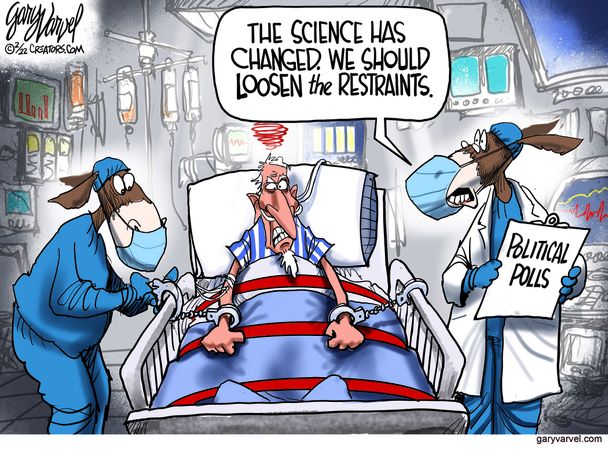
Marty Makary and Tracy Beth Høeg write at commonsense.news U.S. Public Health Agencies Aren’t ‘Following the Science,’ Officials Say.  It’s another stark example how politicizing institutions by requiring fidelity to the party line leads to paralysis and dysfunction.  Excerpts in italics with my bolds and added images.

‘People are getting bad advice and we can’t say anything.’
The calls and text messages are relentless. On the other end are doctors and scientists at the top levels of the NIH, FDA and CDC. They are variously frustrated, exasperated and alarmed about the direction of the agencies to which they have devoted their careers.

“It’s like a horror movie I’m being forced to watch and I can’t close my eyes,” one senior FDA official lamented. “People are getting bad advice and we can’t say anything.”

That particular FDA doctor was referring to two recent developments inside the agency. First, how, with no solid clinical data, the agency authorized Covid vaccines for infants and toddlers, including those who already had Covid. And second, the fact that just months before, the FDA bypassed their external experts to authorize booster shots for young children.

That doctor is hardly alone.

At the NIH, doctors and scientists complain to us about low morale and lower staffing: The NIH’s Vaccine Research Center has had many of its senior scientists leave over the last year, including the director, deputy director and chief medical officer. “They have no leadership right now. Suddenly there’s an enormous number of jobs opening up at the highest level positions,” one NIH scientist told us. (The people who spoke to us would only agree to be quoted anonymously, citing fear of professional repercussions.)

The CDC has experienced a similar exodus. “There’s been a large amount of turnover. Morale is low,” one high level official at the CDC told us. “Things have become so political, so what are we there for?” Another CDC scientist told us: “I used to be proud to tell people I work at the CDC. Now I’m embarrassed.”

Why are they embarrassed? In short, bad science.

The longer answer: that the heads of their agencies are using weak or flawed data to make critically important public health decisions. That such decisions are being driven by what’s politically palatable to people in Washington or to the Biden administration. And that they have a myopic focus on one virus instead of overall health.
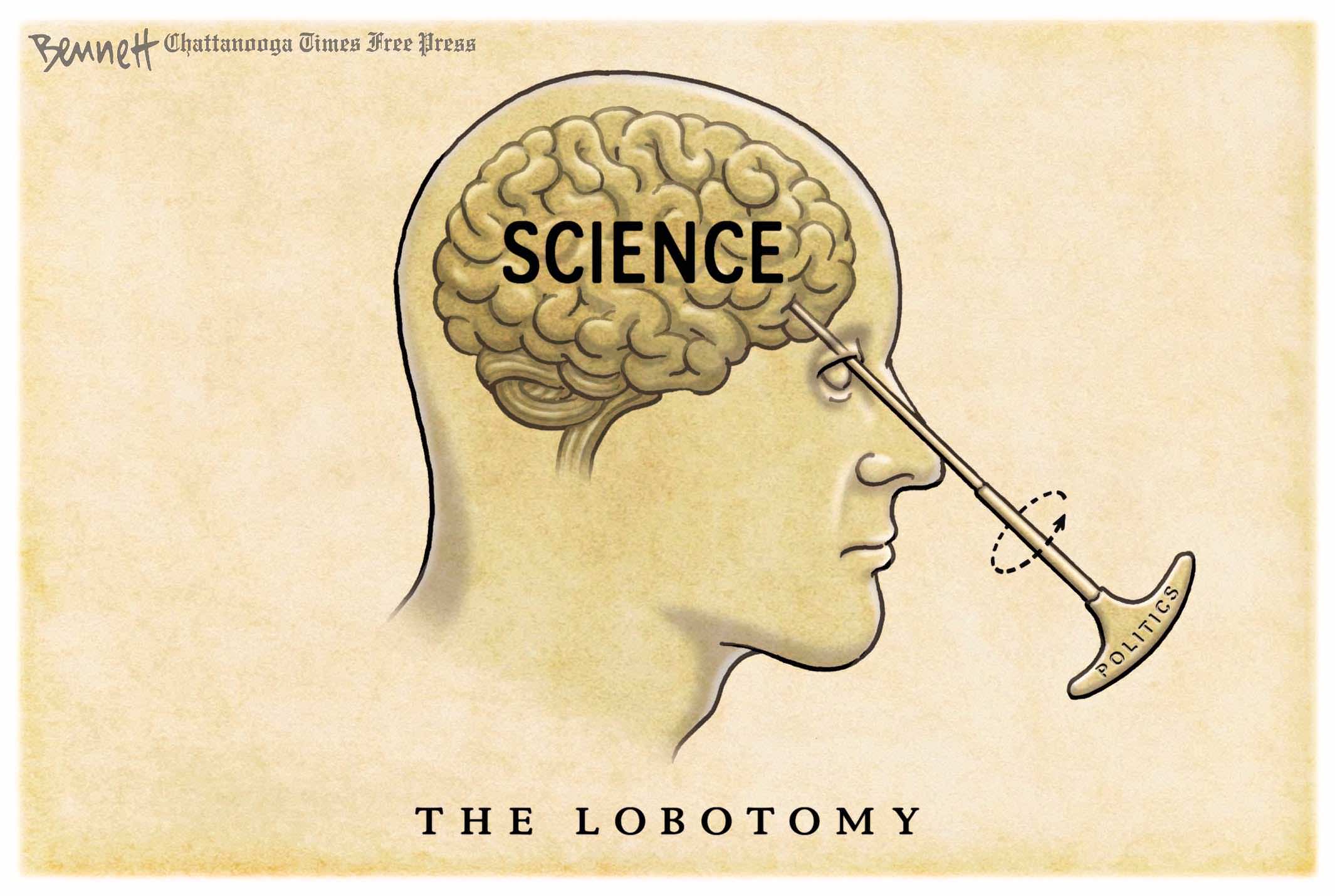
Nowhere has this problem been clearer—or the stakes higher—than on official public health policy regarding children and Covid.

First, they demanded that young children be masked in schools. On this score, the agencies were wrong. Compelling studies later found schools that masked children had no different rates of transmission. And for social and linguistic development, children need to see the faces of others.

Next came school closures. The agencies were wrong—and catastrophically so. Poor and minority children suffered learning loss with an 11-point drop in math scores alone and a 20% drop in math pass rates. There are dozens of statistics of this kind.

Then they ignored natural immunity. Wrong again. The vast majority of children have already had Covid, but this has made no difference in the blanket mandates for childhood vaccines. And now, by mandating vaccines and boosters for young healthy people, with no strong supporting data, these agencies are only further eroding public trust.

One CDC scientist told us about her shame and frustration about what happened to American children during the pandemic: “CDC failed to balance the risks of Covid with other risks that come from closing schools,” she said. “Learning loss, mental health exacerbations were obvious early on and those worsened as the guidance insisted on keeping schools virtual. CDC guidance worsened racial equity for generations to come. It failed this generation of children.”

An official at the FDA put it this way: “I can’t tell you how many people at the FDA have told me, ‘I don’t like any of this, but I just need to make it to my retirement.’”

Three weeks ago, the CDC vigorously recommended mRNA Covid vaccines for 20 million children under five years of age. Dr. Rochelle Walensky, director of the CDC, declared that the mRNA Covid vaccines should be given to everyone six months or older because they are safe and effective.

The trouble is that this sweeping recommendation was based on extremely weak,
inconclusive data provided by Pfizer and Moderna.

Start with Pfizer. Using a three-dose vaccine in 992 children between the ages of six months and five years, Pfizer found no statistically significant evidence of vaccine efficacy. In the subgroup of children aged six months to two years, the trial found that the vaccine could result in a 99% lower chance of infection—but that they also could have a 370% increased chance of being infected. In other words, Pfizer reported a range of vaccine efficacy so wide that no conclusion could be inferred. No reputable medical journal would accept such sloppy and incomplete results with such a small sample size. More to the point, these results should have given pause to those who are in charge of public health.

Referring to Pfizer’s vaccine efficacy in healthy young children, one high-level CDC official—whose expertise is in the evaluation of clinical data—joked: “You can inject them with it or squirt it in their face, and you’ll get the same benefit.”

Moderna’s results—they conducted a study on 6,388 children with two doses—were not much better. Against asymptomatic infections, they claimed a very weak vaccine efficacy of just 4% in children aged six months to two years. They also claimed an efficacy of 23% in children between two and six years old—but neither result was statistically significant. Against symptomatic infections, Moderna’s vaccine did show efficacy that was statistically significant, but the efficacy was low: 50% in children aged six months to two years, and 42% in children between two and six years old.

Then there’s the matter of how long a vaccine gives protection. We know from data in adults that it’s generally a matter of months. But we have no such data for young children.

“It seems criminal that we put out the recommendation to give mRNA Covid vaccines to babies without good data. We really don’t know what the risks are yet. So why push it so hard?” a CDC physician added. A high-level FDA official felt the same way: “The public has no idea how bad this data really is. It would not pass muster for any other authorization.”

This isn’t the first time that Covid vaccines recommendations based on scant evidence have been pushed through these agencies.

Most recently, back in May, the lack of clinical evidence for booster shots in young people created a stir at the FDA. The White House promoted it hard even before FDA regulators had seen any data. Once they saw the data, they weren’t impressed. It showed no clear benefit against severe disease for people under 40.

The FDA’s two top vaccine regulators—Dr. Marion Gruber, director of the FDA’s vaccine office, and her deputy director, Dr. Philip Krause—quit the agency last year over political pressure to authorize vaccine boosters in young people. After their departure they wrote scathing commentaries explaining why the data did not support a broad booster authorization, arguing in the Washington Post that “the push for boosters for everyone could actually prolong the pandemic,” citing concerns that boosting based on an outdated variant could be counterproductive.

“It felt like we were a political tool” a CDC scientist told us about the issue. That insider went on to explain that he got vaccinated early but chose not to get boosted based on the data. Ironically, that person was unable to go on a trip with a group of parents because proof of being boosted was required. “I asked for someone to show me the data. They said the policy was based on the CDC recommendation.”

As one NIH scientist told us: “There’s a silence, an unwillingness for agency scientists to say anything. Even though they know that some of what’s being said out of the agency is absurd.”

That was a theme we heard over and over again—people felt like they couldn’t speak freely, even internally within their agencies. “You get labeled based on what you say. If you talk about it you will suffer, I’m convinced,” an FDA staffer told us. Another person at that agency added: “If you speak honestly, you get treated differently.”

It is statistically impossible for everyone who works inside of our health agencies to have 100% agreement about such a new and knotty subject. The fact that there is no public dissent or debate can only be explained by the fact that they are—or at least feel that they are—being muzzled.

It is an ancient, moral requirement of our profession to speak up when we believe questionable treatments are being proposed. It is also good for the public. Imagine, for example, a world in which those scientists who suggested that masking for children and school lockdowns were worse for public health were not smeared but instead debated?

The official public health response to Covid has undermined
the public’s belief in public health itself.

This is a terrible outcome with potentially disastrous consequences. For one thing, because of these sloppy and politicized policies, we run the risk of parents rejecting routine vaccines for their children—ones we know are safe, effective and life-saving.

The leaders of the CDC, the FDA and the NIH should welcome internal discussion—even dissension—based on the evidence. Silencing physicians is not “following the science.” Less absolutism and more humility by the men and women running our public health agencies would go a long way in rebuilding public trust.



Good Riddance Modern Monetary Theory


MN Gordon explains the financial debacle in his Economic Prism article Modern Monetary Theory Bites the Dust Excerpts in italics with my bolds and added images.

Just a couple of years ago Modern Monetary Theory (MMT) was all the rage. But that was before rampant money printing triggered an official consumer price inflation rate, as measured by the consumer price index (CPI), of 9.1 percent.

Hindsight is always 20/20. Yet, sometimes, foresight is 20/20 too. In the case of MMT, practically everyone could see there would be hell to pay…even through broken spectacles.

The future consequences were crystal clear. Printing up money and passing it out around town, thus entitling people to claims on goods and services without commensurate production, is fundamentally foolish, reckless, and outright suicidal.

Only academics and central bankers were blind to the arrival of today’s inflation.

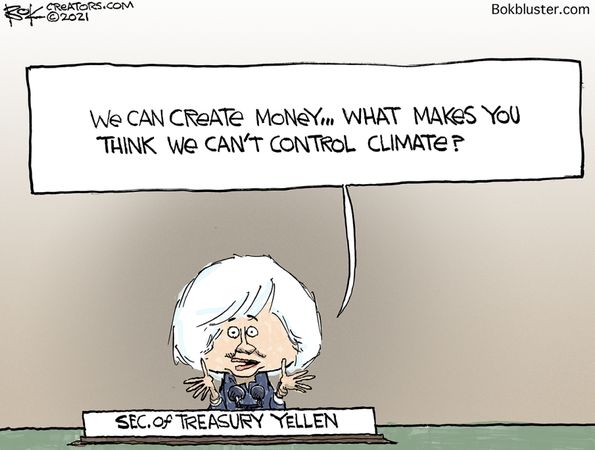
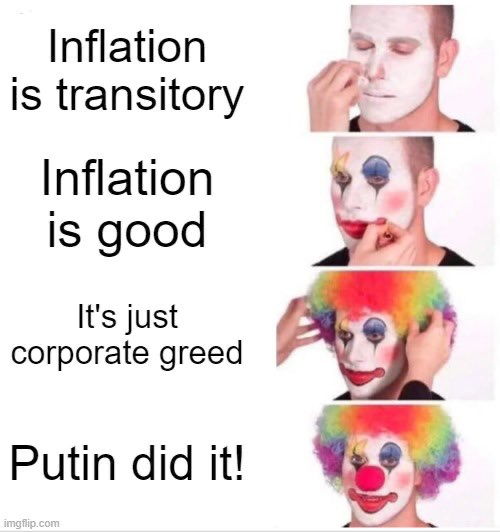
If you recall, as inflation was heating up during the second part of 2021, Federal Reserve Chairman Jerome Powell and Treasury Secretary Janet Yellen told everyone it was transitory. Then, as inflation continued unabated, Powell finally admitted in December 2021 that inflation was no longer transitory and that the word needed to be retired.

Powell and Yellen have their finger prints all over this consumer price inflation mess. Yet they didn’t act alone. Advocates of MMT cheered on their mass money printing with righteous assurances. They said inflation wouldn’t be a problem.

But now that consumer price inflation is raging at a 40 year high, where did the promoters of MMT go? Why aren’t they tackling inflation with the same enthusiasm?

Fanciful schemes offering the more abundant life always yield the unsuspecting and outright gullible to the assurances of dreamers, schemers, theorists, reformers, and scoundrels of all stripes. Promises of something for nothing are too intoxicating to pass up.

For several years Alexandria Ocasio-Cortez, Bernie Sanders, and other American socialists, served up fresh pitchers of grape Flavor-Aid laced with MMT as a solution to all the downtrodden’s problems. To join the cult all you had to do was drink from their cup.

MMT, as you may have heard, offers booms without busts, and money without limits.

The nuts and bolts of the theory state that a government that creates its own money, like the USA, cannot default on its dollar based debts. Therefore, the USA can print all the money it needs to amplify the economy – debts and deficits be damned.

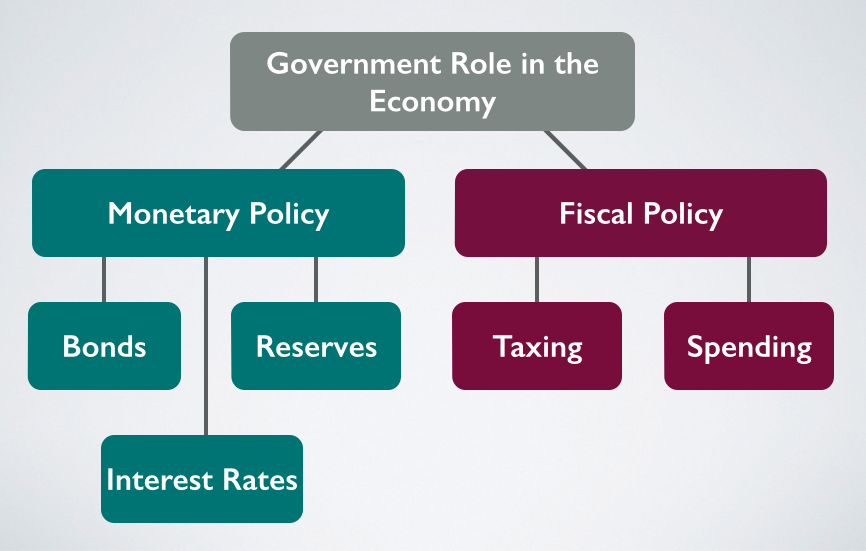
Should such overt dollar debasement lead to price inflation, MMT has just the solution. Raise taxes and issue bonds to remove the excess money from circulation.

Taxes, you see, are not for funding government spending. Rather, they’re for throttling back the money supply to attain the magical balance of growth and inflation. With MMT, big government statists can hatch boondoggles first, and leave taxation for later.

The whole theory, or lack thereof, is abundantly retarded. Yet in early 2020, something abundantly retarded was precisely what was needed.

When quantitative tightening (QT) was abruptly terminated and reversed in September 2019, the Fed’s balance sheet was $3.7 trillion. Soon after, in the face of the fabricated coronavirus hysteria, the Fed jacked up its balance sheet by $5.2 trillion to a high of $8.9 trillion. A good part of this took place between March and June 2020.

What happened next…

Cult of MMT

At first, the consequences were nonexistent. In February 2021, after nearly a year of monster money printing, the CPI showed an annual rate of inflation of just 1.7 percent. MMT supporters were riding high.

By that point, the U.S. government, and by extension the American people, were fully committed to a program of currency debasement to finance government mandated lockdowns. Washington was also attempting to inflate away its debt burden. The authorities prefer an implicit default via inflation as opposed to missing bond payments to creditors.

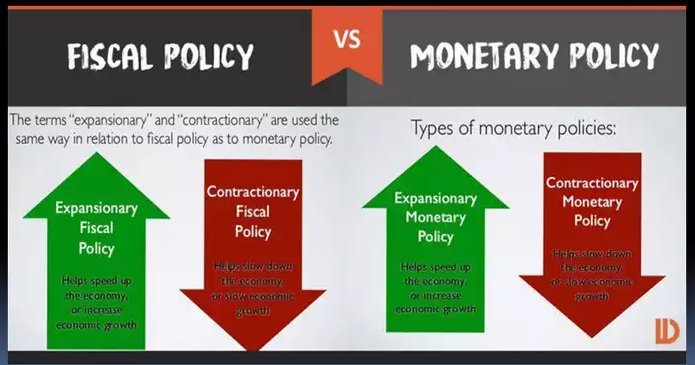
Countercyclical stimulus spending. Interest rate suppression. Quantitative easing. Elastic currencies. Money shuffling. Inflation targeting. Smoke and mirrors.

…all so governments, and individuals, can spend well above what they can afford, and then welsh on the debt without consequences.

During the rampant money printing of 2020 and 2021 Stephanie Kelton emerged as the MMT messiah. In June 2020, her book, “The Deficit Myth: Modern Monetary Theory and the Birth of the People’s Economy,” was published.

It quickly became a New York Times Bestseller. And it also received rave reviews from unlikely places. Upon reading the book, gangsta rap pioneer, Ice Cube, for example, tweeted on September 3, 2020, the following means of salvation:

“America loves to cry broke. But in America money does grow on trees.”

“America is a currency creator so there’s no reason for people to live like this. Government and the banks have made a deal to keep the people in debt. They always say if you print money it will cause inflation. They just printed 3 trillion. Little or no inflation.”

Does a 9.1 percent CPI reading, with an unofficial reading of nearly 18 percent,
constitute little or no inflation?

Modern Monetary Theory Bites the Dust

Currently, the Fed’s balance sheet is roughly $8.9 trillion. And consumer price inflation is raging at a 40 year high. What’s more, the Fed is hiking rates with the purpose of containing inflation. But the only way for the Fed to contain inflation is to trigger a massive, 1930s-style depression.

The cult of MMT, like most cults, has proven to be lacking for the general populace. Instead of bringing wealth and abundance to the American worker it has brought wealth and abundance to the elites and central planners who first receive and direct the flow of the newly minted fake money.

Moreover, like most cults, when MMT’s leaders are needed most, they conveniently disappear.

Is Kelton not a true believer in MMT, after all? Because if Kelton was a true believer, wouldn’t she be advocating for higher taxes right now?

That’s how MMT is supposed to work, right? When inflation heats up, taxes are supposed to be raised to remove excess money from circulation? Isn’t that the MMT solution to inflation?

Kelton, however, is not banging the drum for higher taxes. Perhaps, this is because higher taxes are perennially unpopular. Similarly, promoting money printing is much more hip and cool than promoting higher taxes.

Did MMT just bite the dust?

For now, it appears to have. We suspect it will be gone until a massive depression wipes away inflation.

Then it will be resurrected to great folly so the money printers can really get to work.
Background on Magical Money Theory

Pardon me for mixing up acronyms.  Somehow the increasing mention of MMT (Modern Monetary Theory) made me think of the classic Beatles trip album.  Perhaps that association was triggered by today’s suddenly fashionable socialists relying on MMT to pay for their “everything free for everybody” political visions.  (Maybe one of the Ms could stand for ‘mushrooms”.)

A primer on what MMT is and is not, is an article by Karl Smith (descendant of Adam?) in National Review The Uses and Abuses of Modern Monetary Theory.  Excerpts in italics with my bolds.

MMT advocates overlook its flaws.

Newly elected representative Alexandria Ocasio-Cortez (D., N.Y.) argued on Monday that Modern Monetary Theory (MMT) ought to be a part of the conversation when it comes to funding major social-policy initiatives, such as her proposed Green New Deal. Stephanie Kelton, former economic advisor to Bernie Sanders, has likewise insisted that MMT should replace our current thinking about government finance. Yet what is MMT? And is it really as revolutionary as its proponents claim?

At its heart, MMT is a way of describing the federal budget and the Federal Reserve as if they were unified under a single executive authority. In describing the system so, the dangers of federal deficit spending are no longer that it crowds out private investment and slows economic growth, but that it leads potentially to excess inflation.

Yet Modern Monetary Theorists then invariably argue that inflation is not, and indeed could not be, a major problem for the United States. Many hard-core adherents go so far as to propose a job-guarantee program paid for by the federal government, which, they argue, will virtually eliminate both unemployment and the possibility of runaway inflation.

The tenets of MMT should be familiar to an older generation of fiscal conservatives. Before the 1980s, central banks such as the Federal Reserve were controlled far more directly by their governments. As a result, they could — and often did — bail out profligate governments by simply printing more money to cover the government’s debt.

This led to massive currency devaluation, runaway inflation, or both. In the early 1980s, however, central banks in the developed world were granted independence in the hopes that doing so would stop the spiraling inflation of the late 1960s and 1970s.

In the U.S., Fed chairman Paul Volcker was spectacularly successful at this. So were, to varying degrees, most central banks in the developed world. Some holdouts existed, notably in Southern Europe — a situation that would come back to haunt them decades later.

But MMT waves away the significance of these developments, instead focusing attention on several technical facts. First, when the federal government wants to spend money, it does so by having the Treasury issue checks. These checks are processed by the Federal Reserve Bank of New York (FRBNY). Second, the FRBNY does this literally by marking up the value of digital reserves in an account belonging to the check recipients’ bank and marking down the account of the Treasury by an equal amount.

These two operations are, in theory, separate. There is no technical reason why the FRBNY has to mark down the Treasury account. It only does so because laws require the federal government to meet all of its obligations. Such laws, argue Modern Monetary Theorists, cannot bind Congress, which after all has the power to alter them.

MMT advocates argue that Congress should ask the Treasury to sell Treasury bonds to cover any of its outstanding obligations. This is not, however, because they think it is necessary to fulfill the government’s obligations, but because doing so would help stabilize the macroeconomy.

All well and good. But at some point, won’t the debt become so large that merely paying interest on it will require issuing additional debt? Won’t this process feed on itself until all the borrowing capacity in the economy is soaked up?

No, MMT advocates reply, because the government can simply stop issuing debt — meeting its obligations instead by having the Federal Reserve simply create money on its behalf.

Indeed, this is what distressed governments have traditionally done when their liabilities add up — and the result has typically been hyperinflation. Modern Monetary Theorists argue that this need not be the case. Their exact reasoning differs.

At times, they argue that hyperinflation only occurs in countries that borrow from abroad in debt denominated in a foreign government’s currency. I don’t know enough about every single instance of hyperinflation to verify this claim, but it is true that the worst incidences of hyperinflation are typically associated with borrowing from abroad.

When a country prints money in an attempt to fund the government, the international exchange value of its currency collapses. If the country owes debt denominated in a foreign currency, that debt becomes more difficult to pay down as its own currency falls. Then the country has to print even more money to meet its debt payments, which of course causes the exchange value of its currency to fall further, creating a vicious circle that ends in hyperinflation.

Modern Monetary Theorists argue that this can’t happen to the United States because all of our debt is in the form of Treasury bonds that are denominated in dollars. If the international exchange value of the dollar falls, that does not change the value of our debt.

It does, however, mean that foreigners will be repaid in a currency that will be worth much less to them. Foreign bondholders are not stupid; they would regard this as a type of unofficial default. After experiencing this type of default through currency devaluation, they would be much less willing to buy Treasury bonds or indeed any type of American security again. This is precisely the situation that Italy, Spain, and Greece found themselves in during the 1980s.

Both countries had regularly devalued their currency as a way to get out from underneath foreign debts and were increasingly locked out of international markets. The euro was created, at least in part, in an effort to solve this. It could ultimately be printed only with the authority of the European Central Bank, meaning that neither Italy, Spain, Greece, nor any other member country could avert a debt crisis by devaluing its currency. Instead, they would have to raise taxes to meet their obligations.

That brings us to the second argument MMT advocates invoke when arguing that we should not worry about excessive debt leading to inflation: If inflation becomes a problem, the federal government can simply raise taxes, slowing down the economy which, in turn, will cool inflation.

But there are two problems with this approach. First, it is political suicide. At a time when consumers are facing ever-rising prices, it would seem cruel beyond measure to slap them with a tax increase. Very few governments would have the nerve to do this. If anything, history shows us that governments will instead resort to spending money on subsidies to ease the burden of rapidly rising prices.

Second, committing to this approach would risk an economic calamity. In 1973, OPEC placed an embargo on the United States that resulted in the price of oil quadrupling overnight. The sharply rising price of oil led both to a slowing economy and an increase in inflation — a dangerous mix.

A slowing economy lowers tax revenues, making it more difficult for the government to meet its debt payments. Suppose, at a time when the economy was slowing but inflation was rising, the U.S. government had firmly committed itself to MMT principles and refused to waver. In that case, it would not be able to resort to money printing because inflation was rising. Instead, it would be obligated to raise taxes both to meet its debt payments and to slow the rate of inflation.

Sharp increases in taxes during a recession, however, can be self-defeating. This is exactly the situation that Greece, and to a lesser extent Italy and Spain, found themselves in during the Great Recession. The crises lowered revenue, which worsened their budget deficits.

As a result, the government was forced to raise taxes and lower spending during the recession. This caused the economy to contract further, which caused tax revenue to fall so much that the budget deficit actually rose. In the case of Greece, this self-defeating cycle of higher taxes and lower revenues caused the government to ultimately default on its debts anyway. That, of course, worsened the economic crisis the country was already facing.

In the face of such a calamity, no sovereign government would or perhaps even should refrain from devaluing its currency and inflating away at least some of its debts. For that reason, governments have designed institutions to avoid falling into this trap.

In the United States, that means both making the Federal Reserve independent and not subject to the direct authority of the Treasury, and requiring the Treasury to meet all of its obligations with cash raised from tax revenues or Treasury-bond sales. In effect, we’ve outlawed the methods of Modern Monetary Theory — and with good reason.

KARL SMITH — Karl Smith is a senior fellow at the Niskanen Center. He was previously Assistant Professor of Economics and Government at the University of North Carolina (UNC) School of Government.

Footnote: (h/t Mark Krebs)

For more on Cortez see Why Cortez Can’t Be Wrong

For more on how MMT plays out when applied in a nation, see a short review of the Brazil experiment:

Revenge of “Emotional Intelligence” Oxymorons

With the ongoing imposition of Critical Race and Gender theories along with identity politics and social justice warfare in the streets, it is clear that people imbued with postmodern progressive ideology have succumbed to a basic dichotomy (a la Animal Farm):  “Feelings Good, Reason Bad.” This is a fundamental overturning of western civics and consistent with people increasingly replacing ethics with immediate gratification, ie, reduction to the pain/pleasure principle of animals.

Warning: This post will express sincere thoughts that are politically incorrect, for example accepting that males and females have differing predominant behaviors and traits.

The title refers to a notion that came up in the fields of management science and industrial psychology, coincidental with increasing numbers of women practicing in those disciplines. I am prompted to write about this upon realizing that our present social divide is more fundamental than many think. This century, we see increasing numbers of people choosing to operate from emotions rather than intelligence. This pattern is in contradiction to the trajectory of Western civilization placing reason as primary and individual rights and freedoms as essential.

In a recent article thread (to be excerpted below) a comment caught my attention. “It has been said men rank, women exclude, and that is very true IMO.  All-female groups are very exclusionary to anyone who does not fit in.” That expression of Ranking vs. Excluding was new to me, and it may be changing this century, what with women competing with other women in sports, and with men as well in the workplace. Still, it points to our present social struggle whereby “diversity” is employed to divide a nation into identity groups to protest prejudice and claim reparations against grievances. The US as usual is the leading example of this culture war. Ironically, tribalism is rearing its ugly head in precisely the nation-state that so successfully created an American tribe that included any and all ethnic and religious groups.

Ranking vs. Excluding also explains such recent events as the Senate hearings on Judge Kavanaugh. Clearly his opponents sought to exclude him not only from the Judiciary, but to banish him from the human race. Their fierce and unrelenting animus to this day is frightening for the republic. Ironically, Kavanaugh prevailed in the process only by an emotional outburst, his outrage finally waking others up to the enormously evil beheading underway. This was out of character for a man by all accounts extremely reasonable and unprejudiced, and even in this testimony his intelligence was evident and in control.

It also shows up in the warfare between Trump and the leftist media. From the moment of Trump declaring candidacy, the left has been focused on excluding Trump from legitimacy, not only as President, but as an human being. Meanwhile, he is focused on the ranking: Winning is what matters, coming in first place. And despite the media’s attempts to paint him racist and sexist, I see no evidence that he excludes losers in a contest. On the contrary, he and Senator Rubio are on the same side pushing back against election fraud in Florida. The media can not recognize Trump is driven by intelligence despite his determined actions pursuing rational policy goals, and unbowed by social pressure and disapproval.
This modern tribalism emerges from the academic world and is now spreading into the wider society as graduates gain employment in private and public sector institutions. However, many of them carry a virus along with whatever knowledge and skills they have been able to acquire in their studies. A recent interview with Camille Paglia offers insight into the conversion of normal Americans into social dissenters. The article in Quillette is Camille Paglia: It’s Time for a New Map of the Gender World written by Claire Lehmann. Excerpts below in italics with my bolds.

Post-structuralism, along with identity politics, made huge gains in the 1970s, as the old guard professors proved helpless against a rising tide of rapid add-on programs and departments like women’s studies and African-American studies. The tenured professoriate seemed not to realize that change of some kind was necessary, and thus they failed to provide an alternative vision of a remodeled university of the future.

Most established professors in the 1970s probably believed that the new theory trend was a fad that would blow away like autumn leaves. The greatness of the complex and continuous Western tradition seemed self-evident: the canon would surely stand, even if supplemented by new names. Well, guess what? Helped along by a swelling horde of officious, overpaid administrators, North American universities became, decade by decade, political correctness camps. Out went half the classics, as well as pedagogically useful survey courses demonstrating sequential patterns in history (now dismissed as a “false narrative” by callow theorists). Bookish, introverted old-school professors were not prepared for guerrilla warfare to defend basic scholarly principles or to withstand waves of defamation and harassment.

The poisons of post-structuralism have now spread throughout academe and have done enormous damage to basic scholarly standards and disastrously undermined belief even in the possibility of knowledge. I suspect history will not be kind to the leading professors who appear to have put loyalty to friends and colleagues above defending scholarly values during a chaotic era of overt vandalism that has deprived several generations of students of a profound education in the humanities. The steady decline in humanities majors is an unmistakable signal that this once noble field has become a wasteland.

As an atheist, I have argued that if religion is erased, something must be put in its place. Belief systems are intrinsic to human intelligence and survival. They “frame” the flux of primary experience, which would otherwise flood the mind. Another persistent proposal of mine has been for comparative religion to become the undergraduate core curriculum, an authentically global multiculturalism.

My substitute for religion is art, which I have expanded to include all of popular culture. But when art is reduced to politics, as has been programmatically done in academe for 40 years, its spiritual dimension is gone. It is coarsely reductive to claim that value in the history of art is always determined by the power plays of a self-referential social elite. I take Marxist social analysis seriously: Arnold Hauser’s Marxist, multi-volume A Social History of Art (1951) was a major influence on me in graduate school. However, Hauser honored art and never condescended to it. A society that respects neither religion nor art cannot be called a civilization.

But politics cannot fill the gap. Society, with which Marxism is obsessed, is only a fragment of the totality of life. As I have written, Marxism has no metaphysics: it cannot even detect, much less comprehend, the enormity of the universe and the operations of nature. Those who invest all of their spiritual energies in politics will reap the whirlwind. The evidence is all around us—the paroxysms of inchoate, infantile rage suffered by those who have turned fallible politicians into saviors and devils, godlike avatars of Good versus Evil.

The headlong rush to judgment by so many well-educated, middle-class women in the #MeToo movement has been startling and dismaying. Their elevation of emotion and group solidarity over fact and logic has resurrected damaging stereotypes of women’s irrationality that were once used to deny us the vote. I found the blanket credulity given to women accusers during the recent U.S. Senate confirmation hearings for Brett Kavanaugh positively unnerving: it was the first time since college that I truly understood the sexist design of Aeschylus’s Oresteia, whose mob of vengeful Furies is superseded by formal courts of law, where evidence is weighed.

What I see in both the Women’s March and #MeToo is an atavistic rediscovery by Western women of the joy of their own mutually nurturing solidarity—a primary feature of daily life during 10,000 years of the agrarian era that has been lost over the past two centuries of industrialization. As I have often noted, the sexes throughout human history actually had very little to do with each other. There was the world of men and the world of women, each with its own spheres of influence and activity. Women didn’t take men that seriously, and vice versa. I know this because I am the product of an immigrant family (my mother and all four grandparents were born in Italy), and it wasn’t that long ago that we were tilling the stony soil of the earthquake-prone motherland.

Second, the nuclear family as a standard unit of social life is a relatively new and isolating phenomenon. Wives returning from work to an apartment or house are expecting their husbands to fulfill all the emotional and conversational needs that were once fulfilled by other women of multiple generations throughout the agrarian workday in the fields or at home (where the burdens of childcare and eldercare were group shared).

What I see spreading among professional middle-class women is a bitter resentment toward men that is in many cases unjust and misplaced. With divorce so easy since the sexual revolution, women find themselves competing with younger women in new and cruel ways. Agrarian women gained power as they aged: young women were brainless pawns whose marriages, pregnancies, childcare, cooking, and other chores were acerbically supervised and controlled by the dictatorial crones (forces of nature whom I fondly remember from childhood).

In short, #MeToo from a historical perspective is a cri de coeur from women who are realizing that the sexual revolution that many of us had once ecstatically embraced has in key ways devalued women, confused their private relationships, and complicated their smooth functioning in the workplace. It’s time for a new map of the gender world.

Camille Paglia is the University Professor of Humanities and Media Studies at the University of the Arts in Philadelphia. Her eighth book, Provocations: Collected Essays, was released by Pantheon in Oct. 2018.

Footnote:

A previous post quoted an historian saying that the US civil war erupted because of two mutually exclusive definitions of justice.  One side said all people had equal rights and freedoms, while the other side said all people except slaves had equal rights and freedoms.  That war was fought and won to defeat the exclusionary principle.  Yes, the practice has not always lived up to the principle of inclusion.  But there is progress, and social justice warriors’ demands for racist examples exceeds the supply of such behavior.

Present day Americans are torn over the primacy of patriotism or multiculturalism
Details at Patriotism vs. Multiculturalism

Postcript:

Tom Wolfe wrote a book in which he skillfully dissected the descent of rationality and objectivity at the hands of modern academia. And I began to see the connection to climate change hysteria. The ruling force is “political correctness”, which translates into going along to get along in your tribe. And in the extreme, it means subordinating science and rationality to instincts of the herd, their fears, disappointments and desires ruling the day. My synopsis with links is Warmists and Rococo Marxists.

See Also:  Head, Heart and Science

Campus Thought Control


Trust Me, I’m a Scientist. Really?

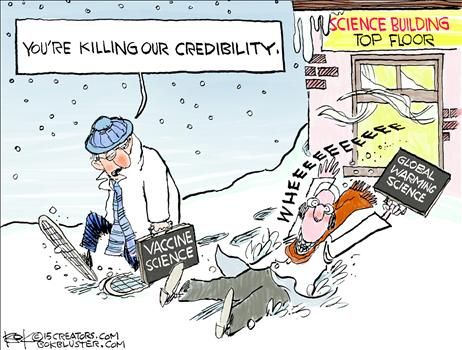
Oh the Irony!  A 2015 cartoon where a vaccine scientist is miffed at incredibility displayed by climate scientists. Dennis Prager explains why these days citizens have lost trust in scientists of all stripes.  His American Greatness article is You’re a Scientist? So What?  Excerpts in italics with my bolds and added images.

Scientists helped ruin millions of children’s educations and helped spur a sharp increase in depression, drug use, and suicide among young people. So, by all means,  question the science!

A caller to my radio show this week, a physician, took strong issue with me regarding COVID-19 therapeutics. He accused me of not believing in science. His last words before we had to go to a commercial break were, “I’m a scientist.”

Given that I am not a scientist, he assumed that comment would persuade me—or at least persuade many listeners—that I was not qualified to disagree with him.  If that was his assumption, he was wrong.

“I don’t care,” I responded. “It’s irrelevant. Scientists have given science a bad name.”

I would not have said that as recently as three years ago.  But in recent years, and especially in the past two years, some basic suppositions of mine have changed.

I no longer assume when I read a statement by a scientist that the statement is based on science. In fact, I believe I am more committed to scientific truth than many scientists are.

The American Medical Association advocates the removal of sex designation from birth certificates. If many doctors or other scientists have issued a dissent, I am not aware of it.

“Assigning sex using binary variables in the public portion of the birth certificate fails to recognize the medical spectrum of gender identity.” Those are the words of the author of the AMA report, Willie Underwood III, M.D.

Sarah Mae Smith, M.D., an AMA delegate from California, speaking on behalf of the Women Physicians Section, said, “We need to recognize gender is not a binary but a spectrum.”

When the American Medical Association and a plethora of physicians tell us that human beings, unlike every other animal above some reptilian species, are “not binary,” i.e., neither male nor female, the assertion “I am a scientist” becomes meaningless.

In mid-2020, at the height of the COVID-19 pandemic, when the medical community was demanding physical distancing, mask-wearing, and the lockdown of businesses and schools, more than a thousand health care professionals announced that the protests against racism then taking place—events with no social distancing, often no masks, plenty of yelling, and people “coughing uncontrollably” (New York Times description)—were medically necessary.

Jennifer Nuzzo, a Johns Hopkins epidemiologist, tweeted, “We should always evaluate the risks and benefits of efforts to control the virus. In this moment the public health risks of not protesting to demand an end to systemic racism greatly exceed the harms of the virus.”

Over 1,000 health care professionals signed an “open letter advocating for an anti-racist public health response to demonstrations against systemic injustice occurring during the COVID-19 pandemic.”

The letter said, among other things, “Do not disband protests under the guise of maintaining public health for COVID-19 restrictions” and labeled “pervasive racism . . . the paramount public health problem.” That’s a left-wing cant, not science.

Now you can better appreciate why “I am a scientist” no longer means what it once did.

How about the cruelty of not allowing the dying to be visited by loved ones—even if they wore a hospital mask, even if they agreed to wear a hazmat suit? Did that enhance your view of scientists’ medical judgment?

Then there was the American medical community’s opposition to therapeutics, dismissing hydroxychloroquine and ivermectin (both used with zinc) as frauds despite the testimony of numerous physicians that they saved COVID-19 patients’ lives when used appropriately. State medical boards around the country threatened to revoke the medical license of any physician who prescribed these drugs to treat COVID-19—despite these drugs being among the safest prescription drugs available.

As early as July 2020, Harvey Risch, M.D., Ph.D., professor of epidemiology at the Yale School of Public Health, wrote in Newsweek: “I myself know of two doctors who have saved the lives of hundreds of patients with these medications, but are now fighting state medical boards to save their licenses and reputations. The cases against them are completely without scientific merit.”

As a result of the American medical community’s opposition to therapeutics, Risch wrote, “tens of thousands of patients with COVID-19 are dying unnecessarily.”

Doctors throughout America were essentially telling COVID-19 patients, “Go home, get rest, and wait to see if your COVID-19 gets worse. If you can’t breathe, come to the hospital where we can put you on a ventilator.” Ventilators, it quickly became clear, were a virtual death sentence for COVID-19 patients. And then they died alone.

Another example of the decline of seriousness about science among scientists was National Institutes of Health Director Francis Collins urging his colleagues to boycott any “high-level” scientific conference that doesn’t have women and underrepresented minorities in marquee speaking slots.

And another: Heather Mac Donald reported that in 2020, “The NIH announced a new round of ‘Research Supplements to Promote Diversity in Health-Related Research.’ Academic science labs could get additional federal money if they hire ‘diverse’ researchers; no mention was made of relevant scientific qualifications” (emphasis added).

How many scientists protested the shutting down of schools for nearly two years? Some did, like those who signed the Great Barrington Declaration, but for the most part the scientific community was silent. In other words, scientists helped ruin millions of American children’s educations, not to mention abetted the unprecedented increase in depression, drug use, and suicide among young people.

These are only a few reasons not to take “I am a scientist” as seriously as we once did.

But there may be two consolations: One is that the same rule now applies to “I am a professor,” “I am a teacher,” “I am a rabbi,” “I am a priest,” “I am a pastor,” “I am a journalist,” and “I am a doctor.”

The other is that there are exceptions. Thank God.

Footnote:  Some Additional Reasons to Doubt Scientists


Woke Antidote

Some good news about education materials to inoculate children against brainwashing by woke teachers and social media messaging.  H/T Tom Woods for an alert to these timely resources for today’s families. From Tuttle Twins website.

Dear Parent,

If you’re like me, you’re worried about the “new normal” society is trying to cram down our throats.

In the wake of Covid-19, the government has asserted its power, printed a ton of new money, and restricted our rights.

Our kids have had to adjust, too — and many of us struggle to know how to help them understand what’s happening in the world.

To make matters worse, the public school system, the mainstream media, and the entertainment industry aren’t helping. They are openly pushing socialism and woke-ism
into the minds of our kids every day.

Just recently, an elementary school in my community plastered the wall with the ABCs of socialist activism — teaching kids terms such as “W is for woke,” “S is for social justice,” and “A is for activist.”

These radical messages work their way into school curriculum, movies, advertising, and social media platforms to persuade our impressionable children.

Parents like you struggle to find educational material that doesn’t lie about our nation’s history or teach that the government is the solution to our problems.

You want to help your children learn about true history, sound money, personal freedom and responsibility, entrepreneurship, individual rights, and more.

The Tuttle Twins are the only books that help children develop critical thinking skills about real-world concepts—sharing ideas with kids that most adults don’t even know!

Let’s be honest, most children’s books teach very basic ideas, if any at all—they’re full of fluff and silly stories. And while these can be good to develop reading skills and phonetics, they typically don’t teach children important ideas that they can apply in their life.

Our books recognize that the world is full of companies, people, and politicians who want to expose your children to ideas you do not support.

This includes school teachers who see their job as “activism” to spread leftist ideas and encourage children to think like they do.

The Tuttle Twins empower parents like you to make sure your children have a foundation of freedom—to understand the ideas of a free society that socialists are trying to hard to undermine.

With our books, your children will learn things like:

  • Why a free market economy is the greatest way to lift people out of poverty and allow people to trade with one another.
  • How property rights allows us to decide what’s best for us, and make decisions for our family.
  • Why the world is a better place because of entrepreneurs who create businesses to help serve us and improve our lives.
  • What socialism is and why it is so destructive to our freedoms and well being.
  • How the Golden Rule is so important to people getting along with one another, no matter where we live, what we look like, or what we believe.
  • Why education is so important, and why children should be allowed to learn things they are interested in.
  • What true laws are, and why the government should protect our rights.
  • …and so much more!
Footnote: Woke Pressure on Authors of Books for Children

Dr. Seuss  books were the best sellers

Until In recent years they have been targeted for imagery deemed stereotypical or out-of-date. A 2014 scholarly work asserted that The Cat in the Hat is an elaborate mockery of black people. In 2017, when then-First Lady Melania Trump gifted a collection of Dr. Seuss to a Massachusetts school, the books were returned by librarian Liz Phipps Soeiro with a note that the literature was “steeped in racist propaganda, caricatures, and harmful stereotypes.”

In 2019 a full on witch hunt was triggered when researchers Katie Ishizuka and Ramón Stephens published a study in the journal “Research on Diversity in Youth Literature” entitled “The Cat Is Out of the Bag: Orientalism, AntiBlackness, and White Supremacy in Dr. Seuss’s Children’s Books,” deeming them vehicles of “white supremacy.”  To appease outraged woke parents (activists?)  Dr. Seuss school events were canceled and six popular books selected to go out of print.

After canceling six Dr. Seuss books on spurious charges of racism, the massive German publishing giant and the secretive company that owns the rights to the deceased author’s work announced that they would be unveiling new “inclusive” Seuss books by diverse writers.

Seuss, or Theodor Geisel, an old dead white man is insufficiently diverse for his publishers.

While the names of the new stable of “inclusive” writers haven’t been made public, Penguin Random House, a subsidiary of the German Berteslman giant, also publishes or distributes prominent racists like Ibram X. Kendi, Robin DiAngelo, and Ta-Nehisi Coates.

Remember the Magic School Bus?

The Magic School Bus is back in the new Netflix series The Magic School Bus Rides Again! Overall, it’s still a nice, fun 13-episode series like we remember from when we were kids, but with some left turns. There is a pretty predictable take on climate change propaganda for little kids, but that wasn’t the worst. That dubious honor goes to the episode that teaches kids that a monster will eat them if they don’t use alternative clean energy sources.

Episode 12, “Monster Power,” teaches kids that a monster will eat them if they don’t use alternative clean energy sources. Albert, one of the students, has seen a movie in which the evil monster loves pollution and is “coming for us next for what we’ve done to this planet!” With the class camping in the woods, Miss Frizzle and the other students help him come up with clean energy alternatives (wind, water, etc) so they won’t be eaten. Instead, Miss Frizzle could tell him that monsters aren’t real, but I guess that didn’t occur to her.

Babylon Bee Chimes in with their list of dangerous children’s books

You Think Dr. Seuss Is Bad? Here Are 12 More Children’s Books That Should Be Canceled IMMEDIATELY

Your child’s bookshelves are crawling with racism and toxic problematicness.

But don’t worry — it’s nothing we can’t fix with a little good, old-fashioned book burning.

There are hundreds of children’s books that could use a good canceling. But let’s just start with these for now:

1. Horton Hears a Who — This Seuss book hasn’t been canceled yet, but it sure needs to be. The book claims a person is a person no matter how small, showing that Seuss hates women’s rights and wants to control their bodies.

2. Chicka Chicka Boom Boom — Prominently features the letter “Q.”

3. Every Berenstain Bears book — These books perpetuate the idea of a nuclear family with traditional values. They also appropriated furry culture.

4. Clifford the Big Red Dog — He’s literally a dog whistle for far-right neo-Nazi extremists and their affinity to the color red.

5. Charlie and the Chocolate Factory — Teaches kids there should be consequences for bad behavior without even considering the child’s race, ethnicity, or history of being oppressed.

6. The Very Hungry Caterpillar — This book encourages kids to consume and consume, destroying the environment for their own personal gain.

7. Goodnight Moon — Honestly, it’s probably not racist, but if we have to read this book to our kids one more time we’re gonna die.

8. The Jungle Book — Insensitive and stereotypical of Indian culture. Mowgli is called “man-cub,” and don’t even get us started on that loaded term. How has this not been canceled already?

9. If You Give A Mouse A Cookie — Teaches kids about cause and effect– which, as we all know from corporate anti-racism training, is an aspect of white culture not shared by other people groups.

10. The Tuttle Twins — Free markets? Individual responsibility? American history? Are you kidding? Where do we even start? We literally can’t even with this one.

11. The Little Engine That Could — Implies that hard work and effort can help you overcome challenges, which is pretty tone-deaf considering oppressed groups aren’t able to benefit from hard work.

12. Genderqueer Marxist Baby — Actually this one seems fine.

Get out the kerosene if you love your children. (satire/off)

Postscript from FEE 

CNN Slams Libertarian Children’s Books—Causing Sales to Surge

In April, CNN published an opinion piece arguing that the “right-wing children’s entertainment complex is upon us.” Prominently featured as a case in point were the Tuttle Twins children’s books, created by Connor Boyack to offset the progressive propaganda that many children now confront in classrooms across the country.

The books, which have sold more than 3.5 million copies, weave in libertarian themes related to individual freedom, limited government, free markets, and entrepreneurship, and frequently highlight the work of great thinkers such as Frederic Bastiat, F.A. Hayek, Ludwig von Mises, and FEE founder, Leonard Read.

“The goal is to seal conservatives’ children off from a broader culture, to protect them from supposed liberal indoctrination by getting a head start on conservative indoctrination,” wrote Nicole Hemmer, a researcher at Columbia University with the Obama Presidency Oral History Project, in her CNN article.

Boyack laughed when he read that. “I find it humorous that those in the left-dominated media are wringing their hands about a few of us doing what they have long been doing,” he told me this week. “The progressive mob has long been infiltrating and leveraging pop culture, the school system, and entertainment outlets—and suddenly they’re outraged when we’re providing a counter message to their myopic, woke worldview? They’re clearly crocodile tears—faux outrage over something the ‘left’ has long been up to.”

But Boyack welcomes more criticism from left-leaning media sites because it boosts his sales. Parents, it turns out, are clamoring for learning materials that offer different viewpoints and perspectives than what their children receive in their schools and throughout the broader culture.

Legal Brief: Biden Climate Order Unscientific, Inhumane and Unconstitutional

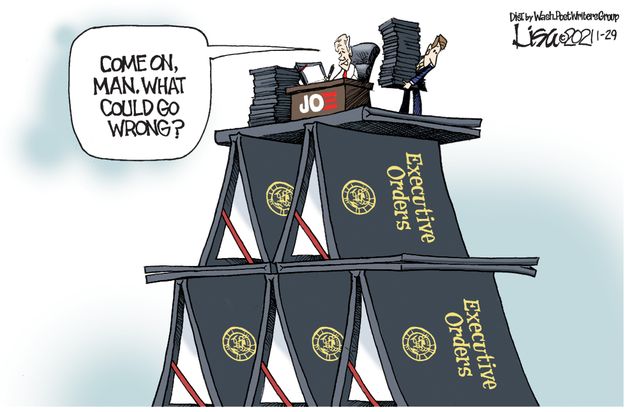
Last month the above brief was put on record in a case challenging the legality of the Biden Executive Order requiring the entire federal government to reduce carbon dioxide (CO2) emissions.  Excerpts of text in italics with my bolds.  H/T  WUWT Weekly Climate and Energy New Roundup

Brief of Amicus Curiae Dr. William Happer, Dr. Richard S. Lindzen, and the CO2 Coalition in Support of the Plaintiff-Appellee States.

As career physicists, it is our opinion for the scientific reasons detailed below, the District Court’s preliminary injunction should be reinstated because the SCC TSD Rule1 and Executive Order 13990 section 5 are scientifically invalid, and will be disastrous for the poor, people worldwide, future generations and the United States.

I.  Reliable scientific theories come from validating theoretical predictions with observations, not from consensus, government opinion, peer review or manipulated data.

II. The Social Cost of Carbon Rule and Executive Order 13990 are scientifically invalid and disastrous for people worldwide and the United States, and thus the preliminary injunction against them should be reinstated.

A. The SCC TSD Rule and Executive Order 13990 are Scientifically Invalid for Omitting the Enormous Social Benefits of CO2

Executive Order 13990 section 5 dictates that only the social costs of CO2 and GHGs be considered, stating “it is essential that agencies capture the full cost of [CO2 and other] greenhouse gas emissions,” and “accurately determine the social benefits of reducing [CO2 and other] greenhouse gas emissions,” violating basic scientific method by excluding the enormous social benefits of CO2 and greenhouse gases (GHGs).

The IWG estimated the social cost of carbon by combining three models, DICE, PAGE and FUND, together called Integrated Assessment Models (IAMS). However, two of the three models, DICE and PAGE, only computed the social costs of CO2 and excluded data on the enormous social benefits of CO2 (detailed in Part III below).2

This is an example of violating scientific method by omitting unfavorable data. It is like promoting the theory the world is flat by only considering observations as far as the eye can see, excluding all the evidence the world is round.

For this reason alone, the SCC TSD Rule and Executive Order 13990 section 5 mandating that the social benefits of GHGs not be considered violate scientific method and the preliminary injunction against both should be reinstated.

B. The SCC TSD Rule is Scientifically Invalid for Relying on Consensus and Peer Review

The SCC TSD Rule expressly explained it relied on peer review and consensus, not scientific method, to determine its estimates:

“In developing the SC-GHG estimates in 2010, 2013, and 2016 the IWG used consensus-based decision making, relied on peer-reviewed literature and models …. Going forward the IWG commits to maintaining a consensus driven process for making evidence-based decisions that are guided by the best available science and input from the public, stakeholders, and peer reviewers.” Id. P. 36 (emphasis added).

As explained, peer review and consensus do not determine scientific knowledge, scientific method does.

Accordingly, for this reason alone, the SCC TSD Rule is scientifically invalid and the preliminary injunction should be reinstated.

C. The SCC TSD Rule is Scientifically Invalid Because the IPCC CMIP and Other Models Fail to Reliably Predict Temperatures and Thus Should Be Scientifically Rejected

The IWG estimated the SCC as noted, using three climate models abbreviated DICE, PAGE and FUND combined with an economic model, together called Integrated Assessment Models (IAMs). The key variable in the climate model is called the Equilibrium Climate Sensitivity (ECS). The SCC TSD Rule explained the ECS numbers used in the IAM model calculations were based on models used in the IPCC’s Fourth Assessment Synthesis Report in 2007 (IPCC AR4), which were “confirm[ed] and strengthen[ed]” by recent assessments by the IPCC, US Global Change Research Program (USGCRP) and the National Academies.

IPCC AR4, in turn, to compute the ECS, used what is called the Coupled Model Inter Comparison Project Phase 4 (CMIP4). Since models are a type of scientific theory, their scientific validity is determined by comparing their predictions with observations to see if they work. If they don’t “work,” they are “wrong” and invalid as science.

The CMIP models don’t “work” and are thus invalid as science, demonstrated next.

IPCC CMIP Models. The Intergovernmental Panel on Climate Change (“IPCC”), the dominant source of models, explained that its “Assessments of climate risks … [are] based on climate model simulations [predictions] that are part of the fifth and sixth Coupled Model Intercomparison Project phase (CMIP5, CMIP6).” IPCC. Climate Change 2022: Impacts, Adaptation and Vulnerability, Summary For Policymakers (2022), p. SPM-6.

CMIP5.

John Christy, PhD, Professor of Atmospheric Science at the University of Alabama, applied the scientific method to CMIP5 102 predictions of temperatures 1979-2016 by models from 32 institutions. He explained he used “the traditional scientific method in which a claim (hypothesis) is made and is tested against independent information to see if the claim can be sustained,” and produced the following chart:3

At the bottom, the blue, purple and green lines show the actual reality temperature observations against which the models’ predictions were tested. The dotted lines are 102 temperature “simulations” (predictions) made by the models from 32 institutions for the period 1979-2016. The red line is the consensus of the models, their average. The graph clearly shows that 101 of the 102 predictions by the models (dotted lines) and their consensus average (red line) fail miserably to predict reality.4

Focusing on the consensus red line, he concluded:

“When the ‘scientific method’ is applied to the output from climate models of the IPCC AR5, specifically the bulk atmospheric temperature trends since 1979 (a key variable with a strong and obvious theoretical response to increasing GHGs in this period), I demonstrate that the consensus of the models [red line] fails the test to match the real-world observations by a significant margin. As such, the average of the models is considered to be untruthful in representing the recent decades of climate variation and change, and thus would be inappropriate for use in predicting future changes in the climate or related policy decisions.” Id., p. 13.

Thus, the models that produced the 101 predictions fail the Feynman test. They do not “work,” therefore they are “wrong.” Scientifically, they all should be abandoned. Rejecting science, the IPCC governments keep using CMIP models, including CMIP6 even though it is no better.

[Note 4: The one model that closely predicted the temperatures actually observed is a Russian model and is the only model that should be used in science. However, the IPCC did not use it but used the models that it should have rejected]

CMIP6.

Steven Koonin, Ph.D., a Cal-Tech physicist, professor at New York University and author of Unsettled (2021), concluded:

“One stunning problem is that … the later generation of [CMIP] models are actually more uncertain than the earlier one[s].” “The CMIP6 models that inform the IPCC’s upcoming AR6 [Climate Change reports] don’t perform any better than those of CMIP5.” Id. pp. 87, 90.

He elaborated CMIP6’s failure using the scientific method in detail:

“An analysis of 267 simulations run by 29 different CMIP6 models created by 19 modeling groups around the world shows that they do a very poor job [1] describing warming since 1950 and … [2] underestimate the rate of warming in the early twentieth century.” Id. p. 90 (emphasis added).  “Comparisons among the [29] models [show] … model results differed dramatically both from each other and from observations … [and] disagree wildly with each other.” Id. p. 90.

Thus, the IPCC CMIP models used by SCC TSD Rule fail the fundamental test of scientific method, they do not work. Accordingly, for this reason alone, the SCC TSD Rule is scientifically invalid and the preliminary injunction should be reinstated.

D. The SCC TSD Rule is Scientifically Invalid for Relying On IPCC Government Dictated Opinions

The SCC TSD Rule also explained that key numbers it used in its estimates were based in part, as noted, on the  IPCC’s Fourth Assessment Synthesis Report in 2007 (IPCC AR4) and that four “recent scientific assessments by the IPCC.” Id. p. 32.

However, unknown to most, two IPCC rules require that IPCC governments control what is published in its Summaries for Policymakers (“SPMs”), which in turn controls what is published in IPCC full reports.  This is not how scientific knowledge is determined. In science, as the Lysenko experience chillingly underscores, and Richard Feynman, as noted,

“No government has the right to decide on the truth of scientific principles.”

The two IPCC rules dictating IPCC governments’ control of what is written in the SPMs and IPCC reports, line by line, are:

IPCC SPM Rule No.1: All Summaries for Policymakers (SPMs) Are Approved Line by Line by Member Governments

“IPCC Fact Sheet: How does the IPCC approve reports? ‘Approval’ is the process used for IPCC Summaries for Policymakers (SPMs). Approval signifies that the material has been subject to detailed, line-by-line discussion, leading to agreement among the participating IPCC member countries, in consultation with the scientists responsible for drafting the report.”6

Since governments control the SPMs, the SPMs are merely government opinions and therefore, have no value as scientific evidence.

What about the thousands of pages in the IPCC reports? A second IPCC rule requires that everything in an IPCC published report must be consistent with what the governments agree to in the SPMs about CO2 and fossil fuels. Any drafts the independent scientists write are rewritten as necessary to be consistent with the SPM.

IPCC Reports Rule No. 2: Government SPMs Override Any Inconsistent Conclusions Scientists Write for IPCC Reports IPCC Fact Sheet:

“’Acceptance’ is the process used for the full underlying report in a Working Group Assessment Report or a Special Report after its SPM has been approved…. Changes …are limited to those necessary to ensure consistency with the Summary for Policymakers.” IPCC Fact Sheet, supra.

IPCC governments’ control of full reports using Rule No. 2 is poignantly demonstrated by the IPCC’s rewrite of the scientific conclusions reached by independent scientists in their draft of Chapter 8 of the IPCC report Climate Change 1995, The Science of Climate Change (“1995 Science Report”).

The draft by the independent scientists concluded: “No study to date has positively attributed all or part (of the climate warming observed) to (manmade) causes.” Frederick Seitz, “A Major Deception on Climate Warming,” Wall Street Journal (June 12, 1996).

However, the government written SPM proclaimed the exact opposite: “The balance of evidence suggests a discernible human influence on global climate.” 1995 Science Report SPM, p. 4.

What happened to the independent scientists’ draft? IPCC Rule No. 2 was applied, and their draft was rewritten to be consistent with the SPM in numerous ways:

Their draft language was deleted; the SPM’s opposite language was inserted in the published version of Chapter 8 in the 1995 Science Report, on page 439: “The body of statistical evidence in chapter 8 … now points towards a discernible human influence on global climate.”

Thus, IPCC SPM and findings used in the SCC TSD Rule have no value as scientific evidence because they are government dictated opinions, like Lysenko’s. For this reason alone, relying on IPCC government dictated publications contaminates the science in the SCC TSD Rule and renders it scientifically invalid, and therefore the preliminary injunction should be reinstated.

III.  There is overwhelming scientific evidence that fossil fuels and CO2 provide enormous social benefits for the poor, people worldwide, future generations and the United States, and therefore it would be disastrous to reduce or eliminate them.

The SCC TSD Rule, as noted, does not consider the enormous social benefits of CO2, GHGs and fossil fuels.

A. CO2 is Essential to Food, and Thus to Life on Earth.

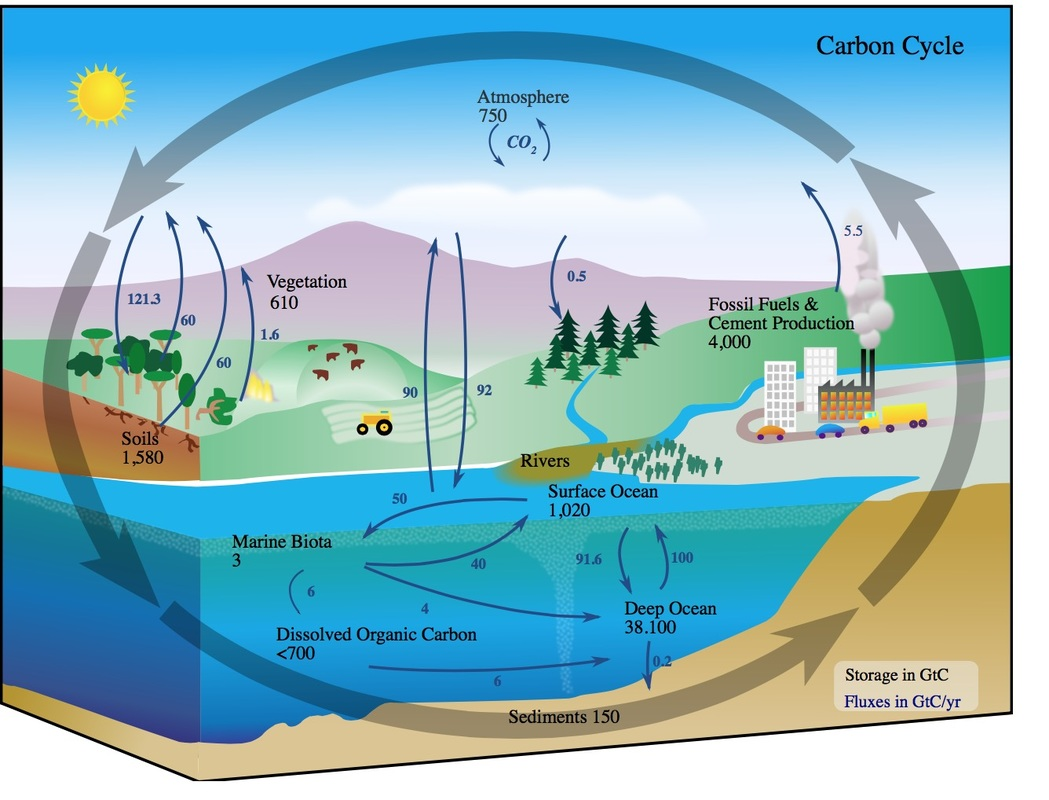
Nearly all of the food we eat comes ultimately from photosynthesis on the land or in the oceans. The oxygen we breathe was produced by photosynthesis over the geological history of the Earth. In the process of photosynthesis, energy from sunlight forces molecules of water, H2O, and molecules of carbon dioxide and CO2 to combine to make sugars and other organic molecules. A molecule of oxygen, O2, is released to the atmosphere for every molecule of CO2 converted to sugar.

All green plants grow faster with more atmospheric CO2, including the CO2 released by the combustion of fossil fuels, which is almost identical to the CO2 respired by human beings and other living creatures.

What happens with a doubling of CO2? Many experiments and studies confirm that when CO2 is doubled, agricultural yields are increased significantly, especially in arid regions where more CO2 increases the resistance of plants to droughts. Greenhouse operators routinely pay to double or triple the concentrations of CO2 over their plants. The improved yield and quality of fruits and flowers more than pay for the cost of more CO2, with only small and beneficial warming.

Thus we owe our existence to green plants that, through photosynthesis, convert CO2 and water, H2O, to carbohydrates with the aid of sunlight, and release oxygen. Land plants get the carbon they need from the CO2 in the air. Other essential nutrients — water, nitrogen, phosphorus, potassium, etc. — come from the soil. Just as plants grow better in fertilized, well-watered soils, they grow better in air with several times higher CO2 concentrations than present values. As far as green plants are concerned, CO2 is part of their daily bread—like water, sunlight, nitrogen, phosphorus, and other essential elements.

B. Greenhouse Gases Prevent Us from Freezing to Death

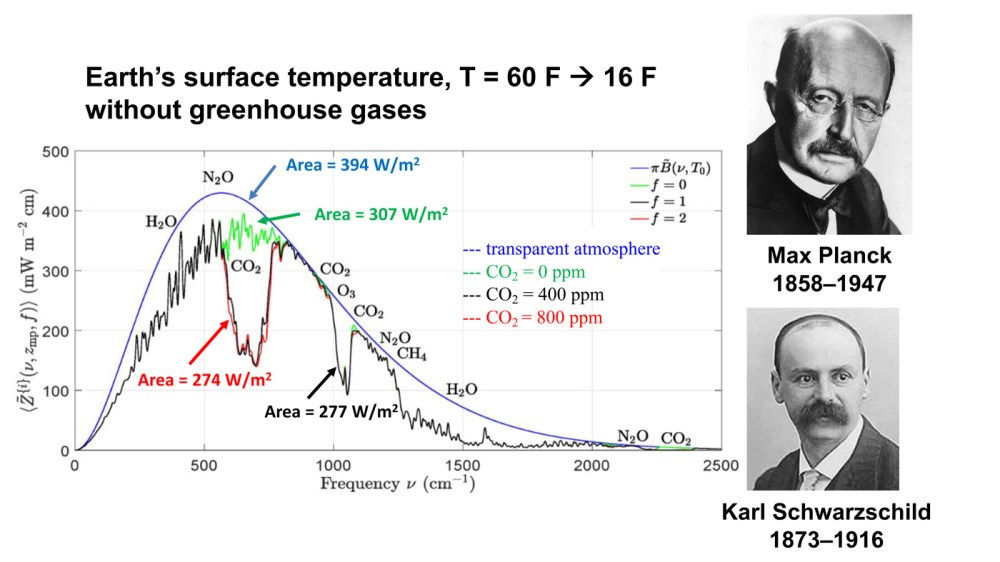
Greenhouse gases hinder the escape of thermal radiation to space. We should be grateful for them. Greenhouse gases keep the Earth’s surface temperature warm enough and moderate enough to sustain life on our verdant planet. Without them, we’d freeze to death.

To quote John Tyndall, the Anglo-Irish physicist who discovered greenhouse gases in the 1850s:

Aqueous vapor is a blanket, more necessary to the vegetable life of England than clothing is to man. Remove for a single summer-night the aqueous vapor from the air which overspreads this country, and you would assuredly destroy every plant capable of being destroyed by a freezing temperature. The warmth of our fields and gardens would pour itself unrequited into space, and the sun would rise upon an island held fast in the iron grip of frost.” John Tyndall, Heat, a Mode of Motion pp. 359-360 (5th Ed. 1875).

Tyndall identified “aqueous vapor” (water vapor) as the most important greenhouse gas. Water vapor, and clouds which condense from it, are the dominant greenhouse agents of Earth’s atmosphere. Carbon dioxide, CO2, is also a greenhouse gas, and does cause a small amount of warming of our planet. But it is far less effective than water vapor and clouds as previously explained.

Without the greenhouse warming of CO2 and its more potent partners, water vapor and clouds, the earth would be too cold to sustain its current abundance of life. We would freeze.

C. Fossil Fuels have Enormous Social Benefits

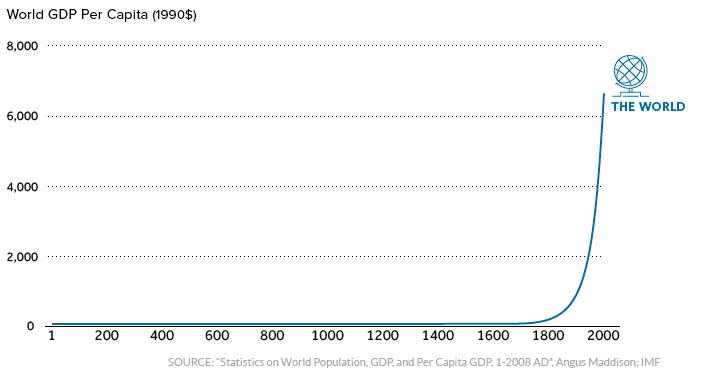
Contrary to the incessant attack on fossil fuels, affordable, abundant fossil fuels have given ordinary people the sort of freedom, prosperity and health that were reserved for kings in ages past. The following chart of the GDP per person for the last 2,000 years powerfully illustrates what has happened:8

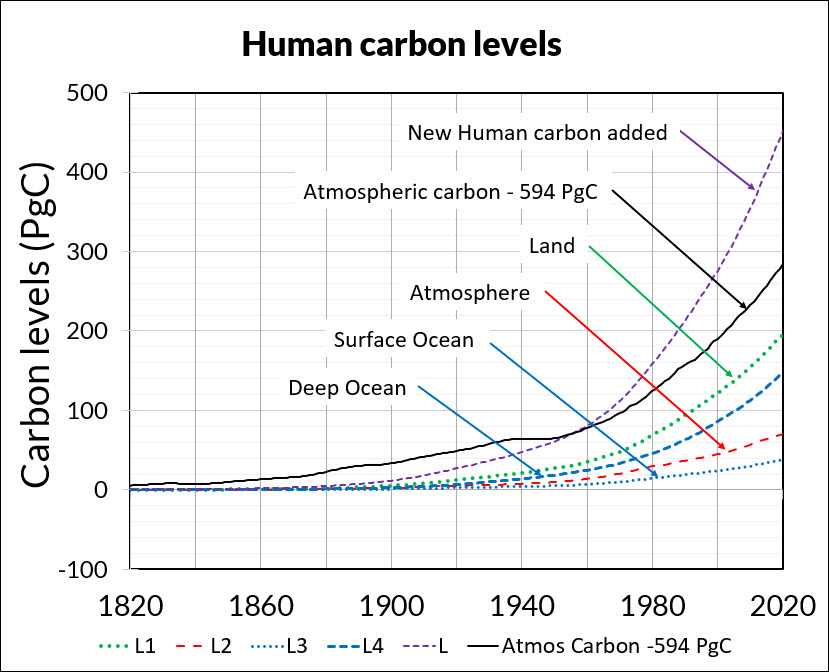
In the mid-1800s, CO2 levels that averaged over 1,000 ppm over 600 million years were at a very low level, about 280 ppm. The great news is that CO2 emissions from nature and fossil fuels resulted in CO2 levels rising from this low level to about 415 ppm today.

As a result, crop yields have increased by more than 15% over the past century. Better crop varieties, better use of fertilizer, better water management, etc., have all contributed. But the fact remains that a substantial part of the increase is due to the increase in CO2 from about 300 ppm in 1850 to about 415 ppm from fossil fuels.

Mathematically, the growth rate of plants is approximately proportional to the square root of the CO2 concentration. Thus, the increase in CO2 concentration from about 280 ppm (300 ppm rounded) to 415 ppm over the past century increased growth rates by a factor of about √(4/3) = 1.15, or 15%.

As to temperature, CO2 is a greenhouse gas and adding CO2 to the atmosphere by burning coal, oil, and natural gas as a matter of radiation physics can only modestly increase the surface temperature of the earth. Specifically, physics proves that doubling the CO2 concentration from our current 415 ppm to 830 ppm will directly cause about 1⁰ C in warming.

In summary, the social benefits for people and life all over the world are enormous: 

  • since CO2 is a plant fertilizer, agricultural and forestry yields have risen substantially over the last hundred years. 
  • economies have grown substantially, so that many people have prospered, and poverty has been reduced. 
  • electricity has become more affordable and available to many more people worldwide. 
  • and there has been a small but beneficial warming of the planet, about 2° Fahrenheit. This warming has been caused by a combination of natural causes and CO2 increasing from its low level in 1850 and other greenhouse gases.
Science Conclusion

Contrary to what is commonly reported, CO2 is essential to life on earth. Without CO2, there would be no photosynthesis, and thus no plant food and not enough oxygen to breathe. Moreover, without fossil fuels there will be no reliable, low-cost energy worldwide and less CO2 for photosynthesis making food. Eliminating fossil fuels and reducing CO2 emissions will be disastrous for the United States and the rest of the word, especially for lower-income people.

For the scientific reasons detailed above, in Amici’ opinion the District Court’s preliminary injunction should be reinstated because the SCC TSD Rule and Executive Order 13990 section 5 are based on multiple violations of scientific method and will be disastrous for the poor, people worldwide, future generations and the United States.

Footnote:

The brief goes on to describe how the Biden order assumes legislative authority which belongs to congress, thus is unconstitutional as well.


Western Bankruptcy in Two Ways

Walter Russell Mead explains in his Hudson Institute article End of the German Idyll.  Excerpts in italics with my bolds. H/T John Ray

G7 leaders during a working session at the G7 summit in Schloss Elmau on June 28, 2022 near Garmisch-Partenkirchen, Germany. (Photo by Stefan Rousseau via Pool/Getty Images)

Germany looked normal over the weekend as a genial Chancellor Olaf Scholz welcomed the Group of Seven leaders and their guests to the luxurious Schloss Elmau in the Bavarian Alps. But those appearances are deceiving. Germany is facing its gravest challenges since the foundation of the Federal Republic following World War II.

This is very sudden. As recently as 2020, almost the entire world agreed with the smug German self-assessment that Germany had the world’s most successful economic model, was embarking on the most ambitious—and largely successful—climate initiative in the world, and had perfected a values-based foreign policy that ensured German security and international popularity at extremely low cost.

None of this was true.

  • The German economic model was based on unrealistic assumptions about world politics and is unlikely to survive the current turmoil.
  • German energy policy is a chaotic mess, a shining example to the rest of the world of what not to do.
  • Germany’s reputation for a values-based foreign policy has been severely dented by Berlin’s waffling over aid to Ukraine. And German security experts are coming to terms with a deeply unwelcome truth:
  • Confronted with an aggressive Russia, Germany, like Europe generally, is utterly reliant on the U.S. for its security. At a time when American foreign policy increasingly prioritizes Asia and isolationist sentiment among both Republicans and Democrats appears to be rising, if Donald Trump returns to the White House in 2025, German security will depend on his goodwill.

Mr. Scholz and his coalition government have responded to Vladimir Putin ‘s invasion of Ukraine with a series of, by German standards, revolutionary changes. Germany is beginning to rearm. It is, with some false starts, sending weapons to Ukraine. It has taken the first steps toward energy independence from Russia, even at the cost of its ambitious climate agenda. Coal plants will lumber back to life, new gas-processing plants will be built, and Germany is asking Europe to delay decarbonization mandates that no longer seem realistic.

But the real work remains to be done.
Modern Germany was above all an economic project.

The collapse of the Third Reich left Germany morally devastated, physically wrecked and economically bankrupt. From the moment of its foundation in 1949, the country ‘s central goal was economic growth. That growth could:

  • repair the destruction of the war,
  • promote Germany ‘s peaceful integration into Western Europe,
  • blunt the appeal of communism, and
  • build a national identity independent of the malignant fantasies of the Hitler era and the bombast of Wilhelm II.

The hard work of the German people, the pragmatic policies of the political class, the skills and determination of German management, and the favorable international climate resulting from the development of the American-led world order took Germany to economic heights.

In recent years, the German economic miracle depended on a combination of industrial prowess, cheap energy from Russia, and access to global markets, particularly in China. Today every one of those pillars is under threat. German mastery of automobile technology through a century of engineering is challenged by the shift to electric vehicles. The chemicals industry, in which German technology has led the world since the 19th century, is coming under environmental challenges as global competition intensifies.

Those challenges are exacerbated by the loss of cheap and secure Russian natural gas.

Green energy, despite massive German investment, will be unable to supply German industry with reliable and cheap power for a long time. In the meantime, the alternatives to Russian pipeline gas are expensive and controversial. Nuclear power gives Greens the willies; coal is unbearable; liquefied natural gas requires long-term commitments and massive capital expenditures.

Beyond that, Germany ‘s economic relationship with China is changing for the worse. China was long the ideal customer for German products. Its newly affluent middle class fell in love with German luxury cars. Its rapidly growing manufacturing sector voraciously consumed German machine tools and other capital goods. But China ‘s growth is decelerating. Its maturing industrial economy seeks to compete with high-end German producers, often based on tools reverse-engineered from German imports.

Those in the Biden administration who dream that Germany will wholeheartedly join a new global American crusade for values should keep their enthusiasm in check.

Mr. Scholz may agree in the abstract with President Biden about the importance of liberal values and the danger of climate change, but his calculations must reflect the economic facts of German life. This naturally leads to thoughts about how to patch things up with Russia and China.

Mr. Biden ‘s job is not to sing hymns about Western values with Mr. Scholz; it is to make Berlin understand that U.S. security guarantees come at a price. Given the realities of American politics, Germany cannot count on continued American support unless it does more to back the U.S. at a time of grave and growing danger world-wide.

Footnote:

Mead’s essay focused on the challenges of German leader Scholz, but consider the various predicaments self-induced by other members of this G7 gang who can neither talk nor shoot straight.  Mr. Biden increasingly struggles to even read or sign what they write for him, followed by observers noting that it is all lies and mean-spirited malarkey.  UK PM Johnson is a lame duck in political limbo, only in office until his Tory replacement is chosen. President of Italy, 80 yr. old Sergio Mattarella wanted to retire, but agreed to a second term in January when ruling parties couldn’t agree on his successor.  Justin “Fidel” Castreau of Canada has disgraced himself and his office, clinging to power by colluding with the equally unpopular NDP party leader.  Japan’s nation building leader Abe was just assassinated, leaving the current novice Japan PM much lesser known or appreciated by Japanese people.  Macron of France won his personal election, but his party lost bigtime in legislative seats.

Any bets on who has the right stuff to restore and advance Western Civilization?


By the Numbers: CO2 Mostly Natural

This post compiles several independent proofs which refute those reasserting the “consensus” view attributing all additional atmospheric CO2 to humans burning fossil fuels.

The IPCC doctrine which has long been promoted goes as follows. We have a number over here for monthly fossil fuel CO2 emissions, and a number over there for monthly atmospheric CO2. We don’t have good numbers for the rest of it-oceans, soils, biosphere–though rough estimates are orders of magnitude higher, dwarfing human CO2. So we ignore nature and assume it is always a sink, explaining the difference between the two numbers we do have. Easy peasy, science settled.

The non-IPCC paradigm is that atmospheric CO2 levels are a function of two very different fluxes. FF CO2 changes rapidly and increases steadily, while Natural CO2 changes slowly over time, and fluctuates up and down from temperature changes. The implications are that human CO2 is a simple addition, while natural CO2 comes from the integral of previous fluctuations.

1.  History of Atmospheric CO2 Mostly Natural

This proof is based on the 2021 paper World Atmospheric CO2, Its 14C Specific Activity, Non-fossil Component, Anthropogenic Fossil Component, and Emissions (1750–2018) by Kenneth Skrable, George Chabot, and Clayton French at University of Massachusetts Lowell.

The analysis employs ratios of carbon isotopes to calculate the relative proportions of atmospheric CO2 from natural sources and from fossil fuel emissions. 

The specific activity of 14C in the atmosphere gets reduced by a dilution effect when fossil CO2, which is devoid of 14C, enters the atmosphere. We have used the results of this effect to quantify the two components: the anthropogenic fossil component and the non-fossil component.  All results covering the period from 1750 through 2018 are listed in a table and plotted in figures.

These results negate claims that the increase in total atmospheric CO2 concentration C(t) since 1800 has been dominated by the increase of the anthropogenic fossil component. We determined that in 2018, atmospheric anthropogenic fossil COrepresented 23% of the total emissions since 1750 with the remaining 77% in the exchange reservoirs. Our results show that the percentage of the total CO2 due to the use of fossil fuels from 1750 to 2018 increased from 0% in 1750 to 12% in 2018, much too low to be the cause of global warming.

The graph above is produced from Skrable et al. dataset Table 2. World atmospheric CO2, its C‐14 specific activity, anthropogenic‐fossil component, non fossil component, and emissions (1750 ‐ 2018).  The purple line shows reported annual concentrations of atmospheric CO2 from Energy Information Administration (EIA)  The starting value in 1750 is 276 ppm and the final value in this study is 406 ppm in 2018, a gain of 130 ppm.

The red line is based on EIA estimates of human fossil fuel CO2 emissions starting from zero in 1750 and the sum slowly accumulating over the first 200 years.  The estimate of annual CO2 emitted from FF increases from 0.75 ppm in 1950 up to 4.69 ppm in 2018. The sum of all these annual emissions rises from 29.3 ppm in 1950 (from the previous 200 years) up to 204.9 ppm (from 268 years).  These are estimates of historical FF CO2 emitted into the atmosphere, not the amount of FF CO2 found in the air.

Atmospheric CO2 is constantly in two-way fluxes between multiple natural sinks/sources, principally the ocean, soil and biosphere. The annual dilution of carbon 14 proportion is used to calculate the fractions of atmospheric FF CO2 and Natural CO2 remaining in a given year. The blue line shows the FF CO2 fraction rising from 4.03 ppm in 1950 to 46.84 ppm in 2018.  The cyan line shows Natural CO2 fraction rising from 307.51 in 1950 to 358.56 in 2018.

The details of these calculations from observations are presented in the two links above, and the logic of the analysis is summarized in my previous post On CO2 Sources and Isotopes.  The table below illustrates the factors applied in the analysis.

C(t) is total atm CO2, S(t) is Seuss 14C effect, CF(t) is FF atm CO2, CNF(t) is atm non-FF CO2, DE(t) is FF CO2 emissions

Summary

Despite an estimated 205 ppm of FF CO2 emitted since 1750, only 46.84 ppm (23%) of FF CO2 remains, while the other 77% is distributed into natural sinks/sources. As of 2018 atmospheric CO2 was 405, of which 12% (47 ppm) originated from FF.   And the other 88% (358 ppm) came from natural sources: 276 prior to 1750, and 82 ppm since.  Natural CO2 sources/sinks continue to drive rising atmospheric CO2, presently at a rate of 2 to 1 over FF CO2.

2.  Analysis of CO2 Flows Confirms Natural Dominance

Figure 3. How human carbon levels change with time.

Independent research by Dr. Ed Berry focused on studying flows and level of CO2 sources and sinks.  The above summary chart from his published work presents a very similar result.

The graph above summarizes Dr. Berry’s findings. The lines represent CO2 added into the atmosphere since the 1750 level of 280 ppm. Based on IPCC data regarding CO2 natural sources and sinks, the black dots show the CO2 data. The small blue dots show the sum of all human CO2 emissions since they became measurable, irrespective of transfers of that CO2 from the atmosphere to land or to ocean.

Notice the CO2 data is greater than the sum of all human CO2 until 1960. That means nature caused the CO2 level to increase prior to 1960, with no reason to stop adding CO2 since. In fact, the analysis shows that in the year 2020, the human contribution to atmospheric CO2 level is 33 ppm, which means that from a 2020 total of 413 ppm, 280 is pre-industrial and 100 is added from land and ocean during the industrial era.

My synopsis of his work is IPCC Data: Rising CO2 is 75% Natural

A new carbon cycle model shows human emissions cause 25% and nature 75% of the CO2 increase is the title (and link) for Dr. Edwin Berry’s paper accepted in the journal Atmosphere August 12, 2021.

3. Nature Erases Pulses of Human CO2 Emissions  

Those committed to blaming humans for rising atmospheric CO2 sometimes admit that emitted CO2 (from any source) only stays in the air about 5 years (20% removed each year)  being absorbed into natural sinks.  But they then save their belief by theorizing that human emissions are “pulses” of additional CO2 which persist even when particular molecules are removed, resulting in higher CO2 concentrations.  The analogy would be a traffic jam on the freeway which persists long after the blockage is removed.

A recent study by Bud Bromley puts the fork in this theory.  His paper is A conservative calculation of specific impulse for CO2.  The title links to his text which goes through the math in detail.  Excerpts are in italics here with my bolds.

In the 2 years following the June 15, 1991 eruption of the Pinatubo volcano, the natural environment removed more CO2 than the entire increase in CO2 concentration due to all sources, human and natural, during the entire measured daily record of the Global Monitoring Laboratory of NOAA/Scripps Oceanographic Institute (MLO) May 17, 1974 to June 15, 1991. Then, in the 2 years after that, that CO2 was replaced plus an additional increment of CO2.

The data and graphs produced by MLO also show a reduction in slope of total CO2 concentration following the June 1991 eruption of Pinatubo, and also show the more rapid recovery of total CO2 concentration that began about 2 years after the 1991 eruption. This graph is the annual rate of change (i.e., velocity or slope) of total atmosphere CO2 concentration. This graph is not human CO2.

More recently is his study Scaling the size of the CO2 error in Friedlingstein et al.  Excerpts in italics with my bolds.

Since net human emissions would be a cumulative net of two fluxes, if there were a method to measure it, and since net global average CO2 concentration (i.e., NOAA Mauna Loa) is the net of two fluxes, then we should compare these data as integral areas. That is still an apples and oranges comparison because we only have the estimate of human emissions, not net human emissions. But at least the comparison would be in the right order of magnitude.

That comparison would look something like the above graphic. We would be comparing the entire area of the orange quadrangle to the entire blue area, understanding that the tiny blue area shown is much larger than actually is because the amount shown is human emissions only, not net human emissions. Human CO2 absorptions have not been subtracted. Nevertheless, it should be obvious that (1) B is not causing A, and (2) the orange area is enormously larger than the blue area.

Human emissions cannot be driving the growth rate (slope) observed in net global average CO2 concentration.

4.  Setting realistic proportions for the carbon cycle.

Hermann Harde applies a comparable perspective to consider the carbon cycle dynamics. His paper is Scrutinizing the carbon cycle and CO2 residence time in the atmosphere. Excerpts with my bolds.

Different to the IPCC we start with a rate equation for the emission and absorption processes, where the uptake is not assumed to be saturated but scales proportional with the actual CO2 concentration in the atmosphere (see also Essenhigh, 2009; Salby, 2016). This is justified by the observation of an exponential decay of 14C. A fractional saturation, as assumed by the IPCC, can directly be expressed by a larger residence time of CO2 in the atmosphere and makes a distinction between a turnover time and adjustment time needless.

Based on this approach and as solution of the rate equation we derive a concentration at steady state, which is only determined by the product of the total emission rate and the residence time. Under present conditions the natural emissions contribute 373 ppm and anthropogenic emissions 17 ppm to the total concentration of 390 ppm (2012). For the average residence time we only find 4 years.

The stronger increase of the concentration over the Industrial Era up to present times can be explained by introducing a temperature dependent natural emission rate as well as a temperature affected residence time. With this approach not only the exponential increase with the onset of the Industrial Era but also the concentrations at glacial and cooler interglacial times can well be reproduced in full agreement with all observations.

So, different to the IPCC’s interpretation the steep increase of the concentration since 1850 finds its natural explanation in the self accelerating processes on the one hand by stronger degassing of the oceans as well as a faster plant growth and decomposition, on the other hand by an increasing residence time at reduced solubility of CO2 in oceans. Together this results in a dominating temperature controlled natural gain, which contributes about 85% to the 110 ppm CO2 increase over the Industrial Era, whereas the actual anthropogenic emissions of 4.3% only donate 15%. These results indicate that almost all of the observed change of CO2 during the Industrial Era followed, not from anthropogenic emission, but from changes of natural emission. The results are consistent with the observed lag of CO2 changes behind temperature changes (Humlum et al., 2013; Salby, 2013), a signature of cause and effect. Our analysis of the carbon cycle, which exclusively uses data for the CO2 concentrations and fluxes as published in AR5, shows that also a completely different interpretation of these data is possible, this in complete conformity with all observations and natural causalities.

5.  More CO2 Is Not a Problem But a Blessing

William Happer provides a framework for thinking about climate, based on his expertise regarding atmospheric radiation (the “greenhouse” mechanism).  But he uses plain language accessible to all.  The Independent Institute published the transcript for those like myself who prefer reading for full comprehension.  Source: How to Think about Climate Change  

His presentation boils down to two main points:  More CO2 will result in very little additional global warming. But it will increase productivity of the biosphere.  My synopsis is: Climate Change and CO2 Not a Problem  Brief excerpts in italics with my bolds.

This is an important slide. There is a lot of history here and so there are two historical pictures. The top picture is Max Planck, the great German physicist who discovered quantum mechanics. Amazingly, quantum mechanics got its start from greenhouse gas-physics and thermal radiation, just what we are talking about today. Most climate fanatics do not understand the basic physics. But Planck understood it very well and he was the first to show why the spectrum of radiation from warm bodies has the shape shown on this picture, to the left of Planck. Below is a smooth blue curve. The horizontal scale, left to right is the “spatial frequency” (wave peaks per cm) of thermal radiation. The vertical scale is the thermal power that is going out to space. If there were no greenhouse gases, the radiation going to space would be the area under the blue Planck curve. This would be the thermal radiation that balances the heating of Earth by sunlight.

In fact, you never observe the Planck curve if you look down from a satellite. We have lots of satellite measurements now. What you see is something that looks a lot like the black curve, with lots of jags and wiggles in it. That curve was first calculated by Karl Schwarzschild, who first figured out how the real Earth, including the greenhouse gases in its atmosphere, radiates to space. That is described by the jagged black line. The important point here is the red line. This is what Earth would radiate to space if you were to double the CO2 concentration from today’s value. Right in the middle of these curves, you can see a gap in spectrum. The gap is caused by CO2 absorbing radiation that would otherwise cool the Earth. If you double the amount of CO2, you don’t double the size of that gap. You just go from the black curve to the red curve, and you can barely see the difference. The gap hardly changes.

The message I want you to understand, which practically no one really understands, is that doubling CO2 makes almost no difference.

The alleged harm from CO2 is from warming, and the warming observed is much, much less than predictions. In fact, warming as small as we are observing is almost certainly beneficial. It gives slightly longer growing seasons. You can ripen crops a little bit further north than you could before. So, there is completely good news in terms of the temperature directly. But there is even better news. By standards of geological history, plants have been living in a CO2 famine during our current geological period.

So, the takeaway message is that policies that slow CO2 emissions are based on flawed computer models which exaggerate warming by factors of two or three, probably more. That is message number one. So, why do we give up our freedoms, why do we give up our automobiles, why do we give up a beefsteak because of this model that does not work?

Takeaway message number two is that if you really look into it, more CO2 actually benefits the world. So, why are we demonizing this beneficial molecule that is making plants grow better, that is giving us slightly less harsh winters, a slightly longer growing season? Why is that a pollutant? It is not a pollutant at all, and we should have the courage to do nothing about CO2 emissions. Nothing needs to be done.

Footnote:  The Core of the CO2 Issue Update July 15

An adversarial comment below goes to the heart of the issue:

“The increase of the CO2 level since 1850   are more than accounted for by manmade emissions.
Nature remains a net CO2 sink, not a net emitter.”

The data show otherwise.  Warming temperatures favor natural sources/sinks emitting more CO2 into the atmosphere, while previously captured CO2 shifts over time into long term storage as bicarbonates.  In fact, rising temperatures are predictive of rising CO2, as shown mathematically.

Temps Cause CO2 Changes, Not the Reverse. June 2022 Update

It is the ongoing natural contribution to atmospheric CO2 that is being denied.


Arctic Warming Alarm from New Mexico Models

Breaking News from Los Alamos National Laboratory at Science Daily Arctic temperatures are increasing four times faster than global warming. As you can see, the alarm is not based on field observations in the Arctic Circle, but comes from computers in Los Alamos, New Mexico. Excerpts in italics with my bolds.

Summary:
A new analysis of observed temperatures shows the Arctic is heating up more than four times faster than the rate of global warming. The trend has stepped upward steeply twice in the last 50 years, a finding missed by all but four of 39 climate models.

From 39 climate-change models in the widely used CMIP6 collection of the Coupled Model Intercomparison Project, the international research team found four that reproduced the first step reasonably well around 1986, but none that reproduced the second step in 1999. CMIP is an international collaborative of climate models using a shared set of parameters. CMIP6 has been used to create recent Intergovernmental Panel on Climate Change Assessment Report.

Arctic Warming Unalarming

Now let’s compare that fearful news with records from surface weather stations around the Arctic Circle.

Locations of arctic stations examined in this study

Locations of arctic stations examined in this study

An recent extensive analysis of Northern surface temperature records gives no support for Arctic “amplification” fears.

The Arctic has warmed at the same rate as Europe over the past two centuries. Heretofore, it has been supposed that any global warming would be amplified in the Arctic. This may still be true if urban heat island effects are responsible for part of the observed temperature increase at European stations. However, European and Arctic temperatures have remained closely synchronized for over 200 years during the rapid growth of urban centres.

And the warming pattern in Europe and the Arctic is familiar and unalarming.

Arctic temperatures have increased during the period 1820– 2014. The warming has been larger in January than in July. Siberia, Alaska and Western Canada appear to have warmed slightly more than Eastern Canada, Greenland, Iceland and Northern Europe. The warming has not occurred at a steady rate. Much of the warming trends found during 1820 to 2014 occurred in the late 1990s, and the data show temperatures levelled off after 2000. The July temperature trend is even slightly negative for the period 1820–1990. The time series exhibit multidecadal temperature fluctuations which have also been found by other temperature reconstructions.

The paper is:

Arctic temperature trends from the early nineteenth century to the present W. A. van Wijngaarden, Theoretical & Applied Climatology (2015) here

Temperatures were examined at 118 stations located in the Arctic and compared to observations at 50 European stations whose records averaged 200 years and in a few cases extend to the early 1700s.

Fig. 3 Temperature change for a January, b July and c annual relative to the temperature during 1961 to 1990 for Arctic stations. The red curve is the moving 5-year average while the blue curve is the number of stations

Fig. 3 Temperature change for a January, b July and c annual relative to the temperature during 1961 to 1990 for Arctic stations. The red curve is the moving 5-year average while the blue curve is the number of stations

Summary

The data and results for all stations are provided in detail, and the findings are inescapable.

The Arctic has warmed at the same rate as Europe over the past two centuries. . . The warming has not occurred at a steady rate. . .During the 1900s, all four (Arctic) regions experienced increasing temperatures until about 1940. Temperatures then decreased by about 1 °C over the next 50 years until rising in the 1990s.

For the period 1820–2014, the trends for the January, July and annual temperatures are 1.0, 0.0 and 0.7 °C per century, respectively. . . Much of the warming trends found during 1820 to 2014 occurred in the late 1990s, and the data show temperatures levelled off after 2000.

Once again conclusions based on observations are ignored while projections from models are broadcast and circulated like gossip. The only amplification going on is the promotion of global warming alarms.

megaphone

Postscript: I did a study last of 25 World Class surface temperature records (all European) and found the same patterns (here).

Footnote:  I’ve had two reports from readers that my posts do not appear properly in their devices, in one case the email message and the other in browsers Firefox and Chrome.  I am not seeing this in my email notices or in my Chromium-based browser.  Please let me know it you are experiencing such difficulties or not.

Briggs Schools Justice Kagan on Expertocracy

William Briggs writes at his blog Elena Kagan’s Blind Love Of The Expertocracy: SCOTUS Slaps The EPA.  Excerpts in italics with my bolds and added images.

SCOTUS ruled 6-3 that, in effect, without Congressional authorization, the EPA does not have the power to regulate carbon dioxide. Justice Elena Kagan dissented.

Kagan opened her dissent thus (whole opinion; with my paragraphification for screen readability):

Climate change’s causes and dangers are no longer subject to serious doubt. Modern science is “unequivocal that human influence”—in particular, the emission of greenhouse gases like carbon dioxide—“has warmed the atmosphere, ocean and land.” [Cites IPCC] … The rise in temperatures brings with it “increases in heat-related deaths,” “coastal inundation and erosion,” “more frequent and intense hurricanes, floods, and other extreme weather events,” “drought,” “destruction of ecosystems,” and “potentially significant disruptions of food production.” [Cites, of all things, a case in which this was quoted.]

If the current rate of emissions continues, children born this year could live to see parts of the Eastern seaboard swallowed by the ocean. See Brief for Climate Scientists as Amici Curiae 6. Rising waters, scorching heat, and other severe weather conditions could force “mass migration events[,] political crises, civil unrest,” and “even state failure.”

So Kagan has bought and believes, seemingly sincerely, the failed predictions of global warming, which she calls “climate change”. This is her adopted opinion, provided her by climate Experts, who claim there is no “serious doubt” about their theories.

We have seen many times that her (or her Experts’) quoted predictions of doom are false. There have not been an increase, but a decrease, in floods. Same for drought. There is no “destruction of ecosystems.” And just last week a paper appeared—a peer-reviewed paper in the regime-approved journal Nature, going by the name “Declining tropical cyclone frequency under global warming“—which shows the number of tropical cyclones have been decreasing, not increasing.

Here’s a picture from that paper (ignore the straight and red lines, which are models and not the data):
So Kagan’s suppositions about the dooms of global warming are false, and known to be false with only a little investigation. Which she did not make. Nor did Wise Latina, and nor did the other guy who’s now retired and will be quickly forgotten. Both signed Kagan’s dissent.

Their non-curiosity and blind acceptance of the Expert Consensus is point one. And really is our only point, as we’ll see.

Under the Clean Air Act, as Kagan writes, Congress gave power to the “EPA to regulate stationary sources of any substance that ’causes, or contributes significantly to, air pollution’ and that “may reasonably be anticipated to endanger public health or welfare.’”

As we know, EPA called carbon dioxide, the basis of almost all life on earth, the very stuff of your breath, the food of plants, “pollution”. And started to regulate it. Scientifically, this is like the American Medical Association saying “not all women have cervixes”, and allowing the AMA to regulate the English language.

Do people forget, or maybe they never knew, that CO2 is plant food? And not only plant food, but the plant flood. Back in olden days, they used to teach photosynthesis. No longer? Remove CO2 and plants die. Then you die.

So what the EPA did in trying to regulate CO2 was ridiculous—unless you really do believe global warming, a.k.a. “climate change”, is an “existential crisis.” As Kagan, Wise Latina, and Gone Guy believe, or say they do. But which all observations show is not so.

Models, on the other hand, show the “existential crisis” is true. And all models only say what they are told to say. So models are told to say that “climate change” is an “existential crisis.” Experts told models to say this.

Experts, therefore, value models over observation. The Deadly Sin of Reification.

The real problem, then, is letting Experts make decisions based on models which are beautiful, to Experts, but which make lousy predictions. Experts are trusted too much.

Even if you think not, and still believe the models, nothing follows from them. That is, no policy is suggested, implied, or necessary because of the models. Not one. It is separately true that all policies, suggested from any source, have consequences, which may be known to greater or lesser extent—their uncertainty in them also are models.

It is scientism, a fallacy, to say Experts who wrote climate models also know what is best to do about the weather. Scientifically, it is like saying the CDC knows what is the best rate to pay for rent during a disease outbreak. Which they did say. And were rebuked for saying. A rebuke which they ignored. Which may happen here with the EPA, too.

Therefore, even if you believe the models, which stink, a fact that requires only minor effort to check, it does not follow the Experts who created those models, including agents in the EPA, know what is best to do about model predictions.

That power should fall to Congress, and to state and local governments, who have that mandate.

In other words, the Expertocracy, which was in part struck down and which Kagan dissented against, is based on two false assumptions. The first is that Expert models have skill. They do not. And the second, which is independent, is scientism, which is that scientists with expertise in one are are equipped with greater senses of good and evil on all subjects, which is absurd.

Kagan, though, embraces the Expertocracy. She said (her emphasis):

Members of Congress often don’t know enough—and know they don’t know enough—to regulate sensibly on an issue. Of course, Members can and do provide overall direction. But then they rely, as all of us rely in our daily lives, on people with greater expertise and experience. Those people are found in agencies. Congress looks to them to make specific judgments about how to achieve its more general objectives. And it does so especially, though by no means exclusively, when an issue has a scientific or technical dimension. Why wouldn’t Congress instruct EPA to select “the best system of emission reduction,” rather than try to choose that system itself?

Second and relatedly, Members of Congress often can’t know enough—and again, know they can’t—to keep regulatory schemes working across time. Congress usually can’t predict the future—can’t anticipate changing circumstances and the way they will affect varied regulatory techniques. Nor can Congress (realistically) keep track of and respond to fast-flowing developments as they occur.

Kagan is quite wrong. For all the reasons we discussed. Congress (as sick as that institution is) does know enough, and it knows vastly more than weather Experts about law. Because it knows, or is supposed to, what laws are, and what laws should do, and what the consequence of laws are. Climate or weather Experts do not. Congress can consult with Experts: “If we pass this law, what are the bounds of uncertainty on this particular weather-effected thing?” That is sensible. But it is rank foolishness to trust weather Experts to decide what laws are best, even if you by subterfuge call those laws “regulations”. And it even more dangerous to trust people who have something to gain, as Experts do, to decide what is “best” to do.

The impetus for the Expertocracy, and the faith in it, is there in Kagan’s words. She reasons, in effect, that Experts know more than anybody else on their subjects of expertise, therefore we have no right to interfere with their decisions on any subject.

It is a bad argument because Experts don’t always know best about their own subjects, as we see now everywhere. And even if Experts do know best about their subjects, they don’t know what is best to do about them.