
Daniel B. Klein reveals the power play currently destroying our civil discourse in his Brownstone article Misinformation is a Word We Use to Shut You Up. Excerpt in italics with my bolds and added images.
Writing at Discourse, published by the Mercatus Center, Martin Gurri describes “disinformation” as follows:
The word means, ‘Shut up, peasant.’ It’s a bullet aimed at killing the conversation. It’s loaded with hostility to reason, evidence, debate and all the stuff that makes our democracy great. (Gurri 2023)
That is from Gurri’s excellent piece, “Disinformation Is the Word I Use When I Want You to Shut Up.” The piece prompted the present essay, the title of which is a variation on his.
With such titles, Gurri and I are being polemical, of course. Not all usages of “disinformation” and “misinformation” come from people intent on shutting someone up. But a lot are. The “anti-misinformation” and “anti-disinformation” projects now afoot or in effect are about shutting up opponents.
In 2019 the Poynter Institute for Media Studies published “A Guide to Anti-misinformation Actions around the World.” There you survey examples of anti-misinformation and anti-disinformation projects and policies, which have no doubt soared further since 2019.

The policing of ‘information’ is the stuff of Naziism, Stalinism, Maoism, and similar anti-liberal regimes. In my title “Misinformation Is a Word We Use to Shut You Up,” anti-liberals are the “We.” To repress criticism of their dicta and diktats, they stamp criticism as “misinformation” or “disinformation.” Those stamps are Orwellian tools that anti-liberals wield in the hope of stamping out Wrongthink—for example, on:
- climate,
- election integrity,
- origins of the Covid virus,
- therapeutics such as Ivermectin and Hydroxychloroquine,
- effectiveness of masking,
- effectiveness of the Covid injections,
- safety of the Covid injections, and
- effectiveness of lock-downs.
“Anti-misinformation” could be deployed in keeping with whatever the next THE CURRENT THING might be, with associated slogans against, say, China, Putin, Nord Stream, racists, white supremacists, MAGA Republicans, “deniers,” et cetera. And then, of course, there’s all that “misinformation” disseminated by “conspiracy theorists”.
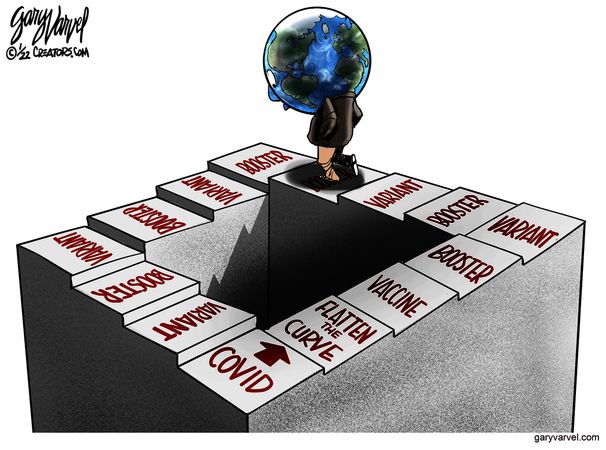
In speaking of “policing,” I mean government throwing its weight and its coercion around against “misinformation” or “disinformation.” And, besides government coercion, there are allies. These allies often enjoy monopolistic positions, stemming either from government handouts, privileges, and sweetheart deals, as with broadcasters, universities, and pharmaceutical companies, or from having cornered certain network externalities, as with certain huge media platforms. Allies of various sorts sometimes do the bidding of the despots because they themselves are threatened and intimidated. The ecosystem leads to their debasement.
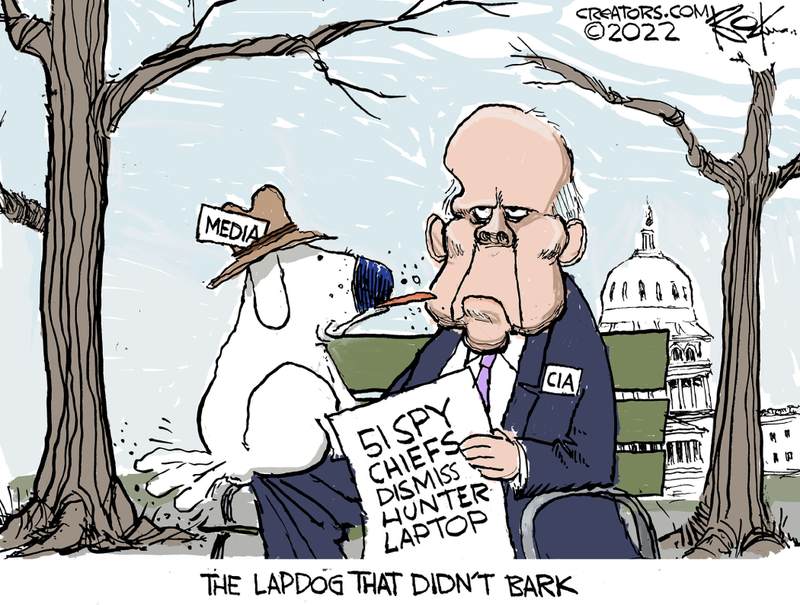
To support governmental policing of “information”
is to confess one’s anti-liberalism and illiberality.
Even worse, it is to flaunt them. The motive is to make and signal commitment to anti-liberalism, in a manner parallel to how religious cults set up rituals and practices for making and signaling commitments (Iannaccone 1992). Vice signals vice, the ticket in some spheres to promotion and advancement.

Also, vicious action spurs more of the same to defend against exposé and accountability for past wrongs. In protecting their rackets, the wrongdoers verge upon a downward spiral.
When despots label opposition “misinformation” or “disinformation” they abuse language. They invoke presuppositions built into the word information, presuppositions that are false. When despots label opposition “mis-” or “disinformation, they are, at best, objecting in the interpretation and judgment dimensions of knowledge, or, at worst, they are speaking in a way that has abandoned civil engagement altogether, instead using words as instruments of wickedness.
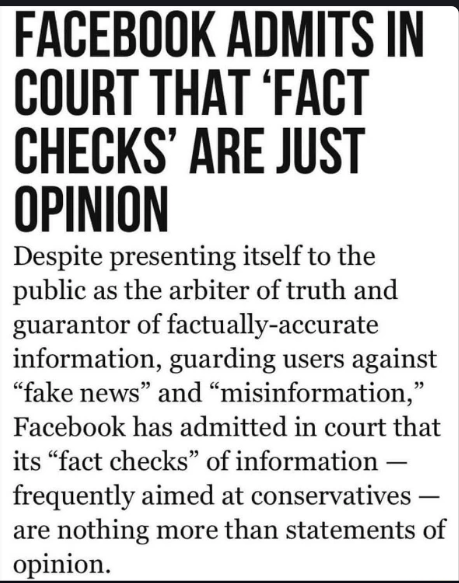
Defence offered by Facebook in Stossel defamation lawsuit.
Usually, what people argue fervently over is not information, but interpretations and judgments as to which interpretations to act on. What is being labeled and attacked as “misinformation” is not a matter of true or false information, but of true or false knowledge. The projects and policies now afoot styled “anti-misinformation” and “anti-disinformation” are dishonest, as it should be obvious to all that those projects and policies would, if advanced honestly, be called “anti-falsehood” or “anti-falseness” or “anti-foolishness” or “anti-untruth” campaigns. But to prosecute an “anti-falsehood” campaign would make obvious the true nature of what is afoot: The persecution and silencing of Wrongthink. In misrepresenting matters of interpretation and judgment as one of “misinformation,” they misrepresent the nature of their projects and dodge the responsibility to account for how they judge among vying interpretations.
In ordinary private-sector affairs, outside of politics and outside of
heavily governmentalized affairs, lying at the level of information
is naturally checked and counteracted.
Again, the “information” implies reference to working interpretations. Getting things rights should not be difficult or tricky—issues there are all within the working interpretation. Sure, mistakes are made; but such mistakes are readily and easily corrected.
Liars about information lose the trust of their voluntary associates, whether those voluntary associates are friends, customers, trading partners, or employees. If liars lie about simple features of their products or their services, they could be subject to law suits from their trading partners, to public criticism, and to rival exposé by competitors. In ordinary private-sector affairs, everyone has reputational incentives not to lie systematically, and especially not to lie about information, and most of us have strong moral incentives within ourselves against lying. We dread the disapproval of “the man within the breast”—an expression Adam Smith used for the conscience.
So, you might ask: If private actors without government privileges and immunities scarcely spread false information dishonestly and programmatically, is disinformation really a thing? Before addressing that question directly, let’s turn to the Godzilla of programmatic lying.
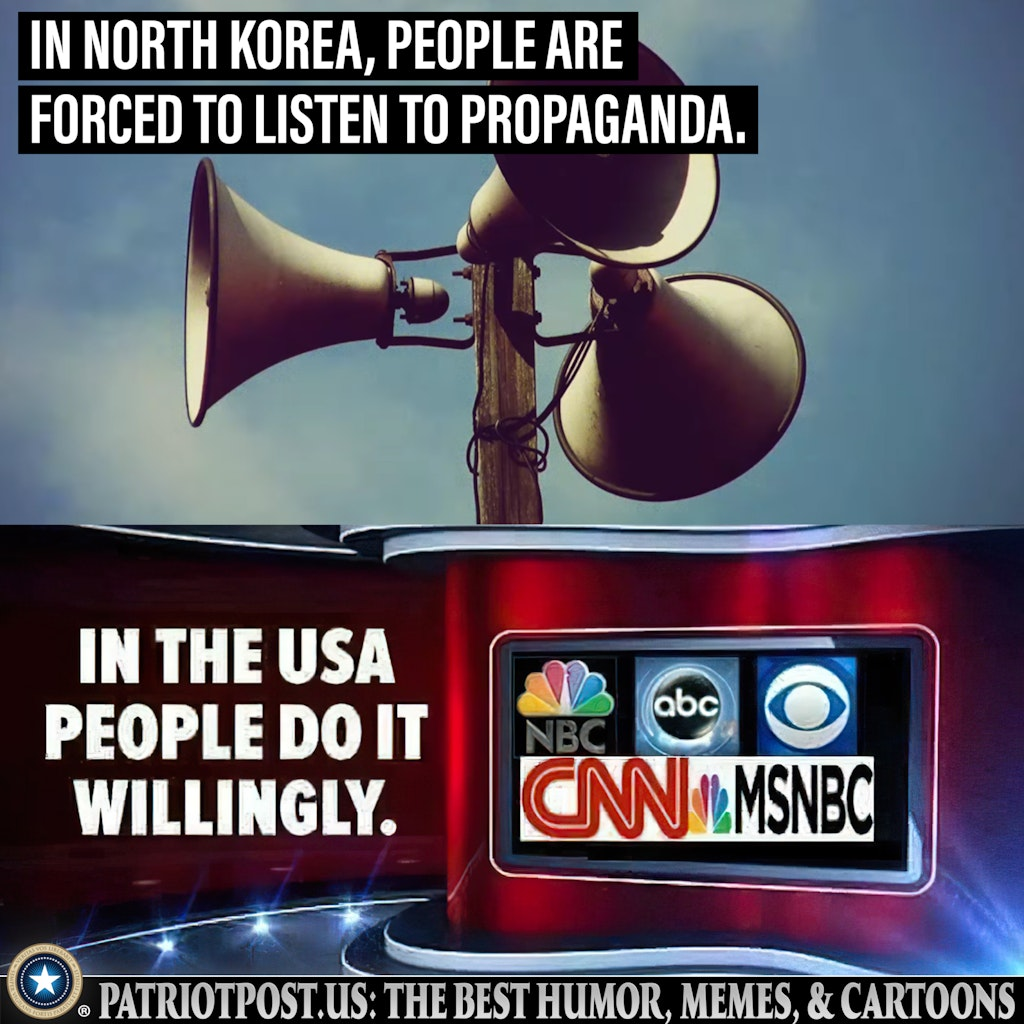
Propaganda: Government’s programmatic lies
It is government, especially, that lies programmatically. The lying can be at the level of information, but it usually makes more sense to say that its lying is at the level of interpretation: The government promotes interpretations—for example, The Covid virus came from nature—, interpretations that it, the government, itself does not particularly believe. It lies about the virus having come from nature, as it lies about many other big interpretations. It propagates big lies.
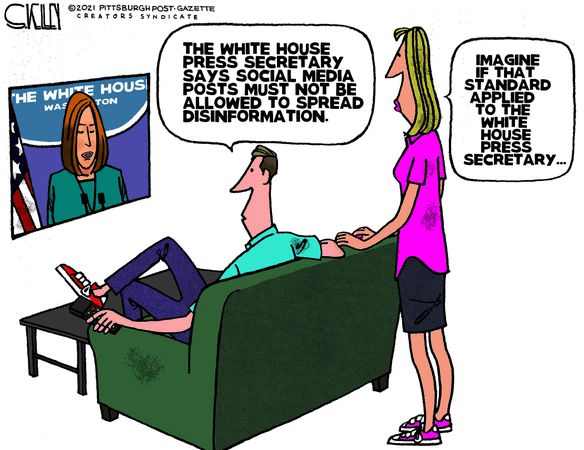
And it lies with confidence. Government is the only player in society that initiates coercion in an institutionalized way. Its coercion is overt. What’s more, it does so on a colossal scale. That is the most essential feature of government. Every government is a Godzilla, and we must learn to live with our Godzilla and mitigate the destruction it wreaks.

The traditional term for government’s programmatic lying is propaganda—a word that once did not necessarily imply falseness (instead meaning simply ideas propagated), but is now generally used in that necessarily-pejorative sense. The falsehoods of propaganda are typically lies, in that the propagandizers usually do not particularly believe the claims they propagate.
Government can lie programmatically because it does not depend on voluntary participation for its support. It subsists on coercion, including restrictions on competitors and opponents, and takings from taxpayers. Organizations in heavily governmentalized settings can also lie programmatically. Crony private-organizations sustain large programmatic lying only when they enjoy privileges, immunities, and protections from the government.
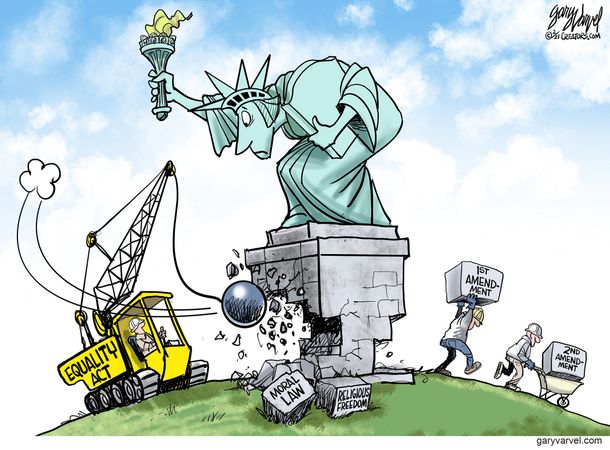
Base humans tend to weaponize things
But aren’t governments accountable to checks and balance, divisions of power, and the rule of law? Haven’t we learned to tame Godzilla, to chain down Leviathan?
It is true that the government of a rule-of-law republic, checked by an honest media, might be quite limited in its programmatic lying. But that’s not how it is today, where dissent is being tarred as “mis-” and “disinformation,” and where the legacy media is morally base in the extreme. Today, regimes are increasingly despotic, and despotic regimes are much less checked and limited.
The rule of law means, first and foremost, the government
living up to the rules posted on its own website.
Governments today don’t do that.
Law is applied politically, that is, with extreme partiality, upon a double-standard. Laws are selectively enforced and punishments are selectively meted out. Despots avail themselves of show trials, kangaroo bodies, and galleries filled with stooges. The “anti-misinformation” agenda is misrule.
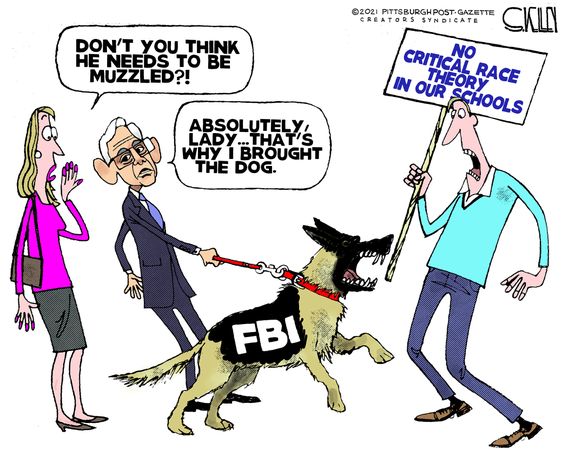
Despotism despoils checks and balances. Despotism centralizes power formerly divided. It destroys the independency and autonomy that, theoretically, branches and units, divided and balanced, had once enjoyed. Despotism usurps powers once distributed and balanced. Despotism is unbalanced power.

Under a despotic regime, the coercive institutions unique to government become weaponized by the despots and their allies. They turn them against their opponents. But weaponization is itself always somewhat constrained by cultural norms. The existence of government implies the existence of a governed society, and the existence of society implies the existence of some basic norms, for example against theft, murder, and lying. David Hume famously pointed out that the governed always vastly outnumber the governors, and hence government depends on “opinion”—if only the opinion to acquiesce to those governors.

The contested claims go far beyond information
The despots tend to invoke certain organizations as the definitive, authoritative sources of “information.” They say, in effect: “The CDC, the WHO, the FDA says the mRNA injections are safe and effective, so anything that suggests otherwise is misinformation.” The farce here is pretending that everyone’s working interpretation consists of the dicta of some such particular organization. Never has an organization or agency had such a Mount-Olympus status for determining, throughout society, working interpretations of complex matters, and particularly not an organization with the foul characters and track-records of the CDC, WHO, FDA, and similar highly governmentalized organizations. The similitude to the Soviet Union under Stalin is obvious.

Despotic contempt for our circle of “we”
Again, what is labeled and attacked as “misinformation” or “disinformation” is not a matter of true or false information, but of true or false knowledge. Recognizing that knowledge, not merely information, is at issue is a matter of common decency.

The dignity of sincere discourse involves an openness, in principle a universal openness, to other human “we’s” and their pursuits upward in wisdom and virtue. As we can see, the chief facets of knowledge—information, interpretation, and judgment—operate both behind and ahead of our current position in the spiral. Trying to shut us up is to show a despotic contempt for our way of weaving through the phases of knowledge. It is contemptuous towards the development of the many loops within which our sense-making has made a home and now operates.

By weighing interpretations and making judgments, we establish certain beliefs as fact, to predicate our further conversation. Those beliefs reflect a “we” with those beliefs. Meanwhile, in the wider world, different “we’s” are forming and are addressing the public at large, representing different sets of belief, different ways of making sense of the world. We might call a “we” a distinct sense-making community.
The sincere human of any one of these communities is eager to learn from other communities. The sincere human has certain commitments which make it belong to the sense-making community it belongs to, but it is not wedded to that community. In fact, the entire population of that community—that is, the set of people who currently share that way of sense-making—may remake their community’s way of sense-making. Those who learn from other communities may become leaders of intellectual change within their own community.
Thus, sincere humans favor the freedom of speech and the norms of frank and open discourse for all communities. Besides favoring that freedom, they welcome engagement across communities, for all the reasons given earlier.
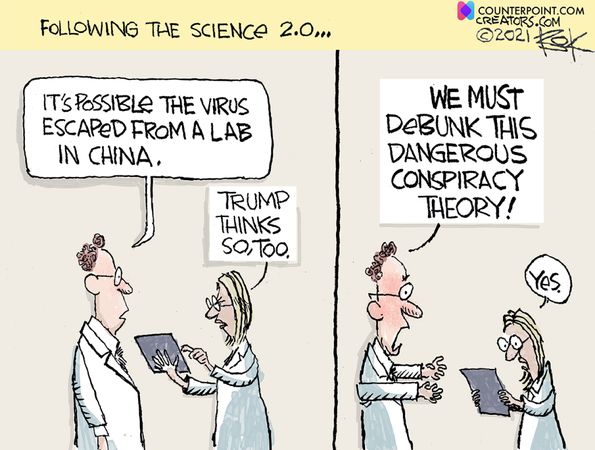
The “anti-misinformation” despots show contempt for communities at odds with their dicta and diktats. Not only are the members of the “anti-misinformation” community unwilling to engage in civil debate, but they promulgate “anti-misinformation” propaganda so as to intimidate their adversaries, to crush dissent.
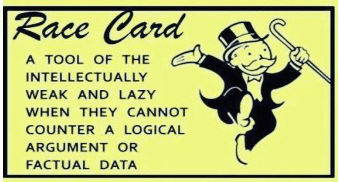
I have explained that the “misinformation” characterization of the disagreement is false. The anti-liberals are presupposing that it is a matter within the information dimension of knowledge, when clearly the disagreement involves contentions in the interpretation and judgment dimensions. Under pretense of combatting misinformation, they are really just stomping on adversaries. As I said at the outset, it is akin to Naziism, Stalinism, and Maoism, regimes that likewise showed despotic contempt for sense-making communities at odds with their own. “Anti-misinformation” projects are a sham, just as “anti-racism” projects are a sham.
Concluding remarks
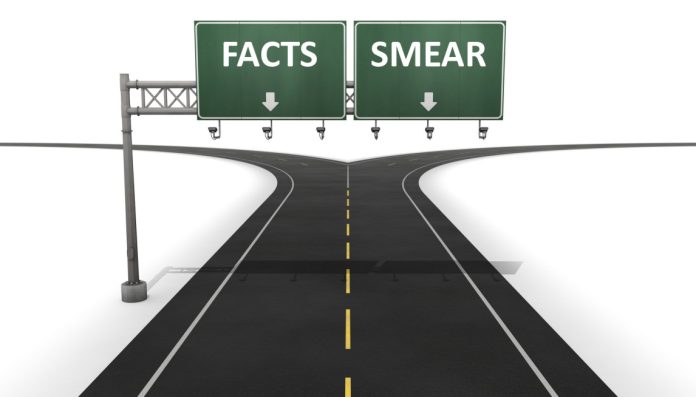
The “anti-misinformation” projects are obvious miscarriages of civility, decency, and the rule of law. We must rediscover the norms of openness, tolerance, and free speech that dignify humankind. Science depends on confidence, and confidence depends on those liberal norms. Those norms are the parents of good science, healthy sense-making, and civil tranquility. There are two roads here, namely:
-
- Freedom —> openness —> confidence —> truth-tracking —> dignity;
- Despotism —> concealment —> diffidence —> bad science —> serfdom and servility
- Freedom —> openness —> confidence —> truth-tracking —> dignity;
Let’s get back to the right road.
 Science Matters
One comment