The Supreme Court of the Netherlands in The Hague on Friday delivered what may be the most unequivocal legal statement so far that governments are responsible for acting to address climate change.
In a closely-watched case that could have wide ramifications for litigation worldwide, the court ruled that the Dutch government must reduce emissions by at least 25% by the end of 2020 compared to 1990 levels, going beyond the EU-wide objective of 20%.
The ruling denied the Dutch government’s appeal of an earlier ruling in favor of the Urgenda Foundation, an environmental group that first filed the case in 2013 on behalf of a group of Dutch citizens who wanted the government to move faster to reduce emissions. The government has argued that a legal obligation to meet a specific target would limit its flexibility in determining how to reduce emissions.
The Supreme Court said on Friday that it based its judgement on the UN Climate Convention and the obligations of the state under the European Convention on Human Rights.
“There is a great deal of consensus in science and the international community about the urgent need to reduce greenhouse gas emissions by at least 25 percent by developed countries by the end of 2020,” the court said in its summary, translated from the Dutch. “[The Netherlands] has not explained why a lower reduction can be considered justified and can still lead in time to the final goal accepted by the State.”
In a brief summary read in English, the judge presiding over the court noted that European Human Rights Convention Articles 2 and 8—the right to life and the right to respect for private and family life—indicate that action on climate change falls under the umbrella of human rights protection.
“These articles entail the positive obligation for the Dutch state to take reasonable and appropriate measures to protect the residents of the Netherlands from the serious risk of a dangerous climate change, that would threaten the lives and wellbeing of many people in the Netherlands,” he said.
That obligation to apply the provisions of the Convention trumped the state’s argument that politicians—not the courts—are responsible for determining emissions reductions, the Court said.
“This could have significant consequences for governments’ freedom to make climate policy and in other areas,” the government said. The statement noted that the state was still committed to lowering emissions by 25% by 2020.
In 2018, emissions in the country were down 14.5% from 1990 levels, according to Statistics Netherlands.
The Urgenda case has gotten the furthest of all international litigation regarding climate change, according to Michael Gerrard, founder and director of the Sabin Center for Climate Change Law at Columbia University. Together with the law firm Arnold & Porter, the Center runs a database to track climate change litigation both internationally and in the U.S.
“There have been 1,442 climate change lawsuits worldwide. This is the strongest decision ever,” said Gerrard. “The Dutch Supreme Court has upheld the first court order anywhere directing a country to slash its greenhouse gas emissions. This decision may inspire even more cases in other countries.”
That was a sentiment that was echoed by Markus Gehring, an expert in sustainable development law at the University of Cambridge.
“The beauty is you only need one successful case,” he said. “There is [now] an expectation that climate litigation will multiply.”
H/T to Ice Age Now for pointing to this brief and informative video of Bill Sellers explaining our planet’s climate cycles due to astronomical factors described by Milankovitch.
I just hope during her time-out Greta takes a look and learns something from this video.
American science and industry are under threat by this complex, known to be an unholy alliance of activists and trial lawyers who deploy various pseudoscientific tricks to score multibillion-dollar lawsuits against large companies. No industry is safe from these deceptions.
In his Farewell Address, President Eisenhower warned of the military-industrial complex, a partnership between the military and defense industry that was financially incentivized to promote war over peace.Today, we face a different threat – the “activist-legal complex,” which is responsible for scoring multibillion-dollar verdicts against some of America’s biggest companies.
One partner in this unholy alliance are activists who falsely claim that the food we eat, the water we drink, the air we breathe, and the products we use are all secretly killing us. They pervert scientific uncertainty to nefarious ends by magnifying hypothetical risks and downplaying relevant facts, such as level of exposure.
They exploit widespread misunderstanding of science and a general hatred of “corporations” – especially those that manufacture chemicals, drugs, or consumer products – to instill fear into the public.
The other partner is the legal industry, which relies on activist scaremongering to win jackpot verdicts. They identify sympathetic patients, often suffering from cancer or some other debilitating disease, and blame their maladies on a company with deep pockets. They buy television commercials to recruit more “victims” for the inevitable class-action lawsuit.
This formula works nearly every time, and the result is always the same: A giant bag of money. In this way, the activist-legal complex recently won a $4.7 billion lawsuit against Johnson & Johnson’s baby powder for causing ovarian cancer and a $2 billion lawsuit (subsequently reduced to merely $87 million) against Monsanto’s glyphosate for non-Hodgkin’s lymphoma.
There is no credible scientific evidence in support of either verdict.
But the absence of genuine scientific evidence is typically irrelevant in trials of this type. With the aid of flawed or cherry-picked toxicological and epidemiological studies – often published by activists in low-quality journals – the activist-legal complex can subvert science using well-established pseudoscientific tricks.
The first involves undermining long-held truths about toxicity. Thanks to Paracelsus, it has been known since the 16th Century that “the dose makes the poison.” Yet, the activist-legal complex promotes an alternate theory, namely that the mere presence of a chemical is an indicator of its potential harm. It is not.
Given advances in analytical instrumentation, it is now possible to detect almost any chemical in your body or in the environment at levels as minute as “one part per trillion,” which is roughly equivalent to a drop in an Olympic-sized swimming pool. There are very few, if any, chemicals on Earth that pose a health risk at such a low concentration.
But using the activist-legal complex’s doctrine – that we are constantly swimming in a sea of harmful chemicals – it is easy for lawyers to argue that any exposure to a potential carcinogen could be responsible for a cancer that develops decades later. Usually, the chemicals that are blamed have been used for decades and have been present in our bodies in tiny amounts all along without causing health concerns.
The second trick is to play on society’s belief that regulators and activists are righteous, unbiased people with no conflicts of interest. For example, jurors in the Monsanto glyphosate trial heard that the International Agency for Research on Cancer (IARC), a subsidiary of the World Health Organization, classified glyphosate as a probable human carcinogen. What they did not hear is that one of the key members of the IARC panel received £120,000 from trial lawyers who stood to benefit financially from the classification.
The third trick is to foment conspiracy theories, usually involving a few old, obscure documents or emails taken out of context. The activist-legal complex uses this tactic to convince jurors, already eager to “punish” Big Business, that the company was engaged in malfeasance.
Game, set, match. The only question left is how big the bag of money is going to be.
Where will the activist-legal complex strike next? It could be anywhere. Maybe there will be a class action lawsuit against Coca-Cola for obesity in America. Perhaps lawyers will go after Facebook for making its social media platform too addictive. Or maybe Apple’s iPhone will be blamed for causing car accidents due to distracted driving.
As long as a company has a sufficiently large bank account, quite literally anything is possible. No industry is safe from the activist-legal complex.
Postscript:
The article points to jackpot justice in general. A number of posts here have discussed how the same dynamic is at work in Climate Litigation (link is to posts so tagged)
Lubos Motl writes at his blog Reference Frame reviewing Nature Mag proclaiming top 10 Scientists for 2019. His article is Nature’s shocking “top ten” scientists. Excerpts below with my bolds.
Fer137 has told us about an incredible list published at Nature Nature’s 10.which is supposed to enumerate the most influential people in science of the year. As Alex correctly said, Nature basically became a new brand of toilet paper. How will they compare to Presto!?
Well, there have been numerous indications of this “evolution of purpose” of that journal but now they have jumped the shark, indeed.
As Nature openly admits, Ricardo Galvão was chosen for his being a Latin American “Amazon” activist and for his frictions with Brazil’s president, Jair Bolsonaro, whom the leftists at Nature consider politically incorrect. He clearly didn’t do anything revolutionary in the science of forests or in biology in general. In fact, he is a physicist!
Victoria Kaspi was clearly chosen for her failure to be male in a field that is overwhelmingly advanced by males, astrophysics. You should look for “fast radio bursts” at Google Scholar to become sure that she isn’t really a leader of this subfield. Even if you add CHIME, the name of her key experiment, to the query, it doesn’t become better.
Nenad Šestan was chosen for the good old left-wing “atheist” reasons. This guy works on the fuzziness of “brain death” so he can take people from God, thus proving the ill-definedness of the religious concepts including death itself. This would be a preferred scientific topic of the leftists some 20 years ago but these days, it’s no longer too hot. And incidentally, Nature just copied the name from the New York Times, a left-wing daily, that promoted Šestan in the summer. At any rate, he is one of the 3 or so actual star scientists in the list.
Sandra Díaz is a hot Venezulean model. OK, they meant this Sandra Díaz which is somewhat less pretty. She is both female and associated with the “biodiversity” hysteria. Clearly, no important advances in the “science of biodiversity” took place in the recent year or several years and she wasn’t the key in those that took place earlier.
Jean-Jacques Muyembe-Tamfum is Congolese and a racially pure black. At least, he is an actual co-discoverer of Ebola, a disease he still fights against. How important was he in the discovery of Ebola? Well, in 1976 the disease first appeared in Sudan and then in Zaire. In Zaire, Muyembe-Tamfum was just in charge of the doctors who were supposed to respond. Among other obvious things, he sent blood samples to Peter Piot. Clearly Piot was far closer to the actual discoverer of Ebola: Muyembe-Tumfum’s role is similar to that of Rosalind Franklin (or perhaps even to the unknown miner-in-chief in Jáchymov, Bohemia who sent the radium samples to Marie Sklodowska). The situations really are analogous. I am not the only one who sees it in this way. Wikipedia mentions:
In 2012, Piot published a book entitled “No Time to Lose” [see the clickable image] which chronicles his professional work, including the discovery of the Ebolavirus. He mentions Muyembe in passing rather than as a co-discoverer.
But Piot is a white man so, according to the fanatical racists at Nature, he must be censored and destroyed, right? In fact, even Piot’s claim that a passing was a passing was a heresy because the passing was black. Why would someone confuse a true scientist with someone who sent blood samples by the USPS? It’s like Penny’s discovery of a comet.
Yohannes Haile-Selassie found an old skull somewhere – one of many old skulls – but he is Ethiopian so he must automatically make it to the top ten as well, right? At least he has done some real research into the African hominids.
Wendy Rogers is both female and an activist talking about organ transplants in China; I didn’t have enough motivation to see what she says or wants because I don’t believe it’s important. Also, I wasn’t able to add a Wikipedia link because I think that her page doesn’t even exist. You may find a Republican politician and an actress of the name much more easily than this organ transplant activist. One paper with her name and “organ” has 28 citations, others are below 10. In the field focused on “organs” where she was named a member of “top ten”, she’s technically an unknown scientist according to the high energy physics criteria.
Deng Hongkui is arguably a real HIV-focused Chinese immunologist with quite some results.
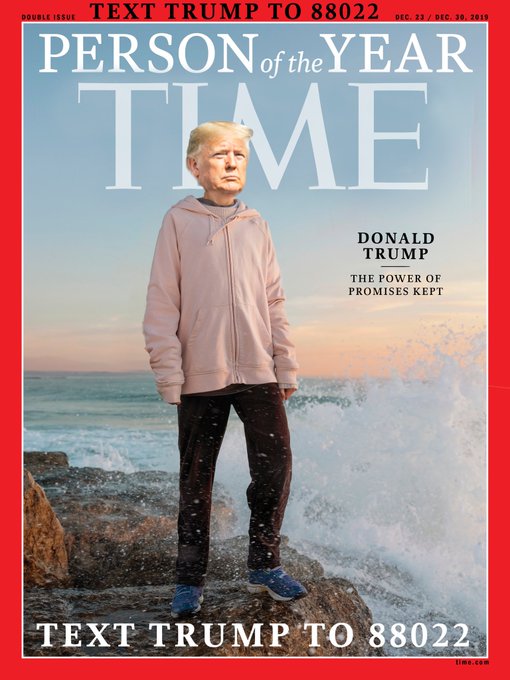
John Martins leads the Google’s “quantum supremacy” advances in quantum computing. He clearly deserves to be there. Nature probably failed to notice that he is a white supremacist according to another article in Nature.Greta Thunberg… doesn’t really surprise us. She is the role model for everything that is bad about the interactions between science and the general society in 2019. She is a whining spoiled brat who refuses to go to school and who is correspondingly scientifically illiterate because of that and who, with quite some success, persuades other people that her hateful hysterical outbursts may compensate for her laziness and caution. She is the exact opposite of a young person who is close to science. Every teenager who does at least 10% of the things that Greta does should be spanked for several hours so that he cannot sit on his bottom for a week.
Nature also adds a “list whom to watch in science in 2020” that starts with António Guterres, the boss of the United Nations who completely lost his mind and who has become a little puddy of Greta Thunberg’s. Even if he weren’t a Greta’s puddy, it would be shocking to claim that being such a politically appointed bureaucrat makes one a top scientist.
At any rate, it’s terribly disappointing to see that a journal that used to be good – although it has played no role in my interest in science whatsoever – chooses way over 50% of its “best scientists” according to some extremist political or identity politics criteria. The individuals at Nature who are responsible for this outrageous page are harmful agents and should be treated as harmful agents.
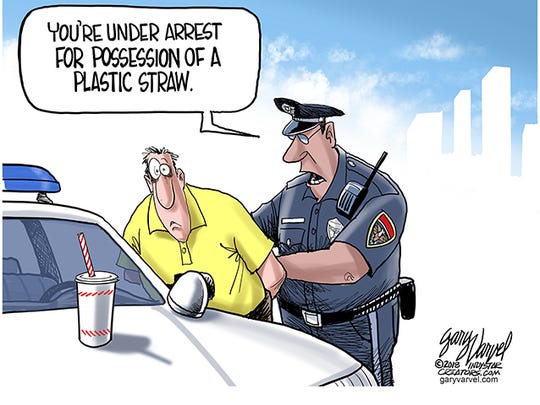
The third-grade boy shamefully completed his apology, in front of first grade. I was luckier than I felt. Just that morning, I had been convinced that the way to win friends was to do what the popular kids did: Stomp on the first-grader’s coffee-can art project. I knew this was wrong but I immediately impressed the popular crowd — the wrong way. My swift punishment only reinforced what I already knew: A crowd was a poor substitute for my own judgment. This lesson has served me well throughout my life, yet I was surprised to find myself transported back to that classroom by a New York Times video — about recycling, of all things. A connection jolted me when I viewed “The Great Recycling Con:”
The captains of industry were making the same mistake I had but with a twist: They are stomping on their own cans.
I remember the early days of residential recycling as clearly as that hug. At first, only the neighborhood crank went through the trouble. But, after about a decade of shaming by celebrities and over-hyping of stories — like the long search of a garbage scow for a customer — governments got involved. Seemingly overnight, nearly everyone was being forced to recycle or taxed to support it. Companies had marching orders to label products so we could comply. The details of these orders were minute to the point of confusion. This point can be gleaned from the video, but get a load of this subtitle: “The greatest trick corporations ever played was making us think we could recycle their products.”
I’m disappointed that corporations had voiced so much support for recycling, but they hardly deserve the blame for labeling laws.
Reaction to proposed Vermont law requiring clear plastic trash bags.
But this has been the MO of the left since the industrial revolution. Regarding 1800’s railroads, Ayn Rand noted:
[W]hat could the railroads do, except try to “own whole legislatures,” if these legislatures held the power of life or death over them? What could the railroads do, except resort to bribery, if they wished to exist at all?
Who was to blame and who was “corrupt”–the businessmen who had to pay “protection money” for the right to remain in business–or the politicians who held the power to sell that right?
The railroads played a game they should have opposed — only to end up blamed for a situation they didn’t create. (To the degree they saw this as an acceptable way to win market share, they share the blame.) We see this today with companies bullied into removing harmless ingredients, such as nitrites from food, or parabens from cosmetics, under the perverse twin incentives of fashionable panic and fear of competition.
The worst case involves the fossil fuel industry, which is vital to our lives and prosperity – while under constant and intense pressure from environmentalists. Energy advocate Alex Epstein notes:
The industry never explained the value of energy and why fossil fuels are superior sources of energy. In fact, the industry is constantly out there saying, “We’re not against wind and solar, we’re for all of the above, we’re in the middle of an energy transition,” etc. That’s why I always stress when I talk to people (a) that low cost, reliable energy is indispensable to human flourishing and (b) that the fossil fuel industry is uniquely good at creating it. People need both of those points.
Epstein is right: Companies should stop fearing the cool media kids scaremongering and start reminding the people who count – their customers — of the full value they offer.
When I think about that day in school, I wish I could go back and tell that third-grader that real friends don’t tempt people to ignore their own judgment; and that he already had good friends, because he had a lot to offer. The same goes for countless productive individuals in whole industries that our media routinely paint as evil ahead of our politicians taking yet more control. Our industry captains have gone along with this for far too long. Rather than accepting these scurrilous attacks, they should view them as personal insults. A great way to begin to fight back is to remind people of the enormous good they and their employees create.
Who’s the bully? Who’s the victim?
Previous Post: On Coercive Climatism: Writings of Bruce Pardy
Many people have heard of Jordan Peterson due to his battles against post modernism and progressive social justice warfare. Bruce Pardy is another outspoken Canadian professor, whose latest statement was posted at the National Post, H/T GWPF.
Paris is more a movement than a legal framework. It imagines the world as a global community working in solidarity on a common problem, making sacrifices in the common good, reducing inequality and transcending the negative effects of market forces. In this fable, climate change is a catalyst for revolution. It is the monster created by capitalism that will turn on its creator and bring the market system to the end of its natural life. A new social order will emerge in which market value no longer determines economic decisions. Governments will exercise influence over economic behaviour by imposing “market-based mechanisms” such as carbon taxes and cap-and-trade systems. Enlightened leaders will direct energy use based upon social justice values and community needs. An international culture will unite peoples in a cause that transcends their national interests, giving way to the next stage of human society. Between the lines of the formal text, the Paris agreement reads like a socialist nightmare.
The regime attempts to establish an escalating global norm that requires continual updating, planning and negotiation. To adhere, governments are to supervise, regulate and tax the energy use and behaviour of their citizens (for example, the Trudeau government’s insistence that all provinces impose a carbon tax or the equivalent, to escalate over time.) Yet for all of the domestic action it legitimizes, Paris does not actually require it. Like the US$100-billion pledge, reduction targets are outside the formal Paris agreement. They are voluntary; neither binding nor enforceable. Other countries have condemned Trump’s withdrawal and reaffirmed their commitment to Paris but many of them, including Canada, are not on track to meet even their initial promises. Global emissions are rising again.
If human action is not causing the climate to change, Paris is irrelevant. If it is, then Paris is an obstacle to actual solutions. If there is a crisis, it will be solved when someone develops a low-carbon energy source as useful and cheap as fossil fuels. A transition will then occur without government interventions and international declarations. Until then, Paris will fix nothing. It serves interests that have little to do with atmospheric concentrations of greenhouse gases. Will America’s repudiation result in its eventual demise? One can hope.
Bruce Pardy belongs to the Faculty of Law, Queen’s College, Kingston, Ontario. This post will provide excerpts from several of Pardy’s writings to give readers access to his worldview and its usefulness making sense of current socio-political actions.
In 2009 Pardy wrote Climate Change Charades: False Environmental Pretences of Statist Energy Governance
The Abstract:
Climate change is a poor justification for energy statism, which consists of centralized government administration of energy supplies, sources, prices, generating facilities, production and conservation. Statist energy governance produces climate change charades: government actions taken in the name of climate change that bear little relationship to the nature of the problem. Such actions include incremental, unilateral steps to reduce domestic carbon emissions to arbitrary levels, and attempts to choose winners and losers in future technology, using public money to subsidize ineffective investments. These proffered solutions are counter-productive.Governments abdicate their responsibility to govern energy in a manner that is consistent with domestic legal norms and competitive markets, and make the development of environmental solutions less likely rather than more so.
Human rights were conceived to liberate. They protected people from an oppressive state. Their purpose was to prevent arbitrary arrest and detention, torture, and censorship, by placing restraints on government. The state’s capacity to accommodate these “negative rights” was unlimited, since they required only that people be left alone.
If only arm twisting were prohbited beyond the ring.
But freedom from interference is so 20th century. Modern human rights entitle. We are in the middle of a culture war, and human rights have become a weapon to normalize social justice values and to delegitimize competing beliefs. These rights are applied against other people to limit their liberties.
Freedom of expression is a traditional, negative human right. When the state manages expression, it threatens to control what we think. Forced speech is the most extreme infringement of free speech. It puts words in the mouths of citizens and threatens to punish them if they do not comply. When speech is merely restricted, you can at least keep your thoughts to yourself. Compelled speech makes people say things with which they disagree.
Some senators expressed the view that forcing the use of non-gendered pronouns was reasonable because calling someone by their preferred pronoun is a reasonable thing to do. That position reflects a profound misunderstanding of the role of expression in a free society. The question is not whether required speech is “reasonable” speech. If a statute required people to say “hello,” “please” and “thank you,” that statute would be tyrannical, not because “hello,” “please” and “thank you” aren’t reasonable things to say, but because the state has dictated the content of private conversation.
Traditional negative human rights give people the freedom to portray themselves as they wish without fearing violence or retribution from others. Everyone can exercise such rights without limiting the rights of others. Not so the new human rights. Did you expect to decide your own words and attitudes? If so, human rights are not your friend.
These positions derive from bedrock reasoning by Pardy on the foundations of law and legitimacy. An insight into his thinking is his rebuttal of a critic The Only Legitimate Rule: A Reply to MacLean’s Critique of Ecolawgic Dalhousie Law Journal, Spring 2017
Ecosystem as One model of Society
An ecosystem is not a thing. It does not exist as a concrete entity. “Ecosystem” is a label for the dynamics that result when organisms interact with each other and their environment. Those dynamics occur in infinite variation, but always reflect the same logic: Competition for scarce resources leads to natural selection, where those organisms better adapted to ecosystem conditions survive and reproduce, leading to evolutionary change. All participants are equally subject to their forces; systems do not play favourites.
In ecosystems, the use of the word “autonomy” does not mean legally enforced liberty but the reverse: no externally imposed rules govern behaviour. In ecosystems unmanaged by people, organisms can succeed or fail, live or die, as their genetically determined physiology and behaviour allow. Every life feeds on the death of others, whether animal or plant, and those better adapted to their circumstances survive to reproduce. Organisms can do anything that their genes dictate, and their success or failure is the consequence that fuels evolution.
When an antelope is chased by a lion and plunges into a river to escape, that action allows the antelope to survive and thus to reproduce. The offspring may carry a genetic disposition to run into water when chased by predators. There are no committees of either antelopes or humans deciding how antelopes will behave. Autonomy in ecosystems is not a human creation. It is not based upon human history or culture and is not a human preference.
Market as a Different Model of Society
A market is not a thing either. Nor is it a place. Markets, like ecosystems, do not exist as concrete entities. “Market” is a label for the dynamics that result when people exchange with each other. Bargains may be commercial in nature, where things are bought and sold, but they also occur in other facets of life. For example, in Ecolawgic I suggested that marriage is a kind of exchange that is made when people perceive themselves better off to enter into the bargain than not to.
As I said in Ecolawgic, “Laws and governments can make markets more stable and efficient, such as by enforcing contracts and creating a supply of money, but they create neither the activity of trading nor the market dynamics that the transactions create.” A market is not a place or a legal structure but the dynamics of a collection of transactions. It does not exist before or independently of the transactions within it. The transactions make the market. Transactions are not created by governments but by the parties who enter into them.
People transact whether they are facilitated by governments or not. The evidence is everywhere. If it were not so, human beings would not have bartered long before there were governments to create money and enforce contracts. During Prohibition, no alcohol would have been produced and sold. Citizens of the Soviet Union would not have exchanged goods. Today there would be no drug trade, no black market and no smuggling. Cigarettes would not be used as currency inside jails. People would not date, hold garage sales or trade hockey cards. There would be no Bitcoin or barter. Try prohibiting people from transacting and see that they will transact anyway. They will do so because they perceive themselves as better off. Sometimes the benefit is concrete and sometimes it is ethereal. The perception of benefit is personal and subjective.
Ecosystems are Coercive, Markets are Voluntary
Ecosystems and markets share many features but they differ in one important respect. Violence plays an important role in ecosystems but is not a part of voluntary market exchange. Ecosystems are arenas for mortal combat. Lions eat antelopes if they can catch them. Nothing prevents taking a dead antelope from a lion except the lion’s response. There are no restrictions on survival strategies, and organisms do not respect the interests, habitats or lives of other organisms.
Markets, in contrast, proceed upon the judgment of the transacting parties that they are better off to trade than to fight. The hunter did not shoot the woodworker to get chairs, and the woodworker traded for meat instead of stealing it. They chose to trade because it made them better off than fighting. The reasons are their own. Perhaps they were friends, colleagues or allies. Perhaps they believed that harming other people is wrong. Perhaps they hoped to have an ongoing trading relationship. Perhaps fighting carried risks that were too high and they feared injury or retribution. Perhaps trading was less work than fighting.
For whatever reason, they chose to trade. This choice is not universal. People have traded throughout human history, but they have also fought. I do not maintain that trading is any more “natural” or inbred than fighting, but neither is it is less so. When people choose to fight, they are no longer part of a market. Markets are like ecosystems with the violence removed. They are the kinder, gentler version of ecosystems.
There are only two models for legal governance and only one legitimate rule.
The logic is as follows: 1. In the wild, organisms compete for scarce resources. Those organisms better adapted to conditions survive and reproduce. Their interactions constitute ecosystems. No legal rules govern behaviour and might is right. 2. Human beings trade spontaneously. Parties enter into transactions when they perceive themselves as better off to trade than to fight. Their transactions constitute markets. 3. Moral values and policy goals are preferences whose inherent validity cannot be established. They are turtles all the way down. Therefore laws based upon those preferences lack legitimacy. 4. When governments use might to impose laws and policies that are illegitimate, they unintentionally imitate ecosystems, where might is right. Political constituencies use whatever means necessary to impose their preferences, and their opponents use whatever means necessary to resist. They are “autonomous” in the ecosystem sense: there are no inherently valid restrictions on behaviour. The result is a social order of division and conflict. 5. The alternative is to model human governance on the other system that exists independently of state preference: markets. If the model for human governance is markets, interactions between people are voluntary. People are “autonomous” in the market sense: they may pursue their own interests without coercion. Instead of imposing illegitimate rules and policies, the state uses force only to prohibit people from imposing force on each other. A plethora of sub-rules follow as corollaries of the rule against coercion: property, consent, criminal offences that punish violence and so on. 6. There is no third choice.Coercion is not right or wrong depending upon the goals being pursued since those goals are merely preferences. Their advocates cannot establish that their goals have inherent validity to those who do not agree. Therefore, giving priority to those objectives is to assert that might is right. If might is right, we are back to ecosystems, where any and all actions are legitimate. 7. If might is right, anything goes, and the model is ecosystems. If might is not right, force is prohibited, and the model is markets. Choose one and all else follows.
When I claim that a prohibition on force is the only legitimate rule, I mean the only substantive rule to govern relations between competent adults. No doubt the administration of a legal system, even a minimalist one, would require other kinds of laws to function. Constitutional rules, court administration, the conduct of elections and procedures to bring legal proceedings are a few of the other categories that would be necessary in order to give effect to the general rule.
No Property, No Market
But the existence of property rights must follow from a general rule prohibiting coercion. If it does not, the general rule is not what it purports to be. When people trade, they recognize the property interest held by the other party. It is that interest that they wish to obtain. When the woodworker trades chairs for the hunter’s meat, she trades “her” chairs for “his” meat. The trade would not occur without a mutual understanding of the possession that both hold over their respective stuff.
Sometimes those interests are recognized and protected by the law, which according to Bentham created the property. However, since markets arise even where no property is legally recognized, the notion of property must be prior to the law. Above I gave examples of markets that have arisen where no legal regime has protected property rights: prehistorical trade, alcohol sales during Prohibition, black markets in the Soviet Union, the modern day drug trade, smuggling of illicit goods, and the internal markets of prisons. Since trading occurs even in the absence of an approving legal regime, the notion of property must exist independently as well.
No Consent, No Market
Autonomy in the market sense means to be able to pursue your own interests and control your own choices without coercion. Consent is part and parcel of autonomy. Without the ability to consent, no trades can be made. Without trades, no markets exist. If one cannot consent to be touched, to give up property, to make bargains, to mate, to arm wrestle, to trade chairs for meat, to sell labour for money, and so on, then one is not autonomous.
If force is prohibited, then corollaries are laws that protect people from having force imposed upon them. Laws apply the force of the state to prevent or punish the application of force. A criminal law that prohibits assault is an extension of the general rule. A tax to finance the police department is legitimate if its purpose is to investigate and prosecute violent crimes. Traffic laws prevent people from running each other over. Civil liability compensates for physical injuries caused by the force of others.
Illegitimate Laws, No Market
Illegitimate laws use state coercion to seek other ends such as enforcing moral standards, pursuing social goals or saving people from themselves. A criminal law that prohibits the use of drugs uses state force to prevent an activity in which there is no coercion. A tax to fund the armed forces to protect the peace may be legitimate, but one to take wealth from Peter to give to Paul is not. The legal regimes of modern administrative states consist largely of instrumentalist laws and policies that are inconsistent with the general rule, including tax laws, economic development programs, bankruptcy, patent regimes, mandatory government-run pension plans and MacLean’s version of environmental regulation, in which each decision turns on a political determination of the values to be applied.
It is either ecosystems or markets. Either might is right or it is not. If it is, then human society is subject to the law of the jungle where people are at liberty to fight like animals if they choose to do so. If it is not, then human society is a marketplace where people may enter into transactions voluntarily and the state may justifiably use force only to prevent or punish the application of force.
There is no third choice. Some might insist that coercion is not categorically wrong but that it can be right or wrong depending upon the other goals to be pursued. Those goals are merely preferences. They are turtles all the way down. I do not maintain that other rules will not be passed and enforced using the established machinery of government but only that they have no claim to legitimacy, any more than other rules that might have been chosen instead. If force is used to pursue those preferences, why would others not use force to resist? Such a choice results in a free-for-all. If state force is right only because it cannot be resisted, that means that might is right. The administrative welfare state prevails not because it is justified morally or socially but because it has managed to secure a monopoly on violence. The imposition of government preferences is an invitation to those opposed to an arbitrary policy agenda to take up force against it.
Summary
In a way, Pardy is warning us not to take for granted the free market social democracies to which we were accustomed. Post modern progressive social justice warriors have decided that society is essentially an endless power struggle, that one group’s rights are gained only at the expense of another group. In other words, it’s a dog-eat-dog, might makes right ecosystem. Pardy says there is another way, which has been the basis for the rise of civilization, but can be reversed by governance that destroys the free market of ideas and efforts by imposing values favored by the rich and powerful.
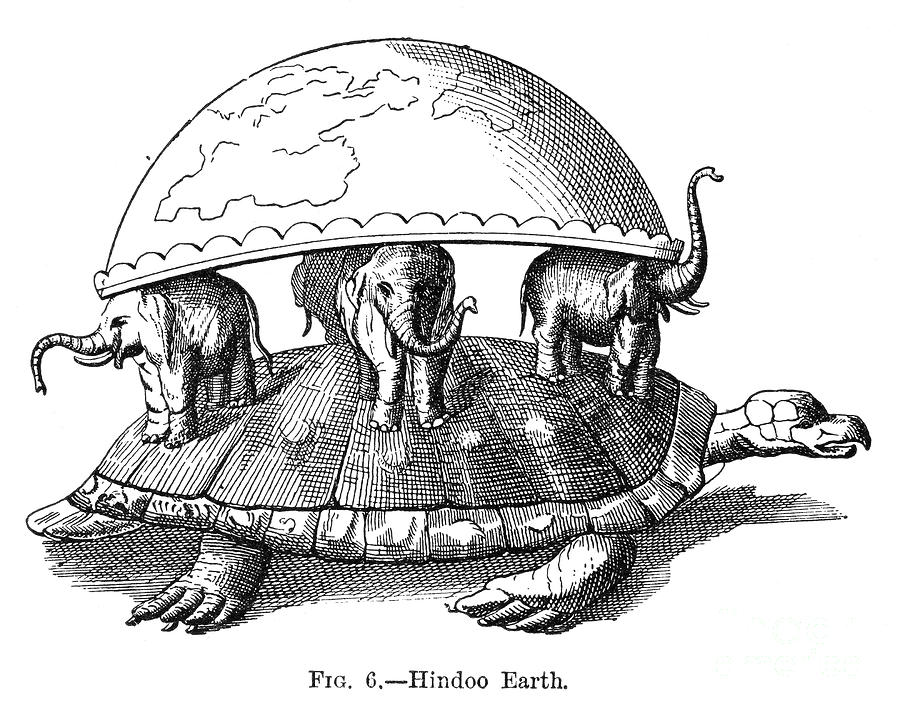
Footnote about Turtles. Pardy explains the metaphor:
In Rapanos v. United States, Justice Antonin Scalia offered a version of the traditional tale of how the Earth is carried on the backs of animals. In this version of the story, an Eastern guru affirms that the earth is supported on the back of a tiger. When asked what supports the tiger, he says it stands upon an elephant; and when asked what supports the elephant he says it is a giant turtle. When asked, finally, what supports the giant turtle, he is briefly taken aback, but quickly replies “Ah, after that it is turtles all the way down.”
In first-of-its-kind research, NOAA scientists and academic partners used 100 years of microscopic shells to show that the coastal waters off California are acidifying twice as fast as the global ocean average — with the seafood supply in the crosshairs.
California coastal waters contain some of our nation’s more economically valuable fisheries, including salmon, crabs and shellfish. Yet, these fisheries are also some of the most vulnerable to the potential harmful effects of ocean acidification on marine life. That increase in acidity is caused by the ocean absorbing excess carbon dioxide from the atmosphere.
This product provides a unique data set for a range of users including providing a more accessible format for non-carbon chemists interested in surface ocean pCO2 and pH time series data. These 40 time series locations represent a range of ocean, coastal, and coral reef regimes that exhibit a broad spectrum of daily to interannual variability. These time series can be used as a tool for estimating climatologies, assessing natural variability, and constraining models to improve predictions of trends in these regions.
However, at this time, only two time series data sets (WHOTS and Stratus) are long enough to estimate long-term anthropogenic trends. ToE estimates show that at all but these two sites, an anthropogenic signal cannot be discerned at a statistically significant level from the natural variability of surface seawater pCO2 and pH. If and when that date of trend detection is attained, it is essential to seasonally detrend data prior to any trend analyses.
Even though the ToE provided are conservative estimates, data users should still use caution in interpreting that an anthropogenic trend is distinct from decadal-scale ocean forcing that is not well characterized. Future work should be directed at improving upon these ToE estimates in regions where other data, proxies, or knowledge about decadal forcing are more complete.
Background from previous post: Basics of Ocean Acidification
Updates added below June 20 and 24, 2015
Update below July 2, 2015: Ocean pH is actually trending alkaline
Update below September 15, 2015: Extensive discussion of ocean chemistry
If surface temperatures don’t skyrocket soon, expect to hear a lot in the coming months about “ocean acidification.” This sounds scary, and that is the point of emphasizing it to build support for Paris COP.
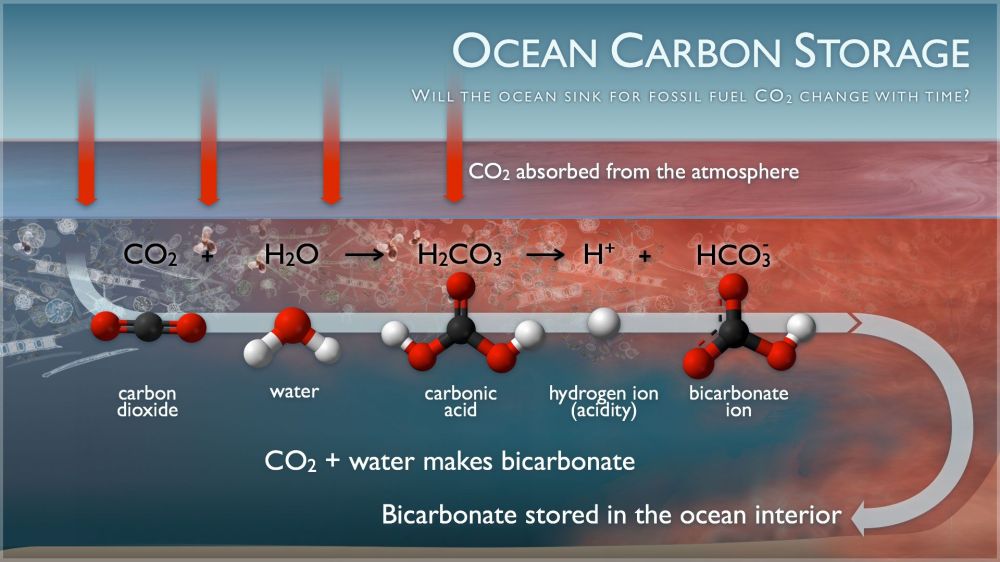
So here’s the basic chemistry of CO2 and H20:
That seems straight forward, So what is the problem?
That looks fairly serious. So what does the IPCC have to say about this issue?
What does it say in the SPM (Summary for Policy Makers)?
For this issue, I looked at the topic of ocean acidification and fish productivity. The SPM asserts on Page 17 that fish habitats and production will fall and that ocean acidification threatens marine ecosystems.
“Open-ocean net primary production is projected to redistribute and, by 2100, fall globally under all RCP scenarios. Climate change adds to the threats of over-fishing and other non-climatic stressors, thus complicating marine management regimes (high confidence).” Pg 17 SPM
“For medium- to high-emission scenarios (RCP4.5, 6.0, and 8.5), ocean acidification poses substantial risks to marine ecosystems, especially polar ecosystems and coral reefs, associated with impacts on the physiology, behavior, and population dynamics of individual species from phytoplankton to animals (medium to high confidence).” Pg 17 SPM
So, the IPCC agrees that ocean acidification is a serious problem due to rising CO2 emissions from burning fossil fuels.
What does it say in the Working Group Reports?
But wait a minute. Let’s see what is in the working group reports that are written by scientists, not politicians.
WGII Report, Chapter 6 covers Ocean Systems. There we find a different story with more nuance and objectivity:
“Few field observations conducted in the last decade demonstrate biotic responses attributable to anthropogenic ocean acidification” pg 4
“Due to contradictory observations there is currently uncertainty about the future trends of major upwelling systems and how their drivers (enhanced productivity, acidification, and hypoxia) will shape ecosystem characteristics (low confidence).” Pg 5
“Both acclimatization and adaptation will shift sensitivity thresholds but the capacity and limits of species to acclimatize or adapt remain largely unknown” Pg 23
“Production, growth, and recruitment of most but not all non-calcifying
seaweeds also increased at CO2 levels from 700 to 900 µatm Pg 25
“Contributions of anthropogenic ocean acidification to climate-induced alterations in the field have rarely been established and are limited to observations in individual species” Pg. 27
“To date, very few ecosystem-level changes in the field have been attributed to anthropogenic or local ocean acidification.” Pg 39
Ocean Chemistry on the Record
Contrast the IPCC headlines with the the Senate Testimony of John T. Everett, in which he said:
“There is no reliable observational evidence of negative trends that can be traced definitively to lowered pH of the water. . . Papers that herald findings that show negative impacts need to be dismissed if they used acids rather than CO2 to reduce alkalinity, if they simulated CO2 values beyond triple those of today, while not reporting results at concentrations of half, present, double and triple, or as pointed out in several studies, they did not investigate adaptations over many generations.”
“In the oceans, major climate warming and cooling and pH (ocean pH about 8.1) changes are a fact of life, whether it is over a few years as in an El Niño, over decades as in the Pacific Decadal Oscillation or the North Atlantic Oscillation, or over a few hours as a burst of upwelling (pH about 7.59-7.8) appears or a storm brings acidic rainwater (pH about 4-6) into an estuary.” http://www.epw.senate.gov/public/index.cfm?FuseAction=Files.View&FileStore_id=db302137-13f6-40cc-8968-3c9aac133b16
Many organisms benefit from less alkaline water.
(Added in thanks to David A.’s comment below)
In addition, IPCC has ignored extensive research showing positive impacts on marine life from lower pH. These studies are catalogued at CO2 Science with this summary:
There are numerous observations of improvement in calcification of disparate marine life in realistic rates of PH change due to increased CO2.
“In the final graphical representations of the information contained in our Ocean Acidification Database, we have plotted the averages of all responses to seawater acidification (produced by additions of both HCl and CO2) for all five of the life characteristics of the various marine organisms that we have analyzed over the five pH reduction ranges that we discuss in our Description of the Ocean Acidification Database Tables, which pH ranges we illustrate in the figure below.”
“The most striking feature of Figure 11 is the great preponderance of data located in positive territory, which suggests that, on the whole, marine organisms likely will not be harmed to any significant degree by the expected decline in oceanic pH. If anything, in fact, the results suggest that the world’s marine life may actually slightly benefit from the pH decline, which latter possibility is further borne out by the scatter plot of all the experimental data pertaining to all life characteristic categories over the same pH decline range, as shown below in Figure 12.”
At PH decline from control of .125, calcification, metabolism, fertility, growth and survival all moved into positive territory.
The oceans are buffered by extensive mineral deposits and will never become acidic. Marine life is well-adapted to the fluctuations in pH that occur all the time.
This is another example of climate fear-mongering: It never happened before, it’s not happening now, but it surely will happen if we don’t DO SOMETHING!.
Conclusion
Many know of the Latin phrase “caveat emptor,” meaning “Let the buyer beware”.
When it comes to climate science, remember also “caveat lector”–”Let the reader beware”.
Patrick Moore also provides a thorough debunking here:
“It is a fact that people who have saltwater aquariums sometimes add CO2 to the water in order to increase coral growth and to increase plant growth. The truth is CO2 is the most important food for all life on Earth, including marine life. It is the main food for photosynthetic plankton (algae), which in turn is the food for the entire food chain in the sea.”
Scientists have had pH meters and measurements of the oceans for one hundred years. But experts decided that computer simulations in 2014 were better at measuring the pH in 1910 than the pH meters were. The red line (below) is the models recreation of ocean pH. The blue stars are the data points — the empirical evidence.
What we have here is one of the basic foundations of the climate change scare, that is falling ocean pH levels with increased atmospheric CO2 content, being completely dismissed by the empirical ocean pH data the alarmist climate scientists didn’t want to show anyone because it contradicted their ‘increasing ocean acidity’ narrative.
In summary, recent research publications are using a term (OA) that is technically incorrect, misleading, and pejorative; it could not be found in the oceanography literature before about 15 years ago. . .
The claim that the surface-water of the oceans has declined in pH from 8.2 to 8.1, since the industrial revolution, is based on sparse, contradictory evidence, at least some of which is problematic computer modeling. Some areas of the oceans, not subject to algal blooms or upwelling, may be experiencing slightly lower pH values than were common before the industrial revolution. However, forecasts for ‘average’ future pH values are likely exaggerated and of debatable consequences. The effects of alkaline buffering and stabilizing biological feedback loops seem to be underappreciated by those who carelessly throw around the inaccurate term “ocean acidification.”
GWPF published today a letter from the late Sir Antony Jay, co-creator of Yes, Minister and Yes, Prime Minster, attacking the BBC for its blatant bias on climate change 8 years ago. It seems timely to repost the final episode from the last season addressing the topic of global warming/climate change. As you see, climate politics have not changed very much.
Part 1 of the program is here:
Part 2
Previously I posted this:
A humorous look at why the global warming campaign and the triumphal Paris COP make sense.
Yes Minister explains it all in an episode from 2013.
h/t to Peter S.
This is an all-too-realistic portrayal of political climatism today.
Then I realized that BBC had blocked the viewing of the video. So I sought and found the subtitles for Yes Prime Minister 2013, Episode 6, “A Tsar is Born”. That final episode for the series began with the dialogue in yesterday’s post Climate Alarms LOL.
Today I provide the dialogue that formed the episode conclusion, and which was the content of the blocked video.
The Characters are:
Sir Humphrey Appleby
Cabinet Secretary
Jim Hacker
Prime Minister
Claire Sutton
Special Policy Adviser
Bernard Woolley
Principal Private Secretary to the Prime Minister
(Dialogue beginning at 20:16 of “A Tsar is Born”)
Humphrey I have returned with the answer to all your problems. Global warming.
Jim I thought you were against it?
Humphrey Everybody’s against it, Prime Minister. I suddenly realised that is the beauty of it. We can get a unanimous agreement with all of our European partners
to do something about it.
Jim But how can we do something about something that isn’t happening?
Humphrey It’s much easier to solve an imaginary problem than a real one.
Jim You believe it’s real?
Humphrey Do you? I don’t know.
Jim Neither do I. Haven’t got the faintest idea!
Humphrey But it doesn’t matter what we think. If everyone else thinks it’s real, they’ll all want to stop it. So long as it doesn’t cost too much. So the question now is, what are we going to do about it?
Jim But if it isn’t happening, what can we do about it?
Humphrey Oh, there’s so much we can do, Prime Minister. We can impose taxes, we can stiffen European rules about
carbon emissions, rubbish disposal. We can make massive investments in wind turbines. We can, in fact, Prime Minister, under your leadership, agree to save the world.
Jim Well, I like that! But Russia, India, China, Brazil, they’ll never cooperate.
Humphrey They don’t have to. We simply ask them to review their emissions policy.
Jim And will they?
Humphrey Yes. And then they’ll decide not to change it. So we’ll set up a series of international conferences. Meanwhile, Prime Minister, you can talk about the future of the planet.
Jim Yes.
Humphrey You can look statesmanlike. And it’ll be 50 years before anybody can possibly prove you’re wrong. And you can explain away anything you said before by saying the computer models were flawed.
Jim The voters will love me!
Humphrey You’ll have more government expenditure.
Jim Yes. How will we pay for it? We’re broke.
Humphrey We impose a special global warming tax on fuel now, but we phase in the actual expenditure gradually. Say, over 50 years? That will get us out of the hole for now.
Bernard The Germans will be pleased. They have a big green movement.
Claire And we can even get the progs on board!
Bernard As long as they get more benefits than everyone else.
Jim My broadcast is on Sunday morning.
Humphrey You have a day to get the conference to agree.
Jim That’s not a problem. The delegates will be desperate for something to announce when they get home. There is one problem. Nothing will have actually been achieved.
Humphrey It will sound as though it has. So people will think it has. That’s all that matters!
(Later following the BBC interview, beginning 27:34)
Bernard Oh, magnificent, Prime Minister!
Humphrey I think you got away with it, Jim, but the cabinet will have been pretty surprised. We’ll have to square them fast.
Jim Bubbles!
Humphrey We’re not there yet. After that interview, you’ll need to announce some pretty impressive action.
Jim An initiative.
Humphrey Yes.
Claire A working party?
Humphrey Bit lightweight.
Bernard A taskforce?
Humphrey Not sure.
Jim Do we have enough in the kitty?
Claire It could be one of those initiatives that you announce but never actually spend the money.
Jim Great. Like the one on child poverty.
Bernard Maybe it should be a government committee?
Jim Well what about a Royal Commission?
Humphrey Yes! It won’t report for three years, and if we put the right people on it, they’ll never agree about anything important.
Jim Right! A Royal Commission! No, wait a minute, that makes it sound as if we think it’s important but not urgent.
Claire Well, what about a Global Warming Tsar?
Jim Fine! Would that do it?
Humphrey No, I think it might need a bit more than that, Prime Minister. It’ll mean announcing quite a big unit, and an impressive salary for that Tsar, to show how much importance you place upon him.
Jim No problem. Who would it be?
Humphrey Ah, well, it can’t be a political figure. That would be too divisive. It has to be somebody impartial.
Jim You mean a judge?
Humphrey No, somebody from the real world. Somebody who knows how to operate the levers of power, to engage the gears of the Whitehall machine, to drive the engine of government.
Jim That’s quite a tall order. Anybody got any ideas?
Humphrey… Could you?
Bernard Oh!
Humphrey Yes, Prime Minister.
The End.
Footnote
CO2 hysteria is addictive. Here’s what it does to your brain:
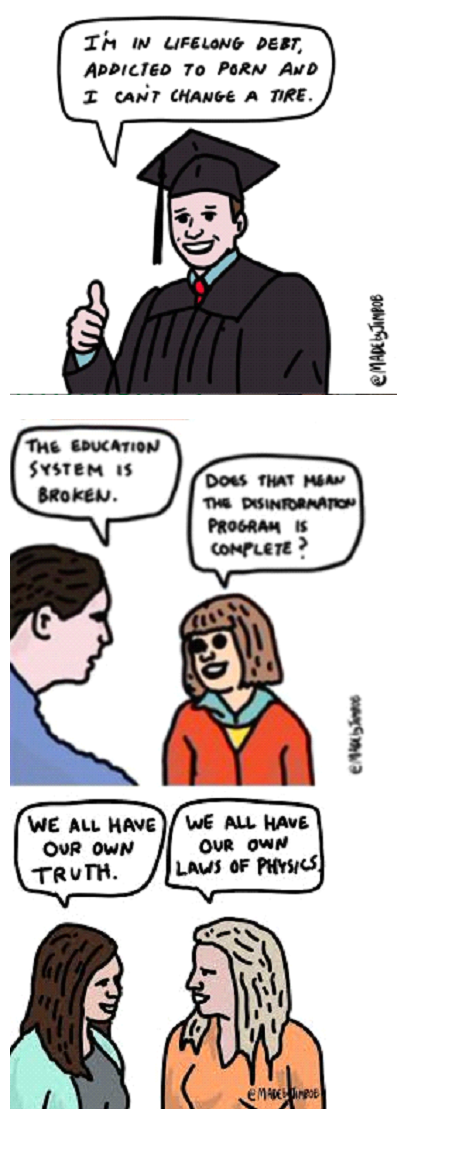
Humor is important as a means of poking holes in narratives that assert beliefs contrary to reality. Jimbob has become a force skewering notions of climate change, as well as other distorted ideas comprising the “woke” PC canon. Those inside the believer bubble will not be affected, but the important audience are those ignorant or agnostic about the so called “progressive, post-modern agenda.” Philosopher Mortimer Adler put it this way:
Any teacher will tell you it is much easier to teach a student who is ignorant than one who is in error, because the student who is in error on a given point thinks that he knows whereas in fact he does not know. . .It is almost necessary to take the student who is in error and first correct the error before you can teach him. . .The path from ignorance to knowledge is shorter than the path from error to knowledge.
And the best part is that the alarmist side is denied any use of humor due to their doomsterism. Below are a selection from the many cartoons madebyjimbob, touching everything from climate change to racism, to cancel culture to genderism to the failure of higher education.
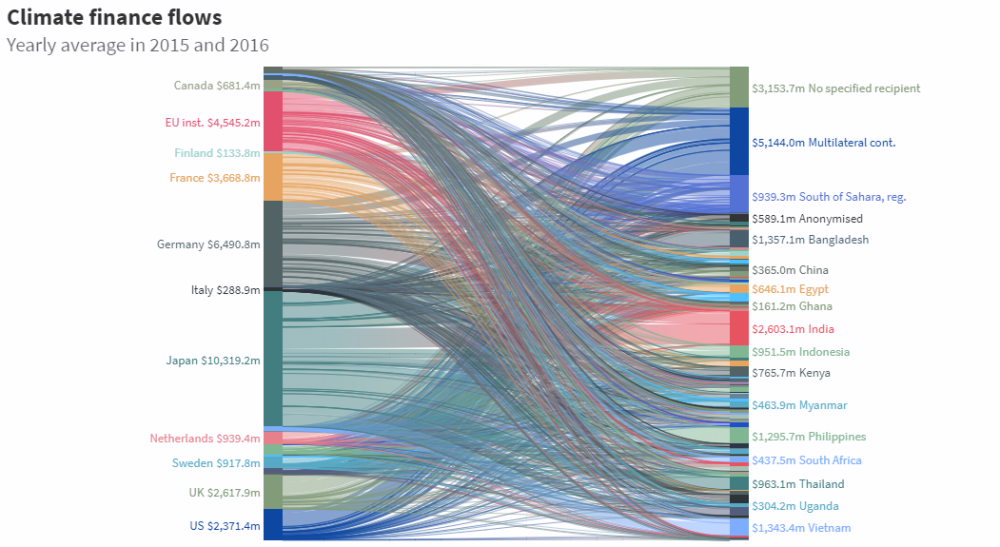
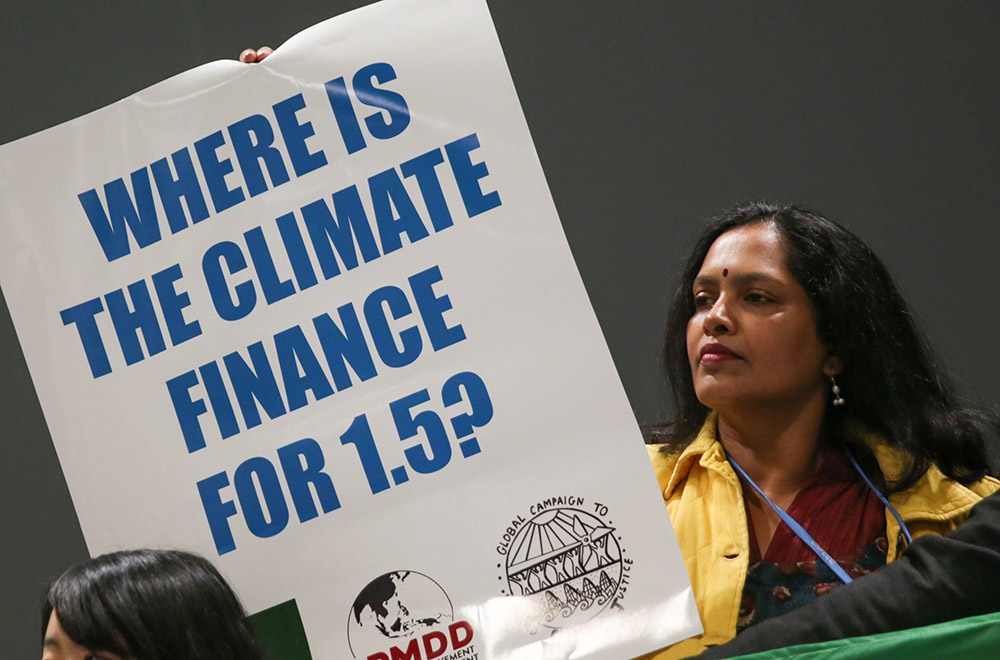
Saving the planet takes money, and lots of it. Money is both the theme and the subtext of the latest round of UN climate talks being held here—a vast river of cash flows through the UN climate process. Formally, the meeting is about nailing down one of the more obscure provisions of the Paris Agreement: Article 6, which provides for market-based instruments so that countries can trade their way out of their decarbonization commitments. Billions of cross-border dollars and transaction fees hang on the outcome.
With the negotiations concerning mind-paralyzing definitions of interest only to the most intrepid climate geeks, business and finance leaders could wind up taking center stage. When they first started coming to climate conferences, it was to observe and advise. Now it’s to show-and-tell their green virtue. “Momentum is there,” declared Paul Polman, the former Uniliver CEO. “Climate change is the biggest business opportunity of all time.” We’re close to several policy tipping points, he suggested.
The EU is about to approve a massive Green New Deal. Michael Bloomberg’s Task Force on Climate-related Financial Disclosures (TFCD) encourages companies to make voluntary climate-related risk disclosures. Draft EU regulations, meantime, could pave the way for mandatory climate disclosures that would force investment managers to justify their investments against climate and environmental benchmarks. Businesses are transitioning to “net zero,” Polman claims—meaning zero carbon emissions. They’re so far advanced that at this point, it’s only governments holding them back.
Peeling away the hype reveals a very different picture. Companies promising to cut their carbon emissions rely on offsetting—that is, paying for their consumption of hydrocarbon energy by supporting projects that reduce greenhouse-gas emissions, such as renewable energy. If companies were genuine in their commitment to tackle climate change, though, they would develop zero-carbon baselines for their own activities.
A growing number of companies boast about the proportion of wind and solar in their energy consumption. These claims rely on an entirely legal accounting fraud that says that renewable electricity can be stored; the physical reality is that electricity is consumed the instant that it’s generated. In peddling the falsehood that business and households can depend on anything close to 100% intermittent renewable energy, companies are misleading the public.
Rather than demonstrating a genuine – and painful – commitment to radical decarbonization, business leaders’ public professions of climate awareness reflect a confluence of interest between, on the one hand, corporate public-affairs departments steeped in doctrines of corporate social responsibility (CSR), and, on the other, nongovernmental organizations (NGOs). It’s a collusive process. The more environmental reporting requirements, the greater the importance of CSR in corporate hierarchies, the more work there is for external environmental consultants—and the greater the leverage NGOs wield over corporations.
Then there’s the psychology of herding, whereby CEOs are fearful of being hung out to dry if they don’t sign the latest statement pledging their company to save the world from climate breakdown. All this might remind readers of two groups in Ayn Rand’s Atlas Shrugged: the Moochers, comprising, in this example, the craven CEOs and their in-house CSR crowd; and the Looters, the environmental NGOs.
Their ultimate victim is capitalism, the only economic system ever to have produced durable, transformative economic growth.
Madrid also marks the debut of finance ministers at UN climate talks, with the formation of a coalition of finance ministers for climate action. Under their Santiago Action Plan, over 50 finance ministers, including most from the EU, pledged to incorporate climate-change considerations into economic policy and seek “analytical expertise” to put their economies on the path of “inclusive economics, social, and wider restructuring.”
The first rule of economic policymaking is that any government intervention in the economy involves trade-offs.
In the case of decarbonization policies that drive up energy costs, “net zero” means zero growth. The en masse capitulation of finance ministries before the altar of climate change sends a negative signal about future economic growth. Patricia Espinosa, executive secretary of the UN climate-change convention, has already sent out invitations to finance ministers to attend next year’s talks. Once on the climate bandwagon, it’s almost impossible to get off.
Then there are those desperate to get on the climate bandwagon and never get off. Anyone who has attended a UN climate conference will have noticed that some of the best-dressed participants are from Africa’s poorest nations, some with chunky Rolexes on their wrists. The UN makes sure that they suffer no hardship from their climate-change-fighting efforts. The Daily Subsistence Allowance, once handed out in envelopes with $100 bills, is now disbursed in its plastic equivalent of Swiss value cards. NGOs, whose role at climate conferences is to act as the spontaneous expression of civil society, are also eligible. Unsurprisingly, youth NGOs want to get in on the DSA act, too.
The incentive this creates is to make the UN what its critics always accuse it of being: a talking shop. According to one estimate, participants in the Article 6 discussions have already spent 70,000 hours failing to define what a “market instrument” is. Why decide, when another comfortable meeting in another expensive city beckons?
When it comes to Article 6, rich nations want tight rules to ensure that their money won’t be used to fund phony emissions cuts. Environment ministries in poorer nations naturally see Article 6 as a stream of funding that will flow through them. In principle, though, it’s hard to see how an emissions market can work as intended, when developed nations with hard caps on their emissions can pay to outsource their cuts to nations with no caps and no rigorous inventory of greenhouse gases.
Back in the U.S., some 80 business leaders have signed a statement urging the U.S. to remain in the Paris Agreement, with its commitment to limit warming to 1.5 degrees Centigrade above pre-industrial levels. Anyone who has looked at the numbers and what they entail in terms of global emissions cuts knows that this is next to impossible. It’s conceivable that global greenhouse-gas emissions will plateau, but steep cuts to “zero” aren’t going to happen. But America must have a seat at the table, comes the response. Perhaps, then, to show that they have some skin in the game, these business leaders should endure thousands of hours of meetings trying to decide what a market instrument is.
Bill Gates on Financiers Climate Fantasies:
Background from Previous Post: Why Al Gore Keeps Yelling “Fire!”
Some years ago I attended seminars regarding efforts to achieve operational changes in organizations. The notion was presented that people only change their habits, ie. leave their comfort zone, when they fear something else more than changing their behavior. The analogy was drawn comparing to workers leaping from a burning oil platform, or tenants from a burning building.
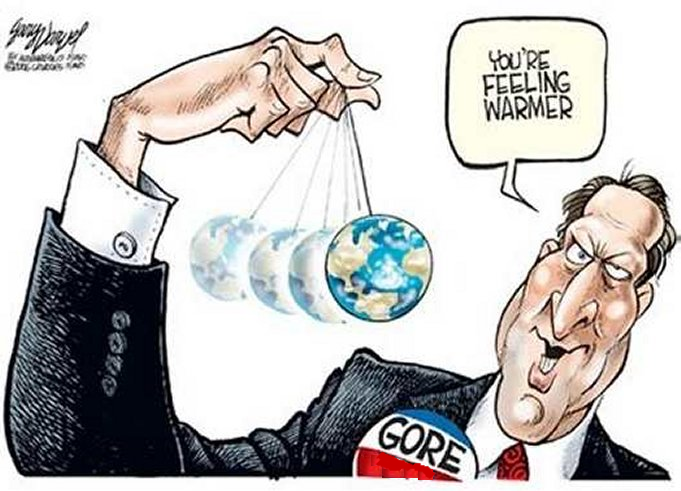
Al Gore is fronting an agenda to unplug modern societies, and thereby the end of life as we know it. Thus they claim the world is on fire, and only if we abandon our ways of living can we be saved.
The big lie is saying that the world is burning up when in fact nothing out of the ordinary is happening. The scare is produced by extrapolating dangerous, fearful outcomes from events that come and go in the normal flow of natural and seasonal climate change. They can not admit that the things they fear have not yet occurred. We will jump only if we believe our platform, our way of life, is already crumbling.
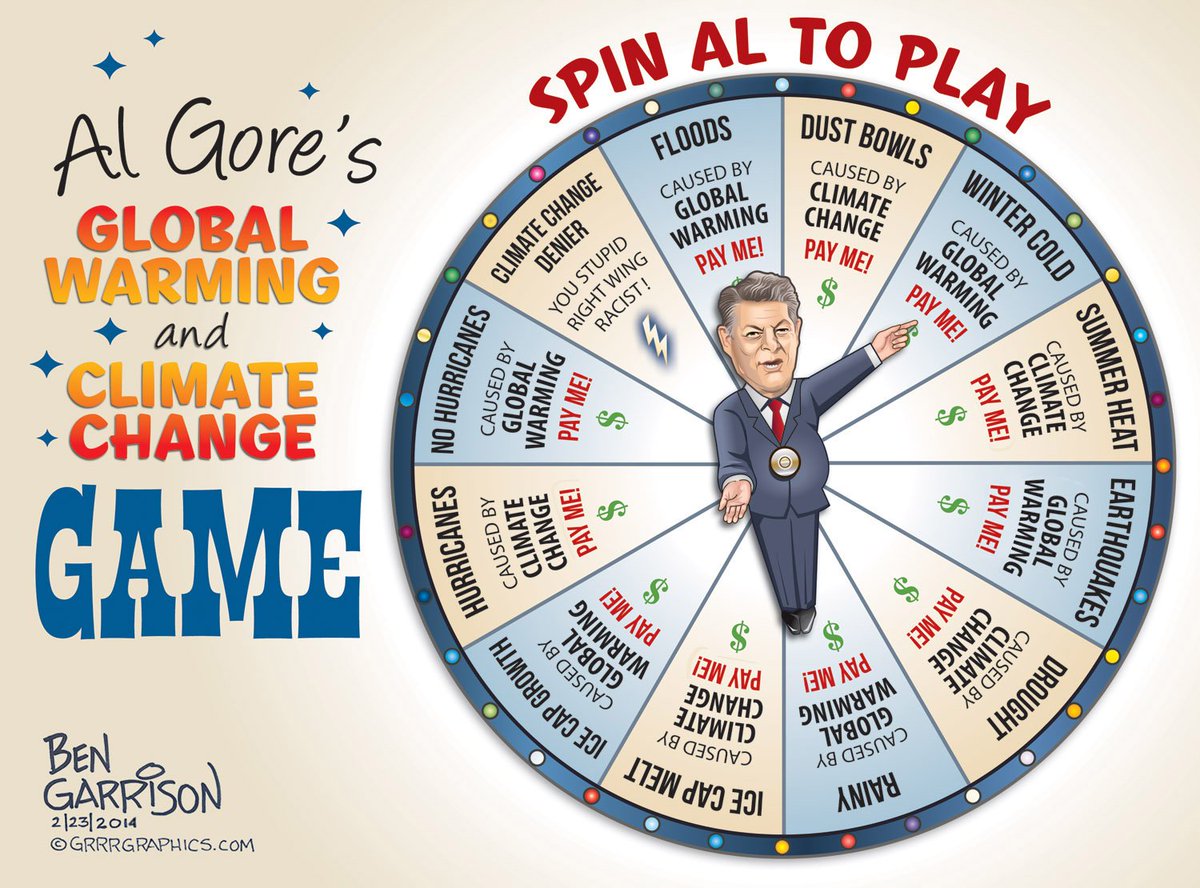
And so we come to Al Gore recently claiming that his past predictions of catastrophe have all come true.
When asked Sunday about his 2006 prediction that we would reach the point of no return in 10 years if we didn’t cut human greenhouse gas emissions, climate alarmist in chief Al Gore implied that his forecast was exactly right.
“Some changes unfortunately have already been locked in place,” he told ABC’s Jonathan Karl.
“Sea level increases are going to continue no matter what we do now. But, we can prevent much larger sea level increases. Much more rapid increases in temperature. The heat wave was in Europe. Now it’s in Arctic. We’re seeing huge melting of the ice there. So, the warnings of the scientists 10 years ago, 20 years ago, 30 years ago, unfortunately were accurate.”
Despite all this gloom, he’s found “good news” in the Democratic presidential field, in which “virtually all of the candidates are agreed that this is either the top issue or one of the top two issues.”
So what has Gore been predicting for the planet? In his horror movie “An Inconvenient Truth,”he claimed:
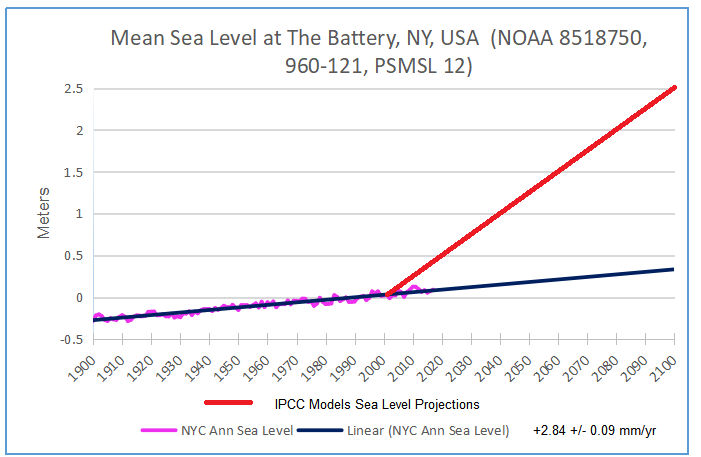
Sea levels could rise as much as 20 feet. He didn’t provide a timeline, which was shrewd on his part. But even if he had said 20 inches, over 20 years, he’d still have been wrong. Sea level has been growing for about 10,000 years, and, according to the National Oceanic and Atmospheric Administration, continues to rise about one-eighth of an inch per year.
“Storms are going to grow stronger.” There’s no evidence they are stronger nor more frequent.
Mt. Kilimanjaro was losing its snow cap due to global warming. By April 2018, the mountain glaciers were taking their greatest snowfall in years. Two months later, Kilimanjaro was “covered by snow” for “an unusually long stint. But it’s possible that all the snow and ice will be gone soon. Kilimanjaro is a stratovolcano, with a dormant cone that could erupt.
Point of no return. If we have truly gotten this far, why even care that “virtually all” of the Democratic candidates have agreed that global warming is a top issue? If we had passed the point of no return, there’d be no reason to maintain hope. The fact Gore’s looking for a “savior” from among the candidates means that even he doesn’t believe things have gone too far.
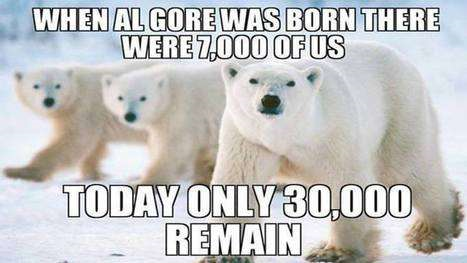
A year after the movie, Gore was found claiming that polar bears’ “habitat is melting” and “they are literally being forced off the planet.” It’s possible, however, that there are four times as many polar bears as there were in the 1960s. Even if not, they’ve not been forced off the planet.
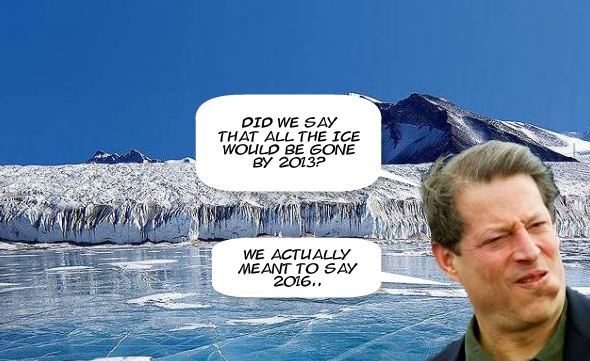
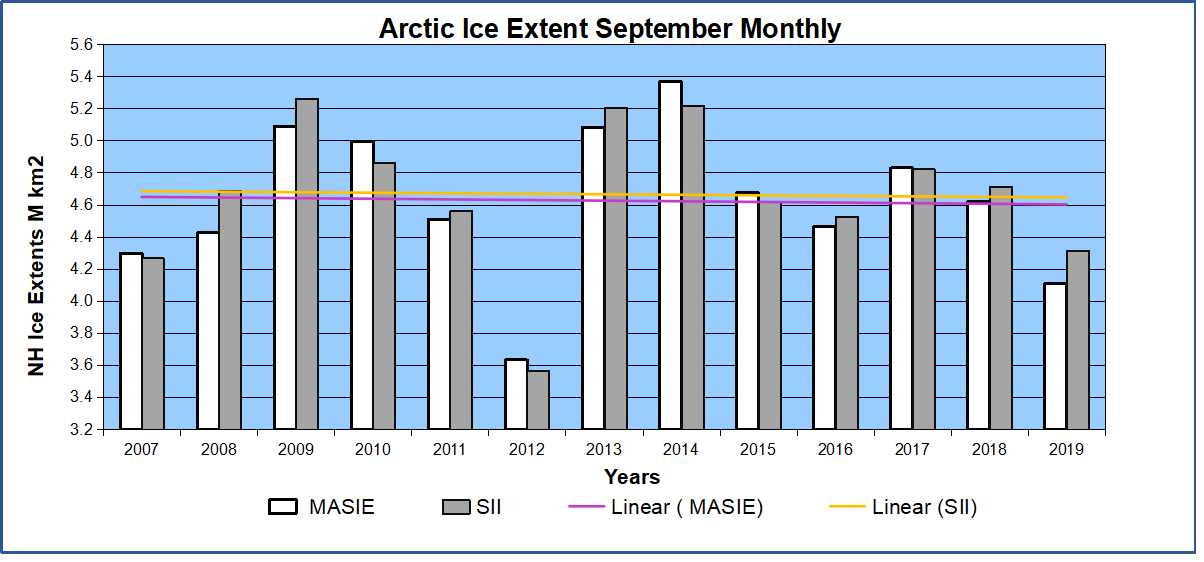
Also in 2007, Gore started making “statements about the possibility of a complete lack of summer sea ice in the Arctic by as early as 2013,” fact-checker Snopes, which leans so hard left that it often falls over and has to pick itself up, said, before concluding that “Gore definitely erred in his use of preliminary projections and misrepresentations of research.”
Unwilling to fully call out one its own, Snopes added that “Arctic sea ice is, without question, on a declining trend.” A fact check shows that to be true. A deeper fact check, though, shows that while Arctic sea ice has been falling, Antarctic sea ice has been increasing.
Finally — just for today because sorting out Gore’s fabrications is an ongoing exercise — we remind readers of the British judge who found that “An Inconvenient Truth” contained “nine key scientific errors” and “ruled that it can only be shown with guidance notes to prevent political indoctrination,” the Telegraph reported in 2007.
Gore has been making declarative statements about global warming for about as long as he’s been in the public eye. He has yet to prove a single claim, though. But how can he? The few examples above show that despite his insistence to the contrary, his predictions have failed.
Even if all turned out to be more accurate than a local three-day forecast, there’s no way to say with 100% certainty that the extreme conditions were caused by human activity. Our climate is a complex system, there are too many other variables, and the science itself has limits, unlike Gore’s capacity to inflate the narrative.
Footnote:
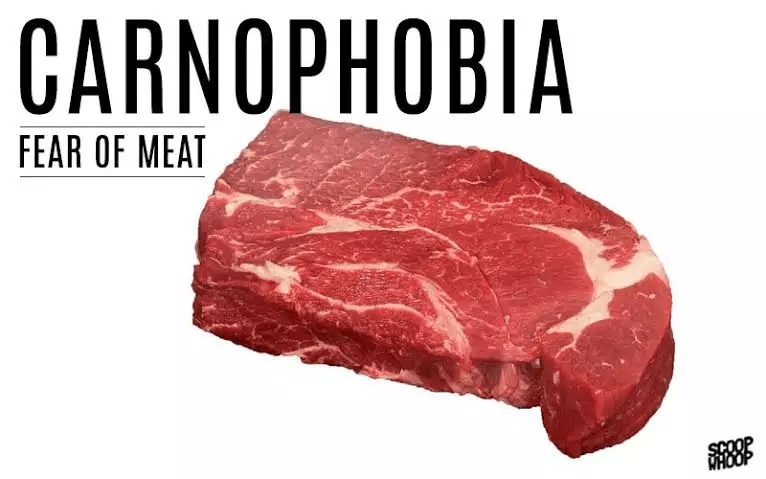
Lest anyone think this is all about altruism, Al Gore is positioned to become even more wealthy from the war on meat.
Generation Investment Management is connected to Kleiner Perkins, where former Vice President Al Gore is one of its partners and advisors.
Who’s Kleiner Perkins? It turns out they are Beyond Meat’s biggest investor, according to bizjournals.com here. Beyond Meat is a Los Angeles-based producer of plant-based meat substitutes founded in 2009 by Ethan Brown. The company went public in May and just weeks later more than quadrupled in value.
Yes, Al Gore, partner and advisor to Kleiner Perkins, Beyond Meat’s big investor, stands to haul in millions, should governments move to restrict real meat consumption and force citizens to swallow the dubious substitutes and fakes.
If taken seriously, the World Research Institute Report, backed by Gore hacks, will help move the transition over to substitute meats far more quickly.

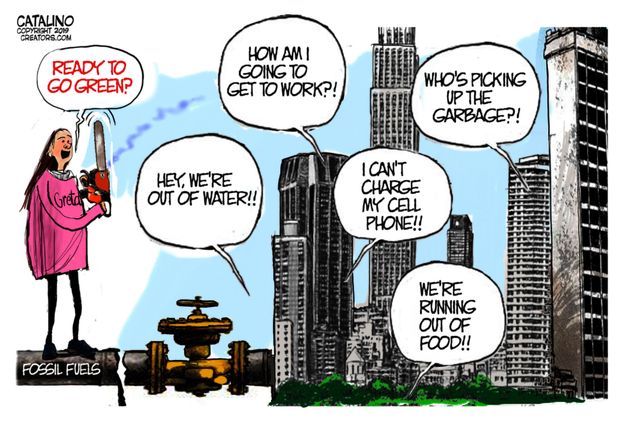
 This article was published at the American Council on Science and Health





 Gus Van Horn writes at Real Clear Markets

 Many people have heard of Jordan Peterson due to his battles against post modernism and progressive social justice warfare. Bruce Pardy is another outspoken Canadian professor, whose latest statement was posted at the National Post, H/T GWPF.














 Science Matters