Reality Check on Extreme Weather Claims

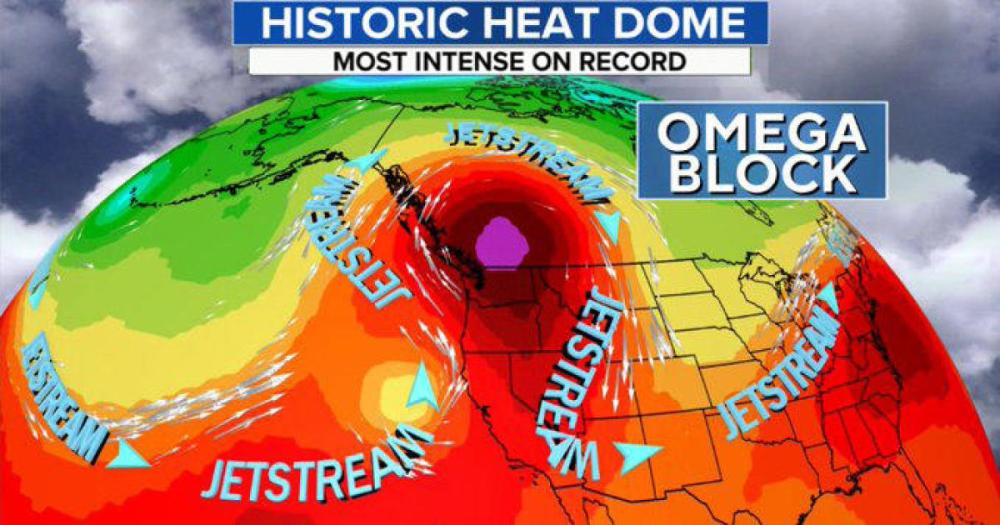
heat-dome-graphic

CBS News headline was:  ‘Pacific Northwest heat wave would have been “virtually impossible” without climate change, experts say.’

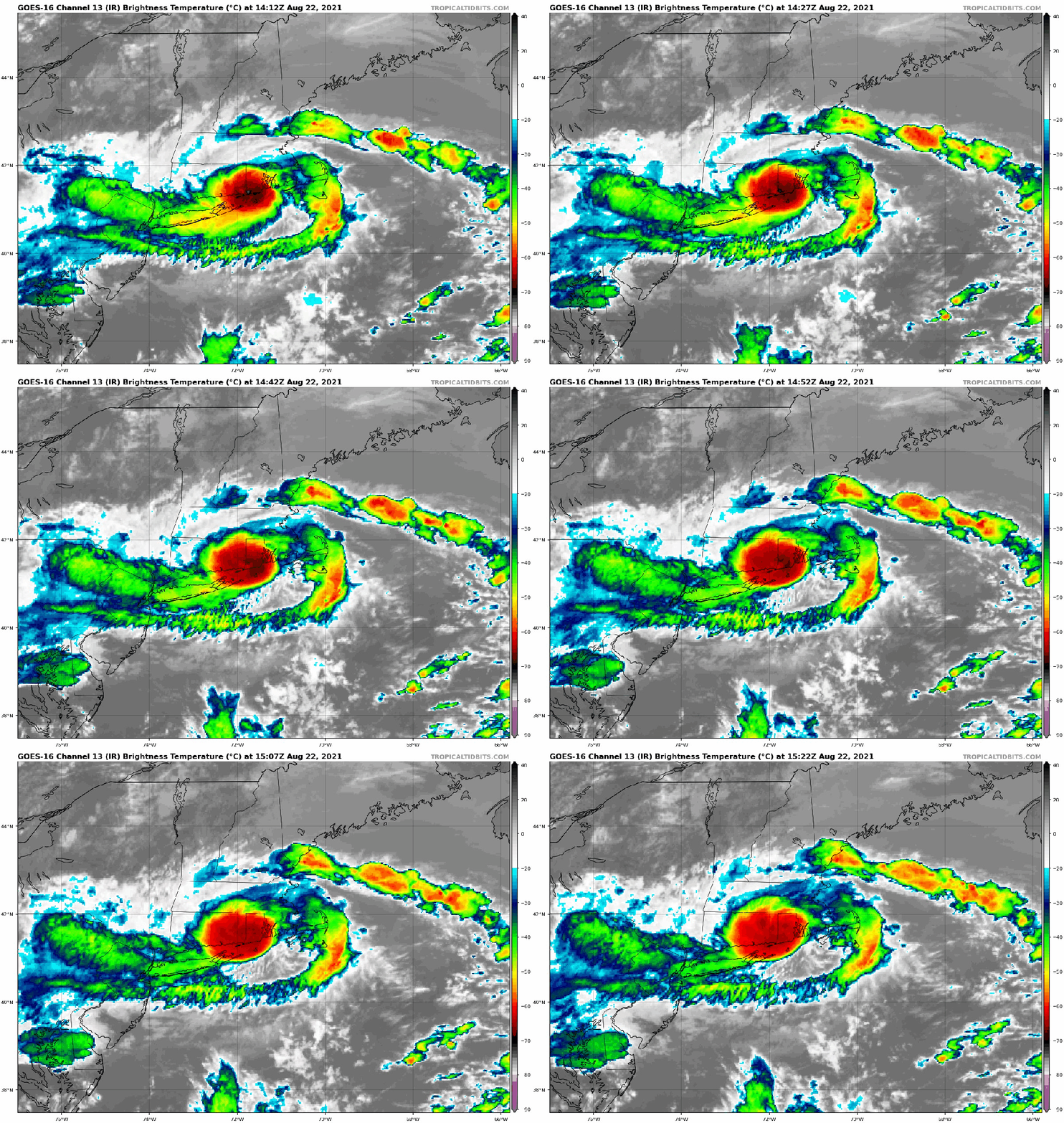
Eric Felton provides a useful reprise of the campaign to exploit a recent Washington State heat wave for climate hysteria mongering.  His article at Real Clear Investigations is Does Climate Change Cause Extreme Weather Now? Here’s a Scorcher of a Reality Check.  This discussion is timely since you can soon expect an inundation of hype saying our SUVs caused whatever damage is done by Hurricane (or Tropical Storm) Henri, shown below approaching Long Island and New England. Excerpts from Felton’s article are below in italics with my bolds.

Henri 20210822

The Pacific Northwest was hit with a record-shattering heat wave in June, with temperatures over 35 degrees higher than normal in some places. On June 28, Portland, Ore., reached 116 degrees. Late last week the region suffered another blast of hot weather, with a high in Portland of 103 degrees. The New York Times didn’t hesitate to pronounce the region’s bouts of extreme weather proof that the climate wasn’t just changing, but catastrophically so.

To make that claim, the Times relied on a “consortium of climate experts” that calls itself World Weather Attribution, a group organized not just to attribute extreme weather events to climate change, but to do so quickly. Within days of the June heat wave, the researchers released an analysis, declaring that the torrid spell “was virtually impossible without human-caused climate change.”

World Weather Attribution and its alarming report were trumpeted by Time magazine, touted by the NOAA website Climate.gov , and featured by CBS News, CNBC, Scientific American, CNN, the Washington Post, USAToday, and the New York Times, among others.

The group’s claim that global warming was to blame was perhaps less significant than the speed with which that conclusion was provided to the media. Previous efforts to tie extreme weather events to climate change hadn’t had the impact scientists had hoped for, according to Time, because it “wasn’t producing results fast enough to get attention from people outside the climate science world.”

“Being able to confidently say that a given weather disaster was caused by climate change while said event still has the world’s attention,” Time explained, approvingly, “can be an enormously useful tool to convince leaders, lawmakers and others that climate change is a threat that must be addressed.” In other words, the value of rapid attribution is primarily political, not scientific.

550856_5_

World Weather Attribution was organized to quickly attribute extreme weather events to climate change.  World Weather Attribution

Inconveniently for World Weather Attribution, an atmospheric scientist with extensive knowledge of the Pacific Northwest climate was actively running weather models that accurately predicted the heatwave. Cliff Mass rejected the notion that global warming was to blame for the scorching temperatures. He calculated that global warming might have been responsible for two degrees of the near 40-degree anomaly. With or without climate change, Mass wrote, the region “still would have experienced the most severe heat wave of the past century.”

Mass has no shortage of credentials relevant to the issue: A professor of atmospheric sciences at the University of Washington, he is author of the book “The Weather of the Pacific Northwest.”

Mass took on the World Weather Attribution group directly: “Unfortunately, there are serious flaws in their approach.” According to Mass, the heatwave was the result of “natural variability.” The models being used by the international group lacked the “resolution to correctly simulate critical intense, local precipitation features,” and “they generally use unrealistic greenhouse gas emissions.”

WWA issued a “rebuttal” calling Mass’ criticisms “misleading and incorrect.” But the gauntlet thrown down by Mass did seem to affect WWA’s confidence in its claims. The group, which had originally declared the heatwave would have been “virtually impossible without human-caused climate change,” altered its tone. In subsequent public statements, it emphasized that it had merely been making “best estimates” and had presented them “with the appropriate caveats and uncertainties.” Scientists with the attribution group did not respond to questions about Mass’s criticisms posed by RealClearInvestigations.

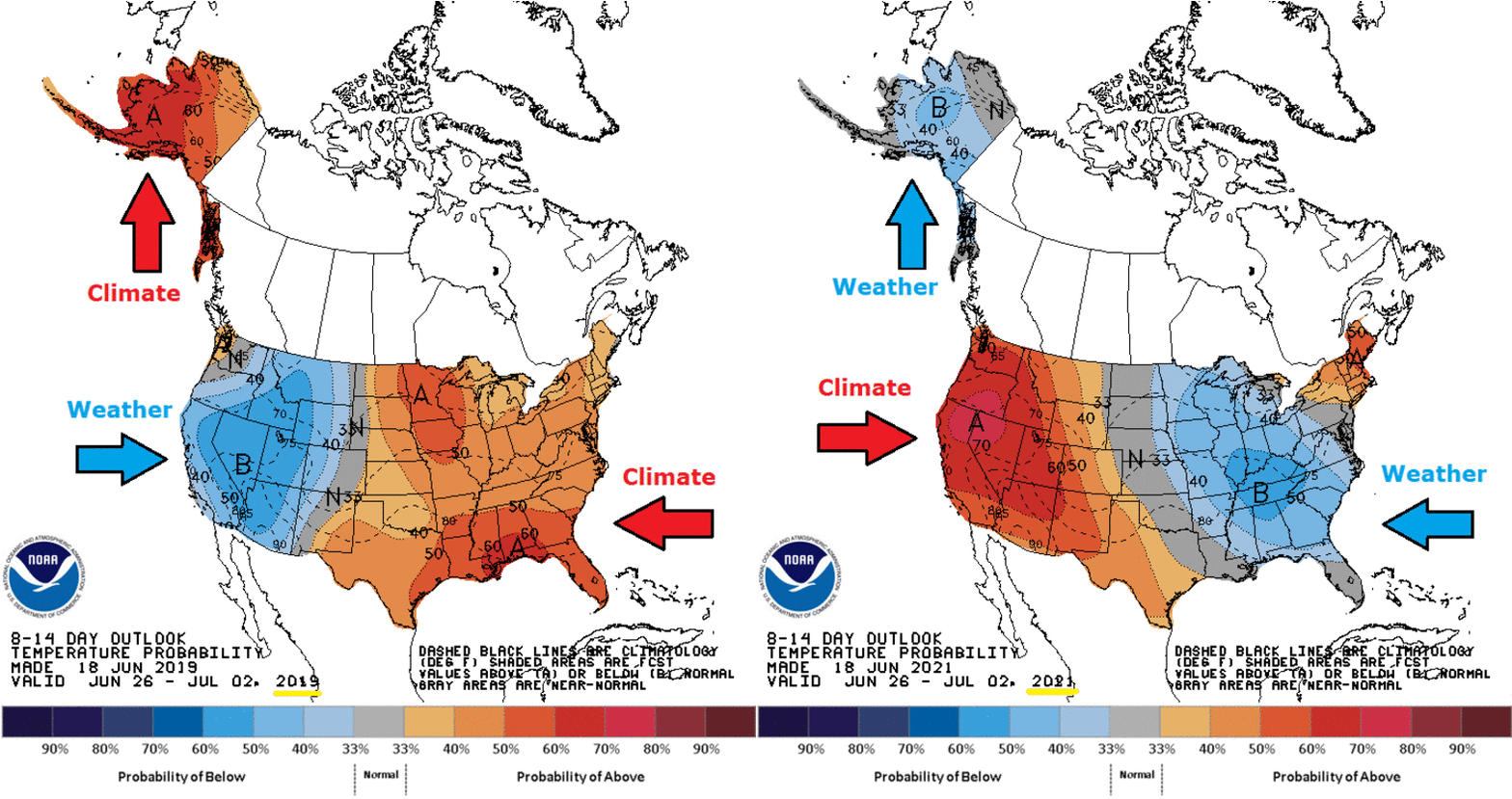
But what of the group’s basic mission, the attribution of individual weather events to climate change? Hasn’t it been a fundamental rule of discussing extreme temperatures in a given place not to conflate weather with climate? Weather, it is regularly pointed out, refers to conditions during a short time in a limited area; climate is said to describe longer-term atmospheric patterns over large areas.

Until recently, at least, climate scientists long warned against using individual weather events to ponder the existence or otherwise of global warming. Typically, that argument is used to respond to those who might argue a spate of extreme cold is reason to doubt the planet is warming. Using individual weather events to say anything about the climate is “dangerous nonsense,” the New Scientist warned a decade ago.

noaa-us-temp-2019-2021

Perhaps, but it happens all the time now that climate advocates have found it to be an effective tool. In 2019, The Associated Press-NORC Center for Public Affairs Research and the Energy Policy Institute at the University of Chicago found that three-fourths of those polled said their views about climate change had been shaped by extreme weather events. Leah Sprain, in the book “Ethics and Practice in Science Communication,” says that even though it may be legitimate to make the broad claim that climate change “may result in future extreme weather,” when one tries “arguing weather patterns were caused by climate change, things get dicey.” Which creates a tension: “For some communicators, the ultimate goal – mobilizing political action – warrants rhetorical use of extreme weather events.” But that makes scientists nervous, Sprain writes, because “misrepresenting science will undermine the credibility of arguments for climate change.”

Which is exactly what happened with the World Weather Attribution group, according to Mass: “Many of the climate attribution studies are resulting in headlines that are deceptive and result in people coming to incorrect conclusions about the relative roles of global warming and natural variability in current extreme weather,” he wrote at his blog. “Scary headlines and apocalyptic attribution studies needlessly provoke fear.”

The blogging professor laments that atmospheric sciences have been “poisoned” by politics. “It’s damaged climate science,” he told RCI.

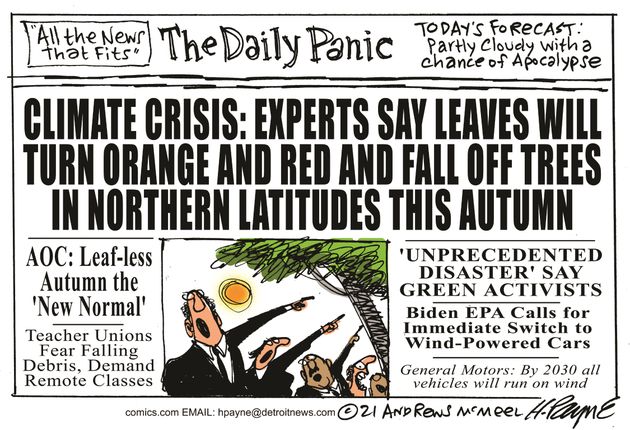
payn_c18450120210819120100

And not just politics – Mass also says that the accepted tenets of global warming have become a sort of religion. Consider the language used, he says, such as the question of whether one “believes” in anthropogenic climate change. “You don’t believe in gravity,” he says. The religious metaphor also explains why colleagues get so bent out of shape with him, Mass says: “There’s nothing worse than an apostate priest.”

That goes even for those who are merely mild apostates. Mass doesn’t dispute warming, he merely questions how big a problem it is. “We need to worry about climate change,” he has said. “But hype and exaggeration of its impacts only undermine the potential for effective action.”

mle190506c20190506011552

What If It’s Global Cooling, Not Warming?

IOGP oil and gas plumbing

Chris MacIntosh has an article at zerohedge Global warming or cooling? Excerpts in italics with my bolds.

Wouldn’t it be ironic that instead of the planet-warming over the next 30 years, it actually went into a cooling phase?

When we first heard of sunspot activity and forecasting climate based on the level of solar spot activity we thought this was pixyland stuff.

However, when we “opened our minds” and started to dig deeper we realized there was something going on here. Make your own minds up. We aren’t trying to change anyone’s view but rather encourage you to open your perspectives.

You might like to read this:
“THE NEXT 30 YEARS WILL BE COLD,” SAYS CLIMATE SCIENTIST DR. WILLIE SOON

And this:
NEW PAPER USES AI TO PREDICT THE SUNSPOT CYCLES: LOW SOLAR ACTIVITY UNTIL 2050

Frankly, I’m no scientist but I ran a VC firm for some years, and I’ll tell you what. You are presented with such a ton of “opportunities” that it will make your head spin.

Sorting the wheat from the chaff is quite literally a full time role, and one thing that gets honed like a sword on an anvil is the skeptical critical thinking part of our brain.

Trust but verify is so very important. And what I do know is that the entire global warming narrative, together with “the science is settled,” is complete utter nonsense. It has been extraordinarily successful, too.

Kids these days are being taught it. Mind you, my daughter, who had to present a project on it at school, provided a shocking red pill (Dad helped her on her project) to the class and her teacher.   We literally have a class of people in the world today who are successful as professional hysterics.

However, what we do know is that global energy markets (and a whole host of other second order consequences) are not priced for a cooling of the planet over the next 30 years.

That is why we can get a payback of our investment in coal assets after about 5 years but it will take 100 years to get a payback from investing in Tesla.

What would happen to energy prices (natgas, coal, oil) if the world did in fact get colder over the next 30 years?

Well, the world would start using more fossil fuels and ditch the renewable thing faster than that crazy ex girlfriend/boyfriend that stalks you.

But after years of under investment in fossil fuels (particularly outside of shale), the supply would not be able to be increased meaningfully (i.e. prices would rocket higher and stay there for as long as it takes to bring on more supply), and given the underinvestment and treatment of anyone who would suggest doing so as if they’ve committed mortal sin… well, it’s not coming back in a hurry.

Now, think of every good and service that is tied to the price of fossil fuels. This picture should illustrate the point — life as we know it.

IOGP oil and gas plumbingHmmm… isn’t the rising price of all the “stuff” mentioned above a good definition of inflation? But isn’t the world perfectly positioned for deflation?

Global cooling and inflation… what a toxic cocktail. But we are perfectly positioned for both. Ah, such poetry. Bring it on!

See also Worst Threat: Greenhouse Gas or Quiet Sun?

Elite Consensus Opinion Minority Contrary Opinion
Expect +1C Warmer from now to 2050 Expect -1C Colder from now to 2050
Mitigate Warming by Stopping Fossil Fuels Adapt to Cooling from Quiet Sun
Goal is Net Zero CO2 Emissions by 2050 Goal Robust Energy supply and Infrastructure Now

Climate Kool-Aid

Climate Kool-Aid

Johnathan DuHamel has another fine article at his blog Wry Heat  The Biden Administration Has Swallowed the Climate Kool-Aid.  Excerpts in italics with my bolds and some images.

The Biden administration thinks they can stop global warming (aka climate change) by eliminating carbon dioxide emissions from burning fossil fuels and switching electrical generation to wind and solar installations. Biden says “follow the science.” If he did follow the science he would realize that there is no physical evidence that carbon dioxide plays a significant role in controlling global temperature (see posts at the end of this article).

Biden wants 80% hydrocarbon-free electricity generation by 2030, 100% by 2035 and elimination of fossil fuels from all sectors of the U.S. economy by 2050.

According to Paul Driessen (senior policy analyst for the Committee For A Constructive Tomorrow), “ this would send the nation’s annual electricity requirement soaring from about 2.7 billion megawatt-hours (the fossil fuel portion of total U.S. electricity) to almost 7.5 billion MWh per year by 2050. Substantial additional generation would be required to constantly recharge backup batteries for windless, sunless days, to safeguard society against blackouts, cyberattacks and wholesale collapse. Generating all that electricity without new nuclear and hydroelectric plants would require tens of thousands of 850-foot-tall offshore wind turbines, hundreds of thousands (perhaps millions) of somewhat smaller onshore turbines, and billions of photovoltaic solar panels. All these turbines, panels, batteries and power lines would require tens of billions of tons of non-renewable iron, copper, aluminum, cobalt, lithium, rare earth elements, plastics, limestone and other materials. That would necessitate mining, crushing, processing, refining and transporting tens of billions of tons of ores – from thousands of mines and quarries, using gigantic gasoline and diesel equipment – followed by smelting and manufacturing, all with fossil fuels.

None of this is clean, green or sustainable.”

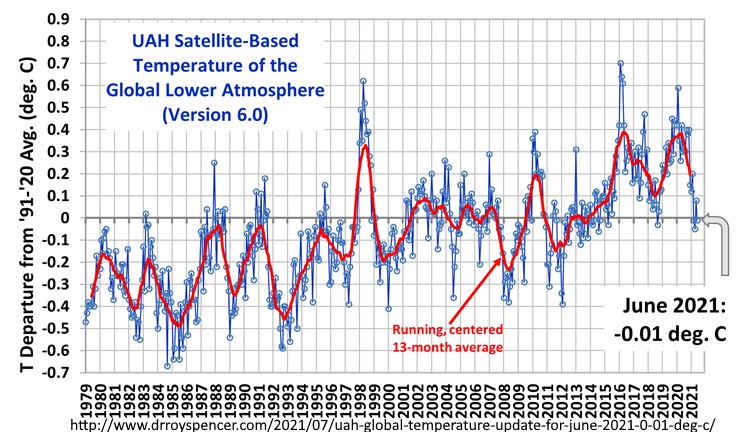
So, how is “global warming” doing. We can consult with Dr. Roy Spencer who manages the Advanced Microwave Scanning Radiometer flying on NASA’s Aqua satellite. This satellite system measures global atmospheric temperature daily. The latest results are seen here:

uah_lt_1979_thru_june_2021_v6


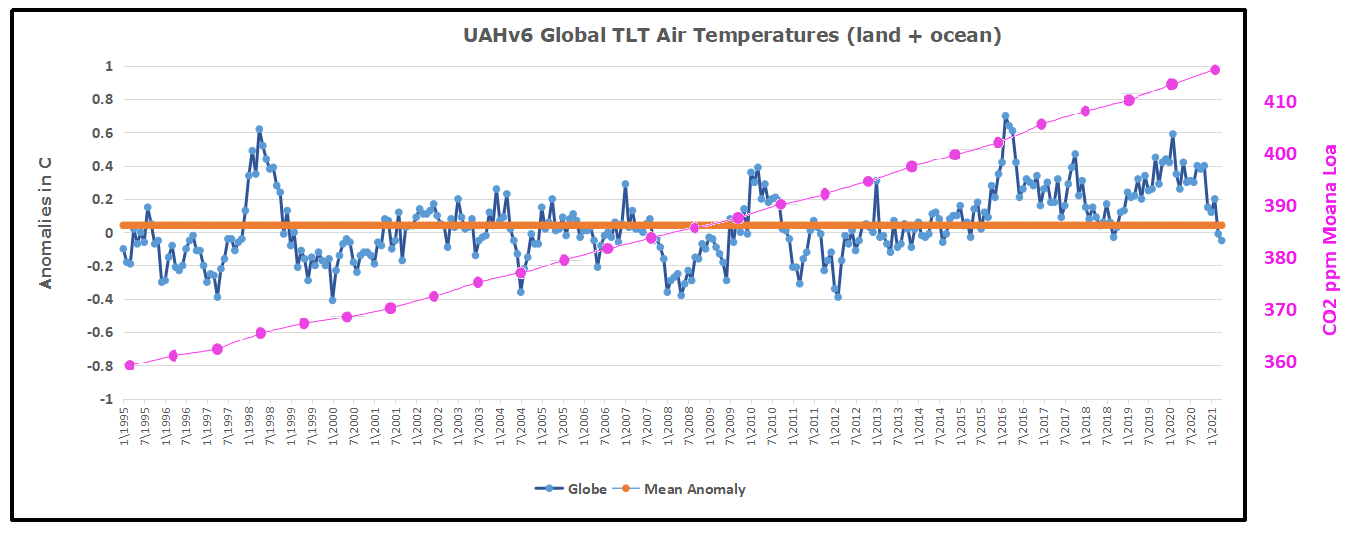
You should notice that global atmospheric temperatures in April, May, and June, 2021, were below the 1991-2020 average and similar to temperatures in 1983. According to the Global Monitoring Laboratory of NOAA at Mauna Loa, Hawaii, atmospheric carbon dioxide was about 340ppm in 1983 versus about 418ppm now. Although there has been deviation from the average due to things like the El Nino-La Nina cycles, there has not been any overall warming in spite of the increase in carbon dioxide.

uah-global-1995to202104-w-co2-overlay

Biden and other climate alarmists have swallowed the climate “Kool-Aid” and claim that reducing just one, small, insignificant factor will be the panacea in controlling global temperature, but it’s not that simple:

“The forcings that drive long-term climate change are not known with an accuracy sufficient to define future climate change.” — James Hansen, “Climate forcings in the Industrial era”, PNAS, Vol. 95, Issue 22, 12753-12758, October 27, 1998.

“In climate research and modeling, we should recognize that we are dealing with a coupled non-linear chaotic system, and therefore that the prediction of a specific future climate state is not possible.” — Final chapter,Third Assessment Report, IPCC 2000.

While controlling CO2 emissions from burning fossil fuels may have some beneficial effects on air quality, it will have no measurable effect on climate, but great detrimental effects on the economy and our standard of living. The greatest danger of climate change is that politicians think they can stop it. But the climate has always been in a state of flux. In my opinion, the debate over global warming is truly a scam designed to control (and tax) production and use of energy from fossil fuels.

The alleged “climate crisis” is just a scam perpetrated for political gain.
“The whole aim of practical politics is to keep the populace alarmed (and hence clamorous to be led to safety) by menacing it with an endless series of hobgoblins, all of them imaginary.” —H. L. Mencken (1880-1956)

(Note to younger readers: The term “Kool-Aid” used in this context refers to cult leader Jim Jones who, on November 18, 1978, instructed all members living in the Jonestown, Guyana compound to commit an act of “revolutionary suicide,” by drinking poisoned punch. Link )

For the real science, see these articles from my blog

See also Biden Climate Agenda Heads into Perfect Storm

gang-green

Climate Change Elevator Speech

On a recent post Judith Curry challenged commenters with this question: 

How would you explain the complexity and uncertainty surrounding climate change plus how we should respond (particularly with regards to CO2 emissions) in five minutes?

 The video was an impressive offering from John Shewchuk, and I thought it worth sharing here.

2021 Update: Fossil Fuels ≠ Global Warming

gas in hands

Previous posts addressed the claim that fossil fuels are driving global warming. This post updates that analysis with the latest (2020) numbers from BP Statistics and compares World Fossil Fuel Consumption (WFFC) with three estimates of Global Mean Temperature (GMT). More on both these variables below.

WFFC

2020 statistics are now available from BP for international consumption of Primary Energy sources. 2021 Statistical Review of World Energy. 

The reporting categories are:
Oil
Natural Gas
Coal
Nuclear
Hydro
Renewables (other than hydro)

Note:  British Petroleum (BP) now uses Exajoules to replace MToe (Million Tonnes of oil equivalents.) It is logical to use an energy metric which is independent of the fuel source. OTOH renewable advocates have no doubt pressured BP to stop using oil as the baseline since their dream is a world without fossil fuel energy.

From BP conversion table 1 exajoule (EJ) = 1 quintillion joules (1 x 10^18). Oil products vary from 41.6 to 49.4 tonnes per gigajoule (10^9 joules).  Comparing this annual report with previous years shows that global Primary Energy (PE) in MToe is roughly 24 times the same amount in Exajoules.  The conversion factor at the macro level varies from year to year depending on the fuel mix. The graphs below use the new metric.

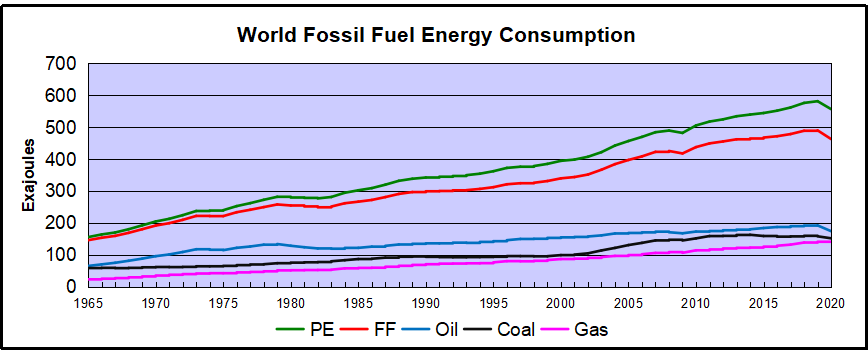
This analysis combines the first three, Oil, Gas, and Coal for total fossil fuel consumption world wide (WFFC).  The chart below shows the patterns for WFFC compared to world consumption of Primary Energy from 1965 through 2020.

WFFC 2020

The graph shows that global Primary Energy (PE) consumption from all sources has grown continuously over 5 decades. Since 1965  oil, gas and coal (FF, sometimes termed “Thermal”) averaged 89% of PE consumed, ranging from 94% in 1965 to 84% in 2019.  Note that last year, 2020, PE dropped 25 EJ (4%) slightly below 2017 consumption.  WFFC for 2020 dropped 27 EJ (6%), 83% of PE and matching 2013 WFFC consumption. For the 55 year period, the net changes were:

Oil 168%
Gas 506%
Coal 161%
WFFC 218%
PE 259%
Global Mean Temperatures

Everyone acknowledges that GMT is a fiction since temperature is an intrinsic property of objects, and varies dramatically over time and over the surface of the earth. No place on earth determines “average” temperature for the globe. Yet for the purpose of detecting change in temperature, major climate data sets estimate GMT and report anomalies from it.

UAH record consists of satellite era global temperature estimates for the lower troposphere, a layer of air from 0 to 4km above the surface. HadSST estimates sea surface temperatures from oceans covering 71% of the planet. HADCRUT combines HadSST estimates with records from land stations whose elevations range up to 6km above sea level.

Both GISS LOTI (land and ocean) and HADCRUT4 (land and ocean) use 14.0 Celsius as the climate normal, so I will add that number back into the anomalies. This is done not claiming any validity other than to achieve a reasonable measure of magnitude regarding the observed fluctuations.

No doubt global sea surface temperatures are typically higher than 14C, more like 17 or 18C, and of course warmer in the tropics and colder at higher latitudes. Likewise, the lapse rate in the atmosphere means that air temperatures both from satellites and elevated land stations will range colder than 14C. Still, that climate normal is a generally accepted indicator of GMT.

Correlations of GMT and WFFC

The next graph compares WFFC to GMT estimates over the five decades from 1965 to 2020 from HADCRUT4, which includes HadSST3.

WFFC and Hadcrut 2020

Since 1965 the increase in fossil fuel consumption is dramatic and monotonic, steadily increasing by 218% from 146 to 463 exajoules.  Meanwhile the GMT record from Hadcrut shows multiple ups and downs with an accumulated rise of 0.9C over 55 years, 7% of the starting value.

The graph below compares WFFC to GMT estimates from UAH6, and HadSST3 for the satellite era from 1980 to 2020, a period of 40 years.

WFFC and UAH HadSST 2020

In the satellite era WFFC has increased at a compounded rate of nearly 2% per year, for a total increase of 82% since 1979. At the same time, SST warming amounted to 0.52C, or 3.7% of the starting value.  UAH warming was 0.7C, or 5% up from 1979.  The temperature compounded rate of change is 0.1% per year, an order of magnitude less than WFFC.  Even more obvious is the 1998 El Nino peak and flat GMT since.

Summary

The climate alarmist/activist claim is straight forward: Burning fossil fuels makes measured temperatures warmer. The Paris Accord further asserts that by reducing human use of fossil fuels, further warming can be prevented.  Those claims do not bear up under scrutiny.

It is enough for simple minds to see that two time series are both rising and to think that one must be causing the other. But both scientific and legal methods assert causation only when the two variables are both strongly and consistently aligned. The above shows a weak and inconsistent linkage between WFFC and GMT.

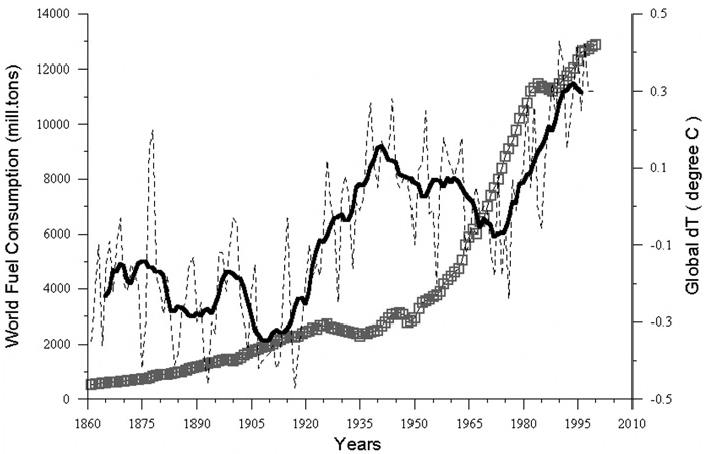
Going further back in history shows even weaker correlation between fossil fuels consumption and global temperature estimates:

wfc-vs-sat

Figure 5.1. Comparative dynamics of the World Fuel Consumption (WFC) and Global Surface Air Temperature Anomaly (ΔT), 1861-2000. The thin dashed line represents annual ΔT, the bold line—its 13-year smoothing, and the line constructed from rectangles—WFC (in millions of tons of nominal fuel) (Klyashtorin and Lyubushin, 2003). Source: Frolov et al. 2009

In legal terms, as long as there is another equally or more likely explanation for the set of facts, the claimed causation is unproven. The more likely explanation is that global temperatures vary due to oceanic and solar cycles. The proof is clearly and thoroughly set forward in the post Quantifying Natural Climate Change.

Background context for today’s post is at Claim: Fossil Fuels Cause Global Warming.

Lord Monckton Fires Back at Climatist Hit Job

Monckton emblem

The Viscount Monckton of Brenchley

H/T to Climate Depot for reporting that Lord Monckton has issued an extensive rebuttal as well as threatening legal action against a libelous article calling him a “liar” multiple times. The entire document is enjoyable to read, given his English fluency and writing style. In this post I will focus on several substantial points regarding climate science, whereby consensus suppositions are falsified in the response.
The rebuttal is Letter before claim in libel

Overview

From Monckton to the defendants’ editor: (in italics with my bolds)

Sir, – I have received two offensive emails – dated 3 April and 27 May 2021 – from one S. Bishop, who says he is writing an article, inferentially about global warming and my research interest therein. Bishop appears intent on seeking to maintain that I have changed my position from skepticism of global warming to acceptance of it, even though I have expressly told that it is the other way about.

The tactic of falsely alleging that those who had disagreed with the orthodoxy have come to agree with it after all (when in my case precisely the reverse is true) is one that I have seen before. The last time this happened, a silly article was published in a national newspaper. I complained. The “journalist” in question – actually a far-Left activist – was deservedly dismissed.

Therefore, I thought it fair to alert you at once to Bishop’s dishonest attempt to deploy the same technique of artful but wilful misrepresentation, inferentially as part of a doomed attempt to convey the false impression that there is no legitimate scientific debate about the extent of the anthropogenic contribution to global warming, or about the expected impacts of warmer weather worldwide.

Discussion

There follows description of instances where S. Bishop made statements that misrepresent what he himself knew contrary to what he wrote. Then Monckton copies his response to S. Bishop’s memo:

One of the nasty tactics used by climate Communists is the attempt to suggest that skeptics have changed their stance from skepticism to acceptance of the Party Line. I once had to have a journalist fired from a national newspaper for writing a silly piece suggesting what you are now unpleasantly and inaccurately suggesting.

In my case, it is precisely the other way about. At first I went along with the Party Line: but then, in 2006, the CEO of a boutique hedge-fund in London asked me to investigate the global warming question. When I did so, I found that the world had been misled. I reported accordingly, and a summary of my 80-page report eventually appeared in a national newspaper, drawing hundreds of thousands of hits in just two hours (after which the newspaper’s website crashed). That report, and all subsequent articles, papers and speeches by me, acknowledged what is self-evident – namely, that returning to the atmosphere some of the CO2 that was formerly present there (7000 ppmv in the Neoproterozoic, 420 ppmv today) might be expected to cause some warming, if one waited long enough. The question is not whether or not there has been or will be warming: there has been, and there will be. The question is how much – or, rather, how little.

Monckton then dismisses item by item the assertions of lies. Many of them are rhetorical tricks, such as taking statements out of the historical context, or hiding remarks made to audiences; some so-called “lies” involve changing the wording of what Monckton wrote or said.

The Essential Dichotomies: Facts on the Ground which Climatists Deny

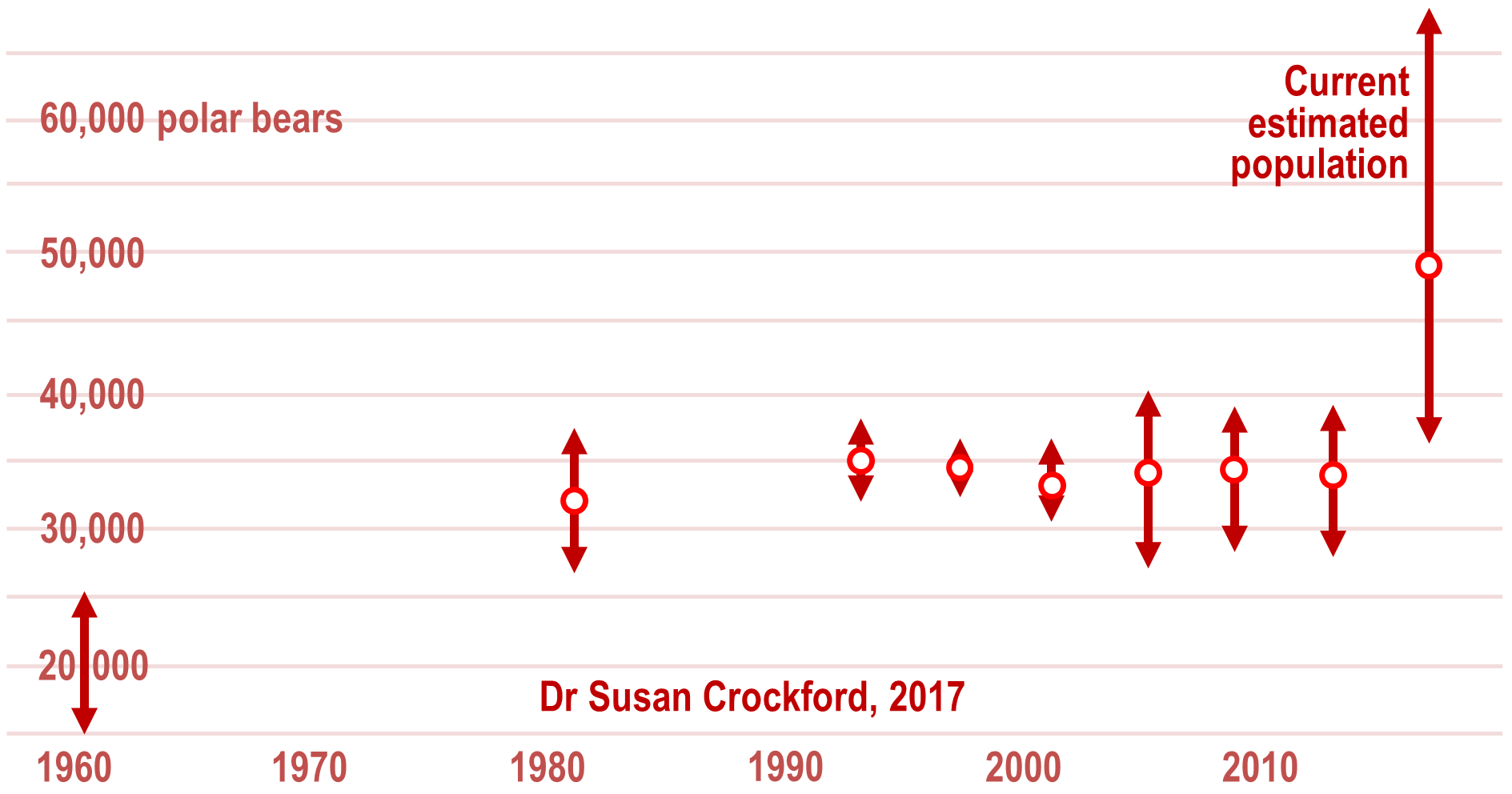
Polar Bears Are Thriving

In 2016 Monckton had told a Montana audience: ‘So you don’t have to worry about the cuddly polar bears. They are going to be just fine.”

Monckton2

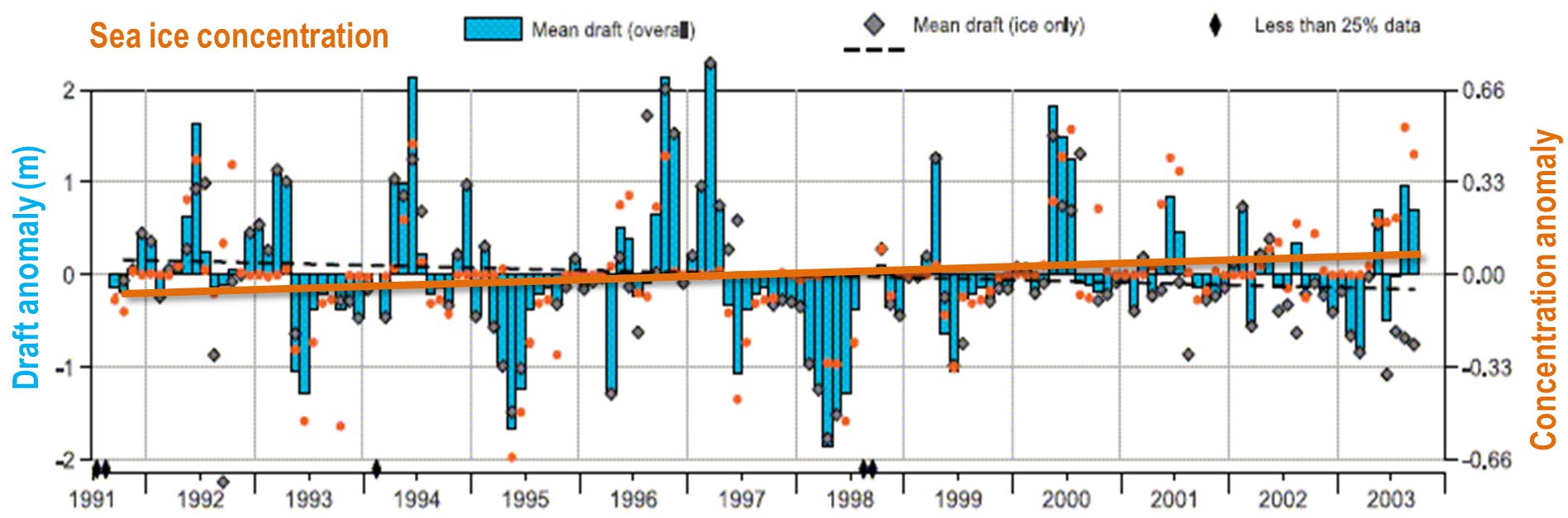
Monckton2aI had made my remarks in the context of Al Gore’s movie, in which he had said polar bears were drowning due to loss of ice in the Beaufort Sea. However, in the period immediately before he began making his movie – the period during which he said polar bears had died – sea-ice concentration in the Beaufort Sea had increased (above).
Greenland Ice Sheet is Not Melting

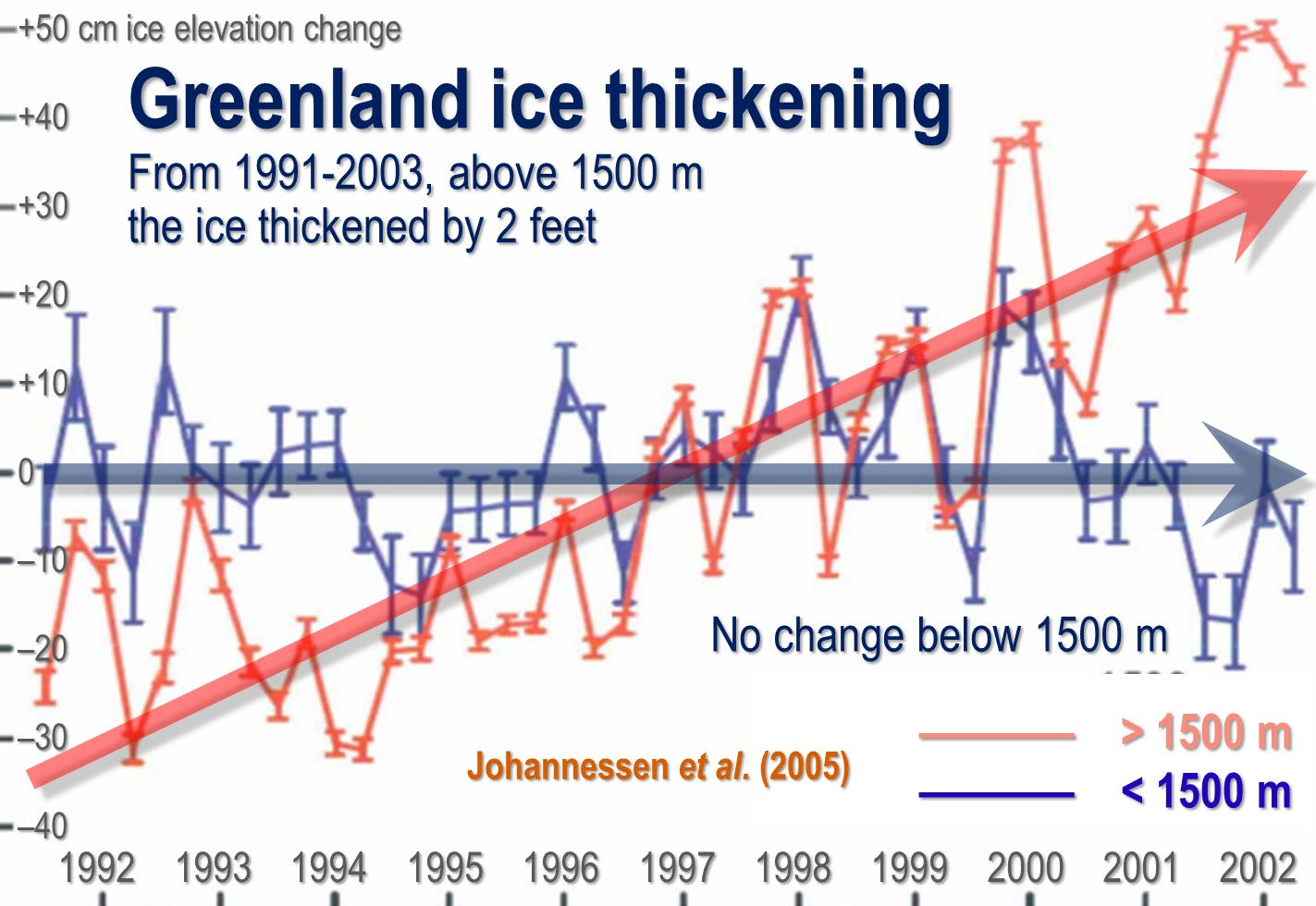
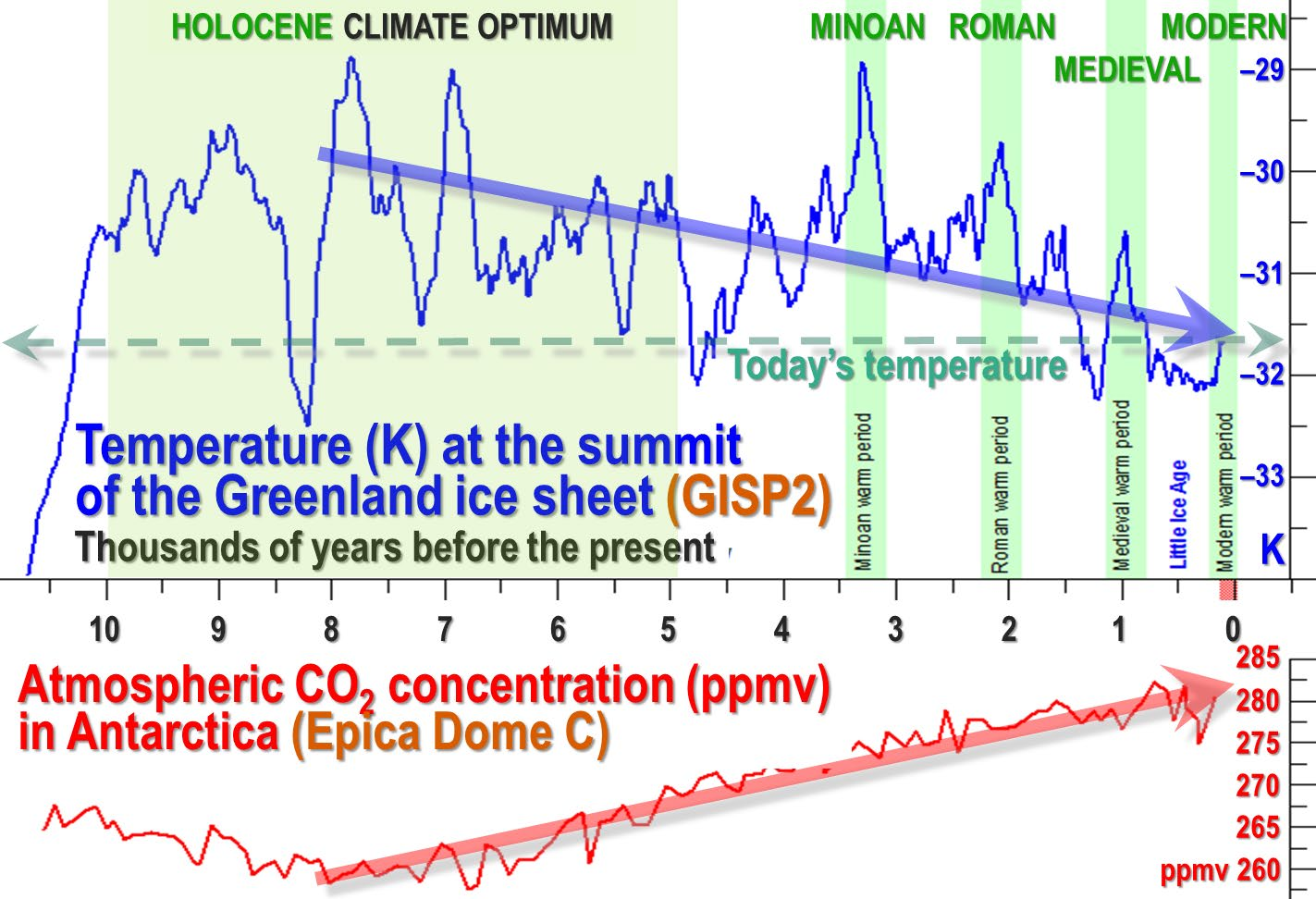
In New Zealand, Monckton claimed: “In Greenland, the ice did not melt 8000 years ago and it isn’t melting today.”

Monckton3a

From 1991-2003, above 1500 the ice in Greenland had thickened by 2 feet. There had been little change below 1500 m (above).

Monckton3b

Over the past 8000 years, temperature at the summit of the Greenland ice sheet has fallen by 1.5 degrees, notwithstanding CO2 concentration increasing from 260 ppmv to 420 ppmv today. Once again the defendants have sought to use evidence, from one side of the debate only, some of it unavailable at the time when I spoke.

Temperature Trends Have Been Inflated by Adjustments to the Terrestrial Temperature Dataset

Monckton4

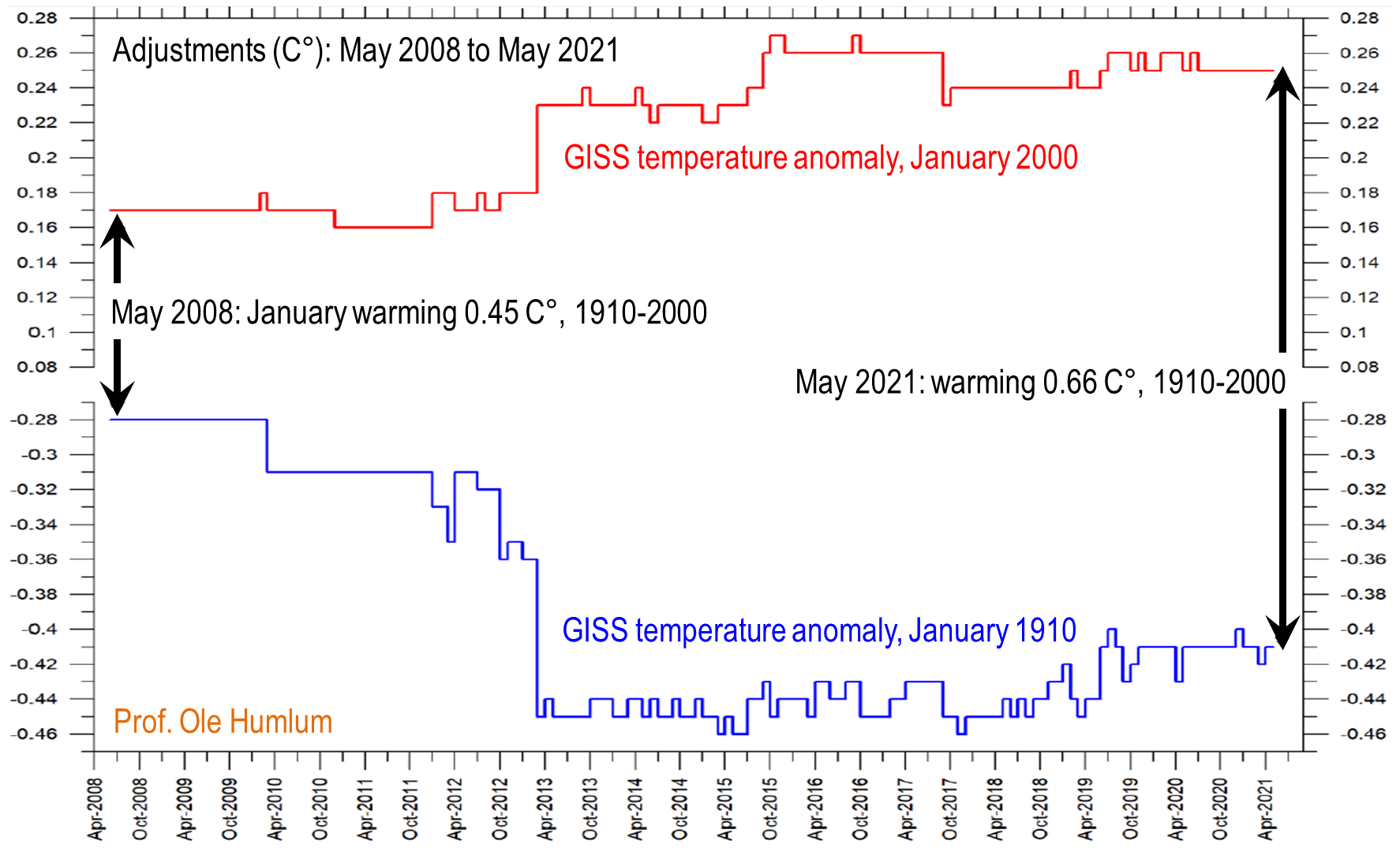
The above graph shows how many times the GISS global mean surface temperature anomaly for January 1910 and January 2000 were altered between May 2008 and May 2021, with the overall effect of making it appear that the warming between the two dates was close to 50% greater than the original measurements had suggested.

Great Barrier Reef Not Threatened by Global Warming

Monckton7

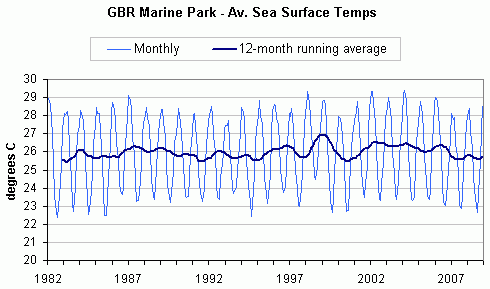
The graph above shows the sea surface temperatures in the Great Barrier Reef. It shows no trend for almost 30 years – the period before I made the speech in question. I cannot fairly be accused of lying about trends that may have occurred after I spoke.

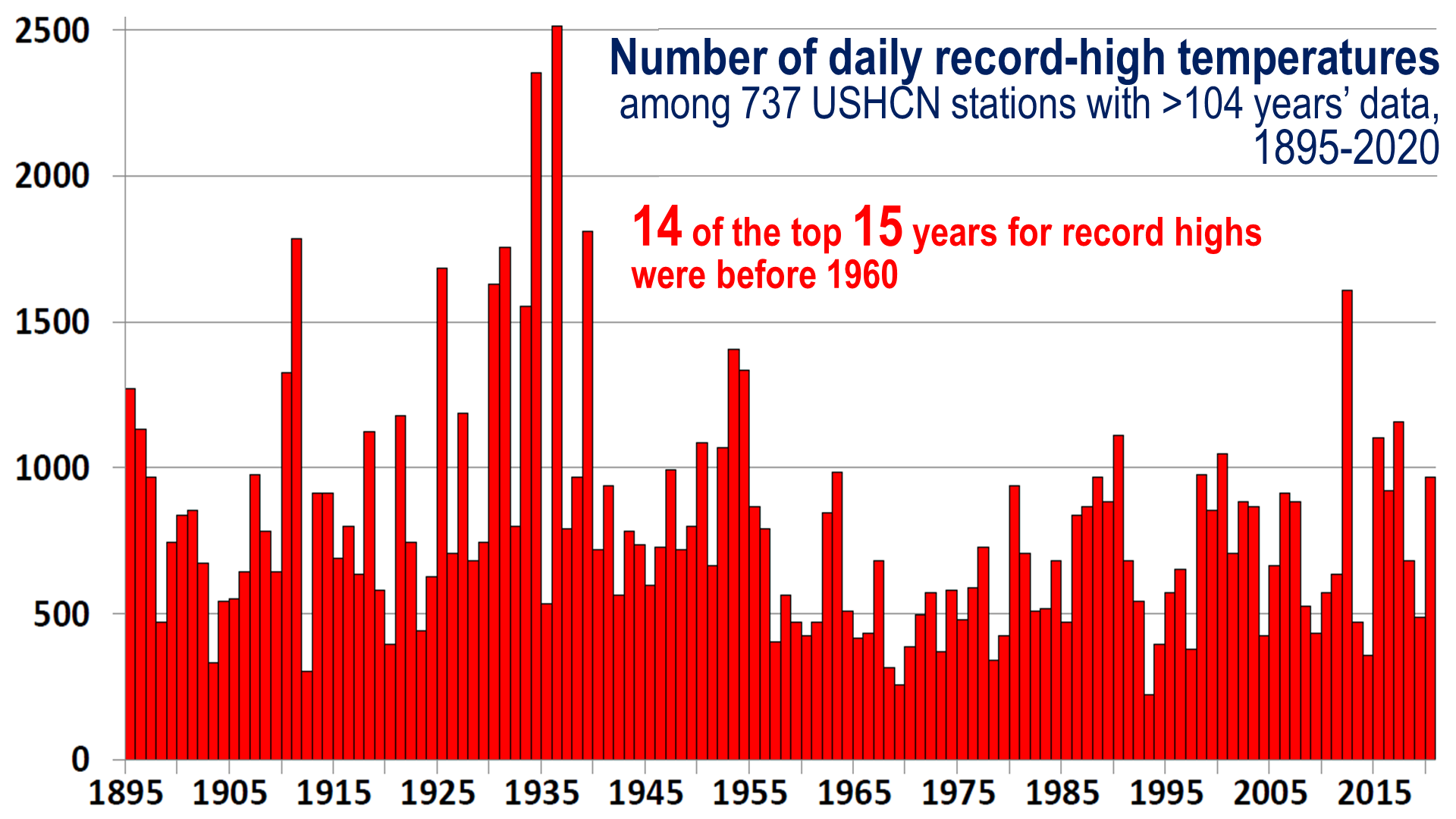
Extreme Heat Was a Problem Back in the 1920s and 30s

Monckton8

Hansen Wildly Exaggerated Future Warming in His 1988 US Senate Testimony

Monckton5

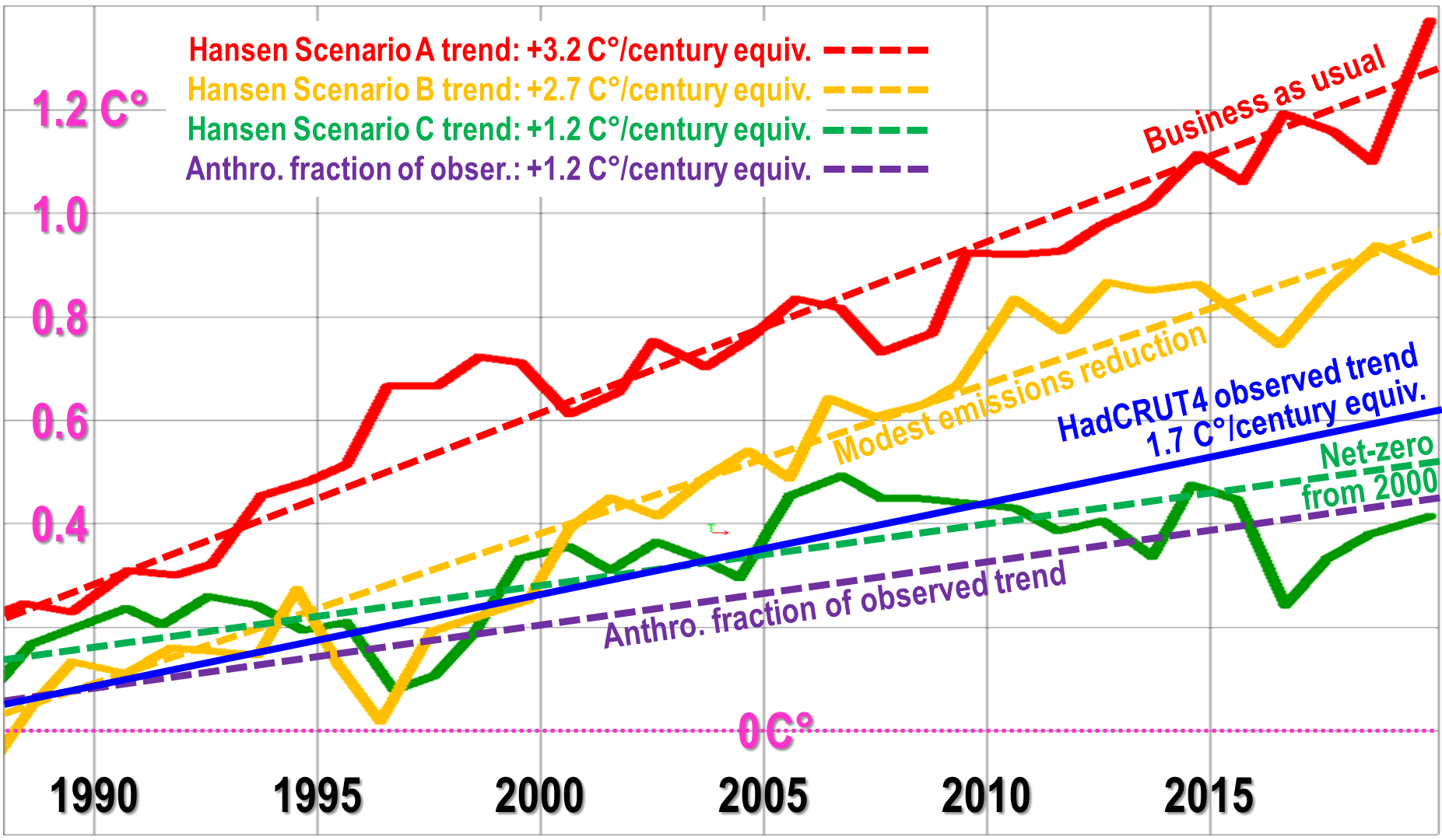
Hansen’s graph was indeed exaggerated (see above). In 1988, in now-notorious testimony before the U.S. Senate, he predicted global warming at a rate equivalent to 3.2 C° per century (broadly equivalent to equilibrium sensitivity to doubled CO2) on a business-as-usual emissions scenario (and it is the business-as-usual emissions scenario that has happened since). However, anthropogenic warming has proven to be little more than a third of his predicted business-as-usual rate (red curve and trend above). Indeed, it is below even the unrealized scenario (green) in which the world was supposed to cease all emissions of CO2 from 2000 onwards (it did no such thing). The trend in observed warming is overlaid on Hansen’s red, yellow and green scenarios in blue. The anthropogenic 70% fraction (Wu et al., 2019) of the observed warming is shown in purple.

Today is Not Warmer than Medieval Times

Monckton6

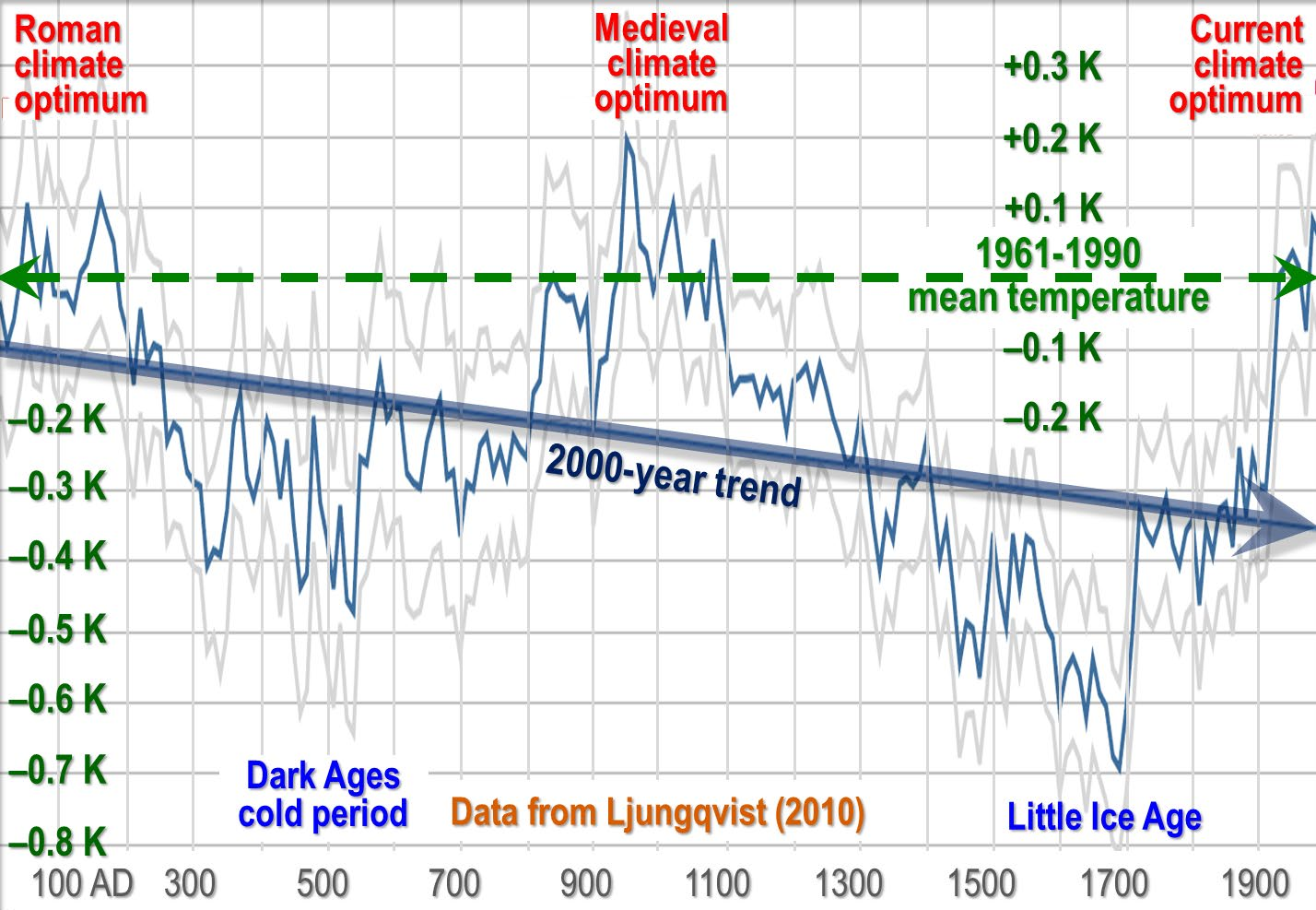
Temperatures in the mediaeval climate optimum were at least as warm as, and usually warmer than, the present. The fact that grapes now grow in very small quantities in lowland Scotland and in the Hebrides, influenced by the Gulf Stream, merely emphasize that temperatures are beginning to recover towards those attained in the mediaeval climate optimum, when grapes were even grown in the Great Glen, a part of the Highlands where it would be very difficult to grow grapes in today’s colder conditions.

Globe No Longer Warming

There has now been no global warming for about six years. The short bursts of warming that occur every five and a half years or so are associated with the naturally-occurring positive cycles of the el Nino Southern Oscillation, which appears to be driven chiefly by crustal deformation in the tropical Eastern Pacific, where the tectonic subduction rate is noticeably greater than anywhere else. The deformation is caused by local solar-system celestial mechanics, and the resultant warming comes from below, through subocean volcanism along the subduction line. It is then distributed worldwide via the thermohaline circulation, which, contrary to some silly reports, cannot cease to operate while the wind blows and the Earth rotates.

My image and comment:

gmt-warming-events

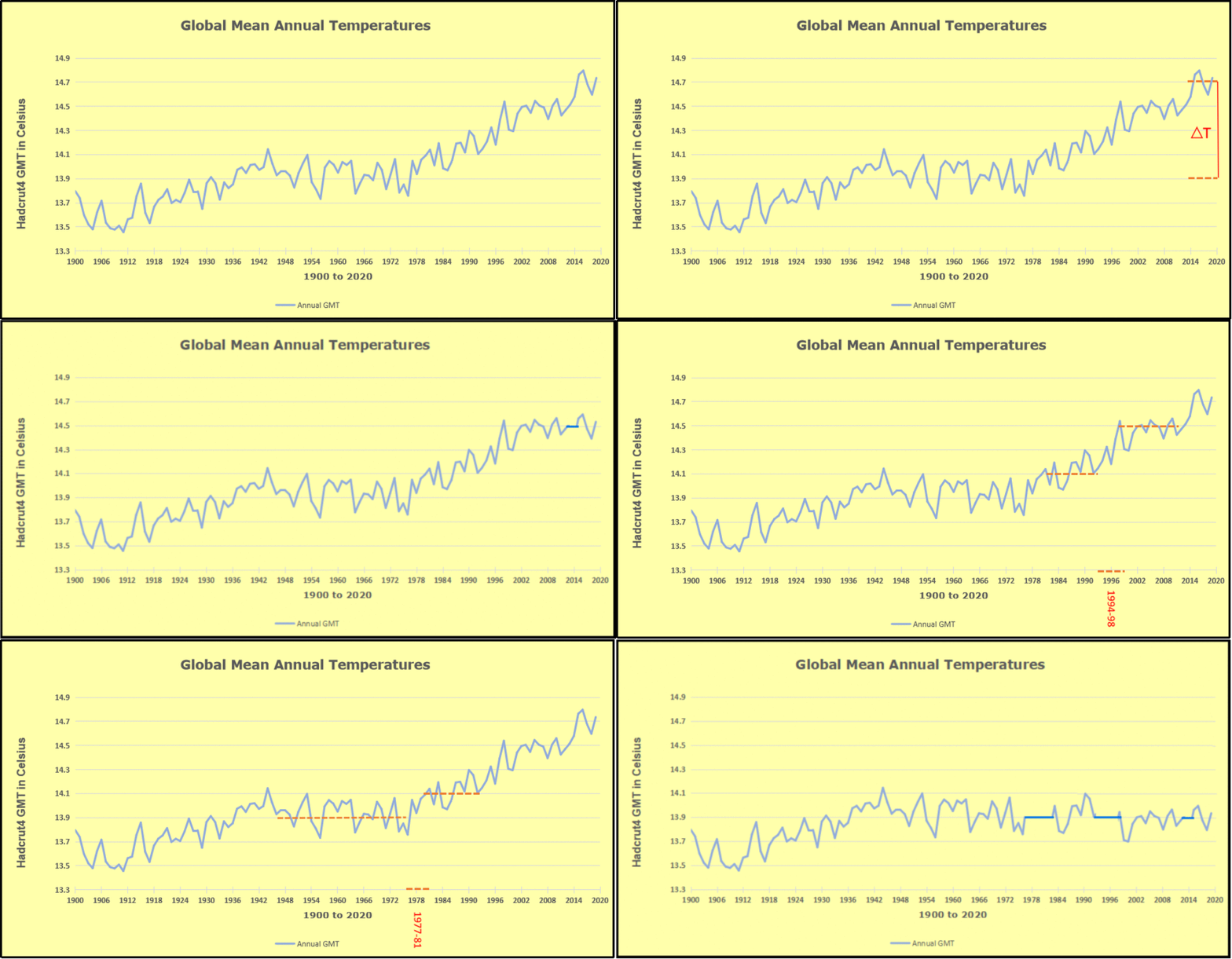
The animation is an update of a previous analysis from Dr. Murry Salby. These graphs use Hadcrut4 and include the 2016 El Nino warming event. The exhibit shows since 1947 GMT warmed by 0.8 C, from 13.9 to 14.7, as estimated by Hadcrut4. This resulted from three natural warming events involving ocean cycles. The most recent rise 2013-16 lifted temperatures by 0.2C. Previously the 1997-98 El Nino produced a plateau increase of 0.4C. Before that, a rise from 1977-81 added 0.2C to start the warming since 1947.

Importantly, the theory of human-caused global warming asserts that increasing CO2 in the atmosphere changes the baseline and causes systemic warming in our climate. On the contrary, all of the warming since 1947 was episodic, coming from three brief events associated with oceanic cycles.


Why Climate Models Fail to Replicate the North Atlantic

screenshot-2021-06-07-at-12.17.38-1024x539-1

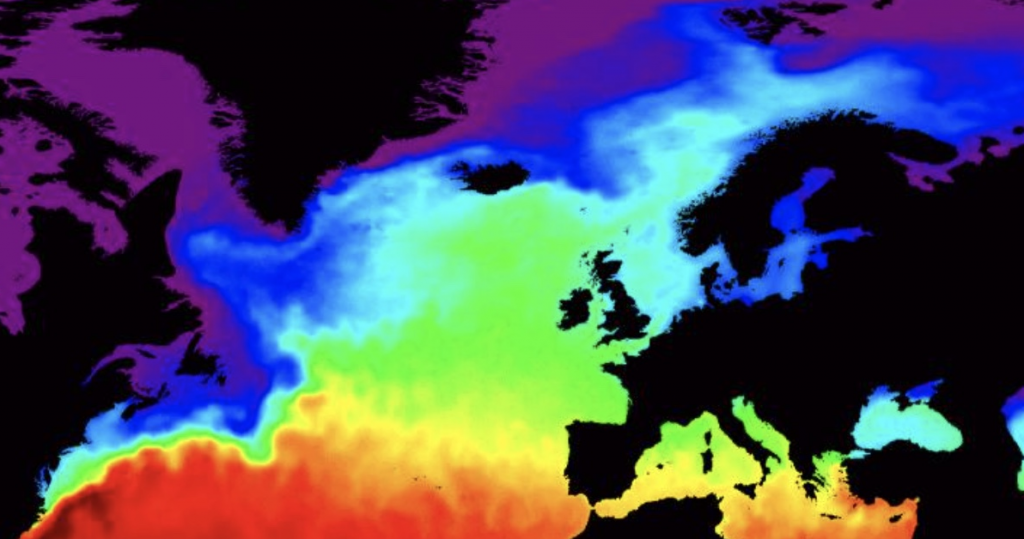
A recent paper employed expert statistical analysis to prove that currently climate models fail to reproduce fluctuations of sea surface temperatures in the North Atlantic, a key region affecting global weather and climate.  H/T to David Whitehouse at GWPF for posting a revew of the paper.  I agree with him that the analysis looks solid and the findings robust.  However, as I will show below, neither Whitehouse nor the paper explicitly drew the most important implication.

At GWPF, Whitehouse writes Climate models fail in key test region (in italics with my bolds):

A new paper by Timothy DelSole of George Mason University and Michael Tippett of Columbia University looks into this by attempting to quantify the consistency between climate models and observations using a novel statistical approach. It involves using a multivariate statistical framework whose usefulness has been demonstrated in other fields such as economics and statistics. Technically, they are asking if two time series such as observations and climate model output come from the same statistical source.

To do this they looked at the surface temperature of the North Atlantic which is variable over decadal timescales. The reason for this variability is disputed, it could be related to human-induced climate change or natural variability. If it is internal variability but falsely accredited to human influences then it could lead over estimates of climate sensitivity. There is also the view that the variability is due to anthropogenic aerosols with internal variability playing a weak role but it has been found that models that use external forcing produce inconsistencies in such things as the pattern of temperature and ocean salinity. These things considered it’s important to investigate if climate models are doing well in accounting for variability in the region as the North Atlantic is often used as a test of a climate model’s capability.

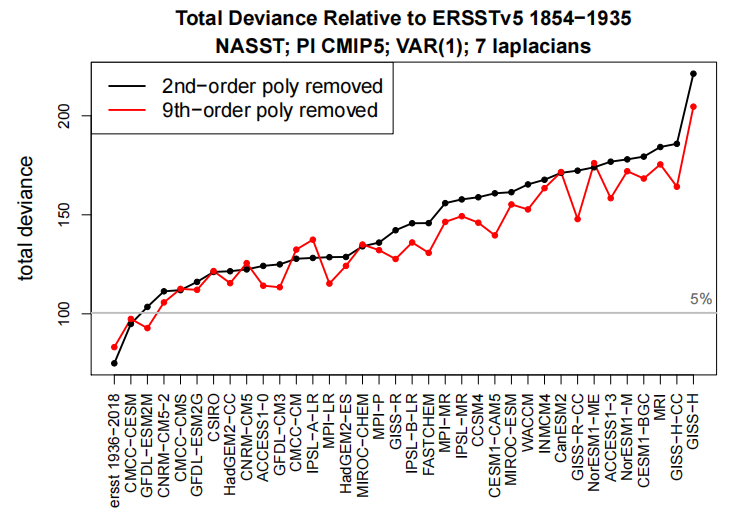
The researchers found that when compared to observations, almost every CMIP5 model fails, no matter whether the multidecadal variability is assumed to be forced or internal. They also found institutional bias in that output from the same model, or from models from the same institution, tended to be clustered together, and in many cases differ significantly from other clusters produced by other institutions. Overall only a few climate models out of three dozen considered were found to be consistent with the observations.

The paper is Comparing Climate Time Series. Part II: A Multivariate Test by DelSole and Tippett.  Excerpts in italics with my bolds.

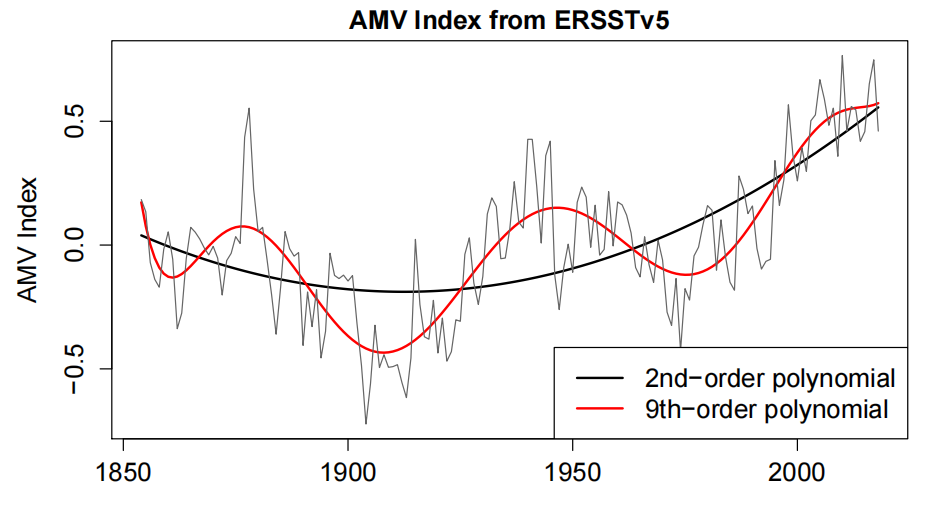
We now apply our test to compare North Atlantic sea surface temperature (NASST) variability between models and observations. In particular, we focus on comparing multi-year internal variability. The question arises as to how to extract internal variability from observations. There is considerable debate about the magnitude of forced variability in this region, particularly the contribution due to anthropogenic aerosols (Booth et al., 2012; Zhang et al., 2013). Accordingly, we consider two possibilities: that the forced response is well represented by (1) a second-order polynomial or (2) a ninth-order polynomial over 1854-2018. These two assumptions will be justified shortly.

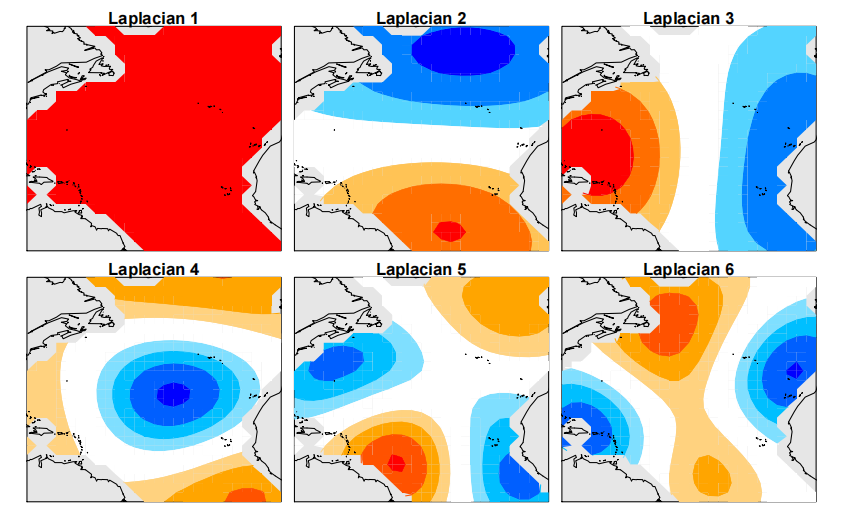
If NASST were represented on a typical 1◦ × 1◦ grid, then the number of grid cells would far exceed the available sample size. Accordingly, some form of dimension reduction is necessary. Given our focus on multi-year predictability, we consider only large-scale patterns. Accordingly, we project annual-mean NASST onto the leading eigenvectors of the Laplacian over the Atlantic between 0 0 60◦N. These eigenvectors form an orthogonal set of patterns that can be ordered by a measure of length  scale from largest to smallest.

DelSole Tippett fig1

Figure 1. Laplacian eigenvectors 1,2,3,4,5,6 over the North Atlantic between the equator and 60◦N,  where dark red and dark blue indicate extreme positive and negative values, respectively

The first six Laplacian eigenvectors are shown in fig. 1 (these were computed by the method of DelSole and Tippett, 2015). The first eigenvector is spatially uniform. Projecting data onto the first Laplacian eigenvector is equivalent to taking the area-weighted average in the basin. In the case of SST, the time series for the first Laplacian eigenvector is merely an AMV index (AMV stands for “Atlantic Multidecadal Variability”). The second and third eigenvectors are dipoles that measure the large-scale gradient across the basin. Subsequent eigenvectors capture smaller scale patterns.  For model data, we use pre-industrial control simulations of SST from phase 5 of the Coupled Model Intercomparison Project (CMIP5 Taylor et al., 2012). Control simulations use forcings that repeat year after year. As a result, interannual variability in control simulations come from internal dynamical mechanisms, not from external forcing.

DelSole Tippett fig2Figure 2. AMV index from ERSSTv5 (thin grey), and polynomial fits to a second-order (thick black) and ninth-order (red) polynomial.
For observational data, we use version 5 of the Extended Reconstructed SST dataset (ERSSTv5 Huang et al., 2017). We consider only the 165-year period 1854-2018. We first focus on time series for the first Laplacian eigenvector, which we call the AMV index. The corresponding least squares fit to second- and ninth-order polynomials in time are shown in fig. 2. The second-order polynomial captures the secular trend toward warmer temperatures but otherwise has weak multidecadal variability. In contrast, the ninth-order polynomial captures both the secular trend and multidecadal variability. There is no consensus as to whether this multidecadal variability is internal or forced. 

DelSole Tippett fig4

Figure 4. Deviance between ERSSTv5 1854-1935 and 82-year segments from 36 CMIP5 pre-industrial control simulations. Also shown is the deviance between ERSSTv5 1854-1935 and ERSSTv5 1937-2018 (first item on x-axis). The black and red curves show, respectively, results after removing a second- and ninth-order polynomial in time over 1854-2018 before evaluating the deviance. The models have been ordered on the x-axis from smallest to largest deviance after removing a second-order polynomial in time.

Conclusion:

The test was illustrated by using it to compare annual mean North Atlantic SST variability in models and observations. When compared to observations, almost every CMIP5 model differs significantly from ERSST. This conclusion holds regardless of whether a second- or ninth-order polynomial in time is regressed out. Thus, our conclusion does not depend on whether multidecadal NASST variability is assumed to be forced or internal. By applying a hierarchical clustering technique, we showed that time series from the same model, or from models from the same institution, tend to be clustered together, and in many cases differ significantly from other clusters. Our results are consistent with previous claims (Pennell and Reichler, 2011; Knutti et al., 2013) that the effective number of independent models is smaller than the actual number of models in a multi-model ensemble.

The Elephant in the Room

Now let’s consider the interpretation reached by model builders after failing to match observations of Atlantic Multidecadal Variability.  As an example consider INMCM4, whose results deviated greatly from the ERSST5 dataset.  In 2018, Evgeny Volodin and Andrey Gritsun published Simulation of observed climate changes in 1850–2014 with climate model INM-CM5.   Included in those simulations is a report of their attempts to replicate North Atlantic SSTs.  Excerpts in italics with my bolds.

esd-9-1235-2018-f04

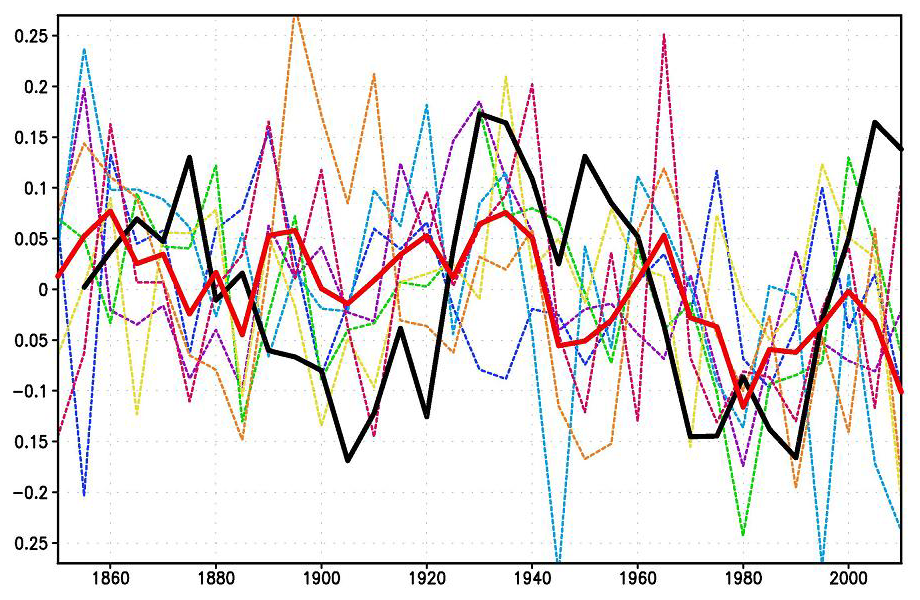
Figure 4 The 5-year mean AMO index (K) for ERSSTv4 data (thick solid black); model mean (thick solid red). Dashed thin lines represent data from individual model runs. Colors correspond to individual runs as in Fig. 1.

Keeping in mind the argument that the GMST slowdown in the beginning of the 21st century could be due to the internal variability of the climate system, let us look at the behavior of the AMO and PDO climate indices. Here we calculated the AMO index in the usual way, as the SST anomaly in the Atlantic at latitudinal band 0–60∘ N minus the anomaly of the GMST. The model and observed 5-year mean AMO index time series are presented in Fig. 4. The well-known oscillation with a period of 60–70 years can be clearly seen in the observations. Among the model runs, only one (dashed purple line) shows oscillation with a period of about 70 years, but without significant maximum near year 2000. In other model runs there is no distinct oscillation with a period of 60–70 years but a period of 20–40 years prevails. As a result none of the seven model trajectories reproduces the behavior of the observed AMO index after year 1950 (including its warm phase at the turn of the 20th and 21st centuries).

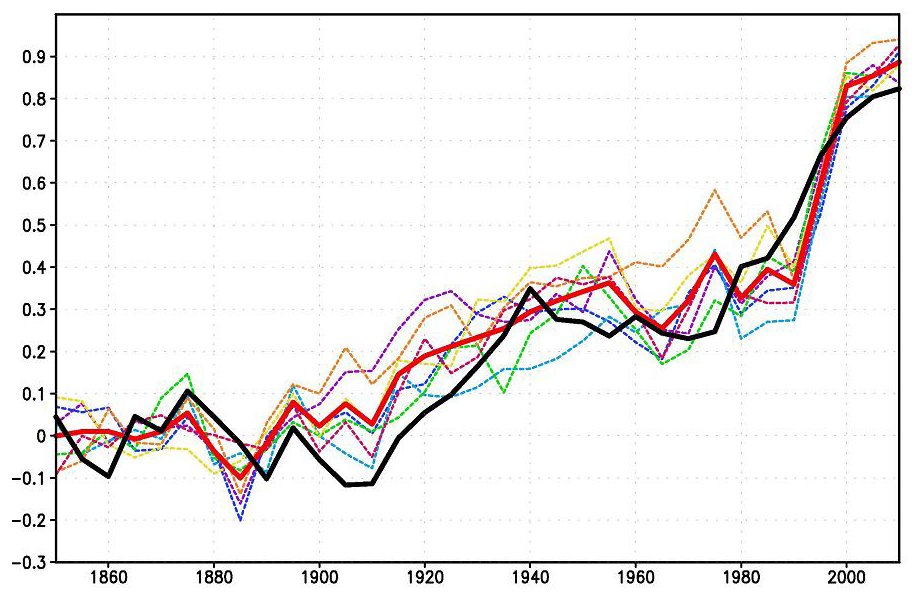
One can conclude that anthropogenic forcing is unable to produce any significant impact on the AMO dynamics as its index averaged over seven realization stays around zero within one sigma interval (0.08). Consequently, the AMO dynamics are controlled by the internal variability of the climate system and cannot be predicted in historic experiments. On the other hand, the model can correctly predict GMST changes in 1980–2014 having the wrong phase of the AMO (blue, yellow, orange lines in Figs. 1 and 4).

esd-9-1235-2018-f01

Figure 1 The 5-year mean GMST (K) anomaly with respect to 1850–1899 for HadCRUTv4 (thick solid black); model mean (thick solid red). Dashed thin lines represent data from individual model runs: 1 – purple, 2 – dark blue, 3 – blue, 4 – green, 5 – yellow, 6 – orange, 7 – magenta. In this and the next figures numbers on the time axis indicate the first year of the 5-year mean.

The Bottom Line

Since the models incorporate AGW in the form of CO2 sensitivity, they are unable to replicate Atlantic Multidecadal Variability.  Thus, the logical conclusion is that variability of North Atlantic SSTs is an internal, natural climate factor.

The-Elephant-in-the-RoomOMC

The Greatest Untold Environmental Success Story

2-beams-of-sunlight-rays-shining-through-dramatic-clouds-onto-the-gill-copeland

H/T to Daily Mail for reporting on this study in their article–Warming effect of greenhouse gases ‘has been overestimated’: Ice samples suggest pre-industrial air pollution was WORSE than we thought, and future temperatures will rise more slowly. Excerpts further on, but first I want to comment that Daily Mail missed out on a broader environmental story, where humans are the heroes rather than villains.

My title is based on the researchers’ conclusions confirming that humans deserve more credit than the blame usually dished out for the Modern Warm Period and ending of the Little Ice Age. The money quote from the study itself:

We show that BC (Black Carbon) deposition fluxes in most Antarctic ice cores were roughly constant from 1750 CE to the PD, despite the fact that other anthropogenic emissions—i.e., fossil fuel and biofuel emissions—increased markedly in the SH over the past century (21). This unexpected result can be explained by a large human-induced reduction in wildfire over the same period, as suggested by the fire modeling that we developed independently of the ice core records. The reduced biomass burning emissions largely compensated for the increase in BC emissions from fossil fuel and biofuels.

Thus, by focusing on soot (Black Carbon), researchers were able to compare historical periods when natural, uncontrolled biomass burning dominated, with periods when humans brought biomass burning under control and increasingly sourced their energy instead from underground: first coal, then petroleum and later gas. By cleaning the air of soot, humans removed a major climate coolant which allowed the sun to rewarm the planet. And technological improvements made the burning of coal, oil and gas much cleaner than biomass burning.

Daily Mail Article:

‘Soot deposited in glacier ice directly reflects past atmospheric concentrations so well-dated ice cores provide the most reliable long-term records,’ explained hydrologist Joseph McConnell of the Desert Research Institute in Nevada.

The researchers were surprised to find that the pre-industrial (here defined as 1750–1780) soot levels were considerably higher than was long thought.

‘While most studies have assumed less fire took place in the preindustrial era, the ice cores suggested a much fierier past, at least in the Southern Hemisphere,’ said atmospheric chemist Loretta Mickley, also of Harvard University.

Both the ice core data and the models conclude that soot levels were abundant before the industrial era and remained relatively constant across the 20th century.

As land use changed — and fire activity decreased — emissions from industry increased instead, the models suggest.

The study itself is  Liu et al,  Improved estimates of preindustrial biomass burning reduce the magnitude of aerosol climate forcing in the Southern Hemisphere.  Excerpts in italics wth my bolds.

Abstract

Fire plays a pivotal role in shaping terrestrial ecosystems and the chemical composition of the atmosphere and thus influences Earth’s climate. The trend and magnitude of fire activity over the past few centuries are controversial, which hinders understanding of preindustrial to present-day aerosol radiative forcing.

Here, we present evidence from records of 14 Antarctic ice cores and 1 central Andean ice core, suggesting that historical fire activity in the Southern Hemisphere (SH) exceeded present-day levels. To understand this observation, we use a global fire model to show that overall SH fire emissions could have declined by 30% over the 20th century, possibly because of the rapid expansion of land use for agriculture and animal production in middle to high latitudes.

Radiative forcing calculations suggest that the decreasing trend in SH fire emissions over the past century largely compensates for the cooling effect of increasing aerosols from fossil fuel and biofuel sources.

Introduction

Both climate variability and human activity drive changes in wildfire frequency and magnitude. During the past millennium, the human imprint on wildfire has become increasingly important because of landscape fragmentation through land use and, more recently, through large-scale active fire suppression

For the time scale relevant to climate change in the industrial era, a key uncertainty is where and to what extent human activity has altered fire activity

 As a major source of fire ignition, humans use fire for land clearance, thus introducing fire to areas that are unlikely to burn naturally, such as tropical rainforests or peatlands.  In contrast, recent analyses have suggested that anthropogenic land cover change and landscape fragmentation significantly reduce fire in savannas by affecting fuel load and fire spread, and the fire activity over human-managed land is lower than that under natural conditions.  For example, the global burned area observed by satellite decreased 24% over the past two decades, mainly driven by agricultural expansion and intensification

Before the satellite era, regional and global fire trends have been reconstructed using several types of proxy records, such as charcoal from lake sediments, fire-scarred tree rings, and chemical impurities or trace gases preserved in ice cores. However, large discrepancies remain among different records, and there is an especially large uncertainty in the trend of fire emissions over the past two centuries. On the global scale, the use of fossil fuel and biofuels has increased and become the major source of carbonaceous aerosols, methane, ethane, and carbon monoxide (CO) in the present day (PD), which may confound interpretation of fire activity from these proxies in ice cores. Chemical transport models considering these different sources are therefore needed for the interpretation of ice core records.

Dynamic global vegetation models have been used to simulate historical fire emissions. However, different models demonstrate quite different trends of fire activity from the late preindustrial (PI) Holocene to the PD, mainly because of divergent assumptions regarding the response of fire to human demographic growth and to changes in land use and land cover.

Discussion

Large uncertainty in the PI aerosol loading thus results from uncertainty in PI fire emissions. Knowledge of PI aerosol loading is, however, a key for global climate assessments that consider aerosol forcing. This forcing typically quantifies the PD aerosol effect on radiative fluxes at the top of the atmosphere (TOA), relative to the aerosol effect in the PI (1750 or 1850 CE). Biomass burning emits both light-absorbing black carbon (BC) and light-scattering organic carbon (OC) aerosols, thus directly influencing the radiative balance via aerosol-radiation interactions. Physically and chemically aged smoke particles also serve as cloud condensation nuclei (CCN), consequently altering cloud albedo and indirectly affecting the radiative balance via aerosol-cloud interactions. In addition, the cloud albedo forcing of other emissions, such as fossil fuel and biofuel emissions, is highly nonlinear and largely depends on the CCN concentration of the PI baseline, which is, in turn, determined by biomass burning in the PI. A recent work by Hamilton et al. suggests that a revised PI biomass burning emission scenario that is consistent with Northern Hemisphere ice core records can reduce the calculated mean global cloud albedo forcing magnitude by 35%, compared to the estimate using emissions prescribed in the Sixth Coupled Model Intercomparison (CMIP6).

Liu et al F5.large

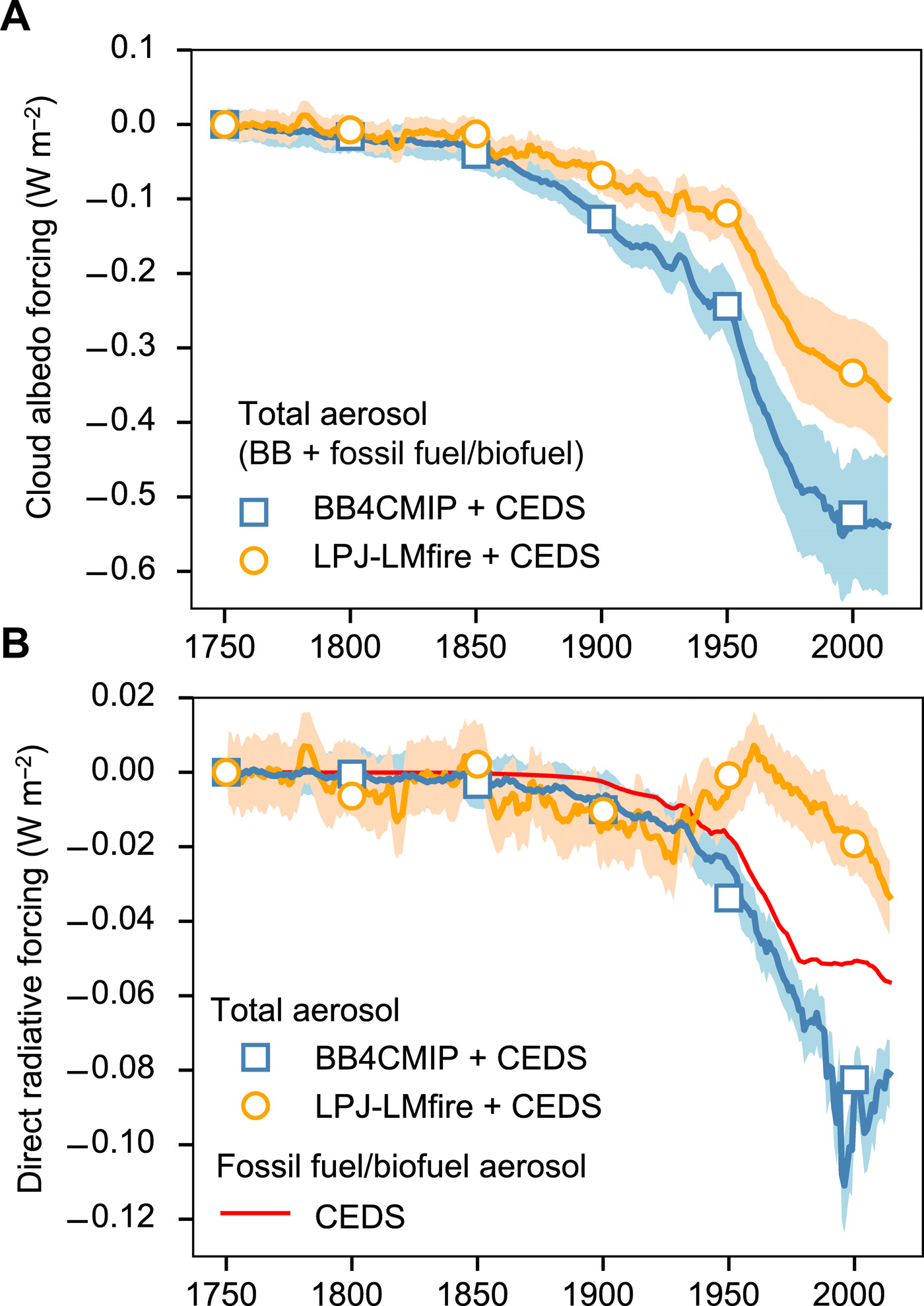
Figure 5A shows the time series of the cloud albedo forcing since 1750 owing to changes in both anthropogenic and biomass burning emissions. The shaded area represents the estimated uncertainty considering the error propagation from the variabilities in the input of emissions and meteorology. Simulation with the LPJ-LMfire emissions yields a less negative cloud albedo forcing than that with the BB4CMIP emissions. For the year 2000, the simulation with LPJ-LMfire predicts a mean cloud albedo forcing of −0.33 W m−2 for the SH, compared with a value of −0.52 W m−2 using the BB4CMIP emissions. These results indicate that cloud albedo forcing in the SH is very sensitive to the change in biomass burning emissions. The difference between BB4CMIP and LPJ-LMfire biomass burning emissions can also influence estimates of the PI CCN number concentration in the SH (fig. S7), thus changing the baseline of climate assessments. Under the relatively clean conditions of the PI SH, changes in the CCN number concentration have a greater impact on cloud albedo forcing than they would under the more polluted conditions of the Northern Hemisphere (fig. S8).

Figure 5B depicts the values of direct radiative forcing due to aerosol-radiation interactions calculated for total aerosol (i.e., including biomass burning, fossil fuel, and biofuel emissions) using different biomass burning emission inventories. To separate the contributions of fossil fuel and biofuel versus biomass burning aerosols, we also show the direct radiative forcing of anthropogenic emissions only (Fig. 5B). The increase of anthropogenic emissions alone from 1750 to 2000 has a direct radiative forcing of −0.05 W m−2. Over the same period, the increase in biomass burning emissions suggested by BB4CMIP has an additional negative forcing of −0.03 W m−2, and the total aerosol direct forcing is −0.08 W m−2. In contrast, the total aerosol direct radiative forcing calculated when using LPJ-LMfire emissions is just −0.02 W m−2, indicating that the positive forcing of decreasing biomass burning largely compensates the negative forcing of the increasing anthropogenic emissions. These results suggest that the difference in biomass burning emissions can dominate the magnitude of aerosol direct radiative forcing in the SH. Even so, the values of direct radiative forcing are generally one order of magnitude smaller than those of cloud albedo forcing, suggesting that the climate impact of biomass burning emissions is primarily caused by the cloud albedo effect.

In this study, we perform a comprehensive analysis of fire activity and its associated aerosol radiative forcing for the Southern Hemisphere (SH) over the past 250 years. We achieve this by combining an array of Antarctic ice core records of BC deposition, dynamic global vegetation and fire modeling, and atmospheric chemistry transport modeling. We show that BC deposition fluxes in most Antarctic ice cores were roughly constant from 1750 CE to the PD, despite the fact that other anthropogenic emissions—i.e., fossil fuel and biofuel emissions—increased markedly in the SH over the past century (21). This unexpected result can be explained by a large human-induced reduction in wildfire over the same period, as suggested by the fire modeling that we developed independently of the ice core records. The reduced biomass burning emissions largely compensated for the increase in BC emissions from fossil fuel and biofuels.

These records indicate that the CMIP6 biomass burning emissions widely applied to climate models may underestimate SH fire emissions in the late PI era and further affect estimates of contemporary aerosol radiative forcing. With the improved biomass burning emissions presented here, PI-to-PD aerosol forcing (direct radiative forcing + cloud albedo forcing) in the SH changes from −0.61 to −0.35 W m−2, indicating that large uncertainties in aerosol radiative forcing may stem from uncertainties in the historical trend in biomass burning. Similarly, on the basis of ice core records from Greenland, Europe, and North America, Hamilton et al. (18) suggest that the reduction in biomass burning emissions may also occur in the Northern Hemisphere.

Accurate estimates of aerosol radiative forcing are also crucial for better understanding the transient climate response (TCR) and equilibrium climate sensitivity (ECS) to increasing CO2 and more accurate projection of future climate change (40). The negative aerosol radiative forcing can, in part, cancel out the positive forcing of increasing greenhouse gases and contribute to the uncertainty of total radiative forcing. An overly large aerosol cooling implies that models might overestimate TCR and ECS to reproduce historical temperature response. A recent study using one of the latest-generation CMIP6 climate models (E3SM) suggested that reducing both the magnitudes of negative aerosol radiative forcing and climate sensitivity yields a better agreement with the observed historical record of the surface temperature. Ten in 27 of the CMIP6 climate models have an ECS higher than the upper end of the range (1.5° to 4.5°C) estimated by previous generation models. These high ECS values, however, are not supported by paleoclimate constraints. Modest aerosol forcing and climate sensitivity values have also been suggested by other observationally based studies (44, 45). Our improved fire emissions may help to bridge the gap between aerosol forcing estimates from current climate model simulations and the constraints from observations.


Joakim Book Skewers Sacred Environmental Cows

planetb-800x508-1

Joakim Book is an economist and social observer with a knack for pithy critiques of current governmental foibles.  He has pierced the fog of global warming/climate change hysteria in several articles, but his POV is best summarized in his AIER essay Climate Catastrophism and a Sensible Environmentalism.  Excerpts in italics with my bolds.  If you are familiar or not with his work, enjoy the read and do explore the links

Like many of us, I had an iconic and charismatic high school teacher who left a lasting impression. He used to say something memorable about asking for forgiveness: “Apologize if you’re in the wrong,” he said, “but double down if you’re not.”

As the pro-lockdown media poured its anger over the Great Barrington Declaration and other voices for human freedom and dignity have been silenced or viciously attacked, allow me to heed my high school teacher’s great advice ‒ and double down.

Much of the outrage over AIER’s sponsoring and hosting of the Declaration had nothing to do with what the scientists in it said, or even the topic of societal disagreement that it captures. Conspiratorial writers from Byline Times to The Guardian as well as editors at Wikipedia attacked AIER for a minor, inconsequential connection to the “evil” Koch Foundation, damning the Institute’s efforts in a laughable attempt of guilt-by-association.

As a carte blanche ‒ the ultimate “gotcha” in these unenlightened and confused times ‒ many of these outlets attacked AIER for “downplay[ing] the threats of the environmental crisis,” and linked specifically to a number of my climate change articles.

I don’t see how I have anything to apologize for regarding what’s in those articles ‒ so instead I’ll double down.

environmenthandshake-800x508-1

How to do environmentalism, and how not to do environmentalism

A tragic dissonance has emerged in most popular climate arguments: a childlike refusal of accepting the lesser of two evils, of trading off one goal for another. The more ardently you push climate policies, it seems, the more strongly you hold romantic and unrealistic beliefs about how we can repent for our environmentalist sins. In impossibly short times, it is believed, we can effortlessly transition to 100% renewable energy; overhaul society completely, but at no cost whatsoever; and our restrictive climate policies will even boost our economies and create jobs!

You must presume that the world is a pretty sinister place if greedy capitalists, supposedly in it for the money, are all leaving these “obvious” opportunities on the table.

Never mind that renewables ‒ or more aptly called “unreliables” ‒ can’t power a modern civilization, that their intermittency problem is light years behind where its proponents assume it to be, that they’re not energy-dense enough to provide us with the energy and electricity we want. Without the amazing help of fossil fuels we couldn’t do half the things we’re currently doing ‒ living, eating, flourishing, helping, traveling (well…), producing.

None of that matters; we need to fix the climate, activists say, and quell CO2 emissions urgently. But while we’re at it we must also ensure equal gender representation on corporate boards, and shut down tax havens, and confiscate the rich’s productive assets. And naturally, end racial inequality, and most certainly regulate who may use a public bathroom carrying this or that gendered sign on it.

A cynic, perhaps reaching for a tin foil hat or the closest religious text to understand how this could possibly make sense, would conclude that catastrophists are not really addressing the problem they say they are. Alternatively, climate change can’t be that bad if the same Green New Deal bill that saves humanity is littered with minimum wage laws and paid maternity leave and a range of other social policies that just happen to align with what the hard-left has long wanted.

But we don’t have to be cynics to derive this conclusion: its proponents freely and openly say so. The British organization ‘Extinction Rebellion,’ whose infamous promoters chain themselves to trains and block London roads for media attention (or sling fake blood at buildings), happily confess that they do things that feel right rather than what would have material impact for their cause.

For years, people like Naomi Klein, the author of This Changes Everything: Capitalism vs. the Climate, have said that their goal is to destroy capitalism ‒ and climate change just happens to be the best tool and best argument she has found. Simon Hannah for OpenDemocracy describes capitalism as having a “’parasitoid’ relationship to the Earth.” Capitalism, he writes, “is simply incompatible with social justice” and the climate change issue offers a vivid illustration of this.

If you’re concerned about these other societal problems ‒ which you could be as they are serious concerns in their own right ‒ then you’re also unavoidably telling me that you don’t think the climate crisis is existential or even that bad. After all, if you think climate change will kill millions or billions of people, why would you bother, for instance, throwing everything and the kitchen sink at a coronavirus the mortality of which is a rounding error compared to the apocalyptic climate future you see? (When faced with claims of mass death, always ask how exactly that’s supposed to happen as we’re safer, richer, better fed, and better protected against the powers of nature than ever before).

The worse and more unavoidable the damages from a changing planet are, the more acute does a rapid transition to nuclear power look, and the greater the merits of geoengineering ‒ for instance, artificially spewing out sulfur into the high atmosphere, mimicking large volcano eruptions of the past.

Michael Shellenberger, a pro-nuclear environmentalist, writes

The problem posed by the existence of nuclear energy was that it proved we didn’t need to radically reorganize society to solve environmental problems. We just needed to build nuclear plants instead of coal-burning ones. And so the New Left environmentalists attacked nuclear energy as somehow bad for the environment.

[S]olar farms require hundreds of times more land, an order of magnitude more mining for materials, and create hundreds of times more waste, than do nuclear plants. And wind farms kill hundreds of thousands of threatened and endangered birds, may make the hoary bat go extinct, and kill more people than nuclear plants.

Nuclear energy should be the environmentalist’s greatest gift: in one fell swoop we could make a serious dent in CO2 emissions. But of course, the more ardent an environmentalist you are, the more fiercely you oppose nuclear, going nuts from just voicing the option (“Nuclear is awful, filthy, unclean, dangerous, and unsafe!”).

It’s like all the previous arguments about how devastating human civilization is for the planet, how desperately urgent it is for us to take action, that we “listen to the scientists” as Greta Thunberg urges us, just go out the window. Well, not those scientists, explaining how modern nuclear plants can safely power our societies. Or how unreliables give us higher electricity prices and more CO2 emissions in our electricity mix. Or how modern engineering can tame the sea. Or how modern information technology, large-scale supply chains, and construction of storm shelters have reduced Bangladeshi deaths from cyclones by 99% in a generation, even though Bangladesh has a much larger population today.

Sensible and Balanced Approach

We should deal with the threats of climate change, but we should do so sensibly and in conjunction with other threats. Because one thing is dangerous and potentially harmful, every other dangerous and harmful thing doesn’t just go away. Do things like the World Health Organization recommends here, things that help against the baseline danger of nature as well as the increased risk from climate change:

The development of a 500 metre coastal mangrove forest zone will further reduce the vulnerability to cyclones, which is especially important given the likelihood of a rise in sea level and an increase in tropical storm frequency and strength due to climate change.

In a special climate issue of the Scientific American from last year, climate scientist Jennifer Francis was accounting for recent extreme weather events. After several long paragraphs outlining how bad the record-setting heat waves of the 2018 summer had been in the U.S., Japan, Scandinavia, and in the Arctic, she wrote, “Worldwide, thousands of people without air-conditioning died.” (emphasis added)

Yes, exactly! Scorching heat waves are bad for people, with or without climate change. A sensible, effective, and direct way to fix that… is ensuring that people have access to air-conditioning! Instead of aiming for some elaborate government-mandated degrowth platform, circular economies, carbon tax, or subsidies for solar and wind ‒ how about just giving people cash for air conditioners? That should be much more effective in preventing deaths from inhospitable elements, even if climate change makes nature a little bit less safe for humans.

Most changes to the climate can’t be rolled back

What’s scary about the climate impact of the CO2 we’ve already emitted into the atmosphere is that it lingers there for hundreds of years. Unless we find a way to remove it from the skies, much of what will happen to the planet over the next century or so is already “baked in.”  That also means that we must prepare for those changes rather than muck about with blunt tools like carbon taxes or symbolic bans on plastic bags.

So let’s abandon fanciful and fleetingly ineffective climate policies.

  • Let’s rapidly transition to the cleanest and most reliable electricity source we have (nuclear).
  • Let’s build protective dams along vulnerable coastlines, and experiment with ways to raise and reclaim land from the sea.
  • Most importantly ‒ and globally just ‒ let’s make sure the poorest of the poor can enrich themselves enough so that they too stand a chance against the inevitable changes that we know will come.
  • Let’s stop torturing ourselves with totalitarian policies against a virus we can’t control.
  • Let’s stop injuring poor countries with our obstacles to their goods and services, and their migrating people.

Those are climate policies that a sensible, pro-human environmentalist could get behind. Blunt and small-impact carbon taxes, Paris Agreements with next-to-no effect, or symbolic gestures like recycling ‒ not so much.

How’s that for doubling down?

Joakim Book is a writer, researcher and editor on all things money, finance and financial history. He holds a masters degree from the University of Oxford and has been a visiting scholar at the American Institute for Economic Research in 2018 and 2019.  His AIER essays are here.  As readers can see from the above article, Book creates many provocative capsules.  Some examples from his work:

Reshuffling who owns the instruments that finance the physical assets that emit the byproduct CO2 doesn’t change anything about their emissions: the CO2 enters the atmosphere whether you, me, Warren Buffett, or Russian oligarchs own the facilities.

Still, none of the mainstreaming structures we had built over decades turned the tide as much as did an iconic, blonde, white(!) girl with Asperger’s. . . Following her popular success, the most powerful institutions in our fiat world – the central banks – have not resisted the pull of this inane black hole. They “want to become the guardians of the environment as well” begins Simon Clark’s recent article in the Wall Street Journal, identifying an eerie trend of mission creep and central bank activism. They can’t hit their own targets very well, but still wish to dabble in everybody else’s.

Years ago I suggested that climate activists pool their funds and go into the (re)insurance business, specifically to address their concerns about financial climate risk. With a longer time horizon and lower required rate of return, you might even have an edge over financial incumbents.

Politics is a game that shifts the natural and inherent relationship between human beings. Ordinarily, people in their commercial or civic engagements have strong incentives to harmonize, to avoid conflict, streamline, make efficiency gains, and reach workable consensus; they have skin in the game, bear responsibility and costs for the (negative) outcomes of their actions, and often simply want to get on with their lives. Politicians, involved in their sinister games, disrupt this harmony.

We have four centuries of evidence that, over time and on net, the market process that enriches us gradually overtakes the government power that impoverishes us. But during this time, we can have long periods where government power makes life worse, over and above what innovation, growth, and individual ingenuity could marshal.

Media coverage inundates us with a constant flow of catastrophes from one part or the world or another, while overlooking the great non-events of the world. When super cyclones kill 128 people instead of the hundreds of thousands they used to or would have, we don’t even hear about them. When hundreds of thousands of people are lifted out of extreme poverty a day, every day, that’s no longer newsworthy. The result is, Gapminder notes, that “people end up carrying around a sack of outdated facts that you got in school (including knowledge that often was outdated when acquired in school).”

Doctors abide by the “First, do no harm” promise. Maybe journalists should too.

Far from being settled, climate science is tricky: we don’t know well what happens to global temperatures when atmospheric CO2 doubles (“climate sensitivity”); we can’t properly model clouds and cloud formation, crucial for how much of the sun’s incoming heat will be reflected away; the range for best-guesses as to what the global temperature rise over the coming century will be is vast (maybe 1° Celsius – maybe 5° Celsius) – so vast, in fact, that it hardly warrants a quantification.

The sustainability crowd has managed to make this word mean a lot more things than that. So much so that the same Cambridge Dictionary lists a secondary meaning for ‘sustainable:’ “Causing little or no damage to the environment and therefore able to continue for a long time”(emphasis added). The secondary meaning of its opposite, ‘unsustainable,’ is similarly bonkers: “causing damage to the environment by using more of something than can be replaced naturally.”  Lots of things are wrong with these seemingly innocent lines, and I’ll focus on three: the environment as a friendly sentient being, the causal chain between environmental damage and sustainability, and the replacement rate of resources.

Human beings are the organism that has been the most successful at removing nature’s obstacles from our path, and protecting ourselves from its damaging forces. Even though there are six billion more of us today than in 1900, fewer people die at the hand of nature’s powers. That’s us impacting the environment and it is cause for celebration. Impact away!

For some reason, Joakim Book reminds me of Jimbob:

jimbob child activist

Who runs education


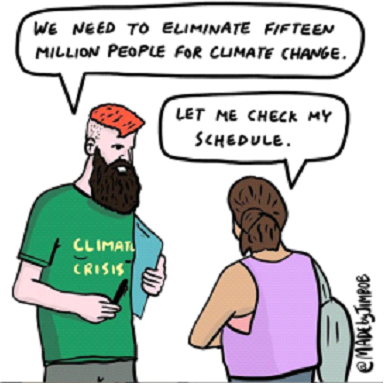
jimbob 15M people


Resist the Great Reset

gdundvquwzb21

Sven and Beatrix von Storch among others are sounding the alarm about the elitist plot to install a “new world order” using the so-called “climate emergency” as the pretext.  Sven recently put out a video, and Beatrix explained what is the plan and why it must be resisted by reasonable and freedom-loving people in her article The Tyranny of Davos: What is the Agenda of the Great Reset?  Excerpts below in italics with my bolds.  And later on a backgrounder describing this new brand of class warfare.

Every year, the captains of industry, finance and politics meet at Davos: This year, World Economic Forum head Klaus Schwab wrote a book entitled “COVID-19: The Great Reset”, laying out a comprehensive agenda for an “accelerated system change“ under cover of the COVID crisis.

Without a doubt, his point of view reflects World Economic Forum debates and goals shared by large parts of the political and financial elite. These ideas are a grave danger to our liberty and democracy. That’s why I have summed them up in this article. Every citizen should know about them.

The Totalitarian Vision of Davos

Let’s summarize what is meant by the Great Reset:

  • The primary goal is a global economic regime under the motto of “global governance” to replace national democracies. The market economy will be replaced by a managed economy.
  • Companies will no longer obey their shareholders, instead being forced to comply with climate and gender policy requirements, due to pressure from the finance industry and aggressive far-left activists. Companies that do not follow suit will be destroyed.
  • This cabal between high finance and far-left activists serves to intimidate political opponents and companies that refuse to show “good will”. Distance rules and “social distancing” are to continue even after the crisis. This will spell the destruction of the middle class, catering, retail and the entertainment industry. Big Tech and e-commerce will take their place.
  • With the new means of digital surveillance and under the guise of public health, workers will be monitored and their behavior recorded.
  • The breakdown in consumer demand in large sections of the population due to the lockdown will be continued, and expanded in order to achieve global climate goals.


This agenda is a grave threat to our civil rights, democracy and the free market economy. It is inherently totalitarian and hostile to freedom.
We have to alert all our citizens to this danger, and use all democratic means to stop it.


Background from previous post 2021 Class Warfare: The Elite vs. The Middle

Aristotle Middle Class

Edward Ring explains in his essay at American Greatness Why America’s Elites Want to End the Middle Class.  Excerpts in italics with my bolds.

Feudalism is a viable alternative to tolerating a middle class, especially lucrative to the multinational corporations and globalist billionaires that hide this agenda behind a moral masquerade.

It doesn’t require a conspiracy theorist to suggest these wholesale shifts in American culture are not happening by accident. Nor are they solely the result of nefarious intent, at least not among everyone occupying the highest rungs of power and influence in America. What motivates members of the American elite, billionaires and corporate boards alike, to approve of these radical changes?

Unsustainable Prosperity for Me, But Not for Thee?

One answer comes down to this: They believe the lifestyle of the American middle class is not sustainable, because the planet does not have the carrying capacity to extend an American level of consumption to everyone in the world. By dividing and confusing the American people, while wielding the moral bludgeons of saving the planet and eliminating racism, policies can be implemented that will break the American middle class and habituate them to expect less.

In the name of saving the planet, for example, new suburbs will become almost impossible to construct. Single-family detached homes with yards will be stigmatized as both unsustainable and racist, and to mitigate these evils, subsidized apartments will replace homes, with rent subsidized occupants. As America’s population grows via mass immigration, the footprint of cities will remain fixed. The politically engineered housing shortage will force increasing numbers of Americans into subsidized housing.

All of this is already happening, but it’s just getting started.
Similar cramdowns will occur with respect to all social amenities that consume resources.

Land is just the primary example, but water, energy, and transportation will all be affected. This new political economy will also depopulate rural areas—through corporate consolidation of farmland as regulations and resource costs drive small operations under and through punitive regulations and insurance burdens driving people out of the “urban-wildland interface.” Outside of major cities, for the most part, the only people left will be extremely wealthy landowners and corporate employees.

Joel Kotkin, who has studied and written about demographics and migrations for years, recently authored The Coming of Neo Feudalism: A Warning to the Global Middle Class. Of all the shorthand descriptions for the political economy that is coming, feudalism may be the best fit. As Kotkin puts it:

The new class structure resembles that of Medieval times. At the apex of the new order are two classes―a reborn clerical elite, the clerisy, which dominates the upper part of the professional ranks, universities, media and culture, and a new aristocracy led by tech oligarchs with unprecedented wealth and growing control of information. These two classes correspond to the old French First and Second Estates.

Below these two classes lies what was once called the Third Estate. This includes the yeomanry, which is made up largely of small businesspeople, minor property owners, skilled workers and private-sector-oriented professionals. Ascendant for much of modern history, this class is in decline while those below them, the new Serfs, grow in numbers―a vast, expanding property-less population.

Both Kotkin and Hanson assert that the trend towards feudalism can be reversed if people understand what is occurring and react effectively. To that end, it is necessary to understand that behind the obvious benefit these new rules have in service of the elites and their interests, there is a moral pretext. How solid is that pretext, that America’s middle class is not sustainable?

It All Comes Down to Energy

Energy is the prerequisite for economic growth. If you have abundant energy, you can have abundant water, transportation, communications, light, heat, mechanized agriculture, refrigerated medicines; everything. And the cold fact confronting America’s elites is this: For everyone on earth to consume half as much energy as Americans consume, total energy production worldwide would have to more than double.

Can America’s middle class sustain its current lifestyle while consuming half as much energy as it does today? Or is it feasible for energy production in the world not merely to double, but quadruple? And if that can be done, is it possible without paying too high a price in terms of environmental impact? And if it cannot be done, can the American experience, which is to enjoy a lifestyle many times greater than that enjoyed by most of the rest of the people on earth, be justified? And if so, why?

These are tough questions. Unequivocal, simple answers to these questions do not exist. But the conventional answer that motivates America’s elites must nonetheless be challenged, because until it is, they will cloak their consolidation of power and their elimination of America’s middle class in the moral imperatives of saving the planet and eliminating racism.

It may seem illogical to suppose the “systemic racism” canard is more easily disposed of, but that’s only because racism, by design, is the ongoing obsession in American media and politics. Despite this well-engineered obsession, resolute opposition to “anti-racist” racism is growing because it is an obvious lie. Racism, from all sources, still exists. But systemic racism against nonwhites, from every angle you look at it in modern American society, simply does not exist. Politicians, journalists, and academics need to find the courage to explain the facts and turn the tide. It can be done.

Saving the planet, on the other hand, is a moral imperative with ongoing urgency.

This urgency may be divided into two broad categories. The first is the traditional concerns of environmentalists, to preserve wildlife and wilderness, and reduce or eliminate sources of pollution. While environmentalists, especially in the United States, often go way too far in addressing these traditional concerns, these are genuine moral imperatives that must be balanced against the economic needs of civilization. This is an important but manageable debate.

The second, new concern of environmentalists, however, is the “climate emergency.” Grossly overblown, hyped for reasons that are transparently opportunistic, fraught with potential for tyranny and punitively expensive, the “climate emergency,” more than anything else, is the moral justification for destroying the American middle class.

In the name of saving the climate, federal and certain state authorities are restricting fossil fuel development, despite the fact that fossil fuels—coal, oil, and gas—still produce 85 percent of worldwide energy, with nuclear and hydropower making up another 11 percent. If energy production is going to double, which at a minimum it must, how on earth will that be accomplished without fossil fuel? It is impossible.

And the planners who are suppressing fossil fuel development worldwide know it. By creating shortages and raising prices for everything, they intend to reduce median rates of consumption in America to a fraction of what it is today, and render a middle-class lifestyle completely out of reach to the average American.

In doing so, they’ll amass even more wealth for themselves.

The Better Way Forward

There is another path. By focusing on the most likely predictions instead of the most catastrophic, nations can focus on climate resiliency—something which is a good idea anyway—while continuing to develop clean fossil fuel and also continuing to develop leapfrog technologies such as nuclear fusion. The environmental benefit of this approach is tangible and profound: with energy comes prosperity, with prosperity comes lower birthrates. With energy, inviting urban centers are possible, and urbanization takes pressure off wilderness. In both cases, with abundant energy, people voluntarily choose to limit their family size and move to cities.

A moral case for fossil fuels can outweigh the supposedly moral case against fossil fuel. Americans have to be willing to fight that fight, along with every other tyrannical edict attendant to the “climate emergency,” starting with the restrictions on urban expansion and single-family homes.

With adherence to the principles and culture that made America great—competition, private ownership, rule of law, minimizing corruption, and rewarding innovation—America’s middle class can survive and grow. But feudalism is a viable alternative, especially lucrative to the multinational corporations and globalist billionaires who will never call it by that name, hiding instead behind a moral masquerade.

Background from Joel Kotkin Modern Politics Seen as Classes Power Game

See also Unmasking Biden’s Climate Shakedown

gv020921dapr20210209064505