Washington State Revolt Against “Electrify Everything”

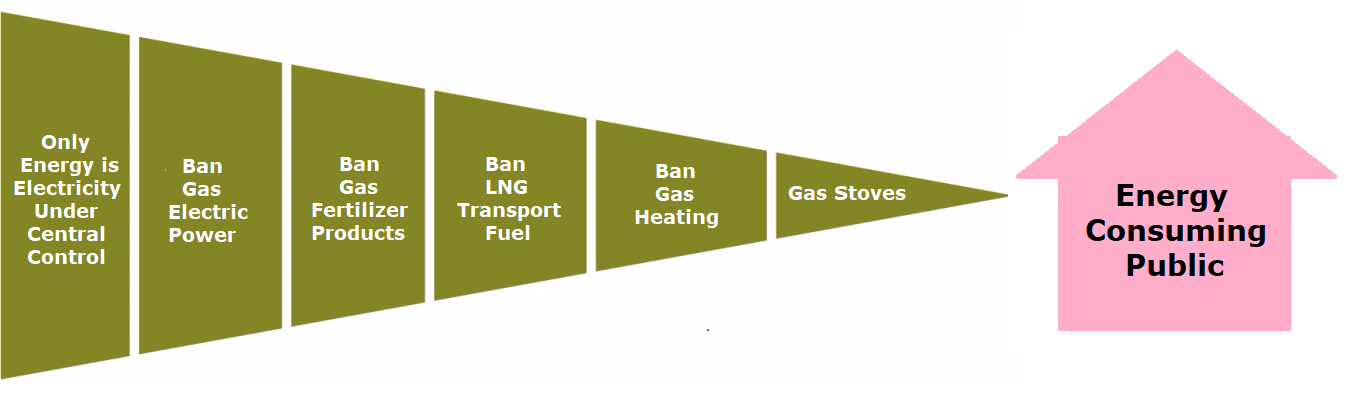
Gas stoves are the thin edge of the wedge.

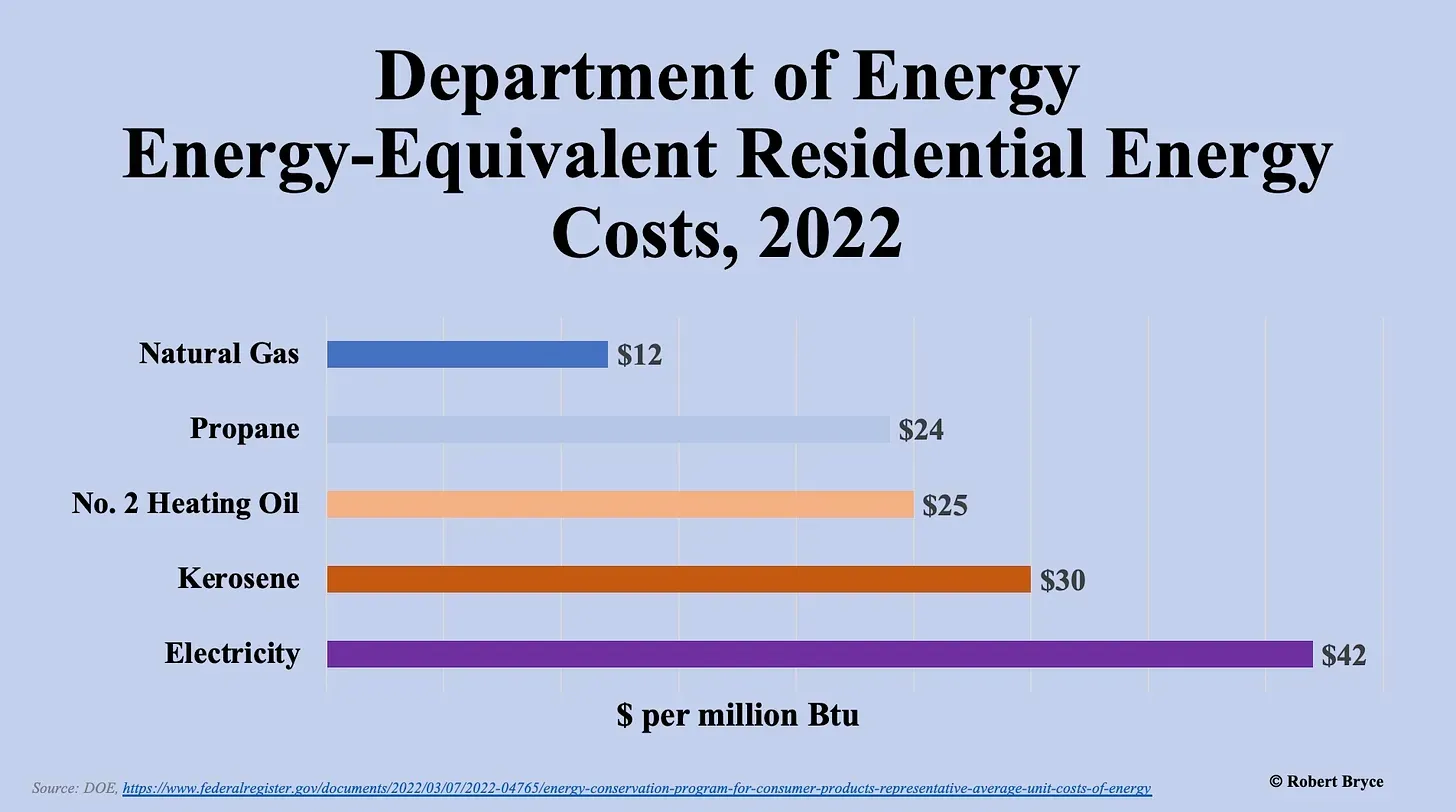
Megan K. Jacobson explains the fight and what’s at stake at msn A Washington State Revolt Against the Gas-Stove Grabbers.  Excerpts in italics with my bolds and added images.

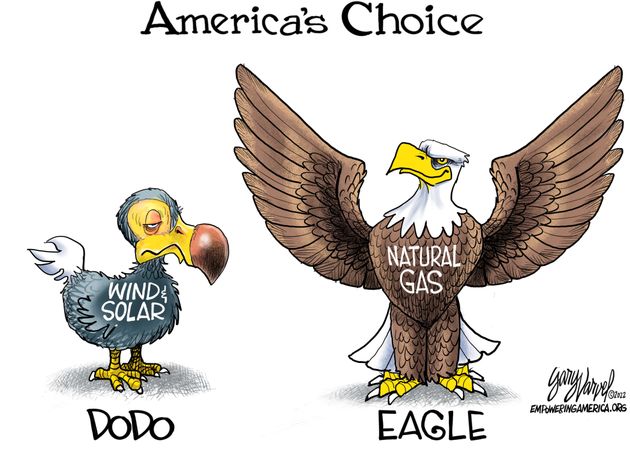
Environmentalists have waged a campaign against natural gas, but users of this efficient, low-emission fuel are fighting back. A wide range of industry groups are backing Washington state’s Initiative 2066 to protect the right to choose natural gas.

By 2030, Washington is supposed to reduce carbon emissions to 45% below 1990 levels—one of its many overlapping climate goals. The state’s most recent energy plan declares that the cheapest route to meeting Olympia’s climate targets is to switch many uses of oil and gas to electric sources. Last year the Building Code Council amended the state energy code to make it prohibitively costly to install gas appliances in new buildings. In March the Legislature passed a law allowing the state’s largest natural-gas and electricity utility, Puget Sound Energy, to pass the costs of going green onto consumers and mandating the utility files a plan “to achieve all cost-effective electrification of end uses currently served by natural gas.”

To the Washington Hospitality Association and the Building
Industry Association of Washington, Initiative 2066’s cosponsors,
this sounded like an economic wrecking ball.

Anthony Anton, CEO of the hospitality association, says 84% of the restaurateurs he represents rely on natural gas. Remodeling to go electric is a “massive cost at a time where operators just can’t afford it,” he says. Some say the quality of their product would suffer, as some cooking methods, such as stir-frying, are difficult to perform on lower-heat electrical stoves. Most of the association’s members are very small businesses with substantial debt from Covid lockdowns.

The building association worries the new energy code will raise the state’s already high housing costs, locking out potential buyers. The code requires that new buildings meet a certain environmental “score.” Without the points from an electric heat pump, a builder will have to make up the difference with other green measures that run between $15,000 and $20,000 in a single-family home. “Every time they raise the price $1,000, it prices out another 500 Washington families,” says Greg Lane, the association’s executive vice president.

Dozens of varied industry groups support Initiative 2066. Each has its own reasons. The Washington Denturist Association worries about the expense of switching from propane- or gas-based equipment and a lack of reliable power. Most members are small businesses and it’s a good path for immigrant dentists whose credentials don’t carry over to the U.S.

The Washington State Tree Fruit Association (of which my paternal grandfather’s company, Apple King, is a member) is concerned about rising costs of refrigeration to keep produce fresh. A sudden power outage could be catastrophic for the state’s apple industry. Trade regulations for its top two export markets require that fruit be constantly refrigerated at a specific temperature for as long as 90 days.

The state’s cheapest energy plan would almost double electricity demand in Washington by 2050, putting an unprecedented strain on the grid. The only real option is to increase wind and solar generation, since the state’s plentiful hydroelectric capacity can’t do more without potentially threatening salmon. Wind and solar tend to falter in Washington in the winter, when energy demand peaks.

Consumers would also suffer in Washington’s green utopia. Everything from a haircut to a ballgame would become more expensive as the price of electricity rises. Climate advocates argue that Washingtonians will recoup their costs over time thanks to efficiency gains. But a 2021 report from Home Innovation Labs estimates that recovering the cost of a heat-pump installation could take 47 to 49 years. It’s worse for existing gas customers. The Building Industry Association of Washington estimates that switching from natural gas to electricity in a single-family home would cost as much as $70,000. Heat pumps also tend to fail in the sort of frigid weather that hits rural Washington in winter.

Proponents of electrification insist that technology will improve over time. But if they’re really confident that green energy will be the best option for consumers and businesses, then Initiative 2066 is no threat. Washington voters should ask why climate advocates still see it as one.

More Political Ignorance on Energy Realities

Professor Ian Plimer schools a politico climate change “authority” in the above interview aired by Sky News Australia. For those preferring to read, a transcript is below lightly edited from the closed captions.

Climate Change authority Matt Kean, former Liberal treasurer of New South Wales, has lashed out at nuclear energy advocates, accusing them of being delay mongers trying to prevent renewables from succeeding. He labeled the push for nuclear and more gas as quote:

An illiberal drive to intervene in the market-led energy transition.”

Also he went on to say that the delay mongers have latched onto nuclear power despite the overwhelming evidence that it can only drive up energy bills, can only be more expensive and can only take too long to build this. In a cost of living crisis it seems to me that people calling for gas to be included in the capacity investment scheme are trying to stop renewables. Ian, I’m very very interested in your response to Matt K’s claims there.

Well this is just sheer stupidity. Mr Kean should know that when Finland put in its reactors, their latest reactors, the cost of electricity went down. And both the retailer and the wholesaler also had lower costs. So we have evidence very recently. The Page Research Center recently did a study on the cost of energy. This was done by Gerard Holland and he looked at solar and wind, he looked at nuclear, looked at gas and at coal.

By far the most expensive energy in Australia is solar and wind. This is considering the total costs, the land use changes, putting in the new power lines and so forth. Nuclear is quite cheap compared with that, gas is also cheap, as is coal. Coal’s the cheapest and that’s because we already have the infrastructure for coal.

Now what Mr. Kean doesn’t say is that solar and wind are not reliable, whereas nuclear, gas and coal are reliable. He also doesn’t say that solar and wind have a very short life less than 20 years. Whereas nuclear is at least 60 years for a nuclear power plant; more than 40 years for gas; more than 50 years for coal.

Moreover, he doesn’t say that our future demands for energy are going to increase enormously. We’re already using 10% of energy for data centers and with AI it’s going to be a lot higher. His real concern is that the practical economics of the nuclear lobby groups are starting to frighten renewables promoters; the practical economics of the gas groups are starting to frighten the wind and solar people.

These are the cheapest and most reliable and best forms of energy we can have in a country like Australia. And yet we’ve got all these foreign corporations who are running the solar and running the wind projects who are lining up for for their subsidies. And the subsidies make the renewable energy viable and profitable. The subsidies must keep getting renewed and he’s getting worried that that the whistle is going to be blown on this.

Worldwide, nuclear yields slightly more electricity than renewables.

We see around the world that we can have cheap reliable energy for very long periods of time from Nuclear. So I recommend that viewers look at Gerard Holland’s report from the Page Research Center. He aired these findings at the AIC conference on Tuesday, They show that we are going down the wrong path. We’ve got far too many vested interests whispering in Mr Kean’s ear. He doesn’t understand the fundamentals of energy generation and he doesn’t understand the fundamental weaknesses of solo and wind.

And I do love his comment about the illiberal drive to intervene in the market-led energy transition. When there has been so much market manipulation like the subsidies. It’s just wishful thinking to pretend that renewables are being led by the market, as though it were purely organic.

I’ve got an early Lefty losing it for you. It’s from the New Zealand greens:
Coal, don’t dig it, leave it on the ground, get with it.

What do you say to the New Zealand greens Professor Plimer. I think they’ve been taking some of Kamala Harris scripts and talking from them. I have no idea what they’re talking about. But we do know that the New Zealand coals on the west coast of South Island are exceptionally clean with very high calorific value, and very low Ash, They are prized coals.

New Zealand does have energy from other sources; from oil in and gas in the Taranaki Basin and some geothermal energy. But the New Zealand coals are some of the best in the world I have no idea what they’re trying to say except that perhaps they they want New Zealand to become even more backward.

German Fire Station Razed by EV Fire Truck Fire

Commentary from Anthony Watts and Friends:

Our second climate news item is from a wonderfully titled media outlet called motor biscuit: Electric truck fire burns down brand new German fire station. The fire station in Stadtallendorf is really new, in fact they opened its bay doors less than one year ago to accommodate 10 fire engines and many firefighters. However a tragic fire destroyed the the fire station despite its fire fighting purposes. According to Euro News the fire originated with quote an emergency vehicle belonging to the fire department which contained lithium ion batteries and an external power connection. Unfortunately the electric emergencies vehicle blaze destroyed at least 10 fire truck models and caused around 25 million euros in damage.

Now firefighters’ woes and electric vehicles aren’t a new phenomenon. Departments in the United States have different tactics for battling EV battery fires. Ideally First Responders can suppress EV fires with mass quantities of water. However some firefighters claim that depending on the circumstances it’s  best to cordon off the area and allow the EV to burn and eventually burn itself out.

Well, allowing a fire to burn itself out in this case took out 10 useful life-saving fire trucks and caused 25 million Euros in damage. Where where to start really with the idiocy of this particular story? For one thing, with all we know about fires from these things, having an EV fire truck and having it plugged into your station. And then I guess firefighters just think, well we’re firefighters so we’re immune, so no fire alarms, no fire suppression system. We don’t need fire alarms, we have fire experts right there exactly with badges. So the first truck goes up in flames. Are the other trucks all just sort of compacted around it? Were none of them far enough away to go over and drive them out of the garage as a as a brave firefighter? Was nobody in the firehouse despite the fact that all the trucks were there?

So you’ve got the error with no smoke alarms evidently no fire suppression system or at least not one geared to fight electric vehicle fires, which should tell you something right there. You have plugged an EV vehicle indoors in closed space next to vehicles that I presume have diesel in them. It’s a Murphy’s disaster waiting to happen. As I’m fond of saying, and it’s very apt in this case: the stupid it really burns.

I would like to think that the first time someone dies because of an electric vehicle fire and it happens multiple times again, the consumer product safety commission gets involved and says: you know what these aren’t safe on the roads these aren’t safe in your house. It’s time to withdraw them until we fix this problem.

But I would be wrong about that. Either people are that stupid or they’re just into the climate scare narrative and the need to do something even if it kills your neighbors or yourself. You know in the 1980s, the consumer product safety commission banned lawn darts pretty quickly because throwing lawn darts had killed a few people. But ebikes for example have killed a lot more, just in New York City alone killed a bunch and they’re still on the market.

Why They Lie About Nuclear Power

Cliff Reece reports on the reasons for anti-nuclear distortions in his Spectator Australia article  Australia is already a successful nuclear nation.  Excerpts in italics with my bolds and added images. H/T John Ray

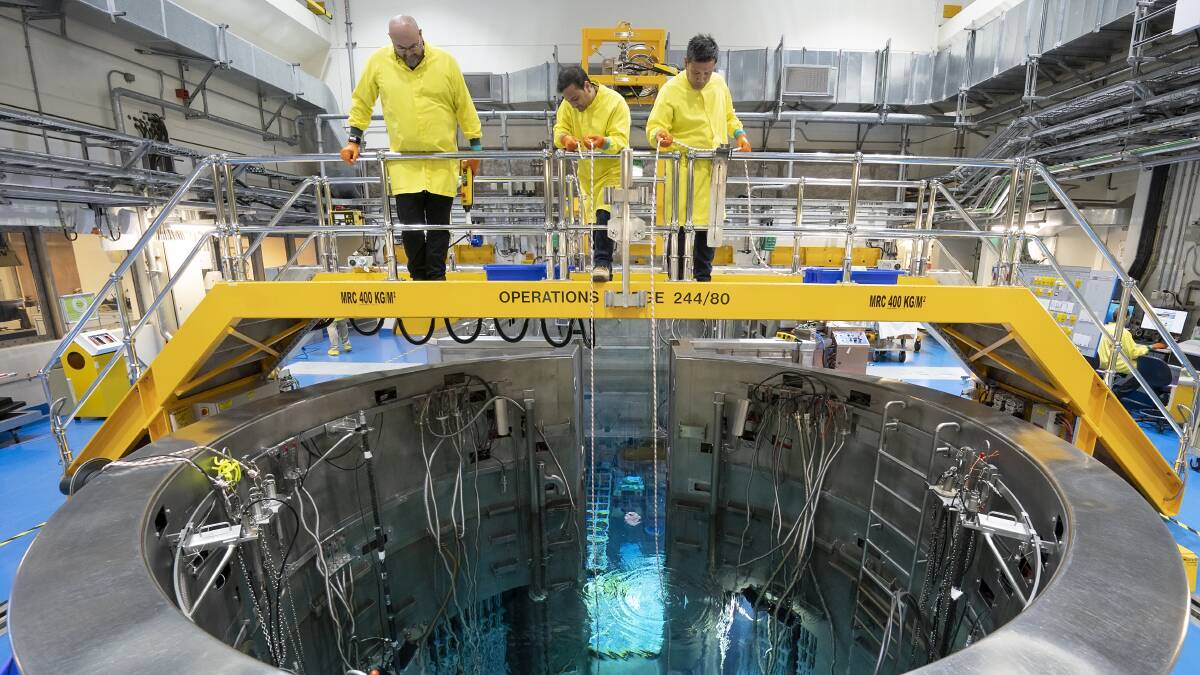
ANSTO – the Australian Nuclear Science and Technology Organisation – recently celebrated 70 years since Australia’s nuclear age began in Sydney.  ANSTO is the home of Australia’s most significant landmark and national infrastructure for research. Thousands of scientists from industry and academia benefit from gaining access to state-of-the-art instruments every year.

Thousands of visitors, including many schoolchildren, have safely toured the site at Lucas Heights, which is located 40km southwest of the Sydney CBD. They had the opportunity to learn a great deal about nuclear science as a result of that experience.

I recently became one of those visitors when I was invited to a 3-hour escorted tour of their facilities. As former Executive Director of the National Safety Council of Australia (NSW/ACT) I was particularly interested in their WHS procedures as well as the management of waste, as the latter could impact on the wider community if poorly managed.

What impressed me most was seeing just how advanced we are as a nuclear nation. Despite being relatively small in scale compared to a full civil nuclear energy plant, it has much the same range of issues and complexities to deal with. And it certainly appears to successfully do so at both their Sydney and Melbourne campuses.

The obvious question is, why is the Albanese Labor-Greens government, together with the Teals, opposed to extending our obvious expertise into producing nuclear energy on a commercial scale, as proposed by Opposition Leader Peter Dutton’s LNP?
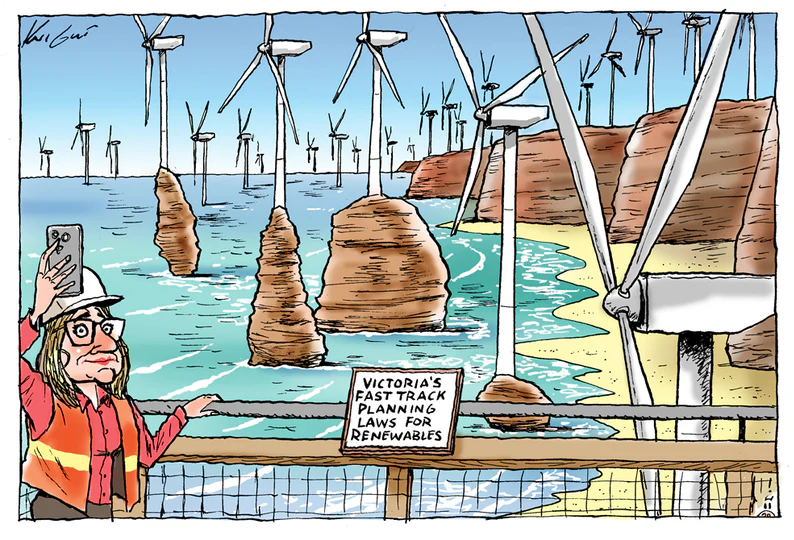
As you’d expect, there are a number of reasons for both their reluctance to accept nuclear despite it being cheap, reliable and emissions-free and their manic obsession with unreliable, hugely expensive, and environmentally/socially disastrous wind, solar, and battery renewables.

Political factors play a major part. The Greens and Teals are
directly opposed to nuclear, but for different reasons.

The Greens have shown beyond doubt that they want to disrupt society across as many issues as possible. They are doing this on a regular basis – even appearing to stand with crowds that hold sympathies toward recognised terrorist groups.

People who think the Greens are still a well-meaning environmental group like they were under Bob Brown are fooling themselves – they are not!

In the case of the Teals, they started life as political entities via funding from Climate 200, whose primary financial supporters are deeply entrenched in the lucrative and heavily taxpayer-subsidised renewables industry.  The Teals are ignorant pawns in the high-stakes game of climate change and the hysterical pursuit of ‘saving the planet’.

There is a lot of money involved in this issue and ordinary Australians are being played by the so-called elites, including left-wing mainstream media such as the ABC.

A good example is the almost total lack of media reporting on the very recent and hugely important US Department of Energy’s Nuclear Lift-off Report that includes significant findings:

The system cost of electricity with nuclear and renewables combination is 30 per cent lower than just renewables.

The jobs from nuclear are 50 per cent higher paying than solar or wind.

⁠⁠Nuclear provides the lowest emissions, is the most reliable form of energy production, has the lowest land use requirement, and lowest material usage.

The report also outlines a pathway for the USA to reach their ambition to triple their nuclear energy capacity by 2050, in direct contradiction of our government’s refusal to even legalise nuclear energy.

It also directly contradicts the policy position of the Albanese government.  The report debunks repeated claims that nuclear is ‘too expensive’ and will ‘increase power bills’ and outlines various other benefits of nuclear energy.

The DoE report could not disagree more with Australian anti-nuclear campaigners and the Albanese Labor-Greens government, Teals, and other sources of ignorance.

Their report also completely debunks the much-criticised report produced by CSIRO GenCost that our Minister for Climate Change and Energy, Chris Bowen, refers to constantly as his renewables crusade ‘Bible’.   This is despite the fact that the CSIRO GenCost report totally failed to accurately estimate the likely total cost of renewables compared to nuclear.

It also used in its modelling a 30-year life for a nuclear plant instead of the far more accurate 80 years. This created a false financial outcome by not comparing the total cost of nuclear with renewables over an 80-year period.

It also totally neglected the fact that waste management costs for renewables will be many times greater than for nuclear. There will be the need to replace wind turbines and solar panels three or four times during an 80-year period.  And who is going to be responsible for dismantling and disposing of the millions of components – some of which have toxic ingredients?

Many people, including some of our top scientists and engineers, believe that the CSIRO GenCost report was simply designed to support the Albanese government’s narrative as depicted in their childish three-eyed fish media splash some months ago.

‘Reckless’: Labor’s nuclear memes ‘undermine AUKUS subs deal’ Labor MPs have been accused of undermining the AUKUS submarine deal with ‘reckless’ anti-nuclear propaganda, as the Coalition calls on Anthony Albanese to rule out a scare campaign. Source: The Courier Mail

We need a government that protects our borders, controls immigration, decreases our cost-of-living, and helps young people to buy their own homes.  It’s becoming clearer on a daily basis that none of that will happen under the current Labor-Greens government.

One major impediment to reducing living expenses is the rising cost of energy.  Renewables alone will continue to increase the cost of electricity and that will in turn increase the prices paid at our shops and for commercial or residential electricity usage.

Nuclear energy will add to the range of resources available to us – as it has done in many other countries. Nuclear power plants operate in 32 countries and generate about a tenth of the world’s electricity. Most are in Europe, North America, and East Asia. The United States is the largest producer of nuclear power, while France has the largest share of electricity generated by nuclear power, at about 70 per cent.

The only way we are going to catch up with the rest of the world in relation to nuclear energy production is to replace our current government with Peter Dutton’s Liberal-National Coalition.  That might be hard to accept for some people – but it’s an undeniable fact.


West Entraps Itself, China Amused

Joel Kotkin explains in his National Post article Western nations cripple their economies with green initiatives while China and others laugh.  Excerpts in italics with my bolds and added images.

Despite massive subsidies and world forums,
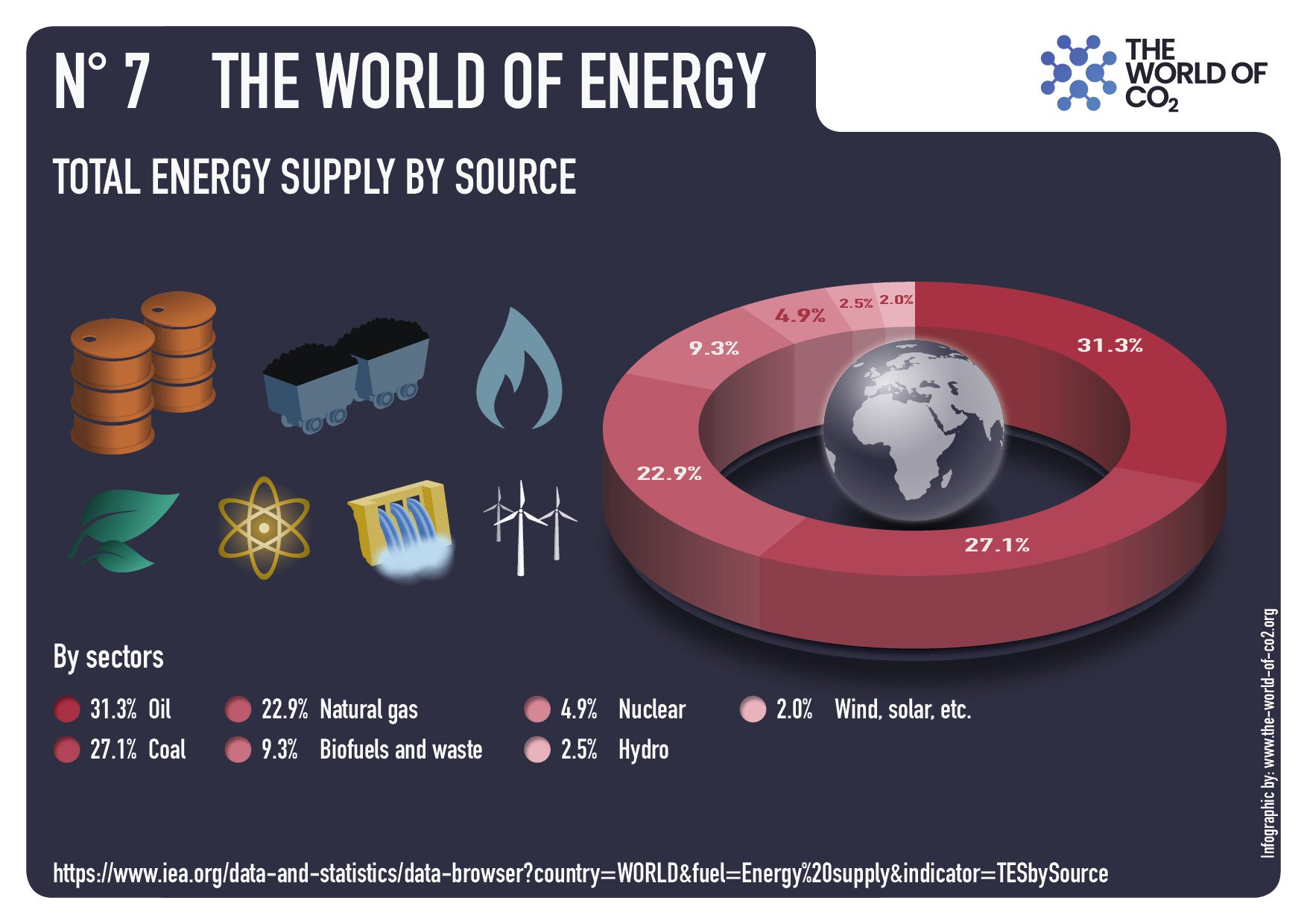
green power still only represents one-fifth of global energy

North America, with its vast resources, may be in a position to save the economies of the west. But governments on both sides of the border seem more concerned with green virtue signaling than actually finding a workable approach to carbon emissions that does not undermine our economies and ability to defend ourselves.

The prevailing notion, both in Ottawa and D.C., is that our countries should ignore our resources, and how best to use them, in order to fulfill a messianic vision of massive, rapid emissions reduction.

Canada’s proposed carbon tax, pushed through media at government expense, and zealously promoted by Mark Carney, who thinks mass decarbonization, as epitomized by Europe, provides the road map to prosperity, despite the continent’s consistent economic lethargy.This approach has also poisoned politics as not all provinces are affected equally by the initiative. The institution of the carbon tax and other measures by government and through the relentless pressure of green non-profits, to get a 40 per cent emissions cut by 2030 may be the toast of investment bankers betting on cashing in on forced changes. But for taxpayers, the impact will vary by province. Fossil fuels account for five per cent of Canada’s overall GDP but four times as much in Calgary, Newfoundland and Labrador.

However, as much this appeals to academics and wealth
pearl-clutchers in cities, it translates into higher prices than normal.

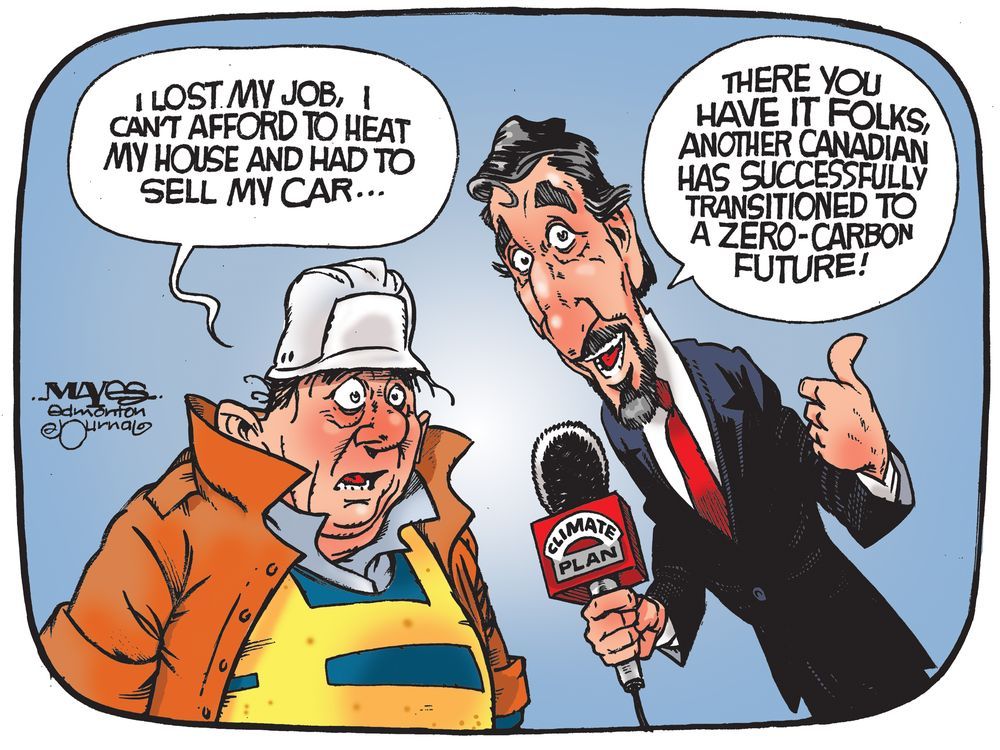
As the NDP’s Jagmeet Singh suggested, it places unfair “burdens” on the working class, one reason for his opposition to the tax. Worse still, the biggest green targets of what climatistas label as “industrial carbon” could devastate those same NDP voters — blue collar workers in mining, like manufacturing, logistics and agriculture.

Canada does not need another way to slow its economy. One recent estimate suggests that the proposed $170 a ton proposal would slice 1.8 per cent from the country’s already anemic GDP and cost upwards of 185,000 net jobs. Even Liberals admit something close to a 1 per cent decline. Some may see these draconian attempts to wipe out fossil fuels as the Lord’s work, but on the ground level it seems closer to class warfare.
Trudeau and his supports insist these policies are critical for saving the planet. Yet, attempts to follow such approaches elsewhere have not ended well. In Europe, most obviously Germany, as well as California, the shift to “renewable energy” has led, as it usually does, to high prices that already are driving German industry off the continent. Although not nearly as well-endowed with energy as North America, the climate lobby in Europe makes sure to throttle anything, such as offshore oil in the UK — in pursuit of green puritanism.

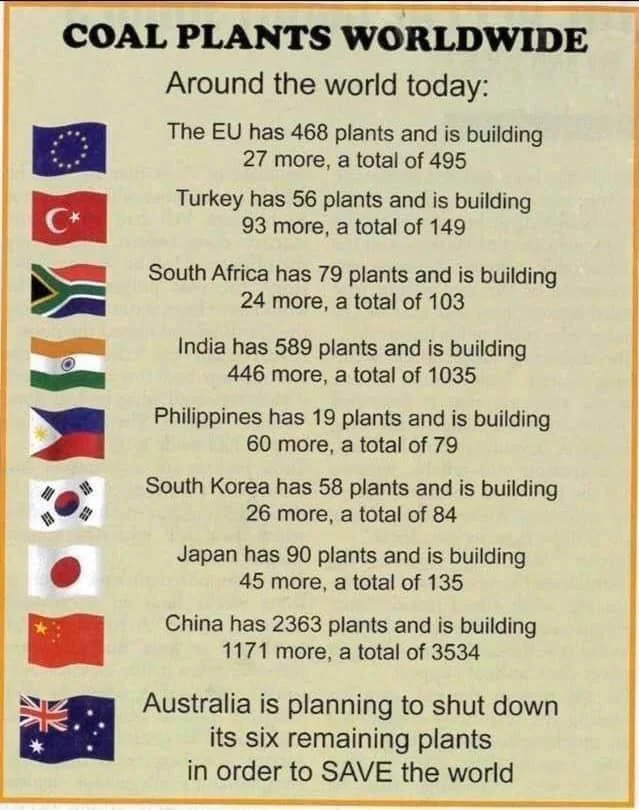
There’s something delusional in many of these initiatives. A key mistake is the common green assertion that fossil fuels are becoming obsolete and should be wiped out for the benefit of fitting a new economy. Yet, in the real world, despite billions in subsidies for “green power,” fossil fuels still represent roughly four fifths of global energy generation, just as it did twenty years ago. This is after expenditures of over one trillion were spent on solar and wind. The West has been reducing per capita emissions for years, but this is utterly subsumed by growth in developing countries, notably China, which not only buys huge amounts of natural gas but continues to open new coal-fired plants at a rapid rate.

North Americans be forewarned that in imposing burdens on themselves, but not competitors, green governments are essentially guaranteeing their own decline. Already in the EU, nearly a million industrial jobs have been lost over the past few years, with investment shifting to countries like China and India, which freely use coal and fossil fuels to keep costs down.

Britain’s path may give the starkest preview of the future Biden and Trudeau have in mind for us. Since 1990 the manufacturing sector’s share of GDP has dropped roughly 50 per cent along with several million jobs. This parallels a two thirds drop in UK energy production, while consumption has fallen by only one third. Three decades ago, a net energy exporter, the UK now increasingly depends on imports from the Middle East and other unstable regions.

The winner here is clearly China, a country that emits more GHG than all developed countries put together. Ironically, carbon reduction policies fit brilliantly into its strategy to use its coal and other fossil fuel energy to power their takeover of the “green economy.” China has placed itself in the catbird’s seat on renewable energy, including utter domination of solar panels and electric vehicles. China already produces twice as many EVs as the US and the EU combined, and seeks to leverage its total domination of the solar-panel industry — its battery capacity is now roughly four times ours. China also exercises effective control of the requisite rare earth minerals and the technologies used to process them.

As the west’s own overpriced EVs sit on lots, China plays us for utter fools as we undermine our own industrial economy. The forced march to EV will be particularly tough on the 125,000 who work in Canada’s car factories. Manufacturing and mining, much of it energy-related, represent, along with real estate, two of the country’s largest industries. Under the current circumstances, they are heading for a spectacular fall. Overall, the EV industry in the U.S. uses 30 per cent less domestic labor than traditional gasoline car manufacturing, and under current circumstances can only hope for some basic assembly work using Chinese components.

These policies will affect every industry and consumer as cars and things like heaters are all forced to electrify. Britain’s shift to EVs is projected to double the demand for electricity by 2040, and its government is already looking to ban the use of home chargers during peak hours. By 2050 in California, state consultants estimate total energy demand will skyrocket, by some estimates rising 60 to 90 per cent. Not surprisingly, the state will face “acute electricity shortages” over the coming decade, according to one recent analysis.

Rising demands for electricity for artificial intelligence seems likely to add to this burden. Microsoft alone is opening a new data centre globally every three days. These power-hungry operations are expected to grow from 4.5 per cent of energy demand to 10 per cent by 2035. Artificial intelligence and data center demand are leading to massive expansions in projected energy use around the world at a time of restricted supply. Google, renowned for its green virtue signaling, has boosted its own emissions by 50 per cent since 2019.

Ultimately, the oligarchs will likely get their juice from sources like decommissioned nuclear energy, while the average family will take the economic hit in order to fulfill the agenda pushed by the likes of Steve Jobs’ widow, Lauren, Michael Bloomberg, the Rockefellers, Jeff Bezos and venture capitalist John Doerr. These, and other oligarchic allies, are waging a sophisticated and well-financed media and institutional campaign to catastrophize the climate issue as a way to ban gas stoves, stop new LNG facilities, and crack down on plastics.

Finally, there is the issue of security, particularly relevant in an age of declining western power. The new green mandates, if adopted, presage yet another force to further reduce the industrial prowess of western countries, while driving more industries to China, India, and other countries who produce their goods with dirtier fuels and develop resources with less environmental care. At the same time, third world countries, for the most part, are not embracing “net zero,” as it is totally infeasible for them and will likely resist western lectures on climate policy.

All of this is occurring as a concert of ugly energy producers — Russia, Iran, and Venezuela — press their advantage on western countries. They stand to benefit from continued de-industrialization as one way to further weaken the military capacity of the west. Taking away North American liquified natural gas from Europe simply makes the continent more dependent on such malefactors as Qatar, a primary backer of terrorists and their supporters, and may lead the west, hat in hand, to beg from even worse regimes, like Russia and Iran.

The good news — while green virtue-signaling may appeal to Trudeau, Biden, and Harris — these policies could be impacted by political realities. Worried about voters in industrial states like Michigan and Pennsylvania, Harris, even as she embraces environmental bromides, has backed away from EV mandates and opposition to fracking, albeit with dubious credibility. Yet, perhaps she realizes, or those around her do, that these policies do not sell well compared to promoting more affordable and reliable energy. Trudeau, if he wants to remain relevant, may similarly need to flip the script if he hopes to forestall an utter political defeat.

Legal Fight to Stop EPA Rule Closing Power Plants

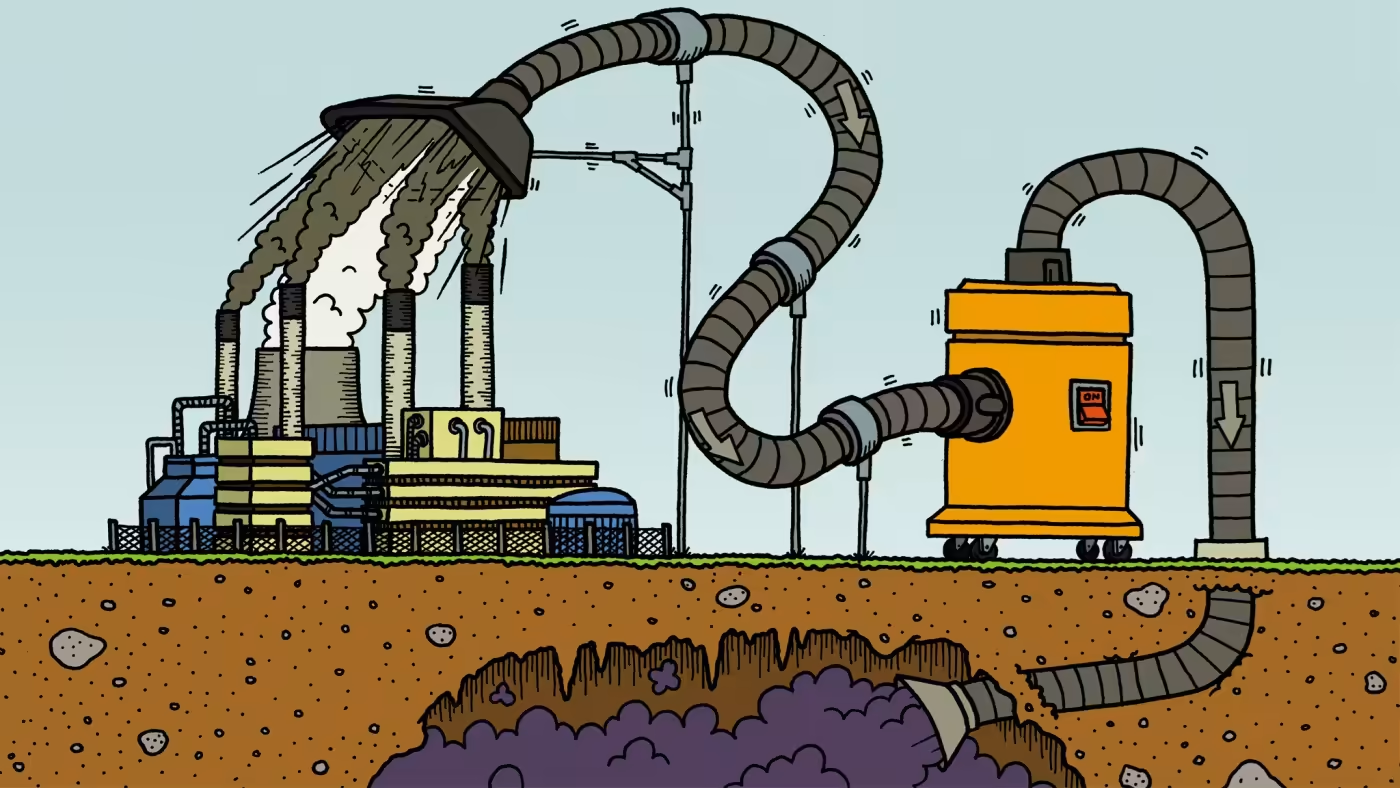
Update on ominous overreach by Biden/Harris regime comes from Just the News  While the SCOTUS denies request to block EPA power plant rule, challengers vow to continue fight.  As explained below, EPA intends to require expensive and impractical CO2 Capture and Storage on all power plants using carbon fuels, thereby forcing shutdowns. Excerpts in italics with my bolds and added images,

Analysts say that if the rule is implemented, more than 5 million
people could experience blackouts, some lasting for 41 hours.

The Supreme Court ruled against a bid to block the EPA’s power plant rule while legal challenges make their way through the courts, but West Virginia, which is leading the coalition of states challenging the rule, vows the fight isn’t over. 

In a brief order, Justices Brett Kavanaugh and Neil Gorsuch said that the applicants “have shown a strong likelihood of success on the merits as to at least some of the challenges to the” EPA’s rule.

However, the justices explained, the stay wasn’t needed because compliance requirements wouldn’t begin until June 2025, which means the applicants wouldn’t “suffer irreparable harm” before the Court of Appeals for the D.C. Circuit decides the merits of the case. Injunctive relief, such as sought here, requires clear and convincing proof that the harm be immediate and irreparable.

The lower court is expediting the case, the justices noted, meaning it would be resolved in the court’s current term. Afterward, the case would still have time to return to the Supreme Court, if it’s warranted. 

The EPA rule, which was finalized in April, requires that coal-fired power plants be fitted with carbon capture technology controlling 90% of their carbon dioxide emissions by 2039, and new gas-fired power plants will need to do the same starting in 2035, depending on the amount of runtime they have.

Energy analysts Isaac Orr and Mitch Rolling revealed that the EPA failed to do a proper analysis of the impacts of the rule, and if implemented, over 5 million people will experience blackouts, some lasting for 41 hours. While the EPA has defended the rule and argues that carbon capture is “well proven,” its own modeling showed it expected only one coal plant and no gas plants to be fitted with the technology as far out as 2055.

Two dozen states led by West Virginia filed a lawsuit against the EPA in May, arguing that the agency exceeded its authority with the rule. Utilities and industry groups also filed legal challenges to the rule. In July, the U.S. Court of Appeals for the D.C. Circuit denied the parties’ requests to block the rules while the courts considered the challenges, and the court ruled the applicants wouldn’t succeed on the merits of their case.

In court filings, the EPA noted that the lower court ruled the applicants are unlikely to succeed in arguing the agency exceeded its authority, and it stood by the rule and its carbon capture requirements, arguing that the technology has been “adequately demonstrated.”

West Virginia Attorney General Patrick Morrisey said in a
statement on the high court’s ruling that the fight isn’t over.

“This is not the end of this case: we will continue to fight through the merits phase and prove this rule strips the states of important discretion while forcing plants to use technologies that don’t work in the real world,” Morrisey said.

In 2022, the Supreme Court had sided with West Virginia and other states in a challenge to the Obama-era “Clean Power Plan.” Morrisey said that the high court had made clear limits to what the EPA can do, and the Biden administration’s “green new deal agenda” is ignoring those limits.

“This rule is yet another attempt of unelected bureaucrats to push something the law doesn’t allow,” Morrisey said.

Indiana, Alabama, Alaska, Arkansas, Florida, Georgia, Idaho, Iowa, Kentucky, Louisiana, Mississippi, Missouri, Montana, Nebraska, New Hampshire, North Dakota, Oklahoma, South Carolina, South Dakota, Tennessee, Texas, Utah, Virginia, and Wyoming joined the application to the Supreme Court.

Harris Not Pro-Choice for Cars or Appliances

Kenin M Spivak warns us in his Real Clear Energy article For Harris Pro-Choice Does Not Include Cars and Appliances.  Excerpts in italics with my bolds and added images.

Kamala Harris wants to deprive Americans of the right to choose cars and household appliances. When she claims, as she did at a rally last week in Michigan, that “I will never tell you what kind of car you have to drive” she is guilty of two of the Democrats’ most reviled offenses, malinformation (failure to contextualize a statement) and misinformation (lying).

Combating climate by changing infrastructure, consumer goods,
and lifestyle is one of Harris’s core values.

As recently as this year, the Biden-Harris administration continued to issue regulations and battle in court for the right to reduce consumer options for automobiles and home appliances. Harris favors consumers having choices, just so long as those choices are limited to those she pre-approves.

Then Senator Harris co-sponsored the Senate version of Alexandira Ocasio-Cortez’ Green New Deal. Harris believed that mandating priorities and choices to limit emissions was so important that she advocated ending the filibuster to do so. Harris also co-sponsored the Zero Admissions Vehicles Act to require that all cars be EVs, or otherwise zero-emissions, by 2040. When she ran for president in 2019, she issued a plan to phase out new gas-powered cars even sooner – by 2035.

In April 2023, the Biden-Harris administration proposed rules that would ensure that EVs accounted for about 67 percent of all new car sales by 2032 (just eight years from now). After objections from nearly every sector and region of the country, the EPA issued final rules on March 20 of this year that require from 31 percent to 44 percent of new cars, SUVs, and pickup trucks manufactured in 2027 be EVs, with the final percentage to be based on emissions from other vehicles. The EPA rules require that by 2032, EVs account for at least 56 percent of new car sales, and at least another 13 percent be hybrids, leaving not more than 31% as gas powered.

In 2023, EVs accounted for only 7.6 percent of new car sales. That is because, despite subsidies and massive pressure from government and the Left, consumers dislike EVs. EVs have limited range, particularly in the cold. They take a long time to charge, and it is difficult for those who live in apartments to do so. They are costly. EVs maynot even be particularly good for the environment once the electrical grid and generating capacity are expanded to support mandates, and disposal of lithium ion batteries is considered. It also is unlikely the U.S. could have sufficient generating capacity without brownouts, blackouts, and other conservation measures.

EV mandates imperil national security by replacing fossil fuels, in which the U.S. is the world leader, with minerals found in China. China also is the low cost manufacturer of EVs, meaning that EV mandates will send American jobs and profits to China.

Energy expert Mark P. Mills warns that “All the world’s mines, both currently operating and planned, can supply only a small fraction of the… increase in various minerals that will be needed to meet the wildly ambitious EV goals,” while the UN Trade Development Agency advises there will be considerable shortages in lithium, cobalt, and copper if EV requirements are not slowed.

The strong disfavor in which consumers hold EVs is seen in two numbers. As Fortune observed, “no one wants to buy used EVs,” destroying resale value, and second, EVs are the least likely cars to be stolen. Numerous major automobile manufacturers are cutting EV production targets, and earlier this year Hertz announced that it was disposing of a third of its almost new EV fleet. The 2024 Deloitte Global Automotive Consumer Study found that EVs were never very popular among consumers, and familiarity is breeding contempt, with a 9% increase in the popularity of gas powered cars. A Gallup survey in April found that among Democrats who don’t yet own an EV, the percent saying they would never purchase an EV rose 10 points, compared to a year ago.

Harris not only wants to deprive Americans of the opportunity to choose gas-powered cars and most hybrids, but she also supports the Green New Deal’s goal of prohibiting sales of home appliances that do not meet draconian emissions standards. To date, the Biden-Harris administration has sought to take off the market most home dishwashersheatersair conditioners, and gas stoves. A federal appeals court struck down the Department of Energy’s action targeting dishwashers.

In May, the House passed the Hands Off Our Home Appliances Act on a bipartisan basis. That bill is intended to restrain the administration from banning home appliances that run on natural gas.

Next time Kamala Harris claims that she won’t tell you what to buy,
just keep in mind that she intends to eliminate most options,
leaving you with a Hobson’s choice of poorly performing alternatives.


Bureaucrats Against Democracy

David Blackmon provides the background in his Daily Caller article Bureaucrats Worry Democracy Will Get In The Way Of Their Climate Agenda.  As the above image suggests some of those in power have not shied away from acting in defiance of democratic norms. By imposing climate policies and regulations they have diminished the livelihoods and freedoms of the public they supposedly serve. Excerpts in italics with my bolds and added images.

I have frequently written over the last several years that the agenda of the climate-alarm lobby in the western world is not consistent with the maintenance of democratic forms of government.

Governments maintained by free elections, the free flow of communications and other democratic institutions are not able to engage in the kinds of long-term central planning exercises required to force a transition from one form of energy and transportation systems to completely different ones.

Why? Because once the negative impacts of vastly higher prices for all forms of energy begin to impact the masses, the masses in such democratic societies are going to rebel, first at the ballot box and if that is not allowed by the elites to work, then by more aggressive means.

This is not a problem for authoritarian or totalitarian forms of government, like those in Saudi Arabia, China and Russia, where long-term central planning projects invoking government control of the means of production is a long-ingrained way of life. If the people revolt, then the crackdowns are bound to come.

This societal dynamic is a simple reality of life that the pushers of the climate alarm narrative and forced energy transition in western societies have been loath to admit. But, in recent days, two key figures who have pushed the climate alarm narrative in both the United States and Canada have agreed with my thesis in public remarks.

In so doing, they are uttering the quiet part about
the real agenda of climate alarmism out loud.

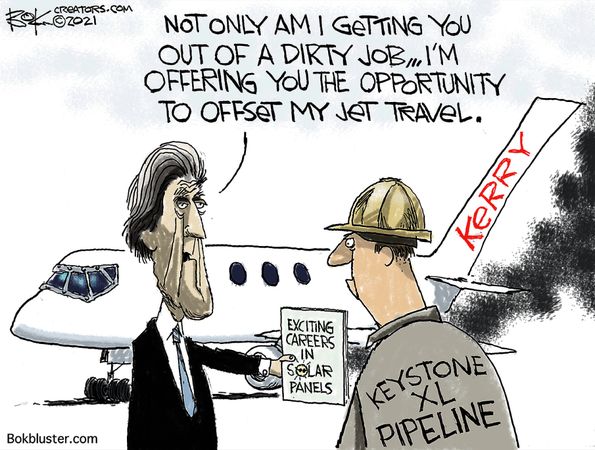
Last week, former Obama Secretary of State and Biden climate czar John Kerry made remarks about the “problem” posed by the First Amendment to the U.S. Constitution that should make every American’s skin crawl. Speaking about the inability of the federal government to stamp out what it believes to be misinformation on big social media platforms, Kerry said: “Our First Amendment stands as a major block to the ability to be able to just, you know, hammer it out of existence,” adding, “I think democracies are, are very challenged right now and have not proven they can move fast enough or big enough to deal with the challenges that we are facing.”

Never mind that the U.S. government has long been the most focused purveyor of disinformation and misinformation in our society, Kerry wants to stop the free flow of information on the Internet.

The most obvious targets are Elon Musk and X, which is essentially the only big social media platform that does not willingly submit to the government’s demands for censoring speech.

Kerry’s desired solution is for Democrats to “win the ground, win the right to govern by hopefully having, you know, winning enough votes that you’re free to be able to, to, implement change.” The change desired by Kerry and Vice President Kamala Harris and other prominent Democrats is to obtain enough power in Congress and the presidency to revoke the Senate filibuster, pack the Supreme Court, enact the economically ruinous Green New Deal, and do it all before the public has any opportunity to rebel.

Not to be outdone by Kerry, Deputy Prime Minister Chrystia Freeland of Canada, who is a longtime member of the board of trustees of the World Economic Forum, was quoted Monday as saying: “Our shrinking glaciers, and our warming oceans, are asking us wordlessly but emphatically, if democratic societies can rise to the existential challenge of climate change.

It should come as no surprise to anyone that the central governments of both Canada and the United States have moved in increasingly authoritarian directions under their current leadership, both of which have used the climate-alarm narrative as justification. This move was widely predicted once the utility of the COVID-19 pandemic to rationalize government censorship and restrictions of individual liberties began to fade in 2021.

Two sides of the same coin.

Frustrated by their perceived need to move even faster to restrict freedoms and destroy democratic levers of public response to their actions, these zealots are now discarding their soft talking points in favor of more aggressive messaging.

This new willingness to say the quiet part out loud
should truly alarm anyone who values their freedoms.

Dearth of Green Jobs in UK

Chris Morrison provides the analysis in his Daily Sceptic article ONS Reveals the Pitiful Number of New Green Jobs Being Created in the U.K. Economy.  Excerpts in italics with my bolds and added images.

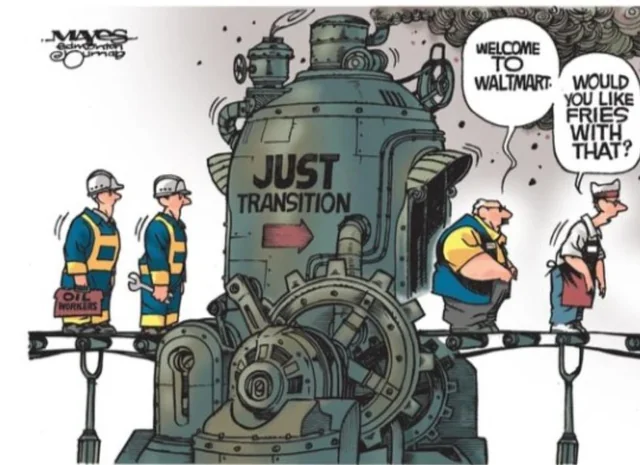
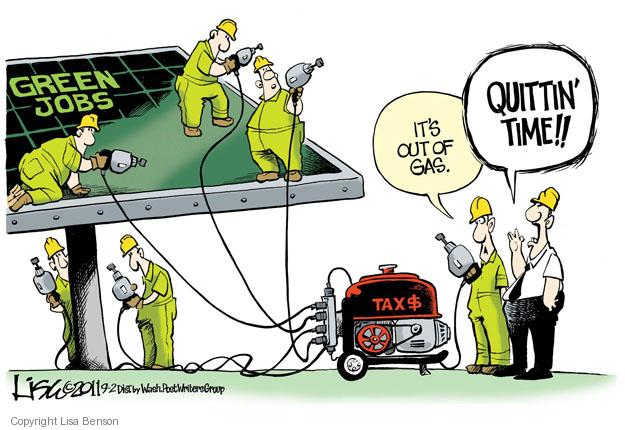
The problem with the green U.K. economy, and its associated destruction of the hydrocarbon environment, is that there are very few jobs being created. The few remaining ‘workers’ in the ruling Labour party are starting to rumble all the luxury boondoggles that are set to further decimate well-paid jobs in their communities. The figures compiled by the Office for National Statistics (ONS), trying to estimate the actual number of green jobs, are always a highly creative hoot, and the latest batch are no exception. Many jobs identified are simply displacement activity, with one repair or maintenance occupation taking over from another. Around 6% of the total are to be found in ‘environmental charities’, an interesting way to describe elite billionaire political funding to push the Net Zero fantasy. Such is the seeming desperation to rustle up a green job, the ONS even includes repairing home appliances, controlling forest fires and separating hydrogen by carbon dioxide-producing electrolysis.

The latest ‘estimates’ from the ONS cover 2021 and 2022, and they are said to show an increase in both years. But as the graph below reveals, the rises are pitiful over a decade, and the 2022 estimate of 639,000 is less than 2% of jobs in the economy as a whole.

As can be seen, environmental charities employ 40,000 people, almost as many as the 47,000 that work in renewable energy. But the charities figure does not include all those make-work jobs in environmental consultancy and education or what is described as in-house environmental activities. If all the displacement, invented or re-badged jobs in repair, electric vehicles, waste disposal, water treatment, energy efficiency, Net Zero promotion, teaching and the ubiquitous bureaucracy are rightly ignored, it is unlikely that more than 150,000 new jobs have been created.

Fairly small pickings, it might be thought, from all the cash sprayed at subsidy-hunting chancers over at least two decades. Even worse, any new jobs are easily offset by the occupations being destroyed in steel making, refining hydrocarbons, coal mining and oil and gas exploration. Fracking for gas would transform a number of deprived areas in the U.K. at little environmental cost, as it has done in the U.S. Energy security would likely be achieved, and the tax take would be considerable. But fracking is anathema to the major political parties in the U.K., except the emerging Reform party.Last week saw some real push back on the madness of Net Zero and the so-called green economy. The boss of GMB, the third largest trade union in the country, told the annual Labour party conference that its plans to decarbonise the energy network by 2030 will cost up to one million jobs, decimate working communities and push up bills for the poorest. According to Smith, Government’s plans for Net Zero were “bonkers” and “fundamentally dishonest”. In a week when it was revealed that British consumers, both industrial and private, had some of the highest electricity prices in the developed world, he charged that current energy policy amounted to virtue signalling by politicians. He accused them of exporting jobs and importing virtue because the jobs were being created abroad rather than in the U.K.

Meanwhile, a recent paper published in Science came to a damning conclusion that will not surprise sceptics, namely that 96% of climate policies over the last 25 years, ultimately designed to reduce carbon dioxide emissions, have been a waste of money. “That’s where green spin has got us,” writes George Monbiot, although these days the Guardian’s extremist-in-chief seems to have given up on all life enhancing processes that run the risk of disturbing anything on the planet. “Finally, 15 years and a trillion dollars too late, George Monbiot says what sceptics have been saying all along,” observes the sceptical journalist Jo Nova. “Nearly every single carbon reduction scheme is a useless make-work machination that creates the illusion that the government is doing something,” she says.

As we can see, the ONS survey is full of these make-work schemes providing jobs that can only exist by rigging free markets and providing eye-watering subsidies from consumers and taxpayers. As the more concerned trade unionists can see, much of the cost of these fantasy ventures falls on the poorest members of society forced to pay higher prices for many of the basic essentials of life. In addition, as we have observed, most green schemes make mugs of the wider investing public, with the RENIXX, a stock capitalisation global index of the 30 largest renewable industrial companies, showing near zero growth since it was started in 2006. None of this matters, of course, to the Mad Miliband and his weird wonks at the U.K. Department of Energy, who are ramping up ideological plans to hose cash at daft ideas like carbon capture, battery energy storage and hydrogen production.

Not only is CO2 Capture and Storage wildly impractical, its aim is to deprive the biosphere of plant food.

But all is not lost on the jobs front – opportunities must be taken when they occur. Earlier this year, Gary Smith was able to point to some new employment clearing away the animal casualties of wind farm blades. “It’s usually a man in a rowing boat, sweeping up the dead birds,” he observed.

Footnote Q & A:

Q:  What is the difference between Golf and Government?

A:  In Government you can always improve your lie.

–Anonymous Source

Resources

Climate Policies Fail in Fact and in Theory

Investors Beware Green Equipment Companies

Green Deal Cuts EU Emissions, Doubles Them Elsewhere

Climatists’ War on Meat updated

Tyler Durden reports at Zerohedge Meat Substitutes Still A Tiny Sliver Of US Meat Market.  Excerpts in italics with my bolds and added images.

Over the past few years, plant-based meat substitutes have come closer and closer to mimicking the real thing, with brands like Beyond Meat having even sussed out how to create fake meat that “bleeds”.

But, as Statista’s Anna Fleck details below, after an initial boom, the company has rapidly come down from its peaks.

There are several reasons for the hype having died down, one of which being that many consumers decided to move away from buying the often more expensive items amid the cost of living crisis.

Another reason cited is that plant-based meats have become a part of the U.S.’s culture war, labeled as a symbol of left-wing politics and a binary to “real” meat.

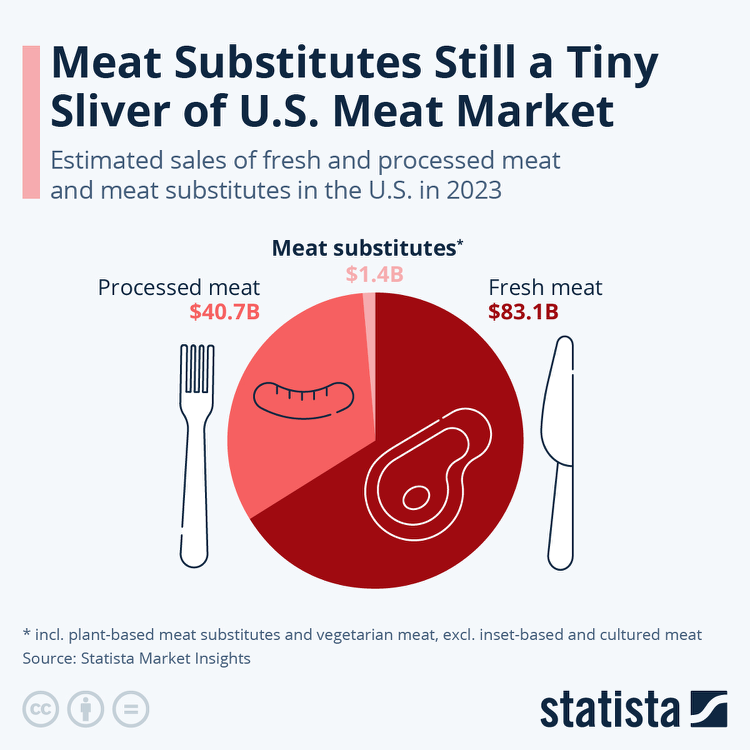
According to data from Statista’s Market Insights, plant-based meat substitutes accounted for a mere sliver of the U.S. meat market last year.

Not counting insect-based meat alternatives or cultured, i.e. lab-grown meat, meat substitute sales amounted to $1.4 billion in 2023, while sales of fresh and processed meat added up to almost $124 billion.

Outlook

  • Revenue in the Meat market amounts to US$131.60bn in 2024. The market is expected to grow annually by 4.22% (CAGR 2024-2029).
  • In global comparison, most revenue is generated in China (US$273bn in 2024).
  • In relation to total population figures, per person revenues of US$385.00 are generated in 2024.
  • In the Meat market, volume is expected to amount to 12.10bn kg by 2029. The Meat market is expected to show a volume growth of 1.9% in 2025.
  • The average volume per person in the Meat market is expected to amount to 32.4kg in 2024.

What’s Next?

Background Post: Coming Soon: Menu Climate Warnings

Baylen Linnekin writes at Reason Public Health Researchers Float Idea of Climate-Change Warnings on Menu Items.  Excerpts in italics with my bolds and added images.

Warning diners that red meat is bad for the environment is yet another attempt
to socially engineer food choices.

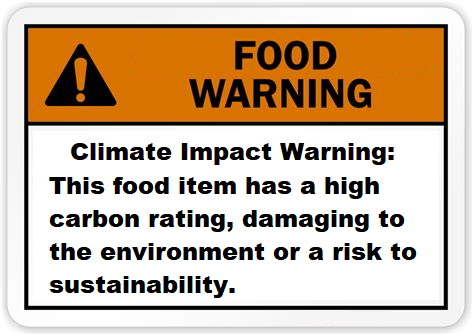
A study released last week suggests that fast-food menus that feature labels urging diners not to order red meat off those same menus due to the “climate impact” of those food items can help convince customers to swap out red meat for what the researchers argue are more climate-friendly foods—from fruits and vegetables to poultry and seafood. The study, published in Jama Network Open and led by researchers from Johns Hopkins University, concludes that “climate impact menu labels may be an effective strategy to promote more sustainable restaurant food choices and that labels highlighting high-climate impact items may be most effective.”

The study’s data comes from more than 5,000 Americans who took part in a nationwide online survey last year. Study participants were instructed to “imagine they were in a restaurant and about to order dinner” from an accurately priced sample menu containing a variety of choices, including hamburgers, chicken sandwiches, plant-based burgers, and salads.

The study asked participants to “order” different foods after viewing one of three types of sample menus online. Outside of a control group, the study presented web users with choices that either disparaged the sustainability of red-meat dishes or touted the sustainability of dishes not containing red meat. Based on the results, which showed people who were more likely to avoid red meat if it had a red warning label and more likely to order other menu items if they featured a green health halo, the authors conclude that “climate impact menu labels [a]re effective” and “that labeling red meat items with negatively framed, red high-climate impact labels was more effective at increasing sustainable selections than labeling non-red meat items with positively framed, green low-climate impact labels.”

The study has spurred some news outlets to suggest governments around the world
may—or should—operationalize its findings.

“Policymakers have been debating how to get people to make less carbon-heavy food choices,” the Guardian recounted in a recent report on the study, “In April, the Intergovernmental Panel on Climate Change (IPCC) report urged world leaders, especially those in developed countries, to support a transition to sustainable, healthy, low-emissions diets.”

“Unfortunately, consumers have been resistant to change and many wish to continue eating meat,” a Phys.org report on the study laments.

Worse still, though the study itself does not suggest that it should be used to form the basis of any government policies, its lead author, Prof. Julia Wolfson of the Johns Hopkins Bloomberg School of Public Health, told CNN last week that “legislation or regulation may be necessary” to force restaurants to add climate warnings to their menus.

Let’s pump the brakes—for a couple of reasons.

Data from the study itself and, more generally, on the effectiveness of government-mandated menu labeling suggests the authors may wish to dial down their perception of the effectiveness of the labels they tested. For example, after completing their respective orders, the survey asked participants if they “notice[d] any labels” on the menu. As the study data reveal, only around 4 out of every 10 participants even noticed any climate-related labeling. While that’s a low percentage, in the real world—in an actual fast-food restaurant setting rather than in an online survey—the percentage would likely be far lower. That’s because, as I’ve explained time and again, study after study has shown that few people pay attention to mandated menu labels (except to choose which food or foods to order), and even fewer use that information.

The premise of the study itself also may rest on shaky ground.

Some critics have pushed back against the notion that some chicken or seafood is more sustainable than all red meat. As the Guardian report on the study notes, “intensively produced chicken has been found to be damaging for the environment, as has some farmed and trawled fish.” Others disagree with the very notion that red meat is an inherently unsustainable food. While it’s become popular in recent years to argue that eating less red meat is better for the environment, that argument has received a good amount of pushback, with critics charging that swapping out meat for plants could be inefficient and ineffective, harm human health, and have unintended consequences for the developing world.

Even if I were to accept arguments that eating less meat is better for the environment, the choice to eat meat (or not) ultimately is and should be an individual’s to make. So it’s not “unfortunate” that consumers “wish to continue eating meat,” as Phys.org posits. And that wish isn’t a cry for government intervention, as Wolfson, the study’s lead author, argues. Rather, it’s a cry for freedom of choice.

If some restaurants competing in the marketplace care to attempt to skew their customers’ choices away from meat and towards vegetarian and/or vegan foods, by all means, they should do so. But the jury is out on whether that would improve the sustainability of those restaurants. What’s more, any restaurant that wants to make such a change should do so on its own accord, without the government’s prompting, backing, or mandate.