Biden EPA Falsely Touts First Climate Change Arrest

NY Post reports Biden admin brought unprecedented climate change prosecution against man for ‘smuggling greenhouse gases’ by transporting refrigerants.  Excerpts in italics with my bolds and added images.

The Biden administration boasted in an Environmental Protection Agency (EPA) report released Thursday about the unprecedented prosecution of a California man for “smuggling greenhouse gases” across the border from Mexico and selling them online.

Michael Hart, 58, was arrested in March and pleaded guilty in September to charges related to transporting refrigerants into the US to peddle on Facebook Marketplace, OfferUp and other online vendors between June and December 2022.

Biden’s EPA touted the crackdown on Hart, the first-ever person charged for climate change-related bootlegging of refrigerants — namely, hydrochlorofluorocarbons (HFCs) — without the agency’s approval, in its report.

When charging the San Diego resident earlier this year, US Attorney Tara McGrath vowed “it will not be the last” case of its kind.

After some investigation it appears this “victory” in the fight
against climate change is a lot of puffery with very little substance,
and worse more overreach by the EPA.

Background

The Montreal Protocol, ratified in 1987, forced the industrialized world to switch from chlorofluorocarbons (CFCs) to hydrofluorocarbons (HFCs) on the theory that CFCs break down the ozone layer.

Both the formation and depletion of the ozone layer depend on ultraviolet light from the Sun. The theory was that UV splits chlorine atoms from the CFCs. The CFCs sat around all winter, moving into position, waiting … and then just as the Sun returned, the chlorine radicals chewed up the ozone as it was being formed, producing a brief downward spike in ozone at the start of the Antarctic summer. This is the famous ozone hole.

The actual measurements look very peculiar, which means there’s more going on than just a simple chain of free-radical reactions. But NASA and the climatologists were confident that the mystery was solved. As with the AGW debate, most agree that it could theoretically happen; the debate is over how big the effect is and how important it is.

Four popular HFCs in use today as refrigerants are R-410a, R-407c, R-143a, and R-134a. The average GWP of the HFCs currently in use, weighted by usage, is about 1600. Enviros are claiming that eliminating these so-called high-GWP HFCs will prevent up to 0.5°C of warming by 2100. Due to the huge variability in the predictions of the various models, this could be anywhere from 8 to 100% of what the models predict. What is remarkable is that absolutely nobody seems to have noticed any of this until the patents ran out.

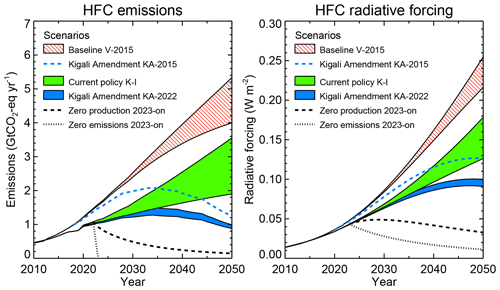
Global total HFC emissions (GtCO2eq.yr-1; left panel) and radiative forcing (right panel) from the V-2015 baseline scenarios developed in Velders et al. (2015) and the updated scenarios derived here (current policy Kigali independent (K-I) and KA-202. Figure: Velders et al., Atmospheric Chemistry and Physics, 2015

From  Chemical Sciences Laboratory

As substitutes for ozone-depleting substances, the emissions of HFCs have increased substantially over the past two decades as a result of the phaseout of ozone-depleting substances under the Montreal Protocol. Due to the growing climate impact of HFCs, the Kigali Amendment to the Montreal Protocol has scheduled a phase-down of their future production and consumption. The results show that total CO2 equivalent global HFC emissions derived from NOAA observations continue to increase through 2019, but are about 20% lower than previously projected for 2017-2019, mainly because of the lower global emissions of HFC-143a, which is one of the longer-lived HFCs in use today. Current policies reduce projected emissions in 2050 from 4.0-5.3 GtCO2eq.yr-1 in the absence of controls to 1.9-3.6 GtCO2eq.yr-1, and the added provisions of the Kigali Amendment reduce the projected emissions further to 0.9-1.0 GtCO2eq.yr-1. Without any controls, HFC emissions are projected to contribute 0.28-0.44 °C to global surface warming by 2100, compared to a contribution of about 0.04 °C by 2100 with Kigali Amendment controls.

Comment: 

The HFC emissions in the left panel are on a scale of 1 to 5 GtCO2eq.yr-1. So HFCs are estimated to have a GHG effect in single digits compared to CO2 emissions which in 2022 were ~37 Gt.  On the right panel, the warming effect is estimated to range between 0.05 and 0.25 W per m^2.  Putting this into context, The energy budget of our climate system involves the absorption and reemission of about 200 watts per square meterDoubling CO2 involves a 2% perturbation to this budget. HFCs are an order of magnitude less, taking IPCC estimates at face value.  But there’s more.

Why would HFCs and CFCs cause global warming?

Most articles merely say that HFCs cause global warming because they possess a high GWP. This is a circular argument, because GWP simply means global warming potential.

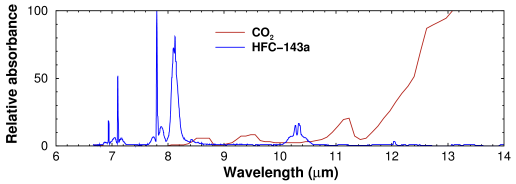
The real explanation is that they absorb thermal (mid-)infrared radiation at wavelengths that don’t overlap with carbon dioxide. The infrared spectra of HFC-125 and HFC-143a have three bands in the mid-infrared which have little overlap with carbon dioxide (CO2):

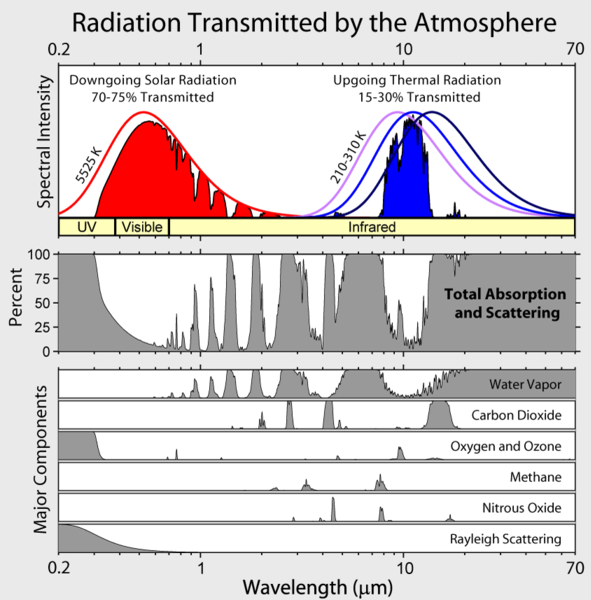
But look at the spectrum of absorption by H2O and other IR-active gases:

The absorption spikes by HFCs at  7 to 8 μm are already covered by the higher concentrations of H2O.  There’s little radiation for HFCs to absorb, so the Global Warming Potential is hypothetical.

Footnote: 

A major clarification in 2017 came from the DC Court of Appeals ordering EPA (and thus the Executive Branch Bureaucracy) to defer to Congress regarding regulation of substances claimed to cause climate change.  While the issue and arguments are somewhat obscure, the clarity of the ruling was welcome.  Basically, the EPA under Obama attempted to use ozone-depleting authority to regulate HFCs, claiming them as greenhouse gases.  The judges decided that was a stretch too far.

However a 2020 law passed by Congress prohibits importation of HFCs without allowances issued by the EPA. The law is part of a global phaseout designed to slow climate change.

Biden’s EPA Goes Rogue on HFCs


Climate Lawfare Goes International

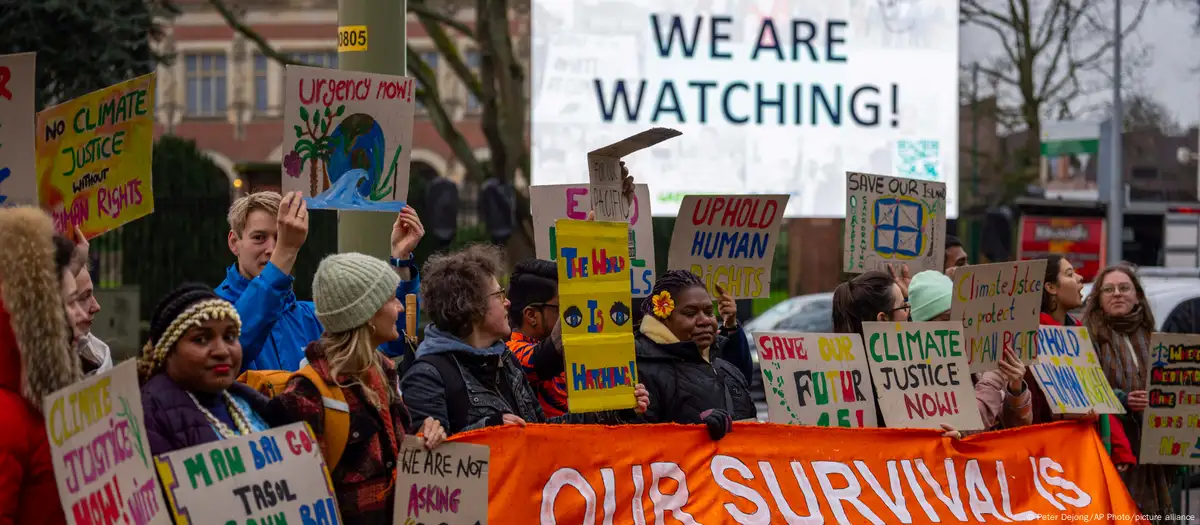
Activists hope the opinion from the ICJ’s judges will have far-reaching legal consequences in the fight against climate change Image: Peter Dejong/AP Photo/picture alliance

DW reports on hearings underway at ICJ International Court of Justice in the Hague.  Overview of the proceedings in italics with my bolds. Vanuatu urges ICJ to recognise climate change harms

The outcome of the landmark case could lead to the
establishment of legal framework for holding countries
accountable in the fight against climate change.

Vanuatu, was the first of over 100 countries and organizations to present its views in the two-week proceedings seeking an advisory opinion from the World Court.

Handful of countries responsible for climate crisis World Court told

They demand that the failure to address climate change be declared a violation of international law. Arnold Kiel Loughman, attorney- general of the Vanuatu archipelago nation said that states have obligations to act with due diligence, to prevent significant harm to the environment, to reduce emissions, and to provide support to countries like his.

Aside from small island states and numerous Western and developing countries, the court will also hear from the world’s top two emitters of greenhouse gases, China and the United States. [More on those statements later on]

While activists are hopeful the outcome of the hearings will have far-reaching legal implications for violators, others are skeptical given that the UN’s highest court might take even years to implement.

Any decision will be non-binding because the court has no concrete means to enforce its rulings.

The hearings will continue until December 13. The court’s opinion is expected to be delivered in 2025.

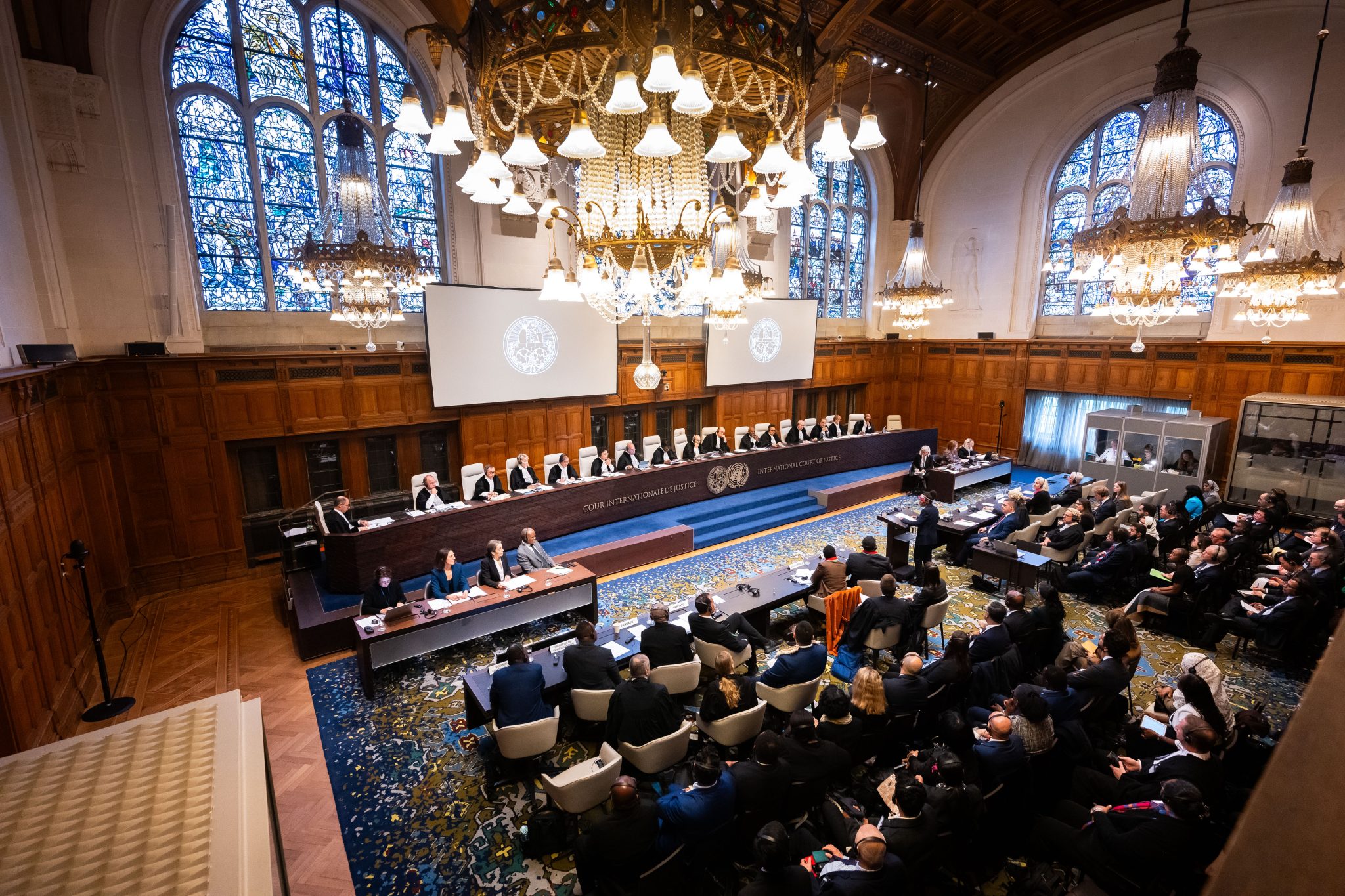
Public hearings at the International Court of Justice in The Hague on the request for an advisory opinion on the Obligations of States in respect of Climate Change, December 2024 (Photo: International Court of Justice)

Climate Home provides perspectives from the countries prospering from hydrocarbon energy in their article Big emitters accused of hiding behind climate treaties in international hearing.  Excerpts in italics with my bolds.

The US, Saudi Arabia and others have pushed back against a global bid
to clarify states’ legal obligations to tackle climate change.

At a landmark legal hearing in The Hague this week, wealthy countries that are big emitters of planet-heating gases have used the Paris Agreement and other existing treaties on climate change to avoid additional pressure to step up their action to tackle global warming.

Their statements at the International Court of Justice (ICJ) sparked strong criticism from top climate diplomats and advocates who argue that international accords do not place limits on state accountability over climate change.

The two-week hearing is the culmination of years of campaigning by a group of law students from Pacific nations and diplomacy led by the island state of Vanuatu.

Their efforts resulted in a UN General Assembly resolution last year calling on the ICJ to provide an advisory opinion on the legal obligations of states to address climate change and the legal consequences if they fail to do so.

The ICJ says its advisory opinions are not binding. But experts stress that they clarify, rather than create, new law and will be referred to as authoritative documents in future climate litigation and during international climate negotiations.

In total, 98 states are giving oral submissions to the court, alongside a handful of institutions including the Organization of the Petroleum Exporting Countries (OPEC).

Four days into the hearing, a clear divide is emerging between wealthy nations that are historically high emitters and vulnerable nations on the frontlines of climate change that have contributed little to planetary heating.

The event has seen powerful fossil-fuel producing countries – from the United States to Russia – resist what they regard as an attempt to force them to do more to rein in emissions and provide reparations to those suffering because of their carbon pollution.

On Wednesday, the United States – which does not fully recognise the authority of the ICJ – told the court that sufficient legal frameworks are already in place to deal with climate change.

Margaret Taylor, legal adviser to the US Department of State, described global warming as the “quintessential collective action problem” which the UN Framework Convention on Climate Change (UNFCCC) and the Paris Agreement are carefully designed to deal with.

Those treaties, she said, embody “the clearest, most specific and most current expression of states’ consent to be bound by international law in respect of climate change” – and should therefore be the “primary framework” for determining their obligations.

Taylor told the court, on behalf of the US, that the Paris Agreement does not provide any legal standard against which to judge the adequacy of an NDC or to determine if a country is doing its fair share in global terms. Nor do states breach the agreement if they fail to achieve their NDCs, she added.

Many countries believe that legal obligations should not be limited to existing climate agreements and have asked the ICJ to consider a wide range of written and unwritten international law, including rules on transboundary harm, due diligence and the duty to cooperate and to prevent harm.

The relevance and scope of human rights in the context of climate change has also been hotly debated. States particularly disagree over the applicability of the right to a clean, healthy and sustainable environment. This was acknowledged by the UN General Assembly in a 2022 resolution but has proved difficult to implement.

Mamadou Hébié, associate professor of international law at Leiden University, representing Burkina Faso at the ICJ, said the Paris Agreement does not create any exemption or derogation from the rest of international law.

Zachary Phillips, counsel for Antigua and Barbuda, said compliance with the Paris Agreement is “necessary but may not be sufficient” to comply with unwritten ‘customary’ international law, including the obligation to prevent harm.

Several of the world’s biggest economies – among those most reliant on fossil fuels – have contended this week, however, that they have no obligations beyond the Paris pact and the UNFCCC. Australia, for example, said these are “central instruments” for global cooperation while China appealed to the court to avoid “fragmenting” international climate law.

Wiebke Rückert, Germany’s director for public international law, said the Paris Agreement strikes a “careful balance” between legal and non-legal commitments and warned that attempts to change that could “seriously” endanger the willingness of states to participate in political processes.

Ghaida Bajbaa, from Saudi Arabia’s energy ministry, said the UNFCCC provides “no basis whatsoever” for the court to authorise limits to fossil fuel extraction and consumption.

This was echoed by Maksim Musikhin, director of the legal department of Russia’s Ministry of Foreign Affairs, who said the transition away from fossil fuels – agreed at COP28 in Dubai last year – is not a legal obligation but rather a political appeal.

Ashfaq Khalfan, climate justice director for Oxfam America, said it was “absurd” for the Biden administration to make arguments against clearer legal obligations on climate change given the upcoming presidency of Donald Trump, who has vowed to withdraw the US from the Paris Agreement for a second time when he takes office.

The ICJ hearing continues until December 13 in The Hague, with other big greenhouse gas emitters such as the UK still to speak.


Movement for Sensible Climate Policy

Many of us are blogging to draw attention to knowledge and information dismissed or suppressed by legacy and social media as “misinformation”, simply because the thoughts and ideas are rational and reasonable rather than alarmist. Tom Harris reminded me in his recent comment that we have many many colleagues speaking out in the public square sharing our concerns.  So let this post introduce a valuable resource in this fight for reasonable climate understandings and policies, namely CANADIANS FOR  SENSIBLE CLIMATE POLICY Join the Movement for Responsible and Sensible Climate Policy.

The home page summarizes why this mission is important and what is at stake and the path forward.

Climate Activism is BIG business

The Green Budget Coalition in 2024 is made up of 21 of the leading Canadian environmental activist organizations publicly lobbying for $287 billion in government spending on their causes.

That is 62% of the total federal tax revenue.

According to public data, in Canada alone these organizations control billions in funds, raise and spend millions on PR campaigns and employ hundreds of staff to achieve these objectives. Globally, the climate activism industry controls trillions of dollars and has armies of advocates. This politicisation of public policy impacts every Canadian.

Even when done with the best intentions, power without oversight isn’t peace, order or good government. To advocate for the best policy, we encourage a range of views, even the controversial ones. We dare to question, to be wrong and to explore all sides of complex issues.

What matters is adopting sober, reasonable and sensible policy in the interests of all Canadians.

Our Concerns

Strange Math

Carbon dioxide gets a lot of attention compared to the many other environmental concerns. Every bad weather event gets assigned to it. The main player in the greenhouse effect remains water and clouds. A changing climate may be unpredictable but that does not mean abnormal.

With prosperity comes costs which must be balanced against the benefits. Strange does not mean unexplainable. Proclamations of doom and crisis are always suspicious.

Odd incentives

Big Oil, corporate interests, corrupt politicians, conspiracy theorists, corporate PR firms and paid skeptics. These are all boogeymen for why, despite general popularity and political backing, there remains a dire crisis with minimal progress.

What if the crisis is exactly because the incentives are designed to perpetuate a cycle? What if the problem isn’t bad intentions or ethics but a social mission over funded to irreverence which needs to be called out as ineffective?

Motivated Reasoning

Motivated reasoning is choosing only the good parts of a story while ignoring the rest because it is what we want to believe. It is quite common in everyday life. When it comes to climate change, calm, pragmatic discussions are rare with many complex and passionate explanations and perspectives.

Those complex explanations may well be accurate, but any analysis of climate change must acknowledge the issue has emotional and personal implications for many Canadians.

Outsourced Problems

When speaking unpopular opinions, one’s intelligence, integrity and ethics will almost always come under fire. When speaking popular opinions rarely is there such scrutiny. It’s human to deeply care for our environment. Why don’t we see the mass implementation of responsible governance, moderation & sustainability? Why so much green washing? Why are 9/10 solutions just shifting our problems into other people’s lands.

Transporting environmental destruction from Canada to Qatar, China or Nigeria is not ethical or effective. If being sustainable was easy or obvious someone would have done it long ago.

Little Accountability

Spending must be within context. Canada is estimated to produce about 2% of the worlds total CO2 emissions with our higher emissions per capita being within expectations for an oil producing nation. Alberta accounts for much of this higher status. The Federal government revenue was $447 billion. A provincial government like Ontario was $179 billion.

A hundred billion or trillion dollar public effort to reduce a rounding error in emissions isn’t just another project, it’s a significant financial commitment with long lasting implications.

Boomers

Your generation has enjoyed a splendid life because of the sacrifices made by your parents during and after WW2. Post war, jobs were easy to find, economies expanded throughout the developed world and Boomers “Never-had-it-so-good.” In retirement your lifestyle was far better than any previous generation enjoyed.

Now, you have a choice, you can either watch economic hardship unfold while passing on huge debts to the next generations or speak up and blow the whistle on the biggest waste of capital the world has ever seen.

Non-Boomers

You are inheritors of a huge debt by the leadership of today. Do you want to spend your life in bad economic times? Do you want your children to live through the same hardships as you stand to inherit? How much time have you invested in thinking about what the Net Zero at 2050 policies cost? Can humans in fact control climate? Is the financial sector pushing that agenda biased? Are the alternative energy jobs long-term or busy-work?

Decide for yourself. Make your thoughts known.

Course Correction

Cost-Benefit Accounting

Alberta and Saskatchewan’s embrace of lower-regulation, pro-petroleum and chemical development is a source of concern to many Canadians. Yet, this comes with benefits to those same groups including massive subsidies to public spending, foreign investment, increased buying power and lowered cost of living in all provinces.

A sensible climate policy transcends politicisation, it works for those who are pro-petroleum or anti-petroleum, left or right wing, those who see increased carbon as beneficial or those seeking net-zero. Sober energy policy improves lives by balancing concerns and offering pragmatic decisions which achieve universal objectives.

Open Discussion

The journalists spread the word and the activists too, the science becomes “settled” and 97% of climate scientists agree. Your life could get a little easier, just don’t listen to skeptics, realists, opponents, the scientists not surveyed, friends, brothers, sisters, cousins, or uncles. An agency will sort the details and inform you of the correct and proper truth.

Never, a sensible climate policy comes from open inquiry, where facts and data are the observations in agreement and the debate is about the meaning and impacts of that data. Experts will breakdown confusion, answer questions and offer clarity.

Prioritize the Everyday Canadian

Climate change policies and activism have a track record of growing budgets, increased powers, and increased access to new technologies and insights. Show us the benefits. Show us the increases in quality of life. Show the practical applications and decreased risks and dangers.

A sensible climate policy is measurable, and though perhaps driven by fear and concern, increased attention and effort means more tangible results.

Maximize Well-being

In cost-benefit analysis, choices are made between conflicting values. Energy and climate policy can be framed as altruists against economics. It can be framed as common good against special interests. It can be framed as differing scientific views.

A sensible climate policy will be driven by maximizing well-being and benefit to society.

Ensure Accountability

Climate policy is often ignored except by special interests. The tale of energy companies against the activists is contradicted by the funding patterns which see energy companies actively funding, hiring and promoting climate change activists. In the energy business “green energy” is just another opportunity.

A sensible climate policy must have checks and balances. Lobbying can benefit everyone in a marketplace of ideas but as a monopoly, everyday Canadians will never be served.

Energy Realism Marching Ahead

Holman W. Jenkins, Jr. reports at WSJ on observing the Irresistible March of Energy Realism.  Excerpts in italics with my bolds and added images.

The publishing gods have smiled on French energy historian Jean-Baptiste Fressoz. His book, whose U.S. edition is coming out in August, is already getting wide notice. Its French title essentially means “there is no transition.” Mr. Fressoz tells a podcaster he’s even happier with the English title, “More and More and More.”

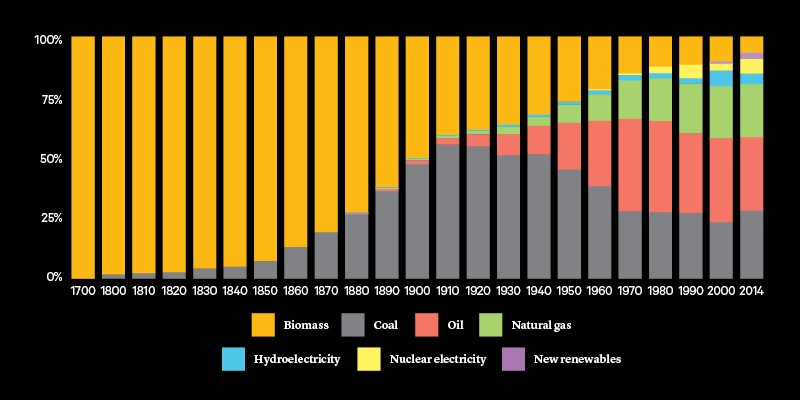
Energy sources are additive and symbiotic, he writes. Coal, oil, gas,
wood, nuclear and renewables all grew together, they didn’t replace each other.

An increase in coal provided steel piping to enable oil and gas production. More wood than ever was consumed to support British coal mines. The world’s biggest maker of wooden barrels at one time was John D. Rockefeller. A car in the 1930s consumed more coal via its required steel than it would consume in fossil fuels in its lifetime.

In the U.K. today, a single wood-burning electric plant consumes more wood than Britain’s entire 18th-century economy and yet accounts for a small fraction of Britain’s current energy output. The only transition has been to more energy consumption.

As this column has pointed out, subsidies for green energy, adopted globally by the Obama imitators in lieu of carbon taxes, only end up subsidizing more energy use, including copious fossil energy to make batteries, wind turbines and solar panels.

In a blue moon, honest greens will admit as much and argue that when green energy has been sufficiently built up with government aid, the U.S. will lead the nations to introduce carbon taxes.

The faulty assumption here is that phasing out fossil energy will be any easier in 50 years when the world is consuming twice as much energy and half is still fossil energy, producing the same emissions as today. A likelier outcome: When the green subsidies stop, as inevitably they must, the result will be a burst of emissions as the formerly subsidized users shift to fossil energy to stay solvent.

The Trump election poses a special puzzle for domestic U.S. automakers: How much of their $110 billion investment in electric vehicles to write off? In the absence of subsidies and mandates, what’s the natural market for EVs and, importantly, what kind?

The Rube Goldberg effect of U.S. policy has led to heavily subsidized status pieces for high-end consumers, whose large batteries are mainly used to haul around their large batteries.

These are net losers for the stated goal of reducing CO2 emissions. Unknowables loom. An Oxfam report finds up to $41 billion in World Bank climate spending, backed by U.S. taxpayers, unaccounted for. This is only the beginning. What happens when voters realize not billions but trillions doled out to the green-energy lobby have had no effect on atmospheric CO2 levels or climate?

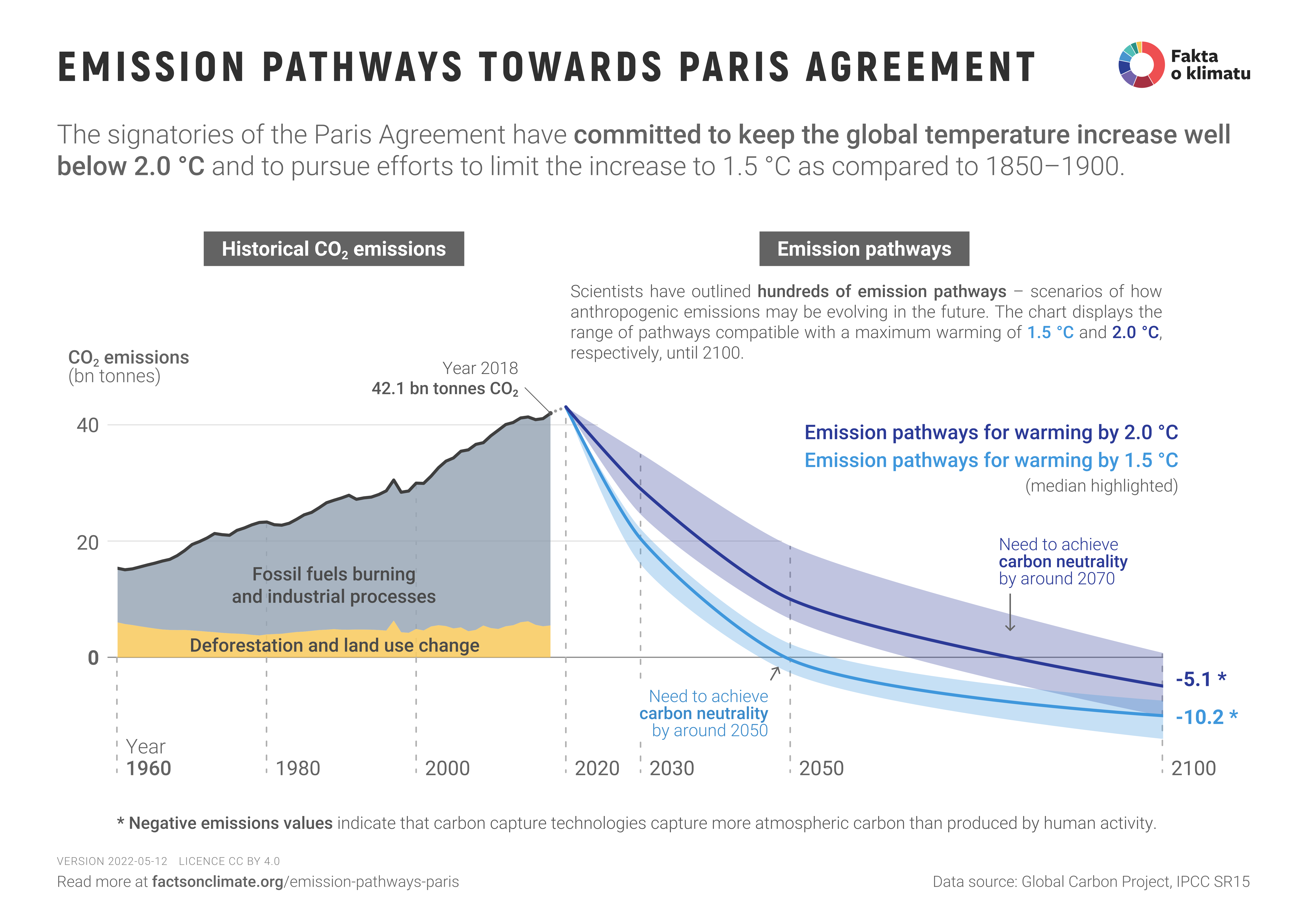
Meanwhile, hard to find are detailed climate or emissions projections that don’t effectively assume successful efforts to stabilize warming at the putative 1.5 or 2 degree Celsius levels.


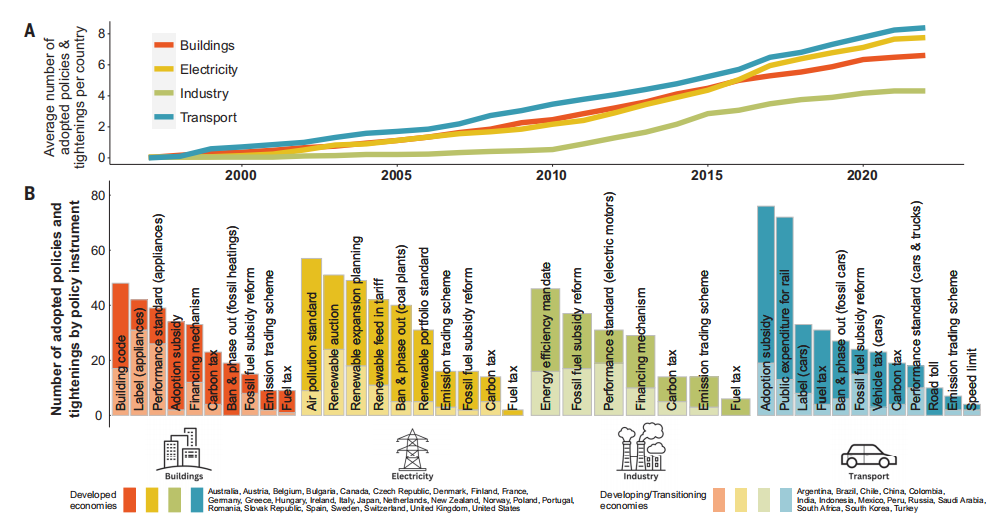
These efforts at stabilization aren’t happening. In the peer-reviewed journal of the American Association for the Advancement of Science, a study finds that of 1,500 “climate” policies announced around the world, a mere 63, or 4%, produce any reduction in emissions.

Mr. Fressoz, in the “Decouple” podcast, delves into the fascinating 1970s. Governments everywhere, along with the oil industry, well recognized the CO2 problem. The British government of Margaret Thatcher realized its emissions were becoming too small a share of the total for reductions to make a difference. A U.S. panel calculated that even a heroic U.S. effort would delay warming only by a few years.

A Chinese representative warned a 1979 conference that by 2000, his country intended to burn more coal than the world’s then-annual total.

Our path—unavoidable adaptation—was laid down long before today’s believer-denier debate, a language effectively developed and deployed to promote climate pork, not meaningful climate action. Last year, by one accounting, global emissions topped 40 billion tons for the first time. I suspect carbon taxes may yet be adopted, albeit for fiscal reasons. Solar geoengineering, using particulates to adjust the amount of sunlight landing on Earth, is probably in the cards at some point.

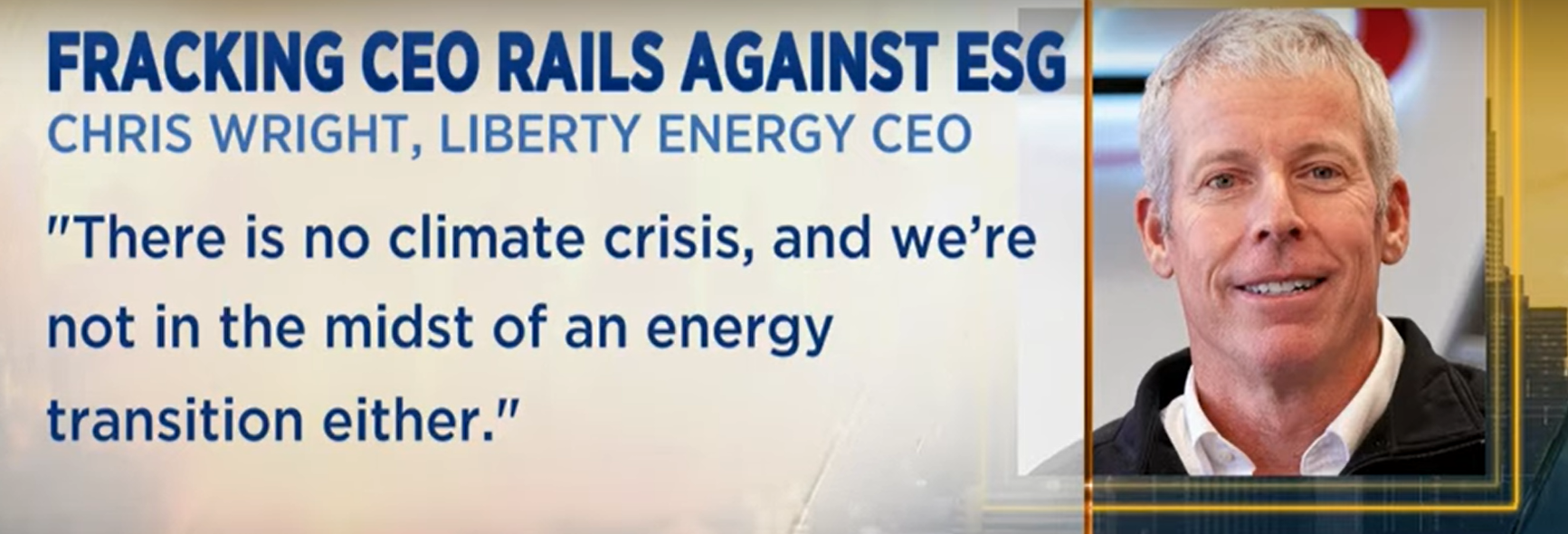
In Chris Wright, the Liberty Energy CEO, Donald Trump has nominated to head the U.S. Energy Department a determined evangelist for energy realism. This is why I introduced him to readers earlier this year.

Mr. Wright, founder of a fracking services company, believer in climate change, enthusiast for nuclear energy, is the antidote to what Mr. Fressoz calls the “troubling” politics of climate change, which has consisted entirely of false promises.

Mr. Trump isn’t the climate outlier you think. Any U.S. presidential race in the past 40 years was a contest of two versions of doing nothing about climate change. The only difference: Certain versions of doing nothing were a lot more expensive for taxpayers than others.

Energy Realism from Next US Dept. Head

Last year Chris Wright dished out climate and energy realism in an interview on CNBC Squawk Box hosted by Andrew Ross Sorkin.  Now he is to be appointed Secretary of Energy in the coming Trump administration.  Here are his candid and unvarnished views from inside the energy industry.

For those who prefer reading below is a transcript lightly edited from the closed captions in italics with my bolds and added images. AS refers to Sorkin’s questions and CW to responses from Wright.

AS: President Biden conceded last week that the U.S is going to be needing oil and gas for as he says at least the next decade as the country transitions to Renewables. But our next guest says that we are not in the midst of an energy transition and claims the so-called climate crisis is overblown. Last month he railed against what he called an alarmist move away from fossil fuels in a video on LinkedIn. The Microsoft owned company removed the post citing misinformation, only put it back up days later.

So let’s talk right now to Chris Wright–Chairman and CEO of Liberty Energy, North America’s second largest fracking company Chris good morning to you.

Reaction to the State of the Union

AS: Let’s start with your reaction after watching the State of the Union. President Biden makes the statement twice actually. The first time he says we’re going to need fossil fuels for a while. Later he follows up with: We’re going to need it for something like a decade or so. There was laughter in the chamber, certainly from the GOP, but it very well might have been both sides of the aisle at that point.

CW: Yeah, likely it was. Of course it’s great to see an acknowledgment the world run on oil and gas and we need that. But to throw out a decade, it’s just an absurd time frame. We’re not going to meaningfully change the demand for oil and gas one way or the other in the next decade. And I think politicizing energy and opposing infrastructure is standing in the way of Today’s Energy System before we’ve built a new Energy System. There’s just no upside in that.

Realistic timeline for energy

AS: When you think about the timeline, what do you think is a realistic timeline to the degree you think there is one.

CW: It’s multiple, as we’ll talk about that. The Energy Information Administration is our government agency that projects forward demands for varied energy sources, They have in 2050 roughly flat demand for oil and gas as what we have today; maybe it rises a little bit the next decade or two, maybe it comes down a little bit in the next decade or two after that. Maybe that’s true, but I think you’ll see no meaningful change of our hydrocarbon system in the next three decades. I’m all for investing in new energy sources: nuclear has a great future if we could regulatorily issue a permit. We haven’t issued a new permit for a nuclear plant in 50 years.

There’s great new things we can bring; but standing in the way
of what runs the world today just isn’t productive.

Nuclear energy

AS: I’m a big fan but it’s quite unpopular talking about nuclear energy. Usually when I say something on the air it causes some kind of strange firestorm. Do you think there’s any realistic chance we have nuclear energy in the United States in the next decade?

CW: I think probably not in the next decade. Nuclear will have a Renaissance right now, but it more likely starts overseas where there’s a less onerous and less fear-driven regulatory system. I think we’ll see small modular reactors come. What’s great about nuclear is they bring not just electricity which is the only place wind and solar can play. Electricity is less than a quarter of global energy. Process heat that you need for manufacturing is just critical, and nuclear could bring process heat as well as electricity. Today it’s just fossil fuels that bring processed Heat.

SEC disclosure

Rough Seas for Captains of Industry

AS: Chris, I wanted to ask you two big big other questions. One regards the SEC pushing for more disclosure for companies around ESG and and in particular their plans around climate and energy. It
may get softened a bit, in part because of the comments that have come back to them. What is your sense of what the SEC was proposing and where you think they’re going to land?

CW:  Well what they proposed is totally nuts. And I wrote a long comment letter on it. A lot of public company CEOs won’t do that, But it’s just making an enormously complicated expensive reporting thing so people can sue us because they think we didn’t quite properly estimate our scope three emissions. Those are emissions from the products we produce when someone else burns them on the other side of the world or on the other side of the country. No one can really account for that.

Why are they doing that? They’re doing it so this Administration can signal they’re against fuels. Again that’s just unproductive.

LinkedIn censorship

AS: Your LinkedIn post went down tell me what happened. People talk about censorship all the time, who should be the Arbiter of Truth and all of that.

CW: Yeah it was crazy. I made a sort of an amateur video just talking about energy climate transition with just some basic data so you can get background on it. And it was taken down as misinformation. I hit the appeal the decision button, and they came back and said it violated their spams and scams policy.   I posted it again it’s taken down again from misinformation. Then upon appeal they said sorry, on further review it didn’t violate their policy. That’s probably not LinkedIn but people complaining because I’m not talking the climate alarmist narrative. For LinkedIn to go along and take that down is just a symbol of where we are today, unfortunately.

Oil and Gas Industry Productivity

AS: When we finally hit Peak production again, we haven’t yet since 2019. So there’s a lot of finger pointing on why that is. I mean fracking had its own problems when there was a slow period. When we try to reopen from a pandemic we can’t get the workers that we need for the you know for the whole oil and gas industry. But add in ESG and add in President Biden’s pitch: Read my lips, I will end the fossil fuel industry.” How much do you think ESG and that type of of rhetoric scared away producers? Is ESG a positive or negative for society?

AS: I think from an investor movement it’s a negative. Of course we should care about the environment and the societies we operate in. And of course company and government should be aligned with the owners of businesses, that’s a very real point. The other point is of course that’s what businesses do in a free Society. If you’re not a great member of society, if people don’t believe they’re part of something bigger than just getting a paycheck, you’re going to have trouble getting workers.

So the idea is right but it’s really become sort of a top-down thing: if you’re admitting greenhouse gas emissions you’re bad, if you’re reducing them or shrinking your business there you’re good. And then of course a top-down check box list to decide if we’re socially virtuous or not. These are bad ideas. Investors should care about ESG but it shouldn’t be like a third party imposing a scorecard to tell me who’s virtuous and who’s not.

On the on the margin it has indeed reduced Capital to our industry which absolutely raises the cost of capital on the margin. We produce less oil and gas because of it and the main impact of that is higher oil and gas prices.


Washington State Votes Against “Electrify Everything”

Gas stoves are the thin edge of the wedge.


Update November 18, 2024

From the Olympian: WA natural gas measure I-2066 set to pass.

The sponsors of Initiative-2066, the Washington ballot measure that aims to expand access to natural gas in the state, have declared victory as votes have continued to trickle in from last week’s election. Early results showed the ballot measure holding a slim lead, which has slowly grown in the days since the election. As of Monday, Nov. 11, there are 51.64% of votes counted in favor of the measure, compared to 48.36% against it, according to the Secretary of State’s office. With approximately 274,171 votes left to be counted, I-2066 leads by a 112,203 vote margin. In order for the measure to fail, over 70% of the remaining votes would need to go against the initiative, leaving it all-but-guaranteed of a victory.

No on I-2066 has conceded the race, although it’s exploring possible legal challenges to the measure. The campaign claims that I-2066 is misleading, since it implies that Washington has a natural gas ban in place when it doesn’t. Additionally, the campaign said it’s looking into the possibility that the measure violates a section of the state constitution that asserts that “no bill shall embrace more than one subject.”

Results won’t be official until they’re certified by Washington’s 39 counties on Nov. 26 in and are sent to the Secretary of State, who has to certify them by Dec. 5.

Background Post

Megan K. Jacobson explains the fight and what’s at stake at msn A Washington State Revolt Against the Gas-Stove Grabbers.  Excerpts in italics with my bolds and added images.

Environmentalists have waged a campaign against natural gas, but users of this efficient, low-emission fuel are fighting back. A wide range of industry groups are backing Washington state’s Initiative 2066 to protect the right to choose natural gas.

By 2030, Washington is supposed to reduce carbon emissions to 45% below 1990 levels—one of its many overlapping climate goals. The state’s most recent energy plan declares that the cheapest route to meeting Olympia’s climate targets is to switch many uses of oil and gas to electric sources. Last year the Building Code Council amended the state energy code to make it prohibitively costly to install gas appliances in new buildings. In March the Legislature passed a law allowing the state’s largest natural-gas and electricity utility, Puget Sound Energy, to pass the costs of going green onto consumers and mandating the utility files a plan “to achieve all cost-effective electrification of end uses currently served by natural gas.”

To the Washington Hospitality Association and the Building
Industry Association of Washington, Initiative 2066’s cosponsors,
this sounded like an economic wrecking ball.

Anthony Anton, CEO of the hospitality association, says 84% of the restaurateurs he represents rely on natural gas. Remodeling to go electric is a “massive cost at a time where operators just can’t afford it,” he says. Some say the quality of their product would suffer, as some cooking methods, such as stir-frying, are difficult to perform on lower-heat electrical stoves. Most of the association’s members are very small businesses with substantial debt from Covid lockdowns.

The building association worries the new energy code will raise the state’s already high housing costs, locking out potential buyers. The code requires that new buildings meet a certain environmental “score.” Without the points from an electric heat pump, a builder will have to make up the difference with other green measures that run between $15,000 and $20,000 in a single-family home. “Every time they raise the price $1,000, it prices out another 500 Washington families,” says Greg Lane, the association’s executive vice president.

Dozens of varied industry groups support Initiative 2066. Each has its own reasons. The Washington Denturist Association worries about the expense of switching from propane- or gas-based equipment and a lack of reliable power. Most members are small businesses and it’s a good path for immigrant dentists whose credentials don’t carry over to the U.S.

The Washington State Tree Fruit Association (of which my paternal grandfather’s company, Apple King, is a member) is concerned about rising costs of refrigeration to keep produce fresh. A sudden power outage could be catastrophic for the state’s apple industry. Trade regulations for its top two export markets require that fruit be constantly refrigerated at a specific temperature for as long as 90 days.

The state’s cheapest energy plan would almost double electricity demand in Washington by 2050, putting an unprecedented strain on the grid. The only real option is to increase wind and solar generation, since the state’s plentiful hydroelectric capacity can’t do more without potentially threatening salmon. Wind and solar tend to falter in Washington in the winter, when energy demand peaks.

Consumers would also suffer in Washington’s green utopia. Everything from a haircut to a ballgame would become more expensive as the price of electricity rises. Climate advocates argue that Washingtonians will recoup their costs over time thanks to efficiency gains. But a 2021 report from Home Innovation Labs estimates that recovering the cost of a heat-pump installation could take 47 to 49 years. It’s worse for existing gas customers. The Building Industry Association of Washington estimates that switching from natural gas to electricity in a single-family home would cost as much as $70,000. Heat pumps also tend to fail in the sort of frigid weather that hits rural Washington in winter.

Proponents of electrification insist that technology will improve over time. But if they’re really confident that green energy will be the best option for consumers and businesses, then Initiative 2066 is no threat. Washington voters should ask why climate advocates still see it as one.

Trump WH Focuses Energy Governance

Yesterday I posted on Repurposing US Energy Agencies. Today comes the news of Trump announcements consolidating energy governance in a WH National Energy Council chaired by the newly appointed Secretary of the Interior, ND Governor Doug Burgum.  While there is not yet much detail on how this will function, some reports suggest the organizing logic of this approach. This article is from the North Dakota Monitor Trump names North Dakota Gov. Burgum to combined Interior, energy role.  Excerpts in italics with my bolds and added images.

North Dakota Gov. Doug Burgum will serve as Interior secretary and chairman of the newly formed National Energy Council, President-elect Donald Trump announced Friday.

The new council will consist of all departments and agencies involved in the permitting, production, generation, distribution, regulation, transportation of “ALL forms of American Energy,” Trump said in the announcement.

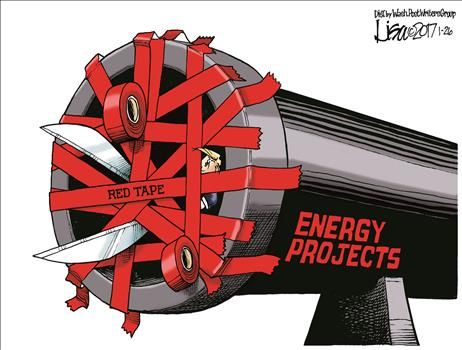
“This Council will oversee the path to U.S. ENERGY DOMINANCE by cutting red tape, enhancing private sector investments across all sectors of the Economy, and by focusing on INNOVATION over longstanding, but totally unnecessary, regulation,” Trump wrote.

Burgum, who is completing his second term as governor, has railed against what he sees as government overreach and bureaucracy under the Biden administration, especially on energy policy. He frequently calls for industry innovation rather than more regulation. Burgum said at an energy industry conference in Bismarck in May:

“We have to turn this around, not just for this industry, not just for North Dakota, but for national security, for peace in the world,”

Trump also said in his statement that his administration will “undo the damage done by the Democrats to our Nation’s Electrical Grid, by dramatically increasing baseload power.”  In addition, Trump said Burgum will have a seat on the National Security Council.

The $18 billion Department of the Interior manages federal natural and cultural resources, with about 70,000 employees.

The department includes 11 agencies: the National Park Service, U.S. Fish and Wildlife Service, U.S. Geological Survey, Office of Surface Mining Reclamation & Enforcement, and the bureaus of Indian Affairs, Indian Education, Land Management, Ocean Energy Management, Reclamation, Safety & Environmental Enforcement, and Trust Funds Administration.

“Serving as Interior Secretary is an opportunity to redefine and improve upon the federal government’s relationship with tribal nations, landowners, mineral developers, outdoor enthusiasts and others, with a focus on maximizing the responsible use of our natural resources with environmental stewardship for the benefit of the American people,” Burgum said.

North Dakota is the nation’s third largest oil producing state, with some of the production coming from federal lands on the Fort Berthold Indian Reservation. North Dakota also has large amounts of coal, wind energy and biofuel production.

When asked Tuesday about the potential for an “energy czar” position, Burgum told North Dakota reporters that the nation needs a more coordinated approach to energy policy.  He said an “energy czar” would be able to do more than a lone Cabinet secretary because other agencies, such as the U.S. Army Corps of Engineers, Environmental Protection Agency and Bureau of Land Management, among others, all affect the nation’s energy policies.

U.S. Sen. Kevin Cramer, R-N.D., acknowledged that some environmentalists will not be happy with the direction the Trump administration’s policies on federal lands. Cramer said having Burgum in that role should ease some concerns.

“Doug’s a good conservationist,” Cramer said. “It’s not a ‘Drill, baby, drill’ attitude, it’s a, ‘Utilize the resources of the federal government for the benefit of the country and its people,’” Cramer told the North Dakota Monitor. “He delivers the message beautifully and I think he can go a long ways in sort of calming people down.”

An article at Politico explores how this structure might function Interior nominee Burgum to head new National Energy Council.  Excerpts in italics with my bolds.

Burgum, a self-made multimillionaire, had been wary of taking on a role of “energy czar,” according to people familiar with his thinking, and instead had sought a position that came with formal power. This role atop the new council will combine the authority of the cabinet position with the broad reach across the top other agencies.

David Goldwyn, chair of the energy advisory group at the Atlantic Council think tank and a former State Department official in the Obama administration, said combining the two roles for Burgum showed how much influence he would have in the administration, but it could also could stretch him across the broad energy portfolio.

The energy council could be a more institutionalized version of initiatives by earlier White Houses to create an all-of-government approach to coordinating policy, but it could also lead to tension between Burgum and other department heads.

“Anytime you establish a policy coordination body at the White House, there will be natural tension with principles in agencies,” Rapidan’s McNally said. “It’s like herding cats a little bit, but it should minimize tensions so you either get to consensus or tee up pros and cons for the president to make a decision.”

The dual role idea won plaudits from North Dakota GOP Sen. Kevin Cramer, a Burgum ally, who said he had been wary of limiting him to a czar position.  “But when you have a council made up of confirmed people and one of those confirmed people heads it, … it’s a brilliant idea,” Cramer said. “There is a synergy you gain by organizing it this way that you don’t get if you have a bunch of silos.”

Trump has made clear that a focus of his second administration would be to complete permitting reform that has struggled to gain bipartisan traction in Congress during the Biden administration. Fossil fuel companies and renewable energy companies alike have complained that critical infrastructure they need to get fuel and electricity to market takes too long to win federal approval.


Repurposing US Energy Agencies


Mark Krebs writes at Master Resource DOE Efficiency Standards: Consumer Time? Excerpts in italics with my bolds and added images.

“The Deep State is cancer-like in nature. Like cancer, it must be rooted out before it metastasizes—as it would have if subject to another four years of a Harris (Obama 4.0?) Administration.”

“It’s time to go big. Scrap DOE and part-out whatever missions are worth saving.  And whatever missions are deemed worth saving should be saved only with thorough scrutiny of zero-based budgeting.”

Our March 2017 post, DOE’s EERE: Reform Ideas for Secretary Perry, stated that while “a trace of consumer focus still exists,” the department’s heavy bias was towards society-wide electrification under the guise of “Net Zero”.

Whatever trace of consumer focus may be remaining within DOE is not worth salvaging. In fact, eliminating the pipe dream of an all-electric society would likely save US citizens $18 to 29 trillion in capital costs alone. Other analysts have estimated far higher cost inflation, while others conclude that total electrification cannot be accomplished at any cost.

Real Reform Opportunity

The incoming Administration can and should do far more than just trim back the overgrown greenery; it should serve the legitimate interests of the American citizenry and American prosperity. However. details in our previous recommendations (EERE Reform: Brouillette’s Turn (‘deep decarbonization’ threat still alive)), are worth reviewing by the incoming Trump Administration if for no other reason than to document historical mistakes and avoid them going forward. Regardless, our old recommendations are no longer sufficiently ambitious in terms of best serving the American public and drastically reducing the National Debt’s deadly inflation.

But how should we move forward for “deep reform” versus the meager results from before? After all, the incoming Trump 2.0 Administration much better understands the depth and breadth of the Deep State and its joined-at-the-hip “Uniparty” cohorts. The options range from modest “reform” to scrapping DOE and parting out its truly vital missions to other Federal agencies or private sector competition.

Given we the people hold the House, and lead the Senate, this is a unique opportunity that must be exploited to the full extent feasible. After all, the world has fundamentally changed since DOE was formed to address certain issues: low supplies and scarcity, coupled with cartel behavior by foreign actors. Today we have robust supplies that mainly just need regulatory relief.

Deep State Foe

Clausewitz was all about winning. If Trump is too (he is), rearranging DOE’s “deck chairs” is just a short step across a large chasm. The Deep State cancer would likely just go into a four-year remission only to return with a vengeance with a return of another Democrat Administration down the road someday.
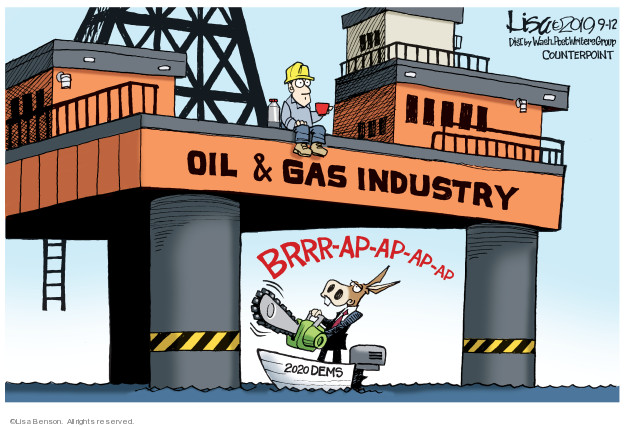
Ultimately, the choice comes down to serving the Deep State/Uniparty or serving the legitimate best interests of “we the people.” There is no “live and let live” middle ground as the present Biden (mis)Administration has abundantly demonstrated in words and deeds. Nor is there sufficient funding for “all electric” or even “all the above” energy policies.

Appliances Just the Thin Edge of the Wedge

We can’t afford the self-indulgence of environmental virtue signaling.  We need only to pursue energy policies that objectively and comprehensively focus on economic least-cost planning (and bidding) so we can avoid the looming reality of economic collapse. And yes, there is still room for objective energy efficiency; if it is market-based (as opposed to “big brother” dictates to throw money at an illusionary problem). There is even room for least-cost environmental progress. As RFK Jr. knows, soil regeneration is one of these.

It is imperative that the Trump 2.0 Administration achieve and demonstrate tangible and substantial results for energy consumers as soon as possible. Immediate actions should include clawing back the tragic Inflation Reduction Act, an all-you-can eat funding buffet for a myriad of parasitic “clean energy” zealots. These zealots have already received enough (unwitting taxpayer) IRA funding to plague “we the people” for decades to come.
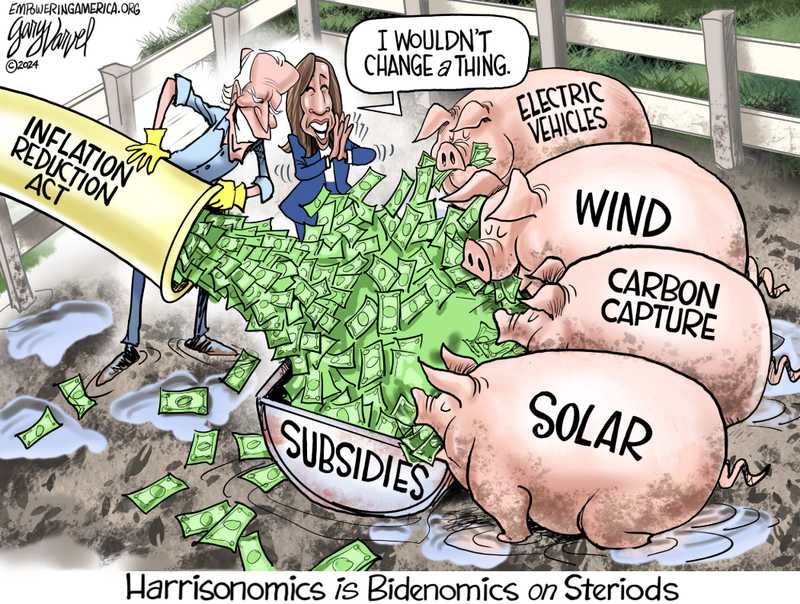
The most efficient tactic (but not necessarily easiest) would be to simply eliminate DOE departments that oversee such funding. And along with that, repeal equally corrupted legislation that authorized DOE’s regulatory mission creep, such as the obsolete Energy Policy and Conservation Act of 1975 (EPCA) and self-serving, loophole riddled revisions thereof.

In short and in closing, DOE is not worth trying to salvage, because its cancer culture is immune to modest political reforms and intervention. Thus, like a junk car, part out what can be safely and economically salvaged and eliminate the rest. Assuming control of the House and Senate, this is, for the first time, entirely doable; given the will to persevere. So let’s declare victory over the gas lines of the 1970s and move on to overcoming House and Senate resistance for dramatically reducing the economic threatening cholesterol of excessive spending.

Addendum 1

In the spirit of the quote above, government needs structuring to safeguard the evidence (data, research) from predetermined policy ends and tunnel vision.  One suggestion in this direction was ignored but deserves consideration.  Dexter Wright wrote at American Thinker How to Abolish the Department of Energy.  Excerpts in italics with my bolds and added images.

It has been said by almost every conservative candidate running for office this year that they would like to abolish the Jimmy Carter government legacy, the Department of Energy (DOE). Back in the 1970s when the Department of Energy was created the Carter Administration claimed that 20% of the nation’s energy needs would be supplied by solar energy by the year 2000. Needless to say that didn’t happen. So today we have a Department of Energy that provides energy to no one.

The question is how can we get rid of the DOE? The answer lies in the history of the U.S. Coast Guard. The Coast Guard is made up of the best parts of three different services that no longer exist; the Revenue Cutter Service, the Light House Service, and the Life Saving Service. These services were combined efficiently to create the modern Coast Guard.

Similarly, there are activities that operate within the DOE that are worthy of preserving such as the national laboratories at Los Alamos, NM; Oak Ridge, TN and Sandia National Laboratory in Albuquerque, NM. These National Laboratories perform scientific tasks that are not only vital to national security but also, in some cases, are mandated by arms reductions treaties.

There are also activities within other departments and agencies that focus on science such as the National Weather Service (NWS); but for some reason, the Weather Service is stuck in the Department of Commerce (DOC). Contrary to popular belief we do need the Weather Service because all of the data that is collected and analyzed by NWS is then distributed to the media for their broadcast and dissemination.  But it is clear that the NWS does not need to be in the Department of Commerce.
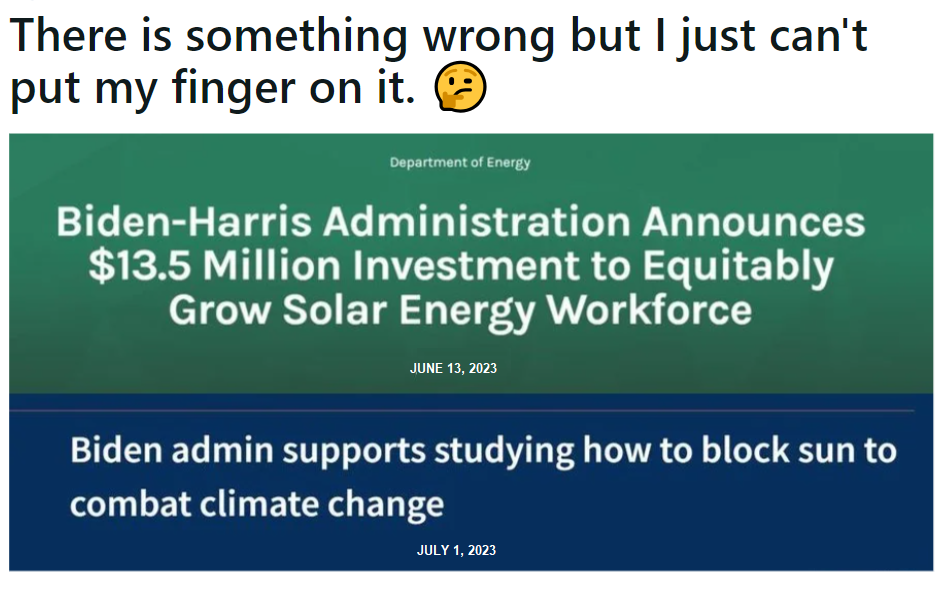
Believe it or not, even the Environmental Protection Agency (EPA) does scientific work, it just doesn’t use the data that is collected and analyze for policy development. I’m not really sure what it does with the data other than suppress it.

The way to deal a death blow to all of these departments and agencies is to
cull out of these bureaucracies all of the useful scientific parts and place
them in a new department, the Department of Science and Technology.

This new department would eliminate the need for the EPA, the DOC and the DOE. Even agencies like NASA could be included so that there would be cabinet level representation and so that rocket scientists would not be relegated to teaching math to third world nations.  Ideally the new Department of Science and Technology would provide unbiased data for policy makers to ignore rather than the biased flawed data that they ignore now.

Addendum 2

The scope of reform goes far beyond energy agencies, since the Biden/Harris regime dictated a “whole of government” response, embedding fear of CO2 into the full slate of programs. And thereby, the enormous deficit spending covered by freshly printed money threatens the economic viability of the republic.  So the consolidating and downsizing of the whole governmental beast is required. Jeffrey Tucker of Brownstone Institute writes  A Plan to Tame Inflation.  Excerpts in italics with my bolds and added images.

Elon Musk summarizes: “The excess government spending is what causes inflation! ALL government spending is taxation. This is a very important concept to appreciate. It is either direct taxation, like income tax, or indirect via inflation due to increasing the money supply.”

Inflation is a wicked beast that cannot be controlled directly. On the campaign trail, Trump spoke often about how it was the throttling of the energy sector that kicked off inflation. That is only partially true in the sense that the soaring price of oil and gas grew the costs of transportation. It was also a symptom rather than a cause. Plus, the price of oil and gas is actually not high right now in real terms.

Yes, the plan of “drill baby drill” is necessary and should happen but it cannot fix the existing problem of inflation much less do much to forestall a second wave. Nor is there a viable fix in the idea of price control, even when it is masked as “anti-gouging” legislation.  There is nothing government can do to directly control prices, much less force them from going up given the deep structural problems.

There are ways to mitigate against the problem, or at least minimizing them. You can have a look at how Javier Milei did it in Argentina. He took the problem of massive hyperinflation and converted it to low inflation in a year. His is a case study. The answer is:

♦  End debt creation by dramatic spending cuts;

♦  Curb the actions of the central bank; and

♦  Inspire economic growth through deregulation and agency elimination.

First, the end of debt creation is essential. Every time Congress authorizes more spending than is in the bank, the Treasury has to float debt to make it happen. That is the statutory obligation. What that means is that Congress needs to pass a balanced budget, ideally right away.

That comes down to the commission created by Elon Musk: the Department of Government Efficiency or DOGE. It is not an official department. It works as an outside advisory team. That’s excellent. They will likely push for a “Twitter-style” solution of firing 4 in 5 government workers to reduce costs directly.

That’s a start but it is not enough. There also must be sweeping elimination of agencies, each of which can save tens of billions and possibly a trillion or more in total. That needs to happen immediately. It can happen through executive order or through legislation. One way or another, the spending in excess of revenue has to stop.

Second, if the Treasury stops the T-bill tsunami, the Fed will not be called upon to sponge up the excess with money creation. You can look at the charts over the last year and see how the Biden/Harris administration was spending and working with the Fed to promote more economic illusion going into the election. That was the whole point of the rate cuts. That really must come to an end. 

Third, Trump needs to fire up the wealth-creation engine of the American economy through dramatic, sweeping, historic levels of regulation torching plus the shock and awe of full agency elimination, same as in Argentina. The Trump team needs a list of 100 agencies to eliminate immediately but that should just be a start. Another 100 should be on the chopping block. Without all the regulatory clogging that they cause, investment will soar. 
Tax cuts–income and capital–will assist here too. The crucial point is the focus on boosting supply and jobs as a way of outrunning inflationary forces. Here again, the financial press will scream about the economy “overheating” but that metaphor is worn out. The effect of economic growth on inflation is exactly the opposite. Economic growth can bury the effects of price increases. 
There is not a lot of time, and it is a bargain that the Trump administration will surely lose if it does not act decisively and quickly. The debt creation and money creation must end and the economic growth through agency elimination and deregulation must become the top priority. All of this has the added advantage of making Trump more popular with the people who elected him. 
There is no incompatibility between political success and economic rationality. In this case, the incoming Trump administration is very fortunate: they go together. 

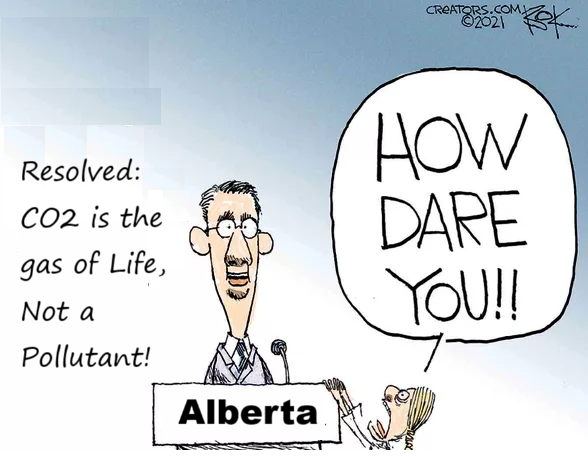
Alberta: “CO2 Gas of Life, Not Pollutant!” Media Outrage Ensues

Actually I discovered this news by way of Desmog whose report was in the spirit of Greta’s reaction to disbelief in CO2 hysteria.  Alberta Conservatives Pass Climate Denial Resolution 12 to Celebrate CO2 Pollution.  Excerpts in italics with my bolds.

UCP pledges to abandon the province’s net zero targets,
and remove the designation of CO2 as a pollutant.

UCP members voted in favor of a resolution to “recognize the importance of CO2 to life and Alberta’s prosperity.” Credit: Danielle Paradis [Participants numbered over 6000]

Alberta’s United Conservative Party has passed a resolution to rebrand carbon dioxide — the chief gas whose overabundance in Earth’s atmosphere is causing the climate emergency — in a brazen display of climate science denial that harkens back to the 1990s fossil fuel industry playbook.
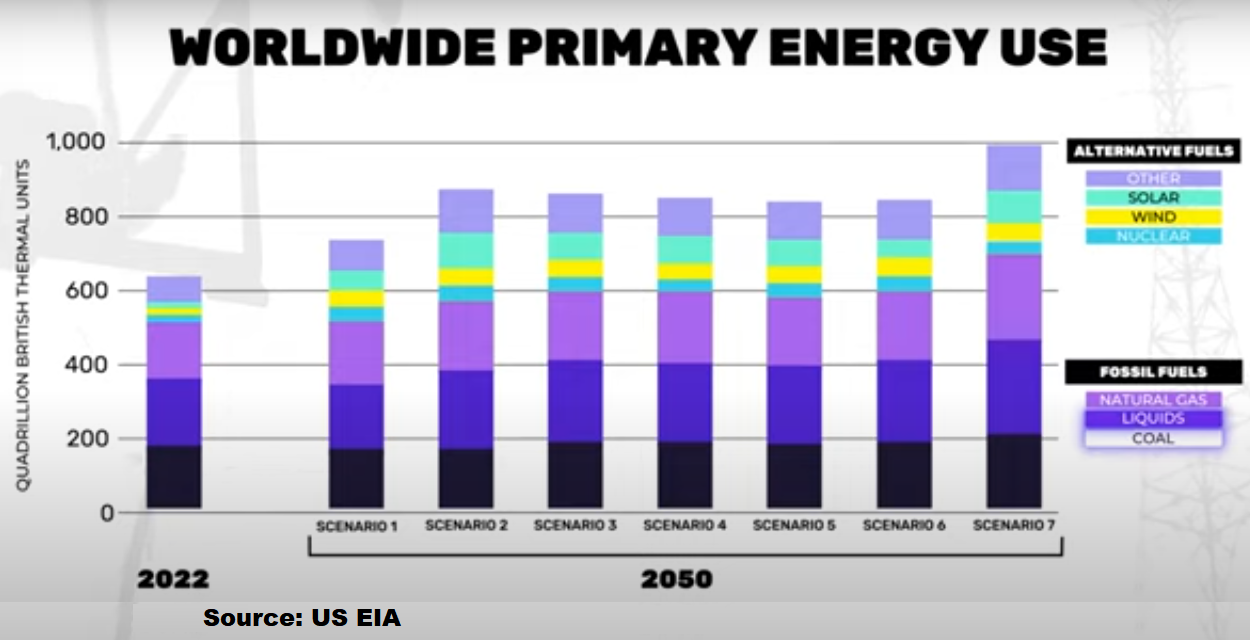
Resolution 12, which falls under the “environmental stewardship and emissions reduction” area of the policy discussion, will “recognize the importance of CO2 to life and Alberta’s prosperity.” 

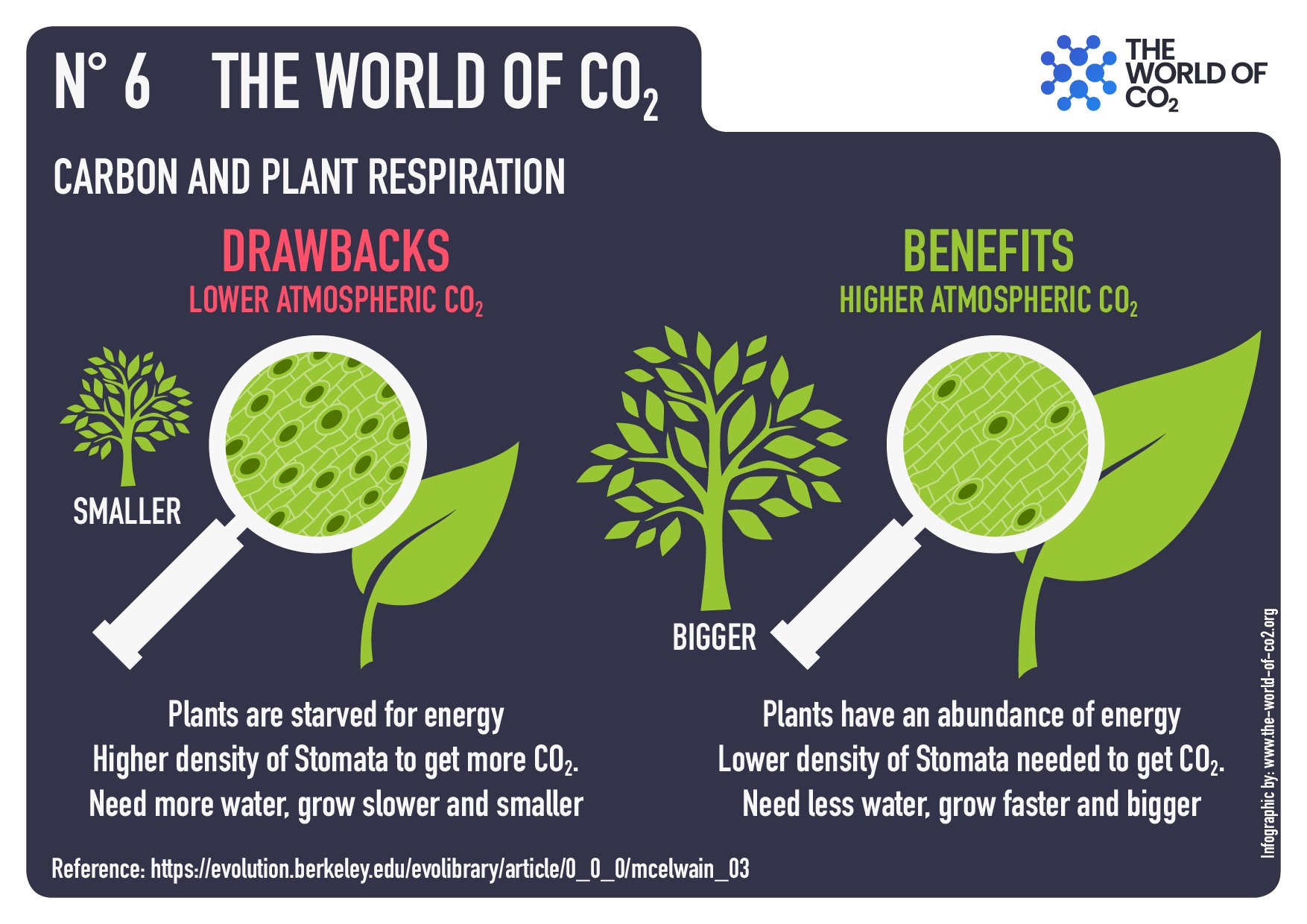
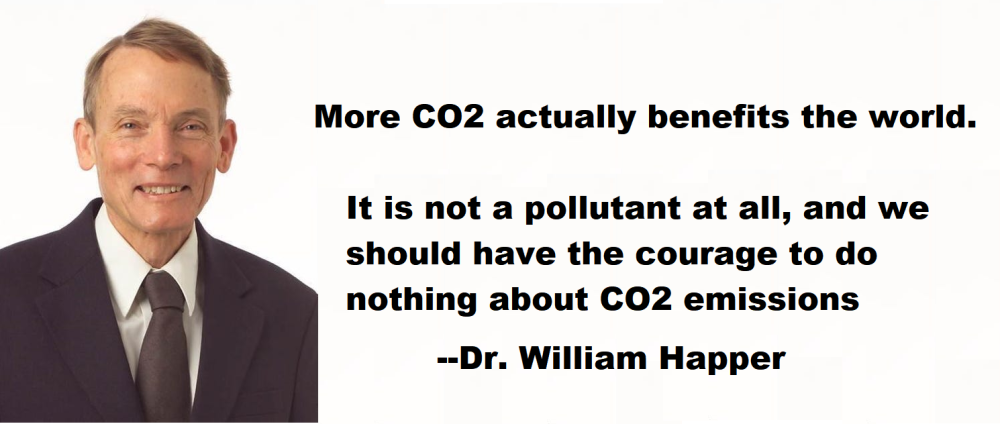
In approving the resolution, the UCP resolved to abandon the province’s net zero targets, remove the designation of CO2 as a pollutant, and further “recognize that CO2 is a foundational nutrient for all life on Earth.”

“We must prioritize policies that protect our economy and our way of life. CO2 is an essential nutrient for mass, driving growth and boosting plant production. According to the CO2 Coalition, higher CO2 levels have led to healthier crops and improved food security worldwide,” said a UCP member speaking in favour of the policy who cited the notorious CO2 Coalition

The resolution passed by a wide majority. 

Background

I searched in vain for any news report citing reasons favoring such a resolution.  Instead, the journalists repeated the activist mantras, like lemmings impervious to any POV not proscribed by the canon.  Before getting into that content, let’s remember that this political party is faithful to its constituents.

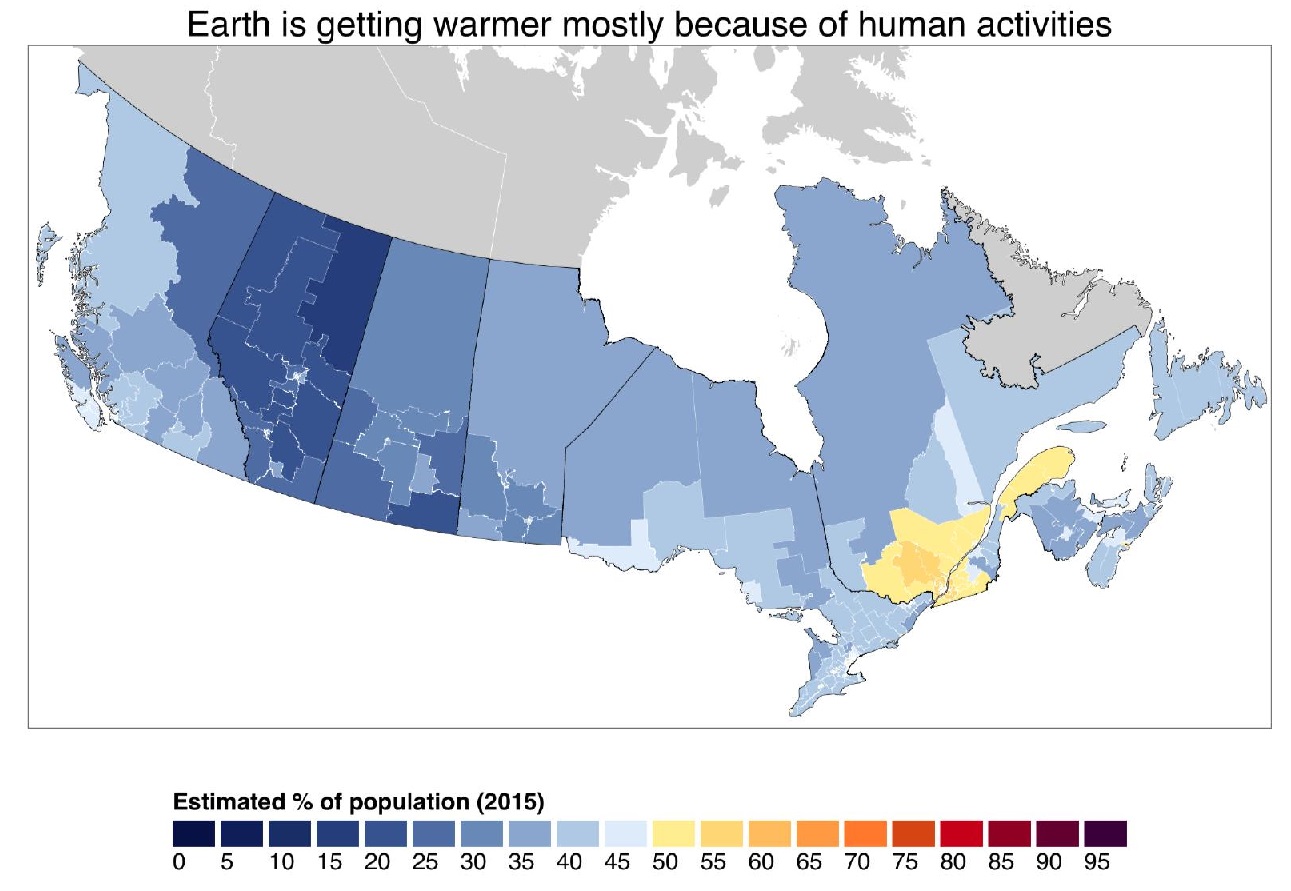
In 2015 Canadians were asked for their candid views of global warming/climate change.  The two principle questions were:

1. “From what you’ve read and heard, is there solid evidence that the average temperature on earth has been getting warmer over the past four decades?”

2. [If yes, solid evidence] “Is the earth getting warmer mostly because of human activity such as burning fossil fuels or mostly because of natural patterns in the earth’s environment?”

The responses were quite diverse, to the pollsters’ surprise, yet Trudeau claimed the results justified his push for a carbon tax and other measures to regulate and reduce CO2 emissions.  Buried in the supporting documents, and ignored by him and the media was this finding:

This process did determine a survey result about the size of the population who believes warming is happening and mostly caused by humans.  Everything else is subject to interpretation, including how much is due to land use, urbanization or fossil fuel emissions.  The solid finding is displayed in the diagram above.  Yes, the map shows I am living in a hotbed of global warming believers around Montreal; well, it is 55%, as high as it gets in Canada. Yet Trudeau went on to impose his anti-hydrocarbon agenda despite most of the nation opposed to the idea. More to the point, that dark blue province in the west is none other than Alberta.  Clearly, their common sense skepticism of climate alarm is not a recent position. [For more on that survey see Uncensored: Canadians View Global Warming]

The Offenses Taken by Warmists from Alberta’s Resolve

1. Media reports repeated the claim that CO2 is a pollutant because it has caused rising temperatures.  For example, from Desmog:

Carbon dioxide is the gas principally responsible for exacerbating the greenhouse effect, the consequence of which is global warming. Whereas carbon is a foundational building block of life on Earth, carbon dioxide is an asphyxiating gas whose atmospheric proportions are so high they’re disrupting the normal function of the carbon cycle.

That reference to “greenhouse effect” ignores the fact that changes in CO2 follow changes in global temperatures on all time scales, from last month’s observations to ice core datasets spanning millennia. Since CO2 is the lagging variable, it cannot logically be the cause of temperature, the leading variable. It is folly to imagine that by reducing human emissions of CO2, we can change global temperatures, which are obviously driven by other factors. [See Mid 2024 More Proof Temp Changes Drive CO2 Changes]

It also exaggerates the importance of the trace gas CO2 upon planetary heat transfers dominated by H2O.

The asphyxiating  label denies scientific knowledge about the properties of CO2 in our environment.

2. Advocates also disputed that CO2 is the “gas of life”, claiming that CO2 diminishes rather than enriches plant life.  For example, again from Desmog:

In the “rationale” section of the resolution, the United Conservative Party document argues that “CO2 is a nutrient foundational to all life on Earth.”

While plants need both light and carbon dioxide to thrive, the over-supply of CO2 in recent decades is leading to plants being deprived of their nutrients. One biologist was quoted in a 2017 Politico article describing this as akin to “the greatest injection of carbohydrates into the biosphere in human history,” and that injection is diluting the nutrients in the food supply.

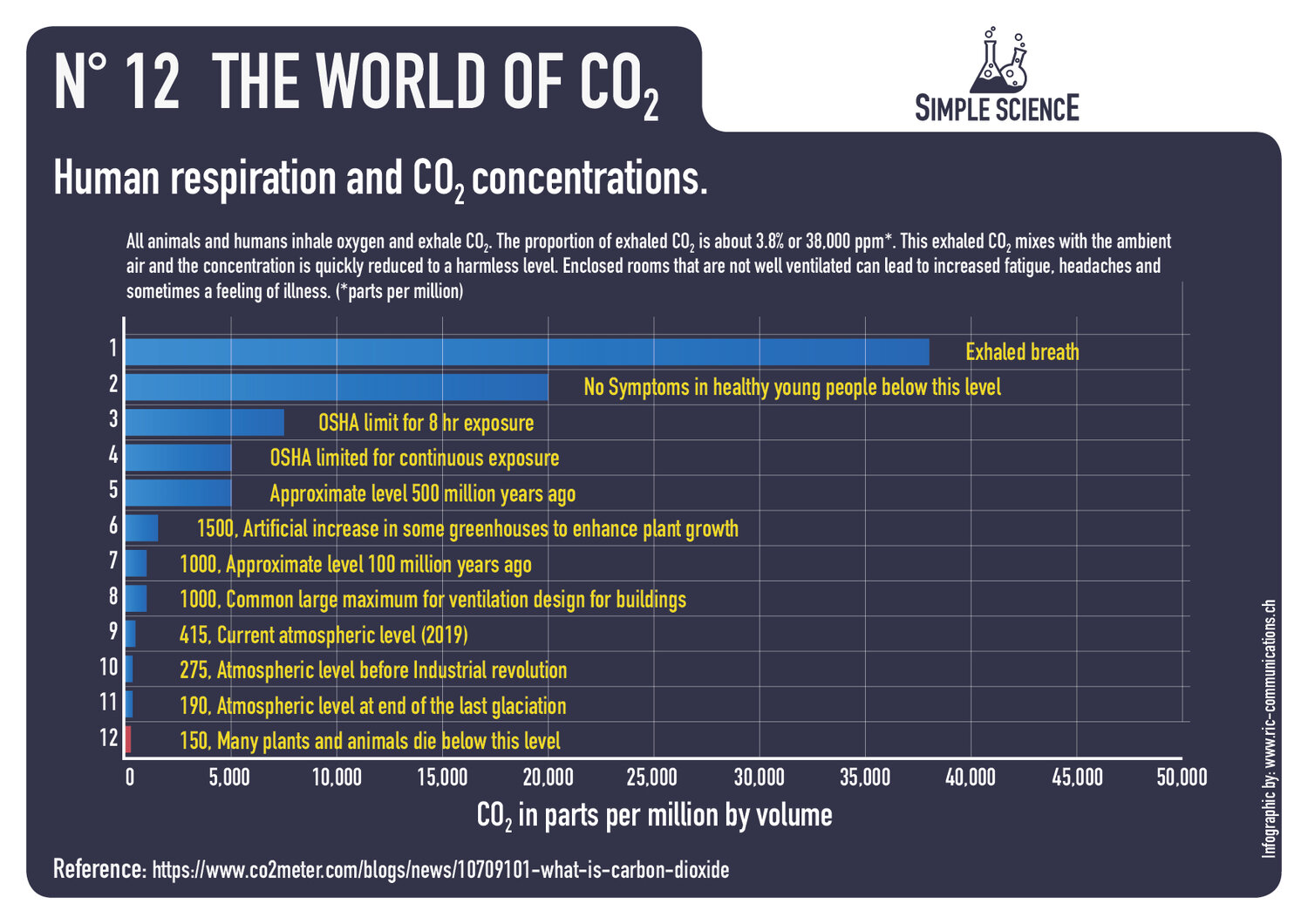
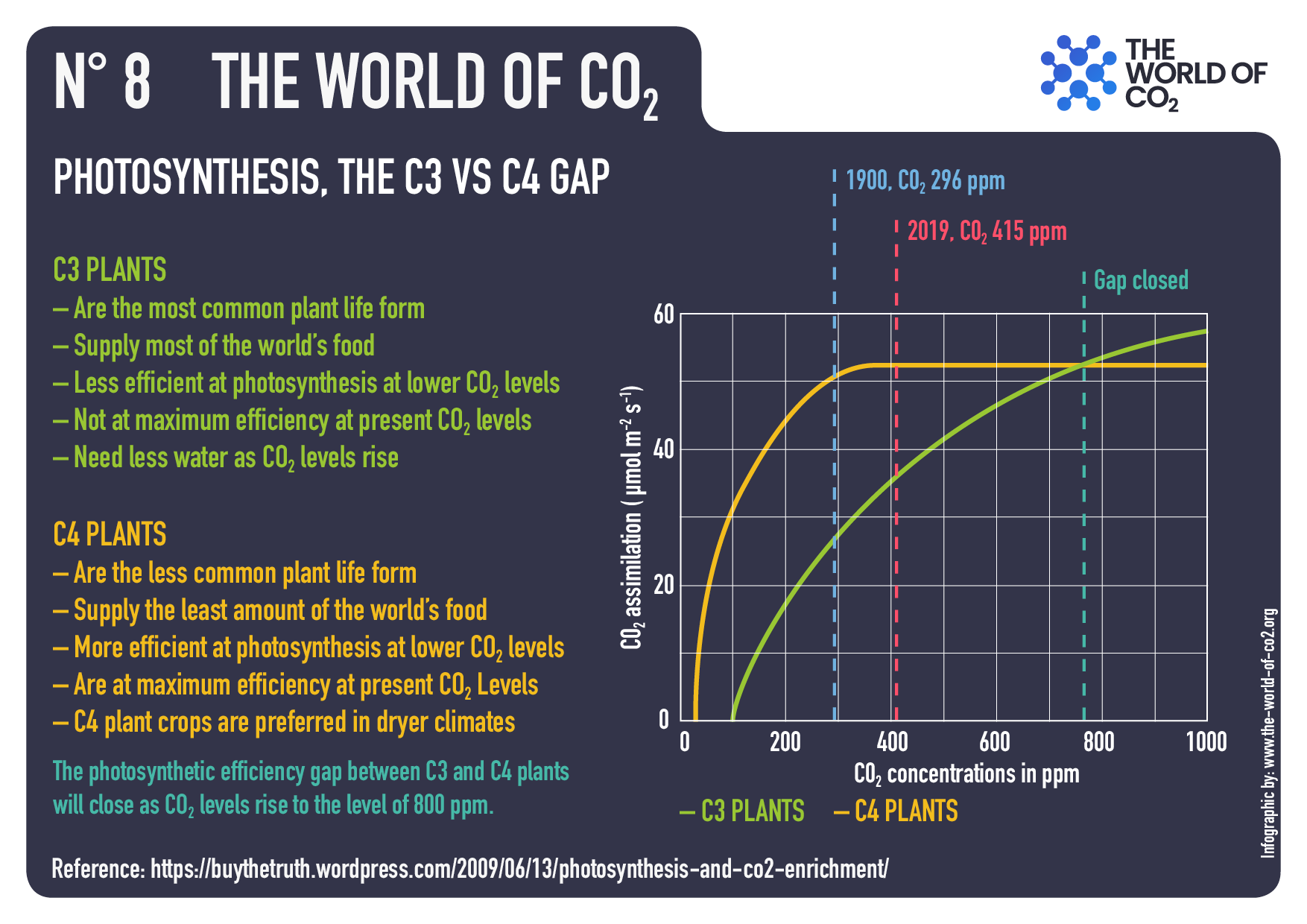
Firstly, there is no doubt more CO2 is good for plants.  That’s why operators of greenhouses for growing them add CO2 up to three or four times our present 420 ppm.

Experiments have confirmed the botanical principle of limiting factors. At present concentrations, rising CO2 always increases plant productivity unless another factor is sub-optimal and constrains growth. The researchers, aided and abetted by the media are spinning this to say more CO2 is not good for plants. In reality, the lack of phosphorus or other nutrients is not the fault of CO2, and will not be enhanced by somehow reducing CO2. [See CO2 Destroys Food Nutrition! Not.]

3. And media reports added the fear of extreme weather events, attributing them to CO2 emissions.  Again from Desmog:

As the principal driver of the climate crisis and global warming, increasing CO2 levels will exacerbate droughts, wildfires, and floods, among other disasters, in turn resulting in loss of life and major disruptions to global supply chains. The consequent economic disturbances and their aftereffects will worsen the affordability crisis and result in increasingly negative economic outcomes for all, not just Albertans. Rather than stimulate Alberta’s agricultural sector, climate change will destroy it, and the evidence this is already happening is quite clear.

This is again the doomsday litany that rising CO2 will destroy life as we know it.  None of the data support that narrative.  Just one of many examples of facts vs. fears is the above showing how droughts and flooding have always happened.  These events are within the past range of variability and have not increased with rising CO2.  Rather than show more such graphs, this video is a brief realistic summary of our climate circumstances.

Summary

Albertans are wise and courageous to take their position, and have many experts who share their understanding.