Update: Honolulu Climate Shakedown vs Big Oil

As reported many places, a lawsuit against oil companies was allowed by Hawaii Supreme Court and the defendants (petitioners) have asked the US Supreme Court to hear their case by filing a Petition for a Writ of Certiorari.  Excerpts from the petition are in italics below with my bolds, the citations omitted but with pages noted. The red title is a link to the entire petition.

In the referenced case, at issue is a technical point concerning which court has jurisdiction to rule on the shakedown lawsuit. Defendants ask the Supremes to decide the question:

Whether federal law precludes state-law claims seeking redress for injuries allegedly caused by the effects of interstate and international greenhouse-gas emissions on the global climate. 

On the merits of the case, the petition summarizes this way:

Like many other state and local governments in similar cases across the country, respondents filed this action against petitioners in local state court, asserting claims purportedly arising under state law to recover for harms that respondents allege they have sustained (and will sustain) because of the physical effects of global climate change. (pg. 3)

The Hawaii Supreme Court further held that, despite the complaint’s focus on the physical effects of climate change, interstate and international emissions were not the source of respondents’ injuries; petitioners’ marketing and public statements were. The Hawaii Supreme Court’s decision was incorrect, and it provides this Court with the ideal opportunity to address whether the state-law claims asserted in this nationwide litigation are even allowable before the energy industry is threatened with potentially enormous judgments. (.pg. 4)

Objections:  Asserting Facts Not in Evidence

In recapping the judicial history of this case, defense lawyers quote multiple times judges and plaintiffs made assertions in the absence of evidence. Examples include:

In American Electric Power, supra, the Court addressed the effect of the Clean Air Act on the federal common law governing air pollution. The Court held that the Act displaced nuisance claims under federal common law seeking the abatement of greenhouse-gas emissions from another State. Because the Clean Air Act “ ‘speaks directly’ to emissions of carbon dioxide from the defendants’ plants,” the Court saw “no room for a parallel track” under federal common law. The Court left open the question whether “the law of each State where the defendants operate power plants” could be applied. (pg.6)

Petitioners in this case are 15 energy companies that extract, produce, distribute, or sell fossil fuels around the world. The plaintiff respondents are the City and County of Honolulu and the Honolulu Board of Water Supply. On March 9, 2020, the City and County of Honolulu filed a complaint against petitioners in Hawaii state court, alleging that petitioners have contributed to global climate change, which in turn has caused a variety of harms in Honolulu. The Honolulu Board of Water Supply later joined the case as a plaintiff.

Respondents allege that increased greenhouse-gas emissions around the globe have contributed to a wide range of climate-change-related effects.  In particular, respondents cite:

♦  “sea level rise and attendant flooding, erosion, and beach loss”;
♦ “increased frequency and intensity of extreme weather events”;
♦ “ocean warming and acidification that will injure or kill coral reefs”;
♦ “habitat loss of endemic species”;
♦ “diminished availability of freshwater resources”; and
♦ “cascading social, economic, and other consequences.”

Respondents allege that those effects have resulted in:

♦  property damage;
♦  “increased planning and preparation costs for community adaptation and resiliency”; and
♦  “decreased tax revenue” because of declines in tourism.

Respondents contend that “pollution from [petitioners’] fossil fuel products plays a direct and substantial role in the unprecedented rise in emissions of greenhouse gas pollution,” which is the “main driver” of global climate change. (pg. 9)

At the same time, respondents concede that “it is not possible to determine the source of any particular individual molecule of CO2 in the atmosphere attributable to anthropogenic sources because such greenhouse gas molecules do not bear markers that permit tracing them to their source, and because greenhouse gasses quickly diffuse and comingle in the atmosphere.”

Respondents assert state-law claims for public nuisance, private nuisance, strict liability, failure to warn, negligent failure to warn, and trespass. Each claim is premised on the same basic theory of liability: namely,

♦ that petitioners knew that their fossil-fuel products would cause an increase in greenhouse-gas emissions,
♦ yet failed to warn of that risk and instead,
♦ engaged in advertising and other speech to persuade governments and consumers not to take steps designed to reduce or regulate fossil fuel consumption,
♦ thereby causing increased emissions and climate change. (pg.10)

The Hawaii Supreme Court rejected petitioners’ argument that a sufficient connection between the claims and the forum did not exist because the use of petitioners’ products in Hawaii could not have injured respondents, as Hawaii accounts for only 0.06% of the world’s carbon-dioxide emissions per year. (pg.11)

Separately, the court concluded that, even if federal common law had not been displaced, it would not govern respondents’ claims. The court recognized that federal common law governs claims where “the source of the injury * * * is pollution traveling from one state to another,” but it asserted that the source of respondents’ alleged injury was petitioners’ “tortious marketing conduct,” not “pollution traveling from one state to another.” The court did not attempt to reconcile that characterization with its earlier recognition that respondents’ theory of liability depends upon petitioners’ conduct allegedly “dr[iving] consumption [of fossil fuels], and thus greenhouse gas pollution, and thus climate change,” resulting in alleged physical and economic effects in Honolulu. (pg.12-13)

In the Hawaii Supreme Court’s view, the inherently federal area of interstate pollution covers only claims where “the source of the injury * * * is pollution traveling from one state to another,” not “failure to warn and deceptive promotion.” But the complaint in City of New York likewise alleged that the defendants’ promotion and marketing of their products caused injury by increasing greenhouse gas emissions. The Second Circuit nevertheless concluded that the plaintiff was seeking relief “precisely because fossil fuels emit greenhouse gases” and thereby exacerbate climate change, and it thus declined to allow the plaintiff to “disavow[] any intent to address emissions” while “identifying such emissions” as the source of its harm. (pg.18)

Allowing the law of one State to govern disputes regarding pollution emanating from another State would violate the “cardinal” principle that “[e]ach [S]tate stands on the same level with all the rest,” by permitting one State to impose its law on other States and their citizens. Federal law must govern such controversies because they “touch[] basic interests of federalism” and implicate the “overriding federal interest in the need for a uniform rule of decision.” And because “borrowing the law of a particular State would be inappropriate” to resolve such interstate disputes, federal law must govern. (pg.23)

Respondents’ theory of liability is that petitioners’ fossil-fuel products are “hazardous” because they “cause or exacerbate global warming and related consequences,” and that petitioners acted wrongfully by promoting those products and allegedly taking actions to “conceal[] the[ir] hazards” and prevent “the[ir] regulation.” Respondents are seeking relief in the form of damages and equitable remedies for physical harms allegedly caused by global climate change, including “sea level rise, drought, extreme precipitation events, extreme heat events, and ocean acidification.” The “gravamen” of respondents’ complaint, is thus that petitioners’ conduct increased the world wide use of fossil fuels, resulting in increased global greenhouse-gas emissions, which contributed to global climate change and resulted in localized physical effects in Hawaii. (pg.24-25)

Respondents allege that their injuries are caused by the interstate and international emissions of greenhouse gases over many decades. Respondents’ requested relief—including damages—is designed not only to remedy injuries allegedly caused by those emissions but to regulate worldwide activities producing those emissions. Respondents are simply attempting to recover by moving up one step in the causal chain and suing the fuel producers rather than the emitters themselves (which include the vast majority of the world’s population). (pg.25)

Although the Clean Air Act has two saving clauses, they are materially identical to the Clean Water Act’s saving clauses and thus permit actions under state law only to the extent that the plaintiff is proceeding under the law of the State in which the source of the pollution is located. Of course, that is impossible here, where the alleged mechanism of respondents’ injuries is the combined effect of all greenhouse gas emissions worldwide. Federal law thus precludes respondents’ state-law claims. Indeed, in light of the breadth of the Clean Air Act’s governance of greenhouse gas emissions, respondents’ state-law claims would be foreclosed even if a presumption against preemption
applied. (pg.26)

Climate activists protesting outside the Supreme Court July 1, 2022 after the court announced its decision in West Virginia v. EPA. Francis Chung/E&E News/POLITICO

Because respondents seek relief for climate-change related harms, international emissions—which represent the overwhelming majority of total anthropogenic emissions—are the primary causal mechanism underlying their alleged injuries. “Greenhouse gases once emitted become well mixed in the atmosphere; emissions in New Jersey may contribute no more to flooding in New York than emissions in China.” (pg.27)

The complaint is candid on this point: respondents repeatedly allege that defendants’ conduct led to increased greenhouse-gas emissions worldwide, which caused or exacerbated global climate change and thereby caused localized harms in Hawaii. Respondents nowhere alleged harm from petitioners’ alleged deceptive conduct other than through the mechanisms of increased emissions and global climate change. When faced with the same argument, the Second Circuit rightly held that a plaintiff cannot “have it both ways” by “disavowing any intent to address emissions” when convenient while simultaneously “identifying such emissions as the singular source of the [alleged] harm.” (pg.30)

The approach adopted by the Hawaii Supreme Court not only contravenes this Court’s precedents but would also permit suits alleging injuries pertaining to global climate change to proceed under the laws of all 50 States—a blueprint for chaos. As the federal government explained in its brief in American Electric Power, “virtually every person, organization, company, or government across the globe * * * emits greenhouse gases, and virtually everyone will also sustain climate-change-related injuries,” giving rise to claims from “almost unimaginably broad categories of both potential plaintiffs and potential defendants.” Out-of-state actors (including the nonresident energy companies here) would quickly find themselves subject to a “variety” of “vague” and “indeterminate” state-law standards, and States would be empowered to “do indirectly what they could not do directly—regulate the conduct of out-of-state sources.” That could lead to “widely divergent results”—and potentially massive liability—if a patchwork of 50 different legal regimes applied. And that is especially true to the extent that a state court attempts to exercise jurisdiction expansively over any energy company that does business in the State.

Background Resource

Finally, a Legal Rebuttal on the Merits of Kids’ Climate Lawsuit

There is no charge for content on this site, nor for subscribers to receive email notifications of postings.

Helter Skelter Climate Policies

Ross McKitrick explains the dangers of making climate policies willy-nilly in his Financial Post article Economists’ letter misses the point about the carbon tax revolt.  Excerpts in italics with my bolds and added images.

Yes, the carbon tax works great in a ‘first-best’ world where it’s the
only carbon policy. In the real world, carbon policies are piled high.

An open letter is circulating online among my economist colleagues aiming to promote sound thinking on carbon taxes. It makes some valid points and will probably get waved around in the House of Commons before long. But it’s conspicuously selective in its focus, to the point of ignoring the main problems with Canadian climate policy as a whole.


EV charging sign Electric-vehicle mandates and subsidies are among the mountain of climate policies that have been piled on top of Canada’s carbon tax. PHOTO BY JOSHUA A. BICKEL/THE ASSOCIATED PRESS

There’s a massive pile of boulders blocking the road to efficient policy, including:

    • clean fuel regulations,
    • the oil-and-gas-sector emissions cap,
    • the electricity sector coal phase-out,
    • strict energy efficiency rules for new and existing buildings,
    • new performance mandates for natural gas-fired generation plants,
    • the regulatory blockade against liquified natural gas export facilities,
    • new motor vehicle fuel economy standards,
    • caps on fertilizer use on farms,
    • provincial ethanol production subsidies,
    • electric vehicle mandates and subsidies,
    • provincial renewable electricity mandates,
    • grid-scale battery storage experiments,
    • the Green Infrastructure Fund,
    • carbon capture and underground storage mandates, 
    • subsidies for electric buses and emergency vehicles in Canadian cities,
    • new aviation and rail sector emission limits,
      and many more.

Not one of these occasioned a letter of protest from Canadian economists.

Beside that mountain of boulders there’s a twig labelled “overstated objections to carbon pricing.” At the sight of it, hundreds of economists have rushed forward to sweep it off the road. What a help!

To my well-meaning colleagues I say: the pile of regulatory boulders
long ago made the economic case for carbon pricing irrelevant.

Layering a carbon tax on top of current and planned command-and-control regulations does not yield an efficient outcome, it just raises the overall cost to consumers. Which is why I can’t get excited about and certainly won’t sign the carbon-pricing letter. That’s not where the heavy lifting is needed.

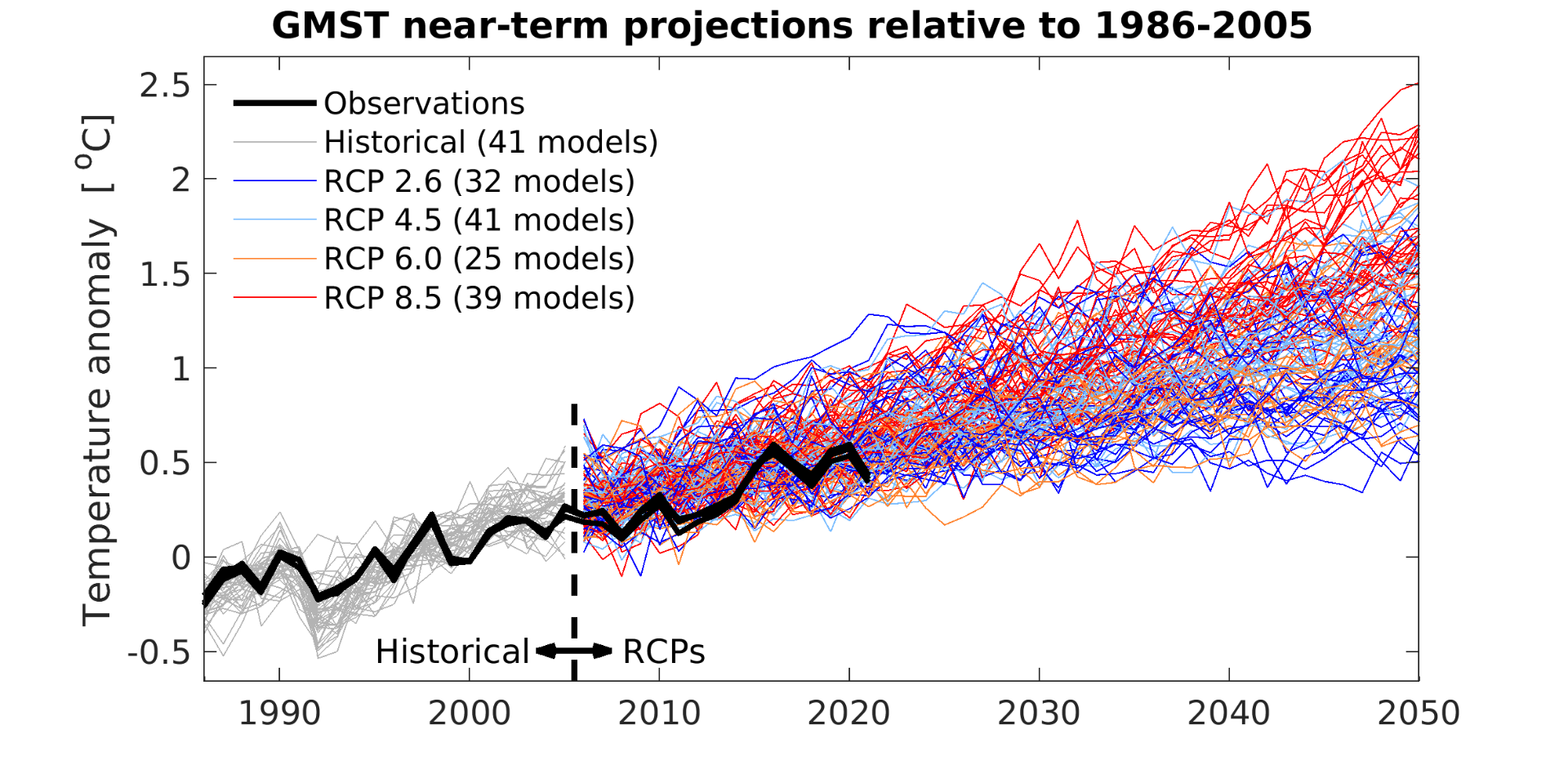
My colleagues object to exaggerated claims about the cost of carbon taxes. Fair enough. But far worse are exaggerated claims about both the benefits of reducing carbon dioxide emissions and the economic opportunities associated with the so-called “energy transition.” Exaggeration about the benefits of emission reduction is traceable to poor-quality academic research, such as continued use of climate models known to have large, persistent warming biases and of the RCP8.5 emissions scenario, long since shown in the academic literature to be grossly exaggerated.

But a lot of it is simply groundless rhetoric. Climate activists, politicians and journalists have spent years blaming Canadians’ fossil fuel use for every bad weather event that comes along and shutting down rational debate with polemical cudgels such as “climate emergency” declarations. Again, none of this occasioned a cautionary letter from economists.

There’s another big issue on which the letter was silent. Suppose we did clear all the regulatory boulders along with the carbon-pricing-costs-too-much twig. How high should the carbon tax be? A few of the letter’s signatories are former students of mine so I expect they remember the formula for an optimal emissions tax in the presence of an existing tax system. If not, they can take their copy of Economic Analysis of Environmental Policy by Prof. McKitrick off the shelf, blow off the thick layer of dust and look it up. Or they can consult any of the half-dozen or so journal articles published since the 1970s that derive it. But I suspect most of the other signatories have never seen the formula and don’t even know it exists.

To be technical for a moment, the optimal carbon tax rate varies inversely with the marginal cost of the overall tax system. The higher the tax burden — and with our heavy reliance on income taxes our burden is high — the costlier it is at the margin to provide any public good, including emissions reductions. Economists call this a “second-best problem”: inefficiencies in one place, like the tax system, cause inefficiencies in other policy areas, yielding in this case a higher optimal level of emissions and a lower optimal carbon tax rate.

Based on reasonable estimates of the social cost of carbon and the marginal costs of our tax system, our carbon price is already high enough. In fact, it may well be too high. I say this as one of the only Canadian economists who has published on all aspects of the question. Believing in mainstream climate science and economics, as I do, does not oblige you to dismiss public complaints that the carbon tax is too costly.

Which raises my final point: the age of mass academic letter-writing has long since passed. Academia has become too politically one-sided. Universities don’t get to spend years filling their ranks with staff drawn from one side of the political spectrum and then expect to be viewed as neutral arbiters of public policy issues. The more signatories there are on a letter like this, the less impact it will have. People nowadays will make up their own minds, thank you very much, and a well-argued essay by an individual willing to stand alone may even carry more weight.

Online conversations today are about rising living costs, stagnant real wages and deindustrialization. Even if carbon pricing isn’t the main cause of all this, climate policy is playing a growing role and people can be excused for lumping it all together. The public would welcome insight from economists about how to deal with these challenges. A mass letter enthusing about carbon taxes doesn’t provide it.

There is no charge for content on this site, nor for subscribers to receive email notifications of postings.

How the Carbon Cult Subverts Political Discourse

Trudeau Turns the Carbon Tax Screws on Canadians April 1

Ross Mckitrick explains the smoke and mirrors in Trudeau’s justifications for his racheting carbon tax in a National Post article Wanted: A leader who is honest about climate policy.  Excerpts in italics with my bolds and added images.

Pierre Poilievre is leading anti-carbon tax rallies around the country, ginning up support for an old-fashioned tax revolt. In response, Justin Trudeau went to Calgary and trumpeted — believe it or not! — his love of free markets. After explaining the economic logic of using a carbon tax to reduce greenhouse gases, the prime minister slammed regulatory approaches, which, he said, “all involve the heavy hand of government. I prefer a cleaner solution, a market-based solution and that is, if you’re behaving in a way that causes pollution, you should pay.” He added that the Conservatives would instead rely on the “heavy hand of government through regulation and subsidies to pick winners and losers in the economy as opposed to trusting the market.”  Amen to all that!

But someone should tell Trudeau that his own government’s
Emission Reduction Plan mainly consists of heavy-handed
regulations, subsidies, mandates and winner-picking grants.

Within its 240 pages one does find a carbon tax. But also 139 additional policies, including:

♦  Clean Fuels Regulations,
♦  An electric vehicle mandate that will ban gasoline cars by 2035,
♦  Aggressive fuel economy standards that will hike such cars’ cost in the meantime,
♦  Costly new emission targets specifically for oil & gas, agriculture, heavy industry and waste management,
♦  Onerous new energy efficiency requirements both for new buildings and renovations of existing buildings, New electricity grid requirements, and page upon page of
♦  Subsidy funds for “clean technology” firms and other would-be winners in the sunlit uplands of the new green economy.

Does Trudeau oppose any of that? Hardly. But the economic logic of a carbon tax only applies when it is used on its own. He doesn’t get to boast about the elegance of market mechanisms on behalf of a policy package that starts with a price signal then destroys it with a massive regulatory apparatus. Trudeau also tried to warm his Alberta audience to the carbon tax by invoking the menace of mild weather and forest fires. In fairness it was an unusual February in Calgary. The month began with a week of above-zero temperatures, hitting five degrees Celsius at one point, then there was a brief cold snap before Valentine’s Day, then the daytime highs soared to the low teens for nine days and the month ended with soupy above-zero conditions. Weird.

Oops, that was 1981. This year was weirder: February highs were above zero for 25 out of 28 days, eight of which were even above 10 degrees C.

Oops again, that was 1991. Granted, February 2024 also had
its mild patches, but not like the old days.

Of course, back then warm weather was just weather. Now it’s a climate emergency and Canadians demand action. Except they don’t want to pay for it, which is the main problem for politicians when trying to come up with a climate policy that’s both effective and affordable. In fact, you can only have one of those two. Take your pick: effective or affordable, affordable or effective.

In practice, of course we typically end up zero for two,
with policies that are both ineffective and unaffordable.

You can claim your policy will yield deep decarbonization while boosting the economy, which almost all politicians in every western country have spent decades doing. But it’s not true. With current technology, affordable policies yield only small temporary emission reductions. Population and economic growth swamp their effects over time, which is why mainstream economists have long argued that while we can eliminate some lowvalue emissions, for the most part we will just have to live with climate change. Trying to stop it would cost far more than it’s worth.

Meanwhile the policy pantomime continues. Poilievre’s anti-carbon tax rallies are popular, but what happens after we axe the tax? If he plans to replace it with regulatory measures aimed at achieving the same emission cuts, he really should tell his rallygoers that what he has in mind will hit them even harder than the tax they’re so keen to scrap.

Or does he have the courage to do the sensible thing
and follow the mainstream economics advice?

If he wants to be honest with Canadians, he must explain that the affordable options will not get us to the Paris target, let alone to net-zero, and even if they did, what Canada does will have no effect on the global climate because we’re such small players. Maybe new technologies will appear over the next decade that change the economics, but until that day we’re better off fixing our growth problems, getting the cost of living down and continuing to be resilient to all the weather variations Canadians have always faced.

Addendum

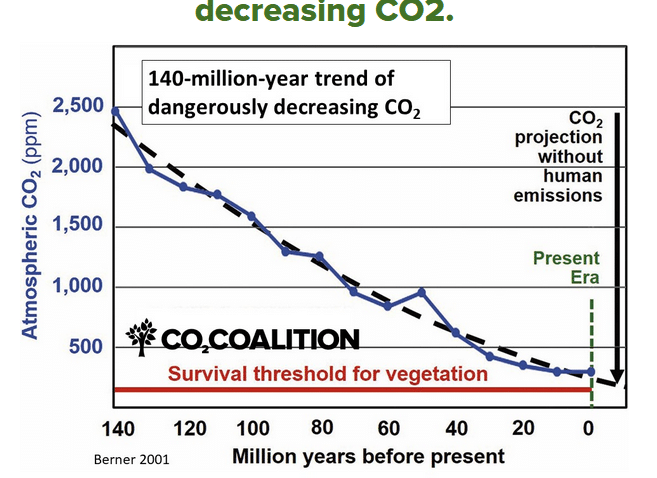
Notice that Trudeau asserts that his carbon tax is needed so that “polluters pay.”  Millions of Canadian taxpayers’ dollars have been spent on prime time TV ads reminding viewers that we have to do something to stop “carbon pollution”, by which they mean CO2 emissions.  No matter that CO2, far from being an unnatural contaminant, is plant food without which (less than 150 ppm) plants and animals die.  No mention of thousands of scientists proclaiming that “There is No Climate Emergency,” and that global warming and rising CO2 since the Little Ice Age have led to unprecedented human flourishing.

So essential CO2 is labeled as a pollutant in order to insist that emissions from burning hydrocarbons must be reduced to avert a crisis: heat waves, forest fires, floods, droughts, etc. etc.  The premise is “We have to do something to stop emitting CO2.”  Politicians of all stripes dare not question it.  And a video interview below demonstrates how that premise prevents any reasonable discussion of energy policy.

The Parliamentary Budget Officer released a report looking into how much the carbon tax is actually costing Canadian households. In the CBC interview, Parliamentary Budget Officer Yves Giroux breaks down the report. And, Dale Beugin, executive vice-president of the Canadian Climate Institute discusses the analysis his organization has conducted on the government’s emissions reduction plan. Note the PBO role is non-partisan, while the CCI agenda is open and obviously Gung Ho against CO2.

The discussion with the PBO ends at 11 minutes into the video, the remainder being CCI talking about ways to shape industrial policies to force additional emissions down to meet Paris targets.  A few excerpts from the first part show how difficult it is to escape the premise that we have to do something about CO2.

CBC:  I’m sure have been watching what’s been happening in the House of Commons the conclusions in your report they’re being cited by the conservatives in particular as proof that Canadians are worse off because of carbon pricing and that means this policy needs to go. Is that a fair representation of your findings?

PBO: Well it’s a representation of our findings once you also include the economic impacts of introducing a carbon tax. So there’s the fiscal impact on households paying the tax versus the amount of the rebate that households are receiving. But once you also include the economic impacts due to the introduction of a carbon tax, for example the reduction in activity or the slower growth in economic activity in some sectors then that’s the full impact.

CBC:  The fiscal analysis is the financial analysis that the government points to. They say most families will still get  more in rebates than they pay, sort  of Straight Cash Out, Straight Cash in.  Is that a fair representation?

PBO: The conclusion we arrived at if you take into consideration the carbon tax that households pay on their fossil fuels that they’re buying: gasoline, natural gas, diesel and so on, they pay that directly as well as the embedded energy component of whatever goods and services they buy and they subtract from that the the rebate then about 80% of households are better off.

CBC: It gets complicated and this is where it gets controversial because you took a look at the broader effect that carbon pricing, any kind of tax has on an economy, it can have an economic impact to the negative and this is the line from report that conservatives point to once you factor in the rebate but also the economic impacts the majority of the households will see a negative impact as a result of the carbon tax. The rebuttal to that conclusion is that it doesn’t tell the whole story it doesn’t look at other options and other impacts. What do you say in terms of people understanding the meaning of that analysis?

PBO: The analysis looks at the world where the we have a carbon tax versus the absence of a carbon tax which is how we do economic analysis. So the impact of a carbon tax on the economy will have impacts on some sectors; the transportation sector to take one example, or the oil and gas sector, lower employment than would otherwise be the case or lower profits than would otherwise be the case. So that translates into economic impacts on average for households: lower employment, lower profits, lower dividends for those who own stocks Etc. so these are the economic impacts.

CBC: This is where the analysis has caused some confusion and drawn some criticism because the analysis only compares the impact as you said of a carbon price versus nothing, and nothing isn’t an option right? It doesn’t compare carbon pricing versus other options that other experts would say could be even more expensive. So how should people assess the political arguments we’re seeing without a clear comparative analysis of the options?

PBO: So my mandate is to provide cost estimates of policy proposals by the government or policy measures that the government has introduced. My mandate does not include providing cost estimates of alternative scenarios or multiple options. So you’re right that doing something else to reach International targets or a Canada’s commitment under the Paris Accord would also have costs. For example if we were to introduce massive subsidies for new technologies to wean ourselves off fossil fuels, that would obviously have costs. Introducing regulations also has costs and these costs could could be measured if we knew exactly what these alternatives are but there’s no clear policy proposal from the government as what would be the alternative to a carbon tax. So it’s difficult to cost something that has not been proposed yet.

It’s true that the consensus among economists is generally speaking a carbon tax is probably the least disruptive way to reduce emissions. That being said we see that the government itself is not relying solely on a carbon tax for various reasons. So the government itself is introducing subsidies for clean fuel and many regulations.

CBC: So you can’t assess this compared to another proposal because there is no other proposal to assess.  You also don’t factor in the cost of climate change. We’ve seen massive wildfires still burning from last year throughout the winter In British Columbia and in Alberta; you know the extreme weather on the East Coast, flooding and storms, all of that has a massive economic impact as well and a loss of productivity and cost to governments.

The idea is to stop that from getting worse or more frequent,
how do we assess that versus the cost
of using carbon pricing to lower emissions.

PBO: That’s a very difficult field to to venture into because the number of unusual weather events that’s occurring. We don’t know which ones are due to climate change and which ones would have occurred anyways, or whether their extent would have been smaller or even worse, probably  smaller especially in a short period of time. We’ve tried to estimate the impact of climate change between now and the year 2100 and we find that there is a cost to climate change but for the next few years between now and 2030 it’s very difficult to determine precisely the cost of climate change.  It’s an area that we ventured into but it’s not easy and not that many institutions and organizations have established clear parameters under which to estimate the cost of climate change.

It’s very unlikely that there’ll be significant technological breakthroughs between now and
2030 sufficient to even partially offset the cost of a carbon tax for example, or any measures to mitigate or reduce our carbon emissions. But it’s quite possible that Beyond 2030 once technologies become more mature they’ll be able to offset some of the costs that we’ll we’ll have to incur to reduce our greenhouse gas emissions. So that’s why it’s difficult to say whether the costs will be offset by the benefits over the longer term but between now and 2030 it’s clearly not going to happen.

I’m providing unbiased nonpartisan information, information not pronouncements, not verdicts on policies. It’s up to decision makers and Canadians to make up their own minds based on the information we provide them so they can decide whether a carbon tax or other measures are the best way forward to reduce carbon emissions. We’re not passing judgments as to whether a policy is working or not.

My Observations

This interview shows that the carbon cult narrative
subverts rational policymaking in three significant ways.

Firstly, there is no accounting of all the economic and social damage done by the multitude of federal government climate policies and regulations (139 that McKitrick found in the Emission Reduction Plan). Secondly the benefits to offset the carbon tax costs consider only saving some damages from extreme weather. This is problematic in two ways. There is no certainty that imposing these costs on Canadians will have any effect on CO2 levels, or  that climate and weather will be any different for having made the effort.

Add to that the ignoring of actual benefits to humankind and to the biosphere from rising atmospheric CO2 and warming temperatures. Virtually every year global agricultural production sets records because of warming and CO2 enhancing photosynthesis. That puts food on the table for billions of people. What insanity to pursue things like carbon capture to rob the biosphere of CO2, while dreaming of a cooler future planet. Both objectives would threaten the world food supply and can hardly be benefits to justify emissions reductions.

Finally CCI gives the game away when they say, in effect:
“You don’t like the carbon tax, but doing nothing is not an option.”

In fact doing nothing to reduce CO2 emissions is the best option, though politicians are loath to admit it. Few nations are achieving their Paris Treaty targets, and their emissions dwarf Canada’s.

The prosperity that comes from hydrocarbons can serve to build and maintain robust infrastructure and means of production for humanity to adapt to any changes in the climate, such as those in the past likely to happen again beyond our ability to stop them.

There is no charge for content on this site, nor for subscribers to receive email notifications of postings.

Wind and Solar The Grand Illusion

Mark Mills explains the many ways the deck is stacked against those gambling on Wind and Solar energy to replace hydrocarbon fuels.  The transcript is below in italics with my bolds and added images.

Have you ever heard of “unobtanium”?

It’s the magical energy mineral found on the planet Pandora in the movie, Avatar. It’s a fantasy in a science fiction script. But environmentalists think they’ve found it here on earth in the form of wind and solar power.

They think all the energy we need can be supplied by building enough wind and solar farms; and enough batteries.

The simple truth is that we can’t. Nor should we want to—not if our goal is to be good stewards of the planet.

To understand why, consider some simple physics
realities that aren’t being talked about.

All sources of energy have limits that can’t be exceeded. The maximum rate at which the sun’s photons can be converted to electrons is about 33%. Our best solar technology is at 26% efficiency. For wind, the maximum capture is 60%. Our best machines are at 45%.

So, we’re pretty close to wind and solar limits. Despite PR claims about big gains coming, there just aren’t any possible. And wind and solar only work when the wind blows and the sun shines. But we need energy all the time. The solution we’re told is to use batteries.

Again, physics and chemistry make this very hard to do.

Consider the world’s biggest battery factory, the one Tesla built in Nevada. It would take 500 years for that factory to make enough batteries to store just one day’s worth of America’s electricity needs. This helps explain why wind and solar currently still supply less than 3% of the world’s energy, after 20 years and billions of dollars in subsidies.

Putting aside the economics, if your motive is to protect the environment, you might want to rethink wind, solar, and batteries because, like all machines, they’re built from nonrenewable materials.

Consider some sobering numbers:

A single electric-car battery weighs about half a ton. Fabricating one requires digging up, moving, and processing more than 250 tons of earth somewhere on the planet.

Building a single 100 Megawatt wind farm, which can power 75,000 homes requires some 30,000 tons of iron ore and 50,000 tons of concrete, as well as 900 tons of non-recyclable plastics for the huge blades. To get the same power from solar, the amount of cement, steel, and glass needed is 150% greater.

Then there are the other minerals needed, including elements known as rare earth metals. With current plans, the world will need an incredible 200 to 2,000 percent increase in mining for elements such as cobalt, lithium, and dysprosium, to name just a few.

Where’s all this stuff going to come from? Massive new mining operations. Almost none of it in America, some imported from places hostile to America, and some in places we all want to protect.

Australia’s Institute for a Sustainable Future cautions that a global “gold” rush for energy materials will take miners into “…remote wilderness areas [that] have maintained high biodiversity because they haven’t yet been disturbed.”

And who is doing the mining? Let’s just say that they’re not all going to be union workers with union protections.

Amnesty International paints a disturbing picture: “The… marketing of state-of-the-art technologies are a stark contrast to the children carrying bags of rocks.”

And then the mining itself requires massive amounts of conventional energy, as do the energy-intensive industrial processes needed to refine the materials and then build the wind, solar, and battery hardware.

Then there’s the waste. Wind turbines, solar panels, and batteries have a relatively short life; about twenty years. Conventional energy machines, like gas turbines, last twice as long.

With current plans, the International Renewable Energy Agency calculates that by 2050, the disposal of worn-out solar panels will constitute over double the tonnage of all of today’s global plastic waste. Worn-out wind turbines and batteries will add millions of tons more waste. It will be a whole new environmental challenge.

Before we launch history’s biggest increase in mining, dig up millions of acres in pristine areas, encourage childhood labor, and create epic waste problems, we might want to reconsider our almost inexhaustible supply of hydrocarbons—the fuels that make our marvelous modern world possible.

And technology is making it easier to acquire and cleaner to use them every day.

It would take a wind farm the size of Albany county NY to replace the now closed Indian Point nuclear power plant.

The following comparisons are typical—and instructive:

It costs about the same to drill one oil well as it does to build one giant wind turbine. And while that turbine generates the energy equivalent of about one barrel of oil per hour, the oil rig produces 10 barrels per hour. It costs less than 50 cents to store a barrel of oil or its equivalent in natural gas. But you need $200 worth of batteries to hold the energy contained in one oil barrel.

Next time someone tells you that wind, solar and batteries are
the magical solution for all our energy needs ask them
if they have an idea of the cost… to the environment.

“Unobtanium” works fine in the movies. But we don’t live in movies. We live in the real world.

I’m Mark Mills, Senior Fellow at the Manhattan Institute, for Prager University.

There is no charge for content on this site, nor for subscribers to receive email notifications of postings.

America’s Energy Scam Exploiting Humanity

Ronald Stein’s article at Eurasia Review is America’s Energy Scam: A Deliberate Exploitation Of Humanity That Only Increases Emissions.  Excerpts in italics with my bolds and added images.  H\T John Ray

America is aggressively pursuing “green” electricity and actively phasing out of crude oil to reduce emissions generated in America by deliberately increasing worldwide exploitations of humanity, environmental degradation, and increased emissions.

California Governor Gavin Newsom, President Joe Biden, and world leaders are not cognizant enough to know that wind turbines and solar panels only generate occasional electricity and are unable to manufacture tires, cable insulation, asphalt, medicines and the more than 6,000 products now made from the petrochemical derivatives manufactured from crude oil.

Without a replacement for those petrochemical derivatives manufactured from crude oil, phasing out oil would phase out the Medical Industry, Militaries, Transportation, Communications, and the Electrical Power industries, none of which existed before the 1800’s.

Climate changes may impact millions, but without fossil fuels and the infrastructures and products we have today that did not exist before 1800’s, we may lose BILLIONS from diseases, malnutrition, and weather-related deaths.

Eradicating the world of crude oil usage would ground the 20,000 commercial aircraft, and more than 50,000 military aircraft in the world and leave the 50,000 merchant ships tied up at docks and discontinue the military and space programs! Without a backup plan to replace crude oil, the 8 billion on this planet will face the greatest threat to humanity without jets, merchant ships, and space programs.

America’s climate policies being introduced are particularly harmful for developing countries. America is probably the most environmentally controlled county in the world, but by deliberately relying on poorer developing countries for our fuels and products, we are “leaking” to other countries:

    • Leakage of emissions to countries with minuscule environmental laws.
    • Leakage of the exploitations of people with yellow, brown, and black skin to counties with minuscule labor laws.
    • Leakage of environmental degradation to landscapes in developing countries where there are minuscule environmental laws.

In the aftermath of the 1973 oil crisis in 1977, the Department of Energy was established to lessen our dependence on foreign oil but today, with its 14,000 employees and a $48 billion dollar budget the D.O.E. continues to remain dead silent and has allowed California, the 4th largest economy in the world to increase imported crude oil from 5 percent in 1992 to almost 60 percent today of total consumption

For the past 25 years the amount of oil supplied to California’s refineries has essentially held steady at around 660 million barrels per year, but the source of the supply has changed drastically. In 1995, nearly all of that oil came from within California’s borders and Alaska. Today, the majority of the oil comes from foreign imports as data from the state’s Energy Commission shows.

California is home to 9 International airports, 41 Military airports, and 3 of the largest shipping ports in America. California’s growing dependency on other nations is a serious national security risk for America!

China’s Xi Jinping and Russia’s Vladimir Putin are great War historians. As World War I and II historians, Russia, China, and OPEC know, the country that controls the minerals, crude oil, and natural gas, controls the world!  It’s shocking that of all the Generals that report to President Biden (Army, Navy, Marines, Air Force, Space Program), NONE have asked the President how are we going to run our military ships, planes, vehicles, and supply products to our troops WITHOUT oil?

It’s a no-brainer that an attack on the ports at San Francisco, Los Angeles, or Long Beach could paralyze the American economy with huge reductions in fuels for California’s in-state infrastructures and stagnate the supply chain of products for the entire country.

Meanwhile, California continues to constantly reduce in-state refining capacity that refines fuels and petrochemicals for the materialistic demands of society and continue its growing dependency on foreign oil.

A few notes about ELECTRICITY:

  • Everything that needs electricity, like the basic light bulb, computers, iPhones and iPads, televisions, washing machines, X-ray equipment, etc., are all made with the oil derivatives manufactured from crude oil.
  • Every method of generating electricity, like wind turbines, solar panels, hydroelectric, nuclear, coal, and natural gas power plants all exist only because all the parts and components of the generation system are made with the oil derivatives manufactured from crude oil.

Renewables, like wind turbines and solar panels, only generate occasional electricity from inconsistent breezes and sunshine, but manufacture no products for society. 

Fossil fuels, on the other hand, manufacture everything for the 8 billion living on this planet, i.e., products, and transportation fuels.

And MOST importantly today, there is a lost reality that the primary usage of crude oil  is NOT for the generation of electricity, but to manufacture derivatives and fuels which are the ingredients of everything needed by economies and lifestyles to exist and prosper. Energy realism requires that the legislators, policymakers, and media that demonstrate pervasive ignorance about crude oil usage understand the staggering scale of the decarbonization movement. 

The ruling class and powerful elite have yet to identify the replacement for the oil derivatives that are the basis of more than 6,000 products and all the fuels for the merchant ships, aircraft, military, and space programs that support the 8 billion living on this planet?

The American government provides incentives and tax deductions to transition society to EV’s, but those incentives are financial incentives for the continuation of Child Labor and Ecological Destruction “Elsewhere”. Is it ethical and moral to provide financial support to the developing countries that are mining for exotic minerals and metals to build EV batteries for Americans? 

We’ve become a very materialistic society over the last 200 years, and the world has populated from 1 to 8 billion because of all the products and different fuels for planes, ships, trucks, cars, military, and the space program that did not exist before the 1800’s. Until a crude oil replacement is identified, the world needs a back-up plan that replaces crude oil that will support the manufacturing of the products of our materialistic society.

Today’s materialistic world cannot survive without crude oil!  Conversations are needed to discuss the difference between just ELECTRICITY” from renewables, and the “PRODUCTS” that are the basis of society’s materialistic world. Wind turbines and solar panels are themselves MADE from oil derivatives, and only generate occasional electricity but manufacture NOTHING for society.

How dare the ruling class, powerful elite, and media, avoid energy literacy conversations about the “Elephant in the Room”, as the end of crude oil that is manufactured into all the products and transportation fuels that built the world to eight billion people, would be the end of civilization as “unreliable electricity” from breezes and sunshine cannot manufacture anything.

Background Post

Four Ways Net Zero Ruins Us


Four Ways Net Zero Ruins Us

This is a beginning post toward infographics exposing the damaging effects of Climate Policies upon the lives of ordinary people.  And all of the pain is for naught in fighting against global warming/climate change, as shown clearly in the image above.  This post presents graphics to illustrate the first of four themes:

  • Zero Carbon Means Killing Real Jobs with Promises of Green Jobs
  • Reducing Carbon Emissions Means High Cost Energy Imports and Social Degradation
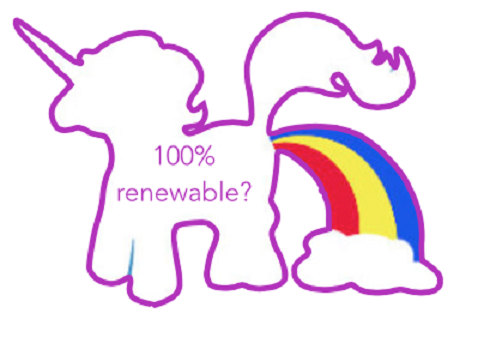
  • 100% Renewable Energy Means Sourcing Rare Metals Off-Planet
  • Leave it in the Ground Means Perpetual Poverty
Part 1:  Zero Carbon will Decimate US Workforce

WHCP fig1r

WHCP fig1ar

WHCP fig2ar

WHCP fig3a

WHCP fig3

Tables of Oil and Natural Gas Employment and Economic Impact come from API Price Waterhouse Cooper  Impacts of the Oil and Natural Gas Industry on the US Economy in 2019    As for Coal, EIA estimates the industry lost 75% of its workforce down to 53,000 employees (2019) working in coal mines, and the number has stabilized with exports offsetting declines in domestic consumption.  The losses of jobs in oil and gas come from EID (Energy in Depth) CLIMATE ACTIVISTS PUSH STUDY SHOWING 3.8 MILLION LOST JOBS FROM RENEWABLE ENERGY TRANSITION.

“While many experts dispute the feasibility of Jacobson’s plan for a renewables-only energy grid, the severe job losses are far more difficult to dispute, given that they come directly from Jacobson’s research. Those job losses would undoubtedly be devastating for millions of American families.”

cb020621dapc20210206014624

And about Those Promised Green Jobs to replace the lost ones:  

In February 2009, the last time Democrats controlled the White House and both chambers of Congress, President Barack Obama and Vice President Joe Biden flew to Colorado to sign their $787 billion stimulus package into law.

The plan was to invest $150 billion over 10 years that would advance a “clean energy” economy built around biofuels, hybrid cars, low-emission coal plants, and renewable sources such as solar and wind. Obama and Biden promised to create five million green jobs that would specifically benefit low-income earners, claiming that the stimulus package included “help for those hit hardest by our economic crisis.”

mrz041312dapr20120413044622

A decade later, we now know that the 2009 green jobs program was a complete failure. The Department of Labor (DoL) and the Bureau of Labor Statistics (BLS) issued several reports on the green jobs program. Each report was an indictment on the program, as job placement met only 10 percent of the targeted level, and many of those who were hired remained employed for less than six months.

Even the new, redefined green jobs did not reach the five million promised in February 2009. According to a study by the Brookings Institution, the Obama–Biden administration identified nearly 2.7 million green jobs, but most were bus drivers, sewage workers, and other types of work that do not match the “green jobs of the future” that the administration promised. Most of them were preexisting jobs, which were simply re-characterized by the government, apparently in an effort to boost the numbers.  Source: If at First You Don’t Succeed, Try ‘Green Jobs’ Again

See also Green Energy Failures Redux

Parts Two, Three and Four

World of Hurt from Climate Policies-Part 2

World of Hurt from Climate Policies-Part 3

World of Hurt from Climate Policies-Part 4


Machinery for Global Sustainability Tyranny

Terence Corcoran shines light on the emerging global control structure in his Financial Post article Is the global march towards sustainable development unsustainable? Excerpts in italics with my bolds and added images.

Regulations related to climate risks could prove a costly burden
for Canadian corporations, institutions

The planned reset of global corporate capitalism to save the planet continues to stumble toward the great unknown, in the sense that even after decades of effort the machinery to expand regulatory control over investment and business decisions remains bogged down in murky conceptual clay. Developments in regulatory and legal circles suggest 2024 will be a pivotal year for the revolutionary ideas that are supposed to lead to a fundamental transition from bad economic policy to green.

The underlying concepts are well known by name. We have corporate social responsibility (CSR), environmental and social governance (ESG), the precautionary principle, and sustainable development. What all these buzz-phrases mean is another question. Looking through the latest developments around the initiatives, however, a certain sense of apprehension, doubt and even a bit of squeamish uncertainty seem to have taken hold.
In recent days major global investment firms such as U.S.-based JP Morgan and State Street have pulled away from Climate Action 100+, a global industry-led coalition with grandiose objectives to fight the “systemic risks” of climate change. The claim is that investors must ensure the businesses they own have strategies that “accelerate the transition to net-zero emissions by 2050, or sooner, and align with the goal of the Paris Agreement” set by the United Nations in 2015.  Despite decades of talk following the radical Limits to Growth movement of the 1970s, the 1987 Brundtland report and the 1992 Rio Earth Summit’s endorsement of “sustainable development,” the remake of corporations into vehicles for economic and climate control remains far from complete.
In New York this week, the International Financial Reporting Standards (IFRS) Foundation held a symposium to inform corporations, institutions, regulators and advisors on the emerging accounting and reporting standards surrounding sustainable development. “Achieving a truly global baseline of sustainability-related disclosures necessitates a strong focus on supporting implementation across all economic settings, so that all market participants can access its benefits.”One of the symposium sessions was titled: “Get ready for jurisdictional adoption: How regulators are responding to the ISSB” — the International Sustainability Standards Board. Released last June, the ISSB standards will require corporations and investment organizations around the world to adopt common reporting approaches to climate and other environmental issues. It’s an authoritarian, top-down and anti-competitive regime that leaves no country or sector free to set its own rules.

All nations and regulators are to be locked in a global climate-control structure.

Canada is part of that structure through the Canadian Sustainability Standards Board, which this month announced a public consultation to advance adoption of sustainability disclosure standards in Canada. The consultation begins in March and runs through to June. One objective is to determine, with provincial securities regulators, how to impose mandatory reporting to replace voluntary standards on climate and environmental issues.

The Canadian Securities Administrators (CSA), which includes provincial securities commissions, is being pressured to take action on the grounds that Canada could get left behind. A paper released earlier this month by the Canada Climate Law Initiative at the University of British Columbia urged regulators to move forward quickly with new sustainability standards. Failure to act in concordance with the ISSB could cause Canada to lose international investment flows, the report claims.

The document continues through 20 pages of detailed recommendations covering climate-related strategies, investments, metrics, targets, performance, cash flows, scenarios, climate transition plans and science-based taxonomies. How any of this massive effort relates to corporate performance for shareholders is not addressed.

Looking to the future, the Law Initiative suggests the CSA should also begin thinking about requiring future reports  related to a corporation’s “relationship to terrestrial, freshwater and marine habitats, ecosystems and populations of related fauna and flora species, including diversity within species, between species and of ecosystems, and their interrelation with Indigenous and affected communities.”

Internationally, Canada must also deal with the uncertainty surrounding the differing emerging global standards, including the still-to-be-determined U.S. Securities and Exchange Commission (SEC) approach to sustainable development. As the consulting firm EY put it in an updated report last month, “Entities with significant operations in multiple jurisdictions need to understand the key differences among the SEC proposal, the ESRS [European Sustainability Reporting Standards] and the ISSB standards because they might be subject to more than one set of requirements.” Another EY report this week warns that sustainable development “continues to face a range of challenges” in terms of costs, technologies and standardization.

The legal proposals would burden Canadian corporations and institutions with massive reporting responsibilities and costs related to climate risks. On corporate governance, for example, the Climate Law Initiative calls for securities issuers to “disclose the governance processes, controls, and procedures it uses to monitor, manage, and oversee climate related risks and opportunities.”

All of this is taking place on a shaky theoretical foundation
in economics and environmental change.

The 1987 Brundtland Commission simplistically defined sustainable development as “development which meets the needs of the present without compromising the ability of future generations to meet their own needs.” Exactly what “needs” are is unclear. Maybe it was intended to capture Marx’s slogan: “From each according to his ability, to each according to his needs.” Meaning: Take from wants of the developed world and give to the needs of the developing world?

The missing fundamentals of the 50-year-old movement to reshape the corporate model should receive a little more attention in the months ahead. Could it be that sustainable development is unsustainable?

Postscript

Meanwhile, the sustainability movement is transitioning to students. In Kelowna, B.C., and Toronto this week the goal is to inspire the next woke generation of environmentally active citizens. At the Toronto event, the organizers summarized their plan. “We welcome high school students and their teachers to this dynamic one-day conference that brings together youth and community organizations from across Ontario to discuss, collaborate and learn how to make sustainable and equitable change in our world.”


Wind Power Ripoff Ontario 2024 Update

Parker Gallant explains the cash flow and the grid decay in his blog article Industrial Wind Turbines demonstrate their Unreliable and Intermittent Nature From 2% to 80% of Capacity  H/T John Ray.  Excerpts in italics with my bolds and added images.

IWTs Generating 1.8% of their Capacity then jumping to 80.4% only a few days later

Yesterday, February 9th, 2024, those IWT spread throughout Ontario were impressive generating 94,605 MWh or about what 3.1 million average households would consume in a day suggesting they are the panacea to stop climate change!  Mere days before on February 3rd and the first seven hours on February 4th they generated only 2,673 MWh which was 1.8% of their capacity in those 31 hours.

As the expression goes; they continually demonstrate their “traditional yo yo” tendencies as the following screenshot from IESO February 5th to the 10th demonstrates. They are the “green” in the chart which basically shows their intermittent and unreliable nature whereas the dark blue is natural gas which has the ability to ramp up and down as demand changes and to keep our grid from failing and causing blackouts.

Wind in green, NatGas in dark blue, Hydro in light blue, Nuclear in orange

So, the question one should ask, was the power delivered by
those IWT on the 9th of February needed here in the province? 

As it turns out 65.8% of the IWT generation or 62,259 MW were not really needed as IESO’s intertie data (net-exports) shows it went to our neighbours in Quebec, New York and Michigan and the average sale price over the 24 hours was $19.42/MWh and well below what we Ontario ratepayers/taxpayers paid for it.  If we assume it was all surplus IWT generation those net-exports, we paid those contracted parties $135/MWh for; suggests the total cost of what was sold to our neighbours came to $8,404,965 but the price we were paid by our neighbours was an average of only that $19.42/MWh. Using the latter average price received over the 24 hours means we earned only $1,227,774!

The net result is we Ontario ratepayers/taxpayers have to eat the loss of $7,177,218 for just that one day’s IWT generation.  The foregoing is not the exception particularly when Ontario’s peak demand is relatively low as it was yesterday reaching only 17,057 MW at hour 19.

For the foregoing reasons, we should wonder why the Ontario Minister of Energy is instructing IESO to extend the IWT contracts when their 20-year terms are up as they do nothing but increase our electricity costs.  Those costs will be exacerbated by the addition of BESS (battery energy storage systems) as the latter will simply add another costly layer in an attempt to keep our grid reliable!

The IESO  current Contracted Generation List associated with BESS (battery energy storage systems) suggests they are expecting to contract for 1,140 MW!  BESS are able to provide their rated capacity for four hours meaning the 1,140 MW could provide 4,560 MW before needing to be recharged. It is humorous the megawatts those BESS units may be able to provide is only slightly more then the IWT provided during their peak generation hour yesterday. Today (Feb. 19) at Hour 9 those IWT only generated 316 MW!

At this point we should wonder if the batteries to be utilized by those BESS contracted generators will include CATL batteries, manufactured in China and now banned in the USA as pointed out in a recent article. If so, Canada could be in trouble with its neighbour, the USA, who have security concerns about CATL batteries. That may have a negative impact on our intertie connections with US States, amusingly, where much of our surplus IWT generation went to yesterday!

Oh, what tangled webs we weave!

Footnote More Grid Corrosion from Wind and Solar

Not mentioned above is a slow deterioration of baseload electricity because of renewables  unreliables.  Gail Tverberg explains in the background post below:

In fact, I have come to the rather astounding conclusion that even if wind turbines and solar PV could be built at zero cost, it would not make sense to continue to add them to the electric grid in the absence of very much better and cheaper electricity storage than we have today. There are too many costs outside building the devices themselves. It is these secondary costs that are problematic. Also, the presence of intermittent electricity disrupts competitive prices, leading to electricity prices that are far too low for other electricity providers, including those providing electricity using nuclear or natural gas. The tiny contribution of wind and solar to grid electricity cannot make up for the loss of more traditional electricity sources due to low prices.

Climateers Tilting at Windmills Updated


What Big Climate Wants to Censor

(Photo by Craig Barritt/Getty Images for Oceana)

Nick Pope writes at Daily Caller Foreign Billionaire-Backed Climate Org Pressuring Broadcasters To Censor Ads Critical Of Biden’s EV Mandate.  Excerpts in italics with my bolds and added images.

A green nonprofit that is indirectly funded by a foreign billionaire is pressuring broadcasters to drop advertisements that criticize the Biden administration’s massive electric vehicle (EV) agenda.

Climate Power wrote to numerous broadcasters this week demanding that they stop airing American Fuel and Petrochemicals Manufacturers (AFPM)-funded advertisements in swing state markets that rail against President Joe Biden’s plans to impose widespread EV adoption in the coming years. The charitable organization affiliated with Hansjorg Wyss, a Swiss health care mogul and billionaire philanthropist, donates millions of dollars to the Fund for a Better Future, which was the fiscal sponsor for Climate Power until 2023, a spokesperson for Climate Power previously told the Daily Caller News Foundation.

AFPM launched its seven-figure ad campaign designed to highlight and criticize the administration’s EV policies on Tuesday. The ads, which describe Biden’s policies as an EV mandate, are airing in Pennsylvania, Wisconsin, Michigan, Nevada, Arizona, Ohio, Montana and Washington, D.C.

Climate Power’s warning letter to local affiliates states that the broadcasters “must remove these ads from the air immediately” because “there is no pending federal ‘car ban,’ and to claim otherwise is patently false and intentionally misleading.” The letter suggests that AFPM’s ads could be in violation of Federal Communications Commission (FCC) rules, and instructs the broadcasters to contact Climate Power — an Internal Revenue Service-recognized 501(c)4 that is spending more than $80 million to tout Biden’s climate policies ahead of the 2024 presidential election — to confirm that the ads are no longer running on their stations.

What Big Climate Wants to Hide

A recent Wall Street Journal video says it out loud: EVs are not practical for most people.  The short video can be seen here.  A transcript is below for those who prefer to read.

Hertz announced last week that it is selling one third of its EV fleet, about 20.000 vehicles, and will replace them with gas powered cars, citing weaker demand for electrics and their higher operating and repair costs. The car rental giant had previously vowed to convert 25% of its fleet to electric by the end of 2024. In an interview in Davos this week, President Biden’s soon to be former climate envoy,

John Kerry, blamed recent setbacks in the industry on electric car critics,
accusing them of engaging in “high levels of disinformation.”

Kerry also told the panel at the World Economic Forum that the green energy transition will continue no matter who wins the 2024 presidential race. “You think those CEOs are gonna say, Oh My God, they just elected a new president. Let’s go back and build internal combustion engine cars. Not on your life. This economic revolution is underway and it’s much bigger than any politician, any one person.”

We’re back with Dan Henniger, Kim Strassel, and Wall Street Journal columnist, Allysia Finley. So Allysia, also this week Ford announced that it is cutting back on production of its Lightning 150 electric trucks. So this is a pretty broad cutback in production.

Well, the biggest reason is there’s flagging demand. So there were a lot of, “early adopters. It was people who lived in California and big cities who bought EVs. Especially Teslas which make up about 60% of sales. And so there was a big rush of automakers, and partly propelled by the government mandates, both California’s Air Resources Board and the Biden administration’s coming mandate, which ratchets up to two thirds of all sales to be EVs by 2032.

And so they all rushed in, they started mass producing EVs. And all of a sudden they’re realizing demand’s actually softening for the mainstream public because they’re actually not ready.

And suffering difficulties. And what we saw in Chicago with the lines of people and the cold weather.  It’s cold weather and EVs don’t really work in the north very well. It’s repair costs. So it’s not easy to go long distances. It’s charging station availability, and people want sometimes to go long distances. Are those the reasons consumers are resisting?

I mean the costs are still about $20,000 higher on average, and the have to factor repair costs, yes. But also insurance costs, which are about 20% higher. In part because they’re more expensive, but also because the replacement parts are more expensive. And so they’re just not really practical for most people. This isn’t to say that someday then they’ll be much more practical and popular.

Maybe, but it doesn’t make sense to be mandating and subsidizing them at this juncture. Dan, what do you make of John Kerry’s line that this reluctance is just all disinformation by critics?

When Kerry said that, I thought he might take a side trip from Davos, Switzerland, to Germany to see what’s happening with EVs there. In December EV sales in Germany dropped by 50%. The auto industry there is really on the brink of collapse because people are simply not buying electric vehicles. And as Allysia was just describing, it that happens here, and it could, people simply say, “I’m not gonna put up , Ford and GM are really gonna get strung out and hit hard by the refusal of people.

Allysia, the one thing Kerry has going for his prediction is EVs which are being mandated by the government is that the flow of money from the Inflation Reduction Act will be so great, how much money they’re throwing at charging stations and subsidies for consumers and subsidies for production. It’s astonishing, even subsidies for batteries. Will that ultimately push EVs over the top?

Well, that is the risk in my mind, that consumers at the moment don’t want them. But the plan on the left is always that you get something in motion, you make the industry change its standards and retool and regear itself toward this goal. You put money out there as incentive for them to keep doing it and for buyers to get them. And then you can’t reverse it.

And you hope that it trundles along of its own accord. Which is why there’s growing attention in Washington, especially among Republicans, that if they’re going to try to claw back money, it ought to be more out of this area. Because if they really do care about issues like consumer choice, giving people the ability to drive what they want to drive, you’ve got to remove this government distortion that is creating this supposed economic revolution.

It’s not an economic revolution, it’s a government imposed transition.

Allysia, you wrote an interesting column about how CEOs not too long ago were cheering on this and all thinking alike about the great EV future. One of those was the Hertz CEO, another one, the Ford CEO. Are they really having second thoughts?

Well, it’s funny now in recent months, they’ve all been coming out saying, “Oh well, we need to cut production”, and “This is just not sustainable.” Across the industry, they’re definitely having second thoughts, and some of their statements are more public than others. And they’re pleading to the administration. Again this is representative of the auto industry, not the individual automakers, but they’ve sent a letter saying, please, we cannot do this. These aggressive goals are not achievable and auto workers would lose their jobs.

Climatists Mistake Means for Ends

Roy Gilbert exposes the fundamental mistaken thinking regarded global warming/climate change.  His Spectator Australia article is Conceptual Error in Climate Change Analysis.  H/T John Ray  Excerpts in italics with my bolds and added images.

It is often said that the ‘science is in on climate change’. Is it? We should always adhere to the principle of the ‘working hypothesis’ and have an open mind on scientific questions no matter how well-recognised the researchers are. In the study of science, there is always the chance new information can come along to cause a rethink.

A common error in problem-solving and policy development is to confuse
a technical strategy for a desired client outcome.

Our Climate Change Minister could be accused of this. Reducing emissions is a ‘strategy’, not the fundamental desired client outcome. With the mission ‘to reduce carbon emissions’ by increasing renewable energy, the way to assess performance is to concentrate on measuring emission reduction, and then to follow this up with how quickly the renewables are built and their cost (wind farms, solar panels, transmission lines).

Instead of the current strategy-driven mission, a fundamental client outcome statement would be:To protect against, and where possible, prevent damage from extreme off-trend fluctuations in climate.’ How would you go about managing your program using this mission statement?

First, you gather accurate temperature, rainfall, and weather measurements. They are the valid and fundamental ‘outcome’ measures – not data on CO2 emissions. If there is an undeniable and dangerous increase in temperature and rainfall, more cyclones, and a clear and unabated rise in sea level, then the possible cause must be thoroughly identified. Depending on the answer, you would adopt appropriate mitigation strategies, or strategies that adapt to weather patterns and temperature levels.

Another principle of problem-solving is to map out the total picture and not be driven by ideology. The Climate Change Minister should consider possible causes other than human-induced emissions. It was announced in April 2023 that coronal cones 20 times larger than Earth have been discovered and may cause a massive outburst of energy from the sun. What could be the implications for our planet? Ask solar physicists.

Chief scientist in applied helio-physics at John Hopkins, Ian Cohen, has suggested that solar storms could take out satellites, cut power and shut down the internet. In 1972 a solar storm caused 4,000 magnetically sensitive mines in water off Vietnam to detonate. Earth is said to be entering a period of peak activity as part of an eleven-year cycle. It is suggested this potentially could be more violent than the solar cycles of the past three decades. Now that would be something for climate scientists to really worry about…

With respect to the world’s temperature, there are several sources that claim to present the precise figure. One says the 2023 average global temperature was 1.45c above the 1950-90 average. Another says since 1880, Earth’s temperature has increased by 0.08c. Another says during the last 50 years the increase is 0.13c. To the unscientific mind, these temperatures do not appear to be verging on catastrophic boiling us all to death.

As of 2024, data on natural changes in temperature, rainfall, and sea level
do not show any statistically significant difference to historical records.

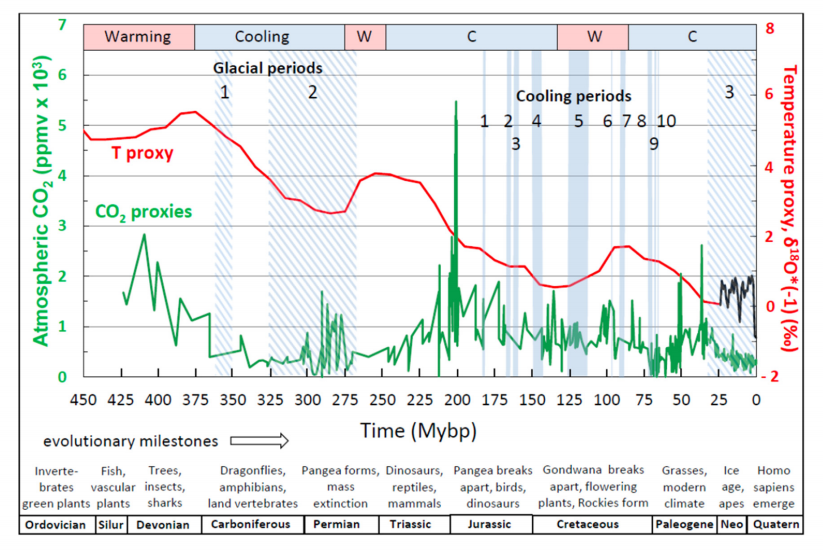
There are respected scientists who question the current climate orthodoxy. Physicist Prof. William Happer of Princeton University and Prof. Richard Lindzen, Earth, Atmospheric and Planetary Sciences at MIT have argued science demonstrates there is no climate-related risk caused by fossil fuels and CO2, and that 600 million years of CO2 and temperature data contradicts the theory that high levels of CO2 will cause catastrophic global warming. They state reliable scientific theories come from validating theoretical predictions with observations, not consensus, peer review, government opinion, or manipulated data.

In July 2023, the International Monetary Fund cancelled a planned talk on climate change by 2022 Nobel physicist John Clauser when they learned he had stated publicly: ‘I can confidently say there is no real climate crisis, and that climate change does not cause extreme weather events. The IPCC is one of the worst sources of dangerous disinformation.’  Clauser pointed out that the US Environmental Protection Authority has charts that show a heatwave Index going back to 1895, showing heatwaves were more common before the 1960s and especially in the 1930s.

In addition to these physicists, there are eminent Australian geologists who challenge the CO2 cause theory. Emeritus Prof. Ian Pilmer of the University of Melbourne, and Prof. Michael Asten of Monash University, have argued that throughout the history of the planet, there have been long periods of major change in climate due to natural forces. This would indicate recent human-based emissions may not be the important factor that we have been led to believe.

With respect to measuring emissions (nitrous oxide and methane), there is an expectation that the Intergovernmental Panel on Climate Change would have collected accurate data. Then one reads an independent 2023 report of these greenhouse gas emissions from farm dams in Australia’s irrigation regions, that the measurements had been massively over-estimated by the IPCC by 4 to 5 per cent.

To add further confusion to the issue, a 2023 research paper submitted to the European Physical Journal Plus claimed climate science has become ‘highly politicised’. Italian scientists analysed long-term data on heat, droughts, floods, hurricanes, tornadoes, and ecosystem productivity, and found no clear trend of extreme events. The statements by these scientists would appear worthy of examination. Unfortunately, comments to the publisher by other climate scientists caused the withdrawal of the article.

If activists are correct, and if temperatures and rainfall start to show a significant increase without any influence from natural factors such as the sun or outer atmospheric disturbances, the second ‘outcome’ mission opens your mind to several strategies that could be compared against each other on cost and effectiveness – renewables, outer space satellites capturing solar energy and transmitting to Earth, small nuclear, carbon capture, examine possibility of amalgamating carbon and turning it into a useful product, lower emission coal-fired power stations, hydro, hydrogen fuel cells, a scientific search for a predator for carbon other than trees (or the planting of more trees), and so on.

A valid client ‘outcome’ statement encourages you not to jump to a conclusion
in the initial stages of critical thinking about the cause of any global warming.

If you make a mistake at that point, there are significant productivity implications. Governments could waste a significant amount of money (a catastrophic amount) on a less than optimum strategy. Rather than relying almost entirely on climate scientists who concentrate on carbon emissions, a politician with a mind focused on validity could bring together an inter-disciplinary team – climate scientists, nuclear physicists, solar physicists, atmospheric physicists, examine the moon’s behaviour, plant technologists, oceanographers, geologists, volcanologists, botanists, bushfire specialists and so on. Has any national government followed this approach? Has any Minister for Energy, in any country, expanded their vision beyond their own narrow ideology is a potential danger to their country…?

There are very obvious reasons why some politicians and many rich investors in renewable energy would oppose a serious questioning of the renewable strategy and switching to nuclear instead. If small nuclear was introduced – as is being done in many countries – it would make current renewable energy strategies redundant. That would mean all the billions of dollars spent on wind and solar would have been a waste of money. We wouldn’t need them. Admitting that would be far too embarrassing for any ideological politician and far too financially damaging to any rich wind farm investor obtaining government grants.

If the Sun is found to be the fundamental cause of the problem (variations in energy output, massive infrequent solar flares, and/or variations in distance between Earth and Sun), or if there is a slight tilting of the Earth on its axis, or the Moon changes position, or even disturbance further out in our solar system, you would evaluate adaptation strategies.

It seemed reasonable for some people to assume the vast flooding in 2022 could be attributed to human-induced climate change. There is however, a different possibility … nature. Environment analyst Graham Lloyd explained.

‘The meteorological processes at play are well understood. Three consecutive La Nina weather patterns have left the eastern seaboard soaked and prone to flooding. Triple La Ninas have happened four times in the Bureau of Meteorology’s 120-year record … The Southern Annular Mode is a climate driver that can influence rainfall and temperature. Although wet, the latest BoM figures show that 2022 was the ninth wettest year on record (not the wettest).’

fWhen the above material, stressing the need to examine the total picture in any critical thinking, was shown to a high school Principal, to a high school science teacher and to an environmental engineer, they were all surprised and quite critical that one would want to show this to students. Annoyed actually. One was emphatic…

‘Why waste the students’ time having them look at irrelevant issues?
We KNOW what the problem is. It is CO2 emissions.
And we KNOW what the solution is. It is 100 per cent renewables.’

My answer to them was:

‘The difference between you and me, is that you want to tell the students WHAT to think. I want to teach them HOW to think. I want them to understand insightful thinking. Not to be indoctrinated’.  You can be the judge as to who is on the right track.

See Also
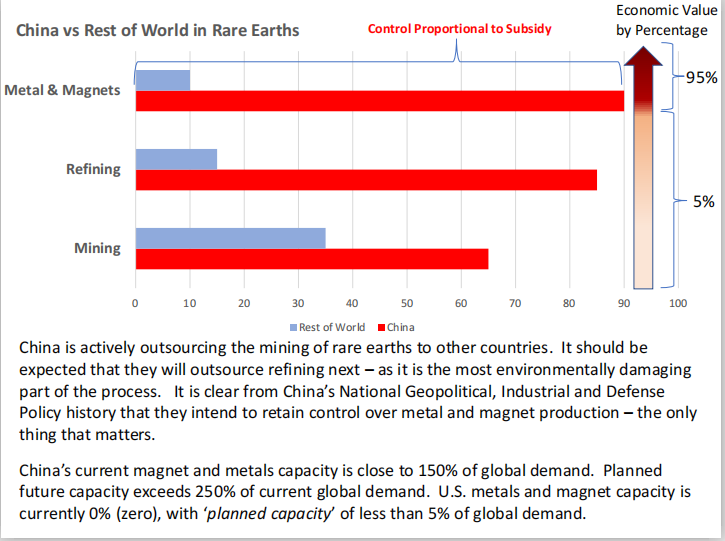
Answers Before Climate Action