Climate Imperialism

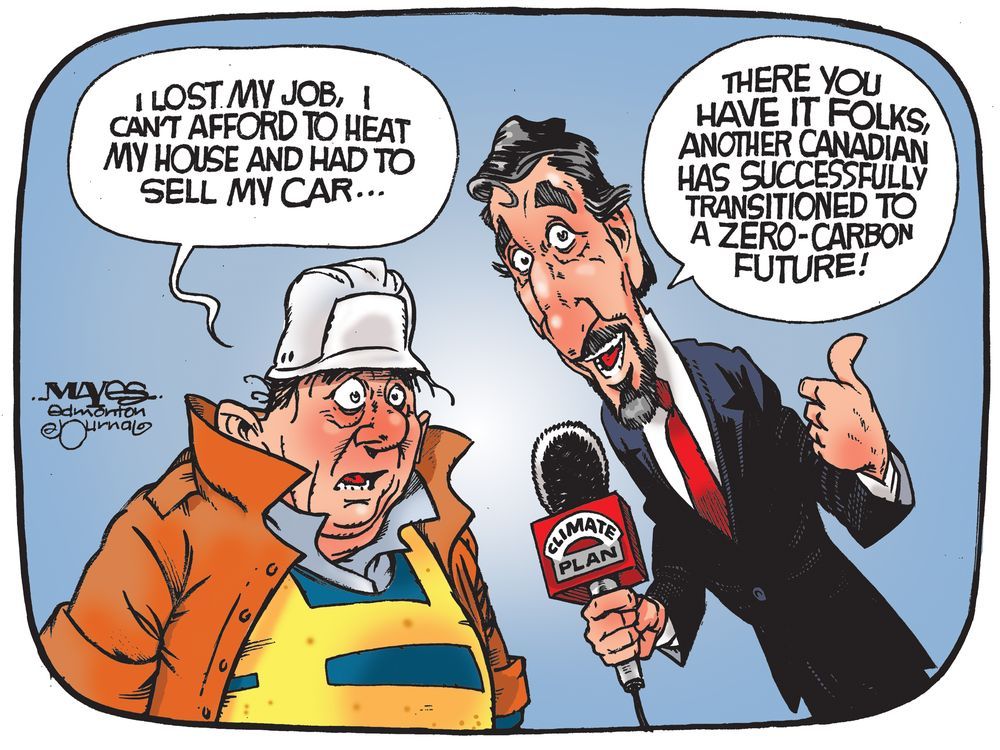
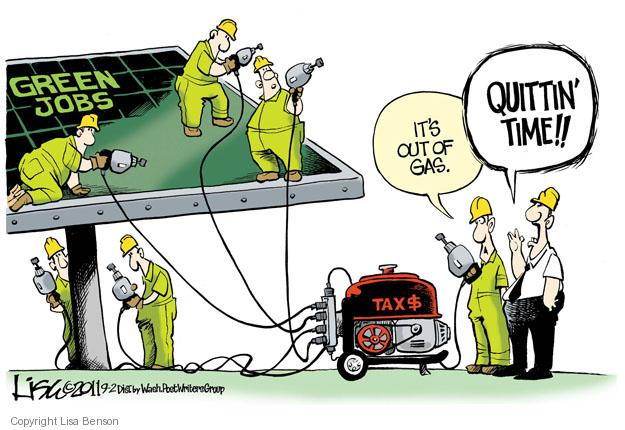
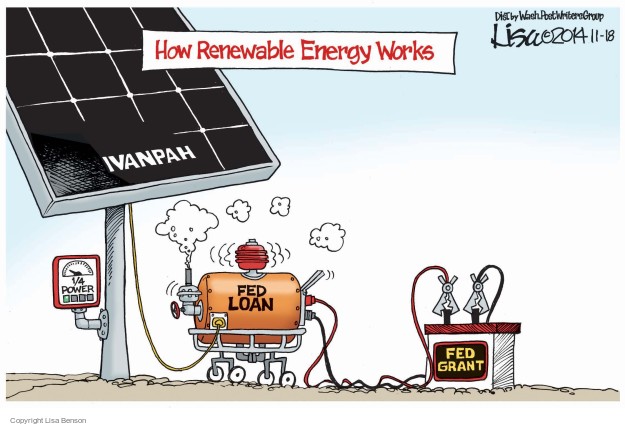
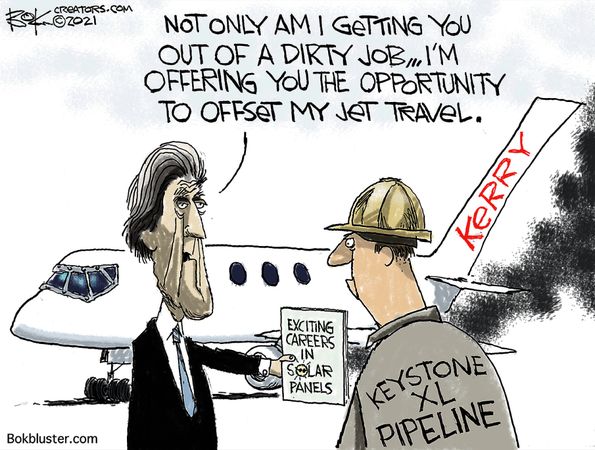
Kelli Buzzard writes Climate Imperialism at American Mind to explain how climatist overlords are oppressing the lives of ordinary people who live in places like the nation of Hungary.  Excerpts in italics with my bolds and added images.

E.U. energy mandates impose needless suffering in the name of elite fantasy.

The American intellectual Rob Henderson coined the term “luxury beliefs” to describe the status-conferring ideas and opinions of wealthy elites. Examples of these beliefs include “defund the police,” “dismantle the patriarchy,” and “net zero carbon now.”

Luxury beliefs have the attractive quality that those most likely to promote them rarely face their consequences. For example, the “defund the police” crowd tends not to live in crime-ridden inner-city neighborhoods that count on the police to maintain order. Statistically, those who rage against the patriarchy and traditional marriage eventually marry but divorce at much lower rates than other Americans.

Nowhere is this trend more clear than in the disastrous realm of climate policy.

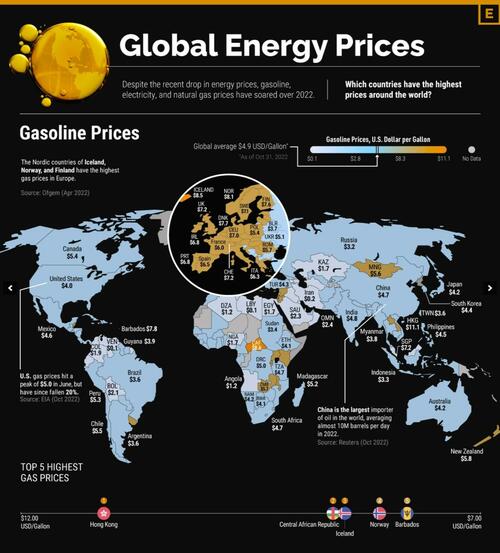
Climate activists who call for a ban on fossil fuel consumption and a phase-out of the combustion engine almost always live in metro areas where they don’t need a car. If they drive, they can afford $5-a-gallon gasoline or can buy a $66,000 electric vehicle.

Meanwhile, their luxury beliefs become public policy and hurt the rest of us.

In recent months, for example, the U.S. government passed a climate change bill masquerading as a measure to reduce inflation. In Europe, the E.U. has committed to becoming carbon neutral by 2050. The uber-elite internationalist group, the World Economic Forum, linked arms with the Chinese Communist Party in a bid to “radically transform” the world economy and stave off “climate catastrophe,” which amounts to the “real battle of our time.”

The premises of climate alarmism are almost all entirely untrue. Natural disaster-related deaths have declined, not increased, and plastic waste danger is overblown. While the world’s capacity to produce more food has skyrocketed, climate change has contributed minimally to the world’s wars, and the destruction of rainforests has little to do with changes in the climate.

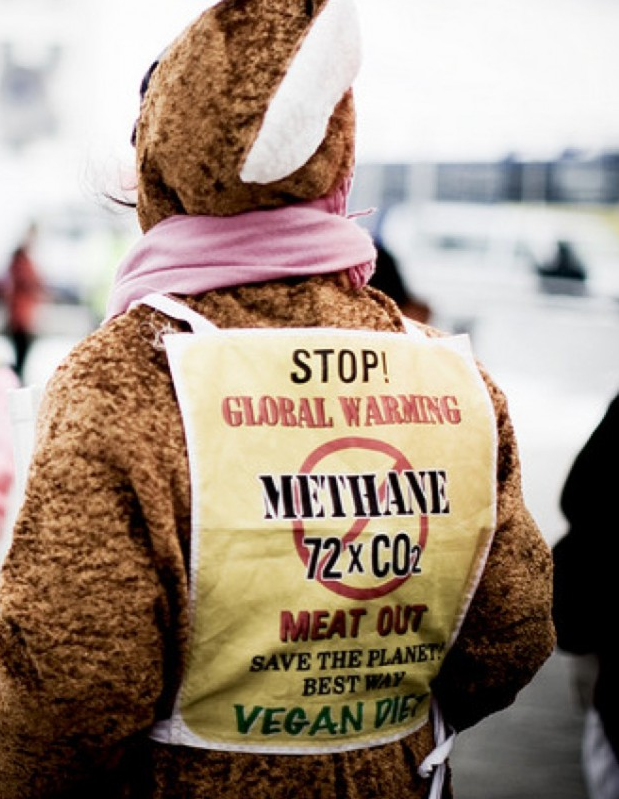
But the fantasies of climate hysteria prompt hasty, radical action, resulting in developing nations being denied the cheap energy sources they need–coal, wood, dung, fossil fuels—to grow wealth, rise out of abject poverty, and enjoy the option of developing green policies in the future.

Hungary and Cold

The case of Hungary, where I work and write, is not as dire as in impoverished places like rural Asia or Sub-saharan Africa. Nonetheless, the carbon-neutral policies from Brussels, London, and Washington have affected every aspect of Hungarian society.

Hungary is a small, landlocked former Soviet-bloc nation located in the heart of Europe. As a member of the European Union, Hungary must adopt European Green Deal policies, which seek to “decarbonize” the continent by 2050. This has resulted in a push to diversify the nation’s energy supply by building solar farms, embarking on new nuclear energy plant projects, and installing solar panels on government and residential buildings. But green energy sources are not only insufficient to meet the nation’s energy demands. They are also unreliable depending on the weather.

So Hungarians, ever-realistic people, rely on fossil fuel sources in the interim.

More than half of Hungary’s energy comes from imported fossil fuels. Like Germany and other Western European nations, Hungary has gotten most of its natural gas and oil supplies from Russia in the past. But Hungary has long sought to diversify its energy sources. Toward that end, during the Trump Administration, the Hungarian government inked a deal to import natural gas from America through a Croatian port. The agreement was promising, as America was an energy-surplus country and a willing trade partner. The deal fell apart, however; the United States canceled the contract on day one of the Biden Administration.

Hungary has also sought to offset its fossil fuel consumption by adding nuclear power to its mix, thus promoting greater energy security by relying less on Russian oil. The nation currently operates four nuclear power plants and is looking for an international partner to build two more. But, ironically, the only company to offer a bid on the project was Russian nuclear power giant Rosatom.

In the wake of the war in Ukraine, Hungary’s Prime Minister Viktor Orbán is routinely called “Putin’s Puppet” or similar derogations. Central to the name-calling is Prime Minister Orbán’s realism. While he supports efforts to reduce carbon emissions and plans to generate up to 90% of his country’s energy from nuclear and solar sources by 2030, Orbán’s more significant concern is how to preserve his nation’s way of life now. The truth is that Hungary needs oil and gas to survive. As a result, the Hungarian Prime Minister roundly rejects calls to cut off those sources, regardless of internationalist green energy policies or Russian aggression in the neighborhood.

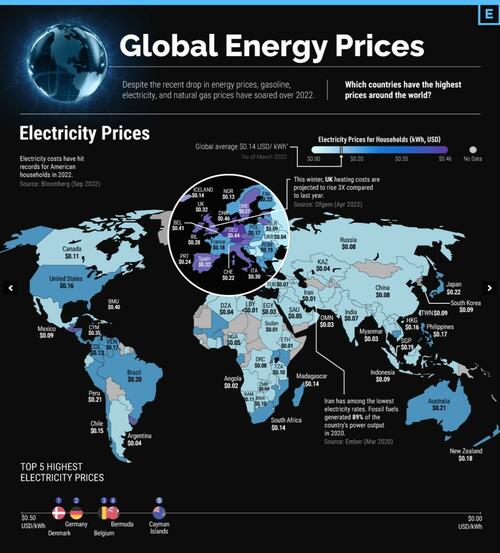
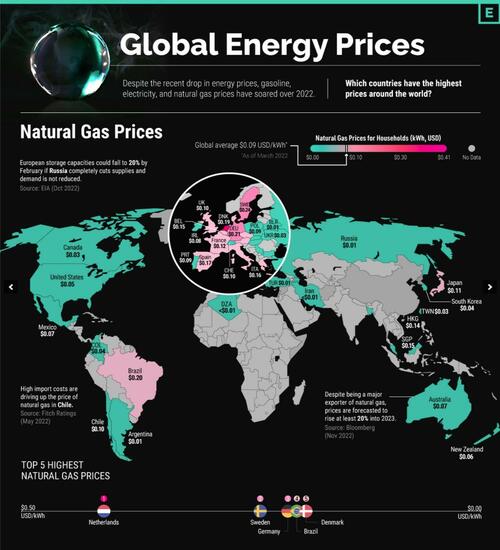
At present, the war next door in Ukraine rages on and shows no signs of stopping, NATO sanctions notwithstanding. Russia shopped for new buyers and created new oil trade relationships with countries like China and India. Putin, his coffers burgeoning, recently turned off Europe’s gas supply, promising not to turn it back on until western sanctions are lifted. The action, of course, resulted in skyrocketing fuel costs across the continent, including here in Hungary. Like it or not, Europe, which has allowed itself to be captured by climate extremism, cannot at present survive on green energy sources alone. The continent relies on Russian gas and will for quite some time to come.

Climate Lemmings

Despite the prime minister’s resolve, Hungarians are facing the facts: heating prices are projected to increase at least 6-fold during the winter; a local university is considering closing its dorms; Budapest bridges and public buildings are shutting lights off two hours early every night; Budapest’s trams, trolleys, and escalators may shut down; sharp increases in freight rates threaten to spike the costs of household goods and food; a Hungarian energy company just went bust; the national opera reduced its performance line-up by half; and the tourist sector in Budapest may collapse altogether.

I recently celebrated my first anniversary of living in Hungary by moving into a smaller, more energy-efficient apartment and purchasing the warmest winter comforter money could buy. Because by all accounts, without drastic reductions in use, my energy costs will increase six-fold in the coming months. No luxury belief will change that.

See Punishing Climate Policies to Fix What’s Not Broken

See also my series World of Hurt from Climate Policies 

Snappy Answers to Energy Questions

Snappy answers to energy questions

This election season candidates are getting lots of energy-related questions. Here are pro-freedom, pro-human answers to some of the most popular ones. Alex Epstein

♦  What’s your policy on energy, environment, and climate?

I believe in energy freedom: the freedom to use all forms of energy, with laws against emissions and practices that are significantly harmful and reasonably preventable.

5 key energy freedom policies are:

1. Liberate responsible development
2. End preferences for unreliable electricity
3. Reform air and water emissions standards to incorporate cost-benefit analysis
4. Reduce long-term CO2 emissions via liberating innovation
5. Decriminalize nuclear¹

♦  Do you believe in climate change?

I believe in climate change, not climate catastrophe.

The world has warmed ~1° C in the last 170 years. Humans have some influence. But because we are so good at mastering climate, climate disaster deaths fell 98% over the last century.²

♦  Are you a “climate denier”?

I’m a climate thinker.

I recognize that climate is ever-changing, that humans have some influence, and that humans with plentiful energy can master virtually any climate. That’s why, as CO2 levels have gone up, climate disaster deaths have plummeted.

♦  What’s your plan to deal with CO2 emissions?

My plan is:
1. Recognize that CO2 emissions reduction can only be achieved humanely and practically a) long-term and b) through developing globally cost-competitive alternatives.
2. Liberate nuclear and other promising alternatives.

♦  Why did gasoline prices get so high this year?

While multiple factors, including the Russian invasion of Ukraine, played a role, the fundamental cause is US and international anti-oil policies that prevent supply from rapidly increasing to meet demand.³

♦  Why don’t oil and gas companies drill more despite record profits?

Oil and gas would like to profit much more from currently high prices but it is difficult to increase drilling short-term under the present regulatory regime and investors are scared about more government punishment.⁴

♦  Why is Europe in a far worse energy crisis than we are?

Europe has taken anti-fossil-fuel policies further. For example, while we have allowed fracking to produce abundant energy Europe has largely banned it.

With the “Inflation Reduction Act” we are getting closer to Europe.⁵

♦  Do you believe in “all of the above?”

No, I believe in “always the best.”

We should always use the best form of energy for the job. E.g., we don’t use animal dung for energy in the US, even though it’s “one of the above.”

The best source of energy in any situation is what business and consumers choose as best on a free market with reasonable anti-pollution laws.

If something can’t compete on these terms then we shouldn’t use it—whether it’s animal dung, solar, or wind.

♦  What’s your position on solar and wind?

Solar and wind should be required to compete on a real market. In the context of electricity that means generators using solar and wind should be held to the same reliability standards as everyone else. Currently they’re not—which is disastrous.⁶

The root cause of our grid’s reliability problems is simple: America is shutting down too many reliable power plants—plants that can be controlled to produce electricity when needed in the exact quantity needed. And it is attempting to replace them with unreliable solar and wind.

♦  What’s your position on nuclear power?

Nuclear power is an extremely promising technology that is uniquely safe and clean, and has the potential to be cost-effective.

Tragically, nuclear has been nearly criminalized by governments. We need radical reform to decriminalize it.⁷

♦  What’s your position on electric vehicles?

Electric vehicles are a valuable product for certain people but not yet cost-effective for the vast majority of us. Let electric vehicles compete on a free market; don’t in any way pressure anyone to use them before 1) they can afford them and 2) the grid can handle them.⁸

♦  What’s your position on the “Inflation Reduction Act”?

It’s a 4-step recipe for ruining US energy:

1. Make us more dependent on unreliable electricity
2. Impose new oil and gas taxes during an energy crisis
3. Give EPA more power to restrict fossil fuels
4. Give more power to anti-fossil-fuel activists⁹

♦  How does the Inflation Reduction Act affect my state?

The Inflation Reduction Act got passed in large part by offering various payoffs to various states. Whatever benefit you get from those payoffs pales in comparison to higher energy costs, an unreliable grid, and a worse economy.¹⁰

♦  Do you believe in taking money from fossil fuel companies?

I believe candidates should proudly take money from fossil fuel companies if they and the company support energy freedom policies.

Fossil fuel companies are essential to the survival of 8 billion people for the foreseeable future.

For More on this from Alex Epstein

Bye Bye Bourgeois Environmentalists

Getty images.

Brendan O’Neill writes at Spectator The trouble with ‘bourgeois’ environmentalism Excerpts in italics with my bolds and added images. H\T John Ray

The left needs to shake off its ‘bourgeois environmentalism’. It needs to distance itself from the ‘bourgeois environmental lobby’ and make the case for fracking and the building of new nuclear power stations.

Who do you think said this? Some contrarian commentator? A right-winger irritated by eco-loons? Nope, it was Gary Smith, the general secretary of the GMB trade union.

In an explosive intervention in left-wing discourse, Smith has accused Labour of a ‘lack of honesty’ and of ‘not facing reality’ on the energy question. We are living through a severe energy crisis and yet still Labour is sniffy about fracking and down on nuclear power, he says. All because it is in thrall to bourgeois greens who just don’t like industry and modernity very much.

Yes, climate change is a problem, he says, but we need energy. ‘We import a huge amount of fracked gas’ from America, he points out, so why don’t we just frack our own? We should get serious about developing nuclear power too, says Smith.

The GMB represents 460,000 working people, including the majority of workers at the UK’s nuclear-power stations. So it is logical – and good – that Smith would defend the nuclear industry. But his broader point is even more important.

‘(The) question’, he says, ‘is where is the electricity going to come from? We cannot do it by renewables and we cannot rely on energy imports.’ In short, we should get cracking – and fracking – on generating our own abundant sources of energy.

His killer comments concern the aloof, elitist tendencies of green activists. The renewables industry – ‘and many of those who espouse it in politics’ – have ‘no interest in jobs for working-class communities’, he says. He continues:

‘(We) should stop pretending that we’re in alliance with them.

The big winners from renewables have been the wealthy and big corporate interests. Invariably the only jobs that are created when wind farms get put up, particularly onshore wind, have been jobs in public relations and jobs for lawyers.’

This is really important stuff. Smith has laid down a gauntlet to the modern left – are you on the side of working-class communities who benefit from well-paid jobs in the energy sector and from the domestic production of energy, or are you on the side of ‘bourgeois’ greens who are offended by any kind of human intervention in nature, whether that’s digging down for gas or unleashing the awesome power contained in uranium?

For far too long, Labour and left-wingers more broadly have been embracing the ideology of environmentalism. This has always struck me as utterly bizarre, because it seems pretty clear that green politics run entirely counter to the interests of working-class communities.

It is not a coincidence that environmentalism is the favoured political pursuit of the upper middle classes, posh influencers, privately educated columnists and even our new King (God save him). Because this anti-industrial worldview, this ideology that looks with such horror upon our mass consumer society, and the masses who partake in it, is the perfect vehicle for the expression of an older aristocratic disdain for modernity.

Environmentalism is a modern manifestation of the 19th-century Romantic reaction against the Industrial Revolution. Only back then it was more honest – it was all puffy-collared rich folk shocked that the serfs who once worked their lands were now headed into teeming new cities to work in factories. Today, the misanthropic scorn for modernity tends to be more deceitfully dressed up. It’s less ‘Who will toil my farmland now?!’ and more ‘What will happen to the air I breathe if millions of gammon are driving to Aldi every day?’.

Smith, who made these comments in an interview with the New Statesman, is dead right: ‘bourgeois’ is exactly the right word for modern environmentalism. It is alarming that the left has bought into all this middle-class green nonsense. I trust Spectator readers will forgive me for quoting Trotsky, but he did say that the task of left-wing revolutionaries was to bring about the increase of ‘the power of man over nature and the abolition of the power of man over man’. The modern left does the precise opposite of this. It seeks to shrink man’s power over nature and to boost man’s power over man, via new forms of authoritarianism and censorship. Please, right-wingers, I implore you: stop calling modern leftists ‘Trots’.

Gary Smith has done something incredibly important. He hasn’t only put pressure on Labour to think seriously about fracking and nuclear. He has also forced the left to ask itself why it has lost touch with working-class concerns and found itself so beholden to posh pursuits like ‘saving the planet’. A left that represents bourgeois interests is of no use to anyone. Except, of course, the bourgeoisie.

SEC Not Climate Change Enforcer

It should junk its proposed disclosure rule, which is clearly unconstitutional
as per West Virginia v. EPA.

The Supreme Court’s June decision in West Virginia v. Environmental Protection Agency was a shot across the bow of the administrative state. The decision implicates many executive and independent agencies’ rulemakings, but perhaps none more so than the Securities and Exchange Commission’s proposed climate-disclosure rule. The proposal would convert the federal securities regulator into a greenhouse-gas enforcer looking over the shoulders of exchange-listed companies’ directors. Much like the EPA regulation the justices struck down, the new SEC proposal would exceed the authority Congress granted to the agency. If the SEC were wise, it would rethink its rule, lest it face a similar fate in court and see its rulemaking effort thrown into the regulatory waste bin.

Writing for a 6-3 majority in West Virginia, Chief Justice John Roberts invalidated the EPA’s Clean Power Plan under the “major questions” doctrine, which limits an agency’s power to act on issues of “economic and political significance” without clear authorization from Congress.

The court’s doctrine is a species of the separation of powers—specifically the nondelegation principle, which bars the legislature from giving lawmaking power to the executive branch. James Madison argued the point forcefully in the Federalist Papers and in the First Congress. The early Supreme Court let Congress allow the executive to “fill up the details” of “general provisions” of legislation but emphasized that “important subjects . . . must be entirely regulated by the legislature itself.”

In keeping with this principle, the modern Supreme Court has refused to allow administrative agencies “to ‘work around’ the legislative process” to resolve questions “of great political significance,” as Justice Neil Gorsuch noted in his West Virginia concurrence. Court decisions over the past three decades have blocked agencies’ efforts to resolve policy disputes without clear congressional authorization. Those cases range from regulating tobacco to changing telecommunications rate regulation—and, during the Covid pandemic forestalling tenant evictions and broadly mandating vaccines.

The SEC’s regulation is of a piece with those the court has struck down. We warned in a June 16 comment letter to the agency that Congress never assigned the SEC the task of overseeing environmental concerns.

Yet that’s exactly what it sets out to do in its climate rule.

As GOP-appointed SEC Commissioner Hester Peirce noted in a March dissent, the agency is attempting to mandate that companies disclose a host of “climate-related risks; climate-related effects on strategy, business model, and outlook; board and management oversight of climate-related issues; processes for identifying, assessing, and managing climate risks; plans for [climate change] transition; financial statement metrics related to climate; greenhouse gas emissions; and climate targets and goals.”

By sweeping upstream and downstream contractors into its proposed rule, the SEC seeks to regulate companies that aren’t traded on public stock exchanges and therefore should be wholly outside the commission’s regulatory reach. The proposed rule would casually toss aside the “materiality” standard, which limits mandated disclosures to financially material information.

The proposed rule would also implicitly reallocate power from corporate boards and order them to bring climate-related risks to the fore of company priorities—in direct conflict with longstanding state corporate law. Though Congress could pre-empt state law concerning corporate governance, an agency on its own has no such power.

In other words, the SEC’s proposal contravenes foundational principles of separation of powers and federalism. As Justice Gorsuch observed in West Virginia, the major-questions doctrine comes into play “when an agency seeks to intrude into an area that is the particular domain of state law.” The Supreme Court made clear 45 years ago in Santa Fe Industries v. Green (1977) that “absent a clear indication of federal intent, the Court should be reluctant to federalize the substantial portion of the law of corporations that deals with transactions in securities, particularly where established state policies of corporate regulation would be overridden.”

The SEC didn’t acknowledge or seriously engage any of these issues in its 490-page proposal. Though the agency lacks environmental expertise, it employs talented legal minds who understand these legal constraints and could have counseled against venturing beyond delegated authority. If such advice was given, it evidently wasn’t heeded.

But perhaps that will soon change. West Virginia v. EPA provides the SEC with the incentive to revise its approach and focus on the parameters of its authority before finalizing its proposed climate rule, which the agency initially suggested would be released in October. It may well be that the SEC needs to update the guidance on climate-change disclosures it issued over a decade ago. But in doing so, it needs to follow the law—and leave the big issues to the legislative branch, as the Constitution requires.

Mr. Sharfman is a senior corporate governance fellow with the RealClearFoundation. Mr. Copland is a senior fellow and director of legal policy at the Manhattan Institute and author of “The Unelected: How an Unaccountable Elite Is Governing America.”


ESG Investing Results: Go Woke, Go Broke

This post has two parts.  First, an update on how nations pursuing high ESG scores have destroyed their prosperity.  Second, an interesting effort by a Canadian MP to empower shareholders against woke managers following the ESG pied piper.

Capital Activist poster.

Gabriella Hoffman writes at Townhall ESG’s Toxic Brand Isn’t Salvageable.  Excerpts in italics with my bolds and added images.

As American consumers and investors start souring on Environment, Social, and Governance (ESG) principles being injected into both the public and private sectors, its loudest defenders say a rebrand will salvage its toxic image.

Its dedicated followers reassure us the product they’re selling — forcibly aligning business values with progressive virtue signaling — is good and noble. They tell us, however, that it’s just not sold well, despite being a popular set of beliefs.

Conceived in October 2005 at a U.N. Who Cares Wins Conference, this pervasive movement has glitzy public relations campaigns along with huge financial and political backing. Alas, no rebrand can salvage ESG given its disastrous real-world impact, ruinous effects on businesses, and growing disapproval among the American public.

Notably, the scoring mechanism associated with ESG is flawed and corresponds to imminent economic decline. Wherever high scores are found, countries have experienced great political instability and corresponding financial ruin.

The nations of Sri Lanka, Ghana, and the Netherlands have all experienced turmoil and boast high ESG scores — 98.197.1, and  90.7, respectively. All these nations, coincidentally, banned fertilizer. 

Sri Lanka was the poster child for ESG investment and has suffered the brunt of these principles. Their most recent prime minister just resigned in shame, following months of protests and unrest stemming from the country committing to net-zero carbon emissions by 2050 and halving its nitrogen use. 

Ghana also took the “E” prong too much to heart, with its government agreeing to raise $5 billion with international capital with Green, Social and Sustainability (GSS) Bonds. Now experiencing runaway inflation, largely due to these GSS bonds, the country is hoping to be bailed out by the International Monetary Fund (IMF).

The Netherlands similarly adopted a new continent-wide Sustainable Finance Disclosure Regulation (SFDR) to boost ESG investment and is now experiencing one of the highest inflation rates in the European Union. This was precipitated by the Dutch government approving a multi-year $21 billion plan to sharply cut ammonia and nitrogen emissions 50% by 2030 which requires one-third of farmers to kill off their herds and shut down indefinitely.

As countries languish with the adoption of ESG policies, private companies should be skeptical of flirting with these high-risk values. All three prongs result in companies losing profit without any measurable social impact.

Imagine that. Prioritizing ESG performance over financial returns doesn’t pay dividends.  Accordingly, consumers and investors are turning against this movement of woke corporatism. 

The Brunswick Group found only 36% of voters “agree unequivocally that companies should speak out on social issues.” A May 2022 Daily Wire/Echelon Insights poll found investors overwhelmingly reject companies pushing social causes over profit. Of the 1,000 respondents polled, 66% of those polled said investors should opt out of ESG-style investments. Gallup similarly recorded that investors still largely prefer performance factors over political or social factors when considering investing opportunities. 

A Modest Reform to Empower Shareholders Against ESG Investing

The National Post reports: The Conservative MP who’s fed up with the menace of woke corporations.  Excerpts in italics with my bolds.

A Calgary MP is set to propose a uniquely Canadian solution to the problem of ‘woke capital’

Up until now, the backlash against woke corporations has mostly come from south of the border. But that’s about to change, as one courageous Conservative MP is set to propose a uniquely Canadian solution to the problem of “woke capital.”

Corporations are generally considered woke when they engage in social activism that is beyond the scope of their business purpose. It is controversial because it is inherently undemocratic when wealthy officers and directors exploit the unique legal status of a corporation in order to marshal significant resources toward their preferred political agendas.

Canadians have had reasons to worry about woke capital for years: ESG (environmental, social and governance) investment policies have undercut our oil and gas industry; businesses have embraced Black Lives Matter, despite serious concerns about the group’s ethics; and multinational corporations have imported American culture wars into our country.

At last, a Canadian MP is pushing back. Conservative Tom Kmiec, who has represented the riding of Calgary Shepard since 2015, is proposing a new bill designed to hold powerful officers and directors accountable.  Kmiec is currently drafting a private member’s bill to amend Section 122 of the Canada Business Corporations Act (CBCA), which is focused on the duty of care that officers and directors owe to their shareholders.

If passed, it would ensure that officers and directors prioritize the interests of shareholders above political agendas that are unrelated to the company’s business purpose.

A summary of Kmiec’s bill, which was obtained by the National Post, explains that it would be “considered a breach in the duty of care owed to shareholders when directors and officers of a large distributing corporation (a company with a total market value of shares above $100 million) make activist statements, including in relation to public policy or social issues, that is not directly related to the business the corporation carries out and that could reasonably be expected to reduce the value of shares.”

Wisely, the bill would not prevent companies from making statements on political or social issues, but would require a firm’s board of directors to seek approval from shareholders first. Kmiec’s office hopes that such a mechanism will “make corporations think twice before opining on something beyond their stated corporate purpose.”

Legislation that promises to protect democracy from corporate power is bound to make some people uncomfortable. The proposed changes to the CBCA promise to loosen the grip that woke liberals have over corporate Canada, which will receive push-back from some quarters. Some critics will also argue that businesses should be free to be activists and governments shouldn’t have a say in the matter.

For its part, Kmiec’s office argues that the bill is in fact pro-business by being pro-shareholder, since, at the moment, “Shareholders have no say over these statements and, if backlash occurs, are left on the hook suffering with pecuniary losses through no fault of their own.”

Asked for additional comment on what motivated him to tackle the issue of undue corporate influence, Kmiec said, “My constituents do not want big business like Bell or TD Bank to dictate or weigh in on political and social issues they have no business in. Nobody wants to be lectured about social justice by their bank or their retailer or their grocer. What matters in Calgary Shepard differs from what matters on Bay Street.”

The bill is expected to be tabled later this month when Parliament returns. Although few private member’s bills actually become law in this country, and there is no guarantee that the bill will even be debated or voted on, it will hopefully allow Kmiec’s ideas to get the attention they deserve.


Energy Options: From All the Above Down to One

Mark Krebs writes at Master Resource Environmentalists Petition EPA to Ban Natural Gas Use in Buildings.  Excerpts in italics with my bolds.

It never ends…. In the wake of the 725-page “Inflation Reduction Act” (IRA), consumer choice for energy could be intentionally restricted to electricity by the U.S. Environmental Protection Agency (EPA). Or at least that seems to be the plan. According to a petition submitted by environmentalists, EPA should regulate carbon dioxide (CO2) emissions resulting from using natural gas in homes and businesses.

The eco-lobby has been emboldened by their “win” with the passage of the IRA. Never satisfied, their petition is one of the first attempts to expand it.

An article by Patrick Parenteau, Professor of Law, Vermont Law School, originally published on August 24th in the academic law journal The Conversation (original article) claimed the IRA empowers EPA regulation of GHGs (greenhouse gases):

The Inflation Reduction Act amends the Clean Air Act to add seven specific new programs to reduce greenhouse gases and provide funding to the states to develop their own plans. Taken together, these provisions go a long way to address Roberts’ concern that Congress has not spoken plainly enough about EPA’s authority to tackle climate change.

But it falls short of granting EPA the authority to revive the generation shifting approach of the Clean Power Plan.

To get the bill through the sharply divided Congress, the Senate’s Democratic majority used a process called budget reconciliation. That process allows for legislation to pass with only a simple majority of the vote. But legislation passed that way must be closely tied to spending, revenue and the federal debt limit – it cannot set broad national policy.

Mark Krebs provides relevant quotes from the IRA:

Having been pointed to Title VI of the IRA, Secs. 60107 and 60113, I started reading. Sec. 60107 starts on page 668 and Sec. 60113 starts on page 678. Among other things, Sec. 60107 modifies the CAA to promote:

“(1) activities of the Environmental Protection Agency for the purposes of providing financial and technical assistance to reduce methane and other greenhouse gas emissions…..” and

‘‘(E) mitigating health effects of methane and other greenhouse gas emissions, and legacy air pollution from petroleum and natural gas systems…”

Under Sec. 60113, starting at the top of page 681, a carbon fee per metric ton is authorized:

‘‘(c) WASTE EMISSIONS CHARGE.—The Administrator shall impose and collect a charge on methane emissions that exceed an applicable waste emissions threshold under subsection (f) from an owner or operator of an applicable facility that reports more than 25,000 metric tons of carbon dioxide equivalent of greenhouse gases emitted per year pursuant to subpart W of part 98 of title 40…”

I venture to guess the fee may be the “Social Cost of Carbon” (SCC), which now stands at $51 per metric ton under the Biden administration (up from $1 per ton under Trump). However, the fees for methane emissions are explicitly stated on page 682:

2024: $900
2025: $1,200
2026 and thereafter: $1,500

Devils in the Details

At a minimum, these provisions provide an opening for EPA to regulate carbon and methane emissions. How wide of an opening is at least debatable and probably will be litigated (as Professor Parenteau anticipates).

This could result in CO2 and methane emissions regulated at the point of use (“point source”) as additional “criteria pollutants,” regulated because they are deemed harmful to human life.

What the environmentalists seem to be trying to do via their petition to the EPA is to make homes and businesses point sources for future regulation of carbon emissions. So why didn’t the environmentalists petition EPA to also target electric utilities? After all, electric utilities consume significantly more natural gas and emit more resultant CO2 than residential and commercial gas customers combined.

The answer is: That would not be consistent with the partnership that has developed between the electric utility industry and environmentalists to achieve their utopian goal of all-renewables-all-the-time.

An Unholy Alliance

I discussed this connection in my MasterResource article last month titled All-Electric Forcing in the “Inflation Reduction Act” (up to $14,000 per home). In that article, I referenced another article about a 2018 pact between the Edison Electric Institute (EEI) and the Natural Resource Defense Council (NRDC) titled Warring Against Natural Gas: Joint EEI/NRDC Statement to NARUC (crony environmentalism at work).[See my synopsis Perils of Everything Electrified]

On September 2, 2022, Politico, published an article that (unintentionally) revealed the close working relationship between EEI and Biden’s Climate chief (ex-NRDC’s) Gina McCarthy in crafting the Inflation Reduction Act. Mission complete, she is leaving the White House, and John Podesta is replacing her. The article is titled “Climate chief Gina McCarthy leaving White House as John Podesta returns.”

Other sources of the electric utilities’ motivation include:

1.  The lure for electric utility CEOs to double sales through political means (and the bonuses they engender none-the-less) without really having to earn it through competition.
2.  The prospect for electric utilities to control gas markets and put an end to their supply curtailments when residential gas consumers traditionally get top priority during periods of limited supply due to extreme cold. (No more residential consumers, no more curtailments.)
3. It is at least plausible that electric utilities don’t really believe that the best form of backing-up renewables is with batteries because they want to keep their product from getting priced out of the market. Gas-fueled power plants would economically serve peaking requirements, but not if their fuel is curtailed. Also note that at least some types of batteries have a hard time during very cold weather.

EPA also has some perverse motivations. One of these is claiming regulatory efficiency by eliminating all the small point sources (gas consumers) with a relatively few large point sources left (e.g., electric utility power plants).

Overloading Electricity

Regardless of the rationale, transferring the energy requirements presently served by fossil fuels for both transportation and heating (etc.) on an already teetering electric grid is a recipe for failure. We can already see it starting in Europe and now in California:  

Vehicle electrification alone could double electricity generation requirements. Building electrification could more than double electricity peak generation requirements considering extreme cold weather events presently dominated by the direct use of gaseous fuels and fuel oil. Some of my colleagues have estimated it would take as much as 7 times present peak generation to handle “polar vortex” events.

How much battery storage you need depends on the maximum length of outage you’re planning for. “Wind droughts” have lasted 7 days. Typical batteries can produce their rated (fair weather) output for 4 hours. And what happens when it’s too bitterly cold and snowy for wind, solar and batteries to deliver?

Do the math considering the worst-case scenario because people’s lives depend on it. Basically, it becomes apparent that all renewables (with batteries) isn’t going to happen.” But you might die from them trying.

One way or another, you will pay for their folly. In fact, you already are.

Cost Analytics

If reducing carbon emissions is really the primary objective, then why not mandate that consumers replace all electric resistance appliances with natural gas-fueled equivalents? At least in the Midwest, it is relatively straight-forward to show how such fuel switching from electricity to natural gas is a very cost-effective strategy for reducing the atmospheric release of carbon emissions. In fact, the American Public Gas Association did so in 2017  (summaryfull report).

A second phase of this study estimated typical costs per household state-by-state. The full report, and its customizable data spreadsheet, is available on the Energy & Environment Legal Institute’s (E&E Legal) website. According to the report, electrifying the entire nation, with a goal of eliminating the direct consumption of fuel to reduce carbon emissions, would conservatively cost between $18 trillion and $29 trillion in first costs.

At least conceivably, total costs could be double these estimates. Going all-renewable all the time will force costs much higher than these estimates. Also, constructing and implementing an “all-electric” energy monoculture will include other significant costs such as stranded assets and deadweight losses.

Summary & Conclusions

The environmentalists petition to the EPA is just the opening salvo following passage of the Inflation Reduction Act (a.k.a., Green New Deal Lite). The overall mission is forcing increased social control by eliminating free markets. Reducing carbon is a secondary objective and a front. Hyperbole? Take it from socialism.com: The Green(ish) New Deal

This next salvo might be targeting industrial electrification: It’s explained in the (just released ) DOE Industrial Decarbonization Roadmap.  Along with the Biden Administration’s “electrify everything” mentality, expect more electricity shortages. Consequently, expect more taxpayer derived “emergency” funding directed to the electric utility industry.

“Manufacture a crisis and then don’t let it go to waste.” Maybe that is the plan. A better plan would be for electric utility CEOs to start listening to their engineers responsible for keeping the lights on, affordably if possible, and stop pandering to socialistic environmentalism.

In truth, natural gas utilities and electric utilities need each other. Consumers need energy diversity and utility regulators need to return to their roles as impartial referees and honest brokers safeguarding consumers best interests.

——————————————-

Mark Krebs, a mechanical engineer and energy policy analyst, has been involved with energy efficiency design and program evaluation for more than 30 years. He has served as an expert witness in dozens of State energy efficiency proceedings, has been an advisor to DOE and has submitted scores of Federal energy-efficiency filings.

Alarmist Climate Consensus Collapses

‘There is No Climate Emergency’ (1,107 Signatories and Counting)

The World Climate Declaration (Global Climate Intelligence Group) follows:

    • There is no climate emergency Climate science should be less political, while climate policies should be more scientific. Scientists should openly address uncertainties and exaggerations in their predictions of global warming, while politicians should dispassionately count the real costs as well as the imagined benefits of their policy measures.
    • Natural as well as anthropogenic factors cause warming. The geological archive reveals that Earth’s climate has varied as long as the planet has existed, with natural cold and warm phases. The Little Ice Age ended as recently as 1850. Therefore, it is no surprise that we now are experiencing a period of warming.
    • Warming is far slower than predicted. The world has warmed significantly less than predicted by IPCC on the basis of modeled anthropogenic forcing. The gap between the real world and the modeled world tells us that we are far from understanding climate change.
    • Climate policy relies on inadequate models Climate models have many shortcomings and are not remotely plausible as policy tools. They do not only exaggerate the effect of greenhouse gases, they also ignore the fact that enriching the atmosphere with CO2 is beneficial.
    • CO2 is plant food, the basis of all life on Earth CO2 is not a pollutant. It is essential to all life on Earth. More CO2 is favorable for nature, greening our planet. Additional CO2 in the air has promoted growth in global plant biomass. It is also profitable for agriculture, increasing the yields of crops worldwide.
    • Global warming has not increased natural disasters There is no statistical evidence that global warming is intensifying hurricanes, floods, droughts and suchlike natural disasters, or making them more frequent. However, there is ample evidence that CO2 mitigation measures are as damaging as they are costly.
    • Climate policy must respect scientific and economic realities There is no climate emergency. Therefore, there is no cause for panic and alarm. We strongly oppose the harmful and unrealistic net-zero CO2 policy proposed for 2050. Go for adaptation instead of mitigation; adaptation works whatever the causes are.

Our advice to the European leaders is that Science should strive for a significantly better understanding of the Climate System, while Politics should focus on minimizing potential climate damage by priortizing adapation strategies based on proven and affordable technologies

COP27 is several months ahead. The world is recommitting itself to fossil fuels, while only government largesse keeps the wind/solar/battery gravy train going. Global Climate Intelligence Group’s World Climate Declaration stands as a beacon light to a wholly different approach of free-market adaptation, not government mitigation.

See also CLINTEL Declaration Essay


Wasting Money on Carbon Capture

Robert Bryce explains in his Real Clear Energy article Carbon Capture Didn’t Make Sense 12 Years Ago And It Doesn’t Make Sense Now.  Excerpts in italics with my bolds and added images.

It appears the reconciliation bill that includes some $370 billion in energy-related spending is going to become law. The measure includes a panoply of tax credits for alternative energy technologies, including incentives for electric vehicles, hydrogen, energy storage, and of course, billions of dollars in tax credits for wind and solar energy.

The measure also includes, according to the Congressional Budget Office, some $3.2 billion in tax credits for carbon capture and sequestration, a technology that has plenty of supporters but precious little in the way of commercially successful projects. Back in 2018, Al Gore blasted CCS, calling it “nonsense” and an “extremely improbable solution.”

The new tax credits for CCS remind me that I published a piece in the New York Times on May 12, 2010, about the technology. In looking back, the piece is still relevant today. In fact, I wouldn’t change a word of it. Furthermore, my prediction about the difficulty of siting the pipelines needed to move the CO2 has already come true. For proof, see this August 6, Wall Street Journal article about the opposition to a proposed CO2 pipeline in Iowa.

In any case here’s my 12-year-old take on why CCS is a bad bet:

On Wednesday, John Kerry and Joseph Lieberman introduced their long-awaited Senate energy bill, which includes incentives of $2 billion per year for carbon capture and sequestration, the technology that removes carbon dioxide from the smokestack at power plants and forces it into underground storage. This significant allocation would come on top of the $2.4 billion for carbon capture projects that appeared in last year’s stimulus package.

That’s a lot of money for a technology whose adoption faces three potentially insurmountable hurdles: it greatly reduces the output of power plants; pipeline capacity to move the newly captured carbon dioxide is woefully insufficient; and the volume of waste material is staggering. Lawmakers should stop perpetuating the hope that the technology can help make huge cuts in the United States’ carbon dioxide emissions.

1. An Energy Intensive Process

Let’s take the first problem. Capturing carbon dioxide from the flue gas of a coal-fired electric generation plant is an energy-intensive process. Analysts estimate that capturing the carbon dioxide cuts the output of a typical plant by as much as 28 percent.

Given that the global energy sector is already straining to meet booming demand for electricity, it’s hard to believe that the United States, or any other country that relies on coal-fired generation, will agree to reduce the output of its coal-fired plants by almost a third in order to attempt carbon capture and sequestration.

2. Costly Pipelines for a Waste Gas

Here’s the second problem. The Pacific Northwest National Laboratory has estimated that up to 23,000 miles of new pipeline will be needed to carry the captured carbon dioxide to the still-undesignated underground sequestration sites. That doesn’t sound like much when you consider that America’s gas pipeline system sprawls over some 2.3 million miles. But those natural gas pipelines carry a valuable, marketable, useful commodity.

By contrast, carbon dioxide is a worthless waste product, so taxpayers would likely end up shouldering most of the cost. Yes, some of that waste gas could be used for enhanced oil recovery projects; flooding depleted oil reservoirs with carbon dioxide is a proven technology that can increase production and extend the life of existing oilfields. But the process would be useful in only a limited number of oilfields — probably less than 10 percent of the waste carbon dioxide captured from coal-fired power plants could actually be injected into American oilfields.

3. Impossibly Massive Scale

The third, and most vexing, problem has to do with scale. In 2009, carbon dioxide emissions in the United States totaled 5.4 billion tons. Let’s assume that policymakers want to use carbon capture to get rid of half of those emissions — say, 3 billion tons per year. That works out to about 8.2 million tons of carbon dioxide per day, which would have to be collected and compressed to about 1,000 pounds per square inch (that compressed volume of carbon dioxide would be roughly equivalent to the volume of daily global oil production).

In other words, we would need to find an underground location (or locations) able to swallow a volume equal to the contents of 41 oil supertankers each day, 365 days a year.

There will also be considerable public resistance to carbon dioxide pipelines and sequestration projects — local outcry has already stalled proposed carbon capture projects in Germany and Denmark. The fact is, few landowners are eager to have pipelines built across their property. And because of the possibility of deadly leaks, few people will want to live near a pipeline or an underground storage cavern. This leads to the obvious question: which members of the House and Senate are going to volunteer their states to be dumping grounds for all that carbon dioxide?

For some, carbon capture and sequestration will remain the Holy Grail of carbon-reduction strategies. But before Congress throws yet more money at the procedure, lawmakers need to take a closer look at the issues that hamstring nearly every new energy-related technology: cost and scale.

Footnote:  The project is not only impractical, its deluded objective is to deprive the biosphere of plant food.

In Defense of Fertilizers, Farmers and Food

The UN and WEF have declared a War on Fertilizers with conflicts erupting in Sri Lanka, the Netherlands and Canada.  Fear of “greenhouse gases”  provide the moral justification for mandating reductions in the production and use of fertilizers.

This will in turn deprive many farmers of their way of life.  As a group, farmers belong to the “yeomanry” social class: independent, self-reliant small businessmen and women who don’t trust government and want it only to leave them alone.  This makes them (like truckers) public enemies no.1, according to the control freaks increasingly entrenched in public authorities.

Most important is the objective to take over and regulate the food supply, along with governmental direction of the energy sector.  The reason for this was well articulated by Leon Trotsky decades ago.

U.N. War On Fertilizer Began in Sri Lanka

Michael Shellenberger:  UN Environment Programme launched its anti-fertilizer efforts from Sri Lanka in 2019

The United Nations Environment Programme (UNEP) describes itself as “the global authority that sets the environmental agenda… and serves as an authoritative advocate for the global environment.” Through its “Economics of Ecosystems and Biodiversity for Agriculture and Food” program launched in 2014, the UNEP advocates that nations “steer away from the prevailing focus on per hectare productivity.”

But today the world is in its worst food crisis since 2008.

The number of people suffering acute food insecurity increased by 25% since January 2022 to 345 million, according to the United Nations World Food Programme. Why, then, is the UNEP trying to steer nations away from fertilizers that increase food production?

The UNEP’s Acting Director in 2019 said the reason was humankind’s “long-term interference with the Earth’s nitrogen balance.” In October of that year, the UNEP hosted a meeting in the capital of Sri Lanka, Colombo and issued a “road map” to push nations to cut nitrogen pollution in half.

But the Netherlands proves that nations can slash nitrogen pollution
from livestock by 70% while also increasing meat production. Same for crops.

Since the early 1960s, the Netherlands has doubled its yields while using the same amount of fertilizer. While rich nations produce 70 percent higher yields than poor nations, they use just 54 percent more nitrogen.

One month after the Colombo meeting in 2019, which generated significant media attention in Sri Lanka, voters in that nation elected an anti-fertilizer president, H.E. Gotabaya Rajapaksa, who claimed, without scientific evidence, that synthetic fertilizers were causing kidney diseases. In April 2021, he banned fertilizer imports.

In June, 2021, two months after the fertilizer ban, Sri Lanka hosted a UN-sponsored “Food System Dialogue” aimed at influencing the UN’s broader anti-fertilizer agenda for the world. “Sri Lanka’s inaugural Food System Dialogue is part of a series of national and provincial dialogues conducted by the Ministry of Agriculture ahead of the 2021 UN Food System Summit set to take place in New York later this year.”

Netherlands and Canada Invoke Nitrous Oxide (N2O) Hysteria

LifeSiteNews While the event went mostly unreported, a large group of Canadians formed a convoy late last month in Winnipeg, Manitoba to voice their support for Dutch farmers currently protesting their government’s fertilizer reduction policies.

In the footage, many of the vehicles can be seen donning the Netherlands flag, with some of the flags being flown upside-down, which is a practice done throughout the world as a way to signal distress.

One large tractor had a sign on it that read, “No fertilizers, No Farmers, No food,” while a pick-up truck had a sign reading, “Government is lying. Fight for freedom.”

As reported by LifeSiteNews, for the past month farmers in the Netherlands have been protesting the fertilizer reduction policies put forward by their World Economic Forum-linked Prime Minister, Mark Rutte.

Under the guise of “climate change,” Rutte and his government have created a “nitrogen and nature” ministry to curb nitrogen oxide and ammonia emissions in the country, and told farmers that failure to comply with the new policies would lead to an expropriation of their land.

According to the Dutch farmers, compliance with the policies would mean far smaller crop yields and insufficient food production – nitrogen and ammonia are integral ingredients in fertilizers – and would lead to a massive loss of income or having to sell their farms altogether.

Despite the pleas of thousands of farmers to have the implementation of the policies reconsidered, Rutte dismissed the group as “small” and “unacceptable,” echoing the statement made by Canadian Prime Minister Justin Trudeau earlier this year, when he called the anti-COVID mandate “Freedom Convoy” protesters in his country a “small, fringe minority.”

In addition to the similar attitude they express to disgruntled citizens, both politicians are members of the World Economic Forum, and have both signed their countries up for the United Nations 2030 Agenda for Sustainable Development.

In fact, a December 2020 press release from Canada’s Minister of Agriculture and Agri-Food shows that Trudeau has been planning to implement fertilizer policies similar to those being imposed by Rutte for quite some time.

However, nitrous oxide emissions, particularly those associated with synthetic nitrogen fertilizer use have also grown significantly. That is why the Government of Canada has set the national fertilizer emissions reduction target, which is part of the commitment to reduce total GHG emissions in Canada by 40-45% by 2030, as outlined in Canada’s Strengthened Climate Plan,” adds the release, which includes references to “the 2030 Agenda” and the U.N.’s “17 Sustainable Development Goals.”

The World of N2O

Just as CO2 is a small part of a planetary Carbon Cycle, so too is N2O an even smaller part of a global Nitrogen cycle.  Some charts below provide a perspective on how N2O fits into a larger picture.

Sources of Atmospheric N2O

Source: Global Carbon Project

The chart above shows several important things to know.  First, the atmospheric inputs of N20 from natural sources are about 60% and human sources 40%.  Note that the estimates of inputs have a range of +/- 20% for natural sources, and +/- 50% for human sources.  Over time N2O breaks down into the main atmospheric gases N2 and O2.  No uncertainty is provided for the removal of N2O, leading to suspicion it is not measured but calculated to make a balance.

The second chart informs on the scale of N2O concentrations.  At first glance, it appears comparable to CO2, but on closer inspection the amounts are in ppb (parts per billion), not ppm (parts per million) as with CO2.  To get comparable amounts requires dividing by 1000, thus the vertical axis goes from 0.315 ppm to 0.340 ppm.  Yes, the dramatic rise over the last 22 years is 0.025ppm.
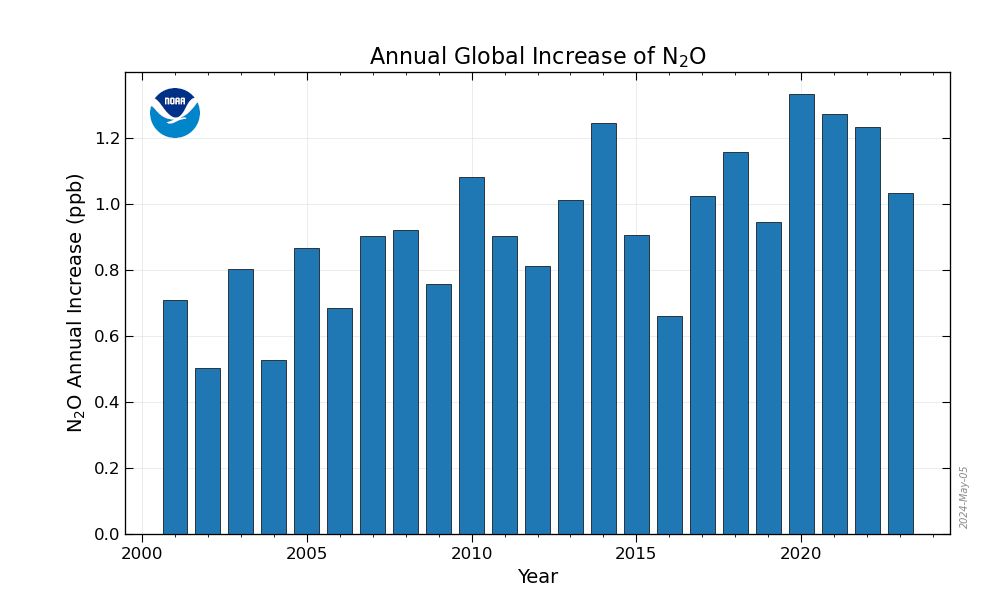
Then we have the annual global increase of N2O from all sources ranging from about 0.5 to 1.3 ppb.  Does anyone believe they can measure N2O down to 0.0005 ppm?

Then there is the matter that Nitrous oxide emissions in the United States decreased by 5% between 1990 and 2020. During this time, nitrous oxide emissions from mobile combustion decreased by 61% as a result of emission control standards for on-road vehicles. Nitrous oxide emissions from agricultural soils have varied during this period and were about the same in 2020 as in 1990. So any increases came from elsewhere, including the majority natural sources.

About Global Warming Potential

IPCC puts out a table like the Ten Commandments listing the Global Warming Potential (GWP) of all the “greenhouse gases.”  CO2 is assigned “1”, and all others are given a number as a multiple of CO2.  As noted above N2O is assigned ~300, making it a fearful GHG, depending of course on how much warming CO2 actually generates.

Source: GHG Institute

There are no details on the N2O GWP calculation of 300, but one suspects it is mainly due to the projected long residence time (100+ years) compared to about 5 years for CO2 (much shorter for CH4).  But no matter the half-life of N2O, consider the above absorption spectra of ghgs.  Note that N2O has no peaks, more like three pimples, all on the low energy longer IR wavelengths.  Moreover, the one at 4.5m overlaps entirely with CO2, the second at 7.9m is overwhelmed by H2O, and the third at 17.0m can only absorb what CO2 has not.

Getting Perspective on N2O Climate Fear

The Claim:  Nitrous Oxide is claimed to be a GHG 300 times as powerful as CO2; claimed to cause 7.5% of warming effect.  Nitrous oxide is a potent greenhouse gas with an atmospheric half-life of 120 years.  Environmentalists and ecologists share the consensus that there should be an 80% reduction in the total greenhouse gases below the 1990 level.

The Facts:

Start with a wholistic picture of IR active gases (so-called “GHGs”) .  H20 is 95% of all such gases, water vapor in the atmosphere ranging from 0 to 4%.  CO2 is a trace gas by comparison, 4% of GHGs, at 400 ppm, amounting to 0.04% of the atmosphere, presumed to be well mixed in the troposphere.

Consider that claimed N2O IR activity is less than 1%.  And in fact constitutes roughly 1/1000 of the gold blocks representing CO2.  An earlier graph showed N2O is presently ~ 0.340 ppm, or 0.00034% of the atmosphere.

Add in the estimation by Dr. Happer regarding IR activity in our atmosphere.  The black line shows gases absorbing radiation at various wavelengths from near IR on the left (shorter wave, higher energy) to far IR on the right (longer wave, lower energy). The big black line notch in the 600s is CO2 absorption in its modern concentration of 400 ppm.  The red line shows what will be the absorption should CO2 double in amount to 800 ppm. [See Climate Change and CO2 Not a Problem]

Notice that the difference between the red and black lines is miniscule. Notice also the microscopic effects of N2O across the spectrum.  Mathematically, 300 times miniscule = negligible.

Summary

This is a bogus war on fertilizers, farmers and food.  Everything is exaggerated for the sake of an extreme agenda to impose controls on free enterprise developed societies.  It is true that use of fertilizers results in some release of N2O into the air, but even this has been overstated. And as the video demonstrates, farmers have a vested interest in using fertilizers wisely and are applying techniques that improve efficiency.  As well, there is evidence of efficiency gains in the process of producing ammonia and then urea from air and natural gas.  The attack on food supply is in effect an effort to reduce the population.
Footnote The Living Soil

“Green” Mentality


Perils of Everything Electrified

Mark Krebs exposes the unreality of the current drive to electrify everything, including vehicles and home heating. His Master Resource article is All-Electric Forcing in the “Inflation Reduction Act” (up to $14,000 per home).  Excerpts in italics with my bolds and added images.

Basics of Peak Demand: Electric vs. Gas

Traditionally, both electric utilities and gas utilities designed peak capacity for worst-case scenarios plus a safety margin of around 10 percent. Electric utilities were summer-peaking due to cooling demand, while gas utilities were winter peaking due to heating demand.

In terms of maximum Btu demand, winter peaks tend to be much higher than summer peaks. The reason is largely a matter of inside to outside temperature differences between summer peaks and winter peaks. For example, assuming a winter design temperature of -10 deg F. and an interior thermostat setpoint of 75 deg. F, the difference is 85 deg. F. Assuming a summer design temperature of 110 deg. F. and the same interior thermostat setpoint of 75 deg. F, the difference is less than half the winter difference.

Without gas utilities to serve heating demand,
electric utilities will become winter peaking,
requiring massive investments of generating capacity and/or battery storage.

The worst-case scenario would then be a prolonged “polar vortex” with no wind (a.k.a., “wind drought”) coupled with snow covered photovoltaics. During such periods, all the heat from a typical electric heat pump will be in the form of electric resistance that is built into it; that’s just how typical heat pumps work.

If your local electric utility has “transitioned’ to all renewables, they will need several days’ worth of battery storage. Also, battery capacity drops sharply in extreme cold. That’s just how batteries work. Altogether, this equates to astronomical costs that get passed on to consumers. In short, if you are “all-electric,” you will need to fend for yourself and should at least consider investing in your own emergency generator system, assuming you can afford it.

Shame on Electric Utility Industry Who Know Better

The electric utility industry deserves much of the blame for these travesties. Leading electric utility industry trade associations support HR 5376. This was documented by an S&P Capital IQ on July 28th in an article (behind a paywall) titled “US climate package contains ‘robust’ clean energy tax incentives.”

What the article inadvertently documented is that the electric utility industry doesn’t like how they too may see income tax increases, and they aren’t holding back their disapproval of such provisions. But, on the other hand, the Federal government is essentially transferring the energy delivered by gas utilities over to electric utilities, and they will be collecting more revenue from increasingly captive consumers as their size at least doubles.

The electric utilities are not complaining about that. Maybe that will change in time as electric utilities realize their product is no longer reliable or affordable. But that may not matter since they became “the only game in town.”

Some of us saw this coming. Electric utility interests have been aligned with those of “all renewables all the time” advocates for several years. This alliance was announced in 2018 at a national conference of utility regulators, which I wrote about: Warring Against Natural Gas: Joint EEI/NRDC Statement to NARUC (crony environmentalism at work). Their efforts are largely being augmented by the Federal government subsidies and DOE’s “national labs,” since the Biden (mis)Administration took control or the lack thereof).

Let Consumers Freeze in the Dark

Politicians and pundits from both parties appear reluctant to question obvious restraint of trade issues and reduced consumer choice impacts. Why?

♦  For politicians, it’s because their interests lie elsewhere, like using “other peoples money” to trade with vested interests in return for campaign donations and insider information. It’s also because they don’t want to risk a reduction in generous campaign contributions from electric utility interests. [1]

♦  For pundits, it’s because most of them cater to environmental interests that are “in on it.” They even have their own trade association: The Society of Environmental Journalism. The one thing they do best is to “stick to the script.”

But who wrote the script? Globalists and global warming activists along with electric utility-oriented organizations like the “nonprofit” Rewiring America boast about their role in drafting these provisions. This is further evidenced by the following yahoo finance article: Inflation Reduction Act would lead to $1,800 in savings for average household, analysis finds.

We have recently begun to witness how Green New Deal variants are failing within the EU. We are also witnessing how the inherent intermittency of renewables put lives at risk. Now “reimagine” the combination of “all renewables all the time” and a major cold weather emergency event (a.k.a., “polar vortex”) like what happened in Texas last year. Further “reimagine” being without coal or natural gas for electric generation as well as natural gas and propane for home heating.

People will die at a far great pace than the 247 that died in Texas last year from Winter Storm Uri. This vicious cycle will just get worse the more reliant our society becomes upon on supposedly “clean” (but unreliable) energy sources. And yet, most politicians are reluctant allow for an opportunity for healthy/democratic debate. Instead, most House and Senate hearings have become infomercials for monied interests.

Renewables Forcing: How Much, How Far

The following EIA based graphic from a recent Washington Post article portrays the magnitude of transforming (perhaps unwittingly) the present energy generation mix to renewables. But be reminded, they are also planning to transfer the energy requirements presently served by the direct use of natural gas over to electricity. This could easily double or triple electric generation requirements. That effect isn’t shown in the following chart.

Another observation to be made from the above chart is that there is still a lot of black (coal) and orange (natural gas) in them. Basically, this means that switching to all-electric may have little if any carbon reduction benefits in such states. It is likely that in at least some states, fuel switching to electricity will increase carbon emissions. So “buyer beware” (in terms of both carbon savings and utility bill savings).

Clearly, the electric utility industry stands to profit from doubling (or more) in size and rate-basing much more expensive renewable technologies, all with the increased cost of “monopoly rents.” The environmentalists also get what they’ve craved: economic control.

Together, they can achieve social control; awarding energy compliance and
punishing energy disobedience; like how the system presently works in China.

Summary & Conclusions

For whatever reason, the gas utility industry has not been very effective in countering these threats. I really don’t have an explanation why, but most gas utilities are owned by electric utilities. This fact is also reflected within gas utility trade associations.

All I know for sure is complacency kills and gas utilities will either capitulate or litigate. I also know that the “Inflation Reduction Act” will cause $billions in stranded gas utility assets.

My advice to gas utilities:

♦  Assuming there is still “fight in the dog,” it’s time to start fighting like your livelihoods (and those of your customers) depend on it, because they do.

♦  Also study up on the takings clause in the constitution and find a way to live with the long-term liability of safeguarding our country’s abandoned gas pipes.

My advice to consumers:

♦  Be prepared to fend for yourself by investing in a natural gas or propane-fueled emergency generator system (if you can afford one). But note that if you have an electric heat pump, you’re going to need a much larger generator than if you didn’t.

I also have some closing advice to regulators: Do your job. Integrated Resource Planning (IRP) should not be Institutionalized Revenue Plundering and Demand-Side Management (DSM) should not be Deceptive/Strategic Marketing. Instead, reconsider Least-Cost Planning that was the standard before it was hijacked by corrupted IRP and DSM.