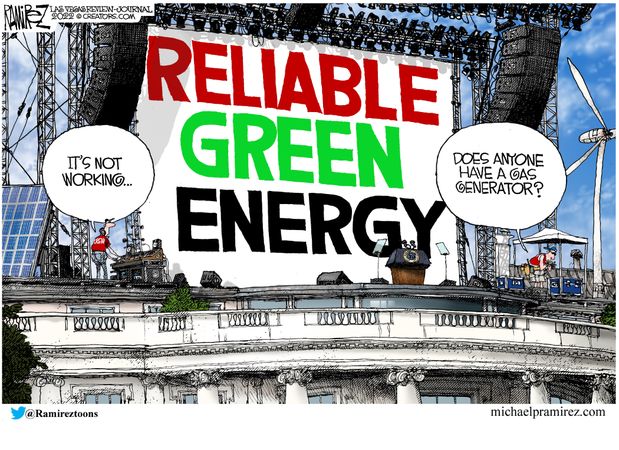
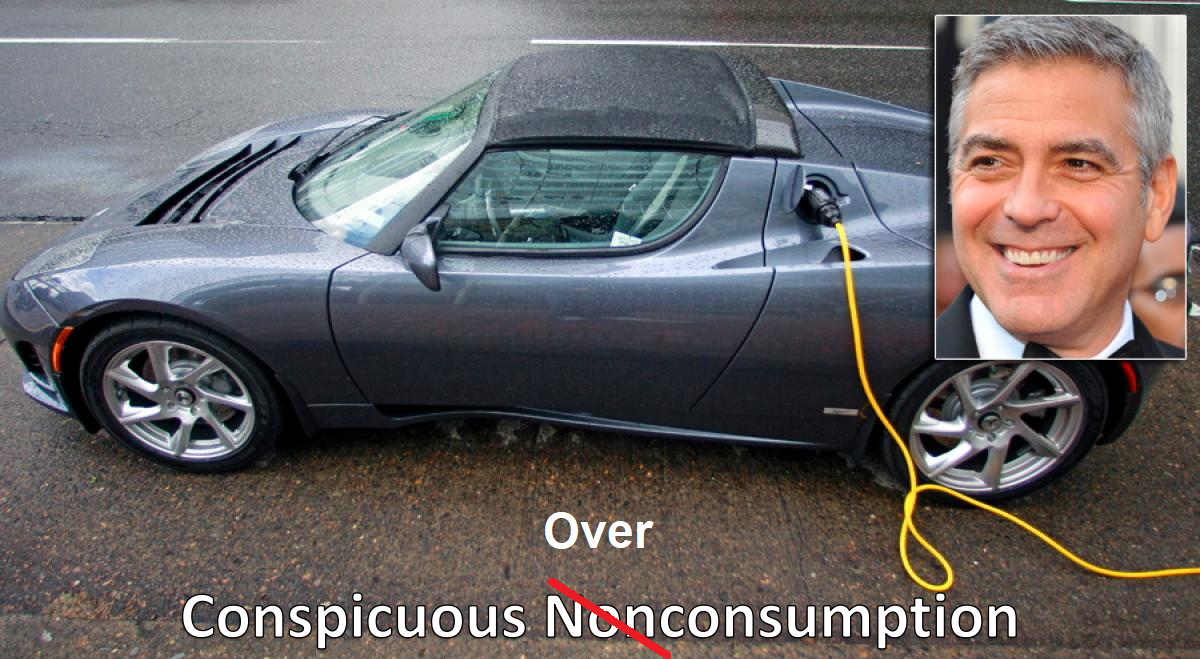
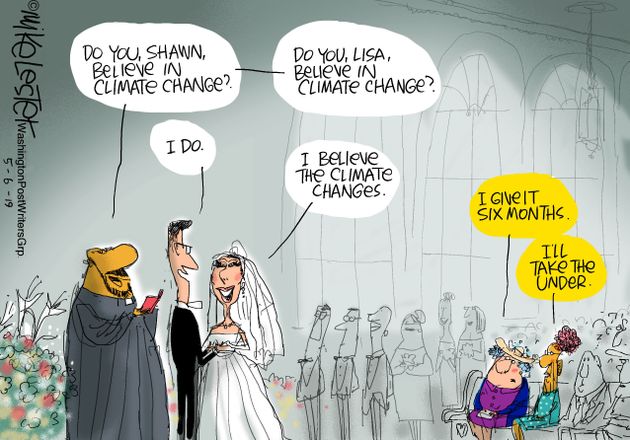
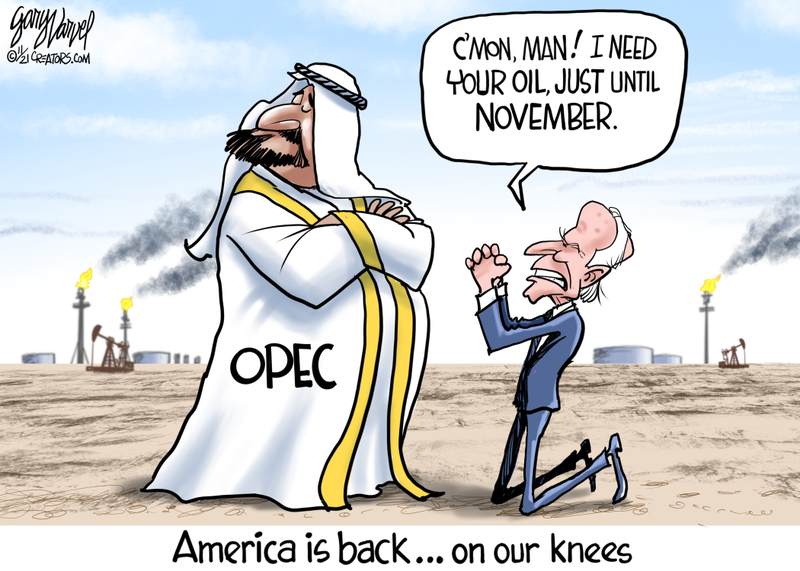
Net Zero = Pro China + Pro Russia

Rupert Darwall explains in an Epoch Times article Democratic Party Captured by Environmentalists, Aiding Russia and China.  Excerpts in italics with my bolds and added images.

Environmentalists have captured the Democratic party and, in their push towards Net Zero, are aiding Russia and China, a senior fellow at RealClearFoundation, Rupert Darwall, says.

Furthermore, the push towards Net Zero has monopolized “the money,” as the group includes many Silicon Valley billionaires, intellectuals, and the mainstream media, Darwall told The Epoch Times and NTD’s Paul Greaney in an interview.

In the interview, which aired on NTD’s Fresh Look America on Oct. 12, Darwall said a prime example of environmentalists taking over the Democratic party, and monopolizing the money, is California.

There, billionaire environmentalists have instituted “an aggressive green agenda” that doesn’t negatively impact them but directly opposes the average California voters’ interests, he said.

“Voters, and particularly in the Central Valley, who endure stifling temperatures in summer, had to pay ruthlessly high prices to condition their homes. They don’t have beachfront properties that are cooled from the Pacific.”

Darwall added that because California is “essentially a one-party state,” voters can’t correct the “extreme environmental policies.” Plus, environmentalists use a version of McCarthyism to stifle opposition.

In the 1950s, U.S. Senator Joseph McCarthy accused thousands of innocent people and parties of disloyalty and allowing Communism to influence their lives and policies.

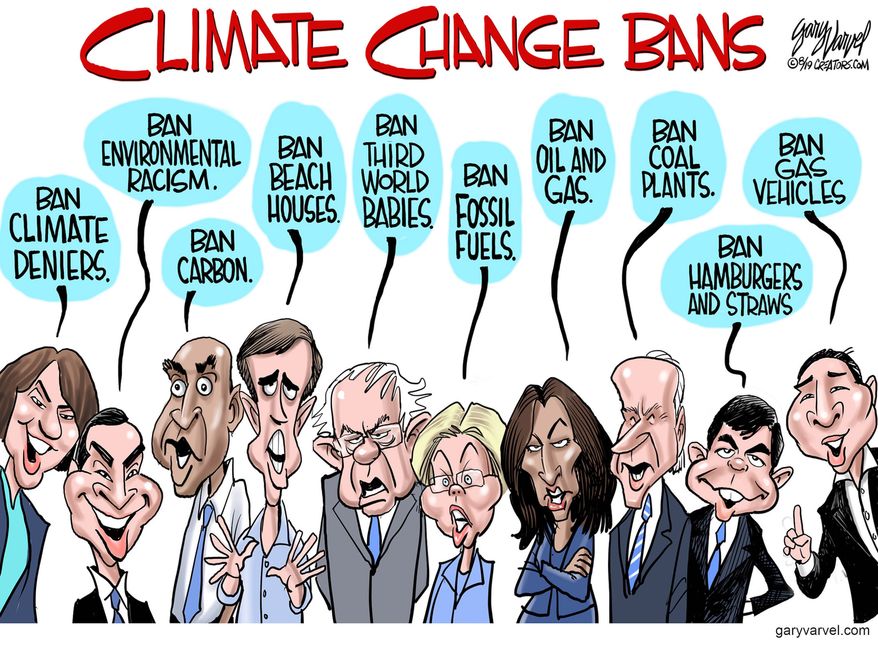
Darwall said environmentalists today use a similar tactic when they label anyone who disagrees with them as a “climate denier.”

“They know ‘denier’ is a very powerful term to be called. You may have seen a New York Times journalist interviewing the president of World Bank, and [the journalist asks] “are you a climate denier?’ It’s designed to chill debate. Not just chill it but prevent people questioning.”

[ Tip:  Q:  Aren’t you a climate denier?  A: I am a climate thinker. ]

Green Imperialism

If this progression towards Net Zero continues, Darwall said he knew who will win.

“China and Russia. I mean, basically, the opponents of the West, geopolitically from stepping back, but they’re the big winners from the West deciding to bring itself to its knees. I mean, no modern economy can function without cheap, abundant energy and fossil fuel derived energy.”

“We’re basically cutting off our legs. The pain will increase. People are blaming Putin for the terrible winter the Europeans are going to experience this this year. But the way I would put it is Net Zero is Vladimir Putin’s best ally.”

Darwall further added that not only is the West hurting itself and helping Putin, but it’s also engaging in a sort of “green imperialism.”

As mentioned above, the president of the World Bank had been attacked, specifically by Al Gore, Darwall said, because the World Bank was one of the “big providers of finance to Africa.”

“There are over a billion Africans, and they are energy starved. Africa is an energy-starved continent. And the effect of Western green policies is to freeze, as it were, African Development at a very low level.”

Darwall continued, “Grid-delivered electricity is the doorway to the modern world. If you compare the 19th century to the 20th century, the big change is electricity.

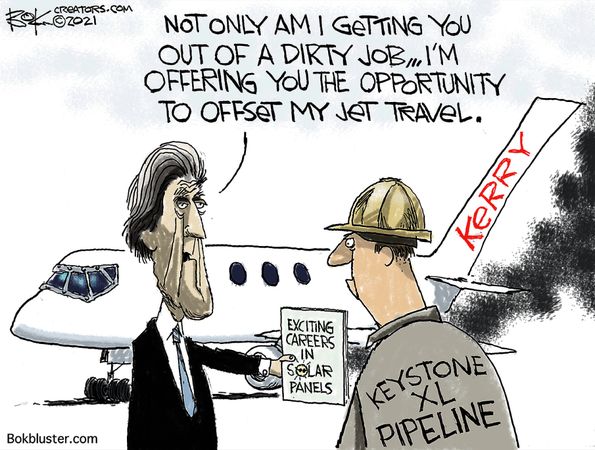
“For Africa to flourish and develop, it needs reliable, cheap, grid-delivered electricity. And that is what people like Al Gore and John Kerry are denying Africans.”

Darwall specified that people like Kerry and Gore are pursuing an agenda that geologically damages the West, its strategic interest, and the economic and social interests of less developed nations.

Political Reckoning

As a result, Darwall believed a political reckoning is coming to the West. He says that as gas prices and inflation continue to climb, voters will show their displeasure for extreme environmental policies and “vote for the other party.”

That benefits Republicans, as under Donald Trump, the United States was an energy superpower.

“In those four years he was president, America was an energy superpower. And now this energy superpower is going around to the Gulf, begging OPEC plus to increase oil production. It’s absolutely extraordinary.”

As for Europe, Darwall believes significant political changes will likely occur in Britain and other countries, but Germany is fully committed to Net Zero.

When asked what would happen if the West reversed its Net Zero policy and returned to producing oil and gas, Darwall replied, “That’s a catastrophic outcome for Russia. Because Russia is a natural gas oil exporting country and economy, and it really, it needs those foreign currency earnings.

“Its economy depends on it. So, it would be terribly bad. It would be awful for Russia. That’s why I say that Net Zero is Vladimir Putin’s best ally.”

See also West’s Obsession with EV Tech Puts China in World Driver Seat

Energy Inflation Playbook

Rupert Darwall explains the intentional inflation of energy prices world wide in his forward to a Real Energy study by Joseph Toomey Energy Inflation Was by Design.  The title is a link to the pdf.  Darwall’s introduction was published at the Federalist entitled Energy Inflation Isn’t An Accident, It’s A Planned Demolition.  Excerpts in italics with my bolds and added images.

Our current energy crisis was self-inflicted, a foreseeable outcome
of policy choices made by the West, and it’s getting worse
.

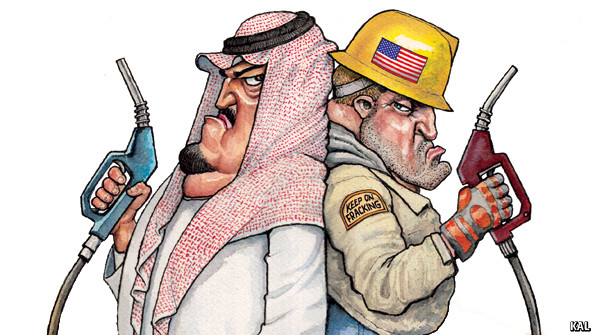
The West is experiencing its third energy crisis. The first, in 1973, was caused by the near-quintupling of the price of crude oil by Gulf oil producers in response to America’s support for Israel in the Yom Kippur war. Their action brought an end to what the French call the trente glorieuses — the unprecedented post–World War II economic expansion.

The second occurred at the end of the 1970s, when Iran’s Islamic revolution led to a more than doubling of oil prices. This again inflicted great economic hardship, but the policy response was far better. Inflation was purged at the cost of deep recession. Energy markets were permitted to function. High oil prices induced substitution effects, particularly in the power sector, and stimulated increased supply.

In the space of nine months, the oil price cratered from $30 a barrel in November 1985 to $10 a barrel in July 1986. It’s no wonder that the economic expansion that started under Ronald Reagan had such long legs.

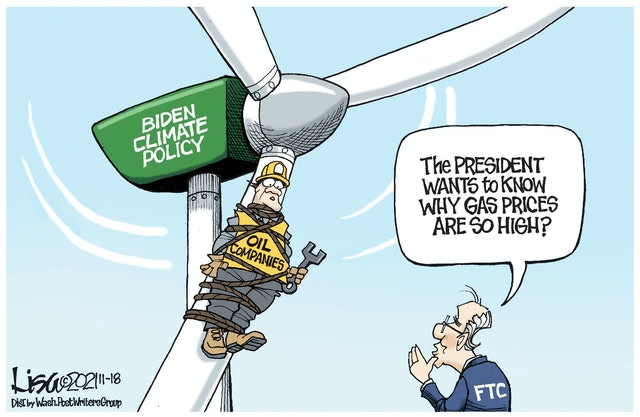
This time is different. The third energy crisis was not sparked by Saudi Arabia and its Gulf allies or by Iranian ayatollahs. It was self-inflicted, a foreseeable outcome of policy choices made by the West: Germany’s disastrous Energiewende that empowered Vladimir Putin to launch an energy war against Europe; Britain’s self-regarding and self-destructive policy of “powering past coal” and its decision to ban fracking; and, as Joseph Toomey shows in a recent powerful essay, President Biden’s war on the American oil and gas industry.

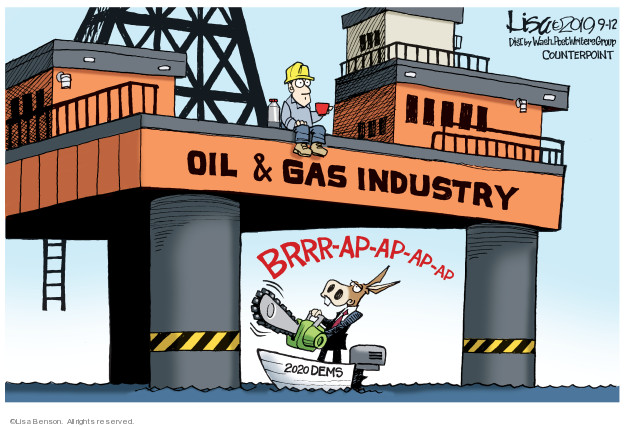
Hostilities were declared during Joe Biden’s campaign for the Democratic presidential nomination. “I guarantee you. We’re going to end fossil fuel,” candidate Biden told a climate activist in September 2019, words that the White House surely hopes get lost down a memory hole. Toomey’s paper has all the receipts, so there’s no danger of that.

As he observes, Biden’s position in 2022 resembles Barack Obama’s in 2012, when rising gas prices threatened to sink his reelection. Obama responded with a ruthlessness that his erstwhile running mate lacks. He simply stopped talking about climate and switched to an all-of-the-above energy policy, shamelessly claiming credit for the fracking revolution that his own Environmental Protection Agency (EPA) tried to strangle at birth.

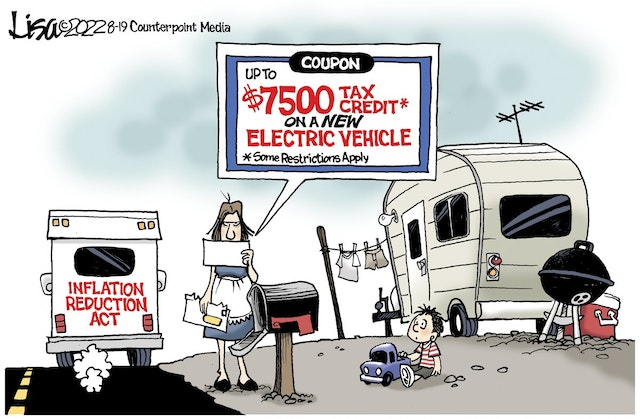
Passage of the comically mistitled Inflation Reduction Act places this option beyond Biden’s reach, even if he were so inclined. Democrats are hardly going to take a vow of climate omertà when they’ve achieved a political triumph of pushing through Congress what they regard as the most significant climate legislation to date.

Although the price of oil has slipped back from recent highs, the factors behind high gasoline prices remain in place. Foremost among these is the steep decline in U.S. oil refinery capacity triggered when Covid lockdowns crushed demand but continued after the economy reopened. There has never been such a large fall in operable refinery capacity. Moreover, Gulf Coast refineries were operating at 97 percent of their operating capacity in June 2022. As Toomey remarks, “There isn’t any more blood to be squeezed out of this turnip.”

Toomey identifies five factors driving this decline in refinery capacity.

EPA biofuel blending mandates impose crippling costs on smaller refineries. 

When conventional refineries are converted to processing biofuels, up to 90 percent of their capacity is lost. Biofuel mandates cost consumers far more than federal excise taxes. Toomey demonstrates that the Biden administration’s claim that biofuel mandates protect consumers from oil-price volatility is totally false; biofuel prices, he writes, “are essentially indexed to the price of crude oil.”

Biden could order the reversal of the EPA’s retroactive biofuel threshold rules. That he has not done so demonstrates that the administration isn’t serious about making energy affordable again. High prices for fossil fuel energy are an intended part of the plan.

Corporate and Wall Street ESG policies are another factor driving refinery closures.

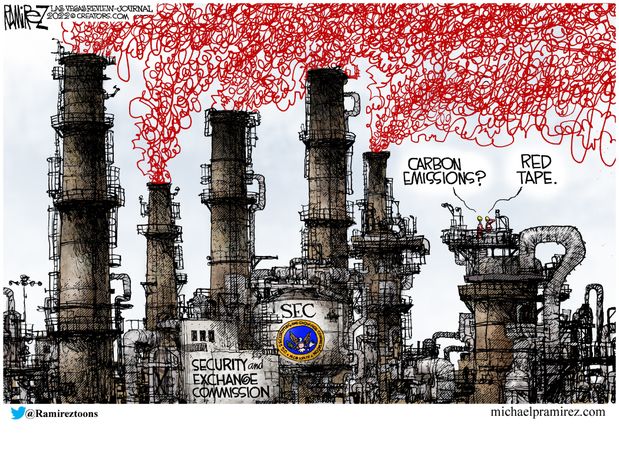
Especially facilities owned by European oil companies have to meet punishing decarbonization targets that will effectively end up sunsetting them as oil companies. If finalized as proposed, the Securities and Exchange Commission’s proposed climate disclosure rules, with the strong support of the Biden administration, will heighten the vulnerability of U.S. oil and gas companies to climate activists and woke investors to force them to progressively divest their carbon-intensive activities, such as refining crude oil, and eventually out of the oil and gas sector altogether.

Aggressive federal policies aimed at phasing out gasoline-powered vehicles.

To these should be added aggressive federal policies aimed at phasing out gasoline-powered vehicles in favor of electric vehicles (EVs); an administration staffed from top to bottom by militants who believe that climate is the only thing that matters in politics; and an increasingly hostile political climate (“You know the deal,” Biden said of oil executives when campaigning for the presidency. “When they don’t deliver, put them in jail”).

These policies, argues Toomey, will see China become the world’s leading oil refiner for years to come. Will Biden find himself asking China for supplies of refined gasoline? He might well find himself being saved from such an unfortunate position, made more so by Speaker Nancy Pelosi’s recent trip to Taiwan, by help from the other side of the southern border.

Mexico is constructing a $12 billion refinery, due to start producing gasoline next year. Perhaps President Biden’s next foreign trip should be to Mexico City.


Biden Feds Kneecapped Oil and Gas

Report from Just the News After Trump energy ‘renaissance,’ Biden ‘kneecapped’ oil and gas producers: industry spokesman.  Excerpts in italics with my bolds and added images

The president of the U.S. Oil and Gas Association contrasted “the greatest energy renaissance in our history” under Trump with “regulatory assault and the attempt to defund us and to debank us on Wall Street” by the Biden administration.

The U.S. oil and gas industry quickly went from a “renaissance” under former President Donald Trump to a new dark age under a Biden administration hostile to traditional energy sources, the head of the industry’s trade association said Friday.

“President Trump, to his credit, presided over the greatest energy renaissance in our history,” Tim Stewart, president of the Oil and Gas Association, said on the the “Just the News, No Noise” TV show. “Right before the pandemic, we were producing 13 million barrels [of oil] a day. For all intents and purposes … we were a net exporter of energy.”

Amid buoyant expectations of increasing U.S. production to 15 million barrels per day, the industry was suddenly rocked by consecutive shocks: the pandemic, followed by the Biden administration war on fossil fuels.

“We came out of COVID right into the Biden administration, which then kneecapped us,” Stewart recounted. “Between their regulatory assault and the attempt to defund us and to debank us on Wall Street, we’re still a million or million and a half barrels behind where we were. And we’re 3 million barrels behind where we could be. And that’s really unfortunate. And that’s unfortunate for our European allies in particular.”

Now, even some Democrats are recognizing the administration has taken its crusade against oil and gas too far, too fast, says Stewart.

“I’ve had some interesting conversations with members of Congress just in the last two weeks, of both the Senate and the House and Republicans and Democrats,” he said. “And there are Democrats who are starting to say, ‘Maybe we went a little too far.’ It’s a year too late. But we welcome that.”

Stewart was asked if the Oil and Gas Association would ever get a call seeking advice from the Biden administration.  “I don’t know if we ever will hear from them to be honest with you,” Stewart answered.

“The number of people who are political appointees in the administration who came out of our industry or who really understand it, you can literally count on one hand.”

See also Wake Up and Smell the Fossil Fuel Insanity


Climatism the Real Threat to Democracy

Philip Cross writes at Financial Post Canada The real threat to democracy.  Excerpts in italics with my bolds

Having failed at the ballot box, millennial climate activists will
pursue any means to impose their will on society

There are a number of important outcomes from Monday’s election in Quebec. Two of the most important are the eclipse of Quebec’s traditional political parties by new ones, including the Conservative Party of Quebec, and the growing gap between voters in Montreal and the rest of Quebec.  But the feature I want to emphasize is the failure of the radical Québec Solidaire (QS) party to significantly expand its base. 

Québec Solidaire based its campaign on the environment. It emphasized the existential threat of climate change that teenage activist Greta Thunberg trumpeted at a much-publicized 2019 rally in Montreal where she made the empty boast, “We are changing the world.” QS co-leader Gabriel Nadeau-Dubois called this election “the last chance” to stop climate change, as if Quebec’s actions could have any significant impact on global emissions.

The failure of Québec Solidaire to mobilize more support shows that even Quebec’s supposedly progressive electorate does not support the wholesale reshaping of our society and economy to combat climate change. The Green Party similarly failed to make the case for environmental supremacy at the federal level, seeing its share of the vote halved in the 2021 election from its already low level of six per cent.

Unfortunately, the failure of parties focused on the environment and climate change to win at the ballot box does not deter activists from looking for other means to impose their views on society. The mainstream media portrays the authoritarianism of populist movements such as Donald Trump’s as the greatest threat to democracy today. But this ignores how environmental groups resort to government regulations and lawsuits to circumvent the popular will and achieve their own goals.

Having failed to make their case in the political arena, environmentalists increasingly are asking the courts to impose restrictions that voters have not supported. In a current case (Mathur v Ontario) six teenagers are asking the Ontario Superior Court to agree that climate change is violating their rights and order the government to implement measures to limit greenhouse gas emissions — even though Ontario only accounts for 0.3 per cent of global emissions. The Supreme Court of Canada recently refused even to hear a similar class action lawsuit from another group of young people.

It is unfathomable that courts would agree to usurp government authority and dictate energy consumption, which is the basis of our civilisation and our economy. Yet not one peep has been heard from the media about the anti-democratic nature of this initiative. Instead, Environment and Climate Change Minister Steven Guilbeault lauded the youths involved in the Supreme Court lawsuit for their “passion” instead of criticizing their attempt to circumvent the democratic process and subjugate Parliament’s will to the courts.

In her book Paradoxes of Prosperity, University of Cambridge economics professor Diane Coyle notes a fundamental difference between the protest movements of the 1960s and those of today’s millennials. Dissidents in the 1960s were fundamentally anti-authoritarian and libertarian, looking for ways to increase personal freedom and individual choice. Millennial movements, by contrast, especially among environmentalists, have a prescriptive agenda they want to impose on others. Columbia University historian Kim Phillips-Fein observed in her book, Invisible Hands, that environmentalists have long been “hostile to the very institutional framework of a free society.” Young people are especially likely to attach diminished importance to democracy: in a 2017 poll only a third of American youths agreed it is important to live in a democracy while 18 per cent said they would welcome a military dictatorship.

Political parties with radical and draconian environmental goals have clearly failed to win significant support from the electorate. What is different and worrisome for the future of democracy is the growing willingness of millennial social movements to impose their narrow agenda on the public by any other means available. The real threat to democracy today is, not the populist right-wing movements that preoccupy mainstream media, but the attempt of frustrated environmentalists to circumvent elections.


Climate Imperialism

Kelli Buzzard writes Climate Imperialism at American Mind to explain how climatist overlords are oppressing the lives of ordinary people who live in places like the nation of Hungary.  Excerpts in italics with my bolds and added images.

E.U. energy mandates impose needless suffering in the name of elite fantasy.

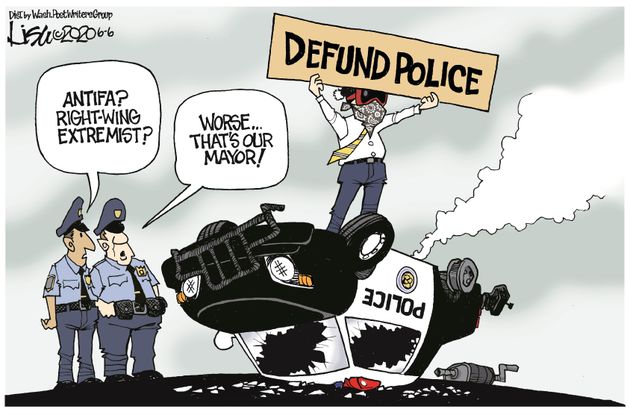
The American intellectual Rob Henderson coined the term “luxury beliefs” to describe the status-conferring ideas and opinions of wealthy elites. Examples of these beliefs include “defund the police,” “dismantle the patriarchy,” and “net zero carbon now.”

Luxury beliefs have the attractive quality that those most likely to promote them rarely face their consequences. For example, the “defund the police” crowd tends not to live in crime-ridden inner-city neighborhoods that count on the police to maintain order. Statistically, those who rage against the patriarchy and traditional marriage eventually marry but divorce at much lower rates than other Americans.

Nowhere is this trend more clear than in the disastrous realm of climate policy.

Climate activists who call for a ban on fossil fuel consumption and a phase-out of the combustion engine almost always live in metro areas where they don’t need a car. If they drive, they can afford $5-a-gallon gasoline or can buy a $66,000 electric vehicle.

Meanwhile, their luxury beliefs become public policy and hurt the rest of us.

In recent months, for example, the U.S. government passed a climate change bill masquerading as a measure to reduce inflation. In Europe, the E.U. has committed to becoming carbon neutral by 2050. The uber-elite internationalist group, the World Economic Forum, linked arms with the Chinese Communist Party in a bid to “radically transform” the world economy and stave off “climate catastrophe,” which amounts to the “real battle of our time.”

The premises of climate alarmism are almost all entirely untrue. Natural disaster-related deaths have declined, not increased, and plastic waste danger is overblown. While the world’s capacity to produce more food has skyrocketed, climate change has contributed minimally to the world’s wars, and the destruction of rainforests has little to do with changes in the climate.

But the fantasies of climate hysteria prompt hasty, radical action, resulting in developing nations being denied the cheap energy sources they need–coal, wood, dung, fossil fuels—to grow wealth, rise out of abject poverty, and enjoy the option of developing green policies in the future.

Hungary and Cold

The case of Hungary, where I work and write, is not as dire as in impoverished places like rural Asia or Sub-saharan Africa. Nonetheless, the carbon-neutral policies from Brussels, London, and Washington have affected every aspect of Hungarian society.

Hungary is a small, landlocked former Soviet-bloc nation located in the heart of Europe. As a member of the European Union, Hungary must adopt European Green Deal policies, which seek to “decarbonize” the continent by 2050. This has resulted in a push to diversify the nation’s energy supply by building solar farms, embarking on new nuclear energy plant projects, and installing solar panels on government and residential buildings. But green energy sources are not only insufficient to meet the nation’s energy demands. They are also unreliable depending on the weather.

So Hungarians, ever-realistic people, rely on fossil fuel sources in the interim.

More than half of Hungary’s energy comes from imported fossil fuels. Like Germany and other Western European nations, Hungary has gotten most of its natural gas and oil supplies from Russia in the past. But Hungary has long sought to diversify its energy sources. Toward that end, during the Trump Administration, the Hungarian government inked a deal to import natural gas from America through a Croatian port. The agreement was promising, as America was an energy-surplus country and a willing trade partner. The deal fell apart, however; the United States canceled the contract on day one of the Biden Administration.

Hungary has also sought to offset its fossil fuel consumption by adding nuclear power to its mix, thus promoting greater energy security by relying less on Russian oil. The nation currently operates four nuclear power plants and is looking for an international partner to build two more. But, ironically, the only company to offer a bid on the project was Russian nuclear power giant Rosatom.

In the wake of the war in Ukraine, Hungary’s Prime Minister Viktor Orbán is routinely called “Putin’s Puppet” or similar derogations. Central to the name-calling is Prime Minister Orbán’s realism. While he supports efforts to reduce carbon emissions and plans to generate up to 90% of his country’s energy from nuclear and solar sources by 2030, Orbán’s more significant concern is how to preserve his nation’s way of life now. The truth is that Hungary needs oil and gas to survive. As a result, the Hungarian Prime Minister roundly rejects calls to cut off those sources, regardless of internationalist green energy policies or Russian aggression in the neighborhood.

At present, the war next door in Ukraine rages on and shows no signs of stopping, NATO sanctions notwithstanding. Russia shopped for new buyers and created new oil trade relationships with countries like China and India. Putin, his coffers burgeoning, recently turned off Europe’s gas supply, promising not to turn it back on until western sanctions are lifted. The action, of course, resulted in skyrocketing fuel costs across the continent, including here in Hungary. Like it or not, Europe, which has allowed itself to be captured by climate extremism, cannot at present survive on green energy sources alone. The continent relies on Russian gas and will for quite some time to come.

Climate Lemmings

Despite the prime minister’s resolve, Hungarians are facing the facts: heating prices are projected to increase at least 6-fold during the winter; a local university is considering closing its dorms; Budapest bridges and public buildings are shutting lights off two hours early every night; Budapest’s trams, trolleys, and escalators may shut down; sharp increases in freight rates threaten to spike the costs of household goods and food; a Hungarian energy company just went bust; the national opera reduced its performance line-up by half; and the tourist sector in Budapest may collapse altogether.

I recently celebrated my first anniversary of living in Hungary by moving into a smaller, more energy-efficient apartment and purchasing the warmest winter comforter money could buy. Because by all accounts, without drastic reductions in use, my energy costs will increase six-fold in the coming months. No luxury belief will change that.

See Punishing Climate Policies to Fix What’s Not Broken

See also my series World of Hurt from Climate Policies 

Snappy Answers to Energy Questions

Snappy answers to energy questions

This election season candidates are getting lots of energy-related questions. Here are pro-freedom, pro-human answers to some of the most popular ones. Alex Epstein

♦  What’s your policy on energy, environment, and climate?

I believe in energy freedom: the freedom to use all forms of energy, with laws against emissions and practices that are significantly harmful and reasonably preventable.

5 key energy freedom policies are:

1. Liberate responsible development
2. End preferences for unreliable electricity
3. Reform air and water emissions standards to incorporate cost-benefit analysis
4. Reduce long-term CO2 emissions via liberating innovation
5. Decriminalize nuclear¹

♦  Do you believe in climate change?

I believe in climate change, not climate catastrophe.

The world has warmed ~1° C in the last 170 years. Humans have some influence. But because we are so good at mastering climate, climate disaster deaths fell 98% over the last century.²

♦  Are you a “climate denier”?

I’m a climate thinker.

I recognize that climate is ever-changing, that humans have some influence, and that humans with plentiful energy can master virtually any climate. That’s why, as CO2 levels have gone up, climate disaster deaths have plummeted.

♦  What’s your plan to deal with CO2 emissions?

My plan is:
1. Recognize that CO2 emissions reduction can only be achieved humanely and practically a) long-term and b) through developing globally cost-competitive alternatives.
2. Liberate nuclear and other promising alternatives.

♦  Why did gasoline prices get so high this year?

While multiple factors, including the Russian invasion of Ukraine, played a role, the fundamental cause is US and international anti-oil policies that prevent supply from rapidly increasing to meet demand.³

♦  Why don’t oil and gas companies drill more despite record profits?

Oil and gas would like to profit much more from currently high prices but it is difficult to increase drilling short-term under the present regulatory regime and investors are scared about more government punishment.⁴

♦  Why is Europe in a far worse energy crisis than we are?

Europe has taken anti-fossil-fuel policies further. For example, while we have allowed fracking to produce abundant energy Europe has largely banned it.

With the “Inflation Reduction Act” we are getting closer to Europe.⁵

♦  Do you believe in “all of the above?”

No, I believe in “always the best.”

We should always use the best form of energy for the job. E.g., we don’t use animal dung for energy in the US, even though it’s “one of the above.”

The best source of energy in any situation is what business and consumers choose as best on a free market with reasonable anti-pollution laws.

If something can’t compete on these terms then we shouldn’t use it—whether it’s animal dung, solar, or wind.

♦  What’s your position on solar and wind?

Solar and wind should be required to compete on a real market. In the context of electricity that means generators using solar and wind should be held to the same reliability standards as everyone else. Currently they’re not—which is disastrous.⁶

The root cause of our grid’s reliability problems is simple: America is shutting down too many reliable power plants—plants that can be controlled to produce electricity when needed in the exact quantity needed. And it is attempting to replace them with unreliable solar and wind.

♦  What’s your position on nuclear power?

Nuclear power is an extremely promising technology that is uniquely safe and clean, and has the potential to be cost-effective.

Tragically, nuclear has been nearly criminalized by governments. We need radical reform to decriminalize it.⁷

♦  What’s your position on electric vehicles?

Electric vehicles are a valuable product for certain people but not yet cost-effective for the vast majority of us. Let electric vehicles compete on a free market; don’t in any way pressure anyone to use them before 1) they can afford them and 2) the grid can handle them.⁸

♦  What’s your position on the “Inflation Reduction Act”?

It’s a 4-step recipe for ruining US energy:

1. Make us more dependent on unreliable electricity
2. Impose new oil and gas taxes during an energy crisis
3. Give EPA more power to restrict fossil fuels
4. Give more power to anti-fossil-fuel activists⁹

♦  How does the Inflation Reduction Act affect my state?

The Inflation Reduction Act got passed in large part by offering various payoffs to various states. Whatever benefit you get from those payoffs pales in comparison to higher energy costs, an unreliable grid, and a worse economy.¹⁰

♦  Do you believe in taking money from fossil fuel companies?

I believe candidates should proudly take money from fossil fuel companies if they and the company support energy freedom policies.

Fossil fuel companies are essential to the survival of 8 billion people for the foreseeable future.

For More on this from Alex Epstein

Bye Bye Bourgeois Environmentalists

Getty images.

Brendan O’Neill writes at Spectator The trouble with ‘bourgeois’ environmentalism Excerpts in italics with my bolds and added images. H\T John Ray

The left needs to shake off its ‘bourgeois environmentalism’. It needs to distance itself from the ‘bourgeois environmental lobby’ and make the case for fracking and the building of new nuclear power stations.

Who do you think said this? Some contrarian commentator? A right-winger irritated by eco-loons? Nope, it was Gary Smith, the general secretary of the GMB trade union.

In an explosive intervention in left-wing discourse, Smith has accused Labour of a ‘lack of honesty’ and of ‘not facing reality’ on the energy question. We are living through a severe energy crisis and yet still Labour is sniffy about fracking and down on nuclear power, he says. All because it is in thrall to bourgeois greens who just don’t like industry and modernity very much.

Yes, climate change is a problem, he says, but we need energy. ‘We import a huge amount of fracked gas’ from America, he points out, so why don’t we just frack our own? We should get serious about developing nuclear power too, says Smith.

The GMB represents 460,000 working people, including the majority of workers at the UK’s nuclear-power stations. So it is logical – and good – that Smith would defend the nuclear industry. But his broader point is even more important.

‘(The) question’, he says, ‘is where is the electricity going to come from? We cannot do it by renewables and we cannot rely on energy imports.’ In short, we should get cracking – and fracking – on generating our own abundant sources of energy.

His killer comments concern the aloof, elitist tendencies of green activists. The renewables industry – ‘and many of those who espouse it in politics’ – have ‘no interest in jobs for working-class communities’, he says. He continues:

‘(We) should stop pretending that we’re in alliance with them.

The big winners from renewables have been the wealthy and big corporate interests. Invariably the only jobs that are created when wind farms get put up, particularly onshore wind, have been jobs in public relations and jobs for lawyers.’

This is really important stuff. Smith has laid down a gauntlet to the modern left – are you on the side of working-class communities who benefit from well-paid jobs in the energy sector and from the domestic production of energy, or are you on the side of ‘bourgeois’ greens who are offended by any kind of human intervention in nature, whether that’s digging down for gas or unleashing the awesome power contained in uranium?

For far too long, Labour and left-wingers more broadly have been embracing the ideology of environmentalism. This has always struck me as utterly bizarre, because it seems pretty clear that green politics run entirely counter to the interests of working-class communities.

It is not a coincidence that environmentalism is the favoured political pursuit of the upper middle classes, posh influencers, privately educated columnists and even our new King (God save him). Because this anti-industrial worldview, this ideology that looks with such horror upon our mass consumer society, and the masses who partake in it, is the perfect vehicle for the expression of an older aristocratic disdain for modernity.

Environmentalism is a modern manifestation of the 19th-century Romantic reaction against the Industrial Revolution. Only back then it was more honest – it was all puffy-collared rich folk shocked that the serfs who once worked their lands were now headed into teeming new cities to work in factories. Today, the misanthropic scorn for modernity tends to be more deceitfully dressed up. It’s less ‘Who will toil my farmland now?!’ and more ‘What will happen to the air I breathe if millions of gammon are driving to Aldi every day?’.

Smith, who made these comments in an interview with the New Statesman, is dead right: ‘bourgeois’ is exactly the right word for modern environmentalism. It is alarming that the left has bought into all this middle-class green nonsense. I trust Spectator readers will forgive me for quoting Trotsky, but he did say that the task of left-wing revolutionaries was to bring about the increase of ‘the power of man over nature and the abolition of the power of man over man’. The modern left does the precise opposite of this. It seeks to shrink man’s power over nature and to boost man’s power over man, via new forms of authoritarianism and censorship. Please, right-wingers, I implore you: stop calling modern leftists ‘Trots’.

Gary Smith has done something incredibly important. He hasn’t only put pressure on Labour to think seriously about fracking and nuclear. He has also forced the left to ask itself why it has lost touch with working-class concerns and found itself so beholden to posh pursuits like ‘saving the planet’. A left that represents bourgeois interests is of no use to anyone. Except, of course, the bourgeoisie.

SEC Not Climate Change Enforcer

It should junk its proposed disclosure rule, which is clearly unconstitutional
as per West Virginia v. EPA.

The Supreme Court’s June decision in West Virginia v. Environmental Protection Agency was a shot across the bow of the administrative state. The decision implicates many executive and independent agencies’ rulemakings, but perhaps none more so than the Securities and Exchange Commission’s proposed climate-disclosure rule. The proposal would convert the federal securities regulator into a greenhouse-gas enforcer looking over the shoulders of exchange-listed companies’ directors. Much like the EPA regulation the justices struck down, the new SEC proposal would exceed the authority Congress granted to the agency. If the SEC were wise, it would rethink its rule, lest it face a similar fate in court and see its rulemaking effort thrown into the regulatory waste bin.

Writing for a 6-3 majority in West Virginia, Chief Justice John Roberts invalidated the EPA’s Clean Power Plan under the “major questions” doctrine, which limits an agency’s power to act on issues of “economic and political significance” without clear authorization from Congress.

The court’s doctrine is a species of the separation of powers—specifically the nondelegation principle, which bars the legislature from giving lawmaking power to the executive branch. James Madison argued the point forcefully in the Federalist Papers and in the First Congress. The early Supreme Court let Congress allow the executive to “fill up the details” of “general provisions” of legislation but emphasized that “important subjects . . . must be entirely regulated by the legislature itself.”

In keeping with this principle, the modern Supreme Court has refused to allow administrative agencies “to ‘work around’ the legislative process” to resolve questions “of great political significance,” as Justice Neil Gorsuch noted in his West Virginia concurrence. Court decisions over the past three decades have blocked agencies’ efforts to resolve policy disputes without clear congressional authorization. Those cases range from regulating tobacco to changing telecommunications rate regulation—and, during the Covid pandemic forestalling tenant evictions and broadly mandating vaccines.

The SEC’s regulation is of a piece with those the court has struck down. We warned in a June 16 comment letter to the agency that Congress never assigned the SEC the task of overseeing environmental concerns.

Yet that’s exactly what it sets out to do in its climate rule.

As GOP-appointed SEC Commissioner Hester Peirce noted in a March dissent, the agency is attempting to mandate that companies disclose a host of “climate-related risks; climate-related effects on strategy, business model, and outlook; board and management oversight of climate-related issues; processes for identifying, assessing, and managing climate risks; plans for [climate change] transition; financial statement metrics related to climate; greenhouse gas emissions; and climate targets and goals.”

By sweeping upstream and downstream contractors into its proposed rule, the SEC seeks to regulate companies that aren’t traded on public stock exchanges and therefore should be wholly outside the commission’s regulatory reach. The proposed rule would casually toss aside the “materiality” standard, which limits mandated disclosures to financially material information.

The proposed rule would also implicitly reallocate power from corporate boards and order them to bring climate-related risks to the fore of company priorities—in direct conflict with longstanding state corporate law. Though Congress could pre-empt state law concerning corporate governance, an agency on its own has no such power.

In other words, the SEC’s proposal contravenes foundational principles of separation of powers and federalism. As Justice Gorsuch observed in West Virginia, the major-questions doctrine comes into play “when an agency seeks to intrude into an area that is the particular domain of state law.” The Supreme Court made clear 45 years ago in Santa Fe Industries v. Green (1977) that “absent a clear indication of federal intent, the Court should be reluctant to federalize the substantial portion of the law of corporations that deals with transactions in securities, particularly where established state policies of corporate regulation would be overridden.”

The SEC didn’t acknowledge or seriously engage any of these issues in its 490-page proposal. Though the agency lacks environmental expertise, it employs talented legal minds who understand these legal constraints and could have counseled against venturing beyond delegated authority. If such advice was given, it evidently wasn’t heeded.

But perhaps that will soon change. West Virginia v. EPA provides the SEC with the incentive to revise its approach and focus on the parameters of its authority before finalizing its proposed climate rule, which the agency initially suggested would be released in October. It may well be that the SEC needs to update the guidance on climate-change disclosures it issued over a decade ago. But in doing so, it needs to follow the law—and leave the big issues to the legislative branch, as the Constitution requires.

Mr. Sharfman is a senior corporate governance fellow with the RealClearFoundation. Mr. Copland is a senior fellow and director of legal policy at the Manhattan Institute and author of “The Unelected: How an Unaccountable Elite Is Governing America.”


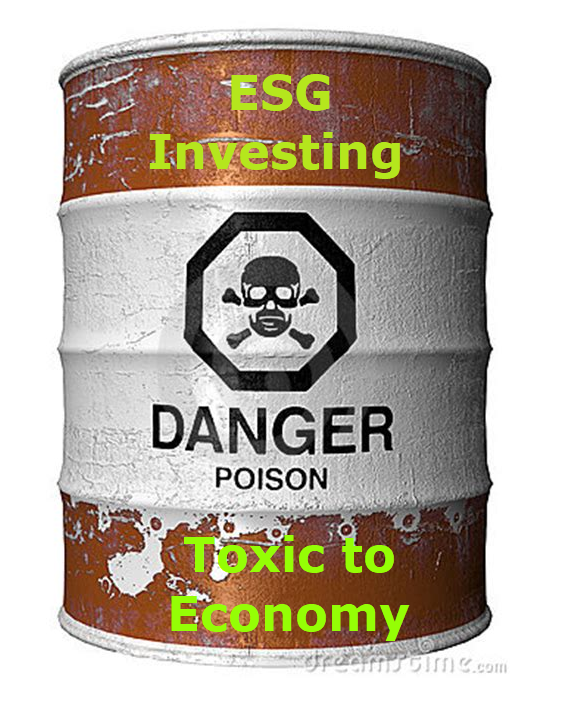
ESG Investing Results: Go Woke, Go Broke

This post has two parts.  First, an update on how nations pursuing high ESG scores have destroyed their prosperity.  Second, an interesting effort by a Canadian MP to empower shareholders against woke managers following the ESG pied piper.

Capital Activist poster.

Gabriella Hoffman writes at Townhall ESG’s Toxic Brand Isn’t Salvageable.  Excerpts in italics with my bolds and added images.

As American consumers and investors start souring on Environment, Social, and Governance (ESG) principles being injected into both the public and private sectors, its loudest defenders say a rebrand will salvage its toxic image.

Its dedicated followers reassure us the product they’re selling — forcibly aligning business values with progressive virtue signaling — is good and noble. They tell us, however, that it’s just not sold well, despite being a popular set of beliefs.

Conceived in October 2005 at a U.N. Who Cares Wins Conference, this pervasive movement has glitzy public relations campaigns along with huge financial and political backing. Alas, no rebrand can salvage ESG given its disastrous real-world impact, ruinous effects on businesses, and growing disapproval among the American public.

Notably, the scoring mechanism associated with ESG is flawed and corresponds to imminent economic decline. Wherever high scores are found, countries have experienced great political instability and corresponding financial ruin.

The nations of Sri Lanka, Ghana, and the Netherlands have all experienced turmoil and boast high ESG scores — 98.197.1, and  90.7, respectively. All these nations, coincidentally, banned fertilizer. 

Sri Lanka was the poster child for ESG investment and has suffered the brunt of these principles. Their most recent prime minister just resigned in shame, following months of protests and unrest stemming from the country committing to net-zero carbon emissions by 2050 and halving its nitrogen use. 

Ghana also took the “E” prong too much to heart, with its government agreeing to raise $5 billion with international capital with Green, Social and Sustainability (GSS) Bonds. Now experiencing runaway inflation, largely due to these GSS bonds, the country is hoping to be bailed out by the International Monetary Fund (IMF).

The Netherlands similarly adopted a new continent-wide Sustainable Finance Disclosure Regulation (SFDR) to boost ESG investment and is now experiencing one of the highest inflation rates in the European Union. This was precipitated by the Dutch government approving a multi-year $21 billion plan to sharply cut ammonia and nitrogen emissions 50% by 2030 which requires one-third of farmers to kill off their herds and shut down indefinitely.

As countries languish with the adoption of ESG policies, private companies should be skeptical of flirting with these high-risk values. All three prongs result in companies losing profit without any measurable social impact.

Imagine that. Prioritizing ESG performance over financial returns doesn’t pay dividends.  Accordingly, consumers and investors are turning against this movement of woke corporatism. 

The Brunswick Group found only 36% of voters “agree unequivocally that companies should speak out on social issues.” A May 2022 Daily Wire/Echelon Insights poll found investors overwhelmingly reject companies pushing social causes over profit. Of the 1,000 respondents polled, 66% of those polled said investors should opt out of ESG-style investments. Gallup similarly recorded that investors still largely prefer performance factors over political or social factors when considering investing opportunities. 

A Modest Reform to Empower Shareholders Against ESG Investing

The National Post reports: The Conservative MP who’s fed up with the menace of woke corporations.  Excerpts in italics with my bolds.

A Calgary MP is set to propose a uniquely Canadian solution to the problem of ‘woke capital’

Up until now, the backlash against woke corporations has mostly come from south of the border. But that’s about to change, as one courageous Conservative MP is set to propose a uniquely Canadian solution to the problem of “woke capital.”

Corporations are generally considered woke when they engage in social activism that is beyond the scope of their business purpose. It is controversial because it is inherently undemocratic when wealthy officers and directors exploit the unique legal status of a corporation in order to marshal significant resources toward their preferred political agendas.

Canadians have had reasons to worry about woke capital for years: ESG (environmental, social and governance) investment policies have undercut our oil and gas industry; businesses have embraced Black Lives Matter, despite serious concerns about the group’s ethics; and multinational corporations have imported American culture wars into our country.

At last, a Canadian MP is pushing back. Conservative Tom Kmiec, who has represented the riding of Calgary Shepard since 2015, is proposing a new bill designed to hold powerful officers and directors accountable.  Kmiec is currently drafting a private member’s bill to amend Section 122 of the Canada Business Corporations Act (CBCA), which is focused on the duty of care that officers and directors owe to their shareholders.

If passed, it would ensure that officers and directors prioritize the interests of shareholders above political agendas that are unrelated to the company’s business purpose.

A summary of Kmiec’s bill, which was obtained by the National Post, explains that it would be “considered a breach in the duty of care owed to shareholders when directors and officers of a large distributing corporation (a company with a total market value of shares above $100 million) make activist statements, including in relation to public policy or social issues, that is not directly related to the business the corporation carries out and that could reasonably be expected to reduce the value of shares.”

Wisely, the bill would not prevent companies from making statements on political or social issues, but would require a firm’s board of directors to seek approval from shareholders first. Kmiec’s office hopes that such a mechanism will “make corporations think twice before opining on something beyond their stated corporate purpose.”

Legislation that promises to protect democracy from corporate power is bound to make some people uncomfortable. The proposed changes to the CBCA promise to loosen the grip that woke liberals have over corporate Canada, which will receive push-back from some quarters. Some critics will also argue that businesses should be free to be activists and governments shouldn’t have a say in the matter.

For its part, Kmiec’s office argues that the bill is in fact pro-business by being pro-shareholder, since, at the moment, “Shareholders have no say over these statements and, if backlash occurs, are left on the hook suffering with pecuniary losses through no fault of their own.”

Asked for additional comment on what motivated him to tackle the issue of undue corporate influence, Kmiec said, “My constituents do not want big business like Bell or TD Bank to dictate or weigh in on political and social issues they have no business in. Nobody wants to be lectured about social justice by their bank or their retailer or their grocer. What matters in Calgary Shepard differs from what matters on Bay Street.”

The bill is expected to be tabled later this month when Parliament returns. Although few private member’s bills actually become law in this country, and there is no guarantee that the bill will even be debated or voted on, it will hopefully allow Kmiec’s ideas to get the attention they deserve.


Energy Options: From All the Above Down to One

Mark Krebs writes at Master Resource Environmentalists Petition EPA to Ban Natural Gas Use in Buildings.  Excerpts in italics with my bolds.

It never ends…. In the wake of the 725-page “Inflation Reduction Act” (IRA), consumer choice for energy could be intentionally restricted to electricity by the U.S. Environmental Protection Agency (EPA). Or at least that seems to be the plan. According to a petition submitted by environmentalists, EPA should regulate carbon dioxide (CO2) emissions resulting from using natural gas in homes and businesses.

The eco-lobby has been emboldened by their “win” with the passage of the IRA. Never satisfied, their petition is one of the first attempts to expand it.

An article by Patrick Parenteau, Professor of Law, Vermont Law School, originally published on August 24th in the academic law journal The Conversation (original article) claimed the IRA empowers EPA regulation of GHGs (greenhouse gases):

The Inflation Reduction Act amends the Clean Air Act to add seven specific new programs to reduce greenhouse gases and provide funding to the states to develop their own plans. Taken together, these provisions go a long way to address Roberts’ concern that Congress has not spoken plainly enough about EPA’s authority to tackle climate change.

But it falls short of granting EPA the authority to revive the generation shifting approach of the Clean Power Plan.

To get the bill through the sharply divided Congress, the Senate’s Democratic majority used a process called budget reconciliation. That process allows for legislation to pass with only a simple majority of the vote. But legislation passed that way must be closely tied to spending, revenue and the federal debt limit – it cannot set broad national policy.

Mark Krebs provides relevant quotes from the IRA:

Having been pointed to Title VI of the IRA, Secs. 60107 and 60113, I started reading. Sec. 60107 starts on page 668 and Sec. 60113 starts on page 678. Among other things, Sec. 60107 modifies the CAA to promote:

“(1) activities of the Environmental Protection Agency for the purposes of providing financial and technical assistance to reduce methane and other greenhouse gas emissions…..” and

‘‘(E) mitigating health effects of methane and other greenhouse gas emissions, and legacy air pollution from petroleum and natural gas systems…”

Under Sec. 60113, starting at the top of page 681, a carbon fee per metric ton is authorized:

‘‘(c) WASTE EMISSIONS CHARGE.—The Administrator shall impose and collect a charge on methane emissions that exceed an applicable waste emissions threshold under subsection (f) from an owner or operator of an applicable facility that reports more than 25,000 metric tons of carbon dioxide equivalent of greenhouse gases emitted per year pursuant to subpart W of part 98 of title 40…”

I venture to guess the fee may be the “Social Cost of Carbon” (SCC), which now stands at $51 per metric ton under the Biden administration (up from $1 per ton under Trump). However, the fees for methane emissions are explicitly stated on page 682:

2024: $900
2025: $1,200
2026 and thereafter: $1,500

Devils in the Details

At a minimum, these provisions provide an opening for EPA to regulate carbon and methane emissions. How wide of an opening is at least debatable and probably will be litigated (as Professor Parenteau anticipates).

This could result in CO2 and methane emissions regulated at the point of use (“point source”) as additional “criteria pollutants,” regulated because they are deemed harmful to human life.

What the environmentalists seem to be trying to do via their petition to the EPA is to make homes and businesses point sources for future regulation of carbon emissions. So why didn’t the environmentalists petition EPA to also target electric utilities? After all, electric utilities consume significantly more natural gas and emit more resultant CO2 than residential and commercial gas customers combined.

The answer is: That would not be consistent with the partnership that has developed between the electric utility industry and environmentalists to achieve their utopian goal of all-renewables-all-the-time.

An Unholy Alliance

I discussed this connection in my MasterResource article last month titled All-Electric Forcing in the “Inflation Reduction Act” (up to $14,000 per home). In that article, I referenced another article about a 2018 pact between the Edison Electric Institute (EEI) and the Natural Resource Defense Council (NRDC) titled Warring Against Natural Gas: Joint EEI/NRDC Statement to NARUC (crony environmentalism at work).[See my synopsis Perils of Everything Electrified]

On September 2, 2022, Politico, published an article that (unintentionally) revealed the close working relationship between EEI and Biden’s Climate chief (ex-NRDC’s) Gina McCarthy in crafting the Inflation Reduction Act. Mission complete, she is leaving the White House, and John Podesta is replacing her. The article is titled “Climate chief Gina McCarthy leaving White House as John Podesta returns.”

Other sources of the electric utilities’ motivation include:

1.  The lure for electric utility CEOs to double sales through political means (and the bonuses they engender none-the-less) without really having to earn it through competition.
2.  The prospect for electric utilities to control gas markets and put an end to their supply curtailments when residential gas consumers traditionally get top priority during periods of limited supply due to extreme cold. (No more residential consumers, no more curtailments.)
3. It is at least plausible that electric utilities don’t really believe that the best form of backing-up renewables is with batteries because they want to keep their product from getting priced out of the market. Gas-fueled power plants would economically serve peaking requirements, but not if their fuel is curtailed. Also note that at least some types of batteries have a hard time during very cold weather.

EPA also has some perverse motivations. One of these is claiming regulatory efficiency by eliminating all the small point sources (gas consumers) with a relatively few large point sources left (e.g., electric utility power plants).
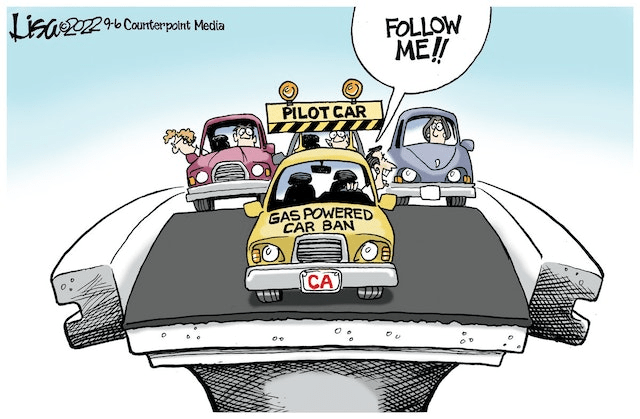
Overloading Electricity

Regardless of the rationale, transferring the energy requirements presently served by fossil fuels for both transportation and heating (etc.) on an already teetering electric grid is a recipe for failure. We can already see it starting in Europe and now in California:  

Vehicle electrification alone could double electricity generation requirements. Building electrification could more than double electricity peak generation requirements considering extreme cold weather events presently dominated by the direct use of gaseous fuels and fuel oil. Some of my colleagues have estimated it would take as much as 7 times present peak generation to handle “polar vortex” events.

How much battery storage you need depends on the maximum length of outage you’re planning for. “Wind droughts” have lasted 7 days. Typical batteries can produce their rated (fair weather) output for 4 hours. And what happens when it’s too bitterly cold and snowy for wind, solar and batteries to deliver?

Do the math considering the worst-case scenario because people’s lives depend on it. Basically, it becomes apparent that all renewables (with batteries) isn’t going to happen.” But you might die from them trying.

One way or another, you will pay for their folly. In fact, you already are.

Cost Analytics

If reducing carbon emissions is really the primary objective, then why not mandate that consumers replace all electric resistance appliances with natural gas-fueled equivalents? At least in the Midwest, it is relatively straight-forward to show how such fuel switching from electricity to natural gas is a very cost-effective strategy for reducing the atmospheric release of carbon emissions. In fact, the American Public Gas Association did so in 2017  (summaryfull report).

A second phase of this study estimated typical costs per household state-by-state. The full report, and its customizable data spreadsheet, is available on the Energy & Environment Legal Institute’s (E&E Legal) website. According to the report, electrifying the entire nation, with a goal of eliminating the direct consumption of fuel to reduce carbon emissions, would conservatively cost between $18 trillion and $29 trillion in first costs.

At least conceivably, total costs could be double these estimates. Going all-renewable all the time will force costs much higher than these estimates. Also, constructing and implementing an “all-electric” energy monoculture will include other significant costs such as stranded assets and deadweight losses.
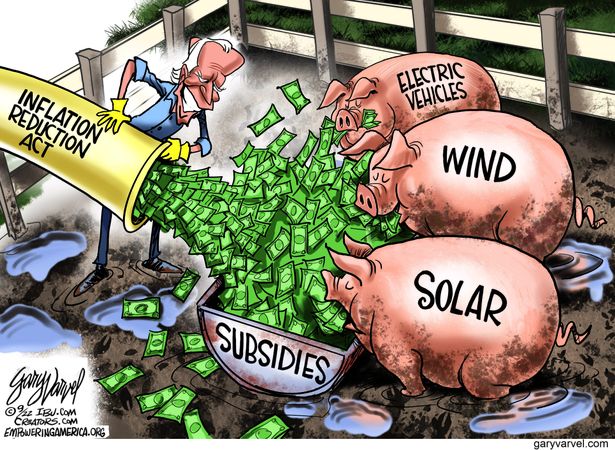
Summary & Conclusions

The environmentalists petition to the EPA is just the opening salvo following passage of the Inflation Reduction Act (a.k.a., Green New Deal Lite). The overall mission is forcing increased social control by eliminating free markets. Reducing carbon is a secondary objective and a front. Hyperbole? Take it from socialism.com: The Green(ish) New Deal

This next salvo might be targeting industrial electrification: It’s explained in the (just released ) DOE Industrial Decarbonization Roadmap.  Along with the Biden Administration’s “electrify everything” mentality, expect more electricity shortages. Consequently, expect more taxpayer derived “emergency” funding directed to the electric utility industry.

“Manufacture a crisis and then don’t let it go to waste.” Maybe that is the plan. A better plan would be for electric utility CEOs to start listening to their engineers responsible for keeping the lights on, affordably if possible, and stop pandering to socialistic environmentalism.

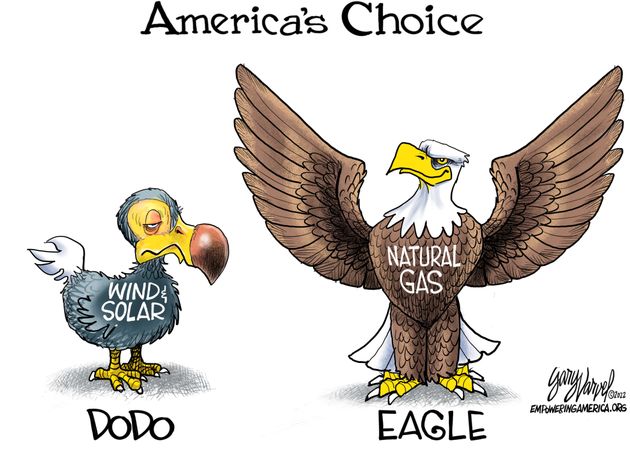
In truth, natural gas utilities and electric utilities need each other. Consumers need energy diversity and utility regulators need to return to their roles as impartial referees and honest brokers safeguarding consumers best interests.
——————————————-

Mark Krebs, a mechanical engineer and energy policy analyst, has been involved with energy efficiency design and program evaluation for more than 30 years. He has served as an expert witness in dozens of State energy efficiency proceedings, has been an advisor to DOE and has submitted scores of Federal energy-efficiency filings.