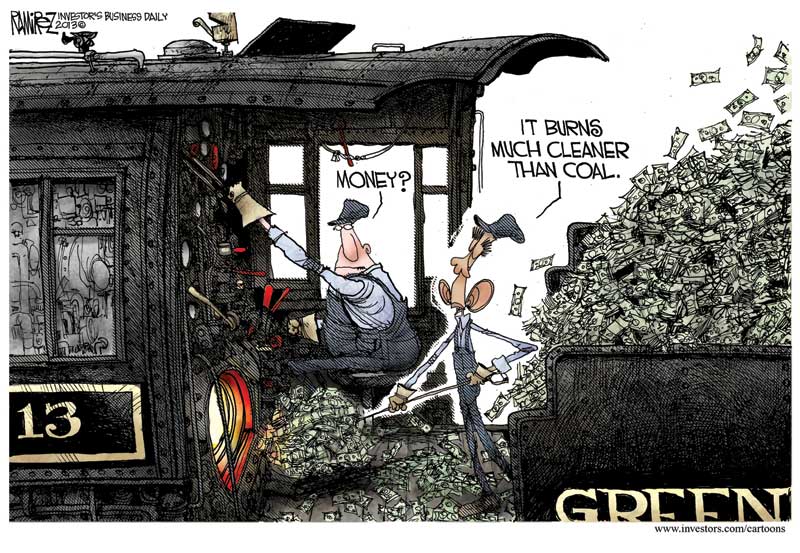
NY Gov. Cuomo Energy Saboteur

The NY Post Editorial Board takes Cuomo to task for trying to have it both ways:  Climate Hero without being the Energy Villain.  Their article Cuomo’s latest bid to dodge blame for Long Island’s natural-gas crisis.   Excerpts in italics with my bolds.

Gov. Andrew Cuomo upped his histrionics on the Long Island natural gas crisis Tuesday, formally threatening to revoke the license of National Grid, the utility that has stopped taking new gas customers.

The company says it can’t take on new commitments because Cuomo (followed by New Jersey Gov. Phil Murphy) blocked construction of a new pipeline.

That new-hookups moratorium, the gov insists, “is either a falsified device or a lack of competence.” That is, National Grid either doesn’t need the pipeline — or is still at fault because it didn’t find some other way to assure supply.

Yet it never should have needed a Plan B: The proposed pipeline is obviously safe; it’s to run right next to an existing pipeline that’s done zero harm. The supposed environmental fears blocking it are nothing but a pretext, allowing Cuomo to pander to green extremists who oppose all carbon-based fuels.

To be clear: The pipeline is the safest, cheapest and even greenest way to get new energy supplies to the area (which includes parts of the city). But the greens don’t care — they’d rather consumers just do without.

Cuomo says gas can be “trucked, shipped, or barged” instead. But that, says Manhattan Institute energy specialist Jonathan Lesser, would require fleets of trucks supplying a huge processing facility that doesn’t exist. And the trucks (or ships) would themselves burn more carbon fuel.

The gov won’t get out of this by following through on his threat — because whoever took over for National Grid would face the exact same problems.

Maybe the company should just call his bluff.

Background on East Cost Pipeline Politics:  Payback Upon Climate Grasshoppers

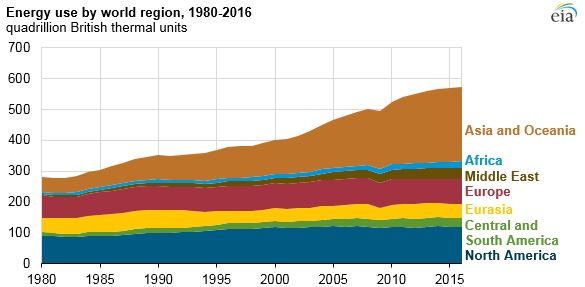
World Energy Wishful Thinking from EIA

An article at World Oil reports Renewables are growing, but greenhouse emissions will continue to rise, says IEA  Excerpts in italics with my bolds.

LONDON (Bloomberg) – The International Energy Agency’s annual report into fuel supply and demand shows a pickup in the rate of growth for wind and solar power.

But that’s not enough to curtail greenhouse gas pollution, which is on track to grow through 2040. The findings are a blow to the international effort to rein in climate change and contrast with expanding awareness of the impact humans are having on the environment.

The IEA’s report tracks the different paths the world can take, with government policies shaping the energy industry. While clean energy leaves some reason for optimism, the gap is widening between what scientists say is necessary to protect the environment and how industry’s energy needs are evolving.

1. Offshore wind is booming …

The global market for offshore wind turbines grew 30% from 2010 to 2018, driven primarily by northern Europe. Now, the technology is entering new regions. China added more capacity last year than anyone else. By 2040 the offshore wind market will become a $1 trillion business, the IEA says. Wind and solar power will push renewables past coal in terms of share of the power market by the middle of the next decade. By 2040, those clean energy sources will provide more than half of the world’s total electricity.  [Comment:  Mostly wishful thinking considering what is said below]

2. … but emissions continue to rise

Global carbon dioxide emissions rose for a second year, and the outlook is for continued increase to 2040 unless governments take radical action to hit targets set out in the Paris Agreement. The report shows that efforts to shift the world away from the most polluting fuels are moving too slowly. The developing world’s thirst for energy is also lifting consumption of coal and other fossil fuels, pushing more pollution into the atmosphere. [Comment: See at bottom previous post on a Kenyan POV regarding energy development]

3. Coal is the dominant power generation fuel

Global coal demand rose for a second consecutive year in 2018, with three-quarters of that demand coming from Asia Pacific. If global coal policies remain unchanged, then demand will keep expanding for two decades, the IEA said. However, growth will flatten out in that period if countries implement the promises they have already made. Over the past 20 years, Asia has accounted for 90% of all coal-fired capacity built worldwide and many of those new plants still have three decades of burning the dirtiest fossil fuel. [Comment:  US is exporting increasing amounts of refined coal.  See post US Refined Coal Surging

4. Oil demand slows

Global oil demand will hit a plateau around 2030 as the use of more efficient cars and electric vehicles ends an expansion that dominated the past century. While the IEA won’t call “peak demand” yet, the stagnation points toward major changes in the oil industry ahead. [Comment: According to 2018 McKinsey report electric vehicles did pass 1 million sold, which is less than 1% (0.66%) of world auto sales.  More wishful thinking.]

5. Quicker growth for natural gas

The world’s natural gas will deliver more of the fuel by tanker than pipeline as China’s thirst for it has grown by more than a third in the past two years. Demand for gas is set to grow four times faster than oil through 2040. By then, China will import twice as much LNG as India. The share of gas in China’s energy mix will rise to 13% by 2040 from 7% now.

Previous Post: The West vs. Africa: Energy Hypocrisy as Seen from Kenya

Suleiman Shahbal writes in Kenya at Standard Media Global warming: Why the West preaches water yet drinks wine.. Excerpts in italics with my bolds.

A few months ago I was with a group of Kenyan politicians in Abu Dhabi. Hosting us for a cup of coffee was my good friend Abdalla Nassir. Abdalla is a serial entrepreneur who owns 94 businesses, including the coffee shop. His 95th business is a steel mill that he was going to open in Djibouti, targeting the Ethiopian market of 80 million people.

I asked him why not in Kenya; the gateway to the Comesa market of 150 million people, to which he replied that the cost of power in Kenya is more than twice that of Djibouti and Ethiopia. One week later, I read that a glass company in Mtwapa had just closed down, with the loss of over 400 jobs. The reason? The high cost of power.

So what do we do? The quickest solution that everyone would like to come up with is solar or wind power. Both, ‘clean energy’. The problem is, what do you do when it doesn’t shine for three days? Or if there is no wind? You cannot run a hospital hoping for the sun to shine. Those baby incubators or that poor patient being operated on cannot depend on the weather being conveniently agreeable.

We are forced to look for dependable energy or, to use the lingo of the industry, ‘base load’. That leaves you with two energy sources – coal or gas. Coal is the cheapest. Gas prices are closely correlated to oil prices, which are very volatile and expensive. Remember that we have fewer industries and jobs because of cost. We have little choice but to go for the cheaper option. But the world doesn’t like coal. Why?

Affecting forests

In 2004, the world met in Copenhagen and came to the conclusion that global warming was a real threat to the planet. The world resolved not to allow global temperatures to rise above another 2 degrees.

Anything more would lead to catastrophic changes affecting forests, air, water and the environment. All true so far. No one doubts the disaster of global warming. The solution was either for the world to stop making any new coal plants or for the developed world to reduce their emissions by 10 per cent.

The developed world categorically refused. Such a drastic drop in emission would lead to loss of livelihoods and jobs, something they were not willing to take. So, let us force the poor Third World to stop starting such plants. Let the poor make the sacrifices. Who cares if they lose jobs or new companies? That’s why we have such a strong opposition to our coal power.

Shiekh Mohamed Al Maktoum is considered one of the most visionary leaders in the world. After all, he took the desert and transformed it into one of the world’s leading cities. He has all the gas and oil in the world, but he chose to build the Hassyn Coal Power Plant of 5,000 Megawatt. That is five times the one proposed in Kenya.

Do you think he is unwise to use coal when he has all the other alternatives? Turkey, one of Europe’s major economies, gets over 70 per cent of its power from coal and it is building a new one called Karabiga plant of over 1,500 megawatts. South Africa gets over 90 per cent of its power from coal. Do you think all these people are unwise?

Acceptable levels

Golda Meir, former Prime Minister of Israel once said: “there comes a time in every nation when they have to make sacrifices with their conscience and to make hard choices’’. Kenya is now at that cross point. Either we make that difficult choice and use the cheaper coal and create those jobs – or spend another 20 years dreaming of industralisation and job creation. Fortunately for Kenya, over 90 per cent of our power is from clean energy, mainly geothermal and hydro so the world can forgive us for trying to create jobs.

Chemicals can be deadly if used in excess. For example, 500mg of paracetamol (Panadol) will cure you, but 5,000 grams will kill you. That is the logic of chemistry. The same logic applies to all emissions from a coal plant, whether it be sulphur, carbon-dioxide or nitrogen. What is acceptable and what is not? The World Bank has set the standards that are acceptable and the proposed coal plant in Lamu meets all the requirements – and the day they don’t meet those standards then shut it down. No point arguing about the chemicals without stating the acceptable levels.

I am writing this in Lamu and I have to admit that I am one of the promoters of the coal plant. I am from Lamu, my family lives here and no one can claim to love this place more than I do. I would never do anything that would harm my people. However, there is no greater pollution than having millions of our youth remaining jobless and having their ambitions crushed through loss of hope. To quote Golda Meir, we need to make sacrifices with our conscience and bring the cheap power. Even if this annoys our rich friends.

Mr Shahbal is Chairman of Gulf Group of Companies

Summary

So wealthy elites in Europe and North America get to take virtuous postures on the imaginary problem of global warming, while Africans pay the price.  Racism anyone?  They are not asking for reparations, just letting them play by the same rules other nations used to build prosperous and healthy societies.

World Energy Policies A Minefield

That is the conclusion reached by seasoned energy analyst Gail Tverberg after asking the question: Do the World’s Energy Policies Make Sense? The article title is a link to her post at her blog Our Finite World. Excerpts in italics with my bolds.

The world today has a myriad of energy policies. One of them seems to be to encourage renewables, especially wind and solar. Another seems to encourage electric cars. A third seems to be to try to move away from fossil fuels. Europe and others have been trying carbon taxes. There are programs to buy carbon offsets for energy uses such as air travel.

Maybe it is time to step back and take a look. Where are we now? Where are we really headed? Have the policies implemented since the Kyoto Protocol in 1997 had any positive impact?

Let’s look at some of the issues involved.

[1]  We have had very little success in reducing CO2 emissions.

CO2 emissions for all countries, in total, have been spiraling upward, year after year.
If we look at the situation by part of the world, we see an even more concerning pattern.
The group US+EU+Japan has been able to reduce its CO2 emissions by 5% since 2005. Emissions were slowly rising between 1981 and 2005. There was a dip at the time of the Great Recession of 2008-2009, followed by a downward trend. A person might get the impression that CO2 emissions for the EU tend to rise during periods when the economy is doing well and tend to fall when it is doing poorly.

The “star” in emissions reductions is the former Soviet Union and its Eastern European satellites. I refer to this group as the Soviet Empire. Emissions fell around the time of the collapse of the central government of the Soviet Union in 1991. This big decrease in emissions seems to be related to huge changes that took place at that time. Instead of one country with a single currency, the individual republics were suddenly on their own.

The high point in CO2 emissions for the Soviet Empire came in 1990, the year before the collapse of the Soviet Union central government. By 1999, emissions had fallen to a level 37% below their 1990 level. In fact, even in recent years, emissions for this group of countries has stayed low. Much industry collapsed and has never been replaced.

The group that has more than doubled its emissions is what I call the Remainder Group. The group includes many countries, including China and India, that ramped up their manufacturing and other heavy industry in the late 1990s and early 2000s, when the World Trade Organization added members. The Remainder Group also includes many countries that suddenly found new export markets for their raw materials, such as oil, iron ore, and copper. The Remainder countries became richer; they became more able to pave roads and build more substantial homes for their citizens. With all of this GDP-related activity, CO2 emissions increased rapidly.

[2]  Population growth has followed a pattern that is in some ways similar to CO2 growth.

The group that is simply outstanding for population growth is the Remainder Group, with 35% growth between 1997 and 2018. A big part of this population growth comes from improved sanitation and basic medical care, such as antibiotics. With these changes, a larger percentage of the babies that are born have been able to live to maturity.

It is hard to see any bend in the trend lines, showing that recent actions have really changed the course of activity from the way it was headed previously. Of course, the trend is only “linear,” implying that the percentage growth is gradually slowing over time.

This rapidly growing population feeds into the CO2 problem as well. The many young people would all like food, homes and transportation. While it is possible to obtain some version of these desired products without fossil fuels, the version with fossil fuels tends to be vastly improved. Most people prefer homes with indoor plumbing and electricity, if given an opportunity, for example.

[3]  Deforestation keeps growing as a world problem.
High Income Countries keep pushing the deforestation problem to the poorer parts of the world. Heavily Indebted Poor Countries are especially affected. Worldwide, deforestation continues to grow.

[4]  With respect to fossil fuel, there is a great deal of confusion with respect to, “What do we need to be saved from?”

Do we have a problem with too much or too little fossil fuel? We hear two different stories.
Climate modelers keep telling us about what could happen, if indeed we use too much fossil fuel. In fact, the climate currently is changing, bolstering this point of view.

It seems to me that there is an equally great danger of collapse, accompanied by low energy prices. For example, we know that energy production of the European Union has been declining for many years, without the countries being able to do anything about it.

We also know historically that many civilizations have collapsed. The Soviet Empire collapsed in 1991, illustrating one type of collapse. The Soviet Union was an oil exporter. Its collapse came after oil prices were too low to allow adequate investment in new oil fields for an extended period of time. The Great Recession of 2008-2009 offers a much smaller, temporary version of what collapse might look like.

What we have been seeing recently is falling prices and prices that are too low for producers. Such a result can lead to collapse if too many energy producers go bankrupt and quit.
If we are in danger of collapse from low prices, renewables would not seem to be of much assistance unless they (a) are significantly less expensive than fossil fuels and (b) can be scaled up sufficiently rapidly to more than replace fossil fuels. Neither of these seems to be a possibility.

[5]  Early studies overestimated how much help renewables might provide, especially if our problem comes from too little energy supply rather than too much.

Renewables look like they would be great from many points of view, but when it comes down to the real world situation, they don’t live up to the hype.

One issue is that while wind, solar, hydroelectric, geothermal, and other devices for capturing energy are called “renewables,” they are really only available through the use of the fossil fuel system. They are made using fossil fuels. If a part breaks, or if insects eat away the insulation on wires, replacements need to be made using the fossil fuel system and transported by the fossil fuel system. At best, renewables use less fossil fuels than conventional electricity generation. They are dependent on other resources, which may eventually deplete, but which are not a problem at this time.

A second issue is that it is extremely difficult to do a proper cost-benefit analysis on renewables because they can only be used as part of a larger system. They tend to look inexpensive, when viewed in isolation. But when total system costs are viewed, they often are quite expensive.

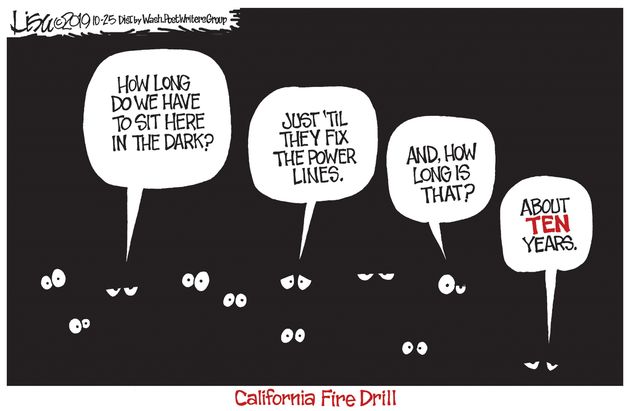
One difficulty in a proper cost-benefit analysis is the fact that renewables are often at quite a distance from where electricity is to be used, leading to the need for a significant amount of long distance transmission lines. If renewables provide intermittent power, they need to be sized for the maximum output, not their average output. All of these long distance lines need to be properly maintained, or they tend to cause fires. In some instances, burying the lines underground at significant cost is the only solution. Somehow, these higher costs need to be recognized as part of the cost of the system, but this is rarely done.

Another difficulty in a proper cost-benefit analysis is the fact that the intermittency must be overcome, if the electricity is to be of benefit to a modern economy that requires electricity 24/7/365. In theory, a person could greatly overbuild the renewables system and the transmission. This might work, but a person would end up with a large percentage of the system that is not used most of the time, greatly adding to costs.

A third issue is that renewables really need to be “economic” to work. In other words, they need to generate a profit for their owners, when comparing the unsubsidized costs with the benefits of the system. In fact, their owners need to be able to pay fairly substantial taxes to governments, to cover their share of governmental costs as well. If renewables truly were providing substantial benefit to the system, their use would tend to “take off” on their own, because they would be providing “net energy” to the system. Instead, renewables tend to act like “energy sinks.” They need endless subsidies. They can never substitute for fossil fuels. In fact, they can’t even pay their own way.

A related issue is that, because of the high total costs (as well as their lack of true net energy benefits), it is almost impossible to ramp up the quantity of renewable such as wind and solar very high. The EU has been a big supporter of renewables other than hydroelectric. Figure 7 shows a chart of the EU’s own energy production, together with its energy imports.

Figure 7. EU energy by type and whether imported, based on data of BP’s 2019 Statistical Review of World Energy. Renewables are non-hydroelectric renewables such as wind, solar, and geothermal.

[6]  Looking at the actual outcomes, a person might ask, “What in the world were policymakers really thinking about?”

We are told that the reason policymakers made the decisions they did was because they thought that they could reduce CO2 emissions in this way. Really? If a person really wants to reduce CO2 emissions, it is easy to see how to do it. A person simply has to take steps in the direction of reducing global co-operation. One step would be to reduce international trade. Another would be to get rid of umbrella organizations such as the World Trade Organization, the United Nations and the European Union. In fact, within individual countries, the top level of government could be removed, leaving (for example) the provinces of Canada and the states of the United States. In other words, policymakers could push economies in the direction of collapse.

[7]  The IPCC climate models need to be revisited.

A climate model looks to the past and tries to forecast the future. When the IPCC models were put together, the scenarios about which concerns are raised are based on the assumption that fossil fuel use can grow practically indefinitely. Coal production in particular is seen as continuing at a high level for many, many years, even though world coal production has been fairly flat for several years, and prices tend to be lower than producers require if they are to stay in business.
It seems to me that climate modelers should be considering more reasonable scenarios regarding fossil fuel consumption. One scenario which should be considered is the possible near term collapse of several governmental organizations, such as the European Union, World Trade Organization, and the governments of several oil exporting countries. Such a model would be more realistic than one in which energy consumption continues to grow indefinitely.

[8]  The push toward renewables makes little sense without a firmer foundation than currently exists.

Early studies looked only at the cost of renewables themselves, without the cost of extra long-distance grid transportation and battery storage. Such an estimate makes renewables look far more valuable than they really are.

We now have enough experience that we can see what goes wrong. A hydroelectric plant that operates during the wet season in a tropical country may be of little practical use, for example, it there is not fossil fuel energy to provide electricity production during the dry season. The total cost of the overlapping systems is needed, including the need to hire staff year around for both types of facilities. Electricity transmission will likely be needed for both.

There are many other real-world examples that can be examined, before blanket “use renewables” recommendations should be issued. If renewables are not truly very inexpensive (around 2 cents per kWh or less), without subsidies, they are likely not to be long-lasting.

New York AG’s Disgraceful Exxon Trial

The New York Post Editorial Board reviews the New York Attorney General’s blundering performance before the Judge in their investor fraud case against Exxon.  Their article is New York AG’s office totally disgraced itself in the Exxon trial.  Excerpts in italics with my bolds.

Closing arguments finished up Thursday in the People of New York v. ExxonMobil — a trial that has utterly disgraced the people’s representatives, prosecutors from the state Attorney General’s Office.

Time and again, state Supreme Court Justice Judge Barry Ostrager chided the prosecution — for being unprepared, for indulging in “agonizing, repetitious questioning about documents that are not being disputed”; for pretending a witness was an expert when she wasn’t; for presenting an expert (paid $1,050 an hour) who wouldn’t stop “rambling” and more.

At one point, he snapped: “OK, that’s the fifth time that he has given you the same answer.” At another, he all but accused the state of manipulating Exxon’s stock price on the basis of false information — in a trial where the state was trying to show that Exxon was doing that.

In a final bit of self-disgrace, late Thursday the prosecutors dropped two of their three main charges — the ones that required proving intent.

All that’s left is a charge under the Martin Act, which allows for criminal guilt for an accidental misrepresentation that might mislead the public. But the state failed to even produce any clear evidence that Exxon ever misled the public in any respect, even inadvertently.

That’s a huge comedown for a prosecution that opened under the banner “#ExxonKnew.”

To be clear, the main blame for this debacle falls on disgraced former AG Eric Schneiderman, who started the whole thing as an exercise in headline-hunting back in 2015. He handed off the actual work to subordinates who repeatedly revised the entire theory of the case — that is, the wrong they claimed Exxon had committed — with the charges growing less explosive every time.

They originally claimed Exxon had suppressed research — when in fact its scientists have always published freely, and the company has openly discussed the risks of climate change and so on in its annual reports and on its website.

Then they suggested the company had deceived investors by “overstating” its assets by “trillions.” But it turned out Exxon had clearly disclosed all the relevant info.

Finally, they claimed it used one risk-assessment standard in public, another in private. But the Securities and Exchange Commission cleared Exxon on that front before this trial even opened.

It seems the prosecutors feared it would just be too humiliating to admit they had nothing, and hoped they’d somehow stumble on . . . something.

Still, Thursday’s final retreat, dropping most charges at the very end, was a shocker. It left the judge dismissing those charges “with prejudice,” so the state can never refile them. And Exxon’s infuriated lawyers say those claims “have cost in many respects the most severe reputation harm to the company and to the executives,” so they want still stronger sanctions.

Judge Ostrager has 30 days to issue a decision. The prosecutors are surely praying he’ll find the Martin Act gives them so much leeway that he actually has to find Exxon guilty. If so, it’ll be a blaring alarm to businesses to have nothing to do with New York, because they have no hope of a fair break here.

Otherwise, the judge should explore every possible option for censuring the state’s attorneys — whose abuse of power here has been utterly mind-blowing.

Background from Previous Post

A legal summary of this week’s proceedings comes from Seth Kerschner Laura Mulry article at White & Case
Trial Concludes for Exxon in New York Climate Change Investor Fraud Case. Excerpts in italics with my bolds.

Overview

In New York Supreme Court, Exxon was on trial for allegedly misleading investors about the business costs of climate change. The central allegation was that Exxon fraudulently used two distinct sets of metrics to calculate financial risks relating to climate change: one that was shared with investors and another that was used internally. New York State alleged that the practice exposed investors to greater risks than Exxon had disclosed and inflated the company’s value. Exxon maintained that it made accurate disclosures about the two cost metrics to investors, that the state was conflating the two metrics, and that there was no material impact to Exxon regardless of which metric it applies. The state is seeking between $476 million and $1.6 billion as the basis for a shareholder restitution fund, among other relief. The outcome of the case could have significant implications going forward on (i) how companies disclose and internally account for climate change risks and (ii) the outcomes of future climate change litigation.

(Left) New York Attorney General Barbara Underwood announced her office’s lawsuit against Exxon for climate fraud. October 24, 2018. (Right) Attorney General of New York, Letitia James took over January 6, 2019 and has also opened a civil investigation into President Donald Trump’s business dealings.

The bench trial commenced on October 22, 2019 and was the first lawsuit to go to trial in the United States that addresses how companies manage and disclose climate change-related risks. The New York Attorney General (NYAG) filed the civil lawsuit against Exxon Mobil Corporation (Exxon) in October 2018; it was the culmination of an investigation by NYAG that began in 2015. NYAG alleged statutory and common law securities fraud claims, however, in its closing remarks on November 7, 2019, NYAG dropped two of the four fraud claims. NYAG’s remaining claims include alleged violations of the state’s Martin Act, one of the strictest anti-fraud laws in the country that does not require an intent to defraud or knowledge of fraud for there to be a violation of the law, and a persistent fraud claim. NYAG requests injunctive relief, damages, disgorgement of all amounts gained as a result of the alleged fraud, and restitution.
NYAG asserted that Exxon engaged in a “longstanding fraudulent scheme” to deceive investors by providing misleading statements that (i) Exxon was effectively managing risks posed by regulations to address climate change, such as carbon taxes, and (ii) such regulations did not pose a significant risk to the company. NYAG asserted that Exxon’s internal practices were inconsistent with these statements, were undisclosed to investors, and exposed the company to greater risk from climate change regulation than investors were led to believe.

According to the NYAG complaint, Exxon used internal climate change cost projections that differed from publicly-disclosed projections and are in alleged violation of US Generally Accepted Accounting Principles. Exxon claimed NYAG is trying to show a false discrepancy by conflating two cost projections that serve different purposes. NYAG claimed that Exxon provided misleading statements to investors in reports that Exxon drafted in response to shareholder proposals and resolutions requesting information about climate change-related risks, its 2015 Corporate Citizen Report, and in its 2014 and 2016 proxy statements, among other public documents. NYAG asserted that Exxon’s alleged climate cost misrepresentations are material to the company’s investors, who include public pension funds in New York and around the United States that hold billions of dollars of Exxon stock.

To account for the impact of future climate change regulations, Exxon stated that it “rigorously and consistently” applied an escalating proxy cost of carbon dioxide and other greenhouse gases (together, GHGs) to its business, according to NYAG’s complaint. NYAG claimed, however, that Exxon’s GHG proxy cost representations were materially false and misleading because Exxon did not in fact apply the GHG proxy cost it represented to investors in its business decisions. NYAG claimed that, in projecting its future costs for purposes of making investment decisions, conducting business planning, and assessing oil and gas reserves, Exxon applied either (i) an undisclosed, lower set of GHG proxy costs in its internal corporate guidance, (ii) an even-lower cost based on existing climate regulations that held flat for decades into the future or (iii) no GHG-related costs at all. Exxon maintained that it made accurate disclosures about the two cost metrics to investors and claimed that NYAG is manipulating the content of such disclosures to make it appear as though Exxon misled the public.

The linchpin of the case may rest on whether Exxon conflated two distinct climate change cost projections. Exxon’s publicly-disclosed GHG proxy cost assumed carbon costs would be significantly higher than the internal GHG cost estimate. Exxon did not dispute that it used two distinct projections for the future impacts of climate regulations and argued that each had a legitimate business purpose: the publicly-disclosed GHG proxy cost was used to project global energy demand (and future prices) and the GHG cost was a proprietary internal number used to evaluate investment opportunities. Exxon representatives, including former Chairman and CEO Rex Tillerson, testified that Exxon’s publicly-disclosed GHG proxy cost represented a “macro level” assessment of climate change mitigation policies that Exxon expects to see adopted around the world, from fuel efficiency standards in the United States to carbon taxes in Europe, and was used in a data guide used by the company. Exxon’s position is that the different, lower GHG costs that Exxon used internally represented “micro level” direct costs and capital projects at specific Exxon facilities and were informed by a more limited set of regulations applicable to specific projects. Exxon has contended in court that the publicly-disclosed GHG proxy cost, which is a purported demand-side estimate of how future regulations, like a carbon tax, would depress global demand for oil, is only one part of its climate cost calculations. NYAG argued that Exxon obfuscated differences in the two accounting projections and a reasonable investor had every reason to believe that Exxon was using the two sets of costs interchangeably.

Exxon maintains that there was and would be no impact on its value or finances, including corporate earnings, regardless of whether it applied a higher or lower GHG cost estimate. Exxon asserted that NYAG failed to identify a specific oil or gas project investment decision that would have been swayed by applying the higher GHG proxy cost and that the practice of having two distinct cost metrics had no impact on how investors assessed the company.

Richard Auter, the head of the Exxon audit team at PricewaterhouseCoopers (PwC), testified that (i) he was not aware of any attempt by Exxon to conceal or manipulate the two cost metrics and (ii) GHG proxy costs do not have a material impact on Exxon’s financial health. Mr. Auter stated that the publicly-disclosed GHG proxy costs “were part of management’s planning and budgeting process, but they do not reflect real costs in many situations.”

NYAG claimed that Exxon’s failure to employ the publicly-disclosed GHG proxy costs was most prevalent in its projections for investments with high GHG emissions. Applying the publicly-disclosed GHG proxy costs to these investments would have had a particularly significant negative impact on the company’s economic and financial projections and assessments, according to NYAG. NYAG alleged that using the lower cost estimate for future GHG costs made projects with high GHG emissions look more attractive than those projects would have looked if the higher GHG proxy cost were applied. NYAG stated that Exxon chose not to use the higher, publicly-disclosed GHG proxy costs in connection with 14 oil sands projects in Canada, which allegedly resulted in understating costs in the company’s cash flow projections by more than $25 billion. Bitumen from oil sands is harder to extract and then must be upgraded into synthetic crudes, so the extraction process from oil sands projects typically emits higher GHG emissions than other oil and gas upstream operations. NYAG claimed that, while corporate estimates projected GHG prices continuing to rise up to $80 per ton in 2040, Exxon planners in Canada applied a cost estimate that held flat at $24 per ton through to the end of the assets’ projected life (decades into the future) and didn’t apply to all of the assets’ GHG emissions.

Throughout the three-year probe and trial, NYAG claimed that Exxon senior management sanctioned the alleged fraudulent conduct, including Mr. Tillerson. NYAG stated that Mr. Tillerson knew for years that the company’s GHG proxy cost representations were misleading, but allowed the gap between the two cost metrics to persist. NYAG alleged that, in May 2014, Exxon’s corporate greenhouse gas manager gave a presentation to the company’s senior management, including Mr. Tillerson, that warned that the way the company had been accounting for climate risks was misleading and recommended aligning the cost metrics in evaluating investments. NYAG asserted that, after Exxon revised its internal guidance, Exxon’s planners realized that applying the increased GHG proxy cost figures would result in severe consequences to its economic and financial projections, such as “massive GHG costs” and “large write-downs” (i.e., reductions in estimated volume) of company reserves. NYAG claimed that, when confronted with the negative impacts from applying GHG proxy costs in a manner consistent with the company’s representations to investors, Exxon’s management directed the company’s planners to adopt what an Exxon employee allegedly called an “alternate methodology.” NYAG claimed that Exxon then applied only the existing GHG-related costs presently imposed by governments (i.e., legislated costs) and assumed that those existing costs would remain in effect indefinitely into the future, contrary to the company’s repeated representations to investors that it expects governments to impose increasingly stringent climate regulations in the future. By applying this “alternate methodology,” NYAG alleged that Exxon (i) avoided the significant write-downs it would have incurred had it abided by its stated risk management practices and (ii) failed to take into account significant GHG costs resulting from expected climate change regulation.

Climate Activists storm the bastion of Exxon Mobil, here seen without their shareholder disguises.

Exxon’s counsel argued that certain of NYAG’s key Exxon investor witnesses are politically-motivated and bought the company’s stock with the sole purpose to lobby the company on climate change issues. Exxon noted that one such investor, the New York City comptroller’s office, supports efforts to divest from fossil fuels.

In its closing remarks, NYAG abruptly dropped its common law fraud and equitable fraud claims. Exxon’s counsel responded that NYAG dropped the claims for strategic purposes before the judge could rule against them due to a lack of evidence and indicated that the two dropped claims caused severe reputational harm to the company and its executives, including Mr. Tillerson in particular. Exxon’s counsel stated that Exxon and its officials deserved a ruling to clear their reputations. The court dismissed the two claims with prejudice and invited Exxon’s counsel to submit post-trial briefing on whether Exxon had a right to a stipulation stating that NYAG lacked evidence to prove the dismissed fraud claims at trial.

Exxon and other energy companies are also the subject of other climate change lawsuits brought by (i) local and state governments seeking damages to help pay for the costs imposed by rising seas and extreme weather caused by climate change and (ii) children and non-profit organizations that claim that the federal and state governments are responsible for preventing and addressing the consequences of climate change. [For more information on climate change litigation see links at end.]

The Commonwealth of Massachusetts Attorney General commenced an investigation of Exxon in 2015 similar to that of NYAG’s and filed a lawsuit against Exxon on October 24, 2019 for alleged violations of Massachusetts’ investor and consumer protection laws relating to the company’s climate change-related disclosure and advertising. Exxon has fought the New York and Massachusetts investigations in courtrooms. In a New York federal court, a judge earlier this year rejected Exxon’s plea to block the dual investigations. Exxon has argued that the states’ attorneys general were violating Exxon’s First Amendment right to free speech relating to climate change. Exxon has asserted that the claims are politically-motivated, targeting energy companies to be held accountable for climate change.

The three-week bench trial in New York began on October 22, 2019 and the parties have until November 18, 2019 to file post-trial submissions. The presiding Justice Barry Ostrager has said that he will issue a ruling within 30 days after such submission deadline, with a verdict expected sometime in mid-December. NYAG requested that the court (i) enjoin Exxon from violating New York law, (ii) direct a comprehensive review of Exxon’s failure to apply a proxy cost consistent with its representations and the economic and financial consequences of that failure, (iii) award damages caused, directly or indirectly, by the fraudulent and deceptive acts, (iv) award disgorgement of all amounts obtained in connection with the alleged violations of law and all amounts by which Exxon has been unjustly enriched, (v) award restitution of all funds obtained from investors in connection with or as a result of the alleged fraudulent and deceptive acts, and (vi) award the state its costs and fees, including attorney’s fees.
The decision reached in this case is likely to be cited in future climate change litigation. If Exxon prevails, litigation over companies’ climate change-related disclosure could wane.

Companies should be on alert that they could be scrutinized by shareholders, governmental officials, and the public for how they disclose and internally account for climate change-related risks. It may be prudent for companies to align publicly-disclosed climate-related metrics and methodologies with their internal climate-related risk management and accounting practices. At a minimum, companies should ensure that their public disclosure is not misleading and consider any appropriate disclosure on internal climate-related metrics used in business decisions or in the preparation of publicly-disclosed financial information.

The case is People of the State of New York v. ExxonMobil Corp., case number 452044/2018, in the Supreme Court of the State of New York, County of New York. NYAG’s October 24, 2018 complaint can be found here. Exxon’s October 7, 2019 pre-trial memorandum can be found here.

Click here to download PDF.

Background:  Inside “Blame Big Oil” Litigation

Legal Calamity: Climate Nuisance Lawsuits

Critical Climate Intelligence for Jurists (and others)

 

New York Vs. Exxon Trial Hearings End

A legal summary of the proceedings comes from Seth Kerschner Laura Mulry article at White & Case
Trial Concludes for Exxon in New York Climate Change Investor Fraud Case. Excerpts in italics with my bolds.

Overview

In New York Supreme Court, Exxon was on trial for allegedly misleading investors about the business costs of climate change. The central allegation was that Exxon fraudulently used two distinct sets of metrics to calculate financial risks relating to climate change: one that was shared with investors and another that was used internally. New York State alleged that the practice exposed investors to greater risks than Exxon had disclosed and inflated the company’s value. Exxon maintained that it made accurate disclosures about the two cost metrics to investors, that the state was conflating the two metrics, and that there was no material impact to Exxon regardless of which metric it applies. The state is seeking between $476 million and $1.6 billion as the basis for a shareholder restitution fund, among other relief. The outcome of the case could have significant implications going forward on (i) how companies disclose and internally account for climate change risks and (ii) the outcomes of future climate change litigation.

(Left) New York Attorney General Barbara Underwood announced her office’s lawsuit against Exxon for climate fraud. October 24, 2018. (Right) Attorney General of New York, Letitia James took over January 6, 2019 and has also opened a civil investigation into President Donald Trump’s business dealings.

The bench trial commenced on October 22, 2019 and was the first lawsuit to go to trial in the United States that addresses how companies manage and disclose climate change-related risks. The New York Attorney General (NYAG) filed the civil lawsuit against Exxon Mobil Corporation (Exxon) in October 2018; it was the culmination of an investigation by NYAG that began in 2015. NYAG alleged statutory and common law securities fraud claims, however, in its closing remarks on November 7, 2019, NYAG dropped two of the four fraud claims. NYAG’s remaining claims include alleged violations of the state’s Martin Act, one of the strictest anti-fraud laws in the country that does not require an intent to defraud or knowledge of fraud for there to be a violation of the law, and a persistent fraud claim. NYAG requests injunctive relief, damages, disgorgement of all amounts gained as a result of the alleged fraud, and restitution.

NYAG asserted that Exxon engaged in a “longstanding fraudulent scheme” to deceive investors by providing misleading statements that (i) Exxon was effectively managing risks posed by regulations to address climate change, such as carbon taxes, and (ii) such regulations did not pose a significant risk to the company. NYAG asserted that Exxon’s internal practices were inconsistent with these statements, were undisclosed to investors, and exposed the company to greater risk from climate change regulation than investors were led to believe.

According to the NYAG complaint, Exxon used internal climate change cost projections that differed from publicly-disclosed projections and are in alleged violation of US Generally Accepted Accounting Principles. Exxon claimed NYAG is trying to show a false discrepancy by conflating two cost projections that serve different purposes. NYAG claimed that Exxon provided misleading statements to investors in reports that Exxon drafted in response to shareholder proposals and resolutions requesting information about climate change-related risks, its 2015 Corporate Citizen Report, and in its 2014 and 2016 proxy statements, among other public documents. NYAG asserted that Exxon’s alleged climate cost misrepresentations are material to the company’s investors, who include public pension funds in New York and around the United States that hold billions of dollars of Exxon stock.

To account for the impact of future climate change regulations, Exxon stated that it “rigorously and consistently” applied an escalating proxy cost of carbon dioxide and other greenhouse gases (together, GHGs) to its business, according to NYAG’s complaint. NYAG claimed, however, that Exxon’s GHG proxy cost representations were materially false and misleading because Exxon did not in fact apply the GHG proxy cost it represented to investors in its business decisions. NYAG claimed that, in projecting its future costs for purposes of making investment decisions, conducting business planning, and assessing oil and gas reserves, Exxon applied either (i) an undisclosed, lower set of GHG proxy costs in its internal corporate guidance, (ii) an even-lower cost based on existing climate regulations that held flat for decades into the future or (iii) no GHG-related costs at all. Exxon maintained that it made accurate disclosures about the two cost metrics to investors and claimed that NYAG is manipulating the content of such disclosures to make it appear as though Exxon misled the public.

The linchpin of the case may rest on whether Exxon conflated two distinct climate change cost projections. Exxon’s publicly-disclosed GHG proxy cost assumed carbon costs would be significantly higher than the internal GHG cost estimate. Exxon did not dispute that it used two distinct projections for the future impacts of climate regulations and argued that each had a legitimate business purpose: the publicly-disclosed GHG proxy cost was used to project global energy demand (and future prices) and the GHG cost was a proprietary internal number used to evaluate investment opportunities. Exxon representatives, including former Chairman and CEO Rex Tillerson, testified that Exxon’s publicly-disclosed GHG proxy cost represented a “macro level” assessment of climate change mitigation policies that Exxon expects to see adopted around the world, from fuel efficiency standards in the United States to carbon taxes in Europe, and was used in a data guide used by the company. Exxon’s position is that the different, lower GHG costs that Exxon used internally represented “micro level” direct costs and capital projects at specific Exxon facilities and were informed by a more limited set of regulations applicable to specific projects. Exxon has contended in court that the publicly-disclosed GHG proxy cost, which is a purported demand-side estimate of how future regulations, like a carbon tax, would depress global demand for oil, is only one part of its climate cost calculations. NYAG argued that Exxon obfuscated differences in the two accounting projections and a reasonable investor had every reason to believe that Exxon was using the two sets of costs interchangeably.

Exxon maintains that there was and would be no impact on its value or finances, including corporate earnings, regardless of whether it applied a higher or lower GHG cost estimate. Exxon asserted that NYAG failed to identify a specific oil or gas project investment decision that would have been swayed by applying the higher GHG proxy cost and that the practice of having two distinct cost metrics had no impact on how investors assessed the company.

Richard Auter, the head of the Exxon audit team at PricewaterhouseCoopers (PwC), testified that (i) he was not aware of any attempt by Exxon to conceal or manipulate the two cost metrics and (ii) GHG proxy costs do not have a material impact on Exxon’s financial health. Mr. Auter stated that the publicly-disclosed GHG proxy costs “were part of management’s planning and budgeting process, but they do not reflect real costs in many situations.”

NYAG claimed that Exxon’s failure to employ the publicly-disclosed GHG proxy costs was most prevalent in its projections for investments with high GHG emissions. Applying the publicly-disclosed GHG proxy costs to these investments would have had a particularly significant negative impact on the company’s economic and financial projections and assessments, according to NYAG. NYAG alleged that using the lower cost estimate for future GHG costs made projects with high GHG emissions look more attractive than those projects would have looked if the higher GHG proxy cost were applied. NYAG stated that Exxon chose not to use the higher, publicly-disclosed GHG proxy costs in connection with 14 oil sands projects in Canada, which allegedly resulted in understating costs in the company’s cash flow projections by more than $25 billion. Bitumen from oil sands is harder to extract and then must be upgraded into synthetic crudes, so the extraction process from oil sands projects typically emits higher GHG emissions than other oil and gas upstream operations. NYAG claimed that, while corporate estimates projected GHG prices continuing to rise up to $80 per ton in 2040, Exxon planners in Canada applied a cost estimate that held flat at $24 per ton through to the end of the assets’ projected life (decades into the future) and didn’t apply to all of the assets’ GHG emissions.

Throughout the three-year probe and trial, NYAG claimed that Exxon senior management sanctioned the alleged fraudulent conduct, including Mr. Tillerson. NYAG stated that Mr. Tillerson knew for years that the company’s GHG proxy cost representations were misleading, but allowed the gap between the two cost metrics to persist. NYAG alleged that, in May 2014, Exxon’s corporate greenhouse gas manager gave a presentation to the company’s senior management, including Mr. Tillerson, that warned that the way the company had been accounting for climate risks was misleading and recommended aligning the cost metrics in evaluating investments. NYAG asserted that, after Exxon revised its internal guidance, Exxon’s planners realized that applying the increased GHG proxy cost figures would result in severe consequences to its economic and financial projections, such as “massive GHG costs” and “large write-downs” (i.e., reductions in estimated volume) of company reserves. NYAG claimed that, when confronted with the negative impacts from applying GHG proxy costs in a manner consistent with the company’s representations to investors, Exxon’s management directed the company’s planners to adopt what an Exxon employee allegedly called an “alternate methodology.” NYAG claimed that Exxon then applied only the existing GHG-related costs presently imposed by governments (i.e., legislated costs) and assumed that those existing costs would remain in effect indefinitely into the future, contrary to the company’s repeated representations to investors that it expects governments to impose increasingly stringent climate regulations in the future. By applying this “alternate methodology,” NYAG alleged that Exxon (i) avoided the significant write-downs it would have incurred had it abided by its stated risk management practices and (ii) failed to take into account significant GHG costs resulting from expected climate change regulation.

Climate Activists storm the bastion of Exxon Mobil, here seen without their shareholder disguises.

Exxon’s counsel argued that certain of NYAG’s key Exxon investor witnesses are politically-motivated and bought the company’s stock with the sole purpose to lobby the company on climate change issues. Exxon noted that one such investor, the New York City comptroller’s office, supports efforts to divest from fossil fuels.

In its closing remarks, NYAG abruptly dropped its common law fraud and equitable fraud claims. Exxon’s counsel responded that NYAG dropped the claims for strategic purposes before the judge could rule against them due to a lack of evidence and indicated that the two dropped claims caused severe reputational harm to the company and its executives, including Mr. Tillerson in particular. Exxon’s counsel stated that Exxon and its officials deserved a ruling to clear their reputations. The court dismissed the two claims with prejudice and invited Exxon’s counsel to submit post-trial briefing on whether Exxon had a right to a stipulation stating that NYAG lacked evidence to prove the dismissed fraud claims at trial.

Exxon and other energy companies are also the subject of other climate change lawsuits brought by (i) local and state governments seeking damages to help pay for the costs imposed by rising seas and extreme weather caused by climate change and (ii) children and non-profit organizations that claim that the federal and state governments are responsible for preventing and addressing the consequences of climate change. [For more information on climate change litigation see links at end.]

The Commonwealth of Massachusetts Attorney General commenced an investigation of Exxon in 2015 similar to that of NYAG’s and filed a lawsuit against Exxon on October 24, 2019 for alleged violations of Massachusetts’ investor and consumer protection laws relating to the company’s climate change-related disclosure and advertising. Exxon has fought the New York and Massachusetts investigations in courtrooms. In a New York federal court, a judge earlier this year rejected Exxon’s plea to block the dual investigations. Exxon has argued that the states’ attorneys general were violating Exxon’s First Amendment right to free speech relating to climate change. Exxon has asserted that the claims are politically-motivated, targeting energy companies to be held accountable for climate change.

The three-week bench trial in New York began on October 22, 2019 and the parties have until November 18, 2019 to file post-trial submissions. The presiding Justice Barry Ostrager has said that he will issue a ruling within 30 days after such submission deadline, with a verdict expected sometime in mid-December. NYAG requested that the court (i) enjoin Exxon from violating New York law, (ii) direct a comprehensive review of Exxon’s failure to apply a proxy cost consistent with its representations and the economic and financial consequences of that failure, (iii) award damages caused, directly or indirectly, by the fraudulent and deceptive acts, (iv) award disgorgement of all amounts obtained in connection with the alleged violations of law and all amounts by which Exxon has been unjustly enriched, (v) award restitution of all funds obtained from investors in connection with or as a result of the alleged fraudulent and deceptive acts, and (vi) award the state its costs and fees, including attorney’s fees.

The decision reached in this case is likely to be cited in future climate change litigation. If Exxon prevails, litigation over companies’ climate change-related disclosure could wane.

Companies should be on alert that they could be scrutinized by shareholders, governmental officials, and the public for how they disclose and internally account for climate change-related risks. It may be prudent for companies to align publicly-disclosed climate-related metrics and methodologies with their internal climate-related risk management and accounting practices. At a minimum, companies should ensure that their public disclosure is not misleading and consider any appropriate disclosure on internal climate-related metrics used in business decisions or in the preparation of publicly-disclosed financial information.

The case is People of the State of New York v. ExxonMobil Corp., case number 452044/2018, in the Supreme Court of the State of New York, County of New York. NYAG’s October 24, 2018 complaint can be found here. Exxon’s October 7, 2019 pre-trial memorandum can be found here.

Click here to download PDF.

Background:  Inside “Blame Big Oil” Litigation

Legal Calamity: Climate Nuisance Lawsuits

Critical Climate Intelligence for Jurists (and others)
 

Energy is Life

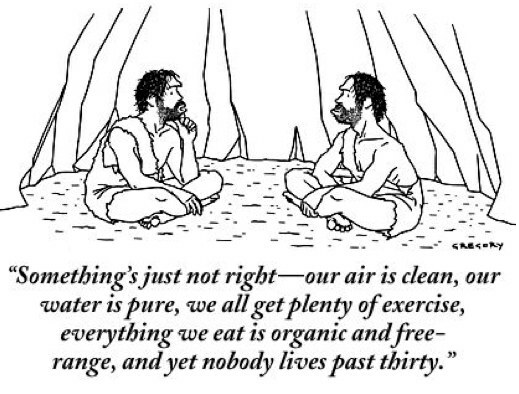
cavemen not right

From the earliest days of human life, we have always known that our lives depend on the energy we can gain and apply to meet our needs.  It is obvious around the world that in places where energy is scarce and expensive, human labor is cheap and people live in poverty.  Where energy is cheap and available, people earn a much higher standard of living.  These realities have escaped the notice of today’s policymakers, obsessed with their fear of CO2.   Derrick Hollie writes at Real Clear Energy ‘Affordable and Reliable’ Energy Makes Life Possible. Excerpts in italics with my bolds.

In the United States, we have an abundance of affordable and reliable energy. But some of us take having access to energy for granted. We expect to plug in and charge our mobile devices, flip a light switch and click on the television. And without fail, it all works. It’s not until our power—and our way of life—is interrupted that most of us think about energy and where it comes from.

California’s recent blackout revealed that having reliable electricity is an economic privilege, and interviews from across the state suggest those less affluent continue to have more losses and were disproportionately forced off the grid.

As it is, Californians already pay among the highest rates in the U.S. for their power, and unfortunately these costs are projected to rise even more. These increases often have a higher burden on low-income households that already struggle to keep up with rising cost, leading many down the path to energy poverty. The issue plagues not only California residents, but many more across the country including in Pennsylvania, where utility rates for customers are much higher than neighboring states. In Georgia a study finds energy consumption among the highest in America, and in New Mexico a new state law will increase cost to consumers, with the most negative impacts felt by lower income families who spend a larger share of their monthly income on energy.

The irony is that each state listed has an abundance of natural resources that can be accessed. But lawmakers, caving to environmentalist and special interest groups that don’t speak for the poor, continue to put forth expensive policy ideas like the Green New Deal that promote false hope and unrealistic outcomes for those who already grapple each month to make ends meet.

I recently had an opportunity to speak with several residents of Richmond, Virginia, who face these challenges. And it breaks my heart to see a single mother who must decide on whether to feed her children or pay the electric bill. That’s a choice no American citizens should have to make.

Today we use more energy than ever before, and to keep up with the growing demand, we need an approach that makes better use of what we have, especially if it can lower costs, create jobs and increase funding to critical services we rely on like roads, emergency management, and education.

A recent Shale Crescent USA study shows end users have saved $1.1 trillion over the past 10 years due to increased natural gas production that has reduced the price of natural gas in the United States. Meanwhile California, rich with its own natural resources, increased its crude oil imports from foreign countries from 5% in 1992 to 57% in 2018. This is a glaring example of hypocrisy, and here’s why. Booming shale production helped the U.S. overtake Saudi Arabia and Russia to become the world’s top oil exporter for the first time ever this year. How can our natural resources be worthy enough to supply other countries, but not good enough for us here at home?

We need market-oriented energy policy that will allow America to keep exploring and developing our resources safely, and to follow the example of environmental stewardship set by areas like Port Fourchon, Louisiana. The port serves as a major oil and gas hub on the Gulf Coast with some of the largest boat and marine companies in the world operating from there. It’s also a commercial and fishing Mecca that continues to amaze scientists and researchers from around the world.

During the California blackout, many residents were not able to cook and relied on flashlights and oil-burning lamps for lighting. San Jose Mayor Sam Liccardo urged residents to be “safe and not to drive in blacked-out areas.” We live in the 21st Century in the richest country in the world, and nobody here should be without electricity. Affordable energy makes us better and more resilient.

And the truth is, nature doesn’t give us what we need to survive—we must create it through energy development. Fossil fuels have allowed us to create a life that Americans have grown to appreciate, thanks to innovations from pharmaceuticals to agriculture to mobile devices.

We are better off now than ever before, and politicians shouldn’t deny our comfort and prosperity to the least fortunate among us.


See also Social Benefits of Carbon

Ungrateful Millennials Richer than Rockefeller


Let Them Eat Steak!

Will Coggin writes at USA Today Let them eat steak: Hold the shame, Red meat is not bad for you or the climate.  Excerpts in italics with my bolds and images.

Plant-based meat may enjoy the perception of being healthier than real meat, but it has more sodium and calories and can cause weight gain.

Imagine ordering dinner at your favorite restaurant. You know what you want without hesitation: a perfectly marbled 8-ounce steak cooked medium rare. Just before you order, your date tells you they’ve read that cows cause climate change and that meat might be unhealthy. Suddenly, the Caesar salad seems like a better option.

We’ve all been steak-shamed before. Ever since Sen. George McGovern’s 1977 Dietary Goals report declared red meat a health villain, Americans have been chided out of eating red meat. According to the U.S. Department of Agriculture, red meat consumption has fallen more than 24% since 1976. During that time, study after study has attempted to tie red meat to a laundry list of health problems. Until now.

So many studies, so many flaws

Three studies published recently in the Annals of Internal Medicine did something too few papers do: Ask whether the previous studies had any meat on their bones. The researchers who wrote the report analyzed 61 past studies consisting of over 4 million participants to see whether red meat affected the risk of developing heart disease and cancer.


All three came to the same conclusion: Decreasing red meat consumption had little to no effect on reducing risk of heart disease, cancer or stroke.

How can so many studies be wrong?

Nutritional research often relies on survey-based observational studies. These track groups of people and the food they eat, or try to tie a person’s past eating habits to a person’s current state of health. The result is something akin to a crime chart from a mob movie with a random red string connecting random suspects trying to figure out “who dunnit.”

Observational studies rely on participants to recall past meals, sometimes as far back as a month. Even when eating habits are tracked in real time using food diaries, issues arise. Research has shown that participants don’t give honest answers and often pad food diaries with typically “good” foods like vegetables while leaving out things like meat, sweets and alcohol. There’s also the matter of having to accurately report portion sizes and knowing the ingredients of the food eaten in restaurants.

Beef may be healthier than fake meat

The room for error is huge. A much better form of study would be to lock people in cells for a period of time so that you could precisely control what they ate and did and then measure outcomes. Obviously, there are ethical issues with such a structure, which is why observational studies are more common, if flawed.

Some companies like Impossible Foods and Beyond Meat have tried to cash in on the misconception about meat’s healthfulness. According to the market research firm Mintel, 46% of Americans believe that plant-based meat is better for you than real meat. Ironically, the anti-meat messages could be leading people to less healthful options.

Science on your side: Don’t let vegetarian environmentalists shame you on meat

Plant-based meat might enjoy the perception of being healthier, but that perception is far from reality. A lean beef burger has an average of nearly 20% fewer calories and 80% less sodium than the two most popularfake-meat burgers, the Impossible Burger and the Beyond Burger.

Fake meat is also an “ultra-processed” food, filled with unpronounceable ingredients. The National Institutes of Health released a study in May finding that ultra-processed foods cause weight gain. Unlike observational studies, this research was a controlled, randomized study.

Earth will survive your meat-eating

It’s not just the flawed health claims about red meat that deserve a second look. In recent years, we’ve been told reducing meat consumption is essential to saving the planet. But despite what critics say, even if everyone in America went vegan overnight, total greenhouse gas emissions (GHG) in the United States would only be reduced 2.6%.

Eat better meat:Don’t go vegan to save the planet. You can help by being a better meat-eater.

Since the early 1960s, America has shrank GHG emissions from livestock by 11.3% while doubling the production of animal farming. Meat production is a relatively minor contributor to our overall GHG levels. In other countries, it may have a higher impact. The solution is not lecturing everyone else to go meat-free. Sharing our advancements would prove to be a more likely and efficient way to reduce emissions than cutting out meat or replacing it with an ultra-processed analogue.

Those who enjoy a good steak now have a good retort the next time they’re criticized for their choice: Don’t have a cow.

Inside “Blame Big Oil” Litigation

Spencer Walrath writes at Energy In Depth Activist Updates Climate Attribution Study to Aid Climate Lawsuits. Excerpts in italics with my bolds

The climate liability litigation campaign is recycling old, debunked research in another attempt to make the case for investor-owned oil and gas companies to be sued for climate change. The updated research comes from the Climate Accountability Institute (CAI), one of the organizers of the infamous 2012 La Jolla conference – a gathering held specifically to design a legal strategy against oil companies.

CAI’s Rick Heede quietly released a “training manual” for his Carbon Majors database on Monday and appears to be calling it quits, noting that he has launched “the search for a long-term and durable institutional host to take on the responsibility of updating the Carbon Majors database that I started working on fifteen years ago.” In the manual’s acknowledgements, Heede notes that without the support of his generous anti-fossil fuel donors, he’d “be sipping rum at some beachfront on Bora Bora…Bring the rum!”

Heede’s training manual explicitly notes that the purpose of the Carbon Majors database is to support efforts “to hold oil, gas, and coal companies morally, financially, and legally responsible for exacerbating foreseeable climate damages.” Notably, the new CAI research suffers from the same flaws as the old research:

    • It’s funded by anti-oil and gas groups,
    • it attributes consumers’ emissions back to energy producers,
    • it ignores broad swaths of the economy, and
    • it gives state-owned companies a pass.

The end goal of Heede’s and UCS’s research was to allow their papers to be used as evidence in complaints filed against oil and gas companies. “Big Oil must pay for climate change. Now we can calculate how much,” reads the headline of an opinion piece published by UCS’s Peter Frumhoff in The Guardian on the same day their study was published. Vic Sher, the plaintiffs’ attorney representing the majority of plaintiffs that have brought climate liability litigation against energy companies, gave a presentation in 2017 where he said he worked directly with Rick Heede to build his case.

Heede’s updated paper, which was funded and commissioned by the Union of Concerned Scientists, emphasizes that the purpose of this research is to support litigation.

Climate Attribution – Everything’s Made Up and the Points Don’t Matter

But no one can say with a straight face that CAI has any credibility because of its known bias against energy producers. For example, CAI has received funding from the Rockefeller Brothers Fund – the primary funders of the entire #ExxonKnew campaign.

The key flaw in Heede’s research is that it relies heavily on Scope 3 emissions and a lot of estimation.

Scope 1 emissions are a company’s direct emissions, while Scope 2 emissions are those indirect greenhouse gases emitted by others to generate electricity to power the company’s operations. Scope 3 emissions are by far the biggest piece of the emissions pie and are those that come from the end-users of energy companies’ products. When you fill up your gas tank and burn that fuel, you’re generating the Scope 3 emissions. Multiply that by the 7.7 billion people on the planet and you can see why Scope 3 represents the lion’s share (88.5%!) of emissions catalogued in Heede’s report.

Global Greenhouse Gas Emissions by Source 2013

The problem with Scope 3 emissions, if you’re Heede, is that Scope 3 emissions are not under the company’s control and they are nearly impossible to account for. Companies cannot accurately track Scope 3 emissions, which is probably why they’re not required to report them. So, when Heede claims to have calculated a company’s total emissions, understand that he’s just making an educated guess, similar to how Drew Carrey awarded points on “Whose Line Is It Anyway?”

That’s a problem for the validity of his study, and for the lawsuits relying on his research, because it attributes the estimated emissions generated by consumers back to energy companies.

In other words, when Vic Sher says he’s identified the companies responsible for 25 percent of historic emissions, roughly 88.5 percent of those emissions are not generated by the companies.

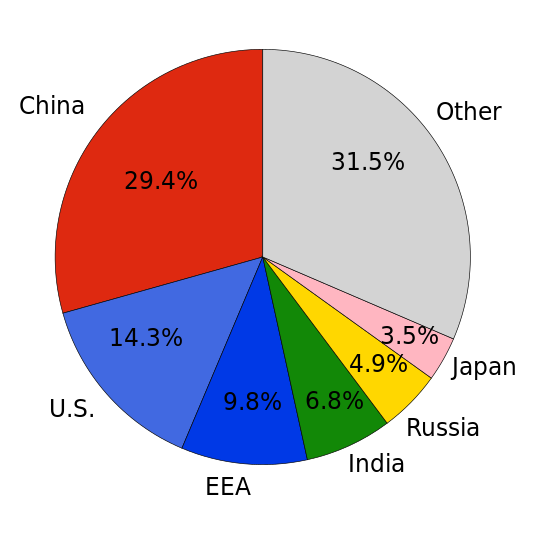
Global CO2 gas emissions in the year 2015 by country.

Other Rockefeller-funded groups, like CDP, have also alleged that major oil companies are responsible for the vast majority of historic greenhouse gas emissions. But CDP’s work is based on CAI’s flawed research and singles out publicly-listed companies like ExxonMobil, Shell, and BP, while ignoring state-owned entities like Russia’s Gazprom and National Iranian Oil, which allegedly contributed 59 percent of emissions since 1988. The Carbon Majors report also completely ignores high-emitting sectors of the economy, such as agriculture.

Heede appears to be handing off the Carbon Majors database to the Union of Concerned Scientists or another pro-climate litigation group to carry on his legacy. No doubt, they will continue to misrepresent the emissions of energy producers in hopes of holding a handful of companies responsible for the world’s emissions.

Activists Push Climate Snake Oil

From the “Don’t just stand there, Do Something” file, a recent article points out tonics on offer from climatists. Not only are their prescriptions useless against the supposed problem, worse they do actual harm in and of themselves. Bjorn Lomborg writes at New York Post Climate change activists are focused on all the wrong solutions. Excerpts in italics with my bolds.

As it is becoming obvious that political responses to global warming such as the Paris treaty are not working, environmentalists are urging us to consider the climate impact of our personal actions. Don’t eat meat, don’t drive a gasoline-powered car and don’t fly, they say. But these individual actions won’t make a substantial difference to our planet, and such demands divert attention away from the solutions that are needed.

Even if all 4.5 billion flights this year were stopped from taking off, and the same happened every year until 2100, temperatures would be reduced by just 0.054 degrees, using mainstream climate models — equivalent to delaying climate change by less than one year by 2100.

Nor will we solve global warming by giving up meat. Going vegetarian is difficult — one US survey shows 84 percent fail, most in less than a year. Those who succeed will only reduce their personal emissions by about 2 percent.

And electric cars are not the answer. Globally, there are just 5 million fully electric cars on the road. Even if this climbs massively to 130 million in 11 years, the International Energy Agency finds CO₂ equivalent emissions would be reduced by a mere 0.4 percent globally.

Put simply: The solution to climate change cannot be found in personal changes in the homes of the middle classes of rich countries.

The Paris treaty cannot do much — just like the Rio and Kyoto pacts mostly failed before it — because this approach requires rich countries to promise future economic hardship to achieve very little.

The real reason for this: Most of the 21st century emissions are not being emitted by the rich world. Indeed, if every single rich country stopped all CO₂ emissions today and for the rest of the century — no plane trips, no meat consumption, no gasoline-powered cars, no heating or cooling with fossil fuels, no artificial fertilizer — the difference would be just 0.72 degrees°F by end-of-century.

Solving climate change, in fact, requires getting China, India and all the other developing countries on board to cut emissions. But of course, their goal is to lift their populations out of poverty with cheap and reliable energy. How do we square that?

A carbon tax can play a limited but important role in factoring the costs of climate change into fossil-fuel use. Nobel laureate climate economist William Nordhaus has shown that implementing a small but rising global carbon tax will realistically cut some of the most damaging climate impacts at rather low costs.

This, however, will not solve most of the climate challenge. We must look at how we solved past major challenges — through innovation. The starvation catastrophes in developing nations in the 1960s to ’80s weren’t fixed by asking people to consume less food but through the Green Revolution in which innovation developed higher-yielding varieties that produced more plentiful food.

Similarly, the climate challenge will not be solved by asking people to use less (and more expensive) green energy. Instead, we should dramatically ramp up spending on research and development into green energy.

The Copenhagen Consensus Center asked 27 of the world’s top climate economists to examine policy options for responding to climate change. This analysis showed that the best investment is in green-energy R&D. For every dollar spent, $11 of climate damages would be avoided.

This would bring forward the day when green-energy alternatives are cheaper and more attractive than fossil fuels not just for the elite but for the entire world.

Right now, despite all the rhetoric about the importance of global warming, we are not ramping up this spending. On the sidelines of the 2015 Paris climate summit, more than 20 world leaders made a promise to double green-energy research and development by 2020. But spending has only inched up from $16 billion in 2015 to $17 billion in 2018. This is a broken promise that matters.

After 30 years of pursuing the wrong solution to climate change, we need to change the script.

Bjorn Lomborg is president of the Copenhagen Consensus Center and visiting professor at Copenhagen Business School.