It’s Greta’s Worldview We Disavow

Nick Gillespie gets the focus right in his Reason article Think Globally, Shame Constantly: The Rise of Greta Thunberg Environmentalism. Excerpts in italics with my bolds.

Her future—and that of the planet—hasn’t been “stolen” and the best way forward is through serious policy discussion, not histrionics.

To say that reactions to Thunberg are as extreme as her rhetoric is an understatement. . . But despite the volume and vitriol of the attacks directed her way, it’s vitally important that the worldview she represents and the policies she espouses are refuted. Like Rep. Alexandria Ocasio-Cortez (D–N.Y.), Sen. Elizabeth Warren (D–Mass.), and a host of other American politicians, Thunberg believes that we’ve only got a few years left to settle the fate of the planet, a basic tenet pushed by supporters of the Green New Deal and by most of the Democrats running for president. In fact, Thunberg thinks that “cutting our emissions in half in 10 years,” the target invoked by many environmentalists, is too little, too late.

Such catastrophic thinking is similar to AOC’s equally apocalyptic statement that “The world is gonna end in 12 years” and Warren’s contention that “we’ve got, what, 11 years, maybe” to cut our emissions in half to save the planet. As Reason’s Ronald Bailey has documented:

Such predictions stem from a fundamental misreading of a 2018 report from the Intergovernmental Panel on Climate Change (IPCC).

That report offered up predictions in the growth of global economic activity, how it might be affected by climate change, and how reducing greenhouse gases might increase planetary GDP. It did not specify anything like a 10- to 12-year window after which extinction or amelioration is inevitable. Writes Bailey:

If humanity does nothing whatsoever to abate greenhouse gas emissions, the worst-case scenario is that global GDP in 2100 would be 8.2 percent lower than it would otherwise be.

Let’s make those GDP percentages concrete. Assuming no climate change and an global real growth rate of 3 percent per year for the next 81 years, today’s $80 trillion economy would grow to just under $880 trillion by 2100. World population is likely to peak at around 9 billion, so divvying up that GDP suggests that global average income would come to about $98,000 per person. Under the worst-case scenario, global GDP would only be $810 trillion and average income would only be $90,000 per person.

“There is no looming climate change ‘expiration date,'” writes Bailey, a point underscored by Bjorn Lomborg, president of the Copenhagen Consensus Center, which promotes cost-effective policies to remediate climate change, hunger, disease, and other global issues. Lomborg notes that the IPCC itself has found the evidence does not support claims that floods, droughts and cyclones are increasing.

What’s more, the scientists have found that current human-caused global warming cannot reasonably be linked to any of these extreme weather phenomenon-“globally, there is low confidence in attribution of changes in (cyclone) activity to human influence”, “low confidence in detection and attribution of changes in drought” and low confidence “that anthropogenic climate change has affected the frequency and magnitude of floods”. This doesn’t mean there is no problem-just that the facts matter.

There are only better and worse ways to deal with coming changes. Contra Thunberg, the better ways don’t demonize economic growth as a problem but as a solution. “The most inexorable feature of climate-change modeling isn’t the advance of the sea but the steady economic growth that will make life better despite global warming,” writes science journalist Will Boisvert. The environmental Kuznets curve, by which countries get wealthier and their citizens demand a cleaner environment, is the rule, not the exception. Such a dynamic is predicated upon economic and technological innovation that would be almost impossible under the sort of regulations promulgated by Green New Dealers and activists such as Thunberg and Naomi Klein, who wants to “decimate the entire neoliberal project” in the name of environmentalism. Environmental commons tend to deteriorate as countries begin to develop economically—but once per-capita income reaches a certain level, the public starts to demand a cleanup. It’s a U-shaped pattern: Economic growth initially hurts the environment, Bailey reminds us, but after a point it makes things cleaner. By then, slowing or stopping economic growth will delay environmental improvement, including efforts to mitigate the problem of man-made global warming.

Greta Thunberg’s histrionics are likely heartfelt but neither they nor the deplorable responses they conjure are a guide forward to good environmental policy in a world that is getting richer every day. For the first time in human history, half the earth’s population is middle class or wealthier and the rate of deaths from natural disasters is well below what it was even a few decades ago.

Protecting all that is just as important as protecting the environment and, more importantly, those two goals are hardly mutually exclusive.

Update: Children’s Climate Crusade

The Greta phenomenon is only the latest example of climate activists using children as human shields in their war against fossil fuels, as a previous post showed (reprinted below).  The satirical blog Bablyon Bee is on target with two skewers into recent events.  Firstly Marionette Strings Clearly Visible During Greta Thunberg Testimony  Excerpts in italics with my bolds.

NEW YORK, NY—Climate activist and adolescent Greta Thunberg gave a passionate speech at the UN Climate Action Summit in New York, declaring, “How dare you? You have stolen my dreams and my childhood with your empty words, and yet I’m one of the lucky ones. People are suffering. People are dying. Entire ecosystems are collapsing.”

“This is all wrong,” she declared, clearly on the verge of tears.

Savvy viewers, however, noticed there were marionette strings attached to the 16-year-old throughout her speech.

“Hey, wait a minute!” one attendee shouted. “Those are puppet strings, kinda like on Thunderbirds!” This caused some uproar, with everyone tracing the strings to see who had brainwashed this young girl into thinking the world was ending and pulling her strings. Some people got bored with the speech after that and just went and watched Thunderbirds, which had more interesting puppets and better acting.

Then there was this report on government action on climate change: Panel Of Third Graders To Dictate Nation’s Climate Change Policy  Excerpts in italics with my my bolds.

WASHINGTON, D.C.—At a panel on climate change held yesterday, the Senate brought in a group of excited third graders for ideas on fighting climate change.

“These kids have ideas and they are passionate, so we must listen to them,” said Sen. Brian Schatz of Hawaii. “There are no possible downsides to taking kids who have been told the world is ending by the public school system and allowing them to dictate national policies on important issues.

The kids came up with the following list so far, though they say they’re “just spitballing” and the ideas need some fleshing out:

  • Bribing the climate with cookies and candy
  • Putting the climate on time-out
  • Just ignoring climate change and playing Fortnite
  • Building a giant magnet and sucking up all the bad climate stuff
  • Buying a Nintendo Switch for every person in the nation (so they’ll stay inside and play Nintendo instead of driving cars)
  • Making a big freeze ray gun like in Despicable Me and shooting the climate
  • Pointing and laughing at cows who fart so they’ll be embarrassed and stop farting
  • Hey do you guys want to play some Minecraft? This is boring.

“It’s incredibly brave for these kids to volunteer to take over our government’s climate change policies,” said Schatz as the panel convened for its seventh Fortnite break of the morning. “I’m not sure why we didn’t think of this before.

The kids will also be asked to make policies on bedtime, homework, and candy.

Background from previous post Climate War Human Shields

In Massachusetts, four teenagers, the Conservation Law Foundation and the Mass Energy Consumer Alliance brought the climate action case to court. “The global climate change crisis is a threat to the well being of humanity, and to my generation, that has been ignored for too long,” said one of the young prosecutors, Shamus Miller.

On Tuesday, the Massachusetts (MA) Supreme Court mandated the MA Department of Environmental Protection (DEP) to promote impactful climate legislation. The court deemed that the DEP failed to uphold climate change agreements outlined in the Global Warming Solutions Act of 2008 and “requires the department to promulgate regulations that establish volumetric limits on multiple greenhouse gas emissions sources, expressed in carbon dioxide equivalents, and that such limits must decline on an annual basis.”

This case is in accordance with “youth around the country and internationally…bringing their governments to court to secure their rights to a healthy atmosphere and stable climate,” commented Julia Olson, executive director of Our Children’s Trust (an organization that helps youth fight “game-changing” legal battles around the world).Source: Planetexperts 

And who are the adults involved in  Our Children’s Trust?

Supporting Experts (the usual suspects)

Dr. James Hansen
Dr. Ove Hoegh-Guldberg
Dr. Sivan Kartha
Dr. Pushker Kharecha
Dr. David Lobell
Dr. Arjun Makhijani
Dr. Jonathan Overpeck
Dr. Camille Parmeson
Dr. Stefan Rahmstorf
Dr. Steven Running
Dr. James Gustave Speth
Dr. Kevin Trenberth
Dr. Lise Van Susteren
Dr. Paul Epstein (1943-2011)
Etc

Campaign Partners (Allies whose funding depends on CO2 Hysteria)

Climate Reality Project,
Western Environmental Law Center,
Crag Law Center,
Texas Environmental Law Center,
Cottonwood Environmental Law Center,
WildEarth Guardians,
Clean Air Council,
Global Campaign for Climate Action,
Chasing Ice,
Environmental Law Alliance Worldwide,
TERRA,
Sierra Club,
350.org,
Climate Solutions,
Greenwatch,
Center for International Environmental Law..
Greenpeace
etc.

Conclusion

This is as obscene as brainwashing young Muslims to be suicide bombers. Or terrorists hiding among families to deter the drone strikes. The fact that the kids are willing is no excuse.

Think of the children! How will they feel a decade from now when they realize they have been duped and exploited by activists who figured judges would be more sympathetic to young believers?

Gifted kids


Update June 24

Some addition background in response to questions from Frederick Colbourne.

Frederick, they are employing a creative approach to the “Public Trust Doctrine”. From their website:
“Specifically, these court decisions have rejected many legal defenses raised by our opponents, including non-justiciability, standing, separation of powers and sovereign immunity. In support of our youths’ positions, and in face of argument to the contrary, the courts have validated critical climate science and reserved for the courts the exclusive right to determine whether a particular commons resource is protected by the Public Trust Doctrine for benefit of present and future generations, and whether there has been a breach of that trust. Our cases are now progressing to the next phases where the courts will make those determinations relative to our atmosphere.”

Massachusetts is ripe for this legal suit because the state passed legislation endorsing the threat of climate change and subscribing to targets for reducing emissions.

From the Court decision: “the Climate Protection and Green Economy Act, G. L. c. 21N (statute)”
“The act established a comprehensive framework to address the effects of climate change in the Commonwealth by reducing emissions to levels that scientific evidence had suggested were needed to avoid the most damaging impacts of climate change. . .In accordance with these findings, the statute requires that, by 2050, greenhouse gas emissions be reduced by at least eighty per cent below 1990 levels. G. L. c. 21N, § 3 (b).”

Note that it was Massachusetts that acted to get EPA jurisdiction over GHGs. Again from the Court decision: “See also Massachusetts v. Environmental Protection Agency, 549 U.S. 497, 505 (2007) (petition by Massachusetts, with other States, local governments, and private organizations, arguing Environmental Protection Agency abdicated responsibility under Clean Air Act to regulate emissions of four greenhouse gases, including carbon dioxide).”

This legal strategy is along the lines of “Sue and Settle” tactic employed in the past to expand the regulatory scope of the EPA. Part of this latest charade is for the state to offer a token defense so that the court requires them to do what they want to do anyways, but now armed with additional ammunition against resisters.

Note also the bait and switch: Climate change is not at issue, it is all about meeting emissions targets.  It should serve also as a cautionary tale to any jurisdiction that thinks they can pass lip-service legislation and get away with politically-correct posturing.

Footnote for those not aware of Aliases for the Usual Suspects:

James “Death Trains” Hansen
Ove “Reefer Mad” Hoegh-Guldberg
Jonathan “Water Torture” Overpeck
Camille “The Extincter” Parmeson
Stefan “No Tommorow” Rahmstorf
Kevin “Hidden Heat” Trenberth

Childish Climate Power Play

The peformance by Greta at the UN sounded familiar to anyone who has raised children or grandchildren.  We knew first hand what was called the “terrible twos,” when sweet, adorable children frequently and all of a sudden acted out behaviors like:

  • Screaming
  • Temper tantrums
  • Kicking and biting
  • Fighting with siblings
  • Total meltdowns

Such behavior is a way of expressing the need for independence along with frustration at not being in control all the time.

Oftentimes the events involve ” I want, I want, I want”, just as Greta declared: “I want you to panic.”  And in addition there are all the “Greta Wannabes”:

It’s a peculiar and disturbing devlelopment when anyone, including a teenager, becomes a celebrity and attracts followers by being totally certain of something while being ignorant at the same time.  And then to use outbursts of emotional blackmail to tap adults’ guilt feelings:  “If you really loved me, you would do what I want”.  Instead of being grateful for living in a time with so many options and conveniences, what we get is “I will never forgive you for stealing my future.”

Hearing the applause from the UN audience indicated that the ruse is working, that the childish climate power play is successfully manipulating people who should know better from their greater education and life experience.

When I heard that Greta and friends are also launching a lawsuit, it reminded me of this:
Who knows what will happen next?  Here is what I am hoping for:


Energy Savings from Building Codes are Only Symbolic

Richard Tol posted at Climate Economics: How much energy do building code save?

Not nearly as much as expected, according to this paper by Arik Levinsohn. California has had building codes for energy since 1978, and they are tightened every so often. Levinsohn compares the energy use of buildings build before and after a code change, compares Californian houses to houses elsewhere in the USA, and compares the weather sensitivity of houses with different building codes. He finds that codes save energy, but the ex post estimates are lower than the ex ante ones on which the regulation was based.

Arik Levinsohn wrote at American Economic Review  How Much Energy Do Building Energy Codes Save? Evidence from California Houses 

Abstract

Regulations governing the energy efficiency of new buildings have become a cornerstone of US environmental policy. California enacted the first such codes in 1978 and has tightened them every few years since. I evaluate the resulting energy savings three ways: comparing energy used by houses constructed under different standards, controlling for building and occupant characteristics; examining how energy use varies with outdoor temperatures; and comparing energy used by houses of different vintages in California to that same difference in other states. All three approaches yield estimated energy savings significantly short of those projected when the regulations were enacted.

Footnote:  From Green New Deal promotional article:

Existing buildings hoover up about 40% of energy consumed in the U.S. and emit about 29% of greenhouse gases. The Green New Deal calls for retrofitting all of them—every last skyscraper, McDonald’s, and suburban ranch home—for energy efficiency within the next 10 years.

YouGov Climate Push Poll: Still no Believer Majority

A new internatiional climate change poll shows most European countries as well Anglophone nations are divided between belief and scepticism over global warming claims.  The YouGov poll results are presented in part in the diagram below (H/T GWPF)

Lest there be any doubt:  This is a survey of opinions (beliefs) about global warming/climate change as buzzwords without any meaning defined as a reference for knowing why any response was given.  Further on is a reprint of a previous post describing the tactics for getting the highest possible affirmation of belief rather than scepticism.  Of course, it is important to know what was the survey methodology, i.e. how the questions were put, what answers were offered and/or accepted, and what context (if any) was given to participants.  For the YouGov International Survey the questioning went like this.

Thinking about the global environment… In general, which of the following statements, if any, best describes your view?

The climate is changing and human activity is mainly responsible
The climate is changing and human activity is partly responsible, together with other factors
The climate is changing but human activity is not responsible at all
The climate is not changing
Don’t know

Which countries, if any, do you think have had the most negative impact on global warming and climate change?  (Please tick up to five)

[Most frequently mentioned by Europeans were Brazil, China, India, Russia, USA, and Don’t know]

And do you think that you personally could be doing more to tackle climate change, or are you already doing as much as you reasonably can? Could be doing more/Doing as much as it reasonably can/Don’t know

How responsible, if at all, do you think each of the following are for the current situation with climate change?  Very responsible/Fairly/Not Very/Not Responsible at all/Dont’t know

International bodies (e.g. the United Nations)
National governments of wealthy countries
National governments of developing countries
Businesses and industry
Individuals

And how much power, if any, do you think each of the following have to combat climate change?
A great deal of power, a fair amount, Not very much, no power at all, Don’t Know

International bodies (e.g. the United Nations)
National governments of wealthy countries
National governments of developing countries
Businesses and industry
Individuals

How much of an impact, if any, do you believe climate change will have on your life?
A great deal of impact/ A fair amount, Not Much, No impact at all/Don’t know

Which of the following comes closest to your view?

It is already too late to avoid the worst effects of climate change
We are still able to avoid the worst effects of climate change but it would need a drastic change in the steps taken
We will be able to avoid the worst effects of climate change if we broadly carry on with the steps currently being taken
Don’t know

If you had to choose one, which approach would you prefer governments and societies to focus on more to tackle climate change?

One where we attempt to reduce consumption of resources to slow or halt the negative effects of climate change
One where we attempt to come up with technological solutions to try and counter the effects of climate change
Don’t know

How likely do you think it is that climate change will cause each of the following? Very likely/Quite/Not Very/Not at all likely/ Don’t know

The extinction of the human race
Small wars
A new world war
Serious damage to the global economy
Cities being lost to rising sea levels
Mass displacement of people from some parts of the world to others

For your information the table of Yougov climate questions and responses from various nations is here

Comment:  Note how belief in climate change and its human agency is assumed throughout the questioning process.  As discussed below, using “environmental” and “global” are AGW belief triggers.  And then asking which nations are most responsible for hurting the climate is akin to asking “Have you stopped beating your wife?” Note also that “tackling climate change” presumes humans caused it and can stop it by changing behavior.

Background from previous post The Art of Rigging Climate Polls

Marketing and social influence makers have used opinion surveys extensively to promote awareness, interest and motivation to engage with their products or preferred policies. I have written before on how this ploy is used regarding global warming/climate change (links at bottom). This post is prompted by a fresh round of climate polls and some further insight into how results are created to support a socio-political agenda.

Of course, any opinion poll on climate as a public policy matter is indicating how much of the blather in the media has penetrated public consciousness, and softened them up for political pitches and financial support. And the continuing samplings and reports need to show progress to keep activist hopes alive.

Just yesterday we had an announcement along these lines. Poll shows consensus for climate policy remains strong is published at Phys.org from Stanford U. (where else, home of the belated Stephen Schneider, among many other leading alarmists). Stanford also happens to be my alma mater, but when I was studying organic chemistry there, we knew life on earth was carbon-based and did not think CO2 was a pollutant.

Climate Public Opinion is a Program of Research by the Stanford Political Psychology Research Group (website link) and has done frequent surveys on the question: What do the residents of the United States believe about global warming?

From psy.org article (excerpts in italics with my bolds):

While the United States is deeply divided on many issues, climate change stands out as one where there is remarkable consensus, according to Stanford research.

“But the American people are vastly underestimating how green the country wants to be,” said Jon Krosnick, a professor of communication and of political science at Stanford, about new findings from a poll he led on American attitudes about climate change.

The study was conducted with ABC News and Resources for the Future, a Washington, D.C.-based research organization. A representative sample of 1,000 American adults nationwide were polled from May 7 to June 11, 2018. The margin of error is +/- 3.5 percentage points.

The poll showed that Americans don’t realize how much they agree about global warming: Despite 74 percent of Americans believing the world’s temperature has been rising, respondents wrongly guessed 57 percent.

“The majority doesn’t realize how many people agree with them,” said Krosnick. “And this may have important implications for politics: If people knew how prevalent green views are in the country, they might be more inclined to demand more government action on the issue.”

Public belief in the existence and threat of global warming has been strikingly consistent over the last 20 years, even in the face of a current administration skeptical about climate change,” said Krosnick, who has been tracking public opinion about global warming since 1995.

Krosnick has learned from his 20 year experience with this topic, and shares with us some of the tricks of the trade. For example, one paper provides their finding regarding the wording of questions.

1. “What do you think is the most important problem facing the country today?”

In this traditional MIP question, about 49 percent answered the economy or unemployment, while only 1 percent mentioned the environment or global warming.

2. “What do you think is the most important problem facing the world today?”

Substituting the word “country” with “world” produced a significant change: 7 percent mentioned environmental issues, while 32 percent named the economy or unemployment.

3. “What do you think will be the most important problem facing the world in the future?”

When asked to consider the future of the planet, 14 percent chose the environment or global warming, while economic issues slipped to 21 percent.

4. “What do you think will be the most serious problem facing the world in the future if nothing is done to stop it?”

This time, 25 percent said the environment or global warming, and only 10 percent picked the economy or unemployment.

“Thus, when asked to name the most serious problem facing the world in the future if nothing is done to stop it, one-quarter of all Americans mentioned either global warming or the environment,” Krosnick said. “In fact, environmental issues were cited more often in response to question 4 than any other category, including terrorism, which was only mentioned by 10 percent of respondents.”

Thus it is that survey results are influenced greatly by the design of the questioning process. Helpfully, the Stanford program provides this history of the questions put to participants over the years. Below are the result categories, some showing the evolving form of questioning, and others just the most recent form for brevity. I will comment on the first few, and leave the others for your reflection (my bolds)

1. Global warming is happening. 2012-2013: What is your personal opinion? Do you think that the world’s temperature probably has been going up over the past 100 years, or do you think this probably has not been happening? 2012: What is your personal opinion? Do you think that the world’s temperature probably has been going up slowly over the past 100 years, or do you think this probably has not been happening? 1997-2011: You may have heard about the idea that the world’s temperature may have been going up slowly over the past 100 years. What is your personal opinion on this? Do you think this has probably been happening, or do you think it probably has not been happening?

Fair question with both responses equally acceptable. The earlier form referred to what they may have heard, but wisely dropped that later on. One does wonder what evidence people use for 100 years of reference.

In a separate study Krosnick tested the effect of asking about “global warming” or “climate change” and concluded:
In the full sample, global warming, climate change, and global climate change were all perceived to be equally serious on average. These findings seem to be inconsistent with the claim that people view climate change or global climate change as less serious than global warming. In addition, the distribution of seriousness ratings were equivalent for global warming, climate change, and global climate change.

IMO it is to his credit that he asks about global warming rather than the vacuous “climate change”.

2.Warming will continue in the future. 2012: If nothing is done to prevent it, do you think the world’s temperature probably will go up slowly over the next 100 years, or do you think the world’s temperature probably will not go up slowly over the next 100 years?

Here comes the phrase:  If nothing is done to prevent it . . . The participant gets the suggestion that rising temperatures have human agency, that we can do something to prevent them. As Krosnick explained above, this phrase will help respondents identify the issue as “environmental” and tap their instinct to protect nature. Implanting this subliminal suggestion sets them up for the next question.

3. Past warming has been caused by humans. 2012: Do you think a rise in the world’s temperature is being caused mostly by things people do, mostly by natural causes, or about equally by things people do and by natural causes? 2012: Assuming it’s happening, do you think a rise in the world’s temperature would be caused mostly by things people do, mostly by natural causes, or about equally by things people do and by natural causes?

Now we have some serious distortions inserted into the findings. The end results will reported as “The % of Americans that believe past warming has been caused by humans.” Note that participants have been primed to think warming is preventable by humans, so obviously humans have caused it (logical connection). Moreover, there are the 50-50 responses that will be counted as human causation. The problem is, people who are mostly uncertain and unwilling to say “don’t know” will fall back to the “equally human, equally nature” response.  It is a soft, not affirmative response.

And a further perversion: Those who have said temperatures are not rising are now told to “Assume it is happening.” What? This is no longer an opinion, it is out-and-out speculation. It appears that “Don’t know” and “Not Happening” are disallowed to force a choice with a 67% chance of getting the right answer: “Caused by Humans.”

4.Warming will be a serious problem for the U.S. 2012: If nothing is done to reduce global warming in the future, how serious of a problem do you think it will be for THE UNITED STATES – very serious, somewhat serious, not so serious, or not serious at all? 2012: Assuming it’s happening, if nothing is done to reduce global warming in the future, how serious of a problem do you think it would be for THE UNITED STATES – very serious, somewhat serious, not so serious, or not serious at all?

Again the phrase “If nothing is done to reduce global warming. . .” signaling participants that this is a serious issue, so don’t come with “not so serious” or (God forbid) “not serious at all.” And again, global warming must be assumed to be happening by anyone still unconvinced of it.

5. Warming will be a serious problem for the world. 2012: If nothing is done to reduce global warming in the future, how serious of a problem do you think it will be for THE WORLD – very serious, somewhat serious, not so serious, or not serious at all? 2012: Assuming it’s happening, if nothing is done to reduce global warming in the future, how serious of a problem do you think it would be for THE WORLD – very serious, somewhat serious, not so serious, or not serious at all?

Same comments regarding #4 apply here, only as Krosnick explained, elevating the issue to a “world problem” triggers even more seriousness in responses.

6. Five degrees of warming in 75 years will be bad. 2011-2012: If the world’s average temperature is about five degrees Fahrenheit higher 75 years from now than it is now, overall, would you say that would be good, bad, or neither good nor bad? 1997-2010: Scientists use the term “global warming” to refer to the idea that the world’s average temperature may be about five degrees Fahrenheit higher in 75 years than it is now. Overall, would you say that if the world’s average temperature is five degrees Fahrenheit higher in 75 years than it is now, would that be good, bad, or neither good nor bad?

In the past, interviewers told participants that global warming is defined as 5 degrees warmer, which triggered “bad” as a response. Fortunately, that obvious bias was dropped, and now people are free to say good, bad or neither. Interestingly, this question is not emphasized in the reports, perhaps because it only gets around 50% “Bad”, even in alarmist places like New York and California.

7. The government should limit greenhouse gas emissions. 2012: As you may have heard, greenhouse gasses are thought to cause global warming. In your opinion, do you think the government should or should not limit the amount of greenhouse gasses that U.S. businesses put out? 2008-2011: Some people believe that the United States government should limit the amount of air pollution that U.S. businesses can produce. Other people believe that the government should not limit air pollution from U.S. businesses. What about you? Do you think the government should or should not limit air pollution from U.S. businesses?

Here the older form of the question was more balanced: Some people believe X, some people believe Y, what do you believe? However, the older question was about air pollution which confuses CO2 (natural plant food) with artificial chemicals. The recent question targets “greenhouse gases”, a term nowhere defined. Now the biased question: Greenhouse gases cause global warming, should the government reduce them? Duh!
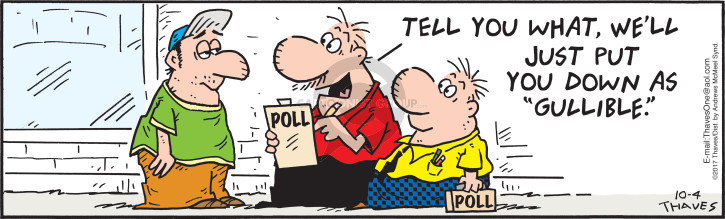
8.U.S. federal government should do more to address global warming. 2012: How much do you think the U.S. government should do about global warming? A great deal, quite a bit, some, a little, or nothing? 2009-2011: How much do you think the U.S. government is doing now to deal with global warming? A great deal, quite a bit, some, a little, or nothing? 2008: Do you think the federal government should do more than it’s doing now to try to deal with global warming, should do less than it’s doing now, or is it doing about the right amount?

Note the shift from asking about Whether government should do more than now, to How much is government doing now, to present form: How much more should government do.  Compares with: “Have you stopped beating your wife?”
9. U. S. should take action regardless what other countries do. Do you think the United States should take action on global warming only if other major industrial countries such as China and India agree to do equally effective things, that the United States should take action even if these other countries do less, or that the United States should not take action on this at all?

IOW, Should the US wait for others and be a follower, not a leader? Duh!

Series of Government Policy Questions

The real reason for the survey is to develop support for government officials to impose climate policies upon the population. The flavor of these is below with few comments from me until the end.

10. For the next items, please tell me for each one whether it’s something the government should require by law, encourage with tax breaks but not require, or stay out of entirely. Each of these changes would increase the amount of money that you pay for things you buy.

Reduce greenhouse gas emissions by power plants. Favor lowering the amount of greenhouse gases that power plants are allowed to release into the air?

Favor a national cap and trade program. There’s a proposed system called “cap and trade.” The government would issue permits limiting the amount of greenhouse gases companies can put out. Companies that did not use all their permits could sell them to other companies. Companies that need more permits can buy them, or these companies can pay money to reduce the amount of greenhouse gases that other people or organizations put out. This will cause companies to figure out the cheapest way to reduce greenhouse gas emissions. This type of permit system has worked successfully in the past to reduce the air pollution that companies put out. For example, in 1990, the federal government passed a law like this, called the Clean Air Act, which caused companies to put out a lot less of the air pollution that causes acid rain. Would you favor or oppose a cap and trade system to reduce the amount of greenhouse gases that companies put out?

Tax breaks to produce renewable energy. Do you favor or oppose the federal government giving companies tax breaks to produce more electricity from water, wind, and solar power?

Tax breaks to reduce air pollution from coal. Do you favor or oppose the federal government giving tax breaks to companies that burn coal to make electricity if they use new methods to reduce the air pollution being released from their smokestacks?

Increase CAFE standards for cars. Favor building cars that use less gasoline?
Build electric vehicles. 2012: Building cars that run completely on electricity?

Build appliances that use less electricity. Favor building air conditioners, refrigerators, and other appliances that use less electricity?

Build more energy-efficient buildings. Favor building new homes and offices that use less energy for heating and cooling?

Tax breaks to build nuclear power plants. Do you favor or oppose the federal government giving companies tax breaks to build nuclear power plants?

Who Pays for all this? It is time for the turkeys to face the pilgrim with the hatchet. How willing are you to pay increased taxes to “fight global warming?”

Increase consumption taxes on electricity. Do you favor or oppose the federal government increasing taxes on electricity so people use less of it?

Most places, majorities of respondents were favorable, up to 80% in some states. Perhaps a tribute to relatively cheap electricity in the U. S.  They are blissfully unaware of what can happen to electricity rates, having been spared so far the “Ontario Experience.”

Increase consumption taxes on gasoline. Do you favor or oppose the federal government increasing taxes on gasoline so people either drive less, or buy cars that use less gas?

Nowhere does this get a majority favorable response. It ranges from 15% to 40%, with most places around 30% in favor of higher gasoline taxes.

And finally, how much do you care and how much do you know?

Warming is extremely important personally (and is likely to influence voting). How important is the issue of global warming to you personally – extremely important, very important, somewhat important, not too important, or not at all important?

Less than 17% of people say global warming is personally extremely important, and most places are under 10%

Highly knowledgeable about global warming. How much do you feel you know about global warming – a lot, a moderate amount, a little, or nothing?
Americans rate their global warming knowledge higher than other countries, going up to 60-70% claiming “Highly Knowledgeable.” Other country surveys would report 25% more typically.

Conclusion

An opinion poll is a mirror claiming to show us ourselves. All polls have error margins, and some are purposely bent to a desired distorted outcome.

In modern social democracies, polls and media are used to shape and report public opinions required by ruling elites to impose laws and policies unwanted by the people. A recent example was the distorted Canadian survey on carbon pricing used by Trudeau government to justify a carbon tax. That poll is deconstructed in a post Uncensored: Canadians View Global Warming.

Krosnick said that people taking his climate poll were surprised that the responses were not more skeptical of global warming claims. After seeing how the survey is put together, I am inclined to believe that participants and their neighbors are actually more skeptical than depicted in the results.  This showed up in the low numbers saying global warming is an important personal issue.  Despite agreeing with alarmist talking points, people seem to know this is about virtue signaling and tribal politics.  It is an “everywhere elsewhere” problem.

Finally, in the survey, Americans rate themselves as highly knowledgeable about global warming, up to 60-70% in some states. Other countries doing such climate surveys typically get about 25% of people saying that. For so many to be taken in by such a survey suggests that Americans’ actual knowledge of global warming is highly overrated.

Background:  Another Climate Push Poll

Climate Is a State of Mind
 

Woke Tycoons Playing with Fire

Matthew Continetti writes at Washington Free Beacon The Wages of Woke.  Excerpts in italics with my bolds.
How the left uses corporate America to evade democracy

Time was, CEOs of mighty enterprises shied away from politics, especially hot-button social and cultural issues. They focused instead on the bottom line. They maximized shareholder value by delivering goods and services to customers. Some businessmen still operate by this principle. In doing so they provide not only for their employees and CEOs and board members but also for the institutions—pensions, individual retirement plans, index funds, hospitals, philanthropies—invested in their companies.

That is no longer enough for many of America’s richest and most powerful. Suddenly, corporate America has a conscience. Every week brings new examples of CEOs intervening in political, cultural, and social debate. In every instance, the prominent spokesmen for American business situate themselves comfortably on the left side of the political spectrum.

Shareholder capitalism finds itself under attack.
Not just from socialism but also from woke capitalism.

Apple employees march in the San Francisco Gay Pride Parade / Getty Images

These outbursts are not just virtue signaling. Nor is the left-wing tilt of corporate America merely a response to the “rising American electorate” of Millennial, Gen Z, and minority consumers. What is taking place is not a business story but a political one. What is known as “stakeholder capitalism” is another means by which elites circumvent democratic accountability.

Corporate managers find themselves at odds with at least 46 percent of the electorate. The divergence is not over jobs or products. It is over values. The global economy generates social inequalities as much as economic ones. Many of the winners of the global economy justify their gains by adopting the rhetoric, tastes, ideas, and affiliations of their cultural milieu. Their environment is inescapably center left.
Even so, the social justice agenda of corporate America is not only meant to appease voters, or even to placate Elizabeth Warren. Some of these businessmen really believe what they are saying. And they are beginning to understand that they have another way—through social position and market share—to impose their cultural priorities on a disagreeable public.

The trend began as a response to the Tea Party. In 2010 the “Patriotic Millionaires” began advocating for higher marginal tax rates. A few years later, when state legislatures passed laws opposed by pro-choice and LGBT groups, corporations threatened or waged economic boycotts. Large individual donations made up more than half of Hillary Clinton’s fundraising; for Donald Trump the number was 14 percent.

CEOs protested the implementation of President Trump’s travel ban in 2017. The following year, after two black men were arrested at a Philadelphia Starbucks, Howard Schultz closed stores nationwide so his more than 175,000 employees could be trained in diversity, equity, and inclusion. Earlier this summer, Nike pulled shoes featuring the Betsy Ross flag after Colin Kaepernick raised objections. Recently four major auto companies struck a deal with the state of California to preserve fuel economy standards the Trump administration opposes.

Business has provided ideological justification for its activities. In mid-August, a group of 181 members of the Business Roundtable, including the CEOs of Morgan Stanley, GM, Apple, and Amazon, issued a statement redefining the purpose of a corporation. “Generating long-term value for shareholders” is necessary but insufficient. In the words of Jamie Dimon, business must “push for an economy that serves all Americans.” A few weeks later, one of the Business Roundtable signatories, Walmart CEO Doug McMillon, announced that America’s largest retailer would end sales of ammunition for handguns and for some rifles. Once its current inventory is exhausted, of course.

stg090919dapr20190909124510

“We encourage our nation’s leaders to move forward and strengthen background checks and to remove weapons from those who have been determined to pose an imminent danger,” McMillon wrote. “We do not sell military-style rifles, and we believe the reauthorization of the Assault Weapons ban should be debated to determine its effectiveness.” Note the use of the first-person plural. Of Walmart’s 1.5 million employees, more than a few, one assumes, do not believe it is necessary to “strengthen background checks” or debate “the Assault Weapons ban.”

To whom does the “we” in McMillon’s statement refer? To everyone who thinks like he does.

“You have a business acting in a more enlightened and more agile way than government,” is how one MSNBC contributor enthusiastically described Walmart’s directive. Left unsaid is why government has not, in this case, been “enlightened” or “agile.” The reason is constitutional democracy. The electorate, like it or not, continues to put into office representatives opposed to gun registration and to a renewal of the Assault Weapons ban. And these representatives, in turn, have confirmed judges who believe the Second Amendment is just as important to self-government as the First and Fourteenth.

Much of Western politics for the last decade has involved elites figuring out new ways to ignore or thwart the voting public.

Barack Obama was following in the EU’s footsteps when he went ahead with Obamacare despite Scott Brown’s victory in Massachusetts in January 2010, and when he expanded his DACA program to the parents of illegal immigrants brought here as children despite Republican gains in the 2014 election and despite his own admission that he lacked authority.

James Comey’s towering ego and self-regard compelled him to interfere in the 2016 election with consequences we can only begin to reckon. Over the last two-and-a-half years, district judges and anonymous bureaucrats have impeded and obstructed the agenda of a duly elected chief executive. A few weeks ago a former governor of the Federal Reserve suggested in Bloomberg that the central bank should thwart Trump’s reelection. And in England, elite resistance to the results of the 2016 Brexit referendum and to the 2017 parliamentary invocation of Article 50 has brought the government into a crisis from which there seems no escape.

In such an environment, one begins to see the appeal of nongovernmental instruments of power. What might be rejected at the ballot box can be achieved through “nudging” in the market and in the third sector. If you can’t enact national gun control through Congress, why not leverage the economic and cultural weight of America’s largest corporations?

The market, we are told, is not a democracy.  Oh, but it is.

The market may be the ultimate democracy. “The picture of the prettiest girl that ever lived,” wrote Joseph Schumpeter, “will in the long run prove powerless to maintain the sales of a bad cigarette.” Woke capitalists remain accountable to consumers and to shareholders. The audiences of ESPN and of the NFL cratered when those institutions elevated politics over consumer demand. Hollywood’s anti-American offerings routinely flop. Public opinion, in the form of popular taste, rules. Shareholders of publicly traded companies are a type of electorate. The companies that do not satisfy customers will disappear. Or shareholders will demand changes to management to prevent such an outcome.

The politicization of firms is a double-edged sword. The responsible stakeholder CEOs may have the best of intentions. They might assume they are doing the right things not only by their companies but also by their societies. What they fail to understand is that corporations acting as surrogates of one element of society, or of one political party, will not be treated as neutral by other elements, by the other party. By believing their superior attitudes will save capitalism, our right-thinking elites are undermining its very legitimacy, and increasing the severity of the ongoing populist revolt.

Big Wind Blacklisted

What is wrong with wind farms? Let us count the ways.

Dear Congress, stop subsidizing wind like it’s 1999 and let the tax credit expire is written by Richard McCarty at Daily Torch.  Excerpts in italics with my bolds.

Congress created the production tax credit for wind energy in 1992. In other words, wind turbine owners receive a tax credit for each kilowatt hour of electricity their turbines create, whether the electricity is needed or not. The production tax credit was supposed to have expired in 1999; but, instead, Congress has repeatedly extended it. After nearly three decades of propping up the wind industry, it is past time to let the tax credit expire in 2020.

All Congress needs to do is nothing.

Addressing the issue of wind production tax credits, Americans for Limited Government President Rick Manning stated, “Wind energy development is no longer a nascent industry, having grown from 0.7 percent of the grid in 2007 to 6.6 percent in 2018 at 275 billion kWh. The rationale behind the wind production tax credit has always been that it is necessary to attract investors.”

Manning added, “wind energy development has matured to the point where government subsidization of billionaires like Warren Buffett cannot be justified, neither from an energy production standpoint nor a fiscal one. Americans for Limited Government strongly urges Congress to end the Wind Production Tax Credit. The best part is, they only need to do nothing as it expires at the end of the year.”

There are plenty of reasons for ending the tax credit. Here are some of them:

  • Wind energy is unreliable. Wind turbines require winds of six to nine miles per hour to produce electricity; when winds speeds reach approximately 55 miles per hour, turbines shut down to prevent damage to the equipment. Wind turbines also shut down in extremely cold weather.
  • Due to this unreliability, relatively large amounts of backup power capacity must be kept available.
  • Wind energy often requires the construction of costly, new high-voltage transmission lines. This is because some of the best places to generate wind energy are in remote locations far from population centers or offshore.
  • Generating electricity from wind requires much more land than does coal, natural gas, nuclear, or even solar power. According to a 2017 study, generating one megawatt of electricity from coal, natural gas, or nuclear power requires about 12 acres; producing one megawatt of electricity from solar energy requires 43.5 acres; and harnessing wind energy to generate one megawatt of electricity requires 70.6 acres.
  • Wind turbines have a much shorter life span than other energy sources. According to the Department of Energy’s National Renewable Energy Laboratory, the useful life of a wind turbine is 20 years while coal, natural gas, nuclear, and hydroelectric power plants can remain in service for more than 50 years.
  • Wind power’s inefficiencies lead to higher rates for customers.
  • Higher electricity rates can have a chilling effect on the local economy. Increasing electricity rates for businesses makes them less competitive and can result in job losses or reduced investments in businesses.
  • Increasing rates on poor consumers can have an even more negative impact sometimes forcing them to go without heat in the winter or air conditioning in the summer.
  • Wind turbines are a threat to aviators. Wind turbines are a particular concern for crop dusters, who must fly close to the ground to spray crops. Earlier this summer, a crop dusting plane clipped a wind turbine tower and crashed.
  • Wind turbines are deadly for birds and bats, which help control the pest population. Even if bats are not struck by the rotors, some evidence suggests that they may be injured or killed by the sudden drop in air pressure around wind turbines.

Large wind turbines endanger lives, the economy, and the environment. Even after decades of heavy subsidies, the wind industry has failed to solve these problems. For these and other reasons, Congress should finally allow the wind production tax credit to expire.

Richard McCarty is the Director of Research at Americans for Limited Government Foundation.

Update August 16, 2019

nzrobin commented regarding more technical detail about managing grid reliability.  A new post is a synopsis of his series on the subject On Stable Electric Power: What You Need to Know

EU Update: Pipelines and Pipe Dreams

Daniel Markind writes at Forbes The Nord Stream 2 Pipeline And The Dangers Of Moving Too Rashly Toward Renewable Energy. Excerpts in italics with my bolds.

Few Americans likely noticed last week that Denmark refused to grant a permit for finishing construction of the Russian natural gas pipeline Nord Stream 2, but its international significance is enormous. Denmark’s refusal is the latest chapter in a story of how good intentions in fighting climate change go bad. It is a cautionary tale of how a country – in this case, Germanywhile seeking to make itself and its energy use cleaner, more efficient and more self-sufficient, can produce the opposite of all three. As climate change becomes more of an issue in America heading into the 2020 election season, Nord Stream 2 provides a case study of the potential peril we face when our desire to switch as rapidly as possible to cleaner energy overwhelms current scientific, technological, political and economic realities.

The back story of Nord Stream 2 involves the desire of Germany to be the world leader in clean energy. In 2010, Germany embarked on a program called “Energiewende” – meaning literally, energy transition. This was designed to transform the German energy economy from being based on fossil fuels to being based on so-called “renewables”. In practical effect, the German government refused to approve any energy project that did not involve renewable energy. Germany hoped that Energiewende would reduce drastically Germany’s CO2 emissions and also end the country’s reliance on fossil fuels. This would strike a blow both for German energy independence and for the fight against climate change.

It didn’t work. At first the country’s CO2 emissions fell, but Germany never was able to generate enough reliable renewable energy to sustain itself. Instead, partially because it had not properly planned for its energy needs during the transition period to full renewable energy, Germany had to fall back on coal produced in the former Communist Eastern part. Ironically, the renewed reliance on this coal, called “lignite”, only made Germany’s short-term pollution problems worse, as lignite is a peculiarly dirty form of coal. By 2015, despite closing nuclear power plants and preventing new fossil fuel energy investment, Germany’s CO2 emissions started again to increase. They eventually dropped in 2018, but few are confident that decrease will continue.

Worse still, prices for German energy kept soaring, becoming among the highest in Europe. Simultaneously, Germany’s energy needs became more dependent on natural gas from Russia. Mainly for political reasons, Russia hardly is a reliable energy source. It certainly is not an environmentally conscious one. Instead of making Germany more self-reliant and a world clean energy leader, Energiewende actually drove Germany further into the arms of Russia. In addition, it otherwise thwarted Germany’s goal of a rapid renewable energy transition.

Had it been available, a more attractive and environmentally beneficial choice for Germany would have been imports of abundant, readily available, and above all relatively clean natural gas from the Marcellus Shale region of Pennsylvania, Ohio and West Virginia – at least on an interim basis until renewable energy transition could catch up to the political and economic realities. While there is more than enough gas in Appalachia and Northeastern Pennsylvania to export overseas to places like Germany and not delete supplies for domestic usage, American energy politics have prevented the needed pipeline and export infrastructure from being built. Simply put, without approved pipelines, the gas has no way to get from the point of production to ports where it can be shipped overseas. The Philadelphia area, which could be a center for the energy industry and for breaking Russia’s gas energy monopoly on Europe, remains woefully oblivious even of its possibilities.

The result is that instead of having natural gas transported to Germany from a NATO ally that drills and transports using stringent environmental safeguards, Germany now relies on Russia, a country that drills in a sensitive Arctic ecosystem with few environmental limitations. The money that could have gone to American companies, landowners and taxes goes instead to Gazprom, the Russian gas giant.

This still is not the end of the story. Germany receives its natural gas via pipelines that traverse Ukraine, Poland, and the Baltic States. Indeed the revenue to Ukraine for allowing transshipments of gas from Russia to Germany via existing overland pipelines within Ukraine’s borders constitutes over 2% of the total Ukrainian GDP. That mostly will end when Nord Stream 2 becomes operational. Nord Stream 2 will bypass the current overland route. That would largely cut out Ukraine, Poland and the Baltic States – all important United States and Western Europe allies.

Last July at the annual NATO summit, President Trump publicly excoriated German Chancellor Angela Merkel over Nord Stream 2. She rebuffed him, insisting on making her country more susceptible to Russian control while also upsetting other NATO allies. With the Nord Stream 2 pipeline currently 70% built and with the Ukrainian-Russian transshipment contract ending in 2020, it looked like all systems go.

Then Denmark stepped in. One of four countries that needs to approve the Nord Stream 2 pipeline route as it passed through Denmark’s territorial waters in the Baltic Sea, the Danes refused to grant the final permits. They demanded the pipeline be moved farther away from the country. At the least, based on published projections that may even understate the impacts, Denmark’s decision means an additional cost of €740M and an eight month delay, going beyond the end date for the current Ukrainian transit contract. This now will need to be extended, giving some consolation to Ukraine.

Still, Nord Stream 2 likely will be completed eventually, and by the same Europeans who routinely preach the loudest about climate change.

It appears to be a loser in every way a pipeline can.

Nord Stream 2 ties Germany closer to Russia, puts more money in the pockets of Gazprom, increases incentives for Russian President Vladimir Putin to ratchet up his environmentally unsound natural gas drilling in and transporting from the Arctic, gives Russia more ability to blackmail the West using its natural gas weapon, cuts out Western-leaning countries in Eastern Europe from needed revenue, and keeps money and investment out of the United States where it could go via exports from the Marcellus Shale deposits.

As always, reasonable people can argue about the wisdom of building new fossil fuel infrastructure when we hope to switch to renewables. However, given the current state of scientific knowledge and of world affairs, failure to do so also has real world adverse environmental, economic and political consequences.

To anyone serious about renewables and reducing our world-wide carbon footprint, the story of Energiewende and Nord Stream 2 should be studied carefully. Our desire to do something good for the planet cannot overwhelm our common sense and world realities. We must be very clear-eyed about how soon and how efficiently we can, in fact, switch from a carbon based energy infrastructure to one based entirely on renewable resources. The Danes just dealt Nord Stream 2 a temporary setback, but the only real winners from the Nord Stream 2 saga long term will be people in Moscow whose concern for the environment certainly is not equal to those who enacted Energiewende or who fight in the United States to stop oil and gas pipeline construction. This surely is not the result anyone in the West would have desired, nor is it good for the future of the planet.

Daniel Markind is a shareholder at Flaster Greenberg PC who practices in Energy, Real Estate, Corporate, and Aviation Law. He can be reached at daniel.markind@flastergreenberg.com.

Forget IPCC: Energy Industry Cuts Emissions, Nations Don’t

Maj. Gen. Paul Vallely writes at Town Hall Wait…Who’s Trying to Beat Climate Change?

Well, there goes the justification for Green Socialism and Nationalizing Energy Supply. Excerpts in italics with my bolds.

The energy industry is waging war against climate change – and winning.

Last week, the Environmental Partnership, a group of oil and gas firms dedicated to cutting greenhouse gas emissions, released its first annual progress report. The results are impressive — and showcase what happens when an industry unites to further the public good.

The Environmental Partnership launched in late 2017 with 26 members. Within 12 months, it more than doubled in size to 58 members — including 32 of America’s top 40 oil and gas producers. Today, its members account for nearly half of America’s oil and natural gas production.

The group focuses on cutting emissions of methane and other greenhouse gases known as “volatile organic compounds.” Without proper monitoring and maintenance, these gases can escape from drilling rigs and pipelines and contribute to global warming.

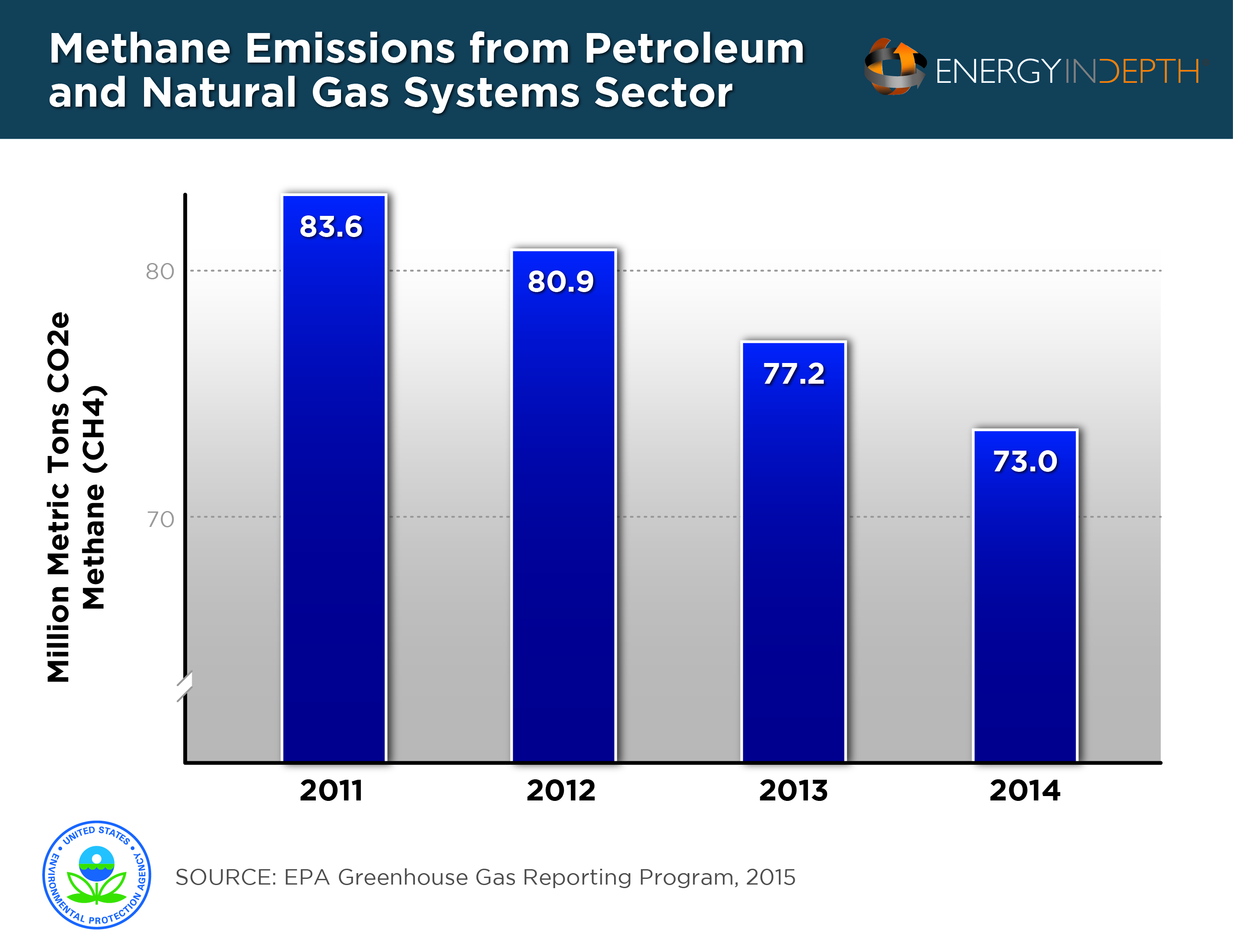
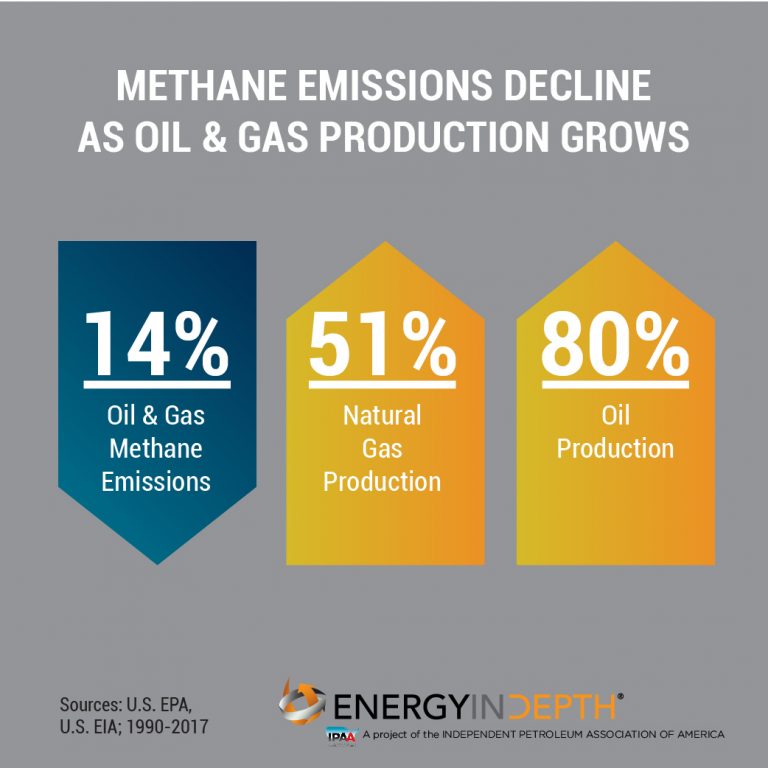
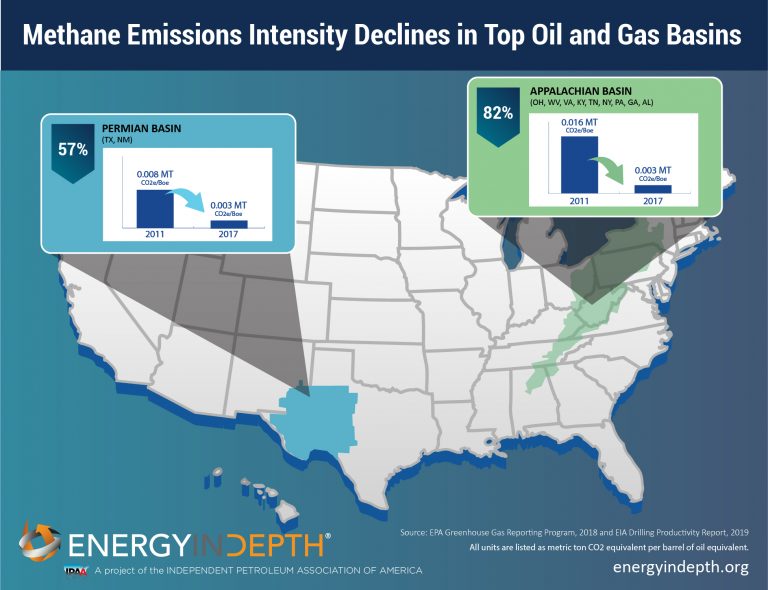
Even before the partnership formed, firms were spending millions to reduce their carbon footprints. Methane emissions have plummeted in America’s largest energy-rich basins, even as oil and gas production has spiked.  

Production at the Appalachia Basin, which spans from Alabama to Maine, rose more than 380 percent from 2011 to 2017 — yet methane emissions dropped 70 percent. Texas’s Eagle Ford Basin, meanwhile, produced 130 percent more oil and gas, but released 65 percent less methane.  And the Permian Basin, split between Texas and New Mexico, doubled production while decreasing emissions by almost 40 percent.

But firms in the Environmental Partnership weren’t satisfied with that progress. They sought to slash emissions even further.

First, the partnership focused on updating outdated technology like high-bleed pneumatic controllers. Pneumatic controllers regulate temperature, pressure, and liquid levels at natural gas sites by opening or closing valves. To operate these valves, the controllers rely on pressurized natural gas. As their name suggests, high-bleed pneumatic controllers can release relatively large amounts of natural gas, along with methane and VOC byproducts, into the air.  

The Environmental Partnership plans to replace all high-bleed pneumatic controllers in five years. And it’s well on its way to doing so. It replaced, retrofitted, or removed more than 28,000 prior to 2018 and an additional 3,000 last year. As a result, nearly 40 participating firms don’t use high-bleed controllers at all.

Second, the partnership set out to curb methane leaks – which can sometimes happen as firms extract, store, and burn natural gas. Methane is both a potent greenhouse gas and the main ingredient in natural gas. Participating companies conducted more than 156,000 surveys across 78,000 production sites, inspecting more than 56 million individual parts.

After its thorough inspections and repairs, the Environmental Partnership found that just 0.16 percent of industry parts contained leaks — and member firms repaired 99 percent of those in 60 days or less.
Participating firms also worked to better monitor liquid removal from natural gas wells. When too much liquid, mostly consisting of water, builds up within gas wells, firms manually direct the liquid to vents that bring it to surface. During that process, methane or volatile organic compounds can potentially escape into the atmosphere.

Over the course of 2018, the Environmental Partnership oversaw more than 130,000 manual removals to ensure environmentally safe execution.

In addition to these three initiatives, the Environmental Partnership held numerous conferences and workshops across the country to share best practices and new technologies. These conferences featured energy experts, regulators, and academics.

These meetings amount to more than feel-good powwows. The Environmental Partnership has spurred America’s largest energy producers to take a good, hard look at their operations, pinpoint the need for critical changes, and execute those reforms.

Methane emissions from natural gas systems fell over 14 percent between 1990 and 2017. The Environmental Partnership’s initiatives will undoubtedly cut these emissions even further. According to the EPA’s own estimates, reducing methane leaks and replacing high-bleed controllers can slash emissions by 40 and 60 percent, respectively.

Energy firms are weaponizing their data and tools for the common good. Let’s hope they keep up the fight in the war against climate change.

Paul E. Vallely is a retired U.S. Army major general who serves as a senior military analyst for Fox News. Gen. Vallely is the founder and chairman of Stand Up America, a public policy research organization committed to national security and energy independence.