Greta keeps repeating that nothing is being done to reduce emissions, blind to all the imposed policies and regulations. So today good news out of California, the leader in fighting climate change. From NBC San Diego Encinitas Leaf Blower Ban Goes Into Effect. Excerpts in italics with my bolds.
Businesses in Encinitas are no longer allowed to use gas powered leaf blowers as of Friday, Dec. 20.
The Encinitas City Council approved the leaf blower ordinance back in August. Then in September, the ordinance went into effect for city operations.
The goal of the city’s Climate Action Plan is to eventually ban all gas powered leaf blowers by January 20, 2020 in order to reduce the city’s carbon footprint. The next goal is to reduce all greenhouse gas emissions by the year 2030. The city estimates that this leaf blower ban will reduce local green house gas emissions by 128 metric tons of CO2 emissions by the end of 2020, and 142 metric tons by 2030.
Then on January 20, 2020, the ban will go into effect for residents as well.
But, the ordinance also states that electric or battery powered leaf blowers are allowed. So the city is now offering a city-funded rebate program, so that residents and business owners can buy a new electric or battery-powered leaf blower.
The ordinance also lays out a list of rules about the time of day people are allowed to use their leaf blowers.
Now, people in Encinitas are only permitted to use their electric or batter powered leaf blowers between 8 a.m. and 6 p.m. Monday through Saturday, and between 12 noon and 5 p.m. on Sundays.
So calm down Greta and show some respect for all the nanny-state rules coming on.
The third-grade boy shamefully completed his apology, in front of first grade. I was luckier than I felt. Just that morning, I had been convinced that the way to win friends was to do what the popular kids did: Stomp on the first-grader’s coffee-can art project. I knew this was wrong but I immediately impressed the popular crowd — the wrong way. My swift punishment only reinforced what I already knew: A crowd was a poor substitute for my own judgment. This lesson has served me well throughout my life, yet I was surprised to find myself transported back to that classroom by a New York Times video — about recycling, of all things. A connection jolted me when I viewed “The Great Recycling Con:”
The captains of industry were making the same mistake I had but with a twist: They are stomping on their own cans.
I remember the early days of residential recycling as clearly as that hug. At first, only the neighborhood crank went through the trouble. But, after about a decade of shaming by celebrities and over-hyping of stories — like the long search of a garbage scow for a customer — governments got involved. Seemingly overnight, nearly everyone was being forced to recycle or taxed to support it. Companies had marching orders to label products so we could comply. The details of these orders were minute to the point of confusion. This point can be gleaned from the video, but get a load of this subtitle: “The greatest trick corporations ever played was making us think we could recycle their products.”
I’m disappointed that corporations had voiced so much support for recycling, but they hardly deserve the blame for labeling laws.
Reaction to proposed Vermont law requiring clear plastic trash bags.
But this has been the MO of the left since the industrial revolution. Regarding 1800’s railroads, Ayn Rand noted:
[W]hat could the railroads do, except try to “own whole legislatures,” if these legislatures held the power of life or death over them? What could the railroads do, except resort to bribery, if they wished to exist at all?
Who was to blame and who was “corrupt”–the businessmen who had to pay “protection money” for the right to remain in business–or the politicians who held the power to sell that right?
The railroads played a game they should have opposed — only to end up blamed for a situation they didn’t create. (To the degree they saw this as an acceptable way to win market share, they share the blame.) We see this today with companies bullied into removing harmless ingredients, such as nitrites from food, or parabens from cosmetics, under the perverse twin incentives of fashionable panic and fear of competition.
The worst case involves the fossil fuel industry, which is vital to our lives and prosperity – while under constant and intense pressure from environmentalists. Energy advocate Alex Epstein notes:
The industry never explained the value of energy and why fossil fuels are superior sources of energy. In fact, the industry is constantly out there saying, “We’re not against wind and solar, we’re for all of the above, we’re in the middle of an energy transition,” etc. That’s why I always stress when I talk to people (a) that low cost, reliable energy is indispensable to human flourishing and (b) that the fossil fuel industry is uniquely good at creating it. People need both of those points.
Epstein is right: Companies should stop fearing the cool media kids scaremongering and start reminding the people who count – their customers — of the full value they offer.
When I think about that day in school, I wish I could go back and tell that third-grader that real friends don’t tempt people to ignore their own judgment; and that he already had good friends, because he had a lot to offer. The same goes for countless productive individuals in whole industries that our media routinely paint as evil ahead of our politicians taking yet more control. Our industry captains have gone along with this for far too long. Rather than accepting these scurrilous attacks, they should view them as personal insults. A great way to begin to fight back is to remind people of the enormous good they and their employees create.
Who’s the bully? Who’s the victim?
Previous Post: On Coercive Climatism: Writings of Bruce Pardy
Many people have heard of Jordan Peterson due to his battles against post modernism and progressive social justice warfare. Bruce Pardy is another outspoken Canadian professor, whose latest statement was posted at the National Post, H/T GWPF.
Paris is more a movement than a legal framework. It imagines the world as a global community working in solidarity on a common problem, making sacrifices in the common good, reducing inequality and transcending the negative effects of market forces. In this fable, climate change is a catalyst for revolution. It is the monster created by capitalism that will turn on its creator and bring the market system to the end of its natural life. A new social order will emerge in which market value no longer determines economic decisions. Governments will exercise influence over economic behaviour by imposing “market-based mechanisms” such as carbon taxes and cap-and-trade systems. Enlightened leaders will direct energy use based upon social justice values and community needs. An international culture will unite peoples in a cause that transcends their national interests, giving way to the next stage of human society. Between the lines of the formal text, the Paris agreement reads like a socialist nightmare.
The regime attempts to establish an escalating global norm that requires continual updating, planning and negotiation. To adhere, governments are to supervise, regulate and tax the energy use and behaviour of their citizens (for example, the Trudeau government’s insistence that all provinces impose a carbon tax or the equivalent, to escalate over time.) Yet for all of the domestic action it legitimizes, Paris does not actually require it. Like the US$100-billion pledge, reduction targets are outside the formal Paris agreement. They are voluntary; neither binding nor enforceable. Other countries have condemned Trump’s withdrawal and reaffirmed their commitment to Paris but many of them, including Canada, are not on track to meet even their initial promises. Global emissions are rising again.
If human action is not causing the climate to change, Paris is irrelevant. If it is, then Paris is an obstacle to actual solutions. If there is a crisis, it will be solved when someone develops a low-carbon energy source as useful and cheap as fossil fuels. A transition will then occur without government interventions and international declarations. Until then, Paris will fix nothing. It serves interests that have little to do with atmospheric concentrations of greenhouse gases. Will America’s repudiation result in its eventual demise? One can hope.
Bruce Pardy belongs to the Faculty of Law, Queen’s College, Kingston, Ontario. This post will provide excerpts from several of Pardy’s writings to give readers access to his worldview and its usefulness making sense of current socio-political actions.
In 2009 Pardy wrote Climate Change Charades: False Environmental Pretences of Statist Energy Governance
The Abstract:
Climate change is a poor justification for energy statism, which consists of centralized government administration of energy supplies, sources, prices, generating facilities, production and conservation. Statist energy governance produces climate change charades: government actions taken in the name of climate change that bear little relationship to the nature of the problem. Such actions include incremental, unilateral steps to reduce domestic carbon emissions to arbitrary levels, and attempts to choose winners and losers in future technology, using public money to subsidize ineffective investments. These proffered solutions are counter-productive.Governments abdicate their responsibility to govern energy in a manner that is consistent with domestic legal norms and competitive markets, and make the development of environmental solutions less likely rather than more so.
Human rights were conceived to liberate. They protected people from an oppressive state. Their purpose was to prevent arbitrary arrest and detention, torture, and censorship, by placing restraints on government. The state’s capacity to accommodate these “negative rights” was unlimited, since they required only that people be left alone.
If only arm twisting were prohbited beyond the ring.
But freedom from interference is so 20th century. Modern human rights entitle. We are in the middle of a culture war, and human rights have become a weapon to normalize social justice values and to delegitimize competing beliefs. These rights are applied against other people to limit their liberties.
Freedom of expression is a traditional, negative human right. When the state manages expression, it threatens to control what we think. Forced speech is the most extreme infringement of free speech. It puts words in the mouths of citizens and threatens to punish them if they do not comply. When speech is merely restricted, you can at least keep your thoughts to yourself. Compelled speech makes people say things with which they disagree.
Some senators expressed the view that forcing the use of non-gendered pronouns was reasonable because calling someone by their preferred pronoun is a reasonable thing to do. That position reflects a profound misunderstanding of the role of expression in a free society. The question is not whether required speech is “reasonable” speech. If a statute required people to say “hello,” “please” and “thank you,” that statute would be tyrannical, not because “hello,” “please” and “thank you” aren’t reasonable things to say, but because the state has dictated the content of private conversation.
Traditional negative human rights give people the freedom to portray themselves as they wish without fearing violence or retribution from others. Everyone can exercise such rights without limiting the rights of others. Not so the new human rights. Did you expect to decide your own words and attitudes? If so, human rights are not your friend.
These positions derive from bedrock reasoning by Pardy on the foundations of law and legitimacy. An insight into his thinking is his rebuttal of a critic The Only Legitimate Rule: A Reply to MacLean’s Critique of Ecolawgic Dalhousie Law Journal, Spring 2017
Ecosystem as One model of Society
An ecosystem is not a thing. It does not exist as a concrete entity. “Ecosystem” is a label for the dynamics that result when organisms interact with each other and their environment. Those dynamics occur in infinite variation, but always reflect the same logic: Competition for scarce resources leads to natural selection, where those organisms better adapted to ecosystem conditions survive and reproduce, leading to evolutionary change. All participants are equally subject to their forces; systems do not play favourites.
In ecosystems, the use of the word “autonomy” does not mean legally enforced liberty but the reverse: no externally imposed rules govern behaviour. In ecosystems unmanaged by people, organisms can succeed or fail, live or die, as their genetically determined physiology and behaviour allow. Every life feeds on the death of others, whether animal or plant, and those better adapted to their circumstances survive to reproduce. Organisms can do anything that their genes dictate, and their success or failure is the consequence that fuels evolution.
When an antelope is chased by a lion and plunges into a river to escape, that action allows the antelope to survive and thus to reproduce. The offspring may carry a genetic disposition to run into water when chased by predators. There are no committees of either antelopes or humans deciding how antelopes will behave. Autonomy in ecosystems is not a human creation. It is not based upon human history or culture and is not a human preference.
Market as a Different Model of Society
A market is not a thing either. Nor is it a place. Markets, like ecosystems, do not exist as concrete entities. “Market” is a label for the dynamics that result when people exchange with each other. Bargains may be commercial in nature, where things are bought and sold, but they also occur in other facets of life. For example, in Ecolawgic I suggested that marriage is a kind of exchange that is made when people perceive themselves better off to enter into the bargain than not to.
As I said in Ecolawgic, “Laws and governments can make markets more stable and efficient, such as by enforcing contracts and creating a supply of money, but they create neither the activity of trading nor the market dynamics that the transactions create.” A market is not a place or a legal structure but the dynamics of a collection of transactions. It does not exist before or independently of the transactions within it. The transactions make the market. Transactions are not created by governments but by the parties who enter into them.
People transact whether they are facilitated by governments or not. The evidence is everywhere. If it were not so, human beings would not have bartered long before there were governments to create money and enforce contracts. During Prohibition, no alcohol would have been produced and sold. Citizens of the Soviet Union would not have exchanged goods. Today there would be no drug trade, no black market and no smuggling. Cigarettes would not be used as currency inside jails. People would not date, hold garage sales or trade hockey cards. There would be no Bitcoin or barter. Try prohibiting people from transacting and see that they will transact anyway. They will do so because they perceive themselves as better off. Sometimes the benefit is concrete and sometimes it is ethereal. The perception of benefit is personal and subjective.
Ecosystems are Coercive, Markets are Voluntary
Ecosystems and markets share many features but they differ in one important respect. Violence plays an important role in ecosystems but is not a part of voluntary market exchange. Ecosystems are arenas for mortal combat. Lions eat antelopes if they can catch them. Nothing prevents taking a dead antelope from a lion except the lion’s response. There are no restrictions on survival strategies, and organisms do not respect the interests, habitats or lives of other organisms.
Markets, in contrast, proceed upon the judgment of the transacting parties that they are better off to trade than to fight. The hunter did not shoot the woodworker to get chairs, and the woodworker traded for meat instead of stealing it. They chose to trade because it made them better off than fighting. The reasons are their own. Perhaps they were friends, colleagues or allies. Perhaps they believed that harming other people is wrong. Perhaps they hoped to have an ongoing trading relationship. Perhaps fighting carried risks that were too high and they feared injury or retribution. Perhaps trading was less work than fighting.
For whatever reason, they chose to trade. This choice is not universal. People have traded throughout human history, but they have also fought. I do not maintain that trading is any more “natural” or inbred than fighting, but neither is it is less so. When people choose to fight, they are no longer part of a market. Markets are like ecosystems with the violence removed. They are the kinder, gentler version of ecosystems.
There are only two models for legal governance and only one legitimate rule.
The logic is as follows: 1. In the wild, organisms compete for scarce resources. Those organisms better adapted to conditions survive and reproduce. Their interactions constitute ecosystems. No legal rules govern behaviour and might is right. 2. Human beings trade spontaneously. Parties enter into transactions when they perceive themselves as better off to trade than to fight. Their transactions constitute markets. 3. Moral values and policy goals are preferences whose inherent validity cannot be established. They are turtles all the way down. Therefore laws based upon those preferences lack legitimacy. 4. When governments use might to impose laws and policies that are illegitimate, they unintentionally imitate ecosystems, where might is right. Political constituencies use whatever means necessary to impose their preferences, and their opponents use whatever means necessary to resist. They are “autonomous” in the ecosystem sense: there are no inherently valid restrictions on behaviour. The result is a social order of division and conflict. 5. The alternative is to model human governance on the other system that exists independently of state preference: markets. If the model for human governance is markets, interactions between people are voluntary. People are “autonomous” in the market sense: they may pursue their own interests without coercion. Instead of imposing illegitimate rules and policies, the state uses force only to prohibit people from imposing force on each other. A plethora of sub-rules follow as corollaries of the rule against coercion: property, consent, criminal offences that punish violence and so on. 6. There is no third choice.Coercion is not right or wrong depending upon the goals being pursued since those goals are merely preferences. Their advocates cannot establish that their goals have inherent validity to those who do not agree. Therefore, giving priority to those objectives is to assert that might is right. If might is right, we are back to ecosystems, where any and all actions are legitimate. 7. If might is right, anything goes, and the model is ecosystems. If might is not right, force is prohibited, and the model is markets. Choose one and all else follows.
When I claim that a prohibition on force is the only legitimate rule, I mean the only substantive rule to govern relations between competent adults. No doubt the administration of a legal system, even a minimalist one, would require other kinds of laws to function. Constitutional rules, court administration, the conduct of elections and procedures to bring legal proceedings are a few of the other categories that would be necessary in order to give effect to the general rule.
No Property, No Market
But the existence of property rights must follow from a general rule prohibiting coercion. If it does not, the general rule is not what it purports to be. When people trade, they recognize the property interest held by the other party. It is that interest that they wish to obtain. When the woodworker trades chairs for the hunter’s meat, she trades “her” chairs for “his” meat. The trade would not occur without a mutual understanding of the possession that both hold over their respective stuff.
Sometimes those interests are recognized and protected by the law, which according to Bentham created the property. However, since markets arise even where no property is legally recognized, the notion of property must be prior to the law. Above I gave examples of markets that have arisen where no legal regime has protected property rights: prehistorical trade, alcohol sales during Prohibition, black markets in the Soviet Union, the modern day drug trade, smuggling of illicit goods, and the internal markets of prisons. Since trading occurs even in the absence of an approving legal regime, the notion of property must exist independently as well.
No Consent, No Market
Autonomy in the market sense means to be able to pursue your own interests and control your own choices without coercion. Consent is part and parcel of autonomy. Without the ability to consent, no trades can be made. Without trades, no markets exist. If one cannot consent to be touched, to give up property, to make bargains, to mate, to arm wrestle, to trade chairs for meat, to sell labour for money, and so on, then one is not autonomous.
If force is prohibited, then corollaries are laws that protect people from having force imposed upon them. Laws apply the force of the state to prevent or punish the application of force. A criminal law that prohibits assault is an extension of the general rule. A tax to finance the police department is legitimate if its purpose is to investigate and prosecute violent crimes. Traffic laws prevent people from running each other over. Civil liability compensates for physical injuries caused by the force of others.
Illegitimate Laws, No Market
Illegitimate laws use state coercion to seek other ends such as enforcing moral standards, pursuing social goals or saving people from themselves. A criminal law that prohibits the use of drugs uses state force to prevent an activity in which there is no coercion. A tax to fund the armed forces to protect the peace may be legitimate, but one to take wealth from Peter to give to Paul is not. The legal regimes of modern administrative states consist largely of instrumentalist laws and policies that are inconsistent with the general rule, including tax laws, economic development programs, bankruptcy, patent regimes, mandatory government-run pension plans and MacLean’s version of environmental regulation, in which each decision turns on a political determination of the values to be applied.
It is either ecosystems or markets. Either might is right or it is not. If it is, then human society is subject to the law of the jungle where people are at liberty to fight like animals if they choose to do so. If it is not, then human society is a marketplace where people may enter into transactions voluntarily and the state may justifiably use force only to prevent or punish the application of force.
There is no third choice. Some might insist that coercion is not categorically wrong but that it can be right or wrong depending upon the other goals to be pursued. Those goals are merely preferences. They are turtles all the way down. I do not maintain that other rules will not be passed and enforced using the established machinery of government but only that they have no claim to legitimacy, any more than other rules that might have been chosen instead. If force is used to pursue those preferences, why would others not use force to resist? Such a choice results in a free-for-all. If state force is right only because it cannot be resisted, that means that might is right. The administrative welfare state prevails not because it is justified morally or socially but because it has managed to secure a monopoly on violence. The imposition of government preferences is an invitation to those opposed to an arbitrary policy agenda to take up force against it.
Summary
In a way, Pardy is warning us not to take for granted the free market social democracies to which we were accustomed. Post modern progressive social justice warriors have decided that society is essentially an endless power struggle, that one group’s rights are gained only at the expense of another group. In other words, it’s a dog-eat-dog, might makes right ecosystem. Pardy says there is another way, which has been the basis for the rise of civilization, but can be reversed by governance that destroys the free market of ideas and efforts by imposing values favored by the rich and powerful.
Footnote about Turtles. Pardy explains the metaphor:
In Rapanos v. United States, Justice Antonin Scalia offered a version of the traditional tale of how the Earth is carried on the backs of animals. In this version of the story, an Eastern guru affirms that the earth is supported on the back of a tiger. When asked what supports the tiger, he says it stands upon an elephant; and when asked what supports the elephant he says it is a giant turtle. When asked, finally, what supports the giant turtle, he is briefly taken aback, but quickly replies “Ah, after that it is turtles all the way down.”
I have often written that prudent policymakers recognize the future will include periods both warmer and cooler than the present, and cold is the greater threat to human life and prosperity. Thus, government priorities should be to invest in affordable reliable energy and robust infrastructure. A recent article gets the importance of energy abundance, and makes many lucid points about climate policy failures, even while accepting uncritically some mistaken suppositions about the issue and what can be done about it.
Matt Frost published an article at The New Atlantis After Climate Despair. Excerpts in italics with my bolds, some images and comments.
The dream of a global conversion to austerity has failed to stop climate change. Energy abundance is our best hope for living well with warming — and reversing it.
Overview
Each of us constitutes a link between the past and the future, and we share a human need to participate in the life of something that perdures beyond our own years. This is the conservationist — and arguably the conservative — argument for combating climate change: Our descendants, who will have a great deal in common with us, ought to be able to enjoy conditions similar to those that permitted us and our forebears to thrive.
But the dominant narrative of climate change, though it claims to be aimed at protecting future generations, in fact leaves little room for continuity. Preventing more than 1.5 degrees Celsius of warming above the nineteenth-century baseline, the latest aim of the Intergovernmental Panel on Climate Change (IPCC), will, as they put it, require “rapid, far-reaching and unprecedented changes in all aspects of society.”
Only a vanishingly unlikely set of coordinated global actions — an extraordinary political breakthrough — can save us from what the most pessimistic media portrayals describe as “catastrophe,” “apocalypse,” and the “end of civilization.”
Only by changing our entire energy system and social order can we preserve the continuity of our biosphere. And so climate politics has become the art of the impossible: a cycle of increasingly desperate exhortations to impracticable action, presumably in hopes of inspiring at least some half-measures. Understandably, many despair, while others deny that there is a problem, or at least that any solution is possible.
But we are not condemned to a choice between despair and denial. Instead, we must prepare for a future in which we have temporarily failed to arrest climate change — while ensuring that human civilization stubbornly persists, and thrives. Rather than prescribing global austerity, reducing our energy usage and thereby limiting our options for adaptation, we should pursue energy abundance. Only in a high-energy future can we hope eventually to reduce the atmosphere’s carbon, through sequestration and by gradually replacing fossil fuels with low-carbon alternatives.
It is time to acknowledge that catastrophism has failed to bring about the global political breakthrough the climate establishment dreams of, and will not succeed in time to avert serious warming. Instead of despairing over a forever-deferred dream of austerity, our resources would be better spent now on investing in potential technological breakthroughs to reduce atmospheric carbon, and our political imagination better put toward preparing for a future of ever more abundant energy.
[Frost could have added that human flourishing has always occured in warmer, rather than colder times. Our Modern Warm Period was preceded by Medieval Warming, before that by Roman Warming, and earlier Minoan Warming. Each period was cooler than the previous, so the overall trend in our interglacial is downward. Ensuring favorable conditions for future generations means protecting against the ravages of frosty times. (pun intended)]
The Futility of Dread
The bleak poll results may reflect a broad, if perhaps tacit, agreement that we have reached diminishing returns on dread. Even now that most Americans accept the dire predictions of scientists and journalists, their assent does not change the fact that we currently lack the institutional, technological, and moral resources to prevent further climate change in the near term. The lay public has been taught to regard stabilizing the climate as an all-or-nothing struggle against the encroachment of a dismal future.
The bar for success is set high enough that failure is now the rational expectation.
A common reaction to “there is no solution” is “then there is no problem.” No matter how persuasive the evidence of impending danger, most people find ways to dismiss or evade problems that appear insoluble. Attempting to build political support for impossible interventions by making ever more pessimistic predictions will not work; it will only leave us mired in gloom and impotence. This polarized fatalism will grow more extreme as opposing partisans, recognizing our dearth of practicable options, choose either glib denial or morbid brooding.
Entirely predictable Time Magazine declares Greta Person of the Year. Just like Big Brother she is watching.
Missing the Target
We will not stop global warming, at least in our lifetimes. This realization forces us to ask instead what would count as limiting warming enough to sustain our lives and our civilization through the disruption. There can be no single global answer to this question: Our ability to predict climate effects will always be limited, and what will count as acceptable warming to a Norwegian farmer enjoying a longer growing season will always be irreconcilable with that of a Miami resident fighting the sea to save his home. But because our leadership has approached climate change as a problem of coordinated global action, they have constructed quantitative waypoints around which to organize the debate.
Some news sources portrayed 2030 as an official deadline for avoiding climate catastrophe. It is worth noting that the report’s lead author, Myles Allen, has warned against this interpretation: “Please stop saying something globally bad is going to happen in 2030. Bad stuff is already happening and every half a degree of warming matters, but the IPCC does not draw a ‘planetary boundary’ at 1.5 degrees Celsius beyond which lie climate dragons.”
The extreme unlikelihood that we will meet the target of 1.5 degrees becomes even clearer when we notice that doing so requires that we not only cut emissions radically, but at the same time remove enormous volumes of carbon dioxide already emitted. The report estimates that a total of 100 billion tons must be removed by 2050. For comparison, the amount of carbon dioxide emitted globally from fossil fuels last year was around 37 billion tons.
Even were it possible to scale bioenergy and capture that quickly, doing so would have a major drawback: It would take up an immense amount of farmland. By one 2016 estimate, capturing enough carbon to meet even the 2-degree target by the end of the century could require devoting up to three million square miles of farmland to bioenergy crops — nearly the size of the contiguous United States.
[Frost seems not to realize the the 2C target, and more recently 1.5C are both rabbits pulled out of a magical activist hat. Economists have projected that future generations will be far wealthier than us, and only slightly less so should there be all the warming predicted from burning known carbon fuel reserves. Many dangers are based upon scenario RCP8.5 which is so unrealistic that some analysts say that models using it should be revised. Principled inaction is appropriate when threats are claimed without solid evidence.]
The Age of Overshoot
Expanding the climate options we allow ourselves to consider is easier said than done. The political and moral challenges are daunting. We will need to adapt to a warmer climate for perhaps decades to come, while at the same time preparing technological and policy solutions for a more distant future where we can finally claw our way back to lower levels of carbon and warming. At the same time, the stressors that a warmer climate will bring will be unequally felt across the globe, likely making our politics more divided and only dimming hopes for international coordination.
We must finally abandon the empty hope of imposing equitable austerity via globally coordinated government fiat.
Furthermore, as we adapt to a warmer climate, complacency will be tempting, since we will likely not experience a sudden decline in global quality of life or biodiversity, and may be able to avoid the most dire disruptions. Changes will be slow, with many unfolding on a generational time scale, and with dramatically different impacts among populations. The misery that climate change is likely to cause, or is already causing, will be difficult to distinguish from deprivation as we already know it — the people most harmed, that is, will be the poor, who are already most vulnerable to natural forces. Even if there is a distinct moment of irrecoverable failure, or a tipping point that triggers the worst feedback effects, most people might not notice until it has passed.
[His belief that CO2 is some kind of temperature control knob is touching, but naive and dangerous. H2O is actually earth’s thermostat, and we don’t have a dial for that either. Fortunately the climate system includes complex negative feedbacks which throughout history have kept both ice house and hot house eras from being permanent. Otherwise we would not be here to talk about it.]
The global failure to control emissions is not just a failure of political will or technological progress. Rather, it reflects the problem’s inherent resistance to unambiguous characterization. Different observers can all adopt different conceptions of the problem, many of which are not mutually exclusive but remain practically or politically irreconcilable.
For this reason, we will no more agree on some single new ethics than we will on the “correct” amount of atmospheric carbon dioxide.
Addressing the problem, then, must not mean the coordinated pursuit of a single solution but a perpetual process of decentralized negotiation and risk reduction. Our varied conceptions of climate change will never fully converge, and so the “correctness” of any approach is best evaluated not by whether it meets the latest IPCC target but by how well it affords broad political buy-in. Identifying alternatives to our current, failed approach to climate change requires identifying a more constructive set of ideas — practical, political, and sentimental. We will then be able to focus our resources on those interventions most likely to succeed.
[Among the failed solutions is the idea that modern societies can be powered with solar and wind energy. Not only is bioenergy land intensive (as noted above), so are these other renewables. Here is the map of UK showing the acreage required to power London without thermal generators.]
The gray area would be covered in wind farms, while the yellow area is needed for solar farms.
Austerity vs. Abundance
What should motivate our response to climate change is what got us into this mess in the first place: our desire for the abundance that energy technology affords. Energy is the commodity that allows us to protect ourselves from the ravages of nature and to live distinctly human lives, and many of the benefits we enjoy today were made possible by the exploitation of fossil energy. Our children should enjoy greater energy abundance than us, not less.
But the mainstream climate establishment — the government officials, researchers, advocates, and journalists who sustain the consensus agenda represented by the IPCC — is bent on austerity. They demand that we ration fossil energy consumption until zero-emission sources like wind and solar replace the fossil share of the global energy budget.
Discussions about climate change are also riddled with population anxiety. Lugubrious climate dread appears both as the idea that we should not inflict any more humans on this dying world and that we should not inflict this dying world on any more humans. For the most part, we no longer suffer from feverish speculation about runaway global population growth, since the population may peak anyway by the end of the century. Yet we still hear the old Malthusian idea that our limited energy resources will only be enough for everyone if there are fewer people to whom they must be handed out. Because the climate establishment views energy consumption as the problem, energy consumers must be on the negative side of the ledger — even if their welfare, or their grandchildren’s welfare, is supposed to be the good being protected.
An alternate framework based on abundance would engage each of us as participants in the flow of human history, as the forebears of unknown successors. It would complement even the doomsayers’ calls for taking expensive measures today, since the benefits of mitigating climate change would apply to more people as the population increases. The number of future occupants of our planet is, or should be, the salient variable in any calculation of the long-term costs and benefits of climate change mitigation and adaptation measures. We can’t know the economic return on any dollar we invest today in stabilizing the future climate, but we can model it as a function of, among other things, the number of our grandchildren’s grandchildren. Our climate approach should presuppose that we are the benefactors of a burgeoning future population, not the progenitors of an ascetic cult formed to dole out a dwindling stock of resources. New sources of carbon-free energy would offer more value to more people than whatever new levers of social control we might invent to enforce a worldwide carbon-rationing regime.
A stronger focus on human utility does not discount the non-human biosphere: When we evaluate the natural world for its beauty or its diversity, we are still expressing human values, and those values are part of the civilization we hope to carry forward in time. For instance, the desire to protect coral reefs, one of the first casualties of global warming, can increase as more people gain freedom from poverty, allowing them to see the reefs’ aesthetic and ecological benefits as worth spending resources to preserve.
An abundance framework is also aligned with our persistent human desire for comfort, and would lead us to reformulate our collective problem as one of scarcity, rather than prodigality. Instead of constraining our energy budget, we would look to a future in which a large, decarbonized energy capacity allows more people to enjoy the access to wealth and comfort that many of us take for granted. It would make little sense to leave cheap fossil energy underground in the name of future generations’ well-being, only to also leave those descendants an energy-constrained world full of incentives to drill. To remove those incentives, they will need abundant energy.
Obviously, meeting the energy demand of a high-growth world would require new sources of carbon-free power in amounts beyond the IPCC’s most optimistic scenarios. But we are already stuck hoping for a global political breakthrough. Technological breakthroughs are less far-fetched a solution. And a mass embrace of abundant energy is more realistic than sudden globally coordinated altruistic self-abnegation. Once we embrace abundance as a normative principle, it directs our attention and ambition toward the bets that, however long the odds, might actually pay off.
Embracing abundance means more than just a rhetorical or sentimental overhaul; it should change how we rank our policy and technology options. And gaining new energy sources would actually expand our options beyond the limited ones available to us now. Choosing abundance does not require that we first have all the answers for how to produce carbon-free energy, or how to reduce current levels of carbon dioxide. Rather, shifting our mindset from austerity to abundance will open up the political space necessary for imagining these answers and pursuing them.
In the near term, we must accept that expanding our political capacity to regulate carbon dioxide depends on driving down the cost of carbon-free energy. Penalizing fossil-energy use can encourage research and development of alternatives, but panic alone will not engender a new democratic mandate for costly restrictions on emissions. Cheap, low-carbon energy can be an alternative to bureaucratic rationing or socially enforced austerity. If we are stuck hoping for a breakthrough, let us hope for one that further emancipates us from want rather than one that more efficiently imposes it.
After Despair
We are stuck waiting for a breakthrough. The sort of breakthrough we await says much about who we are and where we hope to go. The consensus austerity view would have us hope for a moral breakthrough of penitential retrenchment. The abundance view would have us hope for a technological breakthrough to enable a flourishing future. One says that we have used too much energy, and our descendants should use less. The other implies that we have not devoted enough energy to capturing and storing carbon dioxide, and that we must leave our children and grandchildren as much energy capacity as possible to clean up our carbon waste.
Our mission must be to provide future generations with better technological alternatives than the ones currently on offer, which range from prohibitively expensive (like BECCS) to wildly reckless (like pumping sulfur dioxide into the stratosphere to block sunlight). We owe our descendants progress toward the long-deferred dream of energy “too cheap to meter,” as Lewis Strauss, chairman of the Atomic Energy Commission, famously said in 1954. We owe them the tools with which to dispose of the waste carbon they will inherit. We owe them a better sentimental investment than morbid despair about the future they will occupy.
Other policy approaches are less applicable to a strategic framework of energy abundance. “Weaning ourselves off nuclear energy,” as Senator Elizabeth Warren proposes, is a fatuous idea even within the austerity framework, if the risks of climate change are as dire as predicted. Replacing already online, zero-carbon generation with wind and solar plants that require carbon-emitting construction and infrastructure overhauls will only dig us deeper into debt. In an abundance framework, the proposal becomes even more misguided.
The policy measures we pursue in the near term should express the ethos of abundance and continuity. They should avoid emission cuts today that might limit wealth and technology options tomorrow. And they should set us up to take the best advantage of whatever breakthroughs, technological or political, we might be fortunate enough to see in the coming years.
Key Points
Global conversion to austerity is a lost cause.
Energy abundance is our best hope for the future.
We have always lived well when it warms.
When nature reverses and cools, we had better be ready.
Footnote: Since 1985 the band Opus has celebrated Life and access to energy (I’m sure they were referring to electrical power as well as personal mobility).
Climate Litigation Watch is reporting the ruling by Judge Barry Ostrager ending the case brought by NYAG Leticia James against ExxonMobil. The loss could hardly be more complete. The full text of the ruling is here. The juicy bits are excerpted in italics below with my bolds.
Supreme Court of New York, New York County, the Honorable Barry Ostrager presiding.
Decision After Trial
Nothing in this opinion is intended to absolve ExxonMobil from responsibility for contributing to climate change through the emission of greenhouse gases in the production of its fossil fuel products. ExxonMobil does not dispute either that its operations produce greenhouse gases or that greenhouse gases contribute to climate change, But ExxonMobil is in the business of producing energy, and this is a securities fraud case, not a climate change case. Applying the applicable legal standards, the Court finds that the Office of the Attorney General failed to prove by a preponderance of the evidence that ExxonMobil made any material misrepresentations that “would have been viewed by a reasonable investor as having significantly altered the ‘total mix’ of information made available.” TSC Indusiries, Ine. v, Northway, Inc,, 426 U.S. 438 (1976).
The Office Attorney General is Not Entitled to Any Relief.
The Court also finds that the Office of the Attorney General is not entitled to any monetary damages or injunctive relief because the Office of the Attorney General did not prevail on its first and second causes of action. If the Court had reached the issues of damages, the Court would have found that the Office of the Attorney General failed to prove any damages by a preponderance of the evidence for the reasons stated infra.
The Office of the Attorney General had the burden to prove that ExxonMobil made misrepresentations and that ExxonMobil investors would have considered any alleged misrepresentations important in light of the “total mix of information” available to them. TSC Industries, Inc, v. Northway, Inc., 426 U.S. 438, 449 (1976). The Court finds there was no proof offered at trial that established material misrepresentations or omissions contained in any of ExxonMobil’s public disclosures that satisfy the applicable legal standard. The total mix of information available to ExxonMobil investors during the relevant period included an annual, publicly-filed report called the Outlook for Energy, the two March 2014 Reports, ExxonMobil’s Form 10-Ks, ExxonMobil’s annual Corporate Citizenship Reports, and a host of other publicly available information that was not the subject of testimony at trial (including ExxonMobil’s Annual Shareholder reports).
Significantly, there is no allegation in this case, and there was no proof adduced at trial, that anything ExxonMobil is alleged to have done or failed to have done affected ExxonMobil’s balance sheet, income statement, or any other financial disclosure. More importantly, the Office of the Attorney General’s case is largely focused on projections of proxy costs and GHG costs in 2030 and 2040. No reasonable investor during the period from 2013 to 2016 would make investment decisions based on speculative assumptions of costs that may be incurred 20+ or 30+ years in the future with respect to unidentified future projects. See Singh v. Cigna Corp., 918
At bottom, the case presented by the Office of the Attorney General is largely predicated upon the proposition, which this Court rejects, that during the period of time covered by the Complaint, ExxonMobil’s disclosures led the public to believe that its GHG cost assumptions for future projects had the same values assigned to its proxy cost of carbon. The existence of ExxonMobil’s DataGuide with separate sections and appendices for proxy costs and GHG costs is corroborative of ExxonMobil’s assertion that proxy cost of carbon and GHG costs are different metrics, a proposition of the Office of the Attorney General conceded before any testimony was presented at trial. Explicit statements in various publications confirmed this to be the case.
What the evidence at trial revealed is that ExxonMobil executives and employees were uniformly committed to rigorously discharging their duties in the most comprehensive and meticulous manner possible. More than half of the current and former ExxonMobil executives and employees who testified at trial have worked for ExxonMobil for the entirety of their careers. The testimony of these witnesses demonstrated that ExxonMobil has a culture of disciplined analysis, planning, accounting, and reporting.
To support its theory that the alleged misstatements in the March 31, 2014 publications were material, the Office of the Attorney General offered the expert testimony and expert report of Dr. Eli Bartov who concluded that there was inflation on the stock price of ExxonMobil from April 1, 2014 to June 1, 2017. Tr. 1149:25-1150:4. Dr. Bartov posited that the inflation period began after the alleged affirmative misrepresentations contained in the two March 31, 2014 publications. Significantly, the Office of the Attorney General offered no proof that there was any increase in the stock price of ExxonMobil immediately following the publication of Managing the Risk and Energy and Climate and Dr. Bartov perplexingly testified that he did not conduct an analysis of whether or not ExxonMobil’s stock increased as a result of the alleged misrepresentations in the March 31, 2014 publications “because it was completely unrelated to my analysis.” Tr. 1233:8-13. By contrast, ExxonMobil’s expert, Dr. Frank Allen Ferrell,” determined that there was no increase in ExxonMobil stock on April 1, 2014. Tr. 1967. In short, there is no evidence that any misleading statements in these publications inflated the price of ExxonMobil stock. See DX711 ¶ 15 Expert Report of Allen Ferrell.
None of Dr. Bartov’s corrective disclosures contain any statements from ExxonMobil acknowledging a misstatement or correcting a previous disclosure. Tr. 1208. They all pertain to regulatory investigations of ExxonMobil announced in the mainstream press. In short, the news of the California Attorney General’s reported investigation is precisely the kind of news that the Office of Attorney General’s witness Rodger Reed characterized as “headline risk.” Additionally, as ExxonMobil’s highly credentialed expert, Dr. Ferrell, testified, there is something circular about claiming that a stock drop precipitated by the announcement of an investigation constitutes evidence of wrongdoing. Indeed, by Dr. Bartov’s reasoning, any decline in the value of ExxonMobil stock after the June 2, 2017 filing of the Office of the Attorney General’s complaint is the result of an ill-conceived initiative of the Office of the Attorney General.
V. Conclusion
In sum, the Office of the Attorney General failed to prove, by a preponderance of the evidence, that ExxonMobil made any material misstatements or omissions about its practices and procedures that misled any reasonable investor. The Office of the Attorney General produced no testimony either from any investor who claimed to have been misled by any disclosure, even though the Office of the Attorney General had previously represented it would call such individuals as trial witnesses. ExxonMobil disclosed its use of both the proxy cost and the GHG metrics no later than 2014. Perhaps, the 2014 paragraph in Managing the Risks which indicated that ExxonMobil applied a GHG cost “where appropriate” and which was the subject of questioning of virtually every witness in the case could have been written in bold type, but the sentence was consistent with other ExxonMobil disclosures and ExxonMobil’s business practices. The publication of Managing the Risks had no market impact and was, as far as the evidence adduced at trial reflected, essentially ignored by the investment community.
The testimony of all the present and former ExxonMobil employees who were called either as adverse witnesses by the Office of the Attorney General or as defense witnesses by ExxonMobil was uniformly favorable to ExxonMobil, and the Court credited the testimony of each of those witnesses. The testimony of the expert witnesses called by the Office of the Attorney General was eviscerated on cross-examination and by ExxonMobil’s expert witnesses. Confronted with the disclosures in ExxonMobil’s Corporate Citizenship Reports, Form 10-K’s, and ExxonMobil’s annually published Outlook, the Office of the Attorney General failed to prove by a preponderance of the evidence that any alleged misrepresentation in Managing the Risks and Energy and Climate (or any other disclosure by ExxonMobil) was false and material in the context of the total mix of information available to the public.
For all of these reasons, the claims asserted by the Office of the Attorney General under the Martin Act and Executive Law § 63(12) are denied, and the action is dismissed with prejudice.
Dated: December 10, 2019
Barry R. Ostrager, JSC
President Trump’s courageous commitment to America first on the issue of energy emissions.
The 2019 United Nations Climate Change Conference, “COP25,” began with a cryptic address by U.N. Secretary-General António Guterres: “By the end of the coming decade we will be on one of two paths, one of which is sleepwalking past the point of no return … Do we want to be remembered as the generation that buried its head in the sand and fiddled as the planet burned?”
According to Guterres, “What is still lacking is political will.” And yet, despite all this “lack of political will,” some 70 countries have pledged carbon neutrality by 2050. Conspicuously absent from the proceedings, however, is the Trump Administration. No senior member of President Trump’s administration is in attendance at COP25.
But despite what Greta Thunberg or António Guterres would have you believe, it isn’t a lack of political will that explains our absence—quite the opposite.
President Trump’s refusal to cosign radical climate extremism is a courageous gesture of principled inaction.
America First on Carbon Emissions
The main reason behind the administration’s absence from the Madrid summit is that the key objective of the program is to negotiate the finer details of the Paris Climate Accord—the agreement that President Trump has withdrawn us from in the name of American interests.
“[T]o fulfill my solemn duty to protect America and its citizens, the United States will withdraw from the Paris Climate Accord,” the President announced in June 2017, voicing an interest in negotiating an “entirely new transaction on terms that are fair to the United States, its businesses, its workers, its people, its taxpayers.”
“I was elected to represent the citizens of Pittsburgh, not Paris,” he retorted, critically appraising that the Paris Accords:
“[C]alls for developed countries to send $100 billion to developing countries all on top of America’s existing and massive foreign aid payments. So we’re going to be paying billions and billions and billions of dollars, and we’re already way ahead of anybody else. Many of the other countries haven’t spent anything, and many of them will never pay one dime.”
Earlier last month, Secretary of State Mike Pompeo said the administration sent an official notification of its plans to exit the Paris Agreement. This was the first step in the year-long process to leave the agreement that allegedly aims to reduce emissions of greenhouse gases. The full withdrawal is scheduled for November 4, 2020, a day after the next presidential election.
The media, often enthusiastic contributors to climate catastrophizing, has presented the administration’s decision to withdraw from the Paris Agreement as an indication that the world’s environmental health has somehow been derailed. “[F]or us to be the exception on this issue is holding the world back,” NPR reports Andrew Light saying, a former climate official in the State Department who helped develop the Paris Agreement.
But that’s not remotely accurate.
In positioning America first, the President is refusing to sacrifice the immediate economic needs of everyday Americans in the face of an inflated threat. The Paris Agreement would have Americans dole out millions of dollars to the so-called developing world—countries like China and India—who refuse to take accountability for their own catastrophic environmental policies.
President Trump will not capitulate to this kind of climate bullying, especially if it compromises our global leadership as energy providers—both traditional and renewable.
Climate Extremism in the Face of Thriving Ecological Growth
It’s not just the technical negotiations over how climate policy will affect American industry; it’s the facticity of climate catastrophe itself that the Trump administration has bravely called into question.
For leaders supporting the Paris agreement, the specter of catastrophic warming provides the moral justification for ever-higher taxation, ever-tighter regulation, ever-greater state interference, ever-larger slush funds for big-spending politicians, and ever-diminished individual freedom to use, acquire, and consume at will.
Several other historical eras—Minoan (2900 to 1100 BC), the Roman Empire (27 BC to 476 AD), and the Medieval warm periods (950 to 1250 AD)—experienced warmer temperatures than we face today. These periods coincided with significant expansions of civilizations, bountiful harvests, and vast improvements in the human condition.
Historical periods of warm global temperature, often higher than our current climate, were commonly referred to as “climate optima” because of the higher temperature and their associated benefits to Earth’s ecosystems. The terminology has fallen into disfavor, however, in recent years, due to a media and scientific blacklisting of any mention of benefits owing to higher temperature. But before climate science became politicized, these past warm periods were associated with a thriving, prospering planet, and human civilization benefited in tandem.
The inconvenient facts, at least to the climate catastrophe crowd, is that the bulk of their predictions are errant speculations about what may or may not occur, 50 or 80 years in the future, based on climate models that substantially overestimate temperature rise.
In reality, by nearly every metric, we see that humans are thriving in the changing ecosystem. The current changing climate has led to increasing food production, soil moisture, crop growth, and a “greening” of the Earth. All the while droughts, forest fires, heatwaves and, temperature-related deaths have declined substantially.
Yes, there is such a thing as the greenhouse effect. Yes, there has been some warming. Yes, some of the warming is likely man-made. Yes, some further man-made warming is to be expected. On all these matters, few would disagree; they are all self-evident.
But no, past and future anthropogenic warming do not mean that catastrophe will follow, or that measures to prevent global warming are scientifically and economically justified. Only the radical worldview of environmental catastrophizing could ignore benefits being accrued from atmospheric changes—while embracing harmful economic policies based on fallacious climate models.
What the “crisis narrative” is achieving, however, is extreme regulation and expropriation of profits from the energy sector. For leaders supporting the Paris agreement, the specter of catastrophic warming provides the moral justification for ever-higher taxation, ever-tighter regulation, ever-greater state interference, ever-larger slush funds for big-spending politicians, and ever-diminished individual freedom to use, acquire, and consume at will.
President Trump is bravely taking a stance against environmental extremism.
“What we won’t do is punish the American people while enriching foreign polluters,” President Trump said during a keynote to natural gas executives and employees at the Shale Insight conference in October of 2017. Pointing to the rising U.S. oil and gas production, and his efforts to deregulate the industry in the name of ending the “war on energy,” President Trump applauded his audience: “With unmatched skill, grit and devotion, you’re making America the greatest energy superpower in the history of the world.”
The Non-Problem of Man-made “Thermageddon”
It takes a lot of courage to do nothing.
Imagine the enormous pressure on President Trump to keep the United States in the Paris climate accord. Worldwide indignation and scorn were heaped on him after his decision to withdraw from the agreement. But it was the correct and principled one to make.
Thanks to near-total control of the news media by proponents of a pending Thermageddon, critical truths are poorly understood and even derided. The truth that there is no “consensus” among climate scientists and that “consensus” would not matter even if it existed. The truth is that global warming will be small, and largely beneficial ecological event, and preventing it would be orders of magnitude costlier than adapting to it. The truth that the correct policy is to have the courage to do nothing.
Like it or not, the truth is the truth. Policy should, in the end, be based on objective reality, and not on the back of a lavishly-funded and elaborate international campaigns of crafty and lucrative falsehoods promoted by the political, financial, corporate, bureaucratic and media establishments.
US Supreme Justice Alito dissented from the majority opinion leaving alone a lower court ruling to allow Mann’s free speech lawsuit to proceed (after seven years). Background on the case history is later on. This post provides Alito’s opinion and perspective why the Supreme Court should take up the case, if not now then later after an outcome is reached. The text comes from the US Supreme Court Orders November 25, 2019. Excerpts in italics with my bolds.
SUPREME COURT OF THE UNITED STATES NATIONAL REVIEW, INC. 18–1451 v. MICHAEL E. MANN COMPETITIVE ENTERPRISE INSTITUTE, ET AL. 18–1477 v. MICHAEL E. MANN ON PETITIONS FOR WRITS OF CERTIORARI TO THE DISTRICT OF COLUMBIA COURT OF APPEALS Nos. 18–1451 and 18–1477. Decided November 25, 2019 The motions of Southeastern Legal Foundation for leave to file briefs as amicus curiae are granted. The petitions for writs of certiorari are denied.
JUSTICE ALITO, dissenting from the denial of certiorari. The petition in this case presents questions that go to the very heart of the constitutional guarantee of freedom of speech and freedom of the press: the protection afforded to journalists and others who use harsh language in criticizing opposing advocacy on one of the most important public issues of the day. If the Court is serious about protecting freedom of expression, we should grant review.
I. Penn State professor Michael Mann is internationally known for his academic work and advocacy on the contentious subject of climate change. As part of this work, Mann and two colleagues produced what has been dubbed the “hockey stick” graph, which depicts a slight dip in temperatures between the years 1050 and 1900, followed by a sharp rise in temperature over the last century. Because thermometer readings for most of this period are not available, Mann attempted to ascertain temperatures for the earlier years based on other data such as growth rings of ancient trees and corals, ice cores from glaciers, and cave sediment cores. The hockey stick graph has been prominently cited as proof that human activity has led to global warming. Particularly after e-mails from the University of East Anglia’s Climate Research Unit were made public, the quality of Mann’s work was called into question in some quarters.
Columnists Rand Simberg and Mark Steyn criticized Mann, the hockey stick graph, and an investigation conducted by Penn State into allegations of wrongdoing by Mann. Simberg’s and Steyn’s comments, which appeared in blogs hosted by the Competitive Enterprise Institute and National Review Online, employed pungent language, accusing Mann of, among other things, “misconduct,” “wrongdoing,” and the “manipulation” and “tortur[e]” of data. App. to Pet. for Cert. in No. 18–1451, pp. 94a, 98a (App.).
Mann responded by filing a defamation suit in the District of Columbia’s Superior Court. Petitioners moved for dismissal, relying in part on the District’s anti-SLAPP statute, D. C. Code §16–5502(b) (2012), which requires dismissal of a defamation claim if it is based on speech made “in furtherance of the right of advocacy on issues of public interest” and the plaintiff cannot show that the claim is likely to succeed on the merits. The Superior Court denied the motion, and the D. C. Court of Appeals affirmed. 150 A. 3d 1213, 1247, 1249 (2016). The petition now before us presents two questions:
(1) whether a court or jury must determine if a factual connotation is “provably false” and
(2) whether the First Amendment permits defamation liability for expressing a subjective opinion about a matter of scientific or political controversy. Both questions merit our review.
II. The first question is important and has divided the lowercourts. See 1 R. Smolla, Law of Defamation §§6.61, 6.62, 6.63 (2d ed. 2019); 1 R. Sack, Defamation §4:3.7 (5th ed. 2019). Federal courts have held that “[w]hether a communication is actionable because it contained a provably false statement of fact is a question of law.” Chambers v. Travelers Cos., 668 F. 3d 559, 564 (CA8 2012); see also, e.g., Madison v. Frazier, 539 F. 3d 646, 654 (CA7 2008); Gray v. St. Martin’s Press, Inc., 221 F. 3d 243, 248 (CA1 2000); Moldea v. New York Times Co., 15 F. 3d 1137, 1142 (CADC 1994). Some state courts, on the other hand, have held that “it is for the jury to determine whether an ordinary reader would have understood [expression] as a factual assertion.” Good Govt. Group of Seal Beach, Inc. v. Superior Ct. of Los Angeles Cty., 22 Cal. 3d 672, 682, 586 P. 2d 572, 576 (1978); see also, e.g., Aldoupolis v. Globe Newspaper Co., 398 Mass. 731, 734, 500 N. E. 2d 794, 797 (2014); Caron v. Bangor Publishing Co., 470 A. 2d 782, 784 (Me. 1984). In this case, it appears that the D. C. Court of Appeals has joined the latter camp, leaving it for a jury to decide whether it can be proved as a matter of fact that Mann improperly treated the data in question. See App. 29a, 52a–53a, 65a, n. 46.
Respondent does not deny the existence of a conflict in the decisions of the lower courts. See Brief in Opposition at 30. Nor does he dispute the importance of the question. Instead, he argues that the D. C. Court of Appeals followed the federal rule,* but the D. C. Court of Appeals’ opinion repeatedly stated otherwise. See App. 29a (asking what “a jury properly instructed on the applicable legal and constitutional standards could reasonably find”); id., at 52a–53a (repeatedly describing what a jury “could find”); id., at 65a, —————— *Respondent’s lead argument in opposition to certiorari is that we lack jurisdiction under 28 U. S. C. §1257, see Brief in Opposition 27–30, but petitioners have a strong argument that we have jurisdiction under Cox Broadcasting Corp. v. Cohn, 420 U. S. 469 (1975). If the Court has doubts on this score, the question of jurisdiction can be considered together with the merits. 4 NATIONAL REVIEW, INC. v. MANN ALITO, J., dissenting n. 46 (stating that in a case like this one, involving what it characterized as a claim of “‘ordinary libel,’” “the standard is ‘whether a reasonable jury could find that the challenged statements were false’” (emphasis in original)). This last statement is especially revealing because it appears in a footnote that was revised in response to petitioners’ petition for rehearing, see id., at 1a, n. *, which disputed the correctness of the standard that asks what a jury could find, see id., at 65a, n. 46. We therefore have before us a decision on an indisputably important question of constitutional law on which there is an acknowledged split in the decisions of the lower courts. A question of this nature deserves a place on our docket.
This question—whether the courts or juries should decide whether an allegedly defamatory statement can be shown to be untrue—is delicate and sensitive and has serious implications for the right to freedom of expression. And two factors make the question especially important in the present case.
First, the question that the jury will apparently be asked to decide—whether petitioners’ assertions about Mann’s use of scientific data can be shown to be factually false—is highly technical. Whether an academic’s use and presentation of data falls within the range deemed reasonable by those in the field is not an easy matter for lay jurors to assess.
Second, the controversial nature of the whole subject of climate change exacerbates the risk that the jurors’ determination will be colored by their preconceptions on the matter. When allegedly defamatory speech concerns a political or social issue that arouses intense feelings, selecting an impartial jury presents special difficulties. And when, as is often the case, allegedly defamatory speech is disseminated nationally, a plaintiff may be able to bring suit in whichever jurisdiction seems likely to have the highest percentage of jurors who are sympathetic to the plaintiff ’s point of view. See Keeton v. Hustler Magazine, Inc., 465 U. S. 770, 781 (1984) (regular circulation of magazines in forum State sufficient to support jurisdiction in defamation action). For these reasons, the first question presented in the petition calls out for review.
III. The second question may be even more important. The constitutional guarantee of freedom of expression serves many purposes, but its most important role is protection of robust and uninhibited debate on important political and social issues. See Snyder v. Phelps, 562 U. S. 443, 451–452 (2011); New York Times Co. v. Sullivan, 376 U. S. 254, 270 (1964). If citizens cannot speak freely and without fear about the most important issues of the day, real selfgovernment is not possible. See Garrison v. Louisiana, 379 U. S. 64, 74–75 (1964) (“[S]peech concerning public affairs is more than self-expression; it is the essence of selfgovernment”). To ensure that our democracy is preserved and is permitted to flourish, this Court must closely scrutinize any restrictions on the statements that can be made on important public policy issues. Otherwise, such restrictions can easily be used to silence the expression of unpopular views.
At issue in this case is the line between, on the one hand, a pungently phrased expression of opinion regarding one of the most hotly debated issues of the day and, on the other, a statement that is worded as an expression of opinion but actually asserts a fact that can be proven in court to be false. Milkovich v. Lorain Journal Co., 497 U. S. 1 (1990). Under Milkovich, statements in the first category are protected by the First Amendment, but those in the latter are not. Id., at 19–20, 22. And Milkovich provided examples of statements that fall into each category. As explained by the Court, a defamation claim could be asserted based on the statement: “In my opinion John Jones is a liar.” Id., at 18. 6 NATIONAL REVIEW, INC. v. MANN ALITO, J., dissenting This statement, the Court noted, implied knowledge that Jones had made particular factual statements that could be shown to be false. Ibid. As for a statement that could not provide the basis for a valid defamation claim, the Court gave this example: “In my opinion Mayor Jones shows his abysmal ignorance by accepting the teachings of Marx and Lenin.” Id., at 20.
When an allegedly defamatory statement is couched as an expression of opinion on the quality of a work of scholarship relating to an issue of public concern, on which side of the Milkovich line does it fall? This is a very important question that would greatly benefit from clarification by this Court. Although Milkovich asserted that its hypothetical statement about the teachings of Marx and Lenin would not be actionable, it did not explain precisely why this was so. Was it the lack of specificity or the nature of statements about economic theories or all scholarly theories or perhaps something else?
In recent years, the Court has made a point of vigilantly enforcing the Free Speech Clause even when the speech at issue made no great contribution to public debate. For example, last Term, in Iancu v. Brunetti, 588 U. S. ___ (2019), we upheld the right of a manufacturer of jeans to register the trademark “F-U-C-T.” Two years before, in Matal v. Tam, 582 U. S. ___ (2017), we held that a rock group called “The Slants” had the right to register its name.
In earlier cases, the Court went even further. In United States v. Alvarez, 567 U. S. 709 (2012), the Court held that the First Amendment protected a man’s false claim that he had won the Congressional Medal of Honor. In Snyder, the successful party had viciously denigrated a deceased soldier outside a church during his funeral. 562 U. S., at 448–449. In United States v. Stevens, 559 U. S. 460, 466 (2010), the First Amendment claimant had sold videos of dog fights.
If the speech in all these cases had been held to be unprotected, our Nation’s system of self-government would not have been seriously threatened. But as I noted in Brunetti, 588 U. S., at ___ (slip op., at 1) (concurring opinion), the protection of even speech as trivial as a naughty trademark for jeans can serve an important purpose: It can demonstrate that this Court is deadly serious about protecting freedom of speech. Our decisions protecting the speech at issue in that case and the others just noted can serve as a promise that we will be vigilant when the freedom of speech and the press are most seriously implicated, that is, in cases involving disfavored speech on important political or social issues.
This is just such a case. Climate change has staked a place at the very center of this Nation’s public discourse. Politicians, journalists, academics, and ordinary Americans discuss and debate various aspects of climate change daily—its causes, extent, urgency, consequences, and the appropriate policies for addressing it. The core purpose of the constitutional protection of freedom of expression is to ensure that all opinions on such issues have a chance to be heard and considered.
I do not suggest that speech that touches on an important and controversial issue is always immune from challenge under state defamation law, and I express no opinion on whether the speech at issue in this case is or is not entitled to First Amendment protection. But the standard to be applied in a case like this is immensely important. Political debate frequently involves claims and counterclaims about the validity of academic studies, and today it is something of an understatement to say that our public discourse is often “uninhibited, robust, and wide-open.” New York Times Co., 376 U. S., at 270.
I recognize that the decision now before us is interlocutory and that the case may be reviewed later if the ultimate outcome below is adverse to petitioners. But requiring a free speech claimant to undergo a trial after a ruling that may be constitutionally flawed is no small burden. See Cox 8 NATIONAL REVIEW, INC. v. MANN ALITO, J., dissenting Broadcasting Corp. v. Cohn, 420 U. S. 469, 485 (1975) (observing that “there should be no trial at all” if the statute at issue offended the First Amendment). A journalist who prevails after trial in a defamation case will still have been required to shoulder all the burdens of difficult litigation and may be faced with hefty attorney’s fees. Those prospects may deter the uninhibited expression of views that would contribute to healthy public debate. For these reasons, I would grant the petition in this case, and I respectfully dissent from the denial of certiorari
From Previous Post: Courts Shielding MIchael Mann from Climate Exposure
An editorial from National Review summarizing how the courts function as Michael Mann’s protective shield NR Won’t Be Cowed by a Litigious Michael Mann December 21, 2018. Excerpts below with my bolds.
At this rate, Jarndyce v. Jarndyce will be replaced in the Western canon as the go-to example of the court case that never ends by National Review, Inc. v. Michael E. Mann, which is now well into its seventh year as a live proposition and, alas, showing no end in sight.
For those who have forgotten, this is the 2012 case in which Mann sued National Review for libel over a 270-word blog post that criticized his infamous “hockey stick” graph portraying global warming, in response to which National Review refused to acquiesce to what was, and remains, nothing less than an attempt to use the law to bully the press into submission. That this case is both frivolous in nature and clear-cut in National Review’s favor seems to be obvious to everyone except for Michael Mann and the D.C. Court of Appeals. Indeed, in the years since Mann made his play, National Review has been joined by a veritable Who’s Who of American media organizations — including, but not limited to, the ACLU, the National Press Club, Comcast, the Cato Institute, the Washington Post, Time Inc., Reporters Committee for Freedom of the Press, and the Electronic Frontier Foundation, all of which have filed amicus briefs on NR’s side. Tellingly, National Review has also been supported by the City of Washington, D.C., in which jurisdiction the case was brought. And yet, inexplicably, the D.C. Court of Appeals continues to drag its feet.
This is extraordinary, especially given that at stake here is the integrity of the First Amendment. It is extraordinary foremost because National Review’s case is both straightforward and strong: that it is not, and it has never been, the role of the courts to settle literary or scientific disputes. But it is also extraordinary because National Review’s case is being heard under rules laid out by Washington, D.C.’s robust “anti-SLAPP” law, the explicit purpose of which is to make it more difficult to harass people and organizations with frivolous libel threats and thereby to protect a sturdy culture of free speech. How, we ask, can this be reconciled with a case such as ours, in which, among other inexplicable delays, the court has taken two years to add a single footnote to the records (and modify another)? That a slam-dunk case that is being examined under an expedited process should have yielded so many years of expensive radio static is a genuine national disgrace, and should be widely regarded as such.
National Review neither encourages nor enjoys protracted, expensive, tedious litigation. Indeed, it is our resolute view that questions such as these must be resolved outside of the courtroom. But we will be cowed neither by pressure nor by the passage of time, and we are proud of our role as a champion of the First Amendment. To those who would abridge, undermine, or attempt to circumvent that bulwark of free expression, our response is, as it ever was: Get Lost.
As I woke up to Thanksgiving yesterday, I realized we in the Pacific Northwest had been cyclone bombed for the holiday.
The Columbia Generating Station nuclear power plant just north of Richland, WA puts out maximum … [+]ENERGY NORTHWEST
A Bomb Cyclone is when the barometric pressure drops by at least 24 millibars in 24 hours. The winds were wicked last night and kept us awake a good part of the time.
But looking out over the snow, I was thankful for the comforting plume of pure water vapor rising beyond from our nearby nuclear power plant. Judith and the kitties were, too.
Through thick and thin, extreme hot or extreme cold, the nuclear plant never seems to stop producing over 9 billion kWhs of energy every year, enough to power Seattle. The same with all other nuclear plants in America.
Whether it’s coal, gas or renewables, cold weather seems to hurt them like grandpa with a bum knee. And it doesn’t help that our aging energy infrastructure keeps getting a D+ from the American Society of Civil Engineers.
Most generation systems suffer outages during extreme weather, but most of those involved fossil fuel systems. Coal stacks are frozen and diesel generators simply can’t function in such low temperatures. Gas chokes up – its pipelines can’t keep up with demand – and prices skyrocket.
Wind also suffers because the hottest and coldest months are usually the least windy.
This was seen again last week, when record-breaking cold engulfed Illinois. But Exelon Generation’s 10 operating nuclear plants kept putting out their maximum power without a hitch. Coal and gas struggled.
“Even during this unseasonably cold weather, our Illinois fleet’s performance further demonstrates the reliability and resiliency of nuclear power in any kind of weather,” Bryan Hanson, Exelon’s Chief Nuclear Officer, said. “We are dedicated to being online when customers need us most, no matter what Mother Nature throws at us at any time of year.”
The problem with widespread cold or heat starts because there is a spike in electricity and gas demand, since everyone is re-adjusting their thermostats and it takes a lot more energy to keep us at comfortable temperatures during these extremes.
Interestingly, nuclear prices do not go up – the reactors just keep running. They don’t have to worry about fuel supply – they have enough on hand for years – and they don’t have to do anything special to deal with the extreme weather.
In recent years, the cost of electricity from the nearby Columbia Generating Station has fallen to 4.2¢/kWh, regardless of weather. Many gas plants increase their prices during bad weather, as much as ten-fold in New York and New England.
A diverse energy mix is really, really important. Whether it’s massive liquid-gel batteries that would maximize renewable capacity, small modular nuclear reactors, keeping and uprating existing nuclear, better pipeline technology and monitoring, better coordination among renewables – in the coming decades, whatever we can do, we should do.
But nuclear is clearly the big guy you want to walk down the street with on a cold winter’s night.
That’s the choice for people in 13 cities and one county in California and one town in Massachusetts that have enacted new zoning codes encouraging or requiring all-electric new construction.
The codes, most of them passed since June, are meant to keep builders from running natural gas lines to new homes and apartments, with an eye toward creating fewer legacy gas hookups as the nation shifts to carbon-neutral energy sources.
The most recent came on Wednesday when the town meeting in Brookline, Massachusetts, approved a rule prohibiting installation of gas lines into major new construction and in gut renovations.
For proponents, it’s a change that must be made to fight climate change. For natural gas companies, it’s a threat to their existence. And for some cooks who love to prepare food with flame, it’s an unthinkable loss.
Another Dangerous Idea that Doesn’t Scale
Once again activists seize upon an idea that doesn’t scale up to the challenge they have imagined. Add this to other misguided climate policies devoted to restricting use of fossil fuels. Apart from dictating consumer’s choices for Earth’s sake, the push could well backfire for other reasons. Jude Clemente writes at Forbes ‘Deep Electrification’ Means More Natural Gas. Excerpts in italics with my bolds. It’s a warning to authorities about outlawing traditional cars, cooking and heating equipment thereby putting all their eggs in the electric energy basket.
For environmental reasons, there’s an ongoing push to “electrify everything,” from cars to port operations to heating.
The idea is that a “deep electrification” will help lower greenhouse gas emissions and combat climate change.
The reality, however, is that more electrification will surge the need for electricity, an obvious fact that seems to be getting forgotten.
The majority of this increase occurs in the transportation sector: electric cars can increase home power usage by 50% or more.
The U.S. National Renewable Energy Laboratory (NREL) says that “electrification has the potential to significantly increase overall demand for electricity.”
NREL reports that a “high” electrification scenario would up our power demand by around 40% through 2050.
A high electrification scenario would grow our annual power consumption by 80 terawatt hours per year.
For comparison, that is like adding a Colorado and Massachusetts of new demand each year.
The Electric Power Research Institute (EPRI) confirms that electrification could boom our power demand by over 50%.
From load shifting to higher peak demand, deep electrification will present major challenges for us.
At around 4,050 terawatt hours, U.S. power demand has been flat over the past decade since The Great Recession.
Ultimately, much higher electricity demand favors all sources of electricity, a “rising tide lifts all boats” sort of thing.
But in particular, it favors gas because gas supplies almost 40% of U.S. electricity generation, up from 20% a decade ago.
Gas is cheap, reliable, flexible, and backups intermittent wind and solar.
In fact, even over the past decade with flat electricity demand, U.S. gas used for electricity has still managed to balloon 60% to 30 Bcf/d.
At 235,000 MW, the U.S. Department of Energy has gas easily adding the most power capacity in the decades ago.
Electrification and more electricity needs show how we demand realistic energy policies.
As the heart of our electric power system, natural gas will surely remain essential.
Indeed, EPRI models that U.S. gas usage increases under “all” electrification scenarios even if gas prices more than double to $6.00 per MMBtu.
Some are forgetting that the clear growth sectors for the U.S. gas industry are a triad, in order: LNG exports, electricity, manufacturing.
The industry obviously knows, for instance, that the residential sector hasn’t seen any gains in gas demand in 50 years.
Flat for a decade, U.S. power demand is set to boom as environmental goals push us to “electrify … [+]DATA SOURCE: NREL; JTC
Footnote: There is the further unreality of replacing thermal or nuclear power plants with renewables.
The late David MacKay showed that the land areas needed to produce 225 MW of power were very different: 15 acres for a small modular nuclear reactor, 2400 acres for average solar cell arrays, and 60,000 acres for an average wind farm.
Gray area required for wind farms, yellow area for solar farms, to power London UK.
Michael Kelly also estmated the load increase from electifying transportation and heating.
Note that if such a conversion of transport fuel to electricity were to take place, the grid capacity would have to treble from what we have today.
But in fact it is the heating that is the real problem. Today that is provided by gas, with gas flows varying by a factor of eight between highs in winter and lows in summer. If heat were to be electrified along with transport, the grid capacity would have to be expanded by a factor between five and six from today.
Your pointless emails are aren’t just boring people — they are ruining the environment.
Sending email has such a high carbon footprint that just cutting out a single email a day — such as ones that simply say “LOL” — could have the same effect as removing thousands of cars from the street, according to a new study of habits in the UK.
The study, commissioned by OVO Energy, England’s leading energy supply company, used the UK as a case study and found that one less “thank you” email a day would cut 16,433 tons of carbon caused by the high-energy servers used to send the online messages.
That’s the equivalent of 81,152 flights to Madrid or taking 3,334 diesel cars off the road, the research said.
According to the research, more than 64 million “unnecessary emails” are sent every day in the UK, contributing to 23,475 tons of carbon a year to its footprint.
The top 10 most “unnecessary” emails include: “Thank you,” “Thanks,” “Have a good weekend,” “Received,” “Appreciated,” “Have a good evening,” “Did you get/see this,” “Cheers,” “You too,” and “LOL,” according to the study.
OVO Energy is now calling for tech-savvy folks to “think before you thank” in order to save more than 16,433 tons of carbon per year.
The research revealed that 71 percent of Brits wouldn’t mind not receiving a “thank you” email “if they knew it was for the benefit of the environment and helping to combat the climate crisis.”
A total of 87 percent of the UK “would be happy to reduce their email traffic to help support the same cause,” according to the study.
One of the researchers, Mike Berners-Lee, a professor at Lancaster University in Lancashire, England, said in a statement: “Whilst the carbon footprint of an email isn’t huge, it’s a great illustration of the broader principle that cutting the waste out of our lives is good for our wellbeing and good for the environment.”
“Every time we take a small step towards changing our behavior, be that sending fewer emails or carrying a reusable coffee cup, we need to treat it as a reminder to ourselves and others that we care even more about the really big carbon decisions,” Berners-Lee said..
Comment: I kept pinching myself reading this article, sure that it must be satire from the Onion or Babylon Bee. But no, it is published without tongue in cheek at NY Post, not unsually prone to political correctness. Your emails are ruining the environment: study
If this is what passes for news, especially in a journal that is willing to question conventional thinking, how can we create anything more preposterous to make fun of it? I am dumbfounded.
Footnote: I hope tweets are alright.
When someone says (and they will), “O.K. Boomer,” your response can be, “O.K. Junior, or should I say O.K. Young Whippersnapper (Google it).”
 Greta keeps repeating that nothing is being done to reduce emissions, blind to all the imposed policies and regulations. So today good news out of California, the leader in fighting climate change. From NBC San Diego Encinitas Leaf Blower Ban Goes Into Effect. Excerpts in italics with my bolds.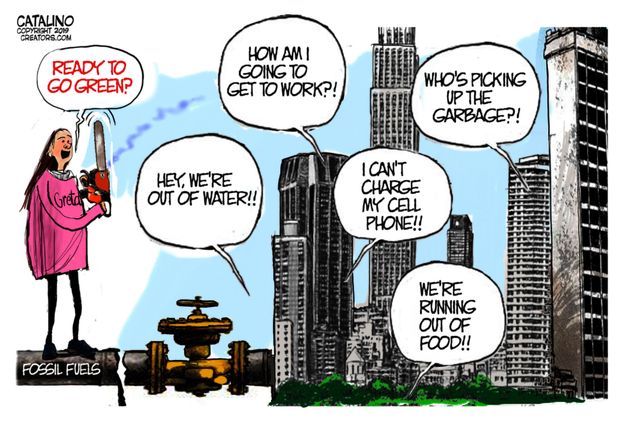
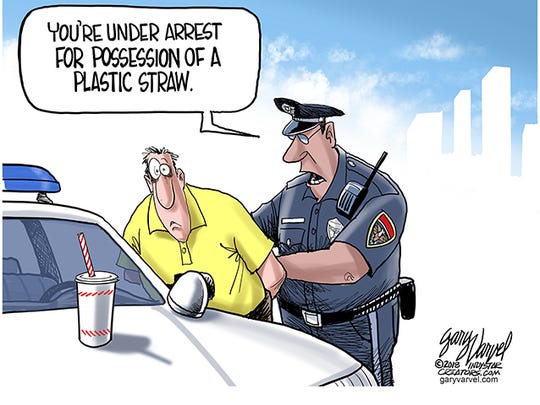 Gus Van Horn writes at Real Clear Markets

 Many people have heard of Jordan Peterson due to his battles against post modernism and progressive social justice warfare. Bruce Pardy is another outspoken Canadian professor, whose latest statement was posted at the National Post, H/T GWPF.






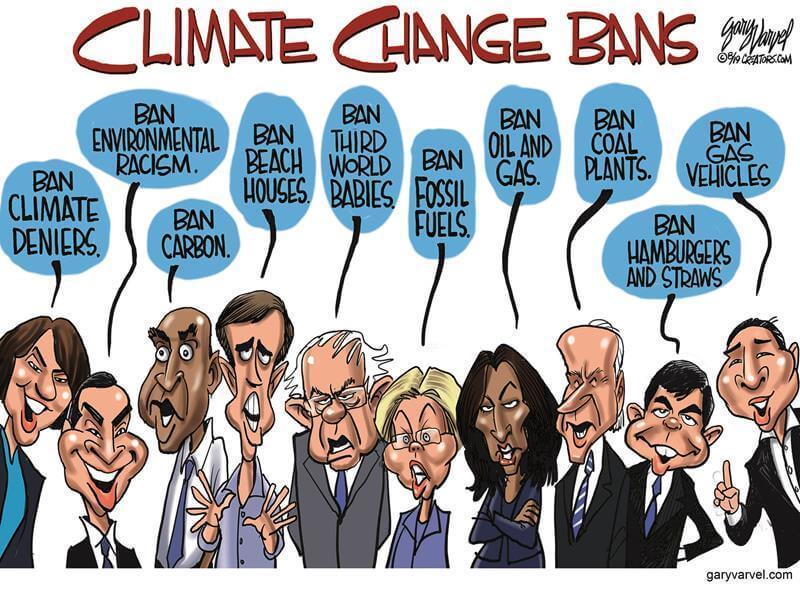
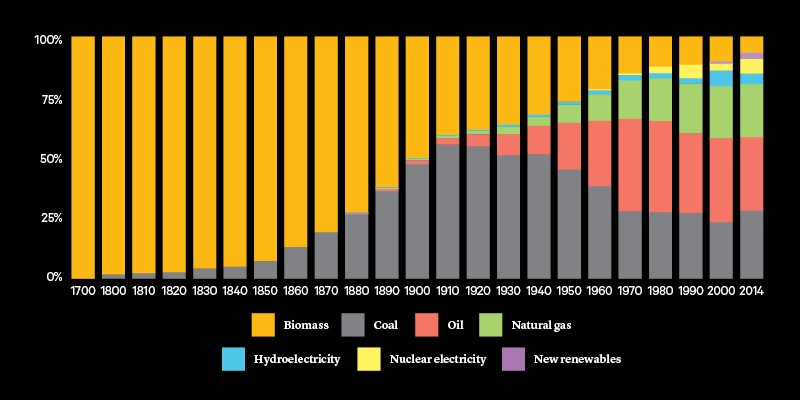
 Climate Litigation Watch is reporting the ruling by Judge Barry Ostrager ending the case brought by NYAG Leticia James against ExxonMobil. The loss could hardly be more complete. The full text of the ruling is








 Just Say No!




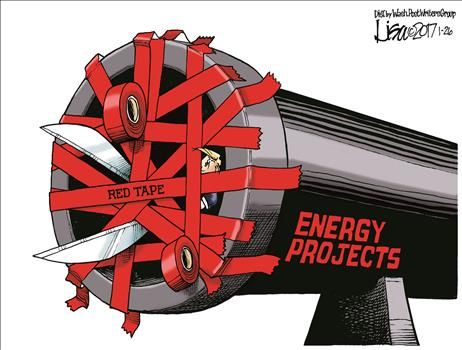
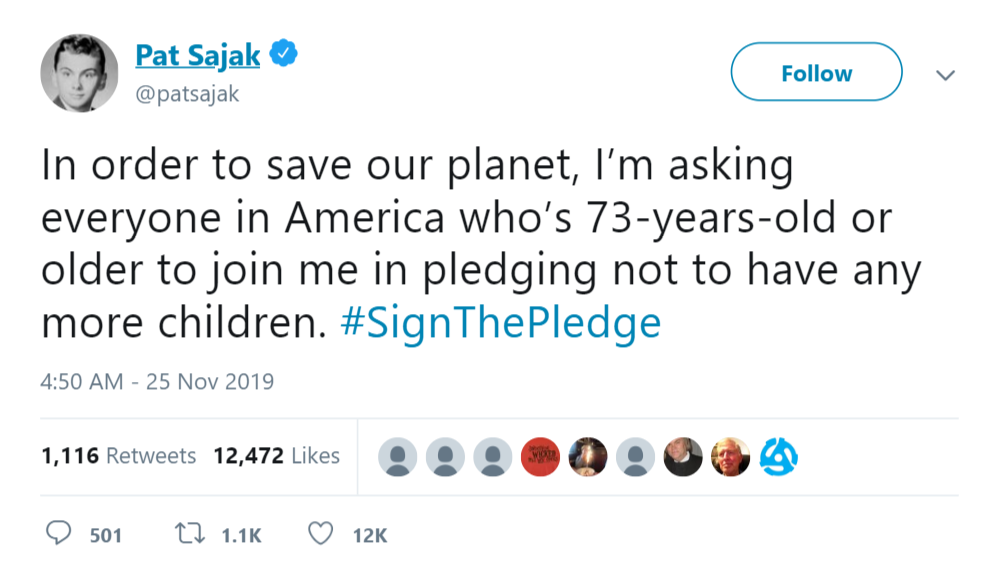


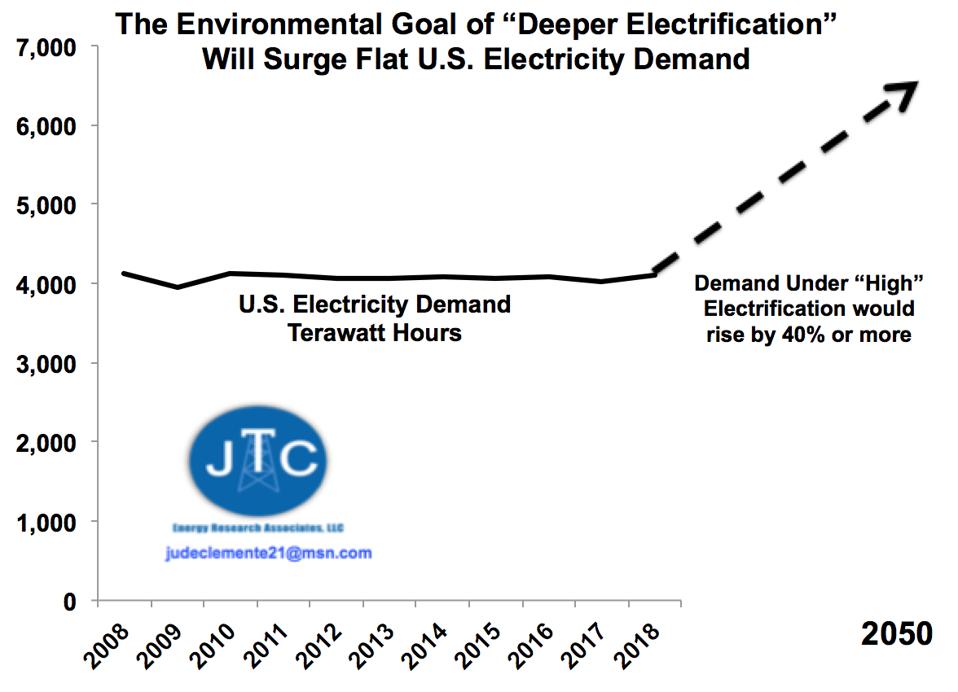



 Science Matters