UAH: Amazing Air Warming Spike October 2023

The post below updates the UAH record of air temperatures over land and ocean. Each month and year exposed again the growing disconnect between the real world and the Zero Carbon zealots.  It is as though the anti-hydrocarbon band wagon hopes to drown out the data contradicting their justification for the Great Energy Transition.  Yes, there is warming from an El Nino buildup coincidental with North Atlantic warming, but no basis to blame it on CO2.  

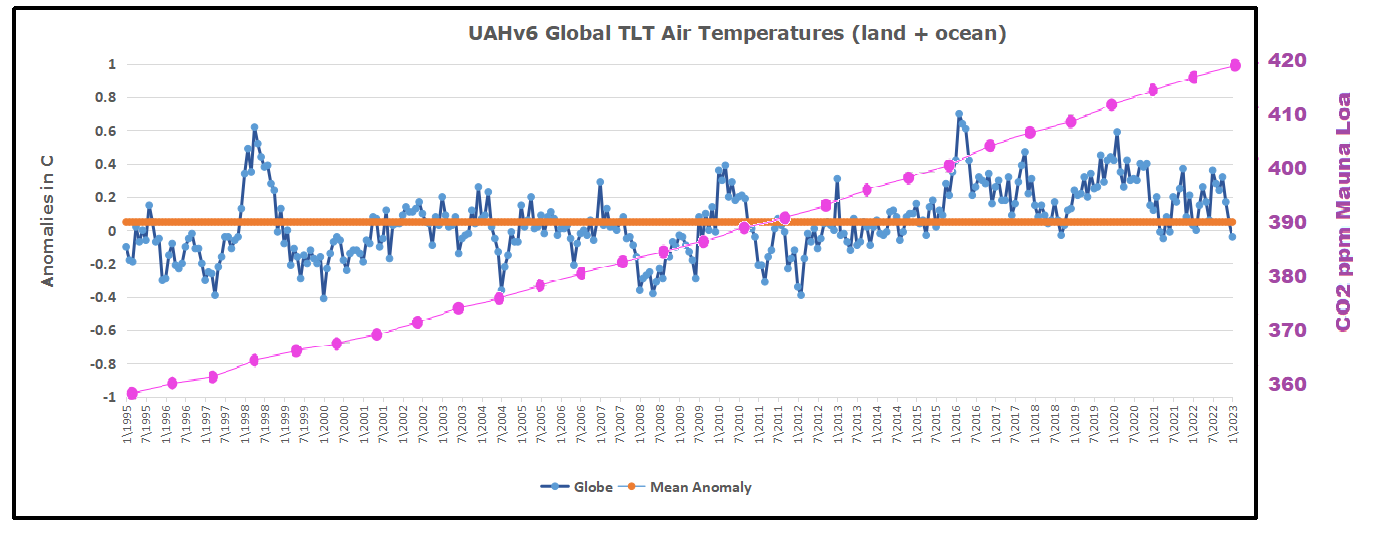
As an overview consider how recent rapid cooling  completely overcame the warming from the last 3 El Ninos (1998, 2010 and 2016).  The UAH record shows that the effects of the last one were gone as of April 2021, again in November 2021, and in February and June 2022  At year end 2022 and continuing into 2023 global temp anomaly matched or went lower than average since 1995, an ENSO neutral year. (UAH baseline is now 1991-2020).

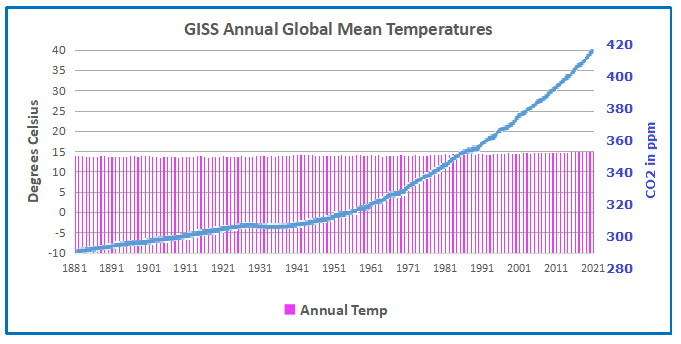
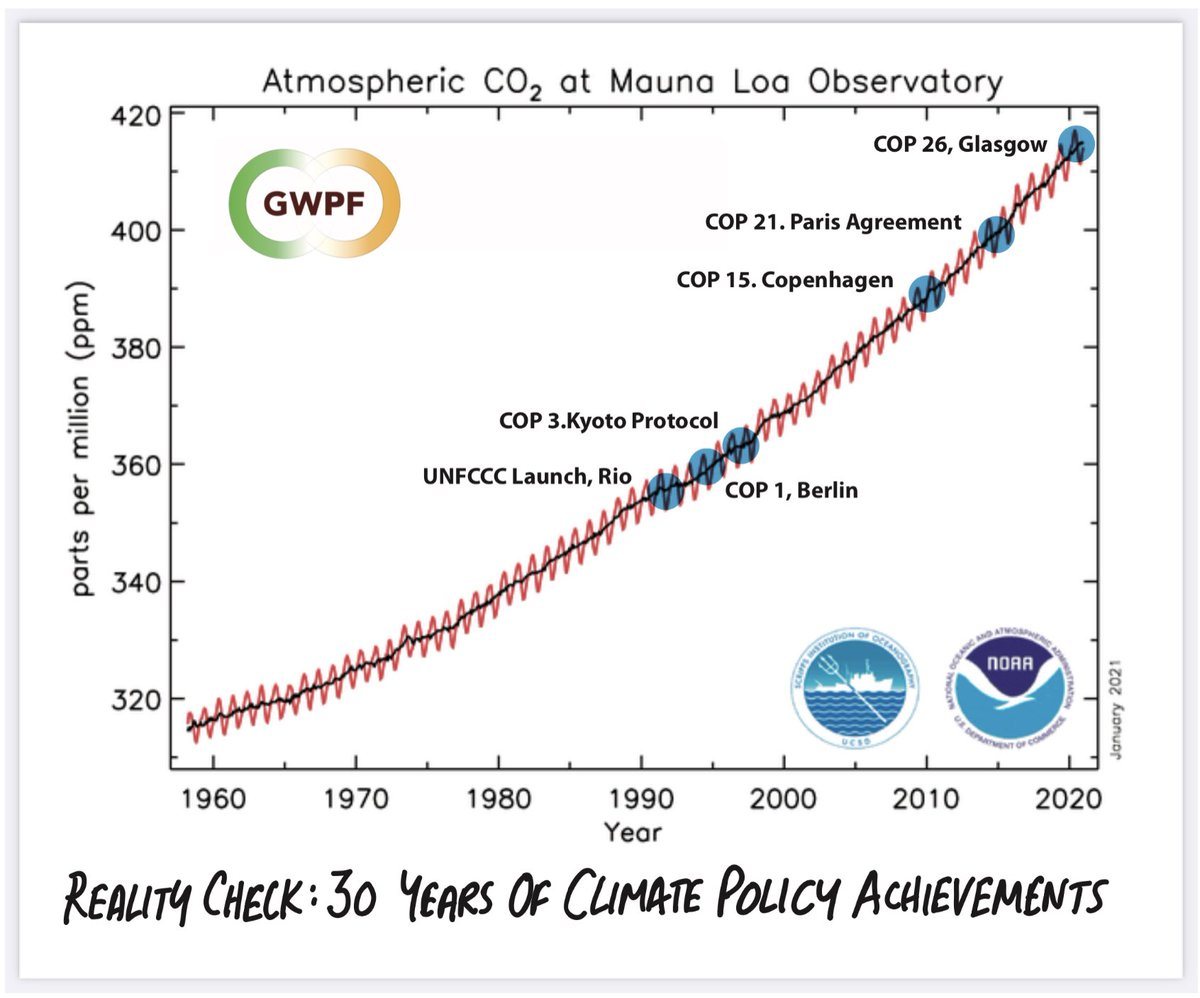
For reference I added an overlay of CO2 annual concentrations as measured at Mauna Loa.  While temperatures fluctuated up and down ending flat, CO2 went up steadily by ~60 ppm, a 15% increase.

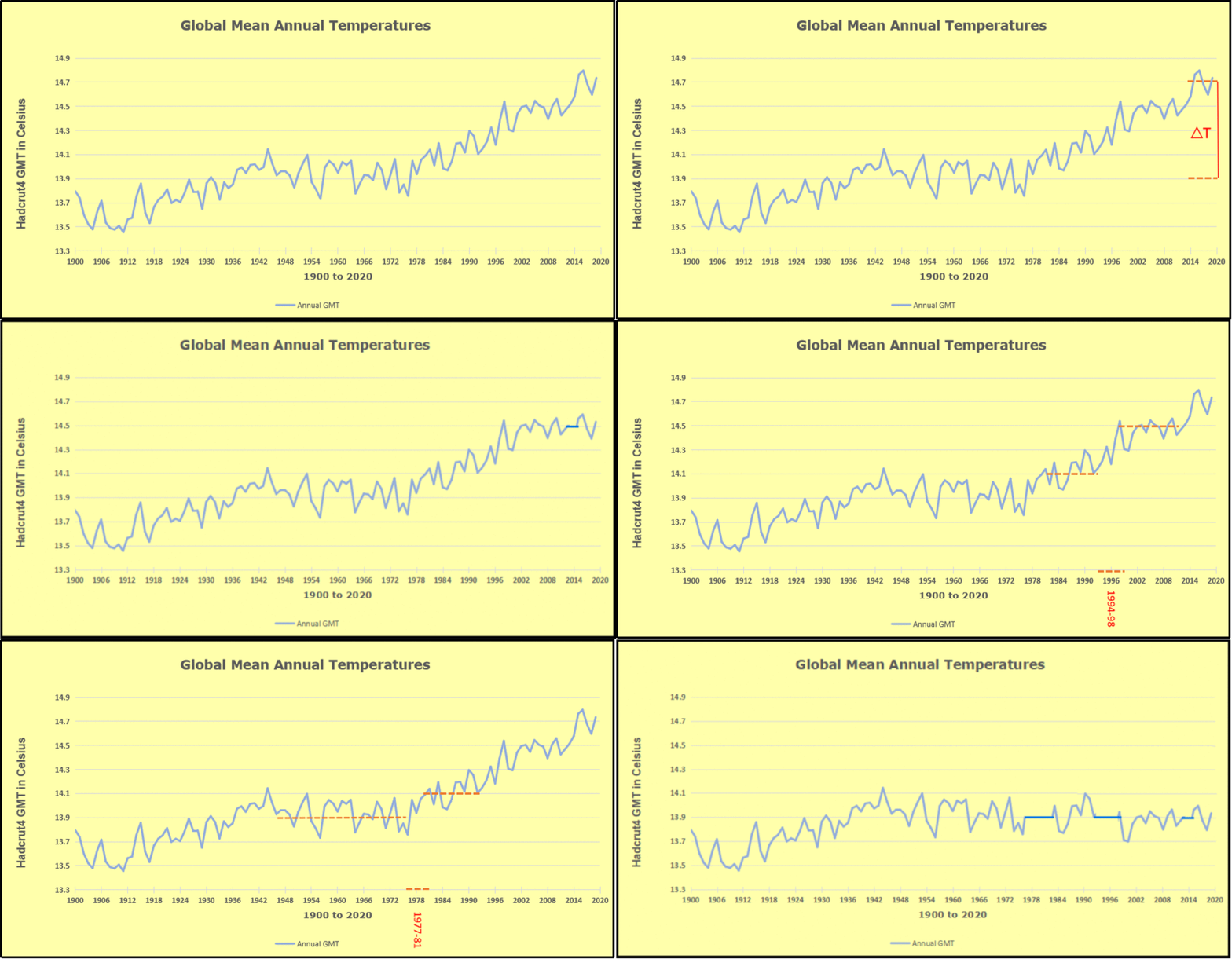
Furthermore, going back to previous warmings prior to the satellite record shows that the entire rise of 0.8C since 1947 is due to oceanic, not human activity.

gmt-warming-events

The animation is an update of a previous analysis from Dr. Murry Salby.  These graphs use Hadcrut4 and include the 2016 El Nino warming event.  The exhibit shows since 1947 GMT warmed by 0.8 C, from 13.9 to 14.7, as estimated by Hadcrut4.  This resulted from three natural warming events involving ocean cycles. The most recent rise 2013-16 lifted temperatures by 0.2C.  Previously the 1997-98 El Nino produced a plateau increase of 0.4C.  Before that, a rise from 1977-81 added 0.2C to start the warming since 1947.

Importantly, the theory of human-caused global warming asserts that increasing CO2 in the atmosphere changes the baseline and causes systemic warming in our climate.  On the contrary, all of the warming since 1947 was episodic, coming from three brief events associated with oceanic cycles. And now in 2023 we are seeing an amazing episode with a temperature spike driven by ocean air warming along with higher land air temps.

Update August 3, 2021

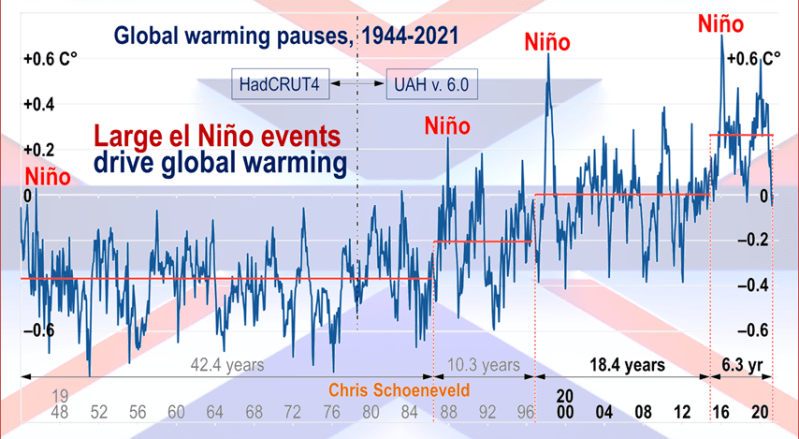
Chris Schoeneveld has produced a similar graph to the animation above, with a temperature series combining HadCRUT4 and UAH6. H/T WUWT

image-8


mc_wh_gas_web20210423124932

See Also Worst Threat: Greenhouse Gas or Quiet Sun?

October 2023 Update New Warming Spike Led by Tropics High

banner-blog

With apologies to Paul Revere, this post is on the lookout for cooler weather with an eye on both the Land and the Sea.  While you will hear a lot about 2020-21 temperatures matching 2016 as the highest ever, that spin ignores how fast the cooling set in.  The UAH data analyzed below shows that warming from the last El Nino had fully dissipated with chilly temperatures in all regions. After a warming blip in 2022, land and ocean temps dropped again with 2023 starting below the mean since 1995.  Spring and Summer 2023 saw a series of warmings.  Now in October a new high resulted from a major rise in ocean air temps in all regions, along with higher land air temps in NH and Tropics. 

UAH has updated their tlt (temperatures in lower troposphere) dataset for October 2023. Posts on their reading of ocean air temps this month preceded updated records from HadSST4.  I last posted on SSTs using HadSST4 September 2023 Ocean Warming Crests, Solar Coincidence? This month also has a separate graph of land air temps because the comparisons and contrasts are interesting as we contemplate possible cooling in coming months and years. Sometimes air temps over land diverge from ocean air changes.  For example in October 2023, a new warming high was driven by ocean air temps despite SH land temps dropping back down. The Tropics and NH showed warming in both land and sea air.

In October, as shown later on, Global ocean air reached a record high peak with all regions warming, especially Tropics. Land air temps rose in NH and Tropics, with a SH dropping down.   Thus the land + ocean Global UAH temperature is now exceeding the 2016 peak.

Note:  UAH has shifted their baseline from 1981-2010 to 1991-2020 beginning with January 2021.  In the charts below, the trends and fluctuations remain the same but the anomaly values change with the baseline reference shift.

Presently sea surface temperatures (SST) are the best available indicator of heat content gained or lost from earth’s climate system.  Enthalpy is the thermodynamic term for total heat content in a system, and humidity differences in air parcels affect enthalpy.  Measuring water temperature directly avoids distorted impressions from air measurements.  In addition, ocean covers 71% of the planet surface and thus dominates surface temperature estimates.  Eventually we will likely have reliable means of recording water temperatures at depth.

Recently, Dr. Ole Humlum reported from his research that air temperatures lag 2-3 months behind changes in SST.  Thus the cooling oceans now portend cooling land air temperatures to follow.  He also observed that changes in CO2 atmospheric concentrations lag behind SST by 11-12 months.  This latter point is addressed in a previous post Who to Blame for Rising CO2?

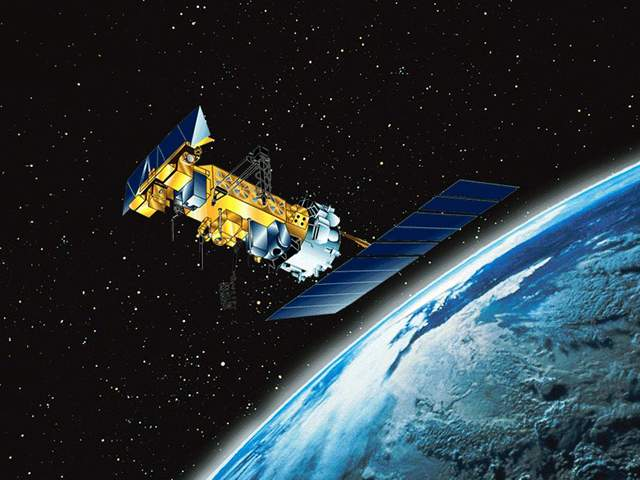
After a change in priorities, updates are now exclusive to HadSST4.  For comparison we can also look at lower troposphere temperatures (TLT) from UAHv6 which are now posted for September.  The temperature record is derived from microwave sounding units (MSU) on board satellites like the one pictured above. Recently there was a change in UAH processing of satellite drift corrections, including dropping one platform which can no longer be corrected. The graphs below are taken from the revised and current dataset.

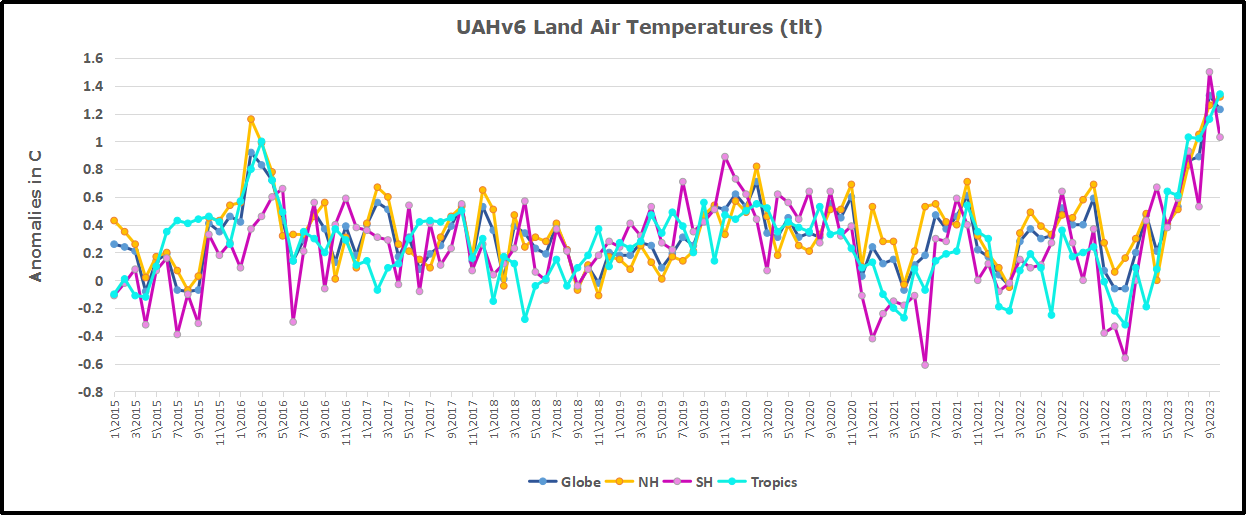
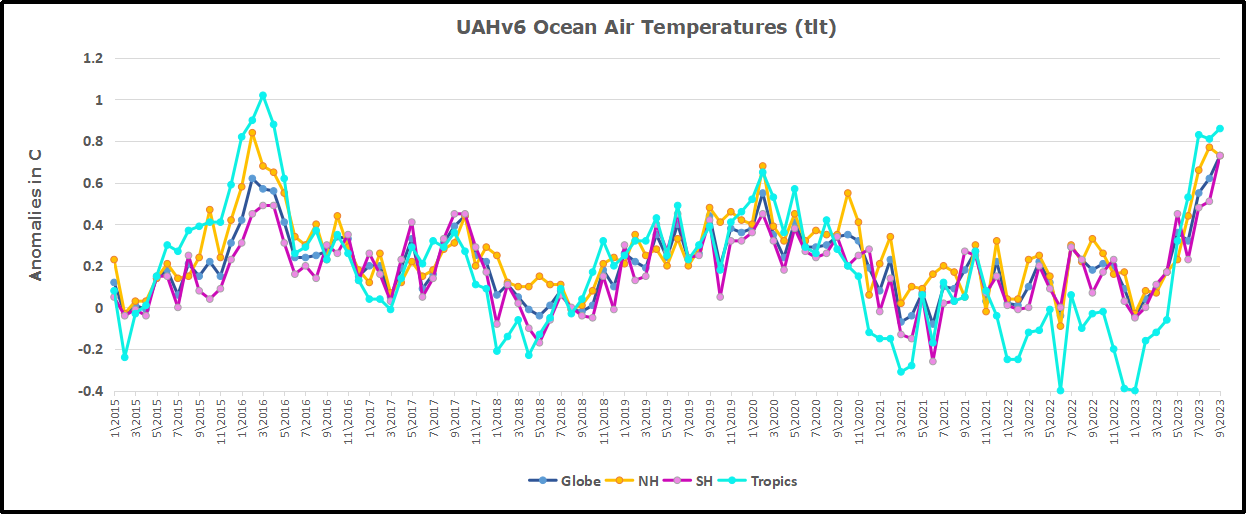
The UAH dataset includes temperature results for air above the oceans, and thus should be most comparable to the SSTs. There is the additional feature that ocean air temps avoid Urban Heat Islands (UHI).  The graph below shows monthly anomalies for ocean air temps since January 2015.

Note 2020 was warmed mainly by a spike in February in all regions, and secondarily by an October spike in NH alone. In 2021, SH and the Tropics both pulled the Global anomaly down to a new low in April. Then SH and Tropics upward spikes, along with NH warming brought Global temps to a peak in October.  That warmth was gone as November 2021 ocean temps plummeted everywhere. After an upward bump 01/2022 temps reversed and plunged downward in June.  After an upward spike in July, ocean air everywhere cooled in August and also in September.   

After sharp cooling everywhere in January 2023, all regions were into negative territory. Note the Tropics matched the lowest value, but since have spiked sharply upward +1.26C, with the largest increases in April to July 2023.  NH also warmed 0.7C in the last 4 months, while SH ocean air rose the same. Global Ocean air October 2023 is now exceeding 2016, the main difference being the much higher rise in SH anomalies since April.  The strength of the El Nino will determine the latter part of this year.

Land Air Temperatures Tracking Downward in Seesaw Pattern

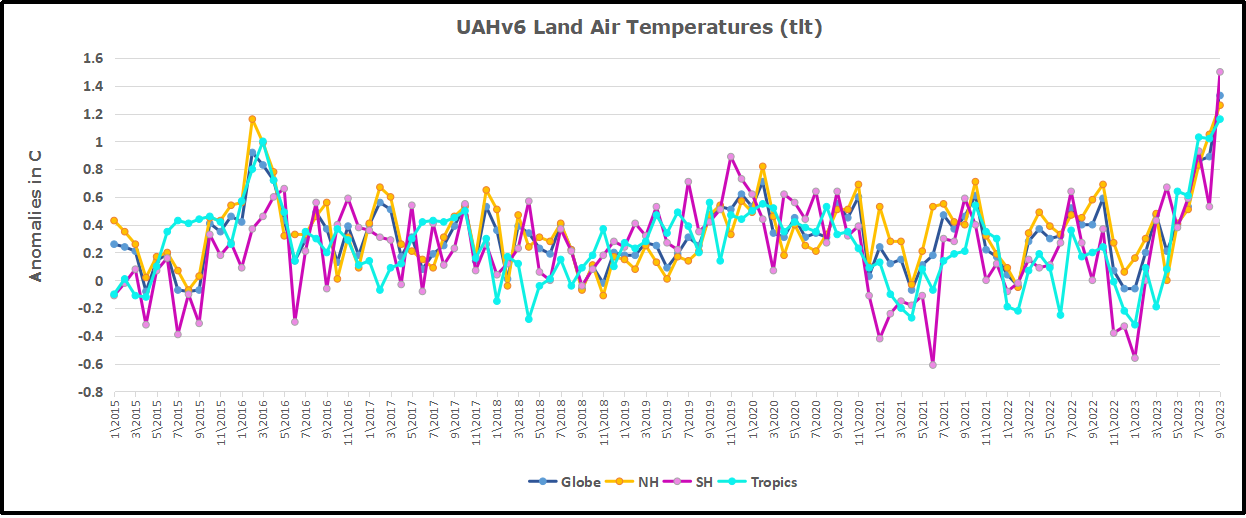
We sometimes overlook that in climate temperature records, while the oceans are measured directly with SSTs, land temps are measured only indirectly.  The land temperature records at surface stations sample air temps at 2 meters above ground.  UAH gives tlt anomalies for air over land separately from ocean air temps.  The graph updated for September is below.

Here we have fresh evidence of the greater volatility of the Land temperatures, along with extraordinary departures by SH land.  Land temps are dominated by NH with a 2021 spike in January,  then dropping before rising in the summer to peak in October 2021. As with the ocean air temps, all that was erased in November with a sharp cooling everywhere.  After a summer 2022 NH spike, land temps dropped everywhere, and in January, further cooling in SH and Tropics offset by an uptick in NH. 

Remarkably, in 2023, SH land air anomaly shot up 1.5C, from  -0.56C in January to +0.93 in July, then dropped to 0.53 in August. In September SH shot up again to 1.5C.  Tropical land temps are up 1.48 since January and NH Land air temps rose 0.9, mostly since May. Despite SH land air dropping in October, the consolidated rise greatly exceeds the upward spikes peaking in  2016.

The Bigger Picture UAH Global Since 1980

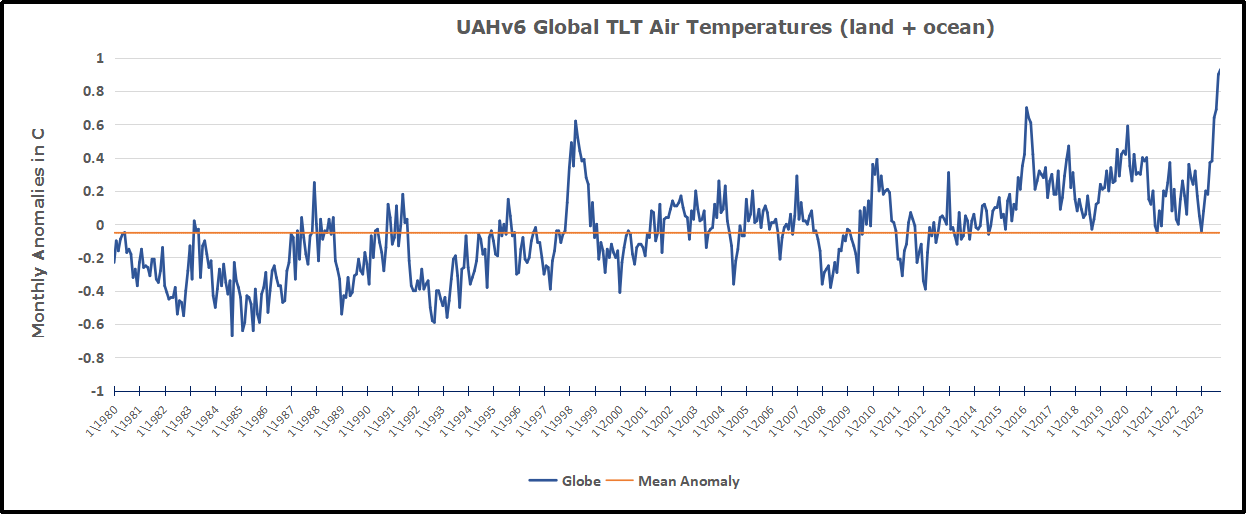
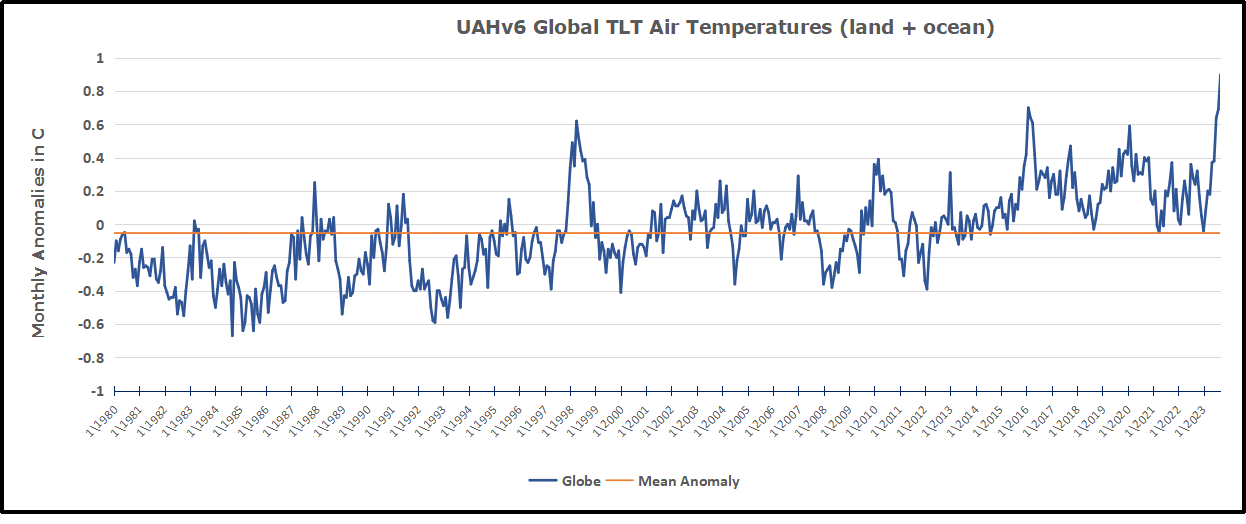
The chart shows monthly Global anomalies starting 01/1980 to present.  The average monthly anomaly is -0.06, for this period of more than four decades.  The graph shows the 1998 El Nino after which the mean resumed, and again after the smaller 2010 event. The 2016 El Nino matched 1998 peak and in addition NH after effects lasted longer, followed by the NH warming 2019-20.   An upward bump in 2021 was reversed with temps having returned close to the mean as of 2/2022.  March and April brought warmer Global temps, later reversed.

With the sharp drops in Nov., Dec. and January 2023 temps, there was no increase over 1980. Now in 2023 the buildup to the October peak exceeds the sharp April peak of the El Nino 1998 event. It also surpasses the February peak in 2016.  Where it goes from here, up or down, remains to be seen.

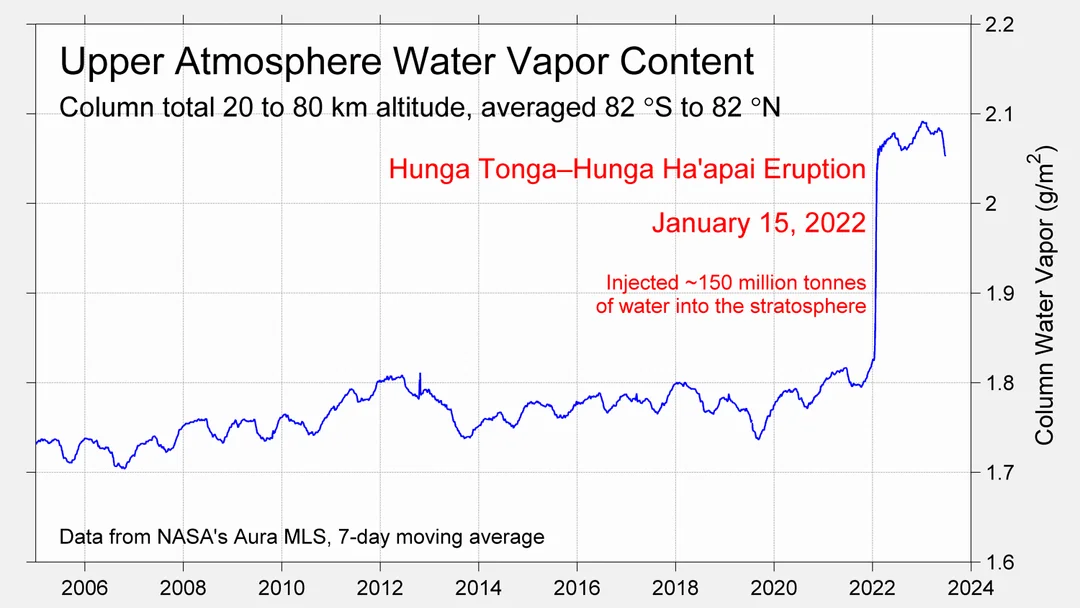
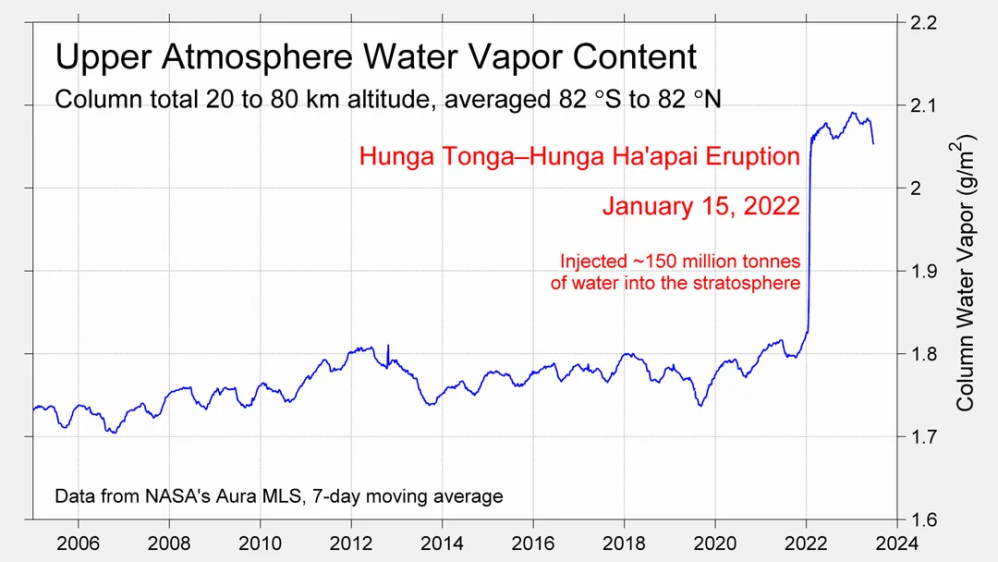
The graph reminds of another chart showing the abrupt ejection of humid air from Hunga Tonga eruption.

TLTs include mixing above the oceans and probably some influence from nearby more volatile land temps.  Clearly NH and Global land temps have been dropping in a seesaw pattern, nearly 1C lower than the 2016 peak.  Since the ocean has 1000 times the heat capacity as the atmosphere, that cooling is a significant driving force.  TLT measures started the recent cooling later than SSTs from HadSST3, but are now showing the same pattern. Despite the three El Ninos, their warming has not persisted prior to 2023, and without them it would probably have cooled since 1995.  Of course, the future has not yet been written.


Why IPCC “Scientists” Won’t Look at the Sun

The science about climate change is settled, right? We’re reassured by the media again and again that there is almost complete unanimity when it comes to the question of whether changes in the climate are caused by humans. And we’re also told there’s so much consensus that anyone who says otherwise isn’t a real scientist, but a “climate change skeptic” just trying to muddy the pristine waters of settled science. In this episode of America Uncovered, we look at the sun’s role in global warming, why so many human-caused-climate-change proponents don’t want to look at this data, and how they’re trying to discredit climate scientists who are looking at factors that question the human-caused climate-change narrative.

Transcript 

For those who prefer to read, the Transcript is below in italics with my bolds and added images.

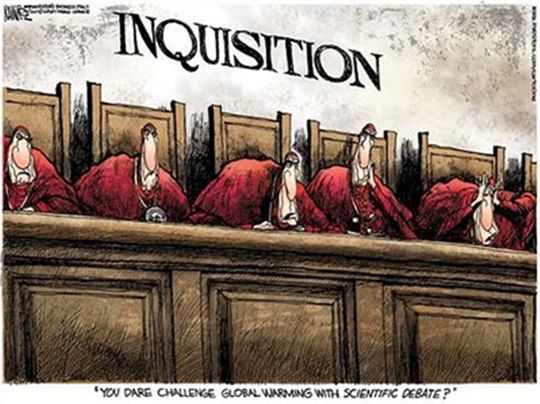
The UN and prominent scientific organizations say the science is settled. No one can dispute that climate change is mainly caused by humans. Those who question it are insulted and shunned. Which is exactly the way the scientific method is supposed to work.

Welcome to America Uncovered. I’m Chris Chappell. Everywhere you look these days, it seems there’s someone pushing “the narrative.” America is irredeemably racist . Christopher Columbus was evil. Pineapple on pizza is gross . Wrong! Its sweet tanginess is a great counterbalance to the salt and acidity of the sauce. Refine your palates, you swine.

Journalists push narratives all the time, but so do scientists. Now, there’s this naive notion that scientists are above pushing narratives, because all they do is look at provable facts. But that couldn’t be further from the truth, especially for complex topics where the facts aren’t always so clear cut.

Look no further than the climate change debate. The most influential scientific organizations make it sound like it is a fact supported almost unanimously by the scientific community that climate change is mostly man-made. Which should immediately make you start questioning things, since no community unanimously believes anything. If they did, then 10 out of 10 dentists would recommend Crest toothpaste .

Just look at how the UN presents the topic. According to the UN’s Intergovernmental Panel on Climate Change (IPCC) 2023 report, “Human activities are responsible for global warming” by increasing greenhouse gasses. “It is unequivocal that human influence has warmed the atmosphere, ocean and land.” In other words, don’t question it! You *have* to accept that humans are the driving factor for climate change. There’s not supposed to be debate in science. That’s why we still believe the Earth is the center of the universe and everything revolves around it. That science was settled centuries ago!

This type of messaging has had a profound impact on public policy all over the world. Billions of dollars have gone into addressing climate change and studying its effects. The narrative about man-made climate change is so loud and pervasive that CNN can ask, “why are we still debating climate change?” and reasonably expect readers to say, “yeah!”

In reality, though, it’s a lot more complicated than that. I’ve debunked the “97% of scientists agree on man-made climate change” narrative in a previous episode. The reality is, there’s no consensus on how large of a role human activity plays in climate change or even how climate is changing.

How they invented the “97% of scientists agree” meme.

Now, I’ve said this before, and I’ll say it again—I’m not a conspiracy theorist, and I’m not taking sides on the climate change debate either. I’m not necessarily dismissing the idea that mankind is driving climate change, but I’m not going to say that everything’s settled, because it’s not.

Uh oh, I just said something nuanced. You know what that means: Goodbye, YouTube ad revenue.  And that is exactly the problem! It’s not very popular to question the climate change narrative, especially when billions of dollars are on the line. But there are some scientists who question the narrative anyway. One of the most prominent voices is Wei-Hock—or Willie—Soon , a Malaysian Astrophysicist and aerospace engineer who used to work at the Harvard–Smithsonian Center for Astrophysics.

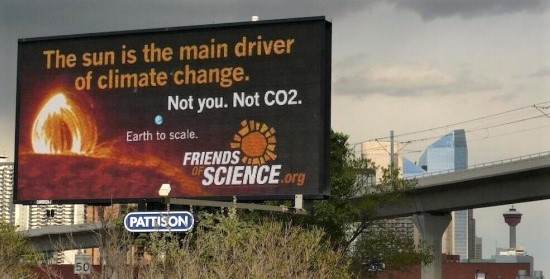
Soon is known for promoting the hypothesis that the sun may have more to do with current climate change than human activity. He’s not necessarily saying that there’s no such thing as man-made climate change, but he is very vocal about how the UN reportedly suppresses the sun’s role in climate change. I should have known the sun was diabolical. After all, it kills me every time I play Super Mario 3.

Over the years, Soon’s research has been attacked by other scientists and the mainstream media. Carbon Brief released an explainer pushing back against the idea that the sun is responsible for recent climate change. Slate said that “[Soon’s] science has been refuted.” Because “The science is in, it’s extremely clear, and the consensus among climate scientists is solid.” 10 out of 10 scientists agree!

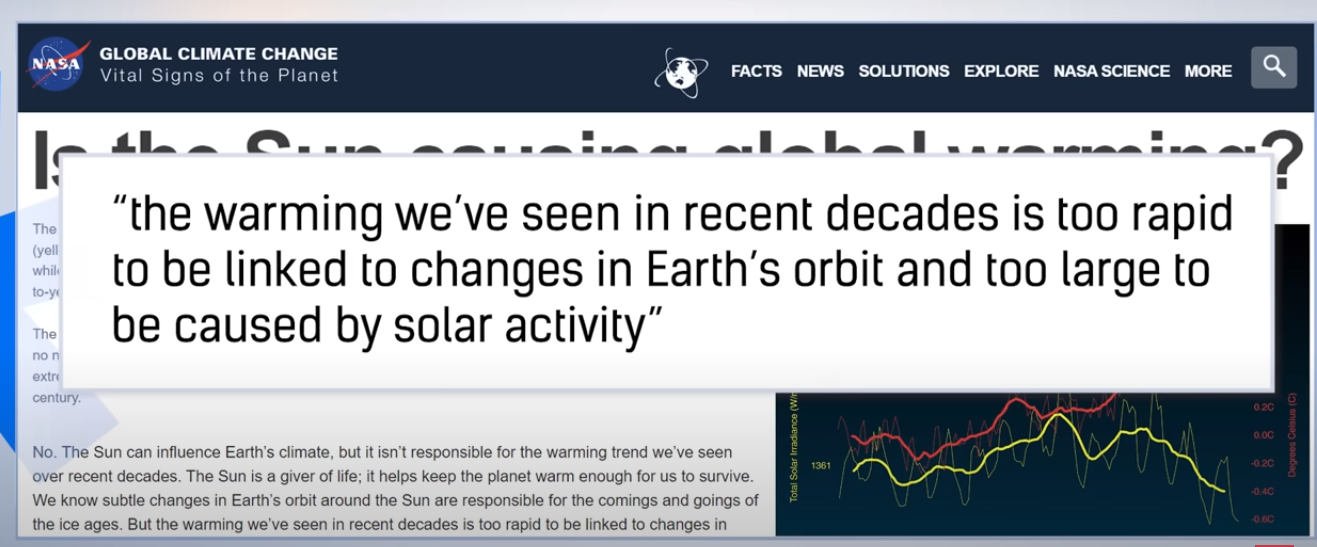
The Union of Concerned Scientists, the Imperial College London, the World Meteorological Organization, and a whole bunch more organizations all say the same thing. NASA is especially adamant about shutting down the sun theory. In its explainer, NASA says, “The Sun can influence Earth’s climate, but it isn’t responsible for the warming trend we’ve seen over recent decades.”

Okay, but what about when it chases you through the desert levels? Explain that, science! NASA and other scientific organizations argue that there isn’t any increase in solar energy reaching the planet. “So, there is a line, and the scientific community is well in agreement. According to NASA, scientists agree that the solar cycle is not driving the changes in Earth’s climate that we’re currently seeing. If we saw solar radiation increasing for a long period of time, we could see those effects on our climate, but the changes between solar cycles are pretty small and not able to drive the drastic changes we’ve seen over the last few decades.”

Plus, if there were so many solar rays, then how come we don’t have a real life Fantastic Four, hm?Science. Settled. Keep an eye on NASA. There’s a reason why NASA in particular is vocal in debunking the sun theory, which I’ll get into later in this episode.

Now, that’s how science works. One scientist puts out research, and other scientists challenge the results. But apparently, refuting Soon’s science wasn’t enough. The scientific community and the mainstream media went after Soon personally, and not always in the most honest of ways.

Scientists and the mainstream media have attacked Soon’s research on the sun’s role in climate change, but they’ve also attacked Soon, and it can be a bit disingenuous.  For example, since 2011, the environmentalist nonprofit Greenpeace has pushed the idea that Soon’s research was funded by the fossil-fuel industry and suggested that Soon improperly concealed his funding sources in one of his publications.

But that’s misleading. According to The Heartland Institute, “As a working scientist… Soon had no authority to sign a research contract to receive a grant, let alone to decide and dictate the terms of such contracts.” Who did have the authority? Soon’s employer. “Dr. Soon and other working scientists like him are paid by the Smithsonian, not by the external funder, to carry out those duties.  Simply put, Dr. Soon is employed by the Smithsonian to conduct research paid for by external grants  obtained by the Smithsonian.” So, if true, it would have been the Smithsonian that accepted money from the fossil-fuel industry.

Meanwhile, The Union of Concerned Scientists suggests that Soon’s work was part of a broader pattern of deception by fossil fuel companies. And as for the mainstream media? Well, they have disdainfully called Soon a climate skeptic. The problem is, Soon isn’t the only scientist asking questions. In 2021, Soon, along with almost 2 dozen other scientists from all over the world, published a study on the Institute of Physics Publishing asking, “How much has the Sun influenced Northern Hemisphere temperature trends?” They called it “an ongoing debate.”

It’s a pretty dense read. But to summarize, the study points to solar radiation on the Earth’s atmosphere as the driver of global warming and cites dozens of other studies that point to the sun—not human activity—as the primary driver of climate change. The study also argues that the way the UN’s Intergovernmental Panel on Climate Change concluded that climate change was man-made was flawed. It ignored data, such as NASA’s sun-monitoring satellite data, which the authors argued would’ve countered the man-made climate change narrative.

According to the lead study author, Ronan Connolly , “Depending on which published data and studies you use, you can show that all of the warming is caused by the sun, but the IPCC uses a different data set to come up with the opposite conclusion.” Climate is seriously complex, and there’s a lot of data to consider, so this could just be a mistake, but Connolly doesn’t seem to think so. “In their insistence on forcing a so-called scientific consensus, the IPCC seems to have decided to consider only those data sets and studies that support their chosen narrative.”

This didn’t sit well with most climate change scientists. One 2022 study tried to debunk the sun theory as “erroneous”. Those authors pretty much argued it was a waste of time that could be better used on areas of “legitimate scientific uncertainty”. However, Soon and various other scientists came out with three new studies earlier this year that say otherwise.

This one looked at datasets that the UN didn’t look into to conclude that the UN underestimated the sun’s role in global warming. This included data from NASA’s satellites. Which is a pretty big flex, using data from an organization that doesn’t agree with you to prove your point. Their study also argues that the UN underestimated how weather stations are impacted by urbanization, which generates heat from human activity.

It’s similar to the conclusions made by this study, which specifically addressed the 2022 study that criticized the sun theory. This other study specifically compared Japan and the US to show the impact that urbanization has on weather station data collection. So they’re essentially saying that the way they collect data was flawed, and so were their conclusions.

Now, the studies aren’t completely dismissing the idea that climate change is man-made. They’re simply saying that there isn’t enough data to determine whether global warming is mostly man-made, mostly natural, or a combination of both. Which is why Willie Soon is one of thousands of scientists who have signed the World Climate Declaration, which says that there is no climate emergency…and that “natural as well as anthropogenic factors cause warming.”

One of the scientists involved in the research said the analysis “opens the door to a proper scientific investigation into the causes of climate change.” But it turns out certain scientists are absolutely livid about these studies. They want to slam that door shut , barricade it, and put up a “get off my lawn” sign.”

Some scientists are angry about the multiple studies done by Soon and his colleagues regarding the sun’s role in climate change, and they’re making their displeasure known. But the way these scientists speak to other scientists makes them sound like fourth-grade bullies rather than professional researchers.

For example, Atmospheric science professor Michael Mann of Pennsylvania State University —The guy famous for what’s called the hockey stick graph—Referred to the authors of one of the studies as “a group of climate denier [clowns]”. Which is ridiculous, because clowns aren’t climate deniers. They’re better than anyone at reducing emissions by carpooling with 30 of them in a single vehicle .

Mann also apparently sees anyone whom he classifies as a climate denier of being “truly awful human beings”. I don’t remember the part of the scientific method where you call names on anyone who questions you. Oh wait, there it is. Many climate scientists are quick to dismiss studies that don’t align with the climate change narrative.

For example, Gareth Jones of the UK’s Meteorologist Office called a review that disagreed with him “nonsense.” Jones also seems to enjoy smearing people like the editor of the journal Climate, saying that he “has a bit of a reputation, so much so that other climate contrarians distance themselves from him”.

Then there’s Gavin Schmidt, the director of the NASA Goddard Institute for Space Studies. He mocked one of the authors, calling his work “BS” . Schmidt also said, “The only point of this paper (which every climate denier and their dog has jumped onto), is to launder dirty ‘science’ into a clean made-for-Fox meme.”

Dirty science? Is that like Weird Science if it was rated R instead of PG-13? Schmidt is even using a Freedom of Information Act request to demand one of the editor’s emails with relevant scientists. This seems a lot like intimidation to try to coerce uniformity in the scientific community, rather than allowing for disagreement to try to get to the facts.

Climatologist Judith Curry at Georgia Institute of Technology told The Epoch Times that “The response by Schmidt, Mann, and others, particularly with regard to the FOIA request regarding editorial discussions on this paper, reflects their ongoing attempts to control the scientific as well as public dialogue on climate change”.

If you ask me, this also reflects just how arrogant
people in the scientific community have become.

For example, the UN’s under-secretary-general for global communications last year had the audacity to say that the UN “owns” the science. She even admitted that the UN was working with Google to manipulate search results! “We partnered with Google for example. If you Google climate change, at the top of your search, you will get all kinds of UN resources. We started this partnership when we were shocked to see that when we googled climate change we were getting incredibly distorted information right at the top. So we’re becoming much more proactive, you know. We own the science, and we think that the world, you know, should know it.”

“Own the science”? How arrogant do you have to be to believe that you “own” science? What, are they gonna have a garage sale and try to get people to buy the theory of gravity from them, since they “own” it? It’s this kind of “ownership” that allows for organizations like the UN to pre-emptively silence dissent with very little regard for both free speech or even science itself.

You’d be very, very mistaken if you believe that scientists are above politics and bias or that they should not be questioned. Let’s not forget that politicians and scientists said that there was zero evidence Covid came from a lab leaks…and that lockdowns were the best way to deal with the pandemic, despite warnings to the contrary.

The people pushing those narratives thought that they couldn’t possibly be wrong, but in hindsight, they look pretty foolish. Trying to coerce people to a consensus of what you think is the science, isn’t real science. Real science would acknowledge that scientists don’t always have all the data and examine different approaches with professionalism.

Of course there are going to be people who believe in disinformation. But what’s to stop organizations as powerful as the UN from spreading their own disinformation? If we have scientists who are trying to spin facts that favor corporate interests in fossi fuels, tobacco, and fast food, then don’t you think the same could happen for the interests of climate change activists?

People will spread disinformation about anything. Even things that are obviously false, like Pineapple on pizza being anything less than amazing. Like climate change scientists, YouTube loves restricting debate and discussions about things it finds too controversial, such as climate change.

See Also


New Wholistic Paradigm of Climate Change

More 2019 Evidence of Nature’s Sunscreen

What You’re Told About Greenhouse Gases is Wrong

Mark Adams explains the deceptions in his American Thinker article The fables about greenhouse gases, especially about methane  Excerpts in italics with my bolds and added images.

“Climate change” is in the news daily, with each featured story getting an attention-grabbing sensationalist headline. The frenzy is at its peak now because it’s the time of year for tropical storms and wildfires.

However, to appreciate that these stories are pure narratives,
it’s a good time to consider the facts behind
the so-called “greenhouse gases.”

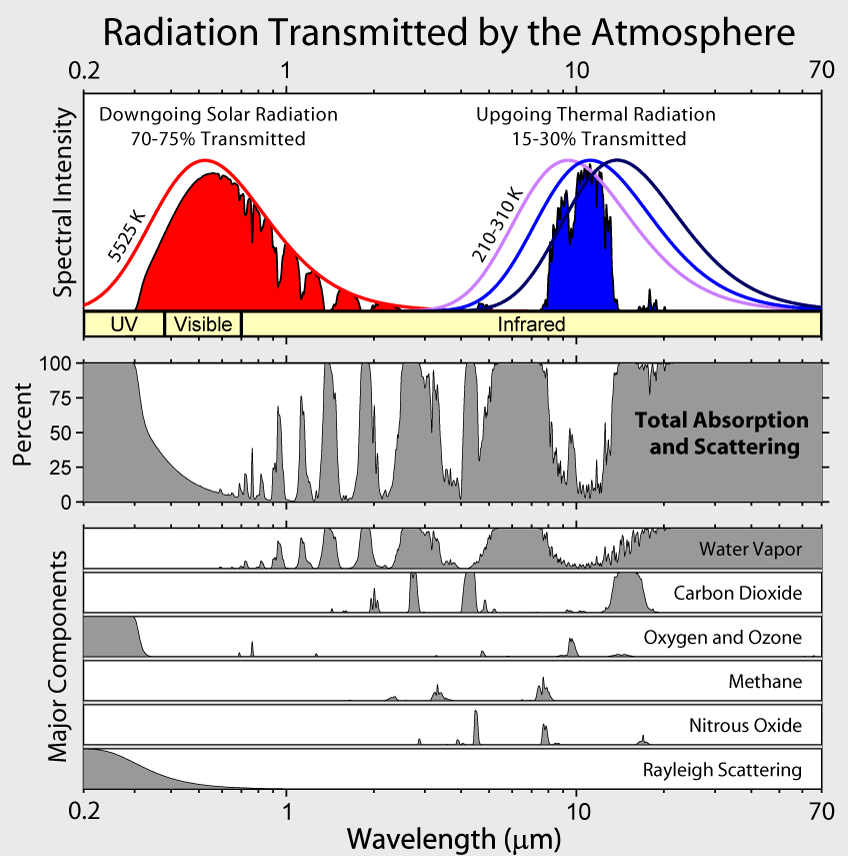
Several atmospheric gases, including carbon dioxide, methane, and water vapor, absorb light in the infrared region. These are collectively known as the “greenhouse gases” because absorbing infrared energy warms up the air—hence the name greenhouse effect.

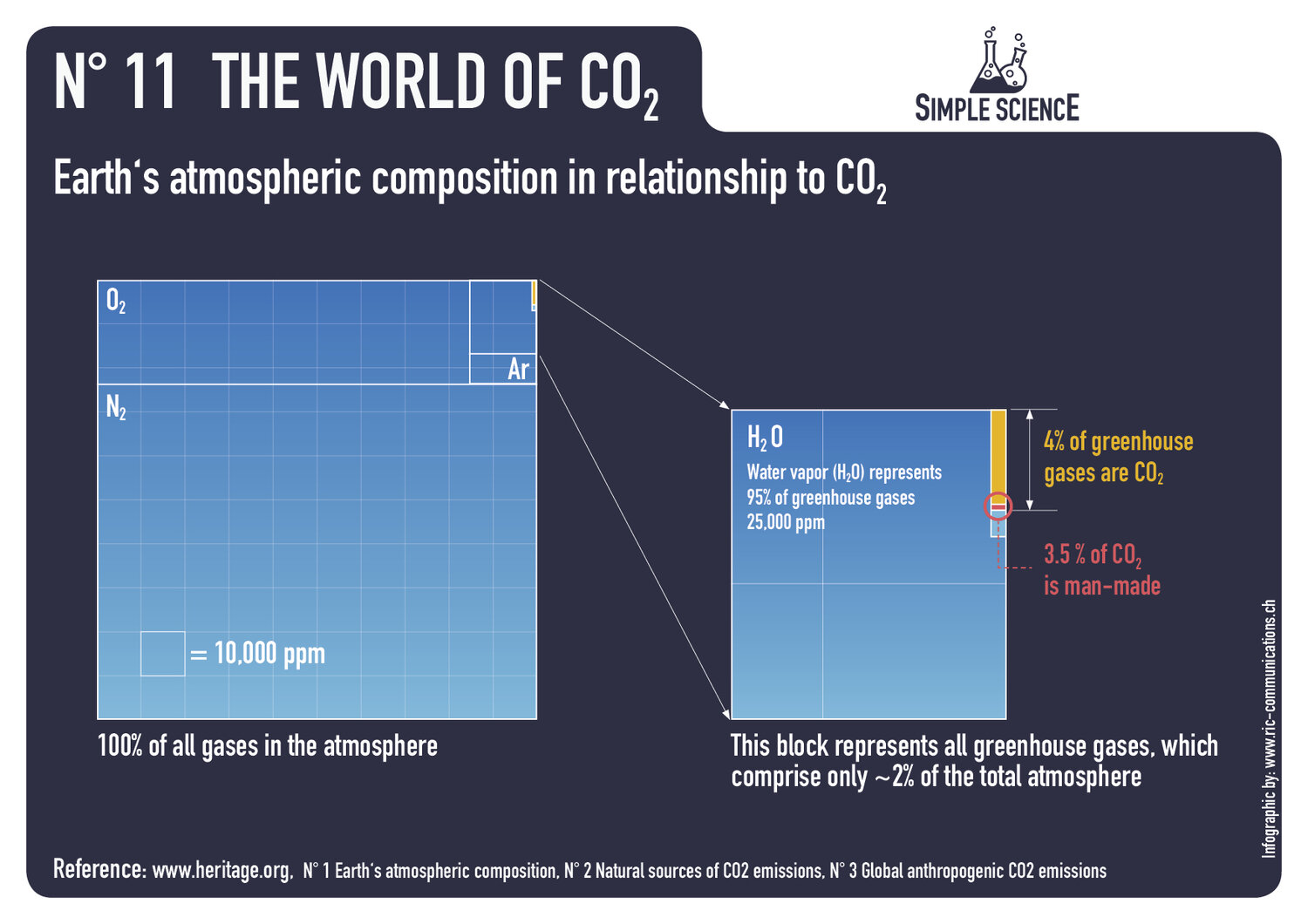
Carbon dioxide, on a per-molecule basis, is six times as effective an absorber as water is. However, that’s offset by the fact that carbon dioxide is only about 0.04% of the atmosphere (400 parts per million). This means that, overall, it’s much less important than water vapor in terms of its ability to warm the atmosphere.

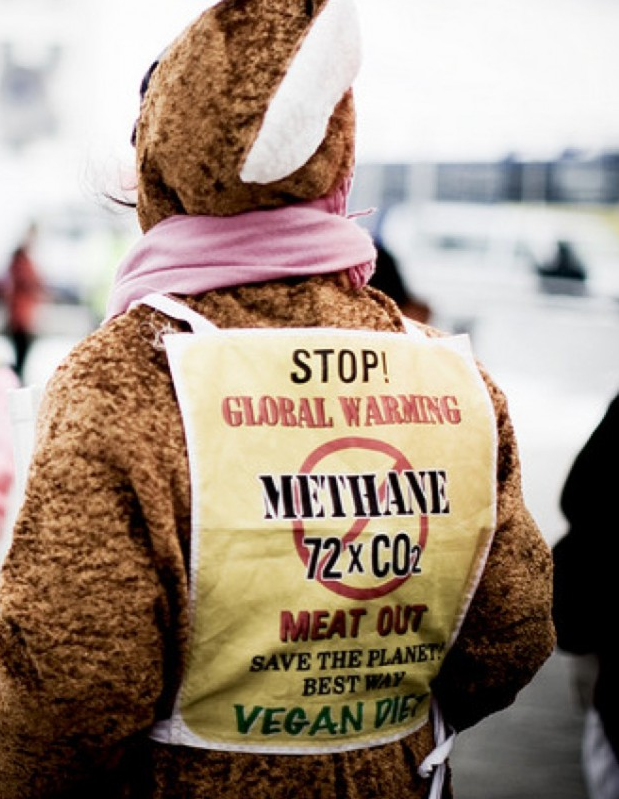
And then there’s methane. Pound-for-pound methane can trap 25 times more heat than carbon dioxide. However, there are two reasons why scientists say it will never significantly contribute to global warming. Primarily, it is by far the rarest of the green house gases. [Note that weight is the wrong metric for radiation properties of gases, volume is what matters.  The 25 times CO2 is exaggerated because CH4 molecular weight is only 16 compared to 44 for CO2.]

But there is another reason why we will probably never have to worry about methane being a major contributor to global warming: Methane’s narrow absorption bands, at 3.3 microns and 7.5 microns , perfectly match…water’s! Did you catch that? It’s worth emphasizing: “The ratio of the percentages of water to methane is such that the effects of methane are completely masked by water.”

Nor is methane a cow problem that humans can remediate by going meatless. Instead, wetlands and termites are the real methane producers: “When it comes to methane, another greenhouse gas, termites are responsible for 11 percent of the world’s production from natural sources. Seventy-six percent comes from wetlands…”

Image: Termites in a wetland by AI.

Many studies have attributed a methane spike to soaring emissions from tropical wetlands, predominantly in Africa. “A ‘significant change’ in tropical weather ascribed to human-caused climate change has led wetlands to get bigger and more plants to grow there, thus leading to more decomposition — a process that produces methane.”

You noted, of course, how the quoted language blames methane on human-caused climate change. Yet this same “human-caused” climate change is also blamed for transforming lush Hawaii into an arid ticking time bomb that, in the summer of 2023, erupted into a devastating inferno. Moreover, it seems like it wasn’t that long ago when environmentalists were ardent supporters of wetlands.

Meanwhile, ignoring the predominance of naturally occurring methane, a band of climate fanatics wants to eliminate traditional farming and ranching because they are sources of methane, primarily from ruminant livestock and paddy rice. Rice growing produces methane gas by feeding microbes that live under the rice paddies. Cattle produce methane during their digestive process.

In Ireland, farmers may be forced to kill some of their livestock to meet government requirements:

Greenhouse gas emissions in Ireland’s agriculture industry must be reduced by 25 per cent by 2030. This is part of the country’s latest Climate Action Plan, which pledges to halve overall carbon emissions by 2030 and reach net zero by 2050.

Current initiatives to cut methane gas emissions from domestic livestock like cows and pigs by culling them, a potentially famine-inducing policy, fail to take into account the sheer volume of feral animals. For example, in Australia, “there is 10 times the number of feral pigs … than domestic.”

By some estimates, Australia contains “ 400,000 wild horses,
five million donkeys, 150,000 water buffalo, one million camels,
and 24 million feral pigs—in comparison,
the United States contains just six million feral pigs.”

To put things in perspective, let’s go back to the lowly termites. Consider that, in 1992, “it was estimated that the digestive tracts of termites produce about 50 billion tons of CO2 and methane annually. That was more than the world’s production from burning fossil fuel.”

In 1982, the journal Science published an article titled “Termites: A Potentially Large Source of Atmospheric Methane, Carbon Dioxide, and Molecular Hydrogen.” Here is the key sentence: “The estimate gross amount of carbon dioxide produced is more than twice the net global input from fossil fuel production.”

That same year, the New York Times ran an article titled: “Termite gas exceeds smokestack pollution.”

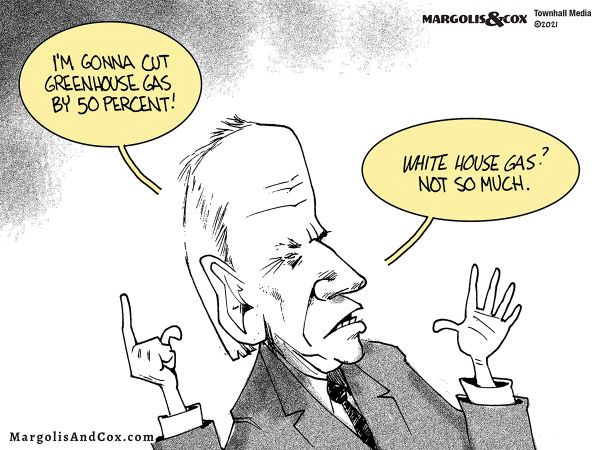
None of this information stops the Biden administration. In November 2021, it “proposed regulations on methane emissions by the U.S. oil and gas industry, at a direct cost of more than $1 billion annually, to deal with a nonexistent problem.”

Wouldn’t it be nice if a little science got through to
the policy-makers behind so-called “climate science”?

See Also:

Confirmed: Temperature Drives CO2, not the Reverse


Briefing for COP28 Dubai 2023

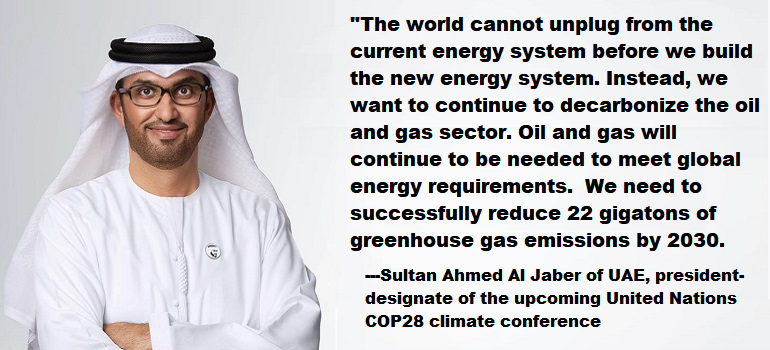
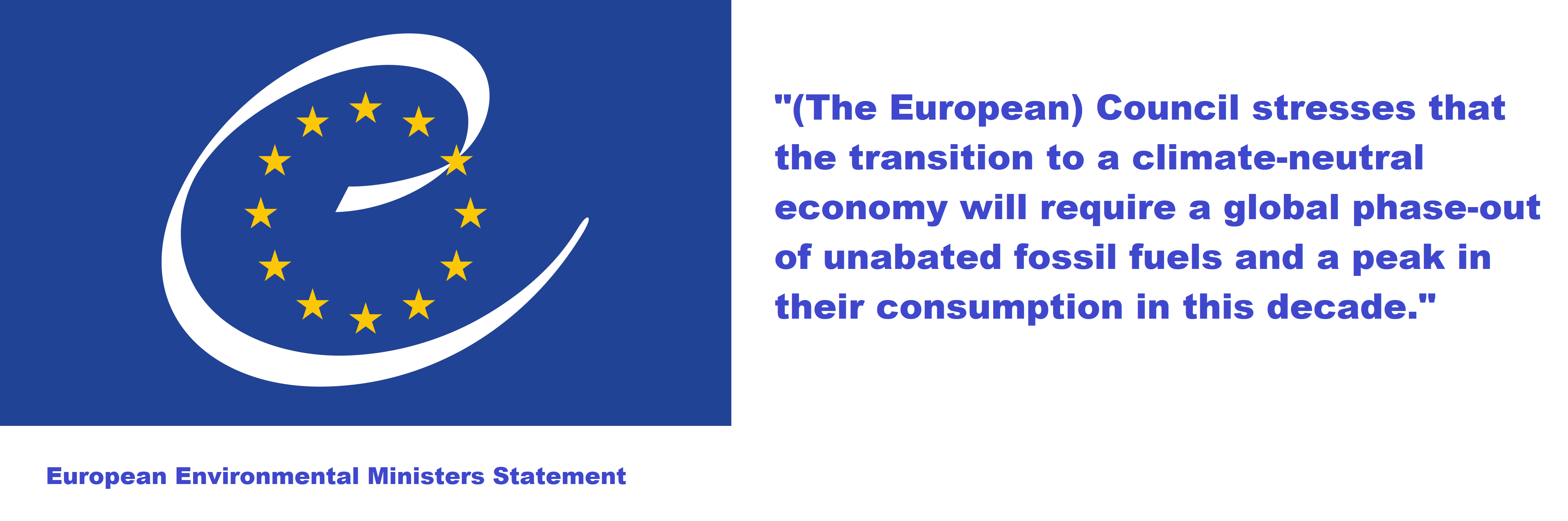
Presently the next climate Conference of Parties is scheduled for Dubai with United Arab Emirates as hosts this November 30 to December 12.  According to the UAE government, COP28 in Dubai will welcome “over 140 heads of state, senior government leaders, over 70,000 participants and more than 5,000 media professionals.” One can imagine the carbon footprint of the international travel of the delegates involved.

Some Statements Suggest the COP28 Challenges

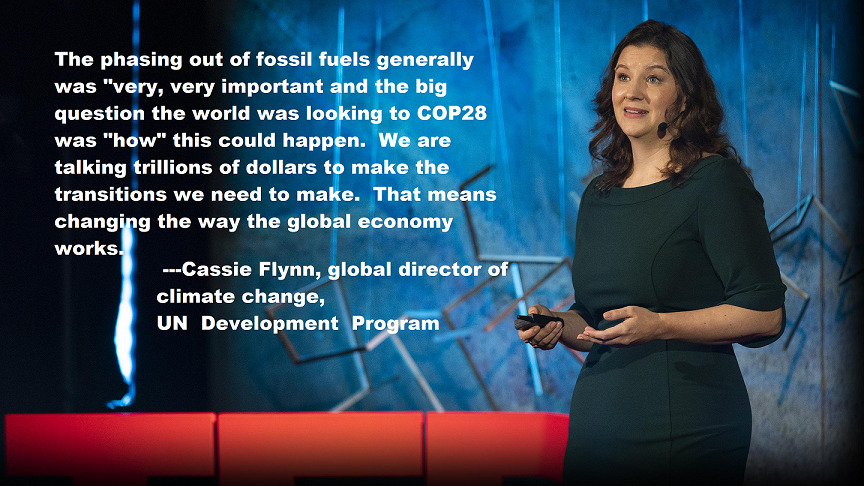
What the alarmists want summarized by Flynn:

A good outcome at Cop28, which will take place at Expo City Dubai from November 30 to December 12, would have three components: the first would “reinforce the 1.5ºC goal”, the second would enhance adaptation and support vulnerable countries, and the third would focus on finance “We have to see not just the $100 billion,” she said, referring to the missed target pledged by developing countries for climate finance.

Why a COP Briefing?

Actually, climate hysteria is like a seasonal sickness.  Each year a contagion of anxiety and fear is created by disinformation going viral in both legacy and social media in the run up to the annual autumnal COP.  Since the climatists have put themselves at the controls of the formidable US federal government, we can expect the public will be hugely hosed with alarms over the next few months.  Before the distress signals go full tilt, individuals need to inoculate themselves against the false claims, in order to build some herd immunity against the nonsense the media will promulgate. This post is offered as a means to that end.

Media Climate Hype is a Cover Up

Back in 2015 in the run up to Paris COP, French mathematicians published a thorough critique of the raison d’etre of the whole crusade. They said:

Fighting Global Warming is Absurd, Costly and Pointless.

  • Absurd because of no reliable evidence that anything unusual is happening in our climate.
  • Costly because trillions of dollars are wasted on immature, inefficient technologies that serve only to make cheap, reliable energy expensive and intermittent.
  • Pointless because we do not control the weather anyway.

The prestigious Société de Calcul Mathématique (Society for Mathematical Calculation) issued a detailed 195-page White Paper presenting a blistering point-by-point critique of the key dogmas of global warming. The synopsis with links to the entire document is at COP Briefing for Realists

Even without attending to their documentation, you can tell they are right because all the media climate hype is concentrated against those three points.

Finding: Nothing unusual is happening with our weather and climate.
Hype: Every metric or weather event is “unprecedented,” or “worse than we thought.”

Finding: Proposed solutions will cost many trillions of dollars for little effect or benefit.
Hype: Zero carbon will lead the world to do the right thing.  Anyway, the planet must be saved at any cost.

Finding: Nature operates without caring what humans do or think.
Hype: Any destructive natural event is blamed on humans burning fossil fuels.

How the Media Throws Up Flak to Defend False Suppositions

The Absurd Media:  Climate is Dangerous Today, Yesterday It was Ideal.

Billions of dollars have been spent researching any and all negative effects from a warming world: Everything from Acne to Zika virus.  A recent Climate Report repeats the usual litany of calamities to be feared and avoided by submitting to IPCC demands. The evidence does not support these claims. An example:

 It is scientifically established that human activities produce GHG emissions, which accumulate in the atmosphere and the oceans, resulting in warming of Earth’s surface and the oceans, acidification of the oceans, increased variability of climate, with a higher incidence of extreme weather events, and other changes in the climate.

Moreover, leading experts believe that there is already more than enough excess heat in the climate system to do severe damage and that 2C of warming would have very significant adverse effects, including resulting in multi-meter sea level rise.

Experts have observed an increased incidence of climate-related extreme weather events, including increased frequency and intensity of extreme heat and heavy precipitation events and more severe droughts and associated heatwaves. Experts have also observed an increased incidence of large forest fires; and reduced snowpack affecting water resources in the western U.S. The most recent National Climate Assessment projects these climate impacts will continue to worsen in the future as global temperatures increase.

Alarming Weather and Wildfires

But: Weather is not more extreme.


And Wildfires were worse in the past.
But: Sea Level Rise is not accelerating.

post-glacial_sea_level

Litany of Changes

Seven of the ten hottest years on record have occurred within the last decade; wildfires are at an all-time high, while Arctic Sea ice is rapidly diminishing.

We are seeing one-in-a-thousand-year floods with astonishing frequency.

When it rains really hard, it’s harder than ever.

We’re seeing glaciers melting, sea level rising.

The length and the intensity of heatwaves has gone up dramatically.

Plants and trees are flowering earlier in the year. Birds are moving polewards.

We’re seeing more intense storms.

But: Arctic Ice has not declined since 2007.

But: All of these are within the range of past variability.In fact our climate is remarkably stable, compared to the range of daily temperatures during a year where I live.

And many aspects follow quasi-60 year cycles.

The Impractical Media:  Money is No Object in Saving the Planet.

Here it is blithely assumed that the UN can rule the seas to stop rising, heat waves to cease, and Arctic ice to grow (though why we would want that is debatable).  All this will be achieved by leaving fossil fuels in the ground and powering civilization with windmills and solar panels.  While admitting that our way of life depends on fossil fuels, they ignore the inadequacy of renewable energy sources at their present immaturity.

An Example:
The choice between incurring manageable costs now and the incalculable, perhaps even irreparable, burden Youth Plaintiffs and Affected Children will face if Defendants fail to rapidly transition to a non-fossil fuel economy is clear. While the full costs of the climate damages that would result from maintaining a fossil fuel-based economy may be incalculable, there is already ample evidence concerning the lower bound of such costs, and with these minimum estimates, it is already clear that the cost of transitioning to a low/no carbon economy are far less than the benefits of such a transition. No rational calculus could come to an alternative conclusion. Defendants must act with all deliberate speed and immediately cease the subsidization of fossil fuels and any new fossil fuel projects, and implement policies to rapidly transition the U.S. economy away from fossil fuels.

But CO2 relation to Temperature is Inconsistent.

But: The planet is greener because of rising CO2.

But: Modern nations (G20) depend on fossil fuels for nearly 90% of their energy.

But: Renewables are not ready for prime time.

People need to know that adding renewables to an electrical grid presents both technical and economic challenges.  Experience shows that adding intermittent power more than 10% of the baseload makes precarious the reliability of the supply.  South Australia is demonstrating this with a series of blackouts when the grid cannot be balanced.  Germany got to a higher % by dumping its excess renewable generation onto neighboring countries until the EU finally woke up and stopped them. Texas got up to 29% by dumping onto neighboring states, and some like Georgia are having problems.

But more dangerous is the way renewables destroy the economics of electrical power.  Seasoned energy analyst Gail Tverberg writes:

In fact, I have come to the rather astounding conclusion that even if wind turbines and solar PV could be built at zero cost, it would not make sense to continue to add them to the electric grid in the absence of very much better and cheaper electricity storage than we have today. There are too many costs outside building the devices themselves. It is these secondary costs that are problematic. Also, the presence of intermittent electricity disrupts competitive prices, leading to electricity prices that are far too low for other electricity providers, including those providing electricity using nuclear or natural gas. The tiny contribution of wind and solar to grid electricity cannot make up for the loss of more traditional electricity sources due to low prices.

These issues are discussed in more detail in the post Climateers Tilting at Windmills

The Irrational Media:  Whatever Happens in Nature is Our Fault.

An Example:

Other potential examples include agricultural losses. Whether or not insurance
reimburses farmers for their crops, there can be food shortages that lead to higher food
prices (that will be borne by consumers, that is, Youth Plaintiffs and Affected Children).
There is a further risk that as our climate and land use pattern changes, disease vectors
may also move (e.g., diseases formerly only in tropical climates move northward).36 This
could lead to material increases in public health costs

But: Actual climate zones are local and regional in scope, and they show little boundary change.

But: Ice cores show that it was warmer in the past, not due to humans.

The hype is produced by computer programs designed to frighten and distract children and the uninformed.  For example, there was mention above of “multi-meter” sea level rise.  It is all done with computer models.  For example, below is San Francisco.  More at USCS Warnings of Coastal Floodings

In addition, there is no mention that GCMs projections are running about twice as hot as observations.

Omitted is the fact GCMs correctly replicate tropospheric temperature observations only when CO2 warming is turned off.

Figure 5. Simplification of IPCC AR5 shown above in Fig. 4. The colored lines represent the range of results for the models and observations. The trends here represent trends at different levels of the tropical atmosphere from the surface up to 50,000 ft. The gray lines are the bounds for the range of observations, the blue for the range of IPCC model results without extra GHGs and the red for IPCC model results with extra GHGs.The key point displayed is the lack of overlap between the GHG model results (red) and the observations (gray). The nonGHG model runs (blue) overlap the observations almost completely.

In the effort to proclaim scientific certainty, neither the media nor IPCC discuss the lack of warming since the 1998 El Nino, despite two additional El Ninos in 2010 and 2016.

Further they exclude comparisons between fossil fuel consumption and temperature changes. The legal methodology for discerning causation regarding work environments or medicine side effects insists that the correlation be strong and consistent over time, and there be no confounding additional factors. As long as there is another equally or more likely explanation for a set of facts, the claimed causation is unproven. Such is the null hypothesis in legal terms: Things happen for many reasons unless you can prove one reason is dominant.

Finally, advocates and IPCC are picking on the wrong molecule. The climate is controlled not by CO2 but by H20. Oceans make climate through the massive movement of energy involved in water’s phase changes from solid to liquid to gas and back again. From those heat transfers come all that we call weather and climate: Clouds, Snow, Rain, Winds, and Storms.

Esteemed climate scientist Richard Lindzen ended a very fine recent presentation with this description of the climate system:

I haven’t spent much time on the details of the science, but there is one thing that should spark skepticism in any intelligent reader. The system we are looking at consists in two turbulent fluids interacting with each other. They are on a rotating planet that is differentially heated by the sun. A vital constituent of the atmospheric component is water in the liquid, solid and vapor phases, and the changes in phase have vast energetic ramifications. The energy budget of this system involves the absorption and reemission of about 200 watts per square meter. Doubling CO2 involves a 2% perturbation to this budget. So do minor changes in clouds and other features, and such changes are common. In this complex multifactor system, what is the likelihood of the climate (which, itself, consists in many variables and not just globally averaged temperature anomaly) is controlled by this 2% perturbation in a single variable? Believing this is pretty close to believing in magic. Instead, you are told that it is believing in ‘science.’ Such a claim should be a tip-off that something is amiss. After all, science is a mode of inquiry rather than a belief structure.

Summary:  From this we learn three things:

Climate warms and cools without any help from humans.

Warming is good and cooling is bad.

The hypothetical warming from CO2 would be a good thing.


September 2023 Ocean Warming Crests, Solar Coincidence?
The best context for understanding decadal temperature changes comes from the world’s sea surface temperatures (SST), for several reasons:

  • The ocean covers 71% of the globe and drives average temperatures;
  • SSTs have a constant water content, (unlike air temperatures), so give a better reading of heat content variations;
  • Major El Ninos have been the dominant climate feature in recent years.

HadSST is generally regarded as the best of the global SST data sets, and so the temperature story here comes from that source. Previously I used HadSST3 for these reports, but Hadley Centre has made HadSST4 the priority, and v.3 will no longer be updated.  HadSST4 is the same as v.3, except that the older data from ship water intake was re-estimated to be generally lower temperatures than shown in v.3.  The effect is that v.4 has lower average anomalies for the baseline period 1961-1990, thereby showing higher current anomalies than v.3. This analysis concerns more recent time periods and depends on very similar differentials as those from v.3 despite higher absolute anomaly values in v.4.  More on what distinguishes HadSST3 and 4 from other SST products at the end. The user guide for HadSST4 is here.

The Current Context

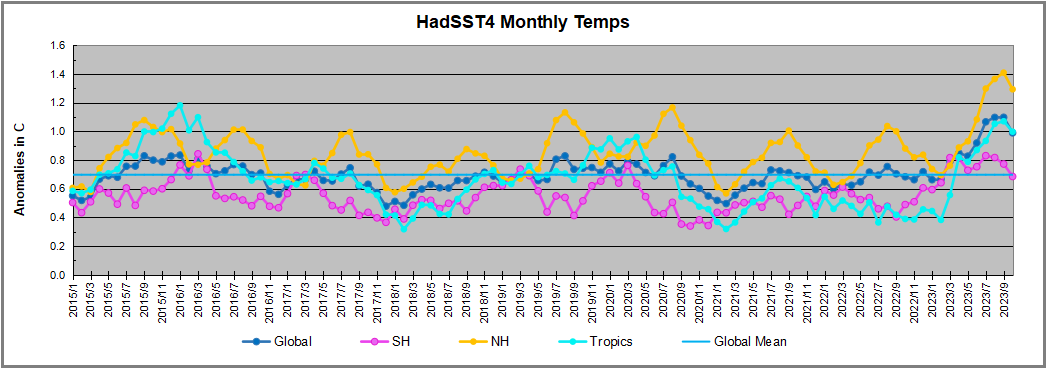
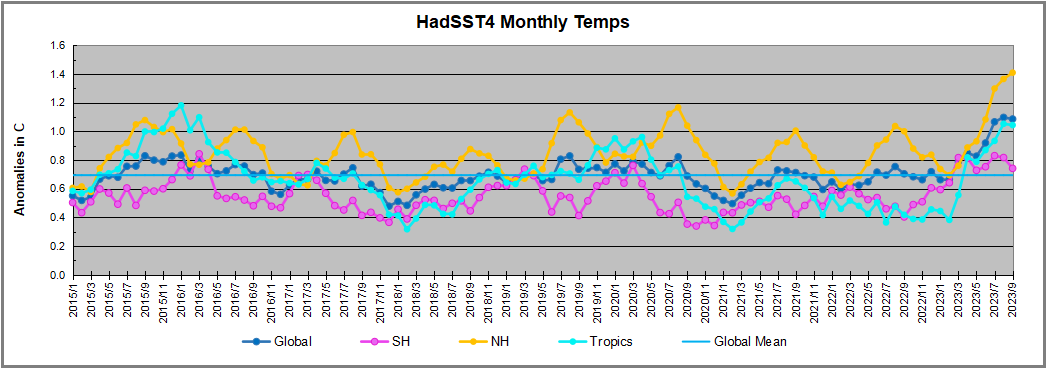
The chart below shows SST monthly anomalies as reported in HadSST4 starting in 2015 through August 2023.  A global cooling pattern is seen clearly in the Tropics since its peak in 2016, joined by NH and SH cycling downward since 2016. 

Note that in 2015-2016 the Tropics and SH peaked in between two summer NH spikes.  That pattern repeated in 2019-2020 with a lesser Tropics peak and SH bump, but with higher NH spikes. By end of 2020, cooler SSTs in all regions took the Global anomaly well below the mean for this period.  In 2021 the summer NH summer spike was joined by warming in the Tropics but offset by a drop in SH SSTs, which raised the Global anomaly slightly over the mean.

Then in 2022, another strong NH summer spike peaked in August, but this time both the Tropic and SH were countervailing, resulting in only slight Global warming, later receding to the mean.   Oct./Nov. temps dropped  in NH and the Tropics took the Global anomaly below the average for this period. After an uptick in December, temps in January 2023 dropped everywhere, strongest in NH, with the Global anomaly further below the mean since 2015.

Now comes El Nino as shown by the upward spike in the Tropics since January, the anomaly nearly tripling from 0.38C to 1.06C.  In August 2023, all regions rose, especially NH up from 0.70C to 1.37C, pulling up the global anomaly to a new high for this period. September shows a new peak for NH at 1.41, but both SH and the Tropics cooled enough to bring the Global anomaly back down.

Comment:

The climatists have seized on this unusual warming as proof of their Zero Carbon agenda, without addressing how impossible it would be for CO2 warming the air to raise ocean temperatures.  It is the ocean that warms the air, not the other way around.  Recently Steven Koonin had this to say about the phonomenon confirmed in the graph above:

El Nino is a phenomenon in the climate system that happens once every four or five years.  Heat builds up in the equatorial Pacific to the west of Indonesia and so on.  Then when enough of it builds up it surges across the Pacific and changes the currents and the winds.  As it surges toward South America it was discovered and named in the 19th century  It is well understood at this point that the phenomenon has nothing to do with CO2.

Now people talk about changes in that phenomena as a result of CO2 but it’s there in the climate system already and when it happens it influences weather all over the world.   We feel it when it gets rainier in Southern California for example.  So for the last 3 years we have been in the opposite of an El Nino, a La Nina, part of the reason people think the West Coast has been in drought.

It has now shifted in the last months to an El Nino condition that warms the globe and is thought to contribute to this Spike we have seen. But there are other contributions as well.  One of the most surprising ones is that back in January of 2022 an enormous underwater volcano went off in Tonga and it put up a lot of water vapor into the upper atmosphere. It increased the upper atmosphere of water vapor by about 10 percent, and that’s a warming effect, and it may be that is contributing to why the spike is so high.

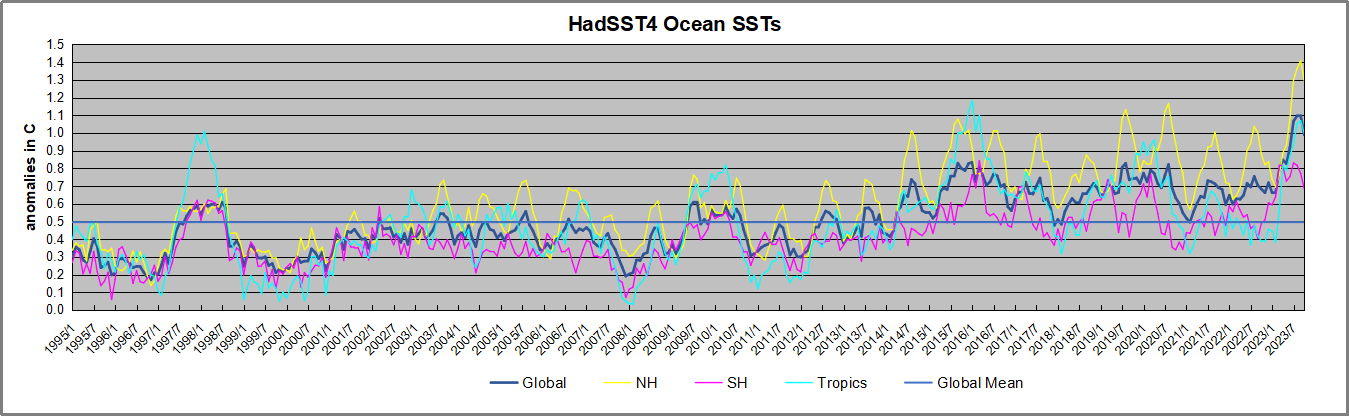
A longer view of SSTs

To enlarge, open image in new tab.

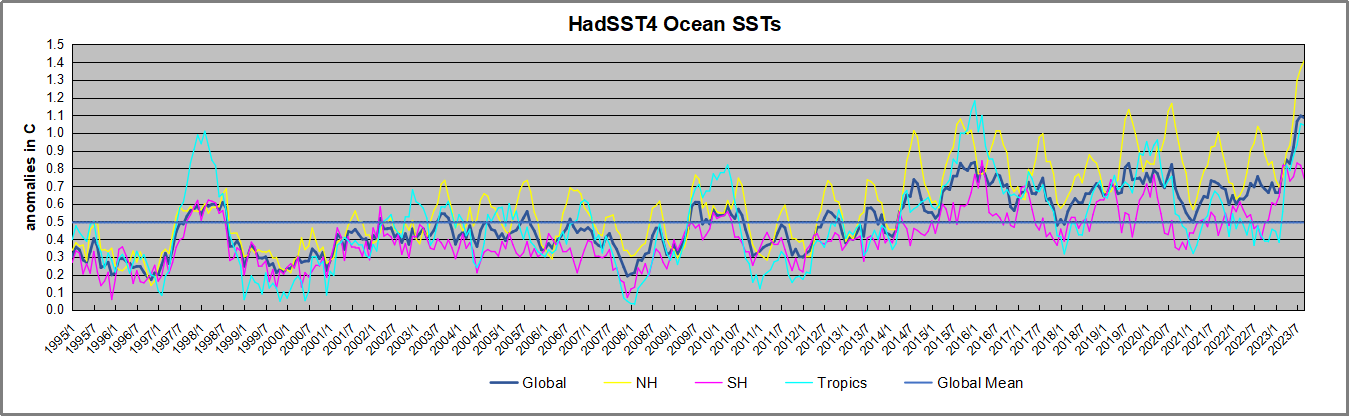
The graph above is noisy, but the density is needed to see the seasonal patterns in the oceanic fluctuations.  Previous posts focused on the rise and fall of the last El Nino starting in 2015.  This post adds a longer view, encompassing the significant 1998 El Nino and since.  The color schemes are retained for Global, Tropics, NH and SH anomalies.  Despite the longer time frame, I have kept the monthly data (rather than yearly averages) because of interesting shifts between January and July.1995 is a reasonable (ENSO neutral) starting point prior to the first El Nino. 

The sharp Tropical rise peaking in 1998 is dominant in the record, starting Jan. ’97 to pull up SSTs uniformly before returning to the same level Jan. ’99. There were strong cool periods before and after the 1998 El Nino event. Then SSTs in all regions returned to the mean in 2001-2. 

SSTS fluctuate around the mean until 2007, when another, smaller ENSO event occurs. There is cooling 2007-8,  a lower peak warming in 2009-10, following by cooling in 2011-12.  Again SSTs are average 2013-14.

Now a different pattern appears.  The Tropics cooled sharply to Jan 11, then rise steadily for 4 years to Jan 15, at which point the most recent major El Nino takes off.  But this time in contrast to ’97-’99, the Northern Hemisphere produces peaks every summer pulling up the Global average.  In fact, these NH peaks appear every July starting in 2003, growing stronger to produce 3 massive highs in 2014, 15 and 16.  NH July 2017 was only slightly lower, and a fifth NH peak still lower in Sept. 2018.

The highest summer NH peaks came in 2019 and 2020, only this time the Tropics and SH were offsetting rather adding to the warming. (Note: these are high anomalies on top of the highest absolute temps in the NH.)  Since 2014 SH has played a moderating role, offsetting the NH warming pulses. After September 2020 temps dropped off down until February 2021.  In 2021-22 there were again summer NH spikes, but in 2022 moderated first by cooling Tropics and SH SSTs, then in October to January 2023 by deeper cooling in NH and Tropics.  

Now in 2023 the Tropics flipped from below to well above average, while NH has produced a summer peak with August higher than any previous year. In fact, the summer warming peaks in NH have occurred in August or September, so this number is likely the crest.

What to make of all this? The patterns suggest that in addition to El Ninos in the Pacific driving the Tropic SSTs, something else is going on in the NH.  The obvious culprit is the North Atlantic, since I have seen this sort of pulsing before.  After reading some papers by David Dilley, I confirmed his observation of Atlantic pulses into the Arctic every 8 to 10 years.

Contemporary AMO Observations

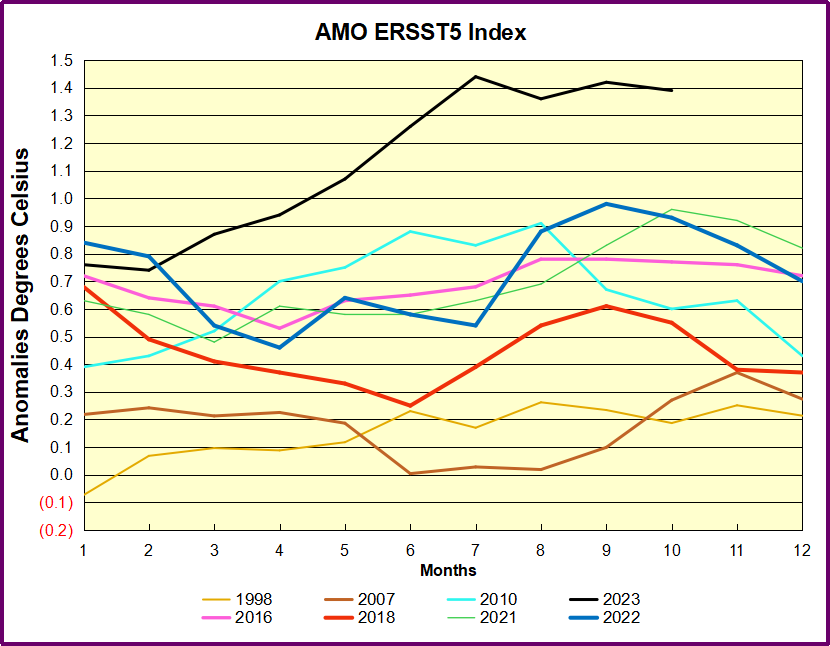
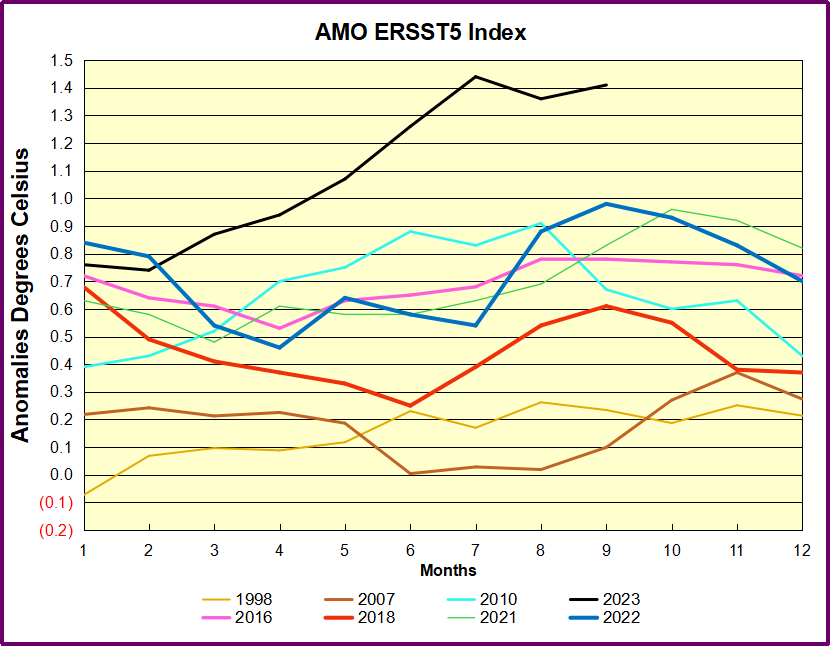
Through January 2023 I depended on the Kaplan AMO Index (not smoothed, not detrended) for N. Atlantic observations. But it is no longer being updated, and NOAA says they don’t know its future.  So I find that ERSSTv5 AMO dataset has data through August.  It differs from Kaplan, which reported average absolute temps measured in N. Atlantic.  “ERSST5 AMO  follows Trenberth and Shea (2006) proposal to use the NA region EQ-60°N, 0°-80°W and subtract the global rise of SST 60°S-60°N to obtain a measure of the internal variability, arguing that the effect of external forcing on the North Atlantic should be similar to the effect on the other oceans.”  So the values represent sst anomaly differences between the N. Atlantic and the Global ocean.

The chart above confirms what Kaplan also showed.  As August is the hottest month for the N. Atlantic, its varibility, high and low, drives the annual results for this basin.  Note also the peaks in 2010, lows after 2014, and a rise in 2021. Now in 2023 the peak is holding at 1.4C.  An annual chart below is informative:

Note the difference between blue/green years, beige/brown, and purple/red years.  2010, 2021, 2022 all peaked strongly in August or September.  1998 and 2007 were mildly warm.  2016 and 2018 were matching or cooler than the global average.  2023 started out slightly warm, then in May and June spiked to match 2010. Now there is a peak in July, with August and September only slightly lower.

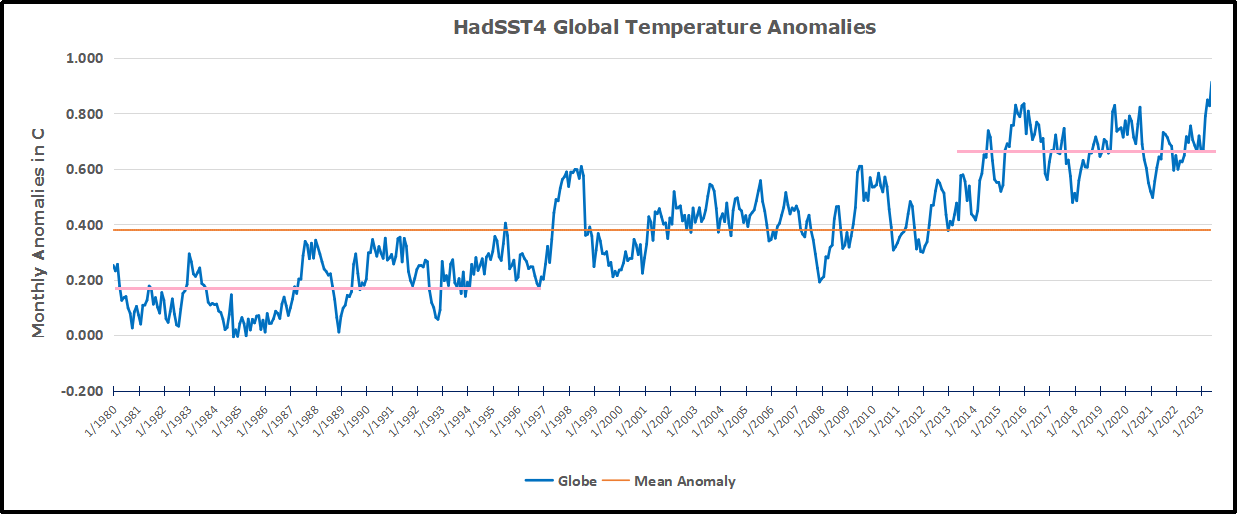
The pattern suggests the ocean may be demonstrating a stairstep pattern like that we have also seen in HadCRUT4. 

The purple line is the average anomaly 1980-1996 inclusive, value 0.18.  The orange line the average 1980-202306, value 0.38, also for the period 1997-2012. The red line is 2013-202306, value 0.64. As noted above, these rising stages are driven by the combined warming in the Tropics and NH, including both Pacific and Atlantic basins.

Curiosity:  Solar Coincidence?

The news about our current solar cycle 25 is that the solar activity is hitting peak numbers now and higher  than expected 1-2 years in the future.  As livescience put it:  Solar maximum could hit us harder and sooner than we thought. How dangerous will the sun’s chaotic peak be?  Some charts from spaceweatherlive look familar to these sea surface temperature charts.

Summary

The oceans are driving the warming this century.  SSTs took a step up with the 1998 El Nino and have stayed there with help from the North Atlantic, and more recently the Pacific northern “Blob.”  The ocean surfaces are releasing a lot of energy, warming the air, but eventually will have a cooling effect.  The decline after 1937 was rapid by comparison, so one wonders: How long can the oceans keep this up? And is the sun adding forcing to this process?

Space weather impacts the ionosphere in this animation. Credits: NASA/GSFC/CIL/Krystofer Kim

Footnote: Why Rely on HadSST4

HadSST is distinguished from other SST products because HadCRU (Hadley Climatic Research Unit) does not engage in SST interpolation, i.e. infilling estimated anomalies into grid cells lacking sufficient sampling in a given month. From reading the documentation and from queries to Met Office, this is their procedure.

HadSST4 imports data from gridcells containing ocean, excluding land cells. From past records, they have calculated daily and monthly average readings for each grid cell for the period 1961 to 1990. Those temperatures form the baseline from which anomalies are calculated.

In a given month, each gridcell with sufficient sampling is averaged for the month and then the baseline value for that cell and that month is subtracted, resulting in the monthly anomaly for that cell. All cells with monthly anomalies are averaged to produce global, hemispheric and tropical anomalies for the month, based on the cells in those locations. For example, Tropics averages include ocean grid cells lying between latitudes 20N and 20S.

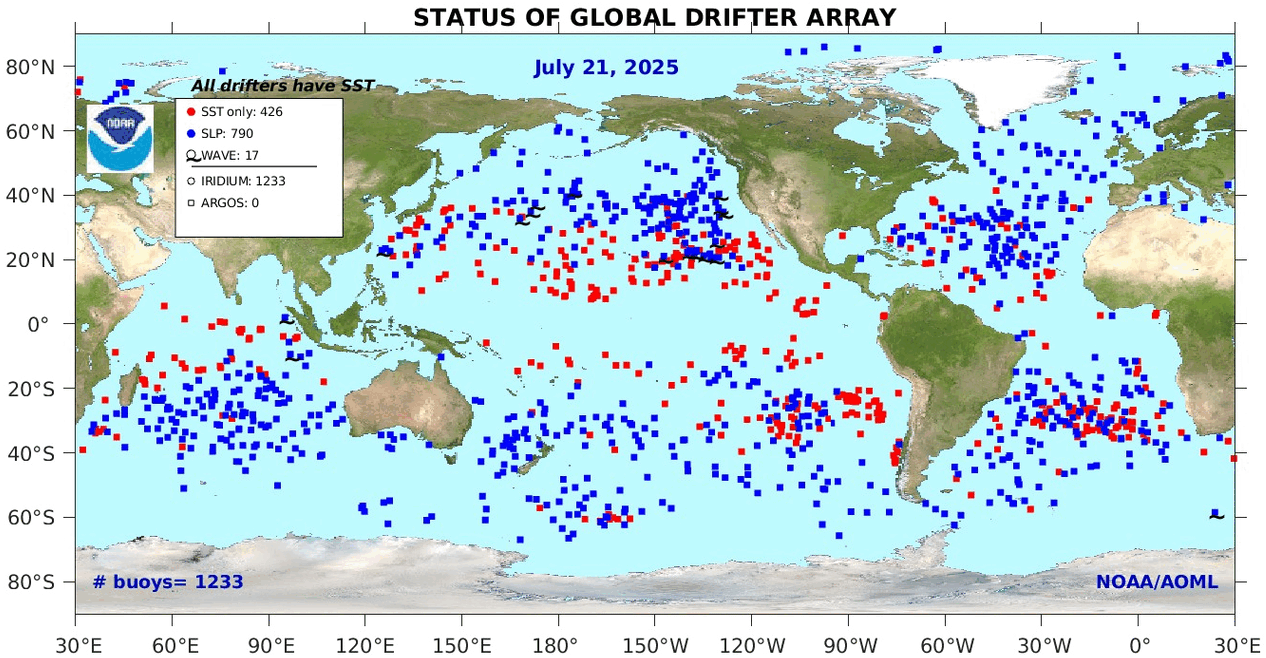
Gridcells lacking sufficient sampling that month are left out of the averaging, and the uncertainty from such missing data is estimated. IMO that is more reasonable than inventing data to infill. And it seems that the Global Drifter Array displayed in the top image is providing more uniform coverage of the oceans than in the past.

uss-pearl-harbor-deploys-global-drifter-buoys-in-pacific-ocean

USS Pearl Harbor deploys Global Drifter Buoys in Pacific Ocean


UAH: Amazing SH Land Air Spike September 2023

The post below updates the UAH record of air temperatures over land and ocean. Each month and year exposed again the growing disconnect between the real world and the Zero Carbon zealots.  It is as though the anti-hydrocarbon band wagon hopes to drown out the data contradicting their justification for the Great Energy Transition.  Yes, there is warming from an El Nino buildup coincidental with North Atlantic warming, but no basis to blame it on CO2.  

As an overview consider how recent rapid cooling  completely overcame the warming from the last 3 El Ninos (1998, 2010 and 2016).  The UAH record shows that the effects of the last one were gone as of April 2021, again in November 2021, and in February and June 2022  At year end 2022 and continuing into 2023 global temp anomaly matched or went lower than average since 1995, an ENSO neutral year. (UAH baseline is now 1991-2020).

For reference I added an overlay of CO2 annual concentrations as measured at Mauna Loa.  While temperatures fluctuated up and down ending flat, CO2 went up steadily by ~60 ppm, a 15% increase.

Furthermore, going back to previous warmings prior to the satellite record shows that the entire rise of 0.8C since 1947 is due to oceanic, not human activity.

gmt-warming-events

The animation is an update of a previous analysis from Dr. Murry Salby.  These graphs use Hadcrut4 and include the 2016 El Nino warming event.  The exhibit shows since 1947 GMT warmed by 0.8 C, from 13.9 to 14.7, as estimated by Hadcrut4.  This resulted from three natural warming events involving ocean cycles. The most recent rise 2013-16 lifted temperatures by 0.2C.  Previously the 1997-98 El Nino produced a plateau increase of 0.4C.  Before that, a rise from 1977-81 added 0.2C to start the warming since 1947.

Importantly, the theory of human-caused global warming asserts that increasing CO2 in the atmosphere changes the baseline and causes systemic warming in our climate.  On the contrary, all of the warming since 1947 was episodic, coming from three brief events associated with oceanic cycles. 

Update August 3, 2021

Chris Schoeneveld has produced a similar graph to the animation above, with a temperature series combining HadCRUT4 and UAH6. H/T WUWT

image-8


mc_wh_gas_web20210423124932

See Also Worst Threat: Greenhouse Gas or Quiet Sun?

September 2023 Update New Summer High Driven by SH Spike 

banner-blog

With apologies to Paul Revere, this post is on the lookout for cooler weather with an eye on both the Land and the Sea.  While you will hear a lot about 2020-21 temperatures matching 2016 as the highest ever, that spin ignores how fast the cooling set in.  The UAH data analyzed below shows that warming from the last El Nino had fully dissipated with chilly temperatures in all regions. After a warming blip in 2022, land and ocean temps dropped again with 2023 starting below the mean since 1995.  Spring and Summer 2023 saw a series of warmings.  Now in September a new summer high resulted from a major upward spike in SH, especially the land temps. 

UAH has updated their tlt (temperatures in lower troposphere) dataset for September 2023. Posts on their reading of ocean air temps this month preceded updated records from HadSST4.  I last posted on SSTs using HadSST4 Ocean Warming Crest August 2023, Solar Coincidence?  This month also has a separate graph of land air temps because the comparisons and contrasts are interesting as we contemplate possible cooling in coming months and years. Sometimes air temps over land diverge from ocean air changes.  For example in September 2023, SH land temps leaped upward almost unbelievably.

In September, as shown later on, Global ocean air reached a slightly higher peak led by SH, but with NH easing down. OTOH  Land air temps rose in all regions, with a SH rising dramatically.   Thus the land + ocean Global UAH temperature is now exceeding the 2016 peak.

Note:  UAH has shifted their baseline from 1981-2010 to 1991-2020 beginning with January 2021.  In the charts below, the trends and fluctuations remain the same but the anomaly values change with the baseline reference shift.

Presently sea surface temperatures (SST) are the best available indicator of heat content gained or lost from earth’s climate system.  Enthalpy is the thermodynamic term for total heat content in a system, and humidity differences in air parcels affect enthalpy.  Measuring water temperature directly avoids distorted impressions from air measurements.  In addition, ocean covers 71% of the planet surface and thus dominates surface temperature estimates.  Eventually we will likely have reliable means of recording water temperatures at depth.

Recently, Dr. Ole Humlum reported from his research that air temperatures lag 2-3 months behind changes in SST.  Thus the cooling oceans now portend cooling land air temperatures to follow.  He also observed that changes in CO2 atmospheric concentrations lag behind SST by 11-12 months.  This latter point is addressed in a previous post Who to Blame for Rising CO2?

After a change in priorities, updates are now exclusive to HadSST4.  For comparison we can also look at lower troposphere temperatures (TLT) from UAHv6 which are now posted for September.  The temperature record is derived from microwave sounding units (MSU) on board satellites like the one pictured above. Recently there was a change in UAH processing of satellite drift corrections, including dropping one platform which can no longer be corrected. The graphs below are taken from the revised and current dataset.

The UAH dataset includes temperature results for air above the oceans, and thus should be most comparable to the SSTs. There is the additional feature that ocean air temps avoid Urban Heat Islands (UHI).  The graph below shows monthly anomalies for ocean air temps since January 2015.

Note 2020 was warmed mainly by a spike in February in all regions, and secondarily by an October spike in NH alone. In 2021, SH and the Tropics both pulled the Global anomaly down to a new low in April. Then SH and Tropics upward spikes, along with NH warming brought Global temps to a peak in October.  That warmth was gone as November 2021 ocean temps plummeted everywhere. After an upward bump 01/2022 temps reversed and plunged downward in June.  After an upward spike in July, ocean air everywhere cooled in August and also in September.   

After sharp cooling everywhere in January 2023, all regions were into negative territory. Note the Tropics matched the lowest value, but since have spiked sharply upward +1.26C, with the largest increases in April to July 2023.  NH also warmed 0.7C in the last 4 months, while SH ocean air rose the same. Global Ocean air September 2023 is now matching 2016, the main difference being the much higher rise in SH anomalies since April.  The strength of the El Nino will determine the latter part of this year.

Land Air Temperatures Tracking Downward in Seesaw Pattern

We sometimes overlook that in climate temperature records, while the oceans are measured directly with SSTs, land temps are measured only indirectly.  The land temperature records at surface stations sample air temps at 2 meters above ground.  UAH gives tlt anomalies for air over land separately from ocean air temps.  The graph updated for September is below.

Here we have fresh evidence of the greater volatility of the Land temperatures, along with extraordinary departures by SH land.  Land temps are dominated by NH with a 2021 spike in January,  then dropping before rising in the summer to peak in October 2021. As with the ocean air temps, all that was erased in November with a sharp cooling everywhere.  After a summer 2022 NH spike, land temps dropped everywhere, and in January, further cooling in SH and Tropics offset by an uptick in NH. 

Remarkably, in 2023, SH land air anomaly shot up 1.5C, from  -0.56C in January to +0.93 in July, then dropped to 0.53 in August.  Now in September SH shot up again to 1.5C.  Tropical land temps are up 1.48 since January and NH Land air temps rose 0.9, mostly since May. The consolidated rise greatly exceeds the upward spikes peaking in  2016.

The Bigger Picture UAH Global Since 1980

The chart shows monthly Global anomalies starting 01/1980 to present.  The average monthly anomaly is -0.06, for this period of more than four decades.  The graph shows the 1998 El Nino after which the mean resumed, and again after the smaller 2010 event. The 2016 El Nino matched 1998 peak and in addition NH after effects lasted longer, followed by the NH warming 2019-20.   An upward bump in 2021 was reversed with temps having returned close to the mean as of 2/2022.  March and April brought warmer Global temps, later reversed.

With the sharp drops in Nov., Dec. and January 2023 temps, there was no increase over 1980. Now in 2023 the buildup to the September peak exceeds the sharp April peak of the El Nino 1998 event. It also surpasses the February peak in 2016.  Where it goes from here, up or down, remains to be seen.

TLTs include mixing above the oceans and probably some influence from nearby more volatile land temps.  Clearly NH and Global land temps have been dropping in a seesaw pattern, nearly 1C lower than the 2016 peak.  Since the ocean has 1000 times the heat capacity as the atmosphere, that cooling is a significant driving force.  TLT measures started the recent cooling later than SSTs from HadSST3, but are now showing the same pattern. Despite the three El Ninos, their warming has not persisted prior to 2023, and without them it would probably have cooled since 1995.  Of course, the future has not yet been written.


CO2 Fluxes Are Not Like Cash Flows

I learned alot from a recent extended discussion at Climate Etc. Causality and Climate responding to a paper Demetris Koutsoyiannis et al. (2023) On Hens, Eggs, Temperatures and CO2: Causal Links in Earth’s Atmosphere.   My previous post on this paper was:

Confirmed: Temperature Drives CO2, not the Reverse

I recommend the discussion thread at climate etc. (on going) as a tutorial for the competing paradigms regarding the CO2 cycle.  I gained clarity from the lead author (a frequent and constructive participant) as well others on the core misunderstanding that has plagued such discussions for decades. Some comments are below in italics with my bolds.

First, note that the paper had a narrowly defined scope:  to demonstrate from available data that changes in atmospheric CO2 lag rather than lead temperature changes.  Because the authors recognized that this finding is contrary to IPCC consensus climate science, appendices were supplied to counter the expected objections crediting human CO2 emissions from hydrocarbons as the main, or sole source of rising CO2 since the Little Ice Age (LIA).  As Koutsoyiannis explained in a summary comment near the end:

Demetris Koutsoyiannis September 29, 2023 at 4:54 pm

I think I have rebutted all the different critiques ON MY PAPERS. I am not going to reply to critiques on any other issues related to the issue of climate. Please make your critiques SPECIFIC, by quoting phrases in my papers that you think are incorrect. And before it, please read the papers.

For example you say:

> And that would be the cause of the CO2 increase in the atmosphere?

If you read the paper you will see that we write (p. 17): *What is the cause of the modern increase in temperature? Apparently, this question is much more difficult to reply to, as we can no longer attribute everything to any single agent. We do not claim to have the answer to this question, whose study is far beyond the article’s scope. Neither do we believe that mainstream climatic theory, which is focused upon human CO2 emissions as the main cause and regards everything else as feedback of the single main cause, can explain what happened on Earth for 4.5 billion years of changing climate.*

We have proposed a necessary condition for causality, which is time precedence of the cause over the effect. I hope you accept that necessary condition, am I wrong? We make our inference based on this necessary condition. Your numbers make no reference of time succession. When you find a way to test whether the direction in time is reversed, that will be great. But for now, all this looks to me an unproven conjecture. I hope you can excuse me that, being a Greek, I have to stick to Aristotelian logic.

You also say:

> While there is an elephant in the room, human emissions that released twice as much CO2 as measured in the atmosphere…

If this is the elephant, what is (copying from our paper, p. 25), *a total global increase in the respiration rate of ΔR = 31.6 Gt C/year. This rate, which is a result of natural processes, is 3.4 times greater than the CO2 emission by fossil fuel combustion (9.4 Gt C /year including cement production)*.

My Comment: The confounding issue in all this was identified as the mistaken analogy treating CO2 fluxes as though they are cash transactions between bank accounts.  Within that notion, a natural source/sink must net out intakes and releases.  Yet as others commented, geobiologists know that both absorption and release can be increasing or can be decreasing.  The source/sinks function dynamically, not statically as assumed by the analogy.

clydehspencer | September 29, 2023 at 3:07 pm | 

“Our knowledge of net global uptake over this period is good to 15%.”

How do you justify making such an assertion when no one has mentioned what is happening in the Arctic, the NASA observation of ‘greening,’ and the utterly unknown situation of submarine volcanic emissions?

How do you propose to identify and dismiss spurious correlations?

Ferdinand Engelbeen | September 29, 2023 at 4:13 pm |

Clyde as said elsewhere, we do not need any natural flow for the carbon balance: that is exactly known from human emissions minus increase in the atmosphere: that is exactly what nature did in the same year: always more sink than source in the past 60 years

Agnostic | October 1, 2023 at 4:23 am |

“In detail: both the oceans and vegetation are proven, increasing (!) sinks for CO2, thus these two can’t be cause of the increase in the atmosphere.
It really is that simple…”

And ironically, this is exactly where you are wrong. Just because they are increasing as sinks does not mean they cannot be increasing as sources. I think you are too stuck on the idea of a “budget”, it’s a linear view. It’s the “net” thing that is where the misunderstanding is.

The biosphere is indifferent to our contribution. If there is more CO2 available it will expand regardless of where it came from. Temperature increase, particularly in winter, means that more CO2 is released in biodegradation than normal. If it releases more than is fixed during the summer growing season, then atmospheric CO2 levels will increase.

During the growing season, if there is more CO2 available, then the biosphere can grow more vigorously and expand. Some of this is semi-permanently fixed, and some will only fix during the growing season to be available to be released as CO2 during the next winter.

If the humans made no contribution, the atmospheric CO2 would still go up, though perhaps not by as much, just as it did in other warm periods during the holocene. This “budget” idea is what is causing the confusion.

Agnostic October 1, 2023 at 4:02 am 

Ferdinand writes: “If humans are not to blame, what is the “other” source (both oceans and vegetation are increasing net sinks) and where resides all that human CO2?”

The same question has to be asked to explain the high variability of CO2 atmospheric concentration prior to industrialisation. The CO2 had to come from somewhere: during the MWP it was as high as 380-390ppm before dropping to 285ppm. During the Bolling-Allerod CO2 increased to as much as 420ppm while temps were actually cooling, a break in the pattern of Temp leading CO2 which holds over all timescales.

The answer is that the biosphere is massively more complex than you are appreciating. You claim that the biosphere is net sink because our emissions are grater than the amount that atmospheric CO2 is rising, but that thinking is too simplistic. It is likely, almost certain given previous periods of warming, that atmospheric CO2 would have risen anyway, but perhaps by not as much, which is our contribution.

The biosphere is expanding because more CO2 is available and is therefore a source as well as a sink. Were we not contributing our share, it would be a net source.

Agnostic | October 1, 2023 at 5:38 am |

“All the variability is in the net sink (not source!) rate of CO2 into nature, while sinks are increasingly negative and temperature is slightly increasing over the same time 60+ years time span…
Thus temperature is NOT the cause of the increase.”

No – this is where you are completely wrong.

The source is ALSO variable. Highly variable. The sinks which you describe as “variable” are ALSO sources, they are interdependent and non-linear in their relationship.

During the growing season, some of the growth fixed via photosynthesis is trapped and some decays during the winter. How much decays is predominantly temperature dependent. The is why you see CO2 follow temperature on ALL timescales that we reliably measure.

Agnostic | October 1, 2023 at 5:33 am | 

Processes that release C into the atmosphere (biodegradation) are far more temperature dependent than processes that fix it (photosynthesis). So there is already a systematic imbalance regardless of anything we do. It is not just a linear “budget”.

During cooler periods, the rate at which CO2 is removed is greater than the rate at which it is released, leading to lowering of CO2 in atmosphere such as LIA. During periods of warmth, especially winter, more CO2 is released than is fixed leading to an increase. But the relationship is not linear.

As more CO2 is available, the transient biosphere expands and grows more vigorously. Some is trapped and some is released at the end of the season. How much is released is dependent on warmth (and to a lesser extent moisture in soils).

We hear the biosphere being described as a “net sink” which is growing because humans emit more C than is remaining in the atmosphere. But it is faulty thinking.

If we did not contribute, then atmosCO2 would still go up, making the biosphere a “net source”. That’s because the biosphere expands and contracts depending on how much CO2 is available and how warm it is. The CO2 comes from trapped sources particularly in the soils, released by increased temperatures which is a much larger overall source than human emissions.

IMO, it is better to think of carbon sources and sinks as dynamic reservoirs that are never perfectly in balance and which have a non-linear relationship with each other. We contribute to the source side, but the biosphere can’t tell the difference between man’s CO2 and naturally emitted, so characterising it as “budget” is where the confusion arises. The “budget” is always changing in non-linear interdependent way. It is not fixed.

Agnostic | October 1, 2023 at 7:59 am |

I have read other similar papers that came to the same conclusion, one in particular by statistician. They were adamant that from a statistical POV you cannot claim causality the way round it is traditionally viewed.

I am NO expert on the carbon cycle, by any means. But it has been bone stuck in my head for a long time because I AM interested in paleoclimatological record. Ice core data is what is generally used to show that CO2 levels are at “unprecedented levels”, yet we know that ice core data is unreliable and too low resolution to speak about short intervals of warming of 300 to 400 years which we appear to be in.

High resolution proxies clearly show similar concentrations of CO2 in the atmosphere
to today, yet that is not put into context. Where did THAT CO2 come from?

The other thing that bothers me is the “budget” approach to CO2 as if there was a fixed amount of C that can be released or absorbed yearly. Yet just the tiniest forays into biodegradation and soil hydrology shows how an incredibly complex and interdependent picture it is, and that’s to say nothing of the oceans.

As usual with climate science, conclusions are made to support a narrative
or a pre-existing conviction and the complexity be damned.

Footnote:  What It Means:  CO2 flows through Dynamic Reservoirs

The other puzzle piece is described by Ed Berry following his peer-reviewed paper Nature Controls the CO2 Increase II.  A summary comment ties his analysis into the above discussion.  Early in the thread the point was made that all CO2 sources are involved in supporting the level of atmospheric concentration at any point in time. Ed Berry made this point  in this way.

He explained that when you look at the flow of carbon dioxide—”flow” meaning the carbon moving from one carbon reservoir to another, i.e., through photosynthesis, the eating of plants, and back out through respiration—a 140 ppm constant level requires a continual inflow of 40 ppm per year of carbon dioxide, because, according to the IPCC, carbon dioxide has a turnover time of 3.5 years (meaning carbon dioxide molecules stay in the atmosphere for about 3 1/2 years).  140 ppm divided by 3.5 is 40 ppm CO2.

“A level of 280 ppm is twice that—80 ppm of inflow. Now, we’re saying that the inflow of human carbon dioxide is one-third of the total. Even IPCC data says, ‘No, human carbon dioxide inflow is about 5 percent to 7 percent of the total carbon dioxide inflow into the atmosphere,’” he said.

[Today’s level of nearly 420 ppm means that 120 ppm of inflow is required annually, or 120 +2 ppm if it is to increase as it has been.  Where does 122 ppm of CO2 come from?  Well, let’s say we can count on 6 ppm of FF CO2 (5%) and  the other 116 being non-human emissions.]

So, to make up for the lack of necessary human-caused carbon dioxide flowing into the atmosphere, the IPCC claims that instead of having a turnover time of 3.5 years, human CO2 stays in the atmosphere for hundreds or even thousands of years.

“The removal of human-emitted CO2 from the atmosphere by natural processes will take a few hundred thousand years (high confidence). Depending on the RCP scenario considered, about 15 to 40% of emitted CO2 will remain in the atmosphere longer than 1,000 years. This very long time required by sinks to remove anthropogenic CO2 makes climate change caused by elevated CO2 irreversible on human time scale.” Source:Chapter 6 Working Group 1 AR5

“[The IPCC is] saying that something is different about human carbon dioxide and that it can’t flow as fast out of the atmosphere as natural carbon dioxide,” Mr. Berry said. “Well, IPCC scientists—when they’ve gone through, what, billions of dollars?—should have asked a simple question:

‘Is a human carbon dioxide molecule exactly identical to a natural
carbon dioxide molecule?’ And the answer is yes. Of course!

“Well, if human and natural CO2 molecules are identical, their outflow times must be identical. So, the whole idea where they say it’s in there for hundreds, or thousands, of years, is wrong.”

Footnote: 

A commenter summed up the discussion this way:

Botanist 

Until a few weeks ago I’d always thought like Ferdinand. This elegant paradigm (below) now seems so simple and obvious, I’m not sure how I did not see it before reading the Hens paper and the article hereabove and contemplating certain helpful comments hereabove. Am I crazy; this strikes me as genius. Can something so simple be.

” My premise is that nature does not make individual balance per source but works holistically. Hence, my version of the carbon balance is roughly this:

Ins: 4% human, 96% natural
Outs: 0% human, 98% natural.
Atmospheric storage difference: +2%
(so that: Ins = Outs + Atmospheric storage difference)

Balance = Atmospheric storage difference: 2%, of which,
Humans: 2% X 4% = 0.08%
Nature: 2% X 96 % = 1.92%
where 1.92% : 0.08% = 24:1 “

Confirmed: Temperature Drives CO2, not the Reverse

From notrickszone New Study: The Rising-CO2-Causes-Warming Perception Not Supported By Real-World Observation.  Excerpts in italics with my bolds.

One of the most basic concepts in physics is that causes precede effects and effects follow causes. Determining the directionality sequence is thus essential in any causality analysis.

The assumed CO₂→T causality direction cannot be scientifically supported

The assumption in climate models is that CO₂ causes changes in temperature, or T. More specifically, it is assumed modern global warming has been caused by increases in anthropogenic CO₂ emissions.

However, scientists (Koutsoyiannis et al., 2023) have now expanded upon last year’s 2-part study on stochastics-formulated causality published in The Royal Society (Koutsoyiannis et al., 2022 (1) and Koutsoyiannis et al., 2022 (2)) where they notably contend:

“Clearly the results […] suggest a (mono-directional) potentially causal system with T as the cause and [CO₂] as the effect. Hence the common perception that increasing [CO₂] causes increased T can be excluded as it violates the necessary condition for this causality direction.”

The analysis is in complete agreement with several posts here, especially:

Temps Cause CO2 Changes, Not the Reverse. 2023 Update

The paper is On Hens, Eggs, Temperatures and CO2: Causal Links in Earth’s Atmosphere by Demetris Koutsoyiannis et al.  Excerpts in italics with my bolds.

Abstract

The scientific and wider interest in the relationship between atmospheric temperature (T) and concentration of carbon dioxide ([CO2]) has been enormous. According to the commonly assumed causality link, increased [CO2] causes a rise in T. However, recent developments cast doubts on this assumption by showing that this relationship is of the hen-or-egg type, or even unidirectional but opposite in direction to the commonly assumed one. These developments include an advanced theoretical framework for testing causality based on the stochastic evaluation of a potentially causal link between two processes via the notion of the impulse response function. Using, on the one hand, this framework and further expanding it and, on the other hand, the longest available modern time series of globally averaged T and [CO2], we shed light on the potential causality between these two processes.

All evidence resulting from the analyses suggests a unidirectional,
potentially causal link with T as the cause and [CO2] as the effect.

That link is not represented in climate models, whose outputs are also examined using the same framework, resulting in a link opposite the one found when the real measurements are used.

Discussion and Further Results

The mainstream assumption of the causality direction [CO2] → T makes a compelling narrative, as everything is blamed on a single cause, the human CO2 emissions. Indeed, this has been the popular narrative for decades. However, popularity does not necessarily mean correctness, and here we have provided strong arguments against this assumption.

Since we have identified atmospheric temperature as the cause and atmospheric CO2 concentration as the effect, one may be tempted to ask the question: What is the cause of the modern increase in temperature? Apparently, this question is much more difficult to reply to, as we can no longer attribute everything to any single agent.

We do not claim to have the answer to this question, whose study is far beyond the article’s scope. Neither do we believe that mainstream climatic theory, which is focused upon human CO2 emissions as the main cause and regards everything else as feedback of the single main cause, can explain what happened on Earth for 4.5 billion years of changing climate.

The examined processes in the Appendices are internal to the climatic system. Other processes affecting T, not examined here, could also be external (e.g., solar and astronomical [43,44] and geological [45,46,47,48,49]). Generally, in complex systems, an identified causal link, even though it gives some explanation of a phenomenon, raises additional questions, e.g., what caused the change in the identified cause, etc. In turn, causal links in complex systems may form endless sequences.

For this reason, it is naïve to expect complete answers to problems related to complex systems or to assume that a complex system is in permanent equilibrium and that an external agent is needed to “kick” it out of the equilibrium and produce change. Yet the investigation of a single causal link between two processes, as is the focus of this paper, provides useful information, with possible significant scientific, technical, practical, epistemological and philosophical implications. These are not covered in this paper. 

As already clarified, the scope of our work is not to provide detailed modeling of the processes studied but to check causality conditions. We highlight the fact that the relationship we established explains only about 1/3 of the actual variance of Δln[CO2]. This is not negligible for investigating causality, but also leaves a margin for many other climatic factors to act.

Conclusions

With reference to points 1–7 of the Introduction setting the paper’s scope, the results of our analyses can be summarized as follows.

  1. All evidence resulting from the analyses of the longest available modern time series of atmospheric concentration of [CO2] at Mauna Loa, Hawaii, along with that of globally averaged T, suggests a unidirectional, potentially causal link with T as the cause and [CO2] as the effect. This direction of causality holds for the entire period covered by the observations (more than 60 years).
  2. Seasonality, as reflected in different phases of [CO2] time series at different latitudes, does not play any role in potential causality, as confirmed by replacing the Mauna Loa [CO2] time series with that in South Pole.
  3. The unidirectional 𝑇→ln[CO2] potential causal link applies to all timescales resolved by the available data, from monthly to about two decades.
  4. The proposed methodology is simple, flexible and effective in disambiguating cases where the type of causality, HOE or unidirectional, is not quite clear.
  5. Furthermore, the methodology defines a type of data analysis that, regardless of the detection of causality per se, assesses modeling performance by comparing observational data with model results. In particular, the analysis of climate model outputs reveals a misrepresentation of the causal link by these models, which suggest a causality direction opposite to the one found when the real measurements are used.
  6. Extensions of the scope of the methodology, i.e., from detecting possible causality to building a more detailed model of stochastic type, are possible, as illustrated by a toy model for the T-[CO2] system, with explained variance of [CO2] reaching an impressive 99.9%.
  7. While some of the findings of this study seem counterintuitive or contrary to mainstream opinions, they are logically and computationally supported by arguments and calculations given in the Appendices.


Zharkova on Solar Forcing and Global Cooling

The Grand Solar Minimum is Coming.

Interview of Prof. V. Zharkova  by Franco Battaglia  for the Italian newspaper La Verita Excerpts in italics with my bolds and added images.

The following interview will show – if there were still the need to show it – that the climate system is quite far to be well understood, thereby it is quite far from the truth any claim according to which on the matter “science is settled”, as Al Gore and the IPCC have been claiming for 20 years. Valentina Zharkova is an outstanding Ukrainian scientist: she graduated from the University of Kiev in Applied mathematics, first, and then completed her PhD studies in Astrophysics from the Main Astronomical Observatory in Kiev. For the past 30 years she worked in the UK Universities of Glasgow, Bradford and Northumbria, since 2005 as a Professor of Applied Mathematics. At the present she is Professor Emeritus at Northumbria University (Newcastle, UK) and Director of ZVS Research Enterprise Ltd. (London UK).

Q. Prof. Zharkova, people say that the Earth is warming since the beginning of the Industrial revolution and that this is due to human activities. Do you have any comment on that?

A. Actually the Earth is warming since 1690, the minimum of the Little Ice Age. In 1976, Prof. John Eddy established that the terrestrial temperature follows solar radiation deposition during solar activity cycles, increasing during the solar cycle maxima and decreasing during solar minima. Then, in 1995, prof. Judith Lean and collaborators discovered and later in 2016 Prof. Don Easterbrook confirmed that the input of solar radiation to Earth was decreased during the Maunder minimum in 1645-1710 by about 3 W/m2 leading to a decrease of terrestrial temperature during what is now called the Little Ice Age. Since 1700 and the recovery of the Maunder minimum the solar radiation deposition to Earth restored to previous level and terrestrial temperature followed solar activity cycles.

Q. Has then the solar activity been increasing during the last few decades?

A. No. Actually the solar activity has been decreasing since the 80’s of the last century.

Q. This is why IPCC has concluded that the present warming is due to humans?

A. Exactly, the warming is present but it is not due to humans. They make a mistake: they assume that solar radiation is essentially constant, thereby attributing the warming to CO2’s enhanced concentration in the terrestrial atmosphere.

Q. Could you clarify?

A. Within solar activity there are two important cycles: one – the small solar cycle – with a 11-year period and the other – the grand solar cycle – with a 350-year period. The grand solar cycles are separated by grand solar minima (GSMs), the most recent of them occurred during Maunder minimum (1645-1710). The GSM acts on the terrestrial environment via the cold air jets coming from Arctic and Antarctica because of the reduction of solar UV radiation and ozone abundances in the terrestrial atmosphere.  Now there is a current solar cycle (cycle number 25) is showing to have the largest numbers of spotless days than any other cycles of the last 280 years of observations. During the modern GSM, similar to Maunder minimum, the solar radiation is expected to decrease by about 3 W/m2. The terrestrial temperature is then expected to decrease in the next three decades by about 1C. This was recorded during the Maunder Minimum and the same is expected in the modern GSM (2020-2050).

But the further change of solar irradiance deposited to the Earth can be caused by other effects.

Q. Namely?


A. By orbital effects. There are well known Milankovitch cycles caused by various variation of the earth orbit eccentricity, inclination of its axis to the ecliptics, aberrations. These periods vary from 15K to 100K years and well protocolled in the terrestrial biomass. There is a shorter period of solar radiation changes with a period of about two millennia: Hallstatt’s cycle. It reflects medium-scale variations of the solar radiation level whose origin comes not from the dynamo activity inside the Sun but from the Sun’s position with respect to the orbit focus, or barycentre, where it supposed to reside according to Kepler motion, or so called, solar inertial motion (SIM). This means that the Sun is shifted, or wobbling from its focus/barycentre position on two millennial scale, so that Sun-Earth distance has to change on the two millennial period.

Basically, this happens because of the gravitation from Jupiter, Saturn, Neptune and Uranus, the Sun does not sit in the focus of the ellipse of the Earth orbit, but performs the motion called SIM (wobbling on smaller orbits) about this focus. This principle of wobbling stars is used to search for exoplanets because wobbling star proves that it has a planetary system attached. In fact, the official ephemeris of the Sun-Earth distance taken from Paris-Meudon observatory and NASA JPL sites show that in the millennium 1600-2600 the Sun in February-June of every year is closer to the Earth orbit when the Sun is closer to the point of the spring equinox of the Northern hemisphere, leaving the Earth to be further from the Sun in August-December than in the usual elliptical orbit when the Sun is in its focus.

This SIM leads to an increase of the solar radiation deposited to the Earth every year during the first half of a year and, thus, to the increase of the terrestrial temperature in March-July of every year by approximately 10-12 W/m2 for each hemisphere. With the exchange of solar heating via the ocean the terrestrial atmosphere is heated to higher temperatures owing this SIM, and this extra heating occurs since the Maunder Minimum to last until 2600. The SIM provides the extra-solar heating of terrestrial atmosphere, which is not considered in the IPCC models.

Hence, the solar irradiance is not a constant, but changes on a scale
of 11 and 350 years, as induced by the solar dynamo action,
and on a two-millennial scale as induced by the solar inertial motion.

Q. In other words, you are saying that IPCC found in the CO2 the wrong source of increasing terrestrial temperature?

A. Yes. In fact the increase of CO2 abundances is a consequence of the temperature increase but not its reason as Patrick Moore of Canada has shown in his book. The main part of solar radiation energy is stored in the Ultraviolet (UV) region, much less in the visible spectrum and even less in the infra-red spectrum where molecules of CO2 emit. CO2 molecules only re-scatter the UV solar emission in much weaker infrared part of solar spectrum. CO2 does not have the emission energy to heat anything because its radiation is the in low energy infra-red range! The abundances of CO2 molecules increases every year, this is correct, but because the Sun deposits more radiation to Earth and other planets owing to SIM.

The IPCC models calculate the emission from the layer containing increased number of CO2 molecules by simply adding all the emission by each extra CO2 molecules appeared in the past 200 years. This is not correct! Because the emission from a thick layer of CO2 is locked inside this layer by radiative transfer effects, so that the emission emitted outside this layer has a saturation effect independent on the abundance of CO2 inside the layer!

Instead, I have shown that owing to SIM, the increase of solar radiation in this millennium will be about about 10-12 W/m2 per hemisphere and per year, until around 2600.  This means that the temperature increase will continue by further 2.5-3.0C until 2600 independently of any actions on the Earth and other planets. If this extra-solar heating is included then the whole temperature increase since Maunder Minimum is provided by the solar radiation because of SIM as it should because it is the only heating we have in the solar system.

In conclusion, the real reason of the current heating of terrestrial atmosphere since
the Maunder minimum is this extra-solar heating caused by the orbital motion of the Sun.
And currently the Sun is already visibly closer to the Earth (and other planet orbits)
during the springs and summers.

Q. Is there a way to test your theory?

A. Sure, it is. In the next 30 years it will be shown what is heating the Earth atmosphere: the Sun or human activity. Currently, the Sun is approaching the grand solar minimum (GSM) predicted by us in 2015, when the Sun itself is going into hibernation as all the observations of sunspots show, producing less and less active regions, flares, sunspots and coronal mass ejections. This should cause a steaming decrease of the terrestrial temperature by up to 1C in cycle 26 (2031-2042). This decrease should happen in spite the Sun already closer to Earth and increased by 2020 its temperature by 1.2C since the Maunder minimum.

If AGW were in action, then we would not observe any decrease
of the terrestrial temperature, only its increase.

However, this year and a few previous years show clearly that the Earth is on the course to a decrease of terrestrial temperature. We will see the terrestrial temperature to decrease and rather dramatically decrease in the next decade or two because of the reduced activity, or GSM, of the Sun.

Q. I imagine that the whole issue, including your finding, is still quite controversial. Would you then agree that it is safe to say that the matter is quite far from being settled?

A. Definitely!

Well, in the medieval age the settled model of the solar system was Ptolemy’s model where the Sun and planets revolve about the Earth. They invented two circles for each planet to explain their strange jumps on the sky. The church considered the science settled then.

So settled that when Copernicus proposed in 1532 the heliocentric system, where the Sun is the main central star and all planets revolve about it, they considered it as heresy. We know what happened to Giordano Bruno and led to Galileo to deny Copernicus model to survive.

Until nearly a century later, in 1610-1620 Kepler formulated three laws of the planets revolving about the central star. But only in 1665 or 1666 Isaak Newton discovered the gravity, which was only roughly (via central star-planets) included into Kepler’s laws.

And only in 1965 Jose calculated the gravity effects not only of the central star on its planets but also of the planets on the central star, thus discovering the star’s motion, naming it SIM.

Maybe it is the time to progress correctly with the orbital effects
of solar and planetary motion!


Ocean Warming Crest August 2023, Solar Coincidence?

The best context for understanding decadal temperature changes comes from the world’s sea surface temperatures (SST), for several reasons:

  • The ocean covers 71% of the globe and drives average temperatures;
  • SSTs have a constant water content, (unlike air temperatures), so give a better reading of heat content variations;
  • Major El Ninos have been the dominant climate feature in recent years.

HadSST is generally regarded as the best of the global SST data sets, and so the temperature story here comes from that source. Previously I used HadSST3 for these reports, but Hadley Centre has made HadSST4 the priority, and v.3 will no longer be updated.  HadSST4 is the same as v.3, except that the older data from ship water intake was re-estimated to be generally lower temperatures than shown in v.3.  The effect is that v.4 has lower average anomalies for the baseline period 1961-1990, thereby showing higher current anomalies than v.3. This analysis concerns more recent time periods and depends on very similar differentials as those from v.3 despite higher absolute anomaly values in v.4.  More on what distinguishes HadSST3 and 4 from other SST products at the end. The user guide for HadSST4 is here.

The Current Context

The chart below shows SST monthly anomalies as reported in HadSST4 starting in 2015 through August 2023.  A global cooling pattern is seen clearly in the Tropics since its peak in 2016, joined by NH and SH cycling downward since 2016. 

Note that in 2015-2016 the Tropics and SH peaked in between two summer NH spikes.  That pattern repeated in 2019-2020 with a lesser Tropics peak and SH bump, but with higher NH spikes. By end of 2020, cooler SSTs in all regions took the Global anomaly well below the mean for this period.  In 2021 the summer NH summer spike was joined by warming in the Tropics but offset by a drop in SH SSTs, which raised the Global anomaly slightly over the mean.
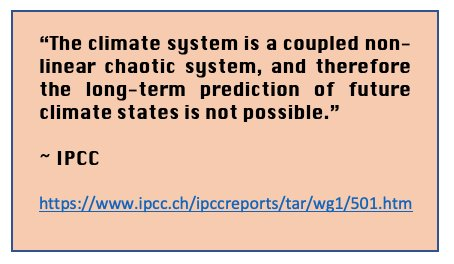
Then in 2022, another strong NH summer spike peaked in August, but this time both the Tropic and SH were countervailing, resulting in only slight Global warming, later receding to the mean.   Oct./Nov. temps dropped  in NH and the Tropics took the Global anomaly below the average for this period. After an uptick in December, temps in January 2023 dropped everywhere, strongest in NH, with the Global anomaly further below the mean since 2015.

Now comes El Nino as shown by the upward spike in the Tropics since January, the anomaly nearly tripling from 0.38C to 1.06C.  Now in August 2023, all regions rose, especially NH up from 0.70C to now 1.37C, pulling up the global anomaly to a new high for this period. 

Comment:

The climatists have seized on this unusual warming as proof of their Zero Carbon agenda, without addressing how impossible it would be for CO2 warming the air to raise ocean temperatures.  It is the ocean that warms the air, not the other way around.  Recently Steven Koonin had this to say about the phonomenon confirmed in the graph above:
El Nino is a phenomenon in the climate system that happens once every four or five years.  Heat builds up in the equatorial Pacific to the west of Indonesia and so on.  Then when enough of it builds up it surges across the Pacific and changes the currents and the winds.  As it surges toward South America it was discovered and named in the 19th century  It is well understood at this point that the phenomenon has nothing to do with CO2.

Now people talk about changes in that phenomena as a result of CO2 but it’s there in the climate system already and when it happens it influences weather all over the world.   We feel it when it gets rainier in Southern California for example.  So for the last 3 years we have been in the opposite of an El Nino, a La Nina, part of the reason people think the West Coast has been in drought.

It has now shifted in the last months to an El Nino condition that warms the globe and is thought to contribute to this Spike we have seen. But there are other contributions as well.  One of the most surprising ones is that back in January of 2022 an enormous underwater volcano went off in Tonga and it put up a lot of water vapor into the upper atmosphere. It increased the upper atmosphere of water vapor by about 10 percent, and that’s a warming effect, and it may be that is contributing to why the spike is so high.
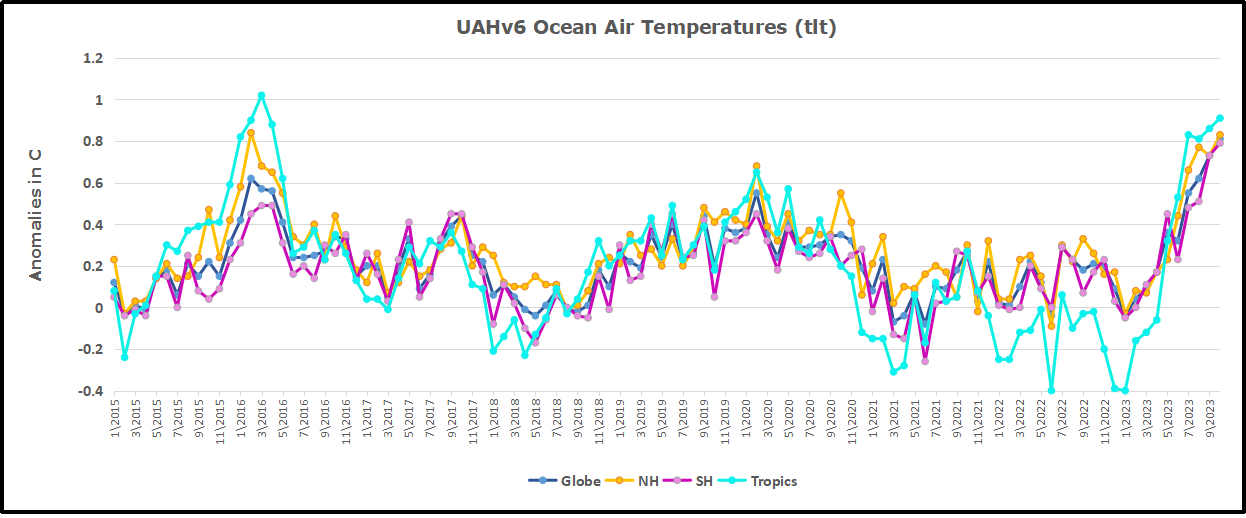
A longer view of SSTs

Open image in new tab to enlarge.

The graph above is noisy, but the density is needed to see the seasonal patterns in the oceanic fluctuations.  Previous posts focused on the rise and fall of the last El Nino starting in 2015.  This post adds a longer view, encompassing the significant 1998 El Nino and since.  The color schemes are retained for Global, Tropics, NH and SH anomalies.  Despite the longer time frame, I have kept the monthly data (rather than yearly averages) because of interesting shifts between January and July.1995 is a reasonable (ENSO neutral) starting point prior to the first El Nino. 

The sharp Tropical rise peaking in 1998 is dominant in the record, starting Jan. ’97 to pull up SSTs uniformly before returning to the same level Jan. ’99. There were strong cool periods before and after the 1998 El Nino event. Then SSTs in all regions returned to the mean in 2001-2. 

SSTS fluctuate around the mean until 2007, when another, smaller ENSO event occurs. There is cooling 2007-8,  a lower peak warming in 2009-10, following by cooling in 2011-12.  Again SSTs are average 2013-14.

Now a different pattern appears.  The Tropics cooled sharply to Jan 11, then rise steadily for 4 years to Jan 15, at which point the most recent major El Nino takes off.  But this time in contrast to ’97-’99, the Northern Hemisphere produces peaks every summer pulling up the Global average.  In fact, these NH peaks appear every July starting in 2003, growing stronger to produce 3 massive highs in 2014, 15 and 16.  NH July 2017 was only slightly lower, and a fifth NH peak still lower in Sept. 2018.

The highest summer NH peaks came in 2019 and 2020, only this time the Tropics and SH were offsetting rather adding to the warming. (Note: these are high anomalies on top of the highest absolute temps in the NH.)  Since 2014 SH has played a moderating role, offsetting the NH warming pulses. After September 2020 temps dropped off down until February 2021.  In 2021-22 there were again summer NH spikes, but in 2022 moderated first by cooling Tropics and SH SSTs, then in October to January 2023 by deeper cooling in NH and Tropics.  

Now in 2023 the Tropics flipped from below to well above average, while NH has produced a summer peak with August higher than any previous year. In fact, the summer warming peaks in NH have occurred in August or September, so this number is likely the crest.

What to make of all this? The patterns suggest that in addition to El Ninos in the Pacific driving the Tropic SSTs, something else is going on in the NH.  The obvious culprit is the North Atlantic, since I have seen this sort of pulsing before.  After reading some papers by David Dilley, I confirmed his observation of Atlantic pulses into the Arctic every 8 to 10 years.

Contemporary AMO Observations

Through January 2023 I depended on the Kaplan AMO Index (not smoothed, not detrended) for N. Atlantic observations. But it is no longer being updated, and NOAA says they don’t know its future.  So I find that ERSSTv5 AMO dataset has data through August.  It differs from Kaplan, which reported average absolute temps measured in N. Atlantic.  “ERSST5 AMO  follows Trenberth and Shea (2006) proposal to use the NA region EQ-60°N, 0°-80°W and subtract the global rise of SST 60°S-60°N to obtain a measure of the internal variability, arguing that the effect of external forcing on the North Atlantic should be similar to the effect on the other oceans.”  So the values represent sst anomaly differences between the N. Atlantic and the Global ocean.

The chart above confirms what Kaplan also showed.  As August is the hottest month for the N. Atlantic, its varibility, high and low, drives the annual results for this basin.  Note also the peaks in 2010, lows after 2014, and a rise in 2021. Now in 2023 the peak is nearly 1.4C.  An annual chart below is informative:

Note the difference between blue/green years, beige/brown, and purple/red years.  2010, 2021, 2022 all peaked strongly in August or September.  1998 and 2007 were mildly warm.  2016 and 2018 were matching or cooler than the global average.  2023 started out slightly warm, then in May and June spiked to match 2010. Now there are highs in August and the peak in July.

The pattern suggests the ocean may be demonstrating a stairstep pattern like that we have also seen in HadCRUT4. 

The purple line is the average anomaly 1980-1996 inclusive, value 0.18.  The orange line the average 1980-202306, value 0.38, also for the period 1997-2012. The red line is 2013-202306, value 0.64. As noted above, these rising stages are driven by the combined warming in the Tropics and NH, including both Pacific and Atlantic basins.

Curiosity:  Solar Coincidence?

The news about our current solar cycle 25 is that the solar activity is hitting peak numbers now and higher  than expected 1-2 years in the future.  As livescience put it:  Solar maximum could hit us harder and sooner than we thought. How dangerous will the sun’s chaotic peak be?  Some charts from spaceweatherlive look familar to these sea surface temperature charts.

Summary

The oceans are driving the warming this century.  SSTs took a step up with the 1998 El Nino and have stayed there with help from the North Atlantic, and more recently the Pacific northern “Blob.”  The ocean surfaces are releasing a lot of energy, warming the air, but eventually will have a cooling effect.  The decline after 1937 was rapid by comparison, so one wonders: How long can the oceans keep this up? And is the sun adding forcing to this process?

Space weather impacts the ionosphere in this animation. Credits: NASA/GSFC/CIL/Krystofer Kim

Footnote: Why Rely on HadSST4

HadSST is distinguished from other SST products because HadCRU (Hadley Climatic Research Unit) does not engage in SST interpolation, i.e. infilling estimated anomalies into grid cells lacking sufficient sampling in a given month. From reading the documentation and from queries to Met Office, this is their procedure.

HadSST4 imports data from gridcells containing ocean, excluding land cells. From past records, they have calculated daily and monthly average readings for each grid cell for the period 1961 to 1990. Those temperatures form the baseline from which anomalies are calculated.

In a given month, each gridcell with sufficient sampling is averaged for the month and then the baseline value for that cell and that month is subtracted, resulting in the monthly anomaly for that cell. All cells with monthly anomalies are averaged to produce global, hemispheric and tropical anomalies for the month, based on the cells in those locations. For example, Tropics averages include ocean grid cells lying between latitudes 20N and 20S.

Gridcells lacking sufficient sampling that month are left out of the averaging, and the uncertainty from such missing data is estimated. IMO that is more reasonable than inventing data to infill. And it seems that the Global Drifter Array displayed in the top image is providing more uniform coverage of the oceans than in the past.

uss-pearl-harbor-deploys-global-drifter-buoys-in-pacific-ocean

USS Pearl Harbor deploys Global Drifter Buoys in Pacific Ocean