Corrections to CO2 Post

This is an update correcting a previous post Fear Not CO2!  I discovered math errors that invalidated the main conclusion.  I apologize for not seeing the problem before posting.

At Quora Paul Noel answers the question Is climate change the biggest catastrophic risk facing humanity today? Text below in italics with my bolds

NO it is not even an issue you need to worry about.

Look closely. The biological adaptation is eating up the CO2 almost as fast as it is being emitted and the adaptation is getting faster every year.

Out of the over 38 GT output in 2019 only 0.02 GT will not be sequestered naturally and by next year that will be gone. The plants are eating up the CO2 just a few days after the release. They are happily eating it up just fine. You don’t even need to plant trees. Nothing against trees here. I like them.

This is the TRUMP CARD on the game. With this known, it is impossible to imagine the problems proposed are happening regardless of all other issues.

Correction Update

I reblogged an answer from Quora with an analysis and conclusions new to me. I thought it interesting if it held up to scrutiny.. Afterward I became uncomfortable when double checking the math, and so I am retracting my support. One smaller issue was noted in my post regarding CO2 having a larger weight (44) than the average air molecule (29). Thus calculating CO2 mass in the atmosphere should apply a ratio of 1.52. That does not in itself materially affect the finding.

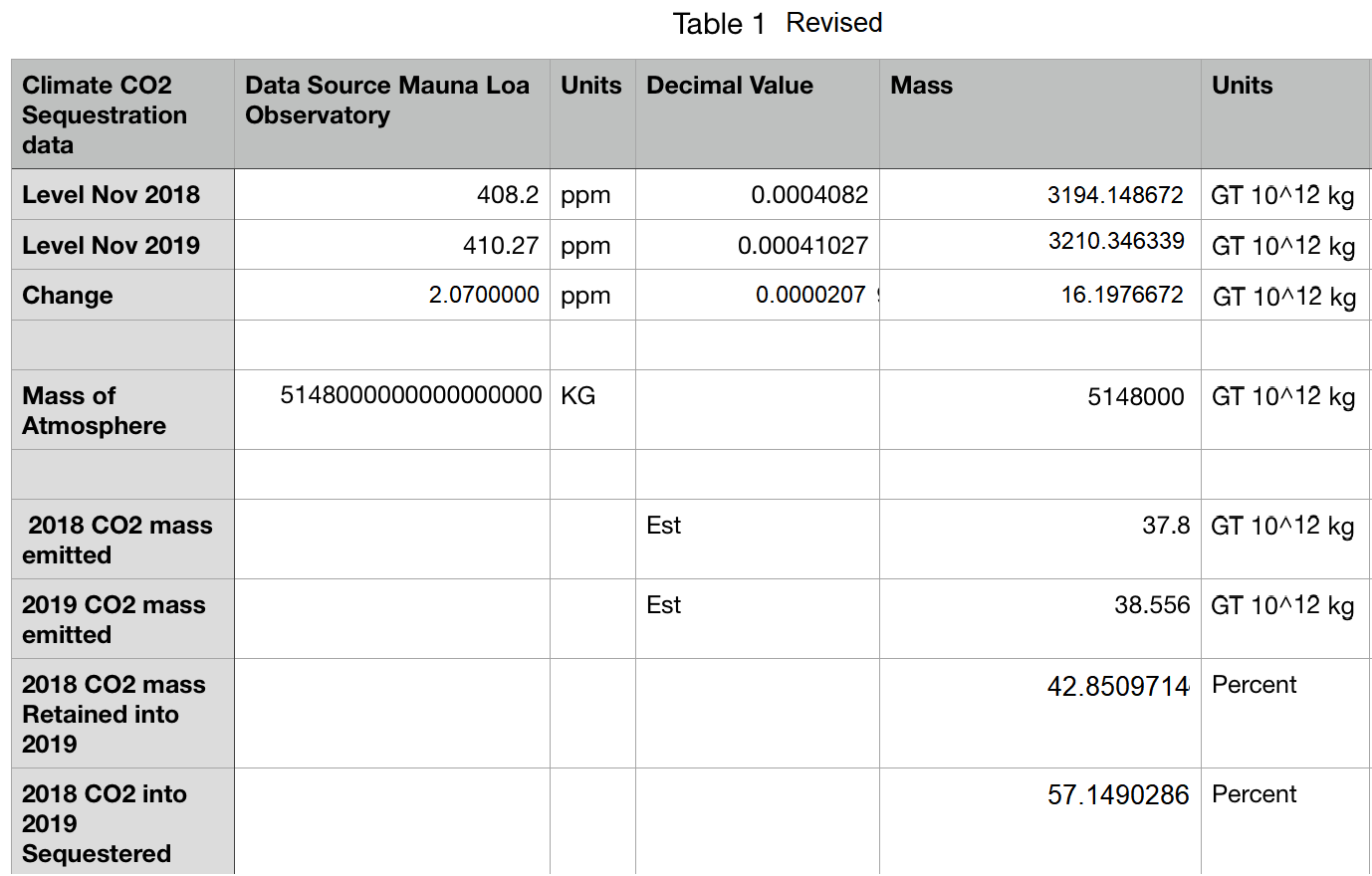
The Table produced by Paul Noel is shown above..

The more substantial issue is having equivalent units of mass for comparing atmospheric CO2 and human emissions of CO2. The proper unit is Gigatons since that is how emissions are reported. One GT is defined as 1 billion (10^9) metric tons and 1 metric ton is 1000 (10^3) kilograms. So one GT is 10^12 kg.

The mass of the atmosphere is calculated using air pressure and area, with a little variation in the results obtained by researchers. A typical standard is 5.148 x 10^18 kg. That converts to 5148000 x 10^12 kg or 5148000 GT. Once that value is plugged into the table, the results are very different. I had recognized that 10^15 was not GT, but thought it was only mislabeling. Later I found that the comparison was distorted in the process.

My revised Table 1 applies a weighted calculation for CO2 compared to average air molecules and derives masses and percentages using GT consistently.

It is clear that the claim of 99% sequestration of emissions is an artifact of faulty math. A better approximation is 57% for emissions reduced by natural fluxes.

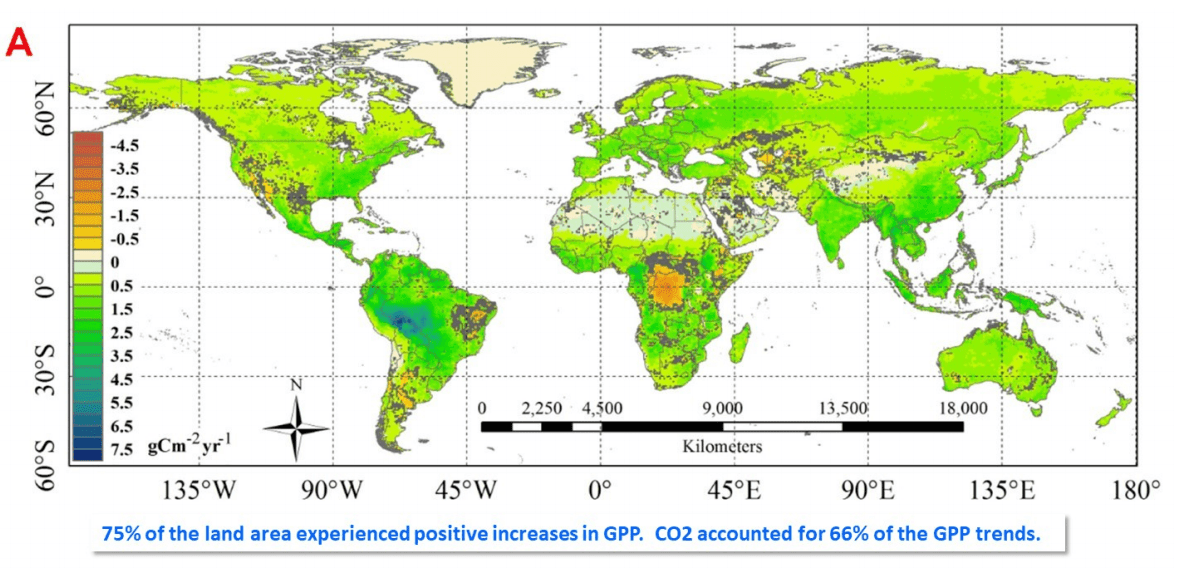
This does not mean we should fear CO2. For one thing the greening of the planet and record annual crop yields are a great benefit from both warming and higher atmospheric CO2. It is also the case that estimates of human emissions (fraught with uncertainty) are small compared to natural fluxes, which are estimated with error ranges exceeding emission amounts. Further, the sensitivity of temperature to rising CO2 is assumed to lie in a wide range.

My views on the CO2 cycle are in the posts:

CO2 Fluxes, Sources and Sinks

Who to Blame for Rising CO2?

Cooler NH SSTs in November

The best context for understanding decadal temperature changes comes from the world’s sea surface temperatures (SST), for several reasons:

  • The ocean covers 71% of the globe and drives average temperatures;
  • SSTs have a constant water content, (unlike air temperatures), so give a better reading of heat content variations;
  • A major El Nino was the dominant climate feature in recent years.

HadSST is generally regarded as the best of the global SST data sets, and so the temperature story here comes from that source, the latest version being HadSST3.  More on what distinguishes HadSST3 from other SST products at the end.

The Current Context

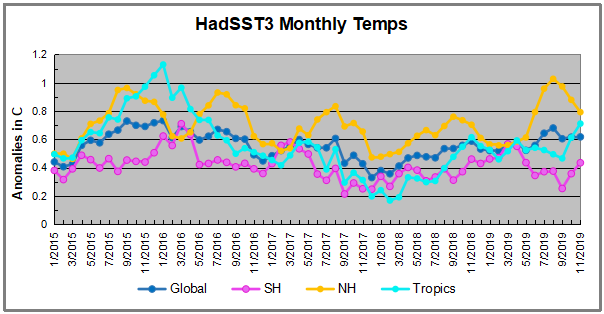
The chart below shows SST monthly anomalies as reported in HadSST3 starting in 2015 through November 2019.
A global cooling pattern is seen clearly in the Tropics since its peak in 2016, joined by NH and SH cycling downward since 2016.  In 2019 all regions had been converging to reach nearly the same value in April.

Then  NH rose exceptionally by almost 0.5C over the four summer months, in August exceeding previous summer peaks in NH since 2015.  Now in the last 3 months that warm NH pulse has reversed sharply.  Meanwhile the SH and Tropics bumped upward, but despite that the global anomaly changed little due to strong NH cooling.

Note that higher temps in 2015 and 2016 were first of all due to a sharp rise in Tropical SST, beginning in March 2015, peaking in January 2016, and steadily declining back below its beginning level. Secondly, the Northern Hemisphere added three bumps on the shoulders of Tropical warming, with peaks in August of each year.  A fourth NH bump was lower and peaked in September 2018.  As noted above, a fifth peak in August 2019 exceeded the four previous upward bumps in NH.

And as before, note that the global release of heat was not dramatic, due to the Southern Hemisphere offsetting the Northern one.  The major difference between now and 2015-2016 is the absence of Tropical warming driving the SSTs.

The annual SSTs for the last five years are as follows:

Annual SSTs Global NH SH  Tropics
2014 0.477 0.617 0.335 0.451
2015 0.592 0.737 0.425 0.717
2016 0.613 0.746 0.486 0.708
2017 0.505 0.650 0.385 0.424
2018 0.480 0.620 0.362 0.369

2018 annual average SSTs across the regions are close to 2014, slightly higher in SH and much lower in the Tropics.  The SST rise from the global ocean was remarkable, peaking in 2016, higher than 2011 by 0.32C.

A longer view of SSTs

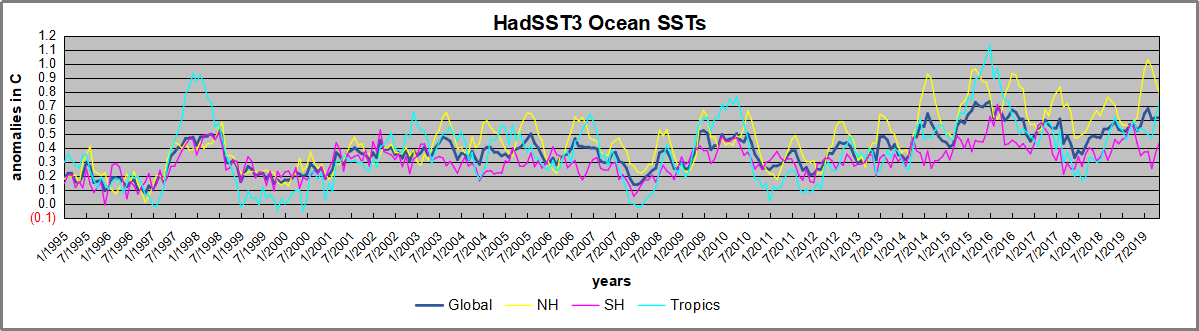
The graph below  is noisy, but the density is needed to see the seasonal patterns in the oceanic fluctuations.  Previous posts focused on the rise and fall of the last El Nino starting in 2015.  This post adds a longer view, encompassing the significant 1998 El Nino and since.  The color schemes are retained for Global, Tropics, NH and SH anomalies.  Despite the longer time frame, I have kept the monthly data (rather than yearly averages) because of interesting shifts between January and July.

1995 is a reasonable (ENSO neutral) starting point prior to the first El Nino.  The sharp Tropical rise peaking in 1998 is dominant in the record, starting Jan. ’97 to pull up SSTs uniformly before returning to the same level Jan. ’99.  For the next 2 years, the Tropics stayed down, and the world’s oceans held steady around 0.2C above 1961 to 1990 average.

Then comes a steady rise over two years to a lesser peak Jan. 2003, but again uniformly pulling all oceans up around 0.4C.  Something changes at this point, with more hemispheric divergence than before. Over the 4 years until Jan 2007, the Tropics go through ups and downs, NH a series of ups and SH mostly downs.  As a result the Global average fluctuates around that same 0.4C, which also turns out to be the average for the entire record since 1995.

2007 stands out with a sharp drop in temperatures so that Jan.08 matches the low in Jan. ’99, but starting from a lower high. The oceans all decline as well, until temps build peaking in 2010.

Now again a different pattern appears.  The Tropics cool sharply to Jan 11, then rise steadily for 4 years to Jan 15, at which point the most recent major El Nino takes off.  But this time in contrast to ’97-’99, the Northern Hemisphere produces peaks every summer pulling up the Global average.  In fact, these NH peaks appear every July starting in 2003, growing stronger to produce 3 massive highs in 2014, 15 and 16.  NH July 2017 was only slightly lower, and a fifth NH peak still lower in Sept. 2018.

The highest summer NH peak came in 2019, only this time the Tropics and SH are offsetting rather adding to the warming. Since 2014 SH has played a moderating role, offsetting the NH warming pulses. (Note: these are high anomalies on top of the highest absolute temps in the NH.)

What to make of all this? The patterns suggest that in addition to El Ninos in the Pacific driving the Tropic SSTs, something else is going on in the NH.  The obvious culprit is the North Atlantic, since I have seen this sort of pulsing before.  After reading some papers by David Dilley, I confirmed his observation of Atlantic pulses into the Arctic every 8 to 10 years.

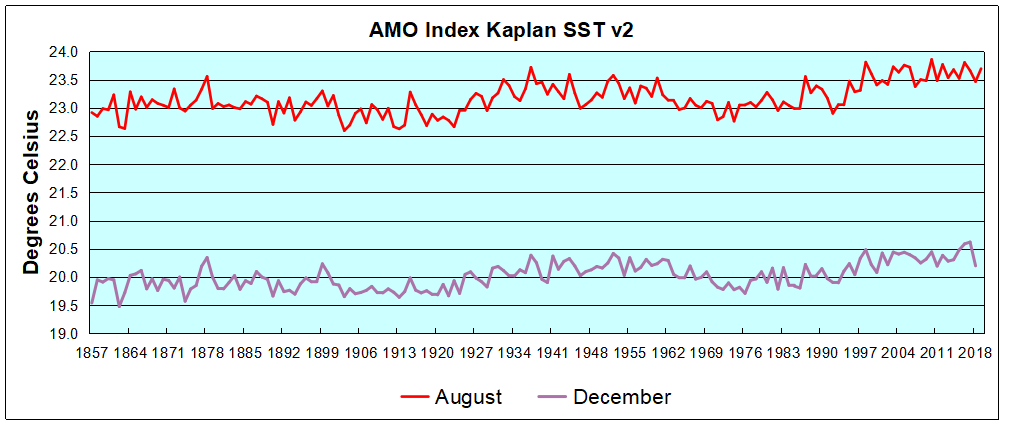
But the peaks coming nearly every summer in HadSST require a different picture.  Let’s look at August, the hottest month in the North Atlantic from the Kaplan dataset.
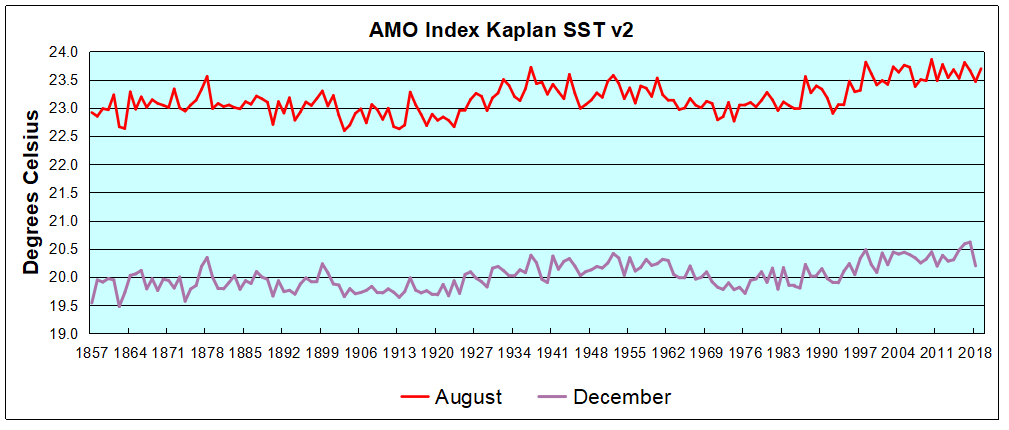
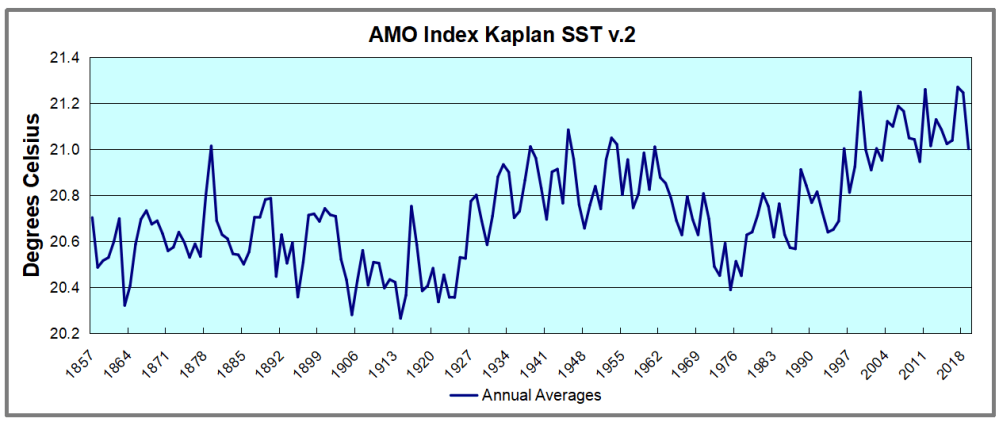
The AMO Index is from from Kaplan SST v2, the unaltered and not detrended dataset. By definition, the data are monthly average SSTs interpolated to a 5×5 grid over the North Atlantic basically 0 to 70N. The graph shows warming began after 1992 up to 1998, with a series of matching years since. Because the N. Atlantic has partnered with the Pacific ENSO recently, let’s take a closer look at some AMO years in the last 2 decades.
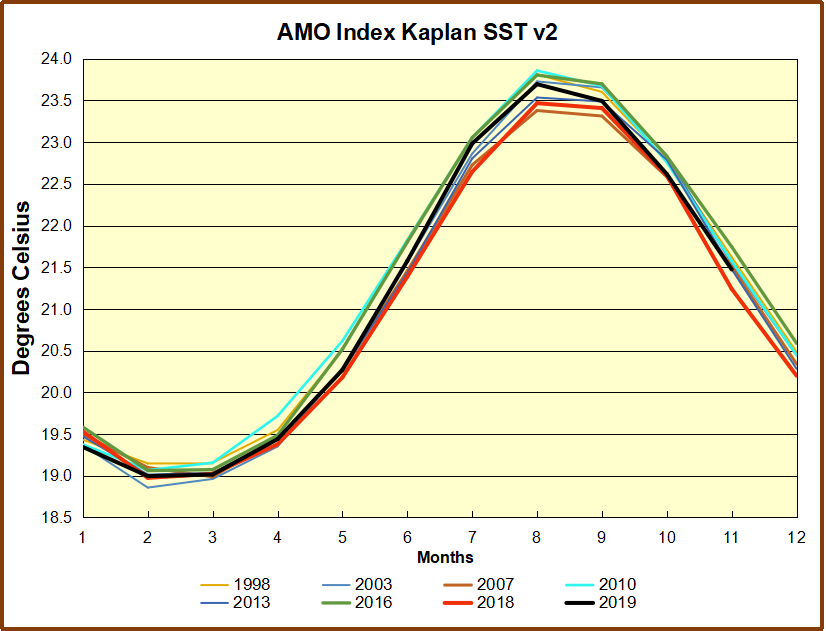
This graph shows monthly AMO temps for some important years. The Peak years were 1998, 2010 and 2016, with the latter emphasized as the most recent. The other years show lesser warming, with 2007 emphasized as the coolest in the last 20 years. Note the red 2018 line is at the bottom of all these tracks. The black line shows that 2019 began slightly cooler, then tracked 2018, then rose to match previous summer pulses, before dropping the last three months to again match 2018 below other years.

Summary

The oceans are driving the warming this century.  SSTs took a step up with the 1998 El Nino and have stayed there with help from the North Atlantic, and more recently the Pacific northern “Blob.”  The ocean surfaces are releasing a lot of energy, warming the air, but eventually will have a cooling effect.  The decline after 1937 was rapid by comparison, so one wonders: How long can the oceans keep this up? If the pattern of recent years continues, NH SST anomalies may rise slightly in coming months, but once again, ENSO which has weakened will probably determine the outcome.

Footnote: Why Rely on HadSST3

HadSST3 is distinguished from other SST products because HadCRU (Hadley Climatic Research Unit) does not engage in SST interpolation, i.e. infilling estimated anomalies into grid cells lacking sufficient sampling in a given month. From reading the documentation and from queries to Met Office, this is their procedure.

HadSST3 imports data from gridcells containing ocean, excluding land cells. From past records, they have calculated daily and monthly average readings for each grid cell for the period 1961 to 1990. Those temperatures form the baseline from which anomalies are calculated.

In a given month, each gridcell with sufficient sampling is averaged for the month and then the baseline value for that cell and that month is subtracted, resulting in the monthly anomaly for that cell. All cells with monthly anomalies are averaged to produce global, hemispheric and tropical anomalies for the month, based on the cells in those locations. For example, Tropics averages include ocean grid cells lying between latitudes 20N and 20S.

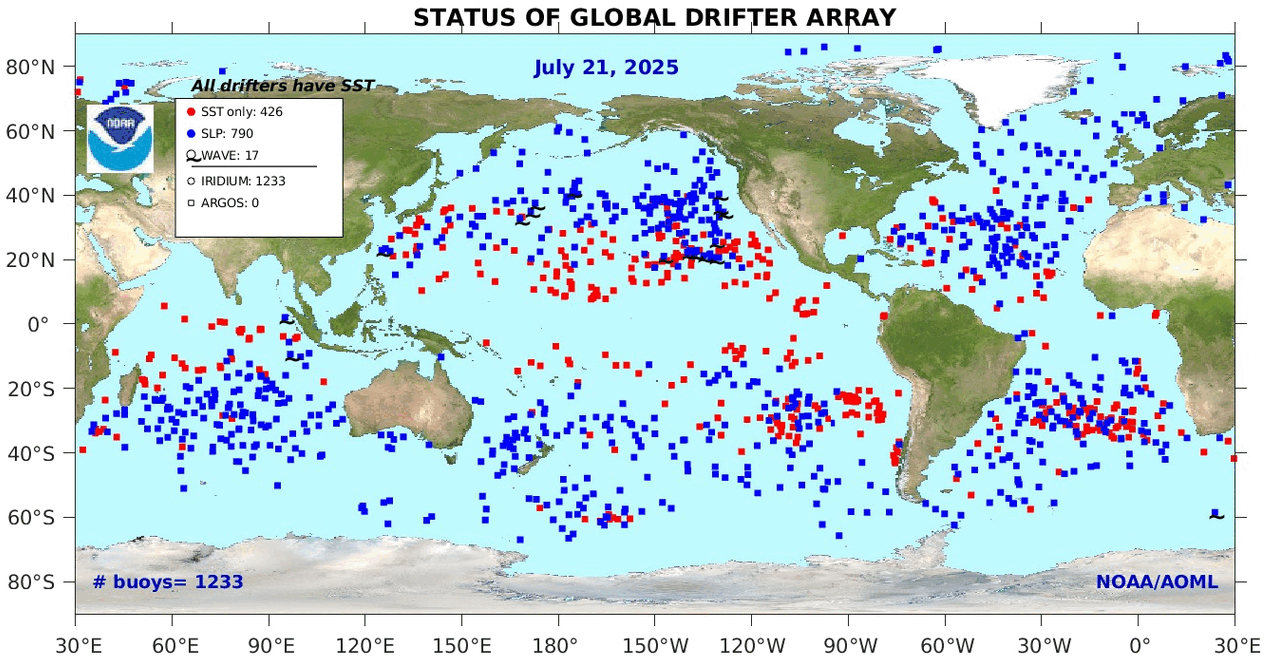
Gridcells lacking sufficient sampling that month are left out of the averaging, and the uncertainty from such missing data is estimated. IMO that is more reasonable than inventing data to infill. And it seems that the Global Drifter Array displayed in the top image is providing more uniform coverage of the oceans than in the past.

uss-pearl-harbor-deploys-global-drifter-buoys-in-pacific-ocean

USS Pearl Harbor deploys Global Drifter Buoys in Pacific Ocean

Oceanic Forcing Rules, Not Radiative Effects

Roy Clark explains how climate science built an house of cards obscuring the actual physical mechanisms driving observed climate fluctuations. Text of his recent post at WUWT in italics with my bolds.

The basic issue is that there is no such thing as a climate sensitivity to CO2 or any other so called ‘greenhouse gas’. Radiative forcing can politely be described as climate theology – how does a change in the atmospheric concentration of CO2 change the number of angels that may dance on the head of a climate pin? The climate equilibrium assumption was used by Arrhenius in his 1896 estimate of global warming. In this paper he traced the concept back to Pouillet in 1838. Speculation that changes in atmospheric CO2 concentration could somehow cause an Ice Age started with John Tyndall in 1863.

To get to the bottom of the radiative forcing nonsense it is necessary to go back to Fourier in 1827 and start over with the real physics of the surface energy transfer.

The essential part that almost everyone seems to have missed in this paper is the time delay or phase shift between the solar flux and the surface temperature response. The daily phase shift in MSAT can reach 2 hours and the seasonal phase shift can reach 6 to 8 weeks. This is clear evidence for non-equilibrium thermal storage. The same kind of non-equilibrium phase shift on different time and energy scales occurs with electrical energy storage in capacitors and inductors in AC circuits – low pass filters, tank circuits etc.

The equilibrium average climate assumption was used by Manabe and Wetherald (M&W) in their 1967 climate modeling paper. They abandoned physical reality and created global warming as a mathematical artifact of their input modeling assumptions. The rest of the climate modelers followed like lemmings jumping off a cliff. In the 1979 Charney report, no-one looked at the underlying assumptions. The radiative transfer results were reasonable –for the total long wave IR (LWIR) flux at the top and bottom atmosphere – and the mathematical derivation of the flux balance equations was correct. The increase in surface temperature was the a-priori expected result. Radiative forcing and the invalid equilibrium flux balance equations were discussed by Ramanathan and Coakley in 1978. The prescribed mathematical ritual of radiative forcing in climate models was described by Hansen et al in 1981. They also introduced a fraudulent ‘slab’ ocean model and did a bait and switch from surface to weather station temperatures.

The LWIR flux interacts with the surface, not the weather station thermometer at eye level above the ground.

Radiative forcing is still an integral part of IPCC climate models [IPCC, 2013]. Physical reality has been abandoned in favor of mathematical simplicity. Among other things, M&W threw out the Second Law of Thermodynamics along with at least 4 other Laws of Physics. The underlying requirement for climate stability is that the absorbed solar heat be dissipated by the surface. This requires a time dependent thermal and or humidity gradient at the surface.

The starting point for any realistic climate system is that the upward LWIR flux from the top of the atmosphere does not define an equilibrium average temperature of 255 K. Instead it is the cumulative cooling flux emitted from multiple levels down through the atmosphere. The upward emission from each level is then attenuated by the LWIR absorption/emission along the upward path to space [Feldman et al, 2008]. Another fundamental error in the radiative forcing argument is the failure to consider the molecular line width effects. Part of this was due to the band model simplifications that are still used in the climate models to speed up the calculations. The IR flux through the atmosphere consists of absorption and emission from many thousands of overlapping molecular lines, mainly from CO2 and water vapor [Rothman et al, 2005].

As the temperature and pressure decrease with altitude, these lines become narrower and transmission ‘gaps’ open up between the lines. This produces a gradual transition from absorption/emission to a free photon flux to space.

The radiative forcing argument has also obscured the fact that the heat lost to space is replaced by convection, not LWIR radiation. The troposphere is an open cycle heat engine that transports heat from the surface by moist convection. It is stored in the troposphere as gravitational potential energy. As a high altitude air parcel cools by LWIR emission, it contracts and sinks back down through the troposphere. The upward LWIR flux to space is decoupled from the surface by the linewidth effects. The downward LWR flux from the upper troposphere cannot reach the surface and cause any kind of change in the surface temperature. Almost all of the downward LWIR flux reaching the surface originated from within the first 2 km layer of the troposphere and about half of this comes from the first 100 m layer.

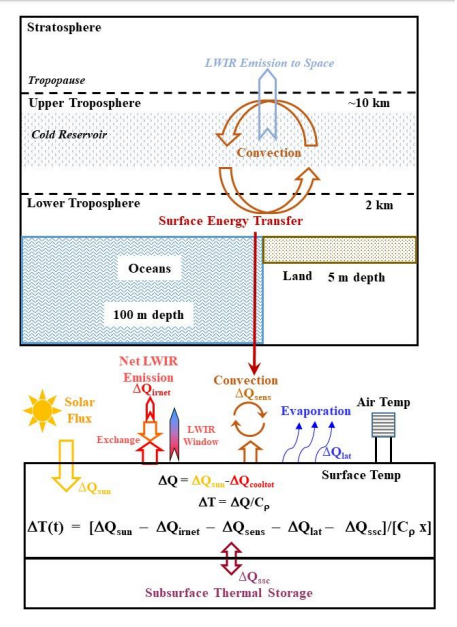
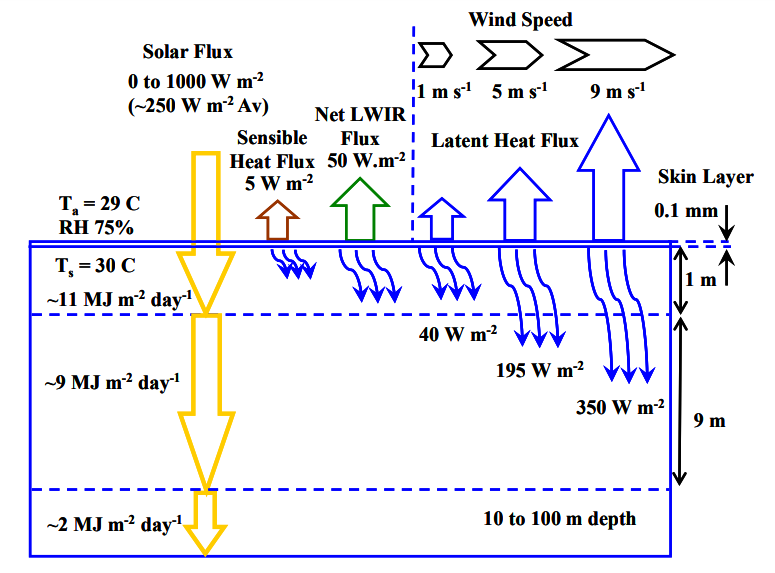
Figure 2: Thermal reservoirs, surface energy transfer and thermal storage (schematic). The surface is heated by the sun and cooled by a combination of net LWIR emission, convection and evaporation. Heat is stored below the surface and released over a range of time scales. There is no ‘equilibrium average temperature’. Source: Roy Clark


Near the surface, the lines in the main bands for CO2 and water vapor are sufficiently broadened that they merge into a continuum. There is an atmospheric transmission window in the 8 to 12 micron spectral region that allows part of the surface LWIR flux to escape directly to space. The magnitude of this transmitted cooling flux varies with cloud cover and humidity. The downward LWIR flux to the surface from the broad molecular emission bands provides an LWIR exchange energy that ‘blocks’ the upward LWIR flux from the surface. Photons are exchanged without any net heat transfer.

In order for the surface to cool, it must heat up until the excess absorbed solar heat is removed by moist convection. This is the real cause of the so called ‘greenhouse effect’.

It requires the application of the Second Law of Thermodynamics to the surface exchange energy. There is no equilibrium average climate so there can be no average ‘greenhouse effect temperature’ of 33 K. Instead, the greenhouse effect is just the downward LWIR flux from the lower troposphere to the surface. It can be defined as the downward flux or as an ‘opacity factor’ [Rorsch, 2019]. This is the ratio of the downward flux to the total blackbody surface emission.

The surface temperature has to be calculated at the surface using the surface flux balance. The change in local surface temperature is determined by the change in heat content or enthalpy of the local surface thermal reservoir divided by the specific heat [Clark, 2013a, b]. The LWIR flux cannot be separated from the other flux terms and analyzed independently. The land and ocean surface behave differently and have to be considered separately.

Over land, the various flux terms interact with a thin surface layer. During the day, the surface heating produces a thermal gradient both with the cooler air layer above and the subsurface layers below. The surface-air gradient drives the convection or sensible heat flux. The subsurface thermal gradient conducts heat into the first 0.5 to 2 meter layer of the ground. Later in the day this thermal gradient reverses and the stored heat is released back into the troposphere. The thermal gradients are reduced by evaporation if the land surface is moist. An important consideration in setting the land surface temperature is the night time convection transition temperature at which the surface and surface air temperatures equalize. Convection then essentially stops and the surface continues to cool more slowly by net LWIR emission. This convection transition temperature is reset each day by the local weather conditions.

The ocean surface is almost transparent to the solar flux. Approximately 90% of the solar flux is absorbed within the first 10 m ocean layer. The surface-air temperature gradient is quite small, usually less than 2 K. The excess absorbed solar heat is removed through a combination of net LWIR emission and wind driven evaporation. The penetration depth of the LWIR flux into the ocean surface is 100 µm or less and the evaporation involves the removal of water molecules from a thin surface layer [Hale and Querry, 1972]. These two processes combine to produce cooler water at the surface that sinks and is replaced by warmer water from below. This is a Rayleigh-Benard convection process, not simple diffusion. There are distinct columns of water moving in opposite directions. The upwelling warmer water allows the wind driven ocean evaporation to continue at night. As the cooler water sinks, it carries with it the surface momentum or linear motion produced by the wind coupling at the surface. This establishes the subsurface ocean gyre currents. Outside of the tropics there is a seasonal phase shift that may reach 6 to 8 weeks.

This phase shift can only occur with ocean solar heating. The heat capacity of the land thermal reservoir is too small to produce this effect. In many parts of the world, the prevailing weather systems are formed over the ocean. The temperature changes related to the ocean surface are stored by the weather system as the bulk surface air temperature and this information can be transported over very long distances. Such ocean related phase shifts can be found in the daily climate data for weather stations in places like Sioux Falls SD.

Over the oceans, the wind driven evaporation can never exactly balance the solar heating. This produces the ocean oscillations such as the ENSO, PDO and AMO.

These surface temperature changes are incorporated into the various weather systems and can be seen in the long term climate data, particularly the minimum MSAT. The whole global warming scam is based on nothing more than the last AMO warming cycle coupled into the weather station data [Akasofu, 2010].

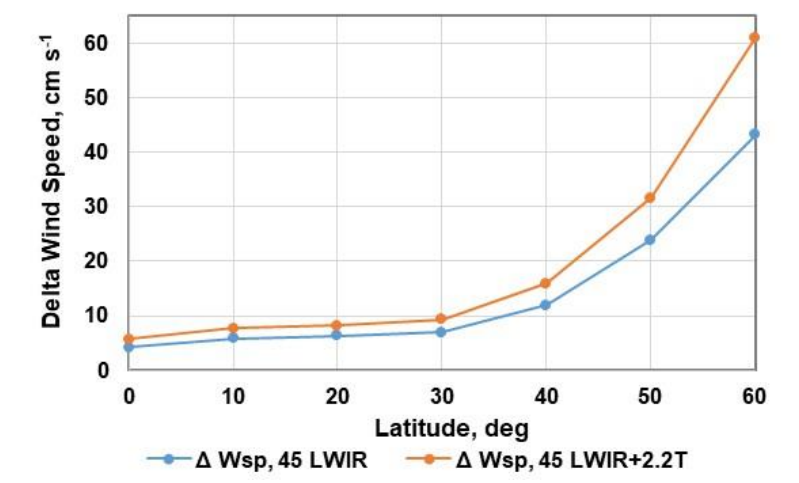
Figure 1: Change in wind speed (cm s-1) needed to restore the ocean surface cooling flux when the downward LWIR flux is increased by 2 W m-2 Both the fixed and the temperature dependent LWIR window flux cases are shown.

A fundamental failure of the radiative forcing argument is the lack of any error analysis. Over the last 200 years, the atmospheric CO2 concentration has increased by a little over 120 ppm. This has produced an increase in the downward LWIR flux at the surface of about 2 W m-2 [Harde, 2017]. Over the oceans this is coupled into the first 100 micron layer of the ocean surface. Here it is fully coupled to the wind driven evaporation. Using long term ocean evaporation data from Yu et al, 2008, an approximate estimate of the evaporation rate within the ±30 degree latitude region is 15 Watts per square meter for each change in wind speed of 1 meter per second.

This means that the radiative forcing from an increase of 120 ppm in the CO2 concentration amounts to a change in wind speed of about 13 CENTIMETERS per second.

This is at least two orders of magnitude below the normal variation in ocean wind speed. Similarly, a reasonable estimate of the bulk convection coefficient for dry land is 20 Watts per square meter per degree C difference between surface and air temperature. Here a 2 W m-2 change in convection requires a change of 0.1 C in the surface air thermal gradient.

Once the physics of the time dependent surface energy transfer is restored, global warming and radiative forcing disappear into the realm of computerized climate fiction.

The topic of radiative forcing was recently reviewed in detail by Ramaswamy et al [2019] as part of the American Meteorological Society monographs series. This review provides a good start for a scientific and criminal fraud investigation into the climate modeling fraud. To begin, the scientific community should demand that this particular monograph be retracted and all further work on equilibrium climate modeling be stopped. Any climate model that uses radiative forcing is by definition invalid. There is no need to try and validate the computer code of any equilibrium climate model. The use of radiative forcing alone is sufficient to render the results totally useless. These modelers are not scientists, they are mathematicians playing with a set of physically meaningless equations. They left physical reality behind when they made the climate equilibrium assumption. They are now members of a rather unpleasant quasi-religious cult. They believe that the divine spaghetti plots created by the computer climate models come from a higher authority that the Laws of Physics.

Figure 12: The ocean surface energy balance in the tropical warm pool. The evaporative surface cooling is strongly dependent on the wind speed. Source: Roy Clark

Any realistic climate model must correctly predict the changes in ocean temperature caused by the ocean oscillations. These must then be used to predict the changes in the weather station data.

This must include the minimum and maximum surface air temperatures, surface temperatures and the phase shifts. There are no forcings, feedbacks or climate sensitivities, just time dependent rates of heating and cooling. It is time to welcome the Second Law of Thermodynamics back to the climate models. It has always been part of the Earth’s climate system. [See linked post for references]

Roy Clark’s research studies are available at his website Ventura Photonics

See Also Bill Gray: H20 is Climate Control Knob, not CO2


Q&A Why So Many Climate Skeptics

Update October 19, 2021

[I just noticed that Quora buried Walker’s 12 point answer to the query, and only shows others’ comments afterward. In order to see the actual response you have to go here:
https://www.quora.com/profile/John-Walker-922/answers
and then search for “skeptics”. There are many persuasive exhibits there, perhaps the reason for suppressing the document.]

An extensive and documented reply is given at Quora from John Walker, former Laboratory Medical Director/Pathologist (1984-2011). Excerpts in italics with my bolds.(red text is link).

Perhaps you really mean “Why are there so many catastrophic anthropogenic CO2 global warming (CAGW) skeptics?”

There are very few individuals who are skeptical that the climate changes. But there are millions and millions of individuals (and growing), who are quite skeptical that human emissions of CO2 are causing apocalyptic global warming, including many scientists, climate scientists, Nobel Laureates, and other highly educated individuals.

The reason for this is multi-factorial and very voluminous. The following presents condensed summaries of 12 of the reasons that so many individuals have become highly skeptical of the theory of CAGW. Even though it is rather long, it represents only a small portion of the information, studies and references engendering skepticism of this unproven assemblage of hypotheses. Most of it is taken from my 250+ page treatise on the fallacies of the theory of CAGW.

1 . First and foremost is the fact that there is currently NO experimental evidence validating the theory of CAGW. Rather CAGW is a collection of unproven/unvalidated hypotheses, which can only be accepted by faith. However, most of these hypotheses have been shown to contain fallacies and/or misinformation.

2 . The “science” behind the theory of CAGW has not been sufficiently rigorous, non-biased, or open, and, crucially, does not comply with the tenets of the scientific method since it is not subject to potential falsification by testing/experiment.

3 . The theory of CAGW is based entirely upon:

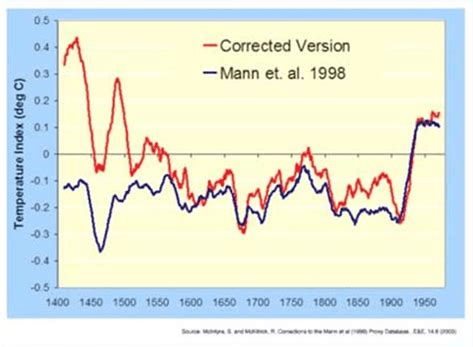
a . Atmospheric CO2 versus temperature correlation studies (which are not proof of cause and effect, are partially based upon fictitious/manipulated/estimated temperature data [as in the “hockey stick” graph and altered NASA/NOAA/CRU data], and actually do not correlate all that well):

Mann et al corrected

The original MBH graph compared to a corrected version produced by MacIntyre and McKitrick after undoing Mann’s errors.

b . Partially altered, manipulated, selective, imprecise, incomplete, extrapolated and unverified/fictitious temperature data (as revealed by Climategate, the “Hockey Stick” confutation, and other sources), with frequent measurements selected from urban concrete and asphalt hot spots, naturally producing higher temps, which increase in number over time due to continued urban growth).

“Government reports, writers of opinion pieces, and bloggers posting graphs purporting to show rising or record air temperatures or ocean heat, are misleading you. This is not actual raw data. It is plots of data that have been ‘adjusted’ or ‘homogenized’ (i.e., manipulated) by scientists – or it is output from models that are based on assumptions, many of them incorrect. UK Meteorological Office researcher Chris Folland makes no apologies for this. ‘The data don’t matter. We’re not basing our recommendations [for reductions in carbon dioxide emissions] upon the data. We’re basing them upon the climate models’.” Climate: The Real ‘Worrisome Trend’ (Part I: Faulty Science) – Master Resource

c . Unreliable computer models (based upon partially altered, manipulated, selective, imprecise, incomplete, extrapolated and unverified/fictitious temperature data, woefully inadequate/incomplete input data regarding thousands of climate parameters, and “educated guesses” about the climate sensitivity to atmospheric CO2), which can be programmed to reveal whatever result the programmer desires, and many of which have already been proven incorrect or exaggerated.

d . Insufficient understanding of the role and relative magnitude/sensitivity of CO2 as a “greenhouse” gas, and the unproven (and many would say ludicrous) hypothesis that the earth’s atmosphere (with all its enormity, complexity, multiple layers, convection, layers of exceedingly cold air [as low as -60F] and even colder adjacent outer space [-455F] as well as extremely hot (high kinetic energy) upper layers, huge underlying oceans with complex currents and temperature fluctuations, varying molecular compositions, stratospheric ozone [which absorbs both UV and IR radiation], variable humidity, massive heat-absorbing evaporative processes, extensive cloud formations, variably intense winds, the jet stream, varying barometric pressures, cosmic ray effects, and NO glass ceiling or walls) functions identically to a glass-enclosed greenhouse. (Yes, that does seem rather ludicrous!)

5 . Promoters of the theory of CAGW falsely claim there is a 97% “consensus” among climate scientists that the theory is true. Indeed the 97% figure is false and based upon poorly contrived surveys/studies by CAGW promoters and “peer-reviewed” (i.e., “pal-reviewed”) by other CAGW promoters. If one reads the original papers where the 97% figure was contrived, it is quite easy to see how poorly designed and biased these surveys were. All of these surveys/studies have been debunked by multiple statistical analyses and better defined and controlled surveys and studies, revealing that less than half of climate scientists believe in the theory of CAGW.

“Claims that a ‘consensus’ exists among climate experts regarding the causes of the modest warming of the past century are contradicted by thousands of independent scientists.” – International Climate Science Coalition Core Principles

The fact is that tens of thousands of scientists, including climate scientists and many Nobel Laureates, do NOT accept the theory of CAGW:[Numerous examples are provided in linked article]

6 . Thus, in essence, CAGW promoters are demanding we accept their conclusions based upon consensus and faith (normally antithetical to most modern liberals’ thinking), just as theocrats and other religious fundamentalists argue. But the inability to follow the rigorous scientific method by the use of repeatable double blind, controlled experiments for validation does not justify acceptance of a theory without such experiments simply because they cannot be performed. It may be fine to accept beliefs by consensus or even by faith on personal or other matters which do not materially affect other people. But those pushing the theory of CAGW are demanding draconian changes affecting everyone on the planet, such as diverting tens of trillions of dollars from solving known existing existential problems (poverty, hunger, violence, war, infectious disease, cancer research, pollution and over-fishing of our oceans, lack of adequate sanitation, education and clean water, etc.) in order to “fight” an unproven future potentially existential problem with costly methods which have not been proven effective, replacing capitalism and democracy with global socialism and authoritarian one world government, and redistributing global wealth. Such actions would be premature, irresponsible, illogical, socialistic, cruel and lead to massive morbidity and mortality!

7 . In addition to the “97% consensus” falsehood, CAGW promoters and alarmists have promulgated many other lies, failed predictions (for both catastrophic global cooling and global warming) based upon their flawed computer models, abundant misinformation and disinformation. If the theory of CAGW is true, why the need to prevaricate? Anyone who is aware of this widespread sophistry must become skeptical of the theory. [Many examples are given in the linked article]

8 . Another clue that the theory of CAGW is fallacious is the fact that many promoters and alarmists so frequently resort to ad hominen attacks or demand that skeptics be banned from discussions. The former is another logical fallacy, which is used when the promoter has no real evidence to back up his/her claim and is unable to respond in a logical and respectful manner. They feel cornered because of their lack of intelligent retort. They hope that such attacks will make the skeptic afraid to make further comments.

Banning and refusing to hear/discuss information contrary to one’s dogmatic belief is characteristic of a fundamentalist who has been indoctrinated, often with propaganda. It is characteristic of religious fanaticism, not science. While it is prohibited under Quora policy, you will discover that some CAGW alarmist authors just can’t stop themselves from indulging in this fallacious and destructive tactic.

Again, this engenders more skepticism in their beliefs.

9 . Climategate. Climategate was a notorious event initiated by leaked emails in 2009 (with a second batch released in 2011) allegedly revealing the deceit and deception practiced by a prominent group of British (Climatic Research Unit or CRU) and American climate researchers (including Michael Mann of Penn State) who promote the theory of CAGW and supply much of the climate and temperature data and reports to the IPCC. The latter gives this group tremendous influence regarding the UN’s climate change agenda.

“There are three threads in particular in the leaked documents which have sent a shock wave through informed observers across the world. Perhaps the most obvious, as lucidly put together by Willis Eschenbach (see McIntyre’s blog Climate Audit and Anthony Watt’s blog Watts Up With That ), is the highly disturbing series of emails which show how Dr Jones and his colleagues have for years been discussing the devious tactics whereby they could avoid releasing their data to outsiders under freedom of information laws.

“But the question which inevitably arises from this systematic refusal to release their data is – what is it that these scientists seem so anxious to hide? The second and most shocking revelation of the leaked documents is how they show the scientists trying to manipulate data through their tortuous computer programmes, always to point in only the one desired direction – to lower past temperatures and to ‘adjust’ recent temperatures upwards, in order to convey the impression of an accelerated warming. This is what Mr McIntyre caught Dr Hansen doing with his GISS temperature record last year (after which Hansen was forced to revise his record), and two further shocking examples have now come to light from Australia and New Zealand.

“The third shocking revelation of these documents is the ruthless way in which these academics have been determined to silence any expert questioning of the findings they have arrived at by such dubious methods – not just by refusing to disclose their basic data but by discrediting and freezing out any scientific journal which dares to publish their critics’ work. It seems they are prepared to stop at nothing to stifle scientific debate in this way, not least by ensuring that no dissenting research should find its way into the pages of IPCC reports.”

10 . The IPCC, which is the primary authority driving the CAGW agenda is a political body, not a scientific body. It’s originating mission was to find human causes of climate change.

“It is to specifically find and report a human impact on climate, and thereby make a scientific case for the adoption of national and international policies that would supposedly reduce that impact.

[Thus, the IPCC has been directed to attribute the cause, or at least significant portions of the cause, of climate change to human influences. If it does not make claims of significant human influence, it’s function would be obviated and its members likely out of their UN jobs!]

The IPCC is also designed to put political leaders and bureaucrats rather than scientists in control of the research project. It is a membership organization composed of governments, not scientists. The governments that created the IPCC fund it, staff it, select the scientists who get to participate, and revise and rewrite the reports after the scientists have concluded their work. Obviously, this is not how a real scientific organization operates.

11 . Much of the motive behind the promotion of the theory of CAGW is driven by money, power, and politics. Socialists, globalists and radical environmentalists are using the fear of CAGW to convince the world to replace capitalism with authoritative global socialism. The climate change industry now exceeds $1.5 trillion. If “cap-and-trade” legislation is ever passed in the US, as Al Gore, Goldman-Sachs, and other wealthy investors hope, they could potentially make $trillions via the buying and selling of carbon credits on a commodities exchange. Gore and Goldman tried desperately to get such legislation passed during the Obama administration. They were major investors in the Chicago Climate Exchange, which would have been the commodities exchange for carbon credits.

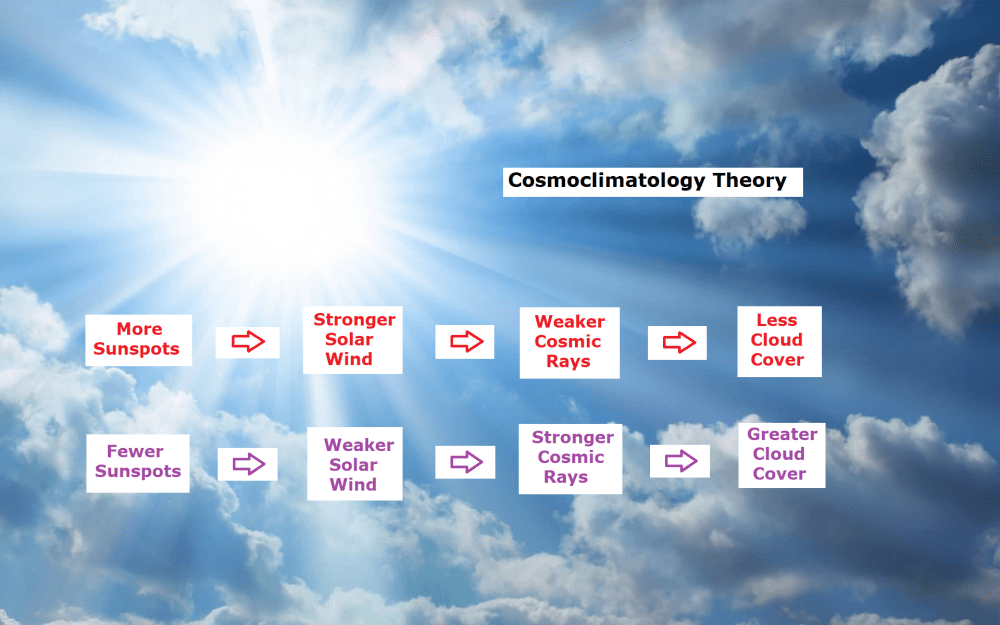
12 . There are better alternative theories regarding the mechanisms that drive the earth’s climate. Most of the theories derive from the observation that the earth’s climate goes through multiple, well-defined cycles (and cycles within cycles) of warming and cooling, and have done so for millennia. They generally involve various changes in total solar radiation reaching the earth and the adiabatic heating of the earth’s atmosphere due to atmospheric pressure. The theory of Cosmoclimatology is gaining credence among many climate scientists and astrophysicists.

Many other theories about the cause of climate change also involve solar influences. Think of the extreme temperature changes that are caused by changes in the amount of solar radiation the earth receives. Just the variation in the tilting of the earth leads to 4 seasons with temperatures varying from over 100 F to minus 20 F (or even colder) between summer and winter months in many locations. Temperatures increase dramatically just by moving towards the equator from higher or lower latitudes, due to differences in solar radiation. Day and night temperatures can easily differ by as much as 30 F or more, all in a 12 hour span. Temperatures on a sunny summer day can drop by 5 F in a matter of seconds if a cloud passes overhead. Compare that to the claimed increase in global temp of 1.4 F over 150 years supposedly caused by anthropogenic CO2.

In addition to the multiple periodic clusterings creating grand solar minima and maxima, there are multiple additional cyclic changes of solar activity, which are being elucidated with continuing climate research (another reason to stop making the absurd, counter-productive and pseudoscientific claim that the “science is settled”). There are centennial and bicentennial cycles of grand solar minima and maxima, along with many other cyclic processes of longer time intervals related to celestial changes:

There have been numerous glacial cycles, each lasting an average of 100,000 years. They coincide with the Milankovitch Eccentricity cycle of the earth’s orbit around the sun. Within each cycle is a period of marked global cooling (lasting from 70k to 90k years in which immense glaciers cover much of the land surface, and much of the ocean surface freezes. The cold periods are followed by interglacial (warm) periods lasting from 10k to 30k years. Some climatologists believe that the Earth is on the downward slope of the current interglacial period and headed towards the next ice age, which could arrive in the next several thousand years. During this downward slope, global temperatures are expected to slowly decrease with intermittent warmer and cooler trends. Milankovitch cycles – Wikipedia

And there is so much more but not enough time and space to present it all.

Greta’s Glittering Generalities

The term “glittering generality” was impressed on me by an English teacher who red-circled several expressions in my essay with the label “GG”. When I asked what was wrong, she told me pretty much what Wikipedia says:

A glittering generality is an emotionally appealing phrase so closely associated with highly valued concepts and beliefs that it carries conviction without supporting information or reason. Such highly valued concepts attract general approval and acclaim.

Background on Greta’s Pretences

In September Greta spoke to the UN Climate Summit in NYC and attempted to browbeat the world’s leaders into doing something about global warming/climate change. However, she came off as a whiny, spoiled brat throwing a tantrum in public to get her way. Her speechwriters took note of the negative responses and regrouped for her speech to the Madrid COP. The new approach was to elicite the audience’s concern by appealing to a bunch of glittering generalities. H/T to Patrick Moore for leading in the effort to challenge her platitudes. After all, it is irresponsible to let a child get away with telling falsehoods; that only spurs them on to become liars as adults. And teenage is the critical period to learn the dfference between imaginary things and realities, to engage with life’s school of hard knocks rather than retreat into wishdreams and fantasies, drug-induced or othewise.

Greta Thunberg UN speech at COP25 in full

The title links to a transcript of the climate activist’s message to the UN’s climate conference on Wednesday, December 11, at the United Nations Climate Change Conference COP25 in Madrid, Spain. Excerpts in italics with my bolds, images and comments.

Greta Thunberg: “Hi. A year and a half ago, I didn’t speak to anyone unless I really had to but then I found a reason to speak. Since then, I’ve given many speeches and learned that when you talk in public, you start with something personal or emotional to get everyone’s attention. Say things like, ‘our house is on fire, I wanted to panic or how dare you’.

“But today I will not do that because then those phrases are all that people focus on. They don’t remember the facts, the very reason why I say those things in the first place, we no longer have time to leave out the science.

“For about a year I have been constantly talking about our rapidly declining carbon budgets over and over again. But since that is still being ignored, I will just keep repeating it

“In chapter two, on page 108 in the SR 1.5 IPCC report that came out last year, it says that if we ought to have a 6 percent to 7 percent chance of limiting the global temperature rise to below 1.5C degrees, we had on January 1, 2018, 420 gigatons of CO2 left to emit in that budget. And of course, that number is much lower today as we emit about 42 gigatons of CO2 every year including land use.

“With today’s emissions levels, that remaining budget will be gone within about eight years. These numbers aren’t anyone’s opinions or political views. This is the current best available science.

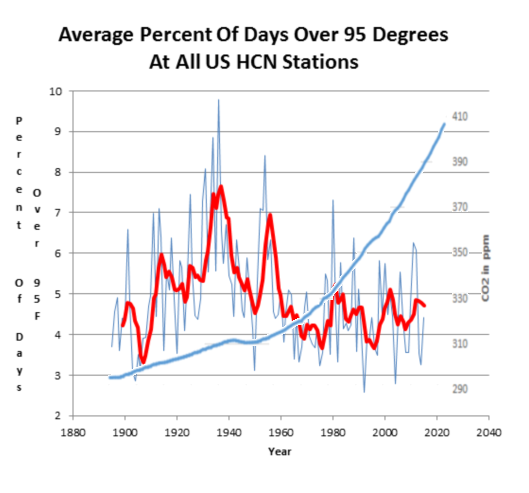
Heat Waves Compared to Atmospheric CO2

“Though many scientists suggest these figures are too moderate. These are the ones that have been accepted through the IPCC, and please note that these figures are global and therefore do not say anything about the aspect of equity, which is absolutely essential to make the Paris Agreement to work on a global scale.

“That means that richer countries need to do their fair share and get down to real zero emissions much faster and then help poorer countries do the same, so people in less fortunate parts of the world can raise their living standards. These numbers also don’t include most feedback loops, nonlinear tipping points, or additional warming hidden by toxic air pollution.

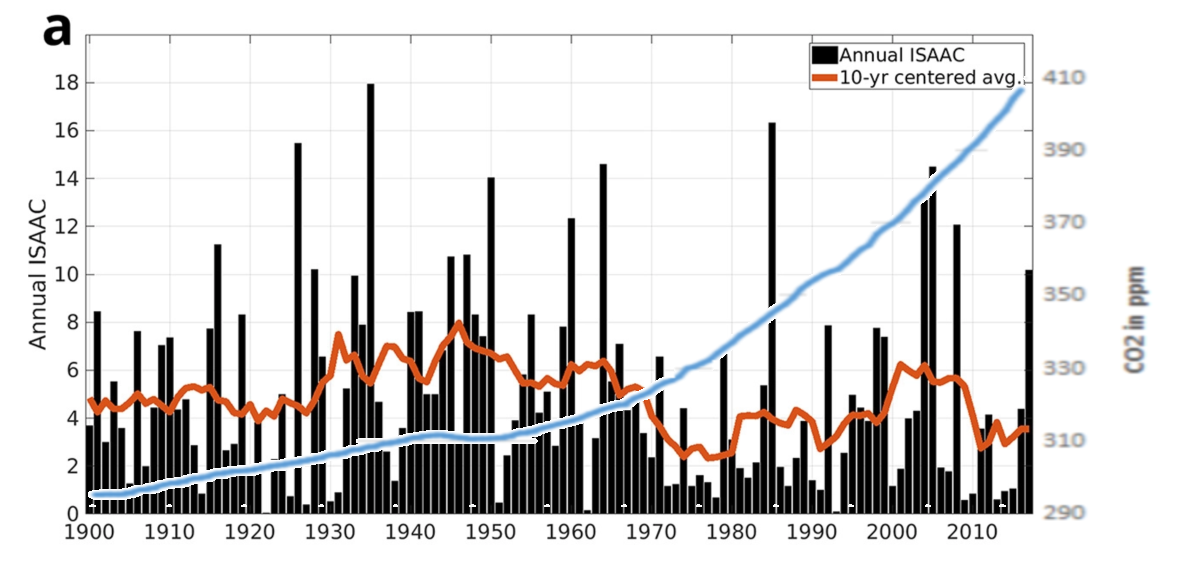
Atlantic Storm Activity Compared to Atmospheric CO2

“Most models assume, however, that future generations will somehow be able to suck hundreds of billions of tons of CO2 out of the air with technologies that do not exist in the scale required and maybe never will. The approximate 6 percent to 7 percent chance budget is the one with the highest odds given by the IPCC. And now we have less than 340 gigatons of CO2 left to emit in that budget to share fairly.

[Let’s deconstruct Greta’s cabon budget “science.” It is math alright, but she apparently lacks the will or critical intelligence to challenge the stack of suppositions underneath.

Assume that Global Mean Temperatures (GMT) are driven by rising CO2 in the air.
Assume that Rising CO2 comes entirely from burning fossil fuels.
Assume that keeping CO2 below 450ppm limits warming to 2C over preindustrial.
Assume that keeping CO2 below 430ppm limits warming to 1.5C over preindustrial.
Assume that GMT warming over 1.5C will cause dangerous weather events.
Assume that future warming of 2C will not benefit mankind as did the last 2C since the LIA.

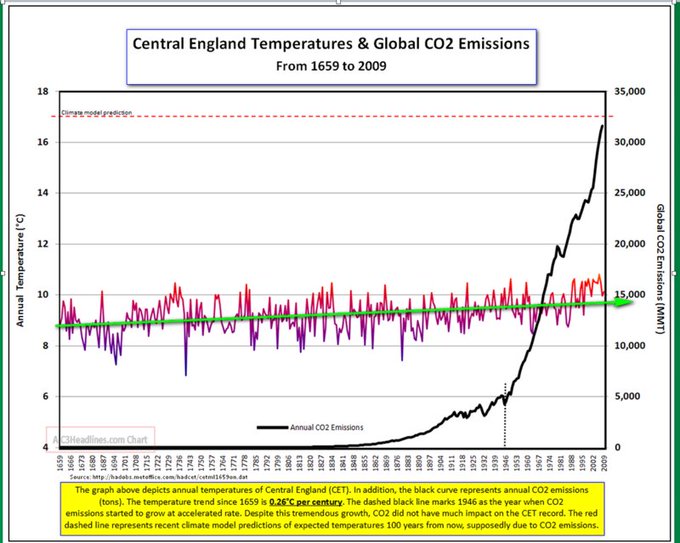
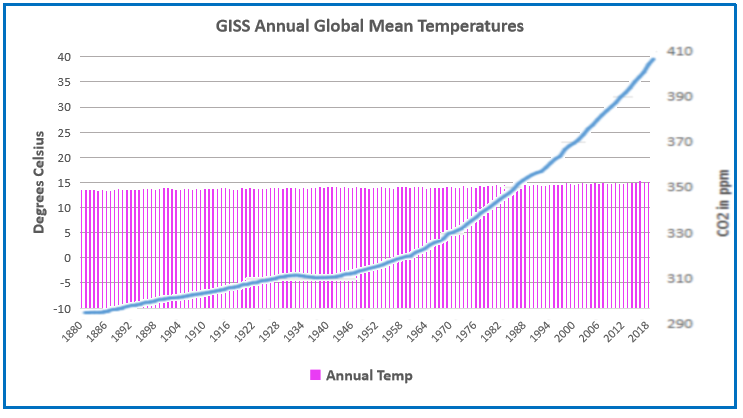
The Longest Temperature Record compared to CO2 Emissions.

“Why is it so important to stay below 1.5 degrees? Because even at one degree people are dying from the climate crisis. Because that is what the United Science calls for to avoid destabilising the climates.

[What’s this, a new US?  The United States is a thing, United Science, not so much.]

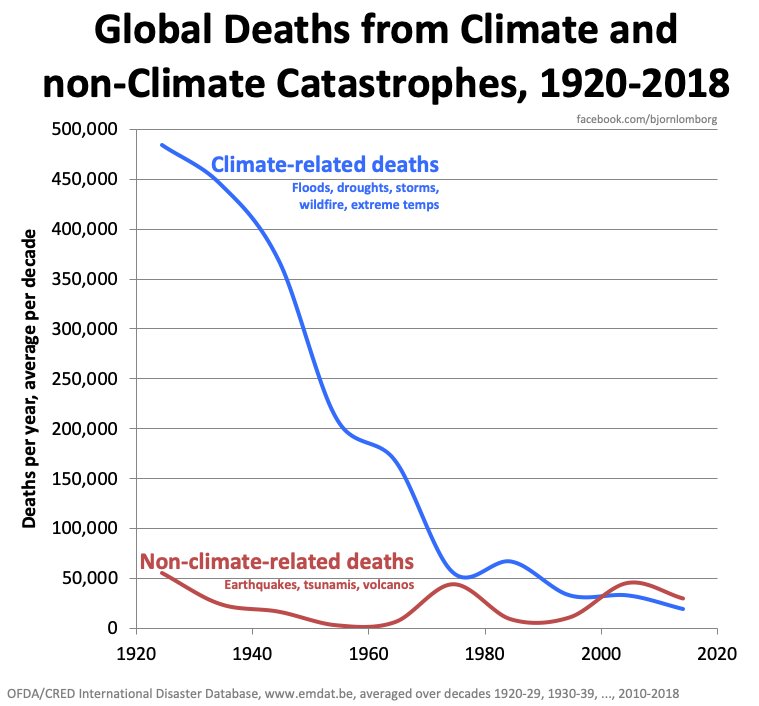
In Fact, fewer and fewer people are dying from climate events.

“So that we have the best possible chance to avoid setting off irreversible chain reactions such as melting glaciers, polar ice and thawing Arctic permafrost. Every fraction of a degree matters. So there it is, again. This is my message. This is what I want you to focus on.”

“So please tell me, how do you react to these numbers without feeling at least some level of panic? How do you respond to the fact that basically nothing is being done about this without feeling the slightest bit of anger? And how do you communicate this without sounding alarmist? I would really like to know.

“Since the Paris Agreement, global banks have invested 1.9 trillion US dollars in fossil fuels. One hundred companies are responsible for 71 percent of global emissions.

The G20 countries account for almost 80 percent of total emissions. The richest 10 percent of the world’s population produce half of our CO2 emissions, while the poorest 50 percent account for just one-tenth. We indeed have some work to do but some more than others.

“Recently, a handful of rich countries pledged to reduce their emissions of greenhouse gases by so-and-so many percent by this or that date or to become climate neutral or net zero in so-and-so many years. This may sound impressive at first glance but even though the intentions may be good, this is not leadership.

“This is not leading. This is misleading because most of these pledges do not include aviation, shipping, and imported and exported goods and consumption. They do, however, include the possibility of countries to offset their emissions elsewhere.

“These pledges don’t include the immediate yearly reduction rates needed for wealthy countries, which is necessary to stay within the remaining tiny budget. Zero in 2050 means nothing, if high emission continues even for a few years, then the remaining budget will be gone.

“Without seeing the full picture, we will not solve this crisis. Finding holistic solutions is what the cup should be all about, but instead, it seems to have turned into some kind of opportunity for countries to negotiate loopholes and to avoid raising their ambition.

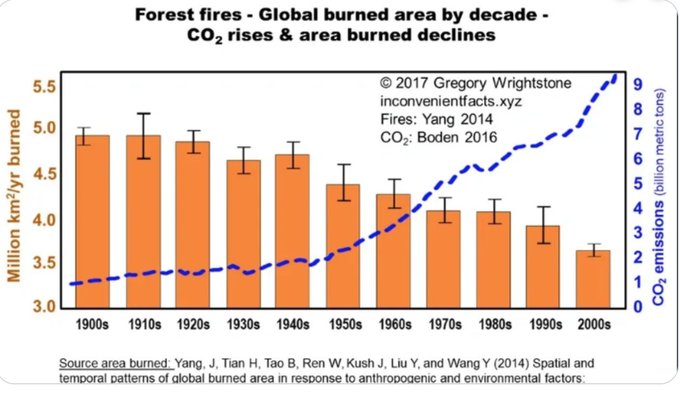
Area Burned by Forest Fires Compared to CO2 Emissions.

“Countries are finding clever ways around having to take real action. Like double-counting emissions reductions and moving their emissions overseas and walking back on their promises to increase ambition or refusing to pay for solutions or loss of damage. This has to stop.

“What we need is real drastic emission cuts at the source but of course, just reducing emissions is not enough. Our greenhouse gas emissions has to stop. To stay below 1.5 degrees. We need to keep the carbon in the ground. Only setting up distant dates and saying things which give the impression of the action is underway will most likely do more harm than good because the changes required are still nowhere in sight.

“The politics needed does not exist today despite what you might hear from world leaders. And I still believe that the biggest danger is not inaction. The real danger is when politicians and CEOs are making it look like real action is happening when in fact almost nothing is being done apart from clever accounting and creative PR.

US Droughts and Flooding Compared to Atmospheric CO2.

“I have been fortunate enough to be able to travel around the world. And my experience is that the lack of awareness is the same everywhere, not the least amongst those elected to lead us. There is no sense of urgency whatsoever. Our leaders are not behaving as if we were in an emergency.

“In an emergency, you change your behaviour. If there is a child standing in the middle of the road and cars are coming at full speed, you don’t look away because it’s too uncomfortable. You immediately run out and rescue that child.

“And without that sense of urgency, how can we, the people understand that we are facing a real crisis. And if the people are not fully aware of what is going on, then they will not put pressure on the people in power to act. And without pressure from the people, our leaders can get away with basically not doing anything, which is where we are now. And around and around it goes.

“Well, I’m telling you, there is hope. I have seen it but it does not come from the governments or corporations. It comes from the people.

“The people who have been unaware but are now starting to wake up. And once we become aware, we change. People can change. People are ready for change. And that is the hope because we have democracy and democracy is happening all the time.

“Not just on election day but every second and every hour. It is public opinion that runs the free world. In fact, every great change throughout history has come from the people. We do not have to wait. We can start the change right now.

“We the people. Thank you.”

How Climate Talk Got Crazy

Dr. Arnd Bernaerts in a recent article provides the historical context necessary to get our bearings straight despite today’s overheated, bizarre media-drenched tirades.

As he explains, climate has always been particular and personal, not global or objective. And that has led us into our current impasse, unable to talk productively about weather and climate. It is as though we can not come to grips with the climate issue because our very language and terminology is itself a prior problem preventing any progress. In brief, the terms “weather” and “climate” are loaded with emotion, but not with clear, definitive scientific meaning. IOW plenty of connotation (heat) and very little denotation (light). Dr. Bernaerts faults scientists for failing to develop a rational framework for discovery and research, and instead opting for an activist agenda which benefits from the ambiguity and misrepresentation.

The article is Weather and climate are everyday slang words and misleading when used by science. Excerpts in italics with my bolds.

Since the last half of the 20th Century the world has a big problem. Science abuses the laymen terms used since time immemorial: weather and climate. Each term is connected closer to our bodies than our shirts, 24/7 throughout our lives. Alexander von Humboldt (1769 –1859), the great German naturalist and geographer defined climate as ‘all the changes in the atmosphere that perceptibly affect our organs’. According to A.v.Humboldt, ‘climate’ was even closer to the skin of any person than their clothing during day and night. Intellectuals in those days lived closer to nature than academics nowadays.

Climate is the imaginary idea of an individual person from a possible state of the atmosphere, at one place or in one region, about a shorter or longer period of time from own experience or narrative of others or e.g. out of Guidebooks. This means: More than 5 billion adults are living on Earth, and:

Everyone has their own view of climate and describes it corresponding to his own ideas, for the moment or the given circumstances.

During A. v. Humboldt’s lifetime, meteorology was emerging and still at a low level. Now for more than 100 years acknowledged as an academic discipline, scientists remained incapable to tell what ‘climate’ is, indicating their incompetence to formulate terms, without which nothing is explained and is completely useless for scientific research. In the early 20th Century climate was defined as average weather and in the 1930s, the thirty-year period from 1901 to 1930 considered as the baseline for measuring climate fluctuations. Several decades later the prominent meteorologist H.H. Lamb regarded the definition of climate as “average weather” quite inadequate, mentioning that until recently climatology was generally regarded as the mere dry-as-dust bookkeeping end of meteorology (FN. 1). Also the well-known F. Kenneth Hare wrote in 1979: You hardly heard the word climate professionally in the 1940s. It was a layman’s word. Climatologists were the halt and the lame (FN. 2).

As a daily slang word, climate is closer to everyones’ skin than their shirts, it is an abuse every time a scientist uses it. This is presumably a major reason that the climate-change debate has been getting more and more hysterical during the last decades.

But the story gets even worse, completey preposterous, when asking how IPCC defines “weather”. The result is shocking; the Glossary of IPCC offers nothing. But IPCC and other institutions, like the recent UN Climate Change Conference COP 25 (2 – 13 December 2019) in Madrid, do not care.

Even the definition of weather in the AMS – Glossary (American Meteorological Society) does not provide a usable solution, by explaining that:

  • Popularly, weather is thought of in terms of temperature, humidity, precipitation, cloudiness, visibility, and wind, and
  • the “present weather” table consists of 100 possible conditions, and
  • the “past weather”; of 10 possible conditions.

The AMS Glossary does not clear the matter, as it is superficial on several aspects. Already false is the explanation of ‘popularly weather’. The layman is able to use and explain the current weather in presumably several hundred versions, and ‘popularly weather’ is extremly far away from a transparent and workable academic term, as explained above.

It is naive not to realize that if you define climate as average weather, you have to say clearly what weather is. Weather has to be defined first. Meteorology has always ignored this point or – meanwhile – making nebulous statements about it.

Actually it is fair to say that the layman understanding and use of the word “weather” is closer to the following description:

Weather is a personal rating by any person over the condition of the atmosphere, in its various manifestations, at a certain time, usually for the current situation or in temporal proximity.

With such an explanation the story is close to the understanding in ancient Greek, and how A. v. Humboldt (1769 –1859) approached the matter.

The failure of science is that it uses layperson terms, but cannot define them transparently. No wonder that there now are the movements ‘Fridays for Future’ and ‘Extinction Rebellion’, and a discussion at a hysterical level. But science seems happy with the situation, which they have caused. Their prominence grows, the money is coming in; they are able to influence long term political decisions. The biggest tragedy in the whole scenario is that the undeniable rise in temperatures since the mid-19th Century, is discussed on the most superficial childish level.

Folks, keep your way of using the terms: weather and climate, as you have always done, and do not allow scientists to abuse them for selfish reasons.

See Also Climate Science Was Broken

Climate Science At Work


Munich Climate Conference 2019


Antifa thugs outside Munich Conference Center.

Thanks to Andreas Müller for writing at his blog hintermbusch on four key presentations at the EIKE Climate Conference on Nov. 23, 2019. As many have read, eco-terrorists forced the sessions out of the scheduled venue, but the gatherings went on elsewhere.  So much for dialogue in search of scientific truth. Here are some excerpts in italics with my bolds to encourage readers to read his informative report. (link in red above).

In this blog post, I summarize these lectures and add links to the video clips for you to follow the lectures on your own and in full detail (Only the first talk was in German and is not easily accessible for most of the international public).

Christian Schlüchter, Switzerland

Prof. em. Christian Schlüchter is a geologist and has studied the glaciers of the Alps in great detail. He reports the findings of very old timber in and below glaciers and what those trees taught him about the glacial epochs of the Alps.

One of the most intuitive finds of Schlüchter’s is this huge tree trunk, found at a glacier tongue (see the most beautiful glacier snout behind!).

This place nowadays is clearly above the limit of vegetation and still there is this tree which attracted Schlüchter’s curiosity and fuelled his research: How old is it? Where and under what conditions has it grown and why is it here.

The key message from his slides is that all of these records were left in times when the alpine glacier extent was smaller than in 2005.

Warm periods: more life

The timberline was at least 300 meters higher which indicates a minimum of 1.8° C higher temperatures. An example of this gives Hannibal, who managed to cross the Alps with elephants because the higher regions were much less covered by ice than in recent centuries.

Warm periods: more civilization

As his summary, Schlüchter gave the following facts:

  • More than 50% of the last 11000 years alpine glaciers were smaller than 2005
  • This fact he baptized, “dominance of the Hannibalistic world”
  • Alpine glaciers have shown huge dynamics
  • Events of glacier growth were fast and short
  • The little ice age (from the end of the medieval warm period to about 1850) was the longest glacier extension since the last ice age 12000 years ago
  • Every warming followed an accelerated glacier growth

Nicola Scafetta, Italy

Nicola Scafetta is an italian physicist und climate modeller who works at Naples university. He is well-known for his criticism of IPCC climate models and, of course not uncontested for creating his own climate models and comparing them to IPCC results. His talk in Munich again took aim at the weaknesses und faults of IPCC climate models.

He notes that the models tend to reproduce the notorious “hockeystick” shape and therefore fail at the medial warming bump! (This is an echo of a very old climate change controversy, documented here).

He also shows similar failures for longer periods and demonstrates that the ulimate reason for this is that the models are not capable of reproducing climate variations which follow periodic solar activity.

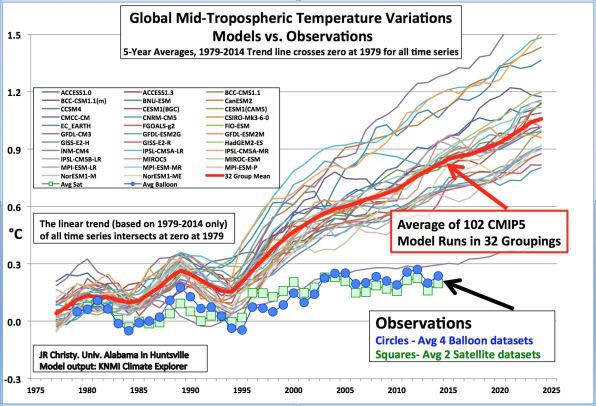
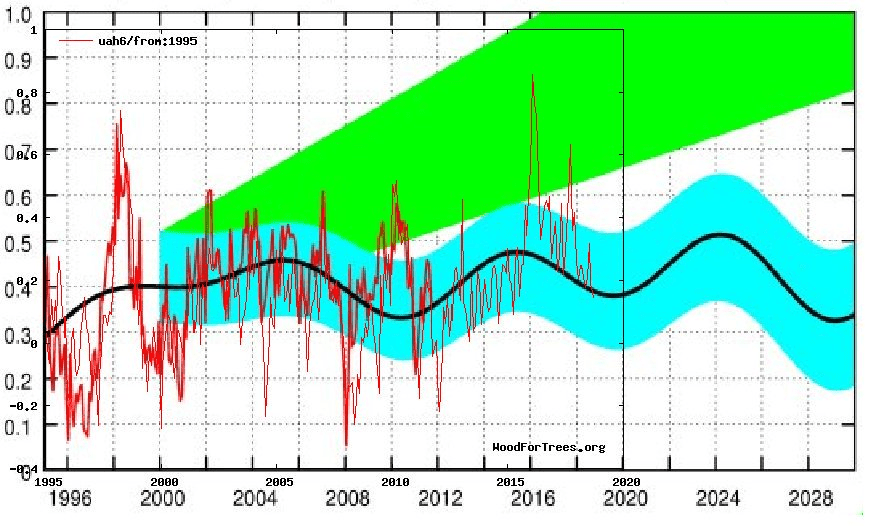
Therefore, ten years ago, he contrasted his own model forecasts, which take those into account, (black line) to those of the IPCC (dashed blue line), which leads to the climax of the talk Below is an upadated graph of his 2010 projections (cyan color) compared to observations and to IPCC models (green).

Nir Shaviv, Israel

Nir Shaviv is a well-known but moderate climate skeptic. Besides the lecture on alpine glaciers by Christian Schlüchter, he was my main reason to choose this half day from the conference program.  Shaviv continued where Scafetta had ended and discussed the IPCC world and its errors.

For a start, he presented its lines of thinking:

Next, he discussed the validity of each building block, marked the errors und deconstructed the standard picture. He emphasized that the climate sensitivity of CO2 is a priori unknown and largely overestimated by the IPCC.  He judged it a severe shortcoming that other forcings than green house gases are ruled out by the IPCC: the sun!

He pointed out that the IPCC overestimates climate sensitivity of CO2 at the expense of solar influences. While IPCC modelers managed to hide this for 20th century data, it will lead to a serious overestimate of temperatures in the 21st when solar influences will be cooling. He therefore expects a much lower temperature rise than predicted by the IPCC, a modest (and manageable) one:

Using physical arguments Shaviv manages to set an upper limit for the climate sensitivity of CO2. This should convince the audience to accept additional forcings behind the 20th century temperature rise. Like Scafetta he points at a solar driven forcing.

Henrik Svensmark, Denmark

Henrik Svensmark is a Danish physicist und climate researcher. As other speakers he reports that he finds it more and more difficult to raise funds for his research because its results contradict the IPCC position:

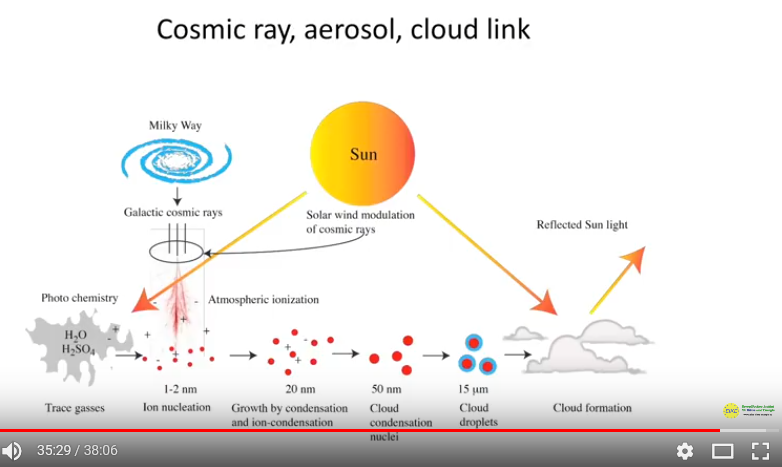
By experiments and also by correlation measurements Svensmark has investigated this mechanism of cloud creation by cosmic rays.  This is interesting because IPCC researchers cite reduction of cloud creation by global warming as a possible positive feedback mechanism which could escalate global warming to catastrophic levels. Svensmark assumes that it provides a way how solar activity, via its solar winds, has a climate impact on the earth which adds to the direct impact of solar irradiation to the earth.

Scientific summary

As a physicist I found all 4 talks interesting. They demonstrate that real and sophisticated science on climate was presented at that conference. Nothing suggests that this is less serious or valid science than anything I experienced during my time as a master and Ph.D student in physics. The presented results make it seem rather improbable that the climate models of the IPCC are complete, beyond any doubt or worth a 97% consensus.

Footnote:

For more on Scaffeta Theory see 2019 Update Scafetta vs. IPCC: Dueling Climate Theories

For more on Svensmark Theory see The cosmoclimatology theory

Regarding solar influence on climate due to orbital mechanics see this short informative video by Bill Sellers:


CO2-Free Climate Change (101)

H/T to Ice Age Now for pointing to this brief and informative video of Bill Sellers explaining our planet’s climate cycles due to astronomical factors described by Milankovitch.

I just hope during her time-out Greta takes a look and learns something from this video.

N. Atlantic Stays Cool Nov. 2019

RAPID Array measuring North Atlantic SSTs.

For the last few years, observers have been speculating about when the North Atlantic will start the next phase shift from warm to cold. Given the way 2018 went and 2019 is following, this may be the onset.  First some background.

. Source: Energy and Education Canada

An example is this report in May 2015 The Atlantic is entering a cool phase that will change the world’s weather by Gerald McCarthy and Evan Haigh of the RAPID Atlantic monitoring project. Excerpts in italics with my bolds.

This is known as the Atlantic Multidecadal Oscillation (AMO), and the transition between its positive and negative phases can be very rapid. For example, Atlantic temperatures declined by 0.1ºC per decade from the 1940s to the 1970s. By comparison, global surface warming is estimated at 0.5ºC per century – a rate twice as slow.

In many parts of the world, the AMO has been linked with decade-long temperature and rainfall trends. Certainly – and perhaps obviously – the mean temperature of islands downwind of the Atlantic such as Britain and Ireland show almost exactly the same temperature fluctuations as the AMO.

Atlantic oscillations are associated with the frequency of hurricanes and droughts. When the AMO is in the warm phase, there are more hurricanes in the Atlantic and droughts in the US Midwest tend to be more frequent and prolonged. In the Pacific Northwest, a positive AMO leads to more rainfall.

A negative AMO (cooler ocean) is associated with reduced rainfall in the vulnerable Sahel region of Africa. The prolonged negative AMO was associated with the infamous Ethiopian famine in the mid-1980s. In the UK it tends to mean reduced summer rainfall – the mythical “barbeque summer”.Our results show that ocean circulation responds to the first mode of Atlantic atmospheric forcing, the North Atlantic Oscillation, through circulation changes between the subtropical and subpolar gyres – the intergyre region. This a major influence on the wind patterns and the heat transferred between the atmosphere and ocean.

The observations that we do have of the Atlantic overturning circulation over the past ten years show that it is declining. As a result, we expect the AMO is moving to a negative (colder surface waters) phase. This is consistent with observations of temperature in the North Atlantic.

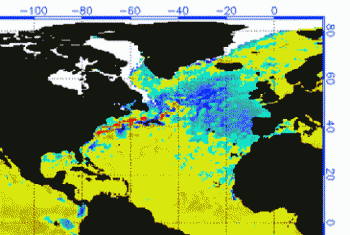
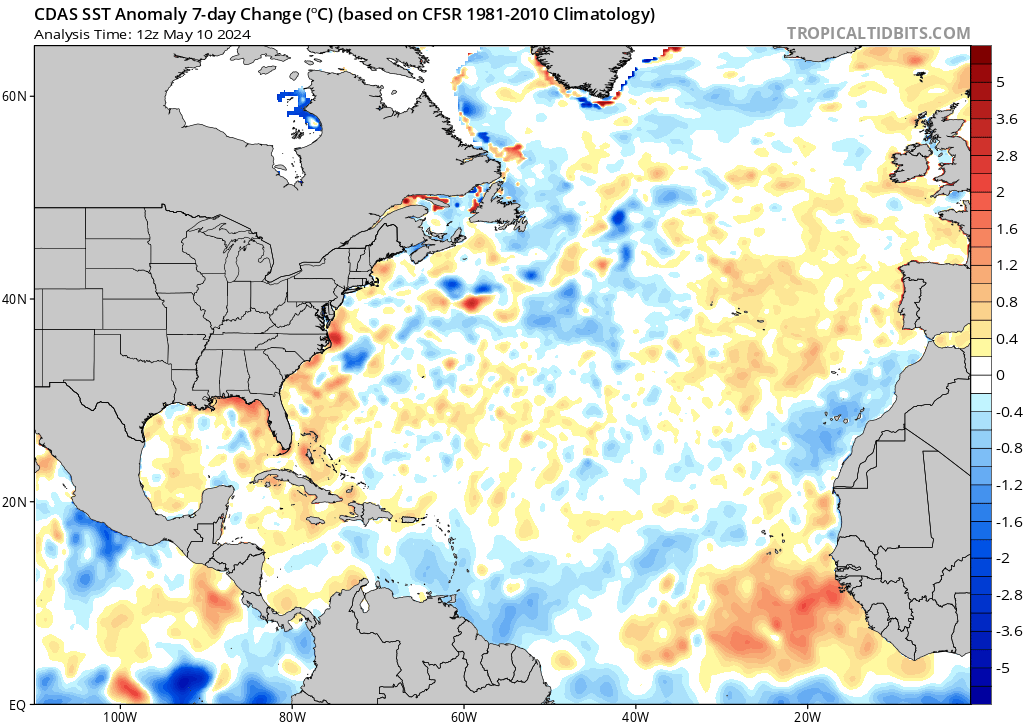
Cold “blobs” in North Atlantic have been reported, but they are usually winter phenomena. For example in April 2016, the sst anomalies looked like this

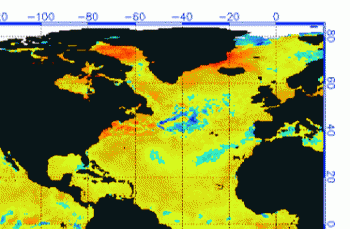
But by September, the picture changed to this

And we know from Kaplan AMO dataset, that 2016 summer SSTs were right up there with 1998 and 2010 as the highest recorded.

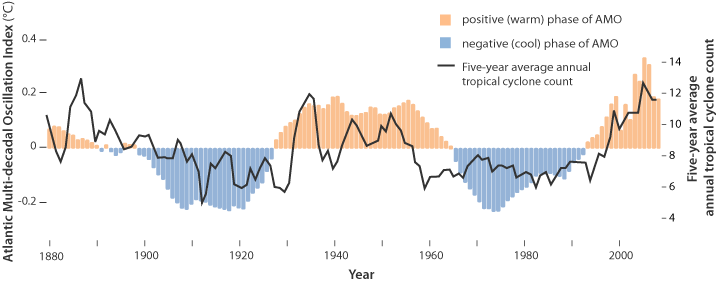
As the graph above suggests, this body of water is also important for tropical cyclones, since warmer water provides more energy.  But those are annual averages, and I am interested in the summer pulses of warm water into the Arctic. As I have noted in my monthly HadSST3 reports, most summers since 2003 there have been warm pulses in the north atlantic.


The AMO Index is from from Kaplan SST v2, the unaltered and not detrended dataset. By definition, the data are monthly average SSTs interpolated to a 5×5 grid over the North Atlantic basically 0 to 70N.  The graph shows the warmest month August beginning to rise after 1993 up to 1998, with a series of matching years since.  December 2016 set a record at 20.6C, but note the plunge down to 20.2C for  December 2018, matching 2011 as the coldest years  since 2000.
November 2019 confirms the summer pulse weakening, along with 2018 well below other recent peak years since 1998.  Because McCarthy refers to hints of cooling to come in the N. Atlantic, let’s take a closer look at some AMO years in the last 2 decades.

This graph shows monthly AMO temps for some important years. The Peak years were 1998, 2010 and 2016, with the latter emphasized as the most recent. The other years show lesser warming, with 2007 emphasized as the coolest in the last 20 years. Note the red 2018 line was at the bottom of all these tracks.  The short black line shows that 2019 began slightly cooler than January 2018, then tracked closely before rising in the summer months, though still lower than the peak years. Now in November 2019 is again tracking warmer tthan 2018 but cooler than other recent years in the North Atlantic. For the 11 month annual average, 2019 is 0.1C higher than 2018, and both are more than 0.2C lower than the El Nino years of 2016 and 2017.

amo annual122018


Ocean Oxygen Misdirection

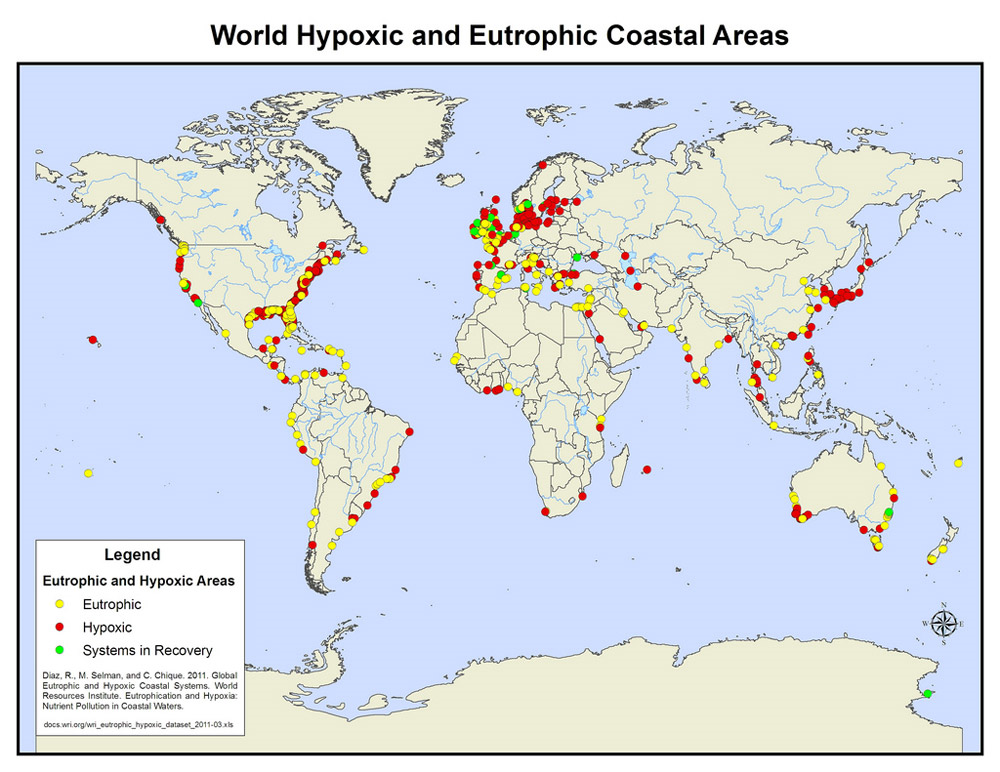
Warmists consistently do recycling, especially alarming stories coming back for encore media appearances.  This week it’s the suffocating ocean meme, which taps into our caring about the seas, but conflates impacts from human maritime activities with subtle temperature changes, i.e climate change (AKA emergency, chaos, crisis etc.).  Of course COP 25 is the trigger for this.  I won’t list the alarming headlines since they are little different from last time, covered in a previous post reprinted below.  Below are two typical recent quotes showing how an actual ocean concern is exploited for fossil fuel activism.

“A healthy ocean with abundant wildlife is capable of slowing the rate of climate breakdown substantially,” said Dr Monica Verbeek, the executive director of the group Seas at Risk. “To date, the most profound impact on the marine environment has come from fishing. Ending overfishing is a quick, deliverable action which will restore fish populations, create more resilient ocean ecosystems, decrease CO2 pollution and increase carbon capture, and deliver more profitable fisheries and thriving coastal communities.”

“Ending overfishing would strengthen the ocean, making it more capable of withstanding climate change and restoring marine ecosystems – and it can be done now,” explained Rashid Sumaila, professor and director of the fisheries economics research unit at the University of British Columbia. “The crisis in our fisheries and in our oceans and climate are not mutually exclusive problems to be addressed separately – it is imperative that we move forward with comprehensive solutions to address them.”

Previous post from last year

The climate scare machine is promoting again the fear of suffocating oceans. For example, an article this week by Chris Mooney in Washington Post, It’s Official, the Oceans are Losing Oxygen.

A large research synthesis, published in one of the world’s most influential scientific journals, has detected a decline in the amount of dissolved oxygen in oceans around the world — a long-predicted result of climate change that could have severe consequences for marine organisms if it continues.

The paper, published Wednesday in the journal Nature by oceanographer Sunke Schmidtko and two colleagues from the GEOMAR Helmholtz Centre for Ocean Research in Kiel, Germany, found a decline of more than 2 percent in ocean oxygen content worldwide between 1960 and 2010.

Climate change models predict the oceans will lose oxygen because of several factors. Most obvious is simply that warmer water holds less dissolved gases, including oxygen. “It’s the same reason we keep our sparkling drinks pretty cold,” Schmidtko said.

But another factor is the growing stratification of ocean waters. Oxygen enters the ocean at its surface, from the atmosphere and from the photosynthetic activity of marine microorganisms. But as that upper layer warms up, the oxygen-rich waters are less likely to mix down into cooler layers of the ocean because the warm waters are less dense and do not sink as readily.

And of course, other journalists pile on with ever more catchy headlines.

The World’s Oceans Are Losing Oxygen Due to Climate Change

How Climate Change Is Suffocating The Oceans

Overview of Oceanic Oxygen

Once again climate alarmists/activists have seized upon an actual environmental issue, but misdirect the public toward their CO2 obsession, and away from practical efforts to address a real concern. Some excerpts from scientific studies serve to put things in perspective.
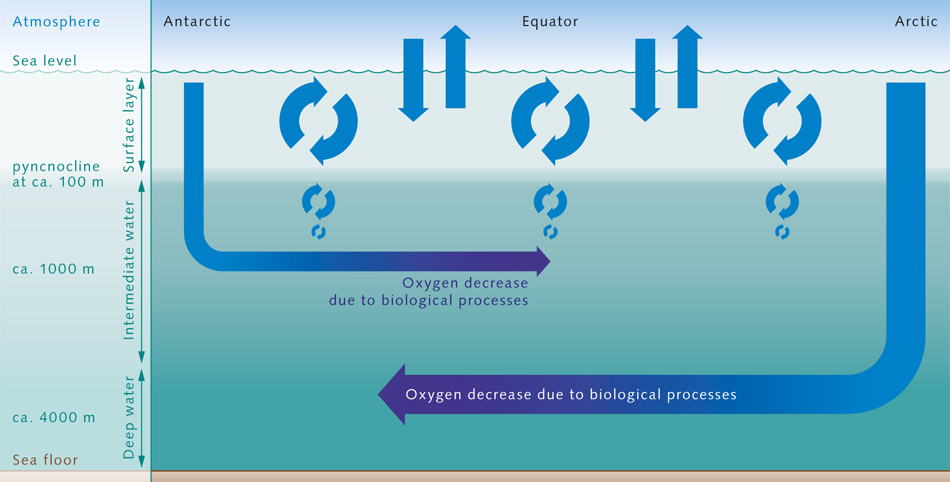
k2_g_sauerstoffmischung_meer_2_e_en

2.14 > Oxygen from the atmosphere enters the near-surface waters of the ocean. This upper layer is well mixed, and is thus in chemical equilibrium with the atmosphere and rich in O2. It ends abruptly at the pyncnocline, which acts like a barrier. The oxygenrich water in the surface zone does not mix readily with deeper water layers. Oxygen essentially only enters the deeper ocean by the motion of water currents, especially with the formation of deep and intermediate waters in the polarregions. In the inner ocean, marine organisms consume oxygen. This creates a very sensitive equilibrium.

How the Ocean Breathes

Variability in oxygen and nutrients in South Pacific Antarctic Intermediate Water by J. L. Russell and A. G. Dickson

The Southern Ocean acts as the lungs of the ocean; drawing in oxygen and exchanging carbon dioxide. A quantitative understanding of the processes regulating the ventilation of the Southern Ocean today is vital to assessments of the geochemical significance of potential circulation reorganizations in the Southern Hemisphere, both during glacial-interglacial transitions and into the future.

Traditionally, the change in the concentration of oxygen along an isopycnal due to remineralization of organic material, known as the apparent oxygen utilization (AOU), has been used by physical oceanographers as a proxy for the time elapsed since the water mass was last exposed to the atmosphere. The concept of AOU requires that newly subducted water be saturated with respect to oxygen and is calculated from the difference between the measured oxygen concentration and the saturated concentration at the sample temperature.
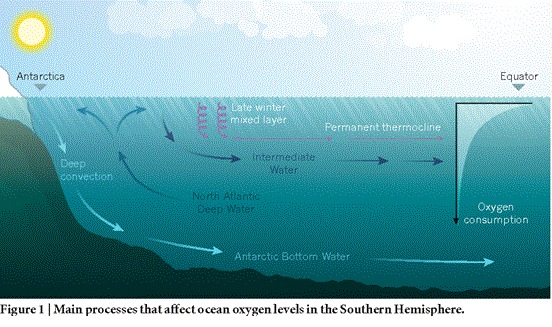
ocean oxygen

This study has shown that the ratio of oxygen to nutrients can vary with time. Since Antarctic Intermediate Water provides a necessary component to the Pacific equatorial biological regime, this relatively high-nutrient, high-oxygen input to the Equatorial Undercurrent in the Western Pacific plays an important role in driving high rates of primary productivity on the equator, while limiting the extent of denitrifying bacteria in the eastern portion of the basin. 

Uncertain Measures of O2 Variability and Linkage to Climate Change

A conceptual model for the temporal spectrum of oceanic oxygen variability by Taka Ito and Curtis Deutsch

Changes in dissolved O2 observed across the world oceans in recent decades have been interpreted as a response of marine biogeochemistry to climate change. Little is known however about the spectrum of oceanic O2 variability. Using an idealized model, we illustrate how fluctuations in ocean circulation and biological respiration lead to low-frequency variability of thermocline oxygen.

Because the ventilation of the thermocline naturally integrates the effects of anomalous respiration and advection over decadal timescales, shortlived O2 perturbations are strongly damped, producing a red spectrum, even in a randomly varying oceanic environment. This background red spectrum of O2 suggests a new interpretation of the ubiquitous strength of decadal oxygen variability and provides a null hypothesis for the detection of climate change influence on oceanic oxygen. We find a statistically significant spectral peak at a 15–20 year timescale in the subpolar North Pacific, but the mechanisms connecting to climate variability remain uncertain.

The spectral power of oxygen variability increases from inter-annual to decadal frequencies, which can be explained using a simple conceptual model of an ocean thermocline exposed to random climate fluctuations. The theory predicts that the bias toward low-frequency variability is expected to level off as the forcing timescales become comparable to that of ocean ventilation. On time scales exceeding that of thermocline renewal, O2 variance may actually decrease due to the coupling between physical O2 supply and biological respiration [Deutsch et al., 2006], since the latter is typically limited by the physical nutrient supply.
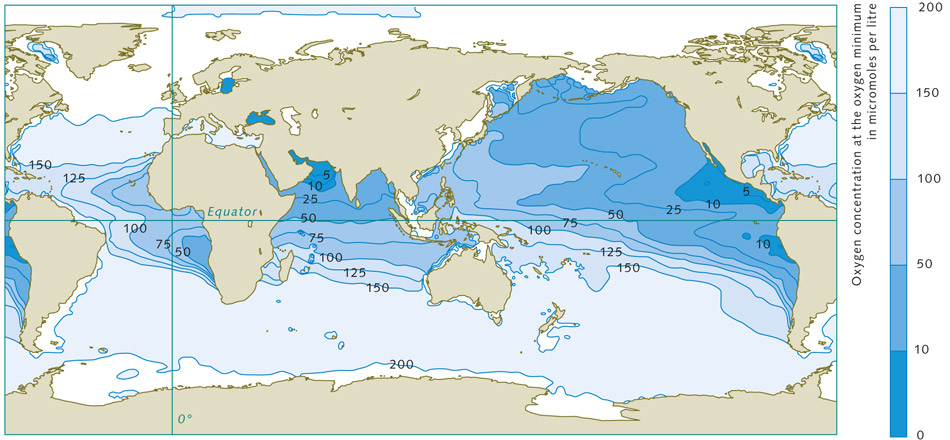
k2_wk_sauerstoffmangel_e_en

2.15 > Marine regions with oxygen deficiencies are completely natural. These zones are mainly located in the mid-latitudes on the west sides of the continents. There is very little mixing here of the warm surface waters with the cold deep waters, so not much oxygen penetrates to greater depths. In addition, high bioproductivity and the resulting large amounts of sinking biomass here lead to strong oxygen consumption at depth, ­especially between 100 and 1000 metres.

Climate Model Projections are Confounded by Natural Variability

Natural variability and anthropogenic trends in oceanic oxygen in a coupled carbon cycle–climate model ensemble by T. L. Frolicher et al.

Internal and externally forced variability in oceanic oxygen (O2) are investigated on different spatiotemporal scales using a six-member ensemble from the National Center for Atmospheric Research CSM1.4-carbon coupled climate model. The oceanic O2 inventory is projected to decrease significantly in global warming simulations of the 20th and 21st centuries.

The anthropogenically forced O2 decrease is partly compensated by volcanic eruptions, which cause considerable interannual to decadal variability. Volcanic perturbations in oceanic oxygen concentrations gradually penetrate the ocean’s top 500 m and persist for several years. While well identified on global scales, the detection and attribution of local O2 changes to volcanic forcing is difficult because of unforced variability.

Internal climate modes can substantially contribute to surface and subsurface O2 variability. Variability in the North Atlantic and North Pacific are associated with changes in the North Atlantic Oscillation and Pacific Decadal Oscillation indexes. Simulated decadal variability compares well with observed O2 changes in the North Atlantic, suggesting that the model captures key mechanisms of late 20th century O2 variability, but the model appears to underestimate variability in the North Pacific.

Our results suggest that large interannual to decadal variations and limited data availability make the detection of human-induced O2 changes currently challenging.

The concentration of dissolved oxygen in the thermocline and the deep ocean is a particularly sensitive indicator of change in ocean transport and biology [Joos et al., 2003]. Less than a percent of the combined atmosphere and ocean O2 inventory is found in the ocean. The O2 concentration in the ocean interior reflects the balance between O2 supply from the surface through physical transport and O2 consumption by respiration of organic material.

Our modeling study suggests that over recent decades internal natural variability tends to mask simulated century-scale trends in dissolved oxygen from anthropogenic forcing in the North Atlantic and Pacific. Observed changes in oxygen are similar or even smaller in magnitude than the spread of the ensemble simulation. The observed decreasing trend in dissolved oxygen in the Indian Ocean thermocline and the boundary region between the subtropical and subpolar gyres in the North Pacific has reversed in recent years [McDonagh et al., 2005; Mecking et al., 2008], implicitly supporting this conclusion.

The presence of large-scale propagating O2 anomalies, linked with major climate modes, complicates the detection of long-term trends in oceanic O2 associated with anthropogenic climate change. In particular, we find a statistically significant link between O2 and the dominant climate modes (NAO and PDO) in the North Atlantic and North Pacific surface and subsurface waters, which are causing more than 50% of the total internal variability of O2 in these regions.

To date, the ability to detect and interpret observed changes is still limited by lack of data. Additional biogeo-chemical data from time series and profiling floats, such as the Argo array (http://www.argo.ucsd.edu) are needed to improve the detection of ocean oxygen and carbon system changes and our understanding of climate change.

The Real Issue is Ocean Dead Zones, Both Natural and Man-made

Since 1994, he and the World Resources Institute (report here) in Washington,D.C., have identified and mapped 479 dead zones around the world. That’s more than nine times as many as scientists knew about 50 years ago.

What triggers the loss of oxygen in ocean water is the explosive growth of sea life fueled by the release of too many nutrients. As they grow, these crowds can simply use up too much of the available oxygen.

Many nutrients entering the water — such as nitrogen and phosphorus — come from meeting the daily needs of some seven billion people around the world, Diaz says. Crop fertilizers, manure, sewage and exhaust spewed by cars and power plants all end up in waterways that flow into the ocean. Each can contribute to the creation of dead zones.

Ordinarily, when bacteria steal oxygen from one patch of water, more will arrive as waves and ocean currents bring new water in. Waves also can grab oxygen from the atmosphere.

Dead zones develop when this ocean mixing stops.

Rivers running into the sea dump freshwater into the salty ocean. The sun heats up the freshwater on the sea surface. This water is lighter than cold saltier water, so it floats atop it. When there are not enough storms (including hurricanes) and strong ocean currents to churn the water, the cold water can get trapped below the fresh water for long periods.

Dead zones are seasonal events. They typically last for weeks or months. Then they’ll disappear as the weather changes and ocean mixing resumes.

Solutions are Available and do not Involve CO2 Emissions

Helping dead zones recover

The Black Sea is bordered by Europe and Asia. Dead zones used to develop here that covered an area as large as Switzerland. Fertilizers running off of vast agricultural fields and animal feedlots in the former Soviet Union were a primary cause. Then, in 1989, parts of the Soviet Union began revolting. Two years later, this massive nation broke apart into 15 separate countries.

The political instability hurt farm activity. In short order, use of nitrogen and phosphorus fertilizers by area farmers declined. Almost at once, the size of the Black Sea’s dead zone shrunk dramatically. Now if a dead zone forms there it’s small, Rabalais says. Some years there is none.

Chesapeake Bay, the United State’s largest estuary, has its own dead zone. And the area affected has expanded over the past 50 years due to pollution. But since the 1980s, farmers, landowners and government agencies have worked to reduce the nutrients flowing into the bay.

Farmers now plant cover crops, such as oats or barley, that use up fertilizer that once washed away into rivers. Growers have also established land buffers to absorb nutrient runoff and to keep animal waste out of streams. People have even started to use laundry detergents made without phosphorus.

In 2011, scientists reported that these efforts had achieved some success in shrinking the size of the bay’s late-summer dead zones.

The World Resources Institute lists 55 dead zones as improving. “The bottom line is if we take a look at what is causing a dead zone and fix it, then the dead zone goes away,” says Diaz. “It’s not something that has to be permanent.”

Summary

Alarmists/activists are again confusing the public with their simplistic solution for a complex situation. And actual remedies are available, just not the agenda preferred by climatists.


Waste Management Saves the Ocean