Dr. Richard Urso: End the Pandemic with Early Covid Treatment

Drug Inventor Urso: Are We Underutilizing Early Treatment?

We cannot use a one-size fits all approach to fighting Covid

Dr. Richard Urso is a scientist, sole inventor of an FDA-approved wound healing drug, and the Former Director of Orbital Oncology at MD Anderson Cancer Center. He believes we cannot use a one-size-fits-all approach to fighting Covid.

“We are not going to vaccinate our way out of this,” he said. “There’s no reason to not use anti-inflammatories against inflammatory disease. I used steroids in March and people were saying, ‘Why are you using steroids for inflammatory for this viral disease?’ And I said, ‘Because it’s not a viral disease.’”
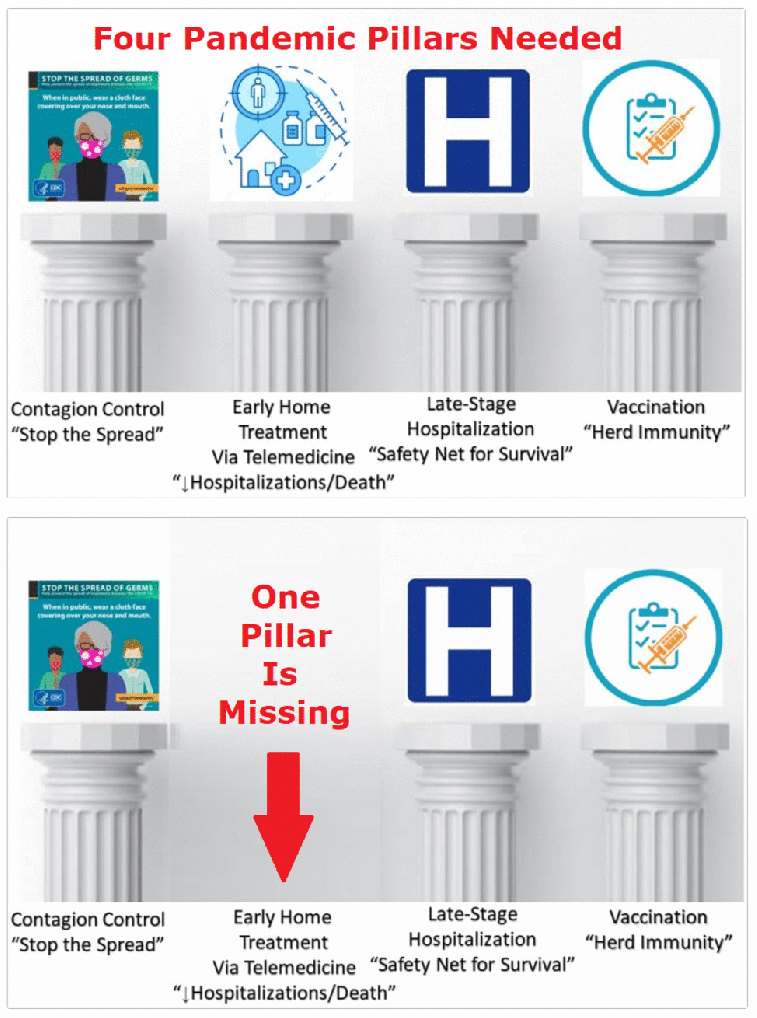
Urso says mass lockdowns and waiting for a vaccine never made a lot of sense to him. He calls for a multi-pronged strategy includes targeted vaccination programs, but also early treatment and prevention measures.

“Early treatment should have been part of the equation. I’m not against all those other things. Contagion control is important. Washing our hands. Things like that. They’re all important. Do we need vaccination programs? Absolutely. Do we need early treatment programs? Absolutely. So we have basically put the cart before the horse. The tail is wagging the dog. Early treatment should be a mainstay for everything.”

Background previous post 3000+ Doctors Declaration for Medical Rights and Freedoms

Update October 7:  Presently 10,000+ Medical Practitioners have signed this declaration, as well as providing additional resources at Global Covid Summit

By Debra Heine writes at American Greatness Over 3,000 Doctors and Scientists Sign Declaration Accusing COVID Policy-Makers of ‘Crimes Against Humanity’. Excerpts in italics with my bolds and images.

A group of physicians and scientists met in Rome, Italy earlier this month for a three day Global Covid Summit to speak “truth to power about Covid pandemic research and treatment.”

The summit, which was held from September 12 to September 14, gave the medical professionals an opportunity to compare studies, and assess the efficacy of the various treatments that have been developed in hospitals, doctors offices and research labs throughout the world.

The Physicians’ Declaration was first read at the Rome Covid Summit, catalyzing an explosion of active support from medical scientists and physicians around the globe. These professionals were not expecting career threats, character assassination, papers and research censored, social accounts blocked, search results manipulated, clinical trials and patient observations banned, and their professional history and accomplishments altered or omitted in academic and mainstream media.

The document, reprinted below in its entirety, sprang from that conference.

Thousands have died from Covid as a result of being denied life-saving early treatment. The Declaration is a battle cry from physicians who are daily fighting for the right to treat their patients, and the right of patients to receive those treatments – without fear of interference, retribution or censorship by government, pharmacies, pharmaceutical corporations, and big tech. We demand that these groups step aside and honor the sanctity and integrity of the patient-physician relationship, the fundamental maxim “First Do No Harm”, and the freedom of patients and physicians to make informed medical decisions. Lives depend on it.

We the physicians of the world, united and loyal to the Hippocratic Oath, recognizing the profession of medicine as we know it is at a crossroad, are compelled to declare the following;

WHEREAS, it is our utmost responsibility and duty to uphold and restore the dignity, integrity, art and science of medicine;

WHEREAS, there is an unprecedented assault on our ability to care for our patients;

WHEREAS, public policy makers have chosen to force a “one size fits all” treatment strategy, resulting in needless illness and death, rather than upholding fundamental concepts of the individualized, personalized approach to patient care which is proven to be safe and more effective;

WHEREAS, physicians and other health care providers working on the front lines, utilizing their knowledge of epidemiology, pathophysiology and pharmacology, are often first to identify new, potentially life saving treatments;

WHEREAS, physicians are increasingly being discouraged from engaging in open professional discourse and the exchange of ideas about new and emerging diseases, not only endangering the essence of the medical profession, but more importantly, more tragically, the lives of our patients;

WHEREAS, thousands of physicians are being prevented from providing treatment to their patients, as a result of barriers put up by pharmacies, hospitals, and public health agencies, rendering the vast majority of healthcare providers helpless to protect their patients in the face of disease. Physicians are now advising their patients to simply go home (allowing the virus to replicate) and return when their disease worsens, resulting in hundreds of thousands of unnecessary patient deaths, due to failure-to-treat;

WHEREAS, this is not medicine. This is not care. These policies may actually constitute crimes against humanity.

NOW THEREFORE, IT IS:

RESOLVED, that the physician-patient relationship must be restored. The very heart of medicine is this relationship, which allows physicians to best understand their patients and their illnesses, to formulate treatments that give the best chance for success, while the patient is an active participant in their care.

RESOLVED, that the political intrusion into the practice of medicine and the physician/patient relationship must end. Physicians, and all health care providers, must be free to practice the art and science of medicine without fear of retribution, censorship, slander, or disciplinary action, including possible loss of licensure and hospital privileges, loss of insurance contracts and interference from government entities and organizations – which further prevent us from caring for patients in need. More than ever, the right and ability to exchange objective scientific findings, which further our understanding of disease, must be protected.

RESOLVED, that physicians must defend their right to prescribe treatment, observing the tenet FIRST, DO NO HARM. Physicians shall not be restricted from prescribing safe and effective treatments. These restrictions continue to cause unnecessary sickness and death. The rights of patients, after being fully informed about the risks and benefits of each option, must be restored to receive those treatments.

RESOLVED, that we invite physicians of the world and all health care providers to join us in this noble cause as we endeavor to restore trust, integrity and professionalism to the practice of medicine.

RESOLVED, that we invite the scientists of the world, who are skilled in biomedical research and uphold the highest ethical and moral standards, to insist on their ability to conduct and publish objective, empirical research without fear of reprisal upon their careers, reputations and livelihoods.

RESOLVED, that we invite patients, who believe in the importance of the physician-patient relationship and the ability to be active participants in their care, to demand access to science-based medical care.

 

Biden Fears the Unvaccinated Serving as a Control Group

Peter Skurkiss writes at American Thinker One reason for the push for COVID vaccination may be to eliminate a potential control group.  Excerpts in italics with my bolds and added images.

There are a number of reasons to explain the intense push from the Biden administration and the government medical bureaucracy to get people to take the COVID vaccine. From a wide search of the information available, I find it hard to believe that the actual health of people is one of the reasons.

For example, why demand that people with natural immunity get vaccinated? And why insist on vaccinating children when their risk of serious effects from the virus is minuscule? It make no scientific sense, especially when the vaccine itself can cause serious health issues for the young.

This brings up one of the less talked about reasons behind the vaccination mania. It’s to eliminate a possible control group of non-vaccinated people to which the vaccinated can be compared. Let me explain.

From the highest levels of the government to the public health authorities like the WHO, FDA, and CDC to professional medical groups (American Medical Association, etc.) to the corporate media, the vaccines have been heralded as safe and effective. Already, the health authorities and the medical establishment have had their reputations sullied with their wrong-headed advice on stopping the virus via lockdowns, mask-wearing, and social distancing.

And the number of deaths from the Wuhan virus did not come close to matching their early projections even when the actual COVID deaths were greatly inflated.

Now it’s down to the vaccines. They already have egg on their faces due to their earlier pronouncements. Now they’re desperate that people never find out about the possible damage these inadequately tested vaccines may be inflicting on humanity.

There are already clues that the vaccines are causing many near-immediate adverse effects. Credible scientists, immunologists, and doctors are also saying even more vaccine damage could surface down the road. This is because the man-made engineered spike protein in the vaccine causes the body to produce more of it, and this toxic protein compromises the immune system as well as weakens other aspects of the body.

The thing about long-term effects, however, is that their cause may not be clear cut. For example, say a vaccinated person dies of a heart attack two years from now. The death is recorded as a heart attack. But the fatal heart attack might have been brought on by the spike protein acting over time. It’s the same with other causes of death and the development of diseases like Parkinson’s and so on. This picture is muddled. So can blame be affixed to the vaccine if justified?

Yes. It can be determined statistically, but a control group is needed.

It’s done by comparing how a sampling of those vaccinated fared compared to a sample of those who weren’t. The general statistical approach would be to take a large random sample from the millions who were vaccinated. Call this the experimental group. A control group would also be needed. It would consists of an equal number of randomly selected people from all those who were not vaccinated. Then a comparison is made of how these two groups performed relative to each other at various intervals of time — say, one year, two years, five years, and so on — in terms of mortality and other health factors.

It should be noted that both the experimental and the control groups will have a mix of people. They will be of various ages, both sexes, races, pre-conditions, etc. But if they’re randomly selected and the sample size is large, these differences balance out, meaning that the groups can be statistically compared.

Such a statistical analysis won’t tell if any specific person’s heart attack was due to the vaccine. But it will show whether or not the vaccinated population had a higher incidence of heart failure compared to the unvaccinated. That is, if the vaccine had no adverse effect on the heart, then both the vaccinated and the unvaccinated group would have the same rate of heart failure. This is vital public health information, is it not?

It’s also exactly what the powers-that-be do not want.

They fear that the vaccinated group will have a statistically significant higher mortality as well as rates of serious health conditions down the road than the unvaccinated. If so, this will expose the lies, deceptions, and incompetence of medical establishment, Big Pharma, and much of the political class. And if the critics of the COVID vaccines are correct, this will be a butcher’s bill none of them want to face.

To conclude, if just about everyone gets vaccinated, there can be no control group to make the comparison. Hence, the push is for maximum vaccinations.

Of course, the establishment has other ways to muddy the waters even if a control group could be assembled. Public health authorities are the central collection point for data. They can have the data collected (or not collected) in such a way so as to make a comparison difficult, if not impossible. But since these people are sincerely interested in the public’s health and guided by impartial science, they would never do such a thing just to save face…or would they?

 Footnote: Not Only Comparing Safety, But Also Effectiveness

It will also be important to compare those with immunity after infection without vaccines, and those vaccinated.  Again it is Sweden blacklisted from media attention, despite their success fighting Covid by trusting the citizenry rather than regarding them as enemies to be controlled.  An update comes from unmasked at substack Why Does No One Ever Talk About Sweden Anymore? Excerpts with my bolds.

“Experts” and the media declared Sweden was the world’s cautionary tale, a dangerous outlier who shunned The New Science™ of masks and lockdowns and stuck to established public health principles and pre-pandemic planning.

Over much of 2020 and into 2021, Sweden was persistently criticized by the media and on Twitter arguments due to comparisons to their neighbors, a standard curiously not applicable to most other countries around the world. Yet as we’ve progressed further into 2021, those same media outlets have suddenly gone quiet as their chosen victors have flailed unsuccessfully against ever increasing outbreaks.

So let’s see what’s transpired recently which resulted in the deafening silence, and examine what that means for The Science™, shall we?

[Note that Sweden began vaccinations when they became available this year, and has achieved 50% with two jabs, but over 75% of the vulnerable age and co-morbidies cohorts.  Consistent with previous policies, this was without coercion, so there will be many Swedes trusting in their immune systems without being induced by vaccines. The discussion below compares Sweden with Israel who vaccinated everyone.]

Concerning pandemic death rates, Sweden now ranks 40th. Eleven months later, they went from 12th to 40th. Peru, Hungary, the Czech Republic, Brazil, Argentina, Colombia, Paraguay, Belgium, Italy, Mexico, Croatia, the United Kingdom, the United States, Poland, Chile, Spain, Romania, Uruguay, Portugal, France, South Africa all rank ahead of Sweden. Nearly every one of them has tried masks and lockdowns and to this point it’s resulted in a “net failure” in terms of “death and suffering” compared to Sweden.

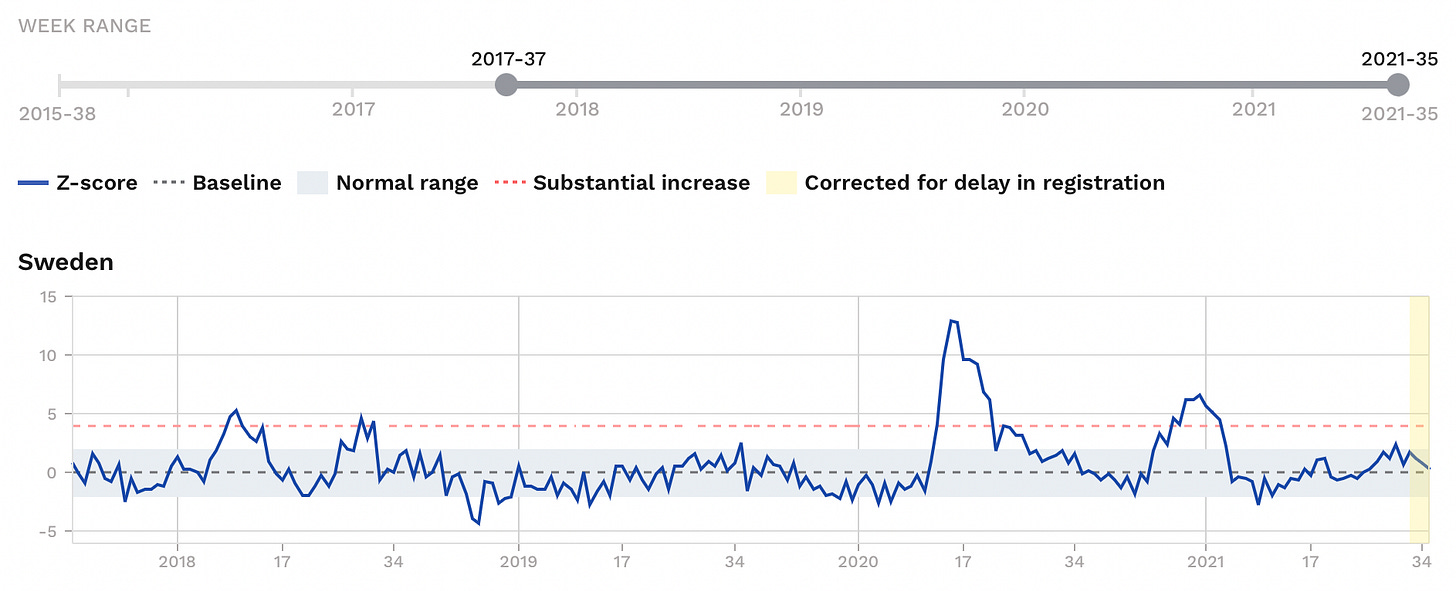
Oh and by the way, here’s excess mortality in Sweden since 2017 according to EUROMOMO:

That’s right, there’s only been a few weeks since the initial wave last spring where Sweden’s seen a “substantial increase” above normal ranges, and they’ve been at or near baseline for almost all of 2021. I wonder how many people around the world are aware of that.

It’s the same story seen in Los Angeles County, where hilariously timed and completely useless vaccine passport policies were just announced. The overwhelming majority of people are so hopelessly gaslit by media propaganda that they still actually believe that masks and closures matter, despite reality directly contradicting their assumptions.

Israel & Sweden

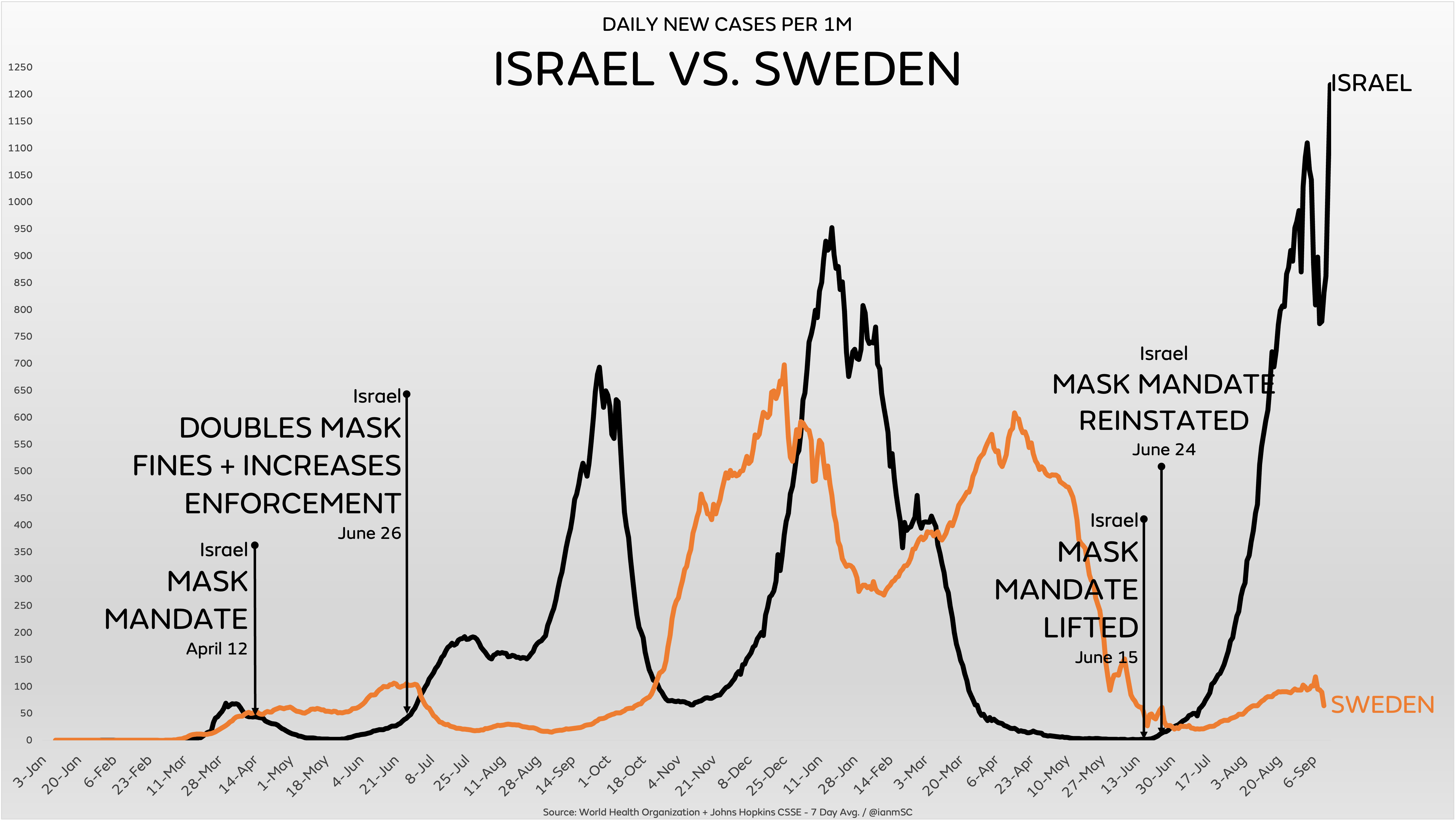
Standing in stark contrast to Sweden, Israel has been a media darling for doing exactly what they’re told by the groupthink mafia. They’ve vaccinated as aggressively and repeatedly as anywhere on earth, and they’ve had a seemingly endless series of mask mandates and fines for non-compliance.

As a result, The Wall Street Journal credited Israel’s commitment to mask wearing last fall with bringing cases down to low levels…only to see cases skyrocket higher immediately afterwards.

Sweden’s currently averaging about 90 cases per million. Israel’s averaging 1,218. That’s a lot worse! In fact, it’s 1,253% worse than Sweden.

Now, it’s very likely Sweden will see another increase over the fall and winter, just as they did last year, but uh…that’s kinda the point isn’t it? The increases happen in waves, regardless of supposed “mitigation” efforts. And again, Israel has been repeatedly and endlessly praised for their success. Sweden is a “disaster” and a “renegade.” Yet Israel’s recorded 13,279 cases per 100,000 since they started counting, the 11th highest rate in the world, while Sweden’s recorded 11,111 cases per 100,000.

But that doesn’t matter, because Israel’s done what they’re told, and Sweden hasn’t. There are no masks, no vaccine passports, no draconian business closures. They have a “consistent and sustainable” approach that’s led to…fewer confirmed infections than countries like Israel.

Why the Leftist Backlash Against Ivermectin

Connor Harris explains in his City Journal article Try a Dose of Skepticism.  Excerpts in italics with my bolds.

Ivermectin may or may not work against Covid-19, but media coverage of the drug has been sneering, inaccurate—and revealing.

“You are not a horse. You are not a cow. Seriously, y’all. Stop it,” read a recent viral tweet warning readers away from using a certain medication to treat Covid-19. The tone of affectedly folksy condescension would be expected from any of thousands of Twitter-addicted progressive journalists, but less so from the official account of the United States Food and Drug Administration. Perhaps even more surprising, the tweet linked to a warning advising readers not to take a drug, ivermectin, that has been used in humans for decades and is a standard Covid-19 treatment in much of the world.

The media’s recent reporting on ivermectin is a fitting sequel to their reporting on hydroxychloroquine near the beginning of the pandemic—but not, as received opinion would have it, because both are tales of red-state yokels duped into taking poisonous phony remedies. As in the earlier case, media coverage of ivermectin exemplifies how the liberal political class’s bias, and its confusion of respect for science with blind trust in a scientific establishment, impairs their skepticism and their capacity to appraise complex scientific questions.

Ivermectin is one of several derivatives of a family of compounds first isolated in the 1970s from soil bacteria in Japan. The compounds are highly toxic to invertebrates but have few effects on mammals, making them excellent treatments for many diseases caused by parasitic worms. Though ivermectin is more commonly used in livestock in First World nations where human parasites are rare, it is widely given to humans for internal use elsewhere. Distribution of ivermectin in tropical Africa has virtually eliminated diseases such as river blindness, a success that won the drug’s discoverers a share of the Nobel Prize in Medicine in 2015.

Ivermectin, then, has long been used in humans—and it is entirely reasonable to think that it could be effective against Covid-19.

It may be surprising that an antiparasitic medication might work against viruses, but such surprises are common in medicine: as another example, the psychotropic drug fluvoxamine, used to treat OCD and depression, has shown positive results against Covid-19 in multiple trials, including one large international collaboration. Ivermectin was shown to have antiviral effects in laboratory settings in 2012, when one study found that it protected cell cultures from infection by flaviviruses, which include the viruses that cause yellow fever and dengue. Interest in ivermectin as a Covid-19 treatment was sparked by a study at Monash University in Australia, which found that the drug could virtually eliminate SARS-CoV-2 from cell cultures within two days, albeit at very high concentrations.

Studies in cell cultures, though, can establish only that a drug might work; to decide that it does work requires human studies. The evidence base in this regard is ultimately inconclusive but suggests that ivermectin could provide a meaningful benefit.

Media attention to ivermectin is largely thanks to a group of doctors who call themselves the Frontline Covid-19 Critical Care Alliance. Pierre Kory, one of FLCCC’s founders, has advocated ivermectin treatment in several high-profile public appearances, including testimony before the Senate Homeland Security Committee last December and a more recent interview in June on the popular podcast DarkHorse, hosted by Bret Weinstein and Heather Heying. FLCCC puts out continually revised protocols that include ivermectin as a main component, as well as other drugs with varying degrees of empirical support.

FLCCC’s exact protocols have never been tested in randomized trials, but there are some weaker forms of evidence in their favor; many other doctors who use FLCCC or similar protocols have claimed vast improvement over typical rates of death and hospitalization. Overseas, influential doctors such as the chairman of the Tokyo Metropolitan Medical Association have called for widespread ivermectin use, and the drug is a standard treatment in much of Latin America, among other areas.

Still, given the drug’s relatively low risk profile, it may be reasonable to try ivermectin against Covid-19 despite the ambiguous evidence of benefits. And in any case, the sneering descriptions of the drug as an assuredly useless livestock de-wormer and the wild exaggerations of its dangers—both close parallels with the news coverage of hydroxychloroquine in spring 2020—cannot be justified.

Liberals have no monopoly on gullibility or lazy journalism, but the biased coverage of ivermectin springs from one of the worst pathologies of liberal discourse in particular: conflation of respect for science with fealty to established scientific institutions. A “pro-science” disposition has long been integral to American liberals’ self-conception (a ubiquitous yard sign reads, in part, “In this house, we believe science is real”); it grew especially strong during the George W. Bush years as a reaction to the administration’s stance on global warming and alliance with the religious Right.

But most Americans are scientists neither by training nor by temperament, and “pro-science” politics usually calcifies into blind trust in a few politically congenial authorities—such as universities and government health agencies, which have enjoyed high levels of liberal confidence throughout the pandemic despite such actions as reversing longstanding advice on face masks based on a dubious judgment call.

Conflating science with the scientific establishment not only corrodes the capacity for skepticism but also helps questionable or corrupt actions by authorities escape scrutiny. The hullabaloo over ivermectin poisoning, for example, far exceeds the attention given to another questionable treatment pushed not by right-wing hucksters but by the FDA itself: remdesivir, an antiviral produced by the pharmaceutical giant Gilead Sciences that is still the only Covid-19 treatment with full FDA approval.

The FDA’s approval of remdesivir in October 2020 was based on only three trials, one neutral and two showing only moderate shortenings of hospital stays. A week before the approval, a far larger trial sponsored by the WHO had found that remdesivir did not reduce mortality, leading the WHO to advise against the drug in November. (The New York Times report on the WHO trial, incidentally, gave ample space to a fair presentation of criticism of the trial from defenders of remdesivir, a marked difference from the tone of most recent ivermectin coverage.) Furthermore, remdesivir seems to cause significant harms to the kidneys in many cases: a “disproportionality analysis” of VigiBase, for instance, found that reports for remdesivir were 20 times as likely to mention kidney failure as reports for other Covid-19 drugs.

The FDA’s full approval of remdesivir contrasted with its summary dismissal of ivermectin suggests, at the least, a double standard.

The oddity of the FDA’s remdesivir approval received some mainstream coverage, but it came nowhere near the level of media saturation reached by the reports of Mississippians taking horse de-wormer. It’s not hard to understand why: the horse de-wormer stories gave some readers a delicious opportunity to feel smugly superior to their political enemies—a temptation that few of us find easy to resist. But the tale of remdesivir presents a more threatening specter, which journalists and politics junkies would do well to confront: the possibility that a scientific authority might be wrong.

Treatment protocols with HCQ or Ivermectin + nutritional supplements fill the the need for early home treatment.

Why Covid Hospital Numbers are Misleading

David Zweig wrote in the Atlantic Our Most Reliable Pandemic Number Is Losing Meaning.  Excerpts in italics with my bolds.

From the start, COVID hospitalizations have served as a vital metric for tracking the risks posed by the disease. Last winter, this magazine described it as “the most reliable pandemic number,” while Vox quoted the cardiologist Eric Topol as saying that it’s “the best indicator of where we are.” On the one hand, death counts offer finality, but they’re a lagging signal and don’t account for people who suffered from significant illness but survived. Case counts, on the other hand, depend on which and how many people happen to get tested. Presumably, hospitalization numbers provide a more stable and reliable gauge of the pandemic’s true toll, in terms of severe disease. But a new, nationwide study of hospitalization records, released as a preprint today (and not yet formally peer reviewed), suggests that the meaning of this gauge can easily be misinterpreted—and that it has been shifting over time.

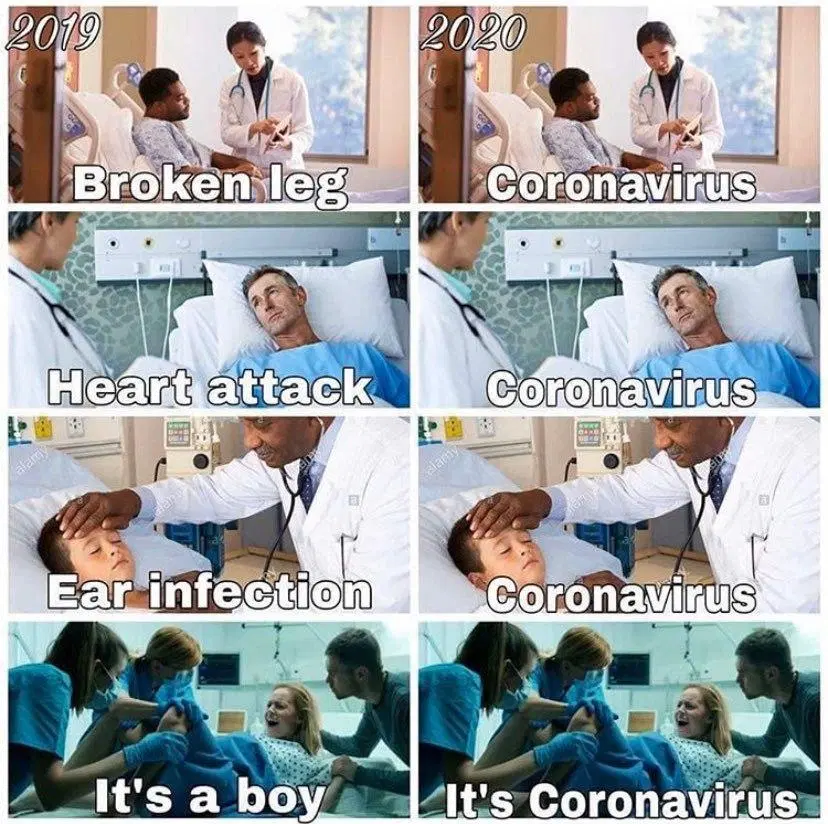
If you want to make sense of the number of COVID hospitalizations at any given time, you need to know how sick each patient actually is. Until now, that’s been almost impossible to suss out. The federal government requires hospitals to report every patient who tests positive for COVID, yet the overall tallies of COVID hospitalizations, made available on various state and federal dashboards and widely reported on by the media, do not differentiate based on severity of illness. Some patients need extensive medical intervention, such as getting intubated. Others require supplemental oxygen or administration of the steroid dexamethasone. But there are many COVID patients in the hospital with fairly mild symptoms, too, who have been admitted for further observation on account of their comorbidities, or because they reported feeling short of breath. Another portion of the patients in this tally are in the hospital for something unrelated to COVID, and discovered that they were infected only because they were tested upon admission. How many patients fall into each category has been a topic of much speculation. In August, researchers from Harvard Medical School, Tufts Medical Center, and the Veterans Affairs Healthcare System decided to find out.

The study found that from March 2020 through early January 2021—before vaccination was widespread, and before the Delta variant had arrived—the proportion of patients with mild or asymptomatic disease was 36 percent. From mid-January through the end of June 2021, however, that number rose to 48 percent.

In other words, the study suggests that roughly half of all the hospitalized patients showing up on COVID-data dashboards in 2021 may have been admitted for another reason entirely, or had only a mild presentation of disease.

One of the important implications of the study, these experts say, is that the introduction of vaccines strongly correlates with a greater share of COVID hospital patients having mild or asymptomatic disease. “It’s underreported how well the vaccine makes your life better, how much less sick you are likely to be, and less sick even if hospitalized,” Snyder said. “That’s the gem in this study.”

But the study also demonstrates that hospitalization rates for COVID, as cited by journalists and policy makers, can be misleading, if not considered carefully. Clearly many patients right now are seriously ill. We also know that overcrowding of hospitals by COVID patients with even mild illness can have negative implications for patients in need of other care. At the same time, this study suggests that COVID hospitalization tallies can’t be taken as a simple measure of the prevalence of severe or even moderate disease, because they might inflate the true numbers by a factor of two. “As we look to shift from cases to hospitalizations as a metric to drive policy and assess level of risk to a community or state or country,” Doron told me, referring to decisions about school closures, business restrictions, mask requirements, and so on, “we should refine the definition of hospitalization. Those patients who are there with rather than from COVID don’t belong in the metric.”

Another Problem: Can Hospitals Covid Numbers Be Trusted?

Gateway Pundit published a pertinent article Missouri COVID Whistleblower: Hospitals are Lying to the public about COVID… and I can prove it.  Excerpts in italics with my bolds.

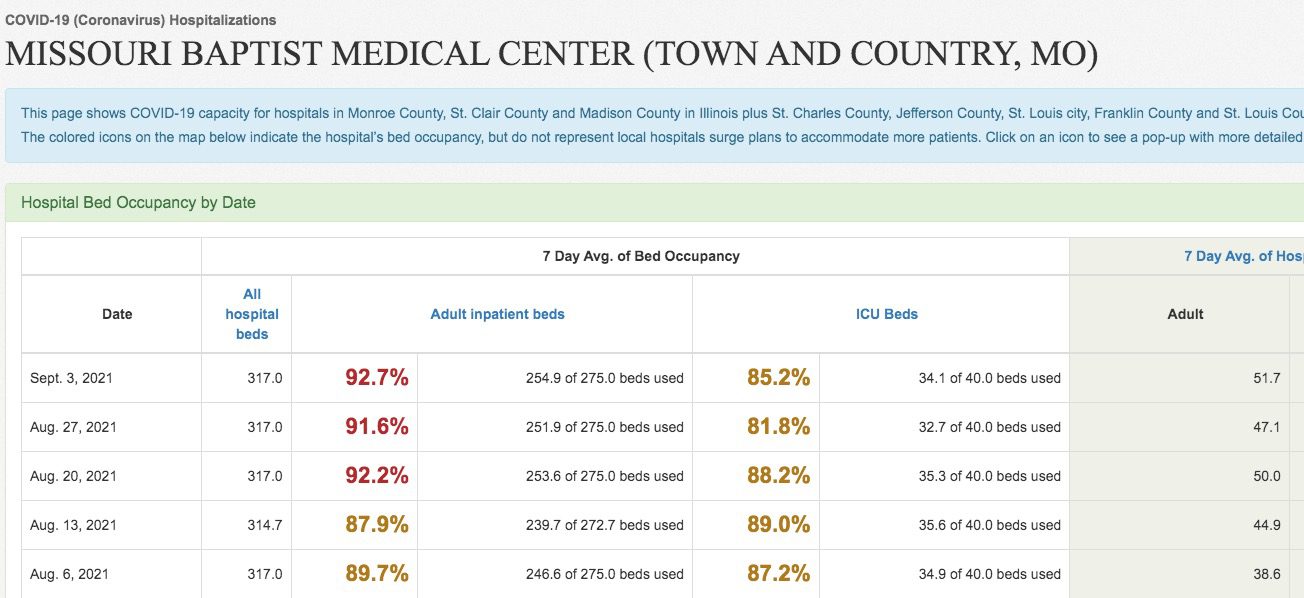
Josh Snider worked in facilities management at Missouri Baptist Medical Center or “MBMC”, “I watched our hospital administrators say in the media that our intensive care units were overflowing with COVID patients, at 98% capacity, knowing that it was a complete and utter lie.”

Snider relates that the MBMC hospital, part of a larger $5.5 billion annual network within the Barnes Jewish hospital system in St. Louis, Missouri, actually shut down three out of four floors of intensive care during COVID because they were UNUSED.

“And even after shutting down three-fourths of our ICU capacity, they were still never more than 50% full with that drastically reduced overall capacity. These medical systems that are saying they are overrun with COVID patients are likely LYING TO THE PUBLIC,” Snider said.

Snider provided documentary proof of the COVID case load of the MBMC system, whose COVID patients do not track national trends, and where the number of COVID patients in ICU were, at many points, a single, solitary person.

“I would have to adjust the airflow in some of the rooms of people in the ICU with COVID, they were fine. I believe in COVID, I know it’s serious, but I also personally saw people who were fine, they had a terminal case of boredom. I spoke with these people and they weren’t sick at all, they felt fine but were told they had to stay there. Many brought their PlayStations with them to waste away the days with video games instead.”


This chart was INTERNAL and distributed to employees of MBMC. In it, you can see that the number of COVID patients in critical care was always under 20. The hospital shut down 3 of 4 ICU wings, and in the remaining one had the capacity for 60 beds/patients. They never came close to being at capacity for COVID ICU patients.

These charts, provided by Snider, show that there was a relatively normal track for COVID infections at the MBMC Center, an acute care facility in St. Louis. Even during periods of infection spikes in the national population, those spikes are not found in the hospital data. As well, the bottom line showing serious cases of COVID requiring intensive care remain significantly small and reduced throughout the months of the pandemic.

Here is the chart generated from information submitted to the US Department of Health and Human Services, as published by the Gannett News Service:

INTERNAL: on August 18, 2021, MBMC said they had 19 COVID patients in ICU.

EXTERNAL: on August 20, 2021, MBMC told the public they had 35.3 COVID patients in ICU.

THE PUBLIC NUMBERS ARE OFF FROM THE INTERNAL REPORTS OF COVID PATIENTS IN THE ICU BY ALMOST 100%

Snider has provided his personal statement, documentary evidence, and clear data discrepancies that all suggest that hospitals are not telling the public the truth about the COVID pandemic.

“The real flu season in the hospital was always more serious than COVID has been,” Snider said. “Flu season in a hospital is very challenging, and even the tamest flu season in years past was still worse than COVID has been so far. The people who have been suffering and sadly dying are clearly people who are hundreds of pounds overweight, and people with multiple other comorbidities like stage 4 cancer. I’m not a Doctor, but the response and panic to this virus is clearly wildly disproportionate to reality.”


Science Also a Pandemic Victim

John P.A. Ioannidis writes at The Tablet How the Pandemic Is Changing the Norms of Science. Excerpts in italics with my bolds aand some added images.
Imperatives like skepticism and disinterestedness are being junked to fuel political warfare that has nothing in common with scientific methodology

Before the pandemic, the sharing of data, protocols, and discoveries for free was limited, compromising the communalism on which the scientific method is based. It was already widely tolerated that science was not universal, but the realm of an ever-more hierarchical elite, a minority of experts. Gargantuan financial and other interests and conflicts thrived in the neighborhood of science—and the norm of disinterestedness was left forlorn.

As for organized skepticism, it did not sell very well within academic sanctuaries. Even the best peer-reviewed journals often presented results with bias and spin. Broader public and media dissemination of scientific discoveries was largely focused on what could be exaggerated about the research, rather than the rigor of its methods and the inherent uncertainty of the results.

Nevertheless, despite the cynical realization that the methodological norms of science had been neglected (or perhaps because of this realization), voices struggling for more communalism, universalism, disinterestedness, and organized skepticism had been multiplying among scientific circles prior to the pandemic. Reformers were often seen as holding some sort of a moral higher ground, despite being outnumbered in occupancy of powerful positions. Reproducibility crises in many scientific fields, ranging from biomedicine to psychology, caused soul-searching and efforts to enhance transparency, including the sharing of raw data, protocols, and code. Inequalities within the academy were increasingly recognized with calls to remedy them. Many were receptive to pleas for reform.

Opinion-based experts (while still dominant in influential committees, professional societies, major conferences, funding bodies, and other power nodes of the system) were often challenged by evidence-based criticism. There were efforts to make conflicts of interest more transparent and to minimize their impact, even if most science leaders remained conflicted, especially in medicine. A thriving community of scientists focused on rigorous methods, understanding biases, and minimizing their impact. The field of metaresearch, i.e., research on research, had become widely respected. One might therefore have hoped that the pandemic crisis could have fostered change.

Indeed, change did happen—but perhaps mostly for the worst.

Lack of communalism during the pandemic fueled scandals and conspiracy theories, which were then treated as fact in the name of science by much of the popular press and on social media. The retraction of a highly visible hydroxychloroquine paper from the The Lancet was a startling example: A lack of sharing and openness allowed a top medical journal to publish an article in which 671 hospitals allegedly contributed data that did not exist, and no one noticed this outright fabrication before publication. The New England Journal of Medicine, another top medical journal, managed to publish a similar paper; many scientists continue to heavily cite it long after its retraction.

The pandemic led seemingly overnight to a scary new form of scientific universalism. Everyone did COVID-19 science or commented on it. By August 2021, 330,000 scientific papers were published on COVID-19, involving roughly a million different authors. An analysis showed that scientists from every single one of the 174 disciplines that comprise what we know as science has published on COVID-19. By the end of 2020, only automobile engineering didn’t have scientists publishing on COVID-19. By early 2021, the automobile engineers had their say, too.

Many amazing scientists have worked on COVID-19. I admire their work. Their contributions have taught us so much. My gratitude extends to the many extremely talented and well-trained young investigators who rejuvenate our aging scientific workforce. However, alongside thousands of solid scientists came freshly minted experts with questionable, irrelevant, or nonexistent credentials and questionable, irrelevant, or nonexistent data.

Social and mainstream media have helped to manufacture this new breed of experts. Anyone who was not an epidemiologist or health policy specialist could suddenly be cited as an epidemiologist or health policy specialist by reporters who often knew little about those fields but knew immediately which opinions were true. Conversely, some of the best epidemiologists and health policy specialists in America were smeared as clueless and dangerous by people who believed themselves fit to summarily arbitrate differences of scientific opinion without understanding the methodology or data at issue.

Disinterestedness suffered gravely. In the past, conflicted entities mostly tried to hide their agendas. During the pandemic, these same conflicted entities were raised to the status of heroes.

For example, Big Pharma companies clearly produced useful drugs, vaccines, and other interventions that saved lives, though it was also known that profit was and is their main motive. Big Tobacco was known to kill many millions of people every year and to continuously mislead when promoting its old and new, equally harmful, products. Yet during the pandemic, requesting better evidence on effectiveness and adverse events was often considered anathema. This dismissive, authoritarian approach “in defense of science” may sadly have enhanced vaccine hesitancy and the anti-vax movement, wasting a unique opportunity that was created by the fantastic rapid development of COVID-19 vaccines. Even the tobacco industry upgraded its reputation: Philip Morris donated ventilators to propel a profile of corporate responsibility and saving lives, a tiny fraction of which were put at risk of death from COVID-19 because of background diseases caused by tobacco products.

Other potentially conflicted entities became the new societal regulators, rather than the ones being regulated. Big Tech companies, which gained trillions of dollars in cumulative market value from the virtual transformation of human life during lockdown, developed powerful censorship machineries that skewed the information available to users on their platforms. Consultants who made millions of dollars from corporate and government consultation were given prestigious positions, power, and public praise, while unconflicted scientists who worked pro bono but dared to question dominant narratives were smeared as being conflicted. Organized skepticism was seen as a threat to public health.

There was a clash between two schools of thought, authoritarian public health versus science—and science lost.

Heated but healthy scientific debates are welcome. Serious critics are our greatest benefactors. John Tukey once said that the collective noun for a group of statisticians is a quarrel. This applies to other scientists, too. But “we are at war” led to a step beyond: This is a dirty war, one without dignity. Opponents were threatened, abused, and bullied by cancel culture campaigns in social media, hit stories in mainstream media, and bestsellers written by zealots. Statements were distorted, turned into straw men, and ridiculed. Wikipedia pages were vandalized. Reputations were systematically devastated and destroyed. Many brilliant scientists were abused and received threats during the pandemic, intended to make them and their families miserable.

Politics had a deleterious influence on pandemic science. Anything any apolitical scientist said or wrote could be weaponized for political agendas. Tying public health interventions like masks and vaccines to a faction, political or otherwise, satisfies those devoted to that faction, but infuriates the opposing faction. This process undermines the wider adoption required for such interventions to be effective. Politics dressed up as public health not only injured science.

It also shot down participatory public health where people are empowered, rather than obligated and humiliated.

There was absolutely no conspiracy or preplanning behind this hypercharged evolution. Simply, in times of crisis, the powerful thrive and the weak become more disadvantaged. Amid pandemic confusion, the powerful and the conflicted became more powerful and more conflicted, while millions of disadvantaged people have died and billions suffered.

I worry that science and its norms have shared the fate of the disadvantaged. It is a pity, because science can still help everyone. Science remains the best thing that can happen to humans, provided it can be both tolerant and tolerated.

John P.A. Ioannidis is Professor of Medicine and Professor of Epidemiology and Population Health, as well as Professor (by courtesy) of Biomedical Science and Statistics, at Stanford University. His complete COVID-19-related publications can be found here.


Yes, Daily Mail, You are Discredited by Fake IVM Story

97178-ivermectin

Daily Mail, along with other legacy news published this:

Overdoses from anti-parasite drug ivermectin overwhelm rural Oklahoma hospitals – leaving gunshot victims waiting for emergency rooms

Hospitals in rural southeast Oklahoma are struggling with a surge of ivermectin overdose patients
♦ So many patients are coming in with overdoses of the horse-grade medicine that other serious injuries – like gunshot wounds – have to wait
Ivermectin is FDA approved for human use fighting some parasite-related conditions, but has not demonstrated that it can fight viruses in humans
♦ Many are purchasing versions of the drug meant for horses and other large animals, where doses are dangerous for humans

Rolling Stone, who was also taken in published the facts in this correction:

UPDATE: Northeastern Hospital System Sequoyah issued a statement: Although Dr. Jason McElyea is not an employee of NHS Sequoyah, he is affiliated with a medical staffing group that provides coverage for our emergency room. With that said, Dr. McElyea has not worked at our Sallisaw location in over 2 months. NHS Sequoyah has not treated any patients due to complications related to taking ivermectin. This includes not treating any patients for ivermectin overdose. All patients who have visited our emergency room have received medical attention as appropriate. Our hospital has not had to turn away any patients seeking emergency care. We want to reassure our community that our staff is working hard to provide quality healthcare to all patients. We appreciate the opportunity to clarify this issue and as always, we value our community’s support.”

This cynical, outrageous media campaign appeared in a previous post:  No, Guardian, Ivermectin Not Discredited by Elgazzar Retraction

The hits against Ivermectin keep on coming.  Dr. Colleen Aldous and Dr. Warren Parker explain this latest smear campaign in their article Ivermectin — front-line doctors vs bureaucrats.  Excerpts in italics with my bolds.

Given the safety profile of Ivermectin, there is nothing to lose and there’s a good possibility of saving many lives and slowing the pandemic

The Ivermectin battle of ideologies on safety and efficacy pits a group of doctors who deal with dying patients every day against bureaucrat academic clinicians. These academic clinicians have dismissed all evidence, favouring a single, large randomised trial that is entirely appropriate for novel drug development but not for pandemics.

This is akin to a person suffering a heart attack and refusing to be taken to hospital in a Toyota, choosing to wait for a Rolls-Royce.

If science is pure, there should not really be a debate, but there is, and it’s purely on the interpretation of science. The Ivermectin meta-analyses have shown that subjectivity in science does happen, something the layperson is made to believe is not possible.

Unfortunately, scientific fraud has also muddied the picture on both sides of the Ivermectin divide. The Elgazzar Ivermectin study, which showed Ivermectin to be highly effective, has been removed from the preprint website for unethical scientific reporting. If this is found to be true it is unforgivable and the authors need to be dealt with.

I’ve no doubt that this will be used to discredit Ivermectin, but it is one of many trials showing efficacy and will be shown to have little weight in the meta-analyses. Just because one lawyer is guilty of corruption does not mean all lawyers are corrupt. In the same vein, a study published in leading medical journal Lancet, showed that hydroxychloroquine as a treatment for Covid-19 was associated with an increased risk of death in patients hospitalised with the disease. However, it was found to be fraudulent and the Lancet was forced to retract the paper.

Bias can come in selecting studies to include in the analysis and the interpretation of the results. Ivermectin can be shown to work by a careful selection of studies that support it. It can be discredited by selecting studies that show it is ineffective.

The SA National Essential Medicines List Committee (NEMLC), which has published its methods on its website, has produced an in-house rapid-review on Ivermectin, which continues to find that Ivermectin should not be used outside clinical trials. This review is not peer-reviewed. The scientific community emphasises the importance of peer-review publication, but our regulatory authorities seem not to. To illustrate the degree of subjectivity, I was in a meeting with one of the authors from the Bryant paper and a NEMLC member. In the discussion the latter stated that while they are aware of the work done in their preprint paper, they disagree with it. Simple!

The methods used in the Ivermectin meta-analyses by Bryant et al are exact. They have a very low risk of bias in themselves. Meta-analyses pool data from several studies to report for a larger sample size than the studies themselves. The heterogeneity of the studies is addressed with rigorous methods to reduce the effect of bias from the individual studies. Bryant et al have careers in data and research analysis. They have prepared decision-to-treat recommendations for international and country-level health bodies.

Their analysis included 24 randomised controlled trials that showed both positive and negative outcomes. The recommendation, among others, is that with moderate certainty Ivermectin could reduce mortality by an average of 62%. Moderate certainty means there is a good chance it is effective to this level.

From looking at their methods in their peer-reviewed publication I believe the selection and interpretation of results were unbiased and currently provide us with recommendations that are more than sufficient to validate the positive effects of Ivermectin for treating Covid-19.

Simply put, SA’s response is now guided by the recommendations of an in-house team over a peer-reviewed, rigorously prepared meta-analysis. The NEMLC document is the guidance observed by all health department facilities and also some private hospitals.

Concerning the Ivercor-Covid-19 trial, it’s a pity all those who have stated that this study is proof that Ivermectin doesn’t work did not read the paper in its entirety. The authors themselves declare in the limitations of their research that the doses given are were low.

As the pandemic has progressed, experience on the ground has shown that Ivermectin is effective at higher doses. Initial recommended doses were low, having been informed by the dosages for anti-parasite treatment. Unfortunately, many trials that are now being run or are completed are using low doses based on earlier assumptions. Even the upcoming Oxford Principle trial of Ivermectin follows low dose regimes that may be insufficient to show effect.

The Lopez-Medina study in Colombia is also often cited as demonstrating that Ivermectin is ineffective. Yet it was so fraught with protocol violations that I would not have submitted the article for publication if I were the principal investigator.

The NEMLC has put the health of our people at risk by recommending against the use of Ivermectin even though it is legally available in SA for off-label use or in the compassionate use programme. Proper evidence-based medicine involves looking at all current evidence conscientiously, not just at a few trials.

During the latter half of the last century our ways of doing science have developed in times of stability and relative prosperity. However, we are in chaos now. We need new thinking. Those in authority are still pushing for their conventional methods for science, which insists that “reality must obey our models… otherwise reality cannot be correct”.

We need more than just a few clinical experts making decisions for our country now that we are hitting this third wave. I believe it is time to put together a multidisciplinary team to examine the arguments of those saying that the totality of evidence points to the necessity of making a Type 1 decision now, roll out Ivermectin.

Given the safety profile of Ivermectin, with nearly 4bn doses given since the 1980s, there is nothing to lose. At worst, it would be like taking an aspirin to ease pain for a bee sting. It won’t harm, but it may help.

If Ivermectin is used, there is a good possibility of saving many lives and slowing down the pandemic. But suppose we have to wait for that elusive large double-blind, randomised control trial (the Rolls-Royce) that will provide the ultimate certainty of the gold standard. In that case, there may be many thousands of unnecessary deaths still to come.

• Dr Aldous is a professor and healthcare scientist at the University of KwaZulu-Natal Medical School, where she runs the doctoral academy at the College of Health Sciences. She has published over 130 peer-reviewed articles in rated journals. Dr Parker, an international public health specialist, has worked in more than 20 countries on health and development concerns, with a focus on translating research into strategic policy.

Footnote:  The Bryant et al. meta-analysis study is discussed here:  Ivermectin Invictus: The Unsung Covid Victor

Why Can’t They See that HCQ or Ivermectin + nutritional supplements
is the missing public health pillar?

Pillars Needed Missing

Japanese Medical Chairman Doubles Down on IVM

In February 2021, Dr. Ozaki Chairman of the Tokyo Medical Association declared that Japan’s physicians should get a greenlight to prescribe IVM (Ivermectin) at the first sign of SARS CV infections.

Now in August, Tokyo Medical Association chairman Haruo Ozaki reiterated that ivermectin should be widely used and said that his early recommendations have not been heeded in Japan.  See Lifesite article August 30, 2021 Japanese medical chairman doubles down on ivermectin support after early calls went ignored.  Excerpts in italics with my bolds

In an interview with the The Yomiuri Shimbun on August 5, Ozaki spoke in detail about his opinion that ivermectin should be used in Japan and said that his early calls for usage have seemingly not been heeded.

He stated that there is evidence from multiple countries that ivermectin has proven effective for patients diagnosed with COVID: “I am aware that there are many papers that ivermectin is effective in the prevention and treatment of [coronavirus], mainly in Central and South America and Asia.”

Chairman Ozaki stated that despite evidence suggesting the efficacy of ivermectin, it is difficult to obtain the medication. He added that while ivermectin’s established effectiveness is increasingly clear, the U.S. company that manufactures the drug, Merck & Co., Inc., have currently limited distribution because they claim that the drug is ineffective at treating COVID.

“With the view that it is not effective for the treatment and prevention of sickness, there is an intention that it should not be used for anything other than skin diseases such as psoriasis.”

This has led to a situation where, according to Ozaki, “Even if a doctor writes a prescription for ivermectin, there is no drug in the pharmacy.” He said that this has rendered the drug practically “unusable.”

He contends that the fact that supply has been stopped by Merck & Co. is evidence that it does in fact work at treating COVID: “But (Merck) says that ivermectin doesn’t work, so there shouldn’t be any need to limit supply. If it doesn’t work, there’s no demand. I believe it works, so block supply. It looks like you are.”

He said that he “also told the Japan Olympic Committee that ivermectin should be used effectively when holding the Tokyo Olympics. But the government didn’t do anything.”

He addressed the reluctance on behalf of the medical establishment in using ivermectin to treat COVID. He said “there are problems for researchers in academia and professors in universities. Many do not do anything by themselves, but they are of the opinion of international organizations such as the WHO and large health organizations in the United States and Europe that ‘it is not yet certain whether ivermectin will work for the [coronavirus].’”

“We don’t do it on our own initiative, but only on the opinions of others. Why don’t we try to see for ourselves why ivermectin works? It is deplorable that there are critics, researchers, and scholars who are constantly criticizing without doing anything. I hope that Japanese academics will contribute more actively.”

Evidence that ivermectin is effective in treating COVID has been well attested in developing nations where vaccines are not widely distributed. Another study in France also suggested that ivermectin ought to be used as a remedy for COVID.

On May 25, the Indian Bar Association served a legal notice to Dr. Soumya Swaminathan, a Chief Scientist for the World Health Organization (WHO), relating to the harm she allegedly caused the people of India by campaigning against the use of ivermectin.

In Mexico city, a home-treatment-kit, including ivermectin was created, for its 22 million-strong population on December 28, 2020, following a spike in cases of COVID-19. Also, doctors were encouraged to use Ivermectin and other therapeutic drugs in their practice when dealing with COVID-positive patients. The effort resulted in a 52–76 percent reduction in hospitalizations, according to research by the Mexican Digital Agency for Public Innovation (DAPI), Mexico’s Ministry of Health, and the Mexican Social Security Institute (IMSS).

Following that came a public statement by another prominent Japanese physician, Dr. Kazuhiro Nagao, who appeared on Japanese television proposing that COVID-19 should be treated as a Class 5 illness as opposed to its current classification as a Class 2. In Japan, illnesses are categorized by a classification system; approaching COVID as a Class 5 illness would mean that it could be treated like a seasonal flu.

Dr. Nagao said he has used Ivermectin as an early treatment for over 500 COVID patients with practically a 100% success rate, and that it should be used nationwide.

About the effectiveness of Ivermectin in treating COVID patients, he said: “It starts being effective the very next day… My patients can reach me by message 24/7 and they tell me they feel better the next day.”

Nagao was asked by the TV anchor when patients should take Ivermectin if diagnosed with COVID-19. He replied: “The same day, I mean if you are infected today, you take it today… It is a medication that should be given for mildly ill patients. If you give it to hospital patients, it’s too late. This is also the case for the majority of drugs… So you have to give Ivermectin. I am asking our Prime Minister Suga to distribute this drug ‘made in Japan’ on a large scale in the country.

He added that four pills should be distributed to everyone in the country, so that people can take them “as soon as you are infected.”

Footnote: 

As Dr. Ozaki suggests Big Pharma wants to banish any treatments that are cheap and effective. Doing the math:

An Ivermectin course for COVID is less than twenty dollars.

A course of REMDESEVIR is currently right at $8800.00 dollars. (and often doesn’t work)

An outpatient treatment with monoclonal antibodies is right at $23,000.00 – 25,000.00 dollars with all the infusion costs added.

That’s not to mention obscene vaccine profits.

Covid19–You’re Safer than You Think

The political and media messaging about the coronavirus prevents the citizenry from connecting the dots and realizing how fear is exaggerated in order to impose social controls.  Let’s put the pieces together.

1.  Natural Immunity is as Good or Better Than Vaccine Immunity

Michael Nadler explains at American Thinker Director of the National Institutes of Health grossly misstates the science on vaccination vs. natural immunity.  Excerpts in italics with my bolds.

On the August 12, 2021 Special Report, Bret Baier asked NIH director Francis Collins: “Can you definitely say to somebody that the vaccine provides better protection than the antibodies you get from actually having had COVID-19?”

Dr. Collins replied to Bret and the almost 2 million viewers of Special Report:

“Yes, Bret, I can say that. There was a study published by CDC just ten days ago in Kentucky, and they looked specifically at people who had had natural infection and people who had been vaccinated and then ended up getting infection again. So what was the protection level? It was more than two-fold better for the people who had had the vaccine in terms of protection than people who had had natural infection. That’s very clear in that Kentucky study. You know that surprises people. Kind of surprised me that the vaccine would actually be better than natural infection. But if you think about it, it kinda makes sense[.] … That’s a settled issue.”

I was one of those who did find this quite surprising, given my familiarity with studies such as this one from the Cleveland Clinic and my basic understanding of how immunity is conferred by mRNA vaccines versus the natural immunity arising from prior infection.

However, based on the unequivocal statement on national TV by Dr. Collins, a highly respected scientist leading one of our nation’s pre-eminent public health agencies, that the issue is settled, I adjusted my thinking about vaccine immunity versus natural immunity from prior infection.

Fast-forward to the following night’s Special Report to watch and listen to Admiral Brett Giroir, former assistant secretary for health during the Trump administration while concurrently serving in several other public health positions. Dr. Giroir responded to a question about the confusion that arose from Dr. Collins’s conversation on Special Report the night before. He pointed out that Dr. Collins’s statement the previous night about the superiority of vaccine immunity over natural immunity and his citation of the Kentucky/CDC study as evidence were “factually incorrect.”

It is worth watching the whole conversation, but key points made by Dr. Giroir include the following:

It has not been shown that natural immunity, the immunity you have after infection, is any inferior to the immunity you have after vaccination. And, in fact, there is growing evidence that natural immunity lasts a long time and is highly protective against infection and hospitalization[.] … The study that Dr. Collins quoted did not have anything to do with people who had been vaccinated or who had natural immunity. What it proved [is] that if you were previously infected, your chance of getting COVID in the middle of Delta in Kentucky was about 1 in a thousand to get COVID again. If you got vaccinated that dropped it to 1 in 2500 so that’s a reduction but still your risks were very, very low[.] … This does not deal with people who were naturally immune vs. vaccinated. That’s a whole different question and it begs the question about whether you have antibodies, is that as good as being vaccinated? And the data right now pretty much say it is.

To clarify, the CDC published a report on a Kentucky study of people who had previously been infected with COVID-19. The study addressed the question of whether being vaccinated after already being infected provides additional protection; and the findings suggest that vaccination does provide additional protection when added to immunity provided by previous natural infection. But Dr. Collins relied on this study to make a definitive statement in response to an entirely different question: whether vaccination of people who were not previously infected provides better protection than does immunity obtained from previous infection. This study sheds absolutely no light on that question.

Given the factually incorrect statements made by the head of the NIH on national TV, we are left to wonder how much we can trust about what our highest-level public health officials tell us. And when they do mislead us, is it intentional, is it carelessness in communications, or is it because they are mistaken in their understanding of the science? In the case of Dr. Collins’s statement on Special Report, all but the most cynical have to conclude it is the third.

This then raises the question as to how such an eminent scientist can get it so wrong. This is a much tougher question to answer without discussing the issue directly with Dr. Collins. I would speculate that we have a case of confirmation bias, the tendency to interpret new evidence as confirmation of one’s existing beliefs or theories. What might the source of this bias be?

The Biden administration has made vaccination numbers a key measure of its progress in leading the fight against COVID-19, as it should. However, in order to keep the public focused on vaccination as a universal necessity, and in its apparent approval of vaccine mandates, the public health bureaucracy has been quite conspicuous in minimizing any mention of the role, effectiveness, and extent of natural immunity arising from previous infection.

According to a number of outside experts such as Marty Makary, “[r]equiring the vaccine in people who are already immune with natural immunity has no scientific support.” So as part of the public health bureaucracy which is invested in President Biden’s objective of universal vaccination, Dr. Collins might easily have misread the Kentucky/CDC study as strong evidence that natural immunity is not nearly as effective as vaccination.

In this regard, I don’t hold the CDC blameless. For example, I’m not sure if the CDC has even acknowledged studies like the one at the Cleveland Clinic showing strong protection due to natural immunity arising from previous infection. And particularly after Dr. Collins’s misreading, it would behoove the CDC to add a statement in the Summary or Discussion sections of its report on the Kentucky study making it clear that it does not address the question of the relative effectiveness of vaccination vs. natural immunity.

2.  One of Three Americans Have Natural Immunity

Columbia Public Health published this report One in Three Americans Already Had COVID-19 by the End of 2020.  Excerpts in italics with my bolds.

Undocumented Infections Accounted for Estimated Three-Quarters of Infection Last Year

A new study published in the journal Nature estimates that 103 million Americans, or 31 percent of the U.S. population, had been infected with SARS-CoV-2 by the end of 2020. Columbia University Mailman School of Public Health researchers modeled the spread of the coronavirus, finding that fewer than one-quarter of infections (22%) were accounted for in cases confirmed through public health reports based on testing.

The study is the first to comprehensively quantify the overall burden and characteristics of COVID-19 in the U.S. during 2020. The researchers simulated the transmission of SARS-CoV-2 within and between all 3,142 U.S. counties using population, mobility, and confirmed case data.

The portion of confirmed cases reflected in the study’s estimates, i.e. the ascertainment rate, rose from 11 percent in March to 25 percent in December, reflecting improved testing capacity, a relaxation of initial restrictions on test usage, and increasing recognition, concern, and care-seeking among the public. However, the ascertainment rate remained well below 100 percent, as individuals with mild or asymptomatic infections, who could still spread the virus, were less likely to be tested.

“The vast majority of infections were not accounted for by the number of confirmed cases,” says Jeffrey Shaman, PhD, professor of environmental health sciences at Columbia University Mailman School of Public Health. “It is these undocumented cases, which are often mild or asymptomatic infections, that allow the virus to spread quickly through the broader population.”

Comment:  

A person infected but without enough viral load to be sick is not likely to be contagious.  The exception is the first few days for someone who goes on to be severely ill afterward. All of these people (infected but not “cases”) had immune systems that stopped the virus from replicating in their bodies.  Ironically, had they been subjected to PCR tests, they would have shown as positives, and then mislabeled as “cases” despite their wellness.

Because of the political drive to vaccinate everyone, the powers-that-be deny that nearly a third of the population is already blessed with immunity without being vaccinated.  And this goes without considering the evidence that youngsters’ immune systems are superior to adults when it comes to coronaviruses (SARS-CV2 being the fifth one in circulation).  Superior here means preventing illness severe enough to be life-threatening, or to require hospital or extended care.  Neither vaccines nor natural immunities prevent infections, only limit the effects to runny noses and/or coughs.

For a discussion of natural immunity mechanisms see SARS Cross-Immunity from T-cells

3.  Vaccine Mandates Are Not Justified

Evidence is building that immunity after infection is superior to vaccine-induced immunity.  This Israeli study is a recent example: Comparing SARS-CoV-2 natural immunity to vaccine-induced immunity: reinfections versus breakthrough infections.  Excerpts below with my bolds.

Background Reports of waning vaccine-induced immunity against COVID-19 have begun to surface. With that, the comparable long-term protection conferred by previous infection with SARS-CoV-2 remains unclear.

Methods We conducted a retrospective observational study comparing three groups: (1)SARS-CoV-2-naïve individuals who received a two-dose regimen of the BioNTech/Pfizer mRNA BNT162b2 vaccine, (2) previously infected individuals who have not been vaccinated, and (3) previously infected and single dose vaccinated individuals. Three multivariate logistic regression models were applied. In all models we evaluated four outcomes: SARS-CoV-2 infection, symptomatic disease, COVID-19-related hospitalization and death. The follow-up period of June 1 to August 14, 2021, when the Delta variant was dominant in Israel.

Results SARS-CoV-2-naïve vaccinees had a 13.06-fold (95% CI, 8.08 to 21.11) increased risk for breakthrough infection with the Delta variant compared to those previously infected, when the first event (infection or vaccination) occurred during January and February of 2021. The increased risk was significant (P<0.001) for symptomatic disease as well. When allowing the infection to occur at any time before vaccination (from March 2020 to February 2021), evidence of waning natural immunity was demonstrated, though SARS-CoV-2 naïve vaccinees had a 5.96-fold (95% CI, 4.85 to 7.33) increased risk for breakthrough infection and a 7.13-fold (95% CI, 5.51 to 9.21) increased risk for symptomatic disease. SARS-CoV-2-naïve vaccinees were also at a greater risk for COVID-19-related-hospitalizations compared to those that were previously infected.

Conclusions This study demonstrated that natural immunity confers longer lasting and stronger protection against infection, symptomatic disease and hospitalization caused by the Delta variant of SARS-CoV-2, compared to the BNT162b2 two-dose vaccine-induced immunity. Individuals who were both previously infected with SARS-CoV-2 and given a single dose of the vaccine gained additional protection against the Delta variant.

Martin Kulldorf of Harvard weighs in:

“In Israel, vaccinated individuals had 27 times higher risk of symptomatic COVID infection compared to those with natural immunity from prior COVID disease [95%CI:13-57, adjusted for time of vaccine/disease]. No COVID deaths in either group.”

Jon Miltimore draws the implications: Harvard Epidemiologist Says the Case for COVID Vaccine Passports Was Just Demolished. Excerpts in italics with my bolds.

A Death Blow to Vaccine Passports?

The findings come as many governments around the world are demanding citizens acquire “vaccine passports” to travel. New York City, France, and the Canadian provinces of Quebec and British Columbia are among those who have recently embraced vaccine passports.

Meanwhile, Australia has floated the idea of making higher vaccination rates a condition of lifting its lockdown in jurisdictions, while President Joe Biden is considering making interstate travel unlawful for people who have not been vaccinated for COVID-19.

Vaccine passports are morally dubious for many reasons, not the least of which is that freedom of movement is a basic human right. However, vaccine passports become even more senseless in light of the new findings out of Israel and revelations from the CDC, some say.

Harvard Medical School professor Martin Kulldorff said research showing that natural immunity offers exponentially more protection than vaccines means vaccine passports are both unscientific and discriminatory, since they disproportionately affect working class individuals.

“Prior COVID disease (many working class) provides better immunity than vaccines (many professionals), so vaccine mandates are not only scientific nonsense, they are also discriminatory and unethical,” Kulldorff, a biostatistician and epidemiologist, observed on Twitter.

Nor is the study out of Israel a one-off. Media reports show that no fewer than 15 academic studies have found that natural immunity offers immense protection from COVID-19.

The Bottom Line

Vaccine passports would be immoral and a massive government overreach even in the absence of these findings. There is simply no historical parallel for governments attempting to restrict the movements of healthy people over a respiratory virus in this manner.

Yet the justification for vaccine passports becomes not just wrong but absurd in light of these new revelations.

People who have had COVID already have significantly more protection from the virus than people who’ve been vaccinated. Meanwhile, people who’ve not had COVID and choose to not get vaccinated may or may not be making an unwise decision. But if they are, they are principally putting only themselves at risk.


COVID-19 Status in US: Statistics vs. Hype

The complete report by statisticians Kevin Dayaratna and Norbert Michel is A Statistical Analysis of COVID-19 Breakthrough Infections and Deaths.  

Summary of Principal findings:

According to estimates by the Centers for Disease Control and Prevention (CDC), the Delta variant represented more than 80 percent of new U.S. COVID-19 cases at the end of July 2021. This fact has almost surely added to Americans’ concerns about the efficacy of COVID-19 vaccines since coverage of breakthrough cases has permeated the news. The CDC has also sent mixed messages, creating confusion and unnecessary fear. The overall evidence remains clear: Vaccines provide people with significant protection against serious illness or death from the coronavirus, including the Delta variant. Public health guidelines should reflect this reality.

  • The CDC announced new COVID-19 guidelines for the vaccinated based on data that allegedly imply that vaccines offer little protection against the Delta variant.
  • The new data simply do not support such evidence, and the CDC’s latest move to re-impose mask mandates runs the risk of increasing vaccine hesitancy.
  • Health guidelines must reflect the reality that vaccines provide significant protection against serious illness or death from the virus, including the Delta variant.
COVID-19 Cases, Deaths, and Vaccines

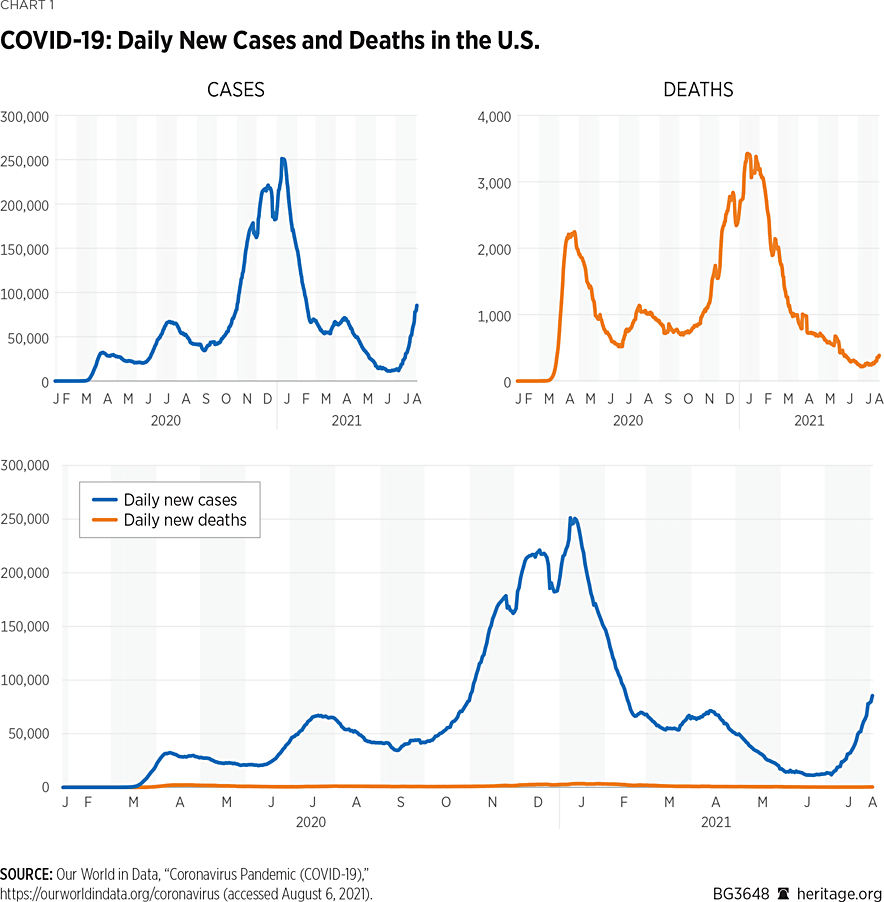
Chart 1 presents new daily cases and deaths over the course of the pandemic.

As Chart 1 demonstrates, COVID-19 cases and deaths declined significantly for much of the first half of 2021 as more Americans were vaccinated. While the U.S. is experiencing a surge in cases due to the Delta variant, most of these cases are among the unvaccinated, and COVID-19 deaths are nowhere near the levels before vaccines were authorized.

Furthermore, as of August 4, 2021, more than 164 million Americans were fully vaccinated against COVID-19, with 191 million people having acquired partial immunity through at least one dose. More than 80 percent of Americans 65 and older are fully vaccinated

Yet, among those fully vaccinated, the CDC reports 7,525 COVID-19 patients who either were hospitalized or died, a figure representing 0.005 percent of the fully vaccinated.  This CDC statistic reflects data as of August 2, 2021. 

According to the CDC, 74 percent of these cases were people ages 65 and older, 26 percent of these hospitalizations were reported as asymptomatic or not related to COVID-19, and 21 percent (316) of the 1,507 fatal cases were reported as asymptomatic or not related to COVID-19.

The CDC “Study” of Barnstable County, Massachusetts

According to The New York Times, the State of Massachusetts and Barnstable County have adult vaccination rates of 74.8 percent and 76 percent, respectively.  These statistics assume full vaccination.  The town of Provincetown itself (where many of the celebratory events took place) has a vaccination rate of 95 percent.  Although it is unclear what the actual vaccination rate was among the attendees, Dr. Ingu Yun, who attended the festivities and engaged in a similar analysis associated only with fully vaccinated people, suggests that the vaccination rate of attendees was well above 90 percent.

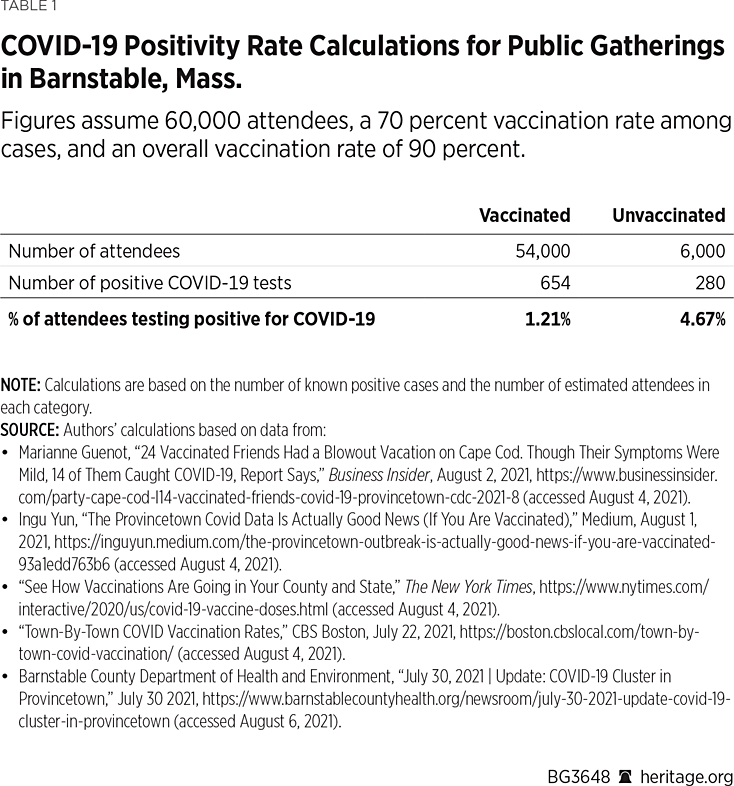
That is, assuming a 90 percent vaccination rate, only 1.21 percent of the estimated 54,000 vaccinated attendees, and 4.67 percent of the estimated 6,000 unvaccinated, tested positive for COVID-19. Of course, the festivities had many out-of-town visitors, making it difficult to ascertain the true vaccination rate among attendees.

What Are Your Odds Now

Of course, there will continue to be breakthrough cases, but the CDC’s own data indicate that the truth is the vaccines have had over 90% efficacy against hospitalization and death.

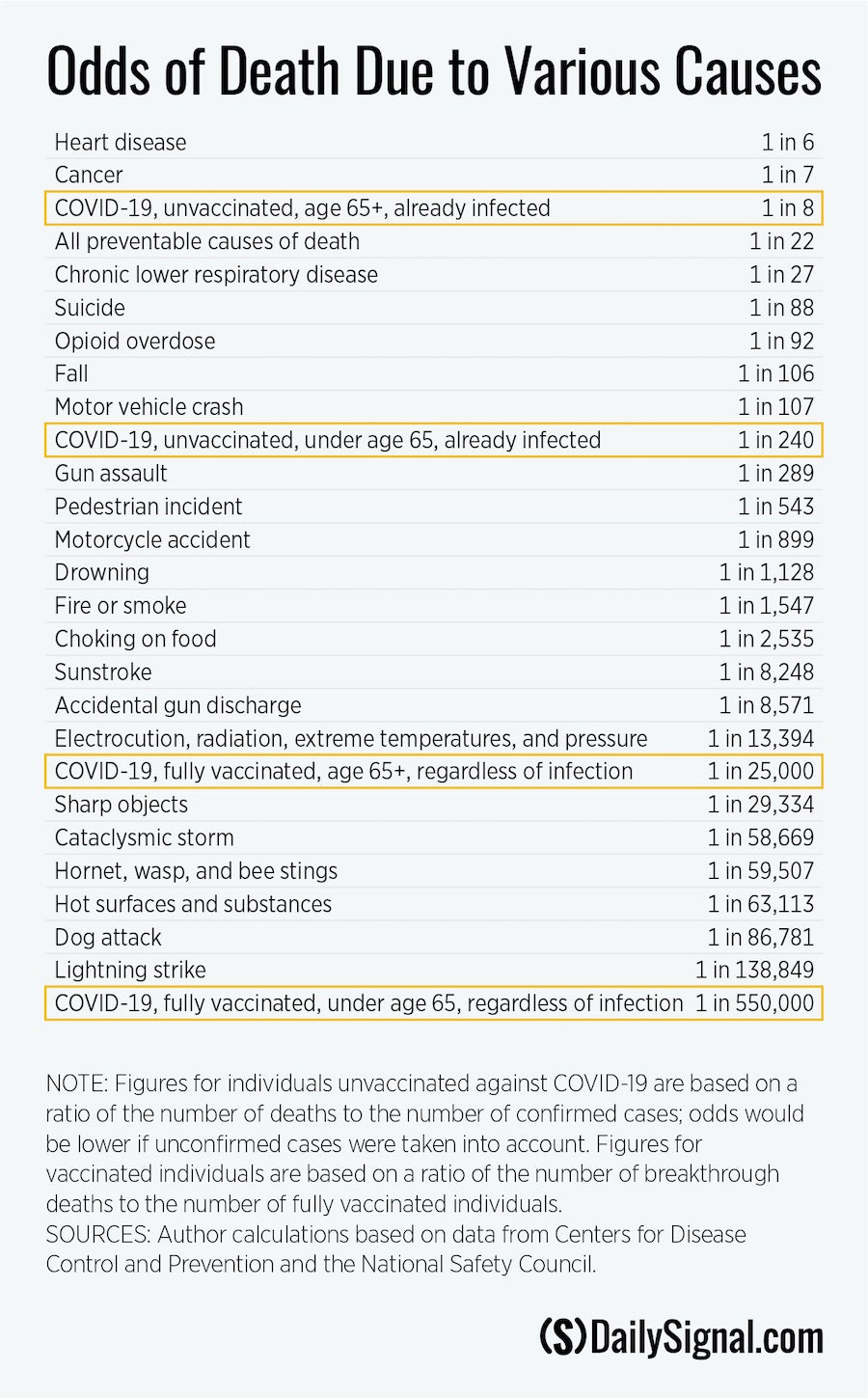
Not surprisingly, however, among the unvaccinated, COVID-19 can still be quite deadly, especially for the elderly and those with chronic conditions. The following chart puts those odds in perspective with other causes of death.

As the chart illustrates, however, the odds of dying of COVID-19 despite being fully vaccinated, although not zero, are slim to none. In fact, those under 65 have significantly higher odds of getting struck by lightning.


Media Hype about “Long Covid”

Science Norway reports Poor studies on long Covid are sensationalized by the media  Excerpts in italics with my bolds.

Many recent reports in the media have given the impression that people are experiencing major long-term effects after having even mild Covid-19. This impression does not correspond with the knowledge we have accumulated so far.

We must dedramatise the long-term effects of Covid-19, often referred to as long Covid. The media have a responsibility in this regard. They must become more critical of the research methods used in the studies they refer to.

Most infectious diseases with severe symptoms will to some extent be accompanied by long-term effects. Most infectious diseases with mild symptoms will cause few short-term effects.

More and more studies are showing that this is probably also the case for Covid-19. It is vital that more high-quality studies are carried out to examine this problem.

Data from the Norwegian Institute of Public Health’s emergency preparedness register (BeredtC19) includes around two million Norwegians who have been tested for SARS-CoV-2. It shows a short-term and temporary rise in the number of contacts with general practitioners – GPs and emergency medical centres – after mild Covid-19.

The study suggests there has been no increase in use of the specialist health service when compared with those who have tested negative.

The media have overdramatised studies which have not included suitable comparison groups.

The fact that the effects can exclusively be investigated and treated by GPs means that most effects are likely to be mild, even though they might seem unpleasant for the people concerned.

This Norwegian data is supported by a major Danish register study, which found a low risk of serious complications after mild Covid-19.

Mental Health Problems Not Greater with Covid

An example of the importance of having a comparison group is that we find a sharp increase in mental health problems amongst those who have had Covid-19 in Norway between March and November 2020.

This would typically have led to a headline along the lines of “Mild Covid-19 causes mental health problems”. However, when we study a comparison group consisting of people who tested negative over the same period of time, we find an even greater increase.

This means that both those who have had and those who have not had Covid-19 may have suffered long-term mental health problems as a result of isolation and loneliness during lockdown, rather than of having had Covid-19. Instead, the headline would then be “Mild Covid-19 does not give rise to mental health problems”.

Comparison groups are useful precisely when they are comparable. In other words, the group that has had Covid-19 must be as similar as possible to the group that has not had it.

So, when the next study of long-term effects is published and journalists consider using the headline “Mild Covid-19 can cause death after six months”, perhaps they could start by asking themselves the question: Did the study also investigate deaths after six months amongst those who have not had Covid-19?

This is about the lives and health of many people. Intimidation and unnecessary fear are the last thing we need.

Footnote:  People with Severe Covid Illnesses Doing Surprisingly Well 3 months Later

Also from Science Norway People who were seriously ill with Covid-19 are doing surprisingly well today.  Excerpts in italics with my bolds.

Three months after having been discharged from the hospital following serious Covid-19, researchers tested the oxygen uptake of 156 patients.

20 per cent of the participants had been treated in the intensive ward, 13 per cent needed ventilators.

“We were worried about the effects on those who were admitted to hospital with serious Covid-19 disease”, Ingunn Skjørten says to the Norwegian broadcaster NRK. She is a specialist in internal medicine and lung diseases at the LHL-hospital at Gardermoen.

“We were particularly worried that the patients might have long lasting damages of their lungs”, she says.

When they analyzed the results of the tests however, the researchers were positively surprised.

Of the 156 participants, only a third still had low oxygen uptake three months after being discharged from the hospital.

“Considering how ill they actually were when in hospital, we expected a lot more of them to still experience this problem”, Skjørten says to NRK.

And there is more good news:

For the majority of those who did still experience problems with oxygen uptake, the solution is seemingly easy: they have to work out.   Because this was the other positive surprise: among the majority of those who still had a low oxygen uptake, their lungs were not the problem.

When the researchers took a closer look at those who struggled with low oxygen uptake, the most important factor – observed in 63 per cent – was the fact that they were out of shape due to inactivity.

The fact that most of the participants still experience low oxygen uptake due to being out of shape is good news, according to Skjørten.

It means that exercise can be used in order to deal with some of the long-term effects of serious Covid-19, NRK writes. And it means that the illness hasn’t caused as large and as permanent damages as the researchers feared.