Calling for Apocalypse

Brendan O’Neill writes at Spiked on The luxury of apocalypticism. Excerpts in italics with my bolds and images.

The elites want us to panic about Covid-19 – we must absolutely refuse to do so.

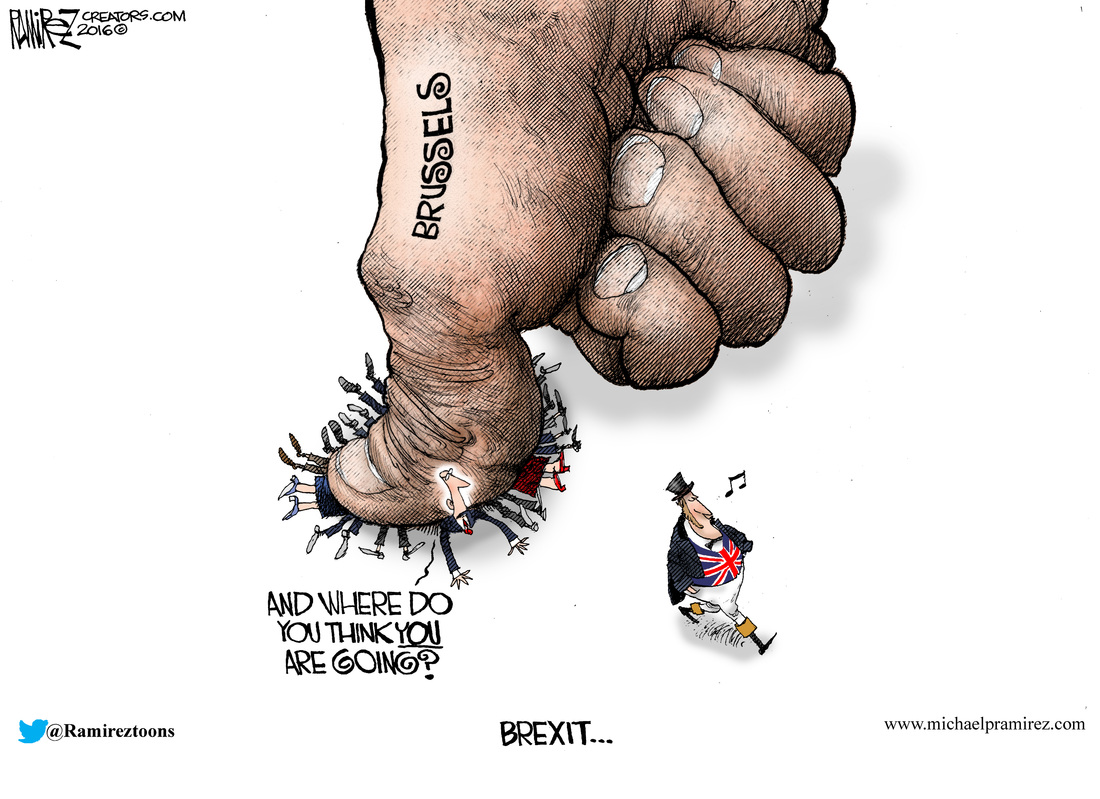
People’s refusal to panic has been a great source of frustration for the establishment in recent years. ‘The planet is burning’, they lie, in relation to climate change, and yet we do not weep or wail or even pay very much attention. ‘I want you to panic’, instructs the newest mouthpiece of green apocalypticism, Greta Thunberg, and yet most of us refuse to do so. A No Deal Brexit would unleash economic mayhem, racist pogroms and even a pandemic of super-gonorrhoea, they squealed, incessantly, like millenarian preachers balking at the imminent arrival of the lightning bolt of final judgement, and yet we didn’t flinch. We went to work. We went home. We still supported Brexit.
Our skittish elites have been so baffled, infuriated in fact, by our calm response to their hysterical warnings that they have invented pathologies to explain our unacceptable behaviour. The therapeutic language of ‘denialism’ is used to explain the masses’ refusal to fret over climate change. Environmentalists write articles on ‘the psychology of climate-change denial’, on ‘the self-deception and mass denial’ coursing through this society that refuses to flatter or engage with the hysteria of the eco-elites. Likewise, the refusal of voters to succumb to the dire, hollow warnings of the ferociously anti-Brexit wing of the establishment was interpreted by self-styled experts as a psychological disorder. ‘[This is] people taking action for essentially psychological reasons, irrespective of the economic cost’, said one professor.
How curious. In the past it was hysteria that was seen as a malady of the mind. Now it is the reluctance to kowtow to hysteria, the preference for calm discussion over panic and dread, that is treated as a malady. Today, it is those who prefer reason over rashness, whether on climate change or Brexit, who are judged to be disordered. According to the new elites, their apocalypticism is normal, while our calm democratic commitment to a political project, such as Brexit, or our desire to treat pollution as a practical problem rather than as a swirling, cloudy hint of nature’s coming fury with man’s hubris and destructiveness, is mad, deranged, in need of treatment. Their End Times nervousness is good; our faith in moral reason is bad.

This strange, fascinating tension between the apocalypticism of the intellectual and cultural elites and the scepticism of ordinary people is coming into play in the Covid-19 crisis. Of course, Covid-19 is very different to both No Deal Brexit and climate change. It is a serious medical and social crisis. In contrast, the idea that leaving the EU without a deal would be the greatest crisis to befall Britain since the Luftwaffe dropped its deadly cargo on us was nothing more than political propaganda invented from pure cloth. And the notion that climate change is an End Times event, rather than a practical problem that can be solved with tech, especially the rollout of nuclear power, is little more than the prejudice of Malthusian elites who view the very project of modernity as an intemperate expression of speciesist supremacy by mankind.

Covid-19, on the other hand, is a real and pressing crisis. It poses a profound challenge to humankind. It requires seriousness and action to limit the number of deaths and to mitigate the economic and social costs of both the disease itself and of our strategies for dealing with it. But what ties Covid-19 to the other fashionable apocalypses of our nervous elites, including the green apocalypse and the Brexit apocalypse, is the interpretation of it through the language and ideology of the elites’ pre-existing dread, their pre-existing cultural skittishness and moral disarray. Predictably, and depressingly, Covid-19 has been folded into their narrative of horror, into their permanent state of cultural distress, and this is making the task of facing it down even harder.

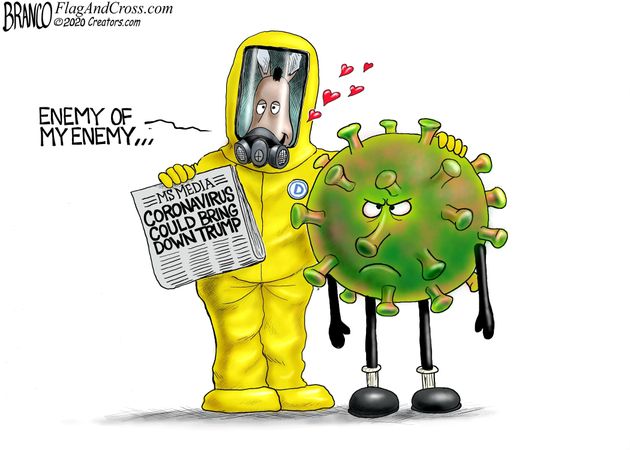
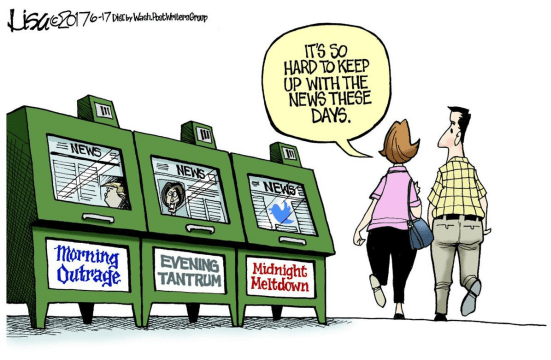
The media are at the forefront of stirring up apocalyptic dread over Covid-19. In Europe, there is also a performative apocalypticism in some of the more extreme clampdowns on everyday life and social engagement by the political authorities, in particular in Italy, Spain and France. Many governments seem to be driven less by a reasoned, evidence-fuelled strategy of limiting both the spread of the disease and the disorganisation of economic life, than by an urge to be seen to be taking action. They seem motivated more by an instinct to perform the role of worriers about apocalypse, for the benefit of the dread-ridden cultural elites, rather than by the responsibility to behave as true moral leaders who might galvanise the public in a collective mission against illness and a concerted effort to protect economic life.
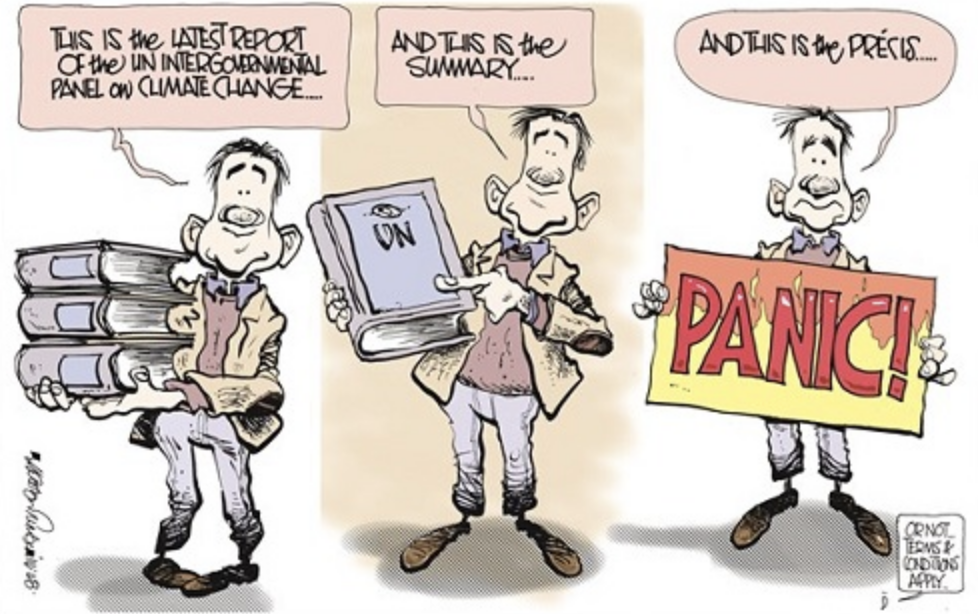
A key problem with this performative apocalypticism is that it fails to think through the consequences of its actions. So obsessed are today’s fashionable doom-predictors with offsetting what they see as the horrendous consequences of human behaviour – whether it’s our polluting activities or our wrong-headed voting habits – that they fail to factor in the consequences of their own agenda of fear. Greens rarely think about the devastating consequences of their anti-growth agenda on under-developed parts of the world. The Remainer elite seemed utterly impervious to warnings that their irrational contempt for the Leave vote threatened the standing of democracy itself. And likewise, the performative warriors against Covid-19 seem far too cavalier about the longer-term economic, social and political consequences of what they are doing.
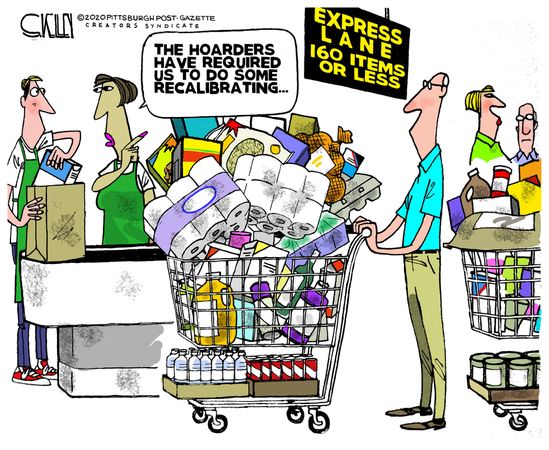
First, there is the potential health consequences. Is suppression of the disease really better than mitigation? The suppression of disease preferred by China, in very authoritarian terms, or by Italy and France, in less authoritarian terms, may look successful in the short term, but the possibility of the disease’s return, in an even more virulent form, is very real. Likewise, entire economies of everyday life have been devastated already by the severity of government action in Europe. Hundreds of thousands of people in Italy and Ireland have lost their jobs already, in the night-time, hotel and entertainment sectors in particular. That is a social and health cost, too: job loss can lead to the loss of one’s home, the breakdown of one’s marriage, and to a palpable and destructive feeling of social expediency. As to keeping elderly people indoors for months on end, as is now being proposed in the UK, it is perfectly legitimate to ask whether this poses an even greater threat to our older citizens’ sense of personal and social wellbeing than their taking their chances with a disease that is not a death sentence for older people (though it impacts on them harder than it does on the young).

The point is, there is such a thing as doing too little and also such a thing as doing too much.

Doing too little against Covid-19 would be perverse and nihilistic. Society ought to devote a huge amount of resources, even if they must be commandeered from the private sector, to the protection of human life. But doing too much, or acting under the pressure to act rather than under the aim of coherently fighting disease and protecting people’s livelihoods, is potentially destructive, too. People need jobs, security, meaning, connection. They need a sense of worth, a sense of social solidarity, a sense of belonging. To threaten those things as part of a performative ‘war’ against what ought to be treated as a health challenge rather than as an End Times event would be self-defeating and utterly antithetical to the broader aim of protecting our societies from this novel new threat. To decimate the stuff of human life in the name of saving human life is a questionable moral approach.
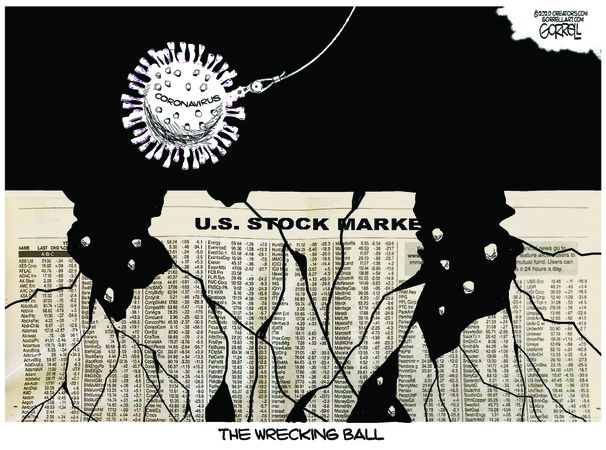
That the practical challenge posed by this new sickness has been collapsed into the elites’ pre-existing culture of misanthropic dread is clear from some of the commentary on Covid-19. The language of ‘war’ gives Covid-19 a sentience it of course does not deserve, accentuating the idea that this is not just an illness but a fin-de-siècle menace. This illness is being interpreted as a warning. It has been speedily refashioned as a metaphor for our weakness in the face of nature. It ‘has come to tell us that we are not the kings of the world’, says one headline. This malady is blowback for ‘our foolishness, our rapacity’, says Fintan O’Toole. We must now ‘learn the humility of survivors’, he says, cynically using this crisis to seek to diminish the presumed specialness of humankind. ‘Coronavirus is an indictment of our way of life’, says a headline in the Washington Post, echoing the way that natural phenomena are constantly weaponised by apocalyptic greens to serve as judgements against the temerity of the modernising human race.
Here, we cut to the heart of the apocalyptic mindset of the modern elites. Their dread over natural calamities or novel new illnesses is not driven by the actual facts about these things, far less by the desire to overcome them through the deployment of human expertise and scientific discovery. Rather, it speaks to their pre-existing moral disorientation, their deep loss of faith in the human project itself. It is their downbeat cultural convictions that draws them to apocalypticism as surely as a light draws in moths. In her essay on the AIDS panic of the late 1980s, when that sexually transmitted disease was likewise imagined as a portent of civiliational doom, Susan Sontag talked about the West’s widespread ‘sense of cultural distress or failure’ that leads it to search incessantly for an ‘apocalyptic scenario’ and for ‘fantasies of doom’. There is a ‘striking readiness of so many to envisage the most far-reaching of catastrophes’, she wrote.

It wasn’t so much ‘Apocalypse Now’, said Sontag, as ‘Apocalypse From Now On’.

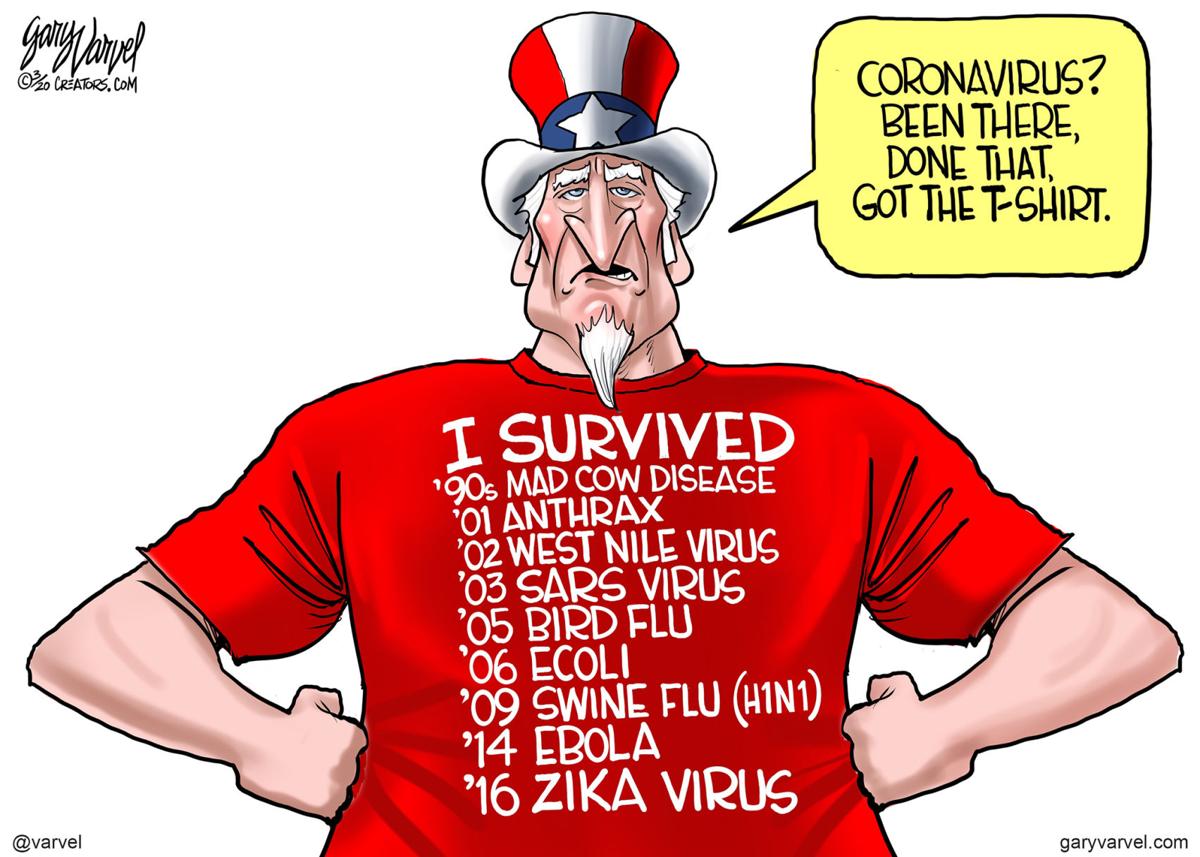
How perspicacious that was. From AIDS to climate change, from swine flu to Covid-19, it has been one apocalyptic scenario after another. The irony is that the elites who readily envisage catastrophe think they are showing how seriously they take genuine social and medical challenges, such as Covid-19. In truth, they demonstrate the opposite. They confirm that they have absolved themselves of the reason and focus required for confronting threats to our society. It isn’t their apocalypticism that captures the human urge to solve genuine problems – it is our anti-apocalypticism, our calmness, our insistence that resources and attention be devoted to genuine challenges without disrupting people’s lives or the economic health of our societies.

‘I want you to panic’, they say. But we don’t. And we shouldn’t.

Apocalypticism is a luxury of the new elites for whom crises are often little more than opportunities for the expression of their decadent disdain for modern society. To the rest of us, apocalypticism is a profound problem. It threatens to spread fear in our communities, it causes us to lose our jobs, it mitigates against economic growth, and it harms democracy itself. Resisting the apocalypticism of the comfortable doom-mongers who rule over us is unquestionably the first step to challenging Covid-19 and preserving society for the decades after this illness has wreaked its disgraceful impact.

See also:  I Want You Not to Panic

How to Fight and Win Against Covid19
 

How to Fight and Win Against Covid19
Dr. Bruce Aylward spoke in Geneva days after he left Wuhan province. He is not a contact and you can do what he did to not get the disease.

He was in Wuhan just a few days before. But he knew he was not a contact for COVID19 and so didn’t need to take any precautions. The press asked him why he wasn’t wearing a mask. He said that if he was a contact he wouldn’t be there, he’d be in quarantine, not talking to them with a mask on, it would make no sense (would not protect them adequately).

He is a top expert on such things – he led the campaign for almost complete eradication of Polio. He knows what he is doing.

COVID-19 ‘not beyond control,’ says Canadian WHO official Bruce Aylward

“What China demonstrates is that this one is not beyond control. It’s a function of your response,” said Bruce Aylward, who led an independent fact-finding mission to study the spread of the virus in China, as well as that country’s response.

COVID-19 spreads so rapidly that one Harvard researcher has warned that 40 to 70 per cent of the world’s adults will be infected. Its deadliness has raised frightening comparisons with the Spanish flu.

But “we don’t need to end up there,” said Dr. Aylward, who came away from China convinced that the virus is not spreading as easily as feared and that the outbreak can be arrested if public-health authorities prepare well and act swiftly. In China and elsewhere, there is little evidence of widespread community transmission, he said. Instead, “it is more a whole bunch of clusters of transmission.” Take the Diamond Princess cruise ship in Japan. Or members of a sect in South Korea. Or people living in single buildings in Beijing or Hong Kong.

That, he said, “is really important. Because you can get on top of that.”  But to do so, “speed is everything here.”

It Starts with the Right Hygiene

Robert Walker at Science 2.0 explains further in his well researched article How To Stop Yourself Getting Covid19 – And Help Stop The Spread – If Everyone Did This The Epidemic Would Soon Stop Excerpts in italics with my bolds

The WHO have said many times that governments can stop this disease by containing the virus swiftly and aggressively. Their most recent statement was the most blunt yet. They declared a pandemic, but one that we can stop. They said the question is not whether we can, but whether we will. Many governments have demonstrated this by doing it, including China, South Korea and Singapore.

Meanwhile you can stop yourself from getting the virus and so can your relatives and friends, by following the same simple rules that Bruce Aylward and his team used. This international team of experts toured the worst virus hotspots in China. They came away again confident that they are not contacts for the virus and didn’t need to be quarantined before talking directly to the press.

You can keep yourself safe from this virus in the same way, with the right hygiene. If most of us did this it would soon go extinct in the wild.

All of us who do this are helping our country and the world to contain the virus.

This is a graphic about it from the BBC.


  1. Wash hands frequently and thoroughly – that includes around the nails and between the fingers and the wrist.  You just need to use normal soap (or an alcohol wipe) because this is a virus, not a microbe. No need for anything antimicrobial. Soap completely destroys these viruses.
  2. Try to get out of the habit of touching your face, especially eyes nose, or mouth.  Don’t touch your face with unwashed hands after touching surfaces that could be infected.  If you can get completely out of the habit of touching your face then you don’t need to wash your hands so often. It can’t infect through the skin. Make sure you wash your hands before touching your eyes, nose or mouth – that’s the main thing.
  3. Keep a distance of 1 -2 meters from anyone sick especially if coughing or sneezing..Also if you cough or sneeze to cough into an elbow or into a tissue and dispose of it into a closed bin.  Disinfect surfaces you work with – and wash hands before during and after preparing food.

Do that and you won’t get it. You are also helping to stop it spreading.

Why These Behaviors Can Beat This Virus

While there is still much to be learned, we already know a great deal to be confident in following this protocol individually and collectively.  Some key things to remember.

This Disease is Hard to Get

It is very difficult to get this virus. Even if you are in a subway crowded together with others – for things like the flu you need to be there for 15 minutes or so to get it. But for this disease – so far there is no evidence of it being passed on to anyone else in public transport.

That is why it is so easy to contain it. The people who get it are usually people who were in prolonged or close contact.

Even with close contacts then between 95 and 99% of people don’t get it and for people living in the same household as a family or couple, then between 90% and 97% of people don’t get it – this is without taking any precautions to protect themselves.

This Disease is Not Airborne

This disease is not airborne (this was proved early on) – people sitting next to an infected person in an hours long plane journey won’t get it.

This is an early study that found that Canadian passengers in flights who had the disease didn’t infect anyone else (for SARS then in flight infections were a significant driver)

The evidence since then has been the same.

It Typically Only Spreads to Close or Prolonged Contacts

Normally you will get it from someone you know well, have close contact with or spend a lot of time with. This is why the contact tracing has worked so well. You are not likely to get it from a stranger at a busstop or on a train or plane.

This is different from SARS – there were many people got SARS from an infected person on the same flight. This has not yet happened at all with COVID 19 despite all the people who flew back from Wuhan with the virus.

Airborne spread has not been reported for COVID-19 and it is not believed to be a major driver of transmission.  See Report of the WHO-China Joint Mission on Coronavirus Disease 2019 (COVID-19) 

Also few people get it even with close contacts. Between 1 and 5% of contacts, for people in the same households it ranges from 3 to 10%  So, even if you live in the same house as someone, 9 times out of 10 you won’t get it.  Even couples don’t get it from each other usually. Many stories of couples who are surprised their partner didn’t get it – you may have seen some on the media.

Not Likely to Catch It from Someone Without Symptoms

This is not a major factor for this disease – not a driver.

Transmission by people infected but not symptomatic is a major factor for flu but not for covid19.

Sometimes someone may be unwell but suppressing their fever using paracetemol as happened with the Chinese lady who infected many colleagues in Germany. But genuine asymptomatic spreading is exceedingly rare for covid19.

You can detect the virus before symptoms and some have such a mild version that they don’t even feel sick, these asymptomatic people don’t seem to be infecting others.

Almost No Genuine Community Spread Apart from Clusters

Although the Italian supermarkets are saying to stay a meter away from other customers – it’s the experience of China, Singapore etc that it doesn’t in fact spread this way.

They have found all the cases in Singapore through tracing close contacts all the way back to China.

Even in South Korea nearly all their over 7000 cases are from a few clusters.

The Italians are being hyper-cautious as it is a new disease and we are still learning about it. However there isn’t any evidence yet that this will make a significant difference to the spread.

As a personal guideline it is wise to keep a distance from anyone coughing and sneezing, and get out of the habit of touching your face if you can, wash hands frequently.

But even if someone coughs on you and they have covid19, in practice it is most unlikely that this infects anyone. Not just a single cough. It can’t because if it did this contact tracing would never have worked as effectively as it has.

The Disease Will Soon Stop if 75% of People Practice the Hygiene

It doesn’t need everyone to do this.

To see how it works – if you take no precautions at all, on average each person infects two others and the numbers double roughly every 4 days.

Starting with 100 people:

100 infects 200 new cases (day 4) infects 400 (day 8) infects 800 (day 12)
12 days later you have 1500 cases (100 + 200 + 400 + 800)

Now suppose we can stop 3/4 of those infections. This means that 100 people infect 50 instead of 200 (because you have stopped 3/4 of the infections)

100 infects 50 (day 4) infects 25 (day 8) infects 12 (day 12)
Now 12 days later you have 187 cases instead of 1500 (100 + 50 + 25 + 12).

This is a huge difference. Soon this outbreak will be over.

This is why the WHO say that although this is a pandemic, it can be the first pandemic we stop.

Most People Recover

Also most people get a mild version of the disease and nearly everyone recovers, 67,003 just now.

Most of the 125,865 cases will recover. Probably eventually many more than 120,000 will recover of the ones that have it so far.

For young people then its likely that out of 1000 cases 998 will recover with good health care (for under 40) and all 1000 for under 10s.

Most of the ones who haven’t recovered yet, and haven’t died yet, will recover.

Test Kits Are on the Way

Roche cobas SARS-CoV-2 Test Gets Emergency Use Authorization For Coronavirus

Coronavirus has been categorized since the 1960s, that is why the latest outbreak has a -19 on the end, so other tests will still work, but due to bizarre rules and red tape created by government – there is no point in blaming Trump, both Obama and Bush forced or allowed this bureaucracy creep – a test that worked for coronavirus in 2003 or 2018 has to be treated like a new drug.

The New York State Department of Health got fed up with it and declared they were going on their own, FDA retreated and is allowing the state to validate NY labs in lieu of pursuing an Emergency Use Authorization (EUA) with FDA.

Congratulations to Roche for being allowed to be part of the solution to a problem government created.

We Can Stop This

We can stop it by any of these, or a combination:

  • Case finding – e.g. testing anyone with flu / pneumonia symptoms with travel history with infected areas
  • Contact tracing and isolation of all contacts of known cases
  • Case finding rapidly – China can now find cases in 3 days from onset of symptoms. This requires you to have lots of testing capacity – and educate the public to report symptoms right away.
  • Personal protection through washing hands etc.

Remember you only need to stop 3/4 of the transmisisons, or even just a bit over half would do. For instance if we find all cases within 3 days of symptoms, instead of 14 days later, then they only have 3 days to infect anyone else and that alone could be enough to stop this virus in a few weeks

South Korea are doing this. Italy is doing all the right things too. It is nerve wracking when the outbreak is still rising and shows no sign of stopping but there is always a delay of several days to a week.  You don’t see the effects right away.

Good News in China and South Korea

No native covid19 cases in China outside of Hubei province on the 9th March. The 4 new cases were all imported from outside of China.

China are closing down 11 of their 16 makeshift hospitals because they are no longer needed – the largest of them with 2000 beds.

China are going to reopen schools this week and may lift the travel restrictions on Hubei province soon.

This underlines what the WHO have been saying – this virus can be contained. They only did lockdown of cities in Hubei province – in the other provinces it was mainly rapid case finding with their fever clinics, contact tracing, and public hygiene education and some other restrictions but not a total lock down.

A few weeks ago on 29th January all provinces in China were at level 1 “red” for risk the highest possible risk – the whole of China was red.

South Korea is close to containing their outbreak too, had less daily cases than they have had for two weeks.

Footnote:  A helpful chart from WHO

Meanwhile, back in the mass media world:

Dr. Drew: Stop the Press to Stop Coronavirus Panic

At Real Clear Politics, Coronavirus Panic Must Stop, Press Needs to Be Held Accountable for Hurting People.  Excerpts in italics with my bolds.

Dr.Drew Pinsky talks with CBS Local’s DJ Sixsmith about coronavirus: “The panic must stop. And the press, they really somehow need to be held accountable because they are hurting people.”

CBS NEWS: “So you’ve seen pandemics over the decades, how does this one compare with everything?”

DR. DREW: “A bad flu season is 80,000 dead, we’ve got about 18,000 dead from influenza this year, we have a hundred from corona. Which should you be worried about influenza or Corona? A hundred versus 18,000? It’s not a trick question. And look, everything that’s going on with the New York cleaning the subways and everyone using Clorox wipes and get your flu shot, which should be the other message, that’s good. That’s a good thing, so I have no problem with the behaviors. What I have a problem with is the panic and the fact that businesses are getting destroyed that people’s lives are being upended, not by the virus, but by the panic. The panic must stop. And the press, they really somehow need to be held accountable because they are hurting people.”

CBS NEWS: “So, where do you think the panic started? Besides the press, like what was the impetus in terms of mass hysteria?”

DR. DREW: “I saw it, there’s a footage of me on a show called The Daily Blast Live a month ago, going ‘shouldn’t we be scared about this?’ and me going ‘no, there’s gonna be as potential for panic here, shut up everybody, stop talking about it, I could see the panic brewing, and I could just see it the way the innuendo and the every opportunity for drama by the press was twisted in that direction. Let me give you an example: so the World Health Organization is out now saying the fatality rate from the virus is 3.4%, right? Every publication from the WHO says 3.4% and we expect it to fall dramatically once we understand the full extent of the illness. No one ever reports the actual statement. We go 3.4% that’s 10 times more than the, whatever five times more than the flu virus and yeah it’s gonna be a little more [than the] flu probably. Still not a bad flu season.”

CBS NEWS: “Right, we’re gonna hear about more cases, more people died.”

DR. DREW: “There are probably several people in this building that probably have it and don’t know it.”

CBS NEWS: “Right, well it was also just the process of letting the public know, the stock market, the number of tests that were available, there was so much happening, I think people were freaking out as a result of that.”

DR. DREW: “I think there was it was a concerted effort by the press to capture your eyes and in doing so they did it by inducing panic. There’s, listen, the CDC and the WHO, they know what they are doing, they contain pandemics, that’s how they know how to do it, they’re doing an amazing job.”

CBS NEWS: “What about the global implications of this because we were talking off-camera about Italy, there’s China as well, there’s some little outbreaks where you should avoid.

DR. DREW: “There are, I would look out where there flus out breaking bad to. I ended up getting the bird flu, I got H1N1 and it was horrible. It was no fun. … There’s certain things having been a physician for almost forty years, there are certain things I just know … and there’s certain things I just know by virtue of all the experience I’ve had and so when I saw this one coming, the corona, I thought I know how this is gonna go, I see kind of what it is and then I saw the excessive reaction the press, so I have to respond and then people, the weird part on social media towards me as people are angry with me, angry with me for trying to get them to see reality and calm down.”

Then there are wise words from Czech Microbiologist Dr Václava Adámková , posted at Lubos Motl’s website Reference Frame Czech microbiologist on the Covid panic  Excerpts in italics with my bolds.

Well, I would criticize them for purposefully and uselessly manipulating with the populace of the laymen. And the tone in which the news are being presented – there is one case here… Well, there’s one case here, five cases a day or eight cases a day today. It’s 8 cases. During that time, much more serious infectious diseases, viral or bacterial ones, actually kill many more people. And that’s something that is not included in the context of that information. So the announcements seem populist, one-sided, and they resemble a politician’s campaign before the elections when the politician focuses on one topic and he escalates it.

I am not quite a virologist, closer to a bacteriologist. Anyway, coronaviruses have been with us from the beginning. It is a large group of viruses that cause respiratory diseases, runny nose, cough, exceptionally diseases of the lower respiratory tract. But when we statistically test the coronaviruses every year, they cause up to 18% of respiratory infections. No one talks about it. These viruses attack all age groups, from babies to seniors. That’s how things work. Sometimes they appear along with other viruses, most often with influenza viruses. The coronaviruses have always been here, are here, and will be here. When the virus mutates, merges the genes with something, that’s how Nature and biology works. They may do whatever seems good in their context. We see it in flu, too.

I don’t really believe that the Wuhan virus differs. If we look at it from the healthcare perspective, according to symptoms – Covid is mostly about mild symptoms in the upper respiratory tract, especially among young and not immunocompromised people. And even the fatalities described in the context of this virus are compatible with the biology of this virus. Even the other coronaviruses may kill a weakened individual. But the available mortality numbers, let’s accept them, simply describe the reality. In comparison with SARS and MERS, Covid has a much lower fatality rate. Nevertheless, SARS and MERS didn’t get this much attention.

Some 3 months ago, the WHO was just warning about the infectious disease, most likely a viral and not bacterial one, that may quickly spread due to the widespread travelling. The main WHO virologist just made this speculation. It’s interesting that this has happened. It may easily spread, in theory. However, in practice, the propagation of the news occurs much more quickly than the propagation of the virus itself. It is spreading like a computer virus, not a biological virus, because the numbers of infected ones remain low. Around 80,000 Chinese is a tiny fraction of China’s 1.4 billion people. If they published how many people have flu or tuberculosis at the same moment, the numbers would be vastly higher. So I think it is like the propagation of a Trojan horse or a computer virus.

Coronavirus Data is Still Misleading

The Streetlight Effect: Looking in the light is the first reaction to a crisis, but the truth may actually be in the darkness and yet to be discovered.

Joon Yu writes at Worth Coronavirus Data Is Still Misleading. Here’s What the Latest Numbers Don’t Tell You.  Excerpts in italics with my bolds.

When the existing prevalence of a virus is high and endemic, the rise in incidence of testing can create the appearance of a rise in incidence of a virus.

Photo courtesy of Shutterstock.com

The world is caught in the vortex of the coronavirus story. So what happens from here?

I don’t know, and no one else does either. That said, my intuition—based on the temporal and spatial dispersion of the first 16 domestic cases of coronavirus serologically confirmed in the United States—is that the situation is not inconsistent with a high-prevalence virus that has been endemic in America during this flu season and is still circulating. But what happens as more and more testing kits are delivered into an existing high-prevalence setting?

Prevalence starts getting counted as incidence, and that could send people running for the hills.

Consider the following analogy. Think about prevalence as the gold that was sitting in the Sierras in early 1848, and incidence as the collection of eureka moments thereafter. Just because gold diggers discover more and more gold in the Sierras doesn’t mean gold is spreading. What is spreading is the word about gold, which attracts more gold diggers, who discover more gold, forming a self-reinforcing frenzy.

The prevalence of coronavirus, of course, is more dynamic. Unlike gold, it does spread. But also unlike gold, it disappears when a patient gets better, which we know has been happening in the vast majority of cases so far. What we don’t know is the true prevalence, and how endemic it has been this season—it could be in the millions for Americans already—because we weren’t looking for it until this particular story entered our collective consciousness in recent weeks. And now the labs are playing catch up.

But here’s the catch. A surge in testing—one that seems poised to commence after a slow rollout and criticism—will inevitably show a significant increase in serologically confirmed cases. When the existing prevalence of a virus is high and endemic, the rise in incidence of testing can create the appearance of a rise in incidence of a virus.

Nonetheless, the demand for such circumspection, or any circumspection for that matter, during the current hysteria is understandably anemic. Instead, this is that part of the horror movie where the good intentions of good actors—the companies and agencies rising to the challenge of producing testing kits at an exponentially faster rate than during the 2003 SARS panic—end up serving the interest of the antagonist (the mob) rather than the protagonist (public interest). In an environment when the increasingly unhinging mob is already competing with each other to paint the worst possible portrait of the next several weeks, the bad-news industrial-complex is about to strike gold: They will soon get to spread the word “spread.”

From there, the panic can drive itself. As more cases are serologically confirmed, perceptions of a spreading plague will spread, triggering demand for more testing, which will lead to more confirmed cases in a self-fulfilling prophecy. Such vicious cycles that promote runaway growth of fear are the anathema of a society that relies on stability, security and confidence. Feed-forward loops are the preferred algorithms of all self-expanding beasts, including cancer.

Confidence is already in short supply in some quarters.

Even basic things like numbers and definitions are being called into question. Meanwhile, people are panic selling the stock market and panic buying the remaining stock in supermarkets. Discretionary events are being cancelled in droves and handshakes are becoming an etiquette indiscretion. Adults are working from home, and kids with sniffles of any origin are being sent home from school to join them. During this “seeing-UFOs” phase of mass hysteria, everything from allergies and anxiety can start to look like the coronavirus given the fluidity of definitions and overlapping symptoms. Imagine the specter of this potentially absurd situation: The background prevalence of endemic coronavirus may be falling as the flu season fades, but the bad news bearers keep pointing to the rising incidence of test-affirmed coronavirus.

The numbers are bound to look dramatically worse in the coming days and weeks, so the worst of the panic may be ahead of us.

If all of this feels a bit like we are in the Twilight Zone, that’s because we are. What I mean is that we are already in the twilight of the flu season. If SARS CoV2 turns out to be just a Kafka-esque guest who has been among us for the 2019 to 2020 flu season, then at some point the meticulously recorded and earnestly reported “incidence growth” of coronavirus will stall and fall—thereby releasing the spellbound public from self-captivity and other forms of quarantine. Before we know it everyone will be saying, “I knew it,” and this horror story about the plague of the century could fade into a vague memory as if it never happened.

But before that happens, we should really get to the bottom of this while we are caught in the vortex of fear lest we want to be visited by unwanted sequels every two to five years. At the center of this powerful vortex is the principal agent problem that infected human civilization at its roots at the end of the kin tribe age of human social evolution. Whereas humans were once fed, informed and governed by those who had our best interest at heart (a biological algorithm known as inclusive fitness), in post-diaspora melting pots we are fed, informed and governed by those who have their own best interest at heart. Without mutual kin skin in the game to protect against self-dealing, powerful institutions began arising all over the ancient world that ruled over instead of on behalf of the people. Today’s fake news, fake foods and fake leadership culture are all catalyzed by the same underlying cause of misaligned incentives that have been derailing human sociality and befuddling revolutionaries for thousands of years. It was The Who—not to be confused with the WHO—who pointed out that the new boss is always the same as the old boss.

So what I hope happens to the story from here is that we begin addressing the first-order cause of human social dysfunctions rather than whack-a-moling its second-order symptoms. Simply put, our family values did not scale as we globalized, but virality has. The aggregate sum of everyone’s wonderful instincts to provide for family—the profit motive in today’s world—has produced the unintended externality of the principal agent problem in the post kin tribe era of human evolution. We propose a radically different path forward: by innovating new forms of inclusive stakeholding beyond just kin skin in the game—to align institutions with the people and people with each other—competition and natural inclinations will select for race-to-the-top global outcomes rather than race-to-the-bottom ones.

That’s a self-reinforcing trend I can get behind.

Joon Yun, MD, is the president of Palo Alto Investors and coauthor of the book Essays on Inclusive Stakeholding.

Footnote: Facts on the 2003 Global SARS Outbreak (Source: CDC)

How many people contracted SARS worldwide during the 2003 outbreak? How many people died of SARS worldwide?
During November 2002 through July 2003, a total of 8,098 people worldwide became sick with severe acute respiratory syndrome that was accompanied by either pneumonia or respiratory distress syndrome (probable cases), according to the World Health Organization (WHO). Of these, 774 died. By late July 2003, no new cases were being reported, and WHO declared the global outbreak to be over. For more information on the global SARS outbreak of 2003, visit WHO’s SARS websiteExternal.

How many people contracted SARS in the United States during the 2003 outbreak? How many people died of SARS in the United States?
In the United States, only eight persons were laboratory-confirmed as SARS cases. There were no SARS-related deaths in the United States. All of the eight persons with laboratory-confirmed SARS had traveled to areas where SARS-CoV transmission was occurring.


Coronavirus 101

The best overview I have seen comes from Rud Istvan at Wuhan Coronavirus–a WUWT Scientific Commentary  Excerpts in italics with my bolds

Basic Virology

What follows perhaps oversimplifies an unavoidably complex topic, like sea level rise or atmospheric feedbacks to CO2 in climate science.

There are three main types of human infectious microorganisms: bacteria, fungi, and viruses. (I skip important complicating stuff like malaria or giardia.) Most human bacteria are helpful; the best example is the vast gut biome. In human disease some bacteria (typhoid, plague, tetanus, gangrene, sepsis, strep) and certain classes of fungi (candida yeasts) can cause serious disease, as do some human viruses (polio, smallpox, measles, yellow fever, Zika, Ebola).

There are two basic forms of bacteria (Prokaryotes and Archaea, neither having a genetic cell nucleus). Methanogens are exclusively Archaean; most methanotrophs are Prokaryotes. Membrane bound photosynthetic organelle containing cyanobacteria are the evolutionary transition from bacteria to all Eukaryotes (cells having a separate membrane bound genetic nucleus) like phytoplankton, fungi, and us. Both Prokaryote and Eukaryote single cell (and all higher) life forms have a basic thing in common—they can reproduce by themselves in an appropriate environment.

Viruses are none of the above. They are not ‘alive’; they are genetic parasites. They can only reproduce by infecting a living cell that can already reproduce itself. The ‘nonliving’ viral genetic machinery hijacks the reproductive machinery of a living host cell and uses it to replicate virions (individual virus particles) until the host cell ‘bursts’ and the new virions bud out in search of new hosts.

There are two basic virus forms, and two basic genetics.

Form

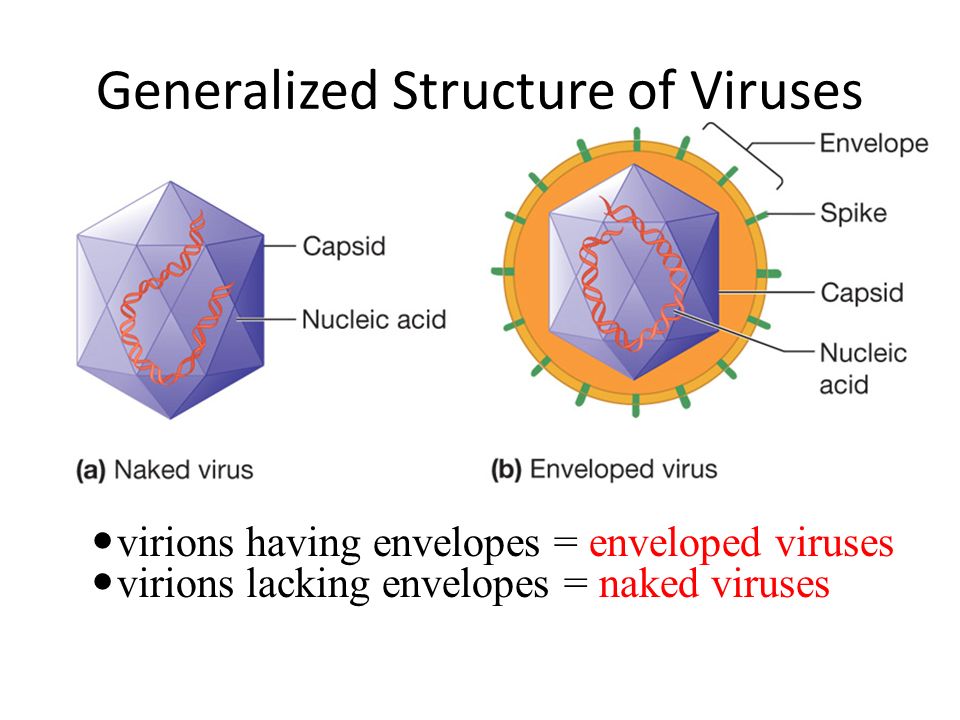
1. Viruses are either ‘naked’ or ‘enveloped’. (see image at top).  A naked virus like cold causing rhino has just two structural components, an inner genetic whatever code (only the two basic types–DNA and RNA–are important for this comment) and an outer protective ‘capsid’ protective viral protein coat. An example is cold producing rhinovirus in the family picornavirus (which also includes polio).

2.Enveloped viruses like influenza and corona (Wuhan) include a third outer lipid membrane layer outside the capsid, studded with partly viral and partly host proteins acquired from the host cell at budding. These are used to infect the next host cell by binding to cell surface proteins. The classic example is influenza (internal genetic machinery A or B) designated HxNy for the flavor of the (H) hemagglutinin and (N) neuraminidase protein variants on the lipid membrane surface.

Genetic Type

The second major distinction is the basic genetics. Viral genetic machinery can be either RNA based or DNA based. There is a huge difference. All living cells (the viral hosts) have evolved DNA copy error machinery, but not RNA copy error machinery. That means RNA based viruses will accumulate enormous ‘transcription’ errors with each budding. As an actual virology estimate, a single rhinovirus infected mucosal cell might produce 100000 HRV virion copies before budding. But say 99% are defective unviable transcription errors. That math still says each mucosal cell infected by a single HRV virion will produce about 10 infective virions despite the severe RNA mutation problem. The practical clinical implication is that when you first ‘catch’ a HRV cold, the onset to clinical symptoms (runny nose) is very fast, usually less than 24 hours.

This also explains why adenovirus is not very infective. It is a DNA virus, so mutates slowly, so the immune memory is longer lasting. In fact, in 2011 the FDA approved (for military use only) a vaccine against adeno pharyngoconjuntivitis that was a big problem in basic training. (AKA PCF, or PC Fever, highly contagious, very debilitating, and unlike similar high fever strep throat untreatable with antibiotics.) In the first two years of mandatory PCF vaccine use, military PCF disease incidence reduced 100 fold.

Upper Respiratory Tract viral infections.

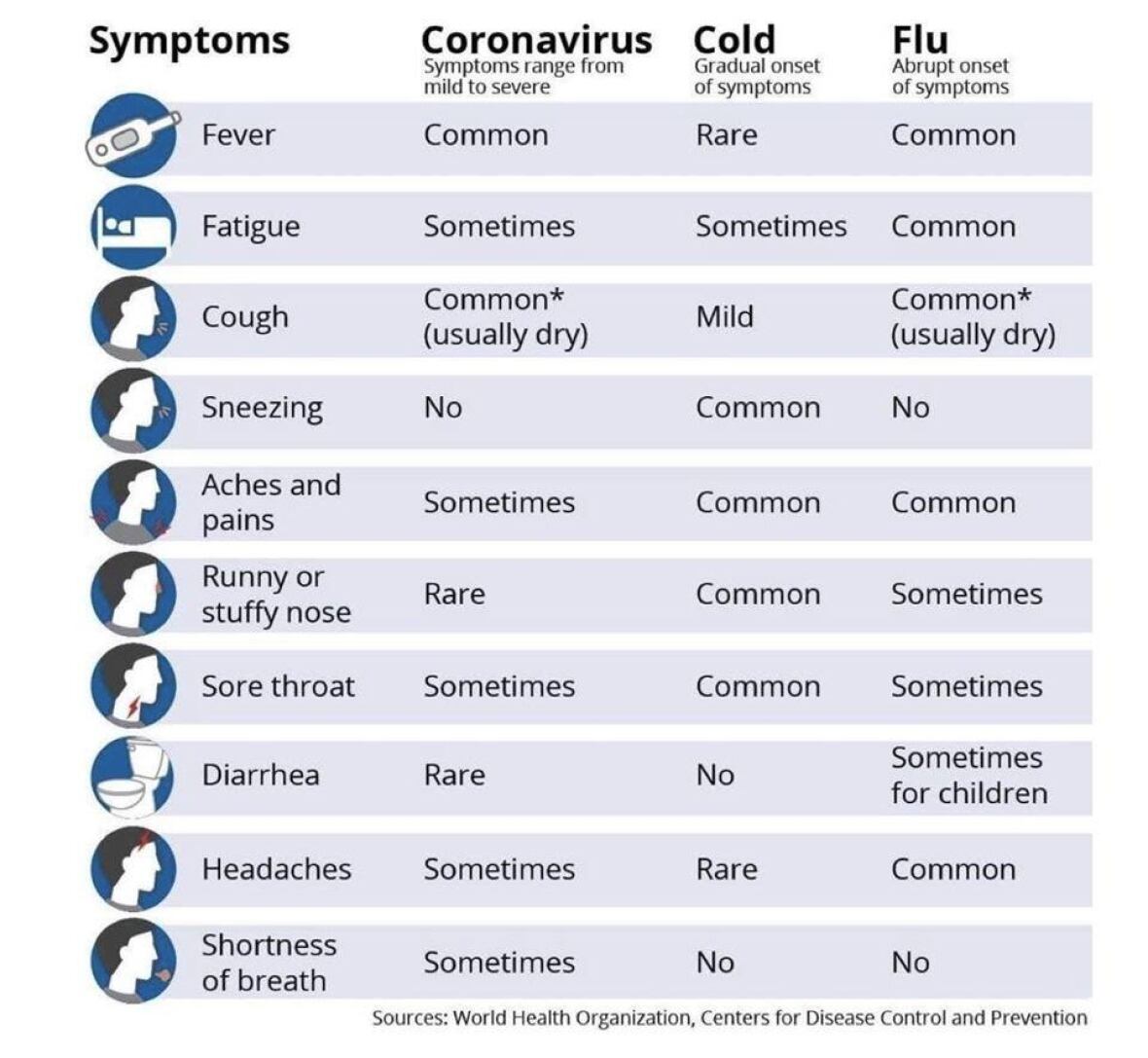
So-called URI’s have only two causes in humans: common colds, and influenza. Colds have three distinguishing symptoms–runny nose, sore throat, and cough—all caused not by the virus but by the immune system response to it. Influenza adds two more symptoms: fever and muscular ache. Physicians know this well, almost never test for the actual virus seriotype, and prescribe aspirin for flu but not colds. Much of what follows in this section is based on somewhat limited actual data, since there has been little clinical motivation to do extensive research. A climate analogy would be sea surface temperature and ocean heat content before ARGO. Are there estimates? Yes. Are there good estimates? No.

Common cold URI’s stem from three viral types: RNA rhinovirus (of which there are about 99 seriotypes but nobody knows for sure) causing about 75% of all common colds, RNA coronaviruses, for which (excluding SARS, MERS, and Wuhan) there are only 4 known human seriotypes causing about 20% of common colds, and DNA adenoviruses (about 60 human seriotypes, but including lots of non-cold symptom seriotypes like conjunctivitis (pink eye and pharyngoconjunctivitis) causing about 5% of common colds.

Available data says rhinovirus seriotypes are ubiquitous but individually not terribly infective, coronavirus seriotypes are few but VERY infective, and adenoviruses are neither. This explains, given the previous RNA mutation problem, why China and US are undertaking strict Wuhan quarantine measures.

This also explains why there is no possibility of a common cold vaccine: too many viral targets. You catch a cold, you get temporary (RNA viruses are constantly mutating) immunity to that virus. You next cold is simply a different virus, which is why the average adult has 2-4 colds per year.

A clinical sidebar about URI’s. Both are worse in winter, because people are more indoors in closer infectious proximity. But colds have much less seasonality than flus. Summer colds are common. Summer flus aren’t.

There is a differential route of transmission explanation for this empirical observation. Colds are spread primarily by contact, while flus are spread primarily by inhalation. You have a cold, you politely (as taught) cover your sneeze or cough with a hand, then open a door using its doorknob, depositing your fresh virions on it. The person behind you opens the door, picking up your virions, then touches the mouth or nose (or eyes) before washing hands. That person is now probably infected. This is also why alcohol hand sanitizers have been clinically proven ineffective against colds. They will denature enveloped corona and adeno, but have basically no effect on the by far more prevalent naked rhinos.

There is an important corollary to this contact transmission fact. Infectivity via the contact route of transmission depends on how long a virion remains infective on an inanimate surface. This depends on the virion, the surface (hard doorknob or ‘soft’ cardboard packaging), and the environment (humidity, temperature). The general epidemiological rule of thumb for common colds and flus is at most 4 days viability. This corollary is crucial for Wuhan containment, discussed below.

The main flu infection route is inhalation of infected aspirate. This does not require a cough, merely an infected person breathing in your vicinity. In winter, when you breathe out outside below freezing ‘smoke’ it is just aspirate that ‘freezes’ and becomes visible. Football aficionados see this at Soldier and Lambeau Fields every winter watching Bears and Packers games. The very fine micro-droplet residence time in the air depends on humidity. With higher humidity, they don’t dry out as fast, so remain heavier and sink faster to where they don’t get inhaled, typically minutes. In typical winter indoor low humidity, they dry rapidly and remain circulating in the air for much longer, typically hours. This is also why alcohol hand sanitizers are ineffective against influenza; the main route of flu transmission has nothing to do with hands.

[Note: The flu virus is contained in droplets that become air borne by sneezing or coughing.  Unless you inhale the air sneezed or coughed by an infected person, the main risk is direct skin contact with a surface on which the droplet landed.]

Wuhan Coronavirus

As of this writing, there are a reported 37500 confirmed infections and 811 deaths. Those numbers are about as reliable as GAST in climate change. Many people do not have access to definitive diagnostic kits; China has a habit of reporting an underlying comorbidity (emphysema, COPD, asthma) as cause of death, the now known disease progression means deaths lag diagnoses by 2-3 weeks. A climate analogy is the US surface temperature measurement problems uncovered by the WUWT Surface Stations project.

There are a number of important general facts we DO now know, which together provide directional guidance about whether anyone should be concerned or alarmed. The information is pulled from reasonably reliable sources like WHO, CDC, NIH, and JAMA or NEJM case reports. Plus, we have an inadvertent cruise ship laboratory experiment presently underway in Japan.

The incubation period is about 10-14 days until symptoms (fever, cough) evidence. That is VERY BAD news, because it has been demonstrated beyond question (Germany, Japan, US) that human to human transmission PRECEDES symptoms by about a week. So unlike SARS where all air travelers got a fever screening (mine was to and from a medical conference in Panama City). Since transmission did not precede symptoms, SARS fever screening sufficed; with Wuhan fever screening is futile. That is why all the 14-day quarantines imposed last week; the only way to quarantine Wuhan coronavirus with certainty is to wait for symptoms to appear or not. Quarantine is disruptive and expensive, but very effective.

Once symptoms appear, disease progression is now predictable from sufficient hundreds of case reports—usual corona cold progression for about 7-10 days. But then there is a bifurcation. 75-80% of patients start improving. In 20-25%, they begin a rapid decline into lower respiratory pneumonia. It is a subset of these where the deaths occur with or without ICU intervention. And as whistleblower Dr. Li’s death in Wuhan proves, ICU intervention is no panacea. He was an otherwise healthy 34 years old doctor.

We also now know from a JAMA report Friday 2/7/2020 analyzing spread of Wuhan coronavirus inside a Wuhan hospital, that 41% of patients were infected within the hospital—meaning the ubiquitous surgical masks DO NOT work as prevention. The shortage of masks is symptomatic of panic, not efficacy.

Scientists last week also traced the source. There are two clues. Wuhan is now known to be 96% genetically similar to an endemic Asian bat corona. Like SARS and ‘Spanish flu’, it jumped to humans via an intermediate mammal species. No bats were sold in the Huanan wet market in Wuhan. But pangolins were, and as of Friday there is a 99% genetic match between pangolin corona and Wuhan human corona. Trade in wild pangolins is illegal, but the meat is considered a delicacy in China and Vietnam and pangolins WERE sold in the Wuhan wet market. This is is similar to SARS in 2003. A bat corona jumped to humans via live civets in another Chinese wet market. Xi’s ‘simple’ permanent SARS/Wuhan coronavirus solution is to ban Chinese wet markets.

Conclusions

Should the world be concerned? Perhaps.

Will there be a terrible Wuhan pandemic? Probably not.

Again, the analogy to climate change alarm is striking. Alarm based on lack of underlying scientific knowledge plus unfounded worst case projections.

Proven human to human transmissibility and the likely (since proven) ineffectiveness of surgical masks were real early concerns. But the Wuhan virus will probably not become pandemic, or even endemic.

We know it can be isolated and transmission stopped with 14-day quarantine followed by symptomatic clinical isolation and ICU treatment if needed.

We know from infectivity duration on surfaces that it cannot be spread from China via ship cargo. And cargo ship crews can simply not be given shore leave until their symptomless ocean transit time plus port time passes 14 days.

Eliminating Chinese wet markets and the illegal trade in pangolins prevents another outbreak ever emerging from the wild, unfortunately unlike Ebola.

Footnote:  This is of particular interest to me since my wife and I are presently on a cruise in the Indian Ocean ending in Singapore.  We were supposed to fly from there to Shanghai connecting to Air Canada back to Montreal.  Those AC flights were cancelled for February and unlikely to be available for our transit.