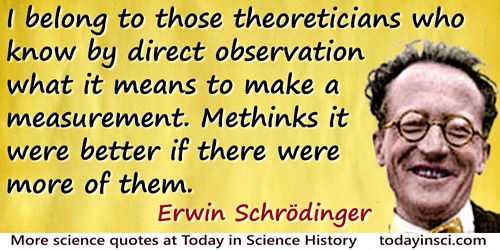
Data, Facts and Information


In following many blogs related to climate science, it seems that confusion reigns regarding some fundamentals of scientific thought and practice. So this post attempts to clarify three important scientific concepts: Data, Facts, and Information.

Show Me the Data

Data pertains to observations of happenings in the world, independent of the observer. In a court of law, a witness on the stand gives his or her observations. For example, I heard person x say this, or I saw person y do that. This is evidence all right, but it is not data.  And an artist or filmmaker can capture an event as evidence, but again it is not data in that format.

By definition, data is quantitative. And applying numbers to observations means using standard measurements so that these observations can be compared, contrasted, and replicated, as well as compiled with other similar observations. Each subject of study has one or more units of measurement pertinent to that inquiry. For example, observing a moving object requires distance and time, such as kilometers per minute, or rates of acceleration, such as meters per second per second, or m/s^2.

To summarize, data are a set of observations expressed in standard units of measurement.

What are the Facts

Taiichi Ohno was the central thinker behind the Toyota way of manufacturing. In his view facts are observed “in situ” by a knowledgeable and purposeful agent, an human expert. Facts are the result of direct observation of a process, product or part, including any measured data and the correct context for such data. Context means what relevant conditions, incidents, phenomena, and situations were occurring prior, during and after the data were collected.

In science a fact is a pattern detected in a data set. Thus, a fact is a finding, a meaning supported by data. And, importantly, a fact is particular to the place and time where the data was obtained. The pattern and meaning derives from interpreting the data (observations) in the specific place and time where the happenings occurred understanding the historical situation and context.

We hear a lot these days about fake news or facts in relation to political or cultural news. There, the spin and narratives overwhelm objective observations, and the report serves only to motivate audience acceptance or rejection of the subjects, the truth is irrelevant.  Unfortunately, fact “checking” has morphed into substituting one spin for another.

In science, facts are supported by data, but each fact represents a pattern in the data seen in the context of a specific place and time. So, for example, it can be a fact that civilian deaths in Syria have increased by x% in the past year. Importantly, facts depend on persons with deep knowledge of the particular place and time.

To summarize, a scientific fact is a pattern in data in the context of a specific place and time.

The Whole Truth and Nothing But the Truth

Information stands on facts, which themselves stand on data. Information consists of conclusions from weighing and judging the importance of various sets of facts regarding a situation. Based on the above, all the facts have a basis in data, but they are not equally significant. And the significance is relative to the concerns of the information analyst.

Information is not absolute, but serves to inform action. Facts are value-free, but information is not. Information draws on facts to form a conclusion as to the direction a situation is moving, out of a concern to intervene or not, according to the interests of the observers. In that sense, information is always actionable, or intends to be so.

As an example of this facet of information, consider media charges that someone is citing “alternate facts.” Now a fact is always true, meaning it is supported by data and corresponds to reality. Or it is not a fact, but a fiction not supported by data and in contradiction to reality.

In legal proceedings, frequently there are “alternate facts.” One party, say the prosecution, presents a set of facts comprising all the information supporting their explanation or theory of a criminal event. The defense presents an alternative explanation or theory of the event supported by other facts either ignored or discounted in the prosecution’s case. Such “alternate facts” are no less true, they simply form an alternate information convincing to those who place more weight on them.

A similar process goes on in scientific disputes where each side accuses the other of “cherry-picking” by referring only to those facts which support one theory. Honest science attempts to explain all relevant facts, and sometimes (e.g. Wave vs. Particle theories of light) holds competing theories in tension while a more comprehensive meta-theory can be formed and proved.

Information results from organizing data and facts into a perspective respecting the context of the facts and supporting humans’ need to anticipate the future. Forming theories of what to expect and how to respond or intervene is fundamental to human survival.

That’s the way I see it.

For a great example of how deep knowledge applied to data leads to a productive theory and discovery see Quebec Teen Studies Stars, Discovers Ancient Maya City

Fun Footnote:

Science depends on measuring things, so you need to know the correct units for what you are studying.

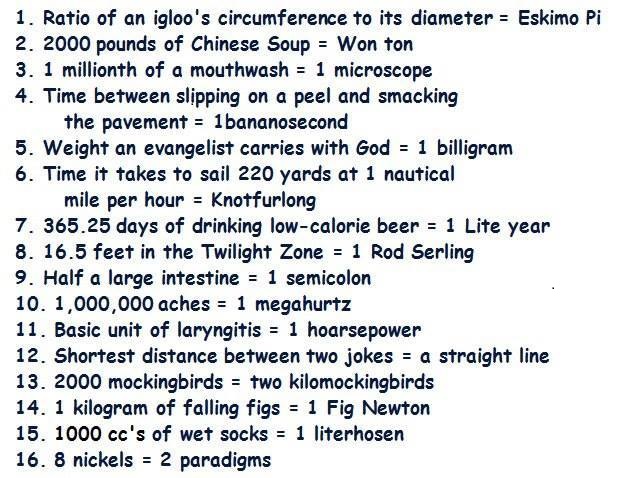
Below are some obscure measures for collecting data in special situations.

17. Quantity of beauty required to launch a single ship = 1 millihelen h/t vuurklip

Purely Energy


Higgs boson event as seen in the Compact Muon Solenoid detector at the Large Hadron Collider. This one high-energy collision illustrates the power of energy conversion, which always exists in the form of particles.

Ethan Siegel provides an informative primer on energy physics:  Is There Any Such Thing As Pure Energy?  It is useful background for anyone interested in energy and climate science. Some excerpts below.

What is the nature of Energy?

Energy plays a tremendous role, not only in our technology-rich daily lives, but in fundamental physics as well. The chemical energy stored in gasoline gets converted into kinetic energy that propels our vehicles, while the electrical energy from our power plants gets converted into light, heat and other forms of energy at our homes. But this energy always seems to exist as merely one property of an otherwise independently-existing system. Must it always be so? Alex from Moscow writes in with a question about energy itself:

“Does pure energy [exist], maybe very shortly before turning into a particle or a photon? Or is it just a useful mathematical abstraction, an equivalent that we use in physics?”

At a fundamental level, energy can take on many forms.

Mass = Energy

The simplest, most familiar form of energy of all is in terms of mass. You don’t normally think in terms of Einstein’s E = mc2, but every physical object that’s ever existed in this Universe is made of massive particles, and simply by having mass, these particles have energy.

E. Siegel The known particles in the Standard Model. These are all the fundamental particles that have been directly discovered; with the exception of a few of the bosons, all particles have mass.

Mass in Motion = Kinetic Energy

If these particles are moving, they have an additional form of energy as well: kinetic energy, or the energy of motion.

Particles Linked Together = Binding Energy

Finally, these particles can link together in a variety of ways, forming more complex structures like nuclei, atoms, molecules, cells, organisms, planets and more. This form of energy is known as binding energy, and is actually negative in its effect. It reduces the rest mass of the overall system, which is why nuclear fusion, taking place in the cores of stars, can emit so much light and heat: by converting mass into energy via that same E = mc2. Over the 4.5 billion year history of the Sun, it’s lost approximately the mass of Saturn from simply fusing hydrogen into helium.

The theory of asymptotic freedom, describing the strength of the quark interactions inside a nucleus, was worth a Nobel Prize for Wilczek, Politzer and Gross. Wikimedia Commons user Qashqaiilove

Massless Particles in Motion = Restless Kinetic Energy

The Sun itself gives another example of energy: light and heat, which comes in the form of photons, which are different from the forms of energy we’ve considered so far. There exist massless particles as well — particles with no rest energy — and these particles, like photons, gluons and (hypothetically) gravitons, all move at the speed of light. However, they do carry energy in the form of kinetic energy, and, in the case of gluons, are responsible for the binding energy inside atomic nuclei and protons themselves.

NASA / Solar Dynamics Observatory (SDO) The Sun, shown here, generates its energy by fusing hydrogen into helium in its core, losing small amounts of mass in the process. Over its lifetime, it’s lost approximately the mass of Saturn by this process.

Energy is Always Conserved

Energy comes in a variety of forms, and some of those forms are fundamental. A particle’s rest mass energy doesn’t change over time, and in fact doesn’t change from particle to particle. It’s a type of energy that is inherent to everything in the Universe itself. But all the other forms of energy that exist are relative. An atom in an excited state has more energy than an atom in a ground state, and that’s due to the difference in binding energy. And if you want to make that transition to the lower-energy state? You have to emit a photon to get there; you cannot make that transition without conserving energy, and that energy needs to be carried by a particle — even a massless one — in order to make that happen.

In this illustration, one photon (purple) carries a million times the energy of another (yellow). Fermi data on two photons from a gamma-ray burst fail to show any travel delay, showing the speed of light’s constancy across energy.

Energy is Relative to the Observer

Perhaps an oddity of this is that photon energy, or any form of kinetic energy (i.e., the energy of motion), is that its value is not fundamental, but rather is dependent on the motion of the observer. If you move towards a photon, you’ll find its energy appears greater (as its wavelength is blueshifted), and if you move away from it, its energy will be lesser, and it will appear redshifted. Energy is relative, but what’s interesting that for any observer, it’s always conserved. No matter what the interactions are, energy is never seen to exist on its own, but only as part of a system of particles, whether massive or massless.

Dark Energy

There is one form of energy, however, that may not need a particle at all: dark energy. The form of energy that causes the expansion of the Universe to accelerate may very well be energy inherent to the fabric of the Universe itself! This interpretation of dark energy is self-consistent and matches the observations of distant, receding galaxies and quasars that we see exactly. The only problem? This form of energy, as far as we can tell, can neither be used to create or destroy particles, nor can it be inter-converted to and from other forms of energy. It seems to be its own entity, disconnected from interacting with the other forms of energy present within the Universe.

Without dark energy, the Universe wouldn’t be accelerating. But there’s no way to access that energy via any other particles in the Universe.

Conclusion

So the full answer to the question of whether pure energy exists is:

  • For all of the particles that exist, massive and massless, energy is only one property of them, and cannot exist independently.
  • For all of the situations where energy appears to be lost in a system, such as through gravitational decay, there exists some form of radiation carrying off that energy, leaving it conserved.
  • And that dark energy itself may be the purest form of energy, existing independent of particles, but as far as any effect other than the expansion of the Universe, that energy is inaccessible to everything else in the Universe.

As far as we can tell, energy is not something we can isolate in a laboratory, but only one of many properties that matter, antimatter and radiation all possess. Creating energy independent of particles? It might be something the Universe itself does, but until we learn how to create (or destroy) spacetime itself, we find ourselves unable to make it so.

The Weathermen vs. EPA’s Scott Pruitt

This week the AMS (American Meteorological Society) sent a letter chastising Scott Pruitt for keeping an open mind on the question of man-made global warming/climate change. The letter (here) referred to the AMS institutional statement on the matter, and summarized their position in this paragraph:

In reality, the world’s seven billion people are causing climate to change and our emissions of carbon dioxide and other greenhouse gases are the primary cause. This is a conclusion based on the comprehensive assessment of scientific evidence. It is based on multiple independent lines of evidence that have been affirmed by thousands of independent scientists and numerous scientific institutions around the world. We are not familiar with any scientific institution with relevant subject matter expertise that has reached a different conclusion.

Background on AMS and Climate Science

Firstly, not all the weathermen are contrary to EPA Chief Scott Pruitt.  The statement announced in 2012 can only be seen as a Council Statement resulting from a process initiated and controlled by AMS council.

The Council puts out a call for volunteers for the writing teams, and approves the make-up of those teams. A Council member serves as a liaison to the team. The writing team’s initial draft is put out to the entire membership for a comment period. The writing team responds to those comments and executes a redraft. The Council, meeting in person or in teleconference, may make final edits before voting to approve or disapprove the statements.  With some over-simplification the process is driven by the AMS Council; the resulting products are Council statements.

Secondly, a subsequent survey showed that the views expressed by the AMS Council have mixed support among AMS members. Respondents numbered 1827 and 52% said “Yes, Most of the warming since 1850 is due to humans.” The other responses included: Insufficient Evidence, Equally Human and Natural, Not Sure It is Happening, and Mostly Natural (in order of frequency). Clearly almost half of the membership sample do not agree with the IPCC position endorsed by AMS Council.

A more recent 2016 survey got a higher number of agreeable members (67%), but it is still the case that 47% of 4092 members contacted did not respond to the questionnaire.

Further, these surveys are now being conducted in the context of the Council already committing the society prior to seeking the views of members. Finally, the whole exercise demonstrates that global warming/climate change is clearly a matter of opinion, not knowledge.

Of course, the questionnaires are superficial and geared to produce a “consensus” support for policy action and for project funding. In depth surveys show much more the complexity of the issues and range of opinions.

Climate Etc. Has several posts going into the details of the AMS maneuvers.

AMS Statement on Climate Change

The 52% Consensus

New AMS Survey on Climate Change

For another assessment including a comment and references by Roger Pielke Sr. See:
AMS Letter to Pruitt,How Ideologues Abuse Power in Professional Associations

Greenland Viking Science


Eric the Red slept here: Qassiarsuk features replicas of a Viking church and longhouse. (Ciril Jazbec)

It is refreshing to come across scientists researching a question without the corrupting need to scare the public or to confirm some personal, professional or moral fear of the future. In this case I refer to a wonderful Smithsonian article on the question: Why Did Greenland’s Vikings Vanish? Newly discovered evidence is upending our understanding of how early settlers made a life on the island — and why they suddenly disappeared.

Some excerpts below give the flavor of this persistent effort by researchers unrewarded by the availability of huge grants that now flow to the once-lowly climatologists.  The whole article is fascinating to anyone with curiosity.

The Mystery of Greenland Vikings

But the documents are most remarkable—and baffling—for what they don’t contain: any hint of hardship or imminent catastrophe for the Viking settlers in Greenland, who’d been living at the very edge of the known world ever since a renegade Icelander named Erik the Red arrived in a fleet of 14 longships in 985. For those letters were the last anyone ever heard from the Norse Greenlanders.

They vanished from history.

Europeans didn’t return to Greenland until the early 18th century. When they did, they found the ruins of the Viking settlements but no trace of the inhabitants. The fate of Greenland’s Vikings—who never numbered more than 2,500—has intrigued and confounded generations of archaeologists.

Those tough seafaring warriors came to one of the world’s most formidable environments and made it their home. And they didn’t just get by: They built manor houses and hundreds of farms; they imported stained glass; they raised sheep, goats and cattle; they traded furs, walrus-tusk ivory, live polar bears and other exotic arctic goods with Europe. “These guys were really out on the frontier,” says Andrew Dugmore, a geographer at the University of Edinburgh. “They’re not just there for a few years. They’re there for generations—for centuries.”

So what happened to them?

The Conventional Wisdom

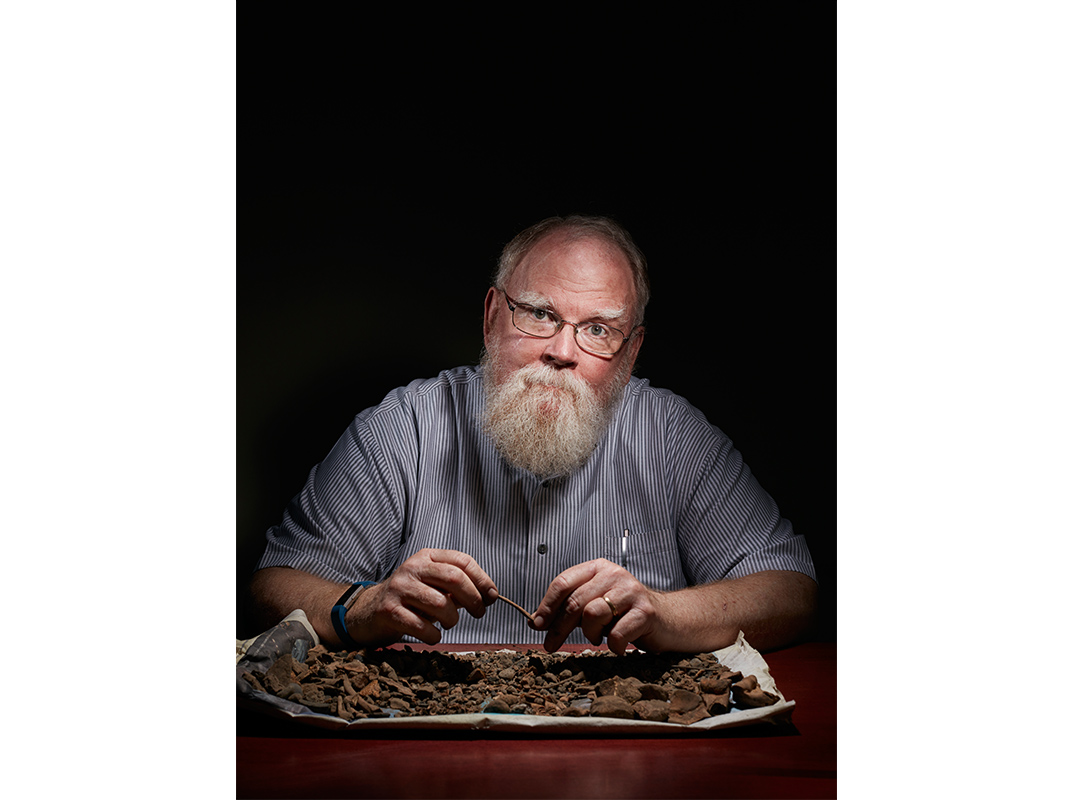
Thomas McGovern used to think he knew. An archaeologist at Hunter College of the City University of New York, McGovern has spent more than 40 years piecing together the history of the Norse settlements in Greenland. With his heavy white beard and thick build, he could pass for a Viking chieftain, albeit a bespectacled one. Over Skype, here’s how he summarized what had until recently been the consensus view, which he helped establish: “Dumb Norsemen go into the north outside the range of their economy, mess up the environment and then they all die when it gets cold.”
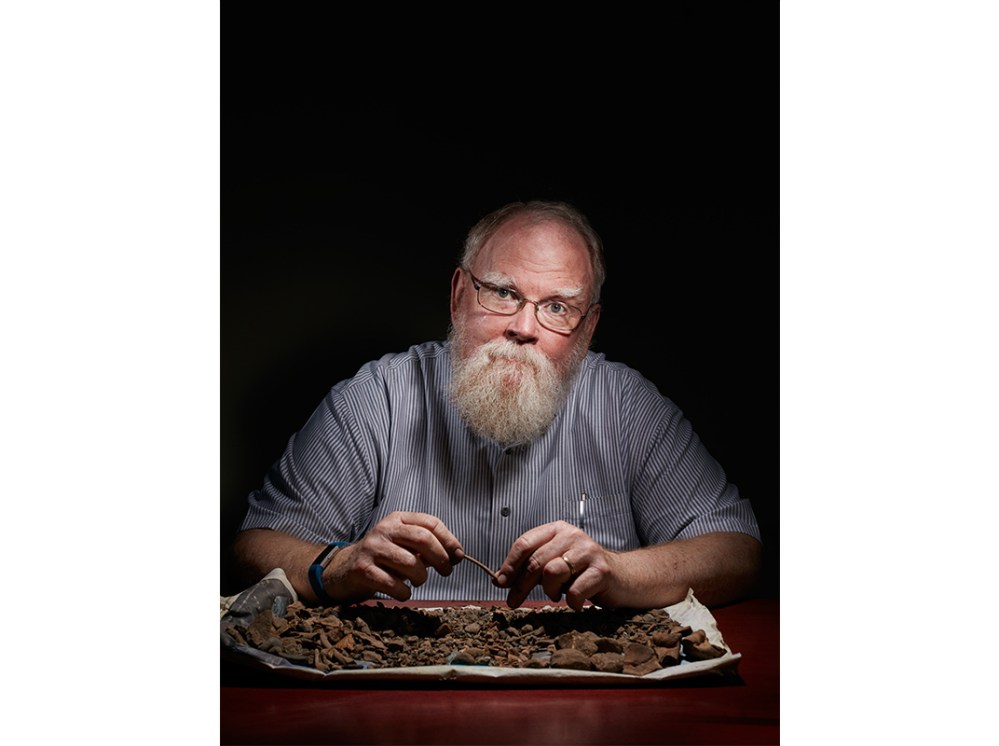
Thomas McGovern (with Viking-era animal bones); The Greenlanders’ end was “grim.” (Reed Young)

Accordingly, the Vikings were not just dumb, they also had dumb luck: They discovered Greenland during a time known as the Medieval Warm Period, which lasted from about 900 to 1300. Sea ice decreased during those centuries, so sailing from Scandinavia to Greenland became less hazardous. Longer growing seasons made it feasible to graze cattle, sheep and goats in the meadows along sheltered fjords on Greenland’s southwest coast. In short, the Vikings simply transplanted their medieval European lifestyle to an uninhabited new land, theirs for the taking.

But eventually, the conventional narrative continues, they had problems. Overgrazing led to soil erosion. A lack of wood—Greenland has very few trees, mostly scrubby birch and willow in the southernmost fjords—prevented them from building new ships or repairing old ones. But the greatest challenge—and the coup de grâce—came when the climate began to cool, triggered by an event on the far side of the world.

In 1257, a volcano on the Indonesian island of Lombok erupted. Geologists rank it as the most powerful eruption of the last 7,000 years. Climate scientists have found its ashy signature in ice cores drilled in Antarctica and in Greenland’s vast ice sheet, which covers some 80 percent of the country. Sulfur ejected from the volcano into the stratosphere reflected solar energy back into space, cooling Earth’s climate. “It had a global impact,” McGovern says. “Europeans had a long period of famine”—like Scotland’s infamous “seven ill years” in the 1690s, but worse. “The onset was somewhere just after 1300 and continued into the 1320s, 1340s. It was pretty grim. A lot of people starving to death.”

Amid that calamity, so the story goes, Greenland’s Vikings—numbering 5,000 at their peak—never gave up their old ways. They failed to learn from the Inuit, who arrived in northern Greenland a century or two after the Vikings landed in the south. They kept their livestock, and when their animals starved, so did they. The more flexible Inuit, with a culture focused on hunting marine mammals, thrived.
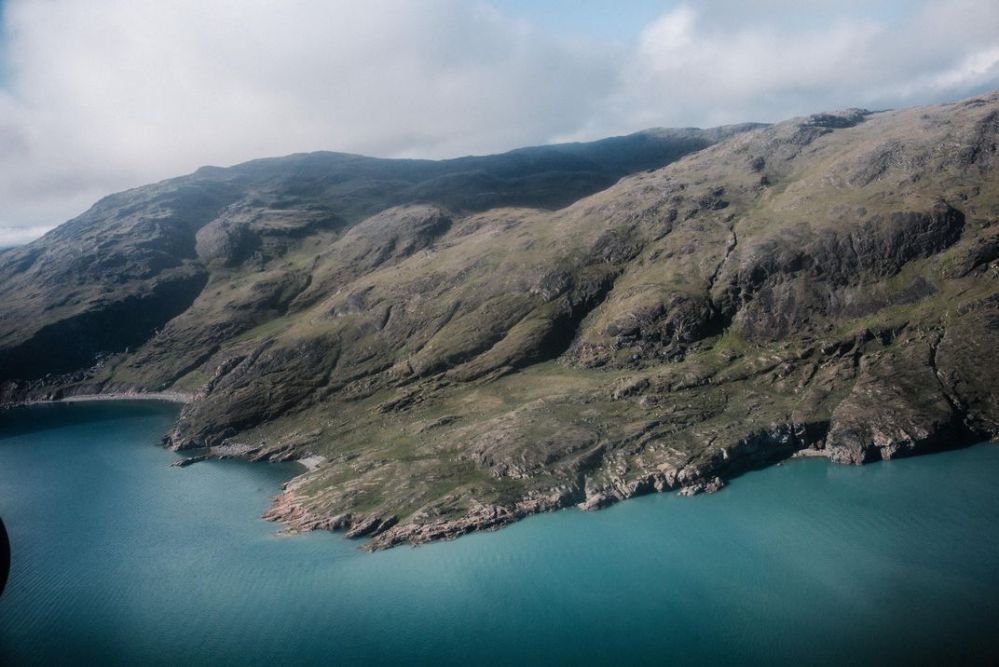
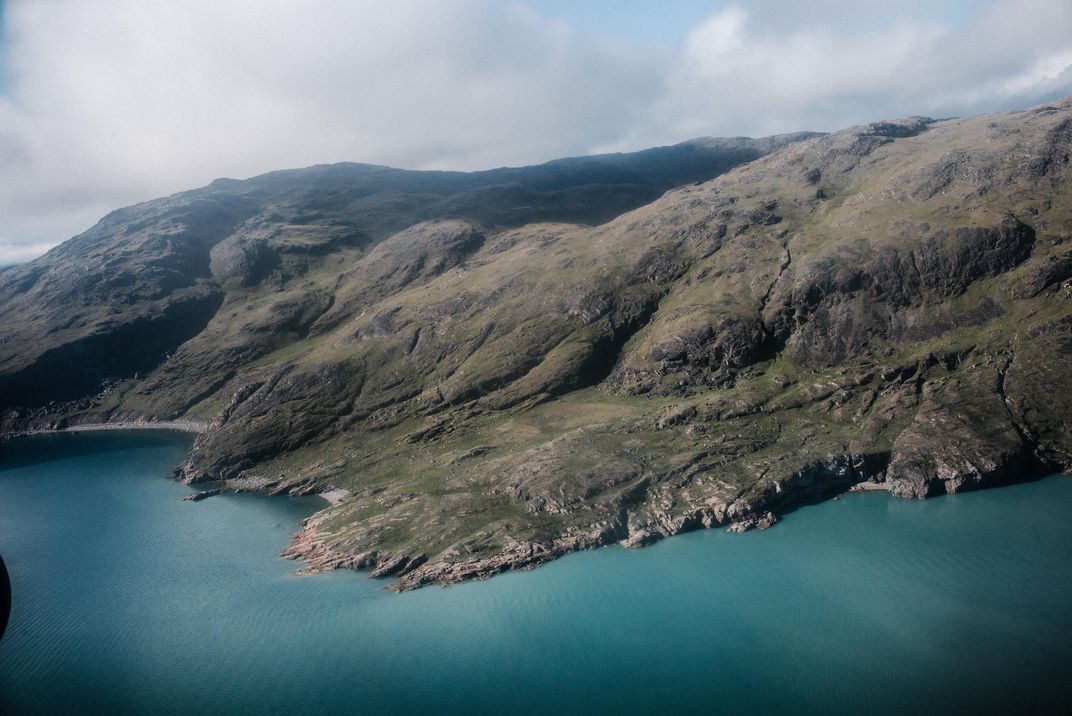
An aerial photograph of southern Greenland. (Ciril Jazbec)

New Evidence Overturns Past Conceptions

But over the last decade a radically different picture of Viking life in Greenland has started to emerge from the remains of the old settlements, and it has received scant coverage outside of academia. “It’s a good thing they can’t make you give your PhD back once you’ve got it,” McGovern jokes. He and the small community of scholars who study the Norse experience in Greenland no longer believe that the Vikings were ever so numerous, or heedlessly despoiled their new home, or failed to adapt when confronted with challenges that threatened them with annihilation.

“It’s a very different story from my dissertation,” says McGovern. “It’s scarier. You can do a lot of things right—you can be highly adaptive; you can be very flexible; you can be resilient—and you go extinct anyway.” And according to other archaeologists, the plot thickens even more: It may be that Greenland’s Vikings didn’t vanish, at least not all of them.

A New Understanding How Vikings Lived on Greenland
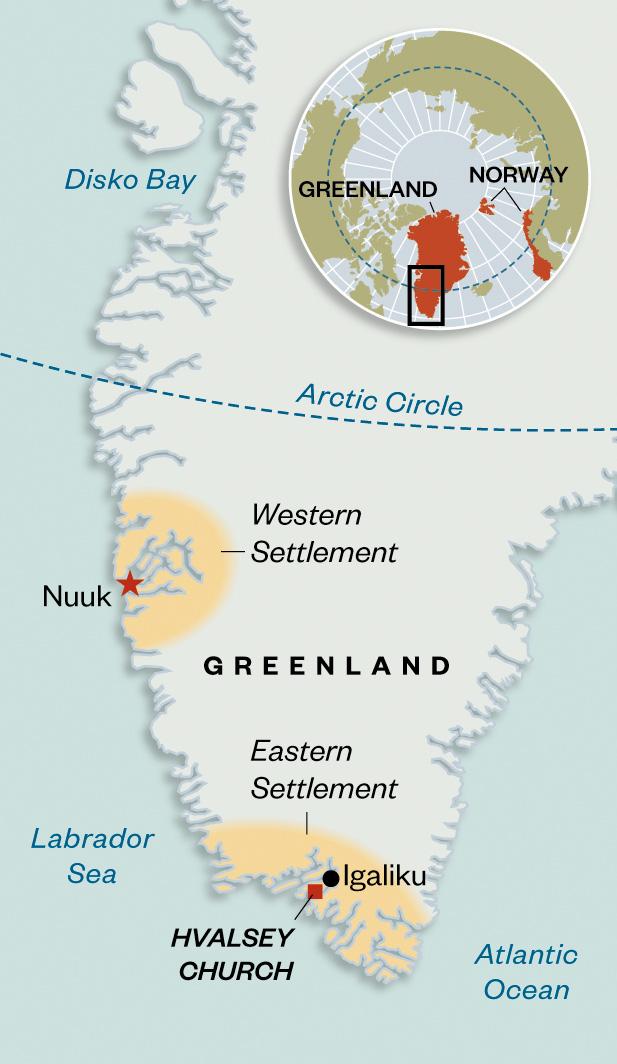
 

The Vikings established two outposts in Greenland: one along the fjords of the southwest coast, known historically as the Eastern Settlement, where Gardar is located, and a smaller colony about 240 miles north, called the Western Settlement. Nearly every summer for the last several years, Konrad Smiarowski has returned to various sites in the Eastern Settlement to understand how the Vikings managed to live here for so many centuries, and what happened to them in the end.

“Probably about 50 percent of all bones at this site will be seal bones,” Smiarowski says as we stand by the drainage ditch in a light rain. He speaks from experience: Seal bones have been abundant at every site he has studied, and his findings have been pivotal in reassessing how the Norse adapted to life in Greenland. The ubiquity of seal bones is evidence that the Norse began hunting the animals “from the very beginning,” Smiarowski says. “We see harp and hooded seal bones from the earliest layers at all sites.”

A seal-based diet would have been a drastic shift from beef-and-dairy-centric Scandinavian fare. But a study of human skeletal remains from both the Eastern and Western settlements showed that the Vikings quickly adopted a new diet. Over time, the food we eat leaves a chemical stamp on our bones—marine-based diets mark us with different ratios of certain chemical elements than terrestrial foods do. Five years ago, researchers based in Scandinavia and Scotland analyzed the skeletons of 118 individuals from the earliest periods of settlement to the latest. The results perfectly complement Smiarow­ski’s fieldwork: Over time, people ate an increasingly marine diet, he says.

Judging from the bones Smiarowski has uncovered, most of the seafood consisted of seals—few fish bones have been found. Yet it appears the Norse were careful: They limited their hunting of the local harbor seal, Phoca vitulina, a species that raises its young on beaches, making it easy prey. (The harbor seal is critically endangered in Greenland today due to overhunting.) “They could have wiped them out, and they didn’t,” Smiarowski says. Instead, they pursued the more abundant—and more difficult to catch—harp seal, Phoca groenlandica, which migrates up the west coast of Greenland every spring on the way from Canada. Those hunts, he says, must have been well-organized communal affairs, with the meat distributed to the entire settlement—seal bones have been found at homestead sites even far inland. The regular arrival of the seals in the spring, just when the Vikings’ winter stores of cheese and meat were running low, would have been keenly anticipated.

The Vikings Were Players in the Ivory Trade

The Norse harnessed their organizational energy for an even more important task: annual walrus hunts. Smiarowski, McGovern and other archaeologists now suspect that the Vikings first traveled to Greenland not in search of new land to farm—a motive mentioned in some of the old sagas—but to acquire walrus-tusk ivory, one of medieval Europe’s most valuable trade items. Who, they ask, would risk crossing hundreds of miles of arctic seas just to farm in conditions far worse than those at home? As a low-bulk, high-value item, ivory would have been an irresistible lure for seafaring traders.

After hunting walruses to extinction in Iceland, the Norse must have sought them out in Greenland. They found large herds in Disko Bay, about 600 miles north of the Eastern Settlement and 300 miles north of the Western Settlement. “The sagas would have us believe that it was Erik the Red who went out and explored [Greenland],” says Jette Arneborg, a senior researcher at the National Museum of Denmark, who, like McGovern, has studied the Norse settlements for decades. “But the initiative might have been from elite farmers in Iceland who wanted to keep up the ivory trade—it might have been in an attempt to continue this trade that they went farther west.”

A bishop’s ring and top of his crosier from the Gardar ruins. (Ciril Jazbec)

How profitable was the ivory trade? Every six years, the Norse in Greenland and Iceland paid a tithe to the Norwegian king. A document from 1327, recording the shipment of a single boatload of tusks to Bergen, Norway, shows that that boatload, with tusks from 260 walruses, was worth more than all the woolen cloth sent to the king by nearly 4,000 Icelandic farms for one six-year period.

Archaeologists once assumed that the Norse in Greenland were primarily farmers who did some hunting on the side. Now it seems clear that the reverse was true. They were ivory hunters first and foremost, their farms only a means to an end. Why else would ivory fragments be so prevalent among the excavated sites? And why else would the Vikings send so many able-bodied men on hunting expeditions to the far north at the height of the farming season? “There was a huge potential for ivory export,” says Smiarowski, “and they set up farms to support that.” Ivory drew them to Greenland, ivory kept them there, and their attachment to that toothy trove may be what eventually doomed them.

A New Theory Why Viking Greenland Settlements Failed

For all their intrepidness, though, the Norse were far from self-sufficient, and imported grains, iron, wine and other essentials. Ivory was their currency. “Norse society in Greenland couldn’t survive without trade with Europe,” says Arneborg, “and that’s from day one.”

Then, in the 13th century, after three centuries, their world changed profoundly. First, the climate cooled because of the volcanic eruption in Indonesia. Sea ice increased, and so did ocean storms—ice cores from that period contain more salt from oceanic winds that blew over the ice sheet. Second, the market for walrus ivory collapsed, partly because Portugal and other countries started to open trade routes into sub-Saharan Africa, which brought elephant ivory to the European market. “The fashion for ivory began to wane,” says Dugmore, “and there was also the competition with elephant ivory, which was much better quality.” And finally, the Black Death devastated Europe. There is no evidence that the plague ever reached Greenland, but half the population of Norway—which was Greenland’s lifeline to the civilized world—perished.

The Norse probably could have survived any one of those calamities separately. After all, they remained in Greenland for at least a century after the climate changed, so the onset of colder conditions alone wasn’t enough to undo them. Moreover, they were still building new churches—like the one at Hvalsey—in the 14th century. But all three blows must have left them reeling. With nothing to exchange for European goods—and with fewer Europeans left—their way of life would have been impossible to maintain. The Greenland Vikings were essentially victims of globalization and a pandemic.

Summary

So there is a climate angle to the story of Greenland Vikings. Unlike climate alarmists, these scientists looked deeper and found a more complicated truth. Of course, even this explanation is provisional, because we are talking about science, after all.

OLYMPUS DIGITAL CAMERA

Time Mag Misreads Science


This blog is dedicated to science as a process of discovery, rather than a catechism of truths to be embraced.  This article in the Washington Times discussed that issue in relation to a recent Time Magazine essay that comes down on the catechism side.

Time’s Misreading of Science, The magazine would rather settle than search

As demonstrated by the confirmation hearings of Scott Pruitt for new Environmental Protection Agency chief, all-out war is being waged against the Trump administration by leftists who believe science is under attack from the evil empire.

Belief that this new administration puts science in jeopardy is not surprising given the fact that so many are confused about what science is, how it is practiced, and what it can tell us about the future.

The popular press adds to the confusion about science. Take the Feb. 13 issue of Time magazine, for example. In an article titled “How a war on science could hurt the U.S. — and its citizens,” the authors open with this assessment of science: “The discipline of science is one where the facts, once they are peer-reviewed and published in scientific journals, are fixed. They’re not open to interpretation, or at least not much.”

There are numerous problems with this confused understanding of science. Regardless, the authors continue by contrasting “science” with politics “in which nearly everything can be negotiated. But as the first days of the Trump administration have shown, many of those seemingly settled scientific facts — the ones that have informed countless policies from previous U.S. administrations — are once more up for debate.”

tall-stack-booksrev

Science can be defined at its most basic level as “knowledge,” or what we think we know about a given topic. Since absolute truth on a subject is elusive, science is tentative, adjusted as additional information is accumulated through more research and wider perspective and, yes, even debate.

In practice, science can certainly be influenced by politics or, essentially, ideology. Those on the left apparently do not see a leftist ideology permeating certain areas of contemporary scientific practice and so equate scientific conclusions that endorse their beliefs as being absolutely irrefutable.

This blinkered perception manifests itself as “settled science” and is apparent in climate change science, and especially the power of this science to ascertain Earth’s future climate.

Accurate prediction is one of the biggest challenges in scientific practice, and indeed an accurate prediction for the right reasons is one of the conditions for a scientific assertion to be correct.

Here’s where climate science has fallen woefully short in recent decades.

The prediction that man-made carbon-dioxide emissions drive catastrophic climate change beginning with mounting global temperatures has been proven paltry at best. Yet, the dire global warming prediction, years ago, evolved into a belief and brandished as a proselytizing mantra by climate change crusaders.

Now the current climate change hypothesis is struggling and can use some insight from qualified, skeptical scientists to broaden the ambient landscape.

That broadening is difficult with a Time-skewed understanding of science and scientific practice. To say that the discipline of science is where facts are fixed once they are peer-reviewed and published is confused at best. Scientists use facts (like those associated with the fundamental principles of physics) as they observe natural events, propose hypotheses, and test their explanations of what they observe. Hypotheses are submitted to peer-reviewed scientific journals for critique.

The peer-review process is assumed to be rigorous, fair and balanced; however, that is not always the case. Documented instances have occurred where data in published reports were discovered to be falsified, or when work described was never actually performed, or when only friendly reviewers were chosen to assure acceptance of the conclusions, and the like. So, facts cannot be determined by peer review any more than real truth can be decide by an ad hoc committee. And published results are always open to further review, challenges and certainly interpretation.

True believers trust that their concept of science is rock-solid, especially when the science they choose to believe conforms to their preconceived notions.

But, the current world of climate science has been astutely branded by some challengers as a “climate-industrial complex.” The moniker may be well suited to describe the seemingly enormous political and monetary influence of this particular field by left-leaning vested interests.

Perhaps, with the arrival of the pragmatic Trump team, including Scott Pruitt, the climate world of “seemingly settled scientific facts” is about to be rocked by a bit more conservative assessment.

• Anthony J. Sadar is a Certified Consulting Meteorologist and author of “In Global Warming We Trust: Too Big to Fail” (Stairway Press, 2016).

Bertrand Russell makes a related point with his solar teapot.

To enlarge image, open it in new tab.

More on the Climate Crisis industry

Climate Crisis Inc.

For more on belief related to science and religion:

Head, Heart and Science

Yellow Climate Journalism


Definition of “Fake News”:  When reporters state their own opinions instead of bearing witness to observed events.

We are now fully entrenched in an age of “yellow” journalism, especially regarding the issue of global warming/climate change. Below I will deconstruct a recent egregious example, but first we need a background from renowned philosopher Mortimer Adler.

On the Difference Between Knowledge and Opinion

Knowledge refers to knowing the truth, that is understanding reality independent of the person and his/her ideas. By definition, there is no such thing as “false knowledge.”

When I show you two marbles then add two more marbles and ask you how many marbles there are, the answer is not a matter of opinion. You have no freedom to assert any opinion other than the answer “four”.  By the axioms of mathematics we know the true answer to this question.

A great many other issues in human society, politics and culture are matters of opinion, and each is free to hold an opinion different from others. In such cases, the right opinion is usually determined by counting noses with the majority view ruling.

Note that school children are taught right opinions. That is, they are told what their elders and betters have concluded are the right answers to many questions about life and the world. Those children do not yet possess knowledge, because as Socrates well demonstrated, you have knowledge when you have both the right opinion and also know why it is right. Only when you have consulted the evidence and done your own analysis does your opinion serve as knowledge for you, rather than submission to an authority.

John R. Christy is a professor of Atmospheric Science and Director of the Earth System Science Center of the University of Alabama in Huntsville.

On Climate Knowledge, Dr. John Christy (here)

Climate science is a murky science. When dealing with temperature variations and trends, we do not have an instrument that tells us how much change is due to humans and how much to Mother Nature. Measuring the temperature change over long time periods is difficult enough, but we do not have a thermometer that says why these changes occur.

We cannot appeal to direct evidence for the cause of change, so we argue.

The real climate system is so massively complex we do not have the ability to test global-size theories in a laboratory. Without this ability, we tend to travel all sorts of other avenues to confirm what are essentially our unprovable views about climate. These avenues tend to comfort our souls because we crave certainty over ambiguity.

Without direct evidence and with poor model predictability, what other avenues are available to us? This is where things get messy because we are humans, and humans tend to select those avenues that confirm their biases. (It seems to me that the less direct evidence there is for a position, the more passion is applied and the more certainty is claimed.)

One avenue many folks tend to latch onto is the self-selected “authority.” Once selected, this “authority” does the thinking for them, not realizing that this “authority” doesn’t have any more direct evidence than they do.

Other avenues follow a different path: Without direct evidence, folks start with their core beliefs (be they political, social or religious) and extrapolate an answer to climate change from there. That’s scary.

Exhibit A of Yellow Climate Journalism

Unfortunately we see that climate journalists often distort their articles by confusing factual reporting of events with their own opinions.

“In the conduct of trials before judges in our courts there is a famous rule called the opinion rule. The opinion rule says that a witness giving testimony must report what he saw or what he heard. He must not report what he thinks happened, because that would be giving an opinion, not knowledge by observation.”
~ Mortimer J. Adler

One of many typical articles on climate is this one from Wired: Tillerson’s Hearing Seals It: the US Won’t Lead on Climate Change 

See how the author forces his own opinions to subvert what he observed.

After more than six hours of testimony, Tillerson backtracked even further, telling senator Jeff Merkley (D-OR) that though the evidence of a changing climate was clear, the cause wasn’t. “The science behind the clear connection (to human activity) is not conclusive,” Tillerson said, an assertion as false as the scientific consensus is clear. (my bold)

Tillerson said that he and the president elect would do a “fulsome review” of US climate change policies. “I also know that the president, as part of his priority in campaigning, was ‘America First,’ so there is important considerations as we commit to such accords, and as those accords are executed over time: are there any elements of that that put America at a disadvantage?” he said. The negative effects of climate change, of course, don’t discriminate on the basis of national borders(my bold)

Senator John Barrasso (R-WY), who believes government money currently spent fighting climate change could be “better spent” elsewhere, pushed Tillerson to commit to abandoning US funding for anti-climate change initiatives. Specifically, Barrasso opposes support for the Green Climate Fund, an international program set up to help developing nations deal with the effects of climate change. The US under Obama has pledged $3 billion.

“In consultation with the president, my expectation is that we are going to look at these things from the bottom up in terms of funds we’ve committed toward this effort,” Tillerson said.

Even in his non-answer, it’s clear Tillerson was open to dropping such funding. Instead, he opined on the power of electricity to lift people out of poverty. A noble aspiration, perhaps, but one that would provide little consolation to communities ravaged by climate change now and in the future. (my bold)

Summary, Five criteria for distinguishing between knowledge and opinion:

1. Whether or not everyone must agree.
2. Doubt and belief are relative only to opinion, never to knowledge;
3. We can have freedom of thought only about matters of opinion, never knowledge.
4. Consensus differentiates between knowledge and opinion; only with respect to opinion do we talk about consensus.
5. Matters of opinion are subject to conflict, knowledge is not.

By all criteria, global warming/climate change is a matter of opinion, not knowledge.

Any teacher will tell you it is much easier to teach a student who is ignorant than one who is in error, because the student who is in error on a given point thinks that he knows whereas in fact he does not know. . .It is almost necessary to take the student who is in error and first correct the error before you can teach him. . .The path from ignorance to knowledge is shorter than the path from error to knowledge.
Mortimer Adler

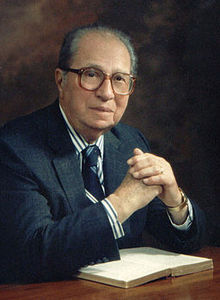
Mortimer J. Adler, Founder of the Center for the Study of the Great Ideas

Origins of Science

In a recently published video, John Christy explains clearly the limits of scientists’ understanding of earth’s climate system. It is well worth anyone’s time to view.

Dr. Christy makes the important point that all science is based upon objective measurements of the world. Feelings, intuitions, anecdotes and shared opinions do not provide proof for a scientific understanding of something. Science requires data, numerical records of observed measurements.

This post is about how much we owe to ancestors who invented standardized units of weights and measures without which we would have no science at all.

Background

It happened last week that my home north of Montreal was without electrical power for 3 nights and 2 days. The whole experience drove home how much our lives depend on reliable, affordable electricity. Yes, our home heating system is electrical.

My e-readers’ batteries ran out, leaving me to read real paper books by the light of our hurricane lamp. Thus, I revisited a book from many years ago that provides much interesting information on this subject: Charles Panati’s Browser’s Book of Beginnings: Origins of Everything Under, and Including the Sun.

CHARLES PANATI, a former physicist and for six years a science editor for Newsweek, is the author of many non-fiction and fiction books, including six works on “origins.” The text below comes from Panati, the images from various internet sources.

Length Measures

To measure lengths, the Egyptians turned to parts of the human body. We know many of these measurements by terms later derived from Latin. A cubit, the oldest enduring standard measure, devised about 3000 B.C. was the length of a grown man’s arm from the elbow to the tip of the outstretched middle finger–about 20.5 inches in modern units. The cubit’s basic sub-unit was a digit, which was the breadth, not the length of a finger. Twenty-eight digits equaled 1 cubit.

The palm, not surprisingly, was another unit. One palm equaled 4 digits. (Measure it yourself, by holding the four fingers of one hand against the other hand’s palm.) A palm plus a digit, totaled 5 digits, or a hand. Palms were combined to make several larger units, and a digit was elaborately subdivided, resulting in a complex, but amazingly accurate system of measurement.

The Great Pyramid of Giza, built by thousands of workers with minimal architectural knowledge, boasts sides that vary no more than 0.05 percent from the mean length–that is, a deviation of only 4.5 inches over a span of 755 feet.

The ancient Greeks borrowed from Egyptian and Babylonian systems and made their own refinements; they also preferred terms related to the human body. 16 fingers combined to make 1 foot, and 24 fingers made an “Olympic cubit.” The Romans copied from the Greeks, but subdivided the foot into 12 inches. They also used the mile, the yard and, for weight, the pound.

Weight Measures

A system of standard weights based on the human body was unfeasible, since there were too many natural variations to rely on an average man. Instead, the Babylonians devised a system based on metal objects, or trinkets, of various sizes and shapes.

bible-coins-history-money-weight-system-sumerian-duck-weight-black-stone-king20shulgi-2094-2048bc-of-ur-for-god20nanna-5-minas-oriental-museum-number-im3580-2070bc

The earliest unit of weight was the mina. Minas often took the shape of a duck, and each of several unearthed at a archaeological dig weigh roughly 640 grams. Also discovered was a swan weighing 30 minas. The Babylonians also used standard size “coins” from which the Hebrews adopted their unit of weight, the “shekel”, about half an ounce, and also a silver coin weighing that amount, frequently mentioned in the Bible.

The Metric Revolution

Colbert Presenting the Members of the Royal Academy of Sciences to Louis XIV by Henry Testelin

Colbert Presenting the Members of the Royal Academy of Sciences to Louis XIV by Henry Testelin

Almost all of the ancient and medieval weights and measures fell into disuse, to be replaced by the metric system. The French Revolution was not only political, but overturned many previously sacrosanct institutions. With the fall of the Bastille July 4, 1789, King Louis XVI had to give way to a constituent National Assembly, who proceeded to make many changes. Prominent among them was the adoption in June 1799 of the metric system.

Members of the French Academy of Sciences had taken on the task of devising a metric system. They decided that the length of the meridian passing through Paris from the North Pole to the Equator should serve as a fixed distance, and that one ten-millionth of that distance should be called a meter. The unit of weight, the gram, was to be related to the weight of a cubic meter of water. Sub-units such as centimeter and millimeter were also proposed, as well as such super-units as the kilometer.

The metric system was adopted under the motto “For all people, all the time”, a sentiment in accord with the revolutionary tenor of the time.

Time Measures

Our 7-Day Week Can Be Traced To Babylonians Who Started Using It 4,000 Years Ago

Our 7-Day Week Can Be Traced To Babylonians Who Started Using It 4,000 Years Ago

Many are aware that the earliest reckoning of time referred to moons (or months), but as civilizations became more complex, shorter periods proved more convenient as measurements of time. For a long while, the idea of a week was different from place to place: West Africans had a four day week, central Asians opted for five days, Assyrians adopted a six-day weeks, being the period between market days.

It was the Babylonians who preferred to measure a month by its natural phase of 28 days (more accurately the moon’s waxing and waning takes approximately 29.5 days. For convenience in business transactions–and also because of their belief in the sacredness of the number seven–they grouped the days into four seven-day weeks, the origin of our present system.

Temperature Measures

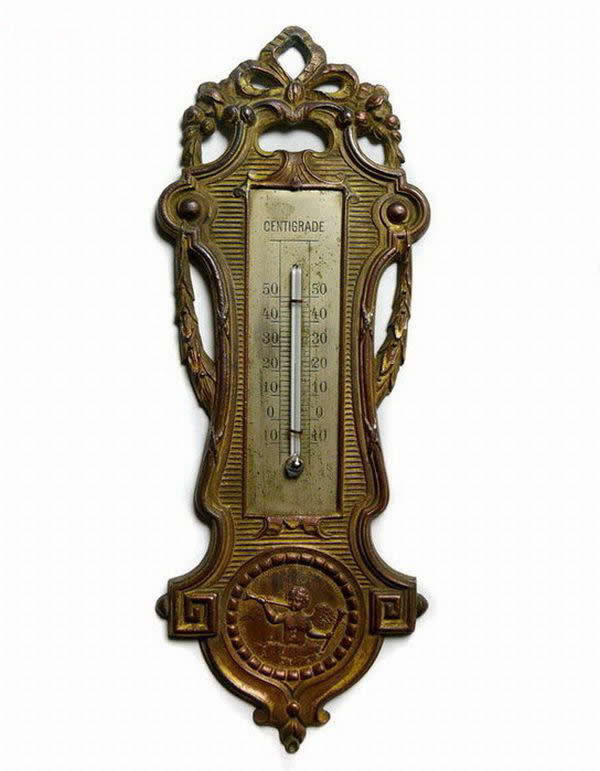
The ancient Greeks could have invented the thermometer, since they were well aquainted with the behavior of certain liquids and gases under conditions of changing temperature. Several scientists attempted to measure quantitative differences between hot and cold, but success came only late in the 16th century to the Italian astronomer Galileo.

Galileo’s device was actually a thermoscope, which had no degree scale, and measured only gross changes in temperature. A large glass bulb with a long, narrow, open-mouthed neck rested inverted over a vessel of colored water or alcohol. When air was forced from the bulb, the liquid rose up a short distance into the neck. When the bulb’s temperature changed, the air in it either expanded or contracted, and the level of liquid in the tube changed accordingly.

In 1611, the first scale was introduced by Sanctorius, a contemporary of Galileo. He gauged the low point by noting the level of the liquid when the thermoscope was surrounded by melting snow. Then he held a candle beneath it to mark the high point. From his observations, he arrived at a scale of 110 equal parts, or degrees. Thus, the thermo-scope, for “seeing” temperature changes, became a thermo-meter, for measuring those changes.

Early thermometers were inaccurate due to changes in barometric pressures causing liquid levels to change when temperatures did not. This problem was solved in 1644 when Grand Duke Ferdinand II of Tuscany introduced the hermetically sealed thermometer. He also founded in 1657 an academy for experimentation to improve temperature devices. They did not use mercury as modern models do (though academy members experimented with that liquid metal), but red wine instead, since it expanded faster when heated.

Summary

These are but a few, mostly ancient, examples of human inventions contributing to the rich scientific framework we have inherited. Many more have been added in modern times, and who knows what the future will bring. Below is a whimsical look at some possibilities.

Since science depends on measuring things, you need to know the correct units for what you are studying. Below are some obscure measures for special situations.

Footnote on the Importance of Measurements

From “Show me the money” to “Show me your work”

Much of what is wrong with climate science started when they switched from real world observations to building and playing with computer toy models of the world. Much of the research money has gone into climate modelling, which has yet to show skill in predicting changes in weather patterns on any time scale beyond a few weeks. The models themselves are confused by their makers with the real world, and they even refer to computer runs as “experiments.”

Almost 2 years ago I became aware of Dr. Arnd Bernaerts’ insightful phrase, “Climate is the continuation of the ocean by other means.” From oceanographic observations, he has long been persuaded the climate changes because of ocean oscillations, and I learned a lot from him while writing a number of posts here collected under the category Oceans Make Climate.

Arnd is also persuaded that humans are impacting on the oceans, and thereby upon the climate, but by obvious maritime activities and not by CO2 emissions. For his impertinence, he was “disappeared” from Wikipedia by the zealots there who purge that website from sources and information skeptical of global warming dogma.

As happened in Soviet history, climate revisionists are rewriting history.

As happened in Soviet history, climate revisionists are rewriting history.

Dr. Bernaerts continues to write on climate and ocean matters, most recently at his website: Oceans Govern Climate

Ironically, alarmists are crowing right now about Arctic ice extent being a little lower this year, while not mentioning most of the deficit is due to Barents Sea, and secondly to less ice in Bering Sea. Both of those places are subject to extensive maritime activity–shipping, fishing, oil and mineral exploration and extraction, and icebreaking to support year-round operations. Bernaerts explains: Man-Made Ocean Warming? Yes, but it’s not CO2.

Activist scientists, fixated on models and global warming, are indifferent to the correlation between WWI Atlantic naval warfare and unprecedented warming at Spitzbergen (Svalbard). Only an evidence-based scientist like Bernaerts is paying attention, as I have reported previously (here).

Another example of how science is perverted to support a political climate agenda was provided by commenter crypto666 referring to Matt Lachniet’s research into the former ocean basin in Nevada. By happenstance, Bernaerts had visited the Great basin last September (If you’re devoted to the oceans, I guess you are interested even in prehistoric, dried-out basins.)

Lachniet is properly circumspect in his writing and presentations, noting his findings pertain to a particular location, and suggesting several possible explanations for anomalous warming starting 1600 years ago. Yet his research was twisted into a climate change warning by journalists writing in the Las Vegas Sun (here).

As crypto points out, this is not what Lachniet himself has said. He is as clear as anyone that warming starting in the Fifth century did not come from people driving SUVs, so some natural oscillations must be in play. (California terminology: SUV=Axle of Evil).

Summary

My hope for 2017 is to begin seeing a regime shift in climate science from “Show me the money” to “Here are my data and work, Let the chips fall where they may.” Natural scientists have always owned a sense of awe alongside their curiosity, appreciating the enormity of the world they seek to understand. Dr. Bernaerts is right to remind us that even with modern technologies, our hard-won observational data is a minuscule sampling of oceanic and atmospheric activities. Any conclusions to be drawn should be put forward with humility. The dogmatic positions of climate alarmists are a disgrace to the profession.

Footnote: Below are reprinted relevant comments from Bernaerts and crypto.

Arnd Bernaerts said:

Hi Ron, having been to the Great Basin/NV recently, I couldn’t resist asking: what have 3,500 Argo floats and other ocean sensors (image caption) and the Matt Lachniet „nevada-caves-climate-change” (link in one of your comments) in common?
In – MHO – a lot, as they are both of little help to understand how to prevent anthropogenic climate change sufficiently. Recalling my visit of the Lehman caves a few days earlier or later (on 9th September) as Matt Lachniet, the cave formation was impressive, but hardly of any use for current concern.

3,500 Argo floats are certainly a more promising approach. But if one considers the dimension (& temperatures) in which they operate; nicely outlined recently at https://wattsupwiththat.com/2016/12/26/warming-by-less-upwelling-of-cold-ocean-water/, it is like reading from stalactite about AGW matters.

The use of Argo floats is an achievement, but by far too small. Observations below the sea surface would require a number of several hundred thousand, if not millions of devices (and the capability to process the data sufficiently). After all we need to understand the role of the oceans, and whether they bring a severe cooling, which is possible at any time.

Ron, to you, your family and everybody calling at this site:
HAPPY NEW YEAR

crypto666 said:

Thanks for pointing that out Ron. All I can say is unbelievable.

“Lachniet’s Great Basin research suggests that, based on the Earth’s orbit, the region should not be in a dry period. But it is. In any scenario, human-caused climate change, amplified over the next few centuries by natural warming, could be troublesome for a place that’s already notoriously dry and hot.”

The first thing I will point out however, is that those are not his words. Those are the words of the article writer. It is also either an outright lie, or a mistake. Another writer from the UNLV paper tried saying that Matt’s research suggests humans started changing the climate 1,600ybp, which again is not the case.

I know Matt, and he delivered his 2014 study to my colleagues and myself personally. After we talked for a bit, and surprised him by identifying that change in trend before he did in his work, which he identified as being 1,600 ybp, I asked him what his thoughts were on co2. What I vividly remember is Matt pointing to his chart and stating that he doesn’t think anyone will be able to identify co2’s contribution to climate change until we reached the point of his finger, which is where we should start the long road back to glaciation. It may have 2ky or maybe it was 55ky, at any rate what he says in person isn’t exactly what you get from news articles and twitter feeds.
I will also point out this:

A Speleothem Record of Great Basin Paleoclimate
January 2016
DOI: 10.1016/B978-0-444-63590-7.00020-2
In book: Lake Bonneville – A Scientific Update, pp.551-569

https://www.researchgate.net/publica…n_Paleoclimate

“The lag behind NHSI of d18O variations suggests that the forcing is indirect. Several possible forcings are associated with the Great Basin d18O variations. First, it is clear that CO2 concentrations increase abruptly around the MIS 2/1 and MIS 6/5d transitions, which may explain some of the warming over Terminations I and II. However, Nevada d18O values drop steadily throughout the Holocene, whereas CO2 remains high and even increases slightly over the last 8000 years (Ruddiman, 2003). Similarly, the strongly low d18O values during MIS 5d and MIS 7 happen during intervals with intermediate to high CO2 values.

Thus, the CO2 changes may amplify a warming already in progress around ice volume terminations but are unlikely to be the source of the climate change, because they are decoupled during prominent intervals such as MIS 1 and 5d. A related hypothesis suffers from similar problems: the extent of the Laurentide Ice Sheet (LIS). The LIS retreated over the MIS 2/1 and MIS 6/5 transitions when temperatures in the Great Basin warmed (as inferred by increasing d18O values). However, decreasing d18O values from 8 ka to modern happened in the absence of any ice-sheet regrowth, and the prominent MIS 5d and MIS 7 minima also happened when ice sheets were small. Thus ice-sheet extent cannot be the primary driver of Great Basin d18O variations. The clear conclusion is that neither CO2 nor ice-sheet extent were the sole or dominant controls on Great Basin paleoclimate over orbital timescales.”

That conclusion doesn’t strike me as coming from someone who believes co2 controls climate.  There is a big leap from believing that co2 could cause increased heating of the atmosphere, and thinking co2 controls climate and/or we can control climate with co2.

I have actually had people try to use Mr. Lachniet’s twitter account in an attempt to change the conclusion of his studies. Which is always entertaining.

Erratic Public interest in Science

Recently the media reported that people tend to discredit global warming alarms during cold spells and mild weather. Now we have a similar finding from the Onion (here).  New Report Finds Americans Most Interested In Science When Moon Looks Different Than Usual

ARLINGTON, VA—Explaining that readership of science-related articles and discussion of scientific concepts tends to surge at such times, a report released Thursday by the National Science Foundation confirmed that Americans are most interested in science when the moon looks different than normal.

“According to our findings, citizens are never more engaged by scientific disciplines than when the moon does not look like it regularly does—for example, when it becomes big or bright,” read the report in part, which added that while the nation’s interest in science is typically fairly minimal and consistent when the moon is its usual size and color, as soon as these properties of the moon differ in a noticeable way, millions of Americans begin displaying a desire to learn and share scientific knowledge.

“The moon is ordinarily white and relatively small, and science is not on most people’s minds. However, when the moon is no longer white and small, and instead happens to be large, reddish, temporarily darkened, or any combination of those things, people generally want to know more about the methodological study of natural phenomena. Of course, once the moon goes back to the way it normally looks, interest in how the universe works drops back to baseline levels.”

The report went on to mention that major changes to the Earth appeared not to garner Americans’ interest at all.

Another parody of science reporting includes Onion’s explanation of How Clinical Trials Work

A Merry Christmas to all, and to all a peaceful night.


Save the Reindeer!

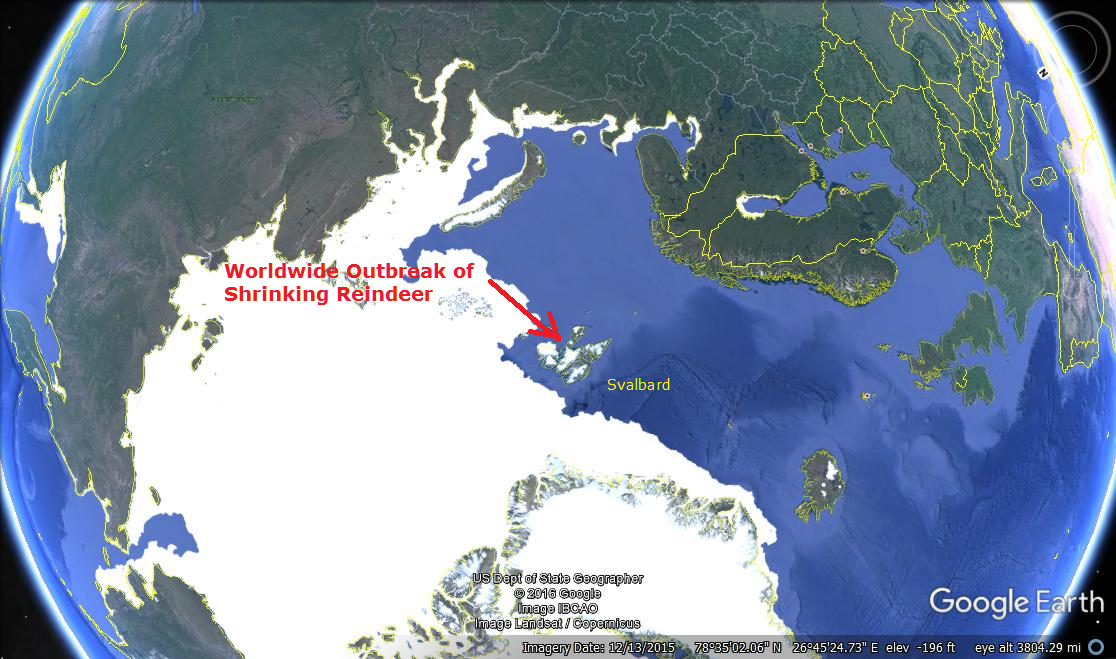
google-svalbard

Just in time for Christmas, we have news of a worldwide outbreak of shrinking reindeer caused by global warming/climate change. A websearch of “shrinking reindeer” returns links to hundreds of media reports from everywhere, evidence of the global nature of this event.

That is, until you read past the scary headlines and discover that it is one story repeated endlessly. Once again, the internet serving as the global village rumor mill. We can relax somewhat in that reports from places like Malaysia, India and California do not mention the local reindeer, so they must be OK.

All of this attention and alarm arises from one report about one place: Svalbard (Arctic islands belonging to Norway). Moreover, the animals are not going extinct yet, rather a decline of 12% of adult body weight has been observed over the last 30 years. Project that out to the end of the century though, and the reindeer are toast, unless we do something.

On the other hand, there are facts and circumstances to consider.  From the Reindeer Fact sheet (here)

The females usually measure 162–205 cm (64–81 in) in length and weigh 79–120 kg (170–260 lb). The males (or “bulls”) are typically larger (although the extent to which varies in the different subspecies), measuring 180–214 cm (71–84 in) in length and usually weighing 92–210 kg (200–460 lb), though exceptionally large males have weighed as much as 318 kg (700 lb). Shoulder height typically measure from 85 to 150 cm (33 to 59 in), and the tail is 14 to 20 cm (5.5 to 7.9 in) long. The subspecies R. t. platyrhynchus from Svalbard Island is very small compared to other subspecies.

Svalbard reindeer running in snow.

Svalbard reindeer running in snow.

From the Norwegian Polar Institute (here)

The subspecies is endemic to the Svalbard islands, where it has lived for at least 5,000 years, and become well adapted to the harsh climate, being found on nearly all non-glaciated areas of the archipelago. It is the most northern living herbivore mammal in the world.

The Svalbard reindeer is adapted to survive the variable climatic conditions and the high degree of seasonality in Svalbard. They are very sedentary and thus have low energy demands, and they have an outstanding ability to use their own body reserves (both fat and muscle tissue) when access to food is limited in the winter. The thick fur contributes to insulation against low temperatures and wind. Starvation is the most common cause of mortality. This occurs due to worn out teeth from grazing on sparse vegetation among stones and gravel or due to lack of food when ice locks pastures – caused by ‘rain-on-snow’ events in winter. The population dynamics of the Svalbard reindeer is regulated by a combination of density dependent processes and climatic variability causing high mortality and low reproduction.

And there are large populations of reindeer outside of Svalbard, exhibiting remarkable hardiness.

Some populations of the North American caribou migrate the furthest of any terrestrial mammal, travelling up to 5,000 km (3,100 mi) a year, and covering 1,000,000 km2 (390,000 sq mi). Other populations (e.g., in Europe) have a shorter migration, and some, for example the subspecies R. t. pearsoni and R. t. platyrhynchus (both restricted to islands), are residents that only make local movements. Normally travelling about 19–55 km (12–34 mi) a day while migrating, the caribou can run at speeds of 60–80 km/h (37– 50 mph). During the spring migration smaller herds will group together to form larger herds of 50,000 to 500,000 animals, but during autumn migrations the groups become smaller, and the reindeer begin to mate.

Summary

And the hype goes on, amplified if anything to counteract the effect of an incoming US administration who dares to disbelieve in climatism.

Last year there was much ado about Siberian reindeer infected with ricin and humans (one) dying from eating the meat. It turned out to be a report that is put out periodically, the timing associated with the governmental planning and budgeting cycle. Perhaps we will hear about this again in five years. Or sooner if Trump pursues a rational energy policy.  One also wonders where Norway is in planning and budgeting for polar research activities.

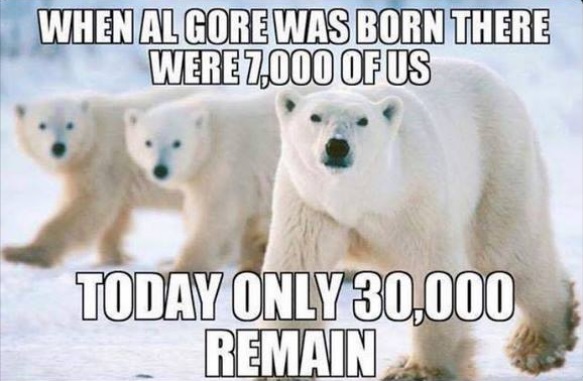
Of course, the reindeer are being recruited to replace the polar bears, who did not get the memo and instead multiplied their way out of endangerment.