We place high epistemic value on expert opinion and when it reaches a consensus, we may view this as settled science. But, writes Miriam Solomon, we should not equate expert opinion with certainty. While expertise is a valuable guide to decision-making, experts can be prone to human error too. Laypeople can, and should, critically evaluate how expert consensus is reached.
We live in an immense, complex world, and frequently benefit from guidance from those with more information and experience—people we regard as experts—to make sense of it. Along these lines, we often use expert consensus as an indicator of what is known, and expert disagreement as an indicator of what is uncertain. So, for example, earth scientist and historian Naomi Oreskes appeals to the record of peer-reviewed scientific publications on climate change to argue that the public should listen to the expert consensus that there is anthropogenic climate change. Oreskes identified that those who publicly disagree with this consensus have not contributed to the peer-reviewed scientific literature on climate science, and in this way they are not experts with regard to the relevant subject matter, although they may have PhDs and even university positions in unrelated sciences. [Note that position ignores many expert climatologists who disagree, but who are dismissed as “deniers” because they dissent.]
Survey starting the narrative “97% consensus of experts agree humans are causing global warming.”
Oreskes dissuades us from taking such non-expert disagreement seriously, especially since she also finds that it is politically motivated. The appeal to expertise encourages us to trust those who know more than we do about a particular matter and invites us to pay attention to reliable markers of expertise, such as publication in relevant peer-refereed journals. In traditional epistemological terms, it recommends deference to epistemic authority (or authorities).
However, even experts are fallible. Expert consensus
should not be equated with certainty or truth.
But experts are more likely to be correct than non-experts, and the agreement of experts with one another can provide additional evidence for the robustness of their conclusions. Oreskes’ approach implicitly relies on the trustability of the relevant experts, not only on their expertise. We need to know not only that experts are knowledgeable but that they are acting in the best interests of furthering knowledge. The integrity of science—its commitment to norms such as openness of inquiry, responsiveness to criticism, disinterestedness, etc. (see Merton (1942) and Longino (1990))—is vital for its trustability.
Sometimes, this trust can be eroded. Philosopher of medicine Maya Goldenberg has explored what is needed for laypersons to build justified trust in vaccine research, mentioning concerns about Big Pharma producing biased research and concerns about the historical record of medical, scientific, and governmental communities’ willingness to use untested medical technologies on marginalized groups.
When experts disagree—a common occurrence in science—deference to expertise yields conflicting results. Laypersons are apt to respond to such disagreements, such as which sorts of diets are best for long-term health, or which vaccines should be mandated and for whom, with statements such as “even the experts don’t know.”
Knowing this, experts are aware of the need for a public
face of consensus on matters they wish to influence.
They have become savvy about disseminating any publicly relevant consensus that is achieved. This thinking is behind established institutions such as the United States’ NIH Consensus Development Conference Program (1977-2013), which issued regular reports on new clinical interventions, and the Intergovernmental Panel on Climate Change (1988-present), which issues regular updates on climate science.
Forcing a consensus when the science is not there rarely works.
Deferring to the consensus of trustable experts is one of the best kinds of argument based on epistemic authority. It is certainly better than the Scholastic practice of referring to the writings of just one “great man,” such as Aristotle or Aquinas. Several experts coming to the same conclusion about a matter is usually more convincing than one expert coming to that conclusion. However, as many have pointed out, the strength of the argument depends on:
(1) the degree of independence of these experts from each other, and (2) the individual and collective interests of these experts.
Scientists, like the rest of us, come to their knowledge in social context and, generally speaking, scientists are neither independent of each other nor completely interest-free. They are often trained similarly—by the same schools, people, and educational materials—and feel pressured towards group conformity as well as towards deference to uber-experts. Scientists have individual biases, such as confirmation bias, that can be magnified when one scientist influences another. There are many well-known cases in the history of science and medicine in which expert consensus has turned out to be incorrect and harmful. Some examples in medicine are the traditional practice of blood-letting as a general cure-all, the use of surgery and antacids for stomach ulcers, and the practice of radical mastectomy for early stage breast cancer.
Thus, while deferring to the consensus of experts is often a good practice, it is defeasible: there are circumstances in which that deference is not ultimately justified. It is worth spelling out what those circumstances are. Here are some questions to ask of any purported expert consensus.
♦ Who agrees? Is there any dissent—if so, is it between particular groups of experts (say, family medicine practitioners disagreeing with radiologists about the effectiveness of screening mammography) or between experts and non-experts?
♦ What do the dissenters say? It is necessary to get at least a little “into the weeds” of dissent to decide whether or not dissenters are worth taking seriously.
♦ How long has there been agreement? If agreement is new, what brought it about? In particular, how much of a role did new evidence play?
♦ If agreement is longstanding, would counterevidence be sought, noticed and responded to?
These kinds of questions are a check on the processes that led to consensus. There will always be some social processes such as peer pressure and graduate school training that are unrelated to relevant evidence yet play a role in expert belief formation. This does not mean that we should distrust all consensus that has any sources in “bias.” That is too idealistic. Instead, we should look at the complete picture of what played a role in consensus formation and try to assess whether new evidence had a deciding role.
It is also worth reflecting that consensus is not the general end goal of science. Scientific communities tolerate—even benefit from—lack of consensus. Already in the nineteenth century, the philosopher John Stuart Mill put things especially well in On Liberty (1859) when he argued that consensus is an obstacle to progress, rationality and truth because it eliminates points of view that may turn out to be partially or wholly correct, or at least useful for criticism and consequent refinement of the correct view.
Dissent is strategically valuable when it leads to the distribution of cognitive labour over a variety of perspectives, hypotheses, and methods. While individual experts are often over-confident about their own views, this does little harm when it does not get in the way of other experts exploring alternatives. It is best to have the scientific community pursue all promising lines of inquiry.
Achieving consensus on a scientific matter becomes important only when there is a need for cooperative communal action and there needs to be agreement on steps to take to achieve a policy goal, such as health or sustainability. Even in such cases, there need not be agreement on all issues. The publications of the Intergovernmental Panel on Climate Change are quite clear that there is plenty of disagreement between scientists on some of the details of climate science. What is emphasized is that there is sufficient consensus on basic matters to guide important policy decisions.
Expert consensus is an important, but not infallible, guide for laypeople and decision-makers. The strength of a consensus depends on the independence of the experts involved and the processes that shaped their agreement. While deference to experts is often justified, it should be accompanied by critical scrutiny, particularly when consensus is used to guide public policy. Dissent within the scientific community remains essential, not only for advancing knowledge but also for ensuring that consensus, when achieved, is robust and reliable.
The advertising proverb says it all: “The large print giveth, and the small print taketh away.”
Unfortunately, climate science is rife with this. A research announcement is released and the same text appears in media articles everywhere, the only difference being who can attach the scariest headline. One list of things claimed to be caused by global warming numbers 883, including many head scratchers. By 2012, the warmlist at numberwatch.co.uk had the better part of a thousand links to claims of disaster linked to “climate change.” The author of the website stopped adding links because the project was taking too much time.
For example: species extinctions.
WWF claims “The rapid loss of species we are seeing today is estimated by experts to be between 1,000 and 10,000 times higher than the natural extinction rate. MSNBC laments the “fact” that 100,000 species of flora and fauna will no longer be with us by next Christmas. And yet, WWF also estimates the number of identified unique species to be between 1.4 to 1.8 million, an uncertainty of 400,000. As someone said, “Anytime extinctions are claimed, ask for the names.” The debunking is done in detail here:
Another Example: Extreme Weather
Now an article published in the Australian does the fine print analysis regarding extreme weather events. Logic leaves ‘The Science’ of climate in the dust Thanks to John Ray for providing the text at his blog, excerpts in italics with my bolds and added images.
It is the gag order of the pseudo eco-scholar: “The Science is settled.” This is not science as we once understood it. In that discipline something could be proved false through observation and experiment. No, this is “The Science”: science as deity.
In the 20th century Karl Popper transformed the philosophy of science around the idea of falsifiability, saying: “It must be possible for an empirical scientific system to be refuted by experience.”
The first rule in Popper’s The Logic of Scientific Discovery is: “The game of science is, in principle, without end. He who decides one day that scientific statements do not call for any further test, and that they can be regarded as finally verified, retires from the game.”
So, you can spend a lifetime counting white swans, but find one black one and the thesis that all swans are white is destroyed. The black swan event happened when Europeans first encountered the impossible animal in Australia.
Prove one assumption wrong and a whole set of conclusions collapses. The Science is not real science. It is a set of beliefs, a faith. Those who demand we agree it’s settled are no different from a Catholic bishop declaring: “Roma locuta est; causa finita est” – Rome has spoken; the cause is finished.
The zealots who invoke The Science as a gag order have never read the research or wilfully ignore its infuriating uncertainty. This uncountably large group includes battalions of politicians, academics, activists, journalists and a few dozen billionaire energy-hobbyist carpetbaggers.
Case in Poiint: Claim Global Warming is Causing More Extreme Weather
Take the deeply entrenched belief that global warming is causing more extreme weather. This is so ubiquitous as to be unquestioned. It is an article of faith and there is almost no weather event nowadays that does not come with a blizzard of declarations it is proof of climate change.
Among myriad examples, let’s pick Tropical Cyclone Jasper, which hit far north Queensland in December. It dumped a massive amount of rain and none of what follows denies the fact it caused great damage and suffering. In its wake the Red Cross released an Instagram video declaring “Disasters like Ex-Tropical Cyclone Jasper in Far North Queensland are happening more often due to climate change”. Greenpeace called it a “frightening portent of what’s to come under climate change”. The Climate Council warned “climate change is making (tropical cyclones) more destructive”.
None of this is true.
If The Science of global warming has a bible then surely it must be the Intergovernmental Panel on Climate Change (IPCC) report Climate Change 2021: The Physical Science Basis. It is the latest accumulation of all the best research and it runs to a mind-numbing 2391 pages.
Cyclones
On page 1586 it says: “(Tropical cyclone) landfall frequency over Australia shows a decreasing trend in Eastern Australia since the 1800s, as well as in other parts of Australia since 1982. A paleoclimate proxy reconstruction shows that recent levels of (tropical cyclone) interactions along parts of the Australian coastline are the lowest in the past 550-1500 years.”
Pause on that. Not only does observation show there are fewer cyclones since the industrial revolution began belching extra carbon dioxide into the atmosphere, there is evidence to suggest cyclone activity in Australia is at its lowest ebb since the days of the Tang dynasty and the decline of the Western Roman Empire.
The CSIRO echoes that finding in its State of the Climate Report 2022 and adds: “The trend in cyclone intensity in the Australian region is harder to quantify than cyclone frequency, due to uncertainties in estimating the intensity of individual cyclones and the relatively small number of intense cyclones.”
Droughts
What of droughts? The IPCC finds southwestern Australia has been drying out since the 1950s and there is evidence that the length of droughts in southeastern Australia has “increased significantly”. But it says “the Millennium drought in eastern Australia was not unusual in the context of natural variability reconstructed over the past millennium” and concludes “there is currently low confidence that recent droughts in eastern Australia can be clearly attributed to human influence” (p1089).
In summary, on page 1663, it says there is low confidence in observed trends, or projected changes, to droughts in central and eastern Australia as the climate warms. In northern Australia there is medium confidence of a “decrease in the frequency and intensity of meteorological droughts”. So, more rain for the Top End then.
The report notes the major drivers of drought in Australia as well-known natural climate events: “During the last millennium, the combined effect of a positive (Indian Ocean Dipole) and El Nino conditions have caused severe droughts over Australia” (p1104).
Bushfires
What of bushfires? “Extreme conditions, like the 2019 Australian bushfires and African flooding, have been associated with strong positive (Indian Ocean Dipole) conditions” (p1104).
And, in case you were wondering, “There is no evidence of a trend in the Indian Ocean Dipole mode and associated anthropogenic forcing” and “The amplitude of the El Nino–Southern Oscillation variability has increased since 1950 but there is no clear evidence of human influence” (p1104).
World is Warming But Not in Crisis
Let’s be clear. There is plenty of evidence in the IPCC report demonstrating the climate is changing, that the world and Australia are getting warmer, and that industrial activity has played a part in forcing some of it. We should take that seriously. In response Australia should do its proportionate share in cutting greenhouse gas emissions without destroying our local ecology or impoverishing the nation.
But here is the good news: we are not facing a climate Armageddon. Again, this is not just my view but one shared by British professor Jim Skea, who was appointed chairman of the IPCC last year.
“The world won’t end if it warms by more than 1.5 degrees,” Skea told German weekly magazine Der Spiegel last year. “It will however be a more dangerous world. Countries will struggle with many problems, there will be social tensions.
Skea worries the zealots are doing their cause a grave disservice. “If you constantly communicate the message that we are all doomed to extinction, then that paralyses people and prevents them from taking the necessary steps to get a grip on climate change,” he said.
What it is also designed to do is scare people out of questioning absurd statements and bad policies.
Here there is another assault on reason by ideologues. In this game of witch burning, questioning a policy response to global warming is evidence of the crime of climate change denial. Their argument can be expressed as a syllogism.
Premise 1: Climate change is real.
Premise 2: Renewable energy combats climate change.
Conclusion: Therefore, to question renewable energy is to deny climate change.
This is the logical fallacy of a false dichotomy; it ignores the possibility of neutrality or nuance.
But logic, like science, has long since departed
in this debate. This is all about faith.
Resources
On this blog, Science Matters, several posts address specific misleading and exaggerated claims made in the media:
But the IPCC Assessment Reports display the worst abuse of headline claims denied by statements in the details. The headlines are in the Summary for Policy Makers (SPM) while scientists write the details in the Working Group reports, in particular WGII.
We see again a familiar pattern in the latest AR5 round of IPCC releases. As previously, the SPM features alarming statements, which are then second-guessed (undermined) by the actual science imbedded in the report details.
Example Ocean Acidification
For example, I looked at the topic of ocean acidification and fish productivity. The SPM asserts on Page 17 that fish habitats and production will fall and that ocean acidification threatens marine ecosystems.
“Open-ocean net primary production is projected to redistribute and, by 2100, fall globally under all RCP scenarios. Climate change adds to the threats of over-fishing and other non-climatic stressors, thus complicating marine management regimes (high confidence).” Pg 17 SPM
“For medium- to high-emission scenarios (RCP4.5, 6.0, and 8.5), ocean acidification poses substantial risks to marine ecosystems, especially polar ecosystems and coral reefs, associated with impacts on the physiology, behavior, and population dynamics of individual species from phytoplankton to animals (medium to high confidence).” Pg 17 SPM
WGII Report, Chapter 6 covers Ocean Systems. There we find more nuance and objectivity:
“Few field observations conducted in the last decade demonstrate biotic responses attributable to anthropogenic ocean acidification” pg 4
“Due to contradictory observations there is currently uncertainty about the future trends of major upwelling systems and how their drivers (enhanced productivity, acidification, and hypoxia) will shape ecosystem characteristics (low confidence).” Pg 5
“Both acclimatization and adaptation will shift sensitivity thresholds but the capacity and limits of species to acclimatize or adapt remain largely unknown” Pg 23
“Production, growth, and recruitment of most but not all non-calcifying
seaweeds also increased at CO2 levels from 700 to 900 µatm Pg 25
“Contributions of anthropogenic ocean acidification to climate-induced alterations in the field have rarely been established and are limited to observations in individual species” Pg. 27
“To date, very few ecosystem-level changes in the field have been attributed to anthropogenic or local ocean acidification.” Pg 39
Ocean Chemistry on the Record
Contrast the IPCC headlines with the the Senate Testimony of John T. Everett, in which he said:
“There is no reliable observational evidence of negative trends that can be traced definitively to lowered pH of the water. . . Papers that herald findings that show negative impacts need to be dismissed if they used acids rather than CO2 to reduce alkalinity, if they simulated CO2 values beyond triple those of today, while not reporting results at concentrations of half, present, double and triple, or as pointed out in several studies, they did not investigate adaptations over many generations.”
“In the oceans, major climate warming and cooling and pH (ocean pH about 8.1) changes are a fact of life, whether it is over a few years as in an El Niño, over decades as in the Pacific Decadal Oscillation or the North Atlantic Oscillation, or over a few hours as a burst of upwelling (pH about 7.59-7.8) appears or a storm brings acidic rainwater (pH about 4-6) into an estuary.” http://www.epw.senate.gov/public/index.cfm?FuseAction=Files.View&FileStore_id=db302137-13f6-40cc-8968-3c9aac133b16
Conclusion
Many know of the Latin phrase “caveat emptor,” meaning “Let the buyer beware”.
When it comes to climate science, remember also “caveat lector”–”Let the reader beware”.
Joakim Book shines considerable light into modern doomsday darkness, writing his AIER article Unlimited Growth, Forever. Book exposes how fundamental human positive aspiration, proven by historical progress and innovation, has been perverted by those nowadays claiming to be progressive, when all they preach is hell and damnation. Excerpts in italics with my bolds and added images.
It is often said that only a madman — or economist — could believe that we can have infinite growth on a finite planet. Resources are scarce and dwindling, we’re told. Day in and day out, we seem poised to use up some civilization-critical ingredient, or we might overuse materials to the point of our own downfall.
The mindset that makes people believe that we’re perennially on the cusp of some disaster is on display everywhere from the big screen to the big assembly halls. It has been humanity’s plague since we first broke free of the Malthusian constraints that govern every non-human ecology. And never once do we seem to consider that maybe, just maybe, the madmen/economists know something the rest of us don’t.
We’re routinely given hyperbolic predictions about our doom, and no matter whether those predictions come true, they’re renewed in the same or slightly altered form a few years later. In the meantime, individuals, businesses, workers, investors, tinkerers, and all the others that make up the world economy solve much of the “problem.”
New York University economist Paul Romer, whose work on economic growthrewarded him the Nobel Prize in 2018, explains that “non-economists have said that [his article] helped them understand why unlimited growth is possible in a world with finite resources.” He credits that conclusion to his work on the proliferation of ideas, which he condenses into the following two statements:
“we can share discoveries with others,” and
“there are incomprehensibly many discoveries yet to be found.”
The basic rationale is thus simple: “Although we live in a world of a limited number of atoms,” as Marian Tupy and Gale Pooley say in their masterful creation Superabundance, “there are virtually infinite ways to arrange those atoms. The possibilities for creating new value are thus immense.”
Economic growth itself, said University of Mississippi economist Josh Hendrickson in an interchange with The Guardian’s George Monbiot a few years ago, is about “finding more efficient uses of resources.” It’s about observing how market prices and the profit motive urge entrepreneurs and businesses to economize on production while producing more value for consumers. We can visibly see this in the products that technology has merged into one (smartphones displacing a dozen or more physical appliances), or thethinner cans or more efficient engines that innovation routinely delivers.
Economists aren’t just playing word games when they say that growth can keep going forever. We can always make more stuff since the physical atoms under our command right now are far from all the physical atoms on our planet (or solar system). By growth, economists mean value-creation exchanged in the marketplace, a market that can change in the types of value we exchange, and the growing portion of our economies can involve fewer atomsthan what came before.
“Resource” which the general public think of as physical collections of elements in the ground, economists define much more broadly. Nothing becomes a resource until the human mind makes it so, i.e., “there are no resources until we find them, identify their possible uses, and develop ways to obtain and process them” to quote Julian Simon, whose pioneering work in resource economics prompted Tupy and Pooley to launch their Superabundance project.
The boundaries between dirt, mineral resource, and mineral reserve can therefore shift with technology, economic circumstances, or legal rules regarding their extraction — subject to the “degree of geological certainty” and “feasibility of economic recovery.”
My Mind is Made Up, Don’t Confuse Me with the Facts. H/T Bjorn Lomborg, WUWT
What’s even more incredible is that material abundance (how economically accessible certain minerals or agricultural products are) has historically speaking increased with population. Instead of individually starving when there are more humans on our supposedly finite planet, we seem to be collectively producing more, having better access to raw materials and the goods and services we produce with them.
Take almost any foodstuff,meat or cereal, fruit or vegetable, for almost any country over any period and the numbers go up and to the right: For eight centuries (probably more), an English laborer has been able to afford more and more foodstuffs for their labor; yet there’s more food production today than at any point in the past.
The counterintuitive conclusion follows naturally from Romer’s work: More humans give us more chances for ideas that exponentially “make material progress possible.” Human society is dynamic, not zero-sum.
Illustration: oil. Thirteen years ago, Camilla Ruz for The Guardian enumerated six natural resource scares to pay attention to, of which oil was one. Dire predictions like these are a dime a dozen in the environmentalist world, and no matter how publicly or unequivocally they are disconfirmed by reality, they pop up with renewed vigor a few years later. At the time we had some 46 years’ worth of oil reserves left; that is, at the prices, consumption rate, and technology of 2011, humanity would run out of oil by the late 2050s.
With a billion more people on the planet since then, having suitably burned some 386 billion barrels of oil in the intervening years, we now have… drumroll…48 years’ usage in global proven reserves; Humanity will now last until the 2070s before its (supposedly limited) reserves of oil run dry. Disaster avoided.
The price system, profit-hungry entrepreneurs, and optimizing consumers are pretty good at remedying scarcities when they emerge. If there isn’t enough oil, gas, wheat, gold, nickel, or copper for current human processes, the (real) price of those commodities rise; extracting businesses dig deeper or explore further, and consumers substitute away from the expensive commodity, or we recycle the metals that forever remain with us into something new. Higher prices mean that lower-quality ores are now worth mining, more inaccessible sources and geologists’ best guesses for where we could find more worth exploring. The outcome over decades and centuries is that “prices of resources are declining because more people means more ideas, new inventions and innovations,” according to Tupy and Pooley.
That we do not run out is the powerful lesson of both the history of resources and the theory behind their economic uses: Our minds and the black box of nifty ways to improve the world aren’t limited. We don’t run out; We simply find more.
The recurring “we’re running out of X!” outrage therefore seems so peculiar, so out of touch with even a semblance of reality. 194 years ago, before having seen but a tiny fraction of the improvements humanity would make over the following decades and centuries, British historian and poet Thomas Babington (raised to the peerage as Lord Macaulay) wrote
though in every age everybody knows that up to his own time progressive improvement has been taking place,nobody seems to reckon on any improvement during the next generation. We cannot absolutely prove that those are in error who tell us that society has reached a turning point […] but so said all who came before us, and with just as much apparent reason.
He then ended his colloquy with the sentence that human progress-types know by heart:
“On what principle is it that, when we see nothing but improvement behind us, we are to expect nothing but deterioration before us?”
That was a reasonable enough question in 1830,
and a terribly relevant one in 2024.
Mark Steyn knows something about this movement and provides his usual cutting analysis of what is going on. The article at his blog isThe Three Rs, well worth reading. Excerpts in italics with my bolds and added images.
Does anyone still talk about the Three Rs in education? That would be reading, writing and racism …whoops, my mistake, ‘rithmetic.
It isn’t difficult. Every weekend, my inbox fills up with readers demanding to know what I think about this or that news story, but in the end all the news stories are the same. Just from the last couple of days:
~At McGill University in Montreal, cute young predominantly female students in masks and keffiyehs take over the campus to demand “intifada until victory”;
~At the University of Texas in Austin, a comedian attempts to point out to members of Trans 4 Palestine the internal contradictions of the rainbow coalition, and for his pains gets beaten up;
~At Châteauroux in central France, fifteen-year-old Mathis Marchais is stabbed to death by an Afghan “migrant” known to the gendarmes for two previous stabbings earlier this year but loosed on the public by an indulgent judge just last Monday;
~In Hamburg, over a thousand protesters march through the streets calling for an Islamic caliphate in Germany.
The Three Rs: Read the Writing on the wall – and do the ‘Rithmetic. Like I said, it’s not difficult – although it seems to be for some of the willing dupes who brought us the western world’s new reality.
They belong to the “Official Jews” for whom mass Muslim immigration is less of a threat than those awkward types who point out the obvious consequences of mass Muslim immigration. The “Official Jews” are not confined to Canada: America is awash with them, as is the United Kingdom. And unless, as Kathy Shaidle used to say, they’re “too stupid to be Jewish” what’s happening cannot have come as a surprise. Me a zillion years ago:
Young Muslims do not like Jews: that is a simple fact, and it’s a waste of everybody’s time denying it. Where Muslims predominate, Jews vanish – as in Molenbeek, across the canal from downtown Brussels. I remember from my childhood the main drag, the Chaussée de Gand (or Steenweg op Gent, if you’re Flemish, as my mum was), as a bustling strip with many Jewish businesses. But in the first decade of the 21st century they all disappeared, and their former owners chose to remain silent – because it was easier that way.
And thus the seeming paradox of the post-war era – that, as a certain “niche Canadian” has been saying for years, the principal beneficiary of western Holocaust guilt was Islam. The Canadian Islamic Congress and America’s ADL and their European equivalents did not choose merely “to remain silent”: they enthusiastically welcomed it, and did their best to crush those who disagreed.
This isn’t about Jews, except insofar as they are presently
at the sharp end of a convulsive cultural shift.
About six months after 9/11, I took a little trip to Western Europe and the Middle East and, waiting for a friend in Vienna, I noticed that everybody going in and out of the maternity shop across the street appeared to be Muslim. That’s just anecdote, as the bien pensants who dismissed my book as “alarmist” like to say. But two decades on it’s borne out by statistics. Back then, Muslims made up of four per cent of Austria’s population; now it’s over eight per cent. Me, again years ago, from the expanded e-book edition of Mark Steyn’s Passing Parade:
According to the Vienna Institute of Demography, by mid-century a majority of Austrians under fifteen will be Muslim. This is a country that not so long ago was ninety percent Catholic. But “not so long ago” is another country:
Salzburg, 1938, singing nuns, Julie Andrews — “How do you solve a problem like Maria?”
Salzburg, 2038:How do you solve a problem like sharia?
“Eight per cent” doesn’t sound like a lot. But, in western societies of elderly native populations, they skew young, and make up an ever larger percentage of your youth – close to a majority in certain European cities. Jews, on the other hand, are old. So, for those cutesy coeds, young Muslims are all around and young Jews are very thin on the ground.
The salient feature of the demonstrations roiling McGill, Columbia and
other western campuses is not that the pasty blonde trustiefundies are
“pro-Palestinian” but that they’re cool with being culturally Islamic.
Oh, to be sure, it’s mostly just keffiyehs and a few other fashion accessories; not yet full body bags and clitoridectomies. But why wouldn’t it have a purchase on them that Mr Housefather’s bleatings about how everyone should feel safe do not? The young want to belong, and what they most want to belong to is the future – and they grasp instinctively where the future’s headed.
They also get that these guys mean it. It is not coincidental that white upscale females are now among the most enthusiastic proponents of Hamas. For two generations, their menfolk have made the mistake of believing all that What Women Want bollocks, and the result is legions of “new males”, metrosexuals, soyboys – or, alternatively, depressive methheads chugging back Bud Light down in the man-cave. Me again: “We have made a world of men that women don’t want and women that men don’t want, and that doesn’t seem likely to end well.”
And suddenly there’s Ahmed and Shahid doing their Sheik of Araby Xtreme Sports routine:
At night when you’re asleep
Into your tent I’ll creep.
Whatever the respective charms of abortion or same-sex marriage, both are a biological dead-end. So, more obliquely, is the interminable prolongation of education and the impact of mass immigration on affordable housing. All four lead to later – and smaller – family formation. So men and women who would have been twenty-seven-year-old suburban dads and mums are now on the frontlines at McGill picking out their keffiyehs. Throw in open borders – and, as the icing on the cake, encourage your middle-school girls to prioritise “gender identity” and thereby render themselves infertile.
So the fertility-rate comeback that David Frum predicted almost two decades ago failed to materialise. Indeed, all that has happened since then is that America has joined Europe in the demographic death-spiral.
Two decades back, there was still time to change course. Instead, the governments of the west doubled down on the madness, and today averting the inevitable requires measures they have no stomach for. Yet, even as their parents drone on with their multiculti bromides, our youth get the reality: Queers 4 Palestine may be a delusion, but not as insane a delusion as “diversity is our strength”.
It’s not difficult: Do the math.
Footnote: Maybe We Get a Break from Climate Crisis Parades
Climate protests are so last year, it appears, as the same crowd now preoccupies itself with Gaza demonstrations. Is the truth that Left-wing protests are just fads chasing the latest issue du jour? The Telegraph‘s Ross Clark thinks so.
It’s hard not to notice a distinct switch in the targets of Lefty protesters over the past few months. They seem to have lost interest in protesting about climate change and have switched to Palestine and asylum-seekers instead.
The shift can be dated to last November during a protest held in Amsterdam, when Greta Thunberg suddenly seemed to decide that the planet was no longer worthy of her complete attention. She told the crowd that there “can be no climate justice on occupied land”, before blathering on about Palestine. It didn’t please one of her fans, who stormed the stage and seized her microphone, but as ever with Greta she seemed to manage to set a trend.
In the months since we have seen fewer and fewer climate protests as progressive mobs find other things to work themselves up about instead. Never mind that we are supposedly heading for climate Armageddon if we don’t abandon all oil and gas more or less instantly, a more urgent injustice seems to be that asylum seekers are being taken out of three star hotels and housed on a barge instead – a barge which, by the way, seemed to be perfectly adequate in its previous incarnation as accommodation for oil workers (although I guess in the minds of climate activists they needed to be punished).
“Like most Left-wing causes,” Ross suggests, climate change was “just a passing fad”. “The same crowd seems to have evolved seamlessly from anti-globalisation to the Occupy movement, to climate change and now to Palestine.”
Don’t forget BLM!
“If you want to be on trend with your protesting, better opportunities now lie elsewhere,” Ross concludes
Here’s a great short video for those who like to think science is settled on global warming/climate change, as only one example of hubris despite our limited understanding of natural phenomena. Further on is a discussion of the climate system we see as chaotic, another way of saying its behavior surpasses our understanding.
Readers here will know that I report frequently on the changes in Arctic ice extents during the year. So I was impressed to learn about fundamental mysteries underlying even this ordinary process. We do know a lot about the phase change of liquid water into ice. And we have a theoretical law that is predictable, but only when water is absolutely pure, i.e. only H2O with no gases or impurities dissolved in the sample. As the researcher explains, almost all of the water in nature has impurities and thus parts of the process are still beyond our scientific knowledge.
Our Chaotic Climate System
h/t tom0mason for inspiring this post, including his comment below
Foucault’s pendulum in the Panthéon, Paris
The Pendulum is Settled Science
I attended North Phoenix High School (Go Mustangs!) where students took their required physics class from a wild and crazy guy. Decades later alumni who don’t remember his name still reminisce about “the crazy science teacher with the bowling ball.”
To demonstrate the law of conservation of energy, he required each and every student to stand on a ladder in one corner of the classroom. Attached to a hook in the center of the rather high ceiling was a rope with a bowling ball on the other end. The student held the ball to his/her nose and then released it, being careful to hold still afterwards.
The 16 pound ball traveled majestically diagonally across the room and equally impressively returned along the same path. The proof of concept was established when the ball stopped before hitting your nose (though not by much). In those days we learned to trust science and didn’t need to go out marching to signal some abstract virtue.
The equations for pendulums are centuries old and can predict the position of the ball at any point in time based on the mass of the object, length of the rope and starting position.
Pictured above is the currently operating Foucault pendulum that exactly follows these equations. While it had long been known that the Earth rotates, the introduction of the Foucault pendulum in 1851 was the first simple proof of planetary rotation in an easy-to-see experiment. Today, Foucault pendulums are popular displays in science museums and universities.
What About the Double Pendulum?
Trajectories of a double pendulum
A comment by tom0mason at alerted me to the science demonstrated by the double compound pendulum, that is, a second pendulum attached to the ball of the first one. It consists entirely of two simple objects functioning as pendulums, only now each is influenced by the behavior of the other.
Lo and behold, you observe that a double pendulum in motion produces chaotic behavior. In a remarkable achievement, complex equations have been developed that can and do predict the positions of the two balls over time, so in fact the movements are not truly chaotic, but with considerable effort can be determined. The equations and descriptions are at Wikipedia Double Pendulum
Long exposure of double pendulum exhibiting chaotic motion (tracked with an LED)
But here is the kicker, as described in tomomason’s comment:
If you arrive to observe the double pendulum at an arbitrary time after the motion has started from an unknown condition (unknown height, initial force, etc) you will be very taxed mathematically to predict where in space the pendulum will move to next, on a second to second basis. Indeed it would take considerable time and many iterative calculations (preferably on a super-computer) to be able to perform this feat. And all this on a very basic system of known elementary mechanics.
And What about the Climate?
This is a simple example of chaotic motion and its unpredictability. How predictable is our climate with so many variables and feedbacks, some known some unknown? Consider that this planet’s weather/climate system is chaotic in nature with many thousands (millions?) of loosely coupled variables and dependencies, and many of these variables have very complex feedback features within them.
Hurricane Gladys, photographed from orbit by Apollo 7 in 1968 (Photo: NASA)
Summary
To quote the IPCC:
The climate system is a coupled non-linear chaotic system, and therefore the long-term prediction of future climate states is not possible. Rather the focus must be upon the prediction of the probability distribution of the system’s future possible states by the generation of ensembles of model solutions.
But as the IPCC emphasizes, the range for future projections remains enormous. The central question is “climate sensitivity” — the amount of warming that accompanies a doubling of carbon dioxide in the atmosphere. As of its Fifth Assessment Report in 2013, the IPCC could estimate only that this sensitivity is somewhere between 1.5 and 4.5°C. Nor is science narrowing that range. The 2013 assessment actually widened it on the low end, from a 2.0–4.5°C range in the prior assessment. And remember, for any specific level of warming, forecasts vary widely on the subsequent environmental and economic implications.
For now, though, navigating the climate debate will require translating the phrase “climate denier” to mean “anyone unsympathetic to the most aggressive activists’ claims.” This apparently includes anyone who acknowledges meaningful uncertainty in climate models, adopts a less-than-catastrophic outlook about the consequences of future warming, or opposes any facet of the activist policy agenda. The activists will be identifiable as the small group continuing to shout “Denier!” The “deniers” will be identifiable as everyone else.
Climate System Summation
Esteemed climate scientist Richard Lindzen ends a very fine recent presentation (here) with this description of the climate system:
I haven’t spent much time on the details of the science, but there is one thing that should spark skepticism in any intelligent reader. The system we are looking at consists in two turbulent fluids interacting with each other. They are on a rotating planet that is differentially heated by the sun. A vital constituent of the atmospheric component is water in the liquid, solid and vapor phases, and the changes in phase have vast energetic ramifications. The energy budget of this system involves the absorption and reemission of about 200 watts per square meter. Doubling CO2 involves a 2% perturbation to this budget. So do minor changes in clouds and other features, and such changes are common. In this complex multifactor system, what is the likelihood of the climate (which, itself, consists in many variables and not just globally averaged temperature anomaly) is controlled by this 2% perturbation in a single variable? Believing this is pretty close to believing in magic. Instead, you are told that it is believing in ‘science.’ Such a claim should be a tip-off that something is amiss. After all, science is a mode of inquiry rather than a belief structure.
Flow Diagram for Climate Modeling, Showing Feedback Loops
Medical schools emphasizing DEI (Diversity, Equity, and Inclusion) as criteria for admissions is a prescription for disaster.
The late politician and sociologist Daniel Patrick Moynihan coined the phrase “defining deviancy down” to describe the tendency of societies to respond to destructive behaviors by lowering standards for what is permissible. Texas physician Dr. Yakov Gizersky described a lamentable example of this in aletter to the Wall Street Journal, expressing his surprise at the influence of Diversity, Equity, and Inclusion (DEI) initiatives on medical school admissions.
He related that he had recently become aware of how “politicized the selection and training of …future physicians has become” while his son was applying to medical schools. Dr. Gizersky described his epiphany thusly:
Nearly all the schools requested multiple essays providing a detailed explanation of the applicant’s dedication to DEI and participating in DEI-related activism. Some schools had essays querying the applicant’s activism for or opinion of progressive border policies. Most also requested that students discuss how they have been adversely affected by systematic racism (and if they haven’t been affected, then they should discuss what they plan to do to fight systemic racism, anyway).
Finally, he noted that some medical schools have stopped requiring applicants to take the Medical College Admission Test, a useful predictor of medical school performance, for “specific applicant groups.” (Emphasis added.)
Dr. Gizerky’s observations took me back… When I entered medical school at the University of California, San Diego, in the 1970s, a requirement for graduation was passing both parts of the medical board exams, the “med boards.” Part One tested knowledge of basic science; Part Two, clinical medicine. For several years, the medical school had conducted an aggressive program of recruiting and admitting under-qualified minority students. It turned out that they could scrape by on Part One, but many were failing Part Two.
That was not a surprise to my classmates and me. Grades on exams were posted not by students’ names but as curves. Ordinarily, you would expect the grades to fall in what’s called a “standard normal distribution,” or “bell-shaped curve,” that looks something like this:
Instead, the distribution was often more like this:
That implied, correctly, that there were two distinct populations represented by the scores, and we quickly ascertained that the lower distribution consisted of the under-qualified minority students.
Instead of tightening the admissions criteria, the administration responded by lowering the graduation requirement to passing Part One and just taking, but not necessarily passing, Part Two. Nary, a peep was heard from the faculty about this lowering of standards.
This sort of social engineering at medical schools has not been uncommon. Stanley Goldfarb, M.D., a retired dean for curriculum and co-director of the renal division at the University of Pennsylvania’s medical school, has repeatedly criticized the trend toward allowing “social justice” considerations to play a dominant role in medical schools’ admissions and curricula. He founded a nonprofit called Do No Harm, which aims “to combat discriminatory practices in medicine.”
Dr. Gizersky ended his letter to the editor with this observation: “Medical students are already faced with learning more information than ever, and we can’t afford to have medical schools produce better activists than physicians.” I agree, but I would put it somewhat differently: When you’re admitted to the hospital for complicated cardiac or neurosurgery, do you want it to be done by the most competent and accomplished surgeon or by one who was admitted to medical school and residency because he or she was a member of an underrepresented group?
My Comment
Institutional curators seem oblivious to the dangers when substituting DEI ideology for traditional western democratic values. The DEI trinity invariably leads to standards of performance degraded, accountability unenforced, and individual merit unrewarded. This results in mediocre medical practices and betrayal of patients’ trust. Worse it can induce professionals to focus on getting their equitable share of the pie, rather than on the magnificent obsession with best outcomes for patients.
There is no charge for content on this site, nor for subscribers to receive email notifications of postings.
It is a whimsical spoof on anyone skeptical that the solar eclipse will happen tomorrow. (Excerpts)
Meanwhile the scientists tell us we can’t look at it without special glasses because “looking directly at the sun is unsafe.”
That is, of course, unless we wear glasses that are on a list issued by these very same scientists. Meanwhile, corporations like Amazon are profiting from the sale of these eclipse glasses. Is anyone asking how many of these astronomers also, conveniently, belong to Amazon Prime?
Let’s follow the money a little further. Hotels along the “path of totality”—a region drawn up by Obama-era NASA scientists—have been sold out for months. Some of those hotels are owned and operated by large multinational corporations. Where else do these hotels have locations? You guessed it: Washington, D.C.
In fact the entire politico-scientifico-corporate power structure is aligned behind the eclipse. This includes the mainstream media. How many news stories have you read about how the eclipse won’t happen?
That’s a great example of “conspiracy ideation” and a subtle dig at people who don’t trust NASA on climate matters. In fact, many of the real NASA scientists are extremely critical of NASA’s participation in climate activism. Journalists or Senators who raise NASA as evidence of climate change should be directed to The Right Climate Stuff, where esteemed NASA scientists give plenty of good reasons to doubt NASA on this topic.
Bottom Line: A Real Science Makes Predictions that Come True.
The article, perhaps unwittingly, shows why Astronomy is a real science we can trust while Climatology is faith-based, like Astrology. When the eclipse happens, it confirms Astronomers have knowledge about the behavior of planetary bodies. When numerous predictions of climate catastrophes are unfulfilled, it demonstrates scientists’ lack of knowledge about our climate system. Anyone claiming certainty about the climate is exercising their religious freedom, but not doing science.
FINALLY – the Truth about Plastics & the Environment
You’ve no doubt seen the scary headlines about “Worse Than We Thought™” plastics that have made modern food and hygiene possible and indispensable.
Massive new study uncovers 4,000 toxic chemicals in plastic, The Independent UK
More than 4,000 plastic chemicals are hazardous, report finds, Nature
How Plastic Can Harm Your Health, Consumer Reports
Dangerous chemicals found in recycled plastics, making them unsafe,The Conversation
Chemicals in plastics far more numerous than previous estimates,Reuters
Researchers surprised at levels of toxicity in standard plastic products, phys.org
Etc, Etc Etc.
So it’s time to refresh public understanding and appreciation for the role of plastics for our modern lifestyles and well being, and dispell the alarms generated as part of the anti-hydrocarbon cult.
I became aware of this research and video presentation The Great Plastics Distraction (H/T Patrick Moore). For those who prefer reading a text to watching a video, I prepared a transcript of the talk below in italics with my bolds added.
My name is Dr Chris DeArmitt and I’m going to tell you about plastics and the environment.
But first i’m going to start with a story. I once read a wonderful book called Factfulness, and it told a story about how important it is that we act based on facts. Before the early 1990s parents were advised to place their infants to sleep on their front, contrary to advice from clinical research. If they had listened to that scientific evidence then they might have prevented over 10,000 infant deaths in the UK and at least 50,000 infant deaths in Europe, the USA and Australasia. But they didn’t listen. In fact it took decades for doctors to change their advice even when the data was so clear that thousands more died unnecessarily.
This talk aims to reset the way we think about plastics in the environment by showing that our current beliefs don’t match reality. The science tells us the exact opposite of what we’re being told online. And the reason it’s important to know the truth is that when we ignore the facts and the science we end up destroying the very thing we set out to protect.
Here’s an outline of the topics we will cover. First a summary of what we believe now. Then a look at what the evidence tells us, and finally we examine reasons why these two things don’t match up.
We all recognize that we can’t believe everything we see in the media. Traditional media is less reliable than it used to be and social media is even worse. Here’s a study that shows us some numbers. Only 20 percent of people believe in the local news and only four percent of people strongly believe in social media. So we all know that we can’t trust the usual sources of information that we use. And yet that’s where our information is coming from.
So how bad is the accuracy of this information? Well they did a study on millions and millions of tweets and they found out that the lies are 70% more likely to be spread than the truth. That means that we absolutely cannot trust anything we hear on social media. Why? Because the lies are more sensational and sound newer than the truth. The truth’s too boring and even when the truth is spread it never really catches up with the lies.
That’s part of what I’m trying to address here. So what are the consequences of being told all of these lies online? Well it turns out that if you repeat a lie enough times people believe it, and it doesn’t matter how smart you are or how good you are at critical thinking, everybody’s susceptible to this. They’ve done large studies on it.
So these lies that we’re being told all the time sound like the truth because they sound familiar after a while, and we end up becoming brainwashed. And you’ll notice on all the slides that I’m presenting here there’s a little text at the bottom which (I don’t know if you can see it) here at the bottom of the page. “Every time I say something because I’m a scientist I support it with scientific evidence.” That means that there are giant scientific studies to prove what I’m saying and that’s the opposite to what you hear online. When you see something online they just claim something sensational with zero proof. Everything I say here and everything I say in my book is proven.
I just mentioned my book The Plastics Paradox. Let me tell you a little bit about that. I’ve made it my personal mission to collect and read hundreds of scientific articles to uncover the truth. I didn’t go around looking for articles that supported a pre-existing opinion. I went out and found every single piece of information I could. And why me? Well for one thing my kids were being taught lies at school and I found that totally unacceptable. So I decided to go and find the information to present to the teachers and it mushroomed into the book.
Also I’m a leading PhD. polymer scientist, so I’m uniquely qualified for this task. As a scientist I do not make, market or sell plastics. Some people say that they can’t trust a plastics expert to talk about plastics. And I find that interesting. I ask them whether they refuse to speak to a medical expert when they’re sick. Or if they’re sick do they ask a car mechanic for an opinion or a journalist. Of course you go and ask a medical expert when you want a medical opinion. So when you want an opinion about the technical details of plastics, go and ask a doctor in plastics. And that’s me.
Some of my friends ask me why I’ve devoted thousands of hours and thousands of dollars of my own money to this topic when it’s not my job. I sometimes ask myself the same question. This is why. I’m a professional scientist so I believe we should base our opinions and our actions on fact not fiction. Everything we do has an impact on the environment so we have two choices: Either we have to go and move back into caves or we can continue to enjoy the modern lifestyle we love so much while making choices that minimize our impact.
How do we do that? Well life cycle analysis is the only proven and accepted way to know what is green and what is less green. It considers all environmental impacts. That means raw materials, the manufacturing of a product, the transporting the product, the function of the product in use (for example driving your car around), repairing the product, and also waste and recycling. Companies, governments and environmental groups all rely on life cycle analysis: It’s standardized and also peer-reviewed for consistency and to make sure that nobody cheats. Any system can be improved upon but if we were to abandon life cycle analysis then we’d have to toss a coin to decide what’s green? It’s better to use a tool that’s good but imperfect than to have no tool at all.
The outcome of a life cycle analysis depends on many things including the geographical location that you’re considering so there’s no universal answer. However if you read a hundred of these life cycle analyses, the geographical aspects start to cancel out and average out. And you get some trends. So here are the trends that I’ve noted after reading a bunch of these life cycle analyses. If you can make something out of a hunk of wood, that’s usually the greenest option. So for example, wood decking and wine corks are examples where wood is greener than plastic.
But most things can’t be made out of wood, so plastic is then usually the greenest choice. Paper is sometimes greener than plastic, but usually it isn’t. Examples where plastic are greener include shopping bags or grocery bags. I found 24 life cycle analyses on grocery bags and plastics coming out greener in every single case, in every country no matter where they analyzed it. In 24 studies plastic bags were greener than paper bags and not a single case saying the opposite so here we are banning something which is categorically proven to be the greenest option. Banknotes is another example. A lot of bank notes are made of plastic and they’re proven to be greener than the paper ones because they last so much longer. And mailer envelopes is another example.
Steel, aluminium and glass are far worse due to the extreme heat and the energy needed to make them, and their density which increases the impact of transportation. So these are the general trends that we see.
Here’s a quick summary of what I discovered when writing The Plastics Paradox and reading all the science. As I said, all of this is soundly proven and you’ll find all the citations in the book and on the website. Statements I quote are verbatim so I copy and paste the statements from the scientific articles to make sure that there’s no spin on it. And as i said it’s all cited so you can check it yourself. If this information is different to what you’ve heard online or in the press, that’s because this is the first time you’ve actually heard the truth backed by hard data and presented by a professional scientist instead of some hack.
Now I want to show you some very very powerful new information I discovered after the book was published. So part of the reason for this talk is to zoom out and not just focus on plastics but look at the overall picture. I was reading a book about materials and the environment and I was absolutely shocked to my core when I turned the page and saw this pie chart on the left.
The pie chart shows that plastics are only about one percent of the material we use. All we hear about all day long is plastic, as if it were the only material, and we’re drowning in plastic. And now i suddenly discover from this book that plastics are less than one percent. I found this information so incredible that i decided to double and triple check it. And when i did I found out that a number was actually wrong. It’s actually too high: The amount of plastics we use is only 0.4 percent of materials. You can check this yourself using siri and alexa and google to ask: What’s the annual global consumption of plastics; what’s the annual global consumption of materials? And then work out the percentage.
This is absolutely shocking to hear that we’re obsessing about plastics and it’s 0.4 percent of our problem. So based on that finding I decided to do a little bit more digging. We’re told every day that we’re drowning in plastic waste. Of course no data is ever given. So I decided to go and check the data on how much of this waste is actually plastic. In the book I already found out that 13% of household waste is plastic and about 10 percent of what goes into a landfill is plastic. What i didn’t know then was that household waste is just 3% of all waste; the other 97% is industrial waste. So it turns out that plastic waste is 13% of 3%, which is 0.3% of all waste. So once again we’re told online without evidence that plastic is the cause of all of our worries and it turns out to be 0.3 percent of the waste problem.
And as we saw in The Plastic Paradox book and on the website plastics have actually dramatically reduced waste on top of that. So we’re obsessing about a tiny fraction of the problem. There’s no way we can solve the world’s problems by putting a hundred percent of our effort into 0.3 of a problem.
We hear about plastic in the oceans all the time. In the book I explained there are no huge floating islands, they just don’t exist. Scientists say they don’t exist; the man who discovered the gyres also say that they don’t exist. And there’s no soup either; it’s just been all dramatized for the sake of getting your money out of your pockets by certain environmental groups and journalists who don’t care about the facts. It turns out even in these gyres the maximum amount of plastic that you is about one game die if you were to take a game die from monopoly and put it in an olympic-sized swimming pool. that would be too much.
I decided to check how much plastic is actually entering the ocean. We see and hear big numbers but we don’t know what it means. It’s very hard to conceptualize these numbers. So it turns out that the amount of plastic entering the oceans is this tiny tiny number I can’t even say it, but the percentage is many many zeros with a six at the end. Clearly I’m not saying there should be plastic in the oceans, but the number is rather small compared to what we’ve been led to believe. No, there will not be more plastic than fish in the sea; that was debunked as well.
I showed that last slide to a friend and he said it would be more meaningful to compare the amount of solid sediment being washed into the oceans from rivers to the amount of plastic. So once again i went looking for the scientific data and I was able to find it. Plastics make up about 0.05 percent of the solid sediment being dumped into our oceans and rivers. It’s mainly polyethylene polypropylene polyethylene terephthalate and polystyrene; which means the plastics that we eat our food out of every day, so they’re not very much of a concern from a health point of view.
Interestingly there are also massive amounts of deadly chemicals, munitions and even nerve gas in the ocean, but no one talks about that. I wonder why they would rather focus on plastics and ignore the things which are actually proven to be toxic. So-called environmental groups are very keen to bring out the turtle pictures. There’s even a famous video of a turtle with a brown cylinder of some kind in its nose; but there was never any evidence that it was made of plastic. They never analyzed it when they were doing the video; in fact they thought it was a worm, as you can hear in the video soundtrack. They say, “Oh, is it a worm, is it a worm?” and then afterwards they suddenly declare it’s plastic without any analysis whatsoever.
If you’re concerned about turtles you should be looking at these statistics on the left hand side because I looked up turtle mortality rates and here they are. You can see that shrimp trolling accounts for up to 50,000 turtle deaths; fishery is up to 5000; collisions with boats up to 500; dredging up to 50; and other 200. And nothing at all about plastics. So that’s interesting isn’t it? If you do care about turtles, and you’re not just trying to get sympathy votes out of people and pry their money out of their pockets in terms of donations, then you would be looking at these causes of death which are the actual things that turtles suffer. But they’d rather focus on plastics because it suits their purposes.
As well as turtles we hear a huge amount about whales. I saw another article today about whale deaths, so I decided to look up the many studies on whale deaths. And once again I’ve quoted them all. From the scientific studies quoted the causes of whale deaths: entanglement in fishing gear; natural causes, and vessel strikes where boats hit them. So why are they incessantly telling us that plastics are harming whales when not one single one of these articles even had a mention of the word plastic or bag. These are multi-decade studies with thousands and thousands of whale deaths listed and not one mention of plastic or bag.
I find it absolutely reprehensible a while ago several newspapers covered a story saying that there were these massive amounts of micro plastic raining down on our national parks. They said it was several tons of microplastic deposited every year and I thought wow, that’s hard for me to imagine; let me work it out as a percentage, for example, of dust that’s deposited. So I went and found some studies on that; and i can tell you it’s a lot of work to look up all of these studies. The environmental groups like to argue with you and they like to come out with these claims, and they produce no studies whatsoever. And I’ve been working on my own with no funding, and I’ve turned up all of these studies and double checked and triple checked everything. How much hard work it is to actually check the facts, when it’s easier to spout nonsense.
So anyway let’s look at the grand canyon. You can calculate there’ll be 12 tons per year of microplastic dust on the grand canyon and that sounds like a lot. And it is a lot, but it depends on how big the grand canyon is. So i went and checked that and correlated that with the total amount of dust that would be deposited on an area that size which is 50 000 tons a year; meaning that microplastics make up 0.03% of all the dust deposited per year. So instead of hearing this tonnage number which means nothing to us, while the actual percentage is rather small. I’m not saying it should be there but again it’s safe plastics like polyethylene polypropylene and things we eat our food out of. But what’s the rest of this dust made of? The 99.97% in large proportion is quartz which is known to cause cancer; it’s also made up of a large amount of heavy metals such as lead and cadmium which are known to be toxic.
So isn’t it interesting that people would rather focus on 0.03% of safe material because it’s plastic and easy to demonize, and totally ignore things which are known to be toxic and known to cause cancer and are being breathed in in giant quantities.
There’s an example where ignoring the science leads you in the wrong direction. Here I’ve put together an NGO scorecard to see how well these so-called environmental groups are doing at telling us what’s green and what isn’t and what to do. In The Plastics Paradox book as you saw I showed that pretty much everything they’ve told us is untrue; meaning that the science says the exact opposite. And in this talk we’ve zoomed out a little bit to look at the bigger picture. And we found that if we were worried about materials use, concrete, metal and woods would be the things we would focus on.
But instead these non-governmental organizations want us to talk about plastics. If we’re worried about material waste we will be focused on manufacturing, mining, oil and gas, but instead they want us to focus on plastics. If we were worried about turtles we would be worried about trawling, fishing and boat strikes, but they want us to concentrate on plastic instead. If we’re worried about whales we’ll be looking at trawling, fishing and boat strikes, but instead they want us to talk about plastic. If we were worried about dust we’d be worried about this inorganic dust which contains quartz and heavy metals, but instead they want us to look at plastic. If we were worried about materials that use giant amounts of energy and create co2, we would be worried about gold, platinum and palladium, but they want us to talk about plastic instead. And when it comes to grocery bags, if we’re worried about things that cause harm we’d be looking at paper, cotton and bio plastic bags, but instead they want us to focus on plastic bags which are proven in every single study to be the greenest.
So if we look at how well these so-called environmental groups are doing, they’re not doing very well at all. In fact I can’t find a single area where they’re given evidence which helps the environment or matches the evidence and the science. This means one of two things: Either they’re wildly incompetent, in which case they don’t deserve our funding and our donations. Or they’re actually corrupt, in which case they also don’t deserve our funding and our donations.
How do we know which one of these two things it is? Well, it’s impossible to know somebody’s intent without being inside their mind, but recently there have been some very interesting books by former environmental group members. And they’ve come out and said, I’m ashamed to have been a part of this group. They’re just corrupt and they’re just telling you lies and scaring you to get your donations. So there are insider reports like Confessions of a Greenpeace Dropout by Patrick Moore; and there’s Apocalypse Never by Michael Schellenberger. You can find several other books along those lines regarding environmental groups where former members have left ashamed and embarrassed, and published books explaining that these guys are just trying to rip you off.
So here are the conclusions. We’ve been lied to again and again by groups keen to enrage us and trick us out of our money. We need to start basing our opinions and our policies on facts and evidence. Let’s focus on cleaning up the environment by making wise choices
And if you want to do that please tell your friends about the truths you’ve learned today. If you know a reporter please tell them; If you know a CEO or a politician, then please tell them. And if you know Bill Gates or Oprah Winfrey, so we can get some publicity for the truth, then please tell them.
As you’ve seen facts don’t catch up with lies. We need every bit of help we can get because the lies are already in people’s brains. They spread farther and faster than the truth and we’re playing catch up. We really need to make an impact if we’re ever going to change people’s minds. Stop making stupid policies and stop enriching these groups that are lying to us.
The Plastics Paradox book was written so that people could get the story. But all the information is at plasticsparadox.com. And it’s important for you to know I’m not trying to make money out of this presentation. All this information, all the peer-reviewed science is available for free at plasticsparadox.com. No registration; I’m not selling you one thing. All I’m doing as a professional scientist is telling you it’s time to look at the facts and start making progress instead of pedaling backwards.
Sadly some people are so passionately against plastics that they don’t care about the facts. They prefer to attack me online for example and that’s a shame because well-intentioned people are making harmful choices due to bad information. Just like the story about those infant deaths that we told in the beginning. So if you care about making progress please remember what we’ve said here. Go and visit the website and tell anyone you know who’s an influencer that we’ve got to redress this and start to create a brighter future together.
Thank you very much for your time.
Footnote:
Dr. DeArmitt wondered about why activists target plastics when they are trivial compared to other problems. To many of us, the answer is obvious: Plastics are derived from oil and gas, and therefore anathema to climatists. Fear of climate change is the driving bias behind efforts to demonize plastics, as well as many other products that make modern life possible.
SCIENCE Global Warming Mysteriously Spikes Every Year Between June And August, Experts Say Aug 12, 2023 · BabylonBee.com
WASHINGTON, D.C. — The White House National Climate Task Force reported today that NASA scientists have discovered a mysterious spike in global warming every year between June and August.
“We’re completely stumped,” said Bob McMahon, White House National Climate Task Force spokesman. “Our satellite data confirms global warming keeps happening in America during these same months, almost like clockwork. Even stranger, global warming seems to hit South America in different months. Bizarre.”
Mr. McMahon went on to detail evidence of a massive rise in temperature occurring every year between the months of June and August, noting that in some places temperatures even reach over 100 degrees. “This year’s global warming is shaping up to be just as hot as last year’s,” said Mr. McMahon. “We don’t know why climate change strikes during these months, but we suspect it’s all the extra carbon emissions from people using air conditioning.”
Despite the compelling evidence, some scientists still disputed Mr. McMahon’s findings. “If the globe gets so hot every August, why am I sitting here wearing a sweater?” asked climate scientist Rachel Evanson. “And why am I having my husband carry around an extra coat and scarf? Ugh, it’s freezing in here.”
At publishing time, the Climate Task Force had decided to take action by making Google Maps tell people it’s really hot outside whenever they ask for directions.
Footnote:
They could start by not fixating on the Northern Hemisphere–
Net Zero has published a wonderful essay by William Briggs On Broken Science. It is a joy to read with great clarity, depth and plain talk while being delightful. The excerpt here is the segment describing how climate science is the epitome of the wider phenomenon of broken science.
We all agree that the planet needs saving. Everybody says so. From global cooling.
When climatology was becoming a new field, they really did say a new ice age was coming.
Newsweek in 1975 reported:
There are ominous signs that the earth’s weather patterns have begun to change dramatically and that these changes may portend a drastic decline in food production.
Time in 1974 said:
Climatologist Kenneth Hare, a former president of the Royal Meteorological Society, believes that the continuing drought…gave the world a grim premonition of what might happen. Warns Hare: ‘I don’t believe the world’s present population is sustainable if [trends continue]’.
There are scores upon scores of these, the scientists and groups such as the UN warning of mass deaths by starvation and so on. Well, climatological science grew, and the temperature warmed, and then we got global warming. Caused, incidentally, by the same thing said to cause global cooling: oil.
Global warming in time became ‘climate change’: a brilliant name, because the earth’s climate changes unceasingly. Thus any change, which is inevitable, can be said to be because of ‘climate change.’ Correlation becomes causation with ease here.
‘Climate change’ was quickly married to scientism, where it came to be synonymous with ‘solutions’ to ‘climate change’. Because of this error, doubt expressed about the so-called solutions caused one to be called a ‘climate change denier’ – an asinine name, because no working scientist, not one, denies the earth’s climate changes or is unaffected by man.
US Secretary of the Treasury Janet Yellen recently said that ‘Climate change is an existential threat’ and that the ‘world will become uninhabitable’ if – you know the rest – if we don’t act. Uninhabitable is a mighty word. Rode and Fischbeck in 2021 examined environmental apocalyptic predictions and discovered that the average time until The End, for those saying we ‘Must act now’, as Yellen did, is about nine years.
Predictions of ‘only nine years left’ started gradually, in the 1970s. They now happen regularly. Funny thing about these forecasts is that failure never counts against theory. Which is another strike against falsification.
That is a story unto itself. Let’s instead peek at the science of ‘climate change.’ Not at the thermodynamics or fluid physics, which is too much for us here, but at the things which are claimed will go bad because of ‘climate change.’
Which is everything. There is no ill that will not be exacerbated by ‘climate change’, and there is no good thing that will escape degradation. ‘Climate change’ will simultaneously cause every beast and bug and weed which is a menace to flourish, and it will corrupt or kill every furry, delicious, and photogenic animal.
There is a fellow in the UK who collects these things. His ‘warm list‘ total right now is about 900 science papers, an undercount. Academics have proved, to their satisfaction, that ‘climate change’ will cause or exacerbate (just reading the first few): AIDS, Afghan poppies destroyed, African holocaust, aged deaths, poppies more potent, Africa devastated, Africa in conflict, African aid threatened, aggressive weeds, Air France crash, air pockets, air pressure changes, airport farewells virtual, airport malaria, Agulhas current, Alaskan towns slowly destroyed, Al Qaeda and Taliban Being Helped, allergy increase, allergy season longer, [and my favourite] alligators in the Thames! And we haven’t even come close to getting out of the As.
There is not one study, that I know of, that remarks on how a slight increase in globally average temperature will lead to more warm, pleasant summer afternoons. That a small change in the earth’s climate, whether caused by man or not, can only be seen as wholly and entirely bad, and can in no way be good, is sufficient proof, I think, that science has gone horribly wrong. It’s not logically impossible, of course, but it cannot be believed.
Yet this doesn’t say how these beliefs are generated. They happen by some of the reasons we’ve already mentioned, but also by forgetting the multiplication of uncertainties.
Given knowledge of coins, the chance of a head on a flip is one half. Two heads in a row is one quarter: the uncertainties are multiplied. Three in a row is one eighth; four is one in sixteen. If the event of interest is that string of four heads, we must announce the small probability of about 6%. It would be an obvious error, and a silly mathematical blunder, to say the probability is ‘one half’ because the chance of the last head is one half. And it would be outrageous if a headline were to blare ‘Earth will see a Head on last throw.’ Agreed?
But that’s exactly how ‘climate change’ scare stories are produced. We first have a model of climate change, and how man might affect the climate. There is only a chance this model is correct. It is not certain. We next have a weather model, which rides on top of the climate model, which says how the weather will change when the climate does. This model is not certain, either. We then have a third model, about how some item of importance – the welfare of some animal or the size of coffee production or whatever – is affected by the weather. This third model is not certain. We finally, or eventually, have a fourth model, which shows how a solution will stop this bad thing from happening. This model is also uncertain.
In the end, it will be announced ‘We must do X to stop Y’. This is equivalent to ‘Earth will see a Head.’ Causal language. Which we agreed was an error. The chain of uncertainties must be multiplied. The greater the chain, the more uncertain the whole must be. This is never remembered, but must be, especially when the number of claims grows almost without bound.
The Deadly Sin Of Reification: Mistaking models for Reality
We are in rugged territory here, for the closer we get to the true nature of causation, which requires a clear understanding of metaphysics, the subtler the mistakes that are made, and the more difficult they are to describe. Plus, I have detained you long enough.
It would, I hope you agree, be an obvious fallacy to say that Y was not or cannot be observed, when Y was in fact observed, because some theory X says Y is not possible. Yes?
This error abounds. X is some cherished model or theory, and Y an observation which is scoffed at, dismissed, or ‘explained’ away, because it does not accord with theory.
This happens in the least sciences, like dowsing or astrology, where practitioners reflexively explain away their mistakes. But it also happens with great and persistent frequency in the greatest sciences, like physics.
It also leads to the current mini-panic over ‘AI’, or ‘artificial intelligence.’ Which it isn’t: intelligence, that is. All models only say what they are told to say – a philosophic truth that when forgotten leads to scientism – and AI is only a model. AI is nothing more than an abacus, which does its calculations at the direction of real intelligence in wooden beads, with the beads replaced with electric potential differences.
But because the allure and love of theory is too strong, it is believed that computer intelligence will somehow ‘emerge’ into real intelligence, just like the behaviour of large objects is said to ‘emerge’ from quantum interactions.
I will upset many when I say this is always a bluff, a great grand bluff. There is no causal proof of ‘emergence’: if there was, it would be given. Talk of emergence is always wishful thinking, reflecting a desire not to question the philosophy of what philosopher Robert Koons and others call ‘microphysicalism’, the ancient Democritian idea that everything is just particles bumping into things.
There are alternatives to this philosophy, such as the revival of Aristotelian metaphysics, which would do wonders for quantum mechanics if it were better known. Unfortunately, we haven’t the time to cover any of them.
The Deadly Sin Of Reification, the mistaking of models for Reality, is much worse than I have made it sound. It leads to strange and untestable creations, such as the multiverse and ‘many worlds’ in physics, and gender theory, and all that they have wrought.

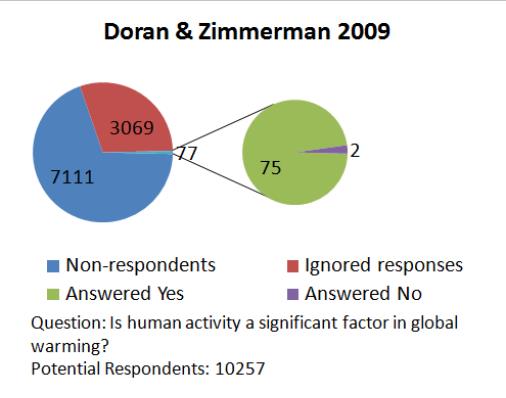
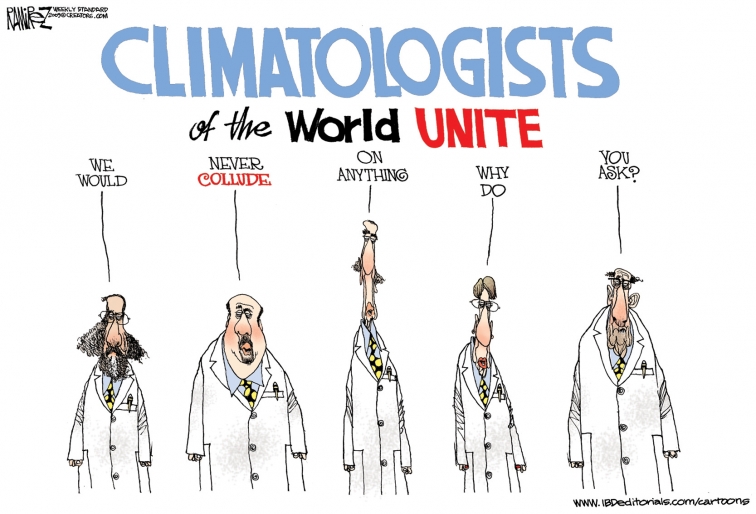
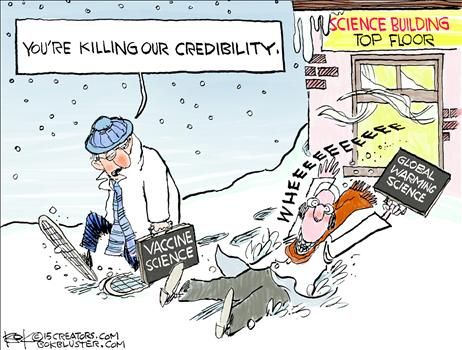
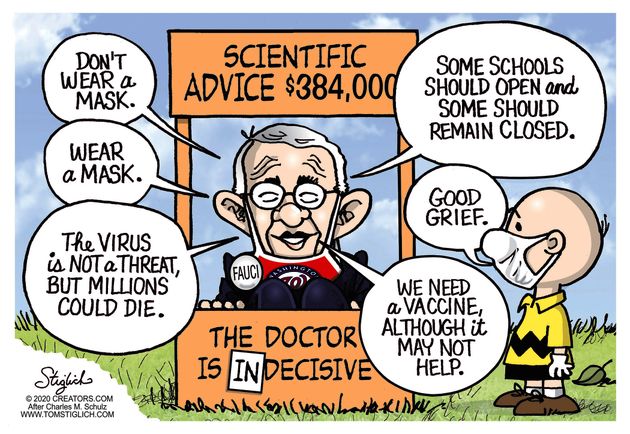


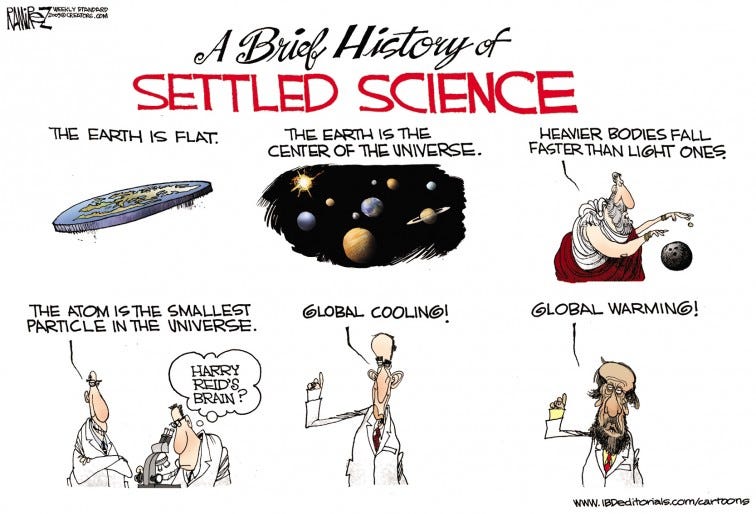







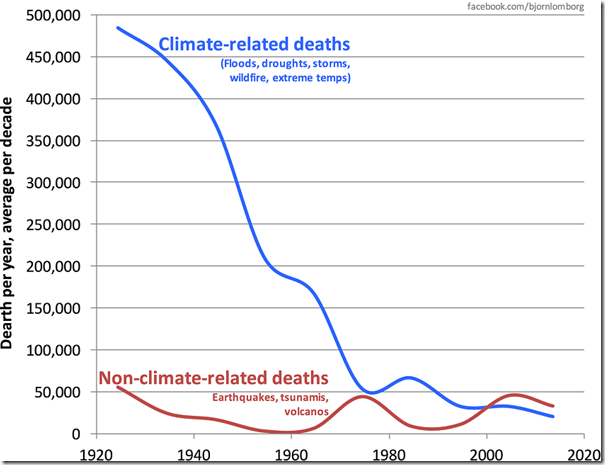


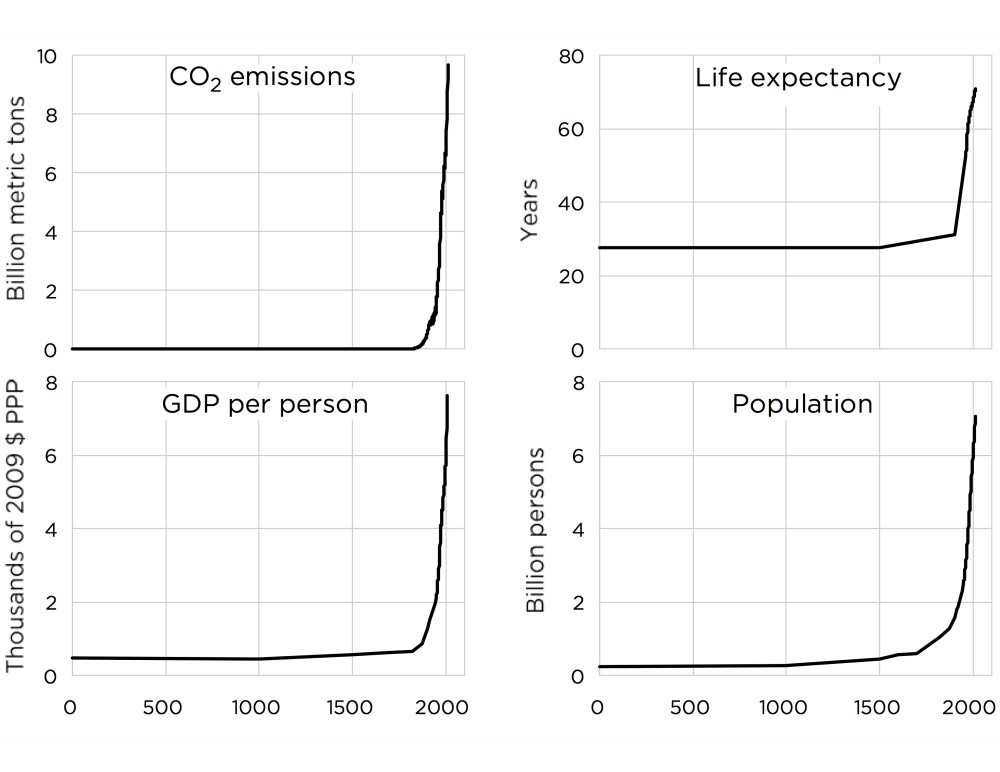







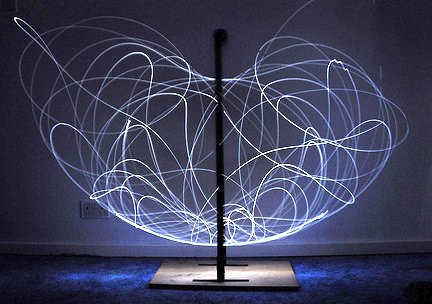
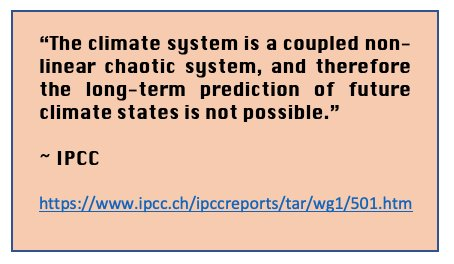
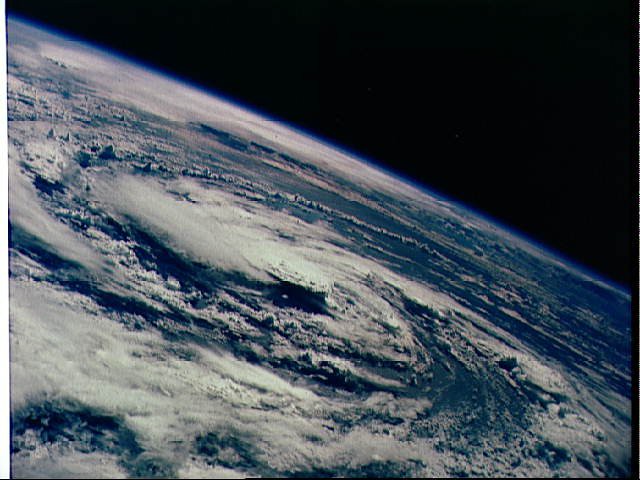



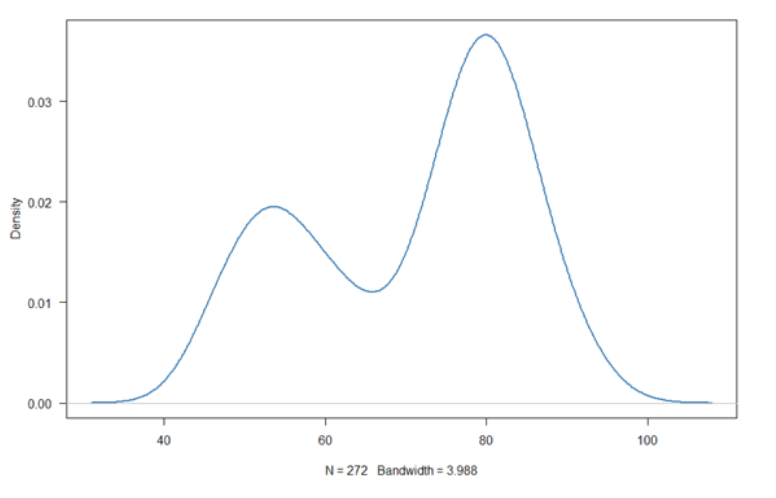
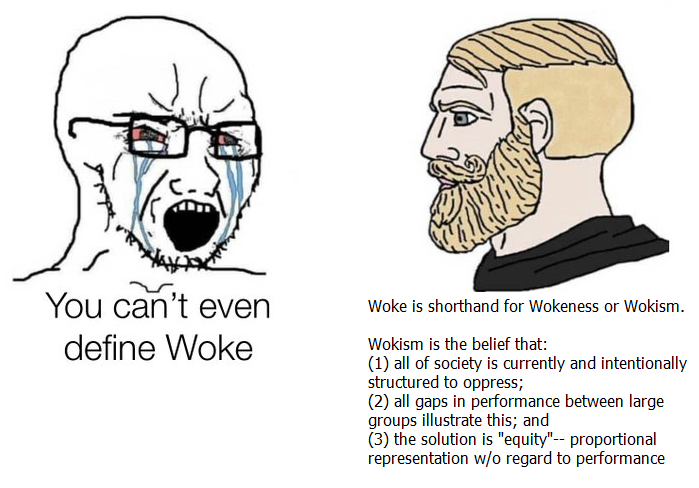
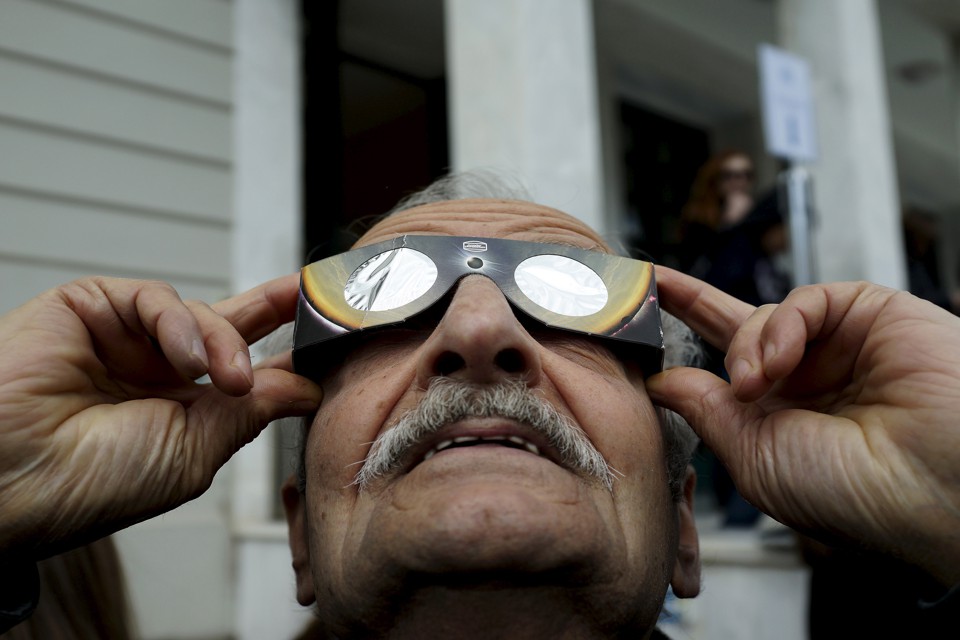
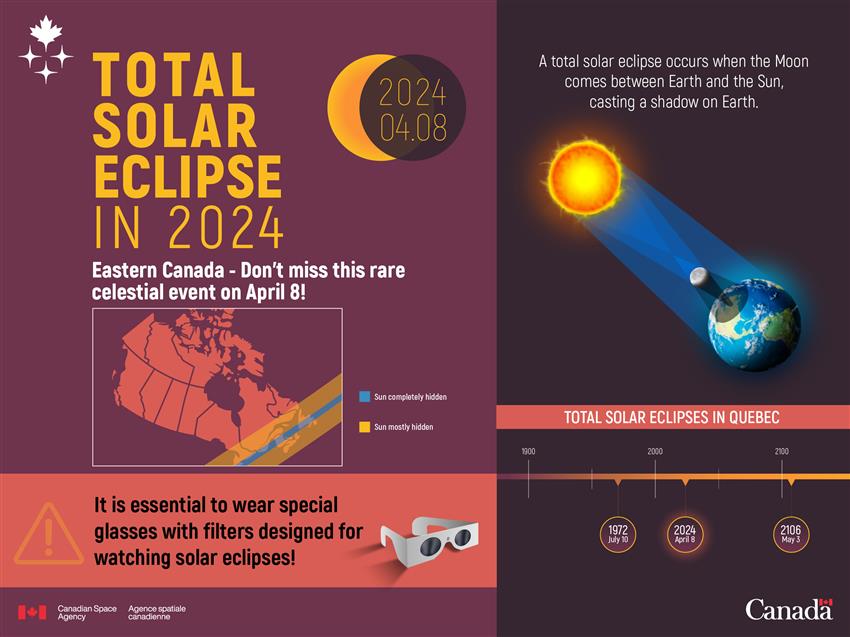
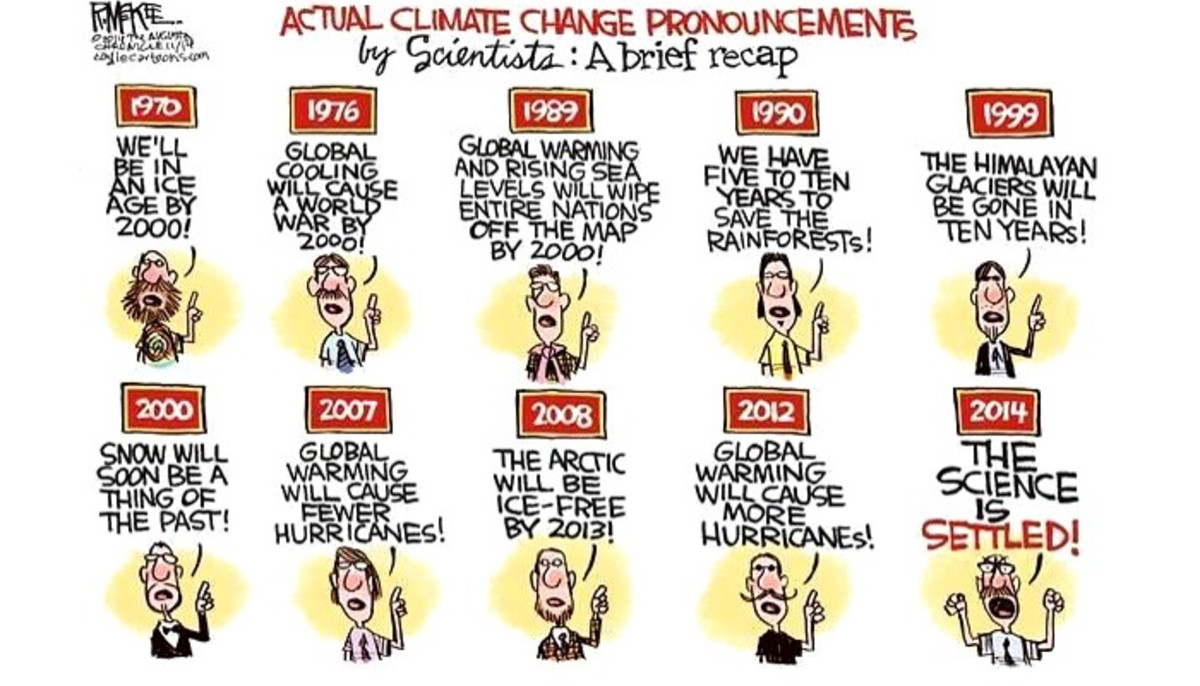
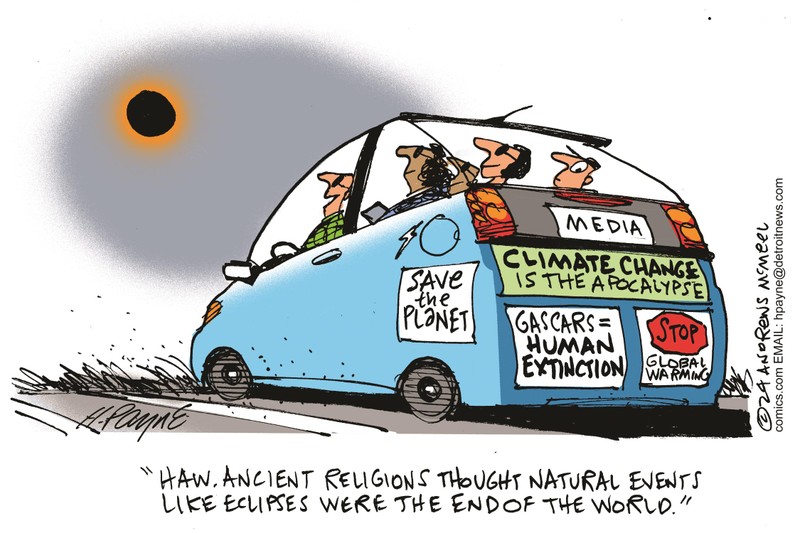


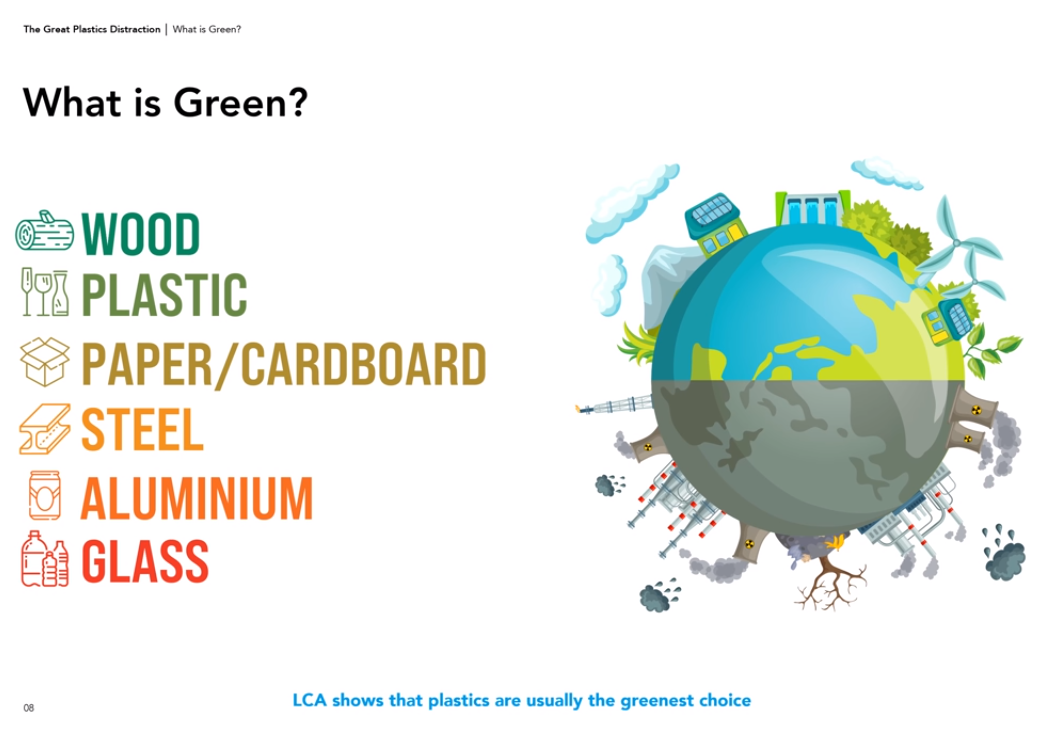


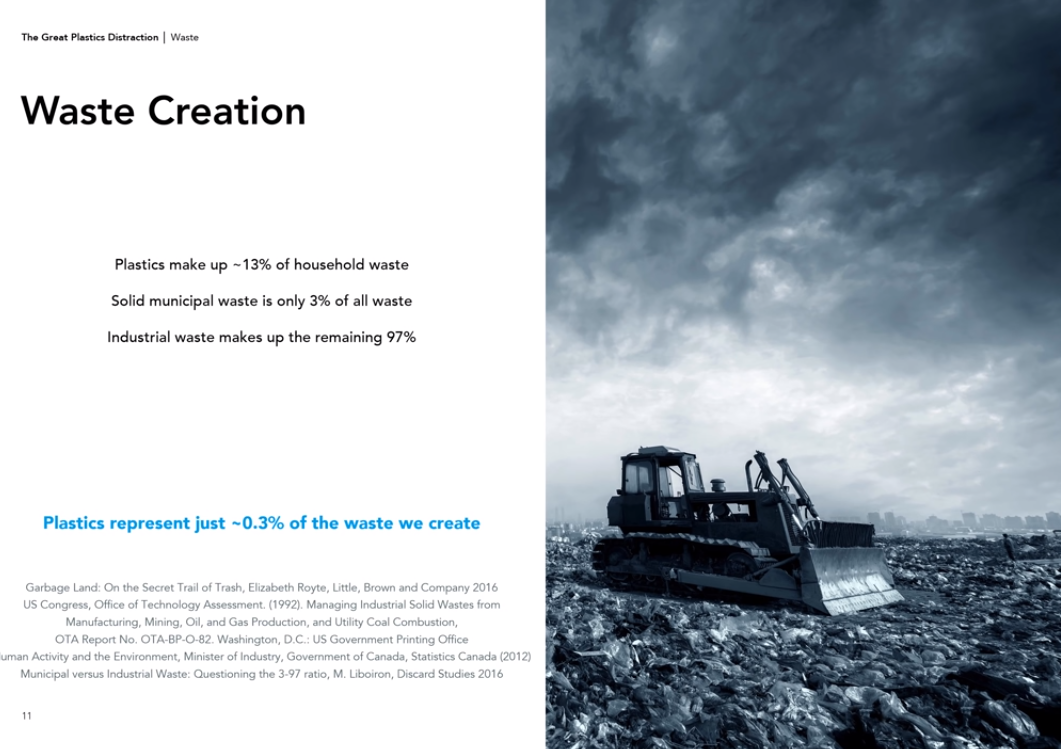
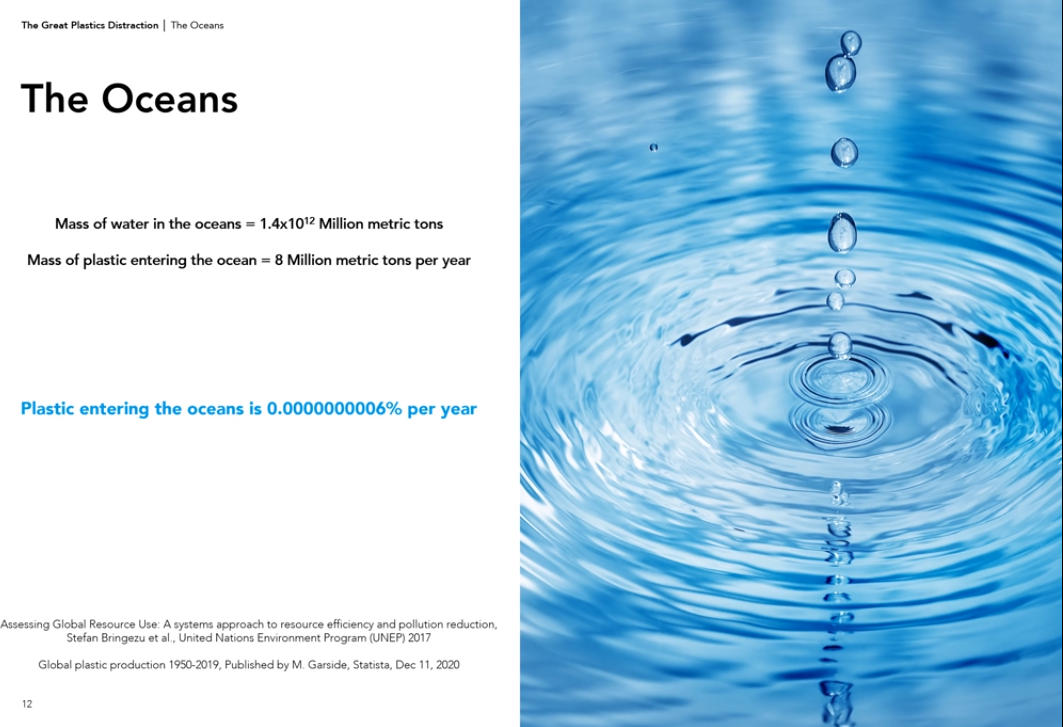
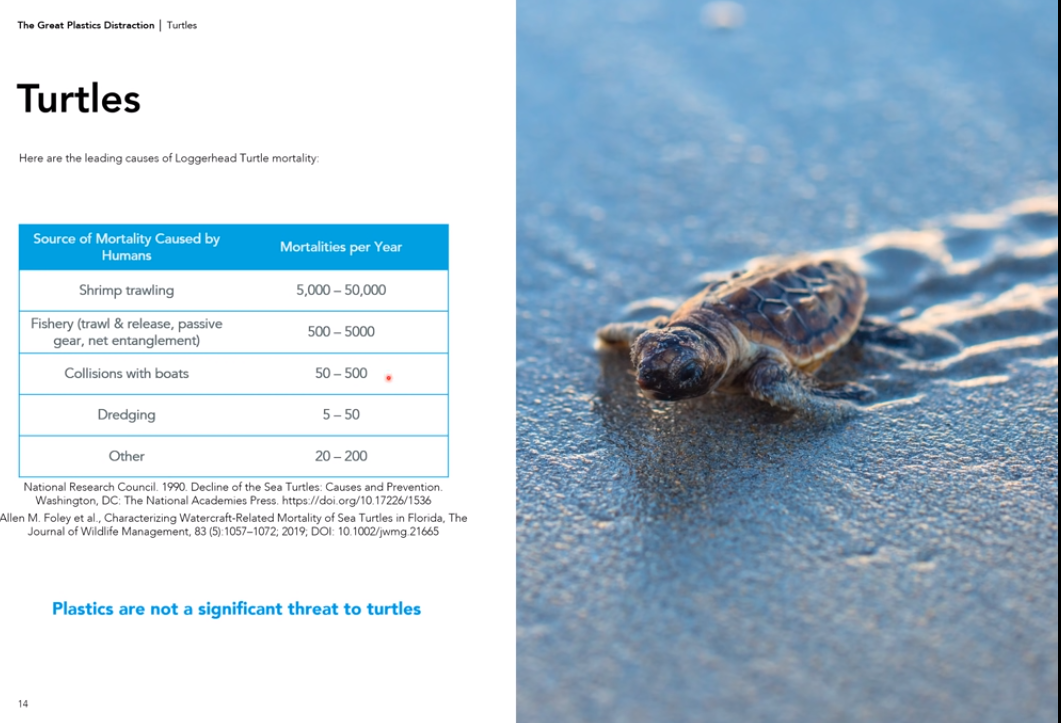
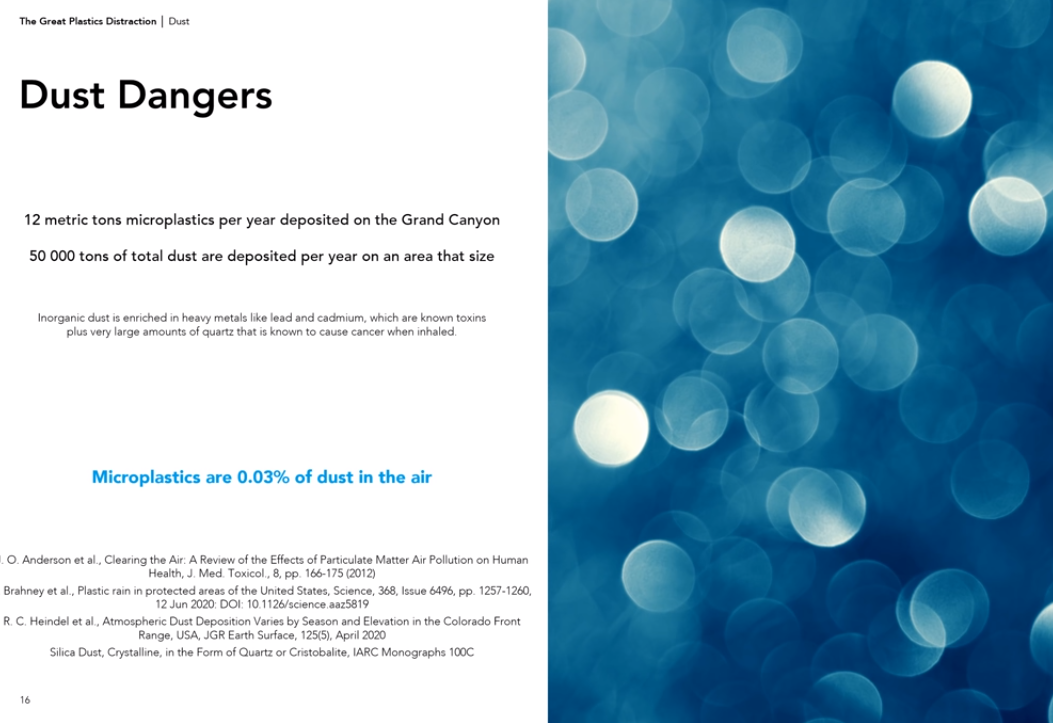
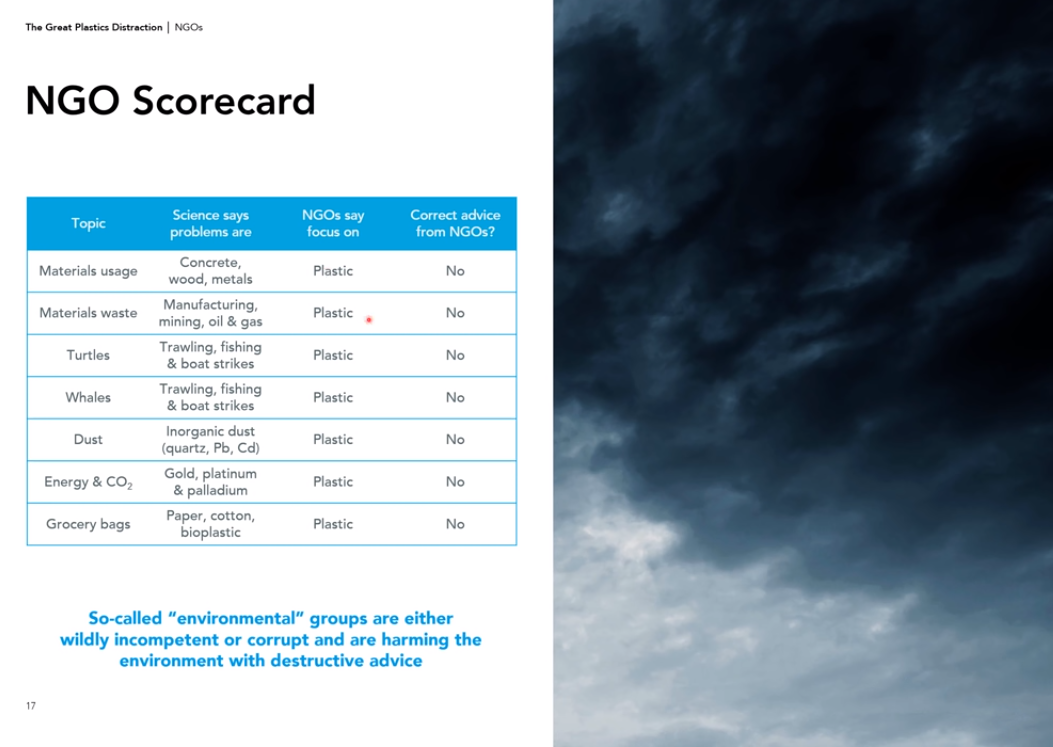
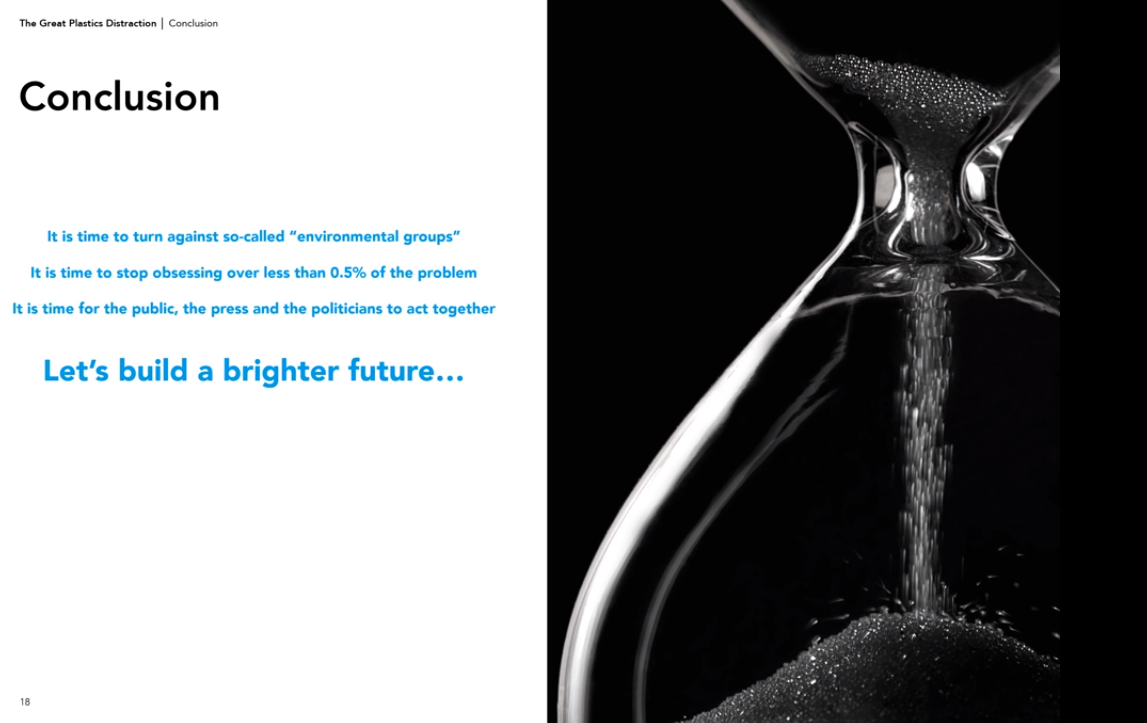

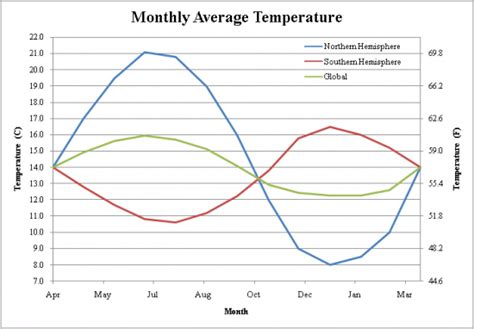


 Science Matters