Eclipses Prove Astronomy is Science. Climate Still Unpredictable.

A nice tongue in cheek essay appeared in the Atlantic The Eclipse Conspiracy: Something doesn’t add up.

It is a whimsical spoof on anyone skeptical that the solar eclipse will happen tomorrow. (Excerpts)

Meanwhile the scientists tell us we can’t look at it without special glasses because “looking directly at the sun is unsafe.”

That is, of course, unless we wear glasses that are on a list issued by these very same scientists. Meanwhile, corporations like Amazon are profiting from the sale of these eclipse glasses. Is anyone asking how many of these astronomers also, conveniently, belong to Amazon Prime?

Let’s follow the money a little further. Hotels along the “path of totality”—a region drawn up by Obama-era NASA scientists—have been sold out for months. Some of those hotels are owned and operated by large multinational corporations. Where else do these hotels have locations? You guessed it: Washington, D.C.

In fact the entire politico-scientifico-corporate power structure is aligned behind the eclipse. This includes the mainstream media. How many news stories have you read about how the eclipse won’t happen?

That’s a great example of “conspiracy ideation” and a subtle dig at people who don’t trust NASA on climate matters. In fact, many of the real NASA scientists are extremely critical of NASA’s participation in climate activism.  Journalists or Senators who raise NASA as evidence of climate change should be directed to The Right Climate Stuff, where esteemed NASA scientists give plenty of good reasons to doubt NASA on this topic.

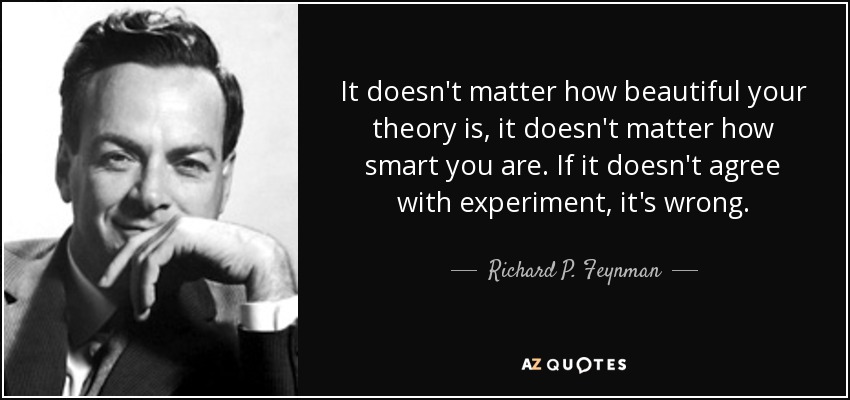
https://www.azquotes.com/picture-quotes/quote-it-doesn-t-matter-how-beautiful-your-theory-is-it-doesn-t-matter-how-smart-you-are-if-richard-p-feynman-9-53-69.jpg

Bottom Line: A Real Science Makes Predictions that Come True.

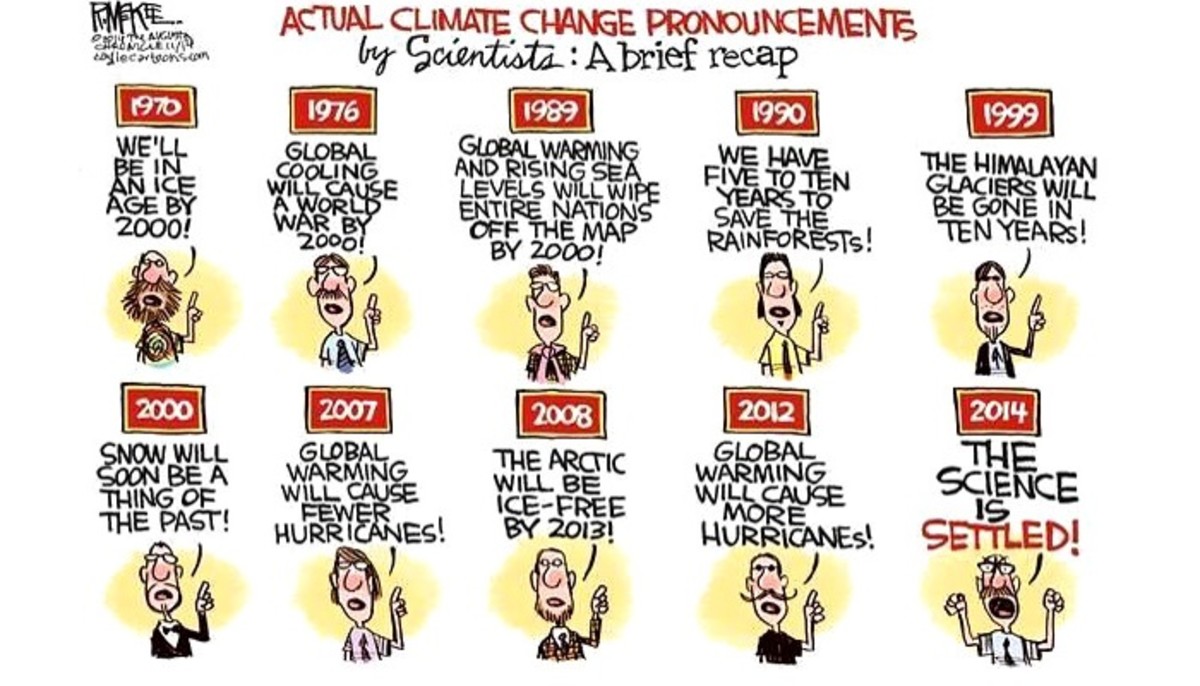
The article, perhaps unwittingly, shows why Astronomy is a real science we can trust while Climatology is faith-based, like Astrology. When the eclipse happens, it confirms Astronomers have knowledge about the behavior of planetary bodies. When numerous predictions of climate catastrophes are unfulfilled, it demonstrates scientists’ lack of knowledge about our climate system. Anyone claiming certainty about the climate is exercising their religious freedom, but not doing science.

https://usercontent1.hubstatic.com/12650354_f520.jpg

Footnote Resource

Climatists Mistake Means for Ends

There is no charge for content on this site, nor for subscribers to receive email notifications of postings.

Insane War on Plastics Resumes

fo1cdfdc8b76_hcs3-2d291-2-e1598902719247-1447x1536-1
FINALLY – the Truth about Plastics & the Environment


You’ve no doubt seen the scary headlines about “Worse Than We Thought™” plastics that have made modern food and hygiene possible and indispensable.

Massive new study uncovers 4,000 toxic chemicals in plastic, The Independent UK

More than 4,000 plastic chemicals are hazardous, report finds, Nature

How Plastic Can Harm Your Health, Consumer Reports

Dangerous chemicals found in recycled plastics, making them unsafe, The Conversation

Chemicals in plastics far more numerous than previous estimates, Reuters

Researchers surprised at levels of toxicity in standard plastic products, phys.org

Etc, Etc Etc.

So it’s time to refresh public understanding and appreciation for the role of plastics for our modern lifestyles and well being, and dispell the alarms generated as part of the anti-hydrocarbon cult.

I became aware of this research and video presentation The Great Plastics Distraction  (H/T Patrick Moore).  For those who prefer reading a text to watching a video, I prepared a transcript of the talk below in italics with my bolds added.

My name is Dr Chris DeArmitt and I’m going to tell you about plastics and the environment.

But first i’m going to start with a story. I once read a wonderful book called Factfulness, and it told a story about how important it is that we act based on facts. Before the early 1990s parents were advised to place their infants to sleep on their front, contrary to advice from clinical research. If they had listened to that scientific evidence then they might have prevented over 10,000 infant deaths in the UK and at least 50,000 infant deaths in Europe, the USA and Australasia. But they didn’t listen. In fact it took decades for doctors to change their advice even when the data was so clear that thousands more died unnecessarily.

This talk aims to reset the way we think about plastics in the environment by showing that our current beliefs don’t match reality. The science tells us the exact opposite of what we’re being told online. And the reason it’s important to know the truth is that when we ignore the facts and the science we end up destroying the very thing we set out to protect.

Here’s an outline of the topics we will cover. First a summary of what we believe now. Then a look at what the evidence tells us, and finally we examine reasons why these two things don’t match up.

We all recognize that we can’t believe everything we see in the media. Traditional media is less reliable than it used to be and social media is even worse. Here’s a study that shows us some numbers. Only 20 percent of people believe in the local news and only four percent of people strongly believe in social media. So we all know that we can’t trust the usual sources of information that we use. And yet that’s where our information is coming from.

So how bad is the accuracy of this information? Well they did a study on millions and millions of tweets and they found out that the lies are 70% more likely to be spread than the truth. That means that we absolutely cannot trust anything we hear on social media. Why? Because the lies are more sensational and sound newer than the truth. The truth’s too boring and even when the truth is spread it never really catches up with the lies.

That’s part of what I’m trying to address here. So what are the consequences of being told all of these lies online? Well it turns out that if you repeat a lie enough times people believe it, and it doesn’t matter how smart you are or how good you are at critical thinking, everybody’s susceptible to this. They’ve done large studies on it.

PlasticsParadox1

So these lies that we’re being told all the time sound like the truth because they sound familiar after a while, and we end up becoming brainwashed. And you’ll notice on all the slides that I’m presenting here there’s a little text at the bottom which (I don’t know if you can see it) here at the bottom of the page. “Every time I say something because I’m a scientist I support it with scientific evidence.” That means that there are giant scientific studies to prove what I’m saying and that’s the opposite to what you hear online. When you see something online they just claim something sensational with zero proof. Everything I say here and everything I say in my book is proven.

I just mentioned my book The Plastics Paradox. Let me tell you a little bit about that. I’ve made it my personal mission to collect and read hundreds of scientific articles to uncover the truth. I didn’t go around looking for articles that supported a pre-existing opinion. I went out and found every single piece of information I could. And why me? Well for one thing my kids were being taught lies at school and I found that totally unacceptable. So I decided to go and find the information to present to the teachers and it mushroomed into the book.

Also I’m a leading PhD. polymer scientist, so I’m uniquely qualified for this task. As a scientist I do not make, market or sell plastics. Some people say that they can’t trust a plastics expert to talk about plastics. And I find that interesting. I ask them whether they refuse to speak to a medical expert when they’re sick. Or if they’re sick do they ask a car mechanic for an opinion or a journalist. Of course you go and ask a medical expert when you want a medical opinion. So when you want an opinion about the technical details of plastics, go and ask a doctor in plastics. And that’s me.

Some of my friends ask me why I’ve devoted thousands of hours and thousands of dollars of my own money to this topic when it’s not my job. I sometimes ask myself the same question. This is why. I’m a professional scientist so I believe we should base our opinions and our actions on fact not fiction. Everything we do has an impact on the environment so we have two choices: Either we have to go and move back into caves or we can continue to enjoy the modern lifestyle we love so much while making choices that minimize our impact.

PlasticsParadox2

How do we do that? Well life cycle analysis is the only proven and accepted way to know what is green and what is less green. It considers all environmental impacts. That means raw materials, the manufacturing of a product, the transporting the product, the function of the product in use (for example driving your car around), repairing the product, and also waste and recycling. Companies, governments and environmental groups all rely on life cycle analysis: It’s standardized and also peer-reviewed for consistency and to make sure that nobody cheats. Any system can be improved upon but if we were to abandon life cycle analysis then we’d have to toss a coin to decide what’s green? It’s better to use a tool that’s good but imperfect than to have no tool at all.

The outcome of a life cycle analysis depends on many things including the geographical location that you’re considering so there’s no universal answer. However if you read a hundred of these life cycle analyses, the geographical aspects start to cancel out and average out. And you get some trends. So here are the trends that I’ve noted after reading a bunch of these life cycle analyses. If you can make something out of a hunk of wood, that’s usually the greenest option. So for example, wood decking and wine corks are examples where wood is greener than plastic.

PlasticsParadox3

But most things can’t be made out of wood, so plastic is then usually the greenest choice.  Paper is sometimes greener than plastic, but usually it isn’t. Examples where plastic are greener include shopping bags or grocery bags. I found 24 life cycle analyses on grocery bags and plastics coming out greener in every single case, in every country no matter where they analyzed it. In 24 studies plastic bags were greener than paper bags and not a single case saying the opposite so here we are banning something which is categorically proven to be the greenest option. Banknotes is another example. A lot of bank notes are made of plastic and they’re proven to be greener than the paper ones because they last so much longer.  And mailer envelopes is another example.

Steel, aluminium and glass are far worse due to the extreme heat and the energy needed to make them, and their density which increases the impact of transportation. So these are the general trends that we see.

PlasticsParadox4

Here’s a quick summary of what I discovered when writing The Plastics Paradox and reading all the science. As I said, all of this is soundly proven and you’ll find all the citations in the book and on the website. Statements I quote are verbatim so I copy and paste the statements from the scientific articles to make sure that there’s no spin on it. And as i said it’s all cited so you can check it yourself. If this information is different to what you’ve heard online or in the press, that’s because this is the first time you’ve actually heard the truth backed by hard data and presented by a professional scientist instead of some hack.

Now I want to show you some very very powerful new information I discovered after the book was published. So part of the reason for this talk is to zoom out and not just focus on plastics but look at the overall picture. I was reading a book about materials and the environment and I was absolutely shocked to my core when I turned the page and saw this pie chart on the left.

PlasticsParadox5

The pie chart shows that plastics are only about one percent of the material we use. All we hear about all day long is plastic, as if it were the only material, and we’re drowning in plastic. And now i suddenly discover from this book that plastics are less than one percent. I found this information so incredible that i decided to double and triple check it. And when i did I found out that a number was actually wrong. It’s actually too high: The amount of plastics we use is only 0.4 percent of materials. You can check this yourself using siri and alexa and google to ask: What’s the annual global consumption of plastics; what’s the annual global consumption of materials? And then work out the percentage.

PlasticsParadox6

This is absolutely shocking to hear that we’re obsessing about plastics and it’s 0.4 percent of our problem. So based on that finding I decided to do a little bit more digging. We’re told every day that we’re drowning in plastic waste. Of course no data is ever given. So I decided to go and check the data on how much of this waste is actually plastic. In the book I already found out that 13% of household waste is plastic and about 10 percent of what goes into a landfill is plastic. What i didn’t know then was that household waste is just 3% of all waste; the other 97% is industrial waste. So it turns out that plastic waste is 13% of 3%, which is 0.3% of all waste. So once again we’re told online without evidence that plastic is the cause of all of our worries and it turns out to be 0.3 percent of the waste problem.

And as we saw in The Plastic Paradox book and on the website plastics have actually dramatically reduced waste on top of that. So we’re obsessing about a tiny fraction of the problem. There’s no way we can solve the world’s problems by putting a hundred percent of our effort into 0.3 of a problem.

We hear about plastic in the oceans all the time. In the book I explained there are no huge floating islands, they just don’t exist. Scientists say they don’t exist; the man who discovered the gyres also say that they don’t exist. And there’s no soup either; it’s just been all dramatized for the sake of getting your money out of your pockets by certain environmental groups and journalists who don’t care about the facts. It turns out even in these gyres the maximum amount of plastic that you is about one game die if you were to take a game die from monopoly and put it in an olympic-sized swimming pool. that would be too much.

PlasticsParadox7

I decided to check how much plastic is actually entering the ocean. We see and hear big numbers but we don’t know what it means. It’s very hard to conceptualize these numbers. So it turns out that the amount of plastic entering the oceans is this tiny tiny number I can’t even say it, but the percentage is many many zeros with a six at the end. Clearly I’m not saying there should be plastic in the oceans, but the number is rather small compared to what we’ve been led to believe. No, there will not be more plastic than fish in the sea; that was debunked as well.

I showed that last slide to a friend and he said it would be more meaningful to compare the amount of solid sediment being washed into the oceans from rivers to the amount of plastic. So once again i went looking for the scientific data and I was able to find it. Plastics make up about 0.05 percent of the solid sediment being dumped into our oceans and rivers. It’s mainly polyethylene polypropylene polyethylene terephthalate and polystyrene; which means the plastics that we eat our food out of every day, so they’re not very much of a concern from a health point of view.

Interestingly there are also massive amounts of deadly chemicals, munitions and even nerve gas in the ocean, but no one talks about that. I wonder why they would rather focus on plastics and ignore the things which are actually proven to be toxic. So-called environmental groups are very keen to bring out the turtle pictures. There’s even a famous video of a turtle with a brown cylinder of some kind in its nose; but there was never any evidence that it was made of plastic.  They never analyzed it when they were doing the video; in fact they thought it was a worm, as you can hear in the video soundtrack. They say, “Oh, is it a worm, is it a worm?” and then afterwards they suddenly declare it’s plastic without any analysis whatsoever.

PlasticsParadox8

If you’re concerned about turtles you should be looking at these statistics on the left hand side because I looked up turtle mortality rates and here they are. You can see that shrimp trolling accounts for up to 50,000 turtle deaths; fishery is up to 5000; collisions with boats up to 500; dredging up to 50; and other 200. And nothing at all about plastics. So that’s interesting isn’t it? If you do care about turtles, and you’re not just trying to get sympathy votes out of people and pry their money out of their pockets in terms of donations, then you would be looking at these causes of death which are the actual things that turtles suffer. But they’d rather focus on plastics because it suits their purposes.

As well as turtles we hear a huge amount about whales. I saw another article today about whale deaths, so I decided to look up the many studies on whale deaths. And once again I’ve quoted them all. From the scientific studies quoted the causes of whale deaths: entanglement in fishing gear; natural causes, and vessel strikes where boats hit them. So why are they incessantly telling us that plastics are harming whales when not one single one of these articles even had a mention of the word plastic or bag. These are multi-decade studies with thousands and thousands of whale deaths listed and not one mention of plastic or bag.

I find it absolutely reprehensible a while ago several newspapers covered a story saying that there were these massive amounts of micro plastic raining down on our national parks. They said it was several tons of microplastic deposited every year and I thought wow, that’s hard for me to imagine; let me work it out as a percentage, for example, of dust that’s deposited. So I went and found some studies on that; and i can tell you it’s a lot of work to look up all of these studies. The environmental groups like to argue with you and they like to come out with these claims, and they produce no studies whatsoever. And I’ve been working on my own with no funding, and I’ve turned up all of these studies and double checked and triple checked everything. How much hard work it is to actually check the facts, when it’s easier to spout nonsense.

PlasticsParadox9

So anyway let’s look at the grand canyon. You can calculate there’ll be 12 tons per year of microplastic dust on the grand canyon and that sounds like a lot. And it is a lot, but it depends on how big the grand canyon is. So i went and checked that and correlated that with the total amount of dust that would be deposited on an area that size which is 50 000 tons a year; meaning that microplastics make up 0.03% of all the dust deposited per year. So instead of hearing this tonnage number which means nothing to us, while the actual percentage is rather small. I’m not saying it should be there but again it’s safe plastics like polyethylene polypropylene and things we eat our food out of. But what’s the rest of this dust made of? The 99.97% in large proportion is quartz which is known to cause cancer; it’s also made up of a large amount of heavy metals such as lead and cadmium which are known to be toxic.

So isn’t it interesting that people would rather focus on 0.03% of safe material because it’s plastic and easy to demonize, and totally ignore things which are known to be toxic and known to cause cancer and are being breathed in in giant quantities.

There’s an example where ignoring the science leads you in the wrong direction.  Here I’ve put together an NGO scorecard to see how well these so-called environmental groups are doing at telling us what’s green and what isn’t and what to do. In The Plastics Paradox book as you saw I showed that pretty much everything they’ve told us is untrue; meaning that the science says the exact opposite. And in this talk we’ve zoomed out a little bit to look at the bigger picture. And we found that if we were worried about materials use, concrete, metal and woods would be the things we would focus on.

PlasticsParadox10

But instead these non-governmental organizations want us to talk about plastics. If we’re worried about material waste we will be focused on manufacturing, mining, oil and gas, but instead they want us to focus on plastics. If we were worried about turtles we would be worried about trawling, fishing and boat strikes, but they want us to concentrate on plastic instead. If we’re worried about whales we’ll be looking at trawling, fishing and boat strikes, but instead they want us to talk about plastic. If we were worried about dust we’d be worried about this inorganic dust which contains quartz and heavy metals, but instead they want us to look at plastic. If we were worried about materials that use giant amounts of energy and create co2, we would be worried about gold, platinum and palladium, but they want us to talk about plastic instead. And when it comes to grocery bags, if we’re worried about things that cause harm we’d be looking at paper, cotton and bio plastic bags, but instead they want us to focus on plastic bags which are proven in every single study to be the greenest.

So if we look at how well these so-called environmental groups are doing, they’re not doing very well at all. In fact I can’t find a single area where they’re given evidence which helps the environment or matches the evidence and the science. This means one of two things: Either they’re wildly incompetent, in which case they don’t deserve our funding and our donations. Or they’re actually corrupt, in which case they also don’t deserve our funding and our donations.

How do we know which one of these two things it is? Well, it’s impossible to know somebody’s intent without being inside their mind, but recently there have been some very interesting books by former environmental group members. And they’ve come out and said, I’m ashamed to have been a part of this group. They’re just corrupt and they’re just telling you lies and scaring you to get your donations. So there are insider reports like Confessions of a Greenpeace Dropout by Patrick Moore; and there’s Apocalypse Never by Michael Schellenberger. You can find several other books along those lines regarding environmental groups where former members have left ashamed and embarrassed, and published books explaining that these guys are just trying to rip you off.

PlasticsParadox11

So here are the conclusions.
We’ve been lied to again and again by groups keen to enrage us and trick us out of our money.
We need to start basing our opinions and our policies on facts and evidence.
Let’s focus on cleaning up the environment by making wise choices

And if you want to do that please tell your friends about the truths you’ve learned today.
If you know a reporter please tell them;
If you know a CEO or a politician, then please tell them.
And if you know Bill Gates or Oprah Winfrey, so we can get some publicity for the truth, then please tell them.

As you’ve seen facts don’t catch up with lies. We need every bit of help we can get because the lies are already in people’s brains. They spread farther and faster than the truth and we’re playing catch up. We really need to make an impact if we’re ever going to change people’s minds. Stop making stupid policies and stop enriching these groups that are lying to us.

The Plastics Paradox book was written so that people could get the story. But all the information is at plasticsparadox.com. And it’s important for you to know I’m not trying to make money out of this presentation. All this information, all the peer-reviewed science is available for free at plasticsparadox.com. No registration; I’m not selling you one thing. All I’m doing as a professional scientist is telling you it’s time to look at the facts and start making progress instead of pedaling backwards.

Sadly some people are so passionately against plastics that they don’t care about the facts. They prefer to attack me online for example and that’s a shame because well-intentioned people are making harmful choices due to bad information. Just like the story about those infant deaths that we told in the beginning. So if you care about making progress please remember what we’ve said here. Go and visit the website and tell anyone you know who’s an influencer that we’ve got to redress this and start to create a brighter future together.

Thank you very much for your time.

Footnote: 

Dr. DeArmitt wondered about why activists target plastics when they are trivial compared to other problems.  To many of us, the answer is obvious:  Plastics are derived from oil and gas, and therefore anathema to climatists.  Fear of climate change is the driving bias behind efforts to demonize plastics, as well as many other products that make modern life possible.


Global Warming Boils in August

SCIENCE   Global Warming Mysteriously Spikes Every Year Between June And August, Experts Say Aug 12, 2023 · BabylonBee.com

WASHINGTON, D.C. — The White House National Climate Task Force reported today that NASA scientists have discovered a mysterious spike in global warming every year between June and August.

“We’re completely stumped,” said Bob McMahon, White House National Climate Task Force spokesman. “Our satellite data confirms global warming keeps happening in America during these same months, almost like clockwork. Even stranger, global warming seems to hit South America in different months. Bizarre.”

Mr. McMahon went on to detail evidence of a massive rise in temperature occurring every year between the months of June and August, noting that in some places temperatures even reach over 100 degrees. “This year’s global warming is shaping up to be just as hot as last year’s,” said Mr. McMahon. “We don’t know why climate change strikes during these months, but we suspect it’s all the extra carbon emissions from people using air conditioning.”

Despite the compelling evidence, some scientists still disputed Mr. McMahon’s findings. “If the globe gets so hot every August, why am I sitting here wearing a sweater?” asked climate scientist Rachel Evanson. “And why am I having my husband carry around an extra coat and scarf? Ugh, it’s freezing in here.”

At publishing time, the Climate Task Force had decided to take action by making Google Maps tell people it’s really hot outside whenever they ask for directions.

Footnote:

They could start by not fixating on the Northern Hemisphere–


Climate Prime Example of Broken Science

Net Zero has published a wonderful essay by William Briggs On Broken Science.  It is a joy to read with great clarity, depth and plain talk while being delightful.  The excerpt here is the segment describing how climate science is the epitome of the wider phenomenon of broken science.

We all agree that the planet needs saving. Everybody says so. From global cooling.

When climatology was becoming a new field, they really did say a new ice age was coming.
Newsweek in 1975 reported:
There are ominous signs that the earth’s weather patterns have begun to change dramatically and that these changes may portend a drastic decline in food production.

Time in 1974 said:
Climatologist Kenneth Hare, a former president of the Royal Meteorological Society, believes that the continuing drought…gave the world a grim premonition of what might happen. Warns Hare: ‘I don’t believe the world’s present population is sustainable if [trends continue]’.

There are scores upon scores of these, the scientists and groups such as the UN warning of mass deaths by starvation and so on. Well, climatological science grew, and the temperature warmed, and then we got global warming. Caused, incidentally, by the same thing said to cause global cooling: oil.

Global warming in time became ‘climate change’: a brilliant name, because the earth’s climate changes unceasingly. Thus any change, which is inevitable, can be said to be because of ‘climate change.’ Correlation becomes causation with ease here.

‘Climate change’ was quickly married to scientism, where it came to be synonymous with ‘solutions’ to ‘climate change’. Because of this error, doubt expressed about the so-called solutions caused one to be called a ‘climate change denier’ – an asinine name, because no working scientist, not one, denies the earth’s climate changes or is unaffected by man.

US Secretary of the Treasury Janet Yellen recently said that ‘Climate change is an existential threat’ and that the ‘world will become uninhabitable’ if – you know the rest – if we don’t act. Uninhabitable is a mighty word. Rode and Fischbeck in 2021 examined environmental apocalyptic predictions and discovered that the average time until The End, for those saying we ‘Must act now’, as Yellen did, is about nine years.

Predictions of ‘only nine years left’ started gradually, in the 1970s. They now happen regularly. Funny thing about these forecasts is that failure never counts against theory. Which is another strike against falsification.

That is a story unto itself. Let’s instead peek at the science of ‘climate change.’ Not at the thermodynamics or fluid physics, which is too much for us here, but at the things which are claimed will go bad because of ‘climate change.’

Which is everything. There is no ill that will not be exacerbated by ‘climate change’, and there is no good thing that will escape degradation. ‘Climate change’ will simultaneously cause every beast and bug and weed which is a menace to flourish, and it will corrupt or kill every furry, delicious, and photogenic animal.

There is a fellow in the UK who collects these things. His ‘warm list‘ total right now is about 900 science papers, an undercount. Academics have proved, to their satisfaction, that ‘climate change’ will cause or exacerbate (just reading the first few): AIDS, Afghan poppies destroyed, African holocaust, aged deaths, poppies more potent, Africa devastated, Africa in conflict, African aid threatened, aggressive weeds, Air France crash, air pockets, air pressure changes, airport farewells virtual, airport malaria, Agulhas current, Alaskan towns slowly destroyed, Al Qaeda and Taliban Being Helped, allergy increase, allergy season longer, [and my favourite] alligators in the Thames! And we haven’t even come close to getting out of the As.

There is not one study, that I know of, that remarks on how a slight increase in globally average temperature will lead to more warm, pleasant summer afternoons. That a small change in the earth’s climate, whether caused by man or not, can only be seen as wholly and entirely bad, and can in no way be good, is sufficient proof, I think, that science has gone horribly wrong. It’s not logically impossible, of course, but it cannot be believed.

Yet this doesn’t say how these beliefs are generated. They happen by some of the reasons we’ve already mentioned, but also by forgetting the multiplication of uncertainties.

Given knowledge of coins, the chance of a head on a flip is one half. Two heads in a row is one quarter: the uncertainties are multiplied. Three in a row is one eighth; four is one in sixteen. If the event of interest is that string of four heads, we must announce the small probability of about 6%. It would be an obvious error, and a silly mathematical blunder, to say the probability is ‘one half’ because the chance of the last head is one half. And it would be outrageous if a headline were to blare ‘Earth will see a Head on last throw.’ Agreed?

But that’s exactly how ‘climate change’ scare stories are produced. We first have a model of climate change, and how man might affect the climate. There is only a chance this model is correct. It is not certain. We next have a weather model, which rides on top of the climate model, which says how the weather will change when the climate does. This model is not certain, either. We then have a third model, about how some item of importance – the welfare of some animal or the size of coffee production or whatever – is affected by the weather. This third model is not certain. We finally, or eventually, have a fourth model, which shows how a solution will stop this bad thing from happening. This model is also uncertain.

In the end, it will be announced ‘We must do X to stop Y’. This is equivalent to ‘Earth will see a Head.’ Causal language. Which we agreed was an error. The chain of uncertainties must be multiplied. The greater the chain, the more uncertain the whole must be. This is never remembered, but must be, especially when the number of claims grows almost without bound.

The Deadly Sin Of Reification: Mistaking models for Reality

We are in rugged territory here, for the closer we get to the true nature of causation, which requires a clear understanding of metaphysics, the subtler the mistakes that are made, and the more difficult they are to describe. Plus, I have detained you long enough.

It would, I hope you agree, be an obvious fallacy to say that Y was not or cannot be observed, when Y was in fact observed, because some theory X says Y is not possible. Yes?

This error abounds. X is some cherished model or theory, and Y an observation which is scoffed at, dismissed, or ‘explained’ away, because it does not accord with theory.

This happens in the least sciences, like dowsing or astrology, where practitioners reflexively explain away their mistakes. But it also happens with great and persistent frequency in the greatest sciences, like physics.

It also leads to the current mini-panic over ‘AI’, or ‘artificial intelligence.’ Which it isn’t: intelligence, that is. All models only say what they are told to say – a philosophic truth that when forgotten leads to scientism – and AI is only a model. AI is nothing more than an abacus, which does its calculations at the direction of real intelligence in wooden beads, with the beads replaced with electric potential differences.

But because the allure and love of theory is too strong, it is believed that computer intelligence will somehow ‘emerge’ into real intelligence, just like the behaviour of large objects is said to ‘emerge’ from quantum interactions.

I will upset many when I say this is always a bluff, a great grand bluff. There is no causal proof of ‘emergence’: if there was, it would be given. Talk of emergence is always wishful thinking, reflecting a desire not to question the philosophy of what philosopher Robert Koons and others call ‘microphysicalism’, the ancient Democritian idea that everything is just particles bumping into things.

There are alternatives to this philosophy, such as the revival of Aristotelian metaphysics, which would do wonders for quantum mechanics if it were better known. Unfortunately, we haven’t the time to cover any of them.

The Deadly Sin Of Reification, the mistaking of models for Reality, is much worse than I have made it sound. It leads to strange and untestable creations, such as the multiverse and ‘many worlds’ in physics, and gender theory, and all that they have wrought.

See Also Chameleon Climate Models


An Enhanced Hippocratic Oath for a Free Society

Jeffrey A. Singer advocates for a new version of the oath to which medical doctors swear in his Newsweek article We Need a New Hippocratic Oath That Puts Patient Autonomy First.  Excerpts in italics with my bolds a added images.

A noble profession should require its students and graduates
to swear an oath revering patients’ rights and autonomy.

In the mid‐​20th century, medical schools began administering modernized versions of the oath, more applicable to modern times and sensibilities. In the last 20 or so years, many medical schools have created unique versions of the oath, often allowing students to compose them. These newer versions stray far from the oaths that older‐​generation doctors like me recited. Some have shifted the emphasis from patient care to social justice, generating a firestorm of controversy.

Yet all these oaths—traditional or modern—are self‐​indulgent.

They focus primarily on how physicians should comport themselves, relate to professional colleagues, and view the medical profession’s role. But they also regard patients similarly to how parents regard children.

The original oath states, “I will prescribe for the good of my patients… and never do harm to anyone… nor give advice which may cause his death.” But it also pledges to impart to “the sons of the master who taught me and to the disciples who have enrolled themselves and agreed to the rules of the profession, but to these alone, the precepts and the instruction” (emphasis added) anticipating the protectionism of cartelized modern medicine.

The Declaration of Geneva, composed by the World Medical Association, states “the health of my patient will be my first consideration,” while “maintaining the honor and noble traditions of the medical profession,” but makes no mention of informed consent or respecting patients’ choices.

Many medical school graduates of my generation recited the oath that Dr. Louis Lasagna, Dean of Tufts University Medical School, composed in 1964. The oath pays proper fealty to patients’ privacy and to treat the whole patient—not just a set of lab tests or x‑rays. And it pledges to “not play at God.” But the oath makes no references to patients’ freedom and autonomy.

Since the 1990s, many medical schools have added “white coat ceremonies” to the list of medical school rituals. These are ceremonies for incoming classes of medical students, where they also recite a version of the Hippocratic oath.  The 2019 white coat ceremony oath for Harvard Medical School and Harvard School of Dental Medicine vowed to “place ethics and equity at the core of each patient interaction,” “combat structural oppression,” “promote social justice,” and “leverage our position of privilege to confront health inequities.” No mention of patients as autonomous individuals.

Among the most controversial oaths was the white coat ceremony oath taken last September by incoming medical students at the University of Minnesota Twin Cities Medical School. After noting that the Medical School “is located on Dakota land” and committing to “uprooting the legacy and perpetuation of structural violence within the healthcare system,” the students pledged to “honor all indigenous ways of healing that have been historically marginalized by Western medicine” and did not only commit to healing the sick but to “healing our planet and communities.”

None of the oaths, dating back to the original, make more than a passing mention of respect for patients as autonomous, sovereign adults. All of them smack of paternalism. None of these oaths prioritize or consistently apply a commitment to individual patient autonomy, including respect for patients’ rights to self‐​medicate and to seek treatment from any health care provider they choose—an oath that states, for example,

“Even if they act against my advice and I disapprove of their choices, I will respect the right of my patients as autonomous adults to self‐​medicate and oppose any laws and regulations that force them to seek my permission—or permission from any other health professional, through a prescription or otherwise—to consume medications or treatments according to their independent judgment.”

Today’s medical students should reject being forced to take oaths that have nothing to do with patient care. Instead, a noble profession should require its students and graduates to swear an oath revering patients’ rights and autonomy.

Footnote:  Overheard on a golf course: 

Q:  What’s the difference between God and a Doctor?
A:  God knows He’s not a Doctor.

Q:  What’s the difference between a general practitioner and a specialist?
A:  One treats what you have, the other thinks you have what they treat.

Q:  What is a double-blind study?
A:  Two orthopaedists reading an electrocardiogram.

Q: Did you hear she married her radiologist?
A:  I wonder what he saw in her.

Q:  Why have I had to wait two hours to see the Doctor?
A:  That why we call you “patient.”


10 Times Covid Experts Failed Us

Marty Makary presents a list of failures in his NY Post article 10 myths told by COVID experts — and now debunked.  Excerpts in italics with my bolds and added images.

In the past few weeks, a series of analyses published by highly respected researchers have exposed a truth about public health officials during COVID:   Much of the time, they were wrong.

To be clear, public health officials were not wrong for making recommendations based on what was known at the time.  That’s understandable. You go with the data you have.

No, they were wrong because they refused to change their directives
in the face of new evidence.

When a study did not support their policies, they dismissed it and censored opposing opinions.

At the same time, the Centers for Disease Control and Prevention weaponized research itself by putting out its own flawed studies in its own non-peer-reviewed medical journal, MMWR.

In the final analysis, public health officials actively propagated misinformation
that ruined lives and forever damaged public trust in the medical profession.

Here are 10 ways they misled Americans:

Misinformation #1: Natural immunity offers little protection compared to vaccinated immunity

A Lancet study looked at 65 major studies in 19 countries on natural immunity. The researchers concluded that natural immunity was at least as effective as the primary COVID vaccine series.  In fact, the scientific data was there all along — from 160 studies, despite the findings of these studies violating Facebook’s “misinformation” policy.

Since the Athenian plague of 430 BC, it has been observed that those who recovered after infection were protected against severe disease if reinfected.  That was also the observation of nearly every practicing physician during the first 18 months of the COVID pandemic.

Most Americans who were fired for not having the COVID vaccine already had antibodies that effectively neutralized the virus, but they were antibodies that the government did not recognize.

Misinformation #2: Masks prevent COVID transmission

Cochran Reviews are considered the most authoritative and independent assessment of the evidence in medicine.  And one published last month by a highly respected Oxford research team found that masks had no significant impact on COVID transmission.

When asked about this definitive review, CDC Director Dr. Rochelle Walensky downplayed it, arguing that it was flawed because it focused on randomized controlled studies.

But that was the greatest strength of the review! Randomized studies are considered the gold standard of medical evidence.

If all the energy used by public health officials to mask toddlers could have been channeled to reduce child obesity by encouraging outdoor activities, we would be better off.

Misinformation #3: School closures reduce COVID transmission

The CDC ignored the European experience of keeping schools open, most without mask mandates. Transmission rates were no different, evidenced by studies conducted in Spain and Sweden.

Misinformation #4: Myocarditis from the vaccine is less common than from the infection

Public health officials downplayed concerns about vaccine-induced myocarditis — or inflammation of the heart muscle.  They cited poorly designed studies that under-captured complication rates.

A flurry of well-designed studies said the opposite.  We now know that myocarditis is six to 28 times more common after the COVID vaccine than after the infection among 16- to 24-year-old males.

Tens of thousands of children likely got myocarditis, mostly subclinical, from a COVID vaccine they did not need because they were entirely healthy or because they already had COVID.

Misinformation #5: Young people benefit from a vaccine booster

Boosters reduced hospitalizations in older, high-risk Americans. But the evidence was never there that they lower COVID mortality in young, healthy people.

That’s probably why the CDC chose not to publish its data on hospitalization rates among boosted Americans under 50, when it published the same rates for those over 50.

Ultimately, White House pressure to recommend boosters for all was so intense that the FDA’s two top vaccine experts left the agency in protest, writing scathing articles on how the data did not support boosters for young people.

Misinformation #6: Vaccine mandates increased vaccination rates

President Biden and other officials demanded that unvaccinated workers, regardless of their risk or natural immunity, be fired.  They demanded that soldiers be dishonorably discharged and nurses be laid off in the middle of a staffing crisis.

The mandate was based on the theory that vaccination reduced transmission rates
— a notion later proven to be false.

But after the broad recognition that vaccination does not reduce transmission, the mandates persisted, and still do to this day.

A recent study from George Mason University details how vaccine mandates in nine major US cities had no impact on vaccination rates.  They also had no impact on COVID transmission rates.

Misinformation #7: COVID originating from the Wuhan lab is a conspiracy theory

Google admitted to suppressing searches of “lab leak” during the pandemic.  Dr. Francis Collins, head of the National Institutes of Health, claimed (and still does) he didn’t believe the virus came from a lab.

Ultimately, overwhelming circumstantial evidence points to a lab leak origin — the same origin suggested to Dr. Anthony Fauci by two very prominent virologists in a January 2020 meeting he assembled at the beginning of the pandemic.

According to documents obtained by Bret Baier of Fox News, they told Fauci and Collins that the virus may have been manipulated and originated in the lab, but then suddenly changed their tune in public comments days after meeting with the NIH officials.

The virologists were later awarded nearly $9 million from Fauci’s agency.

Misinformation #8: It was important to get the second vaccine dose three or four weeks after the first dose

Data were clear in the spring of 2021, just months after the vaccine rollout, that spacing the vaccine out by three months reduces complication rates and increases immunity.

Spacing out vaccines would have also saved more lives when Americans were rationing a limited vaccine supply at the height of the epidemic.

Misinformation #9: Data on the bivalent vaccine is ‘crystal clear’

Dr. Ashish Jha famously said this, despite the bivalent vaccine being approved using data from eight mice.  To date, there has never been a randomized controlled trial of the bivalent vaccine.

In my opinion, the data are crystal clear that young people should not get the bivalent vaccine. It would have also spared many children myocarditis.

Misinformation #10: One in five people get long COVID

The Centers for Disease Control and Prevention claims that 20% of COVID infections can result in long COVID.

But a UK study found that only 3% of COVID patients had residual symptoms lasting 12 weeks. What explains the disparity?

It’s often normal to experience mild fatigue or weakness for weeks after being sick and inactive and not eating well.  Calling these cases long COVID is the medicalization of ordinary life.

Summary

What’s most amazing about all the misinformation conveyed by CDC and public health officials is that there have been no apologies for holding on to their recommendations for so long after the data became apparent that they were dead wrong.

Public health officials said “you must” when the correct answer
should have been “we’re not sure.”

Early on, in the absence of good data, public health officials chose a path of stern paternalism.

Today, they are in denial of a mountain of strong studies showing that they were wrong.


Politics Deep in the Thrall of Climate Change

Mark Imisides writes at Australia Spectator Politics deep in the thrall of climate change.  Excerpts in italics with my bolds and some added images.

The issue of Climate Change stormed across our TV screens at the recent federal election (Australia). Funded by a renewables investor, the Climate 200 candidates mopped up – taking eight seats from the major parties.

How did something that was considered a slightly oddball theory in the late 80s morph into a multiheaded monster that seems to have every world government, including ours, in its thrall?

By any measure, the Climate Change industry is huge. It’s quite common to hear people use the term ‘big oil’, but given that the Climate Change industry is now, at $1.5 trillion, rapidly catching up to the oil industry ($2.1 trillion), it’s entirely valid to use the term ‘big climate’. Andrew Urban recently pointed this out, with several cases of people that have cashed in big-time from Climate Change alarmism.

How did it get so big? How did it become the colossus that it now is? As it happens, there is a back story that few people outside of the scientific sector are aware of.

From Jo Nova in 2010 US$. In 2015 Climate Change Business Journal reported: “The $1.5 trillion global “climate change industry” grew at between 17 and 24 percent annually from 2005-2008” The $1.5-trillion price tag appears to exclude most of the Big Green environmentalism industry, a $13.4-billion-per-year business in the USA alone.

In simple terms, it was a perfect storm of four factors that all came together in the late 80s. As I was doing my PhD at the time, I got to see this firsthand. Very few people understand this process, largely because those outside the sector don’t know that science is just as prone as any other industry to the shifting sands of zeitgeist – trends that emerge that shape and mould how science is done, funded, and perceived.

These four factors were to revolutionise science, and although not all the changes were bad, their lasting legacy will be the entry of science into political discourse, the grubby touching of research funds by hands soiled by self-interest, greed, and corruption.

Revolutionary Factor 1:  Chernobyl Ended Science’s Golden Age

The first of these factors was the accident at Chernobyl in 1986. What? What on earth does Chernobyl have to do with climate change?

The answer is that there is no direct connection. It was, however, the final nail in the coffin of science’s golden age. Coming out of the second world war, science was seen as having the answers to all the world’s ills. It was seen as having won the war (largely due to the atomic bomb) and was the way of the future. This optimism is expressed beautifully in the film A Beautiful Mind where the incoming students at Princeton in 1948 are given a stirring lecture by the mathematician Hellinger of the future of science in the post-war world.

And so science flourished. Antibiotics became readily available, DNA was characterised, and the contraceptive pill introduced a new era of sexual freedom. The synthetic chemical industry also boomed, as did the nuclear power industry. We had wonder chemicals like DDT that eradicated malaria-carrying mosquitoes, aerosol fly sprays, and cheap reliable power thanks to the power of the atom.

But then, over time, mistakes happened, largely because environmental science, as a discipline, didn’t exist. Or, to put it another way, the world was seen as an infinitely-sized bucket into which chemicals could be poured, and the concept of man-made chemicals exerting any influence on the world in which we live just didn’t exist. It just never occurred to anyone.

But then reality began to impinge on this mindset. Amongst other things, the persistence of nonbiodegradable pesticides like DDT became a problem, CFC propellants threatened the ozone layer, and we had Sellafield and Three Mile Island. Neither of these two incidents actually killed anyone but they gave everyone an awful fright.

But Chernobyl was the last straw. Scientists, it seemed, couldn’t be trusted after all.
It was the China Syndrome for real.

Revolutionary Factor 2:  Global Recession Crashed Research Funding

This mistrust brought with it added scrutiny, and this coincided with the second factor in this list – the worldwide recession in the late 80s (as Paul Keating famously said, the recession we had to have).

The combination of the loss of trust in scientists with the fact that there wasn’t as much money to splash around as before, resulted in a massive change in the emphasis of scientific research. Before this time it was pretty easy to get funding for any pet project that you had, and you didn’t have to you justify it much in terms of its importance or relevance. But after this time, suddenly funds became much more difficult to get. To get funding, you had to prove the relevance of your research. You had to justify why it was important in terms practical outcomes.

In scientific terms, we could say that the emphasis switched
from pure research to applied research.

This change in emphasis had a dramatic effect on university faculties. Prior to this time if you went onto any campus you would find a science faculty that contained four departments – physics, chemistry, geology, and biology. When this change from pure to applied research happened, it hit the physics departments hardest. Of the four classic sciences, physics is the most fundamental, and the least applied. That is, it forms the basis on which knowledge in the other three disciplines are developed, but it is not as directly applicable to the real world.

And so, suddenly, people that were either physics academics or postgraduate students had very bleak career prospects. Consequently, from about this time physics departments began to disappear from university campuses, being subsumed into faculties with titles such as ‘Physical Sciences’ and so on. Suddenly, there were a lot of highly qualified physicists looking for work.

Revolutionary Factor 3:  Warming Replaced the Cooling Trend

The third factor that came into play at about this time was that the world had started warming again. It cooled from about 1940 until 1975, but by the late 80s a warming trend was emerging. And, as it happens, this fed right into Margaret Thatcher’s political agenda – the fourth and final factor in our list.

Revolutionary Factor 4:  Power Struggle Thatcher vs. Coal Unions

Thatcher had an awful problem with coal unions and wanted to break their power. She did this by approaching the Royal Society and essentially saying that she wanted to demonise coal and get people to use nuclear power, and there was money on the table if they could do that.

Thus, the IPCC was born, and every government department around the world
devoted to ‘climate science’ dates from about this time.

But who could they employ – the term ‘climate scientist’ didn’t exist. Well, as it happens, questions of heat transfer fall squarely into the lap of physicists, and, oh look, there are plenty of them looking for work. They had a precious job offer if they would just say the right things.

Thus, the discipline of ‘climate science’ was born, degrees were established, and people began selecting it as a career option from the undergraduate level.

Well, so far so good. When new scientific knowledge is revealed, new career paths, and even new language is established. For example, with the advent of electricity in the early 19th Century largely as a result of the efforts of Volta, the term ‘electrician’ was coined.

Climate Science Discredited Early On

But here is where the similarity between ‘climate science’ and other new technologies like electricity (or quantum mechanics or biogenetics) ends. In each of these latter cases, the science has developed from its infancy into a mature discipline, as research and enquiry revealed further information and deeper understandings.

With ‘climate science’, however, the very opposite happened. It was barely a decade old when it was comprehensively disproved, by two discrete mechanisms. That is, it was proven that the notion of CO2 warming the world had no scientific basis, and the computer models that predicted its influence were wrong.

The first of these was the absence of the ‘tropospheric hotspot’ that was predicted by the computer models. Anthony Watts has a very good, even-handed discussion of it on his website.

The second, and more significant study, resulted from a set of ice-core studies from Vladivostok in 1999, that showed that atmospheric CO2 concentration followed temperature changes, not the other way around.

As an Analytical Chemist, it was this second study that struck a chord with me. From the time I first saw Al Gore’s graph with overlaid temperature and CO2 charts, the first question I asked was, ‘How do they know which one is cause and which one is effect? Haven’t they ever heard of Henry’s Law?’

Henry’s Law, for the layman, relates the concentration of a compound in the aqueous phase to its concentration in the vapour phase above it. In simplest terms, the solubility of a gas in a liquid decreases with temperature. That is, the hotter a liquid gets, the less of the gas that can dissolve in it. So if the ocean was heating, it would release CO2 into the atmosphere, resulting in higher gaseous concentrations.

The question of which one is cause and which one is effect is determined simply by which one leads, and which one lags, and the Vladivostok ice cores showed that CO2 changes lagged behind temperature changes by about 10,000 years. Quod Erat Demonstrandum.

In other words, the Vladivostok ice core data comprehensively disproves the notion that man-made CO2 is heating the planet. A theory was advanced, accepted by many, but then disproven.

This has happened many times in science, and it is the very mechanism by which scientific knowledge is advanced.

Perhaps the most spectacular example of this is luminiferous ether theory. It was a theory that was spawned by a simple observation. It was observed that if an alarm clock was placed in a glass bell, and a vacuum was drawn, then when the alarm went off, no sound was evident, despite the fact that you could see the hammer striking the bells.

They concluded, correctly, that sound requires air to move through, but light didn’t. Why was the clock still visible in the vacuum? Why, the only explanation possible, it seemed, was that there was some other, as yet unknown, medium through which it moved. Thus, the luminiferous ether was proposed.

This was widely accepted, until Michelson and Morley sought to measure it, in 1887. They discovered, in simple terms, that it just wasn’t there. Thus, the theory was overturned, almost overnight. As it happens it took Michelson and Morley some time to realise the implication of their experiment, but when they did, the conclusion was inescapable – there was no luminiferous ether.

This led to further studies into the nature of light, and before long the photoelectric effect was discovered, and the passage of light through a vacuum was elegantly explained. Thus, the luminiferous ether theory has been consigned to the dustbin of history, along with phlogiston theory and a whole lot of other theories that seemed like a good idea at the time.

Anthropogenic Global Warming Escaped Scientific Death

Why hasn’t that happened to the notion of Anthropogenic Global Warming? Why, when it was discovered that CO2 concentration followed temperature, and not the other way around, didn’t people say ‘temperature is the dog, and CO2 is the tail’? Why, in 2023, is the tail wagging the dog?

The simple answer is that science is no longer driving the bus.

What is happening is the type of positive feedback loop that climate scientists talk about, despite the fact that these things are almost unheard of in the physical world. It is alive and well in politics.

It is always in a government’s interest to create a crisis. It is a well-known political phenomenon that people cling the incumbents in a crisis, and the governments go to great lengths to make people think that they are saving people from the crisis. Many people, for example, attribute John Howard’s success in the 2001 election to the Tampa Crisis, and George W Bush’s popularity shot up after 9/11.

The other side of this feedback loop is that if you are employed to investigate ‘climate change’, well, you’d jolly well better find it, or the government money will dry up.

So if the scientists say the right things, they get employment and ‘research’ funding. The greater the crisis they report on, the happier the government is, and the more money they get paid.

This is the reason that these ‘climate scientists’ avoid scrutiny. They don’t have to justify their research to an ARC or CRC committee. They don’t have to produce results for scrutiny, in order to justify their research. It’s already guaranteed, in perpetuity, with a blank cheque.

No scientist is going to say ‘there is no climate crisis’ or he will be out of a job, and no government is going to say ‘there is no climate crisis’ or they’ll be out on their ear.

Energy to be The Sacrificial Lamb Instead

The consequence of this is an energy crisis. People dying from the cold because they cannot pay their bills. Game shows in the UK now offer the payment of energy bills as a lucrative prize, and here in Australia we face the prospect of skyrocketing energy bills because of the comically inept Chris Bowen, and his massive uncosted plan to completely replace our electricity with renewables.

So what do we do about it? I think there is hope for sanity to return, but we have to prosecute the case in the right way.


Geologists’ Turn in Anti-Science Barrel

David Lewis Schaefer reports on the attempted political takeover of the profession in his American Mind article A Sad New Epoch.  Excerpts in italics with my bolds and added images.

Even the field of geology is rejecting science in the name of making political statements.

The Anthropocene Working Group of geologists, featured on the front page of the New York Times, is poised to announce the discovery/invention of a new epoch in the Earth’s history, beginning in the middle of the 20th century. Whereas seven previous epochs ranged from 4.6 billion to the most recent one, the “Holocene” (11,700 years since the end of the last ice age), during which homo sapiens evolved, scientists in the working group claim that no broad numbers are needed to date the Anthropocene since developments caused by humans, such as the increased use of nitrogen fertilizers, global warming, “the proliferation of plastics, garbage, and concrete across the planet,” and potential nuclear war, are directly visible to us. The group claims that the effects of the new age “will be discernible in the rocks for millenniums.”

The iconic Metronome clock in New York City was repurposed as an 80-foot-wide climate clock that shows our remaining time to take urgent action on climate change. (photo credit: BEN WOLF)

Certification of the new epoch will require a 60% vote by four committees. If it fails to receive such a vote from any of the committees, the Times warns it “might not have another chance to be ratified for years.”

But of course this isn’t how science develops, properly understood. As Stanley C. Finney, the secretary-general of the International Union of Geological Sciences, has observed, the notion of the Anthropocene has become a way for geologists to make a “political statement.” One advocate of the statement (a historian of science, not a geologist) explains that whereas she had once been taught “that geology ended when people showed up,” the Anthropocene designation signifies that “actually, the human impact is part of geology as a science.” Another expresses the fear that failing to recognize the Anthropocene would have “political reverberations,” as if the “geological community is denying” that human beings “have changed the planet drastically.” As another proponent of what we might term geological mission creep puts it, “I always saw [the designation] not as an internal geological undertaking, but rather one that would be greatly beneficial to the world at large,” as “a call to attention.” In other words, let’s mend our sinful ways!

The term “Anthropocene” is reported to have been coined and popularized by biologist Eugene Stormer and Nobel Prize-winning chemist Paul Crutzen in 2000. It has since been put to wider use by political activists as a way of indicating that humanity’s presence is just one more passing stage.

In fact, some even look forward to the end of that stage so as to restore
Mother Earth to her pristine, pre-human condition.

Instead of simply accepting widespread climate change dogma, shouldn’t geologists be aware of the transition from the sometimes devastating Little Ice Age, variously defined by scientists as running from the 14th or 16th centuries through the mid-19th century, to more moderate worldwide climates, which began long before the invention of the internal combustion engine? (The Little Ice Age, confined largely to areas of northern Europe, followed a preceding Medieval Warming period.) Scientists have attributed those changes to such causes as cyclical lows in solar radiation, heightened volcanic activity, changes in the ocean circulation, and variations in Earth’s orbit and axial tilt.

Have those forecasting devastation from a warming climate considered the significance of millennia-old corpses, like Ötzi, sometimes discovered under many feet of snow in areas like the Alps, suggesting a longer-term cooling trend? And why dismiss the likelihood that scientific research will uncover means of combating detrimental effects from excessive heat: should that occur, would the geologists have to reverse their announcement of the new epoch?

This politicization of science encourages an unjustified suspicion or rejection of real science.

Look no further than Anthony Fauci’s sometimes contradictory, and admittedly sometimes purposely misleading, pronouncements regarding the causes of and appropriate responses to COVID, which have eroded public trust in the institution of public health. Also, as politically appealing “discoveries” win the attention and respect of science educators, they will inevitably be integrated into science curricula, starting at the elementary or middle school level. Students will not only be indoctrinated into the latest, politically correct dogmas, but they will be misled as to the nature of the scientific enterprise.

Given their subject of expertise, geologists are probably less equipped than physicists, chemists, and biologists to conduct controlled experiments in the Baconian sense. That fact does not make their undertaking any less a science but only confirms the observation made by Aristotle that different objects of study require different sorts of scientific approaches. But it does not excuse them from the need to offer rebuttable hypotheses, always subject to revision or even refutation in light of further data or a more comprehensive explanation.

Yet how can they possibly document the prediction reported in the Times that the effects
of the human activities they cite will be discernible for millennia?

Announcing the “discovery” that the world has suddenly reached a new epoch, within living memory, resembles nothing so much as the pronouncements once issued by Christian millenarians that “the end is near.” In fact, one advocate quoted in the Times views the authorization of the new epoch as its “canonization.”

Note the ominous claim that the new era will
“bring the previous chapter of the Earth’s history to a close.”

But how can any human being, lacking divine guidance, be qualified to pronounce such a change? If we have just embarked on the Anthropocene era, what could follow it? If there is a post-Anthropocene epoch, there won’t be any human beings left to record it. Geologists, please curb your eagerness to grab the world’s “attention” or make it comply with your political-theological wishes, and stick to your cores and samples. The world will be the better for it.

Decolonizing Attack on Science

Update Dec. 30 at end

Rex Murphy writes at National Post Science does not need to be ‘decolonized’.  Excerpts in italics with my bolds and added images.

Does Concordia University wish to be an instrument of learning, or a funnel for wokeness?

Scholars at Montreal’s Concordia University are planning to trace and counter what they say is colonialism in physics, which they describe as a “social field” rather than one of “pure knowledge.” — True North, Campus Watch

How would a person decolonize penicillin? Or anesthesia? Or open-heart surgery? Or the miracle advances the past century gave the world through the understandings — still not complete — of quantum physics?

First of all, you would have to ask the question: what could “decolonize” even mean in these miracle domains?

(I use miracle here only as metaphor, or in its now weaker and more normal usage as an advance scarcely dreamed of but brought on by science, science which is the application of mind, of intellect — not politics — to the understanding of nature.)

Scientific truth is the truth of bare fact. The only reverence science knows is the genuflection before hard, physical reality. Science wears no ribbons of fealty to causes, colours or the predispositions of any mentality or ideology, other than the asking of questions and the submission to the answers provided by absolutely neutral inquiry — answers always tentative, always open to revision or correction; science is never final.

Short form: Science does not wear badges.

There have been instances where science has been forced to wear a political coat. A certain regime in Germany during the 1930s, under the tenure of a racist madman, declared that there was no such a thing as “Jewish” science. And, therefore, it was innately false, to be banned, alas along with the great Jewish scientists.

That Einstein was Jewish, therefore he was wrong,
has to have been the most warped equation ever.

There was in Hitler’s imperium, room for only “Aryan” science. And there was the deadly flaw. Science allows no qualifying epithets, no qualificatory precedent adjectives.

(I dare say Whoopi Goldberg doesn’t know this, but then, there is much that Whoopi Goldberg doesn’t know. That’s why she’s on The View.)

Communism in the hard days of ruthless Stalin also had a Marxist “line” on what science had to be. In both cases, radical and totalitarian regimes tried to subdue thought itself, the functioning of intellect, to their grim, idiotic and malign ideologies.

Science is science, and it is only science, or it is not science: with any limiting descriptive it is just a rigged machine for producing approved results. Politics acts on science as an acid to truth: it distorts inquiry and banishes rigour and dispassion — the core qualities of science.

So let me curl back to the otiose question of “decolonizing” science. What can Concordia possibly mean by such a project?

Is the university, directly or indirectly, saying that the manifold revelations brought about by adherence to scientific methodology, since the days of Isaac Newton — the premier figure in the advance of empirical thought — are wrong? Is Concordia saying Western science is bent by racial considerations and thereby should be dismissed? Side-stepped? Layered over?

Does the university agree with the judgment that since science is “colonized,” it must be “corrected?” That E = mc², perhaps the most basic equation of the whole universe, proceeds from a “colonialist” mentality?Is it saying that because much, but by no means all, of the science came from people with a certain colour of skin — that would be white — it is therefore not only fallible but an imposition of “colonial” understanding on young minds, whatever that ridiculous phrase may be taken to mean?

Concordia has a fairly well known project called Decolonizing light. And what could that mean? Does it challenge the speed limit of the universe, that light travels at 186,000 miles per second? What alternative measurement is it offering from its decolonized science?

And most pertinently how can it be that a university — an institution for the transmission of knowledge and truth — would bend to the woke notions of our over-politicized times and offer that the progress of scientific truth is but one more unfolding of “imperialist,” “colonizing” white thought?

Speak up Concordia. Or trim your fees.

There are few things that offer more despair in these fad-ridden times than the easy, cowardly concessions to racial and ethic politicization by (once) prestigious institutions.

Penicillin works. Anesthesias have saved millions from pain. The second law of thermodynamics has no reference to race or creed. The scientific method is the very closest attempt in all of history to remove all prejudice, of any kind, from the attempt to answer any question. Its kernel, its very ultimate idea, is submission to what is really seen, what is really there, what is really to be understood.

Most important of all, the colour of the skin of a discoverer has no bearing on the discovery.

You cannot “decolonize” science, because science has no colonies, it wishes none, and would lose all verity if it owed any allegiance except to cold observation, relentless questioning, and the utter exclusion of secondary impulses, most particularly those of race and activism.

Concordia has a choice to make, a choice many other universities must also face. Does it wish to be an instrument of learning, or a funnel for the trite obsessions of a very particular moment?

Update Dec. 30

I am prompted to add a clarification to this post.  By attacking historic findings of scientists, the aim is to discredit the scientific process.  That is, the real threat to institutional power over individuals is “sciencing”, the activity of asking skeptical questions and independently thinking and seeking answers.  When people on the left say we should trust the “science,” they mean trust the institutional authorities who approve and disapprove the ideas and conclusions.

If  literate people are allowed to do “sciencing”,  they can and do arrive at ideas and findings not approved, or even disapproved by the authorities.  We have seen how this works in the censorship of highly qualified immunologists who disagreed with rationales for Covid poliicies.  Also highly credentialed climate scientists have been demeaned and demonized for contradicting the global warming/climate change narrative.

Instead of “sciencing,” here is their idea of “research”

See also Sciencing Vs. Scientism

Extinction Hype and Dubious Biodiversity COP15 in Montreal

Headlines Claim, But Details Deny

The advertising proverb says it all: “The large print giveth, and the small print taketh away.”

Unfortunately, climate science is rife with this. A research announcement is released and the same text appears in media articles everywhere, the only difference being who can attach the scariest headline. One list of things claimed to be caused by global warming numbers 883, including many head scratchers.
http://www.numberwatch.co.uk/warmlist.htm

For example: species extinctions.

WWF claims “The rapid loss of species we are seeing today is estimated by experts to be between 1,000 and 10,000 times higher than the natural extinction rate. MSNBC laments the “fact” that 100,000 species of flora and fauna will no longer be with us by next Christmas. And yet, WWF also estimates the number of identified unique species to be between 1.4 to 1.8 million, an uncertainty of 400,000. As someone said, “Anytime extinctions are claimed, ask for the names.”

Note from California Academy of Sciences:

How many species on Earth?  Eight million, seven hundred thousand species! (Give or take 1.3 million.)

That is a new, estimated total number of species on Earth—the most precise calculation ever offered—with 6.5 million species found on land and 2.2 million dwelling in the ocean depths.

Until now, the number of species on Earth was said to fall somewhere within the large range of 3 and 100 million.

The new study, published yesterday in the open access journal PLoS Biology, says a staggering 86% of all species on land and 91% of those in the seas have yet to be discovered, described and catalogued.

The debunking is done in detail here:  Plenty of Wiggle Room in Scientific Certainty

They know that 99.9% of all species that ever existed on Earth are now extinct. They know that in the last 540 million years there have been five events in which more than half of the planet’s “animal genera” have died off. (They have not been able to link all of these events to the activities of Big Oil yet, but they’re working on it.) They know we are in the midst of Sixth Great Mass Extinction that the “experts” say is more destructive that the Cretaceous-Tertiary extinction that wiped out the dinosaurs.

Source: Phanerozoic_Biodiversity.png Author: SVG version by Albert Mestre

Chris D Thomas Professor of Evolutionary Biology, University of York writes in the Conversation New species are coming into existence faster than ever thanks to humans. Excerpts below in italics with my bolds.

Animals and plants are seemingly disappearing faster than at any time since the dinosaurs died out, 66m years ago. The death knell tolls for life on Earth. Rhinos will soon be gone unless we defend them, Mexico’s final few Vaquita porpoises are drowning in fishing nets, and in America, Franklin trees survive only in parks and gardens.

Yet the survivors are taking advantage of new opportunities created by humans. Many are spreading into new parts of the world, adapting to new conditions, and even evolving into new species. In some respects, diversity is actually increasing in the human epoch, the Anthropocene. It is these biological gains that I contemplate in a new book, Inheritors of the Earth: How Nature is Thriving in an Age of Extinction, in which I argue that it is no longer credible for us to take a loss-only view of the world’s biodiversity.

Entirely new species have even come into existence. The “apple fly” has evolved in North America, thanks to European colonials bringing fruit trees to the New World. And house sparrows mated with Mediterranean “Spanish” sparrows somewhere on an Italian farm. Their descendants represent a brand new species, the Italian sparrow. Life on Earth is no longer the same as it was before humans arrived on the scene.

There is no doubt that the rate at which species are dying out is very high, and we could well be in for a “Big Sixth” mass extinction. This represents a loss of biological diversity. Yet, we also know that the Big Five mass extinctions of the past half billion years ultimately led to increases in diversity. Could this happen again? It seems so, because the current rate at which new animals and plants (such as the apple fly, the Italian sparrow and Oxford ragwort) are coming into existence is unusually high – and it may be the highest ever. We are already on the verge of Genesis Number Six – a million or so years from now, the world could end up supporting more species, not fewer, as a consequence of the evolution of Homo sapiens.

China Practicing Sun Tzu’s Art of War?

Beyond the exaggeration and fear-mongering featured in all these UN gatherings, there are particular reasons to be skeptical of this Biodiversity COP15 in Montreal.  For one thing, it serves as a platform for Virtue-Signaler-in-Chief, Justin Trudeau, to burnish his social justice warrior creds.  And for another thing, there’s a devious collaboration with China’s despot.  Terry Glavin explains in his National Post article Trudeau Liberals too eager to buy into China’s green ‘co-operation’. Excerpts in italics with my bolds.

No country has cooperated with China on environmental issues
more enthusiastically and obsequiously than Canada

China’s President Xi Jinping

As at least 10,000 delegates and observers from more than 190 countries gather in Montreal for the Convention of the Parties’ biodiversity summit this week, it’s difficult not to be dreary about the summit’s prospects for reversing the alarming trends that continue to push the earth’s animal and plant species over extinction’s cliff edge.

It’s not all bad news. But it’s pretty bad. And with Beijing as the co-host with Canada, it’s hard not to be at least a bit cynical about the whole thing.

The conference in Montreal was supposed to be convened two years ago in Kunming, China, but COVID-19 got in the way, so now the event is being held in Canada owing to the Trudeau government’s decision to oblige the Chinese. In the lead-up to Kunming, the United Nations’ Global Biodiversity Outlook prepared a report card on how the world had progressed by then on the 20 biodiversity targets set 10 years earlier when the parties met in Aichi, Japan. It’s pretty grim reading.

Of the 20 Aichi targets, none were met. Of the 60 “elements” within the targets, only seven were achieved and 13 registered no progress at all. The UN couldn’t figure out what was going on with a couple elements, but there was progress in 38 elements.

Numerical analyses don’t illuminate much on a global scale, but that’s the scale the COP15 gathering in Montreal is dealing with. The rate of global deforestation had slowed by a third over that decade, but overfishing has accelerated, and wetlands continued to vanish. Still, harmful invasive species were eradicated from islands in 200 projects. Also to the good: 44 per cent of the critical areas of the world identified as particularly rich in species diversity ended up with some degree of protection, up from 29 per cent identified at the Aichi gathering.

It doesn’t help to be cynical about these things but Beijing is, after all, in the wheelhouse here.

The hollowest banality you’ll hear when it comes to China is the one about how, sure, the Chinese Communist Party might be a world-devouring rogue state that we have to protect ourselves from, but gosh, we do have to get along with Chinese strongman Xi Jinping when it comes to big-picture challenges like the impact of climate change on human well-being and global biodiversity.

The way that platitude is put in Ottawa’s recently-unveiled Indo-Pacific Strategy: China may well be “an increasingly disruptive global power,” but “China’s sheer size and influence makes co-operation necessary to address some of the world’s existential pressures, such as climate change and biodiversity loss, global health and nuclear proliferation.”

And fair enough. It makes sense. But the thing is, we’ve been co-operating like crazy already, all along. No country has co-operated with China on environmental issues more enthusiastically and obsequiously than Canada. How’s that been working out? For all its much-lauded investments in electric cars and solar panels, China had given the green light to 8.63 gigawatts (GW) of coal-fired power in the first quarter of this year. China now emits more greenhouse gases than the entire developed-world output, combined.

Hindsight is 20/20, as they say, but it’s hard to put your finger on a folly more obvious now than the 1981 decision by Pierre Trudeau’s government to rejig the Canadian International Development Agency’s eligibility requirements so as to allow China to qualify as a foreign-aid recipient. Within a year, CIDA’s role in China was fashioned to suit the purposes of the trade lobby, and that’s how CIDA was run in China until the agency was folded into Global Affairs in 2013.

China has used its “developing country” pretensions to evade a variety of the multilateral environmental and climate change obligations that burden “First World” countries. The result has been that in the existential challenge of global warming, you’d never know it but the greenhouse gas output from Europe and North America have pretty much flatlined over the past quarter of a century, while China’s output has quadrupled.

LULUCF refers to emissions from land use and forestry, which can be in addition or subtraction.

China has been at the forefront of assertions that it is the developed economies’ job to bear the greater costs of climate change mitigation, owing to the legacy of the Industrial Revolution. There’s a case to be made for that, but according to the University of Oxford’s Our World in Data project, the volume of carbon dioxide China has pumped into the atmosphere over the past eight years exceeds the two-century output of the United Kingdom, where the Industrial Revolution began.

So perhaps, yes, “China’s sheer size and influence makes co-operation necessary,” but Canada has never shied away from co-operating. Canada never stopped co-operating, in just the way Beijing wanted, long after CIDA was folded up.

Conclusion

Many know of the Latin phrase “caveat emptor,” meaning “Let the buyer beware”.

When it comes to UN climate science, remember also “caveat lector”–”Let the reader beware”.