Low Energy-IQ Politicians, Be Gone!

Power Density Physics Trump Energy Politics

A plethora of insane energy policy proposals are touted by clueless politicians, including the recent Democrat candidate for US President.  So all talking heads need reminding of some basics of immutable energy physics.  This post is in service of restoring understanding of fundamentals that cannot be waved away.

The Key to Energy IQ

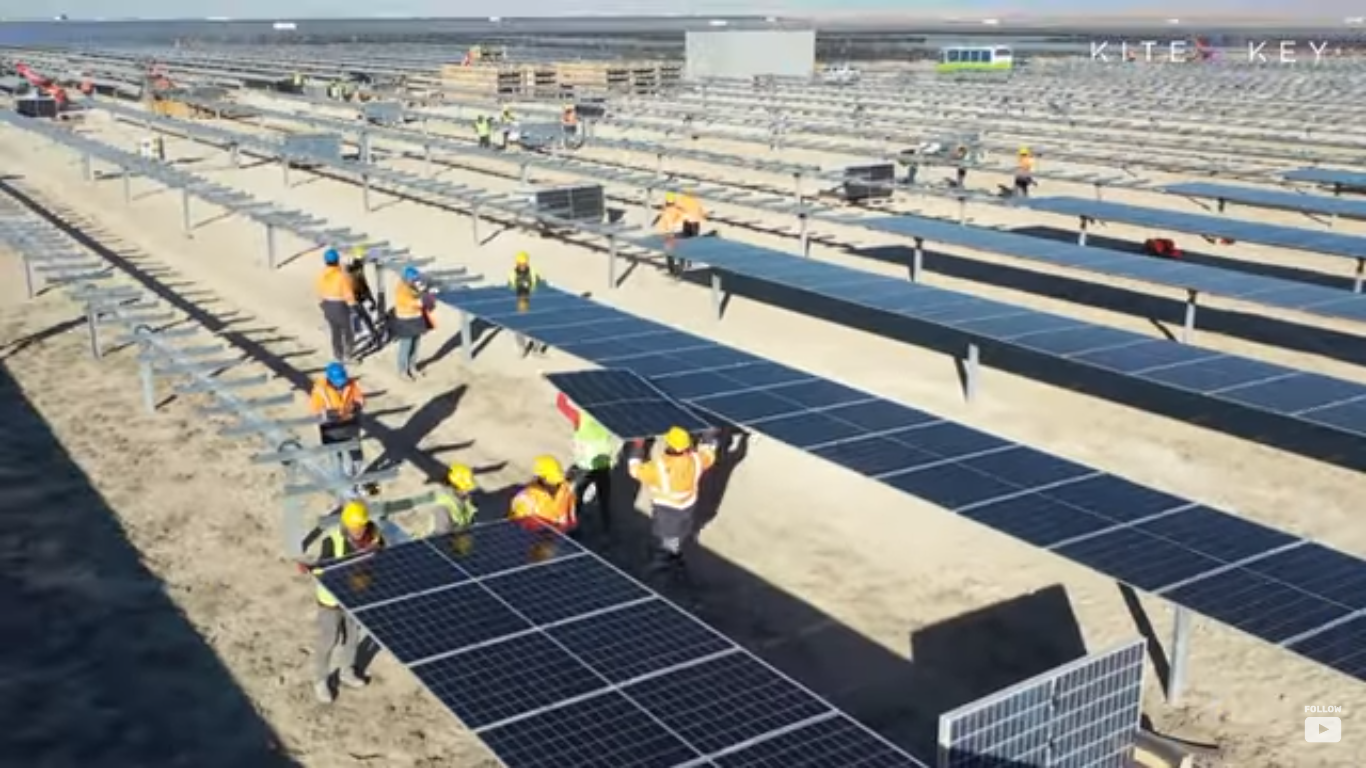
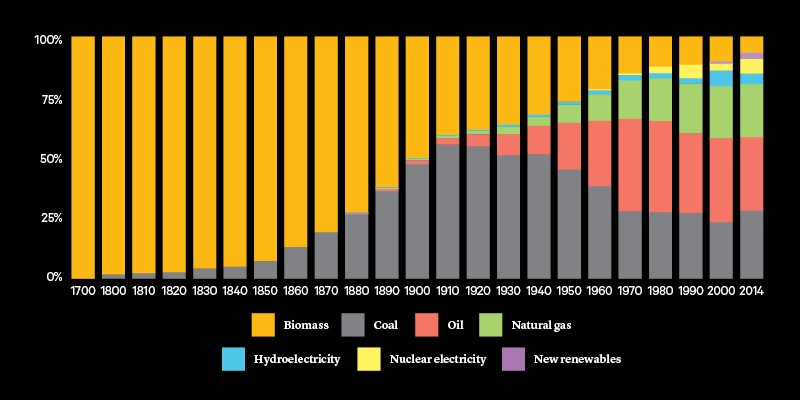
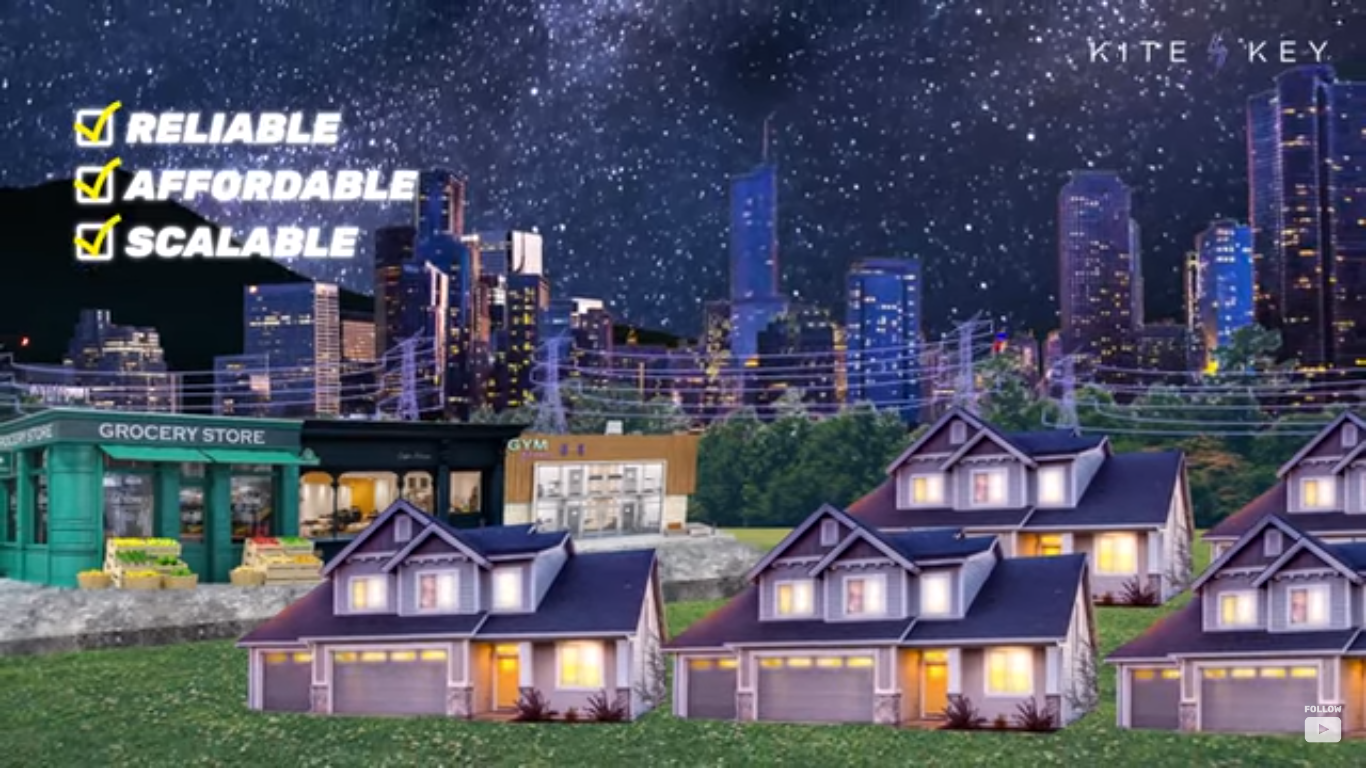
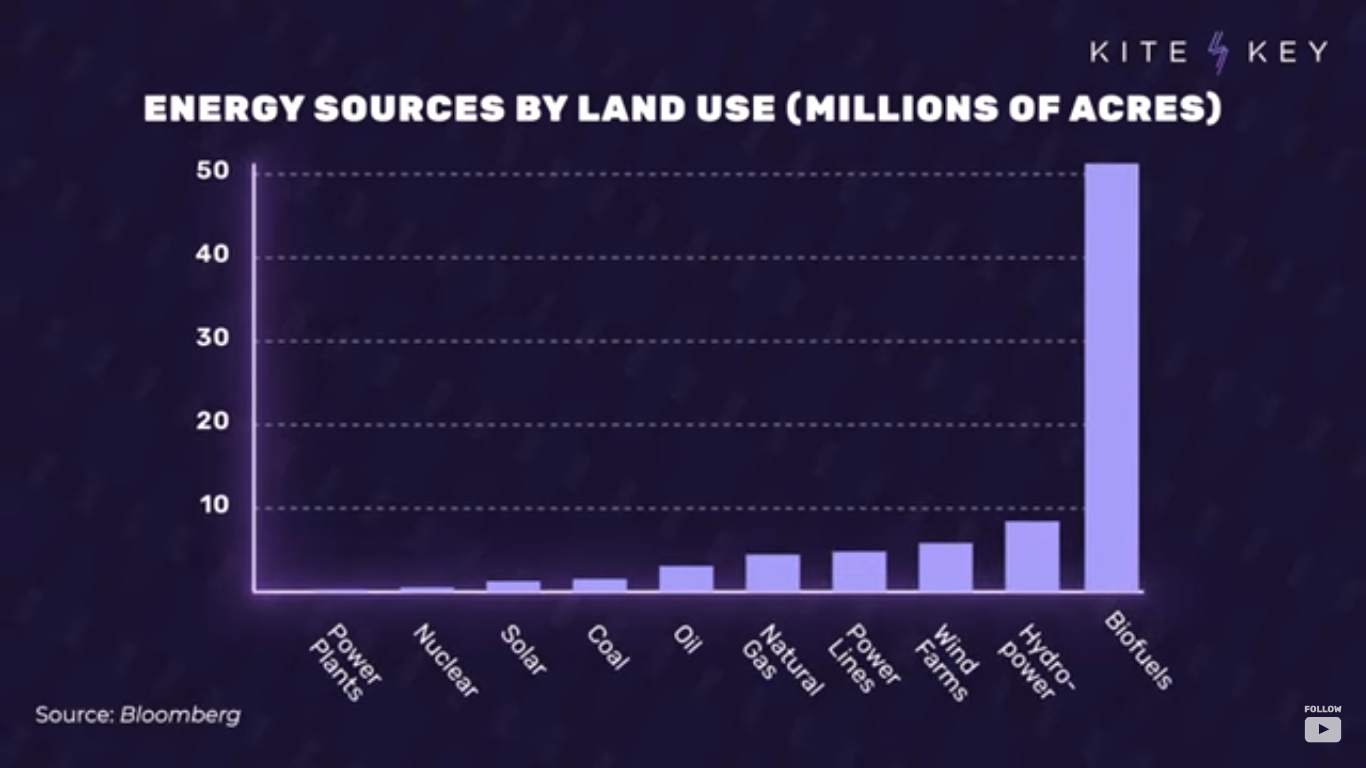
This brief video provides a key concept in order to think rationally about calls to change society’s energy platform.  Below is a transcript from the closed captions along with some of the video images and others added. We know what the future of American energy will look like. Solar panels, drawing limitless energy from the sun. Wind turbines harnessing the bounty of nature to power our homes and businesses.  A nation effortlessly meeting all of its energy needs with minimal impact on the environment. We have the motivation, we have the technology. There’s only one problem: the physics. The history of America is, in many ways, the history of energy. The steam power that revolutionized travel and the shipping of goods. The coal that fueled the railroads and the industrial revolution. The petroleum that helped birth the age of the automobile. And now, if we only have the will, a new era of renewable energy. Except … it’s a little more complicated than that. It’s not really a matter of will, at least not primarily. There are powerful scientific and economic constraints on where we get our power from. An energy source has to be reliable; you have to know that the lights will go on when you flip the switch. An energy source needs to be affordable–because when energy is expensive…everything else gets more expensive too. And, if you want something to be society’s dominant energy source, it needs to be scalable, able to provide enough power for a whole nation. Those are all incredibly important considerations, which is one of the reasons it’s so weird that one of the most important concepts we have for judging them … is a thing that most people have never heard of. Ladies and gentlemen, welcome to the exciting world of…power density. Look, no one said scientists were gonna be great at branding. Put simply, power density is just how much stuff it takes to get your energy; how much land or other physical resources. And we measure it by how many watts you can get per square meter, or liter, or kilogram – which, if you’re like us…probably means nothing to you. So let’s put this in tangible terms. Just about the worst energy source America has by the standards of power density are biofuels, things like corn-based ethanol. Biofuels only provide less than 3% of America’s energy needs–and yet, because of the amount of corn that has to be grown to produce it … they require more land than every other energy source in the country combined. Lots of resources going in, not much energy coming out–which means they’re never going to be able to be a serious fuel source. Now, that’s an extreme example, but once you start to see the world in these terms, you start to realize why our choice of energy sources isn’t arbitrary. Coal, for example, is still America’s second largest source of electricity, despite the fact that it’s the dirtiest and most carbon-intensive way to produce it. Why do we still use so much of it? Well, because it’s significantly more affordable…in part because it’s way less resource-intensive. An energy source like offshore wind, for example, is so dependent on materials like copper and zinc that it would require six times as many mineral resources to produce the same amount of power as coal. And by the way, getting all those minerals out of the ground…itself requires lots and lots of energy. Now, the good news is that America has actually been cutting way down on its use of coal in recent years, thanks largely to technological breakthroughs that brought us cheap natural gas as a replacement. And because natural gas emits way less carbon than coal, that reduced our carbon emissions from electricity generation by more than 30%. In fact, the government reports that switching over to natural gas did more than twice as much to cut carbon emissions as renewables did in recent years. Why did natural gas progress so much faster than renewables? It wasn’t an accident. Energy is a little like money: You have to spend it to make it. To get usable natural gas, for example, you’ve first got to drill a well, process and transport the gas, build a power plant, and generate the electricity. But the question is how much energy are you getting back for your investment? With natural gas, you get about 30 times as much power out of the system as you put into creating it.  By contrast, with something like solar power, you only get about 3 1/2 times as much power back.

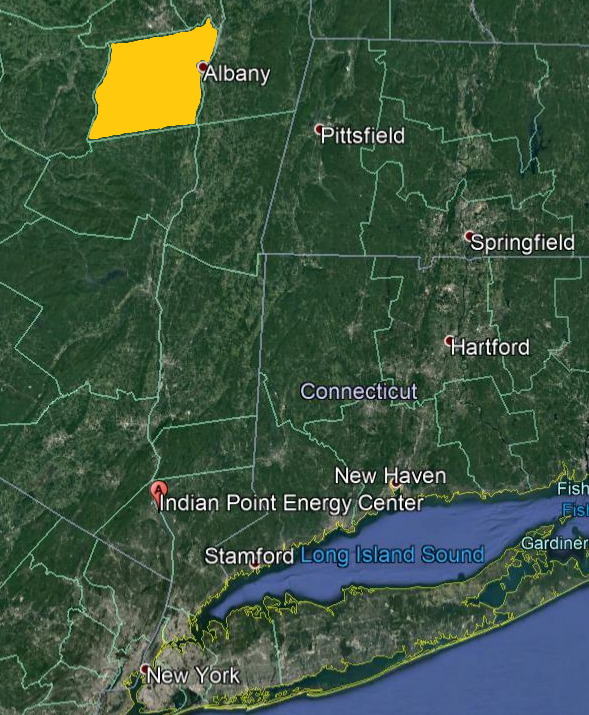
Replacing the now closed Indian Point nuclear power plant would require covering all of Albany County NY with wind mills.

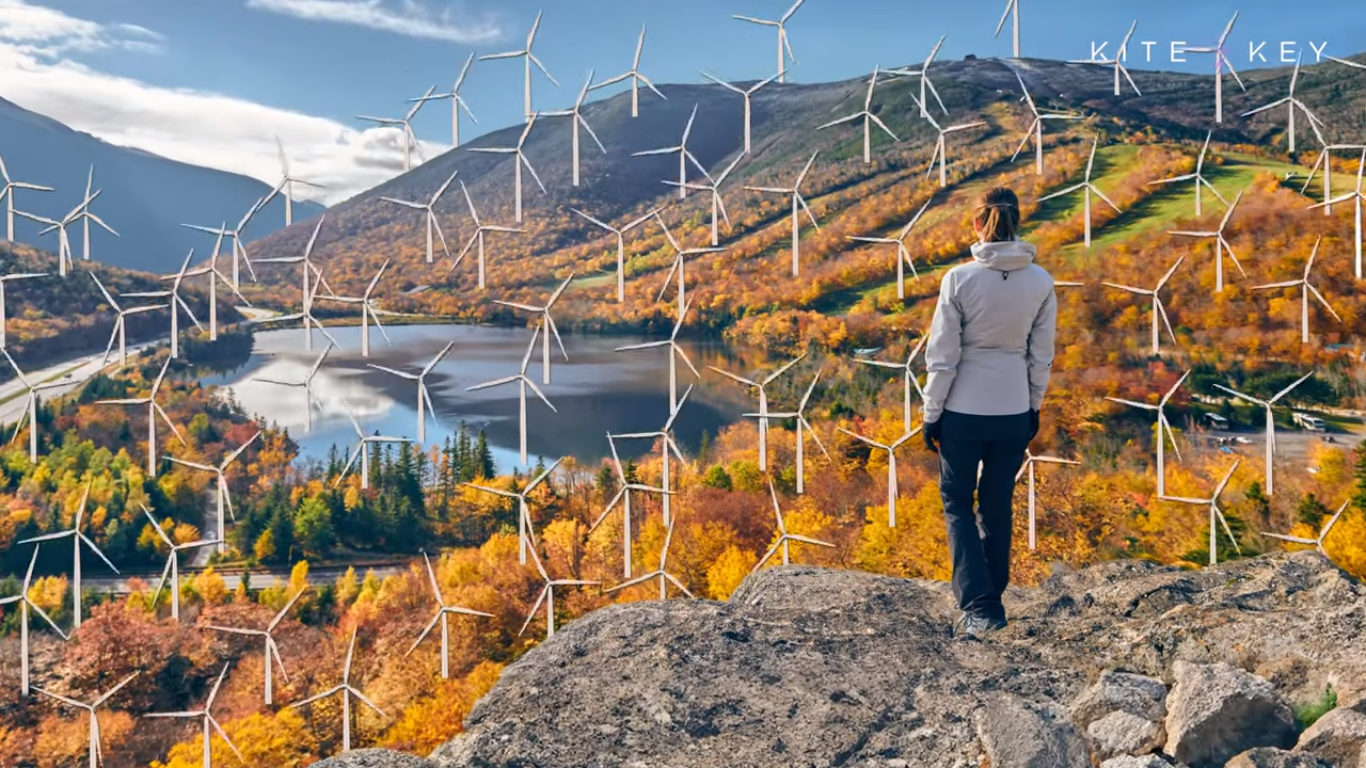
Hard to fuel an entire country that way. And everywhere you look, you see similarly eye-popping numbers. To replace the energy produced by just one oil well in the Permian Basin of Texas–and there are thousands of those–you’d need to build 10 windmills, each about 330 feet high. To meet just 10% of the country’s electricity needs, you’d have to build a wind farm the size of the state of New Hampshire. To get the same amount of power produced by one typical nuclear reactor, you’d need over three million solar panels, none of which means, by the way, that we shouldn’t be using renewables as a part of our energy future. But it does mean that the dream of using only renewables is going to remain a dream, at least given the constraints of current technology. We simply don’t know how to do it while still providing the amount of energy that everyday life requires. No energy source is ever going to painlessly solve all our problems. It’s always a compromise – which is why it’s so important for us to focus on the best outcomes that are achievable, because otherwise, New Hampshire’s gonna look like this.
Addendum from Michael J. Kelly
Energy return on investment (EROI) The debate over decarbonization has focused on technical feasibility and economics. There is one emerging measure that comes closely back to the engineering and the thermodynamics of energy production. The energy return on (energy) investment is a measure of the useful energy produced by a particular power plant divided by the energy needed to build, operate, maintain, and decommission the plant. This is a concept that owes its origin to animal ecology: a cheetah must get more energy from consuming his prey than expended on catching it, otherwise it will die. If the animal is to breed and nurture the next generation then the ratio of energy obtained from energy expended has to be higher, depending on the details of energy expenditure on these other activities. Weißbach et al. have analysed the EROI for a number of forms of energy production and their principal conclusion is that nuclear, hydro-, and gas- and coal-fired power stations have an EROI that is much greater than wind, solar photovoltaic (PV), concentrated solar power in a desert or cultivated biomass: see Fig. 2. In human terms, with an EROI of 1, we can mine fuel and look at it—we have no energy left over. To get a society that can feed itself and provide a basic educational system we need an EROI of our base-load fuel to be in excess of 5, and for a society with international travel and high culture we need EROI greater than 10. The new renewable energies do not reach this last level when the extra energy costs of overcoming intermittency are added in. In energy terms the current generation of renewable energy technologies alone will not enable a civilized modern society to continue!
On Energy Transitions
Postscript

McKitrick: New PM Carney Tried for Years to Defund Canada

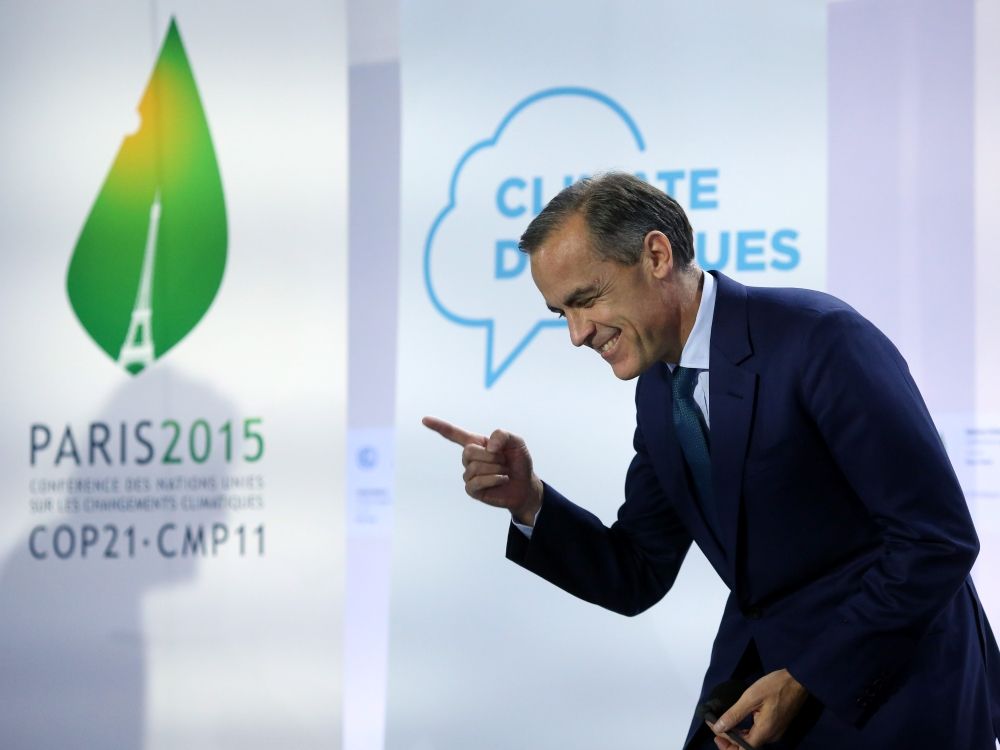
Mark Carney, governor of the Bank of England (BOE), reacts during a news conference at the United Nations COP21 climate summit at Le Bourget in Paris, France, on Friday, Dec. 4, 2015. Photo by Chris Ratcliffe/Bloomberg

Ross McKitrick writes at National Post Carney to lead Canada after trying for years to defund it.  Excerpts in italics with my bolds and added images.

The soon-to-be prime minister’s plan for net-zero banking
would have devastated the country

Conservative leader Pierre Poilievre is very concerned about financial conflicts of interest that new Liberal leader (and our next prime minister) Mark Carney may be hiding. But I’m far more concerned about the one out in the open: Carney is now supposed to act for the good of the country after lobbying to defund and drive out of existence Canada’s oil and gas companies, steel companies, car companies and any other sector dependent on fossil fuels. He’s done this through the Glasgow Financial Alliance for Net Zero (GFANZ), which he founded in 2021.

Carney is a climate zealot. He may try to fool Canadians into thinking he wants new pipelines, liquified natural gas (LNG) terminals and other hydrocarbon infrastructure, but he doesn’t. Far from it. He wants half the existing ones gone by 2030 and the rest soon after.

He has said so, repeatedly and emphatically. He believes that the world “must achieve about a 50 per cent reduction in emissions by 2030” and “rapidly scale climate solutions to provide cleaner, more affordable, and more reliable replacements for unabated fossil fuels.” (By “unabated” he means usage without full carbon capture, which in practice is virtually all cases.) And since societies don’t seem keen on doing this, Carney created GFANZ to pressure banks, insurance companies and investment firms to cut off financing for recalcitrant firms.

“This transition to net zero requires companies across the whole economy to change behaviors through application of innovative technologies and new ways of doing business” he wrote in 2022 with his GFANZ co-chairs, using bureaucratic euphemisms to make his radical agenda somehow seem normal.

The GFANZ plan they articulated that year put companies into four categories. Those selling green technologies or engaged in work that displaces fossil fuels would be rewarded with financing from member institutions. Those still using fossil fuels, or have investments in others that do, but are committed to being “climate leaders” and have set a path to net-zero, would also still be eligible for financing, as would those that do business with “high-emitting firms” but plan to reach net-zero targets on approved timelines. Companies that own or invest in high-emitting assets, however, would operate under a “managed phaseout” regime and could even be cut off from investment capital.

What are “high-emitting assets”? Carney’s group hasn’t released a complete list, but a June 2022 report listed some examples: coal mines, fossil-fuel power stations, oil fields, gas pipelines, steel mills, ships, cement plants and consumer gasoline-powered vehicles. GFANZ envisions a future in which the finance sector either severs all connections to such assets or puts them under a “managed phaseout” regime, which means exactly what it sounds like.

So when Carney jokingly suggested it won’t matter if his climate plan drives up costs for steel mills because people don’t buy steel, he could have added that there likely won’t be any steel mills before long anyway. If his work as prime minister echoes his work as GFANZ chair, we can expect steel mills to be phased out, along with cars, gas-fired power plants, pipelines, oil wells and so forth.

Mark Carney, former Co-Chair of GFANZ, accompanied by (from left) Ravi Menon, Loh Boon Chye, and Yuki Yasui, at the Singapore Exchange, for the GFANZ announcement on the formation of its Asia-Pacific (APAC) Network.

GFANZ boasts at length about its members strong-arming clients into embracing net-zero. For instance, it extols British insurance multinational Aviva for its climate engagement escalation program: “Aviva is prepared to send a message to all companies through voting actions when those companies do not have adequate climate plans or do not act quickly enough.”

To support these coercive goals, Carney’s lobbying helped secure a requirement in Canada for banks, life insurance companies, trust and loan companies and others to develop and file reports disclosing their “climate transition risk,” set out by the federal Office of the Superintendent of Financial Institutions (OSFI).

The rule, Guideline B-15 on Climate Risk Management, was initially published in 2023 and requires federally regulated financial institutions (other than foreign bank branches) to conduct extensive and costly research into their holdings to determine whether value may be at risk from future climate policies. The vagueness and potential liabilities created by this menacing set of expectations could push Canada’s largest investment firms to eventually decide it’s easier to divest altogether from fossil fuel and heavy industry sectors, furthering Carney’s ultimate goal.

Yet Carney will become prime minister just when Canadians face a trade crisis that requires the construction of new coastal energy infrastructure to ensure our fossil fuel commodities can be exported without going through the United States. He has said he would take emergency measures to support “energy projects,” but I assume he means windmills and solar panels. He has not (to my knowledge) said he supports pipelines, LNG terminals, fracking wells or new refineries. Unless he disowns everything he has said for years, we must assume he doesn’t.

Canadian journalists should insist he clear this up. Ask Carney if he supports the repeal of OSFI’s Climate Risk Management guideline. Show Carney his GFANZ report. Ask him, “Do you still endorse the contents of this document?” If he says yes, ask him how we can build new pipelines and LNG terminals, expand our oil and gas sector, run our electricity grid using Canadian natural gas, heat our homes and put gasoline in our cars if banks are to phase out these activities.

If he tries to claim he no longer endorses it,
ask him when he changed his mind,
and why we should believe him now.

The media must not allow Carney to be evasive or ambiguous on these matters. We don’t have time for a bait-and-switch prime minister. If Carney still believes the rhetoric he published through GFANZ, he should say so openly, so Canadians can assess whether he really is the right man to address our current crisis.

Minefield to Defuse EPA GHG Endangerment Finding

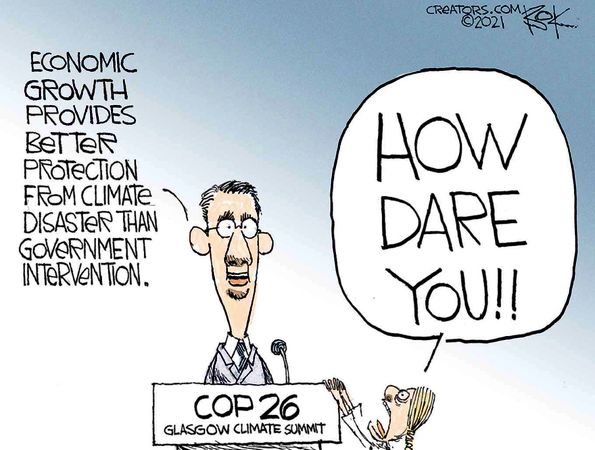
When first using this image, I was noting how naive were politicians (the Brits, for example) to legislate future CO2 emissions reductions, opening themselves up to lawsuits and legal constraints on policy decisions.  Now the same advice applies to the Trump administration targeting the root of the poisonous tree of climate alarmism.  First the lay of the land from EPA Director Zeldin, in italics with my bolds:

Trump EPA Kicks Off Formal Reconsideration of Endangerment Finding with Agency Partners

EPA Press Office (press@epa.gov)

WASHINGTON – U.S. Environmental Protection Agency (EPA) Administrator Lee Zeldin announced the agency will be kicking off a formal reconsideration of the 2009 Endangerment Finding in collaboration with the Office of Management and Budget (OMB) and other relevant agencies. EPA also intends to reconsider all of its prior regulations and actions that rely on the Endangerment Finding.

Administrator Zeldin: “After 16 years, EPA will formally reconsider the Endangerment Finding.”  “The Trump Administration will not sacrifice national prosperity, energy security, and the freedom of our people for an agenda that throttles our industries, our mobility, and our consumer choice while benefiting adversaries overseas. We will follow the science, the law, and common sense wherever it leads, and we will do so while advancing our commitment towards helping to deliver cleaner, healthier, and safer air, land, and water.”

White House OMB Director Russ Vought: “EPA’s regulation of the climate affects the entire national economy—jobs, wages, and family budgets. It’s long overdue to look at the impacts on our people of the underlying Obama endangerment finding.” 

Secretary of the Interior Doug Burgum: “The United States produces energy smarter, cleaner, and safer than anywhere else in the world. To achieve President Trump’s vision for energy dominance, we are prioritizing innovation over regulation to attain an affordable, reliable, clean, and secure energy future for all Americans.”

Energy Secretary Chris Wright:  “The 2009 Endangerment finding has had an enormously negative impact on the lives of the American people. For more than 15 years, the U.S. government used the finding to pursue an onslaught of costly regulations – raising prices and reducing reliability and choice on everything from vehicles to electricity and more. It’s past time the United States ensures the basis for issuing environmental regulations follows the science and betters human lives.”

Transportation Secretary Duffy:  “Thanks to President Trump’s leadership and the hard work of Administrator Zeldin, we are taking another important step toward ushering in a golden age of transportation. The American people voted for a government that prioritizes affordable, safe travel and lets them choose the vehicles they drive. Today we are delivering on that promise, and this will allow the DOT to accelerate its work on new vehicle fuel economy standards that will lower car prices and no longer force Americans to purchase electric vehicles they don’t want.” 

Office of Information and Regulatory Affairs Administrator Jeff Clark:  “Since 2009, I’ve consistently argued that the endangerment finding required a consideration of downstream costs imposed on both mobile sources like cars and stationary sources like factories. Under the enlightened leadership of President Trump and Administrator Zeldin, the time for fresh thought has finally arrived.”

In President Trump’s Day One Executive Order, “Unleashing American Energy,” he gave the EPA Administrator a 30-day deadline to submit recommendations on the legality and continuing applicability of the 2009 Endangerment Finding. After submitting these recommendations, EPA can now announce its intent to reconsider the 2009 Endangerment Finding.

When EPA made the Endangerment Finding in 2009, the agency did not consider any aspect of the regulations that would flow from it. EPA’s view then was that the Finding itself did not impose any costs, and that EPA could not consider future costs when making the Finding. EPA has subsequently relied on the Endangerment Finding as part of its justification for seven vehicle regulations with an aggregate cost of more than one trillion dollars, according to figures in EPA’s own regulatory impact analyses. The Endangerment Finding has also played a significant role in EPA’s justification of regulations of other sources beyond cars and trucks.  

Congress tasked EPA under Section 202 of the Clean Air Act with regulating new motor vehicles when the Administrator determines that emissions of an air pollutant endanger public health and welfare. But the Endangerment Finding went about this task in what appears to be a flawed and unorthodox way. Contrary to popular belief, the Endangerment Finding did not directly find that carbon dioxide emissions from U.S. cars endanger public welfare. Instead, the Finding looks at a combination of emissions of six different gases—and cars don’t even emit all six. It then creatively added multiple leaps, arguing that the combined six gases contribute some mysterious amount above zero to climate change and that climate change creates some mysterious amount of endangerment above zero to public health. These mental leaps were the only way the Obama-Biden Administration could come to its preferred conclusion, even if it did not stick to the letter of the Clean Air Act.  

The Endangerment Finding acknowledges and identifies significant uncertainties in the science and assumptions used to justify the decision. In the 16 years since EPA issued the Endangerment Finding, the world has seen major developments in innovative technologies, science, economics, and mitigation. EPA has never before asked for public comment on the implications these developments have had on the Endangerment Finding, but now it will as part of the reconsideration process it intends to undertake. Additionally, major Supreme Court decisions in the intervening years, including Loper Bright Enterprises v. Raimondo, West Virginia v. EPA, Michigan v. EPA, and Utility Air Regulatory Group v. EPA, have provided new guidance on how the agency should interpret statutes to discern Congressional intent and ensure that its regulations follow the law.  

As part of this reconsideration process, EPA will leverage the expertise of the White House Budget Office, including the Office of Information and Regulatory Affairs, White House Office of Science and Technology Policy, National Oceanic and Atmospheric Administration, and other relevant agencies.  

It is in the best interest of the American people for EPA to ensure that any finding and regulations are based on the strongest scientific and legal foundation. The reconsideration of the Endangerment Finding and EPA’s regulations that have relied on it furthers this interest. The agency cannot prejudge the outcome of this reconsideration or of any future rulemaking. EPA will follow the Administrative Procedure Act and Clean Air Act, as applicable, in a transparent way for the betterment of the American people and the fulfillment of the rule of law.

This was announced in conjunction with a number of historic actions to advance President Trump’s Day One executive orders and Power the Great American Comeback. Combined, these announcements represent the greatest and most consequential day of deregulation in the history of the United States. The overhaul of the Endangerment Finding along with other massive rules represents the death of the Green New Scam and drives a dagger straight into the heart of the climate change religion. While accomplishing EPA’s core mission of protecting the environment, the agency is committed to fulfilling President Trump’s promise to unleash American energy, lower costs for Americans, revitalize the American auto industry, restore the rule of law, and give power back to states to make their own decisions.

Objections from the usual suspects

“This decision ignores science and the law,” David Doniger, senior strategist and attorney for climate and energy at the Natural Resources Defense Council, said in a statement. “Abdicating EPA’s clear legal duty to curb climate-changing pollution only makes sense if you consider who would benefit: the oil, coal, and gas magnates who handed the president millions of dollars in campaign contributions.”

Vickie Patton, the Environmental Defense Fund’s general counsel, said any move to undo the finding “would be reckless, unlawful, and ignore EPA’s fundamental responsibility to protect Americans from destructive climate pollution. We will vigorously oppose it.”

“They don’t have a winning hand. Having the power to do this doesn’t tell you anything about whether or not what they’re doing makes sense on the merits,” said Joseph Goffman, who ran EPA’s air office during the Biden administration. “They’ve got nothing on the merits.”

Michael Mann, a climate scientist at the University of Pennsylvania dismissed the EPA’s action as “just the latest form of Republican climate denial. They can no longer deny climate change is happening, so instead they’re pretending it’s not a threat, despite the overwhelming scientific evidence that it is, perhaps, the greatest threat that we face today.”

The Pathways and the Risks

Shuting Pomerleau gives insight into activists worries and the possibilities:  Is EPA’s Endangerment Finding at Risk?

If EPA’s endangerment finding is rescinded, it may not have any material impact on the agency’s legal basis for issuing future climate regulations on GHG emissions, since the IRA amended the CAA to grant explicit authority to the agency. Nevertheless, repealing the endangerment finding would likely create chaos and uncertainty for U.S. climate policy.

First, rescinding the endangerment finding would make it much easier for the Trump Administration to repeal the existing EPA GHG emissions regulations because the original legal basis for this authority would no longer exist. Under the Obama and Biden Administrations, EPA has issued several sector-based GHG emissions regulations using the endangerment finding as a legal basis.

Second, repealing the endangerment finding would immediately subject EPA to legal challenges that could last years. Before the dispute could be adjudicated by the courts, there would be considerable confusion and uncertainty over compliance with the existing regulations. This would negatively impact the regulatory environment for businesses, as they need durable and consistent policies to make long-term investment decisions.

From the perspective of policymaking, rescinding EPA’s endangerment finding puts a big question mark on the outlook of U.S. climate policies. Currently, at the federal level, the United States uses a patchwork of policies to mitigate GHG emissions, such as handing out massive clean energy tax subsidies under the IRA and relying on command-and-control EPA regulations. The IRA energy tax provisions will likely be subject to at least partial repeal in an upcoming 2025 reconciliation bill. Even if a future administration seeks to regulate GHG emissions via EPA rulemaking, it would take a long time, and generally such regulations are costly, inflexible, and vulnerable to legal challenges.

What to Expect Next

EPA to Accept Nominations for Science Boards

EPA Press Office (press@epa.gov)

WASHINGTON – Today, U.S. Environmental Protection Agency (EPA) Administrator Lee Zeldin announced that a notice will be published in the Federal Register seeking nominations for the Science Advisory Board (SAB) and Clean Air Scientific Advisory Committee (CASAC). Nominations will be accepted for 30 days following publication of the Federal Register notice.

“Reconstituting the Science Advisory Board and Clean Air Scientific Advisory Committee are critical to ensuring that the agency receives scientific advice consistent with its legal obligations to advance our core mission of protecting human health and the environment,” said EPA Administrator Zeldin. “I look forward to receiving nominations to build an independent group of advisors to aid the agency’s rulemaking.” 

In January, EPA announced its decision to reset these federal advisory committees
to reverse the politicization of SAB and CASAC under the Biden-Harris Administration.


Pushback Against EU World-wide ESG Rules

As Bloomberg reported, EU is attempting to force climate risk and ESG reporting on the whole world, not just its member nations.  

As trans-Atlantic relations grow increasingly fraught, Europe’s ESG regulations are becoming yet another flashpoint that threatens to sour ties.

The American Chamber of Commerce to the European Union (AmCham EU) says proposed revisions to the bloc’s environmental, social and governance rules don’t adequately protect US interests. The complaint is part of a growing US response to Europe’s ESG framework. Republican lawmakers call the rules “hostile” and warn that America’s jurisdictional sovereignty is at stake, while Commerce Secretary Howard Lutnick has said he’s willing to consider “trade tools” to retaliate.

The European Commission proposed changes last week that would rein in the scope of two major ESG laws: the Corporate Sustainability Reporting Directive and the Corporate Sustainability Due Diligence Directive. However, big international companies with business in the EU would still have to comply.

The upshot is that non-EU companies risk being ensnared by the bloc’s ESG rules, even for products that aren’t sold in the EU, said Kim Watts, senior policy manager for AmCham EU, whose members include Ford Motor Co., Exxon Mobil Corp. and Amazon.com Inc.

AmCham is worried that the EU “is going too far on extraterritoriality,” she said in an interview.

It’s a complaint that’s being backed up in even stronger terms by GOP members of Congress. In a letter sent shortly after the European Commission published its proposed revisions to the bloc’s ESG rules, the US lawmakers wrote to Treasury Secretary Scott Bessent and National Economic Council Director Kevin Hassett, warning of the “profound” implications of Europe’s due diligence directive for US businesses.

The lawmakers stated: “CSDDD imposes stringent due diligence requirements on in-scope companies, mandating the evaluation of supply chains to identify, mitigate, and eliminate human rights and environmental abuses as defined by United Nations (UN) and Organisation for Economic Cooperation and Development (OECD) principles.

“Furthermore, US firms will face increased litigation risks and potential enforcement actions from EU member states, with penalties under the Directive reaching up to 5% of a company’s global turnover.

“However, these principles have not been ratified by Congress, raising concerns about the legitimacy of EU enforcement against US companies based on these principles. Additionally, small businesses that supply larger companies will also be affected, even if their operations are solely within the US compliance efforts will require significant resource allocation, diverting funds away from critical areas such as research and development, talent acquisition, and investment.

Climate Scare Based on Lies

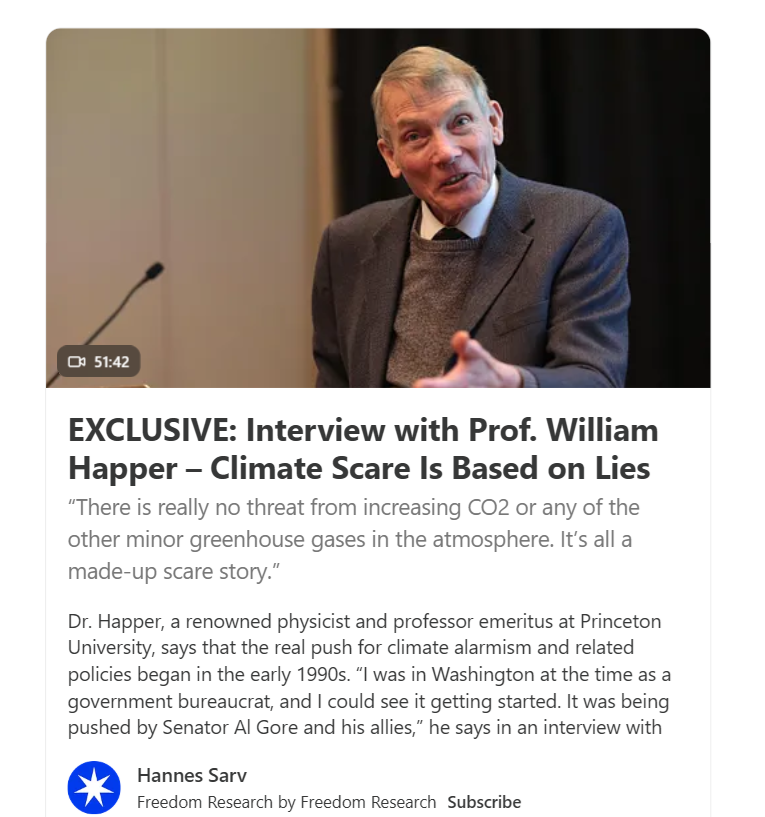
link to video: Prof. William Happer – Climate Scare Is Based on Lies

Transcript in italics with my bolds and added images (HS is interviewer Hannes Sarv, WH is William Happer)

HS: If you read about climate in the newspapers or some talk about climate on television, it will be very, very far from the truth.  We’re told that climate change is a direct consequence of human activity, particularly the burning of fossil fuels.  Year after year, you are seeing the dramatic reality of a boiling planet.
And for scientists, it is unequivocal. Humans are to blame, we’re led to believe the climate is boiling. And the accumulated amount is now trapping as much extra heat as would be released by 600,000 Hiroshima-class atomic bombs exploding. That’s what’s boiling the oceans.  Which will have disastrous effects.
But is there really a scientific consensus on man-made climate change? Over a thousand scientists dispute the so-called climate crisis. Many of them are high-ranking experts in their fields. Among them, Dr. William Happer, a respected physicist with decades of groundbreaking research, an emeritus professor at Princeton University, and a leading expert in atomic and molecular physics.  He has deep expertise in the greenhouse effect and the role of CO2 in climate change.  Dr.  Happer argues that the role of human activity and CO2 in global warming is based on flawed science and misinterpretations.

“You know, it’s dangerous to make policy on the basis of lies.”

In this interview, we’ll explore the evidence he believes has been overlooked and why it could transform our understanding of climate change.

HS: As we can see, Professor, you are still working daily in your university office. So what is it? Are you consulting younger colleagues or still involved in some research projects?

WH: Well, yes, I try to stay busy and I’m working now with a former student from Canada who’s a professor there now, William van Wijngaarden.  And we’re working now on how water vapor and clouds affect the Earth’s climate, the radiation transfer details of those.

HS:So still very much involved in climate science.

WH: Well, you know, climate is very important. It’s always been important to humanity. It’s not going to change. I think it’s been having hard times the last 50 years because of this manic focus on demonization of greenhouse gases, which have some effect on climate but not very much.

HS: We’re going to absolutely get to that. But I wanted to start from actually, I was listening to one of your speeches and presentations you held back in 2023 at the Institute of Public Affairs. And what really I think resonated with me was that you started from the notion that freedom is important.  And every generation has their own struggle for freedom and freedom is not free. So I actually wanted to start by asking you what is the state, the current state of freedom in your opinion in the world today?

WH: I think it’s really true that every generation has to struggle to maintain freedom, you know, because every generation has lots of people who don’t like freedom, you know. They would like to be little dictators, you know, and that’s always been true if you read history. And it’s not going to change.

And so I think it’s important that we educate our children to recognize that humans are imperfect and there will always be attempts to get dictatorial control over society. And, you know, our founding fathers in America represented recognize that. They just assumed that their fellow Americans would be not very perfect people, you know, with lots of flawed people, and they tried to design a system of government that would work even with flawed people. Some German philosopher put it right, you know, out of the crooked timber of mankind, no straight thing was ever made. So that’s the problem that we will always face.

HS: What about academic freedom in today’s world? I’m not only speaking about climate science, but in general.

WH: Well, you know, I think academia has always had a problem with groupthink, you know, because you’re typically all together in one small community, and your children and wives interact with each other. And so the temptations, the pressures to all think the same are very great. You know, if you don’t think the same, your kids suffer, your wife suffers, and that’s nothing new. It’s always been like that. You know, there’s a famous… American play, Who’s Afraid of Virginia Woolf? But it’s about this topic and it goes back many, many decades, you know, long before the current woke problems that we’re having in America.

HS:  So as we all know currently, there is a new administration in the United States. So what will happen now? Will the situation, in your opinion, improve or is it just, you know, the challenges are going to remain?

WH: Well, you know, we’ve just elected a new president, and he’s very vigorous and has lots of ideas, and I think that’s a good thing. We’ll see how successful he is. But, you know, our society and our government is designed to be cumbersome and unwieldy. That’s to prevent crazy things from happening too quickly.  And so the president will have to deal with that. And if the Americans support him, if the Congress supports him, he’ll be successful.

HS: Let’s move to climate science. Is there any honest discussion left? It has become so political, in my opinion, that it is really hard to have an open, a normal discussion about it.

WH: Well, I think if you go to a seminar, for example, at Princeton on climate, It’s often pretty good science. It’s not alarmist. But this is professors and students talking to each other. The further you get away from the actual research, the more alarmist and crazy it becomes.

So if you read about climate in the newspapers or listen to some talk about climate on television, it will be very, very far from the truth. And it won’t be the same thing that the professors at universities normally are talking about. But that said, you know, I think there’s been a lot of corruption because of all of the money available. You know, there are huge funds if you do research that supports the idea that there is a climate emergency which requires lots of government intervention. And if you don’t do that, you’re less likely to be funded, you know, you can’t pay your graduate students. So it’s a bad situation. It’s been very corrupting to this branch of science.
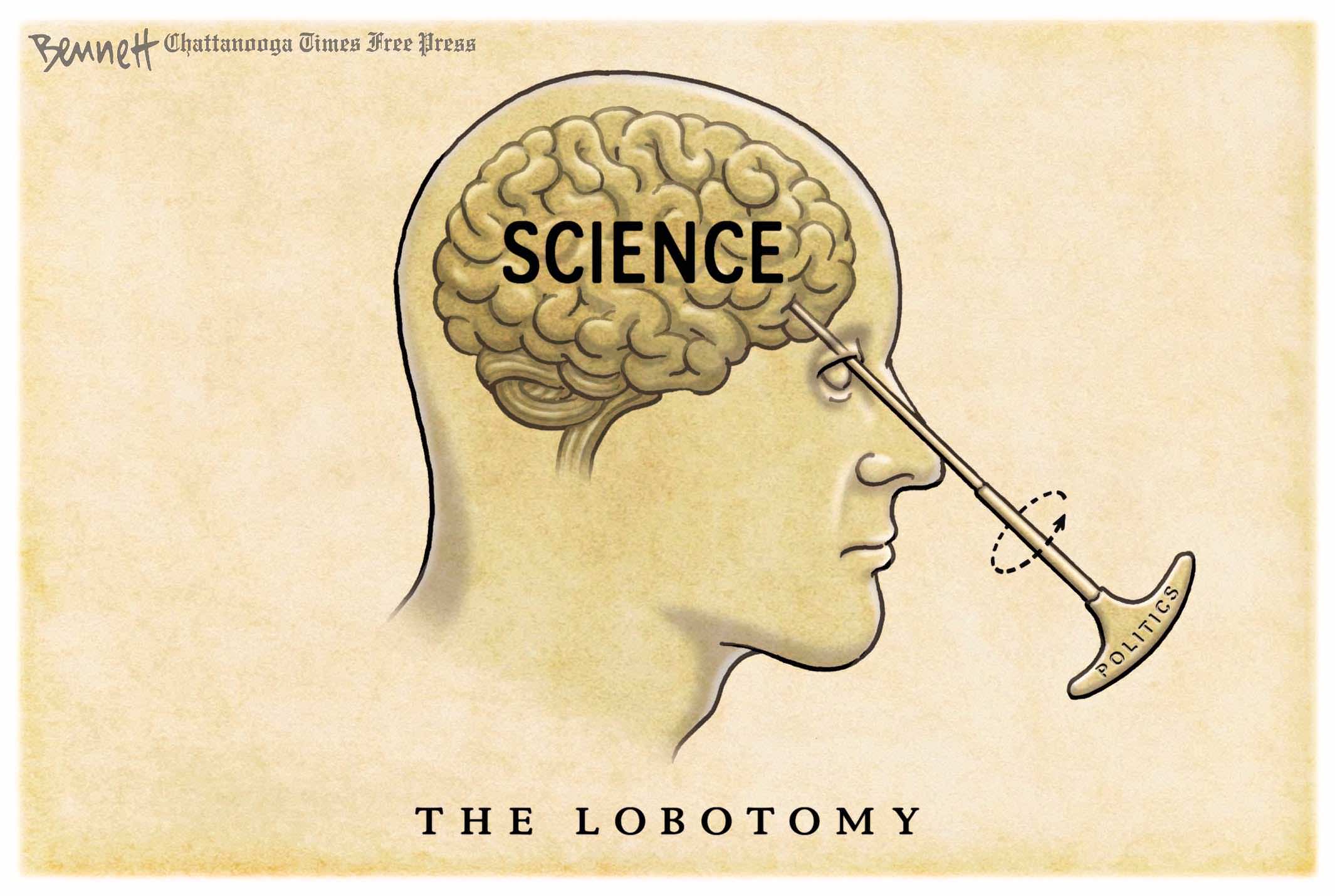
HS: Exactly how long has it been going on, this kind of situation?

WH: Well, I think it really got started in the early 90s. I was in Washington at the time as a government bureaucrat, and I could see it getting started. It was being pushed by Senator Al Gore and his allies. There were, at that time, still lots of honest scientists in academia who didn’t go along with all of the alarmism, but they’ve gradually died off and they’ve been replaced by younger people who’ve never known anything except, you know, pleasing your government sponsor with the politically correct research results that they expect.

HS: So basically they are not in a position, if they want to achieve anything in academia or make a career for themselves, they are kind of unable to stay honest even?

WH: They try to be honest, but it’s very difficult because you have to plan to educate your children. You have to maintain your family, and so that means you need money. And the only way to get money is to agree to this alarmist meme that has dominated climate scientists now for several decades.
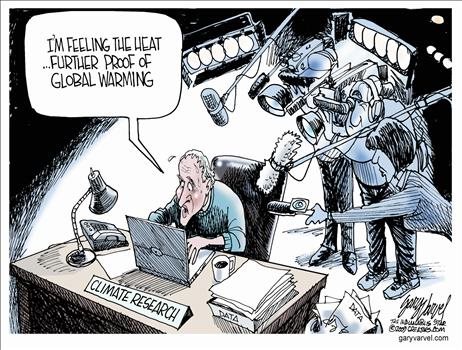
HS: Of course it affects climate research. So what is the current state, let’s say, the current state of climate research? What’s the quality of it in your opinion?

WH: Well, I think many of the observational programs in climate science are very good. For example, satellite measurements of Earth’s properties, radiation, cloudiness, temperatures, and ground-based observations. They’re often very high-quality work, very useful, and we’re lucky to have them. There are good programs in both Europe and the United States and Japan, and China is becoming quite important nowadays, too.
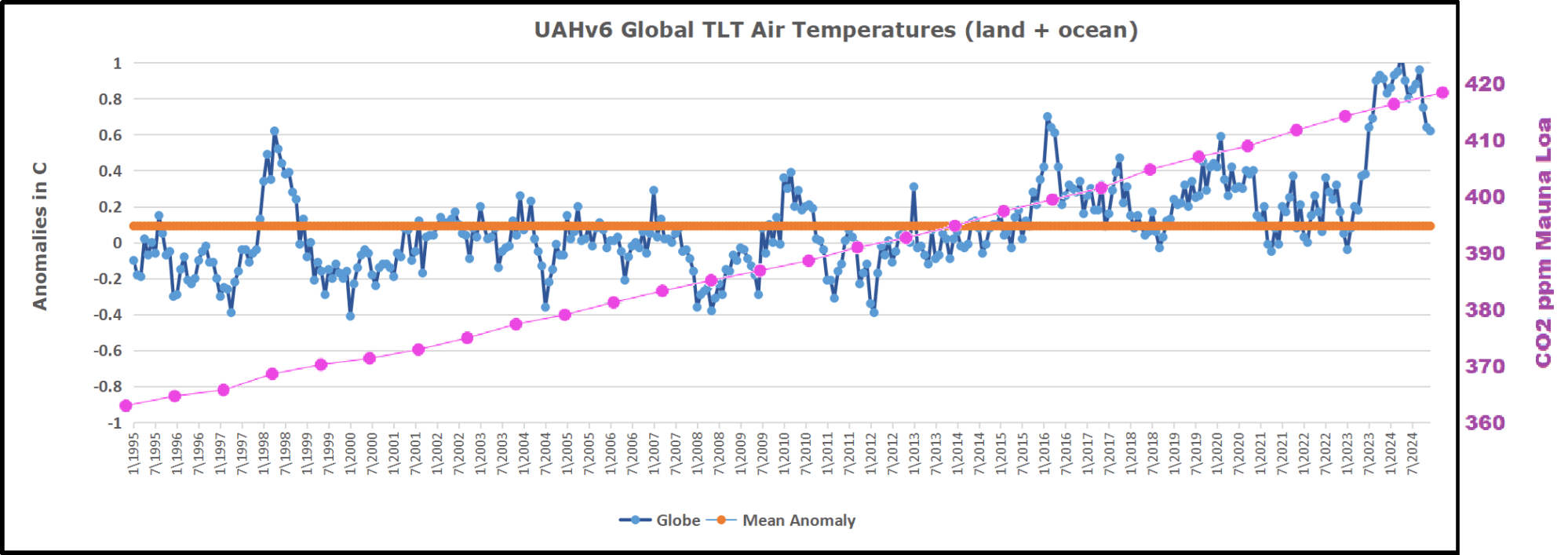
I think where there’s still huge problems is in computer modeling. I don’t think most computer models mean anything. It’s a complete waste of money, but that’s what’s driving the public perception. So the public is unable to look at model results, which are not alarming at all.  But instead what they see is graphic displays from computer computations which are not tied into observations. So I think the money that’s been spent on computers, and lots of it has been spent, has been mostly wasted.

HS: Let me just understand it correctly because I’ve come to understand that these computer models are something that our current debate or the climate alarm is all based on:  That there’s going to be a warming of how many degrees and then the earth is going to be uninhabitable.  And you’re saying that those models are not things that something like that should be based on.

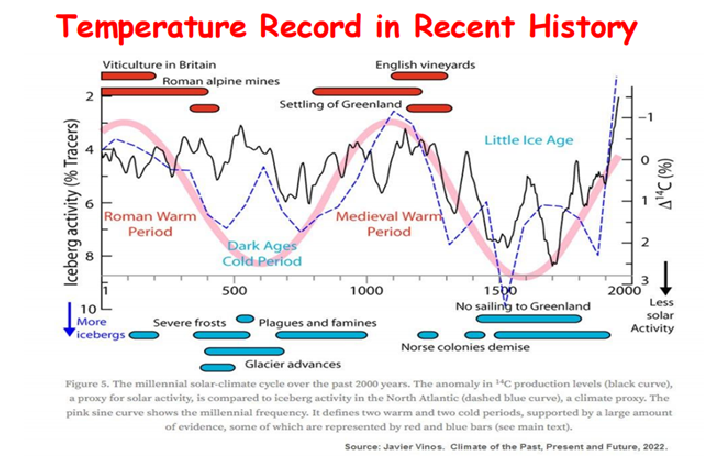
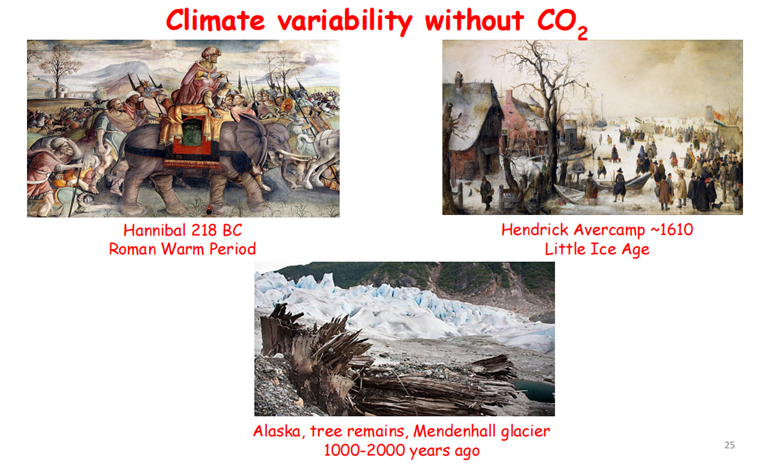
WH: The Earth is always either warming or cooling. It’s a rare time when it’s got stable temperature. We’re in a warming phase now. But most of the warming is probably a natural recovery from the Little Ice Age when it was much, much colder all over the world. And it began to warm up in the early 1800s.

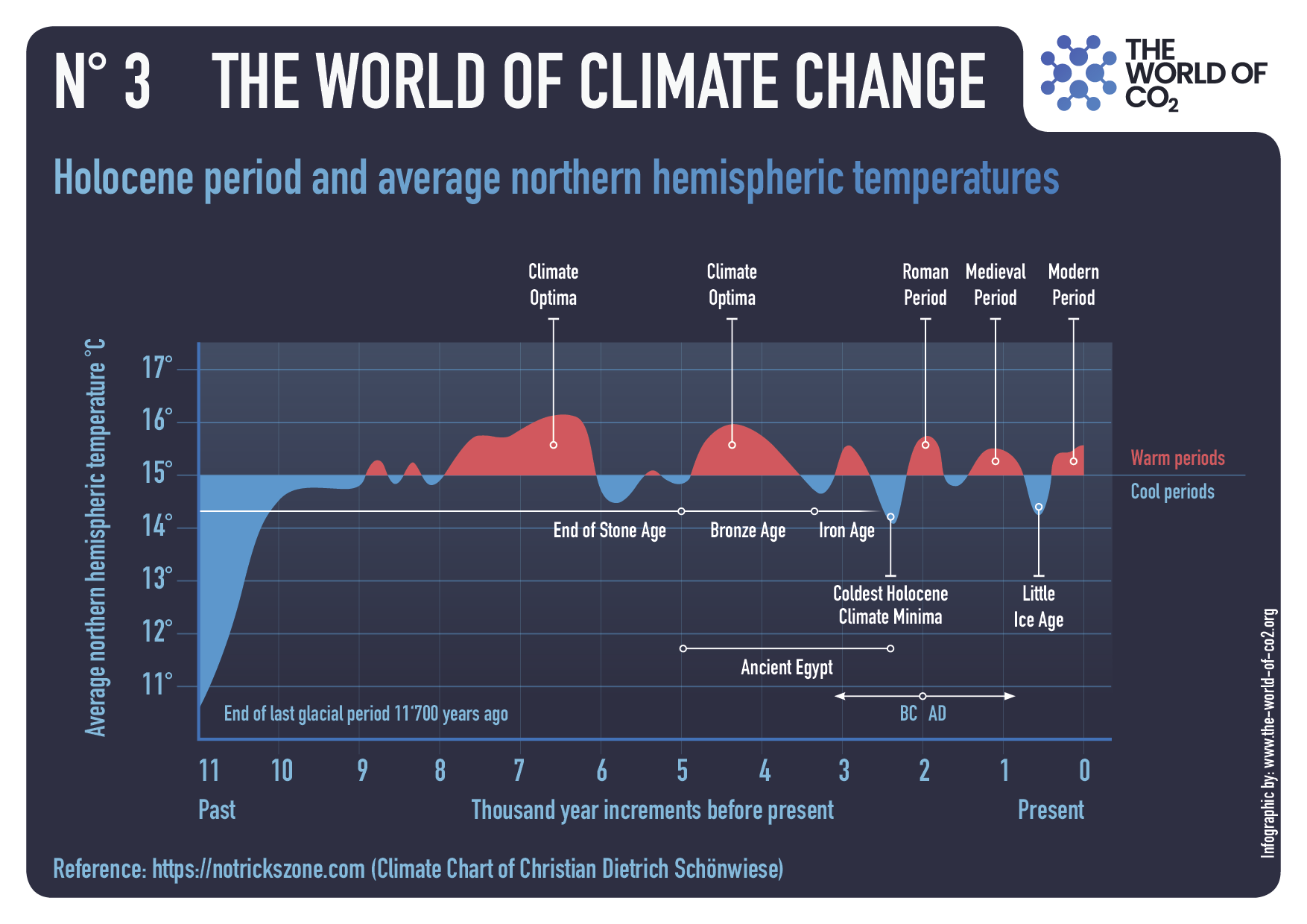
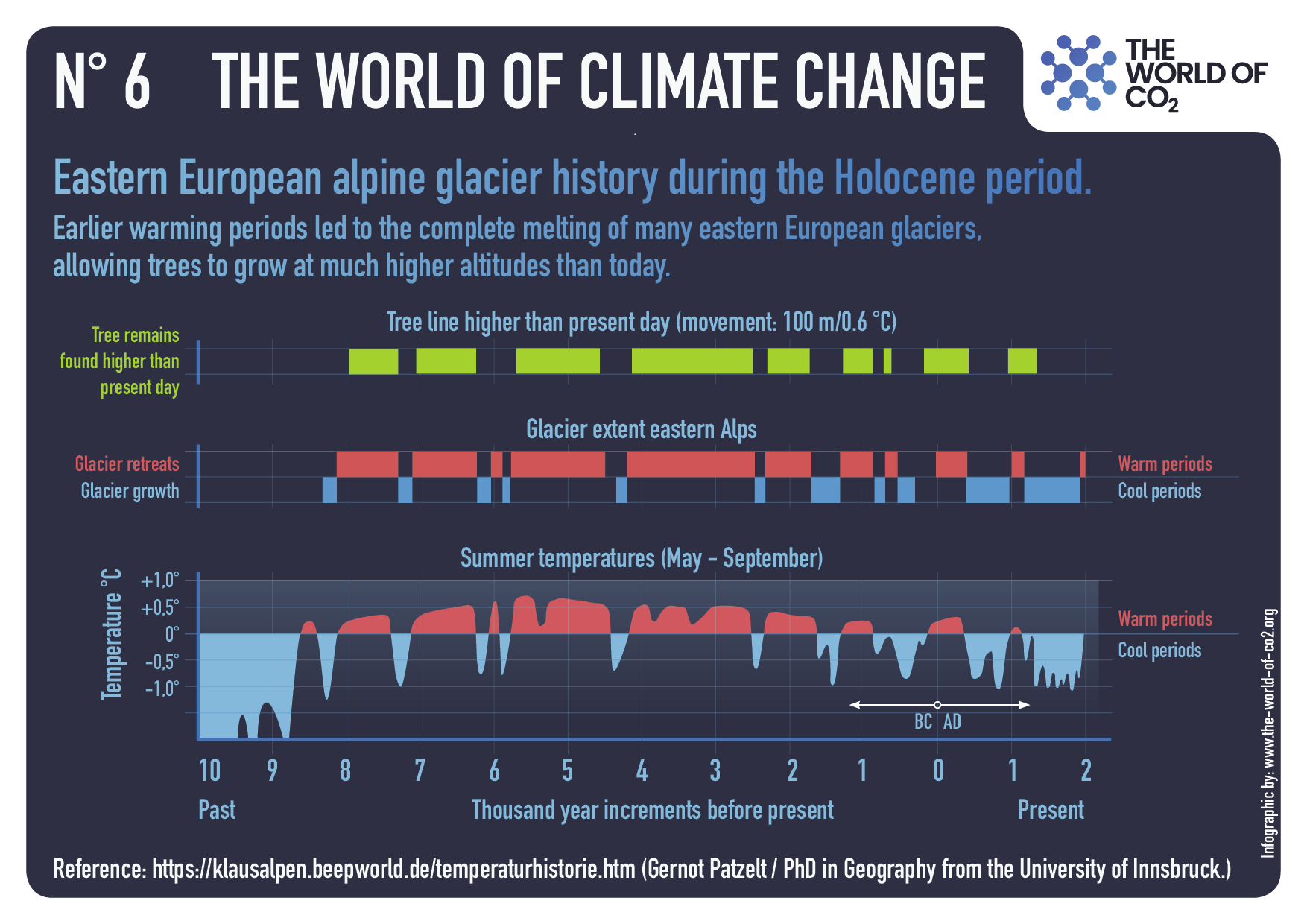
And it continued to warm, not very fast. No one knows how long this will last. If you look over the last 10,000 years, since the end of the last glacial period, there have been many warmings and coolings similar to the one that we’re in now.
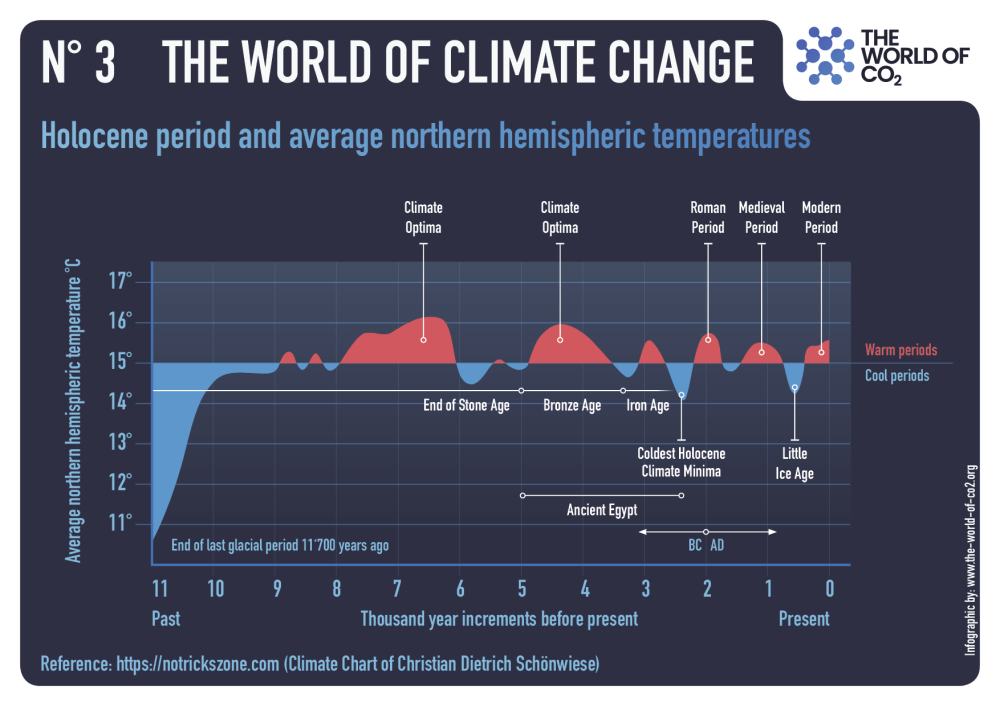
And I think understanding that is quite important, but that understanding has been put back by many, many years because of the sort of crazed focus on greenhouse gases. It’s pretty clear that greenhouse gases don’t have very much to do with these warmings. Nobody was burning fossil fuels in the year 1200-1300 when the poor Greenlanders were frozen out.

They did some pretty good farming in the southern parts of Greenland in the year 1000, the year 1100. Before long, it became just too cold to continue to do that. The same thing happened in parts of my ancestral country of Scotland. You know, you used to be able to farm the uplands of Scotland, which you can’t farm now, it’s too cold. But they’re warming up at some point, maybe you can farm them again. So anyway, the climate is just famous for being unstable.

HS: Let’s talk about those greenhouse gases. Mainly climate change today in mainstream media or by those alarmist politicians, for example, is attributed to carbon dioxide. If someone has not looked into it, this gas might seem to have something even poisonous. What is carbon dioxide? Do we need it?
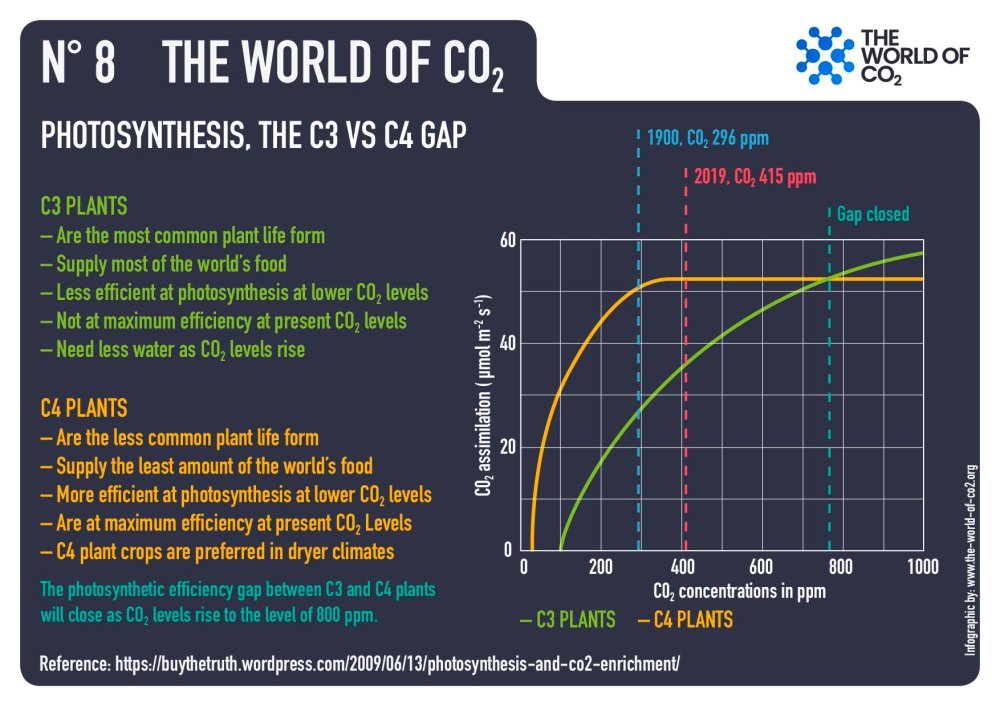
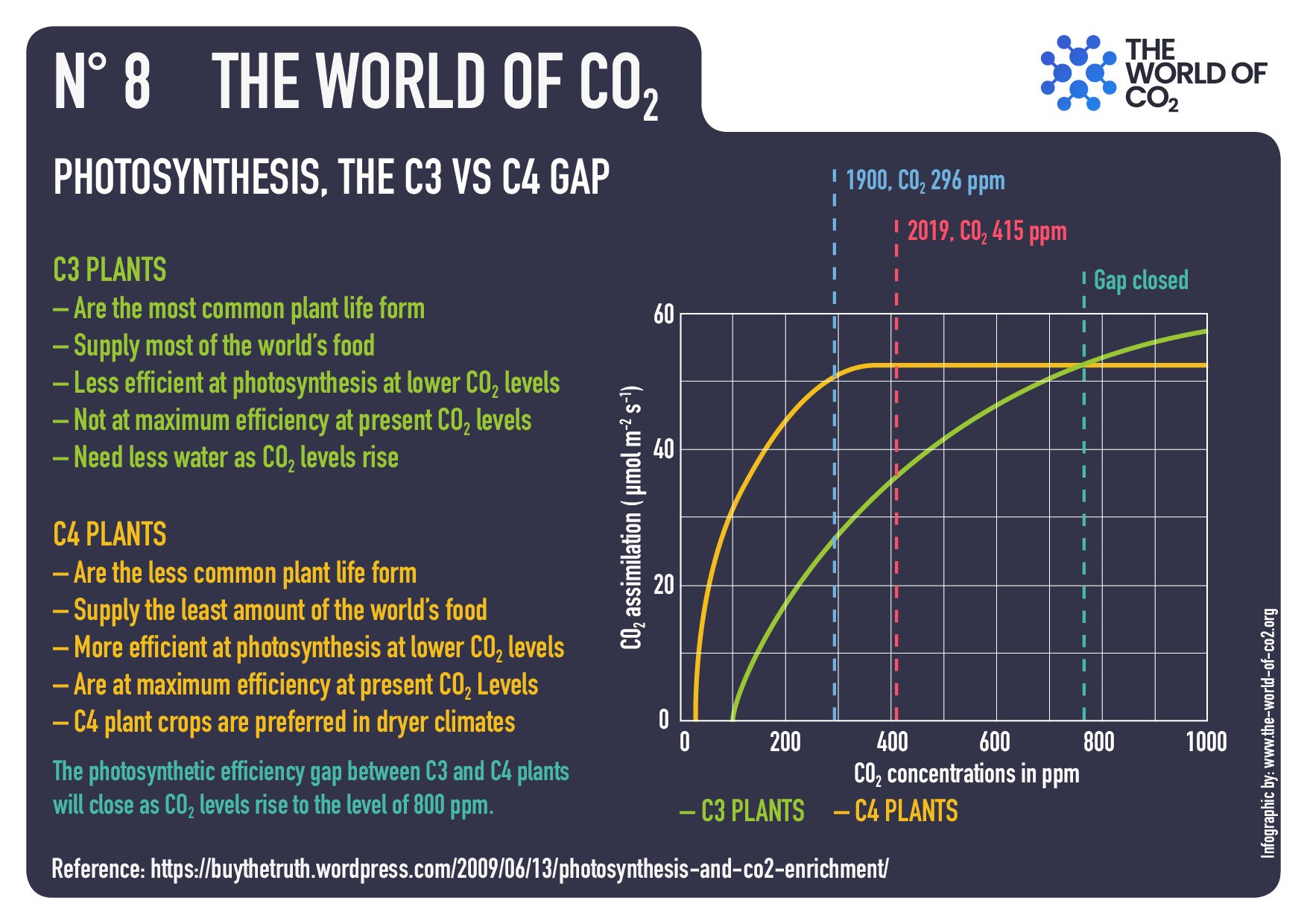
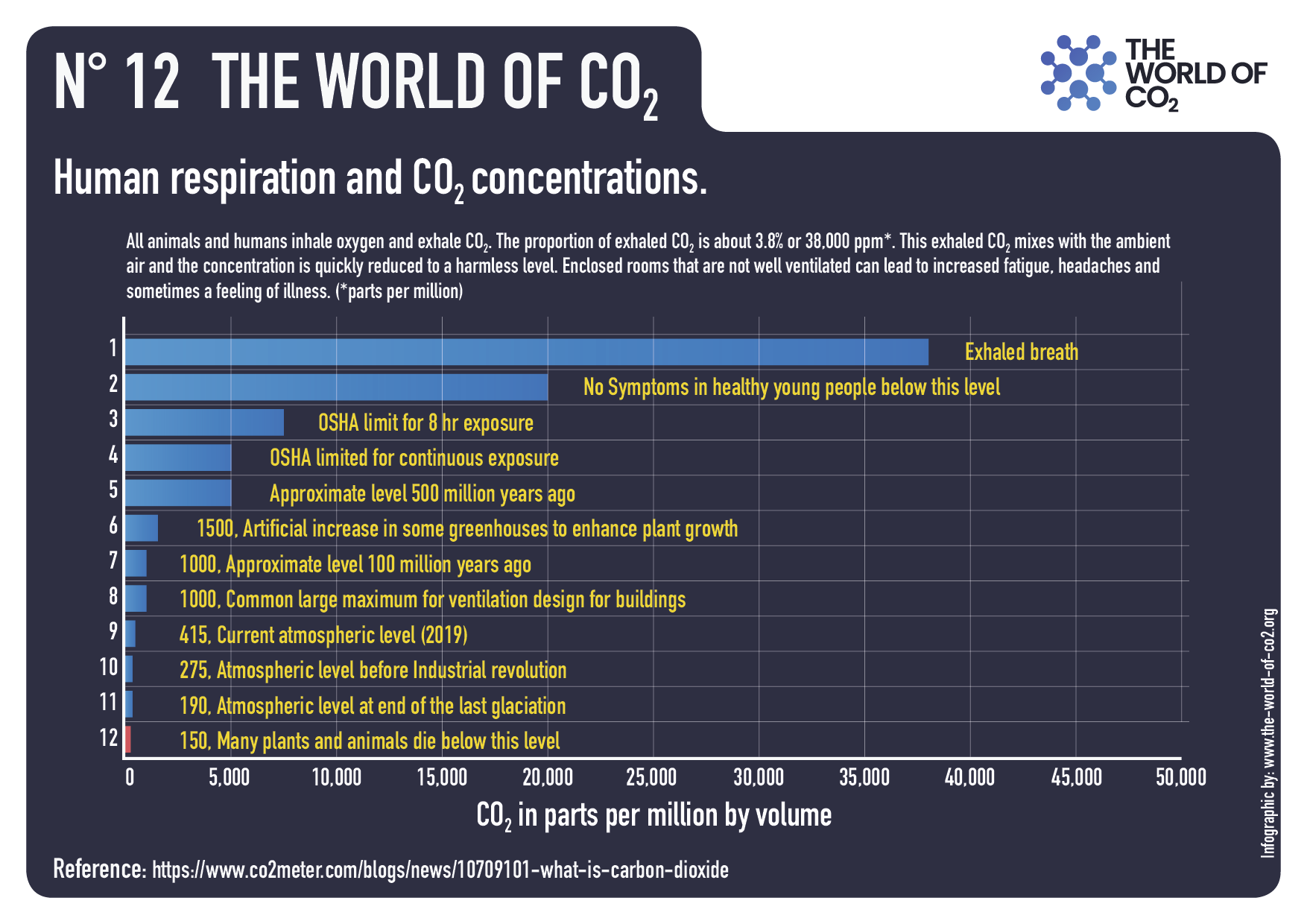
WH: Well, first of all, carbon dioxide is at the basis of life on Earth. We live because plants are able to chemically transform carbon dioxide and water into sugar. And a byproduct is the oxygen that we breathe. And so we should all be very grateful that we have carbon dioxide in the atmosphere.  You know, life would die without carbon dioxide. If you look over the history of… Life on Earth, carbon dioxide has never been very stable in the atmosphere. There have been times in the past when it’s been much, much higher than today. Life flourished with five times more carbon dioxide than we have today.
And there have been times when it’s been much lower, one-half, one-third, and those were actually quite unpleasant times for life. They were the depths of the last ice ages when carbon dioxide levels dropped to below 200 parts per million, quite low compared to today. We’re at around 400.  So at the depth of the last ice age, it was about half what it is today. In some of the more verdant periods of geological history, it’s been four times, five times what it is today. So the climate is not terribly sensitive to carbon dioxide. It has some sensitivity to it.
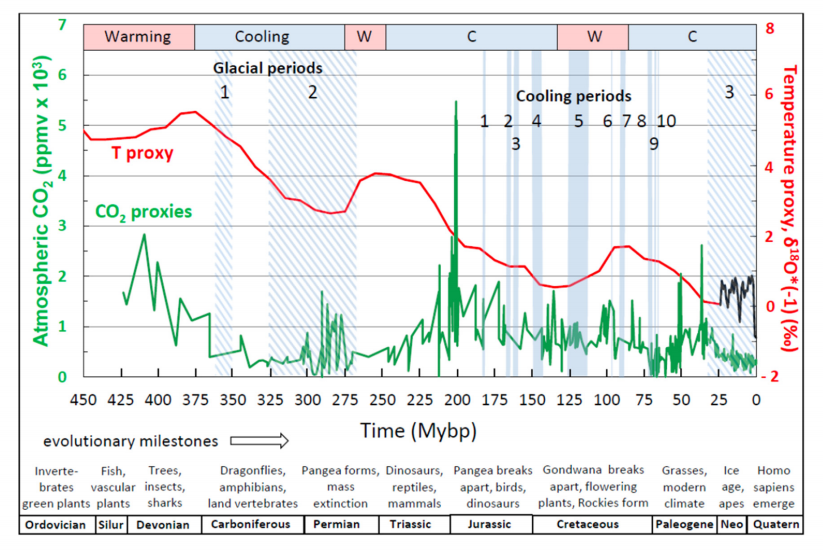
More carbon dioxide will make it a little bit warmer. But carbon dioxide is heavily saturated, to use a technical term. You know, there’s so much in the atmosphere today that if you, for example, could double carbon dioxide, that’s 100% increase, you would only decrease the cooling radiation to space by 1%.  So 100% change in carbon dioxide only makes a 1% change in flux. And that’s because of the saturation that I mentioned. And there’s not much you can debate about that. It’s very, very basic physics. It’s the same physics that produces the dark lines of the sun and the stars. So it’s quite well understood.

And so the question is, what temperature change will a 1% change of radiation to space cause? You know, that’s radiation flux, not temperature. And the answer is it will cause an even smaller percentage change of temperature. There’s really no threat from increasing carbon dioxide or any of the other more minor greenhouse gases like methane or nitrous oxide or artificial gases like anesthetic gases. It’s all a made-up scare story.
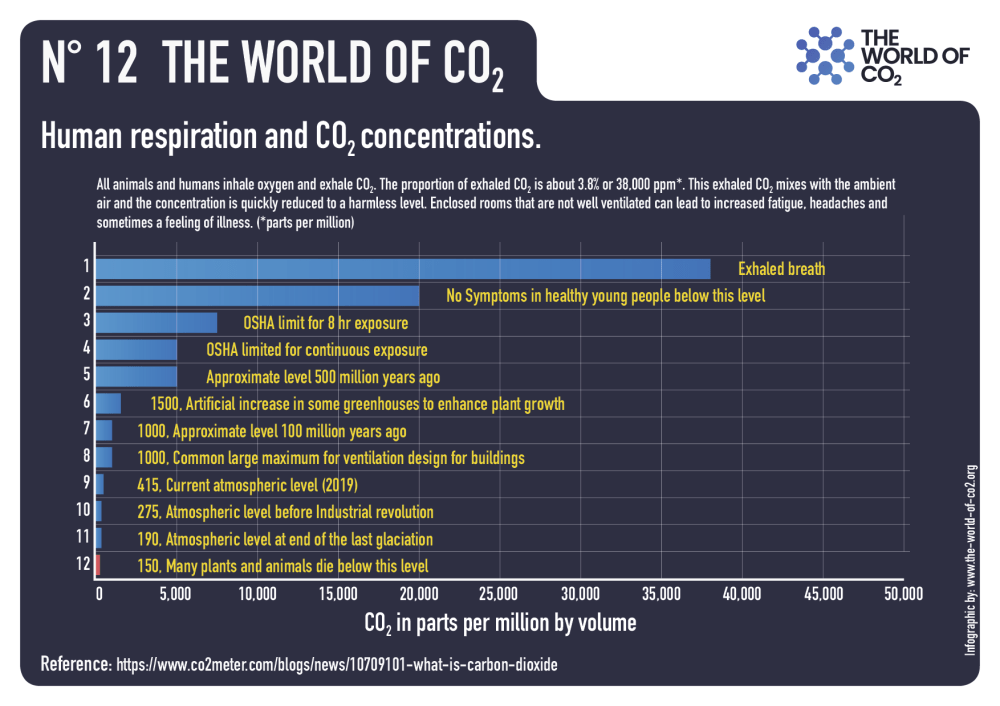
HS: Where did this scare story come from? Why this fixation on greenhouse gases? If you explain it this way, it seems a bit even absurd to be fixated on these gases all the time.

WH: Well, you know, I’m really good with instruments and differential equations, but I’m not so good at people’s motives. And so I don’t really understand myself exactly how this has happened. I think… There are various motives, some of them fundamentally good. For example, one of the motives has been it’s hard to keep people from fighting with each other, so if we could have a common enemy like a danger to the climate, we could all join forces and defeat climate change, and then we wouldn’t be killing each other off.

So there’s nothing wrong with a motive like that, except that you have to lie.
And so, you know, it’s dangerous to make policy on the basis of lies.

So I don’t know what drives it. It’s a perfect storm of different motives. Lust for power, good motives, lust for peace. All for that. Lust for money. But I’m much more comfortable talking about, as I say, the physics of greenhouse gases and the physics of climate than what drives people.

HS: Yeah, yeah. Well, you have said that this climate change or climate alarmism today is, what was it, you prefer scam, but you are willing to settle with a hoax, is it correct?

WH: Well, this is not too serious, but you know, when someone says hoax, I think of hoax as, to some extent, a practical joke. There’s a certain amount of humor in it. For example, the Piltdown Man was a famous hoax where some brilliant Englishman doctored up a I think it was a chimpanzee skull to make it look like a human skull. And this was not too serious, but lots of learned professors wrote papers about it, you know, and it was all nonsense. But this had no aim to make a lot of money, you know, or to gain power.

It was simply, you know, a great practical joke. That’s a hoax. A scam is different. A scam is where you are deceiving people to enrich yourself, to gain power, you know, and so I think that’s a better description of what’s happening with climate than a hoax. But it’s a small detail, I don’t mind calling it a hoax.
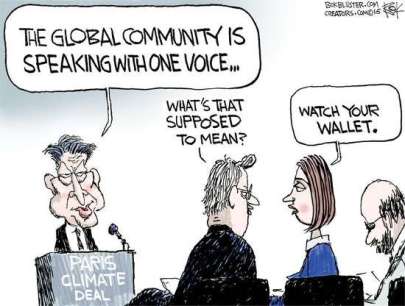
HS: Basically, Professor, there is a lot of money involved in climate change or climate alarmism. Would it be that money is driving this as well or what is your take on that?
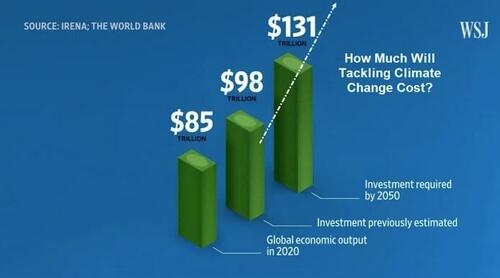
Yes, those are trillions of dollars they are projecting.

WH: Well, I think it’s really true that the love of money has been the root of evil as long as humanity has existed. And here we’re talking about trillions of dollars. If you really went to net zero, the economic implications would just be enormous. People would have to lower their standard of living greatly. It would cause enormous damage to the environment. You cover the world with windmills and solar panels. So… And it’s driven by money. Lots of people are making lots of money. So it’s driven by money. It’s driven by power.

And then it’s driven by poor people who fundamentally believe, you know, and that they really have been misled into thinking that there is an emergency. And you have to be sympathetic to them, you know, who wouldn’t want to save the world if the world was in danger? It is not really in danger, but many people are convinced that it’s in danger. But, you know, there’s this old saying, the road to hell is paved with good intentions, and we’re on the road to hell with net zero.

HS: Yes. Well, like you already mentioned, this crisis is often said to be linked with, for example, extreme weather events. But I don’t know, is it even clear today that we have more extreme weather events because of the warming that is happening? Or is it so?
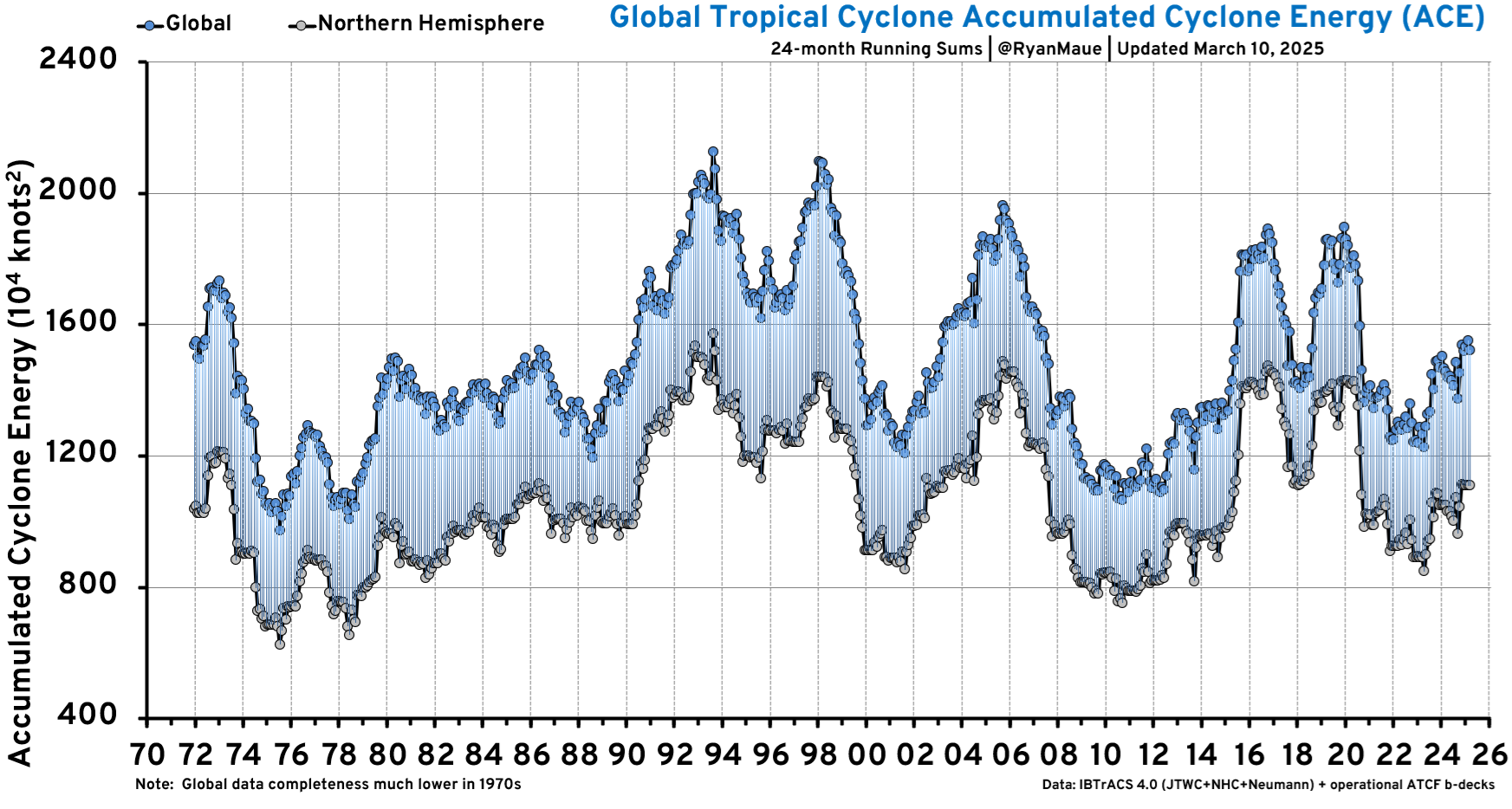
WH: Well, if you look at the data, there’s not the slightest evidence that there’s more extreme weather today than there was 50 years ago. Even the IPCC, you know, the UN body does not claim that there is an increase in extreme weather. They say there’s really no hard evidence for that. And in fact, the evidence is that it’s about the same as the weather has always been. In my country, for example, the worst weather we had was back in the 1930s when we had the Dust Bowl and, you know… people migrating from Oklahoma to California, you know, it was a terrible time.  We’ve not had anything like that since.
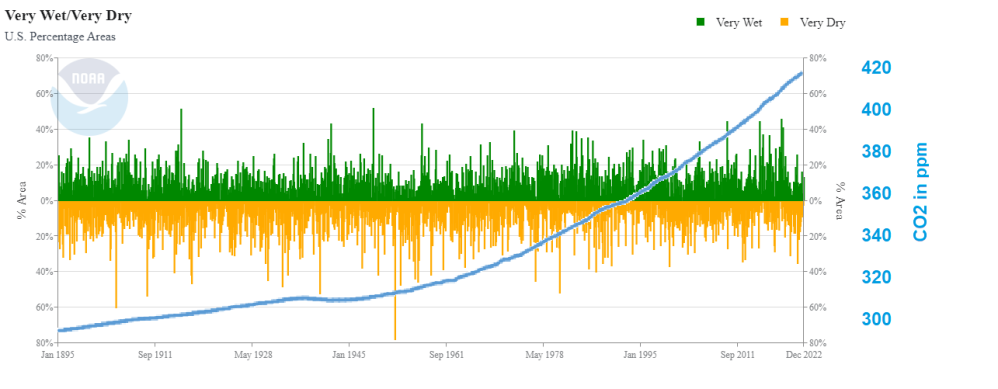
HS: Of course, always to talk about floods, always to talk about hurricanes. And as I understand as well, the IPCC is not actually in their scientific reports. They are not actually saying that there are more. But they are saying something, right? So the question here is, what do you think?  You have probably looked into them a bit more than I am. So is it solid science what’s in there? Or is it also motivated the IPCC scientific reports, politically motivated, for example?
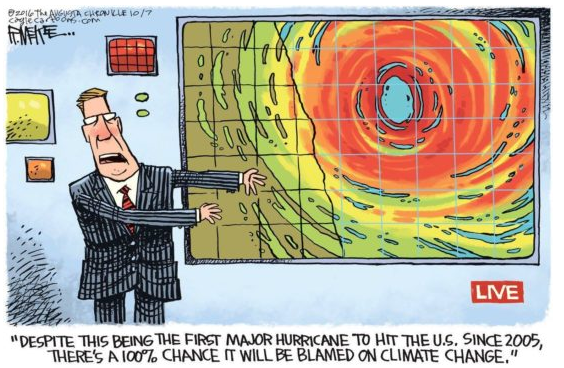
WH: You know, there’s this saying in the communications business, if it bleeds, it leads. So if you’ve got a newspaper or a television business, you have to look for disasters because that’s what people pay attention to. And so part of the problem has been the mass media, which has to have emergencies, has to have extreme events.  And the fact is usually hidden that there’s nothing unusual about an event. They try to deceive you into thinking that this has never happened.

For example, just yesterday they had four or five inches of snow in Corpus Christi, Texas. That’s a lot of snow for Corpus Christi. But, you know, if you look at the records of Corpus Christi, it’s not unusual every 20, 30 years as it happens. It’s been happening for thousands of years. But most people, you know, they’re not even 20 or 30 years of age, and so they’ve never seen this before. So it seems like the world is changing rapidly in front of their eyes, but it’s not changing really at all.

HS: Yes, they can look at it on the television, then it must be true when they are saying that it’s because of climate change, right? So this is the thing. One particular graph that is always talked about when climate is the issue is the famous Michael Mann hockey stick.

The first graph appeared in the IPCC 1990 First Assessment Report (FAR) credited to H.H.Lamb, first director of CRU-UEA. The second graph was featured in 2001 IPCC Third Assessment Report (TAR) the famous hockey stick credited to M. Mann.

WH: The graph is phony, and that’s been demonstrated by many, many people. It’s even different from the first IPCC graphs. It’s a graph of temperature versus time since about the year 2000. you know, about the year zero, you know, from the time of Christ to today.  And what it shows is absolutely no change of temperature until the 20th century when it shoots up like the blade of a hockey stick. So that’s why it’s called the hockey stick curve. So the long, flat… Part of the hockey stick is the unchanging temperature. But that was not in the first IPCC report.

Climate reconstructions of the ‘Medieval Warm Period’ 1000-1200 AD. Legend: MWP was warm (red), cold (blue), dry (yellow), wet

The first IPCC report showed that it was much warmer in Northern Europe and United States, North America, in the year 1000 than it is today. There really was a medieval warm period, which was what allowed the Norse to settle in Greenland. and have a century or two of successful agriculture there. It’s never gotten that warm again since.  It may happen, but the hockey stick curve basically erased that, so it was… It’s like these Orwellian novels. 1984, there was this… They continued to rewrite history, you know, so what was history yesterday was not history today, you know. So it was rewriting the past. There clearly was a warm period.There is evidence from all around the globe that it was much warmer in the year 1000 than today. We still have not gotten as warm as it was then.

HS: Yes, yes, and the warm period, as I understand, was followed by the Little Ice Age. So 19th century, the warming that started then is actually, it started at the end of this Little Ice Age.

Earth is still recovering from the Little Ice Age, which was the coldest period of the past 10,000 years, that ended about 150 years ago.

WH: That’s right, that’s right. For example, that’s very clear if you come to Alaska, And look at the Alaska glaciers. In particular, there’s a famous glacier bay in Alaska which was filled with glaciers in the year 1790 when it was first mapped by the British captain Vancouver. the ice came right out to the Pacific.

And already by 1800, it had receded up into the bay. Some of it was melting by 1800. And by 1850, most of the ice was gone. I’m talking about the 1800s, not the 1900s, not the present time. So it’s pretty clear from Glacier Bay that the warming began around the year 1800.  And it’s just been steadily warming since then.

HS: I have been shown another graph many times which shows a correlation between the increase of carbon dioxide in the atmosphere and the temperature rise during the last, let’s say, 150-200 years.  Yeah, it’s a correlation, of course, but is there any causation as well? Because you pointed it out as well that there is a warming effect.  Carbon dioxide has a warming effect in the atmosphere, but it’s not leading as I understand.
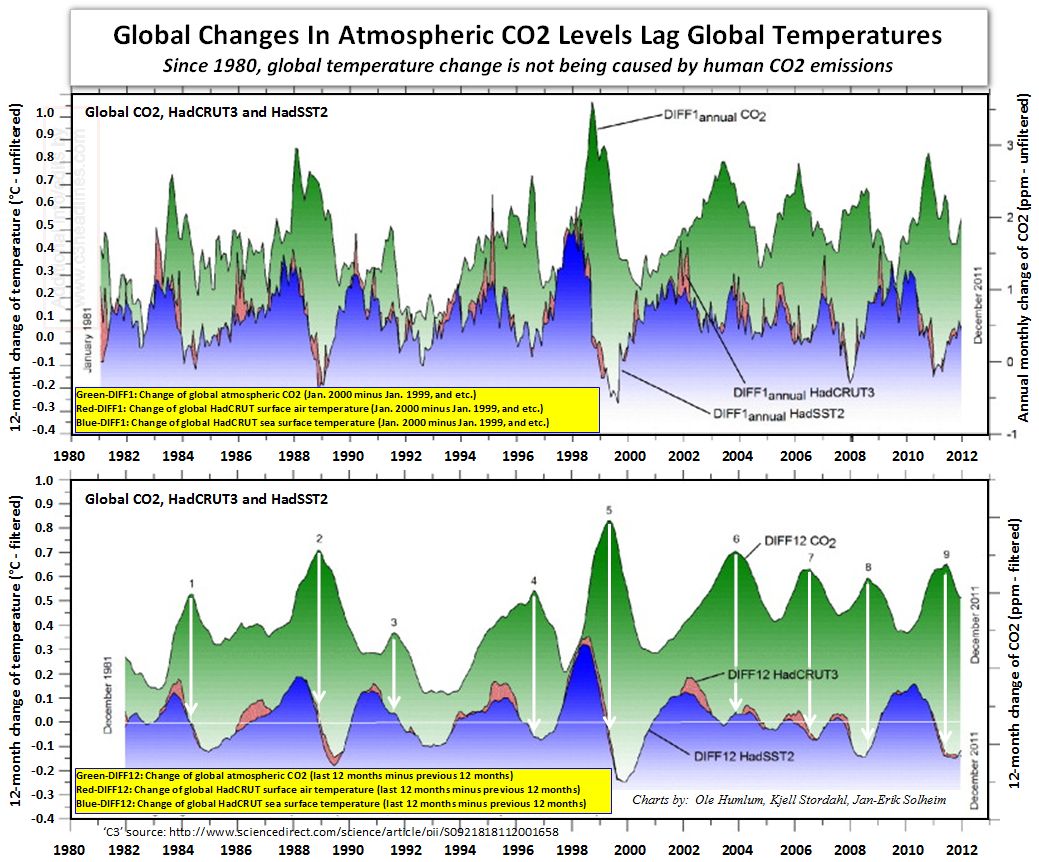
► Changes in global atmospheric CO2 are lagging 11–12 months behind changes in global sea surface temperature. ► Changes in global atmospheric CO2 are lagging 9.5–10 months behind changes in global air surface temperature. ► Changes in global atmospheric CO2 are lagging about 9 months behind changes in global lower troposphere temperature. ► Changes in ocean temperatures explain a substantial part of the observed changes in atmospheric CO2 since January 1980. ► Changes in atmospheric CO2 are not tracking changes in human emissions.

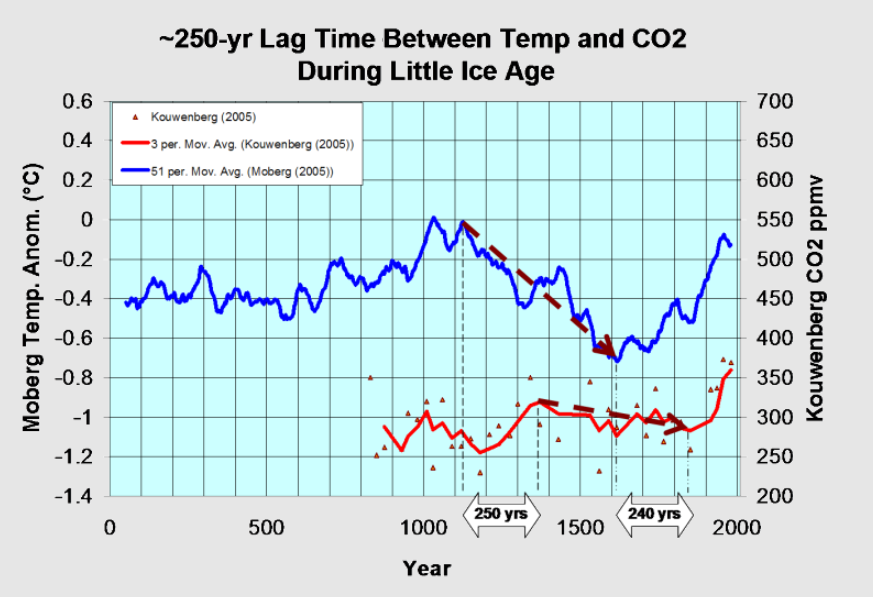
WH: Yeah, that’s correct. You know, you can estimate past CO2 levels by looking at bubbles in ice cores from Antarctica or from Greenland. And you can also estimate past temperatures by looking at the ratios of oxygen isotopes in the ice and the other proxies. So there are these proxy estimates of past CO2 levels and past temperature.

And they are indeed tightly correlated. When their temperature is high, CO2 levels are high, and temperature is low, CO2 levels are low. But if you look at the time dependence, in every case, first the temperature changes and then the CO2 changes. Temperature goes up, a little bit later CO2 goes up.

Temperature goes down, a little bit later CO2 goes down. So they are indeed correlated, but the cause is not CO2, the cause is temperature. So something makes the temperature change and the CO2 is forced to follow. That’s easy to understand. It’s mostly due to CO2 dissolving in the ocean. The solubility of CO2 is very temperature dependent.

So if the world ocean’s cool, they suck more CO2 out of the atmosphere. And if they warm, more CO2 can come back into the atmosphere. So there’s nothing surprising about that. The only surprise is nobody really knows why the temperature changes, but it’s certainly not CO2 causing it to change because the CO2 follows the change.

HS: It doesn’t precede it. Causes have to precede their effects.  from the same 2023 presentation that I already mentioned, that I listened. And as a member of Jason in 1982, you were one of the authors of a scientific paper that aimed to measure the effects of CO2 to global warming. The first number you got was too small. Then you just arbitrarily increased it.
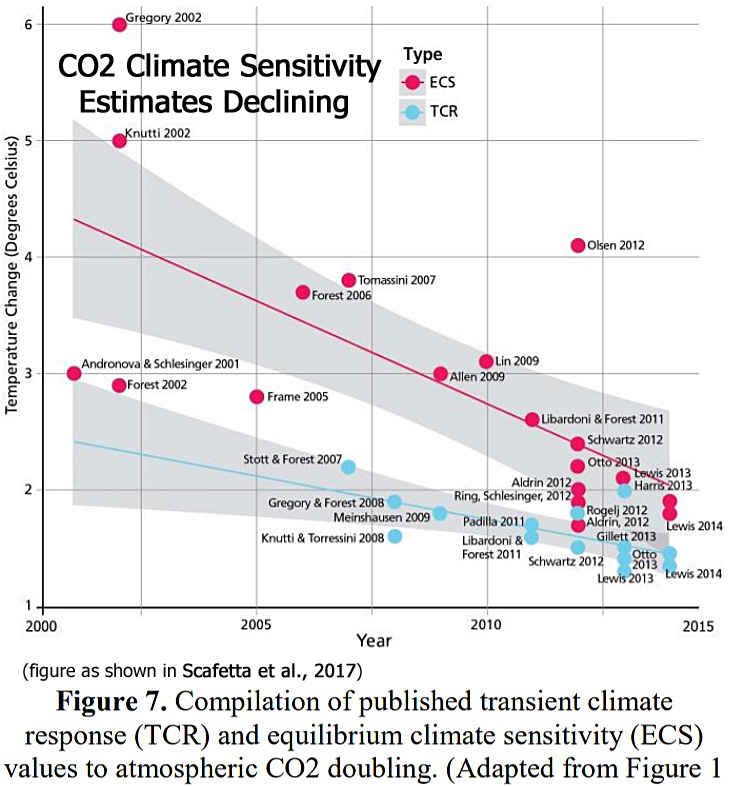
WH: You’re asking, the key question is how much warming would be caused if you double carbon dioxide. That’s sometimes called the climate sensitivity or the doubling sensitivity. And the first person to seriously try to calculate that theoretically was your neighbor across the Baltic, Svante Arrhenius. He was a Swede and a very good chemist, and he was interested in this problem. He was the first one to really work on it, and his first paper was written in 1896. So the first climate warming paper was 1896 by Arrhenius, and he estimated that doubling CO2 at that time would warm the earth by around six degrees.

It was a big number. He didn’t know very much, so it was not a bad number given what he knew at the time. As he learned more, he kept bringing that number down, so the last number he published was about four degrees, and it was still going down.  So the number that we published was three degrees, this little Jason study. So it was only a little bit smaller than Arrhenius’ number. But that was because neither he nor we really knew enough about how the climate works to get a reliable answer.

And I think the only way to really get a reliable answer is from good observations over long periods of time. And we simply don’t have good enough empirical data right now to know what that is. But I’m pretty sure that doubling CO2 by itself is unlikely to cause warming of more than about one degree Celsius. You know, if you do the simplest calculation, you find that answer, it’s a bit less than one degree for doubling CO2.

And so three degrees, four degrees, the only way to get that is with enormous positive feedbacks. And so that’s what these computer models do that we’ve been talking about.  They inject feedbacks in a very obscure way so you can’t figure out what they’ve done. But it’s a supercomputer, so how could it be wrong? It must be right, it’s a computer after all. But nevertheless, it’s giving these absurd positive feedbacks. And most feedbacks in nature are not positive, they’re negative.

There’s even a law called Le Chatelier’s Principle, which is that if you perturb some chemical system or physical system, it has feedbacks. And they try to reduce the perturbation. They don’t try to make it bigger. They try to make it smaller. So climate has turned that completely on its head. It says all feedbacks in climate are positive, and if it’s negative, forget about it. You won’t get your research grant renewed next year if you put that in your proposal. So it’s a mess, and it’s going to take a long time to clean this up.

Of course, if someone is not on the right side of this net zero debate, people are starting calling him names. He’s a climate denier or climate skeptic and so on. But those ad hominem arguments are what are used in the media to shut down the arguments of even scientists.  One of them is that if you’re not a climate scientist, you’re not allowed to talk about climate.  Well, of course, that’s nonsense. Climate is really all physics and chemistry. And so anyone with a good grounding in physics and chemistry can know as much about climate as a climate scientist.

In general, climate scientists are not well educated. When I look at American universities, maybe it’s better in Estonia, but you go to a class and your education consists on how do you organize a petition to your local legislator. So that’s your knowledge as a climate scientist. You don’t have to learn physics, you don’t have to learn chemistry, you don’t have to learn electromagnetics and radiation transfer. You have to learn how to work the political process.  So it’s true that most physicists aren’t very good at that. You know, they’re quite good at physics, but they’re not very good at talking to the Congress or to the president.

HS: Yeah, yeah. So basically, climate science has become something more like a social science in that sense.

WH: Yeah, that’s right. It’s been very heavily politicized. There was something very similar to this in the Soviet Union in the field of biology. There was this Ukrainian agronomist, Lysenko, who… got the ear of the Communist Party and was supported for many decades with just crazy theories about biology, you know, you could grow peaches on the Arctic Circle if you just listen to him.  All sorts of nutty things and that there was no such thing as genes, but he had a lot of political support and so he essentially destroyed biology for a generation in the Soviet Union.  You know if you taught your class about genes, you know, Mendel’s wrinkled peas and smooth peas, you were lucky if you were only fired, you know, you could have been sent to a concentration camp and several people were condemned to death for teaching about genes. And so I think climate science is a lot more like Lysenkoism than it is normal science.

HS: Yes, well, yes, this is something that we should be able to learn from because this was the Stalin era, this was the craziest time period, absolutely. In Eastern Europe we also know a lot about that and it does seem to me as well that Löschenkism is something that is like gaslighting the public and ostracizing renowned scientists, for example, like yourself. This is something that has been done related to climate science. Or how do you feel that? Do you feel that you have been targeted by those activists, activist politicians or not?

WH: I don’t feel any pain. I don’t pay much attention to them because I have very little respect for them. The people that I respect, most of them agree with me. I’ve personally not suffered from it, perhaps just because I don’t pay attention to it. I’m older, I’m retired, so I’m not dependent on government grants.  Younger people could not do this. So people in the middle of their career have a very serious problem because they’ll lose their research funding and they won’t be able to continue their career if they don’t sign up to the alarmist Dogma.

HS: And one of the things how they shut down criticism is simply by stating that 97% of climate scientists are saying that our climate change or global warming, it is anthropogenic and you cannot argue with 97%, can you? What do you think? Is science democracy?

WH: There are some small anthropogenic effects on climate. Any big city, for example, is quite a bit warmer than the countryside. If you go 30 kilometers outside of New York City, it’s cooler. Or any other big city. So those are called urban heat island effects. So it’s clearly caused by people.

But if you look at undisturbed areas far from urban centers, there the climate is doing what it has always done. It’s warmed, it’s cooled, it’s done that many, many times over history. And there’s not the slightest sign of anything different resulting from our generation burning fossil fuels.

My own guess is that fossil fuels may have caused about close to a degree, maybe three-quarters of a degree of warming, but that’s not very much. When I got up this morning, it was minus 10 Celsius. Here in my office, it’s quite a bit warmer. One degree, you can hardly feel it.  My air conditioner doesn’t trip on and off at one degree, so it’s not a dangerous increase in temperature. Saving the planet from one and a half degree of warming is just crazy. Who cares about one and a half degree of warming? It won’t be that much anyway. But if it were, it wouldn’t matter.

HS: If the planet warms a bit, is it actually bad to us?
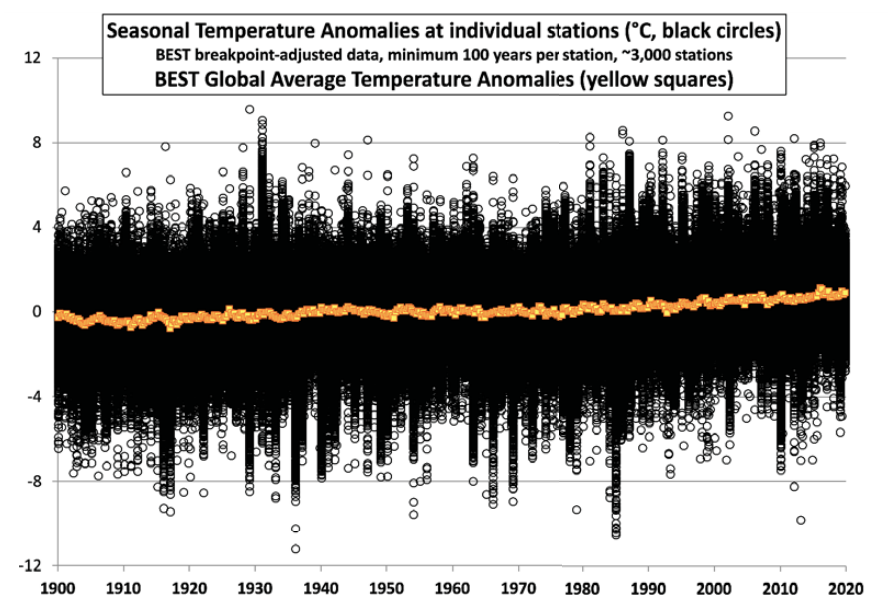
WH: No, of course it’s not bad. For example, I have a backyard garden, and I would welcome another week or two of frost-free growing season in the fall and in the spring. I could have a better garden, and that’s true over much of the world.  And if you look at the warming, most of the warming is in high latitudes where it’s cold. It’s where you live in Estonia, where I live in New Jersey. It doesn’t warm in India. It doesn’t warm in the Congo or in the Amazon. Even, you know, the climate models don’t predict that. They predict the warming, when it comes, will be mostly at high latitudes near the poles. And that’s where actually the warming will be good, not bad.

HS: One more question about climate science. It is being told to us that there is a consensus on anthropogenic climate change. And my question actually here is that in science, can there be a consensus? What is a consensus in science even?
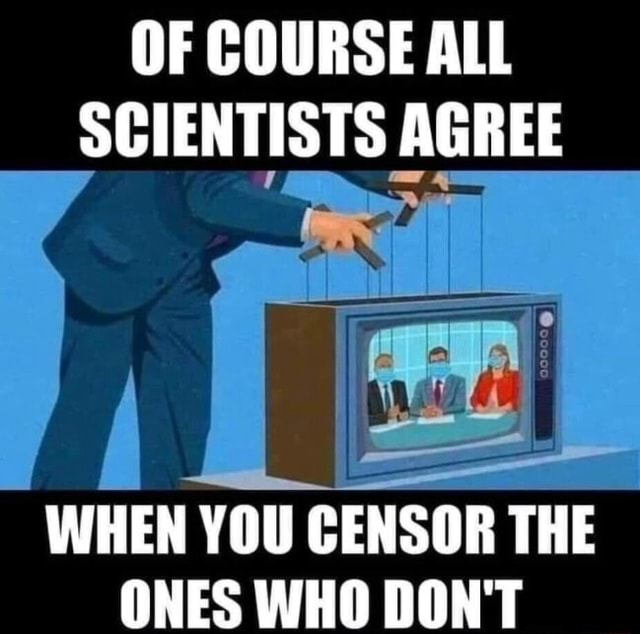
WH: Well, I think you know very well that science has nothing to do with consensus. Michael Crichton was very eloquent about this. And if you don’t know about his work, you should read it. But he says when someone uses the word consensus, they’re really talking about politics, not science.

Science is determined by how well your understanding agrees with observations. If you have a theory and it agrees with observations, then the theory is probably right. But it’s right not because everybody, all your friends agree with it, it’s because it agrees with observation. You make a prediction and you do an experiment to see whether the prediction is right. If the experiment confirms it, then the theory is probably okay. It’s not okay because everybody agrees with you that your theory is right. And so that’s what the climate scientists are trying to claim, that science is made by consensus. It’s not made by consensus.  There really is a science that is independent of people. There is a reality that could care less what the consensus is. It’s just the way the world works. And that’s real science.

HS: What are your views on energy transition? Should we, you know, stop burning fossil fuels? And why, if so?

WH: Well, of course, we shouldn’t stop burning fossil fuels. We can’t stop, you know. It’s suicide. It’s economic suicide. And more than economic, it’s real suicide. People will die. You know, they tried something like that in Sri Lanka, you know, 15, 20 years ago when the extremist government came in and stopped the use of chemical fertilizer, you know, because it was unnatural. So everyone was supposed to go back to organic farming and the result was that, you know, the rice crop failed, the tea crop failed, you know, the price of food went up, people were starving in the streets. The same thing will happen if we go to net zero.

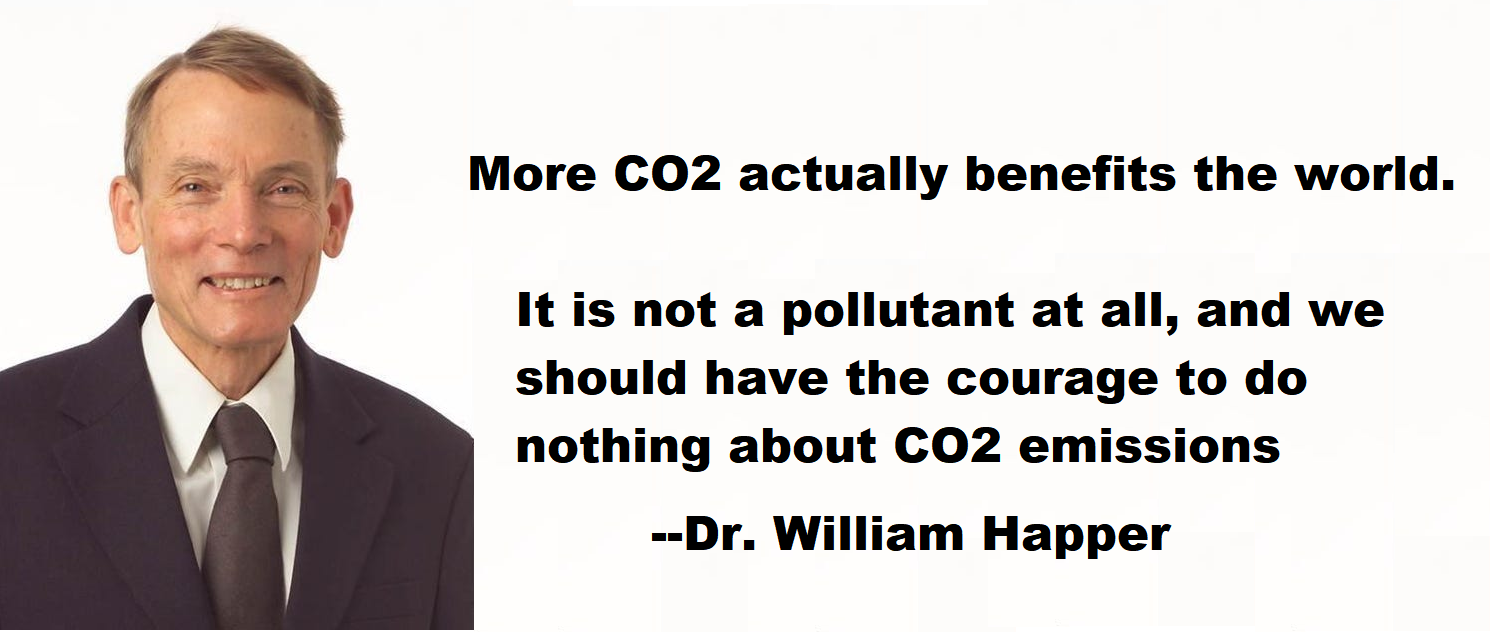
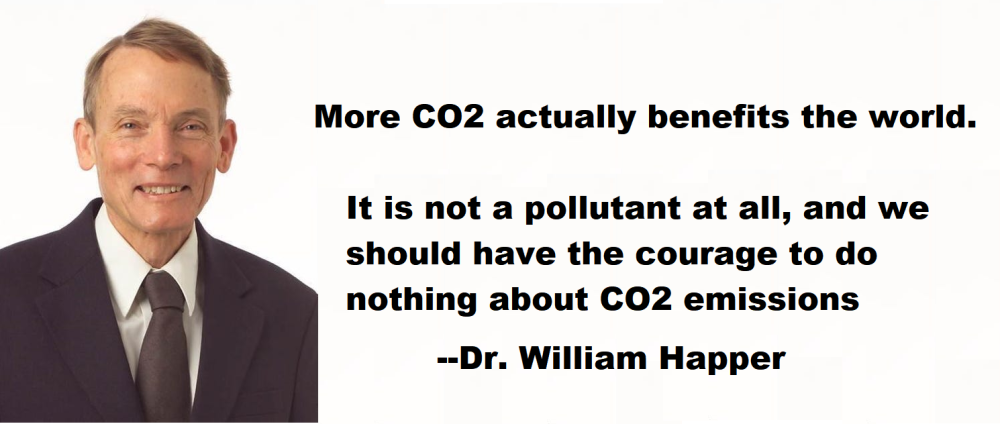
You can’t run the world without fossil fuels. We’re completely dependent on them, especially for agriculture, but transportation and many other things. There’s nothing bad about them. If you burn them in a responsible way, they cause no harm. They release beneficial carbon dioxide. Carbon dioxide really benefits the world. It’s not a pollutant at all.

HS: There is the question of how much longer will fossil fuels last. There is a finite number and for years people have wondered when will they run out and what will we do when we run out of fossil fuels. And so that’s an interesting question that’s worth talking about.

WH: It’s not an immediate problem, but sooner or later it will be a problem. My own guess, we’re talking about a century or two, not decades. But I think our descendants will have to replace fossil fuels, and my guess is that they will make synthetic hydrocarbon fuels.  No one has ever discovered a better fuel than a hydrocarbon, you know. We ourselves, you know, store energy as hydrocarbons. You know, the fat on our belly, you know, that’s a hydrocarbon. You know, so it’s really good, you know. So we can make hydrocarbons ourselves from limestone and water if you have enough energy.

There are ways to do that chemically. And so my guess is that in 200 years, that’s the way energy will be… handled. We’ll make it from inorganic carbon, limestone probably, and we’ll burn it the same way we do today. You know, we’ll make synthetic diesel, we’ll make synthetic gasoline, and continue to use internal combustion engines.  No one’s invented a better engine than an internal combustion engine.

HS: But what about nuclear energy? What are your thoughts on that?

WH: Well, nuclear energy clearly works. It makes electricity, so you can’t run your automobile on nuclear energy unless you’re stupid enough to buy an electric car. So nuclear has had some of the same problems as fossil fuels. There are these ideological foes of nuclear energy And they have two main arguments. The first argument, and one that does worry me, is that it’s not that difficult to change a nuclear commercial enterprise into a weapon. And nuclear weapons really are very, very dangerous.

So that’s one of the oppositions. But the other is completely phony, is that we can’t handle the waste. That’s not a difficult problem, actually.  It’s technically quite easy to handle the waste. For example, at a typical nuclear plant in the United States, there’s a dry cask storage yard, which is not as big as the parking lot. And it’s got a century worth of fuel. It’s perfectly safe. And you could leave it there for several centuries and nothing would happen to it.  So there’s no need to process it. You can let it sit there and, you know, in a hundred years, maybe people will regard it as a useful mine for various materials. So nuclear is fine, and I think it will play an important role for a long time in human affairs.
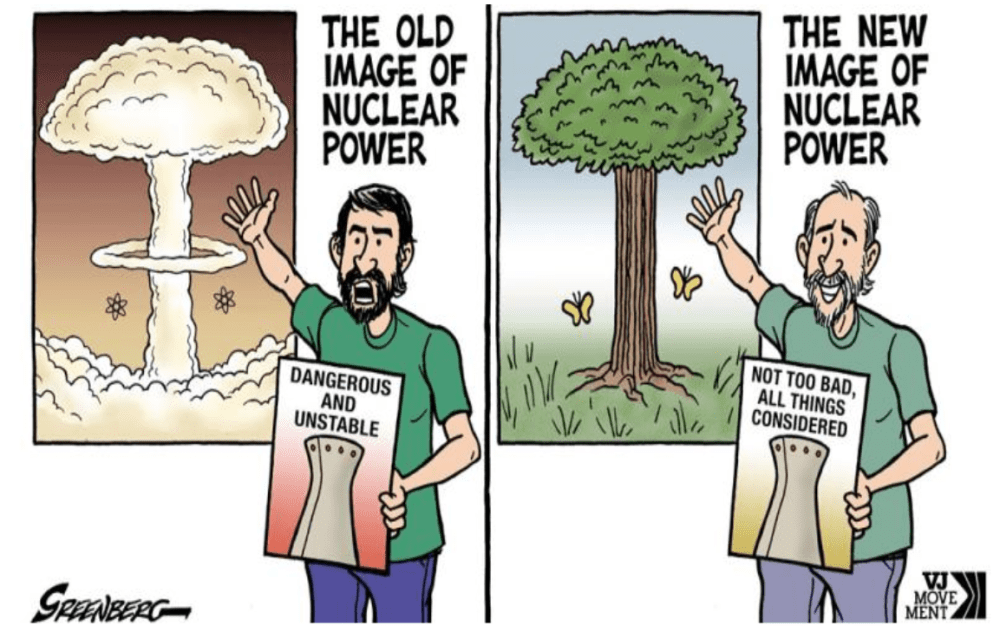
You know, the big dream has always been fusion, nuclear fusion energy, where you combine deuterium and tritium, you know, and make power. That’s turned out to be much, much harder than we ever thought it would be. But my guess is it’s a problem that  will eventually be solved.

Someone will have a really good new idea about how to do it. If we keep smart people working on it, someone will figure out how to do it. So I’m optimistic about the future for energy. I think humanity is going to do fine if they don’t self-destruct.

HS: Well, Professor, to kind of sum up, I would like to ask you about what is, in your opinion, what are the real problems? As I understand, and I tend to agree with you, climate change currently at least is not a real problem for humanity. But probably there are some. And what is your feeling? What are they?

Well, the problem has always been living together. How do you keep humanity from self-destructing? And that’s why I have some sympathy for the climate alarmists. They thought that having climate as a common enemy would be one way to prevent this. So you have to admit that that’s not such a bad motive.

I don’t think it’s true.  I don’t think it will work. I think it’s worse than nothing. But I guess the question is how do we keep people in a civilized society indefinitely? And As I said, I’m a lot better with differential equations and instruments than I am with this sort of a question. But just speaking personally, I think everybody should have a feeling that they’re doing something significant with their lives. So I think anything we can do in society is to let young people feel like they’re significant and they’re doing something worthwhile and useful it would be good for the whole world.


On Energy, Carney the Wrong Man at the Worst Time

Geoff Russ explains at his National Post article When it comes to energy, Carney is the wrong man at the worst time.  Excerpts in italics with my bolds and added images.

The world is moving on from global climate goals to more pressing matters

Even if only for a matter of weeks, Mark Carney is likely to become prime minister of Canada when this Liberal leadership race concludes. His vision for the country is rife with climate strategies and schemes belonging to a world most can remember, but that no longer exists.

The world has moved on. International accords such as the 2015 Paris Agreement, cooperation between financial institutions on climate goals, and more carbon pricing are no longer priorities for Canada in 2025. Canada is not a superpower, no serious person would say differently, and we have to swim in the global current of change.

Trudeau was not prepared for Trump’s bargaining style.

This doesn’t mean bowing to the whims of an unpredictable strongman, but it does require recognizing that the Obama world of liberal internationalism and high-minded ideals is gone. Whatever chance it had of enduring died with Joe Biden’s presidency.

Russia’s invasion of Ukraine in 2022 had already scrambled world energy supply lines, and Trump’s return to the White House, along with the rise of AI technology, have changed everything.

AI in particular has been one of the biggest shifts since Carney’s days as a central banker. The astonishing and rapid growth of AI has resulted in eye-popping demands for energy, with data centres set to consume more electricity than entire cities.

Grids will be pushed to their limits. This spells danger for Canadian provinces like British Columbia, whose hydroelectricity regime can no longer reliably supply its economy and population. For consecutive years now, BC Hydro has been forced to import energy from Alberta and the U.S., the latter of which may soon be subject to counter-tariffs and other heightened costs.

Carney’s ideas about the climate and the so-called energy transition” are at odds with his promises to grow the use of AI in the public service and future economy. Canada will have to build many data centres to keep up with other G7 countries, but where will their energy come from?

Nuclear energy is the most commonly cited solution, and several American big-tech giants have made plans to use small modular reactors (SMRs) to power the data centres. Once built, nuclear power provides an abundance of cheap, low-emitting, and reliable energy.

B.C. has standing laws that prohibit the building of nuclear generators, and the provincial NDP government unambiguously rejected the possibility of changing that. In the meantime, wind and solar will not cut it, both being subject to weather patterns that make them unreliable and insufficient.

The best alternative is natural gas, 1,368 trillion cubic feet of which sits beneath the feet of Canadians and can serve as an abundant source of power for the modern economy. Unfortunately, Carney’s ideas about carbon pricing would fall directly on the producers, making it far more expensive while deterring investment.

Trump is an unabashed economic nationalist, and Canada needs
to make itself competitive and attractive to
both energy and technological investment.

Canadian natural gas is more important than ever, both for the country and the world. After Russia invaded Ukraine, EU countries had to rapidly seek new, stable suppliers of energy to replace the massive Russian gas imports that supplied much of the EU.

The war revealed how energy security amongst friends and allies was just as important as emissions reductions, if not more so. Canada’s first opportunity was squandered when the Liberal government rebuffed European calls for Canadian LNG as having “no business case”.

Germany has been forced to turn back to coal as a power source as energy bills surge, driving German automobile manufacturers to close down some of their plants. Canadian LNG exports need to be prioritized for domestic use and exports abroad, and insisting on slapping punitive carbon taxes on the industry is against Canada’s interests.

Another challenge to Canada’s economic future is the recently proposed, $44 billion USD LNG project in Alaska. Envisioned as a joint US-Japanese, the project would establish Alaska as the leading LNG exporter to Japan, one of the world’s largest importers of natural gas.

If completed, the Alaska LNG project would be a direct threat to BC’s natural gas industry. One of the major projects, Cedar LNG in Kitimat, is set to come online in 2028, followed by two more in Squamish and near Prince Rupert. B.C. has a good head start, but the US and Japan plowing ahead with $44 billion LNG deals should be a wakeup call to Ottawa.

An LNG export deal with Japan of similar value should be completed while American LNG still has to pass through the Panama Canal to get to Japan, not after it starts being shipped from Alaska. Taxing natural gas producers will slow potential projects down and make Canada less competitive.

Canada cannot diversify its trading partners if the U.S. is allowed to overtake our industries and slowing it down with carbon taxes and Canada’s onerous regulatory regime in the name of outdated climate movements is a gift to President Trump.

Like it or not, major international initiatives live or die
depending on American involvement. This was true of the
Trans-Pacific Partnership (TPP), and it is true of NATO.

Mark Carney’s own attempts to forge agreements such as the Glasgow Financial Alliance for Net Zero (GFANZ), which has been abandoned by major American and Canadian banks and financial institutions, have collapsed. Canada needs to prioritize building up our own internal energy infrastructure and making it as competitive and attractive to investors as possible.

This is the age of nationalism, and we should recognize the opportunities it will bring to Canada. If Carney’s pledge to make Canadians “masters of our own housemeans trying to captain toothless climate accords and drive away investment, then he should not be the head of our house.

Climate Crusade Is a Dead End

This post presents the main points and exhibits from Professor de Lange’s presentation February 26, 2025.  Most images are self explanatory, with some excerpts in italics lightly edited from captions, and some added images as well. H/T Bud Bromley.

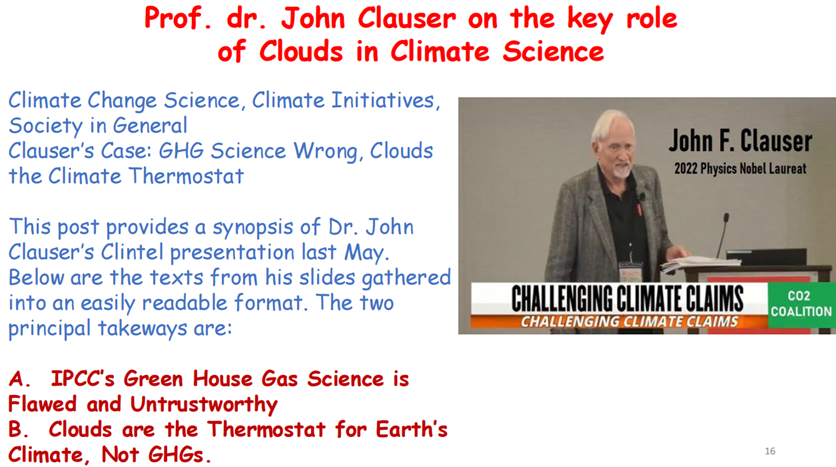
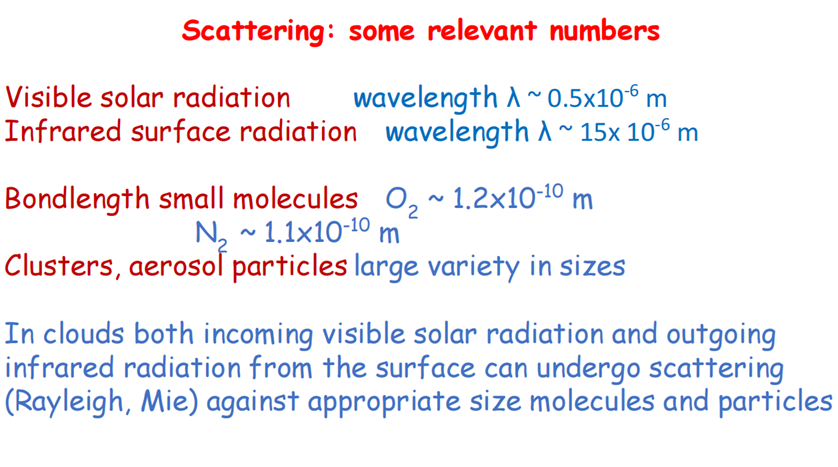
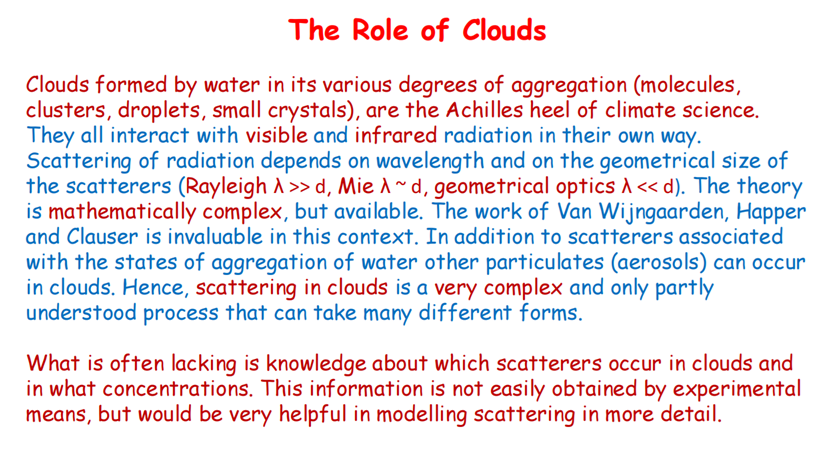
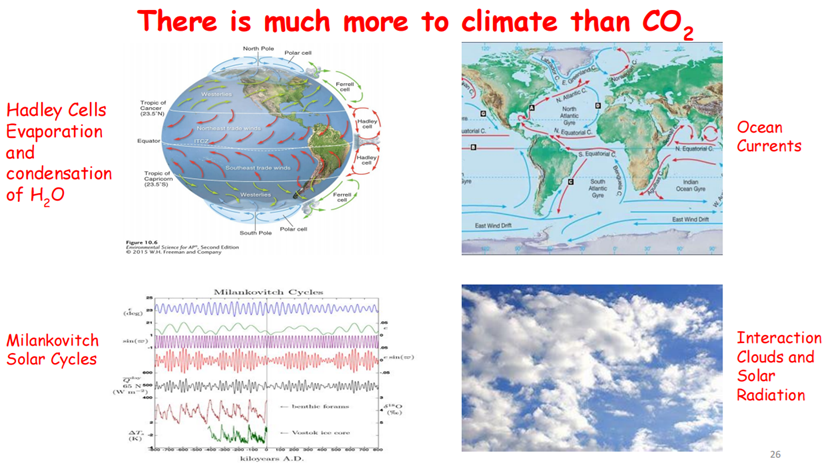
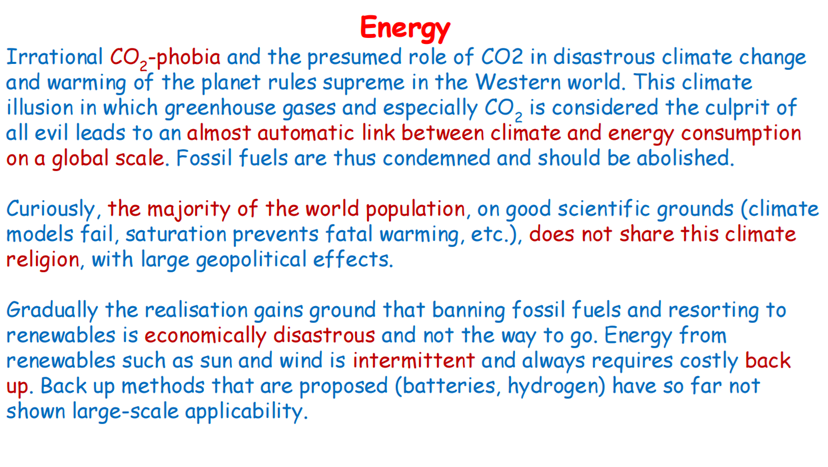
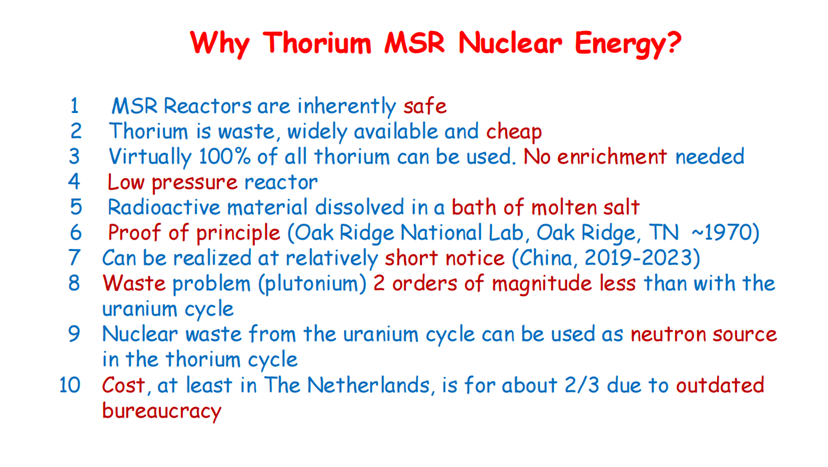
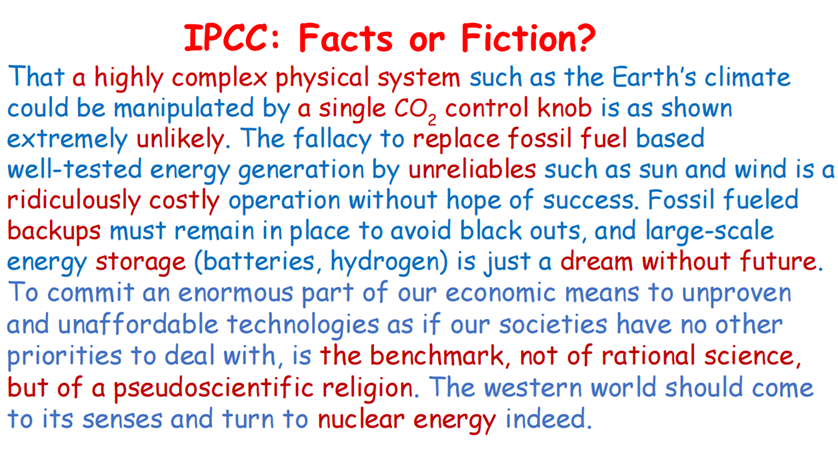
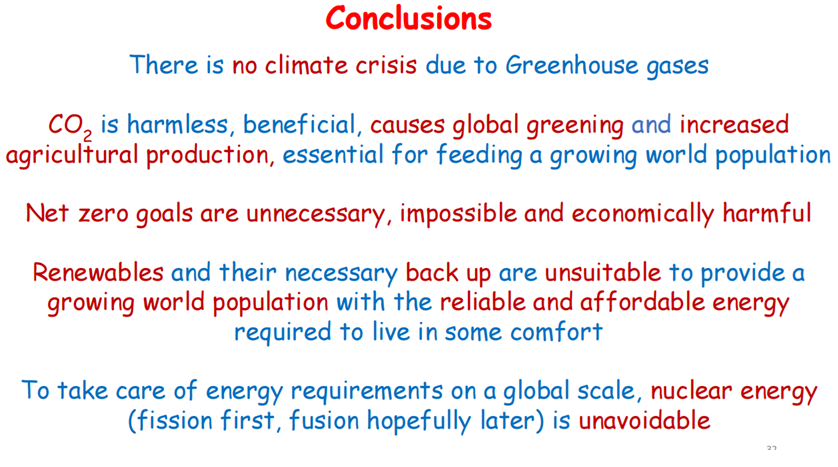
Prof. de Lange demonstrates that there is no credible climate crisis, and that there is much more to climate than CO2 alone. First, he addresses the discrepancy between satellite temperature measurements and results from climate models. Second, he shows the effect of even doubling the CO2 concentration has only minor effects, while it is in fact crucial to photosynthesis. Third, he shows that how the significant lack of experimental data on cloud composition now hampers progress in climate science. Fourth, he demonstrates that there is no convincing correlation between CO2 and temperature on a geological time scale. Fifth, he addresses global future energy supply, demonstrating that renewables are “unaffordables”, just as are untested technologies (batteries, hydrogen), and he concludes that the future has to be based on nuclear power.

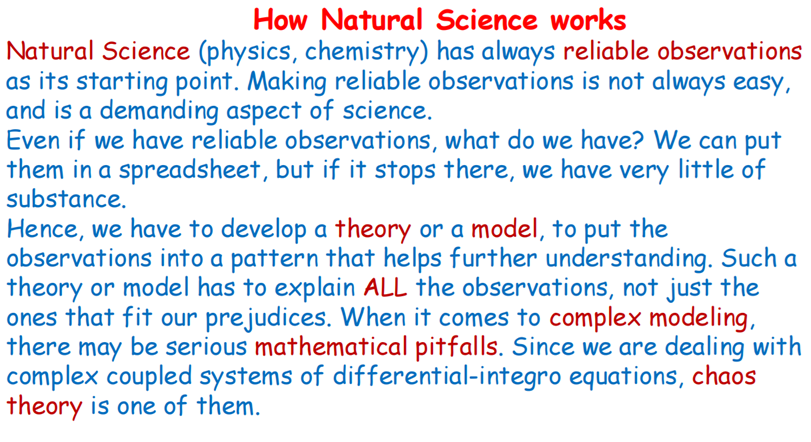
1.  Natural Science and Observations versus Models

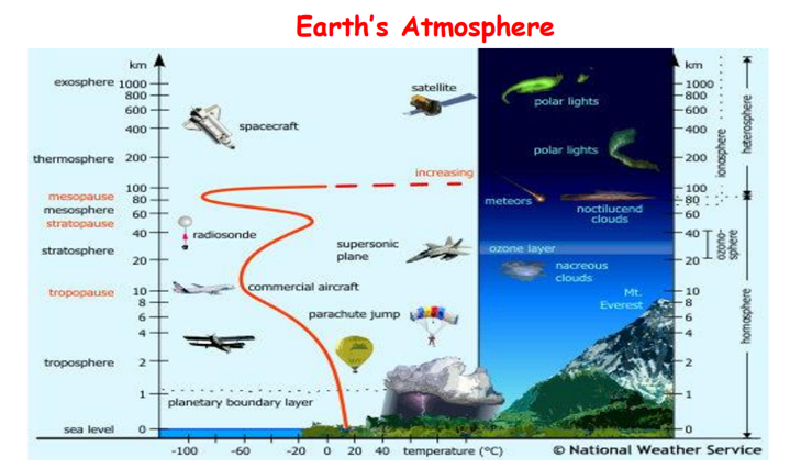
2.  Atmospheric Physics and Greenhouse Gases

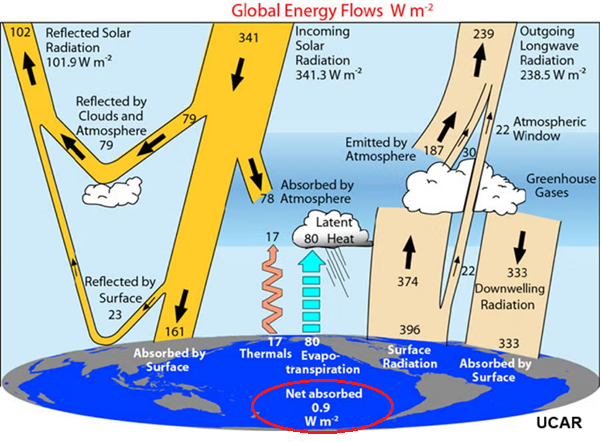
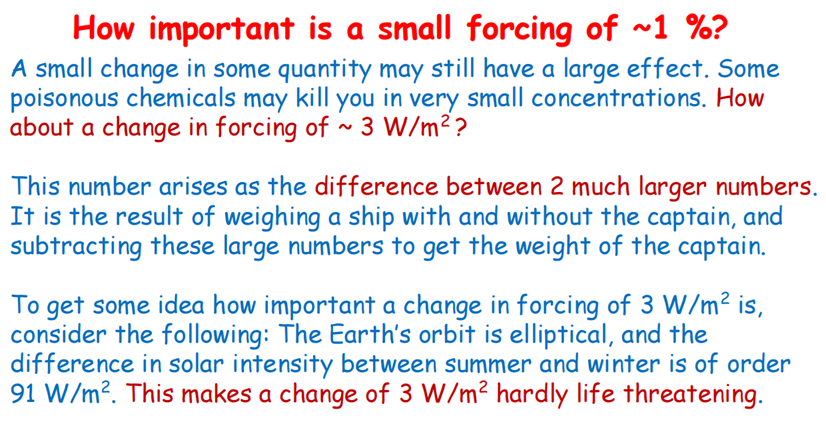
Warm Surface of the earth can be viewed as a radiator in the infrared that radiates Intensity out Into the atmosphere, and again the flow of infrared energy is not interrupted. It is absorbed by the atmosphere and that’s where the clouds turn out to be extremely important. They delay the outgoing energy into the universe. In climate science we balance the yellow incoming solar energy in watts per square meter with the outgoing radiation from the surface and atmosphere. Some is reflected and some is absorbed and emitted as long wave radiation.  The imbalance is shown at the bottom as ~1 W/m2, which is a small difference between two much larger energy flows showing hundreds of W/m2. If for any reason, there is a slight change in either the incoming or outgoing flows, the imbalance would change dramatically.

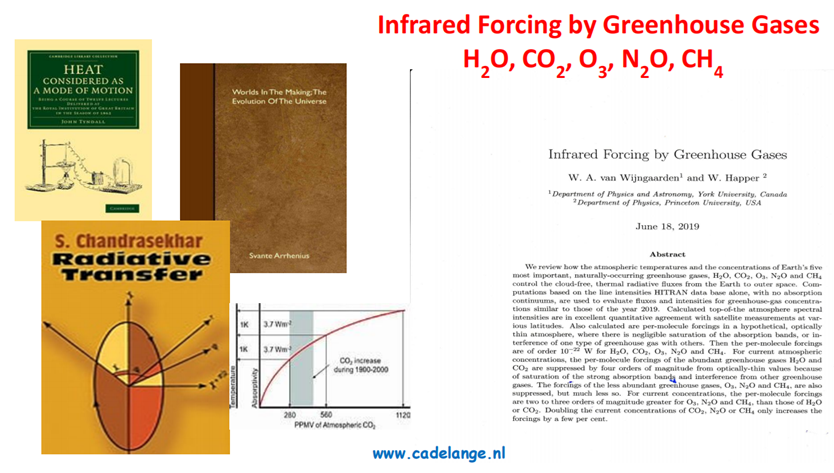
The fact that Greenhouse gases play very important role in absorbing infrared radiation in the atmosphere is already 150 years old. We shall see that dependence of the temperature of the earth due to greenhouse gases is not linear, the effect on temperature is logarithmic. This is seen in the graph on the left side.

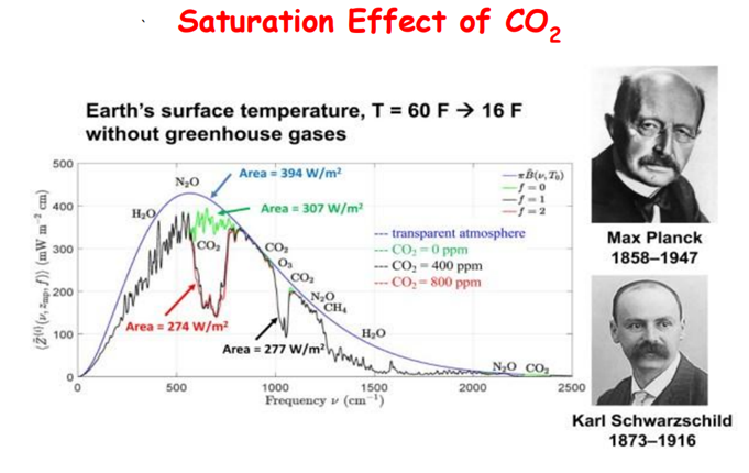
On the horizontal scale we see the frequency scale expressed in common unit in physics in wave numbers. And here we see the continuous Blue Trace results from infrared radiation that would leave the warm surface of the planet if there were no atmosphere at all. The total surface under the blue trace depends on temperature to the fourth power, very temperature dependent.

We see the effect of atmosphere greenhouse gases represented by the black line, which is a bit lower than the blue Trace. The green line shows the where the black line would be, were there to be no CO2 in the atmosphere. The red line shows that there would be little difference from doubling CO2 from 400 ppm to 800 ppm.

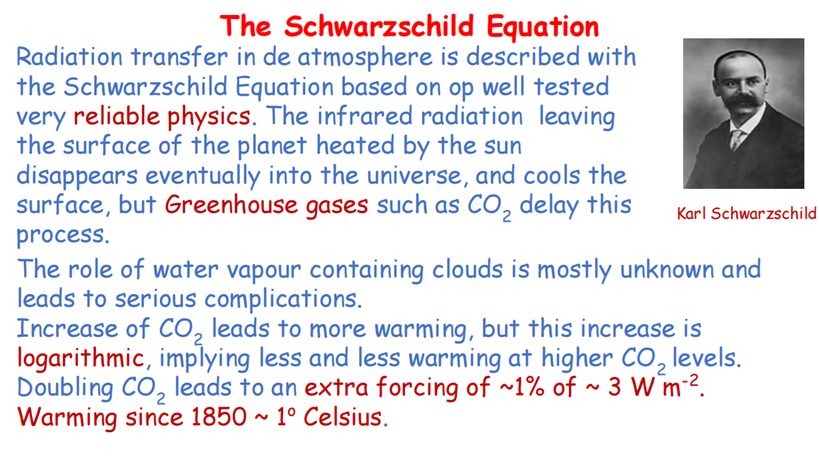
The role of water vapor is terribly important.  Water is the most important Greenhouse gas, but when we Go to clouds, he situation becomes much more complicated than in the absence of clouds. So clouds again are the Achilles heel of of climate Science.  As I said an increase in CO2  leads to a little more warming but the increase is logarithmic. meaning less and Less warming at higher CO2 levels.  Doubling CO2 leads to extra forcing of about 1 percent or about 3 watts per square meter.  Since 1850 when temperature measurements really started since, the planet’s surface has warmed up by about 1°C.   That is not very much, and the effect of CO2 can only be very much smaller.

3.  Scattering in Clouds

The post referenced in the exhibit is Clauser’s Case: GHG Science Wrong, Clouds the Climate Thermostat

4. Is CO2 the only and most important culprit of ‘’disastrous’’ climate change, warming in particular?

5. Supplying Energy to a Growing World Population

US House Targets Biden Climate Rules to Cancel

Maydeen Merino reports at Washington Times House leadership lays out target list of Biden climate rules to cancel.  Excerpts in italics with my bolds and added images.

House Republican leadership outlined a number of Former President Joe Biden ’s climate regulations that it will seek to overturn through a special legislative process in the coming weeks.

House Majority Leader Steve Scalise on Thursday released a list of the previous administration ‘s climate and energy regulations that Republicans will aim to reverse through the Congressional Review Act (CRA).

The CRA allows Congress to bypass the filibuster and take a simple majority vote in the House and Senate to overturn recently implemented rules. The process allows the vote to come to the floor in an expedited fashion, forcing all members to go on the record with their votes.

If Congress votes to undo a rule,
the agency cannot propose a similar regulation.

Scalise listed 10 regulations Republicans will look to undo, with the majority being climate-related.

California Clean Air Act Waiver

At the top of the list is the California Clean Air Act Waiver granted by the Environmental Protection Agency, which allows the state to implement stricter vehicle emission standards than federal requirements. California has required all new car sales to be zero-emissions by 2035.  A number of states follow California’s auto emission standards. Republicans have vocally opposed California’s standards as a ban on gas vehicles, and Trump has promised to reverse the waiver.  The waiver has “resulted in higher vehicle prices for consumers, increased costs and manufacturing complexities for automakers, and a more complicated regulatory environment,” Scalise said in a press release .

Waste Emissions Charge

Another prominent target is the Waste Emissions Charge for Petroleum and Natural Gas Systems, which was implemented as part of the 2022 Inflation Reduction Act passed by Democrats and signed by Biden that included hundreds of billions of dollars in funding for clean energy projects. With the charge, the EPA imposed a fee on oil and gas facilities that exceed specific methane emissions thresholds. “The fee is a pass-through cost to consumers that will raise prices, reduce domestic energy production, and increase reliance on foreign energy sources,” Scalise said.

Standards for Gas-fired Water Heaters
Republicans will also look to overturn the Energy Conservation Standards for Consumer Gas-fired Instantaneous Water Heaters, which is a set of rules by the Energy Department requiring a minimum efficiency level for gas-powered tankless water heaters. The GOP said the rule places financial burden on consumers and limits consumer choice.


Energy Conservation-Appliance Standards

The GOP plans to cut the Energy Conservation-Appliance Standards for certification and labeling, by which appliances must meet specific standards to receive a label informing consumers that they are energy-efficient. Scalise noted that the rule slows the introduction of products to market, limits consumer options, and affects the supply chain.

Off Shore Drilling Regulations

Other climate-related rules include the Oil and Gas and Sulfur Operations in the Outer Continental Shelf, which is a list of strict regulations on offshore oil drilling in high-pressure and temperature environments. Scalise said the regulations increase the burdens on energy operations and raise costs for consumers.

Rubber Tire Manufacturing Emissions Standards

The national emission standards for hazardous air pollutants for Rubber Tire Manufacturing, which addresses hazardous emissions from the rubber tire manufacturing process, is also targeted to be slashed by the GOP . The rule increases compliance costs for the industry and results in higher prices for consumers, the House majority leader said.

Protection of Marine Archaeological Resources,

Lastly, the GOP will look to overturn the Protection of Marine Archaeological Resources, which requires oil and gas lessees and operators to submit archaeological reports for exploration or development on the Outer Continental Shelf. Scalise said the rule blocks domestic energy production and weakens energy independence.

Listing of Voluntary Carbon Credit Derivative Contracts

The Commodity Futures Trading Commission’s Guidance Regarding the Listing of Voluntary Carbon Credit Derivative Contracts will also be on the GOP chopping block. The rule establishes standards to buy and sell carbon credits to offset emissions. The rule prioritizes “political activism goals like environmental, social, and governance (ESG) and Net Zero…” Scalise said.

Digital Payment and Sales Rules

The House majority leader also included the Consumer Financial Protection Bureau’s General-Use Digital Consumer Payment Applications rule and The Internal Revenue Service’s Digital Asset Sales rule on the list.

“In addition to these rules, the Leader will be looking at more potential CRAs as we continue to fight to undo the damage done by the Biden Administration,” Scalise added.


Canada Facing Fork in the Road

Jordan Peterson writes at National Post Canada must offer Alberta more than Trump could. Excerpts in italics with my bolds and added images.

We have been terrible friends to the Americans

There is little doubt that one Donald J. Trump has truly and effectively rattled his northern neighbour’s chains. Aren’t the Americans our friends — and vice versa? Is the president serious in his desire to make Canada the 51st state? He certainly seemed serious enough when discussing his proposed takeover of Greenland with the Danish prime minister last week. Such intensity and unpredictability of purpose has sent the leaders of that country, reminiscent of the Canadian Liberals in their political orientation, into a tizzy — one that has extended to their socialist and globalist European compatriots. Who is this horrible orange-haired man, they wonder, and what does he want?

We’re all about to find out — and, not least, in Canada. Why is all this happening, we ask, wringing our hands; and to us, the self-proclaimed greatest best friend and staunch ally of the elephant who parades so theatrically on the far side of our southern border?

We might begin to answer that suddenly so relevant question by scrupulously questioning the nature of that friendship — and on our side. Perhaps we’re not the partners and collaborators we think we are, for starters. It could well be argued, for example, that our much-vaunted Canuck niceness (that second-rate virtue) in relation to the superpower who overshadows us in every manner is and has been a matter of blunt necessity, rather than a consequence of our genuine reliability as well-wisher and supporter. It is true that Canada has made sacrifices alongside the Americans, when freedom and democracy was truly threatened. That was real — but it was a long time ago. Since then, we have played and continue to play a crooked game with regard to our hypothetical U.S. allies in many other important and consequential regards.

My fellow countrymen continually said things that would have been regarded as clearly racist, sexist or ethnocentric had they been uttered to anyone other than an American citizen — assuming, rightly (given the civilized nature of the people in question) that they would take them politely, and without evident offence. Such comments were much more likely to emanate, as well, from precisely the sort of leftists prone to proclaim first that such behaviour is utterly unacceptable and second that such conduct would of course never show its face among people as good in their thoughts as them.

Such behaviour is, sadly, a Canadian norm, particularly wherever the country is left-leaning; particularly wherever everyone believes axiomatically that we have all the virtues of our democratic compatriots to the south, and then some; particularly wherever everyone is inclined to point self-righteously to the wonders of our now-dreadful and even oft-murderous “free” health-care system and its associated highly dysfunctional, expensive and increasingly unsustainable social safety net and compare it to the free-for-all in the U.S. they inevitably resort to if death threatens and they have the money.

We Canadians also pride ourselves on our peaceful — and peacekeeping — nature (take that, Yanks), contrasting that with the war-mongering attitude of the gunslingers we secretly admire but publicly disdain, forgetting ever-so-conveniently that it is nothing but our positioning under the fearsome nuclear umbrella of the U.S.A. and our knowledge of the certainty of their military protection if push comes to shove that allows us to be the sheep of peace who bleat their undeserved self-regard with so little shame.

This is hardly the way to signal to the U.S. either that we are capable of defending ourselves, thank you very much, or that we are grateful for their existence as big brother captain of the high school wrestling team — much-disdained protector of our junior hippy student radical selves. Such things matter, more than we think — and a lot more, now that middle America is in charge, given the well-deserved contempt that lot have for the niceties of hypocritical socialist smartest-kid-in-the-class peaceniks. Remember, Canucks: the U.S. is now run by exactly the kind of Americans that we tempt themselves so unforgivably to treat as our moral inferiors. This is not how friends behave. It is also no way to keep friends, once they have hypothetically been made. And we’ve been put on serious notice in that regard.

And we are only scratching the surface in our analysis of the problems with Canada-U.S. relations, and with Canada itself, with that nothing-but-preliminary analysis. For the last nine years, Canada has been run by exactly the type of contemptible elitists who are, if anything, even more anti-capitalist, anti-nationalist, and anti-industrial state than the typical Canadian. This has set us against our putative American allies, in a manner much deeper than we want to think — and don’t be thinking that any of this is lost on Trump. He clearly despises the recently departed Justin, and has as much respect for those who elected him as he does for the Democrats, so much like them, who tortured, tormented and despised him and the flyover country MAGA middlebrows who were so much wiser in their political instincts than their Ivy League wannabe masters.

Canadians are Democrats, in Trump’s view, except more so..
We think that’s a virtue. It’s not. It’s a liability.

More specifically, it is a liability in relation to the U.S., particularly now. It has also and more seriously (as if irritating our mighty neighbours is not enough) threatened both Canada’s economic viability and the likelihood it will survive as a nation. We might also note, in that regard, that the newly ordained and inevitable grand poobah of the currently wretched but still dangerously powerful Liberals, one Mark Carney, is one of the world’s prime advocates of the insane inanities of net zero.

He is a man who has planned in writing, not least in his bestselling book Values, the complete destruction of the fossil fuel industry (bye, bye, Alberta). If that’s not bad enough, and it is, he is also simultaneously an advocate of the same “post-national” view of Canada defined by Trudeau junior and his moralistic minions. What are we, according to such good thinkers? Nothing: but if anything, the oppressive patriarchal white supremacist identity-less colonial settler state defined by the progressive ideologues in the think-tanks, the elite dining rooms in eastern Canada, and the protest encampments on the campuses of Canadian universities.

None of this fills the MAGA crowd with admiration, in case it has to be said. None of it bodes well, either, for the economy of Canadadoomed to replacement, according to Carney, by hydrogen, solar and wind power that either does not exist (that would be the hydrogen) or that would doom Canadians to starve and freeze in the dark if it ever came to replace the reliable grid and transportation we all so desperately depend on when it’s 40 bloody below. We may when arguing so expensively and incompetently with the Americans continue to congratulate ourselves on our comparative righteousness. That diet will become even thinner gruel, however, in a future characterized by their explosive economic growth and our rapid descent toward comparative poverty and irrelevance (green though that pathway may be argued, however falsely, to be).

The consequence? No “business case” for the trade deals or infrastructure projects necessary to supply a self-admittedly desperate Europe and Japan with cheap and reliable Alberta energy. No new, plentiful and gratefully received pipelines running west to east in Canada. Abject economic dependence, in consequence, for Albertans (and Canada itself, as we are now finding out) on the purchasing decisions of the mad MAGA Yanks to the south. And now that same Alberta is being called upon to sacrifice its artificially and “morally” limited economy to fight off the looming tariffs of Donald J. Trump, the imposition of which should come as no surprise to anyone the least bit awake. We walked right into this, folks — and boy, we deserved it — but we felt good about ourselves all the way. And what is likely to result?

Trump has offered Canada status as the 51st state. If we had
a well-constituted country, this would have never happened,
or the suggestions would have been laughable
.

I see damn few people laughing, however, and more’s the pity. A strong case can be made that such subordinate status would not at all be a good deal for the Great White North as a whole. For Alberta, however — and perhaps for the West as such — the situation is not so clear. Here’s what I might do, given that, if I were in Premier Danielle Smith’s shoes — or at least what I might threaten to do, taking a page from Trump’s art-of-the-deal book, because it’s high time for the Albertans to play hardball. I might travel, say, to Mar-a-Lago (where I did in fact recently encounter that premier). I might have, while there, a forthright, even blunt, chat with Donald J., where I might say to him something like the following:

“Mr. President: My fellow Canadians have for decades compelled us to climb into bed with an eight-hundred pound gorilla. That would be you, Mr. Trump. Now you’ve decided to consummate the deal, so to speak — and we’ve given you the upper hand, on a silver platter (to mix metaphors terribly), while you’re doing so. Canada is unlikely to become the 51st state, however — not even Alberta — as you well know, sir. After all, you’d have to offer us something better than what has been put forward by our fellow Canadians.

“That would be:

  • the continued privilege and expense of subsidizing Quebec, half of whose citizens constantly clamour to secede from the country, while we impoverish ourselves for their benefit;
  • the constant imposition of serious practical impediments from the federal and other provincial governments (hint, hint, British Columbia) to the international business deals and pipelines that would help Alberta bring its resources to market;
  • continual insult on top of such injury in the form of unbearable and naïve moralizing about their superiority in conviction with regard to the “sustainability” of the planet — and, to top it all off,
  • the accusation that I am not patriotic enough to start a trade war with my strange bedfellow in the name of a country whose very leaders proclaim both identitylessness and a multiculturalism that none of my citizens want.”

And Trump might well say (or perhaps is even right now saying): “I think I could top that offer, Ms. Premier, fine as it is.

  • I could offer Albertans the American dollar;
  • full access to our markets for their resources, at full international price;
  • lower costs on almost all manufactured goods and on food;
  • lower taxes, both corporate and personal;
  • membership in a country that prides itself on being a country, and that does not plan to dissolve itself into an unstable multicultural mishmash;
  • genuine admiration for your economic and industrial endeavours, along with a can-do, visionary and deeply entrepreneurial culture;
  • immediate, reliable and guaranteed access to ports and pipelines, and full military defence.

And, if that’s not enough, dear lady — no transfer payments! And the additional psychological advantage for Albertans in foregoing the perpetual and bullying eastern Canadian attitude of grievance and moral superiority, emanating in particular from the Quebec (‘give us what we want forever or we’ll leave!’) who also shamelessly disdains your dirty fossil fuel — such that they made the fracking Alberta’s economy depends upon literally illegal in their jurisdiction, just to make a point, while simultaneously accepting, and not with good grace, the filthy money so generated.”

What do you think would happen, Oh Canada, if those were the two choices put forth on a ballot before the citizens of Alberta? And why should Smith not take full advantage of this opportunity, to tell her fellow Canadians, in no uncertain terms, a few things that would both make Canada an attractive place for Alberta (and the rest of the West, perhaps) to stay, and much saner and richer, to boot?

And what would that be:

  • Enough pathetic celebrity-wannabe pandering to the international elites of Davos — and, for good measure, the utterly degenerate UN.
  • Enough overt and covert attempt to destroy the basis of the economy of my fair and hard-working province.
  • Enough delaying critical infrastructure development and rejection of international trade offers for natural gas, oil and coal.
  • Enough treatment of the resource economy upon which Quebec in particular so unacceptably depends as a moral pariah.
  • Enough idiot green moralizing.
  • Enough carbon tax.
  • Enough bloody net zero. And how about this–
  • Enough multiculturalism and destruction of the Canadian identity.

“Why belong, so expensively, to a country that despises its own history, economy
and people? Make us a better offer, and quickly, my Canadian friends—
or Trump’s tariffs will be the least of your problems.”

And all of this would be not only be good for Alberta — and, by extension, for the working people of Canada — it is also absolutely necessary for Canada, even, perhaps to survive, both economically and politically. There’s a reason we, like the Europeans, now make a measly sixty cents for every dollar made by our American “friends.” That reason has much to do with the attitudes we have adopted ever since the benighted 1960s that have made us not such good friends at all.

Trump is threatening the integrity of Canada, and very effectively. The fact of that threat, and of its effectiveness, might make us think twice. In such thinking, there could be the opportunity to shed the idiocy that is making us poor, weak, irrelevant on the international stage, and contemptible to our neighbours. We could make his sabre-rattling into an opportunity, increase our cross-border trade, get out of our own way on the energy front, rekindle our national pride at least to the point where we regard our country as both viable and valuable, seek the international markets that would make us more truly independent as a nation, strengthen our commitment to the military that would be increasingly and truly necessary if such independence was pursued, and make of the next hundred years Canada’s triumph instead of the story of its contemptible, self-aggrandizing, moralistic, falsely green and socialist demise.