Raymond at RiC-Communications has produced the above poster on the theme expounded in a previous post In Celebration of Our Warm Climate, reprinted below. The above image is available in high resolution pdf format at his website The last ice age and its impact.
Legacy and social media keep up a constant drumbeat of warnings about a degree or two of planetary warming without any historical context for considering the significance of the alternative. A poem of Robert Frost comes to mind as some applicable wisdom:
The diagram at the top shows how grateful we should be for living in today’s climate instead of a glacial icehouse. (H/T Raymond Inauen) For most of its history Earth has been frozen rather than the mostly green place it is today. And the reference is to the extent of the North American ice sheet during the Last Glacial Maximum (LGM).
For further context consider that geologists refer to our time as a “Severe Icehouse World”, among the various conditions in earth’s history, as diagramed by paleo climatologist Christopher Scotese. Referring to the Global Mean Temperatures, it appears after many decades, we are slowly rising to “Icehouse World”, which would seem to be a good thing.
Instead of fear mongering over a bit of warming, we should celebrate our good fortune, and do our best for humanity and the biosphere. Matthew Ridley takes it from there in a previous post.
Background from previous post The Goodness of Global Warming
LAI refers to Leaf Area Index.
As noted in other posts here, warming comes and goes and a cooling period may now be ensuing. See No Global Warming, Chilly January Land and Sea. Matt Ridley provides a concise and clear argument to celebrate any warming that comes to our world in his Spiked article Why global warming is good for us. Excerpts in italics with my bolds and added images.
Climate change is creating a greener, safer planet.
Global warming is real. It is also – so far – mostly beneficial. This startling fact is kept from the public by a determined effort on the part of alarmists and their media allies who are determined to use the language of crisis and emergency. The goal of Net Zero emissions in the UK by 2050 is controversial enough as a policy because of the pain it is causing. But what if that pain is all to prevent something that is not doing net harm?
The biggest benefit of emissions is global greening, the increase year after year of green vegetation on the land surface of the planet. Forests grow more thickly, grasslands more richly and scrub more rapidly. This has been measured using satellites and on-the-ground recording of plant-growth rates. It is happening in all habitats, from tundra to rainforest. In the four decades since 1982, as Bjorn Lomborg points out, NASA data show that global greening has added 618,000 square kilometres of extra green leaves each year, equivalent to three Great Britains. You read that right: every year there’s more greenery on the planet to the extent of three Britains. I bet Greta Thunberg did not tell you that.
The cause of this greening? Although tree planting, natural reforestation, slightly longer growing seasons and a bit more rain all contribute, the big cause is something else. All studies agree that by far the largest contributor to global greening – responsible for roughly half the effect – is the extra carbon dioxide in the air. In 40 years, the proportion of the atmosphere that is CO2 has gone from 0.034 per cent to 0.041 per cent. That may seem a small change but, with more ‘food’ in the air, plants don’t need to lose as much water through their pores (‘stomata’) to acquire a given amount of carbon. So dry areas, like the Sahel region of Africa, are seeing some of the biggest improvements in greenery. Since this is one of the poorest places on the planet, it is good news that there is more food for people, goats and wildlife.
But because good news is no news, green pressure groups and environmental correspondents in the media prefer to ignore global greening. Astonishingly, it merited no mentions on the BBC’s recent Green Planet series, despite the name. Or, if it is mentioned, the media point to studies suggesting greening may soon cease. These studies are based on questionable models, not data (because data show the effect continuing at the same pace). On the very few occasions when the BBC has mentioned global greening it is always accompanied by a health warning in case any viewer might glimpse a silver lining to climate change – for example, ‘extra foliage helps slow climate change, but researchers warn this will be offset by rising temperatures’.
Another bit of good news is on deaths. We’re against them, right? A recent study shows that rising temperatures have resulted in half a million fewer deaths in Britain over the past two decades. That is because cold weather kills about ’20 times as many people as hot weather’, according to the study, which analyses ‘over 74million deaths in 384 locations across 13 countries’. This is especially true in a temperate place like Britain, where summer days are rarely hot enough to kill. So global warming and the unrelated phenomenon of urban warming relative to rural areas, caused by the retention of heat by buildings plus energy use, are both preventing premature deaths on a huge scale.
Summer temperatures in the US are changing at half the rate of winter temperatures and daytimes are warming 20 per cent slower than nighttimes. A similar pattern is seen in most countries. Tropical nations are mostly experiencing very slow, almost undetectable daytime warming (outside cities), while Arctic nations are seeing quite rapid change, especially in winter and at night. Alarmists love to talk about polar amplification of average climate change, but they usually omit its inevitable flip side: that tropical temperatures (where most poor people live) are changing more slowly than the average.
My Mind is Made Up, Don’t Confuse Me with the Facts. H/T Bjorn Lomborg, WUWT
But are we not told to expect more volatile weather as a result of climate change? It is certainly assumed that we should. Yet there’s no evidence to suggest weather volatility is increasing and no good theory to suggest it will. The decreasing temperature differential between the tropics and the Arctic may actually diminish the volatility of weather a little.
Indeed, as the Intergovernmental Panel on Climate Change (IPCC) repeatedly confirms, there is no clear pattern of storms growing in either frequency or ferocity, droughts are decreasing slightly and floods are getting worse only where land-use changes (like deforestation or building houses on flood plains) create a problem. Globally, deaths from droughts, floods and storms are down by about 98 per cent over the past 100 years – not because weather is less dangerous but because shelter, transport and communication (which are mostly the products of the fossil-fuel economy) have dramatically improved people’s ability to survive such natural disasters.
The effect of today’s warming (and greening) on farming is, on average, positive: crops can be grown farther north and for longer seasons and rainfall is slightly heavier in dry regions. We are feeding over seven billion people today much more easily than we fed three billion in the 1960s, and from a similar acreage of farmland. Global cereal production is on course to break its record this year, for the sixth time in 10 years.
Nature, too, will do generally better in a warming world. There are more species in warmer climates, so more new birds and insects are arriving to breed in southern England than are disappearing from northern Scotland. Warmer means wetter, too: 9,000 years ago, when the climate was warmer than today, the Sahara was green. Alarmists like to imply that concern about climate change goes hand in hand with concern about nature generally. But this is belied by the evidence. Climate policies often harm wildlife:biofuels compete for land with agriculture, eroding the benefits of improved agricultural productivity and increasing pressure on wild land; wind farms kill birds and bats; and the reckless planting of alien sitka spruce trees turns diverse moorland into dark monoculture.
Meanwhile, real environmental issues are ignored or neglected because of the obsession with climate. With the help of local volunteers I have been fighting to protect the red squirrel in Northumberland for years. The government does literally nothing to help us, while it pours money into grants for studying the most far-fetched and minuscule possible climate-change impacts. Invasive alien species are the main cause of species extinction worldwide (like grey squirrels driving the red to the margins), whereas climate change has yet to be shown to have caused a single species to die out altogether anywhere.
Of course, climate change does and will bring problems as well as benefits. Rapid sea-level rise could be catastrophic. But whereas the sea level shot up between 10,000 and 8,000 years ago, rising by about 60 metres in two millennia, or roughly three metres per century, todaythe change is nine times slower: three millimetres a year, or a foot per century, and with not much sign of acceleration. Countries like the Netherlands and Vietnam show that it is possible to gain land from the sea even in a world where sea levels are rising. The land area of the planet is actually increasing, not shrinking, thanks to siltation and reclamation.
Environmentalists don’t get donations or invitations to appear on the telly if they say moderate things. To stand up and pronounce that ‘climate change is real and needs to be tackled, but it’s not happening very fast and other environmental issues are more urgent’ would be about as popular as an MP in Oliver Cromwell’s parliament declaring, ‘The evidence for God is looking a bit weak, and I’m not so very sure that fornication really is a sin’. And I speak as someone who has made several speeches on climate in parliament.
No wonder we don’t hear about the good news on climate change.
Figure 1. Graph showing the number of volcanoes reported to have been active each year since 1800 CE. Total number of volcanoes with reported eruptions per year (thin upper black line) and 10-year running mean of same data (thick upper red line). Lower lines show only the annual number of volcanoes producing large eruptions (>= 0.1 km3 of tephra or magma) and scale is enlarged on the right axis; thick red lower line again shows 10-year running mean. Global Volcanism Project Discussion
In discussion with Kip Hansen, it occurred to me that the process and equation could be explained by the steady recovery from the LIA (Little Ice Age). That reminded me of this relevant discussion about the causes of the LIA, what ended it, and why the warming recovery from it may now be over.
Update August 2, 2019
University of Bern confirms in a recent announcement that volcanoes triggered the depths of the LIA (Little Ice Age). Their article is Volcanoes shaped the climate before humankind. H/T GWPF. However, they spin the story in support of climate alarm (emergency, whatever), rather than making the more obvious point that recent warming was recovering to roughly Medieval Warming levels after the abnormal cooling disruption from volcanoes. Excerpt in italics with my bolds.
“The new Bern study not only explains the global early 19th century climate, but it is also relevant for the present. “Given the large climatic changes seen in the early 19th century, it is difficult to define a pre-industrial climate,” explains lead author Stefan Brönnimann, “a notion to which all our climate targets refer.” And this has consequences for the climate targets set by policymakers, who want to limit global temperature increases to between 1.5 and 2 degrees Celsius at the most. Depending on the reference period, the climate has already warmed up much more significantly than assumed in climate discussions. The reason: Today’s climate is usually compared with a 1850-1900 reference period to quantify current warming. Seen in this light, the average global temperature has increased by 1 degree. “1850 to 1900 is certainly a good choice but compared to the first half of the 19th century, when it was significantly cooler due to frequent volcanic eruptions, the temperature increase is already around 1.2 degrees,” Stefan Brönnimann points out.”
Bern seems preoccupied with targets and accounting, while others are concerned to understand the role of volcanoes in natural climate change. A previous post gives a more detailed explanation, thanks to a suggestion I received.
The LIA Warming Rebound Is Over
Thanks to Dr. Francis Manns for drawing my attention to the role of Volcanoes as a climate factor, particularly related to the onset of the Little Ice Age (LIA), 1400 to 1900 AD. I was aware that the temperature record since about 1850 can be explained by a steady rise of 0.5C per century rebound overlaid with a quasi-60 year cycle, most likely oceanic driven. See below Dr. Syun Akasofu 2009 diagram from his paper Two Natural Components of Recent Warming. When I presented this diagram to my warmist friends, they would respond, “But you don’t know what caused the LIA or what ended it!” To which I would say, “True, but we know it wasn’t due to burning fossil fuels.” Now I find there is a body of evidence suggesting what caused the LIA and why the temperature rebound may be over. Part of it is a familiar observation that the LIA coincided with a period when the sun was lacking sunspots, the Maunder Minimum, and later the Dalton.
Not to be overlooked is the climatic role of volcano activity inducing deep cooling patterns such as the LIA. Jihong Cole-Dai explains in a paper published 2010 entitled Volcanoes and climate. Excerpt in italics with my bolds.
There has been strong interest in the role of volcanism during the climatic episodes of Medieval Warm Period (MWP,800–1200 AD) and Little Ice Age (LIA, 1400–1900AD), when direct human influence on the climate was negligible. Several studies attempted to determine the influence of solar forcing and volcanic forcing and came to different conclusions: Crowley and colleagues suggested that increased frequency of stratospheric eruptions in the seventeenth century and again in the early nineteenth century was responsible in large part for LIA. Shindell et al. concluded that LIA is the result of reduced solar irradiance, as seen in the Maunder Minimum of sunspots, during the time period. Ice core records show that the number of large volcanic eruptions between 800 and 1100 AD is possibly small (Figure 1), when compared with the eruption frequency during LIA. Several researchers have proposed that more frequent large eruptions during the thirteenth century(Figure 1) contributed to the climatic transition from MWP to LIA, perhaps as a part of the global shift from a warmer to a colder climate regime. This suggests that the volcanic impact may be particularly significant during periods of climatic transitions.
Weighted annual average concentration of volcanic sulfate for the period of 176–2005 AD in a South Pole, Antarctica ice core (Cole-Dai, manuscript in preparation).
How volcanoes impact on the atmosphere and climate
The major component of volcanic eruptions is the matter that emerges as solid, lithic material or solidifies into large particles, which are referred to as ash or tephra. These particles fall out of the atmosphere very rapidly, on timescales of minutes to a few days, and thus have no climatic impacts but are of great interest to volcanologists, as seen in the rest of this encyclopedia. When an eruption column still laden with these hot particles descends down the slopes of a volcano, this pyroclastic flow can be deadly to those unlucky enough to be at the base of the volcano. The destruction of Pompeii and Herculaneum after the AD 79 Vesuvius eruption is the most famous example.
Volcanic eruptions typically also emit gases, with H2O, N2, and CO2 being the most abundant. Over the lifetime of the Earth, these gases have been the main source of the Earth’s atmosphere and ocean after the primitive atmosphere of hydrogen and helium was lost to space. The water has condensed into the oceans, the CO2 has been changed by plants into O2 or formed carbonates, which sink to the ocean bottom, and some of the C has turned into fossil fuels. Of course, we eat plants and animals, which eat the plants, we drink the water, and we breathe the oxygen, so each of us is made of volcanic emissions. The atmosphere is now mainly composed of N2 (78%) and O2 (21%), both of which had sources in volcanic emissions.
Of these abundant gases, both H2O and CO2 are important greenhouse gases, but their atmospheric concentrations are so large (even for CO2 at only 400 ppm in 2013) that individual eruptions have a negligible effect on their concentrations and do not directly impact the greenhouse effect. Global annually averaged emissions of CO2 from volcanic eruptions since 1750 have been at least 100 times smaller than those from human activities. Rather the most important climatic effect of explosive volcanic eruptions is through their emission of sulfur species to the stratosphere, mainly in the form of SO2, but possibly sometimes as H2S. These sulfur species react with H2O to form H2SO4 on a timescale of weeks, and the resulting sulfate aerosols produce the dominant radiative effect from volcanic eruptions.
The major effect of a volcanic eruption on the climate system is the effect of the stratospheric cloud on solar radiation (Figure 53.1). Some of the radiation is scattered back to space, increasing the planetary albedo and cooling the Earth’s atmosphere system. The sulfate aerosol particles (typical effective radius of 0.5 mm, about the same size as the wavelength of visible light) also forward scatter much of the solar radiation, reducing the direct solar beam but increasing the brightness of the sky. After the 1991 Pinatubo eruption, the sky around the sun appeared more white than blue because of this. After the El Chicho´n eruption of 1982 and the Pinatubo eruption of 1991, the direct radiation was significantly reduced, but the diffuse radiation was enhanced by almost as much. Nevertheless, the volcanic aerosol clouds reduced the total radiation received at the surface.
Although solar variability has often been considered the primary agent for LIA cooling, the most comprehensive test of this explanation (Hegerl et al., 2003) points instead to volcanism being substantially more important, explaining as much as 40% of the decadal-scale variance during the LIA. Yet, one problem that has continually plagued climate researchers is that the paleo-volcanic record, reconstructed from Antarctic and Greenland ice cores, cannot be well calibrated against the instrumental record. This is because the primary instrumental volcano reconstruction used by the climate community is that of Sato et al. (1993), which is relatively poorly constrained by observations prior to 1960 (especially in the southern hemisphere).
Here, we report on a new study that has successfully calibrated the Antarctic sulfate record of volcanism from the 1991 eruptions of Pinatubo (Philippines) and Hudson (Chile) against satellite aerosol optical depth (AOD) data (AOD is a measure of stratospheric transparency to incoming solar radiation). A total of 22 cores yield an area-weighted sulfate accumulation rate of 10.5 kg/km2 , which translates into a conversion rate for AOD of 0.011 AOD/ kg/km2 sulfate. We validated our time series by comparing a canonical growth and decay curve for eruptions for Krakatau (1883), the 1902 Caribbean eruptions (primarily Santa Maria), and the 1912 eruption of Novarupta/Katmai (Alaska)
We therefore applied the methodology to part of the LIA record that had some of the largest temperature changes over the last millennium.
Figure 2: Comparison of 30-90°N version of ice core reconstruction with Jones et al. (1998) temperature reconstruction over the interval 1630-1850. Vertical dashed lines denote levels of coincidence between eruptions and reconstructed cooling. AOD = Aerosol Optical Depth.
The ice core chronology of volcanoes is completely independent of the (primarily) tree ring based temperature reconstruction. The volcano reconstruction is deemed accurate to within 0 ± 1 years over this interval. There is a striking agreement between 16 eruptions and cooling events over the interval 1630-1850. Of particular note is the very large cooling in 1641-1642, due to the concatenation of sulfate plumes from two eruptions (one in Japan and one in the Philippines), and a string of eruptions starting in 1667 and culminating in a large tropical eruption in 1694 (tentatively attributed to Long Island, off New Guinea). This large tropical eruption (inferred from ice core sulfate peaks in both hemispheres) occurred almost exactly at the beginning of the coldest phase of the LIA in Europe and represents a strong argument against the implicit link of Late Maunder Minimum (1640-1710) cooling to solar irradiance changes.
Figure 1: Comparison of new ice core reconstruction with various instrumental-based reconstructions of stratospheric aerosol forcing. The asterisks refer to some modification to the instrumental data; for Sato et al. (1993) and the Lunar AOD, the asterisk refers to the background AOD being removed for the last 40 years. For Stothers (1996), it refers to the fact that instrumental observations for Krakatau (1883) and the 1902 Caribbean eruptions were only for the northern hemisphere. To obtain a global AOD for these estimates we used Stothers (1996) data for the northern hemisphere and our data for the southern hemisphere. The reconstruction for Agung eruption (1963) employed Stothers (1996) results from 90°N-30°S and the Antarctic ice core data for 30-90°S.
During the 18th century lull in eruptions, temperatures recovered somewhat but then cooled early in the 19th century. The sequence begins with a newly postulated unknown tropical eruption in midlate 1804, which deposited sulfate in both Greenland and Antarctica. Then, there are four well-documented eruptions—an unknown tropical eruption in 1809, Tambora (1815) and a second doublet tentatively attributed in part to Babuyan (Philippines) in 1831 and Cosiguina (Nicaragua) in 1835. These closely spaced eruptions are not only large but have a temporally extended effect on climate, due to the fact that they reoccur within the 10-year recovery timescale of the ocean mixed layer.
The ocean has not recovered from the first eruption so the second eruption drives the temperatures to an even lower state.
Abstract: Contrary to popular media and urban mythology the global warming we have experienced since the Little Ice Age is likely finished. A review of 10 temperature time series from US cities ranging from the hottest in Death Valley, CA, to possible the most isolated and remote at Key West, FL, show rebound from the Little Ice Age (which ended in the Alps by 1840) by 1870. The United States reached temperatures like modern temperatures (1950 – 2000) by about 1870, then declined precipitously principally caused by Krakatoa, and a series of other violent eruptions. Nine of these time series started when instrumental measurement was in its infancy and the world was cooled by volcanic dust and sulphate spewed into the atmosphere and distributed by the jet streams. These ten cities represent a sample of the millions of temperature measurements used in climate models. The average annual temperatures are useful because they account for seasonal fluctuations. In addition, time series from these cities are punctuated by El Nino Southern Oscillation (ENSO).
As should be expected, temperature at each city reacted differently to differing events. Several cities measured the effects of Krakatoa in 1883 while only Death Valley, CA and Berkeley CA sensed the minor new volcano Paricutin in Michoacán, Mexico. The Key West time series shows rapid rebound from the Little Ice Age as do Albany, NY, Harrisburg, PA, and Chicago. IL long before the petroleum-industrial revolution got into full swing. Recording at most sites started during a volcanic induced temperature minimum thus giving an impression of global warming to which industrial carbon dioxide is persuasively held responsible. Carbon dioxide, however, cannot be proven responsible for these temperatures. These and likely subsequent temperatures could be the result of regression to the normal equilibriumtemperatures of the earth (for now). If one were to remove the volcanic punctuation and El Nino Southern Oscillation (ENSO) input many would display very little alarming warming from 1815 to 2000. This review illustrates the weakness of linear regression as a measure of change. If there is a systemic reason for the global warming hypothesis, it is an anthropogenic error in both origin and termination. ENSO compliments and confirms the validity of NOAA temperature data. Temperatures since 2000 during the current hiatus are not available because NOAA has closed the public website.
Example of time series from Manns. Numbers refer to major named volcano eruptions listed in his paper. For instance, #3 was Krakatoa
The cooling effect is said to have lasted for 5 years after Krakatoa erupted – from 1883 to 1888. Examination of these charts, However, shows that, e.g., Krakatoa did not add to the cooling effect from earlier eruptions of Cosaguina in 1835 and Askja in 1875. The temperature charts all show rapid rebound to equilibrium temperature for the region affected in a year or two at most.
Fourteen major volcanic eruptions, however, were recorded between 1883 and 1918 (Robock, 2000, and this essay). Some erupted for days or weeks and some were cataclysmic and shorter. The sum of all these eruptions from Krakatoa onward effected temperatures early in the instrumental age. Judging from wasting glaciers in the Alps, abrupt retreat began about 1860).
Manns Conclusions: 1)Four of these time series (Albany, Harrisburg, Chicago and Key West) show recovery to the range of today’s temperatures by 1870 before the eruption of Askja in 1875. The temperature rebounded very quickly after the Little Ice Age in the northern hemisphere.
2)Volcanic eruptions and unrelated huge swings shown from ENSO largely rule global temperature. Volcanic history and the El Nino Southern Oscillation (ENSO) trump all other increments of temperature that may be hidden in the lists.
3)The sum of the eruptions from Krakatoa (1883) to Katla (1918) and Cerro Azul (1932) was a cold start for climate models.
4)It is beyond doubt that academic and bureau climate models use data that was gathered when volcanic activity had depressed global temperature. The cluster from Krakatoa to Katla (1883 -1918) were global.
5)Modern events, Mount Saint Helens and Pinatubo, moreover, were a fraction of the event intensity of the late 19th and early 20th centuries eruptions.
6) The demise of frequent violent volcanos has allowed the planet to regress toward a norm (for now).
The forecast above did not mention the January 15, 2022 major eruption of Hunga Ha’apai volcano in Tonga.
Summary
These findings describe a natural process by which a series of volcanoes along with a period of quiet solar cycles ended the Medieval Warm Period (MWP), chilling the land and inducing deep oceanic cooling resulting in the Little Ice Age. With much less violent volcanic activity in the 20th century, coincidental with typically active solar cycles, a Modern Warm Period ensued with temperatures rebounding back to approximately the same as before the LIA.
This suggests that humans and the biosphere were enhanced by a warming process that has ended. The solar cycles are again going quiet and are forecast to continue that way. Presently, volcanic activity has been routine, showing no increase over the last 100 years. No one knows how long will last the current warm period, a benefit to us from the ocean recovering after the LIA. But future periods are as likely to be cooler than to be warmer compared to the present.
There’s renewed interest in this interchange between William Happer and David Karoly conducted by The Best Schools in their Civil Global Warming Dialogue. Excerpts below are from William Happer’s Major Statement, which is no longer available. Instead, there is an extensive William Happer Interview on Global Warming from September 7, 2021. The David Karoly Interview is available from Andy May’s website.
William Happer’s Major Statement at the Best Schools Global Warming Dialogue is CO₂ will be a major benefit to the Earth.
Some people claim that increased levels of atmospheric CO2 will cause catastrophic global warming, flooding from rising oceans, spreading tropical diseases, ocean acidification, and other horrors. But these frightening scenarios have almost no basis in genuine science. This Statement reviews facts that have persuaded me that more CO2 will be a major benefit to the Earth.
Discussions of climate today almost always involve fossil fuels. Some people claim that fossil fuels are inherently evil. Quite the contrary, the use of fossil fuels to power modern society gives the average person a standard of living that only the wealthiest could enjoy a few centuries ago. But fossil fuels must be extracted responsibly, minimizing environmental damage from mining and drilling operations, and with due consideration of costs and benefits. Similarly, fossil fuels must be burned responsibly, deploying cost-effective technologies that minimize emissions of real pollutants such as fly ash, carbon monoxide, oxides of sulfur and nitrogen, heavy metals, volatile organic compounds, etc.
Extremists have conflated these genuine environmental concerns with the emission of CO2, which cannot be economically removed from exhaust gases. Calling CO2 a “pollutant” that must be eliminated, with even more zeal than real pollutants, is Orwellian Newspeak.[3] “Buying insurance” against potential climate disasters by forcibly curtailing the use of fossil fuels is like buying “protection” from the mafia. There is nothing to insure against, except the threats of an increasingly totalitarian coalition of politicians, government bureaucrats, crony capitalists, thuggish nongovernmental organizations like Greenpeace, etc.
Figure 1. The ratio, RCO2, of past atmospheric CO2 concentrations to average values (about 300 ppm) of the past few million years, This particular proxy record comes from analyzing the fraction of the rare stable isotope 13C to the dominant isotope 12C in carbonate sediments and paleosols. Other proxies give qualitatively similar results.[
Life on Earth does better with more CO2. CO2 levels are increasing
Fig. 1 summarizes the most important theme of this discussion. It is not true that releasing more CO2 into the atmosphere is a dangerous, unprecedented experiment. The Earth has already “experimented” with much higher CO2 levels than we have today or that can be produced by the combustion of all economically recoverable fossil fuels.
Radiative cooling of the Earth and The Role of Water and Clouds
Without sunlight and only internal heat to keep warm, the Earth’s absolute surface temperature T would be very cold indeed. A first estimate can be made with the celebrated Stefan-Boltzmann formula
J= εσT^4 [Equation 1 ]
where J is the thermal radiation flux per unit of surface area, and the Stefan-Boltzmann constant (originally determined from experimental measurements) has the value σ = 5.67 × 10⁻⁸ W/(m2K4). If we use this equation to calculate how warm the surface would have to be to radiate the same thermal energy as the mean solar flux, Js = F/4 = 340 W/m2, we find Ts = 278 K or 5 C, a bit colder than the average temperature (287 K or 14 C) of the Earth’s surface,[19] but “in the ball park.”
Figure 5. The temperature profile of the Earth’s atmosphere.[20] This illustration is for mid-latitudes, like Princeton, NJ, at 40.4o N, where the tropopause is usually at an altitude of about 11 km. The tropopause is closer to 17 km near the equator, and as low as 9 km near the north and south poles.
These estimates can be refined by taking into account the Earth’s atmosphere. In the Interview we already discussed the representative temperature profile, Fig. 5. The famous “blue marble” photograph of the Earth,[21] reproduced in Fig. 6, is also very instructive. Much of the Earth is covered with clouds, which reflect about 30% of sunlight back into space, thereby preventing its absorption and conversion to heat. Rayleigh scattering (which gives the blue color of the daytime sky) also deflects shorter-wavelength sunlight back to space and prevents heating.
Today, whole-Earth images analogous to Fig. 6 are continuously recorded by geostationary satellites, orbiting at the same angular velocity as the Earth, and therefore hovering over nearly the same spot on the equator at an altitude of about 35,800 km.[23] In addition to visible images, which can only be recorded in daytime, the geostationary satellites record images of the thermal radiation emitted both day and night.
Figure 7. Radiation with wavelengths close to the 10.7 µ (1µ = 10-6m), as observed with a geostationary satellite over the western hemisphere of the Earth.[23] This is radiation in the infrared window of Fig. 4, where the surface can radiate directly to space from cloud-free regions.
Fig. 7 shows radiation with wavelengths close to 10.7 µ in the “infrared window” of the absorption spectrum shown in Fig. 4, where there is little absorption from either the main greenhouse gas, H2O, or from less-important CO2.Darker tones in Fig. 7 indicate more intense radiation. The cold “white” cloud tops emit much less radiation than the surface, which is “visible” at cloud-free regions of the Earth. This is the opposite from Fig. 6, where maximum reflected sunlight is coming from the white cloud tops, and much less reflection from the land and ocean, where much of the solar radiation is absorbed and converted to heat.
As one can surmise from Fig. 6 and Fig. 7, clouds are one of the most potent factors that control the surface temperature of the earth. Their effects are comparable to those of the greenhouse gases, H2O and CO2, but it is much harder to model the effects of clouds. Clouds tend to cool the Earth by scattering visible and near-visible solar radiation back to space before the radiation can be absorbed and converted to heat. But clouds also prevent the warm surface from radiating directly to space. Instead, the radiation comes from the cloud tops that are normally cooler than the surface. Low-cloud tops are not much cooler than the surface, so low clouds are net coolers. In Fig. 7, a large area of low clouds can be seen off the coast of Chile. They are only slightly cooler than the surrounding waters of the Pacific Ocean in cloud-free areas.
Figure 8. Spectrally resolved, vertical upwelling thermal radiation I from the Earth, the jagged lines, as observed by a satellite.[28] The smooth, dashed lines are theoretical Planck brightnesses, B, for various temperatures. The vertical units are 1 c.g.s = 1 erg/(s cm2 sr cm-1) = 1 mW/(m2 sr cm-1).
Except at the South Pole, the data of Fig. 8 show that the observed thermal radiation from the Earth is less intense than Planck radiation from the surface would be without greenhouse gases. Although the surface radiation is completely blocked in the bands of the greenhouse gases, as one would expect from Fig. 4, radiation from H2O and CO2 molecules at higher, colder altitudes can escape to space. At the “emission altitude,” which depends on frequency ν, there are not enough greenhouse molecules left overhead to block the escape of radiation. The thermal emission cross section of CO2 molecules at band center is so large that the few molecules in the relatively warm upper stratosphere (see Fig. 5) produce the sharp spikes in the center of the bands of Fig. 8. The flat bottoms of the CO2 bands of Fig 8 are emission from the nearly isothermal lower stratosphere (see Fig. 5) which has a temperature close to 220 K over most of the Earth.
It is hard for H2O molecules to reach cold, higher altitudes, since the molecules condense onto snowflakes or rain drops in clouds. So the H2O emissions to space come from the relatively warm and humid troposphere, and they are only moderately less intense than the Planck brightness of the surface. CO2 molecules radiate to space from the relatively dry and cold lower stratosphere. So for most latitudes, the CO2 band observed from space has much less intensity than the Planck brightness of the surface.
Concentrations of H2O vapor can be quite different at different locations on Earth. A good example is the bottom panel of Fig. 8, the thermal radiation from the Antarctic ice sheet, where almost no H2O emission can be seen. There, most of the water vapor has been frozen onto the ice cap, at a temperature of around 190 K. Near both the north and south poles there is a dramatic wintertime inversion[30] of the normal temperature profile of Fig. 5. The ice surface becomes much colder than most of the troposphere and lower stratosphere.
Cloud tops in the intertropical convergence zone (ITCZ) can reach the tropopause and can be almost as cold as the Antarctic ice sheet. The spectral distribution of cloud-top radiation from the ITCZ looks very similar to cloud-free radiation from the Antarctic ice, shown on the bottom panel of Fig. 8.
Convection
Radiation, which we have discussed above, is an important part of the energy transfer budget of the earth, but not the only part. More solar energy is absorbed in the tropics, near the equator, where the sun beats down nearly vertically at noon, than at the poles where the noontime sun is low on the horizon, even at midsummer, and where there is no sunlight at all in the winter. As a result, more visible and near infrared solar radiation (“short-wave radiation” or SWR) is absorbed in the tropics than is radiated back to space as thermal radiation (“long-wave radiation” or LWR). The opposite situation prevails near the poles, where thermal radiation releases more energy to space than is received by sunlight. Energy is conserved because the excess solar energy from the tropics is carried to the poles by warm air currents, and to a lesser extent, by warm ocean currents. The basic physics is sketched in Fig. 11.[35]
Figure 11. Most sunlight is absorbed in the tropics, and some of the heat energy is carried by air currents to the polar regions to be released back into space as thermal radiation. Along with energy, angular momentum — imparted to the air from the rotating Earth’s surface near the equator — is transported to higher northern and southern latitudes, where it is reabsorbed by the Earth’s surface. The Hadley circulation near the equator is largely driven by buoyant forces on warm, solar-heated air, but for mid latitudes the “Coriolis force” due to the rotation of the earth leads to transport of energy and angular momentum through slanted “baroclinic eddies.” Among other consequences of the conservation of angular momentum are the easterly trade winds near the equator and the westerly winds at mid latitudes.
Equilibrium Climate Sensitivity
If increasing CO2 causes very large warming, harm can indeed be done. But most studies suggest that warmings of up to 2 K will be good for the planet,[38] extending growing seasons, cutting winter heating bills, etc. We will denote temperature differences in Kelvin (K) since they are exactly the same as differences in Celsius (C). A temperature change of 1 K = 1 C is equal to a change of 1.8 Fahrenheit (F).
If a 50% increase of CO2 were to increase the temperature by 3.4 K, as in Arrhenius’s original estimate mentioned above, the doubling sensitivity would be S = 3.4 K/log2(1.5) = 5.8 K. Ten years later, on page 53 of his popular book, Worlds in the Making: The Evolution of the Universe,[40] Arrhenius again states the logarithmic law of warming, with a slightly smaller climate sensitivity, S = 4 K.
Convection of the atmosphere, water vapor, and clouds all interact in a complicated way with the change of CO2 to give the numerical value of the doubling sensitivity S of Eq. (21). Remarkably, Arrhenius somehow guessed the logarithmic dependence on CO2 concentration before Planck’s discovery of how thermal radiation really works.
More than a century after Arrhenius, and after the expenditure of many tens of billions of dollars on climate science, the official value of S still differs little from the guess that Arrhenius made in 1912: S = 4 K.
Could it be that the climate establishment does not want to work itself out of a job?
Overestimate of Sensitivity
Contrary to the predictions of most climate models, there has been very little warming of the Earth’s surface over the last two decades. The discrepancy between models and observations issummarized by Fyfe, Gillett, and Zwiers, as shown in the Fyfe Fig.1 above.
At this writing, more than 50 mechanisms have been proposed to explain the discrepancy of Fyfe Fig.1. These range from aerosol cooling to heat absorption by the ocean. Some of the more popular excuses for the discrepancy have been summarized by Fyfe, et al. But the most straightforward explanation for the discrepancy between observations and models is that the doubling sensitivity, which most models assume to be close to the “most likely” IPCC value, S = 3 K, is much too large.
If one assumes negligible feedback, where other properties of the atmosphere change little in response to additions of CO2, the doubling efficiency can be estimated to be about S = 1 K, for example, as we discussed in connection with Eq. (19). The much larger doubling sensitivities claimed by the IPCC, which look increasingly dubious with each passing year, are due to “positive feedbacks.” A favorite positive feedback is the assumption that water vapor will be lofted to higher, colder altitudes by the addition of more CO2, thereby increasing the effective opacity of the vapor. Changes in cloudiness can also provide either positive feedback which increases S or negative feedback which decreases S. The simplest interpretation of the discrepancy of Fig. 13 and Fig. 14 is that the net feedback is small and possibly even negative. Recent work by Harde indicates a doubling sensitivity of S = 0.6 K.[46]
Figure 17. The analysis of satellite observations by Dr. Randall J. Donohohue and co-workers[53] shows a clear greening of the earth from the modest increase of CO2 concentrations from about 340 ppm to 400 ppm from the year 1982 to 2010. The greening is most pronounced in arid areas where increased CO2 levels diminish the water requirement of plants.
Benefits of CO2
More CO2 in the atmosphere will be good for life on planet earth. Few realize that the world has been in a CO2 famine for millions of years — a long time for us, but a passing moment in geological history. Over the past 550 million years since the Cambrian, when abundant fossils first appeared in the sedimentary record, CO2 levels have averaged many thousands of parts per million (ppm), not today’s few hundred ppm, which is not that far above the minimum level, around 150 ppm, when many plants die of CO2 starvation.
All green plants grow faster with more atmospheric CO2. It is found that the growth rate is approximately proportional to the square root of the CO2 concentrations, so the increase in CO2 concentrations from about 300 ppm to 400 ppm over the past century should have increased growth rates by a factor of about √(4/3) = 1.15, or 15%. Most crop yields have increased by much more than 15% over the past century. Better crop varieties, better use of fertilizer, better water management, etc., have all contributed. But the fact remains that a substantial part of the increase is due to more atmospheric CO2.
But the nutritional value of additional CO2 is only part of its benefit to plants. Of equal or greater importance, more CO2 in the atmosphere makes plants more drought-resistant. Plant leaves are perforated by stomata, little holes in the gas-tight surface skin that allow CO2 molecules to diffuse from the outside atmosphere into the moist interior of the leaf where they are photosynthesized into carbohydrates.
In the course of evolution, land plants have developed finely tuned feedback mechanisms that allow them to grow leaves with more stomata in air that is poor in CO2, like today, or with fewer stomata for air that is richer in CO2, as has been the case over most of the geological history of land plants.[51] If the amount of CO2 doubles in the atmosphere, plants reduce the number of stomata in newly grown leaves by about a factor of two. With half as many stomata to leak water vapor, plants need about half as much water. Satellite observations like those of Fig. 17 from R.J. Donohue, et al.,[52] have shown a very pronounced “greening” of the Earth as plants have responded to the modest increase of CO2 from about 340 ppm to 400 ppm during the satellite era. More greening and greater agricultural yields can be expected as CO2 concentrations increase further.
Climate Science
Droughts, floods, heat waves, cold snaps, hurricanes, tornadoes, blizzards, and other weather- and climate-related events will complicate our life on Earth, no matter how many laws governments pass to “stop climate change.” But if we understand these phenomena, and are able to predict them, they will be much less damaging to human society. So I strongly support high-quality research on climate and related fields like oceanography, geology, solar physics, etc. Especially important are good measurement programs like the various satellite measurements of atmospheric temperature[59] or the Argo[60] system of floating buoys that is revolutionizing our understanding of ocean currents, temperature, salinity, and other important properties.
But too much “climate research” money is pouring into very questionable efforts, like mitigation of the made-up horrors mentioned above. It reminds me of Gresham’s Law: “Bad money drives out good.”[61] The torrent of money showered on scientists willing to provide rationales, however shoddy, for the war on fossil fuels, and cockamamie mitigation schemes for non-existent problems, has left insufficient funding for honest climate science.
Summary
The Earth is in no danger from increasing levels of CO2. More CO2 will be a major benefit to the biosphere and to humanity. Some of the reasons are:
As shown in Fig. 1, much higher CO2 levels than today’s prevailed over most last 550 million years of higher life forms on Earth. Geological history shows that the biosphere does better with more CO2.
As shown in Fig. 13 and Fig. 14, observations over the past two decades show that the warming predicted by climate models has been greatly exaggerated. The temperature increase for doubling CO2 levels appears to be close to the feedback-free doubling sensitivity of S =1 K, and much less than the “most likely” value S = 3 K promoted by the IPCC and assumed in most climate models.
As shown in Fig. 12, if CO2 emissions continue at levels comparable to those today, centuries will be needed for the added CO2 to warm the Earth’s surface by 2 K, generally considered to be a safe and even beneficial amount.
Over the past tens of millions of years, the Earth has been in a CO2 famine with respect to the optimal levels for plants, the levels that have prevailed over most of the geological history of land plants. There was probably CO2 starvation of some plants during the coldest periods of recent ice ages. As shown in Fig. 15–17, more atmospheric CO2 will substantially increase plant growth rates and drought resistance.
There is no reason to limit the use of fossil fuels because they release CO2 to the atmosphere. However, fossil fuels do need to be mined, transported, and burned with cost-effective controls of real environmental problems — for example, fly ash, oxides of sulfur and nitrogen, volatile organic compounds, groundwater contamination, etc.
Sometime in the future, perhaps by the year 2050 when most of the original climate crusaders will have passed away, historians will write learned papers on how it was possible for a seemingly enlightened civilization of the early 21st century to demonize CO2, much as the most “Godly” members of society executed unfortunate “witches” in earlier centuries.
Dr. William Happer Background: Co-Founder and current Director of the CO2 Coalition, Dr. William Happer, Professor Emeritus in the Department of Physics at Princeton University, is a specialist in modern optics, optical and radiofrequency spectroscopy of atoms and molecules, radiation propagation in the atmosphere, and spin-polarized atoms and nuclei.
From September 2018 to September 2019, Dr. Happer served as Deputy Assistant to the President and Senior Director of Emerging Technologies on the National Security Council.
He has published over 200 peer-reviewed scientific papers. He is a Fellow of the American Physical Society, the American Association for the Advancement of Science, and a member of the American Academy of Arts and Sciences, the National Academy of Sciences and the American Philosophical Society. He was awarded an Alfred P. Sloan Fellowship in 1966, an Alexander von Humboldt Award in 1976, the 1997 Broida Prize and the 1999 Davisson-Germer Prize of the American Physical Society, and the Thomas Alva Edison Patent Award in 2000.
Footnote on History of Debates on Global Warming/Climate Change see:
Climate Realism in Germany interviewed John Christy last year, as shown in the video above. For those who prefer reading, I provide a lightly edited transcript below in italics with my bolds and added images.
CR: Professor John Christy, thank you for joining me. Can you please tell me a bit about your background and who you are?
JC: Okay i was actually born and raised in California, the other side of the United States in a desert area of Fresno county. I went to school as a math major and then later as an atmospheric science major and received a PhD in atmospheric sciences from the University of Illinois. And I’ve been at the University of Alabama in Huntsville ever since I graduated here 35 years ago.
CR: So you’re you’re a researcher. Are you teaching or you do both?
JC: I do both research and teaching. I spend most of my time primarily on the research. It’s a field with research where you view data. My research is mostly on data analysis in terms of trying to build climate data sets from scratch. It’s so that we can have a record of how they were built and what they actually mean.
CR: You’ve been involved with a measurement of the of the climate so to speak, the measurement of temperature and moisture, water vapor and so forth. And you’ve actually been one of the pioneers in doing so. Can you tell me a little bit about how it all started and how it evolved until now with the satellite data?
JC: All right. Around 1988 or so there was a lot of information coming out stating that the globe was warming rapidly, and congressional hearings were held. But we knew that those data were based upon ground stations which were pretty sparse and not very well calibrated. And my colleague Roy Spencer being a satellite expert, we were able to take data from NOAA satellites that orbit the earth from pole to pole. They see the entire earth and take a deep layer of the atmosphere and get the temperature of that rather than something just right at the surface. We actually were able to measure the temperature of the entire troposphere from the surface to about 10 kilometers in altitude. That’s the bulk of the atmosphere, so if you know the temperature of that, you will know if there really is a change in what’s going on. We began that study in 1989 and published in 1990 and are still carrying on with satellites today.
CR: So your work with Roy Spencer, are you still colleagues or do you work together? How does it play out?
JC: Yes I’m the Director of the Earth System Science center here at the University of Alabama in Huntsville. And Roy is one of my chief scientists, so we work together right here in the same building.
CR: So you you collect the data from the satellites but you also use weather balloons. Is that still a thing with available balloons now we have the satellites?
JC: Oh weather balloons can do something satellites can’t. Weather balloons take precise temperature and humidity and wind readings at very discrete levels. Satellites see big layers, and so if you want to get the fine resolution in the vertical, you do need balloons. So we will continue to have balloon data.
CR: So how does does it work with balloons in practical terms? How often are they released and how how big a network do you have for people who release it?
JC: Well of course balloons are only released where people live and so that’s going to be at best a few islands out in the oceans and various places on the continents. United States and Europe and China have lots of balloon data but most of the rest of the continents do not. So we do have kind of a sparse network of balloons and that’s a little problem. So in comparing with satellites we take what the satellite sees at that same point where the balloon was released. And so we’re able to do a real direct comparison between the two.
CR: How long does the data go back for the balloons? Are they the same as the satellite record?
JC:The satellites start in late 1978, while the balloons go back about 20 years earlier, about 1957 or so. It’s enough coverage to where you have some sense of a global temperature.
CR: So would you say that the land-based weather stations are not really a good data set to conclude anything about the climate, like for the trends? Or are they useful for us to some extent?
JC: In terms of climate for long-term changes, the surface data set has a lot of problems. The great problem is that much of the major continents are not observed. There were only a few stations in Africa and South America. These are big continents, and lots of Asia is missing in the early part of the 19th century. So you don’t have much information there to make a temperature measurement for the globe.
CR: So the satellite doesn’t really come to play until the 1980s. Does that mean that we cannot really trust the data from from from prior that period?
JC: Well a lot of people try to work out the problems of the surface data set, and so we have some reasonable results from what they show. I believe that they probably exaggerate the warming over land because of the fact the weather stations are established where people live. And over the last 150 years people have created roads and parking lots and buildings and so on, and those affect the surface temperature measurements by warming them up a bit.
CR: So in the last 150 years the globe had been warming around one degree Celsius. Could it be less than that?
JC: I think it could be less than that but not too much, maybe a quarter degree less.
CR: So so you can still use the data to some extent?
JC: Yes I think what you see in the surface temperature data set is a very clear rise from 1910 or so to about 1940-1945, and then a leveling off until about 1970-75 and then a rise since that time. That’s probably a pretty good representation of what actually happened on the global climate.
CR: With some degree of uncertainty I guess?
JC: Yes and there is a big uncertainty. You know I like to build data sets to study the climate to tell us what the climate has done. The real big question is: Why did it do so? You can ask the question: Why did the earth warm from 1910 to 1945? It certainly wasn’t due to humans. So it would indicate that, I like to say Mother Nature, or natural variability can cause the global temperature to change.
CR: And that happened a bit before in the past. Do we have enough coverage of the world? I know that satellite data doesn’t include the arctic region. Is that correct?
JC: The satellite data we use to have a good enough and dense coverage for the polar regions extends to about 85 north and 85 south. So that’s a very tiny bit of the polar cap. That is not measured well enough, and so we don’t include that. But 99 percent of the globe we have enough coverage to get an accurate idea of what’s going on.
CR: Would you like more satellites?
JC: Well we can always use more satellites, mainly so that we can intercalibrate between them. You can imagine the satellite orbits pole to pole as the earth rotates underneath it and so the satellite has about 14 orbits per day that it sees everywhere around the earth. So it sees very systematically. One of the best things about a satellite is it uses one thermometer and it measures the globe systematically every day, and so we get a nice geographical coverage. And we do not have to worry about the fact that in surface temperature measurements you might have a spot here a spot there and then the station goes away and another one comes in or gets moved and so on. We don’t have those issues with the satellite data.
CR: But I’ve been reading about satellites when you launch them they have to be calibrated once in a while. Does that give some place for error in the measurement or are they very accurate?
JC: You know generally any data set is going to have some error. What we do is calibrate one satellite against another or against two others if there are three up there at the same time. So we can tell which one might be off and that has actually helped us discover the types of drifts that occur in the satellite data. So we’re able to correct for those and we put our error range plus or minus 0.05 degrees C per decade. So over the last four decades that would be a change in temperature we know within two-tenths of a degree. And the change hasn’t been much in the last forty years.
CR: What is interesting is the trend I guess, not the actual measurement for each each day.
JC: Yes, the change over time is what people are really concerned about. We can say the average temperature of the layer from zero to ten thousand feet is about 260 kelvin or about minus 13 Celsius. But that doesn’t mean a lot to people. When you say, oh it changed by one degree from 40 years ago to today, people can relate to that.
CR: The policies about the climate especially in the western part of the world actually hang upon IPCC’s climate models. How well does do those fit to the observations that you use, that you do see every day?
JC: The short answer is not very well. And we have tested many of these models through the years. We’ve really zeroed in on a part of the atmosphere that is very critical, that being the tropical atmosphere up around eight to ten kilometers or so. Because in that layer the earth releases a tremendous amount of heat. You can think of it like a vent that opens and releases heat and closes keeping the heat in. We found with climate models that they put a lot of water vapor and high clouds there that act to close the vent. When we look at the satellite data, it shows heat allowed to escape much more readily than models do. So the models keep the heat in, like closing that vent, and therefore the earth warms up faster than it should. When we compare the temperature of that layer with the actual measurements, the models tend to warm two to three times too rapidly. That’s a huge error.
CR: Is that by any means a scientific issue to be overcome, or do you see that the climate models they’re using have to be redone?
JC: Right. We have published these results, other people have published the same results, showing that the climate models are warming way too rapidly in the tropical atmosphere. And so one thing to do would be for models to figure out how to keep the humidity, the water vapor up there, from getting so moist. Because that’s what the models are doing, making that level too moist which acts like a blanket or like closing the vent in other words.
If you remove that water vapor to some extent, it will allow the heat to escape to space. And here’s just one little calculation we did. In the real world when the earth temperature warms up one degree, you have about 2.6 watts of energy leaving. So the atmospheric temperature warms up one degree and the atmosphere sheds 2.6 watts. The same calculation from the climate models showed 1.4 watts. In other words, when the climate models warm up the atmosphere, they don’t release as much heat and so that heat is retained in the system and causes that extra warming that we see in the climate models.
And for policymaking as I mentioned earlier that just shouldn’t be the case because climate models should not be used for policy if they cannot model the system correctly.
Figure 8: Warming in the tropical troposphere according to the CMIP6 models. Trends 1979–2014 (except the rightmost model, which is to 2007), for 20°N–20°S, 300–200 hPa. Source: John Christy (2019)
CR: So in your mind why is it they are so wrong, what are they doing wrong? You mentioned they accentuated the water vapor, but what what is fundamentally wrong with the models?
JC: Well I don’t know exactly how this works in the climate models. When you require the humidity, the percentage of moisture to be constant, then if you warm up the atmosphere a little bit, you increase the amount of water vapor there to keep the humidity constant. Warmer air holds a lot more water vapor than cold air, and so if you increase the temperature that means you have to increase the water vapor, which means you’re closing the vent and increasing the temperature even more.
To sum up in a very simple statement: The climate models don’t agree with what has happened in the past, and they don’t agree with each other about what’s going to happen in the future. So why would you use them for climate policy?
The policies are built upon this theory that when you raise co2 you you warm the climate a little bit atmosphere and then the water vapor will start to increase in the atmosphere and that will trap even more heat, and that’s gonna gonna make a warming spiral.
CR: Has that happened in the historyof the earth?
JC: That’s a good point. If you look at the long history of the earth system, say for example when corals evolved about 60 million years ago or so. The earth had four times as much co2 as it does now. So in terms of life on the planet, co2 is food it’s wonderful for life. If we put more life, more co2 in the atmosphere the biological world would love it. In fact I was talking to some folks in the farming industry and they are creating fertilizers and so on to increase yield. They are able now to increase the yield of crops to the limit of what co2 is in the atmosphere. And they just can’t increase them any further because there needs to be more co2 for the plant to grow even better. Plants evolved at a much higher level of co2, so it’s no wonder why they are so happy when we increase it a little bit.
CR: So you you don’t see the current level of co2, the rising of the co2 wherever it comes from, as a problem climate wise?
JC: That’s right. I don’t see that the cost of rising co2 concentrations is that important. It’s certain that the plant world loves it. And you could also say there’s something else involved here. That rising co2 represents the fact people are living longer and better lives. And that’s a huge benefit that carbon energy has allowed people’s lifespans and the quality of their life to increase dramatically in the last hundred years.
At the same time because of our wealth, we’ve been able to mitigate the damages and the deaths from climate events you might have seen some of the charts that show deaths from climate events are down 95% in the past 100 years, because we are wealthier and use energy to protect ourselves from the climate.
CR: I guess one degree warmer climate will only benefit this growth because it’s easier to grow crops when it’s warm than when it’s cold.
JC: Yes, when you do a full accounting of the benefits of extra co2, you will find that you end up with a positive. If you put more co2 in the atmosphere that actually makes the living standards of people rise even more, and the biological world advance even more.
But is there a threshold so to speak. Let’s say as a guess co2 level have been rising about 100 parts per million over the last 100 years or so. It doesn’t seem that extreme. But could it in theory trigger some some kind of rapid warming if we release a huge amount of co2 by burning all the fossil fuels? Could could it do some damage?
Well there are a lot of scary stories out there about reaching some kind of tipping point. But it turns out that the way carbon dioxide acts in terms of a radiative gas, the amount of energy it absorbs decreases in its incremental effect. So if you double co2 there is one effect; if you double it again that effect is less than half of what the first doubling was. So you have this approaching a limit when there is no additional climate impact from extra co2.
And these amounts of co2 will always be below any kind of threshold that would be cause it to be a pollution or problem. In fact if you can go into a lecture hall and take a co2 monitor, you will find it’s around a thousand parts per million. So a thousand parts per million is not a problem. for uh
CR: Do we know the the threshold for where where co2 doesn’t really do any anything more or is it still debatable?
JC: That is debatable because of how these feedbacks work that i mentioned earlier. Some people think that the feedbacks will always be positive as in adding extra water vapor making the temperature go up and up. That’s a positive feedback. We just don’t know enough about how those feedbacks will happen, but we can look at the past and see that they happen very gradually. And we see that the atmosphere has negative feedbacks too. The atmosphere has ways to shed that extra heat which keeps the planet from shooting off into some kind of runaway warming.
CR: I guess a lot of that water vapor will go into clouds and rain back that is cooling too.
JC: Yes, we have been trying to determine the sensitivity of the climate to co2 for decades.
CR: Are we are we close to finding a current answer?
JC: That is a very sore point among climate models as you probably know. Through the years the climate sensitivity from doubling co2 has ranged from: Will it warm up 1.5 degrees or 4.5 degrees Celsius. That’s been the kind of range, and the latest models show an even wider range going up to 5.6 so. The answer from the scientific community is: We don’t know what’s going on because every time we have a new model, we get a completely different result. And right now they vary over a factor of three, which is a huge error range for any kind of science. a factor of three
We have calculations with real data, with empirical data where we know how much extra forcing was put on the climate system. And then compare what the temperature response is over the past several decades. We get a number right at the bottom of that range about 1.5 to 1.7, which has very little impact in terms of climate events on the planet.
CR: So if co2 is not the dominant factor in a climate system, what is the dominant factor?
JC: Well, you have to talk about dominant factors on many time scales. On a year or two time scales we know that would be volcanic eruptions or el nino, la nina ocean circulations. As you go into century scale you have to talk about how the oceans change in their circulation, and is that going on right now.
Those things may be fooling us about what carbon dioxide might be doing. And that is the real crux of the issue. How can you know the impact of the extra carbon dioxide when mother nature is also playing big roles and causing changes. It’s very difficult to extract one from the other.
CR: I’ve seen a research recently with some physicists who who saw a link between the sun’s solar cycle and the la nina el nino. In their paper they used 22 year cycle of the sun and they actually see a link. Is that something you also find in your research or are you just focusing on the atmosphere?
JC: Well I’ve looked just at the last 40 years with our satellite data and for the stratosphere, way up in the atmosphere we see a very strong link between the solar variations and the temperature up there. But down in the troposphere it’s much harder to find just on a 40-year time scale. But on the longer time scales I have seen some results that show that the variation in the strength of the sunspot cycle, or really the solar irradiated flux that comes into the earth, does have a relationship with the land surface temperature. And so that’s another mother nature factor, those natural factors that confuse us when we try to figure out the carbon dioxide signal.
CR: There’s many factors in play all the time and they can make each other stronger, can make each other bigger.
JC: So we cannot forget the factor of internal variability. Apart from the sun or volcanoes, just within the climate system itself, there is the capability to organize itself and create hot periods and cold periods. If you look back in history you will see that just naturally the climate can have these large variations.
CR: Is that due to the ocean atmosphere connection or is it atmosphere layer who plays the role? Where does it come from?
JC: These kind of variations I believe are primarily driven by the ocean circulation and atmosphere response. But I have to say the atmosphere also has impact on the oceans so it is a two-way street Why do so many indicators show that the earth was warmer a thousand years ago? Especially in many regions it was just warmer a thousand years ago than today, and yet the sun really hasn’t changed that much in that time period. So what other kind of natural variations would have occurred to create that warm period?
CR: You have been involved in the IPCC as a lead author a long time ago. Why did you leave that organization?
JC: Well the IPCC is not something you leave. The IPCC is something to which you are invited and I was invited to be a lead author because of the work on the satellite data and other temperature data sets I had built and published. That report that was the TAR or the third assessment report. IPCC has not allowed any skeptical scientists to be part of the authorship team since then. And so when they say we have the consensus of scientists, they have the consensus of the scientists they picked. So if you agree with the consensus then you get picked to be a author. And as you can imagine you end up with a document that agrees with this consensus.
CR: So have you been involved in any of the any of the conclusions?
JC: I have been a reviewer. I volunteered to be a reviewer but we found through the last couple of cycles that they really don’t pay attention to our reviewer comments if they are skeptical or challenge the views that IPCC wants to make.
I will say that there are some good things about the IPCC. If you go into the very thick document that outlines a lot of the individual results and research efforts, you will find some very good material there. It’s the summary statements that come out that the press feeds on. So the research details are pretty much ignored because they just want a dramatic story to tell.
CR: When I see the data that the global temperatures have risen from 1980 to around 2000 it seems to me there’s a kind of leveling off just like in the 1960s era. But co2 is still climbing as it it used to do. Has anyone come up with a explanation for this stagnation of temperature?
JC: The only explanation that really works is the the internal natural variability of the climate system. The system within itself can make warmer periods and colder periods happen. The el ninos and la ninas, those spikes every few years that last one or two years, pretty much balanced out in in the last 40 years. So that you have a trend overall of about 1.5 degrees per century. And that’s much lower than what the climate models have been indicating. They’re generally running about 2.5 to 3 degrees per century.
CR: There’s been a huge debate about whether this huge rise in co2 is due to human activity alone. What do you think about that?
JC: The humans have certainly caused most of it and they have some very good information about how that happens. One of the interesting ones is to look at the oxygen level in the atmosphere and the oxygen level has declined a very tiny bit that matches the increase in co2. When you burn carbon you oxidize it so carbon becomes co2 and you take that oxygen out of the atmosphere. So that’s one of the examples showing that the rise is almost certainly due to human progress.
I should say people don’t go out and burn carbon because they’re just bad people. We burn carbon because it helps our lives, it provides the energy that gives us longer and better lives. And more and more of the world wants to do that, in China and other countries.
CR: And we humans are kind of a tropical species we don’t thrive well in cold area, we don’t have energy and shelter so I guess we are smart animals
JC: Yes we have figured out that climate is dangerous. It’s always dangerous and we figured out how to make it safe. There’s a reason why not many people live in the arctic region and a lot of people live near the equator. So I tell the story that in the United States that over the last 120 years the temperature has changed about four degrees for the average American. Well that’s because a lot of Americans have moved to the south where it’s warmer. So the average American lives in a much warmer climate.
CR: Is is that due to poverty or something else or it just is easier to thrive in a warmer climate?
JC: I think it’s because warmer climates are just much easier to live with. You can go outside many more days a year and enjoy your outdoor activities because you’re a warm person now. Someone from Wisconsin in the United States says I love ice fishing and so they like the cold weather and that’s fine. and then they have a summer house in Texas.
CR: in your point of view what would be the most important to research within the next 5 to 10 years to have a better understanding of the climate system? What are the missing puzzles we need to solve?
JC: I think there’s always work to be done on the observational data sets especially especially a hundred years ago or so. But in terms of the science question, we need to know what happens in the in the upper atmosphere regarding the moist thermodynamics. How does water vapor change, how do clouds change? Those are the keys to understanding why in the real world when the earth warms up it releases a lot of heat but in the model world it doesn’t release that heat and retains it and keeps it hot on the surface.
CR: Is that something we are close to understanding or is it still a long time before we really have a big picture?
JC: That’s a very good question because this same mistake has been going on for 40 years and you would think that that modelers would really make a big effort to try to dial back to reduce that problem. But we just don’t see it.
CR: Is that because of the political influence in the science?
JC: You know that can’t be ruled out that. When you have a model that tells a terrifying story you get attention. And that helps you with future funding and efforts, and also helps you get published. Because publishers like to present scary things because that’s what people buy.
CR: I’ve spoken to a few scientists as you and they they all like see this trend that when you want to research something and if it could be a little bit skeptic towards the so-called consensus, it’s pretty hard to get funding. Do you think that this political control over science has threatened the public credibility of science?
JC: Yes I think that it has happened that climate science has been corrupted to a large extent. The funding agencies will fund those scientists who are looking at climate problems and and how bad the climate can get. They’re pretty much unwilling to fund skeptical type questions that people like me ask. We do have some funding, but if you look at the total picture, the amount of funding towards skeptics is well under five percent. So it’s a tough road to go up against that kind of money.
CR: I guess that’s why you don’t see that many skeptical articles being released, because they really don’t have the money to do the research.
Europe just made a big agreement to lower the carbon emissions to 70 % of of the current level by 2035. In your point of view would that make any difference to the climate if the whole of Europe managed to do that? Would that change the temperature? Will we be able to measure the effect in terms of the climate?
JC: There won’t be any effect. I actually did the calculation if we completely eliminated the United States from the earth: no people, no car, s nothing. And the impact was very tiny, less than a tenth of a degree by 2050. So, no it’s not going to have an effect especially when the rest of the world wants to have the energy like we have. They want to have a life that’s long and that’s prosperous like we have. And so they will be using energy more and more and so Europe and the United States are not driving the bus on this.
CR: So we’re pretty much out of the picture now. What what kind of actions does it take to tip the scale to make an impact? Because 100 parts per million seems a very tiny bit of increase. Would it matter if the whole world stopped to work?
JC: You know I can’t imagine that world but suppose in our imagination that carbon dioxide was just stopped. That wouldn’t have much effect on the climate because there’s so much co2 in the atmosphere already and so it wouldn’t change the curve very much. And the climate would not notice much at all.
Actually most of the policies they make in the U.S. and in Europe doesn’t have much effect on the climate system. If the climate models are right, and I don’t think they are, and we use these policies you’re talking about, the global temperature is going to be affected by hundreds of degrees not even a tenth of a degree because we’re still emitting. We’re only just taking down our emissions a little bit with great pain by the way. And you have to balance that with what kind of suffering are you causing. You know I lived in africa and i can tell you that without energy, life is brutal and short. Those people are people just like us and they want to have a lifestyle where they can live long and prosper. And we should not be the people to tell them they can’t. If in fact if you look at the real numbers they aren’t following any of our advice. They are moving forward with progress.
CR: It seems this climate consensus, you know this worry about the climate is only the western world, U.S. maybe Australia maybe Japan, but it seems like the rest of Asia just really don’t care, they just go along and do what they’ve always been doing.
JC: The way i heard expressed one time is when you have food on the table you can worry about climate change. When you don’t have food on the table you never worry about climate change, you worry about putting food on the table.
CR: Actually in in Europe especially in Denmark and in Germany we have have the highest energy prices in the world due to huge funding for renewable energy. And the number of energy poverty especially in Germany is rising like rocket because more more people cannot afford to to heat their homes. So it has a big effect on even modern society.
JC: You would think that policymakers would understand that that if you raise the price of energy you just raise the price of everything. And really what you’ve done is create millions of jobs in China and India. So you’re working toward a system of full employment for China and Southeast Asia and less employment in Europe.
CR: If you had the power, if those policies shouldn’t be in effect, what would you change? if not that big priority in co2, what would you prioritize instead?
JC: Well you know I hadn’t thought about being a president of the world so that I could initiate policies. But I would roll back the regulations, especially those regulations that benefit the renewables. I would want them to stand on their own that they produce electricity at a price that people can afford. And let natural gas come more into play. And if renewables can’t compete with natural gas, then they should go away. It’s just a market economy, that’s a free market system where whatever is best and most competitive is that which survives. And that that’s what people want: to have the most affordable way to meet their demands.
So that’s probably the biggest thing. I would take a look at all those regulations that benefit renewables. When they have had benefits for decades and still cannot produce electricity at the amount and cost that we need.
CR: There really isn’t in my point of view any alternative to fossil fuels, maybe nuclear energy, but eventually it will run out so we have to think about something in the future if not nuclear.
JC: Here’s what I would say about that. We didn’t leave the stone age because we ran out of rocks. And we didn’t leave the wood age because we ran out of trees. It’s because something better came along. We will leave the carbon age when something better comes along and I suppose it’s going to be something like nuclear because that has huge base load capability. It can produce lots of power and it’s very small in terms of its area that affects the planet. While these renewables require great amounts of area and they need the minerals that are used to build them. It’s a very environmentally damaging situation and then the waste that they create is huge and a big problem that we’re seeing now.
I think that we will be leaving the carbon age this century because we will find better ways to use nuclear. The way I see it there will be the types of reactors that can be deployed and built rapidly and provide just continuous power that we can use.
Dr. William Happer delivered the above message in Amsterdam Nov. 16, 2021, at the invitation of CLINTEL. For those who prefer to read, I provide below a transcript and exhibits of similar content.
Transcript and images from Feb. 2021 presentation by Dr. Happer
William Happer provides a framework for thinking about climate, based on his expertise regarding atmospheric radiation (the “greenhouse” mechanism). But he uses plain language accessible to all. The Independent Institute published the transcript for those like myself who prefer reading for full comprehension. Source: How to Think about Climate Change Some excerpted highlights in italics with my bolds,
This presentation by Dr. William Happer was delivered at the Hillsdale College National Leadership Seminar in Phoenix, Arizona, that was held on February 19, 2021. The Cyrus Fogg Brackett Professor Emeritus of Physics at Princeton University, Dr. Happer is the author of the foreword to the Revised and Expanded Third Edition of the Independent Institute book, Hot Talk, Cold Science: Global Warming’s Unfinished Debate, by S. Fred Singer, David R. Legates and Anthony R. Lupo.
The Climate Crusade for a False Alarm
The best way to think about the frenzy over climate is to consider it a modern version of the medieval Crusades. You may remember that the motto of the crusaders was “Deus vult!”, “God wills it!” It is hard to pick a better virtue-signaling slogan than that. Most climate enthusiasts have not gone so far, but some actually claim that they are doing God’s work. After decades of propaganda, many Americans, perhaps including some of you here today, think there really is a climate emergency. Those who think that way, in many cases, mean very well. But they have been misled. As a scientist who actually knows a lot about climate (and I set up many of our climate research centers when I was at the Department of Energy in the early 1990s) I can assure you that there is no climate emergency. There will not be a climate emergency. Crusades have always ended badly. They have brought discredit to the supposed righteous cause. They have brought hardship and death to multitudes. Policies to address this phony climate emergency will cause great damage to American citizens and to their environment.
Part of the medieval crusades was against the supposed threat to the holy sites in Jerusalem. But a lot of it was against local enemies. The medieval Inquisition really did a job on the poor Cathars, on the Waldensians of southern France, and on the Bogomils in the Balkans. Climate fanatics don’t know or care any more about the science of climate than those medieval Inquisitors knew or cared about the teachings of Christ.
Don’t Confuse CO2 with Air Pollution
Just about everyone wants to live in a clean environment. I do, and I am sure everyone here does. This is a photograph of Shanghai, and that’s real air pollution. You can just barely see the Bottle Opener Building in the back through all the haze. Some of this is due to burning coal. But a bigger fraction is due to dust from the Gobi Desert. They have had this type of pollution in Shanghai since the days of Marco Polo and long before. Part of it is burning stubble of the rice fields, which is traditionally done before planting next year’s crop. This is real pollution. I would not want to live in a city like that. If there is anything to do that would make it better, I would certainly support that.
But, none of this has anything to do with CO2. CO2 is a gas you cannot see, smell or taste. So, hare-brained schemes to limit emissions of CO2, which is actually beneficial, as I will explain a little bit later, will only make it harder to get rid of real pollutants like what I just showed you in Shanghai.
Like all wind farms it is now falling to pieces we can’t dispose of.
Renewable energy is what I would call the inverse Robin Hood strategy—you rob from the poor to give to the rich. Utilities are permitted to raise rates because of their capital investments in inefficient, unreliable renewables. They junk fully depreciated coal, gas and nuclear plants, all of which are working beautifully, and producing inexpensive, reliable energy. But regulated profits are much less. Taxpayers subsidize the rich, who can afford to lease land for wind and solar farms. Tax incentives pander to the upper class who live in gated communities and can afford to buy Tesla electric cars. They get subsidies from the state and federal government. They even get subsidized electrical power to charge up their toys. The common people have little spare income for virtue signaling. They pay more and more for the necessities of life in order to subsidize their betters.
Climate Facts to Replace Hysteria
You cannot spend a lifetime as a professor and not relapse from time to time into giving a classroom lecture. So, you will have to expect to be lectured for a few minutes. The good news is that there will be no quiz. But for those of you who share my view that this climate hysteria is serious nonsense, it helps to know what the facts are. I hope I can arm some of you with the real scientific facts.
Climate involves a complicated interplay of the sunlight that warms us, and thermal infra-radiation that escapes to space. Heat is transported from the tropics to the poles by the motion of warm air and ocean water. We all know about the Gulf Stream that carries huge amounts of heat to northern Europe, even to Russia. Movements of air in the atmosphere also carry a lot of heat, as we know from regular cold spells and hot spells.
Here is a picture of Earth’s energy budget. I mentioned we are warmed by the Sun. About half of the sunlight eventually gets to the surface. What prevents it all from reaching the surface are clouds and a small amount of scattering and absorption by the atmosphere. Other parts of America, like New Jersey, now are covered with clouds. Those areas do not get any sunlight directly. But the half of sunlight that does reach the ground heats it. You can notice that in the afternoon, if you go outside. If you are a gardener like me, you can put your hands in the soil and it is nice and warm. It makes the corn grow. But that heat has to be released. If you keep adding heat to the ground, it gets hotter and hotter. So, the heat is eventually released by radiation into space which is that red arrow going up on the viewgraph. But for the first few kilometers of altitude, a good fraction of that heat is not carried by radiation, but by convection of warm, moist air. CO2 has no direct effect on convection near the surface. But once you get up to 10 kilometers or so, most of the heat is transported by radiation.
By the way, I have the meter running now. Remember that the outside air is 400 parts per million CO2. I am not sure you can see the meter but I will read it for you. It is 580 in here. It is not a whole lot higher than the 400 outside. It was at 1,000 parts per million where we were having lunch. CO2 levels are never stable near Earth’s surface. People are panicking about one or two parts per million of CO2. Now, the meter reads 608 parts per million—that is probably because I breathed on it. Hot air sets it off. I sometimes take the meter out onto my back porch. At the end of a summer day the CO2 levels on my back porch drop to maybe 300 parts per million, way below the average for outside air. That is because the trees and grass in my backyard have sucked most of the CO2 out of the local air during the day. If I get up early the next morning and I look at the meter, it is up to 600 parts per million. So just from morning to night CO2 doubles in the air of my back yard. Doubles and halves, doubles and halves. At least during the growing season that is quite common. And we have these hysterics about CO2 increasing by 30 or 40 percent. It is amazing.
So, why the frenzy over CO2? It is because it is a greenhouse gas. That is true. This is a somewhat deceptive picture. What it shows in red is sunlight, and the horizontal scale on the top panel is the wavelength of the sunlight. Radiation wavelengths for sunlight are typically about a half a micron (half a millionth of a meter). That is green light, the color of green leaves. The thermal radiation that cools the Earth is that blue curve to the right of the upper panel, and that is a much longer wavelength, typically around 10 microns. So, the wavelength of thermal radiation is 10 to 20 times longer than the wavelengths of sunlight. It turns out that the sun’s energy can get through the Earth’s atmosphere very easily. So essentially all sunlight or at least 90 percent, if there are no clouds, gets to the surface and warms it. But radiation cooling of the surface is less efficient because various greenhouse gases (most importantly water vapor, which is shown as the third panel down, and CO2, which is the fourth panel down) intercept a lot of that radiation and keep it from freely escaping to space. This keeps Earth’s surface temperature warmer than it would be (by about 20 or 30 degrees). The Earth would be an ice cube if it were not for water vapor and CO2; and when I say water vapor, you should understand that I really mean water vapor and clouds, the condensed form of water. Clouds are at least as important as greenhouse gases and they are very poorly understood to this day.
This is an important slide. There is a lot of history here and so there are two historical pictures. The top picture is Max Planck, the great German physicist who discovered quantum mechanics. Amazingly, quantum mechanics got its start from greenhouse gas-physics and thermal radiation, just what we are talking about today. Most climate fanatics do not understand the basic physics. But Planck understood it very well and he was the first to show why the spectrum of radiation from warm bodies has the shape shown on this picture, to the left of Planck. Below is a smooth blue curve. The horizontal scale, left to right is the “spatial frequency” (wave peaks per cm) of thermal radiation. The vertical scale is the thermal power that is going out to space. If there were no greenhouse gases, the radiation going to space would be the area under the blue Planck curve. This would be the thermal radiation that balances the heating of Earth by sunlight.
In fact, you never observe the Planck curve if you look down from a satellite. We have lots of satellite measurements now. What you see is something that looks a lot like the black curve, with lots of jags and wiggles in it. That curve was first calculated by Karl Schwarzschild, whose picture is below Planck’s picture. Schwarzschild was an officer in the German army in World War I, and he did some of his most creative work in the trenches on the eastern front facing Russia. He found one of the first analytic solutions to Einstein’s general theory of relativity while he was there on the front lines. Alas, he died before he got home. The cause of death was not Russian bullets but an autoimmune disease. This was a real tragedy for science. Schwarzschild was the theorist who first figured out how the real Earth, including the greenhouse gases in its atmosphere, radiates to space. That is described by the jagged black line. The important point here is the red line. This is what Earth would radiate to space if you were to double the CO2 concentration from today’s value. Right in the middle of these curves, you can see a gap in spectrum. The gap is caused by CO2 absorbing radiation that would otherwise cool the Earth. If you double the amount of CO2, you don’t double the size of that gap. You just go from the black curve to the red curve, and you can barely see the difference. The gap hardly changes.
The message I want you to understand, which practically no one really understands, is that doubling CO2 makes almost no difference.
Doubling would replace the black curve by the red curve. On the basis of this, we are supposed to give up our liberties. We are supposed to give up the gasoline engines of our automobiles. We are supposed to accept dictatorial power by Bernie Sanders and Ocasio-Cortez, because of the difference between the red and the black curve. Do not let anyone convince you that that is a good bargain. It is a terrible bargain. The doubling actually does make a little difference. It decreases the radiation to space by about three watts per square meters. In comparison, the total radiation to space is about 300 watts per square meter.
So, it is a one percent effect—it is actually a little less than that, because that is with no clouds. Clouds make everything even less threatening.
Finally, let me point out that there is a green curve. That is what happens if you take all the CO2 out of the atmosphere. No one knows how to do that, thanks goodness, because plants would all die if you took all the CO2 out of the atmosphere. But what this curve is telling you is that the greenhouse effect of CO2 is already saturated. Saturation is a jargon term that means CO2 has done all the greenhouse warming it can easily do. Doubling CO2 does not make much difference. You could triple or quadruple CO2 concentrations, and it also would make little difference. The CO2 effects are strongly saturated.
You can take that tiny difference between those curves that I showed you, the red and the black curves, and calculate the warming that should happen. I was one of the first to do this: in 1982 I was a co-author of one of the first books on radiative effects of CO2. On the right panel is my calculation and lots of other people’s calculations since. It is a bar graph of the warming per decade that people have calculated. The red bar is what has actually been observed. On the right is warming per decade over 10 years, and on the left, over 20 years. In both cases the takeaway message is that predicted warmings, which so many people are frantic about, are all grossly larger than the observed warming, which is shown by the red bars. So, the observed warmings have been extremely small compared to computer calculations over any interval that you consider. Our policies are based on the models that you see here, models that do not work.
I believe we know why they do not work, but no one is willing to admit it.
Nobody knows how much of the warming observed over the past 50 years is due to CO2. There is good reason to that think much of it, perhaps most of it, would be there even without an increase in CO2 because we are coming out of the Little Ice Age. We have been coming out of that since the early 1800s, before which the weather was much colder than now. The green curve is measurements from satellites, very much like the measurements of a temporal scanning thermometer. You can look down from a satellite and measure the temperature of the atmosphere. The satellites and balloons agree with each other, and they do not agree with the computer models. This is very nice work by John Christie at the University of Alabama-Huntsville.
The alleged harm from CO2 is from warming, and the warming observed is much, much less than predictions. In fact, warming as small as we are observing is almost certainly beneficial. It gives slightly longer growing seasons. You can ripen crops a little bit further north than you could before. So, there is completely good news in terms of the temperature directly. But there is even better news. By standards of geological history, plants have been living in a CO2 famine during our current geological period.
This is the greening of the Earth measured from satellites. This picture shows areas of the Earth that are getting greener over the 20-year period. What you notice is that everywhere, especially in arid areas of Sahel (you can see that just south of the Sahara) it is greening dramatically. The western United States is greening, western Australia is greening, western India is greening. This is almost certainly due to CO2, and the reason this happens is that CO2 allows plants to grow where 50 years ago it was too dry. Plants are now needing less water to grow than they did 50 or 100 years before.
When you raise all these hard, scientific issues with the climate alarmists, the response is “how can you say that? 97 percent of scientists agree that there’s a terrible emergency here that we have to cope with.”
Here there are several things you should say. First of all, in science truth is not voted on. It is not like voting on a law. It is determined by how well your theory agrees with the observations and experiments. I just showed you that the theories of warming are grossly wrong. They are not even close and yet we are making our policy decisions based on computer models that do not work. It does not matter how many people say there is an emergency. If it does not agree with experiments and observations, the supposed scientific basis for the emergency is wrong. The claim of a climate emergency is definitely wrong.
Secondly, even when scientists agree, what they agree on can be wrong. People think of scientists as incorruptible, priestly people. They are not that at all. They have the same faults as everybody else, and they are frequently wrong.
The clincher actually came when the USA finally declassified the World War II North Atlantic Magnetic Anomaly data which we had been sitting on for 10 years. The data showed mirror-image conveyor belts of newly-formed oceanic crust, starting at the mid-Atlantic ridge and going out left and right toward America, and toward Europe. So, there was absolutely no question that the seafloor was spreading. That is the one bit of evidence that Wegner did not have, but he had lots of other evidence that should have persuaded people.
This is just one example. I could tell you about many other scientific consensuses that made no sense. This one is interesting because it had no political background. It was pure science, but it does illustrate the fallibility of scientists, and the group-think that goes on in science. If you wanted to advance as a young geologist you could write a paper scorning Wegner in 1950 and get promoted right away, even though your paper was completely wrong. And, once you get tenure, you are there for good.
So, the takeaway message is that policies that slow CO2 emissions are based on flawed computer models which exaggerate warming by factors of two or three, probably more. That is message number one. So, why do we give up our freedoms, why do we give up our automobiles, why do we give up a beefsteak because of this model that does not work?
Takeaway message number two is that if you really look into it, more CO2 actually benefits the world. So, why are we demonizing this beneficial molecule that is making plants grow better, that is giving us slightly less harsh winters, a slightly longer growing season? Why is that a pollutant? It is not a pollutant at all, and we should have the courage to do nothing about CO2 emissions. Nothing needs to be done.
This post is the fourth of five to alert readers to a compilation of the scientific and economic case against the claims of IPCC supporters and anti-fossil fuel activists. David Stockman provides the evidence and the arguments against the IPCC policy framework in a series of five essays published at International Man under the title The GreenMageddon and What It Means for You. I will state the five themes he develops in his essays, along with some excerpts and images to illustrate the main points. Here is the fourth theme overview and discussion.
4. Zero Carbon is suicidal because it requires cutting off essential energy supplies with nothing to replace them. Renewables can not keep pace with increasing electrical demand, let alone replace any baseload thermal power plants with wind or solar generation. Nor will hydro or nuclear power cover the losses from shuttering thermal power plants.
Overview
The chart below dramatically underscores why the CO2 witch-hunt is such a deadly threat to future prosperity and human welfare. To wit, even after decades of green energy promotion and huge subsidies from the state, renewables accounted for only 5% of primary global energy consumption in 2019 because:
They are still very un-competitve (high cost) relative to the installed base of fossil, nuclear and hydroelectric energy; and,
They do not really even account for the 5% share reflected in the chart in terms of ability to delivery work to the economy owing to intermittency of wind and solar power and the fact that by convention government scorekeepers gross-up renewables-based electrical power delivered to end-users to account for transmission and distribution (T&D) losses in the electric power grid.
By contrast, the 84% share attributed to oil, natural gas and coal is actually far larger in practical terms as we look into the future. That’s because most of the prime hydro sources have been tapped out long ago and are therefore not a meaningful source of growth. During the last 10 years, for example, US hydro-power output has only increased from 275 billion KWh to 288 billion KWh or by barely 0.24% per annum.
Likewise, nuclear power capacity outside of China stopped growing decades ago due to massive political and regulatory resistance. Germany, for example, is in the process of closing its last nuclear plants from a fleet that once generated 170,000 GW hours annually (2000) and is now generating only 75,000 GW hours, with a zero target by the year 2030. Even in the US, nuclear power remains dead in the water, with annual output rising from 754 billion KWh in 2000 to just 809 billion KWh in 2019.
Beyond that, the Climate Howlers are not talking about a gradual substitution of solar and wind for the three fossil based sources of primary energy as existing plants reach the end of their useful lives over the next 50 years.
To the contrary, zero net CO2 emissions targets for 2050 will require the massive early retirement and dismantlement of perfectly good power plants and tens of millions of internal combustion (IC) engine vehicles.
Closing Functional Power Plants is a Double Loss
The prospect of substituting green power for existing fossil fuel capacity over the next several decades is where the rubber meets the road. But to grasp the full extent of the impending calamity it is necessary to recall that Keynesian GDP accounting inherently obfuscates the true economic cost in a drastically downward direction.
In fact, Keynesian GDP accounting is just the modern iteration of Frederic Bastiat’s famous “broken window fallacy”. Gross capital spending gets added to the total of GDP with no offset for depreciation and asset write-offs. That’s why, we suppose, climate change activists get all giddy about the alleged economic growth benefits and job gains from green investment: They just don’t count all the assets wasted and jobs lost by shutting down efficient coal mines or fossil-fired utility plants.
Nor are we talking about small amounts. To come even close to the utterly ridiculous COP26 target of net zero emissions by 2050 literally tens of trillions worth of fossil-fired power plants, heating units, chemical processing plants and internal combustion engine vehicles would have to be decommissioned and taken out of service long before their ordinary useful economic lives had been reached.
Fossil fuel consumption in the electric power utility sector—the only sector where green energy has even made a dent—-has hardly declined at all.
What happened, instead, is that between 2000 and 2019, US coal and oil-fired generation dropped from 2,090 billion KWhs to 1,004 billion KWhs or by 52%, but that was nearly off-set by a huge jump in natural gas-fired generation. Specifically, natural gas fired output of 601 billion KWhs in 2000 rose to 1,586 billion KWhs by 2019, a gain of 164%. Accordingly, the needle on overall fossil-based generation hardly moved, dropping from 2,691 billion KWhs in 2000 to 2,590 billion KWhs in 2019.
So the question recurs, how in the world do these lame-brains expect to get to zero CO2 emissions from the utility sector when over the last 19-years, the rate of fossil-fired production has declined by a trivial –0.20% per annum.
Moreover, as we suggested above regarding the global balances, there is no reason whatsoever to expect any material displacement of fossil-based power production by nuclear or hydro. Combined these two sectors produced 1,097 billion KWhs in 2019, but if anything production is likely to fall in the next several decades.
That’s right. In the last quarter quarter century there has been a grand total of two nuke plants commissioned. This means quite evidently that the nation’s grand total of 94 operating commercial nuclear reactors at 56 nuclear power plants in 28 states are old as the hills— averaging 25-40 years old and heading for decommissioning in the normal course.
The implication cannot be gainsaid. Unless there is a total political reversal with respect to nuclear power, the 809 billion KWHs generated in 2019, which represented nearly 20% of total utility output, will likely be shrinking from normal retirements faster than new plants can be licensed, built and made operational, a process which typically takes well more than a decade.
How Will Growing Demand for Power Be Met?
Finally, there is the matter of growth. Even at the tepid level of GDP growth during the last decade, and despite continued improvements in the efficiency of electrical power use in the US economy, total power output rose from 3,951 billion KWHs in 2009 to 4,127 billion KWhs in 2019, representing a modest 0.44% per annum growth rate.
Then again, a continuation of that modest growth trend—which would be the minimal gain compatible with a continued slow rise in real GDP—would result in total power output requirements of 4,427 billion KWhs by 2035 or 300 billion KWHs more than current levels.
So here’s the skunk in the woodpile. Total solar and wind-fueled power output in 2019 was just 367 billion KWhs or 8.9% of total utility output. That is, it will require the equivalent of fully 82% of current so-called green power production just to supply projected system growth. And that’s to say nothing of replacing nuclear production that is likely to be falling due to retirements and obsolescence or, more importantly, displacing some of the 2,590 billion KWhs of fossil production still in the nation’s electrical power grid.
Let us re-iterate: Unless a large share of that 2,590 billion KWhs of capacity is shuttered, the idea of zero net CO2 emissions is a pipe dream.
At the same time, it would take trillions of taxpayer subsidies to lift the current 367 billion KWhs of green power production toward even half of power requirements by 2035, which would exceed 2,200 KWhs. And that simply isn’t going to happen in a month of Sundays.
Worse, Power Output and Reliability Requires Over-Sized Renewables Installations
Moreover, that’s not even the half of it. Green power production, and especially wind which accounted for 4X more output than solar in 2019, ( 295 billion KWhs versus 72 billion KWhs) is highly intermittent based on seasonal patterns and daily wind strength. Nationally, wind plant performance tends to be highest during the spring and lowest during the mid-to late summer, while performance during the winter (November through February) is around the annual median. However, this pattern can vary considerably across regions, mostly based on local atmospheric and geographic conditions.
In a word, to get the same output and reliability as gas or coal-fired base-load plants, green power plants need to be drastically oversized both in terms of maximum output capacity and back-up storage units. As shown below, for most regions of the country, median monthly wind capacity factors range between just 25% and 35%.
Needless to say, low capacity factors mean high all-in costs for electrical energy delivered to the grid. Analysts use a concept to capture this called LCOE (levelized cost of energy), which is the present value of total cost over the lifetime of a plant divided by the cumulative amount of electricity generated over the lifetime.
Accordingly, the cost of funding power output growth plus displacement of substantial amounts of fossil fired production would be staggering. Recent detailed study by the Institute for Energy Research show the LCOE calculations for the range of fuels sources:
LCOE Per Megawatt Hour Of Capacity:
Combined cycle natural gas: $36;
Nuclear: $33;
Hydro: $38;
Coal: $41;
Onshore wind: $85;
Solar PV: $89;
Offshore Wind: $132.
These differentials between conventional and green sources of power generation are clearly staggering and contradict the constant propaganda from the Climate Howlers, who falsely claim that solar and wind are cheaper than existing power sources.
But as we will amplify in the final installment (Part 5), the actual scenario is far more forbidding than even these all-in cost differentials would suggest. That’s because the second part of the green agenda is to convert the nation’s efficient fleet of 285 million IC engine vehicles to electric battery power and 70 million natural gas and oil heated homes to green electricity, among others.
What that will do, of course, is make peak power demand swings on the grid far more extreme—even violent—just as the reliability of a green-powered utility sector falls sharply.
This post is the third of five to alert readers to a compilation of the scientific case against the claims of IPCC supporters and anti-fossil fuel activists. David Stockman provides the evidence and the arguments against the IPCC policy framework in a series of five essays published at International Man under the title The GreenMageddon and What It Means for You. I will state the five themes he develops in his essays, along with some excerpts and images to illustrate the main points. Here is an overview followed by the third theme.
Overview
The geological and paleontological evidence overwhelmingly says that today’s average global temperature of about 15 degrees C and CO2 concentrations of 420 ppm are nothing to fret about. Even if they rise to about 17–18 degrees C and 500–600 ppm by the end of the century, it may well balance or improve the lot of mankind.
After all, bursts of civilization during the last 10,000 years uniformly occurred during the red portions of the graph below. The aforementioned river civilizations—the Minoan, the Greco-Roman era, the Medieval flowering, and the industrial and technological revolutions of the present era. At the same time, the several lapses into the dark ages happened when the climate turned colder (blue).
And that’s only logical. When it’s warmer and wetter, growing seasons are longer, and crop yields are better—regardless of the agricultural technology and practices of the moment. And it’s better for human and community health, too—most of the deadly plagues of history have occurred in colder climates, such as the Black Death of 1344–1350..
Yet, the Climate Crisis Narrative employs two deceptive devices which are contradicted by earth’s climate history:
a. Planetary temperatures have been far higher than today, both long ago (over 600 million years) and recently (last 10,000 years) with no doomsday loop occurring.
b.It is claimed global warming is a one-way street from rising GHGs, when in fact higher CO2 concentrations are a consequence and by-product, not a driver and cause, of the current naturally rising temperatures.
Again, the now “canceled” history of the planet knocks the CO2-driver proposition into a cocked hat. During the Cretaceous Period between 145 and 66 million years ago, a natural experiment provided complete absolution for the vilified CO2 molecule. During that period, global temperatures rose dramatically from 17 degrees C to 25 degrees C—a level far above anything today’s Climate Howlers have ever projected.
Alas, CO2 wasn’t the culprit. According to science, ambient CO2 concentrations actually tumbled during that 80-million-year expanse, dropping from 2,000 ppm to 900 ppm on the eve of the Extinction Event 66 million years ago.
3. Climatists weaponize natural events to gain social control for a global agenda. It’s About Power, Not Truth or Humanity.
You would think that this powerful countervailing fact would give the CO2 witch-hunters pause, but that would be to ignore what the whole climate change brouhaha is actually about. That is, it’s not about science, human health and well-being or the survival of planet Earth; it’s about politics and the ceaseless search of the political class and the apparatchiks and racketeers who inhabit the beltway for still another excuse to aggrandize state power.
Indeed, the climate change narrative is the kind of ritualized policy mantra that is concocted over and over again by the political class and the permanent nomenklatura of the modern state—professors, think-tankers, lobbyists, career apparatchiks, officialdom—in order to gather and exercise state power.
The Obvious Exploitation of Natural Events
Indeed, fabrication of false problems and threats that purportedly can only be solved by heavy-handed state intervention has become the modus operandi of a political class that has usurped near-complete control of modern democracy.
In doing so, however, the ruling elites have gotten so used to such unimpeded success that they have become sloppy, superficial, careless and dishonest. For instance, the minute we get a summer heatwave, these natural weather events are jammed into the global warming mantra with nary a second thought by the lip-syncing journalists of the MSM.
Heatwaves
Yet there is absolutely no scientific basis for all this tom-tom beating. In fact, NOAA publishes a heatwave index based on extended temperature spikes, which last more than 4 days and which would be expected to occur once every 10 years based on the historical data.
As is evident from the chart below, the only true heatwave spikes we have had in the last 125 years were during the dust bowl heat waves of the 1930s. The frequency of mini-heatwave spikes since 1960 is actually no greater than it was from 1895 to 1935.
Hurricanes
Likewise, all it takes is a good Cat 2 hurricane and they are off to the races, gumming loudly about AGW. Of course, this ignores entirely NOAA’s own data as summarized in what is known as the ACE (accumulated cyclone energy) index.
This index was first developed by renowned hurricane expert and Colorado State University professor William Gray. It uses a calculation of a tropical cyclone’s maximum sustained winds every six hours. The latter is then multiplied by itself to get the index value and accumulated for all storms for all regions to get an index value for the year as shown below for the past 170 years (the blue line is the seven-year rolling average).
That is to say, hundreds of billions of dollars of insurance coverage were then and still is being written with ACE as a crucial input. Yet, if you examine the 7-year rolling average (blue line) in the chart, it is evident that ACE was as high or higher in the 1950s and 1960s as it is today and that the same was true of the late 1930s and the 1880–1900 periods. [See also Bill Gray: H20 is Climate Control Knob, not CO2]
If global warming were generating more hurricanes as the MSM constantly maintains, the increase would be uniform across all of these subregions, but it’s clearly not. Since the year 2000, for example,
the Eastern Caribbean has had a modest increase in both tropical storms and higher-rated Cats relative to most of the past 170 years;
the Western Caribbean has not been unusual at all, and, in fact, has been well below the counts during the 1880–1920 period; and
the Bahamas/Turks & Caicos region, since 2000, has actually been well weaker than during 1930–1960 and 1880–1900
The actual truth of the matter is that Atlantic hurricane activity is generated by atmospheric and ocean temperature conditions in the eastern Atlantic and North Africa. Those forces, in turn, are heavily influenced by the presence of an El Niño or La Niña in the Pacific Ocean. El Niño events increase the wind shear over the Atlantic, producing a less-favorable environment for hurricane formation and decreasing tropical storm activity in the Atlantic basin. Conversely, La Niña causes an increase in hurricane activity due to a decrease in wind shear.
These Pacific Ocean events, of course, have never been correlated with the low level of natural global warming now underway.
The number and strength of Atlantic hurricanes may also undergo a 50- to 70-year cycle known as the Atlantic multidecadal oscillation. Again, these cycles are unrelated to global warming trends since 1850.
Wildfires
As it happens, the same story is true with respect to wildfires—the third category of natural disasters that the Climate Howlers have glommed onto. But in this case, it’s bad forestry management, not man-made global warming, which has turned much of California into a dry wood fuel dump.
But don’t take our word for it. This comes from the George Soros-funded Pro Publica, which is not exactly a right-wing tin foil hat outfit. It points out that environmentalists had shackled federal and state forest management agencies so much so that today’s tiny “controlled burns” are but an infinitesimal fraction of what Mother Nature herself accomplished before the helping hand of today’s purportedly enlightened political authorities arrived on the scene.
“Academics believe that between 4.4 million and 11.8 million acres burned each year in prehistoric California. Between 1982 and 1998, California’s agency land managers burned, on average, about 30,000 acres a year. Between 1999 and 2017, that number dropped to an annual 13,000 acres. The state passed a few new laws in 2018 designed to facilitate more intentional burning. But few are optimistic this, alone, will lead to significant change.
We live with a deathly backlog. In February 2020, Nature Sustainability published this terrifying conclusion: California would need to burn 20 million acres—an area about the size of Maine—to restabilize in terms of fire.”
Among other proofs that industrialization and fossil fuels aren’t the culprit is the fact that researchers had shown that when California was occupied by indigenous communities, wildfires would burn up some 4.5 million acres a year. That’s nearly six times the 2010–2019 period, when wildfires burned an average of just 775,000 acres annually in California.
Beyond the untoward clash of all of these natural forces of climate and ecology with misguided government forest and shrubland husbandry policies, there is actually an even more dispositive smoking gun, as it were.
To wit, the Climate Howlers have not yet embraced the apparent absurdity that the planet’s purportedly rising temperatures have targeted the Blue State of California for special punishment. Yet when we look at the year-to-date data for forest fires, we find that unlike California and Oregon, the US as a whole is now experiencing the weakest fire years since 2010.
You just can’t go from 2.7 million burned acres in 2010 to 7.2 million acres in 2012, then back to 2.7 million acres in 2014, then to 6.7 million acres in 2017, followed by just 3.7 million acres in 2020—and still argue along with the Climate Howlers that the planet is angry.
National fire data year to date:
On the contrary, the only real trend evident is that on a decadal basis during recent times, average forest fire acreage in California has been slowly rising, owing to the above-described dismal failure of government forest management policies. But even the mildly rising average fire acreage trend since 1950 is a rounding error compared to the annual averages from prehistoric times, which were nearly 6 times greater than during the most recent decade.
Nor is this lack of correlation with global warming just a California and US phenomenon. As shown in the chart below, the global extent of drought, measured by five levels of severity, with brown being the most extreme, has shown no worsening trend at all during the past 40 years.
Global Extent of Five Levels Of Drought, 1982–2012
Public Discourse Contaminated by Imaginary Climate Crisis Notion
This brings us to the gravamen of the case. To wit, there is no climate crisis whatsoever, but the AGW hoax has so thoroughly contaminated the mainstream narrative and the policy apparatus in Washington and capitals all around the world that contemporary society is fixing to commit economic hari-kari.
That’s because, contrary to the phony case that the rise of fossil fuel use after 1850 has caused the planetary climate system to become unglued, there has been a massive acceleration of global economic growth and human well-being. One essential element behind that salutary development has been the massive increase in the use of cheap fossil fuels to power economic life.
The chart below could not be more dispositive. During the pre-industrial era between 1500 and 1870, real global GDP crawled along at just 0.41% per annum. By contrast, during the past 150 years of the fossil fuel age, global GDP growth accelerated to 2.82% per annum–or nearly 7 times faster.
This higher growth, of course, in part resulted from a larger and far healthier global population made possible by rising living standards. Yet, it wasn’t human muscle alone that caused the GDP level to go parabolic, as per the chart below.
It was also due to the fantastic mobilization of intellectual capital and technology. One of the most important vectors of the latter was the ingenuity of the fossil fuel industry in unlocking the massive trove of stored work that Mother Nature extracted, condensed, and salted away from the incoming solar energy over the long warmer and wetter eons of the past 600 million years.
Yes, that dramatic rise in prosperity in generating fossil fuel consumption has given rise to a commensurate increase in CO2 emissions. But contrary to the Climate Change Narrative, CO2 is not a pollutant!
As we have seen, the correlated increase in CO2 concentrations—from about 290 ppm to 415 ppm since 1850—amounts to a rounding error in both the long-trend of history and in terms of atmospheric loadings from natural sources.
As to the former, concentrations of less than 500 ppm are only recent developments of the last ice age, while during prior geologic ages concentrations reached as high as 2400 ppm.
Likewise, the oceans contain an estimated 37,400 billion tons of suspended carbon, land biomass has 2,000-3,000 billion tons and the atmosphere contains 720 billion tons of CO2. The latter alone is more than 20X current fossil emissions (35 billion tons) shown below.
Of course, the opposite side of the equation is that oceans, land and atmosphere absorb CO2 continuously so the incremental loadings from human sources is very small. That also means that even a small shift in the balance between oceans and air would cause a much more severe rise/fall in CO2 concentrations than anything attributable to human activity.
But since the Climate Howlers falsely imply that the “pre-industrial” level of 290 parts per million was extant since, well, the Big Bang and that the modest rise since 1850 is a one-way ticket to boiling the planet alive, they obsess over the “sources versus sinks” balance in the carbon cycle for no valid reason whatsoever.
This post is the second of five to alert readers to a compilation of the scientific case against the claims of IPCC supporters and anti-fossil fuel activists. David Stockman provides the evidence and the arguments against the IPCC policy framework in a series of five essays published at International Man under the title The GreenMageddon and What It Means for You.I will state the five themes he develops in his essays, along with some excerpts and images to illustrate the main points. Here is an overview followed by the second theme.
Overview
The assembled governments of the world meeting in Glasgow for COP26 are fixing to declare war on the backbone of modern economic life and the abundance and relief from human poverty and suffering with which it has gifted the world. We are referring, of course, to its agenda to essentially drive fossil fuels—which currently make up 80% of BTU consumption—from the global energy supply system over the next several decades.
All of this is being done in the name of preventing global temperatures from rising by 1.5 degrees Celsius above “pre-industrial” levels.
But when it comes to the crucial matter of exactly which pre-industrial baseline level, you can see the skunk sitting on the woodpile a mile away. That’s because, as we showed in Part 1, global temperatures have been higher than the present—often by upward of 10–15 degrees Celsius—for most of the past 600 million years!
2. During our Holocene epoch, for the past 11.6 thousand years, earth’s climate has changed often with multiple periods, both warmer and and cooler than the present. The modern warming period since 1850 was preceded by the Medieval, the Roman, and the Minoan warming periods–each was cooler than the previous, and all of them warmer than the present. The last 1.5C of warming has been a boon to human agriculture and civilization, and the next 1.5C is likely to also be beneficial.
Moreover, during the more recent era since the great extinction event 66 million years ago, the decline in temperatures has been almost continuous, touching lower than current levels only during the 100,000-year glaciation cycles of the last 2.6 million years of the Pleistocene ice ages. Not unsurprisingly, therefore, the Climate Howlers have chosen to ignore 599,830,000 of those years in favor of the last 170 years (since 1850) alone.
Still, the juxtaposition of the temperature record of the last 66 million years and the sawed-off charts of the climate alarmists tells you all you need to know: to wit, they have simply banished all the “inconvenient” science from the narrative.
Global Average Temperature Trend, 1850–2018 per the Global Warming Narrative
Needless to say, there is a reason why they start the graphs in 1850, and it is not just because it was the tail-end of the Little Ice Age (LIA), from which low point the temperature trend might well climb upwards for a time as climatic conditions normalized.
Actually, the intellectual deception is far more egregious. To wit, the Climate Howlers want you to believe the absolutely anti-scientific notion that the global climate was in general equipoiseuntil the coal barons and the John D. Rockefeller’s of the mid-19th century set off a dangerous chain of climate dysfunction as they brought the stored solar energy embedded in coal and petroleum to the surface and released its combustion by-products–especially CO2—into the ambient air.
The Risible Myth Of Climate Equipoise
The global warming narrative is the most risible manifestation yet of this leap into self-righteous disregard for evidence, logic, and plausibility. For when you step back from the shrill, sanctimonious narrative that passes for the global warming catechism, the ridiculousness of its central claim that industrial society is destroying the climatic equipoise of the planet is self-evident.
For crying out loud, there has never been equipoise!
What there’s been is 4.5 billion years of wildly oscillating and often violent geologic evolution and climate disequilibrium owing to manifold natural causes, including:
plate tectonics that has sometimes violently impacted climate systems, especially the assembly and breakup of Pangaea between 335 million and 175 million years ago, and the continuous drift of the present-day continents thereafter;
asteroid bombardments;
the 100,000-year cycles of the Earth’s orbital eccentricity (it gets colder when it’s at maximum elongation);
the 41,000-year cycles of the Earth’s tilt on its axis, which oscillates between 22.1 and 24.5 degrees and thereby impacts the level of solar intake;
the wobble or precession of the earth’s rotation which impacts climate over the course of its 26,000 year cycles;
the recent 150,000 year glaciation and inter-glacial warming cycles;
the 1500 year sunspot cycles, where earth temperatures fall during solar minimums like the Maunder Minimum of 1645-1715 at the extreme of the LIA when sunspot activity virtually ceased.
The natural climate change now underway is, therefore, the product of powerful planetary forces that long predated the industrial age and which massively exceed the impact of industrial era emissions. As we indicated in Part 1, that the present conflation of these forces has resulted in a warming cycle is nothing new—warming has happened repeatedly even in modern times. Contrary to the false claims of the Climate Howlers,
Current mildly rising temperatures are in keeping with the historical truth that warmer is better for humanity and most other species, too.
Continued planetary equipoise requires no interventions whatsoever by the state to retard the use of prosperity-fostering fossil fuels or to subsidize and accelerate the adoption of high-cost renewable energy.
So the question recurs. What “pre-industrial” temperature baseline can be picked out of all these eras and all these climate change forces that would be anything but an arbitrary political, not science-based, choice?
After all, the science is agnostic. Mother Earth has weathered every kind of climate disequilibrium at both the colder and warmer ends of the spectrum and, crucially, experienced the eventual release of countervailing forces that took both temperature and CO2 levels back in the other direction.
We think the planet’s climatic resilience is especially evident in the fact that, after five major ice ages, warming forces returned with robust energy until they reversed again, thereby proving there is no doomsday loop that leads in linear fashion to inexorable catastrophe as is embedded in the climate models.
As we noted, during the Holocene Optimum, many of the Earth’s great ancient civilizations began and flourished because conditions were especially hospitable for agriculture and the generation of economic surpluses. The Nile River, for instance, had an estimated three times its present volume, indicating a much larger tropical region. In fact, 6,000 years ago, the Sahara was far more fertile than today and supported large herds of animals, as evidenced by the Tassili N’Ajjer frescoes of Algeria.
That is to say, warmer and wetter was far better for mankind than prior bouts of cold.
Indeed, prior to the post-1850 warming, there had been five distinct warming periods (red areas) since the last glaciers with temperatures above current levels. Never, of course, does this chart see the light of day in the mainstream climate change narrative.
Also, during this period, the Vikings established settlements in Iceland and Greenland. Long before the industrial era, Greenland was so warm, wet, and fertile that major colonization occurred after AD 980. At its peak, it included upward of 10,000 settlers, extensive farming, numerous Catholic churches, and a parliament that eventually voted for union with Norway.
Nor was the reversal from the hospitable climate of the Viking era settlements in Greenland merely a regional anomaly has some Climate Howlers have claimed. During the Medieval Warm period, great civilizations flourished in many other areas, which then became uninhabitable.
For instance, a great drought in the American southwest occurred between 1276 and 1299. Grand settlements like those in Chaco Canyon and Mesa Verde were abandoned. Tree-ring analysis has identified a period of no rain between 1276 and 1299 in these areas.
Needless to say, these extreme weather perturbations were not caused by industrial activity because there was none, and they occurred during a period when it was getting colder, not warmer!
From 1550 to AD 1850, global temperatures were at their coldest since the beginning of the Holocene 12,000 years ago. Hence the designation of this period as the Little Ice Age (LIA).
Self-evidently, when the LIA finally ended around 1850, global temperatures were at a modern nadir (no wonder the Climate Howlers start their charts in the middle of the 19th century).
Mann’s Attempt to Erase Pre-Industrial Warming
But the significance of this fact goes well beyond cropping the temperature charts at 1850. Actually, in order to erase the above-described oscillations of the modern climate, climate change advocates have actually gone so far as to literally attempt to airbrush them out of existence.
We are referring to what we call the climate “Piltdown Mann,” named for one Michael Mann, a newly minted Ph.D. (1998) who became the International Panel on Climate Change’s (IPCC) lead investigator and advocate for what famously became the “hockey stick” proof of global warming.
The latter, of course, was the blatant fraud embedded in the image that Al Gore made famous in his propagandistic movie “An Inconvenient Truth” in 2006. Suffice to say, the purpose of the hockey stick was to wipe out all the evidence summarized above.
That is, in lieu of the planet’s long-term and recent severe climate oscillations, the IPCC posited an entirely opposite thesis. Namely, for the pre-industrial millennium before 1900, global temperatures were nearly as flat as a board.
The only problem is that Mann’s graph was as phony as the Piltdown Man itself—the latter famously being confected in England in 1912 and conveniently “discovered” by an amateur anthropologist who claimed it was the missing link in human evolution. At length, it was shown that the fossil was a forgery; it consisted of a modern human cranium and an orangutan jaw with filed-down teeth.
In the case of the graph, Professor Mann and his accomplices at the IPCC doctored the evidence,used misleading data from southwestern US tree rings in lieu of abundant alternative data showing the contrary, and jiggered their computer models to generate pre-specified results.
That is, the models were produced by goal-seeking on the part of Mann and his associates to prove the man-made warming thesis. In essence, this was accomplished by simply pasting modern temperature records showing steady increases on top of a pre-industrial baseline that never happened.
The phony pre-industrial baseline is depicted by the yellow area in the graph for the period 1400–1900. The hockey stick-like eruption of the yellow space after 1900, of course, allegedly depicts the man-made temperature rise since the onset of the hydrocarbon age.
By contrast, the corrected version is in blue. In this version—which comports with the history of climate oscillations cited above—there is no hockey stick because the shaft never happened; it was invented by computer model manipulations, not extracted from the abundant scientific data on which the Mann study was allegedly based.
So the question is answered. The mid-19th century is exactly the wrong baseline from which to measure global temperature change during modern times.
The blue area of the chart, in fact, is the smoking gun that obliterates the whole predicate on which COP26 is being foisted upon the everyday people of the world.
The first graph appeared in the IPCC 1990 First Assessment Report (FAR) credited to H.H.Lamb, first director of CRU-UEA. The second graph was featured in 2001 IPCC Third Assessment Report (TAR) the famous hockey stick credited to M. Mann.
This post is the first of five to alert readers to a compilation of the scientific case against the claims of IPCC supporters and anti-fossil fuel activists. David Stockman provides the evidence and the arguments against the IPCC policy framework in a series of five essays published at International Man under the title The GreenMageddon and What It Means for You. I will state the five themes he develops in his essays, along with some excerpts and images to illustrate the main points. Here is an overview followed by the first theme.
Overview
With COP26 now underway, it’s not too soon to start clanging the alarm bells—not about climate catastrophe, of course, but about the stupidest act of the assembled nations since Versailles, when the vindictive WWI victors laid the groundwork for the catastrophes of depression, WWII, the Holocaust, Soviet tyranny, the Cold War and Washington’s destructive global hegemony, all of which followed hard upon the next.
Politicians and their allies in the mainstream media, think tanks, lobbies and Big Business (with its cowardly sleep-walking leaders) are fixing to do nothing less than destroy the prosperity of the world and send global life careening into a modern economic Dark Ages.
And worse still, it’s being done in the service of a bogus climate crisis narrative that is thoroughly anti-science and wholly inconsistent with the actual climate and CO2 history of the planet.
1. During the past 600 million years, the earth has rarely been as cool as at present, and almost never has it had as low CO2 concentrations as the 420 ppm level that today’s climate howlers decry.
In fact, according to the careful reconstructions of actual earth scientists who have studied ocean sediments, ice cores and the like, there have been only two periods encompassing about 75 million years (13% of that immensely long 600 million year stretch of time) where temperatures and CO2 concentrations were as low as it present. These were the Late Carboniferous/Early Permian time from 315 to 270 million years ago and the Quaternary Period, which hosted modern man 2.6 million years ago. You might say, therefore, that the possibility of a warmer, CO2-richer environment is a case of planetary “been there, done that”.
And it is most certainly not a reason to wantonly dismantle and destroy the intricate, low-cost energy system that is the root source of today’s unprecedented prosperity and human escape from poverty and want.
But that’s hardly the half of it. What actually lies smack in the center of our warmer past is a 220-million-year interval from 250 million years ago through the re-icing of Antarctica about 33 million years ago that was mainly ice-free.
As shown by the blue line in the chart below, during most of that period (highlighted in the brown panels), temperatures were up to 12C higher than at present, and Mother Earth paid no mind to the fact that she lacked polar ice caps or suitable habitats for yet un-evolved polar bears.
Global Temperature And Atmospheric CO2 Over Geologic Time
Moreover, the science behind this isn’t a matter of academic armchair speculation for the simple reason that it has been powerfully validated in the commercial marketplace. That is, trillions of dollars have been deployed in the last century in the search for hydrocarbons, based on immensely complicated petroleum engineering research, theory and geologic models. Oil drillers weren’t throwing darts at a wildcatter’s wall but were coincidentally proving these “facts” of climate history are correct, given that they led to the discovery and extraction of several trillions of BOEs (barrels of oil equivalent).
Consequently, it is solidly estimated by industry experts that today’s petroleum deposits were roughly formed as follows:
About 70% during the Mesozoic age (brown panels, 252 to 66 million years ago) which was marked by a tropical climate, with large amounts of plankton in the oceans;
20% was formed in the dryer, colder Cenozoic age (last 65 million years);
10% were formed in the earlier warmer Paleozoic age (541 to 252 million years ago).
Indeed, at the end of the day, petroleum engineering is rooted in climate science because it was climate itself that produced those economically valuable deposits.
And a pretty awesome science it is. After all, billions of dollars have been pushed down the wellbores in up to two miles of ocean waters and 40,000 feet below the surface in what amounts to an amazingly calibrated and targeted search for oil-bearing needles in a geologic haystack.
Yet during the Cretaceous, CO2 levels actually went down while temperatures were rising sharply. That’s the very opposite of the Climate Alarmists’ core claim that it is rising CO2 concentrations which are currently forcing global temperatures higher.
Moreover, we are not talking about a marginal reduction in CO2 concentrations in the atmosphere. Levels actually dropped sharply from about 2,000 ppm to 900 ppm during that 80 million year stretch. This was all good for hydrocarbon formation and today’s endowment of nature’s stored work, but it was also something more.
To wit, it was yet another proof that planetary climate dynamics are far more complicated and ridden with crosscurrents than the simple-minded doom loops now being used to model future climate states from the current far lower temperature and CO2 levels.
It is surely one of the great ironies of our times that today’s fanatical crusades against fossil fuels are being carried out with not even a nod to the geologic history that contradicts the entire “warming” and CO2 concentration hysteriaand made present energy consumption levels and efficiencies possible.
That is to say, the big, warm and wet one (the Mesozoic) got us here.
True global warming is not the current and future folly of mankind; it is the historical enabler of present-day economic blessings. Yet, here we are on the eve of COP26, manically focused on reducing emissions to the levels required to keep global temperatures from rising more than 1.5 degrees Celsius from preindustrial levels.
If your brain is not addled by the climate change narrative, the very term rings a resoundingly loud bell. That’s because there have been on the order of 20 distinct “ice ages” and interglacial warming periods during the Pleistocene, the latest of which ended about 18,000 years ago and from which we have been digging out ever since.
In contrast to today’s climate models, Mother Nature clearly did not go off the rails in some kind of linear doomsday loop of ever-increasing temperatures and without any hectoring from Greta, either. Actually, Greenland got all frozen up and thawed several more times thereafter.
Needless to say, the Holocene Optimum 8,000 years ago is not the “preindustrial” baseline from which the Climate Howlers are pointing their phony hockey sticks. In fact, other studies show that, even in the Arctic, it was no picnic time for the polar bears. Among 140 sites across the western Arctic, there is clear evidence for conditions that were warmer than now at 120 sites. At 16 sites for which quantitative estimates have been obtained, local temperatures were on average 1.6 °C higher during the optimum than they are today.
Say what? Isn’t that the same +1.6 degrees C above current levels that the COP26 folks are threatening to turn off the lights of prosperity to prevent?
In any event, what did happen was far more beneficent. To wit, the warmer and wetter Holocene Optimum and its aftermath gave rise to the great river civilizations 5,000 years ago, including the Yellow River in China, the Indus River in the Indian subcontinent, the Tigris-Euphrates and the Nile River civilizations among the most notable.
Stated differently, that +1.6 degrees C was reflective of the climate-based catalyzing forces that actually made today’s world possible. From the abundances of the river civilizations, there followed the long march of agriculture and the economic surpluses and abundance that enabled cities, literacy, trade and specialization, advancement of tools and technology and modern industry—the latter being the ultimate human escape from a life based on the back muscles of man and his domesticated animals alone.
As it happens, when one of the previous “preindustrial” warming eras (the Roman Warming) was coming to an end in the late 4th century AD, St. Jerome admonished the faithful “never look a gift horse in the mouth.”
Yet that’s exactly what the assembled nations will be doing at COP26.
Raymond has published a new slide on the World of CO2, shown above. Carbon is an essential part of every human body, as explained in the accompanying text:
The organic molecules of the human body consist of carbon chains that are used to build carbohydrates, fats, nucleic acids and proteins. The breakdown of carbon compounds is the source of energy we need to live. The air we breathe provides the oxygen needed to break the carbon bond, which then produces CO2, that we exhale.
Infographics can be helpful, in making things simple to understand. CO2 is a complex topic with a lot of information and statistics. These simple step by step charts should help to give you an idea of CO2’s importance. Without CO2, plants wouldn’t be able to live on this planet. Just remember, that if CO2 falls below 150 ppm, all plant life would cease to exist.
– N° 1 Earth’s atmospheric composition – N° 2 Natural sources of CO2 emissions – N° 3 Global anthropogenic CO2 emissions – N° 4 CO2 – Carbon dioxide molecule – N° 5 The global carbon cycle – N° 6 Carbon and plant respiration – N° 7 Plant categories and abundance (C3, C4 & CAM Plants) – N° 8 Photosynthesis, the C3 vs C4 gap – N° 9 Plant respiration and CO2 – N° 10 The logarithmic temperature rise of higher CO2 levels. – N° 11 Earth’s atmospheric composition in relationship to CO2 – N° 12 Human respiration and CO2 concentrations. – N° 13 600 million years of temperature change and atmospheric CO2
Infographics can be helpful, in making things simple to understand. Climate change is a complex topic with a lot of information and statistics. These simple step by step charts are here to better understand what is occurring naturally and what could be caused by humans. What is cause for alarm and what isn’t cause for alarmism if at all. Only through learning is it possible to get the big picture so as to make the right decisions for the future.
– N° 1 600 million years of global temperature change – N° 2 Earth‘s temperature record for the last 400,000 years – N° 3 Holocene period and average northern hemispheric temperatures – N° 4 140 years of global mean temperature – N° 5 120 m of sea level rise over the past 20‘000 years – N° 6 Eastern European alpine glacier history during the Holocene period.
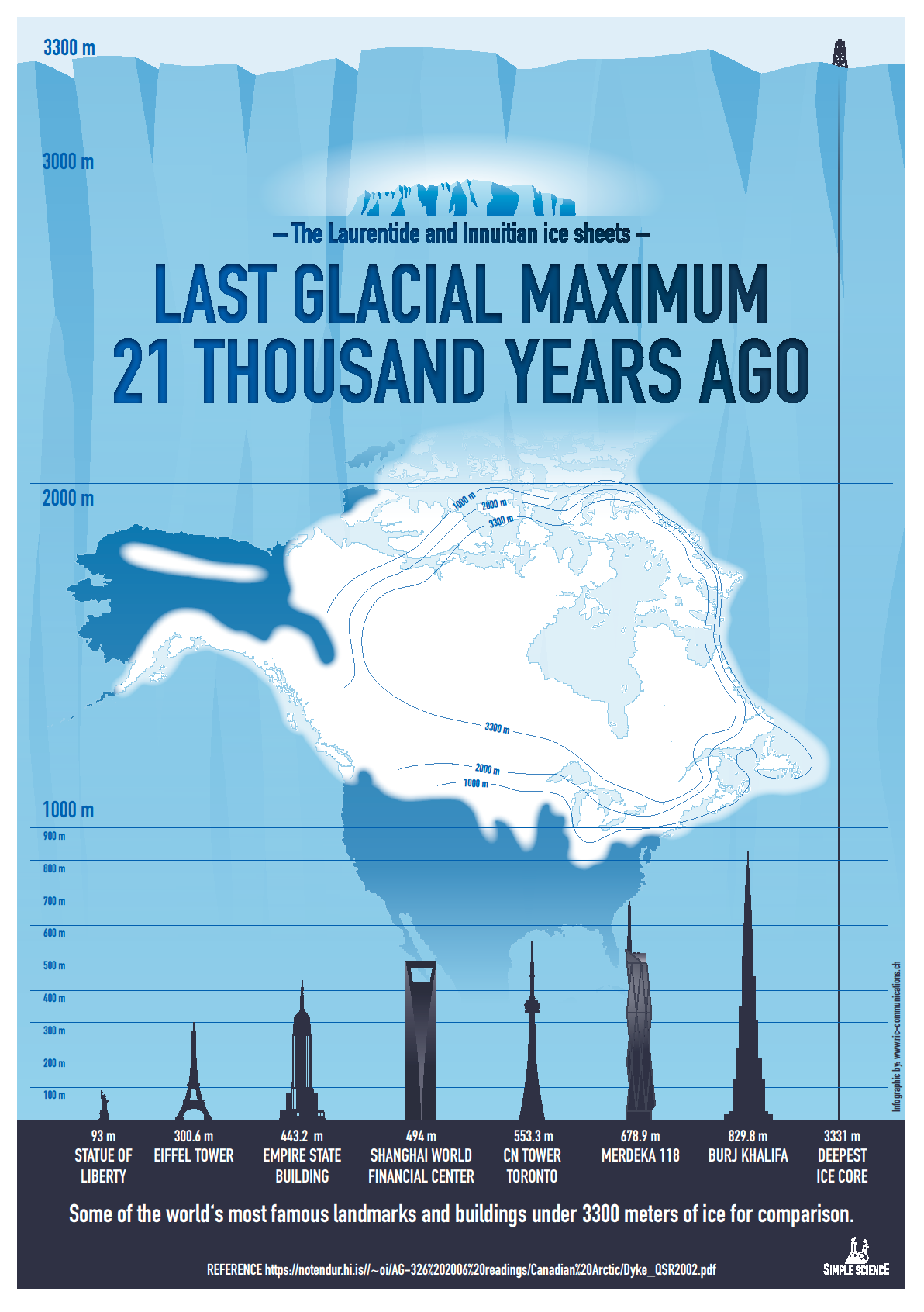
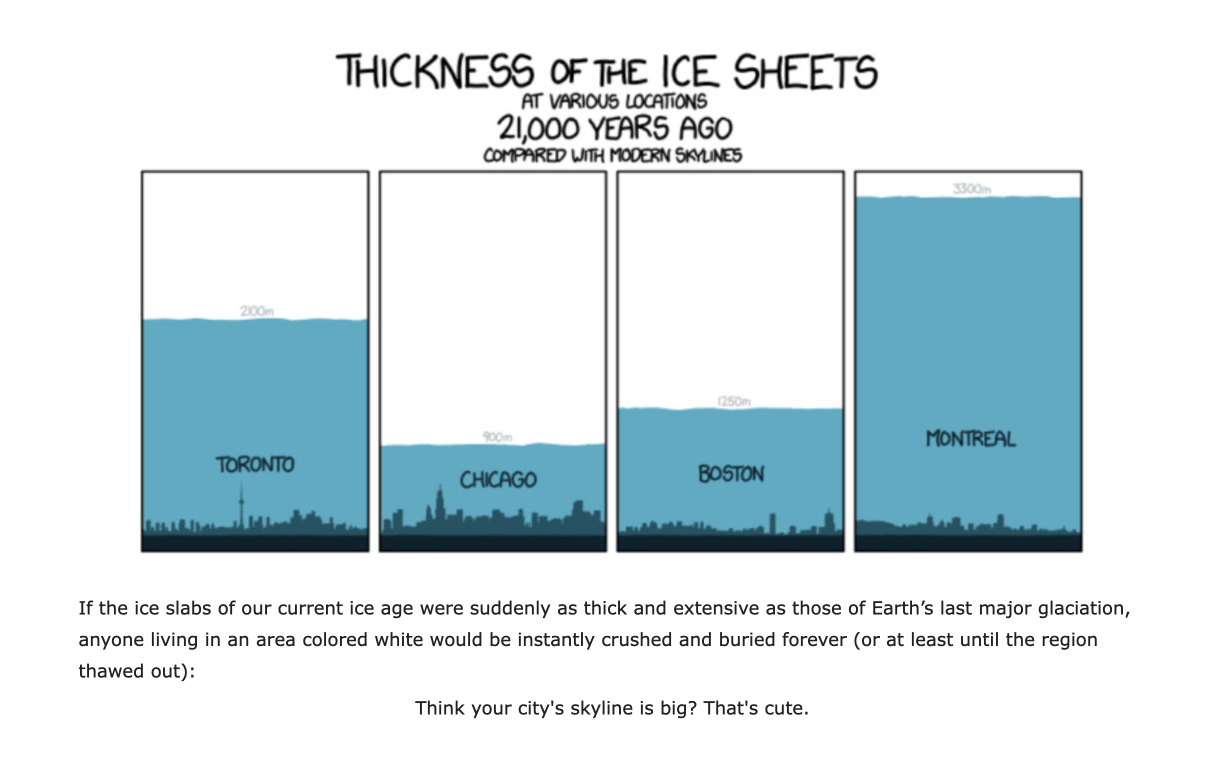


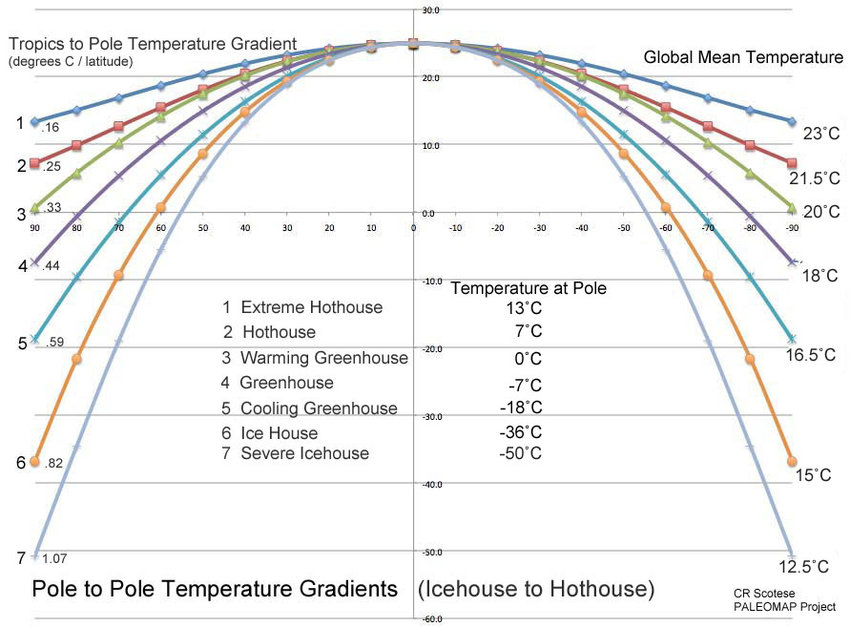

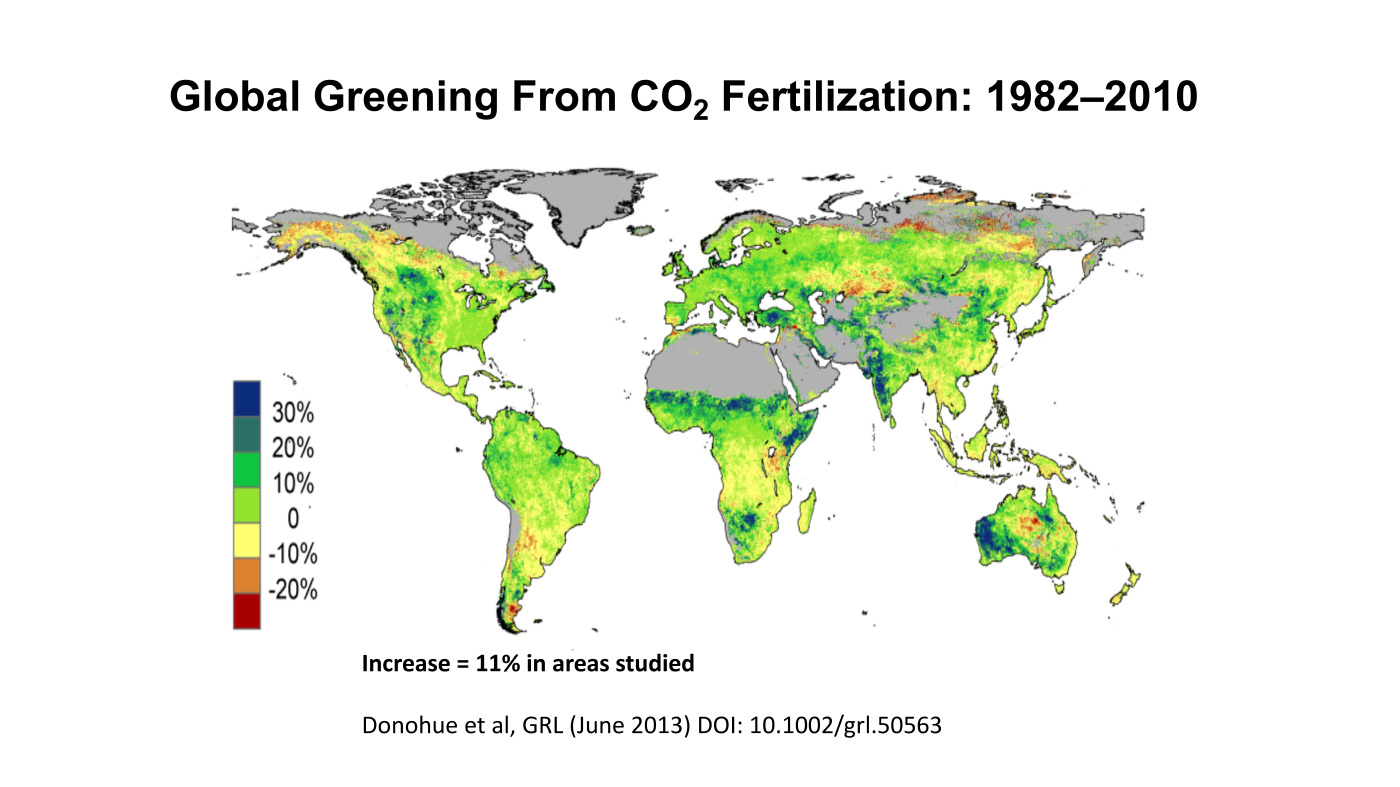
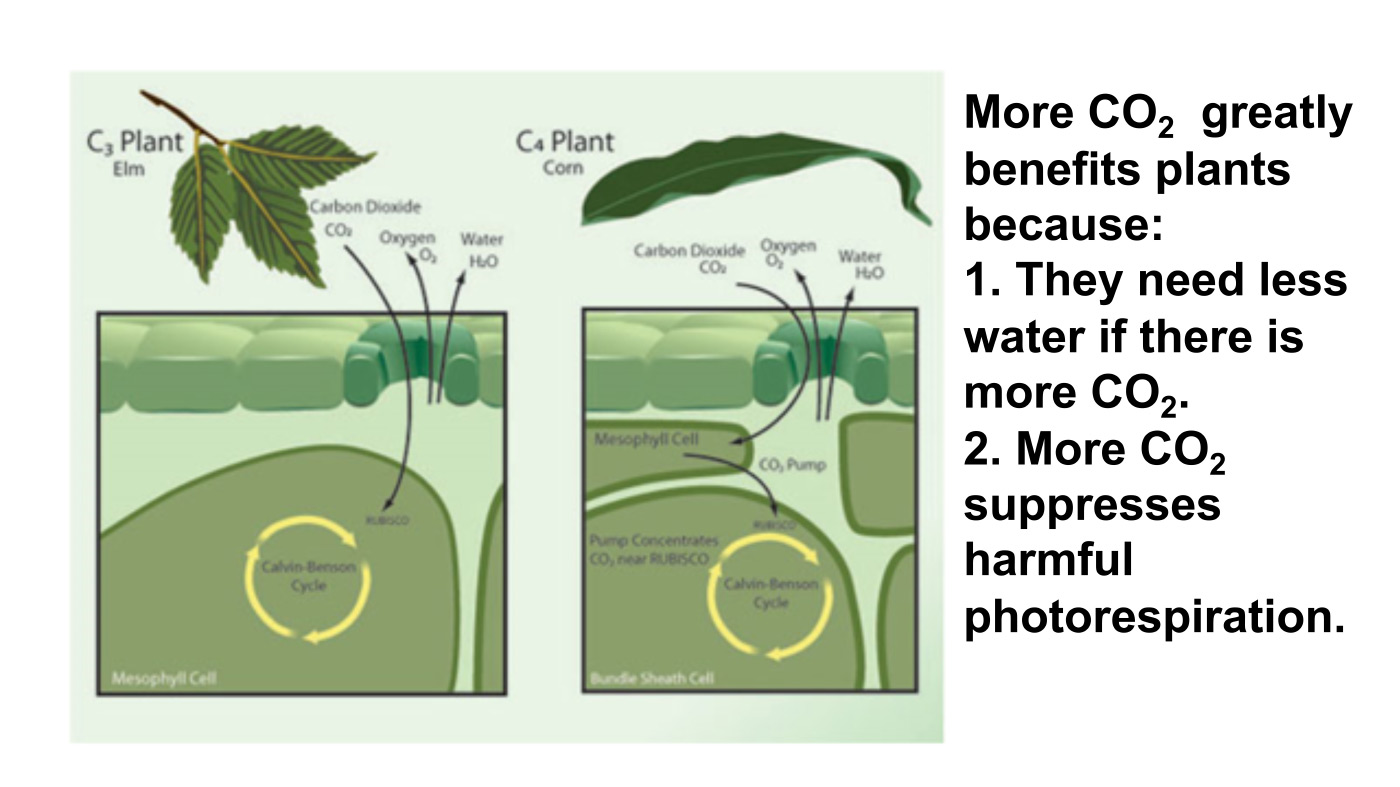
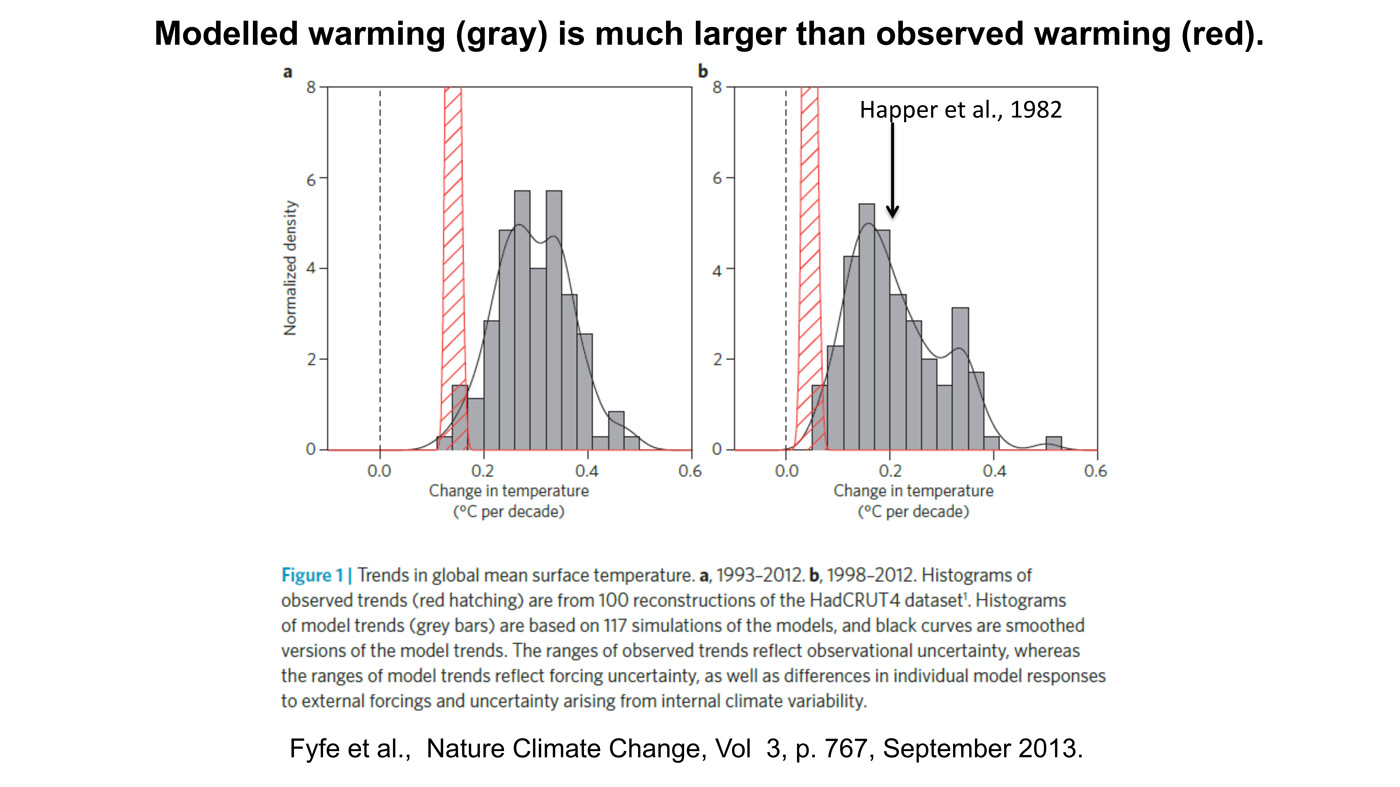
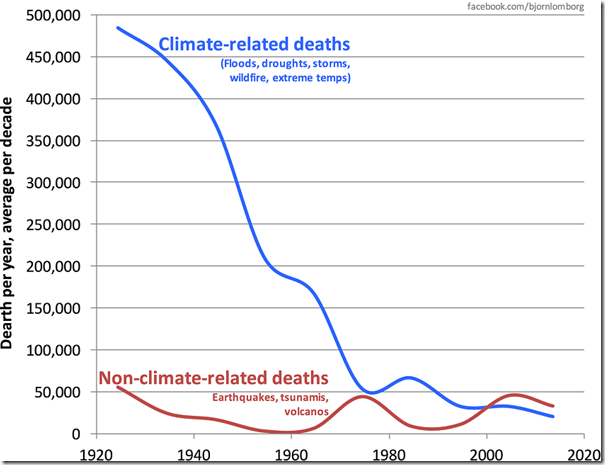
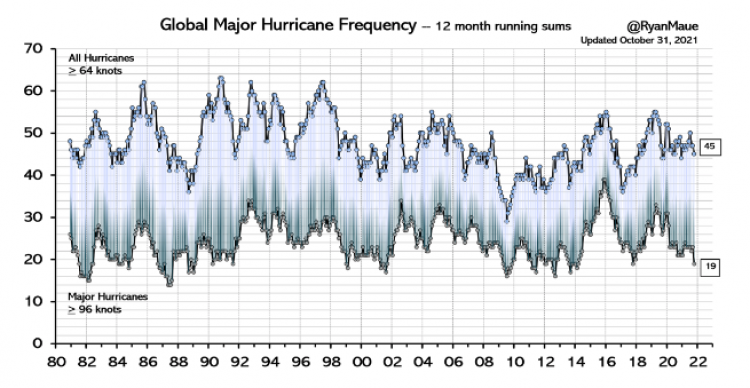

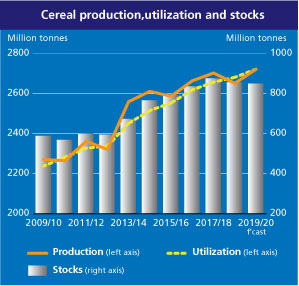


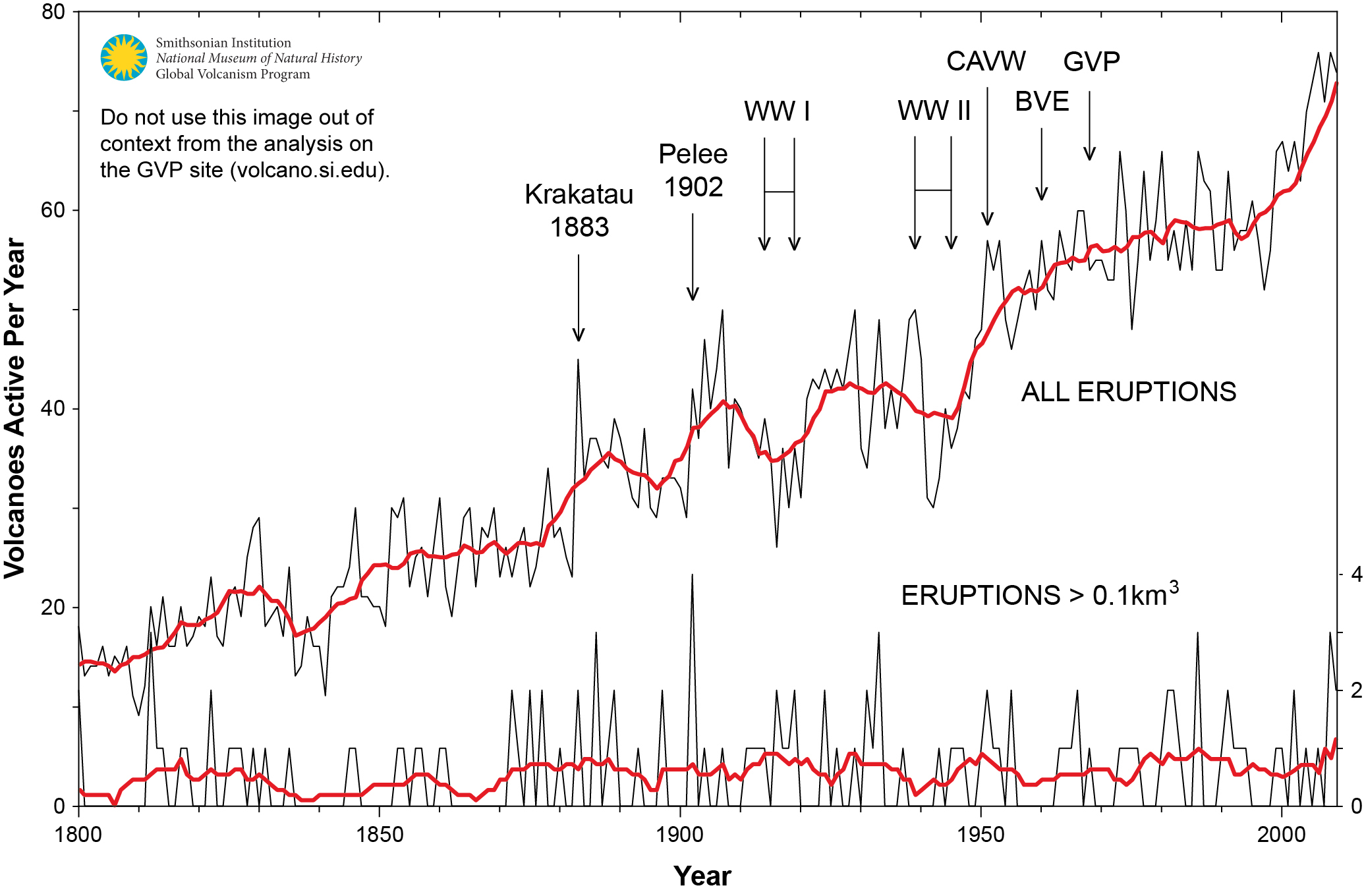
 When I presented this diagram to my warmist friends, they would respond, “But you don’t know what caused the LIA or what ended it!” To which I would say, “True, but we know it wasn’t due to burning fossil fuels.” Now I find there is a body of evidence suggesting what caused the LIA and why the temperature rebound may be over. Part of it is a familiar observation that the LIA coincided with a period when the sun was lacking sunspots, the Maunder Minimum, and later the Dalton.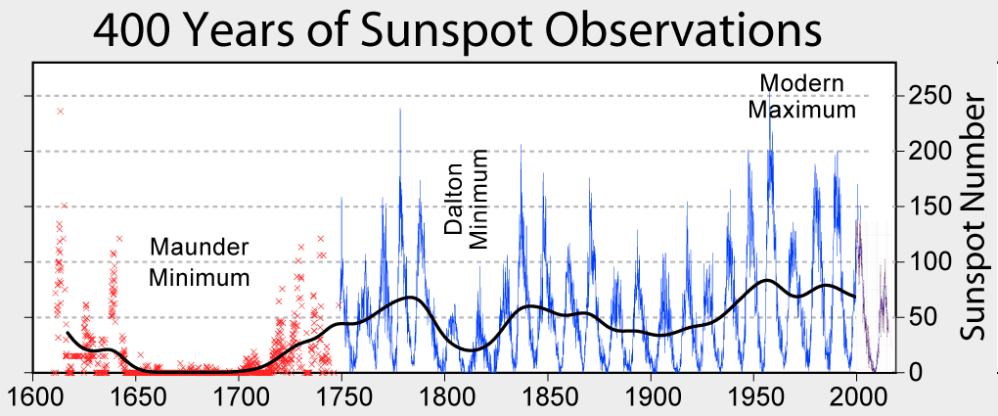
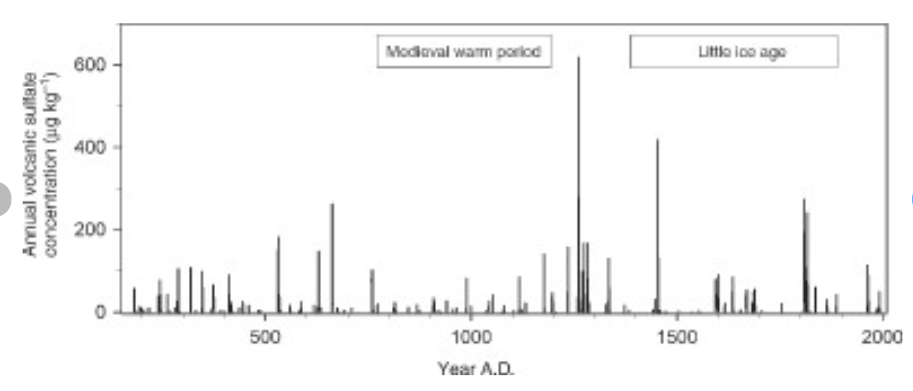
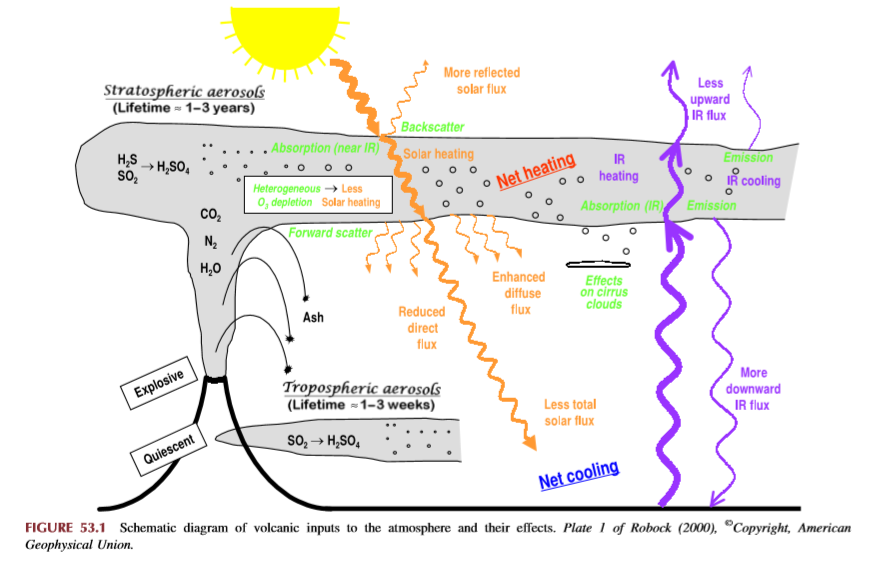
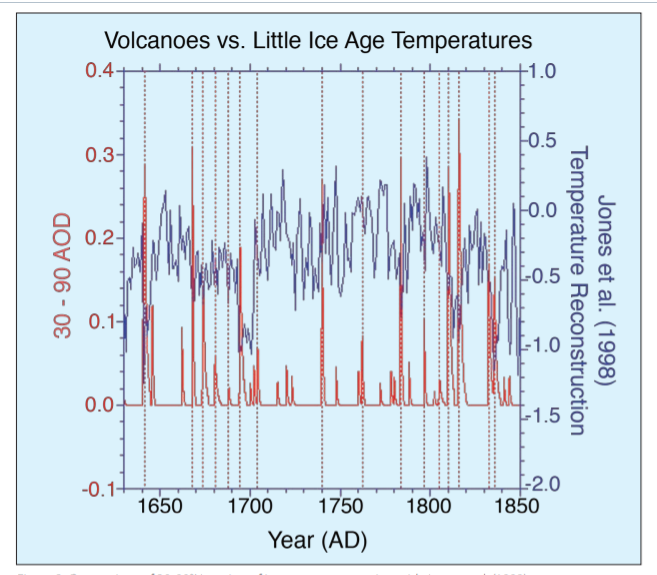

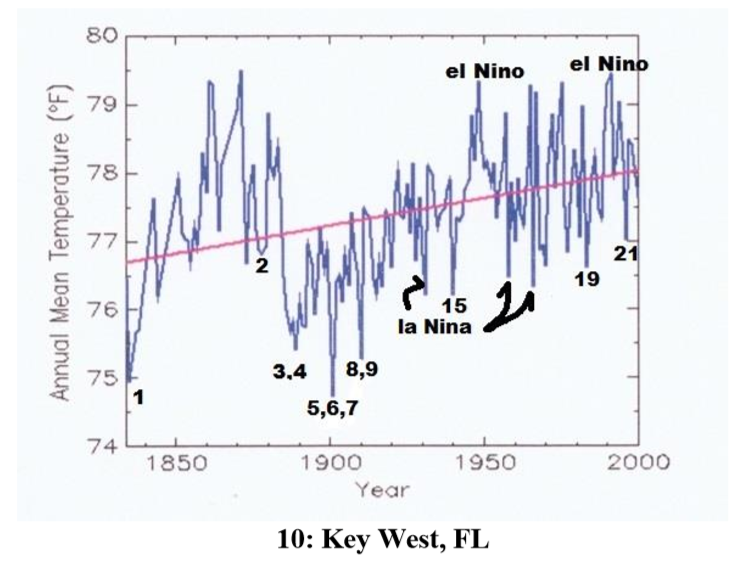
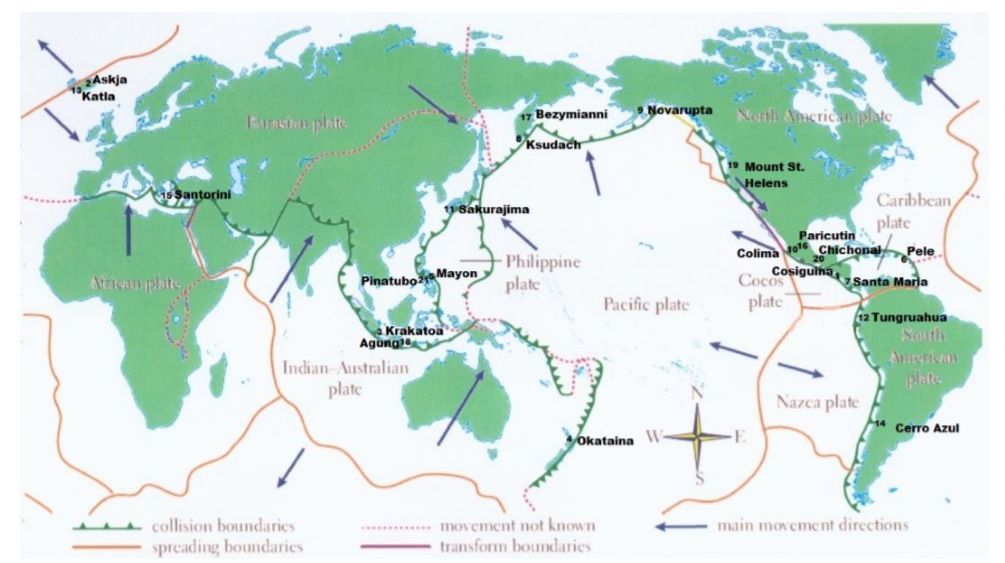


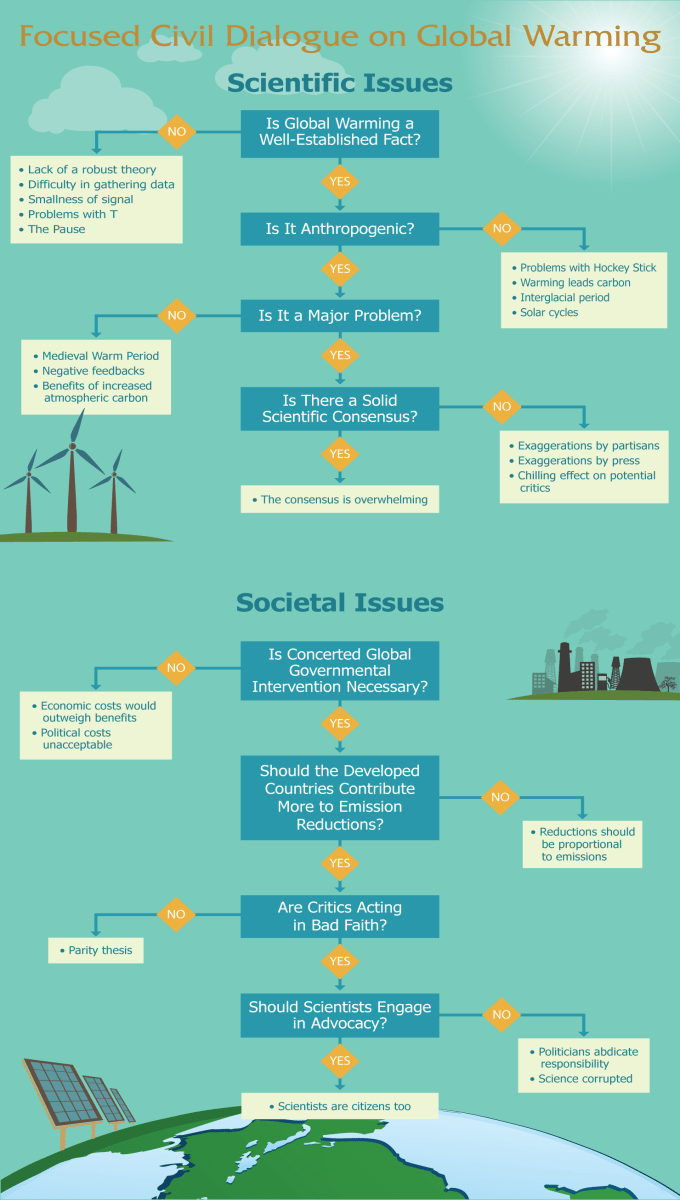

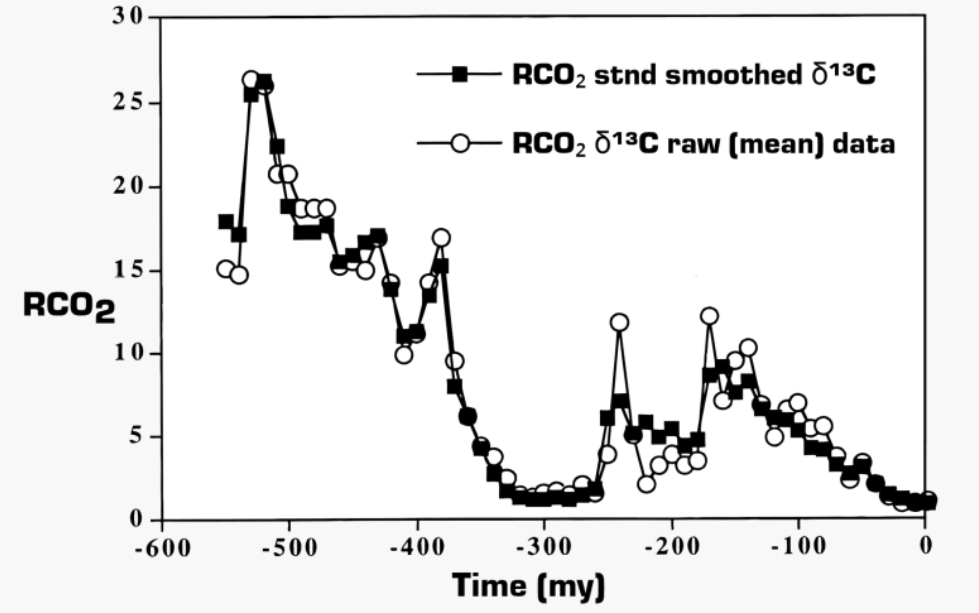

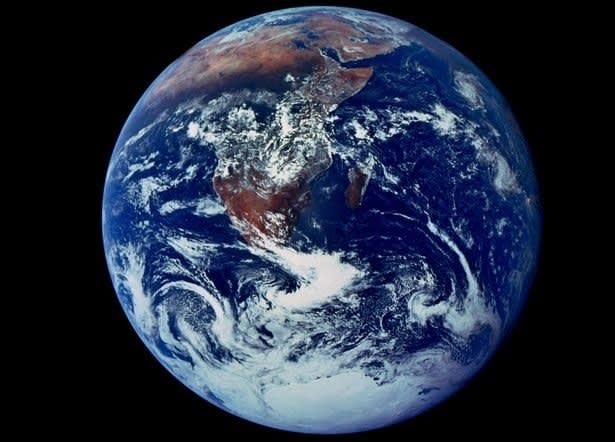
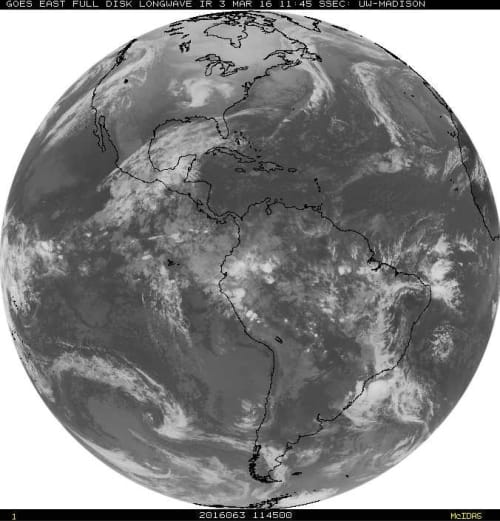
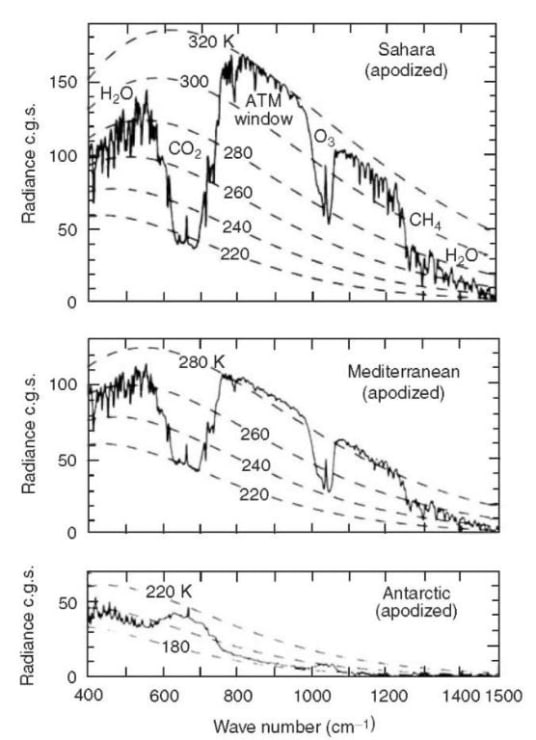
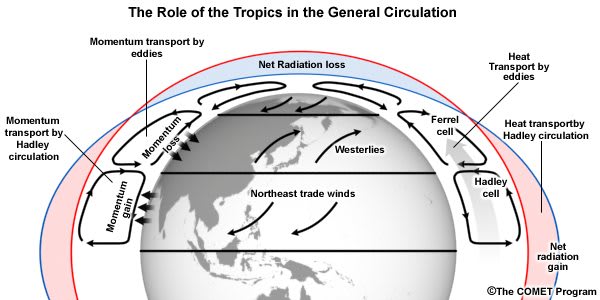


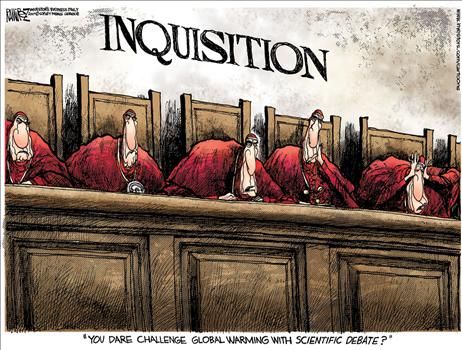
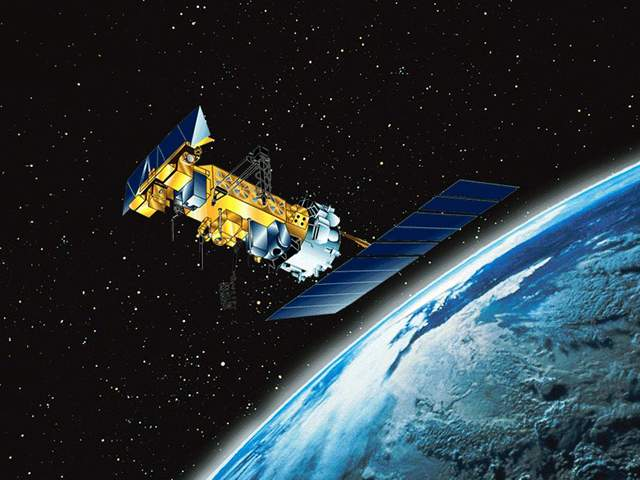

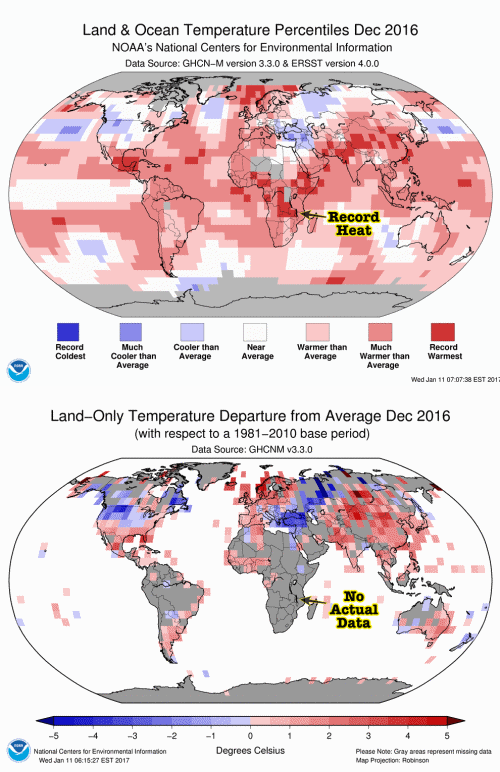


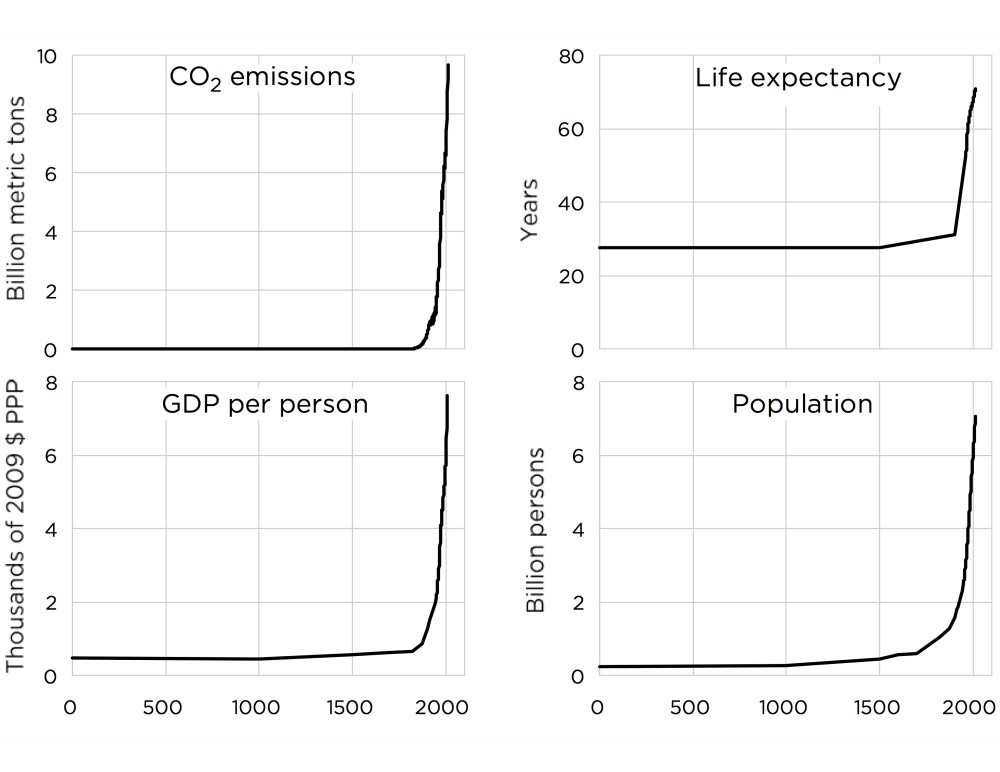

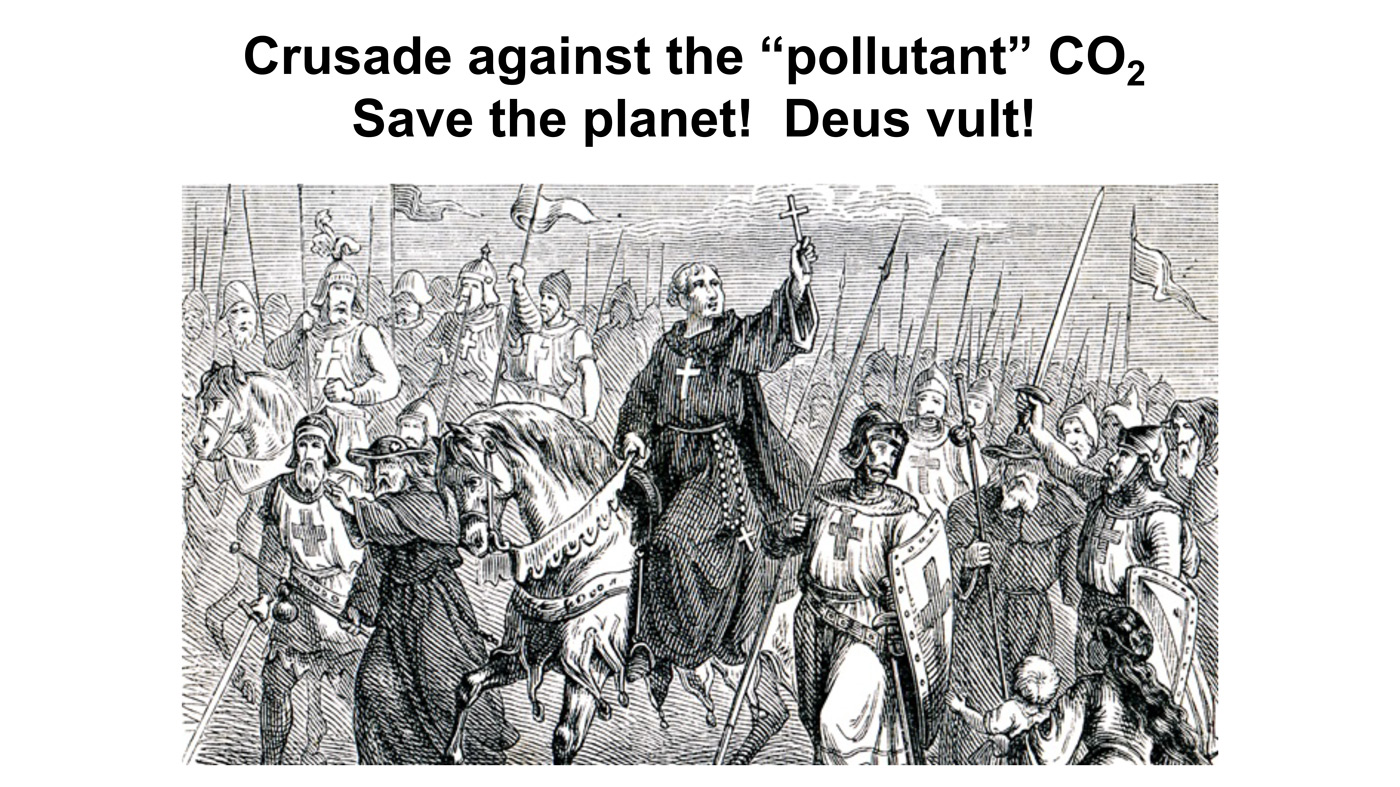
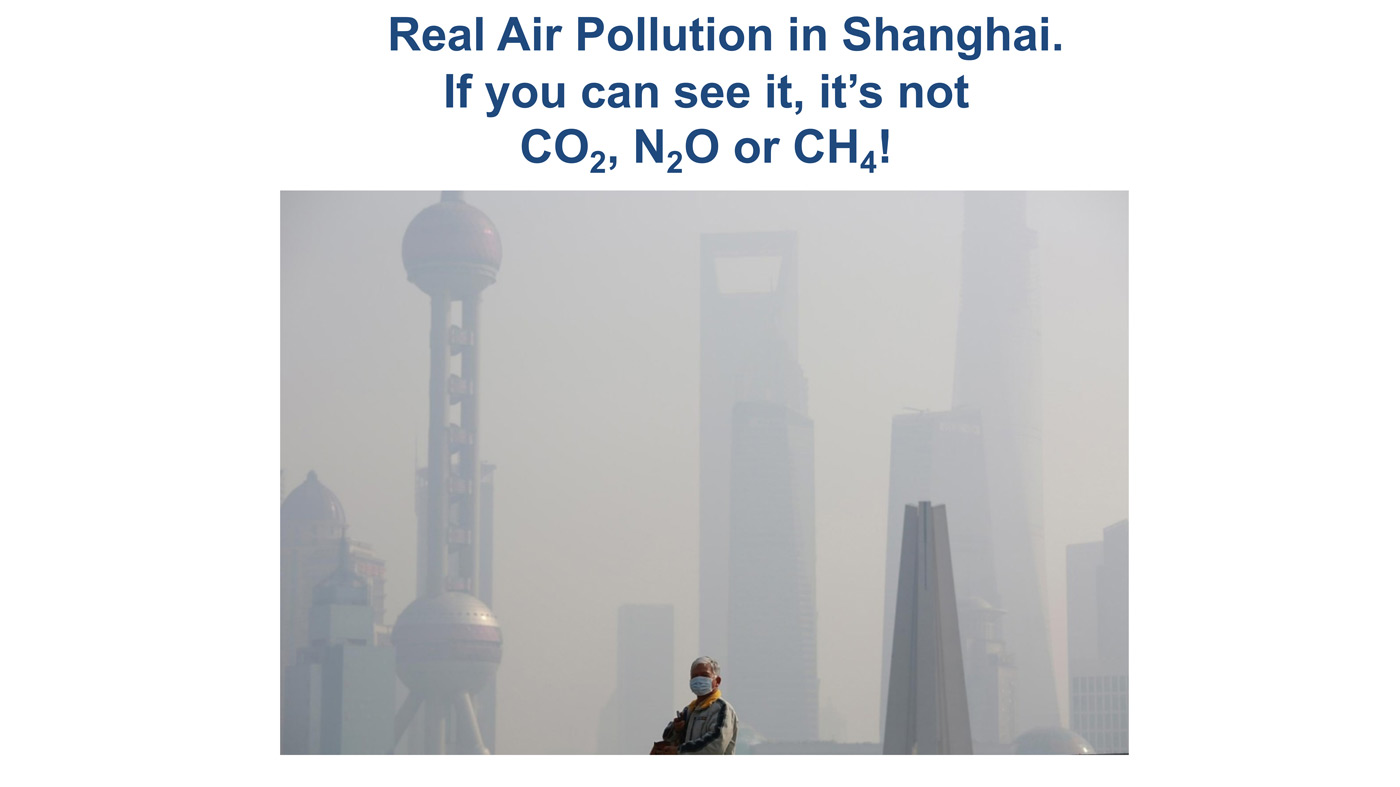
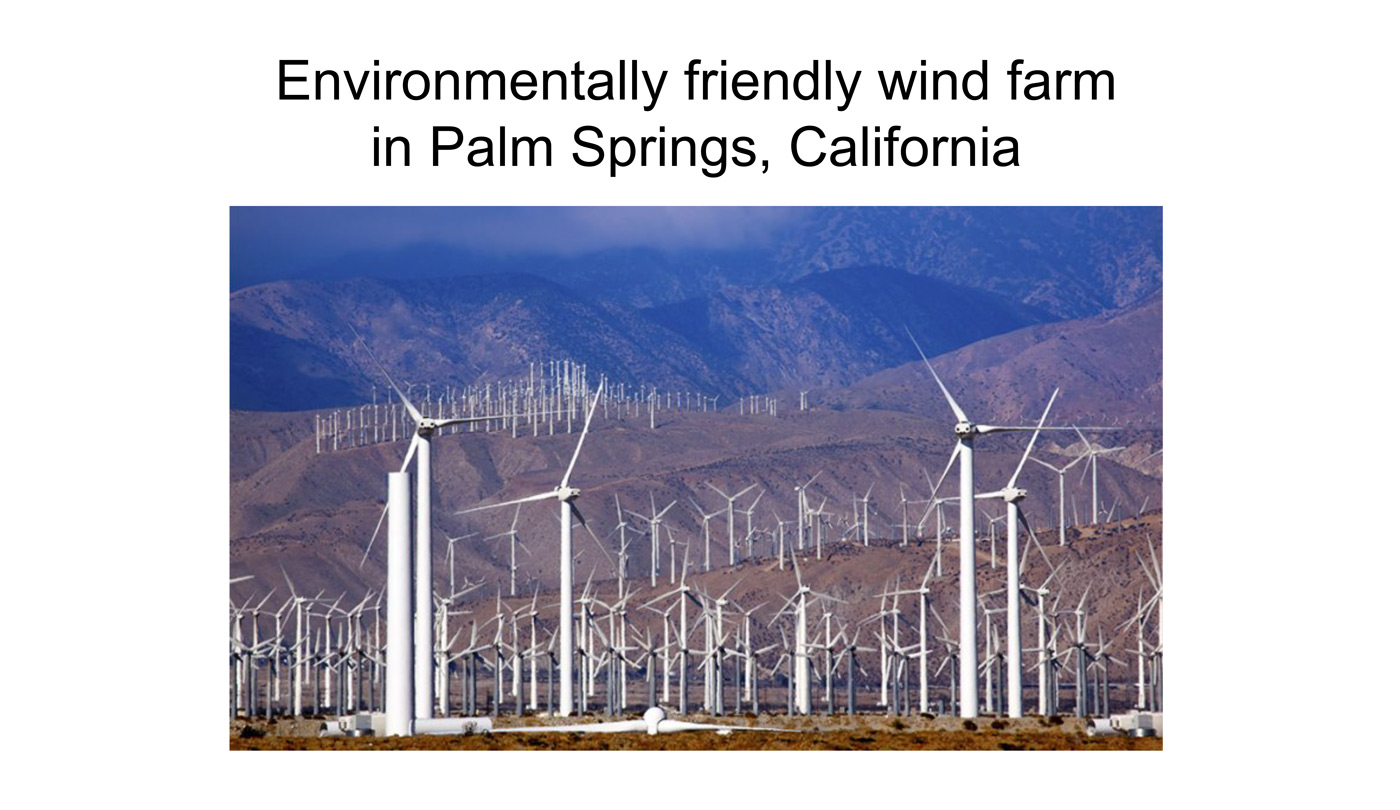
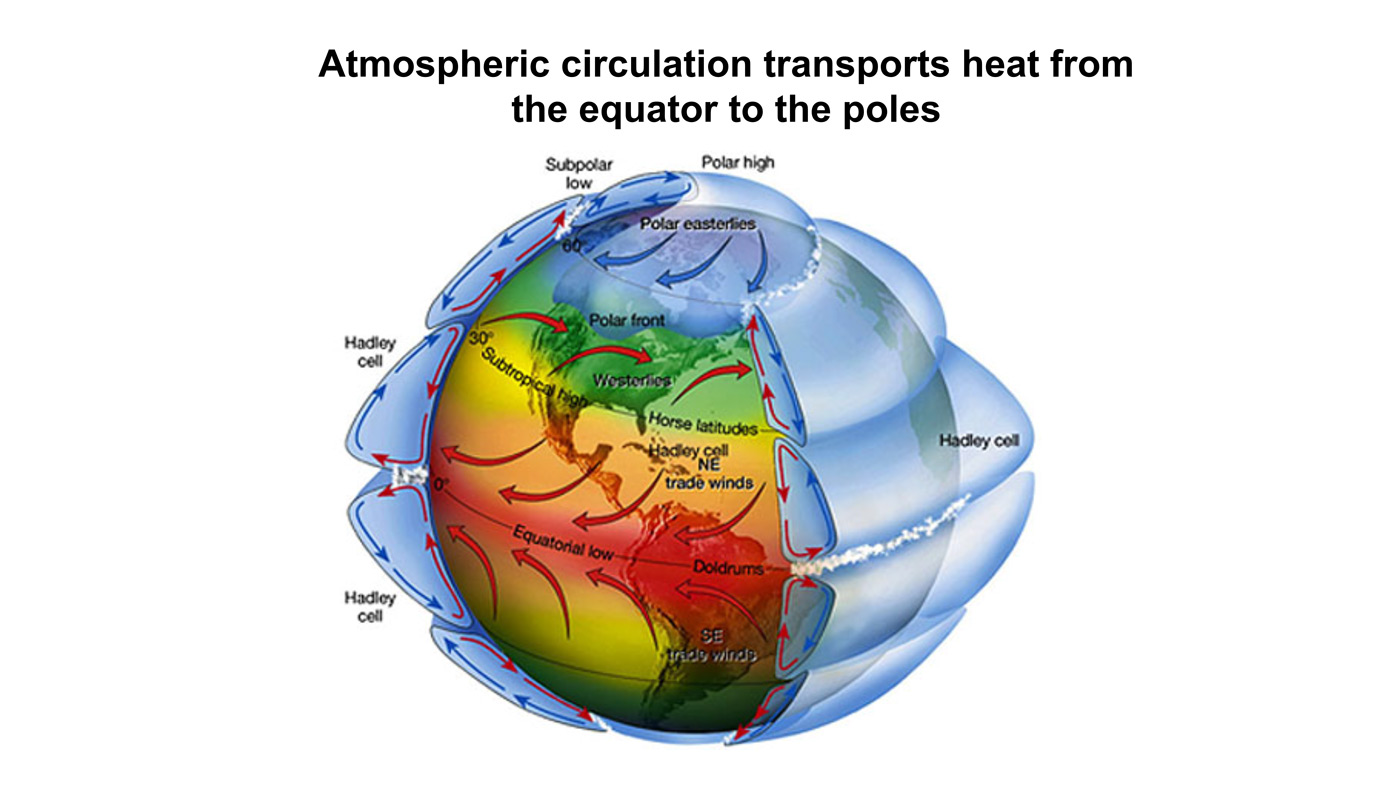
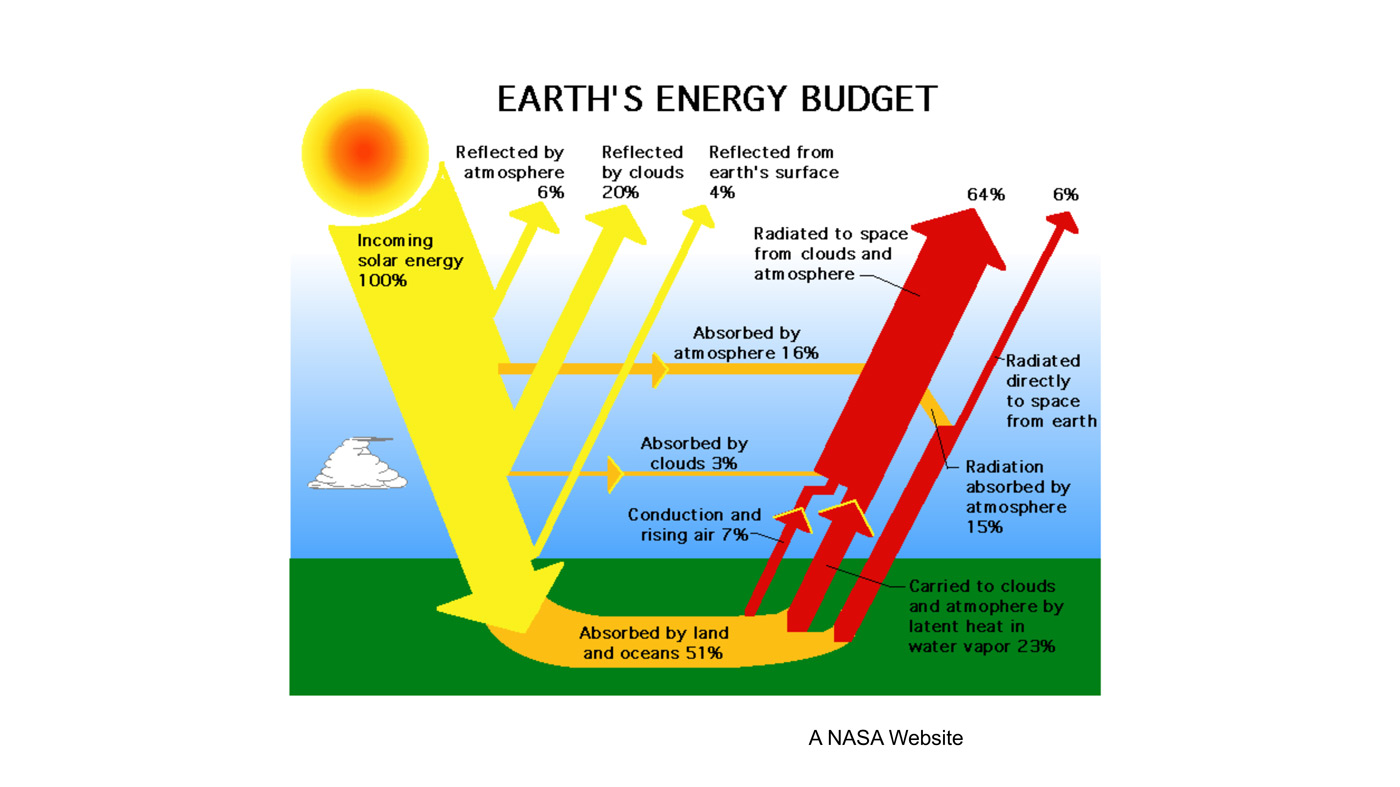
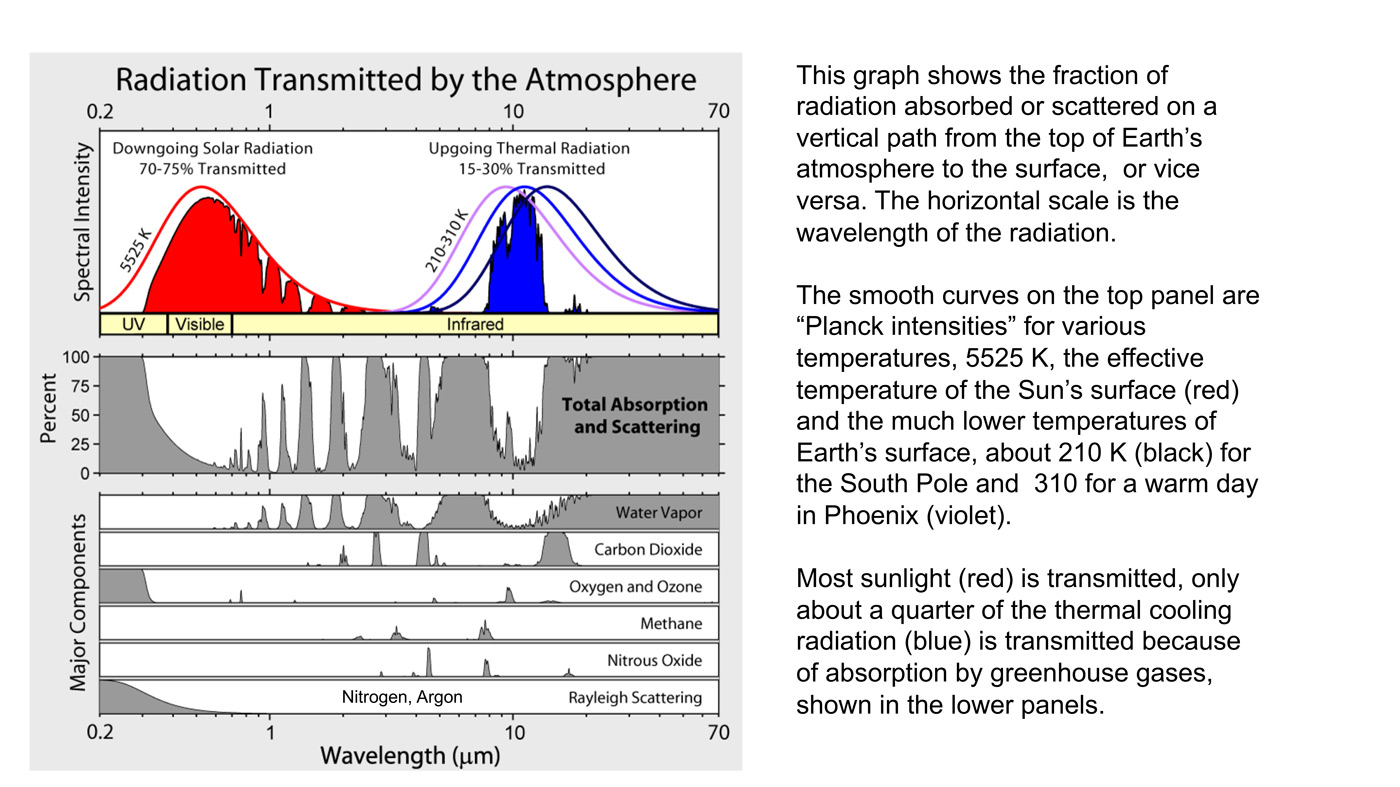
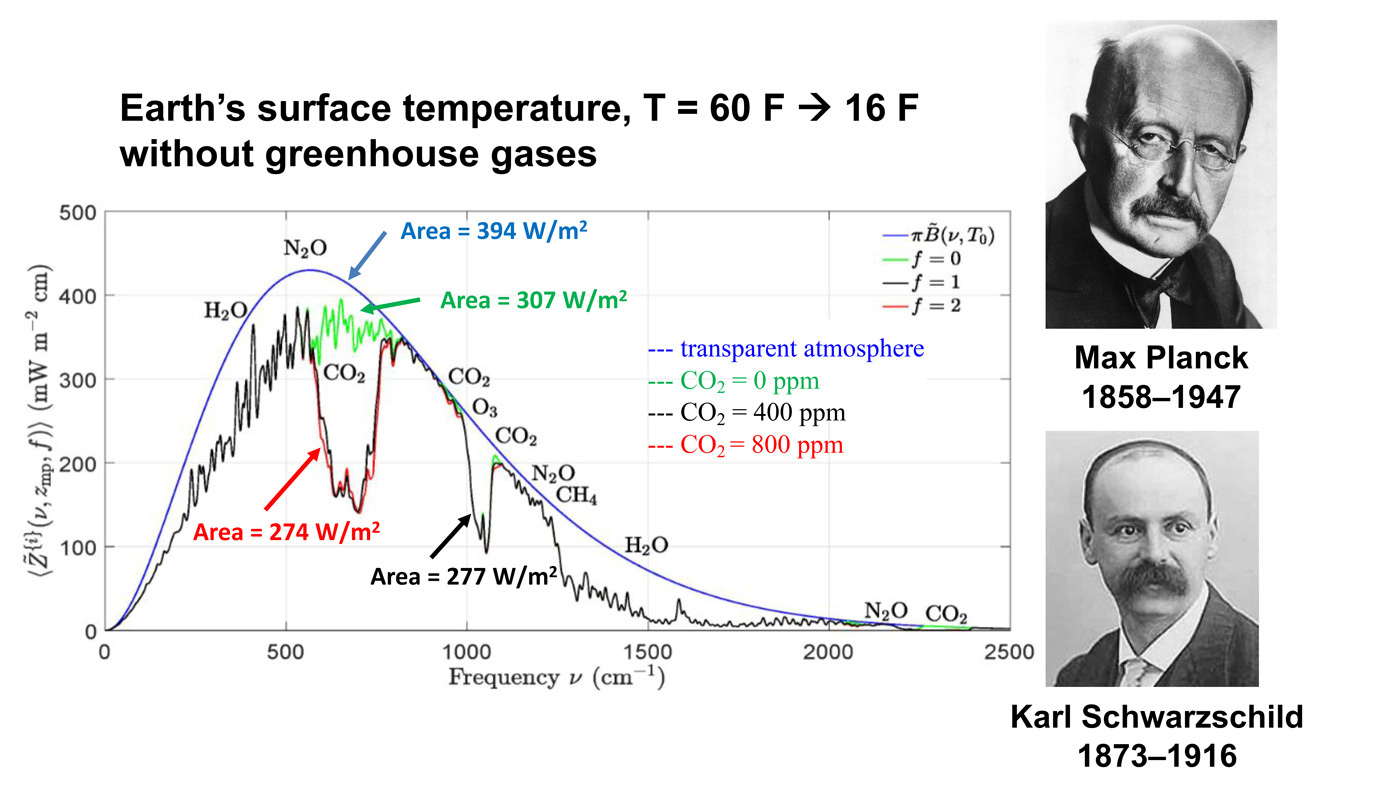

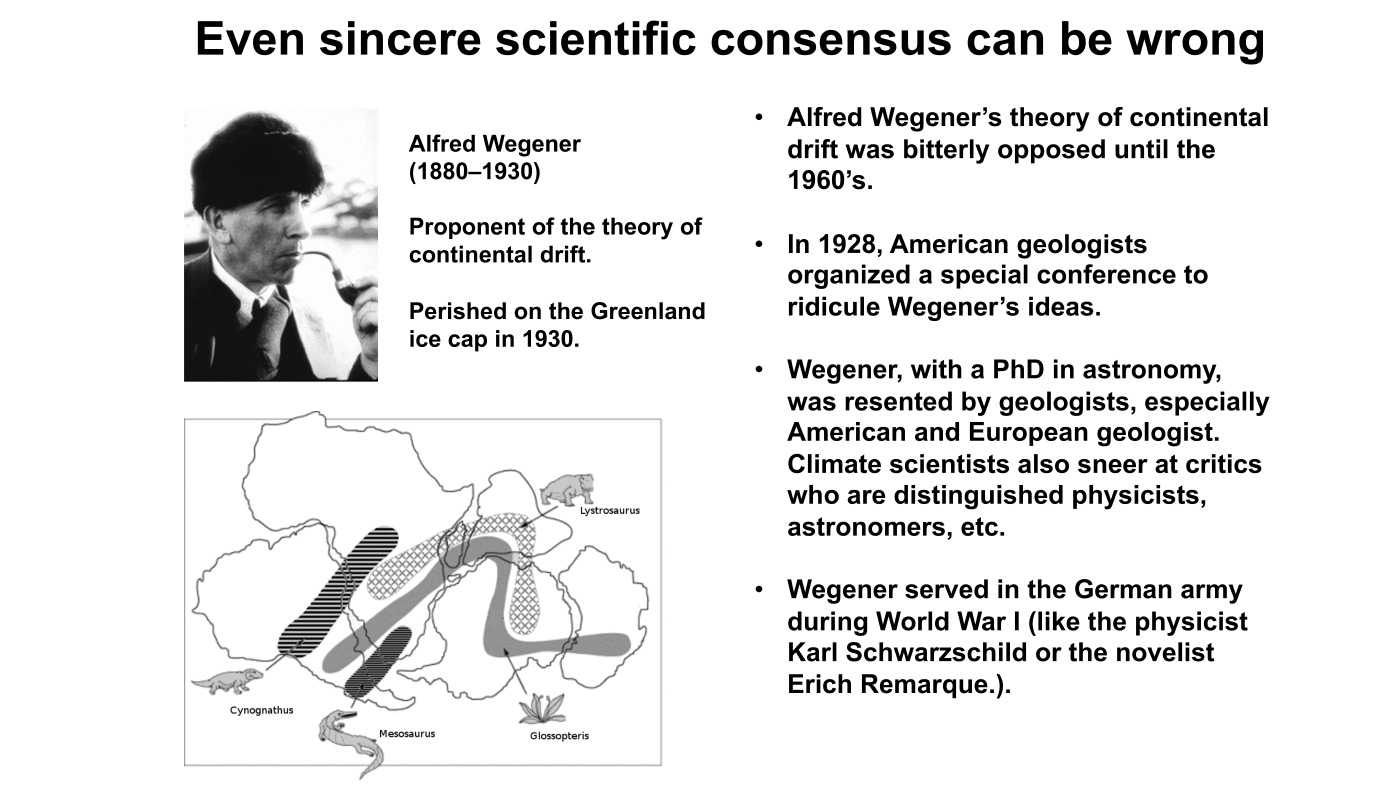
 This post is the fourth of five to alert readers to a compilation of the scientific and economic case against the claims of IPCC supporters and anti-fossil fuel activists. David Stockman provides the evidence and the arguments against the IPCC policy framework in a series of five essays published at International Man under the title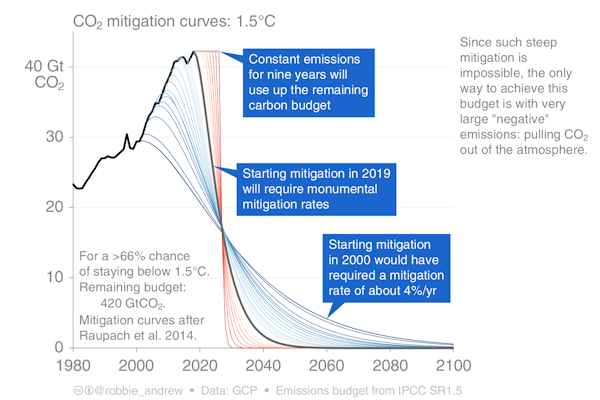


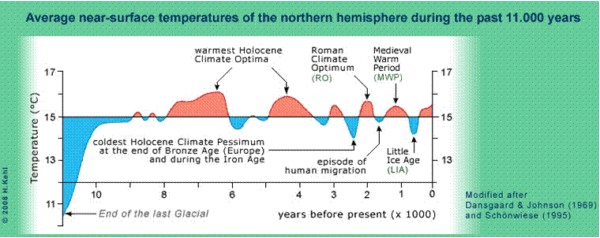


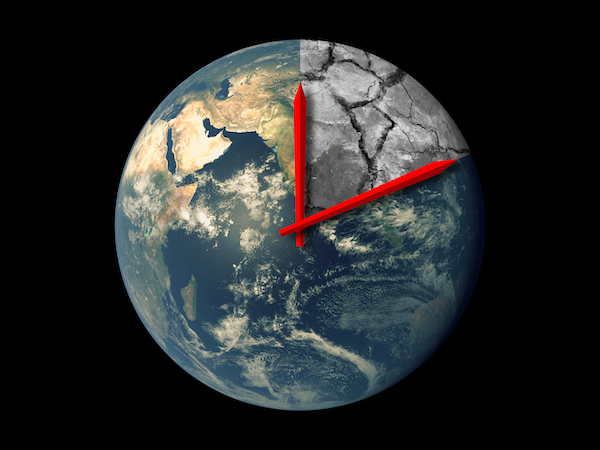
 Moreover, the science behind this isn’t a matter of academic armchair speculation for the simple reason that it has been powerfully validated in the commercial marketplace. That is, trillions of dollars have been deployed in the last century in the search for hydrocarbons, based on immensely complicated petroleum engineering research, theory and geologic models. Oil drillers weren’t throwing darts at a wildcatter’s wall but were coincidentally proving these “facts” of climate history are correct, given that they led to the discovery and extraction of several trillions of BOEs (barrels of oil equivalent).
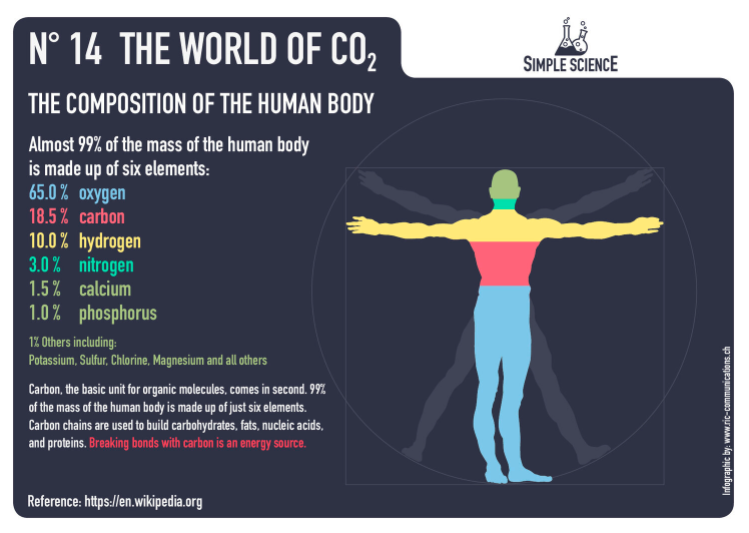
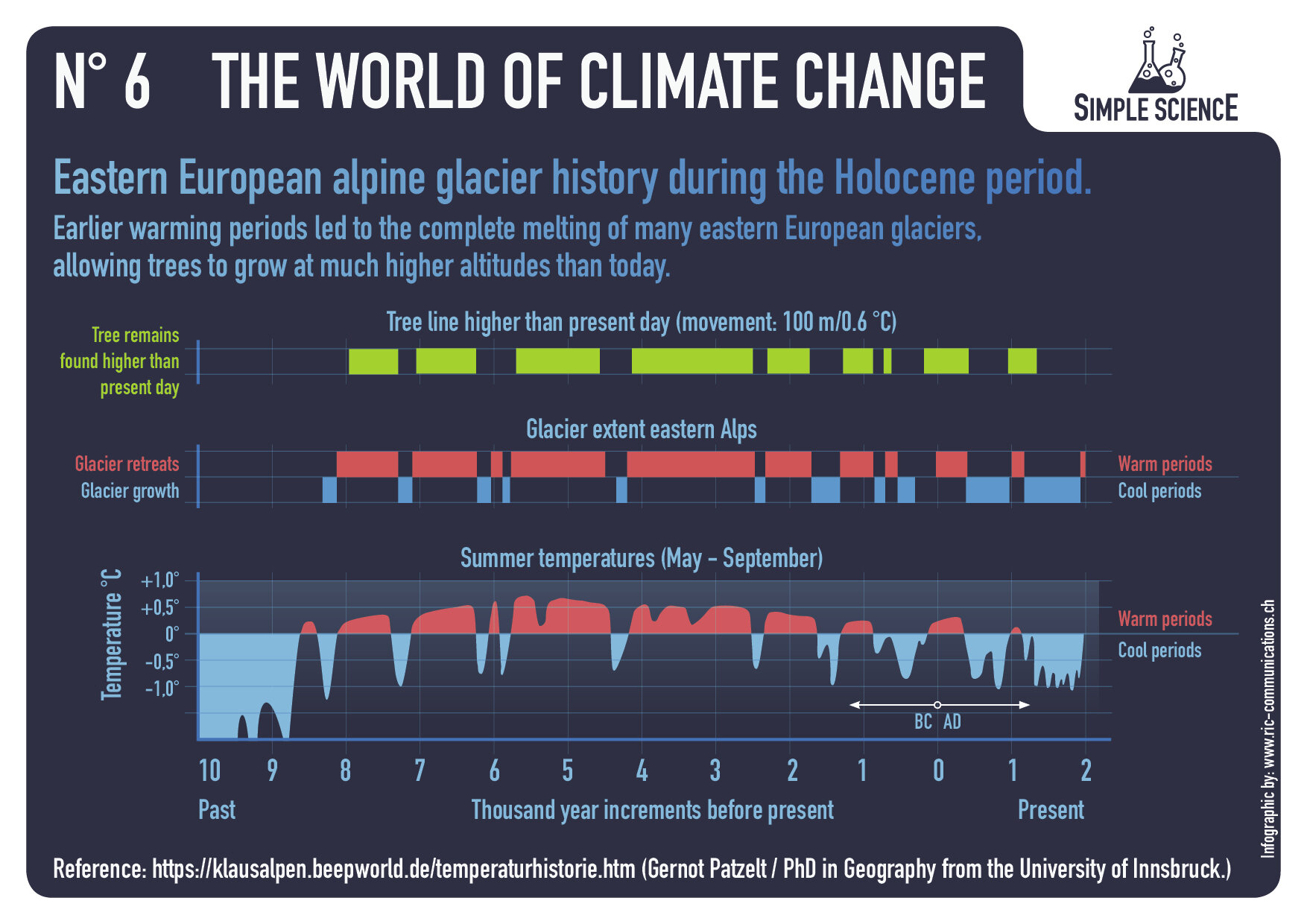
 Science Matters