These children say that their lives have been destroyed because of coal and oil so they are suing Montana.
A group of Montana youth who say their lives are already being affected by climate change and that state government is failing to protect them are the first of dozens of such efforts to get their lawsuit to trial Monday. They will try to persuade a judge that the state’s allegiance to fossil fuel development endangers their health and livelihoods and those of future generations.
Lawsuits and policies should be based on the truth and scientific facts,not on easily manipulated computer models and made up predictions which have consistently been wrong, like this lawsuit and the radical green policies which are being forced on the American people.
Maybe the state should take the kids to underdeveloped countries that haven’t developed and used their natural resources to see how lucky they are. Then the state should send them a bill for greatly improving their quality and length of life.
The line of defense against this nuisance lawsuit is long because it is based on factual scientific data. They can have it presented in the simplest form since they have been taught not to ask questions or do research.
They should be told that the Earth was just as warm 1,000 years ago as it is today.
Then they should have the scientific fact pointed out to them that a Little Ice Age occurred from around 1300 to 1860 where the Earth cooled a little.
Dr. Syun Akasofu 2009 diagram from his paper Two Natural Components of Recent Warming.
Then they should be shown that the Earth has only warmed a little in the last 160 years since the Little Ice Age ended, and they should be able to comprehend that the Earth always warms a little after an ice age ends.
They should be told that although there has been one or two degrees of warming the last 160 years, we also had a 35-year period of cooling from 1940-1975 where the public was warned that a catastrophic ice age was coming.
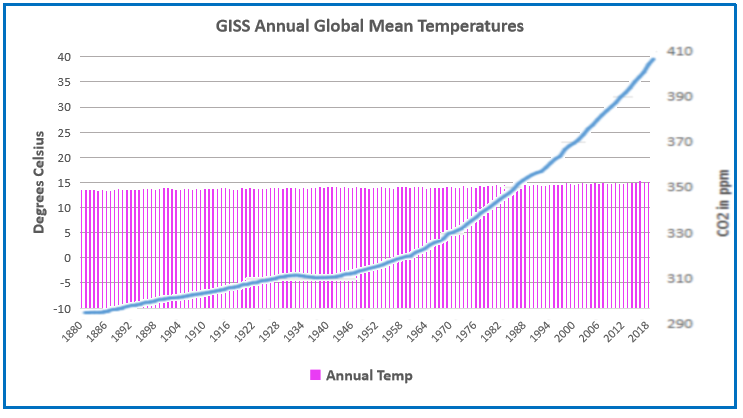
It should be possible for the youth to understand, even as journalists, politicians, and bureaucrats can’t seem to, that if temperatures sometimes rise and sometimes fall while crude oil use and coal use are constantly rising rapidly, that there is no correlation between our use of natural resources and temperatures, nor climate change.
Figure 5.1. Comparative dynamics of the World Fuel Consumption (WFC) and Global Surface Air Temperature Anomaly (ΔT), 1861-2000. The thin dashed line represents annual ΔT, the bold line—its 13-year smoothing, and the line constructed from rectangles—WFC (in millions of tons of nominal fuel) (Klyashtorin and Lyubushin, 2003). Source: Frolov et al. 2009
They should be able to understand the simple scientific concept that if there is no correlation, there can be no causation.
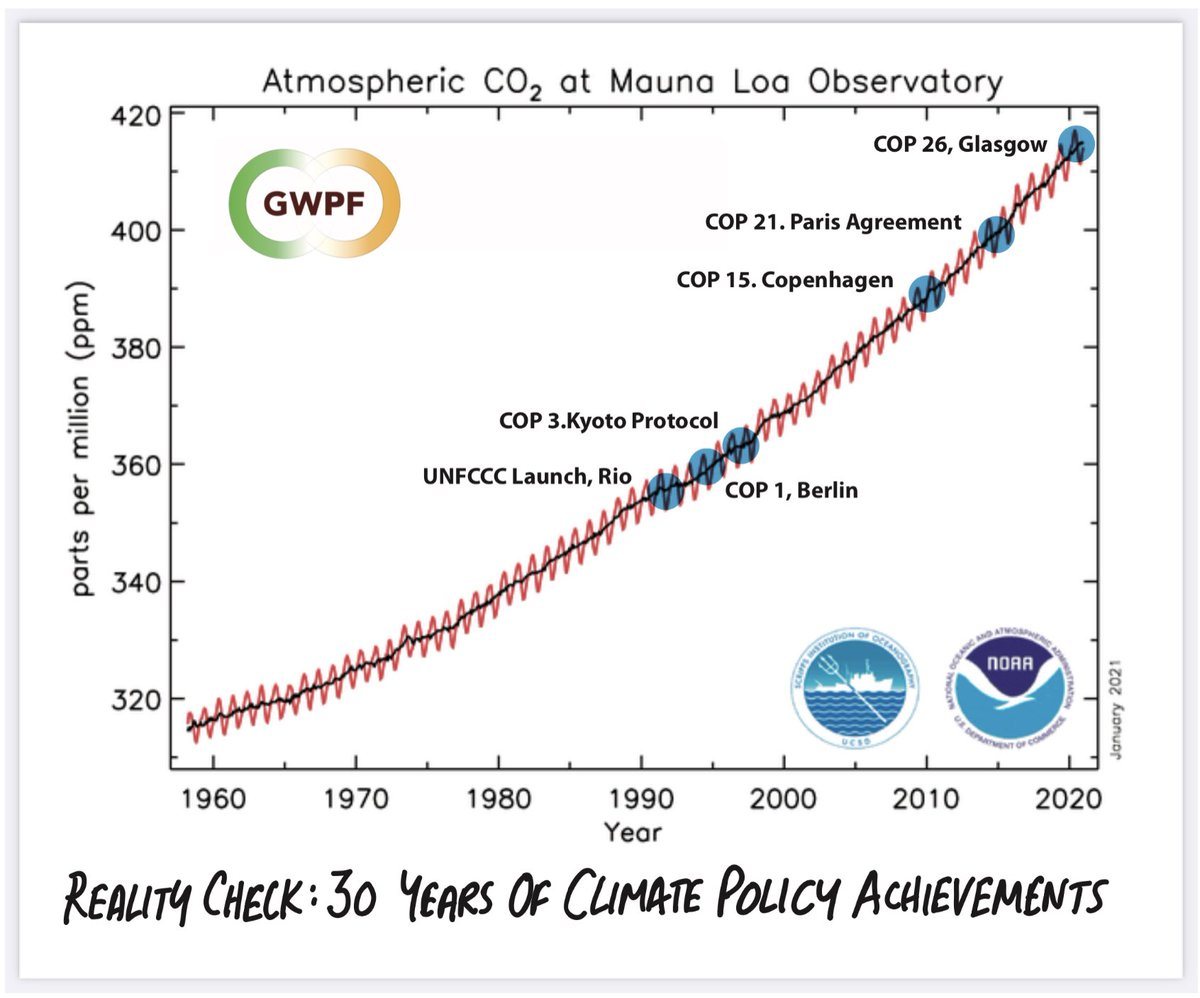
They should also be taught that CO2 is a clear, innocuous, non-pollutant gas that makes plants thrive and allows the World to be fed. There is also no correlation between the rise to a small 420-parts-per-million in the atmosphere and temperatures or sea levels.
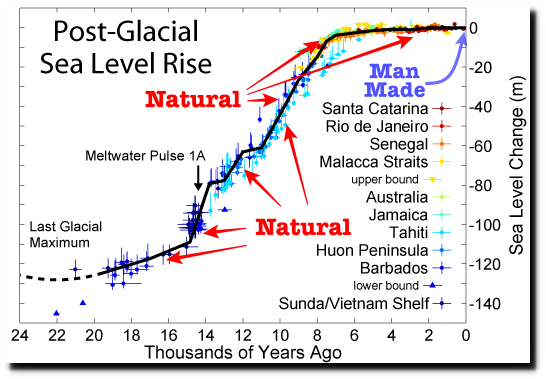
Oceans, which average over 12,000 feet deep, have risen a miniscule 9 inches in 140 years, which is essentially immeasurable, let alone be attributed to CO2, oil, humans or anything else. There are thousands of natural variables.
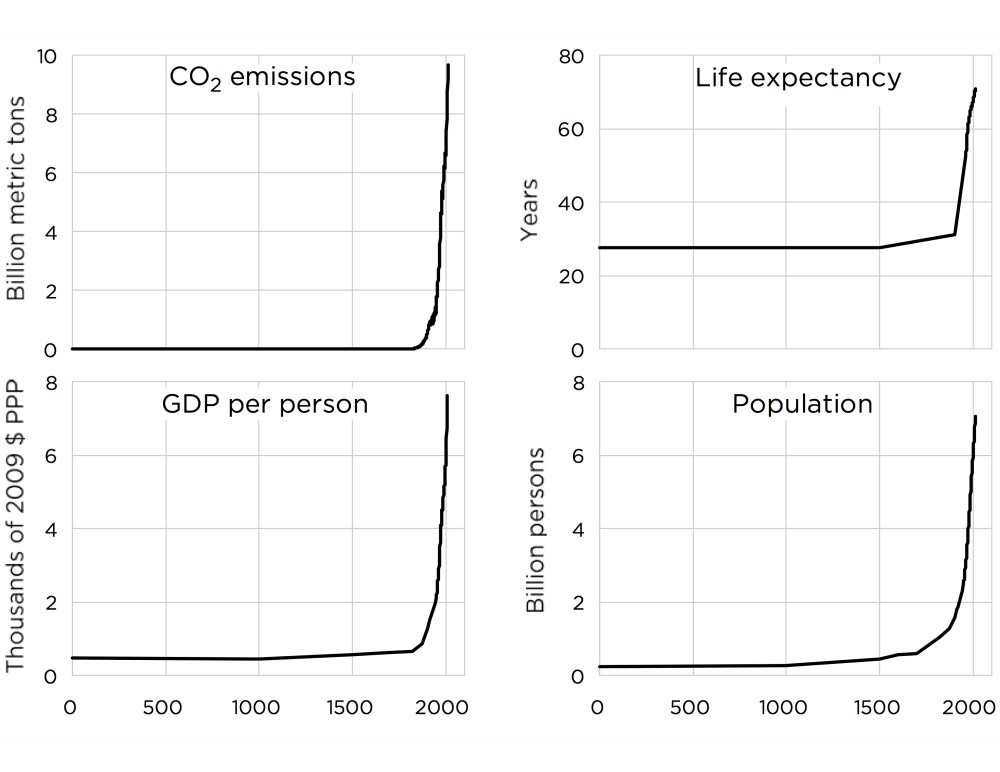
It would help if children were shown the truth as to how life expectancy has almost doubled since we started using coal and oil and people in countries that don’t use oil and coal live shorter lives.
Maybe it would help to inform them of all the products that are derived from crude oil and ask them if their lives would be better off without them.
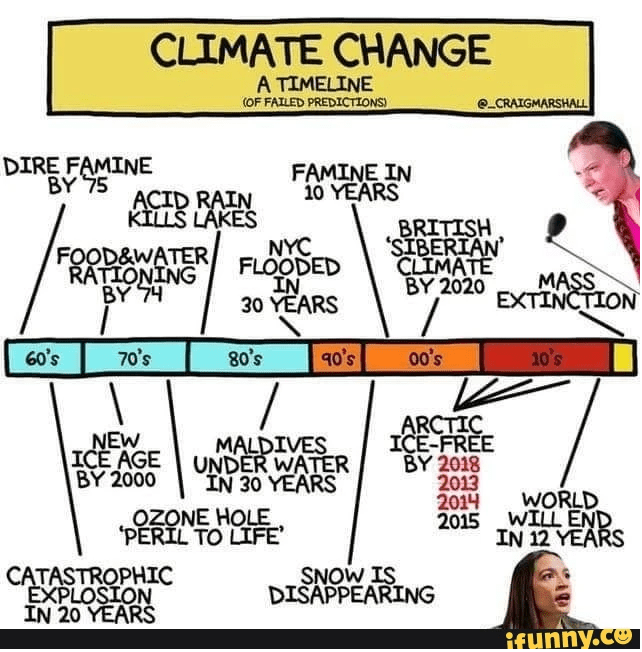
Maybe the children should be shown how all of the previous dire predictions have been wrong including one from over 100 years ago that predicted the ice would soon be gone, that oceans were dying, and coastal cities would soon disappear.
“The Arctic Ocean is warming up, icebergs are growing scarcer, and in some places the seals are finding the water too hot. Reports from fishermen, seal hunters, and explorers all point to a radical change in climate conditions and hitherto unheard‐of temperatures in the Arctic zone. Exploration expeditions report that scarcely any ice has been met as far north as 81 degrees 29 minutes. Within a few years it is predicted that due to the ice melt the sea will rise and make most coastal cities uninhabitable.” — from an Associated Press report published in The Washington Post on November 2, 1922
It is a true shame that most of the media along with educators spend their time scaring children that we are destroying the Earth and that we don’t have much time left instead of doing their job to educate and inform them and to teach them to ask questions and do research. It is no wonder so many young people are suicidal and don’t want children.
We get extremely destructive government policies when people
are indoctrinated instead of told the truth.
We should count our blessings that the Earth has such an abundance of natural resources and that humans were given a brain that allowed them to develop them.
Jonathan H. Adler reports on the astonishing attempt to revive the climate lawsuit at Reason District Court Judge Revives Kids Climate Case. Excerpts in italics with my bolds and added images.
Years after the Ninth Circuit ordered the case dismissed, it is brought back to life with a surprising trial court order.
This afternoon (June 1, 2023), Judge Aiken on the U.S. District Court for the District of Oregon revived Juliana v. United States, aka the “Kids Climate Case,” bygranting the plaintiffs’ motion to amend their complaint, some two years after the motion was filed.
Judge Aiken clearly sees things differently. As for how the proposed amendments address the standing problems identified by the Ninth Circuit, Judge Aiken wrote:
Plaintiffs assert that their proposed amendments cure the defects the Ninth Circuit identified and that they should be given opportunity to amend. Plaintiffs explain that the amended allegations demonstrate that relief under the Declaratory Judgment Act alone would be substantially likely to provide partial redress of asserted and ongoing concrete injuries, and that partial redress is sufficient, even if further relief is later found unavailable. . . .
Plaintiffs’ Second Amended Complaint thus requests this Court to: (1) declare that the United States’ national energy system violates and continues to violate the Fifth Amendment of the U.S. Constitution and Plaintiffs’ constitutional rights to substantive due process and equal protection of the law; (2) enter a judgment declaring the United States’ national energy system has violated and continues to violate the public trust doctrine; and (3) enter a judgment declaring that § 201 of the Energy Policy Act has violated and continues to violate the Fifth Amendment of the U.S. Constitution and plaintiffs’ constitutional rights to substantive due process and equal protection of the law. . . .
Here, plaintiffs seek declaratory relief that “the United States’ national energy system that creates the harmful conditions described herein has violated and continues to violate the Fifth Amendment of the U.S. Constitution and Plaintiffs’ constitutional rights to substantive due process and equal protection of the law.” (Doc. 514-1 ¶ 1). This relief is squarely within the constitutional and statutory power of Article III courts to grant. Such relief would at least partially, and perhaps wholly, redress plaintiffs’ ongoing injuries caused by federal defendants’ ongoing policies and practices. Last, but not least, the declaration that plaintiffs seek would by itself guide the independent actions of the other branches of our government and cures the standing deficiencies identified by the Ninth Circuit. This Court finds that the complaint can be saved by amendment. See Corinthian Colleges, 655 F.3d at 995.
The Ninth Circuit’s initial decision dismissing the Juliana case was likely the best outcome the plaintiffs could have hoped for, as it avoided substantive Supreme Court intervention (after the justices had indicated their concern about the case). By reviving the case, Judge Aiken is tempting fate—and risking a broader legal judgment that could preclude a broader array of climate-related suits.
Comment:
The Ninth Circuit Court in Juliana observed that there was no explicit right to a stable climate system in the United States Constitution, and held that, even if such a right existed, the issue was not justiciable because the Court could not grant an effective remedy.
What’s at Stake in Held vs. Montana
From Montana Free Press:In a 2011 Montana lawsuit, Our Children’s Trust directly petitioned the Montana Supreme Court to declare that Montana has a duty to protect and preserve the atmosphere. The court rejected the petition, stating that there was no reason the youth plaintiffs couldn’t follow the normal channels of litigation through a lower court, followed by an appeal to the Supreme Court. To that end, Held was filed in Montana’s First Judicial District Court with the intent of establishing a court record that can, if needed, be appealed to the Montana Supreme Court, according to attorneys for the plaintiffs.
Filed in March 2020, the lawsuit, Held v. Montana, was brought by 16 youth plaintiffs from across Montana who allege the state has violated their constitutional right to a clean and healthful environment. The complaint focuses on two statutes — provisions of Montana’s state energy policy, which explicitly promotes the use of fossil fuels, and an amendment to the Montana Environmental Policy Act (MEPA), which prevents the state from considering how the state’s energy economy contributes to climate change.
But on May 23, Lewis and Clark County District Court Judge Kathy Seeleyagreed with the state, writing that the only relief she could have offered would have rolled back the statute, which the Legislature already did.
However, Seeley stayed firm on her decision to allow the case to proceed to trial, which was a landmark victory for climate change advocates when she initially set a bench trial in 2021. In the recent court filing, Seeley wrote there are five facts in dispute to be taken up at trial, including “whether climate impacts and effects in Montana can be attributed to Montana’s fossil fuel activities.”
In the judgment of the Court, the following material facts are in dispute: 1. Whether Plaintiffs’ injuries are mischaracterized or inaccurate. 2. Whether Montana’s GHG emissions can be measured incrementally. 3. Whether climate change impacts to Montana’s environment can be measured incrementally. 4. Whether climate impacts and effects in Montana can be attributed to Montana’s fossil fuel activities. 5. Whether a favorable judgment will influence the State’s conduct and alleviate Plaintiffs’ injuries or prevent further injury.
Comment:
HvM raises the issue whether it is the appropriate role of the Court to endorse and compel what it may view as a desirable policy. The majority in Juliana acknowledged that based on the evidence, it would be good for the government to adopt “a comprehensive scheme to decrease fossil fuel emissions and combat climate change, both as a policy matter in general and a matter of national survival in particular.” The majority, however, explained that responsibility for the myriad decisions that go into formulating such a comprehensive policy is allocated to the legislative and executive branches of government, not the courts. Even though the details of implementation of the policy would be left to the discretion of the government, the Court would inevitably be called upon to “pass judgment on the sufficiency of the government’s response to the order, which necessarily would entail a broad range of policymaking.” Further, “given the complexity and long-lasting nature of global climate change, the court would be required to supervise the government’s compliance with any suggested plan for many decades.”
Comment:
Readers likely know that this is one of the few times that the substance of climate alarm claims is on trial, and that the skeptical case against them can be made persuasively. In 2011 Dr. Ed Berry of Montana made the case against the petition to the state supreme court. But he has been left out of this one, and doubts the strength of the defense that will be presented. The proceedings began on June 12, 2023, and you can follow them along with his commentary.
Edward Ring writes at American Greatness The Corruption of Climate Science. Excerpts in italics with my bolds.
Instead of fighting anti-civilization lunacy, corporations are taking their money off the table, along with their life-affirming affordable fuel.
We need to criticize the people who got us here,” says Alex Epstein, founder of the Center for Industrial Progress and author of Fossil Future. “We can’t keep treating these designated experts as real experts. They are not real experts, they are destroyers. They are anti-energy, non-experts. And that needs to be made clear.”
Epstein is right, and his advice has never been more urgent—or as difficult to make people understand. It is no exaggeration that every major institution in America has now committed itself to the elimination of affordable and abundant energy. If it isn’t stopped, this commitment, motivated by misguided concern for the planet but also by a lust for power and money and enabled by moral cowardice and intellectual negligence, will destroy Western civilization.
For over 50 years, with increasing frequency, corrupted, careerist scientists have produced biased studies that, amplified by agenda-driven corporate and political special interests, constitute a “consensus” that is supposedly “beyond debate.” We are in a “climate crisis.” To cope with this climate emergency, all measures are justifiable. This is overblown, one-sided, distorted, and manipulative propaganda.
It is the language of authoritarians and corporatists bent on achieving
even more centralized political power and economic wealth.
It is a scam, perhaps the most audacious, all-encompassing fraud in human history. It is a scam that explicitly targets and crushes the middle class in developed nations and the entire aspiring populations in developing nations, at the same time as its messaging is designed to secure their fervent acquiescence.
What is actually beyond debate is not that we are in a climate crisis but that if we don’t stop destroying our conventional energy economy, we are going to be in a civilizational crisis.
Energy is the foundation of everything—prosperity, freedom, upward mobility, national wealth, individual economic independence, functional water and transportation infrastructure, commercial-scale agriculture, mining, and industry. Without energy, it all goes dark. And “renewables” are not even remotely capable of replacing oil, gas, coal, nuclear, and hydroelectric power. It’s impossible.
The only people who think renewables are capable of replacing conventional energy
are either uninformed, innumerate, or corrupt. Period.
But to cope with the apocalyptic messaging of climate catastrophists, it isn’t enough to debunk the potential of renewables. It is also necessary to challenge the underlying climate “science.” The biased, corrupt, unceasing avalanche of expert “studies” serving up paid-for ideas to special interests that use them as bludgeons to beat into the desired shape every relevant public policy and popular narrative. So here goes.
Biased, Flawed Studies
A new study, released May 16, deserves far more criticism than it’s going to get. Authored by seven ridiculously credentialed experts and primarily affiliated with the leftist Union of Concerned Scientists, this study has the rather innocuous title: “Quantifying the contribution of major carbon producers to increases in vapor pressure deficit and burned area in western US and southwestern Canadian forests.” Bursting with charts and equations, and too many links to corroborating sources to count, the study has all the accouterments of intimidating credibility. But serious questions may be raised as to its logic as well as its objectivity.
For starters, this study doesn’t restrict itself to “Quantifying the contribution of major carbon producers to increases in vapor pressure deficit.” The authors can’t resist attacking these “major carbon producers.” In this revealing paragraph, the study’s true intent becomes apparent: it is fodder for litigation.
To explain what the authors got wrong, it is first necessary to summarize what they did. In plain English, the authors claim that hotter summers in recent years have caused more severe forest fires in the western United States, and fossil fuel emissions are causing the hotter summers. That’s it.
But what if it isn’t just heat, but dry heat, that is unprecedented today? What if the “vapor pressure deficit” is worse today than it has been at any time in 20 million years? That is a huge assumption, probably impossible to verify. Even if it’s true, it doesn’t make up for the study’s other flaw, which is the density of forests in California today, which is truly unprecedented. The study’s authors acknowledge they don’t take this variable into account.
In California, wildlife biologists and forest ecologists who spend their lives studying and managing these timberlands unanimously agree that tree density has increased, thanks to “non-climatic factors such as the prohibition of Indigenous burning, and legacies of fire suppression.” The increase is not subtle. Without small, naturally occurring fires that clear underbrush and smaller trees, forests become overgrown. Controlled burns and responsible logging are absolutely necessary to maintain forest health.
This is not an isolated finding. Observations of excessive tree density are corroborated by numerous studies, testimony, and journalistic investigations. Unlike the subjectively defined algorithms plugged into a climate model, excessive tree density is an objective fact, verified repeatedly by people on the ground. To imply by omission that more than tripling the density of trees across millions of acres of forest would not leave them stressed and starved for soil nutrients, sunlight, and water from rain and atmospheric moisture is scientific malpractice.
Without taking these additional factors into account, it is deceptive
to indict fossil fuel emissions for causing wildfires.
Perhaps some indirect connection can be established of debatable relevance, but for this study to assign specific percentages and acreages suggests a premeditated purpose: creating material for expert testimony for litigation against oil companies.
The monolithic alignment of the scientific and journalistic community in support of an authoritarian, utterly impractical “climate” agenda reveals a misunderstanding if not outright betrayal of scientific and journalistic core values. Both disciplines are founded on the bedrock of skepticism and debate. Without nurturing those values, the integrity of these disciplines is undermined. When it comes to issues of climate and energy policy in America, science and journalism are compromised.
Carbon Fuel Industry Fails to Step Up
The real crime, if you want to call it that, isn’t that oil and gas companies
questioned climate change theories back in the 1960s or ’70s.
It’s that they’re accepting them now.
Oil and gas companies today are not willing to challenge the climate crisis orthodoxy, or the myth of cost-effective renewables at scale. They aren’t willing to devote their substantial financial resources to debunking this agenda-driven madness that is on the verge of taking down our entire civilization. The fact that America’s oil and gas companies have adopted a strategy of appeasement is a crime against humanity. The fact that these companies are failing to make long-term investments to develop new oil and gas fields, and instead are reaping windfall profits as they sell existing production at politically inflated prices, that, too, is a crime against civilization.
Ultimately, the Union of Concerned Scientists and the major oil companies
are complicit in the destruction of America’s energy economy.
Because rather than declaring total war on these paid-for, flawed scientific studies and the special interests that fund them, oil companies will engage in theatrical litigation, knowing that the cost of settlements won’t even come close to the short-term profits to be had by slowly asset stripping their companies while selling diminishing quantities of fuel at punitive rates.
Epstein is right that we must criticize the “experts” that want to destroy human civilization with climate alarmism. But we must also recognize and criticize the institutions targeted for destruction. Instead of fighting this lunacy, they are taking their money off the table, along with their life-affirming affordable fuel, and heading for the hills.
Mine work at Westmoreland’s Rosebud Mine near Colstrip. Credit: Alexis Bonogofsky
Montana Free Press reports on how the state legislature liberated project permitting from CO2 hysteria, and the nonsense labeling the essential trace gas as a “pollutant.” The article is Gianforte signs bill banning state agencies from analyzing climate impacts. Excerpts in italics with my bolds and added images.
House Bill 971 comes as Montana courts are poised to consider how “clean and healthful environment” protections intersect with energy regulations.
Montana Gov. Greg Gianforte has signed into law a bill that bars the state from considering climate impacts in its analysis of large projects such as coal mines and power plants.
House Bill 971 was among the most controversial energy- and environment-related proposals before the Legislature this session, drawing more than 1,000 comments, 95% of which expressed opposition to the measure. HB 971 bars state regulators like the Montana Department of Environmental Quality from including analyses of greenhouse gas emissions and climate impacts, both within and outside Montana’s borders, when conducting comprehensive reviews of large projects.
It builds off of a decade-old law barring the state from including
“actual or potential impacts that are regional, national,
or global in nature” in environmental reviews.
Comment: The pertinent wording appears in Part 2 of the Act:
(2) (a) Except as provided in subsection (2)(b), an environmental review conducted pursuant to subsection (1) may not includean evaluation of greenhouse gas emissionsAND corresponding impacts to the climate in the state or beyond the state’s borders.
(2) (b) An environmental review conducted pursuant to subsection (1) may include an evaluation if:conducted JOINTLY by a state agency and a federal agency to the extent the review is required by the federal agency; or the United States congress amends the federal Clean Air Act to include carbon dioxide emissions as a regulated pollutant.
Gianforte signed HB 971 into law May 10 over opposition from climate and environmental groups that had argued that the measure hinders the state’s ability to respond to the crisis of our time: the atmosphere-warming emissions of greenhouse gases that are shrinking the state’s snowpack, reducing summer and fall streamflows, and contributing to catastrophic flooding and longer, more intense wildfire seasons. Opponents had also argued that the majority of Montanans believe in human-caused climate change and want meaningful climate action.
Proponents of the measure, including its sponsor, Rep. Josh Kassmier, R-Fort Benton, argued that by pushing back on a recent ruling revoking a NorthWestern Energy gas plant permit, HB 971 underscores that it’s lawmakers, not judges, who set policy. Other proponents, including the Treasure State Resources Association and the Montana Petroleum Association, asserted that HB 971 protects state agencies from an “unworkable” mandate to measure greenhouse gas emissions and that any such regulation properly belongs under federal regulatory frameworks such as the Clean Air Act.
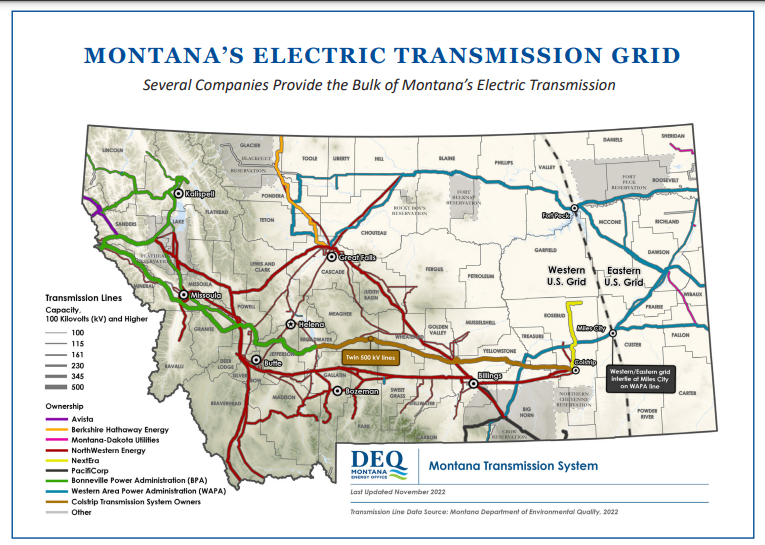
NorthWestern Energy Plan Building a New $250M Natural Gas Power Plant at Laurel, Montana
Gianforte spokesperson Kaitlin Price echoed this assessment in a statement to Montana Free Press.
“House Bill 971 re-established the longstanding, bipartisan policy that analysis conducted pursuant to the Montana Environmental Policy Act does not include analysis of greenhouse gas emissions,” Price said. “The bill would allow evaluation of GHGs if it is required under federal law or if Congress amends the Clean Air Act to include carbon dioxide as a regulated pollutant.”
It also comes as theU.S. Environmental Protection Agency considers a rule that would expand regulations dealing with power plants’ emissions of greenhouse gasses. If passed, the rule would require power plants like the coal-fired plant in Colstrip to capture 90% of its carbon emissions by 2038.
The United State Supreme Court on Monday declined to take up a lawsuit Boulder and two other local governments filed against oil refiners Suncor Energy and ExxonMobil and deemed similar climate change-related lawsuits matters for state courts.
The nation’s highest court issued orders Monday rejecting oil companies’ request to take up the Boulder case and similar lawsuits filed against other oil industry giants such as BP, Sunoco and Shell by the governments of Baltimore, Maryland; San Mateo County, California; and Honolulu, Hawaii.
Boulder city and county governments and San Miguel County, home to Telluride, joined together in 2018 and sued Calgary-based Suncor Energy and Irving, Texas-based ExxonMobil. The plaintiffs argued the communities face at least $100 million in costs over 30 years “to deal with the impacts of climate change caused by the use of fossil fuel products like those made and sold by Suncor and Exxon.”
Oil companies and local governments bringing similar legal cases have been jostling over whether state courts or the federal bench should have jurisdiction. Monday’s denial by the Supreme Court settles the jurisdictional matter, but doesn’t end the cases.
“We will continue to fight these suits, which are a waste of time and resources and do nothing to address climate change,” said Todd Spitler, a spokesperson for ExxonMobil. “Today’s decision does not impact our intention to invest billions of dollars to lead the way in a thoughtful energy transition that takes the world to net zero carbon emissions.“
Justice Samuel Alito took no part in the consideration and decision, while Justice Brett Kavanaugh would’ve taken up Boulder’s case at the Supreme Court, the order noted.
Suncor owns the three oil refineries in Commerce City, the only refineries in Colorado. A jurisdictional fight arose about which level of court — state or federal — is appropriate for such cases.
Local governments and the U.S. Department of Justice argued the cases belonged in state courts. Oil companies asked the U.S. Supreme Court to take up the Boulder case and settle issues the companies said are common among more than a dozen lawsuits working their way through lower courts.
Allies of the oil and gas industry expressed disappointment at the Supreme Court’s decision. Having state courts handle the cases could lead to a patchwork approach to policy questions that are inherently federal or international in scope, said Phil Goldberg, special counsel for the Manufacturers’ Accountability Project, in a statement issued Monday.
The good news is that state courts likely will, after the substance of the liability claims is heard, dismiss them like a New York City lawsuit against Exxon was two years ago, he said.
“The challenge of our time is developing technologies and public policies so that the world can produce and use energy in ways that are affordable for people and sustainable for the planet,” Goldberg said.
“It should not be figuring out how to creatively plead lawsuits that seek
to monetize climate change and provide no solutions.”
The Boulder and San Miguel County case was called a stunt by the state oil and gas industry when it was first filed. Companies shouldn’t face legal liability for “doing nothing more than engaging in the act of commerce while adhering to our already stringent state and federal laws,” said Dan Haley, president and CEO of the Colorado Oil and Gas Association, at the time.
But supporters of community claims point to evidence that’s shown oil companies understood but did not publicly disclose the potential ramifications of carbon dioxide pollution in the atmosphere. [There is again the lie of labelling the harmless trace gas plant food as “pollution.”]
They argue that climate-change-inducing emissions are at the root of incidents like the unusual, deadly deluges of September 2013, and out-of-season wildfires, like those that destroyed over 1,000 Superior and Louisville-area homes on New Year’s Eve, 2021, and have forced communities to bear the costs of responding to such disasters .[Yet in the UN report they say there is virtually no evidence of a relationship between extreme events and climate change.]
Q: Why These Lawsuits? A: Deep Pockets
Background Previous Post: Supremes Will Soon Rule on Deadbeat Cities’ Climate Lawsuits
On one hand, cities are suing oil and gas companies for alleged climate-related damages.
On the other, the same cities write in their municipal-bond disclosures
they cannot attest to the effects of climate change.
This makes Friday’s Supreme Court conference on Suncor v. Boulder critical. The nation’s highest court will decide if it will take up the case to rule on whether these climate suits should be heard in state or federal court.
No matter where they proceed, these cases not only lack merit but deserve greater scrutiny given the plaintiffs’ companion bond disclosures. Municipalities like Boulder, San Francisco and Baltimore, among others, have been filing claims against oil and gas companies, seeking damages they allege are directly attributable to the firms’ actions.
But holders of these cities’ bonds could be forgiven for being surprised by these lawsuits. Because the ambiguous claims these cities made to their bondholders belie the specific nature of the claims they later made to courts.
In their bond disclosures, these cities all acknowledge they’re unable to forecast
with any degree of certainty climate change’s adverse effects
and the science underlying their assumptions is evolving.
Fair enough. But contrast this with the incredibly specific claims in these cities’ lawsuits. In 2017, San Francisco’s city attorney, Dennis Herrera, filed a lawsuit in state court against five energy companies, alleging they are responsible for very specific effects of climate change and should pay for infrastructure such as sea walls to deal with its ongoing and future consequences.
The lawsuit’s claim about predicting the effects of climate change comes into serious question when the city attorney’s bond-issuing employer has stated it cannot accurately determine the extent of climate change for its investors.
In a 2018 petition in Texas state court, Exxon alleged the “stark and irreconcilable conflict” between the municipalities’ allegations in the lawsuits and their disclosures in bond offerings indicated the suits were brought “not because of a bona fide belief in any tortious conduct by the defendants or actual damage to their jurisdictions, but instead to coerce ExxonMobil and others operating in the Texas energy sector to adopt policies aligned with those favored by local politicians in California.”
Its petition was denied, but the concern about the “stark and irreconcilable conflict”
has quietly simmered ever since — and for good reason.
Disclosures in other areas have been a source of angst for muni bondholders. In 2016, the Securities and Exchange Commission issued a cease and desist order against the City of Boulder for misstating that it had complied with prior agreements to provide continuing disclosure to its investors.
What prompted renewed interest in this issue was not just the reexamination of bond risks after Credit Suisse’s failure but also the solicitor general’s recent recommendation to the Supreme Court, urging the justices to reject ExxonMobil and Suncor’s petition for their case to be heard in federal rather than state court.
Credit Suisse’s AT1 investors have reason to be upset but not necessarily all that surprised. After all, those bonds were yielding 9.75%, suggesting the risks were high. For comparison, the average yield on ostensibly much safer 10-year muni bonds is about 2.49%.
But what if, in addition to the risks laid out in disclosure documents, Credit Suisse had been aware of other material risks it had failed to disclose to its bondholders? Well, that would be securities fraud.
Might the same hold true for these municipalities doing the bidding
of trial lawyers pushing an extreme climate agenda?
To the extent that these cities have a much greater degree of certainty about the risks they face, have those risks been adequately described to all audiences, investors and the courts alike?
The question remains. And while these lawsuits seem meritless, one hopes the Supreme Court concludes at least that they ought to remain in federal court — where they belong.
Courts are increasingly taking a close look at the validity of climate change lawsuits against oil producers. And for good reason: These cases severely test the boundaries of court jurisdiction, the breadth of tort law, the protections of due process and even the sanctity of free speech.
As one example of this scrutiny, last Oct. 3, the U.S. Supreme Court signaled a serious interest in the proper forum and scope for climate change litigation.
In Suncor Energy (U.S.A.) Inc. v. Board of County Commissioners of Boulder County, the Supreme Court invited the solicitor general of the United States to weigh in, even though the United States is not a party to the litigation. The federal government is invited to file a brief with an official legal opinion of the federal government about the questions presented regarding the role of federal and state courts and the scope of federal and state common law for evaluating lawsuits alleging climate change injuries from fossil fuel production and consumption. These invitations are rare.
All of the cases similar to Suncor percolating across the country are focused on suing companies for the effects of climate change. Yet, each of these lawsuits also tack on “consumer deception” and related “greenwashing” claims. Both categories get a lot of attention, but the latter deserves special inspection.
These so-called deception claims sometimes allege that the companies downplayed the impacts of climate change despite that there is no affirmative duty to share everything you know, especially when consumers in the market have access to the same information.
Other times the greenwashing claims allege that the companies should not have been allowed to advertise about efforts they are making toward developing cleaner energy because these efforts were not as robust as the plaintiffs would have liked. Indeed, in several cases, the plaintiffs have essentially stated that these companies should not have been allowed to speak about their environmental successes because the only clean fossil fuel is no fossil fuel.
These consumer deception lawsuits are direct attacks on rights to speak
and the corollary rights to not be compelled to speak.
But there should be no climate change exception to free speech.
In 2019, Justice Samuel Alito penned an important dissenting opinion from a decision by the Supreme Court not to hear an appeal in National Review, Inc. v. Mann. He saw the denial as a lost opportunity to underscore that traditional and ordinary principles protecting free speech to promote discourse should apply within climate change discussions specifically.
Justice Alito noted that “To ensure that our democracy is preserved and is permitted to flourish, this Court must closely scrutinize any restrictions on the statements that can be made on important public policy issues. Otherwise, such restrictions can easily be used to silence the expression of unpopular views.”
Efforts to restrict how one speaks about climate change are precisely such “immensely important” cases where close scrutiny should apply. Justice Alito observed that “Climate change has staked a place at the very center of this Nation’s public discourse. Politicians, journalists, academics, and ordinary Americans discuss and debate various aspects of climate change daily—its causes, extent, urgency, consequences, and the appropriate policies for addressing it. The core purpose of the constitutional protection of freedom of expression is to ensure that all opinions on such issues have a chance to be heard and considered.”
These viewpoints are prescient in light of the climate deception
and greenwashing allegations in front of the court today.
Advertising itself has a long history as protected and beneficial speech. It is seen as critical to providing information to the market. It helps consumers make intelligent and well-informed decisions. It is not misleading to say that an attribute of a product is that it is better or cleaner today than it was yesterday.
Furthermore, if we were to say that companies are prohibited from advertising that they’ve improved simply because they have not eliminated all harmful aspects of their products, we would disincentivize the very improvements that those fighting to combat climate change wish to see. Advertising lets one benefit from the investment they make in improving a product, which in turn incentivizes the investment.
Thus, if these deception claims are successful in court, shutting down speech because the quality is not perfect in the eyes of some advocates becomes the enemy of the good.
Free speech is an invaluable thing with a fragility that counsels constant vigilance for its protection. Against those truths, we should be concerned when the very court system entrusted to protect speech is at risk of instead becoming weaponized to punish or chill it.
Rupert Darwall writes at Real Clear Energy 2022: The Year ESG Fell to Earth. Excerpts in italics with my bolds and added images. H/T Tyler Durden
The year 2022 brings an end to an era of illusions: a year that saw the end of the post–Cold War era and the return of geopolitics; the first energy crisis of the enforced energy transition to net zero; and the year that brought environmental, social, and governance (ESG) investing down to earth with a thump—for the year to date, BlackRock’s ESG Screened S&P 500 ETF lost 22.2% of its value, and the S&P 500 Energy Sector Index rose 54.0%. The three are linked. By restricting investment in production of oil and gas by Western producers, ESG increases the market power of non-Western producers, thereby enabling Putin’s weaponization of energy supplies. Net zero—the holy grail of ESG—has turned out to be Russia’s most potent ally. [Note: GOP House members are now advised to refer to Wind and Solar as “Not Green, Not Clean, and Empowering to China and Russia.”]
It wasn’t only a bad year for ESG on the stock market. Earlier this month, Vanguard announced that it was quitting Glasgow Financial Alliance for Net Zero (NZAM), set up by former governor of the Bank of England Mark Carney a little over a year ago. “We have decided to withdraw from NZAM so that we can provide the clarity our investors desire about the role of index funds and about how we think about material risks, including climate-related risks,” the world’s second-largest asset manager said.
Two months ago, Alex Edmans, coauthor of the latest edition of the standard textbook on the principles of corporate finance and professor of finance at the London Business School, published a paper titled “The End of ESG”—without a question mark. Edmans criticizes what has become the primary justification for ESG: the claim that business can generate higher returns for investors by tackling climate change. Since governments are democratically elected by a country’s citizens, they are best placed to address externalities, whereas investors disproportionately represent the elites. “If ESG is pursued for its externalities, companies and investors should be very clear that it may be at the expense of value,” Edmans says.
October also saw the publication of Terrence Keeley’s Sustainable, where the former BlackRock senior executivepenned what amounts to a requiem for ESG. Rather than “doing well by doing good,” the logic of Keeley’s case, as I reviewed for RealClear Books, is that investors in conventional ESG investment products are likely to end up not doing very well and leave investors feeling good, not doing good.
It has not all been going one way. In May, HSBC terminated Stuart Kirk, its global head of research at HSBC’s asset-management arm, for voicing some hard truths about ESG. Earlier this month, HSBC announced that it will stop financing new oil and gas fields, putting the West’s third-largest bank on Putin’s side in Russia’s energy war on the West.
What is now a negative factor disadvantaging the West in a world increasingly characterized by East–West geopolitical tensions originated after a period when the United Nations had been fostering a horizontal global division between a rich North and an exploited South. As University of Pennsylvania’s professor Elizabeth Pollman records in her June 2022 paper “The Origins and Consequences of the ESG Moniker,” through the 1970s and early 1980s, the UN promoted the New International Economic Order that called for the regulation of transnational corporations on the alleged grounds that they were widening the gap between developed and developing countries.
The 2008 financial crisis subsequently turbocharged the uptake of ESG. Having caused the financial crisis, Wall Street was going to redeem itself by saving the world from a planetary catastrophe. Without climate change, ESG would have vastly less salience. Although marketed as a climate risk analysis tool, ESG is no such thing.
In reality, it’s about investors and debt providers driving the decarbonization
of Western companies and sunsetting its oil and gas companies.
According to ESG doctrine, there are two types of climate financial risk—physical risk and transition risk—and it’s straightforward to demonstrate that both are spurious. Take the Bank of England. For its climate stress tests, the Bank of England uses a scenario derived from the Intergovernmental Panel on Climate Change’s (IPCC) extreme and physically implausible RCP8.5 climate scenario. Roger Pielke, Jr., professor of environmental studies at the University of Colorado–Boulder, and Justin Ritchie have documented how use of the RCP8.5 scenario represents “a stubborn commitment to error,” with its absurd projection of a sixfold growth in per-capita coal consumption to 2100, based on erroneous reports in the late 1980s of virtually unlimited coal deposits in Siberia and China. The Bank of England compounds implausibility with impossibility by taking the RCP8.5 pathway of 4 degrees by the turn of the century and telescoping it into a 3.3-degree Celsius rise by 2050.
Central banks resorting to these types of games constitutes strong evidence that
climate physical risk is a nonissue for financial stability.
Similarly, climate transition risk and the stranded assets trope defy economic and financial logic. If you restrict the flow of capital into a sector producing stuff that people want and are willing to pay for, the price of the output of a capital-embargoed sector will rise, as will the value of its invested capital. This, in essence, is what has been happening in energy and capital markets over the past year and explains why ESG as an investment strategy does not work. In the absence of draconian government policies to suppress demand for oil and natural gas, ESG policies strangling the supply of capital to Western oil and gas producers have two effects: they push up the price of hydrocarbons; and they displace supply from Western producers to neutral or hostile ones, with major detriment to the economies and security interests of the West.
Although the disintegration of ESG as an investment strategy became unmistakable in 2022, its existence as a political doctrine will continue until it is challenged and defeated politically.
This is already happening in Red states such as Florida, Texas, West Virginia, and Utah. It also requires concerted leadership at a national level to get central bankers and financial regulators to quit playing covert climate policy and to shame banks such as HSBC into switching their support from Russia in the energy wars by dropping their anti–oil and gas financing policies. Defeating ESG not a case of “who cares wins” but “who fights wins.”
Early this morning, two Tacoma Power substation facilities were attacked in east Pierce county. Currently, 7,300 customers are without power as a result. Law enforcement has been notified. We are working as quickly and safely as possible to restore power. https://t.co/DsH127j1sYpic.twitter.com/yJGXnSDkpo
Burglaries to 3 power substations cause Power Outages in Puyallup and Graham this morning. All 3 substations were vandalized by the burglars. No suspects in custody at this time.
Deputies arrived on scene and saw there was forced entry into the fenced area. Nothing had been taken from the substation, but the suspect vandalized the equipment causing a power outage in the area.
Deputies were notified of a second burglary to the TPU substation at 8820 224th St E which also had forced entry with damage to the equipment. Nothing was taken from this site either.
At 11:25 we were notified by Puget Sound Energy that they too had a power outage this morning at 02:39 am. Deputies are currently on scene at this facility where the fenced area was broken into and the equipment vandalized.
At this time deputies are conducting the initial investigation. We do not have any suspects in custody. It is unknown if there are any motives or if this was a coordinated attack on the power systems.
In total, three sites were vandalized, two TPU and one PSE, with more than 14K customers effected
One tweet said: “Not yet clear who did this, but there have been a lot of attacks on the power grid lately and it is something domestic terrorists, especially white supremacists eco-terrorists, are obsessed with (and several have been convicted in connection with recent attacks/plots).”
I applied the correction based on the consensus of commenters who suspect eco-terrorists of a new tactic replacing their previous valve-turning exploits.
The big news out of COP27 Sharm El-Sheikh concerns funding for climate “loss and damage.”
Reuters At COP27, climate ‘loss and damage’ funding makes it on the table
Columbia Climate School Loss and Damage: What Is It, and Will There Be Progress at COP27?
CarbonBrief COP27: Why is addressing ‘loss and damage’ crucial for climate justice?
Etc., Etc., Etc.
Mike Hulme explained the house of cards underlying the claims for compensation from extreme weather loss and damage. He addressed this directly in his 2016 article Can (and Should) “Loss and Damage” be Attributed to Climate Change?. Excerpts in italics with my bolds and added images.
One of the outcomes of the eighteenth negotiating session of the Conference of the Parties (COP18) to the UN Framework Convention on Climate Change, held in Doha last December, was the agreement to establish institutional arrangements to “address loss and damage associated with the impacts of climate change.” This opens up new possibilities for allocating international climate adaptation finance to developing countries. A meeting this week in Bonn (25–27 February), co-organized by the UN University Institute for Environmental and Human Security and the Loss and Damage in Vulnerable Countries Initiative, is bringing together various scholars and policymakers to consider how this decision might be implemented, possibly by as early as 2015.
At the heart of the loss and damage (L&D) agenda is the idea of attribution—that specific losses and damages in developing countries can be “associated with the impacts of climate change,” where “climate change” means human-caused alterations to climate. It is therefore not just any L&D that qualify for financial assistance under the Convention; it is L&D attributable to or “associated with” a very specific causal pathway.
Developing countries face some serious difficulties—at best, ambiguities—
with this approach to directing climate adaptation finance.
This is particularly so given the argument that the new science of weather attribution opens the possibility for a framework of legal liability for L&D, which has recently gained prominence (see here and here). Weather attribution science seeks to generate model-based estimates of the likelihood that human influence on the climate caused specific weather extremes.
Weather attribution should not, however, be used to make the funding of climate adaptation in developing countries dependent on proving liability for weather extremes.
There are four specific problems with using the post-Doha negotiations on L&D to advance the legal liability paradigm for climate adaptation. First, with what level of confidence can it be shown that specific weather or climate hazards in particular places are caused by anthropogenic climate change, as opposed to a naturally varying climate? Weather attribution scientists claim that such knowledge is achievable, but this knowledge will be partial, probabilistic, and open to contestation in the courts.
Second, even if such scientific claims were defendable, how will we define “anthropogenic?” Weather attribution science—if it is to be used to support a legal liability paradigm—needs to be capable of distinguishing between the meteorological effects of carbon dioxide emissions from fossil fuels and those from land use change, and between the effects of carbon dioxide and other greenhouse gases, black carbon (soot), and aerosol emissions. Each of these sources and types of climate-altering agents implicates different social and political actors and interests, so to establish liability in the courts, any given weather or climate hazard would need to be broken down into a profile of multiple fractional attributions. This adds a further layer of complexity and contestation to the approach.
Third, L&D may often be as much—or more—a function of levels of social and infrastructural development as it is a function of weather or climate hazard. Whether or not an atmospheric hazard is (partially) attributable to a liable human actor or institution is hardly the determining factor on the extent of the L&D. A legal liability framework based on attribution science promotes a “pollutionist approach” to climate adaptation and human welfare rather than a “developmentalist approach.” Under a pollutionist approach, adaptation is primarily about avoiding the dangers of human-induced climate change rather than building human resilience to a range of weather risks irrespective of cause. This approach has very specific political ramifications, serving some interests rather than others (e.g., technocratic and centralized control of adaptation funding over values-centered and decentralized control).
Finally, if such a legal framework were to be adopted, then what account should be taken of “gains and benefits” that might accrue to developing countries as a result of the impacts of climate change? Not all changes in weather and climate hazard as a result of human influence are detrimental to human welfare, and the principle of symmetry would demand that a full cost-benefit analysis lie at the heart of such a legal framework. This introduces another tier of complexity and contestation.
Following Doha and the COP18, the loss and damage agenda now has institutional force, and the coming months and years will see rounds of technical and political negotiation about how it may be put into operation. This agenda, however, should not place climate adaptation funding into the framework of legal liability backed by the new science of weather attribution.
In this third and final review I survey the nascent science of extreme weather event attribution. The article proceeds by examining the field in four stages: motivations for extreme weather attribution, methods of attribution, some example case studies and the politics of weather event Attribution.
Hulme concludes by discussing the political hunger for scientific proof in support of policy actions.
But Hulme et al. (2011) show why such ambitious claims are unlikely to be realised. Investment in climate adaptation, they claim, is most needed “… where vulnerability to meteorological hazard is high, not where meteorological hazards are most attributable to human influence” (p.765). Extreme weather attribution says nothing about how damages are attributable to meteorological hazard as opposed to exposure to risk; it says nothing about the complex political, social and economic structures which mediate physical hazards.
And separating weather into two categories — ‘human-caused’ weather and ‘tough-luck’ weather – raises practical and ethical concerns about any subsequent investment allocation guidelines which excluded the victims of ‘tough-luck weather’ from benefiting from adaptation funds.
Contrary to the claims of some weather attribution scientists, the loss and damage agenda of the UNFCCC, as it is currently emerging, makes no distinction between ‘human-caused’ and ‘tough-luck’ weather. “Loss and damage impacts fall along a continuum, ranging from ‘events’ associated with variability around current climatic norms (e.g., weather-related natural hazards) to [slow-onset] ‘processes’ associated with future anticipated changes in climatic norms” (Warner et al., 2012:21). Although definitions and protocols have not yet been formally ratified, it seems unlikely that there will be a role for the sort of forensic science being offered by extreme weather attribution science.
Presently the next climate Conference of Parties is scheduled for Sharm El-Sheikh in Egypt this November. Post Covid pandemic, this gathering could well exceed the estimated record attendance of 40,000 at Glasgow last year.
Some 90 heads of state have been confirmed for next month’s UN climate conference, with host country Egypt sending a warning shot to Britain – from whom it will inherit the Cop27 presidency – not to backtrack on its commitments to fight global warming.
An Egyptian government spokesperson said Cairo was “disappointed” by reports that King Charles III, who’d been due to give a speech at the event, had been told not to attend by British Prime Minister Liz Truss.
“The Egyptian presidency of the climate conference acknowledges the longstanding and strong commitment of His Majesty to the climate cause, and believes that his presence would have been of great added value to the visibility of climate action at this critical moment,” the spokesperson said.
“We hope that this doesn’t indicate that the UK is backtracking from the global climate agenda after presiding over Cop26.”
Concerns over net zero
The comments come amid concerns that Britain’s new leadership is less committed to the country’s target of reaching net zero greenhouse gas emissions by 2050.
Truss is already looking to increase domestic gas supplies through increased North Sea drilling
It is hoped that Cop27, taking place from 6-18 November in the resort city of Sharm el Sheikh, will see richer nations finally commit to financing climate adaptation and mitigation efforts in poorer countries already reeling from the impacts of rising temperatures.
Will climate justice be yet another victim of the energy crisis?
Despite climate stress, Africa is in ‘unique’ position to fight global warming
Egypt is pushing to include the so-called “loss and damage” compensation on the summit’s formal agenda. Securing that money is a thorny issue, with the United States and the European Union last year rejecting calls for a compensation fund at Cop26 in Glasgow.
“We strongly believe that we need all the political will and momentum and direction coming from heads of state to push the process forward,” said Wael Aboulmagd, special representative for the Cop27 presidency, adding the funding issue had become “very, very adversarial”.
Why a COP Briefing?
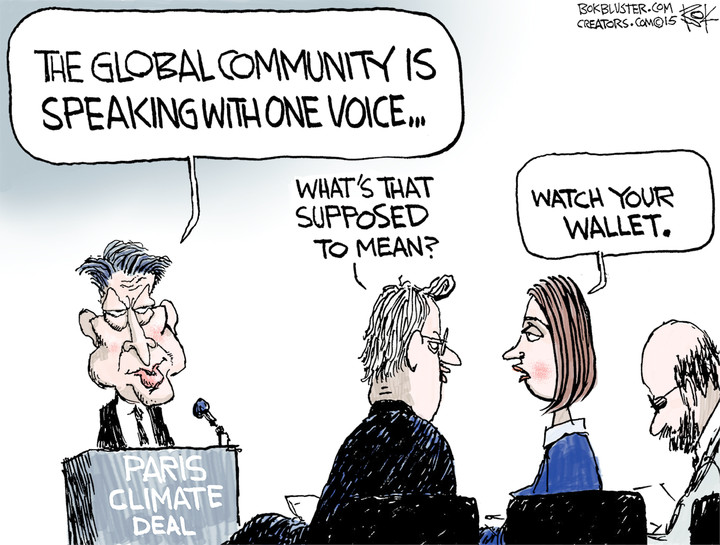
Actually, climate hysteria is like a seasonal sickness. Each year a contagion of anxiety and fear is created by disinformation going viral in both legacy and social media in the run up to the autumnal COP (postponed in 2020 due to pandemic travel restrictions). Now that climatists have put themselves at the controls of the formidable US federal government, we can expect the public will be hugely hosed with alarms over the next few months. Before the distress signals go full tilt, individuals need to inoculate themselves against the false claims, in order to build some herd immunity against the nonsense the media will promulgate. This post is offered as a means to that end.
Media Climate Hype is a Cover Up
Back in 2015 in the run up to Paris COP, French mathematicians published a thorough critique of the raison d’etre of the whole crusade. They said:
Fighting Global Warming is Absurd, Costly and Pointless.
Absurd because of no reliable evidence that anything unusual is happening in our climate.
Costly because trillions of dollars are wasted on immature, inefficient technologies that serve only to make cheap, reliable energy expensive and intermittent.
Pointless because we do not control the weather anyway.
The prestigious Société de Calcul Mathématique (Society for Mathematical Calculation) issued a detailed 195-page White Paper presenting a blistering point-by-point critique of the key dogmas of global warming. The synopsis with links to the entire document is at COP Briefing for Realists
Even without attending to their documentation, you can tell they are right because all the media climate hype is concentrated against those three points.
Finding: Nothing unusual is happening with our weather and climate. Hype: Every metric or weather event is “unprecedented,” or “worse than we thought.”
Finding: Proposed solutions will cost many trillions of dollars for little effect or benefit. Hype: Zero carbon will lead the world to do the right thing. Anyway, the planet must be saved at any cost.
Finding: Nature operates without caring what humans do or think. Hype: Any destructive natural event is blamed on humans burning fossil fuels.
How the Media Throws Up Flak to Defend False Suppositions
The Absurd Media: Climate is Dangerous Today, Yesterday It was Ideal.
Billions of dollars have been spent researching any and all negative effects from a warming world: Everything from Acne to Zika virus. A recent Climate Report repeats the usual litany of calamities to be feared and avoided by submitting to IPCC demands. The evidence does not support these claims. An example:
It is scientifically established that human activities produce GHG emissions, which accumulate in the atmosphere and the oceans, resulting in warming of Earth’s surface and the oceans, acidification of the oceans, increased variability of climate, with a higher incidence of extreme weather events, and other changes in the climate.
Moreover, leading experts believe that there is already more than enough excess heat in the climate system to do severe damage and that 2C of warming would have very significant adverse effects, including resulting in multi-meter sea level rise.
Experts have observed an increased incidence of climate-related extreme weather events, including increased frequency and intensity of extreme heat and heavy precipitation events and more severe droughts and associated heatwaves. Experts have also observed an increased incidence of large forest fires; and reduced snowpack affecting water resources in the western U.S. The most recent National Climate Assessment projects these climate impacts will continue to worsen in the future as global temperatures increase.
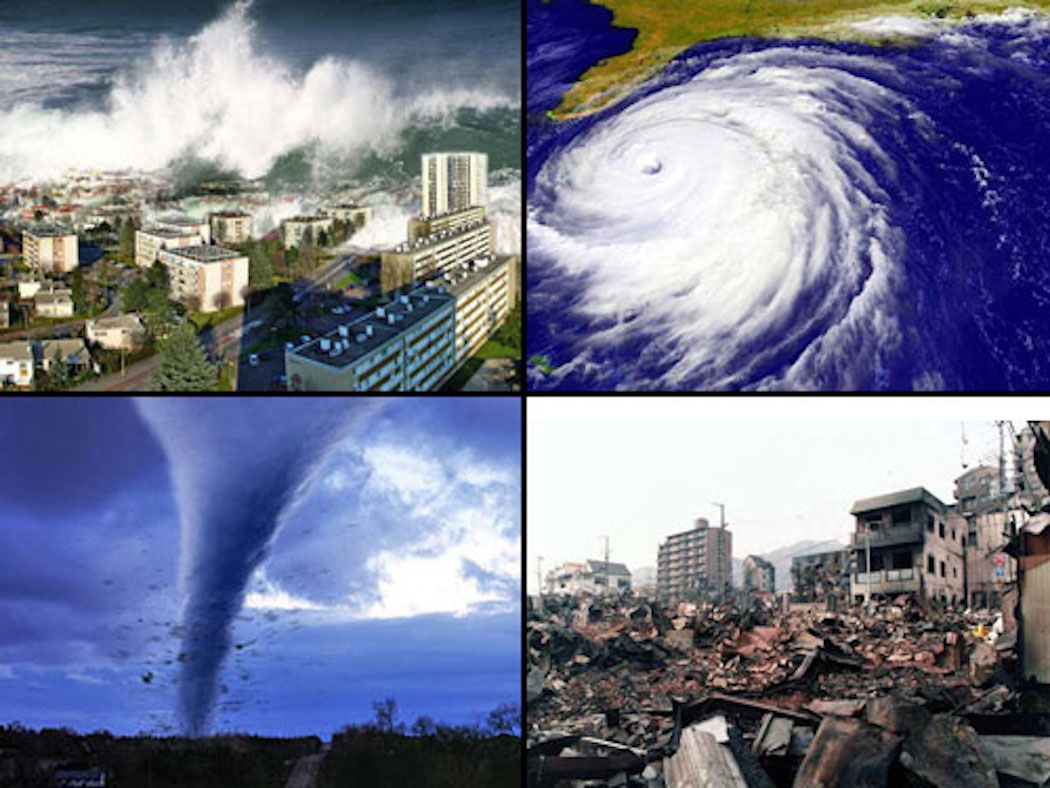
Alarming Weather and Wildfires
But: Weather is not more extreme.
And Wildfires were worse in the past. But: Sea Level Rise is not accelerating.
Litany of Changes
Seven of the ten hottest years on record have occurred within the last decade; wildfires are at an all-time high, while Arctic Sea ice is rapidly diminishing.
We are seeing one-in-a-thousand-year floods with astonishing frequency.
When it rains really hard, it’s harder than ever.
We’re seeing glaciers melting, sea level rising.
The length and the intensity of heatwaves has gone up dramatically.
Plants and trees are flowering earlier in the year. Birds are moving polewards.
We’re seeing more intense storms.
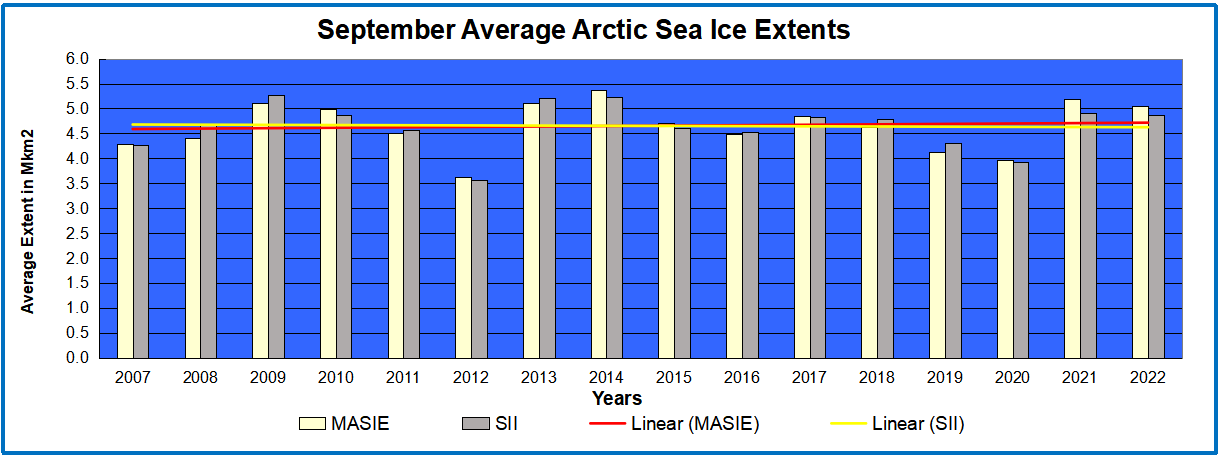
But: Arctic Ice has not declined since 2007.
But: All of these are within the range of past variability.In fact our climate is remarkably stable, compared to the range of daily temperatures during a year where I live.
And many aspects follow quasi-60 year cycles.
The Impractical Media: Money is No Object in Saving the Planet.
Here it is blithely assumed that the court can rule the seas to stop rising, heat waves to cease, and Arctic ice to grow (though why we would want that is debatable). All this will be achieved by leaving fossil fuels in the ground and powering civilization with windmills and solar panels. While admitting that our way of life depends on fossil fuels, they ignore the inadequacy of renewable energy sources at their present immaturity.
An Example: The choice between incurring manageable costs now and the incalculable, perhaps even irreparable, burden Youth Plaintiffs and Affected Children will face if Defendants fail to rapidly transition to a non-fossil fuel economy is clear. While the full costs of the climate damages that would result from maintaining a fossil fuel-based economy may be incalculable, there is already ample evidence concerning the lower bound of such costs, and with these minimum estimates, it is already clear that the cost of transitioning to a low/no carbon economy are far less than the benefits of such a transition. No rational calculus could come to an alternative conclusion. Defendants must act with all deliberate speed and immediately cease the subsidization of fossil fuels and any new fossil fuel projects, and implement policies to rapidly transition the U.S. economy away from fossil fuels.
But CO2 relation to Temperature is Inconsistent.
But: The planet is greener because of rising CO2.
But: Modern nations (G20) depend on fossil fuels for nearly 90% of their energy.
But: Renewables are not ready for prime time.
People need to know that adding renewables to an electrical grid presents both technical and economic challenges. Experience shows that adding intermittent power more than 10% of the baseload makes precarious the reliability of the supply. South Australia is demonstrating this with a series of blackouts when the grid cannot be balanced. Germany got to a higher % by dumping its excess renewable generation onto neighboring countries until the EU finally woke up and stopped them. Texas got up to 29% by dumping onto neighboring states, and some like Georgia are having problems.
But more dangerous is the way renewables destroy the economics of electrical power. Seasoned energy analyst Gail Tverberg writes:
In fact, I have come to the rather astounding conclusion that even if wind turbines and solar PV could be built at zero cost, it would not make sense to continue to add them to the electric grid in the absence of very much better and cheaper electricity storage than we have today. There are too many costs outside building the devices themselves. It is these secondary costs that are problematic. Also, the presence of intermittent electricity disrupts competitive prices, leading to electricity prices that are far too low for other electricity providers, including those providing electricity using nuclear or natural gas. The tiny contribution of wind and solar to grid electricity cannot make up for the loss of more traditional electricity sources due to low prices.
The Irrational Media: Whatever Happens in Nature is Our Fault.
An Example:
Other potential examples include agricultural losses. Whether or not insurance reimburses farmers for their crops, there can be food shortages that lead to higher food prices (that will be borne by consumers, that is, Youth Plaintiffs and Affected Children). There is a further risk that as our climate and land use pattern changes, disease vectors may also move (e.g., diseases formerly only in tropical climates move northward).36 This could lead to material increases in public health costs
But: Actual climate zones are local and regional in scope, and they show little boundary change.
But: Ice cores show that it was warmer in the past, not due to humans.
The hype is produced by computer programs designed to frighten and distract children and the uninformed. For example, there was mention above of “multi-meter” sea level rise. It is all done with computer models. For example, below is San Francisco. More at USCS Warnings of Coastal Floodings
In addition, there is no mention that GCMs projections are running about twice as hot as observations.
Omitted is the fact GCMs correctly replicate tropospheric temperature observations only when CO2 warming is turned off.
Figure 5. Simplification of IPCC AR5 shown above in Fig. 4. The colored lines represent the range of results for the models and observations. The trends here represent trends at different levels of the tropical atmosphere from the surface up to 50,000 ft. The gray lines are the bounds for the range of observations, the blue for the range of IPCC model results without extra GHGs and the red for IPCC model results with extra GHGs.The key point displayed is the lack of overlap between the GHG model results (red) and the observations (gray). The nonGHG model runs (blue) overlap the observations almost completely.
In the effort to proclaim scientific certainty, neither the media nor IPCC discuss the lack of warming since the 1998 El Nino, despite two additional El Ninos in 2010 and 2016.
Further they exclude comparisons between fossil fuel consumption and temperature changes. The legal methodology for discerning causation regarding work environments or medicine side effects insists that the correlation be strong and consistent over time, and there be no confounding additional factors. As long as there is another equally or more likely explanation for a set of facts, the claimed causation is unproven. Such is the null hypothesis in legal terms: Things happen for many reasons unless you can prove one reason is dominant.
Finally, advocates and IPCC are picking on the wrong molecule. The climate is controlled not by CO2 but by H20. Oceans make climate through the massive movement of energy involved in water’s phase changes from solid to liquid to gas and back again. From those heat transfers come all that we call weather and climate: Clouds, Snow, Rain, Winds, and Storms.
Esteemed climate scientist Richard Lindzen ended a very fine recent presentation with this description of the climate system:
I haven’t spent much time on the details of the science, but there is one thing that should spark skepticism in any intelligent reader. The system we are looking at consists in two turbulent fluids interacting with each other. They are on a rotating planet that is differentially heated by the sun. A vital constituent of the atmospheric component is water in the liquid, solid and vapor phases, and the changes in phase have vast energetic ramifications. The energy budget of this system involves the absorption and reemission of about 200 watts per square meter. Doubling CO2 involves a 2% perturbation to this budget. So do minor changes in clouds and other features, and such changes are common. In this complex multifactor system, what is the likelihood of the climate (which, itself, consists in many variables and not just globally averaged temperature anomaly) is controlled by this 2% perturbation in a single variable? Believing this is pretty close to believing in magic. Instead, you are told that it is believing in ‘science.’ Such a claim should be a tip-off that something is amiss. After all, science is a mode of inquiry rather than a belief structure.
Summary: From this we learn three things:
Climate warms and cools without any help from humans.
Warming is good and cooling is bad. The hypothetical warming from CO2 would be a good thing.





 Edward Ring writes at American Greatness The Corruption of Climate Science. Excerpts in italics with my bolds.













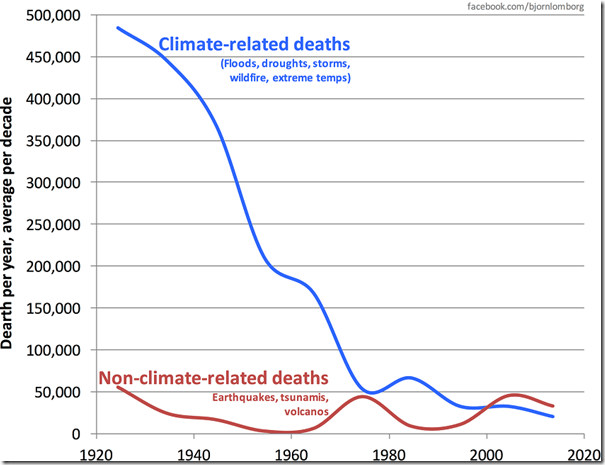
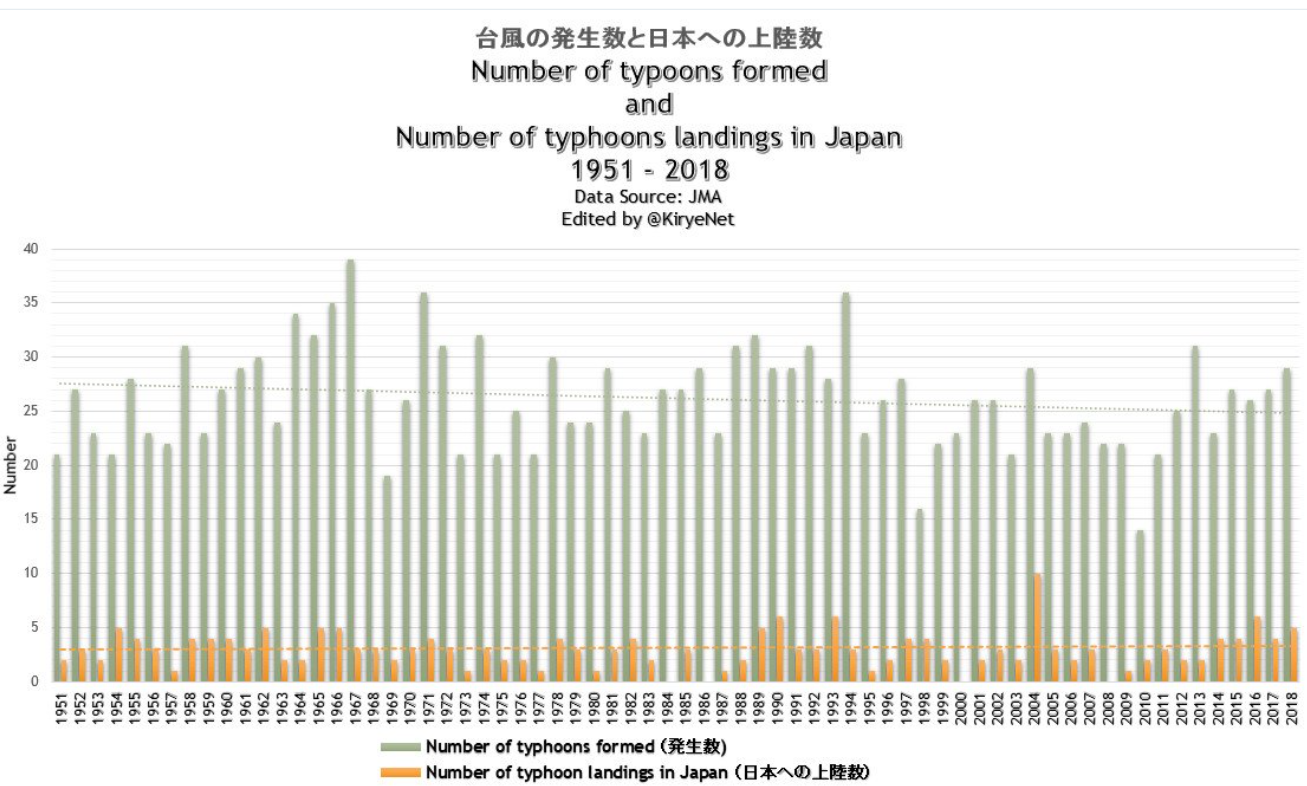



 But: Sea Level Rise is not accelerating.



 Science Matters