Climate-Change ‘Solutions’ Way Worse Than the Problem

Wonder Land: Democrats have wrecked the cities and the border. Why would climate policy be any different? Images: Zuma Press/Getty Images Composite: Mark Kelly  Link to video is below

https://video-api.wsj.com/api-video/player/v3/iframe.html?guid=5D0A20A9-75C5-4506-B1B1-9EC96ABBBEE9

Jason De Sena Trennert writes at WSJ Opinion Climate-Change ‘Solutions’ That Are Worse Than the Problem.  Excerpts in italics with my bolds and added images H/T John Ray (here)

The political assault on fossil fuels comes at the expense
of the poor, peace, and the environment.

If you can afford a Tesla, you probably find it hard to imagine that there are some 3.5 billion people on Earth who have no reasonably reliable access to electricity. Even less obvious may be the way rich countries’ pursuit of carbon neutrality at almost any cost limits economic opportunities for the world’s poor and poses serious geopolitical risks to the West.

Anyone on an investment committee has likely spent untold amounts of time discussing ways to mitigate the impact of climate change, but they’ve likely never heard anyone state one simple and incontrovertible fact: The widespread exploration and production of fossil fuels that started in Titusville, Pa., not quite 170 years ago, has done more to benefit the lives of ordinary people than any other technological advance in history.

Before fossil fuels, people relied on burning biomass, such as timber or manure, which was a far dirtier and much less efficient source of energy. Fossil fuels let people heat their homes in the winter, reducing the risk of death from exposure. Fossil-fuel-based fertilizers greatly increased crop yields, reducing starvation and malnutrition. Before the advent of the automobile, the ability for many people to venture far from their hometown was an unfathomable dream. Oil- and coal-burning transportation opened up access to education, commerce, professional opportunities, and vital services such as medicine. There has been, and remains, a strong correlation between the use of fossil fuels and life expectancy.

Limiting the availability of fossil fuels in the name of climate activism would cut off many of the world’s poor from these benefits. Climate activists worry about a potential “existential crisis” decades down the road, but poor people, really poor people, face an existential crisis every day. Even for those who aren’t among humanity’s most unfortunate, rising energy prices force serious economic trade-offs. Purposely eschewing America and Europe’s own natural resources increases costs to consumers, raises the cost of doing business, and limits economic growth. Viewed with this in mind, the debate over emissions seems like an upper-class problem.

If Chinese belligerence and increasing authoritarianism over the past two years have taught us anything, it is that no amount of trade and international cooperation will instill what are generally considered to be Western values in other civilizations who have no real desire to adopt them. Trusting China to do anything other than what is directly in its own best interests, especially when it comes to the trade-offs between economic development and climate issues, would seem to be in direct conflict with history and common sense—and it poses serious geopolitical risks to the international democratic order. The war in Ukraine has emphasized how leaving European and American fossil fuels in the ground can put the West at the will of dictators, increasing the risk of atrocities, war or even the use of weapons of mass destruction.

An easing of regulations on drilling in the U.S. and easier regulations on liquefied natural gas exports to flood the global market with oil and natural gas would do far more than any sanctions to stop Vladimir Putin’s barbarism.

The climate-change solutions the West is pursuing also pose a danger to the environment. The lodestar of the environmental movement today appears to be electric vehicles. One would be hard-pressed to find a product more dependent on resources from extractive materials. An electric car requires almost four times as much copper as an automobile powered by an internal combustion engine. The widely accepted goal of having 30% of the world’s vehicle sales be electric by 2030 would require enormous investments in mining industries that are decidedly not eco-friendly.

And whatever emission cuts America and Europe manage to make by forcing electric vehicles and other inefficient technology on consumers will be negated by emissions from other nations. Regimes like Russia and China won’t put aside their geopolitical ambitions for climate activism; developing countries like India won’t sacrifice economic development and their peoples’ well-being in the hope it’ll slow global warming.

Sadly, environmentalism has grown into a secular religion
in which reasonable debate is regarded as heresy.

But if politicians and voters can approach climate change with an open mind, they’ll see that economic growth is likely to solve the issue without heavy-handed government intervention. History has shown that free markets produce incredible leaps in human ingenuity. The greater access the world has to all sorts of energy sources, the faster humanity will discover new technologies that are more environmentally friendly. Rationing fossil fuels would only retard the process of decreasing carbon emissions and cost lives in the process.

Resources:  Four Part Series of infographics World of Hurt From Climate Policies


Climate & Covid Year in Review

Dave Barry provides at Miami Herald his usual droll witty take on events Dave Barry’s Year in Review: Wait, wasn’t 2021 supposed to be better than 2020?.  Some excerpts in italics along with my added comments and images.

Year in review 2021

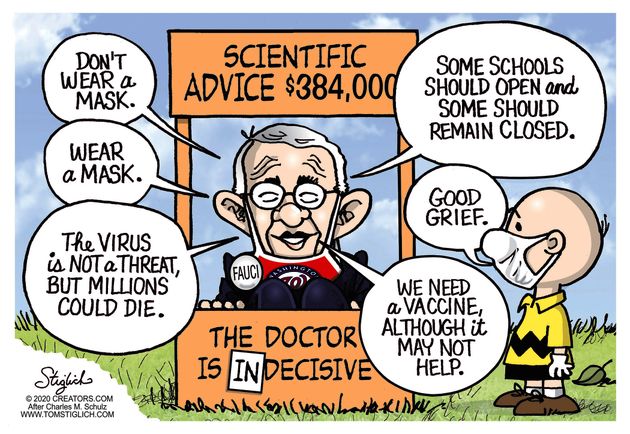
Fortunately in 2021, we followed the Science, which decided that the coronavirus does not observe floor arrows. On the other hand, the Science could not make up its mind about masks, especially in restaurants. Should everybody in the restaurant wear them? Should only the staff wear them? Should people who are standing up wear them, but not people who are sitting down, which would seem to suggest that the virus can also enter our bodies via our butts? We still don’t know, and we can’t wait to find out what the Science will come up with for us next.

Anyway, our point is not that 2021 was massively better than 2020. Our point is that at least it was different. A variant, so to speak. And like any year, it had both highs and lows.

No, we take that back. It was pretty much all lows, as we will see when we review the key events of 2021, starting in…

January 2021

The spotlight now shifts to incoming President Joe Biden, who takes the oath of office in front of a festive throng of 25,000 National Guard troops. The national healing begins quickly as Americans, exhausted from years of division and strife, join together in exchanging memes of Bernie Sanders attending the inauguration wearing distinctive mittens and the facial expression of a man having his prostate examined by a hostile sea urchin.

Bjorn Lomborg:  Joe Biden will rejoin the Paris climate agreement soon after being inaugurated as president of the United States. Climate change, according to Biden, is “an existential threat” to the nation, and to combat it, he proposes to spend $500 billion each year on climate policies — the equivalent of $1,500 per person.

For Americans, President Barack Obama’s Paris promises carried a price tag of nearly $200 billion a year. But Biden has vowed to go much further, with a promise of net-zero by 2050. There is only one nation that has done an independent cost estimate of net-zero, namely New Zealand. The Kiwis found the average best-case cost is 16 percent of GDP, or a US cost of more than $5 trillion a year by mid-century.

These figures are unsustainable. Moreover, the US and other developed countries can achieve very little on their own. Imagine if Organization for Economic Cooperation and Development countries stopped all their emissions today and never bounced back. This would be utterly devastating economically yet would reduce global warming by the end of the century by less than 0.8 degrees.

There is a smarter way: investing a lot more in green-energy ­research and development. As Bill Gates says, “We’re short about two dozen great innovations” to fix climate. If we could innovate the price of green energy below fossil fuels, everyone would switch, eventually fixing climate change.

Joe Biden’s climate agenda is all about creating a crisis — not actually fixing one

February 2021

A massive ice storm blasts much of the nation, taking an especially brutal toll on Texas, where record-setting cold temperatures knock out power to large areas and wreak devastating havoc upon millions of cells in the brain of Sen. Ted Cruz, who, despite being (Just ask him!) the smartest person on the planet, decides this would be a good time to dash off to Cancun. Meanwhile the management of the Texas power grid is harshly criticized by members of Congress who could not personally reset a home circuit breaker without the help of at least four consultants and a pollster.

The Mars rover Perseverance collects scientific evidence proving that Mars is mostly dirt. AP

In the month’s most positive news, the NASA rover “Perseverance,” after traveling 293 million miles through space, lands safely on the surface of Mars. Technically it was supposed to land on Venus, but as a NASA spokesperson observes, “a planet is a planet.” The rover sends back breathtaking video revealing that Mars has an environment consisting — as scientists have long suspected — of dirt.

March 2021

Congressional Democrats pass the Biden administration’s COVID-19 relief package, which will cost $1.9 trillion, which the United States will pay for by selling baked goods to foreign nations. In a prime-time address after signing the bill, President Biden says there is “a good chance” that Americans will be able to gather together “by July the Fourth.” He does not specify which one.

Three hundred years ago, Vivaldi wrote “The Four Seasons.” It portrays the natural world, from birdsong to summer storms.  But the warming climate could radically alter the natural world by 2050, so a new version of “The Four Seasons” has been altered, too.

“We really wanted to walk that line between being too ridiculously catastrophic and kind of meaningfully changing this to make it sound what we think it might feel like to live in that time,” says Tim Devine of AKQA.

The design agency partnered with composers and scientists to develop an algorithm that translates projected environmental changes into musical changes. It allows them to create localized versions for any place where the piece is performed.

In the version played by Australia’s Sydney Symphony Orchestra, missing notes reflect declining bird populations, and the summer storm is more intense and prolonged.

April 2021

There is some welcome news on the COVID-19 front as the CDC declares that it is not necessary to wear a face mask “provided that you are fully vaccinated, and you are outdoors, and you are part of a small gathering, and everybody in this gathering has also been fully vaccinated, and all of you periodically, as a precaution, emit little whimpers of terror.” The CDC adds that “we, personally, plan to spend the next five to ten years locked in our bedroom.”

President Biden, in his first speech to Congress, promotes his infrastructure plan, which would cost $2.3 trillion, and his American Families plan, which would cost $1.8 trillion, with both plans to be funded by what the president describes as a “really big car wash.”

May 2021

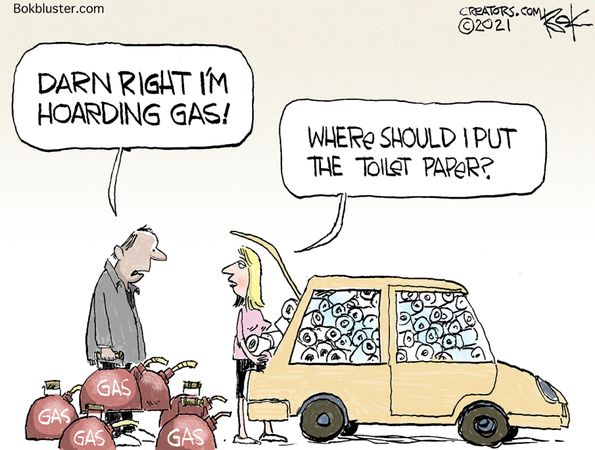
The CDC further relaxes its COVID-19 guidelines in response to new scientific data showing that a lot of people have stopped paying attention to CDC guidelines. At this point these are the known facts about the pandemic in America:

— Many Americans have been vaccinated but continue to act as though they have not.

— Many other Americans have not been vaccinated but act as though they have.

— Many of those who got vaccinated hate Donald Trump, who considers the vaccines to be one of his greatest achievements.

— Many who refuse to get vaccinated love Donald Trump.

What do these facts tell us? They tell us that we, as a nation, are insane. But we knew that.

See Four Myths Drove Covid Madness

Myth: Sars-CV2 is a new virus and we have no defense.
Fact: Sars-CV2 has not been scientifically established as a virus.
Myth: Testing positive for Sars-CV2 makes you a disease case and a spreader.
Fact: PCR tests say nothing about you being ill or infectious.
Myth: Millions of people have died from Covid19.
Fact: Life expectancy is the same before and after Covid19.
Myth: Wearing masks prevents viral infection.
Fact: Evidence shows masks are symbolic, not effective.
June 2021

President Biden goes to Europe to participate in an important and historic photo opportunity with the other leaders of the G7 economic powers, which are Germany, Japan, the United Kingdom, the United States, Google, Facebook and Mattress Giant. In a formal joint statement issued after the meeting, the leaders declare that everybody had, quote, “a nice time.” Biden also meets with Queen Elizabeth II, who has met with every U.S. president since we started having them.
July 2021
COVID-19, which we thought was almost over — this is like the eighth or ninth time we have thought this — appears to be surging again in certain areas because of the “Delta Variant,” which gets its name from the fact that it is spread primarily by fraternities. The problem is that many Americans have declined to be vaccinated, despite the efforts of pro-vaccine voices to change the minds of the skeptics by informing them that they are stupid idiots, which is usually a persuasive argument. In response to the surge, the CDC issues new guidelines urging Americans to “do the opposite of whatever we said in our previous guidelines, not that anyone is paying attention.”

In the month’s most upbeat story, Richard Branson and Jeff Bezos pioneer a new era in billionaire leisure travel by going up in private suborbital spacecraft. The two flights are radically different: Branson’s takes off in New Mexico and returns to earth in New Mexico; whereas Bezos takes off in Texas and comes down in Texas. Space enthusiasts say these missions will pave the way toward a future in which ordinary people with millions of spare dollars will be able to travel from one part of a state to a completely different part of that state while wearing matching outfits.

Athletes in the scaled-back Tokyo Olympics compete in the two-person flag-wave event. Koji Ito AP

In Tokyo, the pandemic-delayed 2020 Olympic games (motto: “Later, Smaller, Sadder”) finally get underway with the majestic Nasal Swab of Nations. This is followed by the ceremonial lighting of the Olympic Torch, which for safety reasons is a small vanilla-scented bath candle that is immediately extinguished to prevent it from attracting crowds. Let the games begin!

August 2021

The U.S. withdrawal from Afghanistan is similar to a soccer riot, but not as organized. Shekib Rahmani AP

American forces are withdrawn from Afghanistan, a country that, thanks to 20 years of our involvement, has been transformed — at a cost of many lives and more than $2 trillion — from a brutal, primitive undemocratic society into a brutal, primitive undemocratic society with a whole lot of abandoned American military hardware lying around. Most Americans agree that we have accomplished our mission, which is the same mission that the Russians had in Afghanistan before us, and the British had before them; namely, to get the hell out of Afghanistan.
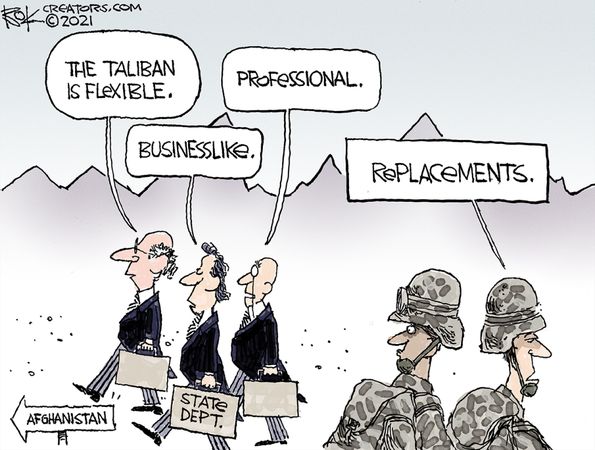
The Biden administration, noting that the president has more than 140 years of experience reading Teleprompter statements about foreign policy, assures everyone that it has a Sound Exit Plan allowing for Every Possible Contingency, and insists that the withdrawal is going well. This assessment is confirmed by observers on the ground, particularly Jen Psaki, with the ground in her case being the White House Press Briefing Room. Observers who are actually in Kabul paint a somewhat darker picture of the withdrawal, more along the lines of what would have happened if the Hindenburg had crashed into the Titanic during a soccer riot.

Meanwhile global climate change continues to be a big concern as scientists release disturbing satellite images showing that the Antarctic ice sheet, for the first time in thousands of years, has developed a Dairy Queen.

September 2021

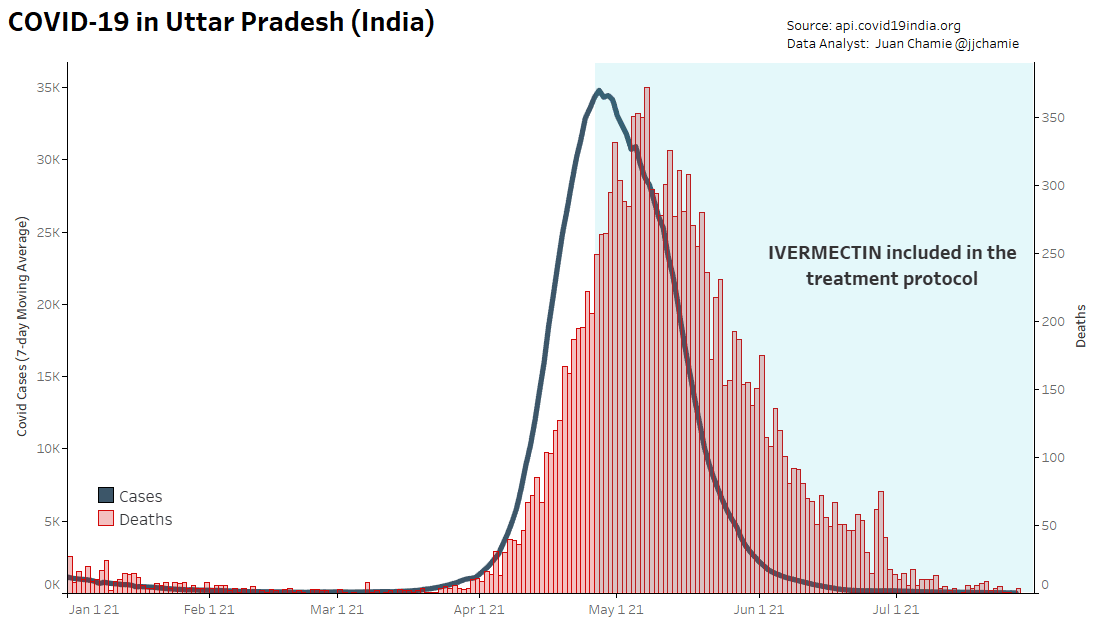
Massive leftist backlash against Ivermectin Explained

Treatment protocols with HCQ or Ivermectin + nutritional supplements fill the the need for early home treatment.

Connor Harris explains in his City Journal article Try a Dose of Skepticism.  Excerpts in italics with my bolds.

Ivermectin may or may not work against Covid-19, but media coverage of the drug has been sneering, inaccurate—and revealing.

“You are not a horse. You are not a cow. Seriously, y’all. Stop it,” read a recent viral tweet warning readers away from using a certain medication to treat Covid-19. The tone of affectedly folksy condescension would be expected from any of thousands of Twitter-addicted progressive journalists, but less so from the official account of the United States Food and Drug Administration. Perhaps even more surprising, the tweet linked to a warning advising readers not to take a drug, ivermectin, that has been used in humans for decades and is a standard Covid-19 treatment in much of the world.

The media’s recent reporting on ivermectin is a fitting sequel to their reporting on hydroxychloroquine near the beginning of the pandemic—but not, as received opinion would have it, because both are tales of red-state yokels duped into taking poisonous phony remedies. As in the earlier case, media coverage of ivermectin exemplifies how the liberal political class’s bias, and its confusion of respect for science with blind trust in a scientific establishment, impairs their skepticism and their capacity to appraise complex scientific questions.  See Why the Leftist Backlash Against Ivermectin

October 2021

Speaking of threats: American military and intelligence officials express concern over reports that China has tested a nuclear-capable hypersonic missile, although a Chinese Foreign Ministry spokesperson states that it was “probably a bat.”

In other disturbing developments, Facebook suffers a worldwide outage lasting several harrowing hours, during which billions of people are forced to obtain all of their misinformation from Twitter. Later in the month Facebook Chief Execudroid Mark Zuckerberg announces that, to better reflect Facebook’s vision for the future, the parent company is changing its name to the Washington Redskins.

One of the year’s celebrity space travelers is William Shatner, 90, whose suborbital voyage lasts 10 minutes, including two bathroom breaks. Mario Tama TNS

But there is also inspiring news in October, provided by 90-year-old actor William Shatner, who boards a Blue Origin suborbital capsule and successfully travels from one part of Texas to another part of Texas in a subhistoric mission lasting 10 minutes, including two bathroom stops.

November 2021

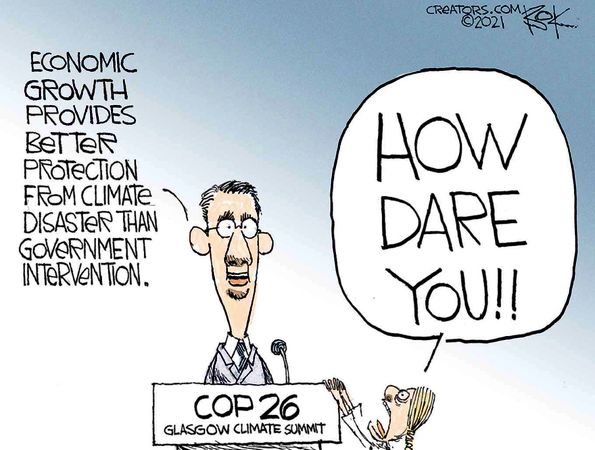
Biden heads to Glasgow, a city located in Scotland or possibly Wales, to participate in COP26, a 190-nation conference on climate change attended by 30,000 political leaders, diplomats, bureaucrats, experts, spokespersons, observers, aides, minions, private-jet pilots and of course Leonardo DiCaprio. After an incalculable number of catered meals and lengthy impassioned speeches making the points that (1) the climate crisis is real, (2) this is an emergency, (3) the time for action is NOW, (4) we cannot afford to wait ONE DAY longer, and (5) WE ARE NOT KIDDING AROUND THIS IS SERIOUS DAMMIT, the participating nations hammer out a historic agreement declaring, in no uncertain terms, that they will definitely, no excuses this time, gather next year for another conference, which, in a clear indication of progress, will be named “COP27.” Take that, climate change!
On the economic front, the Biden administration, seeking to counteract the steep rise in gasoline prices, orders the Energy Department to release 50 million barrels of oil from the Strategic Petroleum Reserve. Within minutes a dozen towns in east Texas are flattened by an oil wave estimated to be 200 feet high. “Apparently,” states a red-faced department spokesperson, “you’re supposed to release the oil into a pipeline.”

Meanwhile, in response to a global shortage of maple syrup, the Quebec Maple Syrup Producers announce that they are releasing 50 million pounds of syrup from their strategic reserve. You probably think we are making this item up, but we are not.

As the month draws to a close, anxiety mounts worldwide over yet another coronavirus variant, called “omicron,” which we are pretty sure is also the name of one of the lesser villains in “Avengers: Endgame.” Everyone — government officials, medical authorities and the news media — assures the public that while the new variant is a cause for concern, there is no reason to panic because OHMIGOD THEY’RE BANNING TRAVEL FROM AFRICA THE STOCK MARKET IS CRASHING THE VACCINES MIGHT NOT WORK WE ARE ALL GOING TO DIE POSSIBLY AS SOON AS THE MONTH OF …

December 2021

… which begins with the nations of the world united in a heartwarming humanitarian effort to make sure that omicron stays in the other nations of the world. The U.S. government considers tough new restrictions on international travelers, including requiring their planes to circle the airport for seven days before landing, but eventually settles on a compromise under which the planes will be allowed to land, but the passengers must remain in the airport eating prepackaged kiosk sandwiches until, in the words of a CDC spokesperson, “all of their germs are dead.”

President Biden, in a reassuring address to the nation on his strategy for dealing with a potential winter coronavirus surge, urges Americans to “do what it says on the teleprompter.”

In a historic video summit, President Biden and President Putin discuss the issue of how the “mute” button works. Adam Schultz AP

Meanwhile the news media, performing their vital, constitutionally protected function of terrifying the public, run story after story documenting the relentless advance of omicron, with headlines like “First Omicron Case Reported in Japan,” “Omicron Now Reported In California,” “Omicron Heading Your Way,” “OMICRON IS IN YOUR ATTIC RIGHT NOW,” etc.
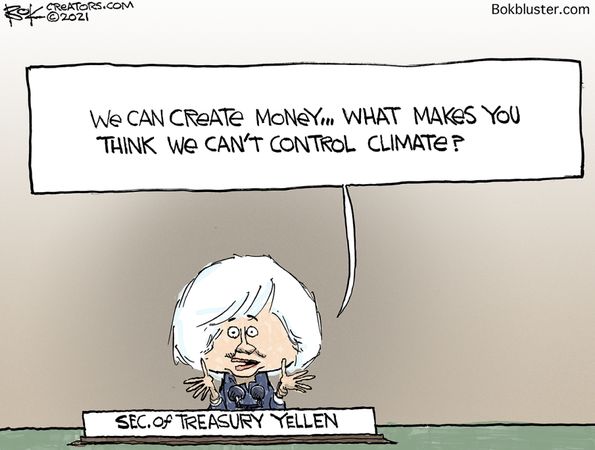
The big economic story continues to be inflation, which is the worst it has been for decades, with the hardest-hit victims being low-income consumers and major college-football programs, which are being forced to pay tens of millions of dollars to obtain the services of even mediocre head coaches. In another disturbing economic development, the Federal Reserve Board issues a formal statement admitting that it has no earthly idea what a “bitcoin” is, and it’s pretty sure nobody else does either.

Elsewhere abroad, the state-run Saudi Press Agency reports that a prestigious Saudi beauty pageant for camels, with $66 million in prize money, disqualified over 40 contestants because they received Botox injections, facelifts and other artificial touch-ups. We are not making this item up.

In sports, Major League Baseball’s collective bargaining agreement expires, raising the possibility of a work stoppage next season, not that anyone would notice, inasmuch as the average professional baseball game this season lasted as long as the gestation period of a yak, but with less action.

In holiday-season news, travel in the Midwest is snarled when the U.S. Department of Agriculture, seeking to alleviate a shortage of Christmas hams, releases 17 million head of pig from the Strategic Pork Reserve, blocking every major road into and out of Iowa and causing the region to smell, in the words of Iowa Gov. Kim Reynolds, “even worse than usual.”

Finally, mercifully, the troubled year nears its conclusion. As the nation prepares to celebrate New Year’s Eve, the mood is subdued and thoughtful. People are still getting drunk and throwing up, but they’re doing this in a subdued and thoughtful manner. Because nobody knows what 2022 will bring. Will it suck as much as this year? Will it suck more? Or will it suck a LOT more? These appear to be our choices.

OK, so that’s not very hopeful. But don’t let it stop you from ringing in 2022 on a festive note. For one night, forget about the bad things. Be festive, party hard, and, in the words of Dr. Anthony Fauci, “lower your mask before you throw up.”

Two sides of the same coin.

 

COP Ignorants Pushing Wrong Agenda

Some reflections by Dick Storm at his blog Glascow, COP-26 Eltists and Special Interests Promote China First, America Last.  Why?  Excerpts in italics with my bolds.

Because savvy engineers were not successful in educating the public and politicians on the true facts.

Well, that is at least one reason we have such a mess of energy policy now.

Once a “War on Carbon”, Has now Morphed into a “War on Freedom”, “War on our Rights”, “War on Capitalism” and an assault on much of What “We the People” Have Worked Hard For. The clowns in Scotland are spending our tax dollars and restricting our freedoms as best they can. Essentially putting China and the rest of the world first, America last. All on our dime.

Two Sides of the Same Coin

America has been a leader by example in reducing carbon. The U.S.A. has reduced our carbon emissions by over 50% since 2005. How? By releasing the power of free markets and American innovation. At the end of President Trump’s term, America was energy independent. He did that in four years only to have Joe Biden reverse his policies.

The War on Fossil Fuels is not new and the intentions have always been to raise energy costs so that “Green Power” will become competitive. Yes, the intentions of President Biden, John Kerry, Al Gore and the rest of the Green Extremists (Reminder, the War on Coal started in the Clinton-Gore Administration. Obama just continued and accellerated anti American energy policies Clinton-Gore began) The war on carbon is intended to make Exploration, Development, Production and use of oil, gas, coal and even nuclear, more expensive and harder to use.

All of this as the world’s people still depend on Fossil Fuels and nuclear together for almost 90% of our total energy. How can our leaders be so ignorant and insensitive? Well, back in the 1990’s when bill Clinton started the “War on Coal”, I did my best to educate the public and the students of public schools and several Colleges on energy and electricity generation. I am proud of my efforts, small as they seem in the grand scheme of things. There is still a need for Energy Engineers to become active in PR for Energy!

Series on World of Hurt from Climate Policies

In support of such educational efforts, here are a series of four posts showing how wrong-headed are climate policies which are actually anti-energy and anti-human. Below are links to articles providing numerous charts exposing how hurtful are these policies, along with one example for each theme.

World of Hurt from Climate Policies-Part 1

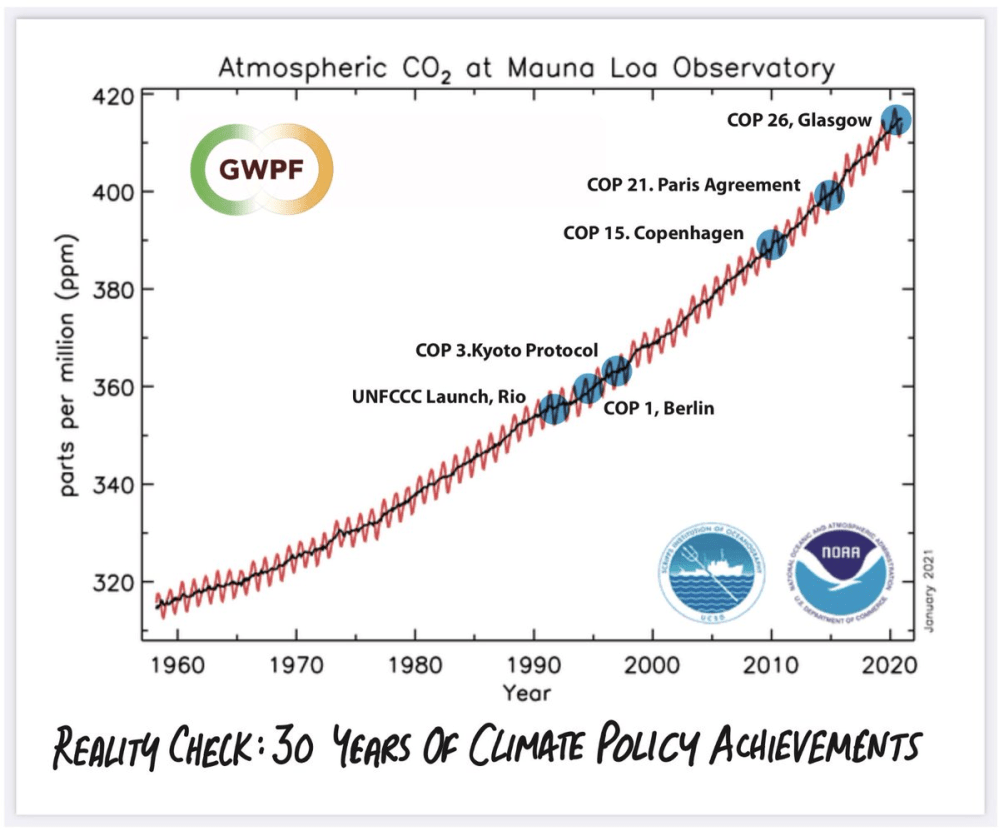
This is a beginning post toward infographics exposing the damaging effects of Climate Policies upon the lives of ordinary people.  And all of the pain is for naught in fighting against global warming/climate change, as shown clearly in the image at bottom.  This post presents graphics to illustrate the first of four themes:

  • Zero Carbon Means Killing Real Jobs with Promises of Green Jobs
  • Reducing Carbon Emissions Means High Cost Energy Imports and Social Degradation
  • 100% Renewable Energy Means Sourcing Rare Metals Off-Planet
  • Leave it in the Ground Means Perpetual Poverty

Part 1: Zero Carbon will Decimate US Workforce

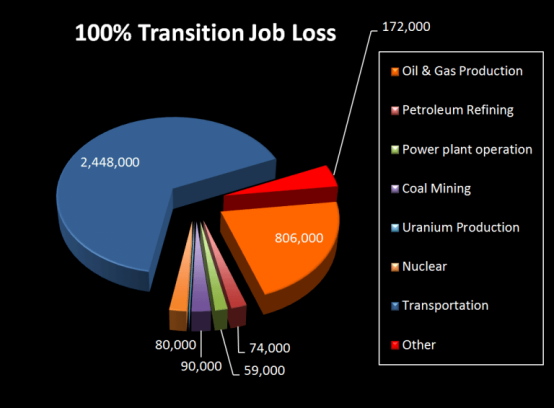
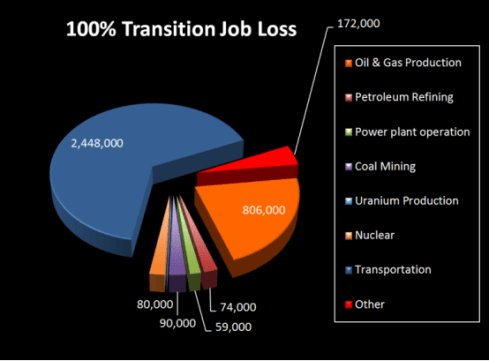
EID (Energy in Depth) atudy shows renewable energy transition pushed by climate activists will result in a net 3.8 million lost jobs.

World of Hurt from Climate Policies-Part 2

Part 2: California Exemplifies Ruination from Self-imposed Climate Policies

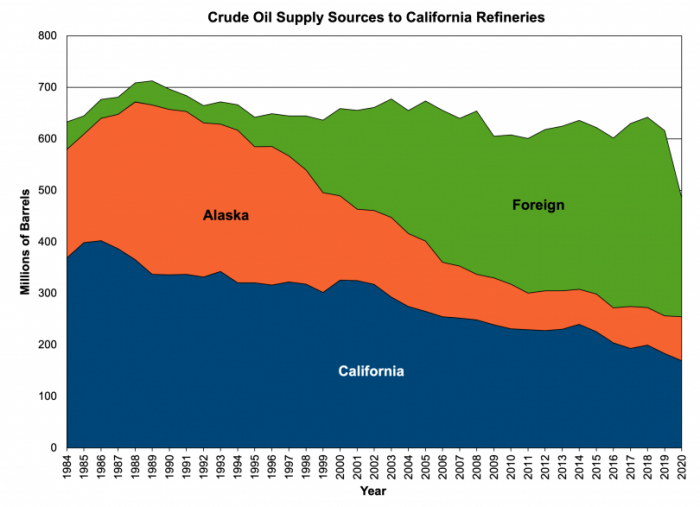
By blocking domestic production through permit denials, California is playing a shell game with emissions. Overall use of petroleum products has held steady but shifted from energy produced within the state – where the industry is subject to U.S. environmental regulations and supports local workers and companies – to overseas.

California isn’t reducing its dependence on oil; it’s just adding a higher carbon footprint to get it.

World of Hurt from Climate Policies-Part 3

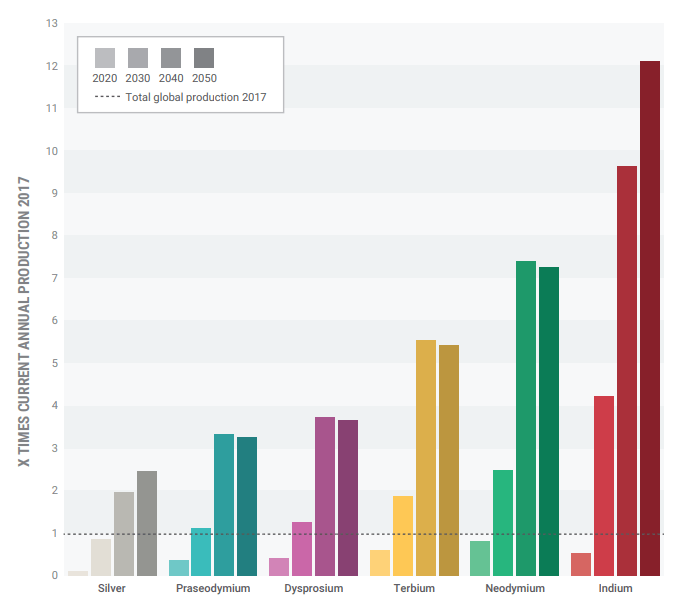
Part 3: Wind and Solar Infrastructure Consumes Rare Metals Far Beyond World Supplies

This graph shows the annual metal demand for the six most critical metals, compared to the annual production. The dotted line represents present-day annual production.  

Conclusions
 Future annual critical metal demands of the energy transition surpass the total annual critical metal production.
• An exponential growth in renewable energy production capacity is not possible with present-day technologies and annual metal production. As an illustration: in 2050, the annual need for Indium (only for solar panel application) will exceed the present-day annual global production twelvefold.

World of Hurt from Climate Policies-Part 4

Part 4 The War Against Carbon Emissions Diminishes Efforts to Lift People Out of Poverty

How Climate Policies Keep People Poor

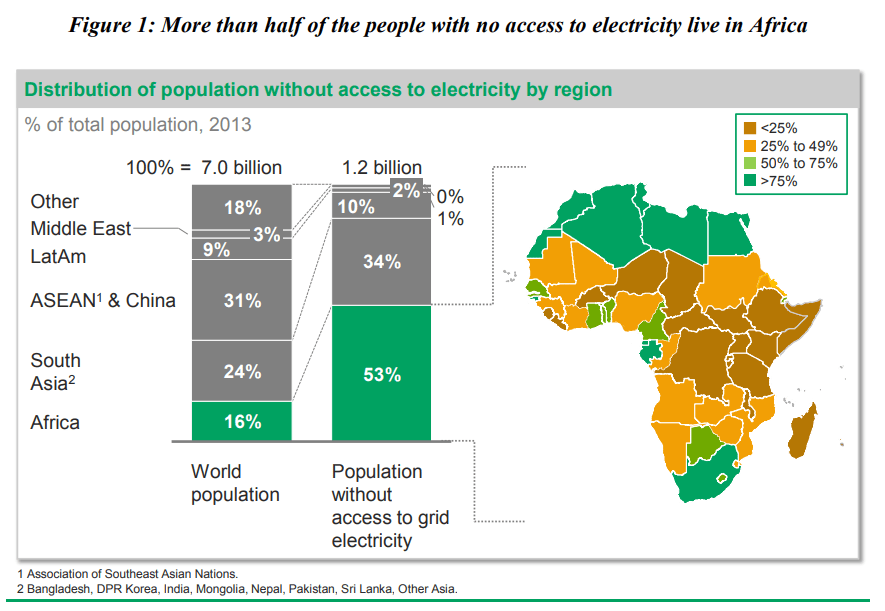
Note that the vision for 100% access to electric power was put forward by the African Development Bank in 2016.  (Above slides come from The Bank Group’s Strategy for The New Deal on Energy for Africa 2016 – 2025).  Instead of making finances available for such a plan, an International Cabal organized to deny any support for coal, the most available and inexpensive way to electrify Africa.

This is an organized campaign to deny coal-fired power anywhere in the world, despite coal being the starting point in the development pathway for every modern society, and currently the success model for Asia, and China in particular.


David Hay Explains “Greenflation”

A two part series at Evergreen financial advisers analyses the market effects of the intensified push for “green” energy.  Excerpts in italics with my bolds.  The two posts are:

Green energy: A bubble in unrealistic expectations?
David Hay / October 8, 2021
As I have written in past EVAs, it amazes me how little of the intense inflation debate in 2021 centered on the inflationary implications of the Green Energy transition. Perhaps it is because there is a built-in assumption that using more renewables should lower energy costs since the sun and the wind provide “free power”.

Green Energy: A Bubble in Unrealistic Expectations, Part II
David Hay / October 15, 2021
This is part two of our discourse regarding green energy and its profound – and somewhat misunderstood – impact on the global economy. In this issue, we specifically home in on China and how that country’s immense power needs are affecting the energy ecosystem at large.

Part I Green Bubble Summary:
  • BlackRock’s CEO recently admitted that, despite what many are opining, the green energy transition is nearly certain to be inflationary.
  • Even though it’s early in the year, energy prices are already experiencing unprecedented spikes in Europe and Asia, but most Americans are unaware of the severity.
  • To that point, many British residents being faced with the fact that they may need to ration heat and could be faced with the chilling reality that lives could be lost if this winter is as cold as forecasters are predicting.
  • Because of the huge increase in energy prices, inflation in the eurozone recently hit a 13-year high, heavily driven by natural gas prices on the Continent that are the equivalent of $200 oil.
  • It used to be that the cure for extreme prices was extreme prices, but these days I’m not so sure. Oil and gas producers are very wary of making long-term investments to develop new resources given the hostility to their industry and shareholder pressure to minimize outlays.
  • I expect global supply to peak sometime next year and a major supply deficit looks inevitable as global demand returns to normal.
  • In Norway, almost 2/3 of all new vehicle sales are of the electric variety (EVs) – a huge increase in just over a decade. Meanwhile, in the US, it’s only about 2%. Still, given Norway’s penchant for the plug-in auto, the demand for oil has not declined.
  • China, despite being the largest market by far for electric vehicles, is still projected to consume an enormous and rising amount of oil in the future.

In fact, despite oil prices pushing toward $80, total US crude output now projected to actually decline this year. This is an unprecedented development. However, as the very pro-renewables Financial Times (the UK’s equivalent of the Wall Street Journal) explained in an August 11th, 2021, article: “Energy companies are in a bind. The old solution would be to invest more in raising gas production. But with most developed countries adopting plans to be ‘net zero’ on carbon emissions by 2050 or earlier, the appetite for throwing billions at long-term gas projects is diminished.”

Thus, if he’s right about rising demand, as I believe he is, there is quite a collision looming between that reality and the high probability of long-term constrained supplies. One of the most relevant and fascinating Wall Street research reports I read as I was researching the topic of what I have been referring to as “Greenflation” is from Morgan Stanley. Its title asked the provocative question: “With 64% of New Cars Now Electric, Why is Norway Still Using so Much Oil?”

Coincidentally, that’s been the experience of the overall developed world over the past 10 years, as well; petroleum consumption has largely flatlined. Where demand hasn’t gone horizontal is in the developing world which includes China. As you can see from the following Cornerstone Analytics chart, China’s oil demand has vaulted by about 6 million barrels per day (bpd) since 2010 while its domestic crude output has, if anything, slightly contracted.

Here’s a similar factoid that I ran in our December 4th EVA, “Totally Toxic”, in which I made a strong bullish case for energy stocks (the main energy ETF is up 35% from then, by the way): “(There was) a study by the UN and the US government based on the Model for the Assessment of Greenhouse Gasses Induced Climate Change (MAGICC). The model predicted that ‘the complete elimination of all fossil fuels in the US immediately would only restrict any increase in world temperature by less than one tenth of one degree Celsius by 2050, and by less than one fifth of one degree Celsius by 2100.’ Say again? If the world’s biggest carbon emitter on a per capita basis causes minimal improvement by going cold turkey on fossil fuels, are we making the right moves by allocating tens of trillions of dollars that we don’t have toward the currently in-vogue green energy solutions?”

Part II Green Bubble Summary:
  • About 70% of China’s electricity is generated by coal, which has major environmental ramifications in regards to electric vehicles.
  • Because of enormous energy demand in China this year, coal prices have experienced a massive boom. Its usage was up 15% in the first half of this year, and the Chinese government has instructed power providers to obtain all baseload energy sources, regardless of cost.
  • The massive migration to electric vehicles – and the fact that they use six times the amount of critical minerals as their gasoline-powered counterparts –means demand for these precious resources is expected to skyrocket.
  • This extreme need for rare minerals, combined with rapid demand growth, is a recipe for a major spike in prices.
  • Massively expanding the US electrical grid has several daunting challenges– chief among them the fact that the American public is extremely reluctant to have new transmission lines installed in their area.
  • The state of California continues to blaze the trail for green energy in terms of both scope and speed. How the rest of the country responds to their aggressive take on renewables remains to be seen.
  • It appears we are entering a very odd reality: governments are expending resources they do not have on weakly concentrated energy. And the result may be very detrimental for today’s modern economy.
  • If the trend in energy continues, what looks nearly certain to be the Third Energy crisis of the last half-century may linger for years.

Lest you think I’m being hyperbolic, please be aware the IEA (International Energy Agency) has estimated it will cost the planet $5 trillion per year to achieve Net Zero emissions. This is compared to global GDP of roughly $85 trillion. According to BloombergNEF, the price tag over 30 years, could be as high as $173 trillion. Frankly, based on the history of gigantic cost overruns on most government-sponsored major infrastructure projects, I’m inclined to take the over—way over—on these estimates.

Moreover, energy consulting firm T2 and Associates, has guesstimated electrifying just the US to the extent necessary to eliminate the direct consumption of fuel (i.e., gasoline, natural gas, coal, etc.) would cost between $18 trillion and $29 trillion. Again, taking into account how these ambitious efforts have played out in the past, I suspect $29 trillion is light. Regardless, even $18 trillion is a stunner, despite the reality we have all gotten numb to numbers with trillions attached to them. For perspective, the total, already terrifying, level of US federal debt is $28 trillion.

Regardless, as noted last week, the probabilities of the Great Green Energy Transition happening are extremely high. Relatedly, I believe the likelihood of the Great Greenflation is right up there with them.

Further, one of my other big fears is that the West is engaging in unilateral energy disarmament. Russia and China are likely the major beneficiaries of this dangerous scenario. Per my earlier comment about a stealth combatant in the war on fossil fuels, it may surprise you that a past NATO Secretary General* has accused Russian intelligence of avidly supporting the anti-fracking movements in Western Europe. Russian TV has railed against fracking for years, even comparing it to pedophilia (certainly, a most bizarre analogy!).

Solutions include fast-tracking small modular nuclear plants; encouraging the further switch from burning coal to natural gas (a trend that is, unfortunately, going the other way now, as noted above); utilizing and enhancing carbon and methane capture at the point of emission (including improving tail pipe effluent-reduction technology); enhancing pipeline integrity to inhibit methane leaks; among many other mitigation techniques that recognize the reality the global economy will be reliant on fossil fuels for many years, if not decades, to come.

If the climate change movement fails to recognize the essential nature of fossil fuels, it will almost certainly trigger a backlash that will undermine the positive change it is trying to bring about. This is similar to what it did via its relentless assault on nuclear power which produced a frenzy of coal plant construction in the 1980s and 1990s. On this point, it’s interesting to see how quickly Europe is re-embracing coal power to alleviate the energy poverty and rationing occurring over there right now—even before winter sets in.

When the choice is between supporting climate change initiatives on one hand and being able to heat your home and provide for your family on the other, is there really any doubt about which option the majority of voters will select?


Climate Crisis Consultancy Race $$$

Consultants Race

Terence Corcoran writes at Financial Post Let the carbon consultancy games begin! Excerpts in italics with my bolds.

How does one avoid hell on earth? Who ya gonna call? Send in the consultants

After the release of the Intergovernmental Panel on Climate Change’s (IPCC) latest report, British Prime Minister Boris Johnson called it “sobering reading” and a “wake-up call” for the world’s politicians heading into the 26th Congress of the Parties (COP26), which is schedule to take place in Glasgow in November. Johnson, of course, did not intend his comments to be taken literally.

The IPCC report, formally titled “Climate Change 2021: The Physical Science Basis,” runs to 3,949 pages and contains approximately three million unreadable words from the deepest bowels of United Nations climate science that, if attempted, would induce readers to dip into the cabinet and ultimately leave them in the opposite condition, being neither sober nor awake.

UN Secretary General Antonio Guterres called the report a “code red” for humanity. I had to look up the meaning of “Code Red,” which turns out to have been the title of a 2020 blast from the heavy metal group AC/DC, with the opening lyrics:

Loading up the battery
Raising up insanity
Feeling like the old-time blues …
Don’t mess with fate
Hard fight, rough night
Dead in your sight
Fire light, a fire bright
Fire in the night

Maybe Guterres is hipper than we thought.  Not that it matters, since the dense content of the report, or even its 42-page “Summary for Policymakers,”  . . . is in fact irrelevant; the message is in the message carried by the media, which is that urgent action is needed at this “critical time,” to fight a crisis that requires a radical reduction of our greenhouse gas emissions to avoid the grave consequences of global warming.

Time Is Running Short To Avert ‘Hell On Earth,’ screamed a headline in the Financial Times.

How does one avoid hell on earth? Who ya gonna call? Send in the consultants.

The IPCC report was instantly seized upon by one sector of the economy that has been hyping itself up for one of the greatest money-making bonanzas of all time. Global consultancies — from big-names such as PwC, Deloitte, E&Y and KPMG, to the scores of less famous law firms and institutes — see the climate business as a profit-making bonanza.

At PwC’s United Kingdom office, the consultancy’s global sustainability and climate change leader instantly issued a response to the IPCC report that pumped up the firm’s net-zero agenda. Emma Cox urged all large businesses to engage with the IPCC’s monstrosity of a report. “For companies with a global footprint, the report provides the most detailed analysis of where and how your operations, supply chains and markets are vulnerable to the impacts of climate change,” she said.

The report actually does none of the above, but Cox continued: “Climate science should remain the hard basis for all decision making and target setting. In parallel, it must be used to inform and instigate a strong policy response to close the remaining ambition gap to keep the Paris Agreement objectives alive.”

How do corporations go about making climate science the basis for “all” decision making and target setting? No doubt PwC has an answer, as does Deloitte. A recent article on Deloitte’s website warned that the net-zero carbon target requires an urgency that exceeds previous industrial revolutions: “What’s needed is a more holistic system of systems approach that unlocks critical opportunities in the transition to a low-carbon economy by working at the intersection of emerging low-carbon initiatives.”

When consultants sound like UN bureaucrats, you know something is up.

The leadership at another global giant, KPMG, has created a management team called KPMG IMPACT that’s dedicated to pursuing the UN’s sustainability development goals, which is essentially a leftist takeover of world governance.

162477_image-1

In a report issued last November, the KPMG IMPACT team made its sales pitch to corporate executives and managers: “Business is not only a critical player in achieving the net zero goal; it is also at risk from the physical effects of the climate crisis and the economic impacts of transitioning to a net zero economy.”

The world’s corporate executives, managers and directors are ultimately caught between 3,949 pages of incomprehensible and speculative IPCC science pumped up by the media, and the exhortatory offerings of consultants eager to capitalize on IPCC climate alarmism.

And so, the great consultants’ Olympic are underway, a multi-year marathon competition among firms, legal teams and sustainability gurus to cash in on the promoted fears of hell on earth if corporations do not get behind net-zero with detailed planning, strategies and policy — and big dollars.

On your mark! Get set! Call your consultant!

7403a-money-down-the-drain

Punishing Climate Policies to Fix What’s Not Broken

barrel-poison-7388531rev

Ben Pile writes at Spiked Climate policy, not climate change, poses the biggest risk to our daily lives.  Excerpts in italics with my bolds.

Firstly, Ben provides evidence for a reasonable person to conclude the weather and climate is doing nothing out of the ordinary.  Drawing on this year’s UK State of the Climate report:

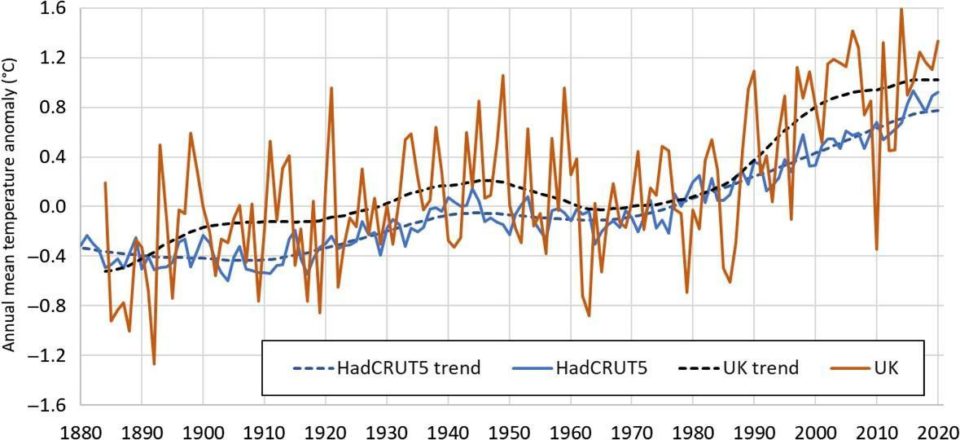
But how significant are these changes really? Take, for example, the claim that the UK’s temperatures have increased. Leaving aside the possibility that land-use change thanks to the UK’s economic development might influence temperatures, the report offers this chart depicting 140 years of anomalies in UK and global annual temperatures:

graph-1-960x440-1

Though the chart clearly shows that UK temperatures have risen, there is substantial year-to-year variability – far greater in the UK than for the world as a whole – that might make us wonder how impactful this extra warmth really is.

The point is shown more clearly by the report’s chart which shows temperature anomalies in each season:

graph-2-960x476-1

Over the past 370 years, winters appear to have become substantially warmer. Really what this means is that they have become substantially less cold, rather than actually warm. Autumn and spring also seem to have become milder, whereas the summer has warmed the least.

What’s more, each season shows remarkable changes over the decades and even centuries – showing large-scale change was occurring long before manmade climate change became an issue. The temperature changes of the 1990s are not unprecedented in their degree or speed.

Pile goes on to discuss the absence of facts for other claims regarding precipitation, storms, heatwaves. etc.  Then comes the meat of his argument.

casper-landfill-2-e1624827835334

Climate is Not the Problem:  It’s the so-called “solutions”

But the climate, again, is not the real issue here. An even more uncomfortable truth for environmentalists is that cheap, abundant and easy-to-use energy – ie, gas – has done and could continue to do far more to keep older and infirm people alive in the winter than milder weather ever could. In other words, fossil fuels save lives.

It is climate policy not climate change that wants to deny people the right to heat or cool their homes cheaply and efficiently. Just look at the exorbitant costs to households of Boris’s planned boiler ban. The weather itself does not play any significant role in daily life in historically wealthy, industrialised and liberal societies.

This fact is seen even more clearly in that other preoccupation of climate doomsayers: floods. The environmentalist argument is that warmer air carries more water, and so rainfall events have become more intense, leading to more flash flooding in particular. ‘The higher global warming, the more rainfall’, climate academic Friederike Otto told the Independent, in an article which tried to pin blame for the recent floods in Germany on climate change.

Floods certainly are disruptive. Unsurprisingly, this captures the news media’s attention. But proving a link to climate change is much harder than the media have made out. The most recent IPCC report, for instance, has ‘low confidence’ in the claim ‘that anthropogenic climate change has affected the frequency and the magnitude of floods’. Meanwhile, it has ‘high confidence’ that ‘streamflow trends since 1950 are not statistically significant in most of the world’s largest rivers’. Similarly, other research suggests that there is little evidence of flash floods getting worse in the UK.

What causes floods, then? In the recent case of the tragic floods in Germany, flood warnings were ignored by civil planners and politicians.

Floods in Britain are rarely fatal. But when horrendous flooding does occur, it should be seen as a result not of an altered climate, but of engineering, planning and policy failures. As the nearly three-centuries-long record in the Met Office’s possession clearly shows, various parts of the UK, from time to time, suffer periods of intense rainfall, causing floods. Any urban or infrastructure design that fails to take account of the likelihood of flooding makes flooding inevitable.

In other words, flooding is a manmade event – but not one caused by climate change. There is no such thing as a ‘natural disaster’ in a country as wealthy as the UK. Even if adverse weather events are made ‘more likely’ or even ‘more intense’ by CO2 emissions in the future, as the Met Office report argues, we already know what kind of policies and infrastructure we need to deal with this. There is no excuse for not building this infrastructure: warmer, wetter, colder and drier conditions all existed in the past, and so will likely appear again in the future. What’s past is prologue.

Ironically, it is environmentalism that makes the climate actually dangerous.

Green austerity will deny people the resources and technology they need and deserve to keep warm in winter and cool in summer. And it is environmentalism, with its promise to make the weather ‘safe’ and unchanging if we follow its agenda, that is selling us false hope. That is a much greater threat than climate change or extreme weather could ever be.

b45fee974eb5b959a6718fbac960afbc

See also my series World of Hurt from Climate Policies 

World of Hurt from Climate Policies-Part 4

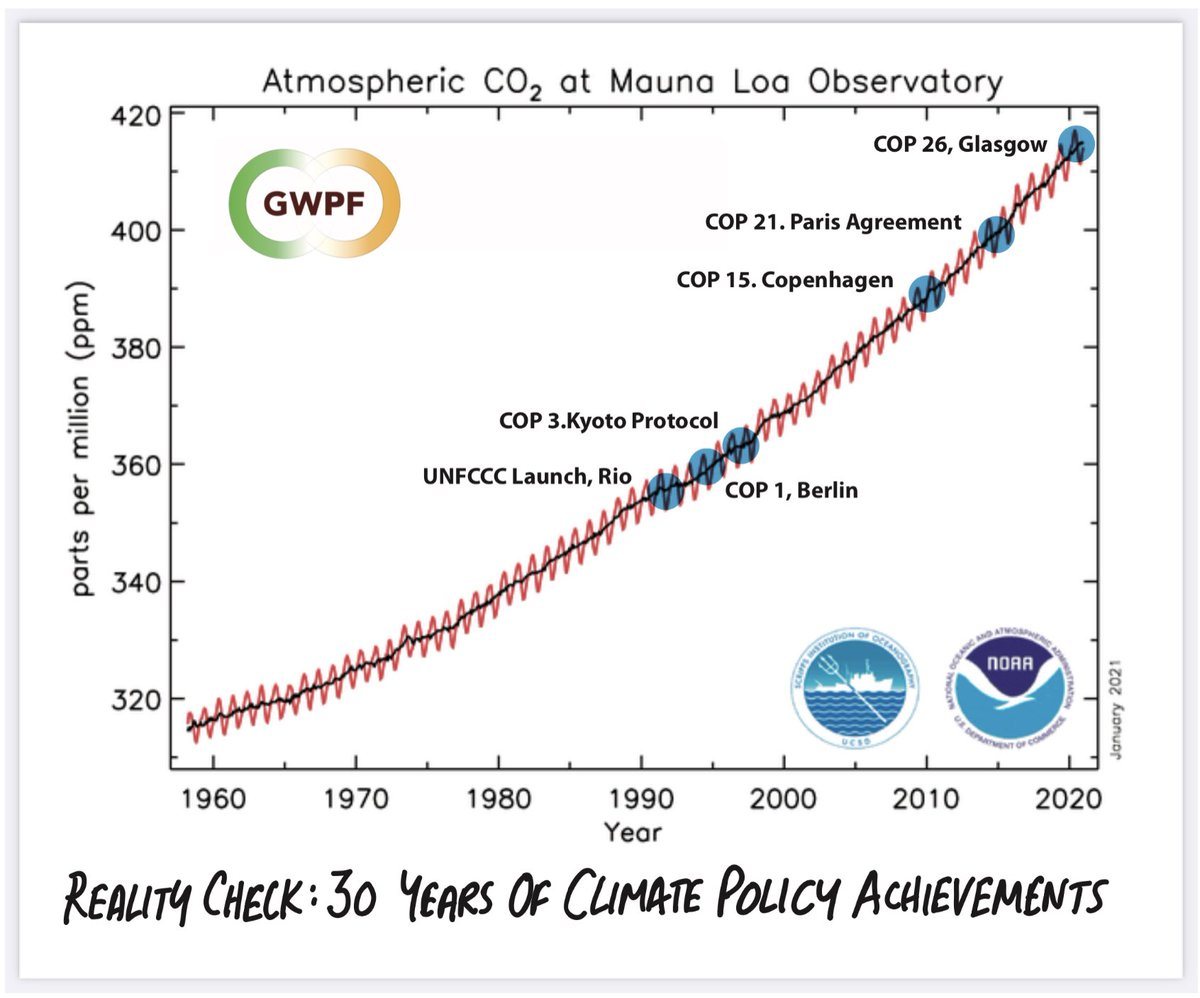
CO2 and COPs

Leave it in the Ground Means Perpetual Poverty


This is a fourth post toward infographics exposing the damaging effects of Climate Policies upon the lives of ordinary people.  (See World of Hurt Part 1Part 2, and Part 3 )  And all of the pain is for naught in fighting against global warming/climate change, as shown clearly in the image above.  This post presents graphics to illustrate the fourth of four themes:

  • Zero Carbon Means Killing Real Jobs with Promises of Green Jobs
  • Reducing Carbon Emissions Means High Cost Energy Imports and Social Degradation
  • 100% Renewable Energy Means Sourcing Rare Metals Off-Planet
  • Leave it in the Ground Means Perpetual Poverty
The War Against Carbon Emissions Diminishes Efforts to Lift People Out of Poverty

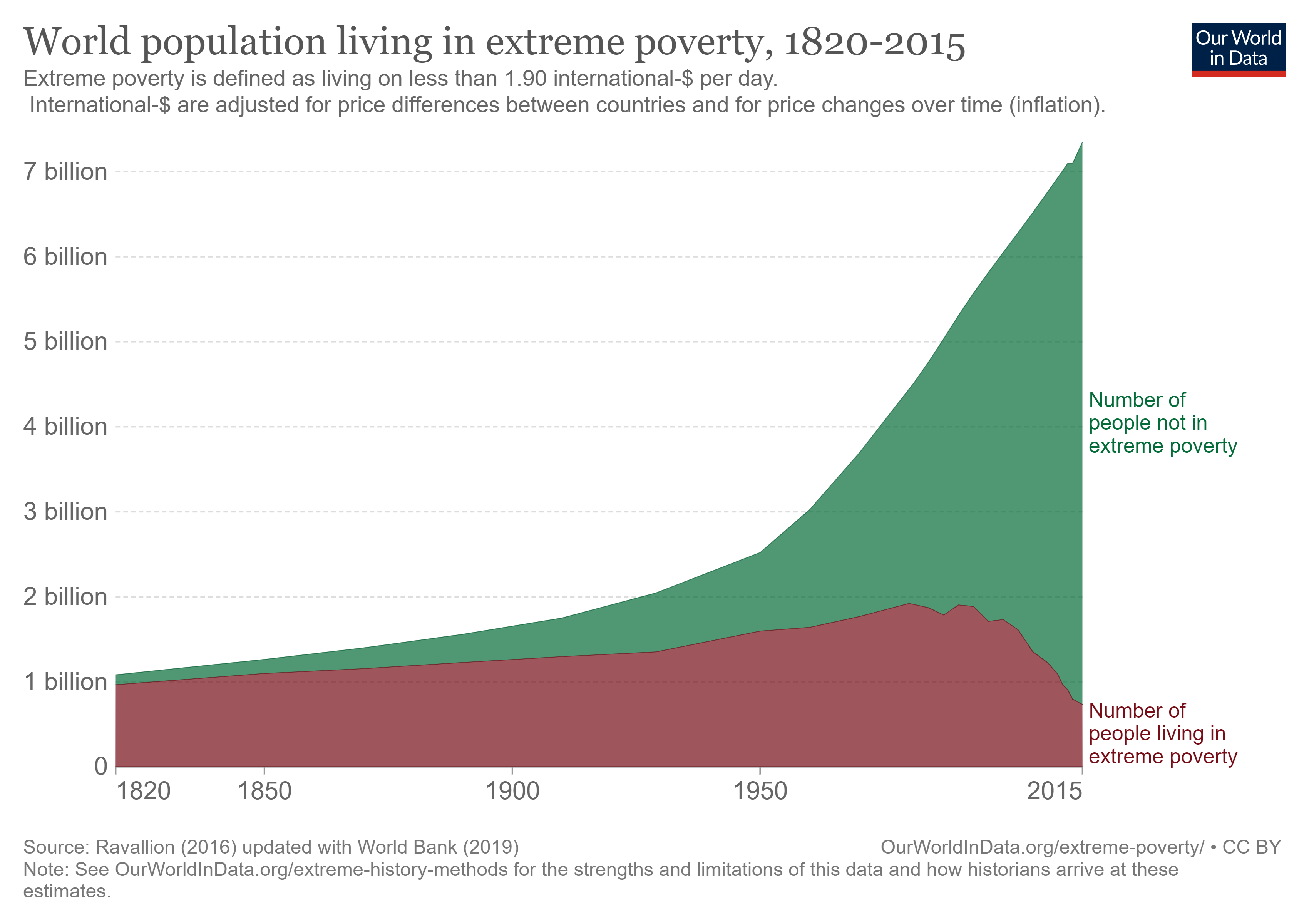
world-population-in-extreme-poverty-absolute
The OurWorldinData graph shows how half a billion people have risen out of extreme poverty in recent decades.  While much needs to be done, it is clear that the world knows the poverty factors to be overcome.

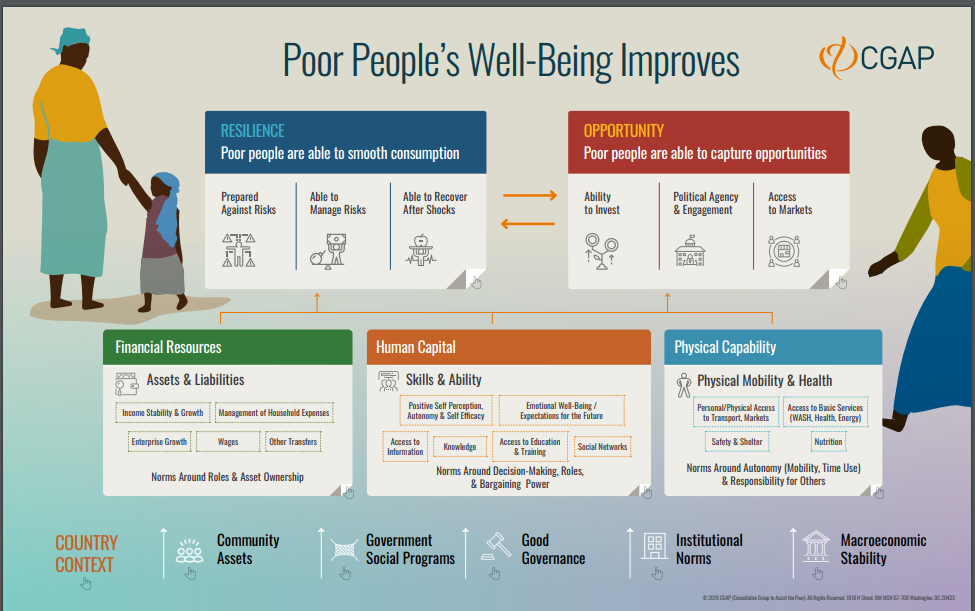
wellbeing improves

That comprehensive diagram from CGAP shows numerous elements that contribute to rising health and prosperity, but there is one resource underlying and enabling everything:  Access to affordable, reliable energy.  From Global Energy Assessment: 

“Access to cleaner and affordable energy options is essential for improving the livelihoods of the poor in developing countries. The link between energy and poverty is demonstrated by the fact that the poor in developing countries constitute the bulk of an estimated 2.7 billion people relying on traditional biomass for cooking and the overwhelming majority of the 1.4 billion without access to grid electricity. Most of the people still reliant on traditional biomass live in Africa and South Asia.

The relationship is, in many respects, a vicious cycle in which people who lack access to cleaner and affordable energy are often trapped in a re-enforcing cycle of deprivation, lower incomes and the means to improve their living conditions while at the same time using significant amounts of their very limited income on expensive and unhealthy forms of energy that provide poor and/or unsafe services.”

The moral of this is very clear. Where energy is scarce and expensive, people’s labor is cheap and they live in poverty. Where energy is reliable and cheap, people are paid well to work and they have a better life.

adb fig.1
adb fig.2
adb fig.3
adb fig.4
adb fig.5
adb fig.7

How Climate Policies Keep People Poor

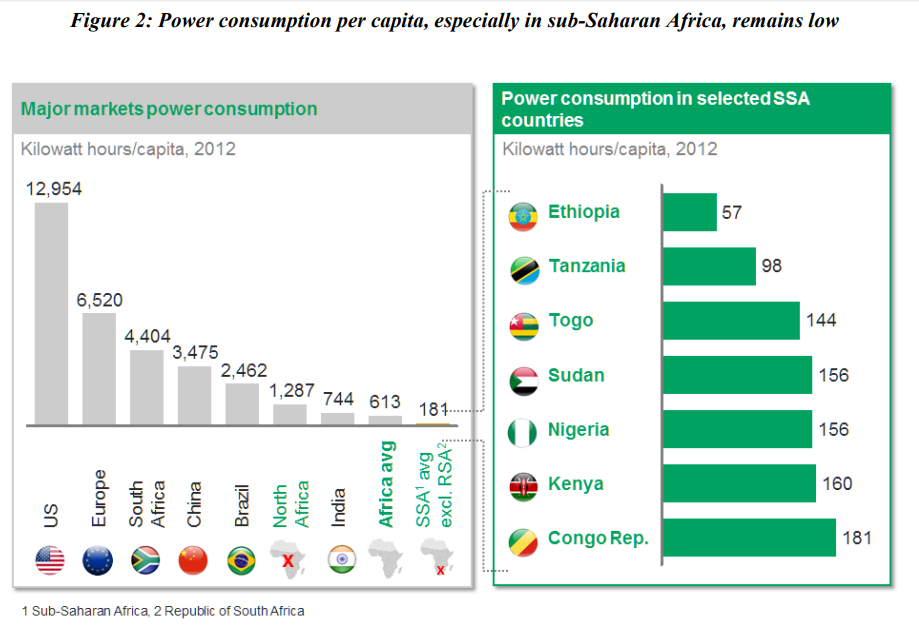
Note that the vision for 100% access to electric power was put forward by the African Development Bank in 2016.  (Above slides come from The Bank Group’s Strategy for The New Deal on Energy for Africa 2016 – 2025).  Instead of making finances available for such a plan, an International Cabal organized to deny any support for coal, the most available and inexpensive way to electrify Africa.
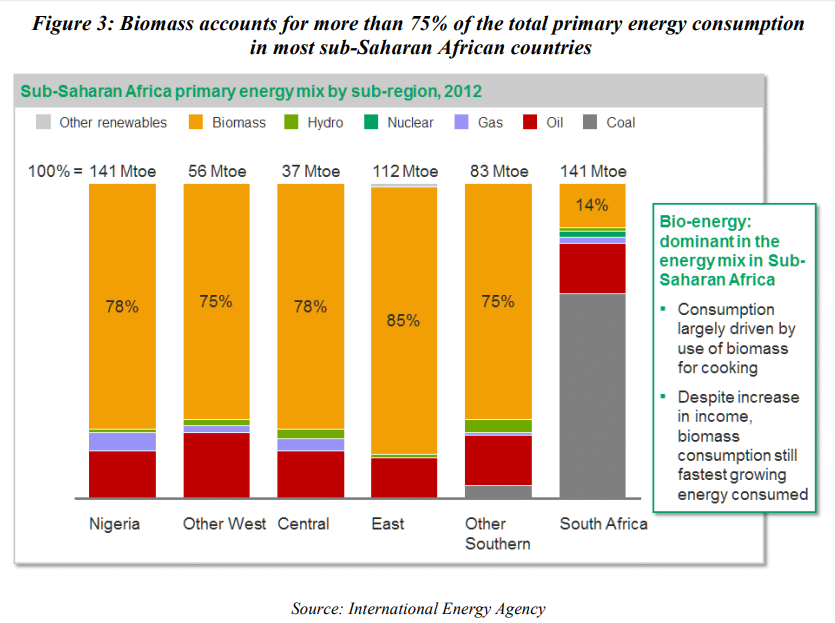
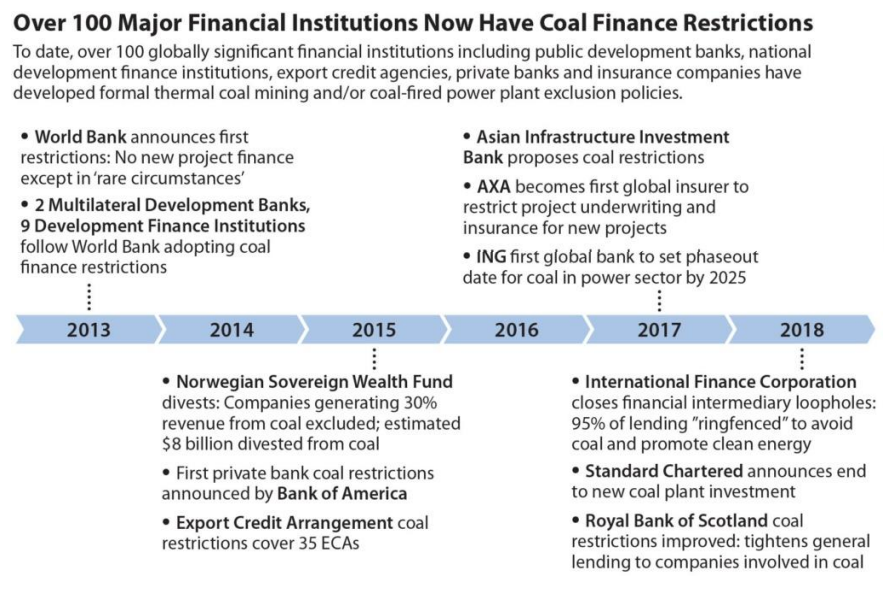
ieefa coal restrictionsThis is an organized campaign to deny coal-fired power anywhere in the world, despite coal being the starting point in the development pathway for every modern society, and currently the success model for Asia, and China in particular.  [Note in Figure 3 above that South Africa, the most advanced of African nations gets the majority of its power from coal.] The chart above comes from IEEFA 2019 report Over 100 Global Financial Institutions Are Exiting Coal, With More to Come.  Their pride in virtue-signaling is expressed in the subtitle:
Every Two Weeks a Bank, Insurer or Lender Announces New Restrictions on Coal.

How Climate Policies Waste Resources that could Improve Peoples’ Lives

The Climate Crisis Industry costs over 2 Trillion US dollars every year, and is estimated to redirect 30% of all foreign aid meant for developing countries into climate projects like carbon offsets and off-grid wind and solar. 

A much better plan is put forward by the Copenhagen Consensus Center.  A panel of social and economic development experts did cost/benefit analyses of all the Millenium Goals listed by the UN working groups, including climate mitigation and adaption goals along with all the other objectives deemed desirable. They addressed the question: 

What are the best ways of advancing global welfare, and particularly the welfare of developing  countries, illustrated by supposing that an additional $75 billion of resources were at their disposal  over a 4‐year initial period?

These challenges were examined:

  1. Armed Conflict
  2. Biodiversity
  3. Chronic Disease
  4. Climate Change
  5. Education
  6. Hunger and Malnutrition
  7. Infectious Disease
  8. Natural Disasters
  9. Population Growth
  10. Water and Sanitation

CCC budget

Imagine how much good could be done by diverting some of the trillions wasted trying to bend the curve at the top of the page?


World of Hurt from Climate Policies-Part 3

CO2 and COPs

100% Renewable Energy Means Sourcing Rare Metals Off-Planet


This is a third post toward infographics exposing the damaging effects of Climate Policies upon the lives of ordinary people.  (See World of Hurt Part 1 and Part 2)  And all of the pain is for naught in fighting against global warming/climate change, as shown clearly in the image above.  This post presents graphics to illustrate the third of four themes:

  • Zero Carbon Means Killing Real Jobs with Promises of Green Jobs
  • Reducing Carbon Emissions Means High Cost Energy Imports and Social Degradation
  • 100% Renewable Energy Means Sourcing Rare Metals Off-Planet
  • Leave it in the Ground Means Perpetual Poverty
Part 3:  Wind and Solar Infrastructure Consumes Rare Metals Far Beyond World Supplies

WHCP3 Rare Metals Demand by techMetal demand per technology

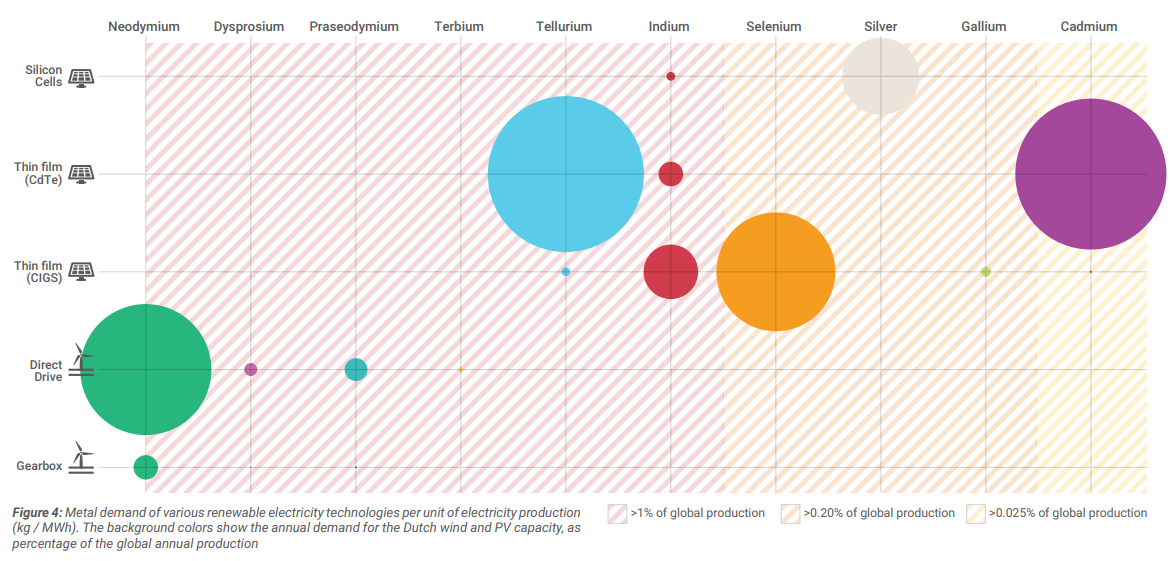
There are various technologies available for the production of electricity through wind and solar. Each technology requires different amounts of critical metals. This figure shows the metal demand for the five most common technologies.

Conclusions
• Newer technologies are often more efficient and cheaper, however, they rely on the properties of critical metals to achieve this.
• Thin film cadmium-tellurium solar PV cells have the best performance in terms of CO2 -emissions and energy payback times. They do however require large quantities of tellurium and cadmium, and tellurium is one of the rarest metalloids.
Direct-drive wind turbines use neodymium-dysprosium based permanent magnets. They are more expensive to produce, but cheaper in their exploitation phase. Gearbox turbines require less critical metals, but are generally understood to have higher maintenance costs because they have more moving parts. Gearbox turbines also have a shorter energy payback time.

Method The average metal demand per unit of electricity is calculated based on load hours in the Netherlands.7–9 The entire lifespan of the specific technologies has been taken into account.WHCP3 Rare Metals Dutch DemandMetal demand for Dutch renewable electricity production
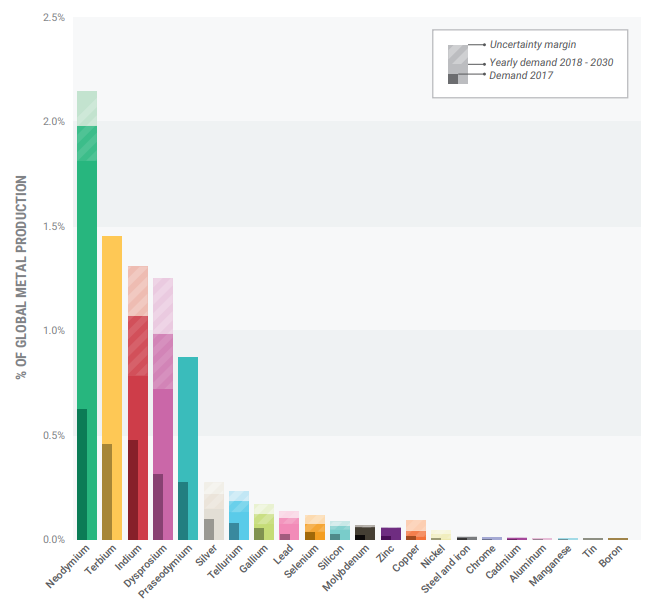
This chart shows the average annual metal demand (for 22 metals) required for the installation of new solar panels and wind turbines. This assumes a linear installation of capacity.

The annual metal demand is compared to the annual global production of these specific metals, resulting in an indicator for the share of Dutch demands for renewables in global production.

Conclusions
• For five of the metals, the required demand for renewable electricity production capacity is significant: neodymium, terbium, indium, dysprosium, and praseodymium.
• If the rest of the world would develop renewable electricity capacity at a comparable pace with the Netherlands, a considerable shortage will arise.
• When other applications (such as electric vehicles) are also taken into consideration, the required amount of certain metals would further increase.

Method The renewable electricity targets for 2030 serve as the starting point for the calculations. Based on these targets, the annual installed capacity is calculated. The metals required for this capacity are shown as a percentage of the annual global production.
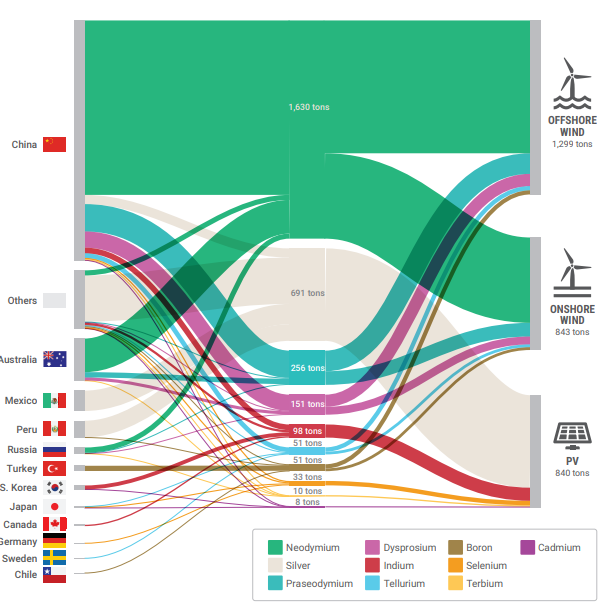
WHCP3 Rare Metals FlowsOrigin of critical metals

This diagram shows the origin of the metals required for meeting the 2030 goals. The left side of the diagram shows the origin, based on today’s global production of metals. The right side shows the cumulative metal demand for wind and solar technologies until 2030.

Conclusions
• The Netherlands is entirely dependent on countries outside of Europe – and mainly on China – for its critical metals.
• Not only is the main share of current production located in China, the country also hosts refinery facilities for many metals.
• Australia and Turkey are also important countries for the extraction of specific metals, particularly neodymium (Australia) and boron (Turkey).

Method The renewable electricity capacity required is calculated from the goals in the Climate Agreement outlines. This capacity is then translated to a metal demand. The ratio of world production is based on the annual production statistics of 2017.
WHCP3 Rare Metals Supply DemandGlobal critical metal demand for wind and PV 

When considering a global perspective, the critical metal demand for our future renewable electricity production is significant. This graph shows the annual metal demand for the six most critical metals, compared to the annual production. The dotted line represents present-day annual production.  

Conclusions
Future annual critical metal demands of the energy transition surpass the total annual critical metal production.
• An exponential growth in renewable energy production capacity is not possible with present-day technologies and annual metal production. As an illustration: in 2050, the annual need for Indium (only for solar panel application) will exceed the present-day annual global production twelvefold.
• To be able to realize a renewable energy system, there is a need to both dematerialize renewable electricity production technologies and increase global annual production.

Source: Metal Demand for Renewable Electricity Generation in the Netherlands.

[Note:  The US consumes 30 times more energy than the Netherlands.]

And there is another precious resource required for wind and solar power plants:  Land in proximity to human settlements

Wind Farms Area for LondonThe gray area would be required for a wind farm large enough to power London UK.  The yellow area would be required for solar panels.
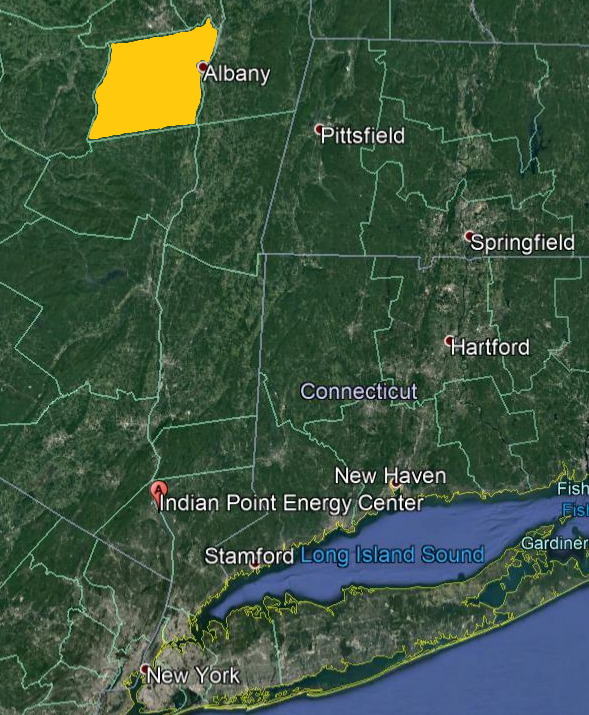
Albany and Indian Point2

Just to replace the now closed Indian Point nuclear plant will require a wind farm the size of Albany County New York.


World of Hurt from Climate Policies-Part 2

CO2 and COPs

Reducing Carbon Emissions Means High Cost Energy Imports and Social Degradation

This is a second post toward infographics exposing the damaging effects of Climate Policies upon the lives of ordinary people.  (See World of Hurt Part 1)  And all of the pain is for naught in fighting against global warming/climate change, as shown clearly in the image above.  This post presents graphics to illustrate the second of four themes:

  • Zero Carbon Means Killing Real Jobs with Promises of Green Jobs
  • Reducing Carbon Emissions Means High Cost Energy Imports and Social Degradation
  • 100% Renewable Energy Means Sourcing Rare Metals Off-Planet
  • Leave it in the Ground Means Perpetual Poverty

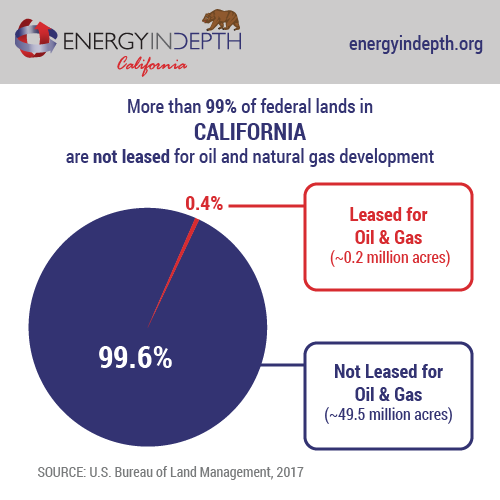
Part 2:  California Exemplifies Ruination from Self-imposed Climate Policiesca-oil-supplies-source-700x507-1For the past 25 years the amount of oil supplied to California’s refineries has essentially held steady at around 660 million barrels per year, but the source of the supply has changed drastically. In 1995, nearly all of that oil came from within California’s borders and Alaska. Today, the majority of the oil comes from foreign imports as data from the state’s Energy Commission shows.WHCP2 Cal oil productionWHCP2 Cal oil leasesBy blocking domestic production through permit denials, California is playing a shell game with emissions. Overall use of petroleum products has held steady but shifted from energy produced within the state – where the industry is subject to U.S. environmental regulations and supports local workers and companies – to overseas.
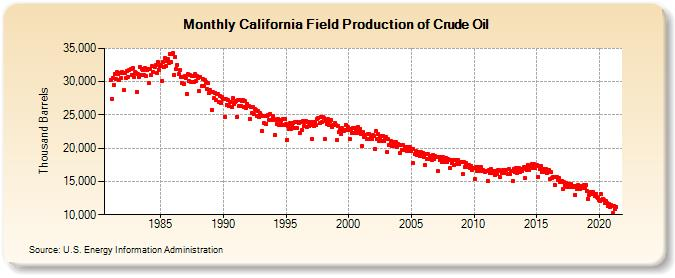
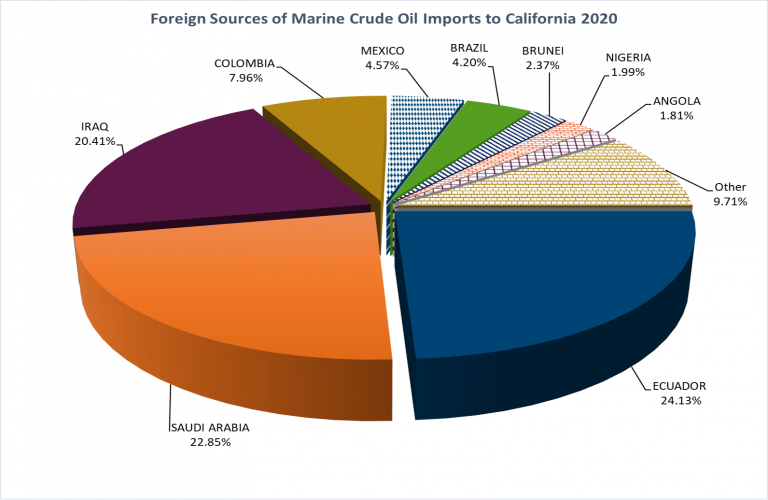
California isn’t reducing its dependence on oil; it’s just adding a higher carbon footprint to get it.ca-oil-foreign-source-768x500-1Californians pay one of the highest electricity rates in the United States. In 2015, the average resident spent 2.7 percent of their salary on electricity and paid approximately $1,700 annually to keep their lights on. This percentage has been increasing since 2008 Prices have climbed 30 percent over the last decade as successive governors have mandated that an increasing share of electricity is sourced from renewables.cg5b8ded55e8c77aga-energy-transferDespite natural gas rates being at their lowest levels since 1999, several municipalities across California have proposed or implemented bans on the use of the resource in homes and businesses. 
As individuals leave the gas grid, the poor will face higher prices on the grid and higher electricity prices when they switch. They will be threatened with a higher cost of living that could force them from their homes. Lower income individuals are priced out of neighborhoods where they could build equity because of higher electric costs. Middle class and wealthy individuals pay four times more for electricity, diminishing disposable income, while still paying for a gas grid they are unable to connect to through municipal law.

The result of California’s efforts? A reduction of global emissions by less than half of one percent.5db36b3ee25b2.image_Sources:  EnergyInDepth:  California

See also:  California on the Road to Ruin


World of Hurt from Climate Policies-Part 1

CO2 and COPs

This is a beginning post toward infographics exposing the damaging effects of Climate Policies upon the lives of ordinary people.  And all of the pain is for naught in fighting against global warming/climate change, as shown clearly in the image above.  This post presents graphics to illustrate the first of four themes:

Part 1:  Zero Carbon will Decimate US Workforce

WHCP fig1r

WHCP fig1ar

WHCP fig2ar

WHCP fig3a

WHCP fig3

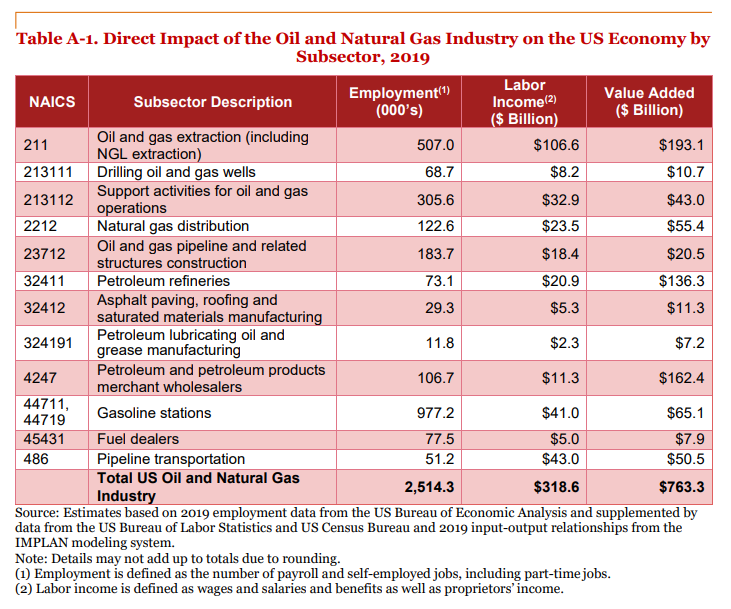
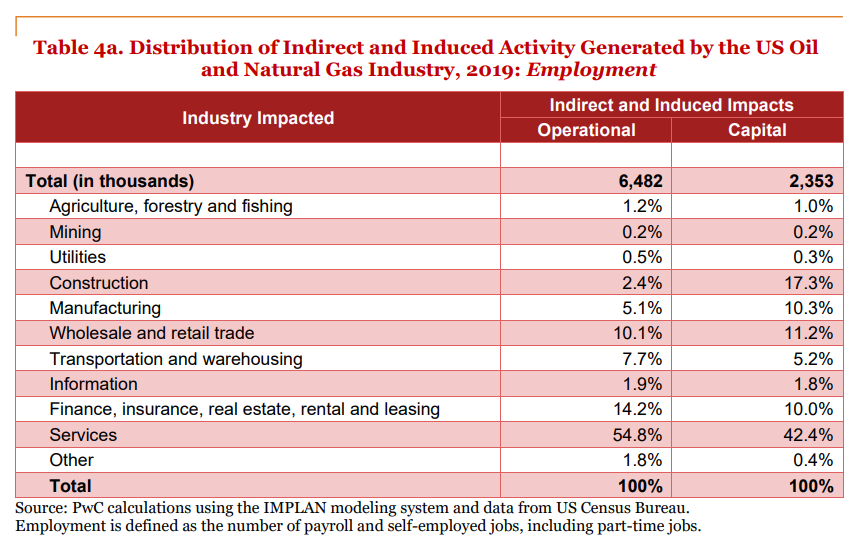
Tables of Oil and Natural Gas Employment and Economic Impact come from API Price Waterhouse Cooper  Impacts of the Oil and Natural Gas Industry on the US Economy in 2019    As for Coal, EIA estimates the industry lost 75% of its workforce down to 53,000 employees (2019) working in coal mines, and the number has stabilized with exports offsetting declines in domestic consumption.  The losses of jobs in oil and gas come from EID (Energy in Depth) CLIMATE ACTIVISTS PUSH STUDY SHOWING 3.8 MILLION LOST JOBS FROM RENEWABLE ENERGY TRANSITION.

“While many experts dispute the feasibility of Jacobson’s plan for a renewables-only energy grid, the severe job losses are far more difficult to dispute, given that they come directly from Jacobson’s research. Those job losses would undoubtedly be devastating for millions of American families.”

cb020621dapc20210206014624

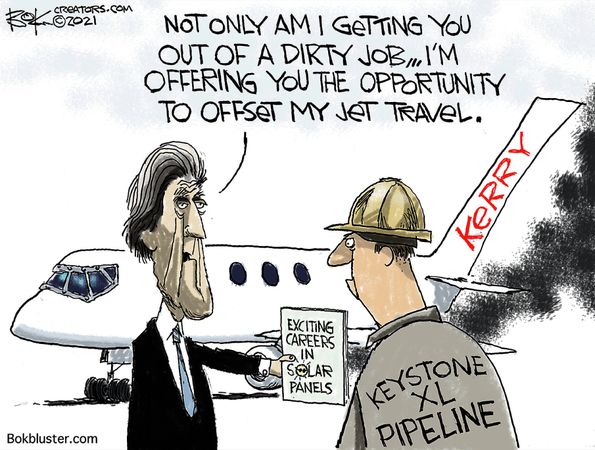
And about Those Promised Green Jobs to replace the lost ones:  

In February 2009, the last time Democrats controlled the White House and both chambers of Congress, President Barack Obama and Vice President Joe Biden flew to Colorado to sign their $787 billion stimulus package into law.

The plan was to invest $150 billion over 10 years that would advance a “clean energy” economy built around biofuels, hybrid cars, low-emission coal plants, and renewable sources such as solar and wind. Obama and Biden promised to create five million green jobs that would specifically benefit low-income earners, claiming that the stimulus package included “help for those hit hardest by our economic crisis.”

mrz041312dapr20120413044622

A decade later, we now know that the 2009 green jobs program was a complete failure. The Department of Labor (DoL) and the Bureau of Labor Statistics (BLS) issued several reports on the green jobs program. Each report was an indictment on the program, as job placement met only 10 percent of the targeted level, and many of those who were hired remained employed for less than six months.

Even the new, redefined green jobs did not reach the five million promised in February 2009. According to a study by the Brookings Institution, the Obama–Biden administration identified nearly 2.7 million green jobs, but most were bus drivers, sewage workers, and other types of work that do not match the “green jobs of the future” that the administration promised. Most of them were preexisting jobs, which were simply re-characterized by the government, apparently in an effort to boost the numbers.  Source: If at First You Don’t Succeed, Try ‘Green Jobs’ Again

See also Green Energy Failures Redux

picture-9

o